Plan a Trip


Pokhara to Ghatekhola Private Vehicle Hire: Full Guide 2026/27
Pokhara to Ghatekhola Private Vehicle Hire: Full Guide 2026/27
Ghatekhola is a small village on the Budhi Gandaki River in Nepal’s Gorkha District — a settlement on the approach trail to the Manaslu Circuit Trek, one of Nepal’s most rewarding and remote trekking adventures. Located approximately 165 to 180 kilometers from Pokhara by road — via the Prithvi Highway east to the Gorkha turn-off, then north on the rough track to Arughat and the Budhi Gandaki valley — Ghatekhola represents the point where the vehicle road effectively ends, and the Manaslu mountain world begins in earnest. For trekkers starting the Manaslu Circuit from the Pokhara side, reaching Ghatekhola or the nearby trailhead villages of Arughat, Soti Khola, and Maccha Khola by private vehicle is the essential first step in the circuit.
The journey from Pokhara to Ghatekhola is not a simple highway drive. It combines sections of good national highway with progressively rougher provincial road and ultimately the Budhi Gandaki valley track — a mountain road that requires a capable 4WD vehicle with an experienced driver for its final stages. To plan this approach correctly, you need to understand the full route, the road conditions at each section, the vehicle requirements, and the logistics of combining a Pokhara departure with Manaslu Circuit trailhead arrival.
Nepal Vehicle Hiring Pvt. Ltd., based in Thamel, Kathmandu, provides dedicated private vehicle hire for the Pokhara-to-Ghatekhola approach and all Manaslu Circuit trailhead transport. Our 4WD jeep hire fleet and trekking transport services cover the full Manaslu approach from both Pokhara and Kathmandu, with experienced mountain-road drivers who know the Gorkha-Arughat-Budhi Gandaki corridor in every season. This complete 2026/27 guide covers the full route, vehicle options, costs, permits, seasonal advice, and everything trekkers need to plan the Pokhara-to-Ghatekhola private vehicle journey correctly.
Where is Ghatekhola? Understanding the Manaslu Approach
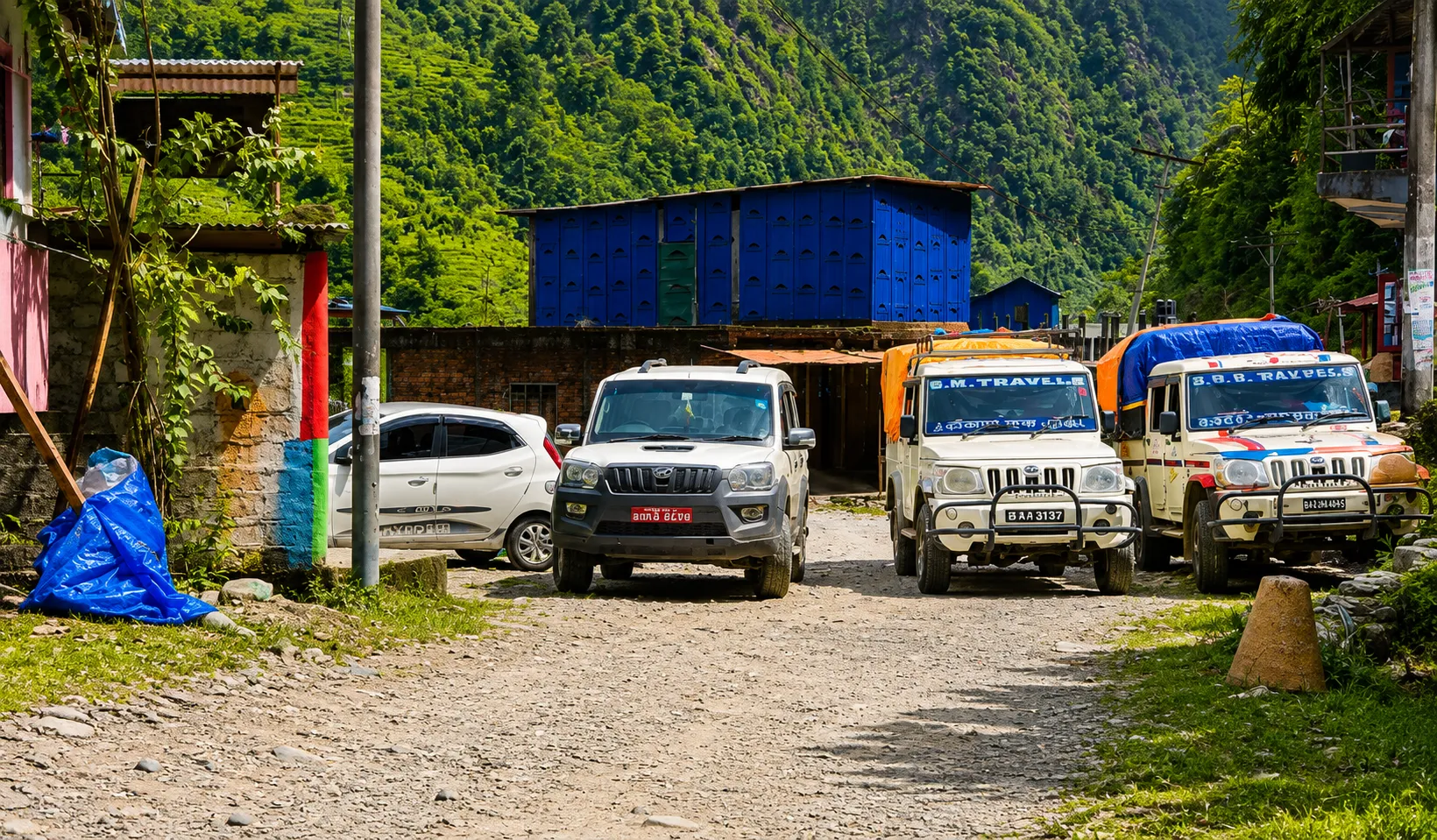
Ghatekhola (also written as Ghate Khola, literally meaning ‘Ghate Stream’ in Nepali) is a small community on the Budhi Gandaki River valley in Gorkha District, Gandaki Province. It sits on the lower approach trail of the Manaslu Circuit trek, between Soti Khola and Maccha Khola on the classic Manaslu trek route—about 15 to 20 kilometers north of Arughat Bazaar along the Budhi Gandaki gorge. The village sits at approximately 950 to 1,000 meters above sea level, in the subtropical lower gorge section of the Manaslu approach where the trail passes through forested hillsides, terraced farmland, and traditional Gurung and Chhetri communities before the valley narrows into the restricted zone above Jagat.
For trekkers, Ghatekhola is a key reference point on the Manaslu Circuit’s lower approach — it lies on the trail section from Arughat to Soti Khola that follows the Budhi Gandaki’s west bank, passing through small settlements and crossing several suspension bridges in the river gorge. The vehicle road from Arughat extends varying distances northward depending on the season and road conditions — in good dry-season conditions, private jeeps can reach Soti Khola or even Maccha Khola (approximately 25 to 30 km north of Arughat), potentially passing through the Ghatekhola area. In monsoon or after heavy rain, the road becomes impassable beyond Arughat or shortly above it, and trekkers must walk from Arughat.
The Manaslu Circuit trek is one of Nepal’s most rewarding trekking circuits — a 14 to 17 day journey circling Manaslu (8,163 m), the world’s eighth-highest mountain, through the Budhi Gandaki gorge, past high-altitude Buddhist monasteries and Tibetan-influenced villages, over the dramatic Larkya La Pass (5,160 m), and down to the Annapurna Circuit’s Dharapani junction. The circuit is a restricted area requiring a Manaslu Restricted Area Permit (RAP: USD 100 for the first week, USD 15 per day thereafter) and a mandatory licensed guide. Nepal Vehicle Hiring coordinates transport to all Manaslu Circuit trailhead points from both Pokhara and Kathmandu.
Pokhara to Ghatekhola: Distance and Journey Time
The total journey from Pokhara to the Ghatekhola/Arughat area breaks into three distinct road sections:
- Pokhara to Gorkha junction (Prithvi Highway): approximately 90 km, 2 to 2.5 hours — smooth national highway heading east toward Kathmandu, turning north at Abu Khaireni junction for Gorkha.
- Gorkha to Arughat Bazaar: approximately 52 to 60 km, 2 to 3 hours — provincial road climbing through Gorkha District hills, descending to the Budhi Gandaki River at Arughat. Mix of blacktop and rough track.
- Arughat to Ghatekhola/Soti Khola: approximately 15 to 25 km, 1 to 2 hours — rough mountain track along the Budhi Gandaki gorge. 4WD essential. Seasonal accessibility — may be impassable in monsoon.
Total road distance Pokhara to Ghatekhola area: approximately 160 to 180 kilometers. Total drive time: 6 to 8 hours in good dry-season conditions. In monsoon or poor road conditions, the Arughat-onwards section may add 1 to 2 hours or require the jeep to stop at Arughat with trekkers walking the final stage.
For comparison: the Kathmandu-to-Arughat journey is approximately 138 to 150 kilometers via the Prithvi Highway to Mugling then north — taking approximately 5 to 7 hours by private vehicle. Pokhara is slightly farther from Arughat than Kathmandu, but the approach is well established, and Nepal Vehicle Hiring’s drivers know both routes.
Road Guide: Pokhara to Ghatekhola Section by Section
Section 1: Pokhara to Abu Khaireni Junction (85 km, 2 hours)
The journey from Pokhara’s Lakeside district heads east on the Prithvi Highway — the main Kathmandu-Pokhara artery — passing through Pokhara’s eastern outskirts and climbing through the Tanahun District hills before descending toward the Marsyangdi River valley. The road is a well-maintained national highway throughout this section. The Abu Khaireni junction (85 km from Pokhara) is where the road to Gorkha branches north from the Prithvi Highway—a clearly marked junction with fuel stations and roadside restaurants, making it a natural first stop.
This section is comfortable for all vehicle types and takes approximately 2 hours in good traffic conditions. An early 6:30 a.m. departure from Pokhara Lakeside reaches Abu Khaireni by approximately 8:30 a.m. — good timing for a 20-minute breakfast stop before the Gorkha road begins. Nepal Vehicle Hiring’s drivers use this junction stop as the standard fuel and morning break point for the Pokhara-to-Arughat journey.
Section 2: Abu Khaireni to Gorkha (21 km, 45 to 60 minutes)
From Abu Khaireni, the road climbs north to Gorkha Bazaar (1,070 m) — the historic hill town and ancestral home of the Shah dynasty (the royal family that unified modern Nepal), and one of Nepal’s most significant historical towns. Gorkha Durbar — the ancestral palace on the ridge above the town, accessible by a 20-minute climb from the bazaar — is one of Nepal’s finest heritage sites and well worth a 30- to 45-minute detour for historically interested travelers passing through. The Gorkha Kalika Temple, adjacent to the Durbar, is an active and important religious site. The road from Abu Khaireni to Gorkha climbs approximately 800 meters in 21 kilometers — a sustained but well-maintained ascent on a paved road.
Section 3: Gorkha to Arughat Bazaar (30 to 40 km, 1.5 to 2 hours)
From Gorkha Bazaar, the road descends northward toward the Budhi Gandaki River and Arughat Bazaar (600 m) — the primary gateway to the Manaslu Circuit. This section covers 30 to 40 kilometers (the exact distance depends on the route taken through the Gorkha hills) on a provincial road that is partially paved and partially rough track. The road descends from Gorkha’s ridge to the Budhi Gandaki valley floor at Arughat, passing through Gurung and Magar communities and offering views of the surrounding hills that become increasingly dramatic as the valley narrows approaching Arughat.
Arughat Bazaar is the last town with commercial infrastructure before the Manaslu mountain zone begins. It has teahouses and guesthouses for trekkers, basic supplies, a Manaslu trekking permit checkpoint, and the last reliable vehicle access point before the rough Budhi Gandaki track begins. Nepal Vehicle Hiring’s Manaslu approach service always includes a 30-minute stop in Arughat for permit verification, a meal, and the driver’s vehicle check before the rough track section begins.
Section 4: Arughat to Ghatekhola/Soti Khola (15 to 25 km, 1 to 2 hours)
North of Arughat, the road follows the Budhi Gandaki River upstream through the Budhi Gandaki gorge. This final section to Ghatekhola and Soti Khola is a rough, unpaved mountain track that runs along the river bank, crossing the river at several points via suspension bridges or concrete crossings. The road passes through small settlements including the Arkhet River area and the approaches to Soti Khola before reaching the Ghatekhola vicinity.
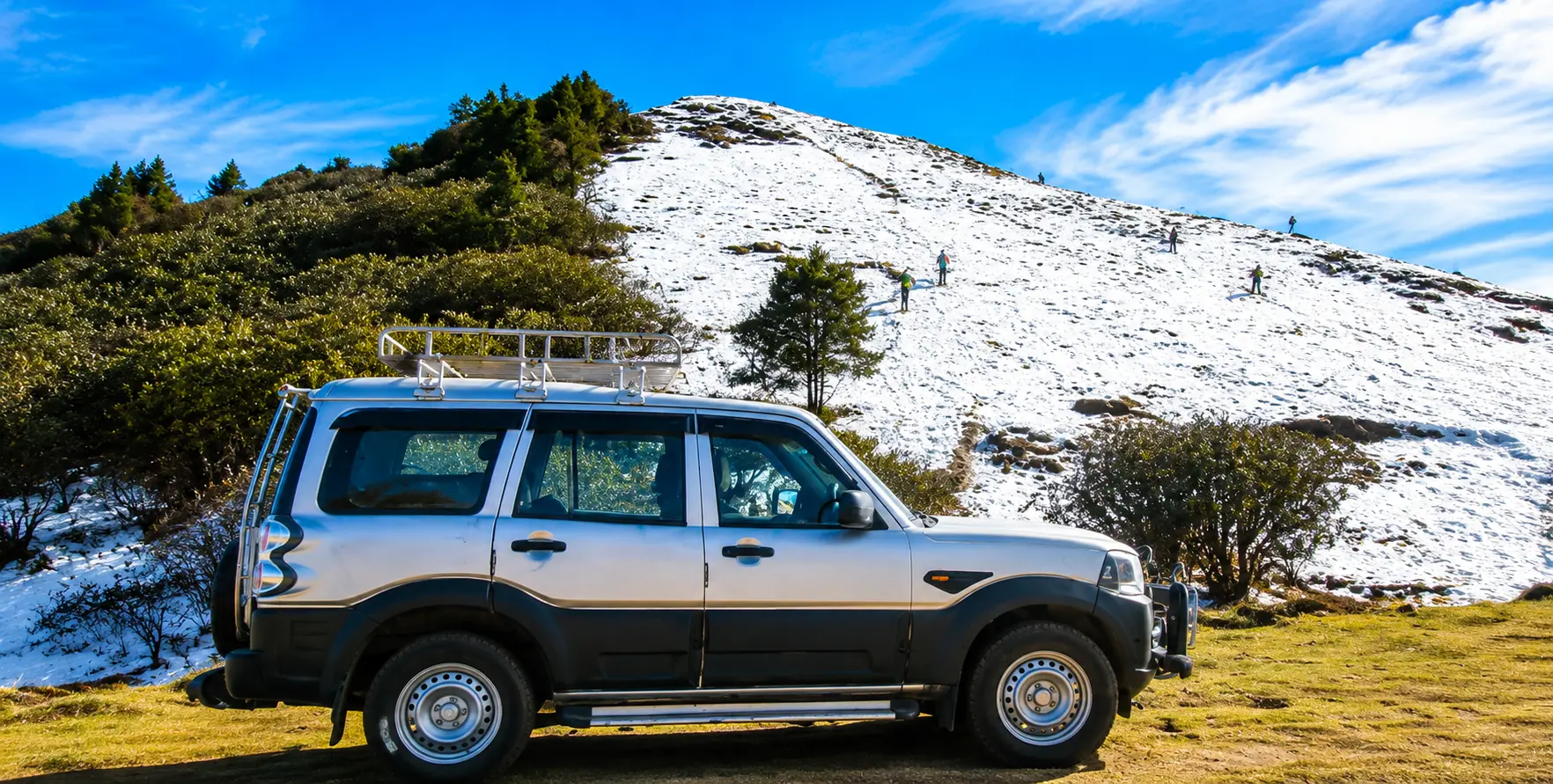
This section is fully off-road and requires 4WD. Road quality varies significantly by season — in the post-monsoon dry period (October to May), the track is generally navigable by experienced 4WD drivers; in monsoon (June to September), landslides and river crossings can render sections impassable. Nepal Vehicle Hiring’s drivers assess this section’s current status before departure and adjust the drop-off point accordingly—when Soti Khola is accessible, trekkers are dropped there; when only Arughat is reachable, trekkers walk the final 15 to 20 km to Soti Khola on the first day of the trek.
As the road extends northward from Arughat, Soti Khola (1,000 m) has become the most commonly used trailhead for Manaslu Circuit trekkers starting from the Pokhara or Kathmandu side—it saves about 5 to 6 hours of walking on the trail section between Arughat and Soti Khola, which is largely road-parallel and less rewarding. Nepal Vehicle Hiring’s drivers target Soti Khola or Maccha Khola (1,000 m, approximately 30 km from Arughat) as the vehicle endpoint when road conditions allow — giving trekkers the maximum head start on the trail.
Vehicle Options for the Pokhara to Ghatekhola Journey
Private 4WD Jeep Hire (Nepal Vehicle Hiring — Recommended)
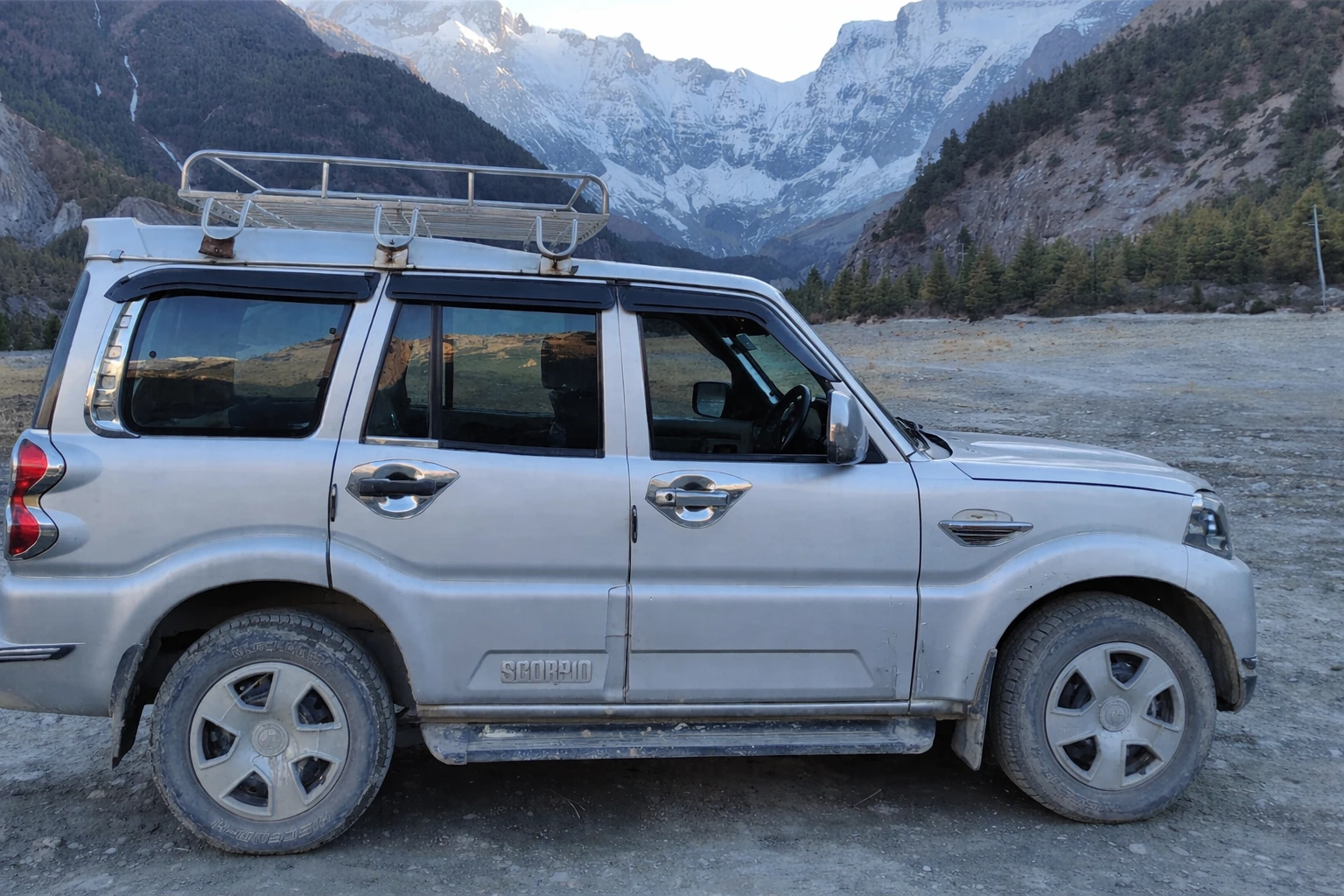
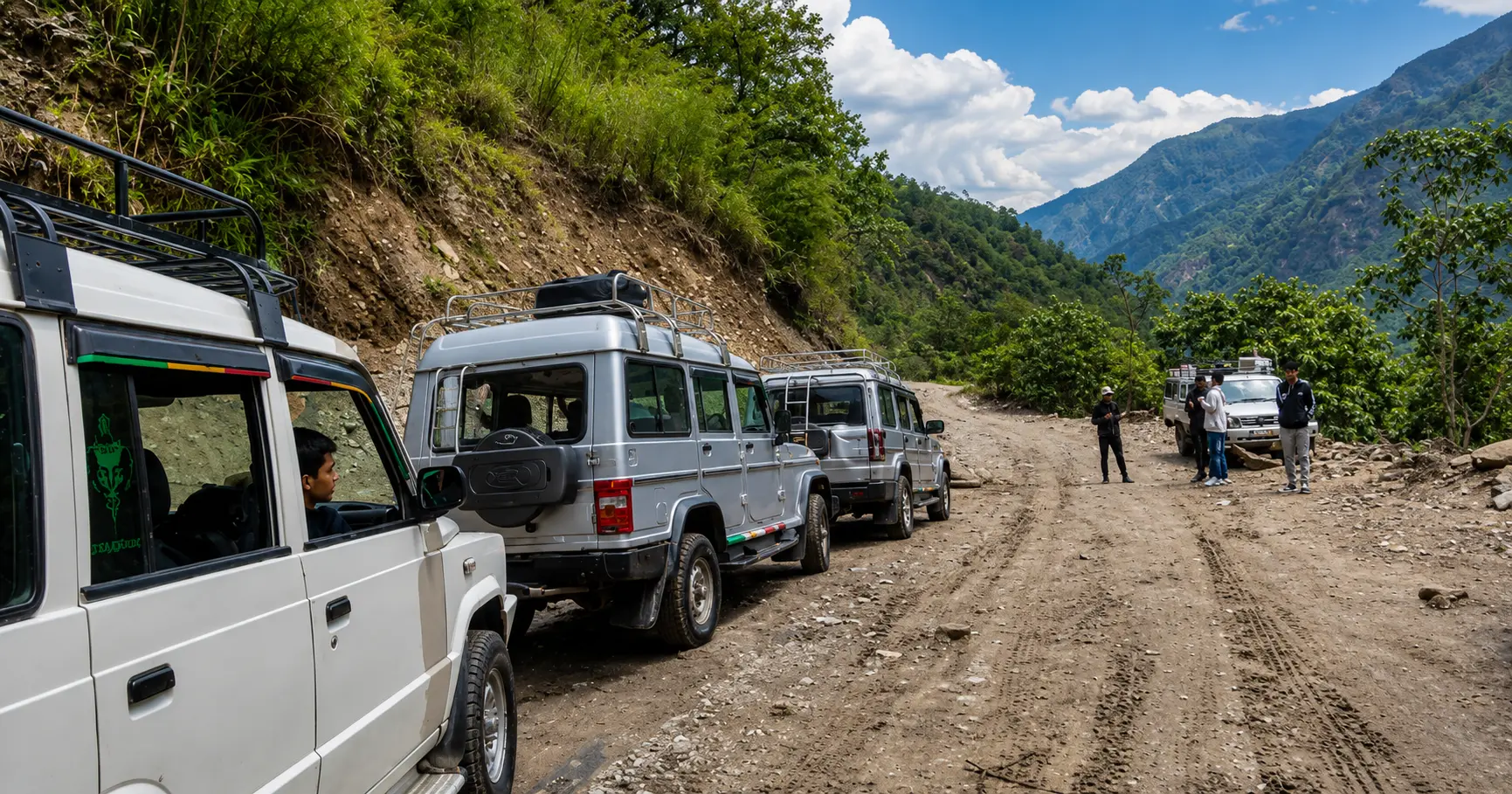
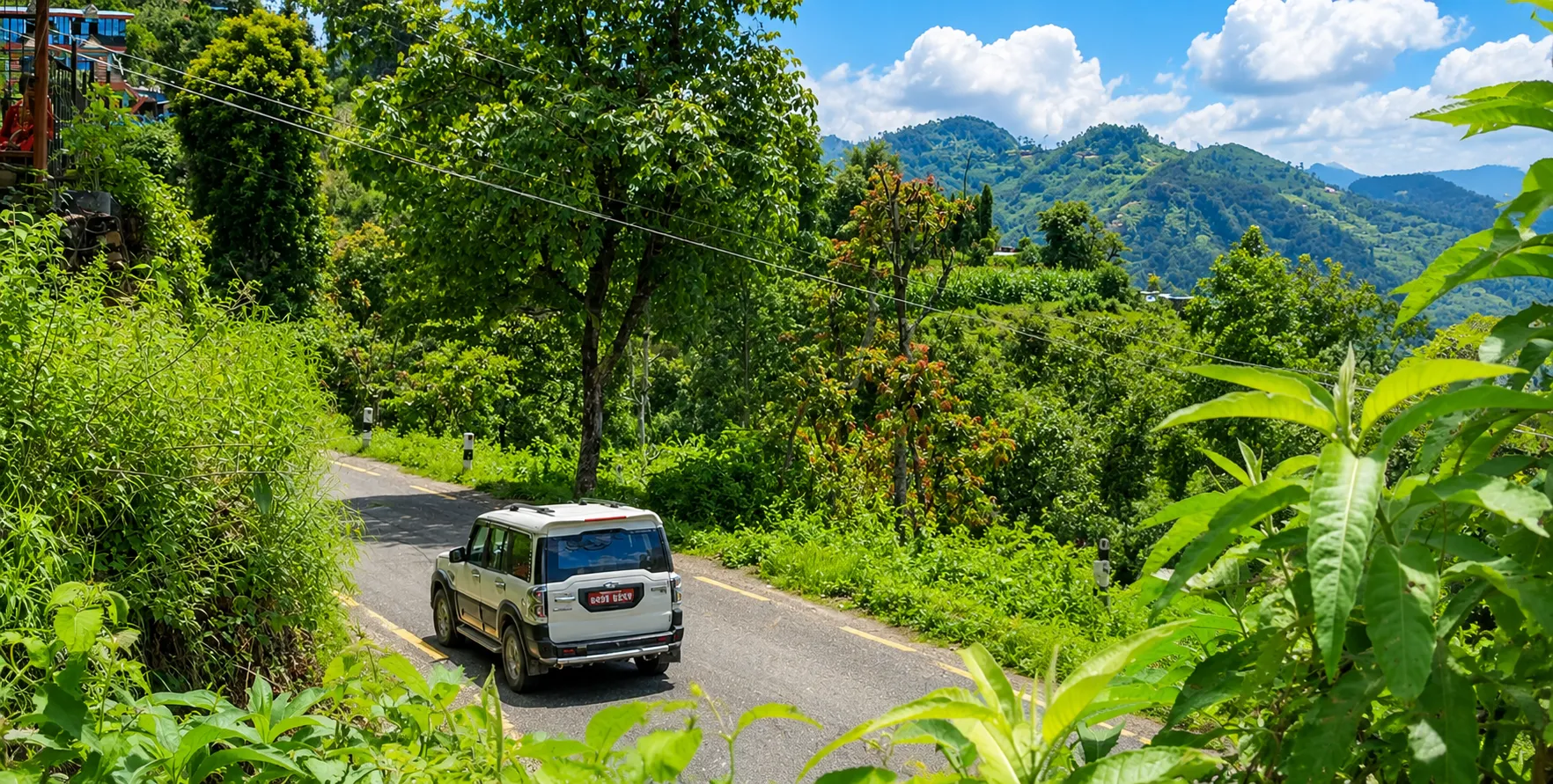
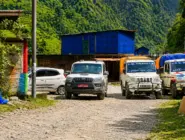
Nepal Vehicle Hiring’s private 4WD jeep hire is the only appropriate vehicle for the complete Pokhara-to-Ghatekhola/Soti Khola journey. Our Mahindra Scorpio (5 to 7 passengers) and Toyota Land Cruiser (4 to 5 passengers) provide the 4WD traction, high ground clearance, and robust suspension that the Gorkha-to-Arughat provincial road and the Arughat-to-Soti Khola gorge track both demand. Standard cars and Hiace vans cannot safely navigate the Arughat-onwards section.
Private 4WD jeep hire Pokhara to Arughat/Soti Khola/Ghatekhola: approximately NPR 20,000 to 28,000 per vehicle (USD 145 to 205) all-inclusive — vehicle, driver, fuel, and driver return costs. Per person for groups:
- 3 passengers: NPR 6,667 to 9,333 per person
- 4 passengers: NPR 5,000 to 7,000 per person
- 5 passengers: NPR 4,000 to 5,600 per person — competitive with shared jeep fare
- 6 passengers: NPR 3,333 to 4,667 per person — often cheaper than shared jeep
The private jeep advantage on this route: hotel-door pickup from Pokhara Lakeside at your chosen departure time (6:30 a.m. recommended), a Gorkha Durbar heritage stop option, guaranteed Arughat arrival for permit processing, and maximum road penetration toward Soti Khola to reduce day-one trekking distance. Contact Nepal Vehicle Hiring through our Plan Your Trip page for current pricing and a seasonal road-condition assessment before booking.
Shared Jeep (Budget Option — NPR 1,500 to 2,500 per person)
Shared jeeps for the Manaslu Circuit approach operate from Pokhara’s Prithvi Chowk Bus Park on an irregular, fill-and-depart basis. The standard shared transport configuration is: local bus Pokhara to Gorkha (NPR 250 to 350, 2.5 to 3 hours), then a connecting vehicle from Gorkha to Arughat (NPR 400 to 600 per person, 1.5 to 2 hours), then a local jeep from Arughat northward (NPR 500 to 800 per person depending on how far the road allows). Total shared transport cost to the trailhead: approximately NPR 1,150 to 1,750 per person with uncertain connection times and potentially a full day of transit.
For groups of 4 or more trekkers, Nepal Vehicle Hiring’s private jeep hire typically offers better per-person economics than the shared jeep combination, while providing direct hotel pickup, flexible departure times, and maximum road penetration to the trailhead. For solo trekkers and pairs on the tightest budgets, the shared transport combination is the most economical option.
Hiace Van Hire (Pokhara to Gorkha Only)
Nepal Vehicle Hiring’s Hiace van hire suits larger groups (8 to 14 people) on the Pokhara-to-Gorkha highway section. At Gorkha or Arughat, the Hiace transfers to 4WD jeeps for the rougher sections. Larger trekking groups use this hybrid configuration when the per-person economics of a single Hiace on the highway section outweigh the complexity of the transfer. Our trekking transport services can coordinate the Hiace-to-jeep transition as part of a single managed booking.
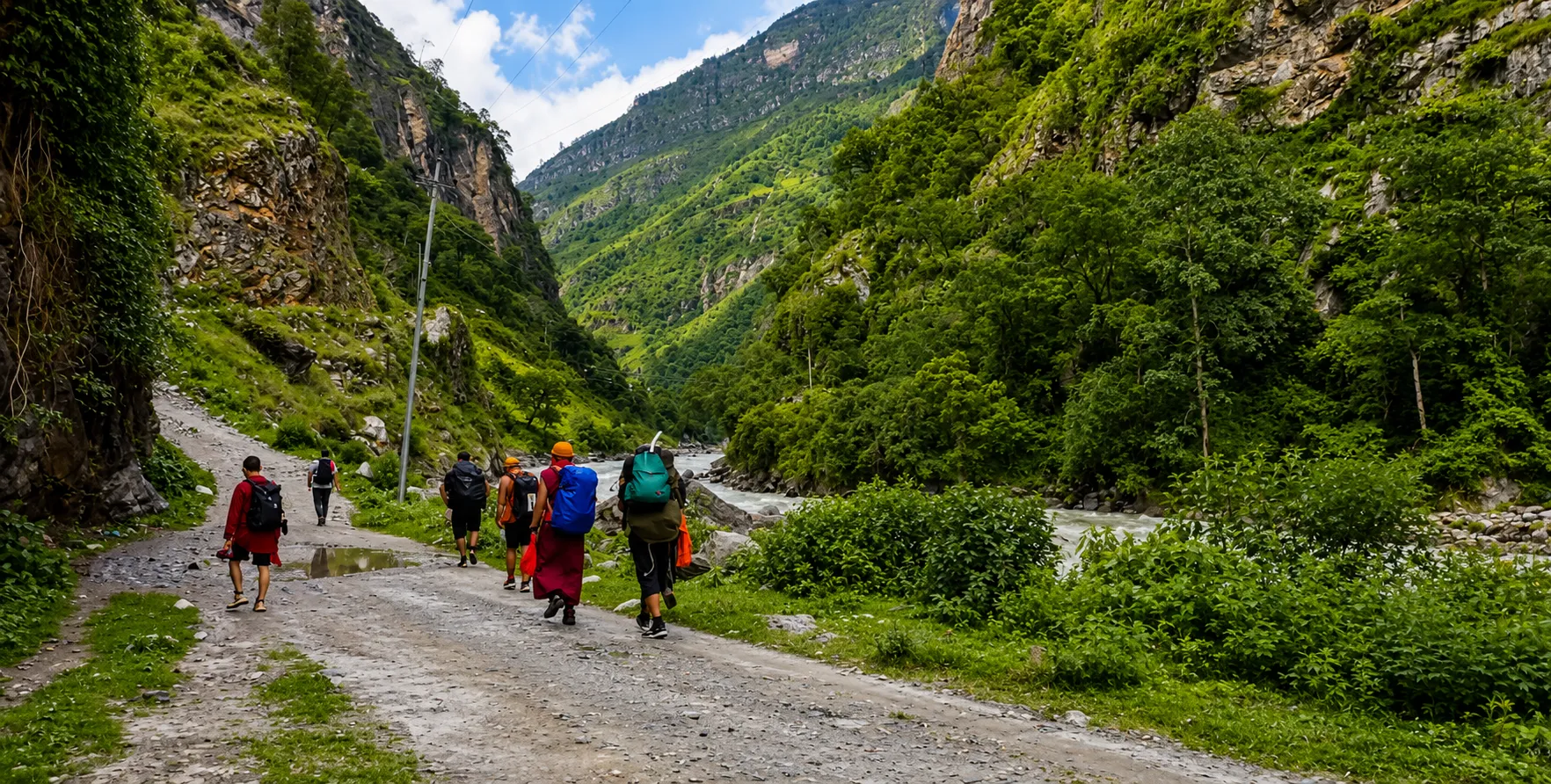
Permits Required for the Manaslu Circuit from Pokhara
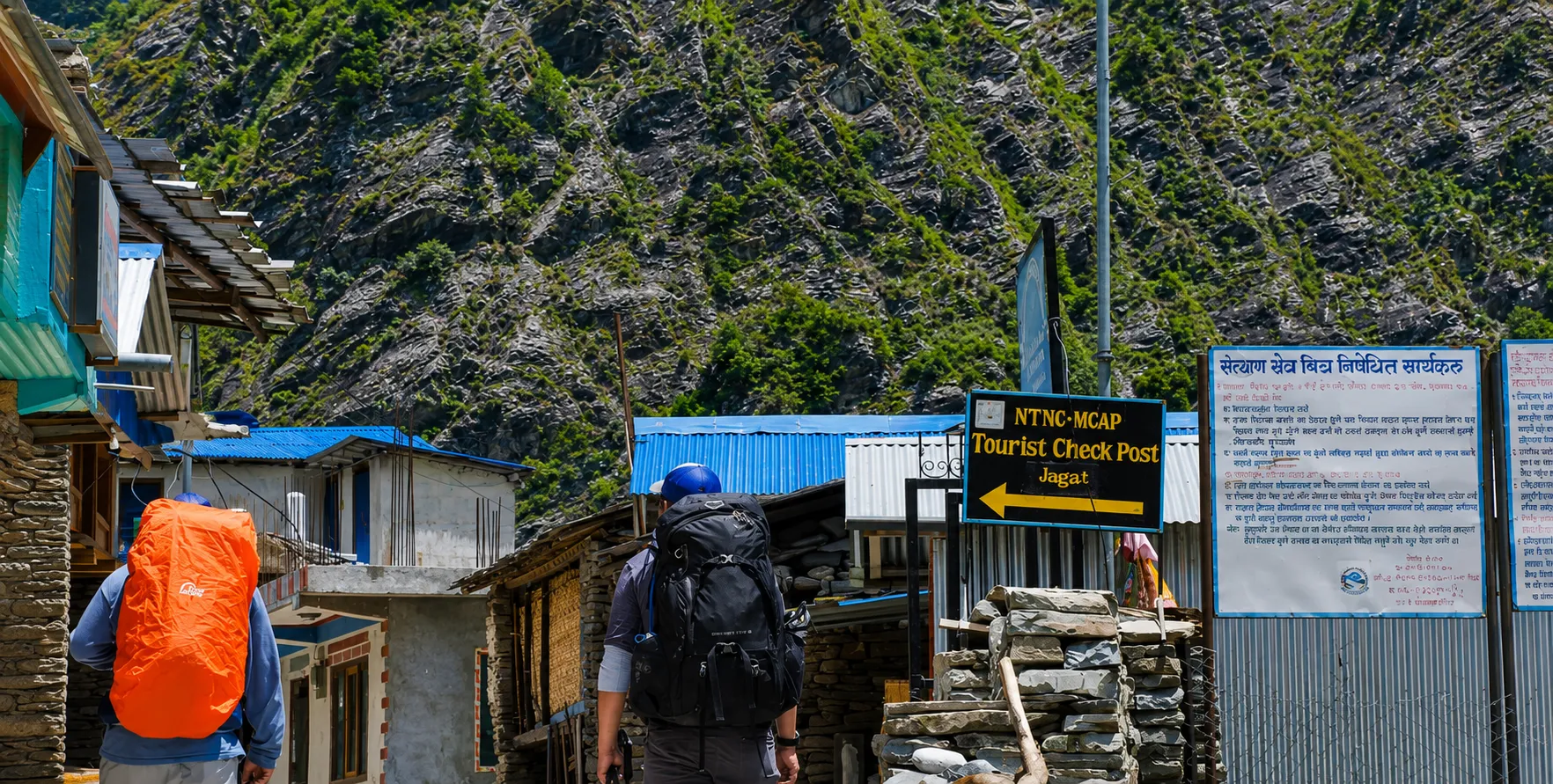
The Manaslu Circuit is a restricted trekking area that requires multiple permits, which must be arranged before reaching Arughat—the main checkpoint where all documentation is verified. Nepal Vehicle Hiring strongly recommends arranging all permits in Kathmandu or Pokhara before the vehicle departure:
Manaslu Restricted Area Permit (RAP)
The Manaslu Restricted Area Permit is the primary document allowing entry into the Manaslu Conservation Area above Jagat. 2026 fee: USD 100 per person for the first 7 days, USD 15 per person per day thereafter. The RAP must be arranged through a licensed Nepal trekking agency — it cannot be obtained independently. A licensed guide must accompany all Manaslu Circuit trekkers. Nepal Vehicle Hiking coordinates RAP processing through our partner agencies as part of the Manaslu approach vehicle service — contact us through our plan your trip page for the full permit and vehicle package.
Manaslu Conservation Area Permit (MCAP)
The MCAP covers the Manaslu Conservation Area and is required for all trekkers. 2026 fee: NPR 3,000 per person (approximately USD 22-25). Obtainable at the Nepal Tourism Board office in Kathmandu or Pokhara, or at the Arughat checkpoint. We recommend obtaining this in Kathmandu or Pokhara before departure to avoid Arughat checkpoint delays.
Annapurna Conservation Area Permit (ACAP) — For Circuit Completion
Trekkers completing the full Manaslu Circuit exit at Dharapani, which is within the Annapurna Conservation Area. The ACAP (NPR 3,000) is required for the Dharapani-and-beyond section. If you plan to exit at Dharapani and travel south through the Marsyangdi valley, arrange the ACAP in Kathmandu or Pokhara alongside the Manaslu RAP and MCAP. Our Kathmandu to Manang jeep and Besisahar private vehicle service cover transport from Dharapani to the Annapurna side exit.
Gorkha: The Heritage Stop on the Pokhara-Ghatekhola Road
The road from Pokhara to Arughat passes through Gorkha town — and Gorkha deserves much more than a drive-through. This historic hill town is the birthplace of Nepal’s modern nationhood — the ancestral home of King Prithvi Narayan Shah, who launched the campaign from Gorkha Durbar in the 1740s to unify the fragmented kingdoms of the Kathmandu Valley and the surrounding hill states into the modern Nepal we know today. Nepal’s famous Gurkha soldiers — the legendary mountain warriors who have served in the British and Indian armies for over two centuries — take their name from this very town.
The Gorkha Durbar — the ancestral royal palace perched on the ridge above the town at approximately 1,070 meters — is a remarkably well-preserved medieval palace and temple complex reached by a 20-minute climb of stone steps from the town below. The palace’s architecture, the Gorkha Kalika Temple with its golden roof, and the panoramic view from the ridge — Manaslu (8,163 m) directly north, Ganesh Himal to the east, Annapurna II to the west — make Gorkha Durbar one of Nepal’s finest but least-visited heritage experiences. For Manaslu Circuit trekkers spending the next two weeks surrounded by the mountain world Gorkha’s kings once ruled, a 45-minute Gorkha Durbar stop on the drive north adds a powerful historical and cultural layer to the trekking experience that begins the following day.
Nepal Vehicle Hiring’s private jeep hire for the Pokhara-to-Ghatekhola journey builds in a flexible Gorkha Durbar stop on request — your driver will park at the town’s base, accompany you to the stairway entry point, and wait while you make the heritage visit. This stop adds approximately 1 to 1.5 hours to the total journey. Still, it is highly recommended for trekkers with historical interests or for those who want a cultural anchor for the Manaslu mountain landscape ahead.
The Manaslu Circuit Trek: What Awaits Beyond Ghatekhola
Understanding the full Manaslu Circuit helps contextualize why the vehicle journey from Pokhara to Ghatekhola/Soti Khola matters so much. The circuit is one of Nepal’s finest and most demanding trekking experiences — but it is significantly less crowded than the Annapurna or Everest circuits, offering a more authentic wilderness experience for trekkers willing to accept the logistical demands of the restricted-area permit system.
The standard Manaslu Circuit from Soti Khola follows the Budhi Gandaki River north through: Maccha Khola (1,000 m) → Jagat (1,400 m) — the restricted-area entry checkpoint — → Deng (1,804 m) → Namrung (2,630 m) → Lho (3,180 m) (with dramatic Manaslu views) → Samagaon (3,520 m) → Samdo (3,875 m) → Larkya Phedi (4,460 m) → Larkya La Pass (5,160 m) → Bimtang (3,720 m) → Tilije (2,300 m) → Dharapani (1,860 m) — exit to Pokhara or Kathmandu by vehicle.
The total trekking distance from Soti Khola to Dharapani is approximately 155 to 177 kilometers, typically covered in 11 to 14 walking days. The circuit’s highlights include the extraordinary Budhi Gandaki gorge in the lower section (narrow, forested, with frequent suspension bridge crossings); the high-altitude Tibetan Buddhist village of Samagaon with its nearby Manaslu Base Camp; the dramatic Larkya La Pass crossing with panoramic views of Manaslu, Kang Guru (6,981 m), and the surrounding Himalayan chain; and the descent through rhododendron and pine forests to the Annapurna Circuit junction at Dharapani.
At Dharapani, Manaslu Circuit trekkers connect to Nepal Vehicle Hiring’s Kathmandu-to-Manang jeep (in reverse, for a Dharapani pickup) or our Besisahar private vehicle service for the Dharapani-to-Besisahar section, followed by a Kathmandu-to-Besisahar bus ticket or private jeep hire for the highway return to Pokhara or Kathmandu. Our trekking transport services coordinate the complete Pokhara-approach and Dharapani-exit vehicle logistics as a single managed booking.
Seasonal Guide: When to Make the Pokhara to Ghatekhola Drive
Spring (March to May): Best Season
Spring is the finest season for the Pokhara-to-Ghatekhola drive and the Manaslu Circuit trek. The road from Gorkha to Arughat is in its best condition after winter consolidation, rhododendrons bloom on the Gorkha District hillsides in March and April, and the Arughat-to-Soti Khola track is consistently accessible. Manaslu’s massive north face is visible with extraordinary clarity from the upper circuit sections in spring’s pre-monsoon air. Nepal Vehicle Hiring’s 4WD jeep hire for the Manaslu approach is in peak demand from March to May — book 3 to 4 weeks in advance.
Autumn (September to November): Second Best
Post-monsoon autumn delivers Nepal’s finest trekking conditions and good road access to Arughat and Soti Khola. The Budhi Gandaki gorge is lush with post-monsoon vegetation, restricted-area trails are in excellent condition after the monsoon, and the Larkya La crossing is safe and stable. Road conditions on the Arughat-to-Soti Khola track typically recover by October after the last monsoon events. Book Nepal Vehicle Hiring’s Manaslu approach jeep 3 to 4 weeks in advance for October and November.
Monsoon (June to September): Most Challenging
The monsoon brings significant challenges to the Pokhara-to-Ghatekhola road. The Gorkha-to-Arughat provincial road is susceptible to landslides and surface damage in heavy rain, and the Arughat-to-Soti Khola gorge track is frequently impassable or severely deteriorated during peak monsoon. Most experienced Manaslu guides advise against attempting the circuit during monsoon because of road access issues and trail safety concerns in the gorge sections. Nepal Vehicle Hiring will advise on current road status before any monsoon-season Manaslu approach booking.
Winter (December to February): Possible at Lower Elevations
The lower approach road from Pokhara to Arughat is accessible year-round in winter. The Arughat-to-Soti Khola track is generally passable in dry winter conditions with a 4WD vehicle. However, the upper Manaslu Circuit above 3,500 meters is snowbound from December through February, and the Larkya La Pass (5,160 m) may be closed or extremely dangerous in deep winter. Winter is only recommended for experienced high-altitude trekkers who are specifically prepared for snow and cold conditions on the upper circuit. The lower circuit sections (Arughat to Jagat) can be walked comfortably in winter’s clear, cool atmosphere.
Practical Tips for the Pokhara to Ghatekhola Private Vehicle Journey
- Depart Pokhara by 6:30 a.m.: this timing gets you to Gorkha for a morning heritage stop (optional, 1 hour), Arughat for lunch and permit check (30 minutes), and Soti Khola or Ghatekhola by 3:00 to 4:00 p.m. — good timing for a first guesthouse night before the trek begins.
- Arrange all permits in Pokhara or Kathmandu before departure: the Manaslu RAP, MCAP, and ACAP (for circuit completion) should all be in hand before leaving Pokhara. The Arughat checkpoint verifies these rigorously—missing permits mean waiting at Arughat while you arrange documents, potentially losing a full trekking day.
- Carry cash in NPR from Pokhara: there are no reliable ATMs between Gorkha and Arughat. Arughat may have basic banking facilities, but they are unreliable. Carry enough NPR for the full circuit —accommodation, food, guide fees, and emergency expenses. Approximately NPR 25,000 to 40,000 per person is a minimum for a 14-day Manaslu Circuit.
- Nepal Vehicle Hiring will advise on how far the road is currently accessible: the Arughat-to-Soti Khola track condition changes significantly by season and after any heavy rainfall. Our operations team checks road status before your departure and advises on the most practical vehicle endpoint — this information is impossible to get reliably from online sources but is updated daily by our Manaslu-route drivers.
- Pack for immediate trekking on vehicle exit: your main trekking pack (60 to 70 liters), sleeping bag, trekking poles, and everything for 14+ days should be ready for immediate deployment when the jeep drops you at Soti Khola or wherever the road currently ends. Nepal Vehicle Hiring’s jeep has sufficient luggage space for well-packed trekking gear for groups of up to 6 trekkers.
- Download offline maps: mobile signal is available in Gorkha and Arughat but patchy to non-existent along the Budhi Gandaki gorge road and trail. Download Maps.me or Gaia GPS covering Gorkha District and the Manaslu Circuit before leaving Pokhara.
Nepal Vehicle Hiring: Complete Manaslu Circuit Transport
Nepal Vehicle Hiring provides complete vehicle coordination for the Manaslu Circuit — from Pokhara approach to Dharapani exit — as a single managed service:
- Private 4WD jeep hire — Pokhara to Soti Khola/Ghatekhola/Arughat approach
- Trekking transport services — complete Manaslu Circuit approach and Dharapani exit coordination
- Hiace van hire — Pokhara to Gorkha highway section for larger groups
- Kathmandu to Manang jeep — Dharapani exit pickup and transport
- Besisahar private vehicle service — Dharapani to Besisahar exit section
- Kathmandu to Besisahar bus ticket — economical Besisahar-to-Kathmandu return option
- Kathmandu to Pokhara bus — return to Pokhara from Kathmandu after circuit
- Sarangkot sunrise tour vehicle — Pokhara pre-trek dawn experience
- Kathmandu airport transfer — arrival logistics for Manaslu-bound trekkers flying in
- Nepal tour packages and Nepal holiday tours — Manaslu Circuit within a broader Nepal holiday
Frequently Asked Questions: Pokhara to Ghatekhola Vehicle Hire
How far is Pokhara from Ghatekhola?
The road distance from Pokhara to the Ghatekhola/Soti Khola area is approximately 160 to 180 kilometers via the Prithvi Highway to Abu Khaireni, then Gorkha, then Arughat, then the Budhi Gandaki gorge track. Drive time: 6 to 8 hours in good dry-season conditions.
What vehicle is required for the Pokhara to Ghatekhola journey?
The Pokhara-to-Gorkha section on the Prithvi Highway is accessible for all vehicles. The Gorkha-to-Arughat provincial road requires a capable vehicle in good condition — preferably 4WD. The Arughat-to-Soti Khola/Ghatekhola track requires 4WD. Nepal Vehicle Hiring deploys exclusively from our 4WD jeep hire fleet for the complete Pokhara-to-Manaslu trailhead journey.
Do I need to go all the way to Ghatekhola, or can I start at Arughat?
Most trekkers target Soti Khola (approximately 15 km north of Arughat) as their vehicle endpoint rather than specifically Ghatekhola. Soti Khola is the more commonly referenced Manaslu Circuit starting point for vehicle-approach trekkers. The road from Arughat to Soti Khola passes through the Ghatekhola area. Nepal Vehicle Hiring’s drivers will take you as far as the road currently allows — in good conditions, Soti Khola or even Maccha Khola (saving 5 to 6 hours of road-parallel trail walking).
How much does it cost to hire a private jeep from Pokhara to the Manaslu trailhead?
Approximately NPR 20,000 to 28,000 per vehicle, all-inclusive (vehicle, driver, fuel, return costs). For 5 passengers, this is NPR 4,000 to 5,600 per person — competitive with or cheaper than shared transport for groups, with hotel pickup and maximum road penetration included.
Can Nepal Vehicle Hiring also arrange the Dharapani pickup at the end of the Manaslu Circuit?
Yes — Nepal Vehicle Hiring coordinates both the Pokhara-approach vehicle and the Dharapani-exit pickup as a single managed booking. We schedule the return vehicle for your specific circuit completion date, eliminating the uncertainty of finding shared transport at Dharapani when you are tired after 14 days of trekking.
Book Your Pokhara to Ghatekhola Private Vehicle Hire
Nepal Vehicle Hiring Pvt. Ltd., Thamel, Kathmandu — your specialist provider for Manaslu Circuit approach transport from Pokhara and Kathmandu. Hotel door pickup from Pokhara Lakeside, experienced Gorkha- Arughat route drivers, and maximum road penetration to your Manaslu Circuit trailhead.
- WhatsApp / Call: +977 9851013196
- Email: [email protected]
- www.vehiclehiringnepal.com
Visit our Plan Your Trip page with your Manaslu Circuit start date, group size, and Pokhara hotel address. We respond within 24 hours with a vehicle proposal, current road condition assessment, and all-in pricing. The Budhi Gandaki gorge is waiting — Nepal Vehicle Hiring will get you to the trailhead.
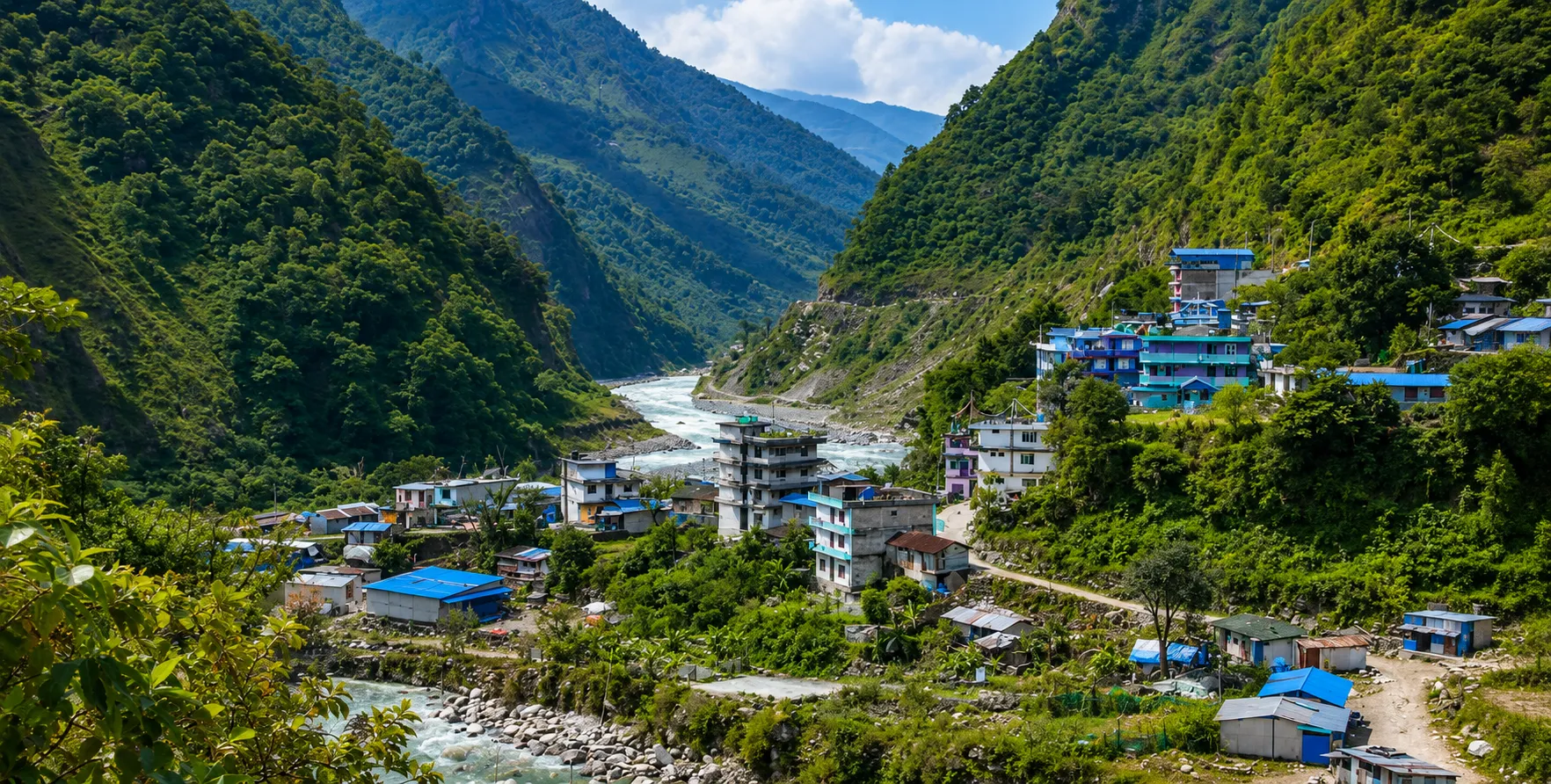
The Budhi Gandaki: Understanding the River That Defines the Journey
The Budhi Gandaki River is the physical and spiritual backbone of the Manaslu Circuit trek and the defining feature of the vehicle approach from Arughat northward. Understanding this river helps both trekkers and vehicle hire clients appreciate what the road journey north of Arughat involves—and why vehicle access is so seasonal and variable.
The Budhi Gandaki originates from glaciers high on the flanks of the Manaslu massif at over 5,000 meters and descends about 4,000 meters over its 110-kilometer course to its confluence with the Trishuli River near Malekhu on the Prithvi Highway. This extreme gradient—even steeper than the Marsyangdi that forms the Annapurna Circuit approach—creates one of Nepal’s most powerful and erosive river systems. In the monsoon, the Budhi Gandaki carries an enormous sediment load that reshapes its channel, undercuts roads, and can completely obliterate vehicle tracks in the lower gorge section between Arughat and Jagat.
This is why the road north of Arughat is so variable in its accessibility. The Budhi Gandaki’s seasonal behavior directly determines whether the track to Soti Khola is navigable by a 4WD jeep or has been washed away, blocked by landslide debris, or undermined by high water. Nepal Vehicle Hiring’s Manaslu-route drivers travel this section regularly and maintain current intelligence on road status, similar to what online sources or trekking operator websites provide, often updated weeks or months in advance. Our pre-departure road condition assessment is one of the most valuable services we provide for Manaslu Circuit trekkers — giving you an accurate picture of how far the vehicle can realistically go on the day you travel.
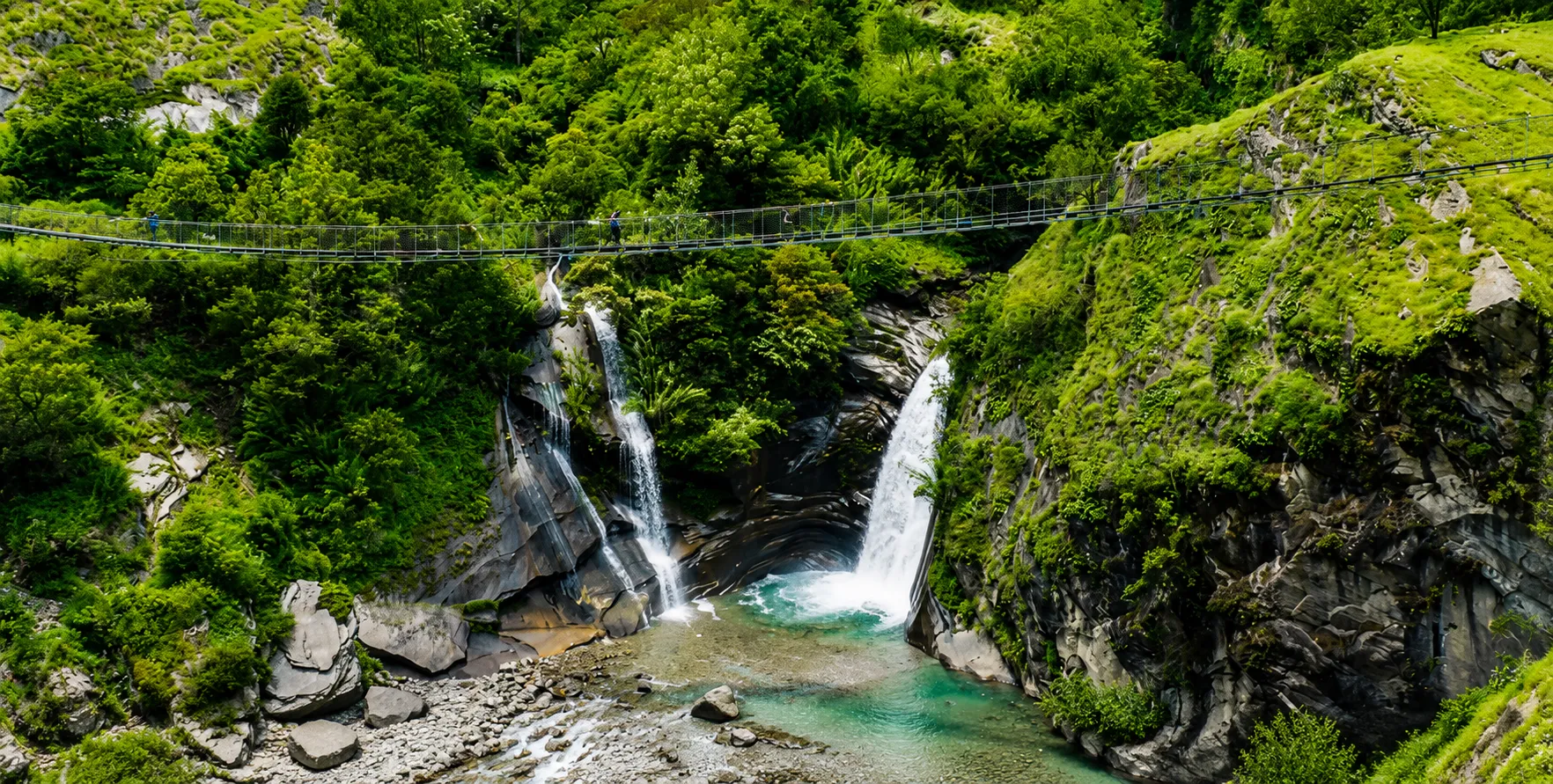
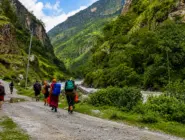
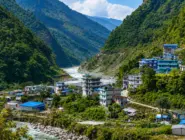
The Budhi Gandaki’s gorge character also gives the lower Manaslu Circuit trail its distinctive atmosphere. The narrowness of the gorge, the forested valley walls rising steeply on both sides, the suspension bridges swaying above the fast-moving water, the sound of the river amplified by the stone walls — all of this begins in the section between Arughat and Jagat where the vehicle road ends and the trekking trail takes over. Trekkers who reach Soti Khola by vehicle from Pokhara through the Gorkha hills step out of the jeep directly into this gorge world, which feels different from the Prithvi Highway and from any environment in Nepal.
Comparing the Pokhara and Kathmandu Approaches to the Manaslu Circuit
Most Manaslu Circuit trekking packages start in Kathmandu rather than Pokhara, reflecting Kathmandu’s historical dominance as the trekking industry’s operational base. However, the Pokhara approach offers genuine advantages for certain trekker profiles that are worth understanding before choosing your circuit starting point.
The Kathmandu Approach: Standard and Well-Established
From Kathmandu, the Manaslu Circuit approach drives south on the Prithvi Highway to Mugling (about 110 km), then north on a direct road through Gorkha and Arughat (about 40 to 50 km from the highway junction). Total Kathmandu-to-Arughat distance: approximately 138 to 150 km, taking 5 to 7 hours by private vehicle. Most Manaslu Circuit trekking packages use this approach, and it’s well established among trekking operators. Nepal Vehicle Hiring’s Kathmandu-based operations naturally support this approach—our cars, jeeps, and Hiace vans all cover the Kathmandu-to-Arughat-to-Soti Khola run as a standard service.
The Pokhara Approach: Longer but Viable
From Pokhara, the approach is 160 to 180 km total via the Prithvi Highway east to Abu Khaireni, then north through Gorkha and Arughat. This is approximately 20 to 40 km longer than the Kathmandu approach, adding 1 to 2 hours to the drive time. The Pokhara approach makes sense for trekkers who: have already been in Pokhara for the Annapurna region and want to add the Manaslu Circuit without returning to Kathmandu; are combining the Manaslu Circuit with a Pokhara-based Nepal holiday circuit; or are flying into or out of Pokhara International Airport rather than Kathmandu. For these trekkers, Nepal Vehicle Hiring’s private jeep hire from Pokhara Lakeside to Soti Khola is the most direct and efficient transport solution.
The Circuit Exit: Why the Dharapani Connection Matters
One of the Manaslu Circuit’s key logistical advantages is that it exits at Dharapani—the same point where the Annapurna Circuit’s vehicle approach road ends and trekkers transition to the trail. This means Manaslu Circuit trekkers exiting at Dharapani can immediately connect to the Annapurna Circuit road transport network: our Kathmandu-to-Manang jeep service (in reverse) picks up at Dharapani, and trekkers can be in Pokhara or Besisahar within 3 to 5 hours of completing the circuit. Nepal Vehicle Hiking’s operations team pre-books the Dharapani exit vehicle for the same date as the Pokhara-approach vehicle, ensuring the full circuit transport is coordinated before the trek begins.
Sample 16-Day Manaslu Circuit Itinerary with Vehicle Plan
The following sample itinerary shows how Nepal Vehicle Hiring’s transport integrates with a complete Manaslu Circuit experience for a group departing from Pokhara:
- Day 0: Arrive in Pokhara. Nepal Vehicle Hiring airport transfer (if flying in). Sarangkot sunrise tour the following morning if desired.
- Day 1: Depart Pokhara at 6:30 a.m. by Nepal Vehicle Hiring private 4WD jeep. Gorkha Durbar heritage stop (optional, 45 minutes). Arrive in Arughat for lunch and permit check. Continue to Soti Khola by jeep (road conditions permitting). First guesthouse night at Soti Khola (1,000 m).
- Day 2: Trek Soti Khola to Maccha Khola (approximately 15 km, 5 to 6 hours). The trail follows Budhi Gandaki through forest and terraced farmland.
- Day 3: Maccha Khola to Jagat (approximately 17 km, 6 to 7 hours). Restricted area entry checkpoint. Manaslu permit verified.
- Day 4: Jagat to Deng (approximately 18 km, 6-7 hours). Trail enters pine and bamboo forest. Suspension bridge crossings.
- Day 5: Deng to Namrung (approximately 20 km, 6 hours). Landscape transitions to alpine character.
- Day 6: Namrung to Lho (approximately 11 km, 4 hours). First major Manaslu views from Lho (3,180 m). Ribung Gompa visit.
- Day 7: Lho to Samagaon (approximately 10 km, 4 hours). Manaslu Base Camp side trip option (extra 2 hours). Acclimatization day possible.
- Day 8: Rest/acclimatisation day at Samagaon (3,520 m). Pungyen Monastery visit.
- Day 9: Samagaon to Samdo (approximately 9 km, 3 hours). Tibetan refugee community. Rui La Pass excursion option.
- Day 10: Samdo to Larkya Phedi (approximately 10 km, 4 hours). Final preparation for the pass.
- Day 11: Larkya Phedi to Bimtang via Larkya La Pass (5,160 m) — the circuit’s great day. 6 to 8 hours. Panoramic views of Manaslu, Himlung, and Kang Guru.
- Day 12: Bimtang to Tilije (approximately 15 km, 5 hours). Descent through rhododendron forest.
- Day 13: Tilije to Dharapani (approximately 12 km, 4 hours). Circuit ends at Annapurna Circuit junction.
- Day 14: Nepal Vehicle Hiring: A pre-booked vehicle collects you in Dharapani. Drive to Pokhara (approximately 110 km via Besisahar, 3 to 4 hours) or Kathmandu (approximately 235 km, 8 to 10 hours).
This itinerary shows how Nepal Vehicle Hiring’s transport bookends the Manaslu Circuit experience: the jeep from Pokhara Lakeside on Day 1 and the return vehicle from Dharapani on Day 14 are pre-coordinated before the trek begins, giving trekkers total logistics certainty from the start.
Manaslu Circuit vs Annapurna Circuit: Choosing Your Pokhara-Based Trek
For trekkers based in Pokhara deciding between the Manaslu Circuit and the Annapurna Circuit, understanding the key differences helps you choose the right option — and Nepal Vehicle Hiring’s transport services cover both circuits from Pokhara equally well.
The Annapurna Circuit from Pokhara is significantly more accessible — Nepal Vehicle Hiring’s Pokhara to Manang jeep service or the Besisahar approach via Kathmandu to Manang jeep covers the approach in a single long drive, and the Jomsom-to-Pokhara return makes the circuit a clean Pokhara-to-Pokhara loop. The Annapurna Circuit sees far more trekker traffic than Manaslu — particularly in the teahouse zone above Chame — which some trekkers find comforting and others find too commercialized. The ACAP permit (NPR 3,000) is straightforward, and the circuit doesn’t require a licensed guide or a restricted-area permit.
The Manaslu Circuit from Pokhara requires a longer vehicle approach to Arughat (160 to 180 km vs. the Annapurna Circuit’s 85 to 178 km, depending on the start point), a more complex permit system (RAP + MCAP + optional ACAP), and a mandatory licensed guide. In exchange, it offers a dramatically less crowded trail experience — many sections of the Manaslu Circuit have genuine wilderness character that the Annapurna Circuit’s most popular sections have lost. The restricted-area requirement that adds complexity also adds protection — the Manaslu Circuit’s permit system limits the number of trekkers and maintains the trail’s environmental quality.
Nepal Vehicle Hiring’s recommendation: if you have done the Annapurna Circuit and want the next level of Nepal trekking challenge, the Manaslu Circuit is the clear choice. If it is your first Nepal trek and you want the most established teahouse infrastructure, well-marked trails, and least logistical complexity, the Annapurna Circuit is the better starting point. Either way, Nepal Vehicle Hiking provides the approach vehicle from Pokhara — our Pokhara to Mustang jeep service and Kathmandu to Manang jeep for the Annapurna Circuit, and our dedicated Manaslu approach jeep service for the Budhi Gandaki route.
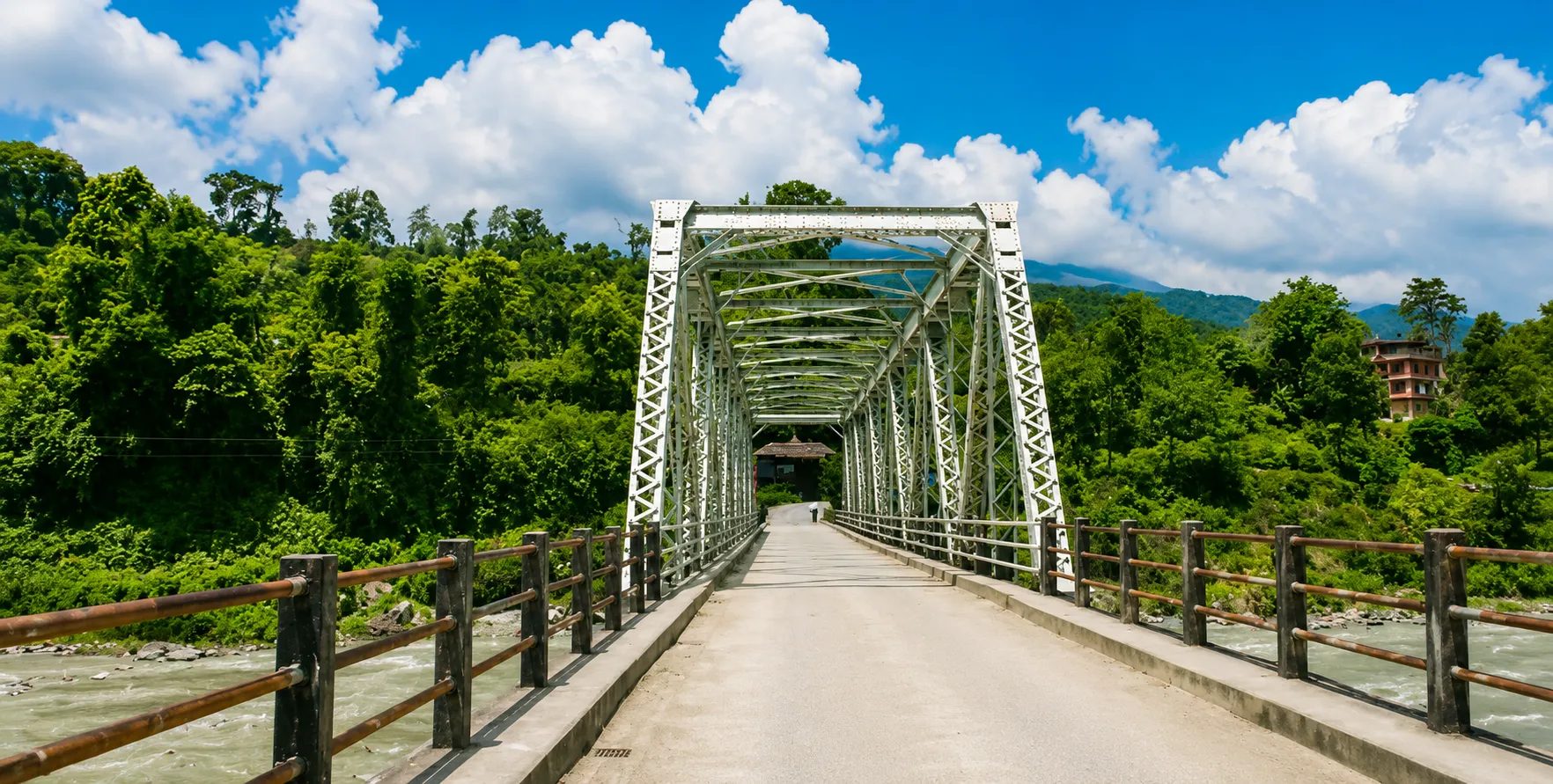
What to Expect on the Pokhara to Gorkha to Arughat Road
For first-time travelers on the Pokhara-to-Arughat road, understanding what each section looks and feels like reduces the uncertainty of any long mountain road journey. Here is the honest, on-the-ground description of each section:
Pokhara to Abu Khaireni: Easy but Potentially Slow
This Prithvi Highway section is the most comfortable part of the journey. The road has been progressively widened over the last decade, and in 2026 it’s in its best-ever condition, with significant sections now dual carriageway. The main challenge is traffic: the Prithvi Highway carries Nepal’s highest concentration of inter-city vehicles and can be congested, particularly at the Kathmandu exit end (less relevant here) and at market towns like Damauli. Landslides in the Trishuli gorge section can occasionally cause significant delays during monsoon—Nepal Vehicle Hiring monitors this section daily. Average speed on this section: 50 to 70 km/h in normal conditions. The Pokhara-to-Abu Khaireni drive offers pleasant mid-hill landscape views and is generally relaxing.
Abu Khaireni to Gorkha: Steady Climb
The 21-kilometer climb from Abu Khaireni to Gorkha gains approximately 800 meters of altitude on a paved but narrow provincial road. The road is in reasonable condition and climbs steadily through switchbacks across terraced hillside farmland. The views across the Marsyangdi Valley widen as you gain altitude. Average speed: 25 to 40 km/h. No significant technical driving challenges for an experienced driver, though the road is too narrow for larger vehicles to pass each other comfortably in some sections. Gorkha Bazaar at the top is a proper hill town with restaurants, shops, and Durbar above — worth the stop.
Gorkha to Arughat: Variable and Rough
The descent from Gorkha north to Arughat on the Budhi Gandaki is the most variable section of the pre-mountain approach. The upper portion near Gorkha is paved and in good condition. The lower portion approaching Arughat and the valley floor becomes rougher, with compacted gravel and dirt track sections alternating with paved stretches. This section carries little tourist traffic and more local vehicle use — expect to share the road with tractors, motorbikes, and local goods vehicles. Average speed: 15 to 30 km/h on the rough sections. The scenery is rewarding: the descent into the Budhi Gandaki valley reveals the distinctive deep gorge character that will define the next two weeks of trekking.
Arughat North to Soti Khola: Off-Road
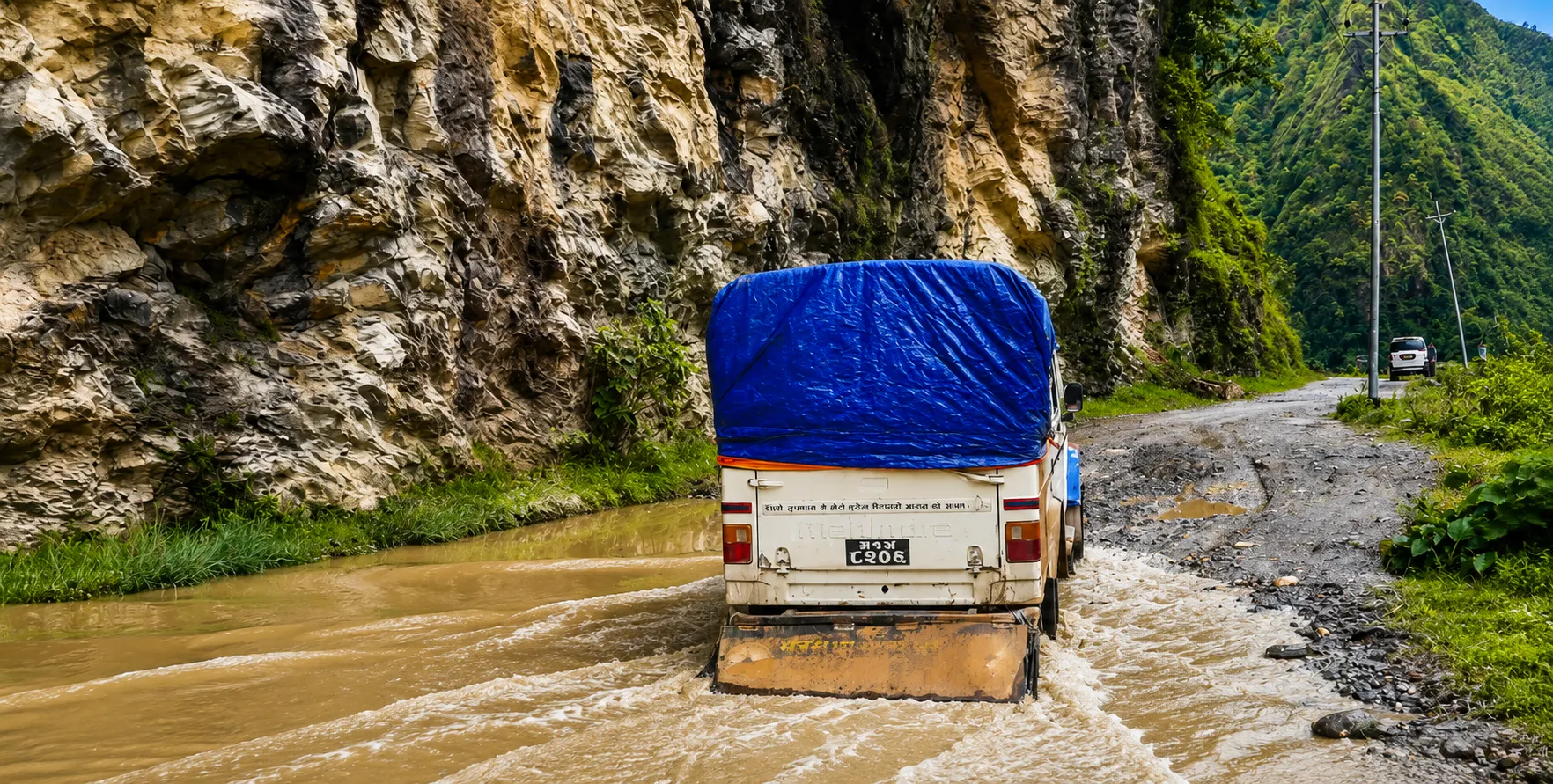
North of Arughat, the road becomes a genuine off-road track along the Budhi Gandaki’s bank. This section passes through the Arkhet area and the approaches to Soti Khola, crossing several small tributaries and running close to the river in places. The road surface is rough compacted earth and gravel, with sections of exposed rock. River crossing points vary by season — in low water (dry season), they are straightforward; in high water (monsoon and early post-monsoon), they require assessment and sometimes cannot be crossed. Average speed: 8 to 20 km/h. This is classic Nepal mountain track driving — slow, purposeful, and requiring a driver who knows what they are doing.
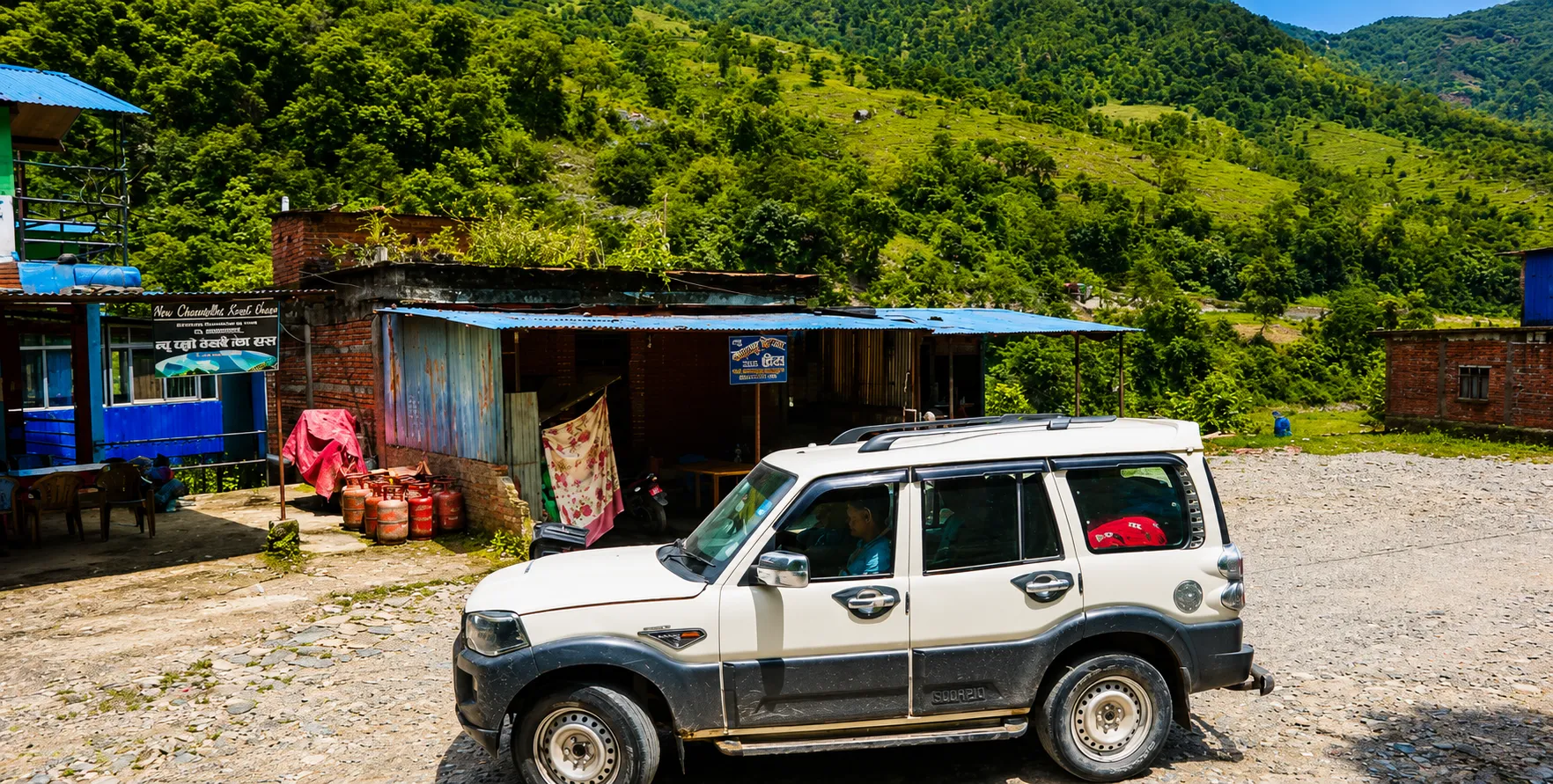
Accommodation at the Manaslu Circuit Trailhead
For trekkers arriving at Soti Khola or Maccha Khola in the late afternoon after the Pokhara-to-trailhead drive, understanding the accommodation options removes one layer of first-night uncertainty:
Soti Khola has several basic teahouses and guesthouses catering specifically to Manaslu Circuit trekkers — the start of the circuit’s teahouse system that extends (with varying density) all the way to Dharapani. Room quality at Soti Khola is basic: simple beds, shared bathrooms, and a dining room serving dal bhat, noodle soups, and standard trekker fare. The cost is low—about NPR 300 to 600 per room per night. Arriving by 4:30 to 5:00 p.m. for a 6:30 a.m.M Pokhara departure gives you first choice of rooms at Soti Khola, which matters more in peak season (October to November, April to May), when Manaslu Circuit trekker numbers peak.
Maccha Khola — the next settlement north of Soti Khola and the furthest point the Nepal Vehicle Hiring jeep can reach in good road conditions — also has basic teahouse accommodation. Its position slightly further along the circuit means trekkers who are driven to Maccha Khola start the second day’s trekking further ahead, reaching Jagat (the restricted area entry point) on Day 2 rather than Day 3.
Arughat Bazaar — for trekkers whose vehicle journey ends at Arughat due to road conditions — has the circuit’s best accommodation before the trailhead, with proper hotel facilities, attached bathrooms, and restaurant options. Arughat is a genuine small town with commercial infrastructure, making it the most comfortable overnight before the trek begins, even if it adds 5 to 6 hours of walking to Day 1.
Manaslu Circuit: The Restricted Area Experience
The Manaslu Circuit’s restricted area status is one of its most important characteristics — both as a logistical reality for permit planning and as a quality-of-experience factor that sets it apart from Nepal’s more open trekking circuits. Understanding what the restricted area means in practice helps trekkers appreciate both the preparation required and the experience delivered.
The Manaslu Conservation Area above Jagat was designated a restricted area in 1992, requiring all foreign trekkers to obtain the Manaslu Restricted Area Permit and to be accompanied by a licensed guide. This requirement has two practical effects: it limits the total number of trekkers on the circuit (as the permit cost and guide requirement exclude the budget solo-trekker market that dominates more open circuits), and it creates a permit revenue stream that funds conservation management in the Manaslu valley. As a result, 30-plus years after the restriction was established, the circuit has maintained better wildlife habitat, better trail infrastructure, and more authentic village communities than the Annapurna or Everest circuits.
The licensed guide requirement means that Manaslu Circuit trekkers travel with a local expert who provides cultural context, safety awareness on the Larkya La crossing, and emergency communication capability in a remote environment where rescue services are genuinely far away. Nepal Vehicle Hiring coordinates with partner licensed guide agencies for Manaslu Circuit guide assignment alongside the approach vehicle booking—contact us through our plan your trip page for complete vehicle-plus-guide coordination.
The restricted area also means that the teahouse system on the Manaslu Circuit, while adequate throughout the lower and middle sections, is less developed than on the Annapurna or Everest circuits. Trekkers should not expect the same range of menu options, the same quality of accommodation, or the same availability of charging facilities and wifi that has become standard on the Annapurna and Everest teahouse systems. The Manaslu Circuit teahouse experience is more basic, more genuine, and, for many trekkers, more satisfying precisely because it lacks tourist infrastructure.
- Pokhara to Ghatekhola Private Vehicle Hire: Full Guide 2026/27
- Where is Ghatekhola? Understanding the Manaslu Approach
- Pokhara to Ghatekhola: Distance and Journey Time
- Road Guide: Pokhara to Ghatekhola Section by Section
- Vehicle Options for the Pokhara to Ghatekhola Journey
- Permits Required for the Manaslu Circuit from Pokhara
- Gorkha: The Heritage Stop on the Pokhara-Ghatekhola Road
- The Manaslu Circuit Trek: What Awaits Beyond Ghatekhola
- Seasonal Guide: When to Make the Pokhara to Ghatekhola Drive
- Practical Tips for the Pokhara to Ghatekhola Private Vehicle Journey
- Nepal Vehicle Hiring: Complete Manaslu Circuit Transport
- Frequently Asked Questions: Pokhara to Ghatekhola Vehicle Hire
- Book Your Pokhara to Ghatekhola Private Vehicle Hire
- The Budhi Gandaki: Understanding the River That Defines the Journey
- Comparing the Pokhara and Kathmandu Approaches to the Manaslu Circuit
- Sample 16-Day Manaslu Circuit Itinerary with Vehicle Plan
- Manaslu Circuit vs Annapurna Circuit: Choosing Your Pokhara-Based Trek
- What to Expect on the Pokhara to Gorkha to Arughat Road
- Accommodation at the Manaslu Circuit Trailhead
- Manaslu Circuit: The Restricted Area Experience

Related Blog & Articles
Airport to Trek Starting Point Transfer Nepal

Kathmandu to Soti Khola by Jeep – Complete Route Guide (2025)
Kathmandu to Machha Khola
Kathmandu to Machha Khola Jeep Transfer