Plan a Trip


Pokhara to Mohare Danda Jeep Rental
Pokhara to Mohare Danda Jeep Rental
Mohare Danda — sometimes called Mohare Hill — is one of the Annapurna region’s best-kept secrets: a 3,300-meter ridge southwest of the far more famous Poon Hill, offering an equally spectacular panorama of Annapurna, Dhaulagiri, Manaslu, and Machhapuchhre, but with far fewer crowds. Where Poon Hill can feel genuinely busy during peak season, with hundreds of trekkers jostling for a sunrise photo spot, Mohare Danda remains a peaceful, community-run trekking destination — its lodges are operated as a cooperative eco-tourism initiative by the local Magar and Gurung villages of the area, offering a quieter and more intimate alternative for travellers seeking the same world-class mountain views without the bustle.
Reaching Mohare Danda begins with a road journey from Pokhara to the small trailhead village of Galeshwor, via the district town of Ben, a drive of roughly 75 to 95 kilometres along the Pokhara-Baglung-Beni Highway, taking 2.5 to 5 hours depending on road conditions and the final approach chosen. From Galeshwor (or the alternative jeep drop point of Falame Danda), the trek itself proceeds on foot through forest trails, traditional villages, and a steadily ascending ridge line to the Mohare Danda viewpoint and beyond, often looping back via Ghorepani, Tadapani, or Ghandruk to complete a circuit that can be tailored to anywhere from 4 to 10 days depending on your time and interest.
This complete 2026 guide covers everything from Pokhara to Mohare Danda jeep rental: the route to the trailhead, all transport options and costs, sample trek itineraries and loop options, the various return routes back to Pokhara, required permits, and why Nepal Vehicle Hiring Pvt Ltd is the right private jeep partner for this rewarding, lesser-known Annapurna trek.
Mohare Danda — The Quiet Alternative to Poon Hill
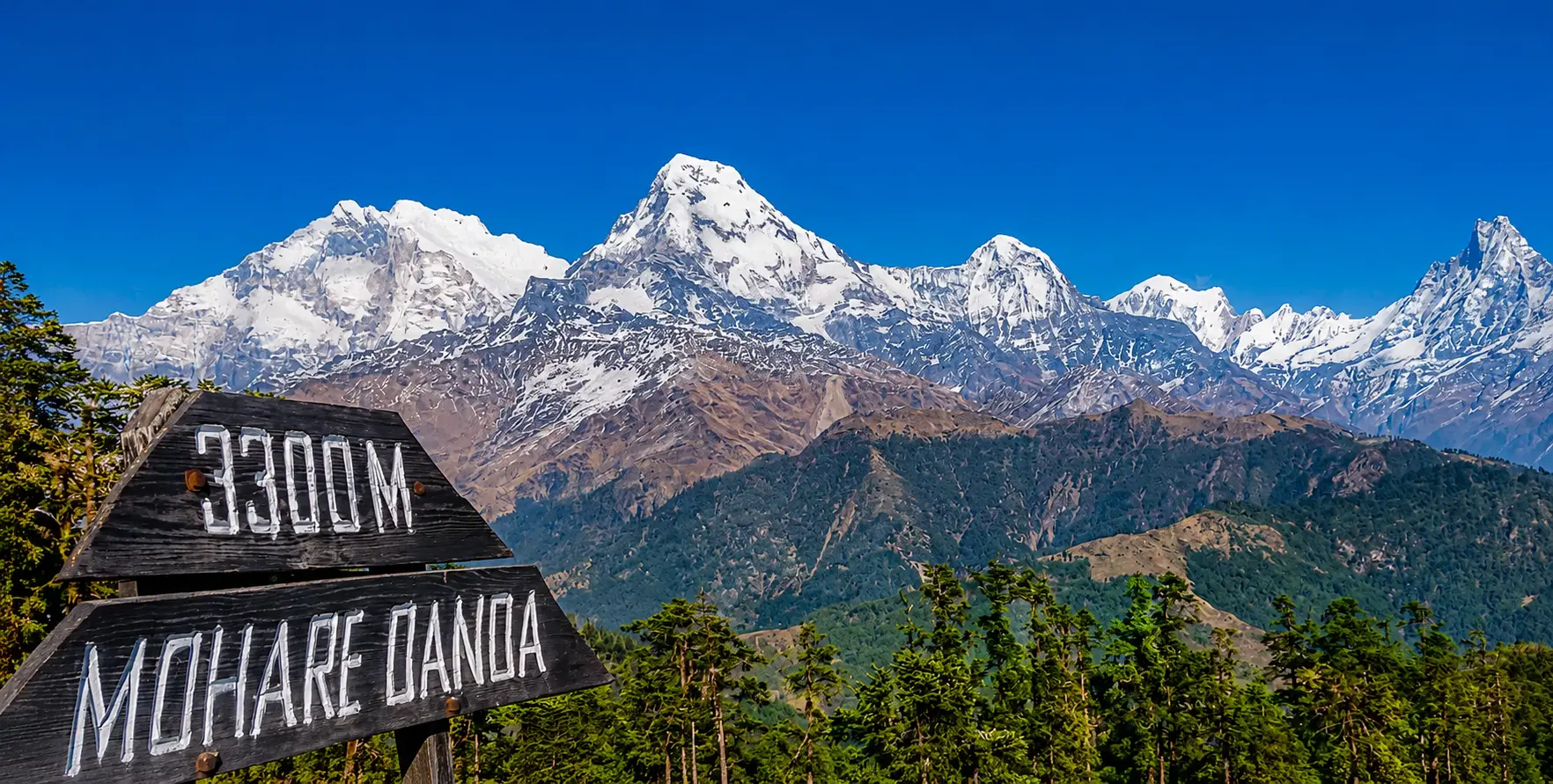
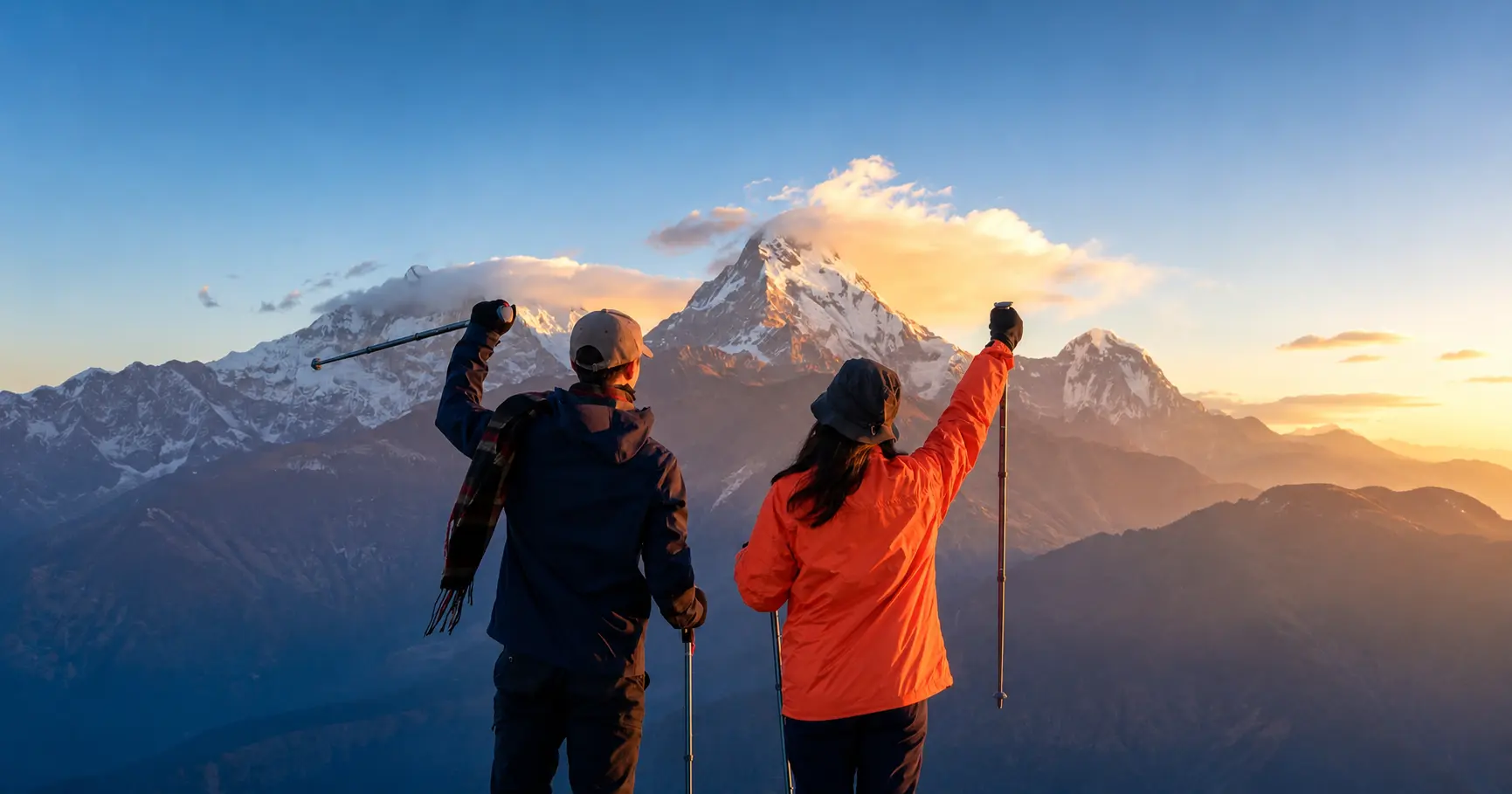
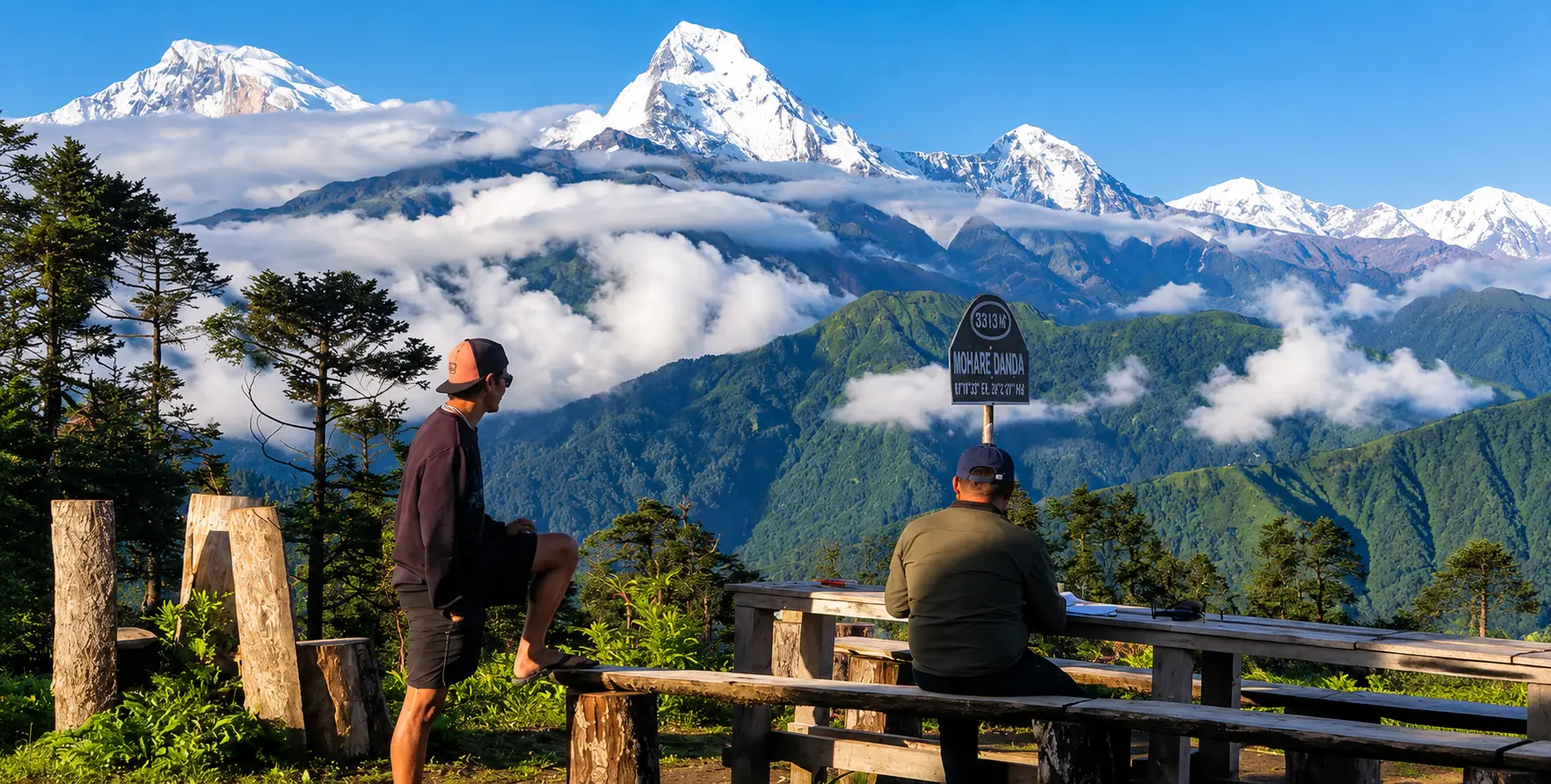
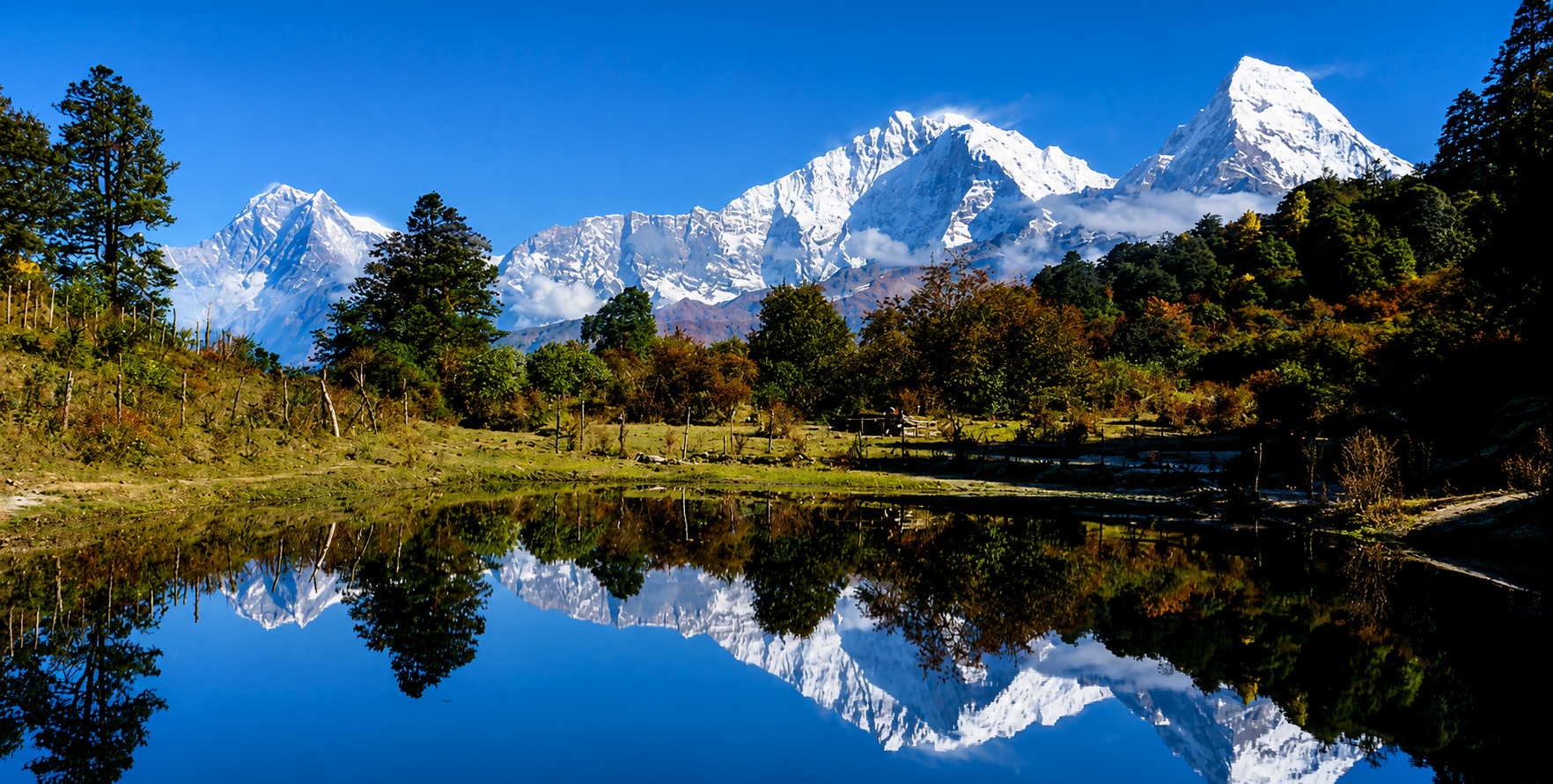
Mohare Danda sits on a forested ridge straddling the border of Myagdi and Parbat districts, within the wider Annapurna Conservation Area, at an altitude generally cited as approximately 3,300 meters (with some sources giving the slightly more precise figure of 3,313 meters). From the viewpoint platform at its summit, an uninterrupted panorama opens across the western Annapurna and Dhaulagiri ranges — Annapurna I, Annapurna South, Dhaulagiri, Manaslu, and the distinctive fishtail summit of Machhapuchhre are all visible on a clear day, alongside sweeping views down into the Pokhara Valley itself.
What distinguishes Mohare Danda most clearly from the nearby and far more visited Poon Hill is the trekking experience itself. The trail to Mohare Danda passes through genuine working villages — Banskharka, Nangi, and others — where community-based tourism cooperatives, rather than individually competing private lodges, manage the trekker accommodation and dining. This model, developed with support from various community development and eco-tourism initiatives over the past two decades, channels tourism revenue directly and equitably into the villages along the route, while also keeping the overall scale of tourism development deliberately modest. The result is a trek that feels considerably more intimate and culturally immersive than the increasingly cocommercialisedoon Hill corridor, while delivering a mountain panorama that loses nothing in comparison.
Key Facts at a Glance — Pokhara to Mohare Danda
| Route Detail | Information |
| Mohare Danda (Mohare Hill) Altitude | 3,300 m (also cited as 3,313 m) |
| Location | Southwest of Poon Hill — Myagdi/Parbat district border, Annapurna Conservation Area |
| Standard Trailhead | Galeshwor village (via Beni) — also reachable via Falame Danda |
| Distance — Pokhara to Galeshwor/Beni | 75–95 km |
| Travel Time by Private Jeep | 2.5 to 5 hours, depending on exact road conditions and stops |
| Road Type | Paved Pokhara–Baglung–Beni Highway; final stretch to Galeshwor mixed paved/rough |
| 4WD Required? | Recommended beyond Beni; not strictly mandatory in dry season |
| Views From Summit | Annapurna I, Annapurna South, Dhaulagiri, Manaslu, Machhapuchhre, Pokhara Valley |
| Trek Duration | 4 to 10 days, depending on itinerary (standalone or combined with Khopra Danda / Poon Hill) |
| Trek Type | Community-based eco-trek — homestays and community lodges, far quieter than Poon Hill |
| Permits Required | ACAP (Annapurna Conservation Area Permit) + TIMS Card |
| Best Season | March–May and September–November (winter also workable) |
Low Altitude Sickness Risk: At a maximum altitude of approximately 3,300 meters, Mohare Danda carries considerably lower AMS risk than higher Annapurna region destinations, making it an excellent choice for families, older trekkers, and anyone seeking a genuinely spectacular Himalayan panorama without the acclimatisation demands of higher routes.The Route — Pokhara to Galeshwor (Trailhead)
| Stop | Distance from Pokhara | Road Type | Key Notes |
| Pokhara Lakeside | Start (827 m) | City roads | Hotel pickup — private jeep departs from your hotel |
| Kusma | 45 km | Paved — Pokhara-Baglung Highway | Parbat District headquarters — fuel, snack stop |
| Beni | 75 km (1,025 m) | Paved highway | Myagdi District HQ — junction for Kali Gandaki/Jomsom road |
| Galeshwor | 80–85 km (1,130 m) | Paved/rough final stretch | Shiva temple, trailhead — trek begins on foot from here |
| Fale-me Danda (alternative) | 70–80 km | Rough local road | Alternative jeep drop point — short hike to Nangi |
Pokhara to Beni — The Paved Highway Section
The journey begins on the well-maintained Pokhara-Baglung Highway, heading west through Kusma — the headquarters of Parbat District — before reaching Beni, the district headquarters of Myagdi and an important junction town where the road to Jomsom and Muktinath branches off to the north along the Kali Gandaki valley. This entire stretch, approximately 75 km from Pokhara, is smoothly paved and suitable for any vehicle type, including a standard sedan.
Beni to Galeshwor — The Final Approach
From Beni, a short additional stretch of road leads to Galeshwor — a small village known locally for its riverside Shiva temple and the standard starting point for the Mohare Danda trek. This final section includes some rougher, less consistently paved sections. While a sedan can often manage it in good dry-season conditions, a 4WD jeep offers a noticeably smoother and more reliable ride, particularly for trekking groups carrying full gear.
Falame Danda — The Alternative Trailhead
Some trekking itineraries use Falame Danda as the jeep drop-off point, a short drive beyond Beni on a different local road, where a brief hike leads to the village of Nangi—itself an important stop on most Mohare Danda itineraries, regardless of the exact starting point chosen. Nepal Vehicle Hiring Pvt Ltd can arrange a private jeep transfer to either Galeshwor or Falame Danda, depending on which specific itinerary your trekking plan follows.

All Transport Options — Pokhara to Mohare Danda Trailhead
| Transport Option | Capacity | 2026 Cost | Travel Time | Best For |
| Private Jeep (Pokhara–Galeshwor) | 4–6 passengers | NPR 7,000–15,000 / USD 53–90 (full vehicle) | 2.5–5 hrs | Trekking groups, families, and flexible departure |
| Private Jeep (Pokhara–Falame Danda) | 4–6 passengers | NPR 6,500–13000 / USD 49–83 (full vehicle) | 2.5–4.5 hrs | Alternative trailhead access |
| Private Sedan (to Beni only) | 1–3 passengers | NPR 4,500–10,000 / USD 34–60 | 2–2.5 hrs | Light luggage, then local transfer onward |
Private Jeep — The Recommended Option
A private jeep from Nepal Vehicle Hiring Pvt Ltd is the most comfortable and flexible way to reach either Galeshwor or Falame Danda. With door-to-door pickup from your Pokhara Lakeside hotel, full luggage capacity for trekking gear, and the flexibility to depart whenever suits your trekking schedule, a private jeep removes the uncertainty of shared transport options.
- 2026 cost: NPR 7,000–12,000 (USD 53–90) for the full vehicle, one way, to Galeshwor
- Includes: Driver, fuel — all-inclusive pricing from Nepal Vehicle Hiring Pvt Ltd
- Capacity: 4–6 passengers comfortably with trekking gear on the roof rack
- Best for: Trekking groups, families, anyone wanting hotel pickup and flexible departure timing
Private Sedan — Suitable for Beni
For travellers continuing onward by local transport from Beni, or those whose itinerary involves a shorter trek that doesn’t require the full distance to Galeshwor, a private sedan is a comfortable and economical option for the paved highway section to Beni.
- 2026 cost: NPR 4,500–10,000 (USD 34–60) for the full vehicle, one way to Beni

Shared Jeep and Local Bus — Budget Options
Shared jeeps and local buses run from Pokhara’s Baglung Bus Park toward Beni and, with onward local transport, to Galeshwor. These are the most economical options but involve less predictable departure times, more passenger stops, and no hotel pickup.
- Shared jeep: NPR 400–700 per person
- Local bus: NPR 250–400 per person
- Best for: Solo budget trekkers with flexible schedules
Sample Mohare Danda Trek Itinerary
| Day | Route | Altitude/Notes |
| Day 1 | Drive Pokhara → Galeshwor → trek to Banskharka/Nangi | Forest trail, gradual ascent |
| Day 2 | Trek Nangi → Mohare Danda (3,300 m) | Cross Hampal Pass — community lodge overnight |
| Day 3 | Sunrise at Mohare viewpoint → trek toward Ghorepani/Tilkot | Optional: continue to Poon Hill loop |
| Day 4 | Trek down via Ghandruk/Tadapani or Tilkot/Baseri | Depends on the chosen loop direction |
| Day 5 | Trek to Siwai/Hile/Nayapul → drive back to Pokhara | 2–3 hr jeep transfer to Pokhara hotel |
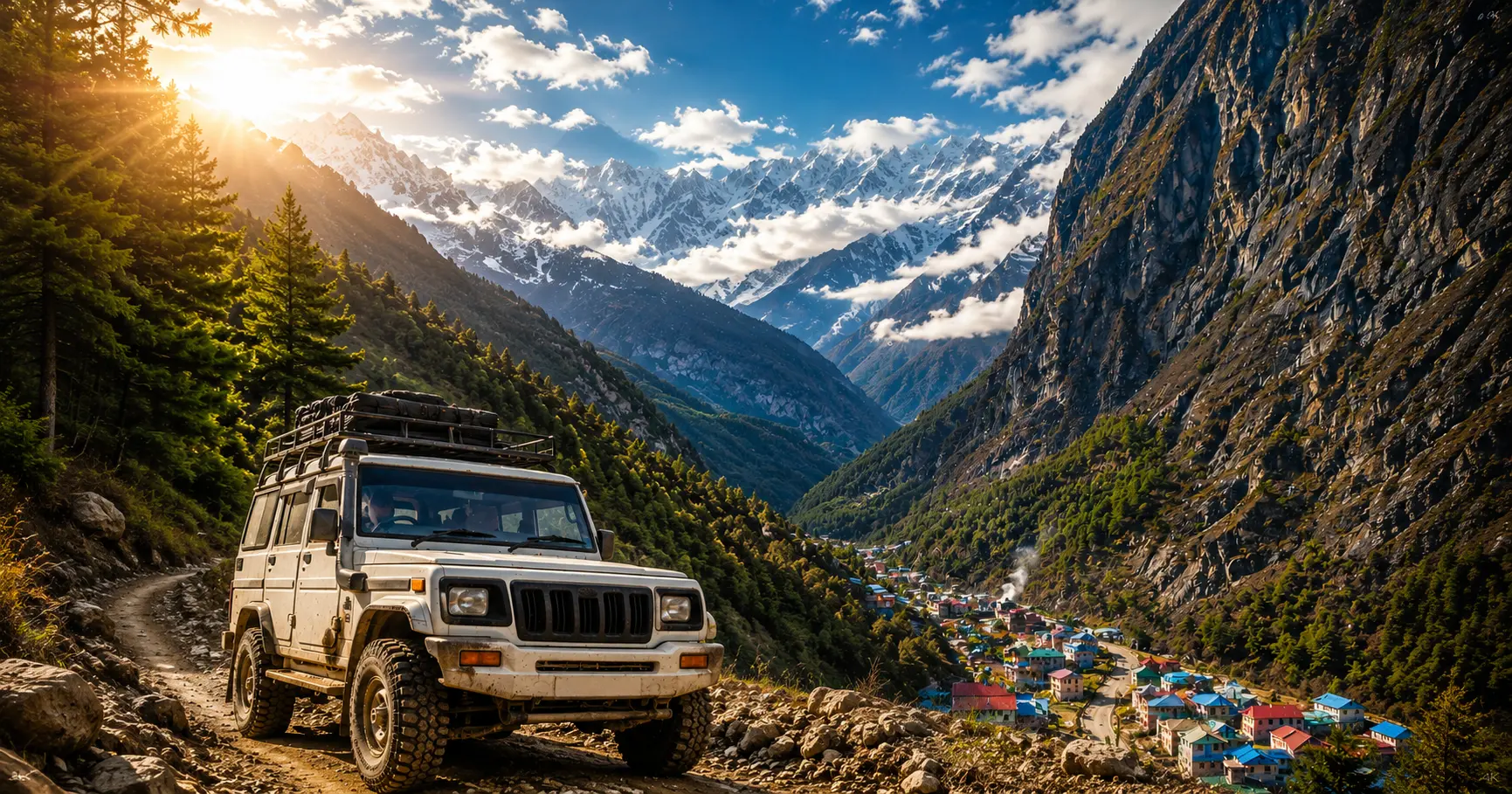
This 5-day itinerary is one of the most popular formats for the Mohare Danda trek, looping back via the Ghorepani-Poon Hill area or via Tadapani and Ghandruk. Longer 9- to 10-day itineraries are also widely offered, often combining Mohare Danda with the nearby, higher Khopra Danda viewpoint (offering even more expansive Himalayan views) before completing the same general loop back toward Ghandruk, Tadapani, or the Kali Gandaki valley.
Return Routes — Completing the Loop Back to Pokhara
One of the most appealing features of the Mohare Danda trek is the flexibility of its loop structure — trekkers can begin from Galeshwor and finish at several different points, each with its own onward jeep or taxi connection back to Pokhara.
| Return Route | End Trekking Point | Onward Transport | Approx. Drive Time to Pokhara |
| Via Ghorepani–Poon Hill loop | Nayapul / Banthanti | Private jeep / shared jeep | 45 min – 1.5 hrs |
| Via Tadapani–Ghandruk | Siwai | Private jeep/taxi | 1.5–2 hrs |
| Via Tilkot–Baseri (Kali Gandaki Valley) | Baseri | Jeep via Galeshwor/Beni | 2.5–3 hrs |
| Via Hile | Hile | Shared/private jeep | ~2 hrs |
Combine with Poon Hill: Many trekkers extend their Mohare Danda itinerary to include the classic Poon Hill sunrise viewpoint, looping through Ghorepani before descending to Nayapul or Banthanti — effectively combining two of the Annapurna region’s finest panoramic viewpoints into a single, moderately paced trekking circuit.
Permits Required for the Mohare Danda Trek
| Permit | Cost 2026 (approx.) | Where Obtained |
| ACAP (Annapurna Conservation Area Permit) | NPR 3,000 / USD 22–25 per person | Nepal Tourism Board, Pokhara or Kathmandu |
| TIMS Card | USD 10–20 per person | Nepal Tourism Board / TAAN office |
| Licensed Guide (mandatory 2026) | USD 20–30 per day | Arranged through a registered trekking agency |
Season Guide — Best Time for the Trek
| Season | Months | Road & Trail Conditions | Recommendation |
| Autumn | Oct–Nov | Excellent — dry, clear | Best season — peak mountain panorama clarity |
| Winter | Dec–Feb | Good but cold; possible light frost near summit | Good — quiet trails, very clear skies |
| Spring | Mar–May | Good — dry, rhododendron forests in bloom | Excellent — second peak season, colourful forest |
| Monsoon | Jun–Sep | Variable — leeches, occasional landslide risk on hill roads | Manageable at this altitude, but views are often clouded |
Practical Tips for Pokhara to Mohare Danda Jeep Rental
- Book your private jeep 24 to 48 hours in advance during peak season (October–November and March–May) — demand for vehicles on the Beni-Galeshwor route increases significantly during these months.
- Confirm with your driver and trekking agency which exact trailhead — Galeshwor or Falame Danda — your specific itinerary uses, as the jeep drop-off point differs between the two.
- Depart Pokhara by 7:00–8:00 AM to arrive at the trailhead with a full day remaining for the first trekking stage.
- Obtain your ACAP permit and TIMS card in Pokhara before departure — the Nepal Tourism Board office in Lakeside processes both.
- Confirm your return pickup point and arrange it at the same time as your outward booking — Nepal Vehicle Hiring Pvt Ltd can coordinate pickup from Nayapul, Siwai, Hile, or Baseri depending on your chosen loop direction.
- Carry NPR cash for the community lodges along the trek — card payment is generally not available at these remote village accommodations.
- A licensed guide is required under Nepal’s trekking regulations — arrange this through a registered agency alongside your transport booking.
- Pack for cool conditions at the summit — even in spring and autumn, mornings at Mohare Danda’s 3,300 m viewpoint are cold, especially for the pre-dawn sunrise viewing.
Why Choose Nepal Vehicle Hiring Pvt Ltd
- Trailhead Flexibility: We provide private jeep transfer to either Galeshwor or Falame Danda, matched to your specific trekking itinerary.
- Hotel Pickup in Pokhara: Door-to-door service from your Lakeside hotel — no need to navigate to Baglung Bus Park.
- Loop-Friendly Return Booking: We coordinate return pickup from Nayapul, Siwai, Hile, or Baseri, wherever your specific loop itinerary concludes.
- Right Vehicle for the Terrain: Scorpio 4WD and similar vehicles suit the rougher final approach beyond Beni.
- Transparent All-Inclusive Pricing: Driver and fuel are included in every quote — no hidden charges.
- 24/7 Booking: WhatsApp or phone at +977 981-4227196 — instant confirmation for your Mohare Danda trek transport.
Frequently Asked Questions — Pokhara to Mohare Danda
How far is Mohare Danda from Pokhara, and how long does the journey take?
The jeep journey from Pokhara to the Galeshwor trailhead covers about 75 to 95 km and takes 2.5 to 5 hours, depending on road conditions and the final approach. From Galeshwor, the trek to Mohare Danda itself (3,300 m) typically takes 2 to 3 days of walking.
What is the 2026 cost of a private jeep from Pokhara to the Mohare Danda trailhead?
A private jeep to Galeshwor costs approximately NPR 7,000 to NPR 15,000 (USD 53 to USD 90) for the full vehicle, one way, including driver and fuel.
How is Mohare Danda different from Poon Hill?
Both offer spectacular Annapurna and Dhaulagiri panoramas at similar altitudes (Mohare Danda at ~3,300 m versus Poon Hill at 3,210 m). Still, Mohare Danda is considerably quieter, with community-run lodges and a less commercially developed trail. At the same time, Poon Hill is Nepal’s most visited short trekking destination and can be genuinely crowded during peak season.
Is a 4WD jeep necessary for the drive from Pokhara to the Mohare Danda trailhead?
The main highway to Beni is fully paved and suitable for any vehicle. The final stretch from Beni to Galeshwor includes rougher sections, so a 4WD jeep is recommended for comfort and reliability, though it’s not always strictly mandatory in good dry-season conditions.
Can I combine Mohare Danda with Poon Hill or Khopra Danda?
Yes — many trekkers combine Mohare Danda with a loop through Ghorepani and Poon Hill, or extend to the higher Khopra Danda viewpoint, before completing the circuit via Tadapani, Ghandruk, or the Kali Gandaki valley back to a jeep pickup point.
What permits are needed for the Mohare Danda trek?
The Annapurna Conservation Area Permit (ACAP, approximately NPR 3,000 / USD 22–25) and a TIMS card (USD 10–20) are required, along with a licensed guide under Nepal’s current trekking regulations.
Conclusion
Mohare Danda offers one of the Annapurna region’s most rewarding trekking experiences for travellers seeking the same world-class mountain panoramas found at Poon Hill, but in a quieter, more community-immersive setting. The journey begins with a straightforward but scenic jeep transfer from Pokhara through Kusma and Beni to the trailhead village of Galeshwor — then several days of genuinely peaceful trekking lead to one of the finest and least crowded Himalayan viewpoints in the entire Annapurna Conservation Area.
Nepal Vehicle Hiring Pvt Ltd provides reliable, comfortable private jeep hire for this trailhead transfer, with the flexibility to match your specific loop itinerary, hotel pickup in Pokhara, and coordinated return transport from wherever your trek concludes.
Book your Pokhara to Mohare Danda jeep — Call or WhatsApp: +977 981-4227196
Email: [email protected]
- Pokhara to Mohare Danda Jeep Rental
- Mohare Danda — The Quiet Alternative to Poon Hill
- Key Facts at a Glance — Pokhara to Mohare Danda
- All Transport Options — Pokhara to Mohare Danda Trailhead
- Sample Mohare Danda Trek Itinerary
- Return Routes — Completing the Loop Back to Pokhara
- Permits Required for the Mohare Danda Trek
- Season Guide — Best Time for the Trek
- Practical Tips for Pokhara to Mohare Danda Jeep Rental
- Why Choose Nepal Vehicle Hiring Pvt Ltd
- Frequently Asked Questions — Pokhara to Mohare Danda
- Conclusion

Related Blog & Articles
Kathmandu to Ghandruk Private Jeep: The Complete Guide

Besisahar to Dharapani Jeep Hire – Complete 4WD Transfer Guide for Annapurna Circuit Trekkers

Pokhara to Ghorepani Vehicle Transfer