Plan a Trip


Upper Mustang Bike Ride
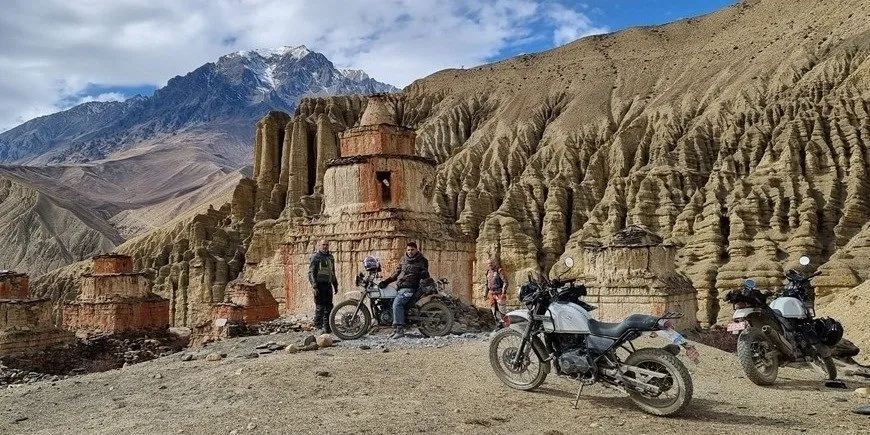
Upper Mustang Bike Ride — Mountain Biking the Forbidden Kingdom with Vehicle Support
There is a road in the far west of Nepal that goes where very few roads in the world go: north from Kagbeni, through the entry checkpoint of one of the last restricted kingdoms on earth, climbing through a high desert landscape of ochre canyons, wind-carved rock formations, and ancient cliff-face cave monasteries toward the walled medieval city of Lo Manthang at 3,840 metres. The Upper Mustang bike ride on this road — whether by mountain bike, motorbike, or the increasing number of adventure cyclists choosing this route — is one of the finest and most remote cycling experiences available in South Asia, and arguably in the Himalayan world. The combination of extraordinary landscape, living medieval Tibetan Buddhist culture, permit-controlled exclusivity, and the physical challenge of high-altitude off-road riding makes it a journey that no amount of lesser cycling adventure can adequately substitute for.
The Upper Mustang bike ride does not work well without a support vehicle. The distances between villages in Upper Mustang are substantial, the terrain is technically demanding on fully loaded bikes, and the logistical requirements of a multi-day high-altitude ride through a restricted area — fuel, spare parts, emergency equipment, luggage, accommodation booking coordination — exceed what any cycling group can reliably carry on the bikes themselves. A private 4WD jeep from Nepal Vehicle Hiring Pvt Ltd serving as the dedicated support vehicle is not an optional luxury but the practical foundation that makes the Upper Mustang bike ride achievable for any group beyond the most self-sufficient expedition cyclists.
This complete 2026 guide covers everything about the Upper Mustang bike ride and the vehicle support that accompanies it: the full route from Pokhara or Jomsom to Lo Manthang, the 2026 permit changes (the major update making Upper Mustang more accessible than ever before), what the terrain actually demands, the support vehicle role and costs, what to see in Lo Manthang and the surrounding kingdom, the best season, practical preparation, and how Nepal Vehicle Hiring Pvt Ltd provides the private jeep support vehicle hire that makes every Upper Mustang cycling adventure properly equipped and properly supported.
Upper Mustang — The Last Forbidden Kingdom
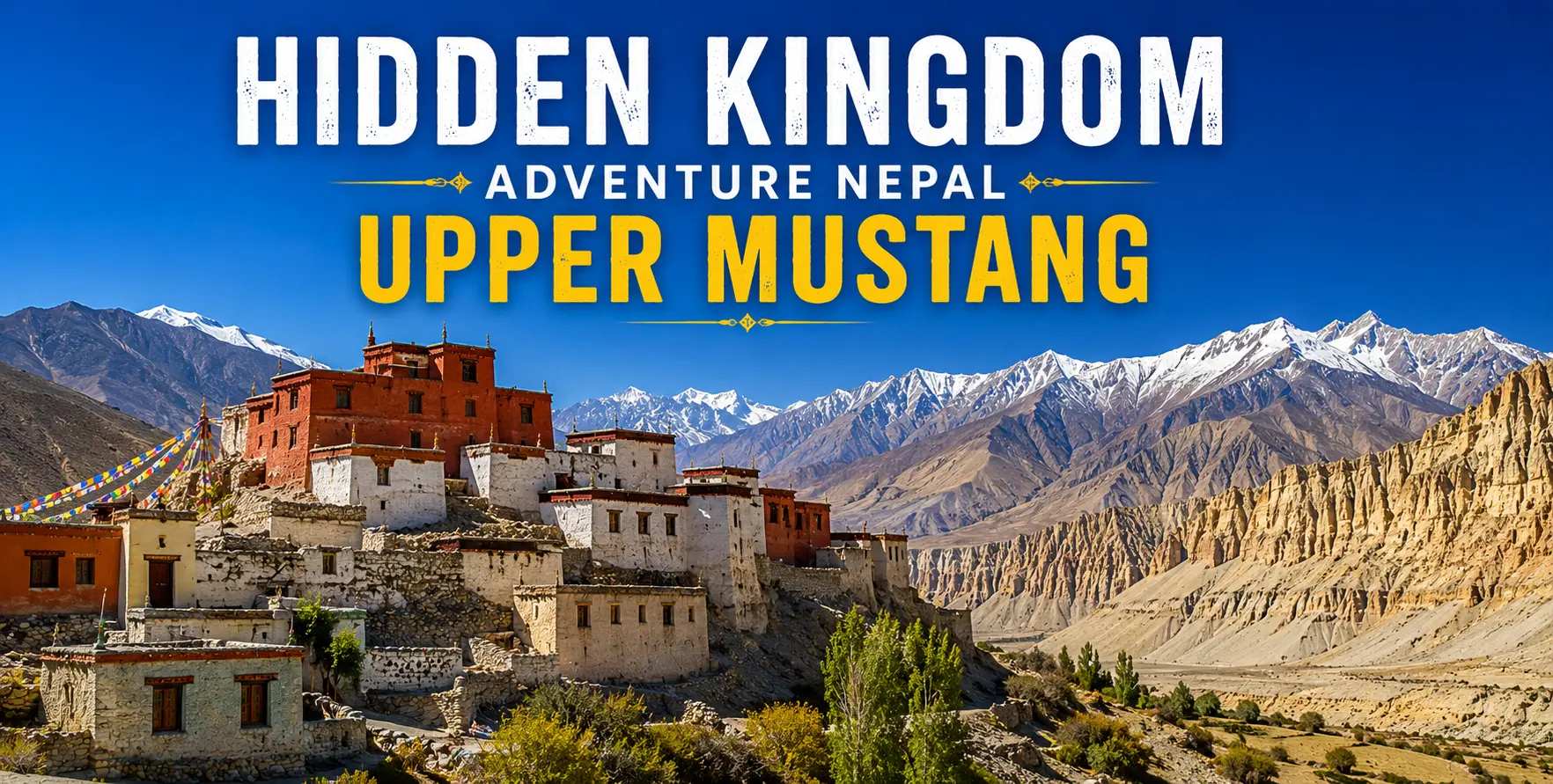
Upper Mustang — the area of Mustang District that lies north of the Kagbeni checkpoint, encompassing the ancient Kingdom of Lo and its walled capital Lo Manthang — was closed to all foreign visitors until 1992, making it one of the last Himalayan regions to open to international tourism and one of the most culturally intact Tibetan-influenced communities still accessible anywhere in the modern world. The former Kingdom of Lo, established in the fourteenth century by the Tibetan warrior Ame Pal, maintained semi-autonomous status within Nepal’s national territory well into the democratic era, with the hereditary king of Lo (the Raja of Lo Manthang) retaining traditional authority over his people and territory even as Nepal underwent the political transformations of the twentieth century. The last king, Jigme Dorje Palbar Bista, passed away in 2016, formally ending the royal dynasty — but his capital, Lo Manthang,g survives as one of the most remarkably preserved medieval Tibetan Buddhist cities anywhere, a community of approximately 1,000 people living within a 600-year-old walled town whose street plan, architecture, and daily ritual life would be recognisable to the city’s founders.
The landscape of Upper Mustang is the defining characteristic that makes the bike ride through it so extraordinary. Unlike the monsoon-drenched, forested terrain of most of Nepal’s mountain regions, Upper Mustang sits in the deepest rain shadow of the Himalayan range, receiving less than 200 mm of precipitation annually — comparable to a semi-desert, and in its visual character completely unlike anything else in Nepal. Red and ochre sandstone canyons, eroded into bizarre pinnacle formations by millennia of wind and seasonal meltwater, line the valley walls between every village on the route. The ancient trade route to Tibet that this valley served for centuries passes through terrain that has been compared, not unreasonably, to the canyonlands of the American Southwest or the high desert of the Tibetan Plateau itself — and the occasional medieval monastery or whitewashed village visible against this elemental backdrop creates a visual contrast of remarkable power.
The Upper Mustang trek offered by our sister company Trek Nepal Himalayas is the walking version of this same journey, and the extensive research and itinerary detail developed for that product underpins much of the route knowledge in this guide. Alpine Luxury Treks provides the premium end of the Upper Mustang experience — luxury lodge accommodation, private chef service, and premium guiding — for cyclists and trekkers who want the highest available comfort standard in this remote region.
The 2026 Permit Change — Upper Mustang Is Now More Accessible
The single most significant development for Upper Mustang bike ride planning in 2026 is the restructuring of the Restricted Area Permit (RAP) from the previous flat fee of USD 500 per person for the first 10 days to a new per-day rate of USD 50 per person per day, issued for exactly the number of days required. This change is transformative for the Upper Mustang cycling community: previously, a group wanting to do a 5-day fast mountain bike circuit of Upper Mustang paid the same USD 500 per person as a group spending 14 days trekking — creating a significant cost barrier for shorter, faster visits. Under the new 2026 system, a 5-day Upper Mustang bike ride costs USD 250 per person in RAP fees rather than USD 500 — a saving that meaningfully changes the economics of short-format cycling adventures in the restricted area.
The permit day count begins when the group crosses the Kagbeni checkpoint northward into the restricted area, and ends when they return through the same checkpoint heading south. This means that the driving and cycling days in Lower Mustang (Jomsom, Marpha, Muktinath) before the Kagbeni crossing do not count against the permit, and that the return driving day from Jomsom to Pokhara after the Kagbeni exit similarly does not add to the permit cost. For a standard Upper Mustang bike tour covering Kagbeni to Lo Manthang and back in 7 to 10 days, the 2026 RAP cost is therefore USD 350 to USD 500 per person — in addition to the standard ACAP permit (NPR 3,000 for foreign nationals) and TIMS card (USD 10 to 20). Nepal Vehicle Hiring Pvt Ltd coordinates permit applications for all Upper Mustang vehicle support packages through our registered agency partner network.
NOTE: Upper Mustang requires a minimum of 2 people with a licensed guide for the Restricted Area Permit to be issued. Solo cyclists cannot enter the restricted area and must join a registered tour or find at minimum one additional participant for the RAP application.
The Route — Kagbeni to Lo Manthang and Return
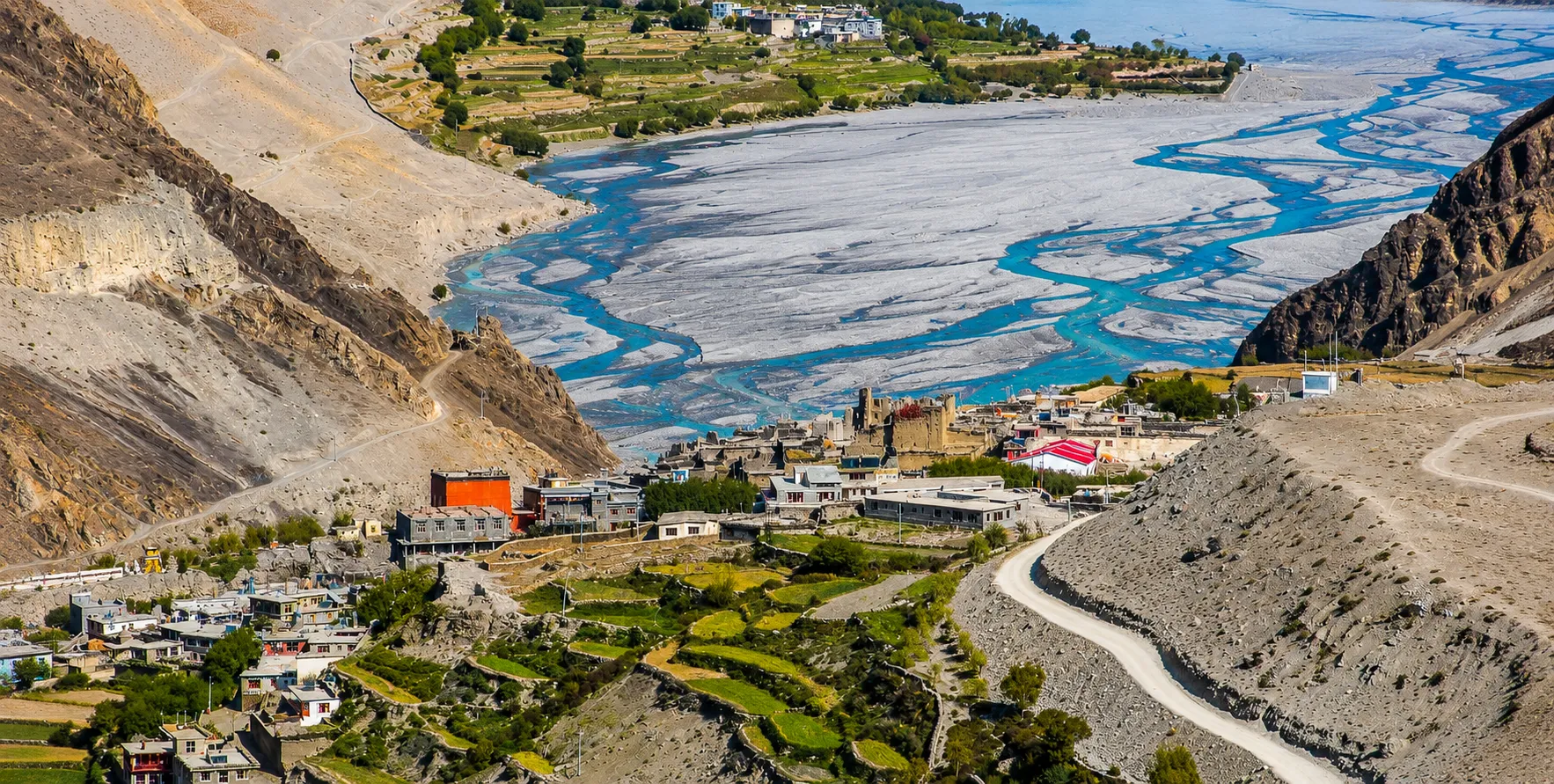
The standard Upper Mustang bike ride route begins at Jomsom (2,720 m) or Kagbeni (2,810 m), depending on whether the group rides or drives the Jomsom-to-Kagbeni section. Most dedicated mountain bike groups ride this section as a warm-up day, while motorbike riders often combine it with the Jomsom arrival day for a late-morning Kagbeni start. The route from Kagbeni to Lo Manthang follows the ancient trading route northward through the Mustang kingdom’s main valley, covering approximately 105 to 115 kilometres of mostly off-road terrain across 4 to 5 riding days.
Kagbeni to Chele (3,050 m) — The Restricted Area Entry. The Kagbeni checkpoint is where the RAP permit is scanned, identities verified, and official entry into Upper Mustang is recorded. Beyond Kagbeni, the character of the landscape changes almost immediately: the greenery of the Kali Gandaki valley floor is left behind, and the terrain opens into the characteristic Upper Mustang canyon landscape of red and ochre rock. The first riding day to Chele or Eklobhati covers approximately 30 to 35 kilometres of mixed terrain — some jeep track, some rough single-track, and the first of the significant altitude gains that characterise the route.
Chele to Syangboche (3,800 m) — The Most Demanding Section. The second riding day is consistently described by all operators and cyclists as the most technically challenging of the Upper Mustang bike ride: narrow cliff-face trails carved into sheer rock walls, significant sections requiring bike carrying rather than riding, and altitude that builds from 3,050 to 3,800 metres in a single day. This is where the support jeep from Nepal Vehicle Hiring Pvt Ltd proves its most critical value: carrying the cycling group’s luggage, providing emergency mechanical and medical support, and — for those stretches that exceed the technical capability or physical reserves of individual riders — offering a rescue option that prevents a difficult section from becoming a trip-ending crisis.
Syangboche to Ghami (3,500 m) — The Ancient Villages. The third riding day moves through some of Upper Mustang’s most culturally rich territory: the dramatic Luri Gompa cave monastery, carved into a cliff face and accessible by a short ladder climb, is one of the most memorable cultural stops on the entire route. Ghami village, with its famous long mani wall (the longest in Nepal at approximately 400 metres) and its ancient monastery, provides a genuinely moving encounter with Upper Mustang’s living religious tradition — chortens, prayer flags, and the sounds of monastic chanting creating an atmosphere quite different from anything available in the more accessible parts of Nepal.
Ghami to Tsarang (3,560 m) — The Royal Fort. Tsarang (also written Charang) is home to the ancient fort palace of the Lo kings and the Tsarang Gompa — a five-storey monastery housing an extraordinary collection of ancient thangka paintings and clay Buddha statues that date to the fourteenth-century founding of the Kingdom of Lo. The Tsarang Gompa’s red-painted exterior is one of Upper Mustang’s most recognisable visual icons, and the combination of the medieval fort ruins on the ridge above and the monastery in the village below creates an architectural time capsule of exceptional quality.
Tsarang to Lo Manthang (3,840 m) — The Forbidden Kingdom’s Capital. The final riding day to Lo Manthang is typically short in distance (approximately 15 to 20 kilometres) but significant in altitude and emotional weight — the moment of arrival at the walled city’s entrance gate, passing through the ancient archway into the warren of narrow lanes and whitewashed buildings within, is one of those travel experiences that justifies every difficult kilometre of the approach. The private support jeep from Nepal Vehicle Hiring Pvt Ltd arrives at Lo Manthang through the same road, already having secured accommodation for the group through pre-arranged bookings coordinated from Pokhara before departure.
Lo Manthang — What to See in the Forbidden Kingdom’s Capital
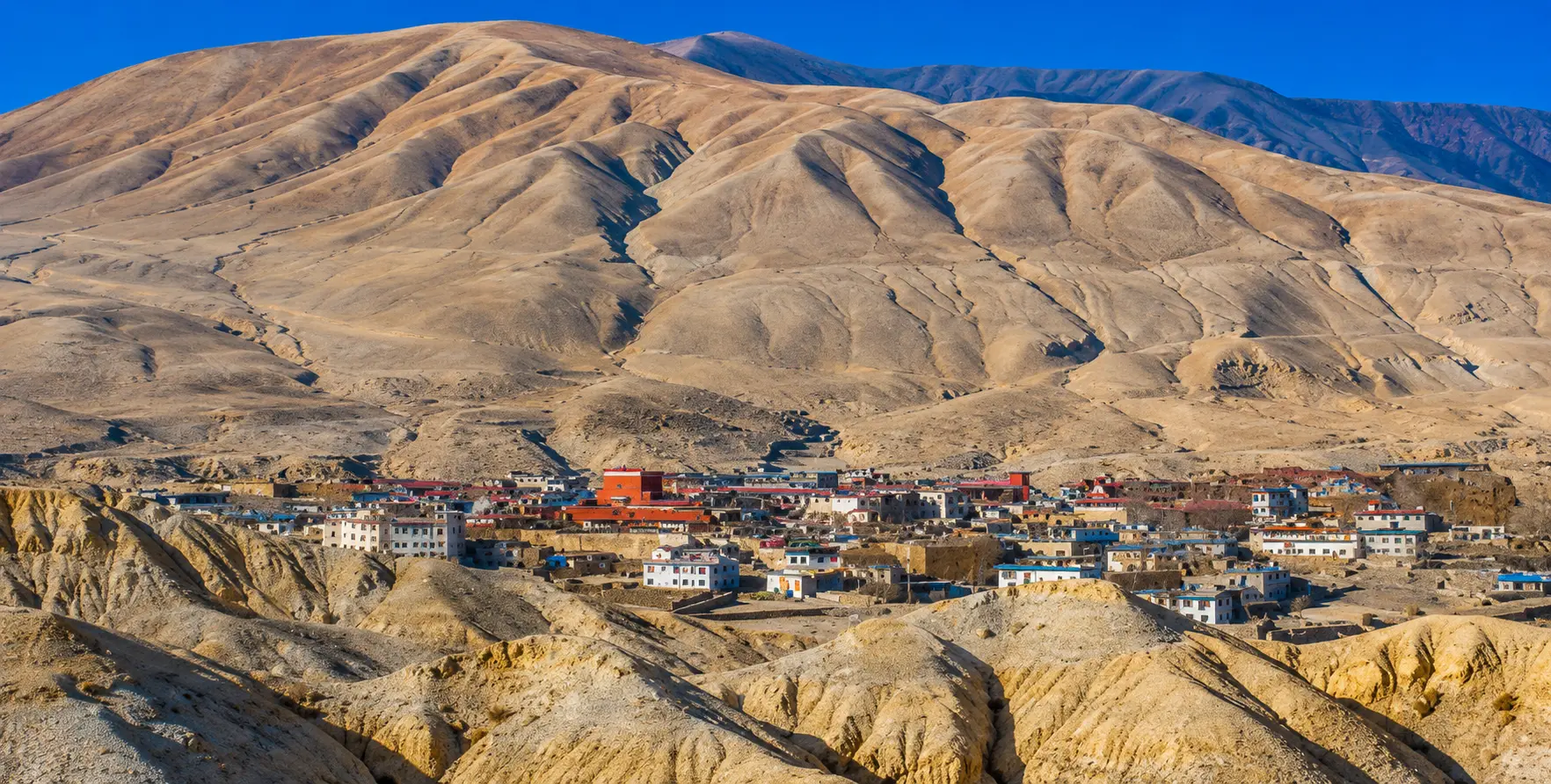
Lo Manthang at 3,840 metres is both the destination and the reward of the Upper Mustang bike ride: a walled medieval Tibetan Buddhist city whose white-painted stone buildings, royal palace, four major monasteries, and narrow lane system have remained essentially unchanged in their fundamental character for six centuries. A full rest day in Lo Manthang — standard on all well-organised bike tours — is genuinely insufficient to explore everything the city and its immediate surroundings offer, and most experienced operators strongly recommend at least 2 nights in Lo Manthang to allow proper exploration.
The Lo Manthang Gompa complex includes four major monasteries within the walled city: the Jampa Lhakhang (a three-storey monastery housing a remarkable collection of 15th-century murals and a 14-metre Maitreya Buddha statue), the Thubchen Gompa (one of the largest assembly halls in the entire Mustang region, with extraordinary ceiling frescoes recently restored with Tibetan and international heritage funding), the Choede Gompa (the most active monastery in the city, where monks conduct daily prayer sessions that visitors may observe), and the Rongchung Gompa. Each of these monasteries represents a different era and lineage of the Kingdom of Lo’s Buddhist tradition, and taken together they constitute one of the most concentrated collections of original Himalayan Buddhist art and architecture accessible to visitors anywhere.
The Royal Palace of the former Kingdom of Lo stands at Lo Manthang’s northeast corner — a five-storey structure that was the residence of the Lo royal family until relatively recently, and that remains in the care of the royal family even after the formal end of the kingdom. Access is by guided tour only, arranged through the Lo Manthang guesthouses, and the interior displays a personal collection of royal regalia, thangka paintings, and historical artefacts that provide the most direct connection to the four-century history of Himalayan royalty that this walled city embodies.
The Choser Caves — a complex of sky caves carved into the clifftops north and west of Lo Manthang — are among the most archaeologically significant sites in the entire Mustang region, containing ancient human remains, manuscript fragments, and cave-painted shrines that archaeologists have dated to the eighth to twelfth centuries. The Choser cave complex is reachable on a day trip from Lo Manthang by private jeep to the canyon base, followed by a climb on foot to the cliff face — a half-day excursion that the Nepal Vehicle Hiring Pvt Ltd support vehicle handles as a standard Lo Manthang rest-day extension on request.
The Support Jeep — Why It Is Essential for Upper Mustang Cycling
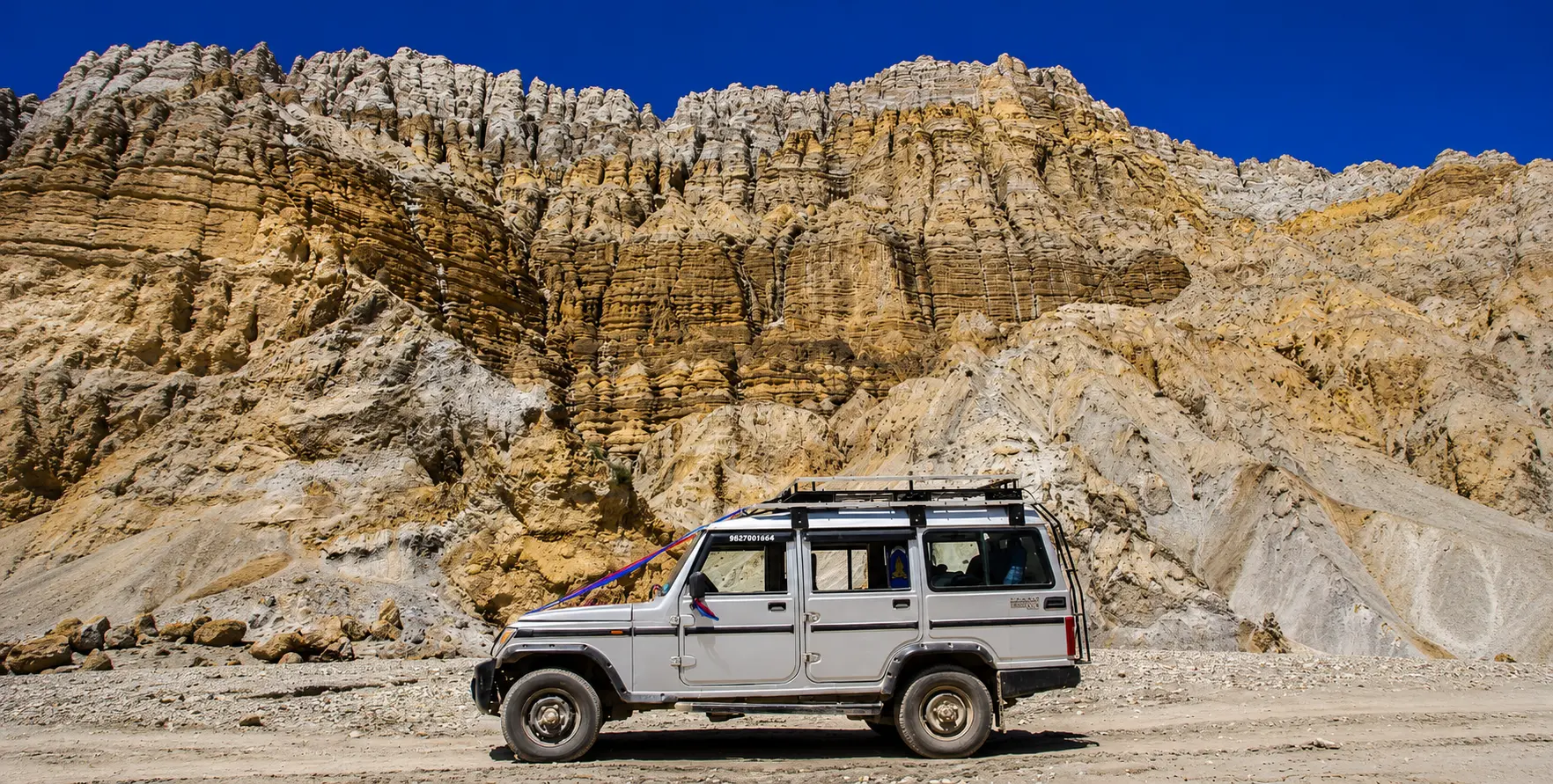
The question of whether a support vehicle hire is necessary for the Upper Mustang bike ride has a clear and consistent answer from every operator, guide, and returning cyclist who has done this route: yes, unreservedly, for any group that wants to complete the journey safely, reliably, and with the flexibility to respond to the inevitable mechanical failures, weather events, and physical limits that a multi-day high-altitude off-road cycling adventure generates.
Luggage Support. The distance from Jomsom to Lo Manthang and back is approximately 210 to 230 kilometres of mostly rough terrain at an average altitude exceeding 3,200 metres. Carrying tents, sleeping bags, spare clothing, cooking equipment, camera gear, medical supplies, spare parts, and personal luggage on fully loaded bikes for this distance, at this altitude, on this terrain, transforms a challenging but achievable cycling adventure into an expedition-grade undertaking that requires months of prior loaded-touring experience. A private support jeep from Nepal Vehicle Hiring Pvt Ltd carries all luggage, freeing riders to focus entirely on the cycling itself.
Emergency Support and Rescue. Upper Mustang is a restricted area with no helicopter evacuation infrastructure comparable to the Khumbu or main Annapurna region. Medical emergencies, serious mechanical failures, altitude sickness requiring rapid descent, and weather-related route changes all require a vehicle capable of evacuating a rider to Jomsom, where helicopter access is available, at any point on the route. The support jeep is this evacuation capacity — and in a high-altitude restricted area with no public transport, its presence is the essential safety margin that responsible operators build into every Upper Mustang cycling tour.
Fuel and Supply Logistics. Upper Mustang has limited fuel availability: Jomsom, Kagbeni, and Lo Manthang have fuel points, but supplies are not always guaranteed, particularly at Lo Manthang where resupply depends on infrequent delivery. The private jeep hire from Nepal Vehicle Hiring Pvt Ltd carries reserve fuel as standard for all Upper Mustang support vehicle bookings, and our drivers coordinate with the Lo Manthang fuel point in advance to confirm availability before departure. Without a vehicle-carried fuel reserve, a motorbike group faces a genuine risk of fuel-stranding in the restricted area.
Accommodation and Route Coordination. The limited accommodation in Upper Mustang’s village guesthouses — typically 3 to 8 rooms per village — requires booking to guarantee space for a cycling group. The support vehicle driver from Nepal Vehicle Hiring Pvt Ltd coordinates advance accommodation bookings along the route before departure from Jomsom, ensuring that when the cycling group arrives at each village, beds, hot water, and dinner are confirmed rather than uncertain.
The Cave Monasteries and Ancient Ruins Along the Route
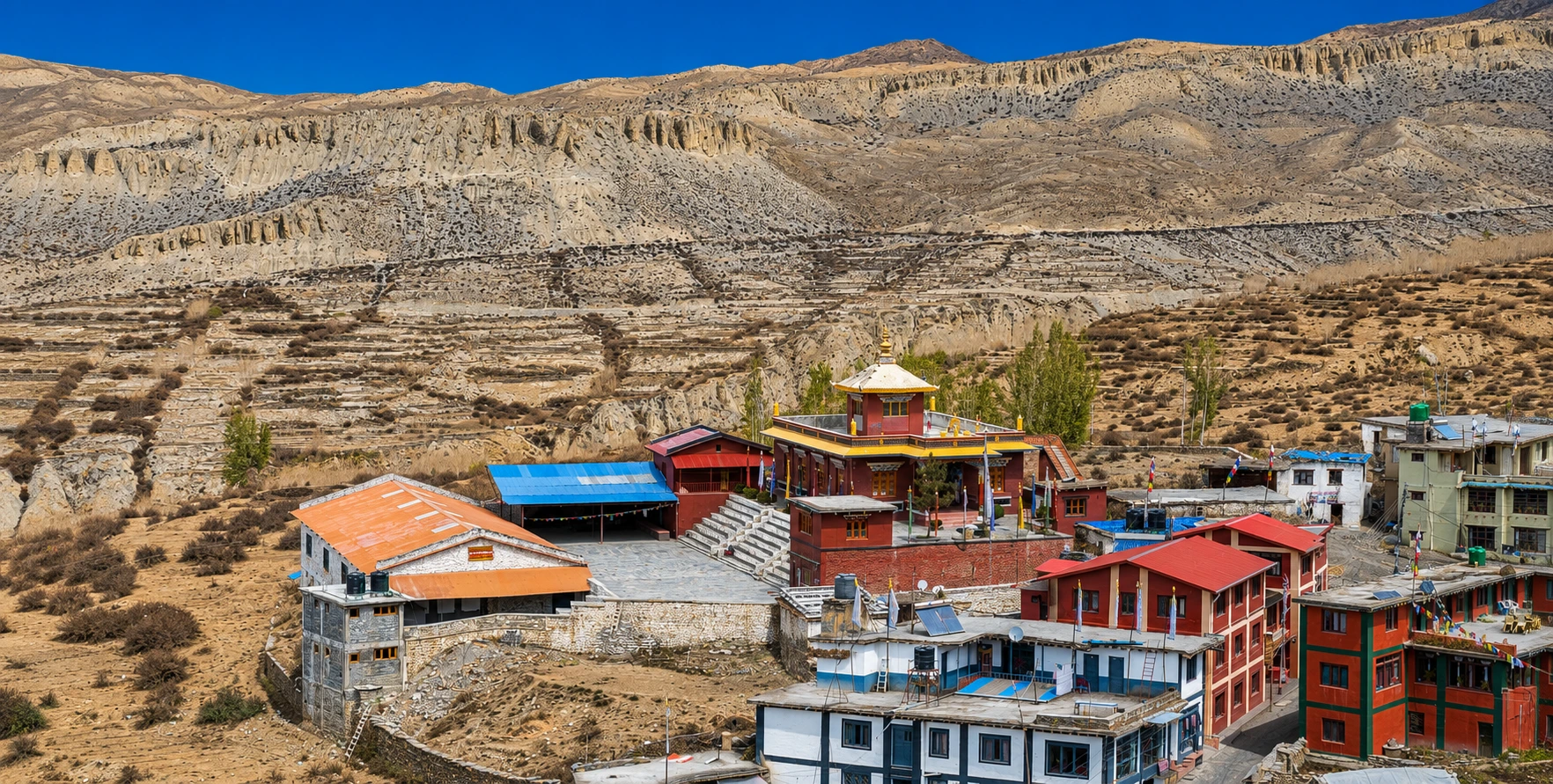
One of the defining qualities of the Upper Mustang bike ride that distinguishes it from any other cycling adventure in Nepal is the density of ancient religious and archaeological sites visible directly from the route — not as detours requiring significant off-trail effort, but as natural features of the landscape through which the road passes. The cliff-face cave systems carved into the Upper Mustang canyon walls contain some of the oldest human habitation evidence in the entire Himalayan region, with archaeological investigations in recent decades revealing cave complexes occupied as early as 2,500 to 3,000 years ago and containing manuscripts, textiles, and human remains that have transformed scholarly understanding of pre-Buddhist Himalayan culture.
The Luri Gompa — accessible on a short stop from the route between Ghami and Tsarang — is one of the most visually dramatic cave monasteries in the entire Upper Mustang region: a monastery carved directly into a rock face, accessible via a short cliff-climbing ladder, with interior cave chambers containing remarkably well-preserved Newari-style paintings dated to the fifteenth century. The iconography inside Luri Gompa is unique in combining Tibetan Buddhist iconographic conventions with Newari artistic techniques in a fusion that reflects the extraordinary cultural exchange between the Kathmandu Valley and the Upper Mustang kingdom during the medieval period. The support vehicle from Nepal Vehicle Hiring Pvt Ltd is parked at the canyon base while the group makes the 30-minute climb to Luri Gompa — the driver waits with water, snacks, and any gear not needed for the climb.
The Ghar Gompa above Chele village — reached by a steep 30-minute climb from the village — is considered one of the oldest monasteries in the entire Mustang region, with foundations that some scholars date to before the establishment of the Kingdom of Lo in the fourteenth century. The Drakmar cliffs near Chele and the Dhakmar red cliffs south of Ghami are extraordinary geological formations whose ochre and crimson banded rock faces create some of the most photogenic landscapes on the entire route. The Nyi La pass at 4,010 metres between Ghami and Tsarang is the highest point on the standard route between Kagbeni and Lo Manthang, and the view from the pass across the Upper Mustang plateau toward the Tibetan border peaks is one of the ride’s finest panoramic moments. The private jeep support vehicle meets the cycling group at the pass top or at the Tsarang side descent depending on road conditions and group preference.
Lo Manthang’s Living Culture — Festivals and Daily Life
Arriving in Lo Manthang by bike — whether mountain bicycle or motorbike — after several days of riding through the austere Upper Mustang landscape creates a specific quality of arrival experience that cannot be replicated by arriving in a vehicle: the sense of having earned entry to the walled city through sustained physical effort at high altitude, combined with the particular physical-spiritual satisfaction of completing a challenging cycling journey at its intended destination, gives the Lo Manthang arrival an emotional quality beyond what the city’s extraordinary architectural character alone would produce.
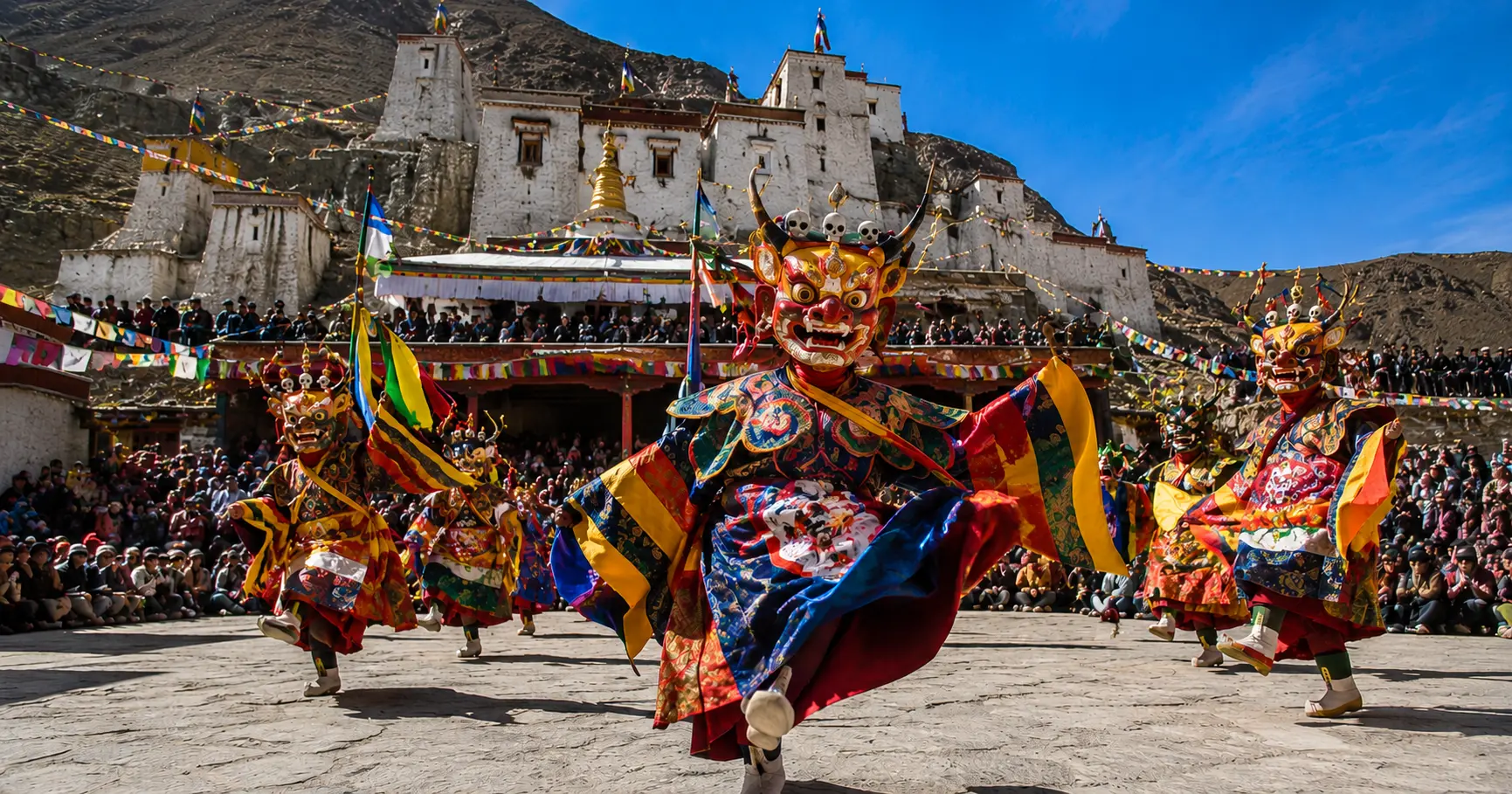
Lo Manthang’s most extraordinary cultural moment is the Tiji Festival (Tenchi or Teeji), held annually in May on dates determined by the Tibetan lunar calendar. This three-day religious ceremony commemorates the legend of Dorje Jono, the son of a demon who defeated his own father to save Lo Manthang from destruction, through elaborate masked dance rituals (Cham) performed by monks from the Lo Manthang monasteries in full ceremonial regalia. The festival draws the entire Lo Manthang community — the monks in their magnificent brocade and ceremonial masks, the lay community in their finest traditional dress, and an increasing number of international visitors who time their Upper Mustang bike ride specifically around the Tiji dates. Nepal Vehicle Hiring Pvt Ltd’s support vehicle packages for Tiji-timed tours are booked 2 to 3 months in advance due to the limited accommodation available in Lo Manthang during the festival period.
Outside festival season, daily life in Lo Manthang offers its own absorbing texture: monks performing their morning and evening chanting schedules in the open courtyards of the four principal monasteries, elderly residents circumambulating the city walls at dawn spinning prayer wheels, children walking to the community school that has operated within the walled city since the 1990s, and the gradual interaction between traditional pastoral economy and the small but growing tourism economy that the Upper Mustang trek and bike tour community has created. The Lo Manthang guesthouses are run by local families who serve the traditional thukpa noodle soup, tsampa (roasted barley flour), and butter tea of the Tibetan Himalayan diet alongside increasingly available Western alternatives, creating a dining experience that places the visitor directly within the food culture of a still-living medieval community.
The Support Vehicle’s Role Day by Day
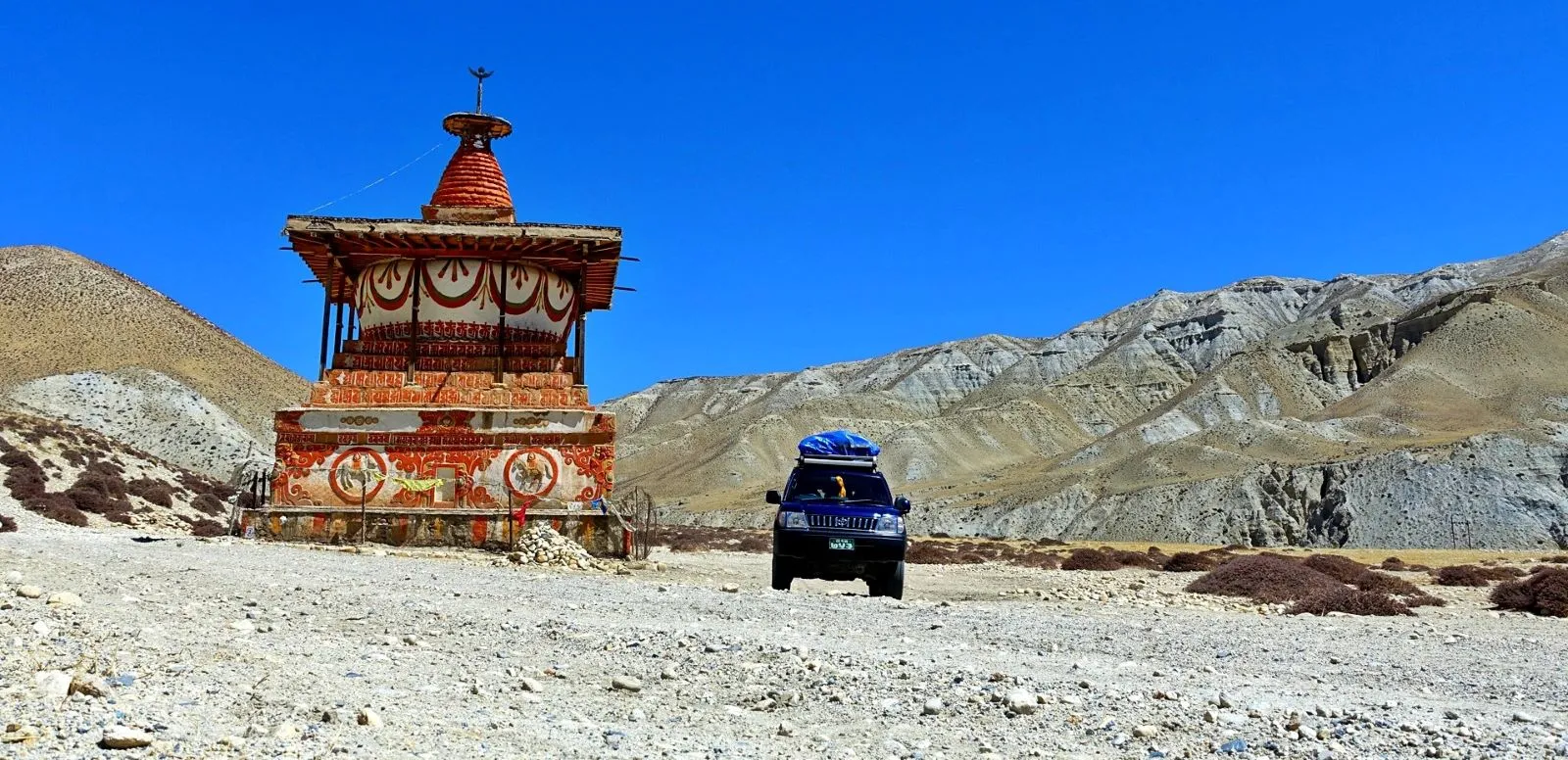
Understanding exactly what the Nepal Vehicle Hiring Pvt Ltd support jeep does on each day of the Upper Mustang bike ride helps clarify why this specific service differs from a standard trekking private vehicle hire and why the driver’s specific knowledge of the Upper Mustang route and its logistics is as important as the vehicle’s mechanical specifications.
On the departure morning from Jomsom, the support jeep driver loads all luggage, spare parts, emergency equipment, reserve fuel, and the first day’s food supplies into the vehicle while the cycling group prepares their bikes for the day’s riding. The driver then proceeds toward Kagbeni along the jeep road, arriving at the checkpoint before the cycling group to handle the vehicle permit verification while the riders complete the Kagbeni flat section at their own pace. Beyond Kagbeni, on the days when the riding route and the vehicle route diverge due to trail sections inaccessible by jeep, the driver proceeds to the day’s destination village via the road while the cyclists follow the single-track trail. At the destination, the driver has already negotiated room allocation with the guesthouse owner, confirmed the dinner order for the group’s estimated arrival time, and found a covered or sheltered space where the bikes can be stored overnight — details that, accumulated across a 7 to 10 day trip, represent the difference between an exhausting logistical struggle and a smoothly executed cycling adventure.
On rest days and detour days — the Lo Manthang rest day, the Choser Cave excursion, the Luri Gompa stop — the support jeep hire becomes the exploration vehicle: carrying the group to the canyon base for the Choser climb, waiting while the cave visit proceeds, and returning the group to Lo Manthang for the evening. This dual role of the support vehicle — logistics carrier for the riding days and exploration taxi for the rest days — is the specific service that makes the Nepal Vehicle Hiring Pvt Ltd Upper Mustang support package more comprehensive than a simple luggage transport arrangement. Contact our team at +977-9851013196 or via our plan trip page to discuss the specific daily itinerary and support requirements for your cycling group.
Transport from Kathmandu and Pokhara — Getting to the Bike Ride Start
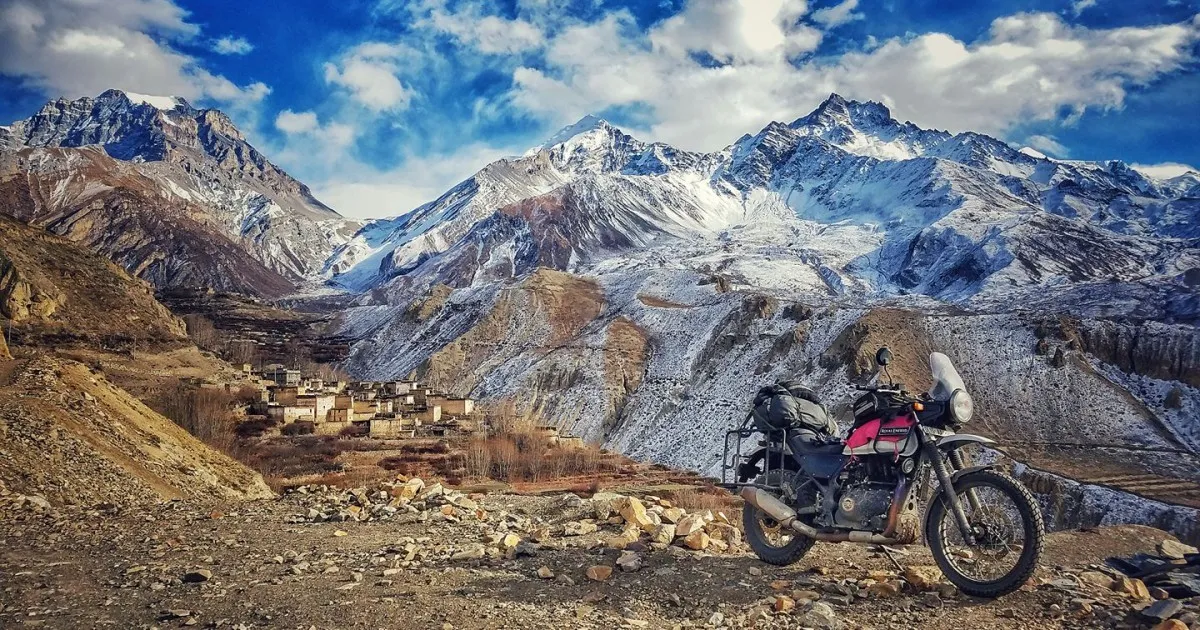
The Upper Mustang bike ride begins at Jomsom — either by the 20-minute domestic flight from Pokhara (the most popular approach for time-conscious groups) or by the private jeep drive from Pokhara through the Kali Gandaki gorge (the surface-transport approach that extends the cycling adventure to include the magnificent gorge drive as part of the journey, typically covering Pokhara to Jomsom in 7 to 9 hours). For groups whose bikes and equipment require road transport that a domestic flight cannot accommodate, the Pokhara to Jomsom private jeep is the standard and only practical option.
From Kathmandu, the most efficient routing to the Upper Mustang bike start is: Kathmandu to Pokhara by private vehicle or Kathmandu to Pokhara bus (4 to 6 hours), Pokhara overnight, then Pokhara to Jomsom by domestic flight (20 minutes) or by private jeep drive (7 to 9 hours). Nepal Vehicle Hiring Pvt Ltd coordinates the full Kathmandu-to-Jomsom transport chain, including Kathmandu airport transfer for groups arriving internationally, Kathmandu sightseeing days for pre-tour Kathmandu heritage visits, and the Pokhara car hire for any Pokhara-based preparation days before departure toward Jomsom.
The support 4WD jeep from Nepal Vehicle Hiring Pvt Ltd travels the Pokhara-to-Jomsom route by road regardless of whether the cycling group takes the domestic flight, arriving at Jomsom with all luggage, equipment, and supplies in advance of or concurrent with the riders. For the return, the same road route reverses from Jomsom to Pokhara, with the Jomsom to Pokhara jeep hire covering the spectacular Kali Gandaki gorge descent through Marpha, Tukuche, Tatopani, and Beni to Pokhara in 7 to 9 hours — one of Nepal’s finest overland drives, described in full in our dedicated Muktinath tour guide series.
Mountain Bikes vs Motorbikes — Two Different Upper Mustang Experiences
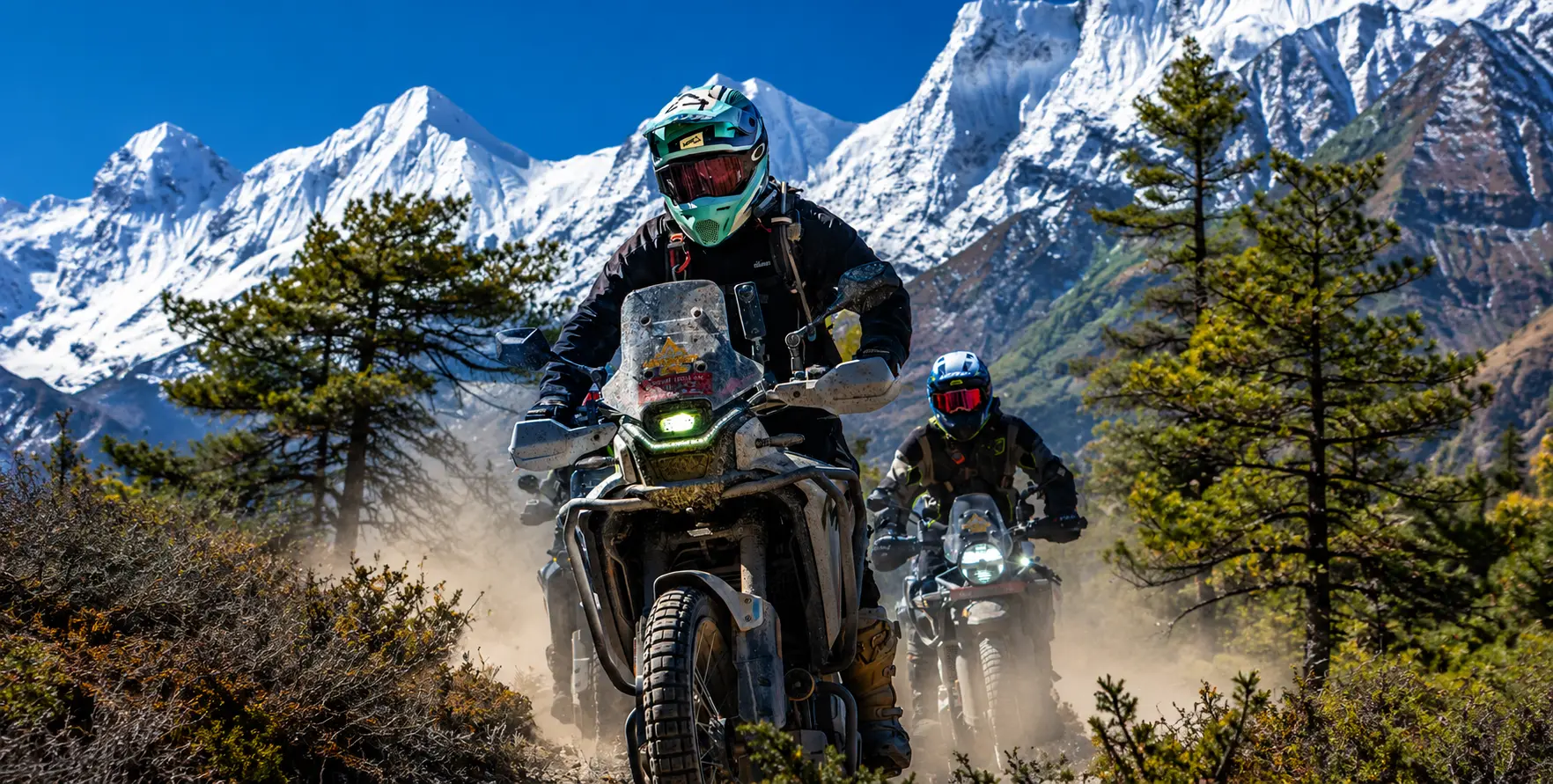
The Upper Mustang bike ride term covers two distinct cycling experiences that share the same route but differ fundamentally in their physical demands, daily distances, and the kind of preparation required.
Mountain Biking. The mountain bike version of the Upper Mustang route is a genuinely demanding technical cycling adventure: 210 to 230 kilometres of mostly unpaved terrain at high altitude, with daily riding times of 4 to 8 hours, significant sections requiring bike carrying rather than riding on the most technical cliff-face trail sections, and the sustained physical demands of off-road pedalling at an average altitude above 3,200 metres where oxygen availability is approximately 30 percent lower than at sea level. Most operators recommend intermediate to advanced off-road experience as a genuine minimum for the mountain bike version, and prior acclimatization at altitude before attempting the RAP section is strongly advised. The daily riding distances of 25 to 40 kilometres are manageable in themselves but are compressed by the technical terrain into riding times that would cover 80 to 100 kilometres on standard trail surfaces.
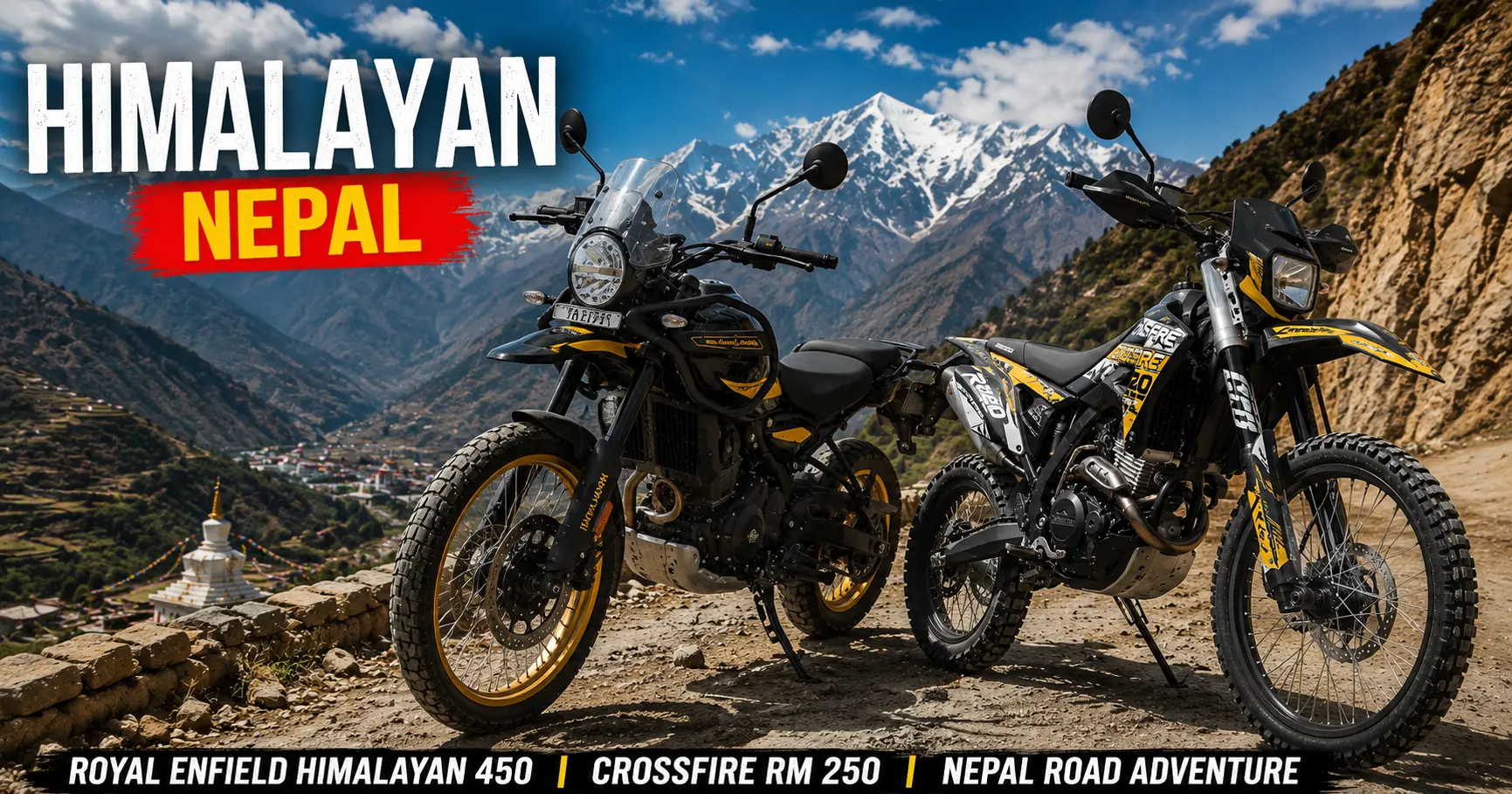
Motorbike Riding. The motorbike version — most commonly done on Royal Enfield Himalayan bikes, which have become the semi-official vehicle of Himalayan adventure touring in Nepal for their combination of mechanical reliability, parts availability in remote areas, and suitability for high-altitude off-road terrain — covers the same route in fewer days and with less physical demand, but with the specific technical requirements of off-road motorcycle control in loose gravel, sand, and the occasional river crossing. A typical Upper Mustang motorbike tour covers the round trip from Kagbeni to Lo Manthang in 6 to 8 days at a more relaxed pace, or 4 to 5 days for experienced riders comfortable with sustained off-road riding. The Nepal Vehicle Hiking Pvt Ltd support jeep hire covers both mountain bike and motorbike formats identically — carrying luggage, providing emergency support, and coordinating accommodation and logistics regardless of the specific type of bike the group is riding.
Permits in Full — Everything You Need for Upper Mustang
The Upper Mustang bike ride requires a specific set of permits that distinguish it from standard Nepal trekking documentation, and that must be arranged through a registered agency in Kathmandu or Pokhara before the Kagbeni checkpoint.
The Restricted Area Permit (RAP) is the defining permit for Upper Mustang: as of 2026, the fee is USD 50 per person per day for the number of days spent inside the restricted area (north of Kagbeni). A minimum of 2 people and a licensed guide are required for the RAP to be issued. This permit is arranged through a registered trekking or cycling agency in Kathmandu — it cannot be obtained at the Kagbeni checkpoint or any other point along the route. Nepal Vehicle Hiring Pvt Ltd works with registered agency partners to coordinate RAP applications for all Upper Mustang support vehicle packages.
The ACAP (Annapurna Conservation Area Permit) at NPR 3,000 (approximately USD 22 to 25) per person for foreign nationals covers the Lower Mustang section of the route (Jomsom to Kagbeni) through the Annapurna Conservation Area — the same permit described in our Annapurna Circuit vehicle hire guide and Besisahar private vehicle guide. A TIMS card (USD 10 to 20 per person) completes the standard permit set.
For the support vehicle specifically, vehicle permits for the restricted area must also be arranged — the Kagbeni checkpoint verifies both the passenger RAP permits and the vehicle’s restricted area authorisation. Nepal Vehicle Hiring Pvt Ltd handles all vehicle-specific documentation as a standard component of every Upper Mustang support jeep hire booking.
Season Guide — When to Ride Upper Mustang
The Upper Mustang bike ride season is one of Nepal’s most distinctive: unlike most Himalayan destinations where monsoon (June to August) is the low season, Upper Mustang in the rain shadow of the Himalayan range is one of the best possible destinations during the monsoon months — clear skies, dry trails, no leeches, and dramatically lower visitor numbers than the pre-monsoon and post-monsoon peaks.
June to August — The Rain Shadow Advantage. This is one of Nepal’s best-kept adventure travel secrets: while the Annapurna Circuit trek, the Langtang Valley trek, and the Everest Base Camp trek all deal with heavy monsoon rainfall and leech-infested trails in the summer months, Upper Mustang sits in the Himalayan rain shadow that receives less than 200 mm of annual precipitation. The July and August months specifically are considered by experienced operators as among the finest for the Upper Mustang bike ride: dry trails, cool temperatures at altitude, and the Tiji Festival in May (two days of spectacular masked dance ritual in Lo Manthang, timed by the lunar calendar) if the schedule extends into late spring.
March to May — Spring Season. Clear skies, moderate temperatures, and the Tiji Festival if the calendar aligns make this the most popular booking window for the Upper Mustang bike ride. The Kali Gandaki gorge section between Jomsom and Pokhara is in rhododendron bloom through March and April, adding colour to the support vehicle transfer through the gorge.
September to November — Post-Monsoon Autumn. Exceptional visibility and stable weather make autumn the most reliably excellent season for the entire Nepal mountain region, and Upper Mustang bike tours in October are some of the finest available: the post-monsoon atmosphere is crystal clear, temperatures are comfortable, and the 4WD support jeep hire benefits from the best road conditions of the year on the Jomsom approach.
Winter (December to February). Upper Mustang is passable in winter but requires significant cold-weather preparation: temperatures at Lo Manthang drop well below -15 Celsius overnight in January, and some sections of the route above 3,500 metres may carry snow patches requiring careful navigation.
The Kali Gandaki Gorge Drive — A Journey Within the Journey
Whether arriving at Jomsom by domestic flight from Pokhara or by the private jeep drive through the Kali Gandaki gorge, the Kali Gandaki valley section between Jomsom and Pokhara is itself one of Nepal’s most spectacular road experiences — the deepest gorge on earth, flanked by Dhaulagiri (8,167 m) to the west and Annapurna I (8,091 m) to the east, passing through the traditional Thakali villages of Marpha, Tukuche, Kalopani, and Tatopani on its way to Beni and Pokhara. The Nepal Vehicle Hiring Pvt Ltd support jeep drives this corridor in both directions — Pokhara to Jomsom on the outward journey and Jomsom to Pokhara on the return — and both drives are genuinely rewarding in their own right.
Many Upper Mustang bike ride groups specifically choose to ride their bikes on sections of the Kali Gandaki gorge road — Jomsom to Kagbeni (a gentle flat ride of 18 km), and sections of the return from Jomsom toward Tatopani — as part of their overall cycling experience, while the support jeep drives the remaining gorge sections independently. This combination of cycling the most rideable gorge sections and driving the technically difficult or high-wind sections allows the total Upper Mustang cycling journey to extend beyond the restricted area boundaries into one of Nepal’s finest valley cycling environments. Our contact team advises on the optimal cycling-versus-driving split for the Kali Gandaki sections based on each group’s experience level and available time.
Practical Tips for the Upper Mustang Bike Ride
- Book permits 3-4 weeks in advance: RAP applications through a registered agency take several working days and require group passport copies. Arrange before arriving in Nepal if possible. Contact Nepal Vehicle Hiring Pvt Ltd for registered agency referrals.
- Acclimatize before entering the restricted area: Spend at least 2 nights in Jomsom (2,720 m) before crossing the Kagbeni checkpoint. The rapid altitude gain from Jomsom to Lo Manthang without acclimatization creates a serious AMS risk.
- Early morning starts: The Jomsom valley wind builds from 10 AM to speeds of 60+ km/h in the afternoon. All Upper Mustang bike rides should start by 6:00 to 7:00 AM each riding day.
- Carry sufficient water: Water sources are limited on the Upper Mustang plateau. Carry 3 to 4 litres per person per day and use water purification tablets or a filter for refills from wells and springs.
- Spare parts essentials: Inner tubes (minimum 4 per bike), tire levers, patch kit, brake pads, chain lubricant, and a multi-tool are the minimum spare requirements. The support vehicle carries these for all participants.
- Support vehicle fuel reserve: Nepal Vehicle Hiring Pvt Ltd’s Upper Mustang support jeep hire carries 40 to 60 litres of reserve fuel — sufficient to complete the full circuit without dependence on Kagbeni or Lo Manthang fuel points.
- Travel insurance: Must specifically cover mountain biking above 4,000 m and helicopter evacuation in restricted areas. Standard trekking insurance policies frequently exclude restricted-area helicopter evacuation — verify your policy before departure.
- Book support jeep well in advance: Contact Nepal Vehicle Hiring Pvt Ltd via WhatsApp at +977-9851013196 or through our plan trip page at least 3 to 4 weeks before departure for Upper Mustang support vehicle bookings.
Altitude Sickness on the Upper Mustang Bike Ride
Altitude sickness is a genuine consideration on the Upper Mustang bike ride in a way that differs from most Nepal trekking and cycling destinations because of how quickly the route gains altitude from Jomsom to the high passes above Lo Manthang. Jomsom itself, at 2,720 metres, is already at an altitude where mild AMS symptoms begin for some travelers, and the daily elevation profile of the bike ride — gaining 500 to 1,000 metres per riding day through the Kagbeni-to-Lo Manthang approach — is aggressive by any acclimatization standard. The standard advice of spending 2 nights in Jomsom before entering the restricted area is not excessive caution but a minimum acclimatization baseline that makes the subsequent riding days considerably safer.
The support jeep from Nepal Vehicle Hiring Pvt Ltd is the primary AMS response tool available in the restricted area: a rider experiencing worsening AMS symptoms that do not improve with rest and hydration can be loaded into the 4WD jeep and driven down to a lower altitude within hours, bypassing the multi-day walk-out that would be required without vehicle support. The combination of a private support vehicle and a licensed guide trained in AMS recognition and management is the best possible safety net for high-altitude cycling in a remote restricted area. Contact our team or visit our plan trip page for full Upper Mustang support vehicle booking.
Combining the Upper Mustang Bike Ride with Other Nepal Adventures
The Upper Mustang bike ride naturally combines with Pokhara as a recovery and relaxation base before and after the cycling, with our Pokhara car hire and Sarangkot sunrise vehicle covering Pokhara sightseeing. For adventure travelers adding a Kathmandu cultural experience, our Kathmandu sightseeing, Bhaktapur day tour, and Nagarkot sunrise transfer complete the pre-trip Nepal cultural circuit. The Annapurna Circuit trek and Annapurna Base Camp trek are popular post-Upper Mustang extensions, accessible from Pokhara via our Pokhara to Nayapul transfer and Besisahar private vehicle service. For a complete western Nepal adventure circuit, the Nar Phu Valley trek and the Manaslu Circuit trek pair naturally with Mustang as a multi-region Himalayan adventure.
Why Choose Nepal Vehicle Hiring Pvt Ltd for Upper Mustang Support Vehicle Hire
- Restricted area vehicle authorisation: All Nepal Vehicle Hiring Pvt Ltd jeeps used for Upper Mustang support carry the correct vehicle permits for the restricted zone — verified at the Kagbeni checkpoint.
- Reserve fuel standard: 40 to 60 litres of reserve fuel carried on all Upper Mustang support vehicle bookings — no dependence on unreliable remote fuel points.
- Route-experienced drivers: Our drivers have personal, repeated experience on the Jomsom-to-Lo Manthang road,d including current knowledge of surface conditions, accommodation availability at each village, and the wind timing that makes early morning departures essential.
- Emergency evacuation capacity: The 4WD support jeep is the only evacuation option in the restricted area. Nepal Vehicle Hiring Pvt Ltd provides fully maintained, reliable Scorpio and Hilux jeeps specifically because mechanical reliability in Upper Mustang is a safety requirement.
- Accommodation pre-booking: Support drivers in coordinating advance guesthouse bookings at each night stop before departure from Jomsom.
- Transparent pricing: Driver, fuel, vehicle permits, and reserve fuel all included — no hidden charges.
- 24/7 booking: WhatsApp +977-9851013196 or visit our plan trip page.
Frequently Asked Questions — Upper Mustang Bike Ride
How much does the Upper Mustang Restricted Area Permit cost in 2026?
USD 50 per person per day, issued for the exact number of days spent inside the restricted area (north of Kagbeni checkpoint). Previously USD 500 for the first 10 days — the 2026 change makes shorter trips significantly more affordable.
What bike is best for Upper Mustang?
For mountain biking: a full-suspension trail or enduro bike with 2.3-inch minimum tire width and hydraulic disc brakes. For motorbike touring: the Royal Enfield Himalayan (411cc) is the most commonly used and most parts-available option in Nepal. Both require a support vehicle for luggage and safety.
Is a support vehicle necessary for Upper Mustang biking?
Yes — for all but the most self-sufficient expedition cyclists. The distances, altitude, limited accommodation, fuel availability, and restricted-area emergency requirements make a private 4WD support jeep essential for any organised cycling tour of Upper Mustang.
What is the best time of year for the Upper Mustang bike ride?
June to August (monsoon — rain shadow advantage), March to May (spring, with the Tiji Festival), and September to November (post-monsoon autumn) are all excellent. Upper Mustang’s rain shadow means the June-August monsoon season is actually one of the finest times — dry trails, clear skies, and very few other visitors.
How do I get to Jomsom from Kathmandu or Pokhara?
From Pokhara: domestic flight (20 minutes) or private jeep drive through the Kali Gandaki gorge (7-9 hours). From Kathmandu: Kathmandu to Pokhara bus or private vehicle (4-6 hours), then Pokhara to Jomsom as above. Nepal Vehicle Hiring Pvt Ltd coordinates all legs.
How many days does the Upper Mustang bike ride take?
A standard round trip from Kagbeni to Lo Manthang and return takes 7 to 10 days of riding, plus 2 to 3 days for Jomsom acclimatization and the Pokhara-Jomsom-Pokhara transfers. Total from Pokhara: 10 to 14 days.
Conclusion
The Upper Mustang bike ride is one of the finest cycling adventures in Asia — a journey through living medieval Himalayan history, across a high desert landscape unlike anything else in Nepal, to a walled city that has survived four centuries of Himalayan winters and geopolitical isolation with its culture, its monasteries, and its extraordinary visual character essentially intact. The support vehicle hire from Nepal Vehicle Hiking Pvt Ltd that accompanies every well-organised Upper Mustang bike tour is not a concession to comfort, but the practical foundation on which this adventure is built — carrying the logistics, ensuring the safety, and enabling the focus on riding that transforms a demanding high-altitude journey into a genuinely transcendent experience.
Book your Upper Mustang support vehicle hire with Nepal Vehicle Hiring Pvt Ltd — call or WhatsApp +977-9851013196, visit vehiclehiringnepal.com, or plan your full Upper Mustang cycling adventure through our plan trip page.
- Upper Mustang Bike Ride — Mountain Biking the Forbidden Kingdom with Vehicle Support
- Upper Mustang — The Last Forbidden Kingdom
- The 2026 Permit Change — Upper Mustang Is Now More Accessible
- The Route — Kagbeni to Lo Manthang and Return
- Lo Manthang — What to See in the Forbidden Kingdom's Capital
- The Support Jeep — Why It Is Essential for Upper Mustang Cycling
- The Cave Monasteries and Ancient Ruins Along the Route
- Lo Manthang's Living Culture — Festivals and Daily Life
- The Support Vehicle's Role Day by Day
- Transport from Kathmandu and Pokhara — Getting to the Bike Ride Start
- Mountain Bikes vs Motorbikes — Two Different Upper Mustang Experiences
- Permits in Full — Everything You Need for Upper Mustang
- Season Guide — When to Ride Upper Mustang
- The Kali Gandaki Gorge Drive — A Journey Within the Journey
- Practical Tips for the Upper Mustang Bike Ride
- Altitude Sickness on the Upper Mustang Bike Ride
- Combining the Upper Mustang Bike Ride with Other Nepal Adventures
- Why Choose Nepal Vehicle Hiring Pvt Ltd for Upper Mustang Support Vehicle Hire
- Frequently Asked Questions — Upper Mustang Bike Ride
- Conclusion

Related Blog & Articles
4WD Himalayan Jeep in Nepal
Adventure Bike Hire in Nepal: The Complete 2026 Guide to Motorcycle Rentals
Adventure Bike Rental in Nepal – Complete Guide to Routes and Requirements 2026