Plan a Trip


Best Time to Visit Muktinath
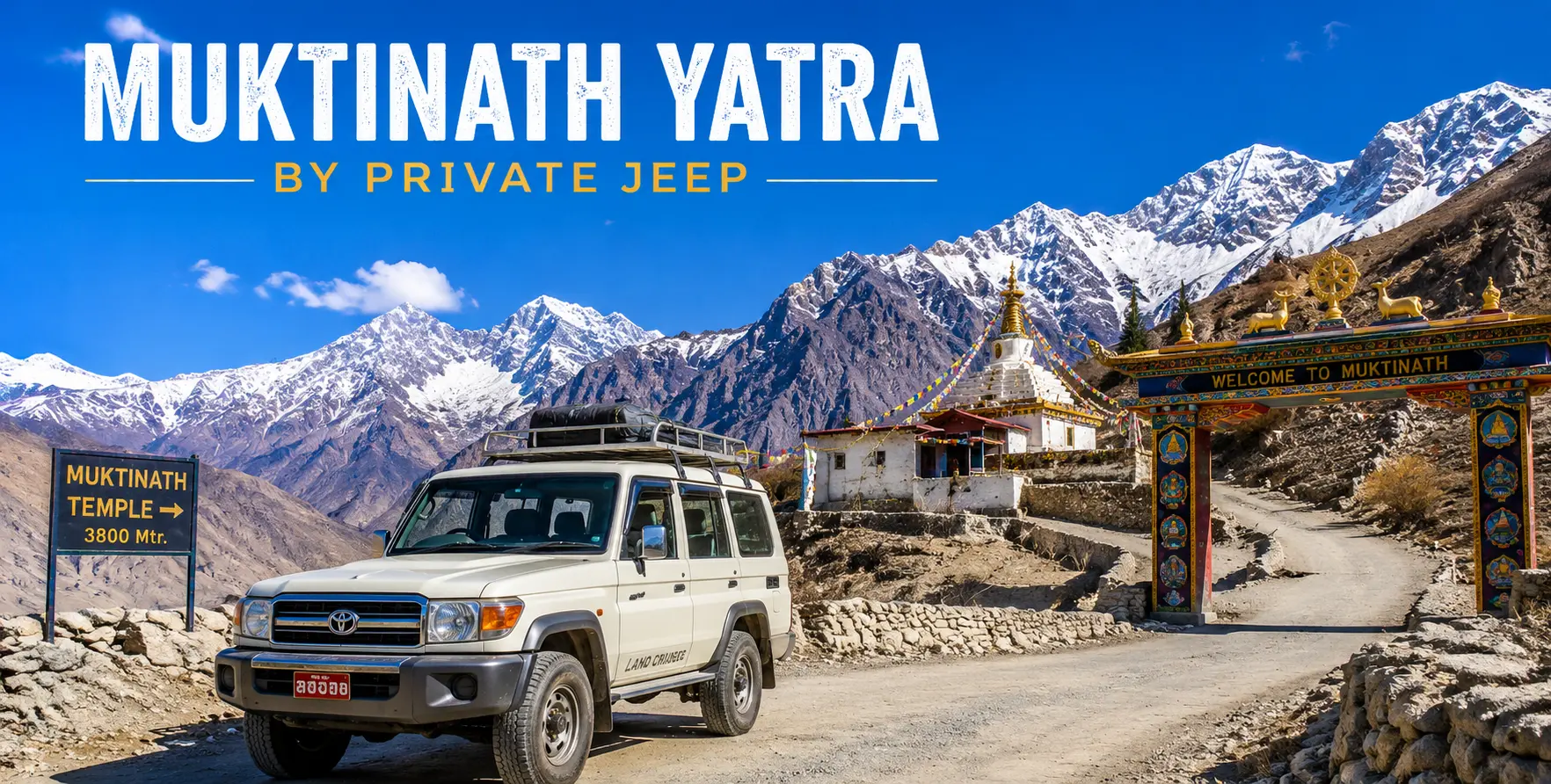 Best Time to Visit Muktinath
Sitting at 3,710 meters in the rain-shadow of the Annapurna and Dhaulagiri ranges, Muktinath is one of the few places on earth held sacred by both Hindus and Buddhists at once — and choosing the best time to visit Muktinath for the 2026/27 travel year genuinely changes what your trip looks like. The wrong month can mean a closed Thorong La pass, a fogged-in Jomsom flight, or a landslide-blocked jeep road. The right month can mean crisp mountain air, blooming rhododendrons, and a temple courtyard alive with pilgrims marking one of the region’s sacred festival days.
This guide works through Muktinath’s climate season by season and month by month, covers the Hindu and Buddhist festival calendar that shapes when pilgrims travel, and walks through every practical detail — routes, permits, vehicles, and packing — you need to plan your 2026 or 2027 trip with confidence.
Quick Answer: When Should You Go?
Autumn (late September to November) is the single best window for most travelers, with the clearest skies, driest roads, and the most stable flying and driving conditions of the year. Spring (March to mid-May) is a strong second choice, trading a little stability for rhododendron blooms and thinner crowds. Winter (December to February) works for travelers prepared for serious cold and possible flight cancellations, usually offset with a jeep or helicopter option. Monsoon (June to August) is the one season worth actively avoiding for a first visit, given landslide risk on the jeep road and frequent flight cancellations into Jomsom.
Understanding Muktinath’s Location and Climate
Muktinath sits in the Mustang district, in the deep rain-shadow carved by the Kali Gandaki Gorge between the Annapurna and Dhaulagiri massifs — among the deepest gorges on earth. This geography is exactly why Muktinath’s weather behaves differently from the rest of Nepal: the surrounding peaks block most monsoon moisture, so even during Nepal’s wet season the region receives far less rainfall than Kathmandu or Pokhara, though none. Average annual precipitation is modest by Himalayan standards. Still, temperatures swing dramatically, from summer highs around 12°C (54°F) down to winter lows well below freezing, with night temperatures at altitude occasionally dropping toward -19°C (-2°F) in the coldest months.
This combination — thin air, wide day-night temperature swings, and a rain-shadow climate — is why the ‘best time’ question has such a clear answer for most travelers, even though the temple technically remains open and accessible in some form year-round.
Geographically, Muktinath belongs to the Trans-Himalayan zone rather than the lush, forested mid-hills most visitors picture when they think of Nepal. Expect eroded cliffs, wind-sculpted rock formations, and a stark, high-desert palette of ochre and grey, broken up by scattered poplar groves and irrigated barley fields near the villages. This landscape is part of what makes the region feel so different from the rest of a typical Nepal itinerary, and it’s also part of why weather and season matter so much more here than they might on a lower-altitude trip.
Muktinath’s Religious and Cultural Significance
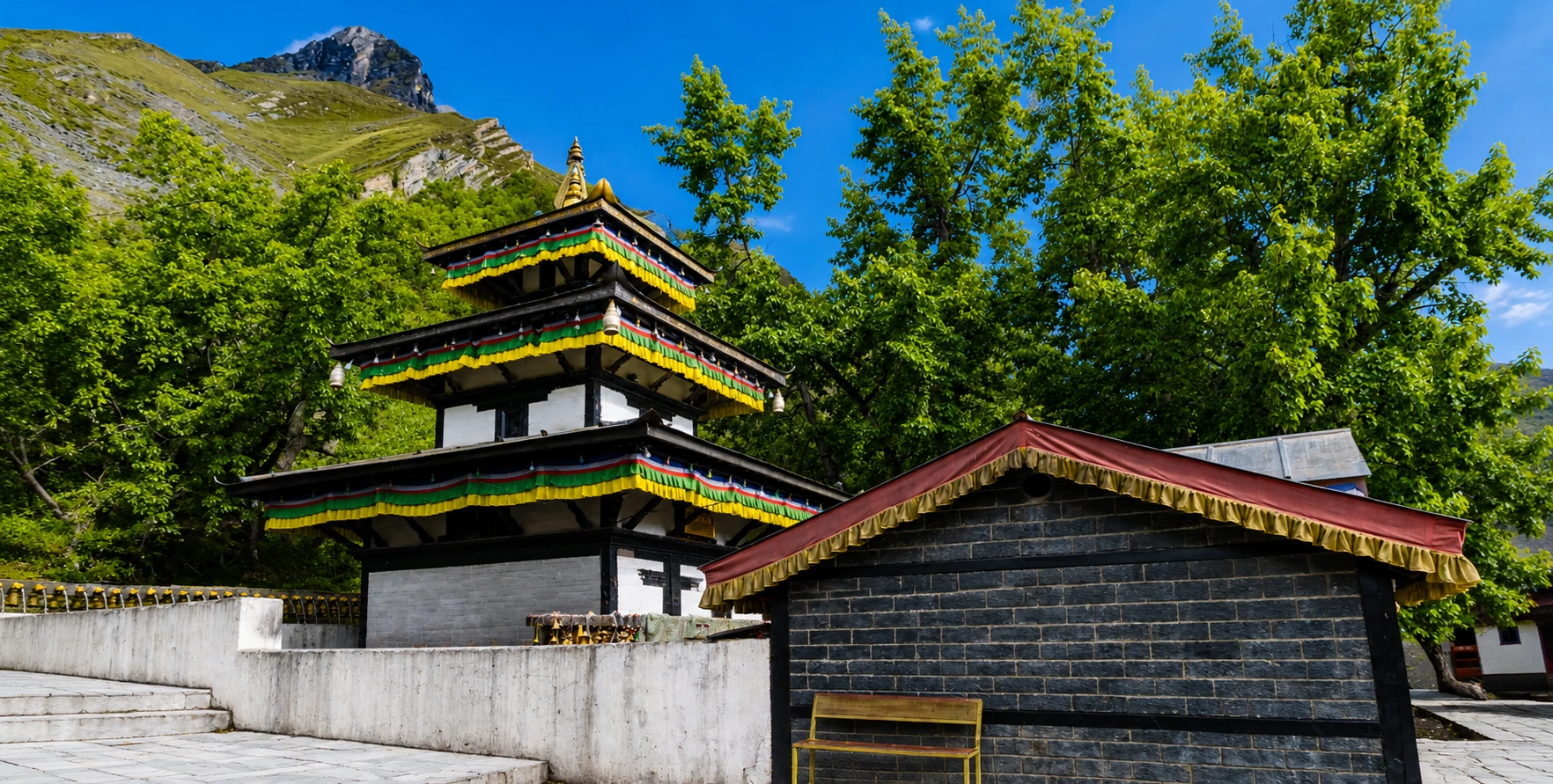
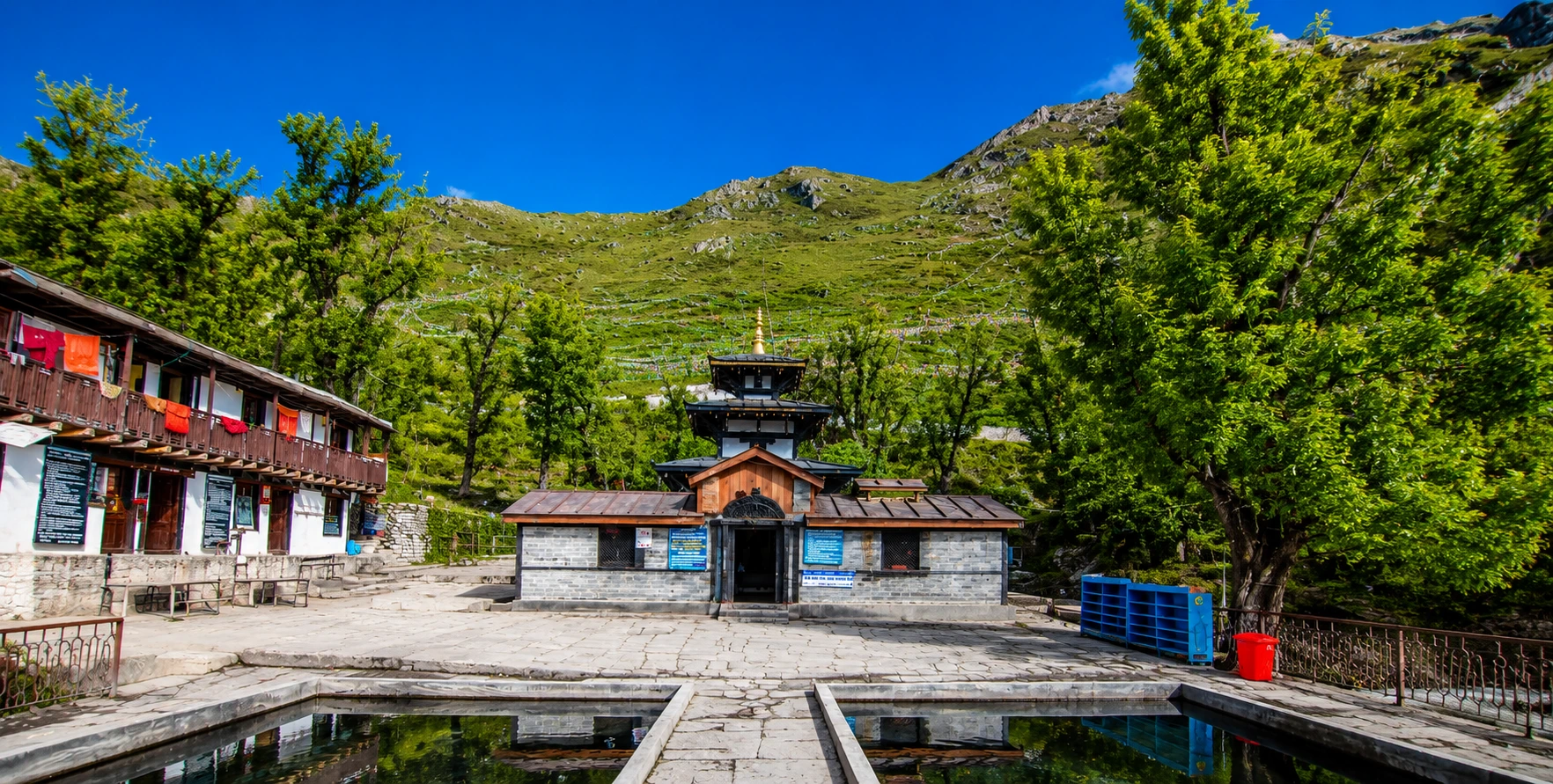
Part of what makes timing this trip well worth the effort is what you’re actually visiting. Muktinath is one of the very few sites on earth held sacred simultaneously by Hindus and Buddhists, each with their own name, mythology, and ritual practice built around the same small temple complex.
For Hindus, Muktinath (literally ‘Lord of Liberation’) is one of the 108 Divya Desams sacred to Vaishnavism and one of the holiest Shaligram pilgrimage sites, where devotees believe bathing in the temple’s 108 stone water spouts, fed by glacial meltwater, grants moksha — liberation from the cycle of rebirth. The adjoining Jwala Mai Temple houses a naturally occurring eternal flame, fed by a small underground natural gas seep, which Hindus and Buddhists alike regard as a genuine spiritual marvel.
For Buddhists, the same site is known as Chumig Gyatsa, meaning ‘Hundred Waters.’ It is considered one of the 24 Tantric places sacred to Vajrayana Buddhism, closely associated with the great tantric master Guru Rinpoche (Padmasambhava). Tibetan Buddhist pilgrims from Nepal, Tibet, and beyond visit alongside Hindu devotees, and the surrounding villages — Kagbeni, Jharkot, and Khingar among them — carry a strongly Tibetan-influenced culture, visible in the architecture, prayer flags, and local monasteries you’ll pass on the drive up from Jomsom.
Understanding this dual significance helps explain why the festival calendar covered later in this guide matters so much to serious pilgrims, and why the temple sees a genuinely diverse mix of visitors — trekkers, Hindu families on a religious circuit, Buddhist monks and nuns, and curious travelers drawn simply by the setting — throughout the year.
Altitude and Health Considerations at 3,710 Meters
Muktinath’s elevation is high enough that altitude should factor into your planning, even for a short visit. Most travelers reach the region by flying into Jomsom (2,700 meters) and driving up, which means a fairly rapid altitude gain in a short time — precisely the kind of ascent profile that can trigger mild altitude symptoms in sensitive travelers, even those who wouldn’t consider this a serious trekking altitude by Himalayan standards.
- Take it easy on your first few hours in Jomsom or Ranipauwa rather than rushing straight up to the temple.
- Stay hydrated — the dry, high-desert air at this elevation dehydrates you faster than you’d expect
- Watch for mild headache, nausea, or unusual fatigue, and rest or descend if symptoms don’t improve.
- Travelers arriving by the overland jeep route via Beni acclimatize somewhat more gradually than those flying directly into Jomsom, which some find more comfortable.e
- If you have a pre-existing heart or lung condition, or are pregnant, it’s worth a quick conversation with a doctor before this kind of rapid-altitude trip, regardless of season.
Autumn (Late September to November): The Best Season
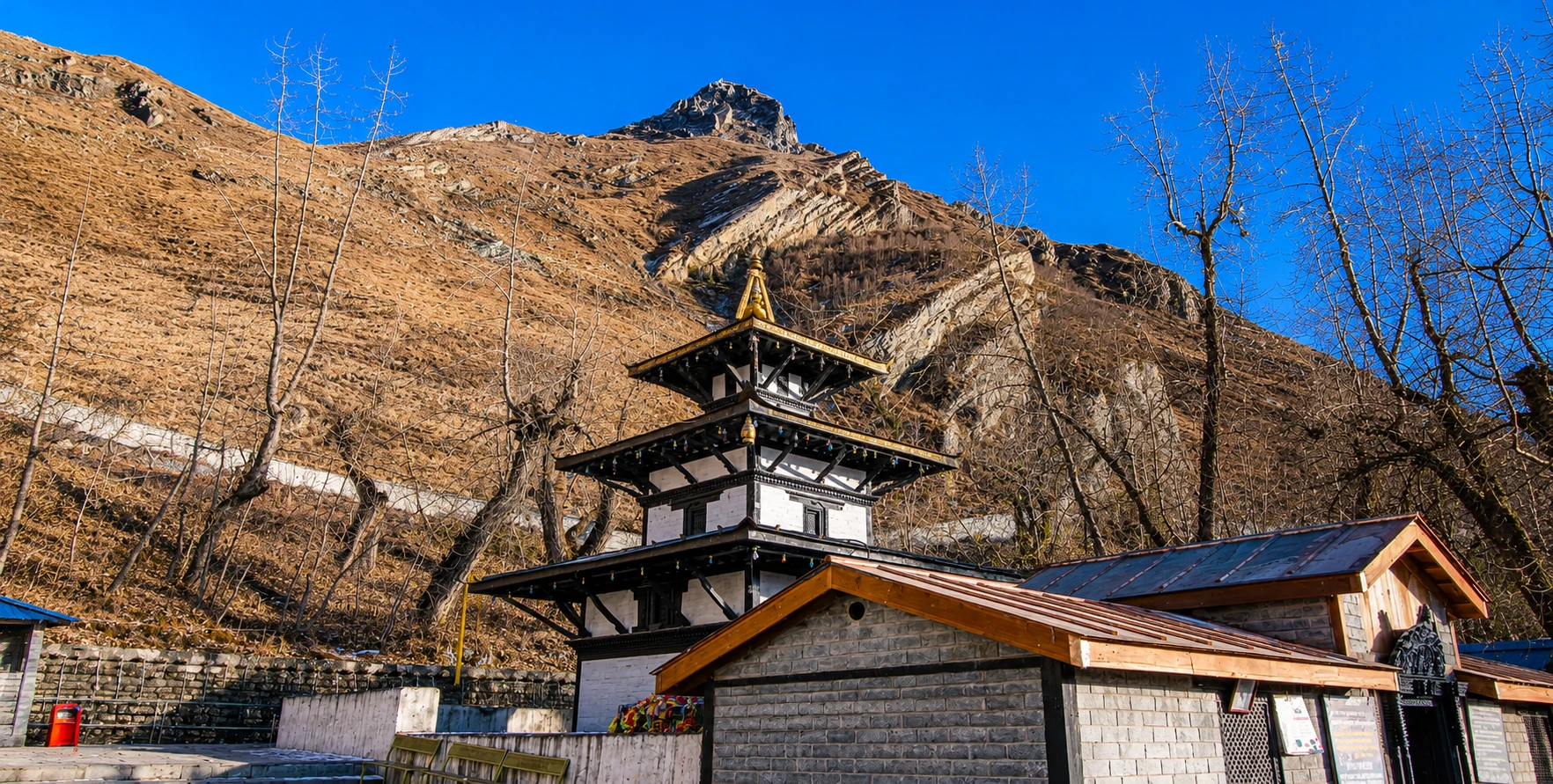
Autumn is consistently named the top season by nearly every source covering this route, and for good reason. Post-monsoon skies clear almost completely, humidity drops, and the Kali Gandaki valley settles into its most stable weather pattern of the year. Daytime temperatures typically range from around 8°C to 18°C, cold enough for warm layers but comfortable for walking and sightseeing, while November in particular sees little to no significant rainfall.
This is also peak trekking season across Nepal, so book your Jomsom to Muktinath jeep rental and any onward transport well ahead, particularly around the Dashain and Tihar festival period, when both domestic flights and jeep availability tighten considerably.
The trade-off is shorter days — by November, daylight runs to roughly 10.7 hours, so plan an early start if you’re combining the temple visit with a walk through Kagbeni or the surrounding villages.
Crowds are also at their thickest during autumn, particularly around the Dashain and Tihar festival window, when many Nepali families combine a holiday visit home with a pilgrimage to Muktinath. Hotel and guesthouse rooms in Ranipauwa and Jomsom fill up correspondingly, so travelers set on an autumn trip should lock in accommodation alongside their transport rather than assuming rooms will be available on arrival.
Spring (March to Mid-May): A Strong Second Choice
Spring brings a different kind of beauty to the region. As snow retreats from the high passes, rhododendrons bloom in bands of red and pink lower down the trekking trails, and the Kali Gandaki valley turns noticeably greener than its stark winter appearance. Daytime temperatures generally sit between 10°C and 20°C, with the season considered nearly as stable as autumn. However, a stretch in late March can occasionally bring a dip in conditions worth watching if your dates are flexible.
Spring also carries genuine religious weight: Ram Navami, one of the major Hindu pilgrimage days associated with Muktinath, falls on 26-27 March in 2026, drawing a noticeable rise in devotee traffic to the temple around that date. Travelers planning around this festival should book their ACAP permit and transport well in advance, since accommodation and jeep seats around Jomsom and Ranipauwa tighten considerably in the days surrounding major pilgrimage dates.
By May, scattered pre-monsoon showers become more frequent, gently easing the region toward the wetter months ahead — still generally manageable, but worth noting if you’re booking toward the very end of the spring window.
Spring visitors also benefit from noticeably better availability than autumn’s peak crush — accommodation in Ranipauwa and Jomsom is easier to secure on shorter notice, and the trekking trails around Kagbeni and Jharkot feel considerably less crowded, even during the Ram Navami window, which draws pilgrims specifically to the temple rather than to the wider trekking circuit.
Monsoon (June to August): The Season to Avoid or Plan Carefully Around
Monsoon rewards patience with lush, green landscapes and noticeably thinner crowds, but it’s the one season most guides — and this one — recommend avoiding for a first-time or time-constrained visit. Rain and cloud cover regularly ground flights between Pokhara and Jomsom, sometimes for days at a stretch, and the jeep road via Beni becomes considerably more exposed to landslides and slippery, rutted surfaces in the wetter stretches.
Despite the challenges, this window does carry cultural significance: Janai Purnima (also called Rishi Tarpani), the Hindu sacred-thread festival, falls on the full moon of the Nepali month of Shrawan, generally in August, and Muktinath hosts its own gathering on this day alongside the Gurung and Thakali community’s Yartung Mela, a lively local festival combining horse racing, archery, and celebration around the same period. Travelers specifically chasing this cultural experience should budget extra flexibility into their itinerary, since weather delays are common at this time of year.
Winter (December to February): Cold, Quiet, and Still Accessible
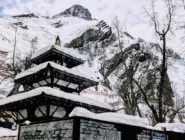
Winter transforms the region into a genuine high-altitude winter landscape, with the area around Muktinath frequently snow-covered and night temperatures dropping well below freezing. The classic trekking route over Thorong La Pass at 5,380 meters is often snowbound and impassable in these months, ruling out a full Annapurna Circuit crossing. Still, Muktinath itself remains reachable: most winter visitors fly to Jomsom (weather permitting) and continue by jeep to Ranipauwa, then walk the final short stretch to the temple, or book a direct helicopter tour when road and flight conditions are uncertain.
If you’re planning winter travel, pack seriously for the cold — thermal base layers, a proper down jacket, insulated gloves, and a warm hat are non-negotiable, even for a short visit. Confirm your Scorpio jeep hire or Toyota Land Cruiser 4WD hire booking with flexible timing, since winter road conditions can shift quickly after fresh snowfall.
Buddhist Lhosar (Tibetan New Year), typically falling in February, is another important date on the winter calendar for the Buddhist communities around Muktinath and Upper Mustang, adding a cultural dimension to an otherwise quiet season.
Month-by-Month Breakdown
January
The coldest month, with daytime highs often near or below freezing and nights dropping toward -19°C at altitude. Snow typically blankets the temple grounds, and heating in guesthouses becomes a genuine consideration when choosing where to stay. Jeep access to Ranipauwa generally continues on clear days; flights are the most weather-dependent element, with morning departures the most reliable before winds pick up.
February
Still firmly winter, though days slowly lengthen and Buddhist Lhosar celebrations bring cultural life to the region’s monasteries and villages. Daytime temperatures start a gradual climb from January’s lows, though nights remain sharply cold and snow cover can persist at the temple itself.
March
The start of spring proper, with warming days and Ram Navami usually falling late in the month — 26-27 March in 2026 — drawing a rise in Hindu pilgrim traffic. Early March can still carry a wintry edge, particularly in the mornings, so travelers visiting for the festival should still pack warm layers despite the season officially turning.
April
One of the most reliable months of the year: mild temperatures, clear skies, and rhododendrons in bloom along the lower trekking trails. Flight reliability into Jomsom is generally strong, and this month sees a healthy but not overwhelming mix of trekkers and pilgrims, making it a favorite among travelers who want good weather without autumn’s peak crowds.
May
Still a good month overall, though pre-monsoon showers become more frequent toward the end, especially in the final week. Temperatures are comfortably warm during the day, and this is often considered the last genuinely reliable window before the onset of monsoon disruption in June.
June
The monsoon begins to establish itself; flights into Jomsom become noticeably less reliable, and the jeep road starts seeing more frequent minor disruptions. Early June can still offer reasonable conditions, but travelers with flexible dates are better served waiting until autumn if good visibility matters to their trip.
July
The wettest month of the year regionally, with the highest rainfall totals and the greatest landslide risk on the road via Beni. Cloud cover frequently obscures mountain views even on days without active rain. Not recommended for first-time visitors on a tight schedule, though the surrounding hills turn a vivid green rarely seen in drier seasons.
August
Rainfall continues but eases slightly toward the end of the month. Janai Purnima and the Yartung Mela festival fall in this window, drawing pilgrims and cultural travelers despite the weather trade-offs. Travelers timing a visit around this festival should build extra flexibility into flights and jeep bookings given the ongoing monsoon influence.
September
The genuine turning point of the year — early September can still carry late-monsoon moisture, but conditions improve rapidly as the month progresses toward the autumn peak. By the final week, most travelers report noticeably clearer skies and drier roads than just two or three weeks earlier.
October
Widely cited as the single most favorable month of the year, with stable weather, comfortable daytime temperatures around 5-15°C, and excellent Himalayan visibility. This is also peak Dashain and Tihar festival season in Nepal more broadly, meaning both high demand for transport and a particularly festive atmosphere in villages along the route.
November
The driest month of the year, with little to no significant precipitation and consistently clear mountain panoramas — the top choice for photographers and anyone prioritizing reliable conditions. Nights turn noticeably colder toward the end of the month as the region transitions toward winter.
December
Winter sets in firmly, with snow becoming common around the temple itself, though the region remains noticeably quieter and serene for travelers comfortable with the cold. Early December can still offer relatively mild, clear days before the deeper cold of January arrives, making it an interesting shoulder option for travelers wanting a quieter alternative to the autumn crowds.
Best Time for Pilgrimage: Hindu and Buddhist Festival Calendar
Because Muktinath is sacred to both major faiths of the Himalayas, its pilgrimage calendar is unusually rich, and many devotees deliberately time their visit around a specific festival day rather than simply chasing good weather.
- Ram Navami (26-27 March 2026) — marking the birth of Lord Rama, one of the most significant Hindu pilgrimage days at Muktinath.
- Janai Purnima / Rishi Tarpani (full moon of Shrawan, generally August) — the sacred-thread renewal festival, observed at Muktinath alongside the Gurung and Thakali Yartung Mela.
- Dashain and Tihar (September-October, dates shift yearly with the lunar calendar) — Nepal’s largest festival season, drawing many pilgrims to Muktinath during the already-favorable autumn window.
- Buddhist Lhosar (February, exact date varies by community) — Tibetan New Year, significant for the Buddhist communities of Upper Mustang and the wider Muktinath area.
Travelers prioritizing a quieter, more contemplative visit may prefer to avoid these peak festival dates. At the same time,e those specifically seeking the cultural and devotional atmosphere of a major pilgrimage day should build their itinerary around them deliberately, with extra buffer time for the inevitable crowds and transport demand.
Sample Itineraries by Season
Autumn Itinerary (3 Days, From Pokhara)
Day 1: Fly or drive from Pokhara to Jomsom, then continue by private jeep to Ranipauwa, with time in the afternoon to visit Muktinath Temple and watch the light change over the valley toward evening. Day 2: A relaxed morning at the temple if you skipped the crowds the day before, followed by a scenic stop in Kagbeni on the drive back to Jomsom, with time to explore the old village. Day 3: Fly or drive back to Pokhara, with a buffer built in given autumn’s high demand for both flights and jeep seats.
Spring Itinerary (3-4 Days, From Pokhara)
Similar in structure to the autumn version, but with more flexibility to add a night in Jomsom or Kagbeni given lighter crowds, plus the option to time your visit around Ram Navami in late March if the festival atmosphere interests you. Spring’s milder mornings also make an early temple visit more comfortable than in the depths of winter.
Winter Itinerary (3-4 Days, Weather-Dependent, From Pokhara)
Build in at least one full buffer day given the higher chance of flight delays. Day 1: Attempt the Pokhara-Jomsom flight; if grounded, use the day to arrange a jeep departure via Beni instead. Day 2-3: Reach Ranipauwa, visit the temple bundled in serious cold-weather gear, and consider a helicopter option for the return leg if road or flight conditions look uncertain. Day 4: Return to Pokhara, with the extra buffer day absorbed if delays occurred earlier in the trip.
Common Mistakes to Avoid When Planning Your Timing
- Booking a monsoon-season trip on a tight schedule with no buffer day for flight cancellations
- Underestimating winter cold because Muktinath is technically in Nepal’s dry rain-shadow zone — altitude cold is still serious cold.
- Assuming accommodation will be available without booking ahead during Dashain-Tihar or Ram Navam .i.
- Forgetting to arrange your ACAP permit in Kathmandu or Pokhara before heading toward Jomsom
- Not checking festival dates in advance if a specific pilgrimage day matters to your trip, since Hindu lunar-calendar festivals shift year to year
How to Reach Muktinath
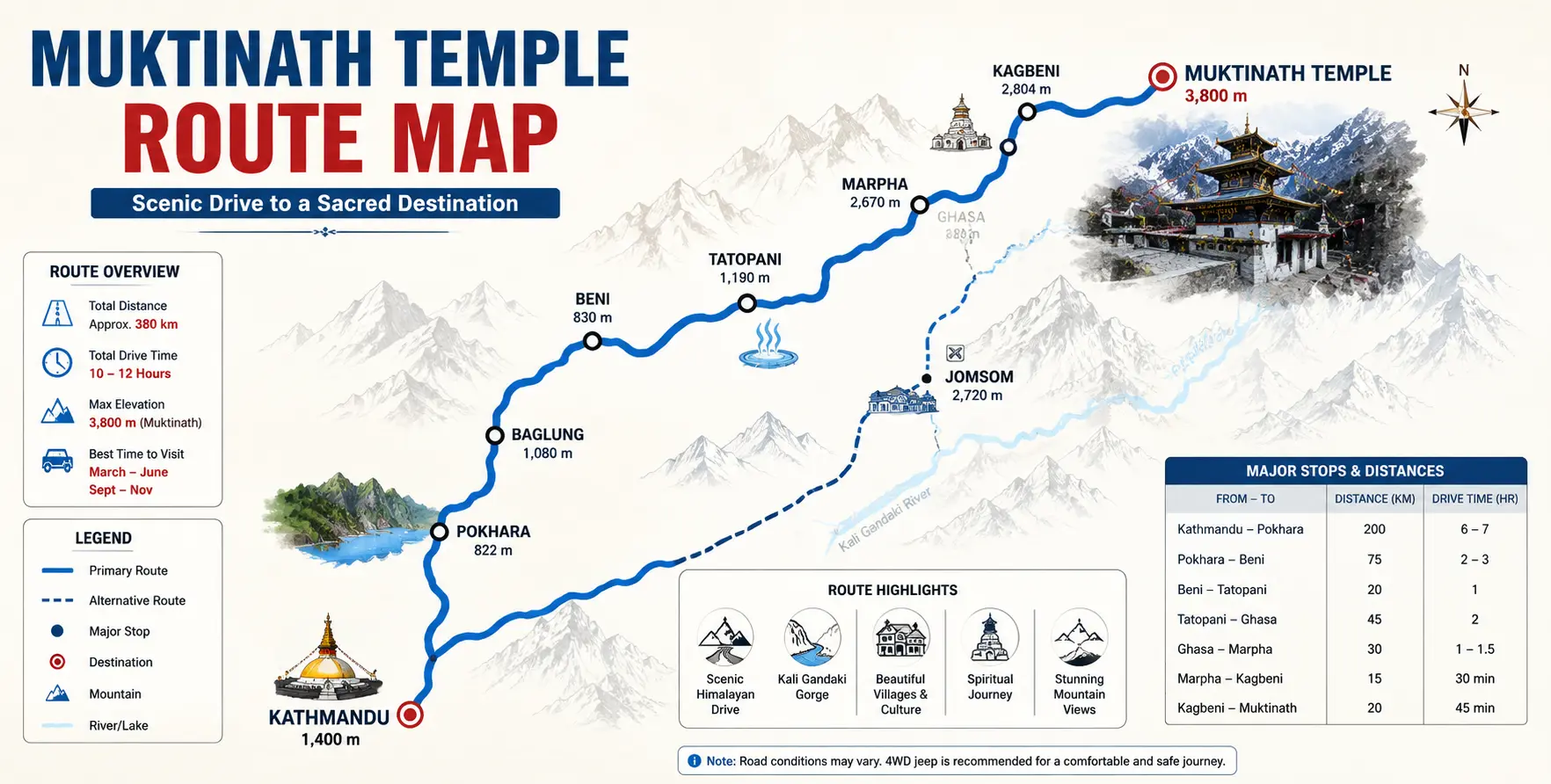
There’s no single correct way to reach Muktinath — the right approach depends on your available time, budget, tolerance for weather-related delays, and whether you’d rather fly, drive, or trek. Most visitors combine at least two of these methods across their trip, flying one direction and driving the other, or trekking in and taking transport out.
By Air: Pokhara to Jomsom, Then Jeep
The fastest route combines a short domestic flight from Pokhara to Jomsom with a road transfer for the final stretch. Once in Jomsom, our Jomsom to Muktinath jeep rental covers this last 20-25 kilometer leg, which climbs over 1,000 meters in around an hour by vehicle. Flights are most reliable in autumn and spring and least reliable during monsoon, so build in a buffer day if you’re flying during the wetter months.
Jomsom’s airport is known for its early-morning-only flight window — winds in the valley typically pick up by mid-to-late morning, strong enough that flights rarely operate past around 10 or 11 AM. This means an early start from Pokhara is essential, and it’s also why flight delays cascade so easily during unsettled weather: miss the morning window, and you’re often waiting until the following day.
By Road: Pokhara to Beni to Jomsom to Muktinath
For travelers who prefer an overland journey — or when flights aren’t running — the full road route runs from Pokhara through Beni and on to Jomsom before the final Muktinath leg. Our Pokhara to Beni jeep hire service covers the first stage, continuing the same overland approach used for the return leg on our Muktinath to Pokhara jeep page. This route takes considerably longer than flying but offers a genuinely scenic, uninterrupted look at the Kali Gandaki valley.
This overland approach is also the more weather-resilient option in absolute terms, since it doesn’t depend on flying conditions — though it carries its own seasonal risk profile, with monsoon-season landslides being the main concern rather than wind or cloud cover. Many travelers who fly one direction choose to drive the other, giving themselves both the speed of a flight and a full look at the valley by road.
From Kathmandu
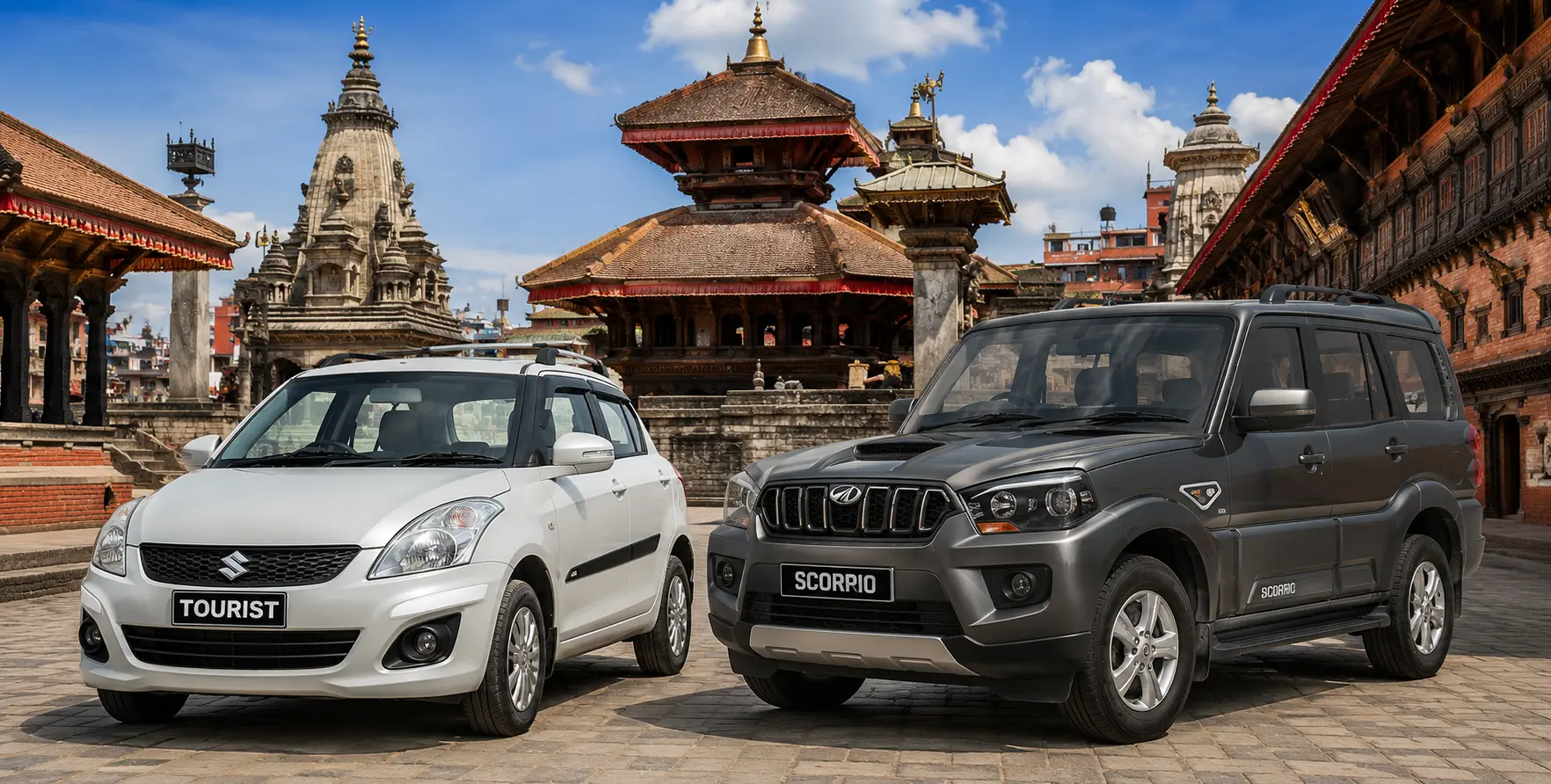
Travelers starting in the capital rather than Pokhara can arrange the full overland journey directly, covered on our Kathmandu to Mustang private jeep page, or connect through Pokhara first via our Kathmandu to Pokhara bus, Kathmandu to Pokhara VIP Sofa Bus, or Kathmandu to Pokhara private Scorpio services before continuing toward Jomsom and Muktinath.
Starting from Kathmandu adds a full extra day or more to the front end of your trip compared to starting from Pokhara, so factor this into your total itinerary length regardless of season — this is one of the most common planning oversights among first-time visitors mapping out timing purely around Muktinath’s weather without accounting for the approach journey.
On Foot: The Classic Trekking Approach
For those with more time, the traditional trekking route into the region passes through Ghandruk or approaches via the wider Annapurna Conservation Area, eventually joining the Jomsom-Muktinath corridor on foot rather than by vehicle — a much slower but immersive way to reach the temple, and the classic finale for travelers completing the full Annapurna Circuit over Thorong La from the Manang side.
This approach is entirely season-dependent in a way the jeep and flight routes aren’t: Thorong La Pass at 5,380 meters is frequently snowbound and closed to trekkers from roughly December through February, making the full circuit crossing an autumn or spring-only proposition for most trekkers, even though Muktinath itself remains reachable by jeep from the Jomsom side year-round.
Choosing Between a Guided Trek and a Private Jeep Trip
For travelers weighing a multi-day trek that ends at Muktinath against a faster jeep-based visit, the honest answer depends on what you’re actually looking for. A trek — whether the full Annapurna Circuit over Thorong La or a shorter approach through the lower Mustang villages — delivers a slower, more immersive experience and a genuine sense of arrival at the temple after real physical effort, but locks you into autumn or spring timing given the pass conditions discussed above, and requires significantly more time, typically two weeks or more for the full circuit.
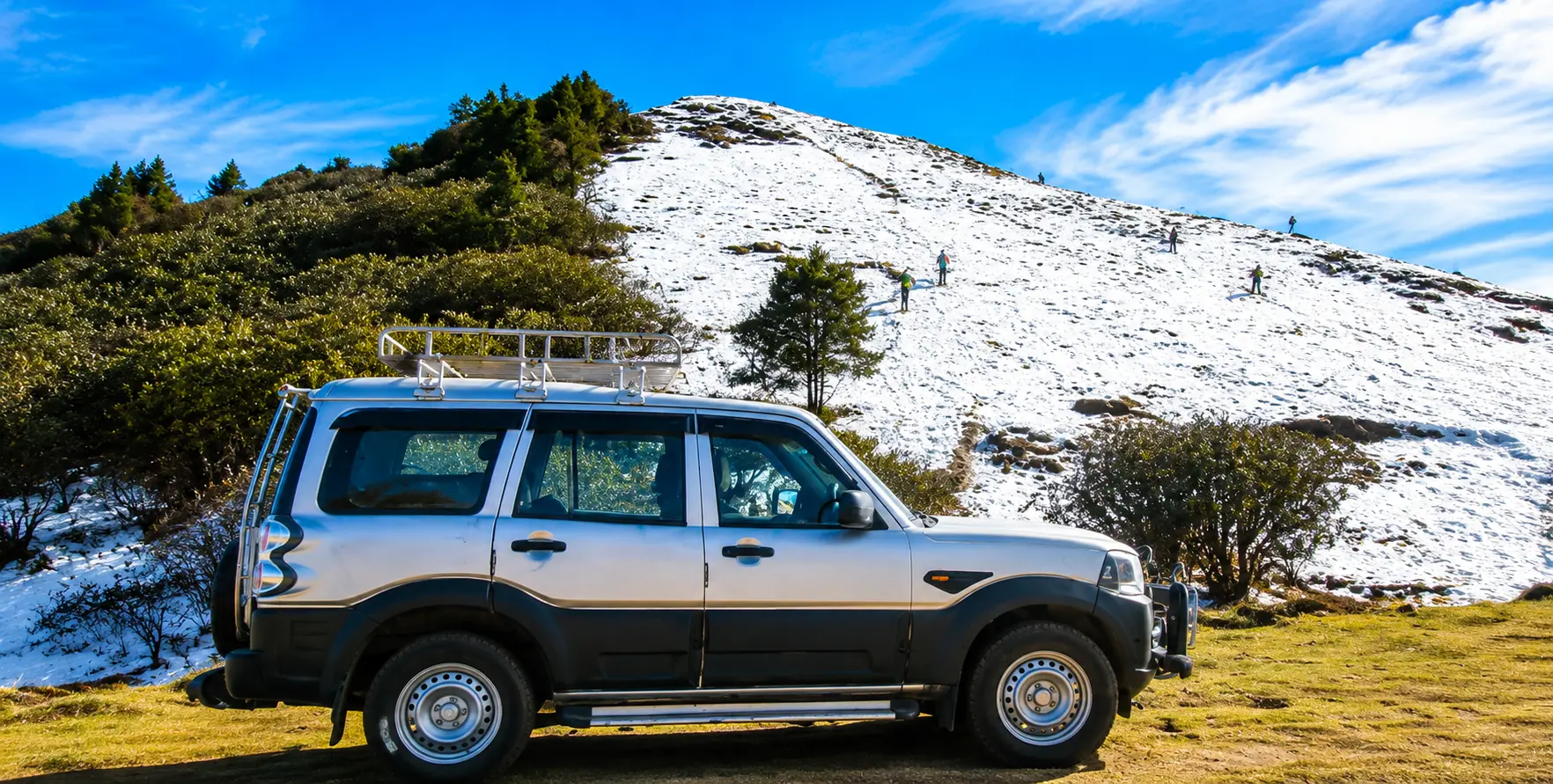
A private jeep trip compresses the same destination into 2 to 4 days, works in every season except the least favorable monsoon and deep-winter windows, and suits travelers with limited vacation time, mobility considerations, or simply a preference for comfort over multi-day trekking. Many pilgrims specifically choose the jeep route precisely because their visit is devotional rather than adventure-driven, and getting to the temple efficiently matters more than the journey itself.
Group Travel vs Solo Pilgrimage: Timing Considerations
Groups and families traveling together generally benefit most from the predictability of autumn or spring, when flight and road conditions are most reliable and large-group logistics — coordinating multiple jeep seats or a private charter, securing enough guesthouse rooms in Ranipauwa — are considerably easier to manage. Solo travelers and those with fully flexible schedules have more room to experiment with shoulder-season timing, since a single unexpected delay is far easier to absorb alone than when coordinating a group’s shared itinerary.
Permits You’ll Need
Every visitor to the Muktinath region needs a valid ACAP (Annapurna Conservation Area Permit), regardless of whether you arrive by jeep, flight, or on foot, since the entire route falls within the conservation area. Our ACAP permit guide covers exactly where to obtain this in Kathmandu or Pokhara before you travel — it isn’t available once you’re already in Jomsom or Muktinath itself, so arrange it ahead of time.
Processing an ACAP permit typically requires a passport copy and passport-sized photos, along with the applicable fee, which varies by nationality (SAARC nationals generally pay a reduced rate compared to other foreign visitors). Since the permit checkpoint sits along the route rather than at the temple itself, plan to have your documents easily accessible during the drive rather than packed away at the bottom of your luggage.
Unlike some of Nepal’s more remote restricted areas, Muktinath and the surrounding lower Mustang region do not require a special restricted-area permit on top of ACAP — that additional requirement applies specifically to Upper Mustang beyond Kagbeni, relevant only if you’re extending your trip further north.
Cost Considerations by Season
Timing your trip also affects your budget, sometimes in ways that aren’t immediately obvious. Flights between Pokhara and Jomsom are priced fairly consistently year-round. Still, during monsoon, the real cost often comes from cancellations and rebooking — a delayed or canceled flight can mean an unplanned extra night in Pokhara or Jomsom, plus the inconvenience of shifting your entire itinerary. Autumn and spring, while busier, tend to offer more predictable costs overall since delays are far less common.
Accommodation rates in Ranipauwa and Jomsom generally rise modestly during the autumn and spring peaks and around major festival dates, reflecting the higher demand. At the same time, winter and monsoon often see lower rates precisely because fewer travelers are visiting. Private jeep charter costs remain relatively stable across seasons, though winter charters occasionally carry a small premium reflecting the more demanding driving conditions.
Choosing Your Vehicle by Season
Your best vehicle choice shifts with the season. In the drier autumn and spring months, a Scorpio jeep hire comfortably handles the route’s mixed paved and unpaved surfaces. In winter, when snow and ice become a real factor, a Toyota Land Cruiser 4WD hire offers extra confidence on slippery sections. Travelers wanting to compare vehicle classes more broadly can read our jeep and SUV comparison or our note on why a genuine 4WD jeep matters for this kind of mountain terrain. A small number of independent travelers also explore the wider Mustang region by motorbike; see our adventure bike rental in Nepal page if that’s of interest, though a jeep remains the more practical choice for most pilgrims and families.
Where to Stay Near Jomsom and Muktinath
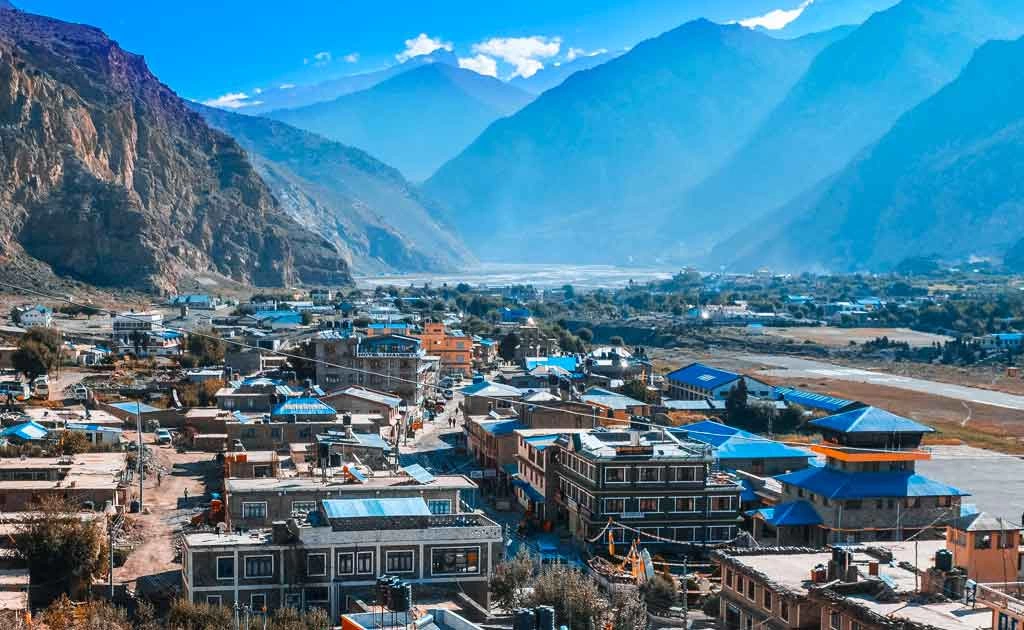
Most visitors base themselves in either Jomsom or Ranipauwa, the small village just below the temple itself. Jomsom, as the district headquarters and airport hub, has a wider range of guesthouses and basic hotels, along with the region’s best selection of restaurants and shops. Ranipauwa sits closer to the temple — close enough to walk up in 15 to 20 minutes — and is the more common choice for pilgrims wanting to be near the temple for an early-morning visit.
Accommodation throughout the region is generally simple: expect basic guesthouse-style rooms, with hot water and heating availability varying by season and property. During peak autumn and spring windows, and especially around major festival dates like Ram Navami or the Dashain-Tihar period, booking ahead is genuinely worthwhile rather than a formality, since the limited room stock in both villages fills quickly. If your itinerary routes back through Pokhara afterward, our car hire in Pokhara service can arrange onward local transport once you’re back down from the mountains.
Photography and Views by Season
For photographers, autumn and winter both offer their own rewards. Late autumn (October-November) delivers the clearest, haze-free mountain panoramas of the year, ideal for capturing the Dhaulagiri and Nilgiri peaks framing the valley. Winter’s snow-dusted temple grounds and villages offer a starkly beautiful, quieter alternative, though shorter days and colder conditions mean less flexibility for early or late golden-hour shooting. Spring adds color to the frame with blooming rhododendrons lower on the trekking trails. At the same time, monsoon, despite its drawbacks for travel logistics, occasionally rewards patient photographers with dramatic cloud formations breaking around the peaks between rain showers. Many photographers combine this trip with the Sarangkot sunrise tour in Pokhara before or after, for a full Annapurna-range photography circuit.
What to Pack, Season by Season
- Autumn and spring: Layered clothing, a warm jacket for mornings and evenings, sun protection, and sturdy walking shoes for the short uphill stretch from Ranipauwa to the temple.
- Winter: Thermal base layers, a serious down jacket, insulated gloves, a warm hat, and lip balm or moisturizer for the dry, cold air.
- Monsoon: A proper waterproof jacket, quick-dry clothing, insect repellent, and a flexible itinerary in case of flight delays or road disruptions.
- Year-round: A basic altitude-awareness plan, given Muktinath’s 3,710-meter elevation, along with sunglasses and sunscreen, since UV exposure is stronger at altitude regardless of season.
Combining Muktinath With a Wider Nepal Trip
Very few travelers visit Muktinath in isolation. Many extend north into Upper Mustang, explore places to visit in Mustang more broadly, or connect the trip to the wider Annapurna Circuit via Besisahar to Chame and Upper Pisang and onward through Dharapani, which is the Annapurna Circuit’s most popular starting point. Others prefer to base themselves in Pokhara before or after, exploring Pokhara to Sikles, Pokhara to Nayapul, or a sunrise trip via Sarangkot. Travelers building a longer Nepal itinerary around their Muktinath pilgrimage often also add a Kathmandu Valley cultural stop covering the region’s UNESCO World Heritage Sites, a wildlife safari via Pokhara to Chitwan bus, or an extension toward Everest Base Camp on the same trip.
Explore More Nepal Routes, Tours, and Vehicles
Whatever season you choose for Muktinath, here’s a fuller map of the routes, tours, and vehicle options we cover, in case your trip extends further across Nepal. Many pilgrims and trekkers treat Muktinath as one stop within a longer journey rather than a standalone destination, and the resources below cover most of the natural extensions.
Mustang and Annapurna Region
For travelers continuing deeper into the Mustang and Annapurna region beyond Muktinath itself, or approaching from a different direction, these routes and guides cover the wider circuit:
Explore Kathmandu to Mustang private jeep, Pokhara to Beni jeep hire, Muktinath to Pokhara jeep, Upper Mustang 4WD jeep, places to visit in Mustang, Pokhara to Manang transport, Manang to Kathmandu private jeep hire, Kathmandu to Manang jeep, Besisahar to Chame and Upper Pisang, Kathmandu to Ghandruk private jeep hire, Pokhara to Ghandruk jeep, Pokhara to Sikles jeep rental, and the Annapurna Conservation Area guide.
Kathmandu and Pokhara Transport
Most journeys to Muktinath begin with getting to Pokhara or Kathmandu first. These pages cover the full range of bus, VIP Sofa, and private vehicle options for that leg of your trip:
See Kathmandu to Pokhara bus tickets, Kathmandu to Pokhara bus ticket, Pokhara to Kathmandu bus, Kathmandu to Pokhara road trip, Kathmandu to Pokhara vehicle rental, our Pokhara bus ticket price guide, VIP Sofa Bus hire in Nepal, tourist bus hire in Nepal, and coaster and tourist bus hire.
Kathmandu Valley Sightseeing
If your itinerary includes time in the capital before or after your pilgrimage, these guides cover the valley’s main sightseeing routes and airport logistics:
Round out your trip with Kathmandu sightseeing, Kathmandu’s historical heritage sites, Bhaktapur Durbar Square, Kathmandu to Nagarkot vehicle hire, the Nagarkot sunrise tour, and reliable Kathmandu airport transfers. If you’re staying near Thamel, see our Thamel to airport private vehicle hire guide or our airport pickup to Thamel and hotel drop guide, and if your hotel is in Patan instead, see our airport to Patan private vehicle drop guide.
Chitwan, Lumbini, and the Terai
Extend your trip with Pokhara to Chitwan bus, Chitwan to Kathmandu bus, our Chitwan VIP bus ticket price guide, Kathmandu to Chitwan VIP Sofa Bus Ticket, Kathmandu to Chitwan luxury car hire, Kathmandu to Lumbini bus, Lumbini to Kathmandu bus, Chitwan to Birgunj border transport, eastern border vehicle hire, and Janakpur airport transfer service.
Trekking Approaches
For other trekking gateways, see Kathmandu to Soti Khola, Kathmandu to Salleri-Phaplu, Kathmandu to Besisahar bus ticket, Besisahar private vehicle hire, the Everest Base Camp trek, our general trekking services, Kathmandu to Gorkha jeep service, and luxury trek vehicle hire for those wanting extra comfort throughout.
Vehicle Fleet
Compare our full fleet: car, jeep, Hiace, bus, coaster, car hire in Nepal, car hire in Pokhara, our alternate Hiace van hire listing, why private vehicle hire is the smartest way to travel Nepal, and our ultimate Nepal vehicle rental guide.
Plan and Learn More
Use our plan your trip tool, browse our Nepal tour package options, learn more about us, read our full SUV rental in Nepal guide, or browse our blog for further route guides across the country.
Best Time to Visit by Traveler Type
Photographers should prioritize late autumn, specifically late October through November, when haze-free skies deliver the clearest possible views of the Dhaulagiri and Nilgiri peaks framing the valley. Early morning light at this time of year is especially rewarding around Ranipauwa and the temple courtyard.
Devotional pilgrims focused on a specific festival day should plan around the relevant date first and weather second — Ram Navami in late March or the Dashain-Tihar window in autumn are the two biggest draws, and both come with the trade-off of higher demand for accommodation and transport.
Trekkers completing the full Annapurna Circuit over Thorong La are effectively restricted to autumn or spring, since the pass is frequently closed by snow in winter. Those approaching by jeep alone rather than trekking the pass have far more seasonal flexibility.
Families with children or elderly members are generally best served by spring or early autumn, avoiding both winter’s serious cold and monsoon’s transport unpredictability, and benefiting from the more moderate daytime temperatures for the short walk up to the temple.
Budget-conscious travelers willing to accept some unpredictability can find genuine value in shoulder-season windows — early December or early March — when accommodation rates ease and crowds thin out, without the more serious weather risks of deep winter or peak monsoon.
Travelers seeking solitude away from festival crowds should consider winter (outside of Lhosar) or the early autumn shoulder in September, when the region is noticeably quieter than the October-November peak, while still offering reasonably manageable conditions.
Understanding the Local Place Names
A small but common source of confusion for first-time visitors: Muktinath refers specifically to the temple complex itself, while Ranipauwa is the village immediately below it, where most accommodation and the end of the drivable road are located. Jomsom, roughly 20-25 kilometers away, is the district headquarters of Mustang and the region’s airport hub, not the temple site itself. Mustang, meanwhile, refers to the wider district and former kingdom, split informally into Lower Mustang (which includes Jomsom and Muktinath) and Upper Mustang (the more remote, restricted-permit area further north beyond Kagbeni). Keeping these distinctions straight helps when reading flight schedules, permit requirements, and transport options, since each name refers to a genuinely different point along the route.
Cultural Etiquette When Visiting Muktinath Temple
Muktinath is an active place of worship for both Hindus and Buddhists, not simply a tourist attraction, and a respectful approach matters regardless of your own faith or background. Dress modestly — shoulders and knees covered is a safe standard — and be prepared to remove your shoes before entering temple buildings. Photography is generally permitted in the outer courtyard and around the 108 water spouts, but always check for posted restrictions or ask before photographing inside the inner sanctums or during active rituals.
If you choose to bathe in the water spouts, as many Hindu pilgrims do, be aware the glacial meltwater is genuinely cold year-round. This ritual is optional for visitors rather than an expectation. Move calmly and give space to pilgrims engaged in prayer or ritual, particularly around the Jwala Mai Temple’s eternal flame, and follow the lead of local devotees regarding the direction of circumambulation around the temple structures, which follows specific customary patterns in both Hindu and Buddhist practice.
Environmental Considerations and Responsible Travel
The Annapurna Conservation Area, which encompasses the entire Jomsom-Muktinath corridor, operates under a community-managed conservation model funded partly by ACAP permit fees. Traveling responsibly here means packing out any waste you generate, avoiding single-use plastic where possible given limited waste infrastructure in these high-altitude villages, and respecting the fragile high-desert ecology, which recovers slowly from disturbance given the short growing season at this elevation.
Choosing a licensed, reputable transport operator also supports the local economy more directly than informal arrangements, and drivers familiar with the region are generally well-versed in both the practical and cultural expectations of traveling through these conservation-area communities.
Why Book With Nepal Vehicle Hiring Pvt Ltd
Our drivers cover the Jomsom-Muktinath corridor across every season, from clear October mornings to snow-dusted December afternoons, with vehicles matched to the actual road and weather conditions rather than a one-size-fits-all fleet. Every booking includes transparent pricing, an experienced high-altitude driver, and flexibility to adjust your schedule around flight delays or seasonal road conditions.
Reach out through our contact page to plan your Muktinath pilgrimage around the season and festival dates that matter most to you.
Nearby Attractions to Pair With Your Visit
Beyond the temple itself, the wider Jomsom-Muktinath area rewards travelers who budget a little extra time for the surrounding villages. Marpha, a short distance south of Jomsom, is known for its apple orchards, a small local distillery producing apple brandy, and some of the tidiest traditional Thakali architecture in the region, with whitewashed stone houses and narrow flagstone alleys. Kagbeni, covered earlier as a stop en route to Muktinath, rewards a longer visit with its medieval core and views straight up the restricted Upper Mustang valley. Jharkot, just below Muktinath, has a notable old monastery and a traditional Tibetan medicine center worth a stop if your schedule allows.
Travelers with additional time sometimes extend south toward Tatopani, known for its natural hot springs, a welcome stop after days on dusty mountain roads. However, this adds a full extra day or more depending on road conditions and is more commonly combined with a longer Annapurna Circuit itinerary than a short Muktinath-focused trip.
Weather Risk at a Glance
Stepping back from month-by-month detail, it helps to think about this trip in terms of risk rather than just averages. Autumn carries the lowest overall risk of weather-related disruption, balanced against the highest demand for transport and accommodation. Spring carries slightly more risk than autumn, concentrated mainly in its final weeks as pre-monsoon showers increase, but remains a genuinely reliable window for most of its span. Winter carries a moderate, specific risk profile — mainly flight cancellations and cold-weather logistics rather than road washouts — while monsoon carries the highest combined risk across both flight reliability and road safety, and is the one season where a flexible schedule isn’t just helpful but close to essential.
None of this means monsoon or winter travel should be ruled out entirely — plenty of pilgrims and travelers visit successfully in both windows every year, particularly those specifically drawn by a festival date or simply preferring quieter conditions. It does mean your planning approach should shift accordingly: more buffer days, more flexible bookings, and realistic expectations about the chance of at least one weather-related delay somewhere in the trip.
Planning Checklist Before You Book
- Decide which season fits your priorities: clearest weather (autumn), blooms and lighter crowds (spring), festival timing (check the lunar calendar for the specific year), or budget and solitude (shoulder season)
- Confirm your ACAP permit arrangements in Kathmandu or Pokhara before departure.
- Book flights or jeep transport with buffer days if traveling outside the autumn-spring window
- Reserve accommodation in Ranipauwa or Jomsom ahead of time during festival dates or peak season
- Pack for the specific season, not just ‘mountain weather’ generally, given how differently January and July feel at this altitude.e
- Check current festival dates for the specific year you’re traveling, since Hindu lunar-calendar dates shift annually.
- Build in at least one extra buffer day if your trip involves flying into or out of Jomsom during any season other than peakautumnn
Working through this checklist before finalizing your dates is the single most effective way to avoid the most common planning mistakes covered earlier in this guide, and it applies whether you’re organizing a short 2026 pilgrimage or a longer 2027 trip combining Muktinath with the wider Annapurna region.
A Final Word on Choosing Your Dates
If there’s one takeaway from this guide, it’s that ‘best time to visit Muktinath’ doesn’t have a single universal answer — it has a best answer for your specific priorities. A photographer chasing crystal-clear Himalayan panoramas and a pilgrim timing their trip around Ram Navami are optimizing for genuinely different things, even though both might end up traveling within a few weeks of each other. Use the season-by-season and month-by-month breakdowns above to narrow down a window, cross-check it against the festival calendar if a specific date matters to you, and then build your transport and accommodation bookings around that window with realistic buffer time, particularly outside the reliable autumn stretch.
However you choose to time it, the destination itself remains one of the most remarkable places in Nepal to visit — a temple sacred to two of the world’s major religions, set in a stark, high-altitude landscape unlike almost anywhere else in the country, reachable comfortably by jeep in a matter of hours from Pokhara regardless of which season ultimately fits your trip best.
Frequently Asked Questions
What is the single best month to visit Muktinath? October and November are the most consistently recommended, offering the clearest skies and most stable road and flight conditions of the year.
Can I visit Muktinath in winter? Yes — the temple remains accessible via jeep to Ranipauwa or by helicopter tour, though the Thorong La trekking route is often snowbound.
Is Muktinath open all year? Yes, the temple is open year-round, though visitor numbers and accessibility vary significantly by season.
When is Ram Navami in 2026? 26-27 March 2026, a major Hindu pilgrimage date at Muktinath.
When is Janai Purnima observed at Muktinath? On the full moon of the Nepali month of Shrawan, generally falling in August, alongside the local Yartung Mela festival.
Should I avoid monsoon season entirely? For most first-time visitors, yes — flight cancellations and landslide risk on the road are common between June and August.
Do I need a permit to visit Muktinath? Yes, an ACAP permit is required for the entire route, obtained in advance in Kathmandu or Pokhara.
Is it better to fly or drive to Jomsom? Flying is faster but more weather-dependent; driving via Beni takes longer but is more reliable during questionable flying conditions.
How cold does it get at Muktinath in winter? Night temperatures at altitude can drop toward -19°C in the coldest months, so serious cold-weather gear is essential.
Can I combine Muktinath with the Annapurna Circuit? Yes, many trekkers arrive at Muktinath as the final stop after crossing Thorong La from the Manang side, weather and season permitting.
What should I pack for a spring visit? Layered clothing, a warm jacket for mornings and evenings, and sturdy footwear for the short walk up to the temple from Ranipauwa.
Is there a difference between visiting for religious versus trekking purposes when it comes to timing? Not fundamentally — both benefit most from autumn or spring conditions. However, devotional travelers may prioritize a specific festival date over ideal weather, while trekkers completing the full circuit are more strictly bound by Thorong La’s seasonal accessibility.
Can weather conditions in Pokhara affect my Jomsom flight even if Jomsom itself looks clear? Yes — both departure and arrival airport conditions matter, and cloud cover or wind at either end can delay or cancel a flight even when the other looks fine.
Can we visit Muktinath as a day trip from Pokhara? Technically possible with an early flight, though most travelers prefer at least one overnight in Jomsom or Ranipauwa to avoid a rushed, weather-dependent same-day round trip.
Does the best time to visit change if I’m coming specifically for Upper Mustang rather than just Muktinath? Upper Mustang has its own seasonal considerations and an additional restricted-area permit requirement, but broadly follows the same autumn-and-spring preference as the wider Mustang region.
Is autumn or spring more crowded at Muktinath? Autumn typically sees the highest volume of both trekkers and pilgrims, particularly around the Dashain and Tihar festival period.
How many days should I budget for a Muktinath trip from Pokhara? A minimum of 2 to 3 days is typical, allowing for a flight or drive to Jomsom, the temple visit, and a buffer day for weather-related delays.
Is Muktinath suitable for elderly travelers or young children? Yes, given the availability of jeep transport most of the way — the altitude and short walk from Ranipauwa are the main considerations rather than physical difficulty of the route itself.
What’s the coldest month to avoid if I’m sensitive to cold weather? January is typically the coldest, with the lowest night temperatures of the year at altitude.
Planning your 2026 or 2027 pilgrimage to Muktinath? Book your best time to visit Muktinath travel dates and jeep transport in advance through our contact page, and let a local driver handle the season-specific road conditions while you focus on the journey.
WhatsApp / Call: +977 9851013196
Email: [email protected]
- Best Time to Visit Muktinath
- Quick Answer: When Should You Go?
- Understanding Muktinath's Location and Climate
- Muktinath's Religious and Cultural Significance
- Altitude and Health Considerations at 3,710 Meters
- Autumn (Late September to November): The Best Season
- Spring (March to Mid-May): A Strong Second Choice
- Monsoon (June to August): The Season to Avoid or Plan Carefully Around
- Winter (December to February): Cold, Quiet, and Still Accessible
- Best Time for Pilgrimage: Hindu and Buddhist Festival Calendar
- Sample Itineraries by Season
- Common Mistakes to Avoid When Planning Your Timing
- How to Reach Muktinath
- Choosing Between a Guided Trek and a Private Jeep Trip
- Group Travel vs Solo Pilgrimage: Timing Considerations
- Permits You'll Need
- Cost Considerations by Season
- Choosing Your Vehicle by Season
- Where to Stay Near Jomsom and Muktinath
- Photography and Views by Season
- What to Pack, Season by Season
- Combining Muktinath With a Wider Nepal Trip
- Explore More Nepal Routes, Tours, and Vehicles
- Best Time to Visit by Traveler Type
- Understanding the Local Place Names
- Cultural Etiquette When Visiting Muktinath Temple
- Environmental Considerations and Responsible Travel
- Why Book With Nepal Vehicle Hiring Pvt Ltd
- Nearby Attractions to Pair With Your Visit
- Weather Risk at a Glance
- Planning Checklist Before You Book
- A Final Word on Choosing Your Dates
- Frequently Asked Questions

Related Blog & Articles
Altitude and Health: Essential Muktinath Advice
Hidden Kingdom Adventure Nepal Upper Mustang Jeep Tour
Kathmandu to Mustang (Muktinath)