Plan a Trip


Hidden Kingdom Adventure Nepal Upper Mustang Jeep Tour
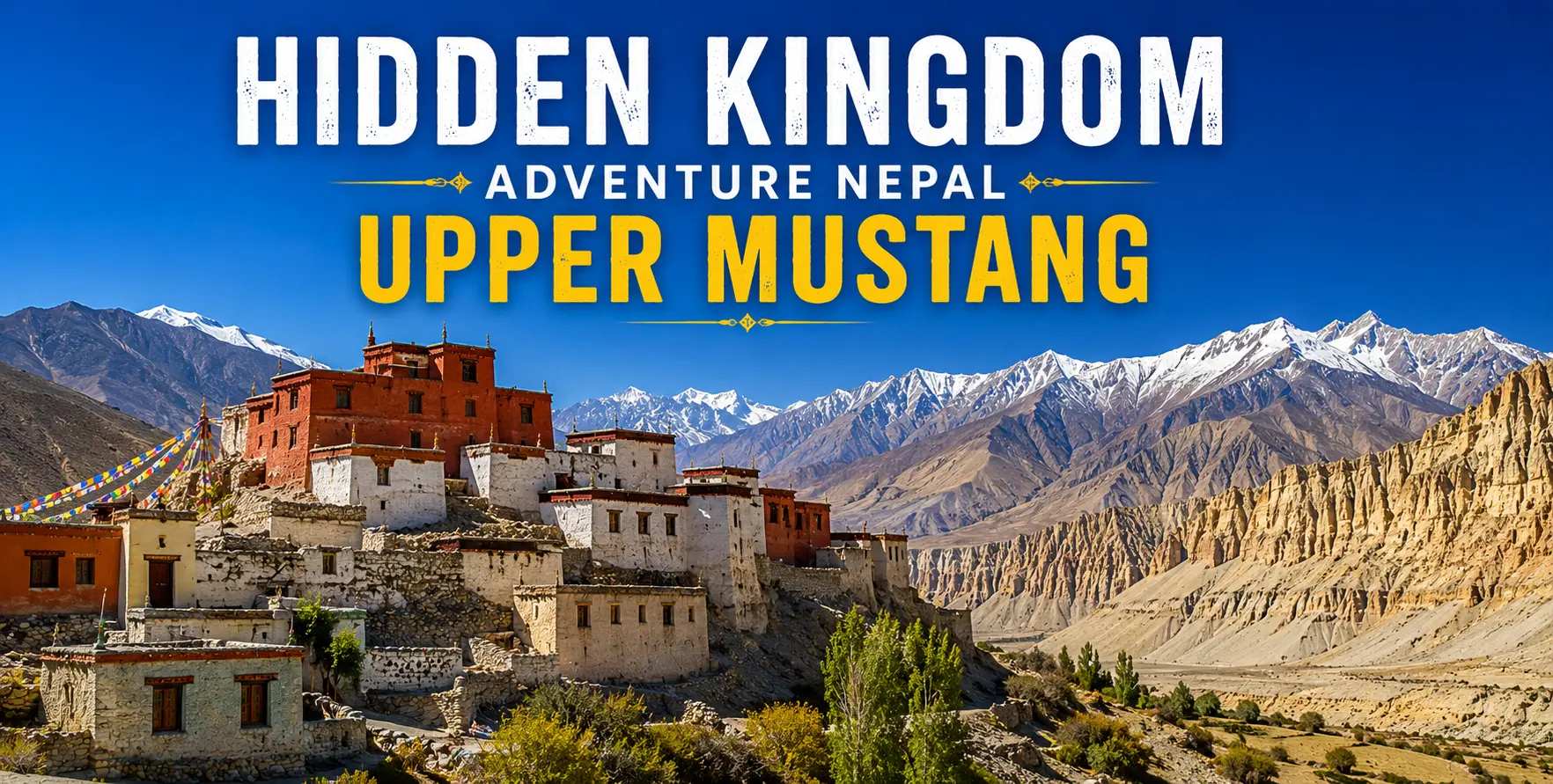
Hidden Kingdom Adventure Nepal: The Ultimate Upper Mustang Jeep & 4WD Guide
Somewhere above the deepest gorge on Earth, beyond a police checkpoint at the edge of a medieval village, lies a landscape so remote, so culturally preserved, and so visually unlike anything else in South Asia that first-time visitors consistently struggle to find the language to describe it. The high-altitude desert plateau of Upper Mustang — wedged between the Annapurna and Dhaulagiri ranges to the south and the Tibetan border to the north — is Nepal’s last great secret, a place where the 21st century has arrived slowly and incompletely, where Tibetan Buddhist monasteries founded in the 14th century still perform unbroken ritual traditions, where the wind-carved cliffs conceal cave cities inhabited for millennia, and where the ancient walled capital of Lo Manthang feels less like a tourist destination than a living museum of a civilisation that the outside world nearly forgot.
Upper Mustang’s nickname as the Forbidden Kingdom is not merely poetic. Until 1992, when Nepal opened the region to international visitors for the first time, this territory was genuinely off-limits to foreigners — its isolation preserved by a combination of government restriction, difficult terrain, and the determined cultural self-sufficiency of the Loba people, the ethnic Tibetan community who have lived in these high valleys for centuries and who continue to regard Lo Manthang’s hereditary king, despite the formal abolition of Nepal’s monarchy in 2008, as their traditional ruler and spiritual authority. The cultural continuity that this long isolation preserved is precisely what makes Upper Mustang so extraordinary to visit today: it offers an encounter with Tibetan Buddhist civilization in a form more complete, more undisturbed, and more emotionally authentic than anything available in Tibet itself, where decades of Chinese cultural management have fundamentally altered the landscape of traditional practice.
In 2025 and 2026, Upper Mustang is more accessible than ever and considerably more affordable than it was a year ago. A landmark government decision effective from late 2025 replaced the old mandatory flat-fee permit structure — USD 500 per person for ten days regardless of actual visit duration — with a flexible daily rate of USD 50 per person per day, making shorter jeep tours and overland adventures economically practical for a much broader range of international visitors. The combination of this permit reform, improvements to road conditions toward Lo Manthang, and the growing quality of jeep tour operations serving the region has created an ideal moment to explore Nepal’s hidden kingdom on four wheels.
This guide from Nepal Vehicle Hiring Pvt Ltd (vehiclehiringnepal.com) covers everything relevant to planning a hidden kingdom adventure in Nepal’s Upper Mustang region by private jeep or 4WD vehicle — the landscape, culture, and key destinations, the complete route from Pokhara or Kathmandu, vehicle requirements, accurate 2025/26 permit costs, practical travel information, and the specific vehicle hire arrangements that make the difference between an adventure that unfolds smoothly and one that unravels at a checkpoint because of missing documentation or an underpowered vehicle stranded on a river crossing.
The Kingdom of Lo: History, Culture, and What Makes It Unlike Anywhere Else
To understand why the Upper Mustang adventure captures the imagination so completely, it helps to grasp something of the territory’s history and the cultural forces that have shaped it into what it is today. Mustang, whose name derives from the Tibetan word ‘Monthang’ meaning fertile plain, was an independent kingdom for centuries before its formal integration into the Kingdom of Nepal in 1795, and even after that integration, maintained a degree of de facto autonomy that allowed it to preserve its Tibetan cultural identity long after the surrounding regions had adopted the Hindu and Nepali cultural frameworks that define the rest of the country.
The Kingdom of Lo at its historical height controlled the trade routes connecting the Tibetan plateau with the Indian subcontinent through the Kali Gandaki Valley — one of the most important commercial corridors in the Himalayan region, carrying salt, wool, and grain southward and rice, spices, and manufactured goods northward. This trade gave the Loba people both the economic resources to build the extraordinary monasteries and palace complexes that define Lo Manthang’s architectural heritage and the cultural connections with the Tibetan Buddhist world that shaped every dimension of their spiritual and artistic life. The Sakya school of Tibetan Buddhism established its dominant presence in Mustang during the 14th and 15th centuries.
The monasteries built during this period, including the magnificent Jampa Lhakhang and Thubchen Monastery in Lo Manthang, contain some of the finest surviving examples of Tibetan Buddhist mural painting from this era — artworks of extraordinary quality that have been remarkably preserved by the region’s extreme dryness and long isolation from the outside world.
Today, the Loba people number only a few thousand, distributed across a handful of villages in Upper and Lower Mustang. Their way of life combines traditional pastoral agriculture — yak herding, barley and buckwheat cultivation, apple orcharding in the lower valleys — with an increasing involvement in the tourism economy that has grown significantly since the region’s opening in 1992. Despite this growing external contact, the cultural fabric of Upper Mustang remains genuinely distinct from any other part of Nepal, from the Tibetan language still spoken as the primary tongue in most Upper Mustang villages, to the traditional dress worn for festivals and ceremonies, to the architectural style of the whitewashed mud-brick compound houses and monastery complexes that give Lo Manthang its particular medieval appearance.
For travelers arriving by jeep after the long approach from Pokhara, entering Lo Manthang through its ancient gateway feels genuinely unlike any other arrival in Nepal. The walled city, roughly 150 meters on its long axis, contains within its perimeter the royal palace, four principal monasteries, several hundred traditional houses, and a population that carries its extraordinary heritage with a quiet dignity that the respectful visitor immediately senses. Sitting in the monastery courtyard during evening prayers, listening to the deep resonance of butter-lamp rituals and the rhythmic percussion of the ceremony, it becomes easy to understand why travelers who have experienced every corner of Nepal consistently describe Upper Mustang as the place that has affected them most deeply.
The Hidden Kingdom’s Adventure Landscape: What You Will See and Experience
Lo Manthang: The Ancient Walled Capital
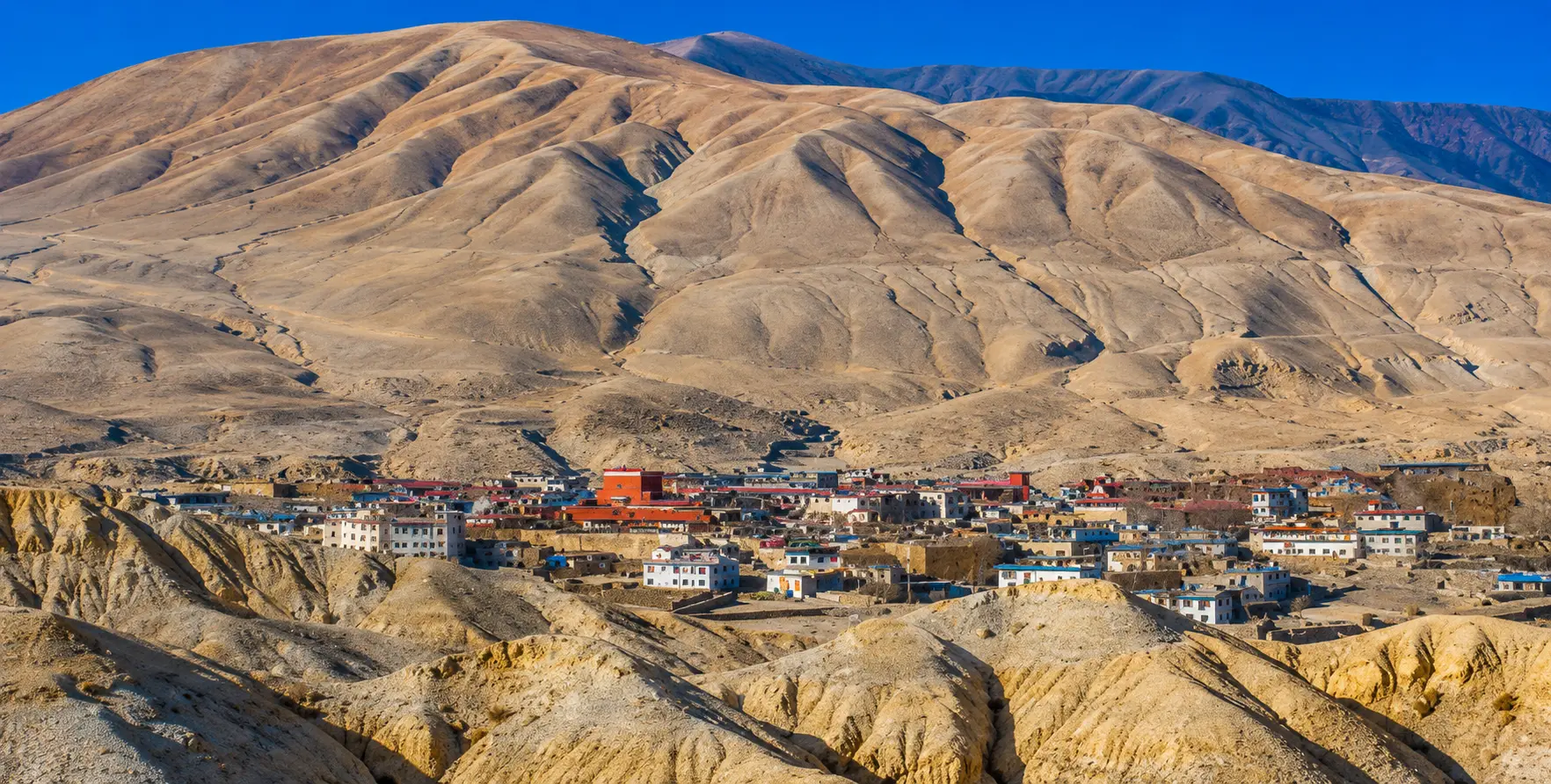
Lo Manthang is the undisputed centerpiece of the Upper Mustang adventure. This walled city has stood since the 14th century, and it continues to function as the cultural and spiritual capital of the Loba people today. Approached by jeep across the high plateau, the city materializes from the desert landscape with an almost theatrical abruptness — the whitewashed walls rising from the ochre Earth, the monastery rooftops visible above the perimeter, the mountains of Tibet visible in the distance on clear days. Within the walls, visitors can explore the royal palace, the four ancient monasteries with their extraordinary fresco collections, and the narrow lanes where traditional Loba life unfolds with minimal concession to the modern world.
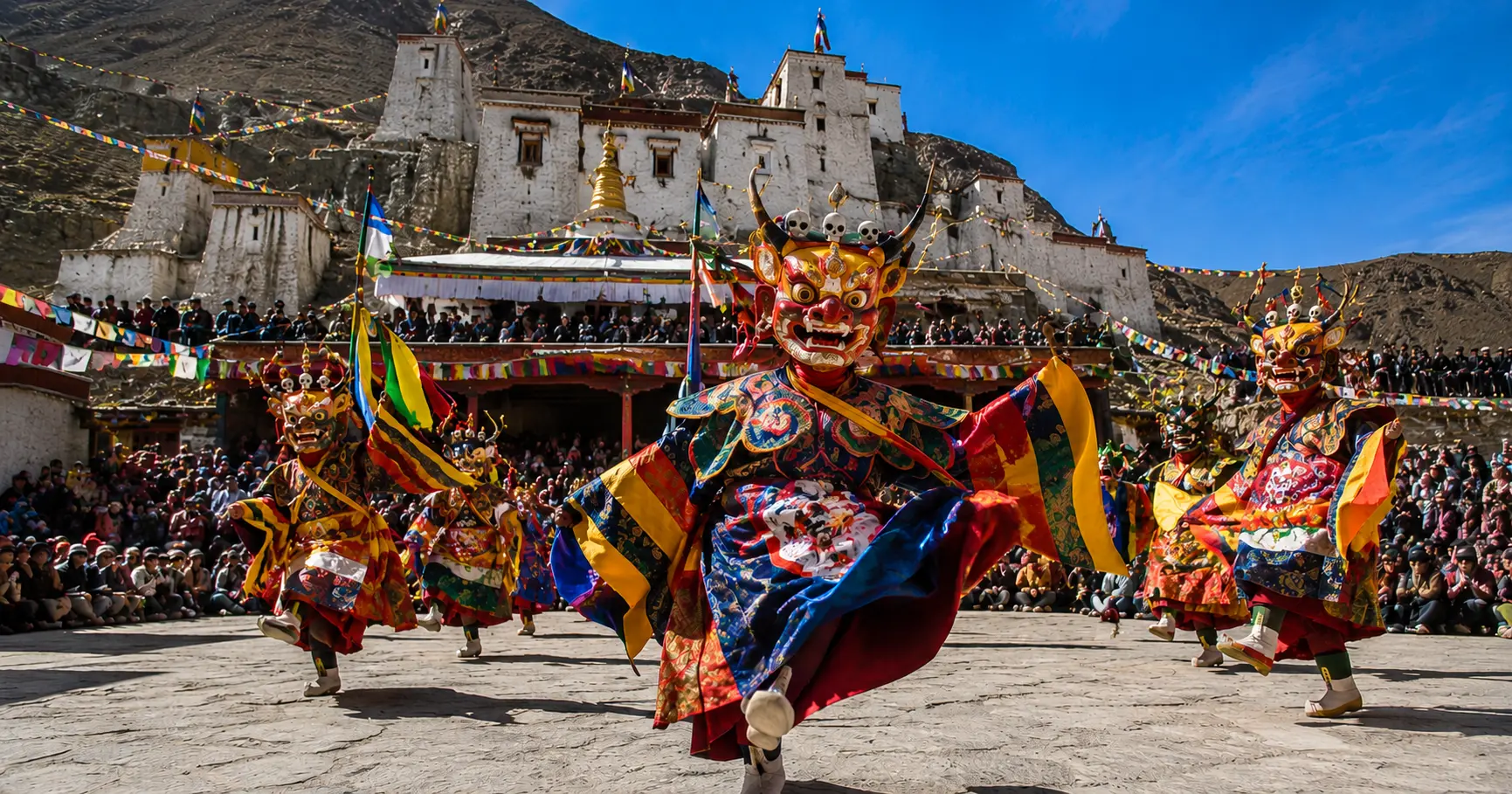
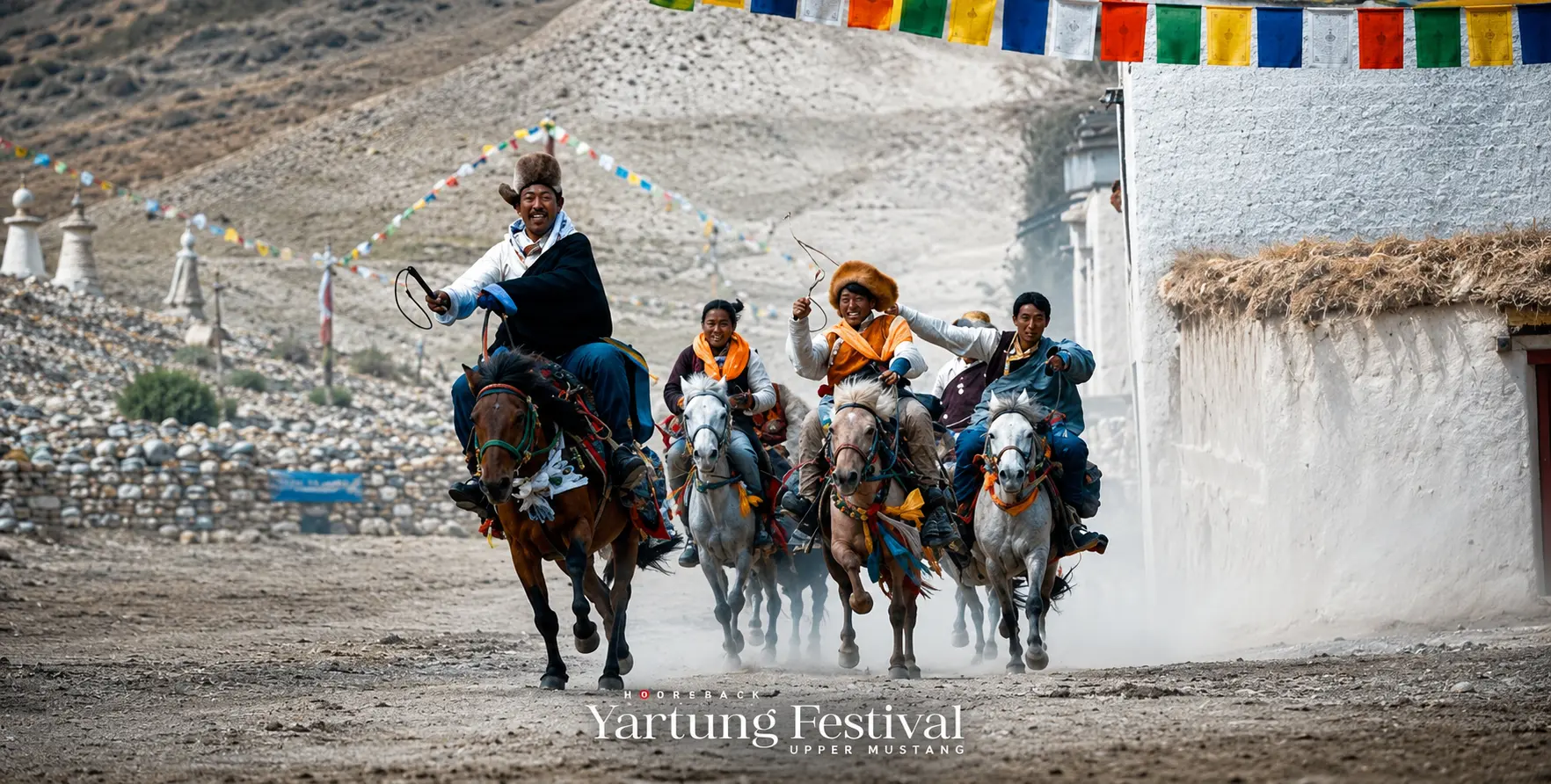
The Tiji Festival, held annually in Lo Manthang in May according to the Tibetan lunar calendar, represents the most spectacular cultural event in the entire Upper Mustang calendar — a three-day ritual drama enacting the triumph of good over evil, performed by monks in elaborate costumes and masks against the backdrop of the city’s ancient monastery. Travelers who time their jeep tour to coincide with Tiji witness something genuinely irreplaceable: a centuries-old living tradition performed in its original setting by a community for whom it carries deep religious meaning, not a cultural display staged for tourist consumption.
The Sky Caves of Chhoser and Mustang’s Cliff Dwellings
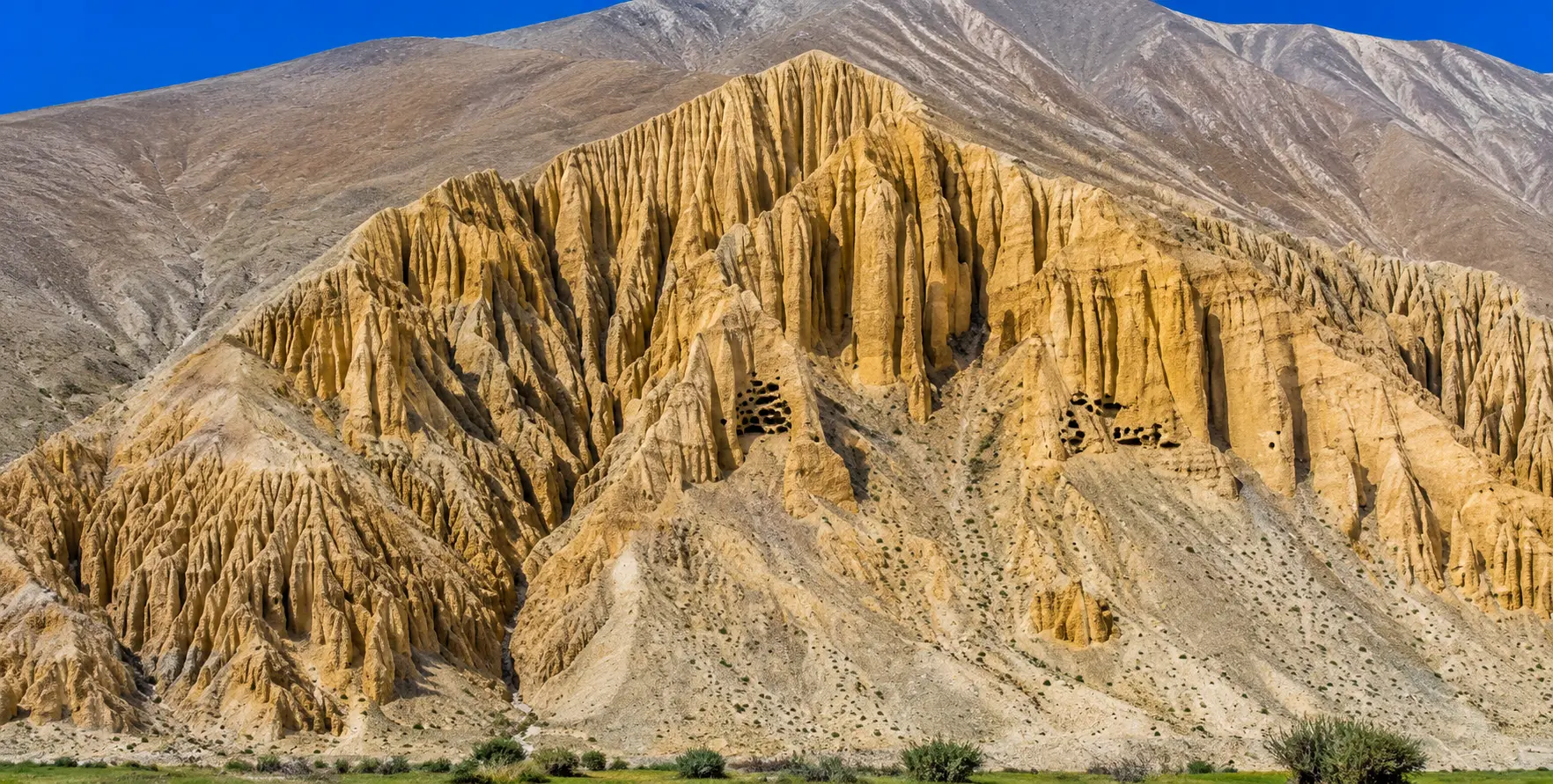
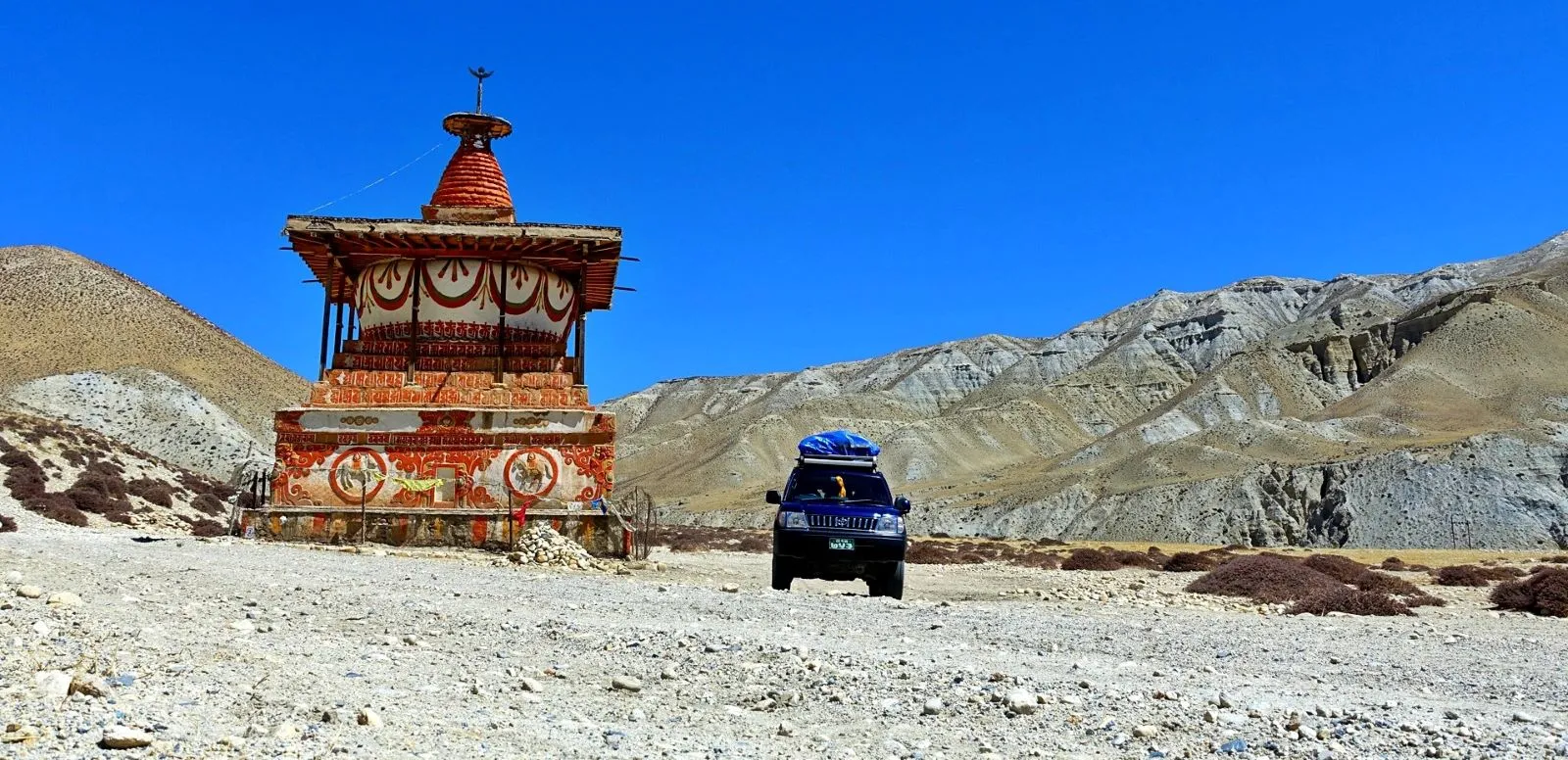
Among the most extraordinary features of the Upper Mustang landscape are the sky caves — thousands of hand-carved cavities cut into the sheer cliff faces that characterize much of the region’s dramatic topography. The caves of Chhoser village, accessible by a short jeep detour from the main Lo Manthang route, have been partially excavated by archaeologists who discovered within them human remains, manuscripts, paintings, and artifacts dating back more than a thousand years, suggesting a tradition of cliff habitation that predates the foundation of Lo Manthang itself. Other cave complexes elsewhere in the Upper Mustang plateau contain meditation chambers, burial sites, and storage areas whose full significance archaeologists are still working to understand. Visiting these remarkable sites by jeep, which can reach cliff faces and canyon viewpoints that would require days of walking to access on foot, represents one of the clearest practical advantages of the vehicle-based approach to exploring the hidden kingdom.
The Kali Gandaki Gorge and Mustang’s Desert Landscapes
The approach to Upper Mustang through the Kali Gandaki Gorge is in itself one of the great road journeys of the Himalayan world. The Kali Gandaki River runs between the massifs of Dhaulagiri and Annapurna — the world’s seventh and tenth highest peaks respectively — in a gorge that, measured from the surrounding summits to the river below, qualifies as the deepest in the world. The jeep road from Beni through Tatopani, Ghasa, Lete, Kalopani, Tukuche, and Marpha to Jomsom follows this extraordinary corridor, the views shifting constantly between soaring mountain walls, dramatic waterfalls, ancient terrace agriculture, and the increasingly desert-like character of the landscape as altitude increases and rainfall decreases northward into Mustang’s rain shadow.
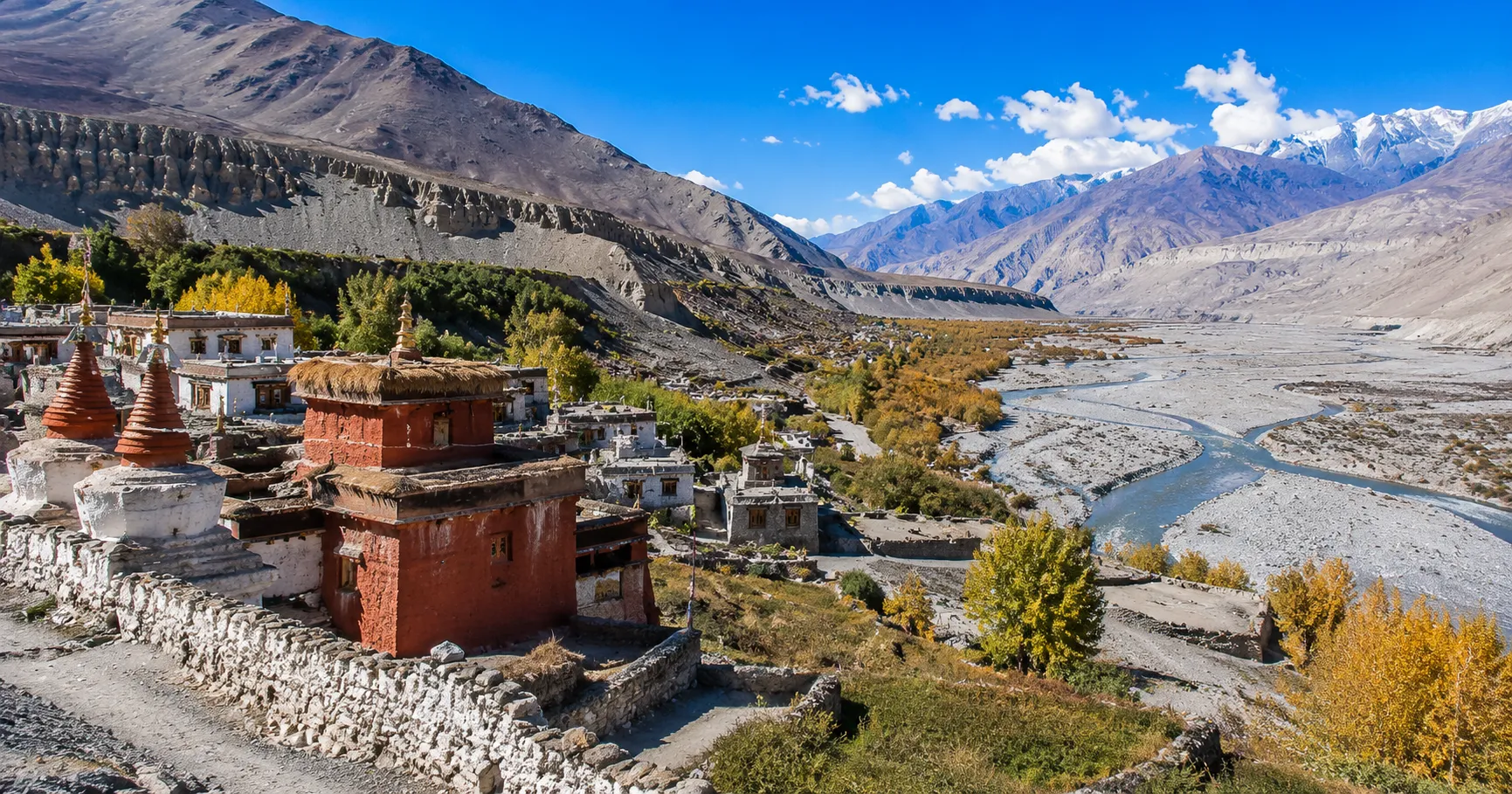
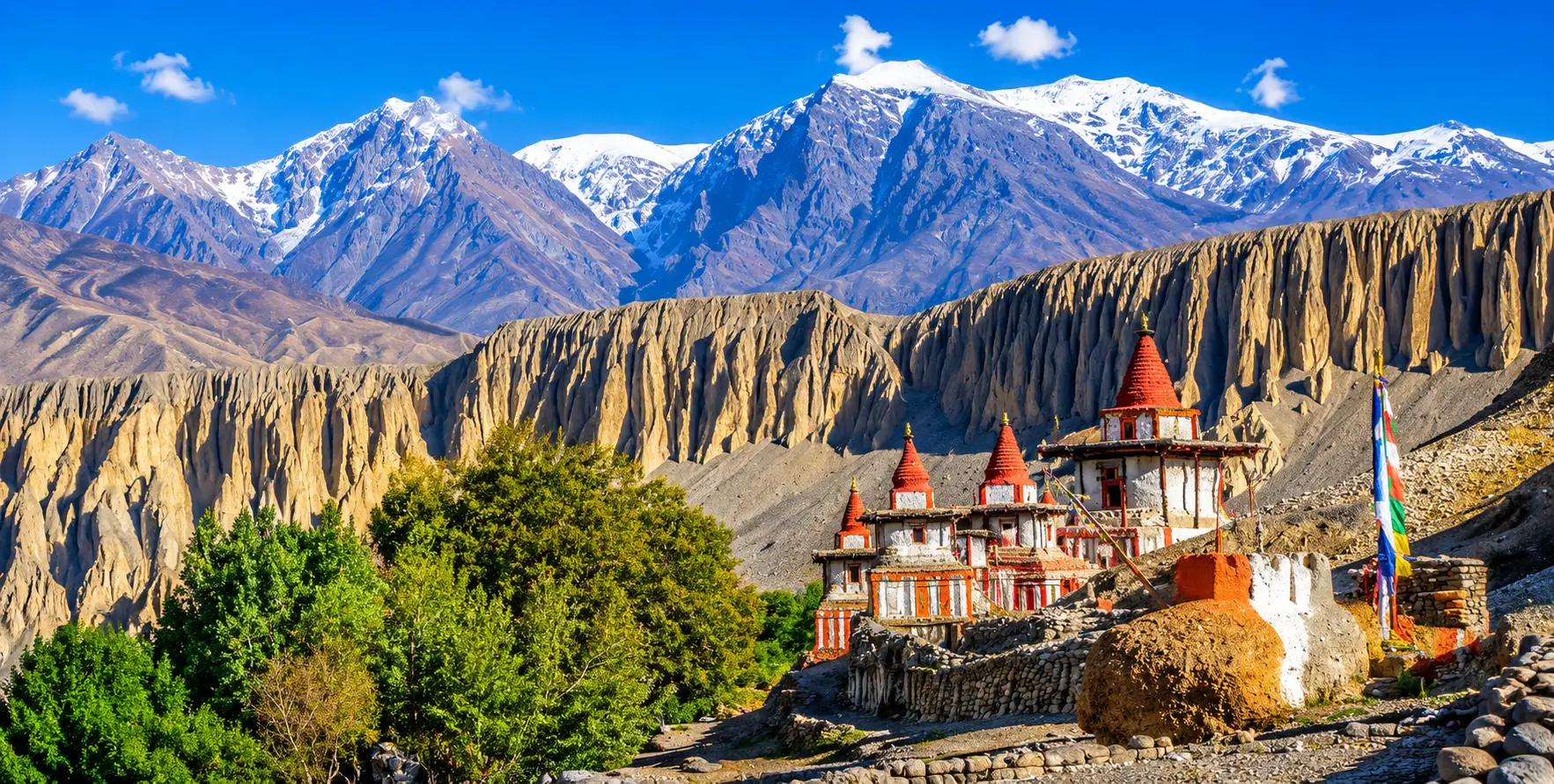
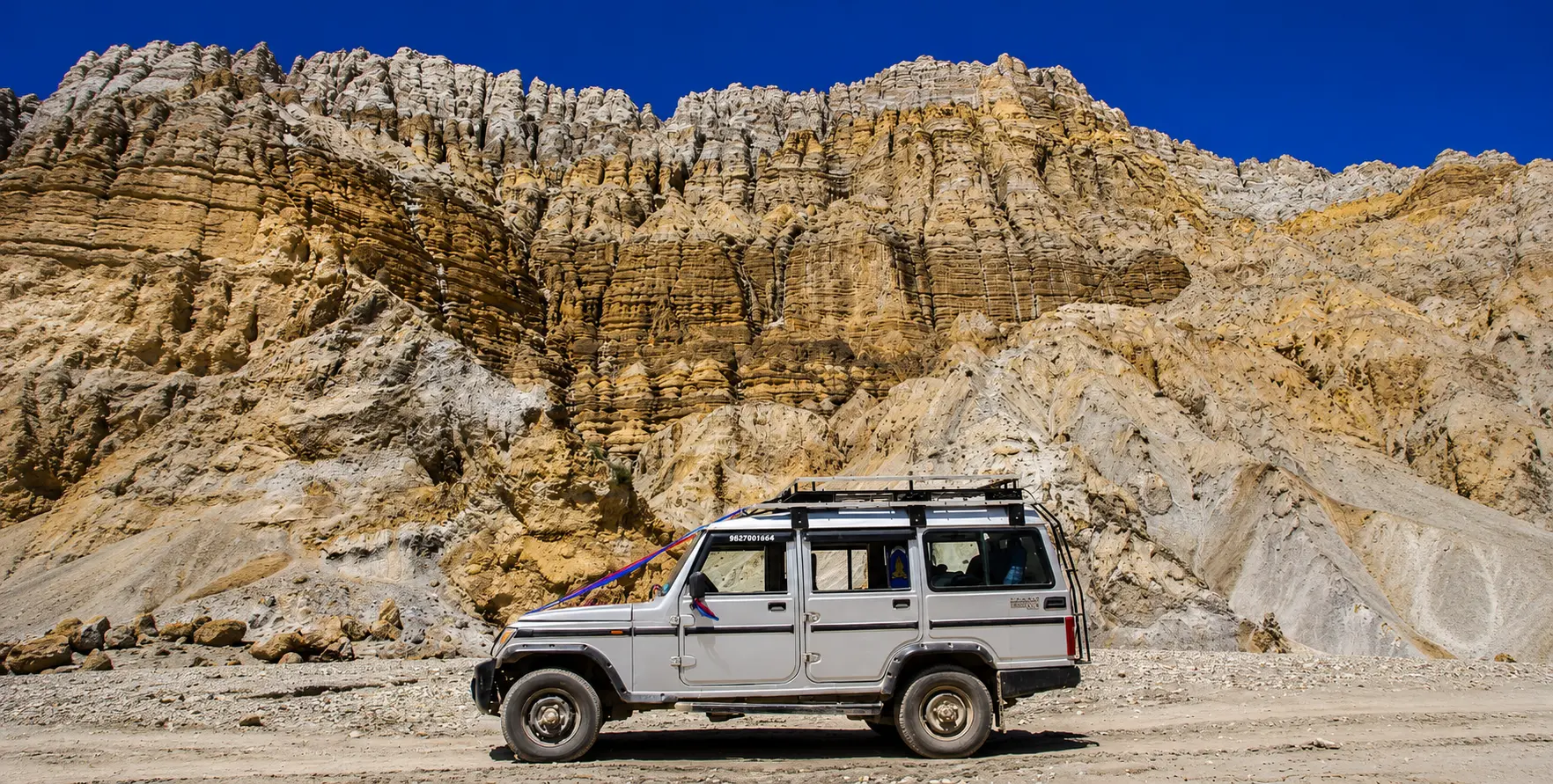
Above Kagbeni, where Upper Mustang’s restricted zone begins, the landscape transforms into something that feels genuinely foreign to most visitors from subtropical or temperate regions — an arid, wind-sculpted plateau of ochre, red, and grey rock formations carved by millennia of erosion into canyons, columns, and ridgelines of extraordinary visual drama. The famous eroded badlands around Chele and Ghami, the vast open plateau approaching Lo Manthang, and the windswept passes connecting the region’s scattered villages all contribute to a landscape that alternates between austere beauty and dramatic spectacle, photographed compulsively by virtually every visitor and still somehow more extraordinary in person than any image can capture.
Ancient Monasteries and the Living Tradition of Tibetan Buddhism
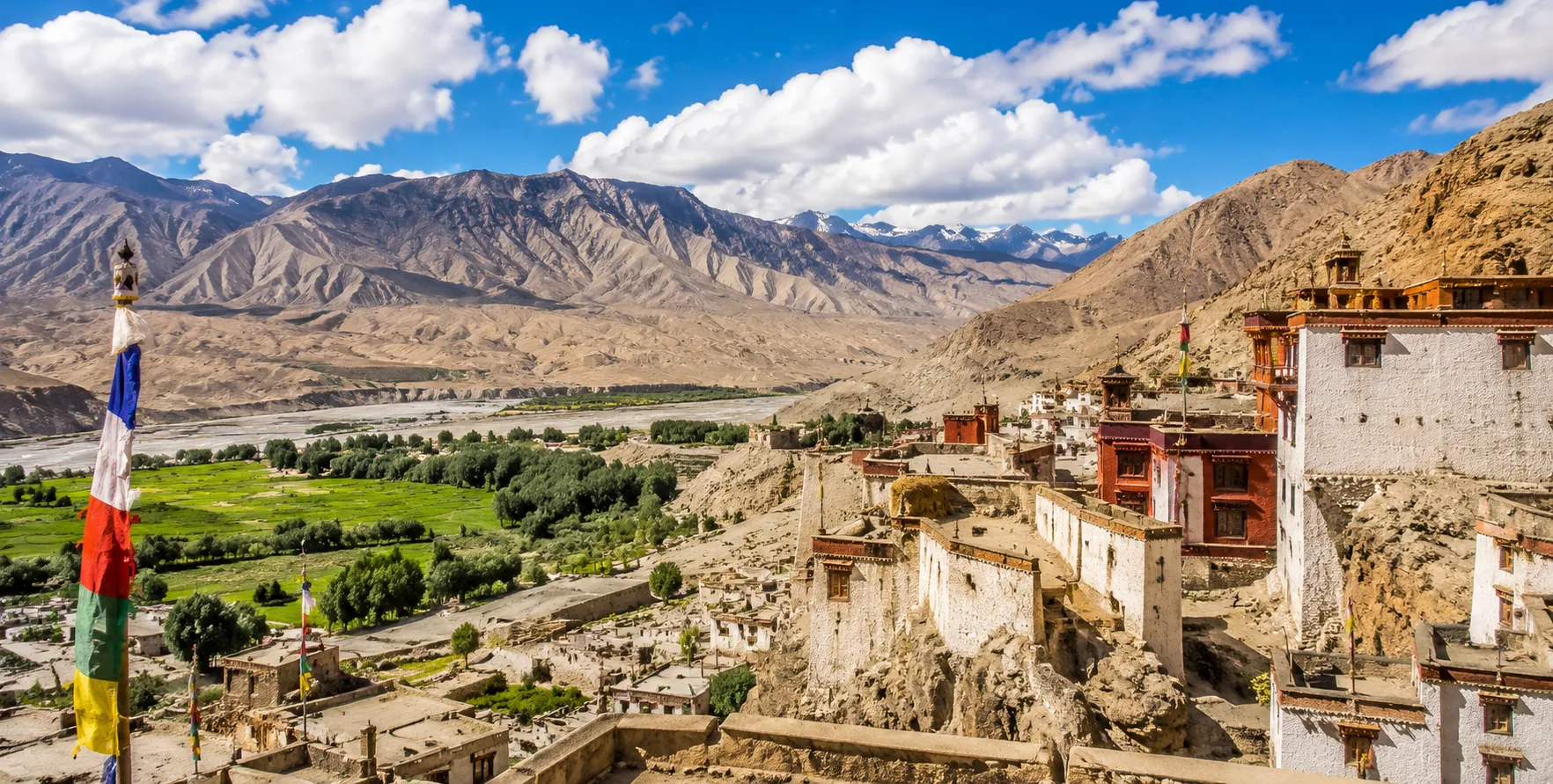
Throughout the Upper Mustang plateau, the monasteries, prayer walls, and chortens of Tibetan Buddhism are not the ruins of a departed civilization but the active infrastructure of a living faith, maintained by monks and supported by lay communities who have practiced these traditions without interruption across multiple centuries. Beyond Lo Manthang’s principal monasteries, numerous smaller gompa throughout the region offer encounters with monastic life that range from the magnificent to the intimately human — a single elderly monk maintaining a remote hillside shrine, a community gathering for a local festival, or simply the sight of the classic Tibetan landscape element of prayer flags streaming in the mountain wind above a pass that pilgrims have crossed for hundreds of years.
The Complete Jeep Route: Pokhara to Lo Manthang
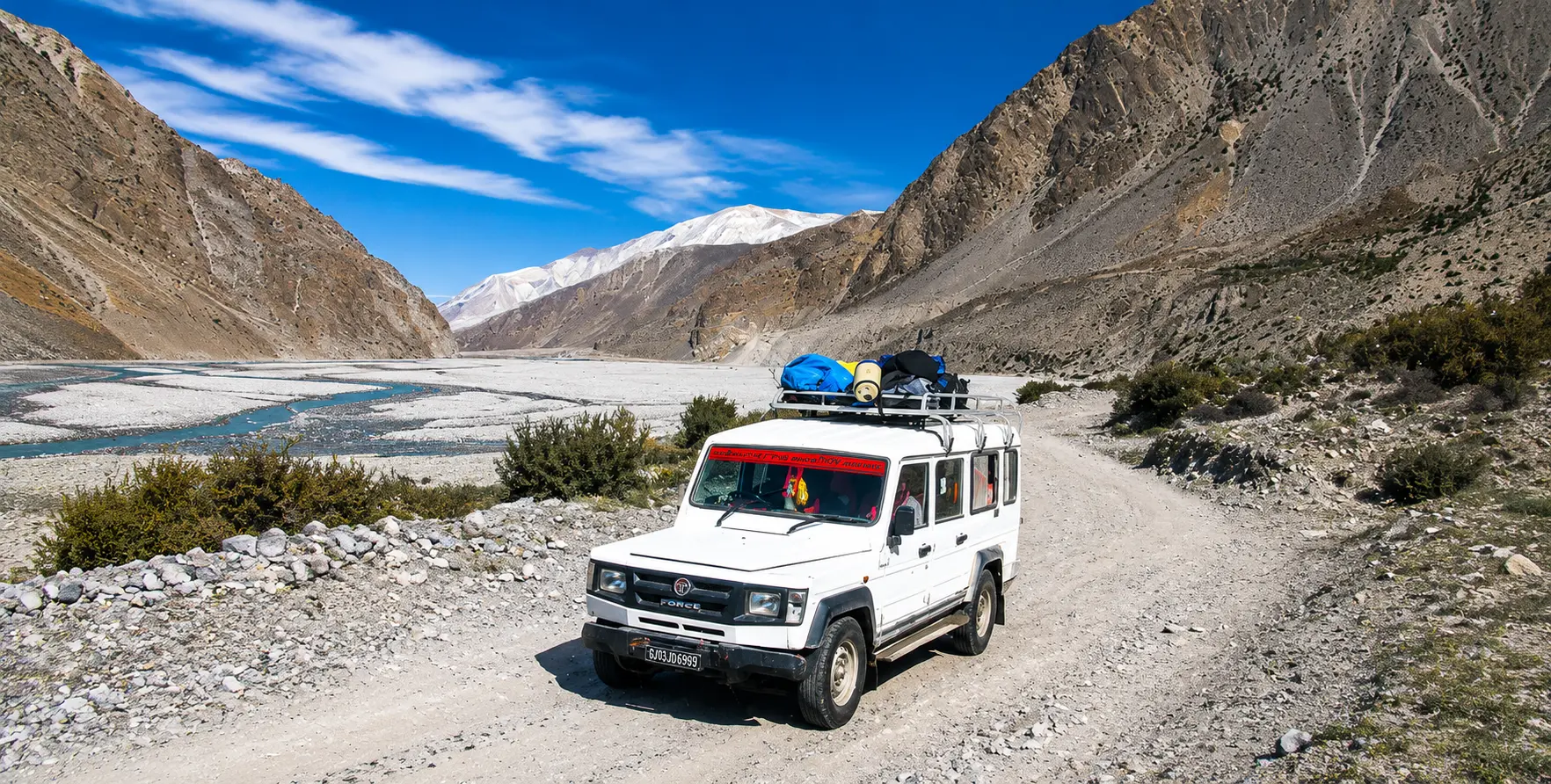
The standard overland jeep route to Upper Mustang begins in Pokhara, Nepal’s second city and the most practical base for organizing this adventure. It covers a total distance of approximately 235 kilometers to Lo Manthang. The journey, typically structured over two to three days of driving, depending on the itinerary’s pace and the number of stops, passes through some of the most spectacular road scenery in Nepal before entering the restricted zone at Kagbeni. Here is a complete stage-by-stage breakdown:
Stage 1: Pokhara to Jomsom (approx. 143 km / 6–9 hours)
The first driving stage from Pokhara follows the Kali Gandaki Highway through Beni, Tatopani, and Marpha to Jomsom, the district headquarters of Mustang, at 2,720 meters. This is a long day’s drive on a road that transitions from a reasonably maintained highway in its lower sections to an increasingly rough, unpaved mountain track as it climbs through the gorge. The road crosses the Kali Gandaki River at several points, with concrete bridges at major crossings but occasional shallower fords elsewhere that make the 4WD capability of a proper jeep genuinely valuable. Jomsom itself is a pleasant mountain town with good accommodation options, a landing strip for domestic flights that many travelers use as an alternative to the overland drive for this first stage, and a warm welcome from the local Thakali community, whose distinctive cuisine — including the famous buckwheat dishes of the Kali Gandaki Valley — provides an excellent introduction to the culinary culture of the Mustang region.
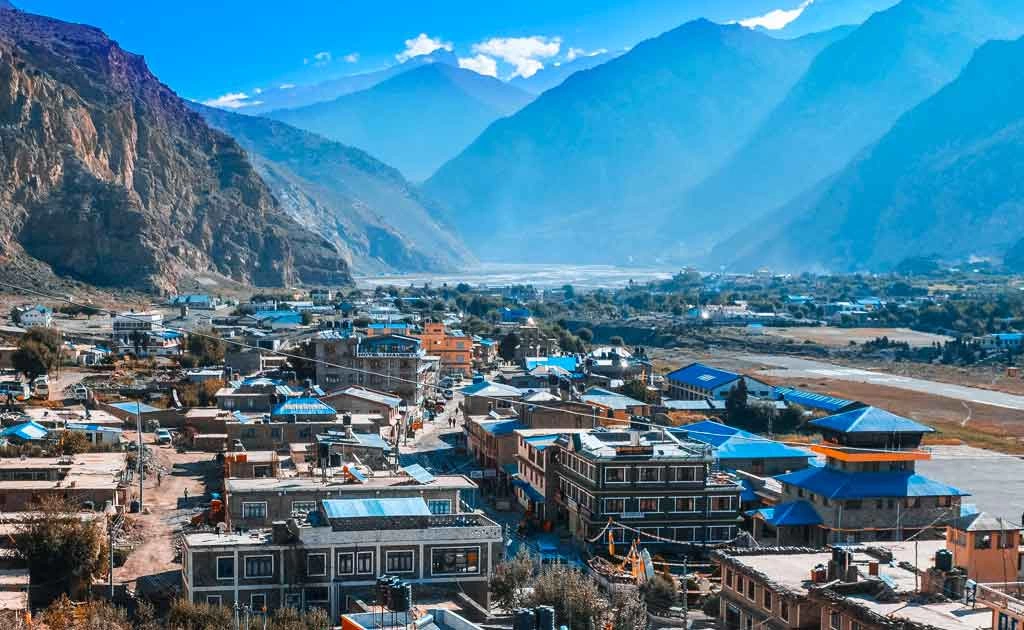
Stage 2: Jomsom to Kagbeni and the Restricted Zone Entry (approx. 18 km / 45 min)
From Jomsom, a relatively short drive of approximately 18 kilometers leads to Kagbeni village at 2,810 meters — the gateway to Upper Mustang and the location of the police checkpoint where all restricted area permits are verified. Kagbeni itself is a remarkably well-preserved medieval village of narrow alleys, traditional architecture, and an ancient monastery perched dramatically above the confluence of the Kali Gandaki and Jhong Khola rivers. Many jeep tour itineraries include a walking exploration of Kagbeni village. At the same time, permits are processed at the checkpoint, making this a worthwhile stop in its own right rather than merely a bureaucratic pause.
Stage 3: Kagbeni to Chele and Syangboche (approx. 30 km / 2–3 hours)
Beyond Kagbeni, the road enters the restricted zone, and the landscape changes dramatically. The track climbs steeply out of the Kali Gandaki valley onto the Mustang plateau through a series of switchbacks that demand both vehicle capability and driver experience. The villages of Chele (3,050 m) and Syangboche (3,800 m) mark the key stops on this stage, with viewpoints of the extraordinary eroded canyon country and the first sightings of the characteristic red-banded cliffs that define much of Upper Mustang’s visual character. A detour to the Chhoser sky caves is practical from this stage, requiring only a short additional journey on a manageable track.
Stage 4: Ghami, Charang and the Approach to Lo Manthang (approx. 60 km / 3–4 hours)
The final approach to Lo Manthang passes through the villages of Ghami and Charang, each with its own monasteries and traditional architecture, across a high plateau where the altitude exceeds 4,000 meters, and the open scale of the Tibetan-influenced landscape delivers its full impact. Lo Manthang appears ahead as the road descends slightly onto the plateau on which it sits, the white perimeter walls and the monastery rooftops visible against the backdrop of the mountains. Arriving in the late afternoon, checking into one of Lo Manthang’s small guesthouses, and walking the ancient streets as the day’s light fades over the surrounding peaks is an experience that most visitors describe as one of the most emotionally powerful moments of their entire Nepal journey.
Vehicle Requirements for the Upper Mustang Hidden Kingdom Route
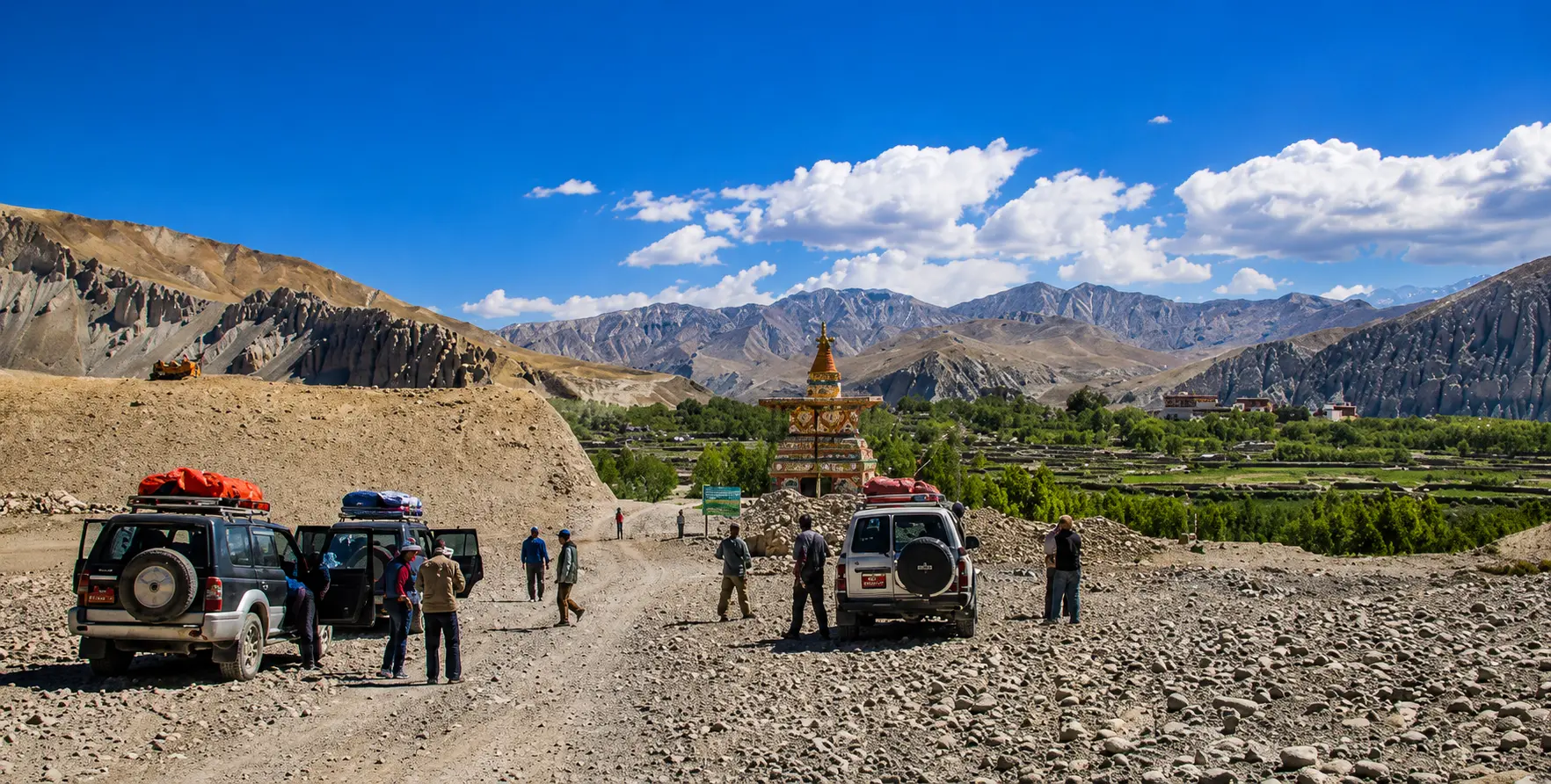
The Upper Mustang route makes absolutely non-negotiable demands on the vehicle used to travel it. This is not a route where the vehicle’s quality is a matter of comfort preference; it is a matter of whether the journey is physically possible and safe. Several characteristics are essential, and Nepal Vehicle Hiring Pvt Ltd provides vehicles that meet all of them as standard on every Upper Mustang booking.
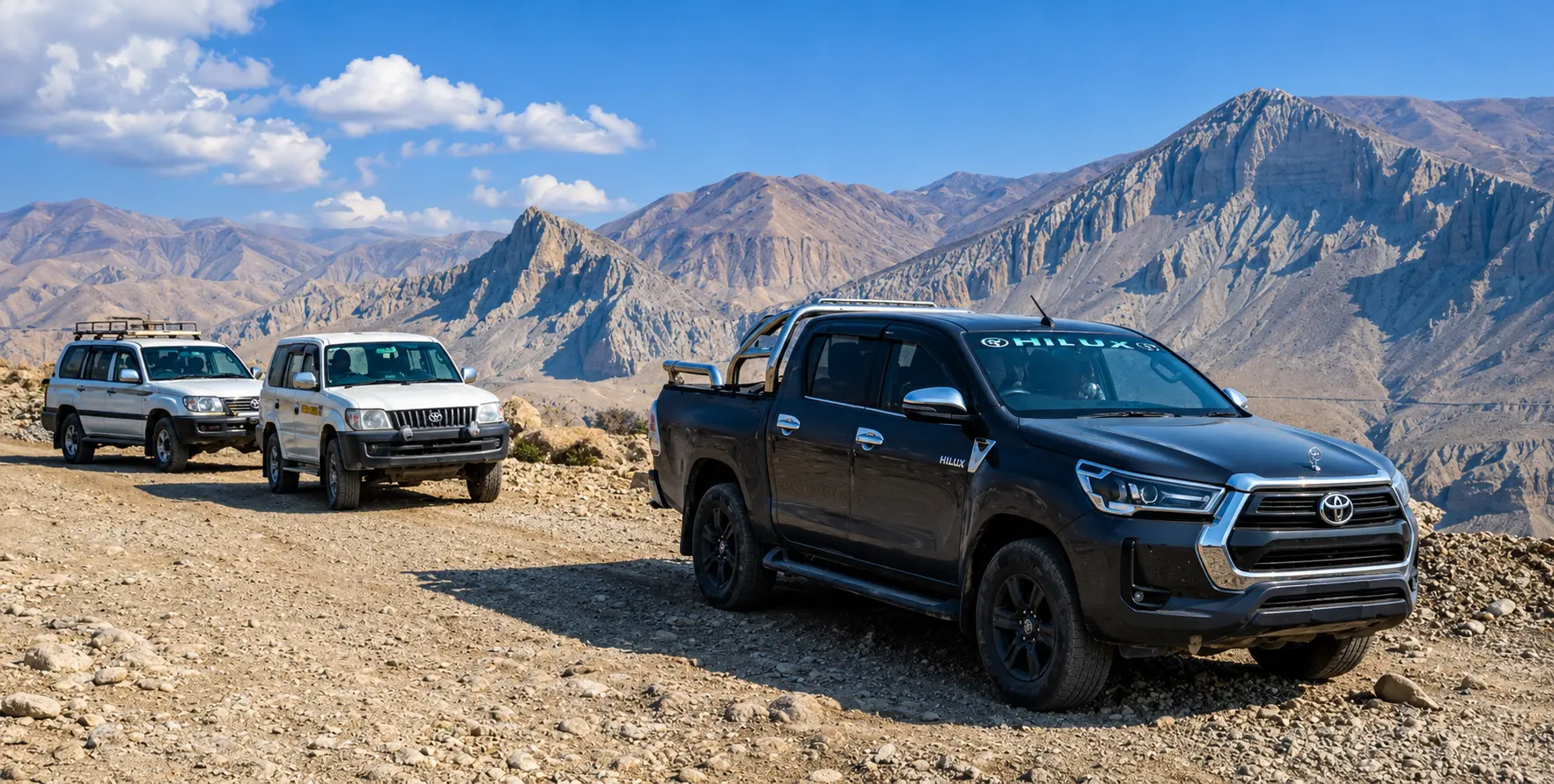
Ground clearance is the first and most visible requirement. The road between Jomsom and Lo Manthang includes sections where the track surface consists of large rocks, deep ruts, or loose substrate that would either damage a low-clearance vehicle’s undercarriage directly or cause it to ground out and become immovable. A minimum of 220mm of ground clearance, as provided by a Toyota Land Cruiser or equivalent, is the practical baseline for this route. Standard SUVs and crossovers with lower clearance should not be used.
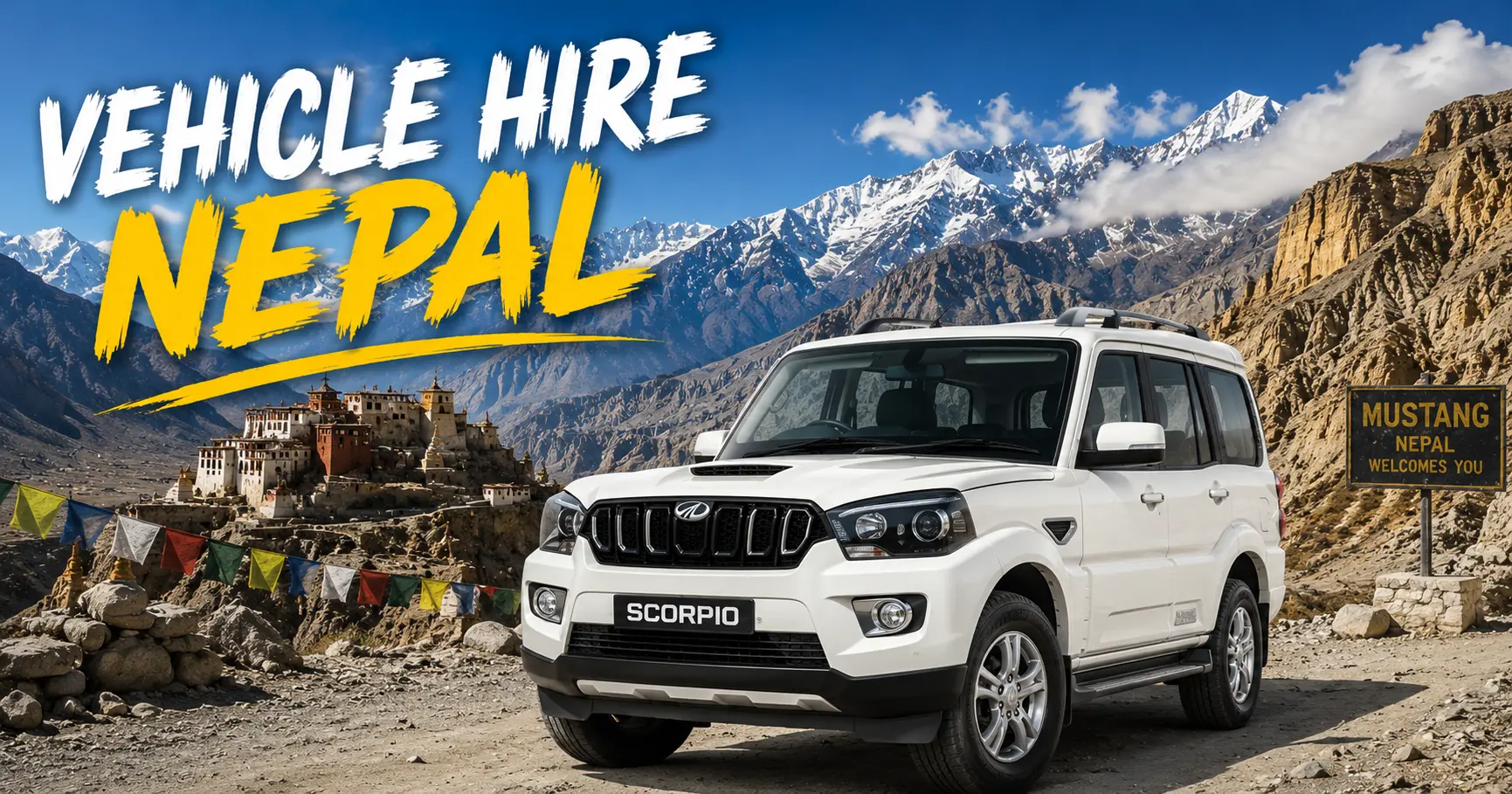
Low-range four-wheel drive is the second essential. The switchback climbs above Kagbeni, the steep descents between plateau sections, and the technical river approaches all require the maximum torque at low speed that only a proper low-range transfer case provides. All-wheel drive systems in crossovers and comfort SUVs, designed for traction on slippery tarmac rather than genuine low-speed technical terrain, are inadequate for the demands of the Upper Mustang route and should not be considered as equivalents.
Driver experience specific to this route is the third essential. Nepal Vehicle Hiring Pvt Ltd assigns drivers to Upper Mustang bookings exclusively from among those who have personally completed the Pokhara to Lo Manthang route multiple times, who know the precise location of the route’s key technical challenges, who understand how seasonal variation affects specific sections of the track, and who have the calm, methodical driving approach that this terrain demands. This is emphatically not a route for drivers whose experience is confined to Kathmandu Valley streets or highway transfers.
Mechanical reliability and recent servicing round out the non-negotiable requirements. A breakdown anywhere between Kagbeni and Lo Manthang places travelers in a genuinely remote situation where recovery options are limited and potentially very expensive. Every vehicle Nepal Vehicle Hiring Pvt Ltd dispatches to Upper Mustang undergoes a thorough mechanical inspection and full servicing before departure, with particular attention to tires, brakes, cooling system, and drivetrain components that experience the greatest stress in this terrain.
Upper Mustang Jeep Route: Stage by Stage Summary
| Stage | Route | Distance | Drive Time | Altitude | Road Type |
|---|---|---|---|---|---|
| 1 | Pokhara → Jomsom | 143 km | 6–9 hrs | 820–2,720 m | Mixed paved & rough dirt |
| 2 | Jomsom → Kagbeni | 18 km | 45 min | 2,720–2,810 m | Mainly paved |
| 3 | Kagbeni → Chele / Syangboche | 30 km | 2–3 hrs | 2,810–3,800 m | Off-road 4WD track |
| 4 | Syangboche → Ghami → Lo Manthang | 60 km | 3–4 hrs | 3,800–3,840 m | High plateau track |
| Total | Pokhara → Lo Manthang | 251 km | 2–3 days | 820–3,840 m | Mixed — 4WD essential beyond Kagbeni |
2025/26 Permits for Upper Mustang: Everything Changed
One of the most significant developments affecting travel in Upper Mustang in recent years is the government’s landmark change to the restricted area permit fee structure, which took effect in late 2025. This change directly affects the cost and practical accessibility of the hidden kingdom adventure and is essential to understand before planning any visit to Upper Mustang.
NEW 2025: As of late 2025, the Government of Nepal has replaced the old mandatory USD 500 flat fee (for a fixed 10-day period) with a flexible daily rate of USD 50 per person per day inside the restricted zone. This means travelers now pay only for the exact number of days they spend beyond Kagbeni, making short jeep tours of 4–7 days significantly more affordable than under the previous structure.
Under the old system, a 5-day jeep tour still cost the same USD 500 as a full 10-day trek, which strongly discouraged shorter visits and made the overall Upper Mustang permit one of the most expensive trekking access fees in the world. The new daily rate creates a genuinely flexible cost structure that reflects actual visit duration, encourages more diverse itinerary options, and opens Upper Mustang to travelers who want a focused jeep adventure rather than a full two-week expedition.
Complete 2025/26 Permit Requirements
| Permit | Required For | Cost | Where to Obtain |
|---|---|---|---|
| Upper Mustang Restricted Area Permit (RAP) | All foreign nationals entering beyond Kagbeni | USD 50 per person per day (NEW 2025) | Through a registered trekking agency (Kathmandu or Pokhara) |
| Annapurna Conservation Area Permit (ACAP) | All visitors, including the approach road to Kagbeni | NPR 3,000 (~USD 22–25) per person flat fee | Nepal Tourism Board, Kathmandu or Pokhara |
| TIMS Card | Most overland visitors (not required for Jomsom flight-in/out) | USD 20 per person | Nepal Tourism Board or a registered agency |
| Minimum group size | RAP cannot be issued to solo foreign travelers | Min. 2 foreign nationals required | Travel with at least one other international visitor |
| Licensed guide | Mandatory — independent travel in restricted areas is not permitted | Included in reputable tour packages | Must be arranged through a registered Nepal agency |
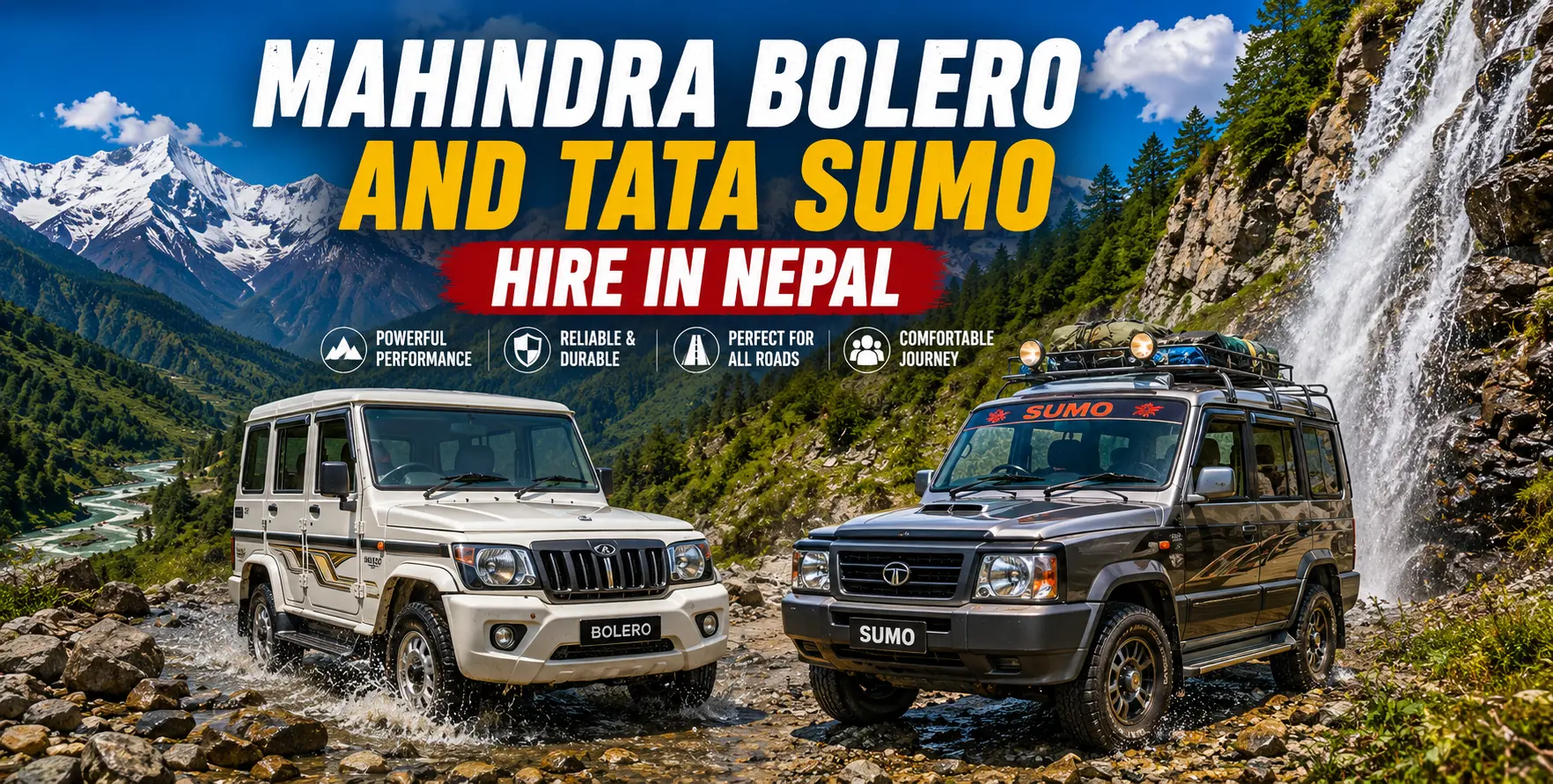
Vehicle Hire Costs for the Upper Mustang Adventure (2025/26)
Vehicle hire for the Upper Mustang jeep tour is one of the most significant cost components of the overall adventure, reflecting the demanding nature of the route, the premium required for proper 4WD vehicles maintained specifically for this terrain, and the multi-day driver commitment involved. The following costs represent current market rates for private vehicle hire on this specific route:
| Route Segment | Vehicle | Cost (NPR) | Cost (USD) | Notes |
|---|---|---|---|---|
| Pokhara → Jomsom (one-way) | 4WD Jeep (Land Cruiser/Scorpio) | NPR 28,000–38,000 | $210–$285 | Road only, no flight |
| Jomsom → Lo Manthang (one-way) | 4WD Jeep (Land Cruiser required) | NPR 20,000–30,000 | $150–$225 | Restricted zone segment |
| Pokhara → Lo Manthang (full) | Private 4WD Jeep | NPR 45,000–65,000 | $338–$488 | Full overland, one-way |
| Pokhara ↔ Lo Manthang (return) | Private 4WD Jeep | NPR 80,000–120,000 | $600–$900 | Complete round-trip, multi-day |
| Jomsom (arrival by flight) → Lo Manthang ↔ Pokhara | 4WD Jeep | NPR 40,000–55,000 | $300–$413 | Fly in, drive out |
| Day hire in the Lo Manthang area | 4WD Jeep with driver | NPR 12,000–18,000 | $90–$135 | Local sightseeing, caves, day trips |
Tip: A group of four to six travelers sharing a single private 4WD jeep significantly reduces the per-person vehicle hire cost, making the Upper Mustang adventure considerably more economical for groups than for solo or couple travelers. Contact vehiclehiringnepal.com for group discount rates.
Best Season for the Hidden Kingdom Jeep Adventure
Upper Mustang’s rain-shadow geography gives it one of the most distinctive seasonal profiles of any Nepal travel destination, making it accessible and rewarding during periods when most other Nepal trekking and adventure routes are compromised by monsoon rainfall. This exceptional characteristic is one of the region’s most practical assets for travelers with specific travel windows.
Spring, from March through May, is widely regarded as the finest overall season for the Upper Mustang jeep adventure. The combination of clear skies, comfortable daytime temperatures, the dramatic floral display of the lower Mustang valley’s apple orchards and wildflowers, and the timing of the Tiji Festival in Lo Manthang during May creates an experience that many travelers consider the definitive Upper Mustang visit. The Tiji Festival specifically draws experienced Nepal travelers who time return visits to coincide with this extraordinary cultural event, and booking both permits and vehicles well in advance is essential for May departures.
Monsoon season, from June through August, is when the upper Mustang’s rain-shadow advantage becomes most practically significant. While the approach road from Pokhara to Beni and beyond can be affected by landslides during heavy monsoon periods, the restricted zone north of Kagbeni receives minimal rainfall. It remains largely accessible, making this the preferred season for experienced travelers who want to avoid the peak autumn and spring crowds while still experiencing the extraordinary high-plateau landscape. The golden light of summer afternoons over the Mustang desert, combined with the dramatic monsoon cloud formations building over the surrounding peaks, creates particularly beautiful photographic conditions that many serious photographers seek out during this period.
Autumn, from September through November, brings the stable, clear conditions that characterize Nepal’s peak trekking season to Upper Mustang as well, with excellent road conditions following the monsoon’s departure, outstanding mountain visibility, and the full range of accommodation and service availability in both Jomsom and Lo Manthang. October is the busiest month, with significant competition for vehicle bookings and accommodation, making early reservation through vehiclehiringnepal.com particularly important for this period.
Winter, from December through February, brings cold temperatures to the high plateau and can close higher sections of the road due to snow, making it the least reliable season for the full Pokhara-to-Lo Manthang overland journey. Short winter visits to Jomsom and Lower Mustang remain possible and can be rewarding in their own right. Still, the complete hidden kingdom adventure to Lo Manthang is best reserved for the more reliably accessible spring, summer, and autumn windows.
Essential Practical Information for the Hidden Kingdom Adventure
Acclimatization and Altitude Awareness
Lo Manthang sits at approximately 3,840 meters, and the road between Kagbeni and Lo Manthang climbs through terrain approaching 4,000 meters at certain points. While these altitudes are significantly lower than the extreme elevations of classic Nepal trekking passes, altitude-related discomfort — headache, fatigue, and sleep disruption — is a realistic possibility for travelers who ascend rapidly from lower elevations without allowing time for physiological adjustment. The jeep tour’s pace, while faster than trekking, still provides some natural acclimatization opportunity through the staged ascent from Pokhara’s 820 meters through Jomsom at 2,720 meters and Kagbeni at 2,810 meters before reaching Lo Manthang. A rest day in Jomsom before proceeding north is generally recommended by experienced operators as a practical acclimatization measure for visitors coming directly from low-altitude locations.
Accommodation Along the Route
Teahouse accommodation is available at all major stops along the Upper Mustang jeep route, from Jomsom and Marpha in Lower Mustang through Kagbeni, Chele, Ghami, and Charang to Lo Manthang itself. The standard of accommodation progressively simplifies as the route goes deeper into the restricted zone, with Lo Manthang’s guesthouses offering clean basic rooms with shared facilities and hearty local meals but none of the creature comforts associated with established trekking corridors. Electricity is increasingly available through solar systems, but hot water and private bathrooms cannot be counted on as standard in the deeper sections of the route. Travelers accustomed to comfort-oriented trekking accommodation should calibrate expectations accordingly — the experience itself more than compensates for any physical simplicity.
Mobile Connectivity and Communication
Mobile network coverage in Upper Mustang is available at certain locations along the route, primarily in Jomsom and in some sections of the main valleys, but becomes increasingly sporadic and unreliable beyond Kagbeni. Travelers should not rely on mobile connectivity for navigation or communication beyond the lower sections of the route. They shouldn’t be family or travel companions; communication gaps of 1 to 2 days are entirely normal during the deeper sections of the Upper Mustang adventure. Nepal Vehicle Hiring Pvt Ltd provides drivers with emergency contact protocols and local network knowledge that help manage communication expectations appropriately.
- Carry sufficient NPR cash for the complete Upper Mustang journey — ATMs are available in Jomsom but nowhere beyond.
- Obtain all permits before leaving Pokhara — permit processing is not available beyond the main tourism offices.
- Dress in warm layers even in summer — evenings above 3,000 m can be dramatically colder than in Pokhara.
- Carry water purification — bottled water becomes scarce and expensive beyond Kagben .i
- Pack sun protection rated SPF 50 or higher — UV intensity at altitude is severe.
- Confirm the vehicle’s condition, including the spare tire and recovery equipment, before departing Pokhar.a
- Book in advance — particularly for May (Tiji Festival) and October, when vehicle and accommodation availability is tightest
Why Book Your Hidden Kingdom Adventure with Nepal Vehicle Hiring Pvt Ltd
The Upper Mustang hidden kingdom adventure is not a journey where the quality of the vehicle hire provider is a secondary consideration. The route’s technical demands, the importance of proper permit coordination, the need for genuinely experienced mountain drivers, and the consequences of vehicle failure in a remote restricted area all mean that the choice of transport provider directly shapes not just the comfort but the safety and success of the entire experience.
Nepal Vehicle Hiring Pvt Ltd has been arranging vehicle transport to Upper Mustang for travelers who value reliable, professional, and genuinely capable mountain vehicle hire. Our Upper Mustang fleet consists exclusively of properly maintained Toyota Land Cruisers and equivalent vehicles, serviced specifically for the demands of this route before every departure. Our drivers assigned to Upper Mustang bookings have personally completed the Pokhara-to-Lo Manthang route on multiple occasions, giving them the route-specific knowledge, technical driving confidence, and local community connections that make a meaningful, practical difference on this journey.
We provide transparent, all-inclusive pricing for every Upper Mustang booking, clearly distinguishing vehicle hire costs from the separate permit, guide, and accommodation costs that complete the adventure’s budget picture. We work alongside registered trekking agencies to help coordinate permit applications for clients who need this support, and we provide practical pre-departure guidance on everything from cash requirements to packing recommendations, drawing on years of supporting travelers on exactly this route.
Beyond Upper Mustang: Other Hidden Kingdom Experiences in Nepal
While Upper Mustang is rightly the centerpiece of the hidden kingdom narrative in Nepal, the country contains several other regions that share this quality of extraordinary remoteness, cultural preservation, and restricted-area exclusivity. Nar-Phu Valley, accessed from the Annapurna Circuit route near Koto village, is perhaps the most accessible of these additional hidden kingdom destinations, involving a restricted area permit and a dedicated guide arrangement. The vehicle hire for Nar-Phu begins with the same Kathmandu or Pokhara to Besisahar and Chame transfer that any Annapurna Circuit trekker requires, revealing a side of the Annapurna region of remote Tibetan Buddhist communities and high pastures almost absent from the main circuit experience.
Upper Dolpo, accessible by domestic flight and overland travel in the far west of Nepal, represents perhaps the most extreme version of the hidden kingdom experience available anywhere in the country — the landscape that inspired Peter Matthiessen’s The Snow Leopard, where the ancient Bon Buddhist tradition survives in its most undiluted form on Earth. Phoksundo Lake, the luminous turquoise jewel at 3,611 meters, is accessible to visitors willing to undertake the approach to this remote region. Humla district, bordering Tibet in Nepal’s far northwest, is the starting point for the overland journey toward Tibet’s sacred Mount Kailash, one of the great adventure journeys of the Himalayan world. Nepal Vehicle Hiring Pvt Ltd arranges vehicle hire for all of these hidden kingdom destinations with the same commitment to appropriate vehicle selection, experienced drivers, and transparent pricing that defines our Upper Mustang service — providing a single, trusted transport partner across every restricted and remote destination in Nepal’s extraordinary adventure portfolio.
Frequently Asked Questions
Can I visit Upper Mustang independently without a guide?
No. Upper Mustang is a restricted area, and Nepalese law requires all foreign visitors to be accompanied by a licensed guide arranged through a registered Nepal trekking agency. Independent travel in the restricted zone is not permitted and will result in being turned back at the Kagbeni checkpoint. This rule applies equally to trekkers, jeep tour participants, and motorcyclists.
How much does the Upper Mustang restricted area permit cost in 2025/26?
As of late 2025, the permit costs USD 50 per person per day for the days spent inside the restricted zone north of Kagbeni. This replaced the old USD 500 flat fee for a minimum 10-day period. A 5-day jeep tour to Lo Manthang now costs USD 250 per person in restricted area permit fees, compared to USD 500 under the previous structure. You also need an ACAP (NPR 3,000) and a TIMS card (USD 20). A licensed guide is mandatory.
How long does the jeep journey from Pokhara to Lo Manthang take?
The complete overland journey from Pokhara to Lo Manthang covers approximately 25 kilometers. It is typically spread over 25 kilometers of appropriate acclimatization stops, cultural visits along the route, and realistic daily driving distances on roads that are demanding enough to make sustained multi-hour driving at speed impractical. Most itineraries overnight in Jomsom on the first night and Chele or Ghami on the second before reaching Lo Manthang on day three.
Can the Upper Mustang route be done in a standard SUV?
No. The road beyond Kagbeni requires a proper 4WD vehicle with high ground clearance, low-range gearing, and robust construction. Standard SUVs and crossovers are not suitable and should not be used on this route. Nepal Vehicle Hiring Pvt Ltd provides only Land Cruiser and equivalent vehicles for Upper Mustang bookings — vehicles specifically suited to and maintained for the demands of this terrain.
Is Upper Mustang accessible during the monsoon season?
Yes — this is one of Upper Mustang’s unique advantages. The restricted zone north of Kagbeni sits in a rain shadow. It receives minimal monsoon rainfall, making it one of the few Nepal adventure destinations accessible and enjoyable during the June to August monsoon period. The approach road from Pokhara can be affected by landslides during heavy monsoon, so timing and conditions should be checked with your vehicle hire provider before departure.
What is the best time to visit Upper Mustang for the Tiji Festival?
The Tiji Festival is held in Lo Manthang each year in May, with exact dates determined by the Tibetan lunar calendar (typically mid to late May). Booking both permits, vehicles, and accommodation well in advance — ideally two to three months before departure — is essential for May visits, as this is the single most popular time for Upper Mustang travel and availability across all categories becomes tight very early.
Planning the hidden kingdom adventure also invites a deeper reflection on what distinguishes genuinely transformative travel from ordinary tourism, a distinction that matters to the growing number of travelers who seek experiences that shift their understanding of the world rather than simply adding another destination to a list. Upper Mustang offers this quality in a form that few other accessible destinations anywhere can match. The encounter with Lo Manthang’s living medieval culture, the scale of the Mustang desert plateau seen from a high jeep track at sunset, the intimacy of a butter-tea conversation with a Loba elder in a monastery courtyard, the physical journey itself across the world’s deepest gorge and onto a plateau that feels genuinely Tibetan — these are not experiences that can be adequately prepared for or fully anticipated. Thearrivee, and transform. Nepal Vehicle Hiring Pvt Ltd exists to make the practical arrangements around this transformation as smooth, reliable, and uncomplicated as possible, so that the adventure itself can claim all the attention and energy it deserves.
Conclusion: Answer the Call of the Hidden Kingdom
Upper Mustang is one of the last places on Earth where a traveler can genuinely feel they have arrived somewhere the world has not yet fully found. The ancient walled city of Lo Manthang, the extraordinary sky caves carved into orange cliffs a thousand years ago, the desert plateau that seems to belong more to Central Asia than to the Himalayan Nepal most visitors know, the Tibetan Buddhist traditions carried unbroken through centuries of isolation. The dramatic mountain landscapes of the Kali Gandaki Gorge and the high Mustang plateau combine to create an adventure that is less like tourism and more like a journey into living history.
The 2025/26 permit reform, replacing the old USD 500 flat fee with a flexible USD 50-per-day structure, has made the hidden kingdom more financially accessible than at any point in its three decades of international openness. With improving road infrastructure toward Lo Manthang and the growing quality of vehicle and driver services on this route, there has never been a better time to plan the Upper Mustang adventure. Nepal Vehicle Hiring Pvt Ltd stands ready to provide the right vehicle, the right driver, and the right practical support to make your hidden kingdom journey unfold exactly as it should.
- Hidden Kingdom Adventure Nepal: The Ultimate Upper Mustang Jeep & 4WD Guide
- The Kingdom of Lo: History, Culture, and What Makes It Unlike Anywhere Else
- The Hidden Kingdom's Adventure Landscape: What You Will See and Experience
- The Complete Jeep Route: Pokhara to Lo Manthang
- Vehicle Requirements for the Upper Mustang Hidden Kingdom Route
- 2025/26 Permits for Upper Mustang: Everything Changed
- Best Season for the Hidden Kingdom Jeep Adventure
- Essential Practical Information for the Hidden Kingdom Adventure
- Why Book Your Hidden Kingdom Adventure with Nepal Vehicle Hiring Pvt Ltd
- Beyond Upper Mustang: Other Hidden Kingdom Experiences in Nepal
- Frequently Asked Questions
- Conclusion: Answer the Call of the Hidden Kingdom

Related Blog & Articles
Mustang Full Guide: Upper & Lower Mustang Vehicle Hire
Altitude and Health: Essential Muktinath Advice
Kathmandu to Mustang (Muktinath)