Plan a Trip


Api Himal Trek Transport: The Complete Vehicle Service Guide

Introduction: The Most Remote Trek in Nepal and Why Transport Is Everything
Somewhere in the far western corner of Nepal — in the Darchula District where the borders of Nepal, India, and Tibet converge in a landscape of extraordinary wilderness and dramatic mountain terrain — stands Api Himal, the highest mountain in Nepal’s Far-Western Province, rising to 7,132 meters (23,399 feet) above sea level.
Api Himal is not as famous as Everest, Annapurna, and Manaslu. It does not appear on the covers of mainstream adventure magazines. Its base camp does not see the stream of trekkers that walk to Kyanjin Gompa or Everest Base Camp. But among trekkers who have made the extraordinary effort required to reach it, Api Himal is spoken of in the kind of reverent terms reserved for the world’s most genuinely special places — a mountain wilderness of extraordinary beauty, complete solitude, authentic cultural immersion, and the particular profound satisfaction that comes only from reaching somewhere that very few people have ever visited.
The Api Himal Trek is genuinely one of the most remote and demanding logistical undertakings in all of Nepal trekking — not because the trek itself is technically extreme (the maximum altitude of the base camp at approximately 3,900 metres and the holy Kalidhunga Lake at 4,200 metres is significantly lower than many more popular Nepal treks), but because getting to the trailhead requires a journey of remarkable length through Nepal’s least-visited and least-developed region. In the opinion of many who have completed it, the transport logistics of the Api Himal Trek are the most complex and demanding element of the entire experience.
From Kathmandu, reaching the Api Himal trailhead at Makarigaad in Darchula District involves one of two options: a combined road and vehicle journey of approximately 800–900 km that takes 18–24 hours of driving through the Terai lowlands and the remote far-western hills, or a domestic flight from Kathmandu to Dhangadhi (approximately 1 hour) followed by a further 13–15 hours of road travel in a jeep or local vehicle. Neither option is simple. Both require careful planning, pre-arranged vehicles, overnight stops, and the kind of logistical coordination that transforms a weekend adventure into a genuine expedition.
Nepal Vehicle Hiring Pvt. Ltd. provides complete transport solutions for the Api Himal Trek — from your hotel pickup in Kathmandu or airport transfer in Dhangadhi, through the long overland journey to Gokuleshwor (Darchula District headquarters), and the final rough jeep track to the Makarigaad trailhead. With our experienced drivers, well-maintained 4WD fleet, and deep familiarity with Nepal’s far-western road network, we take the logistical complexity out of the Api Himal transport equation—so you can focus on the extraordinary trek ahead.
This complete guide covers everything you need to know about Api Himal Trek transport: the mountain and the trek itself, the two main transport options from Kathmandu, stage-by-stage road descriptions with distances and drive times, the 4WD vehicle requirement for the Gokuleshwor to Makarigaad section, all required permits, the best season for the trek and transport, vehicle hire costs, and the practical details that make the difference between a successful Api Himal expedition and a frustrated one.
Api Himal Trek Transport — Quick Reference |
| Trek Destination: Api Himal Base Camp, Darchula District, Sudurpashchim Province, Far-Western Nepal |
| Mountain: Api Himal — 7,132 m (23,399 ft) | Highest peak in Far-Western Nepal |
| Base Camp Altitude: Approx. 3,900 m (12,795 ft) | Kalidhunga Lake: 4,200 m (13,780 ft) |
| Kathmandu to Makarigaad Trailhead: Approx. 850–900 km total road distance |
| Fastest Option: Flight Kathmandu–Dhangadhi (1 hr) + 13–15 hrs road to Gokuleshwor + 5 hrs to Makarigaad |
| Road Only Option: Kathmandu–Mahendranagar (18+ hrs) + Gokuleshwor (15 hrs) + Makarigaad (5 hrs) |
| Vehicle Requirement: 4WD Jeep ESSENTIAL from Gokuleshwor/Attariya northward to Makarigaad |
| Permits: Api Nampa Conservation Area Permit + TIMS + Restricted Area Permit (group requirement) |
| Best Season: March–May (Spring) and September–November (Autumn) |
| Book With: Nepal Vehicle Hiring Pvt. Ltd. | +977 9814227196 | vehiclehiringnepal.com |
Api Himal: Understanding Nepal’s Most Remote Trek Destination
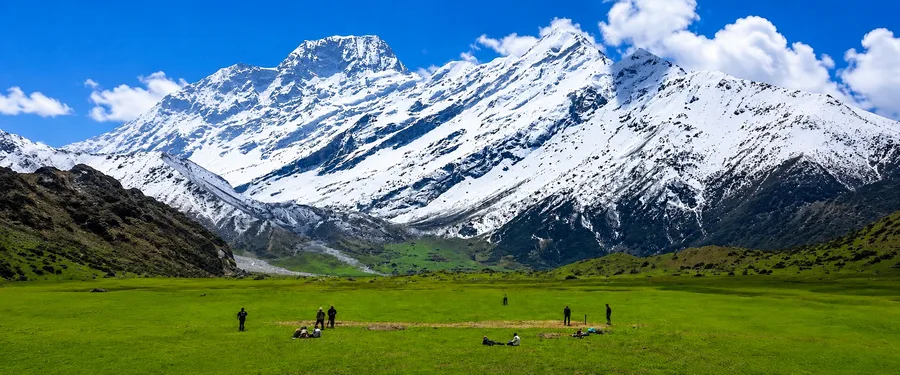
Mt. Api — The Grandmother of the Far West
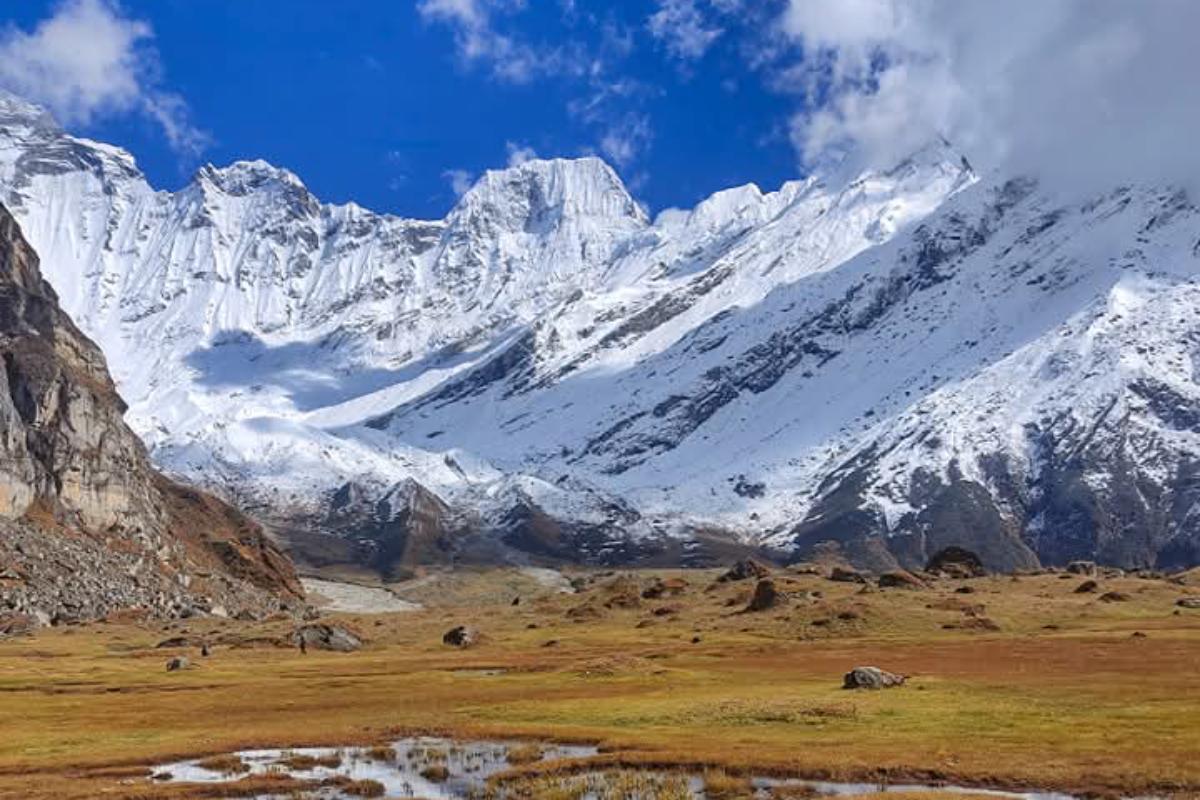
The name ‘Api’ derives from the Tibetan word meaning ‘grandmother’ — a name that carries in it both the immense age and the nurturing, encompassing character of this extraordinary mountain. Api Himal (7,132 m) is the highest peak in the entire Yoka Pahar section of the Gurans Himal range, and the highest mountain in Nepal’s Sudurpashchim (Far-Western) Province. It rises from Darchula District near the tri-junction where Nepal, India (Uttarakhand), and the Tibetan Autonomous Region of China meet, a location of extraordinary geographic significance at the far western extremity of the main Himalayan chain.
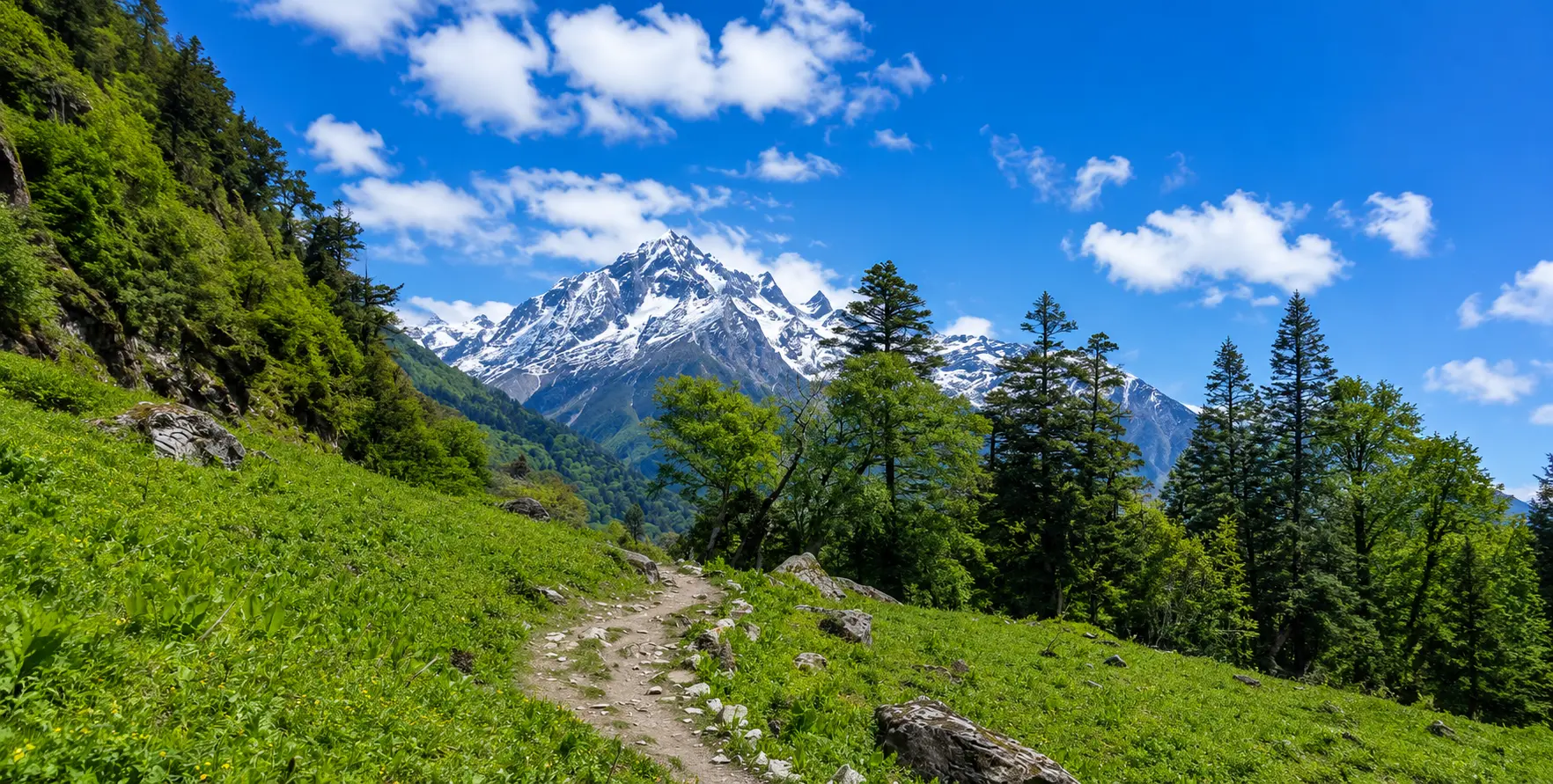
Api Himal is part of a compact but impressive cluster of high peaks in the far western Himalaya, including Nampa (6,755 m), Bobaye (6,808 m), Jethi Bahurani (6,850 m), Kapchuli (6,680 m), and the imposing Rajramba (6,537 m). From Api Base Camp and the holy Kalidhunga Lake, views of this extraordinary concentration of high mountains—seen in complete solitude, without the crowds that populate the viewpoints of the Annapurna and Everest regions—create a panoramic experience of rare and profound impact.
Despite its impressive height and the extraordinary beauty of its surroundings, Api Himal has been climbed—only a few times. A Japanese expedition first ascended the mountain in 1960, and since then, successful summit attempts have been extremely rare. The Government of Nepal has issued climbing permits for Ap. Still, its remoteness, complex access logistics, and the technical demands of the climbing routes have deterred all but a handful of serious mountaineering expeditions. This means that the base camp area — unlike the crowded pre-summit zones of Everest or the well-trodden approach to Annapurna Base Camp — retains an atmosphere of genuine wilderness and solitude that is increasingly rare in the Himalayan trekking world.
The Api Nampa Conservation Area — Nepal’s Forgotten Wilderness
The Api Himal trek traverses the Api Nampa Conservation Area—a 1,903-square-kilometre protected area established in 2010 in the Darchula District of Sudurpashchim Province. The conservation area encompasses the entire watershed of the upper Chameliya River and its tributaries, including the habitat ranges of several globally threatened species and some of the least-disturbed forest and alpine ecosystems in the entire Himalayan chain.
The biodiversity of the Api Nampa Conservation Area is extraordinary for a protected area that sees so few visitors. Snow leopards (Panthera uncia) roam the high alpine zones, musk deer (Moschus moschiferus) inhabit the temperate forest bands, Himalayan black bears(Ursus thibetanus) are present in the mixed forests, and the entire conservation area falls within a critical corridor for the movement of wildlife between Nepal, India, and Tibet. The birdlife is equally impressive—the Himalayan Monal (Nepal’s national bird), various pheasant species, Lammergeier, and dozens of forest bird species have been recorded within the conservation area.
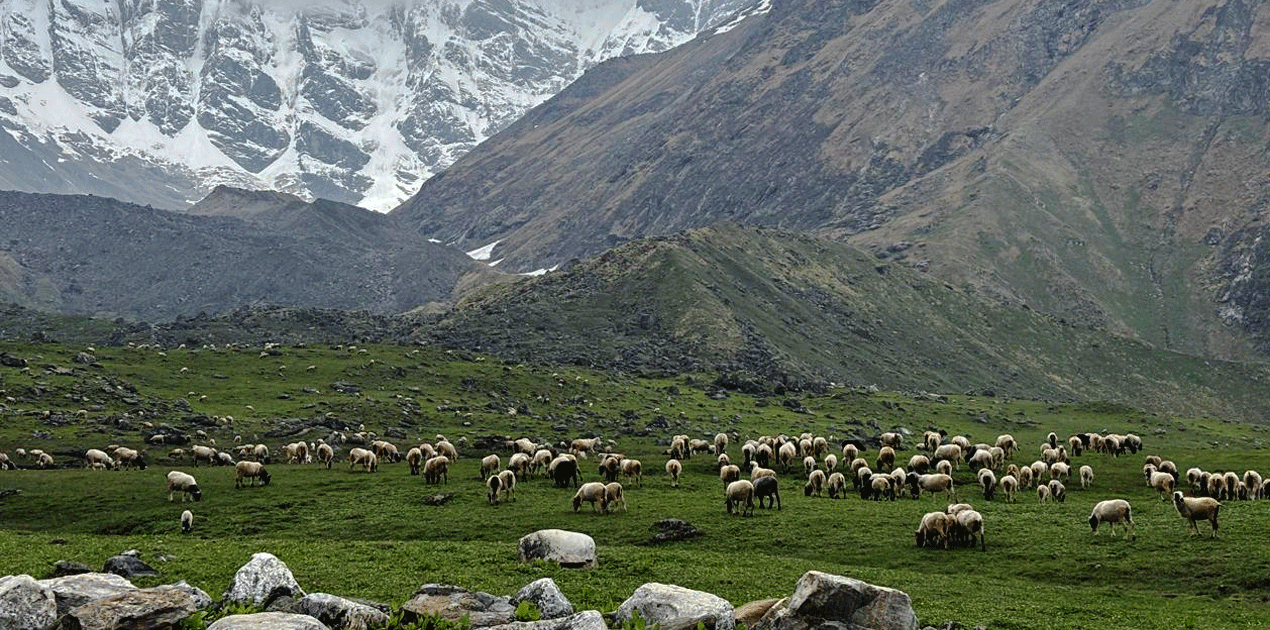
The plant communities of the Api Nampa Conservation Area range from subtropical deciduous forest in the lower valleys (below approximately 1,500 m), through temperate mixed and rhododendron forest (1,500–3,500 m), to sub-alpine scrub, alpine meadow (locally known as bugyals), and permanent snow and glacier ice above 5,000 m. The rhododendron forests in the temperate zone are particularly spectacular in spring (March–April), when multiple rhododendron species bloom simultaneously—creating the same extraordinary floral display that makes spring trekking in the Annapurna and Langtang regions so celebrated, but experienced here in near-complete solitude.
The Communities of the Api Himal Trek Route
The villages the Api Himal trek passes through are among the most genuinely remote and culturally distinct communities in Nepal. The primary ethnic and caste groups in the Darchula District include Brahmin, Chhetri, Mahara, Bohora (dominant landowning castes), Thakuri, and artisan communities such as Jhakari and Lohar (iron smiths). Many of these communities maintain distinct linguistic and cultural traditions—some villages in the upper valleys have residents who speak limited Nepali, communicating primarily in local dialects not widely understood outside the immediate area.
A particularly fascinating element of the Api Himal cultural landscape is the presence of the Raute people—one of Nepal’s last nomadic communities —whose members traditionally lived in forest caves and moved seasonally between highland and lowland areas. During summer, Raute families traditionally ascend toward the Api Himal base camp area; in winter, they descend to the Terai lowlands near the Indian border. Encounters with Raute families on the Api Himal trek trail—tough, not guaranteed—offer some of the most extraordinary and rare cultural encounters available to any trekker anywhere in Nepal.
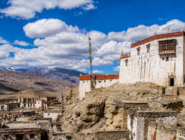
The architecture of the upper-valley villages is distinctive and differs from the typical Newar or Brahmin hill architecture of central and eastern Nepal. Four-storied mud-and-stone houses with flat roofs reflect both the drier climate of the western Himalayan rain shadow zone and the cultural influence of nearby Tibet and India’s Uttarakhand region. The four-story mud houses of Siti village and Domal — visible from the trail and described with affection by virtually every trekker who has passed through — are particularly characteristic of this architectural tradition.
Kalidhunga Lake — The Sacred Heart of the Trek
Above the Api Himal Base Camp, at approximately 4,200 meters, lies Kalidhunga Lake — a sacred high-altitude lake whose name translates as ‘Black Stone’ in Nepali, referring to the dark-coloured metamorphic rocks that line the shore and give the water its characteristic deep indigo colour. Kalidhunga Lake is the spiritual centrepiece of the Api Himal trek — a site of religious significance for both the Hindu and Buddhist communities of the Darchula region, who make annual pilgrimages to the lake for ritual bathing, offerings, and prayer during specific festival periods.
The approach to Kalidhunga Lake from the Api Base Camp takes approximately 2 hours of walking through increasingly open, rocky alpine terrain. The lake sits in a natural rock amphitheatre below the faces of the Api Himal glacier, with the summit of Api Himal and the surrounding 6,000–7,000-meter peaks reflected in its extraordinary dark waters. The combination of the lake’s sacred character, the quality of the mountain reflection, the absolute solitude of the location, and the visceral sense of wilderness at 4,200 meters makes Kalidhunga Lake one of the most moving natural sanctuaries accessible to trekkers anywhere in Nepal — and a destination well worth the extraordinary logistical effort required to reach it.
The Api Himal Trek — Complete Route and Itinerary Overview
Standard 15-Day Trek Itinerary
The standard Api Himal Trek itinerary runs for 15 to 18 days in total, including transport days to and from Kathmandu. This length reflects both the destination’s extreme remoteness and the nature of the trek itself—a genuine wilderness-camping experience through terrain that demands careful day-by-day progression. Unlike the teahouse treks of the Annapurna and Everest regions, the Api Himal trek is a camping trek: tented accommodation throughout the trekking section is the norm, with teahouse-style accommodation only in the larger towns of Gokuleshwor, Makarigaad, and Attariya. This camping character requires comprehensive equipment and logistical preparation, which adds to planning complexity but also enhances the authenticity and wilderness quality of the experience.
| Day | Activity | Location / Destination | Altitude | Mode |
| Day 1 | Arrival in Kathmandu | Hotel check-in | Trek briefing | Kathmandu | 1,334 m | Flight/Road |
| Day 2 | Kathmandu to Dhangadhi (flight: 1 hr) | Drive Dhangadhi to Attariya | Attariya, Kailali | 180 m | Flight + Vehicle |
| Day 3 | Drive Attariya to Gokuleshwor (Darchula HQ) | Gokuleshwor, Darchula | 900 m | 4WD Jeep — 9–10 hrs |
| Day 4 | Drive Gokuleshwor to Makarigaad (Trek Trailhead) | Makarigaad | 1,200 m | 4WD Jeep — 4–5 hrs |
| Day 5 | Trek: Makarigaad to Ghusa Village | Ghusa | 1,600 m | Trek — 5–6 hrs |
| Day 6 | Trek: Ghusa to Siti Village | Siti | 2,200 m | Trek — 6–7 hrs |
| Day 7 | Trek: Siti to Dhauliodar (Dhaulidhar) | Dhauliodar | 2,800 m | Trek — 6–7 hrs |
| Day 8 | Trek: Dhauliodar to Domal | Domal | 3,200 m | Trek — 5–6 hrs |
| Day 9 | Trek: Domal to Api Base Camp | Api Base Camp | 3,900 m | Trek — 5–6 hrs |
| DayAcclimatisation | tion Day | Exploration | Kalidhunga Lake visit | Api BC / Kalidhunga Lake | 3,900–4,200 m | Day hike — 4–5 hrs return |
| Day 11 | Trek: Api Base Camp to Simar / Naali | Simar / Naali | 2,600 m | Trek — 5–6 hrs |
| Day 12 | Trek: Naali to Makarigaad | Makarigaad | 1,200 m | Trek — 6–7 hrs |
| Day 13 | Drive: Makarigaad to Gokul Restor | Rest | Gokuleshwor | 900 m | 4WD Jeep — 4–5 hrs |
| Day 14 | Drive: Gokuleshwor to Attariya / Dhangadhi | Attariya / Dhangadhi | 180 m | 4WD Jeep + vehicle — 10–12 hrs |
| Day 15 | Flight: Dhangadhi to Kathmandu | Farewell dinner | Kathmandu | 1,334 m | Flight + Vehicle |
Note: Itinerary timing can vary based on weather, road conditions (particularly between Gokuleshwor and Makarigaad), group fitness levels, and acclimatisation requirements. Nepal Vehicle Hiring Pvt. Ltd. recommends allowing 1–2 buffer days in the overall itinerary for acclimatisation or road delays — far-western Nepal’s infrastructure can be unpredictable, and a flexible schedule significantly reduces the risk of missed domestic flights at the end of the trip.
Extended 18-Day Option — Including Saipal Himal Extension
For trekkers with additional time and a desire for an even more comprehensive far-western Nepal wilderness experience, the 18-day Api Saipal Himal Trek extends the standard Api Base Camp route to include the approach to Saipal Base Camp (Saipal: 7,031 m — the second-highest peak in Far-Western Nepal). The Saipal extension adds approximately 3–4 trekking days to the standard Api itinerary and requires an additional rest day for acclimatisation between the two base camps. Vehicle transport arrangements for the extended itinerary are identical; Nepal Vehicle Hiring Pvt. Ltd. can plan both options.
The Complete Transport Routes: Kathmandu to Api Himal Trailhead
Overview — Two Main Transport Options
Getting to the Api Himal Trek trailhead from Kathmandu is a significant journey — one that most trekking agencies and experienced operators describe as one of the most logistically challenging in Nepal trekking. The total distance from Kathmandu to the Makarigaad trailhead is about 850–900 km by road, split into three vehicle segments that take 22–28 hours of driving over two or three days. Choosing between a full overland journey and the combined flight-plus-road option is the first and most important transport decision for any Api Himal trekker.
| Transport Option | Total Duration | Kathmandu to Dhangadhi | Dhangadhi to Gokuleshwor | Gokuleshwor to Makarigaad | Cost (Vehicle) | Best For |
| Option A: Flight + Road | 2 days total | 1 hr domestic flight | 9–10 hrs by 4WD Jeep | 4–5 hrs by 4WD Jeep | NPR 45,000–75,000 (road segments) | Most popular — saves 16+ hrs of driving |
| Option B: Full Overland | 3–4 days total | 18–20 hrs by vehicle (Terai highway) | Same as above | Same as above | NPR 80,000–130,000 (full journey) | Budget-conscious; those wanting scenic overland |
Transport Route A (Recommended): Kathmandu → Dhangadhi by Flight → Road to Trailhead
The recommended transport approach for the Api Himal trek is a domestic flight from Kathmandu’s Tribhuvan International Airport to Dhangadhi Airport (Kailali District) — the primary air hub of far-western Nepal — followed by a 4WD jeep journey northward through Attariya, Gokuleshwor (Darchula), and finally to the Makarigaad trailhead. This combined flight-and-road approach saves approximately 16–18 hours of road travel compared to the full overland option. All trekking agencies and experienced operators in far-western Nepal strongly favour it.
Stage 1A: Dhangadhi to Attariya (13 km / 30 minutes)
Dhangadhi is the largest city in far-western Nepal and the commercial and transportation hub of the Kailali and surrounding districts. The Dhangadhi Airport receives multiple daily flights from Kathmandu operated by Buddha Air, Yeti Airlines, and Shree Airlines, with a flight duration of approximately 55–65 minutes. After landing, the first leg is a short 13 km transfer from Dhangadhi to Attariya, a roadside town on the East-West (Mahendra) Highway that serves as the junction point for northward travel toward Darchula District.
This section is paved and straightforward and takes about 30 minutes. Attariya has basic restaurants and teahouses suitable for a meal before the longer northward journey begins. Nepal Vehicle Hiring Pvt. Ltd. arranges airport pickup at Dhangadhi Airport and seamless transfer through Attariya as part of the complete Api Himal transport package.
Stage 2A: Attariya to Gokuleshwor (approximately 220 km / 9–10 hours)
From Attariya, the road heads north into the increasingly remote terrain of Darchula District, one of Nepal’s most logistically challenging overland routes. The road follows the Mahakali River upstream through dramatic gorges, traditional villages, and progressively narrowing valleys as it climbs from the subtropical lowlands toward the mountain districts of the far west.
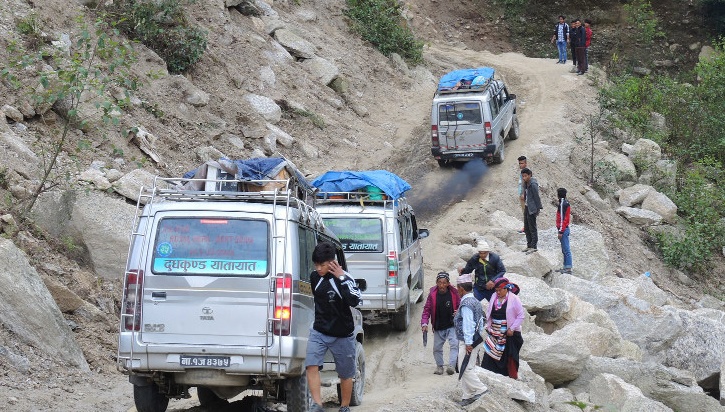
The road from Attariya to Gokuleshwor covers approximately 220 km and takes 9–10 hours in a well-maintained 4WD driven by an experienced driver from far western Nepal. The road quality varies significantly along this route: the lower sections near Attariya and the major town of Chainpur are paved and in reasonable condition, but the sections above Chainpur become progressively rougher, narrower, and more demanding as the road climbs into the mountains of Darchula District. Several sections follow narrow ledge tracks cut into the cliff faces above the Mahakali River—dramatic to look at and requiring careful, experienced driving to navigate safely.
Key stops along the Attariya to Gokuleshwor route include: Dadeldhura (a district headquarters town with fuel stations and basic accommodation, approximately 4 hours from Attariya), Bajhang (another district headquarters with fuel and accommodation), and the town of Chainpur (Bajhang District headquarters, approximately 6 hours from Attariya) before the final 3–4-hour drive to Gokuleshwor. Nepal Vehicle Hiring Pvt. Ltd. drivers know the best fuel stations, rest stops, and meal points along this entire route and plan accordingly.
Key Information: Distance: approximately 220 km. Drive time: 9–10 hours. Road: Mixed paved and rough mountain road — 4WD essential. Fuel: Available in Dadeldhura and Chainpur — carry extra. Overnight: Gokuleshwor has basic guesthouses (NPR 500–1,000/room) suitable for an overnight stay.
Stage 3A: Gokuleshwor to Makarigaad (approximately 65 km / 4–5 hours)
Gokuleshwor is the headquarters of Darchula District—a small but functional mountain town at about 900 meters, with basic guesthouses, restaurants, a few shops selling basic supplies, and the Darchula District administration offices, where you can confirm trekking permits and registration. From Gokuleshwor, the final leg continues northward on an increasingly rough jeep track toward the Api Himal trailhead at Makarigaad.
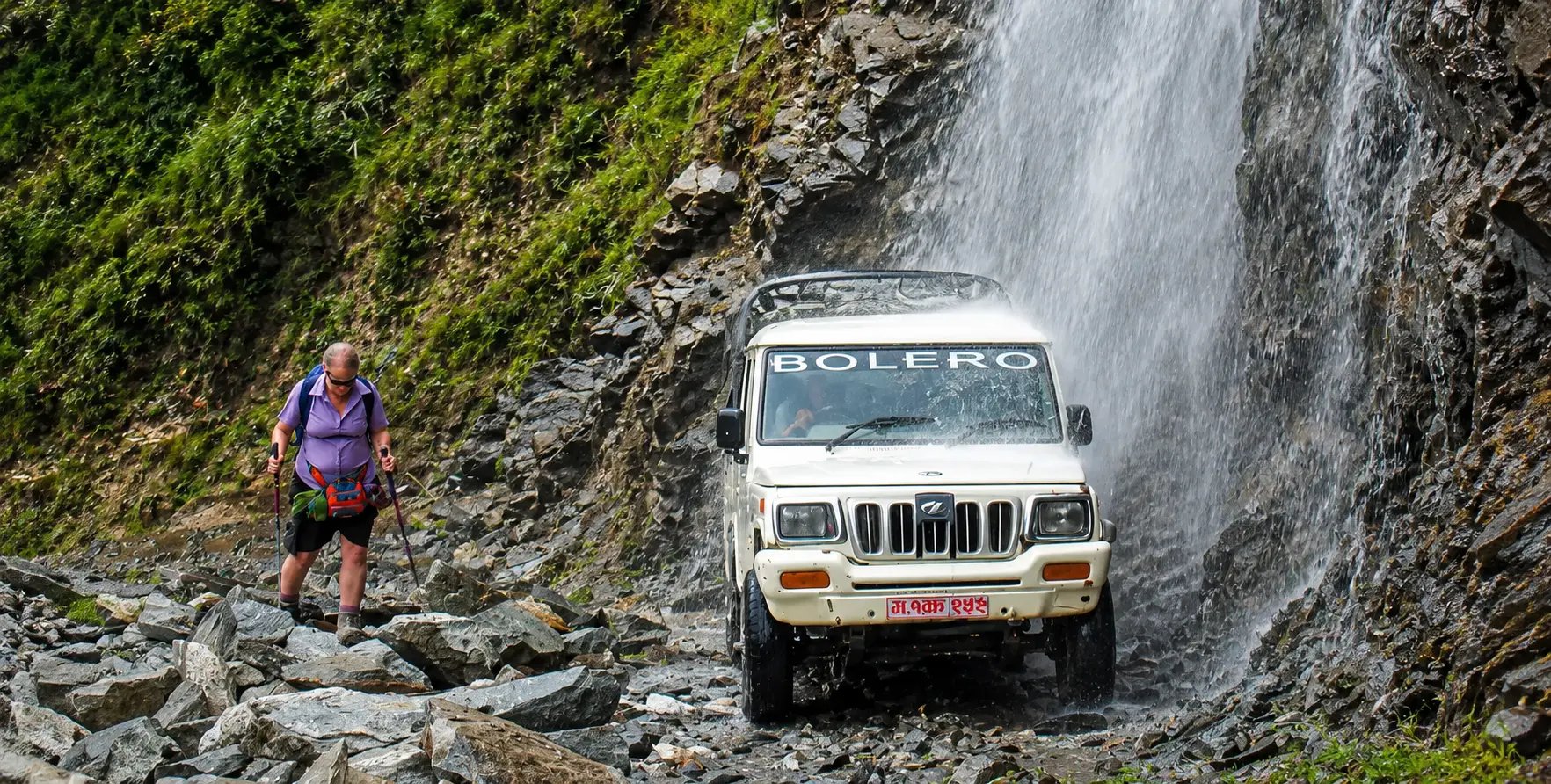
The Gokuleshwor to Makarigaad road is the most technically demanding vehicle segment of the entire Api Himal transport approach. The track climbs from 900 meters to approximately 1,200 meters through a series of steep switchbacks, river crossings (seasonal), and sections of severely deteriorated road surface that require a skilled 4WD driver with specific experience on this route. In the dry season (October–May), the route is challenging but passable for capable 4WD vehicles. During monsoon season (June–September), sections of the track can be washed out or blocked by landslides, making the journey significantly more uncertain and potentially much longer.
Makarigaad is the effective end of the vehicle track for Api Himal trekkers — a small roadside settlement where the trek proper begins. Accommodation in Makarigaad is very basic (typically local homestays rather than established guesthouses), and trekkers often spend their first night camping here after the journey by vehicle. Nepal Vehicle Hiring Pvt. Ltd. drivers will wait with the vehicle at Makarigaad for the duration of your trek or return to Gokuleshwor and come back on a pre-arranged date for your return pickup.
Key Information: Distance: approximately 65 km. Drive time: 4–5 hours. Road: Rough mountain track — 4WD ESSENTIAL. Very limited fuel beyond Gokuleshwor—carry extra; basic accommodation only at Makarigaad.
Transport Route B: Full Overland Kathmandu to Dhangadhi Road Journey
For trekkers who prefer the full overland experience — perhaps combining the Api Himal trek with sightseeing in the Terai lowlands, a Bardia National Park wildlife safari, or simply preferring road travel to domestic flights — the complete overland route from Kathmandu to Dhangadhi is possible but requires significant time and physical endurance.
The overland route from Kathmandu to Dhangadhi follows the main Prithvi Highway westward from Kathmandu to Narayanghat (approximately 165 km, 4–5 hours), then joins the East-West Mahendra Highway heading westward through Butwal, Bhairahawa, Kohalpur, and Nepalgunj before reaching Dhangadhi (approximately 575 km from Kathmandu, 12–14 hours from Narayanghat). The total Kathmandu-to-Dhangadhi overland drive is approximately 740 km and takes 16–20 hours — typically broken into two days with an overnight stop in Nepalgunj or Kohalpur.
The Mahendra Highway through the Terai is generally well-paved and fast by Nepal standards. The drive passes through or near Chitwan National Park, Bardia National Park, and the fertile agricultural landscape of Nepal’s southern lowlands. For trekkers with a more relaxed schedule who want to experience the full breadth of Nepal’s geographic diversity — from Kathmandu’s hills to the subtropical Terai to the far-western mountains — the overland option offers a rich, comprehensive introduction to the country.
| Segment | Distance | Drive Time | Road Quality | Key Stops |
| Kathmandu to Narayanghat | 165 km | 4–5 hrs | Good paved highway (Prithvi Hwy) | Mugling junction (food/fuel) |
| Narayanghat to Butwal | 100 km | 2.5–3 hrs | Good paved (Mahendra Hwy) | Chitwan NP area, Bharatpur |
| Butwal to Kohalpur | 195 km | 4–5 hrs | Good paved Terai highway | Bhairahawa, Tansen viewpoint |
| Kohalpur to Dhangadhi | 140 km | 3–4 hrs | Good paved Terai highway | Bardia NP area, Chisapani |
| Dhangadhi to Attariya | 13 km | 30 min | Paved — good | East-West Hwy junction |
| Attariya to Gokuleshwor | 220 km | 9–10 hrs | Mixed paved/rough — 4WD needed | Dadeldhura, Chainpur for fuel |
| Gokuleshwor to Makarigaad | 65 km | 4–5 hrs | Rough mountain track — 4WD essential | Last vehicle point for the trek |
| TOTAL (Full Overland) | ~898 km | 38–45 hrs (2–3-day journey) | Highway to rough mountain | Multiple overnight stops |

Vehicle Requirements for the Api Himal Trek Transport
Why 4WD Is Non-Negotiable Beyond Attariya
The vehicle requirement for the Api Himal trek transport is unambiguous and non-negotiable: from Attariya northward to Gokuleshwor and from Gokuleshwor to Makarigaad, only proper 4WD vehicles with high ground clearance, low-range gearing, and experienced mountain-road drivers are appropriate and safe. Standard cars, standard taxis, and non-4WD vehicles cannot reliably navigate these road conditionson these sections —particularly the Gokuleshwor to Makarigaad track, among the most demanding roads in Nepal for surface quality and gradient.
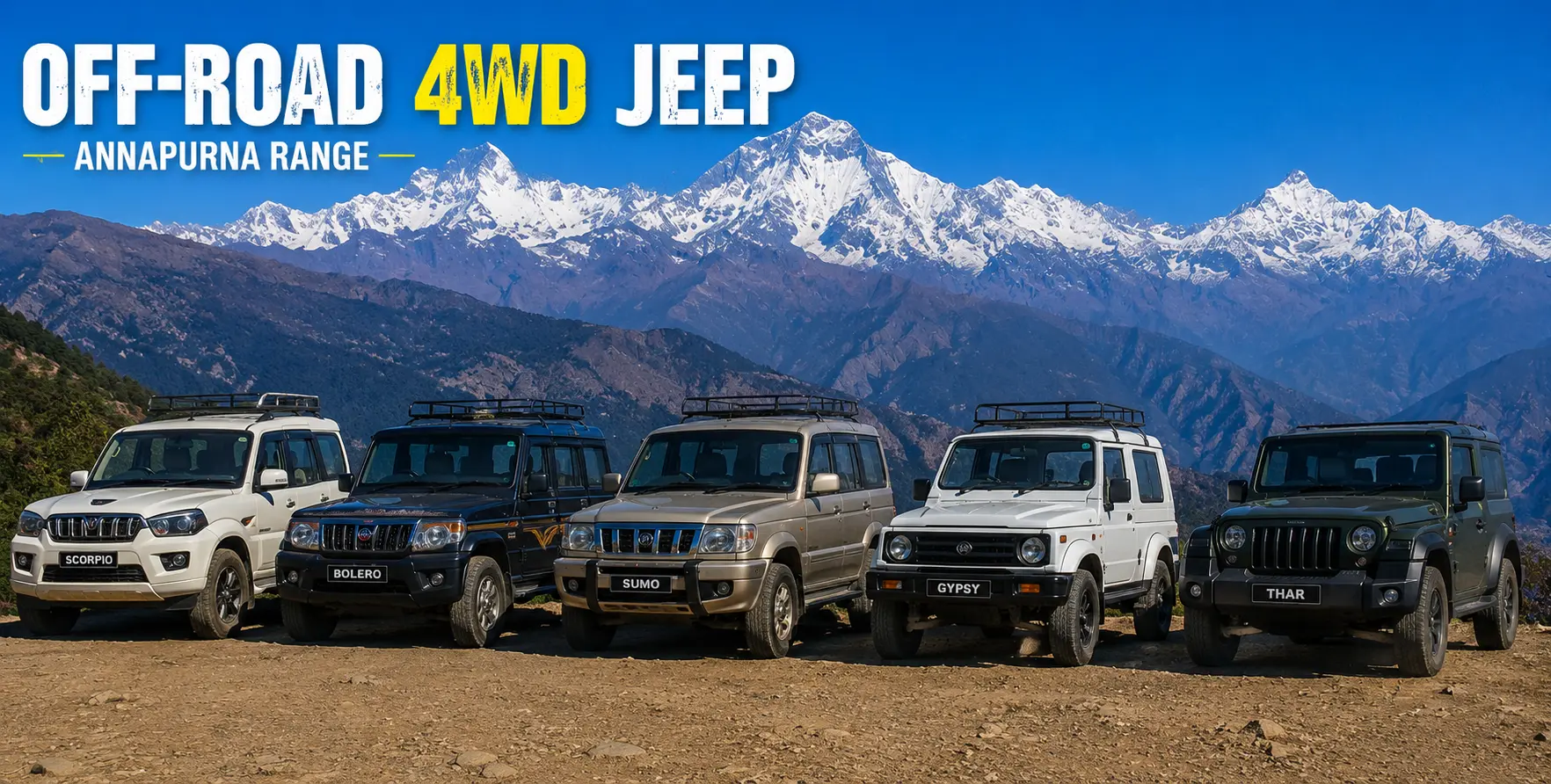
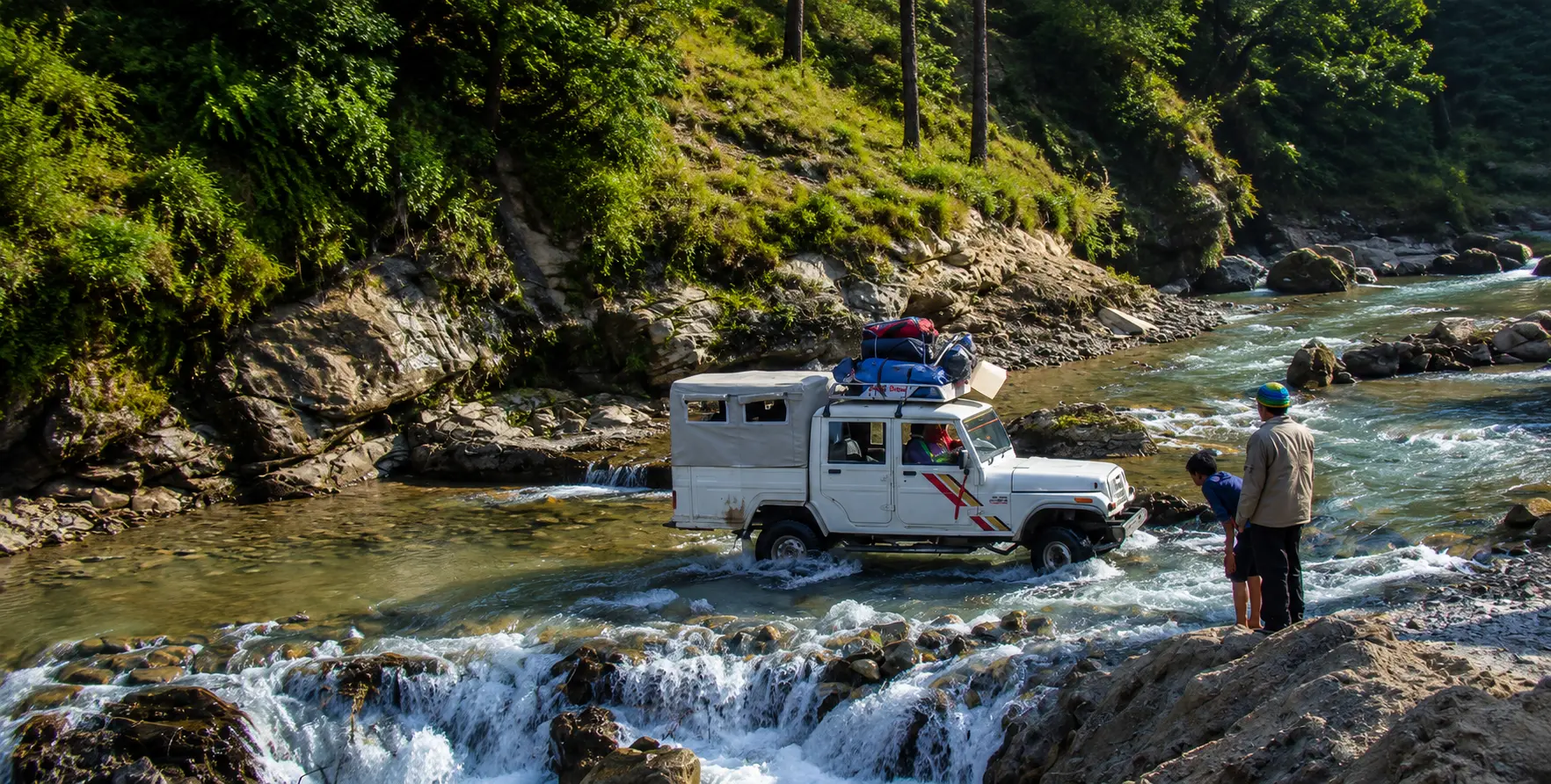
The terrain above Attariya presents multiple road challenges simultaneously: steep gradient ascents and descents (some sections exceed 20% gradient), narrow single-track sections requiring precise vehicle placement, loose gravel and rocky surface that provides low traction, seasonal river crossings that vary in depth and character, and cliff-edge sections where a vehicle error could have serious consequences. Nepal Vehicle Hiring Pvt. Ltd.’s 4WD fleet — including Toyota Land Cruiser, Toyota Fortuner, and Toyota Hilux — is specifically maintained and driven by experienced drivers from Ar-Western Nepal who know these roads well.
Our Recommended Vehicle Fleet for Api Himal Transport
| Vehicle | Capacity | Suitability for Api Himal Route | Best Use Case |
| Toyota Land Cruiser 4WD | 1–7 pax | Outstanding — best-in-class for far western Nepal roads | Large groups, maximum comfort, long-distance expedition support |
| Toyota Fortuner 4WD | 1–6 pax | Excellent — powerful, comfortable, proven on mountain roads | Small groups and couples are the most popular choice for Api Himal |
| Toyota Hilux 4WD | 1–5 pax | Excellent — highest ground clearance, most robust off-road | Heavy gear loads, technical sections, and the most demanding conditions |
| Toyota Hilux Double Cab | 1–6 pax | Excellent — luggage in truck bed, passengers in cab | Trekking teams with large equipment loads |
| Hiace Van | 7–14 pax | NOT RECOMMENDED beyond Attariya — road too rough | Kathmandu to Dhangadhi or Terai sections only |
| Critical Vehicle Warning — Api Himal Trek Transport |
| Standard cars, sedans, SUVs (non-4WD): NOT suitable beyond Attariya — road conditions will defeat them |
| Standard taxis from Dhangadhi or Attariya: NOT capable of the Gokuleshwor–Makarigaad section |
| Hiace Vans: NOT recommended for the mountain road sections (Attariya to Makarigaad) |
| Toyota Land Cruiser 4WD: BEST CHOICE — maximum capability and comfort for all sections |
| Toyota Fortuner 4WD: EXCELLENT — powerful, capable, most popular for Api Himal |
| Toyota Hilux 4WD: IDEAL — for teams with heavy equipment and maximum off-road needs |
| Nepal Vehicle Hiring Pvt. Ltd. provides all three options with experienced drivers from Far-Western Nepal. |
Permits Required for the Api Himal Trek
The Api Himal Trek requires several permits that you must obtain and carry throughout the journey. Unlike some Nepal treks where permits can be arranged at checkpoints, several Api Himal permits require advance arrangement in Kathmandu before departure—making pre-trip permit planning an important part of the overall logistics.
| Permit | Who Needs It | Cost | Where to Obtain | Notes |
| Api Nampa Conservation Area Permit | All foreign nationals entering the Api Nampa Conservation Area | NPR 3,000 per person | Department of National Parks and Wildlife Conservation (DNPWC), Kathmandu, or through a registered agency | Must be obtained before reaching Darchula — not available at remote checkpoints |
| TIMS Card (Trekkers Information Management System) | All foreign trekkers | NPR 2,000 per person (individual) | Nepal Tourism Board offices in Kathmandu | Strongly recommended — some checkpoints verify |
| Restricted Area Trekking Permit | Required — Api Himal trek is in a restricted trekking zone (minimum 2 persons + licensed guide mandatory) | Varies — typically USD 10–50/week (confirm current rate with DNPWC or registered agency) | Through registered trekking agencies in Kathmandu ONLY — cannot self-obtain | Must be in a group of at least 2 people — solo trekking Nis OT permitted in the restricted zone |
| Licensed Guide (Mandatory) | All foreign trekkers in the restricted area | Guide fee: USD 25–40/day (separate from permit) | Arrange through a registered trekking agency in Kathmandu | Guide must be licensed and registered — checkpoint verification enforced |
| SAARC Nationals | India, Bangladesh, Pakistan, Sri Lanka, Bhutan, Maldives, Afghanistan | Conservation permit: NPR 1,500 | TIMS: NPR 1,500 | Same as above | Restricted area permit still required |
| Nepali Nationals | Nepali citizens | Conservation permit: NPR 100 | No TIMS required | Same as above | Restricted area rules apply equally |
Important: The Api Himal trek falls within a Restricted Trekking Area designation. This means solo trekking is not permitted under Nepali law — all foreign trekkers must be in a group of at least 2 and accompanied by a licensed guide. These requirements are strictly enforced at checkpoints in Darchula District, and trekkers who try to enter without the proper documentation and group composition will be turned back. Nepal Vehicle Hiring Pvt. Ltd. can connect you with trusted licensed guide services and registered trekking agencies in Kathmandu that handle all Api Himal permit arrangements.
Complete Api Himal Trek Permit & Document Checklist 2026 |
| Api Nampa Conservation Area Permit — NPR 3,000 (foreign) | Obtain in Kathmandu BEFORE departure |
| Restricted Area Trekking Permit — Obtain through a registered agency in Kathmandu — MANDATORY. |
| TIMS Card — NPR 2,000 per person | Nepal Tourism Board offices, Kathmandu |
| Licensed Guide — Mandatory for all foreign trekkers | Minimum group of 2 persons required |
| Valid Passport — Carry original throughout | Photocopies also recommended |
| Nepal Entry Visa — Current and valid |
| Travel Insurance — Must cover trekking to 4,200 m and helicopter evacuation in a remote area. |
| Emergency Contact Details — Share with Nepal vehicle-hiring driver and guide |
| Medical Fitness Clearance — Far-western Nepal has minimal medical infrastructure — be fit. |
| Carry PRINTED copies of all permits — digital-only versions may not be accepted at remote checkpoints. |
Best Season for Api Himal Trek and Vehicle Transport
Spring (March to May) — The Most Popular Season
Spring is the most popular season for the Api Himal Trek and the best timebest time for both the trekking experience and vehicle transport. The pre-monsoon months of March, April, and May bring the following conditions to the far-western Nepal region: road conditions at their best following the dry winter months (the Gokuleshwor–Makarigaad track is driest and most passable in spring), rhododendron forests in full bloom from approximately 1,500–3,000 m (creating extraordinary landscape colour through the mid-sections of the trek), wildlife most active as animals emerge from winter conservation behaviors, moderate temperatures on the trek (pleasant at lower altitudes, appropriately cool at the base camp), and good mountain visibility in the mornings before afternoon cloud build-up.
The spring window is also important logistically because the Api Himal Darchula region receives significantly less monsoon rainfall than the central and eastern Nepal Himalaya — but it does receive increasing cloud cover and some rain as the pre-monsoon period advances in late May. Trekkers planning spring Api Himal expeditions should aim for March–mid-April for the clearest conditions and the best rhododendron display.
Autumn (September to November) — Clear Skies and Dry Roads
The post-monsoon autumn season offers the clearest mountain views of the year and the most stable road conditions following monsoon repairs. October and November are excellent months for the Api Himal Trek — the landscape is freshly washed and lush from the monsoon, the sky is consistently clear with excellent mountain visibility, and the Gokuleshwor-to-Makarigaad road section (which can be badly affected during the monsoon) is at its most reliable. Autumn temperatures are ideal: warm at lower altitudes, progressively cooler toward base camp, with cold but manageable nights at camp. The mountain views from the base camp and Kalidhunga Lake in October and November can be extraordinary.
Winter (December to February) — Generally Not Recommended
Winter trekking in the Api Himal region is generally not recommended and is rarely attempted. Temperatures at the base camp (3,900 m) drop well below -15°C at night in January; the upper trail sections can be snow-covered and icy, and the Gokuleshwor to Makarigaad road can be affected by frost and ice, making vehicle travel hazardous. Some of the high-altitude sections of the trail become inaccessible in winter conditions. Nepal Vehicle Hiring Pvt. Ltd. advises against winter transport arrangements to Api Himal unless clients have specific winter expedition experience and equipment.
Monsoon (June to September) — Challenging but Possible
The monsoon season is the most challenging period for transport on the Api Himal trek. The Gokuleshwor to Makarigaad section is most vulnerable to road damage during heavy monsoon rainfall — landslides, washed-out sections, and river crossings in flood can significantly delay or block vehicle passage. However, the Api Himal region (unlike the central Nepal hills) receives less monsoon rainfall because it lies in the partial rain shadow of the main Himalayan chain. In lighter monsoon years, vehicle passage remains possible with appropriate preparation and flexibility. Nepal Vehicle Hiring Pvt. Ltd. provides real-time road condition updates for monsoon-season transport requests and will honestly advise clients of current conditions before confirming bookings.
| Season | Months | Trek Conditions | Road Conditions | Mountain Views | Recommendation |
| Spring | March–May | Excellent — rhododendrons, wildlife active | Good — dry roads, post-winter | Clear mornings, afternoon clouds | BEST — most popular |
| Autumn | Sep–Nov | Excellent — clear, post-monsoon freshness | Very Good — post-monsoon repairs done | Crystal clear | EXCELLENT |
| Winter | Dec–Feb | Not recommended — cold, snow at altitude | Risky — ice and frost on mountain roads | Clear but cold — good visibility | Generally avoid |
| Monsoon | Jun–Sep | Challenging — rain, leeches in lower areas | Risky — landslide damage possible | Poor — mostly cloud cover | Expert/flexible only |
Api Himal Trek Transport Cost Guide
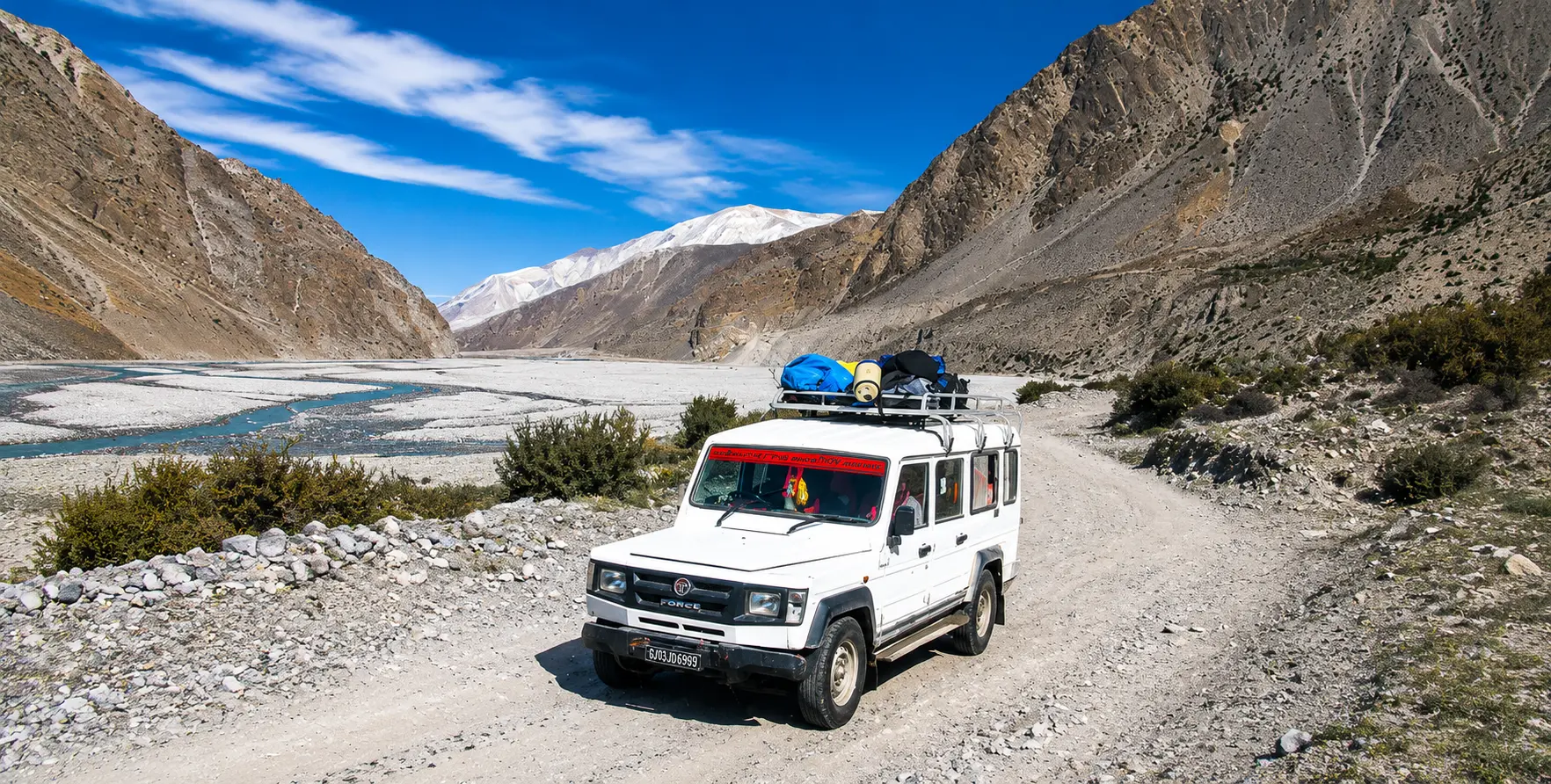
Api Himal trek transport costs are among the highest of any trek in Nepal because of the extreme distances involved, the need for specially equipped 4WD vehicles and experienced drivers, and the journey’s multi-day nature. The following cost guide covers the main vehicle segments and service options:
Flight: Kathmandu to Dhangadhi (Recommended)
| Airline | Route | Duration | Approx. Fare (One Way) | Notes |
| Buddha Air | Kathmandu (TIA) to Dhangadhi (DHI) | 55–65 min | USD 95–140 | Most reliable schedule | Book at least 2 weeks in advance |
| Yeti Airlines | Kathmandu (TIA) to Dhangadhi (DHI) | 55–65 min | USD 90–135 | Popular option | TARA Air codeshare sometimes available |
| Shree Airlines | Kathmandu (TIA) to Dhangadhi (DHI) | 60 min | USD 85–130 | Budget option | Check current safety certifications |
Important: Domestic flights in Nepal are subject to weather cancellations and schedule changes. Dhangadhi Airport can experience fog or poor visibility, particularly in the inter-monsoon months. Always build a buffer day into your itinerary around the Dhangadhi flight to avoid downstream cascade delays to your trekking schedule.
Private 4WD Vehicle Hire — Road Segments
| Vehicle Segment | Vehicle Type | Drive Time | One-Way Cost | Notes |
| Dhangadhi Airport → Attariya | Car or Jeep | 30 min | NPR 1,500–2,500 | Short transfer — any vehicle |
| Attariya → Gokuleshwor (Darchula) | 4WD Fortuner / Land Cruiser | 9–10 hrs | NPR 22,000–32,000 | 4WD essential | Overnight stop in Gokuleshwor |
| Gokuleshwor → Makarigaad (Trailhead) | 4WD Fortuner / Hilux / Land Cruiser | 4–5 hrs | NPR 12,000–18,000 | Roughest section — only 4WD Land Cruiser/Fortuner/Hilux |
| Makarigaad → Gokuleshwor (Return) | Same as above | 4–5 hrs | NPR 10,000–16,000 | Return trip sis lightly cheaper |
| Gokuleshwor → Dhangadhi (Return) | 4WD Fortuner / Land Cruiser | 9–10 hrs | NPR 20,000–30,000 | Return to the airport for the flight |
| FULL ROUND TRIP: Dhangadhi → Makarigaad → Dhangadhi | 4WD Land Cruiser | ~28–30 hrs total driving | NPR 65,000–95,000 | Multi-day package — driver accommodation extra |
Full Overland Package: Kathmandu to Makarigaad and Return
| Package | Duration | Vehicle | Approx. Total Cost | What’s Included |
| Full Overland (Kathmandu to Makarigaad return) | 4–5 days driving | 4WD Land Cruiser | NPR 160,000–220,000 | Driver, fuel for all segments, vehicle tolls, parking |
| Flight + Road Package (KTM flight, road segments by Nepal Vehicle Hiring) | 2–3 days total | Fortuner or Land Cruiser for road sections | NPR 65,000–95,000 (road only) + flight cost | 4WD vehicle from Dhangadhi to trailhead and return — flight arranged separately |
| Trek Support Vehicle (vehicle waits at Makarigaad during trek) | Full trek duration (7–10 days) | 4WD Hilux / Fortuner | NPR 8,000–12,000/day standby | Vehicle and driver remain at Makarigaad — available for emergency or return on any day. |
Driver Accommodation Allowance: For multi-day journeys requiring the driver to stay overnight at Gokuleshwor, Makarigaad, or other points along the route, a daily accommodation and meal allowance of NPR 800–1,200/day for the driver is standard practice and is in addition to the vehicle hire rate. This is clearly stated in Nepal Vehicle Hiring Pvt. Ltd. quotations — no hidden charges.
Why Choose Nepal Vehicle Hiring Pvt. Ltd. for Api Himal Trek Transport
The Api Himal trek transport is among the most logistically complex vehicle hire services available in Nepal — demanding specifically capable 4WD vehicles, drivers with genuine experience on far-western Nepal’s demanding roads, detailed knowledge of the fuel stops, accommodation, and checkpoint logistics, and the reliability and professionalism to execute a multi-day vehicle journey to Nepal’s most remote trekking destination without failure. Nepal Vehicle Hiring Pvt. Ltd. brings all of these qualities to the Api Himal transport service.
Our team has specific knowledge and experience with Nepal’s far-western road network, including the Attariya to Gokuleshwor route and the demanding Gokuleshwor to Makarigaad track. We understand seasonal road variability in this region, fuel availability at each point along the route, the best overnight accommodation options in Gokuleshwor and Chainpur, and the logistical coordination needed to get trekking groups to the Makarigaad trailhead on schedule and in good condition.
Why Nepal Vehicle Hiring for Api Himal Trek Transport |
| 8,000+ satisfied customers | 5.0 TripAdvisor | 200+ verified 5-star reviews |
| Specific 4WD experience on far-western Nepal roads, including the Attariya–Gokuleshwor–Makarigaad route |
| Fleet: Toyota Land Cruiser | Fortuner | Hilux — all 4WD, all mountain-road maintained |
| Bilingual drivers (English/Nepali) experienced in multi-day far-western Nepal expeditions |
| Full transparency on road conditions — we advise honestly if conditions are hazardous |
| Airport pickup at Dhangadhi | Hotel pickup in Kathmandu for the overland option |
| Vehicle standby service at Makarigaad for trek duration (advance arrangement required) |
| Real-time road condition monitoring — especially important for Gokuleshwor–Makarigaad section |
| 24/7 WhatsApp support: +977 9814227196 throughout your entire Api Himal journey |
| Licensed & Registered | Reg. No. 219204 | vehiclehiringnepal.com |
Booking Process for Api Himal Trek Transport
- Step 1 — Contact Nepal Vehicle Hiring Pvt. Ltd. via WhatsApp (+977 9814227196), phone, email ([email protected]), or the website form at vehiclehiringnepal.com.
- Step 2 — Share your trek dates, group size, preferred transport option (flight + road or full overland), and whether you need airport pickup in Dhangadhi or hotel pickup in Kathmandu.
- Step 3 — Specify whether you require the vehicle to wait at Makarigaad during the trek (standby service) or to return to Gokuleshwor on a pre-arranged date.
- Step 4 — Receive a detailed quotation with a breakdown by vehicle segment, driver accommodation allowances, and the total cost.
- Step 5 — Confirm booking with deposit. Nepal Vehicle Hiring Pvt. Ltd. will assign specific driver(s) with experience in far-western Nepal.
- Step 6 — Ensure all Api Himal permits (Api Nampa Conservation Area Permit, Restricted Area Permit, TIMS) are obtained through a registered trekking agency in Kathmandu BEFORE your departure day.
- Step 7 — On travel day, your driver meets you at Dhangadhi Airport or your Kathmandu hotel at the agreed time. The expedition to Nepal’s Far West begins.
Practical Tips for the Api Himal Trek: Transport and Preparation
Fuel Planning — Critical for the Far West
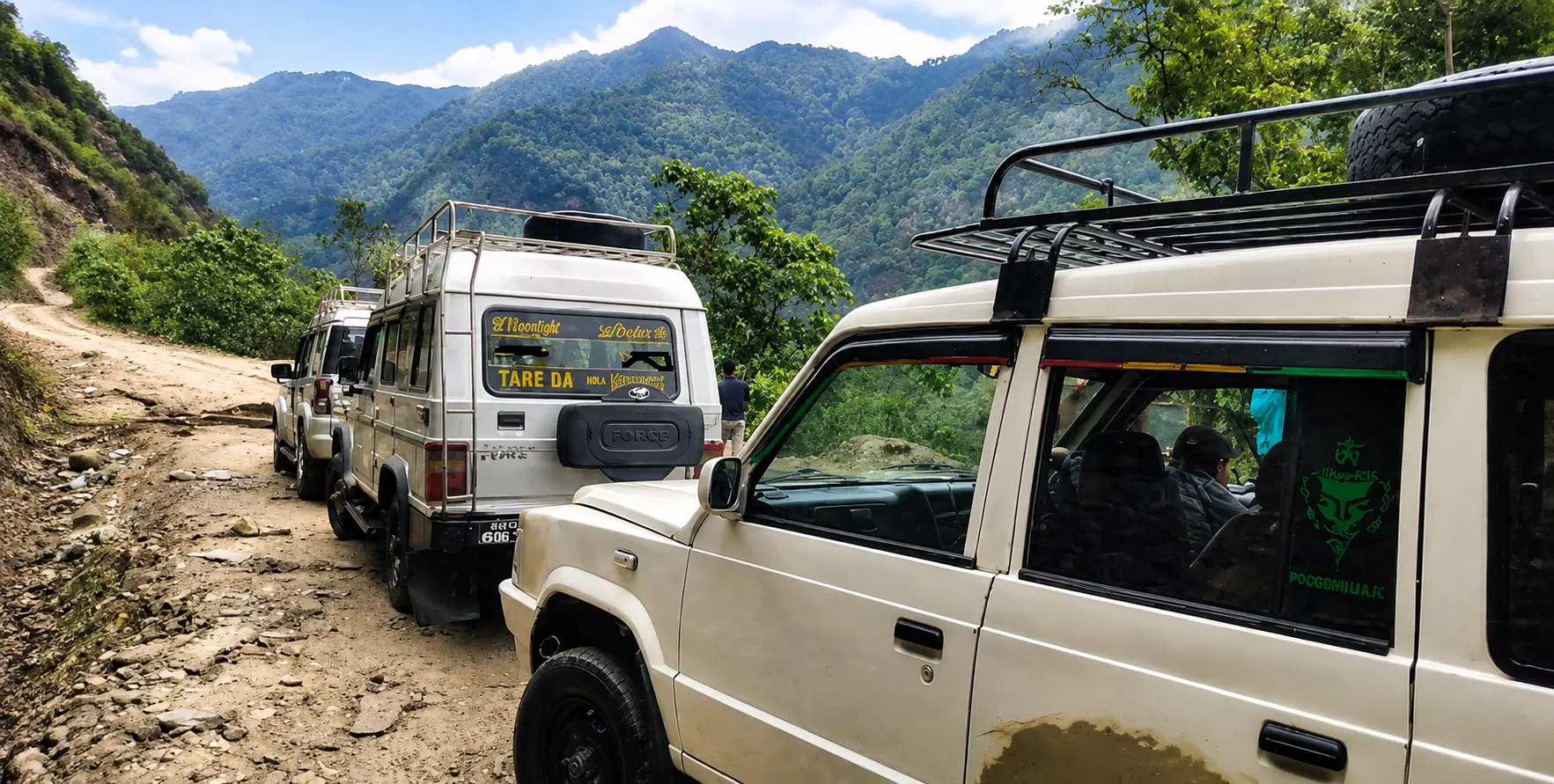
Fuel availability in far-western Nepal is significantly less reliable than in the central regions. The following fuel planning guide is essential for vehicle arrangements to the Api Himal trailhead:
- Dhangadhi: Multiple fuel stations—the last reliable high-capacity fuel points before heading north. Nepal Vehicle Hiring drivers will always fuel up fully in Dhangadhi.
- Dadeldhura (approx. 150 km north of Attariya): Fuel available but limited selection — verify availability before the expedition.
- Chainpur (approx. 180 km north of Attariya): Fuel available — important stop before Gokuleshwor.
- Gokuleshwor: Limited fuel availability — stock up before proceeding to Makarigaad.
- Makarigaad and beyond: NO fuel available — all fuel must be carried from Gokuleshwor. Nepal Vehicle Hiring drivers carry spare jerry cans for the Gokuleshwor-Makarigaad section.
Overnight Accommodation on the Transport Route
| Overnight Location | Distance from Dhangadhi | Available Accommodation | Quality | Notes |
| Attariya | 13 km | Several basic guesthouses and hotels | ★★☆☆☆ | Highway junction town — adequate for a night stop |
| Chainpur (Bajhang HQ) | 180 km | District HQ — several guesthouses | ★★★☆☆ | Best accommodation option on the route — clean rooms available |
| Dadeldhura (District HQ) | 150 km | District HQ — guesthouses available | ★★★☆☆ | Alternatively, overnight here vs Chainpur |
| Gokuleshwor (Darchula HQ) | 220 km | Several basic guesthouses | ★★☆☆☆ | Final town before trailhead — most trekkers overnight here |
| Makarigaad (Trailhead) | 285 km | Basic homestays only | ★☆☆☆☆ | Very basic — bring a sleeping bag and be prepared. |
Communication and Emergency Preparation
Far-western Nepal has significantly more limited mobile network coverage than the central and eastern regions. Nepal Telecom and Ncell networks are available in Dhangadhi and the main district headquarters (Gokuleshwor, Chainpur), but coverage becomes increasingly spotty above Gokuleshwor and is essentially absent in the upper Api Himal trek area. This communication limitation has important implications for emergency response and logistics:
- Inform Nepal Vehicle Hiring Pvt. Ltd. of your daily planned position throughout the trek — our WhatsApp support team will communicate with the vehicle driver who remains within range.
- A satellite communicator (SPOT device or Garmin inReach) is strongly recommended for the trek section — it provides emergency SOS capability and two-way messaging regardless of mobile coverage.
- Share your complete itinerary with your home-country emergency contact before departing Kathmandu — include return flight details, guide contact, Nepal Vehicle Hiring contact, and expected daily locations.
- The nearest helicopter evacuation landing zone for the Api Base Camp area is either at Gokuleshwor or at a suitable flat area near the trek route — helicopter rescue in this region is possible but expensive and weather-dependent. Ensure your travel insurance explicitly covers helicopter evacuation from remote areas of far-western Nepal.
Physical Preparation for the Api Himal Trek
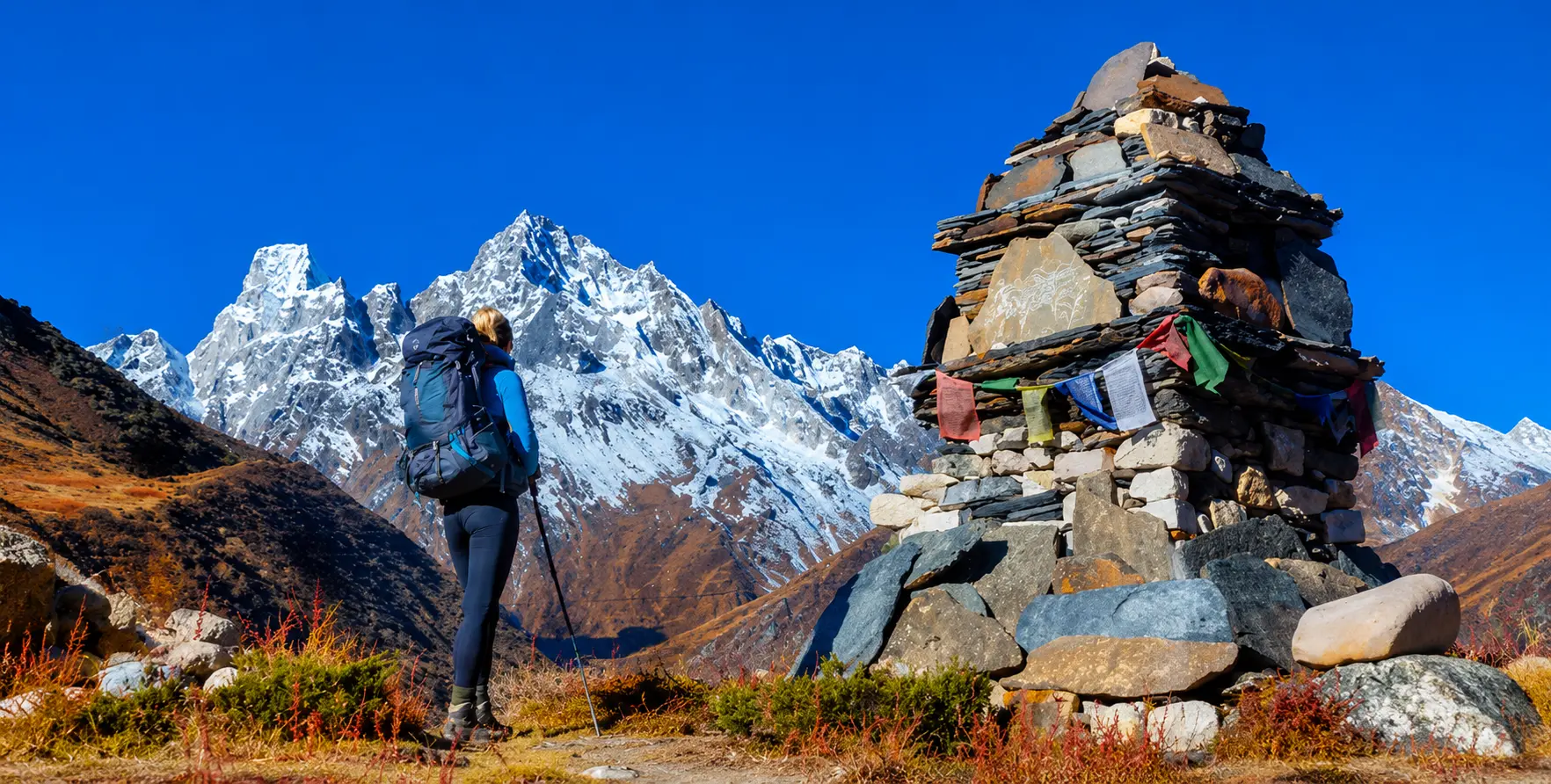
The Api Himal Trek is physically demanding not because of extreme altitude (maximum 4,200 m at Kalidhunga Lake is significantly lower than Everest Base Camp or the Annapurna Circuit high pass) but because of the combination of remote camping, multi-day consecutive trekking, limited rescue infrastructure, and the significant approach journey that must be completed before and after the trek itself. Trekkers who arrive at Makarigaad already fatigued from the long vehicle journey will struggle on the first days of walking.
- Train specifically for multi-day hiking with a loaded pack — the camping nature of the Api Himal trek means porters carry most gear, but day packs of 6–10 kg are standard.
- Build aerobic fitness with sustained activity (hiking, cycling, swimming) for at least 3 months before the trek.
- If possible, complete a shorter Nepal teahouse trek (Poon Hill, Langtang Valley) as a warm-up before the Api Himal expedition — the experience of trekking conditions in Nepal is invaluable preparation.
- Consult a travel medicine doctor about altitude sickness prevention (Diamox/acetazolamide), vaccination requirements for travel to remote Nepal, and any specific health considerations for the far-western region.
Frequently Asked Questions — Api Himal Trek Transport
How far is it from Kathmandu to the Api Himal trailhead, and how long does the journey take?
The total distance from Kathmandu to the Makarigaad trailhead is approximately 850–900 km by road. With the recommended flight option (Kathmandu to Dhangadhi, approximately 1 hour), the total journey takes 2 days: Day 1 covers the flight to Dhangadhi plus the drive to Gokuleshwor (9–10 hours in a 4WD jeep), and Day 2 covers the drive from Gokuleshwor to Makarigaad (4–5 hours). With the full overland option, the total journey from Kathmandu takes 3–4 days.
Is a 4WD vehicle really necessary for the approach to the Api Himal trek?
Absolutely yes — a proper 4WD vehicle is essential from Attariya northward and is non-negotiable for the Gokuleshwor to Makarigaad section. The mountain road above Gokuleshwor is too rough, too steep, and too technically demanding for standard cars, non-4WD SUVs, or local taxis. Nepal Vehicle Hiring Pvt. Ltd. provides Toyota Land Cruiser, Fortuner, and Hilux 4WD vehicles specifically for this route, driven by experienced drivers from far-western Nepal. Never attempt the Gokuleshwor-Makarigaad section in an unsuitable vehicle.
What permits do I need for the Api Himal Trek?
The Api Himal Trek requires: (1) Api Nampa Conservation Area Permit (NPR 3,000 for foreign nationals) — obtain from DNPWC in Kathmandu; (2) Restricted Area Trekking Permit — obtain through a registered trekking agency in Kathmandu (mandatory as the area is restricted); (3) TIMS Card (NPR 2,000) — from Nepal Tourism Board; (4) Licensed Guide — mandatory for all foreign trekkers. Minimum group size is 2 persons for the restricted area. All permits should be arranged in Kathmandu before departure — they are not reliably available at remote checkpoints.
Can I do the Api Himal Trek without a licensed guide?
No — the Api Himal Trek falls within a Restricted Trekking Area under Nepali government designation, which requires all foreign trekkers to have a licensed guide. Solo trekking is not permitted. The minimum group size is 2 persons. These requirements are enforced at checkpoints in the Darchula District. Attempting to trek without a guide and a proper restricted-area permit will result in being turned back at the first checkpoint. Nepal Vehicle Hiring Pvt. Ltd. can connect you with reputable licensed guide services and registered trekking agencies in Kathmandu.
What is the best time of year to do the Api Himal Trek?
Spring (March to May) and Autumn (September to November) are the best seasons for the Api Himal Trek. Spring offers rhododendron blooms, active wildlife, and pleasant temperatures. Autumn offers the clearest mountain views and the best road conditions after monsoon repairs. March to April is the most popular spring window. October to November is the most popular autumn window. Winter (December–February) is not recommended due to extreme cold and snow at altitude. The monsoon (June–September) is challenging due to the risk of road damage and cloud cover.
Does Nepal Vehicle Hiring Pvt. Ltd. have specific experience on the Gokuleshwor-Makarigaad road?
Yes — Nepal Vehicle Hiring Pvt. Ltd. has specific experience and drivers familiar with routes in far-western Nepal, including the Gokuleshwor-Makarigaad section. We understand the road conditions, best seasonal timing, fuel planning requirements, and overnight accommodation options along this entire route. When you book Api Himal trek transport with Nepal Vehicle Hiring, we assign drivers with specific experience on the Ar-Western Nepal roads, not generalist city drivers.
Can the vehicle wait at Makarigaad during my trek?
Yes — Nepal Vehicle Hiring Pvt. Ltd. offers a vehicle standby service at Makarigaad for the duration of your trek. The vehicle and driver remain at or near the trailhead, available for emergency vehicle transport or to return with you on any day you choose to end the trek. The standby rate is NPR 8,000–12,000 per day (including vehicle and driver accommodation and meals). This service provides maximum flexibility and emergency backup and is strongly recommended for first-time Api Himal expeditions. Contact our team for current standby availability and pricing.
Why the Api Himal Trek Is Worth Every Kilometre of Transport Effort
After reading through the logistical complexity of reaching the Api Himal trailhead — the domestic flight, the 14-hour 4WD journey, the rough Gokuleshwor-to-Makarigaad track, the permit requirements, the fuel planning — it is entirely reasonable to wonder: is it worth it? The answer, from every trekker who has completed the Api Himal journey, is an unequivocal yes.
The Api Himal Trek delivers what has become genuinely rare in Nepal’s trekking landscape: absolute solitude. You will almost certainly not encounter another foreign trekker on the trail. The villages through which you pass — Ghusa, Siti, Domal, Dhauliodar — see perhaps a few dozen foreign visitors per year, not per week or per day. The community life you encounter is genuine and unperformed, because no tourism industry performs for it. The hospitality families offer in these villages comes from a culture of genuine mountain welcome, not a business calculation about tourist revenue.
And the landscapes — the subtropical forest gorges of the lower Chameliya valley, the spectacular rhododendron forest of the mid-altitude sections, the increasingly open and dramatic terrain as you ascend toward the Api Base Camp, and finally the extraordinary panorama of 6,000–7,000 metre peaks reflected in the sacred dark waters of Kalidhunga Lake — are of a quality and character that the more visited regions of Nepal cannot match in terms of solitude and authentic wilderness.
The Api Himal trek is not for everyone. It requires time (15–18 days total), fitness, careful preparation, significant logistical effort, and a willingness to embrace the unpredictability of operating in one of Nepal’s least-developed regions. But for those who invest that effort — with reliable transport partners like Nepal Vehicle Hiring Pvt. Ltd. managing the vehicle logistics at both ends of the expedition — it delivers an experience that ranks among the most profoundly memorable available to any trekker anywhere in the Himalayan world.
Contact Nepal Vehicle Hiring Pvt. Ltd. today to begin planning your transport for the Api Himal Trek. The farthest corner of Nepal awaits — and we will get you there.
Book Your Api Himal Trek Transport with Nepal Vehicle Hiring Pvt. Ltd
|
- Introduction: The Most Remote Trek in Nepal and Why Transport Is Everything
- Api Himal: Understanding Nepal's Most Remote Trek Destination
- The Api Himal Trek — Complete Route and Itinerary Overview
- The Complete Transport Routes: Kathmandu to Api Himal Trailhead
- Vehicle Requirements for the Api Himal Trek Transport
- Permits Required for the Api Himal Trek
- Best Season for Api Himal Trek and Vehicle Transport
- Api Himal Trek Transport Cost Guide
- Why Choose Nepal Vehicle Hiring Pvt. Ltd. for Api Himal Trek Transport
- Practical Tips for the Api Himal Trek: Transport and Preparation
- Frequently Asked Questions — Api Himal Trek Transport
- Why the Api Himal Trek Is Worth Every Kilometre of Transport Effort

Related Blog & Articles

4WD Himalayan Jeep in Nepal
Adventure Bike Rental in Nepal – Complete Guide to Routes and Requirements

Ancient Temples and Hidden Histories: A Journey Through Nepal’s Sacred Past
Kathmandu to Upper Dolpa Adventure Tour Vehicle Hire