Plan a Trip


Best time to visit Mustang Nepal
Best Time to Visit Mustang Nepal
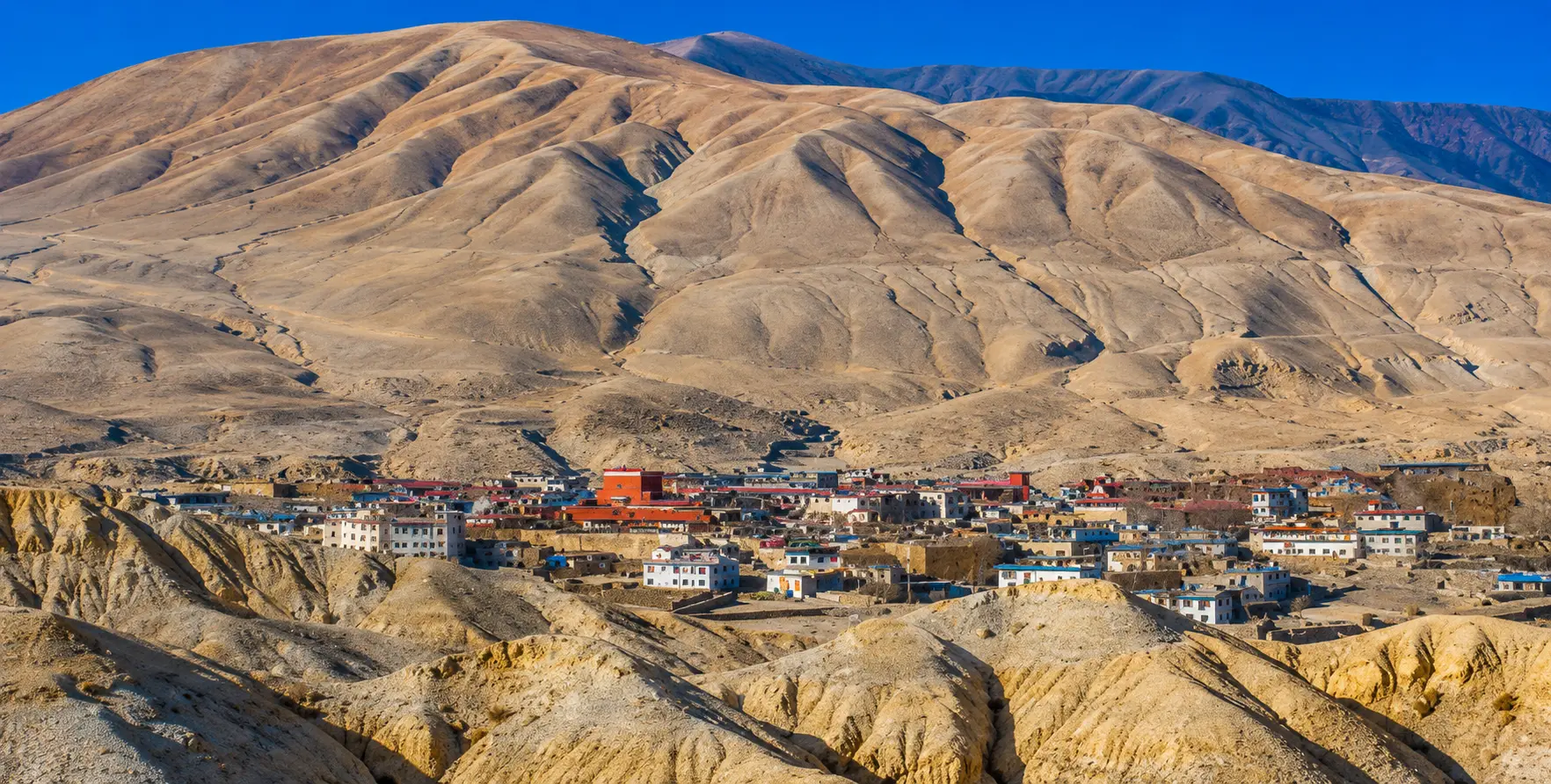
Most of Nepal, taken as a whole, follows a fairly simple seasonal rule: trek in spring or autumn, and generally avoid the monsoon. Mustang breaks that rule entirely. Sitting in the rain shadow of the Annapurna and Dhaulagiri massifs, this trans-Himalayan desert kingdom stays dry precisely when the rest of the country is drenched, making the question of the
best time to visit Mustang Nepal one of the more genuinely counterintuitive pieces of trip planning in the entire country.
This particular guide works carefully through Mustang’s seasons month by month, covering weather, road conditions, the region’s famous afternoon winds, its two defining festivals, and how the right timing changes everything from permit planning to vehicle choice. Nepal Vehicle Hiring has coordinated jeep transport into both Lower and Upper Mustang for years, and this guide draws on that direct route and seasonal experience.
Whether your interest lies in the wind-carved cliffs around Lo Manthang, the hot springs and orchards of Marpha and Kagbeni covered in our companion guide to
Muktinath Temple: Vehicle Hire and Pilgrimage Route Guide, or the full high-desert expanse of the restricted Upper Mustang region, timing your visit correctly changes the experience more here than almost anywhere else in Nepal.
Why Mustang’s Best Season Differs From the Rest of Nepal
Mustang’s genuinely unusual seasonal calendar comes down, in the end, to a single defining piece of geography: the district sits directly behind the Annapurna and Dhaulagiri massifs, two of the tallest walls of rock and ice on the planet, which intercept the moisture-laden monsoon winds arriving from the Bay of Bengal before they can reach the high desert beyond. This rain-shadow effect is so pronounced that Mustang receives a fraction of the rainfall recorded in Pokhara, just on the other side of the Annapurna range, during the same monsoon weeks.
The practical result is that June, July, and August, the very months most trekkers avoid everywhere else in Nepal, rank among the most reliable for clear skies, dry trails, and stable road conditions in Mustang specifically. This single fact reshapes the entire seasonal calendar for the region and is the single most important thing to understand before booking
vehicle hire toward Jomsom and Mustang.
Mustang Season by Season
Spring (March to May)
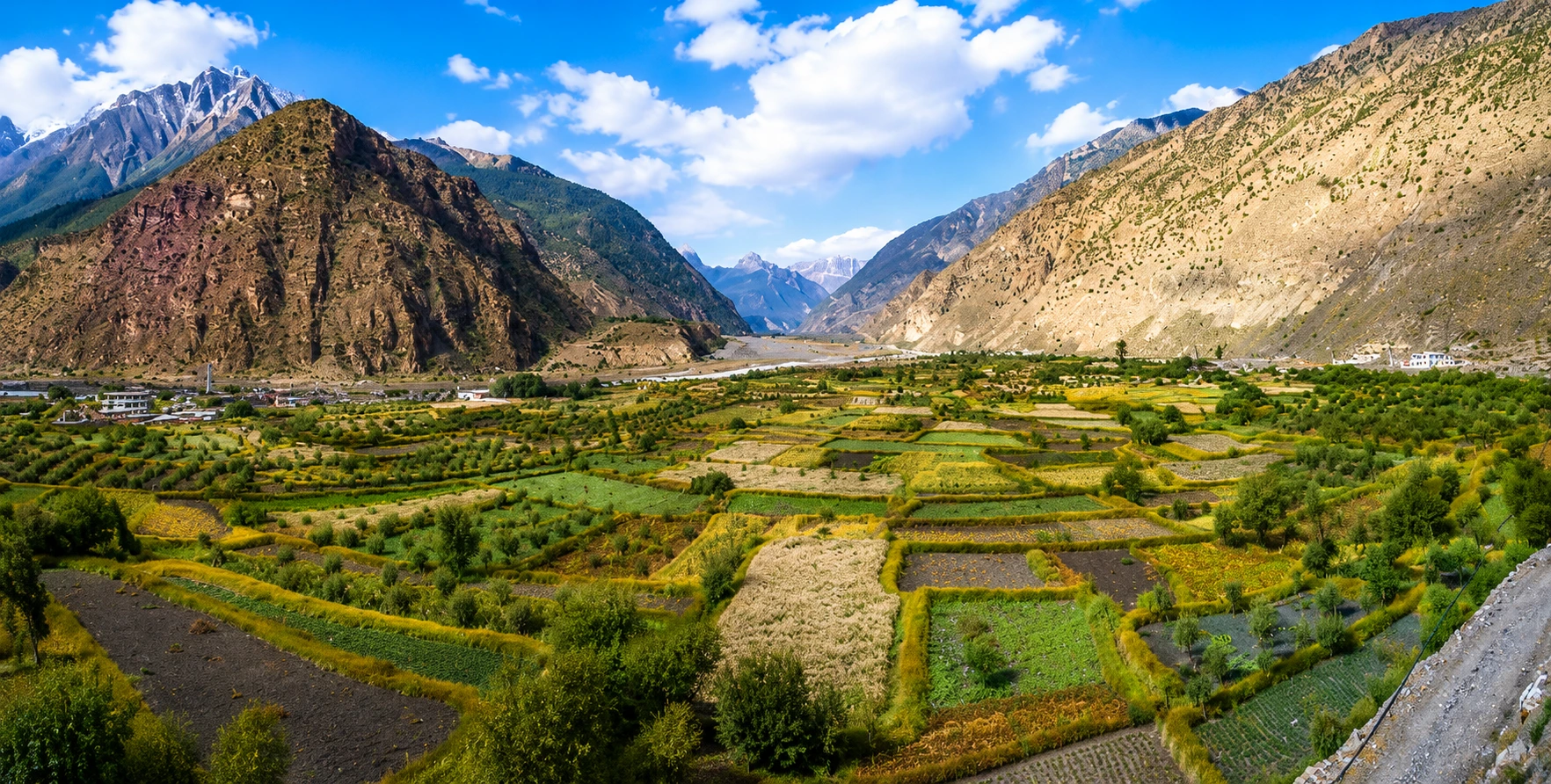
Spring itself brings steadily warming temperatures, blooming apple orchards around the village of Marpha, and the build-up to Lo Manthang’s Tiji Festival, generally falling in May. Road conditions along the Kali Gandaki corridor toward Jomsom are typically favorable during this period, and this remains one of the two genuinely excellent windows for a Mustang trip, alongside the summer monsoon months discussed below.
Daytime temperatures in Lower Mustang villages such as Jomsom and Kagbeni are generally comfortable for walking and vehicle travel. However, nights remain cold at this elevation, and the higher reaches of Upper Mustang toward Lo Manthang can still see residual cold from winter well into April.
Summer and Monsoon (June to August)
This period stands as Mustang’s genuine signature season, and it is the one that most consistently surprises first-time visitors. While the rest of Nepal’s trekking industry effectively pauses for the monsoon, Mustang’s rain-shadow position keeps its trails dry, its skies largely clear, and its roads passable, making this the single best window for travelers specifically wanting to avoid the crowds that fill the Everest and Annapurna regions during the busier autumn season.
This is also when the Kali Gandaki valley’s famous afternoon winds are at their strongest, a direct result of the pressure difference between the warm Terai plains to the south and the cooler Tibetan plateau to the north, funneled through the narrow gorge between Dhaulagiri and Annapurna. Morning travel is strongly preferred throughout this window.
Trekkers and vehicle passengers traveling this route during summer also benefit from cooler, more comfortable daytime temperatures than the sweltering conditions found in Kathmandu or Pokhara at the same time of year, another reason this counterintuitive season has become an increasingly popular choice among experienced Nepal travelers.
Autumn (September to November)
Autumn remains, overall, a reliably good season for a Mustang visit, offering clear skies and generally stable road conditions. However, it coincides with Nepal’s overall peak trekking period, meaning both accommodation and vehicle hire should be booked well in advance. Many travelers combine a Mustang extension with an
Annapurna Circuit Trek during this window, given the natural overlap in route and season.
Winter (December to February)
Winter itself brings genuinely and consistently cold conditions throughout Mustang, with overnight temperatures in Lo Manthang regularly dropping well below freezing, and occasional snow at the higher elevations of Upper Mustang. Lower Mustang villages such as Jomsom and Kagbeni generally remain accessible, but this is the quietest season for the region by a considerable margin, suited mainly to travelers specifically seeking solitude and willing to prepare for the cold.
Mustang’s Defining Festivals
Tiji Festival
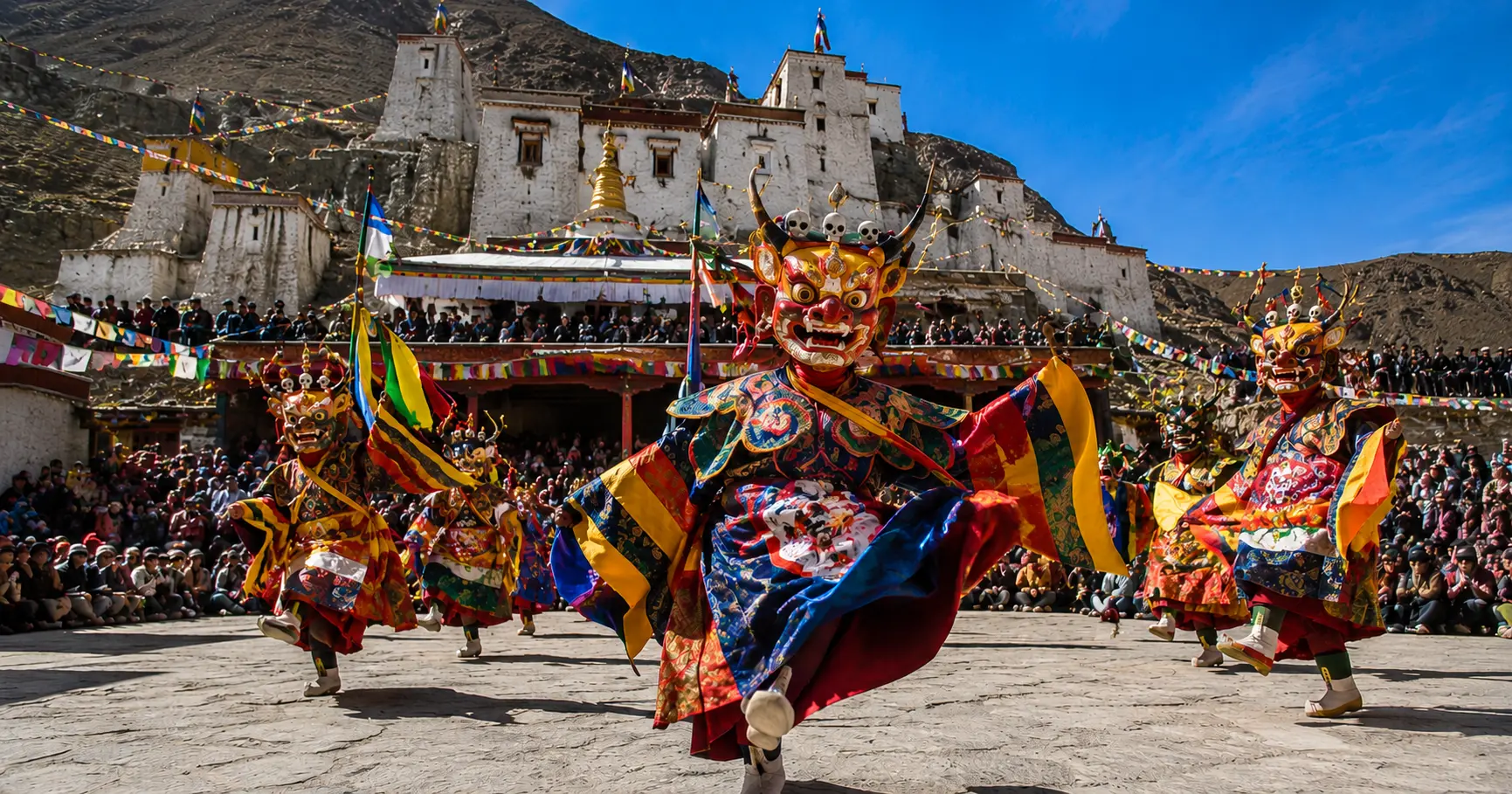
The traditional three-day Tiji Festival, held annually in Lo Manthang and typically in May, celebrates the legendary triumph of Dorje Jono over a demon threatening the Mustang kingdom, marked by masked monastic dances performed in the walled city’s central square. This is Upper Mustang’s single most significant cultural event and draws the region’s largest annual gathering of both residents and travelers, specifically timing their visit around it.
Yartung Festival
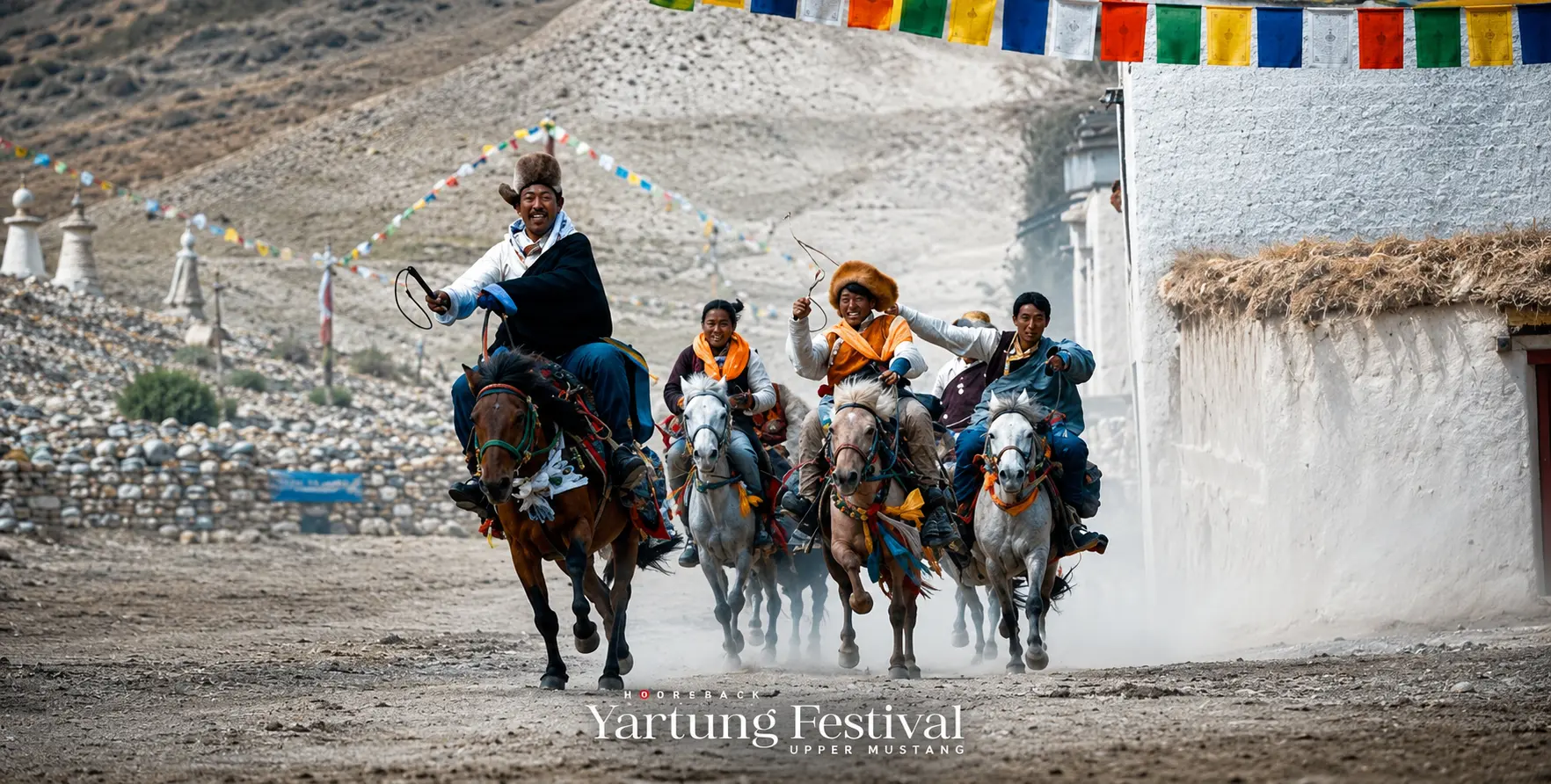
Yartung itself, generally held each year in August around the Muktinath and the wider Mustang region, features horse racing and community celebration marking the end of the summer season, offering a lively, colorful cultural experience for travelers passing through during the dry monsoon window already discussed.
Understanding the Kali Gandaki Wind Pattern
Nearly every single seasonal recommendation offered throughout this guide connects back to one defining geographic feature: the Kali Gandaki gorge, recognized as the deepest river gorge on earth, which channels a daily wind cycle strong enough to shape travel planning throughout the year. Mornings are consistently calm; by early-to-mid afternoon, winds funneling between Dhaulagiri and Annapurna intensify considerably, particularly along the exposed stretch between Kagbeni and Muktinath. Experienced drivers on this route, including those working with our
Jeep Hire in Nepal service, plan departures accordingly, favoring early starts regardless of season.
Upper Mustang Versus Lower Mustang: Seasonal Differences
Lower Mustang as a whole, encompassing Jomsom, Marpha, and Kagbeni within the Annapurna Conservation Area, remains accessible essentially year-round and does not require the restricted area permit needed further north. Upper Mustang, beyond Kagbeni toward Lo Manthang, requires a separate Restricted Area Permit and a licensed guide, and while technically accessible across all four seasons, is best experienced during the May Tiji Festival window or the dry summer months already discussed, given the added remoteness and more limited winter infrastructure found in villages like Lo Manthang and Charang.
Permits Required for Mustang
Travelers visiting Lower Mustang specifically require a standard Annapurna Conservation Area Permit and a TIMS card. Upper Mustang, beyond Kagbeni, requires an additional Restricted Area Permit, priced per day and requiring a minimum group size and a licensed guide under current Nepali regulations, similar to the restricted area requirements discussed in our companion guide to the
Kathmandu to Machha Khola jeep transfer for the Manaslu region.
Vehicle and Road Conditions by Season
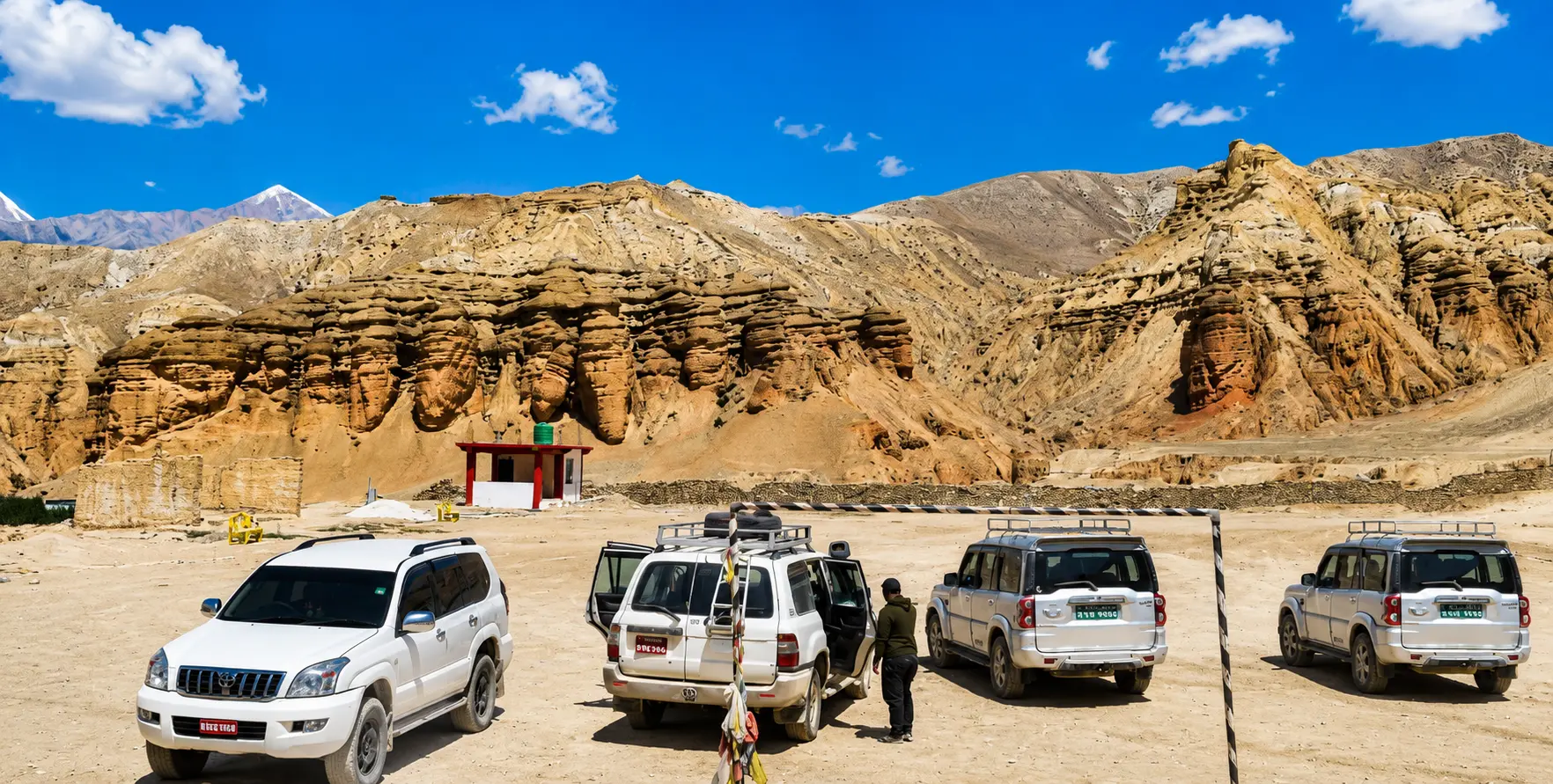
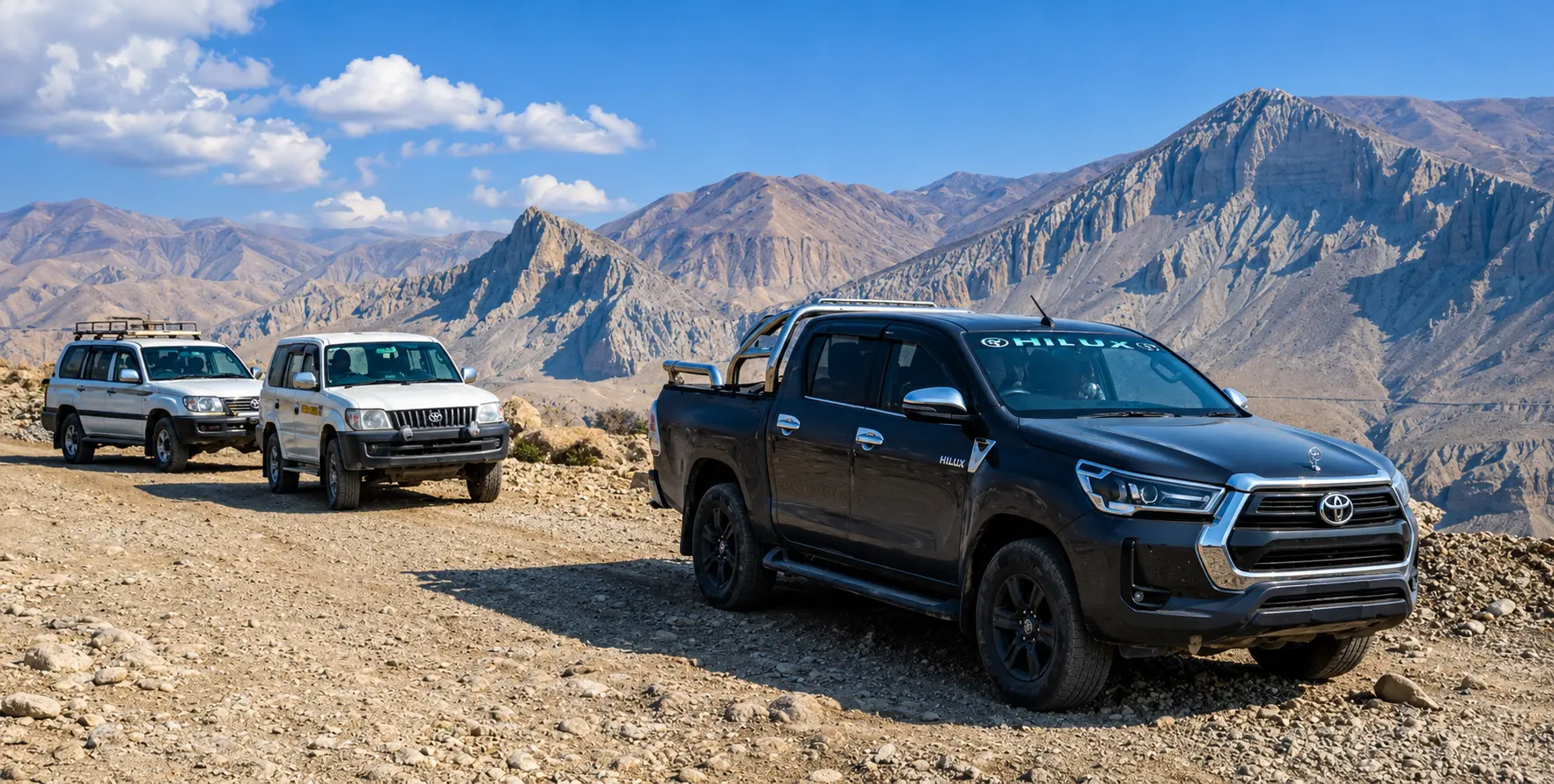
The road leading into Mustang itself, whether reached via Pokhara and Jomsom or overland through the Kali Gandaki valley, demands a genuine four-wheel-drive vehicle year-round. However, the specific challenges shift by season. Summer monsoon months, despite Mustang’s own dry conditions, can still see landslide activity on the approach roads through the wetter Annapurna foothills before the rain shadow effect takes hold. Winter brings icy patches at higher elevations. Our
car hire in Pokhara service supports the approach leg of this journey, connecting with 4WD jeep transport for the Jomsom-to-Mustang stretch itself.
What to Pack by Season
- Spring and autumn: layered clothing, windproof outer shell, sun protection given high-altitude UV exposure.
- Summer: lighter layers for daytime warmth, still combined with a windproof layer for afternoon conditions.
- Winter: heavy insulated clothing, a warm sleeping bag if trekking, and preparation for genuinely sub-zero overnight temperatures in Upper Mustang.
- Any season: dust protection, given Mustang’s exposed, wind-blown terrain.
Combining a Mustang Visit With the Wider Annapurna Region
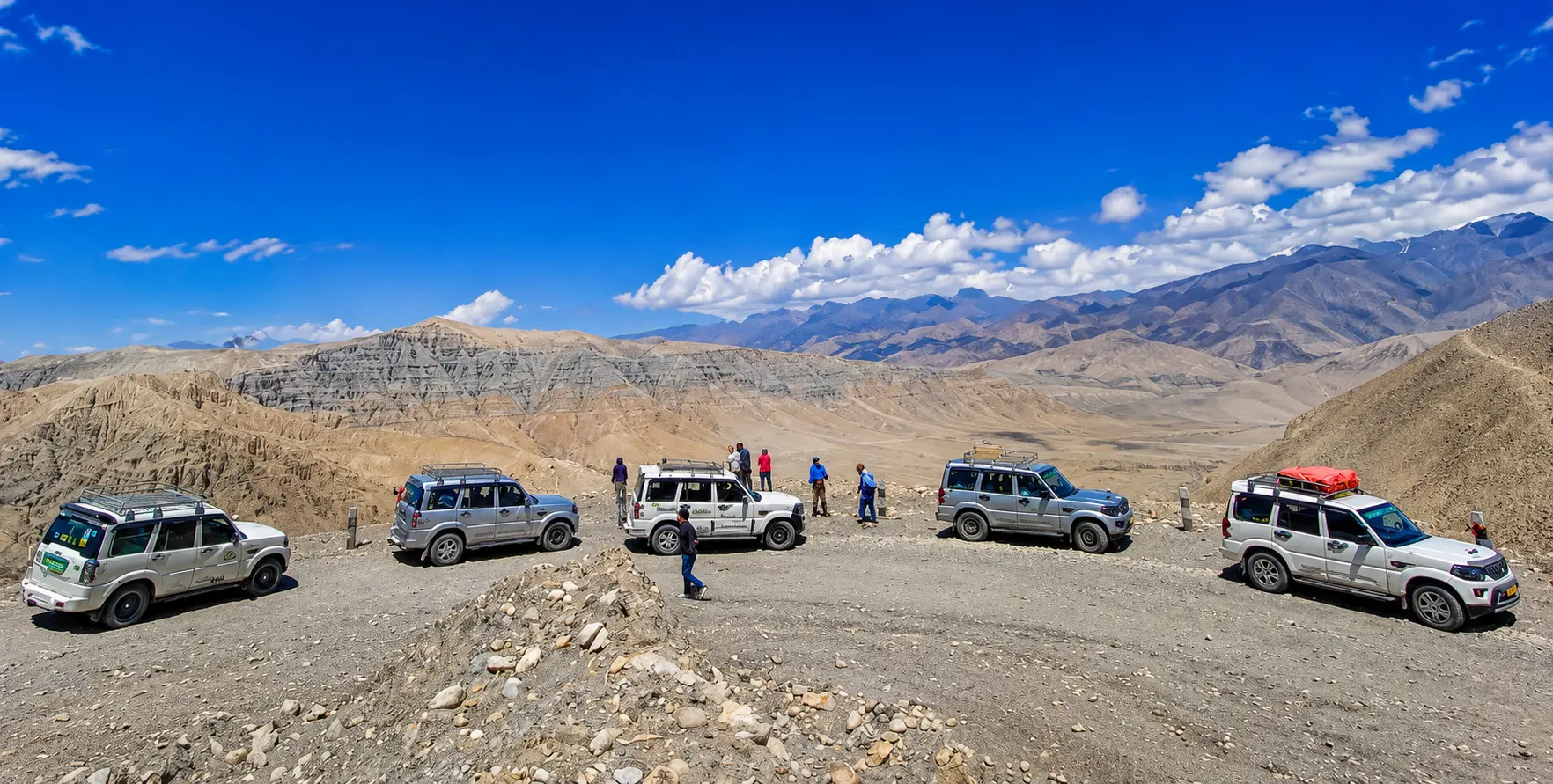
Many travelers choose to combine their Mustang trip with additional time in Pokhara, arranged through our
Sarangkot sunrise tour services, or extend their trip toward the
Ghorepani Poon Hill Trek for a broader Annapurna region itinerary.
Cost Factors for a Mustang Trip
Vehicle hire cost for a Mustang trip depends mainly on vehicle class, whether the itinerary includes Upper Mustang’s restricted area, and total trip duration. Our team is glad to prepare a custom quote based on your season and itinerary. Visit our
homepage for further guidance.
Why Choose Nepal Vehicle Hiring for Mustang
Our drivers assigned to the Jomsom-Mustang corridor understand the region’s specific seasonal patterns, from monsoon-window opportunities to winter cold-weather driving, and we coordinate closely with our sister company,
Alpine Luxury Treks, for travelers combining vehicle hire with a guided Upper Mustang itinerary.
| PLAN YOUR MUSTANG JOURNEY Nepal Vehicle Hiring Pvt. Ltd. Website: vehiclehiringnepal.com WhatsApp / Phone: +977 9851013196 Email: [email protected] Office: Bhagawatisthan, Thamel, Kathmandu, Nepal |
Frequently Asked Questions
What is the single best month to visit Mustang?
July is often cited as the single most reliable month, combining Mustang’s dry rain-shadow conditions with cooler temperatures than Kathmandu or Pokhara experience at the same time.
Is Mustang really dry during the monsoon?
Yes. The Annapurna and Dhaulagiri massifs block most monsoon moisture from reaching Mustang, making June through August one of the region’s best windows despite being the worst season almost everywhere else in Nepal.
When is the Tiji Festival held?
Tiji is typically held in May in Lo Manthang, though the exact date shifts slightly year to year according to the Tibetan lunar calendar.
Can I visit Upper Mustang in winter?
Technically yes, though conditions are genuinely cold, with limited infrastructure in villages like Lo Manthang. Most travelers avoid this season for Upper Mustang specifically.
Do I need a special permit for Lower Mustang?
Lower Mustang requires a standard Annapurna Conservation Area Permit and TIMS card, not the Restricted Area Permit required beyond Kagbeni for Upper Mustang.
What time of day should I plan road travel in Mustang?
Morning, consistently, given the strong afternoon winds that build through the Kali Gandaki gorge starting around midday.
Can Mustang be combined with the Annapurna Circuit?
Yes. Many trekkers combine a Mustang extension with the Annapurna Circuit Trek, given the overlapping route through the Kali Gandaki valley.
The Geography Behind Mustang’s Trans-Himalayan Climate
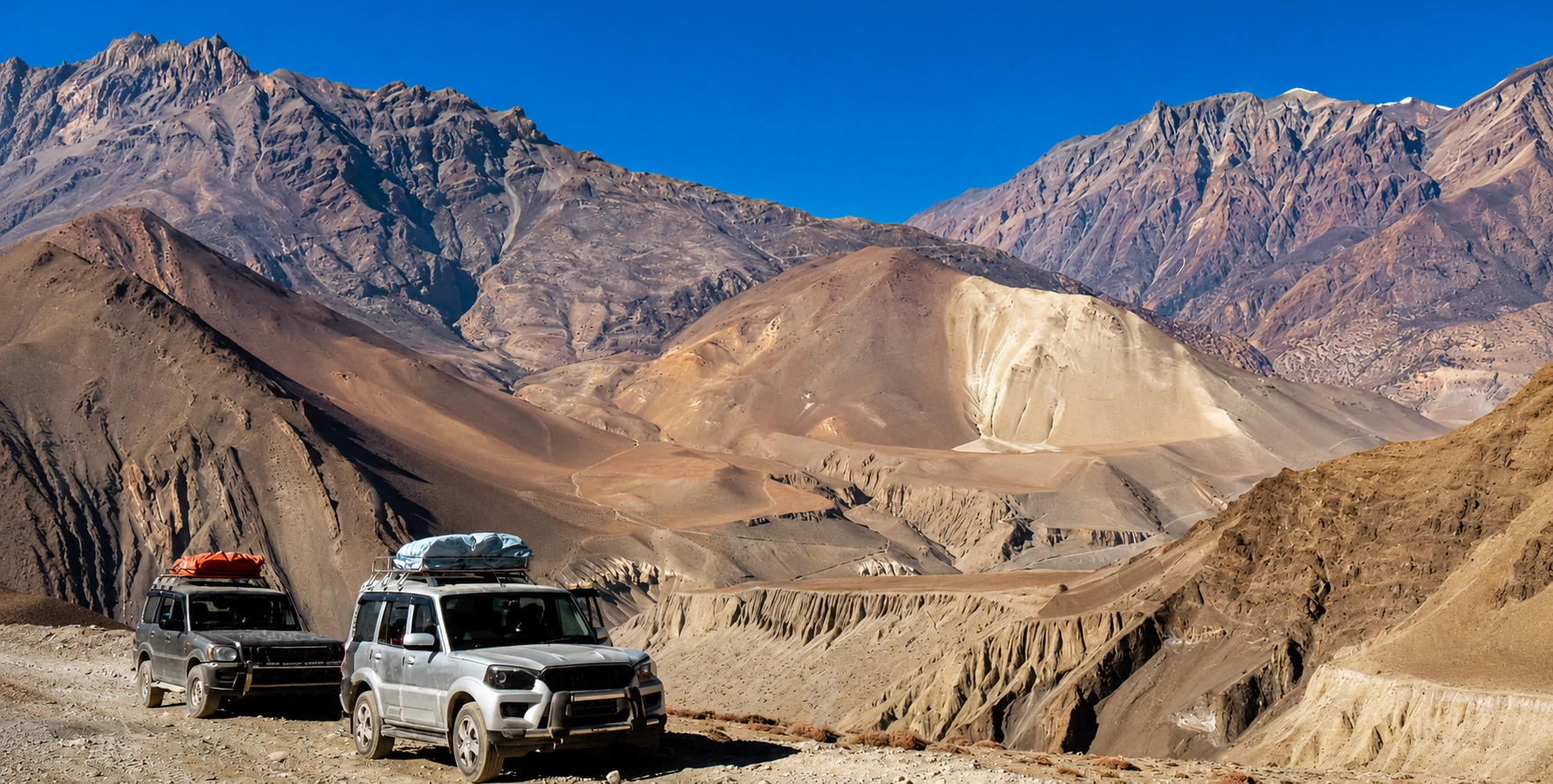
Mustang’s position immediately north of the Annapurna and Dhaulagiri massifs places it firmly within what geographers call a rain shadow desert, a landscape more commonly associated with the Tibetan plateau than with Nepal’s generally lush, monsoon-fed hill country. The Kali Gandaki gorge, cutting between these two 8,000-meter giants, is recognized as the deepest river gorge on earth when measured from riverbed to surrounding summit, and this extreme topography is precisely what strips incoming monsoon clouds of their moisture before they can cross into Mustang proper. The result is a landscape of wind-carved cliffs, sparse vegetation, and stark, layered rock formations that feel closer to the high plateaus of Tibet than to anywhere else in Nepal, and a climate pattern that inverts the seasonal logic travelers bring from the rest of their Nepal itinerary.
This geographic reality has shaped human settlement in Mustang for centuries, with villages historically built to withstand near-constant wind exposure, thick-walled stone and mud-brick homes clustered tightly together, and agricultural practices adapted to an arid, high-altitude environment considerably different from the terraced, monsoon-fed farming found in most of hill Nepal.
Historical and Cultural Context of the Mustang Kingdom
Upper Mustang was, until relatively recently in historical terms, an independent kingdom in its own right, with its own royal lineage ruling from the walled city of Lo Manthang for centuries before formal integration into the modern Nepali state. This independent history, combined with Mustang’s remote, rain-shadow geography and its historically close cultural and trade ties to Tibet rather than the Kathmandu Valley, has preserved a distinct Tibetan Buddhist culture throughout the region, visible in Lo Manthang’s centuries-old monasteries, the walled city’s traditional layout, and the strong Tibetan Buddhist religious practice still actively followed throughout Upper Mustang villages today.
This cultural distinctiveness is a major part of why timing a Mustang visit around cultural events like Tiji carries particular weight compared to simply choosing a season based on weather alone, since the Tiji Festival specifically showcases this preserved royal and religious heritage in a way not replicated anywhere else in Nepal.
A Closer Look at July: The Single Best Month
Among the dry monsoon months already discussed, July deserves particular attention, as it is frequently cited by experienced Mustang guides and repeat visitors as the single most reliable month for the region. By July, the rain-shadow effect is fully established for the season, road conditions along the approach through Pokhara and Jomsom have generally stabilized following any early-monsoon disruption, and daytime temperatures remain comfortably cool compared to the considerable heat found in Kathmandu and Pokhara during the same month. Trekkers and vehicle passengers traveling in July also benefit from Mustang’s relatively low visitor numbers during this period compared to the considerably busier autumn season, offering a genuinely quieter experience of the region’s villages and landscapes.
August and the Yartung Festival Window
August extends the same favorable dry-season conditions found in June and July, while adding the cultural draw of the Yartung Festival, celebrated with horse racing and community gathering around Muktinath and the broader Mustang region. Trekkers specifically timing their visit around Yartung should confirm current festival dates with a local guide or trekking agency, since, like Tiji, the exact timing shifts somewhat from year to year according to the local lunar calendar rather than falling on a fixed Gregorian date.
Comparing Mustang’s Season to Nepal’s Standard Trekking Calendar
For travelers accustomed to Nepal’s standard spring-and-autumn trekking calendar, covered throughout our guides to routes like the
Annapurna Base Camp Trek, Mustang’s inverted seasonal pattern can initially seem counterintuitive. It is worth remembering that this inversion applies specifically to Mustang itself, and travelers combining a Mustang extension with time in these other regions during the same trip should plan around each region’s own distinct optimal season rather than assuming a single seasonal window suits an entire multi-region Nepal itinerary.
Temperature Ranges Throughout the Year
Daytime temperatures in Lower Mustang villages such as Jomsom typically range from comfortably mild in spring and autumn to warm, though rarely extreme, during the summer dry season, dropping to genuinely cold conditions in winter. Upper Mustang, at higher elevation and further from the moderating influence of lower valley air, runs consistently colder across all seasons, with Lo Manthang’s winter nights regularly falling well below freezing. This elevation-driven temperature gradient means packing appropriately for the specific villages on your itinerary matters as much as packing for the general season.
Rainfall Patterns Across Mustang’s Sub-Regions
While the rain-shadow effect applies across Mustang generally, its intensity varies somewhat between the lower approach villages near Jomsom and the higher, more sheltered terrain further north toward Lo Manthang. Jomsom and the immediate surrounding area, sitting closer to the Annapurna and Dhaulagiri barrier, can occasionally see brief monsoon-season showers spilling over. At the same time,e the deeper high-desert terrain toward Lo Manthang remains more consistently dry throughout the summer months. This gradient is worth understanding for travelers planning an itinerary that spans both Lower and Upper Mustang during the same trip.
Cloud Cover and Mountain Visibility by Season
Beyond rainfall itself, cloud cover patterns affect mountain visibility differently across Mustang’s seasons. Autumn and winter generally offer the clearest overall visibility for views of Dhaulagiri, Nilgiri, and the surrounding peaks, while summer, despite its dry trail conditions, can still see periodic cloud build-up along the higher ridgelines even without significant rainfall reaching the valley floor. Photographers specifically prioritizing clear mountain views alongside dry trail conditions should weigh this trade-off carefully when choosing between the summer and autumn windows.
Marpha and the Apple Orchards Through the Seasons
Marpha, famous throughout Nepal for its apple orchards, brandy, and cider production, offers a particularly clear illustration of how Mustang’s seasons shape the visitor experience beyond simply weather and road conditions. Spring brings blossom to the orchards, while autumn brings harvest season, giving each visit a genuinely different character depending on timing. Travelers with a specific interest in Marpha’s agricultural calendar should factor this into their season choice alongside the broader weather and crowd considerations already discussed throughout this guide.
Kagbeni’s Seasonal Character
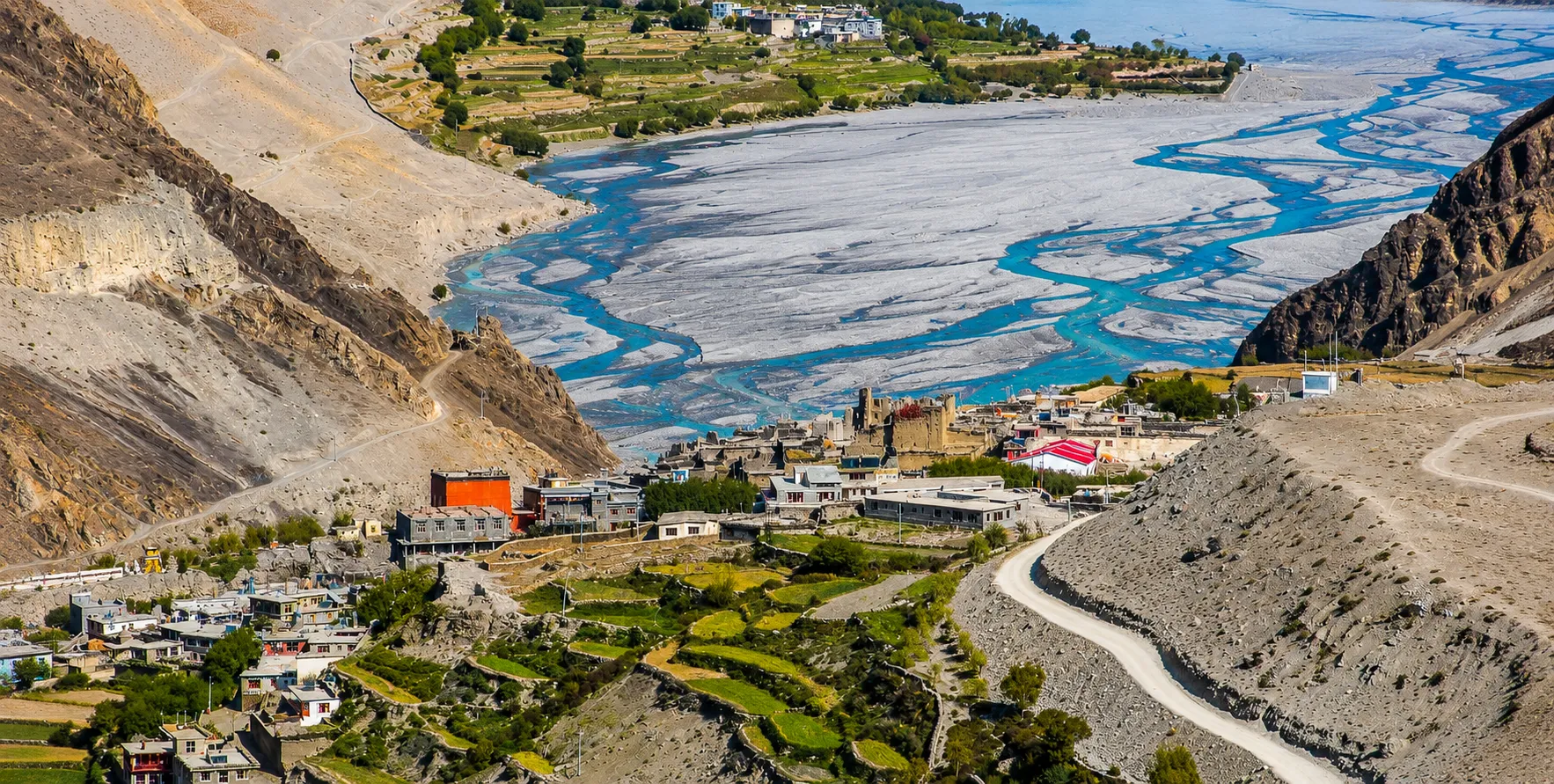
Kagbeni, the walled medieval village marking the traditional gateway to Upper Mustang’s restricted area, experiences the same broad seasonal pattern as the rest of the region. However, its position directly in the path of the Kali Gandaki’s afternoon winds makes seasonal timing for the walk through the village itself particularly important. Early morning visits to Kagbeni, regardless of season, consistently offer calmer conditions for exploring its narrow alleyways and historic monastery compared to the wind-affected afternoon hours.
Photography Considerations by Season
Mustang’s stark, layered rock formations and traditional architecture reward photographers throughout the year, though each season offers a distinct character. Spring’s blooming orchards add color against the otherwise muted desert palette; summer’s clear morning light before the afternoon winds arrive offers some of the sharpest visibility of the year; autumn combines good weather with the clearest mountain backdrop views; and winter’s occasional snow dusting on the higher peaks and rooftops of Lo Manthang creates a starkly beautiful, rarely photographed version of the region.
Health and Altitude Considerations for Mustang Travel
While Mustang’s elevations, generally ranging from around 2,700 meters at Jomsom to just over 3,800 meters at Lo Manthang, are considerably lower than the extreme altitudes reached on treks toward Everest Base Camp or the Annapurna Circuit’s Thorong La crossing, travelers should still allow reasonable acclimatization time, particularly those flying directly into Jomsom from lower elevations without any prior time at altitude. The region’s dry air and intense high-altitude sun also warrant attention regardless of season, with sun protection and adequate hydration remaining important considerations even during the cooler winter months.
Group Travel and Guide Requirements by Season
Given Upper Mustang’s Restricted Area Permit requirements discussed earlier, which mandate a licensed guide and minimum group size regardless of season, travelers should confirm their trekking agency’s specific seasonal operating schedule, since some smaller agencies reduce their Upper Mustang departures during the quieter winter months given lower overall demand. Booking well in advance during the popular Tiji Festival window in May is particularly important, given the concentrated demand this specific cultural event generates each year.
A Note on Climate Change and Shifting Patterns
As with many parts of the Himalaya, some long-term shifts in precipitation and temperature patterns have been observed across the wider Annapurna and Mustang region in recent decades, and travelers planning well in advance should treat the seasonal guidance in this article as a reliable general framework rather than an unchanging guarantee, confirming current conditions with a local guide or vehicle operator closer to their actual travel dates.
A Month-by-Month Planning Summary
To bring together everything covered so far, here is a concise month-by-month summary. January and February bring the coldest, quietest conditions, suited only to well-prepared travelers specifically seeking solitude. March and April see warming temperatures, blooming orchards, and generally favorable road conditions, building toward May’s Tiji Festival, the single best-timed cultural visit of the year. June opens the dry monsoon window, with July standing out as the most reliable single month of all, and August continuing the same favorable pattern while adding the Yartung Festival. September through November offer autumn’s clear skies and stable conditions, though with considerably higher visitor numbers given Nepal’s broader peak season. December returns the region to winter quiet, completing the annual cycle.

Choosing Between Jomsom Flights and Overland Jeep Travel by Season
Travelers reaching Mustang via Jomsom can choose between flying from Pokhara or traveling overland by jeep, and seasonal considerations affect this choice meaningfully. Jomsom’s small airstrip is notorious for its own wind-related flight disruptions, with the same afternoon wind pattern discussed throughout this guide forcing an early cutoff for flight operations each day, generally by mid-morning. This makes overland jeep travel, while slower, considerably more predictable across all seasons, since a well-timed early morning departure avoids the wind disruption that so often affects Jomsom’s flight schedule regardless of time of year. Our
car hire in Pokhara service supports exactly this kind of overland approach for travelers prioritizing schedule reliability over flight speed.
Seasonal Booking Patterns for Mustang Vehicle Hire
Demand for vehicle hire toward Mustang follows a somewhat different pattern than Nepal’s standard trekking corridors, given the region’s unusual dry-season appeal. While autumn remains busy in line with Nepal’s overall peak season, the July dry-season window has grown steadily in popularity among experienced travelers and repeat visitors specifically seeking this counterintuitive but genuinely rewarding timing, and vehicle availability during this period has tightened accordingly in recent years. The May Tiji Festival window represents the single most concentrated demand spike of the year, and travelers specifically planning around this festival should book vehicle hire and any guided Upper Mustang trekking arrangements several months in advance.
Combining Mustang With a Muktinath Pilgrimage
Given Muktinath’s position just beyond Kagbeni on the standard route toward Upper Mustang, many travelers combine a Mustang visit with the pilgrimage covered in detail in our companion guide to
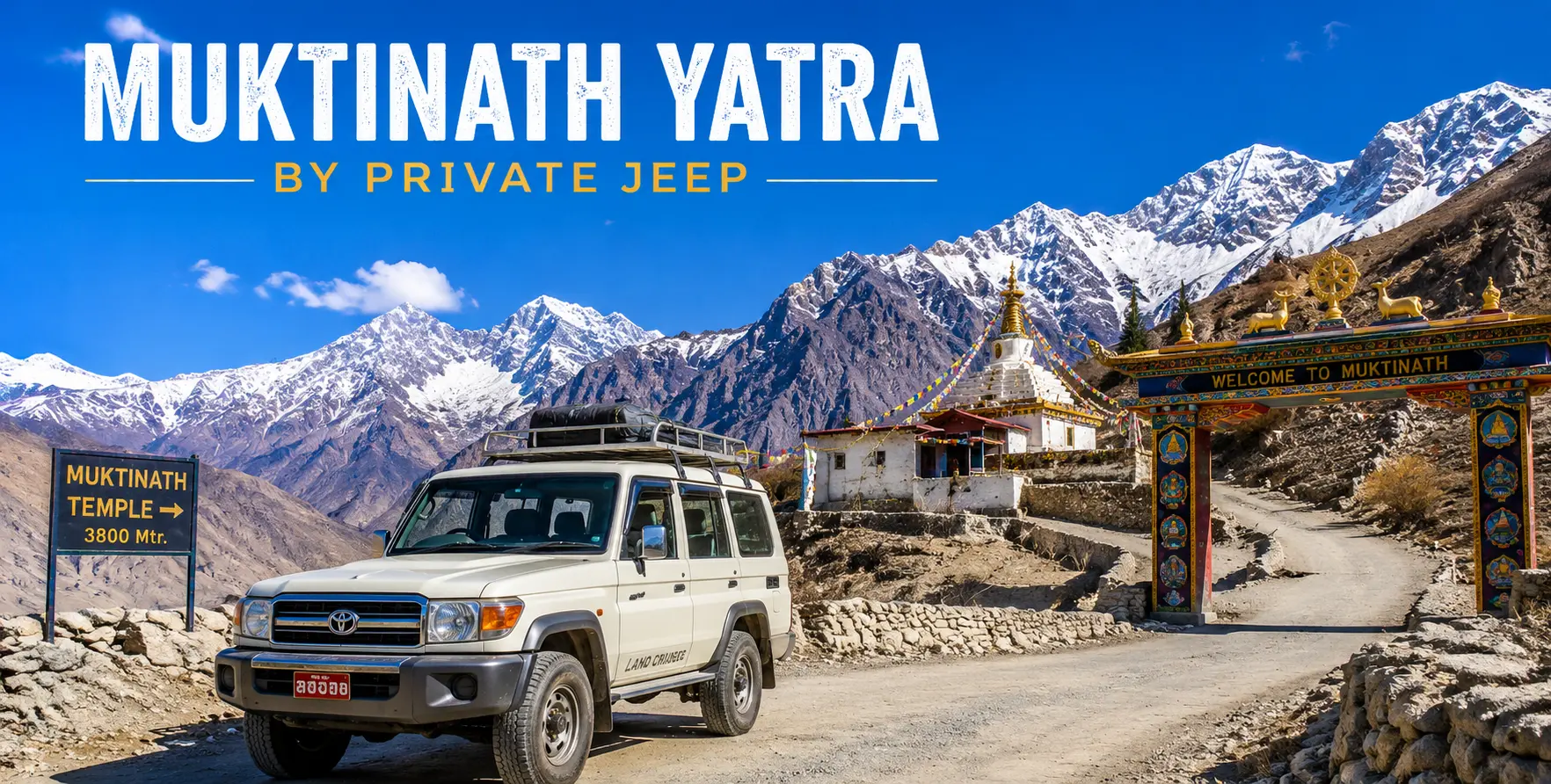
Muktinath Temple: Vehicle Hire and Pilgrimage Route Guide. The same seasonal considerations discussed throughout this Mustang guide, particularly the summer dry-season window and the importance of morning travel given the Kali Gandaki wind pattern, apply equally to a combined Muktinath and Mustang itinerary, and travelers planning this kind of combined pilgrimage and cultural trip should factor both destinations’ seasonal calendars into a single, well-coordinated plan.
Weather-Related Contingency Planning
Regardless of season, travelers to Mustang should build reasonable flexibility into their itinerary given the genuine possibility of weather-related delays, whether monsoon-season landslide risk on the lower approach roads before the rain shadow effect takes hold, or occasional winter snow affecting the higher sections of Upper Mustang. Working with an experienced local vehicle provider who monitors current conditions and communicates realistic timing expectations helps manage this uncertainty considerably better than assuming a fixed, guaranteed schedule regardless of the specific weather encountered on a given trip.
Combining Mustang With a Broader Kathmandu and Pokhara Itinerary
Most Mustang itineraries begin and end with time in Kathmandu, Pokhara, or both, and travelers should factor these cities’ own seasonal patterns into their overall trip planning even while prioritizing Mustang’s specific dry-season window. Our
Kathmandu sightseeing tour and
Bhaktapur Durbar Square tour services pair naturally with the Kathmandu portion of a Mustang trip, while a
Kathmandu airport transfer and
Kathmandu to Pokhara transfer round out the journey toward the Jomsom and Mustang approach.
Local Cuisine in Mustang Across the Seasons
Food throughout Mustang reflects the region’s high-altitude, Tibetan-influenced culture, with buckwheat, barley, and potato-based dishes forming the staple diet in most villages, alongside butter tea and, in Marpha specifically, the apple products the village has become famous for. Seasonal produce availability shifts accordingly, with fresh apples and apple-based products most abundant during the autumn harvest, while winter months rely more heavily on stored and preserved foods given the limited fresh produce available during the coldest part of the year.
Accommodation Standards Through the Seasons
Lodge and guesthouse accommodation throughout Mustang, from Jomsom through to Lo Manthang, generally operates year-round. However, some of the more basic seasonal establishments in smaller villages may close during the depths of winter given reduced visitor numbers. Travelers planning a winter visit specifically should confirm accommodation availability in advance with a local guide, since the assumption of year-round teahouse availability common on Nepal’s more heavily trafficked routes does not always hold in Mustang’s smaller, more seasonally variable villages.
Connectivity and Communication in Mustang
Mobile network coverage throughout Lower Mustang, including Jomsom, Marpha, and Kagbeni, is generally reliable given the route’s established tourism infrastructure. However, coverage becomes more variable in Upper Mustang’s more remote villages toward Lo Manthang. This connectivity pattern remains broadly consistent across seasons, though winter weather can occasionally affect infrastructure reliability in the more exposed higher villages.
Why Choose a Local, Experienced Vehicle Provider for Mustang
Given the specific seasonal knowledge required to time departures around the Kali Gandaki’s wind patterns, and the genuine value of understanding which months actually suit this rain-shadow region rather than defaulting to Nepal’s standard spring-autumn calendar, working with a vehicle provider who genuinely understands Mustang’s distinct seasonal character offers real value beyond simply booking any available 4WD vehicle. Nepal Vehicle Hiring’s drivers assigned to this corridor bring exactly this kind of specific, current seasonal knowledge to every Mustang booking.
Combining Mustang With the Annapurna Circuit Trek
For trekkers completing the full Annapurna Circuit, covered in detail through our sister company’s
Annapurna Circuit Trek itinerary, the descent from the Thorong La pass into Muktinath and onward through Kagbeni and Jomsom naturally passes through the heart of Lower Mustang, giving circuit trekkers a taste of this trans-Himalayan landscape as part of their broader trek regardless of whether they specifically extend into the restricted Upper Mustang area. Trekkers timing their circuit for Mustang’s dry summer window should note that the Thorong La crossing itself carries its own separate seasonal considerations given the high-altitude snow conditions possible at that specific pass, and should confirm current pass conditions with their trekking agency regardless of how favorable conditions are in the lower Mustang valley itself.
A Realistic Sample Itinerary for the Dry Summer Window
A typical itinerary taking advantage of Mustang’s July dry-season window might begin with a flight or overland journey from Kathmandu to Pokhara, followed by an early-morning departure toward Jomsom via road or a short flight, weather permitting. From Jomsom, the itinerary continues through Kagbeni, entering Upper Mustang’s restricted area for travelers with the appropriate permit and guide, continuing to Lo Manthang over several days of travel, with time to explore the walled city’s monasteries and historic sites before retracing the route back to Jomsom and onward to Pokhara. This kind of itinerary typically spans seven to ten days depending on the specific pace and number of stops included along the way.
Environmental Considerations in This Fragile High-Desert Ecosystem
Mustang’s high-desert ecosystem, while visually stark compared to Nepal’s more heavily forested regions, supports a genuinely fragile ecological balance shaped by centuries of careful water management and sustainable land use adapted to this arid environment. Growing tourism traffic, particularly during the increasingly popular Tiji Festival and summer dry-season windows already discussed, has placed some strain on this delicate balance. Responsible travelers are encouraged to minimize water use given the region’s genuine scarcity, carry out non-biodegradable waste, and generally approach this landscape with the same environmental care expected throughout Nepal’s more well-known protected areas.
Cultural Etiquette for Visiting Mustang’s Monasteries
Given Upper Mustang’s deeply preserved Tibetan Buddhist heritage, visitors to Lo Manthang’s historic monasteries and other religious sites throughout the region should observe standard Buddhist site etiquette, including modest dress, removing shoes where appropriate, and asking permission before photographing monks, religious ceremonies, or interior monastery spaces. This cultural sensitivity matters particularly during the Tiji Festival itself, when religious and cultural significance is at its peak and respectful observation, rather than purely tourist-focused photography, is especially appreciated by the local community hosting this significant annual event.
The Role of Local Guides in Seasonal Planning
Beyond the mandatory guide requirement for Upper Mustang’s restricted area, a knowledgeable local guide adds considerable value to seasonal trip planning specifically, given their direct, current knowledge of actual conditions in a given week or month, rather than the more general seasonal guidance any article, including this one, can only provide as a starting framework. Guides with genuine Mustang-specific experience can advise on the current state of Tiji Festival preparations, recent weather patterns affecting road conditions, and realistic timing recommendations tailored to a traveler’s specific dates rather than a generic seasonal window.
Understanding Mustang’s Position Within Gandaki Province
Mustang district sits within Gandaki Province, distinct from the far-western Sudurpashchim Province covered in our companion guides to Mahendranagar, Nepalgunj, and Darchula. However, all of these regions share certain characteristics common to Nepal’s more remote, trans-Himalayan border districts, including limited infrastructure relative to central Nepal and a cultural character shaped significantly by proximity to Tibet. Understanding this broader context helps situate Mustang within Nepal’s wider geography of remote frontier regions, even as its specific tourism development and accessibility differ considerably from these other remote districts given Mustang’s longer-established trekking tourism history.
A Comparison With Other Rain-Shadow Regions in the Himalaya
Mustang is not the only rain-shadow region in the greater Himalayan range, with Ladakh in India’s far north sharing a broadly similar geographic logic and an equally counterintuitive summer peak season for the same reasons discussed throughout this guide. Travelers with prior experience visiting Ladakh or similar trans-Himalayan rain-shadow regions elsewhere often find Mustang’s seasonal pattern intuitively familiar, even if it initially seems to contradict everything else they know about trekking season timing in Nepal specifically.
Frequently Overlooked Seasonal Details Worth Knowing
A handful of seasonal details often go unmentioned in general Nepal trekking guidance but matter genuinely for Mustang trip planning. First, the transition weeks between seasons, late February into March, and late August into September, can bring unpredictable weather that does not neatly fit either season’s typical pattern, and travelers planning trips during these shoulder windows should build extra flexibility into their itinerary. Second, Upper Mustang’s higher elevation villages retain cold overnight temperatures even during the warm summer dry season, meaning packing exclusively for daytime warmth without preparing for cold evenings remains a common planning mistake. Third, the exact timing of both Tiji and Yartung festivals shifts according to the lunar calendar, meaning travelers planning a trip specifically around either event should confirm exact dates as close to their travel window as reasonably possible, rather than relying on the previous year’s dates.
Seasonal Considerations for Photography Expeditions
Professional and serious amateur photographers planning a dedicated Mustang photography expedition should weigh season choice particularly carefully given the different visual character each period offers. Spring’s blossoming orchards provide color contrast against the desert landscape rarely available at other times of year. Summer’s clear mornings, before the afternoon winds arrive, often provide the sharpest overall visibility of the year, though building a shooting schedule around this narrow morning window requires genuine discipline. Autumn combines generally reliable weather with the clearest mountain backdrop views, making it a popular choice for photographers pprioritizingdramatic peak visibility over the specific cultural draw of Tiji. Winter, though logistically demanding, occasionally rewards visiting photographers with snow-dusted rooftops in Lo Manthang, a rarely captured scene given how few photographers make the journey during this coldest, quietest season.
Family Travel Considerations by Season
Families considering a Mustang trip with children should weigh seasonal timing particularly carefully given the region’s genuine physical demands regardless of month. The relatively milder temperatures and stable conditions of the spring and summer dry-season windows generally suit family travel better than the considerably harsher winter conditions, and families should also factor in Upper Mustang’s mandatory guide requirement, ensuring their chosen guide has specific experience accommodating family groups with children of varying ages and physical capability.
Solo Travel and Group Size Considerations
Solo travelers interested in Upper Mustang specifically should note the minimum group size requirement attached to the Restricted Area Permit. They should discuss with their chosen trekking agency how this requirement is typically met, whether by joining an existing scheduled group departure timed around the popular Tiji Festival or dry summer windows, or through the agency’s own arrangement to satisfy the minimum group size on paper while still trekking with a private guide. Lower Mustang, requiring only the standard Annapurna Conservation Area Permit, offers considerably more flexibility for solo, independent travel without this group size consideration.
Combining a Mustang Trip With Helicopter Access
Some travelers with limited time combine ground transport into Lower Mustang with a helicopter return, or use a helicopter for the full journey in either direction, particularly relevant given Jomsom flight schedule unreliability already discussed. Alpine Luxury Treks’
helicopter tour packages occasionally extend to cover Annapurna and Mustang region flights, offering a time-efficient alternative for travelers whose schedule cannot accommodate the ground travel time a full overland Mustang trip requires, regardless of howfavorablee the season.
Seasonal Impact on Trekking Difficulty
While Mustang’s trekking routes do not involve the extreme altitude gains found on routes toward Everest Base Camp or the Annapurna Circuit’s Thorong La crossing, seasonal conditions still affect overall trekking difficulty meaningfully. Summer’s dry trails generally offer the most comfortable underfoot conditions. At the same time, winter’s occasional ice patches at higher elevations and stronger, more persistent winds can make an otherwise moderate trekking day considerably more physically demanding. Trekkers should factor these seasonal difficulty variations into their own fitness assessment and pacing expectations regardless of which specific season they choose for their visit.
The Broader Appeal of Off-Season Travel to Mustang
Beyond the specific dry-season advantages already discussed at length, some travelers are drawn to Mustang’s quieter winter season specifically for the solitude it offers, accepting the genuine cold and logistical challenges in exchange for an experience of the region’s monasteries, walled city, and high-desert landscape with virtually no other visitors present. This kind of deliberate off-season travel suits a particular kind of traveler, generally more experienced, well-prepared for cold weather trekking, and specifically motivated by solitude over comfort, but for the right traveler, winter Mustang offers a genuinely distinct experience worth considering alongside the more conventionally recommended seasons covered throughout the rest of this guide.
Final Practical Checklist by Season
- Spring (March-May): confirm Tiji Festival dates early, pack layered clothing, expect favorable but variable road conditions.
- Summer (June-August): plan around morning travel, pack lighter but wind-resistant layers, book ahead given growing popularity of this window.
- Autumn (September-November): book well ahead given peak season demand, expect the clearest mountain views of the year.
- Winter (December-February): confirm accommodation availability in advance, pack heavy insulated clothing, expect the quietest visitor numbers of the year.
How to Book Your Mustang Vehicle Hire
Booking begins with sharing your preferred travel dates, whether your itinerary includes Upper Mustang’s restricted area, and any specific festival timing you are planning around. Our team will confirm current seasonal conditions and match the appropriate vehicle and driver for your specific Mustang itinerary, coordinating with our sister trekking companies where a guided Upper Mustang component is also required.
Additional Frequently Asked Questions
Is Mustang colder than Kathmandu?
Generally yes, particularly at night and especially in Upper Mustang, given the region’s higher elevation and exposed, wind-affected terrain, even though daytime summer temperatures can feel milder than Kathmandu’s own summer heat.
How does the wind affect vehicle travel specifically?
Strong afternoon winds, particularly between Kagbeni and Muktinath, can make driving genuinely uncomfortable and occasionally reduce visibility from blown dust, which is why experienced drivers consistently recommend completing this stretch before midday.
Does the Tiji Festival require aooking?
Yes, strongly recommended. Accommodation and vehicle hire around the festival dates in Lo Manthang book up considerably in advance given the concentrated visitor demand this specific event draws each year.
Is July too hot to visit Mustang?
No. Mustang’s high elevation and desert climate keep July daytime temperatures considerably more comfortable than the heat and humidity found in Kathmandu or Pokhara during the same month.
Can I visit both Upper and Lower Mustang in one trip regardless of season?
Yes, and most itineraries do combine both, though Upper Mustang requires the additional Restricted Area Permit and guide discussed throughout this guide, regardless of which season you choose to travel.
Related Guides for Planning Your Broader Nepal Journey
Travelers planning a Mustang trip alongside a wider Nepal itinerary may find these related guides useful for the rest of their planning:
- Muktinath Temple: Vehicle Hire and Pilgrimage Route Guide
- Pokhara to Jhinu Danda Private Jeep
- Luxury Vehicles for Trekking in Nepal
- Kathmandu to Tamang Heritage Trail Transport
- Everest Range Nepal: Full Guide
- Why Luxury Vehicle Hire Is Transforming Nepal Travel
Understanding Shoulder Season Trade-offs
Travelers with fixed, non-negotiable travel dates that happen to fall in one of Mustang’s less favorable windows should not necessarily abandon their trip plans entirely. Late winter into early spring, and late summer into early autumn, both offer workable conditions with appropriate preparation, even if they fall short of the region’s genuinely optimal windows already discussed at length throughout this guide. The key difference in these shoulder periods is reduced predictability rather than guaranteed poor conditions, meaning a well-prepared traveler with flexible expectations can still have a rewarding trip, provided they work with a knowledgeable local guide or vehicle provider who can offer realistic, current guidance rather than relying purely on general seasonal averages.
Mustang’s Growing Profile Among Experienced Nepal Travelers
As more travelers complete Nepal’s most famous treks and begin seeking distinctive alternatives for return visits, Mustang’s unusual seasonal calendar and preserved Tibetan Buddhist culture have made it an increasingly popular choice specifically among this experienced, repeat-visitor segment. This growing profile has, in turn, driven gradual improvements in the region’s tourism infrastructure and vehicle transport options, even as Mustang retains considerably lower overall visitor numbers than Everest, Annapurna, or even Langtang, keeping the genuine sense of discovery that continues to draw travelers to this trans-Himalayan high desert.
Final Thoughts: Timing Mustang Right
Mustang’s best time to visit ultimately depends on what you are specifically seeking from the trip: the Tiji Festival’s cultural spectacle points firmly toward May, a genuinely rewarding and increasingly popular dry-season escape points toward June through August, reliable clear skies with the trade-off of larger crowds points toward September through November, and quiet solitude for well-prepared travelers points toward the winter months. Whichever window suits your own priorities, understanding the genuine reasoning behind Mustang’s inverted seasonal calendar, rather than simply importing assumptions from the rest of Nepal’s trekking calendar, is what separates a well-timed Mustang trip from one left to chance.
Contact Nepal Vehicle Hiring today at +977 9851013196 or visit
vehiclehiringnepal.com to arrange your Mustang vehicle hire for whichever season suits your trip.
A Practical Summary for Different Traveler Priorities
For travelers whose top priority is Mustang’s unique cultural heritage, the May Tiji Festival window offers an unmatched combination of ffavorableweather and genuine cultural spectacle, . It shoulde booked as far in advance as possible given the concentrated demand this specific event generates. For travelers whose top priority is avoiding crowds while still enjoying reliable weather, the June through August dry-season window remains the strongest overall choice, offering Mustang’s own favfavorablenditions precisely when the rest of Nepal’s trekking regions are at their quietest. For travelers whose top priority is the clearest possible mountain views and who are willing to accept larger crowds and higher accommodation demand, September through November delivers the most consistently clear skies of the year. And for travelers specifically seeking solitude above all else, willing to prepare thoroughly for genuinely cold conditions, the winter months from December through February offer a rarely experienced, virtually visitor-free version of this remarkable high-desert kingdom.
A Final Word on Preparation
Whichever season ultimately suits your Mustang trip, the single consistent piece of advice running throughout this guide is to work with genuinely experienced local partners, whether a vehicle provider familiar with the Kali Gandaki wind pattern and current road conditions, or a trekking agency with direct, current knowledge of Upper Mustang’s permit requirements and festival scheduling. Mustang rewards careful, well-informed planning more than almost any other region in Nepal, precisely because its seasonal calendar runs so counter to what most travelers assume before they first encounter this extraordinary trans-Himalayan landscape.
Thank You for Reading
We hope this season-by-season guide has given you the genuine understanding needed to plan your own Mustang journey with confidence, whatever window ultimately suits your priorities. Nepal Vehicle Hiring remains ready to help coordinate the ground transport for whichever season you choose, drawing on years of direct experience navigating this remarkable trans-Himalayan corridor across every month of the year.
Wishing You Clear Skies and Calm Winds
From the wind-carved cliffs of the Kali Gandaki gorge to the ancient walled city of Lo Manthang and the blossoming orchards of Marpha, Mustang offers a genuinely different kind of Himalayan experience across every season of the year, provided you arrive with the right expectations and a well-timed plan. We wish you clear skies, calm morning winds for your road travel, and an unforgettable journey through this trans-Himalayan desert kingdom.
Getting Started With Your Booking
Whenever you are ready to move from planning to booking, share your preferred travel window, group size, and whether Upper Mustang forms part of your itinerary, and our team will confirm current seasonal conditions and prepare a clear, transparent quote for your journey into this extraordinary corner of Nepal.
© Nepal Vehicle Hiring Pvt. Ltd. | vehiclehiringnepal.com

Related Blog & Articles
Altitude and Health: Essential Muktinath Advice
Best Time to Visit Muktinath
4WD Himalayan Jeep in Nepal
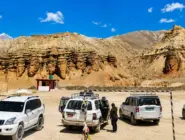
Family Jeep Hire Mustang Tour Nepal