Plan a Trip


Eastern Nepal Tour Vehicle Rental
Eastern Nepal Tour Vehicle Rental – The Complete 2026 Travel and Transport Guide
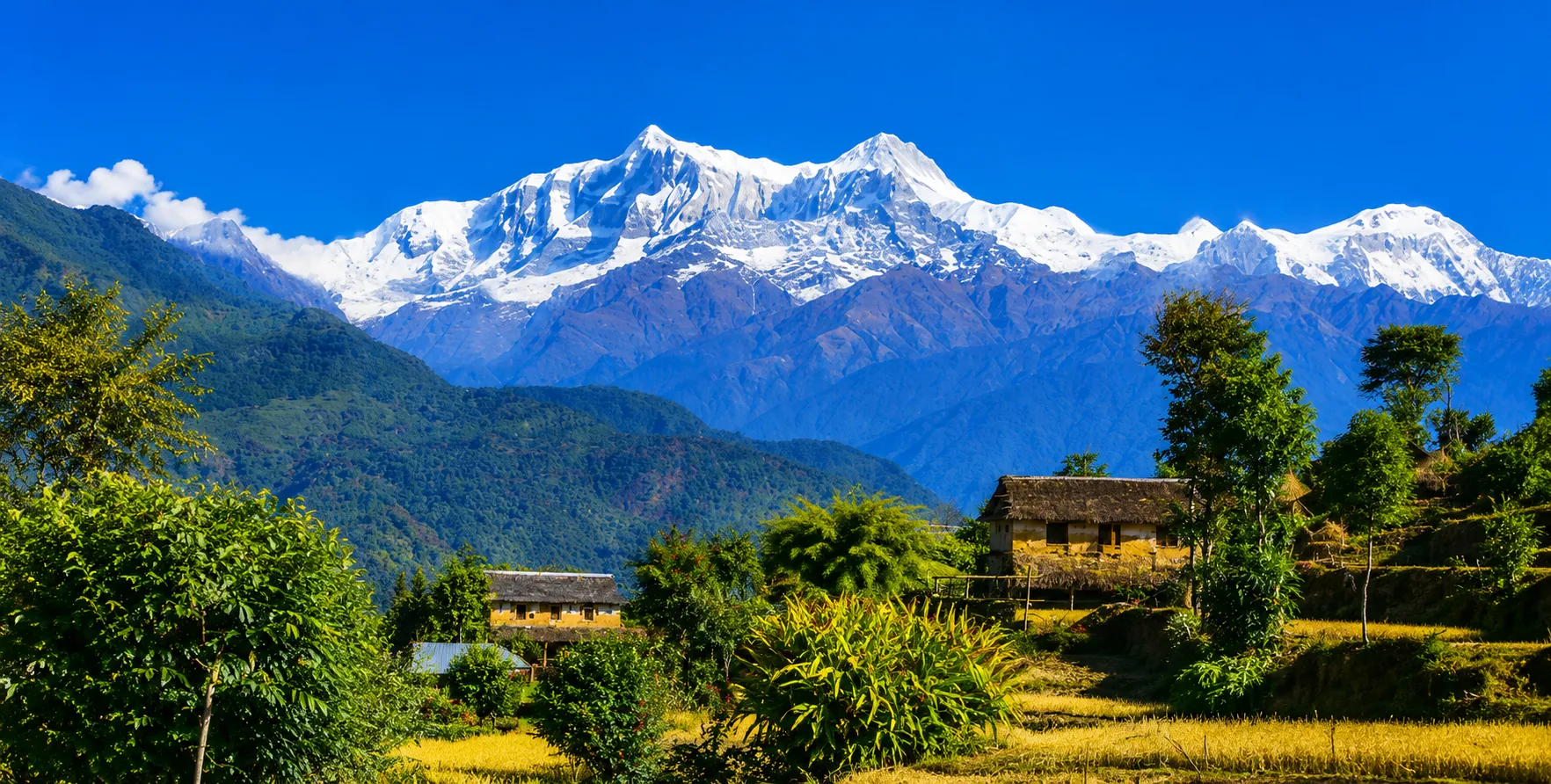
Eastern Nepal is the country’s least explored and most quietly extraordinary region — a sweep of land stretching from the steaming Terai plains along the Indian border, through the forested Siwalik and Mahabharat hill ranges, up into the rolling tea gardens of Ilam, and finally into the high Himalaya around Kanchenjunga, the third-highest mountain on earth.
While Kathmandu, Pokhara, and the Annapurna and Everest regions absorb the great majority of Nepal’s visitors, eastern Nepal remains a region of wide-open road journeys, uncrowded sacred sites, wetland wildlife reserves, tea estates, and mountain panoramas that rival anything in the country’s more famous corners.
Properly touring eastern Nepal is fundamentally a transport challenge. The region is vast, the distances between highlights are considerable, and much of the most rewarding territory — the Pathivara pilgrimage trail, the Kanchenjunga foothills, the remote eastern hill roads to Ilam and Taplejung — depends on capable vehicles and experienced local drivers rather than on the bus networks and domestic flights that serve the rest of Nepal’s tourist circuit. This is where reliable vehicle rental becomes the single most important factor in determining whether an eastern Nepal trip is a smooth, rewarding journey or a frustrating series of delays and connections.
This in-depth 2026 guide draws together everything a traveler needs to plan an eastern Nepal tour by private vehicle — the full geography and major destinations of the region, vehicle types and rental prices, road conditions and journey times, permit requirements for the restricted areas, seasonal planning advice, sample itineraries from 5 to 14 days, and detailed practical guidance for booking the right vehicle with Vehicle Hiring Nepal.
Why Eastern Nepal Deserves a Place on Your Itinerary
Most first-time visitors to Nepal never venture east of the Kathmandu Valley and the Everest approach road. This is understandable — the established circuits of Kathmandu, Pokhara, Chitwan, and the Everest and Annapurna trekking regions are excellent and well-served by tourism infrastructure. But travelers who do make the journey east discover a Nepal that feels distinctly different: quieter roads, a stronger Kirat and Limbu cultural presence, some of the country’s finest tea, and a version of the Himalaya — the Kanchenjunga massif — that very few foreign visitors ever see up close.
Eastern Nepal also offers a logical and rewarding way to extend a trip to Nepal beyond the standard week or two. For travelers who have already experienced Kathmandu, Pokhara, and perhaps a short Annapurna trek, a swing east into Ilam, Pathivara, and the eastern wildlife reserves provides an entirely fresh set of experiences without repeating ground already covered elsewhere in the country.
- Genuine off-the-beaten-path travel within a well-established and stable tourism country
- Nepal’s finest tea-growing region, rivaling Darjeeling just across the border
- One of the subcontinent’s most powerful Hindu pilgrimage sites is at Pathivara.
- Close-range views of Kanchenjunga (8,586 m), the world’s third-highest mountain, from accessible roadside viewpoints
- Significant wetland wildlife at Koshi Tappu, including Nepal’s last wild water buffalo population and world-class birdwatching
- A rich Mithila cultural heartland around Janakpur, sacred to Hindus as the birthplace of Sita.
- Far lower visitor density than western Nepal’s major circuits, even during peak season
The Geography of Eastern Nepal — What You’re Touring
Eastern Nepal spans Koshi Province and parts of Madhesh Province, encompassing several distinct geographic and climatic zones that a single tour itinerary can move through within a matter of days:
The Eastern Terai
The flat, fertile lowland belt along the Indian border, running from Janakpur in the west through Rajbiraj, Itahari, and Biratnagar to the Mechi River at the eastern extremity. This zone is hot, agriculturally rich, and dotted with significant cultural and wildlife sites, including Janakpur and the Koshi Tappu Wildlife Reserve.
The Siwalik and Mahabharat Mid-Hills
North of the Terai, the land rises through the Siwalik (Churia) range and the Mahabharat range into the mid-hill belt that includes Dharan, Dhankuta, Hile, and Basantpur. This is a transition zone of forested ridges, traditional Rai and Limbu villages, and increasingly cool temperatures as elevation rises.
The High Eastern Hills
Further north and east, the terrain rises into the genuinely high hill country of Ilam District and Taplejung District — tea garden country around 1,000 to 2,200 m, with the sacred Pathivara temple ridge reaching 3,794 m and the foothills of the Kanchenjunga massif beginning beyond.
The Kanchenjunga Himalaya
At the far northeastern edge of Nepal, the Kanchenjunga Conservation Area protects the approaches to the world’s third-highest mountain (8,586 m), a restricted trekking region of extraordinary biodiversity and very low visitor numbers compared to Everest or Annapurna.
What makes this geographic progression unique within Nepal is its compactness relative to the dramatic change in character it contains. A traveler can leave the sweltering, mango-grove flatlands of the Terai in the morning and, within a single long but comfortable day’s drive, be standing among tea bushes in the cool hill air of Ilam, with the option of continuing further still into alpine and high-Himalayan terrain over the following days. Few single road corridors in Nepal — or indeed in the wider Himalayan region — compress so much climatic and cultural variation into a journey that can be completed entirely by private vehicle without recourse to flights or multi-day treks for the lower and middle sections.
Key Destinations for an Eastern Nepal Tour
Ilam — Nepal’s Tea Garden Capital
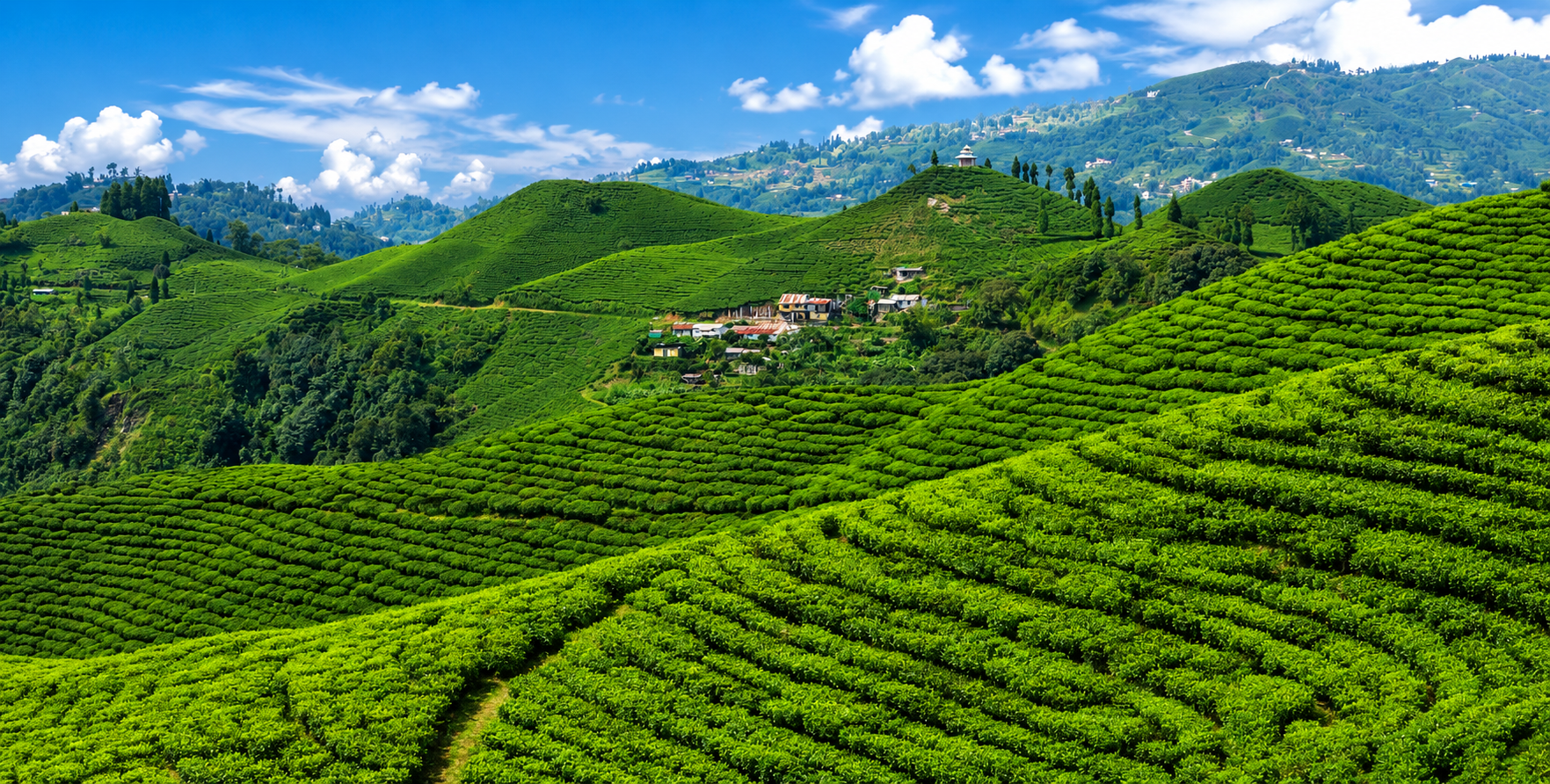
Ilam Bazaar (1,200 m) and the surrounding tea estates, including the iconic Kanyam viewpoint, form the most photogenic and most visited destination in eastern Nepal outside the high mountains. Rolling tea gardens, cardamom forest, the sacred Mai Pokhari wetland lake, and the Shree Antu sunrise viewpoint with its Kanchenjunga panorama make Ilam a complete destination in its own right.
Pathivara Devi Temple
One of Nepal’s most powerful Hindu pilgrimage sites, Pathivara sits at 3,794 m above Taplejung, reached by vehicle to Phungling (Taplejung Bazaar) or Chitlang, followed by a multi-hour uphill walk. Hundreds of thousands of devotees visit annually, particularly during the Dashain festival.
Kanchenjunga Conservation Area
For serious trekkers, the Kanchenjunga Circuit and Kanchenjunga Base Camp treks reach the base of the world’s third-highest mountain through one of Nepal’s most pristine and least-visited conservation areas, rich in red panda, snow leopard, and Himalayan black bear habitat, as well as exceptional rhododendron forests.
Koshi Tappu Wildlife Reserve
A 176 sq km Ramsar-listed wetland reserve along the Sapta Koshi River in the Terai, Koshi Tappu protects Nepal’s last surviving population of wild water buffalo (Arna) alongside Gangetic river dolphins, gharial crocodiles, and an extraordinary concentration of birdlife — 441 recorded species including many winter migrants from as far as Siberia. It is one of Asia’s premier birdwatching destinations, reached by jeep and boat safaris along the river.
Dharan
A clean, pleasant city at the foot of the Siwalik hills in Sunsari District, Dharan serves as the natural overnight stopping point on the long road journey toward Ilam and Taplejung, and is itself worth a visit for the Budhasubba Temple and its relaxed, leafy atmosphere — quite different from the dustier Terai towns further south.
Biratnagar
Nepal’s second-largest city and the industrial and commercial hub of eastern Nepal, Biratnagar has an internationally capable airport, making it a useful gateway for travelers wishing to fly in or out of eastern Nepal rather than making the full road journey from Kathmandu in both directions.
Janakpur
In the central-eastern Terai, Janakpur is one of Hinduism’s most sacred cities, revered as the birthplace of Goddess Sita and the site of her marriage to Lord Rama. The stunning Janaki Mandir, built in a distinctive Mughal-influenced style, and the vibrant Mithila folk painting tradition make Janakpur a rich cultural detour for travelers touring the eastern Terai.
Itahari and Birtamod
These busy junction towns are less destinations in themselves than essential waypoints — Itahari is the key crossroads connecting the East-West Highway to the Dharan and Biratnagar roads. At the same time, Birtamod in Jhapa District is the launching point for the scenic climb to Ilam via Kanyam.
Dhankuta and Hile
Strung along the winding road between Dharan and Basantpur, Dhankuta (1,150 m) is one of eastern Nepal’s most attractive hill towns — a former British Gurkha recruitment center with a relaxed, orderly charm, stone-paved streets, and excellent panoramic views over the surrounding terraced hills.
A little further on, Hile (1,900 m) is a busy market junction known for its Tibetan and Sherpa-influenced trading community, its dried meat and Tibetan bread stalls, and its position as the historic gateway to both Sankhuwasabha district (home of Makalu Barun National Park) and the road north toward Taplejung. Both towns make excellent rest stops on the long drive from Dharan to Taplejung and reward travelers willing to spend a night rather than push straight through.
Sandakpur and the Tinjure–Milke–Jaljale Ridge
For travelers with extra time and an interest in trekking, the ridge running from Tinjure through Milke Danda to Jaljale, above Hile and Basantpur, contains the largest contiguous rhododendron forest in the world, blazing scarlet and pink across the hillsides each spring. The Sandakpur viewpoint, on the Nepal-India-Sikkim border tri-junction further east, offers an extraordinary eye-level panorama of the Kanchenjunga massif’s southern face — considered by many photographers to be one of the finest accessible Himalayan viewpoints anywhere in Nepal, and reachable by a combination of jeep transport and a short trek from the Ilam or Phidim side.
Kakarvitta and the Mechi Border Region
At Nepal’s far eastern extremity, Kakarvitta on the Mechi River marks the international border crossing with India’s West Bengal and serves as a logical first or final stop for travelers extending an eastern Nepal circuit toward Darjeeling and Sikkim. The flat, fertile Jhapa District surrounding Kakarvitta is itself an important tea and agricultural area, distinct in character from the more famous hill gardens of Ilam above it.
The Living Culture of Eastern Nepal — Kirat, Limbu, and Rai Heritage
Much of eastern Nepal’s hill country, from the Arun valley through Dhankuta, Hile, Ilam, and Taplejung, is the traditional homeland of the Kirat peoples — principally the Limbu and Rai communities, who together represent one of Nepal’s oldest documented ethnic and cultural groups, with their own languages, scripts, animist-influenced religious traditions, and distinctive cuisine. Touring eastern Nepal by vehicle gives travelers a far closer view of this living culture than the standard Kathmandu-Pokhara circuit typically offers.
The Limbu homeland (Limbuwan) historically spans the area between the Arun and Mechi rivers, including much of Taplejung, Panchthar, and Ilam districts — the very corridor that an eastern Nepal vehicle tour passes through on the way to Pathivara and Kanchenjunga. Limbu villages are often recognizable by their distinctive bamboo-and-timber architecture, prayer flags that blend Buddhist and animist Yumaism traditions, and the warm hospitality extended to travelers passing through on the long hill roads.
Rai communities, concentrated through the mid-hills around Dhankuta, Bhojpur, and Khotang, maintain their own rich tradition of Sakela and Sakewa festivals — vibrant communal dances performed twice yearly to mark the agricultural cycle, accompanied by drumming and circular dance formations that visiting travelers occasionally have the good fortune to witness if their journey coincides with these celebrations.
Eastern Nepal’s food culture reflects this heritage in ways distinct from the dal-bhat-dominant cuisine of central and western Nepal. Look out for kinema (a fermented soybean dish unique to the eastern hills), sisnu ko jhol (stinging nettle soup), gundruk (fermented leafy greens, found throughout Nepal but especially prevalent here), locally distilled tongba (warm fermented millet beer served in a wooden vessel with a bamboo straw, a Limbu specialty particularly associated with Ilam and Taplejung), and the distinctive Dhankuta-style dried buffalo meat (sukuti) sold in the market stalls of Hile. A private vehicle tour allows your driver to stop at the small family-run eateries along these roads that serve the most authentic versions of these dishes — places a fixed-schedule bus journey would pass by.
Vehicle Fleet for Eastern Nepal Touring
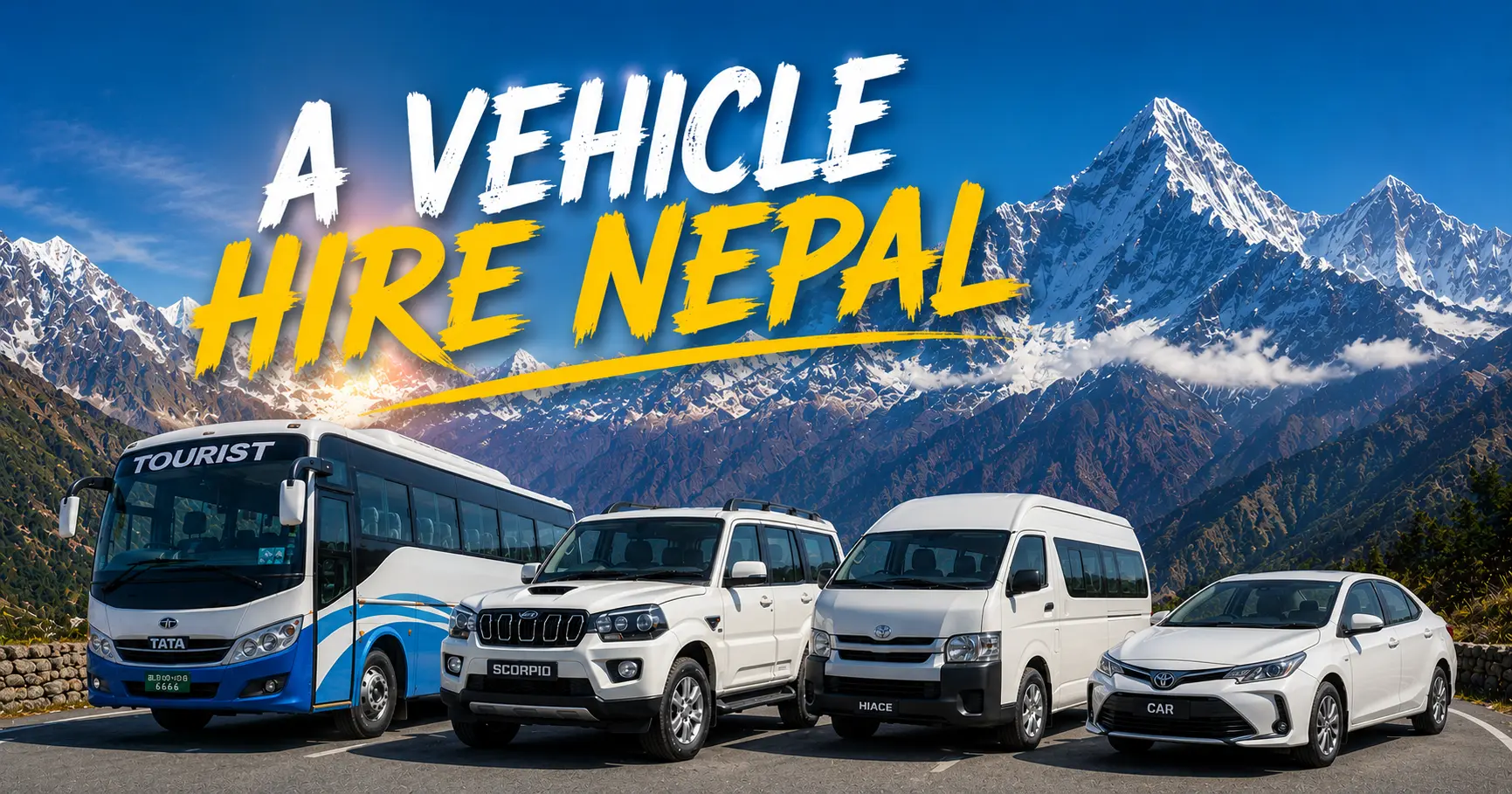
Eastern Nepal’s combination of long, flat Terai highways and steep, winding hill roads means that vehicle choice matters more here than almost anywhere else in Nepal. Vehicle Hiring Nepal provides a complete fleet suited to every stage of a journey in eastern Nepal.
Sedan Car
Capacity: 1 to 3 passengers
Suitable for the flat, paved Terai highway sections (Kathmandu to Itahari, Itahari to Janakpur or Biratnagar) but not recommended for the Ilam and Taplejung hill roads where ground clearance and engine power become important.
Mahindra Scorpio
Capacity: 6 to 9 passengers
The standout vehicle for touring eastern Nepal. The Scorpio’s powerful diesel engine and high ground clearance are precisely matched to the steep, winding roads to Ilam, Kanyam, and Taplejung, while still being comfortable and spacious enough for the long Terai highway sections. Local drivers throughout eastern Nepal overwhelmingly favor the Scorpio for exactly this reason.
Toyota Hiace Van
Capacity: 7 to 14 passengers
Ideal for larger groups and families wanting to stay together for the full circuit. Handles the Terai sections excellently and manages the Ilam and Dharan-Taplejung hill roads well in dry conditions. However, the Scorpio retains an edge in wet or monsoon conditions on the steepest switchback sections.
Toyota Fortuner / SUV
Capacity: 4 to 5 passengers
A comfortable middle option between the sedan and the Scorpio — good highway manners with genuine 4WD capability for the hill sections, ideal for small families or groups of 4 prioritizing comfort.
Toyota Coaster Bus
Capacity: 15 to 22 passengers
For larger tour groups, school trips, and pilgrimage parties touring multiple destinations in eastern Nepal together.
Eastern Nepal Vehicle Rental Prices 2026
| Route / Service | Vehicle | Price (USD) | Notes |
| Kathmandu → Itahari/Dharan (one-way) | Scorpio | USD 200–250 | Day 1 of the standard eastern circuit |
| Kathmandu → Ilam (2-day, full) | Scorpio | USD 300–380 | Via Dharan/Birtamod overnight |
| Kathmandu → Taplejung (2-day, full) | Scorpio | USD 370–460 | Via Dharan, for Pathivara pilgrimage |
| Kathmandu → Biratnagar (one-way) | Hiace Van | USD 250–320 | Flat Terai route, larger groups |
| Kathmandu → Janakpur (one-way) | Sedan/SUV | USD 130–180 | Direct Terai highway |
| Dharan → Koshi Tappu (local) | Jeep/SUV | USD 60–90 | Half-day wildlife reserve transfer |
| Biratnagar Airport → Koshi Tappu | Jeep | USD 80–110 | If flying in to shorten the journey |
| Eastern Nepal Full Circuit (7–10 days) | Scorpio | USD 700–950 | Kathmandu–Dharan–Ilam–Taplejung–return |
| Eastern Nepal Full Circuit (7–10 days) | Hiace Van | USD 850–1,150 | Same circuit, groups of 8–12 |
All prices include the driver, full fuel, and vehicle insurance for the journey. Multi-day eastern Nepal circuits include driver accommodation arrangements during overnight stops, which are typically organized separately at standard local rates. Contact Vehicle Hiring Nepal for an exact 2026 quote tailored to your route, group size, and travel days.
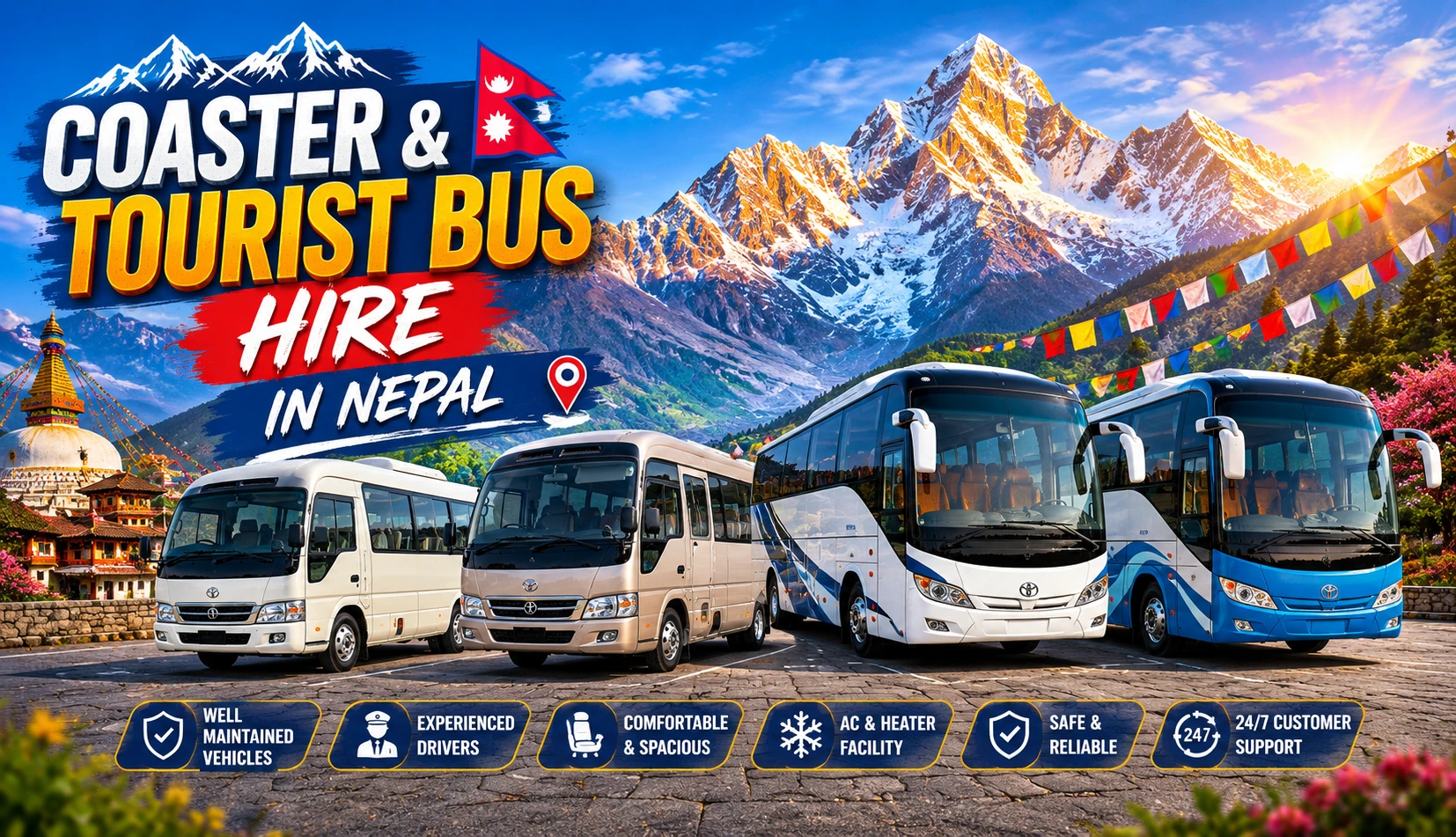
Understanding the Economics of Group Size on Eastern Nepal Routes
Because vehicle hire in eastern Nepal is priced per vehicle rather than per passenger, the economics of group size matter significantly more here than on shorter, more commonly traveled routes. A solo traveler or couple booking a Scorpio for the full Kathmandu–Dharan–Ilam–Taplejung circuit effectively covers the entire USD 700- 950 cost, either alone or split two ways. In contrast, a group of six or seven sharing the same vehicle reduces the per-person cost to a range comparable to, or even below, that of stringing together local buses and shared jeeps for the same journey, while offering vastly greater comfort, flexibility, and time efficiency.
For solo travelers and couples specifically, two practical strategies help manage this cost. First, the fly-in, drive-out hybrid approach described in this guide significantly reduces total vehicle days and, therefore, total cost, since you pay only for ground transport on the shorter regional legs rather than the full Kathmandu-to-Taplejung distance in both directions.
Second, Vehicle Hiring Nepal can sometimes coordinate solo or two-person bookings with other small groups traveling similar eastern Nepal dates and routes, splitting vehicle costs informally — ask us about this option when you enquire, particularly during the busier October-November and Dashain pilgrimage periods when multiple small groups are commonly traveling the same corridor simultaneously.
| Destination | Distance from KTM | Drive Time | Typical Stop Pattern |
| Itahari | 480 km | 8–9 hrs | Day 1 overnight point |
| Dharan | 500 km | 8.5–9.5 hrs | Day 1 overnight point (recommended) |
| Biratnagar | 520 km | 9–10 hrs | Day: 1 overnight or fly instead |
| Janakpur | 380 km | 7–8 hrs | Single long day or fly to Janakpur |
| Birtamod | 580 km | 9.5–10.5 hrs | Day 1 overnight point for Ilam |
| Ilam Bazaar | 610 km | 12–14 hrs total | 2-day journey via Dharan/Birtamod |
| Phungling (Taplejung) | 615–650 km | 14–17 hrs total | 2-day journey via Dharan |
| Koshi Tappu (Kusaha gate) | 430 km | 8 hrs | Via Itahari, separate detour |
Almost every destination in eastern Nepal beyond the immediate Terai requires at least one overnight stop en route from Kathmandu. Dharan and Birtamod are the two standard overnight bases used by Vehicle Hiring Nepal drivers, chosen for their good accommodation options and strategic position for continuing to either Ilam or Taplejung the following day.
The Standard Eastern Nepal Road Route
Most eastern Nepal vehicle tours follow a common backbone route, branching off at different points depending on the specific itinerary:
Kathmandu to Hetauda (Tribhuvan Highway)
The journey begins on Nepal’s oldest highway, climbing over the Mahabharat range via the scenic Daman ridge before descending to the Terai at Hetauda — a winding but well-maintained mountain road of approximately 95 km.
Hetauda to Itahari (East-West Highway)
The long, flat backbone of the journey — Nepal’s main East-West Highway running approximately 280 km through the agricultural heartland of the central and eastern Terai, passing through or near Narayanghat, Gaur, Lahan, and Siraha before reaching the major junction of Itahari in Sunsari District.
Itahari Branch Points
From Itahari, routes branch in three directions depending on the destination: south to Biratnagar and the Indian border crossing area; north to Dharan and onward into the eastern hills toward Dhankuta, Hile, Basantpur, and Taplejung; or further east along the Terai to Birtamod and Jhapa District for the Ilam hill road via Kanyam.
The Eastern Hill Roads
Both the Dharan–Taplejung road and the Birtamod–Ilam road share the same fundamental character: winding, steep, partially rough mountain roads climbing from the Terai floor into tea garden and forest country, demanding a capable vehicle and an experienced local driver.
Permits and Restricted Areas in Eastern Nepal
Several of eastern Nepal’s premier destinations require specific permits, particularly the Kanchenjunga region for trekkers. Vehicle Hiring Nepal provides transport only; trekking permits must be arranged through a registered trekking agency.
| Destination | Permit Required | 2026 Cost (approx.) | Notes |
| Kanchenjunga Conservation Area | Restricted Area Permit (RAP) | USD 20/week (first 4 weeks), USD 25/week after | Licensed guide mandatory; as of March 2026, solo trekkers with a guide may now apply; a group of 2 is no longer required |
| Kanchenjunga Conservation Area | Kanchenjunga Conservation Area Permit (KCAP) | NPR 2,000 (~USD 15–20) | One-time fee, no daily charge, valid for the full trek |
| Koshi Tappu Wildlife Reserve | Reserve Entry Permit | NPR 1,000/day (foreigners) | Per-day fee, paid at the reserve gate, plus 13% VAT |
| Pathivara / Taplejung area | None required for the temple itself | — | No restricted-area permit is required for the Pathivara pilgrimage by road or on foot. |
| Ilam and the general eastern hills | None | — | Open area, no special permit required |
Note that Nepal’s restricted-area permit system has recently changed. As of March 2026, solo foreign trekkers are now permitted to obtain restricted-area permits for regions such as Kanchenjunga, provided they are accompanied by a licensed guide booked through a registered trekking agency, thereby removing the previous requirement for a minimum group of two trekkers. This is a meaningful change for solo travelers planning a Kanchenjunga extension to their eastern Nepal trip — always confirm current rules with your trekking agency before finalizing plans, as permit policy can continue to evolve.
In practice, the permit process works as follows for travelers planning a Kanchenjunga extension: your registered trekking agency submits your passport details, passport photographs, a copy of your Nepal visa, and proof of travel insurance to the Department of Immigration in Kathmandu, which issues the Restricted Area Permit. The Kanchenjunga Conservation Area Permit is processed separately, either through the Nepal Tourism Board office in Kathmandu or directly at the conservation area entry checkpoint near Taplejung.
Both permits should ideally be finalized before your vehicle departs Kathmandu, since processing cannot be completed once you are already in the eastern hills. Vehicle Hiring Nepal coordinates the timing of your road transport to align with your agency’s permit-processing schedule, so build in at least one full day in Kathmandu for this step before departure if a Kanchenjunga trek is part of your plan.
Unlike the Kanchenjunga region, neither the Pathivara pilgrimage nor general touring in Ilam, Dharan, Dhankuta, or the Terai destinations requires any special permit beyond the standard Nepal entry visa. These areas are fully open and can be visited independently or with only a driver, without the licensed-guide requirement that applies specifically to the restricted Kanchenjunga zone.
Sample Itinerary: 5-Day Eastern Nepal Highlights Tour
- Day 1: Kathmandu to Dharan by private Scorpio (8.5–9.5 hrs) — overnight Dharan, evening visit to Budhasubba Temple
- Day 2: Dharan to Koshi Tappu Wildlife Reserve (2–3 hrs) — afternoon jeep and boat safari, overnight at a reserve camp
- Day 3: Koshi Tappu to Dharan, continue toward Ilam via Birtamod and Kanyam (5–6 hrs) — overnight Ilam Bazaar
- Day 4: Full day in Ilam — tea garden walks, Kanyam viewpoint, optional Mai Pokhari excursion
- Day 5: Return journey toward Kathmandu (begin 2-day return, or fly out from Biratnagar/Bhadrapur if time-limited)
Sample Itinerary: 7-Day Culture, Tea, and Wildlife Circuit
- Day 1: Kathmandu to Janakpur by private vehicle (7–8 hrs) — Janaki Mandir, Mithila art quarter
- Day 2: Janakpur to Itahari/Dharan (4–5 hrs) — onward connection toward eastern hills
- Day 3: Dharan to Koshi Tappu (2–3 hrs) — full wildlife reserve day, overnight at reserve camp
- Day 4: Koshi Tappu to Birtamod, continue to Ilam via Kanyam (5–6 hrs) — overnight in Ilam
- Day 5: Full Ilam day — tea factory tour, Shree Antu sunrise viewpoint for Kanchenjunga panorama
- Day 6: Ilam to Dharan, return journey begins (5–6 hrs) — overnight Dharan or Itahari
- Day 7: Dharan/Itahari to Kathmandu (8.5–9.5 hrs) — arrival evening
Sample Itinerary: 10-Day Pathivara Pilgrimage and Eastern Highlights
- Day 1: Kathmandu to Dharan by private Scorpio (8.5–9.5 hrs) — overnight Dharan
- Day 2: Dharan to Phungling/Taplejung via Dhankuta and Basantpur (6–8 hrs) — overnight Taplejung
- Day 3: Local jeep to Chitlang, trek to Pathivara Temple (3,794 m), pilgrimage rituals, overnight in Chitlang or Phungling
- Day 4: Return descent to Phungling, rest day or short local excursions
- Day 5: Phungling to Birtamod via the Taplejung road (6–7 hrs) — overnight Birtamod
- Day 6: Birtamod to Ilam via Kanyam (1.5–2 hrs) — afternoon tea garden exploration, overnight in Ilam
- Day 7: Full Ilam day — Shree Antu sunrise, Mai Pokhari excursion
- Day 8: Ilam to Koshi Tappu via Itahari (5–6 hrs) — afternoon wildlife activity, overnight reserve camp
- Day 9: Koshi Tappu to Dharan or Itahari (2–3 hrs) — rest, local sightseeing
- Day 10: Return to Kathmandu (8.5–9.5 hrs)
Sample Itinerary: 14-Day Complete Eastern Nepal and Kanchenjunga Extension
- Days 1–2: Kathmandu to Dharan, then Taplejung — Pathivara pilgrimage as in the 10-day itinerary above
- Day 3: Pathivara pilgrimage day
- Day 4: Taplejung to Suketar/Phungling — jeep to Kanchenjunga trek starting point (e.g., Mitlung or Chiruwa)
- Days 5–12: Kanchenjunga Conservation Area trekking (lower circuit or base camp approach) with licensed guide — separate from vehicle hire, arranged through trekking agency
- Day 13: Return jeep transfer from trek end point to Birtamod or Bhadrapur
- Day 14: Birtamod/Bhadrapur to Ilam for a final day of tea garden relaxation, or fly out from Bhadrapur Airport
This extended itinerary combines the full eastern Nepal road circuit with a genuine Kanchenjunga trekking experience, best suited to travelers with both the time and trekking fitness for a serious mountain extension. Vehicle Hiring Nepal handles all the road transport segments; the Kanchenjunga trek itself requires a separate arrangement with a licensed trekking agency and guide.
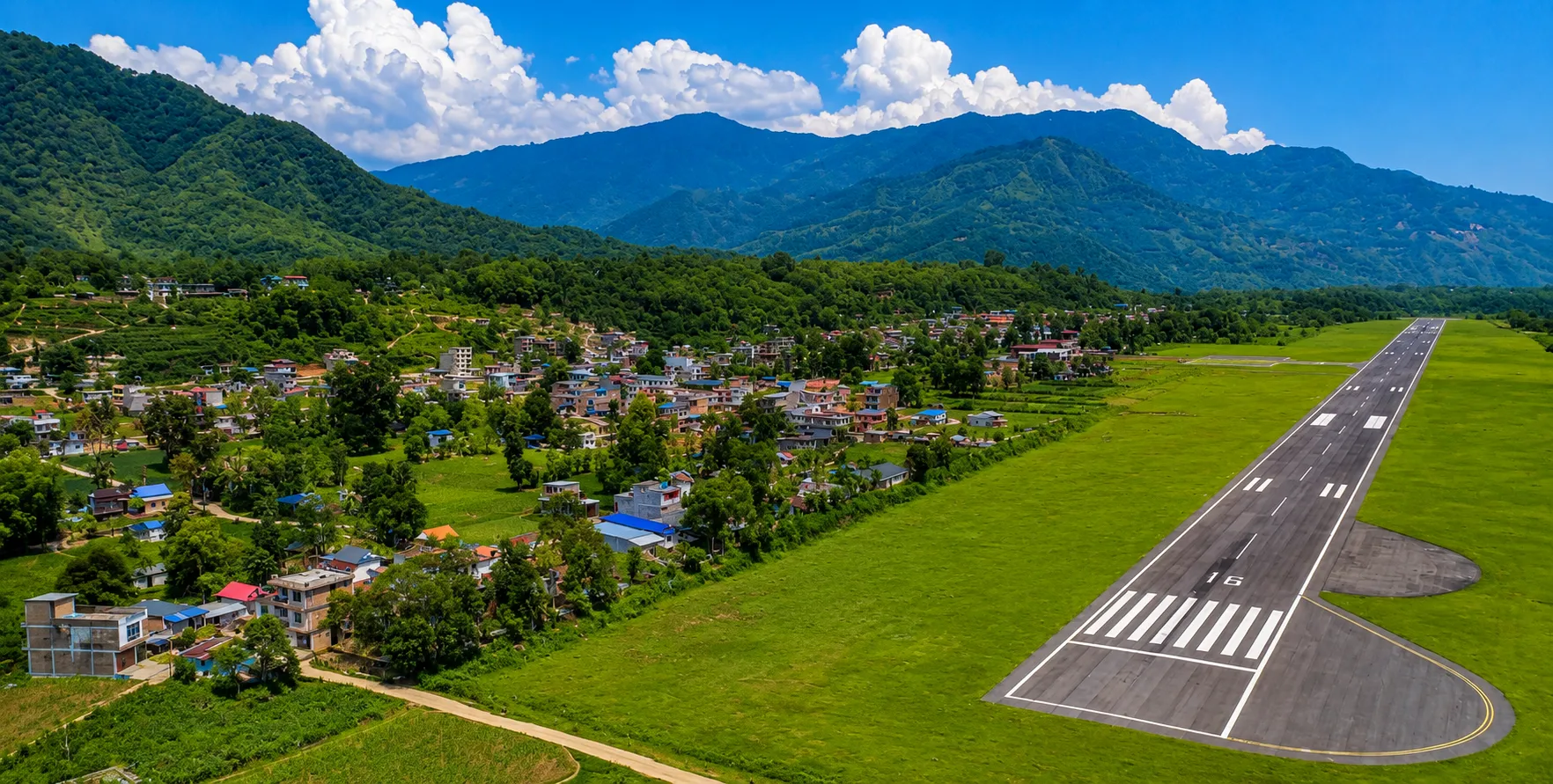
Flying as a Time-Saving Alternative
For travelers with limited time, eastern Nepal offers useful domestic flight connections that can be combined with vehicle hire on the ground to cut total travel time dramatically:
| Flight Route | Duration | Approx. Price (USD) | Saves vs Road |
| Kathmandu → Biratnagar | 45 min | USD 80–110 | 9 hours of road time |
| Kathmandu → Bhadrapur (Jhapa, for Ilam) | 50 min | USD 90–120 | 10 hours of road time |
| Kathmandu → Taplejung (Suketar) | ~1 hr | USD 130–160 | 14–16 hours of road time |
| Kathmandu → Janakpur | 30 min | USD 70–100 | 7–8 hours of road time |
A popular hybrid approach is to fly one direction (typically into Biratnagar or Bhadrapur) and arrange ground vehicle hire from the airport onward for the remainder of the circuit, then complete the return leg by road or by a second flight. Vehicle Hiring Nepal can meet you at any of these airports with your vehicle ready for the onward journey — specify your flight arrival details when booking.
Best Time to Tour Eastern Nepal
October to November (Best Overall)
Post-monsoon clarity delivers the finest Kanchenjunga views from Shree Antu and the Ilam hills, dry and stable road conditions throughout the hill sections, and the second-flush tea harvest at its peak. This is also the peak Dashain pilgrimage season at Pathivara — expect significant crowds and book vehicles 4 to 8 weeks in advance.
March to May (Excellent — First Flush Tea Season)
Spring brings Nepal’s most prized first-flush tea harvest in Ilam, blooming rhododendron forests in the mid-hills and around Mai Pokhari, and good mountain visibility in the mornings. Chaitra Dasain brings a second, smaller pilgrimage peak to Pathivara.
December to February (Good for Culture and Lowlands, Cold in the Hills)
Clear skies and comfortable temperatures make this an excellent season for Koshi Tappu birdwatching (peak migratory season) and Terai cultural sites like Janakpur, though Ilam and especially Pathivara and Taplejung experience genuine cold, with possible frost and occasional snow at the highest points.
June to September (Monsoon — Selective Travel)
Heavy rain is affecting the Dharan–Taplejung and Birtamod–Ilam hill roads, increasing the risk of landslides and requiring an experienced 4WD driver. The Terai sections and Koshi Tappu remain accessible, and the tea gardens are at their lushest, but this is generally the most challenging season for a full eastern Nepal circuit.
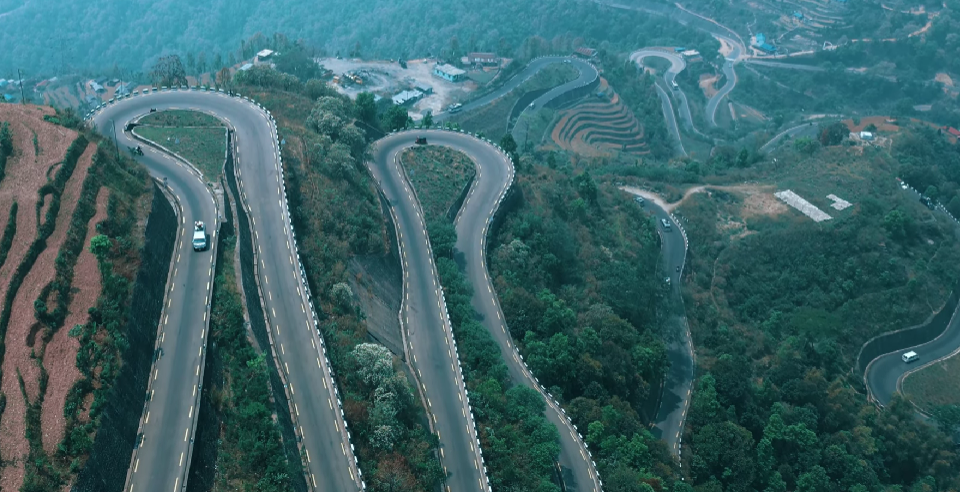
Road Conditions Summary
| Section | Surface | Vehicle Needed | Difficulty |
| Kathmandu → Hetauda | Paved mountain road | Any vehicle | Moderate |
| Hetauda → Itahari (East-West Hwy) | Paved flat highway | Any vehicle | Easy |
| Itahari → Dharan | Paved city road | Any vehicle | Easy |
| Itahari → Biratnagar | Paved flat highway | Any vehicle | Easy |
| Itahari → Birtamod | Paved flat highway | Any vehicle | Easy |
| Dharan → Dhankuta → Basantpur → Taplejung | Paved/rough mountain road | Scorpio/4WD | Hard |
| Birtamod → Kanyam → Ilam | Paved winding hill road | Scorpio/SUV | Moderate |
| Itahari → Koshi Tappu | Paved/gravel local road | Jeep/SUV | Easy–Moderate |
| Phungling → Chitlang → Pathivara | Local track + footpath | Local 4WD + walk | Hard (final section on foot) |
Practical Tips for an Eastern Nepal Vehicle Tour
- Plan a minimum of 7 to 10 days for a satisfying circuit covering Ilam, Pathivara, or Kanchenjunga, and Koshi Tappu together — eastern Nepal’s distances are genuinely large.
- Always budget at least one overnight stop (Dharan or Birtamod) between Kathmandu and any hill destination — attempting these drives in a single day is exhausting and unsafe.
- Book your Scorpio or Hiace well ahead for October–November and the Dashain pilgrimage period, when both vehicles and Taplejung/Ilam accommodation can sell out
- Carry sufficient Nepali Rupees cash — ATMs are reliable in Dharan, Itahari, Biratnagar, Birtamod, and Ilam Bazaar, but not on the hill road sections between them
- Pack layers — the temperature range across an eastern Nepal circuit can span from over 35°C in the Terai to near freezing at Pathivara or in the Kanchenjunga foothills
- If combining with a Kanchenjunga trek, arrange your licensed guide and permits in Kathmandu well in advance — these cannot be obtained locally in eastern Nepal.
- Consider the fly-in, drive-out (or vice versa) hybrid approach if your total trip time is limited to 5 to 7 .days
- Discuss your specific interests with Vehicle Hiring Nepal when booking — our drivers know lesser-visited viewpoints, tea estates, and local food stops throughout the region
- If birdwatching at Koshi Tappu is a priority, plan your visit for the October to March migratory season, when species diversity is at its annual peak.l peak
- Where possible, build a rest day into Ilam or Dharan rather than treating every day as a transit day — the long Terai and hill road sections are tiring, and eastern Nepal rewards slowness.e r pace
- If you plan to cross into India at Kakarvitta as part of a wider regional trip, confirm current visa and border-crossing requirements well in advance, as these are separate from your Nepal vehicle requirements. booking
- Keep a paper copy of any restricted-area permits on your person at all times within the Kanchenjunga zone — checkpoints inspect physical documents and do not always accept digital. al copies
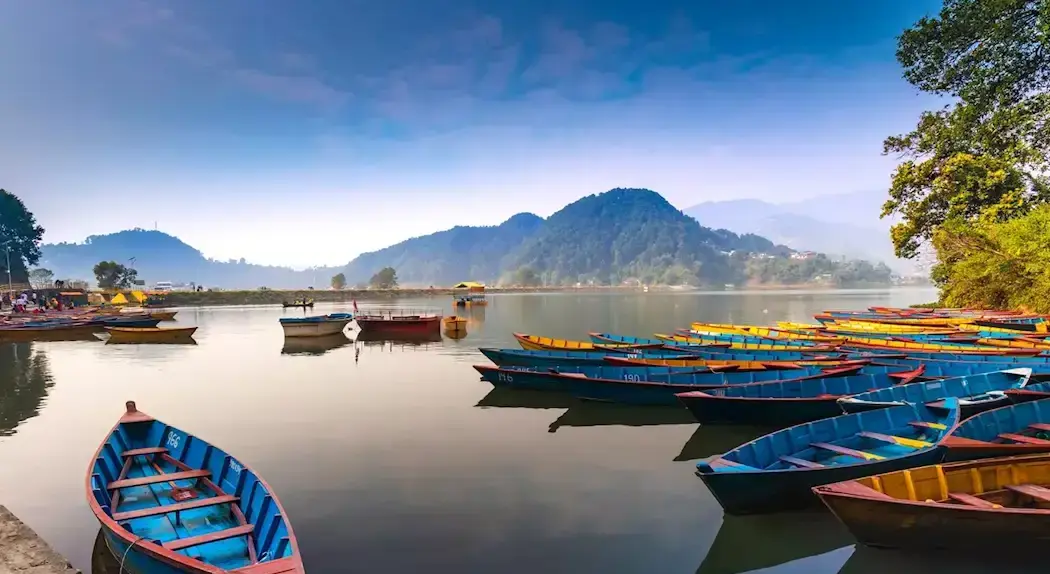
Eastern Nepal Compared to Nepal’s Other Touring Regions
Travelers weighing whether to add eastern Nepal to an existing Kathmandu–Pokhara–Chitwan itinerary often want a clear sense of how the region compares in practical terms. The most important difference is distance and time: eastern Nepal’s key sites sit considerably further from Kathmandu than Pokhara or Chitwan, meaning a worthwhile eastern circuit requires a minimum commitment of around a week rather than the 2 to 4 days that suffice for a Pokhara or Chitwan add-on.
In exchange for the greater time investment, eastern Nepal offers something the more established circuits no longer offer: genuine quiet. Even at the height of the October-November season, Ilam’s tea gardens, the Koshi Tappu wetlands, and the Pathivara pilgrimage trail (outside the specific Dashain festival days) see only a fraction of the visitor numbers found in Pokhara’s Lakeside or on the main Annapurna and Everest trekking trails. Road infrastructure, while perfectly serviceable with the right vehicle, is also noticeably less developed than the main Kathmandu–Pokhara corridor, which is precisely why vehicle choice and driver experience matter more here than almost anywhere else in the country.
For travelers who have already experienced Nepal’s classic circuit and are seeking a meaningfully different second or third visit, or for first-time visitors with two weeks or more who want to move entirely beyond the standard tourist trail, eastern Nepal is often the right answer.
Why Choose Vehicle Hiring Nepal for Eastern Nepal Touring
- Full fleet of Scorpios, Hiace vans, SUVs, sedans, and Coaster buses specifically suited to eastern Nepal’s mixed Terai and hill terrain.
- Drivers with genuine experience on the Dharan–Taplejung and Birtamod–Ilam roads, not generic Kathmandu-based drivers unfamiliar with the region
- Complete itinerary planning support — we can design a full multi-day circuit tailored to your interests, whether culture, wildlife, tea, or pilgrimage-focused
- Airport pickup coordination at Biratnagar and Bhadrapur for travelers combining flights with ground touring
- Transparent, fixed pricing agreed before travel begins
- 24/7 WhatsApp support throughout your eastern Nepal journey
How to Book Your Eastern Nepal Tour Vehicle
- Contact Vehicle Hiring Nepal via WhatsApp at +977 9851013196 or visit vehiclehiringnepal. co. Please tell us your interests — tea gardens, pilgrimage, wildlife, culture, or a full combined circuit.
- Share your available travel dates and group size.
- We recommend the ideal vehicle and propose a day-by-day itinerary matched to your timeframe.
- Confirm pickup location — Kathmandu hotel or Biratnagar/Bhadrapur airport
- Receive your booking confirmation with driver details and complete itinerary
WhatsApp: +977 9851013196
Email: [email protected]
Website: www.vehiclehiringnepal.com
Frequently Asked Questions
How many days are realistically needed for an eastern Nepal tour?
A minimum of 5 days allows a focused Ilam and Koshi Tappu circuit. A genuinely satisfying tour covering Ilam, Pathivara, and Koshi Tappu together requires 7 to 10 days, given the substantial driving distances involved. Adding a Kanchenjunga trekking extension pushes the total to 14 days or more.
Is it better to fly or drive to eastern Nepal?
It depends on your time budget. Driving the full route from Kathmandu allows you to see the Terai and mid-hills along the way and is more economical for groups sharing a vehicle, but it takes 1.5 to 2 full days each way. Flying into Biratnagar or Bhadrapur and arranging ground transport from there saves significant time and is the better choice for travelers with 5 to 7 days or less.
Do I need a 4WD vehicle for the whole eastern Nepal circuit?
Not for the Terai sections (Kathmandu to Itahari, Janakpur, Biratnagar, Koshi Tappu access roads), which are flat paved highways suitable for any vehicle. A 4WD-capable vehicle like the Mahindra Scorpio is especially important for the Dharan–Taplejung and Birtamod–Ilam hill roads, where steep gradients and occasional rough surfaces are present.
Can Vehicle Hiring Nepal arrange the Kanchenjunga trekking permits and a guide as well?
We provide vehicle transport for the road portions of your journey, including transfers to and from Kanchenjunga trek starting points. The Restricted Area Permit, Kanchenjunga Conservation Area Permit, and a mandatory licensed guide for the trek itself must be arranged through a registered trekking agency — we are happy to recommend trusted partners for this part of your planning.
What is the most efficient eastern Nepal route for a 7-day trip?
The most efficient 7-day circuit combines Dharan, Koshi Tappu, and Ilam, looping back through Itahari to Kathmandu — covering wildlife, tea culture, and scenic hill roads without the additional 2 to 3 days required to reach Taplejung and Pathivara as well. Travelers wanting to include Pathivara should budget at least 9 to 10 days.
Is eastern Nepal safe and comfortable for solo travelers and families alike?
Yes. Eastern Nepal is part of the same stable, welcoming tourism environment as the rest of the country, and both solo travelers and families often appreciate the relative lack of crowds. The main practical considerations are the longer travel distances and the importance of booking a properly equipped vehicle and an experienced driver for the hill road sections — both of which Vehicle Hiring Nepal arranges as standard.
Can I combine an eastern Nepal vehicle tour with onward travel to Darjeeling or Sikkim in India?
Yes, this is a popular extension for travelers with sufficient time. The Kakarvitta border crossing near Birtamod provides direct road access into West Bengal, from where Darjeeling and Sikkim are readily reached. Vehicle Hiring Nepal can arrange your transport up to the Kakarvitta border; onward travel and transport within India fall outside our service area and must be arranged separately on the Indian side.
Final Thoughts
Eastern Nepal rewards travelers willing to commit the extra days that its road distances demand, offering a side of the country that feels genuinely uncrowded and unhurried even during Nepal’s busiest tourist seasons elsewhere. From the tea-scented hills of Ilam to the wetland birdlife of Koshi Tappu and the powerful pilgrimage atmosphere of Pathivara beneath the gaze of Kanchenjunga, this region offers depth and variety that fully justify the journey east.
What makes eastern Nepal work as a travel destination is precisely what makes it demand careful transport planning: its size, its mix of flat highway and steep hill terrain, and its relative distance from Nepal’s central tourism infrastructure.
A capable vehicle and an experienced eastern Nepal driver are not a convenience here so much as the foundation on which the entire trip is built — get the transport right, and Ilam, Pathivara, Koshi Tappu, and the Kanchenjunga foothills open up as one of the most rewarding regional circuits anywhere in the country. Get it wrong, and the same distances that make eastern Nepal special can instead make for a frustrating, exhausting trip.
Vehicle Hiring Nepal’s fleet of Scorpios, Hiace vans, and SUVs, combined with drivers who genuinely know the eastern hill roads, makes touring this remarkable region straightforward, safe, and comfortable. Whether you are planning a focused 5-day tea and wildlife trip or a full 14-day circuit extending into the Kanchenjunga foothills, we have the right vehicle and the local expertise to get you there.
Start planning your tour of eastern Nepal today. WhatsApp: +977 9851013196 | Website: www.vehiclehiringnepal.com | Email: [email protected]
- Eastern Nepal Tour Vehicle Rental – The Complete 2026 Travel and Transport Guide
- Why Eastern Nepal Deserves a Place on Your Itinerary
- The Geography of Eastern Nepal — What You're Touring
- Key Destinations for an Eastern Nepal Tour
- The Living Culture of Eastern Nepal — Kirat, Limbu, and Rai Heritage
- Vehicle Fleet for Eastern Nepal Touring
- Eastern Nepal Vehicle Rental Prices 2026
- Understanding the Economics of Group Size on Eastern Nepal Routes
- The Standard Eastern Nepal Road Route
- Permits and Restricted Areas in Eastern Nepal
- Sample Itinerary: 5-Day Eastern Nepal Highlights Tour
- Sample Itinerary: 7-Day Culture, Tea, and Wildlife Circuit
- Sample Itinerary: 10-Day Pathivara Pilgrimage and Eastern Highlights
- Sample Itinerary: 14-Day Complete Eastern Nepal and Kanchenjunga Extension
- Flying as a Time-Saving Alternative
- Best Time to Tour Eastern Nepal
- Road Conditions Summary
- Practical Tips for an Eastern Nepal Vehicle Tour
- Eastern Nepal Compared to Nepal's Other Touring Regions
- Why Choose Vehicle Hiring Nepal for Eastern Nepal Touring
- How to Book Your Eastern Nepal Tour Vehicle
- Frequently Asked Questions
- Final Thoughts

Related Blog & Articles
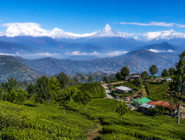
Kathmandu to Ilam Vehicle Rental – Car, Scorpio & Hiace Guide 2026
Best Nepal Tour Package: Best Vehicle Hire Guide for 2026/2027
Kathmandu to Salleri Jeep Guide 2026
Kathmandu to Tumlingtar Private Jeep