Plan a Trip


Luxury Vehicles for Trekking in Nepal | Land Cruiser Hire
Luxury Vehicles for Trekking in Nepal
Trekking in Nepal has always meant trading comfort for adventure — bumpy jeep rides, crowded local buses, and long hours on dust-choked mountain roads before the trail even begins. But a new generation of travellers, particularly those booking high-end lodge treks, honeymoon itineraries, and bucket-list Himalayan journeys, no longer wants to sacrifice comfort to reach the trailhead. That is exactly where
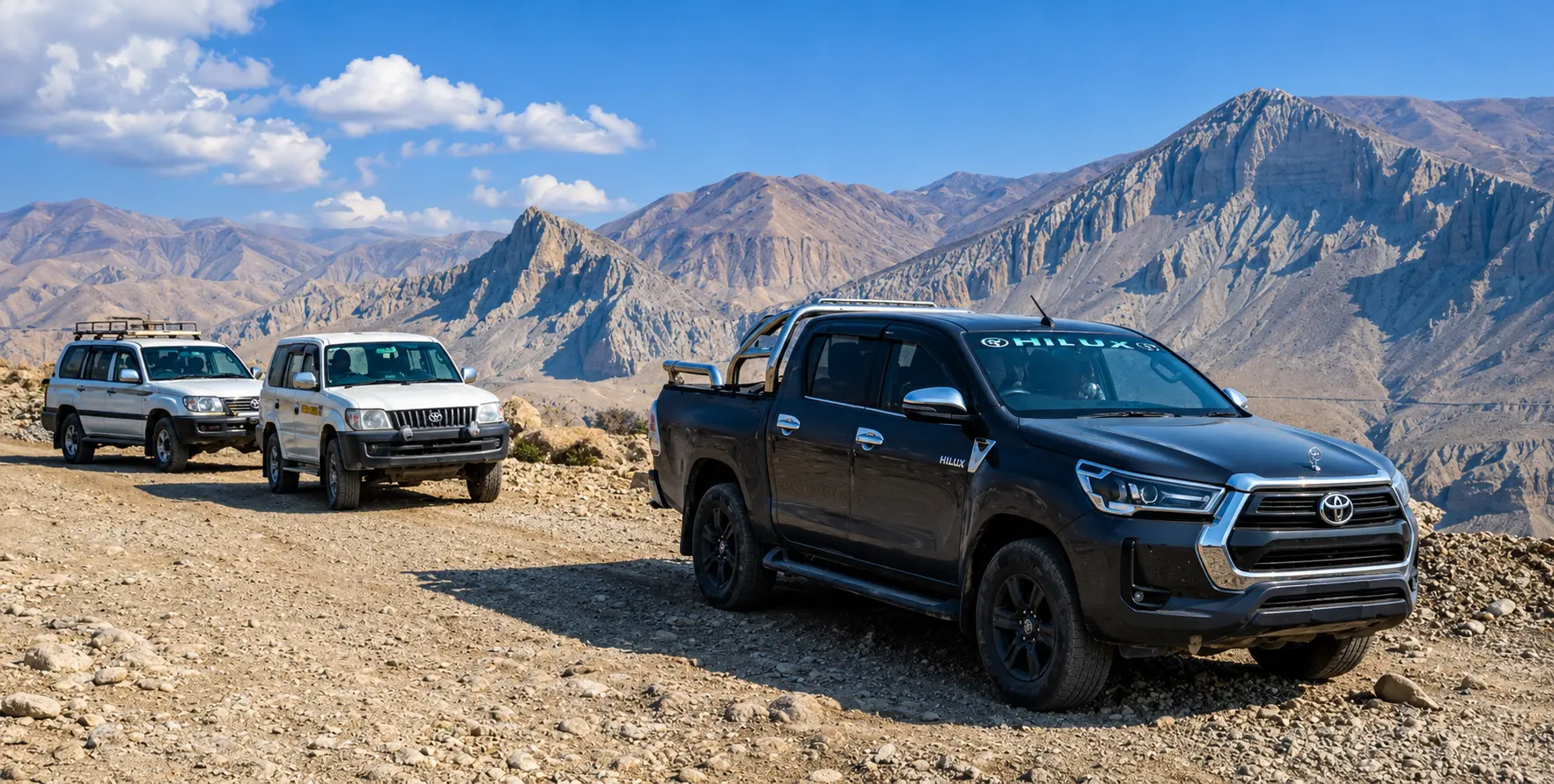
luxury vehicles for trekking in Nepal come in. A private Toyota Land Cruiser Prado, a leather-seated executive Hiace van, or a chauffeur-driven premium car turns the often gruelling approach drive into a smooth, scenic, and genuinely enjoyable part of the trip—not something to endure.
At Nepal Vehicle Hiring, we have spent years driving trekkers, mountaineers, and luxury tour groups across some of the roughest and most spectacular roads on earth. In this guide, we look at why premium vehicles matter for trekking transfers, which routes benefit most from an upgraded ride, what comfort and safety features actually make a difference at altitude, and how to pair your vehicle hire with a luxury lodge trek or premium tour package for a seamless, five-star Himalayan experience from the moment you land in Kathmandu.
Why Choose Luxury Vehicles for Trekking Transport in Nepal
Nepal’s trekking regions sit at the end of some of Asia’s most demanding rural roads. Even a short 100-kilometre drive can take seven or eight hours once you factor in switchbacks, landslide-prone sections, and unpaved stretches through the middle hills. On a standard shared bus or an ageing local jeep, that same drive can leave trekkers exhausted, nauseated, and sore before they have even put on their boots. A well-maintained
Luxury4WD hire in Nepal changes that equation entirely.
A private, professionally driven vehicle gives you control over departure time, the freedom to stop for photos at viewpoints such as Kurintar, Malekhu, or Marpha, and the flexibility to pause for altitude acclimatisation breaks without holding up a bus full of strangers. For trekkers heading into remote regions such as Manaslu, Upper Mustang, or Kanchenjunga, a private vehicle can also carry extra permits, paperwork, porters’ kits, and emergency supplies that would be impossible to manage on public transport.
Comfort also has a genuine safety dimension. Mountain roads in Nepal are narrow, frequently unsurfaced, and shared with buffalo carts, motorbikes, and landslide debris in equal measure. A vehicle with a high ground clearance, strong suspension, four-wheel drive, and an experienced mountain driver is not a luxury indulgence here — it is often the safest and most sensible way to travel. The added comfort of leather seating, climate control, and reliable air conditioning is simply the bonus that comes with getting the safety fundamentals right.
The Luxury Fleet: Land Cruisers, Prados, Premium Hiace, and Executive Cars
Not every vehicle marketed as a “jeep” in Nepal is built the same way. Our luxury fleet is selected specifically for trekking and touring clients who want reliability, comfort, and presentation, not just four-wheel drive on paper.
Toyota Land Cruiser and Prado
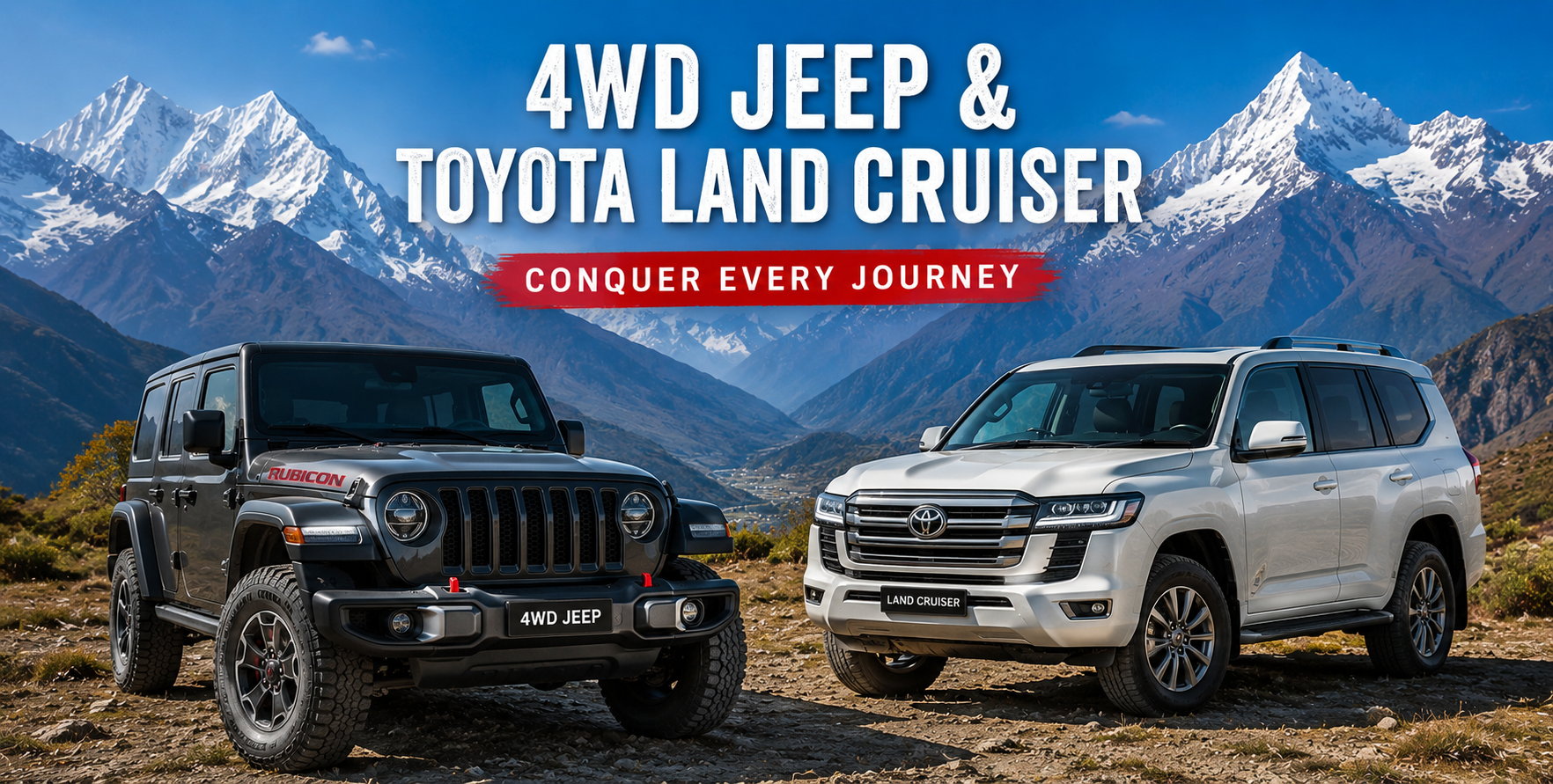
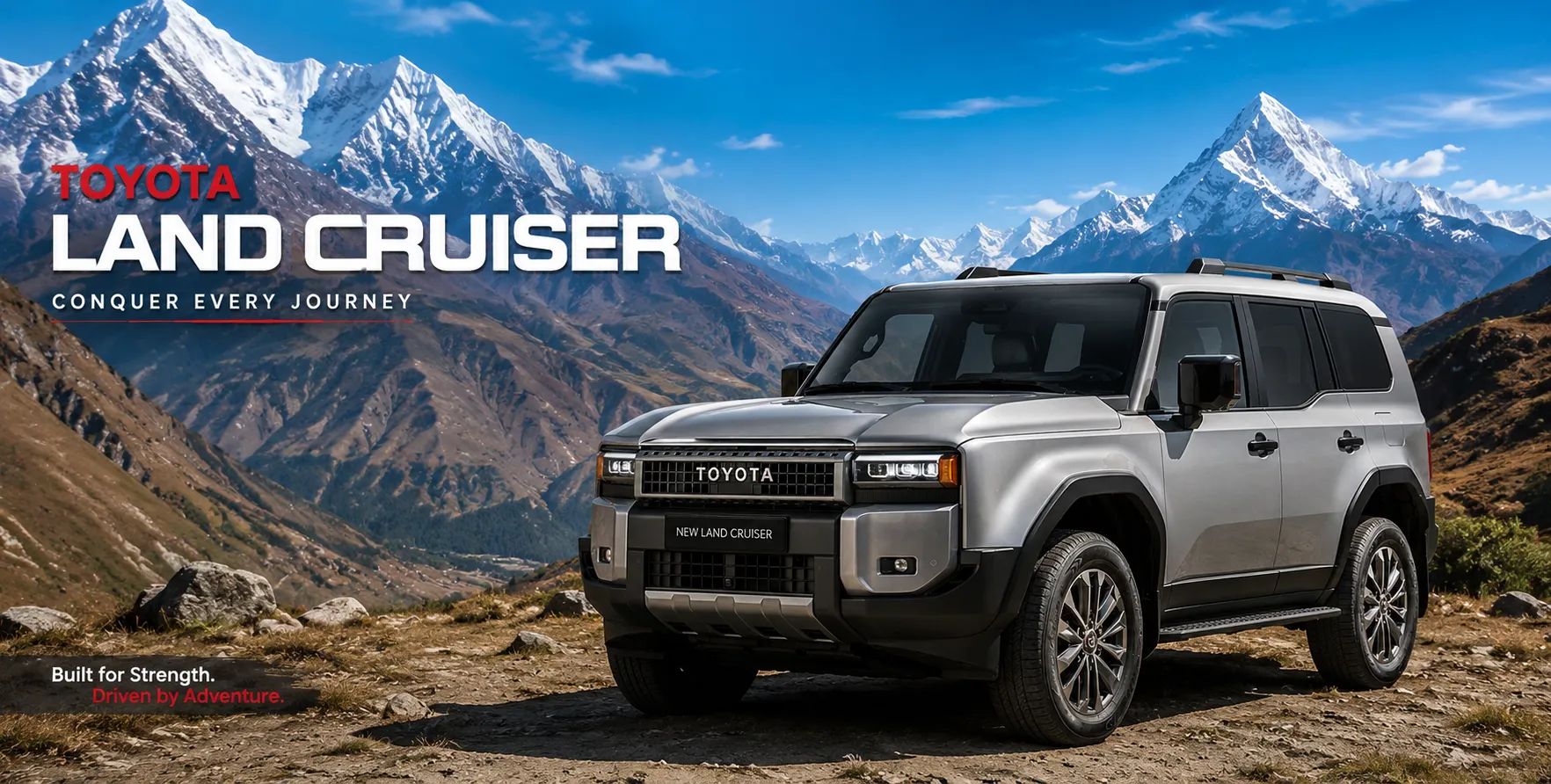
The Land Cruiser Prado remains the benchmark vehicle for serious mountain driving in Nepal. With full-time four-wheel drive, generous ground clearance, and a torque-rich diesel engine, it handles the rutted tracks toward Besisahar, Syabrubesi, and Soti Khola with far less strain than smaller SUVs Inside, leather seating, strong air conditioning, and smooth ride quality make an eight-hour transfer feel closer to four. Explore our full
Jeep Hire in Nepal lineup for Land Cruiser and Prado options by route and group size.
Executive Hiace and Premium Vans
For families, small groups, or trekking parties travelling with a support crew, our
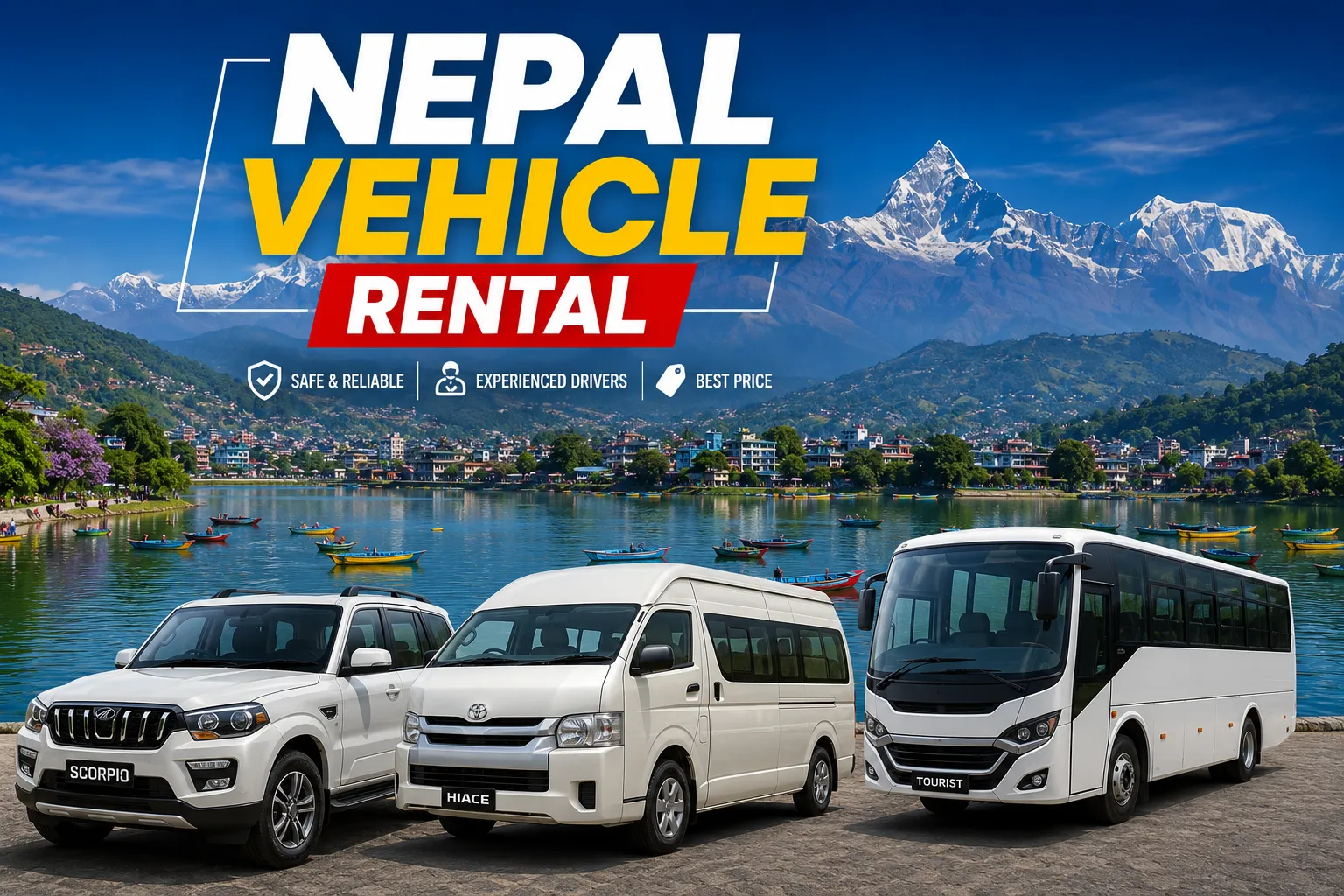
Hiace hire service offers a premium alternative to a standard jeep. Reclining seats, individual air vents, extra luggage space for duffel bags and trekking poles, and a smoother highway ride make the Hiace an excellent choice for the tarmac sections of a journey, such as the Kathmandu-to-Pokhara route, before switching to a Land Cruiser for the final unpaved approach to the trailhead.
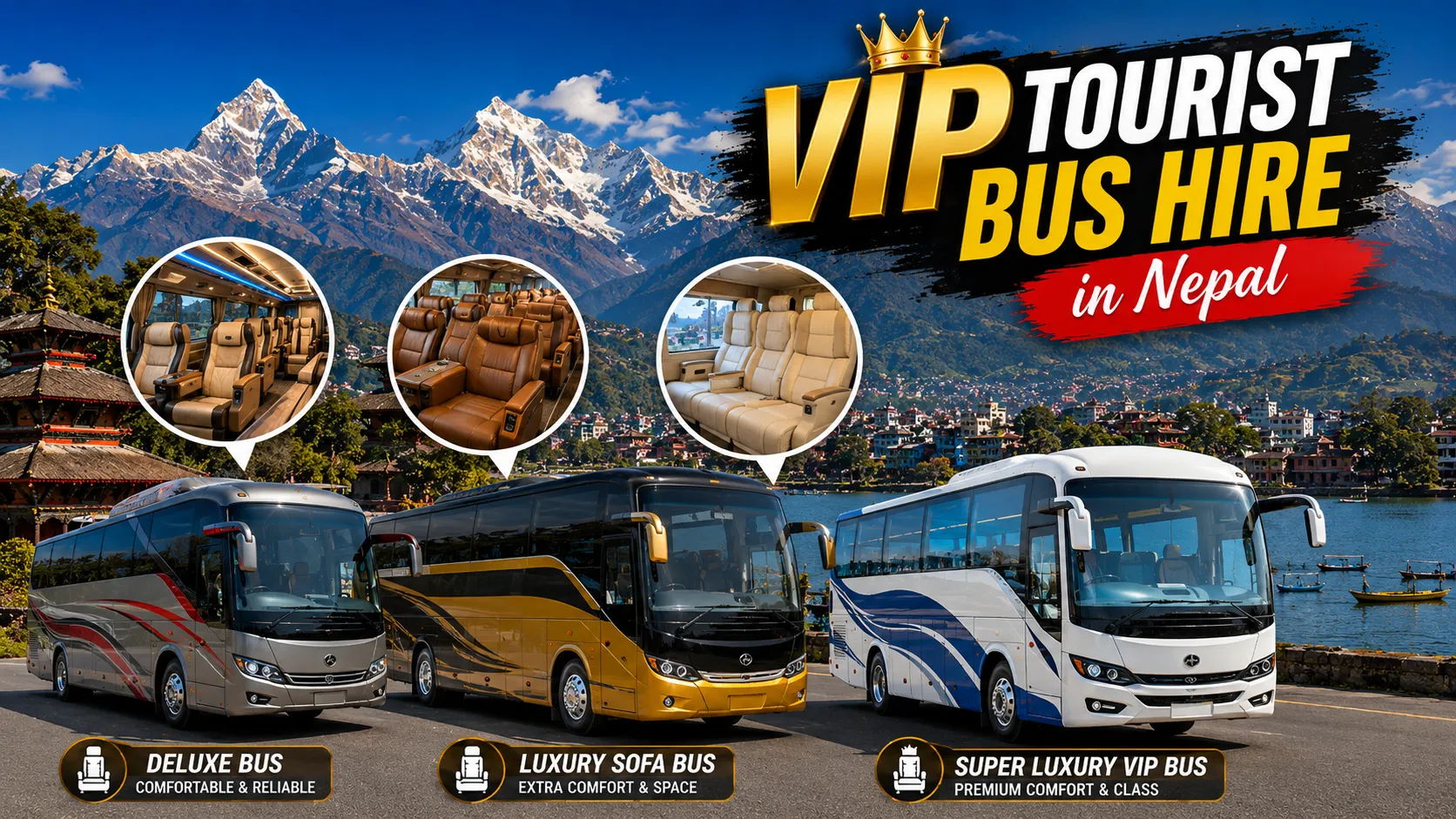
Private Cars, Coaster, and Bus for Larger Luxury Groups
Luxury tour operators bringing larger groups — for a Nepal, Tibet, and Bhutan combination tour, for example — often need a mix of vehicle classes across a single itinerary. Our coasterCoasters hire fleet covers comfortable, air-conditioned inter-city legs, while private cars handle airport transfers and pickups, as well as day tours around the Kathmandu Valley.
Luxury Vehicle Trekking Routes Across Nepal
Below is a route-by-route look at where a premium vehicle makes the biggest difference to the overall trekking experience, along with the classic trek each drive supports.
Kathmandu to Besisahar — Gateway to the Annapurna Circuit
The drive from Kathmandu to Besisahar covers roughly 180 kilometres and, depending on road conditions around Dumre and Bhulbhule, takes anywhere from six to eight hours. It’s best done in a Land Cruiser or Prado rather than a standard microbus, since the final stretch narrows considerably as it climbs into the Marsyangdi valley. Trekkers heading out on the
Annapurna Circuit Trek with our sister company, Alpine Luxury Treks, typically begins exactly here, and a private vehicle transfer means arriving at the trailhead rested rather than rattled. See our dedicated
Kathmandu to Besisahar private vehicle service for departure times and vehicle options.
Pokhara to Nayapul — Ghorepani Poon Hill and Annapurna Base Camp
This shorter but scenic 45-kilometre drive from Pokhara to Nayapul takes around 90 minutes and is the standard starting point for two of Nepal’s most iconic short treks. For the
Ghorepani Poon Hill Trek, a comfortable private car or jeep gets guests to the trailhead in time for an early lunch and an unhurried first day’s walk toward Tikhedhunga. The same road also serves as the access point for the
Annapurna Base Camp Trek, one of Alpine Luxury Treks’ most popular luxury lodge itineraries. Book the transfer through our
Pokhara to Nayapul transportation page, and pair it with our
car hire in Pokhara for lakeside sightseeing before or after the trek.
Kathmandu to Syabrubesi — Langtang Valley in Comfort
The road to Syabrubesi, the gateway to Langtang National Park, is one of the more physically demanding drives in Nepal — around 120 kilometres that can take seven to eight hours due to sharp switchbacks past Trishuli Bazaar and Dhunche. This is precisely the kind of route where the difference between a tired old jeep and a well-serviced Land Cruiser becomes obvious within the first hour. Trekkers booked on the
Langtang Valley Trek through Alpine Luxury Treks consistently rates the drive itself as smoother and less draining when arranged through a dedicated private vehicle rather than the public bus service.
Kathmandu to Salleri, Phaplu and Jiri — the Classic Everest Approach
For travellers who prefer overland travel to flying into Lukla, the drive to Salleri and Phaplu, or farther along the classic route to Jiri, offers a scenic, culturally rich alternative in the Everest region. These are long drives — often split across a full day or two — through the middle hills of Ramechhap and Solukhumbu districts. A premium 4WD with an experienced high-altitude driver is essential here, both for comfort and for safely navigating landslide-prone sections during the monsoon shoulder seasons. This route connects directly to the
Everest Base Camp Trek and the classic
Jiri to Everest Trek, both offered by our sister company Alpine Luxury Treks, and for travellers wanting a five-star finish, the
Everest Base Camp Luxury Lodge Trek pairs beautifully with a private vehicle transfer on either end of the journey. Reserve your seat through our
Kathmandu to Salleri Phaplu jeep service.
Kathmandu to Soti Khola — Manaslu Circuit Gateway
The road to Soti Khola, the trailhead for the restricted Manaslu Circuit, is about 15 kilometres of increasingly rough terrain past Arughat and can take 7 to 9 hours, depending on the season. This route requires four-wheel drive and a premium Land Cruiser, and a driver experienced on this corridor is by far the most comfortable and reliable option. It connects directly to the
Manaslu Circuit Trek, one of Nepal’s more remote and increasingly sought-after luxury-adjacent trekking routes. Book your transfer via our
Kathmandu-to-Soti Khola jeep hire listing.
Upper Mustang and the Trans-Himalayan Plateau
Upper Mustang’s high-desert landscape, accessible via Pokhara and Jomsom, rewards travellers who invest in a genuinely capable vehicle. The terrain here is less about mud and more about altitude, wind, and long stretches of exposed gravel road, all of which favour a well-suspended, high-clearance 4WD over a standard car. Combined with the
Upper Mustang Trek, offered by Alpine Luxury Treks, private-vehicle segment makes it possible to see monasteries, chortens, and the walled city of Lo Manthang in relative comfort between walking sections.
Kathmandu to Lumbini and the Terai — Combining Pilgrimage with Trekking Tours
Not every luxury itinerary in Nepal is purely mountain-focused. Many international travellers pair a Himalayan trek with a visit to Lumbini, the birthplace of Lord Buddha, or a wildlife stop in Chitwan National Park before or after their trekking days. The drive from Kathmandu to Lumbini covers around 280 kilometres of mostly paved highway, making it well suited to a premium Hiace or private car rather than a 4WD jeep. Groups combining a trek with a cultural and wildlife circuit can arrange this leg through our
Kathmandu to Lumbini bus and private vehicle service, and continue to Pokhara or Chitwan using our
The Pokhara-to-Chitwan bus service completes a well-rounded, multi-region itinerary.
Kathmandu Valley Rim — Nagarkot, Bhaktapur, and Sarangkot Before or After the Trek
Most trekking itineraries include at least one or two rest days in the Kathmandu Valley, either before acclimatising or after returning from the mountains, and these days are far more enjoyable with a private vehicle at your disposal than with taxis. A sunrise excursion with our
Nagarkot sunrise tour vehicle service offers sweeping Himalayan panoramas without the early-morning hassle of arranging last-minute transport, while our
Bhaktapur Durbar Square tour lets trekking groups explore medieval Newar architecture in comfort. For those based in Pokhara, the
Sarangkot sunrise tour vehicle offers an equally memorable view of the Annapurna range before or after a trek in the region.
Luxury Ground Transport for Non-Trekking Companions
Not every member of a travel party wants to walk to Base Camp, and hiring a premium vehicle has become an important part of how mixed groups travel in Nepal. It is increasingly common for one or two members of a family or corporate group to join a trek. In contrast, others prefer a gentler itinerary of valley sightseeing, spa time in Pokhara, or a wildlife safari in Chitwan. A private, comfortable vehicle allows non-trekking companions to explore independently, meet the trekking party at agreed points, and still be part of the wider journey without ever setting foot on a mountain trail. This kind of flexible, multi-track itinerary is something our team plans regularly, coordinating pickup and drop-off times around a trekking group’s daily walking schedule so that everyone, walkers and non-walkers alike, arrives at the same lodge, hotel, or airport at the right time.
Corporate incentive groups and larger family reunions often request exactly this kind of split itinerary. It is one of the clearest examples of where a fleet that spans Land Cruisers, executive Hiace vans, and larger Coaster buses proves its worth. Each sub-group travels in a vehicle suited to its own pace and comfort needs, rather than everyone being forced into a single, one-size-fits-all transport plan.
Choosing Between a Land Cruiser, Prado, Hiace, or Private Car
Clients often ask which vehicle class suits their trip, and the honest answer depends on group size, luggage volume, and the road surface for each leg of the journey, rather than on any single vehicle being universally best.
A Land Cruiser or Prado is the right call whenever the route includes a genuinely unpaved or rutted section — Besisahar, Syabrubesi, Soti Khola, and the Salleri/Phaplu corridor all fall into this category. These vehicles trade a little interior space for far superior traction, clearance, and ride control on rough ground. For groups of one to four trekkers with a moderate amount of luggage, they remain the most dependable option.
An executive Hiace makes more sense for larger groups of six to ten travelling primarily on paved highways, such as Kathmandu to Pokhara or Kathmandu to Lumbini, where the priority shifts toward legroom, luggage volume, and a smoother highway ride rather than off-road capability. Many of our clients use a Hiace for the highway portion of a longer, multi-leg itinerary and switch into a Land Cruiser only for the final unpaved stretch into the mountains.
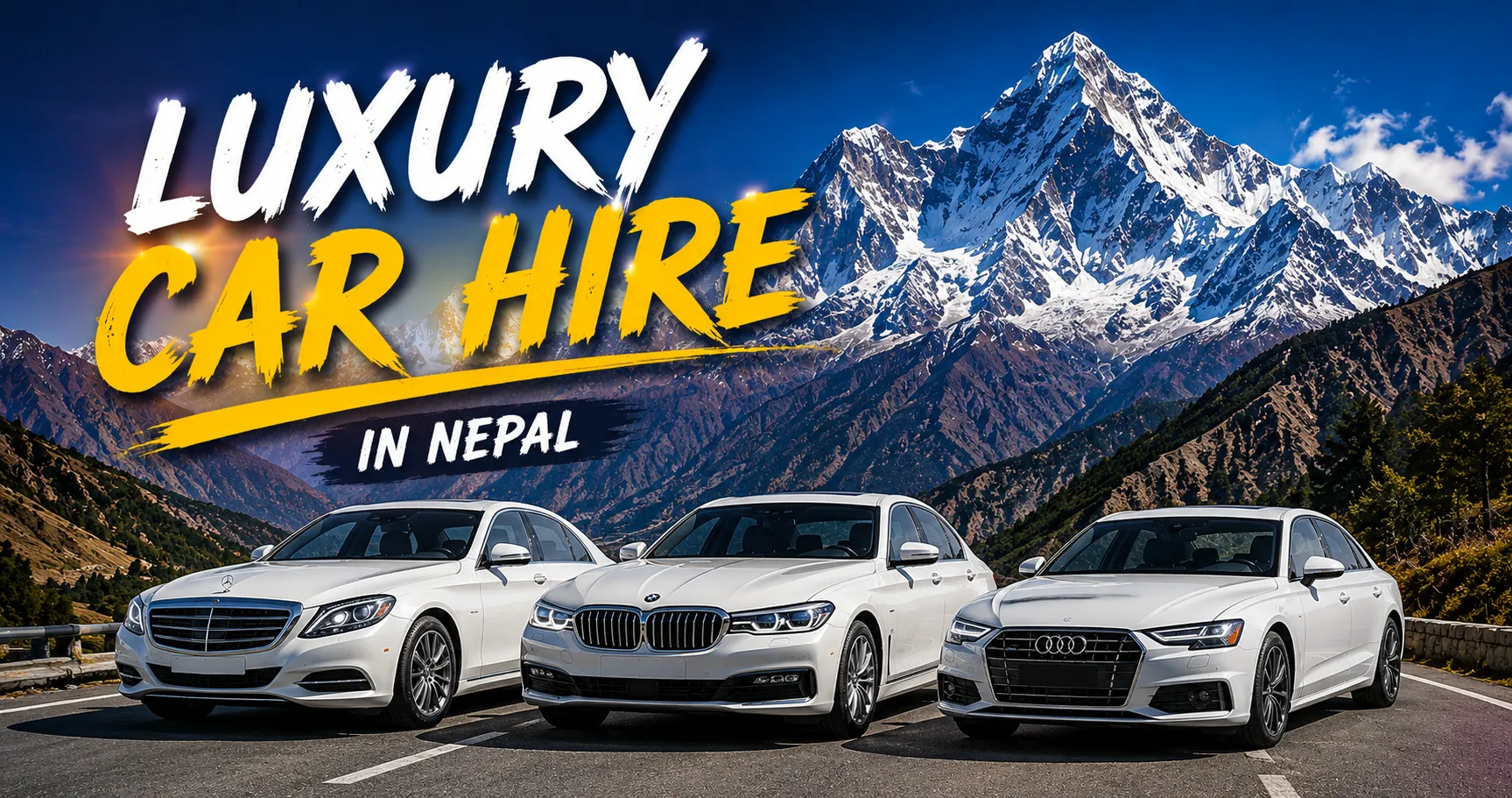
A standard private car suits solo travellers or couples for Kathmandu Valley sightseeing, airport transfers, or short Pokhara-based day trips with no rough terrain involved. For groups larger than ten, our Coaster-sized vans remain the most cost-effective and comfortable way to move an entire trekking party or tour group together.
Luxury Vehicle and Helicopter Combos for the Ultimate Trekking Experience
More premium travellers are combining ground transport with short helicopter hops to maximise comfort while minimising time on the road. A typical pattern is a private vehicle transfer for the scenic, lower-altitude legs of a journey, followed by a helicopter tour for the final approach or the return leg from high-altitude regions such as Everest Base Camp or Gokyo. Alpine Luxury Treks’
Helicopter tour packages pair naturally with our ground transfers, letting guests avoid a second full day of overland travel on the return journey after days of high-altitude trekking. This combination has become especially popular with honeymooners, senior travellers, and anyone on a tighter schedule who still wants to experience Everest, Annapurna, or Gokyo without sacrificing days to road travel.
Comfort Features That Actually Matter on Mountain Roads
Not all comfort upgrades are equal once you are three hours into a climb toward Dhunche or Besisahar. A few features consistently make the biggest difference for our trekking clients:
- Genuine four-wheel drive with locking differentials, rather than cosmetic all-wheel-drive badging, for traction on wet clay and loose gravel.
- High ground clearance to clear rutted sections without scraping the undercarriage on rocky river crossings.
- Reclining, cushioned seating with adequate legroom, since many transfer days exceed seven hours.
- Reliable air conditioning and heating, given that a single day’s drive can move from valley heat to alpine cold.
- Ample, secure luggage space for duffel bags, trekking poles, and climbing or photography equipment.
- Power outlets or USB charging for phones, satellite communicators, and cameras.
- Large windows and a raised seating position for uninterrupted mountain views along the way.
Professional Drivers and Safety Standards
A luxury vehicle is only as good as the driver. We select our drivers for their experience on mountain corridors, not just city roads, and many have spent over a decade navigating routes to Besisahar, Syabrubesi, Soti Khola, and the Solu-Khumbu foothills. This matters enormously during the monsoon and early post-monsoon months, when landslides, temporary road closures, and river crossings require judgment that only comes from repeated exposure to the same routes.
Every vehicle in our premium fleet undergoes regular mechanical inspection, with particular attention to brakes, suspension, and tyres before any trekking transfer, since these routes place far more strain on a vehicle than ordinary city driving. Drivers also carry basic first-aid kits, tyre chains for winter conditions on higher routes, and maintain clear communication with our Kathmandu office in case of delays, so that trekking groups and their guides are never left without an update on arrival timing.
Communication is another underrated safety factor. Many of the roads serving trekking trailheads pass through areas with patchy mobile network coverage, and our drivers are trained to plan fuel stops, rest breaks, and contingency routes well before the signal drops out. For multi-day overland approaches, such as the drive toward Salleri and Phaplu, drivers coordinate overnight stops at vetted guesthouses along the way, so that even the transport phase of the journey feels considered and pre-planned rather than improvised. Trekking agencies and tour leaders working with our sister companies often specifically request drivers who have handled their exact route before, and, wherever possible, we match returning clients with the same driver for a familiar, consistent experience on future trips.
Seasonal Considerations for Luxury Trekking Transport
Nepal’s trekking calendar directly affects road conditions and, therefore,n vehicle choice.
Spring (March to May)
Roads are generally dry and in their best condition, making this an ideal time for both the Annapurna and Everest approach routes. This is peak season for the Everest Base Camp Trek and the Annapurna Circuit Trek, so book vehicle availability well in advance.
Monsoon (June to August)
Rainfall increases landslide risk on unpaved sections, particularly toward Syabrubesi and Soti Khola. A genuine 4WD with an experienced driver is essential, and some luxury travellers prefer to combine a shorter vehicle segment with a helicopter tour during this period to reduce total road time.
Autumn (September to November)
The year’s clearest skies and most stable road conditions, and the busiest season for both trekking and vehicle bookings. Reserving a premium vehicle several weeks ahead is strongly advised.
Winter (December to February)
Higher routes toward Mustang and the upper Solu-Khumbu can see snow and freezing temperatures overnight. Vehicles with strong heating systems and drivers experienced in cold-weather driving are particularly important during this period.
Cost Factors and the Real Value of Luxury Vehicle Hire
Premium vehicle hire in Nepal costs more than a shared local bus or a basic jeep, but the value comparison rarely stops at the ticket price. A private Land Cruiser transfer eliminates waiting time at bus parks, removes the risk of being squeezed into an overcrowded vehicle for 8 hours, and lets a trekking group control its schedule around acclimatisation, photo stops, and meal breaks. For groups already investing in a premium lodge trek or luxury tour package, the incremental cost of upgrading ground transport is typically a small fraction of the overall trip cost. At the same time, the comfort gain is disproportionately large given how physically demanding these approach roads can be.
Pricing depends on vehicle class, route distance, road conditions, and group size. Our team is happy to build a custom quote once we know your trekking dates, group size, and preferred trailhead. Visit our
homepage or explore the full
Trekking transport section for route-specific pricing guidance.
Combining Vehicle Hire With Luxury Trekking Packages
Many of our clients now book their entire journey as a single, coordinated experience: pickup, Kathmandu Valley sightseeing, a private vehicle transfer to the trailhead, the trek itself, and a return journey home, all arranged together rather than piecemeal. Because Nepal Vehicle Hiring works closely with our sister companies,
Trek Nepal Himalayas, we can help coordinate ground transport around any of their luxury lodge treks, classic teahouse treks, or combined treks.
Nepal, Tibet,t and Bhutan tour itineraries. This kind of integrated planning removes the usual friction of booking transport and trekking separately. It means every leg of the journey — from Tribhuvan International Airport to the mountains and back — is handled by people who understand exactly what a trekking schedule requires.
A typical combined itinerary might begin with our
Kathmandu airport transfer service, continue with a day of
Kathmandu sightseeing and a Bhaktapur Durbar Square tour, move on to a private vehicle transfer to the trailhead of your chosen trek, and finish with a relaxed
Nagarkot sunrise tour before departure — all bookable through a single point of contact.
Sustainability and Responsible Luxury Travel
Luxury and responsible travel are not mutually exclusive. Well-maintained vehicles run more efficiently and produce fewer emissions than poorly serviced older jeeps, and private transfers reduce the number of half-empty buses making the same journey. We work with local drivers and mechanics on each route, supporting rural livelihoods in towns like Besisahar, Trishuli, and Arughat, which serve as staging points for trekking traffic. Choosing a professionally managed vehicle hire service also means fewer breakdowns, less roadside waiting, and a smaller overall environmental footprint per traveller.
Booking Tips for Luxury Vehicle Trekking Transfers
- Book at least three to four weeks ahead during peak spring and autumn trekking seasons, when premium vehicles are in highest demand.
- Confirm your exact trailhead — Besisahar, Nayapul, Syabrubesi, Soti Khola, or Salleri/Phaplu — since vehicle type and pricing vary by road condition.
- Ask about combined packages if you are also booking a luxury lodge trek, a helicopter tour, or a Nepal–Tibet–Bhutan itinerary through our sister companies.
- Share your group size and luggage requirements in advance so the right vehicle class — Land Cruiser, Prado, or executive Hiace — is assigned.
- Build in a buffer day during monsoon months, where possible, in case of temporary road closures.
Frequently Asked Questions
What is the best vehicle for trekking transfers in Nepal?
For unpaved or high-altitude routes such as Besisahar, Syabrubesi, or Soti Khola, a Toyota Land Cruiser or Prado is the best choice due to its ground clearance and four-wheel drive. For paved highway sections such as the Kathmandu-Pokhara route, a premium Hiace or private car offers a smoother, more relaxed ride.
How far in advance should I book a luxury vehicle for trekking?
During peak spring (March–May) and autumn (September–November) seasons, book at least three to four weeks in advance. You can usually confirm off-peak bookings within a week.
Can a luxury vehicle reach every trekking trailhead in Nepal?
Most major trailheads — including Besisahar, Nayapul, Syabrubesi, Soti Khola, and Salleri/Phaplu — are accessible by road. Some remote trailheads, such as Lukla for the standard Everest Base Camp route, are reached by air rather than road, though our vehicles can cover the alternative overland approach via Jiri or Phaplu.
Is it safe to drive on Nepal’s mountain roads in the monsoon season?
It is possible with an experienced driver and a genuine 4WD vehicle, though some routes carry a higher risk of landslides during heavy rain. Many travellers combine a shorter vehicle segment with a helicopter tour during peak monsoon months for comfort and safety.
Can I combine vehicle hire with a luxury lodge trek?
Yes. Nepal Vehicle Hiring coordinates directly with our sister companies, Alpine Luxury Treks and Trek Nepal Himalayas, to arrange seamless ground transport around any luxury lodge trek, classic teahouse trek, or combined regional tour package.
Do luxury vehicles cost significantly more than standard jeep hire?
Premium vehicles cost more than shared buses or basic jeeps. Still, the difference is generally modest relative to the overall cost of a trekking holiday, especially when weighed against the comfort, safety, and time saved on long approach roads.
Are private drivers experienced with high-altitude routes?
Yes. We select our drivers specifically for their experience on mountain corridors, and many have spent years driving the same routes to the Annapurna, Langtang, Manaslu, and Everest regions in every season.
Can vehicles be arranged for both airport transfers and trekking in a single booking?
Yes, a single booking can cover your Kathmandu airport transfer, Kathmandu Valley sightseeing, and your full trekking transfer, simplifying logistics for the entire trip.
Final Thoughts: Travel the Himalayas the Way They Deserve
A trek through Nepal’s mountains is often the trip of a lifetime, and the journey to the trailhead should reflect that same sense of occasion, not detract from it. Choosing
Luxury vehicles for trekking in Nepal mean arriving at Besisahar, Nayapul, Syabrubesi, Soti Khola, or Salleri rested, comfortable, and ready for the trail ahead, rather than drained from the drive itself. Whether you are heading toward the
Annapurna Circuit, whether you’re doing theWhether you’re doing the Whether you’re doing the
Ghorepani Poon Hill Trek or a luxury Nepal, Tibet, and Bhutan tour, Nepal Vehicle Hiring can arrange the right premium vehicle, an experienced mountain driver, and a route plan tailored to your trekking schedule.
Contact Nepal Vehicle Hiring today at +977 981-4227196 or visit
vehiclehiringnepal.com to book your private Land Cruiser, executive Hiace, or premium car for your next Himalayan trekking adventure.
- Luxury Vehicles for Trekking in Nepal
- Why Choose Luxury Vehicles for Trekking Transport in Nepal
- The Luxury Fleet: Land Cruisers, Prados, Premium Hiace, and Executive Cars
- Luxury Vehicle Trekking Routes Across Nepal
- Luxury Ground Transport for Non-Trekking Companions
- Luxury Vehicle and Helicopter Combos for the Ultimate Trekking Experience
- Seasonal Considerations for Luxury Trekking Transport
- Cost Factors and the Real Value of Luxury Vehicle Hire
- Combining Vehicle Hire With Luxury Trekking Packages
- Sustainability and Responsible Luxury Travel
- Booking Tips for Luxury Vehicle Trekking Transfers
- Frequently Asked Questions
- Final Thoughts: Travel the Himalayas the Way They Deserve

Related Blog & Articles
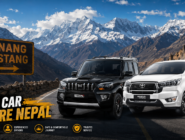
4WD Himalayan Jeep in Nepal
Chitwan to Kathmandu Luxury Car Rental – Private Transfers from Chitwan National Park
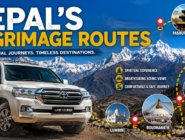
Toyota Land Cruiser 4WD Hire in Nepal – The Ultimate Mountain Vehicle