


 Plan a Trip


Plan Your Nepal Pilgrimage in Comfort: Private Vehicle Hire Guide for Muktinath, Pashupatinath & More
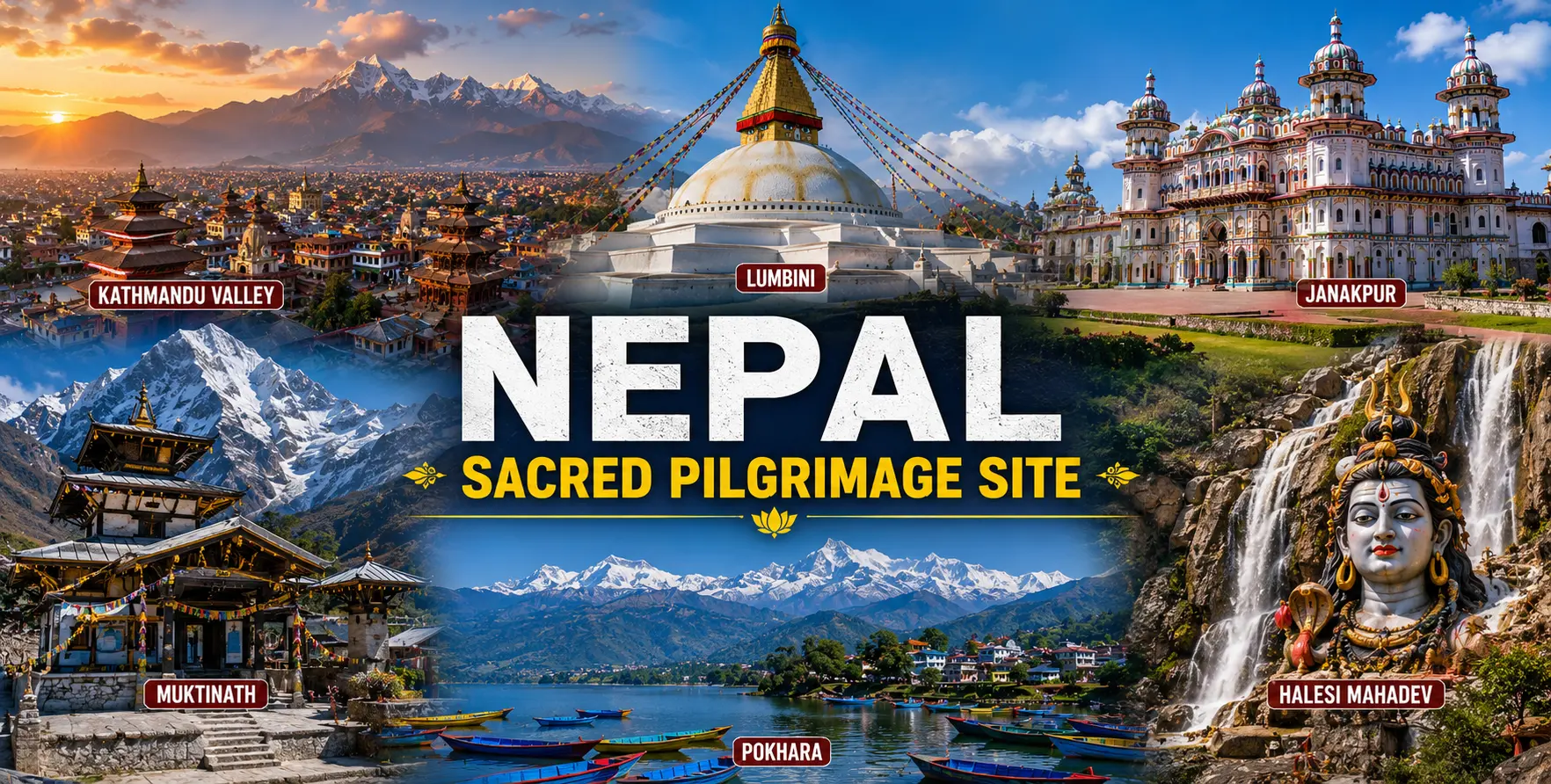
Plan Your Nepal pilgrimage: Private Vehicle Hire Guide for Muktinath, Pashupatinath & More.
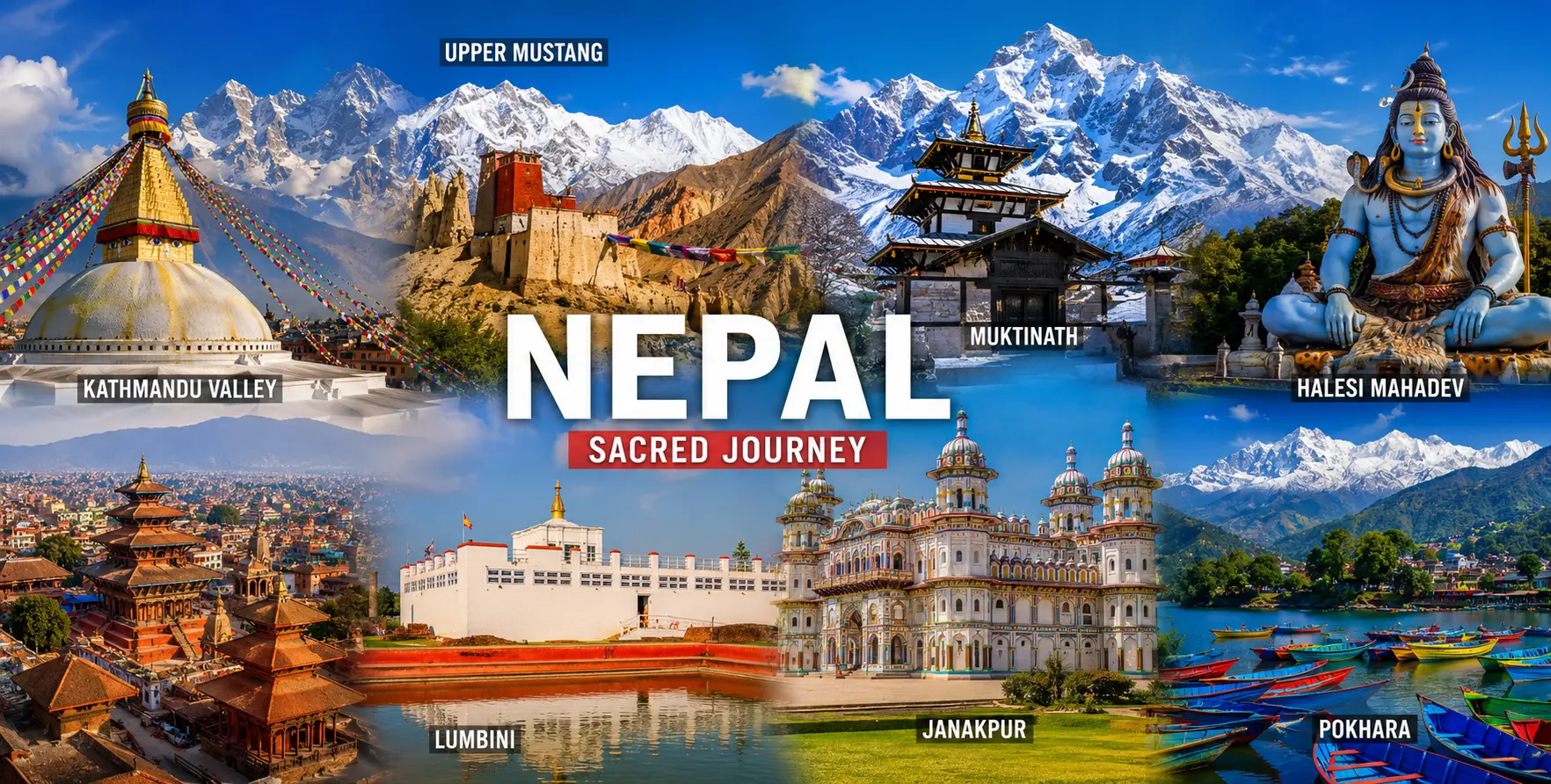
Nepal is, in the deepest sense, a pilgrimage country. Long before it became a destination for trekkers and mountaineers, it was — and remains — one of the world’s great living centres of Hindu and Buddhist devotion, holding within its borders the birthplace of the Buddha, one of the four holiest Shiva temples on earth, a high-altitude shrine where fire and water emerge from the same rock, and mountain-top goddesses whose blessings are still sought by hundreds of thousands of devotees each year. For millions of Hindu and Buddhist pilgrims from Nepal, India, and across the world, a journey through Nepal’s sacred geography is not a holiday in the conventional sense — it is an act of faith, often planned around specific festival dates, specific vows, and a specific, deeply personal sense of what each sacred site is meant to provide.
What very few pilgrimage guides explain in practical detail is the transport reality behind these journeys. Nepal’s sacred sites are scattered across an extraordinarily varied landscape — from the dense lanes of central Kathmandu to a 3,710-meter Himalayan plateau, from the flat, humid Terai plains to a 3,794-meter ridge in the far eastern hills. Moving between them depends entirely on having the right vehicle, an experienced driver, and a flexible itinerary that can accommodate early-morning darshan timings, festival crowds, and the unhurried atmosphere that pilgrimage rightly deserves.
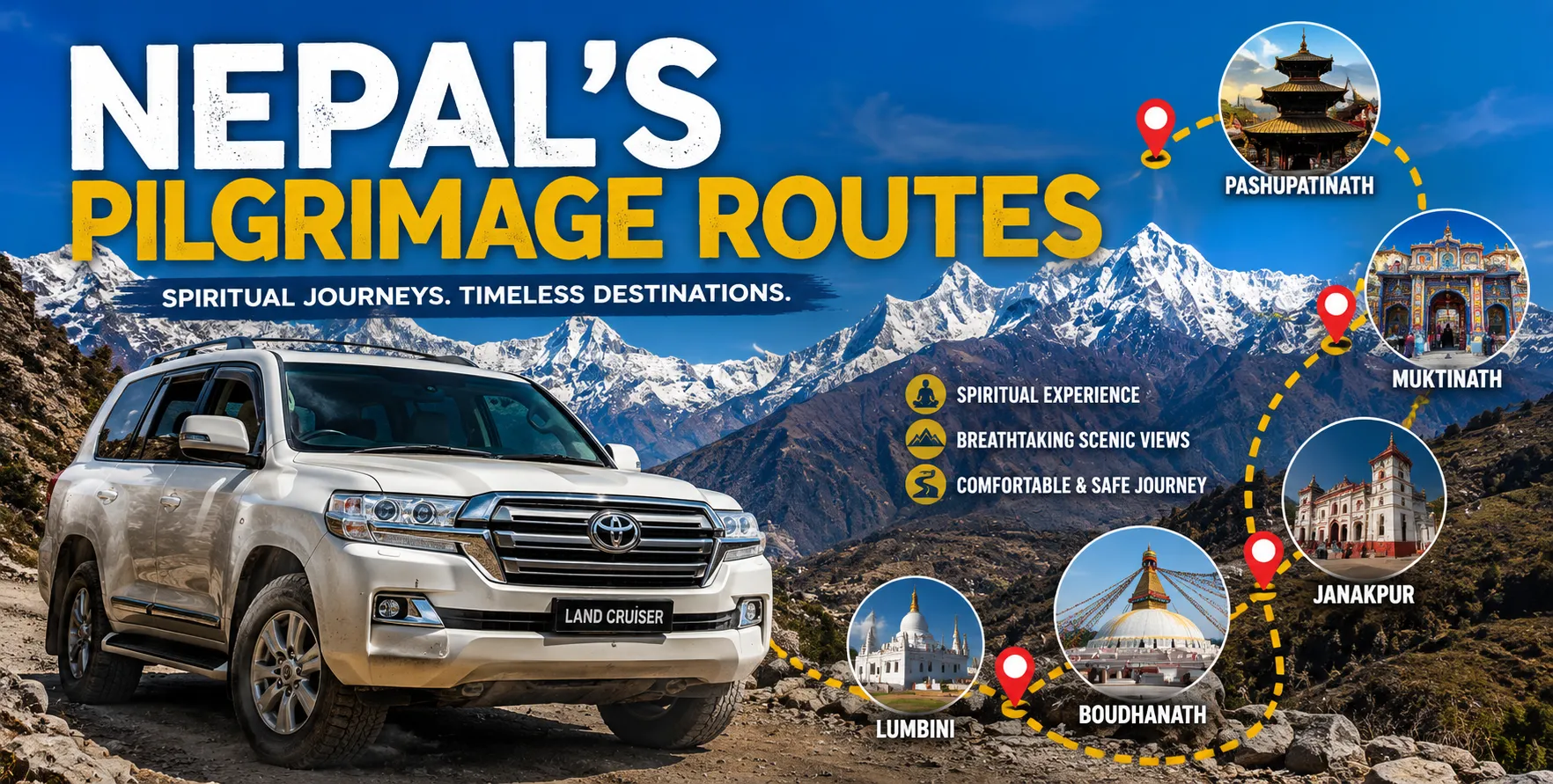
This comprehensive 2026 guide brings together everything a pilgrim or pilgrimage tour planner needs to know about touring Nepal’s major sacred sites by private vehicle — detailed profiles of the country’s most important pilgrimage destinations, realistic road distances and travel times, vehicle recommendations, multi-site circuit itineraries, the Hindu festival calendar, pilgrimage etiquette, and complete booking guidance from Vehicle Hiring Nepal.
For travelers who have completed their trek and are planning to explore Kathmandu, we recommend continuing your journey with our trusted sister companies, Trek Nepal Himalayas and Alpine Luxury Treks. We specialize in organizing a wide range of travel experiences across Nepal, from classic trekking adventures to cultural and wildlife tours.
Our top offerings include iconic journeys such as the Everest helicopter tour, immersive Kathmandu sightseeing tours, breathtaking Nagarkot sunrise experiences, and exciting Chitwan jungle safari and luxury packages. In addition, we can arrange short hikes, heritage tours, mountain flights, and customized travel plans tailored to your schedule and interests.
Whether you are looking for a budget-friendly trip or a luxury trekking experience with premium lodges, private guides, and high-end services, we ensure every detail is professionally managed. Our goal is to provide a seamless transition from your trekking adventure to a comfortable) and a memorable travel experience in Nepal.
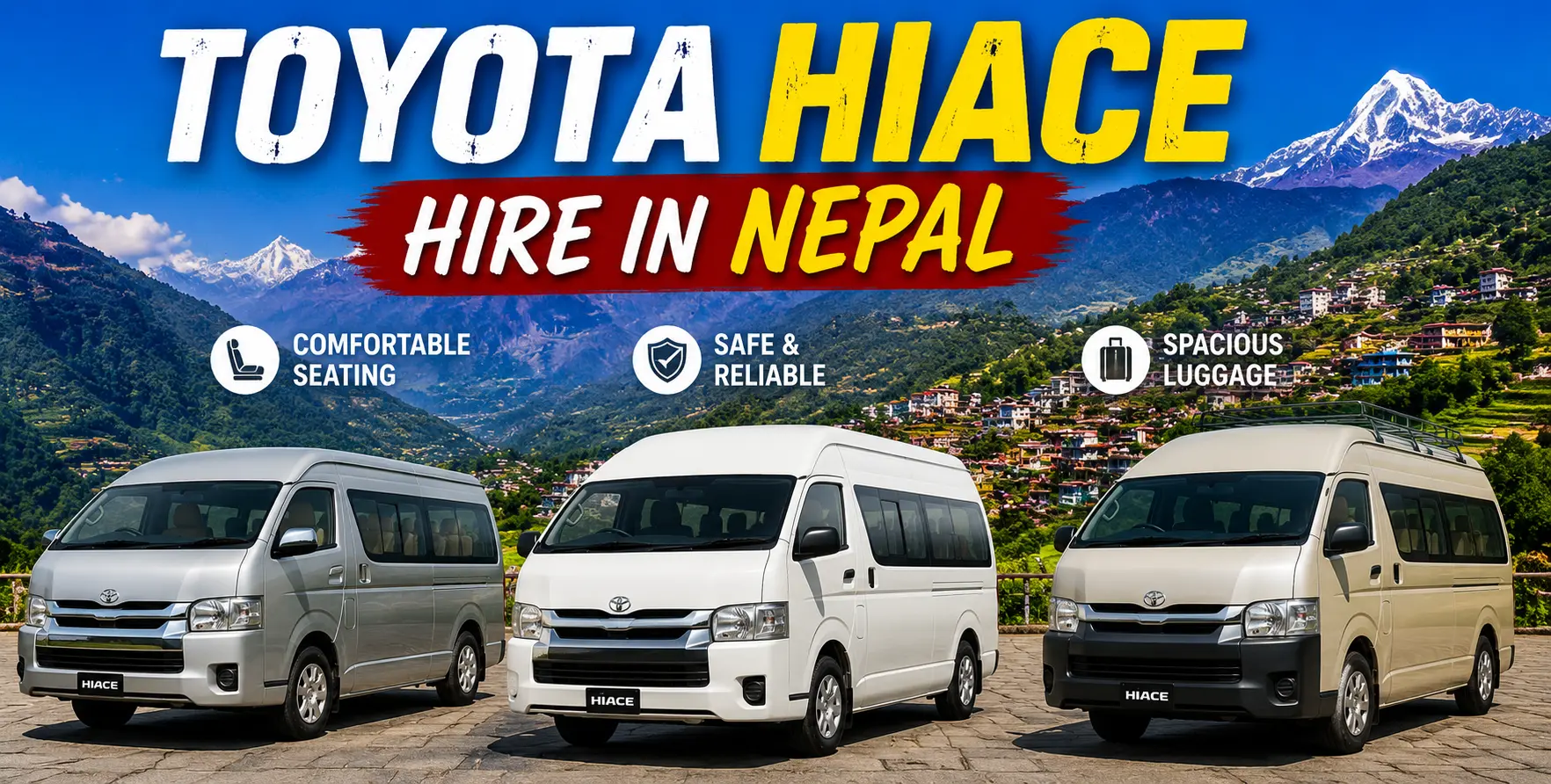
Why Nepal pilgrimage Private vehicle hire is the Right Choice for pilgrimage travel.
Public transport in Nepal is extensive but built primarily around commuter and budget-backpacker needs — not the specific rhythms of pilgrimage. A private vehicle changes the entire character of a pilgrimage journey in ways that matter deeply to devotees:
- Early darshan access — the most spiritually significant times at temples like Pashupatinath and Muktinath are the pre-dawn and early morning hours, before crowds build. Only a private vehicle reliably gets you there for a 4:30 or 5:00 AM Mangala Aarti.
- Flexibility around ritual timing — pujas, vow-fulfillment ceremonies, and extended prayer — cannot be rushed to fit a bus schedule.le
- Carrying pilgrimage offerings — flowers, fruit, coconuts, ghee lamps, and other ritual items- is far easier to transport in a private vehicle than on a crowded bus.
- Group cohesion — families and community pilgrimage parties can pray and sing bhajans together throughout the journey.y
- Access to remote sites — Muktinath and Pathivara- cannot be reached by standard public transport beyond a certain point.
- Comfort for elderly pilgrims undertaking demanding multi-day or high-altitude journeys where fatigue must be carefully managed
- Festival-period reliability — during Maha Shivaratri and Dashain, public transport becomes severely overcrowded; a pre-booked private vehicle guarantees your arrival
Pashupatinath Temple — The Spiritual Heart of Nepal
Location: Gaushala, Kathmandu, approximately 4 km from Tribhuvan International Airport
Deity: Lord Shiva, worshipped as Pashupati — Lord of All Living Beings
Status: UNESCO World Heritage Site (1979); one of the four most important Shiva pilgrimage sites in the world
Opening Hours: 4:00 AM to 12:00 PM, then 5:00 PM to 9:00 PM daily. Mangala Aarti 5:00 AM; Sandhya Aarti 6:00 PM; Bagmati Ganga Aarti 6:00–7:30 PM
Entry Fee 2026: NPR 1,000 for non-SAARC foreign visitors; free for Nepali and Indian citizens
Pashupatinath is Nepal’s most sacred and most visited temple, dating to at least the 5th century C in its present form. The complex covers approximately 264 hectares along the Bagmati River and contains over 500 individual temples, shrines, ashrams, and monuments — an entire sacred city rather than a single building.
The central sanctum, housing the unique four-faced Shiva lingam, is open only to Hindu devotees — a rule strictly enforced and worth knowing in advance for any group, including non-Hindu members. Non-Hindu visitors are warmly welcomed throughout the extensive outer complex, including the eastern bank terraces directly across the Bagmati River, which offer an excellent and respectful view of the golden temple roofline and the rituals taking place below.

The Bagmati River ghats at Pashupatinath are themselves profoundly significant. Arya Ghat is used for traditional Hindu cremation ceremonies — a sight many visitors find emotionally intense but spiritually illuminating, offering a direct encounter with the Hindu understanding of death as a passage rather than an ending. The Deer Park (Mrigasthali), the Guhyeshwari Shakti Peeth, and the ashrams housing resident sadhus all form part of a complete Pashupatinath pilgrimage.
Maha Shivaratri, in February or March, draws over one million devotees, including thousands of sadhus from across Nepal and India, for an overnight vigil of fire rituals and continuous worship. Teej, in August or September, fills the complex with women in red saris. Bala Chaturdashi in November–December brings a moving night-long lamp offering at the river. Each festival intensifies the devotional atmosphere and demands early vehicle booking.
Vehicle Recommendation: Sedan or SUV from any Kathmandu hotel — Pashupatinath is most efficiently combined with Boudhanath, Swayambhunath, and Dakshinkali in a single private vehicle day circuit.
Muktinath Temple — The High-Altitude Sanctuary of Fire and Water
Location: Ranipauwa, Mustang District, 3,710 m above sea level
Deities: Lord Vishnu (Hindu) and Chumig Gyatsa — the Hundred Waters (Tibetan Buddhist Vajrayana)
Distance from Pokhara: Approximately 220–230 km, typically a 3-day round trip via the Kali Gandaki gorge
Distance from Kathmandu: Approximately 470–490 km via Pokhara — best done as 5- 5- 7-day circuit
Muktinath is unique even within Nepal’s extraordinary sacred geography — one of the very few sites worshipped with equal devotion by both Hindus and Buddhists. For Hindus, it is one of the eight Swayam Vyakta Kshetras of Vishnu and is believed to grant Mukti — liberation from the cycle of rebirth. For Tibetan Buddhists, it is revered as Chumig Gyatsa and is one of the 24 Tantric places sacred to Vajrayogini. Both traditions share the site without conflict, their distinct rituals unfolding alongside each other on the same windswept plateau.
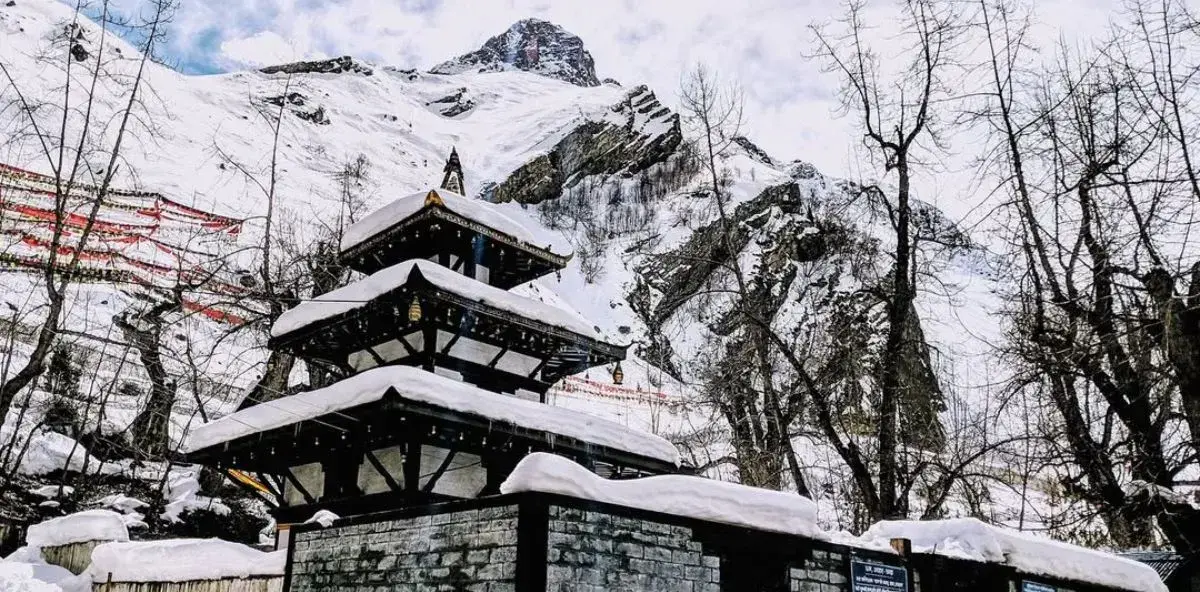
The 108 stone water spouts in the shape of bull’s heads, fed by a glacial spring, are the most distinctive and most physically demanding feature of a Muktinath pilgrimage. Devotees undertake a ritual circuit of all 108 spouts, bathing briefly under each — an act of profound devotional courage given the near-freezing water temperature at 3,710 m, believed to cleanse a lifetime of accumulated sin. The adjacent Jwala Mai Temple protects a natural gas flame that burns continuously above a spring of water — fire and water together, a phenomenon regarded as a visible symbol of the meeting of cosmic opposites and as one of the most astonishing natural-sacred sites in all of Nepal.
The Shaligram stones found in the Kali Gandaki riverbed near Kagbeni and Mustang — ammonite fossils regarded as sacred manifestations of Vishnu himself — are collected by pilgrims on the approach road and carried home as powerful devotional objects. A Muktinath pilgrimage naturally includes a Shaligram collection walk, and many families return year after year specifically for this purpose.
The road journey to Muktinath is itself a major part of the pilgrimage — winding through the Kali Gandaki, which at the gorge between Dhaulagiri and Annapurna is the world’s deepest valley, past the medieval apple village of Marpha and the district headquarters of Jomsom. Critically, all driving through the Kali Gandaki gorge must be completed before midday, when the famous thermal wind arrives from the south at 60 to 100 km/h, making driving genuinely dangerous and grounding all Jomsom Airport flights simultaneously.
Vehicle Requirement: Toyota Land Cruiser 4WD — absolutely mandatory. No sedan, van, or standard SUV is appropriate beyond Beni. Round-trip hire from Pokhara: approximately USD 500–650; from Kathmandu as part of a full circuit: USD 700–900.
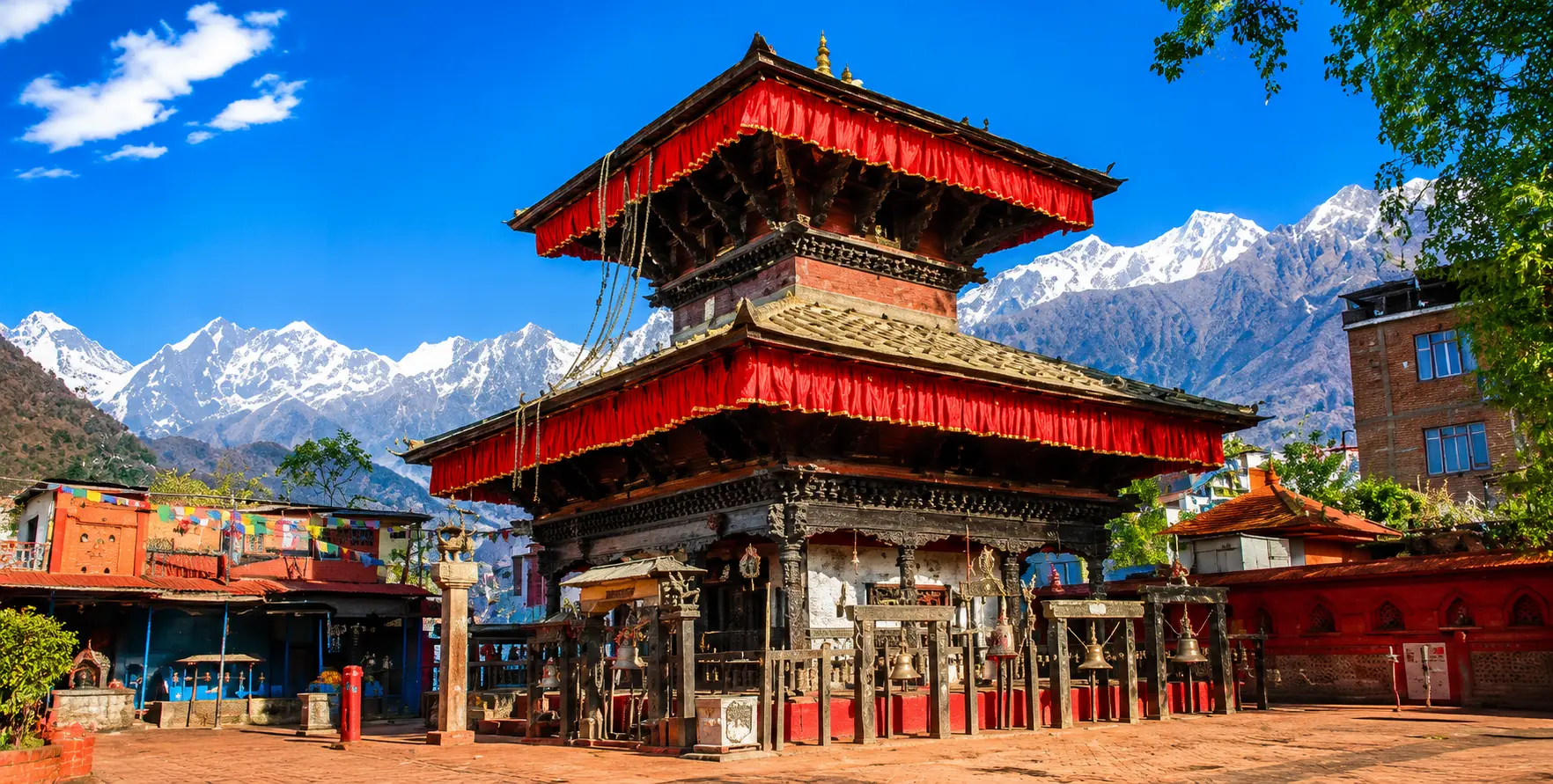
Manakamana Temple — The Wish-Fulfilling Goddess
Location: Gorkha District, 1,302 m, accessed via cable car from Kurintar on the Prithvi Highway
Deity: Goddess Bhagwati, an incarnation of Parvati, is revered as the fulfiller of sincere, heartfelt wishes.s
Distance from Kathmandu: Approximately 105–110 km to Kurintar, roughly halfway to Pokhara
Cable Car Fare 2026: NPR 2,700 round trip for non-SAARC foreigners; NPR 1,000 for Indian/SAARC citizens; NPR 770 for Nepali citizens (rates subject to revision — confirm at booking)
Cable Car Duration: Approximately 10 minutes each way, covering 2.8–3 km above the Trishuli River valley
Manakamana is one of Nepal’s most beloved and most accessible pilgrimage destinations, combining genuine devotional power with one of the country’s most enjoyable visitor experiences. The name is perfectly descriptive: Mana (heart/mind) and Kamana (wish) — the goddess who fulfills the heartfelt wishes of sincere devotees. Uniquely among major Nepali Hindu temples, the presiding priest at Manakamana comes from the Magar community rather than a traditional Brahmin lineage — the current priest is the 17th generation in this unbroken line of service.
Nepal’s first commercial cable car, opened in November 1998, transformed what was once a strenuous three-hour uphill walk into a scenic 10-minute ride in 34 six-person cabins, handling up to 660 passengers per hour. The cable car operates from 9:00 AM to 5:00 PM with a lunch break from 12:00 to 1:30 PM. Arriving at or before the 9:00 AM opening is strongly recommended to avoid the long queues — particularly on Saturdays, public holidays, and during Dashain, when waits of 5 to 10 hours have been recorded.
The cable car serves not only devotees but also small animals offered in sacrifice at the temple — goats are transported in the standard passenger cabins for a one-way fare, in one of Nepal’s more unusual co-passenger experiences. Pilgrims traditionally carry puja baskets containing marigolds, incense, red cloth, fruit, and coconuts for offerings at the goddess shrine, all of which can be easily transported in a private vehicle from Kathmandu.
Manakamana sits directly on the Prithvi Highway between Kathmandu and Pokhara, making it a natural en route stop for pilgrims driving to Muktinath or Pokhara. Most Vehicle Hiring Nepal pilgrimage clients stop at Kurintar’s cable car base station for 2 to 3 hours while the driver waits below, then continue west after completing the temple visit.
Vehicle Recommendation: Any private vehicle on the Kathmandu–Pokhara corridor accommodates a Manakamana stop. No separate vehicle arrangement is required — notify us at the time of booking to include the Kurintar wait in the day’s schedule.
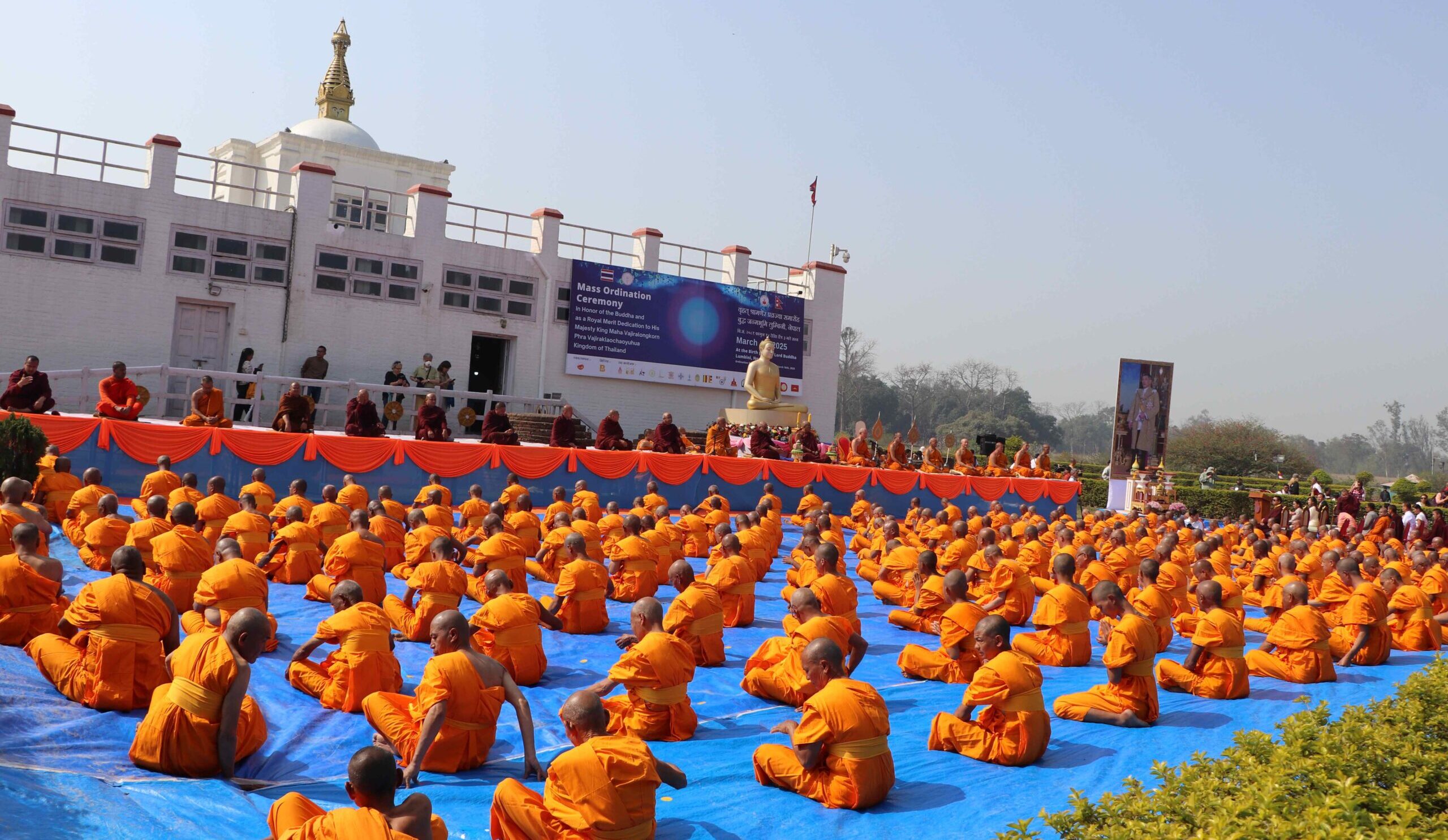
Lumbini — The Birthplace of the Buddha
Location: Rupandehi District, Lumbini Province, southwestern Terai plains
Significance: The exact birthplace of Siddhartha Gautama, the historical Buddha, approximately 623 BCE; UNESCO World Heritage Site
Distance from Kathmandu: Approximately 280–300 km, 7 to 8 hours by private vehicle
Nearest Airport: Gautam Buddha International Airport, Bhairahawa (BWA), approximately 22 km east
Lumbini occupies a position in Buddhist pilgrimage comparable to Pashupatinath’s standing for Hindus — the single most sacred site of its tradition anywhere on earth. The Sacred Garden protects the Maya Devi Temple, marking the precise birthplace of the Buddha; the Ashoka Pillar, erected in 249 BCE, which archaeologically confirms the site’s authenticity; and the Puskarini Pond, where Queen Maya Devi bathed before giving birth and where the infant Buddha received his first ritual bath. Together, these form the innermost sacred core of a complex that, at its full extent, covers many square kilometers within the Lumbini Development Zone.
The surrounding Monastic Zone contains over 40 monasteries built by Buddhist nations from across the world — the Chinese Zhong Hua monastery with its sweeping curved rooflines, the Royal Thai monastery with its gleaming white prangs, the Korean, Japanese, Sri Lankan, Burmese, and Cambodian monasteries each reflecting their own national sacred architectural tradition. A cycle or electric rickshaw through the full Monastic Zone is among the most architecturally and culturally diverse journeys available at any single pilgrimage site in Asia.
For pilgrims combining Hindu and Buddhist devotion in a single Nepal journey, Lumbini and Pashupatinath form the natural pairing — one the supreme Hindu site, the other the supreme Buddhist one. For purely Buddhist pilgrimage groups, Lumbini is typically combined with Kapilavastu/Tilaurakot (27 km west, where the Buddha grew up), Devghat, and sometimes onward to Kathmandu’s Boudhanath and Swayambhunath, creating a complete Buddhist Nepal circuit.
Vehicle Recommendation: Sedan or SUV for 1 to 5 passengers; Toyota Hiace for groups of 7 to 14. From Lumbini, the same vehicle can continue directly to Chitwan for a wildlife add-on or return to Kathmandu.
Nepal pilgrimage private vehicle hire with cars, Scorpio, Hiace, and 4WD jeeps for temple tours and sacred destinations
Janakpur — The Sacred City of Sita and Mithila
Location: Dhanusha District, Madhesh Province, central-eastern Terai
Significance: Birthplace of Goddess Sita, capital of the ancient Mithila kingdom, site of Sita’s marriage to Lord Rama
Distance from Kathmandu: Approximately 380–400 km, 7 to 8 hours by private vehicle
Janakpur is one of Hinduism’s most beloved cities, standing at the heart of the Ramayana narrative as the realm of King Janak, Sita’s father, and the setting for the legendary swayamvara where Lord Rama won Sita’s hand by bending and stringing the divine bow of Shiva. The magnificent Janaki Mandir — built in 1910 in a striking style blending Hindu and Mughal architectural traditions — dominates the city and is considered one of the most beautiful temples in Nepal, its white marble towers and ornate, carved facade creating an architectural impression unlike any other temple in the country.
The sacred ponds of Dhanush Sagar and Ganga Sagar, believed to have been created by Lord Rama and associated with specific episodes in the Ramayana, form part of the ritual circuit that devotees complete. The Ram Mandir, the Vivah Mandap pavilion where Sita and Rama’s wedding is traditionally re-enacted, and the numerous smaller shrines associated with specific Ramayana characters and events all contribute to an extraordinarily rich devotional geography compressed within a single city.
Vivah Panchami, held in November or December on the fifth day of Margashirsha Shukla Panchami according to the Hindu lunar calendar, is Janakpur’s greatest festival — a city-wide celebration re-enacting the wedding of Sita and Rama with elaborate processions, music, and devotional gatherings that draw enormous crowds from Nepal and neighboring Bihar state in India. The Mithila folk painting tradition, unique to this region and now recognized internationally for its distinctive geometric and naturalistic visual language, adds a vivid cultural dimension to any visit to Janakpur.
Vehicle Recommendation: Sedan or SUV for the direct Terai highway journey. Janakpur is also served by a domestic airport with flights from Kathmandu, making a fly-in/drive-out approach possible for time-limited pilgrims.
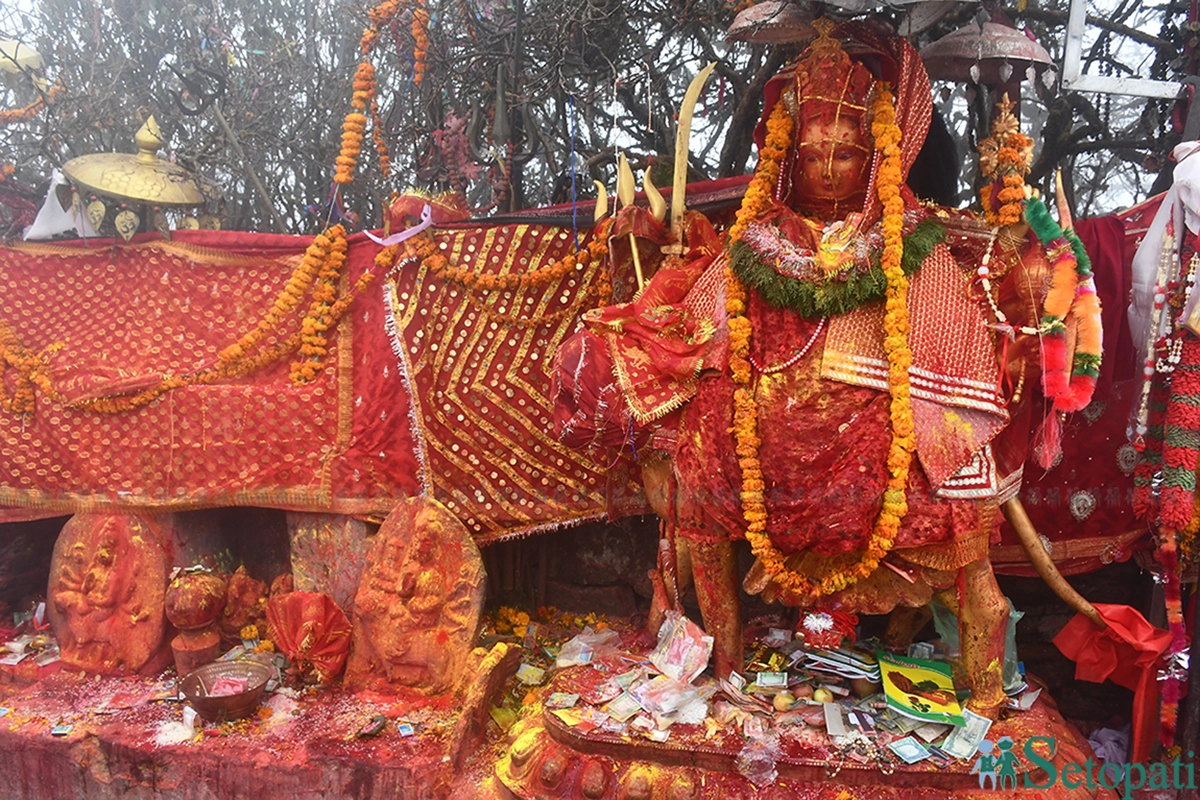
Pathivara Devi Temple — The Powerful Goddess of the Eastern Hills
Location: Taplejung District, far eastern Nepal, 3,794 m above sea level
Deity: Pathivara Devi — a fierce manifestation of Shakti, especially revered by Kirat (Limbu, Rai) and Hindu communities
Distance from Kathmandu: 615–650 km to Phungling (Taplejung Bazaar) by road, plus a 7–10 km uphill walk to the temple
Annual Visitors: Over 500,000 pilgrims annually, with peak attendance during Dashain (October)
Pathivara is one of Nepal’s most powerful pilgrimage sites and one of the country’s most physically demanding — requiring a 2-day drive from Kathmandu, followed by a 3- to 5-hour uphill walk to reach the goddess’s shrine. It cannot be reached by vehicle to the temple itself: pilgrims travel by road to Phungling or the higher village of Chitlang, then complete the final 7 to 10 km on foot or by pony. For the hundreds of thousands of devotees who make this journey each year, the physical effort is itself an act of devotion.
The goddess is worshipped at a simple stone shrine centered on a sacred trishul, with the temple complex sitting on the high ridge at 3,794, offering an extraordinary panoramic view of Kanchenjunga (8,586 m), Makalu (8,485 m), and Everest (8,849 m) on clear mornings. Animal sacrifice is a major and very visible part of Pathivara devotional practice, particularly intense during Dashain. Porter and pony services at the Chitlang trailhead make the ascent more accessible for elderly devotees.
Vehicle Recommendation: Mahindra Scorpio — the standard vehicle on this route, widely used by local drivers throughout eastern Nepal for its powerful engine and hill road capabilities—a 2-day journey from Kathmandu via an overnight in Dharan. Round-trip hire is approximately USD 370–460.
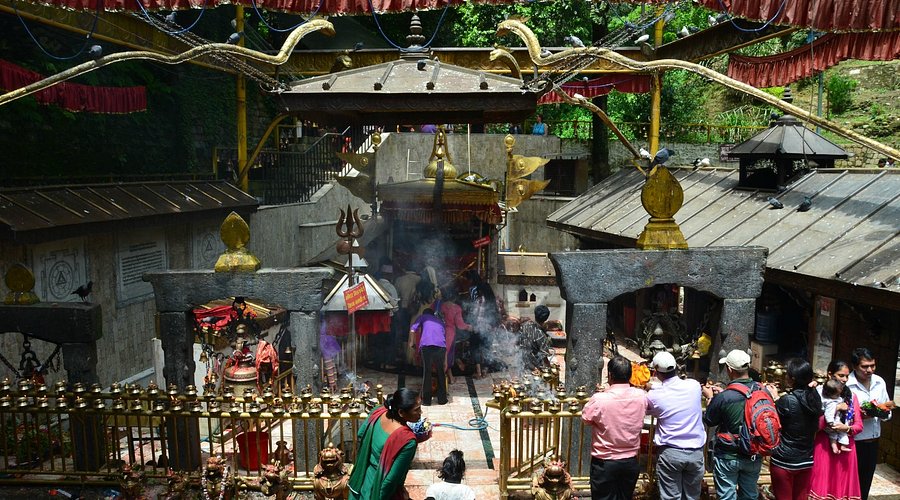
Dakshinkali and the Southern Valley Shakti Circuit
Location: Pharping, southern Kathmandu Valley, approximately 22 km from central Kathmandu
Deity: Goddess Kali in her fierce protective aspect
One of the most powerful Shakti sites within easy reach of Kathmandu, Dakshinkali sits at the confluence of two sacred streams at the base of a forested gorge, its open-air shrine the focus of regular animal sacrifice rituals — particularly intense on Tuesdays and Saturdays. The setting itself contributes powerfully to the site’s atmosphere: a steep stone stairway descending into a narrow, tree-shaded ravine with the continuous sound of flowing water. This rawness and immediacy of devotional practice make Dakshinkali distinctly different in character from the formal grandeur of Pashupatinath.
The southern Kathmandu Valley around Pharping also contains the Vajrayogini temple — a significant Tantric Buddhist site — and cave meditation sites associated with Guru Rinpoche (Padmasambhava) in the same forest, making this corner of the valley a rewarding combined Hindu-Buddhist pilgrimage half a day from any Kathmandu hotel.
Vehicle Recommendation: Sedan or SUV for a half-day hire from Kathmandu. Frequently combined with Dakshinkali, Pharping, and the Chobar Adinath temple in a single circuit.
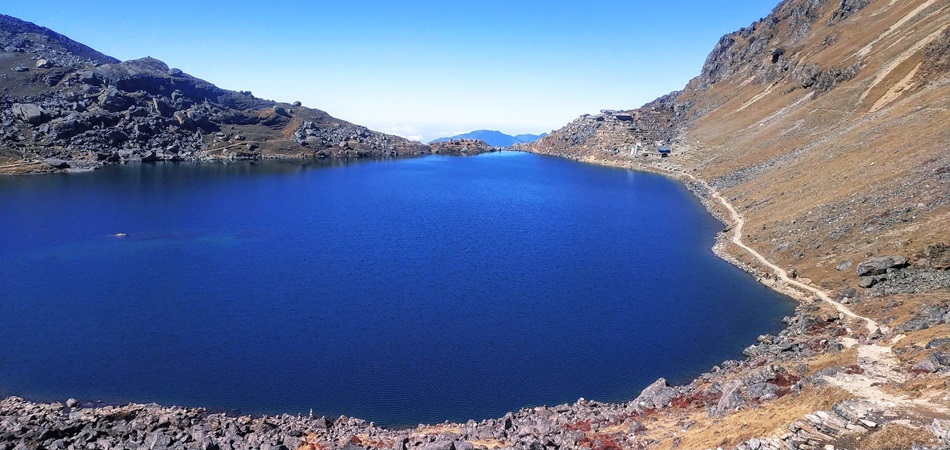
Gosaikunda — The Sacred Alpine Lake of Lord Shiva
Location: Rasuwa District, Langtang region, 4,380 m above sea level
Significance: Sacred lake believed to have been created when Shiva struck the ground with his trident after drinking cosmic poison
Road Access: Vehicle to Dhunche or Syabrubesi trailhead (approximately 115–130 km from Kathmandu, 4–5 hours), then 2 to 3 days trekking each way
Gosaikunda cannot be reached by vehicle — the sacred lake sits at 4,380 m and requires a genuine multi-day trek from the road head. However, Vehicle Hiring Nepal provides the essential first and last legs: private vehicle hire from Kathmandu to the Langtang trailheads at Dhunche or Syabrubesi, where the trek begins, and return pickup at the end of the trek. Janai Purnima in August — when devotees undertake ritual bathing in the freezing lake waters — brings significant pilgrimage traffic to the Langtang road and makes advance vehicle booking important for this festival period.
Vehicle Recommendation: Scorpio or Hiace is recommended, given the rough final sections of the Dhunche road. Round-trip to trailhead approximately USD 180–250.
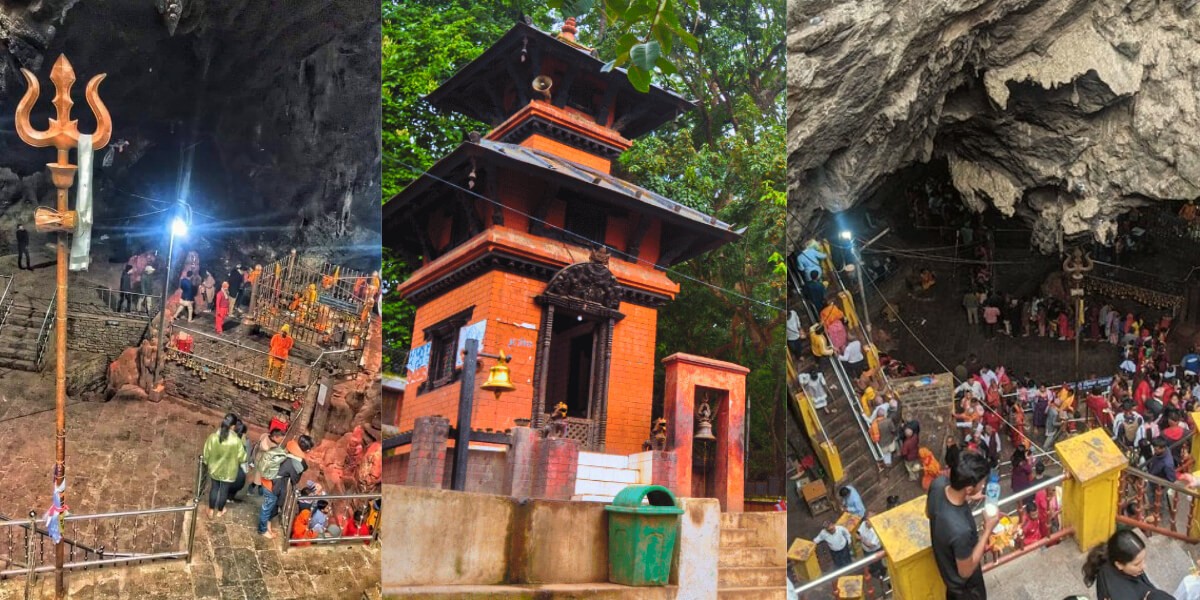
Halesi Mahadev — The Cave Temple of the East
Location: Khotang District, eastern mid-hills
Deity: Lord Shiva, worshipped within a remarkable natural limestone cave system
Distance from Kathmandu: Approximately 270–300 km, 8–9 hours by private vehicle via the eastern hill roads
Halesi Mahadev is one of Nepal’s most unusual sacred sites — a natural cave temple where the rock formations themselves are read as manifestations of Shiva’s presence. Devotees believe Shiva took refuge within these caves from a pursuing demon, and the underground chambers are understood to represent different aspects of the deity. Pilgrims enter and progress through a series of narrow, dark passages and caverns, performing rituals at specific points within — a dramatically different and profoundly intimate pilgrimage experience compared to open-air temple worship.
Halesi holds particular significance as a genuine point of convergence between Hindu and Kirat (indigenous eastern Nepali) spiritual traditions. For Rai and Limbu communities, the site is revered within their indigenous Kirat religion, not merely as a Hindu temple — creating a rare shared sacred space that mirrors Muktinath’s role in bridging Hindu and Buddhist devotion on the opposite side of the country. Maha Shivaratri draws the largest annual crowds.
Vehicle Recommendation: Scorpio or SUV. A round trip from Kathmandu is approximately USD 280–360, typically done as a 2-day round trip with an overnight in Khotang.
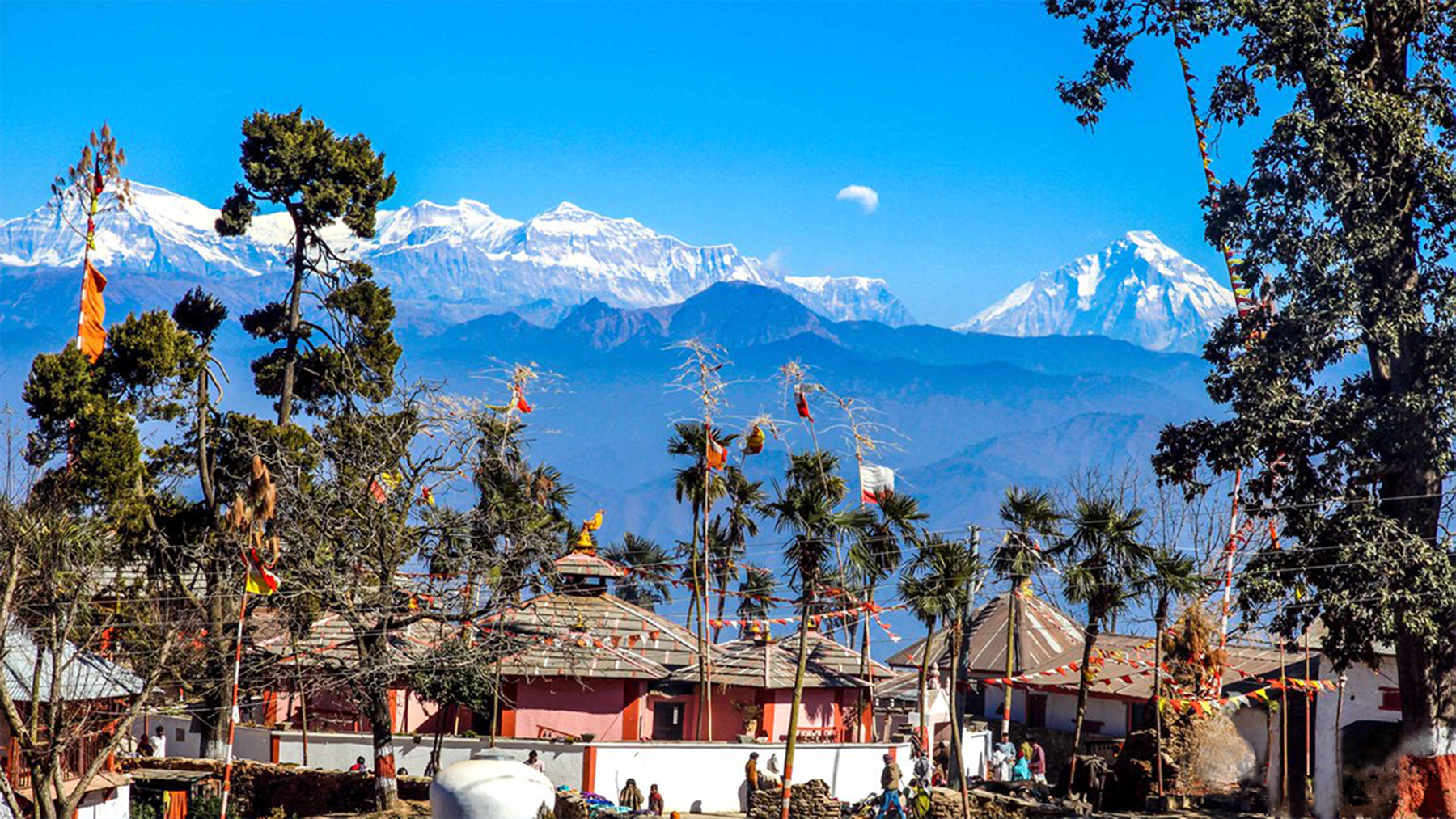
Swargadwari — The Gateway to Heaven
Location: Pyuthan District, mid-western Nepal hills, approximately 1,800 m
Significance: A major ashram and pilgrimage center established by the revered sage Swargadwari Baba in the late 19th century
Distance from Kathmandu: Approximately 400–450 km, 9–11 hours by private vehicle
Swargadwari — literally the Gateway to Heaven — is a pilgrimage destination of a different character from the deity-centered temple sites that dominate this guide. Set on a high wooded ridge in mid-western Nepal with sweeping valley views, it is primarily an ashram complex and spiritual retreat center established in the lineage of Swargadwari Baba, whose tradition of ascetic practice, teaching, and meditation continues today. Devotees arrive seeking darshan of the ashram’s presiding mahant (head), spiritual teaching, puja performed in the ashram’s temple, and the specific blessing associated with this lineage of sages — a practice rooted in Nepal’s sant and renunciate tradition as much as in temple worship. The site is widely known within Nepali and North Indian devotional circles. It is less internationally prominent than Pashupatinath or Lumbini, which contributes to a relatively quiet and contemplative pilgrimage atmosphere.
Vehicle Recommendation: Scorpio or SUV for the mid-western hill road sections. Often combined with a Lumbini visit for a western Nepal pilgrimage circuit. Round-trip approximately USD 320–420.
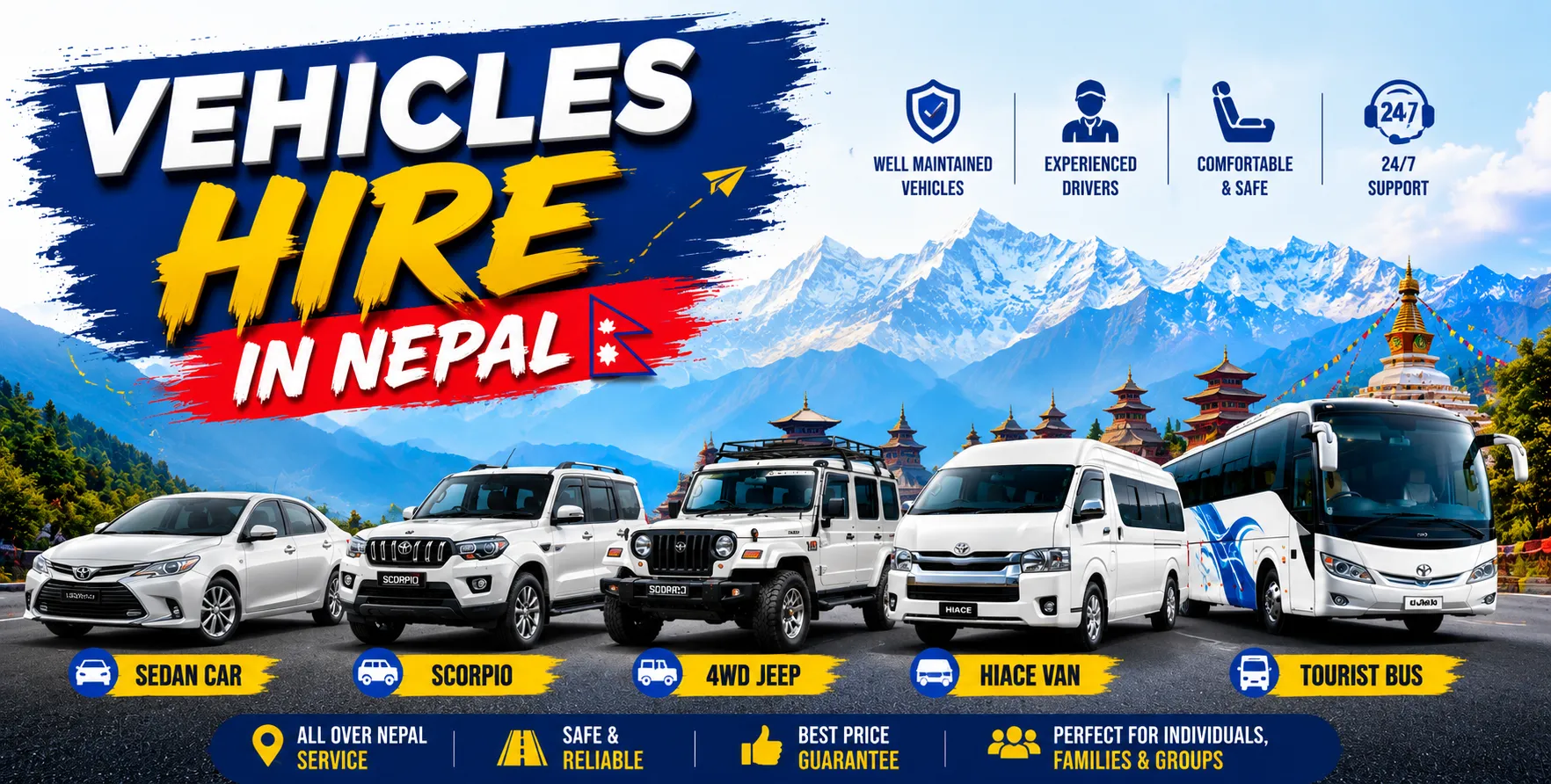
Vehicle Fleet for Nepal Pilgrimage Touring
Nepal’s pilgrimage landscape spans every terrain category, and Vehicle Hiring Nepal’s fleet is specifically matched to each type of sacred journey:
Sedan Car — Kathmandu Valley and Flat Terai Routes
Toyota Corolla, Honda City, or equivalent. Ideal for Pashupatinath, Boudhanath, Swayambhunath, Dakshinkali, Janakpur, and Lumbini — flat or well-paved routes serving 1 to 3 pilgrims. Economical, air-conditioned, door-to-door service from your hotel.
Toyota Fortuner or SUV — Small Family Pilgrimage Groups
Capacity 4 to 5. Versatile and comfortable for small families, it combines Kathmandu Valley sites with a Manakamana stop, a Lumbini journey, or the Gosaikunda trailhead approach. Good highway and moderate hill road capability.
Mahindra Scorpio — Eastern and Western Hill Pilgrimages
Capacity 6 to 9. The standard and recommended vehicle for the long hill road journeys to Pathivara (Taplejung) and Halesi Mahadev (Khotang). Powerful diesel engine, high ground clearance, and the vehicle most commonly used by experienced local drivers on eastern Nepal’s steepest road sections.
Toyota Land Cruiser — Muktinath and Upper Kali Gandaki
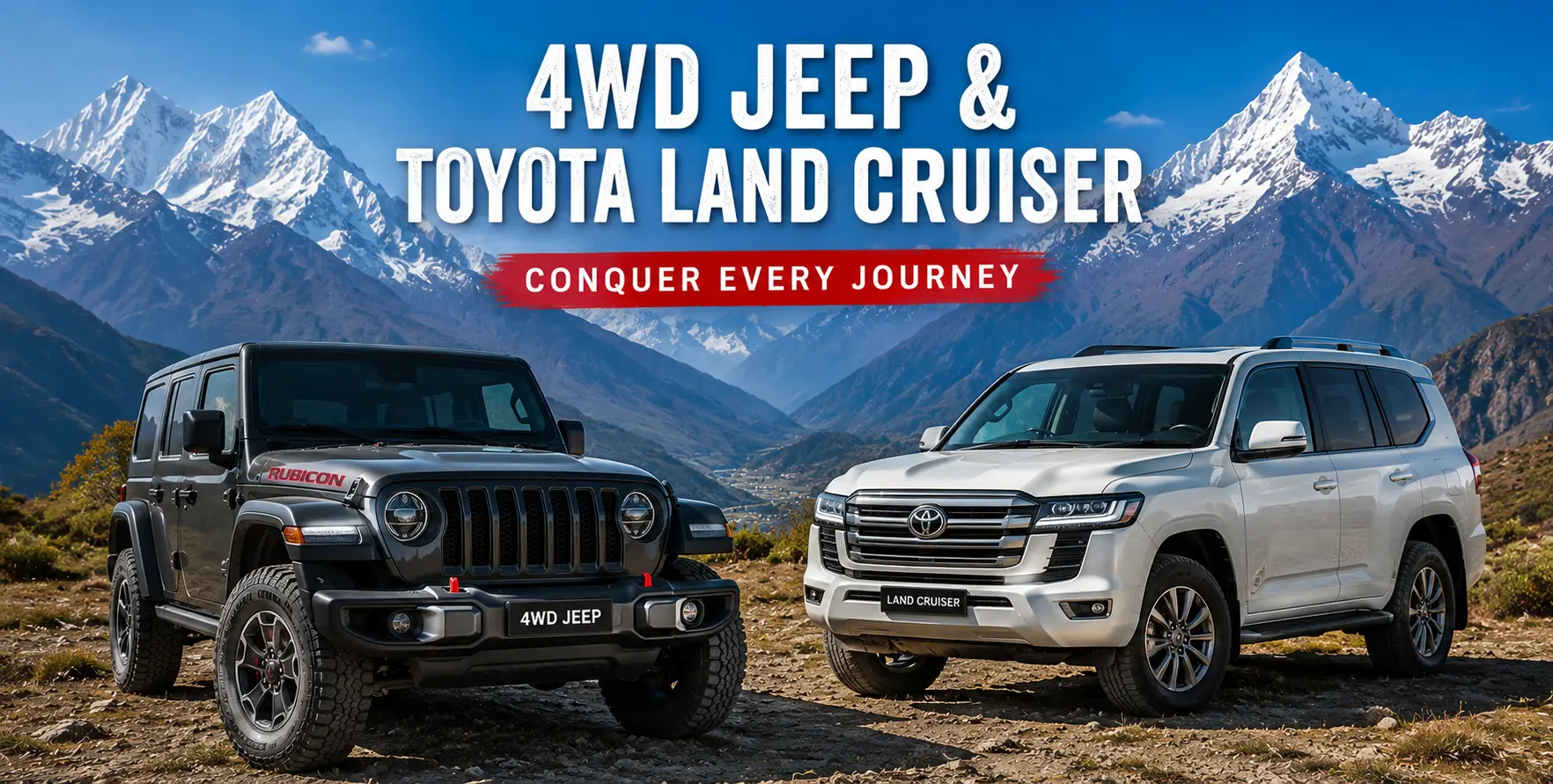
Capacity 4 to 6. Non-negotiable for the Muktinath pilgrimage route through the Kali Gandaki gorge. The most powerful and capable vehicle in the fleet, essential for the gorge track between Beni and Jomsom and the final ascent to Ranipauwa at 3,710 m.
Toyota Hiace Van — Large Pilgrimage Groups
Capacity 7 to 14. The preferred choice for extended family groups, temple committees, and community pilgrimage parties traveling together to Lumbini, Janakpur, Pathivara, or multi-site circuits in the Kathmandu Valley.
Toyota Coaster Bus — Organized Pilgrimage Parties
Capacity 15 to 22. For large jatra and yatra groups, organized pilgrimage societies, and temple tour parties covering multiple sacred sites in a single chartered vehicle.
Pilgrimage Vehicle Rental Prices 2026
| Route / Pilgrimage Circuit | Vehicle | Price (USD) | Journey Duration |
| Kathmandu Valley full circuit (Pashupatinath, Boudhanath, Swayambhunath, Dakshinkali) | Sedan/SUV | USD 50–80 | Full day |
| Kathmandu → Manakamana return (incl. cable car wait) | Sedan/SUV | USD 90–130 | Full day |
| Kathmandu → Lumbini (one-way) | Sedan/SUV/Hiace | USD 130–250 | 7–8 hrs driving |
| Kathmandu → Janakpur (one-way) | Sedan/SUV | USD 130–180 | 7–8 hrs driving |
| Pokhara → Muktinath → Pokhara (round trip) | Land Cruiser 4WD | USD 500–650 | 3–4 days |
| Kathmandu → Muktinath → Kathmandu (full circuit via Pokhara) | Land Cruiser 4WD | USD 700–900 | 5–7 days |
| Kathmandu → Pathivara/Taplejung (round trip) | Scorpio | USD 370–460 | 4–5 days |
| Kathmandu → Halesi Mahadev (round trip) | Scorpio/SUV | USD 280–360 | 2–3 days |
| Kathmandu → Gosaikunda trailhead (Dhunche) return | Scorpio/Hiace | USD 180–250 | 2 days (vehicle only) |
| Kathmandu → Swargadwari (round trip) | Scorpio/SUV | USD 320–420 | 3–4 days |
| Grand Nepal Pilgrimage Circuit (Lumbini + Muktinath + Kathmandu Valley) | Land Cruiser/Hiace | USD 900–1,200 | 9–11 days |
All prices include the driver, full fuel, and vehicle insurance. Multi-day journeys include driver accommodation arrangements at standard local rates, organized separately. Prices are indicative of 2026 rates — contact Vehicle Hiring Nepal for an exact quote based on your specific pilgrimage circuit, group size, and travel dates.
Sample Itinerary: 3-Day Kathmandu Valley and Manakamana Pilgrimage
- Day 1 (AM): Pashupatinath Temple at dawn — arrive for Mangala Aarti ~5:00 AM; time in the outer complex, Bagmati ghats, and deer park; Guhyeshwari Temple visit
- Day 1 (PM): Boudhanath Stupa — afternoon kora (circumambulation); Swayambhunath at golden hour for the finest valley views
- Day 2: Dakshinkali and the southern valley — early morning Kali puja, Pharping Vajrayogini temple, cave sites of Guru Rinpoche, return to Kathmandu for afternoon rest
- Day 3: Kathmandu to Manakamana and return — depart 7:00 AM, arrive Kurintar ~9:30 AM, cable car up (depart before 10:00 AM to avoid queues), darshan and offerings at the goddess shrine, cable car down, lunch, return to Kathmandu by evening.

Sample Itinerary: 7-Day Muktinath Pilgrimage Circuit from Kathmandu
- Day 1: Kathmandu to Pokhara by private vehicle (5–6 hrs) — Manakamana stop en route (2–3 hrs), arrive Pokhara evening, overnight Lakeside
- Day 2: Pokhara to Tatopani by Land Cruiser (5–6 hrs, depart 6:00 AM) — en route, we pass Beni and enter the Kali Gandaki gorge. Afternoon hot spring soak at Tatopani, overnight
- Day 3: Tatopani to Jomsom (4–5 hrs, MUST depart by 6:30 AM) — past Kalopani (Dhaulagiri views), Marpha village and apple orchards. Arriving in Jomsom before noon to beat the wind, overnight
- Day 4: Jomsom to Muktinath via Kagbeni (1.5–2 hrs) — Kagbeni permit check and Shaligram stone search; arrive Ranipauwa by mid-morning; 108 spouts ritual bath; Jwala Mai flame darshan; main temple worship; overnight Ranipauwa
- Day 5: Morning prayers at Muktinath; return descent to Tatopani (5–6 hrs); hot spring second visit, overnight Tatopani
- Day 6: Tatopani to Pokhara (4–5 hrs) — Phewa Lake evening; rest and celebration
- Day 7: Pokhara to Kathmandu by private vehicle (5–6 hrs) — return complete
Sample Itinerary: 10-Day Grand Nepal Pilgrimage Circuit
- Day 1: Kathmandu Valley — Pashupatinath (dawn Aarti), Boudhanath, Swayambhunath
- Day 2: Dakshinkali and Pharping sacred sites; afternoon rest
- Day 3: Kathmandu to Lumbini by private vehicle (7–8 hrs) via Manakamana stop
- Day 4: Full Lumbini pilgrimage day — Maya Devi Temple at dawn, Sacred Garden, full Monastic Zone by bicycle, Tilaurakot excursion
- Day 5: Lumbini to Pokhara by private vehicle (4–5 hrs) — Phewa Lake evening
- Day 6: Pokhara to Tatopani (Land Cruiser, 5–6 hrs) — Kali Gandaki Gorge entry
- Day 7: Tatopani to Muktinath via Jomsom (5–6 hrs) — arrive Ranipauwa, begin rituals
- Day 8: Full Muktinath pilgrimage day — all 108 spouts, Jwala Mai, extended temple time
- Day 9: Return descent from Muktinath to Pokhara via Tatopani
- Day 10: Pokhara to Kathmandu — return complete
The Nepal Hindu Pilgrimage Festival Calendar 2026
| Festival | Approx. 2026 Date | Primary Site(s) | Crowd Level |
| Maha Shivaratri | February 18, 2026 | Pashupatinath (1M+ devotees), Halesi Mahadev | Extremely crowded — book vehicle 6–8 weeks ahead |
| Chaitra Dasain | March–April 2026 | Pathivara, Dakshinkali, temples nationwide | Heavy — book 4–6 weeks ahead |
| Janai Purnima | August 9, 2026 | Gosaikunda (trekking pilgrims), Kumbheshwar | Moderate — 2–3 weeks’ notice |
| Teej | August 21, 2026 | Pashupatinath (large women’s pilgrimage) | Heavy — book 4 weeks ahead |
| Dashain (Vijaya Dashami) | October 2, 2026 | Pathivara (peak season), Dakshinkali, all temples | Extremely crowded — book 6–10 weeks ahead |
| Vivah Panchami | November 25, 2026 | Janakpur (Sita-Rama wedding re-enactment) | Very heavy locally — book early |
| Bala Chaturdashi | November 30, 2026 | Pashupatinath (night vigil and lamp offering) | Moderate |
| Maghe Sankranti | January 14, 2027 | Devghat, Triveni River confluences nationwide | Moderate — 2 weeks notice |
Festival dates follow the Hindu lunar calendar and shift annually relative to the Gregorian calendar. The dates above are indicative estimates for 2026 — always verify exact current-year dates through a reputable Nepal pilgrimage source before finalizing travel plans. Festival periods bring profound spiritual intensity but also the year’s highest demand for vehicles, accommodation, and services at all sacred sites.
Pilgrimage Etiquette — How to Honor Each Sacred Site
A private vehicle gives you the flexibility to arrive at the right time and in the right frame of mind for pilgrimage. The following etiquette guidance applies across virtually all of Nepal’s major Hindu and Buddhist sacred sites:
Dress and Physical Preparation
- Cover shoulders and knees at all sacred sites — loose, modest clothing in natural fabrics is recommended.
- Carry a scarf or shawl for additional coverage where required — available to purchase near the temple entrance.s
- Avoid leather items (belts, bags, certain shoes) at major Hindu sites, including Pashupatinath — leather is considered ritually impure in this context.ext
- Remove footwear before entering any temple structure; carry a small bag for shoes where dedicated storage is absent.
- For high-altitude pilgrimages (Muktinath, Gosaikunda, Pathivara), carry warm layers regardless of the season, and start drinking 4 liters of water daily starting the day before the ascent.
During Worship and Ritual
- Respect main sanctum access restrictions for non-Hindus at sites including Pashupatinath and Guhyeshwari — the outer complexes remain fully open and offer rich experiences
- Photography is strictly prohibited inside main sanctums and near cremation ghats at Pashupatinath — always ask before photographing sadhus, who may or may not welcome it.
- Move clockwise around stupas and sacred circumambulation paths (kora) — this applies at Boudhanath, Muktinath, and other Buddhist-influenced sites.
- Accept prasad (blessed food) offered by priests with both hands and consume it respectfully; do not discard it.
- Maintain silence in the innermost sacred areas — whispered prayer is appropriate; loud conversation is not.
Offerings and Donations
- Puja items (marigolds, sindoor, incense, rice, coins, ghee, fruit) can be purchased from vendors at every major temple entrance — bring Nepali rupees, as card payments are not available.e
- Drop donation boxes receive contributions from pilgrims of all means — give what feels appropriate rather than what is expected.
- For formal puja bookings at Pashupatinath (managed by the Pashupatinath Area Development Trust), arrangements must be made in advance, and payment must be made through designated banks — do not use third-party intermediaries.s

Health and Safety for Pilgrimage Travel in Nepal
- High-altitude pilgrimage (Muktinath at 3,710 m, Pathivara at 3,794 m, Gosaikunda at 4,380 m) carries a real risk of AMS (Acute Mountain Sickness) — do not ascend too rapidly, stay well hydrated, and descend if symptoms such as severe headache, vomiting, or confusion develop. op
- Travel insurance covering medical evacuation is strongly recommended for any pilgrimage above 3,000 m — helicopter rescue from Muktinath and the Gosaikunda trail is not infrequently required. A physician should assess pre-existing cardiac or respiratory conditions before high-altitude pilgrimage — consult your doctor and consider acetazolamide (Diamox) for prevention.
- Elderly pilgrims should pace the 108-spout circuit at Muktinath gently and avoid the full cold-water immersion if it poses a health risk — even partial completion of the ritual is considered spiritually valid by most priests.
- The Kali Gandaki gorge road is physically demanding — vehicle motion sickness is common on the switchback sections between Tatopani and Ghasa. Carry medication if susceptible.e
What is included in your Nepal pilgrimage? Private vehicle hire
- Appropriate vehicle for your specific pilgrimage route, fully maintained and insured
- Experienced driver familiar with darshan timings, festival crowd patterns, and the specific roads to each sacred site
- Full fuel cost and vehicle insurance for the entire journey
- Pickup from and drop-off at your Kathmandu, Pokhara, or other hotel
- Flexible scheduling to accommodate early-morning and ritual-specific timing requirements
- Waiting time at each pilgrimage site is included as standard
- 24/7 WhatsApp support throughout your journey
Not included: temple entry fees, puja and ritual costs, priest fees, sacred offerings, personal meals, accommodation, and any licensed guide fees required for restricted trekking areas. Vehicle Hiring Nepal arranges transport only.
How to Book Your Nepal Pilgrimage: PrivateVehicle Hiree
- Contact Vehicle Hiring Nepal via WhatsApp at +977 9851013196 or visit vehiclehiringnepal.com
- Please tell us which sacred sites you wish to visit and your available travel dates.
- Mention any specific festival, ritual, or early darshan timing requirement.s
- Confirm your group size — we recommend the right vehicle for your specific route and numbers.
- We propose a complete pilgrimage itinerary tailored to your devotional priorities and timeframe.
- Receive booking confirmation with driver details, vehicle information, and full daily schedule. dule
WhatsApp: +977 9851013196
Email:[email protected]
Website: www.vehiclehiringnepal.com
Frequently Asked Questions: ns Nepalpilgrimagem, and Private vehicle hire
Can non-Hindu travelers visit Nepal’s pilgrimage sites?
Yes. While the main sanctums of certain temples — most notably Pashupatinath and Guhyeshwari — restrict entry to Hindu devotees only, the extensive outer complexes, ghats, and surrounding areas of virtually every major pilgrimage site remain open and welcoming to all visitors. Lumbini, as a Buddhist site, is of course open to all faiths worldwide. Non-Hindu visitors to Pashupatinath often find the outer complex experience — the Bagmati ghats, the sadhus, the deer park, the evening Aarti from the eastern terraces — among the most moving cultural encounters available anywhere in Nepal.
How many days are needed to complete the Nepal pilgrimage circuit?
A focused Kathmandu Valley and Manakamana circuit can be completed in 2 to 3 days. Adding Muktinath requires 5 to 7 days, given the road distances and acclimatization needs. A grand circuit that combines Lumbini, Muktinath, Manakamana, and the Kathmandu Valley takes 10 days. Extending to eastern sites such as Pathivara or Halesi adds 3 to 5 more days. Vehicle Hiring Nepal can design a custom itinerary for any timeframe.
Is it possible to visit Muktinath without the multi-day road journey?
Yes. Flying from Kathmandu to Pokhara (25 min), then to Jomsom (25 min), cuts the journey to a single day of travel, followed by a short jeep ride to Muktinath. This approach is suitable for pilgrims with limited time or for those for whom the rough mountain road is physically demanding. However, it sacrifices the dramatic overland experience and the gradual acclimatization the road journey provides. Jomsom flights are subject to weather delays — always build buffer days for return.
What is the best vehicle for an elderly or multi-generational pilgrimage family?
A Toyota Hiace van offers the best combination of interior space, comfort, and luggage capacity for multi-generational family groups on flat or moderately rough terrain. For Muktinath specifically, the Toyota Land Cruiser is required by the terrain regardless of group size or age — our drivers on this route are experienced in pacing the high-altitude journey appropriately for elderly pilgrims and can adjust overnight stops to optimize acclimatization. Always inform us of any specific health concerns at the time of booking.
Can Vehicle Hiring Nepal arrange puja bookings at the temples?
We provide only vehicle transport and logistical support. Specific puja bookings, ritual arrangements, and priest fees at each temple are managed by the respective temple administration. They are best arranged independently or through a dedicated pilgrimage tour operator. We are happy to advise on the general process, timing, and typical costs for puja arrangements at each major site.
How far in advance should I book during festival season?
For Maha Shivaratri and Dashain — the two peak seasons — book your pilgrimage vehicle 6 to 10 weeks in advance. Vehicle supply becomes genuinely limited during these periods as demand across all of Nepal’s transport services peaks simultaneously. For standard non-festival pilgrimage travel, 1 to 2 weeks’ notice is generally sufficient for most routes, though Muktinath bookings always benefit from as much lead time as possible.
Final Thoughts
Nepal’s pilgrimage geography is one of the world’s great sacred landscapes. In this country,e the divine feels genuinely close, where ancient ritual continues without interruption, and where the physical effort of reaching a high-altitude shrine or completing a ritual circuit is understood as inseparable from the spiritual purpose of the journey itself. From the lamp-lit dawn aarti at Pashupatinath to the icy immersion of 108 spouts at Muktinath, from the wish-fulfilling goddess at Manakamana to the fierce power of Pathivara beneath the eastern Himalaya, Nepal offers pilgrims an unparalleled richness of sacred experience within a relatively compact geographic space.
Planning that experience with the right transport is not a logistics detail to be left until last — it is, in many ways, the foundation on which the entire pilgrimage rests. The right vehicle and driver mean arriving for the pre-dawn darshan, having space for the entire family and all its offerings, moving between sites at the pace of devotion rather than bus schedules, and being supported throughout by someone who understands what the journey means.
Vehicle Hiring Nepal has served pilgrims and pilgrimage groups across Nepal’s full sacred geography for years — from Kathmandu Valley day circuits to multi-day Muktinath journeys and the long road east to Pathivara. We are ready to bring you to the sites that matter most to you, in comfort and with the respect your pilgrimage deserves.
Book your Nepal pilgrimage vehicle today. WhatsApp: +977 9851013196 | Website: www.vehiclehiringnepal.com | Email: [email protected]. Jai Mahadev!
- Plan Your Nepal pilgrimage: Private Vehicle Hire Guide for Muktinath, Pashupatinath & More.
- Why Nepal pilgrimage Private vehicle hire is the Right Choice for pilgrimage travel.
- Pashupatinath Temple — The Spiritual Heart of Nepal
- Muktinath Temple — The High-Altitude Sanctuary of Fire and Water
- Manakamana Temple — The Wish-Fulfilling Goddess
- Lumbini — The Birthplace of the Buddha
- Janakpur — The Sacred City of Sita and Mithila
- Pathivara Devi Temple — The Powerful Goddess of the Eastern Hills
- Dakshinkali and the Southern Valley Shakti Circuit
- Gosaikunda — The Sacred Alpine Lake of Lord Shiva
- Halesi Mahadev — The Cave Temple of the East
- Swargadwari — The Gateway to Heaven
- Vehicle Fleet for Nepal Pilgrimage Touring
- Pilgrimage Vehicle Rental Prices 2026
- Sample Itinerary: 3-Day Kathmandu Valley and Manakamana Pilgrimage
- Sample Itinerary: 7-Day Muktinath Pilgrimage Circuit from Kathmandu
- Sample Itinerary: 10-Day Grand Nepal Pilgrimage Circuit
- The Nepal Hindu Pilgrimage Festival Calendar 2026
- Pilgrimage Etiquette — How to Honor Each Sacred Site
- Health and Safety for Pilgrimage Travel in Nepal
- What is included in your Nepal pilgrimage? Private vehicle hire
- How to Book Your Nepal Pilgrimage: PrivateVehicle Hiree
- Frequently Asked Questions: ns Nepalpilgrimagem, and Private vehicle hire
- Final Thoughts

Related Blog & Articles
Best Nepal Tour Package: Best Vehicle Hire Guide for 2026/2027
Cultural Heritage Temples in Nepal
Kathmandu Sightseeing: Car and SUV Hire Guide 2026