Plan a Trip


Nuwakot Historical and Spiritual Sites Guide – The Complete Travel and Transport Guide
Nuwakot Historical and Spiritual Sites Guide – The Complete Travel and Transport Guide
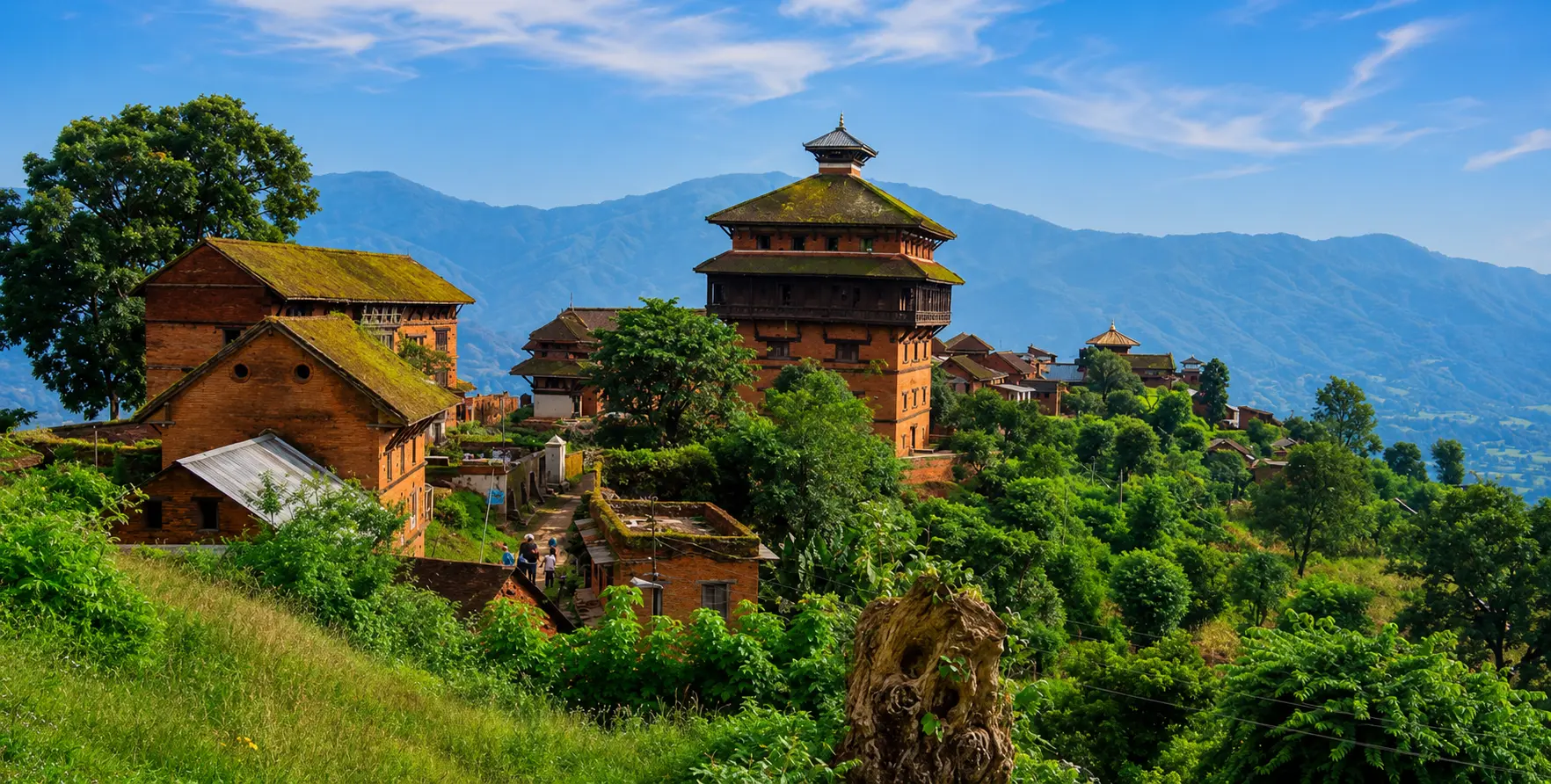
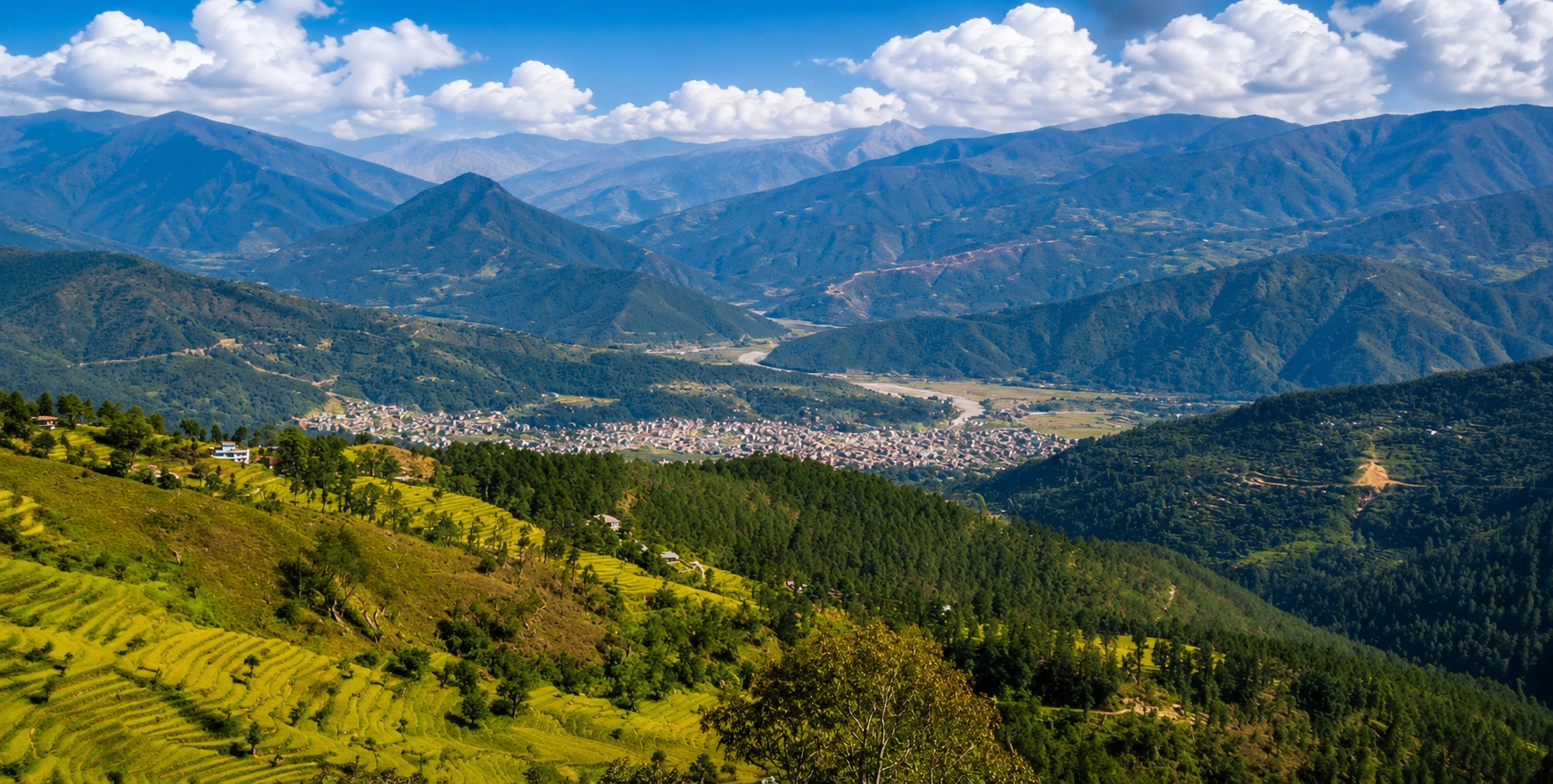
At some point on the drive northwest from Kathmandu, roughly an hour and a quarter out of the capital, the road begins to climb from the bank of the Trishuli River, and the landscape changes character in a way that announces you have left the orbit of the city and entered something older.
The hills steepen, the terraced fields become more pronounced, and then—perched on a ridge commanding a sweep of valley and mountain that explains why it was chosen—the seven-story silhouette of Nuwakot Durbar appears against the sky. It is one of the most arresting first sights in Nepal’s entire historical geography, and it is still, astonishingly, one of the least visited.
Nuwakot is where modern Nepal was born. Not in Kathmandu, where Prithvi Narayan Shah eventually planted his capital, but here, on this strategic hilltop above the confluence of the Trishuli and Tadi rivers, where in 1744 CE he won the battle that would trigger the unification of what had been fifty-four separate principalities into a single nation.
Nuwakot was Nepal’s capital for approximately twenty-five years during the height of the Shah dynasty’s unification campaign, and the seven-story palace that dominates the hilltop today — built partly with skilled labourers brought from Lalitpur and partly on the foundations of earlier Malla structures — is one of the finest surviving examples of traditional Nepali palace architecture anywhere in the country.
But Nuwakot is not merely a history lesson. It is simultaneously a living spiritual landscape of active temples, festivals of genuinely ancient origin, and sacred river confluences still visited by pilgrims today.
The Sindure Jatra, which takes place every April, is considered by scholars of Nepali religious culture to be one of the most complex and spiritually potent festivals in the entire country — and it happens here, in this quiet hilltop town, virtually unobserved by the tourist trail that runs straight past its turnoff toward Langtang and Gorkha. This complete guide explores every dimension of Nuwakot’s historical and spiritual identity and tells you exactly how to get there and experience it well.
If you’re travelling to Nepal for the best trek and planning to explore Kathmandu, we recommend continuing your journey with our trusted sister companies, Trek Nepal Himalayas and Alpine Luxury Treks. We specialise in organising a wide range of treks across Nepal, from classic trekking adventures to cultural and wildlife tours.
Our top offerings include iconic journeys such as the Everest Base Camp Trek, immersive Kathmandu sightseeing tours, breathtaking Nagarkot sunrise experiences, exciting Chitwan jungle safaris, and luxury packages. We can also arrange short hikes, heritage tours, mountain flights, and customised travel plans tailored to your schedule and interests.
Whether you are looking for a budget-friendly trip or a luxury trekking experience with premium lodges, private guides, and high-end services, we manage every detail professionally. Our goal is to provide a seamless transition from your trekking adventure to a comfortable) and a memorable travel experience in Nepal.
Understanding Nuwakot — The City of Nine Forts
District: Nuwakot District, Bagmati Province, Nepal
District HQ: Bidur (also written Bidewar), the modern administrative centre
Historical Capital: Nuwakot town (Nuwakot Bazaar), approximately 6 km above Bidur
Altitude: Nuwakot Durbar sits at approximately 1,128 m; Bidur at approximately 600 m; Devighat at 600 m
Distance from Kathmandu: Approximately 65–75 km by road, 1.5 to 2 hours by private vehicle
Name Origin: From Nawakot — Nawa meaning nine, Kot meaning fort or hilltop holy place. Nuwakot is surrounded by nine strategic hilltops, each with its own fort or sacred site.
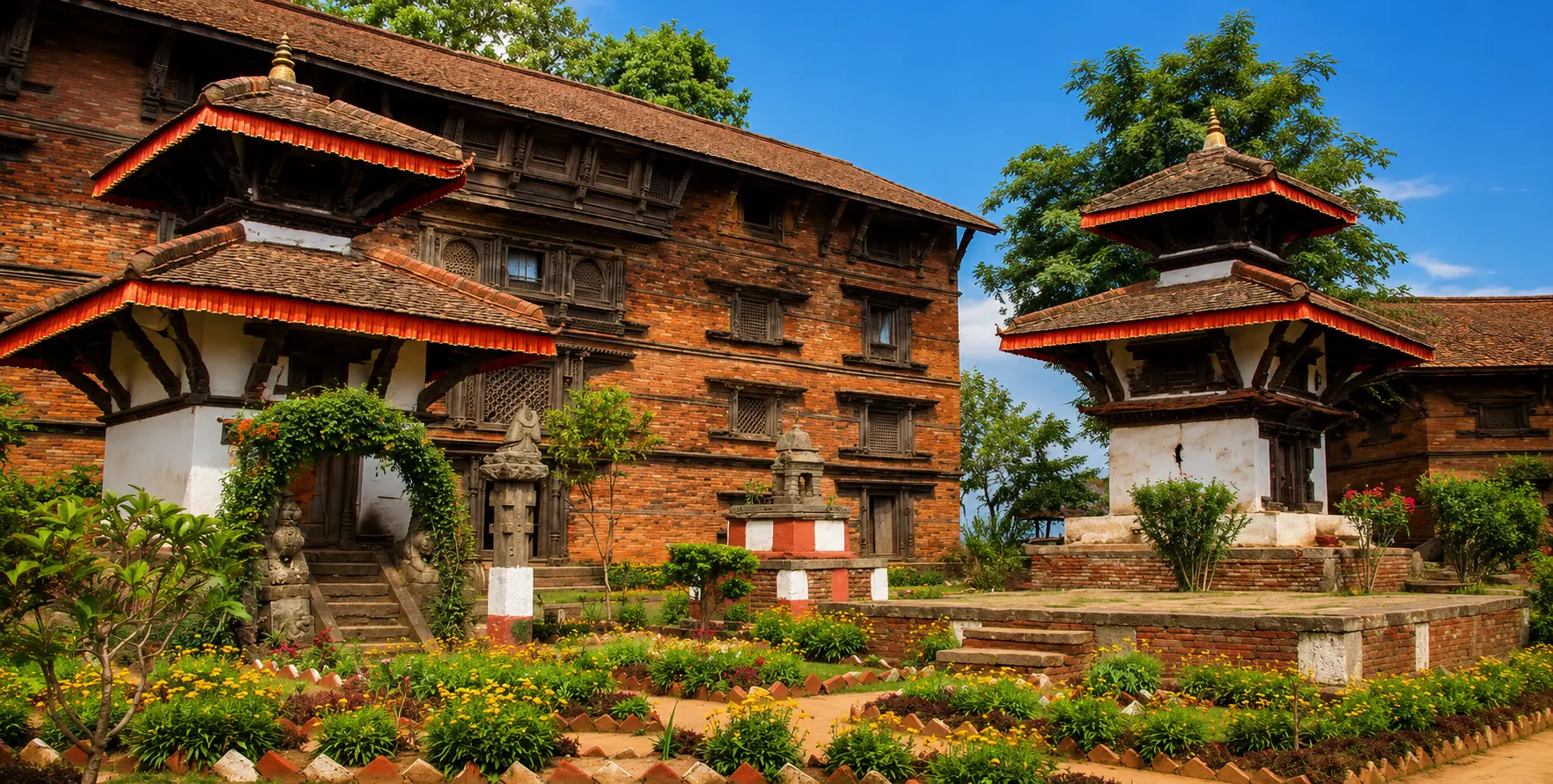
The district of Nuwakot covers 1,121 square kilometres in the middle hills of central Nepal, bounded by Sindhupalchowk and Kathmandu to the east, Dhading and Rasuwa to the west, Rasuwa to the north, and Dhading and Kathmandu to the south. It is a district of rivers — the Trishuli (Narayani), Tadi, Sali, Linkhu, and Falankhu all flow through its valleys — and of hills, each ridge carrying its own story of military strategy, trade routes, and divine protection.
The name Nawakot originally referred to a specific set of nine fortified hilltops in the district — Belkot, Dhuwakot, Dhaibungkot, Pyaskot, Bhairamkot (also called Bhairabkot), Malakot, Simalkot, Salyankot, and Kalikakot — each commanding a strategic view over the approaches to the Kathmandu Valley. This network of forts was not merely military; it was also spiritual. According to local tradition, nine deities oversee and protect Nuwakot from these nine hills, making the district as much a sacred geography as a military one.
The town that bears the district’s name sits atop one of these strategic ridges, its hilltop palace and cluster of temples surveying the Trishuli valley below with the easy authority of a site that has commanded attention for over a thousand years.
Nuwakot and the Birth of Modern Nepal — The Historical Context
To understand why Nuwakot matters as a historical site, you must understand Nepal’s political reality before 1744. The territory that is now Nepal was then divided into fifty-four separate principalities — kingdoms, city-states, and hill chiefdoms — each ruling its own small domain, competing and occasionally warring with its neighbours, and unable to present a unified response to the growing power of the East India Company in the Indian subcontinent to the south.
The three Malla kingdoms of the Kathmandu Valley — Kantipur, Patan, and Bhaktapur — were the wealthiest and most culturally developed, controlling the vital trans-Himalayan trade routes between India and Tibet. Nuwakot was a key node on this trade network, sitting at the western entrance to the Kathmandu Valley and controlling traffic on the trade road north toward the Kerung Pass into Tibet.
Prithvi Narayan Shah, who became king of the small principality of Gorkha in 1743 CE at age twenty, quickly understood that Nepal’s fragmentation made it vulnerable. He travelled to Varanasi to study statecraft and acquire firearms, observed the Malla kingdom’s political dysfunction up close, and decided that Nuwakot, controlling the western approach to the Kathmandu Valley and the Tibet trade route, was the essential first strategic prize in his unification campaign.
His first attack on Nuwakot in 1743 failed. But a year later, on 2 October 1744, with a better-equipped army attacking from three directions, Prithvi Narayan Shah took Nuwakot from its Malla-aligned defenders. It was the first domino in the sequence that would ultimately lead to Nepal’s creation.
The significance of this single military victory is difficult to overstate. By controlling Nuwakot, Prithvi Narayan Shah could cut off the Kathmandu Valley’s access to its Tibet trade revenues—its economic lifeblood—while using the hilltop as a base to surround and gradually strangle the three kingdoms. Over the following twenty-two years,
working outward from Nuwakot as his western stronghold, he systematically took the strategic positions surrounding the valley before finally capturing Kathmandu in 1768. Nuwakot served as Nepal’s de facto capital for approximately twenty-five years, housing the court, the treasury, the military command, and the administrative apparatus of an expanding kingdom.
It was also at Nuwakot that Prithvi Narayan Shah’s life ended. On 11 January 1775, on his 52nd birthday, in a poignant coincidence, the first king of unified Nepal died at Devighat, the sacred river confluence at the foot of Nuwakot Hill, where the Trishuli and Tadi rivers meet. His cremation was performed on the banks of the river at Devighat, as he had reportedly wished. The site of his death and cremation remains a pilgrimage point today, adding another layer of historical-spiritual significance to a district already rich in both.
Nuwakot Durbar — The Seven-Storey Palace
Official Status: UNESCO World Heritage Tentative List (nominated 2008)
Construction Period: 1744–1762 CE, under the oversight of governors Kalu Pande and Balbhadra Kunwar
Architecture: Traditional Newari/Malla style with seven stories, carved wooden windows, and pagoda-roof elements — labourers brought from Lalitpur (Patan) for the finest woodwork
Current State: Under ongoing restoration following the 2015 Gorkha earthquake; scaffolding covers portions, but the complex remains open and freely accessible to visitors
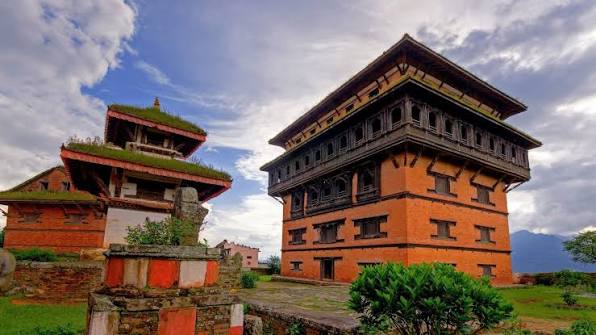
The seven-storypalace — Saat Tale Darbar — is the defining structure of Nuwakot and one of the tallest and most architecturally distinctive traditional palaces in Nepal. It rises from the hilltop in classic Newari multi-story style, its progressively narrowing floors and tiered roofs giving it a visual authority that dominates the skyline for kilometres in every direction. The palace was not built from scratch in 1744 — it expanded and incorporated earlier Malla-period structures on the same site — but the main construction under Prithvi Narayan Shah’s governors transformed it into the royal palace of a kingdom in the process of becoming a nation.
The architectural language of Nuwakot Durbar is deliberately drawn from the finest Newari palace tradition — the same tradition that produced the Durbar Squares of Kathmandu, Patan, and Bhaktapur. The intricately carved wooden windows, the carved roof struts with their mythological figures, the brick masonry alternating with timber framing, and the steeply pitched pagoda rooflines all speak the visual grammar of Malla-period sacred and royal architecture, even as they serve the political ambitions of the Shah dynasty that displaced the Mallas.
Prithvi Narayan Shah was not simply building a military headquarters; he was building a statement of cultural legitimacy, drawing on the most prestigious architectural tradition available to him and employing the most skilled artisans — the master woodcarvers and bricklayers of Lalitpur — to execute it.
The Palace Complex — Key Structures
The Seven-Storey Main Palace (Saat Tale Darbar): The central and tallest structure, serving as the royal residence, throne hall, and administrative centre of Prithvi Narayan Shah’s government. Currently under earthquake restoration.
Ranga Mahal (The Dance Hall): Built in 1726 as an entertainment and cultural annex, facing west, with a distinctive greasy-brick construction. Originally built for the three Malla kings of the Kathmandu Valley as a leisure space during their visits to Nuwakot. Still standing and accessible.
Garad Ghar (Guard House): The eastern structure housed the palace garrison and ammunition store. The prison cells (used during the Shah period) remain visible within the complex.
Rana Bahadur Shah’s House: The northern structure was built in 1795, later rebuilt during King Mahendra’s reign after its original collapse, and named for the troubled Shah king who spent periods of his turbulent reign at Nuwakot.
The Bhairav Temple: Immediately adjacent to the palace complex, this is one of Nuwakot’s oldest temples — a site of active worship and the focal point of the Sindure Jatra festival. It has a golden roof, with characteristic red brick construction and carved wooden struts. The heavy sindoor smeared on its ancient carved doorway testifies to the depth and continuity of local devotion.
The Taleju Temple: Visible on a small rise just before the approach to the main palace, the Taleju Temple dates to approximately 1564 CE — making it older than the Saat Tale Darbar itself. Taleju Bhawani was the royal patron deity of the Malla dynasty; her presence here reflects Nuwakot’s Malla-period significance before the Shah conquest. The Taleju temple opens twice yearly for animal sacrifice.
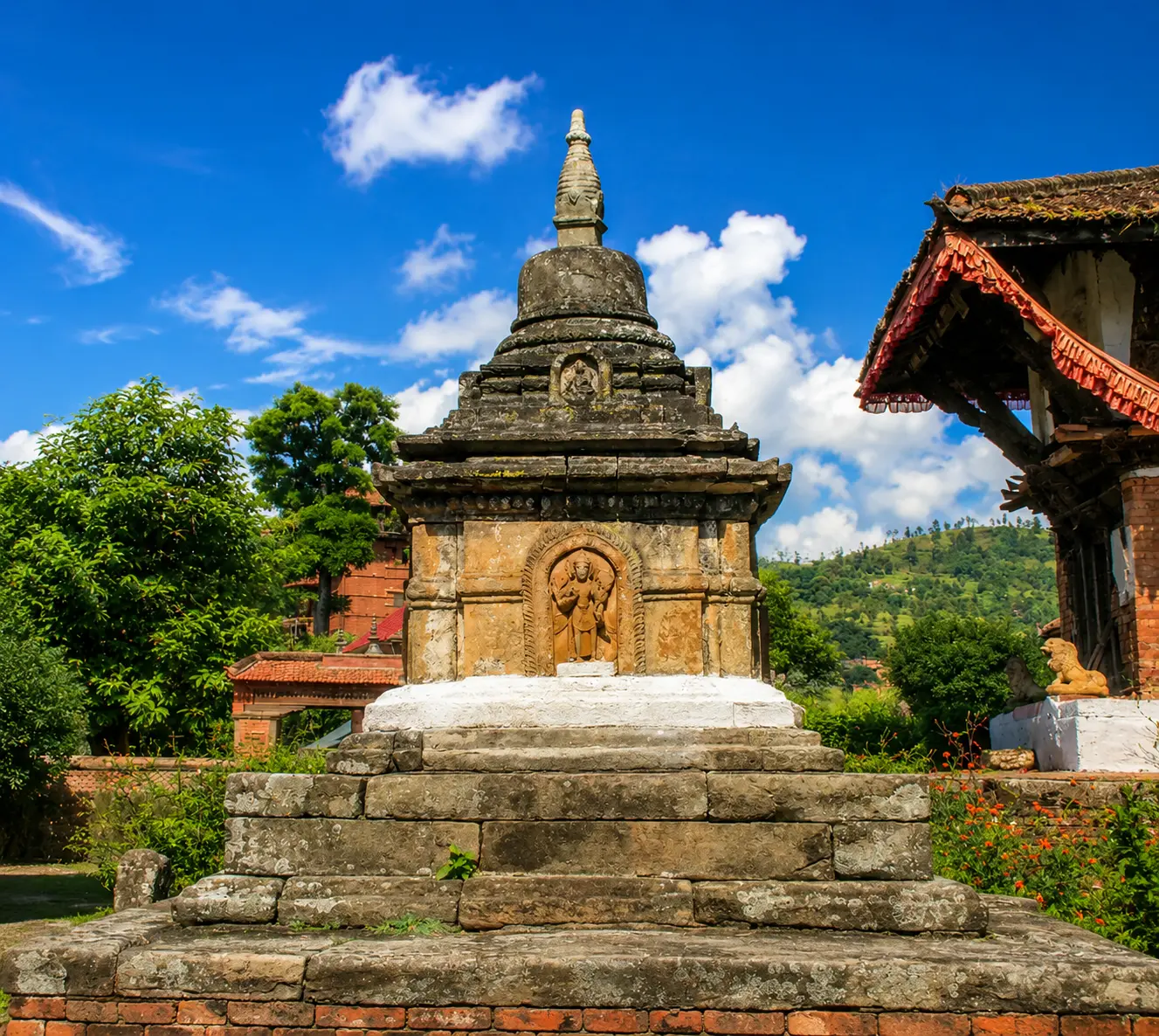
Buddhist Stupa: A small Buddhist stupa on the northern side of the complex whose original construction date is unknown, but which bears an inscription recording its renovation by Prithvi Narayan Shah in 1773. In 2023 (2080 BS), residents added additional chaityas and Buddhist statues to the site.
Lampati (Patan King’s Palace): A two-story structure with a glazed tile roof adjacent to the Bhairavi temple, historically used as a palace by the king of Patan during visits to Nuwakot and now converted to a museum. The Topkhana (arsenal) and Barudkhana (powder store) are also located within the wider complex.
The 2015 Gorkha earthquake, whose epicentre was near Nuwakot, caused significant damage to the palace complex. Restoration work has been ongoing but slow — a common frustration among recent visitors, who find portions of the Durbar covered with scaffolding or cloth.
Despite these limitations, the open areas of the complex remain freely accessible, and the views from the palace terrace — over the Trishuli valley, the forested ridges, and, on clear days, the distant snow peaks of the Ganesh Himal range — remain fully intact. A small, privately run museum adjacent to the Durbar Square houses traditional artefacts and is warmly recommended.
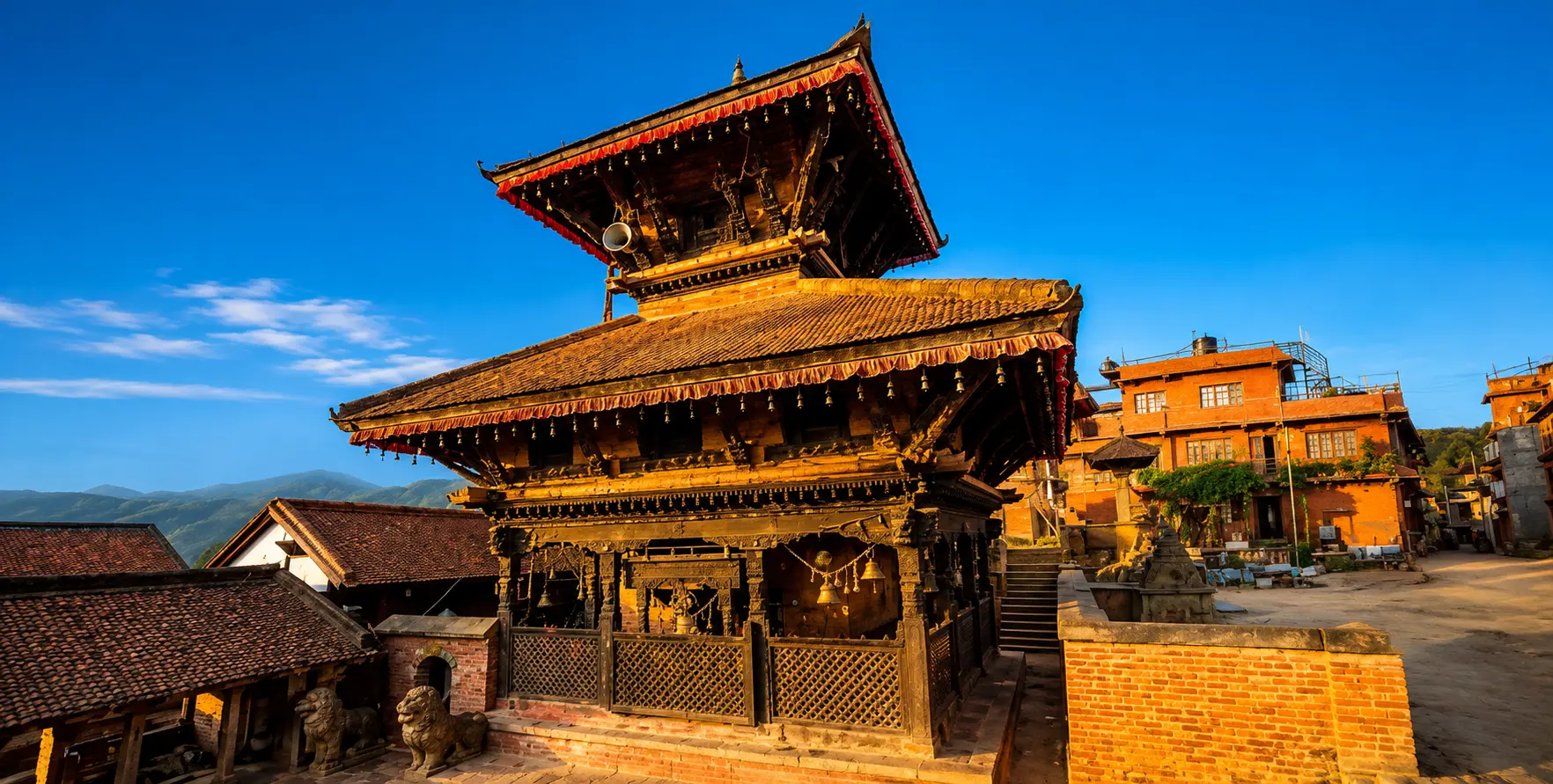
Bhairavi Temple and the Living Tradition of the Tantric Goddess
The Bhairavi temple at Nuwakot Durbar Square is not simply a historic artefact — it is a living centre of active religious devotion, maintained and served by the local Newar community of Nuwakot with the same seriousness and continuity that have characterised its worship since the Shah period.
Bhairavi is one of the Das Mahavidyas — the ten tantric divine mothers — and in her Nuwakot manifestation she is the patron goddess of the entire district, revered as the protector of the community, the source of fertility and agricultural prosperity, and the cosmic power that determines the fate of the region. She is understood not as a remote or abstract divinity but as an immediate, present, and demanding divine personality who must be regularly propitiated through specific ritual forms — hence the animal sacrifices that mark the major festival occasions.
The temple’s architecture follows the classic Nepali tiered pagoda style in red brick with elaborately carved wooden struts depicting erotic and mythological scenes — a standard feature of tantric temple iconography in the Newari tradition, intended to express the full spectrum of cosmic power, including its creative sexual dimension.
The heavy accumulation of sindoor vermilion powder) On the doorway and threshold marks how actively, and for how long, this goddess has been worshipped. Each application of sindoor is an individual act of devotion. The layered effect of decades or centuries of offerings creates a surface that is at once an artwork and a devotional record.
Inside the main sanctum, which is accessible to Hindu devotees, the goddess’s image is served by priests who conduct daily puja according to the specific ritual requirements of Bhairavi’s tantric tradition — not the simplified, brahminical Shaiva rites of many other Nepali temples, but a more complex and esoteric practice rooted in the Shakta-Tantric tradition that has been continuously maintained in the Nuwakot Newar community for centuries.
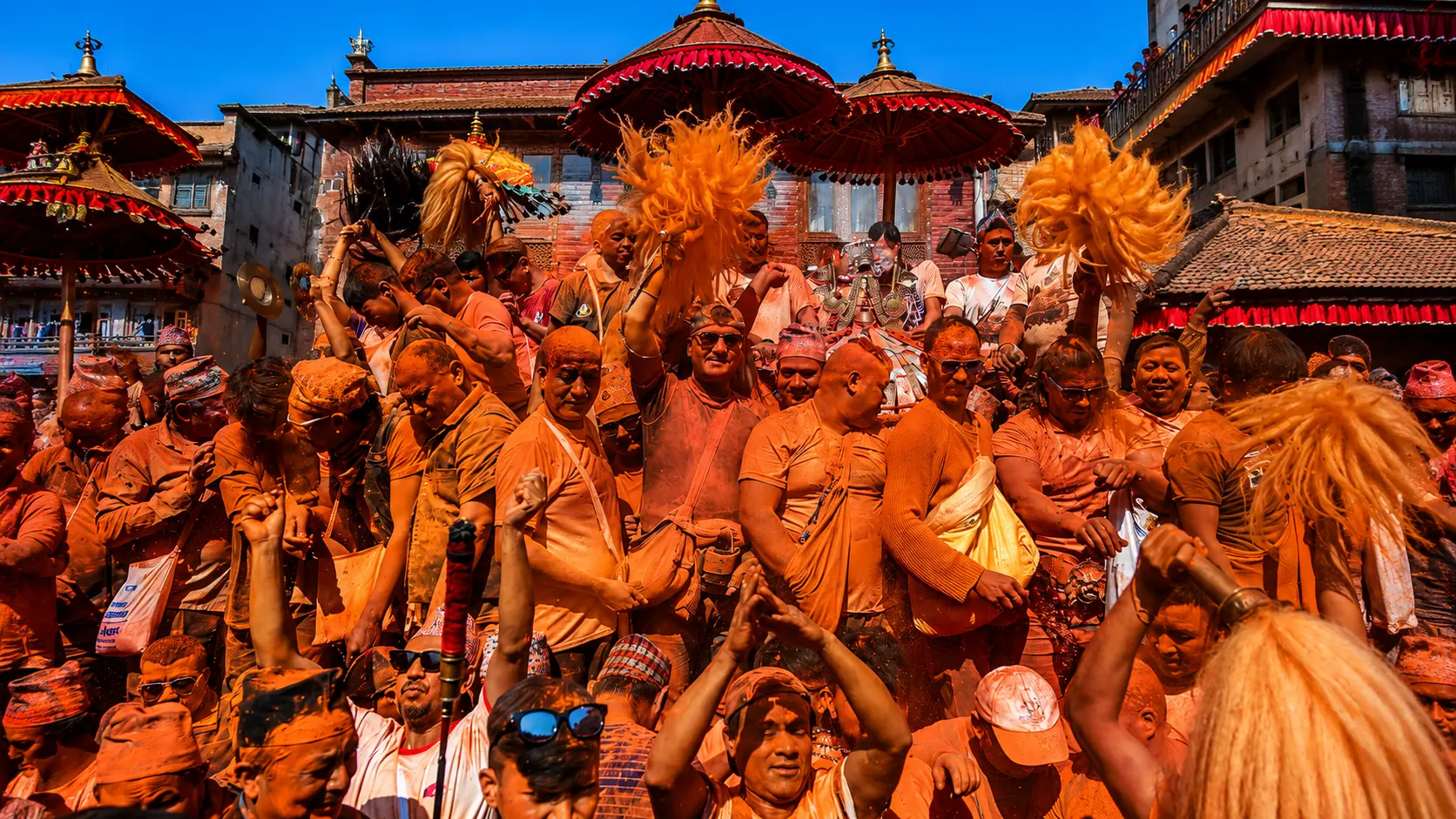
The Sindure Jatra — Nepal’s Most Extraordinary Hidden Festival
If there is one reason above all others to time a visit to Nuwakot precisely, it is the Sindure Jatra — the Vermillion Powder Festival — which takes place every year in the Nepali month of Chaitra/Baishakh (approximately April), and which is regarded by scholars of Nepali religious culture as one of the most complex, most ancient, and most spiritually intense festivals in the entire country.
The festival runs for twelve consecutive days, beginning on the 14th lunar day (Chaturdashi) of the bright fortnight of Chaitra. It centres on Goddess Bhairavi of Nuwakot and her relationship with her elder sister, Goddess Jalapa Devi, who resides at Devighat—the sacred river confluence at the foot of Nuwakot hill, 4 to 5 hours away by chariot procession. The entire twelve days are structured around the theological premise that the younger sister (Bhairavi) must make an annual pilgrimage to visit the elder sister (Jalapa Devi). This family obligation humanises the divine in a way that reflects the deepest Nepali religious sensibility.
The Preparation Phase — Days One to Nine
The preparations for the Sindure Jatra begin weeks before the formal opening. On the eighth lunar day, the Dhami—the spirit medium and primary ritual officiant of the festival, a hereditary role within the Nuwakot Newar community—begins collecting rice from households for sacred fermentation, walking through Nuwakot and beating a drum. On the ninth day, the community identifies a specific pine tree in the surrounding forest, ritually worships it to appease the spirits within, then ceremonially fells it and shapes it into a 63-foot pole to be raised in front of the Bhairavi temple during the festival.
On the thirteenth day of preparation, nine men undertake a ritual journey to Devighat — the elder sister’s home — carrying a fully black or fully white uncastrated goat as a formal offering of invitation to the goddess. They accompany the journey with prayers asking the elder sister’s permission and blessing for the younger sister’s forthcoming visit. The response — whether the offering is accepted — is interpreted as an oracle about the condition of the two goddesses’ relationship and, by extension, the spiritual condition of Nuwakot itself.
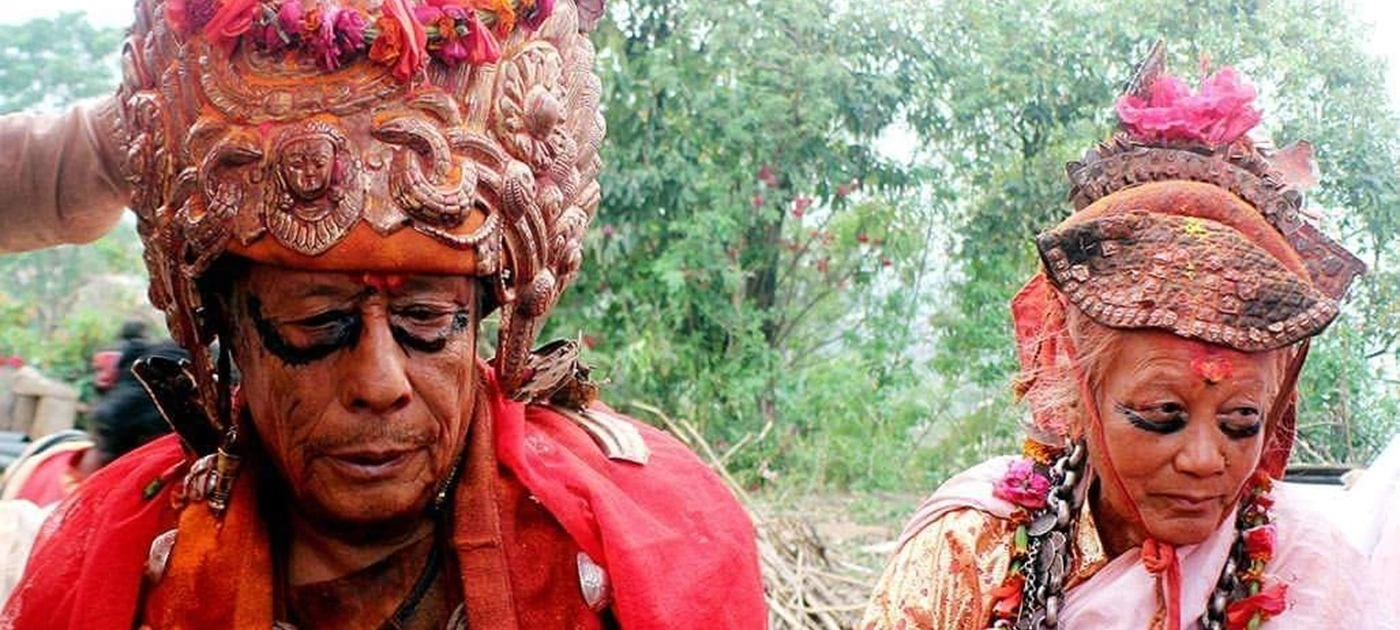
On the first formal day of the festival (Day 1), the Dhami undergoes an ablution ritual with Nuwakot’s own living Kumari—the prepubescent girl regarded as a manifestation of the divine feminine. This tradition parallels Kathmandu’s famous Kumari tradition. The bath symbolises the purification necessary before Dhami enters the elevated state of ritual possession. He is then dressed in an elaborate red ceremonial costume with gold and silver accessories, including a nine-headed Naga crown, earrings, bangles, a chain necklace, and an Astamatrika necklace — the regalia of a divine consort.
The Chariot Procession — The Heart of the Festival
The festival’s most spectacular and physically demanding element is the chariot procession of Goddess Bhairavi — considered the longest in all of Nepal. The chariot, mounted with masks of twelve different gods and goddesses, is pulled by hundreds of community members from the palace complex at Nuwakot Durbar down the steep hill road to Devighat at the Trishuli-Tadi confluence — a journey of 4 to 5 hours each way on foot, through the terraced hillsides and river valleys below the palace.
At Devighat, in the presence of Jalapa Devi and at the sacred confluence of the two rivers, the Dhami enters the deepest state of possession available in the Nepali ritual tradition. The Bajracharya guru performs an esoteric tantric puja, including the sacrifice of a fully black, uncastrated goat.
In this state of possession, the Dhami is understood to receive direct communication from the goddess about Nepal’s future — a national prophecy whispered in confidence to the State Representative present at the ceremony, who then communicates it to the relevant authorities. This divinatory function has no parallel in any other major Nepali festival and gives the Sindure Jatra significance that extends beyond the local community to the national level.
The midnight return of the chariot from Devighat to Nuwakot — completing the 4- to 5-hour uphill journey through the night — is followed by a rest at Dharampani, approximately 550 meters below the Durbar Square, before the final approach to the temple on the third day. The closing ceremony on the 31st of Chaitra (the last day of the Nepali year) consists of the Sindure itself — the throwing of sindoor (vermillion powder) that gives the festival its popular name. Beginning with the festival guardian scattering sindoor over the priest, who then scatters it over the assembled devotees, the act cascades outward through the crowd in a red tide that marks the Nepali New Year and the completion of another annual cycle of the younger sister’s visit to her elder.
The Festival Calendar — Key Dates
Sindure Jatra follows the Nepali lunar calendar, so its exact Gregorian dates shift each year. The festival typically falls between mid-April and early May. In Nepal, the festival is expected to begin around the 14th day of the bright fortnight of Chaitra in the Nepali calendar — contact Vehicle Hiring Nepal or check with local sources for the dates as the Nepali year progresses.
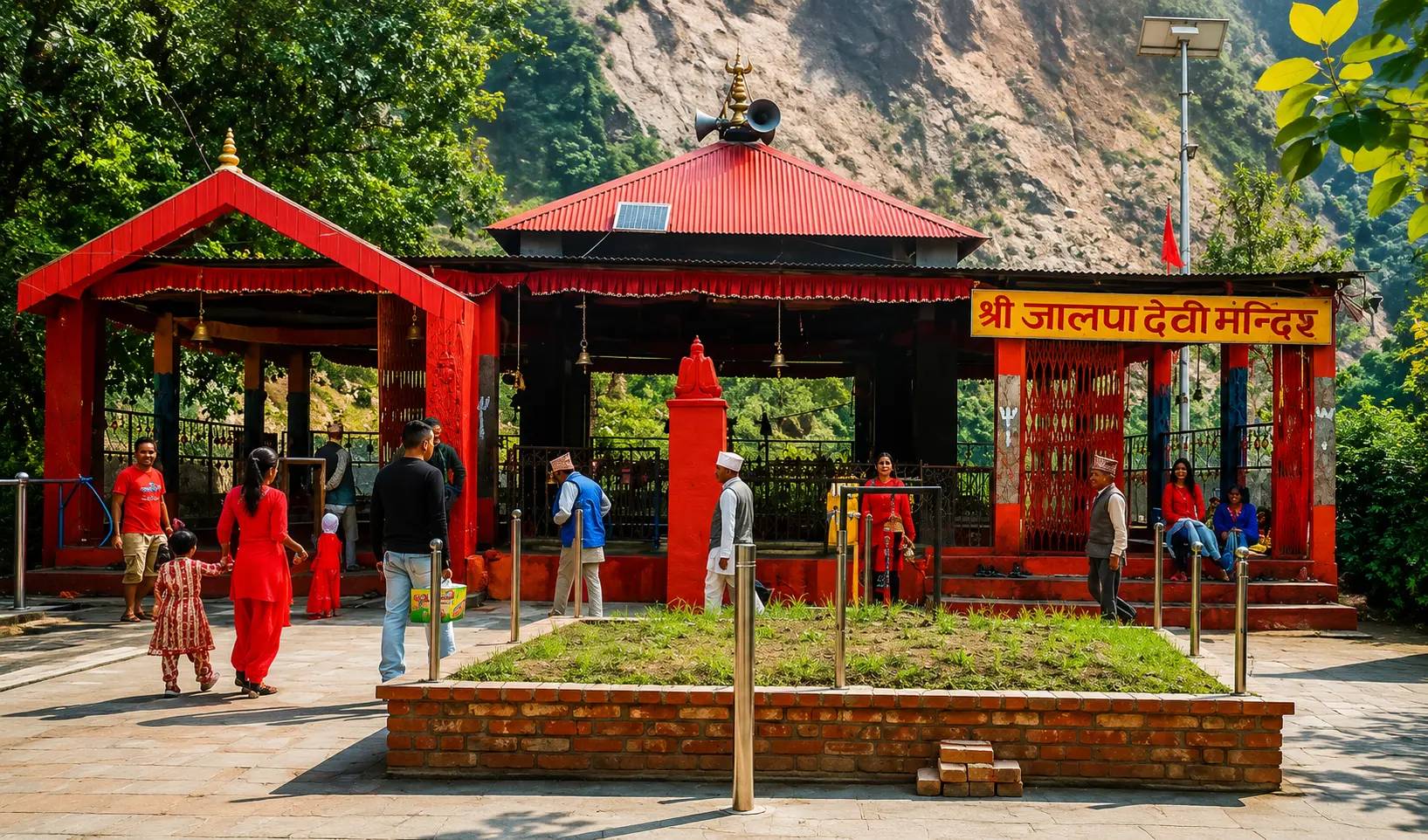
Devighat — Where Nepal’s Founder Died and the Rivers Meet
Location: Approximately 7 km north of Bidur at the confluence of the Trishuli (Gandaki) and Tadi (Suryamati) rivers, Nuwakot District
Altitude: Approximately 600 m
Significance: Sacred river confluence; site of Jalapa Devi temple; site of King Prithvi Narayan Shah’s death (11 January 1775) and cremation
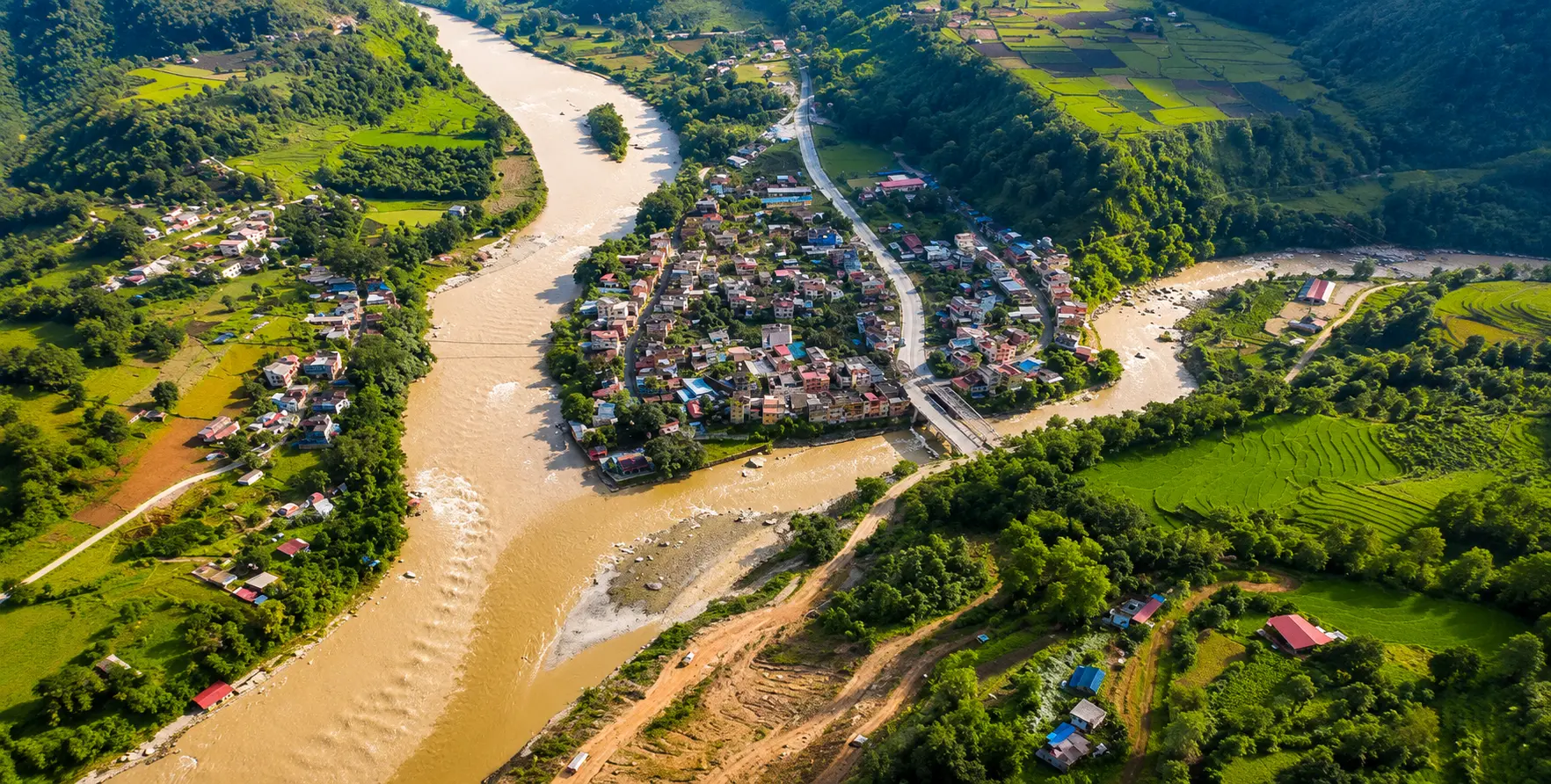
Devighat — the Goddess’s Bathing Place — is one of those sites where historical and spiritual significance overlap so completely that it is impossible to discuss either dimension without immediately invoking the other. The confluence of the Trishuli and Tadi rivers has been considered sacred for reasons that predate written record — river confluences (triveni or dwariveni) hold profound spiritual significance in the Hindu and Kirat traditions, regarded as places where the boundary between the human and divine worlds thins and ritual bathing is especially efficacious.
The Jalapa Devi temple at Devighat is the elder sister of Nuwakot’s Bhairavi—a relationship that, as the Sindure Jatra demonstrates, is not merely mythological but enacted annually in one of Nepal’s most elaborate ritual sequences. Jalapa Devi’s temple sits at the water’s edge, and the sight of Bhairavi’s chariot arriving after its long downhill journey from the palace, to be received at the riverside temple by her elder sister, is one of the most visually and emotionally compelling moments in Nepali religious public life.
Devighat’s historical dimension is equally profound. Prithvi Narayan Shah died here on his 52nd birthday, 11 January 1775, just seven years after completing the unification of Nepal by capturing Kathmandu. According to historical accounts, he was cremated at Devighat, as he wished. This choice reflects his personal connection to Nuwakot as the foundation of his life’s work. The site of his cremation remains visible and is visited by pilgrims seeking to understand the physical geography of Nepal’s founding.
The Chaitra Purnima festival—held on the full moon day of the Nepali month of Chaitra—brings hundreds of thousands of devotees to Devighat for ritual bathing at the river confluence, making it one of the larger religious gatherings in Bagmati Province. The golden light of the sunrise and sunset on the Trishuli-Tadi confluence, with the forested hills of Nuwakot rising on all sides, makes Devighat also one of the most photographically beautiful sacred river sites in the central hills.
The Trishuli River — Sacred Waters and Adventure
River Name Origin: The Trishuli takes its name from Shiva’s trishul (trident). According to legend, Shiva struck his trident into the ground high in the Himalayas at Gosaikunda, creating three wells that became the river’s source — hence Trisuli, the River of the Trident.
River Course: Originates in the Gyirong district of Tibet, enters Nepal through the Rasuwa valley at the Kerung gorge, flows south through Nuwakot, and joins the Narayani River at Devghat near Narayanghat before eventually reaching the Ganges.
Rafting Classification: Grade III to III+, suitable for both beginners and experienced rafters
The Trishuli River is both one of Nepal’s most sacred waterways and its most popular rafting river—a pairing that is not as simple as it may seem. This pairing is not as simple as it may seem, since the Trishuli’s sacred character comes from the same qualities that make it a thrilling rafting destination: its descent from the high Himalayas through deep gorges and its powerful, clear-water flow through the middle hills.
The Trishuli has been one of Nepal’s most important trade arteries since ancient times, carrying goods between the Kathmandu Valley and Tibet via the Kerung Pass. Nuwakot’s strategic position on this trade route made it valuable to Prithvi Narayan Shah—controlling Nuwakot meant controlling the flow of goods and revenues between the valley and its Tibetan trading partners. The river was not merely a geographic feature but an economic and political resource.
For modern visitors, the Trishuli’s rafting stretch between Charaudi (near Galchhi) and Mugling offers a full-day or multi-day adventure through alternating rapids and calm stretches, with Nuwakot and Dhading’s forested hillsides rising on either bank. The Grade III to III+ rapids are sufficiently exciting for most visitors without being genuinely dangerous, and the river’s relatively easy access from Kathmandu — the put-in point at Charaudi is approximately 70 km from the capital on the Prithvi Highway — makes it the most frequently rafted river in Nepal.
Overnight camping on the river’s sandy beaches, with fire-lit evenings under the stars of the Nuwakot hills, is one of central Nepal’s finest adventure experiences.
Other Spiritual and Historical Sites in Nuwakot District
Dupcheshwar Mahadev Temple
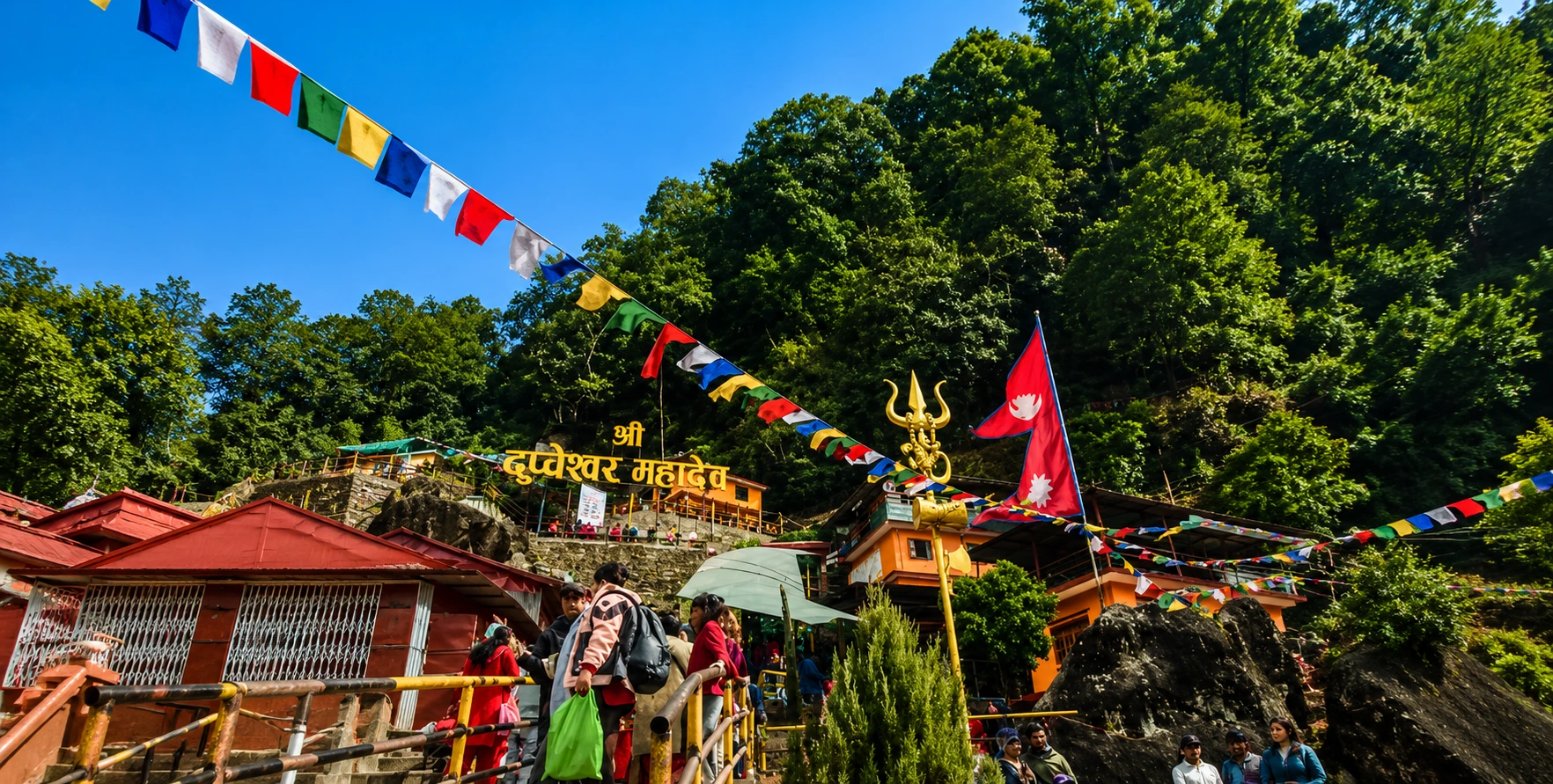
Located about 18 km from Bidur in the Dupcheshwar Rural Municipality, the Dupcheshwar Mahadev Temple is one of Nuwakot District’s most sacred Hindu sites—a Shiva temple perched on a commanding hilltop, offering panoramic views of the Ganesh Himal, Langtang, and surrounding ranges. Devotees consider the temple especially powerful on Maha Shivaratri and on the full moons in the Hindu calendar. The approach road passes through beautiful mid-hill countryside.
Indrakamala Mai Temple
About 18 km from Bidur and 8 km from the Kakani Rural Municipality Office, the Indrakamala Mai temple is an important local goddess shrine that reflects the dense matrix of sacred sites that characterises the Nuwakot hill. Its traditional temple preserves practices specific to the district’s indigenous communities.
Kakani — Panoramic Viewpoint and Colonial Heritage
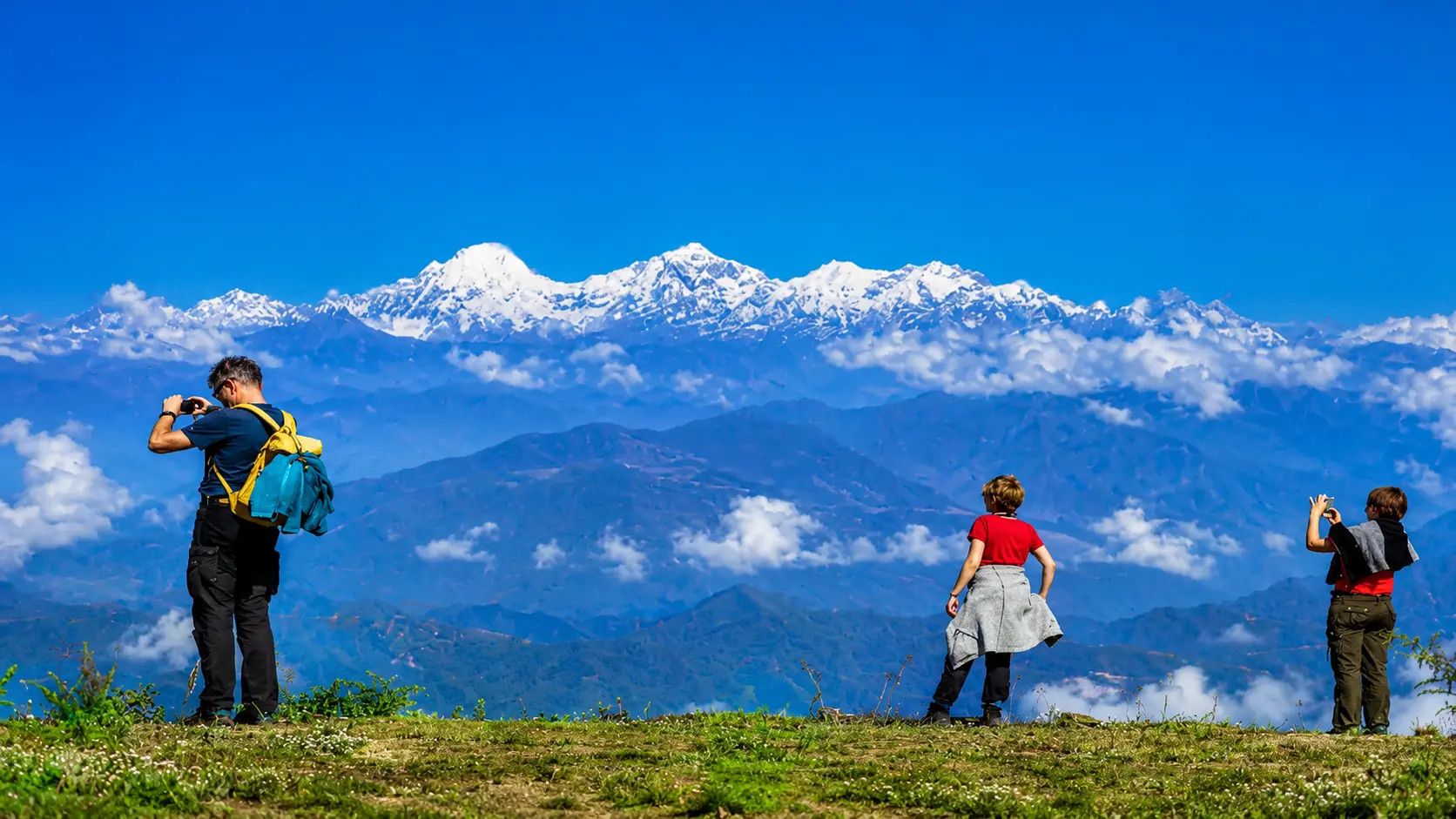
On the eastern edge of Nuwakot District, Kakani sits at approximately 2,073 m on a ridge that has long been a popular viewpoint and weekend retreat for Kathmandu residents. Kakani’s panoramic views encompass Manaslu (8,163 m), Ganesh Himal, Langtang, and, on exceptionally clear days, the entire central Himalayan chain from Dhaulagiri in the west to Everest in the east. During the British Raj, Kakani served as a retreat for senior officials of the British Residency in Kathmandu — a legacy reflected in the remains of a small colonial bungalow. A short but rewarding trek connects Kakani to the high ridge viewpoints above.
Belkot
The small farming village of Belkot sits on a ridge across the valley from Nuwakot town, offering perhaps the finest distant view of the Nuwakot palace complex from the opposite hillside. Belkot was one of the nine forts of the Nawakot system and still retains traces of its historic fortification. The view from Belkot toward the Saat Tale Darbar at dawn, when the morning light picks out the palace’s seven stories against the backdrop of hills and sky, is one of the finest historical landscape views in the central hills.
Trishuli Bazaar
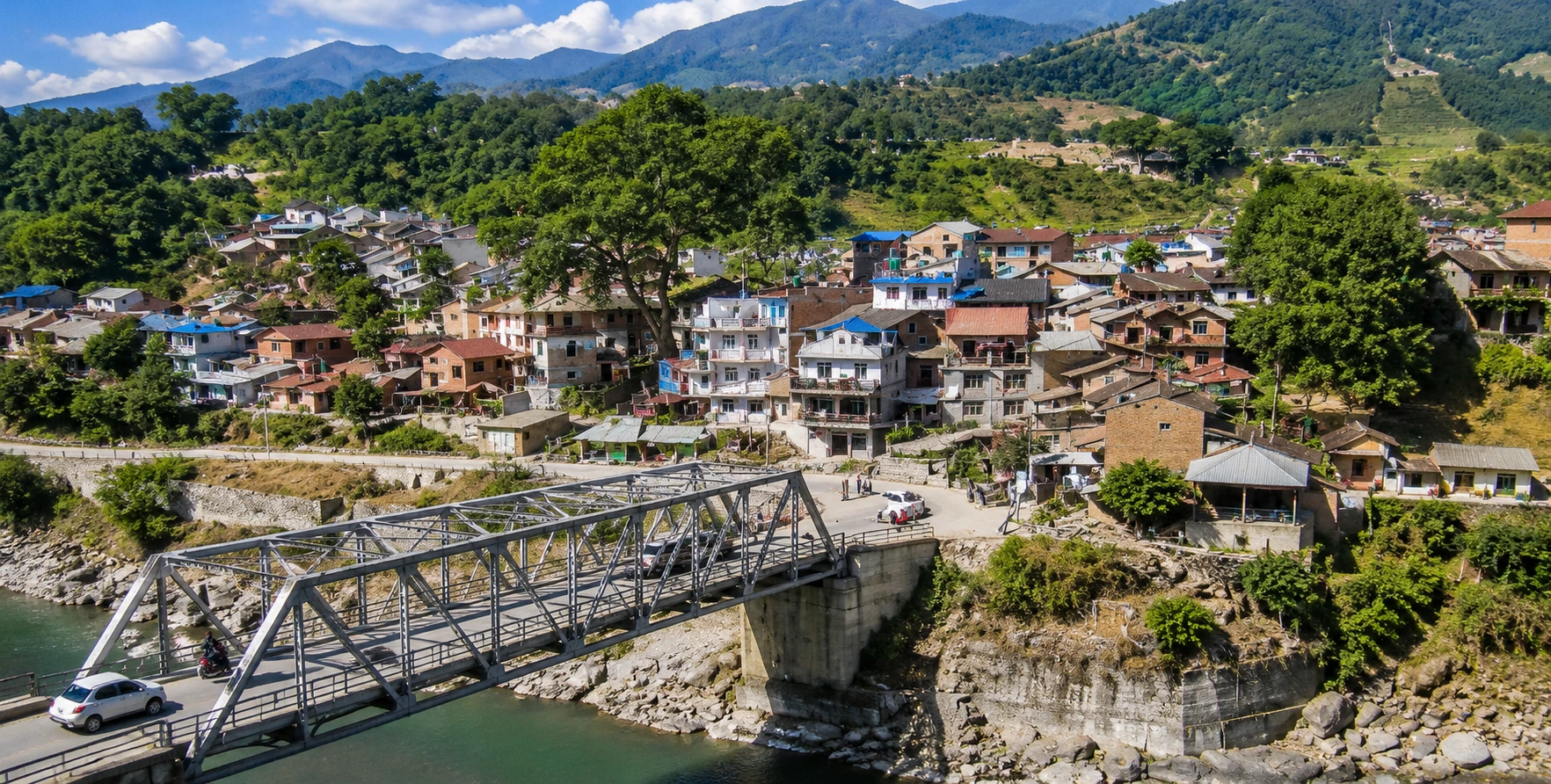
The modern town of Trishuli, on the banks of the Trishuli River below Bidur, is Nuwakot’s commercial heart and the main hub for river rafting operations on this stretch of the river. The riverside market, suspension bridges, and daily life of a Nepali river town are worth an hour or two of exploration, and the town’s tea stalls and local restaurants offer some of the best food in the lower Nuwakot valley.
The Cultural Life of Nuwakot — Ethnic Diversity and Festival Calendar
Nuwakot is described locally as a ‘mini-Nepal within Nepal’ — a characterisation that accurately reflects its unusual ethnic and cultural diversity. The district’s population includes significant communities of Tamang, Newar, Magar, Brahmin, Chhetri, Sherpa, Gurung, and others, with corresponding diversity in languages (Nepali, Tamang, Newari, and others are all spoken), cultural practices, and religious traditions. This diversity stems directly from the district’s historic position at the intersection of trade routes, military corridors, and ethnic migration patterns.
The Newar community of Nuwakot town is the primary custodian of the palace complex’s festivals and religious traditions — including the Sindure Jatra, the Narayan Jatra, the Gai Jatra (the Cow Festival honouring the dead), the Shipai Jatra, the Lakhe dance (performed by a masked dancer representing the protective demon-deity), and Krishna Janmashtami. These festivals, which follow the Newari cultural calendar closely aligned with the Kathmandu Valley tradition, give Nuwakot town a distinctive festive identity rooted in one of Nepal’s most sophisticated urban cultural traditions.
The Tamang community, which dominates much of the surrounding district outside the town, maintains its own distinct tradition of festivals, sacred practices, and shamanic ritual that runs parallel to the Newar temple tradition. The annual cycles of Tamang Buddhist practice, including Loshar (Tamang New Year, celebrated differently from the Tibetan Loshar), sacred site pilgrimages to high-altitude lakes and ridges, and community ritual gatherings, add further layers to the district’s religious calendar.
Kathmandu to Nuwakot — How to Get There
Distance: Approximately 65–75 km depending on route
Travel Time: 1.5 to 2.5 hours by private vehicle
Main Route (Fastest): Kathmandu → Kakani or Balaju → Prithvi Highway → Galchhi junction → turn north along the Trishuli River Highway → Bidur/Trishuli → Nuwakot Bazaar (6 km above Bidur)
Scenic Route (Kakani Road): Kathmandu → Kakani (viewpoint stop recommended) → descend to Nuwakot via the winding hill road — adds 30–45 minutes but offers magnificent valley and mountain views.
Road Condition: The main route via Galchhi and the Trishuli Highway is well paved and in good condition. The final 6 km climb from Bidur to Nuwakot Bazaar is narrower but paved and manageable by any vehicle.
| Vehicle Type | Capacity | Price KTM → Nuwakot (one-way) | Price Full Day Return | Best For |
| Sedan Car | 1–3 pax | USD 40–60 | USD 70–100 | Couple, solo, day trip |
| SUV / Fortuner | 4–5 pax | USD 55–80 | USD 90–130 | Small family, comfortable |
| Toyota Hiace Van | 7–14 pax | USD 90–130 | USD 150–200 | Groups, school trips |
| Mahindra Scorpio | 6–9 pax | USD 65–95 | USD 110–160 | Larger family, pilgrimage group |
| Toyota Coaster Bus | 15–22 pax | USD 140–190 | USD 230–300 | Large groups, cultural tours |
All prices include the driver, fuel, and vehicle insurance. Full-day return pricing means the driver accompanies you in Nuwakot for the full day and returns you to Kathmandu in the evening. For overnight stays or multi-day Nuwakot visits, daily rates apply from the second day. Contact Vehicle Hiring Nepal for exact 2026 pricing.
Sample Itineraries for Nuwakot’s Historical and Spiritual Sites
Day Trip: Nuwakot Durbar, Bhairavi Temple, and Devighat
- 6:30 AM: Depart Kathmandu by private vehicle
- 8:00–8:30 AM: Arrive Nuwakot Bazaar — walk to Nuwakot Durbar, explore the palace complex and Ranga Mahal, and visit the privately run artefact museum adjacent to the square
- 9:30 AM: Bhairavi Temple darshan and the Taleju Temple
- 10:30 AM: Walk the Nuwakot ridge viewpoint — panoramic views of the Trishuli valley and Ganesh Himal range
- 11:30 AM: Drive down to Devighat (20–30 min) — visit Jalapa Devi temple, walk the river confluence, see the cremation site of Prithvi Narayan Shah
- 1:00 PM: Lunch at Trishuli Bazaar riverside restaurant
- 2:30 PM: Return to Kathmandu (1.5–2 hrs)
- 4:00–4:30 PM: Arrive in Kathmandu
Weekend: Nuwakot, Rafting, and Kakani
- Day 1 (Saturday): Kathmandu to Nuwakot via Kakani (viewpoint stop, 45 min). Nuwakot Durbar complex and temples (2 hrs). Lunch. Devighat sacred site visit. Overnight at The Famous Farm or Bidur homestay.
- Day 2 (Sunday): Trishuli River rafting from Charaudi (full day, including Grade III rapids). Return to Kathmandu via Trishuli Bazaar in the evening.
Sindure Jatra Festival Visit (April)
- Day 1: Depart Kathmandu at 6:00 AM. Arrive in Nuwakot in time for morning festival ceremonies. Witness the chariot preparation and early rituals at the Bhairavi temple.
- Day 1 Evening: Overnight in Nuwakot — essential for witnessing the full midnight chariot procession to Devighat and back.
- Day 2: Full festival day — chariot procession to Devighat (4–5 hours), tantric puja at the river confluence, midnight return procession.
- Day 3 (optional): Sindure throwing ceremony on New Year’s Day and return to Kathmandu.
Where to Stay in Nuwakot
- The Famous Farm — The standout accommodation option, a heritage property in a nearly 100-year-old mud-brick farmhouse set in organic gardens with views of the Ganesh Himal range and the royal palace. This ‘eco-luxury hotel’ offers hot showers, excellent fusion and traditional Nepali cuisine, and wooden balconies with arguably the finest view of any hotel in Nuwakot District. Recommended for overnight visits.
- Hotel Trishuli and Hotel Water Tower — Standard mid-range hotel options in Bidur town, suitable for straightforward overnight stays with basic facilities.
- Homestays — The local Nuwakot community offers homestays in traditional homes within and around the Durbar Square area, providing an atmospheric, close-to-the-festival experience, particularly during Sindure Jatra: basic comforts, excellent cultural immersion.
- Kakani Resort Options — For travellers combining Nuwakot with Kakani, several small resorts and lodges on the Kakani ridge offer mountain views and comfortable accommodation at 2,073 m.
Best Time to Visit Nuwakot
April (Sindure Jatra — Most Culturally Significant)
The Sindure Jatra in Chaitra/Baishakh (around April) is the strongest reason to time your Nuwakot visit. The twelve-day festival turns Nuwakot Durbar Square into one of Nepal’s most extraordinary living cultural events, with the chariot procession to Devighat genuinely unlike anything else in Nepali festival culture. Book your vehicle with Vehicle Hiring Nepal at least 4 to 6 weeks ahead for festival dates.
October to November (Best General Season)
Post-monsoon clarity brings the finest mountain views from Nuwakot’s ridge, with the Ganesh Himal and Langtang ranges especially vivid in the post-monsoon air. The Dashain festival (October) brings its own festive atmosphere to the temples. Roads are dry and in excellent condition. The weather is cool and comfortable at Nuwakot’s altitude of 1,128 m.
December to February (Quiet and Clear)
Winter is quiet in Nuwakot. Maha Shivaratri in February- March brings a surge of pilgrims to Dupcheshwar Mahadev. The mountain views on clear winter mornings can be exceptional. Nights are cold, but the days are pleasant for walking through the palace complex and along the hill paths.
March to May (Spring — Rhododendron Season)
The approach roads through the mid-hills show beautiful rhododendron colour in March and April, and the Sindure Jatra falls in this window. May can be warm at the lower valley elevations.
Monsoon (June to September — Still Accessible)
The Nuwakot road remains accessible throughout the monsoon, though occasional landslides can affect the lower sections. The terraced fields become intensely green, and the Trishuli River is at its most powerful. Not the prime season for mountain views, but atmospheric and relatively crowd-free.
Practical Tips for Visiting Nuwakot
- Depart Kathmandu early for a day trip — 6:30 to 7:00 AM ensures you reach the palace complex in the cool morning light, with time to explore fully before the midday heat sets in.
- The road from Bidur to Nuwakot Bazaar is narrow in sections — inform your driver which specific sites you wish to reach so they can take the appropriate approach roads.
- Carry Nepali Rupees cash — ATMs are available in Bidur and Trishuli Bazaar but not in Nuwakot town itself.
- Wear appropriate clothing for both temple visits (covered shoulders and legs) and outdoor walking (comfortable shoes — the palace complex and ridge paths involve uneven stone surfaces)
- Photography of the cremation rituals and inside the main temple sanctums requires careful judgment — ask local guides before photographing sensitive ceremonies.
- For the Sindure Jatra, approach the festival as a respectful observer rather than a tourist spectacle — stay silent during rituals, follow the local crowd, and accept that some elements are not intended for general visitors.
- Book the Famous Farm in advance for the Sindure Jatra period and in October–November — available rooms are limited.
- Combine your Nuwakot visit with a morning or an afternoon of river rafting for a day that blends spirituality, culture, and adventure in a single rewarding circuit.
How to Book Your Kathmandu to Nuwakot Vehicle
- Contact Vehicle Hiring Nepal via WhatsApp at +9779814227196 or visit vehiclehiringnepal.com
- Specify your preferred travel date — mention Sindure Jatra if timing your visit for the festival.
- Confirm your group size — we recommend the appropriate vehicle for your party.
- Please tell us your planned itinerary — Durbar only, Durbar + Devighat, a day trip, or an overnight stay.t
- Receive your booking confirmation with driver details and pickup time.
WhatsApp:+9779814227196
Email: [email protected]
Website: www.vehiclehiringnepal.com
Frequently Asked Questions
How far is Nuwakot from Kathmandu and how long does the drive take?
Nuwakot Durbar is approximately 65-75 km from Kathmandu, depending on the route taken. By private vehicle, the drive takes 1.5 to 2 hours on the main route via the Prithvi Highway and the Trishuli River Road. The scenic route via Kakani adds 30 to 45 minutes but offers spectacular Himalayan views from the Kakani ridge.
Is the Nuwakot Durbar open to visitors despite the earthquake restoration?
Yes. The palace complex at Nuwakot Durbar remains open and freely accessible to all visitors despite the ongoing earthquake restoration work. Some portions of the main seven-story palace are covered with scaffolding. Still, the Ranga Mahal, the Garad Ghar, the Bhairavi and Taleju temples, the Buddhist stupa, and the surrounding complex are all accessible and rewarding. The views from the palace terrace are completely unaffected by the restoration work.
When exactly is the Sindure Jatra?
Tindure Jatra follows the Nepali lunar calendar, so its Gregorian dates shift each year. The festival begins on the 14th day of the bright fortnight of Chaitra (approximately mid-April 2026) and continues for twelve days. Contact Vehicle Hiring Nepal or check with a local tourism source in Nuwakot in early 2026 for the exact festival opening date. Book your vehicle and accommodation as soon as the date is confirmed — Nuwakot’s limited accommodation fills quickly for festival dates.
Can Nuwakot be visited as a day trip from Kathmandu?
Yes, comfortably. A day trip covering Nuwakot Durbar, Bhairavi Temple, the ridge viewpoint, and Devighat is achievable in approximately 8 to 9 hours total, including the 1.5- to 2-hour drive each way. Departing Kathmandu at 6:30 AM and returning by 4:30 to 5:00 PM is the standard day-trip pattern. For the Sindure Jatra chariot procession to Devighat and midnight return, an overnight stay in Nuwakot is necessary.
Is rafting on the Trishuli River available on the same day as a visit to Nuwakot?
Yes. The Trishuli River rafting put-in point at Charaudi is on the Prithvi Highway, approximately 15 to 20 minutes from the Galchhi junction, where the Nuwakot road branches off. A combined itinerary — rafting in the morning followed by an afternoon visit to Nuwakot Durbar and Devighat — or the reverse sequence is entirely practical and makes for an excellent full-day circuit from Kathmandu.
Final Thoughts
Nuwakot is one of those destinations in Nepal whose significance is almost the exact opposite of its current popularity. It is where the nation of Nepal was decisively born — the site of the battle that began the unification, the capital that housed the court and the campaign for a quarter-century, and the riverside sacred site where the unifier died and was cremated. It is also the home of one of Nepal’s most complex and spiritually potent festivals, a magnificent traditional palace in the finest Newari architectural tradition, a cluster of active temples with centuries of continuous devotional practice, and a sacred river confluence still visited by pilgrims and marked by the holiest kind of departure any Nepali king could wish for.
And yet Nuwakot receives a fraction of the visitors that pass through it every day on the road to Langtang, to Trishuli rafting, and onward to Pokhara. For travellers who understand what lies behind the sign at the hilltop turnoff, this is not a failure of the destination but an invitation and an opportunity to experience a genuinely significant and beautiful corner of Nepal’s historical and spiritual geography in the kind of quiet that is increasingly difficult to find at more celebrated sites.
Vehicle Hiring Nepal makes the journey from Kathmandu to Nuwakot simple, comfortable, and flexible, with a private car or van from your hotel door to the palace gate, timed to your interests, whether for an early-morning festival or a combined rafting and heritage day. Whatever brings you to Nuwakot, we will get you there.
Book your Kathmandu-to-Nuwakot vehicle today. WhatsApp: +9779814227196 | Website: www.vehiclehiringnepal.com
- Nuwakot Historical and Spiritual Sites Guide – The Complete Travel and Transport Guide
- Understanding Nuwakot — The City of Nine Forts
- Nuwakot and the Birth of Modern Nepal — The Historical Context
- Nuwakot Durbar — The Seven-Storey Palace
- Bhairavi Temple and the Living Tradition of the Tantric Goddess
- The Sindure Jatra — Nepal's Most Extraordinary Hidden Festival
- Devighat — Where Nepal's Founder Died and the Rivers Meet
- The Trishuli River — Sacred Waters and Adventure
- Other Spiritual and Historical Sites in Nuwakot District
- The Cultural Life of Nuwakot — Ethnic Diversity and Festival Calendar
- Kathmandu to Nuwakot — How to Get There
- Sample Itineraries for Nuwakot's Historical and Spiritual Sites
- Where to Stay in Nuwakot
- Best Time to Visit Nuwakot
- How to Book Your Kathmandu to Nuwakot Vehicle
- Frequently Asked Questions
- Final Thoughts

Related Blog & Articles
Kathmandu to Langtang Trek Vehicle Hire: The Complete Guide

Jeep vs Bus to Syabrubesi

Kathmandu to Sundarijal Trek Transfer