Plan a Trip


Pokhara to Khangsar Jeep Hire: The Complete Guide (2026-2027)
Introduction: The Journey to Khangsar Village
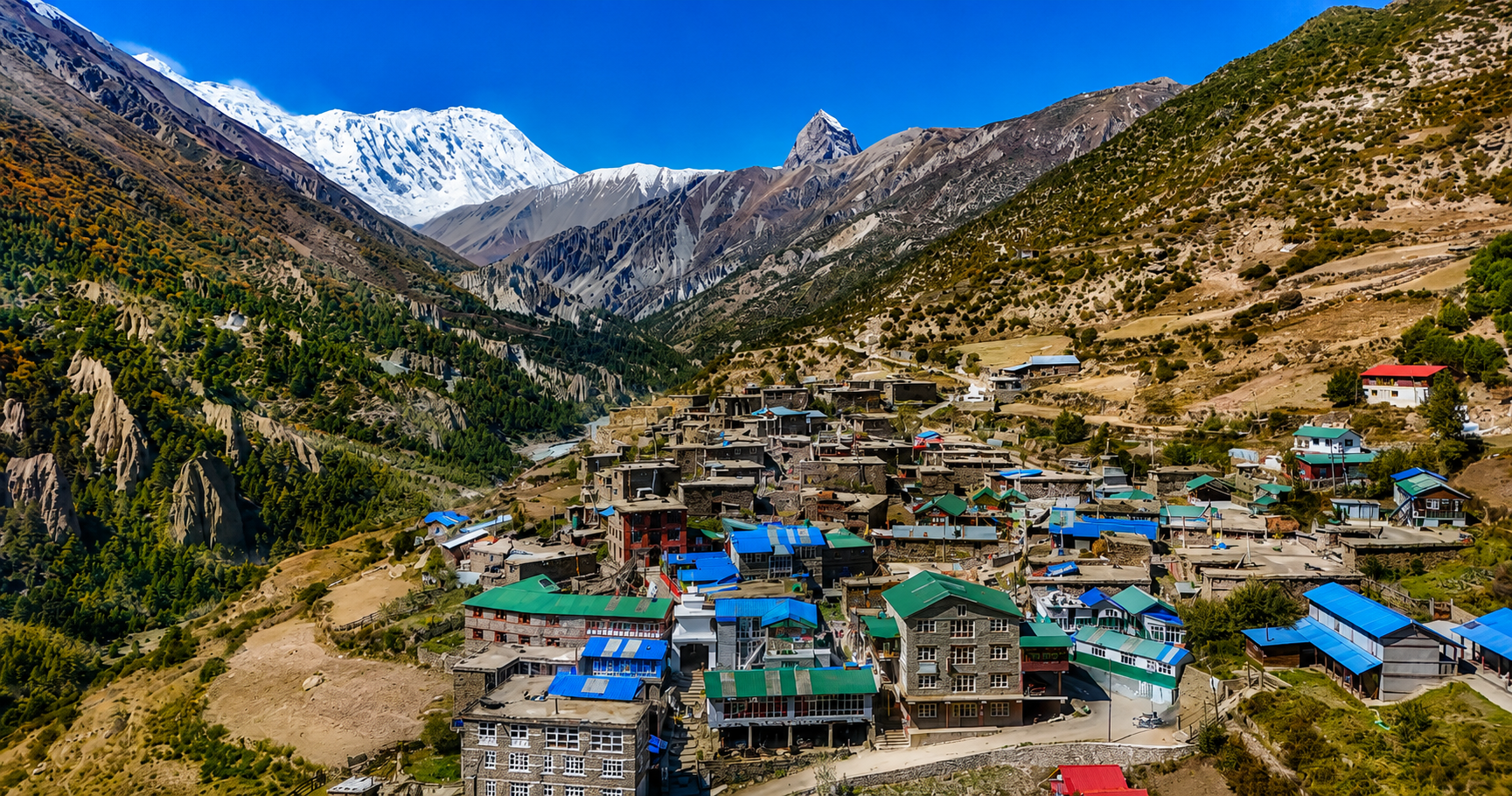
Tucked at an altitude of 3,734 meters above sea level in the remote Manang District of Nepal’s Gandaki Province, Khangsar is one of the most dramatically situated villages in the entire Annapurna region. Set against a breathtaking backdrop of towering Himalayan peaks — including the Annapurna range, Gangapurna, and the majestic Tilicho Peak — Khangsar is both the final point accessible by motor vehicle on the road beyond Manang and the gateway to one of the world’s most spectacular trekking destinations: Tilicho Lake.
Tilicho Lake, at 4,919 meters, is recognized as one of the highest lakes in the world and is a sacred site of extraordinary natural beauty. The road to it ends at Khangsar. Beyond here, only legs will carry you. This makes a Pokhara-to-Khangsar jeep hire not just a transportation arrangement but the first chapter of one of Nepal’s greatest high-altitude adventures.
For trekkers planning to walk the Annapurna Circuit, visit Tilicho Lake, or explore the remote highland villages of Manang District, hiring a private 4WD jeep from Pokhara to Khangsar is by far the most practical, comfortable, and efficient mode of transportation. The route passes through some of Nepal’s most spectacular mountain terrain — deep river gorges, ancient Himalayan villages, alpine forests, and soaring peaks — and the journey itself is as memorable as the destination.
This comprehensive guide covers everything you need to know about the Pokhara to Khangsar jeep hire in 2026: the complete route with distances and highlights, road conditions, costs, required permits, best seasons to travel, vehicle options, and why Nepal Vehicle Hiring Pvt. Ltd. is the trusted choice for this challenging high-altitude journey.
Pokhara to Khangsar — Trip Glance (2026-2027) |
| Destination: Khangsar Village, Manang District, Gandaki Province |
| Altitude: 3,734 m (12,251 ft) above sea level |
| Total Distance: Approx. 170–185 km from Pokhara (Lakeside) |
| Total Drive Time: 8–10 hours (one way, depending on road conditions) |
| Required Vehicle: 4WD Jeep ONLY (Hilux, Fortuner, Land Cruiser, Scorpio) |
| Road Type: Paved highway (Pokhara–Besisahar), rough mountain off-road (Besisahar–Khangsar) |
| Best Season: March–May and October–December |
| Permits Needed: ACAP (Annapurna Conservation Area Permit) + TIMS Card |
| Gateway To: Tilicho Lake, Tilicho Base Camp, Annapurna Circuit |
| Book With: Nepal Vehicle Hiring Pvt. Ltd. | +977 9851013196 |
Understanding Khangsar: Why This Village Is Your Jeep Hire Destination
What Is Khangsar?
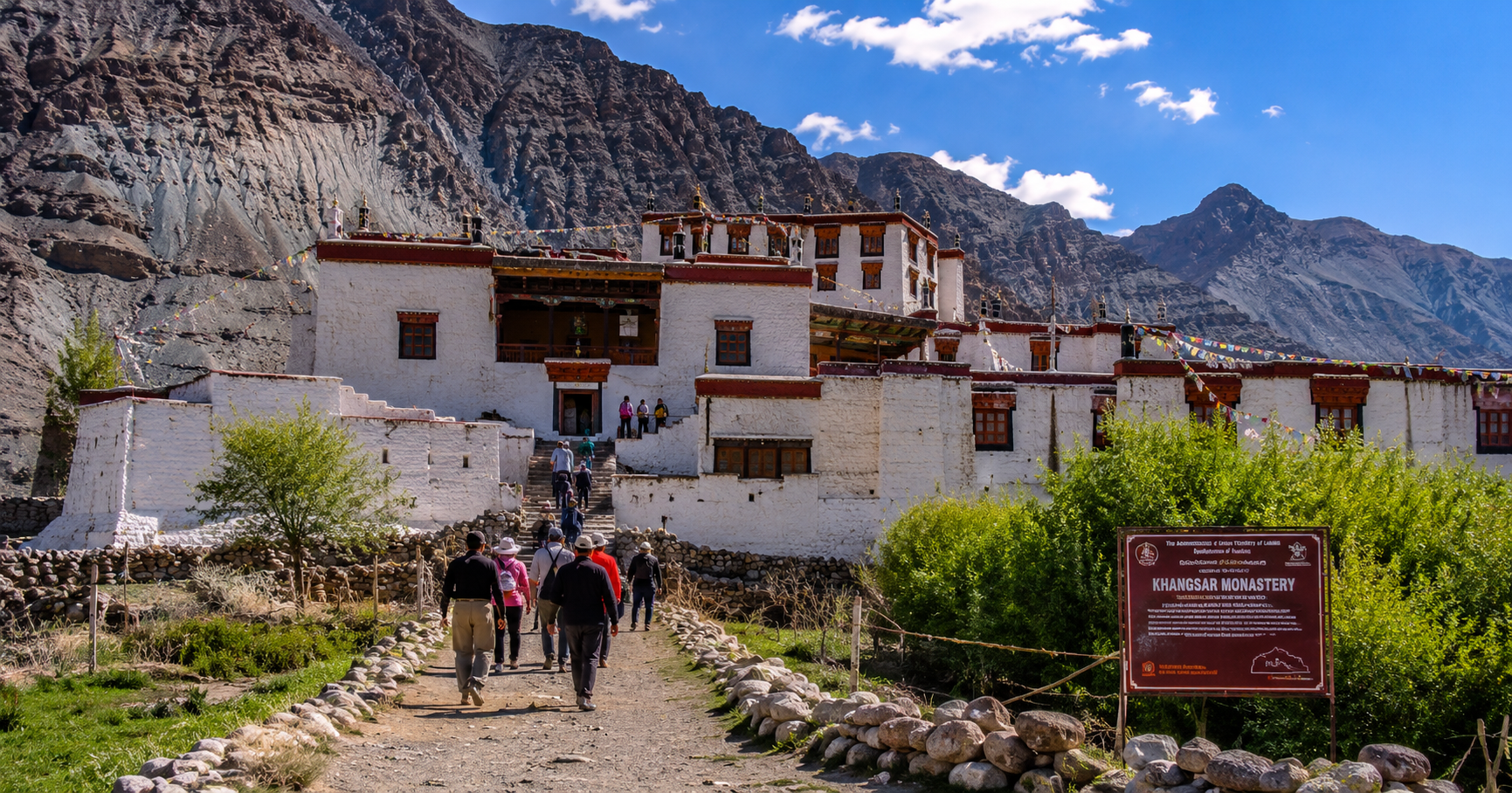
Khangsar is a small, traditional Tibetan-influenced village located approximately 3 km west of the main Annapurna Circuit trail town of Manang. The village sits at 3,734 meters, perched dramatically on a ridge above the Marsyangdi River Valley. It is inhabited primarily by the Manangi people — a semi-nomadic, Tibetan-culture community who have lived in this high-altitude environment for centuries, trading across the Himalayas between Nepal and Tibet.
The architecture of Khangsar is distinctly Tibetan in character: flat-roofed stone houses, prayer flags snapping in the mountain wind, ancient gompas (Buddhist monasteries), and mani walls (long stone walls inscribed with Buddhist prayers). The village has a population of only a few hundred people but sees a significant number of trekkers passing through, particularly those headed to Tilicho Lake.
Khangsar holds special significance in the trekking geography of the Annapurna region: it is the last point accessible by 4WD on this route. Beyond Khangsar, toward Tilicho Base Camp and Tilicho Lake, trekking is only possible on foot. For trekkers wanting to skip the lower road sections and begin their high-altitude adventure directly, hiring a jeep to Khangsar dramatically shortens the overall trekking time while still delivering an epic Himalayan road journey.
Why Hire a Jeep Directly to Khangsar (Not Just Manang)?
- Khangsar is 3 km beyond Manang by a rough jeep track — the very last point accessible by vehicle on this route.
- Starting your trek from Khangsar rather than Manang saves 1–2 days of trekking and allows more time for acclimatization above 3,700 m.
- For trekkers focused specifically on Tilicho Lake (not the full Annapurna Circuit), a Pokhara–Khangsar jeep hire represents the most direct and efficient approach.
- The road from Manang to Khangsar is extremely rough and requires a 4WD vehicle — not all jeep hire services go this final stretch. Nepal Vehicle Hiring Pvt. Ltd. can be arranged to drive all the way to Khangsar.
The Complete Route: Pokhara to Khangsar by Jeep
Route Overview
The journey from Pokhara to Khangsar follows the famous Annapurna Circuit road northward through the Marsyangdi River Valley, gaining altitude continuously from approximately 800 meters at Pokhara (Lakeside) to 3,734 meters at Khangsar. The route passes through a dramatic series of landscape transitions — subtropical hills, deep gorges, alpine forests, and finally the stark, wind-blasted high-altitude terrain of the Manang Valley.
| Segment | Distance / Altitude / Road Type |
| Pokhara (Lakeside) → Dumre | 70 km | 600 m | Paved Prithvi Highway |
| Dumre → Besisahar | 40 km | 760 m | Paved highway |
| Besisahar → Syange | 20 km | 1,100 m | Off-road begins (rocky mountain track) |
| Syange → Dharapani / Chame | 30 km | 2,710 m | Rough mountain road, river crossings |
| Chame → Pisang → Braga | 25 km | 3,300 m | High mountain terrain, dramatic cliffs |
| Braga → Manang | 5 km | 3,519 m | Rough gravel road |
| Manang → Khangsar | 3 km | 3,734 m | Very rough jeep track (4WD essential) |
Total Distance: Approximately 170–185 km from Pokhara Lakeside to Khangsar, depending on the specific route taken and any detours.
Stage-by-Stage Route Description
Stage 1 — Pokhara to Besisahar (approx. 110 km, 2–2.5 hours): The journey begins on the Prithvi Highway — Nepal’s main east-west artery — heading east from Pokhara through the rolling Gandaki Valley. The road is well-paved, and the drive is relatively fast. The first major town you pass is Damauli, followed by Dumre, where you turn north toward Besisahar. Besisahar is the headquarters of Lamjung District and the traditional starting point of the Annapurna Circuit trek. Here you will register your ACAP permit and TIMS card before proceeding north. Besisahar has basic restaurants and guesthouses if you need a break.
Stage 2 — Besisahar to Chame (approx. 70 km, 3–4 hours): North of Besisahar, the paved road ends and the adventure begins in earnest. The track follows the Marsyangdi River northward into a narrowing gorge of extraordinary beauty. The road becomes a rough, rocky mountain track requiring 4WD capability, passing through dramatic villages including Bhulbhule, Ngadi, Jagat, Dharapani, and Bagarchhap. The scenery is spectacular — waterfalls tumbling from vertical cliffs, deep blue river pools, terraced fields clinging to near-vertical hillsides, and occasional glimpses of snow-capped peaks above. The village of Chame, at 2,710 meters, is the district headquarters of Manang and a good stopping point for rest and acclimatization.
Stage 3 — Chame to Manang (approx. 30 km, 2–3 hours): Above Chame, the terrain transforms dramatically. The valley opens into a broader, drier, Tibetan-style landscape as you gain altitude. The road passes through Pisang (2,990 m) — where you can spot the extraordinary cliff-side monastery of Upper Pisang — and continues through Braga (3,360 m), home to one of the oldest and most important monasteries in the Annapurna region, to reach the main settlement of Manang (3,519 m). Manang is the largest town on the route, with a range of teahouses, restaurants, a bakery, and a small medical facility. Most trekkers spend 1–2 nights here for acclimatization.
Stage 4 — Manang to Khangsar (approx. 3 km, 30–45 minutes): The final stretch to Khangsar is short but demands maximum 4WD capability. The rough jeep track climbs 215 vertical meters from Manang (3,519 m) to Khangsar (3,734 m) across rocky, exposed terrain. In wet or snowy conditions, this section can be extremely challenging even for experienced drivers. Khangsar village itself is small — a cluster of traditional Manangi stone houses, a gompa, and a handful of simple teahouses catering to trekkers heading to Tilicho Lake.
Road Conditions: What to Expect on the Pokhara to Khangsar Route
Pokhara to Besisahar — Paved Highway
This first section follows Nepal’s well-maintained Prithvi Highway and the Besisahar feeder road. The tarmac is generally good and allows comfortable, relatively fast driving in a standard vehicle. However, traffic can be heavy on market days and during festival seasons, so an early morning departure (6:30–7:00 AM from Pokhara) is strongly recommended.
Besisahar to Chame — Off-Road Mountain Track
This is where the route transforms from a regular road trip into a genuine Himalayan adventure. The track is unpaved, often rocky, and narrow in places. It crosses several bridges over fast-flowing mountain tributaries and passes through sections where the road has been carved directly from cliff faces. During the monsoon (June–September), sections of the road are frequently washed out or blocked by landslides, and the journey can take significantly longer or become temporarily impassable. A 4WD vehicle with good ground clearance is essential from Besisahar onward.
Chame to Manang — High Mountain Terrain
Above Chame, the road climbs steeply through pine forests and across open ridges with increasingly dramatic mountain views. The surface is rough gravel and compacted earth, punctuated by rocky sections and occasional stream crossings. The altitude begins to have a noticeable effect on the engine performance of non-4WD vehicles, making a proper mountain 4WD Jeep with an experienced high-altitude driver non-negotiable. Road conditions deteriorate significantly after snowfall, which can occur at any time of year above 3,000 meters.
Manang to Khangsar — The Final Rough Track
The short track from Manang to Khangsar is the most technically demanding section of the entire route. It is narrow and rocky, ascending steeply across terrain that is exposed and unstable in places. In spring and autumn — the main trekking seasons — this track is passable for experienced 4WD drivers in well-maintained vehicles. In winter (December–February), snow and ice can make this section extremely hazardous. During early spring, the track may be muddy and rutted from snowmelt. Always confirm road conditions with Nepal Vehicle Hiring Pvt. Ltd. before departure.
| Critical Vehicle Warning |
| Standard cars, sedans, and non-4WD vehicles CANNOT go beyond Besisahar. |
| Regular taxis from Pokhara will NOT take you to Manang or Khangsar. |
| Only 4WD Jeeps (Hilux, Fortuner, Land Cruiser, Mahindra Scorpio) are suitable. |
| Your driver MUST have experience on mountain high-altitude roads. |
| Nepal Vehicle Hiring Pvt. Ltd. provides experienced 4WD drivers for this exact route. |
Distance, Altitude & Driving Time Summary
| Route Point | Distance from Pokhara | Altitude | Drive Time from Pokhara |
| Dumre | 70 km | 600 m | 1.5 hrs |
| Besisahar | 110 km | 760 m | 2.5 hrs |
| Syange | 130 km | 1,100 m | 3.5 hrs |
| Dharapani | 150 km | 1,943 m | 5 hrs |
| Chame | 160 km | 2,710 m | 6.5 hrs |
| Pisang | 173 km | 3,200 m | 7.5 hrs |
| Manang | 180 km | 3,519 m | 8.5 hrs |
| Khangsar | 183–185 km | 3,734 m | 9–10 hrs |
Note: All times are approximate for a one-way journey departing from Pokhara between 6:30–7:00 AM. Add 1–2 hours during monsoon season (June–September) or after snowfall. Rest stops, meal breaks, and permit checks are not included in the above estimates.
Pokhara to Khangsar Jeep Hire Cost (2026)
Private Jeep Hire — One Way
Hiring a private 4WD jeep from Pokhara to Khangsar is the most comfortable and flexible option for individuals, couples, small families, or groups of up to 6–7 passengers. With a private hire, you control the departure time, the pace of the journey, the lunch stop location, and how long you spend at scenic viewpoints along the route.
| Vehicle Option | Approx. One-Way Cost (Pokhara to Khangsar) |
| 4WD Jeep (Scorpio/Bolero) — up to 5 pax | USD 180–220 / NPR 24,000–30,000 |
| 4WD Hilux / Fortuner — up to 6 pax | USD 220–270 / NPR 30,000–37,000 |
| 4WD Land Cruiser — up to 7 pax | USD 270–340 / NPR 37,000–46,000 |
| Return Trip (Khangsar to Pokhara) | Same rate as one-way (or slightly less) |
| Round Trip (same vehicle waits) | Approx. 1.5x–2x one-way price + driver accommodation |
Price Inclusions: Driver service fee, fuel costs, driver insurance, vehicle maintenance and road emergency kit, and parking fees where applicable.
Price Exclusions: ACAP permit (NPR 3,000 per person), TIMS card (NPR 2,000 per person), passenger travel insurance, meals and accommodation for passengers, driver accommodation and meals (separate from vehicle cost for multi-day trips).
Shared Jeep Option (Budget Alternative)
Shared jeeps are available from Besisahar to Manang for budget travelers. These depart when full (typically 8–10 passengers) and run on less flexible schedules. The cost per person on shared jeeps from Besisahar to Manang is approximately NPR 1,500–2,500 (USD 11–18). However, shared jeeps typically go only to Manang — not to Khangsar — and departure times are unpredictable. For trekkers with a tight schedule or requiring the final leg to Khangsar, a private jeep hire from Pokhara is strongly recommended.
Cost Comparison: Worth the Investment
A private 4WD jeep hire from Pokhara to Khangsar may appear more expensive than shared transport. Still, when you factor in the full picture — comfort, safety on mountain roads, flexible departure from your hotel, the ability to stop at scenic viewpoints, guaranteed delivery to Khangsar (not just Manang), and the peace of mind of a professional driver — it represents exceptional value for a journey of this nature and distance.
Required Permits for the Pokhara to Khangsar Route
All travelers entering the Annapurna Conservation Area — which begins north of Besisahar — are required to carry valid permits. These must be obtained before departure from Pokhara or Kathmandu, or at the permit checkpoint in Besisahar. Nepal Vehicle Hiring Pvt. Ltd. can advise on permit arrangements as part of your booking.
| Permit Type | Details & Cost (2026) |
| ACAP (Annapurna Conservation Area Permit) | Required for ALL foreign nationals entering the Annapurna Conservation Area | Cost: NPR 3,000 per person (approx. USD 22) |
| TIMS Card (Trekkers’ Information Management System) | Required for all trekkers in the Annapurna Region | Cost: NPR 2,000 per person for individuals (NPR 1,000 through trekking agencies) |
| Where to Obtain | Nepal Tourism Board offices in Kathmandu (Pradarshani Marg), Pokhara (Lakeside), or at the checkpoint in Besisahar |
| SAARC Nationals | ACAP: NPR 1,500 | TIMS: NPR 1,500 |
| Nepali Nationals | ACAP: NPR 100 | No TIMS required |
| Additional Manang District Entry | No separate fee is currently required for Khangsar/Manang beyond ACAP+TIMS |
Important: Keep your permits with you at all times. There are multiple checkpoints on the route where permits will be checked — at Besisahar, Jagat, Dharapani, Chame, and again near Manang. Driving past checkpoints without a valid permit can result in fines and being turned back.
Best Time to Hire a Jeep from Pokhara to Khangsar
October to November — Peak Autumn Season (BEST)
The post-monsoon autumn season offers the clearest skies, the most stable roads, and the most spectacular mountain views of the entire year. The air has been washed clean by the monsoon rains, revealing the full glory of the Annapurna and Himalayan ranges in crystal-sharp detail. Temperatures at Khangsar (3,734 m) during the day are cool and pleasant (5–15°C), dropping significantly at night (-5 to -10°C), so warm clothing is essential. This is the busiest trekking season, so book your jeep hire well in advance — availability can be limited.
March to May — Spring Season (EXCELLENT)
Spring is equally popular for Pokhara-to-Khangsar jeep hire. The rhododendron forests in the lower sections of the route (around 2,000–3,000 m) burst into brilliant red and pink bloom in March and April, creating a spectacular backdrop for the drive. Temperatures are warming up, and the mountain views are generally clear in the mornings. By May, some cloud build-up is typical in the afternoons. Road conditions are generally good, though the road from Manang to Khangsar may still have some residual winter snow.
December to February — Winter (POSSIBLE WITH CAUTION)
The winter months bring cold, dry, and often sunny conditions. The high-altitude views can be extraordinary in winter, with crisp, clear air. However, snow and ice on the road above Chame — and particularly on the Manang to Khangsar track — can make the journey hazardous or impossible in severe conditions. Nepal Vehicle Hiring Pvt. Ltd. monitors road conditions continuously and will advise clients on the current winter road status before departure.
June to September — Monsoon Season (CHALLENGING)
The monsoon season brings heavy rainfall to the entire Annapurna region, and the road north of Besisahar is frequently affected by landslides, washed-out sections, and river flooding. While some trekkers brave the monsoon for lush green scenery and empty trails, the Pokhara-to-Khangsar drive is significantly more time-consuming. It poses real logistical risks during this period. If you must travel during the monsoon, allow extra days, confirm road conditions in advance, and hire only an experienced high-altitude driver. Nepal Vehicle Hiring Pvt. Ltd. keeps up-to-date road condition reports and will be transparent about any risks before booking.
Scenic Highlights on the Pokhara to Khangsar Drive
The Pokhara to Khangsar jeep journey is not merely a transfer — it is a full-day Himalayan adventure through some of the most spectacular terrain in the world. Here are the key highlights to watch out for along the route:
Marshyangdi River Valley
The entire route north of Besisahar follows the Marsyangdi River northward through a gorge of increasing drama and grandeur. The river churns turquoise-green between walls of grey rock and tropical vegetation, and the road — cut into the cliff face in many places — offers vertiginous views down into the gorge and across to the opposite cliff walls. The river is also used for rafting and kayaking, and you may encounter groups on the water below.
Jagat and Dharapani — Gateway Villages
The villages of Jagat (1,300 m) and Dharapani (1,943 m) are important checkpoints on the Annapurna Circuit. Dharapani marks the junction with the trail coming from the Nar-Phu Valley (a restricted trekking area) and is where the landscape begins to shift from subtropical to temperate. Stop here for tea and to stretch your legs — the local teahouses serve excellent dal bhat and apple products from the local orchards.
Chame and the Lamjung Himal Views
Chame (2,710 m) is the district headquarters of Manang and the last significant town before you enter the high-altitude Himalayan landscape. The town has a small bazaar, several restaurants, and the first clear views of the high Himalayan peaks above 5,000 meters. Just above Chame, the road passes a natural rock formation — a massive curved cliff face — that channels the valley and offers one of the most dramatic viewpoints on the entire drive.
Upper Pisang and the Annapurna Circuit Views
Above the village of Pisang (3,200 m), the valley opens dramatically into a wide, dry, high-altitude basin reminiscent of the Tibetan Plateau. The monastery of Upper Pisang, perched on a clifftop above the village, is one of the most photogenic sights on the entire route. From here, the full sweep of the Annapurna range — including Annapurna II (7,937 m), Annapurna III (7,555 m), and Gangapurna (7,455 m) — becomes visible for the first time, creating a mountain panorama of staggering grandeur.
Braga Monastery
The village of Braga (3,360 m), just 2 km short of Manang, is home to one of the most important and oldest Buddhist monasteries in the Annapurna region. Dating back approximately 500 years, Braga Gompa houses an extraordinary collection of ancient Buddhist statues, thangka paintings, and religious artifacts. A short stop here is strongly recommended.
Manang — The High-Altitude Hub
Manang (3,519 m) is the main settlement in this section of the Annapurna Circuit and a significant milestone. The town has grown substantially to serve the trekking industry and now offers a surprisingly wide range of amenities for its remote altitude — multiple teahouses and lodges, a bakery, a small hospital staffed by the Himalayan Rescue Association, and even a cinema showing trekking-themed films. Trekkers almost always spend 1–2 nights in Manang for acclimatization before proceeding higher.
Khangsar — The Final Destination
After the rough short drive from Manang, Khangsar village presents a scene of stark, primordial beauty. The village clusters around a ridge above the valley floor, with views north toward the snow-bound peaks of the Khangsar Kang (7,485 m) and east toward Manang and the Gangapurna Glacier. The small gompa at the edge of the village is worth a visit, and the local teahouses offer simple but hearty Nepali meals. Beyond the village, the trail to Tilicho Lake climbs steeply into even more dramatic high-altitude terrain.
Khangsar as Your Base: The Gateway to Tilicho Lake
Most of the time, the jeep to Khangsar is the destination, but it’s also the starting point for the iconic trek to Tilicho Lake. Here is a brief overview of what awaits beyond the end of the road:
The Trek from Khangsar to Tilicho Lake
- Khangsar to Tilicho Base Camp (4,150 m): Approximately 6–7 hours of trekking through alpine meadows, along steep rocky trails above glacial moraines. The terrain is wild and spectacular, with views of multiple Annapurna and Thorong peaks. Basic teahouse accommodation is available at Tilicho Base Camp.
- Tilicho Base Camp to Tilicho Lake (4,919 m): A challenging 3–4-hour ascent to one of the world’s highest lakes. The final approach crosses a high, exposed ridge prone to afternoon winds. The lake itself is staggeringly beautiful — a deep blue-black crescent of frozen and semi-frozen water set against cliffs of shattered rock and ancient glacier ice, surrounded by peaks on three sides.
- Return from Tilicho Lake: Most trekkers return from Tilicho Lake to Khangsar the same day or the day after, then either continue on the Annapurna Circuit toward Thorong La Pass or return to Pokhara by jeep.
Tilicho Lake Side Trip as Part of Annapurna Circuit
Many Annapurna Circuit trekkers make the Tilicho Lake side trip as a 2–3-day addition to the main circuit from Manang. The jeep from Pokhara to Khangsar is the fastest way to position yourself for this side trip while saving multiple trekking days on the lower sections of the circuit.
Why Choose Nepal Vehicle Hiring Pvt. Ltd. for Pokhara to Khangsar
The Pokhara-Khangsar route is not a journey for the average vehicle hire company. The road conditions, altitudes, river crossings, and mountain track demands require specifically experienced drivers, well-maintained 4WD vehicles, and a company that knows this route thoroughly. Nepal Vehicle Hiring Pvt. Ltd. has been operating in Nepal’s vehicle hire sector for over a decade with a proven track record of safe, reliable, and professional service.
| Why Nepal Vehicle Hiring Pvt. Ltd. for High-Altitude Routes |
| 8,000+ satisfied customers | 5.0 TripAdvisor | 200+ verified reviews |
| Fleet includes Hilux, Fortuner, Land Cruiser — all 4WD, all maintained for mountain roads |
| Drivers are experienced on mountain routes, including Manang, Mustang, Jomsom & high passes |
| Bilingual drivers — English, Nepali, Hindi |
| Hotel pickup from anywhere in Pokhara (Lakeside, Newroad, Thamel area) |
| Road condition monitoring — we advise clients of any hazards before departure |
| 24/7 WhatsApp support: +977 9851013196 |
| Transparent pricing — no hidden charges, fuel, or driver included |
| Licensed & registered (Company Reg. No. 219204) |
| Can arrange return pickup from Khangsar or Manang — flexible scheduling |
Our Fleet for the Pokhara to Khangsar Route
| Vehicle | Capacity | Why It Works for This Route |
| Toyota Hilux 4WD | 4–5 pax | Exceptional ground clearance, proven mountain performer |
| Toyota Fortuner 4WD | 5–6 pax | Powerful engine, comfortable for long mountain drives |
| Toyota Land Cruiser 4WD | 6–7 pax | The gold standard for extreme mountain terrain |
| Mahindra Scorpio 4WD | 5–6 pax | Reliable, cost-effective option for this route |
How to Book Your Pokhara to Khangsar Jeep
- Step 1 — Contact Nepal Vehicle Hiring Pvt. Ltd. via WhatsApp (+977 9851013196), phone, or Website (vehiclehiringnepal.com)
- Step 2 — Share your travel date, group size, pickup hotel/location in Pokhara, and whether you need one-way or return service
- Step 3 — Choose your preferred vehicle from the available fleet options
- Step 4 — Confirm departure time (recommended: 6:00–6:30 AM for a full-day journey)
- Step 5 — Receive booking confirmation with driver name, vehicle details, contact number, and meeting point
- Step 6 — Obtain your ACAP and TIMS permits before or on the morning of departure (permits team can advise)
- Step 7 — Your driver collects you at your hotel at the agreed time — your Himalayan adventure begins!
Practical Tips for Your Pokhara to Khangsar Jeep Journey
Departure Time
Always depart Pokhara as early as possible — ideally 6:00–6:30 AM. The mountain roads narrow significantly, and the driving becomes more demanding above Besisahar. An early start ensures you reach Khangsar before dark (which typically falls around 5:30–6:00 PM in the mountains). Late afternoon arrivals in Manang or Khangsar at 3,500+ meters without daylight can be both logistically challenging and altitude-risk-inducing.
Acclimatization Warning
This is critically important. Driving directly from Pokhara (800 m) to Khangsar (3,734 m) in a single day is a significant altitude gain of nearly 3,000 meters in 10 hours. Altitude sickness (Acute Mountain Sickness / AMS) is a real risk at these elevations, particularly for travelers who have not been at altitude recently. Symptoms include headache, nausea, dizziness, and fatigue. Most trekking protocols recommend spending 1–2 nights in Manang (3,519 m) to acclimatize before continuing the trek. Consider stopping in Chame or Manang overnight before proceeding to Khangsar.
What to Pack for the Jeep Journey
- Warm layers — temperatures drop significantly above 3,000 m, even in summer. Carry a down jacket, fleece, and thermal base layers.
- Cash in Nepali Rupees — no ATMs beyond Besisahar. Carry sufficient cash for the full trek, including permits, accommodation, and meals.
- Water and snacks for the road — pack enough food and water for a full day, as roadside options become limited above Chame.
- Motion sickness tablets — the mountain road is winding and can cause discomfort, particularly on the section from Besisahar to Chame.
- ACAP and TIMS permits must be with you in the vehicle from Besisahar onward.
- Altitude sickness medication — consult your doctor about Diamox (acetazolamide) before the trip.
- Personal first-aid kit — minor cuts and abrasions are common on trekking approaches.
- Sunglasses and sunscreen — UV radiation at 3,700+ meters is intense, even on cloudy days.
Meals Along the Route
The road passes through several villages where meals are available at local teahouses. Recommended stopping points for meals: Besisahar (breakfast/permit check), Dharapani or Chame (lunch — excellent dal bhat, noodle soup, and Tibetan bread available), and arrival dinner at Manang or Khangsar teahouses.
Emergency & Safety Information
- Himalayan Rescue Association (HRA) has a clinic in Manang staffed during peak season (Oct–Nov and Mar–May) that can assist with altitude-related emergencies.
- Helicopter evacuation is available from Manang in genuine medical emergencies — ensure your travel insurance covers helicopter evacuation at altitude.
- Mobile network coverage is available in most major villages (Ncell and Nepal Telecom), but it becomes intermittent above Manang. Notify family/friends of your travel plans before departing from Pokhara.
- Nepal Vehicle Hiring Pvt. Ltd. maintains 24/7 WhatsApp support — your driver will also have a satellite emergency contact protocol for remote mountain driving.
Frequently Asked Questions — Pokhara to Khangsar Jeep Hire
Can a regular car or taxi go from Pokhara to Khangsar?
No. Standard cars and taxis cannot go beyond Besisahar on this route. From Besisahar onward, a 4WD vehicle is mandatory. The road becomes an unpaved mountain track with rocky terrain, river crossings, steep gradients, and extreme weather exposure that only proper 4WD vehicles with adequate ground clearance can safely navigate. Nepal Vehicle Hiring Pvt. Ltd. provides exclusively 4WD vehicles for the Manang/Khangsar route.
How long does the drive from Pokhara to Khangsar take?
Approximately 8–10 hours for the one-way journey, departing Pokhara at 6:00–6:30 AM and arriving in Khangsar in the late afternoon. This includes a lunch stop in Chame or Manang and a brief permit check in Besisahar. In the monsoon season, add 1–2 hours for potential road delays.
Can I hire a jeep from Pokhara to just Manang, not all the way to Khangsar?
Yes, absolutely. Nepal Vehicle Hiring Pvt. Ltd. offers jeep hire to Manang as well as to Khangsar. Many trekkers prefer to be dropped in Manang and walk the 3 km to Khangsar as their first acclimatization exercise. Specify your preferred drop-off point when booking.
Is it possible to arrange a return jeep pickup from Khangsar?
Yes. Nepal Vehicle Hiring Pvt. Ltd. can arrange for a vehicle to return to Khangsar (or Manang) on a specified date to pick you up after your Tilicho Lake trek. This must be arranged in advance and confirmed with a return deposit. The return vehicle will typically collect you in the morning for the drive back to Pokhara (or Kathmandu).
What permits do I need, and can Nepal Vehicle Hiring help with them?
You need an ACAP permit (NPR 3,000 per person) and a TIMS Card (NPR 2,000 per person) to enter the Annapurna Conservation Area. These can be obtained at the Nepal Tourism Board office in Pokhara Lakeside, at the Nepal Tourism Board office in Kathmandu, or at the checkpoint in Besisahar on the day of travel. Nepal Vehicle Hiring Pvt. Ltd. can advise on permit requirements andprocedurese as part of your booking.
What is the best vehicle option for a group of 4–5 people?
For 4–5 passengers with trekking gear, the Toyota Hilux 4WD or Toyota Fortuner 4WD is the ideal choice — both offer sufficient power for the mountain gradients, excellent ground clearance, comfortable seating, and adequate luggage space. For groups of 6–7, the Toyota Land Cruiser is recommended.
How far in advance should I book?
During peak trekking season (October–November and March–May), we strongly recommend booking your jeep at least 3–5 days in advance. Availability of 4WD vehicles for the Manang/Khangsar route is limited during peak season, and early booking helps ensure both vehicle availability and your preferred departure date. Contact Nepal Vehicle Hiring Pvt. Ltd. via WhatsApp at +977 9851013196 to check availability and confirm your booking.
Pokhara to Khangsar: Transport Options Compared
| Option | Cost | Time | Comfort | Flexibility | Verdict |
| Private 4WD Jeep (Nepal Vehicle Hiring) | USD 180–270 | 8–10 hrs | ★★★★★ | ★★★★★ | Best Overall |
| Shared Jeep (Besisahar–Manang) | USD 11–18/pax | 10–12 hrs+ | ★★☆☆☆ | ★★☆☆☆ | Budget Only |
| Public Bus to Besisahar + Shared Jeep | USD 5–15 total | 12–14 hrs+ | ★★☆☆☆ | ★☆☆☆☆ | Not Recommended |
| Taxi (Pokhara only) | N/A | Cannot go beyond Besisahar | N/A | N/A | Not Suitable |
Conclusion: Begin Your Annapurna Adventure the Right Way
The journey from Pokhara to Khangsar by private 4WD jeep is one of the great Himalayan road trips. This all-day mountain adventure takes you from the lakeside warmth of Pokhara through subtropical gorges, ancient trekking villages, pine forests, and dramatic high-altitude terrain to arrive at the threshold of the world’s most spectacular alpine lake.
Whether you are beginning the full Annapurna Circuit, heading directly to Tilicho Lake, or simply exploring the extraordinary Manang Valley, the jeep hire from Pokhara to Khangsar is the transport solution that combines efficiency, adventure, and comfort in equal measure.
Nepal Vehicle Hiring Pvt. Ltd. has been trusted by thousands of trekkers, adventurers, and travelers to navigate Nepal’s mountain roads with skill, care, and professionalism. Our 4WD fleet, experienced mountain drivers, transparent pricing, and 24/7 support make us the smart choice for your Pokhara-to-Khangsar jeep hire.
Do not leave this booking to the last minute. During peak season, quality 4WD vehicles with experienced mountain drivers are in high demand. Contact our team today, share your travel dates and group size, and let us take care of everything — so that when your wheels start rolling north out of Pokhara, the only thing on your mind is the magnificent mountain world that awaits.
| Website: Your Pokhara-to-Khangsar Jeep Today! |
| Website: www.vehiclehiringnepal.com |
| Phone / WhatsApp: +977 9851013196 (24/7) |
| Email:[email protected] |
| Office: Bhagawatisthan, Thamel, Kathmandu, Nepal |
| Vehicle: Toyota Hilux | Toyota Fortuner | Land Cruiser | Mahindra Scorpio (All 4WD) |
| 50k+ Happy Customers | 5.0 Star Rating |15k+ TripAdvisor Reviews |
| One-Way & Return Jeep Hire | Hotel Pickup from Pokhara |
| Experienced High-Altitude Drivers | All-Inclusive Transparent Pricing |
- Introduction: The Journey to Khangsar Village
- Understanding Khangsar: Why This Village Is Your Jeep Hire Destination
- The Complete Route: Pokhara to Khangsar by Jeep
- Road Conditions: What to Expect on the Pokhara to Khangsar Route
- Distance, Altitude & Driving Time Summary
- Pokhara to Khangsar Jeep Hire Cost (2026)
- Required Permits for the Pokhara to Khangsar Route
- Best Time to Hire a Jeep from Pokhara to Khangsar
- Scenic Highlights on the Pokhara to Khangsar Drive
- Khangsar as Your Base: The Gateway to Tilicho Lake
- Why Choose Nepal Vehicle Hiring Pvt. Ltd. for Pokhara to Khangsar
- Practical Tips for Your Pokhara to Khangsar Jeep Journey
- Frequently Asked Questions — Pokhara to Khangsar Jeep Hire
- Pokhara to Khangsar: Transport Options Compared
- Conclusion: Begin Your Annapurna Adventure the Right Way

Related Blog & Articles

Pokhara to Besisahar Jeep
Besisahar to Dharapani Jeep Hire – Complete 4WD Transfer Guide for Annapurna Circuit Trekkers