Plan a Trip


Trekking Transport Hire in Pokhara | Jeep & Car
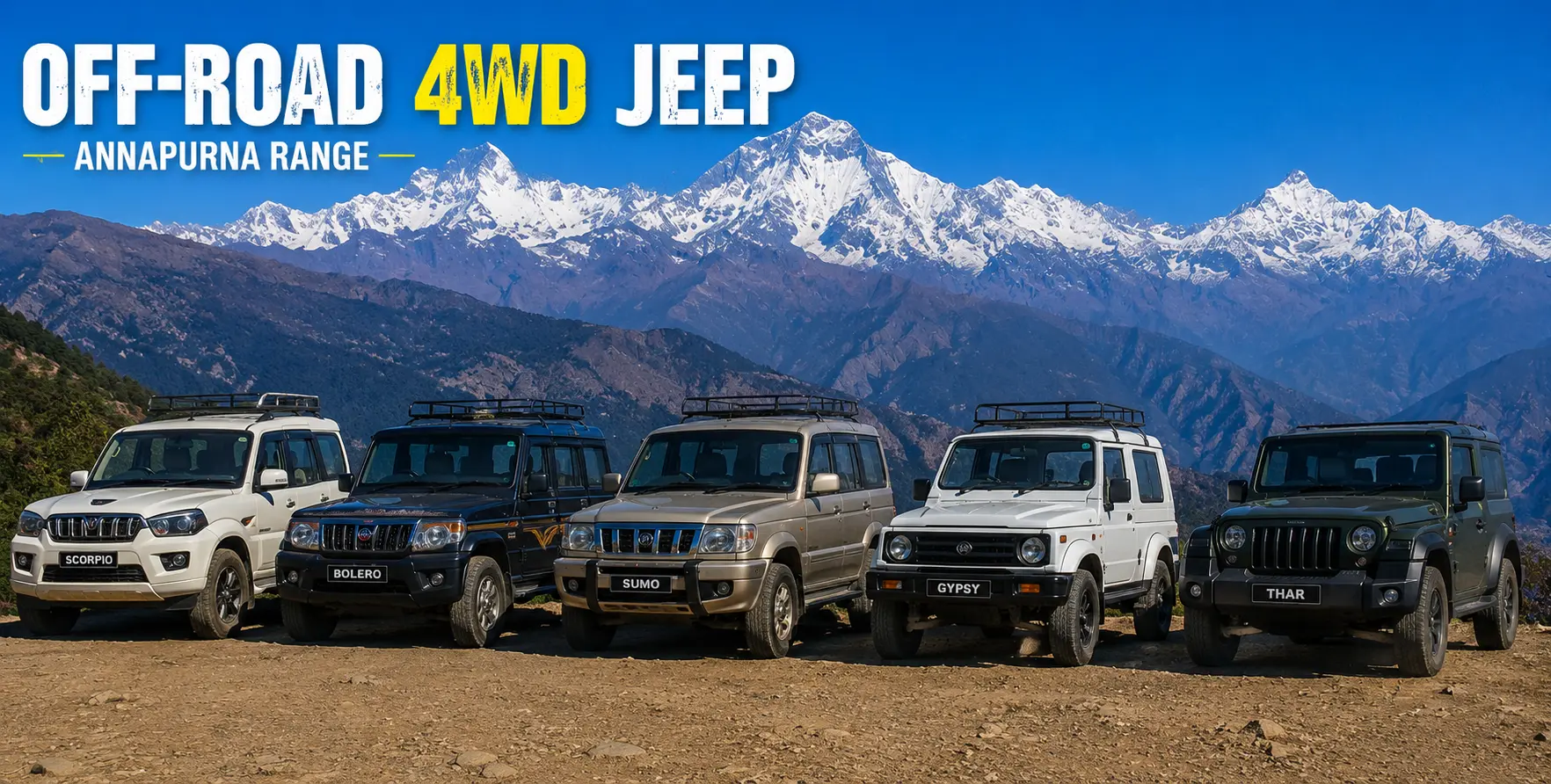
Nearly every major trek in the Annapurna region begins with the same first step: a private vehicle out of Pokhara. Whether the destination is Poon Hill, Annapurna Base Camp, Mardi Himal, or the high desert of Mustang,
Trekking transport hire in Pokhara is the practical foundation that makes the rest of the trek possible, and getting this first leg right shapes how the entire trip begins.
This guide covers the full range of trekking trailheads reachable from Pokhara, the vehicle types suited to each route, realistic drive times, seasonal considerations, and how to book with confidence. Nepal Vehicle Hiring has coordinated trekking transport out of Pokhara for years, and this guide draws directly on that route experience.
For pilgrims and cultural travelers extending their Pokhara stay, our companion guides to
Muktinath Temple: Vehicle Hire and Pilgrimage Route Guide and
Best Time to Visit Mustang Nepal cover the seasonal and permit details for two of Pokhara’s most popular onward trekking destinations.
Why Pokhara Is Nepal’s Trekking Gateway
Pokhara’s position at the foot of the Annapurna range, much closer to the major trailheads than Kathmandu, has made it the natural starting point for most Annapurna region treks. Where a Kathmandu-based trekker might spend a full day simply reaching a trailhead, many of Pokhara’s most popular routes are reachable within one to three hours, a genuine practical advantage that shapes how most Annapurna itineraries are structured around Pokhara as a base rather than Kathmandu.
Popular Trekking Trailheads Reachable From Pokhara
Nayapul: Gateway to Poon Hill and Annapurna Base Camp
Nayapul remains the single most requested trekking transport route out of Pokhara, serving as the trailhead for both the
Ghorepani Poon Hill Trek and the
Annapurna Base Camp Trek. Our dedicated
Pokhara to Nayapul transportation service covers this route, roughly forty-five kilometers and ninety minutes each way, in either a private car or jeep depending on group size.
Kande and Phedi: Gateway to Mardi Himal and Ghandruk
Kande and Phedi, both a short drive from Pokhara, serve as popular starting points for the Mardi Himal Trek and the shorter Australian Camp and Dhampus routes, offering an accessible short trekking option without the longer drive required for Nayapul-based routes.
Jomsom and the Mustang Approach
For trekkers heading toward Muktinath or Upper Mustang, covered in detail in our companion guides, the Pokhara to Jomsom corridor requires a genuine 4WD vehicle given the rougher road conditions beyond the lower valley. Our
Jeep Hire in Nepal services both support this route, with jeep transport recommended for the full Jomsom stretch.
Besisahar for the Annapurna Circuit
Trekkers beginning the
Annapurna Circuit Trek from the Pokhara side, rather than the standard Kathmandu departure covered in our
Kathmandu to Besisahar guide, can also arrange this leg directly from Pokhara, a shorter and often more convenient option for travelers already based there.
Jhinu Danda and the Hot Springs Route
Covered in full detail in our companion guide to
Pokhara to Jhinu Danda Private Jeep, this route serves both standalone hot springs day trips and the wider Annapurna Base Camp trekking route.

Vehicle Options for Trekking Transport Hire in Pokhara
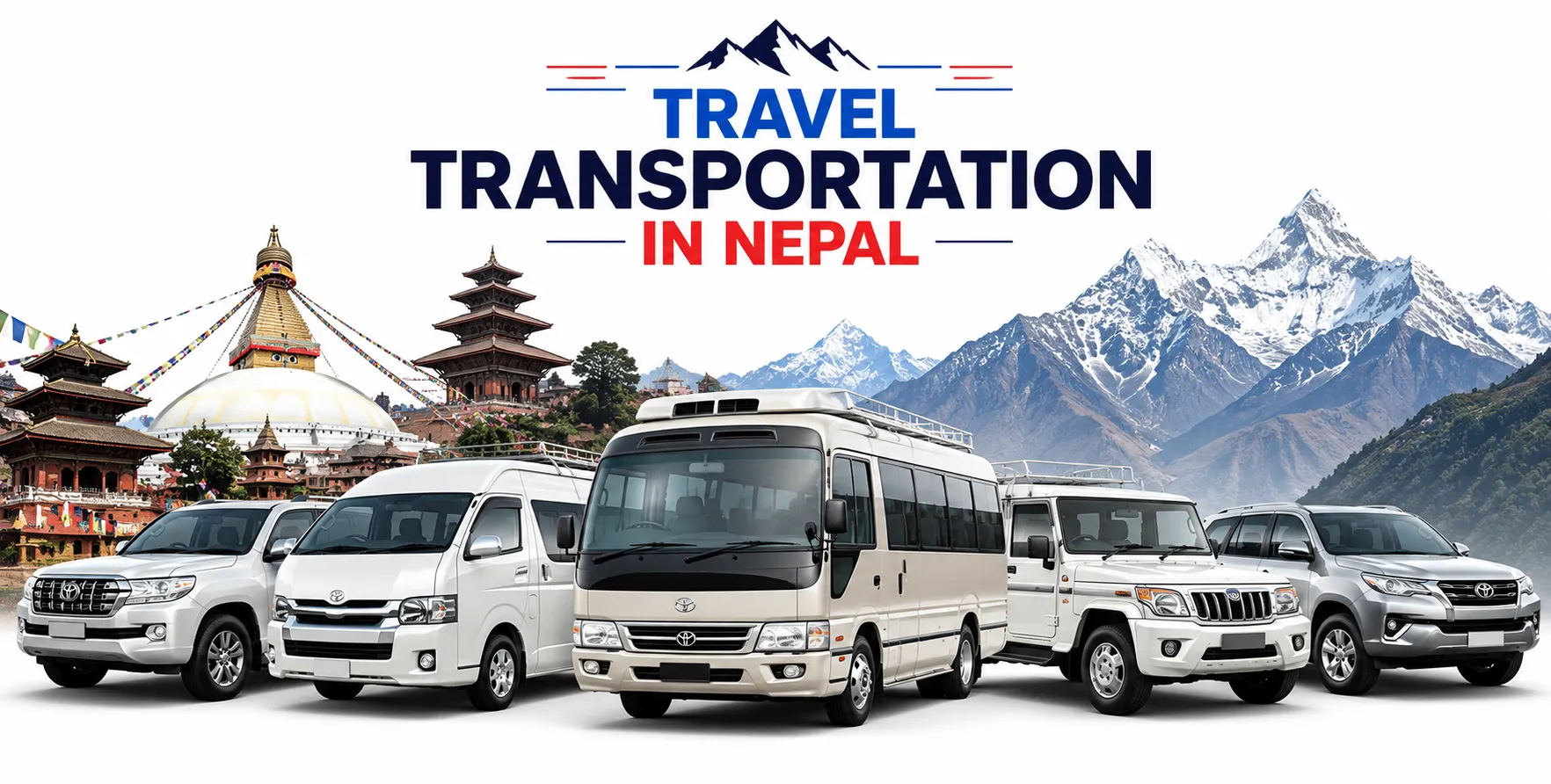
Private Car
Suited to well-paved routes such as Nayapul, Kande, and Phedi, offering comfort and efficiency for smaller groups.
4WD Jeep
Essential for rougher routes toward Jomsom and Mustang, or any itinerary continuing beyond the standard paved highway sections.
Hiace and Larger Vans
Suited to larger trekking groups needing more luggage space and seating capacity, bookable through our
Hiace hire service.
Seasonal Considerations for Pokhara Trekking Transport
Spring and autumn represent peak booking periods given Nepal’s standard trekking calendar, and vehicle availability tightens accordingly. Monsoon season brings landslide risk on some routes, while Mustang-bound travelers should note the counterintuitive dry summer window covered in our
Best Time to Visit Mustang Nepal guide.
A Deeper Look at Each Major Trailhead
Nayapul in Greater Detail
Nayapul’s role as Pokhara’s busiest trekking transport route reflects the sheer popularity of the two treks it serves. The Ghorepani Poon Hill Trek, a relatively short four-to-five-day route, draws travelers specifically seeking a manageable introduction to Himalayan trekking. In contrast, the considerably longer Annapurna Base Camp Trek draws those seeking the full Annapurna Sanctuary experience. Both begin with the same Nayapul departure, and vehicle demand on this route spans from small private cars for couples to larger vans for guided group departures.
The drive itself passes through Pokhara’s outskirts before reaching the rural, terraced landscape typical of the lower Annapurna foothills, with Birethanti, just beyond Nayapul, marking the formal trailhead and permit checkpoint for both routes.
Kande and the Mardi Himal Trek
Kande has grown considerably in popularity in recent years as the starting point for the Mardi Himal Trek, a moderate-length route offering close-up views of Machapuchare without the permit complexity or crowds found on the longer Annapurna Sanctuary route. The short drive from Pokhara to Kande, generally under an hour, makes this one of the most time-efficient trekking transport bookings available, especially for travelers with limited time who still want a genuine multi-day mountain trekking experience.
Phedi and Dhampus
Phedi serves as an alternative starting point for routes into the Dhampus and Australian Camp area, offering shorter trekking options suited to families or travelers seeking an accessible taste of Annapurna foothill trekking without a lengthy multi-day commitment.
Ghandruk Direct Access
Some itineraries arrange direct vehicle transport toward Ghandruk itself, a significant Gurung village and common overnight stop on the Annapurna Base Camp route, rather than beginning the trek entirely on foot from Nayapul. This option appeals to trekkers who want to shorten the initial walking distance while still experiencing most of the classic Annapurna Sanctuary trekking route.
Coordinating Group Bookings for Trekking Agencies
Trekking agencies running regular departures to these Pokhara-based trailheads benefit from a standing relationship with a single, reliable vehicle provider, ensuring consistent vehicle quality and driver familiarity across repeated bookings during a busy trekking season. Nepal Vehicle Hiring works directly with several trekking agencies, including our sister companies, to support this kind of recurring group transport need.
Early Morning Departures and Trail Timing
Most trekking transport bookings out of Pokhara are scheduled for early morning departure, both to maximize useful daylight for the trekking day ahead and to avoid the midday heat common in the lower Annapurna foothills. Coordinating an early, reliable pickup from your Pokhara hotel is one of the more practical details to confirm when booking trekking transport, particularly for larger groups, where a delayed departure can meaningfully cut the day’s planned trekking distance.
Return Transport and Trek-End Logistics
Beyond the outbound journey to a trailhead, most trekkers also need return transport from wherever their trek ends, whether it’s the same trailhead for a there-and-back route or a different endpoint for treks that finish as a loop or continue onward to another region. Confirming both legs of this journey during initial booking, rather than arranging return transport only once a trek is already underway, ensures a smoother overall experience and avoids the complication of arranging last-minute transport from a remote trailhead village with limited connectivity.

Combining Trekking Transport With Pokhara Sightseeing
Many trekkers build in a day or two of Pokhara sightseeing before or after their trek, using our
Sarangkot sunrise tour vehicle service for Annapurna range views, or simply relaxing at Phewa Lake before returning to Kathmandu via our
Kathmandu to Pokhara service.
Permits Required for Pokhara-Based Trekking Routes
Nearly every trailhead reachable from Pokhara falls within the Annapurna Conservation Area, requiring a standard ACAP permit and TIMS card for routes such as Poon Hill, Annapurna Base Camp, and Mardi Himal. Travelers continuing toward Upper Mustang require the additional Restricted Area Permit covered in our companion Mustang guide. At the same time, the Annapurna Circuit similarly falls within standard ACAP coverage for its main route.
Weather and Road Condition Monitoring
Given the varied terrain across these different trailhead routes, from Nayapul’s well-paved highway to Jomsom’s considerably rougher mountain road, weather and road condition monitoring varies by route. Our drivers stay current on conditions across all these corridors, which is especially important during the monsoon season, when landslide risk affects some routes far more than others.
Why Choose Nepal Vehicle Hiring for Pokhara Trekking Transport
Our drivers assigned to Pokhara trekking routes bring genuine, route-specific experience across the full range of trailheads covered in this guide, from the short Kande and Phedi transfers to the considerably more demanding Jomsom and Mustang approach. We coordinate closely with our sister trekking companies,
Trek Nepal Himalayas, to support fully coordinated trekking itineraries spanning transport, guiding, and accommodation.
What to Pack for Your Trailhead Transfer
- Comfortable clothing suited to a multi-hour vehicle journey, layered for temperature changes between Pokhara and higher trailhead elevations.
- All trekking permits and TIMS documentation, checked before departure to avoid delays at trailhead checkpoints.
- Snacks and water for the journey, particularly on longer routes such as Jomsom.
- Cash in Nepali rupees for any permit fees or purchases along the way.
A Realistic Look at Drive Times From Pokhara
Kande and Phedi are reachable within roughly forty-five minutes to an hour. Nayapul takes approximately ninety minutes under normal conditions. Besisahar, for Annapurna Circuit trekkers starting from the Pokhara side, typically takes three to four hours. Jomsom, given the rougher road conditions beyond the lower valley, can take a full day depending on current conditions and the exact drop-off point. Confirming realistic timing for your specific route during booking helps set accurate expectations for your overall trekking day.
The Growth of Pokhara as a Trekking Logistics Hub
Pokhara’s development into Nepal’s primary Annapurna region trekking gateway reflects decades of steady tourism infrastructure investment, from hotel and lodge development around Lakeside to the growth of a genuinely specialized trekking transport and guiding industry serving the surrounding trailheads. This development has accelerated further with the opening of Pokhara’s expanded international airport, discussed in our companion guide to Annapurna Base Camp helicopter tours, bringing a growing number of travelers directly into the city without first routing through Kathmandu, and further reinforcing Pokhara’s role as the practical starting point for most Annapurna region trekking.
Comparing Pokhara-Based and Kathmandu-Based Trekking Departures
Travelers planning an Annapurna region trek should generally favor Pokhara as their departure base given the considerably shorter transport distances to virtually every major trailhead compared to a Kathmandu departure, a contrast covered in more detail across our companion guides to Kathmandu-based routes such as the
Kathmandu to Besisahar service. While some Annapurna Circuit itineraries do begin from Kathmandu, the vast majority of Pokhara-accessible trailheads, including Nayapul, Kande, and Phedi, make far more sense as Pokhara departures given the dramatically shorter drive times.
Understanding Trailhead Checkpoint Procedures
Nearly every major trailhead reachable from Pokhara includes a formal permit checkpoint where TIMS cards and ACAP permits are verified before trekkers begin walking, typically located at the trailhead village itself, such as Birethanti for the Nayapul-based routes. Drivers familiar with these checkpoints can help ensure trekkers arrive with all necessary documentation organized, avoiding delays at this final step before the trek begins.
Family and Group Considerations for Trailhead Transport
Families or larger groups planning a Pokhara-based trek should communicate their group composition, including children’s ages and any mobility considerations, when booking transport, since this affects both vehicle selection and realistic timing expectations for routes like Kande and Phedi, which offer shorter, more accessible trekking options than the longer Nayapul-based routes.
Porter and Guide Coordination Alongside Vehicle Transport
Most trekkers arrange porters and guides separately from vehicle transport, whether independently at the trailhead itself or through a trekking agency managing the full itinerary. Coordinating vehicle pickup timing with any pre-arranged guide or porter meeting point at the trailhead helps ensure a smooth transition from vehicle transport to the trekking portion of the journey, which is especially important for group departures where multiple trekkers, guides, and porters need to convene at the same starting point.
Weather Delays and Contingency Planning
Monsoon-season landslide risk affects some Pokhara trailhead routes more than others, with the Jomsom corridor particularly susceptible to disruption given its more challenging road conditions compared to the well-established Nayapul highway. Building reasonable schedule flexibility into any trekking transport booking during the wetter months helps manage this genuine seasonal risk.
Return Journeys From Different Trek Endpoints
Trekkers completing routes that conclude at a different point than their starting trailhead, such as certain Annapurna Circuit variations, should confirm return transport arrangements from their specific trek-end location well in advance, since not every remote trekking endpoint has the same reliable, on-demand vehicle availability found at busier trailheads like Nayapul.
The Value of Local Driver Knowledge
Drivers with genuine, current experience across Pokhara’s various trekking transport routes bring considerable value beyond simply operating the vehicle, including practical knowledge of realistic timing, current road conditions, and the specific checkpoint and trailhead logistics for each route. This local knowledge is especially valuable on less standardized routes such as Jomsom, where conditions can vary significantly from trip to trip depending on recent weather and road maintenance activity.
A Typical Multi-Trek Pokhara Itinerary
Some travelers with extended time in Pokhara combine multiple shorter treks across a single visit, taking advantage of the city’s position as a genuine multi-trailhead hub. A typical extended itinerary might begin with a shorter Kande-based Mardi Himal trek, followed by rest and Pokhara sightseeing, before continuing with a longer Nayapul-based Annapurna Base Camp trek later in the same trip. This combined itinerary makes efficient use of Pokhara’s central position relative to multiple trailheads, which is considerably harder to replicate from a Kathmandu base given the longer transport distances involved.
Trekking Peak Season Demand and Vehicle Availability
Vehicle demand across all Pokhara trekking transport routes peaks sharply during the October-to-November and March-to-May windows, mirroring Nepal’s overall trekking season. During these peak periods, particularly popular routes like Nayapul can see considerable morning departure congestion, with multiple trekking groups all seeking early transport within a similar time window. Booking several days to a few weeks ahead, depending on group size and specific vehicle requirements, helps secure preferred departure timing during these busiest periods.
Sustainable and Responsible Trekking Transport Practices
As trekking traffic across Pokhara’s various trailheads has grown over recent years, questions of sustainable transport practice have become increasingly relevant, including vehicle emissions, road wear on less-developed corridors like the Jomsom route, and the broader environmental footprint of the growing trekking tourism industry the city supports. Choosing well-maintained, properly serviced vehicles and consolidating group transport into appropriately sized vehicles rather than multiple smaller cars both contribute to a more environmentally responsible approach to this essential trekking logistics.
Solo Trekkers and Independent Travel Considerations
Solo trekkers heading to routes that don’t require a mandatory guide, such as Poon Hill, Mardi Himal, or the standard Annapurna Base Camp trek, can arrange vehicle transport independently without coordinating around a larger group’s schedule, offering genuine flexibility for travelers who prefer an independent trekking experience. This independence contrasts with routes requiring mandatory guides and minimum group sizes, such as Upper Mustang, where transport timing must necessarily align with the broader guided group arrangement.
Night Bus and Alternative Transport Options
While private vehicle hire remains the standard choice for trekking transport given its flexibility and door-to-door convenience, some budget-conscious trekkers use Pokhara’s shared local bus network for routes like Nayapul, accepting a fixed schedule and shared seating in exchange for lower cost. Private vehicle hire remains the considerably more practical choice for early morning departures, larger groups, or routes like Jomsom, where shared transport options are more limited or less reliable.
Insurance and Safety Standards for Trekking Transport
Given the mountain driving conditions on several of these routes, particularly Jomsom and any route continuing toward Mustang, confirm your vehicle provider carries appropriate commercial insurance and maintains a genuine vehicle safety inspection routine, especially on unpaved, higher-risk road sections beyond Pokhara’s immediate valley.
Combining Trekking Transport With Wildlife and Cultural Extensions
Trekkers with additional time sometimes extend their Pokhara-based trip with a wildlife excursion toward Chitwan, arranged through our
Pokhara to Chitwan bus service, combining a trekking-focused Annapurna region visit with Nepal’s premier lowland wildlife destination within a single broader trip.
Booking Through a Trekking Agency Versus Direct Vehicle Hire
Travelers can arrange trekking transport either directly through a vehicle hire provider like Nepal Vehicle Hiring or as part of a broader package booked through a trekking agency that manages the full itinerary, including guiding and accommodation. Both approaches work well depending on a traveler’s preferences: direct vehicle hire offers maximum flexibility and typically clearer pricing for the transport component. At the same time, agency-coordinated bookings simplify overall logistics for travelers who prefer a single point of contact for their entire trek.
Currency and Payment Considerations
Vehicle hire for Pokhara trekking transport is typically arranged and paid for in Nepali rupees. However, many providers, including Nepal Vehicle Hiring, can accommodate international payment methods for bookings made before arrival in Nepal. Confirming payment logistics during the initial booking avoids complications on the morning of departure.
Geography of the Annapurna Foothills Around Pokhara
The trailheads reachable from Pokhara span a genuinely varied geography, from the relatively gentle terraced hillsides near Kande and Phedi to the steeper, more dramatic Modi Khola gorge approached via Nayapul, and finally the high-desert terrain beyond Jomsom covered in our Mustang guide. This geographic variety means the driving experience itself differs considerably by route, and travelers should set realistic expectations for each specific corridor rather than assuming a uniform experience across all Pokhara-based trekking transport.
Machapuchare Views Along the Approach Roads
Several of Pokhara’s trekking transport routes offer striking views of Machapuchare, the sacred, unclimbed Fishtail peak that dominates Pokhara’s own skyline, during the approach drive itself. The Kande and Phedi routes toward Mardi Himal in particular offer close, dramatic views of this iconic peak, adding a scenic dimension to what might otherwise be treated as a purely functional transfer before the trekking begins.
Understanding the Modi Khola Valley Approach
The Nayapul route follows the lower reaches of the Modi Khola valley, the same river system that later feeds into the dramatic Annapurna Sanctuary further up the route. This valley’s terraced agriculture and traditional Gurung village architecture, visible from the road, offer an early glimpse of the cultural landscape trekkers will experience in greater depth once their walking begins.
Seasonal Road Maintenance and Its Effect on Transport Timing
Nepal’s road maintenance schedules, particularly on less heavily trafficked routes such as the Jomsom corridor, can occasionally affect travel timing through temporary construction delays or single-lane traffic management during active repair work. Experienced local drivers typically stay up to date on such disruptions and can advise on realistic timing adjustments for a specific booking date.
The Practical Value of a Single Coordinated Booking
Trekkers who arrange both outbound and return transport, along with any additional Pokhara sightseeing or onward travel, through a single vehicle hire provider benefit from much simpler logistics than arranging each leg separately with different local operators. This coordinated approach also provides a single point of contact for schedule adjustments once a trek is underway, rather than requiring separate contact with multiple providers for each leg of a broader Annapurna region itinerary.
Comparing Trekking Transport Needs Across Different Trip Types
Independent Trekkers
Independent trekkers heading toward routes without mandatory guide requirements typically need only straightforward point-to-point transport, without the additional coordination required for larger guided groups.
Guided Group Departures
Trekking agencies managing guided group departures require closer coordination between vehicle timing and the broader group’s guide and porter arrangements, often involving larger vehicles suited to the full group size.
Family and Multi-Generation Groups
Families spanning multiple generations often benefit from choosing shorter, more accessible routes such as Kande or Phedi, paired with a vehicle offering comfortable seating suited to a wider range of ages and mobility levels.
Photography and Specialist Expeditions
Photographers or specialist expedition groups sometimes require more flexible, non-standard timing, including very early departures for specific lighting conditions, best coordinated directly with an experienced local vehicle provider familiar with these specialized requests.
A Closer Look at the Annapurna Conservation Area Entry Process
Nearly every trailhead covered in this guide falls within the Annapurna Conservation Area, Nepal’s largest protected area and home to most of the country’s most popular trekking routes. Entry procedures typically involve permit verification at a designated checkpoint near the trailhead, and experienced drivers on these routes can help ensure trekkers have all necessary documentation organized before reaching the checkpoint, avoiding delays that could otherwise cut into the day’s available trekking time.
Trekking Transport for International Volunteer and Research Groups
Beyond standard tourist trekking, Pokhara also serves as a base for international volunteer groups, university research expeditions, and other specialized group travel requiring trekking transport toward the same trailheads covered throughout this guide. These groups often have specific scheduling and equipment-transport needs distinct from standard tourist bookings, and our team can accommodate this specialized institutional travel alongside our standard trekking transport services.
The Relationship Between Trekking Transport and Nepal’s Broader Tourism Economy
Trekking transport out of Pokhara supports a considerable economic ecosystem beyond the vehicle hire sector itself, including trailhead village guesthouses, local guide and porter employment, and the broader Annapurna Conservation Area’s ongoing conservation funding, sourced significantly from trekking permit fees. Reliable, well-organized trekking transport plays a genuinely foundational role in sustaining this broader economic and conservation ecosystem, connecting Pokhara’s urban tourism infrastructure to the rural trailhead communities that depend on continued trekking traffic.
Practical Tips for First-Time Pokhara Trekkers
- Confirm your exact trailhead and vehicle requirements when booking, since routes like Nayapul and Jomsom demand very different vehicle classes.
- Book your outbound and return transport together where possible to simplify overall logistics.
- Arrange all necessary permits before your transport departure to avoid trailhead checkpoint delays.
- Build a buffer day into your itinerary during monsoon season given landslide risk on some routes.
- Communicate any group size changes to your vehicle provider as early as possible.

How Nepal Vehicle Hiring Supports the Full Range of Pokhara Trekking Routes
From the short Kande and Phedi transfers to the demanding overland journey toward Jomsom and Mustang, our team maintains route-specific driver expertise across the full spectrum of Pokhara’s trekking trailheads. This breadth of coverage lets us support nearly any Annapurna region trekking itinerary a traveler might plan, whether a single short trek or an extended multi-region journey combining several routes covered throughout this guide.
Looking Ahead: The Future of Pokhara Trekking Transport
As Pokhara’s international airport continues to bring more direct arrivals into the city, and as trekking tourism across the Annapurna region continues its steady growth, demand for reliable, well-organized trekking transport out of Pokhara seems likely to continue growing in the years ahead. Vehicle providers who invest in genuine route-specific expertise across this full range of trailheads, rather than treating trekking transport as a generic service, are best positioned to support this continued growth.
A Sample Week-Long Pokhara Trekking Itinerary
For travelers with roughly a week available in Pokhara, a common itinerary structure begins with a day of rest and acclimatization in the city itself, taking in Phewa Lake and perhaps a Sarangkot sunrise excursion, before an early morning transfer to Nayapul and the start of a five-day Ghorepani Poon Hill Trek, one of the most popular combinations for travelers with limited but not minimal time available. This kind of week-long structure makes efficient use of Pokhara’s central trailhead position, delivering a genuine multi-day Himalayan trekking experience alongside meaningful time to enjoy the city itself, all within a single manageable week.
Extended Itineraries Combining Multiple Regions
Travelers with two weeks or more available sometimes combine a Pokhara-based Annapurna region trek with an extension toward Mustang or Muktinath, using the same general transport corridor while adding the considerable seasonal and cultural depth our dedicated guides cover in those destinations. This extended, multi-region itinerary rewards careful planning, especially around seasonal considerations that differ between standard Annapurna trekking and Mustang’s distinct rain-shadow calendar.
Transport Considerations for High-Altitude Trekking Peaks
Some Pokhara-based trekkers extend their itinerary with an introductory peak climb, such as those accessible from the upper Annapurna Sanctuary or Mardi Himal areas, which requires transporting additional equipment beyond standard trekking luggage. Travelers planning this kind of extended, mountaineering-adjacent itinerary should discuss specific equipment transport needs with their vehicle provider during initial booking to ensure the vehicle has capacity for additional climbing gear beyond standard trekking equipment.
Weather Apps and Real-Time Condition Monitoring
Given the significant seasonal and daily weather variation across Pokhara’s trekking corridors, many trekkers and vehicle providers now rely on weather monitoring tools and real-time road condition updates shared through trekking agency networks and local driver communication channels. This real-time monitoring, layered on top of the general seasonal guidance covered throughout this article, helps ensure transport timing decisions reflect current conditions rather than historical averages alone.
The Role of Homestays Along Pokhara Trekking Routes
Several villages along Pokhara’s major trekking routes, particularly Ghandruk and other Gurung settlements along the Nayapul-based routes, have developed homestay programs that offer trekkers a more immersive cultural alternative to standard teahouse accommodation. Travelers interested in this kind of homestay experience should communicate this preference to their trekking agency or guide during itinerary planning, since it may affect the route and daily walking distances chosen for their trek.
Currency Exchange and Financial Preparation in Pokhara
Before departing on any Pokhara-based trek, travelers should ensure adequate cash reserves in Nepali rupees, since ATM and card payment access becomes increasingly limited once trekkers leave Pokhara’s urban area, a consideration relevant to the trekking portion of the journey even though the vehicle transport itself is typically arranged and paid for in the city before departure.
Travel Insurance Considerations for Pokhara-Based Trekking
Given the range of trekking difficulty and altitude across Pokhara’s various trailhead routes, from the relatively gentle Kande and Phedi options to the more demanding Annapurna Base Camp and Mustang routes, travelers should confirm their travel insurance policy appropriately covers the specific altitude and trekking activity level of their chosen route, since coverage requirements can vary meaningfully between a short Poon Hill trek and a longer, higher-altitude Annapurna Circuit or Mustang extension.
Combining Trekking Transport With Return International Flights
Travelers with a fixed international departure date should build adequate buffer time between their planned trek completion and their return flight, accounting for both the trekking transport return leg and potential weather-related delays, particularly on routes like Jomsom, where flight or road disruption risk is genuinely higher than on the well-established Nayapul corridor. Coordinating this final return transport leg well in advance, rather than arranging it only once already on the trek, helps ensure a smooth, well-timed conclusion to the trip.
Final Practical Summary
Bringing together everything covered throughout this guide, the practical formula for successful Pokhara trekking transport comes down to a few consistent principles: match your vehicle class to your specific trailhead’s road conditions, book early during peak spring and autumn seasons, confirm both outbound and return transport together, ensure all permits are properly arranged before departure, and work with a vehicle provider offering genuine, current route-specific knowledge across whichever of Pokhara’s many trekking corridors your itinerary requires.
Related Guides for Planning Your Broader Nepal Journey
Travelers planning trekking transport out of Pokhara alongside a wider Nepal itinerary may find these related guides useful:
- Muktinath Temple: Vehicle Hire and Pilgrimage Route Guide
- Best Time to Visit Mustang Nepal
- Pokhara to Jhinu Danda Private Jeep
- Annapurna Base Camp Helicopter Tour: One-Day Full Guide
- Luxury Vehicles for Trekking in Nepal
- Why Luxury Vehicle Hire Is Transforming Nepal Travel
A Note on Choosing the Right Trek for Your Available Time
Travelers unsure which Pokhara-based trek best suits their available time should weigh trip duration carefully against the trailhead options covered throughout this guide. A three-to-five day window suits the Ghorepani Poon Hill Trek from Nayapul or the Mardi Himal Trek from Kande well. A seven-to-twelve day window opens up the full Annapurna Base Camp Trek from Nayapul. A two-to-three-week window accommodates the full Annapurna Circuit from Besisahar, potentially extended into Mustang given the natural route overlap already discussed. Matching trekking transport planning to this kind of realistic time budget from the outset avoids the common mistake of underestimating how much of a trip’s total duration the trek itself, rather than the transport connecting to it, actually requires.
Final Word on Trusting Local Expertise
Above nearly everything else covered in this guide, the single most valuable resource for planning Pokhara trekking transport remains genuine, current local expertise, whether from an experienced vehicle provider, a knowledgeable trekking guide, or a well-established trekking agency. Route conditions, seasonal patterns, and practical logistics all shift meaningfully enough from year to year that no single article, including this one, can substitute entirely for direct, current local knowledge closer to your actual travel dates.
Understanding Vehicle Pricing Structures for Trekking Transport
Vehicle pricing for Pokhara trekking transport typically reflects a combination of distance, road difficulty, and vehicle class, with short, well-paved routes like Kande and Phedi generally priced lower than longer or rougher routes such as Jomsom. Group bookings sharing a single larger vehicle typically achieve better per-person value than multiple smaller individual bookings, and our team is glad to advise on the most cost-effective vehicle configuration for a given group size and route combination.
Trekking Transport During National Holidays and Festivals
Nepali national holidays and major festivals such as Dashain and Tihar can affect vehicle availability and road traffic around Pokhara, as domestic travel increases during these periods. Trekkers planning trips that coincide with major Nepali festivals should factor this into their booking timeline, both for vehicle availability and realistic travel-time expectations, given potentially heavier road traffic.
The Difference Between Pokhara City Transport and Trekking Transport
It is worth distinguishing standard Pokhara city transport, such as short taxi rides around Lakeside or airport transfers, from the dedicated trekking transport covered throughout this guide, which involves longer distances, different vehicle requirements, and considerably more planning given the trailhead-specific logistics involved. Travelers should communicate clearly with their vehicle provider about which transport category they need, since city taxis are generally not equipped or licensed for the longer, more demanding trekking transport routes covered in this guide.
A Final Comparison of All Major Routes
Bringing together the full range of routes covered throughout this guide: Kande and Phedi offer the shortest, most accessible transport for Mardi Himal and Dhampus-area trekking; Nayapul serves the two most popular longer treks, Poon Hill and Annapurna Base Camp; Besisahar connects to the full Annapurna Circuit; Jhinu Danda offers both a standalone hot springs trip and a Base Camp trekking connection; and Jomsom serves as the gateway to Muktinath and Mustang, requiring the most demanding vehicle and road conditions of any route covered in this guide. Matching your trekking goals to the right route and vehicle class from the outset remains the most important step in planning smooth, well-organized trekking transport out of Pokhara.
Additional Considerations for Repeat Visitors to Pokhara
Travelers returning to Pokhara for a second or third trekking trip often already have a preferred vehicle provider or driver from a previous visit, and re-establishing this relationship for a return trip can offer real value, given the driver’s familiarity with the traveler’s preferences and any specific needs from prior bookings. Nepal Vehicle Hiring welcomes this returning client relationship and, where possible, aims to accommodate requests for a specific driver or vehicle type based on prior experience together.
Trekking Transport and Local Employment
The trekking transport sector supports meaningful local employment throughout the Pokhara region, from drivers and vehicle maintenance staff to the broader logistics coordination required to keep this varied network of routes running smoothly throughout the trekking season. Choosing an established, properly registered vehicle hire provider helps ensure this employment reflects fair, properly regulated working conditions, rather than the more informal, less accountable arrangements sometimes found among unregistered local operators.
Closing Thoughts on Planning Your Pokhara Trek
Pokhara’s role as Nepal’s primary Annapurna region trekking gateway means the city offers genuine flexibility for nearly any kind of trekking itinerary, from a short, accessible day or two toward Kande or Phedi, through to a full multi-week Annapurna Circuit or an extension toward the trans-Himalayan landscapes of Mustang. Whatever combination of routes your own itinerary involves, understanding the specific transport requirements of each trailhead, from vehicle class to seasonal timing to permit checkpoint logistics, gives your trek the strongest possible practical foundation before the walking even begins.
Related Guides for Planning Your Broader Nepal Journey
Travelers combining Pokhara trekking transport with a wider Nepal itinerary may find these related guides useful:
- Muktinath Temple: Vehicle Hire and Pilgrimage Route Guide
- Best Time to Visit Mustang Nepal
- Pokhara to Jhinu Danda Private Jeep
- Luxury Vehicles for Trekking in Nepal
- Why Luxury Vehicle Hire Is Transforming Nepal Travel
- Everest Range Nepal: Full Guide
- Luxury Airport Transfer Nepal
Thank You for Reading
We hope this guide has given you a clear, practical understanding of trekking transport across every major Pokhara trailhead, and we look forward to helping arrange your own journey to whichever corner of the Annapurna region draws you.
A Note on Vehicle Condition and Mountain Driving Standards
Given the genuine mountain driving demands involved across several of these routes, particularly the climb toward Kande and Phedi and the considerably rougher stretch toward Jomsom, vehicles used for Pokhara trekking transport should undergo regular mechanical inspection focused specifically on brakes, suspension, and tire condition, given the additional strain these routes place on a vehicle compared to standard city driving. Our fleet receives this kind of route-specific maintenance before any trekking transport assignment.
Final Word on Choosing the Right Partner for Your Trek
Ultimately, successful trekking transport out of Pokhara comes down to matching the right vehicle, driver, and timing to your specific trailhead and trekking goals, whether that is a short, accessible day toward Kande, the classic Nayapul approach to Poon Hill or Annapurna Base Camp, or the considerably more demanding journey toward Jomsom and the trans-Himalayan landscapes beyond. Working with a provider who understands this full range of routes, rather than treating every booking as a generic transfer, makes a genuine difference to how smoothly your trek begins.
Frequently Asked Questions
Which trailhead is closest to Pokhara?
Kande and Phedi, both under an hour’s drive, are the closest major trailheads and serve the Mardi Himal and Dhampus routes.
Do I need a 4WD for Nayapul?
A standard private car is generally sufficient for the well-paved Nayapul road.
How far ahead should I book?
Two to three weeks ahead during peak spring and autumn seasons is recommended.
Can I combine multiple trailhead visits in one trip?
Yes, many travelers combine a short Kande or Phedi trek with a longer Nayapul-based trek later in their stay.
Is transport available for large trekking groups?
Yes, our Hiace and bus fleet accommodates larger groups across all these routes.
Can I book a one-way transfer rather than a round trip?
Yes, we commonly arrange one-way transfers, particularly for treks that end at a different point than they began.
What happens if my trek finishes earlier or later than planned?
Contact our team as early as possible to adjust your return transport timing; we build reasonable flexibility into most bookings given the variable nature of trekking schedules.
Is transport available very early in the morning?
Yes, early morning departures, often before dawn, are standard for most Pokhara trekking transport bookings.
Final Thoughts
Whichever Annapurna region trailhead your trek begins from, getting the first leg out of Pokhara right, with the correct vehicle and an experienced driver, sets the tone for everything that follows.
Contact Nepal Vehicle Hiring today at +977 9851013196 or visit
vehiclehiringnepal.com to arrange your Pokhara trekking transport.
Nepal Vehicle Hiring Pvt. Ltd. | vehiclehiringnepal.com
BOOK YOUR POKHARA TREKKING TRANSPORT
Nepal Vehicle Hiring Pvt. Ltd.
WhatsApp / Phone: +977 9851013196
Email: [email protected]
Office: Bhagawatisthan, Thamel, Kathmandu, Nepal
- Why Pokhara Is Nepal's Trekking Gateway
- Popular Trekking Trailheads Reachable From Pokhara
- Vehicle Options for Trekking Transport Hire in Pokhara
- Seasonal Considerations for Pokhara Trekking Transport
- A Deeper Look at Each Major Trailhead
- Coordinating Group Bookings for Trekking Agencies
- Early Morning Departures and Trail Timing
- Return Transport and Trek-End Logistics
- Combining Trekking Transport With Pokhara Sightseeing
- Permits Required for Pokhara-Based Trekking Routes
- Weather and Road Condition Monitoring
- Why Choose Nepal Vehicle Hiring for Pokhara Trekking Transport
- What to Pack for Your Trailhead Transfer
- A Realistic Look at Drive Times From Pokhara
- The Growth of Pokhara as a Trekking Logistics Hub
- Comparing Pokhara-Based and Kathmandu-Based Trekking Departures
- Understanding Trailhead Checkpoint Procedures
- Family and Group Considerations for Trailhead Transport
- Porter and Guide Coordination Alongside Vehicle Transport
- Weather Delays and Contingency Planning
- Return Journeys From Different Trek Endpoints
- The Value of Local Driver Knowledge
- A Typical Multi-Trek Pokhara Itinerary
- Trekking Peak Season Demand and Vehicle Availability
- Sustainable and Responsible Trekking Transport Practices
- Solo Trekkers and Independent Travel Considerations
- Night Bus and Alternative Transport Options
- Insurance and Safety Standards for Trekking Transport
- Combining Trekking Transport With Wildlife and Cultural Extensions
- Booking Through a Trekking Agency Versus Direct Vehicle Hire
- Currency and Payment Considerations
- Geography of the Annapurna Foothills Around Pokhara
- Machapuchare Views Along the Approach Roads
- Understanding the Modi Khola Valley Approach
- Seasonal Road Maintenance and Its Effect on Transport Timing
- The Practical Value of a Single Coordinated Booking
- Comparing Trekking Transport Needs Across Different Trip Types
- A Closer Look at the Annapurna Conservation Area Entry Process
- Trekking Transport for International Volunteer and Research Groups
- The Relationship Between Trekking Transport and Nepal's Broader Tourism Economy
- Practical Tips for First-Time Pokhara Trekkers
- How Nepal Vehicle Hiring Supports the Full Range of Pokhara Trekking Routes
- Looking Ahead: The Future of Pokhara Trekking Transport
- A Sample Week-Long Pokhara Trekking Itinerary
- Extended Itineraries Combining Multiple Regions
- Transport Considerations for High-Altitude Trekking Peaks
- Weather Apps and Real-Time Condition Monitoring
- The Role of Homestays Along Pokhara Trekking Routes
- Currency Exchange and Financial Preparation in Pokhara
- Travel Insurance Considerations for Pokhara-Based Trekking
- Combining Trekking Transport With Return International Flights
- Final Practical Summary
- Related Guides for Planning Your Broader Nepal Journey
- A Note on Choosing the Right Trek for Your Available Time
- Final Word on Trusting Local Expertise
- Understanding Vehicle Pricing Structures for Trekking Transport
- Trekking Transport During National Holidays and Festivals
- The Difference Between Pokhara City Transport and Trekking Transport
- A Final Comparison of All Major Routes
- Additional Considerations for Repeat Visitors to Pokhara
- Trekking Transport and Local Employment
- Closing Thoughts on Planning Your Pokhara Trek
- Related Guides for Planning Your Broader Nepal Journey
- Thank You for Reading
- A Note on Vehicle Condition and Mountain Driving Standards
- Final Word on Choosing the Right Partner for Your Trek
- Frequently Asked Questions
- Final Thoughts
- BOOK YOUR POKHARA TREKKING TRANSPORT

Related Blog & Articles

Pokhara to Jhinu Danda Jeep Rental
Besisahar to Chame and Upper Pisang Jeep

Besisahar Vehicle Hire | Pickup & Drop Guide
Pokhara to Kande Jeep Price – Complete Transport & Trek Guide 2026-2027