Plan a Trip


Tsum Valley Trek Jeep Rental Kathmandu
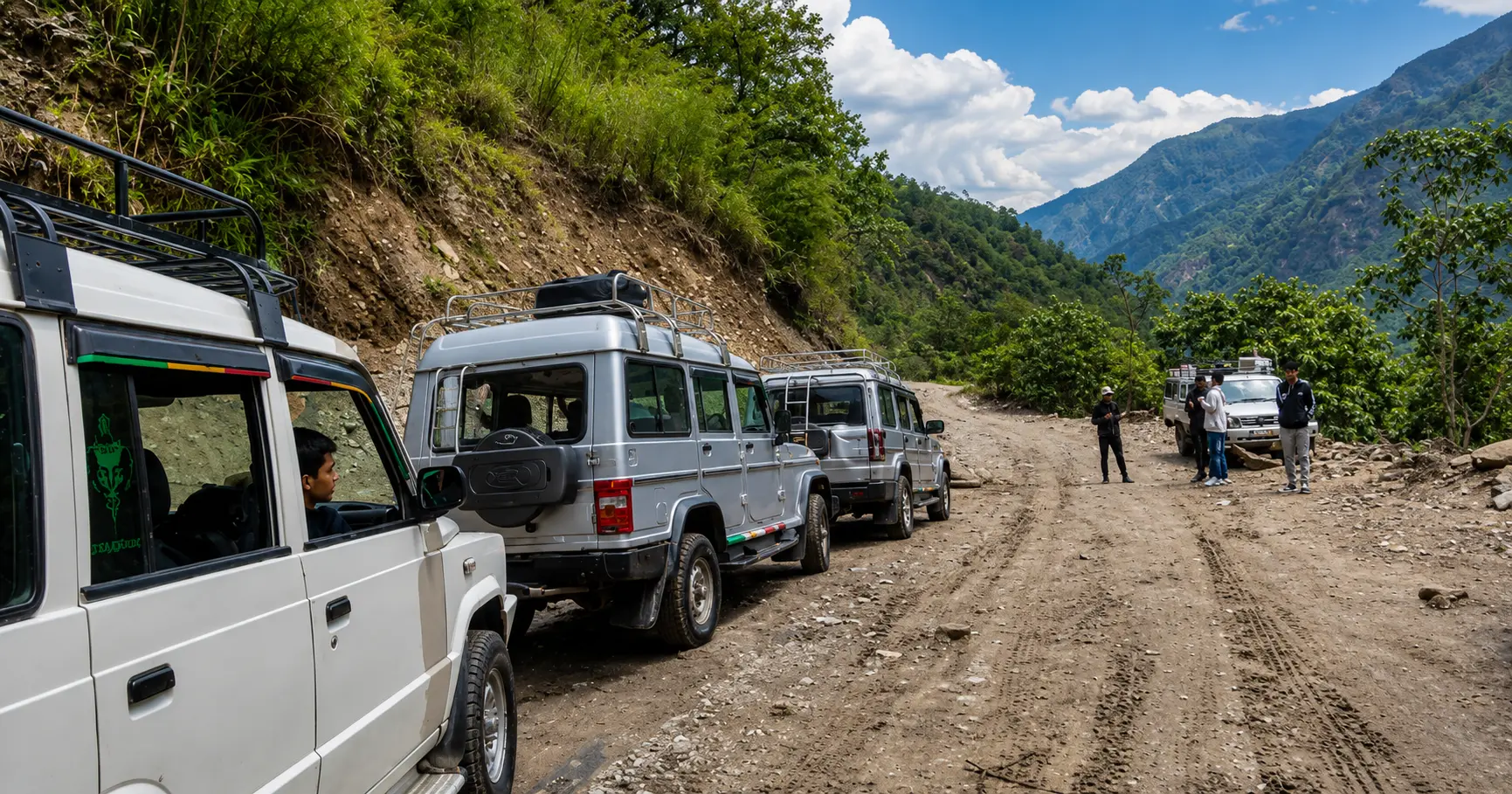
Tsum Valley Trek Jeep Rental Kathmandu
The Tsum Valley is one of Nepal’s most extraordinary and most genuinely hidden trekking destinations — a remote Himalayan valley in the northern Gorkha District whose geographical remoteness, restricted area permit requirement, and the absence of any road or flight access from the outside world have sealed it in a state of cultural and ecological preservation that the more accessible Nepal trekking regions lost to the global trekking economy decades ago. Known in Tibetan as ‘Kyimolung’ — the Valley of Happiness or Valley of Contentment — the Tsum Valley contains traditional Tibetan Buddhist communities whose monastery culture, agricultural practices, and language have been maintained in near-complete isolation from external influence, creating an encounter with Himalayan village life of a depth and authenticity that trekkers consistently describe as among the most moving of their Nepal experience.
The Tsum Valley trek jeep rental from Kathmandu is the unavoidable first transport leg of any Tsum Valley journey — covering approximately 150 to 162 kilometers from Kathmandu to the trailhead at Soti Khola or Machha Khola (or, with the recently extended road, as far as Jagat at 1,290 meters) through the Prithvi Highway, the Arughat junction, and the Budhi Gandaki valley approach. This comprehensive 2026 guide covers the complete jeep rental arrangement: the route in detail, the 2026 price of a private 4WD jeep, the road character and why 4WD matters, the Tsum Valley’s specific permits and why they cannot be arranged anywhere beyond Kathmandu, the trek overview and its cultural highlights, and how Nepal Vehicle Hiring Pvt Ltd delivers the verified, route-experienced private jeep hire that brings trekkers to this extraordinary valley’s gateway in the best possible condition for the journey ahead.
The Tsum Valley — Nepal’s Valley of Contentment
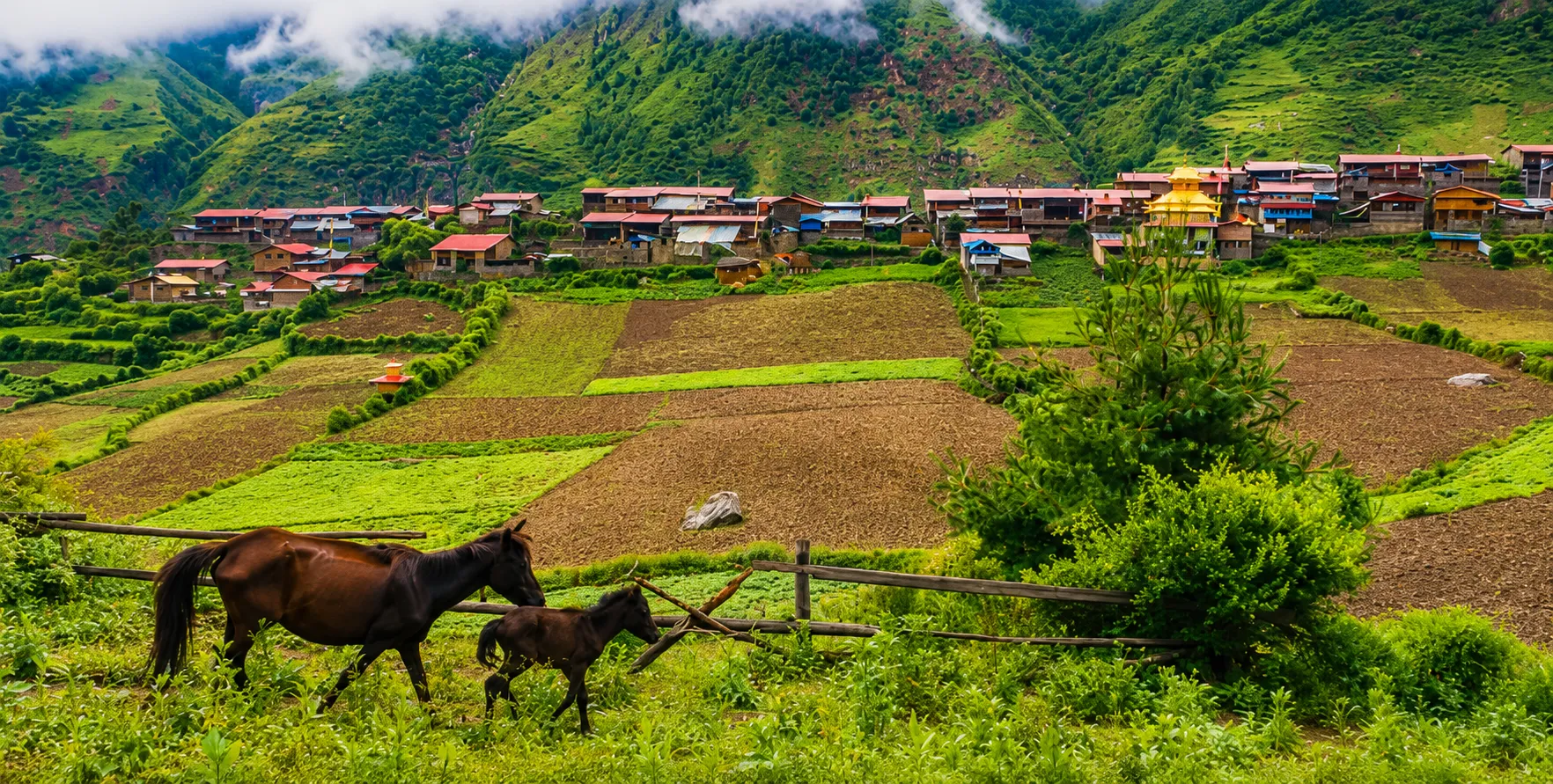
The Tsum Valley occupies the northern extension of the Budhi Gandaki river valley in the Gorkha District, running roughly east-west along Nepal’s border with the Tibet Autonomous Region of China. At its broadest, the valley lies between 3,000 and 4,000 meters above sea level—a high-altitude pastoral environment where altitude, north-facing terrain, and distance from the monsoon’s primary track create a climate significantly drier and cooler than the lowland Nepal valleys below. This climate has shaped the valley’s distinctive cultural character: the communities of Tsum — primarily the Tsumba people, a Tibetan-speaking Buddhist community — practice forms of agriculture and animal husbandry adapted to the short growing season and cold winters of high-altitude Tibet-adjacent terrain, and maintain a religious calendar and social structure built around the valley’s numerous monasteries rather than the commercial economy of lower Nepal.
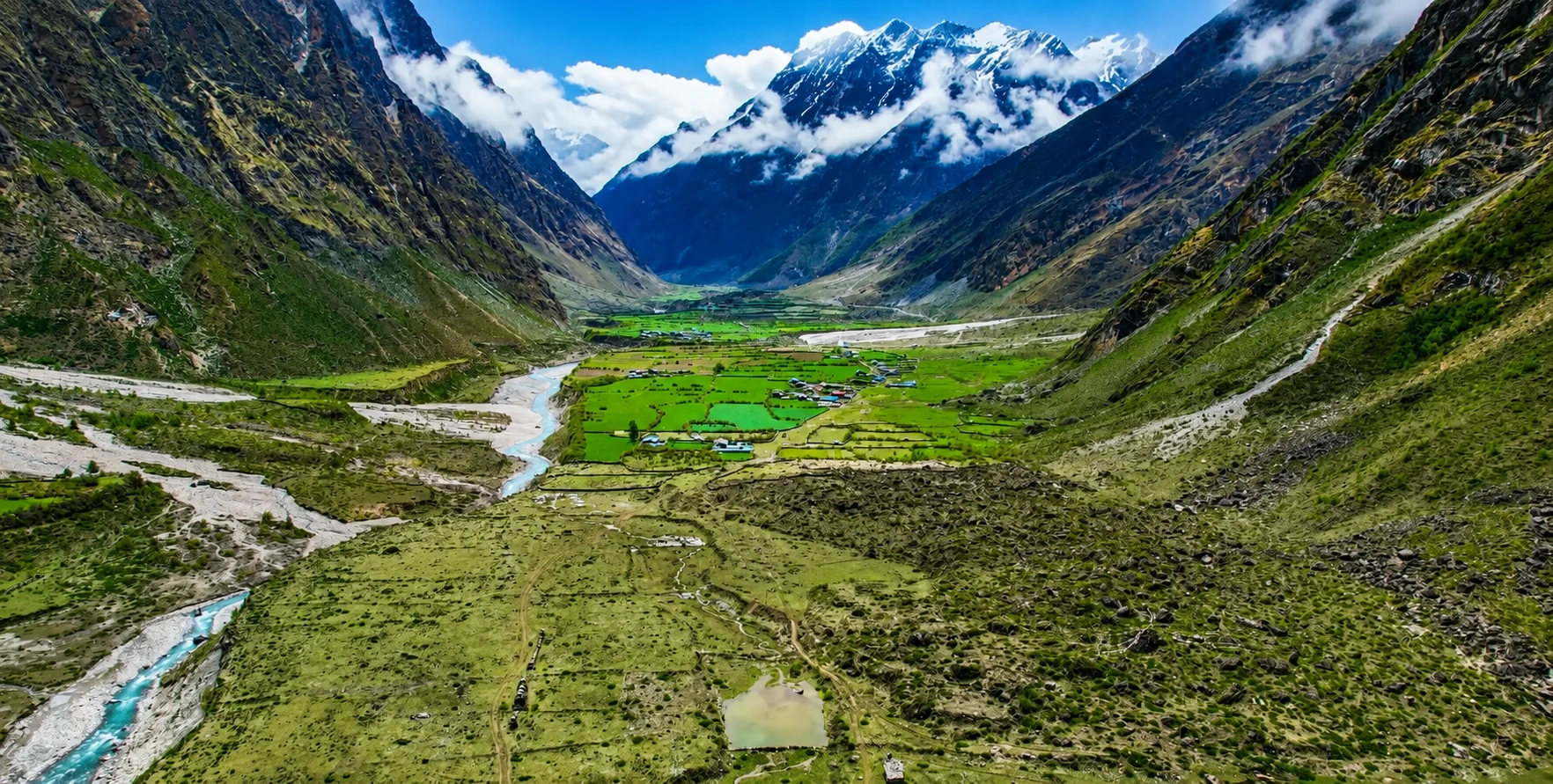
The valley was closed to foreign trekkers until 2008—one of Nepal’s last restricted areas to be selectively opened—and remains subject to the Tsum Valley Restricted Area Permit (RAP), which limits visitor numbers and requires all trekkers to travel with a licensed Nepali guide through a registered agency. This permit requirement is not merely administrative: it is the practical enforcement mechanism of a conservation and cultural protection policy that the valley’s communities and the Nepal government jointly implemented when they decided to open the valley. The Tsum Valley’s extraordinary cultural preservation—its monasteries, traditional costumes, polyandry marriage system, and a specific dialect of Tibetan understood in neither Lhasa nor Kathmandu—is directly connected to the controlled visitor access the permit system maintains.
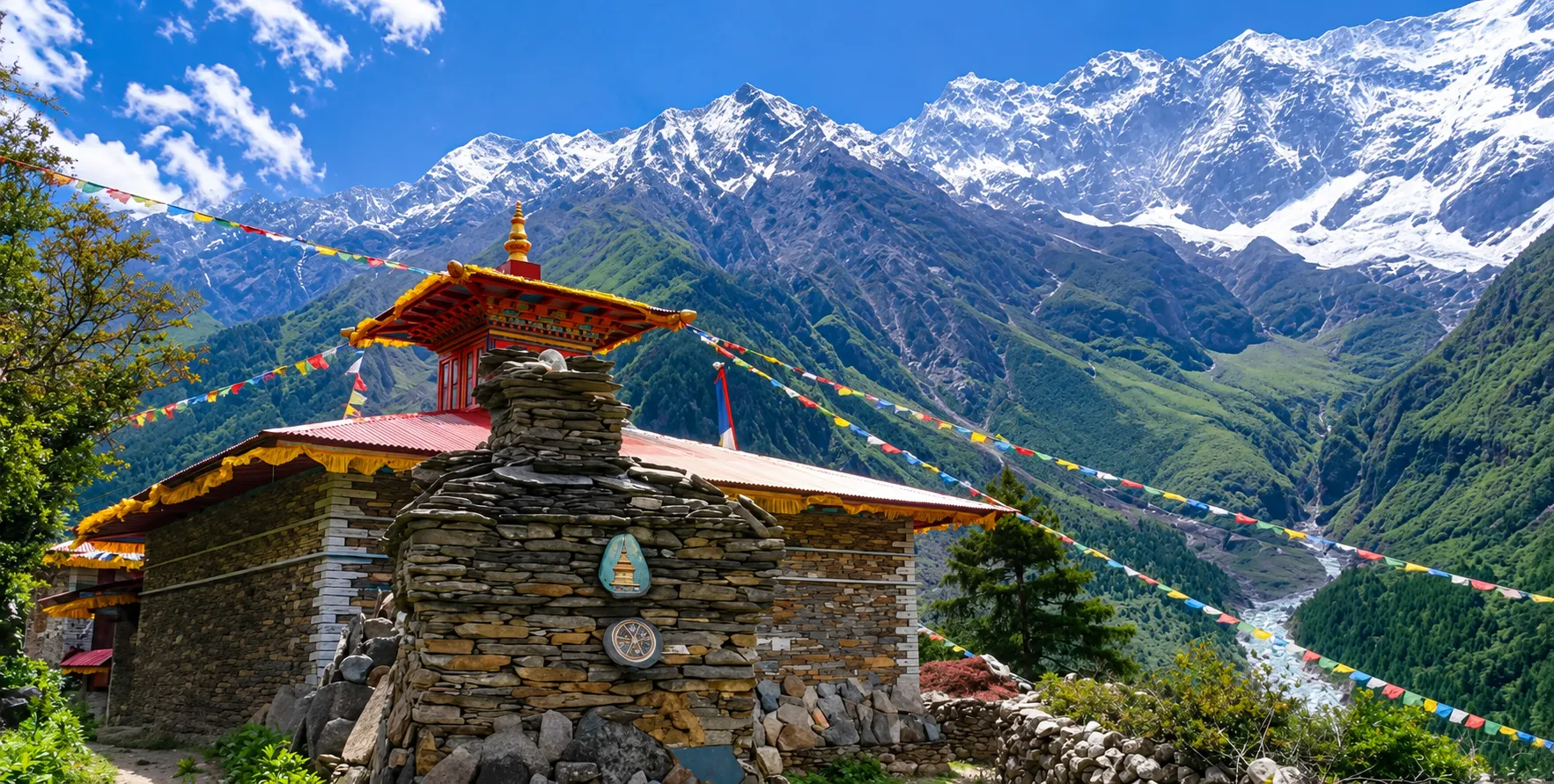
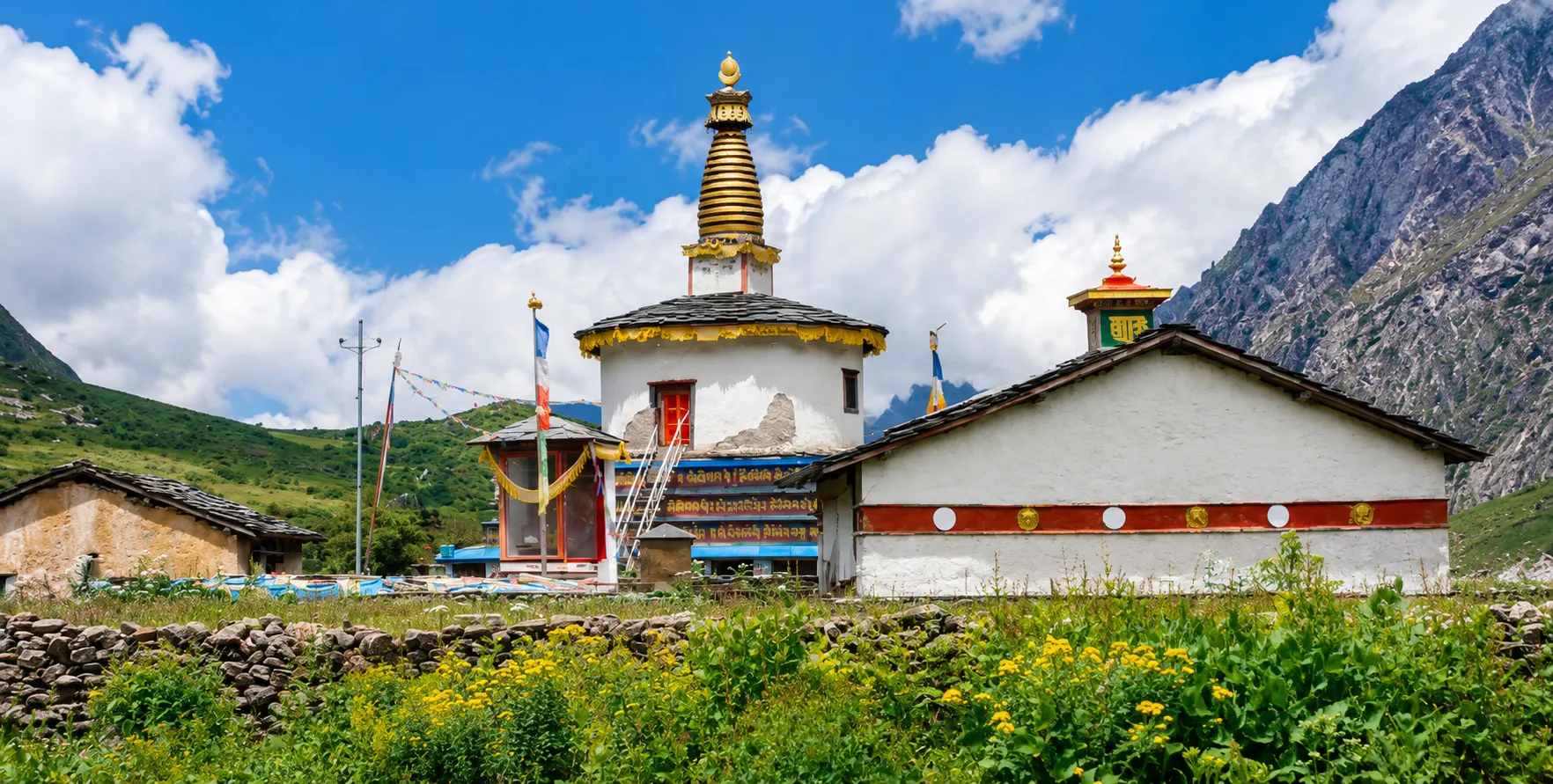
The two primary sites of religious and cultural significance that the Tsum Valley trek is built around are Mu Gompa (approximately 3,700 m), the valley’s largest and most important monastery — founded in the eleventh century and still housing an active community of monks and nuns — and Rachen Gompa, the nunnery located above Mu Gompa that is one of the finest examples of traditional Tibetan Buddhist nunnery architecture in Nepal. Milarepa’s Cave, attributed to the eleventh-century Tibetan poet-saint Milarepa, who, according to Tibetan Buddhist tradition, meditated in this valley during his wandering years, is another site of profound spiritual significance. Reaching these sites requires transport from Kathmandu to the trailhead, then 8 to 10 days of walking through the Budhi Gandaki approach corridor and into the Tsum Valley proper.
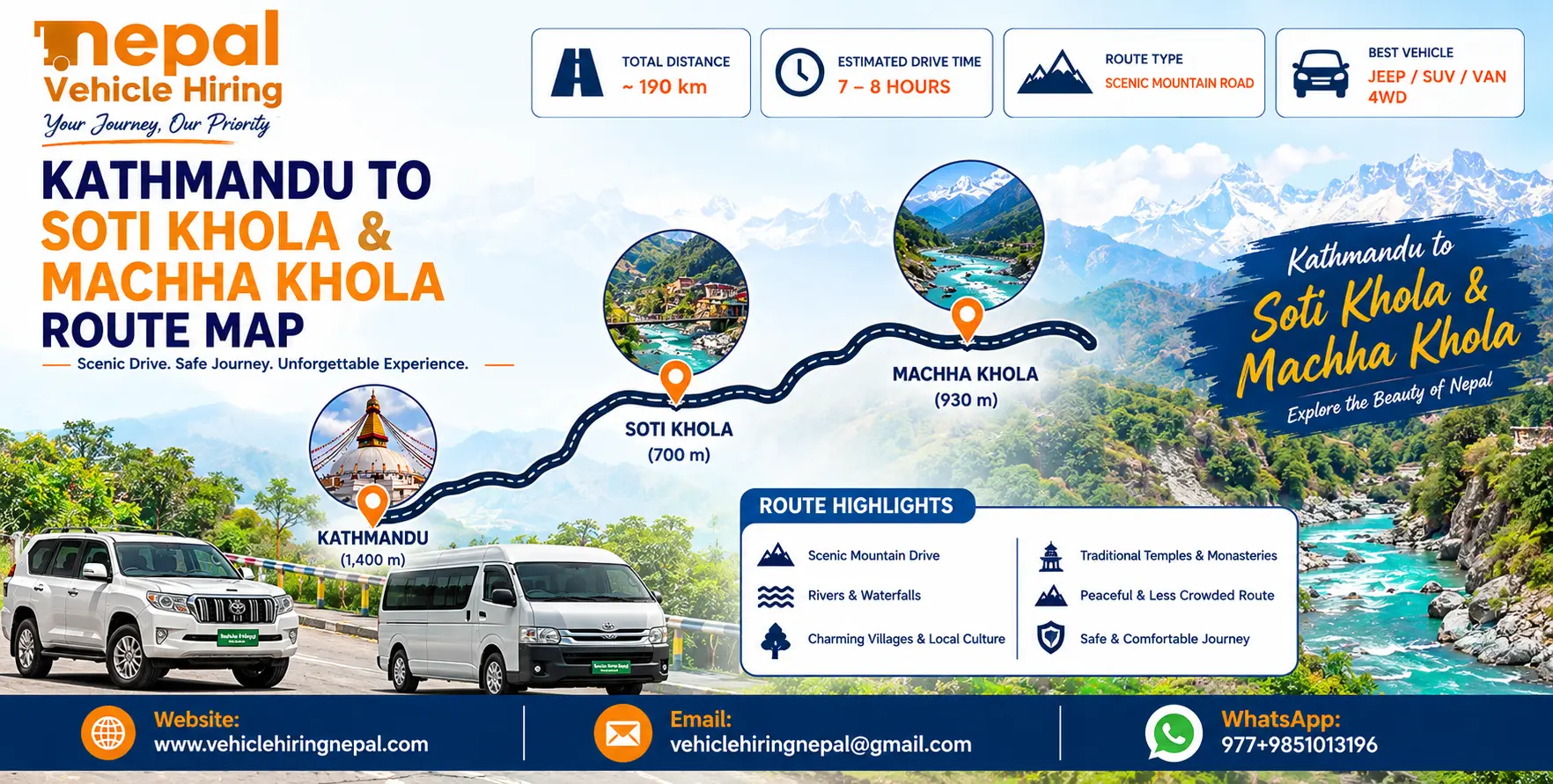
The Route — Kathmandu to Soti Khola and Machha Khola
The Kathmandu to Soti Khola jeep route for the Tsum Valley trek follows the same initial corridor as the Manaslu Circuit trek approach — the Prithvi Highway westward from Kathmandu to the Gorkha district junction, then the Budhi Gandaki valley road northward to Arughat and onward to Soti Khola and Machha Khola. Total driving distance: approximately 150 to 162 kilometers from Kathmandu to Machha Khola, depending on the specific trailhead. Drive time: 7 to 10 hours by private 4WD jeep, longer by public bus.
Kathmandu to the Prithvi Highway Gorkha Junction. The journey begins on the Prithvi Highway heading northwest from Kathmandu, passing through Naubise and Malekhu toward the Trishuli River gorge. At Abukhaireni (approximately 110 kilometers from Kathmandu), the Gorkha district connecting road branches northward from the Prithvi Highway, climbing to Gorkha town (the historic hilltop fortress of Prithvi Narayan Shah) at approximately 1,145 meters before descending toward Arughat in the Budhi Gandaki valley. This Prithvi Highway-to-Gorkha-to-Arughat section is paved for most of its length and takes approximately 4 to 5 hours.
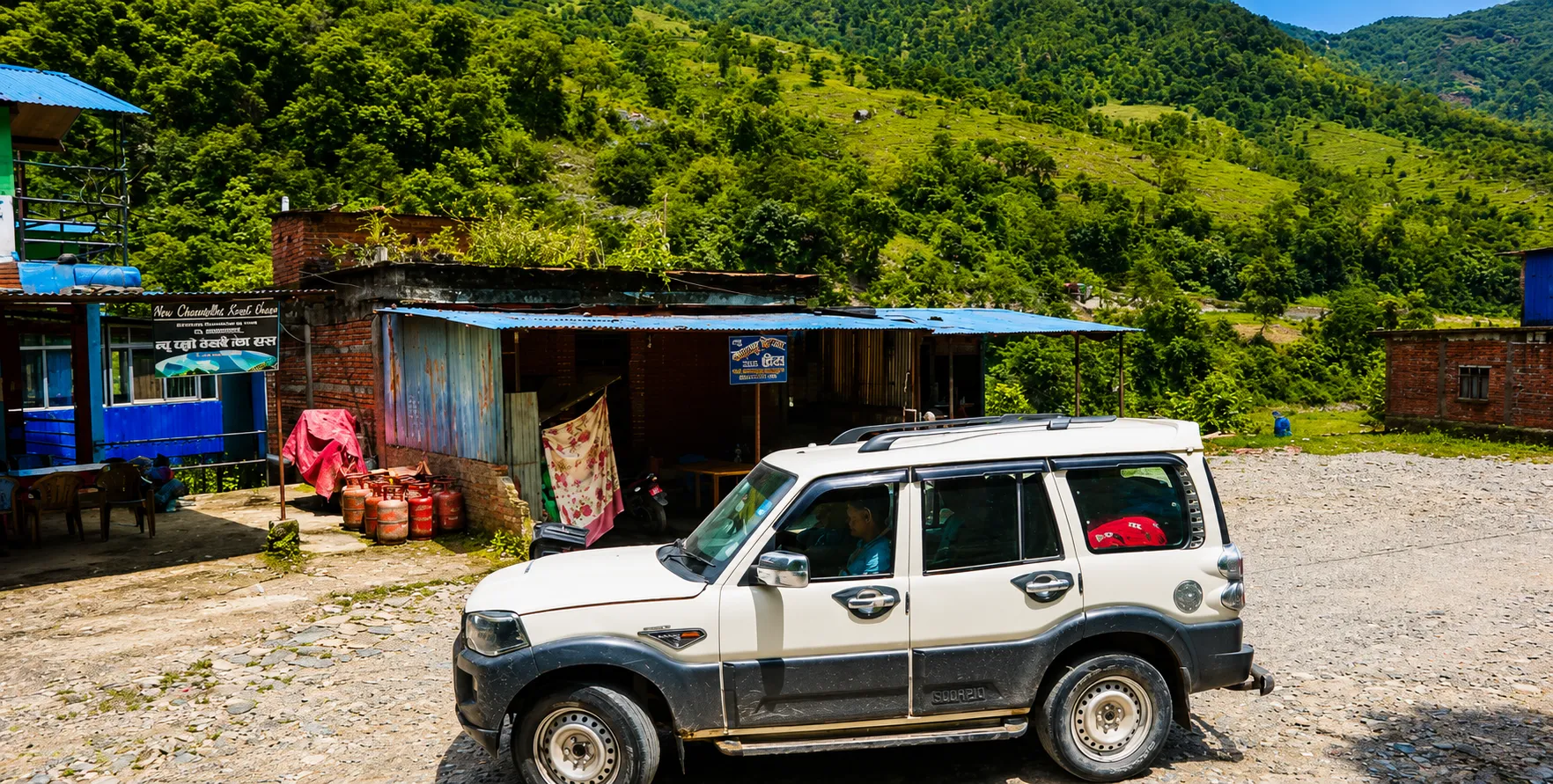
Arughat to Soti Khola. Arughat, at approximately 550 meters on the Budhi Gandaki, is the last town of any size before the road becomes the Budhi Gandaki valley track heading toward the Manaslu and Tsum Valley approach. From Arughat, the road to Soti Khola covers about 25 kilometers of increasingly rough valley-floor track—narrowing, with unpaved or loosely paved sections, and with river-adjacent stretches that require 4WD engagement, making a private Scorpio or Hilux jeep the right vehicle for this route rather than a standard sedan.
Soti Khola to Machha Khola. Soti Khola (approximately 730 meters) has historically been the primary trailhead for both the Manaslu Circuit trek and the Tsum Valley trek. From Soti Khola, the jeep road continues another 10 to 15 kilometers to Machha Khola (approximately 890 meters) — the point traditionally identified as the trekking start for both routes. The Soti Khola-to-Machha Khola section is the roughest of the full road, with an unpaved surface, tight bends, and the kind of exposed river-bank track character that makes a 4WD jeep hire mandatory rather than merely recommended.
The Extended Road to Jagat (2026 Update). As of 2026, the jeep road has been extended beyond Machha Khola northward toward Jagat (approximately 1,290 meters) — what was previously 2 days of trekking from Machha Khola is now, in the best conditions, reachable by 4WD jeep in approximately 2 additional hours of driving beyond Machha Khola. This road extension is recent, rough, and not consistently reliable — the track quality between Machha Khola and Jagat varies significantly by season, and monsoon-season damage can make sections impassable. Nepal Vehicle Hiring Pvt Ltd advises clients on the current maximally drivable point at the time of booking — whether Soti Khola, Machha Khola, or Jagat — based on our driver network’s current knowledge.
Private Jeep Rental Price — Kathmandu to Soti Khola and Machha Khola
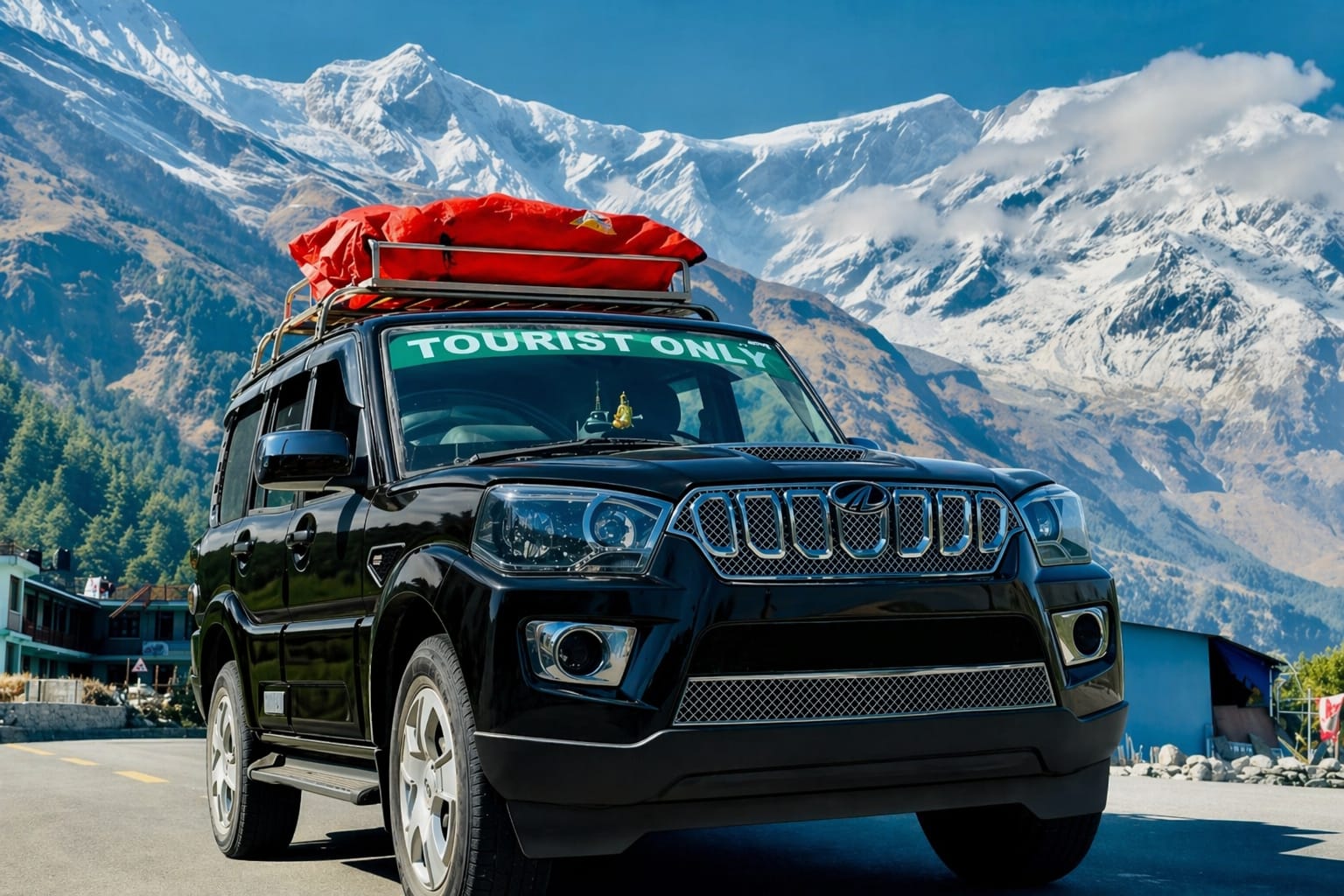
The 2026 price for a private 4WD Scorpio or Hilux jeep from Kathmandu to Soti Khola or Machha Khola from Nepal Vehicle Hiring Pvt Ltd is approximately NPR 20,000 to 28,000 (USD 150 to 210) for the full vehicle one way, carrying 4 to 6 passengers with trekking luggage. This all-inclusive price covers the driver, fuel, and road tolls from any Kathmandu hotel to the confirmed trailhead. For the extended road to Jagat (where current conditions allow), an additional NPR 3,000 to 5,000 (USD 22 to 37) covers the extra driving time and rough-road wear beyond Machha Khola.
For comparison, the shared jeep from Gongabu Bus Park in Kathmandu to the Soti Khola or Machha Khola area costs about NPR 2,500 to 3,500 (USD 19 to 26) per seat, departing on fixed morning schedules when full and taking longer than the private vehicle because of multiple stops. For a trekking group of 4 to 6 people, the private jeep hire from Nepal Vehicle Hiring Pvt Ltd divides to approximately NPR 4,000 to 5,000 (USD 30 to 37) per person — meaningfully more than the shared seat but providing hotel-to-trailhead service, a verified vehicle, and a departure time matched to the group’s requirements.
For the return jeep from Machha Khola or Soti Khola to Kathmandu at the trek’s end, the same price range applies — pre-arranged at booking time through Nepal Vehicle Hiking Pvt Ltd. Our team stays in communication with the trekking group throughout the trek via WhatsApp, confirming the return pickup timing as the actual trek exit date becomes clear. Pre-arranging the return avoids the uncertainty of finding a vehicle at the trailhead after a long trek, when transport options are limited, and the priority is getting back to Kathmandu as efficiently as possible.
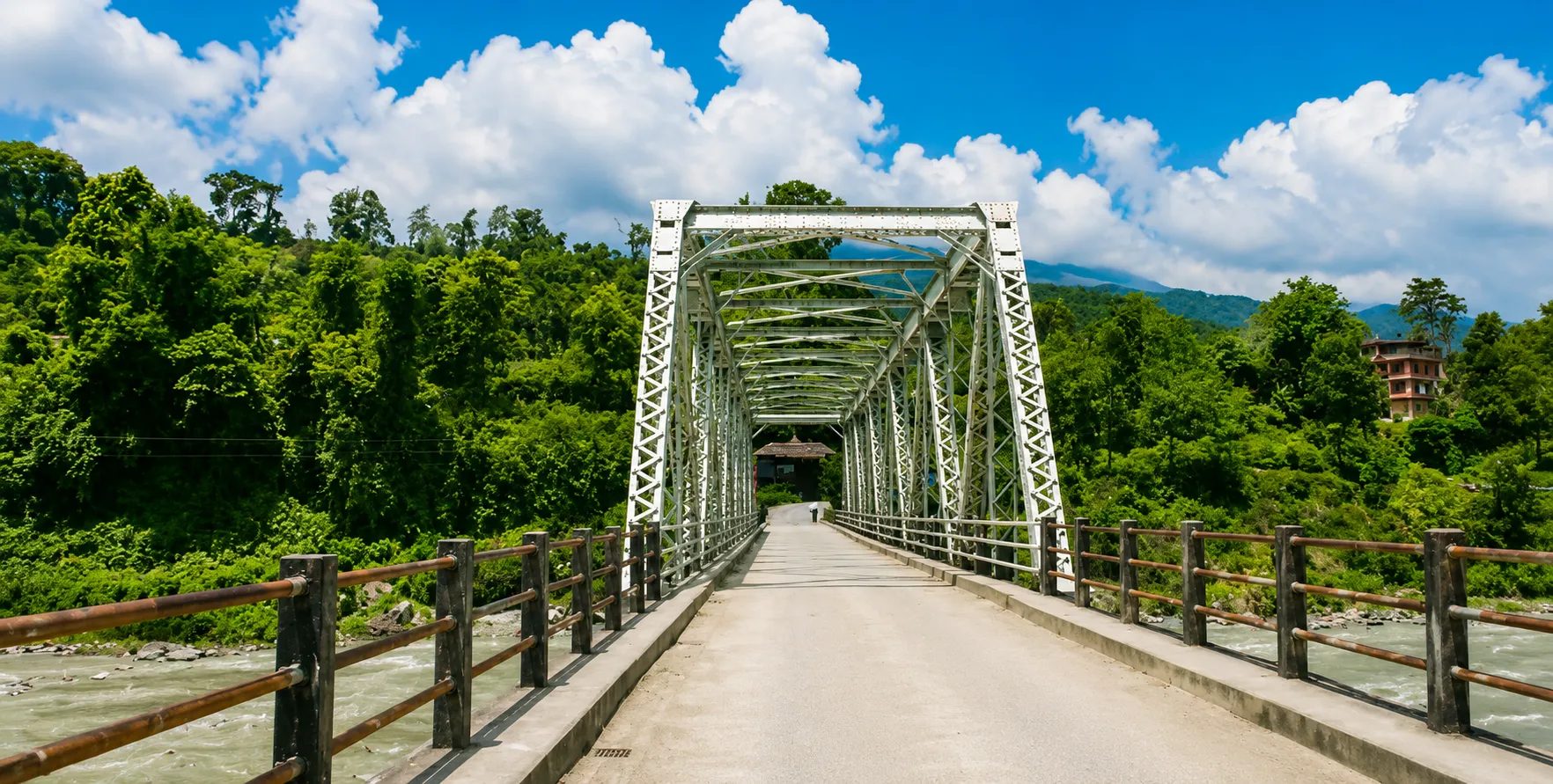
Arughat — The Last Major Town Before the Mountain Road
Arughat Bazaar, at approximately 550 meters on the Budhi Gandaki River, is the last properly equipped market town before the trailhead — and the essential resupply and preparation point for any Tsum Valley or Manaslu Circuit trek group. The town straddles the Budhi Gandaki with a bazaar on each bank connected by a bridge, providing: the last functioning ATMs before the trail (carry significant cash — Arughat ATMs occasionally run out during peak trekking season, so Kathmandu withdrawal is the safer approach); fuel stations for the private jeep’s tank top-up before the rough road continuation; a selection of basic trekking supply shops where any forgotten items (torches, gloves, basic medication) can be supplemented; and the restaurant lunch stop that Nepal Vehicle Hiring Pvt Ltd’s Soti Khola jeep drivers build into the standard journey timing.
From Arughat, the road continues north to Soti Khola on the east bank of the Budhi Gandaki. In this section, the road character definitively becomes a mountain track rather than a district-connecting road. Arughat is also the administrative checkpoint where the Manaslu Conservation Area Permit is first verified for vehicle passengers. Nepal Vehicle Hiring Pvt Ltd’s drivers on the Soti Khola route know the Arughat checkpoint procedure and keep all group documentation readily accessible during the stop. Beyond Arughat, the road to Soti Khola narrows, the surface becomes less predictable, and the 4WD engagement available on the Prithvi Highway becomes the operational mode for the final section of the drive.
The Prithvi Highway to Arughat — The First 110 km
The first 110 kilometers of the Kathmandu to Soti Khola jeep journey follow the Prithvi Highway through the Trishuli River gorge — the same highway used by Kathmandu to Pokhara private vehicles. This section, from Kathmandu to the Abukhaireni junction, is paved, comfortable, and scenically rewarding: the descent to the Trishuli River at Malekhu, the famous Mugling restaurant strip at the Marsyangdi confluence, and the green gorge walls that accompany the road throughout this section create a highway experience that trekkers departing in the early morning hours frequently describe as unexpectedly beautiful given the day’s primary transport objective. Nepal Vehicle Hiring Pvt Ltd’s jeep hire drivers on this route know the most efficient and scenic stopping points for breakfast on this section — typically at the Mugling riverside restaurants around 8:30 to 9:30 a.m. for groups departing Kathmandu at 6:00 a.m.
At Abukhaireni, the Gorkha district connector road branches north from the Prithvi Highway—this is the junction where the journey shifts from the familiar Kathmandu-Pokhara corridor to the Gorkha-Arughat approach that serves the Manaslu Circuit trek and the Tsum Valley trek. The road climbs from the Prithvi Highway’s 400-meter elevation through the Gorkha town approach at 1,145 meters before descending steeply to Arughat in the Budhi Gandaki valley — a section of approximately 50 kilometers that takes 1.5 to 2.5 hours depending on traffic and conditions, and that passes through the Gorkha Palace viewpoint area where, on clear mornings, the Himalayan panorama from the Manaslu massif westward to the Annapurna range is visible above the valley walls. This viewpoint section is one of the most rewarding moments of the pre-trek journey—the first clear sighting of the mountains the trek will enter, from the road to the trailhead.
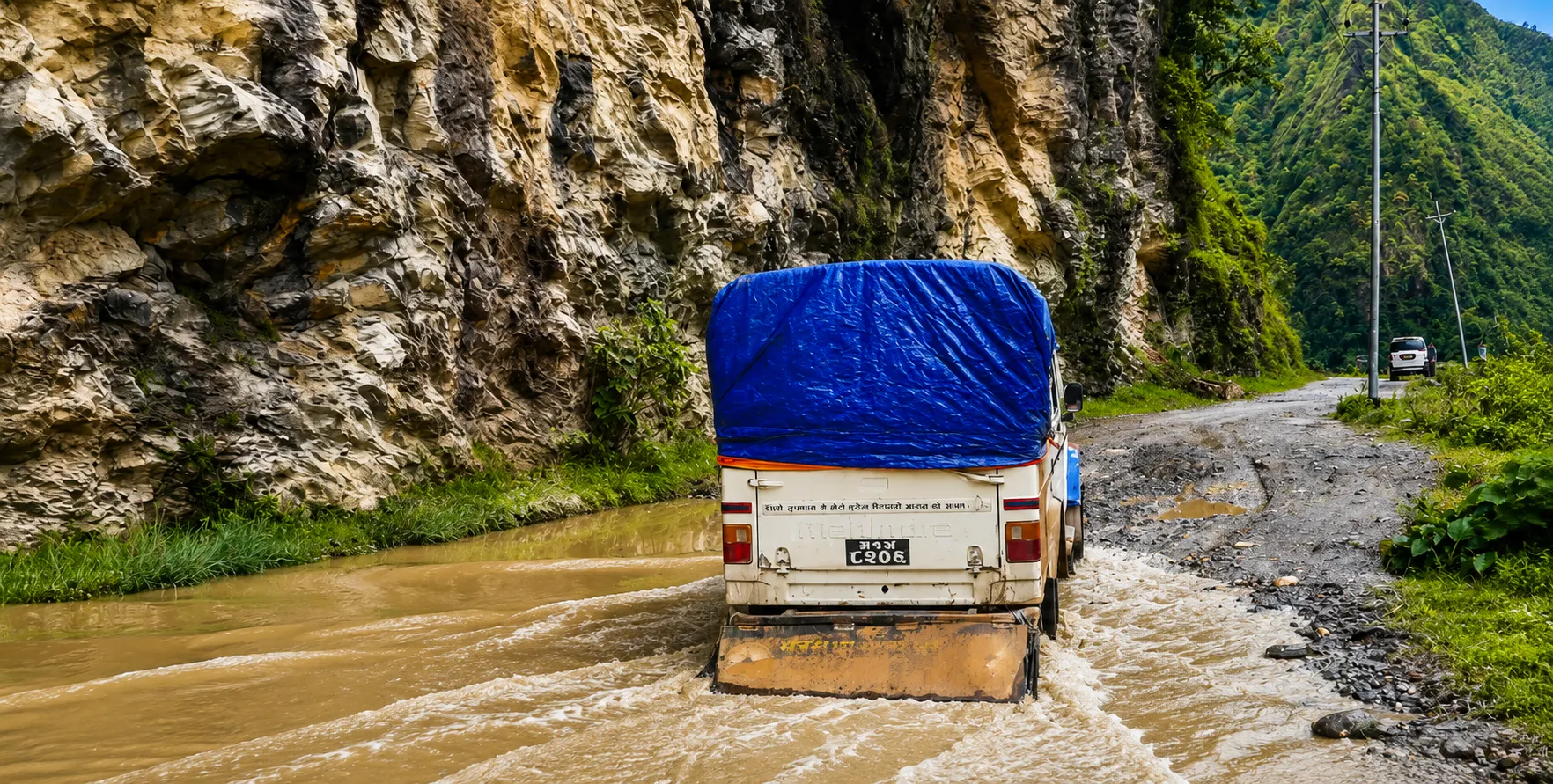
Why a 4WD Jeep Is Essential for This Route
The Kathmandu to Soti Khola jeep route is one of Nepal’s most clearly 4WD-dependent trekking trailhead transfers. From the Arughat junction onward, the road character changes from the connected paved surface of the Gorkha district connector road to the Budhi Gandaki valley floor track — a route that during the monsoon sees significant flood damage and surface washing, that at all times includes unpaved sections with loose gravel and occasional rock debris, and that in the final Soti Khola-to-Machha Khola section includes the river-adjacent track character and steep descent-and-climb profile that defines Nepal’s highest-demand 4WD road environment.
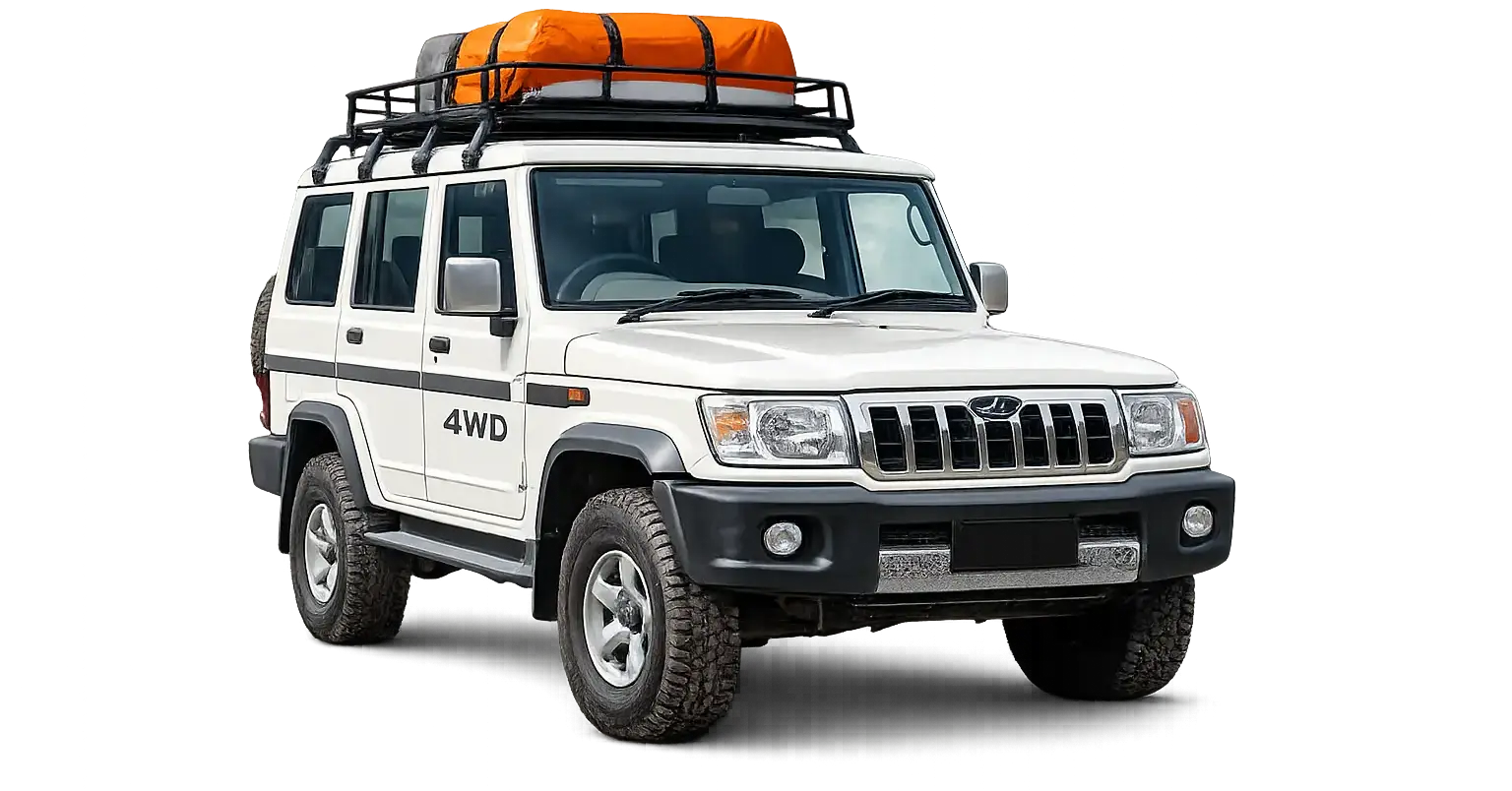
Nepal Vehicle Hiring Pvt Ltd uses 4WD Scorpio and Hilux jeeps exclusively for the Soti Khola transfer — not by policy alone but because the specific road from Arughat to Machha Khola cannot be reliably navigated by a 2WD vehicle in any season except the driest months, and even then not without significant ground clearance compromise. The difference in passenger experience between a private 4WD jeep and a 2WD alternative on the Soti Khola section is substantial: the 4WD’s ability to engage differential lock on the most demanding sections, combined with its higher ground clearance and the mechanical confidence that the Scorpio and Hilux’s diesel engines provide on sustained gradient sections at low speeds, creates a journey that arrives at the trailhead without the vehicle stress that 2WD alternatives accumulate on this specific corridor.
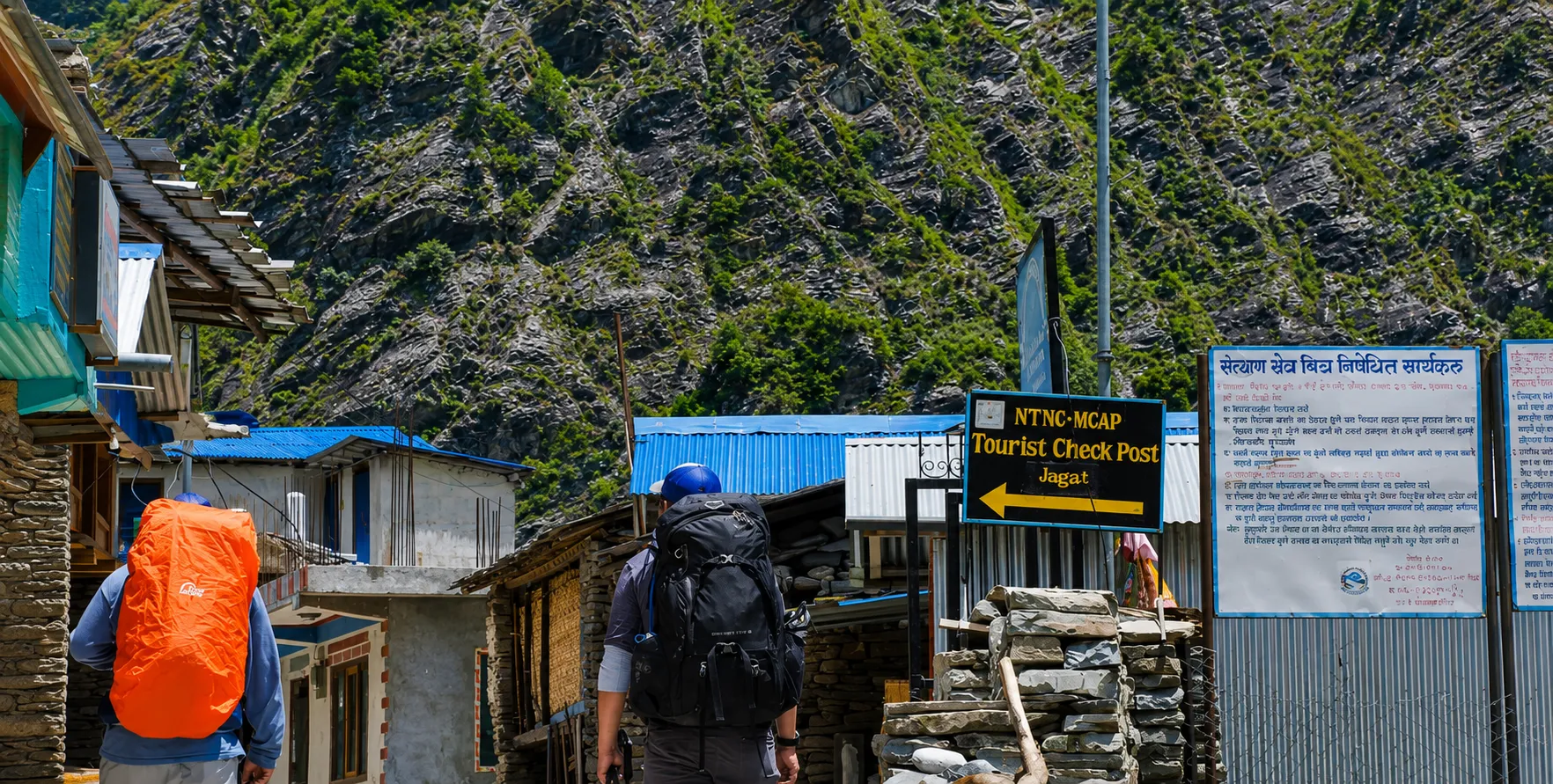
Tsum Valley Permits — What Must Be Arranged in Kathmandu
The Tsum Valley’s Restricted Area status requires a permit that is categorically non-negotiable and cannot be addressed beyond Kathmandu — no permits are issued at any field checkpoint along the Budhi Gandaki approach. Checkpoint personnel turn back trekkers arriving at Lokpa without the correct documentation, regardless of the distance already traveled or the cost already incurred. Understanding and obtaining the full Tsum Valley permit set in Kathmandu before the jeep departs is the single most important administrative preparation for any Tsum Valley trek.
Tsum Valley Restricted Area Permit (RAP). The primary and most specific permit for the Tsum Valley—issued by the Department of Immigration in Kathmandu, available only through registered trekking agencies (not directly to individual trekkers), and requiring a minimum group size of 2 people. The 2026 RAP fee is USD 35 per person per week for the first 7 days and USD 20 per person per day thereafter—making a 10-day Tsum Valley visit cost approximately USD 35 (week 1) plus 3 days at USD 20 = USD 95 per person in permits for this document. The RAP must specify the exact dates of Tsum Valley entry and exit and must be verified at the Lokpa checkpoint where the Tsum Valley trail diverges from the Manaslu Circuit route.
Manaslu Conservation Area Permit (MCAP). The Tsum Valley trek approach corridor from Soti Khola to the Tsum Valley lies within the Manaslu Conservation Area — the same protected area that encompasses the Manaslu Circuit trek corridor. The MCAP costs USD 30 per person for foreign nationals and is obtained from the Nepal Tourism Board in Kathmandu. Both the RAP and MCAP are verified at the Jagat checkpoint early in the approach walk.
TIMS Card. The Trekkers Information Management System card costs USD 10 to 20 per person and must be accompanied by the original from a registered agency for the Tsum Valley restricted area.
Licensed Guide — Mandatory. A TAAN-registered licensed guide is mandatory for all Tsum Valley trekkers — the restricted area permit is not issued to any individual or group without a licensed guide attached. Guide fees typically run USD 30 to 40 per day. Nepal Vehicle Hiring Pvt Ltd’s contact team advises on current permit requirements and partner agency connections when clients book their Kathmandu to Soti Khola jeep transfer.
NOTE: Obtain all permits in Kathmandu before the jeep departs. No permits are available at Arughat, Soti Khola, Machha Khola, or any field checkpoint along the approach trail. Bring the full permit set before boarding the vehicle.
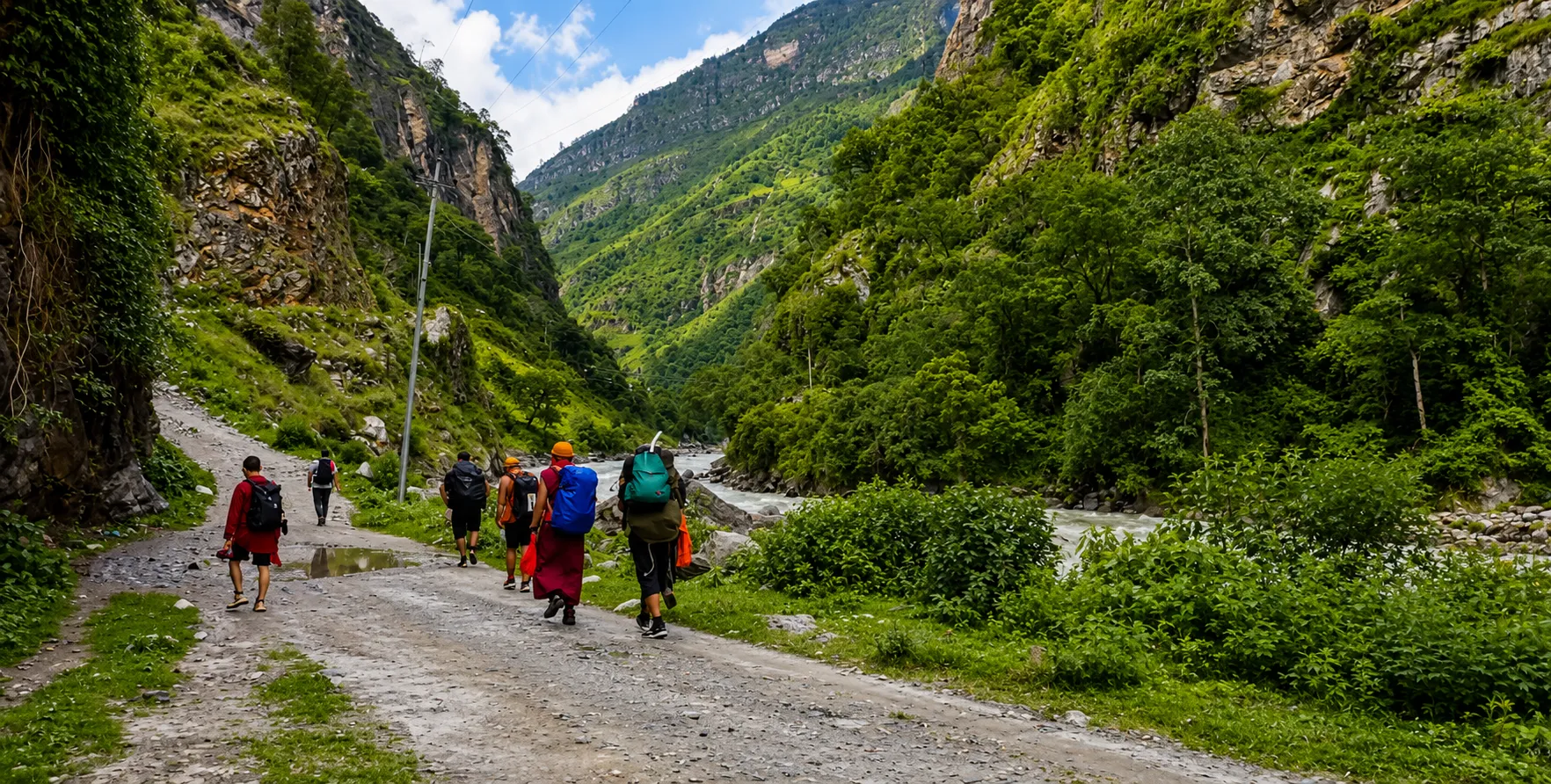
The Tsum Valley Trek — What Awaits Beyond the Trailhead
The Tsum Valley trek from the road-end at Machha Khola or Jagat follows the Budhi Gandaki River northward through the Manaslu Conservation Area — initially sharing the route with the Manaslu Circuit trek before diverging at Lokpa village (approximately 2,240 meters, typically reached in 2 to 3 days from Machha Khola depending on the current road-end point). The standard Tsum Valley trek is 14 to 17 days from Kathmandu, including the approach corridor, the valley itself, and the return.
The Approach — Machha Khola to Lokpa. The trail from Machha Khola (or Jagat if the road extends) follows the Budhi Gandaki River northward through a series of increasingly Tibetan-influenced villages: Khorlabesi, Tatopani hot springs (where the river’s geothermal activity produces natural hot water pools used by trekkers and locals alike), Dovan, Yaru Bagar, Philim, Tekle Bhatti, Chisapani, and Lokpa. The trail character changes progressively as altitude builds from the subtropical gorge below Tatopani to the temperate mixed forest of the mid-valley and the increasingly open alpine landscape approaching Lokpa. At Lokpa, the trail reaches its most significant junction: south and west continues the Manaslu Circuit trek; north and east enters the Tsum Valley.
The Tsum Valley Proper — Lokpa to Mu Gompa and Rachen Gompa. Above Lokpa, the character of the trek changes dramatically and immediately: the Manaslu Circuit crowds disappear, the villages adopt a distinctly Tibetan architectural and cultural character, and the mountains above — Ganesh Himal IV visible to the south, Sringi Himal to the northeast — frame a valley whose visual grandeur is matched by its cultural depth. The major settlements of the Tsum Valley — Chhekampar (also spelled Chhekamparo), the valley’s largest village cluster; Nile village; and the Mu Gompa monastery complex at approximately 3,700 meters — each offers progressively deeper immersion in the Tsumba culture that the restricted-area permit has successfully preserved. Mu Gompa’s monastery, still fully functioning with both monks and nuns, offers an introduction to the valley’s specific form of Tibetan Buddhist practice, which differs in subtle ways from both the Sherpa Buddhist tradition of the Khumbu and the mainstream Gelugpa tradition of Lhasa.
Rachen Gompa and Milarepa’s Cave. Above Mu Gompa, the valley narrows toward the Tibetan border, and the trail reaches Rachen Gompa — the nunnery at about 3,800 meters whose resident community has maintained a tradition of religious practice and scholarship that has continued without significant interruption for several centuries. Above Rachen, on the upper approach toward the valley’s Tibetan border section, Milarepa’s Cave marks the point where, according to Tibetan Buddhist tradition, the eleventh-century master meditated during his long wandering in the Nepal-Tibet border region. The Cave is a pilgrimage site for Tibetan Buddhist trekkers and a place of profound spiritual atmosphere for anyone connected to this tradition.
Combining Tsum Valley with the Manaslu Circuit
The most commonly trekked format for the Tsum Valley trek is the combined Tsum Valley and Manaslu Circuit trek — a single continuous 18 to 22-day journey that approaches from Soti Khola or Machha Khola, enters the Tsum Valley from Lokpa, returns to the Manaslu Circuit main trail after the Tsum Valley visit, and then continues the Manaslu Circuit through Sama Gaon, across the Larkya La Pass (5,106 m), and exits at Dharapani in the Annapurna region. This combined format is the most efficient and most complete mountain wilderness experience available on this specific corridor — visiting two of Nepal’s finest but most different Himalayan environments (the cultural sanctuary of Tsum and the technical mountain circuit of Manaslu) in a single extended trek.
The Manaslu Circuit exit at Dharapani connects to the Annapurna Circuit approach road at Besisahar — meaning that trekkers can exit the combined circuit to Kathmandu by private jeep from Besisahar or by bus from Besisahar. Nepal Vehicle Hiring Pvt Ltd coordinates this complete two-direction transfer: Soti Khola/Machha Khola approach by Kathmandu to Soti Khola jeep, and Besisahar-to-Kathmandu exit by our Manaslu trek transport service — all coordinated through our plan trip page as a single, complete trek transport arrangement.
The Budhi Gandaki Valley — The Approach Corridor
The Budhi Gandaki River, which the Tsum Valley approach trail follows northward from Machha Khola, is one of Nepal’s finest and most varied trekking river corridors — a Himalayan river whose character changes dramatically over the 60 to 70 kilometers between the lower gorge at Machha Khola and the upper valley at Sama Gaon. The lower Budhi Gandaki gorge is one of Nepal’s deepest and most dramatic canyon environments: the river compressed between vertical cliff walls at sections where the trail crosses the gorge on suspension bridges, the walls densely forested with subtropical jungle giving way to temperate forest as altitude builds, and the water color a vivid green-blue in the dry season. This approach corridor is shared with Manaslu Circuit trekkers until the Lokpa divergence. The combination of the gorge environment and the multi-ethnic communities of the lowerBhotei Gandak Gurung, Chhetri, Brahmin, and Tamang villages in the lower section, Tibetan-influenced communities in the upper section creates a richly varied cultural experience even before you enter the Tsum Valley proper.
The Tatopani hot springs, approximately 2 walking days above Machha Khola (or 1 day if the Jagat road extension has been driven), are one of the approach trail’s most distinctive features: natural geothermal pools at the river’s edge that provide the kind of unexpected luxury — hot bathing water in a remote mountain environment — that becomes genuinely meaningful after several days of trekking. The springs are a significant rest point for both Manaslu Circuit and Tsum Valley trekkers, and Tatopani village’s small guesthouses provide one of the approach’s most comfortable overnight stops.
The Ganesh Himal — The Valley’s Mountain Backdrop
The Ganesh Himal range forms the southern backdrop of the Tsum Valley, with several of the range’s seven named summits visible from the valley floor: Ganesh IV (7,052 m) and Pabil (7,109 m) — also called Ganesh IV Chuli — visible from Chhekampar and Mu Gompa in the most dramatic profile available from any trekking route in Nepal. Surveyors named Ganesh Himal in the nineteenth century for the elephant-headed Hindu deity whose profile they perceived in the massif’s outline when viewed from the south. This topographic imagination is confirmed in the distinctive rounded and buttressed shapes of the range’s higher summits visible from the Tsum Valley’s northern viewpoints.
The Sringi Himal (7,187 m) — the highest peak in the immediate Tsum Valley visual panorama — is visible from the upper valley above Mu Gompa and provides one of the finest undiscovered high Himalayan mountain panoramas available on any Nepal trek, seen from a valley with visitor numbers so small that the experience carries none of the crowding and viewpoint competition that comparable views on the Annapurna Circuit or Everest Base Camp trek carry. The combination of Ganesh Himal’s approachable summit profile and Sringi’s more remote presence creates the mountain backdrop of a world-class trek that receives fewer visitors per year than a moderately popular single Annapurna Circuit day.
The Tsumba People — A Living Himalayan Culture
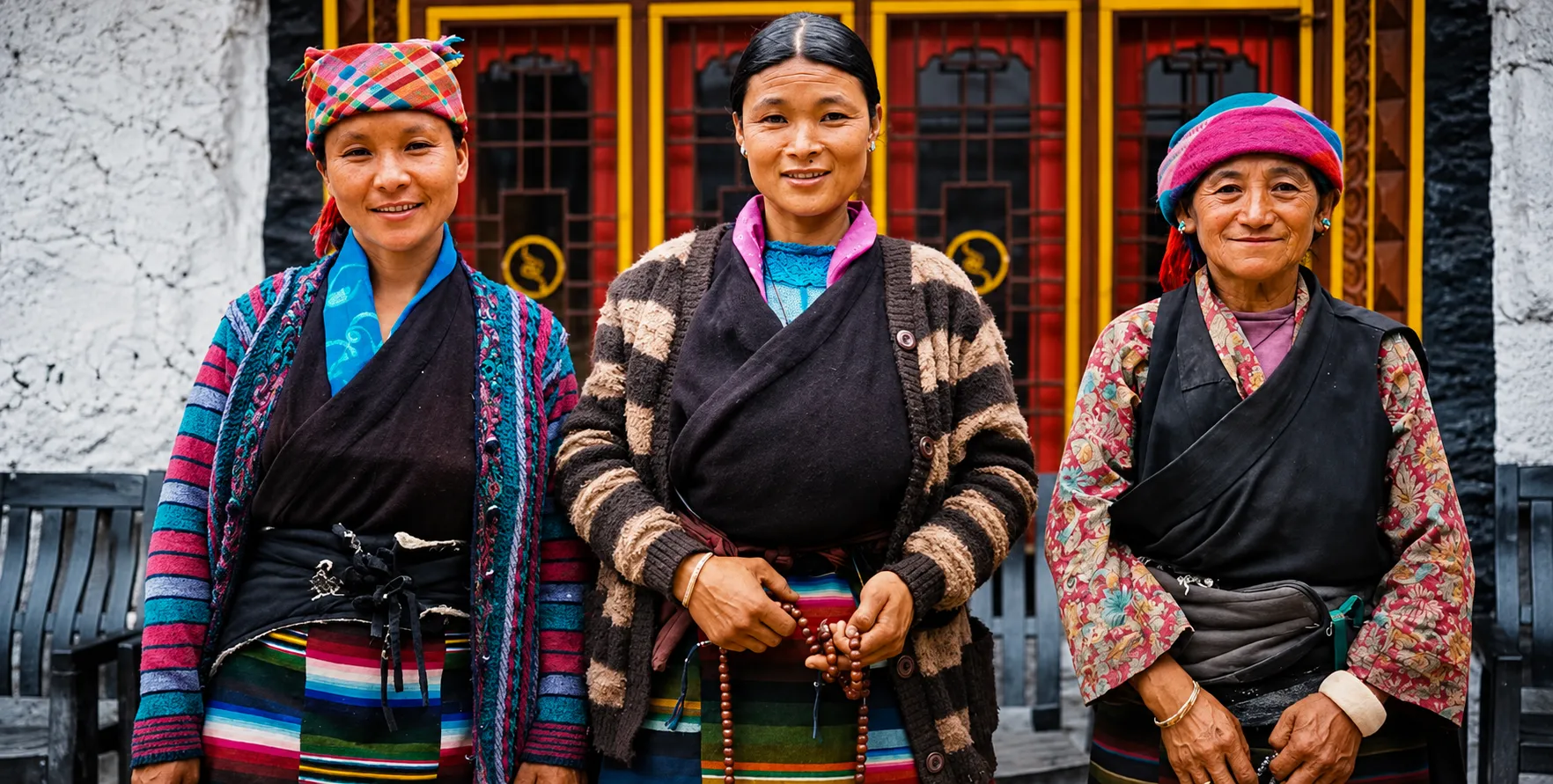
The Tsumba people — the approximately 4,000 to 5,000 inhabitants of the Tsum Valley — are one of the most distinctively preserved ethnic and cultural communities in Nepal’s Himalayan population. Their language, a specific dialect of Tibetan that shares vocabulary with Lhasa Tibetan but carries phonological features unique to this valley, is classified as a separate language by linguists — distinct enough from standard Tibetan that it is not mutually comprehensible with either Lhasa Tibetan or the Tibetan dialect of Nepal’s Sherpa communities. This linguistic distinctiveness reflects the valley’s centuries of relative isolation — the same geographical and cultural remoteness that the restricted-area permit now formally protects was the natural protection the valley’s geography provided for centuries before permit systems existed.
The Tsumba social structure maintains features that have largely disappeared from more accessible Himalayan communities: a form of fraternal polyandry — where a woman may marry several brothers of the same family simultaneously — that distributes family land and resources across generations without the subdivision that individual inheritance creates, preventing the progressive fragmentation of mountain farmland that has impoverished other high-altitude agricultural communities in Nepal. The practice is documented in only a handful of Himalayan communities worldwide, and the Tsum Valley is one of the most accessible places to observe it as a living social institution rather than a historical practice.
The valley’s agricultural system, built around high-altitude grain crops (barley, buckwheat, and potato at lower elevations), animal husbandry (yak, sheep, and goats providing milk, wool, and transport capacity), and the seasonal trans-Himalayan trade with Tibet that the valley’s border position historically enabled, creates an integrated subsistence economy of remarkable resilience. The trade routes that once connected Tsum with Tibetan markets over the northern passes have been disrupted by the Nepal-Tibet border closing, limiting local traders. Still, the valley’s internal economy continues to function on principles that pre-date the modern nation-state system. For trekkers arriving via the Kathmandu to Soti Khola jeep rental and the Budhi Gandaki approach trail, the Tsum Valley offers an encounter with this living cultural system that the world’s most celebrated trekking destinations — the Annapurna and Everest corridors — cannot provide at anything approaching this level of preservation and authenticity.
Season Guide — Best Time for the Kathmandu to Soti Khola Jeep and Tsum Valley Trek
Spring (March to May) — Peak Season. The finest combination of trekking conditions and mountain views. Rhododendron forests along the Budhi Gandaki approach corridor are in spectacular bloom in March and April — the red, pink, and white forest that frames the lower gorge trail is one of Nepal’s finest seasonal natural displays. The Kathmandu to Soti Khola jeep road is at its driest and most consolidated. Book jeep hire and permits at least 3 to 4 weeks ahead for spring peak season.
Autumn (October to November) — The Second Peak. Post-monsoon clarity delivers the sharpest mountain views of the year — the Ganesh Himal and Sringi visible from the Tsum Valley upper viewpoints in the best atmospheric conditions available. The approach trail is dry and well-maintained following the post-monsoon Department of Roads repair cycle. October and November are the most popular months for the Manaslu Circuit trek and Tsum Valley combination — book the Soti Khola jeep hire at least 1 to 2 weeks ahead.
Winter (December to February) — Cold but Feasible. The lower Tsum Valley (below Mu Gompa) is accessible in winter for trekkers with strong cold-weather experience. Still, the upper valley above 3,500 m and the high viewpoints above Rachen Gompa see significant snowfall that makes the trek significantly more challenging; the La Pass for those combining Tsum Valley with the Manaslu Circuit is effectively closed in January and February.
Monsoon (June to August) — Not Recommended. The Budhi Gandaki approach corridor receives significant monsoon rainfall, with landslide risk on the gorge sections particularly high in July and August. The Kathmandu to Soti Khola jeep road becomes significantly more challenging in monsoon. Nepal Vehicle Hiking Pvt Ltd does not dispatch on this route without current road confirmation during monsoon season.
Tsum Valley vs Manaslu Circuit — How They Differ
The Manaslu Circuit trek and the Tsum Valley trek share the same Kathmandu-to-Soti Khola jeep approach and the same initial Budhi Gandaki trail section — but they diverge at Lokpa into experiences of fundamentally different character.
The Manaslu Circuit is Nepal’s finest high mountain circuit — a 14 to 17-day ring route that crosses the Larkya La Pass at 5,106 meters, circles the world’s eighth highest mountain (Manaslu, 8,163 m), and exits at Dharapani in the Annapurna region. It is Nepal’s most technically demanding non-technical circuit trek — physically demanding, altitude-serious, and rewarding primarily for its mountain grandeur and the achievement of the high pass crossing.
The Tsum Valley trek is Nepal’s finest cultural immersion trekking experience in a remote highland setting — a 12 to 15-day round trip that prioritizes the valley’s Tibetan Buddhist communities, its monasteries, and its preserved traditional culture over high passes and dramatic altitude. Tsum Valley visitors consistently describe the human encounter — with the monks of Mu Gompa, the nuns of Rachen, and the farming communities of Chhekampar — as the trek’s primary reward, with the mountain scenery as the extraordinary backdrop to what is fundamentally a cultural experience.
Both treks deserve the same essential first step: a reliable, road-experienced 4WD private jeep from Nepal Vehicle Hiring Pvt Ltd from Kathmandu to the trailhead. Our Manaslu trek transport service covers both approaches — Soti Khola for the Tsum Valley entry and the Manaslu Circuit approach, and Besisahar for the Manaslu exit. Plan both through our plan trip page.
Practical Tips — Kathmandu to Soti Khola Tsum Valley Jeep Transfer
- Depart Kathmandu by 5:30 to 6:30 a.m.The 7- to 10-hour drive to Machha Khola requires an early start to arrive with daylight remaining for trailhead check-in and lodge arrangement.
- Obtain ALL permits in Kathmandu before departure: Tsum Valley RAP, MCAP, TIMS — none are available at field checkpoints. The Lokpa checkpoint will turn back unpermitted groups. Contact our team for permit requirement advice.
- Book a licensed guide before the jeep departs: The RAP is only issued through registered agencies with a licensed guide attached. Confirm guide arrangement before booking the jeep transfer.
- Withdraw NPR cash in Kathmandu: The last reliable ATMs are in Gorkha or Arughat. Carry enough NPR for the full trek duration—guide and porter daily rates, teahouse food, and permit fees at any secondary checkpoints.
- Confirm current road-end: Ask Nepal Vehicle Hiring Pvt Ltd to confirm the current maximally drivable point (Soti Khola, Machha Khola, or Jagat) at the time of booking — the road extension is ongoing and season-dependent.
- Pre-arrange the return jeep: Book the Soti Khola-to-Kathmandu return jeep when you book the outward journey. Our team stays in touch on WhatsApp during the trek to confirm return timing. WhatsApp: +977-9851013196.
- If combining with the Manaslu Circuit: Book the Dharapani-to-Kathmandu or Besisahar-to-Kathmandu exit vehicle through our Manaslu trek transport service when you book the outward Soti Khola journey.
The Gorkha District — A Historic Kingdom on the Way to Tsum
The Gorkha district, through which the Kathmandu to Soti Khola jeep route passes, is one of Nepal’s most historically significant territories — the birthplace of Prithvi Narayan Shah, the eighteenth-century king who unified the fractured hill kingdoms of the Himalayan region into the modern state of Nepal. The Gorkha Palace (Gorkha Durbar), perched on a hilltop above Gorkha town at approximately 1,145 meters, is one of Nepal’s finest examples of traditional Newari palace architecture — a fortified complex of halls, temples, and viewing platforms that has been restored to outstanding condition since the 2015 earthquake partially damaged sections of its complex, and that commands a sweeping view of the Himalayan range from Dhaulagiri to the Ganesh Himal and the Manaslu massif.
For Tsum Valley trek jeep rental groups departing Kathmandu on the two-day format — spending a night in Gorkha before the Arughat-to-Machha Khola continuation — the Gorkha Palace visit adds one of Nepal’s finest heritage experiences to what might otherwise be treated as a purely logistical transit day. The palace provides both a cultural orientation to the region the trek enters (the Gorkha district’s northern extensions include the Budhi Gandaki valley that the Manaslu and Tsum Valley trail follows. A first sight of the Himalayan range — the Manaslu massif visible to the north from the palace viewpoint on clear days — provides a powerful visual introduction to the mountains the trek will enter. Nepal Vehicle Hiring Pvt Ltd’s private jeep drivers on this route know the Gorkha Palace approach road and the best morning timing to visit the palace before continuing to Arughat.
The 2015 Gorkha earthquake — the most destructive natural disaster in Nepal’s modern history, which killed nearly 9,000 people and damaged or destroyed 600,000 structures — was named for the district where it originated. The earthquake’s impact on the Budhi Gandaki valley was significant: several villages on the Manaslu Circuit and Tsum Valley approach were damaged, and the trail infrastructure required extensive repair before trekking resumed in 2016. The rebuilt trail, teahouses, and bridge infrastructure Tsum Valley trekkers use today reflect a decade of post-earthquake reconstruction that has, in many respects, improved pre-2015 trail quality—a remarkable community and government effort that deserves acknowledgment as the foundation of the current Tsum Valley trek experience.
Mu Gompa — The Monastery at the Heart of Tsum
Mu Gompa, at approximately 3,700 meters in the upper Tsum Valley, is the physical and spiritual center of the valley’s Buddhist life. This monastery complex has operated continuously since its founding in the eleventh century and today houses a community of monks and nuns whose religious schedule, agricultural cooperation, and management of the valley’s primary sacred objects provide the organizational core around which the Tsumba communities’ social and cultural life revolves. The monastery’s name in Tibetan — Mu — refers to the sky or the heavens, an appropriate designation for a complex perched at this altitude with the Sringi Himal and Ganesh IV dominating the northern skyline.
The monastery’s main assembly hall contains religious paintings, thangka tapestries, and ritual objects whose age and quality reflect the continuous patronage of the Tsumba community across many centuries — art objects of genuine historical and artistic significance that in more accessible locations would be in museum collections but that in the Tsum Valley remain in their functional religious context. The Tsum Valley’s restricted area permit system has been instrumental in preserving not just the physical artifacts but the living religious context in which they continue to serve — monks and nuns at Mu Gompa perform the same ritual schedules, use the same sacred objects, and maintain the same community relationships that their predecessors have for a thousand years, in a continuity that the restricted access enforced by the permit system and by the absence of any road access directly to the valley has successfully protected.
For trekkers staying overnight at Mu Gompa’s basic guesthouses (which provide the characteristically simple teahouse accommodation of the remote Nepal trekking sector — shared dormitory or basic private rooms, Nepali and Tibetan food, yak butter tea on request), the monastery’s morning prayer sessions are accessible to respectful visitors and provide one of the most authentic encounters with living Himalayan Buddhist practice available anywhere on Nepal’s trekking network. No Annapurna Circuit trekker sees this experience, no Everest Base Camp visitor encounters it, and the combination of the restricted area permit and the Kathmandu-to-Soti Khola jeep rental makes it possible for the few trekkers who plan the journey properly.
Related Remote Valley Treks — Nepal’s Other Hidden Himalayan Corridors
The Tsum Valley shares its category of remote, culturally preserved Himalayan valley trek with several other Nepal destinations that appeal to the same type of trekker—those who specifically seek the uncommercialized, the rare, and the culturally profound over the popular and the established. Understanding these alternatives and near-equivalents helps travelers situate the Tsum Valley in the broader context of Nepal’s remote trekking landscape.
The Rolwaling Valley trek in Dolakha District — accessible via our Kathmandu to Shigati jeep hire — is Nepal’s other great restricted, rarely visited Himalayan valley of Tibetan Buddhist character, with Gauri Shankar and Melungtse as its mountain backdrop and the Tsho Rolpa glacial lake as its high destination. The Nar Phu Valley trek branching from the Annapurna Circuit above Koto provides access to two similarly remote Tibetan Buddhist communities on the Manang District’s northern rim. The Limi Valley trek in Humla — accessible via Simikot — provides the far-western Nepal equivalent of the Tsum Valley’s cultural preservation in a setting even more remote than Tsum. And the Kanchenjunga Base Camp trek in far eastern Nepal offers a mountain-grandeur counterpart to Tsum’s cultural depth — the world’s third-highest mountain in a trekking environment that carries the same rarity premium.
All of these remote valley and mountain treks share the same essential first step: a professional private jeep hire from Nepal Vehicle Hiring Pvt Ltd to the specific trailhead for each route — Soti Khola for Tsum Valley and Manaslu, Shigati for Rolwaling, Salleri for Kanchenjunga approach, Besisahar for the Nar Phu branch of the Annapurna Circuit. Our complete Nepal trekking transport service covers all of them through a single professional vehicle hire relationship. Plan your complete trek transport through our plan trip page or call +977-9851013196.
Why Choose Nepal Vehicle Hiring Pvt Ltd for the Tsum Valley Jeep Transfer
- Soti Khola corridor experience: Our drivers have personal, repeated experience on the Arughat-to-Machha Khola road across multiple seasons, including current knowledge of road conditions and the current maximum drivable extension point.
- 4WD Scorpio and Hilux only: Nepal Vehicle Hiring Pvt Ltd uses only 4WD vehicles for the Soti Khola corridor—the road beyond Arughat requires it.
- Hotel pickup anywhere in Kathmandu: All Soti Khola jeep bookings include departure from the hotel door.
- Permit advisory: Our contact team advises on current RAP, MCAP, and TIMS permit requirements when booking.
- Return coordination: Both the Soti Khola outward and return transfers are pre-confirmed as a single booking — no uncertainty at the trek end.
- Manaslu exit option: Full Manaslu trek transport service for groups combining Tsum Valley with the Manaslu Circuit.
- 24/7 WhatsApp: +977-9851013196 or our plan trip page.
Frequently Asked Questions — Tsum Valley Trek Jeep Rental
How far is Kathmandu from Soti Khola and Machha Khola?
Approximately 150 km to Soti Khola and 162 km to Machha Khola by road. Drive time: -0 hours by private 4WD jeep.
What is the 2026 jeep hire price from Kathmandu to Soti Khola?
NPR 20,000 to 28,000 (USD 150 to 210) for the full vehicle one way, 4 to 6 passengers, all-inclusive. Contact Nepal Vehicle Hiring Pvt Ltd at +977-9851013196 or via our plan trip page.
Do I need a 4WD jeep for the Soti Khola route?
Yes — the road from Arughat to Machha Khola includes unpaved sections that require 4WD. Nepal Vehicle Hiring Pvt Ltd uses 4WD Scorpio and Hilux exclusively for this route.
What permits are needed for the Tsum Valley trek?
Tsum Valley Restricted Area Permit (RAP, USD 35/week then USD 20/day), Manaslu Conservation Area Permit (MCAP, USD 30), TIMS card (USD 10-20), and a licensed guide (mandatory). You must obtain all of these in Kathmandu through a registered agency before departure.
Can Tsum Valley be combined with the Manaslu Circuit?
Yes — the most popular format. The combined trek uses the same Kathmandu-to-Soti Khola jeep approach and exits at Dharapani/Besisahar after crossing the Larkya La. Our Manaslu trek transport service coordinates the exit vehicle.
When is the best time for the Tsum Valley trek?
Spring (March to May) and autumn (October to November). Spring offers rhododendron bloom on the approach trail. October-November offers the best mountain clarity.
Conclusion
The Tsum Valley is Nepal’s Valley of Contentment — and the journey there begins with a single well-organized transport decision: a reliable, 4WD private jeep from Nepal Vehicle Hiring Pvt Ltd from any Kathmandu hotel to the Soti Khola or Machha Khola trailhead. The 7- to 10-hour road journey through the Prithvi Highway, the Gorkha district connector, and the Budhi Gandaki valley track is the physical bridge between Nepal’s most modern city and one of its most ancient and most carefully preserved highland communities — and it deserves the professional, route-experienced vehicle hire service that Nepal Vehicle Hiring Pvt Ltd provides.
Book your Tsum Valley trek jeep rental from Kathmandu with Nepal Vehicle Hiring Pvt Ltd — call or WhatsApp +977-9851013196, visit vehiclehiringnepal.com, or plan your complete Tsum Valley trek transport through our plan trip page.
- Tsum Valley Trek Jeep Rental Kathmandu
- The Tsum Valley — Nepal's Valley of Contentment
- The Route — Kathmandu to Soti Khola and Machha Khola
- Private Jeep Rental Price — Kathmandu to Soti Khola and Machha Khola
- Arughat — The Last Major Town Before the Mountain Road
- The Prithvi Highway to Arughat — The First 110 km
- Why a 4WD Jeep Is Essential for This Route
- Tsum Valley Permits — What Must Be Arranged in Kathmandu
- The Tsum Valley Trek — What Awaits Beyond the Trailhead
- Combining Tsum Valley with the Manaslu Circuit
- The Budhi Gandaki Valley — The Approach Corridor
- The Ganesh Himal — The Valley's Mountain Backdrop
- The Tsumba People — A Living Himalayan Culture
- Season Guide — Best Time for the Kathmandu to Soti Khola Jeep and Tsum Valley Trek
- Tsum Valley vs Manaslu Circuit — How They Differ
- Practical Tips — Kathmandu to Soti Khola Tsum Valley Jeep Transfer
- The Gorkha District — A Historic Kingdom on the Way to Tsum
- Mu Gompa — The Monastery at the Heart of Tsum
- Related Remote Valley Treks — Nepal's Other Hidden Himalayan Corridors
- Why Choose Nepal Vehicle Hiring Pvt Ltd for the Tsum Valley Jeep Transfer
- Frequently Asked Questions — Tsum Valley Trek Jeep Rental
- Conclusion

Related Blog & Articles
MCAP Permit Guide

Besisahar to Dharapani Jeep Hire – Complete 4WD Transfer Guide for Annapurna Circuit Trekkers
Kathmandu to Arughat Transport

Kathmandu to Soti Khola by Jeep – Complete Route Guide (2025)