Plan a Trip


Best Time to Visit Lumbini

Best Time to Visit Lumbini: Complete Season-by-Season Guide
Lumbini — the birthplace of Siddhartha Gautama, who became the Buddha and founded one of the world’s great religions — is one of Asia’s most profound pilgrimage destinations and one of Nepal’s most visited UNESCO World Heritage Sites. Located in the southwestern Terai plains of Nepal’s Rupandehi District, just 22 kilometres east of the India-Nepal border at Bhairahawa/Sunauli, Lumbini draws millions of visitors annually from across the Buddhist and Hindu worlds — pilgrims, scholars, meditators, and curious travellers who want to stand at the spot where, in approximately 563 BCE, a child was born beneath a sal tree who would change the world.
When to visit Lumbini is more nuanced than a simple ‘peak vs off-peak’ calculation. Lumbini’s subtropical Terai climate means temperatures can soar above 40°C in summer and drop to near freezing on winter mornings; monsoon rains can make the Sacred Garden’s paths muddy and uncomfortable; and the extraordinary Buddha Jayanti festival — celebrated on the full moon of May — transforms the site into one of the most spiritually charged gatherings in Asia, but brings peak crowds and heat simultaneously. Understanding each season’s trade-offs between weather, crowds, festival experiences, and transport conditions helps every type of visitor — from the solo meditator seeking solitude to the large pilgrim group seeking the festival atmosphere — plan the perfect Lumbini visit.
Nepal Vehicle Hiring Pvt. Ltd., based in Thamel, Kathmandu, provides transport to Lumbini from across Nepal — from Kathmandu airport transfers and Nepal tour packages to dedicated Hiace van hire for pilgrim groups and car hire in Nepal for individual travellers. This guide combines seasonal weather data, festival calendars, transport advice, and practical visitor information to give you a complete picture of the best time to visit Lumbini—whatever your purpose for this sacred journey.
Best Time to Visit Lumbini: The Quick Answer
The best months to visit Lumbini overall are October, November, February, and March — the sweet spots between the extreme heat of summer, the disruption of monsoon, and the cold fog of deep winter. These four months offer the most comfortable combination of temperature, road conditions, and site accessibility.
- October to November (Autumn): Best overall. Cool, dry, clear skies, post-monsoon lush greenery. Temperatures: 15°C to 28°C. International monasteries at their most vibrant.
- February to March (Late Winter/Early Spring): Excellent. Gardens begin blooming, temperatures warming pleasantly (18°C to 28°C), crowds moderate. Good for spiritual reflection.
- April to May (Spring — Buddha Jayanti): Spiritually unmissable but hot (30°C to 38°C). Buddha Jayanti festival on the May full moon is Lumbini’s most extraordinary experience.
- December to January (Peak Winter): Comfortable daytime temperatures but morning fog, cold nights (2°C to 8°C), and air quality concerns. Good for budget travel and solitude.
- June to September (Monsoon): Least recommended. Heavy rain, high humidity, temperatures 30°C to 40°C, potential flooding. The site remains open,n but the outdoor experience is significantly compromised.
Autumn (October to November): The Best Overall Season for Lumbini
By near-universal agreement among Lumbini visitors, guides, and travel experts, autumn is the finest overall season to visit Lumbini. The monsoon rains have ended, leaving the Sacred Garden and surrounding monastery zone lush, green, and freshly washed. Temperatures have dropped from summer and monsoon extremes to a genuinely pleasant 15°C to 28°C during the day, with cool evenings that make outdoor exploration comfortable from dawn to dusk.
Weather in October
October is Lumbini’s transition month — the last of the monsoon rains have typically finished by early October (though a late monsoon tail can bring occasional showers in the first two weeks), and the gardens emerge into post-monsoon clarity with an extraordinary lushness. October temperatures range from about 18°C to 30°C, with clear blue skies and excellent visibility. The air quality is at its best of the year in October — the monsoon rains have scrubbed the atmosphere of dust and particulates, and the Terai plains’ characteristic winter haze has not yet built up. For photography, October’s light — golden, clear, and warm — is the finest available for Lumbini’s stone monuments, carved pillars, and monastery facades.
October also coincides with Nepal’s Dashain festival — the country’s most important Hindu celebration. While Dashain is not specifically a Lumbini festival, its national presence means more Nepali visitors during this period, and some Nepali-run accommodation and restaurants in Lumbini may have reduced staffing or modified hours during the festival week. International pilgrims from Buddhist countries (Japan, Korea, China, Sri Lanka, Myanmar) typically find October one of the most pleasant and uncrowded months at Lumbini.
Weather in November
November is arguably the single finest month to visit Lumbini. Temperatures have cooled further to 12°C to 25°C — genuinely comfortable for the extensive outdoor walking that a thorough Lumbini visit requires (the full circuit of the Sacred Garden and international monastery zone covers 5 to 8 kilometres on foot). The sky is consistently clear, the garden vegetation is still lush from the monsoon, and the monastery compounds are in their most active state — monks in residence, prayer ceremonies visible, meditation halls open. Nepal’s Tihar festival (Festival of Lights) falls in November, adding another layer of colour and ceremony to the Nepali communities around Lumbini, while international monasteries celebrate their own autumn ceremonies with local communities.
November is also Nepal’s peak trekking season — meaning that travellers combining a Lumbini pilgrimage with Pokhara and the Annapurna region (the most common Nepal circuit for international Buddhist and Hindu pilgrims) will find the full Nepal tourism infrastructure operating at its finest simultaneously. Nepal Vehicle Hiring’s transport network — our Nepal Nekhor tour, Nepal holiday tours, and dedicated Hiace van hire — is in high demand in November; book 3 to 4 weeks in advance.
Winter (December to February): Peaceful and Budget-Friendly
Lumbini’s winter months offer a different but equally valid pilgrimage experience — one characterised by quiet contemplation, minimal crowds, and genuine spiritual solitude. International pilgrimage crowds thin dramatically in December, January, and February, and many monastery compounds become more accessible, intimate, and genuinely meditative without the tour-group traffic of autumn and spring.
Weather in December and January
December and January bring Lumbini’s coldest weather. Daytime temperatures reach 18°C to 22°C — comfortable for walking — but morning temperatures can drop to 2°C to 8°C, and the Terai plains experience heavy morning fog that can persist until 9 or 10 AM. This fog — a characteristic feature of the Nepali and North Indian plains in winter — is thick, low-lying, and can reduce visibility to 50 to 100 metres. It clears as the sun gains strength, but early morning starts (the traditional approach for devout pilgrims visiting the Maya Devi Temple at dawn) are significantly affected. Plan any dawn visit knowing the fog may limit the visual experience in December and January.
Air quality is also a genuine concern in winter. The Terai plains’ still winter air, combined with agricultural burning across the north Indian plains from November to February, creates significant particulate pollution that affects Lumbini and the surrounding area. Visitors with respiratory sensitivities — asthma, chronic respiratory conditions — should factor this into their planning and consider visiting in October or February when conditions are better. Air quality is at its worst in January and February.
Winter’s compensation is real: room rates at Lumbini’s guesthouses and hotels drop 20 to 40 per cent from peak season, and the monastery compounds are dramatically quieter and more accessible. Walking through the Sacred Garden in December with no tour groups in sight, hearing birdsong clearly, and spending unhurried time at the Maya Devi Temple is an experience that peak-season visitors rarely have.
Weather in February
February marks the turning point of Lumbini’s winter — daytime temperatures climb back toward 22°C to 28°C, morning fog thins and clears earlier, and the first signs of spring vegetation appear in the Sacred Garden. February is one of Lumbini’s most underrated visiting months—quieter than autumn and spring, still uncrowded, with improving weather and the garden beginning its annual greening. For spiritual travellers and meditators specifically seeking Lumbini’s contemplative quality without the crowd pressure of peak months, February is an excellent choice. Nepal Vehicle Hiring’s car hire in Nepal and Hiace van hire are readily available in February with minimal booking required.
Spring (March to May) and Buddha Jayanti: Spiritually Unmissable
Spring is Lumbini’s most spiritually charged season — and its most practically challenging. The weather warms steadily from March’s comfortable 20°C to May’s 30°C—the garden blooms with colour in March and April. In April or May (the date varies by year according to the lunar calendar), the Buddha Jayanti festival, which celebrates the Buddha’s birth, enlightenment, and death on the full moon of the month of Vaishakha, transforms Lumbini into one of Asia’s most extraordinary spiritual gatherings.
March and April: Garden in Bloom
March and April bring Lumbini’s most visually beautiful conditions. The Sacred Garden’s trees and plantings are in full spring bloom—jasmine, bougainvillaea, and seasonal flowering plants frame the ancient ruins and the Maya Devi Temple in vivid colour. The temperature in March ranges from 20°C to 30°C — warm but very manageable for outdoor exploration. April temperatures rise further to 25°C to 35°C, making early morning (6:00 to 10:00 AM) and late afternoon (4:00 to 6:30 PM) the most comfortable times to visit, with a midday break in the relative cool of a monastery or the Sacred Garden’s shaded inner areas.
March also sees the Hindu festival of Chaite Purnima — typically falling in March or April — when Hindu devotees gather at Lumbini to offer prayers for their children’s health and well-being. This festival adds a Hindu pilgrimage dimension to what is primarily a Buddhist sacred site, reflectingLumbini’se syncretic sacred geography that honours both traditions. Seeing Hindu pilgrims performing puja alongside Buddhist monks circumambulating the stupa is one of the most distinctive aspects of Lumbini’s living religious character.
Buddha Jayanti (April/May Full Moon): The Spiritual High Point
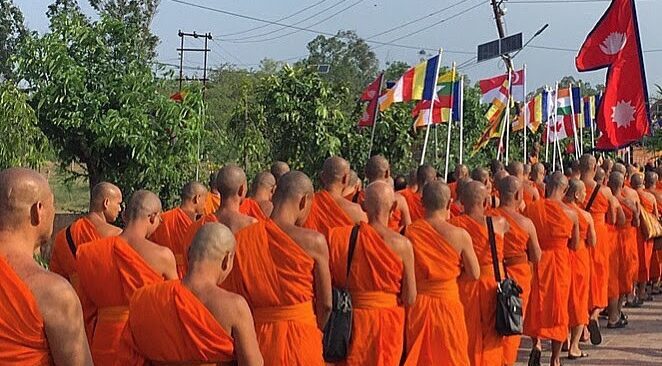
Buddha Jayanti is Lumbini’s most important and most extraordinary event — the annual celebration on the full moon of Vaishakha (which falls in April or May depending on the lunar calendar) of the three pivotal events of the Buddha’s life: his birth at Lumbini, his enlightenment at Bodh Gaya, and his final passing at Kushinagar. Theravada Buddhism holds that all three events occurred on the same full moon, making this date the holiest in the Buddhist calendar.
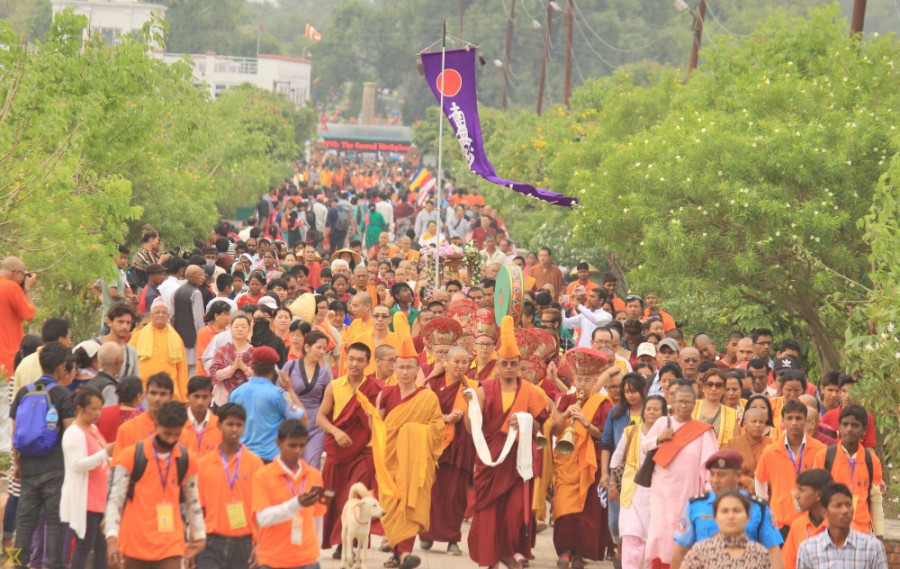
At Lumbini, Buddha Jayanti is celebrated with: morning processions through the Sacred Garden and international monastery zone, with monks from every Buddhist nation in residence marching in their distinctive robes; cultural programmes running through the day at the various national monastery compounds; lamp offerings (dipamala) after dark around the Maya Devi Temple, when thousands of small oil lamps are placed along the pathways and around the monument, creating an extraordinarily beautiful visual effect in the still evening air; and religious discourses (dhamma talks) given by senior monks from various Buddhist traditions in the monastery courtyards.
The atmosphere at Lumbini during Buddha Jayanti is like nothing available at the site at any other time of year — the energy of tens of thousands of devout pilgrims from Nepal, India, Sri Lanka, Myanmar, Thailand, Japan, Korea, China, and beyond, all converging on the same small sacred site in a shared act of devotion, creates a collective spiritual intensity that even non-Buddhist visitors consistently describe as one of the most moving experiences of their Nepal journey. Nepal Vehicle Hiring’s transport demand during Buddha Jayanti peaks significantly — book 4 to 6 weeks in advance for Buddha Jayanti transport. Our Hiace van hire, Coaster bus hire, and car hire in Nepal all book out quickly for this period.
The practical trade-off for Buddha Jayanti is heat and crowds. The May full moon falls during Lumbini’s hottest period — daytime temperatures of 33°C to 38°C make midday outdoor walking genuinely uncomfortable. Bring very lightweight clothing, wide-brimmed sun protection, water (at least 2 litres per person for a full day visit), and sunscreen with SPF 50 or higher. Plan your day around the early morning (6:00 to 10:00 AM) for outdoor site exploration and the evening (6:00 PM onward) for the lamp ceremony and night processions — rest in the shade of a monastery or your accommodation during the 11:00 AM to 4:00 PM heat peak.
Monsoon (June to September): Least Recommended but Not Impossible
The monsoon season brings Lumbini’s most challenging conditions. Heavy rainfall, high humidity (often above 80 per cent), and temperatures of 30°C to 40°C combine to make extended outdoor exploration genuinely uncomfortable. The Sacred Garden’s paths can become waterlogged, the Maya Devi Temple’s access paths muddy, and the overall atmosphere of the site — which is at its finest in clear, comfortable conditions — is compromised by the constant wet heat.
That said, the monsoon has its own rewards for those who must visit during this period. The Sacred Garden is explosively lush in monsoon — the sal trees, flowering plants, and surrounding vegetation reach their most vivid green, and the light through the rain-freshened leaves takes on a quality unique to this season. The site is least crowded during monsoon — international Buddhist pilgrims typically avoid this period, and even domestic Indian pilgrim groups are fewer, making the Maya Devi Temple and the international monastery compounds more accessible for extended private visits.
Monsoon is also Lumbini’s most budget-friendly period. Accommodation rates drop to their annual low—sometimes 30 to 50 per cent below peak season rates—and Nepal Vehicle Hiring’s transport services are most readily available, with minimal booking required. For travellers with fixed schedules who cannot choose their month, monsoon travel to Lumbini is manageable with the right preparation: waterproof footwear, lightweight rain gear, and a flexible daily schedule that avoids the heaviest rainfall periods (typically late afternoon and evening in the Terai monsoon).
Month-by-Month Guide: Lumbini Weather and Visitor Experience
- January: Temperature 8°C to 20°C. Heavy morning fog, cold nights. Air quality concerns. Very quiet — best for solitary spiritual visits. Budget accommodation rates.
- February: Temperature 10°C to 25°C. Fog lifting earlier, first spring signs. Quiet and contemplative. Excellent for meditators and photographers seeking solitude.
- March: Temperature 15°C to 30°C. Gardens in spring bloom. Comfortable weather. Chaitra Purnima Hindu festival. Moderate crowds building.
- April: Temperature 20°C to 35°C. Very beautiful gardens. Heat building. Buddha Jayanti may fall in April (lunar calendar dependent — check annual date).
- May: Temperature 25°C to 38°C. Hot. Buddha Jayanti full moon — the spiritual high point of the Lumbini calendar. Peak pilgrim crowds. Book well in advance.
- June: Temperature 28°C to 38°C. Monsoon begins. Humidity rising. Less recommended. Very quiet site.
- July: Temperature 28°C to 38°C. Peak monsoon. Heavy rain. High humidity. Not recommended for most visitors.
- August: Temperature 28°C to 38°C. Monsoon continues. Lush green gardens. Very few visitors. Budget rates.
- September: Temperature 25°C to 35°C. Monsoon easing. Late September is a sweet spot — green gardens, improving weather, still quiet. Excellent value.
- October: Temperature 18°C to 30°C. Post-monsoon clarity. Gardens lush and freshly washed. Clear skies. One of the two finest months.
- November: Temperature 12°C to 25°C. Finest overall conditions. Cool, clear, vibrant. Peak season begins. Book transport in advance.
- December: Temperature 8°C to 22°C. Pleasant days, cold mornings. Morning fog building. Quiet and peaceful. Budget season.
Who Should Visit Lumbini When: A Visitor-Type Guide
For Buddhist Pilgrims and Devotees
The absolute priority month is the Buddha Jayanti full moon (April or May) — the most sacred festival at the most sacred Buddhist site in Nepal, with the most concentrated devotional energy of any moment in the Lumbini calendar. The heat is a real challenge,e but it is worth bearing for the lamp ceremonies, the morning processions, and the collective devotional atmosphere that is genuinely unlike any other experience at the site. The second-best window for pilgrims is October to November — cool weather, active monastery communities, and the peaceful post-monsoon clarity that makes extended meditation and prayer sessions in the monastery compounds genuinely nourishing.
For Photographers
Photographers seeking the best conditions at Lumbini should target late October to early November for clear light, lush post-monsoon garden greenery, and the golden-hour quality the autumn sun casts on the ancient stone pillars and monastery facades. Early morning in October — arriving at the Sacred Garden gate at 6:00 AM to catch the sunrise light on the Ashoka Pillar and the Maya Devi Temple before the first tour groups arrive — produces some of the finest photographs available at any Nepal heritage site. March and April are excellent for garden photography when the flowering plants frame the monuments in colour.
For Budget Travellers
The best budget months to visit are January, February, and September. January and February offer the lowest accommodation rates (sometimes 40 to 50 per cent below peak prices) and the most readily available transport. September,r the late-monsoon sweet spot, combines improving weather, lush green gardens, and very low prices with an extraordinarily quiet site. Nepall Vehicle Hiring’s car hire in Nepal and Hiace van hire are most readily available and often at their most flexible pricing in these off-peak months.
For Families with Children
Families visiting Lumbini with children should avoid May, June, July, and August — the combination of extreme heat and humidity makes outdoor Lumbini exploration genuinely difficult for children, and the absence of indoor entertainment options means that the heat period (11 AM to 4 PM) requires significant management. October, November, and March are the family-friendly months—comfortable temperatures, interesting monastery compounds with colourful Buddha imagery that engages younger visitors, tricycle rentals to cover the large site without fatigue, and grassy areas for children to explore between the formal heritage sites.
For Spiritual Retreats and Meditation
For travellers visiting Lumbini specifically for meditation retreats, spiritual study, or extended contemplative time at the site, January, February, and September offer the quietest conditions. Several international monastery compounds in the northern zone offer short-stay meditation retreats for serious practitioners—the Myanmar and Sri Lankan monasteries in particular run year-round retreat programmes—and the winter months’ peaceful atmosphere and the late-September post-monsoon quiet create the most conducive conditions for extended practice. Nepal Vehicle Hiring can arrange multi-day Lumbini vehicle access for retreat participants who want day trips to nearby sacred sites (Kapilavastu, Tilaurakot) while based in the Lumbini monastery zone.

Getting to Lumbini: Transport Options by Season
The best time to visit Lumbini is also shaped by transport availability — peak months see higher demand for vehicles, es and booking becomes more important. Nepal Vehicle Hiring provides comprehensive transport to Lumbini from every major Nepal hub:
From Kathmandu
The Kathmandu-to-Lumbini journey covers approximately 300 kilometres and takes 6 to 8 hours by private vehicle via the Prithvi Highway and Terai roads. Nepal Vehicle Hiring’s car hire in Nepal for small groups and Hiace van hire for medium groups cover this route directly. Alternatively, our Kathmandu-to-Pokhara bus or private highway vehicle reaches Pokhara, from where our Lumbini approach continues. Our Nepal tour packages and holiday tour services coordinate full Kathmandu-Lumbini transport within a broader Nepal circuit.
From Pokhara
Pokhara to Lumbini is approximately 200 kilometres and takes 4 to 5 hours via Butwal and Bhairahawa. Nepal Vehicle Hiring’s Hiace van hire, Coaster bus hire, and car hire in Nepal all serve this route. The Pokhara-to-Lumbini journey is part of the classic Nepal triangle circuit (Kathmandu-Pokhara-Lumbini-Kathmandu) covered by our Nepal Nekhor tour service.
From Bhairahawa/Sunauli Border
For Indian pilgrims and travellers entering Nepal at Sunauli, Lumbini is only 22 kilometres east of Bhairahawa — a 30 to 45 minute drive by car hire in Nepal or Hiace van hire. Nepal Vehicle Hiring can arrange border pickup vehicles that proceed directly to Lumbini. This is the most common configuration for Indian Buddhist pilgrim groups whose primary Nepal destination is Lumbini before continuing to Pokhara, Kathmandu, or Muktinath on our broader Nepal sacred circuit services.
Contact Nepal Vehicle Hiring through our plan your trip page for Lumbini transport in any season — we respond within 24 hours with vehicle options, current seasonal advice, and all-in pricing. Our operations team is available on WhatsApp +977 9851013196 seven days a week.
What to See at Lumbini: Making the Most of Your Visit
Maya Devi Temple and the Sacred Garden
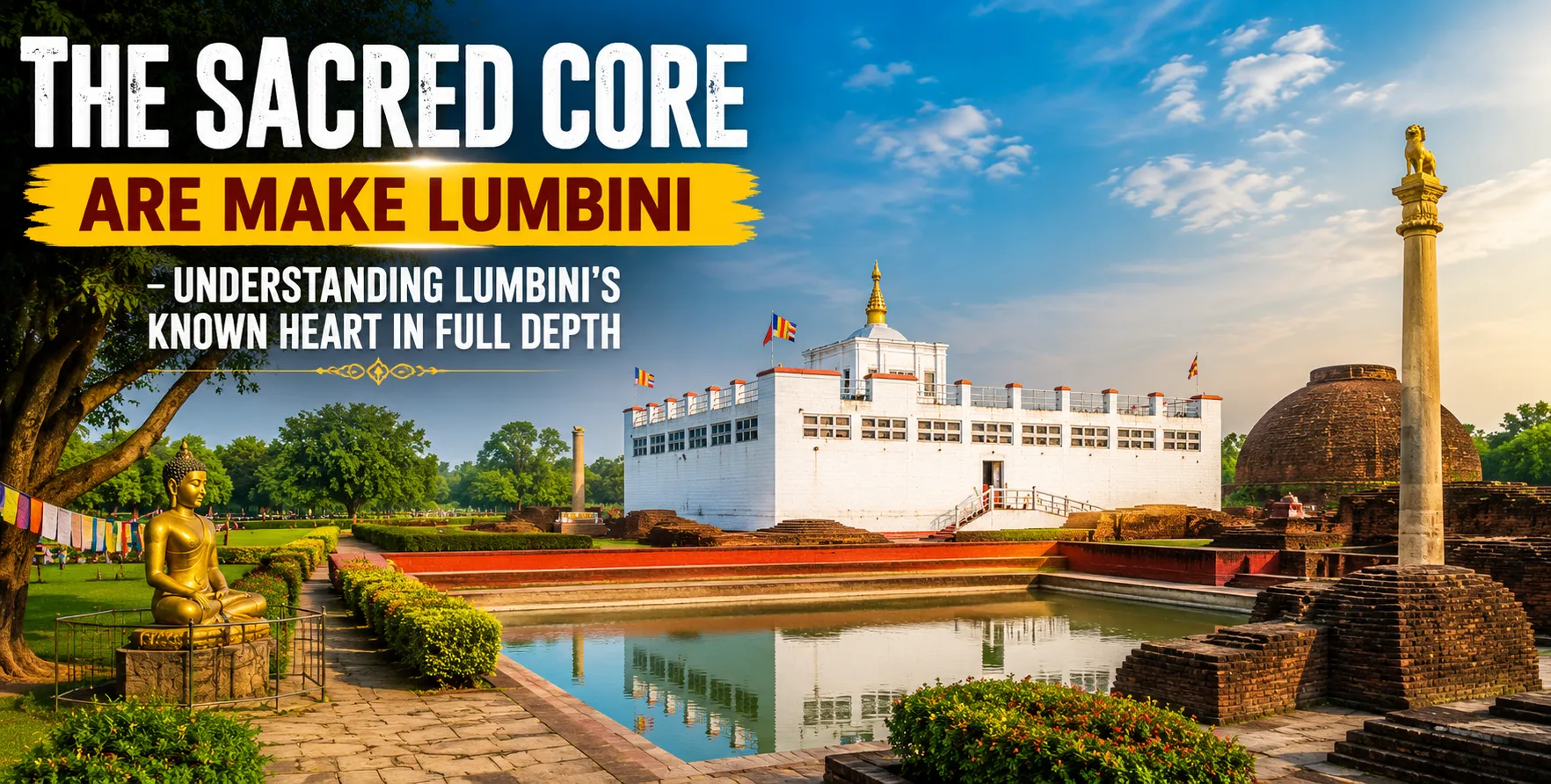
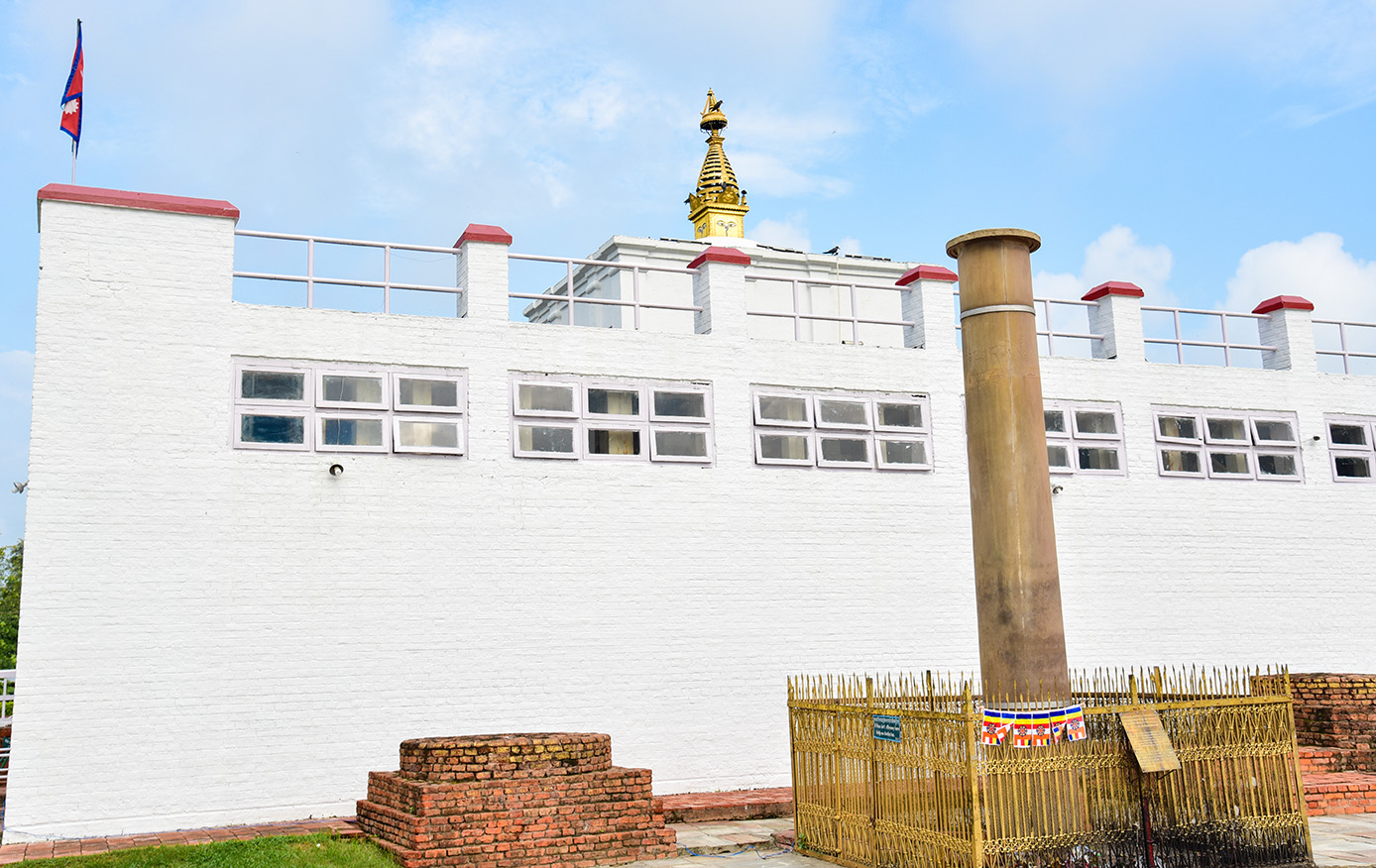
The Maya Devi Temple at the centre of the Sacred Garden marks the Buddha’s birthplace — confirmed by the Ashoka Pillar inscription of 249 BCE and the Marker Stone within the temple that identifies the birth spot. The temple contains the ruins of multiple historical monasteries built over the site over 2,500 years of pilgrimage, and the Marker Stone itself—visible through a glass floor panel within the temple—is the most sacred object at this UNESCO World Heritage Site. Shoes must be removed before entering. Silent and respectful behaviour is expected. Morning visits (6:00 to 8:00 AM) offer the most contemplative experience before the day’s tour groups begin arriving.
Ashoka Pillar
Erected in 249 BCE by Emperor Ashoka of the Maurya dynasty during his personal pilgrimage to Lumbini, the Ashoka Pillar stands adjacent to the Maya Devi Temple and bears the oldest historical inscription confirming the site’s sacred identity. The inscription reads (in Brahmi script): ‘Here the Lord Buddha was born. A stone railing was built and a stone pillar erected. Here at Lumbini village, the Blessed One was born.’ The pillar — broken at the top and visible at approximately 6 metres of its original height — is one of the most important historical inscriptions in all of Asia. The German archaeologist Anton Fuhrer rediscovered it in 1896, after centuries of being obscured by jungle growth.
The International Monastery Zone
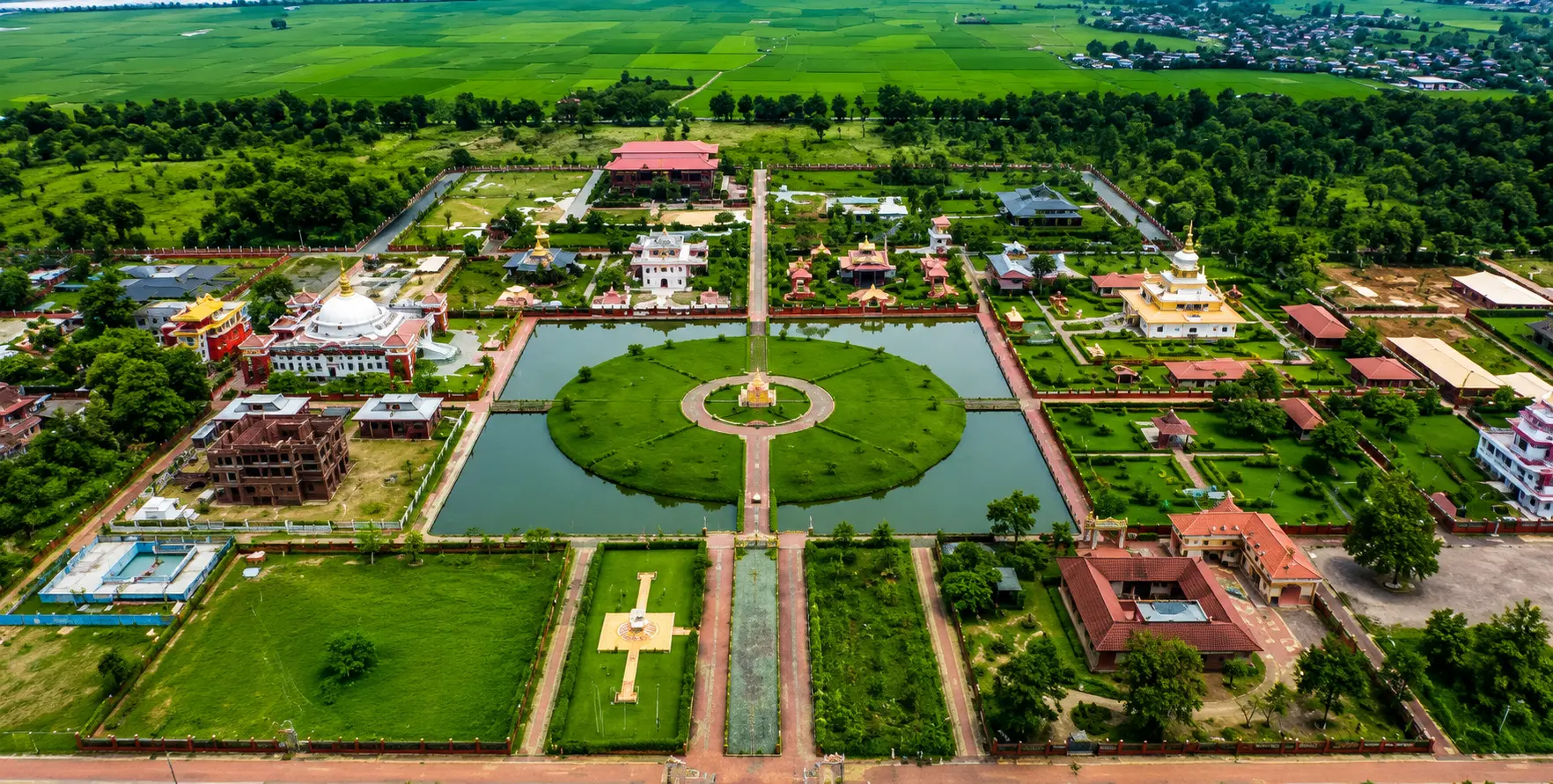
The northern section of the Lumbini Sacred Garden contains one of the most extraordinary collections of Buddhist architecture in the world — the international monastery compounds built by Buddhist nations from across Asia and beyond. The central canal divides the zone into two sections: the eastern zone (Theravada Buddhist monasteries from Myanmar, Thailand, Sri Lanka, Cambodia, and Bangladesh) and the western zone (Mahayana and Vajrayana Buddhist monasteries from China, Japan, Korea, Tibet, Vietnam, Germany, and other countries). Exploring the full international monastery zone on foot covers approximately 4 to 5 kilometres and takes 3 to 4 hours at a comfortable pace. An electric bicycle rental service (available at the Lumbini Development Trust office) is available for visitors who prefer a faster circuit.
Puskarini Sacred Pool
Adjacent to the Maya Devi Temple, the Puskarini (Sacred Pool) is the bathing tank where, according to Buddhist tradition, Maya Devi purified herself before giving birth to Siddhartha, and where the infant was given his first ritual bath. The pool is surrounded by the ruins of ancient monastic buildings from multiple historical periods and is one of the earliest elements of the Lumbini sacred site’s archaeological record. In autumn and spring, the pool reflects the surrounding trees and the Maya Devi Temple, creating some of the site’s finest photographs.
Lumbini Museum
The Lumbini Museum at the southern entrance to the Sacred Garden houses an important collection of Buddhist sculptures, architectural fragments, coins, and historical documents related to the site’s 2,500-year history—entry fee: NPR 150 for foreign nationals (2026). Allow 1 to 1.5 hours for a thorough visit. The museum’s collection of Licchavi and Malla-period Buddhist sculpture is particularly valuable — many of the finest pieces from Lumbini’s archaeological excavations are housed here, providing important context for the ruins visible in the Sacred Garden above.

Frequently Asked Questions: Best Time to Visit Lumbini
What is the absolute best month to visit Lumbini?
For overall comfort and experience: November. For spiritual significance and festival atmosphere: Buddha Jayanti full moon (April or May). For budget and solitude: January or September. For garden photography: October or March.
When is Buddha Jayanti at Lumbini in 2026?
Buddha Jayanti in 2026 falls on the full moon in the month of Vaishakha; check current-year dates, as the precise date shifts annually with the lunar calendar. In recent years,s it has fallen between late April and mid-May. Nepal Vehicle Hiring recommends booking Lumbini transport 6 to 8 weeks in advance for Buddha Jayanti, as vehicles book out quickly during this peak period.
Is Lumbini worth visiting in winter?
Yes — winter (December to February) offers a quieter, more contemplative Lumbini experience with lower accommodation rates and more accessible monastery compounds. The main challenges are morning fog (clearing by 9-10 AM) and cold nights (2°C to 8°C). Daytime temperatures of 18°C to 22°C are comfortable for outdoor exploration. Air quality concerns in January and February may affect visitors with respiratory sensitivities.
Can I visit Lumbini during monsoon?
Yes, but it is the least recommended period for most visitors. Heavy rain, high humidity, and temperatures of 30°C to 40°C make outdoor exploration uncomfortable. Late September — the tail of the monsoon — is a better option within this season, with improving weather and lush green gardens. If you must travel during monsoon, Nepal Vehicle Hiring’s Hiace van hire and car hire in Nepal operate year-round with flexible scheduling.
How many days do I need in Lumbini?
One full day covers the Maya Devi Temple, Ashoka Pillar, Sacred Garden, and a selection of international monastery compounds. Two days allow a thorough visit of the full international monastery zone, the museum, and day trips to nearby Tilaurakot (ancient Kapilavastu, approximately 2 km west) and Devdaha (the birthplace of Maya Devi, approximately 8 km east). For retreat visitors and serious pilgrims, a 3 to 5 day Lumbini stay allows for extended meditation practice, monastery hospitality, and deeper engagement with the site’s historical and spiritual dimensions.
How do I get to Lumbini from Kathmandu?
Nepal Vehicle Hiring provides direct private vehicle transport from Kathmandu to Lumbini — approximately 300 km, 6 to 8 hours, by our car hire in Nepal or Hiace van. Domestic flights from Kathmandu to Bhairahawa (Gautam Buddha International Airport) take 25 minutes and cost approximately NPR 8,000 to 14,000 per person — with Lumbini then 22 km from the airport. The Nepal tour package and Nepal Nekhor tour coordinate both transport and accommodation for Lumbini within a broader Nepal circuit. Visit our plan your trip page to book.

Book Your Lumbini Transport with Nepal Vehicle Hiring
Nepal Vehicle Hiring Pvt. Ltd., based in Thamel, Kathmandu, provides complete transport for every Lumbini visit — whatever the season, whatever your group size, and whatever the broader Nepal circuit your Lumbini pilgrimage forms part of:
- Car hire in Nepal — solo pilgrims, couples, and small families
- Hiace van hire — groups of 8 to 14 pilgrims and tourists
- Coaster bus hire — groups of 15 to 25
- Full bus hire — large pilgrim parties of 25 to 45
- Nepal Nekhor tour — Lumbini within the complete Nepal sacred pilgrimage circuit
- Nepal tour packages and Nepal holiday tours — Lumbini combined with Pokhara, Chitwan, and Kathmandu
- Kathmandu airport transfer — smooth Kathmandu arrival before Lumbini journey
- Kathmandu sightseeing service — Kathmandu Valley cultural circuit before Lumbini
- Muktinath Yatra itinerary — Lumbini combined with the Muktinath sacred circuit
- WhatsApp / Call: +977 981-4227196
- Email: [email protected]
- www.vehiclehiringnepal.com
Lumbini rewards careful timing. Choose the season that matches your purpose — whether the cool clarity of November, the spiritual fire of Buddha Jayanti, the contemplative quiet of February, or the post-monsoon sweetness of late September. Nepal Vehicle Hiring will get you there in comfort, whatever month you choose.
Lumbini’s Sacred Landscape: A Deeper Understanding
Most first-time visitors to Lumbini arrive expecting a single monument—the birthplace of the Buddha—and instead discover a sacred landscape of extraordinary richness and complexity. The UNESCO World Heritage Site encompasses 2.56 square kilometres of protected land that contains not just the Maya Devi Temple and the Ashoka Pillar but layers of archaeological history spanning 2,500 years, a living international Buddhist community of remarkable diversity, and a natural environment of sal trees, water channels, and gardens that has been continuously maintained as a sacred space since antiquity.
Understanding the three zones of the Lumbini Sacred Garden helps visitors plan their time regardless of the season. The southern Sacred Garden zone contains the Maya Devi Temple, the Ashoka Pillar, the Puskarini Pool, and the earliest archaeological remains. The central zone includes the Lumbini Museum and broad lawn areas used for large gatherings during Buddha Jayanti and other festivals. The northern zone — the international monastery corridor — extends approximately 1.5 kilometres north from the central area and contains the two parallel rows of national monastery compounds separated by the central Eternal Peace Flame canal. An electric trolley service and bicycle rentals connect these zones, making the full site accessible even for elderly visitors and those with limited walking ability.
The best time of day to visit Lumbini is as important as the best season. The Maya Devi Temple and the Sacred Garden area are most magical in the early morning — the 6:00 to 8:00 AM window when the first light catches the ancient stone and the devout pilgrims who have been doing kora (circumambulation) since before dawn create a genuine atmosphere of devotion that the midday tourist-group hours cannot replicate. Visit the international monastery zone in the mid-morning (9:00 to 11:00 AM) and late afternoon (3:00 to 6:00 PM), when the monasteries are active and welcoming to visitors. The evening lamp ceremony — small oil lamps placed around the Maya Devi Temple compound — is available on auspicious days and during Buddha Jayanti, transforming the site after dark into one of Nepal’s most visually extraordinary sacred experiences.
Nearby Sacred Sites: Extending Your Lumbini Visit
For visitors spending two or more days in the Lumbini area, several nearby sacred sites dramatically enrich the pilgrimage experience. Nepal Vehicle Hiring’s car hire in Nepal and Hiace van hire services cover day trips from Lumbini to all of these locations:
Tilaurakot (Kapilavastu) — 25 West
Tilaurakot, about 25 kilometres west of Lumbini near the town of Taulihawa, is identified by Nepali and international archaeologists as the site of ancient Kapilavastu. In this Shakya capital, Siddhartha Gautama grew up as Prince Siddhartha before leaving home to seek enlightenment. The site contains the excavated ruins of the royal palace compound, ancient city walls, gateways, and associated monastery remains, all dating to the Shakya period (6th to 4th centuries BCE). A small museum at the site houses archaeological finds from the excavations. Tilaurakot is one of Nepal’s most important archaeological sites and an essential extension of the Lumbini pilgrimage for serious Buddhist pilgrims and scholars. Nepal Vehicle Hiring’s car hire in Nepal makes the 25-kilometre Lumbini-to-Tilaurakot journey straightforward—about 40 minutes by private vehicle —and easily combines into a single Lumbini day or a half-day excursion.
Devdaha — 7 km East
Devdaha, about 7 kilometres east of Lumbini, is traditionally identified as the birthplace of Maya Devi, the mother of the Buddha, and as the capital of the Koliya kingdom from which she came. An ancient stupa mound and a small temple mark the traditional site. The Devdaha visit is a natural add-on to the main Lumbini circuit for pilgrims interested in the broader sacred geography of the Buddha’s family and early life. The short 7-kilometre drive by Nepal Vehicle Hiring’s private car hire takes 15 to 20 minutes from the Lumbini garden gate.
Niglihawa and Kudan — 25 to 30 km
Further afield, the villages of Niglihawa (25 km from Lumbini) and Kudan (30 km) contain additional Ashoka Pillars — the stone pillars erected by Emperor Ashoka during his 249 BCE pilgrimage through the Buddhist sacred sites of the Terai. The Niglihawa pillar records Ashoka’s visit to Kanakamuni’s birthplace, one of the previous Buddhas in the Buddhist cosmological tradition. The Kudan pillar records his visit to the site where Ashoka met and conversed with the Buddhist sangha. Both sites are far less visited than Lumbini and offer a genuinely archaeological atmosphere with almost no tourist infrastructure. Nepal Vehicle Hiking’s car hire in Nepal covers the full Lumbini-Tilaurakot-Niglihawa-Kudan sacred geography circuit as a single day trip for historically motivated visitors.
Lumbini’s International Buddhist Community: Who Lives Here
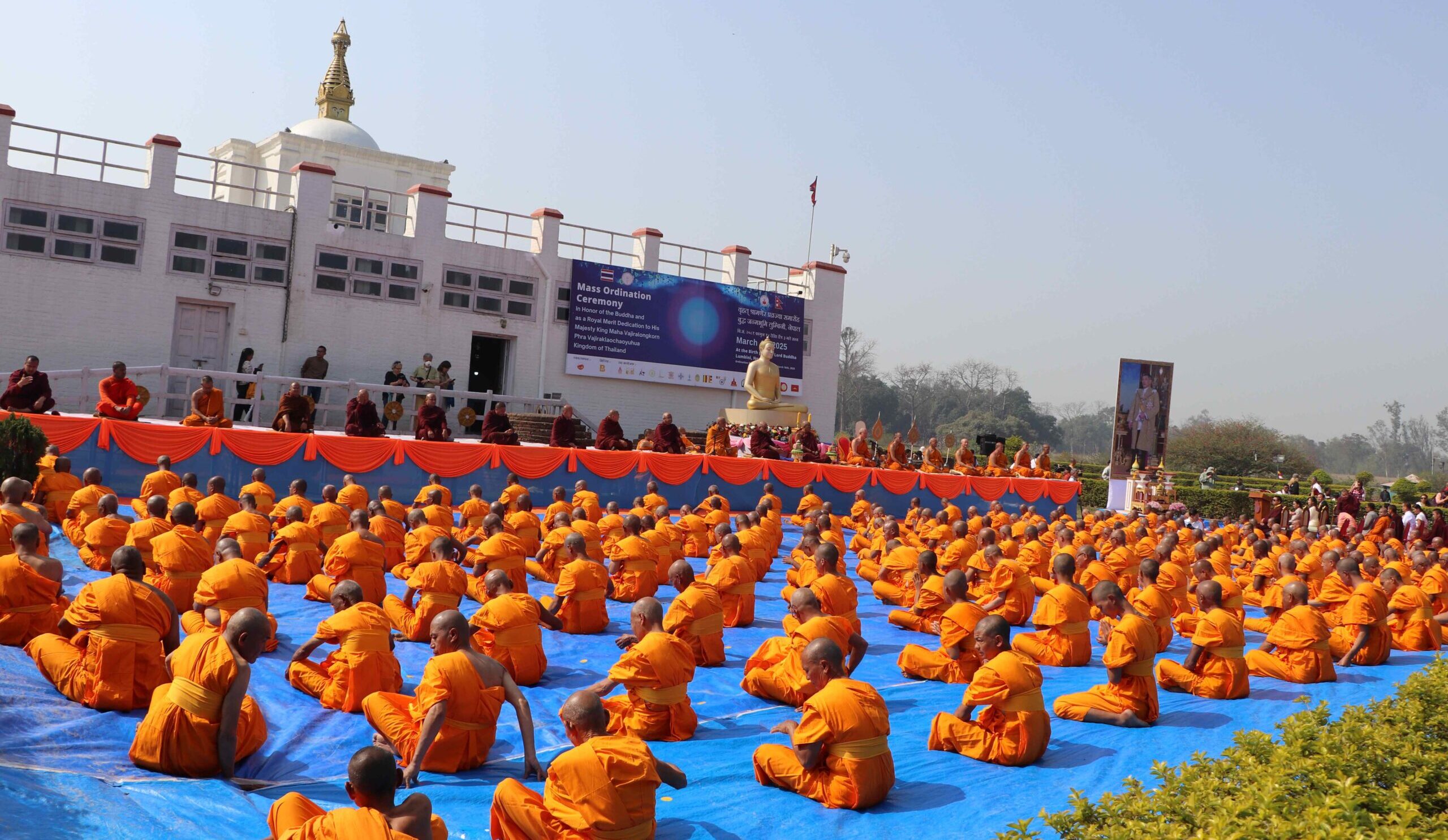
One of Lumbini’s most distinctive and underappreciated aspects is its character as a living international Buddhist community—not merely a heritage site with monastery buildings, but an active religious settlement where monks, nuns, scholars, and lay practitioners from dozens of countries maintain continuous Buddhist practice at the Buddha’s birthplace. Understanding this community adds depth to the visit, no matter what season you come.
The Lumbini Development Trust, established by the Government of Nepal and UNESCO, manages the site and develops the monastery zone. Each national monastery compound is administered by its sponsoring country’s Buddhist community—typically a Buddhist council or foundation that raises funds internationally, manages construction, and provides resident monastics who maintain the compound and welcome visiting pilgrims from their home country. The result is a community of several hundred resident monks, nuns, and lay practitioners from Myanmar, Thailand, Sri Lanka, Japan, Korea, China, Vietnam, Germany, France, and many other countries, all living and practising within a few hundred metres of each other in the northern monastery zone.
During October and November — Lumbini’s finest visiting season — this community is at its most active. Resident monks are visible in the monastery courtyards performing daily rituals, teaching visiting pilgrims, and maintaining the monastery buildings. Prayer sessions are audible throughout the monastery zone at dawn and dusk. The contrast between the quiet natural path connecting one monastery to the next and the sounds of different Buddhist liturgical traditions emerging from each compound — Pali chanting from the Theravada temples, Sanskrit mantras from the Tibetan, melodic Japanese sutra recitation from the Nichiren compound — creates a soundscape that is one of the most extraordinary ambient experiences at any sacred site in Asia.
Practical Information for Lumbini Visitors
Entry Fees
Lumbini charges a Sacred Garden entry fee of NPR 200 for foreign nationals (2026 rate, subject to change). This fee covers entry to the Sacred Garden, the Maya Devi Temple, and the surrounding monument zone. The Lumbini Museum has a separate entry fee of NPR 150. The international monastery zone (the northern corridor) is free to access, and individual monastery compounds welcome visitors without charge, though donations are appreciated. Electric bicycle rental within the site costs approximately NPR 200 per hour.
Accommodation in Lumbini
Lumbini’s accommodation ranges from very basic guesthouse rooms near the Sacred Garden entrance (NPR 500 to 1,200 per night) to mid-range hotel options in the Lumbini Tourism Development Area (NPR 2,000 to 5,000 per night) to the comfortable Hotel Lumbini Garden New, Hotel Nirvana, and Kasara Resort options that serve international visitors who want reliable air-conditioning and attached bathroom facilities (NPR 4,000 to 12,000 per night).
Several international monastery compounds also offer simple accommodation for serious Buddhist pilgrims—the Myanmar, Korean, and Sri Lankan monasteries all have guest rooms available for practitioners on extended pilgrimage stays. Book accommodation 2 to 4 weeks in advance for peak season (October, November, April, May, Buddha Jayanti) and well in advance specifically for the Buddha Jayanti full moon, when every room within 20 kilometres of Lumbini fills up.
Food in Lumbini
Food in Lumbini ranges from standard Nepali fare, dal bhat, fried rice, and noodle soup, in local restaurants near the Sacred Garden entrance to more elaborate menus at better hotels in the tourism development area. The monastery zone itself has no food facilities for visitors. Bring water and snacks for a full-day site visit — 2 litres of water minimum per person in any season, more in the hot months (April through September). Several restaurants near the Maya Devi Temple entrance serve standard Nepali, Indian, and Continental menus at reasonable prices. The Hotel Lumbini Garden New restaurant is generally the best-quality option within the site area.
Getting Around Within Lumbini
The Lumbini Sacred Garden and international monastery zone is approximately 3 kilometres from the southern entrance gate to the northern end of the monastery corridor — too far for elderly or mobility-limited visitors to cover comfortably on foot. Options for getting around within the site: electric bicycle rental (NPR 200 to 300 per hour, available near the entrance) is the most popular option; electric golf cart taxis run between the Sacred Garden entrance and the northern monastery zone (NPR 50 to 100 per trip, fixed route); private vehicle parking is available at the southern entrance for Nepal Vehicle Hiring’s car hire and Hiace van hire clients — the vehicle and driver can wait at the entrance and provide transport between the southern and northern zones as needed, avoiding the full on-foot circuit for group members who need vehicle assistance.
Dress Code and Site Etiquette
Shoes must be removed before entering the Maya Devi Temple — leave footwear at the entrance and enter in socks. Modest dress is expected throughout the Sacred Garden and monastery zone — shoulders and knees covered for both men and women. Silence is requested within the Maya Devi Temple and encouraged near the Marker Stone area. Photography is permitted in most areas of the site but should be done respectfully without interrupting prayer or ritual activities. Some individual monastery compounds have specific photography policies — ask before raising your camera inside any prayer hall. Mobile phones should be silenced or switched off within the Maya Devi Temple.
Lumbini in Nepal’s Broader Travel Context
Lumbini does not exist in isolation as a travel destination — it sits within a broader Nepal travel context that shapes when and how most visitors approach it. Understanding this context helps visitors plan their Lumbini visit as part of a coherent Nepal itinerary rather than a disconnected, standalone experience.
The classic Nepal tourist circuit—Kathmandu, Pokhara, Chitwan, and Lumbini—is the most common itinerary for first-time international visitors to Nepal, and the optimal sequencing of this circuit directly affects the best time to visit each element. For visitors beginning in Kathmandu, the natural circuit flows: Kathmandu (3 to 4 days) → Pokhara (3 to 4 days) → Lumbini (2 days) → return to Kathmandu or border exit. This sequence puts Lumbini at the end of the circuit, which works well for the October-to-March period when Terai temperatures are comfortable. During the May Buddha Jayanti period, some visitors prefer starting in Lumbini to catch the festival before temperatures peak later in the summer.
For Indian pilgrims making the Nepal sacred circuit from the Indian side, the natural entry at Sunauli-Bhairahawa puts Lumbini as the first Nepal destination — visited immediately after crossing the border — before continuing north to Pokhara (via Nepal Vehicle Hiring’s Bhairahawa-to-Pokhara vehicle hire service), then to Muktinath (via our Muktinath Yatra itinerary), and finally to Kathmandu (via our Kathmandu to Pokhara bus service in reverse).
This sequence is the most geographically efficient circuit for India-entry pilgrims, and its timing is not significantly season-dependent for the Lumbini portion — the border proximity means the Lumbini visit can be kept to a single morning regardless of which month is chosen.
Nepal Vehicle Hiring’s Nepal Nekhor tour, Nepal tour packages, and Nepal holiday tours all include Lumbini in a coordinated full-circuit itinerary, with transport, timing, and seasonal advice built into the planning from the start. For visitors who want the certainty of pre-planned transport without the effort of assembling each element independently, these packages provide the most straightforward path to the best possible Lumbini visit experience.
Lumbini’s Transformation: The Development Vision
Lumbini is not a static heritage site but one undergoing active and significant transformation. The Lumbini Development Trust’s master plan — endorsed by UNESCO and supported by the Government of Nepal, the Government of India, and international Buddhist organisations — envisions Lumbini as a fully developed international Buddhist pilgrimage and cultural centre with world-class infrastructure alongside its ancient sacred core.
Significant investments in the last decade have included: the expansion and improvement of the international monastery zone’s infrastructure; the construction of the Lumbini International Research Institute’s expanded library and documentation centre; improvements to the Sacred Garden’s path network and visitor facilities; and the opening of Gautam Buddha International Airport in Bhairahawa in 2022, which dramatically improved air access to the region.
Ongoing projects as of 2026 include additional international monastery construction (Vietnam, France, and several other countries have compounds under development in the northern zone), expanded museum facilities, and continued archaeological excavation of the Sacred Garden’s deeper historical layers.
For visitors planning future return visits to Lumbini, the site will continue to expand and improve in the coming years—with each year’s development adding new monastery compounds, improved visitor infrastructure, and potentially new archaeological discoveries from the ongoing excavations beneath the Sacred Garden. The best time to visit Lumbini, and beyond, remains October through November and February through March for the weather, with Buddha Jayanti remaining the spiritual calendar’s unmissable annual event despite the practical challenges its timing brings.
Lumbini Safety and Travel Tips
Lumbini is one of Nepal’s safest destinations for international visitors — the site’s sacred character and the presence of multiple national monastery communities create a secure, peaceful environment with virtually no petty crime or tourist-targeting behaviour. Basic sensible travel precautions apply as anywhere: keep valuables secure, stay on established paths within the Sacred Garden (particularly after dark when some paths are unlit), and maintain the respectful behaviour expected at a major religious site.
The main practical safety concern in Lumbini is heat-related illness during April to September. The Terai’s flat, shade-limited landscape and high summer temperatures create a genuine heat-stress risk for visitors doing extended outdoor walking without adequate water and shade breaks.
Nepal Vehicle Hiring recommends: carrying a minimum of 2 litres of water per person per day in the hot months (3 litres recommended in May through August); starting outdoor exploration before 9:00 AM; taking a full midday break (11:00 AM to 4:00 PM) in the shade of a monastery or accommodation facility; restarting outdoor exploration after 4:30 PM for the cooler evening hours; and wearing lightweight, light-coloured, loose-fitting clothing with wide-brimmed sun protection.
For visitors arriving from high-altitude Nepal destinations (Kathmandu at 1,350 m, Pokhara at 827 m), the descent to Lumbini’s Terai altitude of approximately 90 to 110 metres above sea level can feel oppressively warm and humid in the warmer months — the temperature difference between Kathmandu and Lumbini in May can be 15°C or more. Plan your first Lumbini day with this adjustment in mind, keeping outdoor activity to the coolest morning hours and using air-conditioned accommodation for the midday rest period.
- Best Time to Visit Lumbini: Complete Season-by-Season Guide
- Best Time to Visit Lumbini: The Quick Answer
- Autumn (October to November): The Best Overall Season for Lumbini
- Winter (December to February): Peaceful and Budget-Friendly
- Spring (March to May) and Buddha Jayanti: Spiritually Unmissable
- Monsoon (June to September): Least Recommended but Not Impossible
- Month-by-Month Guide: Lumbini Weather and Visitor Experience
- Who Should Visit Lumbini When: A Visitor-Type Guide
- Getting to Lumbini: Transport Options by Season
- What to See at Lumbini: Making the Most of Your Visit
- Frequently Asked Questions: Best Time to Visit Lumbini
- Book Your Lumbini Transport with Nepal Vehicle Hiring
- Lumbini's Sacred Landscape: A Deeper Understanding
- Nearby Sacred Sites: Extending Your Lumbini Visit
- Lumbini's International Buddhist Community: Who Lives Here
- Practical Information for Lumbini Visitors
- Lumbini in Nepal's Broader Travel Context
- Lumbini's Transformation: The Development Vision
- Lumbini Safety and Travel Tips

Related Blog & Articles
Gautam Buddha Airport to Lumbini Vehicle – Complete Transfer Guide
Kathmandu to Lumbini Vehicle – Complete Hiring Guide

Kathmandu to Lumbini by Private car, jeep, hiace, and bus full Vehicle Guide