Plan a Trip


Hilsa Border to Gorakhpur Airport Drop Vehicle
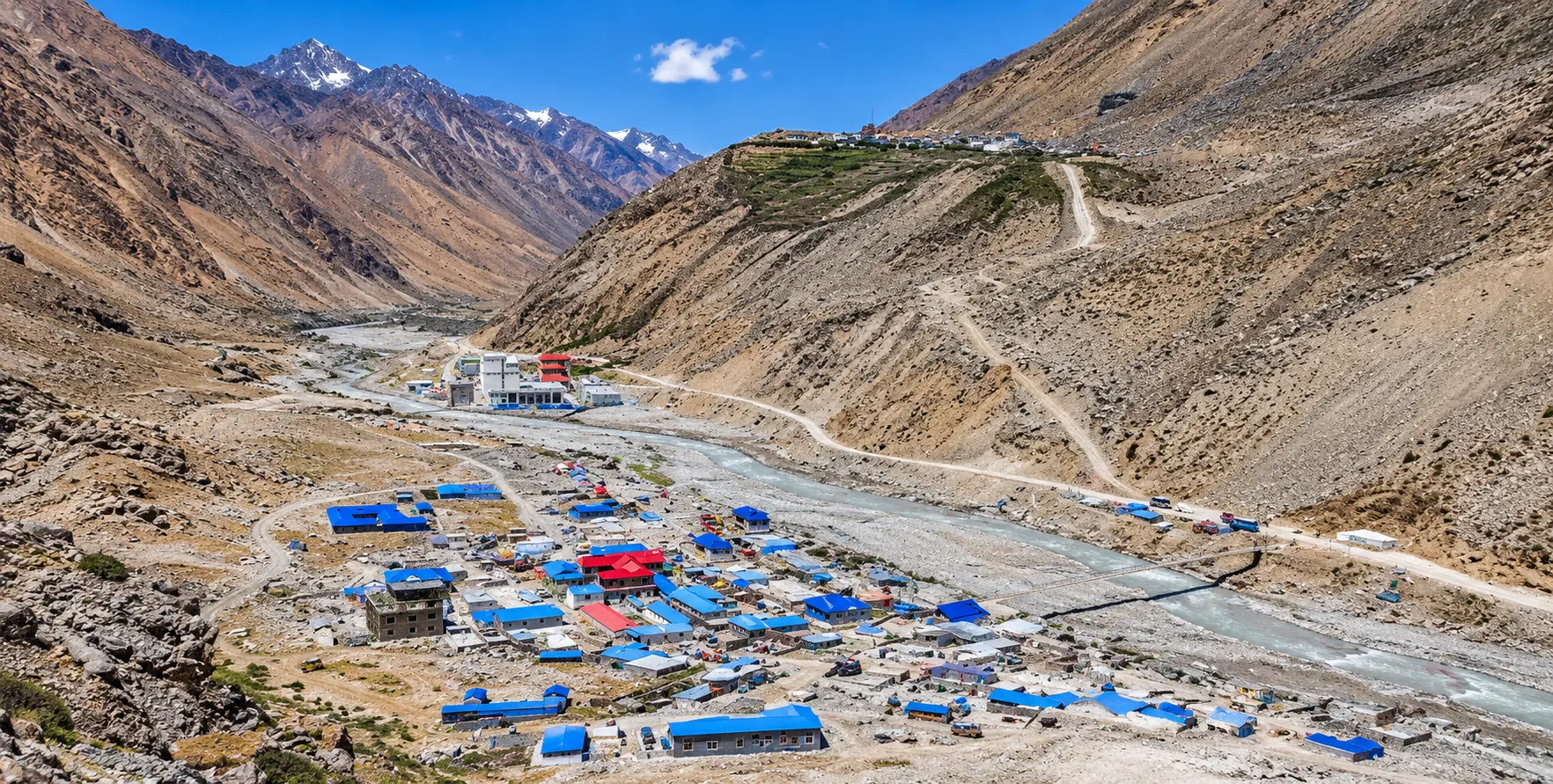
Hilsa Border to Gorakhpur Airport Drop Vehicle — Complete Guide for Kailash Yatra Return
Every Year, tens of thousands of Indian pilgrims complete the sacred Kailash Mansarovar parikrama via the Hilsa-Purang route — crossing the Nepal-Tibet border at Hilsa in Humla District, returning by helicopter to Simikot, flying to Nepalgunj, and then requiring ground transport to reach Gorakhpur, Lucknow, Varanasi, and other major cities of Uttar Pradesh and Bihar. Among these, the Gorakhpur connection — specifically the vehicle drop from the Nepal side of the India-Nepal border to Gorakhpur Airport — is one of the most frequently requested and least comprehensively documented logistics arrangements in the entire Kailash yatra return chain.
Gorakhpur Airport (IATA: GOP) is one of the most convenient Indian gateways for Kailash Mansarovar pilgrims from Uttar Pradesh, Bihar, and the surrounding states — serving flights to Delhi, Mumbai, Bengaluru, and other major Indian hubs, and positioned approximately 3.5 to 4.5 hours by road from the Nepal-India border crossing at Sonauli (Sunauli) or approximately 4 to 5 hours from the Rupaidia border near Nepalgunj. This guide covers the complete return logistics chain from the Hilsa border crossing to Gorakhpur Airport: the helicopter, the domestic flight, the Nepal-side vehicle hire, the border crossing, and the India-side road to Gorakhpur — with 2026 prices, pre-arrangement advice, and how Nepal Vehicle Hiring Pvt Ltd provides the verified Nepal-side vehicle service that gets Kailash pilgrims to the India border efficiently and professionally.
The Complete Route — Hilsa Border to Gorakhpur Airport
The return from Hilsa to Gorakhpur Airport follows a specific four-segment chain that every Indian Kailash pilgrim on this route completes in the same sequence. Understanding each segment’s character, duration, and potential delay point is the foundation of realistic logistics planning.
Segment 1: Hilsa to Simikot by Helicopter (25 minutes). After completing Nepal re-entry formalities at the Hilsa checkpoint, pilgrims board the helicopter for the 25-minute flight to Simikot Airport at 2,910 meters. The Hilsa-to-Simikot helicopter (operated by Simrik Air, Dynasty Aviation, and others) carries 4 to 5 passengers per flight and depends entirely on the weather. Morning flights have the highest success rate. Weather delays of one to two days at Hilsa are common — all logistics downstream of this segment must be planned with buffer days.
Segment 2: Simikot to Nepalgunj by Domestic Flight (45 minutes). From Simikot Airport, scheduled domestic flights by Tara Air and Buddha Air cover the 45-minute route to Nepalgunj Airport (152 meters). Simikot flights are similarly weather-dependent — morning departures have the highest completion rate. An overnight in Simikot may be required when afternoon cloud prevents departure. Nepalgunj is the hub that connects the mountain aviation segment to the main Nepal ground and domestic network.
Segment 3: Nepalgunj to India Border by Nepal Vehicle (2-6 hours). From Nepalgunj, Nepal Vehicle Hiring Pvt Ltd provides private vehicle hire to the India border — either to the Rupaidia crossing (approximately 12 km from Nepalgunj city, 30 to 45 minutes) for the Bahraich-Gorakhpur road, or to the Sonauli/Sunauli crossing (approximately 160 km from Nepalgunj, 4 to 5 hours), which provides the more direct road approach to Gorakhpur. The choice between these two border crossings is the critical logistics decision for the Gorakhpur-bound return, and Section 4 of this guide covers both options in full.
Segment 4: India Border to Gorakhpur Airport (2.5-5 hours depending on border used). From the India border, India-side transport operators manage the road to Gorakhpur AAirport Via Rupaidia/Bahraich: approximately 150 kilometers, 4 to 5 hours. Via Sonauli/Sunauli: approximately 110 to 120 kilometers, 3 to 3.5 hours. Gorakhpur Airport is about 5 kilometers from Gorakhpur city center and well signposted on the major city approach roads.
Why Gorakhpur Is the Right Hub for Eastern UP and Bihar Pilgrims
Gorakhpur occupies a key position in the geography of the Indian Kailash Mansarovar pilgrimage, making it a particularly important hub for return logistics. Gorakhpur in Uttar Pradesh is about 10 to 12 hours by overnight train from Lucknow, 12 to 14 hours from Varanasi, and connected by direct domestic flights to Delhi, Mumbai, Bengaluru, Hyderabad, and other major Indian cities. Its position about 90 kilometers south of the Nepal border at Sonauli makes it a natural collection point for pilgrims from eastern UP and Bihar who may have departed for Nepal via Gorakhpur itself or the Sonauli border crossing.
Gorakhpur Airport (Mahayogi Gorakhnath Airport, IATA: GOP) has undergone significant infrastructure expansion in recent years, upgrading its terminal and extending its runway to accommodate larger jet aircraft alongside the ATR-72 and similar regional aircraft that previously dominated its schedule. In 2026, the airport serves direct flights on IndiGo, SpiceJet, Air India, and other domestic carriers to Delhi (approximately 1.5 hours), Mumbai (approximately 2.5 hours), and other major destinations. For Kailash yatra pilgrims who have completed the parikrama and need to return to a major Indian city for an international connection, Gorakhpur Airport provides a reliable and efficient gateway that eliminates the need to travel all the way to Delhi or Lucknow overland.
The pilgrimage community’s relationship with Gorakhpur goes beyond logistics: the city is home to the Gorakhnath Temple—one of the most important Shaivite religious centers in northern India —dedicated to Guru Gorakhnath, whose lineage connects directly to the Kailash-Shaivism tradition. Many returning Kailash yatra pilgrims choose Gorakhpur specifically for this post-yatra darshan opportunity — the Gorakhnath Temple is the natural spiritual continuation of the Kailash sacred experience, and the temple’s proximity to the airport makes pre-departure darshan entirely feasible for pilgrims with sufficient time.
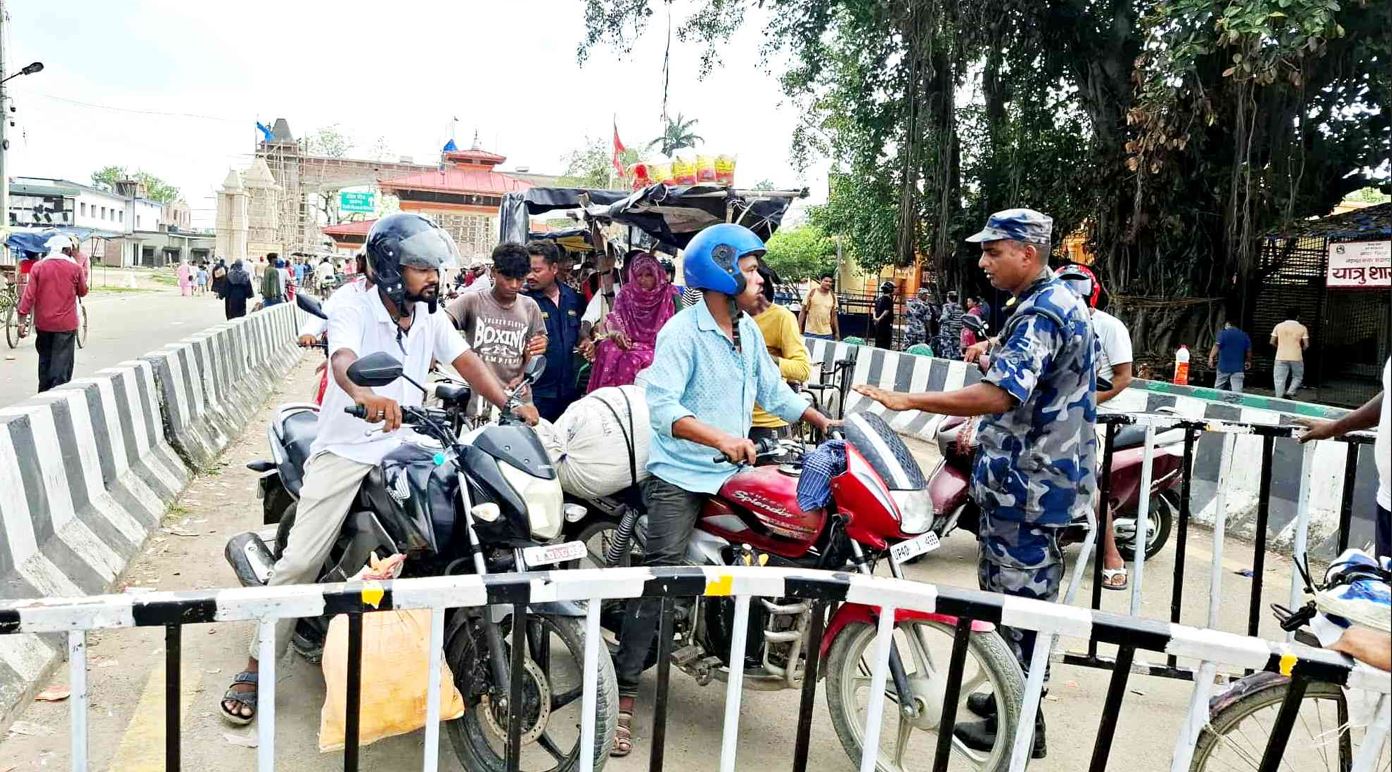
The Nepalgunj Hub — The Decision Point for Gorakhpur-Bound Return
Nepalgunj is the critical junction where the returning Kailash pilgrim’s logistics chain branches toward Gorakhpur rather than toward Kathmandu. On arrival at Nepalgunj from the Simikot domestic flight, the pilgrim has three primary onward options:
Option A — Domestic flight Nepalgunj to Kathmandu, then international. The standard option for pilgrims with Kathmandu-based international flight connections. Nepal Vehicle Hiring Pvt Ltd’s Kathmandu airport transfer service picks up from Kathmandu Airport after the Nepalgunj flight arrives.
Option B — Rupaidia border crossing, drive to Gorakhpur (shorter Nepal leg). From Nepalgunj, this is the fastest way to reach the India border — a short 12 km drive to the Rupaidia checkpoint (approximately 30 to 45 minutes by private vehicle from Nepal Vehicle Hiring Pvt Ltd). On the India side, the road from Rupaidia through Bahraich District to Gorakhpur is about 150 km and takes 4 to 5 hours.
Option C — Sonauli/Sunauli border crossing, drive to Gorakhpur (more direct India road). This option requires a longer Nepal-side drive—about 160 km from Nepalgunj to Sunauli along the Mahendra Highway (4 to 5 hours by private vehicle)—but provides the shorter, more direct India-side road to Gorakhpur (about 110 to 120 km, 3 to 3.5 hours from Sunauli). Total journey time from Nepalgunj to Gorakhpur via Sonauli: approximately 8 to 9 hours. Nepal Vehicle Hiking Pvt Ltd’s Hiace van hire or private jeep hire covers the Nepal-side Nepalgunj-to-Sonauli leg.
The Border Crossing Options — Rupaidia vs Sonauli — The Two Nepal-India Border Crossing Points. The Rupaidia border (also called Rupaidiha on the India side) is the nearest Nepal-India crossing to Nepalgunj—just 12 kilometers northwest of Nepalgunj city. The India-side town is Rupaidiha in Bahraich District, Uttar Pradesh. The road from Rupaidiha to Gorakhpur via Bahraich city is about 150 kilometers and takes 4 to 5 hours, depending on traffic through Bahraich’s busy market district. This is the fastest option for getting from Nepalgunj into India, but the longer India-side road to Gorakhpur means the total Nepalgunj-to-Gorakhpur journey takes approximately 5 to 6 hours.
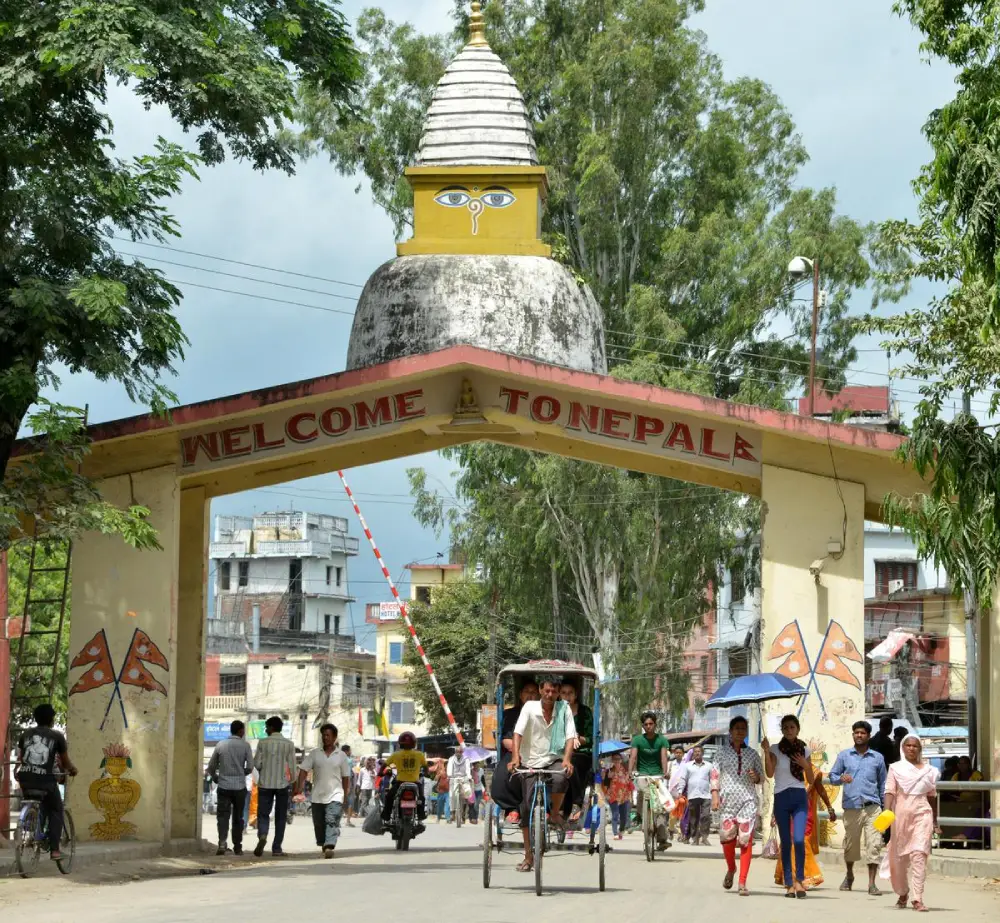
The Sonauli/Sunauli border is the more famous and heavily used Nepal-India crossing for Kailash yatra pilgrims from central and western UP — located at Bhairahawa/Siddharthanagar in Nepal and Sonauli in Uttar Pradesh, about 160 kilometers east of Nepalgunj along the Mahendra Highway. The India-side road from Sonauli to Gorakhpur via Naugarh is about 110 to 120 kilometers—significantly shorter than the Rupaidia approach. For pilgrims with time for the 4- to 5-hour Nepal-side drive from Nepalgunj to Sonauli, this border offers the fastest total journey to Gorakhpur.
Which crossing for Gorakhpur-bound pilgrims? The pure time calculation favors Rupaidia for the Nepal-side and Sonauli for the India-side — but the two are in opposite directions from each other, and Nepalgunj lies roughly between them. For pilgrims prioritizing the shortest Nepal-side vehicle exposure, Rupaidia (30-45 min from Nepalgunj) is clearly faster. For pilgrims who want the shortest total road journey from Nepalgunj to Gorakhpur, Sonauli’s shorter India-side road may make the total journey faster despite the longer Nepal-side drive. Nepal Vehicle Hiring Pvt Ltd advises on current road conditions and crossing queue status at both borders when confirming the Nepalgunj-to-border private jeep hire.
Nepal Vehicle Hiring Pvt Ltd’s Nepal-Side Service — Nepalgunj to Border
Nepal Vehicle Hiring Pvt Ltd’s jurisdiction for the Hilsa-to-Gorakhpur logistics chain covers the Nepal-side ground transport legs — specifically the Nepalgunj hotel coordination and the private vehicle from Nepalgunj to the India border. India-side operators manage the road from the border to Gorakhpur, and the respective aviation operators manage the helicopter and domestic flight legs.
Nepalgunj to Rupaidia Border (12 km, 30-45 minutes): Private car hire or private jeep hire from any Nepalgunj hotel to the Rupaidia border checkpoint. Price: approximately NPR 2,000 to 4,000 (USD 15 to 30) for the full vehicle, all-inclusive. For groups of 5 to 10+, our Hiace van hire carries the full group with baggage to the border in a single vehicle.
Nepalgunj to Sonauli Border (160 km, 4-5 hours on Mahendra Highway): Private 4WD jeep hire or Hiace van hire on the Mahendra Highway westward to Bhairahawa/Sunauli. The Mahendra Highway is flat, paved, and manageable for standard vehicles—no 4WD required on this section —so a private sedan or Hiace is appropriate for the full group. Price for private jeep or car: approximately NPR 14,000 to 20,000 (USD 105 to 150) one way. Hiace for groups: approximately NPR 18,000 to 26,000 (USD 135 to 195).
Nepalgunj Hotel Coordination: Nepal Vehicle Hiking Pvt Ltd pre-arranges Nepalgunj hotel accommodation for the overnight between the Simikot flight and the border connection — an essential element of the return chain given the Simikot weather delay probability. We confirm the hotel booking, along with the border vehicle hire, is a single arrangement through our plan trip page, or you can contact our team at +977-9851013196.
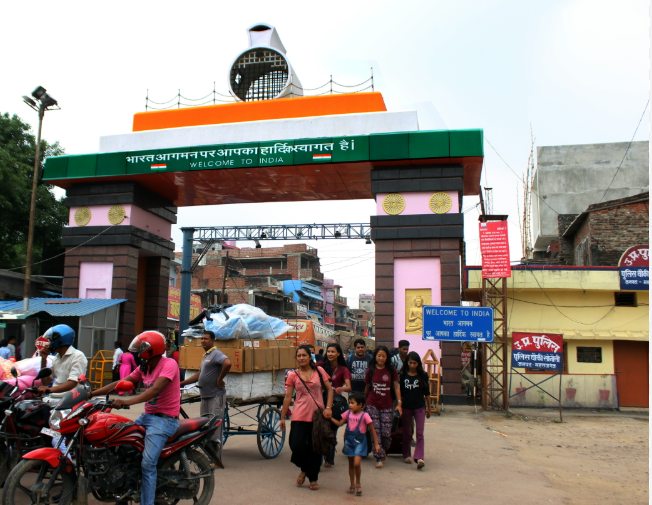
The Kailash Yatra Outward Journey via Gorakhpur — The Return Logic
Most Indian Kailash yatra pilgrims who return via Gorakhpur Airport also began their yatra from Gorakhpur or its surrounding region — making the return to Gorakhpur a natural closing of the full pilgrimage circle. The standard outward journey from Gorakhpur for the Hilsa-route Kailash yatra follows: Gorakhpur → overland to Sonauli or Rupaidia border → cross into Nepal → Nepalgunj → domestic flight → Simikot → helicopter → Hilsa → cross into Tibet → Taklakot → Mansarovar → Kailash parikrama. Return: same reverse sequence.
This return logic means that the Gorakhpur-based pilgrim group’s operator typically arranges India-side transport for the Gorakhpur-to-border outward journey and the border-to-Gorakhpur return journey. Nepal-side logistics are coordinated separately—either through the registered Nepal operator or, for vehicle hire specifically, through Nepal Vehicle Hiring Pvt Ltd as the specialist Nepal ground transport provider. Many registered Kailash yatra operators from Lucknow, Gorakhpur, Varanasi, and Delhi coordinate Nepal-side ground transport through Nepal Vehicle Hiring Pvt Ltd via our operator partnership program—ensuring the Nepal vehicle hire meets the same professional standard as the India-side logistics the group’s home-city operator provides.
Lucknow vs Gorakhpur — The Two Major UP Return Options
For Kailash yatra pilgrims returning from Nepal to Uttar Pradesh via the Nepalgunj hub, the two most common India destination options are Gorakhpur and Lucknow—and understanding each route helps operators and individual pilgrims choose the right connection.
Nepalgunj to Gorakhpur via Rupaidia. Total: approximately 162 km. Nepal side: 12 km to Rupaidia border (30 min by private vehicle). India side: 150 kmfrom Rupaidiha to Gorakhpur via Bahraich (4-5 hours). Total door-to-door from Nepalgunj: approximately 5 to 6 hours. This is the faster option for pilgrims specifically bound for Gorakhpur.
Nepalgunj to Lucknow via Rupaidia. Total: approximately 355 km. Nepal side: 12 km to Rupaidia (30 min). India side: 340 km from Rupaidiha to Lucknow via Bahraich and Barabanki (6-7 hours). Total from Nepalgunj: approximately 7 to 8 hours. Lucknow Airport serves more frequent international connections than Gorakhpur and is the preferred hub for pilgrims with international departures.
Nepalgunj to Gorakhpur via Sonauli. Total: approximately 270 km. Nepal side: 160 km Nepalgunj to Sonauli (4-5 hours by private jeep). India side: 110 km Sonauli to Gorakhpur (3-3.5 hours). Total: approximately 8 to 9 hours. Slower than the Rupaidia route for Gorakhpur-bound groups, but serves pilgrims who prefer the Sonauli crossing’s better India-side road quality.
Nepalgunj to Varanasi via Rupaidia. Total: approximately 490 km door-to-door. Varanasi — one of Hinduism’s most sacred cities — is a natural post-Kailash destination for Shaivite pilgrims: the Vishwanath Temple and Kashi’s sacred geography provide the Benares experience that completes the Kailash-Shiva pilgrimage circuit for many devotees.

Group Sizes and Vehicle Options for the Nepal-India Border Transfer
Kailash Mansarovar yatra groups range from 4 to 20 pilgrims — and the right vehicle type for the Nepalgunj-to-border leg depends on group size, baggage volume, and comfort requirements.
Small groups (2-4 pilgrims): Private car hire (sedan) or private jeep for the Nepalgunj-to-Rupaiya short hop. For the longer Nepalgunj-to-Sonauli, a private jeep provides the comfort and cargo space for full yatra luggage.
Medium groups (5-10 pilgrims): Toyota Hiace van hire — carries the full group and all yatra baggage in a single vehicle, preserving the cohesion pilgrims value when returning from a shared sacred journey.
Large groups (11-25 pilgrims): Tourist coaster hire (14 to 22 passengers) or full tourist bus hire for large pilgrimage parties. Nepal Vehicle Hiring Pvt Ltd’s fleet covers all these sizes; contact our team at +977-9851013196.
Price Guide — Nepal-Side Vehicle Hire for Gorakhpur-Bound Return
Nepalgunj to Rupaidia border (12 km, short hop): NPR 2,000 to 4,000 (USD 15 to 30) by private car or jeep. NPR 4,000 to 7,000 (USD 30 to 52) by Hiace van for groups.
Nepalgunj to Sonauli border (160 km, Mahendra Highway): NPR 14,000 to 20,000 (USD 105 to 150) by private jeep or car. NPR 18,000 to 26,000 (USD 135 to 195) by Hiace van. NPR 22,000 to 32,000 (USD 165 to 240) by tourist coaster.
Nepalgunj airport/hotel pickup: Included in all private vehicle hire from Nepal Vehicle Hiring Pvt Ltd — the vehicle is positioned at the Nepalgunj hotel for the confirmed departure time, not at the airport separately.
Nepalgunj hotel for overnight: Standard double room: NPR 2,000 to 5,000 (USD 15 to 37) per person per night at Nepalgunj’s mid-range hotels. Nepal Vehicle Hiring Pvt Ltd pre-books through partner hotels — confirm the hotel booking alongside the border vehicle hire via our plan trip page.
The Gorakhpur Airport Connection — What Pilgrims Need to Know
Gorakhpur Airport (Mahayogi Gorakhnath Airport, IATA: GOP) is situated approximately 5 kilometers from Gorakhpur city center on the Gorakhpur-Lucknow road. The airport’s terminal expansion, completed in 2023, has significantly improved handling capacity — the new international-standard terminal accommodates both domestic and limited international operations with modern check-in, security, and airside facilities. In 2026, Gorakhpur Airport serves direct domestic routes to Delhi (IndiGo, SpiceJet, Air India — approximately 1.5 hours), Mumbai (approximately 2.5 hours), Bengaluru, Hyderabad, Ahmedabad, and other major Indian hubs.
For Kailash yatra pilgrims reaching Gorakhpur Airport after the Nepal-side logistics chain, the critical practical consideration is a 2.5- to 3-hour buffer from the India border crossing to the airport for the road transfer plus check-in. Book flights with Gorakhpur arrival in mind—Gorakhpur-Delhi flights operate multiple times daily; Gorakhpur-Mumbai typically operate 2 to 3 times daily; other routes have more limited frequency. Book the Gorakhpur domestic departure well in advance, and pre-arrange Nepalgunj return logistics around a confirmed Gorakhpur flight time. And the Gorakhnath Temple option — for pilgrims who can accommodate a 1 to 2-hour pre-flight temple visit, the Gorakhnath Temple (approximately 8 km from the airport, 20 minutes) offers the natural Kailash-Shiva sacred-site continuation that makes Gorakhpur a particularly meaningful final Nepal-India chapter of the yatra.
Lumbini Extension — The Sacred Addition on the Nepal Side
For Kailash yatra pilgrims returning through Nepalgunj who have one additional day and the spiritual inclination to visit Nepal’s second great sacred site, Lumbini — the birthplace of Lord Buddha — is accessible from Nepalgunj via the Mahendra Highway eastward and the Lumbini connecting road, approximately 165 to 180 kilometers from Nepalgunj (approximately 4 to 5 hours by private vehicle). Lumbini’s Mayadevi Temple, the sacred Puskarini pond, the Ashoka Pillar, and the international monastery zone together create one of the world’s most important Buddhist sacred sites — and for pilgrims adding Lumbini to their return before crossing to India via Sonauli/Sunauli (which lies approximately 22 km from Lumbini), the extension is both geographically efficient and spiritually coherent.
Nepal Vehicle Hiring Pvt Ltd’s private vehicle hire from Nepalgunj to Lumbini and the onward Lumbini to Sonauli transfer cover this Lumbini extension as a coordinated arrangement — the group visits Lumbini, then continues to Sonauli for the India crossing and the Gorakhpur road. The Kathmandu extension — Lumbini to Kathmandu for additional pre-departure Nepal sightseeing — is also available through our Kathmandu sightseeing car hire and Bhaktapur heritage day tour. Plan the complete return extension through our Nepal tour package page.
August 2026 Kerung Closure — Why This Guide Is Essential Reading
The destruction of the Rasuwagadhi-Kerung border crossing by the August 26, 2026 glacial lake outburst flood has concentrated all Kailash Mansarovar yatra return traffic onto the single Hilsa-Simikot-Nepalgunj corridor. Before August 2026, pilgrims returning via the Kerung route reached Kathmandu directly and had relatively straightforward logistics for the India connection via Kathmandu’s well-served international airport. After August 2026, the Nepal-India ground transport chain via the Hilsa-Nepalgunj corridor becomes the primary return route for all Indian Kailash yatra pilgrims—making Nepalgunj-to-Gorakhpur and Nepalgunj-to-Lucknow vehicle logistics questions that were previously specialist knowledge now central to every Indian operator’s planning.
The specific change this creates for India-based operators: groups that previously arranged a Kathmandu domestic or international flight departure now need to understand and arrange the Nepalgunj-to-border vehicle logistics as an active planning component rather than a default Kathmandu connection. Nepal Vehicle Hiring Pvt Ltd specifically serves this need — our private vehicle hire, Hiace van hire, and bus hire for the Nepalgunj-to-Rupaiya and Nepalgunj-to-Sonauli legs are pre-arrangeable through our plan trip page or by contacting our team at +977-9851013196 well before the yatra departure.
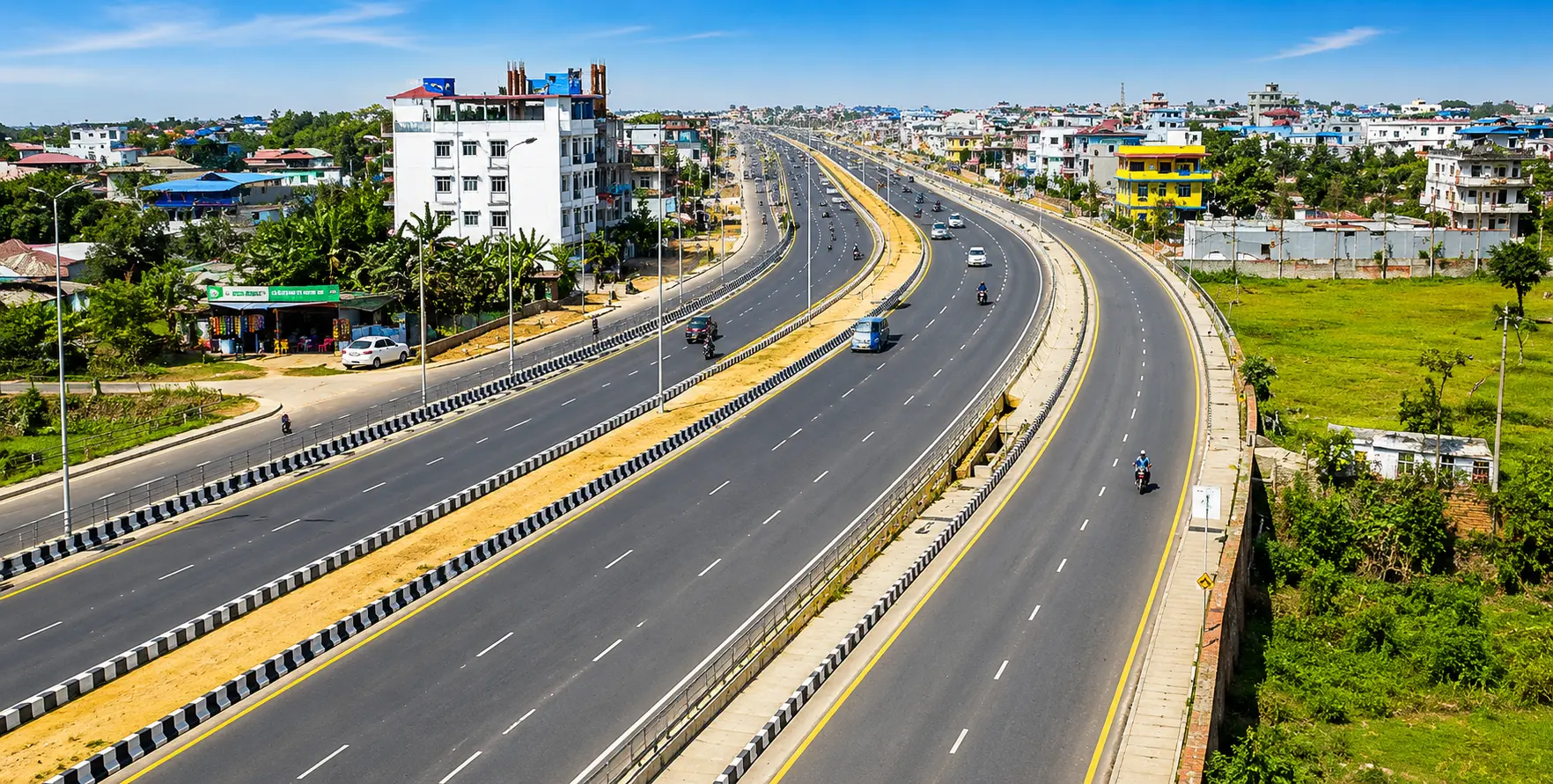
The Mahendra Highway — Nepal’s Terai Corridor
The Mahendra Highway, which connects Nepalgunj to the Sonauli border and continues eastward across the full length of Nepal’s Terai, is one of Nepal’s most important national roads. This flat, well-paved highway runs approximately 1,028 kilometers along the Terai from Mechi in the east to Mahakali in the west. For Kailash yatra pilgrims taking the Nepalgunj-to-Sonauli leg by private vehicle from Nepal Vehicle Hiring Pvt Ltd, the Mahendra Highway provides a comfortable and reliable 16160-kilometer stretch through the Terai’s characteristic landscape: flat agricultural land, periodic small bazaar towns, and the distinctly different atmosphere of Nepal’s lowland region after the dramatic mountain terrain of the yatra above.
The Mahendra Highway between Nepalgunj and Bhairahawa (Sonauli) passes through Kohalpur, Ghorahi (Dang District), Tulsipur, Butwal, and the approach to Bhairahawa. The road is fully paved and well maintained, carrying a mix of heavy truck traffic serving Nepal-India trade, local inter-city buses, and private vehicles. The 55-hour journey by private vehicle reflects the distance and occasional traffic delays through major towns. Nepal Vehicle Hiring Pvt Ltd’s Mahendra Highway vehicle hire includes experienced drivers who know the specific traffic patterns of the Butwal and Bhairahawa approaches.
For pilgrims including a Lumbini sacred site visit, the Mahendra Highway passes within 3 kilometers of the Lumbini Development Zone at the Bhairahawa junction—making the highway the natural approach road to the Lumbini extension before continuing to Sonauli. Our Lumbini vehicle hire and the Nepal tour packages covering the Nepalgunj-Lumbini-Sonauli circuit are bookable through our plan trip page.
The Kailash Yatra Operator Partnership — How India-Based Operators Work with Nepal Vehicle Hiring Pvt Ltd
The Kailash Mansarovar yatra for Indian pilgrims is typically organized by India-based tour operators — companies in Lucknow, Gorakhpur, Delhi, Ahmedabad, Chennai, and other cities that coordinate the complete yatra circuit: India-side transport to Nepal, Nepal aviation (Nepalgunj-Simikot flight and Simikot-Hilsa helicopter), Tibet-side transport (provided by Chinese-licensed ground handlers), and the return Nepal logistics. For Nepal ground transport specifically—the private vehicle hire from Nepalgunj to the India border—India-based operators routinely work with Nepal Vehicle Hiring Pvt Ltd as their verified Nepal ground transport partner.
The operator partnership arrangement works as follows: the India-based yatra operator contacts Nepal Vehicle Hiring Pvt Ltd at +977-9851013196 or through our plan trip page with the group’s yatra dates, size, and return logistics requirements. Nepal Vehicle Hiring Pvt Ltd quotes Nepal-side vehicle hire from the Nepalgunj hotel pickup to the confirmed India border crossing. The quote is all-inclusive — driver, fuel, road tolls, and hotel coordination — and is confirmed in writing before any payment. On the return day, our driver arrives at the Nepalgunj hotel at the confirmed time with the confirmed vehicle and coordinates any adjustments for Simikot weather delays via WhatsApp with the group leader throughout the Hilsa-Simikot-Nepalgunj transit.
This operator partnership model eliminates the India-based operator’s need to find Nepal ground transport separately on each yatra — Nepal Vehicle Hiring Pvt Ltd becomes the consistent Nepal ground transport partner across multiple yatra seasons, providing the reliability and professional standard that India-based operators need for their clients. The operator partnership is available for all Kailash yatra return formats: Nepalgunj to Rupaidia, Nepalgunj to Sonauli, Nepalgunj to Kathmandu by private vehicle, or the Kathmandu airport transfer for groups taking the domestic flight to Kathmandu. Contact our team at +977-9851013196 to establish an operator account.
Post-Yatra Nepal Additions — Extending the Sacred Journey
Not all Kailash yatra pilgrims return to India immediately via the Nepalgunj border crossing. Many — particularly those on their first Nepal visit — choose to extend the Nepal portion of the return journey with Kathmandu-based sacred site visits and heritage experiences that complete the Nepal chapter of the pilgrimage.
Kathmandu Sacred Circuit. For pilgrims taking the Nepalgunj domestic flight to Kathmandu rather than driving to the India border, Nepal Vehicle Hiring Pvt Ltd’s complete Kathmandu service covers: Kathmandu airport transfer from the domestic terminal; Kathmandu sightseeing car hire for Pashupatinath Temple (one of the world’s most important Shiva shrines, natural post-Kailash darshan), Boudhanath Stupa, Swayambhunath, and Patan Durbar Square; Bhaktapur heritage day tour; and the Nagarkot sunrise transfer for the Himalayan dawn panorama that includes the Kailash-Manaslu range on clear mornings.
Pokhara Extension. Nepal’s mountain lake city, accessible from Kathmandu by our private vehicle hire or the Kathmandu to Pokhara bus, offers the Annapurna range backdrop and Phewa Lake tranquillity that many post-yatra pilgrims find ideal for recovery and transition. Our Pokhara car hire covers all Pokhara-based excursions, including Sarangkot sunrise vehicle.
Chitwan Wildlife Extension. The Chitwan jungle safari via our Pokhara to Chitwan bus offers a rhino and elephant Nepal wildlife experience as a natural complement to the sacred mountain circuit—a complete Nepal visit encompassing the Himalayan sacred landscape, the heritage culture of Kathmandu, the mountain lakes of Pokhara, and the wildlife of the Terai plains. Plan the complete post-yatra Nepal extension through our plan trip page.
Year of the Horse 2026 — The Gorakhpur Return at Peak Demand
2026’s Year of the Horse status in the Tibetan astrological calendar has driven Kailash yatra demand — particularly from India, where the pilgrimage carries the highest religious significance — to extraordinary levels. Operators from Gorakhpur, Lucknow, Varanasi, and the surrounding Uttar Pradesh and Bihar region report near-capacity bookings for the spring and autumn 2026 seasons, with many pilgrim groups booking 6 to 12 months in advance. This demand concentration creates specific logistics pressures on the Gorakhpur-bound return chain that 2026 pilgrims and operators must actively manage.
The primary pressure point is Simikot-to-Nepalgunj domestic flight capacity: with more pilgrims completing the parikrama and returning via Hilsa-Simikot than Simikot Airport and domestic airlines can reliably process in a single day’s flying window, flight queues at Simikot will be longer in 2026 than in typical years. Groups not on pre-booked seat blocks—i.e., groups whose operator does not hold IATA-certified direct seat blocks with the airlines—will face longer wait times at Simikot for seat allocation. This makes the operator’s airline relationship (specifically their ability to hold group seat blocks) one of the most practically important factors in 2026 Kailash yatra return logistics.
For the Nepal ground transport leg that Nepal Vehicle Hiking Pvt Ltd provides—the Nepalgunj hotel and the Nepalgunj-to-Gorakhpur vehicle—Year of the Horse demand means booking at least 6 to 8 weeks in advance for the Nepalgunj vehicle and hotel. A Gorakhpur-bound pilgrim group that arrives at Nepalgunj without a pre-arranged vehicle on a high-demand return day may face long waits for available vehicles, adding hours to an already weather-uncertain return. Contact our team at +977-9851013196 or our plan trip page to confirm Nepal-side return logistics well before yatra departure.
Pre-Arrangement Checklist — Hilsa to Gorakhpur Logistics
- Pre-book Hilsa helicopter: Through a registered Kailash yatra operator before yatra departure. With all 2026 traffic on the single Hilsa route, same-day arrangements at Hilsa are unreliable.
- Build 2 buffer days: one at Hilsa for helicopter weather delays; one at Simikot for domestic flight delays.
- Pre-book Nepalgunj hotel: Nepal Vehicle Hiring Pvt Ltd coordinates Nepalgunj accommodation alongside the border vehicle hire.
- Choose border crossing before departure: Rupaidia for quickest Nepal-side crossing; Sonauli for shorter India-side road to Gorakhpur. Contact our team for current border status advice.
- Pre-book Nepal-side vehicle: Nepal Vehicle Hiring Pvt Ltd at +977-9851013196 or via the plan trip page—hotel pickup from Nepalgunj, all-inclusive pricing.
- Coordinate India-side vehicle: Pre-book India-side transport (Rupaiya to Gorakhpur; Soneuli to Gorakhpur) through your home-city operator or local transport provider.
- Book a Gorakhpur Airport domestic flight: Multiple daily options to Delhi (1.5 hrs), Mumbai (2.5 hrs). Book with a 4- to 5-day buffer from the planned Hilsa crossing to accommodate weather delays.
- Confirm Gorakhnath Temple visit if desired: 20 minutes from Gorakhpur Airport. Allow 1 to 1.5 hours for darshan before international flight.
Varanasi and Prayagraj — The Sacred River Cities on the Return Path
For Kailash yatra pilgrims returning through Gorakhpur, the sacred cities of Varanasi (Kashi) and Prayagraj (Allahabad) are within practical day-trip or overnight-extension distance — and for Shaivite pilgrims, the Kailash-to-Varanasi circuit represents one of Hinduism’s most spiritually complete pilgrimage journeys. Lord Shiva’s cosmic presence—manifest as the formless lingam of Mount Kailash in the Himalayas and as the Vishwanath Jyotirlinga in Varanasi—is at the center of both sacred sites, making the return from Kailash via Varanasi a natural and deeply coherent devotional continuation.
From Gorakhpur, the road to Varanasi covers about 150 kilometers, with the drive taking 3 hours; Kailash yatra operators include an overnight in Varanasi as the natural final chapter of the return — post-parikrama Vishwanath Temple darshan and Ganga aarti at the ghats providing the sacred culmination the yatra tradition recognizes as the most complete form of the Kailash Shiva pilgrimage return. Prayagraj’s Triveni Sangam — the confluence of the Ganga, Yamuna, and the mythical Saraswati — is another 100 kilometers from Varanasi and serves as an alternative or additional sacred site for pilgrims with the time.
While Nepal Vehicle Hiring Pvt Ltd’s jurisdiction covers the Nepal-side legs of the Kailash yatra logistics, our team works with partner India-side operators to coordinate the complete circuit — from the Gorakhpur- or Varanasi-based yatra operator’s Nepal vehicle requirements to the Nepal tour package extensions available through our network. For India-based operators planning Kailash yatra circuits with Varanasi or Prayagraj inclusions, our plan trip page provides the Nepal-side quote that completes the full circuit logistics.
Nepal-India Border Crossing Formalities — What Pilgrims Need
The Nepal-India border crossing — whether at Rupaidia or Sonauli/Sunauli — is one of the world’s most active bilateral land crossings, processing thousands of people daily under the Nepal-India Open Border arrangement, which allows citizens of both countries to cross freely without visas. For Indian pilgrims returning from the Kailash yatra, the crossing is straightforward but requires the correct documentation.
Indian passport holders: Cross freely at both Rupaidia and Sunauli without a visa requirement. Indian nationals do not need a Nepal visa at any stage — the Open Border treaty applies. The primary document required is a valid Indian government-issued photo ID (passport or voter ID card) for registration at the immigration checkpoint.
Third-country nationals: Foreign nationals (non-Indian, non-Nepali) require their passport with a valid Nepal visa (obtained on arrival at major Nepal entry points) and must formally exit Nepal at the immigration checkpoint. The immigration clearance process for third-country nationals takes slightly longer than the streamlined Indian national crossing — allow additional time at the border.
Pilgrimage documentation: The Tibet Group Travel Permit, Humla Restricted Area Permit, and other yatra documentation are Chinese, and Nepali travel permits are not specifically required at the Nepal-India border — but pilgrims should carry their full permit set in case of inquiry. Nepal immigration exit stamps are recorded in passports.
Currency: Indian rupees are widely accepted in the Nepalgunj area and at both border crossings — NPR can be exchanged for INR at money changers on both sides of the border. Nepal Vehicle Hiring Pvt Ltd recommends exchanging any remaining NPR before crossing—INR-denominated services in the India-side border towns are standard for all onward costs. Our team can advise on money exchange points in Timin and Nepalgunj.
Seasonal Considerations for the Gorakhpur Return
Hilsa-to-Gorakhpur return logistics depend on two distinct seasonal weather patterns: Nepal’s mountain aviation weather along the Hilsa-Simikot-Nepalgunj chain, and India’s monsoon pattern at the Gorakhpur end.
Spring season (April-June) — Primary Kailash season. The outbound Kailash yatra departs Nepal in May and June for the Tibet-side spring season. Returns occur in June through early July. Spring weather in the Himalayan aviation chain is generally stable through May, becoming more variable in June as the pre-monsoon develops. The Gorakhpur end in May is hot (35-42°C in the Terai and Gorakhpur plains) but manageable. Nepal Vehicle Hiring Pvt Ltd‘s private air-conditioned vehicle hire makes the Nepalgunj-to-border drive comfortable even in peak heat.
Autumn season (September-October) — Second Kailash window. The autumn Kailash yatra (September-October) uses the post-monsoon weather window. Returns occur in October and November. Autumn weather in the Himalayan aviation chain is the most stable of the year — post-monsoon cloud clearance delivers the best flight success rates at Simikot. The Gorakhpur return in October-November is the most comfortable period — cooler temperatures, clear skies.
Monsoon season (July-August). The monsoon at Simikot and Nepalgunj creates the most challenging period for the Hilsa-Simikot-Nepalgunj chain — higher cloud cover, more frequent flight cancellations, and occasional Mahendra Highway disruptions from flooding. Most Kailash yatra operators avoid scheduling returns through this window. Nepal Vehicle Hiking Pvt Ltd monitors road conditions on the Mahendra Highway and Nepalgunj corridor throughout monsoon for any group requiring monsoon returns, contacting clients at +977-9851013196 with current status before departure.
The Rupaidia Crossing in Detail — Nepal’s Closest Border to Gorakhpur
The Rupaidia border crossing — officially the Rupaidiha-Nautanwa border between Nepal’s Rupaidia checkpoint (Banke District) and India’s Rupaidiha checkpoint (Bahraich District, Uttar Pradesh) — is the least documented of the major Nepal-India land crossings but one of the most significant for Nepalgunj-based logistics. Located about 12 kilometers northwest of Nepalgunj city on the Mahendra Highway, the crossing supports substantial cross-border movement of traders, commuters, and pilgrims between the Nepalgunj region and the Bahraich-Gorakhpur-Lucknow corridor of Uttar Pradesh.
The India-side border town of Rupaidiha is small and functional — basic accommodation, money changers, and taxi/jeep services that connect to Bahraich city (approximately 35 km east). From Bahraich, National Highway 730 and connecting roads lead to Gorakhpur via Gonda — a total India-side road journey of approximately 150 kilometers. This route passes through Bahraich’s busy market streets (the primary source of traffic delays) and the more open highway sections beyond Gonda. Because traffic is a major factor, the 4 to 5-hour journey time is a reliable estimate for groups traveling in standard private vehicles.
Nepal Vehicle Hiring Pvt Ltd’s Nepalgunj-to-Rupaidia vehicle hire is typically completed in a private car or private jeep for small groups, and a Hiace van for larger pilgrimage parties — with the vehicle dropping the group at the Nepal side of the Rupaidia checkpoint and the India-side transport (Rupaidiha taxi/jeep to Bahraich and beyond) arranged by the India-based yatra operator or independently by the group. Nepal Vehicle Hiking Pvt Ltd provides India-side transport coordination through our partner network on request—contact our team at +977-9851013196 or our plan trip page for operator partnership inquiries.
Why Choose Nepal Vehicle Hiring Pvt Ltd for Nepal-Side Return Logistics
- Nepalgunj coordination expertise: Our team knows Nepalgunj’s hotel landscape, border queue patterns, and Mahendra Highway road conditions for the Sonauli approach.
- Full vehicle range for all group sizes: Private car, 4WD jeep, Hiace van, coaster, bus — every pilgrimage group size covered.
- Hotel pickup from any Nepalgunj hotel: All private vehicle hire includes hotel door pickup — no bus park navigation with full yatra luggage.
- Border status monitoring: Our team monitors Rupaidia and Sonauli crossing conditions and provides current advice at booking.
- All-inclusive transparent pricing: Driver, fuel, tolls included. No additions at the border.
- Lumbini and Kathmandu extensions: Lumbini private vehicle, Kathmandu sightseeing, and airport transfer all available as return extensions.
- 24/7 WhatsApp: +977-9851013196 or plan trip page.
Frequently Asked Questions — Hilsa Border to Gorakhpur Airport
Is there a direct vehicle from Hilsa border to Gorakhpur Airport?
No — there is no road from Hilsa into Nepal. The return from Hilsa requires a helicopter to Simikot (25 min), a domestic flight to Nepalgunj (45 min), then a private vehicle from Nepalgunj to the India border, and an India-side road to Gorakhpur.
Which Nepal-India border crossing is faster for Gorakhpur?
Rupaidia (12 km from Nepalgunj, 30-45 min) offers the shortest Nepal-side drive but a longer India-side road (150 km to Gorakhpur, 4-5 hrs). Sonauli (160 km from Nepalgunj, 4-5 hrs Nepal drive) gives a shorter India-side road (110 km, 3-3.5 hrs). For most Gorakhpur-bound groups, Rupaidia is the faster overall route.
How much does Nepalgunj to Sonauli border vehicle hire cost?
NPR 14,000 to 20,000 (USD 105 to 150) for a full private jeep or car. NPR 18,000 to 26,000 (USD 135 to 195) for a Hiace van. Contact Nepal Vehicle Hiring Pvt Ltd at +977-9851013196 for a group-specific quote.
How far is Nepalgunj from Gorakhpur Airport?
Via Rupaidia border: approximately 162 km total (12 km Nepal + 150 km India), 5-6 hours. Via Sonauli: approximately 270 km total (160 km Nepal + 110 km India), 8-9 hours.
Can I add a Lumbini visit on the way from Nepalgunj to Sonauli?
Yes — Lumbini is on the Mahendra Highway corridor between Nepalgunj and Sonauli, approximately 165 km from Nepalgunj. Nepal Vehicle Hiring Pvt Ltd coordinates a Lumbini extension and onward Sonauli drop as a single coordinated arrangement.
The Complete Nepal Experience for Indian Kailash Pilgrims
For most Indian Kailash Mansarovar pilgrims, the Nepal leg of the yatra is experienced primarily as a transit corridor — the Nepalgunj-Simikot-Hilsa chain that connects India to Tibet is the operational purpose, and Nepal itself is the passage rather than the destination. This underestimates what Nepal offers the devoted pilgrim who adds even one or two extra days to the Nepal segment of the yatra circuit. Nepal’s sacred geography — Pashupatinath, Lumbini, Muktinath, Gosaikunda, Boudhanath — is among the most concentrated and profound in the Hindu and Buddhist world, and Nepal Vehicle Hiring Pvt Ltd connects you to any of these sites efficiently from Kathmandu, Pokhara, or Nepalgunj.
The Pashupatinath Temple in Kathmandu — one of the most important Shiva shrines in the entire Hindu world, where Shiva is worshipped as Pashupati (Lord of Animals) in a form directly connected to the Himalayan Shiva tradition that encompasses Kailash — is the natural post-Kailash sacred site for Shaivite pilgrims, adding a Kathmandu overnight to their return. Our Kathmandu airport transfer from the domestic flight arrival and Kathmandu sightseeing car hire for the Pashupatinath and heritage circuit cover this extension fully. The Bhaktapur heritage day also offers some of the finest medieval Newar architecture in the world, alongside the Pashupatinath pilgrimage. The Lumbini pilgrimage bus or private vehicle hire covers the Buddha birthplace visit for Buddhist pilgrims, completing the Nepal sacred geography circuit before returning to India via Sonauli and Gorakhpur Airport. Plan the complete post-Kailash Nepal extension through our plan trip page or call +977-9851013196.
The mountain has been circumambulated. The sacred lake has been seen. We returned the Tibet permits at the border. What remains is the return journey — helicopter, flight, vehicle, border, road, airport — each segment a step back from the extraordinary to ordinary life. Nepal Vehicle Hiring Pvt Ltd makes the Nepal ground transport legs of this return as smooth and professionally managed as the devotional journey itself deserves. Our private jeep hire, Hiace van hire, and car hire in Nepal for the Nepalgunj-to-Rupandehi and Nepalgunj-to-Sonauli legs complete the yatra’s Nepal chapter to the professional standard the pilgrimage deserves. Contact our team at +977-9851013196 to pre-arrange the Nepal-side return well before your yatra departs.
Conclusion
The return from the Hilsa border to Gorakhpur Airport is a multi-segment logistics chain — helicopter, domestic flight, Nepal-side vehicle to the India border, and India-side road to Gorakhpur — that demands the same professional pre-arrangement as the outward Kailash yatra journey. Nepal Vehicle Hiring Pvt Ltd provides the Nepal ground-transport leg with professional, all-inclusive private vehicle hire from Nepalgunj to the Rupaidia or Sonauli border—the critical link between Nepal’s domestic aviation network and India’s road corridor to Gorakhpur Airport.
Book your Nepal-side Kailash yatra return vehicle with Nepal Vehicle Hiring Pvt Ltd — call or WhatsApp +977-9851013196, visit vehiclehiringnepal.com, or plan the complete return through our plan trip page.
- Hilsa Border to Gorakhpur Airport Drop Vehicle — Complete Guide for Kailash Yatra Return
- The Complete Route — Hilsa Border to Gorakhpur Airport
- Why Gorakhpur Is the Right Hub for Eastern UP and Bihar Pilgrims
- The Nepalgunj Hub — The Decision Point for Gorakhpur-Bound Return
- The Border Crossing Options — Rupaidia vs Sonauli — The Two Nepal-India Border Crossing Points. The Rupaidia border (also called Rupaidiha on the India side) is the nearest Nepal-India crossing to Nepalgunj—just 12 kilometers northwest of Nepalgunj city. The India-side town is Rupaidiha in Bahraich District, Uttar Pradesh. The road from Rupaidiha to Gorakhpur via Bahraich city is about 150 kilometers and takes 4 to 5 hours, depending on traffic through Bahraich's busy market district. This is the fastest option for getting from Nepalgunj into India, but the longer India-side road to Gorakhpur means the total Nepalgunj-to-Gorakhpur journey takes approximately 5 to 6 hours.
- Nepal Vehicle Hiring Pvt Ltd's Nepal-Side Service — Nepalgunj to Border
- The Kailash Yatra Outward Journey via Gorakhpur — The Return Logic
- Lucknow vs Gorakhpur — The Two Major UP Return Options
- Group Sizes and Vehicle Options for the Nepal-India Border Transfer
- Price Guide — Nepal-Side Vehicle Hire for Gorakhpur-Bound Return
- The Gorakhpur Airport Connection — What Pilgrims Need to Know
- Lumbini Extension — The Sacred Addition on the Nepal Side
- August 2026 Kerung Closure — Why This Guide Is Essential Reading
- The Mahendra Highway — Nepal's Terai Corridor
- The Kailash Yatra Operator Partnership — How India-Based Operators Work with Nepal Vehicle Hiring Pvt Ltd
- Post-Yatra Nepal Additions — Extending the Sacred Journey
- Year of the Horse 2026 — The Gorakhpur Return at Peak Demand
- Pre-Arrangement Checklist — Hilsa to Gorakhpur Logistics
- Varanasi and Prayagraj — The Sacred River Cities on the Return Path
- Nepal-India Border Crossing Formalities — What Pilgrims Need
- Seasonal Considerations for the Gorakhpur Return
- The Rupaidia Crossing in Detail — Nepal's Closest Border to Gorakhpur
- Why Choose Nepal Vehicle Hiring Pvt Ltd for Nepal-Side Return Logistics
- Frequently Asked Questions — Hilsa Border to Gorakhpur Airport
- The Complete Nepal Experience for Indian Kailash Pilgrims
- Conclusion

Related Blog & Articles
Kailash Yatra Return Hilsa Border Jeep Pickup

Kailash Yatra via Hilsa Border: Best Vehicle Hire Guide
Nepalgunj Airport to Hilsa Border Jeep Hire