Plan a Trip


Kailash Yatra via Hilsa Border: Best Vehicle Hire Guide

Kailash Yatra via Hilsa Border: Best Vehicle Hire Guide
| 2026 UPDATE: The Rasuwagadhi–Kerung overland route is CLOSED (August 26, 2026 flood). The Hilsa border route via Simikot is the primary operational alternative for the Kailash Yatra from Nepal. Nepal Vehicle Hiring provides all Kathmandu-side vehicle logistics for the Hilsa approach. WhatsApp: +977 9851013196 |
The Hilsa border crossing in Nepal’s far western Humla District — where the Karnali River gorge meets the Nepal-Tibet boundary at 3,640 meters — has become the most important vehicle approach route for the Kailash Mansarovar Yatra from Nepal in 2026. With the Rasuwagadhi-Kerung corridor destroyed by the August 2026 flash flood, the Simikot-to-Hilsa road (transformed by the July 2025 inauguration of the Kharpunath Bridge into a fully motorable route) is now the primary operational overland gateway to Tibet for Kailash-bound pilgrims.
Getting to the Hilsa border requires a sequence of transport stages, each with its own vehicle type and logistics requirements. From Kathmandu, pilgrims fly to Nepalgunj and then to Simikot, from where a 4WD vehicle drives the 150-kilometer Humla road to Hilsa over 2 to 3 days. This guide covers every vehicle-hire decision in the Hilsa approach chain—from the Kathmandu airport transfer to the Simikot-to-Hilsa mountain track—with specific vehicle recommendations, costs, road conditions, and practical logistics for each segment.
Nepal Vehicle Hiring Pvt. Ltd., based in Thamel, Kathmandu, provides Kathmandu-side vehicle logistics for the Hilsa border approach—airport transfers, pre-departure sacred site visits, and the optional Kathmandu-to-Nepalgunj road option. For the Simikot-to-Hilsa mountain road section, we coordinate with licensed Humla District transport operators through our partner network. This complete guide gives Kailash Yatra pilgrims traveling via Hilsa every vehicle-hire detail they need.
The Hilsa Route: Complete Transport Sequence
The complete Hilsa-approach Kailash Yatra from Kathmandu involves five distinct transport stages:
| Stage | Segment | Distance | Mode | Duration | Vehicle Type | Cost (per person) |
| 1 | Kathmandu to Nepalgunj | 535 km / 90 min by air | Domestic flight | 1 hr (air) or 12–14 hrs (road) | Car/Hiace (road) or flight | NPR 12,000–18,000 (air) |
| 2 | Nepalgunj to Simikot | ~250 km by air | Domestic flight (Twin Otter) | 45 min | Flight only | NPR 15,000–22,000 |
| 3 | Simikot to Hilsa border | ~150 km road | 4WD jeep (Humla road) | 2–3 days | 4WD — mandatory | NPR 25,000–40,000/vehicle |
| 4 | Hilsa to Purang (Tibet) | ~30 km Tibet side | Tibet operator vehicle | 1–1.5 hrs | Tibet-licensed vehicle | Included in Tibet package |
| 5 | Return: all stages reverse | Same as above | Same as above | Same as above | Same as above | Nepal return vehicle pre-arranged |
Stage 1: Kathmandu to Nepalgunj — Vehicle or Flight?
The first leg of the Hilsa-approach Kailash Yatra brings pilgrims from Kathmandu to Nepalgunj (Banke District, 93 m) — the western Nepal hub city from which all Simikot-bound flights depart. Two transport options exist:
Option A: Domestic Flight (Recommended)
The Kathmandu-to-Nepalgunj domestic flight (approximately 1 hour on Buddha Air, Yeti Airlines, or similar) is the standard approach for Kailash Yatra pilgrims. Cost: approximately NPR 12,000 to 18,000 per person one way. Nepal Vehicle Hiring provides a Kathmandu airport transfer from your Thamel hotel to Tribhuvan International Airport’s domestic terminal for the Nepalgunj flight—a 20 to 30 minute drive. Key logistics: confirm the domestic departure terminal (domestic and international terminals at TIA are separate), allow 2 hours before departure for domestic check-in, and pre-book the Nepal Vehicle Hiring airport transfer at least 24 hours in advance.
Option B: Kathmandu to Nepalgunj by Road (Groups Preferring Road)
The road distance from Kathmandu to Nepalgunj is approximately 535 kilometers via the Prithvi Highway and Narayanghat-Butwal-Nepalgunj route, taking 12 to 14 hours by private vehicle. This is a long but manageable single-day drive for pilgrim groups who prefer road travel over domestic flights, or for very large groups whose airfare becomes prohibitive. Nepal Vehicle Hiring’s Hiace van hire (8 to 14 passengers) and car hire in Nepal (2 to 4 passengers) cover this highway section. The route passes through Mugling, Narayanghat, Butwal, and Bhairahawa, with the option of a Lumbini sacred-site stop (22 km east of Bhairahawa) for pilgrim groups combining the Lumbini pilgrimage with the Kailash Yatra.
For most pilgrim groups, the domestic flight is the more practical choice — saving 12+ hours of road time that can be used for Kathmandu sacred preparation and rest before the demanding Hilsa mountain road section. The road option suits groups of 10 or more, where per-person flight savings justify the longer journey time.

Kathmandu Sacred Preparation: The Vehicle Services You Need
Most Hilsa-approach Kailash Yatra itineraries include 1 to 2 days in Kathmandu before the Nepalgunj flight. Nepal Vehicle Hiring provides the complete vehicle service for this Kathmandu preparation period:
- Kathmandu airport transfer — international arrival from your home country to your Thamel hotel
- Kathmandu sightseeing service — the essential Pashupatinath evening Aarti (the sacred consecration ceremony for the Kailash Yatra departure), Boudhanath kora, and Swayambhunath darshan in a single guided vehicle day
- Bhaktapur Durbar Square day tour — for groups spending 2 days in Kathmandu who want a cultural heritage extension alongside the sacred circuit
- Nagarkot sunrise tour via Kathmandu to Nagarkot vehicle — the Himalayan panorama from Nagarkot ridge, including the first sightline toward the Tibet border range that the pilgrimage will cross, is a powerful visual and spiritual preparation for the Kailash journey.
- Airport transfer to TIA domestic terminal — the critical final Kathmandu vehicle service: confirmed pickup from Thamel at the correct time for the Nepalgunj domestic flight check-in
Stage 2: Nepalgunj to Simikot — The Mountain Flight
The Nepalgunj-to-Simikot domestic flight is the most weather-dependent element of the Hilsa approach. Simikot Airport (2,962 m) is a short grass airstrip on a mountain ridge in Humla District — one of Nepal’s more demanding mountain airports, served exclusively by small aircraft (Twin Otter or similar) that require visual flight conditions. In peak Kailash Yatra season (July to September), the standard morning weather window for Simikot flights is 6:00 to10:00 a.m.M, after which afternoon cloud and wind typically close the airstrip.
Flight operators on the Nepalgunj-Simikot sector include Tara Air, Summit Air, and Sita Air. Cost: approximately NPR 15,000 to 22,000 per person one way. Flights frequently fill during peak Kailash Yatra season — book 4 to 6 weeks in advance for July to September departures. Weather cancellations are common; allow 1 to 2 buffer days in Nepalgunj in your itinerary for flight delays.
Nepal Vehicle Hiring does not operate vehicles on the Nepalgunj-Simikot flight sector (it is domestic air, not road). Still, our operations team coordinates with Nepalgunj-based ground handlers for local city transport in Nepalgunj and tracks flight status to advise on timing for the Kathmandu-to-Nepalgunj leg.
| IMPORTANT: The Nepalgunj-to-Simikot flight is the most common point of delay in the Hilsa approach. Always build 1 to 2 buffer days in Nepalgunj into the itinerary. Nepal Vehicle Hiring monitors flight status and will advise on Kathmandu departure timing adjustments if Simikot weather causes Nepalgunj delays. |
Stage 3: Simikot to Hilsa — The Mountain Road (Most Critical Vehicle Decision)
The Simikot-to-Hilsa road is the most important and most demanding vehicle decision in the entire Hilsa Kailash Yatra approach. Since the inauguration of the Kharpunath Bridge on July 7, 2025, this 150-kilometer mountain road through Humla District is fully motorable by 4WD vehicles—a historic transformation from the previous helicopter-or-trek requirement. But ‘motorable’ means 4WD only; an experienced mountain driver is essential, and conditions vary significantly by season.
Road Sections: Simikot to Hilsa
| Section | Distance | Altitude Range | Drive Time | Road Character |
| Simikot to Kermi | 35 km | 2,962–2,600 m | 2–3 hrs | Rough mountain track, several river crossings |
| Kermi to Yalbang | 30 km | 2,600–2,900 m | 2–3 hrs | Improving road, spectacular Karnali gorge views |
| Yalbang to Muchu | 35 km | 2,900–3,200 m | 3–4 hrs | Higher terrain, occasional steep sections |
| Muchu to Hilsa (via Kharpunath Bridge) | 50 km | 3,200–3,640 m | 4–5 hrs | New road section enabled by the 2025 bridge, dramatic |
Why 4WD is Non-Negotiable on the Simikot–Hilsa Road
The Humla road from Simikot to Hilsa was built through some of Nepal’s most challenging mountain terrain—the Karnali River system’s deep gorges and high ridges between 2,600 and 3,640 meters. Even with the Kharpunath Bridge completing the road, this is fundamentally a mountain construction track rather than a finished highway. Key vehicle requirements:
- 4WD traction: multiple sections have loose gravel, exposed rock, and gradient climbs that require all-wheel-drive engagement
- High ground clearance: the road surface has uneven sections, drainage channels, and rock outcrops that would damage standard passenger vehicles
- River crossing capability: several stream crossings without permanent bridges require vehicles with adequate clearance and 4WD
- Experienced Humla driver: the road passes through remote terrain where driver knowledge of local conditions, turnouts, and emergency protocols is genuinely safety-critical — not a place for a driver making their first trip
- Overnight staging: the 15150-kilometer road is spread across 2 to 3 driving days (overnight at Muchu and/or Yalbang) — the vehicle and driver serve the full multi-day mountain section
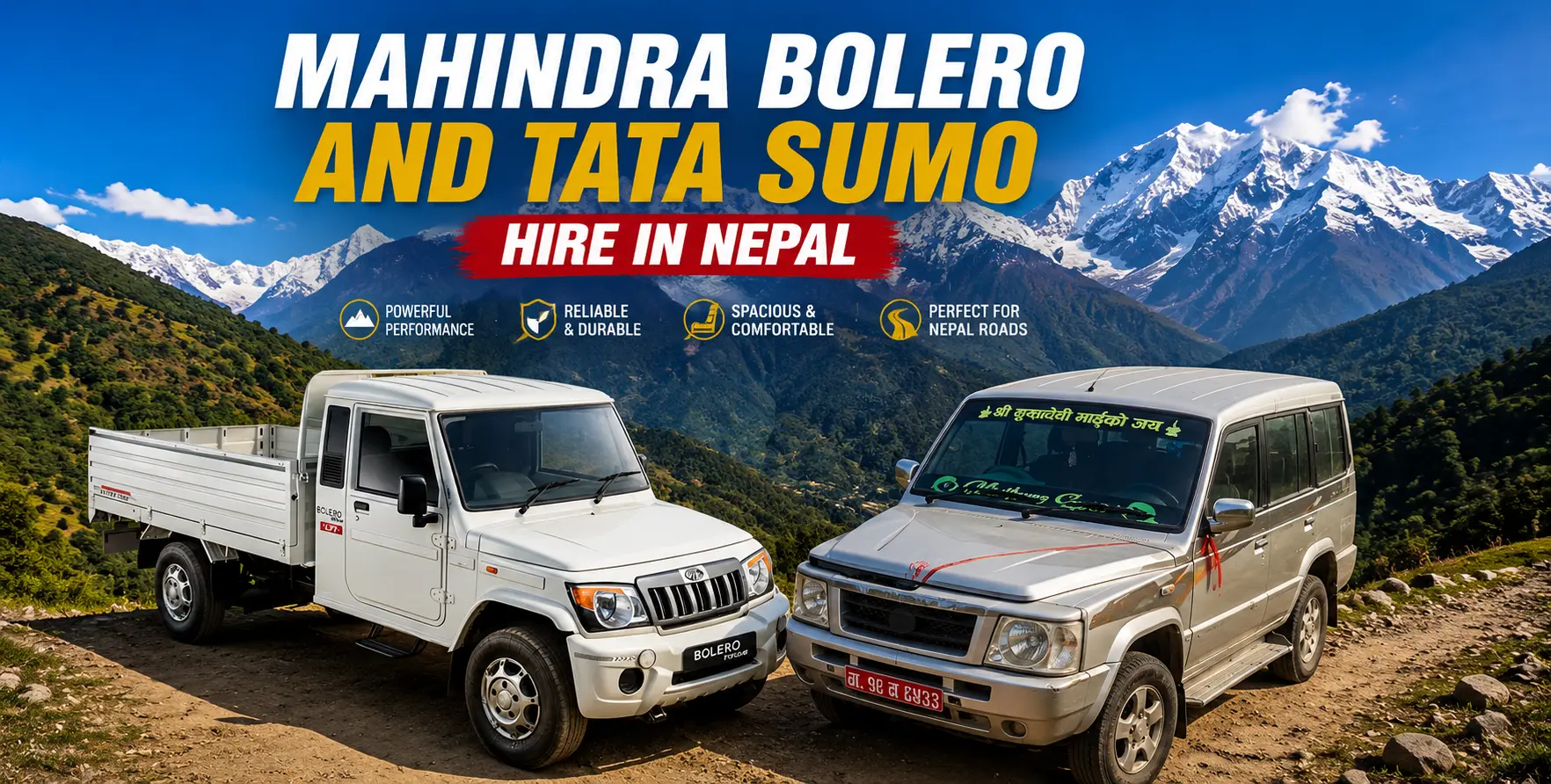
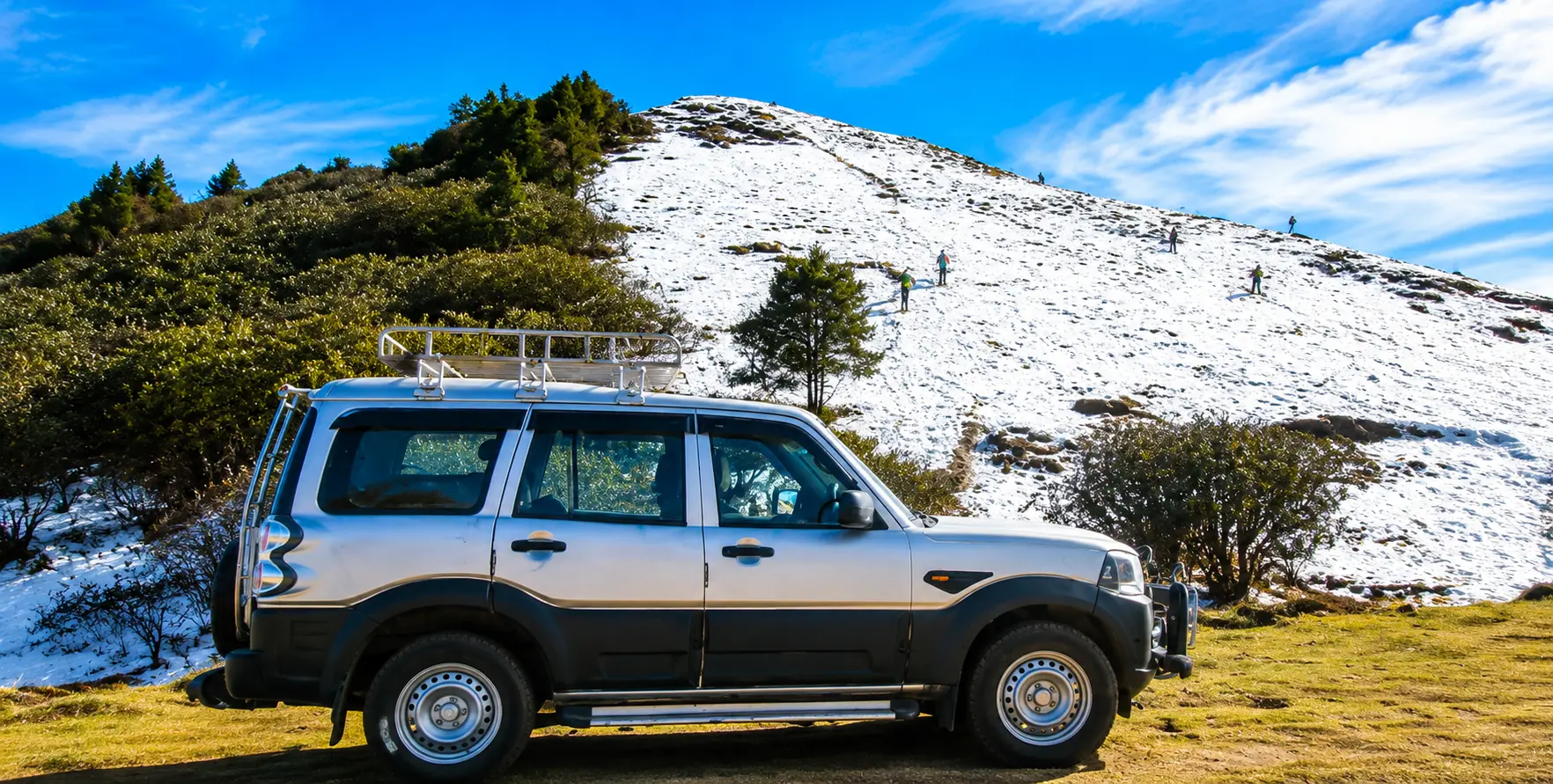
Recommended Vehicle: Mahindra Bolero or Tata Sumo (Humla Local Fleet)
The Simikot-to-Hilsa road section is served by locally based Humla District 4WD vehicles—typically Mahindra Bolero or Tata Sumo models maintained for this specific mountain road. These are not the same Mahindra Scorpio or Toyota Land Cruiser fleet that Nepal Vehicle Hiring operates from Kathmandu—they are Humla-registered, locally operated vehicles whose drivers know this specific road intimately. Bringing a Kathmandu-based jeep to Simikot for the Hilsa road section is impractical (the Kathmandu jeep cannot reach Simikot by road—only by air cargo, which is cost-prohibitive) and unnecessary given the established Humla local fleet.
Nepal Vehicle Hiring coordinates with licensed Humla transport operators to arrange the Simikot-to-Hilsa 4WD vehicle for our Kailash Yatra clients — ensuring that the vehicle is properly maintained, the driver is route-experienced, and the booking is confirmed before the pilgrim group departs Kathmandu. This coordination is one of the most valuable logistics services we provide for the Hilsa approach: arranging reliable Simikot-to-Hilsa vehicles from Kathmandu requires established relationships with Humla operators that individual pilgrim groups cannot easily replicate.
Cost: Simikot to Hilsa Vehicle Hire
| Vehicle | Capacity | Price (per vehicle, 2- 3 days) | Notes |
| Mahindra Bolero / Tata Sumo | 5–6 passengers + luggage | NPR 25,000–38,000 | Includes driver, fuel, and return costs |
| Mahindra Scorpio (if available in Simikot) | 6–7 passengers + luggage | NPR 30,000–45,000 | More comfort, slightly higher cost |
| Per person (group of 5) | — | NPR 5,000–7,600 per person | All-inclusive: vehicle, driver, fuel |
| Per person (group of 4) | — | NPR 6,250–9,500 per person | Slightly higher per person than a group of 5 |
Seasonal Road Conditions: Simikot to Hilsa
| Season | Months | Road Condition | Kailash Yatra Suitability | Advance Booking |
| Pre-monsoon | Apr–May | Good — dry, stable | Excellent. Clear mountain views | 4–6 weeks |
| Peak pilgrim season | Jun–Sep | Variable — some rain but Humla rain shadow | Peak season — most pilgrims, higher demand | 6–8 weeks ahead |
| Post-monsoon | Oct–Nov | Best — freshly repaired, stable | Excellent conditions, fewer pilgrims | 3–4 weeks |
| Winter | Dec–Mar | Difficult — snow above 3,000 m | Not recommended; Kailash parikrama closed | N/A |
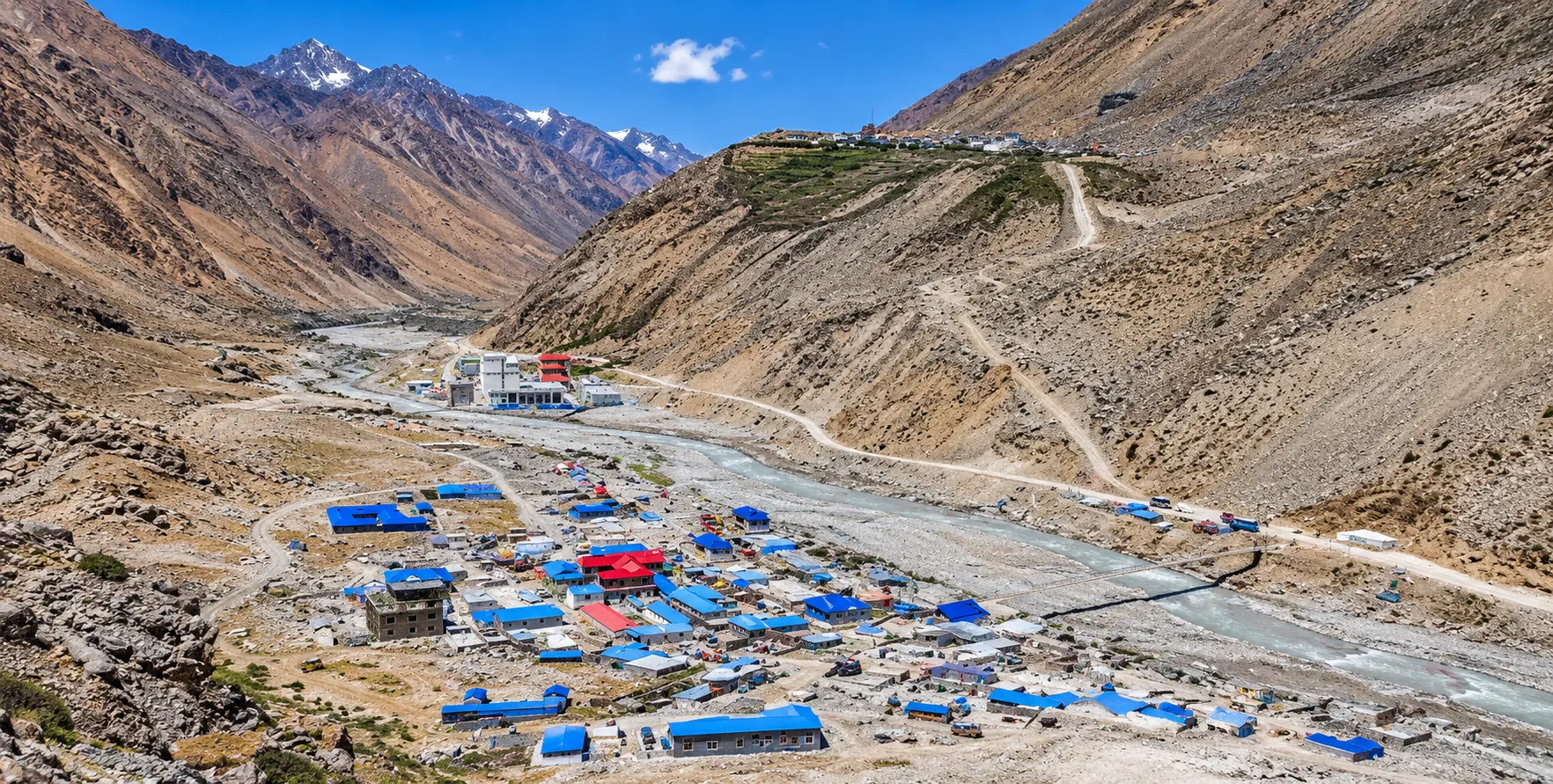
The Humla District’s rain-shadow character — sheltered from the full monsoon by the Himalayan range to the south — means the Simikot-to-Hilsa road receives significantly less monsoon rainfall than the Nepal middle hills. This makes the route more reliable during the June-to-September pilgrimage peak than equivalent mountain roads in wetter parts of Nepal. However, occasional cloudbursts and stream flooding can temporarily close sections of the road for 1 to 6 hours—always build buffer time into the itinerary.
Permits for the Kailash Yatra via Hilsa Border
| Permit | Cost | Where to Get | When to Arrange |
| Humla Restricted Area Permit (Nepal) | USD 90 per person per week | Licensed Nepal trekking agency | 4–8 weeks before departure |
| Tibet Tourism Bureau (TTB) permit | Included in Tibet package | China-licensed Tibet operator | 6–8 weeks before departure |
| Chinese Group Visa | Agency fee varies | Tibet operator via Chinese consulate | 6–8 weeks before departure |
| Kailash Restricted Area Permit (Tibet) | Included in Tibet package | Tibet operator | Same as TTB — arranged together |
| Nepal domestic flight permits | Included in flight ticket | Airline at booking | At time of flight booking |
The Humla Restricted Area Permit is a Nepal-side permit required for all foreign nationals entering Humla District above Simikot. At USD 90 per person per week, it is the most significant Nepal-side permit cost for the Hilsa route. A licensed Nepal trekking agency must arrange it — not independently. Nepal Vehicle Hiring coordinates Humla RAP processing through our partner agencies as part of the complete Hilsa Kailash Yatra logistics service. Contact us through our Plan Your Trip page.
Practical Logistics Checklist: Kailash Yatra via Hilsa
- Book Nepal Vehicle Hiring: Kathmandu airport transfer (international arrival) — at least 48 hours in advance
- Book Kathmandu sightseeing service for Pashupatinath, Boudhanath, Swayambhunath — the sacred departure circuit before the Nepalgunj flight
- Book Kathmandu-to-Nepalgunj domestic flight — 4 to 6 weeks in advance for peak season (July to September)
- Arrange Humla Restricted Area Permit through Nepal trekking agency — 4 to 8 weeks before departure.
- Book Nepalgunj-to-Simikot domestic flight — same lead time as Kathmandu-Nepalgunj; confirm same-day or next-morning connection
- Arrange Simikot-to-Hilsa 4WD vehicle through Nepal Vehicle Hiring partner network — coordinate from Kathmandu before departure; do not attempt to arrange on arrival at Simikot.
- Arrange all Tibet-side permits (TTB, Chinese Group Visa, Kailash RAP) through a licensed China Tibet operator — 6 to 8 weeks minimum lead time.
- Build 1 to 2 buffer days in Nepalgunj for Simikot flight weather delays
- Carry sufficient NPR cash from Kathmandu — no reliable ATMs between Nepalgunj and Hilsa
- Confirm Nepal Vehicle Hiring return vehicle at Hilsa from Kathmandu before departure — the return logistics must be pre-arranged, not improvised on return from Tibet
Nepal Vehicle Hiring Services for the Hilsa Kailash Yatra
- Kathmandu airport transfer — international arrival TIA to Thamel hotel
- Kathmandu sightseeing service — Pashupatinath, Boudhanath, Swayambhunath sacred preparation circuit
- Bhaktapur Durbar Square day tour — cultural heritage addition for 2-day Kathmandu preparation
- Nagarkot sunrise tour via Kathmandu to Nagarkot vehicle — Himalayan dawn panorama before departure
- Car hire in Nepal — Kathmandu airport transfers and city logistics (individuals)
- Hiace van hire — Kathmandu-to-Nepalgunj road option for large groups (8–14)
- Coaster bus hire — large pilgrim parties (15–25) on Kathmandu-to-Nepalgunj highway
- Simikot-to-Hilsa 4WD coordination — arranged through Nepal Vehicle Hiring partner network; confirmed from Kathmandu before departure
- Nepal Nekhor tour — Kailash Yatra with Muktinath, Lumbini, and Janakpur sacred circuit combination
- Muktinath Yatra itinerary — post-Kailash return sacred extension via Pokhara
- Nepal holiday tours and Nepal tour packages — Kailash Yatra within a complete Nepal pilgrimage circuit
Frequently Asked Questions: Hilsa Border Kailash Yatra Vehicle Hire
Can I bring a Kathmandu-based jeep all the way to Hilsa?
No — Kathmandu-based vehicles cannot reach Simikot by road (there is no road from Kathmandu to Simikot; the approach is by domestic flight only). The Simikot-to-Hilsa section requires locally-based Humla District 4WD vehicles (Mahindra Bolero, Tata Sumo). Nepal Vehicle Hiring coordinates these through our Humla partner network — arranged from Kathmandu before your departure.
Is it possible to trek from Simikot to Hilsa instead of driving?
Yes — the traditional route from Simikot to Hilsa is a 5 to 7 day trek over the Nara La Pass (4,620 m), the standard approach before the Kharpunath Bridge road opened. For fit trekkers with adequate time, the trek is a magnificent Himalayan experience through remote Humla villages. For pilgrims prioritizing time efficiency, the 4WD vehicle route (2 to 3 days) is the practical choice.
How do I arrange the Simikot-to-Hilsa vehicle?
Nepal Vehicle Hiring coordinates the Simikot-to-Hilsa vehicle booking through our Humla District transport partner network. Contact us via WhatsApp at +977 9851013196 or use our PlanYour TTrippage with your Simikot arrival date and group size. We confirm the vehicle, driver, and cost from Kathmandu before you depart — eliminating the uncertainty of trying to find transport on arrival at Simikot.
What is the Kharpunath Bridge and when did it open?
The Kharpunath Bridge is the key infrastructure that made the Simikot-to-Hilsa road fully motorable. Nepal’s Prime Minister KP Sharma Oli inaugurated it on July 7, 2025, completing the road connection that previously required a helicopter or a 5- to 7-day trek to cross. The bridge spans the Karnali River gorge in the upper Humla section. It is rated for vehicle traffic — opening the entire Nepalgunj-to-Hilsa route to 4WD vehicles for the first time.
How much cash should I carry for the Hilsa route?
Carry sufficient NPR cash from Kathmandu for the entire Simikot-to-Hilsa-to-return journey — there are no ATMs between Nepalgunj and Hilsa. Typical cash requirements for the Nepal-side of the Hilsa route: accommodation at Simikot and en-route guesthouses (NPR 500 to 1,500 per person per night), meals (NPR 400 to 800 per meal), vehicle fuel contributions if applicable, emergency expenses, and tips for driver and local support. Budget approximately NPR 30,000 to 50,000 per person in cash for the Nepal-side Hilsa route.
Does Nepal Vehicle Hiring arrange the Tibet-side logistics?
Nepal Vehicle Hiring is a Nepal-side ground transport specialist — we do not operate vehicles in Tibet. For Tibet-side logistics (TTB permits, Chinese Group Visa, Kailash Restricted Area Permit, Tibet vehicle hire, Kailash parikrama guide, Manasarovar and Darchen accommodation), we provide referrals to licensed China Tibet operators who are our established partners. Contact us through our Plan Your Trip page, and we will connect you with the appropriate Tibet operator for the Hilsa approach.
Book Your Hilsa Kailash Yatra Vehicle with Nepal Vehicle Hiring
Nepal Vehicle Hiring Pvt. Ltd., Thamel, Kathmandu — your specialist for Nepal-side vehicle logistics on the Hilsa-approach Kailash Yatra. One WhatsApp, one operations team, all Nepal-side transport coordinated:
- WhatsApp / Call: +977 9851013196
- Email: [email protected]
- www.vehiclehiringnepal.com
Visit our Plan Your Trip page with your pilgrimage dates, group size, Kathmandu hotel, and preferred Kathmandu-to-Nepalgunj option (air or road). We respond within 24 hours with a complete Nepal-side vehicle logistics plan, Simikot-to-Hilsa vehicle confirmation, and referrals to partner Tibet operators. The path to Kailash now runs through Hilsa — Nepal Vehicle Hiring will help you travel it.
The Humla Road: What the Journey Looks and Feels Like
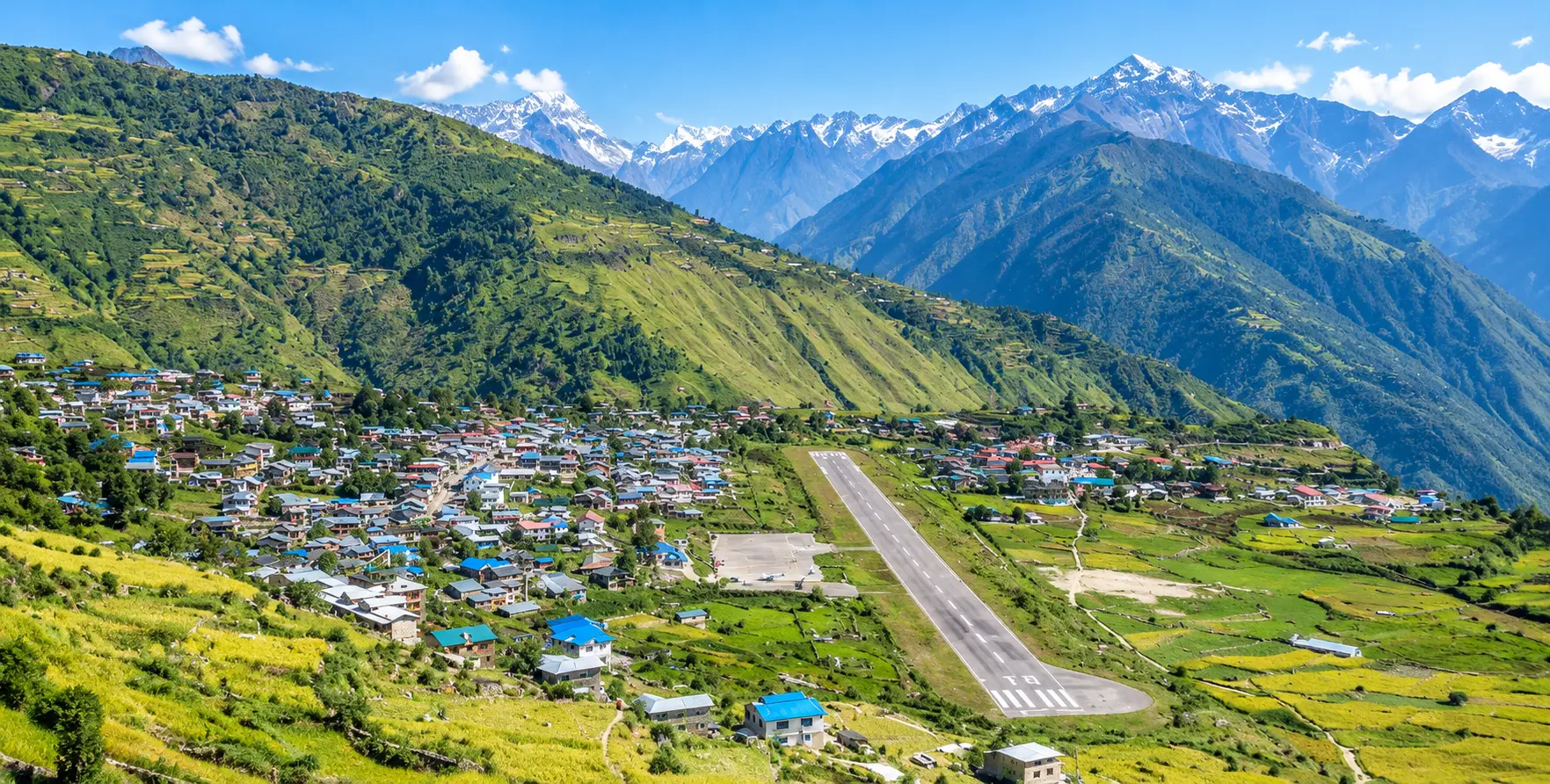
For pilgrims approaching the Hilsa route for the first time, understanding what the Simikot-to-Hilsa road journey actually looks and feels like helps set realistic expectations and prepares them for one of Nepal’s most remote and most beautiful mountain road experiences.
Simikot (2,962 m) is a small ridge-top town—the administrative headquarters of Humla District —with a population of about 2,000 people, a small market, a few guesthouses, and an airstrip that serves as the district’s only reliable connection to the outside world. The town has a distinctive far-western Nepal character: the architecture shifts from the brick and tile construction of the middle hills to the stone-built, flat-roofed houses of the Karnali highland zone; the population is predominantly Hindu with a significant Tibetan Buddhist presence reflecting District’sct’s proximity to Tibet; and the landscape is drier, more open, and more elemental than the forested mid-hills of eastern Nepal.
From Simikot, the road descends toward the Humla Karnali River — one of the Karnali’s headwater tributaries — and then follows the river valley upstream through a series of small Humla villages. The valley’s character is extraordinary: steep canyon walls rise 1,000 to 2,000 meters above the river on both sides, the river itself a powerful glacial turquoise in the dry season, and the occasional monastery or mani wall punctuating the trail above the road. Juniper forests at the higher elevations give way to blue pine and then alpine scrub as the road climbs toward Hilsa.
The villages along the route — Kermi, Yalbang, Muchu, Khyinga, and others — are genuinely remote settlements that receive almost no visitors outside the Kailash Yatra season. The Humla communities maintain their traditional agricultural and herding livelihoods with minimal external economic input. For pilgrims who have traveled through the more tourist-developed areas of Nepal, the Humla villages offer a genuinely different encounter — one where the pilgrim group is a notable arrival rather than a routine sight, and where the local hospitality carries the warmth of communities unaccustomed to treating visitors as a commercial category.
The approach to Hilsa (3,640 m) in the final section of the road is particularly dramatic — the valley narrows, the road climbs steeply toward the border ridge, and on clear days the Tibetan plateau begins to become visible to the north beyond the border pass. The Hilsa crossing point, where the Nepal border post sits directly adjacent to the Chinese border infrastructure, is a small but emotionally charged moment — the physical threshold between the Nepal approach and the Tibet destination that the entire Kailash pilgrimage has been building toward.
Altitude Considerations on the Simikot–Hilsa Road
The Simikot-to-Hilsa road crosses significant altitude in a relatively compressed vehicle journey — rising from Simikot at 2,962 m to Hilsa at 3,640 m over 2 to 3 days of driving. While this altitude gain is less extreme than, for example, the single-day jeep drive from Pokhara (827 m) to Muktinath (3,710 m), it still requires altitude awareness for pilgrim groups ascending from low-altitude starting points.
Most Kailash Yatra pilgrims arrive at Simikot from Nepalgunj (93 m) in a single morning flight — a rapid gain of nearly 3,000 meters in under an hour. The first afternoon in Simikot is typically the most altitude-sensitive period: headache, mild breathlessness, and loss of appetite are common AMS symptoms at this altitude for passengers arriving from near sea level. Nepal Vehicle Hiring recommends: spending the first Simikot afternoon resting rather than starting the road journey; drinking enough water (dehydration accelerates AMS symptoms); avoiding alcohol on the first evening; and assessing group health carefully before the vehicle departs the following morning.
The overnight stops on the Simikot-to-Hilsa road — Yalbang (approximately 2,900 m) and Muchu (approximately 3,200 m) —orovide aa natural acclimatizationstaircase bbefore reaching Hilsa at 3,640 m. This gradual ascent profile is actually better for altitude adaptation than many more direct approaches to similar altitudes, and the 2 to 3 day driving schedule serves an acclimatization function alongside its logistics role. The Tibet-side continuation to Purang (3,900 m), Mansarovar (4,590 m), and Darchen (4,560 m) adds further altitude that the Simikot-to-Hilsa staging helps prepare the body for.
Humla District: Cultural and Natural Context
Humla District is one of Nepal’s most isolated and least-visited administrative districts — a place where the modern infrastructure that defines life in Kathmandu or even in the Khumbu has barely arrived. Understanding its cultural and natural character enriches the vehicle journey from Simikot to Hilsa from a transit into a genuine cultural encounter.
The district’s population is about 000 people — it is predominantly inhabited by ethnic groups in the lower trans-Himalayan communities (collectively, locally) at higher elevations near the Tibet border. The Hilsa border area specifically has a majority Tibetan Buddhist population — the Lama communities of Khyinga and other upper Humla villages maintain a religious culture almost indistinguishable from the Tibetan side of the border, including the same architectural style (flat-roofed stone houses with painted facades), the same prayer flag traditions, and the same Tibetan Buddhist monastery compounds that define the Kailash circuit itself.
Humla’s natural environment is exceptional. The Karnali River system — which begins near Kailash and flows south through Humla and then through the Terai to join the Ganges — is one of Nepal’s last relatively undammed river systems, supporting extraordinary biodiversity in the canyon ecosystems. Snow leopard populations exist in the upper Humla valleys, and the blue sheep (bharal) that snow leopards prey on are frequently visible from the road in the higher sections above Muchu. Griffon vultures, lammergeier (bearded vultures), and the danphe (Himalayan monal) are common sightings on the open ridge sections. For wildlife-aware pilgrims, the Simikot-to-Hilsa road journey offers genuine observation opportunities alongside its spiritual and logistical purpose.
Comparing Simikot–Hilsa with the Former Kerung Route: Key Differences
For pilgrims who previously made the Kailash Yatra via the Rasuwagadhi-Kerung route and are now planning the Hilsa alternative, understanding the key experiential and logistical differences helps calibrate expectations for the 2026 journey.
Journey Time and Stages
The Kerung route was road-based from Kathmandu to the Tibet border, approximately 175 km of Nepal road from Kathmandu to Syabrubesi, then a relatively short approach to the Rasuwagadhi crossing. The Hilsa route replaces this road section with two domestic flights (Kathmandu-Nepalgunj and Nepalgunj-Simikot) and then a 2 to 3 day 4WD road journey from Simikot to Hilsa. Total elapsed time from Kathmandu to the Nepal-Tibet border is similar—about 3 to 4 days—but the journey’s character is very different: domestic flights rather than highway driving, and mountain track rather than provincial road.
Cost Comparison
The Hilsa route costs more than the former Kerung route — primarily due to the domestic flight costs (Kathmandu-Nepalgunj-Simikot return, approximately NPR 55,000 to 80,000 per person in flights alone) that replace the vehicle driving. The Humla Restricted Area Permit (USD 90 per person per week) is an additional Nepal-side cost that the Kerung route did not require. Overall, most operators quote the Hilsa route at 40 to 60 percent above the former Kerung package cost.
Tibet-Side Distance to Kailash
From Hilsa, the Tibet-side journey to Kailash via Purang is approximately 130 km to Darchen — a shorter Tibet-side road distance than from Kerung (where the Tibet route to Kailash was approximately 1,200 to 1,400 km via Lhasa and Shigatse). The Hilsa approach provides a shorter, more direct Tibet-side road to Kailash than the Kerung route, which is a significant practical advantage. The total journey time from the Nepal-Tibet border to Kailash is approximately 2 to 3 days via Hilsa, compared to 5 to 7 days via Kerung.
Environmental Character
The Kerung route passes through the temperate-to-alpine Rasuwa District landscape — forested hills, rhododendron zones, the Langtang mountain backdrop. The Hilsa route passes through Humla’s arid canyon and high-plateau landscape — drier, more elemental, more Tibetan in character. Many pilgrims who have completed both routes describe the Hilsa approach as feeling more connected to the Tibetan sacred world from the Nepal side — the landscape transitions more gradually to the plateau environment that Kailash inhabits.

Indian Pilgrims via Hilsa: Entry from Sunauli Border
For Indian pilgrim groups using the Hilsa route who enter Nepal at the Sunauli-Bhairahawa border crossing (the most common Nepal entry point for Indian visitors), Nepal Vehicle Hiring provides vehicle transport from the Bhairahawa border area to the Kathmandu domestic airport for the Nepalgunj flight. This Bhairahawa-to-Kathmandu service—about 280 km on the Terai highway and then the Prithvi Highway, taking 5 to 6 hours—connects Indian pilgrims entering Nepal at Sunauli directly to the Kathmandu domestic terminal for the Nepalgunj departure.
Nepal Vehicle Hiring’s vehicle services for Indian pilgrim groups entering at Sunauli: Hiace van hire (8 to 14 passengers) and Coaster bus hire (15 to 25 passengers) cover the Bhairahawa-to-Kathmandu highway leg. Our Nepal Nekhor tour service can coordinate a Lumbini sacred-site visit (22 km from Bhairahawa) as an optional stop on the Bhairahawa-to-Kathmandu route—allowing Indian pilgrims to combine the Lumbini pilgrimage with the Kailash Yatra in a single Nepal circuit without additional backtracking.
Nepalgunj: Practical Staging Guide for Hilsa-Bound Pilgrims
Nepalgunj is a city most Kailash pilgrims pass through as quickly as possible — spending one overnight before the Simikot flight. But understanding the city’s practical geography helps make the Nepalgunj staging as smooth as possible.
Nepalgunj’s Bheri Airport is located approximately 6 kilometers north of the city center. The domestic check-in for Simikot flights typically opens at 6:00 a.m. for the first morning departures. Hotels near the airport include the Hotel City Inn, Hotel Batika, and several other mid-range options that serve the transit market—Nepal Vehicle Hiring’s partner agents in Nepalgunj can recommend and book appropriate accommodation once the Kathmandu-side transport is confirmed.
The critical Nepalgunj logistics for Hilsa-bound pilgrims: confirm the Simikot flight booking and departure time before arriving in Nepalgunj (the flight may be the following morning if the Kathmandu-Nepalgunj connection lands in the afternoon); allow 2 hours before departure for Bheri Airport check-in for the Simikot flight; carry all permits (Humla RAP, Tibet TTB permit, Chinese Group Visa) in accessible day-bag document holders — the Nepalgunj and Simikot checkpoints verify these before allowing the onward flight. Nepal Vehicle Hiring’s operations team tracks Simikot flight status from Kathmandu and will advise on any known delays or scheduling changes before the Nepalgunj leg begins.
Accommodation Along the Simikot–Hilsa Road
Accommodation on the Simikot-to-Hilsa road is basic but functional — the teahouses and guesthouses along the Humla route cater specifically to the Kailash Yatra pilgrimage market and to the occasional trekking groups that use this corridor. Understanding what to expect at each overnight stop helps pilgrims pack and prepare appropriately.
Simikot (2,962 m)
Simikot has the best accommodation on the Nepal side of the Hilsa route — several established guesthouses with private rooms, attached or shared bathrooms, and restaurants serving dal bhat, noodle soups, and trekker staples. The Hotel Karnali and similar local hotels are the standard options. Cost: approximately NPR 600 to 1,500 per room per night. Simikot also has the last reliable solar charging facility and the last point where satellite phone or mobile signal (NCELL or NTC) may be available, depending on coverage. Carry fully charged power banks from Kathmandu.
Yalbang (approximately 2,900 m)
Yalbang is a small village with basic teahouse accommodation — simple rooms, shared facilities, and dal bhat meals. Cost: approximately NPR 300 to 700 per room. The village sits in a relatively wide section of the Karnali valley with good views of the surrounding ridges. Yalbang is the standard first overnight stop on the Simikot-to-Hilsa vehicle journey, about 65 km from Simikot on day 1.
Muchu (approximately 3,200 m)
Muchu is a slightly larger settlement than Yalbang, with a few teahouse options and the last significant village before the final approach to Hilsa. Basic rooms and dal bhat meals; costs are similar to Yalbang—the second overnight stop for most vehicle groups. Above Muchu, the road and landscape become progressively more austere and Tibetan in character as the altitude increases toward Hilsa.
Hilsa (3,640 m)
Hilsa is a small border settlement with minimal civilian accommodation, mostly simple lodge facilities serving border-crossing traffic. Some Kailash Yatra groups overnight at Hilsa before crossing; others prefer to cross immediately into Tibet and overnight at Purang on the Tibet side, where accommodation quality is better. Nepal Vehicle Hiking coordinates the Hilsa-night vs immediate-crossing decision with the Tibet operator as part of the pre-departure planning.
The Karnali River: Companion of the Hilsa Road
The Humla Karnali River — the uppermost tributary of the great Karnali system that flows south through Nepal to join the Ganges — accompanies the Simikot-to-Hilsa road for much of its length, and understanding this river gives the vehicle journey its geographic and spiritual context.
The Karnali originates near the Kailash-Mansarovar region in Tibet—the same sacred landscape Kailash pilgrims travel toward. The river is considered holy in both Hindu and Buddhist traditions, being one of the four great rivers said to originate from the Kailash area (the others being the Indus, Sutlej, and Brahmaputra). For pilgrims familiar with this mythology, the moments when the vehicle road descends to the Humla Karnali riverbank, and the turquoise glacial water is visible directly beside the road carry a symbolic dimension: this is the river that begins at Kailash, flowing south toward India. In contrast, the pilgrims travel north toward its source.
The Karnali in the Humla section is a powerful, fast-moving river carrying significant glacial sediment load. In monsoon season, it runs high and turbid with grey glacial melt — a reminder of the scale of the water system that originates in the Tibetan highlands above. In the dry season (October to May), the river runs lower and clearer, its turquoise-green color visible in the calm sections between rapids. Several river crossings on the Simikot-to-Hilsa road ford side streams that feed the Karnali; the vehicle’s 4WD capability is especially useful at these crossings in post-monsoon conditions, when stream levels remain elevated.
Physical Preparation for the Hilsa-Route Kailash Yatra
The Hilsa-route Kailash Yatra places specific physical demands on pilgrims that differ somewhat from the former Kerung route experience. Understanding these demands helps pilgrims prepare their bodies appropriately in the months before departure.
The vehicle journey from Simikot to Hilsa — 2 to 3 days of 4WD mountain road driving — is not physically demanding in the way that trekking is. Still, the combination of altitude, rough roads, vehicle vibration, and the sustained sitting of a mountain-track journey can produce genuine physical fatigue. Pilgrims with back problems, joint pain, or limited tolerance for rough road vibration should prepare with specific attention to these factors: core strengthening exercises in the weeks before departure, a quality travel cushion for the vehicle seat, and liberal use of the regular stops that Nepal Vehicle Hiring’s coordinated driver will include on the Humla road.
The Kailash parikrama (52-kilometer circumambulation, crossing Drolma La at 5,630 m) is the most physically demanding element of the entire Yatra — regardless of the Nepal approach route. Pilgrims who are not physically capable of the full parikrama on foot can hire horses for portions of the circuit at Darchen, or can do a partial kora to the Drolma La and back rather than the full circuit. The Tibet operator coordinates horse hire and physical support services at Darchen — discuss requirements with the Tibet operator before departure from Nepal.
Recommended physical preparation for the Hilsa-route Kailash Yatra: 3 to 4 months of progressive cardio fitness training (walking, cycling, swimming) before departure; altitude pre-acclimatisation if possible (spending 2 to 3 nights at Nagarkot, 2,175 m, before the Simikot flight significantly helps); Diamox (acetazolamide) consultation with a doctor before departure — this altitude medication reduces AMS risk and is commonly used by Kailash Yatra pilgrims; adequate hydration throughout the Humla approach; and specific attention to joint health given the rough-road vehicle journey.
Summary: Why the Hilsa Route Now Defines the Nepal Kailash Yatra
The convergence of two events — the July 2025 Kharpunath Bridge inauguration making Simikot-to-Hilsa fully motorable, and the August 2026 flood closing the Rasuwagadhi-Kerung route for the second consecutive year — has effectively established the Hilsa border as Nepal’s principal gateway to the Kailash Mansarovar Yatra for the foreseeable future.
The Hilsa route has genuine advantages over the Kerung route that will retain pilgrims even after Kerung reopens: it is independent of the Bhote Koshi GLOF flood risk that has destroyed the Kerung crossing twice in two years; it provides a shorter Tibet-side road distance from the border to Kailash (130 km vs 1,200+ km via Lhasa); and it passes through Humla — one of Nepal’s most extraordinary and most rarely visited landscapes — giving the Nepal-side approach a cultural and natural richness that the Kerung highway approach could not match.
Nepal Vehicle Hiring is positioned to serve every Nepal-side vehicle logistics need for the Hilsa route — from the Kathmandu airport transfer that begins the pilgrimage to the Simikot-to-Hilsa 4WD coordination that is the route’s most operationally complex element. Our established Humla transport partnerships, our Kathmandu-based operations team, and our 24/7 WhatsApp availability make us the most reliable single point of contact for Kailash Yatra pilgrims navigating the Hilsa approach in 2026/27. Om Namah Shivaya — the path to Kailash is open.
What to Pack for the Simikot–Hilsa Vehicle Journey
Packing correctly for the Simikot-to-Hilsa vehicle journey is different from packing for a standard Nepal highway trip. The combination of altitude (2,962 m to 3,640 m), remoteness (no resupply opportunities between Simikot and Hilsa), rough road vibration, and multi-day vehicle staging requires specific preparation:
- Warm layers accessible in day bag: temperatures drop sharply after sunset at these altitudes — bring a fleece and windproof jacket accessible in your vehicle day bag, not packed in the roof luggage. At Hilsa (3,640 m), nights can reach near-freezing even in summer.
- High-energy snacks: the vehicle journey covers remote sections where no food is available for several hours at a stretch. Carry dry biscuits, nuts, energy bars, and glucose tablets in your day bag for the driving sections between villages.
- Water and purification: carry at least 2 liters of water per person per driving day. Carry iodine tablets or a SteriPen to purify stream water if needed en route. Bottled water is not available beyond Simikot.
- Altitude medication: carry Diamox (acetazolamide) as prescribed by your doctor before departure. For many pilgrims, taking Diamox prophylactically from Simikot significantly reduces AMS symptoms during the altitude gain to Hilsa and the Tibet-side continuation to Mansarovar.
- Sleeping bag: even if guesthouses provide blankets, a lightweight sleeping bag liner (or a -5°C sleeping bag for winter travel) provides insurance against inadequate bedding at remote overnight stops.
- Document folder: keep all permits (Humla RAP, TTB, Chinese Group Visa, passport) in a waterproof document folder in your day bag — not in the roof luggage that is loaded/unloaded at overnight stops. Checkpoints on the Humla road and at the Hilsa border require immediate access to all documents.
- Cash in NPR: as noted earlier, no ATMs exist between Nepalgunj and Hilsa. Carry NPR 30,000 to 50,000 per person minimum for the Nepal-side Humla road expenses.
- Dry bags or waterproof covers: if traveling in or near the monsoon season, waterproof covers for main luggage protect against road dust (which settles on everything on the dry-season Humla track) and occasional rain showers.
The Hilsa Crossing: What Happens at the Nepal-Tibet Border
The Hilsa border crossing is a small but significant administrative checkpoint where Nepal ends and China begins, and where Tibet-side logistics take over from Nepal-side preparations. Understanding the crossing process helps pilgrims move through it efficiently.
The Nepal side of the Hilsa crossing has a small immigration post staffed by Nepal Police and immigration officers who process outgoing visitors. Pilgrims present their passports, Chinese Group Visa, TTB permit, and Humla RAP for verification and exit stamping. This process typically takes 30 to 90 minutes for a group of 5 to 10 pilgrims. Nepal Vehicle Hiring’s coordinated Humla driver will accompany the group to the crossing point and remain on the Nepal side while the Tibet operator’s vehicle handles the China-side reception.
The Chinese border officials at the Hupilun County border post manage the China side of the Hupilun crossing. Officials verify the TTB permit, Chinese Group Visa, and Kailash Restricted Area Permit here. China-side formalities have historically been thorough and can take 1 to 2 hours for a group—patience is required. Once cleared, the Tibet operator’s vehicle (arranged on the China side) collects the group for the 30-kilometer drive to Purang/Taklakot.
Important: The Nepal-Tibet border at Hilsa operates during specific hours—typically 9:00 a.m. to 5:00 p.m. Tibet Standard Time (Nepal Standard Time plus 2 hours and 15 minutes). Pilgrims arriving at Hilsa in the late afternoon should plan to overnight on the Nepal side and cross the following morning rather than attempting a late-day crossing that may be refused. Nepal Vehicle Hiring’s Humla driver knows the crossing hours and will pace the final Muchu-to-Hilsa driving day to arrive at Hilsa at an appropriate time for same-day or next-morning crossing.
Return Journey: Getting Back from Hilsa to Kathmandu
The return journey from Hilsa back to Kathmandu after the Kailash Yatra is the mirror image of the outbound journey — Hilsa to Simikot by 4WD vehicle (2 to 3 days), Simikot to Nepalgunj by domestic flight, Nepalgunj to Kathmandu by domestic flight or road — but requires the same advance coordination as the outbound journey, not improvised arrangement on return.
Nepal Vehicle Hiring pre-books the return Simikot-to-Hilsa vehicle (for the road portion). It monitors domestic flight schedules for the Simikot-Nepalgunj and Nepalgunj-Kathmandu sectors before the outbound departure from Kathmandu. The return vehicle is confirmed on the Hilsa (Nepal) side on a pre-arranged date based on the Tibet operator’s itinerary. When the Tibet-side Kailash circuit is complete and the group returns to Hilsa, the Nepal Vehicle Hiring-coordinated driver and vehicle are waiting.
One important planning consideration: the return domestic flights from Simikot to Nepalgunj are just as weather-dependent as the outbound flights. Build the same 1 to 2 buffer days in Simikot for the return journey as were built into the outbound Nepalgunj staging. Pilgrims with fixed international departure dates from Kathmandu should ensure they have at least 3 to 4 days of buffer between the planned Simikot-Nepalgunj return flight and their international departure — Simikot weather delays of 1 to 2 days are common enough that insufficient buffer can cause missed international flights.
Nepal Vehicle Hiring’s Hilsa Route Logistics: Our Commitment
Nepal Vehicle Hiring has been building the operational network for the Hilsa approach Kailash Yatra service since the Kharpunath Bridge inauguration in July 2025 opened the route to vehicle access. In the 14 months since that inauguration, we have developed and established partnerships with licensed Humla District 4WD operators who are route-familiar on the Simikot-to-Hilsa road; operational protocols for permit coordination through our Kathmandu partner agencies; Tibet operator referral relationships for the China-side component; and a Nepalgunj-based ground handling partnership for city transport and flight monitoring.
The August 2026 Kerung closure has significantly increased demand for the Hilsa approach service in 2026 — with pilgrims who had planned the Kerung route being redirected to Hilsa at short notice. Nepal Vehicle Hiring’s operations team is managing this redirection demand while maintaining the service quality standards our Kailash Yatra clients expect. For the remainder of the 2026 season and into 2027, we will continue to expand our Hilsa route operational capacity to meet what is clearly becoming the dominant Nepal-side Kailash approach.
Every Kailash pilgrim who contacts Nepal Vehicle Hiring for the Hilsa route receives: a complete Nepal-side logistics plan from our operations team within 24 hours of inquiry; a confirmed Simikot-to-Hilsa vehicle arrangement through our Humla partners before departure from Kathmandu; a Tibet operator referral matched to the pilgrim group’s profile and budget; and 24/7 WhatsApp support on +977 9851013196 throughout the Nepal-side journey. This is what ‘best vehicle hire for the Hilsa Kailash Yatra’ means — not just the right vehicle, but the full logistics support that makes the sacred journey as seamless as Nepal Vehicle Hiring can make it.
- Kailash Yatra via Hilsa Border: Best Vehicle Hire Guide
- The Hilsa Route: Complete Transport Sequence
- Stage 1: Kathmandu to Nepalgunj — Vehicle or Flight?
- Kathmandu Sacred Preparation: The Vehicle Services You Need
- Stage 2: Nepalgunj to Simikot — The Mountain Flight
- Stage 3: Simikot to Hilsa — The Mountain Road (Most Critical Vehicle Decision)
- Seasonal Road Conditions: Simikot to Hilsa
- Permits for the Kailash Yatra via Hilsa Border
- Practical Logistics Checklist: Kailash Yatra via Hilsa
- Nepal Vehicle Hiring Services for the Hilsa Kailash Yatra
- Frequently Asked Questions: Hilsa Border Kailash Yatra Vehicle Hire
- Book Your Hilsa Kailash Yatra Vehicle with Nepal Vehicle Hiring
- The Humla Road: What the Journey Looks and Feels Like
- Altitude Considerations on the Simikot–Hilsa Road
- Humla District: Cultural and Natural Context
- Comparing Simikot–Hilsa with the Former Kerung Route: Key Differences
- Indian Pilgrims via Hilsa: Entry from Sunauli Border
- Nepalgunj: Practical Staging Guide for Hilsa-Bound Pilgrims
- Accommodation Along the Simikot–Hilsa Road
- The Karnali River: Companion of the Hilsa Road
- Physical Preparation for the Hilsa-Route Kailash Yatra
- Summary: Why the Hilsa Route Now Defines the Nepal Kailash Yatra
- What to Pack for the Simikot–Hilsa Vehicle Journey
- The Hilsa Crossing: What Happens at the Nepal-Tibet Border
- Return Journey: Getting Back from Hilsa to Kathmandu
- Nepal Vehicle Hiring's Hilsa Route Logistics: Our Commitment

Related Blog & Articles
Nepalgunj Airport to Hilsa Border Jeep Hire
Nepalgunj to Simikot Transport

Kailash Mansarovar Yatra After the 2026 Flood: Alternative Routes and Best Vehicle Hire