Plan a Trip


Kailash Yatra Return Hilsa Border Jeep Pickup

Kailash Yatra Return Hilsa Border Jeep Pickup — Private Jeep Pickup and Complete Logistics Guide
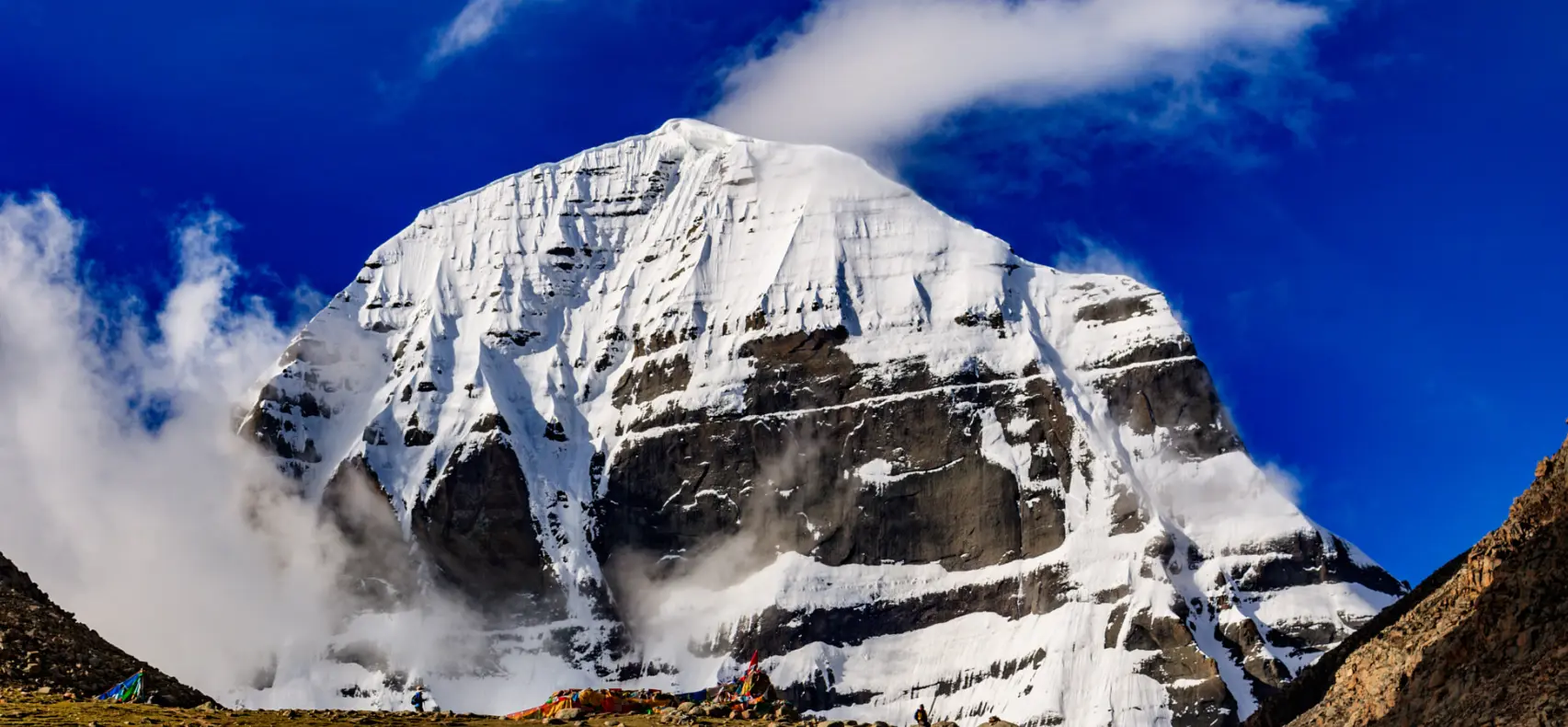
The completion of the Kailash Mansarovar parikrama is one of the most profound moments in any pilgrim’s devotional life — the three-day circumambulation of Mount Kailash (6,638 m) at the world’s most sacred mountain, the crossing of the Dolma La Pass at 5,630 meters, and the sight of the sacred lake Mansarovar from the descent that marks the completion of the circuit. What follows immediately after this sacred completion is, by contrast, one of the most logistically demanding segments of the entire yatra: the return journey from Tibet through the Nepal-China border at Hilsa, the helicopter transfer to Simikot, the domestic flight to Nepalgunj, and the final leg back to Kathmandu — a multi-modal return chain that, when pre-arranged through Nepal Vehicle Hiring Pvt Ltd and partner operators, flows with the smoothness and professional management that the yatra’s sacred completion deserves.
Since the catastrophic August 26, 2026 destruction of the Rasuwagadhi-Kerung border by the glacial lake outburst flood, the Hilsa-Purang crossing is Nepal’s only available overland gateway between Nepal and Tibet — making the logistics of Kailash Yatra return via Hilsa not just one option but the single route available. This guide covers the complete return logistics: the Tibet-side approach to the Hilsa border, the Nepal border crossing procedure, the helicopter pickup from Hilsa to Simikot, the Simikot-to-Nepalgunj domestic flight, and the Nepalgunj-to-Kathmandu private jeep hire or vehicle options — with 2026 prices, pre-arrangement advice, weather delay planning, and how Nepal Vehicle Hiring Pvt Ltd coordinates the Nepal-side ground transport legs of the full return circuit.
The Kailash Yatra Return Route — The Complete Chain
The Kailash Mansarovar Yatra return via Hilsa follows a fixed chain of transport segments that every pilgrim on this route completes in the same sequence — each segment handed off to the next in a logistics chain that, when professionally coordinated, flows with the efficiency and reliability that the yatra’s physical demands make essential.
Tibet Side: Parikrama completion to Hilsa border. After completing the 52-kilometer Kailash parikrama circuit through Dirapuk and Zuthulpuk, pilgrims descend to Darchen. From Darchen, a 45-kilometer drive (approximately 1.5 to 2 hours) returns to Taklakot/Purang — the Tibetan town where the Tibet Group Travel Permit entry was originally processed. After a final overnight at Taklakot, the journey to the Nepal border continues: a further 45 kilometers of road from Taklakot through increasingly dramatic gorge terrain descends toward the Nepal-China border at the Hilsa/Gyirong border area. This entire Tibet-side section — from Darchen to the border — is managed by the Chinese-licensed ground handler coordinated through the registered Kailash yatra operator. The Tibet-side logistics team provides private jeep or tourist bus transport throughout.
Nepal Border: The Hilsa Crossing. At the Nepal-Tibet border, pilgrims complete exit formalities from Tibet (Chinese immigration) and cross the border on foot — a short walk from the Chinese checkpoint to the Nepal checkpoint. The Hilsa-side Nepal customs and immigration office processes Nepal re-entry for all returning pilgrims. This border crossing is among the world’s highest and most remote international crossings — a simple, functional process that takes about 30 to 60 minutes for a group, depending on queue length. The Hilsa helipad, where the return helicopter waits, is immediately adjacent to the Nepal customs office.
Hilsa to Simikot: The Helicopter Pickup. Connecting Hilsa to Simikot or anywhere else in Nepal accessible by vehicle — the Hilsa crossing sits about 3,640 meters in a mountain valley, and access from the Nepal side is entirely by helicopter or on foot. The Hilsa-to-Simikot helicopter takes about 25 minutes and carries 4 to 5 passengers per flight in an Airbus H125 or similar mountain helicopter. Pre-arranged helicopter pickup at Hilsa is essential for a smooth return—the helipad is small and weather-dependent. It serves a growing volume of pilgrims as the Hilsa crossing becomes Nepal’s primary Tibet gateway.
Simikot to Nepalgunj: The Domestic Flight. Simikot Airport (2,910 m) connects to Nepalgunj by scheduled domestic flight — the same 40 to 50-minute flight used on the outward journey. Confirm the return flight in advance; it is subject to the same weather-related cancellations as all mountain aviation in Nepal. Simikot overnight stays are often required when weather prevents completing the Hilsa-to-Simikot-to-Nepalgunj route in a single day.
Nepalgunj to Kathmandu: Flight or Private Jeep. Nepalgunj is the hub where the return logistics chain connects to the main Nepal domestic and ground transport network. From Nepalgunj, pilgrims return to Kathmandu by a 55- to 65-minute domestic flight (approximately NPR 9,000 to 15,000 per person) or by private jeep hire from Nepal Vehicle Hiring Pvt Ltd—a 10- to 12-hour overland journey via the Mahendra Highway eastward and the Prithvi Highway approach to Kathmandu. This Nepalgunj-to-Kathmandu private vehicle transfer is the specific ‘private jeep pickup’ that this guide addresses in full detail from Section 4 onward.
Why This Makes This Guide More Important Than Ever
The August 26, 2026 glacial lake outburst flood that destroyed the Rasuwagadhi-Kerung border crossing has permanently changed the Kailash Mansarovar yatra logistics landscape for the foreseeable future. Before August 2026, pilgrims had two primary Nepal-Tibet overland routes available: the Rasuwagadhi-Kerung crossing (the larger, more developed, more convenient route for most pilgrim groups) and the Hilsa-Purang crossing (the remote western alternative). After August 26, 2026, the Hilsa-Purang crossing is Nepal’s sole available overland Tibet gateway — every Kailash Mansarovar pilgrim returning to Nepal from Tibet in 2026 and until the Rasuwagadhi border is fully reconstructed (estimated spring 2027 at earliest) must use the Hilsa crossing.
This concentration of all Kailash yatra return traffic onto a single route with limited capacity — helicopter seats, Simikot Airport handling capacity, domestic flight slots — creates genuine logistical pressure that makes professional pre-arrangement of every return leg more important than in previous years. The days when a pilgrim could improvise the return logistics after completing the parikrama are, for the 2026-2027 period, definitively over. Every return helicopter seat from Hilsa, every Simikot-to-Nepalgunj flight, and every Nepalgunj-to-Kathmandu connection should be pre-arranged through the registered agency and transport partners before the yatra departs Kathmandu — not scrambled for on the return side at Hilsa.
Nepal Vehicle Hiking Pvt Ltd monitors this situation continuously and coordinates Nepal-side return logistics—specifically the Nepalgunj-to-Kathmandu private vehicle hire and the Kathmandu hotel and airport transfer that complete the return journey—for all Kailash yatra groups whose operators coordinate with our team at +977-9851013196.
The Hilsa Helipad and the Helicopter Pickup — Critical Logistics
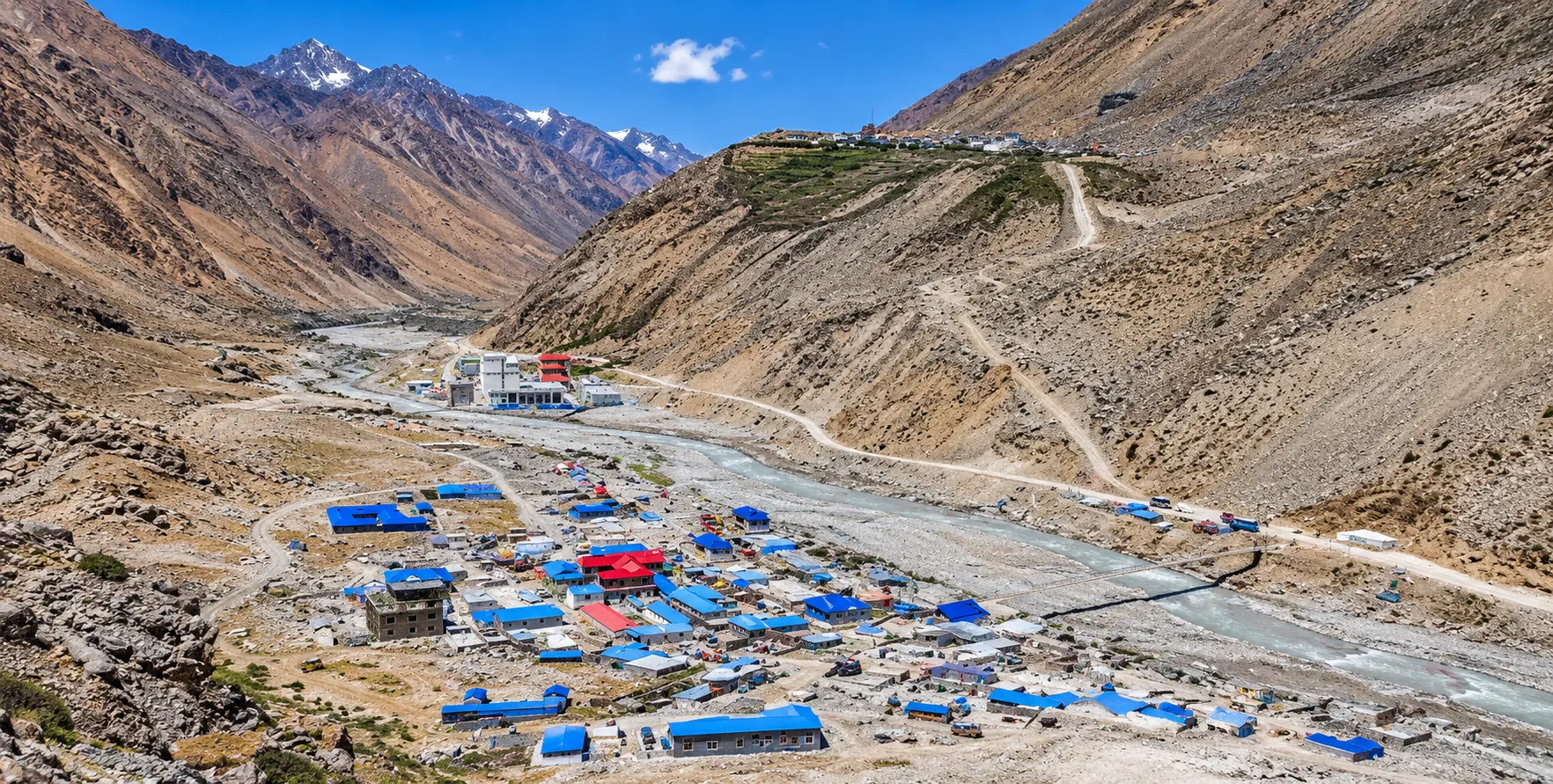
The Hilsa helipad on the Nepal side of the Nepal-China border is one of the most operationally critical and physically constrained helicopter landing points in Nepal’s domestic aviation network. Situated at approximately 3,640 meters above sea level in a narrow valley below the Nepal-Tibet border checkpoint, the helipad is small — accommodating a single helicopter at a time — and entirely dependent on visual flight conditions for both approach and departure. The combination of altitude, valley constriction, and frequent afternoon cloud build-up in the Humla Karnali valley makes the Hilsa helipad one of the most weather-sensitive helipads in Nepal’s mountain aviation network.
The practical consequences of this weather sensitivity for Kailash yatra return logistics are significant: a group that completes immigration formalities and reaches the Hilsa helipad may find the helicopter either on time, delayed by weather at Simikot (the departure point), delayed by weather at Hilsa itself, or unable to fly at all on that day — requiring an overnight stay at the basic Hilsa guesthouses and a helicopter attempt the following morning. This scenario is common enough that every experienced Kailash yatra operator builds in at least a one-day Hilsa weather buffer in their return itinerary.
The helicopter companies operating the Hilsa-Simikot corridor in 2026 — Simrik Air, Dynasty Aviation, and others — operate on a weather-dependent flight basis with no guarantee of same-day completion. Alpine Luxury Treks coordinates Hilsa helicopter logistics as part of their premium Kailash yatra packages, ensuring that the helicopter is confirmed on both the outward and return Hilsa-Simikot segments as part of an integrated booking rather than a day-of improvisation.
IMPORTANT: Pre-arrange the Hilsa helicopter BEFORE departing Kathmandu. In 2026, with all Kailash return traffic concentrated on the Hilsa route following the Kerung closure, do not assume same-day helicopter availability at Hilsa. Contact Nepal Vehicle Hiring Pvt Ltd at +977-9851013196 to coordinate helicopters through verified Simikot-Hilsa operators.
Simikot — The Gateway That Demands Buffer Days
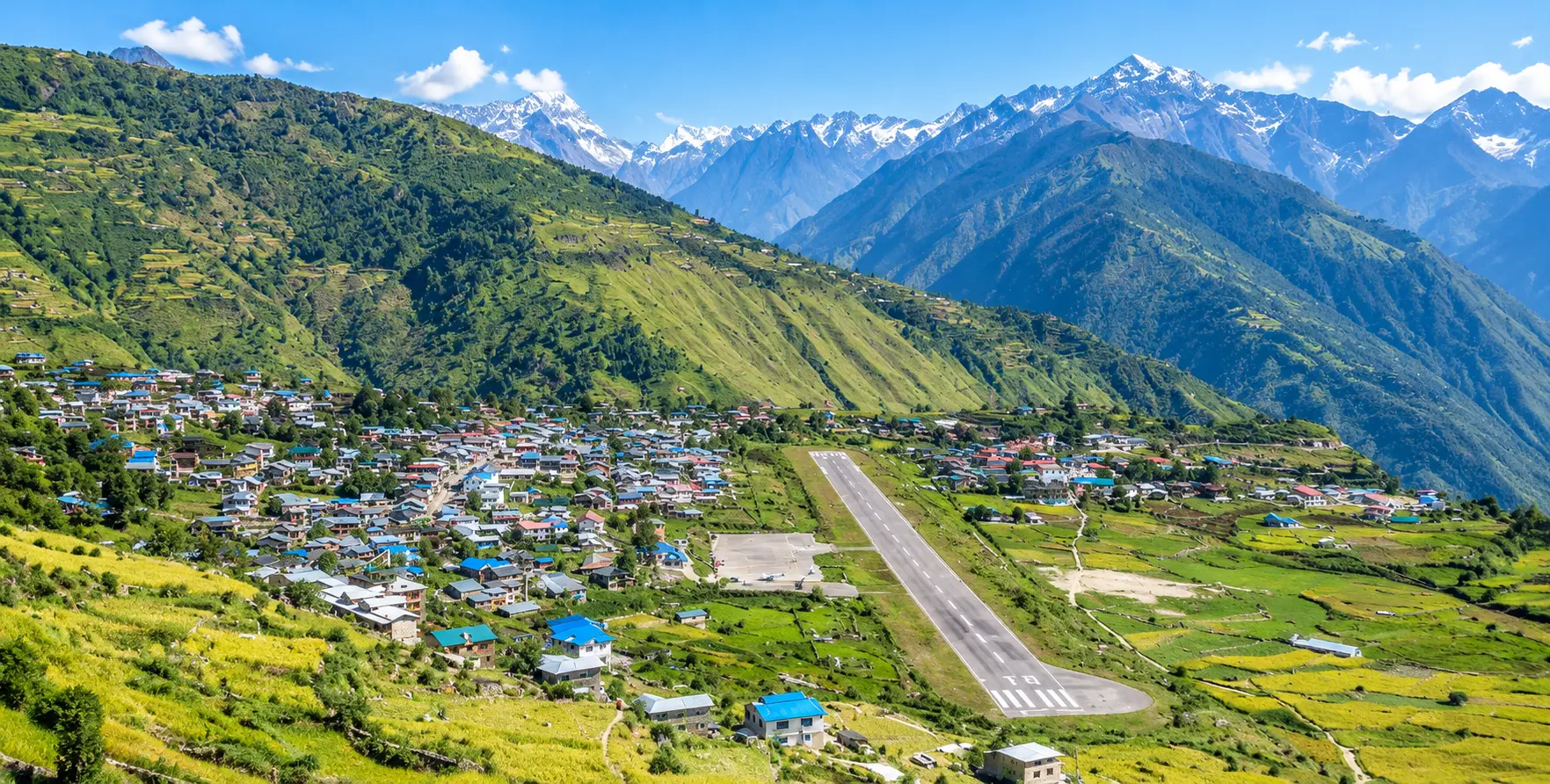
Simikot Airport, at 2,910 meters in Humla District, is the critical junction between the Hilsa helicopter return and the Nepalgunj domestic flight network. Its operational limitations—short runway, visual approach only, surrounded by mountain terrain—make it one of Nepal’s most frequently weather-delayed airports, and the Simikot-to-Nepalgunj flight one of the most reliably disrupted domestic segments in Nepal’s aviation network.
The specific disruption pattern at Simikot follows the valley’s weather system: morning flights in the window before cloud build-up have the highest success rate, while afternoon and evening departures face significantly higher cancellation frequency. This means that a pilgrim group that returns from Hilsa to Simikot on time (morning helicopter, clear conditions) can typically catch the Simikot-to-Nepalgunj flight on the same day. A group delayed at Hilsa by weather and arriving at Simikot in the afternoon will typically spend at least one additional night at Simikot’s basic guesthouses before the Nepalgunj flight is possible the following morning.
The standard Kailash yatra return itinerary builds a minimum of two buffer days into the Hilsa-Simikot-Nepalgunj chain — one at Hilsa for potential helicopter weather delay, and one at Simikot for potential flight weather delay. These are not pessimistic additions but standard operating practice across all experienced Kailash yatra operators. Pilgrims who book outbound international flights from Kathmandu without this return buffer risk missing their international connections when—not if—weather delays the return chain.
Nepalgunj — The Hub Where Ground Transport Begins
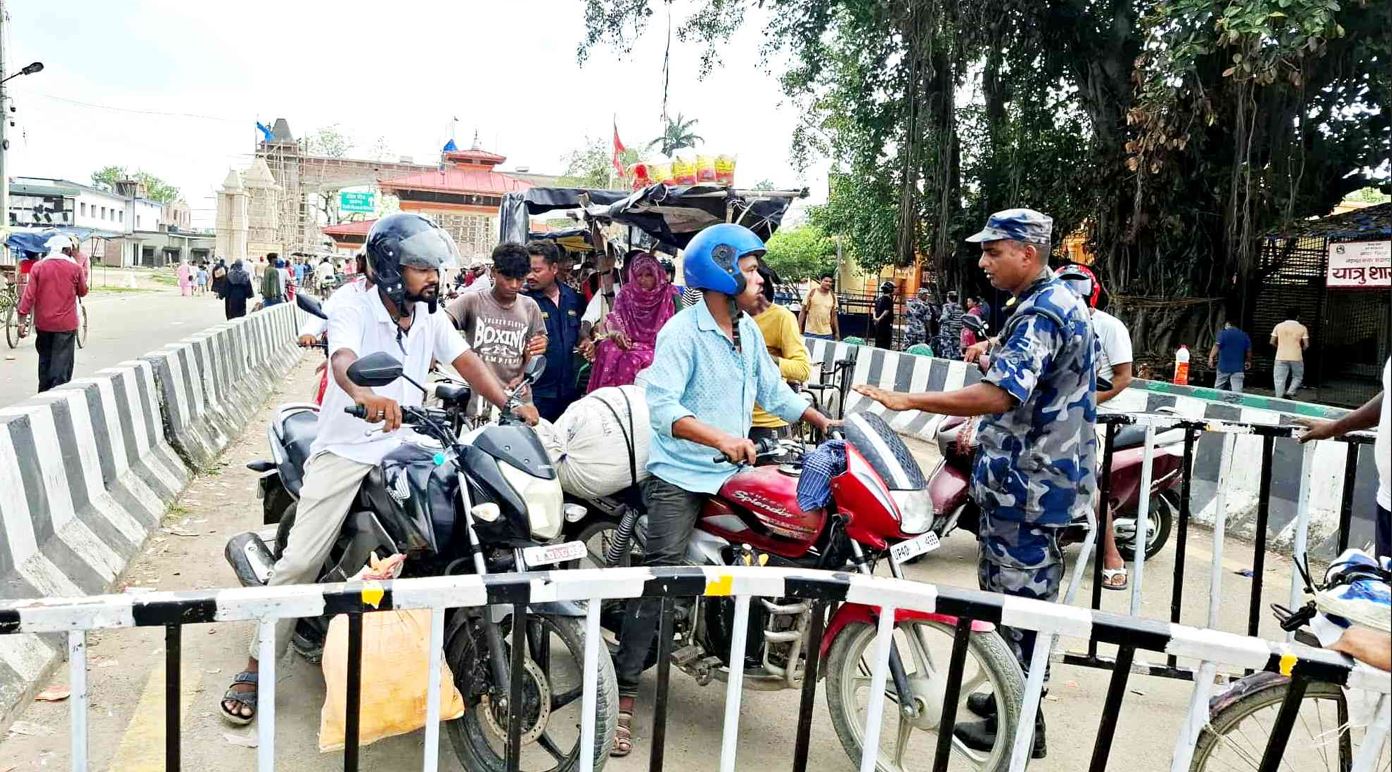
Nepalgunj is the Kailash yatra return chain’s transshipment point, shifting the remote mountain aviation segment (helicopter and mountain flights) to the accessible ground and mainstream domestic aviation network of Nepal’s lowland hub city. For pilgrims who arrive in Nepal via Kathmandu at the yatra’s start and depart through Kathmandu at the end, Nepalgunj is the transit hub—typically requiring one overnight before the Kathmandu connection the following morning.
Nepalgunj logistics at the return stage: Nepal Vehicle Hiring Pvt Ltd pre-arranges the Nepalgunj hotel for the overnight stay and the Nepalgunj-to-Kathmandu transport for the following day, either the Nepalgunj domestic flight to Kathmandu (1 hour) or the private jeep overland transfer for groups preferring road to flight. The Nepalgunj overnight also provides a buffer for any Simikot weather delays. If the Simikot-to-Nepalgunj flight is a day later than planned, the Nepalgunj-to-Kathmandu connection can flex by the corresponding day without disrupting the final departure arrangements.
For Indian pilgrim groups who entered Nepal at the Sunauli border and are returning to India by road, the Nepalgunj junction is where the route diverges: the Sunauli-bound group departs Nepalgunj westward on the Mahendra Highway toward the border (approximately 5 to 6 hours by private vehicle), while the Kathmandu-bound group either flies or takes the private jeep eastward along the Mahendra Highway. Nepal Vehicle Hiking Pvt Ltd coordinates both directions from the Nepalgunj junction through our contact team.
Nepalgunj to Kathmandu — Private Jeep vs Domestic Flight
The Nepalgunj-to-Kathmandu connection is the specific ‘private jeep pickup’ leg many Kailash yatra return groups enquire about—a choice between the 55- to 65-minute domestic flight and the 10- to 12-hour private jeep overland transfer along the Mahendra Highway and Prithvi Highway to Kathmandu.
Domestic Flight — Nepalgunj to Kathmandu. The domestic flight from Nepalgunj Airport to Tribhuvan International Airport in Kathmandu is operated by Buddha Air, Yeti Airlines, Shree Airlines, and others—a 55 to 65-minute flight costing approximately NPR 9,000 to 15,000 (USD 68 to 113) per person. This is the fastest and most common return option for pilgrims whose international departure from Kathmandu allows for the morning flight connection.
Private Jeep — Nepalgunj to Kathmandu. The private jeep overland transfer from Nepalgunj to Kathmandu covers approximately 520 kilometers via the Mahendra Highway eastward through Kohalpur and Butwal to Narayanghat, then northward on the Prithvi Highway to Kathmandu. Total journey time: 10 to 12 hours, typically split across 2 days with an overnight stop at Butwal or Hetauda. The 2026 price for the full private Nepalgunj to Kathmandu jeep hire is approximately NPR 30,000 to 45,000 (USD 225 to 338) for the complete vehicle over 2 days, all-inclusive.
When the overland jeep is the better choice: For groups of 5 to 6 people where the per-person jeep cost is competitive with multiple flight tickets. For pilgrims who specifically want the Nepal overland experience as the final chapter of the yatra — the Terai plains, the mid-hills approach to Kathmandu, and the arrival into the valley by road rather than by air. For groups with luggage above the airline’s allowance (domestic flights impose strict weight limits). And for groups whose Kathmandu arrival timing is flexible enough to accommodate the 2-day road journey without affecting international departure connections.
When the domestic flight is the better choice: For most individual and small group pilgrims whose primary priority is reaching Kathmandu efficiently. For the elderly or physically fatigued pilgrim for whom a 10-12 hour road journey after the yatra is an additional physical burden rather than a welcome experience. And for groups with tight international departure connections from Kathmandu who cannot accommodate the road journey’s variable timing.
The Complete Kailash Yatra Return Itinerary — Day by Day
Parikrama Completion Day. Zuthulpuk Monastery (after third parikrama day) → 6 km trek to vehicle pickup point at Chongdo → Drive to Darchen → Overnight Darchen.
Taklakot Return Day. Darchen → 45 km drive to Taklakot/Purang → Final Tibet overnight, final prayers, purchase of sacred items.
Hilsa Border Day. Taklakot → 45 km drive to Hilsa border crossing → Tibet exit immigration → Walk across the border → Nepal entry immigration → Hilsa helipad → 25-minute helicopter to Simikot → Simikot overnight. (If weather delays the helicopter — overnight at Hilsa guesthouse with a next-morning attempt.)
Simikot to Nepalgunj Day. Simikot early morning → 40- to 50-minute domestic flight → Nepalgunj → Hotel check-in → Rest, recovery, and ATM/shopping. (If Simikot weather delay — additional Simikot overnight.)
Nepalgunj to Kathmandu Day. Option A: Morning domestic flight Nepalgunj → Kathmandu (1 hour) → Kathmandu hotel transfer by Nepal Vehicle Hiring Pvt Ltd private car. Option B: Private jeep from Nepalgunj to Kathmandu (Day 1: Nepalgunj to Butwal 5-6 hours; Day 2: Butwal to Kathmandu 6-7 hours).
Post-Yatra Kathmandu Day. Recovery day at Kathmandu hotel. Optional Kathmandu sightseeing car hire for Pashupatinath post-yatra prayers. Bhaktapur day tour for the Nepal heritage complement to the Tibet sacred experience.
International Departure. Kathmandu airport transfer by Nepal Vehicle Hiring Pvt Ltd private vehicle from hotel door to Tribhuvan International Airport.
Luggage Management on the Kailash Return — The 10 kg Helicopter Limit
The most frequently overlooked and most frequently mismanaged logistical element of the Kailash yatra return via Hilsa is the baggage weight limit imposed on the Hilsa-to-Simikot helicopter and the Simikot-to-Nepalgunj domestic flight. The helicopter allows a maximum of 10 kilograms per person, including cabin and hold baggage—a limit that many pilgrims who depart with comfortable international airline luggage allowances find genuinely constraining when they arrive at Hilsa with accumulated Tibet souvenirs, prayer flags, sacred stones, and any items purchased in Kathmandu or Nepalgunj before the yatra.
The practical consequence of the 10 kg limit: any baggage exceeding this limit at Hilsa must be paid for at the operator’s discretion (excess baggage charges on mountain flights are high), sent separately by alternative means, or abandoned. The discipline of packing to the 10 kg limit for the entire Kailash yatra — from Kathmandu outward through the helicopter and flight segments — is the most important single logistics discipline of the pilgrimage. Nepal Vehicle Hiring Pvt Ltd‘s coordination of the Nepalgunj-to-Kathmandu private jeep hire can accommodate whatever bags and purchased items the group has accumulated—the jeep has significantly more cargo space than the helicopter or domestic flight—so the Nepalgunj connection is where excess baggage can finally be properly loaded. But the Hilsa-to-Simikot-to-Nepalgunj segment must be managed within the 10 kg limit.
Pre-Arranging the Hilsa Return vs Improvising — The Risk Comparison
The fundamental logistics question for Kailash yatra return planning is whether to pre-arrange the complete return chain (helicopter at Hilsa, Simikot overnight accommodation, Simikot-to-Nepalgunj flight, Nepalgunj hotel, Nepalgunj-to-Kathmandu connection) before the yatra departs Kathmandu, or to manage each segment at the return point.
In normal years, with both the Rasuwagadhi-Kerung and Hilsa routes available, improvising the return at each stage was sometimes possible—helicopter, flight, and hotel capacity on the Hilsa route was sufficient; same-day arrangements occasionally worked for small groups. In 2026, with all Kailash return traffic concentrated on the single Hilsa route following the Kerung closure, same-day arrangements at Hilsa are not realistic. Helicopter slots, Simikot guesthouse capacity, and Simikot-to-Nepalgunj flight seats are all under pressure, making pre-arrangement not merely recommended but logistically necessary.
Nepal Vehicle Hiking Pvt Ltd provides Nepal-side return coordination—Nepalgunj hotel booking, Nepalgunj-to-Kathmandu private jeep hire or flight connection, and the Kathmandu post-yatra hotel transfer—as pre-arranged bookings confirmed before the yatra departs. Our coordination with Hilsa helicopter operators and Simikot domestic flight schedulers through our contact team provides integrated return logistics that eliminates post-parikrama improvisation stress.
Year of the Horse 2026 — The Highest Demand Kailash Year
2026 is the Year of the Horse in the Tibetan Buddhist calendar — a twelve-year astrological cycle in which a Kailash parikrama carries twelve times the spiritual merit of an ordinary year and a complete circuit is equivalent to 108 ordinary parikramas in accumulated devotional benefit. This cycle has driven 2026 Kailash yatra demand to near-capacity levels far above the typical annual pattern, with operators across South, Southeast, and East Asia filling their 2026 group allocations months before the season begins.
The combination of the Year of the Horse demand surge and the August 2026 Kerung closure has created an unprecedented concentration of Kailash return traffic on the Hilsa-Simikot-Nepalgunj-Kathmandu return corridor. Groups that might have been spread across two routes—some via Kerung, some via Hilsa—are now all on the single Hilsa route, with helicopter and flight capacity designed for about 60 to 70 percent of current demand. This capacity pressure makes the pre-arranged return logistics element—helicopter at Hilsa, guesthouse at Simikot, domestic flight, and the Nepalgunj-to-Kathmandu jeep or flight—more critical than at any previous point in the Hilsa route’s operational history.
Indian Pilgrim Groups — The Sunauli and Lucknow Return Options
A significant proportion of Kailash Mansarovar pilgrims using the Hilsa-Nepalgunj corridor enter Nepal via the Sunauli border crossing from Uttar Pradesh and return to India via the same route—creating a specific logistics variant where Nepalgunj becomes the departure point toward India rather than toward Kathmandu.
For Indian pilgrim groups returning via Sunauli: from Nepalgunj, private vehicle hire or Hiace van hire follows the Mahendra Highway westward through Butwal to Bhairahawa and the Sunauli border crossing—approximately 5 to 6 hours and 290 kilometers from Nepalgunj. Nepal Vehicle Hiring Pvt Ltd provides private jeep hire for the Nepalgunj-to-Sunauli section for Indian pilgrim groups, with hotel pickup from any Nepalgunj hotel and border drop at the Sunauli checkpoint where the group’s Indian-side transport resumes.
For Indian groups returning via Lucknow by road directly from Nepalgunj: the most direct India-bound exit from Nepalgunj crosses the Rupaiya border (approximately 12 km from Nepalgunj city) into Bahraich District of Uttar Pradesh. Nepal Vehicle Hiking Pvt Ltd’s Nepal-side vehicle hire covers the short Nepalgunj-to-Rupaiya border drop—approximately 30 to 45 minutes— after which the operator’s India-side coordinator arranges Indian-side transport (Lucknow-bound bus or private vehicle). Contact our team at +977-9851013196 for Indian pilgrim group Nepalgunj-to-border vehicle coordination.
The Hilsa Guesthouse Stay — What to Expect
The Hilsa guesthouses on the Nepal side of the border serve a very specific, captive clientele — Kailash yatra pilgrims waiting for helicopter clearance and the occasional border trader or government official. Their standard is commensurately basic: small rooms with thin mattresses and blankets, shared toilets, and a kitchen producing simple dal bhat and tea. At 3,640 meters, temperatures drop significantly after sunset—typically to 5 to 10 degrees Celsius in summer and below 0 in winter and shoulder seasons—making warm sleeping gear the most important provision for any pilgrim who finds themselves spending an unplanned night at Hilsa.
The psychological aspect of the Hilsa overnight deserves acknowledgment: arriving at the Nepal border having just completed one of the world’s great sacred journeys, physically depleted by the parikrama and the altitude, and then discovering that the helicopter cannot fly today creates a specific kind of frustration that experienced pilgrims manage better than first-timers. Registered Kailash yatra operators who coordinate with Nepal Vehicle Hiring Pvt Ltd brief their groups on the high probability of Hilsa overnight stays before the yatra begins, framing it as part of the journey rather than a logistical failure. The helicopter will fly when it is safe to fly. The return will happen when the mountain weather permits. This acceptance, already cultivated through days of dependence on weather and altitude on the parikrama itself, is the pilgrim’s most useful preparation for the Hilsa wait.
For groups pre-arranged through Nepal Vehicle Hiring Pvt Ltd and partner helicopter operators, the Hilsa overnight triggers an automatic update to the Nepalgunj hotel booking — extending by one day to accommodate the delay — and to the Nepalgunj to Kathmandu private jeep hire schedule. Our team manages these automatic adjustments without requiring the pilgrim to make any additional arrangements from Hilsa — the entire return logistics chain flexes around the weather delay without the pilgrim needing to rebook anything independently.
The Kailash Parikrama in Context — What Pilgrims Carry Home
The Kailash Mansarovar parikrama is not simply a 52-kilometer mountain circuit. It is a three-day transformation journey — the slow circumambulation of the world’s most sacred mountain, at altitudes between 4,300 and 5,630 meters, through a landscape of elemental scale and spiritual intensity that leaves few who complete it unchanged. The Dolma La Pass crossing at 5,630 meters is the symbolic and physical peak of the circuit: a high mountain pass adorned with prayer flags and sacred stones, reached after the long pre-dawn ascent from Dirapuk, where the physical difficulty and the spiritual significance meet in a moment that pilgrims consistently describe as one of the most powerful of their lives.
What pilgrims carry home from Kailash — beyond the tangible Shaligram stones, sacred water from Mansarovar, and prayer flags from the Dolma La — is a lived physical memory of the mountain that photographs and accounts cannot fully convey: the cold of the pre-dawn departure from Dirapuk in darkness, the weight of altitude on legs that have already been walking for two days, the sight of Kailash’s south face appearing above the valley rim as the pass approach begins, and the descent into the valley below Zuthulpuk with the circuit complete. The return journey through Hilsa and back to Kathmandu—by helicopter, by domestic flight, and by private jeep from Nepalgunj—is the final chapter of this journey, and it deserves the same professional logistics management as the approach. Nepal Vehicle Hiking Pvt Ltd provides that management for the Nepal ground transport legs, coordinated through our plan trip page and available at +977-9851013196.
Call at +977-9851013196: Alternative Sacred Sites for 2026 Pilgrims — When Kailash Is Deferred
For pilgrims who planned their 2026 Kailash Mansarovar yatra via the Rasuwagadhi-Kerung route and whose plans were canceled by the August 2026 flood before departure, the sacred geography of Nepal and the surrounding region offers alternatives of genuine significance for those who choose to redirect their pilgrimage rather than wait for the Kerung route to reopen.
Muktinath (3,710 m, Mustang District) — the 106th Divya Desam of Vaishnavite tradition, where the Jwala Mai eternal flame burns in the same complex as the 108 Mukti Dhara sacred water spouts — is one of Hinduism’s most important pilgrimage sites and the most significant alternative to Kailash for Shaivite and Vaishnava pilgrims. Nepal Vehicle Hiring Pvt Ltd’s Muktinath Yatra vehicle packages cover the complete circuit from Sunauli or Kathmandu. Private jeep hire to Jomsom through the Kali Gandaki Gorge and our Pokhara car hire for the approach city coordination provide complete Muktinath Yatra transport.
Pashupatinath Temple, Kathmandu — one of the world’s most important Shiva shrines, on the banks of the sacred Bagmati River — offers an alternative or supplementary sacred site for pilgrims combining a Kathmandu-based visit with the Muktinath circuit. Our Kathmandu sightseeing car hire includes the Pashupatinath visit alongside Boudhanath Stupa for Buddhist pilgrims, as well as the complete Kathmandu heritage circuit.
Gosaikunda Lake (4,380 m, Rasuwa District) — the sacred glacial lake that is the destination of Nepal’s largest annual Janai Purnima pilgrimage — is accessible by helicopter charter from Kathmandu when the road access via Dhunche remains confirmed. Our Kathmandu to Dhunche jeep hire covers the road approach when conditions allow. The Lumbini pilgrimage bus and private vehicle hire complete the Buddhist sacred-site circuit for pilgrims who include the Buddha’s birthplace in their Nepal sacred-geography visit.
Planning the Kailash Yatra via Hilsa — Getting Ahead
For pilgrims whose Kailash yatra was canceled — either because they were on the Kerung route and the flood destroyed that corridor, or because the Hilsa route’s capacity constraints prevented their season departure — planning via the Hilsa route should begin now. The Hilsa-Purang crossing will remain Nepal’s primary Tibet gateway through at least the first half of 2027, and demand for Kailash yatra on this single route will continue until the Kerung border reconstruction is substantially complete.
The specific 2027 planning priorities for the Hilsa route: Book Kailash yatra package at least 6 months ahead — Chinese Tibet Group Travel Permits and Nepal Restricted Area Permits for Humla require booking through registered agencies, and the 2027 Year of the Rabbit pilgrim demand will be high. Confirm helicopter slots at Hilsa simultaneously with the Tibet-side bookings — helicopter capacity on the Simikot-Hilsa route is the constraint that limits total Kailash yatra capacity via this route. Pre-arrange Nepal-side return logistics — Nepal Vehicle Hiring Pvt Ltd accepts bookings for Nepalgunj to Kathmandu private jeep hire, along with all post-yatra Kathmandu arrangements, through our plan trip page — submit your 2027 yatra dates and logistics requirements as early as possible for confirmed reservations.
Post-Yatra Kathmandu — Completing the Spiritual Circuit
Many Kailash Mansarovar pilgrims plan a post-yatra Kathmandu extension that lets them honor the sacred energy of the parikrama in Nepal’s extraordinary spiritual landscape. The post-yatra days in Kathmandu — rested, spiritually charged, and returned from one of the world’s most demanding sacred journeys — provide the ideal context for visits to Kathmandu’s own great sacred sites.
Pashupatinath Temple — one of the most important Shiva temples in the Hindu world, on the Bagmati River in Kathmandu — is the natural post-yatra pilgrimage site for Shaivite pilgrims returning from the Kailash-Shiva sacred circuit. Our Kathmandu sightseeing car hire includes a visit to Pashupatinath, along with Boudhanath Stupa, Swayambhunath, and the Patan heritage zone.
Boudhanath Stupa — the world’s largest Tibetan Buddhist stupa, rebuilt to gleaming perfection since the 2015 earthquake — is the natural post-yatra site for Buddhist pilgrims returning from the Kailash parikrama. Our Kathmandu heritage sightseeing service includes a visit to Boudhanath, Kopan Monastery, and the Tibetan Buddhist heritage of the northern Kathmandu area.
Our Bhaktapur heritage day tour and Nagarkot sunrise transfer, with the Himalayan dawn panorama that includes the ranges the yatra has just returned from, provide the final Nepal experiences that give the Kailash yatra journey its cultural and spiritual fullness. The Kathmandu airport transfer for international departure from Nepal Vehicle Hiring Pvt Ltd closes the circuit professionally—from the hotel door to Tribhuvan International in a confirmed private vehicle with the uniformed driver who has supported the yatra’s Nepal logistics throughout.
Kailash Yatra Return Planning Checklist
- Pre-arrange Hilsa helicopter BEFORE departure: Through your registered Kailash yatra operator and their Nepal helicopter partner. With all 2026 yatra return traffic on the Hilsa route, same-day helicopter arrangement is not reliable.
- Build a minimum of a 2-day weather buffer: one day at Hilsa for helicopter delays; one day at Simikot for domestic flight delays. These are standard, not pessimistic.
- Pack to 10 kg for the helicopter segment: The Hilsa-Simikot helicopter limit is 10 kg per person. Excess baggage charges are high. Purchase Kathmandu souvenirs on arrival, not before departure.
- Pre-book Nepalgunj hotel: Nepalgunj accommodation fills quickly during peak yatra season. Our team coordinates hotel booking alongside the Nepalgunj-to-Kathmandu jeep hire.
- Pre-arrange Nepalgunj-to-Kathmandu connection: Nepal Vehicle Hiring Pvt Ltd pre-books the private jeep hire or domestic flight for the Nepalgunj connection. WhatsApp +977-9851013196.
- Book international departure with buffer: Do not book any international flight from Kathmandu within 3 days of the planned Hilsa crossing—4 to 5 days is the safe minimum buffer for return-chain weather uncertainty.
- Arrange post-yatra Kathmandu sightseeing in advance: You can pre-book Kathmandu sightseeing car hire and a Bhaktapur heritage tour alongside your return logistics through our plan trip page.
The Tibet-Side Return — Parikrama to Hilsa in Detail
The Tibet-side return journey from the completed Kailash parikrama to the Hilsa border is a 2-day road journey managed entirely by the Chinese-licensed ground handler — but understanding its character helps pilgrims arrive at Hilsa in the right physical and psychological state for the Nepal-side logistics that follow.
After completing the third day of the parikrama at Zuthulpuk monastery (approximately 4,760 m), pilgrims descend approximately 6 kilometers to the Chongdo vehicle pickup point — a relatively easy descent that is nonetheless meaningful after three days at altitude with full physical exertion. The vehicle from Chongdo drives to Darchen (4,300 m) for the final Tibet overnight — a chance to rest, hydrate, and buy any final Tibet-side sacred items or souvenirs before re-entering Nepal. From Darchen, the vehicle drives the following morning 5 kilometers north on the paved Tibet road to Taklakot/Purang (3,900 m) for a brief stop, then another 45 kilometers to the Hilsa border. The road from Taklakot to Hilsa descends steadily from the Tibetan plateau into the Humla Karnali valley gorge — the same river system that feeds the Nepal-side approach from Simikot — and the visual transition from the open plateau above to the enclosed gorge below is one of the journey’s most striking geographic experiences.
At the border, the exit formalities from Tibet—passport inspection, Tibet Group Travel Permit verification, and the individual immigration clearance the Chinese system requires—typically take 30 to 60 minutes for a group of 10 to 15 pilgrims. The Nepal entry re-stamp follows immediately. The walk between checkpoints at Hilsa is short but memorable: crossing from Chinese administration into Nepal at 3,640 meters above sea level after completing the world’s most sacred pilgrimage circuit is a moment virtually every Kailash yatra pilgrim describes as profoundly significant. The helicopter helipad, where the return to Nepal’s transport network begins, is visible immediately on the Nepal side.
The Simikot Acclimatization Advantage on Return
One often overlooked benefit of the Hilsa-Simikot return route is the natural altitude step-down that an overnight in Simikot provides. Pilgrims returning from the Kailash parikrama have spent 3 to 5 days above 4,000 meters and have crossed the Dolma La at 5,630 meters. The direct return to Kathmandu at 1,400 meters by flight from Nepalgunj would be a rapid altitude descent of over 2,500 meters — theoretically fine medically (altitude illness is a condition of ascent, not descent) but practically somewhat disorienting for bodies that have been operating at high altitude for days.
The Simikot overnight at 2,910 meters provides a useful intermediate altitude step-down — one night at a point that is lower than the yatra’s operating altitude but higher than the Nepalgunj and Kathmandu destinations below. Many pilgrims report that this Simikot overnight, even when weather-delayed and initially frustrating, feels retrospectively like the right pace of return — the mountain landscape of Humla still present, the sounds of the Himalayan environment still audible, and the body’s transition from mountain to plains managed at a slightly gentler gradient than a direct helicopter-to-flight-to-Kathmandu chain would allow.
Simikot’s basic guesthouses and limited restaurant options suit the returning pilgrim’s need for simple, nourishing food and early sleep rather than a stimulating social environment. Dal bhat, hot tea, and the sound of the Humla Karnali far below provide the right environment for the transition from the sacred intensity of the yatra to the ordinary competence of the Nepal logistics that follow. Nepal Vehicle Hiring Pvt Ltd pre-arranges Simikot accommodation, along with the Nepalgunj jeep hire and all other return legs, through our plan trip page. Contact us at +977-9851013196.
The Nepal Trekking Alternative — Return via the Humla Karnali
For physically fit, time-rich pilgrims who want to walk the return from Hilsa to Simikot — experiencing the Humla Karnali valley’s extraordinary traditional communities on foot rather than from helicopter altitude — the trekking return is one of Nepal’s finest and most rarely walked valley routes. The 4 to 6-day walk from Hilsa to Simikot descends the Humla Karnali River through the same sequence of traditional Tibetan Buddhist villages the outward trek climbed: Yari, Tumkot, Waltse, Kermi, Yalbang, Muchu, Dharapori, and the approach to Simikot through increasing mid-hill forest.
The trekking return adds 4 to 6 days to the overall yatra timeline — requiring a corresponding adjustment to the Nepalgunj and Kathmandu connections that Nepal Vehicle Hiring Pvt Ltd pre-arranges. For groups planning the trekking return, our Nepalgunj-to-Kathmandu private jeep hire and Kathmandu post-yatra logistics are confirmed on the extended timeline — typically 6 to 8 days from Hilsa crossing to Kathmandu arrival rather than the helicopter format’s 2 to 4 days. The Humla Restricted Area Permit (RAP) issued for the outward trek covers the return journey through the same valley — no additional permit is required for the return walk. Alpine Luxury Treks provides guided trekking return options for premium Kailash yatra groups who want the full walking experience alongside the helicopter format that most pilgrims use.
The combination of the helicopter outward (Simikot-to-Hilsa for the Tibet entry) and the trekking return (Hilsa-to-Simikot for the Nepal descent) is available for groups with the time and fitness to walk the return. This combination provides the best of both formats: the time-efficient helicopter for the outward crossing (when acclimatization and yatra pace management matter most) and the culturally rich walking return (when the completed parikrama provides the energy and openness for genuine community encounters). Our contact team coordinates the Nepal logistics for all return format options.
Nepal Vehicle Hiring Pvt Ltd — Your Nepal-Side Return Logistics Partner
Nepal Vehicle Hiring Pvt Ltd handles the Nepal ground transport segment of the Kailash yatra return chain. These legs begin when the helicopter lands at Simikot and continue through Nepalgunj to your post-yatra experience in Kathmandu.
- Nepalgunj hotel coordination: Pre-booked accommodation at Nepalgunj for the overnight between Simikot and Kathmandu connections.
- Nepalgunj to Kathmandu private jeep hire: Private 4WD Scorpio or Hilux jeep or Hiace van for groups — NPR 30,000 to 45,000 for the full vehicle over 2 days.
- Nepalgunj to Sunauli border for Indian groups: Private jeep to Sunauli border — 5 to 6 hours, NPR 15,000 to 22,000 for the full vehicle.
- Kathmandu airport VIP transfer: Airport transfer from Nepalgunj flight arrival to any Kathmandu hotel.
- Post-yatra Kathmandu sightseeing: Car hire for Pashupatinath and heritage circuit, Bhaktapur day tour, Nagarkot sunrise.
- International departure airport transfer: KatTransfer from your hotel door to Tribhuvan International Airport.
- 2 Airport4/7 WhatsApp support: +977-9851013196. Real-time coordination for any weather delays and changes to the return timeline.
Frequently Asked Questions — Kailash Yatra Return via Hilsa
Is there a road from Hilsa back to Nepal’s main road network?
No. Hilsa is accessible only by helicopter from Simikot or on foot (4- 6 days trekking down the Humla Karnali valley). The ‘private jeep pickup’ is the Nepalgunj-to-Kathmandu overland vehicle — not a jeep from Hilsa itself.
How long does the return from Hilsa to Kathmandu take?
In perfect weather: Hilsa helicopter 25 min → Simikot overnight → Simikot flight 45 min → Nepalgunj overnight → Nepalgunj flight 60 min → Kathmandu. Total: 2 days. With weather delays, 3 to 5 days is common. Build a 4-5 day buffer between the planned Hilsa crossing and any international departure.
What is the baggage limit on the Hilsa-Simikot helicopter?
10 kilograms per person, including all baggage. Excess charges are high. Pack for your yatra to stay within this limit from departure.
How much does the Nepalgunj to Kathmandu private jeep cost?
NPR 30,000 to 45,000 (USD 225 to 338) for the full private jeep hire over 2 days, 4-6 passengers, all-inclusive. Contact Nepal Vehicle Hiring Pvt Ltd at +977-9851013196.
Why is Hilsa the only Kailash return route in 2026?
The August 26, 2026 glacial lake outburst flood destroyed the Rasuwagadhi-Kerung border crossing. The Hilsa-Purang crossing is now Nepal’s sole overland Tibet gateway until the Kerung border is reconstructed — estimated for spring 2027 at the earliest.
How do I pre-arrange the Nepal-side return logistics?
Contact Nepal Vehicle Hiring Pvt Ltd at +977-9851013196 or through our plan trip page before departing Kathmandu. We coordinate Nepalgunj hotel, Nepalgunj-to-Kathmandu vehicle, and all Kathmandu post-yatra transport.
Complete Nepal Transport for Kailash Yatra — Full Network
Nepal Vehicle Hiring Pvt Ltd covers every ground transport leg of the Kailash Mansarovar yatra Nepal circuit — from international arrival to the sacred site approach to the post-parikrama return.
Outward journey support: Kathmandu airport VIP transfer on arrival; Kathmandu sightseeing car hire for pre-yatra heritage days; Bhaktapur day tour; Nagarkot sunrise vehicle; Kathmandu to Nepalgunj private jeep or Hiace for groups choosing overland over flight; Kathmandu airport transfer for the Nepalgunj domestic flight.
Return journey support: Nepalgunj hotel coordination for weather buffer; Nepalgunj to Kathmandu private jeep hire over 2 days via Mahendra Highway and Prithvi Highway; Nepalgunj to Sunauli border jeep for Indian groups returning to India; Kathmandu airport transfer from Nepalgunj flight arrival; post-yatra Pashupatinath sightseeing car hire; Kathmandu to Lumbini pilgrimage bus for groups adding the Buddhist sacred site circuit; Pokhara car hire for the Annapurna extension; and international departure airport transfer.
Plan the complete Kailash yatra Nepal transport through our plan trip page or WhatsApp +977-9851013196. Our Nepal tour packages also cover post-yatra Nepal extensions—Chitwan jungle safari via Pokhara by bus —and all major Nepal trekking transport services.
Conclusion
The Kailash Mansarovar Yatra return via the Hilsa border is, in 2026, the sole overland route available from Tibet to Nepal — and the logistics chain from Hilsa to Kathmandu deserves the same professional attention as the journey to the sacred mountain itself. The helicopter from Hilsa to Simikot, the domestic flight to Nepalgunj, and the private jeep pickup from Nepalgunj to Kathmandu are the final three legs of a sacred journey that began in Kathmandu and returns through the world’s highest international border — and they must be pre-arranged, buffer-padded for weather, and professionally coordinated to complete the yatra with the dignity and smoothness its sacred nature deserves. Nepal Vehicle Hiring Pvt Ltd provides the round-trip transport coordination for the complete journey from Nepalgunj arrival to Kathmandu international departure for the Kailash Mansarovar Yatra.
Contact transport partner Nepal Vehicle Hiring Pvt Ltd for Kailash Yatra return logistics — call or WhatsApp +977-9851013196, visit vehiclehiringnepal.com, or plan your complete yatra return transport through our plan trip page.
- Kailash Yatra Return Hilsa Border Jeep Pickup — Private Jeep Pickup and Complete Logistics Guide
- The Kailash Yatra Return Route — The Complete Chain
- Why This Makes This Guide More Important Than Ever
- The Hilsa Helipad and the Helicopter Pickup — Critical Logistics
- Simikot — The Gateway That Demands Buffer Days
- Nepalgunj — The Hub Where Ground Transport Begins
- Nepalgunj to Kathmandu — Private Jeep vs Domestic Flight
- The Complete Kailash Yatra Return Itinerary — Day by Day
- Luggage Management on the Kailash Return — The 10 kg Helicopter Limit
- Pre-Arranging the Hilsa Return vs Improvising — The Risk Comparison
- Year of the Horse 2026 — The Highest Demand Kailash Year
- Indian Pilgrim Groups — The Sunauli and Lucknow Return Options
- The Hilsa Guesthouse Stay — What to Expect
- The Kailash Parikrama in Context — What Pilgrims Carry Home
- Call at +977-9851013196: Alternative Sacred Sites for 2026 Pilgrims — When Kailash Is Deferred
- Planning the Kailash Yatra via Hilsa — Getting Ahead
- Post-Yatra Kathmandu — Completing the Spiritual Circuit
- Kailash Yatra Return Planning Checklist
- The Tibet-Side Return — Parikrama to Hilsa in Detail
- The Simikot Acclimatization Advantage on Return
- The Nepal Trekking Alternative — Return via the Humla Karnali
- Nepal Vehicle Hiring Pvt Ltd — Your Nepal-Side Return Logistics Partner
- Frequently Asked Questions — Kailash Yatra Return via Hilsa
- Complete Nepal Transport for Kailash Yatra — Full Network
- Conclusion

Related Blog & Articles

Kailash Yatra via Hilsa Border: Best Vehicle Hire Guide
Nepalgunj Airport to Hilsa Border Jeep Hire

4WD Jeep Hire Cost in Nepal