Plan a Trip


Luxury 4WD vs Standard SUV Hire in Nepal
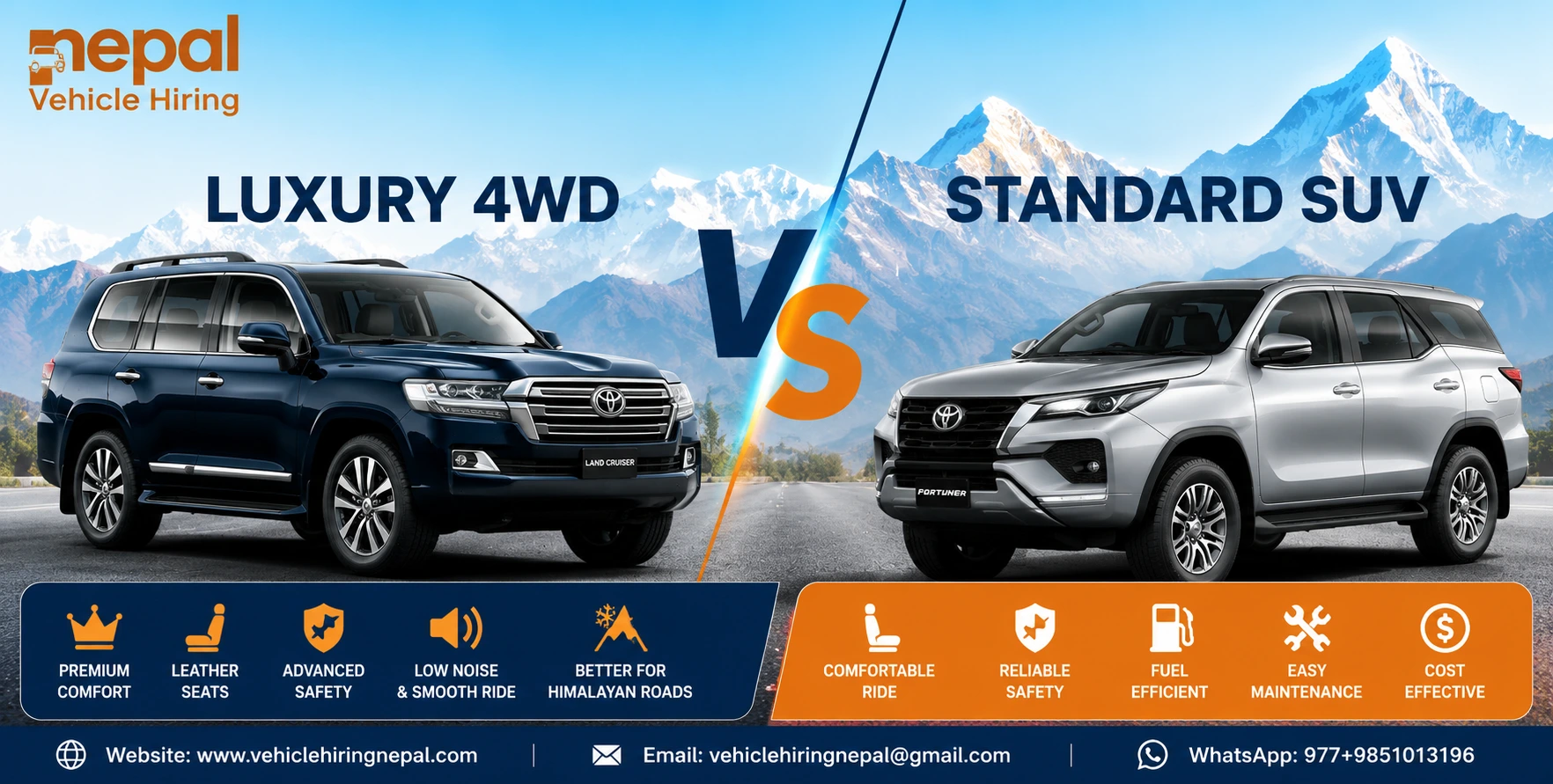
luxury 4WD vs standard SUV hire in Nepal: Which Should You Hire in Nepal
Once a traveler has decided that a route genuinely requires 4WD capability — a Mustang pilgrimage, a Manaslu trailhead, a high pass crossing toward Muktinath — the next decision is rarely about whether to take a jeep at all, but which kind. This is the heart of the luxury 4WD vs standard SUV question that comes up constantly when travelers contact Nepal Vehicle Hiring Pvt Ltd to plan a mountain itinerary. Both vehicle tiers are genuinely capable of handling Nepal’s roughest roads. The real differences lie in comfort, interior space, ride quality, status, and price — and getting this choice right meaningfully changes how a multi-day mountain journey actually feels, not just how much it costs.
This guide compares Nepal’s two dominant mountain vehicle tiers in detail: the standard workhorse SUV/jeep category, typically the Mahindra Scorpio or Mahindra Bolero, against the luxury 4WD category, typically the Toyota Land Cruiser Prado. Both are available through our jeep hire fleet, and by the end of this guide you should have a clear sense of which one actually suits your trip, rather than simply defaulting to whichever option a booking page lists first.
Quick Verdict: luxury 4WD vs standard SUV hire in Nepal Which Should You Choose ?
Choose a standard SUV (Scorpio or Bolero) if: you are budget-conscious, traveling in a smaller group of four or fewer, prioritize raw off-road capability over interior polish, or are heading to a genuinely rugged trekking trailhead where vehicle condition matters more than vehicle prestige.
Choose a luxury 4WD (Land Cruiser Prado) if: ride comfort over multi-day mountain drives matters to you, you are traveling for a honeymoon, anniversary, or corporate VIP transfer, your budget comfortably accommodates a premium daily rate, or you want the smoothest, quietest possible experience on Nepal’s roughest roads.
For exact 2026 rates on either vehicle tier, reach out directly by email at [email protected] or call or WhatsApp us at +977 9851013196 — we will quote both options against your specific itinerary so you can compare real numbers rather than estimates.
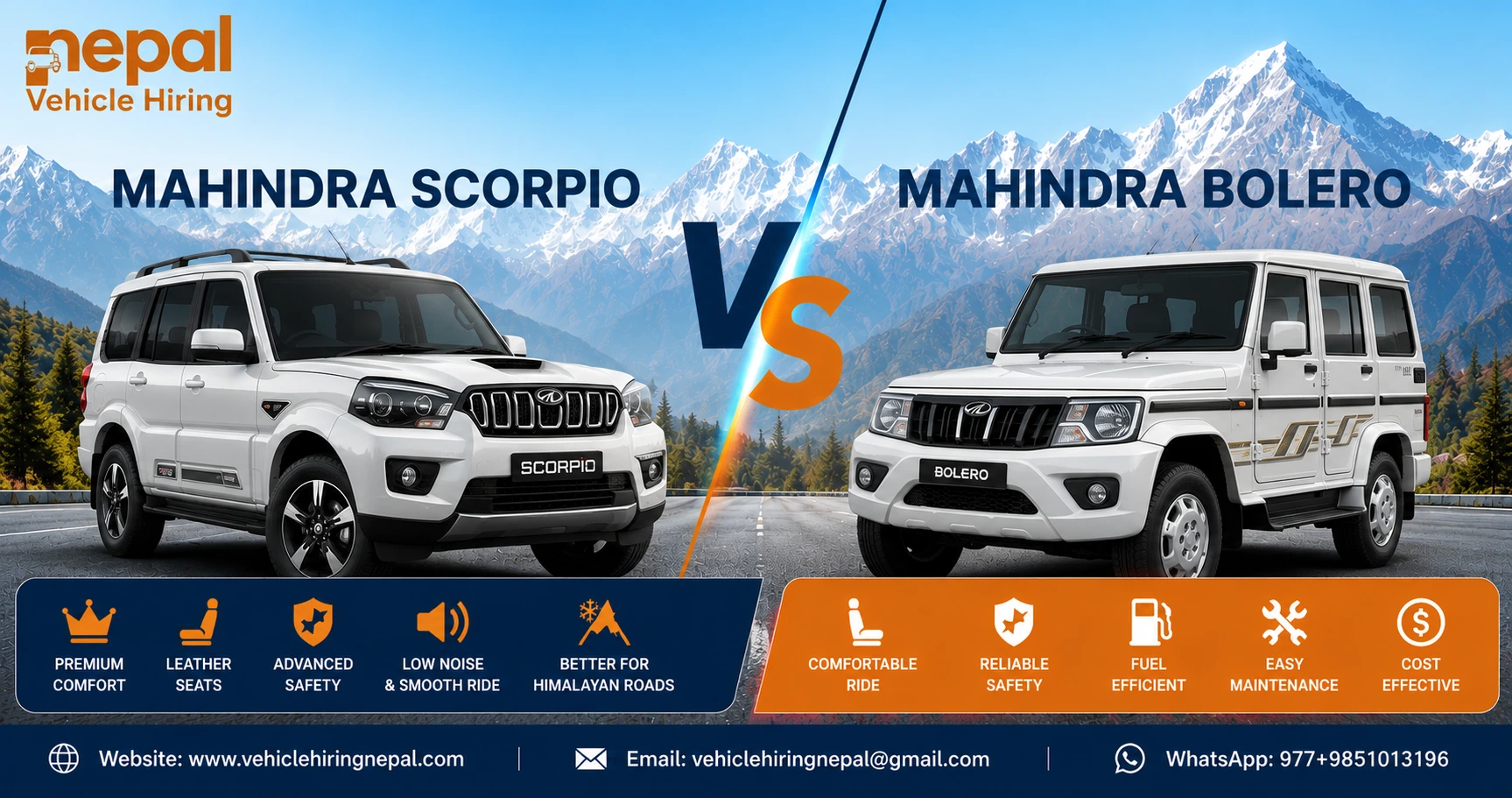
The Standard SUV Category: Mahindra Scorpio and Bolero
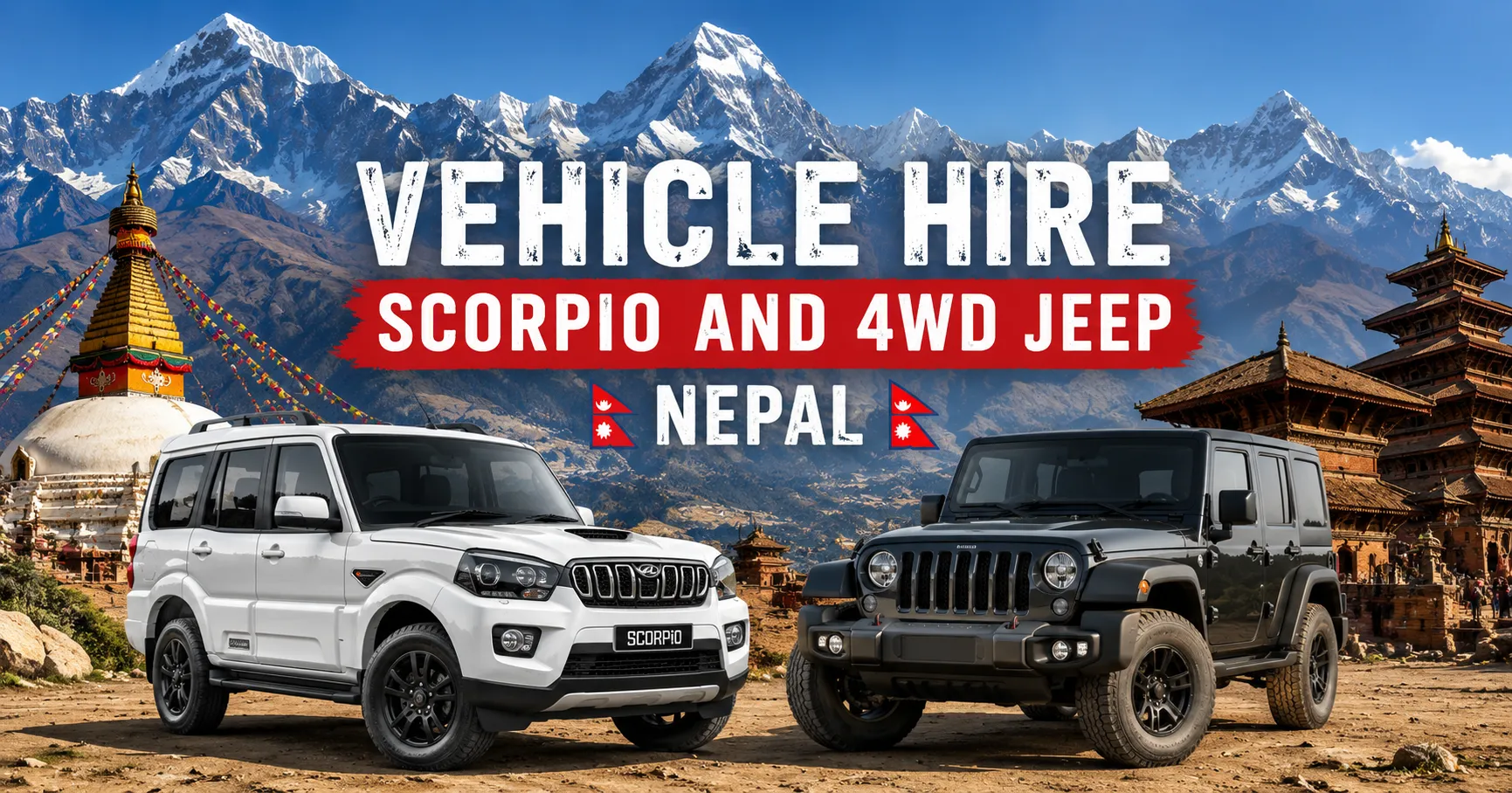
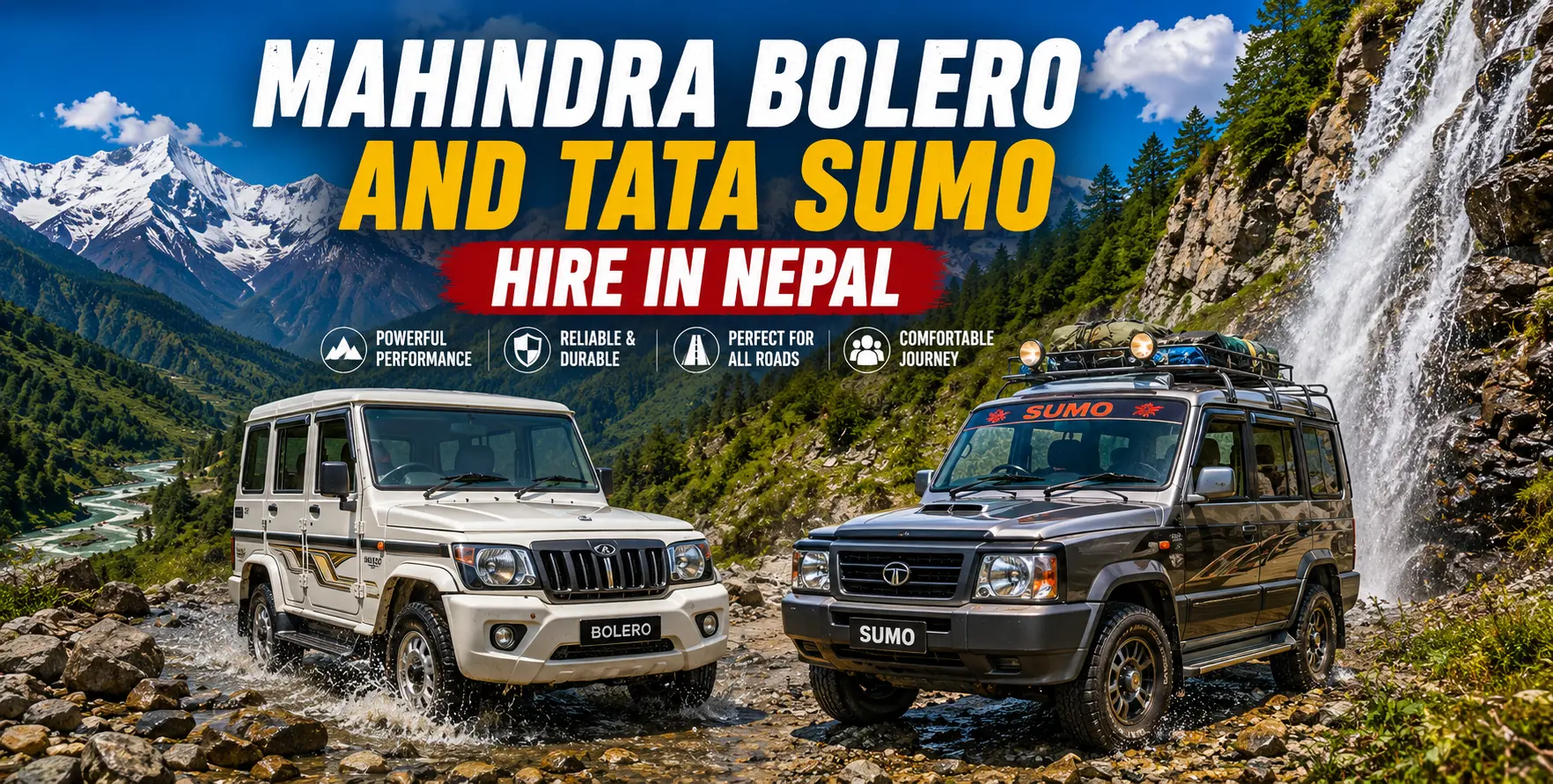
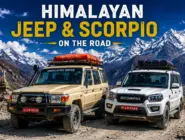
The Mahindra Scorpio is Nepal’s most widely used mountain vehicle, and for good reason. With roughly 180mm of ground clearance, a genuinely capable 4WD drivetrain, and seating for up to seven passengers including the driver, the Scorpio handles everything from the steep switchbacks toward the Soti Khola trailhead for Manaslu, to the high-altitude tracks of Upper Mustang, to pilgrimage routes toward Muktinath and other sacred high-altitude sites. The Mahindra Bolero, a slightly more rugged and basic sibling, offers a similar capability profile at an even lower price point, trading some cabin refinement for cost savings.
What You Get with a Standard SUV
- Genuine 4WD capability suited to Nepal’s roughest unpaved mountain roads, with high ground clearance built specifically for this terrain.
- Seating for up to seven passengers, with rooftop luggage capacity for trekking gear, making it practical for families and small trekking groups.
- Air conditioning and reasonably comfortable cloth or basic leatherette seating on most tourist-grade models.
- The lowest cost-per-day among 4WD-capable vehicle options, typically NPR 7,500–9,000 per day within the Kathmandu Valley, with multi-day mountain rates scaling from there.
- Wide availability across Nepal’s vehicle hire market, since the Scorpio and Bolero make up the bulk of most providers’ mountain-capable fleet.
Where the Standard SUV Falls Short
What the standard SUV category does not offer is the same level of cabin refinement, suspension smoothness, and interior quietness that a premium vehicle delivers. On long, multi-hour mountain drives over genuinely rough terrain, this difference compounds noticeably: a Scorpio’s firmer, more utilitarian suspension transmits considerably more road feedback to passengers than a Land Cruiser Prado’s more sophisticated suspension tuning, an important consideration for travelers prone to motion sickness, with back or joint sensitivities, or simply seeking the smoothest possible ride for a special-occasion trip.
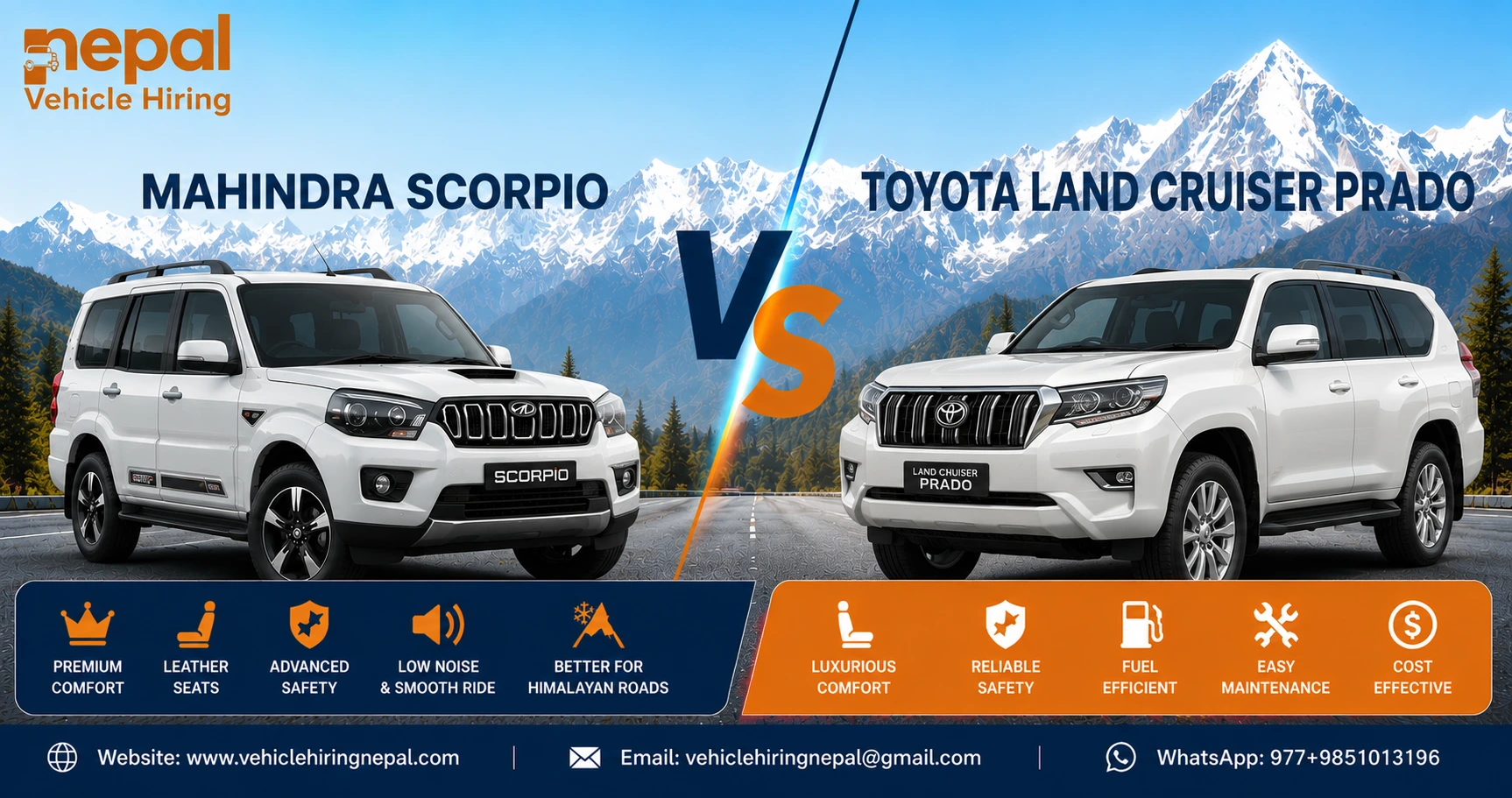
The Luxury 4WD Category: Toyota Land Cruiser Prado
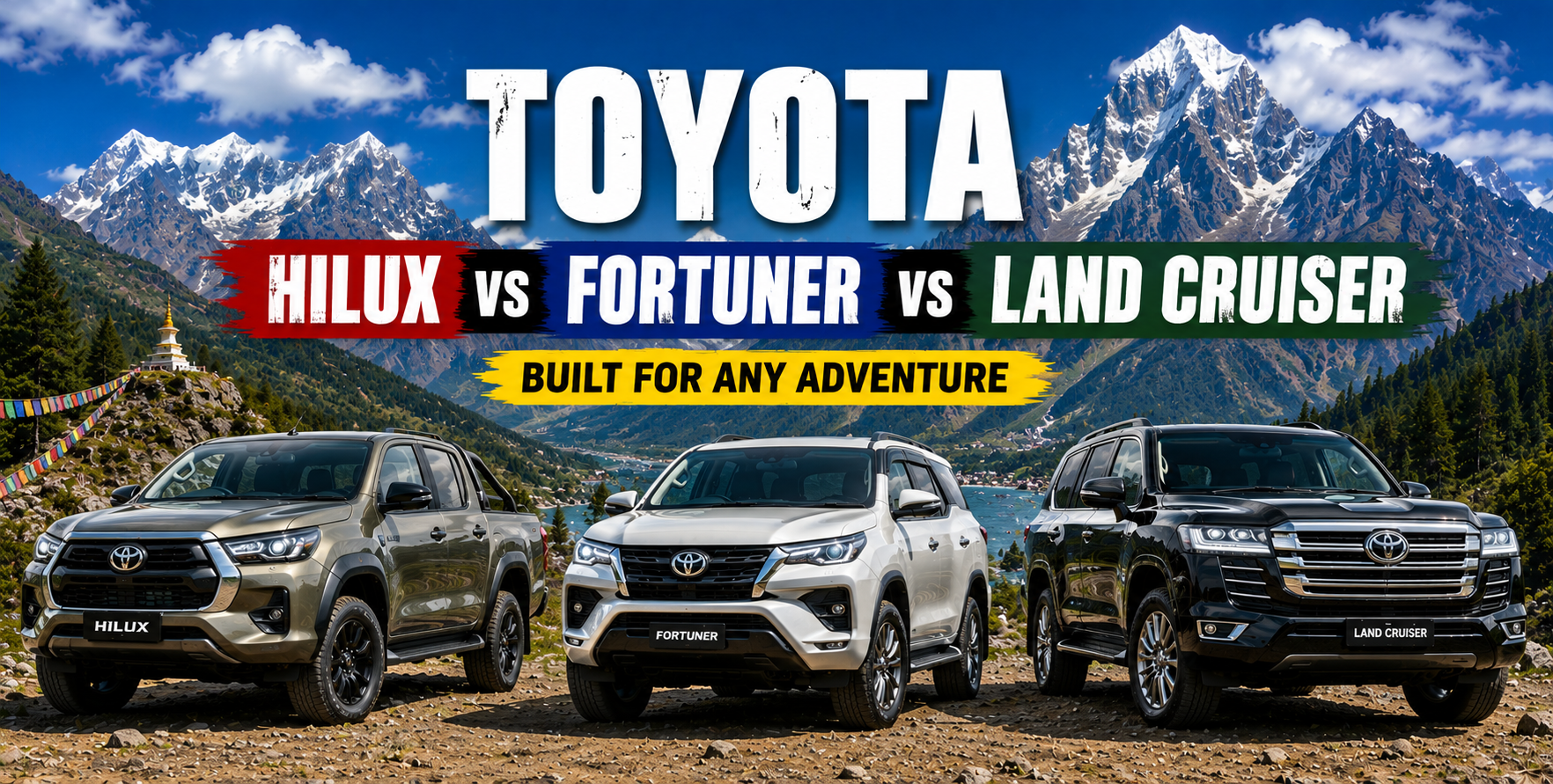
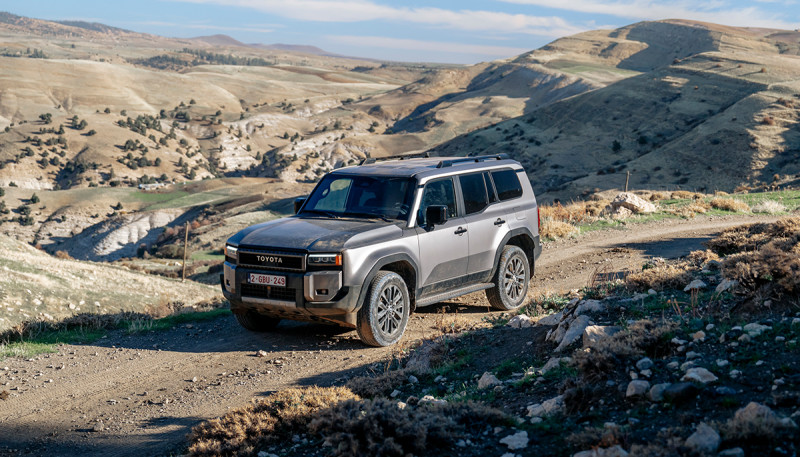
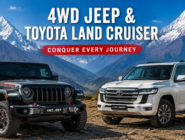
The Toyota Land Cruiser Prado occupies a distinctly different tier of Nepal’s mountain vehicle market. With roughly 225–230mm of ground clearance, a sophisticated multi-terrain 4WD system offering selectable drive modes for sand, mud, rock, and snow, and a noticeably more refined cabin than the Scorpio or Bolero, the Prado is widely regarded as Nepal’s premium off-road vehicle of choice. It remains entirely capable of the same rough roads the standard SUV category handles, including Mustang, Manaslu, and Muktinath routes, but delivers a considerably smoother, quieter, and more comfortable ride throughout.
What You Get with a Luxury 4WD
- Superior ground clearance and a more sophisticated multi-terrain 4WD system with selectable drive modes for varying surface conditions.
- A noticeably smoother, more controlled ride on rough terrain, thanks to more advanced suspension engineering than the standard SUV category offers.
- Premium interior finishing, including higher-quality leather or leatherette seating, better sound insulation, and a generally more refined cabin experience.
- Additional safety features including hill descent control, vehicle stability control, and a more comprehensive airbag and traction control suite.
- A genuine prestige factor appropriate for VIP transfers, honeymoons, corporate executive travel, and milestone celebrations.
Where the Luxury 4WD Costs More
All of this refinement comes at a meaningfully higher daily rate than the standard SUV category, reflecting both the vehicle’s considerably higher purchase and maintenance cost and the premium service experience it delivers. For travelers on a tighter budget, or those for whom raw off-road capability matters more than cabin comfort, this premium may not deliver proportional value, particularly on shorter routes where the comfort differential has less time to compound.
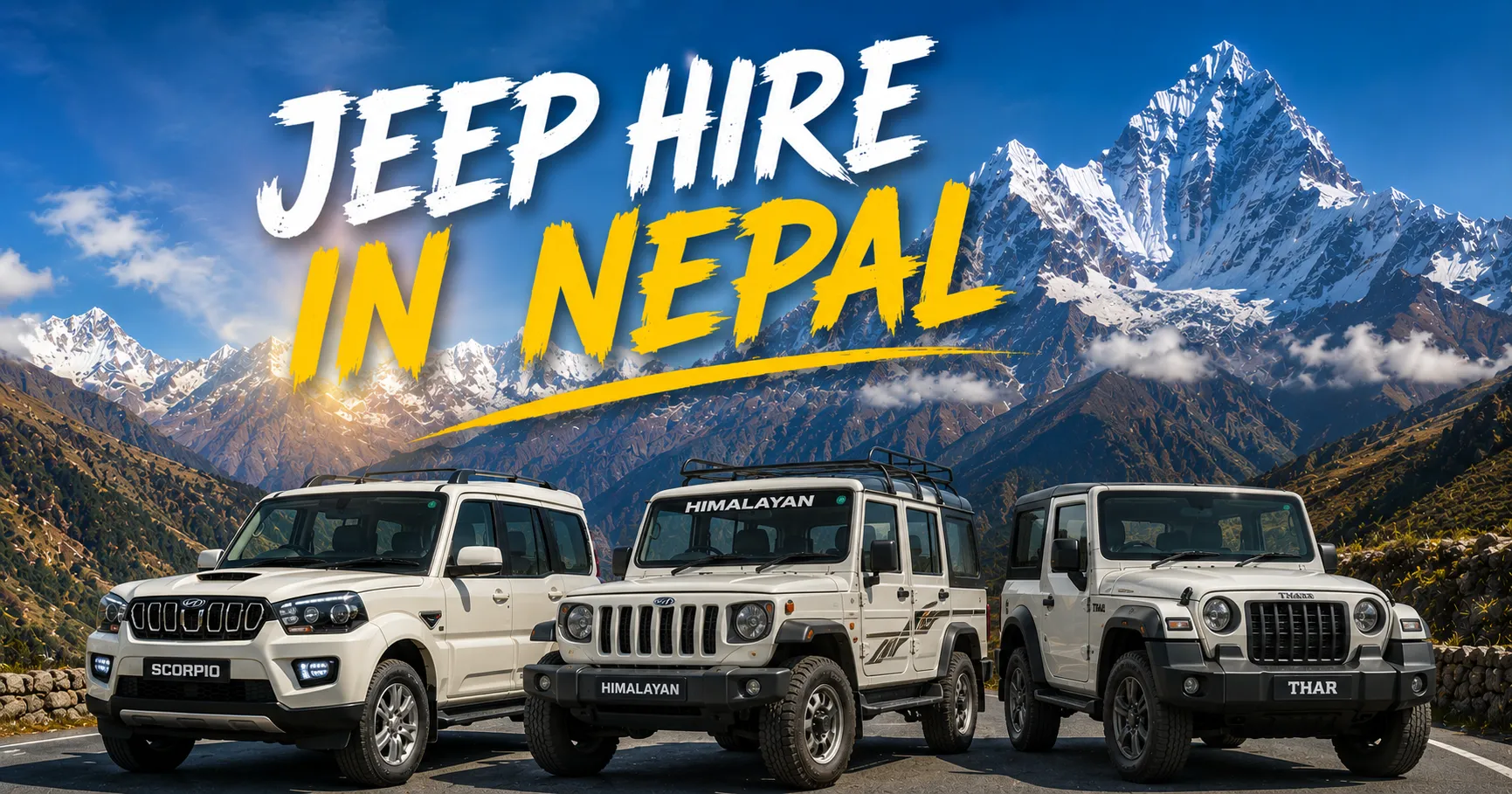
Side-by-Side: How the Two Categories Actually Compare
Off-Road Capability
Both vehicle categories handle Nepal’s roughest unpaved mountain roads competently, and neither should be considered inadequate for routes like Upper Mustang, Manaslu, or high-altitude pilgrimage sites. The Land Cruiser Prado’s higher ground clearance and more sophisticated multi-terrain system give it a slight technical edge on the most extreme sections, particularly river crossings and very steep, loose-surface climbs. Still, this edge is rarely the deciding factor for most standard tourist itineraries, where an experienced driver in either vehicle category navigates the terrain competently.
Ride Comfort
This is where the two categories diverge most noticeably. The Land Cruiser Prado’s suspension tuning absorbs road irregularities considerably better than the Scorpio or Bolero, translating to less fatigue on long multi-hour mountain drives, less jostling for passengers, and a quieter cabin overall thanks to better sound insulation. For day trips or shorter routes, this difference matters less; for multi-day itineraries with several consecutive long driving days, the comfort gap becomes increasingly significant.
Passenger and Luggage Capacity
Both vehicle categories typically seat up to seven passengers including the driver, with rooftop luggage capacity for trekking gear and bags. The Land Cruiser Prado generally offers a somewhat more spacious and better-configured interior, with more comfortable rear-seat legroom and a more usable boot space behind the rear seats. In contrast, the Scorpio’s interior, while perfectly functional, is noticeably more compact and utilitarian in its layout.
Price
Standard SUV hire typically runs NPR 7,500–9,000 per day within the Kathmandu Valley for short trips, with multi-day mountain itineraries priced accordingly higher based on route distance and duration. Luxury 4WD hire commands a meaningfully higher daily rate, reflecting the vehicle’s significantly higher market value and operating costs. For an exact, itemized comparison against your specific route and travel dates, email us at [email protected] or call/WhatsApp +977 9851013196 — we quote both tiers side by side so you can weigh the actual cost difference against your priorities.
Brand Recognition and Status
For travelers specifically wanting their transport to reflect a premium travel experience — honeymoons, anniversaries, VIP corporate transfers, or simply a desire for the best available option — the Land Cruiser Prado carries clear international brand recognition and a strong reputation for both luxury and genuine off-road pedigree. The Scorpio, while highly respected within Nepal and the wider South Asian market specifically for its off-road toughness, does not carry the same global luxury association.
When the Standard SUV Is Genuinely the Better Choice
Budget-conscious trekkers and backpackers heading to a trailhead like Besisahar or Soti Khola rarely need the Prado’s additional comfort to have a perfectly satisfying journey; the Scorpio handles these routes capably at a meaningfully lower cost, freeing up budget for permits, gear, or extended trekking days. Groups of experienced, adventure-focused travelers who view the rough ride itself as part of the authentic mountain experience often actively prefer the more rugged, no-frills character of the standard SUV category over a more cushioned, hotel-on-wheels feel.
Shorter routes, where the cumulative fatigue of a rough ride has less time to build, also tilt the calculation toward the standard SUV: a half-day excursion to a sunrise viewpoint or a single-day trailhead transfer rarely justifies the luxury premium the way a five- or six-day mountain circuit might.
When the Luxury 4WD Is Genuinely Worth the Premium
Multi-day mountain itineraries, particularly those spanning a week or more on consistently rough terrain, are where the Land Cruiser Prado’s comfort advantage compounds most meaningfully, since the cumulative fatigue difference between a firm utilitarian ride and a well-cushioned, well-insulated cabin becomes genuinely significant across many consecutive hours of mountain driving. Honeymooners, anniversary travelers, and anyone marking a special occasion in Nepal often find that the premium vehicle experience itself becomes part of the celebration, not merely a transport detail.
Corporate and VIP transfers, including executive site visits, diplomatic travel, and high-profile guest transport, are another clear case for the luxury tier, where vehicle presentation and passenger comfort reflect directly on the traveling party’s professional image. Families traveling with elderly members or anyone with back, joint, or motion-sickness sensitivities also frequently find the Prado’s smoother ride makes a meaningful, tangible difference to how enjoyable a multi-day mountain trip actually feels, particularly on demanding routes like the drive toward Upper Mustang or high-altitude pilgrimage sites near Muktinath.
Route-by-Route: Matching Vehicle Tier to Specific Nepal Journeys
Kathmandu to Soti Khola (Manaslu Trailhead)
This route, served by our Kathmandu to Soti Khola jeep service, involves a genuinely rough, multi-hour drive along the Budhi Gandaki valley. A standard SUV handles this route competently and is the most common choice among independent trekkers. At the same time, a luxury 4WD is worth considering for travelers who want to arrive at the trailhead as fresh and comfortable as possible before beginning a demanding multi-day trek.
Kathmandu to Salleri Phaplu (Everest Region Approach)
The overland route toward the lower Everest region via Salleri Phaplu jeep hire similarly suits either vehicle tier, with the standard SUV remaining the budget-conscious default and the luxury option appealing to travelers wanting maximum comfort before an already physically demanding trek begins.
Besisahar and the Annapurna Circuit Trailhead
The drive to Besisahar includes paved highway sections alongside rougher approach roads, making it comfortably manageable in either vehicle category; the choice largely comes down to group size, budget, and personal comfort priorities rather than any genuine capability gap between the two tiers on this specific route.
Sarangkot Sunrise Excursion
For a shorter excursion like the Sarangkot sunrise tour, the comfort differential between vehicle tiers matters considerably less given the short drive duration, making the standard SUV the more cost-effective default for most travelers on this route.
Pilgrimage Routes to Muktinath
High-altitude pilgrimage routes toward Muktinath, climbing well above 3,000 meters on demanding mountain roads, represent one of the strongest cases for considering the luxury tier, particularly for older pilgrims or those making the journey as part of a significant religious or family milestone where comfort and safety margin both carry extra weight.
Understanding the Full Cost Difference
Beyond the base daily rate, several factors affect the total cost comparison between vehicle tiers. Fuel consumption differs modestly between the two categories, with the larger, heavier Land Cruiser Prado typically consuming somewhat more fuel per kilometer than the lighter Scorpio. This difference becomes more noticeable on longer multi-day itineraries. Driver costs remain broadly comparable between tiers, since the same experienced mountain drivers typically operate across both vehicle categories within a given provider’s fleet. However, some premium bookings include a driver specifically experienced with VIP-standard service expectations.
For an exact comparison tailored to your specific itinerary, dates, and group size, the most reliable approach is to request itemized quotes for both vehicle tiers directly. Email [email protected] with your route and travel dates, or call or message us on WhatsApp at +977 9851013196, and we will provide a clear side-by-side comparison so you can make an informed decision based on real numbers rather than general estimates.
Group Size and Vehicle Tier Decisions
Both the standard SUV and luxury 4WD categories typically seat up to seven passengers including the driver, but the practical comfort experience at full capacity differs meaningfully between tiers. A Scorpio carrying seven passengers and a full luggage load feels considerably more cramped than the same group in a Land Cruiser Prado, given the Prado’s generally more spacious interior dimensions and better-configured rear seating.
Groups of four or fewer experience this capacity difference far less acutely in either vehicle, making the comfort-versus-cost decision largely independent of capacity concerns for smaller traveling parties. For couples specifically, both the standard SUV and luxury 4WD offer plenty of effective space for two passengers, meaning the choice between tiers comes down purely to comfort preference, occasion significance, and budget rather than any practical space requirement that distinguishes the two categories at low passenger counts.
For groups exceeding seven passengers, neither single vehicle suffices regardless of tier, and splitting across two vehicles, or considering a Hiace van for paved-road sections of a mixed itinerary, becomes the more practical solution.
Driver Experience Across Both Vehicle Tiers
Regardless of which vehicle tier a traveler chooses, driver experience remains the single most important factor in trip safety and enjoyment, a point covered in detail in our broader vehicle hire guides. Reputable providers maintain experienced mountain drivers across both the standard SUV and luxury 4WD fleets, with premium vehicle assignments sometimes specifically matched to drivers with additional training in VIP-standard service delivery, including more polished communication, more careful vehicle presentation, and closer attention to passenger comfort preferences throughout a multi-day journey.
When booking either vehicle tier for a demanding mountain route, it remains worth asking specifically about the assigned driver’s experience on your intended itinerary, since route familiarity affects trip quality at least as much as the vehicle itself, regardless of which comfort tier is chosen.
How to Book Either Vehicle Tier
Booking either a standard SUV or luxury 4WD through Nepal Vehicle Hiring Pvt Ltd follows a straightforward process. Reach out with your exact itinerary, including pickup location, destination, dates, and passenger count, via email at [email protected] or by calling or messaging us on WhatsApp at +977 9851013196. We respond with a clear, itemized quote for your requested vehicle tier. We are also happy to provide a side-by-side comparison of both standard and luxury options against the same itinerary if you are still deciding which tier best fits your trip and budget.
Confirmation typically requires a partial deposit, with the balance settled on arrival or trip completion. For peak season travel (October–November and March–May), booking at least one to two weeks ahead is strongly advised for either vehicle tier, since both categories see high demand during Nepal’s busiest trekking months, with the luxury tier in particular facing more limited overall fleet numbers compared to the more widely available standard SUV category.
This fleet size difference means that a luxury 4WD booking confirmed several weeks ahead of travel gives significantly more certainty of securing the exact vehicle and driver combination wanted. In contrast, last-minute luxury tier bookings risk having to downgrade to the standard category simply due to availability constraints at peak times, regardless of willingness to pay the premium rate.
Maintenance Standards and Vehicle Reliability
Both vehicle tiers, when sourced through a reputable provider, undergo regular mechanical inspection and maintenance appropriate to Nepal’s demanding road conditions, though the underlying maintenance economics differ between categories. The Land Cruiser Prado’s higher purchase price and parts cost generally correlate with stricter maintenance schedules and a younger average fleet age among premium providers, since the vehicle represents a larger capital investment that operators are motivated to protect through diligent upkeep.
The Scorpio and Bolero, while individually less expensive to maintain, see considerably higher usage volume across Nepal’s tourist transport market, meaning fleet age and condition can vary more widely between providers, making it worth confirming a specific vehicle’s age and condition before booking, particularly for longer, more remote itineraries. Requesting specific information about a vehicle’s model year and recent mechanical history before confirming any booking for a multi-day mountain route is entirely reasonable and welcomed by reputable providers as a sign of a well-prepared traveler rather than an unusual or unwelcome request.
Asking directly about a specific vehicle’s age, mileage, and recent maintenance history, regardless of which tier you choose, is a reasonable and welcome question for any reputable provider. Feel free to ask this directly when you contact us at [email protected] or via WhatsApp at +977 9851013196 — we are transparent about our fleet condition across both vehicle tiers.
Fuel Efficiency and Environmental Considerations
Travelers weighing environmental impact alongside comfort and budget should note that the lighter, smaller-engined standard SUV category generally delivers somewhat better fuel efficiency per kilometer than the larger, heavier Land Cruiser Prado, translating to a modestly lower carbon footprint per trip for travelers prioritizing this factor, for travelers wanting to minimize environmental impact further regardless of vehicle tier chosen, sharing a single vehicle across a full traveling group rather than booking multiple smaller vehicles remains the single most effective lever.
This consideration applies equally across both the standard and luxury vehicle categories covered in this guide. Combining this group-sharing approach with a route that efficiently sequences multiple destinations, rather than making repeated separate journeys to the same general area, further reduces both the total distance driven and the associated fuel consumption and emissions per traveler across the full itinerary.
Technical Specifications Compared
Engine and Power
The Mahindra Scorpio is typically equipped with a diesel engine in the 2.0–2.2 litre range, producing power figures well suited to Nepal’s hilly terrain without excessive fuel consumption, while the Toyota Land Cruiser Prado’s larger 2.7–2.8 litre engine delivers noticeably more torque and a smoother power delivery, particularly useful for maintaining steady momentum on long, steep mountain climbs where the Scorpio’s smaller engine occasionally has to work harder to maintain pace.
Ground Clearance and Suspension
Ground clearance is one of the most frequently cited specifications when comparing these two vehicle categories, and for good reason on Nepal’s rutted mountain roads. The Scorpio offers roughly 180mm of ground clearance, sufficient for the vast majority of Nepal’s tourist-accessible mountain routes. In contrast, the Land Cruiser Prado’s 225–230mm clearance provides a meaningful additional buffer against the deepest ruts, rocks, and uneven surfaces found on the roughest sections of routes like the Mustang jeep road or the approach to Manaslu’s trailhead. Suspension engineering compounds this difference further: the Prado’s more sophisticated independent suspension setup absorbs bumps and irregularities considerably more effectively than the Scorpio’s more basic, utilitarian suspension tuning.
4WD System Sophistication
Both vehicles offer genuine four-wheel drive, but the systems differ in sophistication. The Scorpio’s 4WD system is a straightforward, robust setup well suited to consistent off-road performance without excessive complexity, which also makes it relatively simple and inexpensive to maintain or repair if something does go wrong on a remote route. The Land Cruiser Prado’s multi-terrain 4WD system offers selectable drive modes for sand, mud, rock, and snow conditions, along with hill descent control and more advanced traction management, giving drivers finer control over the vehicle’s behavior across genuinely varied terrain within a single day’s drive.
Safety Features
The Land Cruiser Prado generally offers a more comprehensive safety feature set than the Scorpio, including a fuller airbag suite, vehicle stability control, and more advanced traction control systems as standard. The Scorpio, particularly in its more recent model years, has also improved its safety feature set considerably compared to older generations, now commonly including front airbags and ABS brakes as standard on tourist-fleet vehicles. However, it does not match the Prado’s full premium safety suite.
Interior Experience: A Closer Look
Seating Comfort
The Land Cruiser Prado’s seats are generally better cushioned and more supportive than the Scorpio’s, with a noticeable difference in long-distance comfort that becomes increasingly apparent after several consecutive hours of mountain driving. Rear-seat legroom is also typically more generous in the Prado, an important consideration for taller passengers or anyone planning to spend many hours seated during a multi-day mountain itinerary.
Noise and Vibration
Cabin noise insulation differs meaningfully between the two categories. The Land Cruiser Prado’s more advanced sound deadening keeps road and engine noise considerably more muted than the Scorpio, where the more basic construction allows more road noise, engine sound, and vibration to reach the cabin, particularly noticeable on rougher unpaved sections where the difference in overall ride refinement becomes most apparent to passengers.
Climate Control
Both vehicle categories typically offer functional air conditioning suitable for Nepal’s warmer lowland routes. However, the Prado’s climate control system generally offers more precise temperature regulation and better airflow distribution throughout the cabin compared to the more basic systems found in standard SUV models. This difference becomes particularly noticeable during the warm spring months, when the Terai and lower-mid-hill sections of a mountain approach route can be genuinely hot before the ascent to cooler elevations begins, a stretch where a well-functioning, precisely controllable climate system provides meaningfully more comfort than a basic air conditioning unit that either blasts at full power or barely cools at lower settings.
Luggage and Storage
Rooftop luggage capacity is broadly comparable between the two vehicle categories, with both able to accommodate substantial trekking gear and luggage loads when needed. Experienced mountain drivers in either category typically manage luggage strapping and waterproofing arrangements with equal skill, given the high frequency with which they handle exactly this task for trekking clients throughout the peak seasons, meaning this aspect of the journey rarely differentiates the two tiers in practice.
Interior storage and boot space behind the rear seats tend to be somewhat more generously proportioned and better organized in the Land Cruiser Prado. In contrast, the Scorpio’s more compact interior requires slightly more careful luggage packing for larger groups traveling with substantial gear.
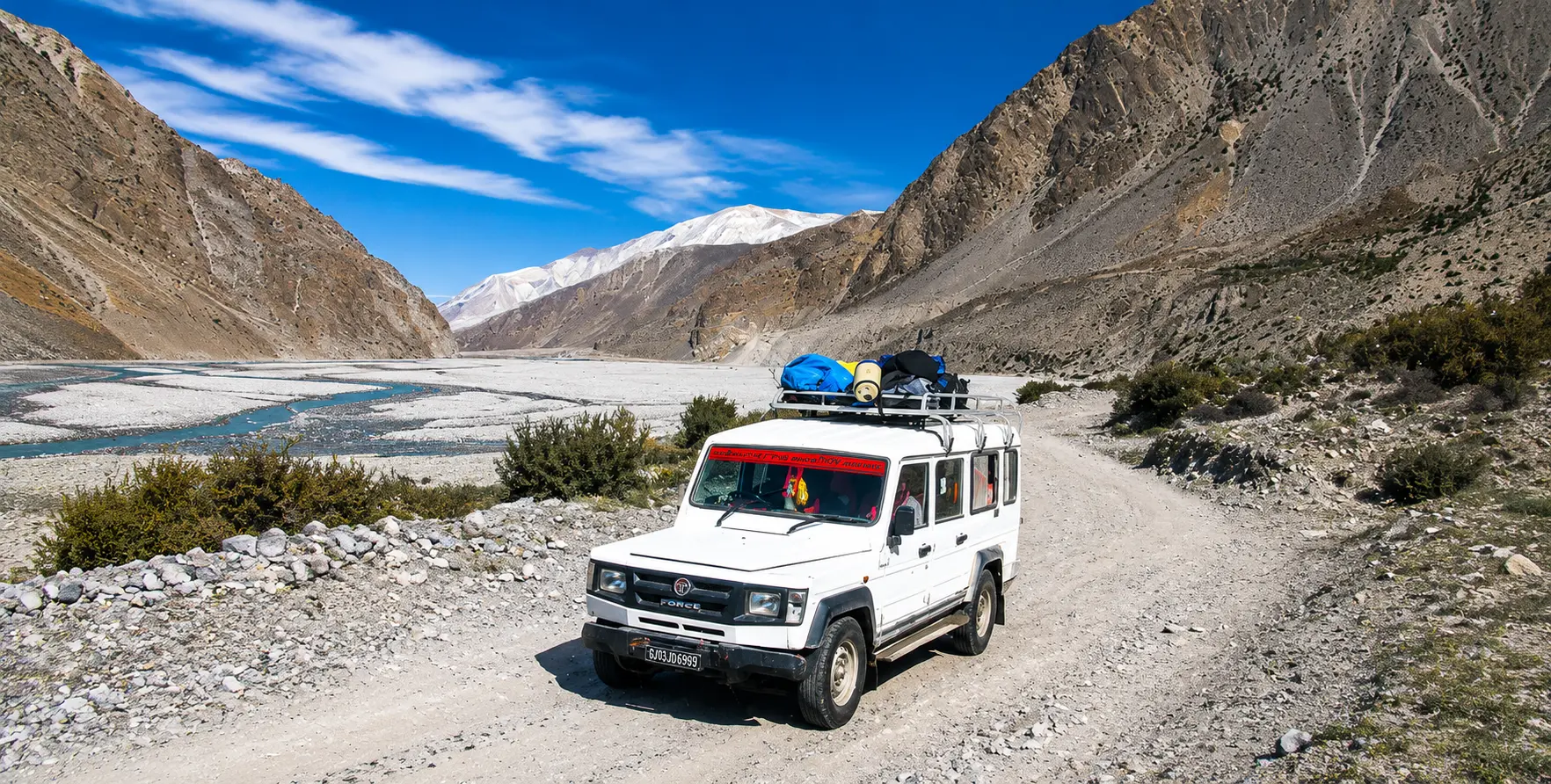
Performance Across Different Nepal Terrain Types
Paved Highway Sections
On Nepal’s paved highways, such as the Prithvi Highway connecting Kathmandu and Pokhara, both vehicle categories perform comparably well, with the Prado offering a marginally smoother, quieter highway cruise thanks to its more refined suspension and sound insulation. At the same time, the Scorpio remains entirely capable and comfortable for this kind of paved travel without any meaningful performance gap.
Gravel and Unpaved District Roads
On the unpaved district roads connecting smaller towns to trekking trailheads, the comfort gap between the two vehicle categories begins to widen noticeably, with the Prado’s superior suspension and ground clearance delivering a visibly smoother experience over rutted, uneven surfaces. However, the Scorpio remains entirely safe and functional across this terrain type as well.
Steep Mountain Switchbacks
On the steepest mountain switchback sections, such as those approaching Soti Khola or the upper reaches of the Mustang jeep road, both vehicles’ 4WD systems engage effectively. However, the Prado’s more sophisticated traction management and additional torque from its larger engine provide a slightly more confident, controlled feeling on the most demanding climbs, particularly in wet or loose-surface conditions.
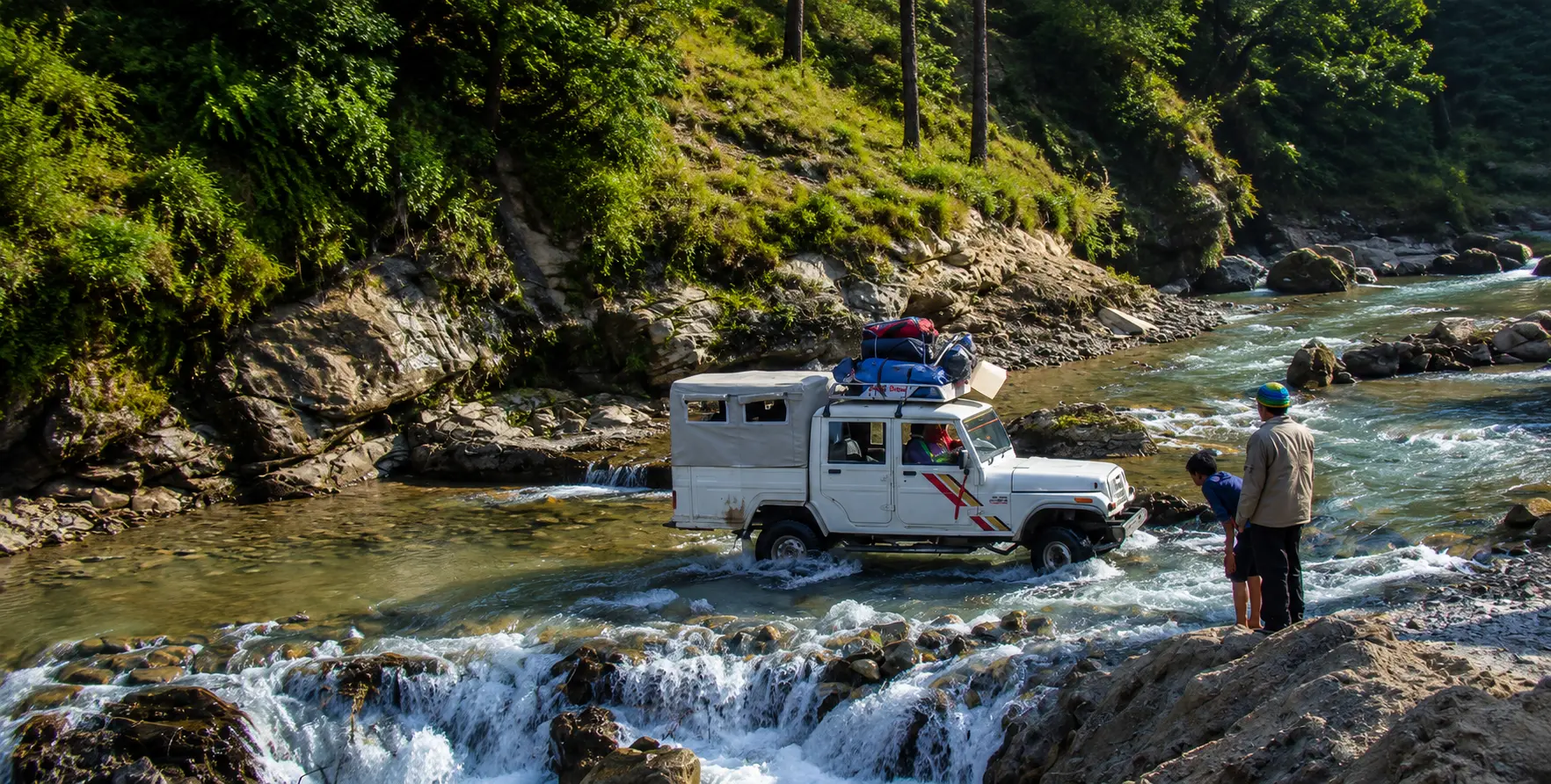
River Crossings and Extreme Conditions
For the rare routes involving shallow river crossings or genuinely extreme off-road conditions, the Land Cruiser Prado’s higher ground clearance and more advanced 4WD system provide a meaningful additional safety margin, though experienced drivers in either vehicle category generally navigate these sections successfully when conditions are within normal seasonal parameters rather than during flood-stage water levels, which neither vehicle category should attempt regardless of capability.
Who Actually Books Each Vehicle Tier
Based on patterns we observe across our jeep hire bookings, the standard SUV category attracts predominantly independent trekkers, backpacker groups, budget-conscious families, and travelers for whom the vehicle is purely functional transport to a trailhead rather than part of the travel experience itself. These travelers generally prioritize reaching their destination reliably and affordably over any particular comfort standard during the journey itself.
The luxury 4WD category, by contrast, attracts a noticeably different customer profile: honeymoon and anniversary travelers, corporate clients arranging executive transfers, older travelers, those with specific comfort needs, and a meaningful segment of repeat Nepal visitors who, having already experienced the standard SUV category on a previous trip, specifically choose to upgrade on a subsequent visit. Multi-generational family groups, where comfort considerations for elderly or very young travelers carry extra weight, also frequently lean toward the premium tier even when budget considerations might otherwise favor the standard option.
How Each Vehicle Performs Across Nepal’s Seasons
During autumn and spring peak season, when mountain roads are typically in their best annual condition following post-monsoon repairs, the practical performance gap between the two vehicle categories narrows somewhat, though passengers traveling in the Prado still notice a quieter, smoother highway cruise even on the most well-maintained road surfaces, since both handle well-maintained roads competently. Theort differential, while still present, matters somewhat less on good-condition surfaces. During monsoon season, when roads toward destinations like Soti Khola or remote Mustang sections can deteriorate significantly with rutting and washouts, the Land Cruiser Prado’s superior ground clearance and traction system provide a more noticeable practical advantage, alongside its comfort benefits, making the luxury tier a more compelling consideration for monsoon-season mountain travel specifically.
Winter conditions, including occasional light snow at higher elevations on routes toward Mustang or Manang, also favor the Prado’s more sophisticated traction management, particularly its dedicated snow drive mode,. However, both vehicle categories generally avoid the very highest passes during the heaviest snow periods regardless of vehicle capability, deferring to seasonal road closures rather than attempting passage through genuinely hazardous winter conditions. Experienced local drivers, regardless of vehicle tier, will generally advise against attempting a pass known to be blocked by fresh snowfall even when the vehicle is technically capable of the attempt, since recovery options in genuinely remote mountain areas are limited and the risk-reward calculation for pressing on through a blocked pass rarely favors continuing.
Why the Price Gap Exists: Market Context
Understanding why these two vehicle categories command such different rental rates requires a brief look at the underlying vehicle market in Nepal. A new Toyota Land Cruiser Prado carries an official Nepal price well into the tens of millions of rupees, reflecting both the vehicle’s genuine engineering sophistication and Nepal’s substantial import duties on premium vehicles, considerably higher than the comparable duty structure applied to the more modestly priced Mahindra Scorpio. This Indian-manufactured vehicle benefits from preferential trade terms between Nepal and India.
This underlying capital cost difference flows directly through to rental pricing, since vehicle hire rates fundamentally need to cover depreciation, maintenance, and insurance costs proportional to the vehicle’s market value, alongside the driver’s salary and operating costs that remain broadly similar across both vehicle tiers. Understanding this pricing logic helps explain why the luxury tier premium, while substantial, reflects genuine underlying cost differences rather than arbitrary markup. For travelers surprised by the price gap when they first see quotes for both categories side by side, this context helps explain why the difference is structural rather than simply a provider choosing to charge more for the same underlying service, and why attempting to negotiate a luxury 4WD down to standard SUV pricing is unlikely to succeed with any reputable provider operating a genuine premium fleet.
Mitsubishi Pajero and Other Premium 4WD Options
Beyond the Land Cruiser Prado and the Mahindra Scorpio or Bolero, Nepal’s vehicle hire market also includes a small number of Mitsubishi Pajero and Pajero Sport options in certain premium fleet categories, offering a middle ground between the standard and luxury tiers in terms of both capability and price. The Pajero’s reputation for genuine off-road durability, earned across decades of international rally and expedition use, makes it a respected choice for travelers specifically wanting a Japanese-engineered, high-performance 4WD at a somewhat lower daily rate than the Prado, while still stepping above the basic standard SUV category. Availability of the Pajero varies considerably across providers, so travelers specifically interested in this option should enquire directly when requesting quotes.
Combining Vehicle Tiers Across a Multi-Leg Nepal Itinerary
Many Nepal itineraries combine legs that genuinely benefit from different vehicle tier choices, and it is entirely possible to arrange a mixed-tier vehicle plan across a single trip rather than defaulting to one vehicle category throughout. A traveler arriving in Kathmandu for city sightseeing, for instance, might find a standard car hire entirely sufficient for the valley-based portion of their trip, before switching to a luxury 4WD for a multi-day mountain itinerary, where the added comfort becomes genuinely worthwhile. Conversely, a group might choose the luxury tier for the Kathmandu-to-trailhead transfer to arrive as fresh as possible, then take a standard bus for the return highway leg, where the comfort differential is less significant, and cost savings are welcome.
Nepal Vehicle Hiring Pvt Ltd accommodates exactly this kind of multi-tier itinerary planning, matching different vehicle categories to different legs of the same overall trip and coordinating them as a single booking rather than multiple separate arrangements with different providers. This integrated approach also makes any mid-trip adjustments, such as extending a mountain leg or adding a return-route sightseeing stop, far simpler to coordinate than they would be across separately booked providers, since a single point of contact manages the complete logistics from the original booking through to final drop-off.
What International Travelers Say About Each Category
Travelers from Europe, North America, and Australia who have used both vehicle tiers across different Nepal trips consistently report that the comfort difference becomes most pronounced and most appreciated on the longest, roughest driving days, with the gap between vehicle categories feeling far less significant on day trips or shorter transfers than the price difference might initially suggest it should.
This feedback pattern is consistent enough across international traveler profiles that we now routinely recommend a minimum of three full mountain driving days as the informal threshold at which upgrading to the luxury tier consistently receives positive retrospective endorsement from travelers who make the switch, versus those who stick with the standard category for similarly long itineraries and more frequently wish they had upgraded. A six-hour drive across reasonable mountain roads in a standard SUV is a perfectly manageable, if somewhat tiring, experience for most travelers.
A six-hour drive on genuinely rough terrain, compounded over three or four consecutive days, is where the Land Cruiser Prado’s suspension and seat quality noticeably change the experience from merely endurable to genuinely comfortable. Several repeat Nepal visitors have described the upgrade to the luxury tier as the single most impactful change they made to a second or third Nepal itinerary compared to their first trip, not because the standard SUV category was unsafe or uncomfortable in any absolute sense, but because the cumulative relief of a smoother, quieter ride over many consecutive mountain driving days made the overall journey feel considerably less physically demanding.
Short-duration visitors and those whose mountain driving is limited to a single long day often report that the standard SUV category met their needs fully, wh. In contrast, longer-trip travelers with extended mountain itineraries are more likely to wish, in retrospect, that they had chosen the premium tier.
How Nepal Vehicle Hiring Pvt Ltd Approaches Vehicle Allocation
At Nepal Vehicle Hiring Pvt Ltd, we take vehicle condition and appropriate driver-vehicle pairing seriously across both tiers. Our standard SUV fleet includes well-maintained Mahindra Scorpio vehicles with experienced drivers regularly running the most popular trekking trailhead routes, from Soti Khola to Besisahar to Salleri Phaplu, giving them firsthand knowledge of current road conditions and seasonal variations on each specific route. Our luxury 4WD tier uses Toyota Land Cruiser Prado vehicles matched with drivers experienced in delivering the higher service standard appropriate for premium bookings, including VIP transfers, honeymoon travel, and executive corporate itineraries.
Across both tiers, our fleet vehicles undergo regular mechanical inspection suited to Nepal’s demanding road environment, and our team is available at [email protected] or by WhatsApp at +977 9851013196 to answer specific questions about vehicle condition, recent maintenance, or driver experience on any particular route before you confirm a booking.
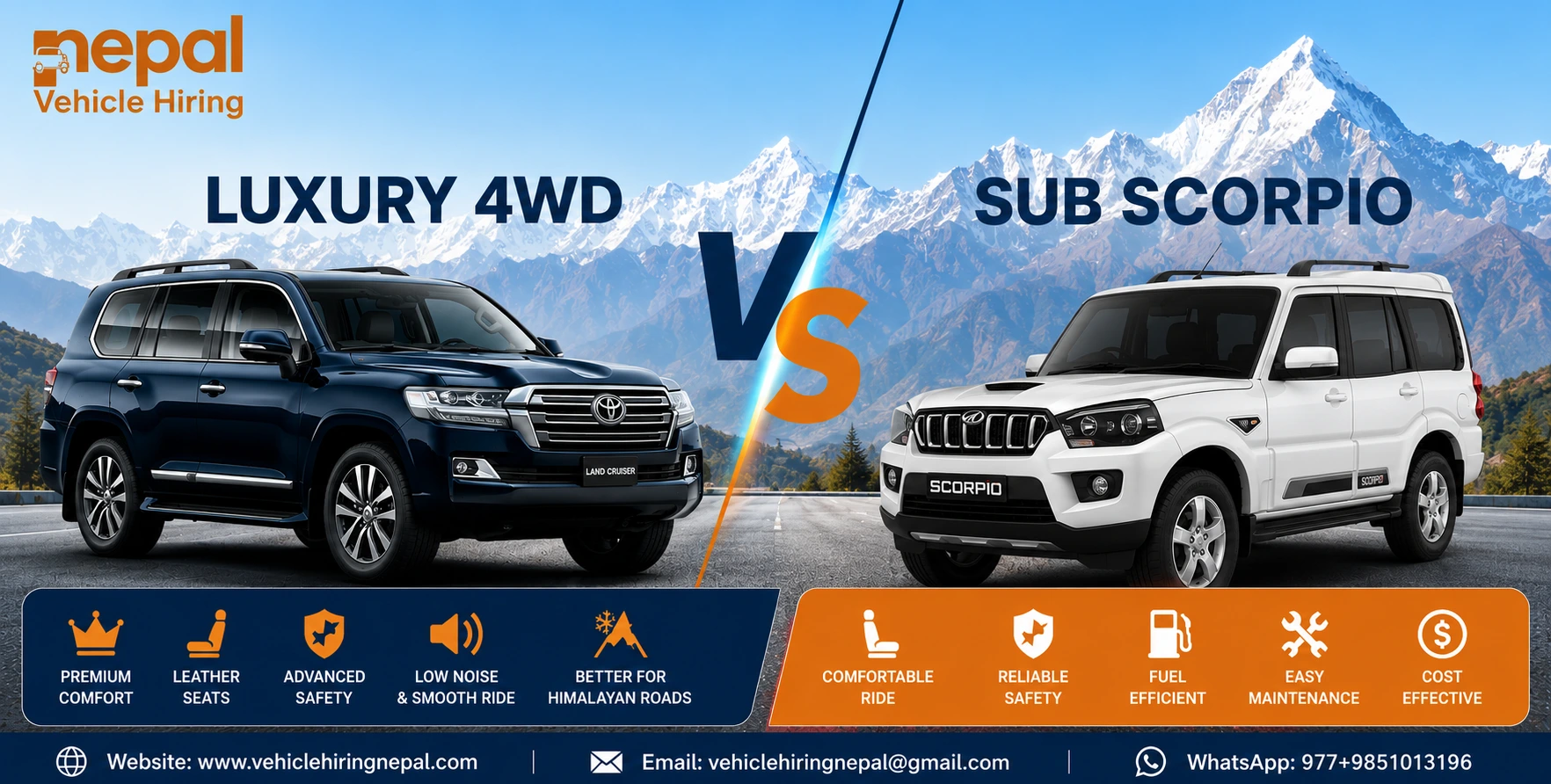
Checklist: Which Vehicle Tier Is Right for Your Nepal Trip?
Before reaching out for a quote, working through the following checklist helps clarify which vehicle tier genuinely fits your trip priorities:
- Trip duration and driving days: Three or more full days of mountain driving favor the luxury tier significantly; single-day trailhead transfers are fine in the standard category.
- Occasion type: Honeymoons, anniversaries, VIP or corporate travel clearly favor the luxury tier; standard trekking logistics favor the standard category.
- Passenger comfort sensitivity: Back problems, joint sensitivity, motion sickness history, or traveling with elderly passengers all favor the luxury tier.
- Budget: If the price difference between tiers is a meaningful budget factor, the standard category delivers fully capable mountain transport without the premium cost.
- Route difficulty: Standard tourist mountain routes suit either tier; monsoon-season travel or genuinely extreme terrain slightly favors Prado’s additional ground clearance and traction sophistication.
- Group size at full capacity: Groups filling all seven seats will find the Prado noticeably more comfortable at maximum capacity than the more compact standard SUV interior.
Frequently Asked Questions
Is a Land Cruiser Prado actually necessary for Nepal’s mountain roads, or is it just a luxury upgrade?
For most standard tourist routes, including Mustang, Manaslu, and Muktinath, a standard SUV like the Scorpio or Bolero is entirely capable, meaning the Prado represents a genuine comfort upgrade rather than a strict necessity. The Prado’s marginally superior ground clearance and multi-terrain system do offer a slight technical edge on the most extreme sections, but this rarely makes the difference between a route being passable or impassable for a typical tourist itinerary. The decision is therefore almost always about comfort, prestige, and personal value judgment rather than any technical threshold the standard SUV category fails to meet, a framing that clarifies the choice considerably for travelers accustomed to assuming premium pricing must correspond to access to something the lower tier cannot do at all.
How much more does a luxury 4WD cost compared to a standard SUV in Nepal?
The exact price difference varies by route, duration, and season. Still, the luxury tier commands a meaningfully higher daily rate, generally in the range of 40-80% above standard SUV pricing for comparable routes. For an exact, current comparison, email [email protected] or WhatsApp +977 9851013196 with your specific itinerary.
Can a standard SUV handle the road to Upper Mustang?
Yes. The Mahindra Scorpio and similar standard SUVs are the most commonly used vehicles on the Upper Mustang jeep route, handling the high-altitude, partially unpaved roads competently. The Land Cruiser Prado offers a more comfortable ride on the same route but is not strictly required for a safe or successful journey.
Which vehicle is better for a honeymoon or anniversary trip in Nepal?
The luxury 4WD category is generally the better fit for honeymoon, anniversary, or other special-occasion travel, given its superior comfort, more refined interior, and stronger prestige association, making the vehicle itself feel like part of a memorable, elevated travel experience rather than purely functional transport. Many couples specifically mention the Prado’s private, quiet cabin as contributing to a more relaxed journey atmosphere during multi-day mountain drives, where the quality of hours spent in transit becomes part of the overall trip memory rather than something to endure between the obvious highlights.
Do both vehicle categories come with an experienced driver?
Yes, both the standard SUV and luxury 4WD categories at Nepal Vehicle Hiring Pvt Ltd come with an experienced local driver included as standard. You are welcome to ask specifically about a driver’s route experience when booking, via email at [email protected] or WhatsApp +977 9851013196.
Is it worth paying for a luxury 4WD on a short, single-day trip?
Generally no, unless comfort or prestige is a specific priority regardless of trip length. The comfort advantage of a luxury 4WD compounds most meaningfully over multiple consecutive days of mountain driving; for a single short excursion, a standard SUV typically delivers comparable practical value at a noticeably lower cost.
Final Thoughts: There Is No Universally Better Choice
Neither the standard SUV nor the luxury 4WD category is objectively the better vehicle for Nepal; each serves a genuinely different traveler priority. The most common booking mistake is choosing a vehicle category based on abstract prestige or an arbitrarily low budget ceiling rather than mapping the actual comfort-versus-cost trade-off against the specific number of mountain driving days, the occasion type, and the passenger composition of the individual trip being planned.
The standard SUV delivers reliable, fully capable mountain transport at a meaningfully lower price, making it the natural default for budget-conscious trekkers, larger groups watching costs, and shorter routes where the comfort differential matters less. It also suits travelers who genuinely value the more rugged, unfiltered character of a simpler vehicle on mountain terrain, and for whom a smoother, more insulated ride would actually diminish rather than enhance the sense of adventure they are seeking from a Nepal mountain journey. The luxury 4WD delivers a noticeably smoother, quieter, more refined experience that compounds in value across longer multi-day mountain itineraries, special occasions, and any trip where comfort and prestige genuinely matter alongside raw capability.
Nepal Vehicle Hiring Pvt Ltd maintains both vehicle tiers within our jeep hire fleet, alongside our full range of car, Hiace, and bus hire options. Browse our complete range of vehicle hires in Nepal and explore a fully arranged Nepal tour package built around the vehicle tier that matches your trip.
Still deciding between a standard SUV and a luxury 4WD for your Nepal itinerary? Email us directly at [email protected] or call or WhatsApp +977 9851013196 — we will walk through your specific route, group size, and budget, the number of mountain driving days involved, and the occasion type, then recommend the vehicle tier that genuinely fits your trip rather than simply defaulting to whichever option has more available vehicles on your requested dates, or contact our team through our website for a full itemised quote.
- luxury 4WD vs standard SUV hire in Nepal: Which Should You Hire in Nepal
- Quick Verdict: luxury 4WD vs standard SUV hire in Nepal Which Should You Choose ?
- The Standard SUV Category: Mahindra Scorpio and Bolero
- The Luxury 4WD Category: Toyota Land Cruiser Prado
- Side-by-Side: How the Two Categories Actually Compare
- When the Standard SUV Is Genuinely the Better Choice
- When the Luxury 4WD Is Genuinely Worth the Premium
- Route-by-Route: Matching Vehicle Tier to Specific Nepal Journeys
- Understanding the Full Cost Difference
- Group Size and Vehicle Tier Decisions
- Driver Experience Across Both Vehicle Tiers
- How to Book Either Vehicle Tier
- Maintenance Standards and Vehicle Reliability
- Fuel Efficiency and Environmental Considerations
- Technical Specifications Compared
- Interior Experience: A Closer Look
- Performance Across Different Nepal Terrain Types
- River Crossings and Extreme Conditions
- How Each Vehicle Performs Across Nepal's Seasons
- Why the Price Gap Exists: Market Context
- Mitsubishi Pajero and Other Premium 4WD Options
- Combining Vehicle Tiers Across a Multi-Leg Nepal Itinerary
- What International Travelers Say About Each Category
- How Nepal Vehicle Hiring Pvt Ltd Approaches Vehicle Allocation
- Checklist: Which Vehicle Tier Is Right for Your Nepal Trip?
- Frequently Asked Questions
- Final Thoughts: There Is No Universally Better Choice

Related Blog & Articles
4WD Himalayan Jeep in Nepal

4WD Vehicles in Nepal: The Ultimate Hire Guide 2026
Jeep or SUV
Luxury Jeep Hire in Nepal – Premium 4WD Vehicle Rental for Himalayan Adventures 2026
Mahindra Bolero and Tata Sumo – Nepal’s Most Popular Trekking Transfer Vehicles