Plan a Trip


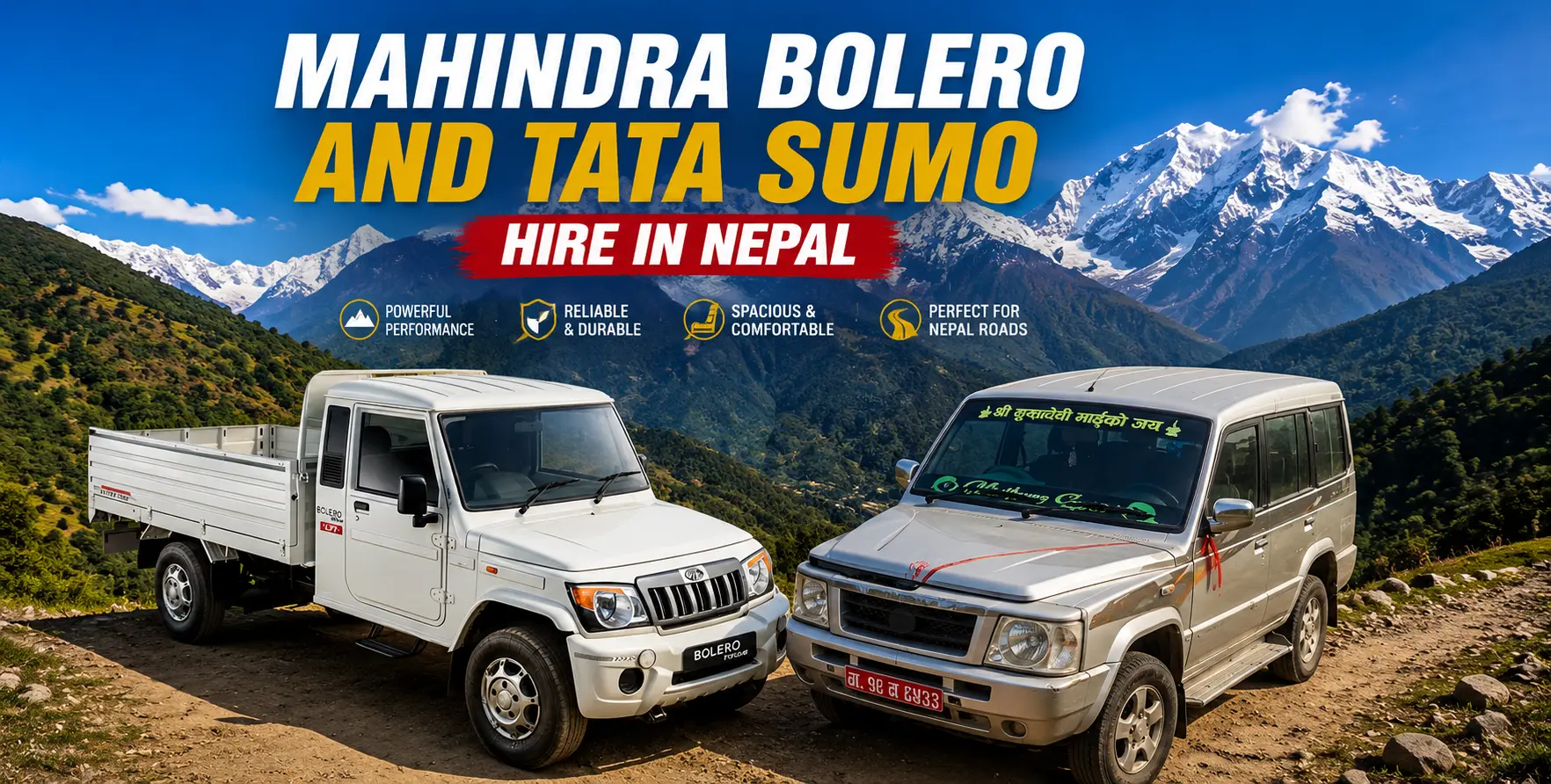
Mahindra Bolero and Tata Sumo – Nepal’s Most Popular Trekking Transfer Vehicles
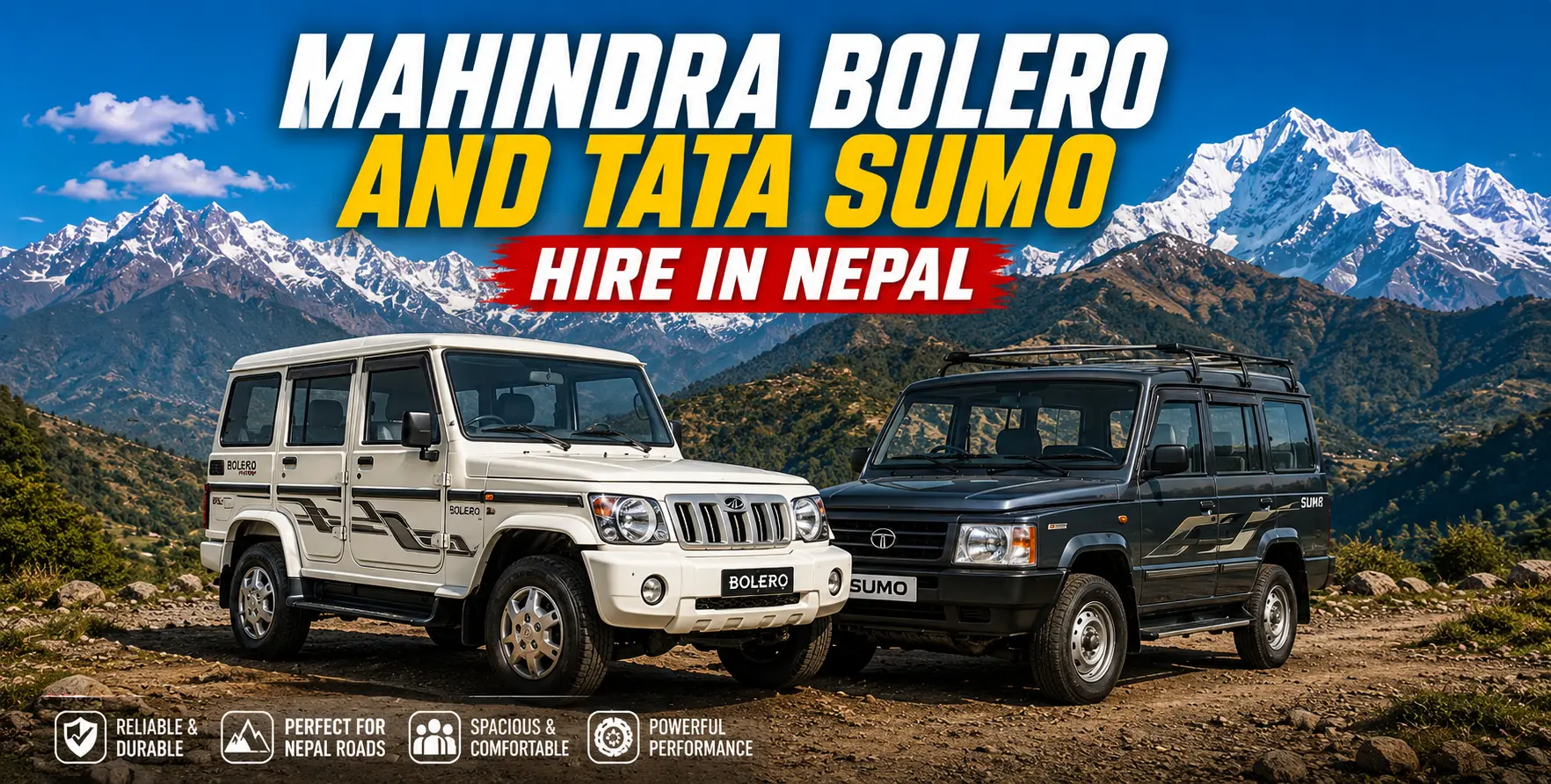
Mahindra Bolero & Tata Sumo: Nepal’s Most Popular Trekking Transfer Vehicles
When travellers think about vehicle hire in Nepal, the conversation often begins with the Toyota Land Cruiser and ends with the Mahindra Scorpio. Both are superb vehicles — but in the practical, real-world ecosystem of Nepal’s trekking access routes, two vehicles carry more trekkers to more trailheads across more routes every single day than any other: the Mahindra Bolero 4WD and the Tata Sumo. These are Nepal’s trekking transfer workhorses: rugged, affordable, spacious, and proven over decades of demanding mountain-road service.
The Mahindra Bolero and Tata Sumo occupy a unique and essential position in Nepal’s vehicle hire landscape. They are not luxury vehicles, and they make no pretence of being so. They are purpose-built mountain utility vehicles whose robust body-on-frame construction, switchable 4WD systems, high ground clearance, powerful diesel engines, and generous passenger and luggage capacity match Nepal’s trekking access routes: capability, reliability, capacity, and value. A group of 7 trekkers with full expedition packs heading to Besisahar for the Annapurna Circuit, a party of 9 heading to Syabrubesi for the Langtang Circuit, a family of 7 bound for Kuri Village at Kalinchowk in December snow — in every one of these scenarios, the Bolero or Sumo is the vehicle that gets the job done most effectively, most affordably, and most reliably.
This guide from Nepal Vehicle Hiring Pvt Ltd is the most complete resource available on the Mahindra Bolero and Tata Sumo as Nepal trekking transfer vehicles — covering vehicle specifications in depth, the full range of trekking routes they serve, why they are chosen over alternatives, how they compare to the Scorpio and Land Cruiser, seasonal considerations, group size recommendations, booking guidance, and a comprehensive FAQ.
Book your Bolero or Sumo: Nepal Vehicle Hiring – Jeep Hire | All Vehicles | Call/WhatsApp: +977 981-4227196
Mahindra Bolero & Tata Sumo – Complete Specifications
| Specification | Mahindra Bolero 4WD | Tata Sumo Gold / Grande |
| Engine | 1.5L mHawk / 2.5L MDI Diesel | 3.0L DICOR Diesel / 2.0L Diesel |
| Power Output | 74–100 bhp @ 3,600 rpm | 75–90 bhp @ 3,600–4,000 rpm |
| Torque | 210–280 Nm @ 1,600–2,200 rpm | 220–260 Nm @ 1,800–2,200 rpm |
| 4WD System | Switchable 4WD (2H / 4H / 4L) | Switchable 4WD (4×4 versions) |
| Ground Clearance | 180 mm | 175–185 mm |
| Seating Capacity | 7 passengers (2+3+2 layout) | 7–9 passengers (various layouts) |
| Fuel Tank | 60 litres | 65–70 litres |
| Kerb Weight | 1,620 kg | 1,700–1,850 kg |
| Transmission | 5-speed manual | 5-speed manual |
| Body Type | SUV / Body-on-frame | SUV / Body-on-frame |
| AC | Yes – standard | Yes – standard |
| Best Nepal Use | All off-road mountain routes; most popular trekking transfer | Off-road capable; excellent value for large groups, 7-9 pax |
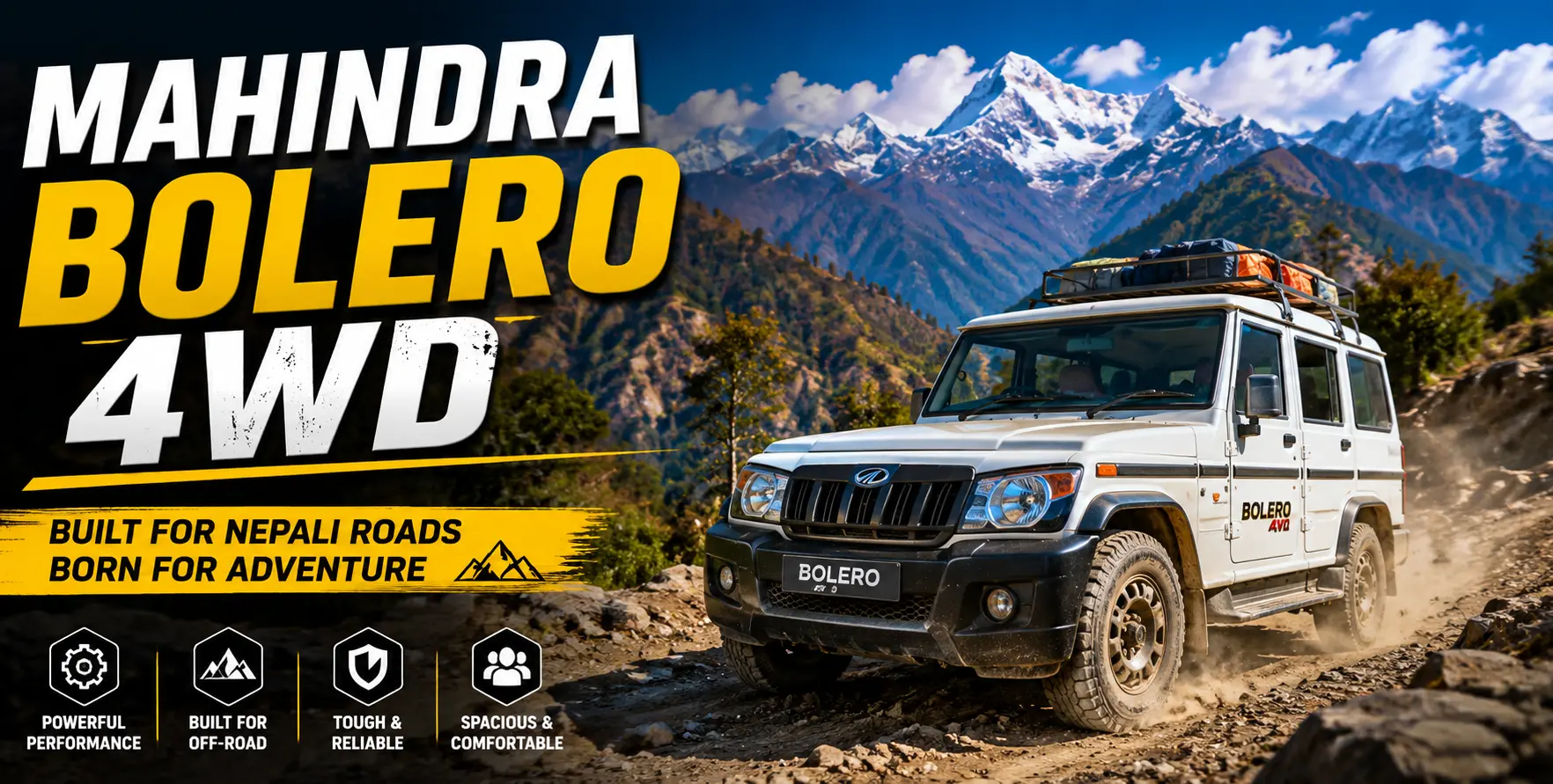
The Mahindra Bolero – Nepal’s Most Widely Hired Trekking Vehicle
A Vehicle Born for Mountain Roads
The Mahindra Bolero has been in production since 2000 CE, making it one of the longest-running and most proven utility SUVs in the South Asian automotive market. In India, it is the best-selling UV (Utility Vehicle) in rural and semi-urban markets for over two decades; in Nepal, it has earned an equivalent reputation as the most trusted vehicle in the districts — used by local operators, trekking agencies, district government, NGOs, community health workers, and trekking transfer companies across the length and breadth of Nepal’s hill and mountain zones.
The Bolero’s appeal in Nepal is rooted in a set of characteristics that align almost perfectly with what the country’s mountain environment demands:
- Mechanical Simplicity: The Bolero’s engineering philosophy prioritises proven, repairable, long-lasting mechanical systems over complex technology. In remote mountain districts where the nearest qualified mechanic may be hours away, a vehicle that any experienced driver can identify and fix basic issues with basic tools is not merely preferable — it is genuinely safer.
- Body-on-Frame Construction: Unlike monocoque (unibody) crossover SUVs that are increasingly common in urban markets, the Bolero uses a traditional body-on-frame chassis — a separate structural frame on which the body is mounted. This construction method delivers superior torsional rigidity for off-road use, better load-carrying ability without chassis flex, and much greater repairability after impacts — all critical qualities on Nepal’s mountain roads, where vehicles encounter rocks, ruts, and occasional impacts from narrow road edges.
- Ground Clearance: The Bolero’s 180 mm ground clearance—significantly higher than any city SUV or crossover—provides the undercarriage protection and obstacle-clearing capability needed on Nepal’s rocky mountain tracks. This clearance allows the Bolero to pass over rocks, exposed root systems, drainage culverts, and the accumulated debris that characterises off-road mountain surfaces without grounding the chassis.
- Switchable 4WD System: The Bolero 4WD version features a manual transfer case with three modes: 2H (two-wheel drive high), 4H (four-wheel drive high), and 4L (four-wheel drive low range). The low-range 4L mode is critical for Nepal’s steepest mountain-track ascents — it multiplies engine torque to deliver maximum traction and climbing force on sections such as the Charikot–Kuri Village road and the Besisahar–Dharapani upper gorge.
- Powerful Low-End Diesel Torque: The Bolero’s diesel engines are tuned for maximum torque at low RPM—precisely the power characteristic Nepal’s mountain tracks require, where gradients are steep, and road surfaces are loose. High-RPM petrol engines that deliver peak power at 5,000–6,000 RPM are genuinely unsuitable for low-speed, steep climbing; the Bolero’s 210–280 Nm of torque above 1,600 RPM provides the right power character.
- 7-Passenger Capacity with Luggage Space: The Bolero’s 2+3+2 seating configuration (7 passengers) accommodates a full trekking group—typically 5–7 people—with rear luggage space for trekking backpacks, sleeping bags, and equipment. For groups of exactly 7, the Bolero is the perfect fit—a single—vehicle solution that carries the entire Group in one vehicle without the additional cost of a second vehicle.
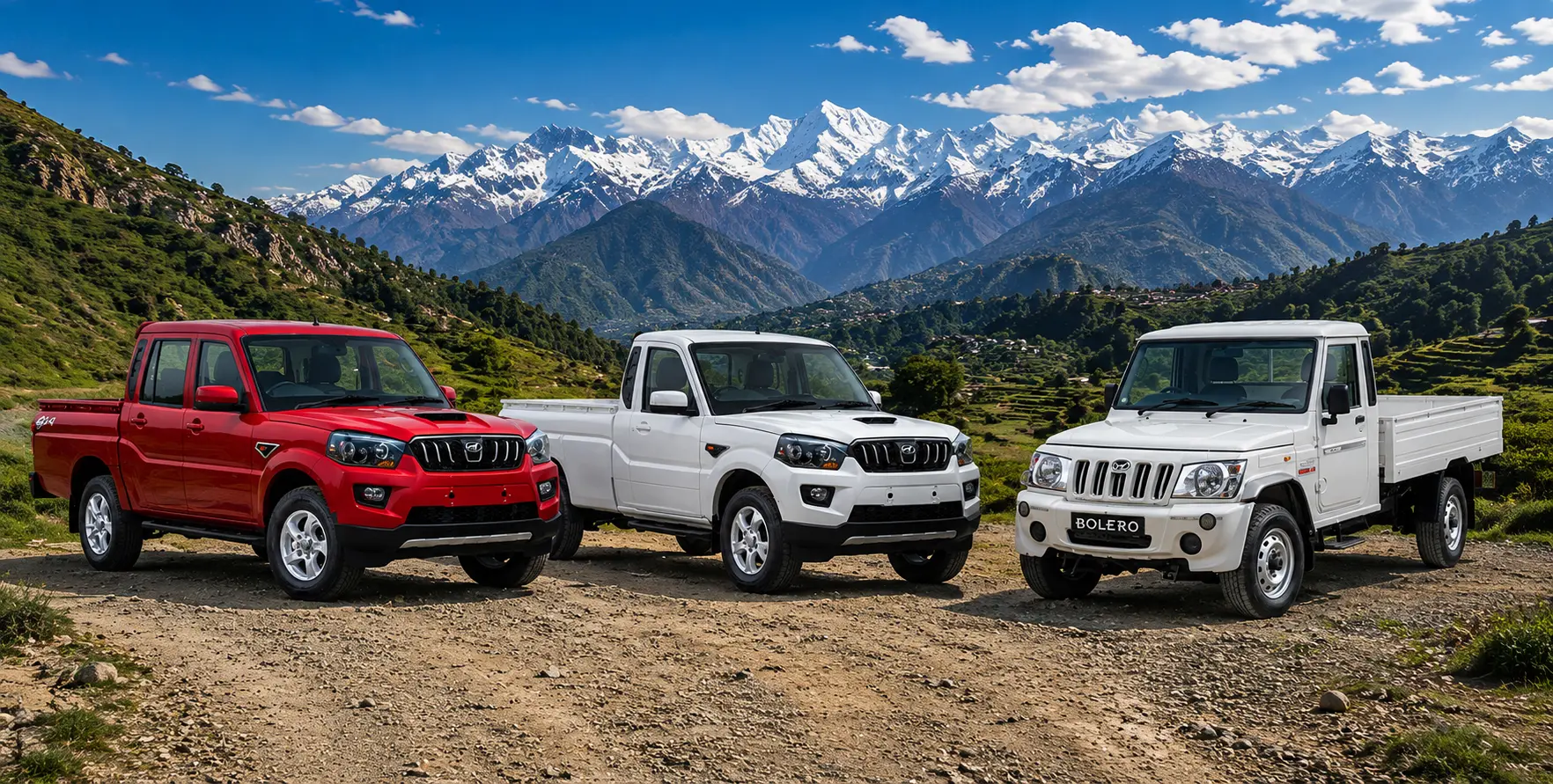
Mahindra Bolero Variants Used in Nepal – Understanding the Differences
Nepal Vehicle Hiring and other operators use several Bolero variants for trekking transfers:
- Bolero 4WD (Standard): The most common variant for off-road trekking routes. Switchable 4WD, 7 seats, AC. Used for all Category 3 off-road routes, including Besisahar–Dharapani, Charikot–Kuri, and Nayapul–Ulleri.
- Bolero Neo 4WD: The newer-generation Bolero Neo (built on the same platform as the Scorpio) features a 5L mHawk100 diesel engine (100 bhp), improved suspension, better interior quality, and modern features including USB charging and a more refined dashboard. The Neo is increasingly used for premium trekking transfers where slightly better interior comfort is valued alongside off-road capability.
- Bolero Camper / Pickup: The Bolero Camper version with an open rear deck is widely used by trekking operators to carry heavy expedition equipment, porter loads, and group gear. It is not used for passenger-primary trekking transfers but is essential for expedition logistics.
The Tata Sumo – Nepal’s Large-Group Trekking Transfer Vehicle
The Sumo’s Place in Nepal’s Trekking Ecosystem
The Tata Sumo — produced by India’s Tata Motors and sold in Nepal since the late 1990s — is in many respects the Bolero’s larger, more spacious sibling in Nepal’s trekking transfer market. Where the Bolero’s primary advantage is its proven 4WD capability at the most accessible price point, the Sumo’s defining competitive advantage is passenger capacity — with some Sumo configurations accommodating up to 9 passengers, making it the most cost-effective per-head trekking transfer vehicle for larger groups of 8–9 people.
The Tata Sumo Grande and Gold variants are the most commonly used in Nepal’s trekking transfer market. The Sumo Grande’s longer wheelbase and more spacious cabin accommodate more passengers and luggage than the Bolero, making it particularly valued for expedition-style trekking groups with substantial gear, school groups visiting trekking areas, and pilgrimage parties of 8–9 people who need a single-vehicle solution.
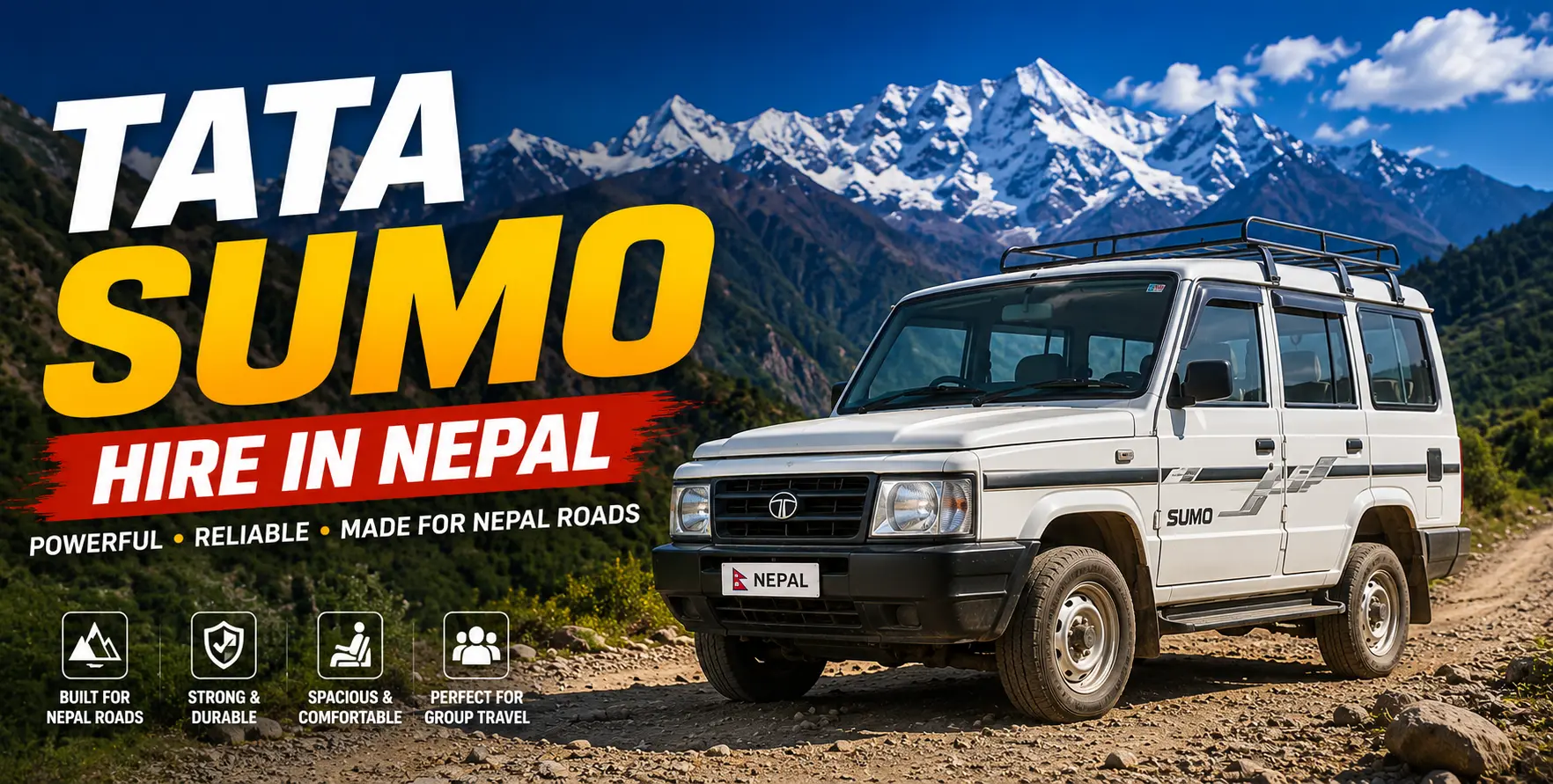
Why the Tata Sumo Is Preferred for Larger Groups
In Nepal’s trekking transfer context, the Tata Sumo’s advantages over the Bolero are specifically related to capacity:
- 9-Passenger Versions: The Tata Sumo Gold and Grande can be configured for up to 9 passengers — two more than the Bolero’s maximum of 7. For a trekking group of 8–9 people, hiring a single Sumo is more economical than two Boleros, and the unified Group travels more conveniently.
- More Luggage Space: The Sumo’s larger boot and rear cargo area accommodate more trekking gear — particularly important for longer expeditions (10+ day treks like the Manaslu Circuit or Kanchenjunga) where each trekker carries a larger expedition pack, plus porter loads of camp equipment and food supplies.
- Spacious Cabin: The Sumo’s wider body and taller roofline provide more headroom and lateral space than the Bolero — a meaningful comfort advantage on longer trailhead approach drives (Kathmandu to Salleri for Everest is 7–9 hours; Kathmandu to Taplejung for Kanchenjunga is 12+ hours). The extra interior space reduces the claustrophobia and fatigue of very long group drives.
- Strong Diesel Engine for Load: The Sumo’s 0L DICOR diesel engine produces excellent low-end torque, making it well-suited to carrying heavy loads (9 passengers plus expedition packs can exceed 1,000 kg payload) on steep mountain tracks. This is a meaningful advantage over lighter vehicles that struggle with maximum passenger and luggage loads on ascents.
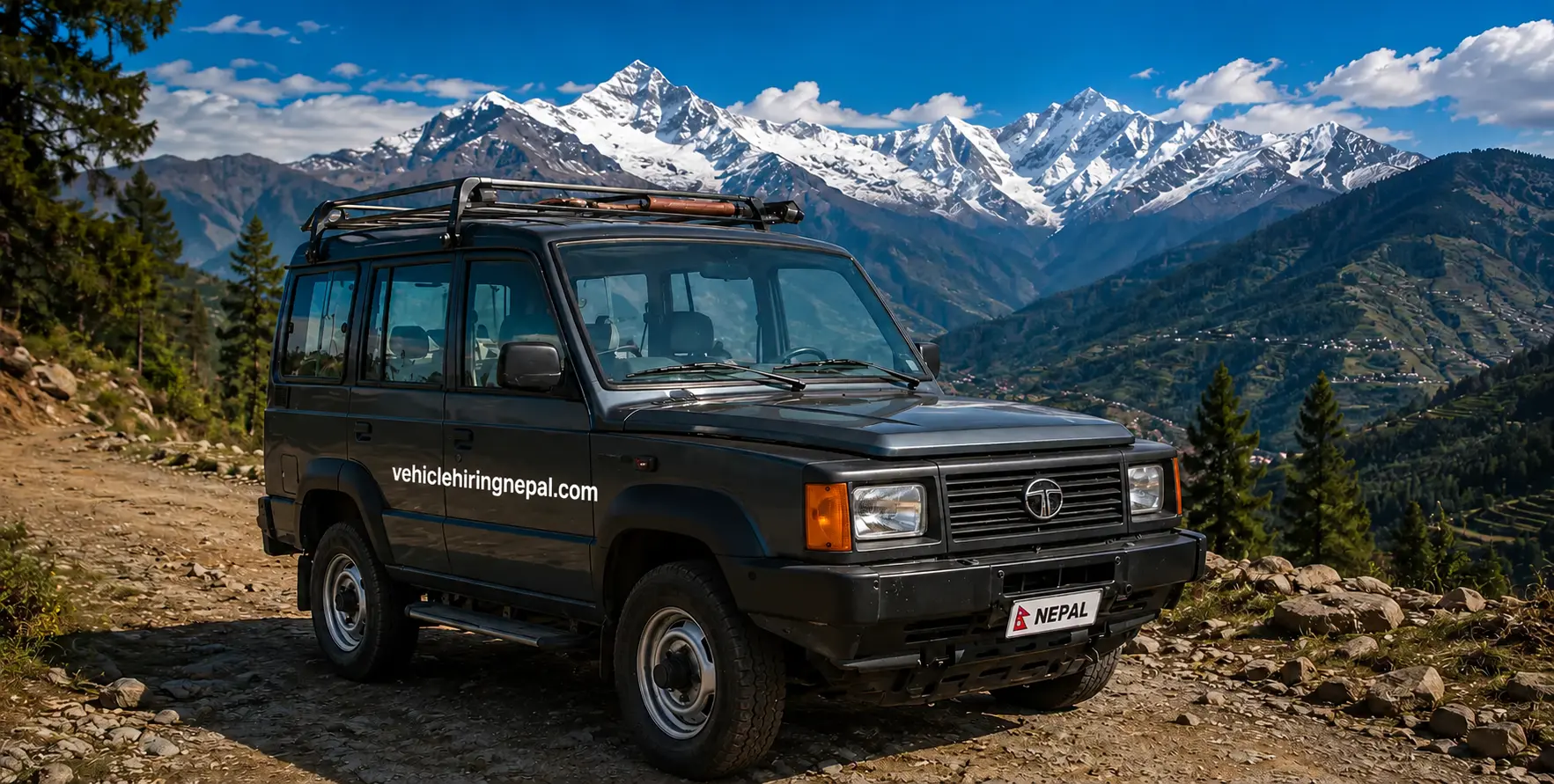
Tata Sumo 4WD – The Off-Road Version
While many Tata Sumos in Nepal’s hire market are 2WD (rear-wheel drive) vehicles suited to paved highways and moderate dirt roads, Nepal Vehicle Hiring operates Tata Sumo 4WD versions for mountain trekking transfers that require genuine off-road capability. The Sumo 4WD features a switchable 4WD transfer case, offering the same 2H / 4H / 4L modes as the Bolero, with comparable ground clearance and off-road capability for routes such as the Besisahar–Dharapani track and the Syabrubesi approaches.
Nepal Vehicle Hiring advises clients: when booking a Tata Sumo for an off-road trekking route, always confirm with us that the specific vehicle is 4WD—not all Sumos in Nepal’s hire market are 4WD, and deploying a 2WD Sumo on off-road mountain routes would be unsafe and impractical. All Nepal Vehicle Hiring Sumos used for mountain trekking transfers are confirmed 4WD versions.
Why Bolero and Sumo Dominate Nepal’s Trekking Transfer Market
1. The Price-Performance Advantage
In Nepal’s competitive trekking transfer market, the Bolero and Sumo occupy the optimal price-performance sweet spot — delivering genuine off-road 4WD capability and adequate passenger/luggage capacity at significantly lower hire rates than the Scorpio and Land Cruiser. For a trekking group of 6–7 people splitting the cost of a private Bolero hire from Kathmandu to Besisahar, the per-person cost may be comparable to, or even cheaper than, a shared jeep — and the private hire provides far better timing flexibility, comfort, and group cohesion than a shared vehicle. This democratisation of private mountain vehicle hire — making it genuinely affordable for standard budget trekking groups rather than only premium travellers — is the Bolero and Sumo’s most significant contribution to Nepal’s trekking transport ecosystem.
2. Mechanical Reliability in Remote Areas
Nepal’s trekking routes take vehicles into areas where the nearest garage may be 3–6 hours away and where mobile phone coverage is intermittent. In this environment, mechanical reliability is not merely a comfort consideration — it is a safety requirement. Both the Bolero and Sumo are built on mechanically conservative engineering principles—tried-and-tested diesel powertrains, simple suspension systems, easily sourced spare parts, and construction that prioritises durability and repairability over technical sophistication. Nepal’s mountain drivers and mechanics know these vehicles intimately — every workshop in Nepal’s hill districts stocks Bolero and Sumo spare parts as standard inventory. A stranded Bolero in a remote mountain area has a far greater chance of being repaired on-site than a stranded Land Cruiser with sophisticated electronics and proprietary components.
3. Spare Parts Availability Across Nepal
The Mahindra Bolero and Tata Sumo have the widest spare-parts availability among 4WD vehicles in Nepal. Authorised Mahindra dealers (Agni Inc.) and Tata dealerships operate across Nepal’s major cities and district headquarters, and independent spare parts suppliers in Besisahar, Beni, Charikot, Pokhara, Butwal, Nepalgunj, and virtually every district capital stock these vehicles’ standard consumable components. This availability network means even a significant mechanical problem in a remote area can typically be addressed within 24–48 hours—a critical resilience factor for multi-day trekking transfer itineraries where delays directly impact trekkers’ onward plans.
4. Driver Expertise – Every Mountain Driver Knows These Vehicles
One of the most practically significant advantages of the Bolero and Sumo for Nepal’s trekking transfers is the depth of the driver pool. Virtually every experienced mountain driver in Nepal — drivers who have spent years navigating the Kali Gandaki valley, the Besisahar gorge, the Kalinchowk approach, and Nepal’s other demanding trekking access routes — has extensive specific experience with the Bolero and Sumo. They know these vehicles’ characteristics in 4WD low-range on steep, rocky ascents; they know the exact throttle and brake inputs required on the Charikot–Kuri Village track in winter conditions; they know precisely when to fit snow chains and where on each route. This driver-vehicle intimacy, born of years of specific experience, is a genuine safety asset that is more difficult to replicate with less common vehicle types.
5. Luggage Capacity for Full Trekking Groups
A standard Annapurna Circuit or Langtang trekking group of 6–7 people typically carries: 6–7 large trekking backpacks (60–80 L each), a duffel bag of porter supplies, a medical kit, group cooking gear, and camera equipment. The total luggage volume and weight of a complete trekking group is substantial — and the Bolero and Sumo’s roof racks and rear boot space, combined with their body-on-frame construction that tolerates roof-rack loads better than unibody crossovers, accommodate this complete trekking-group luggage set without compromise. Our drivers secure all luggage with ratchet straps and waterproof tarpaulins before departure.
Bolero and Sumo Trekking Transfer Routes – Complete Guide
| Trekking Transfer Route | Distance | Key Section | Why Bolero / Sumo? |
| Besisahar to Dharapani (Annapurna Circuit) | 40 km | Off-road gorge track | Proven 4WD for rocky Marsyangdi valley; saves 2 days of walking; 6-7 pax capacity |
| Pokhara to Ulleri (Poon Hill) | 52-60 km | Tikhedhunga-Ulleri off-road | Steep mountain track requires 4WD; Bolero/Sumo is the most affordable option for groups |
| Pokhara to Ghorepani | 70 km | Nayapul to Ghorepani off-road | Mountain forest track; 4WD essential; 7-seat capacity for trekking groups |
| Kathmandu to Kalinchowk (Kuri Village) | 150 km | Charikot to Kuri off-road | Bolero is the most popular Kalinchowk vehicle; snow chains are available; 7 seats |
| Muktinath via Beni-Jomsom | 400 km | Beni to Muktinath off-road | Kali Gandaki valley off-road; 4WD mandatory; Bolero proven on this route |
| Syabrubesi (Langtang Circuit) | 120 km | Trishuli Valley Road | Rough secondary road; 4WD recommended; Sumo suits larger Langtang groups |
| Salleri / Phaplu (Everest Lower Access) | 230 km | Sindhuli-Okhaldhunga winding road | Hilly road with sharp bends; Bolero/Sumo ideal for trekking group gear transport |
| Kathmandu to Nagarkot-Dhulikhel | 30-35 km | Hill road sections | Bolero / Sumo for groups of 6-7; reliable on Bhaktapur-Nagarkot hill track |
| Kathmandu to Bandipur | 143 km | Dumre Hill Road | Dumre to Bandipur:8 km steep hill road; 4WD recommended; Bolero handles this well |
Besisahar to Dharapani – The Annapurna Circuit Flagship Route
The Besisahar-to-Dharapani jeep transfer (40 km, 3–4 hours) on the Annapurna Circuit is Nepal Vehicle Hiring’s most booked Bolero transfer route. The off-road Marsyangdi River valley track between Besisahar and Dharapani — passing through Bhulbhule, Syange, Jagat, Chamje, and Tal — is one of Nepal’s most dramatic off-road driving experiences: cliff-face sections, river crossings, steep rocky ascents, and narrow single-vehicle tracks above deep gorges. The Bolero’s 4WD in low range handles every demanding section of this route with proven competence, and its 7-seat capacity accommodates a complete Annapurna Circuit trekking group in a single vehicle. Nepal Vehicle Hiring’s Boleros are the most frequently used vehicles on this route in 2026. See our dedicated Besisahar-to-Dharapani Jeep Hire blog.
Pokhara to Ulleri and Ghorepani – The Poon Hill Transfer
The Bolero is the most popular vehVehicler the Vehicle–Ulleri and Pokhara–Ghorepani jeep transfers — routes that have seen rapidly growing demand since the off-road track from Nayapul/Tikhedhunga through Ulleri to Ghorepani became accessible to jeeps. The steep, narrow Tikhedhunga–Hile–Ulleri track requires genuine 4WD with high ground clearance — and the Bolero, known locally on this route, handles it with the same confidence it brings to its more famous Annapurna and Muktinath routes. For groups of 5–7 trekkers using the Poon Hill shortcut, the Bolero is the most cost-effective single-vehicle private jeep option available. See our Pokhara to Ulleri Private Jeep and Pokhara to Ghorepani Poon Hill Jeep Hire blogs.
Kalinchowk – The Bolero’s Home Route
If one route in Nepal is the Mahindra Bolero’s own, it is the Kathmandu-to-Kalinchowk Scorpio and Bolero hire for the Charikot-to-Kuri Village off-road section. The 15–18 km mountain track from Charikot to Kuri Village is exactly the terrain the Bolero was designed for — steep, loose-surfaced, narrow, and unforgiving of vehicles with inadequate clearance or 2WD systems. In December and January, when the Kalinchowk track is snow-covered and ice-patched, the Bolero with snow chains reaches the village when others cannot. Nepal Vehicle Hiring’s Bolero fleet dominates the Kalinchowk weekend market during peak winter snowfall season. See our Kalinchok Scorpio and Jeep Hire blog.
Muktinath – Bolero on the Kali Gandaki
The Pokhara–Muktinath route is the Bolero’s most demanding regular assignment in Nepal — 200 km of increasingly rough mountain road, including the off-road Kali Gandaki valley track from Beni to Muktinath that climbs from 830 m to 3,760 m over approximately 130 km. The Bolero’s low-range 4WD, high ground clearance, and proven high-altitude diesel performance make it a reliable vehicle for Muktinath treks and pilgrimages — though Nepal Vehicle Hiring recommends the Toyota Land Cruiser for the most demanding sections of this route, particularly for groups extending to Upper Mustang beyond Kagbeni. For Muktinath itself (stopping at Jomsom), the Bolero is fully adequate. See our blog post on Pokhara Airport to Muktinath Jeep Rental.
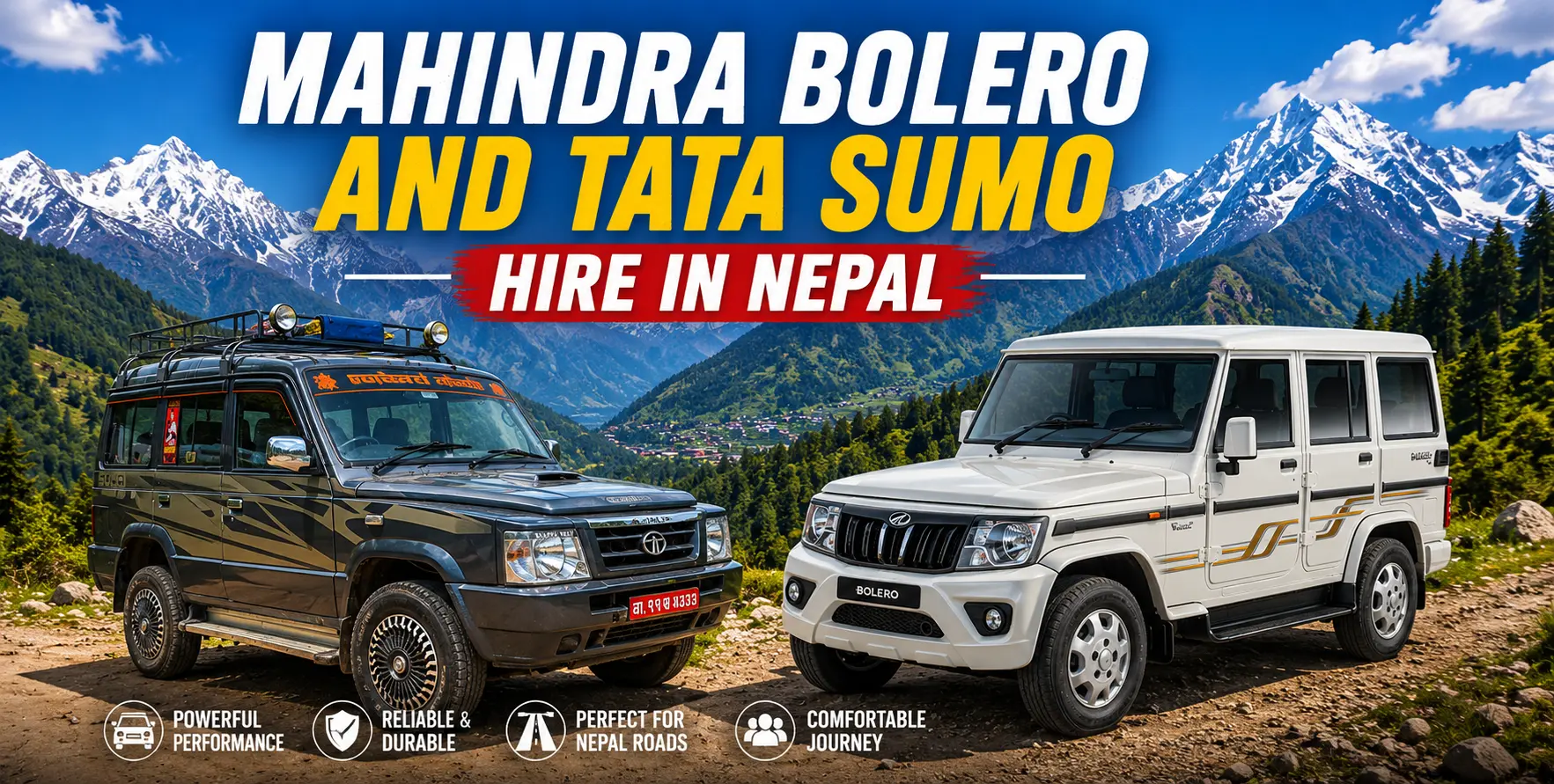
Bolero vs Sumo vs Scorpio – Choosing the Right Nepal Trekking Vehicle
| Factor | Bolero 4WD | Tata Sumo | Mahindra Scorpio 4WD |
| Capacity | 7 pax | 7-9 pax | 6-7 pax |
| Off-Road Rating | Excellent | Good-Excellent | Excellent |
| Ground Clearance | 180 mm | 175-185 mm | 180-200 mm |
| Interior Comfort | Functional / Basic | Spacious / Good | Comfortable / Better |
| Price Point | Most Affordable 4WD | Very Affordable | Mid-Range |
| Snow Chain Capable | Yes | Yes | Yes |
| Fuel Efficiency | 14-16 kmpl | 12-14 kmpl | 12-14 kmpl |
| Best For | Budget groups, all off-road routes | Large groups, 7- 9 pax, budget | Groups needing extra comfort + off-road |
When to Choose the Mahindra Bolero
Choose the Mahindra Bolero 4WD when:
- Your Group is 5–7 passengers — the Bolero fills exactly at maximum comfort
- Budget is a primary consideration — the Bolero is the most affordable genuine 4WD vehicle in the Indian vehicle market
- Route includes Category 3 or 4 off-road sections (Besisahar–Dharapani, Charikot–Kuri, Nayapul–Ulleri)
- Mechanical reliability in remote areas is paramount — the Bolero has the widest spare parts network of any 4WD in Nepal
- Winter Kalinchowk visit with snow chain requirement — the Bolero with snow chains is the standard Kalinchowk winter vehicle
When to Choose the Tata Sumo
Choose the Tata Sumo 4WD when:
- Your Group is 8–9 people — the Sumo’s larger capacity makes it the most economical single vehicle
- Maximum luggage space is required — the Sumo’s larger boot accommodates more trekking gear than the Bolero
- Long highway drive before the trailhead (e.g., KTM to Salleri, KTM to Taplejung) — Sumo’s more spacious cabin reduces fatigue on very long drives
- Budget is primary, AND group is 8+ — Groupe Sumo hire is more economical than two Bolero hires for groups of 8–9
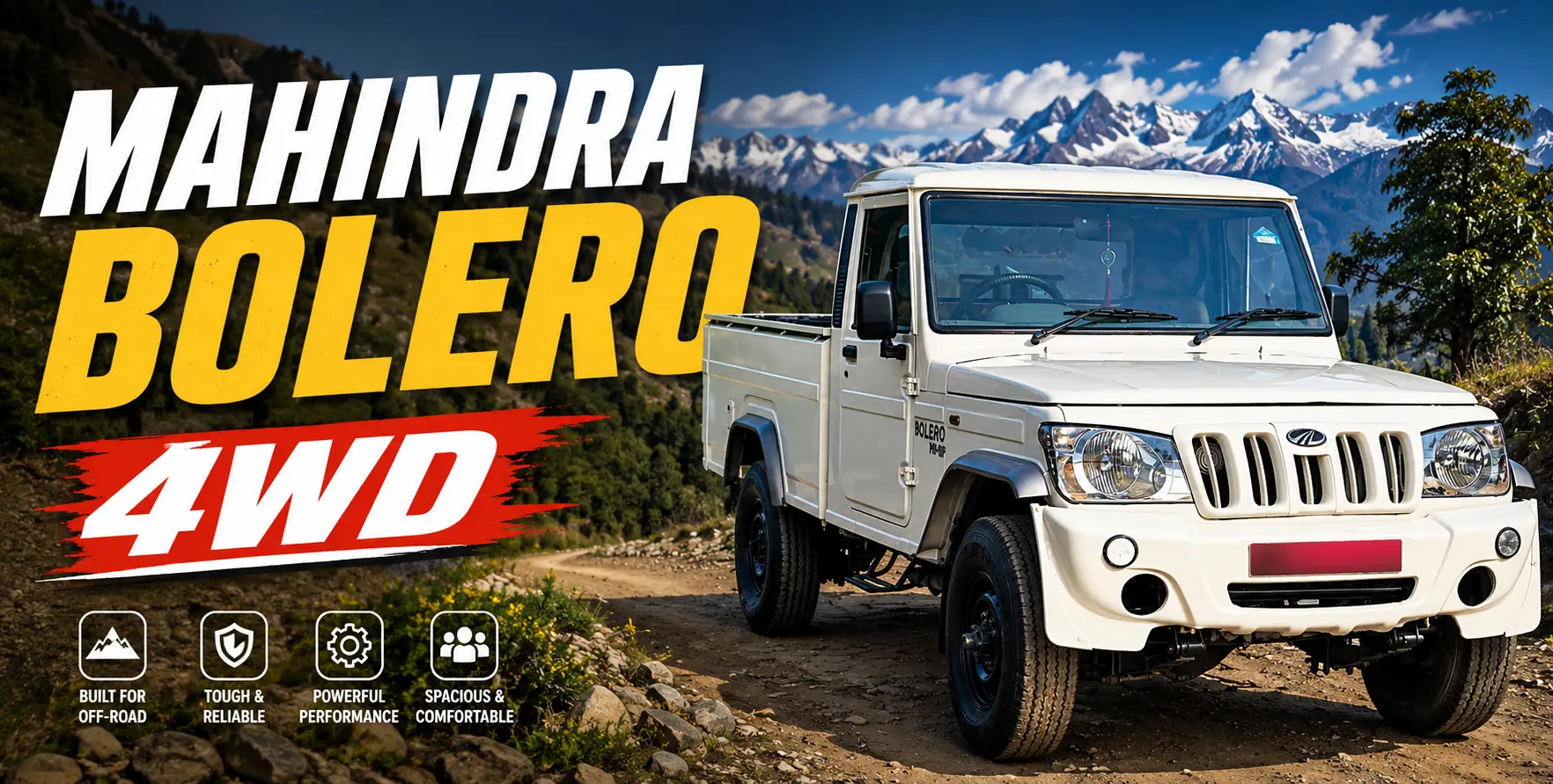
When to Upgrade to the Mahindra Scorpio
Upgrade from Bolero/Sumo to the Mahindra Scorpio 4WD when:
- Interior comfort is more important than cost — the Scorpio’s cabin is noticeably more refined than the Bolero’s
- The route is among Nepal’s most demanding (Muktinath, Ghorepani, extreme off-road), and the Group can hire the higher rate
- Group size is 6, and comfort for a long journey matters more than maximum budget efficiency
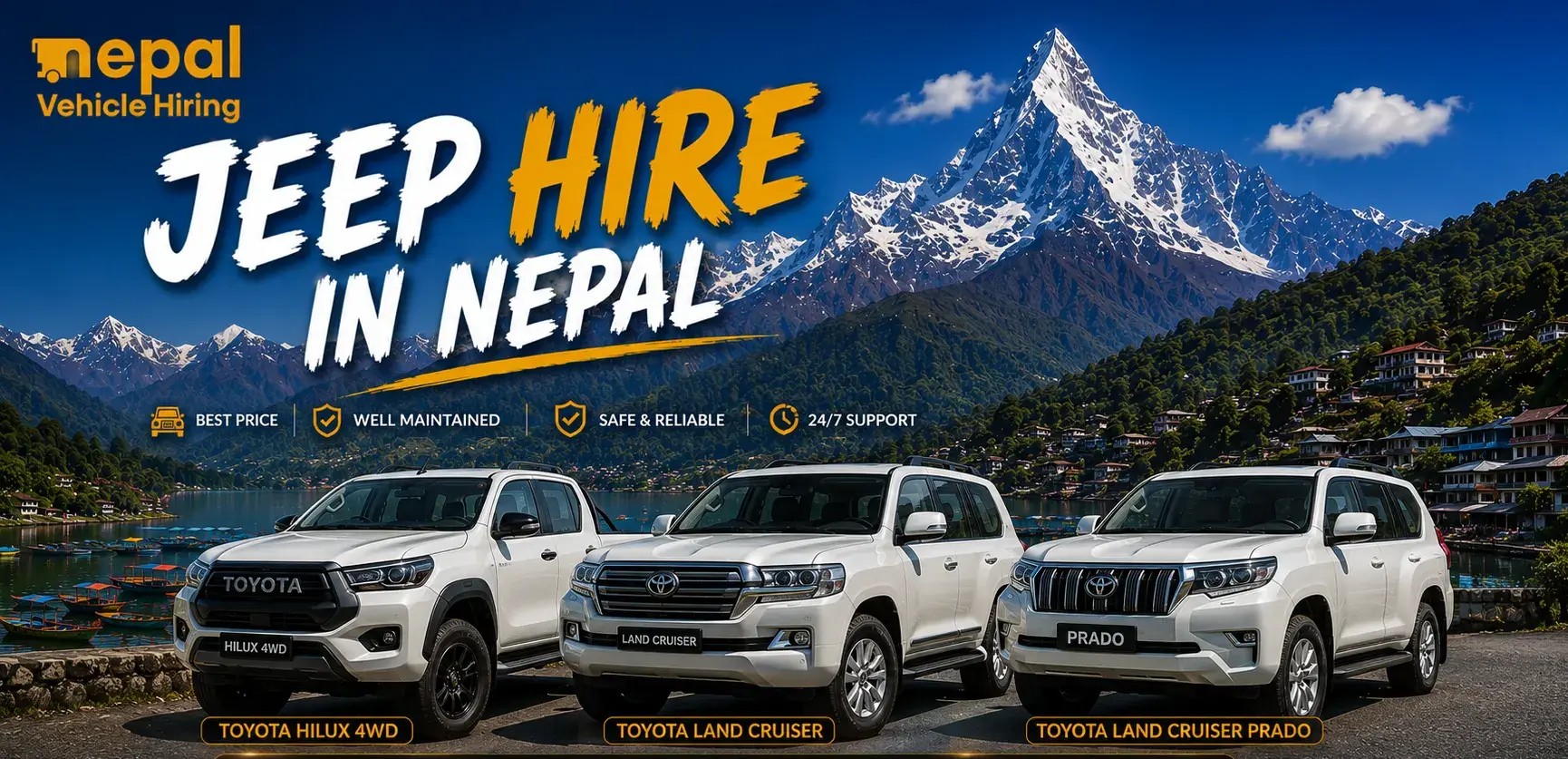
When to Choose the Toyota Land Cruiser
Upgrade to the Toyota Land Cruiser when:
- Upper Musta, ng beyond Kagbeni,eni is the destination — Land Cruiser only for this extreme terrain
- VIP pilgrims, elderly trekkers, or premium tour clients require maximum comfort alongside off-road capability
- Multi-week expeditions to Karnali, Dolpo, or other remote far-western regions require the highest available vehicle reliability .lity
Best Nepal Vehicle Hiring Options for Groups of All Sizes
| Group Size | Best Vehicle from Vehicle ehicle Hiring |
| Solo / 1-2 Trekkers | Bolero or Sumo shared with other passengers (ask Nepal VH for shared options) OR private Bolero at an affordable rate |
| Small Group (3-5 trekkers) | Mahindra Bolero 4WD (private) – most cost-effective per-person rate for this group size on all off-road routes |
| Standard Group (6-7 trekkers) | Mahindra Bolero 4WD seats exactly 7 passengers; it’s the lowest-priced vehicle forvehicle among private 4WD options. |
| Large Group (8-9 trekkers) | Tata Sumo (up to 9 pax in some configurations) OR two Bolero vehicles – most cost-effective for this size |
| Large Group (10-13 Groupers) | Toyota Hiace Van (8-13 pax) for highway section + Bolero 4WDs for off-road trailhead section |
| Large Group (14+ groups) | Hiace Van convoy OR Coaster for highway + multiple Bolero/Sumo for off-road. Nepal VH coordinates multi-vehicle arrangements. |
Seasonal Guide – Bolero and Sumo Trekking Transfers
| Season | Months | Off-Road Condition | Bolero / Sumo Performance | Book Ahead |
| Autumn | Oct-Nov | Dry – ideal | Maximum capability; all routes open | 1-2 weeks |
| Spring | Mar-May | Good | Excellent; rhododendron season | 5-7 days |
| Winter | Dec-Feb | Snow above 2,000 m | Snow chains fitted; Kuri/Ghorepani chain required | 1-2 weeks (Kalinchowk) |
| Monsoon | Jun-Sep | Muddy: landslide risk | Off-road reduced; highway fine | 3-5 days |
Autumn (October–November) – Peak Trekking Season
October and November represent the peak booking period for Bolero and Sumo trekking transfers across Nepal. The Annapurna Circuit, Everest, Langtang, and Muktinath routes are all at maximum demand, and the Besisahar–Dharapani and Nayapul–Ulleri off-road routes are in their best post-monsoon condition. Bolero and Sumo availability for October and November is limited — Nepal Vehicle Hiring strongly recommends booking 1–2 weeks in advance for all mountain trekking transfers during this period. Festival dates (Dashain, Tihar, Chhath Puja) see concentrated demand surges — book 2–3 weeks in advance for these dates.
Spring (March–May) – Rhododendron and Clear Skies
Spring brings the second major trekking season — rhododendron forests in bloom along the Annapurna and Langtang trails, warm temperatures at lower elevations, and excellent road conditions on all Bolero and Sumo routes. The Bolero’s Pokhara–Ghorepani route is at its most spectacular in spring, with the off-road forest track between Ulleri and Ghorepani lined with flowering rhododendrons. Book Bolero and Sumo 5–7 days ahead for standard spring dates; 10+ days ahead around Haribodhini Ekadashi and Nepal New Year dates when pilgrim traffic surges.
Winter (December–February) – Snow and the Bolero’s Greatest Test
Winter is the Bolero’s most dramatic season—when the vehicle’s capability and 4WD low-range become the deciding factors between reaching Kuri Village at Kalinchowk and getting stranded at Deurali. Nepal Vehicle Hiring’s winter Bolero fleet for Kalinchowk comes pre-equipped with snow chains. Experienced winter mountain drivers have driven this route dozens of times in snow conditions. Winter demand for Kalinchowk Bolero hire is extreme — book 2–3 weeks ahead for December–January snowfall weekends. Other trekking routes (Besisahar–Dharapani, Nayapul–Ulleri) are accessible in winter but require assessment of specific current conditions.
Monsoon (June–September) – Reduced Off-Road Access
During monsoon, the off-road sections of Nepal’s trekking transfer routes are significantly more challenging — mud, landslide debris, and swollen streams make the Besisahar–Dharapani track, the Charikot–Kuri section, and the Nayapul–Ulleri approach more technical and hazardous. Nepal Vehicle Hiring monitors road conditions daily during the monsoon and communicates clearly about route safety. During the monsoon, many trekking groups opt to drive only to the highway endpoint (Besisahar, Nayapul, Charikot) rather than attempt the full off-road section. The Bolero and Sumo are still deployed on all accessible monsoon routes — their ground clearance and 4WD capability provide the best available margin of safety in wet conditions.
Permits Required for Bolero and Sumo Trekking Transfers
All trekking areas served by Nepal Vehicle Hiring’s Bolero and Sumo transfers require permits. Obtain these before departure from Kathmandu or Pokhara — not at mountain checkpoints:
- ACAP (Annapurna Conservation Area Permit): NPR 3,000 (foreign nationals). Required for: Annapurna Circuit (Besisahar–Dharapani), Pokhara–Ulleri, Pokhara–Ghorepani, Muktinath, Jomsom, Tatopani. Obtain at NTB Kathmandu or Pokhara Damside.
- TIMS Card (Trekkers Information Management System): USD 20 (foreign trekkers). Required for all ACAP region entries. Same offices as ACAP.
- Gaurishankar Conservation Area Fee: NPR 1,000 per person. Pay the required fee for Linchowk Kuri Village, the entry point.
- Manaslu Conservation Area Permit (MCAP): NPR 3,000. Required for access to Tsum Valley and the Manaslu Circuit. Obtain at NTB Kathmandu.
- Langtang National Park Entry: NPR 3,000 (foreign nationals). For Syabrubesi and Langtang Circuit. Paid at the park entry.
Nepal Vehicle Hiring can advise on the exact permit requirements for your specific trekking route at the time of booking. Our drivers know all checkpoint locations and requirements.
What to Pack for Your Bolero or Sumo Trekking Transfer
- Documents: Passport, ACAP permit, TIMS card, travel insurance. All checked at mountain entry checkpoints.
- Cash (NPR): Withdraw in Kathmandu or Pokhara — the last reliable ATMs for most mountain routes. Carry NPR 10,000–20,000 per person for multi-day trekking.
- Secure Luggage: Pack expedition gear in waterproof duffel bags that fit efficiently in the Bolero/Sumo boot and roof rack. A trekking backpack (60–80 L) per person is standard.
- Warm Layers: Even on arrival-day jeep drives to high starting points (Dharapani 1,860 m, Ulleri 2,050 m), temperatures are significantly cooler than in Kathmandu or Pokhara. A fleece jacket accessible in the vehicle cabin is always useful.
- Snacks and Water: For the jeep drive itself — particularly on long routes like KTM to Besisahar (5–6 hours) or Pokhara to Dharapani (full day including Besisahar segment). Stop options are available at village teahouses along all routes.
- First Aid Essentials: Blister treatment, altitude sickness medication (if prescribed), paracetamol, ORS sachets, and any personal medications. Medical facilities beyond major towns are very limited.
How to Book Your Bolero or Sumo Trekking Transfer with Nepal Vehicle Hiring
- Step 1 – Contact Nepal Vehicle Hiring: Call or WhatsApp +977 981-4227196 or visit com/jeep. Share your trek start date, exact route (e.g., Besisahar to Dharapani), group size, luggage volume, Kathmandu or Pokhara hotel pickup address, and preferred departure time.
- Step 2 – Vehicle Recommendation: Nepal Vehicle Hiring confirms whether the Bolero, Sumo, or Scorpio is best for your route and group size, with transparent pricing for each option.
- Step 3 – Confirm and Book: Confirm the booking with the vehicle model, driver name, and pickup time. An advance deposit may be required for peak season dates.
- Step 4 – Permit Check: Confirm that all passengers have obtained the required permits (ACAP, TIMS, etc.) from NTB offices before departure day.
- Step 5 – Transfer Day: Driver arrives at your hotel. Luggage secured. The journey begins. Your trekking adventure starts from the hotel door.
Related Services – Nepal Vehicle Hiring
- Besisahar to Dharapani Jeep Hire (Annapurna Circuit)
- Pokhara to Ulleri Private Jeep (Poon Hill)
- Pokhara to Ghorepani Poon Hill Jeep Hire
- Kalinchok Scorpio and Jeep Hire
- Pokhara Airport to Muktinath Jeep Rental
- Muktinath Tour from Kathmandu Guide
- Luxury Jeep Hire Nepal (Land Cruiser)
- Nepal Trekking Packages
- Hiace Van Hire Nepal (Group Highway)
Frequently Asked Questions – Mahindra Bolero and Tata Sumo Nepal Trekking Transfers
What is the difference between the Mahindra Bolero and the Tata Sumo for trekking in Nepal?
The Bolero is Nepal’s most popular 4WD trekking transfer vehicle — best for groups of 5–7 passengers on all off-road mountain routes. It is the most affordable genuine 4WD option. The Tata Sumo accommodates 7–9 passengers — ideal for larger groups needing a single vehicle. Both are proven off-road 4WD vehicles; the Sumo’s advantage is capacity, the Bolero’s is wider availability of spare parts and more route-specific driver expertise.
Is the Mahindra Bolero 4WD good enough for the Annapurna Circuit jeep transfer?
Yes — the Mahindra Bolero 4WD is fully capable of the Besisahar to Dharapani section of the Annapurna Circuit in dry season conditions. Its switchable 4WD (including low-range), 180 mm ground clearance, and proven diesel engine handle every section of the Marsyangdi valley track. During the monsoon or after heavy rain, assess road conditions before departure — Nepal Vehicle Hiring monitors them daily.
How many passengers can fit in a Bolero for a trekking transfer?
The Mahindra Bolero has a 7-passenger capacity (2+3+2 layout). For a trekking transfer with full expedition packs, Nepal Vehicle Hiring recommends a maximum of 7 passengers with moderate luggage, or 6 passengers with large expedition packs to maintain comfortable luggage space. For 8+ passengers, we recommend a Tata Sumo (up to 9 pax) or a second Bolero.
Is the Tata Sumo 4WD suitable for off-road trekking routes in Nepal?
Yes — Nepal Vehicle Hiring operates Tata Sumo 4WD versions specifically for off-road trekking transfers. When booking, always confirm the vehicle type if your route includes off-road sections. Nepal Vehicle Hiring guarantees 4WD specification on all Sumos dispatched for mountain trekking transfers.
Which is better for Kalinchowk – Bolero or Scorpio?
Both the Mahindra Bolero and Scorpio are excellent for Kalinchowk. The Bolero is more affordable and equally capable on the Charikot–Kuri off-road section. The Scorpio offers slightly better interior comfort at a higher price. For budget-conscious groups of 7, the Bolero is the most cost-effective vehicle in Kalinchowk. For groups of 5–6 who prioritise comfort, the Scorpio is worth the extra cost. Both receive snow chains for December–February visits to Kalinchowk.
Can I hire a Bolero or Sumo for a multi-day trekking circuit?
Yes — Nepal Vehicle Hiring provides multi-day Bolero and Sumo hire for complete trekking circuit transfers. For example: Day 1 Kathmandu to Besisahar to Dharapani (drop for Annapurna Circuit trek); [6–14 trekking days]; Return pickup at Nayapul (Annapurna Circuit end) → Kathmandu. The driver will wait or return for pickup as arranged. We confirm all multi-day arrangements at the time of booking with fully transparent pricing.
How does the Bolero compare to the Toyota Land Cruiser for trekking transfers?
The Land Cruiser is superior in every dimension of performance and comfort—greater ground clearance, a more powerful engine, better high-altitude performance, a far more refined interior, and superior off-road technology (multi-terrain select, crawl control). However, the Bolero is the more cost-effective choice for most standard Nepal trekking routes (Besisahar–Dharapani, Kalinchowk, Pokhara–Ulleri), where the Bolero’s capability is fully adequate, and the cost difference matters for budget trekking groups. The Land Cruiser becomes the clear recommendation for Upper Mustang, extremely remote routes, VIP pilgrimages, and premium tour groups.
Is the Bolero suitable for the journey to Muktinath via Pokhara–Beni?
The Mahindra Bolero 4WD can handle the Pokhara–Muktinath route via Beni and the Kali Gandaki Valley and is regularly used on it. Nepal Vehicle Hiring recommends the Toyota Land Cruiser or Mahindra Scorpio for Muktinath because of the longer distances, greater altitude gain, and the steep final approach from Kagbeni to Muktinath. However, for budget-conscious pilgrim groups with tight timetables who stop only at Muktinath (not extending to Upper Mustang), the Bolero is a cost-effective and fully adequate option.
Do Bolero and Sumo vehicles come with professional drivers?
Yes — all Nepal Vehicle Hiring Bolero and Sumo hires include a professional, licensed, experienced mountain driver as standard. Self-drive is not available. Nepal Vehicle Hiring’s mountain drivers are route-specifically experienced — Bolero drivers assigned to the Besisahar–Dharapani route have driven it dozens of times; Kalinchowk drivers know every section of the Charikot–Kuri track in all seasons. Driver expertise is as important as vehicle capability on Nepal’s mountain routes.
What happens if the Bolero breaks down on a remote mountain route?
Nepal Vehicle Hiring regularly services and mechanically inspects its Bolero fleet before every mountain departure. In the unlikely event of a breakdown, our drivers carry basic tools and emergency contacts; the Bolero’s wide spare parts availability means most districts have accessible components; Nepal Vehicle Hiring’s 24/7 operations line (+977 981-4227196) coordinates support, including replacement vehicle dispatch where possible; and travel insurance covering vehicle breakdown delay is recommended for all trekking groups. The Bolero’s mechanical simplicity makes on-road repair far more likely than with more technologically complex vehicles.
Book Your Mahindra Bolero or Tata Sumo Trekking Transfer Today
The Mahindra Bolero and Tata Sumo are the real workhorses of Nepal’s trekking transport ecosystem — unflashy, unpretentious, and utterly dependable in the mountain conditions that matter most. They have carried hundreds of thousands of trekkers to trailheads across Nepal’s greatest wilderness circuits — the Annapurna Circuit, the Langtang Valley, the Everest Base Camp approach, the Poon Hill trail, the Muktinath pilgrimage route — and they continue to do so every day, in every season, in conditions that test both vehicles’ and drivers ‘ limits.
Nepal Vehicle Hiring Pvt Ltd’s Bolero and Sumo fleet meets the highest standards in Nepal’s trekking transfer market — regularly serviced, snow-chain-equipped for winter, driven by route-specific, experienced professional drivers, and supported by our 24/7 operations team. Whether you are a budget-conscious trekking group of 7 heading to Besisahar, a family of 9 bound for Syabrubesi, or a pilgrim party of 7 making the Kalinchowk snow pilgrimage in January — Nepal Vehicle Hiring’s Bolero or Sumo gets you there and brings you back safely.
Call / WhatsApp: +977 981-4227196 | Website: vehiclehiringnepal.com | Book Bolero or Sumo Jeep | Nepal Trekking Packages
- Mahindra Bolero & Tata Sumo: Nepal's Most Popular Trekking Transfer Vehicles
- Mahindra Bolero & Tata Sumo – Complete Specifications
- The Mahindra Bolero – Nepal's Most Widely Hired Trekking Vehicle
- The Tata Sumo – Nepal's Large-Group Trekking Transfer Vehicle
- Why Bolero and Sumo Dominate Nepal's Trekking Transfer Market
- Bolero and Sumo Trekking Transfer Routes – Complete Guide
- Bolero vs Sumo vs Scorpio – Choosing the Right Nepal Trekking Vehicle
- Best Nepal Vehicle Hiring Options for Groups of All Sizes
- Seasonal Guide – Bolero and Sumo Trekking Transfers
- Permits Required for Bolero and Sumo Trekking Transfers
- What to Pack for Your Bolero or Sumo Trekking Transfer
- How to Book Your Bolero or Sumo Trekking Transfer with Nepal Vehicle Hiring
- Related Services – Nepal Vehicle Hiring
- Frequently Asked Questions – Mahindra Bolero and Tata Sumo Nepal Trekking Transfers
- Book Your Mahindra Bolero or Tata Sumo Trekking Transfer Today

Related Blog & Articles

4WD Himalayan Jeep in Nepal

All Over Nepal Vehicle Hire – Private Car, Scorpio, 4WD Jeep, Hiace And Tourist Bus

Why Choose a 4WD Jeep for Mountain Roads in Nepal?