One-Way Jeep Rental for Nepal Treks: Complete Guide
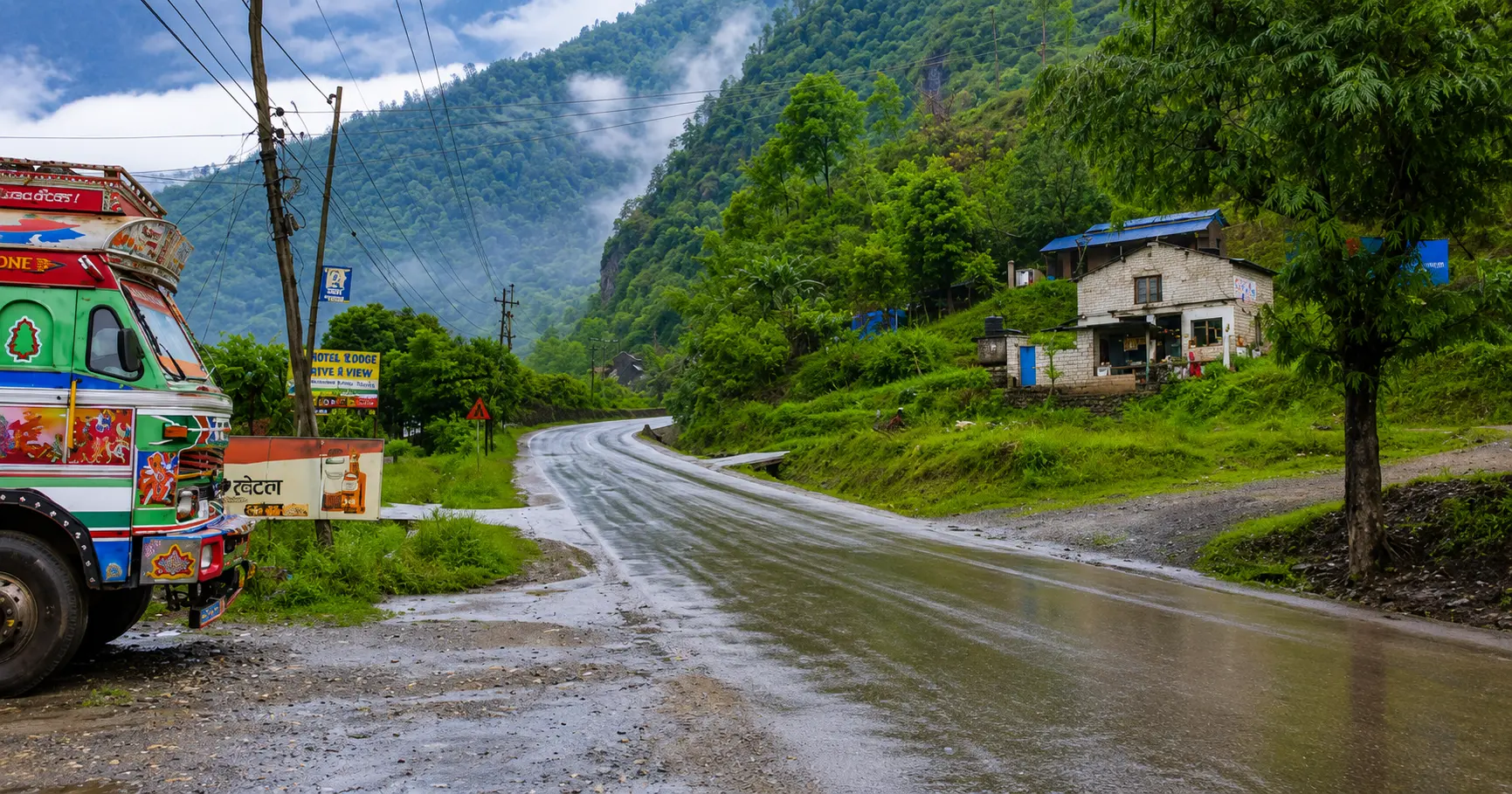
One-Way Jeep Rental for Nepal Treks: Complete Guide
For trekkers heading to Nepal’s great mountain circuits, a one-way jeep rental is one of the most practical and cost-effective transport choices. This private 4WD vehicle takes a trekking group from their Kathmandu or Pokhara hotel to the trailhead, with no return vehicle to pay for. Unlike return vehicle hire (where the empty jeep must drive back, adding cost), a one-way jeep hire is priced for the single direction only, making it the most economical private vehicle option for trek approaches where the group will complete the circuit and exit at a different point, fly out from a mountain airport, or arrange separate return transport.
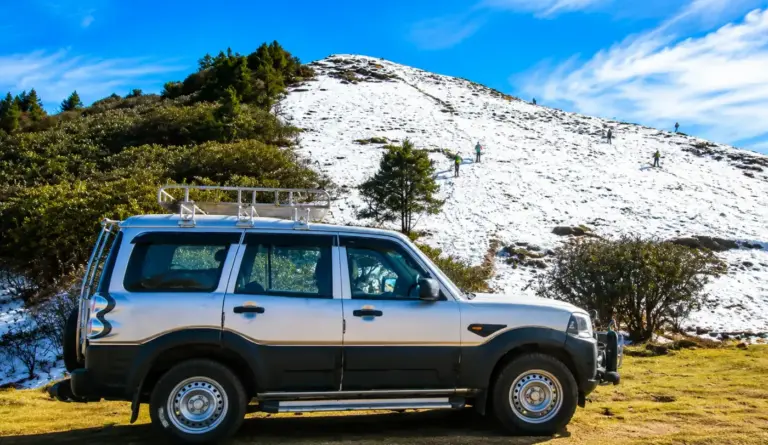
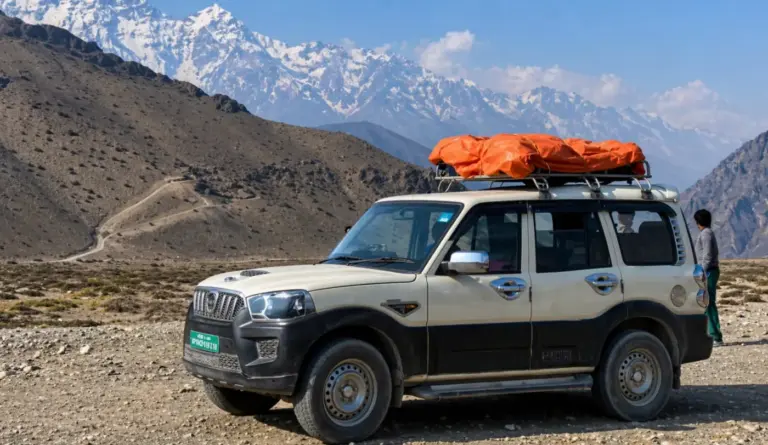
Nepal Vehicle Hiring Pvt. Ltd., based in Thamel, Kathmandu, provides one-way jeep rentals for all major Nepal trekking approaches, from the Annapurna Circuit’s Besisahar gateway to the Everest region’s Paiya and Surke trailheads, and from the Langtang approach at Syabrubesi to the Manaslu Circuit’s Arughat start point. Our 4WD jeep hire fleet of Mahindra Scorpio and Toyota Land Cruiser vehicles covers every trailhead on Nepal’s trekking network, with all-inclusive one-way pricing confirmed before departure.
This complete guide covers one-way jeep rental prices for Nepal’s main trekking approaches, the routes and road conditions for each trailhead, when one-way hire makes more sense than return hire, and how Nepal Vehicle Hiring’s one-way service works.
Why One-Way Jeep Rental Makes Sense for Nepal Trekking
The one-way jeep hire model is specifically suited to Nepal trekking because Nepal’s finest treks are circuits — they start at one trailhead and end at a different point:
- Annapurna Circuit: starts at Besisahar (or Chame) and ends at Nayapul (for Pokhara) — the trekker does not return to Besisahar, making a return vehicle to Besisahar unnecessary
- Everest Base Camp via Paiya: starts at Paiya/Surke (vehicle drop) and exits via Lukla domestic flight — a return vehicle to the Kathmandu trailhead is not needed.
- Langtang Valley Trek: starts at Syabrubesi (vehicle drop) and returns to Syabrubesi — here, return hire may be preferred, or the trekker arranges a separate return vehicle on completion
- Manaslu Circuit: starts at Arughat/Soti Khola (vehicle drop) and ends at Dharapani (separate vehicle pickup) — two one-way vehicles, not one return vehicle.
- Gosaikunda Trek: starts at Dhunche (vehicle drop) and can exit at Sundarijal/Kathmandu — circuit exit different from entry point
For all circuit treks and any trek that exits via domestic flight, the one-way jeep hire is the most appropriate and most economical option. Nepal Vehicle Hiking’s one-way pricing reflects fuel, driver time, and road costs for a single direction—significantly lower than return vehicle hire for the same approach.
One-Way Jeep Rental Prices: All Major Nepal Trailheads
Annapurna Circuit Approach — Kathmandu to Besisahar
Route: Kathmandu → Dumre junction (Prithvi Highway) → Besisahar (823 m, 175 km, 4 to 5 hours)
- Mahindra Scorpio (4–7 pax), one-way: NPR 9,000–26,000
- Toyota Land Cruiser (4–5 pax), one-way: NPR 13,000–50,000
- Hiace van (8–14 pax) to Besisahar highway section, one-way: NPR 12,000–30,000
See Nepal Vehicle Hiring’s dedicated Besisahar private vehicle service and Kathmandu to Besisahar bus ticket pages for full details.
Annapurna Circuit Extended — Kathmandu to Chame or Manang
Route: Kathmandu → Besisahar → Chame (2,670 m, 237 km, 8 to 10 hours, Day 2 from Besisahar) or Manang (3,519 m, 272 km, additional 3 to 4 hours beyond Chame). 4WD mandatory beyond Besisahar.
- Kathmandu to Chame, one-way Scorpio: US$398
- Kathmandu to Manang, one-way Scorpio: US$558
See Nepal Vehicle Hiring’s Kathmandu to Manang jeep page for full Manang approach details.
EBC / Annapurna Solu Approach — Kathmandu to Paiya or Surke
Route: Kathmandu → BP Highway → Salleri → Thamdanda → Paiya (2,730 m, ~320 km, 10 to 14 hours over 2 days) or Surke (2,290 m, 15 km beyond Paiya). 4WD beyond Salleri.
- Kathmandu to Paiya, one-way Scorpio (2 days): NPR 26,000–45,000
- Kathmandu to Surke, one-way Scorpio (2 days): NPR 28,000–55,000
See Nepal Vehicle Hiring’s Everest Base Camp trek transport page.
Langtang Trek — Kathmandu to Syabrubesi
Route: Kathmandu → Betrawati → Dhunche → Syabrubesi (1,462 m, 117 km, 5 to 7 hours). The road is paved to Dhunche, then rough gravel from Dhunche to Syabrubesi. 4WD recommended.
- Kathmandu to Syabrubesi, one-way Scorpio: NPR 14,000–26,000
- Kathmandu to Dhunche (Gosaikunda approach), one-way Scorpio: US$160
Manaslu Circuit — Kathmandu to Arughat or Soti Khola
Route: Kathmandu → Gorkha (135 km, 4 hours Prithvi Highway) → Arughat Bazaar (30 km off highway, rough road, 1.5 hours) → Soti Khola (Manaslu Circuit trailhead, 15 km further). 4WD recommended beyond Gorkha.
- Kathmandu to Arughat, one-way Scorpio: NPR 13,000–26,000
- Kathmandu to Soti Khola, one-way Scorpio: US$250
Mustang and Muktinath — Pokhara to Jomsom / Muktinath
Route: Pokhara → Beni → Tatopani → Jomsom (2,720 m, 180 km, 6 to 8 hours, 4WD mandatory) or Muktinath (3,710 m, 18 km beyond Jomsom, 1 more hour).
- Pokhara to Jomsom, one-way Scorpio: US$203
- Pokhara to Muktinath, one-way Scorpio: US$313
- Kathmandu to Muktinath (via Pokhara, 2 days), one-way Land Cruiser: NPR 38,000–12,0000
See Nepal Vehicle Hiring’s Muktinath Yatra itinerary and Pokhara to Mustang jeep pages.
Upper Mustang — Pokhara to Kagbeni or Lo Manthang
Route: Pokhara → Beni → Jomsom → Kagbeni (2,810 m, 8 km beyond Jomsom). Beyond Kagbeni to Lo Manthang (3,840 m) requires an Upper Mustang Restricted Area Permit and ACAP. 4WD essential throughout.
- Pokhara to Kagbeni, one-way Scorpio: NPR 16,000–40,000
- Kathmandu to Lo Manthang (2 days), one-way Land Cruiser: NPR 50,000–1,00,000
See Nepal Vehicle Hiring’s Kathmandu to Mustang private jeep page.
Kanchenjunga Trek — Kathmandu to Taplejung
Route: Kathmandu → Biratnagar (domestic flight or 12-hour road) → Taplejung (210 km from Biratnagar, rough eastern Nepal road, 8 to 10 hours, 4WD). Most trekkers fly Kathmandu- Biratnagar, then take the road to Taplejung.
- Biratnagar to Taplejung, one-way Scorpio: NPR 18,000–30,000
Dolpo Trek — Nepalgunj to Juphal
Route: Nepalgunj → domestic flight to Juphal Airport (Dolpo). Vehicle not required for the Dolpo approach — domestic flight is the standard access. Nepal Vehicle Hiring’s Hiace van hire serves Kathmandu-to-Nepalgunj for the domestic flight staging.
- Kathmandu to Nepalgunj (highway), one-way Hiace: NPR 18,000–26,000
One-Way vs Return Jeep Hire: When to Choose Each
Choose One-Way When:
- The trek is a circuit, and the exit trailhead differs from the entry trailhead (Annapurna Circuit, Manaslu Circuit, Three Passes Trek)
- The trek exits via a domestic flight from a mountain airport (Lukla for EBC, Jomsom for Annapurna Circuit/Mustang, Juphal for Dolpo)
- A separate post-trek vehicle is pre-arranged from the circuit exit point (Manaslu Circuit ends at Dharapani — a separate vehicle pickup is booked for the return)
- Budget is a priority — one-way hire is 30 to 45 per cent cheaper than return hire for the same vehicle and route
- The group does not know the exact return date (one-way avoids paying for a return vehicle that may be unused if the trek schedule shifts)
Choose Return When:
- The trek goes to a single destination and returns the same way (Annapurna Base Camp from Nayapul out-and-back, Gosaikunda from Dhunche out-and-back)
- The group needs the vehicle available at the trailhead for an uncertain return date (expedition base camp support vehicles)
- The route has no alternative return transport option, and the same driver/vehicle is needed for safety continuity
4WD Routes: Where the Jeep is Non-Negotiable
Nepal Vehicle Hiking deploys 4WD jeeps (Mahindra Scorpio or Toyota Land Cruiser) for all trekking approach routes beyond the main highway network. The following sections specifically require 4WD — a standard car or Hiace van is inappropriate and potentially dangerous:
- Besisahar to Chame / Manang (Annapurna Circuit): river crossings, loose gravel, gradient climbs — 4WD mandatory
- Beni to Jomsom / Muktinath (Kali Gandaki gorge): cliff-cut road, narrow passages, gradient — 4WD mandatory
- Salleri to Paiya / Surke (Solu Khumbu approach): rough mountain track, river crossings — 4WD mandatory
- Dhunche to Syabrubesi (Langtang): rough gravel, steep sections — 4WD strongly recommended
- Gorkha to Arughat / Soti Khola (Manaslu Circuit): rough off-road track — 4WD recommended
- Kagbeni to Lo Manthang (Upper Mustang): high-altitude rough track, river crossings — 4WD essential, Restricted Area Permit required
Nepal Vehicle Hiring’s 4WD jeep hire fleet covers all these sections. Our drivers are specifically briefed on each route’s current conditions before deployment.
How Nepal Vehicle Hiring’s One-Way Jeep Service Works
- WhatsApp with your departure city (Kathmandu or Pokhara hotel address), trailhead destination, trekking group size, and preferred departure date.
- Nepal Vehicle Hiring confirms one-way jeep availability and sends an all-inclusive NPR quote within 2 to 4 hours — covering vehicle, driver, fuel, and all road charges for the one-way journey.
- For mountain approach routes requiring overnight (Paiya/Surke, Manang, Lo Manthang): the all-in price includes driver accommodation and meals en route.
- Written booking confirmation sent via WhatsApp/Email: vehicle type, driver name and phone, departure time, hotel pickup address, trailhead destination, and all-in price
- The vehicle collects from the hotel door at the confirmed time. One-way delivery to the trailhead. Balance payment (if any) in NPR or USD cash at the trailhead drop.
- If the group needs a post-trek vehicle pickup from the circuit exit (Nayapul after Annapurna Circuit, Dharapani after Manaslu, Jomsom after descent), Nepal Vehicle Hiring pre-books this return pickup at the same time as the one-way approach booking — complete Nepal trekking transport certainty in a single arrangement
Trekking Permit Reminders for One-Way Jeep Clients
- Annapurna Conservation Area Permit (ACAP): NPR 3,000 per foreign national. Nepal Tourism Board office, Thamel, Kathmandu. Mandatory for all trekkers on the Annapurna Circuit, Muktinath, Mustang, and ABC.
- TIMS Card: NPR 2,000 per person. Same NTB office. Mandatory for all registered Nepal trekking routes.
- Manaslu Restricted Area Permit (MRAP): USD 100 per person per week. Requires a licensed trekking agency. Mandatory for Manaslu Circuit above Arughat.
- Upper Mustang Restricted Area Permit: USD 500 per person per 10 days. Requires a licensed agency. Mandatory beyond Kagbeni.
- Sagarmatha National Park Permit: NPR 3,000 per foreign national. Mandatory for all Khumbu trekkers, including EBC via Paiya/Surke.
- Langtang National Park Permit: NPR 3,000 per foreign national. Mandatory for Langtang, Gosaikunda, and Helambu trekkers.
Nepal Vehicle Hiking recommends obtaining all required permits in Kathmandu before the one-way jeep departure. The NTB Thamel office processes ACAP and TIMS the same day. Our Kathmandu sightseeing service can coordinate the permit office visit on the Kathmandu preparation day.
Frequently Asked Questions: One-Way Jeep Nepal Treks
Is one-way jeep hire cheaper than return hire?
Yes — Nepal Vehicle Hiring’s one-way price is 30 to 45 per cent lower than the equivalent return hire for the same route. For example, the Kathmandu-to-Besisahar return hire (vehicle drives back empty) costs approximately NPR 16,000 to 22,000; the one-way is NPR 9,000 to 14,000. For all circuit treks and flight-exit treks, one-way hire is always more economical.
Can I book the trailhead pickup separately after the trek?
Yes — Nepal Vehicle Hiking pre-books the trailhead return pickup (Nayapul pickup after Annapurna Circuit, Dharapani pickup after Manaslu, Surke pickup after EBC return) as a separate one-way booking at the time of the approach one-way booking. This ensures both legs are confirmed before the trek begins with no last-minute trailhead vehicle scramble at circuit completion.
Does Nepal Vehicle Hiring do one-way drops to Ramechhap Airport?
Yes — the Kathmandu-to-Manthali (Ramechhap) one-way pre-dawn vehicle for the Lukla flight approach is one of Nepal Vehicle Hiring’s most booked trekking transport services. See the Everest Base Camp trek transport page for details on the Ramechhap service—price: approximately NPR 8,000 to 13,000 one-way for an early-morning Kathmandu-to-Manthali jeep or Hiace.
What if the trek finishes late and the pickup vehicle is waiting?
Nepal Vehicle Hiring’s post-trek pickup bookings include a 24-hour flexibility window at no additional charge—if the trekking group’s finish date shifts by 1 day due to weather or altitude, we can reschedule the pickup at no cost. For delays beyond 24 hours, a modest daily rebooking charge applies. Contact our operations team on WhatsApp from the trail to reschedule any pickup.
Are all trekking approach roads accessible year-round for jeeps?
Most trekking approach roads are accessible year-round with appropriate 4WD vehicles. The most weather-sensitive sections are: Besisahar-to-Chame/Manang (monsoon river crossings may be impassable for 1 to 3 days), Kali Gandaki gorge road (occasional monsoon landslides), and Salleri-to-Paiya/Surke (monsoon soft sections). Nepal Vehicle Hiking monitors road conditions daily and advises on the current status before any departure for a mountain approach.
Book Your One-Way Jeep with Nepal Vehicle Hiring
- 4WD jeep hire — one-way to all Nepal trekking trailheads
- Kathmandu to Manang jeep — Annapurna Circuit upper approach
- Besisahar private vehicle service — Annapurna Circuit gateway
- Kathmandu to Besisahar bus ticket
- Pokhara to Mustang jeep — Kali Gandaki one-way approach
- Kathmandu to Mustang private jeep
- Muktinath Yatra itinerary
- Everest Base Camp trek transport — Ramechhap and Paiya/Surke approaches
- Trekking transport services — all Nepal trekking trailhead vehicles
- Pokhara to Nayapul transportation — post-circuit Annapurna pickup
- Hiace van hire — group trekking approach on highway sections
- Kathmandu sightseeing service — permit and preparation day coordination
- Nepal holiday tour and Nepal tour package
- WhatsApp / Call: WhatsApp
- Emai:[email protected]
- www.vehiclehiringnepal.com
Visit our Plan Your Trip page and enter your trailhead, group size, trek circuit, and departure city. Nepal Vehicle Hiring confirms the one-way jeep availability, all-in price, and both approach and post-circuit pickup in a single 24-hour response. The trek begins at the trailhead — Nepal Vehicle Hiring drives you there.
The Trailhead Approach: Why the First Vehicle Matters
For trekkers who have spent months planning a Nepal trek — booking international flights, arranging trekking permits, selecting a guide and porter service, and packing and repacking their kit — the trailhead approach vehicle is often an afterthought. It shouldn’t be.
The vehicle that delivers a trekking group to the trailhead sets the physical and psychological tone for the days ahead, and a poor approach vehicle experience — a breakdown on the Prithvi Highway, a wrong drop-off point, an unexpectedly cramped vehicle that has trekkers arriving tired and uncomfortable — can undermine the first trekking day before it has begun.
Nepal Vehicle Hiring’s one-way jeep service for trekking approaches is specifically designed around the trekker’s needs at this first critical moment: a confirmed pickup from the Kathmandu or Pokhara hotel at the exact departure time (critical for the Ramechhap 3:00 AM departure or the Nagarkot-style pre-dawn approach roads), a vehicle with adequate luggage space for expedition packs, porter bags, and group equipment, and a driver who knows the specific trailhead — not just the general area — and delivers the group to the correct starting point rather than the nearest village.
On a trek where every calorie counts, the difference between being dropped at the right trailhead gate and being dropped at the wrong village 2 kilometres away is meaningful. Nepal Vehicle Hiring’s trailhead-specific driver briefing ensures the group arrives where the trail begins, not at the nearest road-end approximation.
Nepal’s Trekking Road Network: What Has Changed
Nepal’s trekking approach road network has expanded significantly over the past decade, changing what you can reach by vehicle and what remains trail-only. Understanding the current state of Nepal’s mountain road network helps trekkers make optimal decisions about where to take the jeep and where to start walking:
Annapurna Circuit Road (Besisahar to Manang)
The road from Besisahar through Chame to Upper Pisang and Humde (near Manang) is largely complete, though the surface quality varies significantly by section. Most sections are passable by 4WD in the dry season; after heavy rain, some become difficult.
The road’s completion has reduced the classic lower-circuit walking significantly — many trekkers now drive to Chame or Manang and begin the classic circuit from the upper valley. Nepal Vehicle Hiring offers one-way jeep drops in Besisahar, Chame, Upper Pisang, or Manang, depending on the trekking group’s preference and available walking time.
Solu Khumbu Road (Salleri to Surke)
The road from Kathmandu via the BP Highway to Salleri has been paved for years. Beyond Salleri, the road to Phaplu, Thamdanda, Paiya, and the December road extension to Surke (approximately 15 km below Lukla) has transformed the Everest overland approach.
The Surke road completion means vehicle drop-off within a 45-minute walk of Lukla — a dramatic change from the 5-day walk from Jiri that defined the classic EBC overland approach. Nepal Vehicle Hiring’s one-way jeep to Paiya or Surke is now the standard overland EBC approach vehicle.
Langtang Road (Betrawati to Syabrubesi)
The road from Kathmandu to Syabrubesi (Langtang valley entrance) is one of Nepal’s most scenic approach drives — through the Trishuli valley and the forested ridges of Rasuwa District. The 2015 earthquake heavily damaged the road, but it has been rebuilt and is now largely reliable. Nepal Vehicle Hiring’s one-way Scorpio jeep covers this route comfortably for trekkers to Langtang and Gosaikunda.
Manaslu Circuit Road (Gorkha to Soti Khola)
The Manaslu Circuit approach road from Gorkha, south of the Prithvi Highway, to Arughat Bazaar and then Soti Khola (the circuit’s common starting trailhead) is passable by 4WD throughout the trekking season. Nepal Vehicle Hiring’s one-way Scorpio covers Kathmandu to Soti Khola in a single day, with an early departure from Kathmandu.
Packing for the One-Way Jeep to Trailhead
The one-way jeep to the trailhead is the last chance trekkers have to access hotel facilities—a room to reorganise, a hot shower, electricity to charge devices, and the last reliable shopping opportunity before the mountain circuit begins. Nepal Vehicle Hiring’s advice for trekkers on the morning of the one-way jeep departure:
- Reorganise your pack the night before: you may arrive at the trailhead in the afternoon (Manang approaches arrive by 5:00 to 6:00 PM on Day 2 from Kathmandu), and reorganising your pack at a mountain trailhead is difficult. Do the final pack sort the evening before departure in the hotel room.
- Charge all devices before departure: the trekking circuit above most trailheads has limited charging infrastructure. The hotel room on the night before jeep departure is the last reliable charging point — charge everything (camera, phone, GPS, headtorch batteries, power banks) to maximum.
- Carry snacks and water in the jeep day bag: Nepal Vehicle Hiring’s one-way mountain approach drives are 3 to 10+ hours depending on the trailhead. Carry energy bars, biscuits, and 1.5 litres of water per person in an accessible day bag rather than in the main expedition pack that goes in the jeep roof rack.
- Wear or carry trekking boots from Kathmandu: the trailhead arrival is often directly into the first hour of walking — if trekking boots are packed in the main luggage rather than worn in the vehicle, the transition from jeep to trail is awkward. Wear trekking boots in the vehicle for mountain approach routes.
- Confirm trail start point with driver at hotel: Nepal Vehicle Hiring’s driver knows the specific trailhead for each trek — confirm the exact drop point (the main trail junction, the permit checkpoint, or the specific teahouse where the trek begins) at the start of the journey so there is no ambiguity at arrival.
Post-Trek Return: Completing the One-Way Circuit
The one-way jeep to the trailhead is most economical when you plan the post-trek return. Nepal Vehicle Hiring’s post-trek return vehicle options for each major circuit:
Annapurna Circuit — Post-Trek from Nayapul
The standard Annapurna Circuit exit is at Nayapul (1,070 m) on the Pokhara-Beni road — 42 km from Pokhara Lakeside. Nepal Vehicle Hiring’s Pokhara-to-Nayapul service includes a pickup: the vehicle meets the trekking group at the Nayapul road junction. It drives to Pokhara Lakeside (1 to 1.5 hours) for the post-trek hotel.
This Nayapul pickup is pre-booked as a one-way return at the same time as the Kathmandu-to-Besisahar one-way approach — complete circuit transport in a single booking.
EBC Trek — Post-Trek Lukla-to-Kathmandu Flight
Most EBC trekkers who used the Paiya/Surke one-way jeep approach return from Lukla by domestic flight to Kathmandu (or via Manthali/Ramechhap). Nepal Vehicle Hiring’s Kathmandu airport transfer meets the Lukla flight arrival at TIA and delivers the group to their Thamel hotel — completing the trekking circuit with a confirmed return vehicle. For trekkers descending to Surke for the return to Kathmandu, Nepal Vehicle Hiring pre-arranges a one-way Surke-to-Kathmandu jeep before the trek begins.
Manaslu Circuit — Post-Trek from Dharapani
Manaslu Circuit trekkers who complete the Larkya La crossing emerge at Dharapani on the Annapurna Circuit road. Nepal Vehicle Hiring’s Dharapani-to-Kathmandu one-way vehicle meets the group at the Dharapani road junction — a separate one-way booking that completes the Manaslu Circuit transport pair. Some groups continue the Annapurna Circuit from Dharapani and exit at Nayapul, using Nepal Vehicle Hiring’s Nayapul pickup as the final return vehicle.
Langtang — Post-Trek from Syabrubesi
Langtang Valley trekkers who return from the Syabrubesi trailhead use Nepalcan Vehicle Hiring’s Syabrubesi-to-Kathmandu one-way vehicle for the return (or a round-trip booking approach). Gosaikunda trekkers who cross the Laurebina La and descend to Sundarijal (Kathmandu) can arrange a post-trek vehicle from the Sundarijal trailhead directly to Thamel.
Nepal Vehicle Hiring’s Trekking Transport Network: Comprehensive Coverage
Nepal Vehicle Hiring provides one-way jeep rentals across Nepal’s trailheads. The following is a summary of all major trekking approach routes covered:
- Annapurna region: Besisahar (Annapurna Circuit gateway), Chame (upper circuit start), Manang (high circuit start), Nayapul (ABC and Poon Hill approach), Phedi (short Poon Hill approach from Pokhara)
- Everest/Khumbu region: Paiya and Surke (overland EBC approach via Solu), Manthali/Ramechhap (Lukla flight staging), Jiri (classic Solu approach start), Salleri and Phaplu (mid-Solu approach options)
- Mustang and Muktinath: Jomsom (lower Mustang trek base), Kagbeni (Upper Mustang gateway), Muktinath (pilgrimage/trek terminus), Lo Manthang (Upper Mustang circuit end)
- Langtang and Helambu: Syabrubesi (Langtang Valley entrance), Dhunche (Gosaikunda approach), Sundarijal (Helambu circuit exit, Kathmandu side)
- Manaslu Circuit: Arughat Bazaar and Soti Khola (circuit start), Dharapani (circuit end/Annapurna junction)
- Kanchenjunga: Taplejung (from Biratnagar), Phungling Bazaar (Taplejung district headquarters)
- Dolpo gateway: Nepalgunj (domestic flight staging to Juphal)
- Far western Nepal: Jumla (gateway to Rara Lake, via Nepalgunj flight), Simikot (Humla/Kailash Hilsa approach, via domestic flight)
For any Nepal trekking trailhead not listed above, contact Nepal Vehicle Hiring via WhatsApp. Our operations team has detailed knowledge of mountain approach roads—current conditions, 4WD requirements, distance and drive times, and appropriate recommendations for every trailhead on the Nepal trekking network.
Budget Planning: One-Way Jeep in the Nepal Trekking Budget
One-way jeep rental is typically one of the smaller line items in a Nepal trekking budget — but it is the item that determines whether the budget’s larger elements (international flights, accommodation, guide and porter fees, trekking permits) are accessed at all. A failed or wrong trailhead approach vehicle wastes every other budget element.
Nepal Vehicle Hiring’s transparent one-way pricing allows trekking groups to include the approach and return transport in their Nepal trip budget with certainty:
- Budget trekker (solo, Annapurna Circuit): shared jeep to Besisahar (NPR 300 to 600 per seat on local shared vehicle) or Nepal Vehicle Hiring one-way private Scorpio (NPR 9,000 to 26,000. For groups of 4 or more, private Scorpio per-person cost is competitive with shared vehicle.
- Standard group (6 to 8 trekkers, EBC via Paiya): Nepal Vehicle Hiring one-way Scorpio Kathmandu-to-Paiya (2 days, NPR 26,000 to 50,000 total), plus post-trek airport transfer from Lukla flight arrival (NPR 2,500 to 3,500 for Hiace group). Total vehicle budget: approximately NPR 29,000 to 70,000 for the group / NPR 3,600 to 5,000 per person (8 trekkers).
- Top-end group (5 trekkers, Muktinath Yatra, Land Cruiser): Nepal Vehicle Hiring Land Cruiser Kathmandu-to-Muktinath one-way (2 days via Pokhara, NPR 38,000 to 60,000). Post-circuit Kali Gandaki jeep return (NPR 16,000 to 30,000). Total vehicle budget: NPR 54,000 to 100,000
These vehicle budgets represent a small fraction of the total Nepal trek cost (typically 5 to 15 per cent of the total budget, including international flights) but deliver a disproportionately important service—the start-and-finish transport that determines whether everything else works as planned. Nepal Vehicle Hiking’s one-way pricing makes this critical element transparent and confirmable before the trek begins.
The One-Way Jeep Experience: What Trekkers Actually See
For trekkers making their first Nepal approach by private jeep, the vehicle journey is a landscape experience in its own right—a progressive revelation of Nepal’s geography that sets the stage for the trek ahead. Understanding what the window shows on each major trekking approach route helps trekkers appreciate it as an integral part of the Nepal experience, not just something to endure.
Kathmandu to Besisahar — The Annapurna Circuit Approach
The one-way jeep from Kathmandu to Besisahar covers the Prithvi Highway east to Dumre junction and then the Marsyangdi Valley to Besisahar. After the familiar urban density of Kathmandu’s outer ring roads, the Prithvi Highway descent through the Trishuli gorge is the first dramatic landscape shift — the river gorge’s steep walls, the rapids visible below, and the terraced hillsides creating the characteristic Nepal mid-hills scenery.
At Dumre junction, the turn north onto the Besisahar road enters the Marsyangdi valley — flat and agricultural at first, but with the first snow peaks of the Annapurna range appearing above the valley walls as the vehicle approaches Besisahar. The mountains that fill the windscreen on the final approach to Besisahar — Ngadi Chuli (7,871 m), Himalchuli (7,893 m), and on clear days the Annapurna massif — are the group’s first sustained view of the mountains the trek will enter.
Pokhara to Jomsom — The Kali Gandaki Gorge Approach
The Pokhara-to-Jomsom one-way jeep via Beni and the Kali Gandaki gorge is one of Nepal’s finest vehicle journeys — a day-long drive that begins at Pokhara’s warm lakeside (827 m) and climbs through the world’s deepest gorge to Jomsom’s high-altitude plateau (2,720 m). From Beni northward, the Kali Gandaki gorge closes progressively around the vehicle — the river narrowing, the gorge walls steepening, the vegetation changing from subtropical forest to temperate and then to the near-treeless landscape of the rain shadow above the Himalayan barrier.
The Dhaulagiri massif appears first — its enormous south face rising directly above the gorge road — followed by the Nilgiri North Wall and eventually, above Marpha, the first views of Annapurna I’s southern ridges. Arriving at Jomsom in the early afternoon, with the valley’s famous upstream wind already building and the Mustang plateau’s arid character fully established, the trekker is introduced to the landscape not by arriving at it, but by being driven into it through its geological gateway.
Kathmandu to Salleri / Paiya — The Everest Overland Approach
The Kathmandu-to-Paiya two-day one-way jeep for EBC overland trekkers covers the BP Highway southeast from Kathmandu through Nepal’s eastern mid-hills — a less-travelled approach corridor that reveals a very different Nepal from the Prithvi Highway. The BP Highway climbs from the Kathmandu valley rim through increasingly remote hill country, passing through Sindhuli and Okhaldhunga before reaching the Solu Khumbu region at Salleri.
The landscape is characterised by steep ridges, terraced farming communities, and the gradual elevation gain that brings the snows into view as you head to the Soregion. The final mountain road section from Salleri to Paiya follows the Dudh Koshi valley upstream — the same river that flows from the Khumbu Glacier far above — providing trekkers with their first extended river valley approach toward the Everest world.
Kathmandu to Syabrubesi — The Langtang Valley Approach
The Kathmandu-Syabrubesi route runs from Kathmandu to Syabrubesi through Nepal’s Rasuwa District, on roads damaged in the 2015 earthquake but restored to reliable 4WD access. The drive north from Kathmandu through Betrawati and Dhunche follows the Trishuli River upstream through progressively wilder and more forested mid-hills terrain.
The final section from Dhunche to Syabrubesi descends into the deep Langtang Khola gorge — one of Nepal’s most dramatic valley entries, with the road clinging to the gorge walls above the rushing river and the Langtang Lirung massif (7,234 m) appearing above the valley head as Syabrubesi is approached. The border with Tibet is visible from several points on the final descent — this is Nepal’s closest trekking valley to the Tibet border, and the high ridges to the north carry the international boundary just above the Langtang National Park’s upper zone.
Group Dynamics in the One-Way Trailhead Jeep
The one-way jeep to the trailhead is often the moment when a Nepal trekking group comes fully together as a team — the shared vehicle journey replacing the fragmented individual taxi or shared bus connections that might have brought people from the airport and through Kathmandu. Nepal Vehicle Hiring’s one-way jeep carries the group as a unit: everyone in the same vehicle, same route, same time, and the same shared anticipation of what lies at the end of the drive.
Trekking leaders find the jeep journey a valuable group preparation window: route briefing, permit checks, checklist confirmation and the informal conversations that build team cohesion before the physical challenge begins can all happen in the vehicle. Nepal Vehicle Hiring’s jeeps provide this shared group space without the fragmentation of multiple taxis or the anonymity of a shared tourist bus.
For groups arriving from different international origins and meeting for the first time in Kathmandu—common on professionally organised trekking expeditions where participants have individual places—the shared one-way jeep from Kathmandu to the trailhead is often the first genuine group experience. Nepal Vehicle Hiring coordinates multi-point Kathmandu hotel pickups for groups whose members are staying at different Thamel hotels — the jeep collecting from each hotel in sequence to assemble the complete group before the highway begins.
This multi-pickup coordination is a standard feature of Nepal Vehicle Hiring’s trekking service, at no additional charge for Kathmandu-area pickups within a 15-minute driving radius.
Jeep Luggage Capacity for Nepal Trekking Groups
One of the most practical considerations for one-way trekking jeep hire is luggage capacity—a fully loaded Annapurna Circuit trekking group of 6, with expedition packs, porter bags, and group equipment, generates significant luggage volume that the vehicle must accommodate. Nepal Vehicle Hiring’s guidance on jeep luggage capacity:
- Mahindra Scorpio (4 to 7 passengers): roof rack (standard fitment on Nepal Vehicle Hiring mountain jeeps) carries expedition packs and porter bags strapped and covered. Interior boot space handles day bags and camera equipment. For groups of more than 5 with full expedition kit, Nepal Vehicle Hiring recommends confirming the exact luggage volume when booking — very large porter bags (70L+ sacks x 6) may require 2 Scorpios.
- Toyota Land Cruiser (4 to 5 passengers): larger roof rack and a bigger internal boot than the Scorpio — the standard choice for 4 to 5 trekkers with large expedition kit. The Land Cruiser’s interior also carries camera bags, tripods, and fragile equipment more securely on mountain roads.
- Two Scorpios for 8 to 10 trekkers: when the group size exceeds 10, Nepal Vehicle Hiring deploys two Scorpios, providing ample luggage capacity for a standard 8- to 10-person group. The two-Scorpio configuration also provides vehicle redundancy on mountain approach roads where a single vehicle breakdown would strand the entire group.
Nepal Vehicle Hiring recommends confirming total passenger count, number of expedition packs (and approximate size), porter bags, and any specialist equipment (climbing rope, camera tripods, scientific equipment) when making the one-way jeep booking. Our operations team assesses whether a single vehicle or a two-vehicle configuration is appropriate and quotes accordingly.
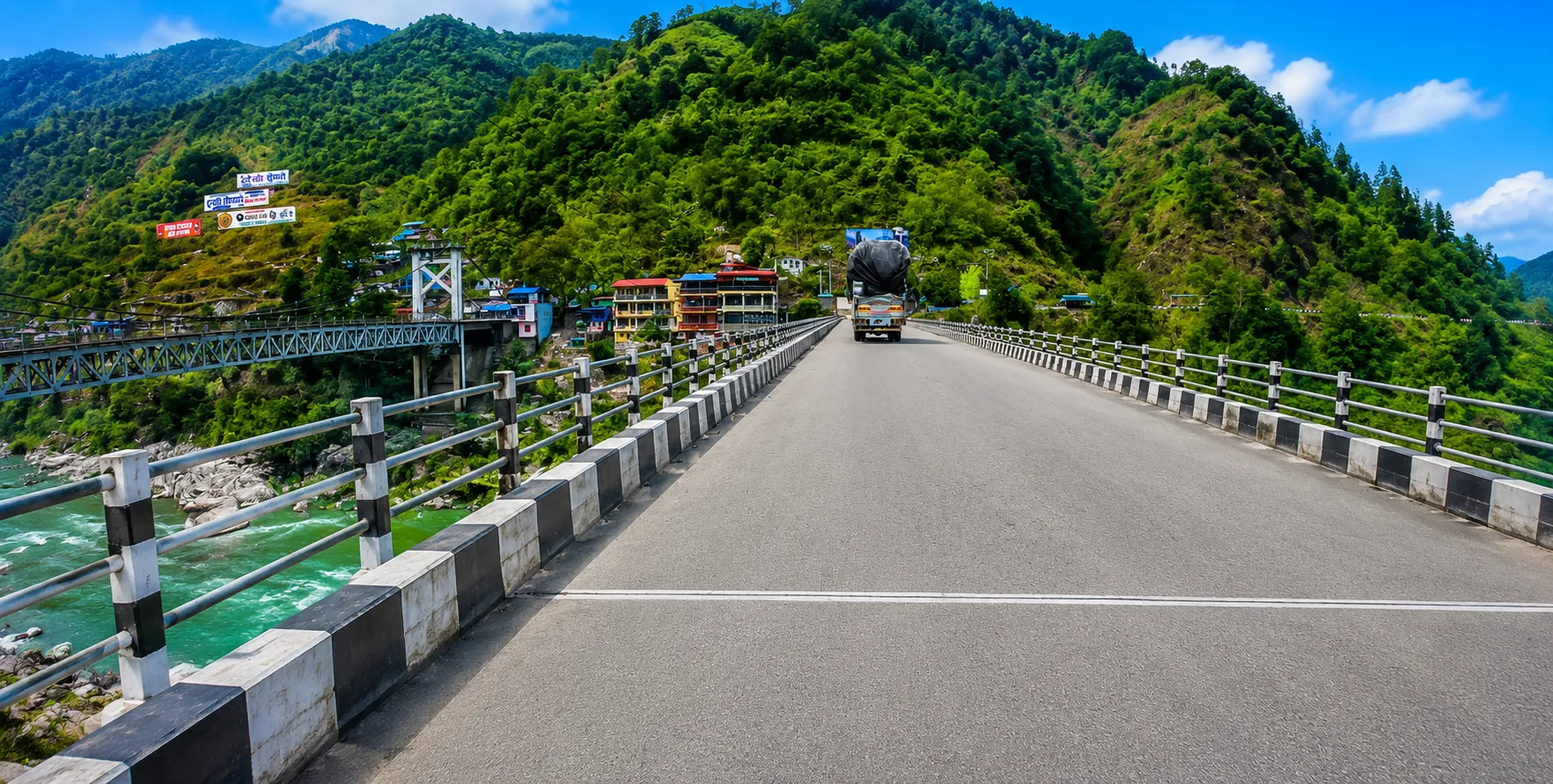
Shared vs Private One-Way Jeep for Nepal Trekking Approaches
Nepal’s trekking approach roads carry both private jeeps (Nepal Vehicle Hiring’s model) and shared local jeeps that fill and depart when full from the nearest roadhead town. Understanding the difference helps individual trekkers and small groups decide which model fits their priorities:
Shared local jeeps (from Besisahar bus park, from Beni for the Kali Gandaki, from Dhunche for Langtang): per-seat pricing (NPR 300 to 1,500 per seat depending on route), depart when full (which can mean a 1 to 3 hour wait at the departure point), drop at the road’s end or at the nearest village rather than the specific trailhead, and carry local passengers, supplies, and livestock alongside trekkers. For solo trekkers and couples on tight budgets, shared jeeps are a legitimate, common option.
Nepal Vehicle Hiring private one-way jeep: hotel-door pickup at a confirmed time, direct trailhead delivery (the specific trail junction gate, not the nearest village), vehicle for the group only (no sharing with other passengers), all-in price known before departure, and 24/7 support throughout the approach. For groups of 3 or more, the per-person cost difference between shared and private is typically NPR 1,000 to 2,500 per person — a modest top-end for the certainty, comfort, and direct delivery of the private service.
Nepal Vehicle Hiring’s recommendation: for groups of 4 or more, the private one-way jeep is consistently better value than shared seats when total cost (including the taxi from the hotel to the shared jeep departure point, and the local tuk-tuk or walk from the shared jeep drop to the actual trailhead) is accounted for. The quoted shared jeep seat price rarely reflects the true door-to-trailhead cost; the Nepal Vehicle Hiring private jeep quote is all-inclusive, with no add-ons.
Nepal’s trekking approach vehicle market includes both established operators and informal shared vehicles assembled at departure points on the morning of the approach. Nepal Vehicle Hiring’s specific advantages for the one-way trekking trailhead jeep:
- Trailhead-specific route knowledge: our drivers are briefed on the specific trailhead for each trek — the Besisahar ACAP checkpoint, the Soti Khola bridge trailhead for the Manaslu Circuit, the Paiya road-end for the Solu Khumbu approach, the Syabrubesi bridge junction for Langtang. The group is dropped off at the trailhead and starts in the general village area.
- All-inclusive confirmed pricing: the NPR price quoted by Nepal Vehicle Hiring covers vehicle, driver, fuel, road charges, and driver accommodation for multi-day approaches — confirmed in writing before departure. No end-of-journey price adjustment, no fuel surcharge, no mountain road top-end added at the trailhead.
- Permit office coordination on Kathmandu day: Nepal Vehicle Hiring’s Kathmandu sightseeing service supports the permit acquisition visit (NTB Thamel office for ACAP and TIMS) on the preparation day before the one-way jeep departure — ensuring the group arrives at the trailhead with all required permits already in the document folder.
- Post-trek vehicle pre-confirmed: Nepal Vehicle Hiking pre-books the circuit exit vehicle (Nayapul pickup, Dharapani pickup, Surke-to-Kathmandu return) at the time of the one-way approach booking — complete trekking circuit transport confirmed before the first step on the trail.
- 24/7 WhatsApp operations: Nepal Vehicle Hiring’s operations team on WhatsApp is reachable throughout the trekking approach and post-trek return period for any schedule change, road condition update, or pickup rescheduling required by trail conditions.
Nepal Vehicle Hiring’s one-way trekking jeep service is a standard Nepal trekking transport relationship— from the Kathmandu hotel to the trailhead gate and from the circuit exit back to the Pokhara or Kathmandu hotel. Contact us on WhatsApp or visit our trip page at vehiclehiringnepal.com to book the one-way jeep that begins your Nepal trek.
The mountains are waiting at the end of the road. Nepal Vehicle Hiring drives you to the point where the road ends and the trail begins.
What Makes a Great Nepal Trekking Approach Driver
The one-way jeep to a Nepal trailhead is only as good as the driver behind the wheel. For mountain approach roads — the Besisahar-to-Chame gorge section, the Kali Gandaki cliff-cut road above Tatopani, the Solu Khumbu track from Salleri to Paiya — driver quality is a genuine safety and comfort differentiator. Nepal Vehicle Hiring’s driver standards for trekking approach vehicles:
- Route-specific experience: Nepal Vehicle Hiring assigns drivers based on their specific route history. A driver making their hundredth Besisahar-to-Chame run knows the current river crossing depth after a night’s rain, the specific rock that overhangs the road at the third bridge, and the passing-point protocol at the narrow Jagat section. This accumulated knowledge is not available on a driver’s first run — and informal market drivers are not always route-matched to their assignments.
- Mountain road protocols: narrow passing sections on Nepal’s trekking approach roads require driver communication between meeting vehicles — horn signals, headlight flashing, and sometimes verbal coordination at the passing point. Nepal Vehicle Hiring’s mountain approach drivers handle these encounters with practised calm. For trekkers unfamiliar with Nepal’s mountain roads, encounters can seem alarming; a confident driver can make them a routine experience.
- Mountain drives (Kathmandu to Paiya, for example) expose vehicles to the sustained stress that reveals latent mechanical issues. Nepal Vehicle Hiring’s pre-deployment vehicle check covers the specific stresses of each route’s profile — brake condition for long descents, 4WD system integrity for river crossings, tyre condition for sharp rock surfaces. A driver who notices an unusual brake feel or 4WD hesitation when engaging 4WD on a remote mountain approach and reports it to Vehicle Hiring’s operations team can make a difference.
- Time awareness without rushing: trek reports often have a natural daylight deadline before dark on Day 2, arriving at Syabrubesi with time for an afternoon start on the Langtang trail, reaching Paiya at a reasonable hour after the long BP Highway run. Nepal Vehicle Hiring’s drivers manage this timing through appropriate departure times from Kathmandu rather than through speed on the mountain road. A driver who leaves Kathmandu at 5:00 AM for a Paiya Day 1 approach reaches Salleri at a comfortable midday lunch break; one who leaves at 8:00 AM is driving the rough Salleri-to-Paiya section in fading light.
Seasonal Trekking Windows and One-Way Jeep Timing
Nepal’s trekking seasons align closely with the best one-way jeep conditions for approach and descending; the seasonal overlap helps trekkers time their approach vehicle for the best combination of trail and road conditions:
Spring Trekking Season (March to May)
Spring is Nepal’s second-busiest trekking season — rhododendron forests in full bloom on the Annapurna and Langtang approaches, clear morning mountain views before the afternoon clouds build, and comfortable temperatures on the higher circuit trails. One-way jeep conditions: excellent on all approach roads.
The Besisahar-to-Chame road is dry and stable after winter; the Kali Gandaki gorge road is at its best before the pre-monsoon weather builds. Booking is recommended; capacity availability is limited.
Poon Trekking Season (October to November)
Post-monsoon is Nepal’s busiest and most celebrated trekking season — crystal-clear skies, freshly washed landscapes, and the entire Himalayan range in its finest visual state. One-way jeep conditions: excellent on all roads except where late-monsoon damage remains unrepaired.
Nepal Vehicle Hiring’s mountain-approach policy is to relay road conditions to our operations team throughout October and November; they flag any section with monsoon damage that reduces safe passage. Booking the Besisahar-to-Manang jeep 2 to 4 weeks ahead is strongly recommended; October and November are peak demand months for Nepal Vehicle Hiring’s whole fleet.
Winter Trekking (December to February)
Winter trekking is possible on Nepal’s lower-altitude circuits (Annapurna Base Camp, Ghorepani-Poon Hill, Langtang lower valley) and on the Mustang approach (which benefits from the trans-Himalayan rain shadow that keeps Upper Mustang’s roads snow-free even in winter). One-way jeep conditions: good on the Terai and Prithvi Highway; the Besisahar-to-Manang road can have icy sections above 2,500 m in January and February.
The Kali Gandaki to Jomsom remains drivable but cold. Nepal Vehicle Hiring’s winter mountain approach vehicles carry traction aids for icy sections—bookings are typically sufficient in low-season winter.
Monsoon Season (June to September)
Monsoon is Nepal’s off-peak trekking season for most circuits — heavy rainfall makes high passes risky, trail erosion creates route challenges, and the dramatic Himalayan views are cloud-obscured for most of the day. The notable exception: Mustang is rain-shadowed by the Himalayan barrier, offering conditions when the rest of Nepal is wet.
One-way jeep conditions: Kali Gandaki-to-Mustang road remains largely reliable in monsoon (protected zone); Besisahar-to-Chame/Manang carries the highest landslide risk of any season; Langtang approach (Syabrubesi road) is most weather-vulnerable in monsoon. Nepal Vehicle Hiring monitors all mountain approach roads daily in monsoon season and provides current road status before any departure.
Understanding Nepal’s Trek Trailheads: A Practical Guide
Not all Nepal trekking trailheads are equally well-defined as vehicle drop points. Some are clear administrative checkpoints with defined car parks; others are road-ends that leave trekkers at a gravel turnaround with no signage. Nepal Vehicle Hiring’s driver briefing addresses this ambiguity specifically for each trailhead:
Well-Defined Trailheads
- Besisahar: the ACAP checkpoint and bus park at the north end of Besisahar town is the clear Annapurna Circuit entry point — permits checked, drivers well-known, trail clearly marked from the checkpoint.
- Nayapul: the road junction bridge over the Modi Khola is the unmistakable Annapurna Circuit exit / Poon Hill start point — every vehicle driver and every trekker converges on the same bridge.
- Syabrubesi: the suspension bridge at the village entrance is the Langtang Valley trail start — clearly marked, well-known to all Nepal Vehicle Hiring Langtang approach drivers.
- Soti Khola: the Budhi Gandaki riverbank at Soti Khola is the standard Manaslu Circuit vehicle road-end — a small settlement with teahouses at the trailhead.
Less-Defined Trailheads
- Paiya and Surke (Solu Khumbu approach): the road from Salleri to Paiya and Surke passes through multiple villages, and ends where construction currently stops. Nepal Vehicle Hiring’s Solu approach drivers know the current furthest drivable point on this road and deliver to the actual trailhead rather than the last named village on an outdated map.
- Arughat Bazaar (Manaslu Circuit): the road to Arughat is clearly signed from Gorkha, but the Soti Khola extension beyond Arughat is a rough track whose condition varies seasonally. Nepal Vehicle Hiring’s Manaslu approach drivers assess current road conditions to determine whether the Soti Khola extension is passable on the day of arrival.
Digital Booking and Confirmation: How It Works
Nepal Vehicle Hiring manages one-way trekking bookings from abroad: trekkers planning their Nepal circuit months before arrival can confirm their approach and return vehicles before leaving home. The booking process from international locations:
- WhatsApp is the primary booking channel: Nepal Vehicle Hiring’s WhatsApp line is monitored during Nepal business hours (approximately 7:00 AM to 9:00 PM Nepal time, UTC+5:45). International trekkers in European, American, or Australian time zones typically exchange booking messages across a 24-hour window — message sent at night your time, response within Nepal’s working day.
- Written confirmation via WhatsApp or email: Nepal Vehicle Hiring sends a booking confirmation with all details stated clearly: vehicle type, pickup address, departure time, trailhead destination and all-in price in NPR. The trekking group saves this confirmation and presents it to the driver on pickup day as reference. a
- Advance payment: For peak-season approach bookings, Nepal Vehicle Hiring may request a 30%- 50% advance payment via bank transfer or mobile payment (eSewa). This secures the specific vehicle and driver for the confirmed date. Balance in NPR or USD cash at trailhead drop.
- Pre-trek WhatsApp reminder: Nepal Vehicle Hiring sends a departure reminder to the group leader the evening before the one-way jeep departure—confirming the driver’s name, phone, pickup time, and any last-minute road-condition updates relevant to the approach.
For trekking groups coordinating their Nepal approach and post-trek return from abroad, Nepal Vehicle Hiring’s complete one-way booking confirmation — approach vehicle confirmed, post-trek pickup confirmed, all-in price for both legs stated — provides the complete transport certainty that allows everything else in the Nepal trekking plan to proceed confidently. Contact our team at [email protected] or WhatsApp
Keep reading