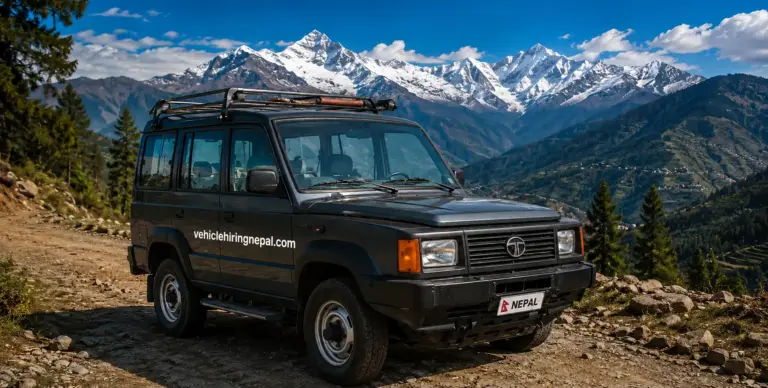
Sunauli to Dharapani Private Jeep


Sunauli to Dharapani Private Jeep: Best Price Guide
Dharapani (1,943 m) sits at one of the Annapurna Circuit’s most strategically important junctions — the confluence of the Marsyangdi and Dudh Khola rivers, where the classic Annapurna Circuit route meets the Manaslu Circuit trail coming in from the east. For trekkers arriving from India via the Sunauli-Belahiya Nepal border crossing, the private jeep to Dharapani covers approximately 580 to 610 kilometres of Nepal road in a journey that takes 2 full driving days through Kathmandu and the Marsyangdi gorge — arriving at a trailhead that sits 27 kilometres further up the valley than Chame and 73 kilometres further than Besisahar.
Nepal Vehicle Hiring Pvt. Ltd., based in Thamel, Kathmandu, provides a complete private jeep service for the Sunauli-to-Dharapani overland approach— including pickup at the Belahiya Nepal border gate, overnight coordination in Kathmandu, and 4WD mountain-road delivery through the Marsyangdi gorge to Dharapani’s teahouse row. This complete guide covers all-in pricing, the full route section by section, why Dharapani is a compelling Annapurna Circuit starting point, and the trekking options that open from this junction village.
Sunauli to Dharapani: Distance, Stages and Drive Time
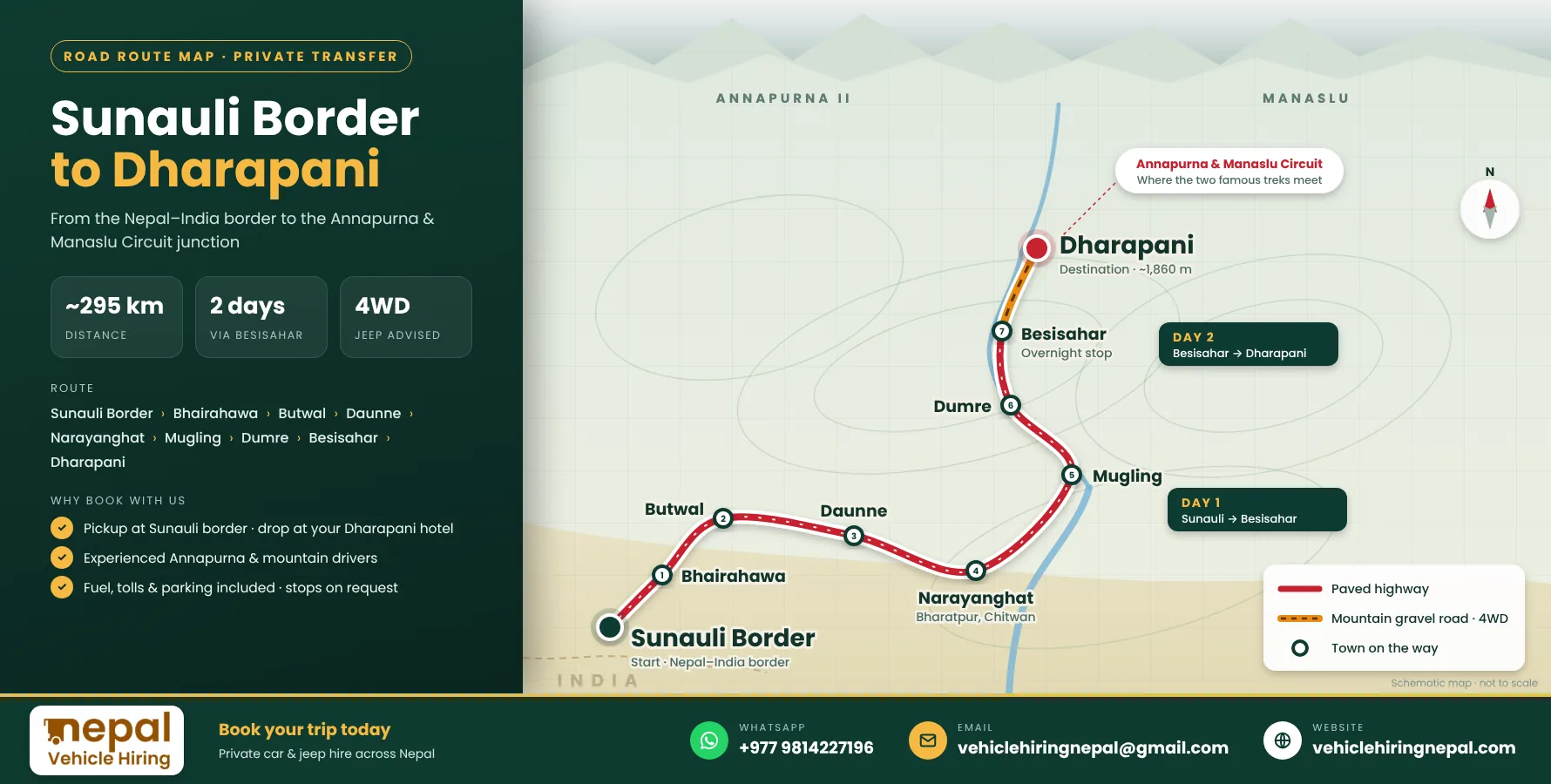
The Sunauli-to-Dharapani journey divides into three natural driving stages:
- Stage 1 — Sunauli to Kathmandu: approximately 300 km, 6 to 7 hours. Take the Terai highway north from Bhairahawa through Butwal, Narayanghat, and Mugling junction, then take the Prithvi Highway northeast to Kathmandu. Overnight in Kathmandu for ACAP/TIMS permits, rest, and preparation.
- Stage 2 — Kathmandu to Besisahar: approximately 175 km, 4 to 5 hours. Prithvi Highway east to Dumre junction, then north on the Marsyangdi Valley road to Besisahar (823 m) — the Annapurna Circuit gateway and last reliable ATM point. Nepal Vehicle Hiring’s Besisahar private vehicle service covers this leg.
- Stage 3 — Besisahar to Dharapani: approximately 89 km, 4 to 6 hours by 4WD. The mountain road through the Marsyangdi gorge via Bhulbhule, Ngadi, Jagat, and through Chame (2,670 m) to Dharapani (1,943 m). Dharapani sits below Chame in the valley, reached by descending slightly from the Chame elevation after the gorge approach. 4WD mandatory throughout this section. Nepal Vehicle Hiring’s 4WD jeep hire is the required vehicle class.
Total from Sunauli to Dharapani: approximately 564 km of road distance, with 2 days of driving and an overnight in Kathmandu. Single-day Sunauli-to-Dharapani driving is not recommended — the combined distance and mountain road section would require a 4:00 AM border crossing and a very late Dharapani arrival.
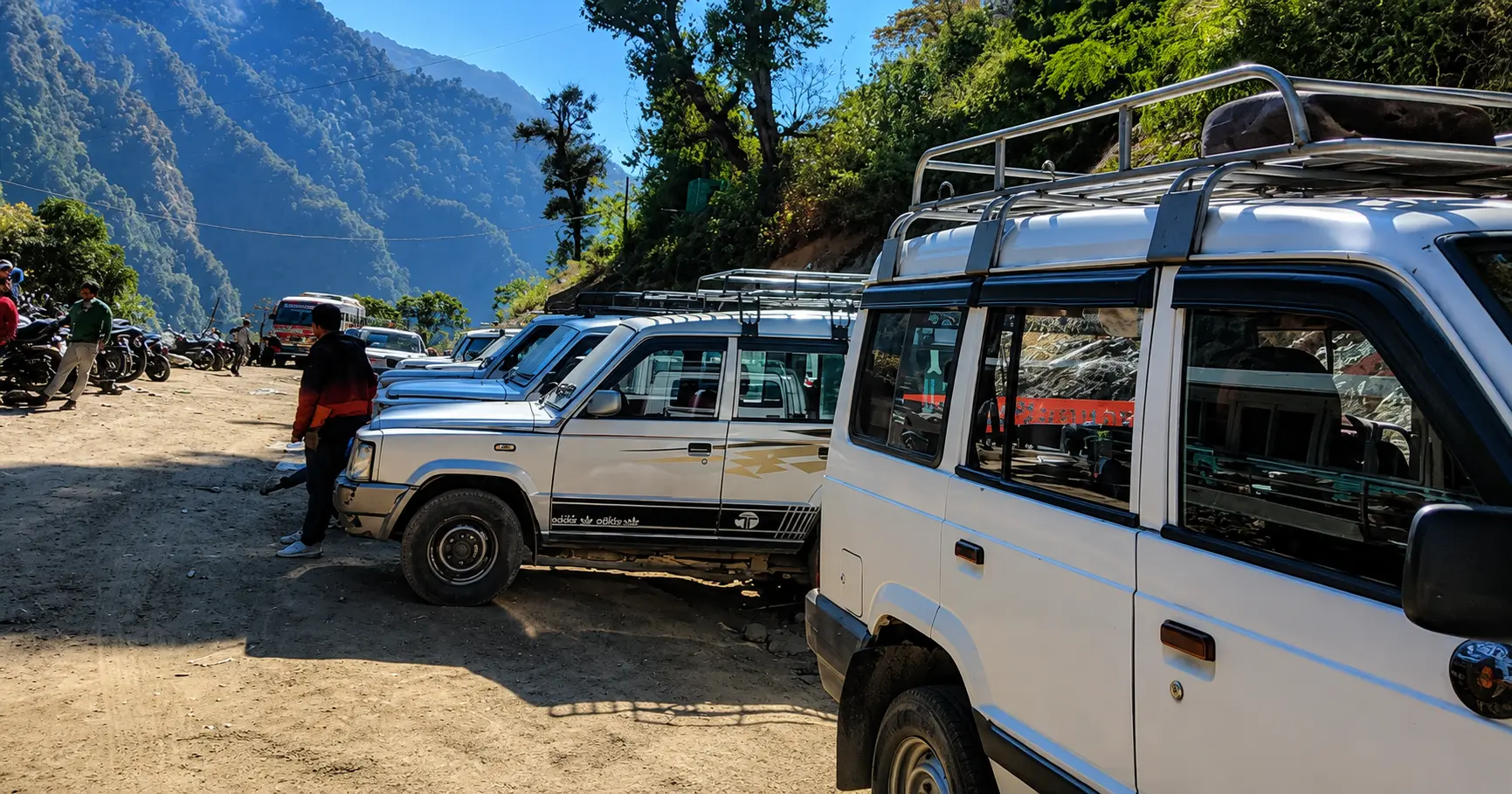
Best Price: Private Jeep Costs Sunauli to Dharapani
Nepal Vehicle Hiring’s all-inclusive pricing for the Sunauli-to-Dharapani journey (vehicle, licensed driver, fuel, driver accommodation and meals on multi-day journey, road charges — no additions):
- Stage 1: Sunauli to Kathmandu
- Hiace van (8–14 passengers): NPR 18,000–30,000
- Private car (2–4 passengers): NPR 9,000–26000
- Coaster bus (15–25 passengers): NPR 24,000–50,000
- Stage 2: Kathmandu to Besisahar
- 4WD Scorpio jeep (4–7 passengers): NPR 9,000–26,000
- Hiace van (8–14 passengers): NPR 12,000–30,000
- Stage 3: Besisahar to Dharapani (4WD only)
- Mahindra Scorpio (4–7 passengers): NPR 16,000–30000
Contact Nepal Vehicle Hiring via our Plan Your Trip page or WhatsApp +977 9814227196 for confirmed package pricing tailored to your group size and preferred vehicle combination.
Dharapani vs Chame: Why Choose Dharapani as Your Starting Point?
Both Chame (2,670 m) and Dharapani (1,943 m) are common vehicle drop points for Annapurna Circuit trekkers arriving by jeep from Besisahar. Understanding the difference helps trekkers choose the right endpoint for the Sunauli private jeep:
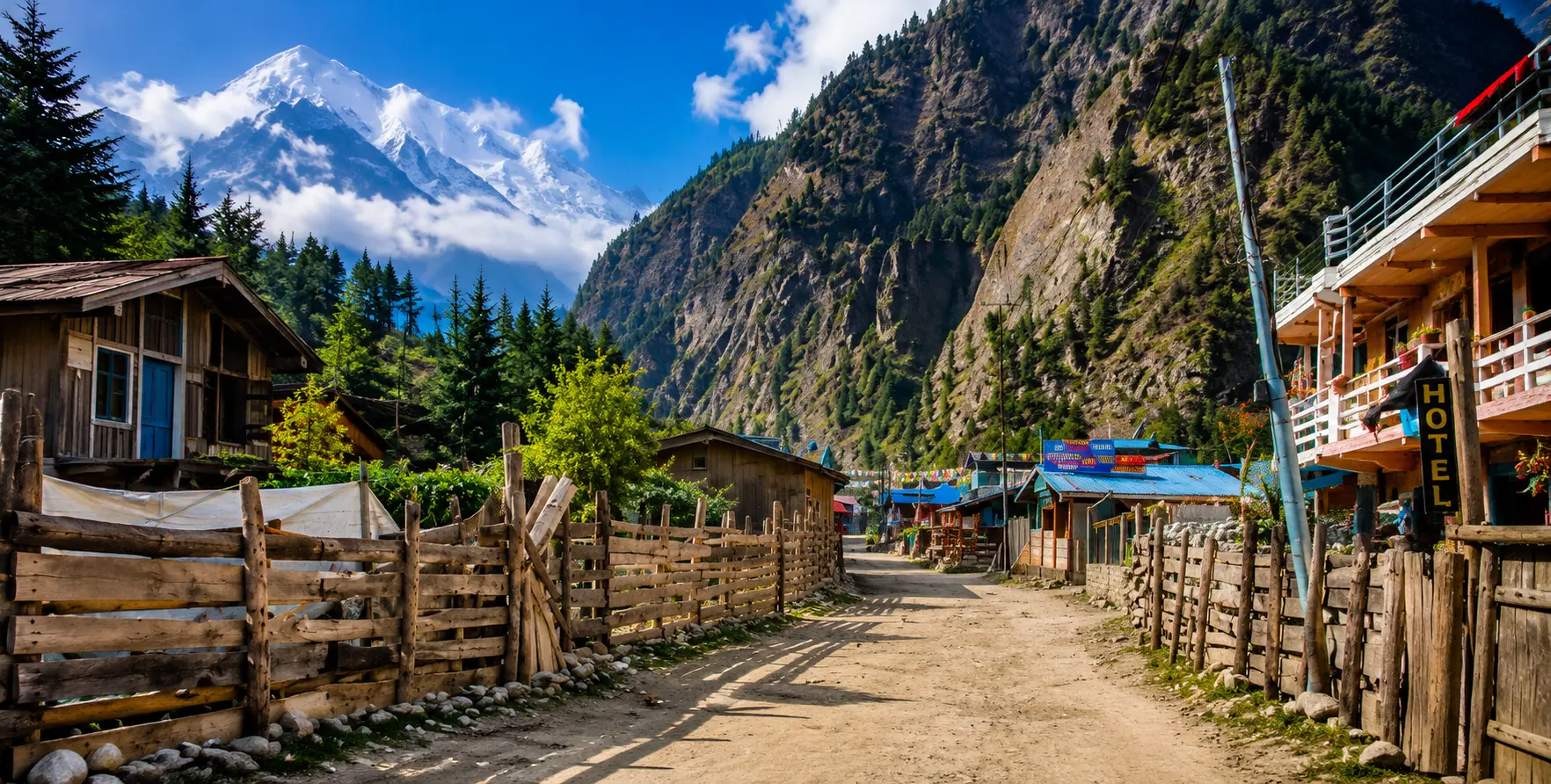
Starting from Dharapani (1,943 m)
Dharapani sits at the convergence of the Marsyangdi River and the Dudh Khola—a junction that gives it a distinct character as a gateway village. Trekkers starting at Dharapani walk the section between Dharapani and Chame (about 1.5 to 2 days of walking) through the Bagarchap gorge section —one of the Annapurna Circuit’s finest lower sections —passing through the dramatic Marsyangdi narrows below Chame. This section includes:
- Bagarchap (2,160 m): the first clearly Tibetan-character village on the circuit — flat-roofed stone houses, prayer flags and mani walls, a significant gompa. The shift from Hindu mid-hills to the Tibetan Buddhist cultural zone is most palpable at Bagarchap.
- The Marsyangdi narrowing: between Danaque and Chame, the gorge narrows dramatically, and the trail crosses a suspension bridge over the river in a section of extraordinary natural drama — the cliff walls closing in overhead, the river rushing below, and the first clear views of Annapurna IV (7,525 m) appearing through the gorge above.
- Timang (2,750 m) viewpoint: a short detour above Chame gives one of the circuit’s finest early mountain panoramas — Manaslu, Himalchuli, and the Annapurna range simultaneously visible.
Starting from Chame (2,670 m)
Chame is the better-serviced administrative town, with more accommodation, a functioning ACAP checkpoint, banking facilities, and district-headquarters infrastructure. Trekkers who start from Chame skip the Dharapani-to-Chame section’s cultural and natural drama but begin the upper circuit — Pisang, Manang, Thorong La — with one fewer day’s walking in the lower gorge.
Nepal Vehicle Hiring recommendation: trekkers with 14 or more days for the Annapurna Circuit can afford to start at Dharapani and walk the Bagarchap section. Trekkers with 12 days or fewer are better served by the Chame drop — starting at the higher-altitude, better-serviced town and focusing time on the classic upper circuit. Nepal Vehicle Hiring’s Kathmandu-to-Manang jeep service extends the drop option to Manang for trekkers with even less walking time.
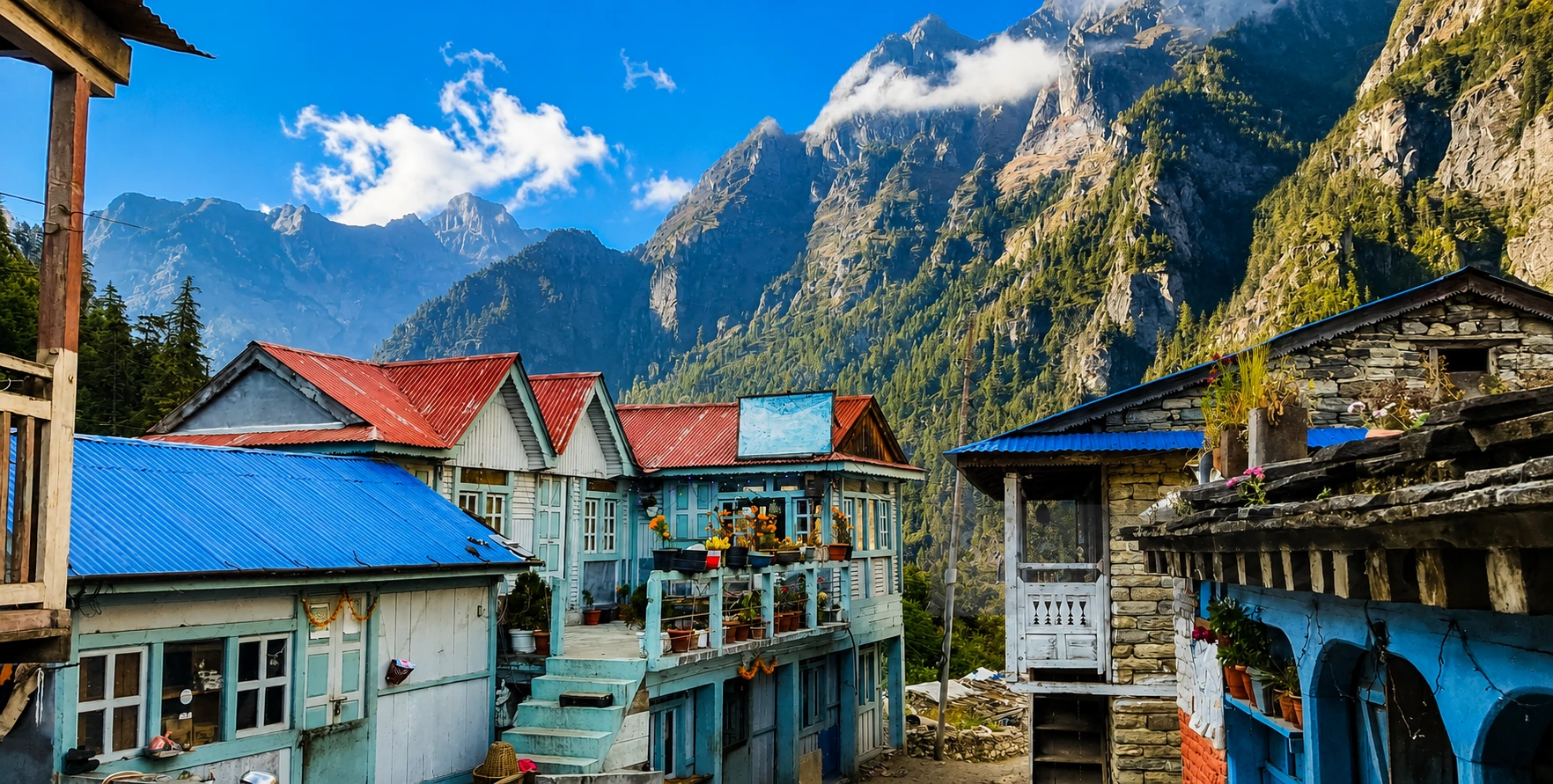
Dharapani as the Manaslu–Annapurna Circuit Junction
One of Dharapani’s most distinctive features for multi-circuit trekkers is its position as the official junction point between the Manaslu Circuit and the Annapurna Circuit. The Dudh Khola valley — which joins the Marsyangdi at Dharapani — leads east toward the Larkya La Pass (5,106 m) on the Manaslu Circuit. In contrast, the main Marsyangdi valley continues north toward Chame and the Annapurna Circuit.
Trekkers who complete the Manaslu Circuit (clockwise from Arughat via Philim, Ngyak, Lho, Samagaon, Samdo, Larkya La, Bimthang, and Dharapani) emerge at Dharapani and can either take the vehicle road back to Besisahar/Kathmandu or continue the Annapurna Circuit from Dharapani northward — completing both circuits in a single multi-week trekking expedition. Nepal Vehicle Hiring’s 4WD jeep hire serves trekkers completing the Manaslu Circuit at Dharapani who need a vehicle pickup to return to Kathmandu or continue to Pokhara.
For trekkers planning the combined Manaslu-Annapurna Circuit, Nepal Vehicle Hiring coordinates the vehicle drop at the Manaslu Circuit starting point (typically Arughat or Soti Khola via Gorkha) at the beginning and the vehicle pickup at Dharapani at the Manaslu end — with the option of the Annapurna Circuit continuation under the trekker’s own power from the same Dharapani junction. Contact our operations team via WhatsApp at +977 9814227196 to coordinate vehicle arrangements for the combined circuit.
Section-by-Section Route Guide: Sunauli to Dharapani
Sunauli Border to Bhairahawa (4 km, 10 to 15 minutes)
Nepal Vehicle Hiring’s driver meets the group at the Belahiya Nepal immigration exit gate, holding a sign with the group name. The vehicle drives 4 kilometres into Bhairahawa’s commercial centre — the standard first stop for any required cash withdrawal (NIC Asia, Nepal SBI ATMs) or supply purchase before the Terai highway run begins.
Bhairahawa to Narayanghat via Mahendra Highway (137 km, 2.5 to 3 hours)
Flat, fast Terai highway northeast through Butwal (standard rest and breakfast stop, 22 km from Bhairahawa) and then east along the Mahendra Highway through the western Terai’s sal forest and agricultural plains to Narayanghat. The Deukhuri valley’s forested mid-hills section provides the most scenic stretch. Nepal Vehicle Hiring drivers make the Butwal stop for 20 to 30 minutes.
Narayanghat to Kathmandu via Prithvi Highway (145 km, 2.5 to 3 hours)
The Prithvi Highway from Narayanghat through the Trishuli River gorge to Kathmandu. Devghat sacred confluence (8 km from Narayanghat), Manakamana cable car (at Mugling, 2 to 2.5 hours total stop), and Mugling fish restaurants are the standard en-route options. Most Sunauli departures reach Kathmandu between 4:00 and 6:00 PM, allowing a Pashupatinath evening Aarti visit on arrival day.
Kathmandu — Preparation Day
The Kathmandu preparation day covers the ACAP permit (NPR 3,000) and TIMS card (NPR 2,000) at the Nepal Tourism Board office in Thamel, trekking equipment shopping, sacred site visits via Nepal Vehicle Hiring’s Kathmandu sightseeing service, and rest before the early departure from Besisahar. Bhaktapur Durbar Square and the Nagarkot sunrise tour via Kathmandu to Nagarkot vehicle are options for groups with a full Kathmandu day.
Kathmandu to Besisahar (175 km, 4 to 5 hours)
Prithvi Highway east from Kathmandu to Dumre junction, then north on the Marsyangdi valley road to Besisahar (823 m). Nepal Vehicle Hiring’s private vehicle service covers this leg. Besisahar is the last reliable ATM point and the ACAP checkpoint. Allow 20 to 30 minutes in Besisahar for ATM withdrawal, the checkpoint formality, and the standard midpoint rest.
Besisahar to Dharapani (89 km, 4 to 6 hours — 4WD only)
The mountain road from Besisahar north through the Marsyangdi gorge is 4WD mandatory throughout. Key progress points: Bhulbhule (840 m, 22 km, 1 hour), Ngadi (930 m), Jagat (1,300 m, the gorge narrows dramatically here), Dharapani (1,943 m). The road from Jagat to Dharapani includes the most technically demanding sections—cliff-cut road, river crossings, and narrow passing points. Nepal Vehicle Hiring’s Marsyangdi Gorge drivers know the depth of every river crossing and the passing protocol on this section. Most Kathmandu morning departures reach Dharapani between 5:00 and 7:00 PM, depending on conditions and stops.

Vehicle Requirements: 4WD Beyond Besisahar
The Besisahar-to-Dharapani section is more demanding than the Besisahar-to-Chame section — the 89-kilometre route includes all the Chame section’s challenges plus the additional section from Chame to Dharapani, which involves descending from Chame (2,670 m) to Dharapani (1,943 m) on a road that crosses the river multiple times in the tighter gorge below Chame. Key vehicle requirements:
- Full 4WD traction: multiple river crossings and loose gravel on gradient sections require all-wheel-drive engagement throughout the mountain section
- High ground clearance: Mahindra Scorpio (Nepal Vehicle Hiring’s standard mountain vehicle) has 220 mm ground clearance — sufficient for the road’s surface irregularities. Standard cars have 130 to 160 mm clearance — insufficient.t
- Experienced driver: the Chame-to-Dharapani section below Chame is less frequently driven than the Besisahar-to-Chame section and requires specific knowledge of the road’s current condition, the bridge crossings, and the turnaround points
- Vehicle in current service: Nepal Vehicle Hiring’s mountain road vehicles complete pre-deployment service checks. They specifically verify brake condition and 4WD system integrity before Marsyangdi gorge deployment.
Arriving at Dharapani: What to Expect
Dharapani (1,943 m) is a small but well-positioned Annapurna Circuit village — larger than many circuit villages at this altitude but significantly smaller than Chame above or Besisahar below. The village has:
- 6 to 10 teahouses and guesthouses with standard Annapurna Circuit accommodation — simple rooms, shared or attached bathrooms, dal bhat and trekker menu food, solar electricity. Standard cost: NPR 300 to 600 per room per night; meals NPR 300 to 600 each
- ACAP checkpoint where permits are verified — ensure ACAP and TIMS cards are accessible on arrival
- The junction trail to the Manaslu Circuit enters from the east here — Dharapani has a distinct character as a junction village, with a mix of Annapurna Circuit trekkers and Manaslu Circuit trekkers passing through simultaneously in peak season.
- Basic supplies market — snacks, water, simple first aid, limited trekking equipment
- Mobile signal — NCell and NTC signal is present in Dharapani, making it the last reliable point for WhatsApp communication before the gorge above and below can have .gaps
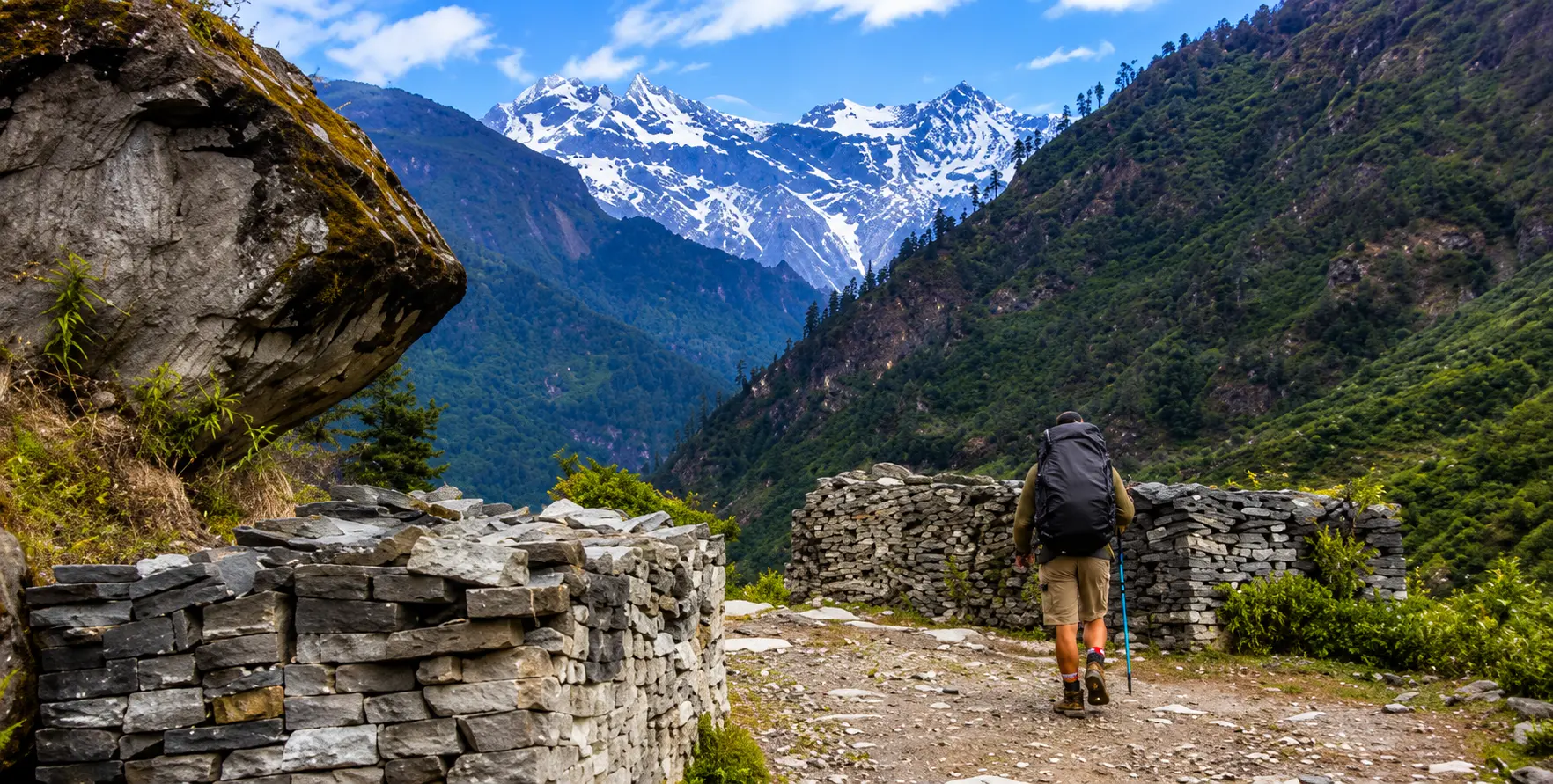
From Dharapani, the first trekking day typically continues to Bagarchap (2,160 m, 1.5 to 2 hours) or Danaque (2,200 m) — both just 45 minutes to 1.5 hours above Dharapani on the classic circuit trail. The Bagarchap gompa and village architecture are the immediate cultural reward for starting at Dharapani rather than Chame.
Permits for Sunauli-Origin Dharapani Trekkers
Two permits are required for the Annapurna Circuit:
- Annapurna Conservation Area Permit (ACAP): NPR 3,000 per foreign national. Obtain in Kathmandu at the Nepal Tourism Board Thamel office — same-day processing, 30 to 45 minutes. The Besisahar ACAP checkpoint also processes these permits, but peak-season queues can be 30 to 60 minutes. Indian nationals — confirm current SAARC category rates at the NTB office.
- TIMS Card: NPR 2,000 per person. Same NTB office, same visit. You can obtain both ACAP and TIMS simultaneously in about 45 minutes total.
- Nepal visa: Indian nationals can enter Nepal visa-free at Sunauli (Open Border arrangement) with a valid Indian passport, voter card, Aadhaar, PAN card, or driving licence. Other nationalities obtain a Nepal tourist visa at Belahiya immigration on arrival (NPR 1,000/15 days, NPR 1,500/30 days).
Kathmandu Preparation: The Essential Overnight
The overnight in Kathmandu between the Sunauli border crossing and the Dharapani mountain approach is essential for three reasons: permits, rest, and preparation. Nepal Vehicle Hiring’s Kathmandu sightseeing service makes the Kathmandu day both logistically productive and culturally rewarding:
- NTB Thamel office for ACAP and TIMS (9:00 AM to 5:00 PM, allow 45 minutes)
- Thamel trekking gear shops for any final equipment top-up — base layers, trekking socks, gaiters, sun protection, Diamox at pharmacies
- Pashupatinath Temple evening Aarti (5:00 PM): for Hindu trekkers, the sacred fire ceremony at Nepal’s most important Shiva temple is a natural pre-trek devotional act — particularly meaningful before a circuit that passes through the Hindu-to-Buddhist cultural transition of the Marsyangdi gorge
- Boudhanath Stupa morning kora: for the Annapurna Circuit’s Buddhist dimension — the circuit passes through Gurung Buddhist villages, Tibetan Buddhist Manang, and ultimately descends to Muktinath’s combined Hindu-Buddhist sacred site
- Rest: the Sunauli-to-Kathmandu journey is 6 to 7 hours of Terai and Prithvi Highway driving. A proper night’s sleep in Kathmandu before the early Besisahar departure is the single most practical preparation measure for the mountain section .ahead
Seasonal Road Conditions: Sunauli to Dharapani
- Terai highway (Sunauli to Narayanghat): year-round reliable. Flat and well-drained. No seasonal restrictions.
- Prithvi Highway (Narayanghat to Kathmandu): generally reliable. Occasional monsoon landslide closures of 2 to 8 hours in the Trishuli gorge. Nepal Vehicle Hiring monitors daily in monsoon season.
- Kathmandu to Besisahar: reliable in all seasons. Dumre-to-Besisahar section occasionally affected by landslides in monsoon.
- Besisahar to Dharapani (mountain road): spring (April to May) and post-monsoon (October to November) are the best conditions. Winter is cold and occasionally icy on higher sections above 2,000 m. Monsoon (July to August) brings the highest landslide risk on the Jagat-to-Dharapani section — river crossings can be impassable for 1 to 3 days after heavy rain. Nepal Vehicle Hiring advises on current conditions before departure from every mountain section.
Nepal Vehicle Hiring Services for the Sunauli to Dharapani Circuit
- Hiace van hire — Sunauli to Kathmandu highway, groups of 8–14
- Car hire in Nepal — Sunauli to Kathmandu, small groups and couples
- Coaster bus hire — large India-origin groups, Sunauli to Kathmandu
- 4WD jeep hire — Besisahar to Dharapani and Kathmandu to Besisahar
- Besisahar private vehicle service — dedicated Kathmandu to Besisahar service
- Kathmandu to Manang jeep — extended drop beyond Dharapani to Chame or Manang
- Kathmandu to Besisahar bus ticket — budget bus option for Kathmandu to Besisahar
- Kathmandu sightseeing service — Pashupatinath, Boudhanath, permits on Kathmandu day
- Bhaktapur Durbar Square day tour
- Nagarkot sunrise tour via Kathmandu to Nagarkot vehicle
- Pokhara to Nayapul transportation — post-circuit return from Nayapul to Pokhara
- Pokhara to Mustang jeep — for Muktinath-via-Mustang post-circuit option
- Sarangkot sunrise tour vehicle — Pokhara extension post-circuit
- Kathmandu airport transfer — TIA departure after circuit completion
- Nepal holiday tour and Nepal tour package
- WhatsApp / Call: +977 9814227196
- Email: [email protected]
- www.vehiclehiringnepal.com
Visit our Plan Your Trip page with your Sunauli crossing plan, group size, and whether you prefer the Dharapani or Chame drop. Nepal Vehicle Hiring coordinates the complete Sunauli-to-Dharapani private jeep — and all post-circuit vehicle legs — as a single booking confirmed before you leave India.
Frequently Asked Questions: Sunauli to Dharapani Private Jeep
How long is the journey from Sunauli to Dharapani?
The total distance is about 564 km, and the journey takes 2 days. Day 1: Sunauli to Kathmandu (300 km, 6 to 7 hours, overnight). Day 2: Kathmandu to Dharapani via Besisahar (264 km total driving, 8 to 11 hours). Nepal Vehicle Hiking does not recommend driving from Sunauli to Dharapani in a single day.
Is Dharapani better than Chame as an Annapurna Circuit start?
Dharapani is better for trekkers with 14+ days who want the full cultural experience of the Bagarchap and lower gorge section. Chame is better for trekkers with 12 or fewer days who want to maximise time on the upper circuit above Pisang and Manang. Nepal Vehicle Hiring can drop at either point — confirm your preference when booking.
What is the vehicle cost difference between drops in Besisahar, Chame, and Dharapani?
Besisahar drop: Sunauli-to-Besisahar package is approximately NPR 38,000 to 52,000 for a group of 6. Chame drop: adds approximately NPR 12,000 to 18,000 (Besisahar-to-Chame). Dharapani drop: adds approximately NPR 16,000 to 22,000 (Besisahar-to-Dharapani). The Dharapani drop costs approximately NPR 4,000 to 6,000 more per jeep than Chame because of the additional 27 km of mountain road and the longer driver day.
Can we start the Manaslu Circuit from Dharapani after arriving by jeep?
The Manaslu Circuit is walked in the opposite direction — from the Arughat/Soti Khola starting point west of Gorkha, going clockwise through Ngyak, Lho, Samagaon, Larkya La, and arriving at Dharapani. Nepal Vehicle Hiring’s 4WD jeep drops trekkers at the Manaslu Circuit starting point (Arughat or Soti Khola, accessible from torkha/Arughat. It picks them up at Dharapani at the end of the circuit. Contact our operations team for combined Manaslu-Annapurna circuit vehicle coordination.
Does Nepal Vehicle Hiring provide vehicles for both the Manaslu and Annapurna circuits?
Yes — Nepal Vehicle Hiring coordinates the complete vehicle service for both circuits: approach to the Manaslu start (via Arughat road from Kathmandu/Gorkha), Dharapani pickup at Manaslu completion, and any Annapurna Circuit continuation from Dharapani. Contact our operations team via WhatsApp at +977 9814227196 to plan multi-circuit vehicle transport.
What is the altitude at Dharapani?
Dharapani sits at 1,943 metres — below Chame (2,670 m) and significantly below Manang (3,519 m). Trekkers arriving from Sunauli (100 m) reach Dharapani in under 48 hours, gaining nearly 1,843 metres. A rest day at Dharapani or Bagarchap before heading toward Chame and the higher valley is recommended for proper acclimatisation, especially for trekkers planning to cross Thorong La (5,416 m) within 7 to 10 days of arrival.
The Marsyangdi Gorge: From Besisahar to Dharapani
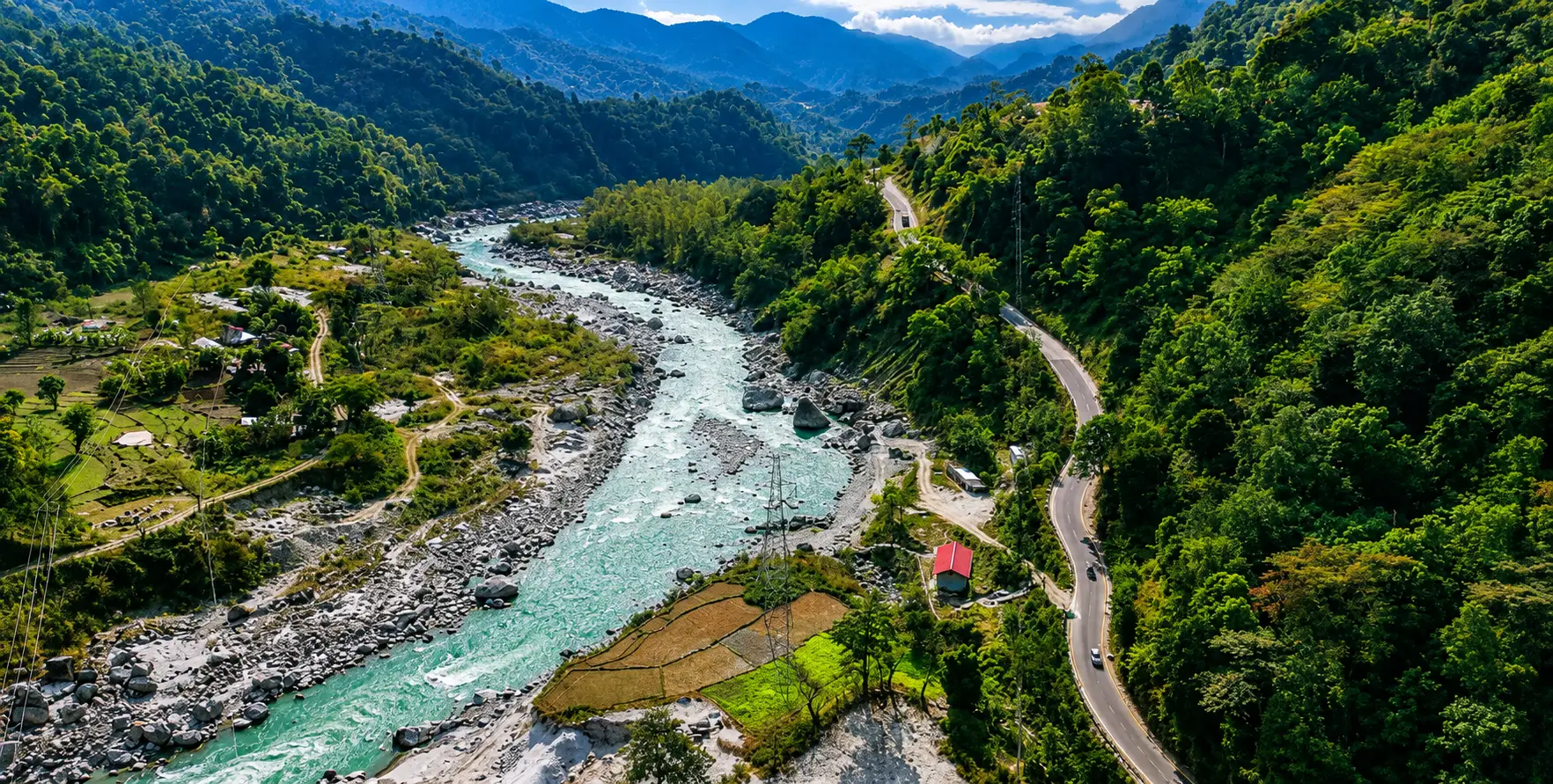
The 89-kilometre mountain road between Besisahar and Dharapani is one of Nepal’s most spectacular vehicle journeys — a progressive mountain revelation that begins in a broad agricultural valley and tightens into the dramatic granite walls of one of the Himalaya’s deepest river gorges. For Sunauli-origin trekkers approaching Dharapani by private jeep, this drive is the first sustained encounter with the Himalayan world and a powerful introduction to what the Annapurna Circuit will look like on foot.
Besisahar (823 m) sits in a wide valley where the Marsyangdi River is broad, and the surrounding hills are green and mid-altitude. The town marks the unambiguous end of Nepal’s accessible lowlands and the beginning of the mountain world. Within 5 kilometres of leaving Besisahar, the valley walls begin to close in, and the river’s character changes — the water runs faster and narrower, the road begins hugging cliff faces, and the first suspension bridges appear where the trail crosses the river.
Bhulbhule (840 m) is the first circuit village above Besisahar — a compact settlement of stone houses and teahouses where the road crosses to the west bank of the Marsyangdi on a bridge. Above Bhulbhule, the gorge takes on its characteristic character: narrow and deep, with the road alternating between the east and west banks as vehicles cross bridges over the surging rapids below. The waterfalls that drop from the cliff walls above the road are particularly dramatic in the post-monsoon season, when the hanging valleys above are still draining their monsoon accumulation.
Jagat (1,300 m) is the ACAP entry checkpoint — trekkers’ permits are verified here if not already checked at Besisahar. The village marks the entry into the Annapurna Conservation Area’s core zone. Above Jagat, the gorge narrows to its most dramatic expression: the road clings to cliff walls cut from the gorge’s rock face, the Marsyangdi thunders through boulder-choked narrows below, and the landscape overhead transitions from subtropical forest to temperate hardwood. This section requires the most careful driving on the entire Besisahar-to-Dharapani route — Nepal Vehicle Hiring’s Marsyangdi drivers reduce speed significantly through the Jagat narrows.
Chamje and the upper gorge approaching Tal (1,700 m) open briefly into a wider valley section where the river floods a broad gravelly plain — Tal occupies a former lake bed, evidenced by the flat alluvial deposits that form the village’s unusually flat ground in a valley that otherwise never allows flatness. Above Tal, the gorge closes again before the final approach to Dharapani through the Dudh Khola confluence. Arriving at Dharapani, where the narrower Dudh Khola joins from the east (its valley leading toward the Larkya La and the Manaslu Circuit) and the main Marsyangdi continues north toward Chame, gives a visceral sense of why this is a junction village — the competing valleys visible from the main trail are a physical map of the trekking choices ahead.
Altitude, Acclimatisation and the Dharapani Drop
Dharapani at 1,943 m is a lower-altitude Annapurna Circuit drop than Chame (2,670 m) or Manang (3,519 m) — and this lower altitude position has specific implications for acclimatisation planning on the circuit.
Trekkers arriving at Dharapani from Sunauli (100 m) in under 48 hours have gained approximately 1,843 metres of altitude. This gain is within the broadly accepted guidelines for non-technical altitude travel. Still, the Annapurna Circuit above Dharapani continues to ascend significantly — to Chame at 2,670 m (one day’s walk), Pisang at 3,300 m (three days), Manang at 3,519 m (four days), the mandatory Manang acclimatisation day, High Camp at 4,925 m, and the Thorong La at 5,416 m. The entire ascent from Dharapani to Thorong La gains 3,473 metres above the vehicle drop point.
For trekkers who start at Dharapani rather than Chame, the extra 1.5 to 2 days of walking between Dharapani and Chame provides valuable, gradual acclimatisation before the higher-altitude sections above Pisang. This is one of the genuine advantages of the Dharapani drop over the Chame drop for acclimatisation purposes — the extra walking days at moderate altitude (1,943 to 2,670 m) provide a more gradual ascent profile than jumping straight into the Chame start.
The classic Annapurna Circuit acclimatisation schedule from Dharapani: Day 1 Dharapani to Bagarchap (2,160 m, half day), Day 2 Bagarchap to Chame (2,670 m), Day 3 Chame to Upper Pisang (3,300 m), Day 4 Pisang to Manang (3,519 m), Day 5 acclimatisation at Manang (glacial lake walk, Ice Lake ascent optional), Day 6 Manang to High Camp (4,925 m), Day 7 High Camp to Muktinath via Thorong La (5,416 m). This schedule places 2 extra walking days of gentle acclimatisation between the vehicle drop and the critical Thorong La crossing. This schedule offers a safe, enjoyable circuit for most fit trekkers.
From Sunauli to the Annapurna Circuit: The Overland Approach Experience
For Indian trekkers arriving at Sunauli from Gorakhpur, Varanasi, Lucknow, or Delhi, the overland approach to Dharapani by private jeep is a Nepal entry experience that no Kathmandu flight can replicate. Understanding what the overland approach offers—and what it demands—helps trekkers see the journey as integral to the Nepal experience rather than merely a transit to the trailhead.
The overland approach offers a physical sense of Nepal’s geographical transition from the Gangetic plains (at Sunauli) through the mid-hills (the Prithvi Highway gorge and the Kathmandu valley) to the high mountain world (the Marsyangdi gorge). This transition — experienced over two days of progressive driving — is a geographical narrative that deepens the sense of arrival at the Himalayan world that the circuit is about to reveal. Trekkers who fly directly from Kathmandu to the circuit miss this earned approach; overland travellers arrive at Dharapani having already crossed the full range of Nepal’s ecological and cultural zones.
The overland approach asks: two long days of vehicle travel before the trekking begins. For trekkers whose primary goal is maximum time on the circuit, this is a real schedule cost. For trekkers whose Nepal experience is also about understanding the country’s geography and culture — and who have the 2 additional days to spare — the overland approach from Sunauli adds a dimension that enriches the entire experience.
Nepal Vehicle Hiking’s private jeep service makes the overland approach as comfortable as possible — hotel-door Sunauli pickup, the Kathmandu preparation day with cultural visits, the Besisahar ATM and permit stop, and the Dharapani mountain delivery all managed in a single coordinated booking. The physical journey is real and takes real time; Nepal Vehicle Hiring handles the logistics from the moment the group exits the Belahiya Nepal immigration post.
Bagarchap to Chame: What Dharapani Trekkers Experience First
The first walking section from Dharapani toward Chame — through Bagarchap (2,160 m) and Danaque (2,200 m) — is one of the Annapurna Circuit’s finest introductory sections. Understanding what this walk offers helps confirm the value of starting at Dharapani rather than Chame.
Bagarchap, just 1.5 to 2 hours above Dharapani, is the first village where the upper circuit’s Tibetan cultural character is fully expressed. The village is built in the flat-roofed stone construction style of the Tibetan plateau — the same architecture found in the upper Mustang, in the Manang valley above, and across the Tibet border range. A large Nyingma Buddhist gompa (monastery) sits above the village on the hillside, its painted facade visible from the trail below. Prayer wheels line the trail approach, mani walls with carved stones mark the village boundaries, and monastery bells and prayers echo in the early morning. For trekkers coming from the Hindu mid-hills below, Bagarchap marks the cultural transition that makes the Annapurna Circuit such a complete cultural-landscape journey.
The gorge section between Bagarchap and Chame is the other major reward of starting at Dharapani. The trail crosses and recrosses the river on suspension bridges — the swaying walk above the Marsyangdi rapids is one of the circuit’s most memorable physical sensations — and passes through a section where the gorge walls rise nearly vertically for hundreds of metres above the trail. Apple orchards appear at the higher elevations approaching Chame — Chame and Manang are famous throughout Nepal for their apples, dried apple products, and apple brandy, and the orchards visible from the trail are working agricultural enterprises rather than heritage displays.
Packing and Preparation for the Sunauli-to-Dharapani Journey
The Sunauli-to-Dharapani private jeep journey spans Nepal’s full temperature range —from the subtropical Terai heat at Sunauli to the temperate mountain conditions at Dharapani (1,943 m). Preparing correctly for this range makes the vehicle journey more comfortable, and the trek start smoother:
- Light clothing for the Terai section, layers accessible for the mountain section: pack a fleece and windproof jacket in the vehicle cabin day bag — not in the roof luggage — for the Besisahar-to-Dharapani mountain section, where temperatures at 1,943 m can be 10 to 15 degrees cooler than the Terai departure.
- Withdraw sufficient NPR in Kathmandu: the Kathmandu withdrawal should cover the complete Annapurna Circuit cash requirements — approximately NPR 40,000 to 60,000 per person for a 15 to 18-day circuit. Besisahar has the last reliable ATMs; Dharapani and all points above have no ATMs.
- ACAP and TIMS in accessible folder: both permits must be presented at multiple checkpoints beginning at Besisahar or Jagat. Keep them in a waterproof document folder in your day bag.
- Snacks and water for the mountain section: carry 2 litres per person from Besisahar and snacks for the 4 to 6 hour mountain drive — teahouse stops between Besisahar and Dharapani are brief and food availability is limited from the vehicle.
- Trek pack organisation: the Besisahar stop (20 to 30 minutes) is the best point to reorganise the main trek pack — moving items needed for the first circuit days to accessible positions and ensuring the Day 1 Dharapani-to-Bagarchap walking items are at the top of the pack.
Why Nepal Vehicle Hiring for the Sunauli-to-Dharapani Approach
The Sunauli-to-Dharapani private jeep involves a border pickup, a Terai highway day, an overnight in Kathmandu with permit logistics, a Besisahar gateway stop, and a challenging 4WD mountain-road section—five distinct operational components that require coordination across two days and multiple vehicle types. Nepal Vehicle Hiring manages all five components as a single booking:
- Belahiya border pickup: driver with a name sign at the Nepal immigration exit gate. The driver will send a photo and mobile number via WhatsApp the evening before crossing.
- Kathmandu overnight: hotel recommendation in Thamel, NTB permit office coordination, sightseeing vehicle service available on request for Pashupatinath and cultural visits.
- Vehicle transition management: the Hiace van used for the Sunauli-Kathmandu highway leg is replaced by the 4WD Scorpio or Land Cruiser for the Kathmandu-Dharapani mountain leg. Nepal Vehicle Hiring manages this vehicle transition at the Kathmandu hotel — no separate arrangement required by the group.
- Marsyangdi gorge driver: specifically experienced on the Besisahar-to-Dharapani section. Current road intelligence from daily driver communication. Pre-deployment vehicle service check covering brakes, 4WD system, and tyres.
- Post-circuit vehicle: the Nayapul-to-Pokhara and Pokhara-to-Kathmandu return vehicles can be pre-confirmed as part of the Sunauli-to-Dharapani booking — complete Nepal transport certainty from India border entry to TIA international departure.
Contact Nepal Vehicle Hiring via WhatsApp ++977 9814227196, email [email protected], or our plan your trip page at vehiclehiringnepal.com. The Annapurna Circuit starts at Dharapani, where the mountains take over from the road—Nepal Vehicle Hiring manages every kilometre that precedes it.
Dharapani’s Cultural Setting: The Gurung and Tibetan Heartland
Dharapani sits at the transition between the Gurung-dominated lower Marsyangdi valley and the Tibetan Buddhist upper valley communities. Understanding this cultural geography enriches the Annapurna Circuit experience for Sunauli-origin trekkers who are approaching the circuit for the first time.
The Gurung people — one of Nepal’s most celebrated hill communities, widely known internationally through their service in the British and Indian Gurkha regiments — inhabit the Marsyangdi valley from Besisahar upward through the lower circuit to approximately Chame. The Gurung are a Tibeto-Burman ethnic group with a distinctive culture that blends pre-Buddhist shamanic traditions (the Bon-influenced Paju and Ghyabri priest system) with Tibetan Buddhism and elements of Hindu practice absorbed from the surrounding caste-based Nepali society. Gurung villages on the lower Annapurna Circuit — Ngadi, Jagat, and the settlements between Besisahar and Dharapani — have a cultural character that is neither purely Tibetan Buddhist nor purely Hindu, but a living synthesis of both traditions that has evolved in this mountain valley over centuries.
Above Dharapani, the Nyishangba (also called Manangba) community — the Tibetan-origin population of the Manang valley — dominates the cultural landscape. Nepal’s rulers have historically granted the Nyishangba special trade privileges because of their strategic position between the Nepal interior and Tibet, and their distinctively prosperous teahouse and lodge infrastructure in the upper circuit reflects this trading wealth. The flat-roofed stone construction of Bagarchap (visible from just above Dharapani) announces the entry into this cultural zone. Trekkers who start at Dharapani walk through the most vivid cultural transition on the entire Annapurna Circuit — from the mixed Gurung-Hindu character of the lower gorge to the Tibetan Buddhist character of the upper valley — in the first day and a half of walking.
The Manaslu Circuit: Dharapani’s Other Trail
The Dudh Khola valley that joins the Marsyangdi at Dharapani leads east toward one of Nepal’s most rewarding and still relatively uncrowded long-distance treks — the Manaslu Circuit. For trekkers considering a combined Manaslu-Annapurna approach, Dharapani is the literal junction point where the two circuits meet, and Nepal Vehicle Hiring’s vehicle service connects to both.
The Manaslu Circuit circumambulates Manaslu (8,163 m) — the world’s eighth-highest mountain — in a 14- to 18-day walk that crosses the Larkya La Pass (5,106 m) from east to west. The circuit starts at Arughat or Soti Khola, accessed from Gorkha (approximately 4 hours from Kathmandu by vehicle), and ends at Dharapani. The circuit passes through the Nubri and Tsum valley communities — remote Tibetan Buddhist populations that were closed to foreign trekkers until relatively recently and whose cultural and landscape character is more pristine than the heavily touristed Annapurna Circuit above Manang.
The Manaslu Circuit requires the Manaslu Restricted Area Permit (MRAP — USD 100 per week for the first 4 weeks) in addition to the Manaslu Conservation Area Permit (MCAP — NPR 3,000) and the Annapurna Conservation Area Permit if continuing to the Annapurna Circuit from Dharapani. Trekkers must obtain these permits in Kathmandu, and a licensed trekking agency must arrange the MRAP. Nepal Vehicle Hiring’s operations team can refer trekkers to licensed agencies for Manaslu permit arrangements as part of the vehicle booking.
For Nepal Vehicle Hiring clients combining Manaslu and Annapurna circuits: the vehicle drops at the Manaslu starting point (Arughat/Soti Khola from the Gorkha road, approximately 5 to 6 hours from Kathmandu). It picks up at Dharapani at the Manaslu completion — from which point the trekker either continues the Annapurna Circuit on foot or returns to Kathmandu by vehicle. This Manaslu-approach, Dharapani-pickup coordination is a standard Nepal Vehicle-Hiring service—contact us via WhatsApp +977 9814227196 to plan combined circuit vehicle logistics.
Comparing the Three Main Annapurna Circuit Drop Points
India-origin trekkers arriving via Sunauli have three common vehicle drop options for the Annapurna Circuit approach. The following comparison helps make the optimal choice for different trekking schedules and preferences:
Besisahar (823 m) — The Full Circuit Walk
Dropping at Besisahar and walking the complete circuit from there — including the road-parallel lower section to Chame — gives the fullest possible Annapurna Circuit walking experience. This adds 3 to 4 days of walking compared to starting in Chame. Best for: trekkers with 18 to 22 days who want the complete circuit from the official start, including the lower gorge sections that the road has diminished in trekking character but not eliminated. The Besisahar drop is also the cheapest per-vehicle option on the mountain section.
Dharapani (1,943 m) — The Cultural Gateway Start
Starting at Dharapani gives 1.5 to 2 days of walking below Chame — through the Jagat gorge narrows and the Bagarchap cultural transition — that are the finest trail sections in the lower circuit. Dharapani is the right starting point for trekkers who want a dramatic Tibetan cultural encounter at Bagarchap and the gorge experience below Chame, while avoiding the 2 to 3 additional lower-circuit days between Besisahar and Jagat that run mostly parallel to the road. Best for: 14 to 17 day circuits where the balance between lower and upper circuit experience is optimal.
Chame (2,670 m) — The Upper Circuit Focus
Starting at Chame — the most common vehicle drop for Annapurna Circuit trekkers — gives direct access to the upper circuit from Pisang onward without the Bagarchap-to-Chame lower section walking. Best for: trekkers with 12 to 14 days who want to maximise time in the high-altitude upper circuit above Manang and minimise lower gorge walking days. The Chame drop is Nepal Vehicle Hiring’s standard recommendation for trekkers on a compact schedule.
Nepal Vehicle Hiring can deliver to any of these three drop points — Besisahar, Dharapani, or Chame (or beyond to Manang). Confirm the preferred drop point when booking. The cost difference between Dharapani and Chame is about NPR 4,000 to 6,000 per jeep—a small top-end for the extra mountain driving to Dharapani’s lower position.
Post-Trek Vehicle Connections from the Annapurna Circuit
After completing the Annapurna Circuit — crossing the Thorong La and descending the Kali Gandaki valley to Jomsom, or walking out to Nayapul — trekkers have several vehicle connection options that Nepal Vehicle Hiring coordinates:
- Jomsom to Pokhara by flight: Jomsom Airport (2,720 m) has domestic flights to Pokhara (25 minutes). Nepal Vehicle Hiring’s Pokhara-based operations can coordinate apickup at Pokhara Airportp for the TIA international connection or a drop-off at a Pokhara hotel.
- Jomsom to Pokhara by jeep: the Kali Gandaki road from Jomsom south through Tatopani and Ghasa to Beni and then Pokhara is accessible by 4WD jeep for trekkers preferring the road return. Nepal Vehicle Hiring’s Pokhara to Mustang jeep service covers this road in reverse for the return direction — contact our operations team for Jomsom-to-Pokhara jeep coordination.
- Nayapul to Pokhara by vehicle: trekkers who descend to Nayapul (1,070 m) use Nepal Vehicle Hiring’s Pokhara to Nayapul transportation service in reverse — the 42-kilometre road from Nayapul to Pokhara Lakeside (1 to 1.5 hours). Pre-book this pickup from Kathmandu before the trek begins.
- Pokhara to Kathmandu return: the 200-kilometre Prithvi Highway journey from Pokhara to Kathmandu (6 to 8 hours) by Nepal Vehicle Hiring’s Hiace van hire, private car hire, or shared bus. Pre-confirm as part of the original Sunauli-to-Dharapani booking for complete Nepal transport certainty.
- Kathmandu to TIA airport transfer: the final Nepal vehicle service—Nepal Vehicle Hiring’s confirmed transfer from Thamel to Tribhuvan International Airport for your international departure. Confirmed as part of the complete Nepal circuit booking.
Understanding Nepal’s Mountain Roads: A Guide for India-Origin Trekkers
For Indian trekkers whose primary road experience is India’s national highway network, Nepal’s mountain roads present a qualitatively different driving experience that benefits from advance understanding:
Nepal’s mountain roads — including the Besisahar-to-Dharapani section of the Marsyangdi gorge — are not paved highways in the Indian national highway sense. They are mountain construction tracks cut through terrain where road building was an engineering challenge of considerable difficulty: cliff faces were blasted, unstable slopes were cut and filled, rivers were crossed with locally designed bridges, and the road surface was laid on terrain that annual monsoon erosion and geological instability regularly damage and require repair. The result is a road network that is genuinely remarkable in having connected these remote valleys at all — but that requires 4WD vehicles, experienced drivers, and realistic journey time expectations.
Driving etiquette on Nepal’s mountain roads differs significantly from Indian highways. Two vehicles meeting on a single-lane section must negotiate passing at the available widening points — this requires driver communication (horn signals, headlight flashing, sometimes physical coordination out the windows) that is entirely normal in Nepal but can appear chaotic to first-time passengers. Nepal Vehicle Hiring’s Marsyangdi gorge drivers handle these encounters with the practised efficiency of long experience on this specific road — passengers can relax knowing what looks like a tense meeting is actually a routine, well-managed pass.
The time estimates for mountain road sections (3 to 5 hours for Besisahar to Dharapani) reflect real-world conditions, including road quality, passing encounters, brief village stops, and the driver’s appropriate caution on exposed sections. In the best conditions, the journey is at the shorter end of the range; in poor conditions (wet road, heavy traffic, recent surface damage), it is at the longer end. Nepal Vehicle Hiring’s drivers set departure times to ensure Dharapani arrival before dark — the mountain road should not be driven in darkness.
For India-origin trekkers who haven’t previously travelled Nepal’s mountain roads, the combination of the physical road experience (the exposure, the river crossings, the passing encounters) and the landscape revelation (the gorge walls, the cascading waterfalls, the first Himalayan peaks) creates a genuinely powerful arrival experience. The mountain road is itself part of the Annapurna Circuit adventure — not a neutral transit to the start line but an introduction to the physical world of the Himalaya that the circuit will reveal over the following days on foot.
A Note on Shared Jeeps vs Private Jeep: Sunauli to Dharapani
Indian-origin Annapurna Circuit trekkers researching transport options for the Sunauli-to-Dharapani approach will encounter both private jeep options (like Nepal Vehicle Hiring’s service) and shared jeep alternatives from local operators in Besisahar. Understanding the difference between these options helps trekkers make an informed decision:
Shared jeeps from Besisahar: local shared jeeps typically depart from Besisahar’s main bus park when full (4 to 7 passengers), run on the driver’s timetable rather than the group’s, may stop at multiple points to drop individual passengers or pick up additional passengers, and charge per seat rather than per vehicle. For solo trekkers or those on tight budgets, Besisahar shared jeeps are a standard circuit option for the local section to Chame or beyond. For groups who want schedule control, direct vehicle drop-off, and the certainty of a confirmed pickup, Nepal Vehicle Hiring’s private jeep is the appropriate choice.
Nepal Vehicle Hiring private jeep from Sunauli: the private vehicle covers the complete Sunauli-to-Dharapani journey as a single managed booking — Sunauli border pickup, Kathmandu overnight, Besisahar gateway, and Dharapani mountain drop — with confirmed departure times, the group’s own vehicle (not shared with other passengers), hotel-to-hotel delivery in Kathmandu, and all-inclusive pricing confirmed before the border crossing. For groups of 3 or more, the private jeep per-person cost on the mountain section is comparable to, or better than, shared jeep per-seat costs, with the added benefits of schedule control and door-to-door service.
Nepal Vehicle Hiring’s recommendation: for Sunauli-origin trekking groups of 3 or more, the private jeep from Sunauli to Dharapani provides better value than assembling the Sunauli-Kathmandu-Besisahar-shared jeep combination separately — both in price per person and in the certainty and convenience of a single coordinated booking. WhatsApp +977 9814227196 for a price comparison for your specific group size.
Book this route
Keep reading