Plan a Trip


Top 10 Historical Places to Visit in Nepa
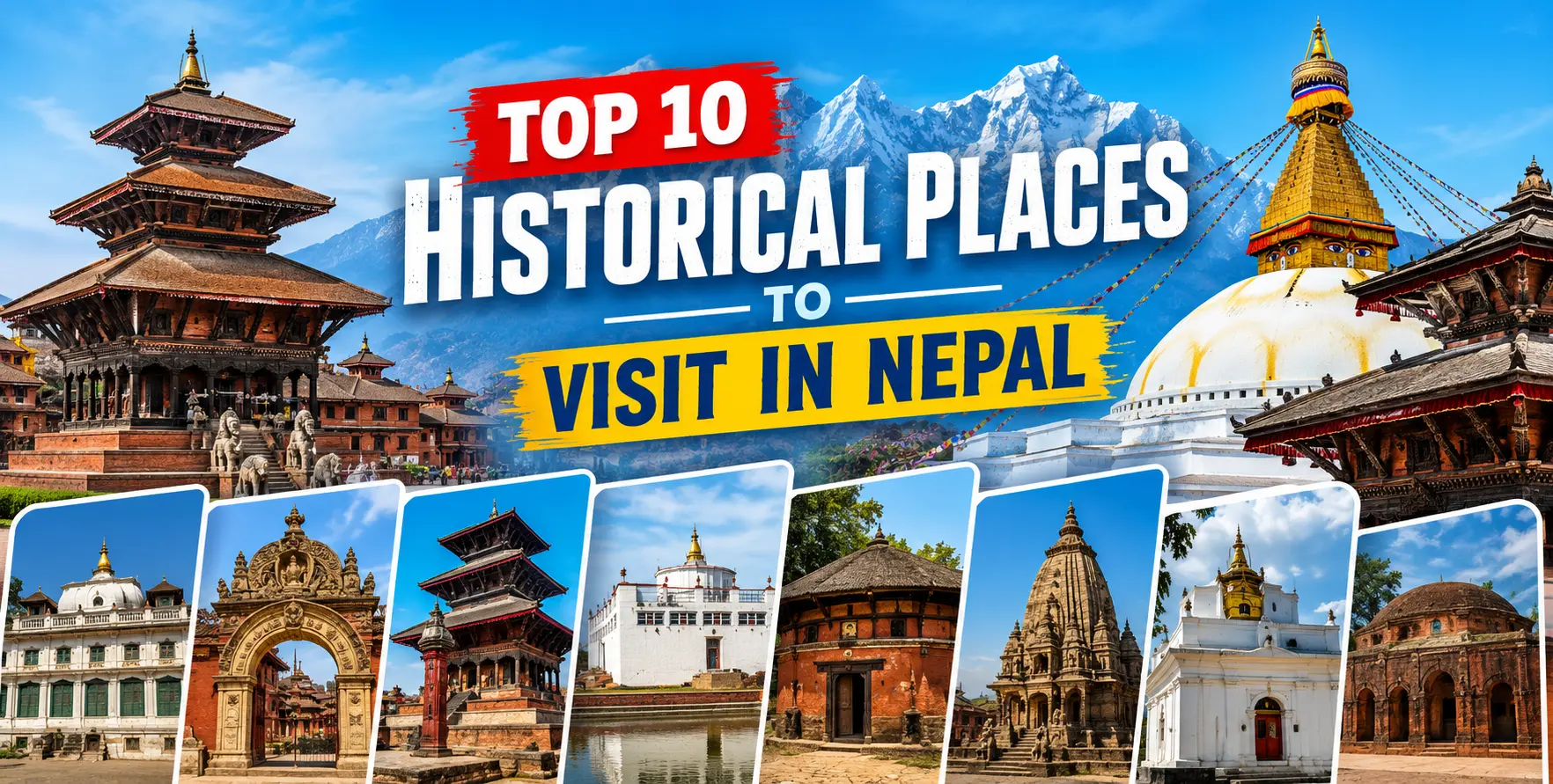 Top 10 historical places in Nepal: The Ultimate Complete Guide (2026)
Nepal is not merely a country with history. Nepal is a country that IS history — a living, breathing, continuously inhabited civilization where the temples built a thousand years ago still receive their daily flowers and oil lamps, where the festivals celebrated in medieval manuscripts are still observed by the same communities in the same courtyards, and where the sacred sites that drew pilgrims two thousand years ago still attract millions of devotees from across the world every single year. Nepal’s historical places are not dead heritage—they are living culture, and understanding this distinction is key to experiencing them fully.
In 2026, post-earthquake reconstruction across the Kathmandu Valley is largely complete, meaning visitors are now seeing Nepal’s most celebrated historical monuments in their best condition in over a decade. The painstaking restoration work — carried out by Nepali craftspeople using traditional tools and materials alongside international conservation expertise — has returned the earthquake-damaged Durbar Squares, temples, and stupas to a condition that in many cases exceeds their pre-2015 state in terms of structural stability and conservation quality. This is the best moment in years to visit Nepal’s historical sites.
Nepal holds 10 UNESCO World Heritage Sites — two natural (Sagarmatha National Park and Chitwan National Park) and eight cultural, with the Kathmandu Valley alone containing seven distinct monument zones. Each of Nepal’s historical places tells a different chapter of a civilization story spanning over 2,500 years — from the ancient Buddhist sacred landscape of Lumbini, where the historical Buddha was born around 563 BCE, to the extraordinary medieval Malla-period palace complexes of the three Durbar Squares, to the royal unification history of Gorkha, to the Mithila cultural heritage of Janakpur. Together, these sites constitute one of the richest concentrations of historical, spiritual, and artistic heritage in all of Asia.
This complete guide covers Nepal’s top 10 historical places in the depth that each deserves — not simply listing what exists but explaining what makes each site extraordinary, what specific things to see and do, what time to visit for the best experience, how much it costs in 2026, how to get there, and what practical and cultural knowledge will transform your visit from a tourist check-in into a genuine engagement with one of the world’s great civilizations. And throughout, Nepal Vehicle Hiring Pvt. Ltd. — Nepal’s most trusted private vehicle hire company with 8,000+ satisfied customers and a 5.0 TripAdvisor rating — is your transport partner for reaching every site comfortably, efficiently, and with the freedom to explore at your own pace.
| Top 10 historical places in Nepal — At a Glance (2026) |
| 1. Pashupatinath Temple, Kathmandu — Nepal’s holiest Hindu shrine | Entry: NPR 1,000 (foreign) |
| 2. Boudhanath Stupa, Kathmandu — World’s largest Buddhist stupa | Entry: NPR 400 (foreign) |
| 3. Swayambhunath Stupa (Monkey Temple), Kathmandu — 2,500 years old | Entry: NPR 200 (foreign) |
| 4. Kathmandu Durbar Square (Hanuman Dhoka), Kathmandu — Royal palace complex | Entry: NPR 1,000 (foreign) |
| 5. Patan Durbar Square (Lalitpur) — City of Fine Arts | Entry: NPR 1,000 (foreign) |
| 6. Bhaktapur Durbar Square — Best-preserved medieval city | Entry: NPR 1,500 (foreign) |
| 7. Changu Narayan Temple — Nepal’s OLDEST temple (4th century) | Entry: NPR 300 (foreign) |
| 8. Lumbini — Birthplace of the Buddha | Entry: NPR 500 (Sacred Garden, foreign) |
| 9. Gorkha Durbar — Birthplace of modern Nepal | Entry: Free |
| 10. Janakpur Janaki Temple — Birthplace of Goddess Sita | Entry: Free |
| Site | Distance from Kathmandu | Best Time to Visit | Time Needed |
| Pashupatinath Temple | 5 km (20 min) | Dawn (5:00–7:00 AM) or evening Aarti (6:30 PM) | 2–3 hours |
| Boudhanath Stupa | 8 km (25 min) | Dawn (5:30–7:30 AM) or Dusk (5:00–7:00 PM) | 1–2 hours |
| Swayambhunath Stupa | 3 km (15 min) | Sunrise (6:00–8:00 AM) | 1.5–2 hours |
| Kathmandu Durbar Square | City center (10 min) | Morning (7:00–10:00 AM) | 2–3 hours |
| Patan Durbar Square | 5 km (20 min) | Morning (9:00 AM–12:00 PM) | 3–4 hours incl. museum |
| Bhaktapur Durbar Square | 14 km (40 min) | Full day (8:00 AM–5:00 PM) | Full day |
| Changu Narayan Temple | 22 km (45 min) | Any day — combine with Bhaktapur | 2–3 hours |
| Lumbini | 330 km (7–8 hrs drive / 35 min flight) | Early Morning (5:00–8:00 AM) | 2–3 days |
| Gorkha Durbar | 139 km (4–5 hrs drive) | Morning (9:00 AM–12:00 PM) | Half day |
| Janakpur Janaki Temple | 225 km (5–6 hrs drive) | Morning puja (6:00–8:00 AM) or Ram Navami festival | Half to full day |
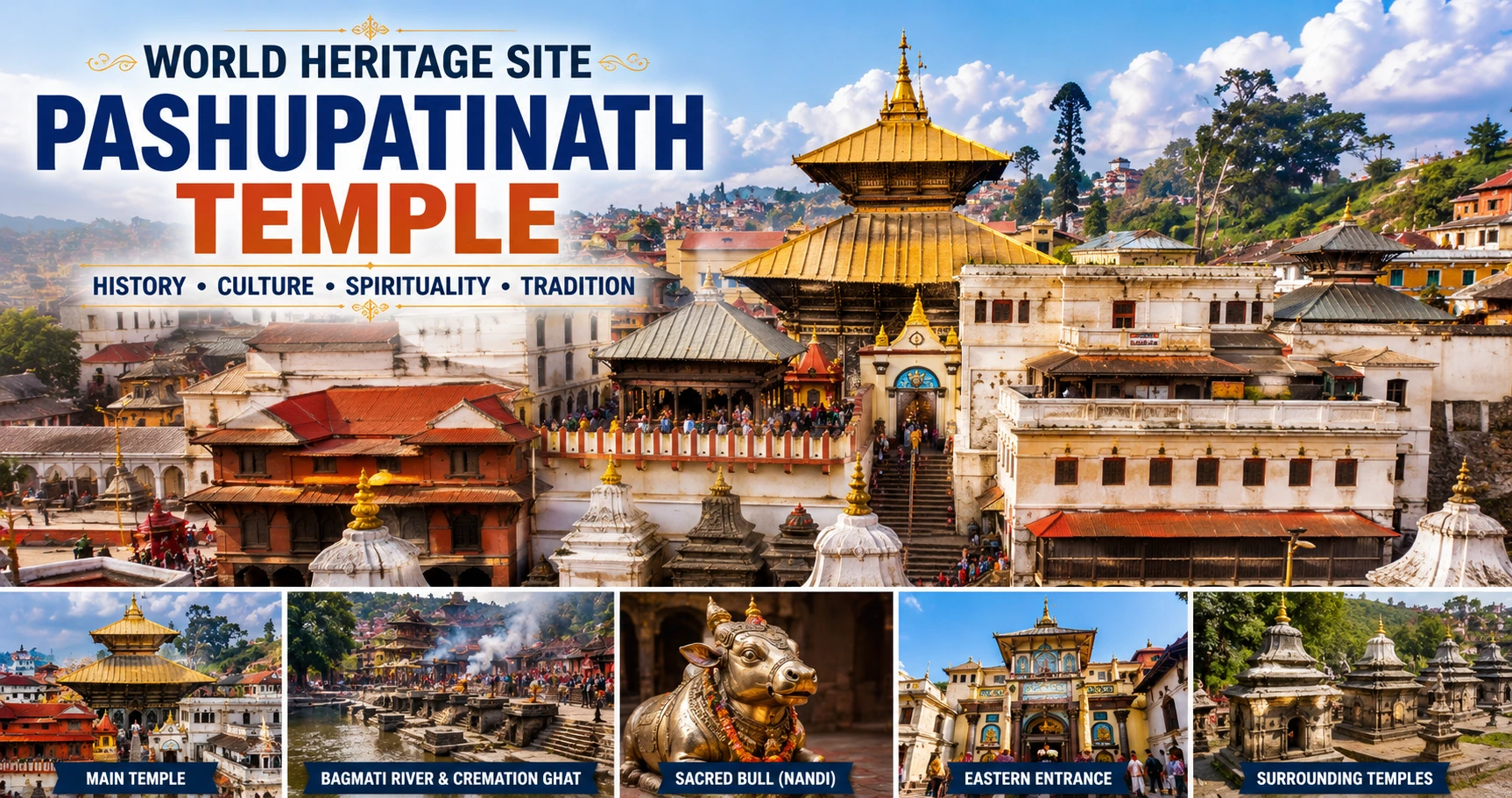
Pashupatinath Temple — The Sacred Heart of Hindu Nepal
| Pashupatinath Temple — Key Facts 2026 |
| Location: Bankali, Kathmandu (Bagmati River banks) | 5 km northeast of Thamel |
| UNESCO: World Heritage Site since 1979 | One of 7 Kathmandu Valley monument zones |
| Deity: Lord Pashupati (Shiva as Lord of Animals) — one of the 12 Jyotirlingas |
| Entry Fee: NPR 1,000 (foreign) | NPR 150 (SAARC) | Free (Hindus and Nepali nationals) |
| Open: 4:00 AM – 9:00 PM daily | Aarti (ritual fire ceremony): 5:00–6:00 AM and 6:30–7:30 PM |
| Best Time: Dawn (5:00–7:00 AM) or evening Aarti (6:30 PM) — most atmospheric |
| Photography: Permitted in outer areas | Main temple interior — Hindus only |
History and Significance
Pashupatinath Temple is Nepal’s most sacred Hindu shrine — the preeminent place of worship for Lord Shiva in the entire Himalayan world and one of the most significant Hindu temples anywhere in South Asia. Dedicated to Pashupati, the ‘Lord of Animals’ (one of Shiva’s most benevolent manifestations), the temple complex occupies the western bank of the Bagmati River — a river considered sacred throughout the Hindu world as a tributary of the Ganga. The Bagmati’s confluence with the holy Ganga (Ganges) far downstream means that cremation on the Bagmati’s banks is considered equal in spiritual merit to cremation on the Ganga at Varanasi, making Pashupatinath one of the most auspicious places to die in all of Hinduism.

The temple’s origin is shrouded in legend, with the most ancient accounts suggesting its foundation in the 4th or 5th century BCE, though the present structure dates primarily from the Malla period (12th–18th centuries). The main temple is a multi-tiered pagoda of extraordinary beauty, its twin-tiered golden roof visible from across the river and its entrance flanked by a magnificent Nandi bull (Shiva’s vehicle) in gilded copper that is among the finest examples of Himalayan metalwork anywhere. The temple complex covers over 264 hectares and contains 518 mini-temples and shrines within its grounds — making it one of the largest religious complexes in the Himalayan region.
For non-Hindu visitors, the most powerful and moving experience at Pashupatinath is the open-air cremation ghats along the Bagmati River — the Arya Ghats and Bhasmeshwar Ghats where Hindu cremations take place continuously throughout the day and can be witnessed respectfully from the opposite riverbank. The sight of funeral pyres burning against the backdrop of the ancient temple, with mourning families gathered in prayer and the ash-covered sadhus (holy men) who inhabit the temple complex offering blessings and performing penances, provides one of the most viscerally real engagements with Hindu spiritual practice available anywhere in the world.
The evening Aarti ceremony at Pashupatinath — performed each evening at approximately 6:30 PM by a group of Brahmin priests on the ghats — is among the most spiritually charged and visually spectacular rituals in all of Nepal. The priests, synchronized and precise, wave large fire torches, ring bells, blow conch shells, and perform increasingly elaborate movements of fire and incense as the ceremony progresses — drawing large crowds of devotees and visitors who gather on both riverbanks in the fading light. The combination of the firelight, the Sanskrit chanting, the bells, the river, and the ancient temple behind creates an atmosphere of concentrated sacred energy that is genuinely overwhelming.
What to See and Do
- Arya Ghats and Bhasmeshwar Ghats — The cremation ghats along the Bagmati River, visible from the eastern bank. Approach with silence and respect — these are genuine funeral ceremonies for real families. Photography is sensitive — use discretion and never photograph individual mourners close up.
- The Sadhus — Ash-covered holy men who inhabit the temple precincts, typically gathering near the main entrance and along the river. Many offer photo opportunities (a small donation of NPR 100–200 is expected and appropriate). Their presence — in skull-garland necklaces, matted hair, and ash-painted bodies — gives Pashupatinath its most vivid visual dimension.
- The Temple of Kailash (and surrounding shrine complex) — On the eastern bank, the subsidiary temples and shrines spread through the forest contain extraordinary examples of stone and metal sculpture and provide quieter, less crowded alternatives to the main ghat area.
- The Deer Park — The peaceful forested area north of the main complex where spotted deer (believed sacred to Shiva) roam freely—a rare moment of natural tranquility within the bustling temple landscape.
- The Evening Aarti — Arrive by 6:00 PM to secure a riverside position for the 6:30 PM ceremony. The western bank (below the main temple) provides the best close-up view; the eastern bank (across the river) provides a more overview perspective with the temple complex as backdrop.
- The Bachhareshwari Temple and surrounding shrines — An often-overlooked cluster of ancient shrines in the northern part of the complex where the crowds thin and the atmosphere becomes more genuinely contemplative.
Insider Tips
- The very best time to visit Pashupatinath is at dawn — between 5:00 and 7:00 AM when morning prayers fill the complex with devotional energy, the light is beautiful on the golden rooftop, and the crowd is primarily local devotees rather than tourists.
- Maha Shivaratri (February/March) is the most extraordinary time — hundreds of thousands of pilgrims and sadhus from across Asia gather for an extraordinary festival. Book accommodation months in advance.
- Dress conservatively — long pants and covered shoulders for both men and women are required at all points within the complex.
- The main temple inner sanctum is accessible only to Hindus — the rule is respectfully but consistently enforced at the entrance.
- Nepal Vehicle Hiring Pvt. Ltd. can arrange early morning transfers from any Kathmandu hotel to Pashupatinath for the dawn visit — typically departing your hotel at 4:45 AM.
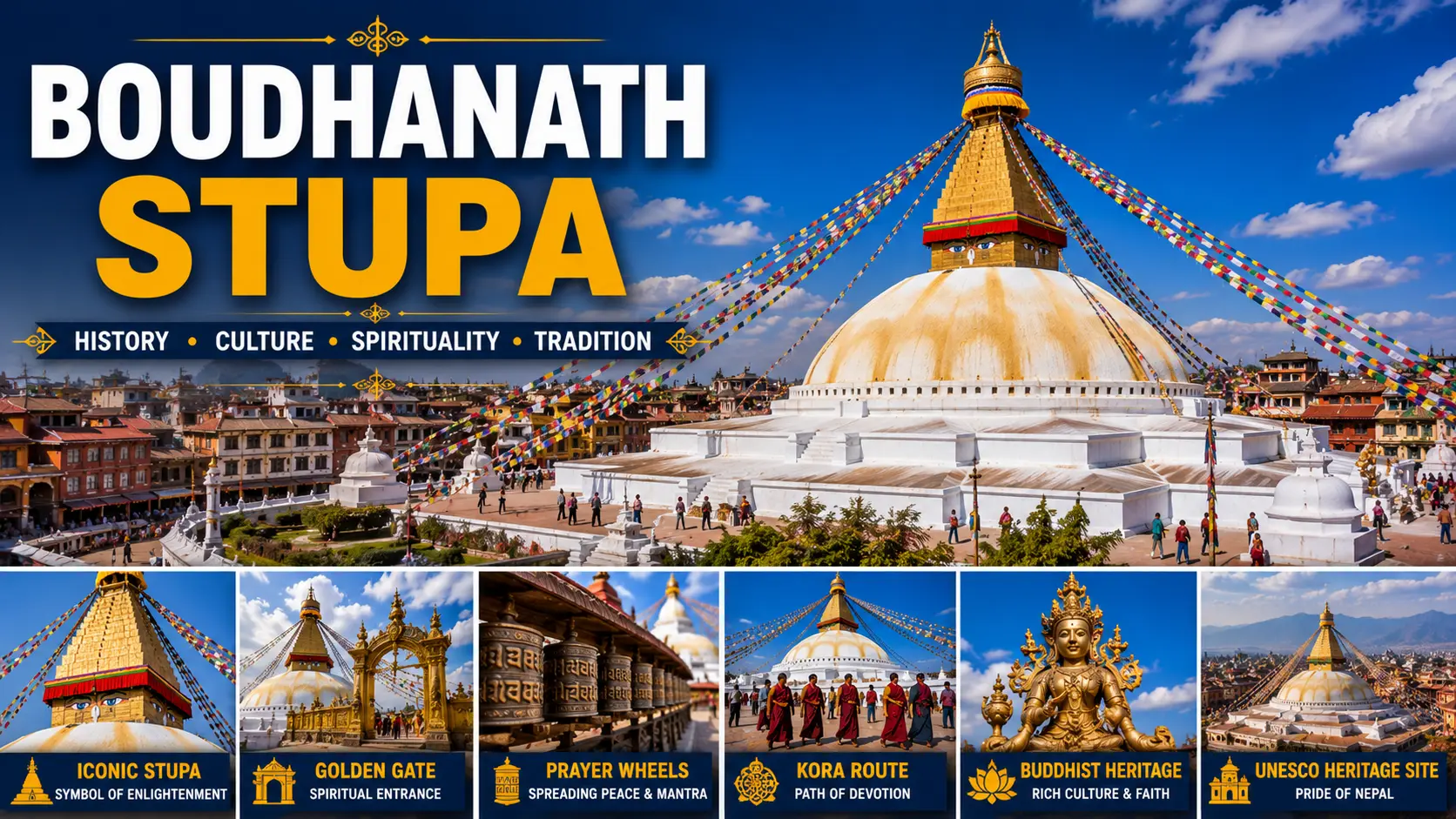
Boudhanath Stupa — The Greatest Buddhist Stupa in Nepal
| Boudhanath Stupa — Key Facts 2026 |
| Location: Boudha, Kathmandu | 8 km northeast of Thamel (25 min drive) |
| UNESCO: World Heritage Site since 1979 | One of the largest stupas in the world |
| History: Built approximately in the 5th century CE | Rebuilt and restored after the 2015 earthquake |
| Entry Fee: NPR 400 (foreign) | Free (SAARC and Nepali nationals) |
| Open: 5:00 AM – 9:00 PM daily |
| Best Time: Dawn (5:30–7:30 AM) for Tibetan morning kora | Dusk for butter lamps |
| Monasteries: 50+ Tibetan Buddhist monasteries surrounding the stupa |
History and Significance
Boudhanath Stupa is one of the largest Buddhist stupas in the world and the most important center of Tibetan Buddhism outside Tibet itself. Rising to a height of 36 meters, its massive white dome and golden spire dominate the northeastern skyline of Kathmandu and create one of the most instantly recognizable and spiritually charged landscapes in all of Asia. The stupa was built approximately in the 5th century CE during the Licchavi period, though various accounts attribute its origins to as early as the 1st century BCE. Following the Chinese occupation of Tibet in 1959, thousands of Tibetan refugees settled around the stupa, and today the Boudhanath area is one of the most vibrant and authentic Tibetan cultural communities in the world outside Tibet.
The stupa’s architectural symbolism is extraordinarily rich. The white dome represents the world. The thirteen steps of the spire represent the thirteen stages of Enlightenment. The umbrella at the apex represents sovereignty. The Buddha’s eyes painted on each of the four sides of the square tower gaze out in the four cardinal directions, surveying the world with compassion and wisdom. The 147 prayer wheels embedded in the stupa’s outer wall — each containing Buddhist mantras — are spun by the circumambulating devotees who create a constant, gentle rhythm of sound and movement around the stupa’s base.
The 2015 earthquake caused significant damage to the Boudhanath Stupa’s spire and upper sections. Still, the stupa was beautifully restored by 2016 in a process that was itself regarded as a major community achievement. In 2026, the stupa stands in excellent condition, its white dome freshly repainted each spring before the Losar (Tibetan New Year) celebrations.

What to See and Do
- Morning Kora — The ritual circumambulation of the stupa by Tibetan pilgrims and local Buddhist devotees is most active between 5:30 and 8:00 AM. Walking the kora (clockwise, keeping the stupa to your right) alongside Tibetan grandmothers spinning prayer wheels, monks in maroon robes chanting mantras, and children in school uniforms completing their morning circuit is one of the most moving human-scale sacred experiences available in Kathmandu.
- Monastery Visits — The 50+ Tibetan Buddhist monasteries (gompas) surrounding the stupa are among Boudhanath’s greatest hidden attractions. Many are open to respectful visitors for puja (prayer ceremony) attendance, particularly in the early Morning and evening. The most accessible include Ka-Nying Shedrub Ling Monastery, Shechen Tennyi Dargyeling Monastery, and Kopan Monastery (approximately 2 km north of the stupa).
- Rooftop Cafes and Restaurants — The rooftop restaurants surrounding the stupa plaza offer spectacular elevated views of the stupa’s dome, particularly atmospheric at dawn and Dusk. Breakfast at a Boudhanath rooftop cafe with the stupa gleaming in the morning light is one of the finest sensory experiences in Kathmandu.
- Shopping — The streets surrounding Boudhanath are among Kathmandu’s finest for authentic Buddhist religious objects and Tibetan crafts: thangka paintings, singing bowls, prayer beads (mala), Tibetan ritual objects, and traditional clothing. Prices are competitive, and quality is generally high.
- Losar (Tibetan New Year) — The most spectacular time to visit Boudhanath, when the stupa is decorated with thousands of butter lamps, thangka paintings are hung, and the entire Tibetan community gathers for prayers, dance, and celebration. Dates vary (usually February) — check annually.

Swayambhunath Stupa (Monkey Temple) — The Ancient Hilltop Sanctuary
| Swayambhunath — Key Facts 2026 |
| Location: Swayambhu Hill, Kathmandu | 3 km west of Thamel (15 min drive) |
| UNESCO: World Heritage Site since 1979 | One of the oldest religious complexes in Nepal |
| History: Believed to be 2,500+ years old | Continuously venerated since at least the 5th century CE |
| Entry Fee: NPR 200 (foreign) | Free (SAARC and Nepali nationals) |
| Open: 24 hours (sunrise to sunset) | Sunrise to sunset recommended for main visit |
| Best Time: Sunrise (6:00–8:00 AM) for golden light and stunning valley views |
| Stairs: 365 steps on main eastern approach | Vehicle road to western entrance also available |
History and Significance
Swayambhunath — popularly known as the Monkey Temple because of the resident troops of Rhesus macaque monkeys that inhabit its sacred precincts — is one of Nepal’s most beloved and ancient sacred sites, perched on a conical hillock 77 meters above the Kathmandu Valley floor. The stupa is one of the oldest Buddhist sites in Nepal and indeed in the world, with its origins traditionally traced to the 5th century BCE when the valley was still a lake. The name ‘Swayambhu’ means ‘Self-Created’ or ‘Self-Existent,’ referring to the ancient tradition that the sacred flame at the heart of the stupa appeared spontaneously without human creation.
Despite its Buddhist identity, Swayambhunath is venerated equally by Hindus and Buddhists — exemplifying the remarkable religious syncretism that characterizes the Kathmandu Valley’s spiritual life. The main stupa complex contains not only Buddhist shrines and prayer wheels but also significant Hindu temples including those dedicated to Hariti (Ajima) — the goddess of smallpox — and Saraswati. During the Hindu festival of Saraswati Puja (usually February), thousands of students visit the site to receive the goddess’s blessing for their studies.
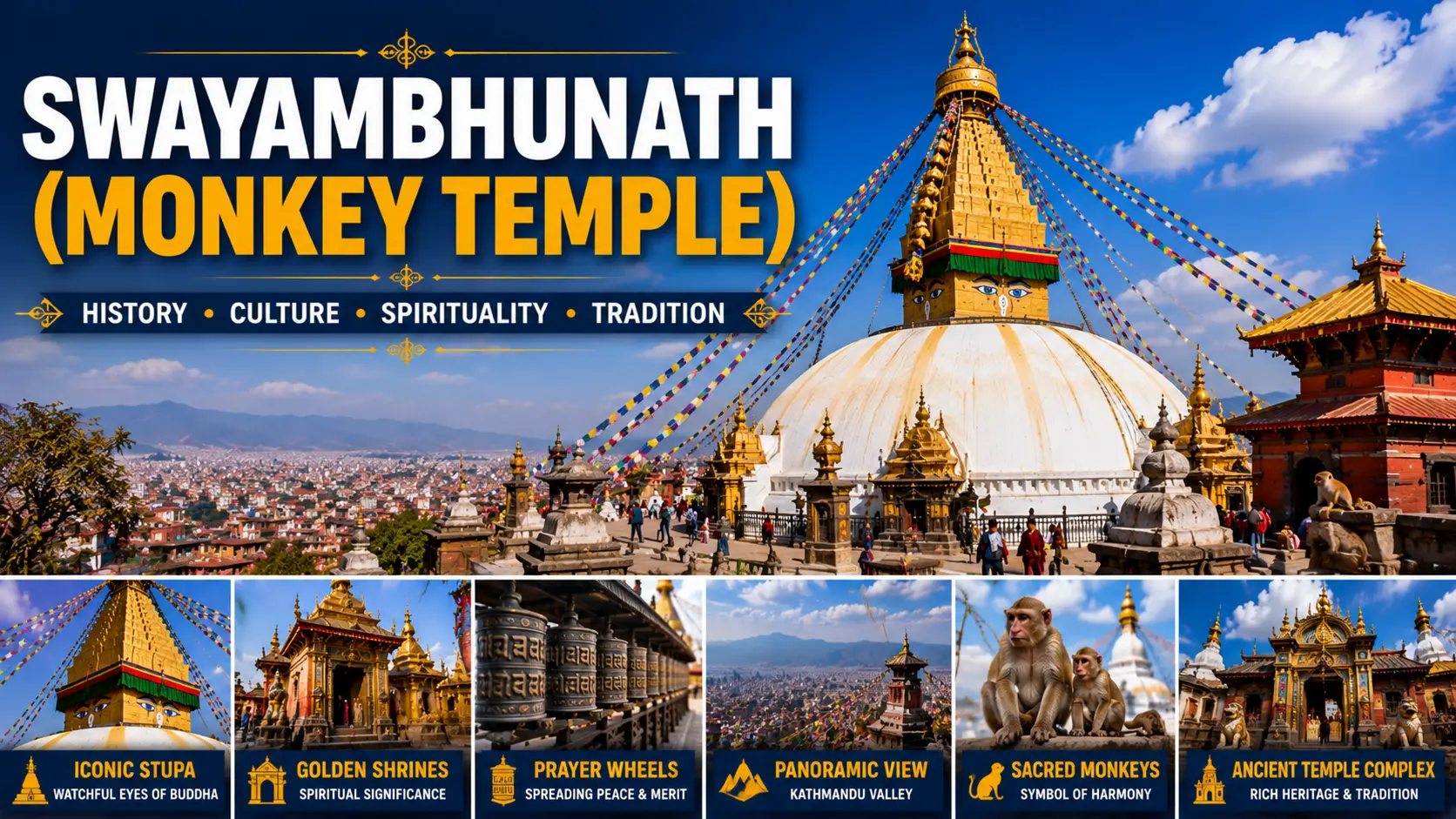
The view from Swayambhunath — over the entire Kathmandu Valley and, on clear days, toward the distant Himalayan peaks — is one of the finest urban panoramas in all of Nepal. The stupa’s hilltop position means it appears above the morning mist that often fills the valley floor in autumn and winter, creating a floating sensation that amplifies its sacred character.
What to See and Do
- The 365 Steps — The main approach to Swayambhunath from the eastern base of the hill involves climbing 365 stone steps — one for each day of the year — lined with prayer wheels, stone Buddhist sculptures, and (of course) the resident monkeys. The ascent takes approximately 10–15 minutes and offers progressive views over the valley as you climb. For those unable or unwilling to climb the steps, a vehicle road reaches the western entrance.
- The Main Stupa — The whitewashed dome with its square harmika tower bearing the all-seeing eyes of the Buddha in gold on all four sides, topped by a gilded thirteen-tiered spire, is one of the most recognized religious images in the world. The circumambulation path around the stupa base, lined with prayer wheels, is short but deeply meditative.
- The Panoramic Valley View — From the temple platform, the entire Kathmandu Valley spreads below in every direction. On clear days (October–April, particularly), the distant Himalayan peaks including Ganesh Himal, Langtang Lirung, and sometimes even Everest are visible above the valley rim.
- The Monkey Watching — The resident macaque monkeys are simultaneously one of Swayambhunath’s most entertaining attractions and one of its most practical hazards. They are habituated to humans and completely unafraid, making for extraordinary wildlife photography opportunities — but they also steal food, sunglasses, water bottles, and anything else not firmly held. Keep bags closed and valuables secured.
- The Dewa Dharma Monastery — A beautiful Tibetan monastery within the Swayambhunath complex that is open to visitors for quiet contemplation. The monastery’s interior is decorated with traditional thangka paintings and offers a peaceful contrast to the busier stupa exterior.
Kathmandu Durbar Square (Hanuman Dhoka) — The Royal Heart of the Capital
| Kathmandu Durbar Square — Key Facts 2026 |
| Location: Old Kathmandu city center | 2 km from Thamel (15–20 min walk or 10 min vehicle) |
| UNESCO: World Heritage Site since 1979 | Founded originally in 4th century, expanded 12th–18th c. |
| Entry Fee: NPR 1,000 (foreign) | NPR 150 (SAARC) | Free (Nepali nationals) |
| Open: 7:00 AM – 7:00 PM daily | Hanuman Dhoka Museum: 10:30 AM – 3:00 PM (closed Tuesday) |
| Best Time: Early Morning (7:00–9:00 AM) before tour groups arrive |
| Key Attractions: Kumari Ghar (Living Goddess), Hanuman Dhoka Palace, Taleju Temple, Kal Bhairav |
| Post-2015: Reconstruction largely complete by 2026 — most monuments restored |
History and Significance
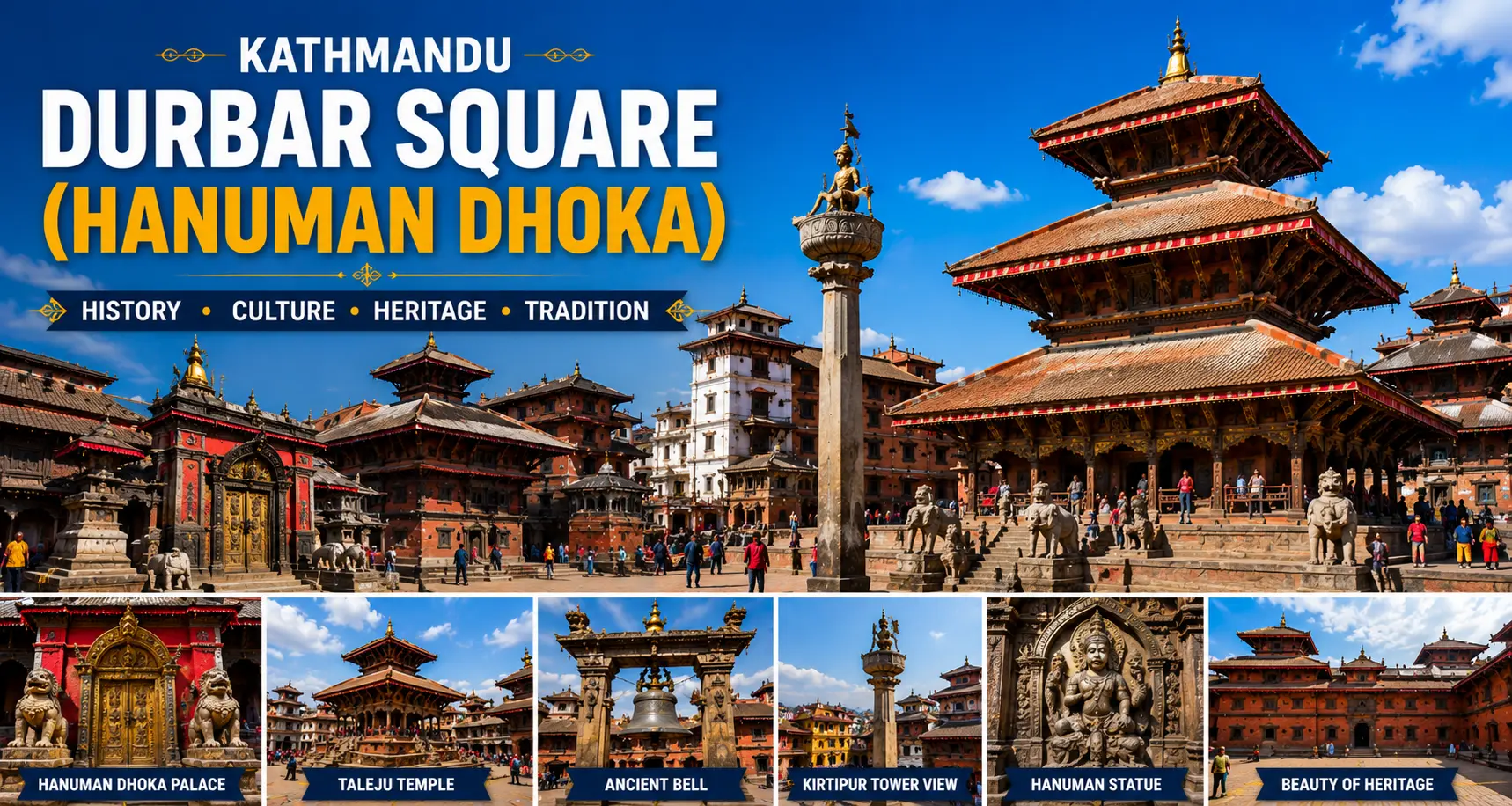
Kathmandu Durbar Square — also known as Hanuman Dhoka Durbar Square (named after the monkey deity Hanuman whose statue guards the main palace gate) — is the historical, political, and cultural epicenter of Nepal’s capital city and one of the three Durbar Squares of the Kathmandu Valley that collectively represent the pinnacle of Newari medieval architecture and urban planning. The square was the seat of power for the Malla kings of Kathmandu from the 12th to the 18th century, and subsequently for the Shah dynasty that unified Nepal under Prithvi Narayan Shah in 1769. Until the royal palace was relocated to Narayanhiti in the 19th century, Hanuman Dhoka was the literal center of Nepali political and royal life.
The square as seen in 2026 is a remarkable achievement of heritage reconstruction. The April 2015 earthquake caused significant damage to several of the square’s monuments — most dramatically to the historic nine-story Basantapur Tower, the Kastha Mandap (the ancient pavilion that gave Kathmandu its name), and several smaller temples. The subsequent reconstruction work, carried out by teams of traditional Newari craftspeople using authentic materials and methods alongside international conservation expertise funded by governments and UNESCO, has restored the majority of the damaged structures. The reconstructed Kasthamandap — which now incorporates seismic retrofitting within its traditional wooden structure — is in many respects more structurally sound than the original.
The Hanuman Dhoka Palace Complex — the sprawling multi-courtyard royal residence that occupies the eastern portion of the square — encompasses over 40 courtyards, the famous Tribhuvan Museum (dedicated to Nepal’s modern democratic revolution), and the extraordinarily detailed Mul Chowk and Nasal Chowk courtyards. The palace complex, with its carved wooden windows, gilded doors, stone guardian figures, and intricately decorated rooflines, represents the full expression of Malla-period Newari architecture at its most elaborate and ambitious.
Key Monuments and Attractions
- Kumari Ghar (House of the Living Goddess) — One of the most extraordinary and unique institutions in the world: a Newar girl selected from the Shakya community through an intensive ritual process is installed as the Kumari, the living embodiment of the goddess Taleju Bhawani. She lives in this beautifully carved three-storied building. She appears briefly at the ornate courtyard window between 10:00 AM and 12:00 PM (approximately) daily — a fleeting glimpse of a small face in ceremonial makeup that is simultaneously a tourist moment and a genuinely sacred encounter in the Newar religious framework.
- Taleju Temple — The tallest and most imposing structure in Kathmandu Durbar Square, built by King Mahendra Malla in 1564. This three-tiered pagoda is dedicated to the royal tutelary goddess Taleju Bhawani and is accessible to non-Hindus only during the Dasain festival. Its gilded rooftop elements are particularly beautiful in the morning sunlight.
- Kal Bhairav — An enormous stone relief image of Lord Shiva in his most terrifying Bhairav (destroyer) manifestation, standing more than 3 meters tall and dating from approximately the 17th century. Tradition holds that anyone who tells a lie before this image will face immediate supernatural punishment — it was historically used as a kind of divine lie detector in court proceedings.
- Kasthamandap — The ancient wood-and-brick pavilion that gave the city of Kathmandu its name (‘mandap’ of ‘kastha’ — a wooden shelter/pavilion). The original structure was reportedly built from the timber of a single tree in the 12th century. The rebuilt Kasthamandap (completed 2022) serves as a community gathering space as it has for centuries.
- The Tribhuvan Museum — Inside the Hanuman Dhoka Palace complex, this museum commemorates King Tribhuvan’s role in Nepal’s democratic revolution of 1951, with displays of royal artifacts, photographs, and historical documents in the authentically preserved palace interiors.
Patan Durbar Square — The City of Fine Arts
| Patan Durbar Square — Key Facts 2026 |
| Location: Patan (Lalitpur), 5 km south of Kathmandu | 20–25 min drive from Thamel |
| UNESCO: World Heritage Site since 1979 | Considered most artistically refined of three Durbar Squares |
| History: Patan established in the 3rd century BCE | Malla-period palace built in the 17th century primarily |
| Entry Fee: NPR 1,000 (foreign) | NPR 150 (SAARC) | Free (Nepali nationals) |
| Patan Museum (inside complex): Additional NPR 400 | Open 10:00 AM – 5:00 PM | Closed Tuesday |
| Best Time: Morning (9:00 AM – 12:00 PM) for best light and fewer crowds |
| Specialty: Best Newar art, best museum in Nepal, active bronze casting workshops nearby |
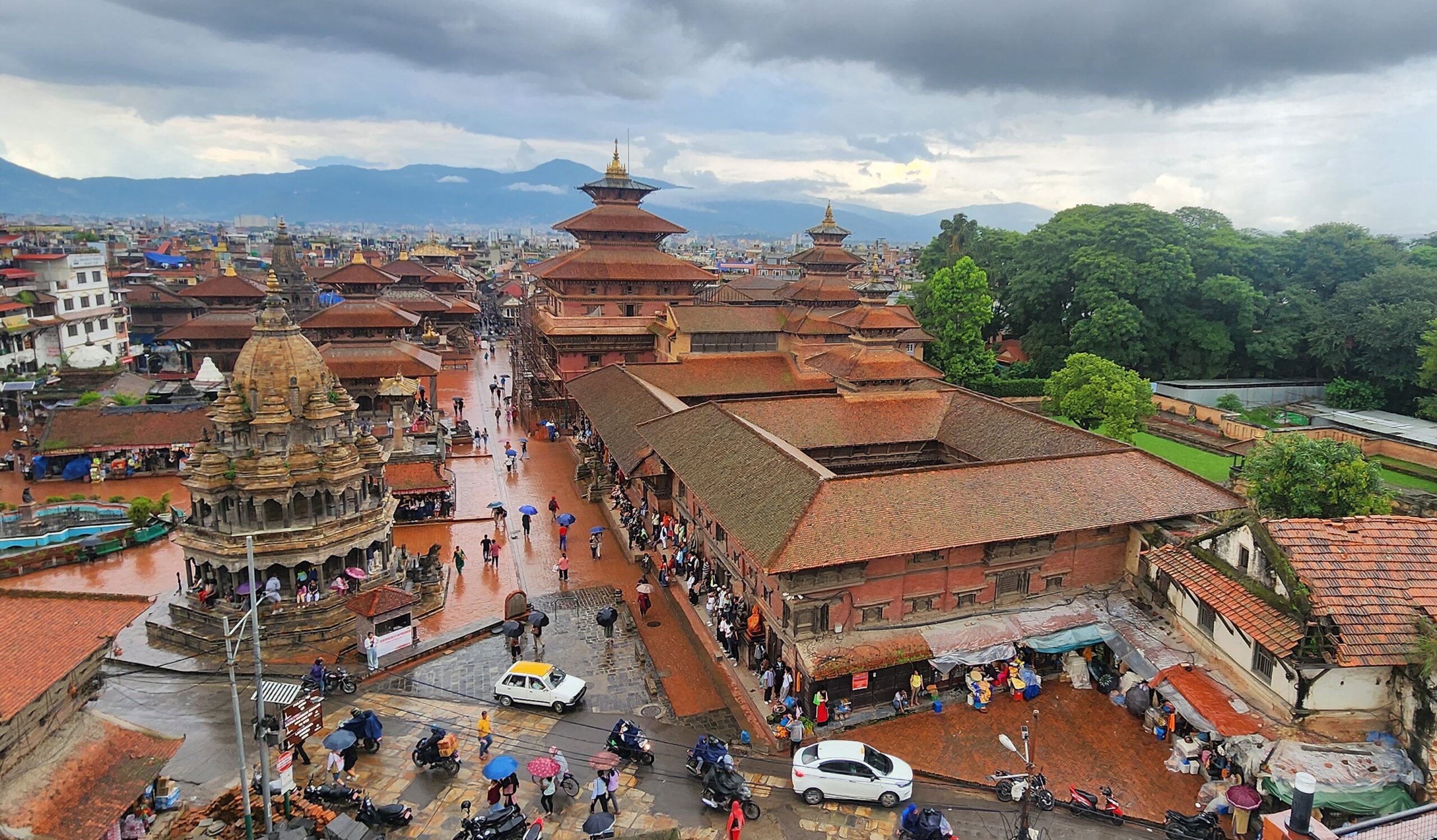
History and Significance
Patan, also known by its Sanskrit name Lalitpur (City of Beauty) and its Newari name Yala, is widely regarded as the most artistically refined of the three ancient Malla cities of the Kathmandu Valley and home to the finest concentration of traditional Newari art, architecture, and craft anywhere in Nepal. While Kathmandu Durbar Square is more politically significant and Bhaktapur is more atmospherically preserved, Patan is the city that takes your breath away with the sheer density and quality of its art — every courtyard a gallery, every doorway a masterwork of carving, every metal sculpture a testimony to a craft tradition refined over a thousand years.
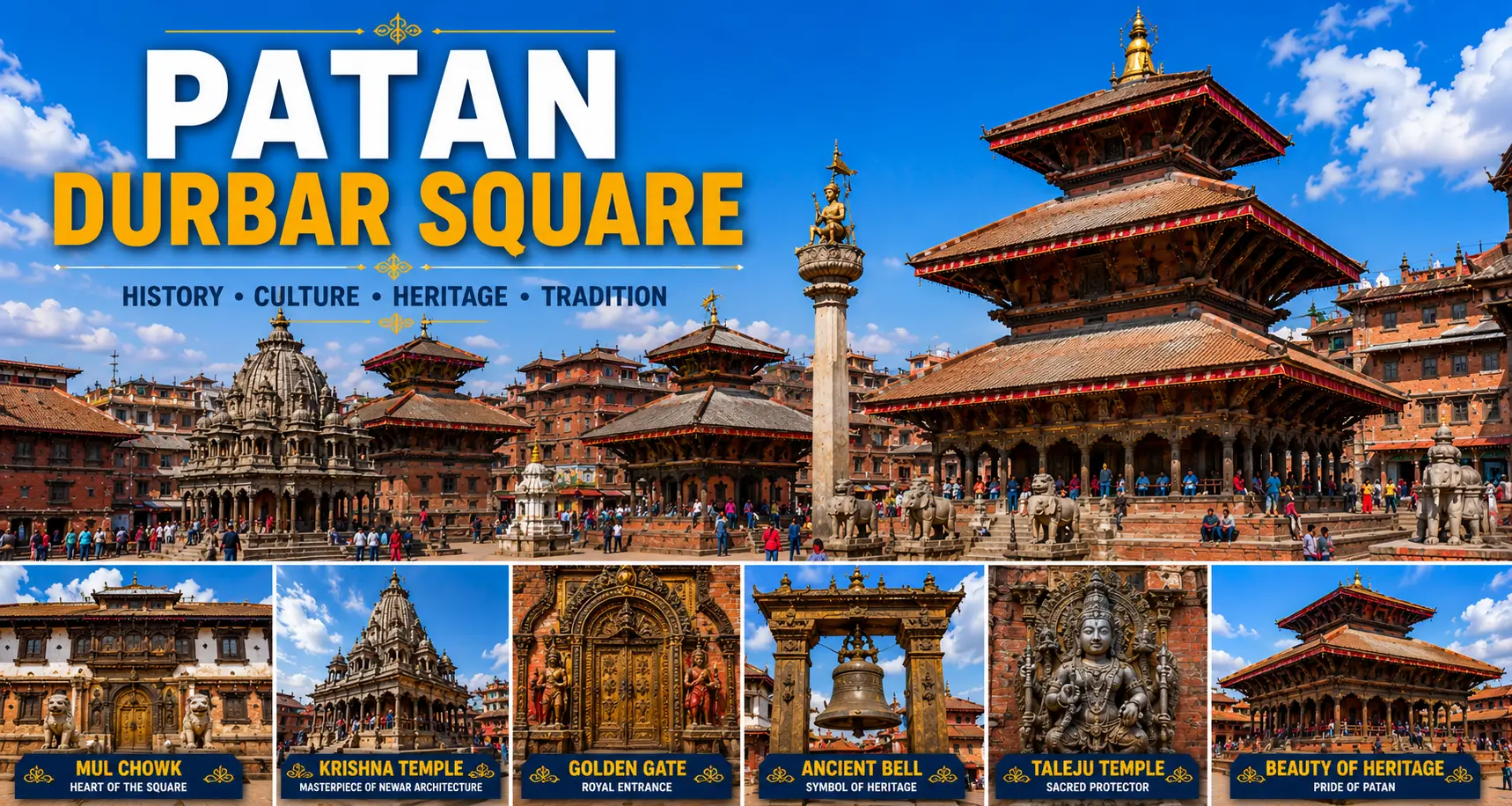
Patan Durbar Square itself is one of the finest ensembles of medieval religious architecture in all of South Asia. The Royal Palace of Patan — built primarily during the reign of King Siddhi Narayan Malla in the 17th century — contains three main courtyards (Mul Chowk, Sundari Chowk with its extraordinary sunken royal bath, and Mani Keshav Narayan Chowk) decorated with a level of artisanal detail and richness that has few parallels anywhere in the world. The square itself is surrounded by a dense cluster of temples, shrines, and public spaces that represent every major deity in the Hindu and Buddhist pantheons and every significant architectural form in the Newari tradition.
The Patan Museum, housed within the restored wings of the Malla Royal Palace, is widely considered the finest museum in Nepal and one of the best in all of South Asia. Its collection of sacred bronzes, stone sculptures, thangka paintings, ritual objects, and architectural elements—displayed in beautifully restored palace rooms with exceptional explanatory text —provides the most comprehensive and accessible introduction to Newari sacred art available anywhere. A visit to Patan Durbar Square without visiting the museum misses the interpretive key that makes the surrounding monuments fully comprehensible.
Key Monuments and Attractions
- Krishna Mandir (Krishna Temple) — Built in 1637 by King Siddhi Narayan Malla in an extraordinary departure from the typical Newari pagoda style: a three-story stone temple in the North Indian shikhara (spire) style, decorated throughout with narrative stone panels depicting scenes from the Mahabharata and Ramayana. The temple’s 21 golden pinnacles and meticulous stone carving make it one of the most remarkable individual religious structures in Nepal.
- Bhimsen Temple — A distinctive rectangular, multi-storied temple dedicated to Bhimsen (the mighty warrior of the Mahabharata), patron deity of merchants. Its gilded upper floors and striking red-and-white color scheme make it one of the most photogenic structures in the square.
- Hiranya Varna Mahavihar (Golden Temple) — A short walk from the main Durbar Square, this extraordinary 12th-century Buddhist monastery with its three-tiered golden courtyard facade is one of the finest examples of Newari monastery architecture anywhere. The central golden facade and the courtyard’s ancient stone sculptures are unmissable.
- Mahaboudha Temple (Temple of a Thousand Buddhas) — Located in a quiet street a few minutes’ walk from Durbar Square, this 16th-century shikhara-style temple is entirely faced in terracotta tiles, each one bearing a Buddha image — creating an extraordinary textured surface of Buddhist imagery covering the entire building.
- Kumari Puja at Sundari Chowk — The private royal bath at Sundari Chowk in the Patan Palace complex, known as Tusha Hiti, is an extraordinary carved stone sunken bath decorated with 72 stone water spout images of deities and mythological creatures. This is one of the finest examples of Newari decorative stone carving anywhere in the valley.
- Patan Museum — The unmissable crown of any Patan visit. Allow a minimum of 2 hours for the museum; 3 hours for justice.
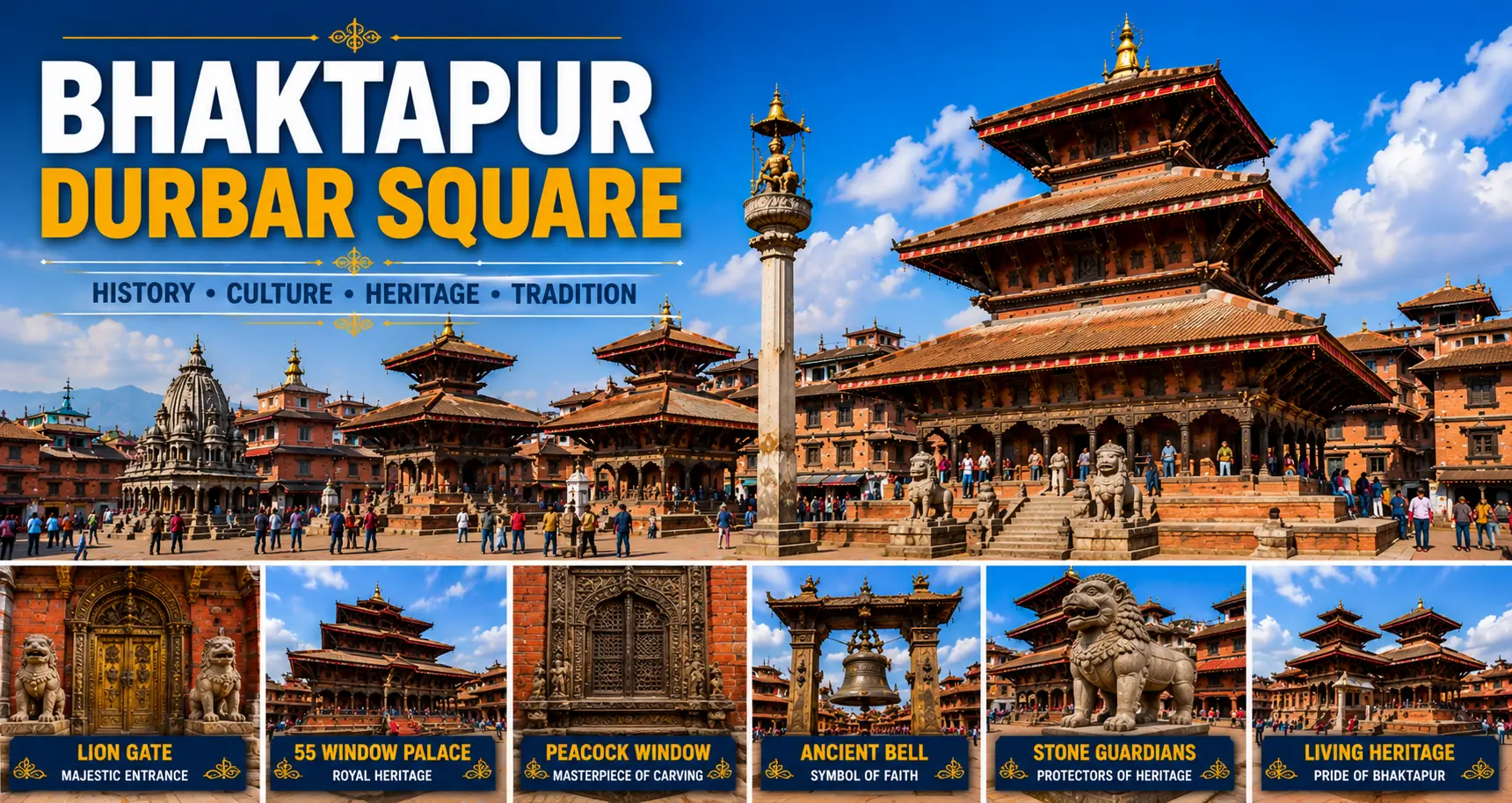
Bhaktapur Durbar Square — Nepal’s Best-Preserved Medieval City
| Bhaktapur Durbar Square — Key Facts 2026 |
| Location: Bhaktapur, 14 km east of Kathmandu | 40–45 min drive from Thamel |
| UNESCO: World Heritage Site since 1979 | One of UNESCO’s best-preserved medieval city designations |
| History: Capital of unified Nepal 12th–15th century | Malla Kingdom capital until 1769 |
| Entry Fee: NPR 1,500 (foreign — highest of the three Durbar Squares) | NPR 150 (SAARC) |
| Open: All day (monument accessible sunrise to sunset) |
| Best Time: Full day recommended | Morning (8:00 AM) for pottery, late afternoon for Nyatapola light |
| Special: Best preserved medieval streetscape | Pottery Square still active | Juju Dhau (King Curd) |
History and Significance
Bhaktapur — meaning ‘City of Devotees’ — is the most remarkably intact medieval city in the entire Kathmandu Valley and arguably in all of South Asia. Located in the eastern corner of the valley, approximately 14 km from central Kathmandu, Bhaktapur was the capital of the unified Malla Kingdom from the 12th to the 15th century, and subsequently the capital of one of the three independent Malla kingdoms into which the valley was divided after 1482. When Prithvi Narayan Shah conquered the valley in 1769 and moved his capital to Kathmandu, Bhaktapur lost its political centrality — and as a consequence retained its medieval character almost completely intact, without the modernizing development that transformed the other valley cities.
Walking through Bhaktapur today is one of Nepal’s most overwhelming and moving heritage experiences. The entire city — not just the Durbar Square area but the interconnected squares, temples, residential lanes, craft quarters, and public spaces of the entire old settlement — functions as a coherent medieval urban organism. The brick-paved lanes, the carved wooden windows on every traditional house, the stone water spouts (hiti) still in daily community use, the pottery wheels spinning in Pottery Square, the sound of ritual music from the gompas and temples — all contribute to an atmosphere of temporal displacement that is genuinely extraordinary.
Bhaktapur’s artisan traditions remain among the most living and authentic in Nepal. The city’s potters still produce the terracotta pots (including the distinctive clay bowls used for Bhaktapur’s famous Juju Dhau — King Curd) using traditional wheel methods. The city’s weavers still produce the distinctive Bhaktapuri fabric (dhaka weaving) at traditional hand looms. The city’s sculptors and woodcarvers—in workshops around the Durbar Square area—still produce works in traditions handed down from the great Malla artisans.
Key Monuments and Attractions
- Nyatapola Temple — The tallest pagoda in Nepal (5 stories, approximately 30 meters) and one of the structural wonders of Himalayan architecture. Built in just 7 months in 1702 by King Bhupatindra Malla and dedicated to the goddess Siddhi Lakshmi, the temple has survived every major earthquake since its construction — including the 2015 event — without structural failure. Its five pairs of guardian figures ascending the entrance staircase — pairs of wrestlers, elephants, lions, griffins, and goddesses of increasing supernatural power — form a protective hierarchy that is both visually spectacular and theologically precise.
- 55-Window Palace (Panchapana Dega) — Built by King Bhupatindra Malla in the 15th century with completion in 1427, this magnificent palace is adorned with 55 elaborately carved windows — each one unique, each one a masterwork of Newari woodcarving. The detail and quality of the carving are considered among the finest surviving examples of the craft in the world.
- Golden Gate (Sun Dhoka) — The gilded main entrance to the palace’s Taleju Temple courtyard, regarded by many art historians as the finest single piece of metalwork in the entire Kathmandu Valley. The gate’s intricate repousse metalwork depicts a complex narrative of deities, mythological creatures, and protective figures in a composition of extraordinary density and virtuosity.
- Pottery Square (Talako Tole) — One of Bhaktapur’s most authentic living cultural experiences: the traditional pottery quarter where local potters (members of the Kumha caste) still produce earthenware using traditional foot-powered wheels. Visiting in the Morning, when production is most active, offers the opportunity to watch centuries-old techniques applied to the same clay products — cooking pots, religious vessels, and the distinctive dahi bowls — that have been produced here for generations.
- Juju Dhau (King Curd) — Bhaktapur’s most famous culinary contribution to Nepal, this extraordinary thick, sweet yogurt is made from the milk of valley buffaloes and set in traditional terracotta pots. Available from vendors near the Durbar Square, it is one of Nepal’s finest food experiences and should be eaten on-site in the original clay pot.
- Dattatreya Square (Tachupal Tole) — The oldest part of Bhaktapur, centered on the ancient Dattatreya Temple (one of the oldest in the city) and containing the famous Peacock Window in the Pujari Math — widely considered the finest example of Newari woodcarving in the world, a single window transformed into an impossibly detailed composition of interlaced birds, flowers, and geometric patterns.
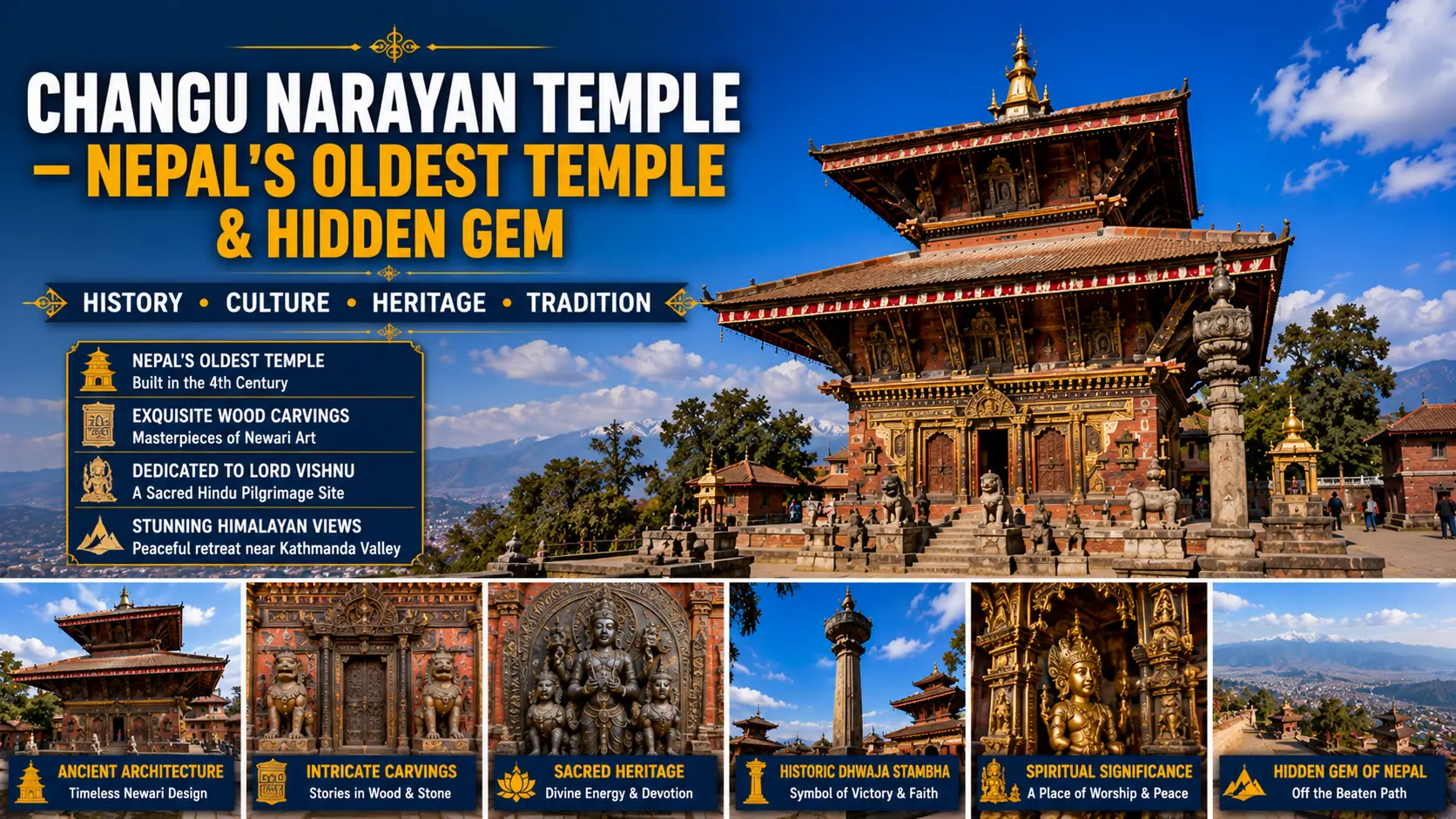
Changu Narayan Temple — Nepal’s Oldest Temple (4th Century)
| Changu Narayan — Key Facts 2026 |
| Location: Changu hilltop, Bhaktapur District | 22 km from Kathmandu (45 min drive) |
| UNESCO: World Heritage Site since 1979 | Nepal’s OLDEST surviving temple |
| History: Origin in 4th century CE (Licchavi period) | Inscription dated 464 CE — oldest in Nepal |
| Entry Fee: NPR 300 (foreign) | NPR 100 (SAARC) | Free (Nepali nationals) |
| Open: 6:00 AM – 7:00 PM daily |
| Best Time: Morning — combine with Bhaktapur visit (12 km away) |
| Special: Open-air Licchavi-era sculpture museum | Views toward Himalayan peaks | Quiet and uncrowded |
History and Significance
Changu Narayan Temple holds the remarkable distinction of being the oldest surviving temple in the Kathmandu Valley and one of the oldest Hindu temples in the entire Himalayan world — its origin traced to approximately the 4th century CE during the Licchavi period, with some scholarly accounts suggesting an even earlier founding. The temple is dedicated to Lord Vishnu (in his Narayan manifestation. It sits on a dramatic hilltop above the settlement of Changu, in Bhaktapur District, commanding views across the eastern Kathmandu Valley and, on clear days, toward the Himalayan range.
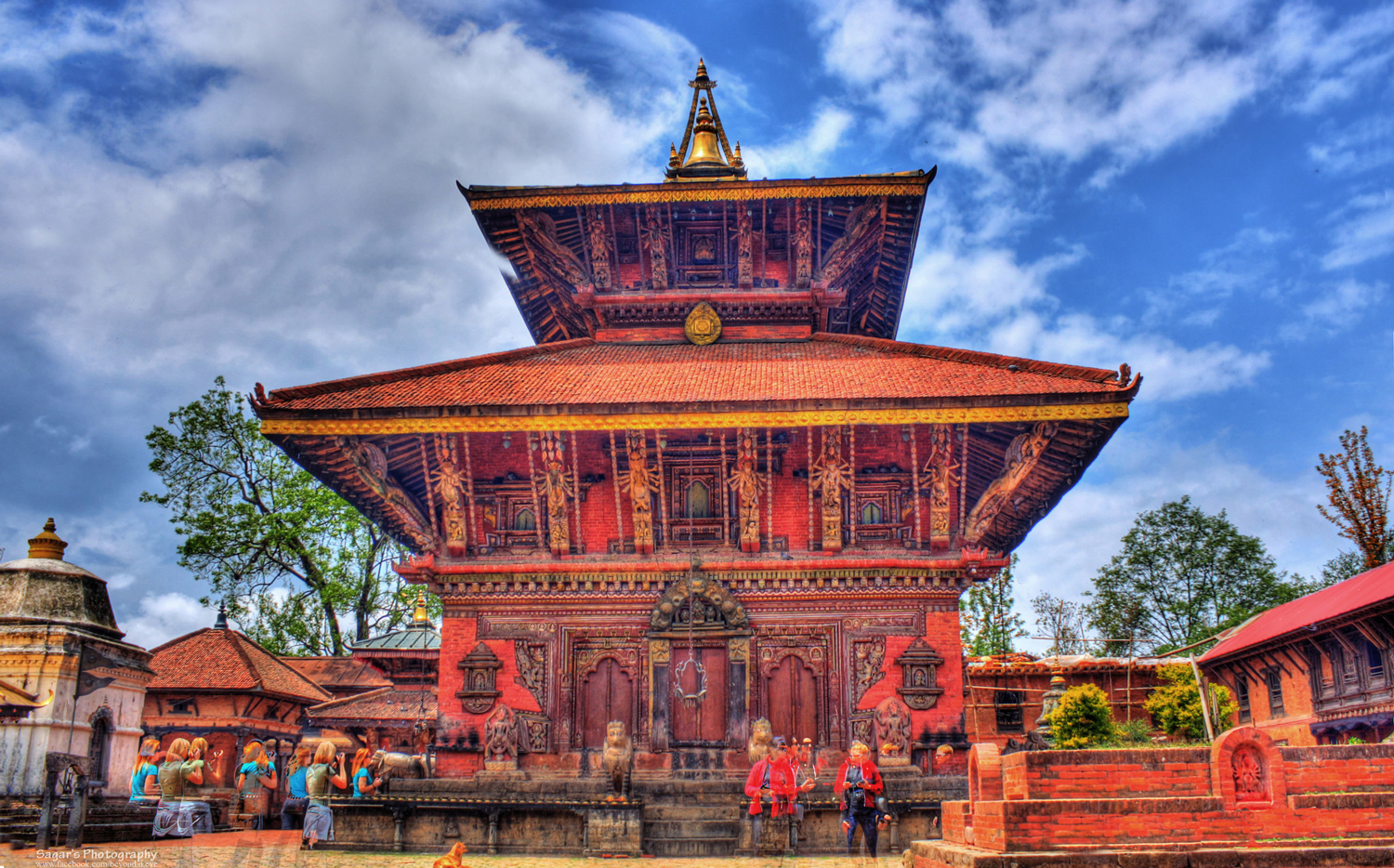
The most historically important element of Changu Narayan is not the main temple building itself (which was largely rebuilt in the 17th century after fire damage) but the extraordinary collection of stone sculptures that fills the temple courtyard. These sculptures — primarily from the Licchavi period (4th–9th centuries CE) — represent the finest surviving examples of early medieval Himalayan religious art and include several pieces of international scholarly significanceSignificanceamous is the Vikranta Vishnu — an image of Vishnu in his dwarf manifestation (Vamana) showing three cosmic strides, accompanied by intricate attendant figures — which is one of the most artistically accomplished pieces of early South Asian sculpture in existence. The adjacent 464 CE inscription — the oldest stone inscription in Nepal, recording the military victories of King Manadeva I in elegant early Brahmi script — is the single most important epigraphic document in Nepali history.
What makes Changu Narayan particularly rewarding for the historically engaged visitor is the combination of its extraordinary art, its hilltop setting amid forested surroundings, and its relative freedom from the tourist crowds that fill the lower valley heritage sites. Even during peak season, Changu Narayan sees only a small fraction of the visitor numbers at Bhaktapur or Patan, creating an atmosphere of quiet that allows genuine engagement with the sculptures and the site’s remarkable historical depth.
What to See and Do
- The Open-Air Sculpture Gallery — The temple courtyard is essentially an open-air museum of early Licchavi and Malla-period sculpture. The Vikranta Vishnu, the eight-armed Vishnu image, the Garuda figure kneeling in devotion before the temple, the stone guardian figures of the entrance, and numerous votive sculptures placed throughout the courtyard constitute a collection of medieval religious art of extraordinary quality.
- The 464 CE Inscription — The oldest stone inscription in Nepal, placed on a carved stone slab in the courtyard, is an irreplaceable historical document. Scholarly interpretations suggest it records King Manadeva’s military campaigns and political achievements — making it the earliest direct historical evidence from the Kathmandu Valley’s royal tradition.
- The Main Temple — The current temple structure (rebuilt primarily in the 17th century but maintaining the traditional Newari pagoda form on its ancient stone platform) is decorated with elaborate strut carvings and metal-work ornaments. The principal image inside — the Vishvarupa form of Vishnu with multiple heads and arms — is one of the finest examples of late Licchavi-period bronze casting.
- The Village of Changu — The traditional Newari village surrounding the temple hilltop is one of the most authentic and least touristic village communities in the Kathmandu Valley, providing an excellent context for understanding how temple communities have traditionally organized their social and cultural life around a sacred center.
- Views from the Hill — On clear days (October–April), the Himalayan range is visible to the north from the Changu Narayan hilltop, providing a beautiful landscape context for the historical sites below.
Lumbini — The Birthplace of the Buddha
| Lumbini — Key Facts 2026 |
| Location: Rupandehi District, Lumbini Province | 330 km from Kathmandu | 22 km from Bhairahawa |
| UNESCO: World Heritage Site since 1997 |
| History: Buddha born c. 563 BCE | Emperor Ashoka pillar erected 249 BCE |
| Sacred Garden Entry: NPR 500 (foreign) | NPR 200 (SAARC) | Free (Nepali nationals) |
| Monastic Zone: Free (individual monastery donations discretionary) |
| Open: Sacred Garden 5:00 AM – 8:00 PM | Best time: Dawn (5:00 AM) for authentic atmosphere |
| Getting There: Flight Kathmandu to Bhairahawa (35 min) | Road 7–8 hrs | Nepal Vehicle Hiring transport available |
History and Significance
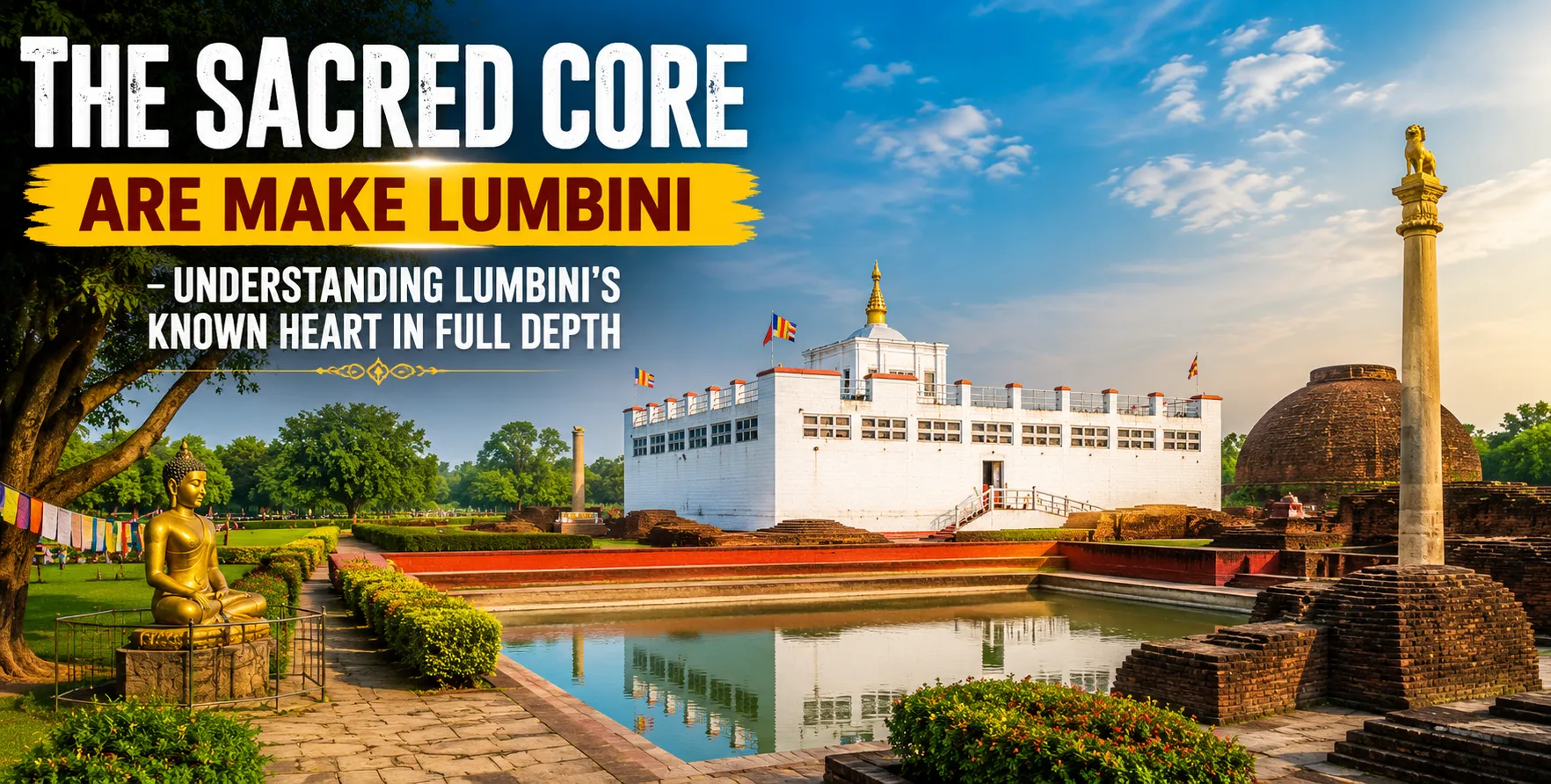
Lumbini is one of the most significant sacred sites in the world — the place where Siddhartha Gautama, the historical Buddha, was born approximately 563 BCE and where the journey that would ultimately produce one of humanity’s most transformative wisdom traditions began. As one of the four holiest sites in Buddhism (alongside Bodh Gaya, Sarnath, and Kushinagar), Lumbini draws Buddhist pilgrims from across Asia and the world throughout the year, creating a constant current of devotional energy that gives the site an atmosphere unlike any other in Nepal.
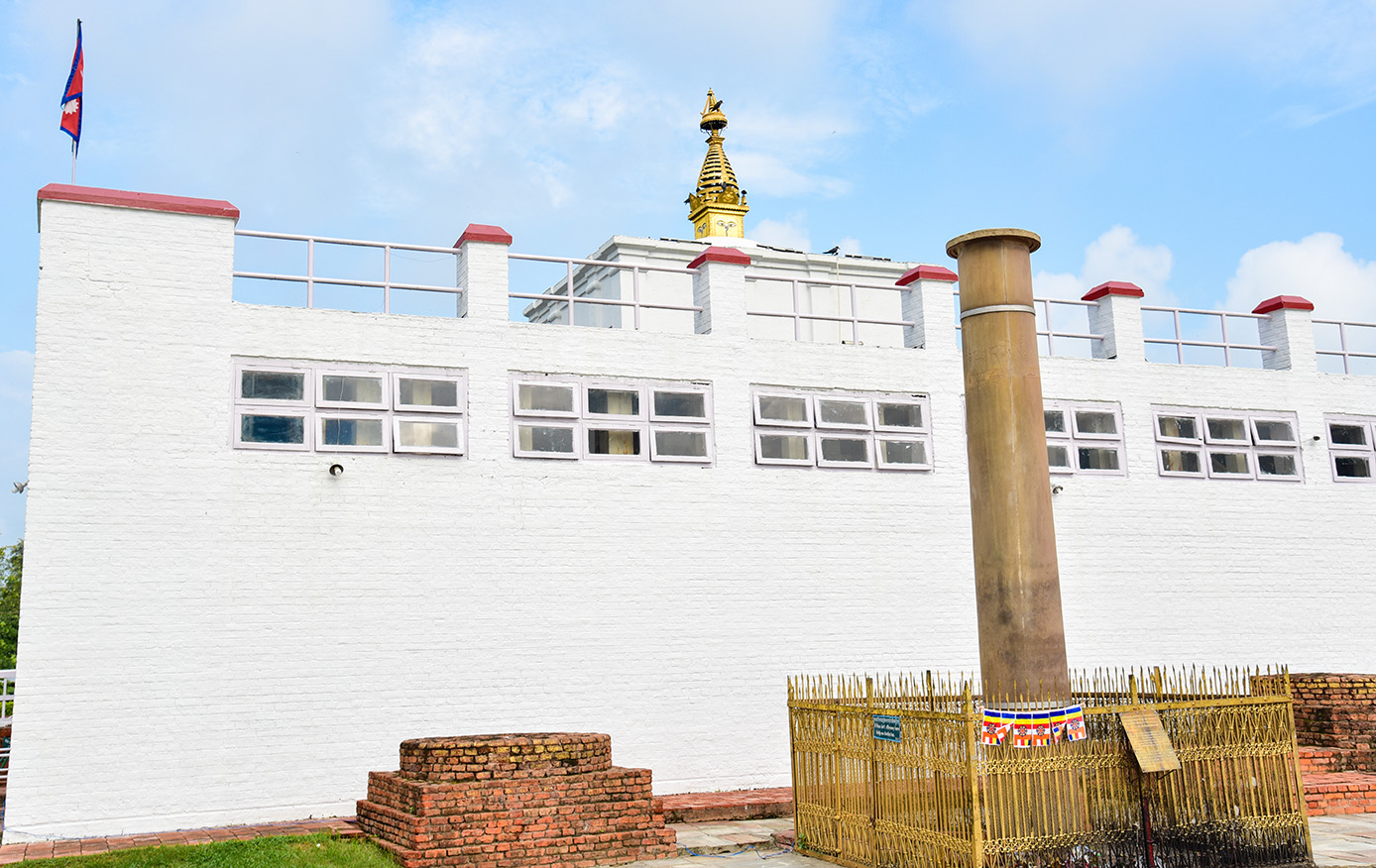
The sacred core of Lumbini — the Maya Devi Temple marking the precise birthplace, the ancient Marker Stone beneath its floor, the Pushkarni Sacred Pond where Maya Devi bathed, and the Ashokan Pillar with its 249 BCE inscription confirming the site’s identity — represents one of the most archaeologically and historically verified sacred sites in all of Buddhism. The International Monastic Zone surrounding the Sacred Garden, with its 32+ monastery buildings from Buddhist nations across the world (Thailand, Myanmar, Japan, China, Germany, Korea, Vietnam, Cambodia, France, Sri Lanka and more), constitutes one of the most remarkable collections of contemporary Buddhist architecture anywhere on earth.
In 2026, Lumbini continues to develop with new monastery constructions, improved infrastructure, and the ongoing archaeological excavations at both the main site and the wider outer circuit (including Tilaurakot, Ramagrama Stupa, and other sites described in our dedicated Lumbini guide). The site receives approximately 1–2 million visitors annually, making it one of Nepal’s most visited destinations, and the quality of visitor facilities has improved significantly in recent years.
What to See and Do
- Maya Devi Temple (Sacred Garden) — The primary sacred site, housing the Marker Stone and the Nativity Sculpture within a modern protective structure over the archaeological excavations. The sacred Pushkarni Pond and the Ashokan Pillar are immediately adjacent.
- The International Monastic Zone — Walking the full length of the central canal flanked by monasteries from thirty nations is one of Nepal’s most extraordinary cultural experiences. Allow a full day for the complete Monastic Zone.
- World Peace Pagoda — The gleaming white Japanese-built Shanti Stupa at the northern end of the Monastic Sunriseest at sunrise and sunset.
- Outer Sacred Circuit — Ramagrama Stupa (35 km east — only original Buddha relic stupa), Tilaurakot (27 km west — childhood palace of Siddhartha), Kudan, Gotihawa, Niglihawa, Sagarhawa — see our dedicated Lumbini Hidden Spiritual Places guide for full details.
- Dawn Meditation at the Sacred Garden — Arriving at 5:00 AM for the garden’s opening provides an hour of extraordinary peace before the day’s pilgrims arrive.
Gorkha Durbar — Where Nepal Was Born
| Gorkha Durbar — Key Facts 2026 |
| Location: Gorkha Hill, Gorkha District | 139 km from Kathmandu (4–5 hrs drive) |
| History: Seat of the Gorkha Shah dynasty | Prithvi Narayan Shah launched Nepal unification from here (1769) |
| Entry Fee: Free | Gorkha Museum: NPR 50–100 (local rates — verify on arrival) |
| Open: 9:00 AM – 5:00 PM daily (Gorkha Kalika Temple: limited non-Hindu access) |
| Getting There: 4–5 hr drive from Kathmandu | Nepal Vehicle Hiring private car or jeep |
| Best Jeep: Morning (9:00 AM – 12:00 PM) | Combine with Manakamana Temple at Kurintar |
| Special: Birthplace of modern Nepal | Panoramic Himalayan views | Gorakhnath Cave |
History and Significance
Gorkha Durbar is the most historically charged political site in Nepal — the hilltop palace-fortress from which King Prithvi Narayan Shah launched the extraordinary military campaign that unified the dozens of independent Himalayan principalities into the single Kingdom of Nepal in 1769. The name ‘Gorkha’ reverberates through modern world history for this reason: the Gurkha soldiers — Nepal’s legendary military force who have served in the British and Indian armies since the early 19th century — derive their name from this hill-kingdom, and Gorkha’s warrior heritage continues to shape Nepali national identity to this day.
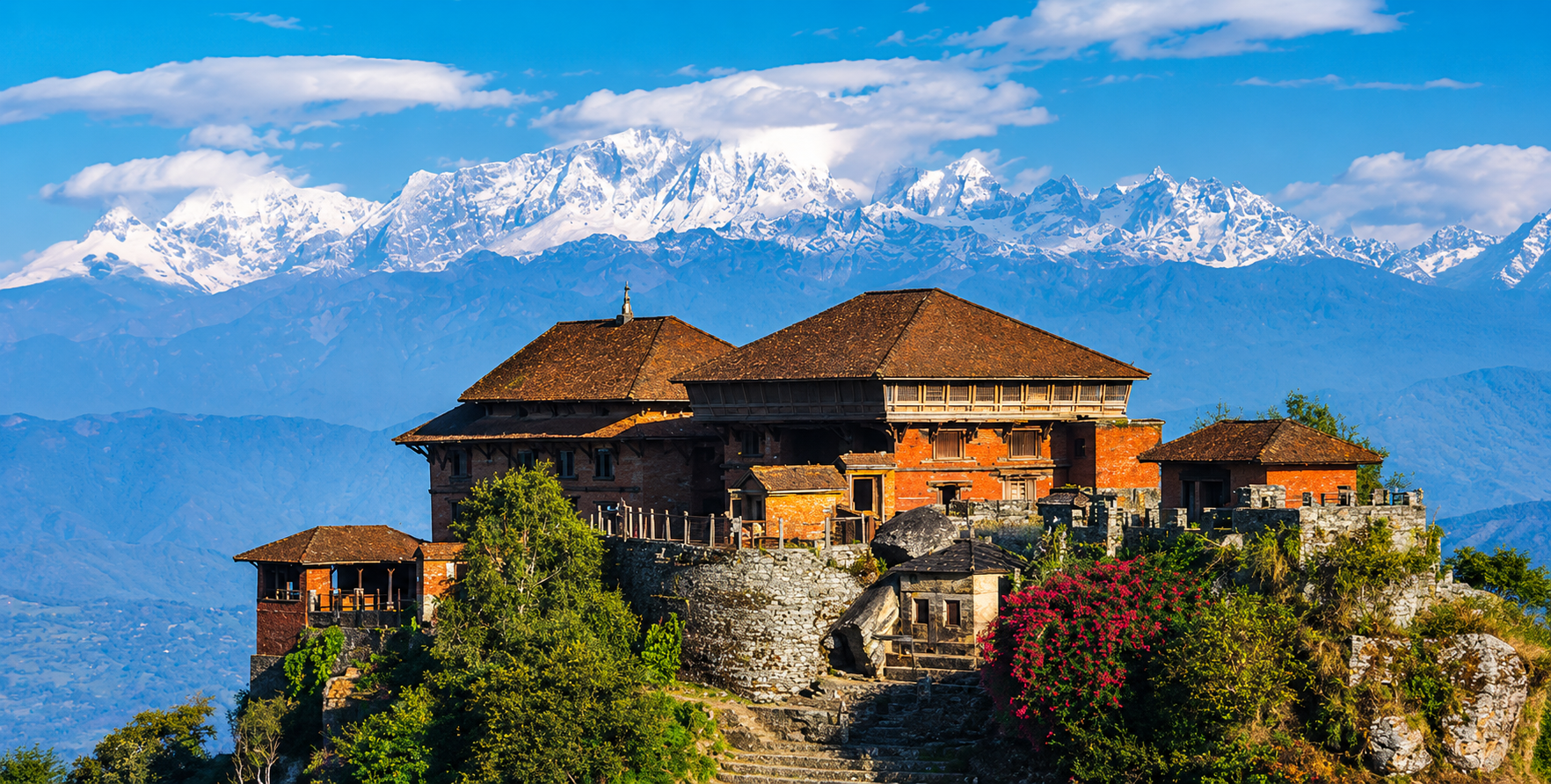
The Durbar (palace) complex crowns a dramatic hilltop at approximately 1,100 meters above sea level, accessed by a 45-minute walk up stone steps from Gorkha Bazar or by a vehicle road from the other side. The palace structure — built primarily in the 16th century during the reign of Ram Shah and expanded over subsequent centuries — is a magnificent example of Newari palace architecture: carved wooden windows and screens, gilded rooftop ornamentation, stone guardian figures, and the Gorkha Kalika Temple (the palace’s tutelary goddess shrine) that provided the Shah dynasty with its divine mandate. The panoramic views from the hilltop — across the valley below and northward to the snow-capped peaks of Manaslu and the Ganesh Himal — are among the finest from any heritage site in Nepal.
The Gorakhnath Cave — immediately adjacent to the Durbar complex — is one of the most sacred sites in Gorkha, associated with the sage Gorakhnath whose spiritual authority is believed to have protected the Gorkha kingdom and whose name is embedded in ‘Gorkha’ itself. The cave is a small but richly decorated shrine space, and the atmosphere of concentrated sacred energy in this small rock chamber is palpable. Standing at Gorkha Durbar and Gorakhnath Cave, one understands viscerally why the Gorkha kings were inspired to attempt the audacious unification project that produced modern Nepal.
- Gorkha Durbar Complex — The palace, Gorkha Kalika Temple, Gorakhnath Cave, and surrounding structures — a 45-minute walk from Gorkha Bazar.
- Gorkha Museum — Houses royal weapons, official documents, traditional garments, and historical artifacts of the Gorkha Shah dynasty.
- Manakamana Temple (combination stop at Kurintar) — 30 km south of Gorkha on the road back to Kathmandu, the famous wish-fulfilling goddess temple accessible by Nepal’s first cable car (2.8 km, 10 minutes each way). A natural combination stop when driving Kathmandu–Gorkha.
Janakpur — The Sacred City of Goddess Sita
| Janakpur Janaki Temple — Key Facts 2026 |
| Location: Janakpur, Madhesh Province | 225 km southeast of Kathmandu (5–6 hrs drive) |
| History: Ancient capital of Mithila Kingdom | Birthplace of Goddess Sita | Site of Ram-Sita marriage |
| Entry Fee: Free (temple open to all) | Donations appreciated |
| Open: 5:00 AM – 10:00 PM daily | Puja times: 6:00 AM and 7:00 PM |
| Getting There: Direct flight Kathmandu to Janakpur (25 min on Yeti Airlines) | Road: 5–6 hrs |
| Best Time: Ram Navami festival (March/April) — 100,000+ pilgrims | Morning puja (6:00 AM) |
| Special: Mithila painting capital | 72 sacred ponds (Kunds) | Ram-Janaki walking trail |
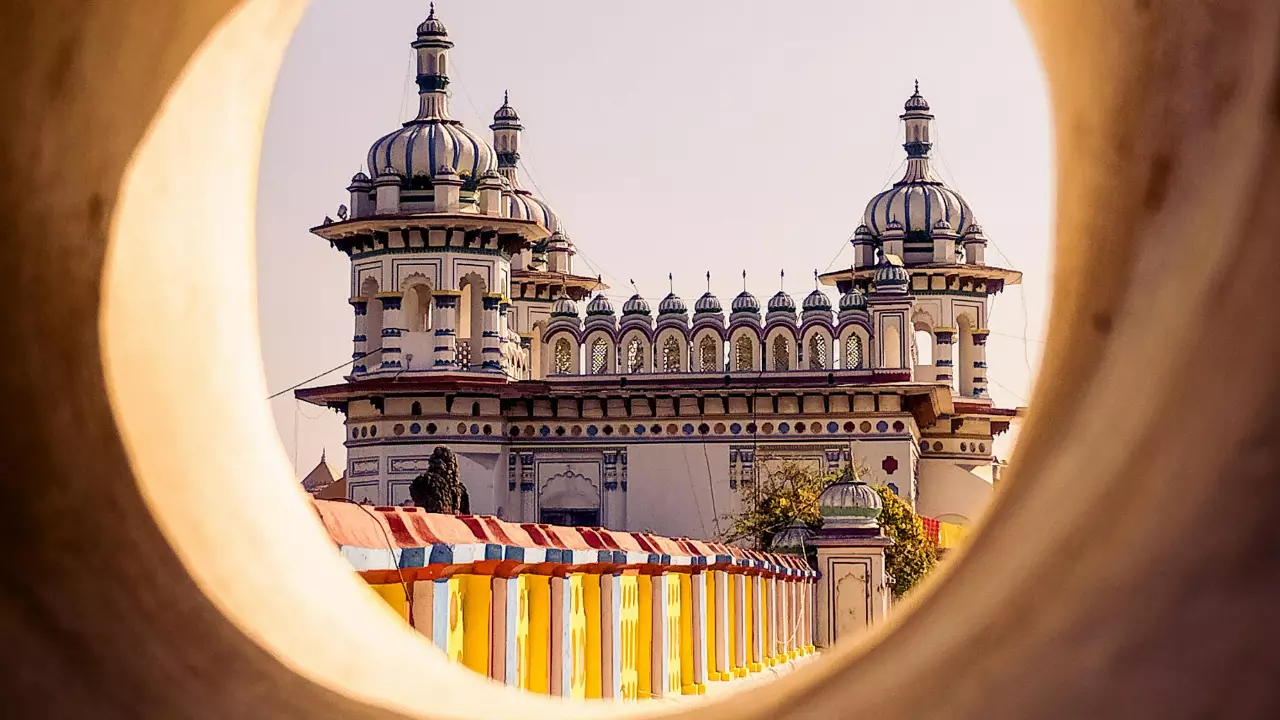 tory and SignificanceSignificance one of Nepal’s most important and least-visited historical cities for international tourists — the ancient capital of the legendary Mithila Kingdom and the city most sacred in the Hindu tradition as the birthplace of Goddess Sita, the divine consort of Lord Ram and the heroine of the Ramayana epic. Located in Nepal’s Madhesh Province, close to the Indian border, Janakpur is primarily a pilgrimage destination for Hindu devotees—particularly from India and Nepal—who come to venerate the sacred sites associated with the Sita-Ram narrative, one of Hinduism’s most beloved and theologically significant stories.
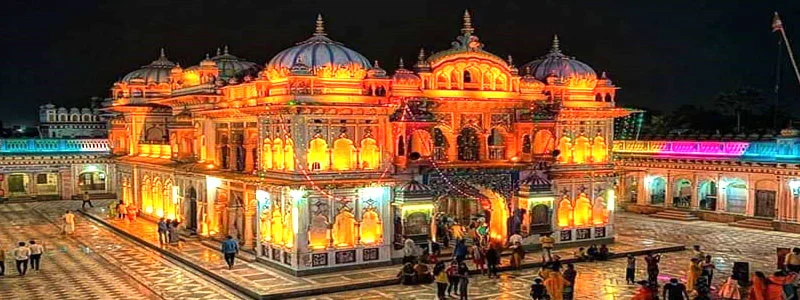
The centerpiece of Janakpur’s sacred landscape is the Janaki Mandir — a magnificent white marble temple built in the Mughal-Rajput architectural style in 1911 by Queen Vrisha Bhanu of Tikamgarh, India. Unlike the pagoda-style temples of the Kathmandu Valley, the Janaki Mandir is a towering structure of white marble arches, ornate spires, and decorative balconies that rises above the surrounding city in a visual statement of devotional grandeur unprecedented in Nepal’s architectural history. The temple is dedicated to Goddess Sita (Jana ki means ‘daughter of Janaka’ — the divine king of Mithila who discovered Sita in his plowed field) and is considered one of the most important Hindu pilgrimage temples in the entire Indian subcontinent.
Beyond the Janaki Mandir, Janakpur’s sacred landscape encompasses an extraordinary network of 72 sacred ponds (kunds) associated with events in the Ramayana narrative — each one a site of active daily worship by local devotees. The city is also the heartland of the Mithila painting tradition — a form of sacred art created by Mithila women on the walls of their homes and on paper using natural pigments, depicting scenes from Hindu mythology, nature symbolism, and daily life in a distinctive geometric and symbolic style. Mithila painting has received UNESCO Intangible Cultural Heritage recognition and is one of the world’s great living folk art traditions.
- Janaki Mandir — The magnificent white marble temple is the city’s primary sight and one of Nepal’s most architecturally distinctive religious buildings. Morning puja (approximately 6:00 AM) is the most spiritually atmospheric time to visit.
- Vivah Mandap — The pavilion marking the spot where Ram and Sita were traditionally married — one of the most sacred points in the entire Mithila pilgrimage landscape.
- The Sacred Ponds (Kunds) — Walking the Ram-Janaki path between the major sacred ponds (particularly the Gangasagar and Dhanushasagar kunds) provides a contemplative walking pilgrimage through the living religious landscape of the city.
- Mithila Art — The shops and workshops around the Janaki Mandir area sell and produce genuine Mithila paintings, and several Mithila art centers offer demonstrations of the traditional painting technique. This is one of Nepal’s finest handicraft shopping experiences.
- Ram Navami Festival (March/April) — The celebration of Ram’s birthday is Janakpur’s greatest festival, drawing hundreds of thousands of pilgrims and transforming the city into an extraordinary living religious theater. Visiting during Ram Navami is one of the most intense cultural and spiritual experiences available in Nepal.
Complete Entry Fees, Hours and Practical Reference (2026)
| Historical Site | Foreign Entry | SAARC | Nepali | Hours | Distance from Kathmandu |
| 1. Pashupatinath Temple | NPR 1,000 | NPR 150 | Free (Hindus) | 4:00 AM – 9:00 PM | 5 km / 20 min |
| 2. Boudhanath Stupa | NPR 400 | Free | Free | 5:00 AM – 9:00 PM | 8 km / 25 min |
| 3. Swayambhunath Stupa | NPR 200 | Free | Free | Sunrise to sunset (24 hr outer) | 3 km / 15 min |
| 4. Kathmandu Durbar Square | NPR 1,000 | NPR 150 | Free | 7:00 AM – 7:00 PM | 2 km / 10 min |
| 5. Patan Durbar Square | NPR 1,000 | NPR 150 | Free | 10:00 AM–5:00 PM (museum closed Tue) | 5 km / 20 min |
| 6. Bhaktapur Durbar Square | NPR 1,500 | NPR 150 | Free | Sunrise to sunset | 14 km / 40 min |
| 7. Changu Narayan Temple | NPR 300 | NPR 100 | Free | 6:00 AM – 7:00 PM | 22 km / 45 min |
| 8. Lumbini Sacred Garden | NPR 500 | NPR 200 | Free | 5:00 AM – 8:00 PM | 330 km / 7–8 hrs |
| 9. Gorkha Durbar | Free | Free | Free | 9:00 AM – 5:00 PM | 139 km / 4–5 hrs |
| 10. Janakpur Janaki Temple | Free | Free | Free | 5:00 AM – 10:00 PM | 225 km / 5–6 hrs |
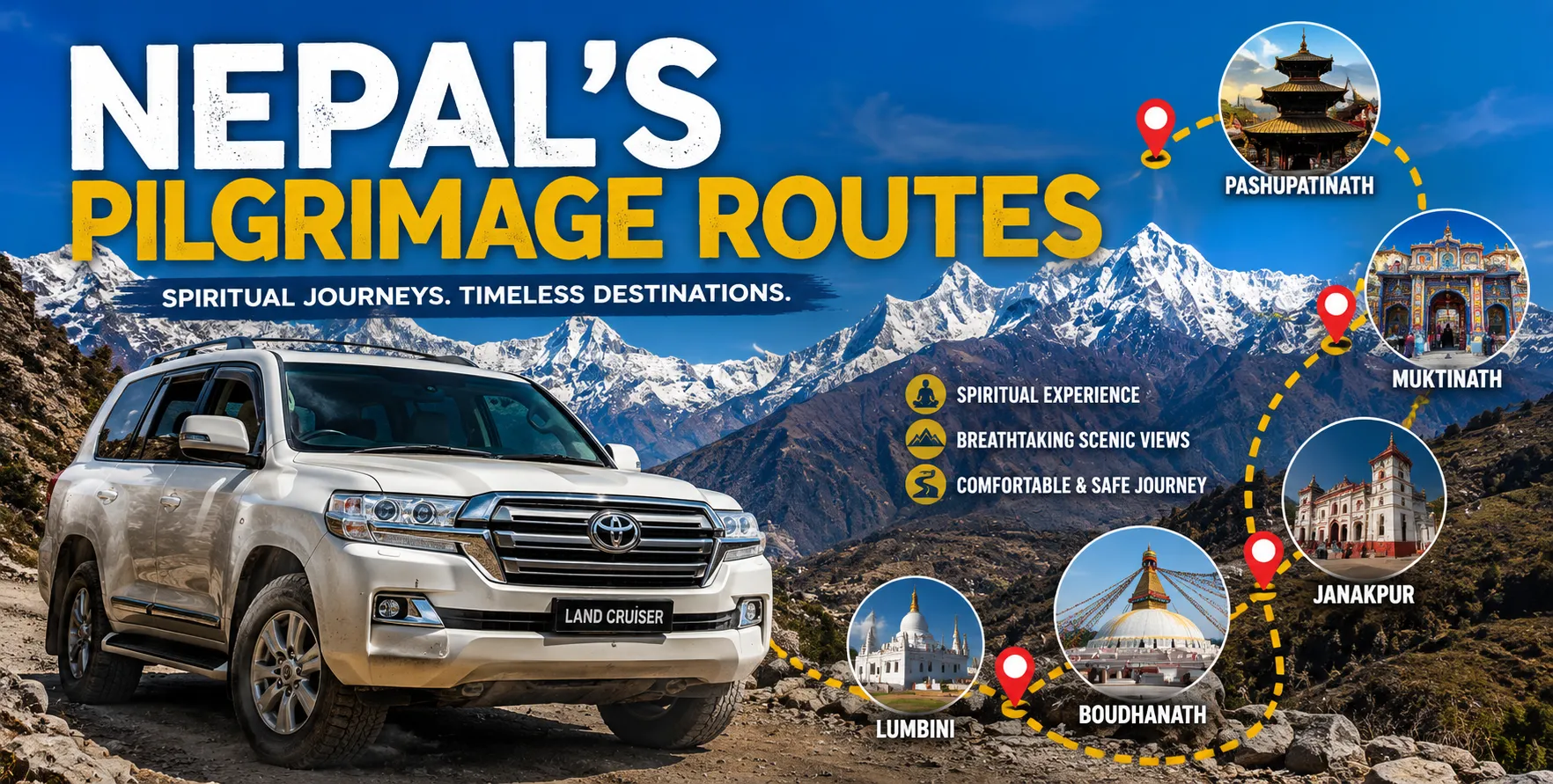
Planning Your Nepal Historical Places Tour with Nepal Vehicle Hiring Pvt. Ltd.
Nepal’s top 10 historical places are spread across a wide geographic range — from the Kathmandu Valley sites (accessible within 1 hour from the city) to the more distant destinations of Lumbini (330 km south), Gorkha (139 km west), and Janakpur (225 km southeast). Visiting all ten places thoroughly requires careful itinerary planning and appropriate transport. Nepal Vehicle Hiring Pvt. Ltd. provides private vehicle hire for every route, every group size, and every budget, making the complete Nepal historical circuit accessible to all types of travelers.
Recommended Historical Places Tour Itineraries
| Itinerary | Duration | Sites Covered | Vehicle | Approx. Vehicle Cost |
| Kathmandu Valley Heritage Day 1 | Full day | Pashupatinath (dawn) + Boudhanath + Swayambhunath + Kathmandu Durbar Square | Car or Jeep | NPR 8,000–12,000 |
| Kathmandu Valley Heritage Day 2 | Full day | Patan Durbar Square (incl. Museum) + Bhaktapur + Changu Narayan | Car or Jeep | NPR 9,000–14,000 |
| Lumbini Sacred Journey | 2–3 days | Lumbini Sacred Garden + Monastic Zone + Tilaurakot + Ramagrama | Car or Jeep from Bhairahawa | NPR 65,000–95,000 (Ktm–Lumbini) or from Bhairahawa: NPR 10,000–18,000 |
| Gorkha Historical Day Trip | 1 day | Gorkha Durbar + Gorakhnath Cave + Manakamana Cable Car | Car or Jeep | NPR 16,000–22,000 |
| Janakpur Pilgrimage | 1–2 days | Janaki Temple + Sacred Ponds + Mithila Art + Vivah Mandap | Car or Jeep (or fjeep+ ground) | NPR 26,000–38,000 (road) or flight + ground |
| Complete Nepal 10-Site Circuit | 8–10 days | All 10 historical sites in sequence | Fortuner or Land Cruiser (multi-day) | NPR 150,000–220,000 (complete circuit) |
| Why Choose Nepal Vehicle Hiring for Your Historical Places Tour |
| 8,000+ satisfied customers | 5.0 TripAdvisor | 200+ verified 5-star reviews |
| Hotel pickup from anywhere in Kathmandu — we come to you at any time |
| Drivers familiar with all 10 historical sites — know optimal timing, parking, and routes |
| Complete flexibility — stay longer at the sites that move you most, skip others |
| Fleet: Private Car | 4WD Jeep (Fortuner/Hilux/Land Cruiser) | Hiace Van | Coaster Bus |
| Multi-day tours: Kathmandu → Lumbini → Gorkha → Janakpur and back |
| 24/7 WhatsApp: +977 9851013196 — plan your heritage circuit with us today |
| Licensed & Registered | Company Reg. No. 219204 | Best Price Guaranteed |
Essential Cultural Etiquette — Visiting Nepal’s Historical Sites
- Remove shoes before entering all temples, monastery halls, and many heritage courtyards — shoe storage is provided at entrances. Never enter a sacred space wearing footwear of any kind.
- Dress modestly at ALL historical sites — long pants or skirts below the knee and covered shoulders for both men and women. This is not optional — many sites will refuse entry or provide a sarong/wrap for a small fee to visitors who do not comply. Always carry a lightweight scarf or wrap for shoulder coverage.
- Walk clockwise around all stupas and religious monuments — keeping the monument to your right as you walk. Walking anticlockwise is considered spiritually inauspicious and disrespectful in both Hindu and Buddhist contexts.
- The main temple inner sanctuaries at Pashupatinath, Taleju (Kathmandu), and Gorkha Kalika are restricted to Hindus only. This rule is consistently enforced and should be respected without argument or attempted circumvention.
- Photography: Most outdoor areas of historical sites permit photography. Inner sanctums, active prayer ceremonies, and cremation ghats require extreme discretion. Never photograph individuals at intimate devotional moments without obvious consent. At the Pashupatinath cremation ghats, photography of the deceased or their families is deeply inappropriate and disrespectful.
- Donations: At monasteries and temples, small donations (NPR 100–500) in the donation boxes acknowledge the community’s maintenance of the sacred space. Never offer money directly to priests or monks in exchange for access or blessings — this is considered inappropriate.
- Bells: The large bells hanging at temple entrances may be rung by visitors as an offering of sound — this is welcomed. Ring once gently, not repeatedly.
- Leather goods: Some temples strictly prohibit leather items (belts, bags, shoes) within the premises — follow any posted signs regarding this restriction.
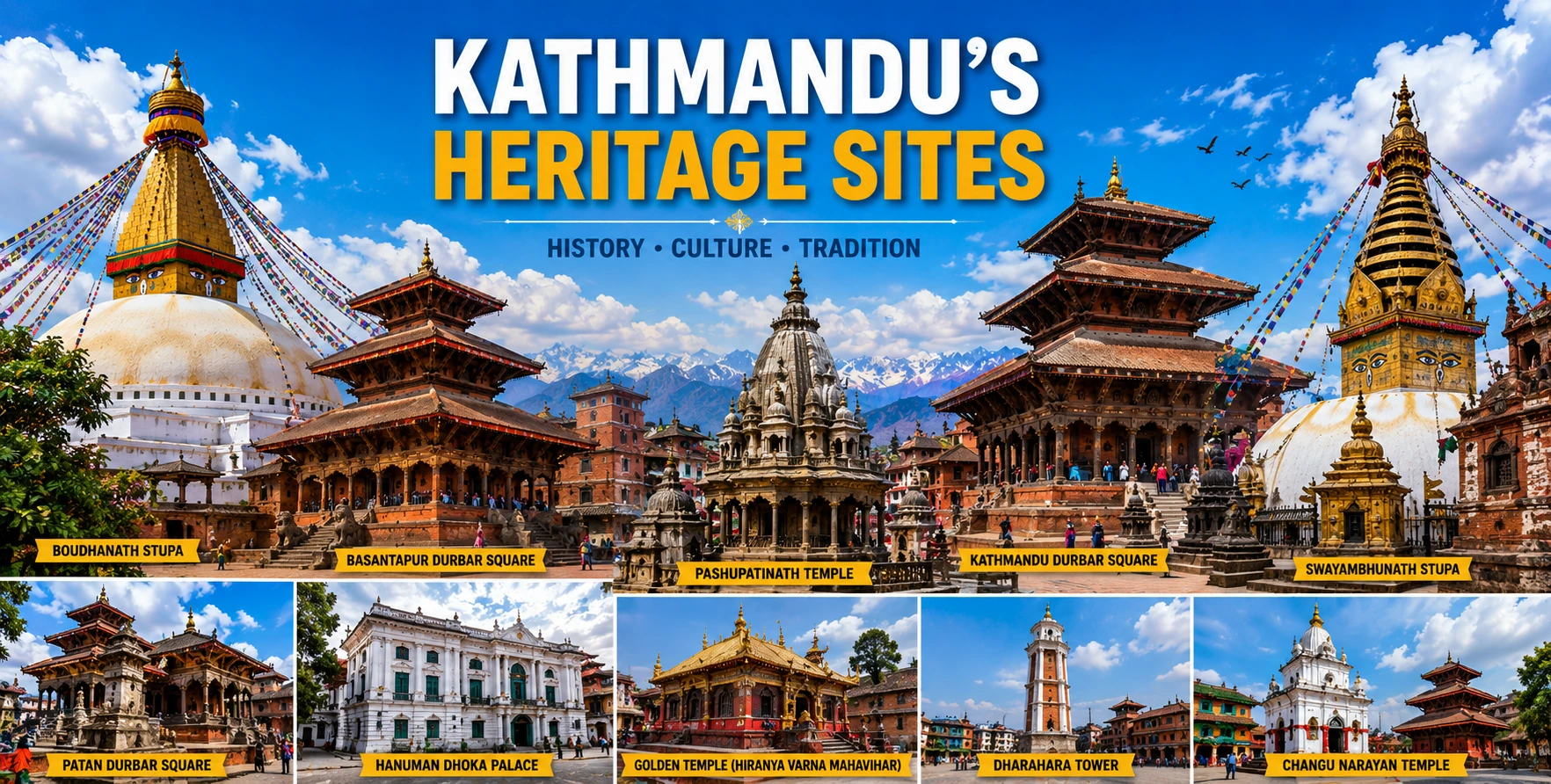
Best Time to Visit Nepal’s Historical Places (2026)
| Season | Months | Weather | Crowds | Mountain Views | Recommendation |
| Autumn — BEST | October–November | Dry, clear, perfect temperature (15–25°C) | High — book in advance | Crystal clear post-monsoon | Peak season — best overall for all 10 sites |
| Spring — Excellent | March–May | Warm, mostly clear, rhododendrons blooming | High — book in advance | Clear mornings | Excellent — festivals (Ram Navami, Bisket Jatra in April) |
| Winter — Good | December–February | Cool and dry (8–20°C days), cold nights | Low — uncrowded | Very clear air | Great for heritage sites — fewer crowds, clear mountain views |
| Monsoon — Challenging | June–September | Hot, humid, heavy rain (25–35°C) | Low — very uncrowded | Mostly clouded | Not recommended for most outdoor heritage sites — road issues, humidity |
Frequently Asked Questions — Nepal Historical Places 2026
Which is the most important historical site in Nepal?
This depends entirely on your personal interest and perspective. For Hindu devotees, Pashupatinath Temple — one of the twelve Jyotirlinga shrines of Lord Shiva — is the most sacred site in Nepal. For Buddhists, Lumbini — the birthplace of the historical Buddha — is the most significant site in the country. For architectural heritage enthusiasts, Bhaktapur Durbar Square is widely considered the finest medieval urban heritage site in South Asia. For the history of Nepal as a political entity, Gorkha Durbar is the most significant — it is where the nation itself was conceptualized and launched. Nepal Vehicle Hiring Pvt. Ltd. can arrange custom itineraries that prioritize whichever dimension of Nepal’s historical heritage is most important to you.
Can I visit all 10 historical places in one trip?
Yes — the complete circuit of all 10 historical places in this guide is achievable in 8–10 days with good planning and private vehicle transport from Nepal Vehicle Hiring Pvt. Ltd. A suggested structure: Days 1–2 in Kathmandu visiting Pashupatinath, Boudhanath, Swayambhunath, and Kathmandu Durbar Square; Days 3–4 visiting Patan, Bhaktapur, and Changu Narayan; Days 5–7 for Lumbini (including time for the outer sacred circuit); Day 8 for Gorkha; and Day 9–10 for Janakpur, returning to Kathmandu. Nepal Vehicle Hiring Pvt. Ltd. can plan the most efficient routing for this complete circuit.
Which is more impressive — Patan or Bhaktapur Durbar Square?
These two sites are different in character rather than competing in quality. Bhaktapur Durbar Square offers the most complete and atmospheric medieval urban experience — the entire city, not just the square, functions as a living historical landscape. Patan Durbar Square offers the finest individual artworks and the best museum. The serious heritage traveler should visit both. If forced to choose one, Bhaktapur provides the more complete and immersive time-travel experience; Patan provides the finer art and the best museum in Nepal. Most itineraries cover both in a single day.
Is Lumbini worth the long journey from Kathmandu?
Absolutely and without reservation. The 330 km journey from Kathmandu (approximately 7–8 hours by road or 35 minutes by domestic flight) is rewarded by one of the world’s most historically significant sacred sites — the birthplace of the historical Buddha, verified by one of the world’s oldest surviving royal inscriptions. The Lumbini experience, particularly with a dawn visit to the Sacred Garden and a full day in the Monastic Zone, is unlike anything else in Nepal and has a quality of spiritual and historical depth that is impossible to replicate elsewhere. The outer sacred circuit (Ramagrama Stupa, Tilaurakot) adds further extraordinary dimensions. Lumbini deserves 2–3 days minimum and is well worth the journey.
What is the best way to see all the Kathmandu Valley sites?
A private vehicle from Nepal Vehicle Hiring Pvt. Ltd. is the most comfortable, efficient, and flexible way to cover the Kathmandu Valley heritage sites. A two-day itinerary divides naturally: Day 1 covers Pashupatinath, Boudhanath, Swayambhunath, and Kathmandu Durbar Square; Day 2 covers Patan, Bhaktapur, and Changu Narayan (easily combined, as Bhaktapur and Changu Narayan are close together). Electric rickshaws and bicycles are available for within-site navigation in the Monastic Zone of Lumbini. For the Kathmandu Valley sites, a private vehicle allows optimal timing at each site—arriving at dawn for the sacred atmosphere before crowds, moving between sites efficiently, and having the freedom to linger at the most compelling places.
How do I get to Gorkha and Janakpur from Kathmandu?
Both Gorkha and Janakpur require separate day trips or overnight journeys from Kathmandu. Gorkha is approximately 139 km (4–5 hours drive) from Kathmandu by the Prithvi Highway and the Gorkha spur road — Nepal Vehicle Hiring Pvt. Ltd. provides private car and jeep service on this route, with the option to combine with a Manakamana Cable Car stop at Kurintar. Janakpur is approximately 225 km (5–6 hours drive) from Kathmandu, or accessible by a 25-minute domestic flight from Tribhuvan International Airport operated by Yeti Airlines. Nepal Vehicle Hiring can arrange vehicle service from Janakpur Airport and for the Janakpur city sacred circuit.
Is Changu Narayan worth visiting when Bhaktapur is nearby?
Changu Narayan is absolutely worth visiting — and is easily combined with Bhaktapur as it is only 12 km from Bhaktapur Durbar Square. Changu Narayan offers something unique that neither Bhaktapur nor any other valley heritage site can match: Nepal’s oldest temple with its extraordinary collection of Licchavi-period stone sculpture (including the 464 CE inscription — the oldest in Nepal). The site is significantly less crowded than Bhaktapur, more intimate, and more conducive to genuine contemplation of the historical depth of what you are seeing. Any heritage circuit that includes Bhaktapur should add Changu Narayan — the additional time required (2–3 hours) is easily absorbed in a full-day Bhaktapur visit.
Conclusion: Nepal’s History Is Alive — Come and Experience It
Nepal’s top 10 historical places are not ruins in the conventional sense. They are not deserted monuments preserved behind glass in sanitized heritage parks. They are living, functioning, continuously worshipped sacred sites where the traditions that created them are still practiced daily by the communities who have maintained them for centuries. Pashupatinath still receives its million annual pilgrims. Boudhanath is still circumambulated by Tibetan pilgrims before dawn every Morning. The craftspeople of Bhaktapur still work at the same wheels and looms and carving benches that their ancestors occupied centuries ago. The goddess Kumari still looks out from her Kathmandu Durbar Square window at a world that has been changed by everything except this — the living continuity of a civilization that was already ancient when most of today’s world was still forming itself.
The 2026 visitor to Nepal’s historical places arrives in a particularly good moment: post-earthquake reconstruction is largely complete, the sites are in their best physical condition in years, new conservation infrastructure has improved visitor facilities, and the post-pandemic recovery has restored the cultural programs, festival celebrations, and community activities that were disrupted across the COVID years. This is the Nepal of the present that contains within it the Nepal of the past — and the two are inseparable in a way that makes the country’s historical experience uniquely alive and compelling.
Nepal Vehicle Hiring Pvt. Ltd. is your partner for experiencing this extraordinary historical landscape in the comfort, flexibility, and depth that it deserves. Whether you are planning a focused two-day Kathmandu Valley heritage circuit, a week-long complete Nepal historical tour, or a pilgrimage to Lumbini or Janakpur, our professional team, our well-maintained vehicle fleet, and our experienced drivers are ready to make every journey to every historical site smooth, punctual, and genuinely enriching.
Contact Nepal Vehicle Hiring Pvt. Ltd. today to begin planning your Nepal historical places tour. The temples are waiting. The stupas are turning. The history is alive.
Book Your Nepal Historical Places Tour Vehicle Today! |
| Website: www.vehiclehiringnepal.com |
| Phone / WhatsApp: +977 9851013196 (24/7 — Instant Response) |
| Email: [email protected] |
| Office: Bhagawatisthan, Thamel, Kathmandu, Nepal |
| All 10 Historical Sites Covered: Pashupatinath | Boudhanath | Swayambhunath | Kathmandu DS | Patan | Bhaktapur | Changu Narayan | Lumbini | Gorkha | Janakpur |
| Fleet: Private Car | 4WD Jeep | Hiace Van | Coaster — all group sizes from 1 to 25+ |
| Custom Itineraries: 1-day Kathmandu Valley to 10-day Complete Nepal Heritage Circuit |
| 8,000+ Happy Customers | 5.0 TripAdvisor | 200+ Verified Reviews |
| Hotel Pickup from Thamel | Flexible Schedule | Transparent All-Inclusive Pricing |
| Licensed & Registered | Company Reg. No. 219204 | Best Price Guaranteed |
- Top 10 historical places in Nepal: The Ultimate Complete Guide (2026)
- Pashupatinath Temple — The Sacred Heart of Hindu Nepal
- Boudhanath Stupa — The Greatest Buddhist Stupa in Nepal
- Swayambhunath Stupa (Monkey Temple) — The Ancient Hilltop Sanctuary
- Kathmandu Durbar Square (Hanuman Dhoka) — The Royal Heart of the Capital
- Patan Durbar Square — The City of Fine Arts
- Bhaktapur Durbar Square — Nepal's Best-Preserved Medieval City
- Changu Narayan Temple — Nepal's Oldest Temple (4th Century)
- Lumbini — The Birthplace of the Buddha
- Gorkha Durbar — Where Nepal Was Born
- Janakpur — The Sacred City of Goddess Sita
- Complete Entry Fees, Hours and Practical Reference (2026)
- Planning Your Nepal Historical Places Tour with Nepal Vehicle Hiring Pvt. Ltd.
- Essential Cultural Etiquette — Visiting Nepal's Historical Sites
- Best Time to Visit Nepal's Historical Places (2026)
- Frequently Asked Questions — Nepal Historical Places 2026
- Conclusion: Nepal's History Is Alive — Come and Experience It
- Book Your Nepal Historical Places Tour Vehicle Today!

Related Blog & Articles
Kathmandu Historical Heritage Sites: The Complete Travel Guidey
Kathmandu: A Hidden Historical, Magnificent and Spiritual Valley – Complete 2026 Guide
Nuwakot Historical and Spiritual Sites Guide – The Complete 2026 Travel and Transport Guide
Lumbini’s Hidden Spiritual Places
Hidden Kingdom Adventure Nepal Upper Mustang Jeep Tour