


 Plan a Trip


Is Nepal Safe After Floods | Complete Travel Guide
The Honest Answer to ‘Is Nepal Safe After Floods?’
The question every traveler planning a trip to Nepal asks after reading flood headlines is understandable — Nepal makes international news when floods strike, and the images are genuinely serious. But the honest, evidence-based answer to the question ‘Is Nepal safe after the floods?’ in 2026 is yes — for the vast majority of tourist itineraries. Nepal is not a single valley or a single road. It is a country nearly 800 kilometers wide, home to dozens of distinct river systems, mountain ranges, trekking regions, and travel corridors that function almost entirely independently of one another.
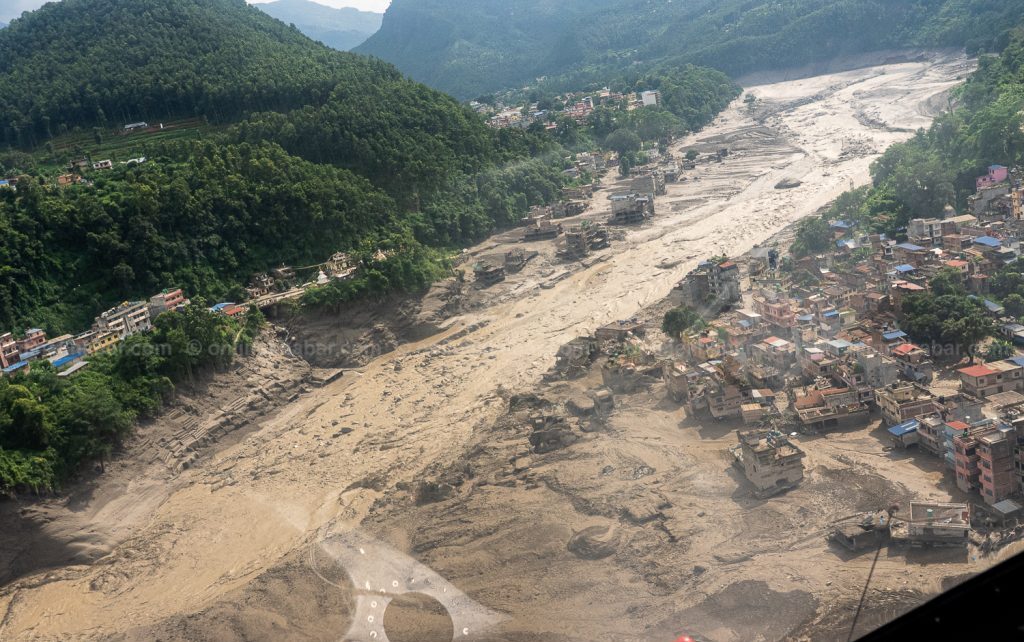
The August 26, 2026 flash floods — the most serious flood event Nepal has experienced in recent years — struck a geographically specific corridor: the Bhote Koshi and Trishuli river systems in Rasuwa, Nuwakot, Dhading, and Gorkha districts of northern Nepal. This affected the Kathmandu to Syabrubesi road (the gateway to the Langtang Valley Trek), the Tibet border crossing at Rasuwagadhi, and communities in the immediate flood zone. It did not affect Kathmandu‘s heritage sites, Pokhara, the Everest and Khumbu region, the Annapurna Circuit, Mustang, Chitwan, or any other major tourist destinations in Nepal.
This guide provides the most current, specific, and honest assessment of Nepal travel safety after the 2026 floods—region by region —with verified road condition information, trekking route status, and practical transport guidance from Nepal Vehicle Hiring Pvt. Ltd. to help travelers make informed decisions about their Nepal plans. The goal is not to minimize the disaster that affected Rasuwa and neighbouring districts — it was catastrophic for the communities involved, and those communities deserve both support and appropriate caution from visitors — but to give travellers the specific information they need to understand whether their particular Nepal itinerary is affected, rather than the broad-brush ‘Nepal is dangerous’ narrative that news coverage sometimes creates and that does a genuine disservice to the many communities in the country’s unaffected regions whose livelihoods depend on tourism continuing.
What Happened — The August 2026 Rasuwa Floods
The Flood Event — What the Science Says
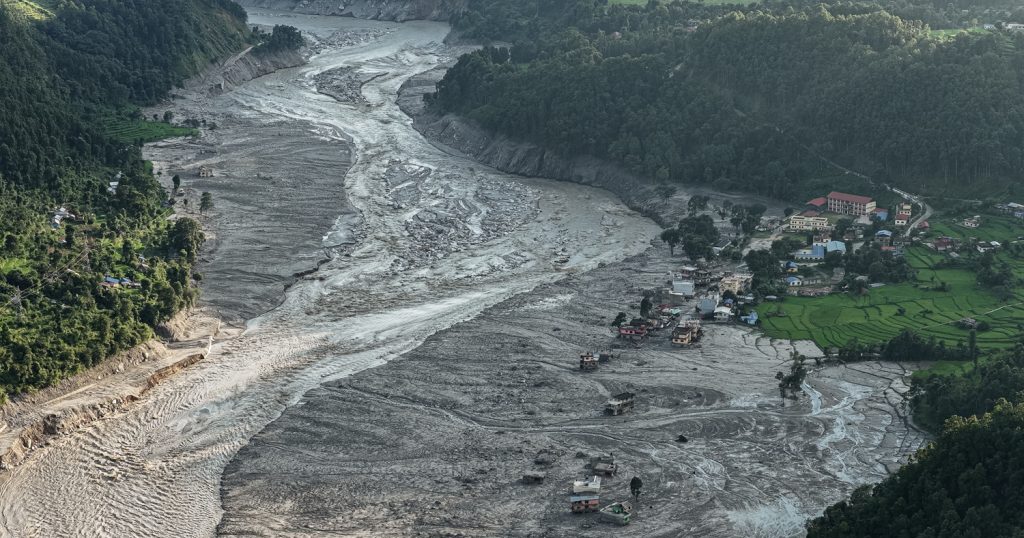
On the morning of August 26 26, 2026a sudden, catastrophic flash flood surge entered the Lhende Khola, feeding into the Bhote Koshi River and then the Trishuli River, in Rasuwa District of northern Nepal. The surge — triggered by a glacial lake outburst or massive landslide dam failure in the high mountain terrain near the Tibet border — sent an extraordinary volume of water and debris downstream through the narrow gorge system of the upper Bhote Koshi Valley, sweeping settlements, bridges, and road infrastructure along the corridor. The flood affected communities in Rasuwa, Nuwakot, Dhading, Gorkha, Tanahun, Nawalparasi, and Chitwan districts as the flood pulse moved downstream through the river system. However, impact intensity diminished significantly as it spread across the wider floodplain in the lower districts.
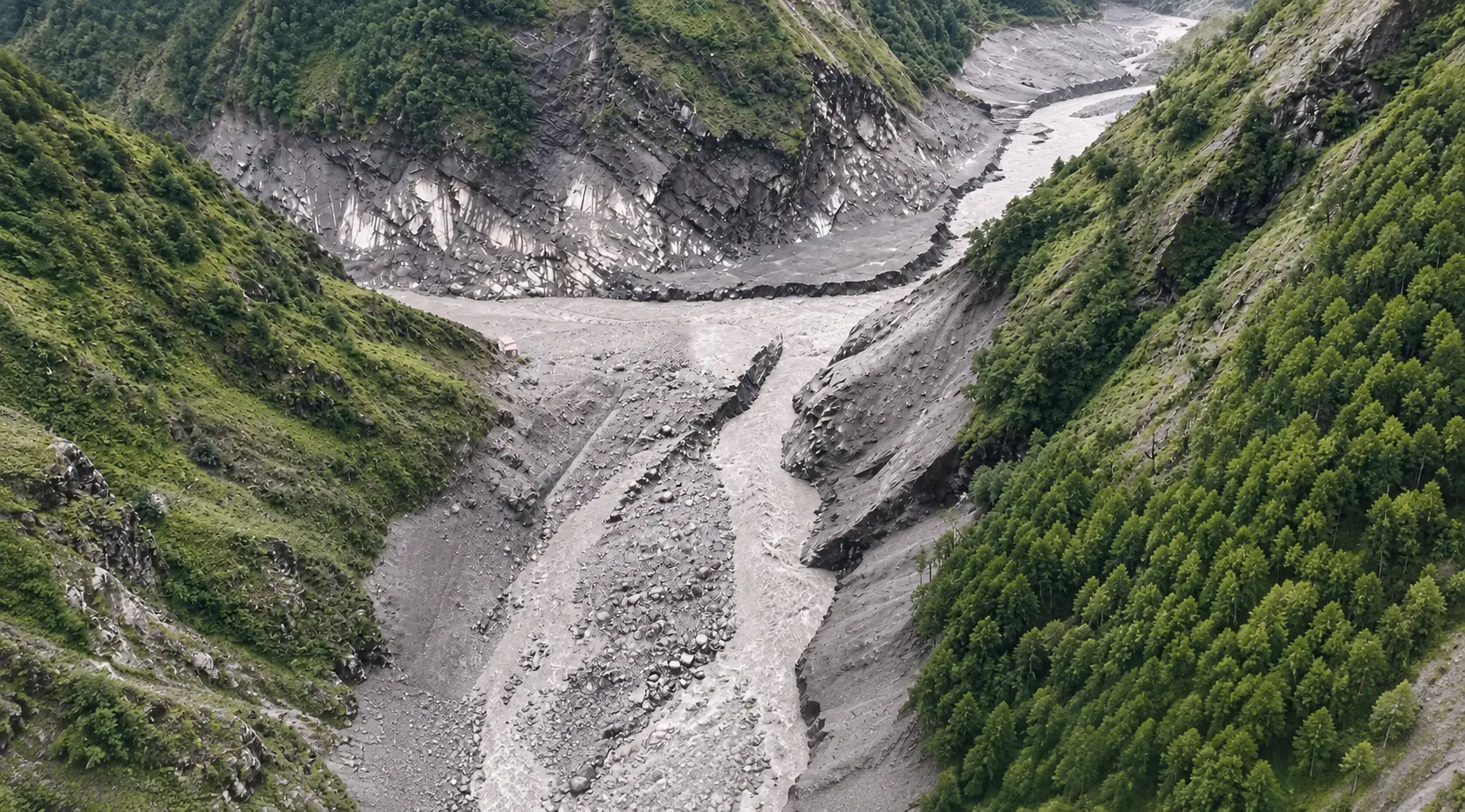
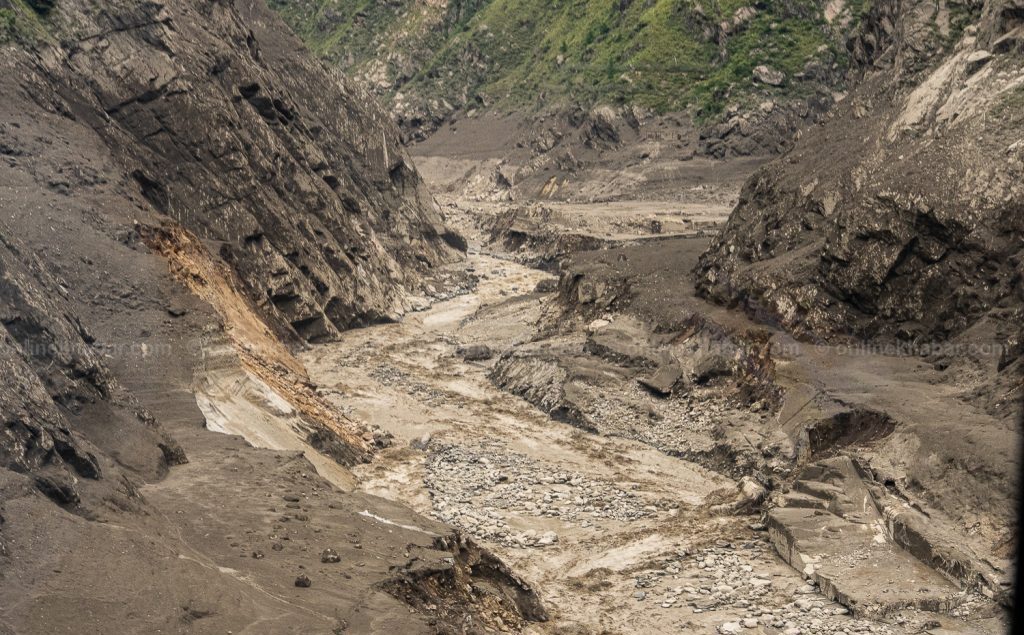
The infrastructure most severely affected was the Kathmandu to Syabrubesi road—the route that serves as the primary vehicle access for the Langtang Valley Trek—and communities along the Bhote Koshi gorge, including Syabrubesi, Timure, and Rasuwagadhi. Multiple bridges were damaged or destroyed, and significant sections of the road were covered in debris or washed away. The Nepali Army and Nepal Police conducted search-and-rescue operations, and the Nepal government restricted access to the upper Rasuwa corridor. In contrast, these operations were active; structural engineering assessments of the remaining road and bridge infrastructure were also carried out.
What Was NOT Affected — The Critical Distinction
The critical distinction that every Nepal traveler needs to understand is that the August 2026 Rasuwa flood was geographically confined to a specific river corridor in northern-central Nepal and did not affect the country’s major tourism regions. Based on verified reports from on-the-ground operators and local traffic authorities:
- Kathmandu city, Tribhuvan International Airport, and all Kathmandu Valley heritage sites operated normally throughout the flood event and continue operating normally
- Pokhara and Pokhara International Airport were unaffected — all flights, hotels, and tourism infrastructure operating normally.
- The Everest/Khumbu trekking region (Namche Bazaar, EBC trail, Gokyo Lakes) was entirely unaffected.
- The Annapurna Circuit and Annapurna Base Camp trekking regions were unaffected.d
- The Manaslu Circuit was unaffected
- Mustang (Lower and Upper Mustang, Muktinath) was unaffected
- Chitwan National Park and the Terai lowlands were unaffected by the specific northern flood
- Lumbini and the western Terai tourism corridor were unaffected
- The Kathmandu to Pokhara highway experienced a brief, minor closure that cleared within a day
Region-by-Region Safety Assessment — 2026
Kathmandu — SAFE, Operating Normally
Kathmandu and the Kathmandu Valley — including all seven UNESCO World Heritage monuments — were not directly affected by the August 2026 Rasuwa floods and are fully open and operating normally. Tribhuvan International Airport maintained normal international and domestic flight operations throughout the flood event. The city’s hotels, restaurants, tourist infrastructure, and cultural sites are fully operational. The Kathmandu sightseeing circui(— Boudhanath Stua), Pashupatinath Tempe), Swayambhunah), Patan Durbar Squae), Bhaktapur Durbar Squae), and the Nagarkot sunrise to) isll availab,le aninternational tourists are visitingts without any flood-related restrictions. Nepal Vehicle Hiring Pvt. Ltd. confirms that all Kathmandu sightseeing tour and airport transfer services are operating normally — contact +977 9851013196 for current bookings.
Pokhara — SAFE, Operating Normally
Pokhara — Nepal’s second city and the primary gateway for the Annapurna region — was entirely unaffected by the August 2026 floods. Pokhara International Airport is operating normal domestic and international flights. The Lakeside tourist area, the city’s hotels, restaurants, and all tourism infrastructure are fully open. The Kathmandu to Pokhara highway (Prithvi Highway) experienced a very brief disruption but was confirmed clear and open within 24 hours of the initial flood event and is currently operating normally. The car hire in Pokhara service from Nepal Vehicle Hiring Pvt. Ltd. — covering Sarangkot sunrise, Lakeside sightseeing, and all Pokhara area transport — is fully operational. The Kathmandu to Pokhara private vehicle transfer is available via the normally operating Prithvi Highway.
Everest Region (Khumbu) — SAFE, Fully Open
The Everest region — including the entire Khumbu trekking corridor from Lukla through Namche Bazaar, Tengboche, Dingboche, Lobuche, and Gorak Shep to Everest Base Camp — was entirely unaffected by the August 2026 floods. The Khumbu drainage system is separate from the Trishuli and Bhote Koshi river systems affected by the Rasuwa flood, and the Dudh Koshi River valley that contains the Everest trekking corridor experienced no significant flood impact. Lukla Airport is operating normally. All teahouses and lodges on the EBC trail are open. The autumn 2026 trekking season in the Everest region is proceeding normally, with no flood-related disruption to the trail network, the permit system, or the accommodation infrastructure. Trekkers who planned Everest Base Camp treks for October and November 2026 should proceed as planned.
Annapurna Region — SAFE, Fully Open
The Annapurna region — Nepal’s most popular trekking destination — is fully open and operating normally after the August 2026 floods. The Annapurna Circuit Trek, the Annapurna Base Camp Trek, the Ghorepani Poon Hill Trek, and all other Annapurna Conservation Area trekking routes are open. The Kathmandu to Besisahar private jeep transfer for the Annapurna Circuit is operating normally on the Prithvi Highway — confirmed open and clear. The Pokhara to Nayapul transport for the Poon Hill and ABC approach is operating normally. Nepal Vehicle Hiring Pvt. Ltd.‘s Besisahar jeep transfer and all Annapurna region transport services are available for booking. Trekkers with Annapurna Circuit or ABC plans should proceed normally.
Manaslu Circuit — SAFE, Open
The Manaslu Circuit Trek and the Kathmandu-to-Arughat jeep hire road that serves it were not directly affected by the August 2026 floods. The Arughat approach road runs through Dhading District and the Budhi Gandaki Valley — a separate river system from the Trishuli/Bhote Koshi flood corridor. Current reports confirm the Kathmandu to Arughat approach road is passable with standard 4WD vehicles and the Manaslu Circuit trekking permits and trail network are operating normally. Nepal Vehicle Hiring Pvt. Ltd.‘s Arughat jeep transfer service is available for Manaslu Circuit trekkers.
Chitwan and the Terai — SAFE, Open
Chitwan National Park and the Terai lowlands experienced some downstream flooding in the lower Narayani/Trishuli river basin as the August 2026 flood pulse moved south. Still, the impact on Chitwan tourism infrastructure—specifically the Sauraha tourist area on the northern bank of the Rapti River—was limited and has been resolved. Chitwan National Park is fully open. The Chitwan to Lumbini vehicle hire route along the East-West Highway is operating normally. Lumbini — the birthplace of the Buddha and a major pilgrim destination — was unaffected and is fully open.
Langtang Valley and Syabrubesi — RESTRICTED, Assess Before Traveling
This is the one region where travel caution is clearly warranted after the August 2026 floods. The Kathmandu to Syabrubesi road — the primary vehicle access route for the Langtang Valley Trek — runs directly through the affected Rasuwa District flood corridor and sustained significant damage to road sections and bridges in the immediate flood impact. Search and rescue operations were active in the upper Rasuwa area in the days following the flood, and the road was restricted to emergency vehicles and rescue teams. Current information from local traffic authorities indicates that the highway has since been partially reopened to general traffic, with services resuming in stages — but short closures for landslides remain a real ongoing risk on this route during the active monsoon and post-monsoon period, and travellers planning the Langtang Valley Trek for September 2026 specifically should contact Nepal Vehicle Hiring Pvt. Ltd. at +977 9851013196 for the most current road condition assessment before booking.
For the October and November 2026 trekking season—which begins about four to six weeks after the flood date—the Syabrubesi road is expected to be significantly repaired and operational for the peak season. Nepal’s road repair capacity after monsoon damage is considerable, and the road network historically recovers well between the flood season and the main October trekking season. Nepal Vehicle Hiring Pvt. Ltd. will update the Kathmandu to Syabrubesi jeep hire service status as conditions evolve — contact the team via WhatsApp at +977 9851013196 for real-time road condition information before booking.
Road Conditions After the 2026 Floods — What to Expect
The Nepal Post-Monsoon Road Repair Reality
Nepal’s monsoon season creates road damage every year — the combination of intense rainfall, steep terrain, and the engineering challenges of mountain roads in an active geological zone makes monsoon road damage a structural feature of Nepal’s travel landscape rather than an exceptional event. The Nepal government, district road offices, and private contractors conduct road repair operations annually in the post-monsoon period, and the country’s road network typically recovers sufficiently for the October trekking season by mid to late September in most years. The August 2026 Rasuwa flood damage is more severe than typical annual monsoon damage on the Syabrubesi road. Still, repair priority is correspondingly high given the route’s importance to the Langtang trekking economy.
For travellers on Nepal’s other major road corridors — the Prithvi Highway (Kathmandu to Pokhara), the Arniko Highway (Kathmandu to China border, affected sections excluded), and the East-West Highway (Terai corridor from Chitwan to Lumbini and beyond) — standard post-monsoon road conditions apply: mostly passable, occasional short delays for road repair or minor landslide clearing, and the normal monsoon-season recommendation to travel with a 4WD capable vehicle from a trusted operator. Nepal Vehicle Hiring Pvt. Ltd.‘s fleet of Toyota Fortuners, Hilux 4WDs, and Land Cruisers is well suited to Nepal’s post-monsoon road conditions, and experienced drivers stay current on road closures and alternative routes.
How Nepal Vehicle Hiring Monitors Road Conditions
Nepal Vehicle Hiring Pvt. Ltd. operates a 24-hour WhatsApp line at +977 9851013196 and maintains real-time awareness of road conditions on all major Nepal tourism routes through its network of professional drivers who travel these roads daily. For travelers concerned about specific road conditions after the floods — particularly the Kathmandu to Syabrubesi road status, the Besisahar approach road condition, or any other specific Nepal road segment relevant to their itinerary — the most reliable, current, and route-specific information is available by contacting the Nepal Vehicle Hiring Pvt. Ltd. team directly. This real-time local knowledge is more current and more specific than any published guide, including this one. It is the most reliable basis for go/no-go decisions on specific route segments in the days and weeks after a significant flood event.
Trekking Safety After Floods — Route-by-Route Assessment
Everest Base Camp Trek — Proceed as Planned
The Everest Base Camp Trek is fully operational. The Lukla flight, the Namche Bazaar acclimatization stop, and the entire Khumbu trekking corridor from Tengboche through to EBC are functioning normally. The autumn 2026 season is proceeding with normal trekker numbers and teahouse operation. Trekkers with October and November EBC trek bookings should proceed without modification. The Manthali Airport alternative approach — used in 2024 when the standard Kathmandu to Manthali BP Highway was flood-damaged — is not required in 2026 as the August flood affected a different corridor.
Annapurna Circuit Trek — Proceed as Planned
The Annapurna Circuit Trek from Besisahar through Chame, Manang, and over the Thorong La Pass to Muktinath and Jomsom is fully operational. The Kathmandu to Besisahar private jeep hire from Nepal Vehicle Hiring Pvt. Ltd. is available on the normally operating Prithvi Highway and Besisahar approach road. Annapurna Circuit trekkers in October and November 2026 should proceed with their plans.
Langtang Valley Trek — Check Road Status Before Booking
The Langtang Valley Trek is the one major Nepal trekking circuit where post-flood caution is warranted for September 2026 specifically. The Kathmandu to Syabrubesi road — the only vehicle access to the trekking trailhead — was affected by the August 2026 floods. Current reports indicate that the road has partially reopened, but ongoing landslide risk in the post-monsoon period makes this route less reliable than the unaffected circuits. For October and November 2026 Langtang treks, the road is expected to be substantially repaired and operational — contact Nepal Vehicle Hiring Pvt. Ltd. at +977 9851013196 for current status before booking the Syabrubesi jeep transfer.
Gosaikunda Trek — Check Road Status
The Gosaikunda Trek approach from Dhunche uses the same Kathmandu to Rasuwa District road that was affected by the August 2026 floods. The situation is similar to the Langtang Valley road — partially open with ongoing assessment. The Gosaikunda helicopter tour from Kathmandu is unaffected by the road conditions. It remains fully available as an alternative to the sacred lake for travelers whose itinerary includes Gosaikunda.
Manaslu Circuit Trek — Proceed as Planned
The Manaslu Circuit Trek via the Kathmandu to Arughat jeep route is operating normally. The Arughat approach road through Dhading District was not directly in the August 2026 flood zone, and current conditions on this route are the standard post-monsoon rough but passable mountain road that 4WD vehicles from Nepal Vehicle Hiring Pvt. Ltd. handle routinely. The Machha Khola jeep transfer for Tsum Valley trekkers is also available.
Why the ‘Nepal Is Dangerous’ Narrative Is Misleading
The Geography of Nepal’s Flood Risk
One of the most important things to understand about flood safety in Nepal is the geography of flood risk — specifically, how Nepal’s topography concentrates flood impact in narrow river-gorge corridors while leaving the vast majority of the country’s land area and population centers unaffected by any single flood event. Nepal’s mountain rivers are powerful and fast-moving. Still, they are also geographically confined — the Bhote Koshi and Trishuli flood corridors that carried the August 2026 disaster affected a relatively narrow geographic band, while the Khumbu drainage to the east, the Kali Gandaki to the west, and the Terai lowlands to the south remained unaffected or minimally affected.
Understanding this geography is essential for rational Nepal travel risk assessment. Kathmandu and Pokhara are approximately 70 to 100 kilometers from the August 2026 flood zone and connected to it by completely different river systems — treating these cities as flood-affected zones is as geographically inaccurate as saying that Paris is affected by a Rhine flood. The Everest region and the Annapurna region are in entirely different river basins from the Rasuwa flood corridor. For travelers whose itineraries do not pass through the affected Rasuwa District, the August 2026 floods are not a safety consideration for their Nepal plans.
The Economic Importance of Continuing Tourism
A less discussed but genuinely important dimension of post-flood Nepal travel safety assessment is the economic impact of traveler cancellations on Nepal’s unaffected communities. When travelers cancel Nepal trips in response to localized flood news, the economic impact falls heavily on communities that had nothing to do with the flood — the Kathmandu heritage guides, the Pokhara lakeside restaurant owners, the Namche Bazaar teahouse operators, the Annapurna trail lodge families, and the Nepal Vehicle Hiring Pvt. Ltd. drivers whose incomes support their families. Nepal’s tourism industry is the country’s largest source of foreign exchange. It employs a significant share of the working population—canceling trips to unaffected regions does not help flood victims and actively harms communities that need tourism revenue to continue.
The most responsible response to the August 2026 floods for travel to Nepal is to assess your specific itinerary against the geographic flood impact, verify road conditions for your specific route with operators like Nepal Vehicle Hiring Pvt. Ltd., and proceed with plans for unaffected regions while exercising appropriate caution for the genuinely affected Rasuwa corridor. This approach honors affected communities with appropriate caution and supports them with the tourism that sustains their livelihoods.
Practical Travel Advice for Post-Flood Nepal
Before You Travel — Check These Sources
- Contact Nepal Vehicle Hiring Pvt. Ltd. at +977 9851013196 (WhatsApp) for current road condition assessment on your specific route — the most reliable real-time local knowledge available.
- Check the Nepal Tourism Board (ntb.gov.np) for official travel advisories and trekking permit status.s
- Check your country’s foreign ministry travel advisory page — these are typically conservative but provide the baseline official position.on
- Contact your trekking agency or accommodation for specific route conditions — local operators have the most current trail and road sta.tu.s
- Review the Civil Aviation Authority of Nepal (caan.gov.np) for any airport disruption or domestic flight status updates.
Travel Insurance — Essential in Any Season
Travel insurance with emergency evacuation coverage is essential for Nepal mountain travel in any season, and especially important in the post-monsoon period when residual flood risk, landslide risk, and river-crossing conditions are elevated. Verify that your insurance policy explicitly covers emergency helicopter evacuation from altitude, medical repatriation, and trip cancellation for government-declared natural disasters. The major insurers providing Nepal-appropriate coverage include World Nomads, Battleface, and Allianz, among others. Buy insurance before you leave your home country.
Transport Safety After Floods — Why 4WD Matters More Now
In the weeks after a significant flood event, Nepal’s mountain roads — even in unaffected regions — carry elevated landslide risk because monsoon rains saturate hillside soil. The same rainfall that caused the Rasuwa catastrophe also fell across much of Nepal’s broader mountain terrain, and occasional road disruptions, rockfall events, and minor landslide clearing delays are more common in the post-monsoon period than in the dry season. This is why Nepal Vehicle Hiring Pvt. Ltd.‘s 4WD vehicle fleet—with the ground clearance, all-terrain capability, and experienced mountain drivers that distinguish it from standard city vehicle hire—is particularly valuable in the post-monsoon period. A Toyota Fortuner or Land Cruiser 4WD with an experienced driver who knows the current road conditions and can navigate or assess post-flood road sections is meaningfully safer than a lower-specification vehicle with a less experienced driver on Nepal’s mountain roads in September and October.

Nepal Vehicle Hiring Pvt. Ltd. — Safe, Reliable Post-Flood Transport
Nepal Vehicle Hiring Pvt. Ltd. continues to operate its full range of private vehicle hire services across all of Nepal’s unaffected tourism corridors. The Kathmandu sightseeing tour, Bhaktapur Durbar Square day tour, Nagarkot sunrise tour, Kathmandu to Pokhara private transfer, car hire in Pokhara, Kathmandu to Besisahar jeep hire for the Annapurna Circuit, and Chitwan to Lumbini vehicle hire are all available and operating normally. For the Kathmandu to Syabrubesi jeep hire, contact the team at +977 9851013196 for the most current road condition assessment before booking.
Contact Nepal Vehicle Hiring for Safe Post-Flood Transport
Website: www.vehiclehiringnepal.com
Phone / WhatsApp: +977 9851013196 (24/7 — Road Condition Updates Available)
Email: [email protected]
Office: Bhagawatisthan, Thamel, Kathmandu, Nepal
SAFE: Kathmandu sightseeing, Bhaktapur day tour, Nagarkot sunrise — all operating
SAFE: Kathmandu to Pokhara transfer | Car hire in Pokhara — all operating
SAFE: Besisahar jeep hire (Annapurna Circuit) — fully operational
CHECK: Syabrubesi jeep hire (Langtang Trek) — contact for current road status
Understanding Nepal’s Monsoon and Flood Patterns
Why Nepal Floods Every Year — The Geological Reality
Nepal’s flood vulnerability is not a sign of infrastructure failure or government neglect — it is a direct consequence of the country’s extraordinary geological character. Nepal lies in one of the most geologically active regions on Earth, where the Indian subcontinent continues to collide with the Eurasian plate at about 4 to 5 centimeters per year, pushing the Himalayan range upward. This active tectonics creates steep mountain topography with thin, unstable soils and a river system of extraordinary erosive energy — the Himalayan rivers are among the world’s fastest-moving and most heavily sediment-laden watercourses, capable of catastrophic flood pulses when triggered by glacial lake outbursts, landslide dam failures, or exceptional rainfall.
The monsoon season from June to September delivers between 70 and 90 percent of Nepal’s annual rainfall in four months — creating the geological context in which flood and landslide events are not exceptional occurrences but structural features of the annual landscape cycle. The August 2026 Rasuwa floods were unusually severe by historical standards. Still, the general pattern of monsoon flooding on Nepal’s northern river corridors is not unusual—it is the characteristic behavior of a Himalayan river system under monsoon conditions. What makes the August 2026 event particularly significant is the scale of the glacial outburst or landslide-dam failure that triggered the surge, producing volumes well beyond the normal monsoon flow.
Nepal’s Post-Monsoon Recovery — Historically Effective
Nepal’s track record of post-monsoon road recovery is important context for travelers assessing the impact of the August 2026 floods on their October and November trek plans. Every year without exception, Nepal’s national road network sustains monsoon damage in August and September — bridges washed out, road sections undercut by river erosion, hillside slumps covering road surfaces — and every year the network is repaired sufficiently to support the peak October and November trekking season. The repair capacity mobilized by Nepal’s government, district authorities, and private contractors in the post-monsoon window (September through early October) is substantial, and the economic pressure of the approaching peak tourism season creates strong incentives to prioritize the most tourism-critical road repairs.
The Kathmandu to Syabrubesi road damage from the August 2026 floods is severe enough to warrant the caution expressed elsewhere in this guide for September 2026 travel specifically — but the historical pattern of monsoon road damage and post-monsoon recovery in Nepal suggests that the road will be substantially operational for the October trekking season, consistent with the pattern of prior years. Nepal Vehicle Hiring Pvt. Ltd. will resume the Syabrubesi jeep transfer service as soon as road conditions support reliable, safe operation — contact the team at +977 9851013196 for the current status.
Glacial Lake Outburst Floods (GLOFs) — The Specific Risk
The August 2026 Rasuwa flood fits the pattern of Glacial Lake Outburst Floods (GLOFs) that climate scientists have identified as an increasing risk in the Nepal Himalaya as global warming accelerates glacial retreat and the formation of glacial lakes behind unstable moraine dams. As Himalayan glaciers retreat, meltwater collects behind moraine barriers—natural dams of glacial debris that can fail catastrophically when water pressure exceeds the dam’s structural capacity, releasing enormous volumes of water in a sudden flood pulse that overwhelms the river valley below.
Nepal’s Department of Hydrology and Meteorology monitors known glacial lakes across the country’s northern mountain terrain and issues early warning bulletins when lakes reach dangerous capacity levels. The August 2026 event in Rasuwa illustrates both the potential severity of GLOF events and the geographic specificity of their impact — a GLOF in the Bhote Koshi headwaters affects the Bhote Koshi and Trishuli river valleys while leaving the Dudh Koshi (Everest), the Modi Khola (Annapurna), and the Kali Gandaki (Mustang) watersheds entirely unaffected. Understanding Nepal’s watershed geography is key to understanding flood risk geography.
The Rasuwa District — What Happened and Who It Affected
Communities in the Flood Zone
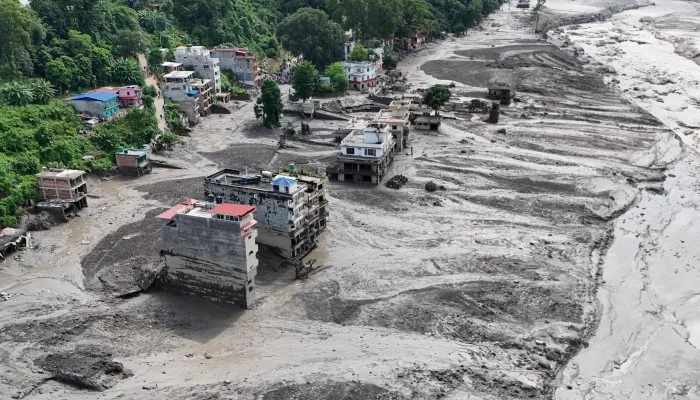
The communities most severely affected by the August 2026 Rasuwa floods were settlements along the Bhote Koshi gorge in the upper Rasuwa District, particularly Timure and Syabrubesi, and communities along the Rasuwagadhi border crossing area. These are primarily rural communities whose economy combines subsistence agriculture, yak herding, and the service economy of the Langtang Valley trekking circuit — teahouse operators, porters, and guides who depend on the annual flow of trekkers through their communities from September through November. The flood’s impact on their infrastructure, homes, teahouses, bridges, and agricultural land represents an economic catastrophe for affected households, on top of the human tragedy of the casualties.
For travelers who want to support flood-affected communities in Rasuwa, the most effective channels are established Nepal relief organizations rather than direct donations, which are difficult to administer efficiently in the immediate post-disaster period. The Nepal Red Cross Society), the Himalayan Trust), and the Trekking Agencies’ Association of Nepal (TAAN)) have established relief funds specifically for the 2026 Rasuwa flood response. Contributing to these organizations while proceeding with travel plans to Nepal’s unaffected regions—generating employment income for unaffected communities while supporting affected ones through charitable channels—is the most comprehensive and responsible response available to travelers.
The China Border Crossing — Currently Closed
The Rasuwagadhi-Kerung border crossing between Nepal and the Tibet Autonomous Region of China — the most recently established of Nepal’s overland crossings and the primary entry point for Nepal-China overland travel — was severely damaged by the August 2026 floods and is currently closed to civilian traffic on both sides. Travelers who had planned overland travel from Nepal to China or Tibet through the Rasuwagadhi crossing should contact their tour operators or the relevant embassy for alternative arrangements. The alternative overland Nepal-China crossing option is limited — the Tatopani-Kodari crossing further east on the Arniko Highway has its own flood history and current status should be verified independently. For most international travelers, the Rasuwagadhi crossing closure is not relevant to their Nepal itinerary—it primarily affects overland China-Nepal tourism and trade traffic.
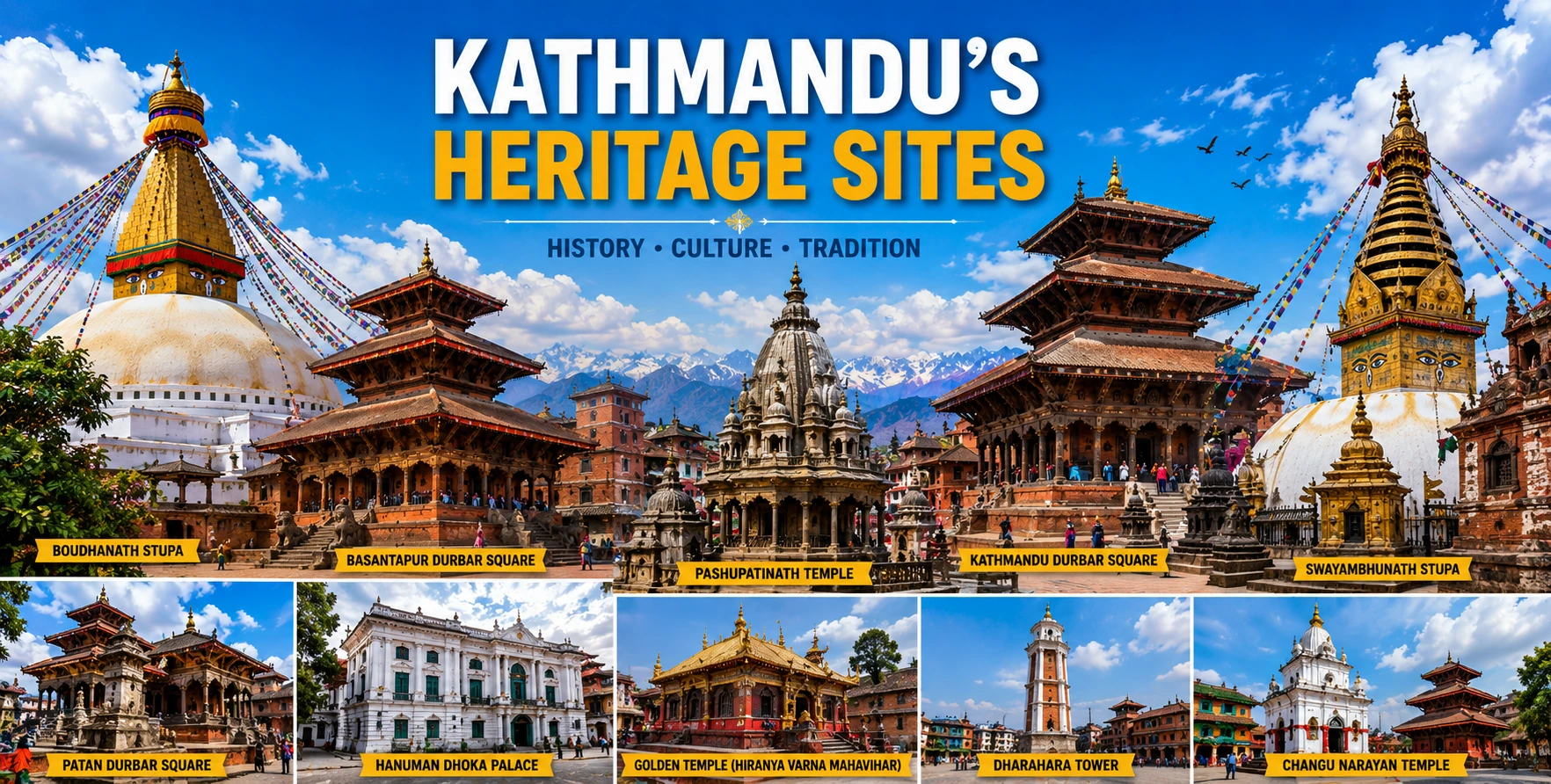
Kathmandu Heritage Tourism — What Is Open in Detail
The Seven UNESCO Heritage Sites — All Open
All seven of the UNESCO World Heritage monuments in the Kathmandu Valley are fully open and operating normally after the August 2026 floods. These include the Boudhanath Stupa — the great white dome of the world’s largest Buddhist stupa, surrounded by its ring of monastery buildings and the active Tibetan Buddhist community that makes it Nepal’s most spiritually alive monument — Pashupatinath Temple on the sacred Bagmati River, where the daily cremation ceremonies on the ghats beside the river provide an extraordinary and deeply moving insight into Hindu concepts of death and the sacred; Swayambhunath — the Monkey Temple on its forested hill above the valley, with its all-seeing Buddha eyes gazing from the golden tower in the four cardinal directions; and the three Durbar Squares of Kathmandu, Patan, and Bhaktapur whose medieval temple architecture represents the apex of Newari craftsmanship across thirteen centuries of creative achievement.
The Nepal Vehicle Hiring Pvt. Ltd. Kathmandu sightseeing tour — a full-day private vehicle circuit covering the major heritage sites — is fully operational and available for immediate booking. The Bhaktapur Durbar Square day tour and the Nagarkot sunrise tour are both operational. All airport transfers from Kathmandu are available 24 hours a day via WhatsApp at +977 9851013196. Nepal Vehicle Hiring Pvt. Ltd. operates a full Kathmandu private vehicle hire service—safe, reliable, and with transparent, all-inclusive pricing —across Kathmandu’s open and operating heritage circuit.
Kathmandu Thamel — The Tourist Hub Is Fully Open
Thamel — Kathmandu’s busy tourist quarter, where most budget and mid-range tourist accommodation, restaurants, equipment shops, and trekking agencies are concentrated — is fully open and operating normally. Thamel guesthouses and hotels are welcoming guests, equipment shops are stocked for the approaching October trekking season, and trekking agencies are processing permits and finalizing itineraries for the peak season. The atmosphere in Thamel in September 2026 — with the quiet of the late monsoon giving way to the first signs of the approaching peak season energy — is characteristic of this transitional period regardless of the Rasuwa flood event, and travelers arriving in Kathmandu in late September and early October will find the city building toward the vibrant, full-energy character that defines it in the peak October and November months.
Frequently Asked Questions — Nepal Safety After Floods
Is it safe to travel to Nepal right now after the 2026 floods?
Yes — Nepal is safe for most tourist itineraries after the August 2026 floods. Kathmandu, Pokhara, the Everest region, the Annapurna region, Mustang, Manaslu, Chitwan, and Lumbini are all operating normally. The one area requiring caution is Rasuwa District (Syabrubesi, Timure, Rasuwagadhi), where the August 2026 flood struck. If your itinerary does not include this specific area, your Nepal plans are unaffected.
Is Kathmandu safe after the Nepal floods?
Yes — Kathmandu is fully safe and operating normally. Tribhuvan International Airport is running normal international flights. All Kathmandu Valley heritage sites are open. The Nepal Vehicle Hiring Pvt. Ltd. Kathmandu sightseeing tour and all airport transfer services are fully operational.
Is Pokhara safe after the Nepal floods?
Yes — Pokhara was not affected by the August 2026 floods. Pokhara International Airport is operating normally, the Lakeside tourist area is fully open, and car hire in Pokhara and the Kathmandu to Pokhara private transfer from Nepal Vehicle Hiring Pvt. Ltd. are both available.
Is the Everest Base Camp trek safe after the floods?
Yes — the Everest Base Camp Trek is fully operational and unaffected by the August 2026 floods. The Khumbu trekking corridor uses an entirely separate river system from the Trishuli/Bhote Koshi flood zone. Trekkers with October and November EBC plans should proceed normally.
Is the Langtang Valley Trek safe after the floods?
The Langtang Valley Trek is the one major circuit requiring post-flood caution. The Kathmandu to Syabrubesi road was affected by the August 2026 flood and is partially open, with repairs ongoing. Contact Nepal Vehicle Hiring Pvt. Ltd. at +977 9851013196 for the current road status before booking. For October and November treks, the road is expected to be substantially repaired.
Should I cancel my Nepal trip because of the floods?
If your itinerary covers Kathmandu, Pokhara, Everest, Annapurna, Mustang, Manaslu, Chitwan, or Lumbini, you should not cancel. These regions are unaffected by the August 2026 Rasuwa floods. If your itinerary specifically includes the Langtang Valley or Syabrubesi approach, contact Nepal Vehicle Hiring Pvt. Ltd. for current conditions and consider a route change or date adjustment rather than canceling the trip.
Post-Flood Nepal Itinerary Planning — Practical Recommendations
The Ideal 7-Day Post-Flood Nepal Itinerary
For travelers arriving in Nepal in September or October 2026 who want a complete, rewarding Nepal experience while avoiding the genuinely affected Rasuwa corridor, the following 7-day itinerary covers Nepal’s finest destinations using fully operational transport routes. Day: Arrive in Kathmandu — airport pickup by Nepal Vehicle Hiring Pvt. Ltd. and hotel check-in in Thamel. Day 2 is the full Kathmandu sightseeing tour by private vehicle — Boudhanath, Pashupatinath, Swayambhunath, and Patan. Day 3 is the Bhaktapur Durbar Square day tour with a morning Nagarkot sunrise experience. Day 4 is a private transfer from Kathmandu to Pokhara via the fully operational Prithvi Highway.
Day 5 in Pokhara — Sarangkot sunrise with the Annapurna panorama, Phewa Lake boat trip, World Peace Pagoda by car hire in Pokhara. Day 6 — the Annapurna Base Camp helicopter tour from Pokhara (the most affordable Nepal helicopter tour at USD 600 to 850 per person for a group of 4), delivering the complete Annapurna sanctuary aerial experience in the morning. Day 7 returns to Kathmandu with a Pokhara to Kathmandu private transfer for international departure. This complete 7-day itinerary uses zero flood-affected roads and delivers an extraordinarily rich Nepal experience through fully operational transport and destinations — all bookable through Nepal Vehicle Hiring Pvt. Ltd. at +977 9851013196.
The 10-Day Post-Flood Nepal Trek Itinerary
For trekkers who want to combine Kathmandu heritage sightseeing with a quality Himalayan trek on a fully operational, flood-unaffected route, the 10-day Annapurna Circuit upper section itinerary is the best current option. Days 1 to 3 cover Kathmandu heritage sightseeing. Day 4 is the Kathmandu to Besisahar private 4WD jeep transfer from Nepal Vehicle Hiring Pvt. Ltd. on the fully operational Prithvi Highway. Days 5 to 9 cover the upper Annapurna Circuit from Besisahar through Chame, Pisang, Manang, and Thorong La Pass crossing to Muktinath. Day 10 is the Muktinath to Pokhara private vehicle return and the Pokhara to Kathmandu transfer for the international flight. This 10-day itinerary uses entirely unaffected roads and trekking routes, delivers the finest upper Annapurna trekking experience, and is fully bookable through Nepal Vehicle Hiring Pvt. Ltd..
The Everest EBC Trek — October Window is Fully Safe
For trekkers specifically targeting the Everest Base Camp Trek in October and November 2026, the situation is entirely straightforward — the EBC trek and the Khumbu trekking region are completely unaffected by the August 2026 floods. The standard approach via Lukla domestic flight from Kathmandu (or the overland road approach to Salleri/Phaplu for those using the road route) is fully operational. October 2026 in the Khumbu will be the normal, extraordinarily beautiful post-monsoon Himalayan autumn — clear skies, vivid mountain visibility, and the characteristic energy of the Khumbu’s peak trekking season. EBC trekkers with October plans should proceed without modification. The Kathmandu sightseeing days before the Lukla flight departure are fully available via Nepal Vehicle Hiring Pvt. Ltd..
How Experienced Nepal Travelers Assess Flood Risk
The Local Knowledge Advantage
The gap between how Nepal flood events appear in international media and how they appear to experienced Nepal travelers and local operators is significant and instructive. International news coverage of Nepal floods — driven by the global media interest in dramatic weather events and Himalayan disasters — tends toward broad-brush alarming headlines that convey the severity of the event but not its geographic specificity. The reader in London or Tokyo sees ‘Nepal flooding kills dozens’ and imagines a country-wide catastrophe, when the reality is a specific valley in a specific district that is geographically distant from and hydrologically disconnected from the destinations on their Nepal itinerary.
Experienced Nepal travelers — those who have visited multiple times and understand the country’s geography — apply a much more calibrated lens. They check which river system was affected) whether the flood corridor passes through or near their specific destinations) and what the road network impact is on their planned transport routes. They contact local operators like Nepal Vehicle Hiring Pvt. Ltd. at +977 9851013196 for current road condition assessments rather than making decisions based on generic international news coverage. This calibrated, specific approach almost always concludes that most of Nepal is unaffected and that travel plans can proceed — which is the correct conclusion for the August 2026 Rasuwa flood relative to Nepal’s major tourism destinations.
What Local Operators Say — The Ground Truth
The most reliable information about post-flood Nepal travel conditions comes from local operators who are on the ground and operating daily. Nepal Vehicle Hiring Pvt. Ltd. — whose drivers travel Nepal’s roads daily and whose team is embedded in the Thamel tourism district — provides the most current, accurate, and route-specific road condition information available. The team’s 24-hour WhatsApp availability at +977 9851013196 means travelers can get real-time road condition assessments within hours of sending a message—a level of information currency no published guide or government advisory can match.
The Nepal Vehicle Hiring Pvt. Ltd. team’s consistent message after the August 2026 floods is clear: Kathmandu is operating normally. Pokhara is operating normally. The Kathmandu- Pokhara highway is open. The Besisahar jeep transfer for the Annapurna Circuit is available. The Arughat jeep transfer for the Manaslu Circuit is available. The Chitwan to Lumbini vehicle hire is operating. The Syabrubesi jeep transfer — and only the Syabrubesi transfer — requires pre-booking road condition verification. This is the ground truth from the operator that drives Nepal’s roads every day.
Conclusion: Nepal Is Open — Travel Smart, Travel Responsibly
The August 2026 Rasuwa floods were a genuine catastrophe for the communities of the northern Rasuwa District, and they deserve the full weight of Nepal’s disaster response capacity, along with the compassion and support of the international community. But they were not a catastrophe for Nepal’s tourism industry as a whole, and treating them as such does a disservice to both the affected communities, who need focused attention, not unfocused anxiety, and the unaffected communities, whose livelihoods depend on tourism continuing.
Nepal is open. Kathmandu is open. Pokhara is open. Everest is open. Annapurna is open. The vast majority of Nepal’s extraordinary travel landscape is unaffected and awaiting the visitors whose presence supports the communities that make it extraordinary. Travel smart — verify your specific route conditions, use trusted transport providers like Nepal Vehicle Hiring Pvt. Ltd., carry appropriate insurance, and keep the specific geography of the flood impact in mind rather than applying a blanket ‘Nepal is dangerous’ judgment to a country and a travel industry that need responsible, informed visitors now more than ever. Contact Nepal Vehicle Hiring Pvt. Ltd. at +977 9851013196 or vehiclehiringnepal.com to plan your Nepal journey with confidence. Book your Kathmandu sightseeing tour, Bhaktapur day trip, Nagarkot sunrise, Pokhara car hire, Besisahar jeep transfer for the Annapurna Circuit, or any Nepal private vehicle hire service with the trusted team that has delivered 8,000+ satisfied Nepal travelers with a 5.0 TripAdvisor rating and 200+ verified five-star reviews. Nepal is open, Nepal is beautiful, and Nepal is waiting.
- The Honest Answer to 'Is Nepal Safe After Floods?'
- What Happened — The August 2026 Rasuwa Floods
- Region-by-Region Safety Assessment — 2026
- Road Conditions After the 2026 Floods — What to Expect
- Trekking Safety After Floods — Route-by-Route Assessment
- Why the 'Nepal Is Dangerous' Narrative Is Misleading
- Practical Travel Advice for Post-Flood Nepal
- Nepal Vehicle Hiring Pvt. Ltd. — Safe, Reliable Post-Flood Transport
- Understanding Nepal's Monsoon and Flood Patterns
- The Rasuwa District — What Happened and Who It Affected
- Kathmandu Heritage Tourism — What Is Open in Detail
- Frequently Asked Questions — Nepal Safety After Floods
- Post-Flood Nepal Itinerary Planning — Practical Recommendations
- How Experienced Nepal Travelers Assess Flood Risk
- Conclusion: Nepal Is Open — Travel Smart, Travel Responsibly

Related Blog & Articles

Kailash Mansarovar Yatra After the 2026 Flood: Alternative Routes and Best Vehicle Hire
Kerung Border Nepal China Condition 2026
Rasuwagadhi Kerung Border Condition Now | Nepal Update