Plan a Trip


Kailash Return: Kodari to Sunauli Border Drop — Private Jeep Guide
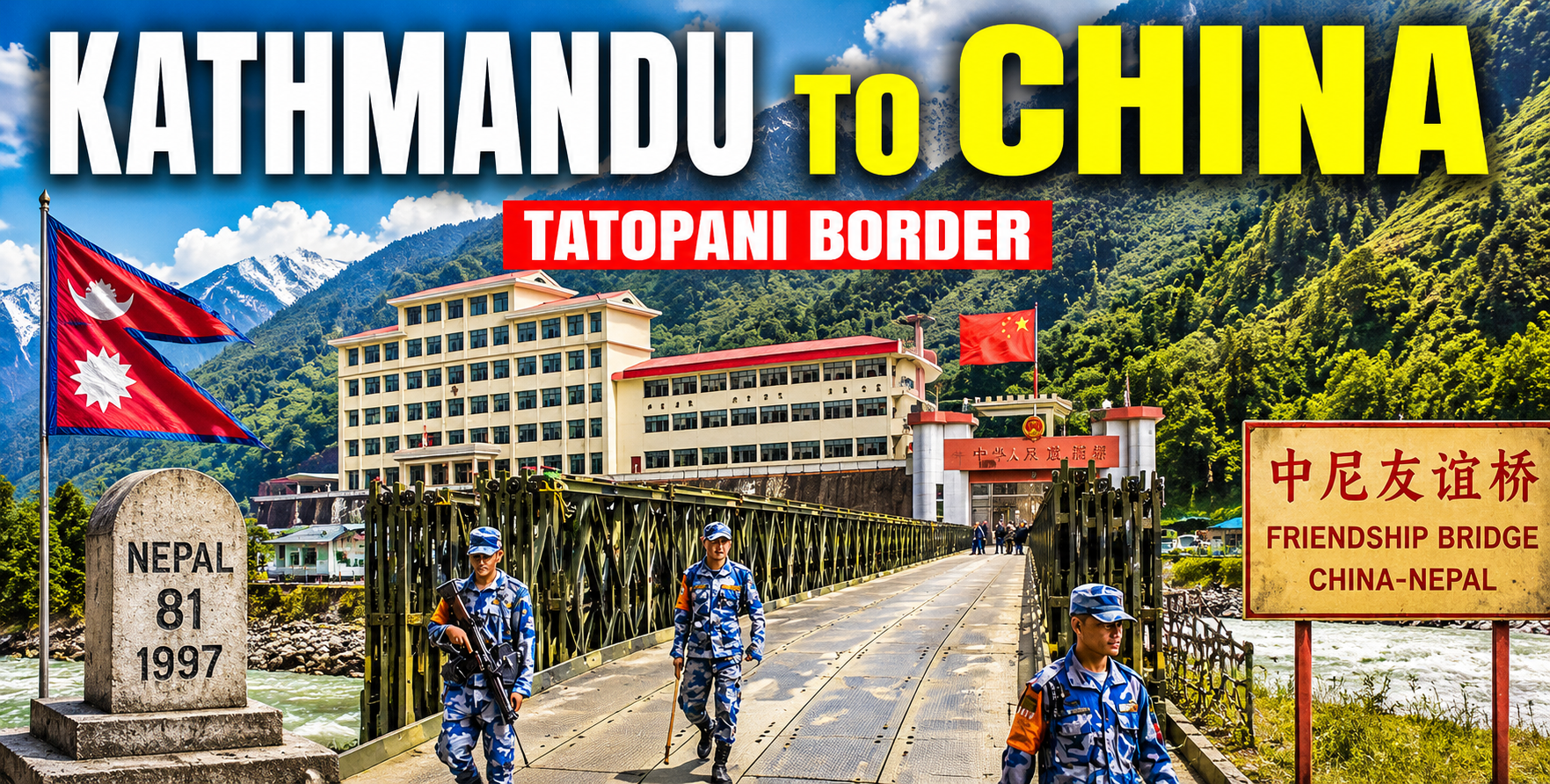
Kailash Return: Kodari to Sunauli Border Drop — Private Jeep Guide
After completing Hinduism’s most sacred pilgrimage — the Kailash Mansarovar Yatra — returning pilgrims face a final logistics challenge: getting from the Nepal-Tibet border back to India efficiently and comfortably after weeks of high-altitude travel. For pilgrims who entered Nepal via the Kodari–Zhangmu border crossing in Sindhupalchok District and wish to exit Nepal at the Sunauli–Bhairahawa border crossing (the primary Nepal-India road crossing for pilgrims coming from Kathmandu toward India), the Kodari-to-Sunauli private jeep transfer is a direct, comfortable, and efficient return option.
This route covers approximately 450 to 480 kilometers of Nepal road — from the Araniko Highway border descent at Kodari, west through Kathmandu (with optional sacred site visits), and south on the Prithvi Highway and Terai Highway to the Sunauli-Bhairahawa crossing into India. Total drive time without significant stops: 9 to 12 hours. Most pilgrim groups spread this over 2 days — overnight in Kathmandu for a Pashupatinath Aarti visit, then the highway run to Sunauli the following morning, with an optional Lumbini sacred stop (22 km east of Bhairahawa) before the border crossing.
Nepal Vehicle Hiring Pvt. Ltd., based in Thamel, Kathmandu, provides dedicated private jeep hire and group vehicle services for the Kailash Yatra return journey from Kodari to Sunauli — coordinating the complete Nepal-side return transport from the Tibet border crossing to the India border gate as a single managed booking. This guide covers the full route, section-by-section road conditions, vehicle options, costs, sacred stop options, and the practical logistics Kailash return pilgrims need.
The Kodari to Sunauli Route: Complete Overview
| Section | Distance | Road | Drive Time | Notes |
| Kodari to Kathmandu | 115 km | Araniko Hwy (Hwy H04) | 3–4 hrs | Mountain descent; Bhotekoshi gorge; Sun Koshi valley |
| Kathmandu (overnight stay) | — | — | — | Pashupatinath Aarti, Boudhanath kora, rest |
| Kathmandu to Mugling | 110 km | Prithvi Highway | 2–2.5 hrs | Through Trishuli gorge; fuel stop at Mugling |
| Mugling to Narayanghat | 33 km | NH44 | 30–40 min | Best section of Nepal highway; wide blacktop |
| Narayanghat to Butwal | 115 km | Terai Highway | 2–2.5 hrs | Flat Terai; Lumbini junction at Bhairahawa |
| Bhairahawa to Sunauli border | 4 km | Bhairahawa city road | 10–15 min | Sunauli-Belahiya India border gate |
Total Nepal road distance Kodari to Sunauli: approximately 377 to 395 kilometers. Recommended journey: 2 days — Day 1 Kodari to Kathmandu (overnight), Day 2 Kathmandu to Sunauli. A single-day direct drive is possible but takes about 9 to 12 hours and can be exhausting after the physical demands of the Kailash circuit.

Why Private Jeep is the Best Choice for Kailash Return
Returning Kailash Yatra pilgrims have several transport options for the return journey to Nepal. Still, the private jeep hire stands out for specific reasons that matter particularly at the end of a demanding pilgrimage:
- Post-pilgrimage physical state: pilgrims returning from Kailash have completed a 52-kilometer circumambulation at 5,000+ meters, multiple weeks of high-altitude travel, and substantial physical exertion. They need a comfortable, private vehicle with sufficient luggage space for pilgrimage materials, shaligram collections, and personal gear — not a crowded shared bus.
- Flexible sacred stops: the return journey through Nepal offers significant sacred pilgrimage opportunities — Pashupatinath in Kathmandu, Lumbini (birthplace of the Buddha) near Bhairahawa, and potentially Janakpur (birthplace of Goddess Sita) on the eastern Terai. A private jeep accommodates these stops on the pilgrim group’s schedule, not a fixed bus timetable.
- Group privacy: many Kailash Yatra pilgrim groups are families or devotional communities that want to maintain the pilgrimage’s spiritual atmosphere on the return journey—performing puja, singing devotional songs, and keeping the Yatra’s contemplative character. A private vehicle creates this space; a public bus does not.
- Door-to-border delivery: Nepal Vehicle Hiring collects from the Kodari border exit point and delivers to the Sunauli-Belahiya gate — no intermediate vehicle changes, no luggage transfers at Kathmandu’s bus parks, no coordination between multiple transport legs.
- Confirmed pricing: all-inclusive private jeep hire eliminates the end-of-journey pricing uncertainty that informal transport arrangements often create at India border crossings where passengers are most vulnerable to price pressure.
Road Guide: Kodari to Sunauli Section by Section
Kodari Border Exit to Kathmandu (115 km, 3–4 hours)
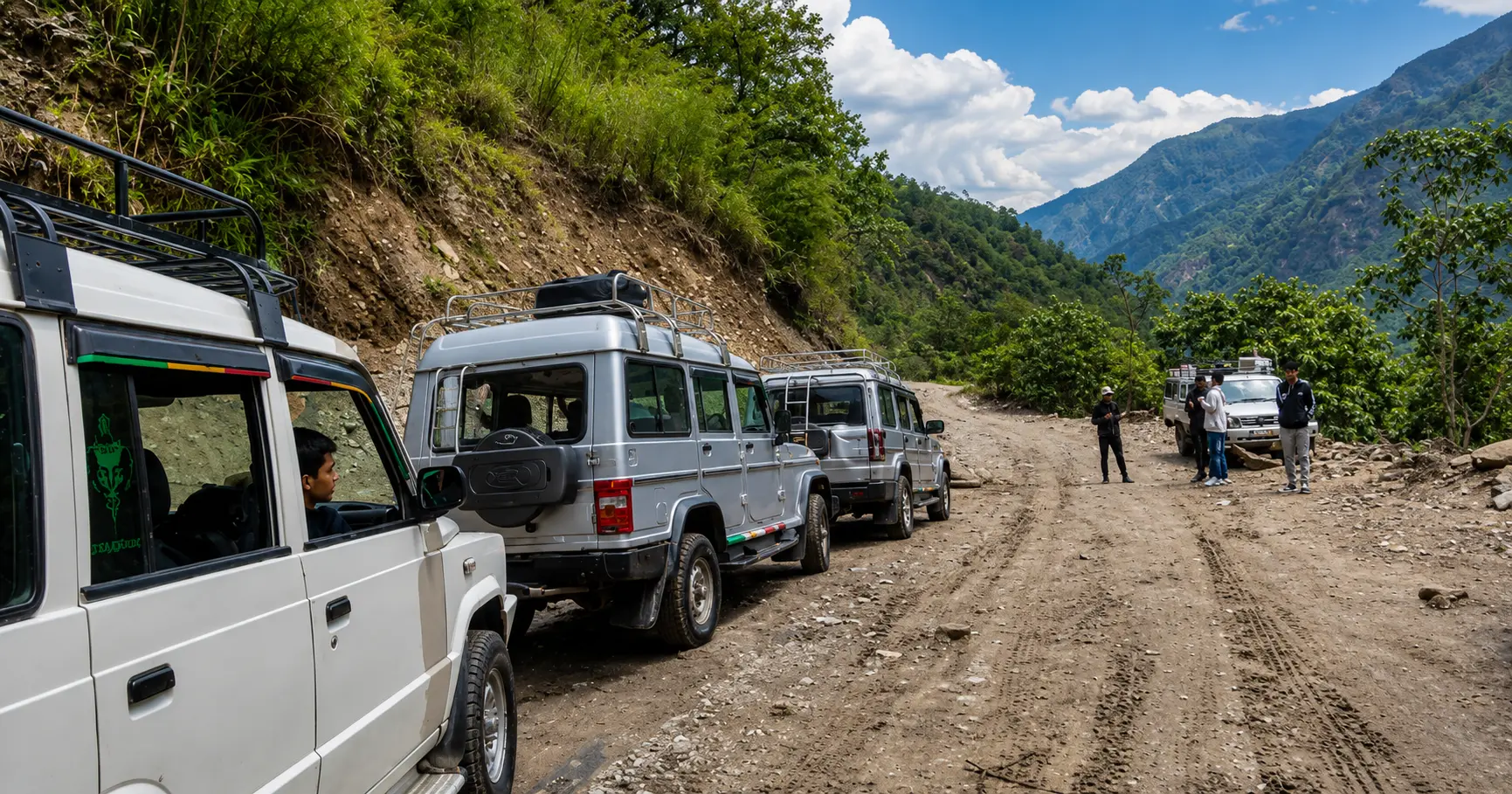
The descent from Kodari (1,873 m) to Kathmandu (1,350 m) follows the Araniko Highway (H04) through the Bhotekoshi River gorge — one of Nepal’s most dramatic highway sections. The road descends from the Nepal-Tibet border through the narrow canyon of the Bhotekoshi before reaching the Sun Koshi confluence at Tatopani (not the same Tatopani as on the Kali Gandaki — this Tatopani also has natural hot springs, a common stopping point for pilgrims crossing this border). The gorge is susceptible to landslides during monsoon and post-earthquake instability (the 2015 earthquake severely damaged this road, and reconstruction is ongoing). Nepal Vehicle Hiring monitors the Araniko Highway daily for pilgrims returning from the Kodari route.
The Araniko Highway runs from the border to Kathmandu, passing through Barabise (930 m), the first significant Nepali settlement after crossing, then continuing through the Sun Koshi valley toward Dhulikhel (1,550 m)—the hilltop town on the eastern rim of the Kathmandu Valley with spectacular mountain views toward the Himalayan range. Nepal Vehicle Hiring drivers use Barabise as the standard first rest stop (approximately 30 km from Kodari) and Dhulikhel as a photography stop before the final descent into the Kathmandu Valley.
Kathmandu Overnight: Sacred Preparation and Rest
Most Kailash return pilgrim groups overnight in Kathmandu on the first night, combining rest from the Tibet journey with a Pashupatinath Temple visit that serves as the sacred homecoming ceremony for returning Kailash pilgrims. Pashupatinath — one of the world’s most important Shiva temples and Nepal’s most sacred Hindu sites — naturally complements the Kailash journey: just as the pilgrimage began with Pashupatinath’s blessings (for many pilgrim groups) before departure toward the mountain, it ends with Pashupatinath’s Aarti on return.
Nepal Vehicle Hiring’s Kathmandu sightseeing service on the Kathmandu overnight day covers: the Pashupatinath evening Aarti (5:00 to 6:30 p.m.) — the fire ceremony on the Bagmati River ghats that is Kathmandu’s most powerful sacred event; Boudhanath Stupa morning kora — for Buddhist members of the pilgrim group, or for any pilgrim wishing to add the Buddhist sacred dimension to the Kailash return; and any other Kathmandu valley pilgrimage sites that the group wishes to include. Our Kathmandu airport transfer service covers the airport drop for pilgrims who choose to fly Kathmandu-to-India rather than continue overland to Sunauli.
Kathmandu to Mugling via Prithvi Highway (110 km, 2–2.5 hours)
The Kathmandu-to-Sunauli leg departs from the Kathmandu hotel and heads west on the Prithvi Highway — Nepal’s main east-west tourist artery — through the Trishuli River gorge. The road has been progressively widened over recent years (2026 sees approximately 40 to 50 percent of the widening completed), making this section increasingly comfortable. The Mugling junction (110 km from Kathmandu) is the standard fuel and rest stop — approximately 2 to 2.5 hours from Kathmandu. The famous Mugling riverside fish restaurants serve freshwater Mahseer fish, a Nepali highway tradition; Nepal Vehicle Hiring drivers usually allow 45 minutes at Mugling for lunch when timing permits.
Mugling to Narayanghat (33 km, 30–40 minutes)
The 33-kilometer Narayanghat-Mugling highway section (NH44) is one of Nepal’s best-maintained roads — wide, smooth blacktop built to higher standards than the standard Prithvi Highway. The road follows the Narayani River south toward the Terai, passes the Narayanghat Suspension Bridge, and enters the Chitwan District gateway city. Narayanghat has reliable ATMs, pharmacies, and larger shops — Nepal vehicle-hiring drivers stop briefly here for any cash or supplies needed before the final Terai run to Sunauli.
Narayanghat to Bhairahawa via Terai Highway (115 km, 2–2.5 hours)
From Narayanghat, the road transitions to the Mahendra Highway (East-West Highway) — Nepal’s primary Terai artery running along the base of the Siwalik Hills. The road heads southwest through Butwal to Bhairahawa (also called Siddharthanagar) — the city immediately north of the Sunauli-Belahiya border gate. This Terai section is predominantly flat, well-maintained blacktop with good sight-lines and reliable vehicle speeds. The key junction en route is the Lumbini turn-off at Bhairahawa — 22 kilometers east of the city center — where the road to the birthplace of the Buddha branches from the main highway.
Bhairahawa to Sunauli Border Gate (4 km, 10–15 minutes)
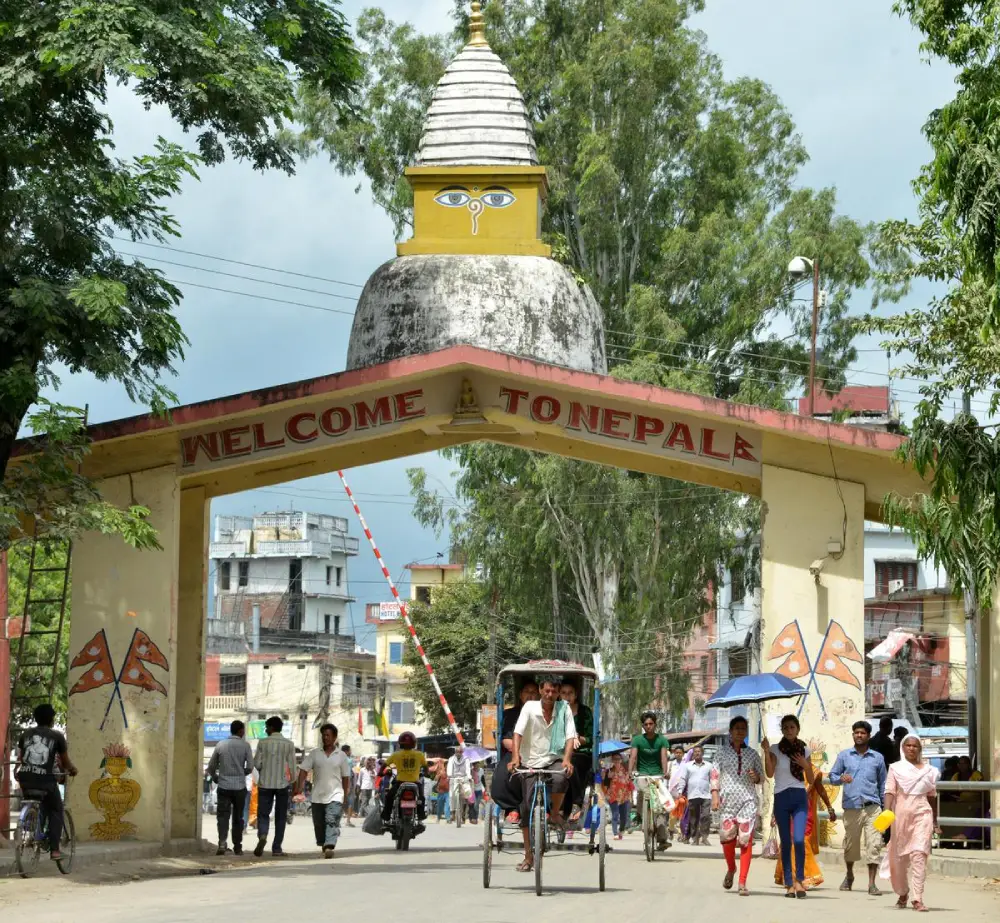
From Bhairahawa’s city center, the road south to the Sunauli-Belahiya Nepal-India border gate is a 4-kilometer drive through the border town’s commercial strip to the Belahiya customs and immigration post on the Nepal side. Nepal Vehicle Hiring’s private jeep drops pilgrim groups at the Belahiya gate — the final Nepal vehicle point before the pedestrian border crossing into Sunauli on the Indian side. Our driver waits while the group completes all Nepal exit formalities and escorts them to the gate.
Lumbini: The Sacred Stop on the Kailash Return Route
The Lumbini sacred stop is the most spiritually significant addition available on the Kodari-to-Sunauli return route — the birthplace of Siddhartha Gautama (who became the Buddha and founded one of the world’s great religions) is just 22 kilometers east of Bhairahawa, directly on the route to the Sunauli border. For Buddhist members of Kailash Yatra pilgrim groups, and for any Hindu pilgrim who venerates the Buddha as an avatar of Vishnu, Lumbini is a natural and deeply rewarding final pilgrimage stop before leaving Nepal.
The Lumbini UNESCO World Heritage Site encompasses the Maya Devi Temple (marking the precise birthplace, confirmed by the 249 BCE Ashoka Pillar inscription), the Sacred Garden, the Puskarini sacred pool, and the extraordinary international monastery zone — two parallel corridors of national monastery compounds from every Buddhist country in the world (Japan, Korea, China, Myanmar, Sri Lanka, Thailand, Germany, Vietnam) that line the 1.5-kilometer central canal north of the Sacred Garden. A focused Lumbini visit covering the Maya Devi Temple, Ashoka Pillar, and selected monasteries requires 2 to 3 hours — fitting naturally into a Bhairahawa lunch stop before the final 4-kilometer drive to Sunauli.
Nepal Vehicle Hiring builds the Lumbini stop into the Day 2 Kathmandu-to-Sunauli itinerary on request — our drivers know Lumbini’s parking, the Sacred Garden entry sequence, and the most efficient circuit for a 2-hour stop. The Lumbini entry fee is NPR 200 per foreign national (2026). Including Lumbini adds approximately 3 to 3.5 hours to the Day 2 journey — plan a 7:00 a.m. Kathmandu departure for a Lumbini visit and Sunauli crossing by 5:00 p.m.

Vehicle Options for the Kailash Return: Kodari to Sunauli
| Vehicle | Capacity | All-In Price (full route) | Per person (5 pax) | Best For |
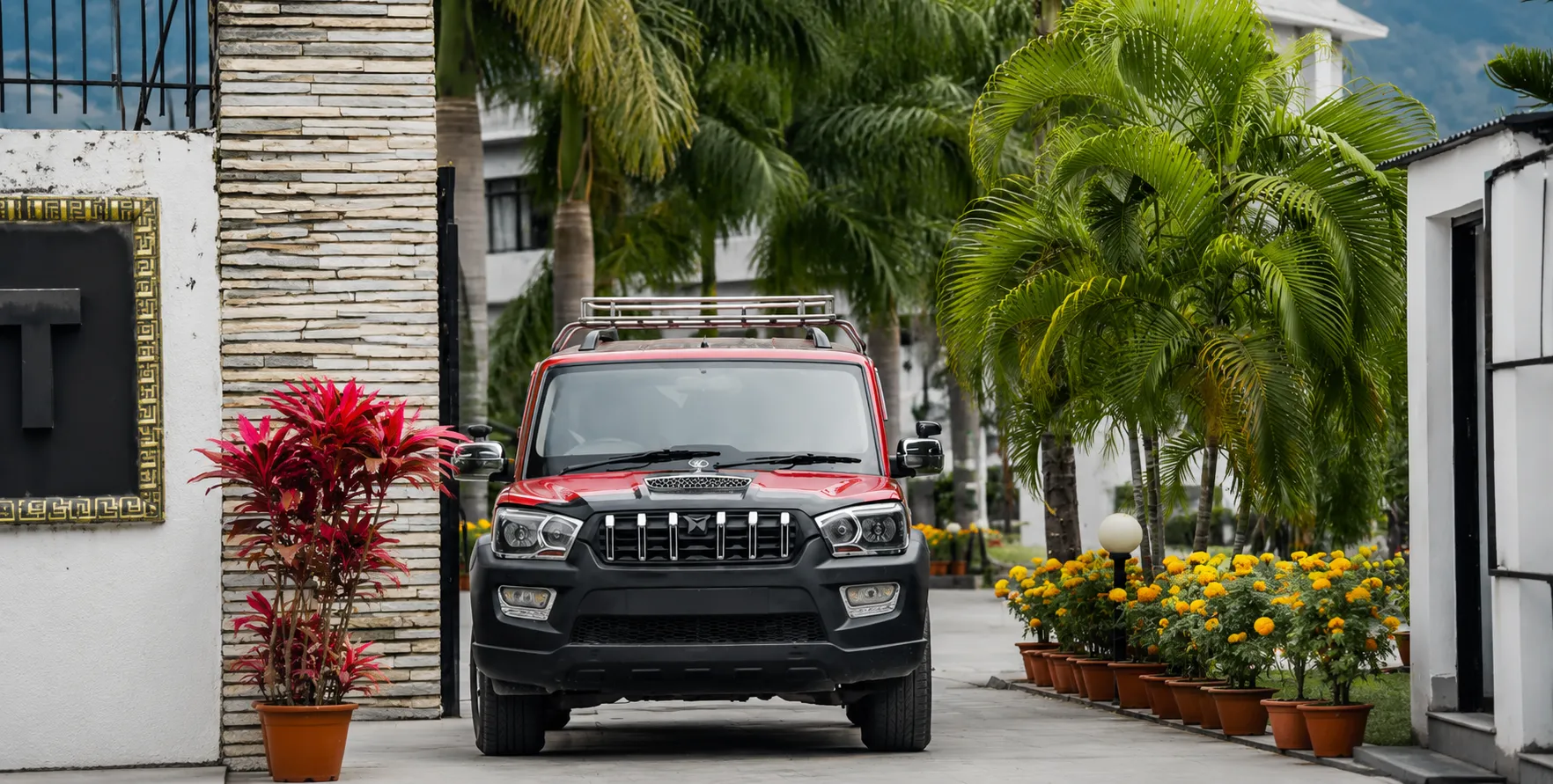
| Mahindra Scorpio (4WD) | 5–7 pax + luggage | NPR 28,000–38,000 | NPR 5,600–7,600 | Small pilgrim groups, families |
| Toyota Land Cruiser (4WD) | 4–5 pax + luggage | NPR 38,000–52,000 | NPR 7,600–10,400 | Premium comfort, couples/small groups |
| Hiace Van | 8–14 pax + luggage | NPR 30,000–42,000 | NPR 3,000–4,200 (10 pax) | Group pilgrim parties |
| Coaster Bus | 15–25 pax + luggage | NPR 42,000–60,000 | NPR 2,100–3,000 (20 pax) | Large pilgrim groups |
All prices are all-inclusive — vehicle, experienced driver, fuel, driver accommodation and meals for the overnight Kathmandu stop, and all road charges. Lumbini stop adds approximately NPR 800 to 1,200 per vehicle for the additional km and driver time. Contact Nepal Vehicle Hiring via our Plan Your Trip page for confirmed 2026/27 pricing.
Recommended 2-Day Itinerary: Kodari to Sunauli
Nepal Vehicle Hiring recommends the 2-day approach for all Kailash return pilgrims — both for the physical rest benefit and for the Kathmandu sacred stop opportunity:
- Day 1 — Kodari to Kathmandu:
- Nepal vehicle-hiring jeep collects at Kodari border exit point — confirm pickup time based on Tibet-side immigration clearance estimate. Drive Araniko Highway west through Bhotekoshi gorge, Barabise rest stop (30 min), Sun Koshi valley, Dhulikhel panorama photography stop. Arrive in Kathmandu approximately 3 to 4 hours after the Kodari exit. Check in to a Thamel hotel. Afternoon: Rest and recover from the Tibet journey.
- Evening: Nepal Vehicle Hiring; sightseeing vehicle for Pashupatinath Temple — arrive at 4:30 p.m. for the pre-Aarti atmosphere, stay through the 5:00 p.m. Aarti ceremony, and enjoy the post-Aarti ghat walks. Return to Thamel at 7:00 p.m.: dinner and rest.
- Day 2 — Kathmandu to Sunauli:
- Depart Kathmandu Thamel at 7:00 a.m. by Nepal Vehicle Hiring jeep/Hiace/Coaster depending on group size. Prithvi Highway west through Trishuli gorge. Mugling fuel stop and Mahseer fish lunch (45 min). Narayanghat brief stop. Terai Highway southwest. Arrive in Bhairahawa at approximately 3:30 p.m. Lumbini sacred stop (optional, 2 to 3 hours), returning to Bhairahawa at approximately 5:00 p.m. Sunauli border gate drop-off at approximately 5:15 p.m. Nepal immigration exit and India entry at Sunauli/Belahiya.
Alternative Sacred Stops on the Kailash Return Route
Janakpur (Mithila) — Birthplace of Goddess Sita
For pilgrim groups whose India-return route allows a Janakpur visit — and whose pilgrimage specifically includes the Sita Janaki sacred dimension alongside the Kailash Shiva focus — Janakpur (Dhanusha District), located approximately 225 km east of Narayanghat on the eastern Terai highway, is one of Nepal’s most important Hindu pilgrimage sites. The Janaki Mandir — a large Indo-Mughal palace-style temple built in 1911 — marks the birthplace of Sita, Rama’s consort, worshipped as an ideal of feminine virtue inthe Vaishnava tradition) and is the most important pilgrimage destination for Sita devotees in Nepal. For pilgrim groups returning from Kailash who want to combine the Shiva pilgrimage (Kailash) with the Sita pilgrimage (Janakpur), a Janakpur diversion adds 450 km and 2 days to the Terai return journey. Nepal Vehicle Hiring’s Hiace van hire and car hire in Nepal can accommodate this Janakpur extension — contact us via the plan your trip page for a customized Kodari-to-Janakpur-to-Sunauli vehicle plan.
Chitwan National Park — Wildlife Extension
The Narayanghat junction on the Kodari-to-Sunauli return route passes within 30 km of Chitwan National Park (Sauraha) — Nepal’s premier wildlife destination and UNESCO World Heritage Site. For Kailash Yatra groups with 1 to 2 additional days of schedule flexibility in Nepal, a Chitwan wildlife extension (one-horned rhinoceros, Bengal tiger, gharial crocodile, elephant, and 650+ bird species) is one of Nepal’s finest single additions to the pilgrimage return. Nepal Vehicle Hiring’s car hire in Nepal or Hiace van hire can route via Sauraha from Narayanghat, adding a 2-day Chitwan jungle stay before continuing southwest to Bhairahawa and Sunauli.
Pashupatinath — The Essential Kathmandu Sacred Stop
As described above, the Pashupatinath evening Aarti on the Kathmandu overnight is the most important sacred stop in Nepal on the Kailash return journey. For Shiva devotees, Pashupatinath — where Shiva is enshrined as Pashupati, the Lord of Animals — is the perfect sacred counterpoint to the Kailash journey: the pilgrimage to Shiva’s mountain home is honored by a visit to Shiva’s most sacred Nepal temple on the return. Nepal Vehicle Hiring’s Kathmandu sightseeing service coordinates the Pashupatinath Aarti visit as part of the Kathmandu overnight stop.
Border Formalities: Kodari Exit and Sunauli Entry
Kodari (Nepal Side) — Exit Formalities
At Kodari (also called Tatopani on the Nepal side of this border — distinct from the Tatopani hot spring village on the Kali Gandaki route), pilgrims complete Nepal immigration exit formalities at the Kodari Customs and Immigration checkpoint. This involves: passport surrender for an exit stamp, Nepal customs declaration clearance (particularly for shaligram fossils and other materials collected in Tibet; Nepal has specific regulations on shaligram export that pilgrims should clarify with their Tibet operator before crossing), and vehicle permit clearance for the Nepal-side vehicle. Nepal Vehicle Hiring’s driver handles vehicle permit formalities while passengers complete personal immigration. Allow 30 to 60 minutes for the complete Kodari exit process.
Sunauli-Belahiya (Nepal Side) — Nepal Exit
At Sunauli’s Belahiya immigration post, pilgrims complete the Nepal exit stamp process to enter India. This is typically a smooth process for Indian nationals returning from a Nepal pilgrimage — Nepal’s immigration officers are accustomed to the Kailash Yatra pilgrim return flow. Nepal Vehicle Hiring’s driver drops passengers at the Belahiya gate and assists with luggage to the immigration counter. Allow 15 to 30 minutes for Nepal-side Sunauli exit formalities.
Sunauli (India Side) — India Entry
Indian immigration at the Sunauli Land Port of Entry handles India-side entry at Sunauli (Uttar Pradesh). Indian nationals returning from Nepal require standard passport processing. After Indian immigration, pilgrims connect to India-side onward transport—typically pre-arranged local vehicles, buses, or taxis to Gorakhpur (approximately 115 km east of Sunauli by road, 2.5 to 3 hours) — for national rail and bus connections to their home destinations. Nepal Vehicle Hiring does not operate vehicles on the India side of the Sunauli border, but our team can advise on India-side transport connections through our partner network.
Practical Tips for the Kailash Return: Kodari to Sunauli
- Confirm Kodari pickup timing from Tibet operator: the Nepal-side vehicle pickup at Kodari depends on the Tibet-side immigration clearance time, which the Tibet operator can estimate based on the planned border crossing schedule. Nepal Vehicle Hiring needs a confirmed (or estimated) Kodari crossing time at least 24 hours before the pickup day to position the driver correctly.
- Carry NPR cash from Tibet for Nepal expenses: the Kodari area and Araniko Highway have limited ATM access. You can pay Nepal Vehicle Hiring’s all-in price in Kathmandu (preferred) or at Sunauli, but pilgrims may want NPR for incidentals on the return journey. The last reliable ATMs before Kodari are in Kathmandu—carry NPR 5,000 to 10,000 per person for return-journey expenses.
- Manage shaligram and Tibet materials declaration: Nepal and India both regulate the export of shaligram fossils and certain other materials from Tibet. Consult your Tibet operator before crossing at Kodari and carry clear documentation of any shaligram collected in Tibet.
- Book a Kathmandu hotel before crossing Kodari: Nepal Vehicle Hiring can recommend Thamel hotels and coordinate the hotel booking with the vehicle for the Kathmandu overnight. Confirming the hotel before Kodari crossing ensures a smooth arrival in Kathmandu without a hotel search after a long Araniko Highway drive.
- Lumbini timing: for the Lumbini stop, the Maya Devi Temple and Sacred Garden are open from sunrise to sunset. The most contemplative visiting window (before afternoon tour groups) is morning — if the Sunauli crossing timing allows, consider visiting Lumbini on the morning of Day 2 before the Bhairahawa lunch, rather than as an afternoon stop.
- Sunauli-Gorakhpur connection: Nepal Vehicle Hiring’s operations team can advise on Gorakhpur train connections and bus timings from Sunauli for pilgrims needing to continue within India the same evening as the Nepal border crossing.
Nepal Vehicle Hiring: Complete Kailash Return Service
Nepal Vehicle Hiring provides the complete vehicle service for the Kailash return from Kodari to Sunauli:
- 4WD jeep hire — Mahindra Scorpio and Toyota Land Cruiser for small pilgrim groups
- Hiace van hire — medium pilgrim groups (8–14 passengers)
- Coaster bus hire — large pilgrim groups (15–25 passengers)
- Kathmandu sightseeing service — Pashupatinath Aarti and valley sacred circuit on Kathmandu overnight
- Kathmandu airport transfer — for pilgrims choosing to fly Kathmandu-to-India rather than continuing overland
- Car hire in Nepal — individuals and very small groups
- Nepal Nekhor tour — for pilgrims extending the Nepal sacred circuit before the India border
- Muktinath Yatra itinerary — for pilgrims adding Muktinath to the Kailash return circuit
- Nepal holiday tour and Nepal tour package — for Kailash return pilgrims extending their Nepal circuit
- WhatsApp / Call: +977 9851013196
- Email: [email protected]
- www.vehiclehiringnepal.com
Visit our Plan Your Trip page with your Kodari crossing date, group size, Sunauli destination, and any sacred stop preferences (Kathmandu Pashupatinath, Lumbini, Janakpur, Chitwan). We respond within 24 hours with a complete vehicle plan and all-in pricing for the full Kailash return journey. Om Namah Shivaya — Nepal Vehicle Hiring completes the sacred circuit that began with Kailash.
Frequently Asked Questions: Kailash Return Kodari to Sunauli
How long is the drive from Kodari to Sunauli?
The total driving distance is approximately 377 to 395 kilometers, taking 9 to 12 hours of driving (without major stops). Nepal Vehicle Hiring recommends 2 days — Kodari to Kathmandu (Day 1, overnight), Kathmandu to Sunauli (Day 2) — for pilgrim comfort and the Kathmandu sacred stop opportunity.
Can we visit Lumbini on the way to Sunauli?
Yes — Lumbini is 22 km east of Bhairahawa, directly on the Sunauli approach route. Nepal Vehicle Hiring adds the Lumbini stop to the Day 2 itinerary on request. Allow 2 to 3 hours for the visit; plan a 7:00 a.m. Kathmandu departure for a Lumbini visit and Sunauli border crossing by 5:00-6:00 p.m.
What vehicle is appropriate for the Araniko Highway from Kodari?
The Araniko Highway is paved and accessible for all vehicle types, but the gorge sections and occasional landslide-affected areas benefit from a higher-clearance vehicle. Nepal Vehicle Hiking recommends our 4WD jeep hire or Hiace van hire for the Kodari-to-Kathmandu section. Our drivers are specifically experienced on the Araniko Highway’s current conditions.
What are the shaligram export rules at Kodari?
Nepal and India both have specific regulations on shaligram fossil export — the sacred Vishnu stones collected from the Kali Gandaki River (not from Tibet, but sometimes confused with Tibet-side stone collections). Consult your Tibet operator about the specific materials regulations at the Kodari-Zhangmu crossing. Nepal Vehicle Hiring’s drivers know the general checkpoint protocols but cannot provide legal advice on customs declarations — this must be clarified with your Tibet operator before crossing.
Can Nepal Vehicle Hiring arrange India-side transport from Sunauli?
Nepal Vehicle Hiring operates exclusively on the Nepal side of the Sunauli-Belahiya border. Our vehicles deliver to the Belahiya gate. For India-side transport (Sunauli-to-Gorakhpur and onward), we can provide guidance and partner referrals — ask our operations team via WhatsApp +977 9851013196 for current India-side transport options from Sunauli.
What if our Kodari crossing date changes due to Tibet conditions?
Tibet border crossings are subject to Chinese and Nepali governmental conditions that can change with limited notice. Nepal Vehicle Hiking’s Kailash return vehicle bookings include flexible rescheduling for date changes caused by border conditions—contact our operations team via WhatsApp +977 9851013196 with the revised crossing date, and we will adjust the vehicle schedule accordingly—no penalty charge for border-condition-related date changes.
The Araniko Highway: Nepal’s Eastern Tibet Corridor
The Araniko Highway connecting Kathmandu to the Kodari-Zhangmu border crossing is one of Nepal’s most historically significant roads — built with Chinese assistance in the 1960s as part of the early Nepal-China bilateral relationship, it was the first motorable connection between the two countries and remains Nepal’s most important China-border road link in the eastern Himalayan zone.
The highway’s name honors Arniko (also spelled Araniko)—the 13th-century Nepali architect who led a mission to China under Kublai Khan and designed some of the most important Buddhist monuments in Beijing and the surrounding region, including the famous White Pagoda in Miaoying Temple. The name reflects the deep historical and cultural exchange between Nepal and China along this corridor, predating the modern road by centuries.
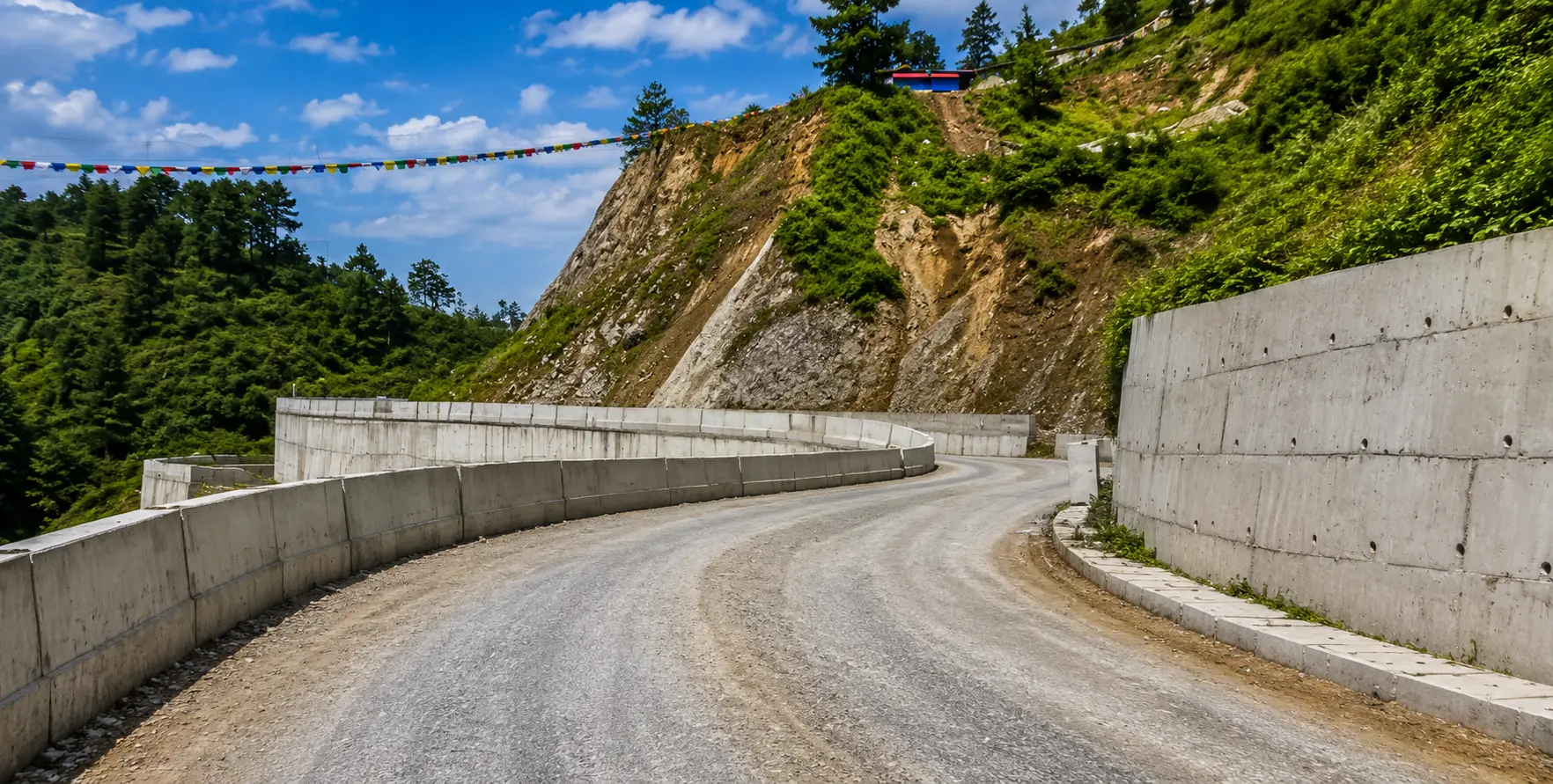
The Araniko Highway descends from the Nepal-Tibet border at Kodari (1,873 m) through the Bhotekoshi River canyon — one of Nepal’s most geologically active gorge systems, where the Indian tectonic plate’s northward movement against the Eurasian plate creates extreme landscape dynamism. The gorge walls rise hundreds of meters on both sides of the narrow road, the river tumbles through class IV and V rapids below, and the geology of active tectonic collision is visible in the tilted, faulted, and folded rock faces that characterize every kilometer of the drive. For geologically minded passengers, this 60-kilometer gorge section is one of the world’s most accessible demonstrations of active Himalayan geology.
The 2015 earthquake severely damaged the Araniko Highway — multiple sections were blocked by landslides and the road surface was extensively damaged. Reconstruction has been ongoing since 2015, with support from both Nepal and China, and in 2026 the highway is in significantly better condition than in the immediate post-earthquake period. However, the gorge’s geological instability means the road is always somewhat vulnerable to new landslide events, particularly during heavy monsoon rain. Nepal Vehicle Hiring monitors the Araniko Highway daily during the monsoon season and will advise on current road status before any Kodari-based vehicle departure.
The Sunauli-Belahiya Border: Nepal’s Busiest India Crossing
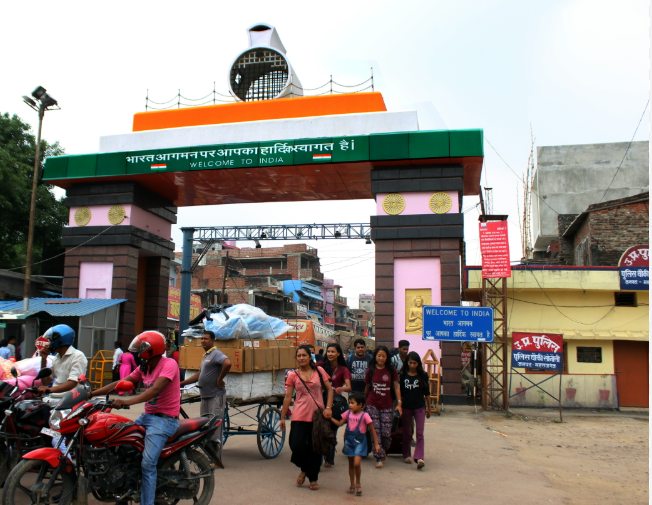
The Sunauli-Belahiya crossing is one of Nepal’s two busiest Nepal-India border gates — the other being the Raxaul-Birgunj crossing in the east. Sunauli serves pilgrims, tourists, and commercial traffic between India’s Uttar Pradesh (and, via Gorakhpur, the entire Indian heartland rail network) and Nepal’s western and central regions. Understanding the Sunauli crossing helps Kailash return pilgrims plan their border timing optimally.
Nepal Immigration manages the Nepal side of the border at the Belahiya Immigration Office. The office typically operates from 7:00 a.m. to 7:00 p.m. Nepal Standard Time — plan to arrive at the Nepal immigration post before 6:00 p.m. to allow time for exit stamp processing. Indian immigration at Sunauli (Uttar Pradesh) typically operates similar hours. The crossing itself — from Nepal immigration exit stamp to India immigration entry stamp — normally takes 30 to 90 minutes depending on queue length and time of day.
Peak crossing times at Sunauli are: morning (8:00 to 10:00 a.m., when overnight bus passengers cross simultaneously) and afternoon (2:00 to 4:00 p.m., when day crossings peak). The quietest window for a smooth crossing is typically mid-morning (10:30 a.m. to noon) or early afternoon (12:30 to 1:30 p.m.). Nepal Vehicle Hiring’s Kodari-to-Sunauli itinerary is timed to arrive at Belahiya in the mid-afternoon window (3:00 to 4:30 p.m.) — after the peak queue but well before the 7:00 p.m. office closing time.
Currency exchange is available at the Sunauli border — Indian rupees for Nepali rupees and vice versa. Border rates are typically less favorable than in Kathmandu or at authorized exchange houses in Bhairahawa. Pilgrims with remaining NPR should exchange in Bhairahawa’s main market (approximately 4 km from the border) rather than at the border crossing itself. Nepal Vehicle Hiring’s driver can stop at a Bhairahawa exchange house on the route to Sunauli, upon request.
Gorakhpur: The India Gateway After Sunauli
For Kailash return pilgrims crossing at Sunauli and continuing into India, Gorakhpur is the first major Indian transportation hub — about 115 kilometers east of Sunauli on NH27, a 2.5 to 3-hour drive. Gorakhpur’s significance for returning Kailash pilgrims:
Gorakhpur Junction railway station is one of India’s busiest and most strategically positioned rail junctions — with direct train connections to Varanasi, Lucknow, Delhi, Allahabad, and dozens of other major destinations across North India. For pilgrims returning to any part of the Indian heartland, Gorakhpur is the primary rail gateway after the Nepal border crossing. Ideally, book trains from Gorakhpur before crossing into Nepal, as demand on the Gorakhpur-Delhi and Gorakhpur-Varanasi routes is consistently high.
Gorakhpur also has a domestic airport (Gorakhpur Airport, GRX) with connections to Delhi, Lucknow, and other major cities — providing a fast onward travel option for pilgrims who need to reach distant Indian destinations without the train journey. Flight frequency at Gorakhpur has increased significantly in recent years as domestic aviation capacity has improved.
Nepal Vehicle Hiring does not operate vehicles on the India side of the Sunauli border. Still, our operations team can provide current timing information on the Sunauli-Gorakhpur road connection and advice on the Gorakhpur rail booking process for pilgrims who contact us before the Nepal border crossing. This India-side connectivity guidance is a supplementary service that helps our Kailash return pilgrims plan their journey end to end.
What Kailash Return Pilgrims Carry: Managing the Sacred Items
Kailash Yatra pilgrims returning through Nepal typically carry a range of sacred items collected during the Tibet journey — items that require careful management at the Nepal and India border crossings. Understanding the typical sacred item portfolio helps Nepal Vehicle Hiring provide appropriate vehicle space and driver awareness:
- Mansarovar water: sacred water from Lake Mansarovar is one of the most prized items Kailash pilgrims carry home—typically stored in sealed copper or brass kalash containers and treated with extreme care as a gift of the highest spiritual value. Nepal Vehicle Hiking’s drivers handle Mansarovar water containers with appropriate care and place them in the vehicle cabin rather than in roof luggage, where vibration could damage the containers.
- Kailash soil and stones: pilgrims often carry small amounts of soil and stones from the Kailash kora circuit (not from the mountain itself, which is considered too sacred to remove material from) as sacred keepsakes.
- Butter lamps and monastic items: pilgrims who visited monasteries in Tibet may carry small butter lamp cups, prayer flags, mani stones, and other monastic items received as blessings from lamas.
- Shaligram fossils: the sacred ammonite stones from the Kali Gandaki River (which passes close to the Kailash region) are sometimes acquired in Tibet from traders; these require specific documentation at the Nepal border, as shaligram export is regulated. Nepal Vehicle Hiking strongly recommends clarifying shaligram documentation with the Tibet operator before the Kodari crossing.
- Thangka paintings: Tibetan Buddhist thangka paintings acquired in Tibet or Kathmandu are common pilgrim purchases. These require appropriate tube or flat packaging for vehicle transport and may require art export documentation at customs.
Nepal Vehicle Hiring’s vehicles for the Kailash return service are provisioned with sufficient cabin space to carry sacred items securely and respectfully—not mixed with general luggage in the roof carrier. Our drivers are briefed on the significance of Mansarovar water and other sacred items and handle them accordingly.
Kathmandu: The Sacred Midpoint of the Kailash Return
The Kathmandu overnight on the Kailash return journey is more than a logistics stop — it is the sacred midpoint of the homecoming that connects the mountain pilgrimage to the temple tradition. For Shiva devotees, the sequence of Pashupatinath (pre-departure blessing) → Kailash (the pilgrimage itself) → Pashupatinath (return thanksgiving) has a completeness that the direct overland return to India does not provide. Nepal Vehicle Hiring’s Kathmandu overnight service is built around this sacred completeness — ensuring pilgrims who want the Pashupatinath Aarti thanksgiving have the vehicle, the timing, and the attention this ceremony deserves.
The Pashupatinath evening Aarti at 5:00 p.m. is organized by the temple’s Bhat Brahmin priests — a fire ceremony (deep daan) in which lit lamps are offered to the Bagmati River and to the Shiva linga in the main temple, accompanied by the sounds of conch shells, bells, and Sanskrit mantras. For a returning Kailash pilgrim who has just come from Mount Kailash — Shiva’s cosmic home — and is visiting Pashupatinath — Shiva’s most sacred temple in Nepal — the Aarti carries a spiritual intensity that feels genuinely different from an ordinary tourist visit. The priests who perform the ceremony are aware of the Kailash Yatra return context and often acknowledge returning pilgrims specifically.
In addition to Pashupatinath, the Kathmandu overnight allows pilgrims to visit Boudhanath Stupa. For Buddhist members of many Kailash Yatra groups, the morning kora at Boudhanath (6:30 to 9:00 a.m., with the Tibetan Buddhist community performing the circumambulation) complements this Hindu sacred space. Nepal Vehicle Hiring’s Kathmandu sightseeing service covers both sites — Boudhanath in the morning, Pashupatinath in the evening — as a complete Kathmandu sacred day for Kailash return pilgrims.
The Complete Kailash Yatra Nepal Circuit: Entry and Return Options
The Kodari-to-Sunauli return is one of several Nepal-side Kailash Yatra circuit configurations. Understanding the full range of Nepal entry and exit options for the Kailash Yatra helps pilgrim groups plan the complete circuit:
Entry: Sunauli → Kathmandu → Kodari → Tibet (Classic Circuit)
The classic Nepal Kailash Yatra circuit enters Nepal at Sunauli from India (Gorakhpur side), visits Kathmandu and Pashupatinath, drives the Araniko Highway to Kodari for the Tibet crossing, completes the Kailash circuit in Tibet, and returns through Kodari to Kathmandu (Pashupatinath Aarti) before exiting Nepal at Sunauli. This is the circuit that the Kodari-to-Sunauli return serves. Nepal Vehicle Hiring covers both legs: outbound Sunauli to Kodari via Kathmandu, and return Kodari to Sunauli via Kathmandu.
Entry: Sunauli → Kathmandu → Lumbini → Muktinath → Kodari → Tibet (Extended Nepal Circuit)
The extended Nepal sacred circuit adds Lumbini (Buddha’s birthplace) and Muktinath (a sacred Vishnu temple at 3,710 m in Mustang) to the Kathmandu stop before the Kodari crossing. This extended circuit takes 7 to 10 additional days in Nepal. Still, it is one of the most complete sacred circuits in Nepal—connecting Lumbini (Buddha’s birthplace), Muktinath (Nepal’s most sacred mountain Vishnu temple), Pashupatinath (Nepal’s most sacred Shiva temple), and Kailash (Shiva’s cosmic mountain home) into a single pilgrimage. Nepal Vehicle Hiring’s Nepal Nekhor tour service coordinates the complete Nepal circuit vehicle before the Kodari crossing, with the Kailash return vehicle completing the circuit at Sunauli.
Return: Kodari → Kathmandu → Fly to India (Air Return Option)
For pilgrims who prefer to return to India by air rather than overland through Sunauli, Nepal Vehicle Hiking provides the Kodari-to-Kathmandu vehicle with airport drop-off at Tribhuvan International Airport for the Kathmandu-to-Delhi, Kathmandu-to-Mumbai, or other India-destination international flights. This air return option is significantly faster (flight time:e 2 to 4 hours vs. a 2-day road journey) but more expensive per person. Our Kathmandu airport transfer service covers the TIA domestic and international terminal drop for Kailash return pilgrims choosing the air return.
The Terai Highway: Nepal’s Southern Corridor
The Narayanghat-to-Sunauli section of the Kailash return journey travels through the Terai — Nepal’s low-altitude southern strip of subtropical plains that borders India. Understanding the Terai landscape and its highway character helps pilgrims appreciate this final leg of the return journey in Nepal.
The Mahendra Highway (East-West Highway) through the western Terai is predominantly flat, well-maintained blacktop that runs through sal forest, farmland, and small market towns. The road passes through the major Terai cities of Butwal and Bhairahawa before reaching the Sunauli border. The Terai’s subtropical character — significantly hotter than Kathmandu, with dense green vegetation and a very different sensory atmosphere from the high-altitude Himalayan world of the Kailash circuit — marks the geographical and atmospheric transition back to the Indian plains.
For many Kailash return pilgrims, the Terai drive is the first encounter with a landscape that genuinely resembles India — the flat horizon, the large sal and sissoo trees lining the road, the agricultural villages with their thatched-roof houses, and the warm humid air replacing the cold, dry mountain atmosphere of the previous weeks. This landscape transition is itself a meaningful element of the return journey — the gradual re-entry into the lowland world after the extraordinary elevation of the Kailash circuit.
The western Terai between Narayanghat and Bhairahawa passes through the edges of several protected forest areas — Royal Suklaphanta Wildlife Reserve (further west) and the Chitwan buffer zone forests (near Narayanghat) — giving the highway drive occasional sightings of deer, monkeys, and birds that remind travelers they are passing through one of South Asia’s most biodiversity-rich lowland landscapes. Nepal Vehicle Hiring drivers pause briefly for any notable wildlife sighting on the Terai highway when requested.
Bhairahawa (Siddharthanagar): The Last Nepal City
Bhairahawa — officially renamed Siddharthanagar in 2000 to honor its proximity to Lumbini, the birthplace of the Buddha (Siddhartha Gautama) — is the final significant Nepal city before the Sunauli border crossing and deserves more attention than the typical rapid transit it receives in most Nepal travel itineraries.
The city has developed significantly in recent years, driven by its position as the gateway to Lumbini’s growing international pilgrimage and tourism economy. The opening of Gautam Buddha International Airport (Bhairahawa’s airport, now operating international flights to India, China, and Southeast Asian destinations since 2022) has further increased the city’s connectivity and commercial significance. For Kailash return pilgrims, Bhairahawa offers reliable ATMs (NIC Asia, Nepal SBI, Everest Bank) for final NPR exchange; money exchange houses at more favorable rates than the Sunauli border; pharmacies and shops for last-minute purchases; and several decent restaurants for a final Nepal meal before crossing into India.
Nepal Vehicle Hiring’s Kathmandu-to-Sunauli driver knows Bhairahawa’s commercial streets and can stop at the right ATM, exchange house, or restaurant as needed before the 4-kilometer final drive to the Sunauli border gate. The city’s compact layout makes a 330-to-445-minute stop in Bhairahawa practical without significantly extending the total Kathmandu-to-Sunauli journey time.
Nepal’s Nepal–India Border Relations: Context for the Sunauli Crossing
The Sunauli-Belahiya crossing operates under the Nepal-India Treaty of Peace and Friendship (1950) and subsequent Open-Border arrangements that allow Nepali and Indian citizens to cross the Nepal-India border freely, without visa requirements. This freedom of movement — unique in South Asia — makes the Nepal-India border crossing at Sunauli significantly simpler for Nepali and Indian nationals than international border crossings elsewhere in the world.
For Indian nationals returning from the Kailash Mansarovar Yatra via Sunauli, the process is: Nepal exit stamp at Belahiya (free, immediate), walk across the border (approximately 200 meters), India entry at Sunauli Immigration. No visa or advance registration is required for the Sunauli crossing (unlike some other Nepal-India border crossings that have had specific requirements during certain periods). The main document check: passport with a valid Nepal entry stamp, Chinese Group Visa for Tibet (already expired post-trip, but kept for record), and any customs declarations for materials carried from Tibet.
For non-Indian, non-Nepali nationals in mixed Kailash Yatra groups (e.g., Indian-origin overseas citizens, NRI passport holders, or non-South Asian nationals who joined the Kailash group), Sunauli crossing procedures may differ. Some visa categories have specific requirements at land border crossings. Non-Indian nationals should verify their specific Sunauli crossing eligibility before the Nepal leg of their Kailash Yatra. Nepal Vehicle Hiring’s operations team can provide general guidance but recommends verifying specific visa eligibility through the relevant Indian embassy or consulate.
Completing the Sacred Circle: The Meaning of the Return Journey
In Hindu tradition, the Kailash Mansarovar Yatra is a complete sacred circuit—not just the arrival at Kailash and the parikrama around it, but the full journey from home to the mountain and back again. The return journey through Nepal — the Araniko Highway descending from the Tibet border, the Kathmandu overnight with Pashupatinath’s blessing, the Terai highway south through Lumbini’s sacred landscape, and the final border crossing back into India — is not a denouement after the main event. It is the second arc of the sacred circle.
Pilgrims who rush through the Nepal return—taking the first available transport directly from Kodari to the nearest India border without a Kathmandu stop or Lumbini visit—miss what Nepal’s sacred geography offers the returning pilgrim. The Pashupatinath Aarti on the return evening is the thanksgiving ceremony that closes the Yatra’s devotional arc. The Lumbini stop adds the Buddha’s presence to a pilgrimage that is fundamentally a Hiu jouepening it into a broader encounter with the subcontinent’s sacred heritage. The sight of the Terai forests and the Indian horizon approaching over the Bhairahawa plains visually confirms that the circle is closing.
Nepal Vehicle Hiring’s Kodari-to-Sunauli return service is designed around this understanding. Our 2-day itinerary with Kathmandu overnight and optional Lumbini stop is not a convenience offering — it is a service built around the sacred structure of the Kailash return journey. The vehicle is the physical carrier; pilgrims have made the journey it carries for centuries. We take that responsibility seriously, and we are honored to be part of the sacred circuit that completes at Sunauli’s border gate.
Om Namah Shivaya. Nepal Vehicle Hiring completes the journey. WhatsApp +977 9851013196 | [email protected] | vehiclehiringnepal.com
- Kailash Return: Kodari to Sunauli Border Drop — Private Jeep Guide
- The Kodari to Sunauli Route: Complete Overview
- Why Private Jeep is the Best Choice for Kailash Return
- Road Guide: Kodari to Sunauli Section by Section
- Lumbini: The Sacred Stop on the Kailash Return Route
- Vehicle Options for the Kailash Return: Kodari to Sunauli
- Recommended 2-Day Itinerary: Kodari to Sunauli
- Alternative Sacred Stops on the Kailash Return Route
- Border Formalities: Kodari Exit and Sunauli Entry
- Practical Tips for the Kailash Return: Kodari to Sunauli
- Nepal Vehicle Hiring: Complete Kailash Return Service
- Frequently Asked Questions: Kailash Return Kodari to Sunauli
- The Araniko Highway: Nepal's Eastern Tibet Corridor
- The Sunauli-Belahiya Border: Nepal's Busiest India Crossing
- Gorakhpur: The India Gateway After Sunauli
- What Kailash Return Pilgrims Carry: Managing the Sacred Items
- Kathmandu: The Sacred Midpoint of the Kailash Return
- The Complete Kailash Yatra Nepal Circuit: Entry and Return Options
- The Terai Highway: Nepal's Southern Corridor
- Bhairahawa (Siddharthanagar): The Last Nepal City
- Nepal's Nepal–India Border Relations: Context for the Sunauli Crossing
- Completing the Sacred Circle: The Meaning of the Return Journey

Related Blog & Articles
Kathmandu to Kodari Border Transport

Kathmandu to Panch Pokhari Trek Vehicle: The Sacred Five Lakes Within Reach of the Capital

Ancient Temples and Hidden Histories: A Journey Through Nepal’s Sacred Past
Besisahar to Chame and Upper Pisang Jeep