Plan a Trip


Kailash Yatra Tour from Gorakhpur
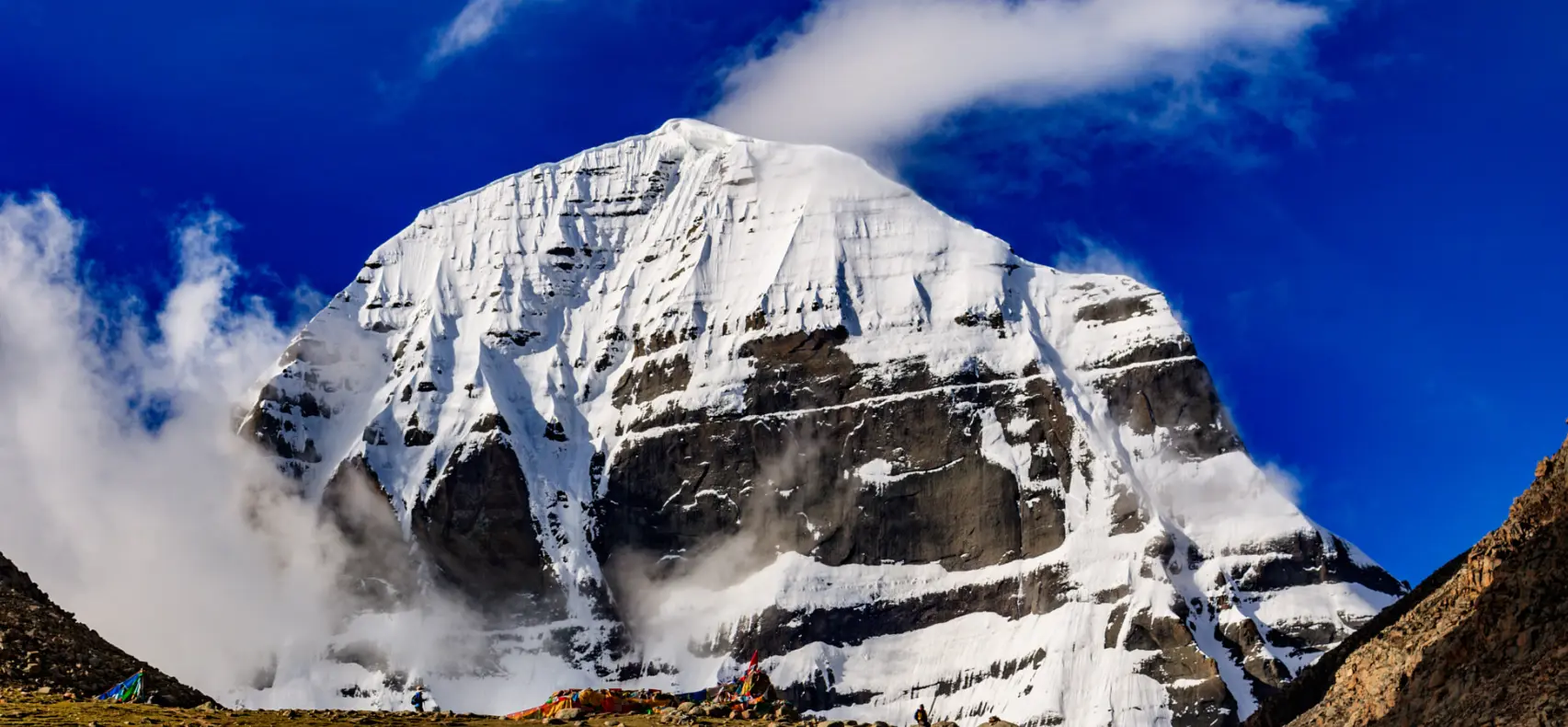
Kailash Yatra Tour from Gorakhpur: Complete Vehicle Guide
Gorakhpur — the major city of eastern Uttar Pradesh and one of North India’s most strategically located railway junctions — is the natural departure point for thousands of Kailash Mansarovar Yatra pilgrims every year. Just 115 kilometres from the Sunauli-Belahiya Nepal border crossing, Gorakhpur is the last major Indian city before the Nepal frontier on the classic overland Kailash Yatra route, making it the staging point for bus connections, private vehicle arrangements, and final India-side preparation before the Nepal pilgrimage circuit begins.
The Kailash Mansarovar Yatra from Gorakhpur follows a well-established overland circuit: Gorakhpur → Sunauli border → Bhairahawa → Lumbini (optional sacred stop) → Kathmandu (Pashupatinath, permits, preparation) → Kodari border → Tibet → Kailash parikrama → Mansarovar bathing → return via Kodari → Kathmandu → Sunauli → Gorakhpur. Nepal Vehicle Hiring Pvt. Ltd., based in Thamel, Kathmandu, provides Nepal-side vehicle service for every leg of this circuit—from the Sunauli border pickup that begins the Nepal portion to the Sunauli border drop that completes it.
This complete guide covers the Kailash Yatra from Gorakhpur — the India-Nepal border logistics, the Nepal vehicle options for each circuit leg, the Kathmandu sacred preparation, the route to the Tibet border at Kodari, the Lumbini sacred stop, and everything a Gorakhpur-based pilgrim needs to plan the Nepal-side vehicle hire for the most sacred pilgrimage in Hinduism.
Gorakhpur to Sunauli: Crossing Into Nepal
The Gorakhpur-to-Sunauli journey is the final India-side leg before the Nepal circuit begins. Gorakhpur to Sunauli covers about 115 kilometres on NH27 (the Gorakhpur-Nautanwa highway) and takes 2.5 to 3 hours by vehicle. Most pilgrims depart Gorakhpur by 5:00 to 6:00 AM to reach Sunauli before the morning rush and complete Nepal border entry formalities before 10:00 AM — allowing a comfortable drive to Bhairahawa, Lumbini, and Kathmandu.
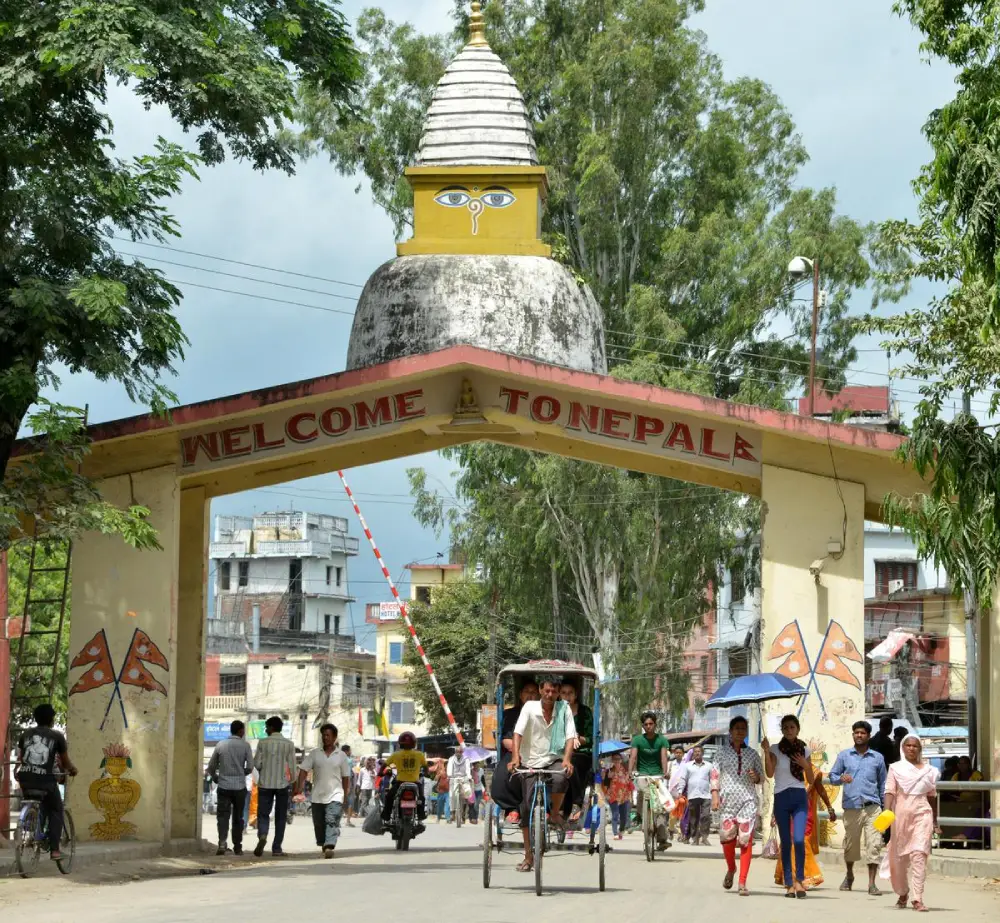
Transport from Gorakhpur to Sunauli:
- Private taxi or vehicle from Gorakhpur city: approximately INR 2,000 to 3,500 per vehicle (shared) or INR 3,000 to 5,000 for private booking. Nepal Vehicle Hiring does not operate vehicles in India but can advise on the Gorakhpur-Sunauli connection through our partner network.
- Gorakhpur-Nautanwa (Sunauli) local bus: regular services from Gorakhpur Bus Stand (Kachehri Bus Stand or ISBT), journey time 2.5 to 3.5 hours, fare approximately INR 80 to 150 per person. Take a last-mile tuk-tuk from Nautanwa to the Sunauli border gate.
- Direct Delhi-Sunauli or Varanasi-Sunauli overnight bus: several operators run overnight AC coaches from Delhi and Varanasi that arrive at Sunauli in the morning — a common option for pilgrims not based in Gorakhpur who wish to avoid an extra Gorakhpur overnight.
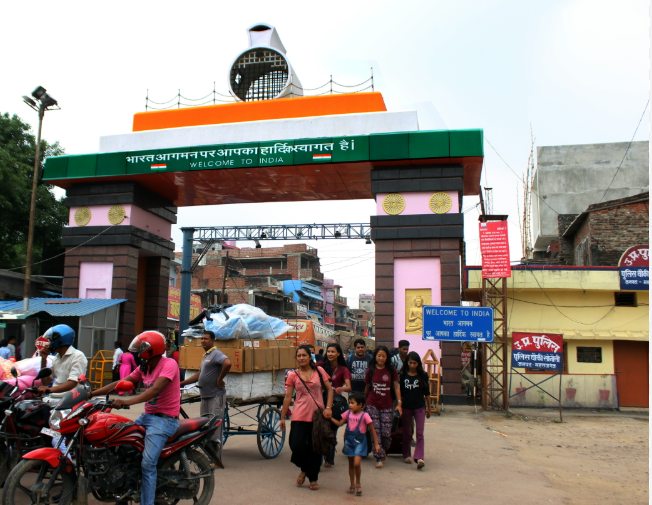
At the Sunauli-Belahiya Nepal border gate, Indian nationals cross freely (no visa required). Nepal immigration issues a standard tourist visa (NPR 1,000 for 15 days, NPR 1,500 for 30 days) — or no visa if the pilgrim is using a government of India bilateral Kailash Yatra quota that includes Nepal transit arrangements. Nepal Vehicle Hiring collects from the Belahiya Nepal-side immigration exit point — our driver waits at the gate with the pilgrim group’s name sign for the pre-arranged pickup.
The Nepal Kailash Yatra Circuit from Sunauli: Complete Route
| Day | Segment | Distance | Drive Time | Vehicle | Key Activity |
| 1 | Sunauli → Lumbini | 22 km | 30–40 min | Car/Hiace/Coaster | Sacred birthplace of Buddha; Maya Devi Temple |
| 1 | Lumbini → Kathmandu | 300 km | 6–7 hrs | Car/Hiace/Coaster | Arrive in the evening; check in to Thamel |
| 2 | Kathmandu — Sacred day | — | — | Sightseeing vehicle | Pashupatinath Aarti; permits; Boudhanath |
| 3 | Kathmandu → Kodari | 115 km | 3–4 hrs | 4WD jeep | Tibet border; Araniko Hwy; Bhotekoshi gorge |
| 4–10 | Tibet circuit | Kailash & Mansarovar | — | Tibet operator vehicle | Kailash parikrama; Mansarovar bathing |
| 11 | Kodari → Kathmandu | 115 km | 3–4 hrs | 4WD jeep | Return; Pashupatinath thanksgiving Aarti |
| 12 | Kathmandu → Lumbini (opt.) | 300 km | 6–7 hrs | Car/Hiace/Coaster | Optional final sacred stop at Lumbini |
| 12/13 | Lumbini → Sunauli → Gorakhpur | 22 km + 115 km | 30 min + 2.5 hrs | Nepal vehicle to Sunauli; India vehicle | Nepal border exit; India return |
Lumbini: The First Sacred Stop from Sunauli
For Kailash Yatra pilgrims entering Nepal at Sunauli, the Lumbini sacred stop is the most natural and most rewarding first Nepal experience — the birthplace of the Buddha, Nepal’s most famous UNESCO World Heritage Site, is just 22 kilometres east of Bhairahawa (4 km north of Sunauli) and directly on the route toward Kathmandu. Starting the Kailash Yatra with a visit to Lumbini aligns with the pilgrimage’s spiritual dimension—the journey to Shiva’s mountain home at Kailash is enriched by honouring the Buddha’s birthplace, which Hindus revere as an avatar of Vishnu.
Nepal Vehicle Hiring’s Hiace van hire or car hire in Nepal picks up pilgrims at the Sunauli-Belahiya gate and drives them 22 kilometres to the entrance of Lumbini’s Sacred Garden. A focused Lumbini visit covering the Maya Devi Temple, the Ashoka Pillar, the Puskarini sacred pool, and selected international monastery compounds requires 2 to 3 hours. After Lumbini, the vehicle continues north on the Siddhartha Highway, then east on the Prithvi Highway corridor toward Kathmandu, arriving in the evening for check-in at the Kathmandu Thamel hotel.
Kathmandu: The Sacred Preparation Day
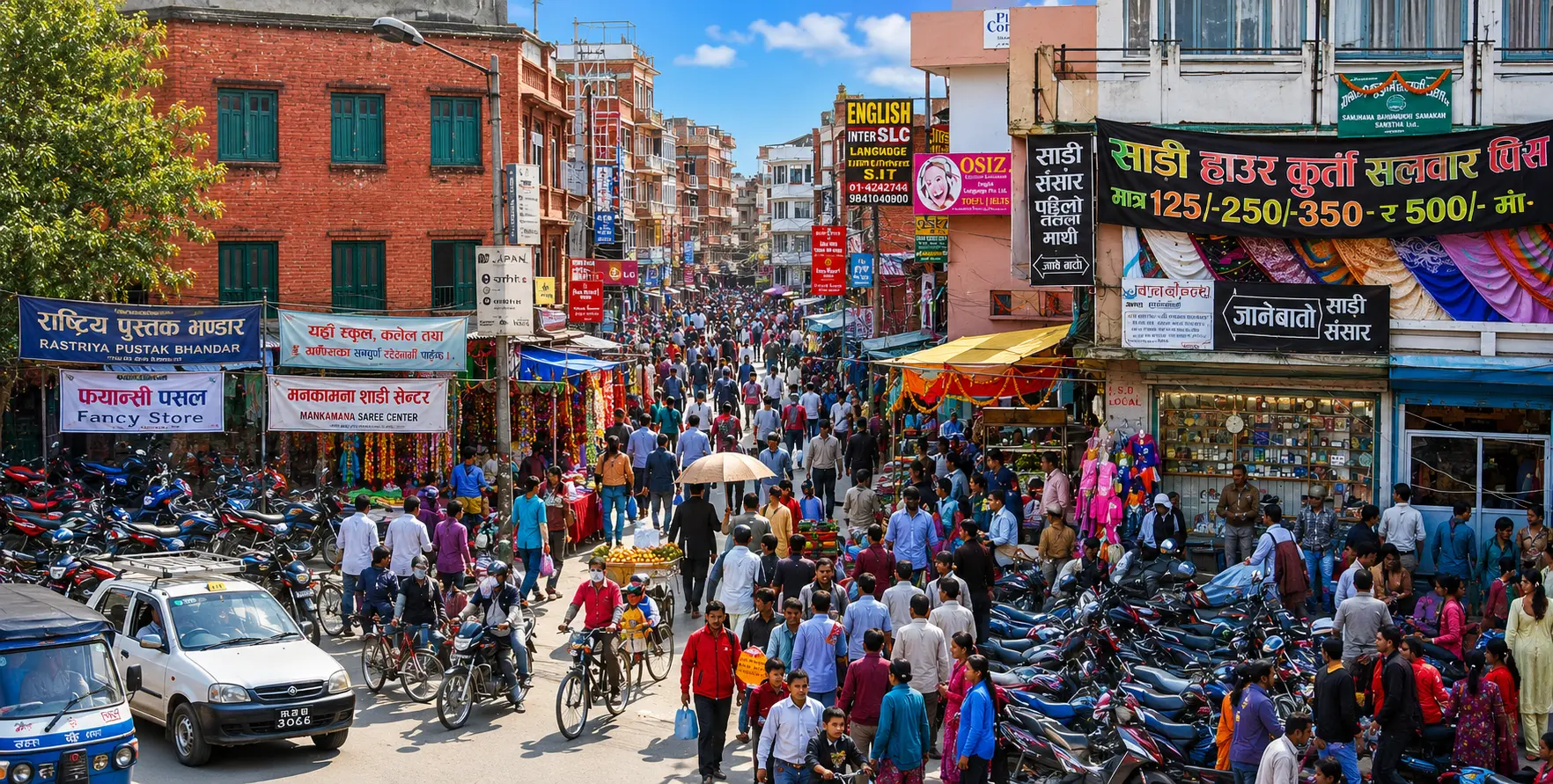
The Kathmandu day—typically Day 2 of the Gorakhpur-origin Kailash Yatra—is the pilgrimage’s most important preparation day. For Kailash Yatra pilgrims, Kathmandu serves four essential functions: Pashupatinath darshan, permit collection and verification, physical rest and acclimatisation preparation, and shopping for high-altitude equipment (if not brought from India).
Pashupatinath Temple: The Sacred Departure Blessing
For Shiva devotees on the Kailash pilgrimage, the Pashupatinath evening Aarti (5:00 to 6:30 PM) serves as a sacred departure blessing that begins the Yatra’s devotional arc. Pashupatinath — where Shiva is worshipped as Pashupati, the Lord of Animals and protector of Nepal’s people — is Nepal’s most important Shiva temple and one of the world’s most sacred. The evening fire ceremony on the Bagmati River ghats, performed by Bhat Brahmin priests in the same form for over a millennium, is one of South Asia’s most powerful sacred ceremonies. For Kailash-bound pilgrims, the Pashupatinath Aarti before departure and on return creates the sacred brackets around the mountain journey.
Nepal Vehicle Hiring’s Kathmandu sightseeing service covers the full Kathmandu sacred day — Boudhanath Stupa morning kora, Swayambhunath darshan, Pashupatinath Aarti in the evening — in a single managed vehicle day from your Thamel hotel.
Tibet Permits: What Must Be Arranged in Kathmandu
The Tibet Tourism Bureau permit (TTB permit) and Chinese Group Visa for the Kailash circuit must be arranged before reaching Kodari — you cannot obtain them at the border. A licensed Chinese Tibet tour operator arranges these permits, which typically require 4 to 8 weeks of lead time. Pilgrims arriving in Kathmandu should have all Tibet permits already in hand — the Kathmandu day is for verification and any final documentation, not for initial permit application. Nepal Vehicle Hiring partners with established Tibet operators and can provide referrals — contact us via our plan your trip page.
Thamel Shopping for High-Altitude Equipment
Thamel’s extensive trekking equipment market is one of the best-stocked in Asia — gear shops selling cold-weather clothing, sleeping bags, trekking poles, sun protection, altitude medication (Diamox), and all other equipment needed for the Kailash circuit’s high-altitude demands are concentrated within a few streets of the Thamel hotel district. Pilgrims who didn’t bring adequate cold-weather gear from Gorakhpur can source everything they need in Thamel on the Kathmandu day. Your Nepal Vehicle H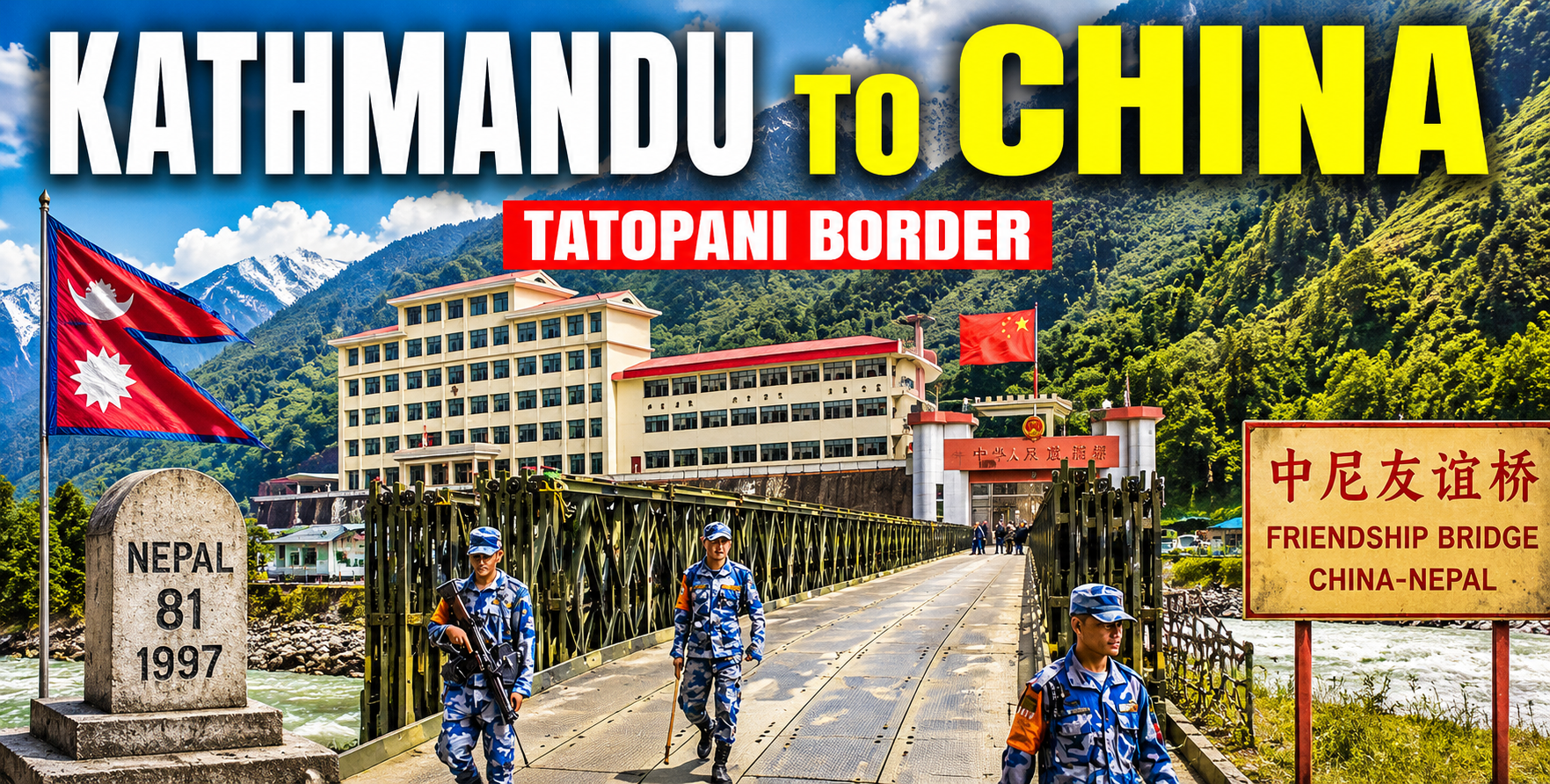
Kathmandu to Kodari: The Tibet Border Approach
The Kathmandu-to-Kodari drive covers approximately 115 kilometres on the Araniko Highway (H04) — Nepal’s primary eastern Tibet approach road — taking 3 to 4 hours depending on road conditions. The highway heads east from Kathmandu through Bhaktapur and Dhulikhel before descending through the Bhotekoshi River gorge — one of Nepal’s most dramatic road sections — to the Nepal-Tibet border at Kodari (1,873 m).
Nepal Vehicle Hiring recommends a 4WD jeep hire (Mahindra Scorpio or Toyota Land Cruiser) for the Kathmandu-to-Kodari section. The Araniko Highway is paved throughout, but the gorge section has narrow passages and occasional unstable sections (particularly after monsoon), so an experienced driver and a capable vehicle help. Our drivers are specifically experienced on this route and monitor Araniko Highway conditions daily.
Key stops on the Kathmandu-to-Kodari drive:
- Bhaktapur (13 km from Kathmandu): Nepal’s finest medieval city, with the Nyatapola Temple and 55-Window Palace. For pilgrim groups with time for a 45-minute heritage stop, Bhaktapur Durbar Square makes an outstanding cultural addition to the journey toward Tibet.
- Dhulikhel (30 km from Kathmandu, 1,550 m): the eastern valley rim town with panoramic Himalayan views. On clear days, Dhulikhel’s mountain panorama includes Numbur, Dorje Lakpa, Langtang Lirung, and the border range; pilgrims will cross into Tibet. Nepal Vehicle-Hiring drivers pause at the Dhulikhel viewpoint for photos.
- Tatopani hot springs (85 km from Kathmandu): natural thermal springs on the Bhotekoshi River bank in the lower gorge—a standard rest stop for Kodari-bound pilgrim vehicles; 30—minute stop option.
- Kodari border (115 km from Kathmandu): Nepal immigration exit formalities. The Nepal vehicle-hiring driver assists with luggage and waits while pilgrims complete the Nepal exit stamp. The Tibet operator’s vehicle takes over on the Chinese side.
Optional Extension: Muktinath Sacred Visit Before Kailash
For Gorakhpur-origin Kailash Yatra pilgrims who want to include the Muktinath Temple (3,710 m) — Nepal’s most sacred mountain Vishnu temple with its 108 water spouts and eternal flame — in the pre-Kailash Nepal circuit, Nepal Vehicle Hiring’s Muktinath Yatra itinerary service adds 3 to 4 days to the Nepal circuit before the Kodari crossing.
The Muktinath extension from the Sunauli-entry circuit: after entering Nepal at Sunauli and visiting Lumbini and Kathmandu, the vehicle route continues to Pokhara (6 to 7 hours from Kathmandu), then north via the Pokhara to Mustang jeep through the Kali Gandaki gorge to Jomsom (2,720 m, overnight) and Muktinath (3,710 m) for the full temple darshan (108 water spouts ritual bath, eternal flame, Vishnu temple). After Muktinath, the vehicle returns to Pokhara, then to Kathmandu, from where the Kodari approach continues. This extended circuit — Sunauli → Lumbini → Kathmandu → Pokhara → Muktinath → Kathmandu → Kodari → Tibet → return — is one of Nepal’s finest comprehensive pilgrim circuits and is coordinated by Nepal Vehicle Hiring’s Nepal Nekhor tour service.

Pashupatinath and Kathmandu: The Sacred Pilgrimage Gateway
For Gorakhpur-origin Kailash pilgrims — who arrive in Nepal from one of North India’s most important sacred cities (Gorakhpur is home to the Gorakhnath Temple, the primary seat of the Nath sampradaya founded by Gorakhnath and revered across eastern UP and Bihar) — the Kathmandu sacred day has specific resonance. The Nath tradition has deep historical ties to Shaivism and the Kailash pilgrimage, and Gorakhpur pilgrims approaching the Kailash Yatra via Pashupatinath make a sacred journey that links the Gorakhnath tradition in India to the Pashupati tradition in Nepal and the Shiva mountain tradition at Kailash in Tibet.
Nepal Vehicle Hiring’s Kathmandu sightseeing service for Gorakhpur Kailash Yatra groups includes: the Pashupatinath Temple morning visit (9:00 to 11:00 AM) for the main temple darshan and Bagmati River ghats exploration; Boudhanath Stupa visit; optional Bhaktapur Durbar Square afternoon visit; and the essential Pashupatinath evening Aarti (5:00 to 6:30 PM) — the fire ceremony that Gorakhpur pilgrims consistently describe as the most powerful sacred experience of the entire Nepal leg of the Kailash journey.
Permits for Gorakhpur-Origin Kailash Yatra Pilgrims
| Permit | Cost 2026 | Arrange At | Lead Time |
| Nepal tourist visa | NPR 1,000 (15 days) / NPR 1,500 (30 days) | Sunauli border (on arrival) or Nepal Embassy, India | Same day at border |
| Tibet Tourism Bureau (TTB) permit | Included in Tibet package | Licensed Chinese Tibet operator | 4–8 weeks before |
| Chinese Group Visa | Agency fee | Tibet operator via Chinese consulate | 4–8 weeks before |
| Kailash Restricted Area Permit | Included in Tibet package | Tibet operator | Same as TTB |
| ACAP (if Muktinath extension) | NPR 3,000 per foreigner | Nepal Tourism Board Kathmandu | 1–2 days Kathmandu |

Best Season for Kailash Yatra from Gorakhpur
| Season | Months | Nepal Roads | Tibet/Kailash | Recommend? |
| Spring | Apr–Jun | Good to excellent | Best — stable, clear views | Highly recommended |
| Monsoon | Jul–Sep | Nepal mountain roads variable | Tibet rain-shadow — workable | Possible with caution |
| Post-Monsoon | Oct–Nov | Good, repaired | Excellent clarity, cold nights | Recommended |
| Winter | Dec–Mar | Nepal open; high passes cold | Kailash parikrama difficult — snow | Not recommended |
The June Kailash Yatra window is historically the most popular for Gorakhpur-origin pilgrims — aligning with the Guru Purnima festival (full moon of Ashadha, typically June-July) when the Kailash parikrama carries maximum merit in the Hindu calendar. June weather is warming, but Tibet’s weather is stable, and Gorakhpur’s pilgrim season peaks in this window. Nepal Vehicle Hiring’s Kailash Yatra vehicle bookings from Gorakhpur-side pilgrims are highest in May and June — book 6 to 8 weeks in advance for the June Guru Purnima window.
Frequently Asked Questions: Kailash Yatra from Gorakhpur
How long is the Nepal portion of the Gorakhpur Kailash Yatra?
The standard Nepal circuit for a Gorakhpur-origin Kailash Yatra (Sunauli-in, Kodari-out for Tibet, Kodari-in, Sunauli-out) covers approximately 3 to 5 Nepal days depending on stops: Day 1 (Sunauli → Lumbini → Kathmandu), Day 2 (Kathmandu sacred day + permits), Day 3 (Kathmandu → Kodari border). Return: Day 1 (Kodari → Kathmandu + Pashupatinath Aarti), Day 2 (Kathmandu → Sunauli with optional Lumbini stop). Total Nepal days: 5 to 6.
Does Nepal Vehicle Hiring pick up at the Sunauli/Belahiya border gate?
Yes — Nepal Vehicle Hiring’s driver meets confirmed pilgrim groups at the Belahiya immigration exit (Nepal side) with a sign bearing the group’s name. Our driver monitors Sunauli border-crossing times and adjusts pickup if immigration queues run longer than expected. Confirm your planned Sunauli crossing time with our WhatsApp operations team (+977 9851013196) at least 24 hours before crossing the border.
What vehicle is best for a group of 10 pilgrims from Gorakhpur?
For a group of 10, we recommend our Hiace van hire; it is the standard recommendation —comfortable, economical per person, and available for all Nepal highway legs, including the Sunauli-Lumbini-Kathmandu highway and the Kathmandu-Sunauli return. For the Kathmandu-to-Kodari mountain leg, a group of 10 is split between 2 Hiace or 2 Scorpio jeeps (the Kodari road’s mountain character makes the Hiace less suitable beyond Dhulikhel — we advise splitting into smaller 4WD vehicles for this leg). Nepal Vehicle Hiring coordinates both vehicle types as a single managed booking.
Can we combine Muktinath with the Kailash Yatra from Gorakhpur?
Yes — Nepal Vehicle Hiring’s Nepal Nekhor tour service coordinates the Sunauli → Lumbini → Kathmandu → Pokhara → Muktinath → Kathmandu → Kodari → Tibet → return circuit as a complete Nepal vehicle package. The Muktinath extension adds 3 to 4 Nepal days and approximately NPR 25,000 to 38,000 in additional vehicle hire. The combined Kailash-Muktinath pilgrimage from Gorakhpur is one of Nepal’s finest comprehensive sacred circuits.
Does the Gorakhpur-to-Kailash route face disruption from the 2026 Rasuwagadhi flood?
The Gorakhpur-origin Kailash Yatra that crosses Tibet via Kodari (Zhangmu) is NOT affected by the August 2026 Rasuwagadhi flood. Kodari is a separate Nepal-Tibet border crossing in Sindhupalchok District (east of Kathmandu), completely different from the Rasuwagadhi-Kerung corridor in Rasuwa District (north of Kathmandu). As of September 2026, Nepal Vehicle Hiring confirms the Araniko Highway and Kodari border are operational and unaffected by the Rasuwa flood event.
How do we return from Kailash to Gorakhpur?
After completing the Tibet circuit, pilgrims re-enter Nepal at Kodari and drive to Kathmandu (Day 1, Pashupatinath Aarti), then Kathmandu to Sunauli (Day 2, optional Lumbini). Nepal Vehicle Hiring has pre-booked the return vehicle from Kodari to Sunauli as part of the original circuit booking. At Sunauli, pilgrims cross into India and arrange Sunauli-to-Gorakhpur transport (local taxis, buses, or pre-arranged private vehicles). Nepal Vehicle Hiring can advise on Sunauli-Gorakhpur connections on the Indian side.

Book Your Gorakhpur Kailash Yatra Nepal Vehicle with Nepal Vehicle Hiring
Nepal Vehicle Hiring Pvt. Ltd., Thamel, Kathmandu — Nepal-side vehicle specialist for Gorakhpur-origin Kailash Yatra pilgrims. From the Sunauli-Belahiya border pickup to the Kodari Tibet border approach and the Sunauli return drop:
- Car hire in Nepal — small groups and individuals
- 4WD jeep hire — Kathmandu to Kodari; Muktinath approach
- Hiace van hire — pilgrim groups of 8–14
- Coaster bus hire — large pilgrim parties of 15–25
- Kathmandu sightseeing service — Pashupatinath Aarti; Boudhanath; Swayambhunath
- Bhaktapur Durbar Square day tour
- Muktinath Yatra itinerary — Muktinath sacred extension before Kailash
- Pokhara to Mustang jeep — for Muktinath via Kali Gandaki gorge
- Nepal Nekhor tour — complete Nepal pilgrimage circuit coordination
- Nepal holiday tour and Nepal tour package
- Kathmandu airport transfer — for Gorakhpur pilgrims flying Gorakhpur-Kathmandu
- WhatsApp / Call: +9779814227196
- Email: [email protected]
- www.vehiclehiringnepal.com
Visit our Plan Your Trip page with your Gorakhpur pilgrimage dates, group size, Sunauli crossing date, and Tibet operator details. We respond within 24 hours with a complete Nepal-side vehicle plan and all-in pricing for the entire Gorakhpur-origin Kailash Yatra Nepal circuit. Om Namah Shivaya — from Gorakhpur’s sacred ground to Kailash’s sacred summit, Nepal Vehicle Hiring connects the journey.
Gorakhpur: The Gateway City for Kailash Yatra Pilgrims
Gorakhpur’s significance for the Kailash Mansarovar Yatra extends beyond its convenient location near the Nepal border. Understanding the city’s sacred and logistical context helps Kailash pilgrims plan both their India-side preparations and their entry into Nepal.
Gorakhpur is the headquarters of the Nath sampradaya—the yogic and Shaivite tradition founded by the saint Gorakhnath (after whom the city is named)—which has been one of North India’s most influential religious movements for nearly a millennium. The Gorakhnath Temple (also known as Gorakshanath Mandir) is the primary seat of the current Nath Peethadheeshwar and one of eastern UP’s most important pilgrimage centres, drawing hundreds of thousands of devotees annually. The Nath tradition’s deep connection to Shaivism—its iconography, practices, and reverence for Himalayan sacred geography—gives Gorakhpur a natural spiritual affinity for the Kailash pilgrimage. Pilgrims departing from Gorakhpur for Kailash often begin the Yatra with a visit to the Gorakhnath Temple as their first devotional act.
Gorakhpur Junction railway station is one of India’s largest and most strategically located rail junctions — the convergence point for trains from Delhi, Varanasi, Lucknow, Allahabad, and dozens of smaller UP and Bihar cities. The Gorakhpur-to-Sunauli bus and taxi connection from the station and ISBT makes Gorakhpur the natural staging point for pilgrims arriving by train from across North India. The rail connectivity means that the ‘Gorakhpur Kailash Yatra’ circuit serves not just Gorakhpur residents but the entire North Indian pilgrimage market whose members converge on Gorakhpur as the Nepal border staging point.
The Kailash Circuit from Gorakhpur: Sacred Geography
For Gorakhpur-origin pilgrims, the Kailash Yatra circuit passes through some of the Indian subcontinent’s most significant sacred geography. Understanding the full sacred landscape the journey traverses—from Gorakhpur’s Gorakhnath tradition through Nepal’s Pashupatinath and Lumbini to Tibet’s Kailash and Mansarovar—gives the pilgrimage its fullest spiritual context.
Gorakhpur: The Nath Tradition’s Heart
The Gorakhnath Temple in Gorakhpur embodies the Nath sampradaya’s synthesis of yoga, Shaivism, and devotional practice. The temple complex—a major ashram that runs educational institutions, a medical centre, and religious programmes alongside the main temple—is the spiritual home of a tradition that considers the Himalayan peaks (and Kailash specifically) the abode of the Nath Siddhas. These perfected masters achieved liberation through yogic practice. Leaving Gorakhpur for Kailash is, in Nath tradition, travelling toward the sacred homeland of the masters.
Sunauli-Bhairahawa: The Open Frontier
The Sunauli-Belahiya crossing is more than a political border—it is the threshold between the Indian plains and the Himalayan world, rising from Sunauli’s 100-metre altitude to Kailash’s 6,638-metre sacred summit over the 8,800-kilometre Nepal-and-Tibet circuit ahead. The flat Terai at Sunauli, and the distant view of the Himalayan foothills from the border town’s northern outskirts on clear days, offer the first visual hint of the mountain world that awaits.
Lumbini: The Buddha’s Birthplace
For the Kailash pilgrimage circuit, Lumbini marks the meeting point of Hinduism’s Kailash devotion and Buddhism’s sacred geography. Hindus who revere the Buddha as an avatar of Vishnu find Lumbini a natural, theologically coherent stop; visiting Lumbini completes the subcontinent’s sacred geography by including the birthplace of the one whose teachings shaped the entire Buddhist world in which the Kailash-Mansarovar region sits.
Kathmandu: The Himalayan Sacred City
Kathmandu’s sacred character — the density of Hindu and Buddhist temples, the living Newari Buddhist heritage, the Bagmati River’s sacred quality, and Pashupatinath’s supreme Shaiva status — makes it the most naturally appropriate preparation space for the Kailash journey. The city has been a pilgrimage destination for millennia, and Kailash pilgrims who spend even a single Night in Kathmandu absorb a sacred atmosphere built over centuries of devotional practice.
Kailash and Mansarovar: The Destination
Mount Kailash (6,638 m) and Lake Mansarovar (4,590 m) require no introduction for pilgrims who have already decided to make this journey. The 52-kilometre parikrama around Kailash, crossing the Drolma La (5,630 m), and the pre-dawn bathing in Mansarovar’s icy waters are the experiential core of the Yatra. Nepal Vehicle Hiring’s Nepal-side circuit supports the journey to and from this core—ensuring transport supports, rather than detracts from, the pilgrimage’s devotional focus.
Practical Planning Guide: Kailash Yatra from Gorakhpur
For Gorakhpur-origin pilgrims planning the 2026/27 Kailash Yatra, the following practical planning sequence covers the key preparation steps:
- 6 to 8 months before: book a Tibet tour operator and begin the TTB permit/Chinese Group Visa process. This has the longest lead time and must be started first. Nepal Vehicle Hiring can refer you to Tibet operators.
- 3 to 4 months before: confirm Nepal vehicle booking with Nepal Vehicle Hiring via WhatsApp +9779814227196. Specify group size, Sunauli entry date, circuit (with/without Muktinath extension), Kodari crossing date, and Sunauli return date.
- 2 to 3 months before: book Gorakhpur-to-Sunauli transport (private vehicle, taxi, or bus). Book a Kathmandu hotel for the 2-day Nepal preparation stop.
- 1 month before: confirm you received all Tibet permits from the Tibet operator. Verify Nepal vehicle booking with Nepal Vehicle Hiring. Book Gorakhpur Junction return trains if returning by rail.
- 1 week before: WhatsApp Nepal Vehicle Hiring with the confirmed Sunauli border-crossing date and estimated crossing time. You will receive confirmation of the driver’s name and vehicle details.
- At Sunauli: contact Nepal Vehicle Hiring WhatsApp (+9779814227196) when approaching Nepal immigration. Our driver will be at the Belahiya exit with a sign with your group name.
Gorakhpur to Kailash: 2026 Route Update
An important clarification for 2026 Gorakhpur-origin Kailash pilgrims:
August 2026 Rasuwagadhi-Kerung flood closure does NOT affect the Gorakhpur-Sunauli-Kodari Kailash Yatra route.
The closed corridor is the Rasuwagadhi-Kerung route (via Syabrubesi in Rasuwa District, north of Kathmandu), which serves a different Tibet-Nepal crossing used by Kailash pilgrims from Kathmandu who previously entered Tibet via this western route. The Gorakhpur-origin circuit uses Kodari (Zhangmu border) in Sindhupalchok District — a completely separate border crossing on the eastern side of the Kathmandu Valley. The Araniko Highway to Kodari is open and unaffected by the Rasuwa flood.
Nepal Vehicle Hiring confirms that the Kodari-Zhangmu border crossing and the Araniko Highway are fully operational as of September 2026. Gorakhpur-origin Kailash Yatra pilgrims using the Sunauli-Lumbini-Kathmandu-Kodari route can proceed with normal planning. Pilgrims who previously arranged the Rasuwagadhi-Kerung route and need to switch to the Kodari approach can use Nepal Vehicle Hiring’s vehicle service for both; contact us via WhatsApp at +9779814227196 for revised routing advice.
The Nepal Sacred Circuit for Gorakhpur Pilgrims: What Not to Miss
Gorakhpur-origin Kailash Yatra pilgrims who plan even a minimal Nepal stop often return saying Nepal’s own sacred circuit deserves more time than pilgrimage logistics typically allow. Nepal Vehicle Hiring’s experience with this pilgrim group consistently highlights the following as the experiences most valued by Gorakhpur-origin pilgrims on the Nepal transit:
- Pashupatinath evening Aarti: universally described as the most moving single ceremony of the Nepal transit — the fire offering on the Bagmati River at Nepal’s supreme Shiva temple, performed by hereditary priests in the same form as for centuries past. No Gorakhpur-origin Kailash pilgrim should bypass the Pashupatinath Aarti.
- Lumbini Maya Devi Temple: the Buddha’s birthplace, marked by the 249 BCE Ashoka Pillar—a site of extraordinary historical and spiritual significance that Gorakhpur-origin pilgrims (who share the cultural landscape of the Buddha’s birthplace through their Uttar Pradesh connection) find particularly resonant.
- Boudhanath Stupa kora: the early-morning circumambulation with Kathmandu’s Tibetan Buddhist community connects the India-origin pilgrim to the living Buddhist practice that surrounds the Kailash-Mansarovar region in Tibet.
- Dhulikhel mountain panorama on the Araniko Highway: the first full Himalayan view before the descent toward Tibet — the range of peaks visible from Dhulikhel, including the border mountains that the Kodari crossing penetrates — is the first visual announcement of the Himalayan world ahead.
Nepal Vehicle Hiring’s vehicle service for Gorakhpur-origin Kailash pilgrims is designed to include all of these experiences naturally within the circuit’s timing — not as add-ons that extend the journey, but as integral stops that make the Nepal transit a pilgrimage in its own right rather than merely a transit corridor.
Understanding the Sunauli Crossing: What Gorakhpur Pilgrims Experience
For Gorakhpur-origin pilgrims making their first Nepal border crossing at Sunauli, knowing what to expect makes the transition smooth and unhurried. The Sunauli-Belahiya crossing is one of Nepal’s busiest border points, and its procedures are well established for Indian pilgrims.
The Sunauli crossing has two sides: India’s Bureau of Immigration manages the Sunauli Land Port of Entry (LPE), and Nepal Immigration manages the Belahiya Immigration Office. For Indian nationals crossing for tourism or pilgrimage, the process is: exit India at Sunauli (passport surrender for exit stamp at the Indian immigration post) → walk approximately 200 metres to the Nepal immigration office at Belahiya → Nepal entry stamp and visa issuance (for nationals requiring a visa; Indian nationals receive free entry with a passport, which is the standard for Indian citizens under the bilateral Nepal-India Open Border arrangement).
The Belahiya Nepal immigration office issues tourist visas on the spot for most foreign nationals. Indian citizens can enter Nepal visa-free with a valid Indian passport or government-issued photo ID (voter card, Aadhaar card, PAN card, or driving licence are all accepted for Indian nationals at the Nepal border). Nepal entry processing time: 10 to 30 minutes, depending on the queue. Peak crossing times (8:00 to 10:00 AM and 2:00 to 4:00 PM) have longer queues; mid-morning or early afternoon crossings are smoother.
After completing Nepal immigration, pilgrims exit the Belahiya post into Nepal territory, where the Nepal Vehicle Hiring driver meets the group. Our driver, identified by the group name sign, assists with luggage and leads the group to the vehicle for the onward Journey in Nepal. The transition from the border gate to the vehicle typically takes 5 to 10 minutes. Nepal Vehicle Hiring’s operations team is available on WhatsApp +9779814227196 to coordinate in real time if the crossing takes longer than expected due to queue conditions.
Cost Overview: Complete Nepal Vehicle Budget for Gorakhpur Kailash Yatra
The following is a realistic Nepal-side vehicle hire budget for a group of 10 pilgrims from Gorakhpur making the standard Kailash Yatra circuit (Sunauli in, Kodari to Tibet, Kodari return, Sunauli exit) with Lumbini and Kathmandu stops:
- Sunauli to Lumbini (22 km, Hiace van): NPR 3,000 to 15,000 per vehicle (10 pax)
- Lumbini to Kathmandu (300 km, Hiace van): NPR 18,000 to 40,000 per vehicle
- Kathmandu sightseeing day (Hiace van, full day): NPR 12,000 to 18,000 per vehicle
- Kathmandu to Kodari (115 km, 2 x Scorpio jeeps for 10 pax): NPR 22,000 to 30,000 total per person
- Kodari to Kathmandu return (115 km, 2 x Scorpio jeeps): NPR 22,000 to 30,000 total
- Kathmandu to Sunauli (315 km with Lumbini, Hiace van): NPR 20,000 to 28,000 per vehicle

The Gorakhnath-Pashupatinath Connection: A Pilgrim’s Theological Reflection
For pilgrims departing from Gorakhpur’s Gorakhnath Temple toward Nepal’s Pashupatinath and then Tibet’s Kailash, a theologically coherent thread connects these three sacred points, giving the Gorakhpur-origin Kailash Yatra a spiritual character distinct from Kailash pilgrimages departing from other Indian cities.
The Nath tradition — founded by Gorakhnath and rooted in the Siddha yoga lineage — venerates Shiva in his form as Adinath (the Primordial Lord) and as Mahayogi (the Supreme Yogi). In Nath cosmology, Shiva meditates eternally on Kailash, surrounded by his ganas (attendants), while Parvati (his consort) waits on the lower slopes. The Nath siddhas are understood to practice in the cave monasteries and Himalayan passes of the same mountain complex. For a Gorakhpur pilgrim in the Nath tradition, the Kailash parikrama is literally walking around the meditation seat of their tradition’s supreme deity.
Pashupatinath in Kathmandu sits in direct theological relationship to the Gorakhpur tradition—Pashupati (Lord of Animals) is a name for Shiva that predates even Shaiva Siddhanta by centuries, appearing in the Rigveda and the Atharvaveda as one of Shiva’s primary forms. Tradition attributes the Pashupatinath Temple’s original foundation to the Licchavi period (approximately 400 to 750 CE), placing it in the same early medieval period when the Nath tradition’s roots were developing across the Indian subcontinent. The Gorakhpur pilgrim who visits Pashupatinath before and after Kailash is honouring the same deity in his mountain home (Kailash) and his city temple (Pashupatinath) within a single pilgrimage circuit.
Nepal Vehicle Hiring’s role in carrying Gorakhpur pilgrims between these sacred points—from the Sunauli border gate where Nepal begins to the Kodari border where Tibet begins and back—serves a pilgrimage whose theological depth and historical significance far exceed the individual journey we facilitate. We are, in every way, part of a sacred tradition of Nepal-Tibet passage that has continued for centuries before motor vehicles existed and will continue long after.
Group Pilgrimage Planning: Organising a Gorakhpur Kailash Yatra Group
Many Gorakhpur-origin Kailash Yatra pilgrims travel in organised groups — family groups, temple congregation groups, neighbourhood associations, or professionally arranged pilgrimage tours assembled by local travel agents. Nepal Vehicle Hiring has extensive experience serving organised pilgrim groups, and the following guidance is specifically aimed at group organisers:
Group Size and Vehicle Matching
For the Nepal highway legs (Sunauli-Lumbini-Kathmandu and Kathmandu-Sunauli return), a single Hiace van (8 to 14 passengers)efficiently and economically handles groups up to 1y. For groups of 15 to 25, our Coaster bus hire is the right vehicle. For the Kathmandu-to-Kodari mountain section, groups must split into smaller 4WD vehicles (Scorpio or Land Cruiser), as the Araniko Highway’s mountain sections and the Kodari border area do not comfortably accommodate large vans or buses. A group of 10 typically splits into 2 Scorpio jeeps for the Kodari leg.
Pre-Departure Group Briefing
Nepal Vehicle Hiring provides a WhatsApp group briefing for organised pilgrim groups before departure from India, confirming vehicle allocations, pickup timing at Sunauli, driver contacts, the Kathmandu hotel address, and the sequence of Nepal circuit stops. Delivered the evening before the Sunauli crossing, this briefing ensures every pilgrim has key contact information and knows what to expect at each Nepal border and vehicle transition point.
Luggage Management for Large Groups
Large pilgrim groups carrying substantial luggage — including sacred materials, puja items, personal kits for the Tibet high-altitude circuit, and group supplies — require advance vehicle-loading planning. Nepal Vehicle Hiring’s operations team coordinates vehicle loading at Sunauli and at each circuit stop to ensure luggage is correctly distributed across vehicles. That sacred items (Mansarovar water, puja materials) are in the cabin rather than roof storage. Nothing is left behind at any transition point. This luggage coordination service is included at no additional charge in the Nepal Vehicle Hiring group booking.
Nepal Vehicle Hiring’s Partnership with Tibet Operators
The Kailash Yatra Nepal circuit requires coordination between two distinct operator types: the Nepal-side vehicle and logistics provider (Nepal Vehicle Hiring) and the Tibet-side tour operator (a China-licensed Tibet tour operator who arranges the TTB permits, Chinese Group Visa, Tibet vehicles, Kailash accommodation, and parikrama guide). Nepal Vehicle Hiring has established referral partnerships with several reputable Tibet operators who serve the Gorakhpur-origin Kailash Yatra market.
For Gorakhpur-origin pilgrim groups who have not yet identified a Tibet operator, Nepal Vehicle Hiring can provide Tibet operator referrals as part of the Nepal-side vehicle booking process. Our Tibet operator partners know the Kodari-Zhangmu border crossing’s specific procedures for the Nepal-origin Kailash Yatra, coordinate with our drivers on Tibet-side vehicle arrival timing, and have established permit processing experience for Indian national pilgrim groups.
The Nepal Vehicle Hiring + Tibet operator combination provides the complete Kailash Yatra operational coverage from the Sunauli border to the Kailash parikrama and back. The Nepal-side vehicle is the first and last element of the circuit — the legs that begin and end the sacred journey on Nepalese soil — and our coordination with the Tibet operator ensures a seamless handoff at Kodari in both directions.
To receive Tibet operator referrals alongside the Nepal vehicle booking, mention this requirement when contacting Nepal Vehicle Hiring via WhatsApp +977 9851013196 or via our plan your trip page. We will match Gorakhpur-origin pilgrim groups with the Tibet operator best suited to their group size, budget, and preferred Kodari crossing date.
Gorakhpur Kailash Yatra: Frequently Asked Practical Questions
Can we get Nepalese rupees at Sunauli?
Yes — currency exchange is available at the Belahiya border area (Nepal side) and in Bhairahawa town (4 km north of Sunauli). You can exchange Indian rupees for Nepali rupees at both locations. Exchange rates at border currency exchange counters are typically slightly less favourable than in Kathmandu or at authorised exchange houses in Bhairahawa’s main market. Nepal Vehicle Hiring recommends exchanging a moderate amount at the border (enough for the Lumbini entry fee and incidentals for the Sunauli-to-Kathmandu journey) and exchanging the bulk of the Nepalese rupee requirement in Kathmandu’s Thamel, where rates are generally better, and service is more professional.
Do we need Indian rupees or Nepalese rupees for Lumbini?
Lumbini entry fees and most commercial transactions within the Lumbini UNESCO site are denominated in Nepalese rupees (NPR). The Lumbini entry fee for foreign nationals is NPR 200 per person (2026 rate). Lumbini guesthouses and restaurants sometimes accept Indian rupees at a rough exchange rate, but not at the official entry gates. Nepal Vehicle Hiring recommends having NPR in hand before the Lumbini stop — either exchanged at Sunauli or withdrawn from Bhairahawa’s ATMs.
How do we handle the Kathmandu permit check for Tibet?
The Tibet permits (TTB, Chinese Group Visa, Kailash Restricted Area Permit) are verified by the Tibet operator’s Kathmandu representative — typically a meeting in the Thamel area on the Kathmandu preparation day. Nepal Vehicle Hiring’s driver can facilitate this permit meeting by driving the group to the Tibet operator’s Kathmandu office as part of the Kathmandu sightseeing day schedule. Please confirm the Tibet operator’s Kathmandu office address and appointment time before departing from Gorakhpur.
What time should we cross at Sunauli to arrive in Kathmandu the same day?
For a same-day Sunauli-to-Kathmandu journey with a Lumbini stop, cross the Sunauli border by 8:00 to 9:00 AM. This timing allows: a Lumbini visit (9:30 to 11:30 AM, 2 hours), departure from Lumbini by 11:45 AM, and Kathmandu arrival by 6:00 to 7:00 PM — in time for an evening meal and a comfortable rest before the Kathmandu sacred day. Crossing later than 9:30 AM significantly compresses time in Lumbini or pushes Kathmandu arrival past 8:00 PM.
Is Gorakhpur Airport an option for faster arrival at Sunauli?
Gorakhpur Airport (GOP) is served by IndiGo, Air India, and SpiceJet with connections from Delhi, Lucknow, Varanasi, and Mumbai. Flying to Gorakhpur and then taking ground transport to Sunauli (115 km, 2.5 to 3 hours by taxi) is a much faster India-side option for pilgrims from Delhi or Mumbai than the train journey. The flight from Delhi to Gorakhpur takes about 1.5 hours, compared with 8 to 14 hours on the fastest trains. For pilgrims prioritising faster arrival in Nepal, the Gorakhpur flight option is worth considering alongside the train.
What to Carry from Gorakhpur for the Nepal-Tibet Circuit
Packing correctly from Gorakhpur for the full Kailash Yatra circuit requires attention to both the Nepal Terai/Kathmandu environment and Tibet’s high-altitude extremes. The most common packing failures Gorakhpur pilgrims report are insufficient cold-weather gear for the Kailash circuit (Tibet nights can reach minus 20°C) and excessive luggage that slows the Sunauli immigration process and strains vehicle capacity. The following packing guidance applies specifically to the Gorakhpur-origin circuit:
- Cold-weather layers (buy in Thamel if needed): down jacket, thermal base layers, warm hat, gloves, and waterproof outer shell for the Kailash parikrama. If you don’t bring anything from Gorakhpur, Thamel equipment shops have everything you need—and the Kathmandu prep day is your chance to fill gaps. Budget NPR 8,000 to 15,000 for any Thamel cold-weather gear purchase.
- Sun protection for the Tibetan Plateau: the Tibetan Plateau’s high altitude, low humidity, and low-latitude sun combine to create intense UV exposure, even on cold days. SPF 50+ sunscreen, UV-blocking sunglasses, and a wide-brimmed hat are essential—bring from Gorakhpur, as quality sun protection is more reliable from established Indian medical stores than from Lumbini or Sunauli shops.
- Altitude medication: Diamox (acetazolamide) is the standard prophylactic medication for Acute Mountain Sickness. Obtain a prescription from your doctor before leaving Gorakhpur. Diamox is available at most pharmacies in India and is significantly more reliable than what is available at Nepal-Tibet border-area pharmacies.
- Puja materials from home: many Gorakhpur pilgrims carry puja materials blessed at the Gorakhnath Temple — gangajal (Ganges water), flowers, incense, and other items for the Kailash offerings. These travel well in sealed containers and are welcomed through Nepal customs without documentation issues. Air travellers should carry them in cabin luggage rather than checked luggage.
- Cash: carry Indian rupees for the Gorakhpur-Sunauli portion, Nepalese rupees (obtained at the border or Bhairahawa) for the Nepal circuit, and check with your Tibet operator about Chinese yuan requirements for the Tibet circuit. Nepal Vehicle Hiring’s all-in pricing in NPR eliminates vehicle-cost cash uncertainty on the Nepal side.
- Identity documents: Indian nationals need a valid passport for the China/Tibet visa. Also carry a government photo ID (Aadhaar, voter card, or PAN card) for domestic identification in Nepal and India. Keep all documents in a waterproof document folder accessible in the vehicle cabin — not in the roof-loaded main luggage.
Kailash Yatra from Gorakhpur: A Sacred Summary
The Kailash Mansarovar Yatra from Gorakhpur is one of the most naturally composed pilgrimage circuits in Hindu sacred geography — departing from the Nath sampradaya’s heartland, crossing into Nepal through the Open Border at Sunauli, visiting the Buddha’s birthplace at Lumbini, receiving Shiva’s blessing at Pashupatinath in Kathmandu, entering Tibet at the Kodari-Zhangmu border, and finally arriving at the mountain home of Shiva himself. The return circuit retraces this path in reverse, closing the sacred circle at Gorakhnath Temple in Gorakhpur.
Nepal Vehicle Hiring provides Nepal-side vehicle transport that connects each of these sacred points on Nepalese soil. From the Sunauli pickup that begins the Nepal leg to the Sunauli drop that ends it, our vehicles carry Gorakhpur pilgrims through a sacred landscape that has drawn devotees northward toward the Himalaya for centuries. We serve this pilgrimage with the understanding of its significance and the professionalism that it deserves.
Contact Nepal Vehicle Hiring at +9779814227196 (WhatsApp),[email protected], or vehiclehiringnepal.com to plan your Kailash Yatra from Gorakhpur with Nepal vehicle hire. Har Har Mahadev. Jai Bhole Nath. The path to Kailash begins at Sunauli — Nepal Vehicle Hiring will be there when you cross.
- Kailash Yatra Tour from Gorakhpur: Complete Vehicle Guide
- Gorakhpur to Sunauli: Crossing Into Nepal
- The Nepal Kailash Yatra Circuit from Sunauli: Complete Route
- Lumbini: The First Sacred Stop from Sunauli
- Kathmandu: The Sacred Preparation Day
- Kathmandu to Kodari: The Tibet Border Approach
- Optional Extension: Muktinath Sacred Visit Before Kailash
- Pashupatinath and Kathmandu: The Sacred Pilgrimage Gateway
- Permits for Gorakhpur-Origin Kailash Yatra Pilgrims
- Best Season for Kailash Yatra from Gorakhpur
- Frequently Asked Questions: Kailash Yatra from Gorakhpur
- Book Your Gorakhpur Kailash Yatra Nepal Vehicle with Nepal Vehicle Hiring
- Gorakhpur: The Gateway City for Kailash Yatra Pilgrims
- The Kailash Circuit from Gorakhpur: Sacred Geography
- Practical Planning Guide: Kailash Yatra from Gorakhpur
- Gorakhpur to Kailash: 2026 Route Update
- The Nepal Sacred Circuit for Gorakhpur Pilgrims: What Not to Miss
- Understanding the Sunauli Crossing: What Gorakhpur Pilgrims Experience
- Cost Overview: Complete Nepal Vehicle Budget for Gorakhpur Kailash Yatra
- The Gorakhnath-Pashupatinath Connection: A Pilgrim's Theological Reflection
- Group Pilgrimage Planning: Organising a Gorakhpur Kailash Yatra Group
- Nepal Vehicle Hiring's Partnership with Tibet Operators
- Gorakhpur Kailash Yatra: Frequently Asked Practical Questions
- What to Carry from Gorakhpur for the Nepal-Tibet Circuit
- Kailash Yatra from Gorakhpur: A Sacred Summary

Related Blog & Articles

Kailash Mansarovar Yatra After the 2026 Flood: Alternative Routes and Best Vehicle Hire

Kailash Return: Kodari to Sunauli Border Drop — Private Jeep Guide
Kailash Yatra Return Hilsa Border Jeep Pickup