Plan a Trip


Langtang Trek Pickup Vehicle
Langtang Trek Pickup Vehicle: Complete Kathmandu to Syabrubesi Transport Guide 2025/26
The Langtang Valley Trek holds a special place among Nepal’s great Himalayan trekking experiences — not because it is the most famous or the most frequented, but because it is, for many travelers, the most unexpectedly magnificent. Just 60 to 70 kilometers north of Kathmandu as the crow flies, yet separated from the capital by the full verticality of Nepal’s mountain geography,
the Langtang Valley rises from subtropical river gorges to glaciated valleys at nearly 5,000 meters, passing through Tamang Buddhist communities whose village monasteries and prayer flag-strewn ridgelines feel as authentically Himalayan as anything the more famous Everest or Annapurna corridors can offer. It is Nepal’s third most popular trekking destination, and it is the one that most experienced Himalayan trekkers consistently recommend to those who want real mountain depth without the commercial density that sometimes dilutes the Everest and Annapurna experience.
The first practical step in making the Langtang Valley Trek a reality is arranging the vehicle that will carry you from your Kathmandu hotel to Syabrubesi — the gateway village of the Langtang region at approximately 1,503 meters above sea level, from which all the valley’s principal trekking routes depart. This vehicle journey covers approximately 122 kilometers of Nepal’s mountain road network, takes between 6 and 9 hours depending on road conditions and traffic, and passes through some of the finest mid-hill scenery the Pasang Lhamu Highway offers along the way.
The quality of this transfer — the vehicle chosen, the driver’s experience on this specific road, and the timing of departure — shapes not just the comfort of the journey but the energy and readiness with which every trekker steps out at Syabrubesi and faces the first steps of their Langtang adventure. Nepal Vehicle Hiring Pvt Ltd has been providing Langtang trek pickup and drop vehicle services for trekkers, families, and groups throughout the year, with a fleet and a team specifically calibrated for the demands of the Kathmandu to Syabrubesi route in all seasons.
This comprehensive guide covers every dimension of the Langtang trek pickup vehicle service that a traveller or trekking group needs to understand before booking — the route in detail, the vehicle options available and how to choose among them, accurate 2025/26 costs in both Nepali rupees and US dollars, the practical logistics of the journey, seasonal road condition guidance for year-round travellers, the permits required for the trek itself, and the specific advantages of a professional private pickup service over the shared and public transport alternatives available on this corridor.
Whether you are a solo trekker, a couple seeking a quiet Himalayan escape, a family with children eager for their first mountain experience, or a group of friends planning a week in the Langtang wilderness, this guide gives you the complete picture.
About the Langtang Valley Trek: Why This Destination Deserves Your Attention
The Langtang Valley Trek is frequently described in the Nepal trekking community as the country’s best-kept secret. This destination delivers everything the most celebrated Himalayan treks offer but with a fraction of the infrastructure congestion and commercial overlay that high visitor volumes have brought to the Everest and Annapurna corridors. The valley was established within Langtang National Park in 1976 — Nepal’s first Himalayan national park, covering 1,710 square kilometers of terrain ranging from subtropical forest at 800 meters to permanent glaciers and snowfields above 7,000 meters — and the park’s protected status has maintained the ecological integrity of the valley’s landscape in ways that less regulated trekking destinations cannot claim.
The trek’s maximum altitude depends on which viewpoints a trekker chooses to include. Kyanjin Gompa, the primary destination and the point from which most trekkers begin their return journey, sits at approximately 3,865 meters — high enough to deliver genuine Himalayan atmosphere and require basic altitude awareness but well within the range that most healthy adults can reach without extraordinary physical preparation.
For those who want to push higher, the day hike to Kyanjin Ri at 4,773 meters delivers a 360-degree panorama of the surrounding Langtang range that experienced trekkers consistently describe as among the finest mountain viewpoints accessible to non-technical climbers anywhere in Nepal. In comparison, the more demanding ascent of Tsergo Ri at 4,984 meters rewards exceptional fitness with views across the Langtang, Manaslu, Annapurna, and Ganesh Himal ranges that justify every breath of the effort involved.
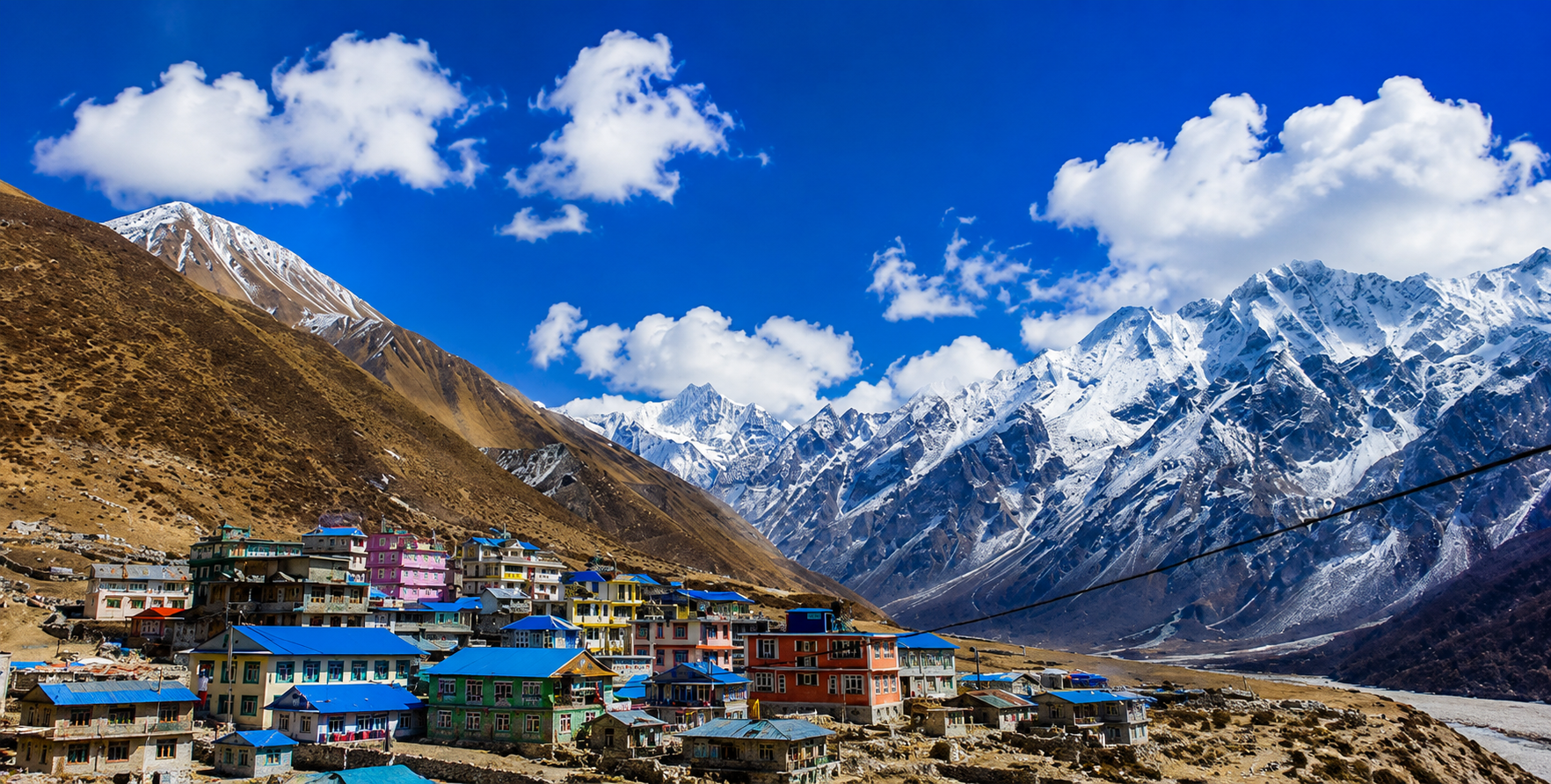
The Langtang Valley’s cultural landscape is dominated by the Tamang people — a Tibetan Buddhist community whose villages, monasteries, and traditional agricultural practices create a cultural environment as rich and as authentic as any in Nepal’s mountain regions. The trail passes through a succession of Tamang settlements where butter-lamp-lit gompa, mani walls carved with the Buddhist mantra Om Mani Padme Hum, and the distinctive flat-roofed stone architecture of high-altitude Buddhist communities create an atmospheric progression that deepens with every hour of walking.
At Kyanjin Gompa, the famous yak cheese factory — one of very few places in Nepal where traditional Himalayan yak cheese is commercially produced — provides a tangible and delicious connection between the valley’s pastoral economy and its centuries-old Tamang tradition. Kyanjin Gompa’s monastery itself, one of the oldest religious institutions in the Langtang region, anchors a community that has rebuilt with remarkable resilience following the devastating 2015 earthquake and avalanche that destroyed much of the original Langtang village and killed nearly 300 people.
Many trekkers who visit today find that the rebuilt valley carries a particular emotional quality — the memorial chortens, the evidence of community reconstruction, and the warmth of a community that chose to return and rebuild rather than abandon their ancestral valley create an atmosphere whose depth goes well beyond what the physical landscape alone could produce. For more trekking options in Nepal, including routes across all major regions, Nepal Vehicle Hiring Pvt Ltd supports travelers from trailhead to trail.
The Route: Kathmandu to Syabrubesi in Full Detail
Distance, Duration and Road Character
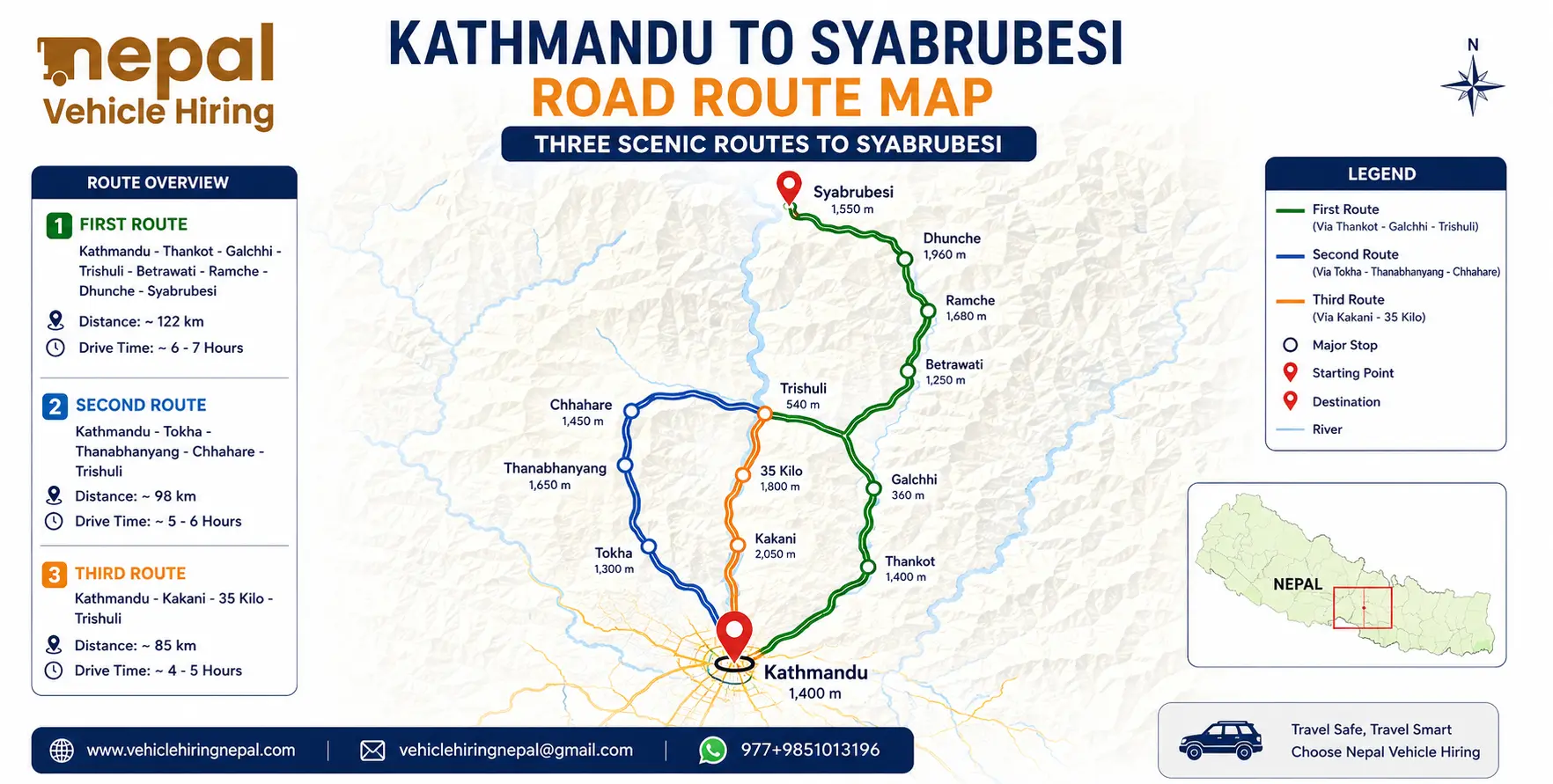
The road from Kathmandu to Syabrubesi, covered in full by Nepal Vehicle Hiring Pvt Ltd’s Kathmandu to Syabrubesi jeep transfer service, spans approximately 120 to 130 kilometers depending on the specific routing and current road works. The journey takes between 6 and 9 hours by private vehicle. This range reflects genuine variation in road conditions between seasons, occasional traffic delays in Kathmandu’s suburban outskirts, and the natural variation in pace that different drivers and different levels of traffic on the Pasang Lhamu Highway produce on any given travel day.
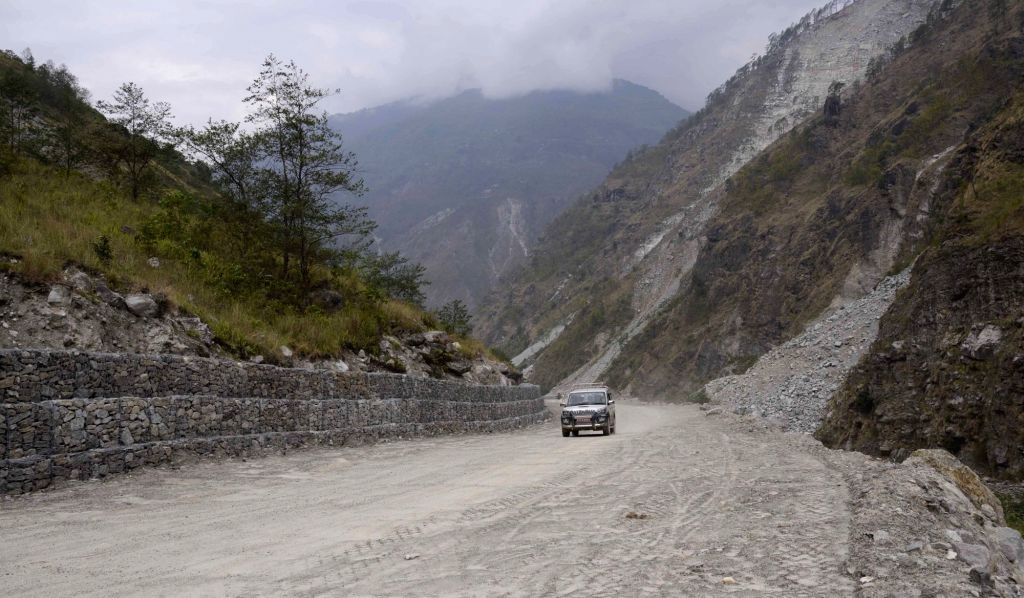
The road follows a broadly northward arc from Kathmandu, climbing from the valley at 1,400 meters to the high point at Dhunche at approximately 1,982 meters, then descending again to Syabrubesi at 1,503 meters. This altitude profile means that a significant portion of the journey involves mountain road driving — winding, sometimes narrow, with sections of rough surface particularly in the Dhunche to Syabrubesi descent that require proper vehicle capability and an experienced driver.
The Pasang Lhamu Highway, named in honor of the first Nepali woman to summit Everest in 1993, serves as the primary route northward from Kathmandu toward the Langtang region. It is a road of considerable scenic quality — passing through the peri-urban development of Kathmandu’s northern edge before entering the rural hill landscape of Nuwakot District, where terraced farmland, river valleys, and progressively more mountain-influenced scenery create a journey that most trekkers find genuinely engaging rather than merely transitory.
The Trishuli River corridor, which the road follows for much of its middle section, delivers gorge scenery of real quality, and the town of Trishuli Bazaar — approximately 75 kilometers from Kathmandu — marks a natural midpoint where most private vehicle operators make a brief stop for refreshment and a comfort break.
Beyond Trishuli Bazaar, the road climbs toward Dhunche, the district headquarters of Rasuwa District at 1,982 meters and the location of the Langtang National Park permit checkpoint where all trekkers must show their permits before continuing to Syabrubesi.
The section from Dhunche to Syabrubesi descends on a road that is narrower, less consistently maintained, and more technically demanding than the Kathmandu to Dhunche section. In this stretch, the value of a Land Cruiser’s ground clearance and an experienced driver’s route knowledge becomes immediately apparent. The descent winds through pine forest with occasional views across the Bhote Koshi river gorge below before arriving at Syabrubesi’s position at the valley floor.
Key Stops and Landmarks Along the Way
Kakani, approximately 22 kilometers from Kathmandu at 2,073 meters, is the first significant viewpoint on the Kathmandu to Syabrubesi route, offering a hilltop perspective across the Kathmandu Valley to the south and the Ganesh and Langtang Himalayan ranges to the north on clear mornings. Many private vehicle drivers will point out the Himalayan panorama from Kakani for those traveling the route for the first time, a preview of the mountain world the trekker is heading toward that provides excellent photographic opportunities in the early morning light of a timely departure.
Trishuli Bazaar, as noted, is the standard midpoint stop for refreshment, with several roadside restaurants and teahouses serving dal bhat, noodles, and tea. Dhunche, beyond the National Park checkpoint, is the last significant town before Syabrubesi and has ATM facilities, a government office complex, and several guesthouses for travelers who choose to break the journey here rather than pressing on to Syabrubesi in a single day.
Tip: Depart Kathmandu no later than 7:00 AM for the Syabrubesi drive. An early start clears the Kathmandu Ring Road before peak morning traffic, allows a comfortable Trishuli Bazaar lunch stop, and ensures arrival in Syabrubesi with several hours of daylight remaining — essential for checking into accommodation and preparing for the next morning’s trek start without the stress of a late arrival in an unfamiliar village.
Vehicle Options for the Langtang Trek Pickup Service
Private Jeep — The Recommended Choice for Most Trekkers
A private 4WD jeep is the most consistently recommended vehicle for the Kathmandu to Syabrubesi transfer, and the reasons are rooted in the specific road conditions of this particular route rather than in general assumptions about Nepal’s mountain driving. The section between Dhunche and Syabrubesi involves sufficient surface variation, gradient, and occasional rough patches that a vehicle with genuine 4WD capability, good ground clearance, and mountain road suspension calibration delivers a meaningfully better experience than a standard urban car.
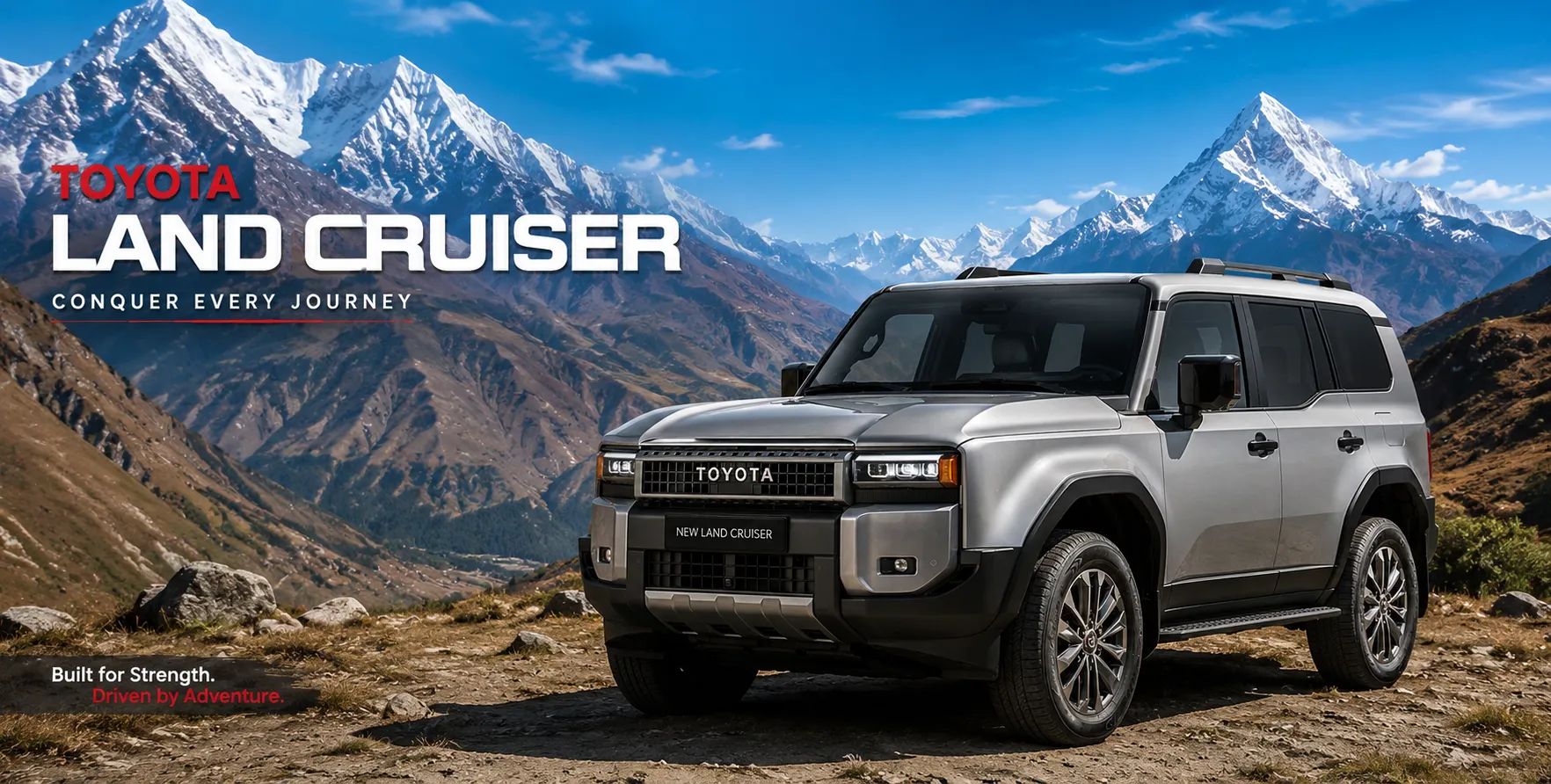
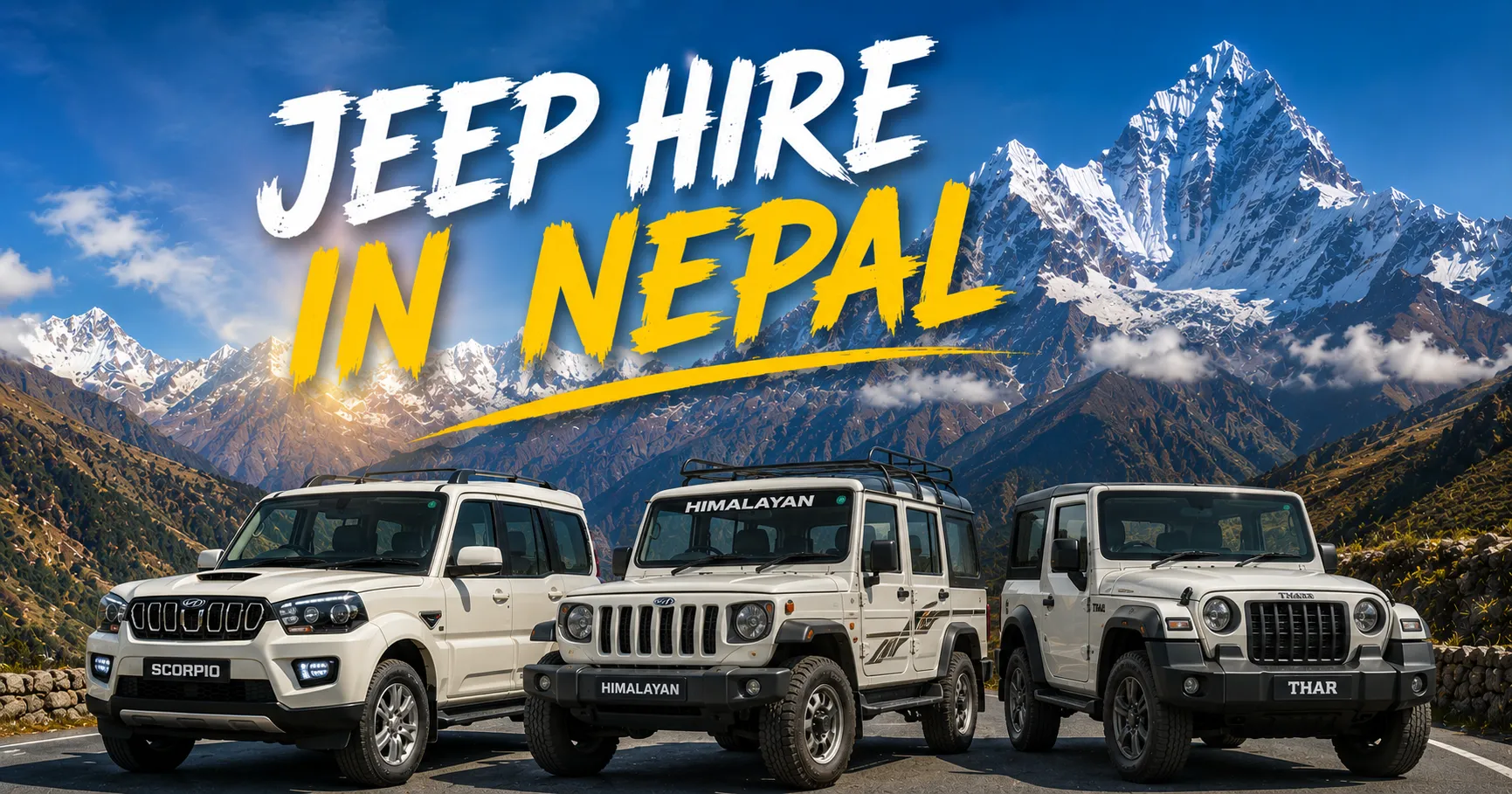
The Toyota Land Cruiser and the Mahindra Scorpio are the two most commonly used vehicles for this route — the Land Cruiser for trekkers and groups who prioritize interior comfort and passenger space alongside mountain road capability, and the Scorpio for those for whom functional reliability and sufficient capacity at a lower hire cost are the primary considerations.
The Toyota Land Cruiser Prado, when available through Nepal Vehicle Hiring Pvt Ltd for this route, delivers the finest combination of attributes for the Syabrubesi drive: a spacious seven-seat interior with quality seating and effective climate control, the Land Cruiser family’s legendary mountain road engineering, and a noise insulation standard that makes the 6-to-9-hour journey considerably less fatiguing than the rougher cabin environment of a basic working jeep. For families with children, groups with elderly members, or trekkers for whom post-journey freshness matters — those who want to walk on Day 1 rather than recover from a rough transfer — the Land Cruiser’s interior quality is not a luxury extra but a genuine contribution to the trekking experience that follows.
The Mahindra Scorpio, while less refined internally than the Land Cruiser, is a proven and capable vehicle on this specific road with an established track record on the Kathmandu to Syabrubesi corridor. Its 4WD system handles the rough Dhunche-Syabrubesi descent competently, its seven-seat capacity accommodates a standard trekking group with luggage, and its hire cost is somewhat below Land Cruiser rates — making it a sensible choice for budget-conscious groups willing to accept a firmer, less insulated cabin experience in exchange for meaningful cost savings.
Private Car — Suitable for the Right Route
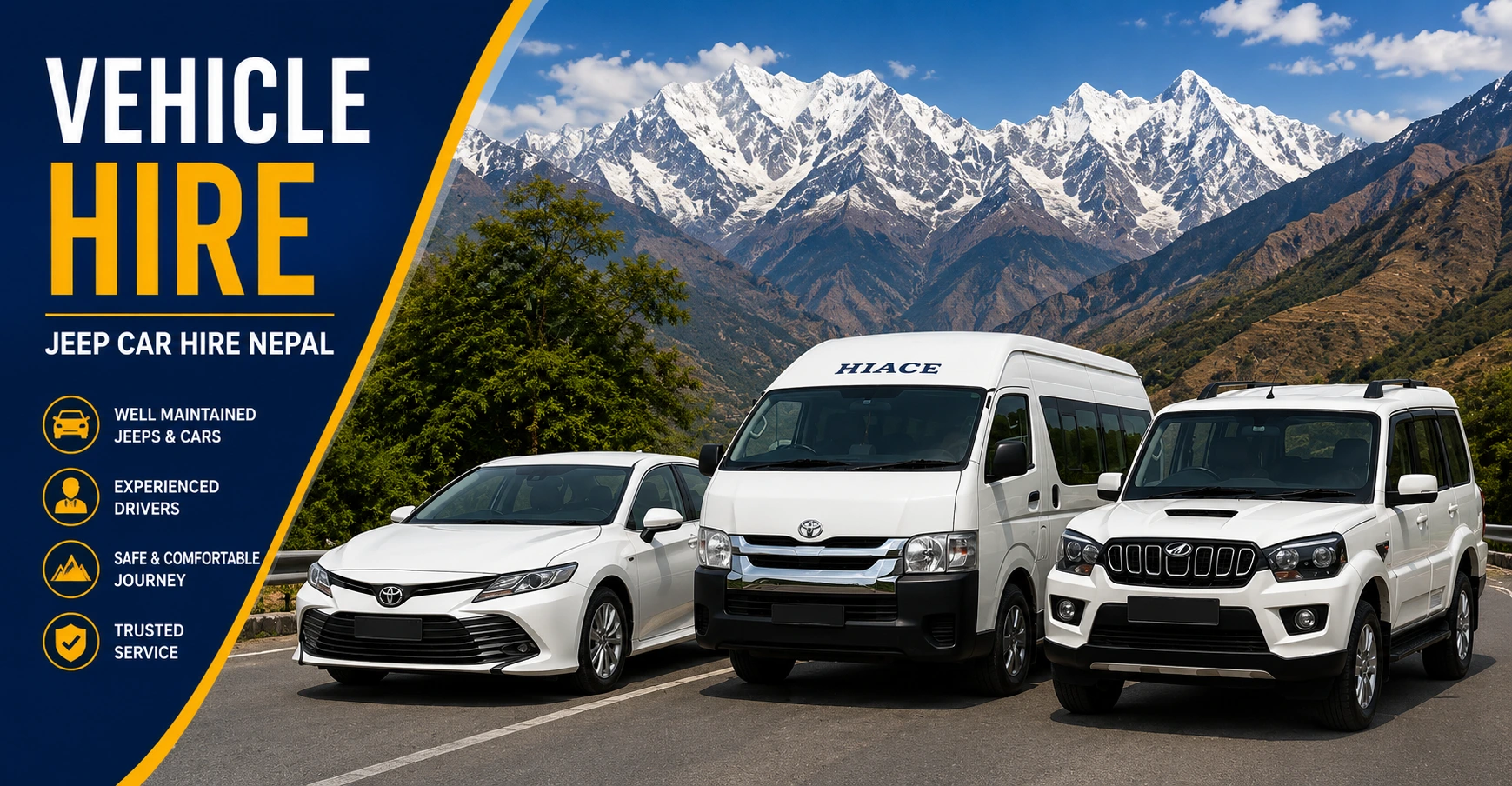
A private car hire is suitable for the Kathmandu to Syabrubesi route for smaller groups — two to four passengers — and specifically for those who understand the route’s demands and have confirmed that road conditions on their travel date are good. The Trishuli Bazaar to Dhunche section of the Pasang Lhamu Highway is paved and in generally good condition, making a comfortable sedan or SUV entirely adequate for this portion.

The Dhunche to Syabrubesi descent is where a private car’s lower ground clearance and road-holding characteristics may begin to fall short of what a jeep provides — particularly in the wet season or immediately after rainfall when the unpaved or rough-surfaced sections of this descent become significantly more demanding. Nepal Vehicle Hiring Pvt Ltd advises on whether a private car is appropriate for specific travel dates based on current road condition information, and will recommend upgrading to a 4WD jeep when conditions make this the safer and more reliable choice.
Hiace Van — Ideal for Larger Trekking Groups
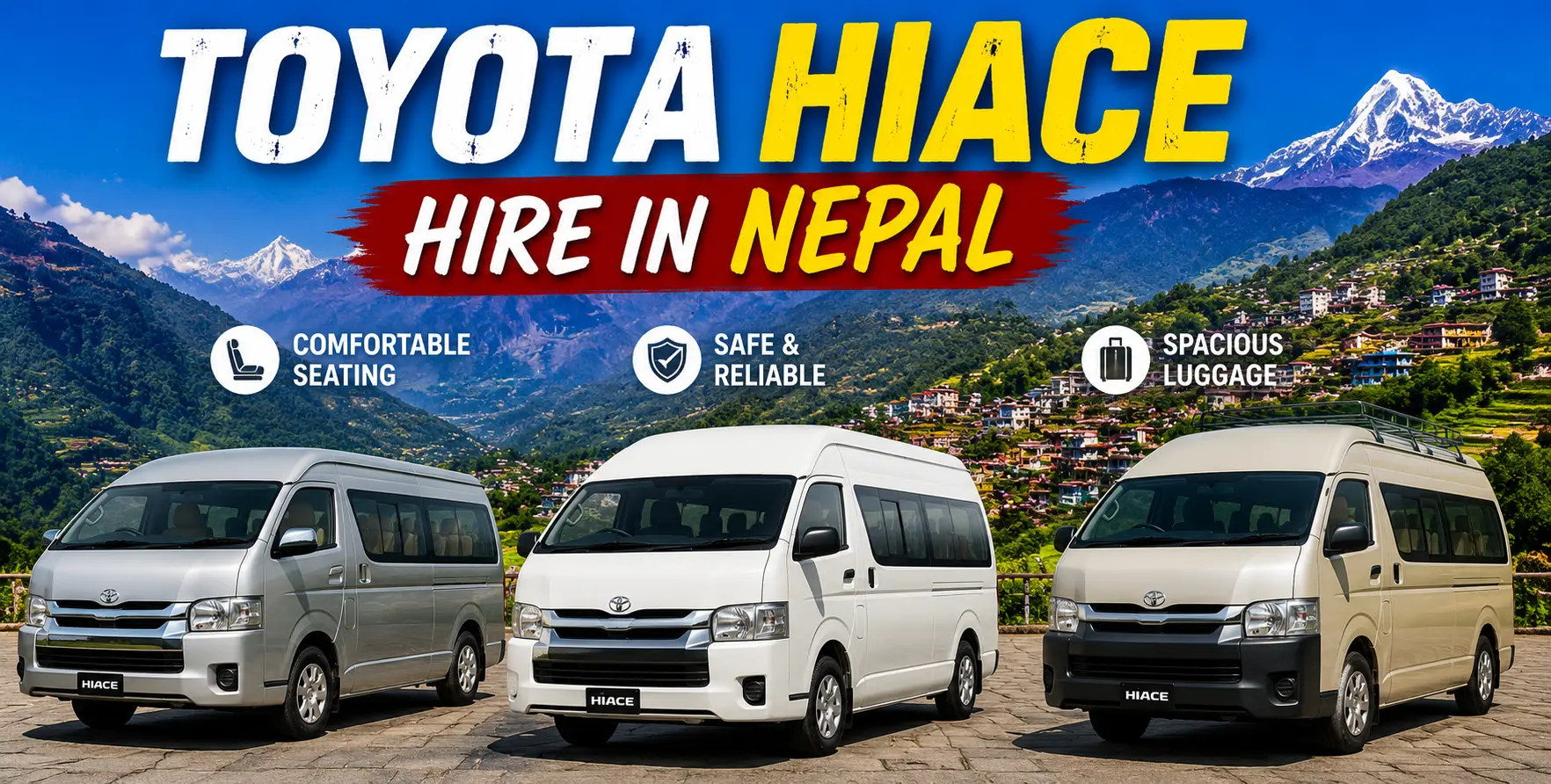
For trekking groups of eight or more, a Hiace van hire provides the most cost-effective and practically appropriate group transport solution for the Kathmandu to Syabrubesi route. The Hiace’s combination of generous passenger capacity (typically 12 to 14 seats in standard van configuration), relatively comfortable seating for its class, and lower per-person hire cost compared to multiple jeeps makes it the default recommendation for organized trekking groups, school expedition parties, and any group booking that prioritizes cost-efficiency alongside adequate comfort.
The Hiace handles the Pasang Lhamu Highway competently on the well-maintained sections and manages the Dhunche to Syabrubesi descent adequately in good to moderate road conditions. However, experienced operators typically recommend a proper 4WD jeep for this final section if the group is traveling immediately after heavy rainfall or during the monsoon season.
For groups of 20 or more — school expeditions, corporate team trips, or large organized trekking parties — Nepal Vehicle Hiring Pvt Ltd can coordinate multiple vehicles or provide a combination of Hiace vans and jeeps that optimizes both capacity and the different terrain demands of the complete route. All group bookings are handled with full coordination documentation specifying departure times, pickup logistics, and vehicle details for every vehicle in the arrangement.
Complete Cost Guide: Langtang Trek Vehicle Pickup 2025/26
The vehicle hire cost for the Kathmandu to Syabrubesi transfer is the most significant single transport expenditure in a Langtang Trek budget, and understanding it accurately—including the true all-inclusive picture rather than base rates that grow with additions—is essential for proper financial planning before departure.
Private jeep hire from Kathmandu to Syabrubesi costs approximately NPR 18,000 to NPR 25,000 for the full vehicle in 2025/26, based on current market research across multiple Kathmandu and Syabrubesi operators. One authoritative source quotes USD 175 per jeep one-way for a private vehicle accommodating 6 to 7 passengers. Another source cites approximately USD 250 for a full private jeep round trip when split among six passengers—translating to approximately USD 47 per person round trip, or USD 23 to 25 per person one-way, for a group of six.
Nepal Vehicle Hiring Pvt Ltd’s pricing for the Kathmandu to Syabrubesi private jeep transfer is NPR 18,000 to NPR 25,000 for the full vehicle one-way, with the exact rate reflecting vehicle type, season, and specific booking requirements. All our rates are fully inclusive of vehicle, experienced driver, fuel, and tolls—with no additional charges at settlement.
The shared jeep option, departing from Machhapokhari in Kathmandu when the vehicle is full and typically making multiple stops along the route, costs approximately NPR 1,100 to NPR 2,000 per person (USD 8 to USD 15) for the one-way journey. The public local bus costs approximately NPR 800 to NPR 1,100 per person (USD 7 to USD 10) for the seven-to-eight-hour journey from Gongabu Bus Station. For solo budget trekkers, the shared jeep and bus options provide functional transport at minimum cost. For everyone else—families, groups, those with specific timing requirements, and any trekker for whom post-journey comfort and energy matter—the private vehicle’s advantages in timing, comfort, flexibility, and luggage security make the additional cost straightforwardly worthwhile.
Return pickup from Syabrubesi to Kathmandu after the trek carries the same vehicle hire cost as the outbound journey. Nepal Vehicle Hiring Pvt Ltd strongly recommends booking the return vehicle at the same time as the outbound transfer, with a confirmed pickup date that your driver will honor regardless of whether mobile connectivity from Syabrubesi has allowed interim communication. This advance return booking is particularly important during peak season when vehicle availability at Syabrubesi for spontaneous last-minute bookings can be genuinely constrained, and where trekkers who assumed they could sort out return transport on arrival at the village end of their trek have found themselves waiting an extra day or more for available transport back to Kathmandu.
Tip: For a group of four trekkers, the per-person cost of a private Land Cruiser from Kathmandu to Syabrubesi (NPR 18,000–25,000 split by four = NPR 4,500–6,250 per person, or approximately USD 34–47) is only modestly above the shared jeep per-person rate of USD 8–15 — and delivers incomparably superior comfort, hotel pickup, timing flexibility, and return booking certainty. The upgrade is almost invariably worth making for any group of three or more.
Why Private Vehicle Hire Transforms the Langtang Trek Experience
The case for a private pickup vehicle over shared or public transport for the Langtang trek approach is built on practical realities that go well beyond simple comfort preference. The first and most immediately tangible advantage is hotel pickup. Nepal Vehicle Hiring Pvt Ltd’s private transfer service collects trekkers from any hotel in Kathmandu — Thamel, Boudha, Lazimpat, or any other district — at the agreed time, eliminating the need to navigate Kathmandu’s pre-dawn streets with full trekking luggage to reach the shared jeep departure point at Machhapokhari. For trekkers on their first Nepal visit, or those carrying the full weight of an eight-to-ten-day trekking kit, this hotel-door pickup is not a minor convenience but a meaningful reduction in the logistical stress that the morning of a trek start already carries.
Timing certainty is the second major advantage. Shared jeeps from Machhapokhari depart when the vehicle is full — which may mean a 6:00 AM departure if the jeep fills quickly, or a 9:00 AM departure if passengers trickle in slowly on a quiet day. For trekkers with a planned first-day itinerary that depends on arriving in Syabrubesi by early afternoon, this departure time uncertainty can cascade into a genuinely disrupted Day 1 schedule. A private vehicle departs when you instruct it to, consistently and predictably, allowing the trekker to plan every subsequent element of their first trekking day around a reliable arrival time.
Luggage management is the third practical advantage that consistently surprises trekkers who have previously experienced shared transport. In a shared jeep or public bus, large trekking packs may be strapped to the roof in a position vulnerable to rain, road dust, and the occasional bump against bridge pillars on the narrower sections of the Pasang Lhamu Highway. In a private vehicle, all luggage travels inside the cabin or in a secured boot space under the driver’s care — arriving dry, undamaged, and exactly where the driver placed it, without the uncertainty that roof storage introduces on a route with significant mountain road sections.
The flexibility to stop freely throughout the journey is the fourth and most experiential advantage. The Pasang Lhamu Highway to Syabrubesi passes through genuinely beautiful mountain scenery. The freedom to instruct the driver to stop at a particularly striking viewpoint, to pull over for ten minutes at the Trishuli River gorge lookout, or to make an unhurried lunch stop in Trishuli Bazaar without a bus driver’s schedule determining the duration — these freedoms transform the approach journey from a transit to be endured into a scenic drive to be enjoyed.
For trekkers who regard the complete Nepal experience as beginning the moment they leave their Kathmandu hotel rather than when they step onto the trail at Syabrubesi, the private vehicle’s flexibility provides the kind of attentive, personalized travel experience that no shared transport option can replicate. All our vehicle hire services are built around this principle of making the whole journey — not just the destination — genuinely excellent.
Seasonal Guide: Kathmandu to Syabrubesi Road Conditions Year-Round
Spring — March to May
Spring is one of the two finest seasons for the Kathmandu to Syabrubesi drive and the Langtang Valley Trek it precedes. The road is typically in excellent condition following the winter dry period, with any monsoon-season damage from the previous year repaired or stabilized over winter. The Pasang Lhamu Highway’s middle sections pass through rhododendron forest that is in full bloom from March through April, creating vivid red and pink displays through the vehicle windows that make the approach visually exceptional.
Mountain views from the higher sections of the route near Dhunche are outstanding in the clear spring air, with the Langtang Himal and Ganesh Himal ranges visible in the northern horizon as the vehicle descends toward Syabrubesi. Travel time is consistently on the shorter end in spring, with good road surfaces and manageable traffic allowing the full distance to be covered in 6 to 7 hours under normal conditions.
Autumn — September to November
Autumn is Nepal’s premier trekking season and delivers the best overall conditions across the complete Kathmandu to Syabrubesi route. Post-monsoon road surfaces are at their most stable, the air has a crystal clarity that maximizes viewpoints along the route, and the settled weather creates the most reliable journey time estimates of any season. October in particular is the peak month for Langtang trek traffic, and trekkers planning autumn visits should book their private pickup vehicle at least one week in advance — and ideally two weeks for specific peak October dates when vehicle demand across all of Kathmandu’s trekking routes is at its annual maximum. Nepal Vehicle Hiring Pvt Ltd maintains dedicated allocation of Syabrubesi-experienced vehicles and drivers throughout the autumn season to ensure consistent service quality during this high-demand period.
Monsoon — June to August (With Caution)
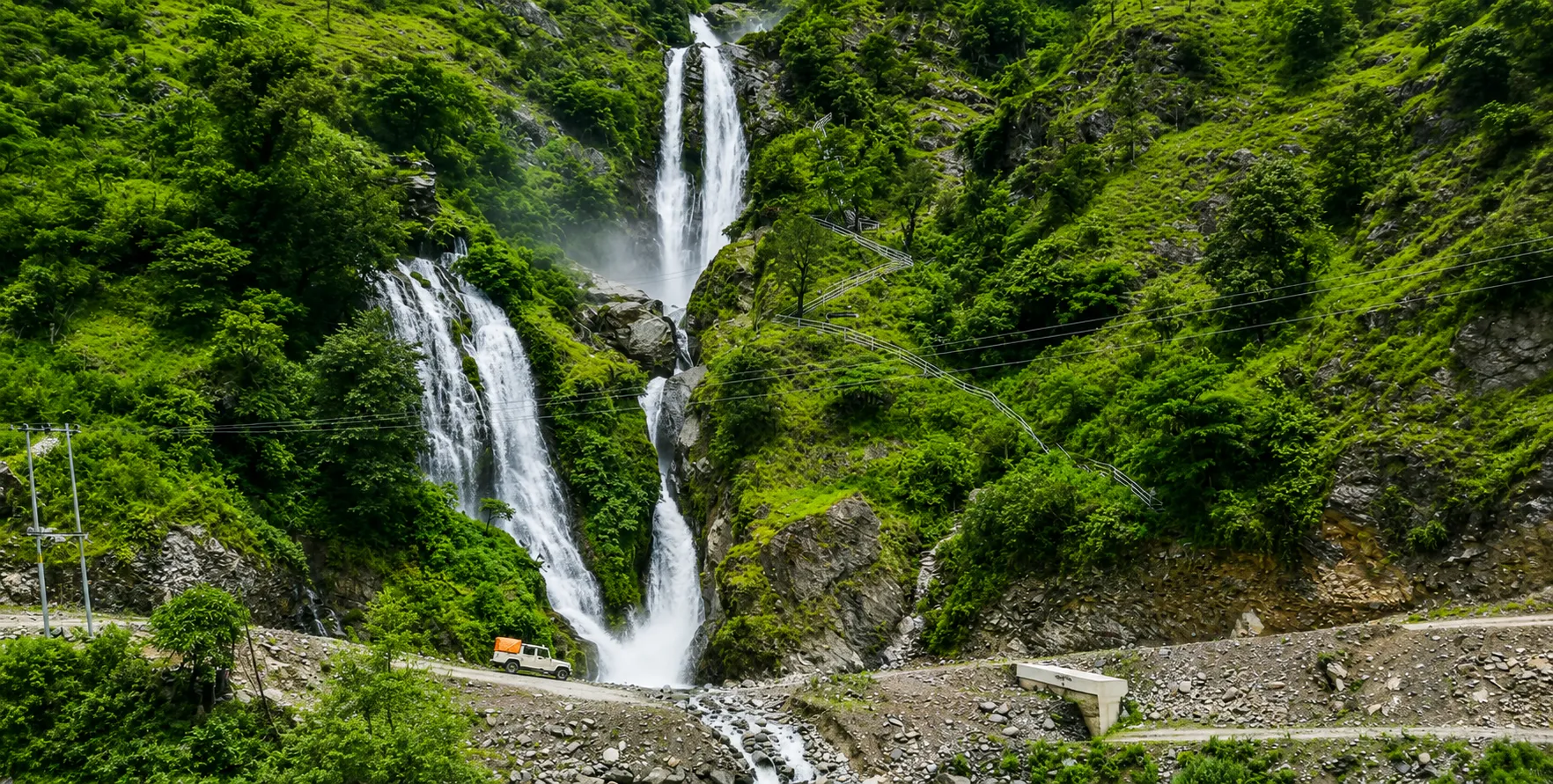
The monsoon season presents the most variable and potentially disruptive conditions for the Kathmandu to Syabrubesi drive, with landslide risk at several specific points on the Pasang Lhamu Highway elevated significantly above other seasons. The sections near Ramche and the descent from Dhunche to Syabrubesi are the most historically landslide-prone areas of the complete route, and sustained heavy rainfall periods can produce road blockages that extend journey times significantly or, in extreme cases, temporarily close the road entirely.
Nepal Vehicle Hiring Pvt Ltd monitors road conditions on this route throughout the monsoon period and provides clients with current status information before confirming monsoon-season departure dates. A private 4WD jeep is even more strongly recommended than in other seasons for monsoon travel, both for its superior road-holding on wet and muddy surface sections and for the flexibility it provides to wait at a blockage point or turn back if conditions deteriorate beyond safe driving parameters — flexibility that no shared or public transport service can offer in the same responsive way.
Winter — December to February
Winter conditions on the Kathmandu to Syabrubesi route are generally stable and predictable — the absence of monsoon rainfall removes the primary landslide risk, road surfaces are dry and well-defined, and traffic is at its seasonal minimum, making the journey efficient and relatively uncrowded. The primary winter-specific consideration is cold: early morning departures in December, January, and February begin in temperatures that can be genuinely cold in the vehicle until the heater reaches operating temperature, and the arrival at Syabrubesi in mid to late afternoon finds the valley in a cold that deepens rapidly as the sun drops below the surrounding ridges.
Winter trekkers in the Langtang Valley need proper cold weather clothing from the first day on the trail, and the vehicle that carries them to Syabrubesi should have functioning heating as a non-negotiable standard — a point Nepal Vehicle Hiring Pvt Ltd verifies as part of its pre-journey vehicle preparation for all winter-season Syabrubesi bookings.
Langtang Trek Permits: What You Need Before Departure
Two permits are required to trek in the Langtang Valley, and both should be obtained in Kathmandu before departing for Syabrubesi. The Nepal Tourism Board offices in Kathmandu at Bhrikutimandap, open seven days a week from 9 AM to 5 PM, issue both documents — though the Langtang National Park entry permit can also be obtained at the park checkpoint in Dhunche if permits were not acquired in Kathmandu.
The definitive guide to current Langtang trek permit fees confirms the following structure for 2025/26: the Langtang National Park Entry Permit costs NPR 3,000 (approximately USD 23 to 25) per person for non-SAARC foreign nationals, NPR 1,500 for SAARC nationals (India, Bangladesh, and others), and NPR 100 for Nepali citizens. This permit covers access to all trekking routes within Langtang National Park, including the main valley route, Gosaikunda Lake trek, Tamang Heritage Trail, and Helambu circuit.
The TIMS Card (Trekkers’ Information Management System) situation for Langtang has evolved in recent years. Multiple current sources confirm that as of 2025, the TIMS card is no longer required for trekkers accessing Langtang National Park — the national park entry permit suffices as the sole government documentation required beyond the guide mandate. However, permit requirements in Nepal are subject to periodic revision, and trekkers should confirm current TIMS requirements with the Nepal Tourism Board before departure, since regulations that are formally suspended may be reinstated with limited public notice.
The total permit cost for a Langtang Valley Trek for a non-SAARC foreign national is therefore approximately NPR 3,000 (USD 23 to 25) under the current structure — one of the most affordable permit fees for any major Nepal trekking destination, a practical advantage that adds to the Langtang route’s overall value proposition.
Guide requirements have also changed significantly. As confirmed by multiple trekking authorities in their 2025 and 2026 guidance, all foreign trekkers in Nepal’s national parks — including Langtang National Park — are required to be accompanied by a licensed guide. The mandatory guide rule has been formally in place since April 2023 and applies to both solo and group trekkers.
The guide must be licensed through a registered trekking agency affiliated with TAAN (Trekking Agencies’ Association of Nepal). Solo trekking without a guide is no longer permitted in the Langtang Valley, and trekkers who attempt to obtain a permit without confirming a guide arrangement may be refused at the permit office. Guide fees for Langtang typically run USD 25 to USD 35 per day, with most standard Langtang itineraries requiring a licensed guide for 7 to 10 days.
The Langtang Trek Route: From Syabrubesi to Kyanjin Gompa
For trekkers new to the Langtang Valley route, understanding the trail’s structure before departure helps contextualize the vehicle pickup service as the first stage of a complete, well-defined journey rather than simply a transit to an unfamiliar starting point. The Langtang Valley trekking route follows a single valley corridor from Syabrubesi northward to Kyanjin Gompa, making navigation straightforward and eliminating the route-finding complexity that multi-branching trek networks sometimes present to independent trekkers. The standard 7-to-10-day itinerary structures the upward journey across four to five walking days and the return across two to three, with the specific pace depending on how many rest or acclimatization days the trekker incorporates at Kyanjin Gompa and whether the optional day hikes to Kyanjin Ri and Tsergo Ri are included.
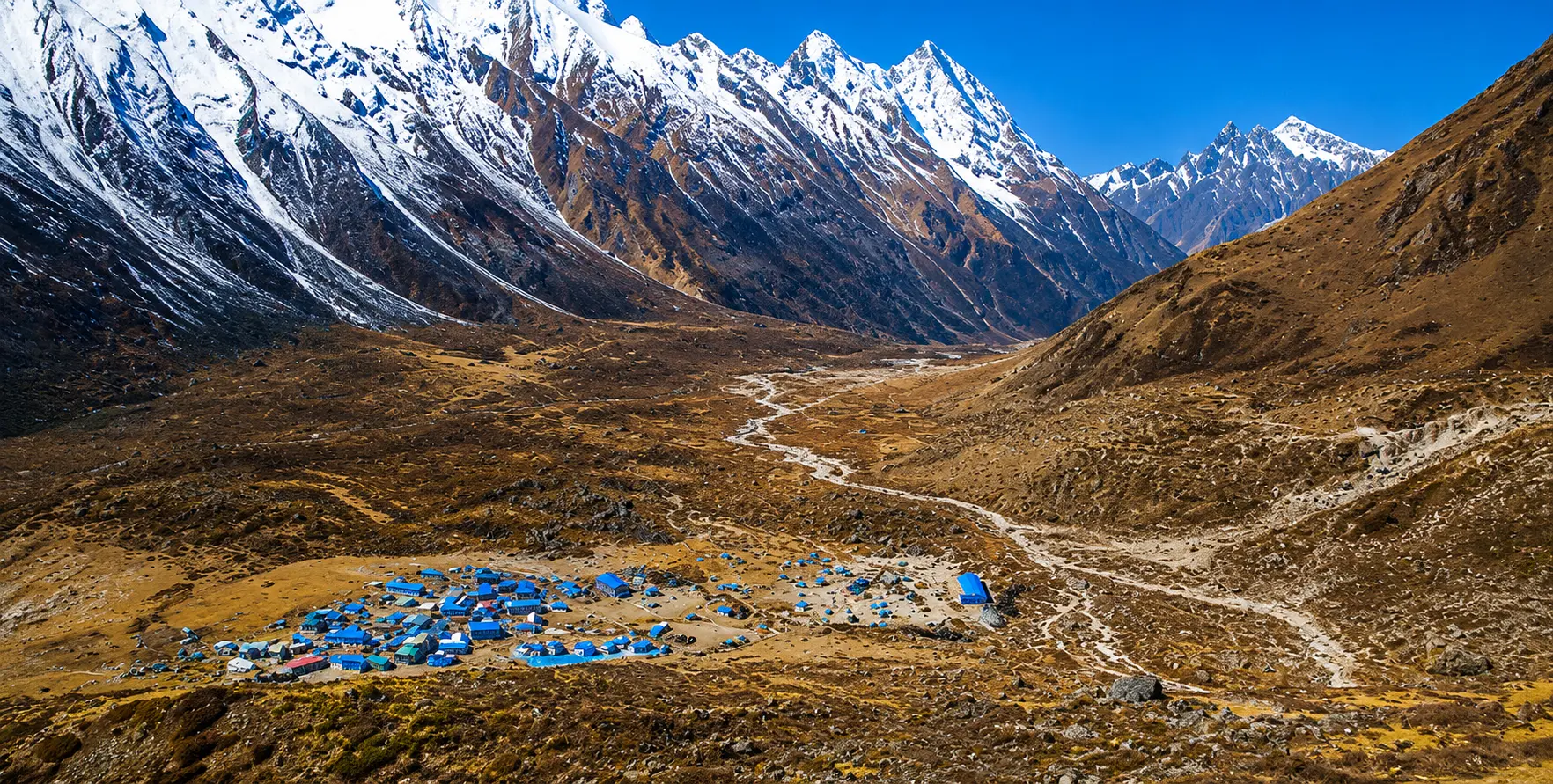
From Syabrubesi at 1,503 meters, the trail climbs steeply through a mix of forest and agricultural terraces to Lama Hotel at approximately 2,380 meters — a sustained ascent of roughly 880 meters over six to seven hours of walking that trekkers consistently describe as the most physically demanding single stage of the complete Langtang route. The elevation gain on this first day is the steepest of the entire trek, but the altitude at the day’s end is modest enough that altitude sickness risk is low and recovery is rapid for properly fit trekkers.
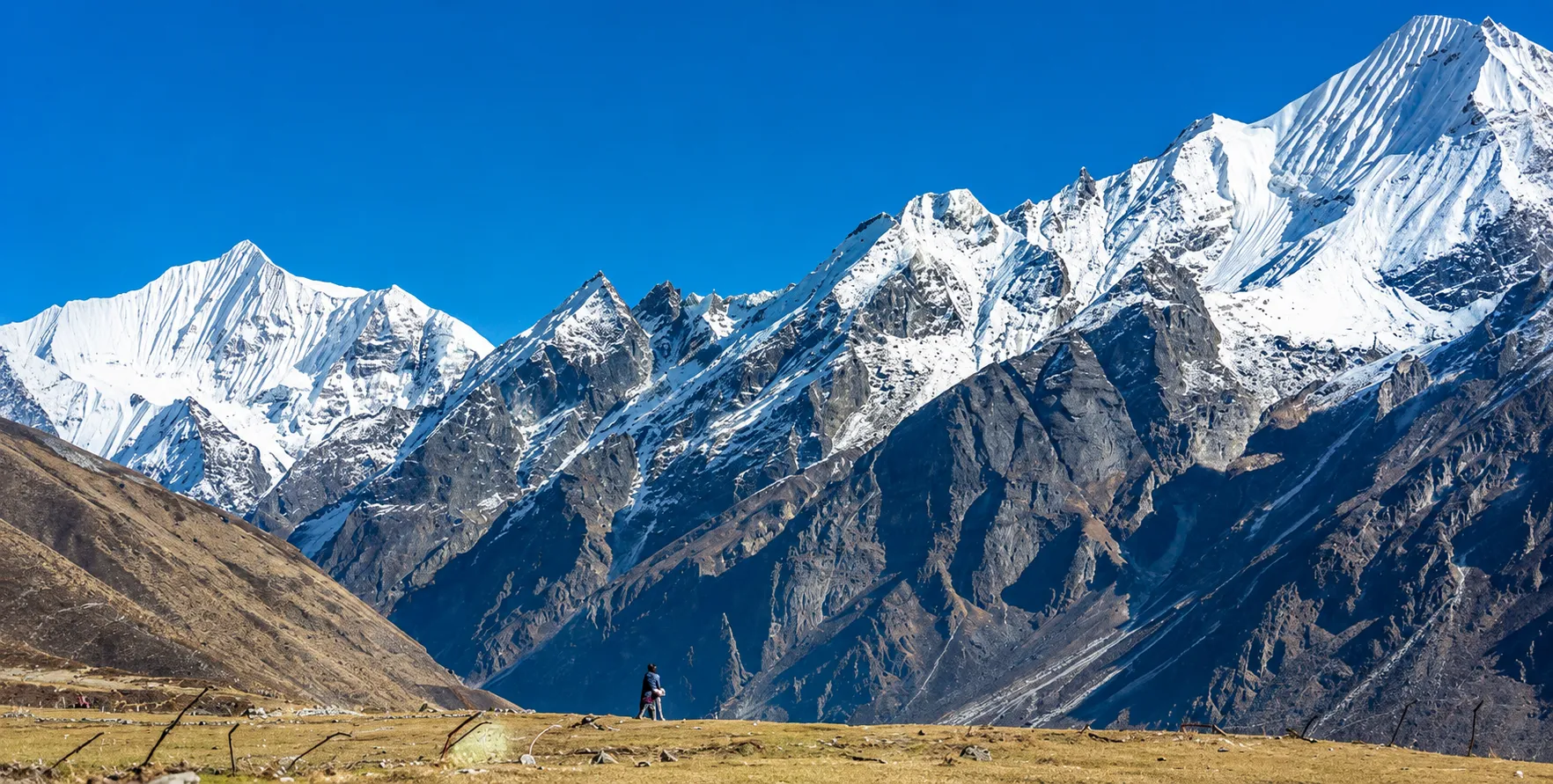
Beyond Lama Hotel, the trail continues through Ghodatabela to the rebuilt Langtang Village at approximately 3,430 meters, where the memorial chortens for the 2015 earthquake and avalanche victims stand alongside the rebuilt teahouses and community facilities of a village that has returned to life with extraordinary determination. The final stage to Kyanjin Gompa at 3,865 meters traverses the broad, open yak pasture landscape of the upper valley, with Langtang Lirung at 7,227 meters dominating the northern skyline in a display of mountain scale that leaves most trekkers walking with their necks craned upward for the entire final approach.
At Kyanjin Gompa, the trek’s principal options are the day hikes to the valley’s higher viewpoints. Kyanjin Ri at 4,773 meters is the more frequently completed of the two, requiring three to four hours round trip from the village and delivering a 360-degree panorama across the Langtang, Dorje Lakpa (6,966 m), Yala Peak (5,520 m), and distant views toward Manaslu and the Annapurna range.
Tsergo Ri at 4,984 meters demands significantly more fitness and acclimatization, requiring five to seven hours round trip and involving altitude that approaches 5,000 meters — a threshold that produces meaningful physiological challenge for many trekkers but rewards those who complete it with one of the finest mountain viewpoints accessible to non-technical trekkers anywhere in Nepal. The famous yak cheese factory at Kyanjin Gompa produces cheese using traditional methods. It welcomes visitors during production hours — a genuinely educational and delicious stop that connects the Langtang Valley’s pastoral heritage to its contemporary economy in a particularly satisfying way.
Beyond Langtang: Other Trekking Routes from Syabrubesi
Syabrubesi serves as the starting point not only for the main Langtang Valley Trek but also for several other important trekking routes that share the same vehicle-pickup approach and benefit from the same private jeep-hire logistics. The Gosaikunda Lake Trek departs from Syabrubesi and climbs to the sacred glacial lake at 4,380 meters, one of Nepal’s most important Hindu pilgrimage sites whose waters are believed to originate from the trident of Lord Shiva. The Tamang Heritage Trail, an excellent cultural circuit through traditional Tamang villages in the buffer zone around Langtang National Park, offers a lower-altitude alternative to the main valley route with exceptional cultural immersion and outstanding mountain views from the surrounding ridgelines.
The combination trek that links the Langtang Valley to the Helambu region via the Lauribina Pass at 4,609 meters creates a more challenging multi-week circuit that connects two of Kathmandu’s nearest major trekking regions in a single adventurous journey. All of these routes begin with the same Kathmandu-to-Syabrubesi vehicle transfer, making Nepal Vehicle Hiring Pvt Ltd’s Syabrubesi jeep pickup service the single transport resource that unlocks the entire Langtang-Gosaikunda-Helambu trekking cluster from a single Kathmandu departure point.
Combining Langtang with Kathmandu and Other Nepal Destinations
For international visitors whose Nepal itinerary extends beyond the Langtang Trek itself, Nepal Vehicle Hiring Pvt Ltd provides coordinated vehicle hire across all stages of a comprehensive Nepal journey. Before the trek, the Kathmandu airport transfer delivers arriving trekkers from Tribhuvan International Airport to their Kathmandu hotel in comfort. At the same time, Kathmandu sightseeing by private vehicle allows the capital’s UNESCO World Heritage sites — Pashupatinath, Boudhanath, Swayambhunath, Patan Durbar Square — to be explored efficiently before the trek begins. The Nagarkot sunrise tour and Bhaktapur day tour are both natural pre-trek additions for visitors with a day or two in Kathmandu before heading north.
After the Langtang Trek, many visitors extend their Nepal journey with a Kathmandu-to-Pokhara private vehicle transfer to explore the Annapurna region from Nepal’s lakeside second city. From Pokhara, the options are extensive: a Sarangkot sunrise tour for the Annapurna panorama, a Pokhara to Nayapul jeep for the Ghorepani Poon Hill circuit, a Pokhara to Ghandruk private jeep for the Annapurna foothills cultural circuit, or the epic Pokhara to Upper Mustang overland jeep tour through the Kali Gandaki Gorge to the ancient walled city of Lo Manthang. Nepal Vehicle Hiring Pvt Ltd provides comprehensive Nepal tour packages that combine Langtang trekking with broader Nepal itineraries, coordinating every vehicle stage from airport arrival to final departure in a single unified arrangement.
Practical Checklist: Booking Your Langtang Trek Pickup Vehicle
A few straightforward practical steps consistently make the difference between a seamlessly organized Langtang trek departure and one complicated by last-minute logistics that could have been resolved days earlier with simple planning. Working through this checklist before confirming your trek dates ensures that the vehicle pickup is the well-prepared, stress-free first chapter of your Langtang adventure rather than a source of morning-of anxiety.
- Book your pickup vehicle at least five to seven days in advance during peak season (October–November and March–May) and three to five days in advance during quieter seasons. Same-day or next-day bookings are possible but carry availability risk during busy periods.
- Confirm hotel pickup — specify your hotel name and full address at the time of booking so the driver has precise collection details and arrives at the correct entrance.
- Specify your preferred departure time — Nepal Vehicle Hiring Pvt Ltd recommends 6:00 to 7:00 AM for the Syabrubesi drive to maximize daylight arrival time.
- Book both outbound and return journeys simultaneously — confirm your expected return date from Syabrubesi so the return pickup is arranged before you begin the trek
- Obtain all permits in Kathmandu before departure — the Langtang National Park Entry Permit (NPR 3,000) from the Nepal Tourism Board at Bhrikutimandap, available on the day with approximately two hours’ processing time
- Confirm all-inclusive pricing in writing — Nepal Vehicle Hiring Pvt Ltd’s rates cover vehicle, driver, fuel, and tolls with no additions at settlement. ent
- Carry sufficient NPR cash for the trek — Syabrubesi has limited banking facilities and trail teahouses are cash-only. Kathmandu ATM withdrawals before departure are strongly recommended. nded
- Pack motion sickness tablets if you are susceptible — the Pasang Lhamu Highway’s winding sections between Trishuli Bazaar and Dhunche can be challenging for travelers prone to nausea
More Vehicle Hire Services for Nepal Trekkers
Nepal Vehicle Hiring Pvt Ltd covers far more than the Kathmandu to Syabrubesi corridor. Whether you are extending your Nepal adventure from Langtang to other world-class destinations, or planning a completely different trekking journey, our fleet and experienced team support travelers across Nepal’s vehicle hire needs. For the Annapurna region, our Kathmandu to Besisahar private vehicle service connects the capital to the Annapurna Circuit’s principal starting point. Meanwhile, the Kathmandu to Manang jeep transfer carries trekkers deeper into the Annapurna region for those who want to skip the lower road section and begin walking in the dramatic high-valley landscape. For the Everest region’s overland approach, our Kathmandu to Salleri and Phaplu service is the reliable road alternative to the weather-dependent Lukla flight, connecting Kathmandu to the Solukhumbu District’s gateway towns across a scenic 267-kilometer journey.
For the sacred Muktinath pilgrimage and Upper Mustang adventures, our Kathmandu to Muktinath jeep service delivers pilgrims and travelers to one of Nepal’s holiest Hindu and Buddhist sites at 3,710 meters. In contrast, our Pokhara to Upper Mustang overland jeep is the gateway to the ancient walled city of Lo Manthang. For those planning the Manaslu Circuit approach, our Kathmandu to Soti Khola jeep transfer handles the rough Gorkha district roads to the Manaslu Circuit’s primary starting point. Within Pokhara, our Pokhara car hire covers all city transfers, the Pokhara to Nayapul jeep for the Poon Hill and Annapurna Base Camp approach, the Pokhara to Ghandruk jeep for the Annapurna foothills cultural circuit, and the Pokhara to Ghorepani Poon Hill jeep hire for the direct jeep-drive option to Nepal’s most celebrated sunrise viewpoint.
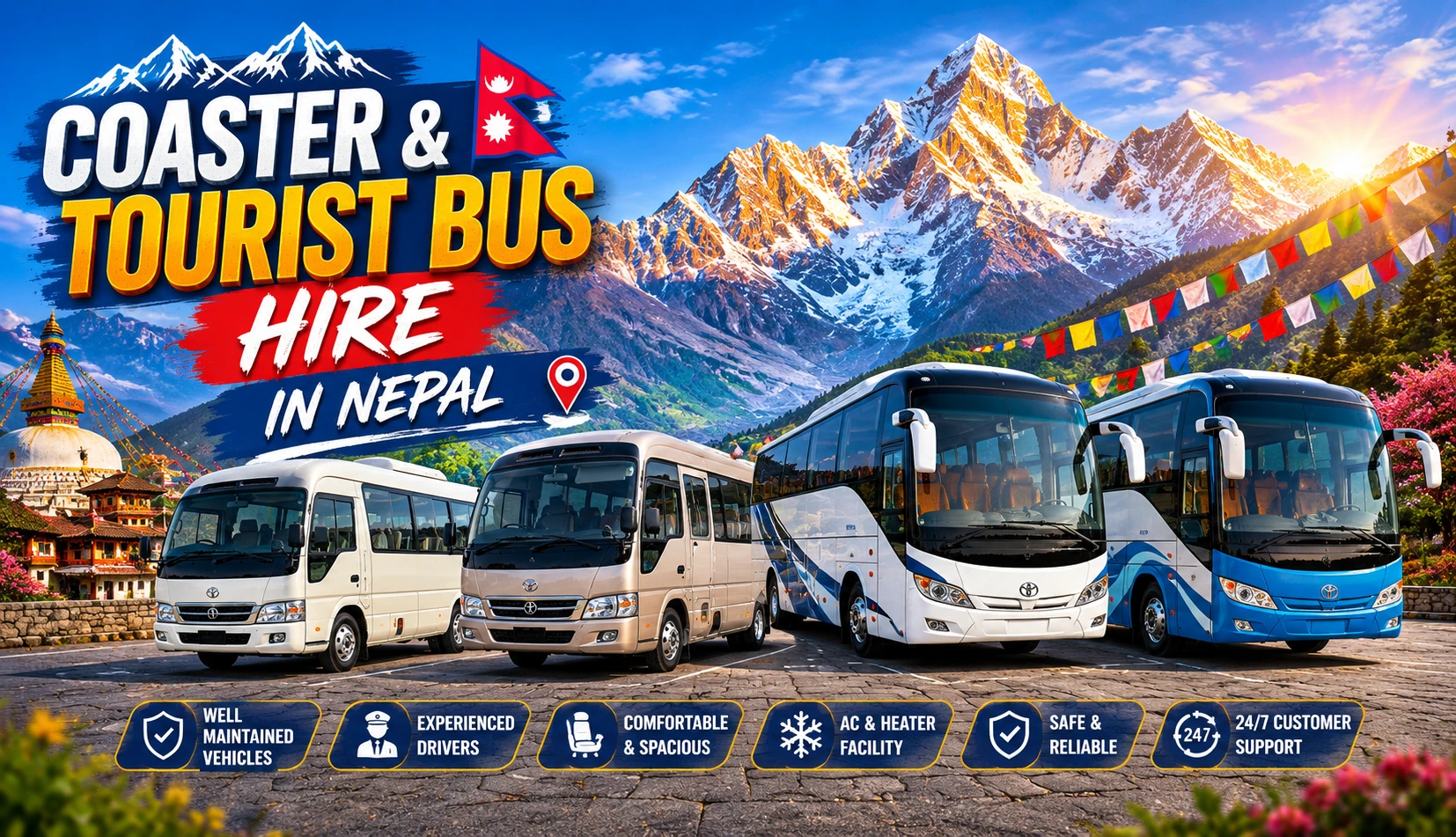
For larger groups, our Hiace van hire, coaster hire, and bus hire services scale from 12 to 35+ passengers without compromising on the service standards that define every Nepal Vehicle Hiring Pvt Ltd booking. For travelers beginning or ending their Nepal journey in Kathmandu, our Kathmandu airport transfer and comprehensive Kathmandu sightseeing by private vehicle complete the full circle of transport support we provide. Visit vehiclehiringnepal.com to explore the complete service portfolio, or contact us directly with your specific Nepal transport requirements.
Frequently Asked Questions
How far is Kathmandu to Syabrubesi?
The road distance from Kathmandu to Syabrubesi is approximately 120 to 130 kilometers via the Pasang Lhamu Highway through Trishuli Bazaar and Dhunche. The journey takes 6 to 9 hours by private vehicle depending on road conditions, traffic, and the number of rest stops made along the way.
What is the cost of a private jeep from Kathmandu to Syabrubesi?
A private jeep hire from Kathmandu to Syabrubesi costs approximately NPR 18,000 to NPR 25,000 for the full vehicle through Nepal Vehicle Hiring Pvt Ltd, accommodating 5 to 7 passengers. This is fully inclusive of vehicle, driver, fuel, and tolls. The per-person cost for a group of six is approximately NPR 3,000 to NPR 4,200 — competitive with shared jeep rates while delivering hotel pickup, timing certainty, luggage security, and flexible stops.
Do I need a guide for the Langtang Valley Trek?
Yes — as of April 2023, all foreign trekkers in Langtang National Park are required to be accompanied by a licensed guide registered through a TAAN-affiliated trekking agency. Solo trekking without a guide is no longer permitted. Guide fees typically run USD 25 to USD 35 per day.
What permits do I need for the Langtang Trek?
The primary permit is the Langtang National Park Entry Permit at NPR 3,000 (approximately USD 23 to 25) for non-SAARC nationals, obtainable from the Nepal Tourism Board in Kathmandu or at the park checkpoint in Dhunche. As of 2025, the TIMS card is no longer required for Langtang trekkers, though this may be subject to change — confirm current requirements before departure.
Can I arrange a return pickup from Syabrubesi after the trek?
Absolutely. Nepal Vehicle Hiring Pvt Ltd arranges return pickup from Syabrubesi to Kathmandu as a standard service, most effectively booked simultaneously with the outbound transfer. Provide your expected return date at the time of booking, and we will confirm the return vehicle. Contact us for a complete round-trip quotation.
What is the best time to travel from Kathmandu to Syabrubesi?
Spring (March to May) and autumn (September to November) are the best seasons, delivering the finest road conditions, best mountain visibility, and most pleasant trekking weather. Autumn, specifically October, offers the clearest air and most stable conditions of the entire year. Monsoon (June to August) is possible with a 4WD jeep and flexibility for potential road disruptions. Winter (December to February) is cold but reliable on the road.
Conclusion: Start Your Langtang Trek the Right Way
The Langtang Valley Trek begins the moment you step into the vehicle that will carry you from your Kathmandu hotel northward toward the mountains. Everything that follows — the climb through rhododendron forest to Lama Hotel, the first sight of Langtang Lirung above the rebuilt village, the morning prayers drifting from Kyanjin Gompa’s monastery, the 360-degree Himalayan panorama from Kyanjin Ri — is made better by beginning it well. A comfortable, timely, professionally managed pickup vehicle from Nepal Vehicle Hiring Pvt Ltd sets the tone for a trek that deserves the finest possible beginning. Our Kathmandu to Syabrubesi private jeep service is operated by drivers who know this specific road in every season, in vehicles maintained for the mountain road conditions it presents, at transparent all-inclusive prices with no hidden additions.
Ready to start planning? Contact our team with your trek dates, group size, and preferred vehicle — or explore our complete Nepal trekking services for the full picture of what Nepal Vehicle Hiring Pvt Ltd provides across every trekking region. You can also plan your complete trip, including all vehicle stages from the airport arrival through the Langtang pickup and back. The Langtang Valley is waiting — and so is the jeep that will take you there.
- Langtang Trek Pickup Vehicle: Complete Kathmandu to Syabrubesi Transport Guide 2025/26
- About the Langtang Valley Trek: Why This Destination Deserves Your Attention
- The Route: Kathmandu to Syabrubesi in Full Detail
- Vehicle Options for the Langtang Trek Pickup Service
- Complete Cost Guide: Langtang Trek Vehicle Pickup 2025/26
- Why Private Vehicle Hire Transforms the Langtang Trek Experience
- Seasonal Guide: Kathmandu to Syabrubesi Road Conditions Year-Round
- Langtang Trek Permits: What You Need Before Departure
- The Langtang Trek Route: From Syabrubesi to Kyanjin Gompa
- Beyond Langtang: Other Trekking Routes from Syabrubesi
- Combining Langtang with Kathmandu and Other Nepal Destinations
- Practical Checklist: Booking Your Langtang Trek Pickup Vehicle
- More Vehicle Hire Services for Nepal Trekkers
- Frequently Asked Questions
- Conclusion: Start Your Langtang Trek the Right Way

Related Blog & Articles
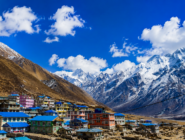
Kathmandu to Langtang Trek Vehicle Hire: The Complete Guide (2026)

Jeep vs Bus to Syabrubesi 2026
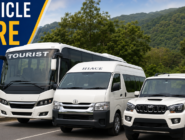
Kathmandu to Syabrubesi Jeep Guide 2026

Kathmandu to Tamang Heritage Trail Transport

Rasuwagadhi Kerung Jeep Transfer for Kailash Yatra