


 Plan a Trip


Kathmandu to Dharapani Private Vehicle Hire

Kathmandu to Dharapani Private Vehicle Hire: Complete 2026/27
For trekkers beginning the Annapurna Circuit from Dharapani — the gateway village at the junction of the Marsyangdi and Dudh Khola rivers in Manang District — the journey from Kathmandu is one of Nepal’s most dramatic overland approaches. Covering approximately 235 to 240 kilometers and taking 9 to 12 hours depending on road conditions and stops, the Kathmandu-to-Dharapani drive is not a prelude to the Annapurna Circuit — it is the Annapurna Circuit’s opening chapter. The road follows the Marsyangdi River from the plains to the lower mountains, passes through a sequence of increasingly dramatic valley landscapes, and delivers trekkers at Dharapani (1,860 m). At this exact point, the circuit road effectively ends for most vehicles, and the real trekking begins.
Dharapani is one of the most strategically significant points on the Annapurna Circuit. It sits at the convergence of two great trekking circuits — the Annapurna Circuit coming from Besisahar to the south, and the Manaslu Circuit coming from Arughat and Tsum Valley to the west. Most modern Annapurna Circuit trekkers now start their walking here rather than at Besisahar, because the road between Besisahar and Dharapani has been significantly developed and walking alongside a jeep track for 3 to 4 days offers a fraction of the wilderness experience that the upper circuit provides. Starting at Dharapani means beginning the trek immediately in genuinely wild mountain country — and that means getting to Dharapani by vehicle rather than on foot.
Nepal Vehicle Hiring Pvt. Ltd., based in Thamel, Kathmandu, provides the definitive private jeep hire service for the Kathmandu-to-Dharapani route. Our experienced Annapurna-approach drivers, well-maintained 4WD vehicles, hotel door pickup, and all-inclusive transparent pricing make the journey to Dharapani as comfortable and time-efficient as the demanding road allows. This complete 2026 guide covers every kilometer from Kathmandu to Dharapani — distances, altitudes, road quality, key villages, transport options and costs, the permits required, seasonal advice, and the broader Annapurna Circuit context that makes Dharapani the right starting point for most trekkers in 2026.
Whether you are comparing this with our Kathmandu to Manang jeep service for a higher start point, our Besisahar private vehicle service for a Besisahar drop, or our Kathmandu to Besisahar bus ticket for the highway leg — this guide gives you everything you need to make the right Annapurna Circuit transport decision for your specific trek.
Kathmandu to Dharapani: Distance and Time at a Glance
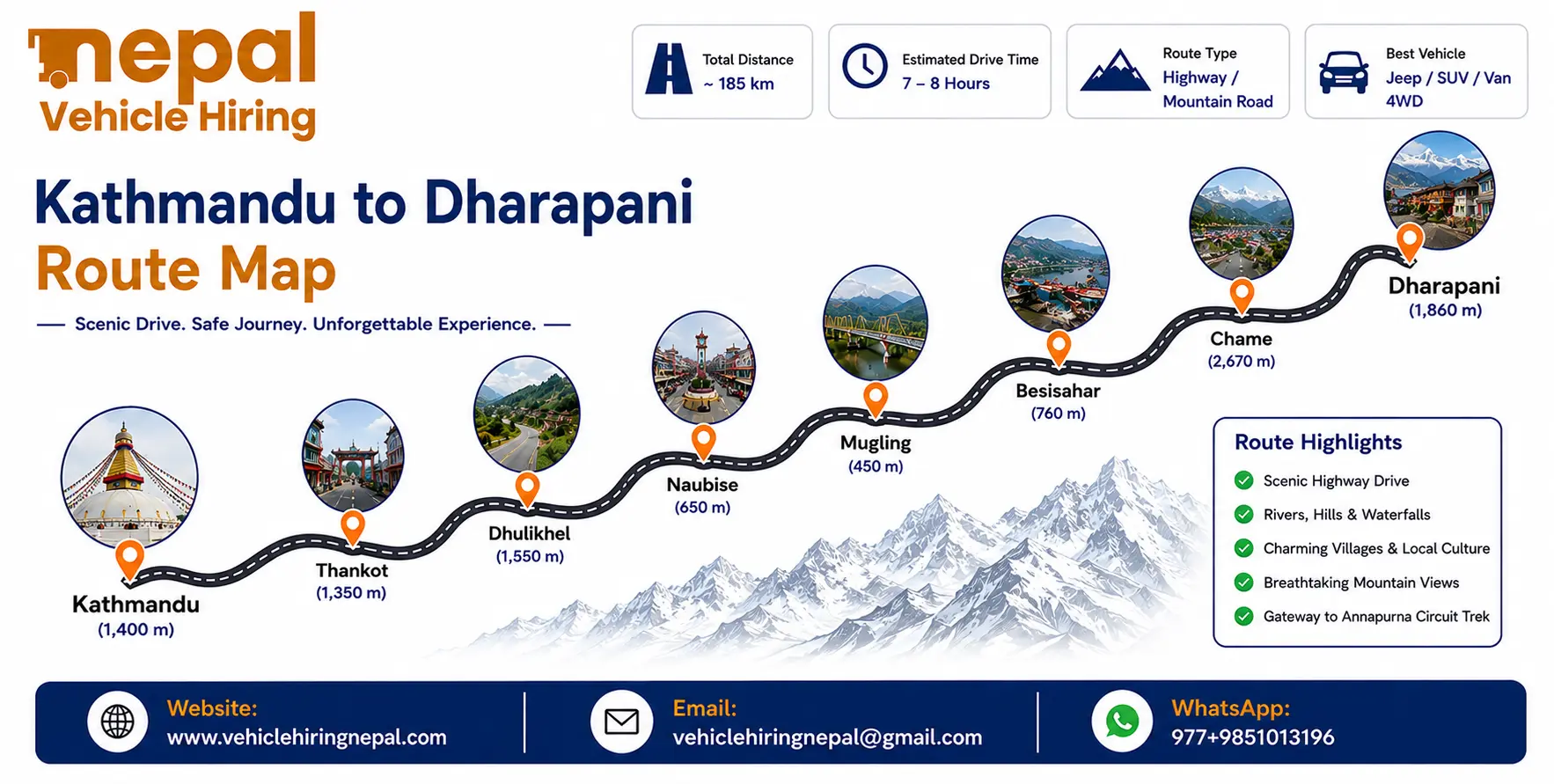
The road distance from Kathmandu (Thamel) to Dharapani is approximately 235 to 240 kilometers, covering a journey time of 9 to 12 hours by private 4WD jeep with reasonable stops. This total breaks cleanly into two road types:
- Kathmandu to Besisahar: approximately 178 km on the Prithvi Highway and provincial road, taking 5 to 6 hours — smooth national highway to Mugling, then provincial blacktop to Besisahar.
- Besisahar to Dharapani: approximately 57 to 62 km of rough off-road mountain track, taking 4 to 5 hours — unpaved Marsyangdi valley road requiring 4WD, through Khudi, Bhulbhule, Syange, Jagat, Chamche, Tal, and Dharapani.
The contrast between these two legs is stark. The first 178 kilometers take 5 to 6 hours at a reasonable speed on paved roads. The final 57 to 62 kilometers take 4 to 5 hours at a slow, careful mountain road pace. This is the essential reality of the Kathmandu-to-Dharapani journey: the last quarter of the distance takes almost half the total time. Understanding this helps set appropriate expectations and plan departure timing correctly. A 6:00 to 6:30 AM departure from Thamel is Nepal Vehicle Hiring’s standard recommendation for a same-day Dharapani arrival by late afternoon.
From Pokhara, the distance to Dharapani is approximately 110 km and takes 5 to 6 hours — significantly shorter than the Kathmandu approach. For trekkers already in Pokhara, our Hiace van hire or private car hire for the Pokhara-to-Besisahar leg, combined with a 4WD jeep for the Besisahar-to-Dharapani mountain section, is the most efficient configuration.
Kathmandu to Dharapani: Complete Section-by-Section Road Guide
Section 1: Kathmandu to Mugling (110 km, 2.5 to 3.5 hours)
The journey begins in Thamel and heads west on the Prithvi Highway — Nepal’s main Kathmandu-Pokhara artery — through the Naubise junction and the Nagdhunga Tunnel (Nepal’s first modern highway tunnel at 2.68 km, significantly reducing Kathmandu exit time) before descending to the Trishuli River gorge. The road follows the river through Malekhu (48 km from Kathmandu) — a popular breakfast stop for early departures, famous for fresh Trishuli River fish — before reaching Mugling (110 km, approximately 2.5 to 3.5 hours) at the confluence of the Trishuli and Marsyangdi rivers.
Mugling (190 m) is the highway junction where Kathmandu-to-Dharapani vehicles leave the Prithvi Highway heading to Pokhara and turn north on the Marsyangdi valley road. The town is famous throughout Nepal for its riverside fish restaurants — the Mugling fish lunch is one of the great culinary traditions of the Prithvi Highway journey. For Dharapani-bound travelers, Mugling is typically the lunch stop: arriving around 10:00 to 11:30 AM for a 6:30 AM Kathmandu departure, with a 30 to 45 minute lunch break before the final stretch to Besisahar and the mountain road beyond.
Section 2: Mugling to Besisahar (68 km, 1.5 to 2 hours)
From Mugling, the road turns north from the Prithvi Highway junction. It follows the Marsyangdi River northward toward Dumre junction (134 km from Kathmandu) — where the road to Besisahar branches east from the main highway. From Dumre, the road runs approximately 34 kilometers east to Besisahar (760 m), the last major town and the critical preparation stop before the mountain road begins.
Besisahar is the essential pause point for every Kathmandu-to-Dharapani vehicle — the last reliable location for:
- Fuel: the last fuel stations before Dharapani. Nepal Vehicle Hiring drivers always refuel in Besisahar regardless of tank level.
- ATMs: the last reliable cash machines before Chame. There are no ATMs in Dharapani. Carry ample NPR from Besisahar for the full trek.
- ACAP permit: the Annapurna Conservation Area Permit checkpoint is here if not already obtained in Kathmandu.
- Vehicle maintenance: final tire pressure check and vehicle inspection before the rough mountain road.
- Rest and supplies: last chance for a proper sit-down meal, pharmacy supplies, and trekking supply top-ups before the trailhead.
Nepal Vehicle Hiring builds a 30-minute Besisahar stop into every Kathmandu-to-Dharapani itinerary. Our drivers handle the fuel and vehicle check while passengers use ATMs, eat, and gather any final supplies. Our Besisahar private vehicle service covers the dedicated Besisahar-to-Dharapani section for trekkers who bus the highway leg and need 4WD from Besisahar northward. Our Kathmandu to Besisahar bus ticket serves trekkers who want a public bus on the highway section and arrange separate 4WD from Besisahar.
Section 3: Besisahar to Jagat (28 km, 2 to 2.5 hours)
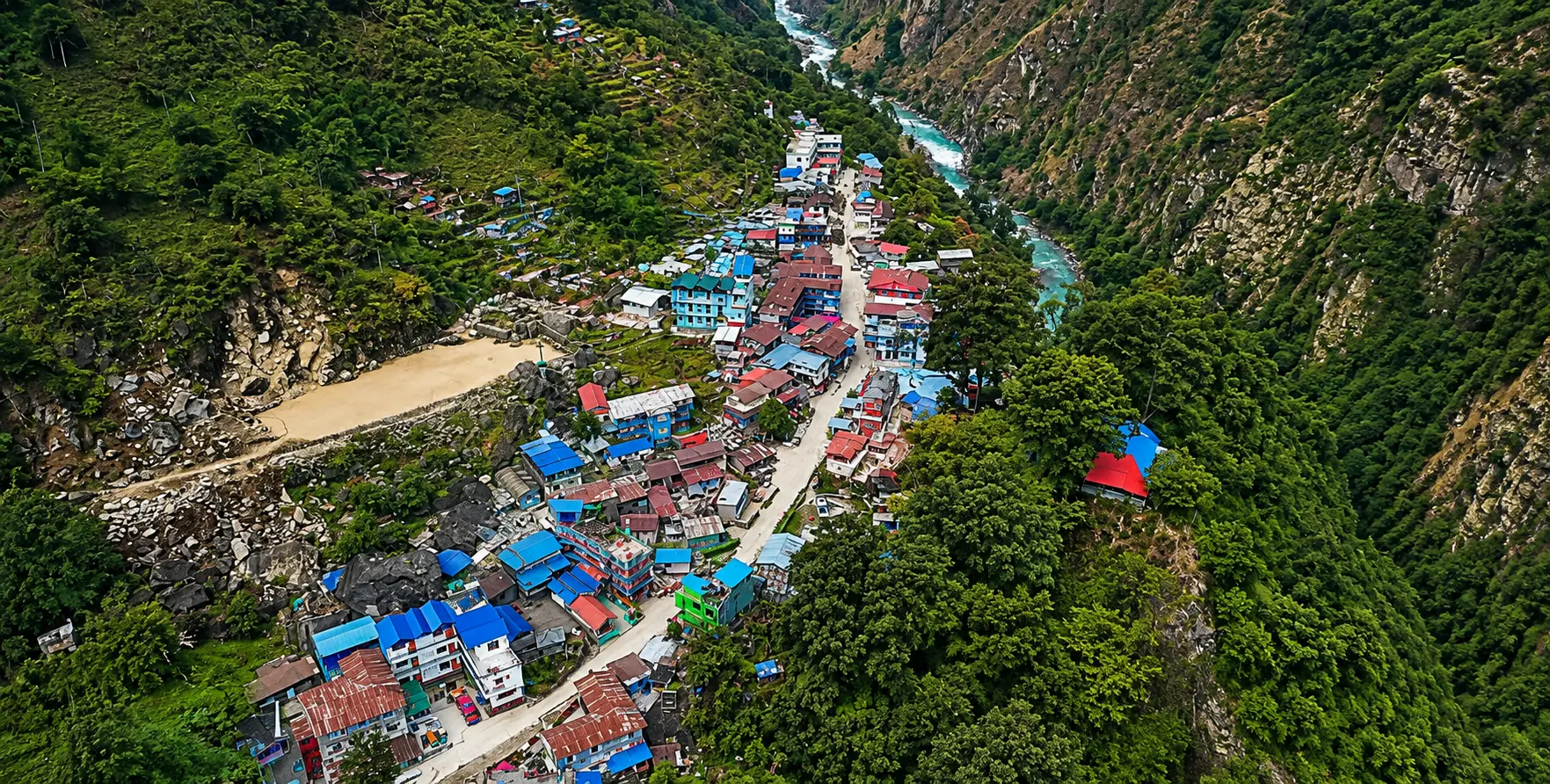
Beyond Besisahar, the paved highway ends and the Marsyangdi valley mountain track begins. This section — the first 28 kilometers of off-road driving from Besisahar to Jagat — is the transition from highway Nepal to mountain Nepal, and the difference is immediately apparent. The road surface changes to compacted gravel, then to rough track, with the Marsyangdi River increasingly audible below and the valley walls rising steeply on both sides.
Key stops on the Besisahar-to-Jagat section:
- Khudi (790 m) — 5 km north of Besisahar. First suspension bridge crossing over the Marsyangdi. First checkpoint of the mountain road section. The gorge narrows noticeably here.
- Bhulbhule (840 m) — 10 km from Besisahar. A larger village with guesthouses and tea shops. The road crosses a concrete bridge here and enters the first genuinely narrow gorge section.
- Ngadi (930 m) — 17 km from Besisahar. Small settlement at a stream confluence. The road begins climbing more steeply after Ngadi.
- Bahundanda (1,310 m) — 21 km from Besisahar. Ridge-top Brahmin village with wide valley views. Popular tea stop for both vehicle passengers and trekkers. The climb to Bahundanda is one of the steeper sections of this leg.
- Jagat (1,300 m) — 28 km from Besisahar. The most significant town on this section, with multiple guesthouses and restaurants, and a critical checkpoint. All vehicles are stopped at Jagat, and passenger permits (ACAP) are verified. The Manaslu trekking restricted area permit is also checked here for any trekkers entering the Manaslu region. The section from Jagat onward enters increasingly wild gorge country.
The Besisahar-to-Jagat road section is the roughest and narrowest of the approach to Dharapani. The cliff-side sections between Syange and Jagat in particular — where the road is carved into the base of near-vertical walls above the roaring Marsyangdi — require careful driving and are genuinely challenging in a way that makes the 4WD requirement absolute and non-negotiable. Nepal Vehicle Hiring never sends standard cars or minivans beyond Besisahar.
Section 4: Jagat to Chamche and Tal (15 km, 1.5 to 2 hours)
From Jagat, the road continues through some of the finest gorge scenery on the entire Annapurna Circuit approach. Key stops:
- Syange (1,100 m) — just north of Jagat, the most dramatic gorge section of the entire drive. The road is literally carved into the cliff base here, with the Marsyangdi thundering below and the opposite wall rising hundreds of meters above. For first-time visitors, this section is the moment they genuinely grasp the scale of the Himalayan river gorge environment. A brief stop here — if traffic allows — produces one of the most powerful landscape photographs of the entire journey.
- Chamche (1,410 m) — a spectacular waterfall visible from the road, plunging from the cliff face above into the gorge below. The Chamche waterfall is one of the most photographed features of the Annapurna Circuit approach road and a natural pause point. The road here is in better condition than the Syange cliff section, with a wider verge for brief stops.
- Tal (1,700 m) — the gorge opens suddenly into the widest flat-floored valley section on the entire Besisahar-to-Dharapani route. The name ‘Tal’ means lake, and the wide gravel-floored valley is indeed a former glacial lake, drained over thousands of years. The contrast between the narrow cliff gorge just below and this open, sunlit valley bowl is dramatic and beautiful. Tal has several guesthouses and is a popular overnight stop for trekkers walking the lower circuit. It’s also a natural vehicle rest stop — 20 to 30 minutes at Tal, with riverside views and some of the best photography opportunities of the mountain road section.
Section 5: Tal to Dharapani (14 km, 1 to 1.5 hours)
The final 14 kilometers from Tal to Dharapani continue through the narrowing upper gorge, passing through Karte (2,640 m) and Tilje (2,300 m) before reaching Dharapani at 1,860 meters. The road in this section improves slightly compared to the Jagat-to-Tal stretch — the upper valley has better road maintenance access, and the surface is more compacted. The altitude gain from Tal (1,700 m) to Dharapani (1,860 m) over 14 kilometers is relatively modest, meaning this final section is driven at a slightly higher speed than the lower gorge sections.
Dharapani itself sits at the confluence of the Marsyangdi River and the Dudh Khola (White River, so named for its glacier-flour color). The confluence is visible from the road and has a dramatic character — two powerful rivers meeting in a wide gravel-floored valley beneath towering mountain walls. The Dharapani checkpoint is where all Annapurna and Manaslu trekking permits are verified for trekkers entering from either circuit direction. Nepal Vehicle Hiring’s drivers handle the permit verification formalities, which typically take 5 to 10 minutes.
Why Start the Annapurna Circuit at Dharapani?
The decision to start the Annapurna Circuit at Dharapani rather than at Besisahar — the traditional starting point — is one that most experienced trekkers, guides, and operators now consistently recommend. Understanding the reasoning behind this shift helps trekkers make an informed decision about their vehicle hire endpoint.
The Road Has Changed the Lower Circuit
The Annapurna Circuit from Besisahar to Dharapani follows the Marsyangdi valley through Khudi, Bahundanda, Jagat, Chamche, and Tal — a section that, before the jeep road was built, offered 3 to 4 days of genuine wilderness trekking through forest and gorge. Today, the same section is a jeep track that carries regular vehicle traffic — supply jeeps, local transport, and trekking approach vehicles like the one that brought you from Kathmandu. Walking alongside a road shared with honking jeeps for 3 to 4 days is a significantly less rewarding experience than the classic circuit description suggests, and many experienced Annapurna Circuit guides now describe this section as the weakest part of the route.
Dharapani Offers Immediate Wild Trekking
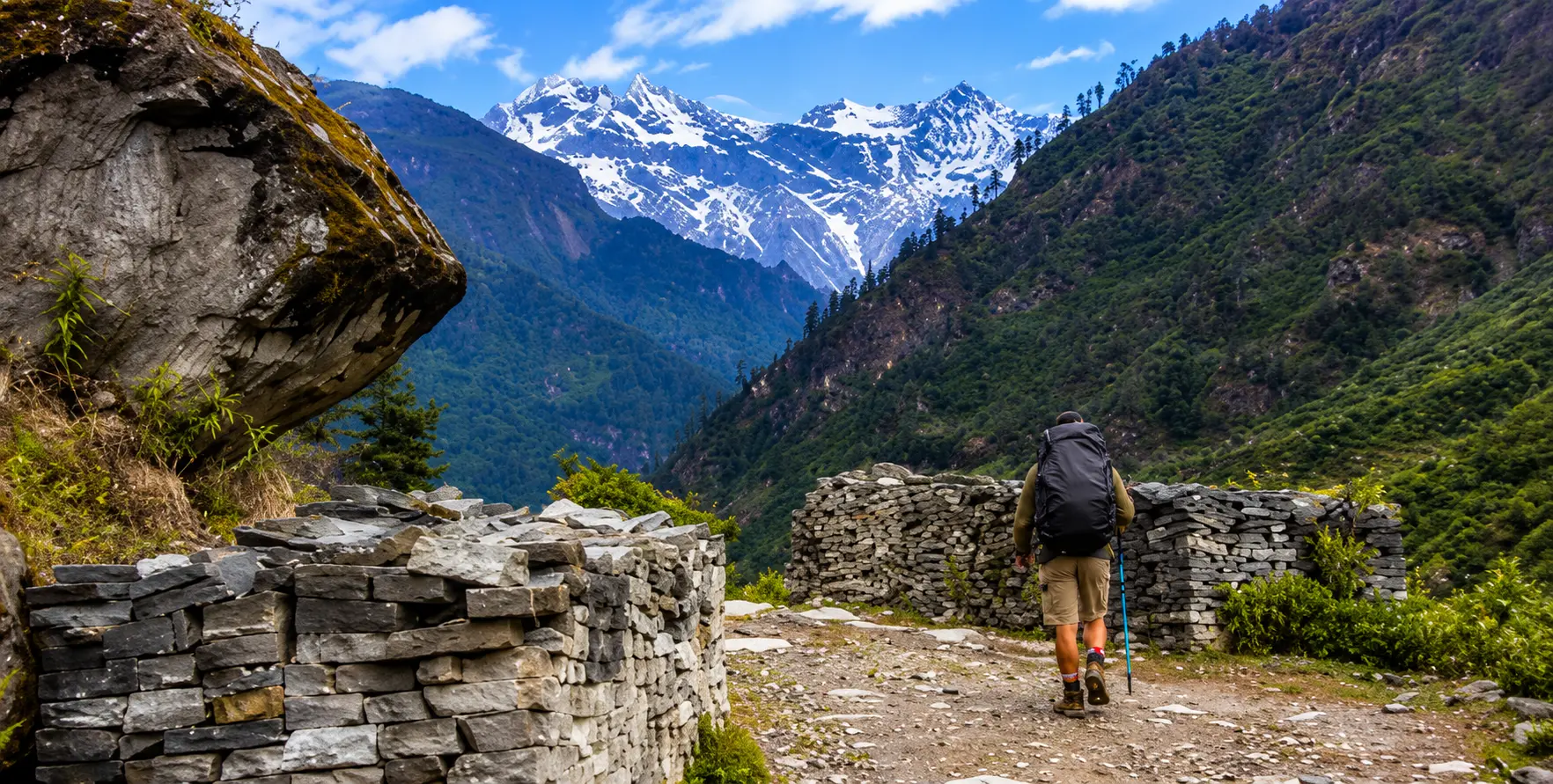
From Dharapani, the Annapurna Circuit trail immediately enters genuinely wild mountain country — the road becomes minimal, the vehicle traffic drops dramatically, and the trekking landscape transitions to the pristine gorge and forest environment that the Annapurna Circuit is famous for. The first trekking stage from Dharapani to Chame (2,670 m) climbs through pine and oak forest past Bagarchhap and Timang with virtually no vehicle traffic, offering the classic wilderness trekking experience that the lower circuit can no longer reliably provide. Starting at Dharapani saves 3 to 4 days of walking while actually improving the overall trekking experience by eliminating the road-walking section.
Better Acclimatization Profile
Starting at Dharapani (1,860 m) rather than Besisahar (760 m) also provides a better acclimatization profile for the upper circuit. The 1,100-meter difference in starting altitude means Dharapani-start trekkers arrive at intermediate altitude points like Chame (2,670 m) and Pisang (3,200 m) with 1 to 2 days more acclimatization time than Besisahar-start trekkers at the same calendar day of the trek. This advantage is meaningful for the Thorong La crossing at 5,416 m, where proper acclimatization is the most important single factor in a safe and successful experience.
Jagat as an Alternative Starting Point
Some trekkers choose an intermediate starting point between Besisahar and Dharapani — particularly Jagat (1,300 m) — which preserves the Chamche waterfall section and the Tal valley crossing as trekking experiences while avoiding the busiest road sections below Jagat. Nepal Vehicle Hiring can provide a private jeep hire with Jagat as the drop-off point instead of Dharapani — a useful option for trekkers who want to walk the Tal and Chamche sections on foot while still arriving by vehicle for the lower Besisahar-to-Jagat road portion. Ask about Jagat drop-off pricing when contacting us through our plan your trip page.
Vehicle Options for the Kathmandu to Dharapani Journey
Private 4WD Jeep Hire (Nepal Vehicle Hiring — Recommended)
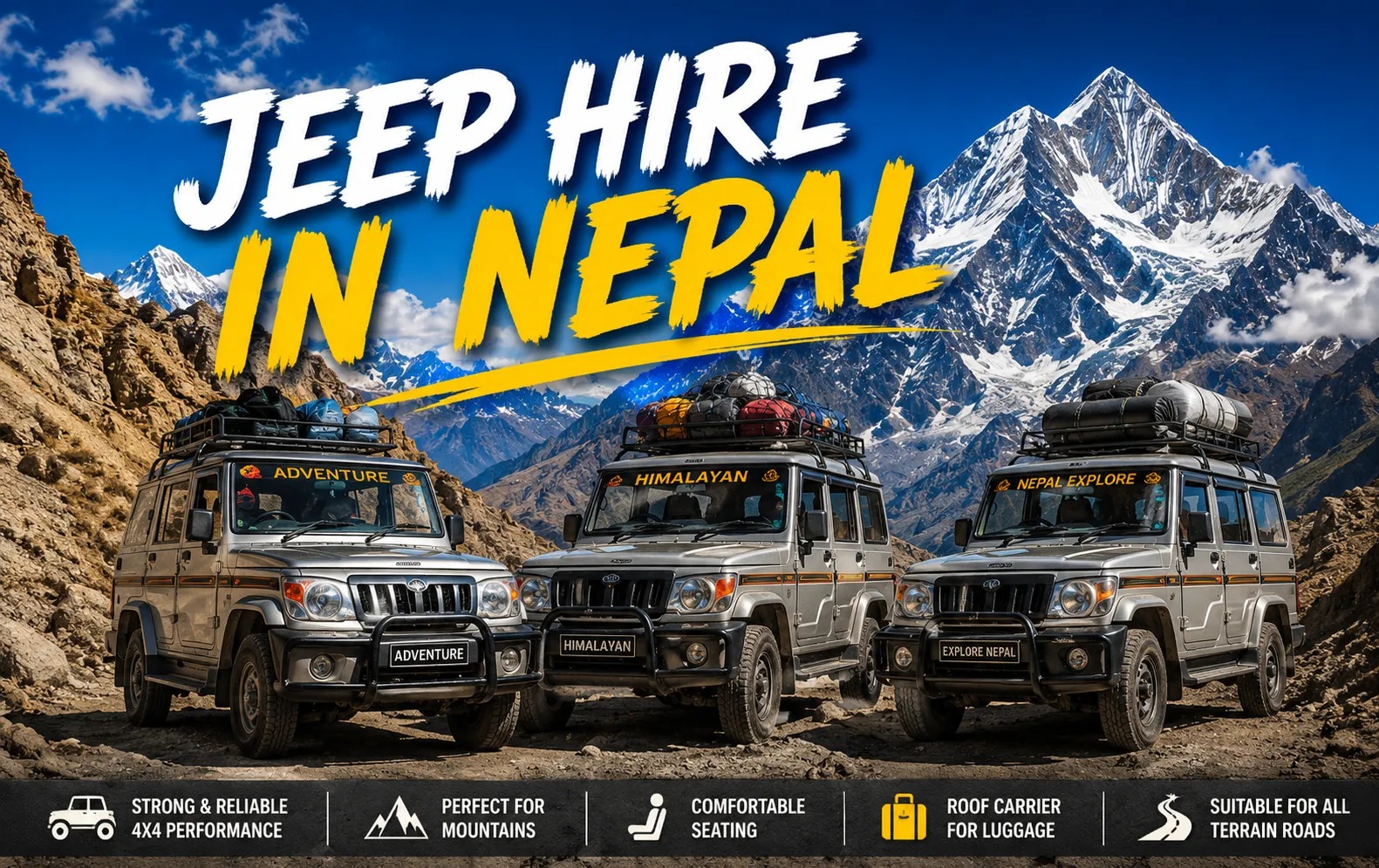
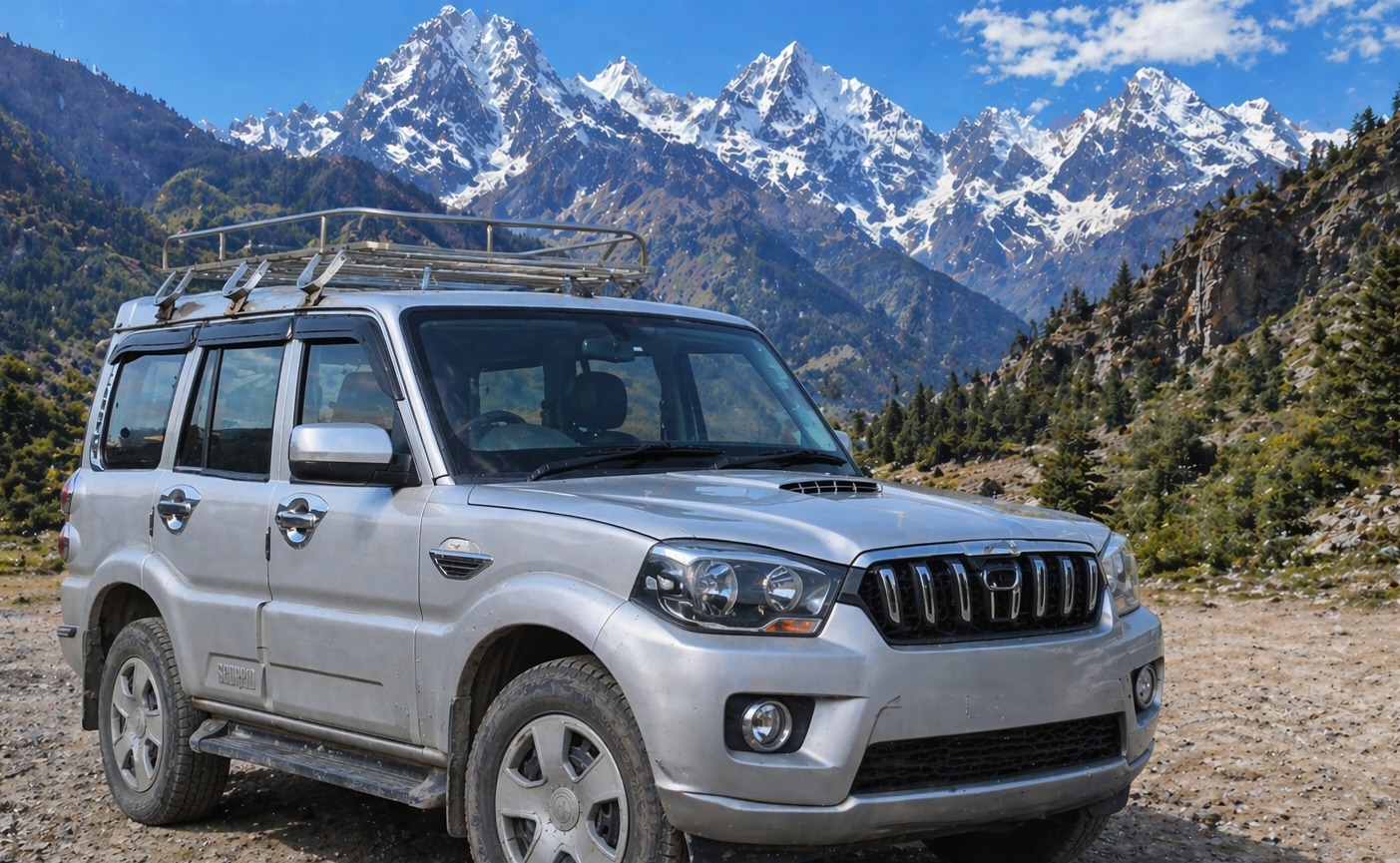
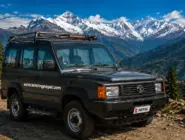
Nepal Vehicle Hiring’s private 4WD jeep hire is the recommended and most popular vehicle option for the Kathmandu-to-Dharapani journey. Our Mahindra Scorpio (5 to 7 passengers) and Toyota Land Cruiser (4 to 5 passengers) provide the 4WD traction, high ground clearance, and comfortable cabin that the 235-kilometer journey demands.

Private jeep hire Kathmandu to Dharapani: approximately NPR 22,000 to 30,000 per vehicle (USD 160 to 225) all-inclusive — vehicle, experienced Annapurna-approach driver, fuel, and driver’s return costs. Per-person breakdown at various group sizes:
- 2 passengers: NPR 11,000 to 15,000 per person
- 3 passengers: NPR 7,333 to 10,000 per person
- 4 passengers: NPR 5,500 to 7,500 per person — competitive with shared jeep fare
- 5 passengers: NPR 4,400 to 6,000 per person — often cheaper than shared jeep
- 6 passengers: NPR 3,667 to 5,000 per person — significantly cheaper than shared jeep
Private jeep hire advantages over shared transport: hotel door pickup at your specified departure time (typically 6:00 to 6:30 AM); stops at Malekhu, Mugling, Besisahar, Jagat, Syange, and Tal at your discretion; luggage stored inside the vehicle rather than on an open roof rack; experienced driver accountable to your group; no waiting at departure points for a vehicle to fill. Contact us through our plan your trip page for current pricing and availability.
Shared Jeep (Budget — NPR 2,000 to 3,500 per person)
Shared jeeps for Dharapani depart from Kathmandu’s Machhapokhari Bus Park (Gongabu) — approximately 15 to 20 minutes from Thamel by taxi or Pathao motorbike. Shared jeeps to Dharapani are not a direct single-vehicle service in most cases — the standard arrangement is a bus or shared jeep from Kathmandu to Besisahar (NPR 300 to 400, 5 to 6 hours), then a separate shared jeep from Besisahar to Dharapani (NPR 1,000 to 1,500 per person, 3 to 4 hours). Total fare: approximately NPR 1,300 to 1,900 per person.
Direct shared jeep services from Kathmandu to Dharapani occasionally operate but are rare and inconsistently available — when they exist, fares are approximately NPR 2,000 to 3,500 per person for the full route, with journey times of 10 to 12 hours. The shared jeep departs when full (7 to 9 passengers) with no fixed schedule. For solo trekkers and budget pairs, the shared jeep combination is the most economical option. For groups of 4 or more, Nepal Vehicle Hiring’s private jeep delivers competitive per-person costs with substantially better logistics.
Nepal Vehicle Hiring Hiace Van + 4WD Jeep (Groups of 8 to 14)
For larger trekking groups of 8 to 14 people, Nepal Vehicle Hiring offers the hybrid configuration: Hiace van hire from Kathmandu to Besisahar (178 km, comfortable highway driving), then our Besisahar private vehicle service deploys dedicated 4WD jeeps for the Besisahar-to-Dharapani mountain section. This configuration gives large groups highway comfort on the long first leg and proper mountain-road vehicles for the challenging Marsyangdi gorge section. The Hiace is not appropriate beyond Besisahar on the mountain track — our 4WD jeep hire always handles that section.
Key Villages Between Kathmandu and Dharapani: What to Know
Mugling (190 m) — The Fish Lunch Capital
Mugling at the Trishuli-Marsyangdi confluence is renowned throughout Nepal for its riverside fish restaurants. Fresh asla (Himalayan snow trout) and sahar (golden mahseer) caught from the Trishuli River each morning are grilled over charcoal and served with beaten rice — one of Nepal’s finest informal roadside dining experiences. Arriving at Mugling around 10:30 to 11:00 AM for a 6:30 AM departure makes the timing perfect for a Mugling fish lunch before the final push north to Besisahar. The Kathmandu to Pokhara bus passes through Mugling on the highway — Dharapani-bound vehicles diverge at the Mugling-Dumre junction before reaching Pokhara.
Besisahar (760 m) — The Last Proper Town
Besisahar deserves a 30-minute proper stop, not a hurried drive-through. It is the last town with full commercial infrastructure before Dharapani — the last ATMs, last fuel stations, last pharmacy, last hardware store if you need trekking equipment. The ACAP permit checkpoint here verifies documentation before any vehicle is allowed to proceed northward. The Kathmandu to Besisahar bus ticket covers the highway approach to this town for trekkers using public transport for the Kathmandu-to-Besisahar leg.
Jagat (1,300 m) — The Gorge Gateway
Jagat is the most important checkpoint village on the Besisahar-to-Dharapani mountain road — all Annapurna and Manaslu trekking permits are verified here. The village sits in a dramatic section of the gorge, with the Marsyangdi audible and visible below. Nepal Vehicle Hiring drivers are experienced with the Jagat checkpoint process, which typically adds 5 to 10 minutes to the journey. Jagat’s guesthouses are simple but adequate and serve as an alternative overnight stop for trekkers who begin the lower circuit from this point.
Tal (1,700 m) — The Open Valley
Tal’s wide, flat valley floor — a former glacial lake bed — provides the finest photography opportunity of the entire mountain road section. The combination of the wide gravel-floored valley, the Marsyangdi braided across it, the vertical rock walls on both sides, and the distant snow peaks visible at the valley head creates a landscape composition of extraordinary power. Nepal Vehicle Hiring drivers know the best pull-off point at Tal for vehicle photography — usually a 15 to 20 minute stop here is factored into the journey when working with photography-motivated trekkers or tour groups.
Dharapani (1,860 m) — The Annapurna Circuit Gateway
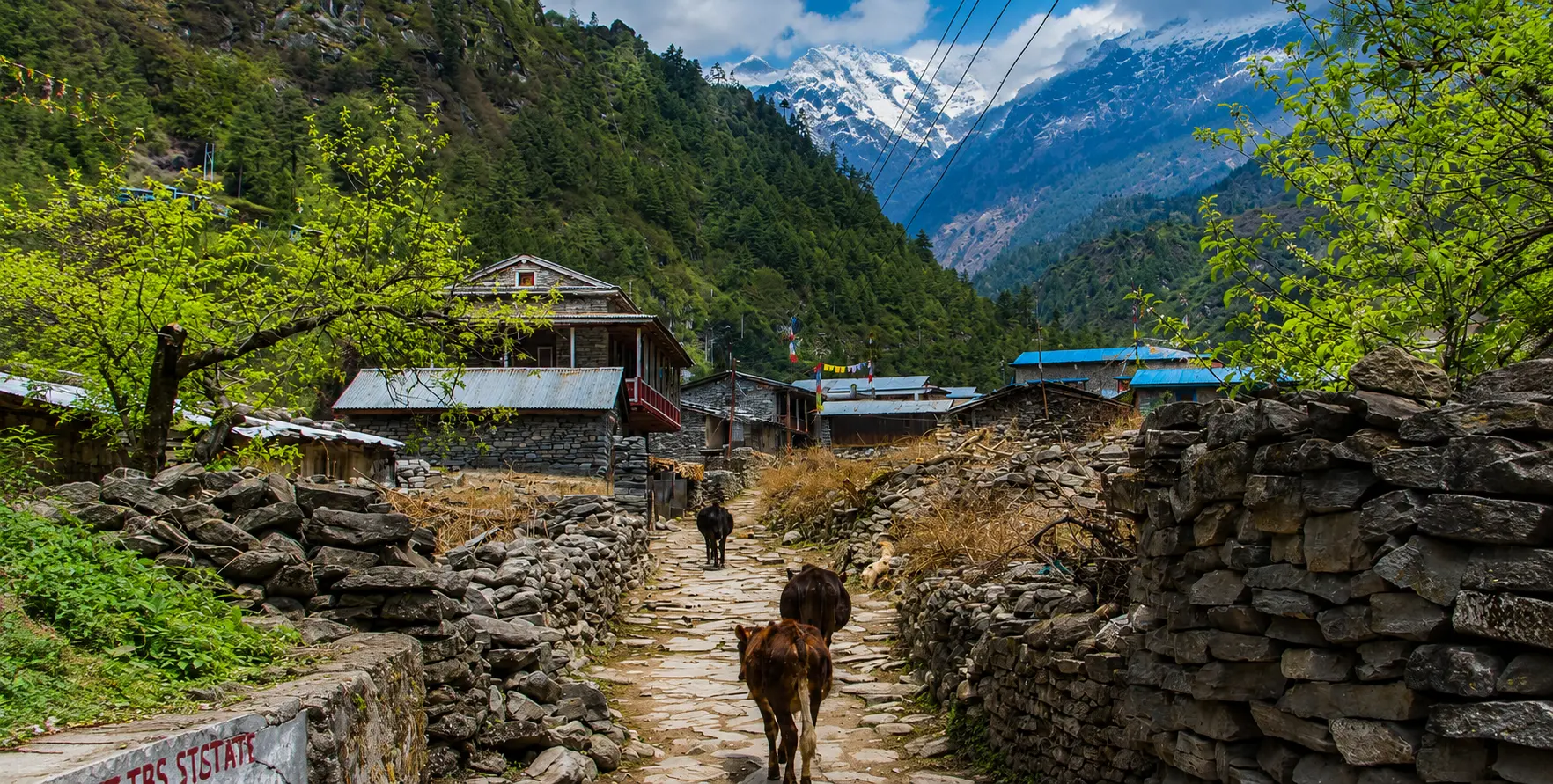
Dharapani is a compact but well-equipped trekker village at the Marsyangdi-Dudh Khola confluence. The main street has 8 to 12 guesthouses, several restaurants serving dal bhat and trekker fare, a permit checkpoint, basic medical facilities, and shops selling trekking supplies. The Dharapani checkpoint is where all ACAP permits are re-verified for trekkers entering the Annapurna Conservation Area from the east. From Dharapani, the trekking trail to Chame (the next significant town) takes approximately 4 to 5 hours of walking — a manageable first day for most trekkers arriving by vehicle in the early-to-mid afternoon.
Permits Required for the Kathmandu to Dharapani Journey
Annapurna Conservation Area Permit (ACAP)
The ACAP is mandatory for all foreign nationals entering the Annapurna Conservation Area, which begins at Besisahar and covers the full Annapurna Circuit, including Dharapani, Chame, Manang, and all the way to Jomsom and Muktinath. 2026 fee: NPR 3,000 per person (approximately USD 22 to 25). The ACAP is checked at Besisahar, Jagat, and Dharapani — carry it at all times after collecting it from the Nepal Tourism Board office in Kathmandu or Pokhara (recommended) or from the Besisahar ACAP office.
TIMS Card
The TIMS (Trekkers’ Information Management System) card requirement was revised in 2023 and is not currently mandatory for Annapurna Circuit trekkers holding a valid ACAP permit. Confirm current requirements with Nepal Vehicle Hiring at the time of booking — regulations can change without published notice. Our plan your trip page inquiry process always includes a current permit status check.
Licensed Guide Requirement
A licensed guide is mandatory for trekking in the Annapurna Conservation Area per current Nepal government regulations. The guide is not required for the vehicle journey from Kathmandu to Dharapani, but must accompany the trek from the Dharapani trailhead onward. Nepal Vehicle Hiring coordinates with partner licensed guide services — contact us when booking your Dharapani approach vehicle if you need guide arrangement.
Best Time for the Kathmandu to Dharapani Drive
Spring (March to May): Premier Season
Spring delivers the finest conditions for the Kathmandu-to-Dharapani drive. Rhododendrons bloom along the approach hills, the pre-monsoon skies are clear, and the mountain road from Besisahar is in its best annual condition after winter consolidation. Book Nepal Vehicle Hiring 3 to 5 weeks in advance for April and May departures — peak Annapurna Circuit season means all 4WD jeep hire options fill quickly. The Kathmandu to Manang jeep option (continuing beyond Dharapani to Chame and Manang) is particularly popular in spring for trekkers wanting to minimize road-walking on the lower circuit.
Autumn (September to November): Post-Monsoon Clarity
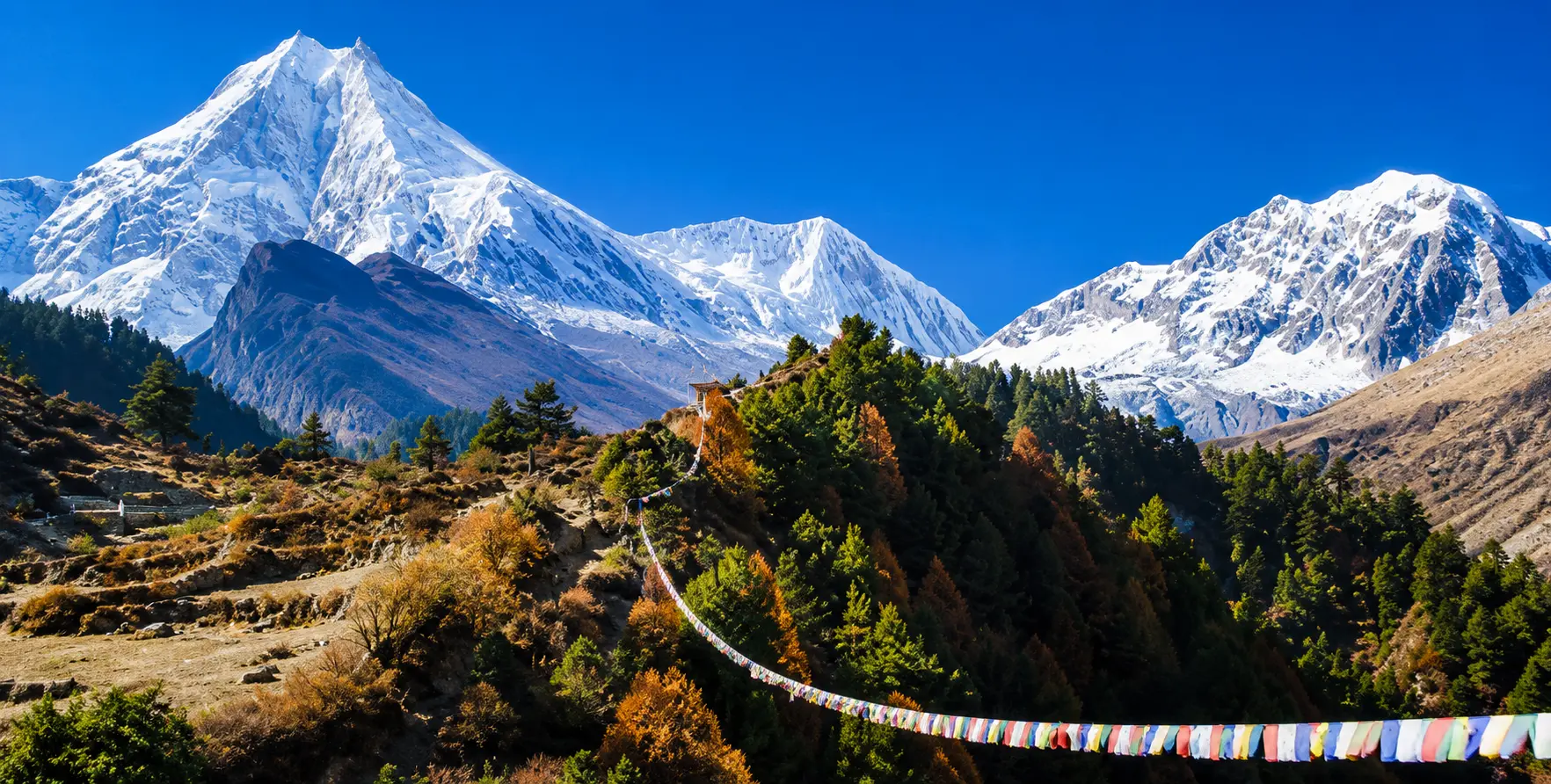
Autumn is Nepal’s peak trekking season and the best time for mountain views on the Dharapani approach road. Post-monsoon air clarity means the Himalayan peaks visible at Tal and Dharapani — Manaslu, Annapurna II, and the first glimpses of the upper Marsyangdi snowfields — are exceptionally clear. The road has been partially repaired after monsoon damage by October. Nepal Vehicle Hiking’s 4WD jeep hire for Dharapani is at maximum demand in October and November — book 4 to 5 weeks in advance.
Monsoon (June to August): Challenging
The monsoon increases difficulty on the Besisahar-to-Dharapani mountain road significantly — landslides, river crossings, and surface damage are more frequent. The Syange and Jagat cliff sections are the most vulnerable. Nepal Vehicle Hiring operates during monsoon with daily road condition monitoring. Travel time should be extended by 1 to 2 hours for monsoon estimates, and schedule flexibility is essential. The Besisahar private vehicle service monsoon notes provide the most current road status for the mountain section.
Winter (December to February): Quiet and Cold
Winter is the quietest period on the Annapurna Circuit approach. The road to Dharapani is generally accessible in winter with a 4WD vehicle — the altitude at Dharapani (1,860 m) is not high enough for snow closure on the approach road itself. However, the trekking above Dharapani becomes significantly more demanding above 3,000 m in December through February. Winter driving on the mountain road requires attention to icy patches in the early morning — Nepal Vehicle Hiring’s winter-experienced drivers depart slightly later (7:00 to 7:30 AM rather than 6:30 AM) to allow morning ice to melt on the mountain sections.
Optimal Departure Timing from Kathmandu for Dharapani
Nepal Vehicle Hiring’s recommended departure time from Thamel for the Dharapani run is 6:00 to 6:30 AM. Here is the full day timeline for a 6:30 AM departure:
- 6:30 AM: Depart Thamel. Clear of Kathmandu morning traffic.
- 8:30 to 9:00 AM: Malekhu — optional breakfast stop (20 minutes).
- 10:30 to 11:00 AM: Mugling — lunch stop. Fresh river fish. 30 to 45 minutes.
- 12:00 to 12:30 PM: Besisahar — fuel, ATM, ACAP permit check, brief rest. 30 minutes.
- 1:00 to 1:30 PM: Depart Besisahar on mountain road north.
- 2:30 to 3:00 PM: Jagat — permit checkpoint. 5 to 10-minute stop.
- 3:00 to 3:30 PM: Chamche Waterfall photo stop. Tal Valley rest stop (20 minutes).
- 4:30 to 5:30 PM: Arrive Dharapani. Guesthouse check-in. Permit registration at checkpoint. Rest before tomorrow’s first day of trekking.
This timeline allows trekkers to arrive in Dharapani in the late afternoon — enough time to settle, check permits, organize packs, have dinner, and sleep before the first full trekking day to Chame. Nepal Vehicle Hiring’s hotel door pickup at 6:30 AM is guaranteed — no walking to a bus park, no waiting for a shared vehicle to fill, no uncertainty.
Beyond Dharapani: The Annapurna Circuit Ahead
For trekkers arriving at Dharapani by Nepal Vehicle Hiring’s private jeep, the circuit ahead is one of Nepal’s finest trekking experiences. Understanding the route gives context to the decision to start here:
- Dharapani (1,860 m) to Chame (2,670 m): Day 1, approximately 22 km, 5 to 6 hours. Through Bagarchhap, Danaque, and Timang on a trail with excellent mountain views and minimal vehicle traffic. Chame is the administrative headquarters of Manang District with guesthouses, a bank, ACAP permit recheck, and the famous Paungda Danda curved rock wall just north of town.
- Chame to Pisang (3,200 m): Day 2, approximately 17 km, 4 to 5 hours. The first jaw-dropping views of Annapurna II (7,937 m) appear above the valley. Upper Pisang monastery on the ridge above is one of the finest sunset viewpoints on the entire circuit.
- Pisang to Manang (3,519 m): Day 3, approximately 22 km (upper route via Ghyaru and Ngawal) or 18 km (lower route via Humde). The upper route is universally recommended for its ridge-top views of Annapurna II, III, and IV. Manang is the circuit’s acclimatization stop. For Nepal Vehicle Hiring’s complete Manang approach service from Kathmandu, see our Kathmandu to Manang jeep service page.
- Manang to Thorong La Pass (5,416 m) and Muktinath (3,710 m): Days 4 to 6 after acclimatization. The circuit’s high point and most memorable day. The descent from Thorong La to Muktinath covers 1,600 meters of altitude loss. Our Muktinath Yatra itinerary covers transport to the sacred site for trekkers continuing to Muktinath Temple.
- Muktinath to Jomsom to Pokhara: Days 7 to 10+. The lower Kali Gandaki valley circuit ends at Pokhara. Our Pokhara to Mustang jeep (in reverse) and Pokhara to Nayapul transportation cover the various exit vehicle options from the circuit’s southern end.
Nepal Vehicle Hiring: Complete Annapurna Circuit Transport
The Kathmandu-to-Dharapani private vehicle hire is one part of Nepal Vehicle Hiring’s complete transport coverage for the Annapurna Circuit. From the Kathmandu airport transfer that begins your Nepal journey to the circuit exit vehicle that ends it, we coordinate every transport element:
- Kathmandu airport transfer — smooth arrival from Tribhuvan International Airport
- Kathmandu sightseeing service — pre-trek cultural preparation
- Bhaktapur Durbar Square day tour and Nagarkot sunrise tour via Kathmandu to Nagarkot vehicle
- Private 4WD jeep hire — Kathmandu to Dharapani, the service described in this guide
- Kathmandu to Manang jeep — extending the vehicle approach beyond Dharapani to Chame or Manang
- Besisahar private vehicle service — for trekkers busing the highway and needing 4WD from Besisahar
- Kathmandu to Besisahar bus ticket — economical highway transport to the mountain road gateway
- Muktinath Yatra itinerary — post-Thorong La sacred site transport
- Pokhara to Mustang jeep — Jomsom-to-Pokhara exit vehicle
- Pokhara to Nayapul transportation — southern circuit Nayapul exit vehicle
- Kathmandu to Pokhara bus or Hiace van hire — Pokhara pre-trek transfer
- Sarangkot sunrise tour — Annapurna range preview from Pokhara before the circuit
- Trekking transport services — complete Annapurna Circuit approach and exit coordination
- Nepal tour packages and Nepal holiday tours — Annapurna Circuit within a broader Nepal itinerary
Frequently Asked Questions: Kathmandu to Dharapani Vehicle Hire
How far is it from Kathmandu to Dharapani?
The road distance from Kathmandu (Thamel) to Dharapani is approximately 235 to 240 kilometers. The journey breaks into: Kathmandu to Besisahar (178 km, 5 to 6 hours on paved highway) and Besisahar to Dharapani (57 to 62 km, 4 to 5 hours on rough mountain road).
How long does the drive from Kathmandu to Dharapani take?
By private 4WD jeep with a 6:30 AM Kathmandu departure: 9 to 11 hours total, including a Mugling lunch stop and Besisahar service stop. In monsoon or after heavy rain, add 1 to 2 hours for the mountain road section.
What vehicle is required for the Kathmandu to Dharapani journey?
A 4WD vehicle is mandatory for the Besisahar-to-Dharapani mountain section. Standard cars and Hiace vans are not appropriate beyond Besisahar. Nepal Vehicle Hiring deploys exclusively from our 4WD jeep hire fleet (Mahindra Scorpio and Toyota Land Cruiser) for the complete Dharapani journey.
Can I take a public bus from Kathmandu to Dharapani?
There is no direct public bus from Kathmandu to Dharapani. The standard public transport combination is: local busfrom Kathmandu to Besisahar (NPR 300 to 400, 5 to 6 hours) + shared jeepfrom Besisahar to Dharapani (NPR 1,000 to 1,500 per person, 3 to 4 hours)—total cost: approximately NPR 1,300 to 1,900. For groups of 4 or more, Nepal Vehicle Hiring’s private jeep often delivers competitive per-person costs with hotel pickup included.
Should I start the Annapurna Circuit at Besisahar, Jagat, or Dharapani?
Most experienced Annapurna Circuit trekkers and guides in 2026 recommend starting at Dharapani. The Besisahar-to-Dharapani section is now largely a road walk alongside jeep traffic, which significantly reduces the trekking quality. Starting at Dharapani provides immediate access to the circuit’s finest walking while saving 3 to 4 days of less rewarding road-parallel trail. Jagat (1,300 m) is a viable intermediate option for trekkers who want to walk the Chamche and Tal sections on foot.
How do I book the Kathmandu to Dharapani private jeep with Nepal Vehicle Hiring?
Contact us through our plan your trip page, WhatsApp +977 9851013196, or email [email protected]. Provide your travel date, group size, and preferred departure time. We respond within 24 hours with vehicle confirmation and all-in pricing.
Book Your Kathmandu to Dharapani Private Vehicle with Nepal Vehicle Hiring
Nepal Vehicle Hiring Pvt. Ltd., based in Thamel, Kathmandu, provides the finest private vehicle service for the Kathmandu-to-Dharapani Annapurna Circuit approach. Hotel door pickup, experienced Annapurna-approach drivers, transparent all-in pricing, and the flexibility to make the journey’s finest stops your own.
- Private 4WD jeep hire — Kathmandu to Dharapani, Jagat, Besisahar, or any Annapurna approach point
- Kathmandu to Manang jeep — extending beyond Dharapani to Chame and Manang
- Besisahar private vehicle service — 4WD from Besisahar for highway-bus trekkers
- Kathmandu to Besisahar bus ticket — economical highway leg option
- Hiace van hire — groups of 8 to 14 on the Kathmandu-to-Besisahar highway section
- Trekking transport services — complete Annapurna Circuit approach and exit coordination
- WhatsApp / Call: +977 9851013196
- Email: [email protected]
- www.vehiclehiringnepal.com
Visit our plan your trip page to submit your trek dates, group size, and Dharapani (or alternative) drop-off preference. We respond within 24 hours with a vehicle proposal, driver assignment, and complete all-in pricing. The Annapurna Circuit awaits — let Nepal Vehicle Hiring deliver you to Dharapani in the condition you need to start your finest Himalayan adventure.
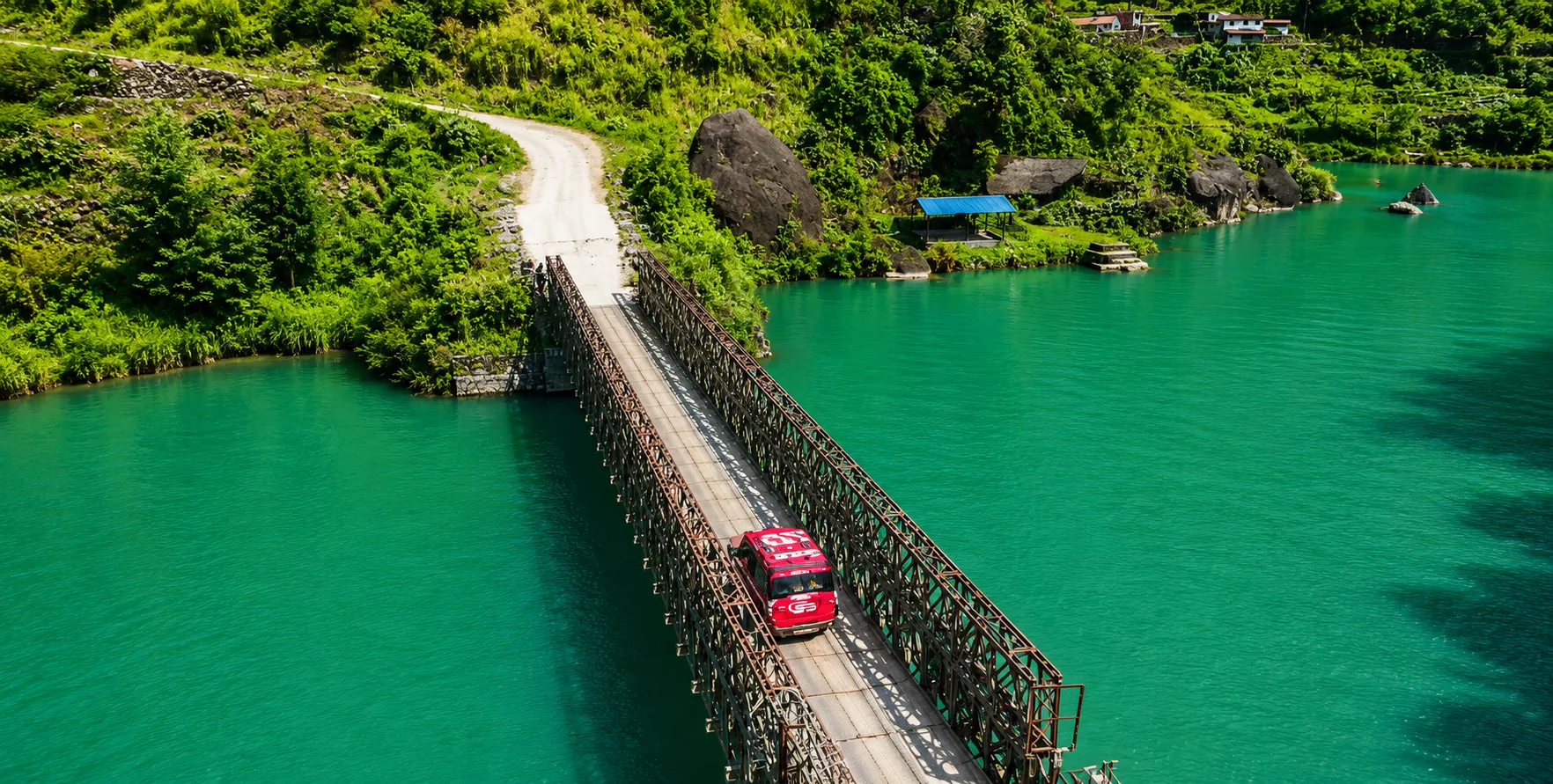
The Marsyangdi River Valley: Understanding the Road’s Character
The Marsyangdi River — the central geographic feature of the entire Kathmandu-to-Dharapani drive — is one of Nepal’s most powerful and most geologically active river systems. Originating from the glaciers of the Annapurna massif above Manang and descending more than 3,000 meters over approximately 110 kilometers to Besisahar, the Marsyangdi has carved one of the deepest and most dramatic river gorges in the central Himalayan range. Understanding the river’s geography is key to understanding why the Besisahar-to-Dharapani road behaves the way it does — why it is so rough, why it is so slow, and why it is so spectacular.
The Marsyangdi gorge between Besisahar and Dharapani represents one of the world’s most extreme examples of rapid river incision — the process by which a river cuts downward through rock faster than the surrounding landscape can erode laterally. The result is a gorge that is far deeper relative to its width than most river valleys, with walls that rise hundreds of meters almost vertically from the water. The road through this gorge had to be blasted and carved from those walls in many sections — which is why the Syange cliff section is so dramatically narrow, why the Jagat approach involves such precise driving, and why the road surface is so variable: it is continuously being undermined, damaged, and rebuilt by a river whose sediment load and energy are among the highest in Asia.
The monsoon season amplifies all of these characteristics dramatically. The Marsyangdi in flood — carrying a silty, brown sediment load that turns the river from its dry-season turquoise to an opaque coffee color — is a genuinely alarming natural force. It routinely destroys or undermines road sections, takes out suspension bridges, and creates entirely new channel geometries that road maintenance crews must respond to each post-monsoon season. This is why monsoon travel on the Besisahar-to-Dharapani road adds 1 to 2 hours of buffer time to any itinerary and why Nepal Vehicle Hiring’s monsoon-experienced drivers are so valuable — they know which sections are most vulnerable, which crossings to assess carefully, and when to wait for road clearance rather than pushing through.
For trekkers, understanding the Marsyangdi’s character also gives depth to the walking experience that begins at Dharapani. The gorge that the vehicle has fought through for 4 to 5 hours from Besisahar is the same gorge the trekking trail will follow upstream for the first several days of the circuit. The visual relationship between the road and the river — always present, always audible, always making the road’s existence feel unlikely — is one of the great geographical leitmotifs of the Annapurna Circuit experience.
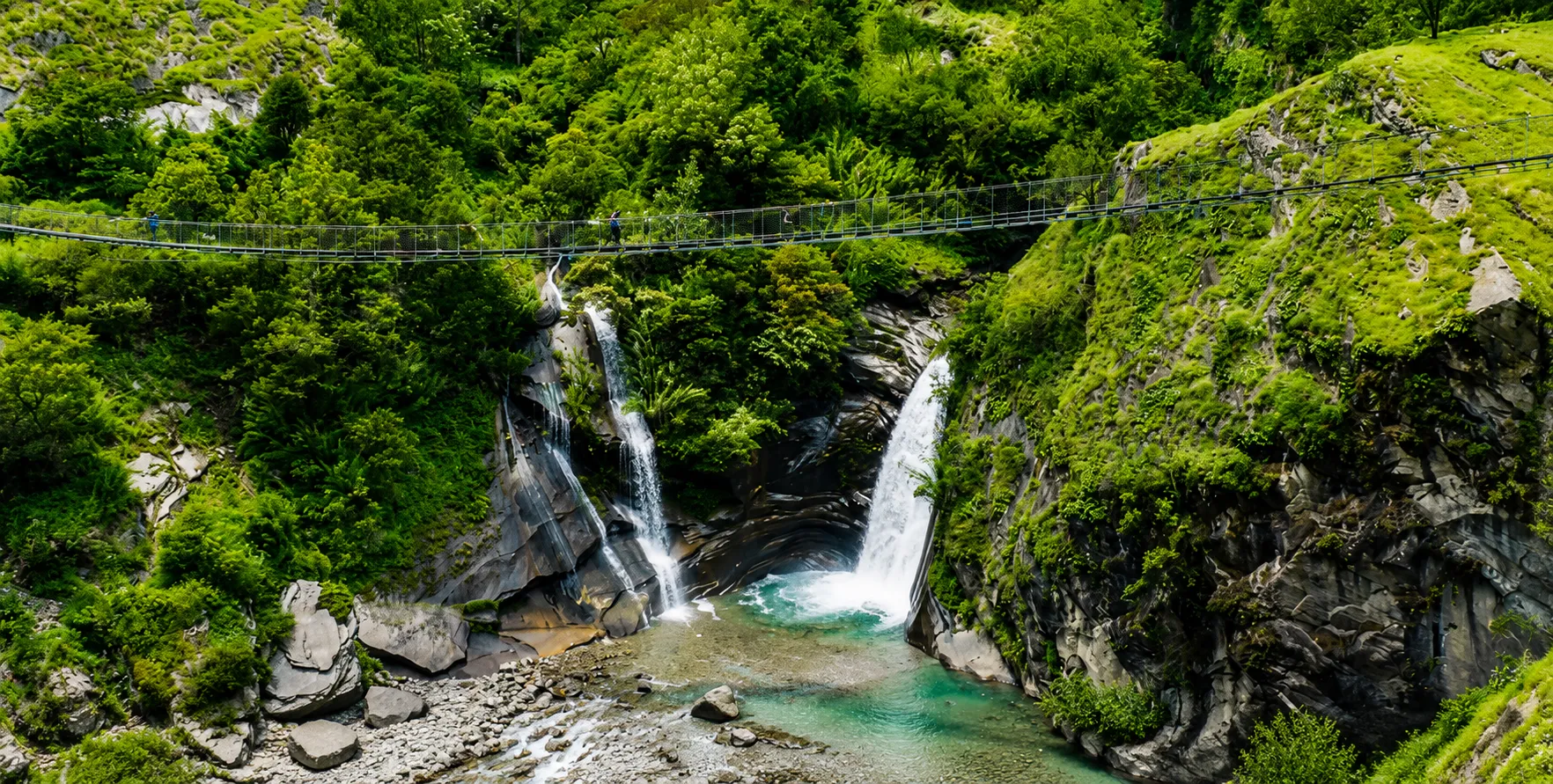
The Manaslu Connection: Why Dharapani Is a Double-Circuit Gateway
One of Dharapani’s most important and most underappreciated features is its position as the confluence point not just of two rivers but of two of Nepal’s finest trekking circuits. The Marsyangdi River, coming from the east, brings the Annapurna Circuit approaching from Besisahar. The Dudh Kho, coming from the west, st connects to the Manaslu Circuit, which approaches from Arughat and the Tsum Valley. Dharapani is the point where trekkers on these two circuits can meet — or where a trekker completing one circuit can begin the other.
The Manaslu Circuit is Nepal’s second most popular long-distance trekking circuit after the Annapurna Circuit, circling the world’s eighth-highest mountain (Manaslu at 8,163 m) through a restricted area that requires a dedicated Manaslu Circuit permit (USD 100 for the first week, USD 15 per day thereafter) and a mandatory licensed guide. The circuit connects to the Annapurna Circuit at Dharapani, making it possible to complete the Annapurna-Manaslu Grand Circuit — one of Nepal’s most ambitious and most rewarding multi-week trekking itineraries, covering both Thorong La (5,416 m) and Larkya La (5,160 m) passes across a journey of approximately 25 to 30 days.
For Nepal Vehicle Hiring clients, the Dharapani connection point means that Kathmandu-to-Dharapani vehicle hire serves not only Annapurna Circuit trekkers but also Manaslu Circuit trekkers approaching from the Annapurna side, Manaslu-Annapurna Grand Circuit trekkers, and trekkers who have completed the Manaslu Circuit and want a vehicle pickup at Dharapani for the Kathmandu return. Our private jeep hire covers the complete Dharapani pickup service — whether you arrive at Dharapani from the north (having trekked down from Chame and Bagarchhap) or from the west (having completed the Manaslu Circuit via Samagaon, Larkya La, and Tilje). Contact us through our plan your trip page to arrange a scheduled vehicle pickup at Dharapani at a specific date and time.
Practical Tips for the Kathmandu to Dharapani Drive in 2026
What to Pack in Your Day Bag for the Vehicle Journey
The9-9 to11-hourr Kathmandu-to-Dharapani drive crosses three distinct climate zones — Kathmandu’s urban warmth (1,350 m), the Trishuli and Marsyangdi valley heat (700 to 1,000 m at the lowest points), and the gradually cooling upper valley as you approach Dharapani (1,860 m). Keep the following accessible in your day bag rather than in your main trekking pack (which will be stored in the jeep’s luggage area or on the roof rack):
- Warm layer: a fleece or light down jacket for the Dharapani arrival, where late-afternoon temperatures are noticeably cooler than Kathmandu or the valley floor.
- Wate:s minimumliters for the mountain road section. The Besisahar-to-Dharapani drive has limited reliable water purchase points. Your Nepal Vehicle Hiring driver will advise on the last reliable water stop before the roughest sections.
- Snacks and trail food: the mountain road from Jagat to Dharapani (approximately 29 km, 2 to 2.5 hours) has very limited food stops. Carry trail bars, nuts, or local biscuits for this section.
- ACAP permit: keep it accessible in your day bag, not buried in your main pack. It is checked at Besisahar, Jagat, and Dharapani. Having to unpack luggage at each checkpoint adds time and inconvenience.
- Motion sickness medication: the switchback sections approaching Jagat and the cliff road at Syange produce significant lateral vehicle motion. Take medication before departure from Besisahar if you are susceptible.
- Offline maps: download Maps.me or Gaia GPS covering the Lamjung and Manang districts before leaving Kathmandu. Mobile signal is available at Besisahar and Jagat but patchy between these points.
- Cash in NPR: ideally withdraw from Kathmandu before departure. The Besisahar ATM is a backup (sometimes functional, sometimes out of cash). There is no reliable cash source between Besisahar and Chame.
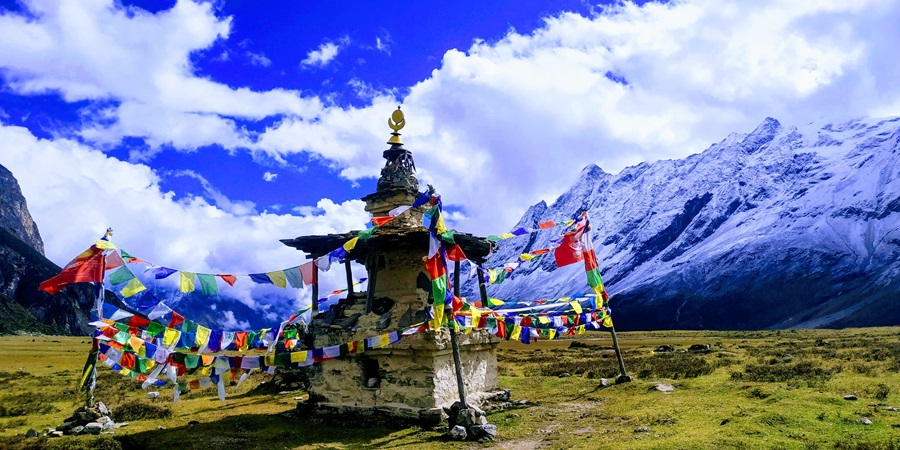
Photography Tips for the Drive
The Kathmandu-to-Dharapani road passes through some of the finest vehicle-accessible photography landscapes in the Annapurna region. Nepal Vehicle Hiring’s private jeep service allows stops at the photographer’s discretion — announce your interest when booking, and our driver will incorporate the following key photography stops into the journey:
- Malekhu gorge (approximately 48 km from Kathmandu): the early morning light on the Trishuli River in spring and autumn is exceptional — golden-hour quality even at 8:30 AM for a 6:30 AM departure.
- Mugling confluence (110 km): the visible meeting of the Trishuli and Marsyangdi rivers is best photographed from the bridge or the restaurant terraces overlooking the confluence.
- Syange cliff road (approximately 205 km from Kathmandu): the narrow cliff-carved road section with the Marsyangdi visible below is one of Nepal’s most dramatic road photography subjects. Brief safe stops are possible at wider points — your driver will identify the best.
- Chamche waterfall (approximately 210 km): visible directly from the road, the waterfall is best in morning light when it catches direct sun.
- Tal valley floor (approximately 213 km): the wide, flat former-lake valley with braided river channels and vertical rock walls offers one of the finest compositional opportunities of the entire drive. A 15 to 20 minute Tal stop provides time for multiple compositions.
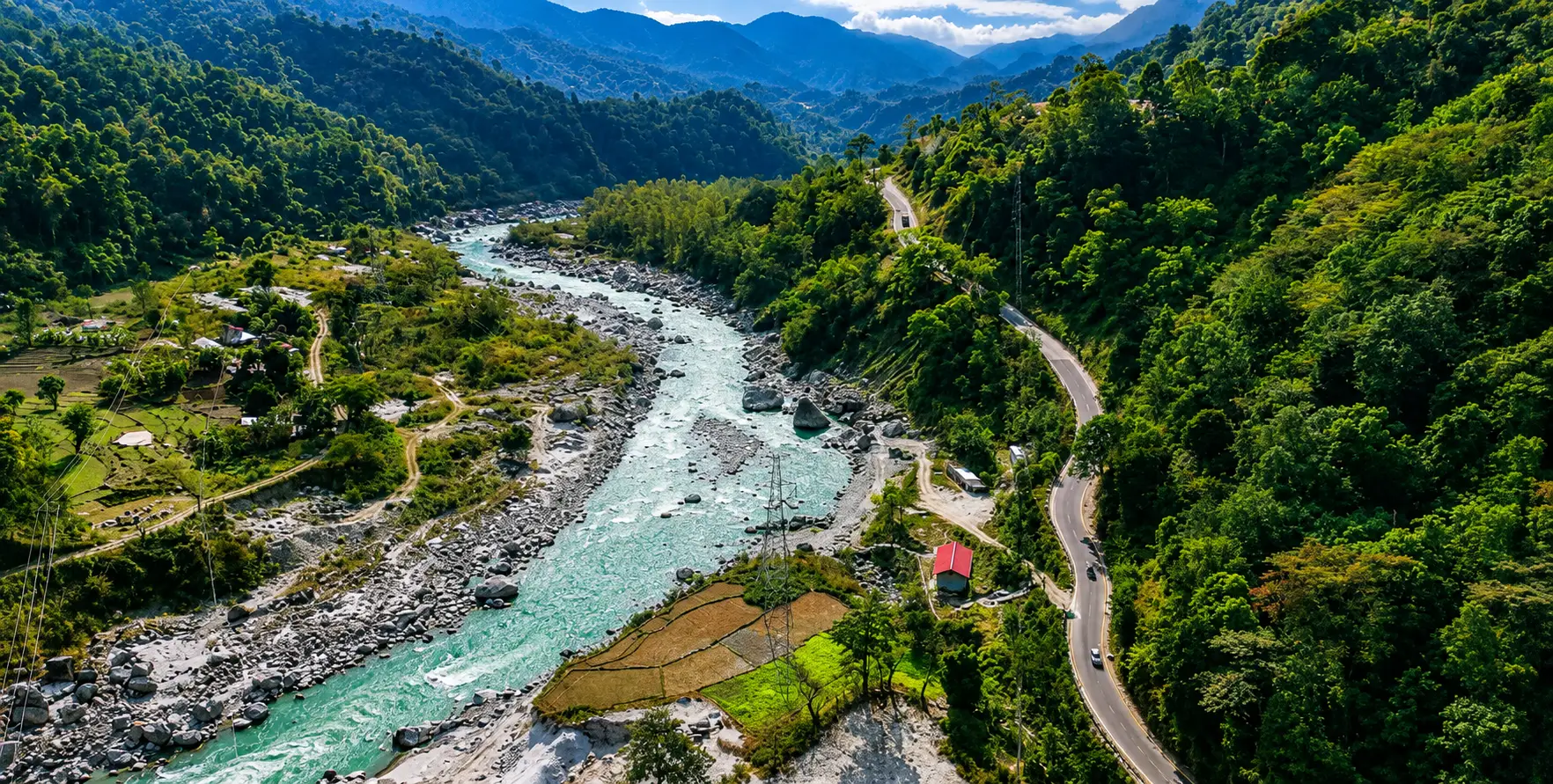
Managing the Besisahar Transfer for Groups
For large groups using Nepal Vehicle Hiring’s Hiace van hire for the Kathmandu-to-Besisahar highway section and 4WD jeeps from Besisahar onward, the Besisahar transfer requires 15 to 20 minutes of vehicle changeover — transferring luggage from the Hiace to the jeeps, briefing on the mountain road section, and finalizing the permit and fuel stops. Our operations team pre-coordinates this transfer to minimize transition time. Groups should be prepared for the more cramped conditions of the 4WD jeep compared to the Hiace — the per-person space is reduced, but the journey is shorter in km (57 to 62 km remaining) even though it takes similar time. The Besisahar lunch stop built in 30 minutes) makes the vehicle transition feel natural and unhurried.
Dharapani as an Overnight Stop: Guesthouses and Facilities
Most trekkers who arrive at Dharapani by vehicle from Kathmandu in the late afternoon (4:30 to 5:30 PM for a 6:30 AM departure) stay one night in Dharapani before beginning the first trekking day to Chame or Bagarchhap. Understanding what Dharapani offers as an overnight stop helps set appropriate expectations:
Dharapani has approximately 8 to 12 guesthouses ranging from very basic rooms with shared facilities (NPR 300 to 500 per person) to more comfortable lodge-style accommodation with attached bathrooms (NPR 700 to 1,200). The quality gap between Dharapani’s best and worst guesthouses is not enormous — this is a genuine mountain trailhead village rather than a tourist resort — but arriving before 5:00 PM gives you first choice of the better rooms. Popular guesthouses in Dharapani include Himalayan Guest House, New Annapurna Guest House, and Hotel Dharapani — your Nepal Vehicle Hiring driver will know current recommendations based on recent passenger feedback.
Food in Dharapani is honest and adequate: dal bhat is the staple and is reliably good, with vegetable curry, lentil soup, rice, and seasonal pickle. Western trekker food (pasta, pancakes, fried potatoes, noodle soup) is available but of variable quality at this altitude and in this location. The dal bhat at almost any Dharapani guesthouse is the nutritionally and culinarily correct choice for the evening before a full day of trekking. Local water is available — treat or boil it if you have any doubts; bottled water is available but environmentally costly at the quantities trekkers consume.
The Dharapani permit checkpoint closes at approximately 5:00 to 5:30 PM local time. Trekkers arriving after this hour will need to register at the checkpoint the following morning before beginning the trail. Nepal Vehicle Hiring’s 6:30 AM departure timing is specifically designed to ensure most clients arrive at Dharapani before the checkpoint closes — confirming one less logistical issue the following morning.
Mobile signal at Dharapani is available but limited — Nepal Telecom has better coverage than private operators. If you need to make calls or check messages before beginning the circuit, do so from Dharapani’s main street rather than from the guesthouse rooms, which may be in a lower-signal area. Above Dharapani, mobile signal becomes progressively less reliable until you reach Chame (good signal) and then Manang (reasonable Nepal Telecom signal).
Comparing Dharapani with Other Annapurna Circuit Starting Points
The question of where to begin the Annapurna Circuit has evolved significantly since the road network expanded, and the answer in 2026 is different from the answer that guided trekkers a decade ago. Here is the complete comparison of all viable vehicle-accessible starting points:
Besisahar (760 m) — Traditional Start, Now Less Recommended
Besisahar was the traditional Annapurna Circuit starting point for decades — the end of the bus line, the beginning of the trail. Today, starting at Besisahar means walking alongside a jeep road for 3 to 4 days through villages that are still interesting but whose trail quality has been compromised by the road construction. The Nepal Vehicle Hiring Besisahar private vehicle service delivers trekkers to Besisahar efficiently for those who specifically want to walk the lower circuit; most trekkers in 2026 are better served by continuing to Jagat or Dharapani.
Jagat (1,300 m) — A Good Intermediate Option
Jagat is a useful compromise — below the busiest vehicle traffic sections but above the least rewarding lower valley walking. Trekkers starting at Jagat walk the Chamche waterfall, Tal valley, and upper gorge sections (approximately 29 km to Dharapani) while skipping the Besisahar-to-Jagat road parallel section. Nepal Vehicle Hiring’s private jeep hire can be booked with Jagat as the drop-off point, typically at a slightly lower cost than the full Dharapani service given the shorter mountain road section.
Dharapani (1,860 m) — The 2026 Recommended Start
Dharapani is the current consensus recommendation for most Annapurna Circuit trekkers in 2026 — experienced enough guides, trekking operators, and individual trekkers have now evaluated the post-road circuit experience sufficiently to reach this conclusion. Starting at Dharapani provides: immediate entry into the circuit’s finest wilderness walking (from Dharapani to Chame, the road is minimal and the environment is genuinely wild); 3 to 4 days of saved trekking time (allowing more time at Manang and Tilicho Lake); a higher starting altitude that improves the acclimatisation profile for Thorong La; and the psychological benefit of stepping out of the vehicle directly onto a proper mountain trail rather than into a road-parallel path.
Chame (2,670 m) — For the Most Time-Pressed Trekkers
Trekkers with very limited time sometimes ask about driving all the way to Chame rather than Dharapani — and Nepal Vehicle Hiring’s Kathmandu to Manang jeep service does serve trekkers who want to start at Chame or even at Pisang (3,200 m) or Manang (3,519 m). This approach maximizes the time available for the upper circuit but removes the context-building journey through the lower valley that makes the upper circuit’s scale feel earned. For a 7 to 10 day trek that focuses exclusively on the Manang-Thorong La section, a Chame or Manang start via our Kathmandu to Manang jeep service is entirely valid.
- Kathmandu to Dharapani Private Vehicle Hire: Complete 2026/27
- Kathmandu to Dharapani: Distance and Time at a Glance
- Kathmandu to Dharapani: Complete Section-by-Section Road Guide
- Why Start the Annapurna Circuit at Dharapani?
- Vehicle Options for the Kathmandu to Dharapani Journey
- Key Villages Between Kathmandu and Dharapani: What to Know
- Permits Required for the Kathmandu to Dharapani Journey
- Best Time for the Kathmandu to Dharapani Drive
- Optimal Departure Timing from Kathmandu for Dharapani
- Beyond Dharapani: The Annapurna Circuit Ahead
- Nepal Vehicle Hiring: Complete Annapurna Circuit Transport
- Frequently Asked Questions: Kathmandu to Dharapani Vehicle Hire
- Book Your Kathmandu to Dharapani Private Vehicle with Nepal Vehicle Hiring
- The Marsyangdi River Valley: Understanding the Road's Character
- The Manaslu Connection: Why Dharapani Is a Double-Circuit Gateway
- Practical Tips for the Kathmandu to Dharapani Drive in 2026
- Dharapani as an Overnight Stop: Guesthouses and Facilities
- Comparing Dharapani with Other Annapurna Circuit Starting Points

Related Blog & Articles

Besisahar to Dharapani Jeep Hire – Complete 4WD Transfer Guide for Annapurna Circuit Trekkers
ACAP Permit – The Annapurna Conservation Area Entry Pass: Complete Guide

Annapurna Circuit Jeep Tours Nepal
Besisahar to Chame and Upper Pisang Jeep