Plan a Trip


Kathmandu to Syabrubesi Road Overview
Kathmandu to Syabrubesi Road Overview 2026: Complete Guide
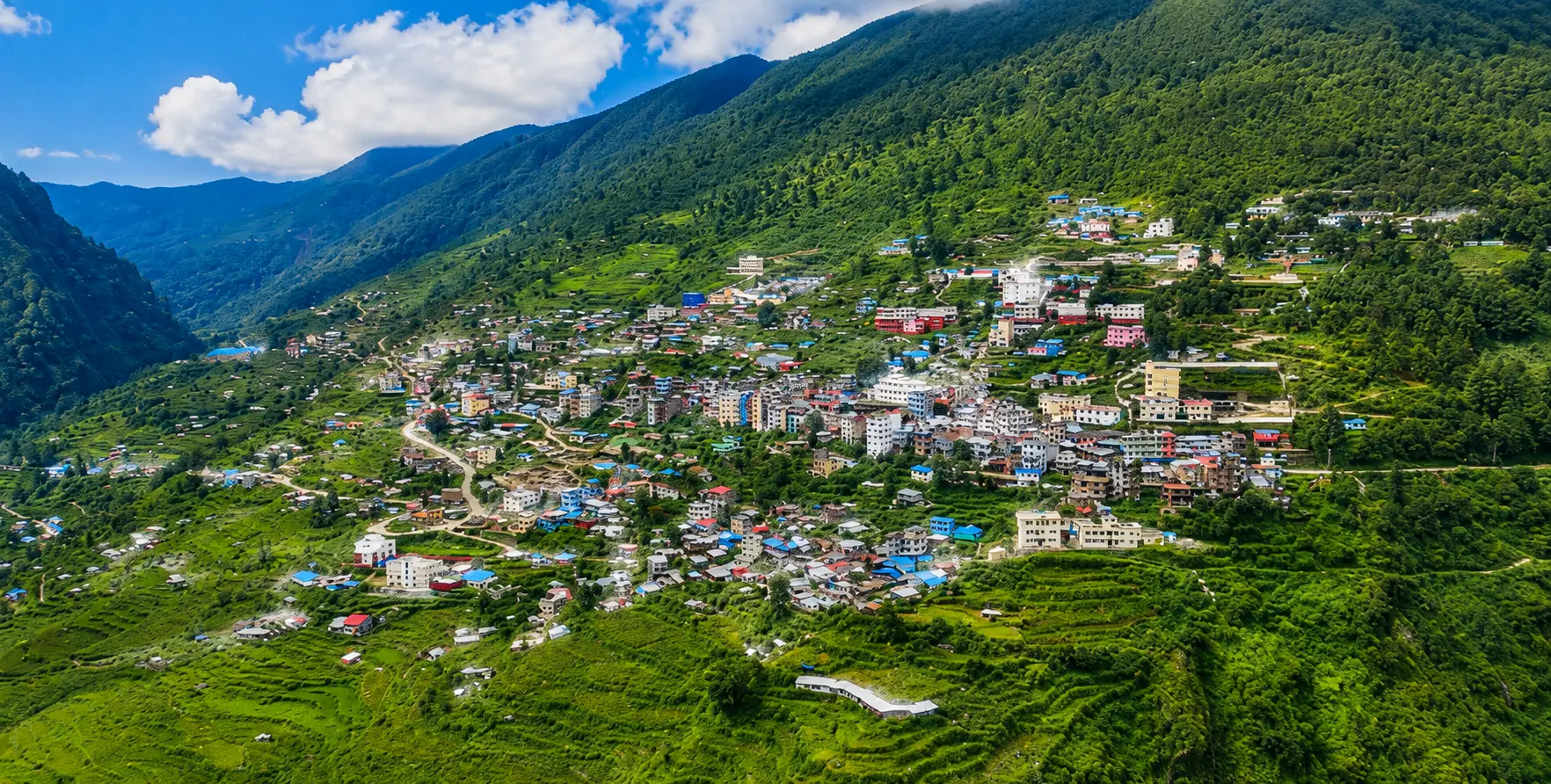
Few road journeys in Nepal pack as much transformation into as few kilometers as the drive from Kathmandu to Syabrubesi. In approximately 122 kilometres — a distance that takes between 6 and 9 hours depending on the vehicle and conditions — the road carries you from Kathmandu’s urban sprawl at 1,350 metres through the sculpted mid-hill country of the Trishuli valley, up through dense pine and rhododendron forest to the gateway of Langtang National Park at Dhunche, and then steeply down to the confluence of the Langtang Khola and the Bhote Koshi River at Syabrubesi — the starting point for three of Nepal’s most rewarding and under-visited trekking routes.
Syabrubesi (1,460–1,550 m) is the gateway village to the Langtang Valley Trek, the Gosaikunda Lake Trek, and the Tamang Heritage Trail — three routes that collectively offer some of Nepal’s finest mountain scenery, Tamang cultural encounters, and high-altitude lake and glacier experiences, all within 60 to 70 kilometers of Nepal’s capital. Unlike the Annapurna or Everest regions, the Langtang area receives a fraction of the trekking traffic its quality deserves, giving visitors a more intimate and uncrowded mountain experience. And unlike those regions, there are no domestic flights to Syabrubesi — no Lukla-equivalent shortcut. Road transport is the only way in and out, which makes understanding the Kathmandu to Syabrubesi road overview an essential first step for every Langtang trekker.
Nepal Vehicle Hiring Pvt. Ltd., based in Thamel, Kathmandu, provides the finest private vehicle service on this route — comfortable 4WD jeeps with experienced Langtang-road drivers, all-in transparent pricing, and hotel door pickup that eliminates the early morning hassle of getting from Thamel to the public bus park. This complete 2026 road overview covers the three available route options, every significant stop between Kathmandu and Syabrubesi, the road conditions section by section, the transport options available at every price point, the permits required, seasonal considerations, and the full range of Nepal Vehicle Hiring services that support the Langtang trekking experience from arrival in Kathmandu to trailhead departure and return.
Whether you are planning the Langtang trekking approach as part of a broader Nepal tour package or heading directly to the Langtang trailhead from your Kathmandu airport transfer, this is everything you need to know about the road to Syabrubesi in 2026.
Syabrubesi: Gateway to the Langtang Region
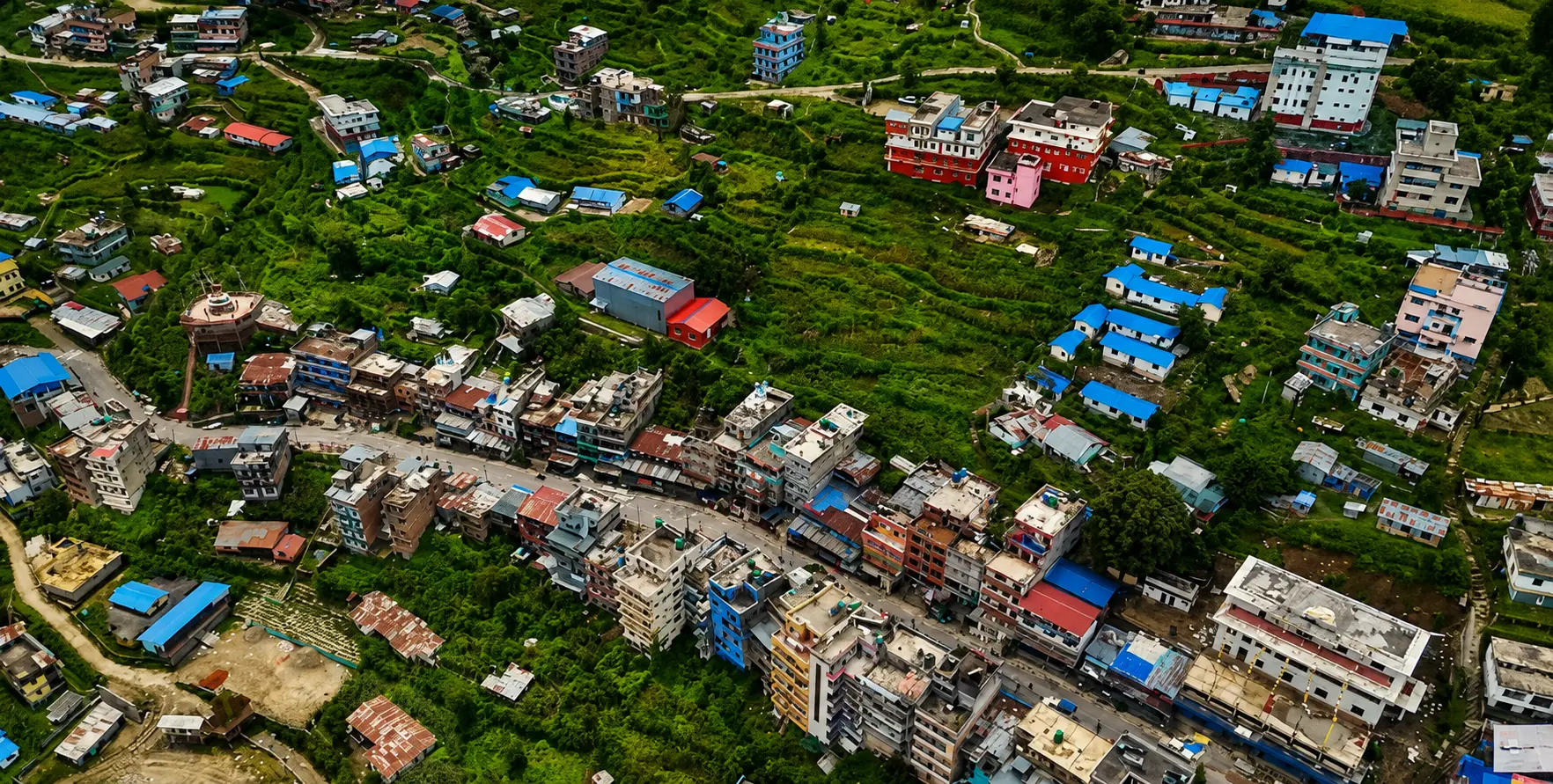
Before diving into the road itself, it helps to understand why Syabrubesi matters so much as a destination. The village — which is actually a cluster of related settlements including Thulo Syabru, Sanu Syabru, and the main Syabrubesi riverside strip — sits at the confluence of two powerful rivers: the Langtang Khola coming down from the glaciers of the Langtang Himal to the northeast, and the Bhote Koshi descending from the Rasuwagadhi–Kerung border with Tibet to the north. This geographic position makes Syabrubesi simultaneously a trekking trailhead, a Tibet border transit point, and a Tamang cultural community — three overlapping identities that give the village a character unlike any other mountain gateway in Nepal.
The three trekking routes that originate at Syabrubesi each offer distinct experiences:
- Langtang Valley Trek: 7 to 10 days. The primary Langtang route follows the Langtang Khola northeast to Langtang Village (3,430 m) and Kyanjin Gompa (3,870 m) beneath the great wall of Langtang Lirung (7,227 m) and other Langtang Himal peaks—one of Nepal’s finest shorter treks — compact in duration but outstanding in scenery and cultural richness.
- Gosaikunda Lake Trek: 10 to 14 days. A high-altitude circuit that climbs from Syabrubesi through the Tamang Heritage Trail villages of Gatlang and Tatopani before ascending to Gosaikunda Lake (4,380 m) — a sacred Hindu and Buddhist lake that draws pilgrims during the Janai Purnima festival in August. The route crosses the Lauribina La Pass (4,610 m) and descends to the Helambu region.
- Tamang Heritage Trail: 7 to 12 days. A cultural circuit through the Tamang villages of the Rasuwa hills, including Gatlang, Tatopani, Thuman, Lingling, Briddim, and Syabru Bensi — showcasing Tamang Buddhism, traditional mud-and-stone architecture, and the living folk culture of one of Nepal’s most distinctive indigenous communities.
Syabrubesi’s infrastructure for trekkers is basic but adequate — a main roadside strip of guesthouses, teahouses, equipment shops, and travel agents that cater primarily to independent trekkers rather than organized group tours. Permit checks (Langtang National Park entry permit and licensed guide verification) take place at the checkpoint at the village’s northern edge, where the trail begins in earnest. Nepal Vehicle Hiring’s trekking transport services drop trekkers directly at the Syabrubesi main street, eliminating the need for any additional local transport on arrival.
The Three Routes from Kathmandu to Syabrubesi: Which Should You Take?
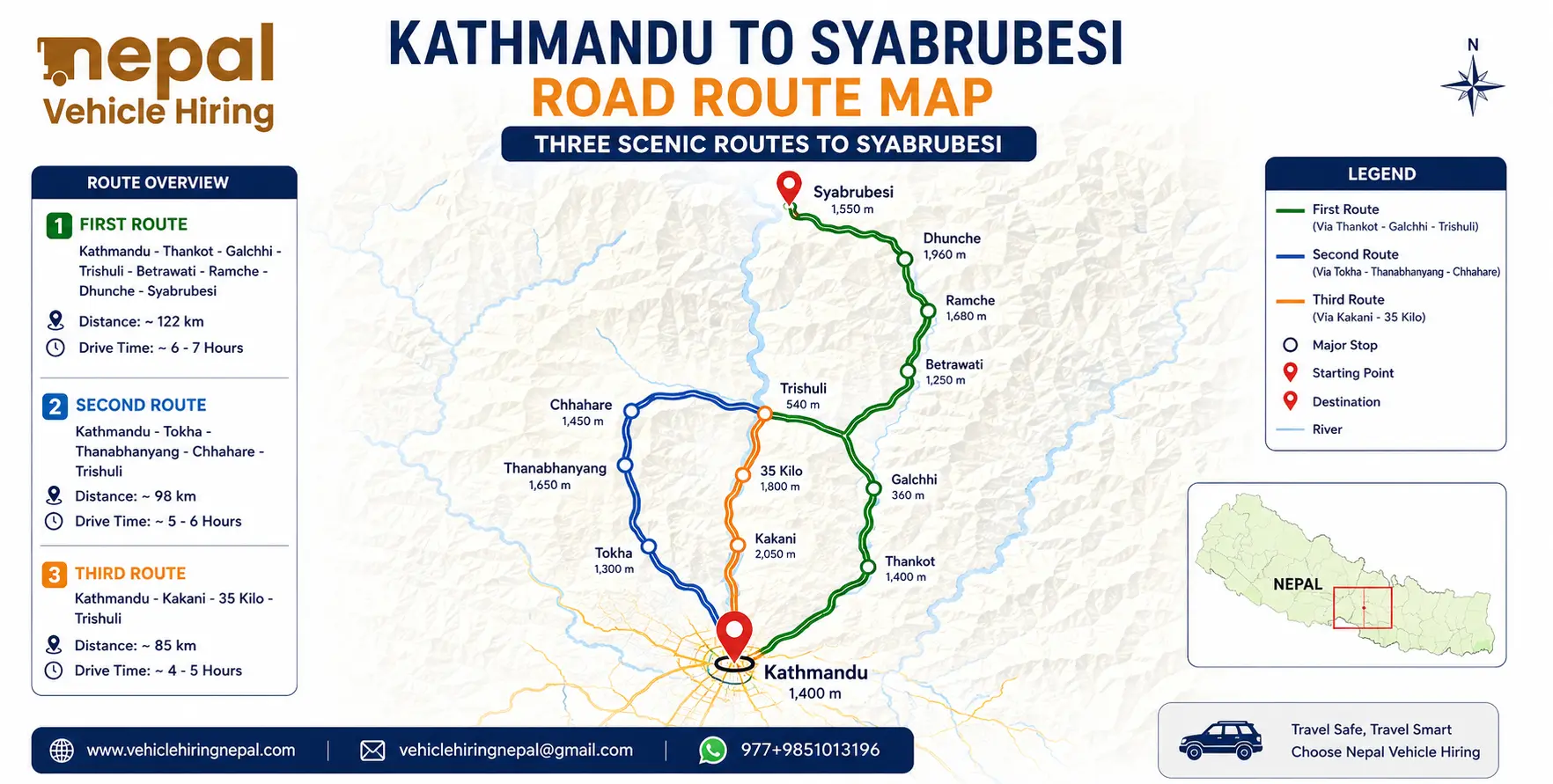
One of the most important — and least-discussed — aspects of the Kathmandu to Syabrubesi road overview is that there are actually three distinct route options between the capital and the Langtang trailhead, each with different distances, road quality profiles, and travel time implications. Understanding these three routes allows you to choose the best approach for your vehicle type, schedule, and preference.
Route A: The Galchhi Route (via Prithvi Highway Junction) — 130 to 141 km.
Route A is the most commonly used approach and the one followed by all public buses from Machhapokhari Bus Park. The journey begins by heading west from Kathmandu on the Prithvi Highway — the main Kathmandu–Pokhara highway — for approximately 35 kilometers to the Galchhi junction (800 m), where the road turns north onto the Pasang Lhamu Highway (also known as the Trishuli–Dhunche road or F070). From Galchhi, the route follows the Trishuli River northward through Trishuli Bazaar (870 m), Betrawati (1,000 m), Ramche, and Dhunche (2,030 m) before the final descent to Syabrubesi.
Total road distance on Route A: approximately 130 to 141 kilometers depending on the exact path through Kathmandu. Estimated travel time: 7 to 9 hours by private jeep or 8 to 11 hours by public bus including stops. This route passes through the most significant towns on the approach (Trishuli Bazaar, Betrawati), where meals, fuel, and supplies are available, making it the most self-sufficient route for any vehicle type.
Route A is the recommended route for all Nepal Vehicle Hiring private jeep services to Syabrubesi. It provides the best road quality for the Kathmandu-to-Trishuli section, the most scenic river valley drive along the Trishuli, the clearest Himalayan view corridor near Kalikasthan (where Ganesh Himal and Langtang Lirung appear on clear mornings), and the most reliable fuelling and meal options throughout the journey.
Route B: The Kakani Route — 130 km
Route B takes the Kakani road north from Kathmandu rather than the Prithvi Highway west, joining the main Pasang Lhamu Highway at or near Galchhi or Betrawati after descending from the Kakani hill station (2,070 m). This route is approximately the same total distance as Route A (around 130 km. It offers the scenic bonus of passing through Kakani’s rhododendron forests and viewpoint at the start of the journey—with views of Manaslu, Ganesh Himal, and Langtang Lirung on clear mornings that set a spectacular tone for the day ahead.
The Kakani route is preferred by Nepal Vehicle Hiring’s private jeep drivers for clients who request a scenic early morning departure—the climb to Kakani Ridge in the first light of day, with the Himalayan panorama glowing above the foothills, is one of the finest accessible mountain views within 30 kilometers of Kathmandu. It adds minimal time compared to Route A while delivering a genuinely memorable first hour of the journey. The road from Kathmandu to Kakani and then down to Galchhi is well-maintained blacktop.
Route C: The Tokha–Bidur Route — 105 km (Shorter but Rougher)
Route C takes the Tokha–Suryachaur–Kispang–Nuwakot road north from Kathmandu, passing through the historic Nuwakot District before joining the main Trishuli–Dhunche road near Betrawati. At approximately 105 kilometers, this is the shortest of the three routes on paper — saving 20 to 35 kilometers compared to Routes A and B. However, the time saving is largely illusory in practice: the Tokha-to-Bidur section of this route is narrower, rougher, and more seasonally vulnerable than the Prithvi Highway section of Route A, and the road quality through Nuwakot District can be significantly worse, particularly after monsoon.
Experienced drivers occasionally use Route C during heavy Prithvi Highway traffic days and can be quicker in dry conditions. However, for most travelers, Nepal Vehicle Hiring recommends Route A or Route B as more reliable and comfortable approaches. Route C is unsuitable for standard cars — only 4WD vehicles with high ground clearance should attempt it — and is particularly inadvisable during or immediately after the monsoon season when the Nuwakot District mountain road can be seriously damaged.
Section-by-Section Road Guide: Kathmandu to Syabrubesi via Route A
The following section-by-section breakdown follows the primary Route A — Kathmandu via Galchhi and the Pasang Lhamu Highway — which is the standard approach used by Nepal Vehicle Hiring and by all public buses. Altitudes, distances, and road quality information are based on current 2026 conditions.
Kathmandu to Galchhi Junction (35 km, 1 to 1.5 hours, Prithvi Highway)
The journey begins by heading west from Thamel on the Prithvi Highway — Nepal’s main arterial highway connecting Kathmandu to Pokhara. This section is fully paved, well-maintained, and shared with heavy truck and bus traffic heading to Pokhara and the western regions. Road quality is generally good, though the Kathmandu exit can be significantly congested during morning rush hours (7:30 to 9:30 AM). An early 6:30 AM departure from Thamel clears the worst of Kathmandu’s traffic and reaches Galchhi junction by approximately 8:00 to 8:15 AM. At Galchhi, the Prithvi Highway continues west, and our route turns north onto the Pasang Lhamu Highway.
For private vehicle clients using Nepal Vehicle Hiring’s Kathmandu airport transfer combined with the next-day Syabrubesi departure, the 6:30 AM pickup from your Thamel hotel means you are on the Prithvi Highway before the worst of the morning traffic, reaching Galchhi and turning north while the road is still relatively clear. This timing advantage, only available with a private vehicle, means you arrive in Syabrubesi by early to mid-afternoon rather than approaching sunset.
Galchhi to Trishuli Bazaar (18 km, 45 to 60 minutes)
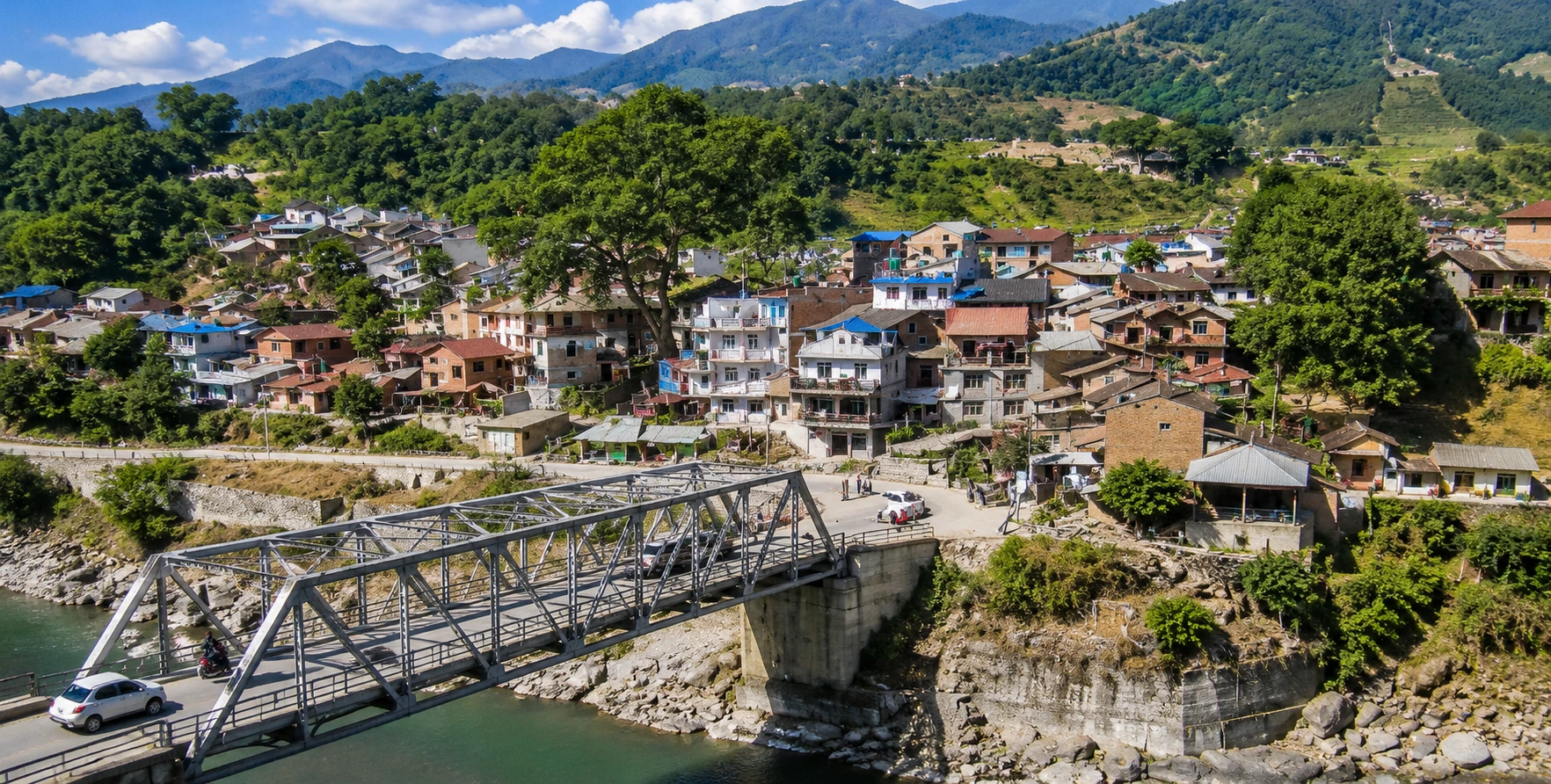
From the Galchhi junction, the Pasang Lhamu Highway turns north and begins following the Trishuli River upstream through a widening gorge. The road passes through Galchhi town (800 m) — a riverside settlement with fuel stations, vehicle repair workshops, and restaurants that serve the first proper services stop after Kathmandu — before continuing to Trishuli Bazaar (870 m). The 18-k18-kilometertion from Galchhi to Trishuli Bazaar follows the river closely, with several points offering excellent views of the Trishuli’s swift green water flowing through the gorge below the road. This section is fully paved and in reasonable condition, though sections near the riverbank can be affected by monsoon flood damage.
Trishuli Bazaar is the largest town on the Kathmandu–Syabrubesi road and a traditional breakfast stop for drivers who begin from Kathmandu before 7 AM. The town has a lively market atmosphere, several reasonable restaurants, fuel stations, and is the last place with a substantial commercial presence before the road enters the Langtang approach zone. Nepal Vehicle Hiring clients typically stop here for 20 to 30 minutes for breakfast — fresh tea, eggs, dal bhat, or momos from the riverside restaurants that line the main street. The Trishuli River at this point is a popular white-water rafting destination (Class III to IV rapids), and you may see inflatable rafts and kayaks being prepared on the river bank, particularly during the prime rafting season of October to November.
Trishuli Bazaar to Betrawati (12 km, 30 to 40 minutes)
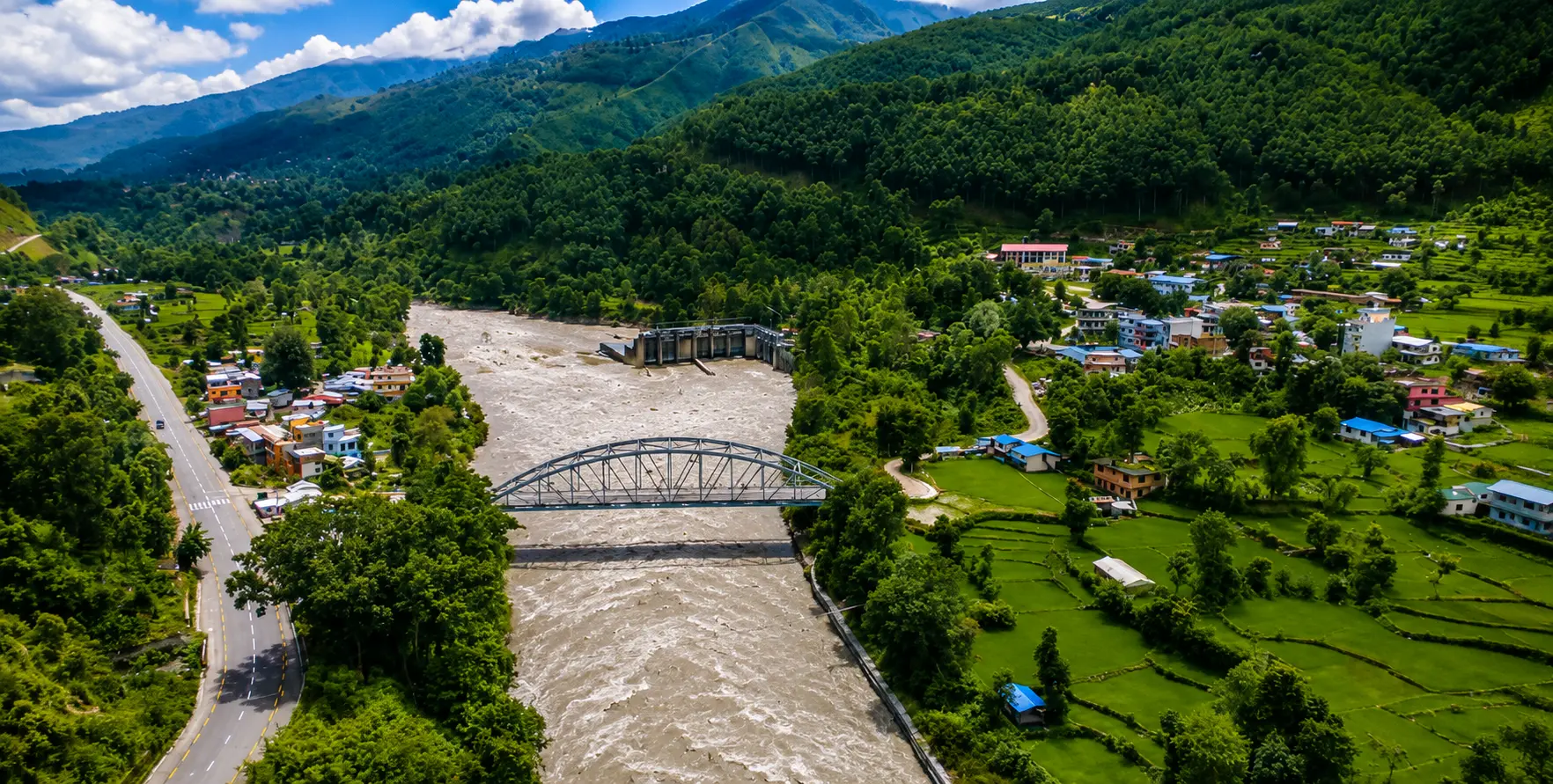
The 12-kilometer section from Trishuli to Betrawati (1,000 m) continues along the river before the road crosses to the eastern bank. Betrawati is a significant stop point — historically important as the location where vehicle permits and registration were checked for road trips northward (though the checkpoint process has been simplified in recent years). The town marks the beginning of the sustained climb toward Dhunche, and here the road leaves the river valley and begins ascending into the mid-hill country of the Rasuwa District.
A key logistical note: vehicle registrations and permits are checked at Betrawati for all vehicles heading northward. Nepal Vehicle Hiring’s drivers carry all required vehicle documentation and will handle any checkpoint formalities without requiring passengers to be involved. This checkpoint typically takes 2 to 5 minutes and does not significantly delay private vehicle travel.
Betrawati to Dhunche (50 km, 2 to 2.5 hours)
The Betrawati to Dhunche section is the longest and most scenically dramatic stretch of the Kathmandu–Syabrubesi route — 50 kilometers of mountain road climbing from 1,000 meters to 2,030 meters through a landscape of progressive beauty. The road passes through Ramche (approximately 1,600 m) — a mid-point village with a popular tea stop and excellent views north toward the Langtang range — before continuing through the forested highlands to Dhunche.
The viewpoint near Kalikasthan — approximately 15 to 20 kilometers north of Betrawati — is one of the road’s finest scenic moments. On a clear morning (particularly in autumn or spring), the peaks of Ganesh Himal (7,422 m) to the northwest and Langtang Lirung (7,227 m) directly north are clearly visible above the forested ridgelines. This is the first direct view of the Langtang massif from the road, and for many trekkers it is the moment when the scale and quality of the destination ahead becomes viscerally real. Nepal Vehicle Hiring drivers will pause at the best viewpoint for photographs — something public buses never do.
The road from Ramche to Dhunche passes through sections of pine and rhododendron forest — in spring (March to April) the rhododendrons bloom in vivid red and pink along the road’s upper sections, creating one of the finest roadside botanical displays in Nepal. Dhunche (2,030 m) itself is the administrative headquarters of Rasuwa District — a proper mountain hill town with government offices, a hospital, lodges, restaurants, fuel, and the Langtang National Park ACAP entry checkpoint where national park entry fees are collected. The road quality from Betrawati to Dhunche is variable — the lower section is reasonable but deteriorates in the upper sections, which are rougher, narrower, and more affected by monsoon landslides. Overall, this is the section that most distinguishes a private 4WD jeep experience from a public bus: the narrower sections and steeper climbs are handled very differently by the two vehicle types.
Dhunche to Syabrubesi (15 km, 1 to 1.5 hours)
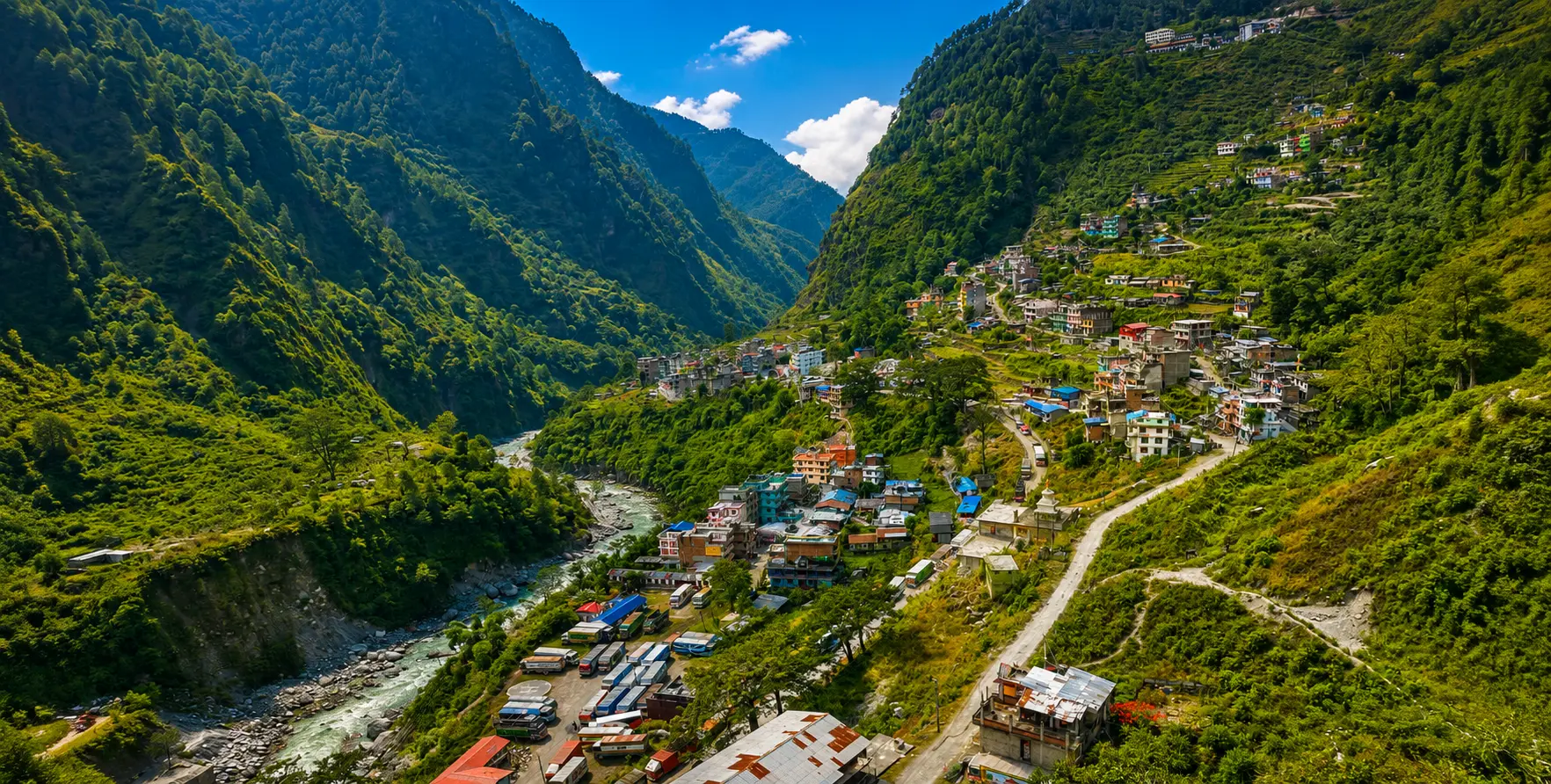
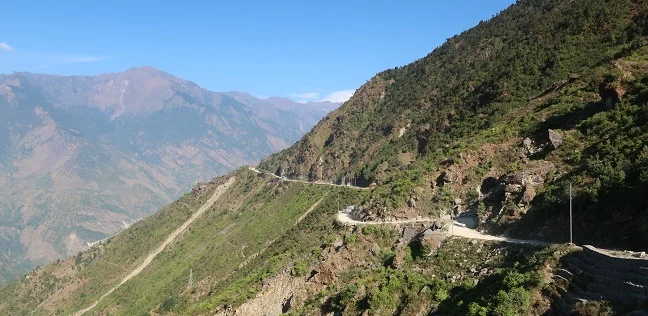
The final section from Dhunche to Syabrubesi covers only 15kilometerss. Still, it takes a surprisingly long 1 to 1.5 hours — a result of a steep, narrow descent on a road that switchbacks dramatically down from Dhunche’s ridge at 2,030 meters to the river confluence at Syabrubesi’s 1,460 meters. This 570-meter descent in 15 kilometers produces some of the most switchback-intensive driving on the entire Kathmandu–Syabrubesi route and is one of the primary reasons standard cars are unsuitable for this route — the gradient and road width demand proper mountain-vehicle capability.
The views during the Dhunche descent are extraordinary — looking northeast toward the Langtang II massif (6,596 m) and into the opening of the Langtang Valley that the coming days’ trekking will explore. The road descends through mixed forest of pine, fir, bamboo, and oak before arriving at Syabrubesi’s main strip along the river bank. Syabrubesi itself straddles the junction of the Langtang road (heading northeast) and the Tibet border road (continuing north to Rasuwagadhi), giving the village the dual character described in the introduction — simultaneously a trekking gateway and a border transit point.
Road Conditions on the Kathmandu to Syabrubesi Route in 2026
The road from Kathmandu to Syabrubesi encompasses the full spectrum of Nepal’s road quality, from excellent national highway to challenging mountain track, and understanding what to expect at each section saves both disappointment and genuine travel delays.
Kathmandu to Galchhi: Prithvi Highway Quality
The Prithvi Highway section from Kathmandu to Galchhi is Nepal’s finest highway — well-maintained blacktop, two lanes in most sections (with expansion to four lanes underway in some sections), and minimal technical driving challenges. Any vehicle type can handle this section. The main issue is Kathmandu exit traffic, which can add 30 to 90 minutes to this section during morning rush hour (7:30 to 9:30 AM). Private vehicle hire with Nepal Vehicle Hiring uses the 6:30 AM departure window specifically to avoid this delay.
Galchhi to Trishuli: Good Condition
The Pasang Lhamu Highway from Galchhi to Trishuli Bazaar is in reasonable condition — paved but narrower than the Prithvi Highway, with some surface variations and occasional potholes—no 4WD requirement for this section. The road follows the river closely and is susceptible to monsoon flood debris and occasional landslides in the sections closest to the river bank. Road repair is ongoing as of 2026.
Trishuli to Betrawati: Moderate Quality
This section is predominantly paved but includes sections of older, rougher road surface that have not been resurfaced recently. The checkpoint at Betrawati is straightforward. The road quality is adequate for standard vehicles in dry conditions but benefits from 4WD capability in wet weather, particularly on steeper gradient sections near the upper end of this leg.
Betrawati to Dhunche: Variable — the Key Section
This is the most variable section of the entire Kathmandu–Syabrubesi road in terms of quality. The lower section (Betrawati to approximately Ramche) is rough but passable. The upper section (Ramche to Dhunche) is the most challenging — steeper gradient, narrower width, more frequent landslide-prone areas, and less consistent surface quality. This section is where 4WD becomes genuinely important, and where the difference between a private Nepal Vehicle Hiring jeep and a public bus experience is most stark. After monsoon (September to November), this section may have temporary repairs on landslide-affected points that are functional but rough.
Road improvement works are ongoing on the Betrawati–Dhunche section in 2026, with sections of new surfacing appearing alongside older rough stretches. The overall direction of improvement is positive, but complete surfacing of this section is not expected before 2027 at the earliest. For now, a quality 4WD with an experienced driver is the vehicle specification that handles it most comfortably.
Dhunche to Syabrubesi: Narrow Switchback Descent
The Dhunche-to-Syabrubesi descent is technically challenging but short. The narrow switchbacks and steep gradient require careful, practiced mountain road driving — the type of skill that Nepal Vehicle Hiring’s Langtang-route drivers develop over many trips, and that an inexperienced driver attempting this road for the first time would find genuinely demanding. The road is paved in sections but includes rough patches, particularly near the valley-floor approach to Syabrubesi, where the road crosses streams and runs close to the river bank.
After heavy rain, the descent can be affected by small landslides and surface water crossing the road. Nepal Vehicle Hiring monitors road conditions daily during monsoon and will advise clients of any closures or significant delays before departure.
Transport Options from Kathmandu to Syabrubesi: Full Comparison 2026
Every traveler heading to the Langtang region faces the same transport choice at the outset of their adventure: which vehicle to take from Kathmandu to Syabrubesi. Here is the complete, honest comparison of all available options for 2026:
Option 1: Local Public Bus (Budget — NPR 800 to 1,000)
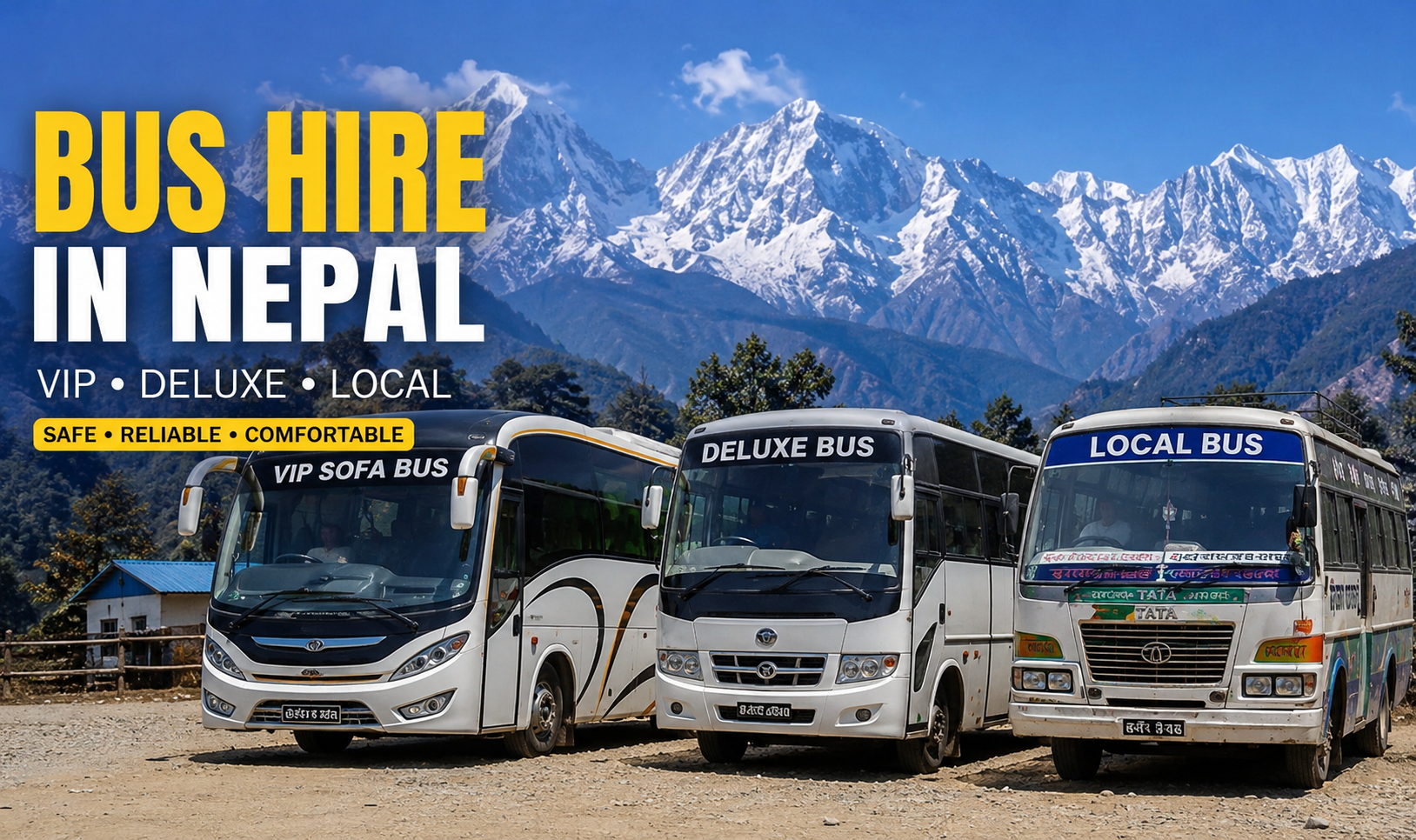
Local public buses from Machhapokhari Bus Park (Balaju) — also called Gongabu Bus Park — depart for Syabrubesi daily from approximately 6:00 to 8:00 AM. Fares: NPR 800 to 1,000 per person (USD 6 to 7.50). Journey time: 8 to 11 hours, including multiple passenger pickup stops, meal breaks, and the characteristic Nepali bus pace of stopping whenever flagged from the roadside. The local bus is the cheapest available option and an authentic cultural experience — you will be traveling alongside Tamang hill-farmers, Rasuwa District government workers, trekking supplies carriers, and the occasional student. The bus has basic seating, no reserved seats, and limited (or non-existent) luggage compartment space for large trekking bags. Buses depart from Machhapokhari Bus Park, approximately 15 to 20 minutes by taxi from Thamel — requiring an early morning taxi to the bus park before the bus itself departs. The local bus is suitable for solo budget trekkers comfortable with long, slow travel in basic conditions.
Option 2: Shared Jeep (Mid-Range — NPR 1,200 to 1,500)
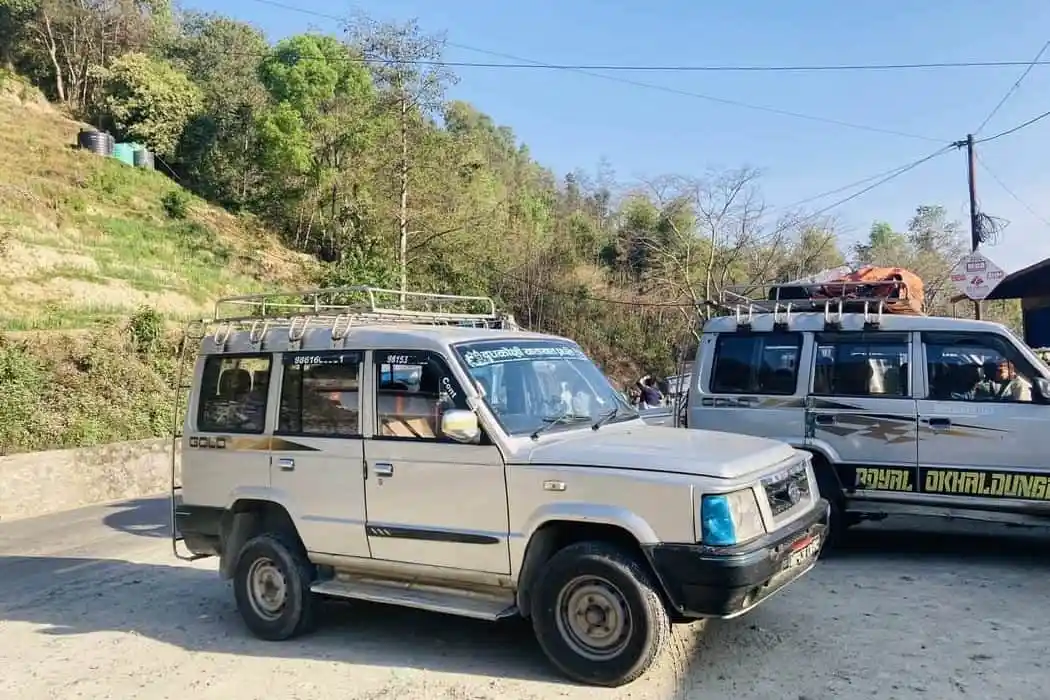
Shared jeeps (known locally as Sumos — the term used for shared jeep-type SUVs across Nepal) depart from Machhapokhari Bus Park for Syabrubesi daily from approximately 6:00 to 7:00 AM. Fares: NPR 1,200 to 1,500 per person (USD 9 to 11). Journey time: 6 to 7 hours — significantly faster than the bus, with fewer stops and a vehicle better suited to the mountain road sections.
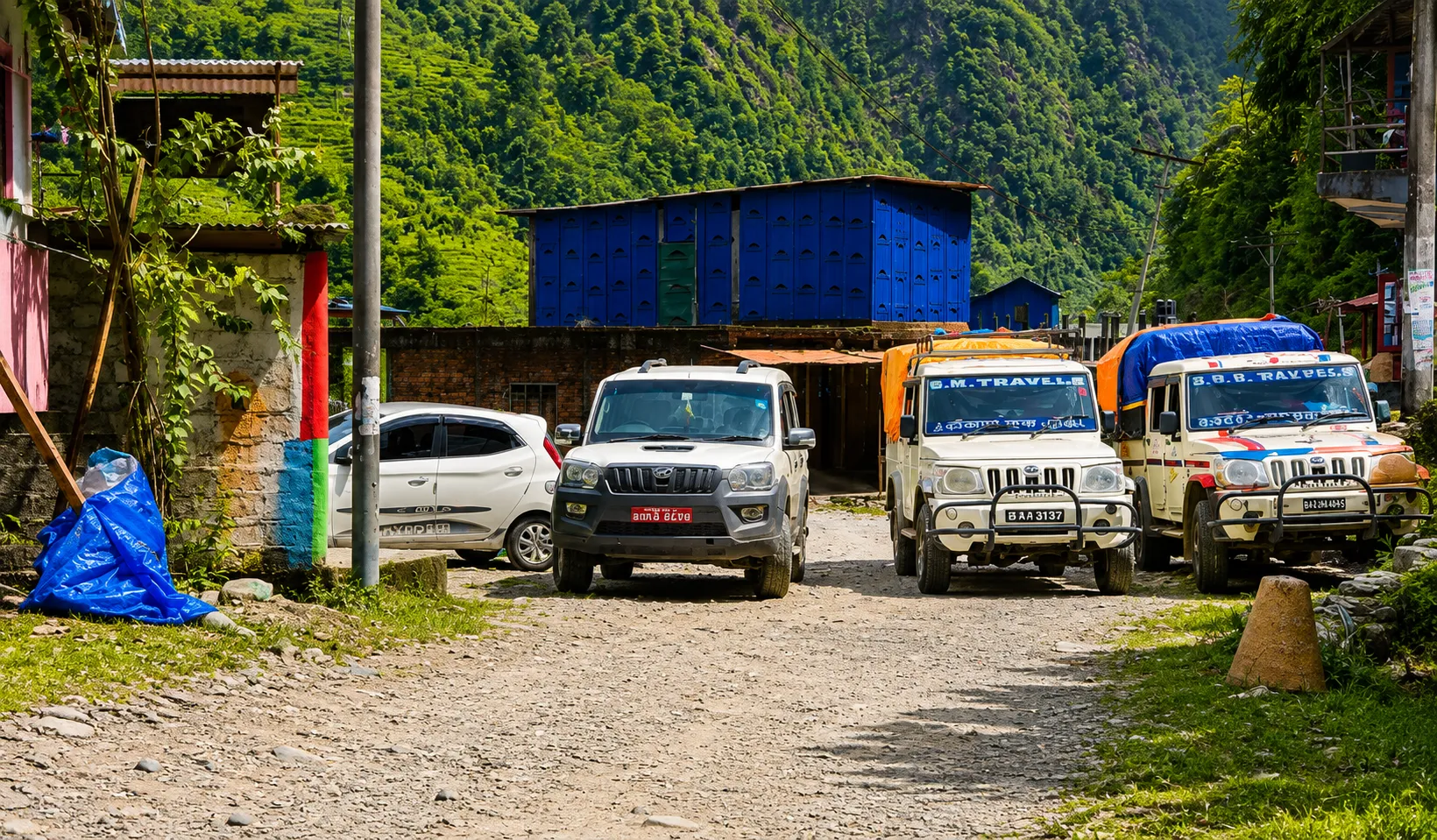
The shared jeep is Nepal Vehicle Hiring’s recommended baseline option for solo trekkers who want the convenience and speed of a jeep without the cost of private hire. Shared jeeps seat 8 to 10 passengers and depart when full, so arrival at the departure point by 6:00 AM is strongly recommended during peak trekking season (October–November, April–May) when seats fill quickly. In the off-peak season, shared jeeps may take longer to fill, and departure time can slip to 8:00 or 9:00 AM. The main limitation of the shared jeep is zero flexibility — no scenic stops, no route adjustments, no schedule control.
Option 3: Private Jeep Hire — Nepal Vehicle Hiring (NPR 25,000 to 30,000 per vehicle)
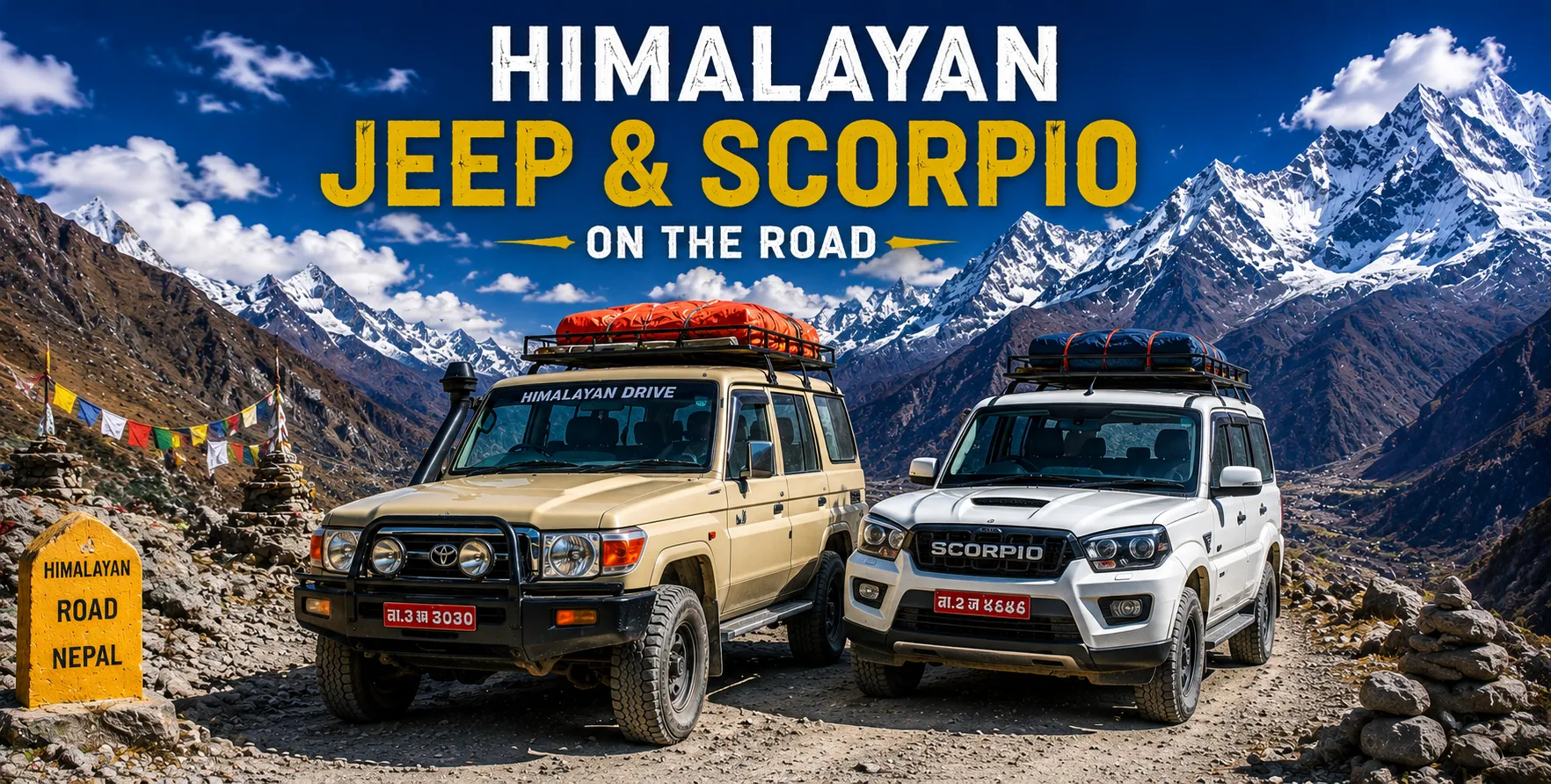
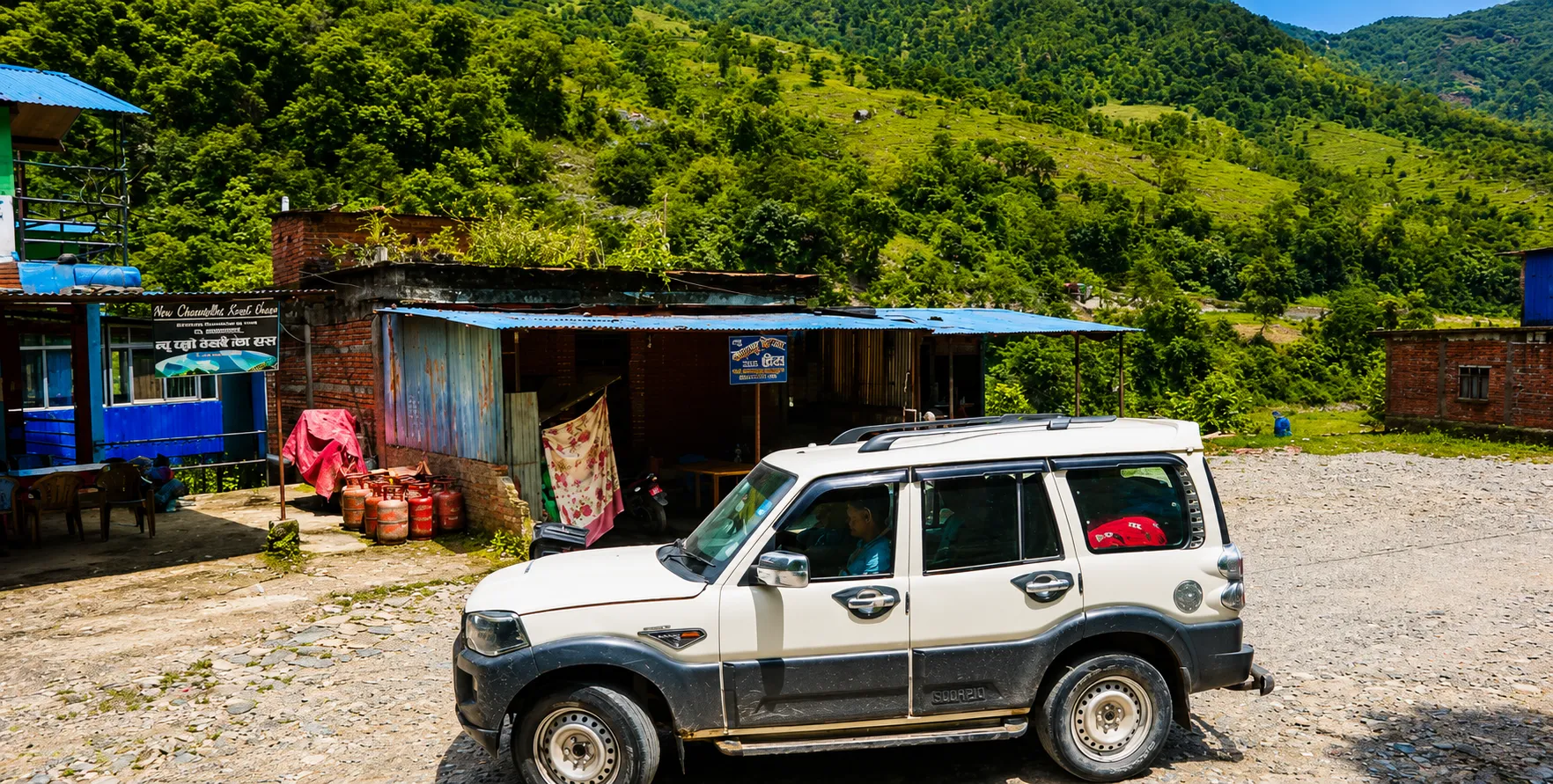
Nepal Vehicle Hiring’s private jeep hire for the Kathmandu–Syabrubesi route provides the complete premium transport experience — hotel door pickup from Thamel, guaranteed departure at your chosen time (typically 6:30 AM), a 4WD vehicle with high ground clearance and experienced Langtang-road driver, and complete flexibility for stops at Kakani viewpoint, Trishuli Bazaar breakfast, Kalikasthan peak view, and Dhunche checkpoint at your own pace.

Per-vehicle pricing for Kathmandu–Syabrubesi private jeep hire is approximately NPR 25,000 to 30,000 (USD 185 to 225 at 2026 exchange rates) for the one-way journey in a Mahindra Scorpio or equivalent 4WD, seating 5 to 7 passengers. Split among a group of 4 passengers: NPR 6,250 to 7,500 per person — comparable to or only slightly above the shared jeep rate, with dramatically better logistics. Split among 6 passengers: NPR 4,166 to 5,000 per person — directly competitive with or cheaper than the shared jeep fare, with full private vehicle benefits. For groups of 4 or more, the private jeep is not a luxury — it is the smart budget decision.
Nepal Vehicle Hiring’s private Syabrubesi jeep hire includes all-in transparent pricing — vehicle, driver, fuel, driver accommodation allowance — with no end-of-journey add-ons. Contact us through the Plan Your Trip page for current pricing and availability.
The Sitting Position Tip
An important practical note regardless of vehicle type: sit on the left side of the vehicle for the journey from Kathmandu to Syabrubesi. The left side of the bus or jeep (when facing forward) provides the best views of the Trishuli River gorge on the way north and the clearest sightlines toward the Langtang range peaks near Kalikasthan. On the return journey from Syabrubesi to Kathmandu, the right side provides the better views. This small detail, consistently recommended by experienced Langtang trekkers, noticeably improves the visual experience of what is already a very scenic road journey.
Permits Required for the Kathmandu to Syabrubesi Journey
Entering the Langtang region requires permits that must be obtained before reaching Dhunche—the checkpoint at the national park entrance, where permits are verified. Trekkers without the correct documents will be stopped and required to obtain them before proceeding. Arranging permits in Kathmandu before departure is strongly recommended.
Langtang National Park Entry Permit
The Langtang National Park Entry Permit is the primary document required for the Langtang region. As of 2026, the fee is NPR 3,000 per person for foreign nationals (approximately USD 22 to 25). SAARC nationals pay NPR 1,000. The permit can be obtained at:
- Nepal Tourism Board office, Bhrikutimandap, Kathmandu (weekdays 9 AM to 5 PM)
- ACAP/NTB permit office near Thamel area (available on weekdays)
- The Dhunche checkpoint (though obtaining it here adds time to the journey and has limited availability outside business hours)
Nepal Vehicle Hiring recommends arranging the Langtang National Park permit in Kathmandu on the day before departure. Our team can advise on the nearest permit office to your Thamel hotel and the quickest process for obtaining the permit.
Licensed Guide Requirement
As per recent Nepal government regulations, a licensed guide is mandatory for all trekking routes in Nepal’s protected areas, including the Langtang region. This requirement applies from the trekking trail — the road journey from Kathmandu to Syabrubesi does not itself require a guide. However, if you are trekking independently and have not arranged a licensed guide, you will be required to hire one at the Dhunche or Syabrubesi checkpoint before the trail begins. Nepal Vehicle Hiring works with partner licensed guide services and can coordinate guide arrangements as part of the complete Langtang trekking approach package.
TIMS Card
The Trekkers’ Information Management System (TIMS) card is no longer mandatory for Langtang region trekkers who hold a valid Langtang National Park Entry Permit, per the revised regulations implemented in 2023 and maintained in 2026. However, some trekking operators still include the TIMS in their package for completeness. Confirm current requirements with Nepal Vehicle Hiring or the NTB at the time of your visit, as regulations can be updated.
Best Time to Drive Kathmandu to Syabrubesi in 2026
Spring (March to May): Prime Season
Spring is the finest time of year for the Kathmandu–Syabrubesi road journey and the Langtang trek that follows. Rhododendrons bloom along the upper road sections from Ramche to Dhunche in March and April, with red and pink blossoms filling th the roadside for a genuinely breathtaking display. The pre-monsoon skies deliver clear mountain views at Kalikasthan and the Dhunche approach, including Ganesh Himal, Langtang Lirung, and even Shishapangma in Tibet on the clearest mornings. Road conditions are at their seasonal best — dry, compacted, and free from monsoon damage.
Nepal Vehicle Hiring recommends booking the Kathmandu–Syabrubesi private jeep 4 to 6 weeks in advance for the April–May window, when both trekking demand and vehicle availability are at their peak. The spring season is also when the Tamang Heritage Trail and Gosaikunda routes are most rewarding — the combination of bloom, clear views, and comfortable temperatures makes March through May the single best window for the complete Langtang regional experience.
Monsoon (June to September): Lush but Challenging
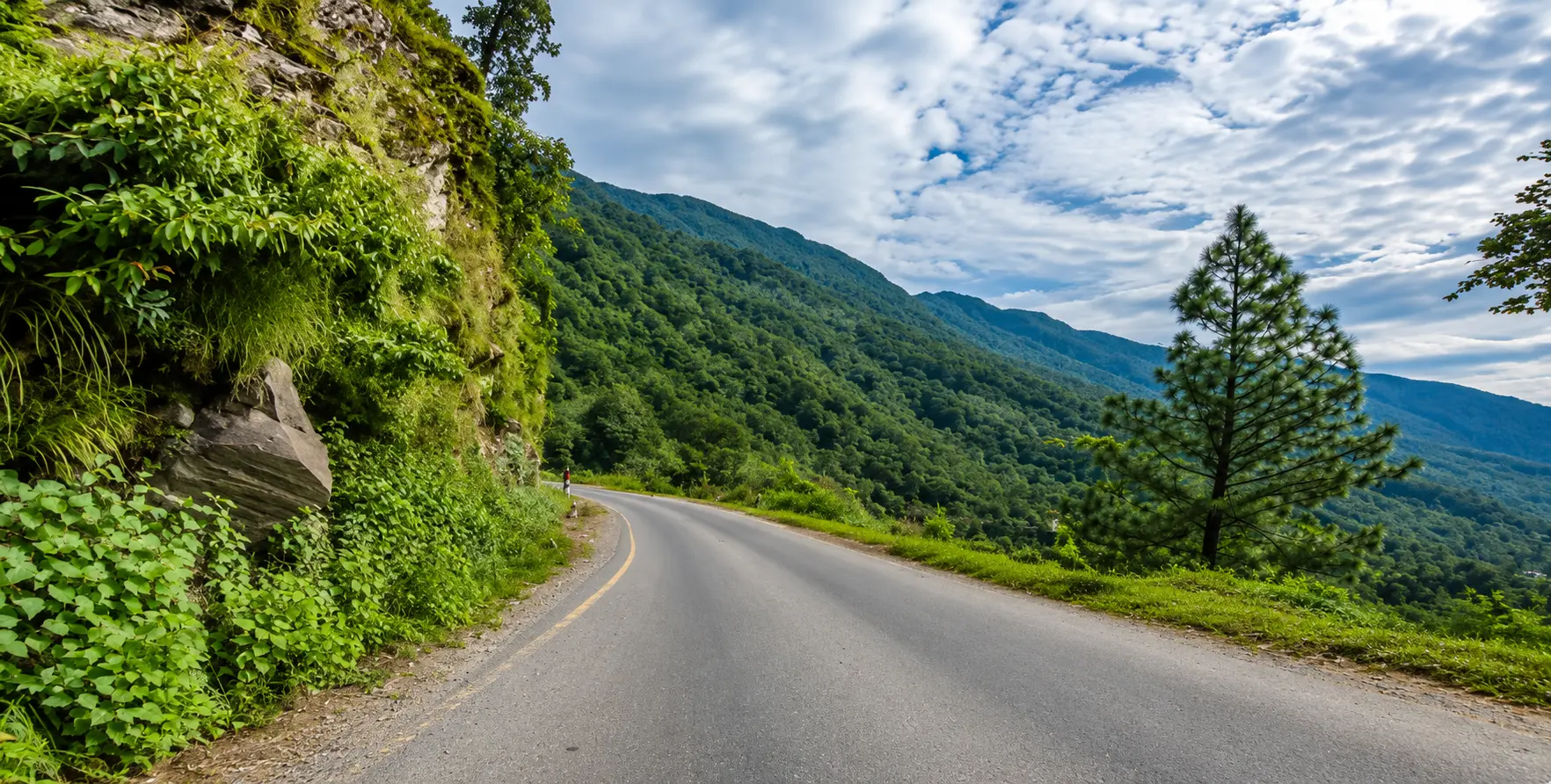
The monsoon brings the Kathmandu–Syabrubesi road’s most challenging conditions. Rainfall is heavy from June through August, and the Betrawati–Dhunche section — already the most demanding part of the road — is susceptible to landslides, surface water flooding, and temporary closures after heavy rain. The Dhunche–Syabrubesi descent becomes slippery and requires particularly careful driving on wet surfaces.
The compensation for monsoon driving on this route is remarkable: the landscape is explosively lush, with waterfalls streaming down every cliff face along the Trishuli gorge, the forests near Ramche and Dhunche dripping with mist and moss, and the river running at its fullest and most powerful. The Langtang Valley itself is relatively protected from the worst monsoon rainfall (it receives significantly less than the mid-hills below Dhunche), making it actually feasible as a trekking destination even in the wet season for experienced trekkers. Nepal Vehicle Hiring’s 4WD jeep hire service operates year-round, and our monsoon-experienced drivers are well-equipped for the route’s seasonal challenges.
Autumn (September to November): Clear Views, Peak Season
Autumn is Nepal’s most popular trekking season for good reason, and the Kathmandu–Syabrubesi road is at its finest. Post-monsoon clarity delivers outstanding Himalayan views at Kalikasthan — the atmosphere scrubbed clean by weeks of rain, the mountains sharper and more vivid than at any other time of year. The road is typically partially repaired after monsoon damage by October, and the forest along the upper sections takes on warm autumn colors in November. Demand for Nepal Vehicle Hiring’s private jeep service peaks in October and November — early booking of 4 to 6 weeks in advance is strongly recommended.
Winter (December to February): Quiet and Clear
Winter is the Langtang road’s off-season — trekker numbers are low, Nepal Vehicle Hiring vehicles are readily available, and the cold dry air produces the mountain views’ finest clarity. The road to Syabrubesi is generally accessible in winter with a 4WD vehicle, though the upper sections near Dhunche can be icy or snow-dusted after cold nights. The Langtang Valley itself receives snowfall in winter and trekking above Langtang Village (3,430 m) becomes demanding in December through February. For winter trekkers, the Tamang Heritage Trail at lower altitude is the most practical option and the Syabrubesi approach is fully accessible with Nepal Vehicle Hiring’s 4WD fleet.
Syabrubesi: What to Expect on Arrival
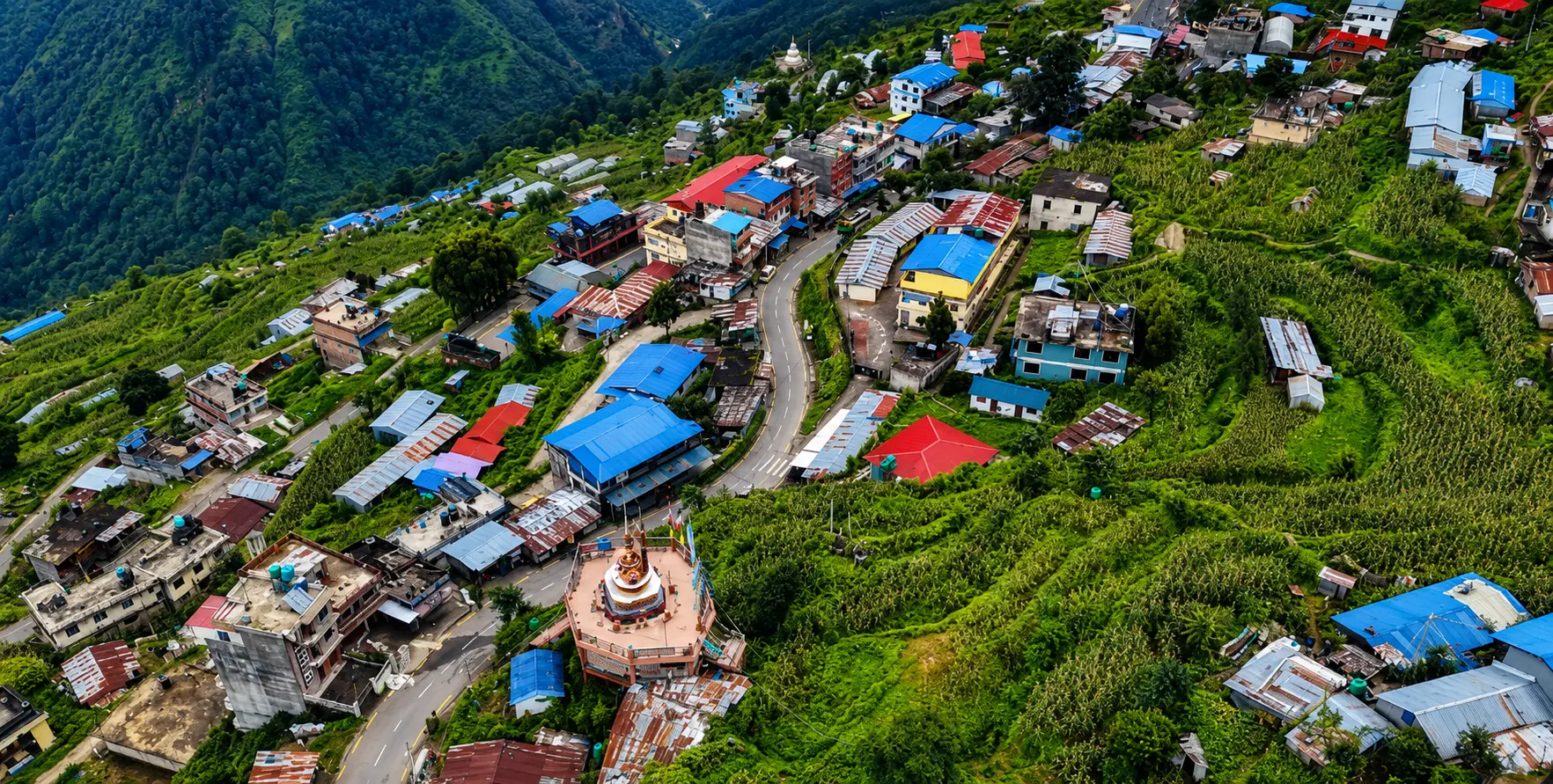
After 6 to 9 hours on the road, arriving at Syabrubesi is a genuine relief and a genuine pleasure. The village’s position on the river bank, with forested hills rising on both sides and the distant snow-covered peaks of the Langtang range visible at the head of the valley, immediately communicates that you have reached somewhere special. Here is what to expect:
Accommodation Options
Syabrubesi has 15 to 20 guesthouses and teahouses catering specifically to trekkers. The main guesthouse strip runs along the road through the village center. Standards are basic to moderate — clean rooms with simple beds and bedding, shared bathrooms in most places (private bathrooms available at a premium in a few of the better-established lodges), and dining rooms serving the standard Langtang trekker menu. Popular and well-reviewed options include the Hotel Garden Inn, Hotel River View, and Royal Himalaya Hotel and Lodge, among others. Room rates in 2026 range from approximately NPR 300 to 800 per person per night depending on room type and establishment quality. Arriving in Syabrubesi by mid-afternoon (achievable with Nepal Vehicle Hiring’s 6:30 AM departure) gives you first choice of rooms and time to settle in before evening.
Food and Dining
The food in Syabrubesi’s teahouses is typical Langtang region trekker fare — dal bhat, fried rice, noodle soups (thukpa), momos, pasta, and a range of breakfast options including porridge, pancakes, and eggs. Yak cheese — produced in the Langtang valley above and brought down to Syabrubesi for sale — is one of the area’s culinary specialties and worth trying. Garlic soup — an altitude acclimatization traditional remedy — is also widely available and genuinely warming after a long day of travel. The quality of cooking is consistent across most establishments: honest, nutritious mountain food that prepares you well for the days of trekking ahead.
Hot Springs Near Syabrubesi
One of Syabrubesi’s most appreciated facilities for arriving trekkers — and particularly for those returning from a multi-day trek — is the natural hot spring located approximately 1.5 kilometers from the village center along the trail that heads toward the Tibet border road. The thermal waters are a genuine luxury after days on a mountain road or on the trail, and the setting beside the Bhote Koshi river adds to the experience. Several guesthouses near the hot spring have established bathing facilities using the thermal water. Soaking tired muscles here before departure back to Kathmandu the following morning is a ritual that most Langtang trekkers enthusiastically endorse.
Permits and Trek Briefing at Syabrubesi
The trekking permit checkpoint at the northern edge of Syabrubesi is where Langtang National Park permits and licensed guide documentation are verified before the trail begins. This checkpoint is staffed during daylight hours and is efficient — in peak season, the verification process takes 5 to 10 minutes per party. Your Nepal Vehicle Hiring driver will drop you at your guesthouse before or after the checkpoint area, with your trail permit already arranged in Kathmandu. Your licensed guide (arranged through our partner service if needed) will handle any remaining documentation formalities at the checkpoint.
Nepal Vehicle Hiring: Your Complete Langtang Transport Partner
Nepal Vehicle Hiring Pvt. Ltd. covers every transport element of the Langtang trekking experience — from your first contact with Nepal to your last vehicle journey before departure. Our services relevant to the Langtang region:
- Kathmandu airport transfer — smooth arrival from Tribhuvan International Airport to your Thamel hotel, setting the right tone for the adventure ahead
- Kathmandu sightseeing — for trekkers spending 1 to 2 days in Kathmandu before the Syabrubesi drive
- Bhaktapur Durbar Square day tour and Nagarkot sunrise tour — valley cultural experiences before the Langtang departure
- 4WD private jeep hire — the Kathmandu to Syabrubesi private vehicle service described throughout this guide
- Trekking transport services — all Langtang trailhead approach and post-trek return transport services
- Kathmandu to Pokhara bus — for trekkers combining Langtang with a subsequent Pokhara and Annapurna visit
- Nepal holiday tour packages and Nepal tour packages — for travelers wanting a pre-packaged multi-destination Nepal experience that includes Langtang
For large groups — trekking clubs, corporate teams, school expeditions — our Hiace van hire (8 to 14 passengers) and Coaster bus hire (15 to 25 passengers) provide group transport to Dhunche, with our 4WD jeep fleet covering the final Dhunche–Syabrubesi descent. Visit our Plan Your Trip page for a customized group transport quote.
Frequently Asked Questions: Kathmandu to Syabrubesi Road 2026
How long does the drive from Kathmandu to Syabrubesi take?
By private jeep with Nepal Vehicle Hiring departing Thamel at 6:30 AM: 6 to 8 hours, arriving mid-afternoon. By shared jeep: 6 to 7 hours, but departure time depends on filling the vehicle. By public bus: 8 to 11 hours including stops. Road conditions, traffic, and season all affect the actual duration.
What is the road distance from Kathmandu to Syabrubesi?
The most commonly used Route A (via Galchhi and Pasang Lhamu Highway) covers approximately 122 to 130 kilometers. Route C via Tokha is shorter at approximately 105 km but on a rougher road. Route B via Kakani is similar to Route A at approximately 130 km.
Is a 4WD vehicle required for the Kathmandu to Syabrubesi drive?
Standard cars can handle the Kathmandu–Trishuli section (Route A via Prithvi Highway) comfortably. The Betrawati–Dhunche section and the Dhunche–Syabrubesi descent benefit significantly from 4WD and higher ground clearance. During monsoon and in winter icy conditions, 4WD is strongly recommended for the full route. Nepal Vehicle Hiring deploys 4WD vehicles for all Kathmandu–Syabrubesi private hire services.
Where do public buses and shared jeeps depart from in Kathmandu?
All public buses and shared jeeps for Syabrubesi depart from Machhapokhari Bus Park (also called Balaju Bus Park or Gongabu Bus Park) in northern Kathmandu — approximately 15 to 20 minutes by taxi from Thamel. Nepal Vehicle Hiring’s private jeep service picks up from your Thamel hotel door, eliminating this additional taxi journey.
What permits do I need before driving to Syabrubesi?
You need the Langtang National Park Entry Permit (NPR 3,000 per foreign national), obtainable at the Nepal Tourism Board office in Bhrikutimandap, Kathmandu. A licensed guide is also required for trekking (not for road travel only). The TIMS card is not currently mandatory, but check current requirements at the time of visit.
Can I combine Syabrubesi with a broader Nepal itinerary?
Yes. The Langtang approach from Kathmandu fits naturally into Nepal itineraries that also include Kathmandu Valley sightseeing (our Kathmandu sightseeing service), Pokhara (our Kathmandu to Pokhara bus), Mustang (our Kathmandu to Mustang private jeep), and Chitwan. Contact us through our plan your trip page to design the perfect combined itinerary.
Book Your Kathmandu to Syabrubesi Private Jeep with Nepal Vehicle Hiring
Nepal Vehicle Hiring Pvt. Ltd., based in Thamel, Kathmandu, provides the finest private vehicle service on the Kathmandu–Syabrubesi road for trekkers, groups, and all travelers heading to the Langtang region. Book your journey in three simple steps:
- Visit www.vehiclehiringnepal.com and browse our jeep hire fleet and trekking transport services.
- Submit your details on the Plan Your Trip page—travel date, group size, Thamel hotel name, and preferred departure time.
- We respond within 24 hours with vehicle confirmation, all-in pricing, and driver details.
Contact us directly:
- WhatsApp / Call: +977 9851013196
- Email: [email protected]
- www.vehiclehiringnepal.com
Syabrubesi is the beginning of one of Nepal’s finest trekking adventures — the road to it is itself a journey worth experiencing well. Nepal Vehicle Hiring will make sure you arrive there refreshed, on time, and ready for the mountains that await.
The Langtang Treks: What Awaits You at Syabrubesi
Understanding the trekking experiences that begin at Syabrubesi gives the road journey to it a richer purpose. The three main routes from Syabrubesi are among Nepal’s finest trekking experiences — and they remain significantly less crowded than the Annapurna and Everest regions despite offering landscapes and cultural encounters of comparable quality.
Langtang Valley Trek: The Classic Route
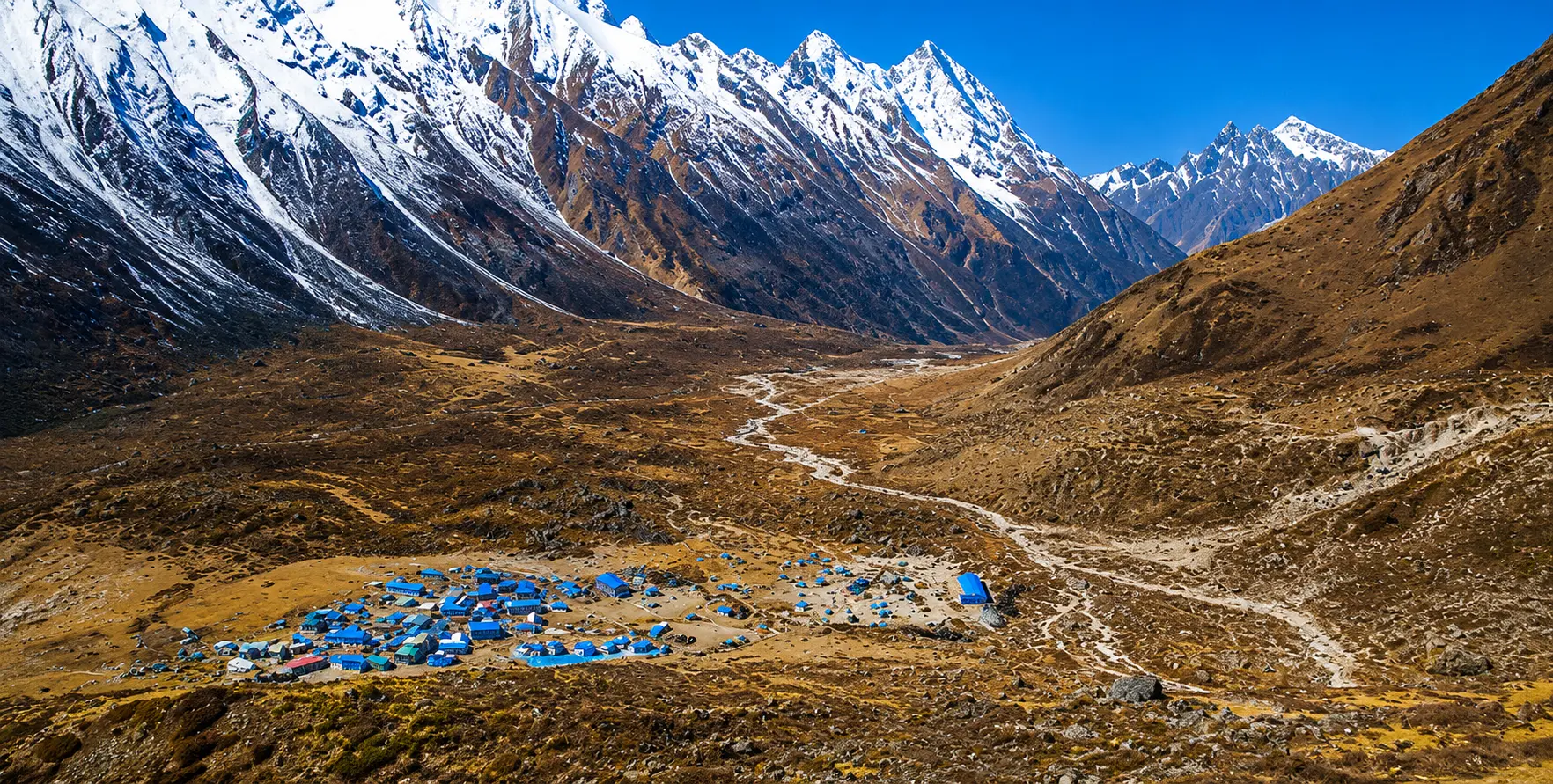
The Langtang Valley Trek is Nepal’s most accessible Himalayan valley trek — beginning at Syabrubesi (1,460 m) and reaching Kyanjin Gompa (3,870 m) in 4 to 5 days of walking, with the return taking a further 3 to 4 days. The route follows the Langtang Khola through increasingly dramatic mountain scenery — ascending from the river gorge forest through rhododendron woodland to the open alpine grasslands of Langtang Village (3,430 m) and the high-altitude yak pastures around Kyanjin.
Kyanjin Gompa is the spiritual and geographic heart of the Langtang Valley — a small community of Tibetan Buddhist monks, yak herders, and cheese-makers living at the foot of the Langtang Lirung north face. The yak cheese produced here and sold throughout the valley is one of Nepal’s finest artisan food products. From Kyanjin, side hikes to the Kyanjin Ri viewpoint (4,773 m) and the Tserko Ri viewpoint (5,033 m) reward fit trekkers with panoramic views of the Langtang Himal, Dorje Lakpa (6,966 m), Gangchhenpo (6,388 m), and on clear days the distant summit of Shishapangma (8,027 m) in Tibet.
The 2015 Gorkha Earthquake severely damaged Langtang Village — a catastrophic avalanche triggered by the earthquake destroyed most of the original settlement and tragically killed hundreds of residents and trekkers. The village has since been rebuilt, and the Langtang community’s resilience and determination to restore their home and their trekking economy is a deeply moving part of the Langtang Valley experience today. Visiting in 2026 supports this ongoing recovery directly.
Gosaikunda Trek: Sacred Lake at 4,380 Meters
The Gosaikunda Trek is the longer and more demanding route from Syabrubesi, climbing through the Tamang Heritage Trail villages (Gatlang, Tatopani, Thuman, Lingling, Briddim) before ascending the ridge above Dhunche to the sacred Gosaikunda Lake at 4,380 meters. The lake is one of Nepal’s holiest sites—according to Hindu mythology, it was created when Lord Shiva struck the frozen Himalayan ground with his trident to quench his thirst after swallowing the cosmic ocean’s poison to save the gods. The Janai Purnima festival in August draws thousands of Hindu pilgrims to Gosaikunda for ritual bathing in the lake’s icy waters, even in the depths of the monsoon.
The Gosaikunda trek typically continues beyond the lake by crossing the Lauribina La Pass (4,610 m) and descending to Ghopte, Tharepati, and the Helambu circuit — making it a genuinely varied multi-day circuit that combines high-altitude lake scenery, Buddhist monastery culture in the Tamang villages, and the rolling pastoral landscape of the Helambu hills. The complete Gosaikunda-Helambu circuit takes 10 to 14 days from Syabrubesi to the Helambu exit near Sundarijal. Nepal Vehicle Hiring can coordinate transport at both ends — the Syabrubesi approach and the Sundarijal exit back to Kathmandu.
Tamang Heritage Trail: Cultural Trekking at Its Finest
The Tamang Heritage Trail is the Langtang region’s finest cultural trekking route and its most underrated. The trail circuits through the Tamang villages of the Rasuwa hills — Gatlang (2,238 m), Tatopani (2,607 m), Thuman (2,250 m), Lingling (2,030 m), Nagthali (3,165 m), Briddim (2,229 m), and back to Syabrubesi — over 7 to 12 days. These villages represent the finest surviving example of Tamang traditional culture in Nepal: mud-and-stone architecture decorated with carved wooden windows and prayer flags, Buddhist gompas with centuries-old murals, community hot springs (Tatopani has excellent thermal baths accessible on the trail), and the warm hospitality of communities that have opened their homes to trekkers without losing their own cultural identity in the process.
The Tamang people — who represent approximately 5.8 percent of Nepal’s total population according to the 2021 census — are a Tibeto-Burman people whose culture, religion (Tibetan Buddhism), and traditional governance structures have maintained impressive continuity despite the social pressures of the past century. Walking through a Tamang Heritage Trail village in 2026 is genuinely different from most trekking experiences in Nepal — quieter, more culturally immersive, and producing a quality of human encounter that the more commercially developed trekking circuits increasingly struggle to provide. Nepal Vehicle Hiring’s trekking transport service supports the Tamang Heritage Trail approach from Kathmandu to Syabrubesi and return transport at the end of the circuit.
Practical Preparation: What to Bring for the Kathmandu to Syabrubesi Drive
The 6 to 9 hour Kathmandu-to-Syabrubesi drive requires some simple preparation that makes a significant difference to comfort and readiness on arrival.
- Food and water for the journey: The Trishuli Bazaar stop at approximately 2.5 hours into the journey is the main meal opportunity, but carrying snacks and at least 1.5 liters of water per person ensures you are not dependent on reaching a specific town for sustenance. The Dhunche stop (1.5 hours before Syabrubesi) is the second reliable meal point.
- Warm layer accessible: The temperature drops noticeably between Kathmandu (1,350 m) and Dhunche (2,030 m), and Syabrubesi itself is cooler than the capital even in summer. Keep a fleece or light jacket in your day bag rather than packed in the roof bag.
- Langtang National Park permit in hand: Arrange this at the Nepal Tourism Board office in Kathmandu before departure. The Dhunche checkpoint verifies it and does not issue permits after office hours — arriving without a permit on an afternoon drive means stopping at Dhunche and potentially delaying the final descent.
- Motion sickness tablets if needed: The Betrawati-to-Dhunche climb and the Dhunche-to-Syabrubesi descent both involve sustained switchback road. Take medication before the journey begins rather than waiting until symptoms develop.
- Small day pack inside the vehicle: Your main trekking bag goes in the jeep’s luggage space or on the roof rack. Your camera, documents, medication, layers, and snacks should be in a day pack inside the vehicle with you — accessible throughout the journey without stopping to unload roof bags.
- Left-side seating preference: Sit on the left side of the vehicle (facing forward) for the best river views along the Trishuli gorge section and the clearest sightlines toward the Langtang peaks at Kalikasthan. Tell your Nepal Vehicle Hiring driver if you have photography priorities — our drivers know the best spontaneous viewpoint stops on the route.
- Offline maps downloaded: Mobile signal is available in Trishuli and Dhunche but can be patchy on the mountain sections. Download offline maps for the Rasuwa District route (Maps.me or Gaia GPS) before leaving Kathmandu. This allows you to track progress through the journey even without mobile data.
- Kathmandu to Syabrubesi Road Overview 2026: Complete Guide
- Syabrubesi: Gateway to the Langtang Region
- The Three Routes from Kathmandu to Syabrubesi: Which Should You Take?
- Section-by-Section Road Guide: Kathmandu to Syabrubesi via Route A
- Road Conditions on the Kathmandu to Syabrubesi Route in 2026
- Transport Options from Kathmandu to Syabrubesi: Full Comparison 2026
- Permits Required for the Kathmandu to Syabrubesi Journey
- Best Time to Drive Kathmandu to Syabrubesi in 2026
- Syabrubesi: What to Expect on Arrival
- Nepal Vehicle Hiring: Your Complete Langtang Transport Partner
- Frequently Asked Questions: Kathmandu to Syabrubesi Road 2026
- Book Your Kathmandu to Syabrubesi Private Jeep with Nepal Vehicle Hiring
- The Langtang Treks: What Awaits You at Syabrubesi
- Practical Preparation: What to Bring for the Kathmandu to Syabrubesi Drive

Related Blog & Articles

Jeep or SUV

Jeep vs Bus to Syabrubesi 2026
Langtang Trek Pickup Vehicle

Kathmandu to Tamang Heritage Trail Transport
Kathmandu to Langtang Trek Vehicle Hire: The Complete Guide (2026)