Plan a Trip


Lumbini’s Hidden Spiritual Places
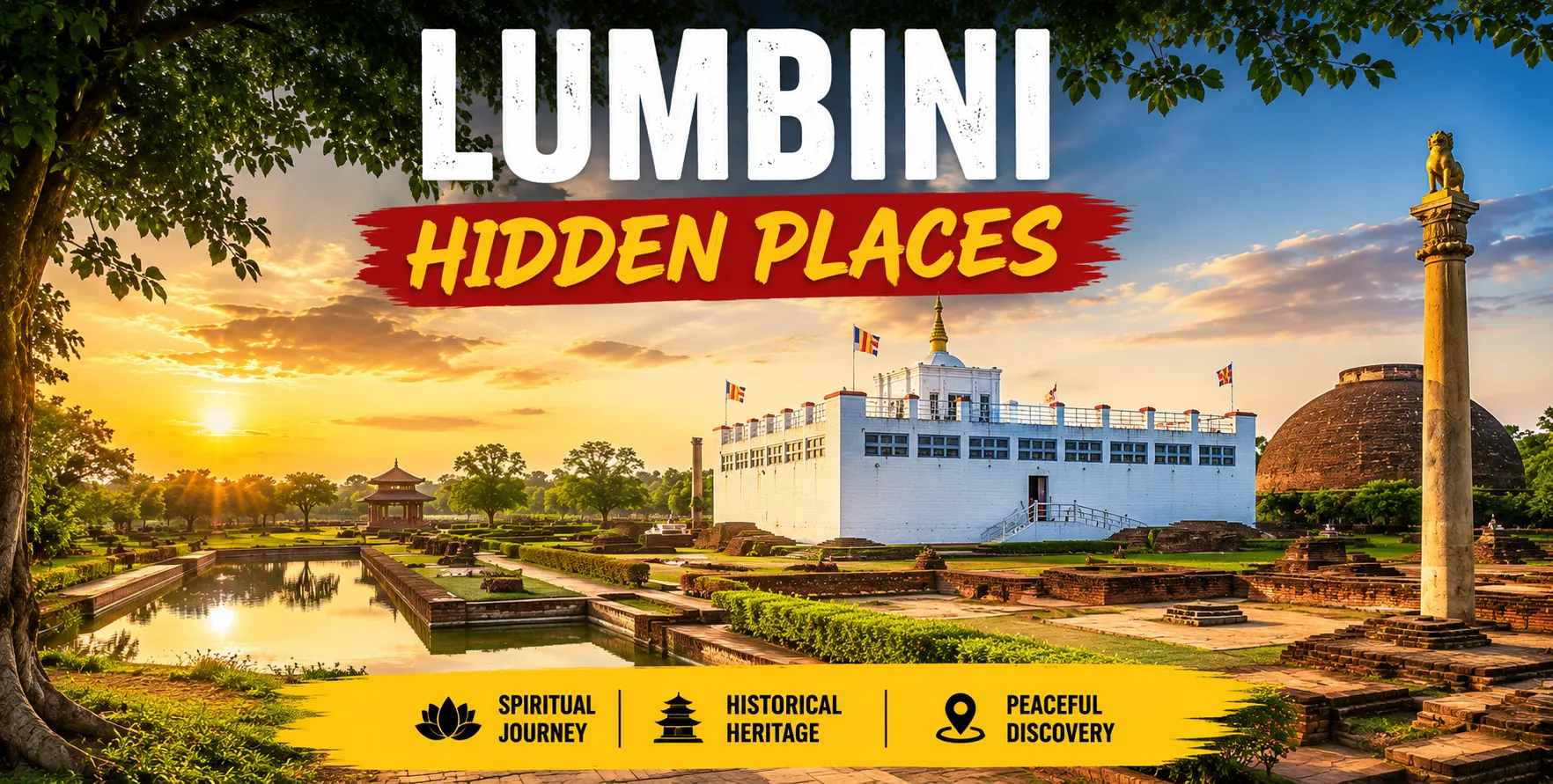
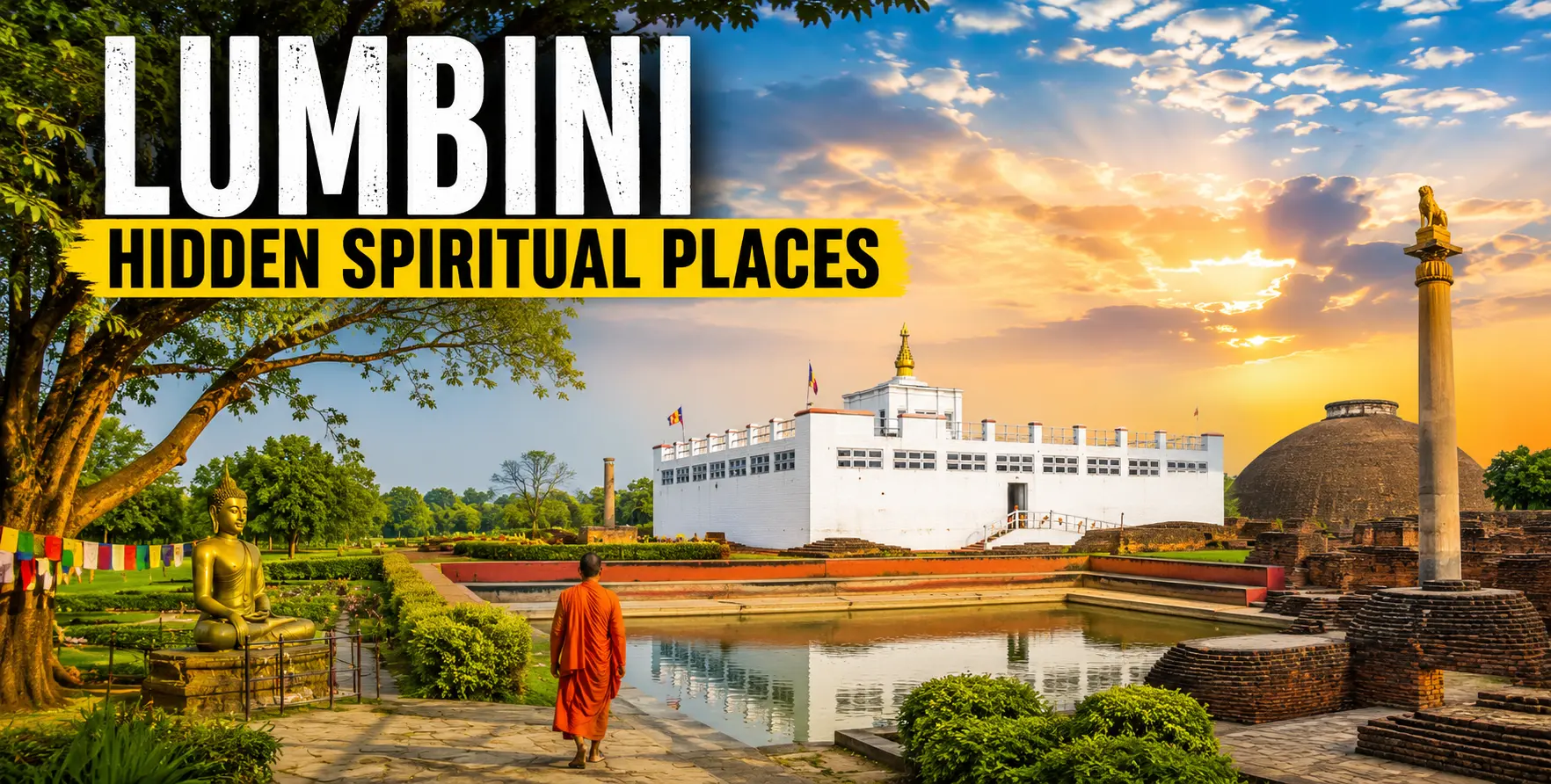 Lumbini Hidden Spiritual Places: The Lumbini That Most Visitors Never Find
Every year, hundreds of thousands of pilgrims and tourists arrive at Lumbini — the birthplace of Siddhartha Gautama, the historical Buddha, and one of the four holiest sites in all of Buddhism. They visit the Maya Devi Temple, stand before the Ashokan Pillar, photograph the gleaming white World Peace Pagoda, and walk reverently through the international Monastic Zone with its extraordinary constellation of temples from more than thirty nations. They leave moved, enriched, and grateful. And they leave having seen, at most, twenty percent of what Lumbini and its surrounding sacred landscape actually contain.
The Lumbini that most visitors experience is extraordinary. But the Lumbini that lies beyond the tourist path — in the villages, rice fields, and ancient mounds of the broader Rupandehi and Kapilvastu districts — is something altogether more profound, more mysterious, and more challenging to comprehend.
This is the Lumbini of 62 archaeological sites spread across a landscape of ancient kingdoms and forgotten cities. This is Lumbini, where the only stupa in the world believed to contain still the original bodily relics of the Buddha — untouched even by the great Emperor Ashoka — sits quietly on the bank of a river in a rural village, known to most pilgrims only by legend.
This is Lumbini, where the childhood palace of Prince Siddhartha Gautama is still being excavated from beneath centuries of accumulated earth, and where the maternal homeland of his mother, Queen Maya Devi, can still be visited across a river that has barely changed since the time of the Buddha himself.
The hidden spiritual landscape of Lumbini is not merely a collection of additional tourist attractions. It is the spatial biography of one of the most significant human beings who ever lived — a landscape in which every site marks a moment, a relationship, or a spiritual reality from the extraordinary life story of Siddhartha Gautama.
To walk this landscape with genuine knowledge and attention is to step inside the most important story in Buddhist civilization, touching the actual earth where it happened, feeling the extraordinary weight of historical and spiritual reality that two and a half millennia of continuous veneration have concentrated into these places.
This deep research guide covers Lumbini’s hidden spiritual places with the thoroughness they deserve — not as a checklist but as a journey. We begin at the well-known sacred core and then move outward, progressively further from the tourist circuits, into the landscapes where ancient kingdoms rose and fell, where Ashoka’s pillars still stand broken in rice fields, where the massacre of
the Shakya people left its trace in an ancient bloodied pond, and where the relics of the Buddha — his actual physical remains after cremation — rest in an earthen mound that human hands have never opened. And with Nepal Vehicle Hiring Pvt. Ltd. as your trusted transport partner, every one of these extraordinary places is within reach of your Lumbini base.
Lumbini demands slow travel, genuine attention, and the willingness to sit with discomfort — the discomfort of a site that does not offer comfortable heritage interpretations but presents instead the raw, unmediated archaeological reality of an ancient world. It demands respect — for the pilgrims who have been coming here for 2,500 years, for the Buddhist communities from thirty nations who have built their spiritual homes within the Monastic Zone, and for the extraordinary landscape itself, which has absorbed the prayers and the tears and the devotion of untold millions of human beings over an immense stretch of time. This guide is your companion for that slow, attentive, genuinely transformative journey.
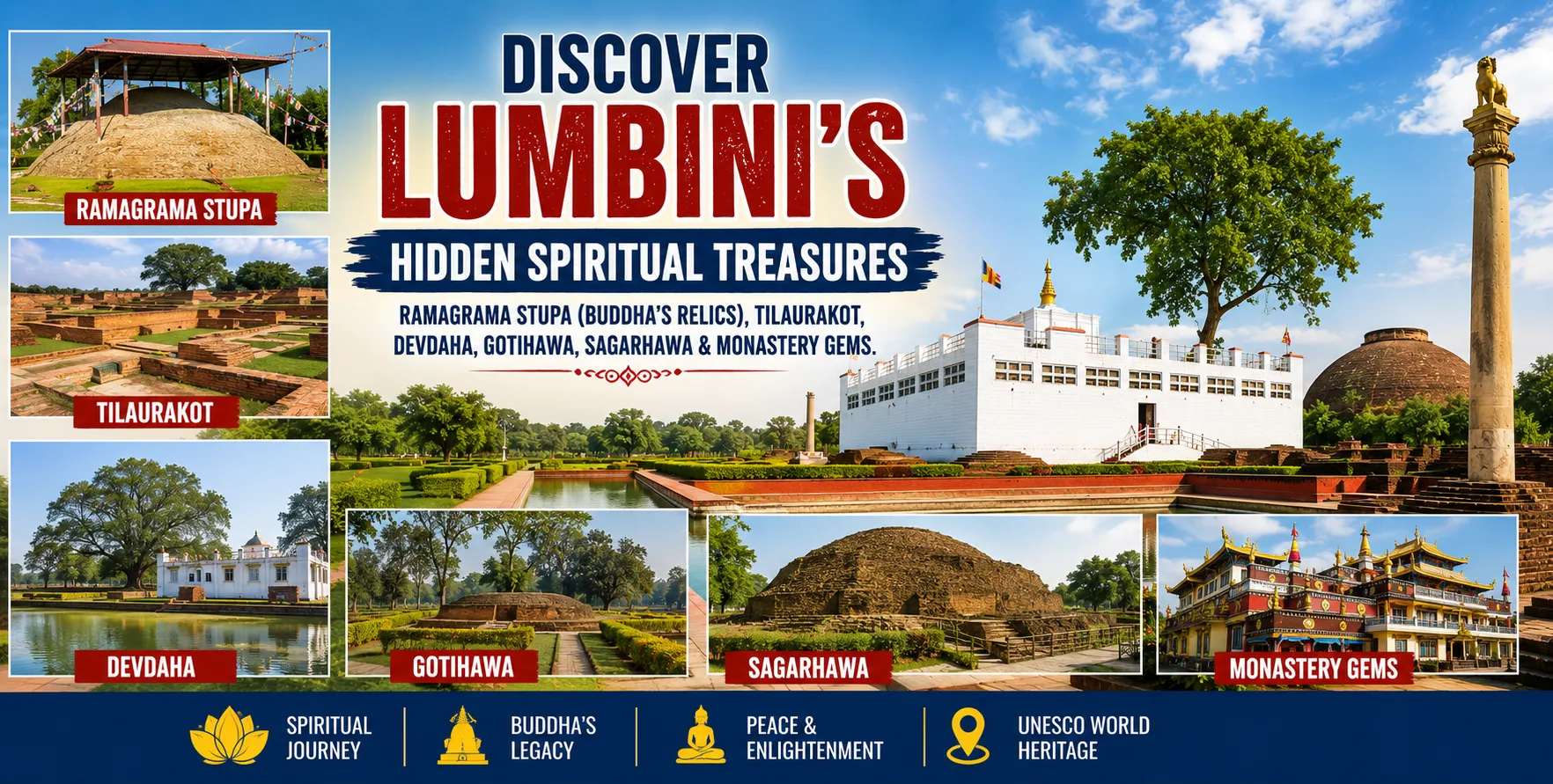
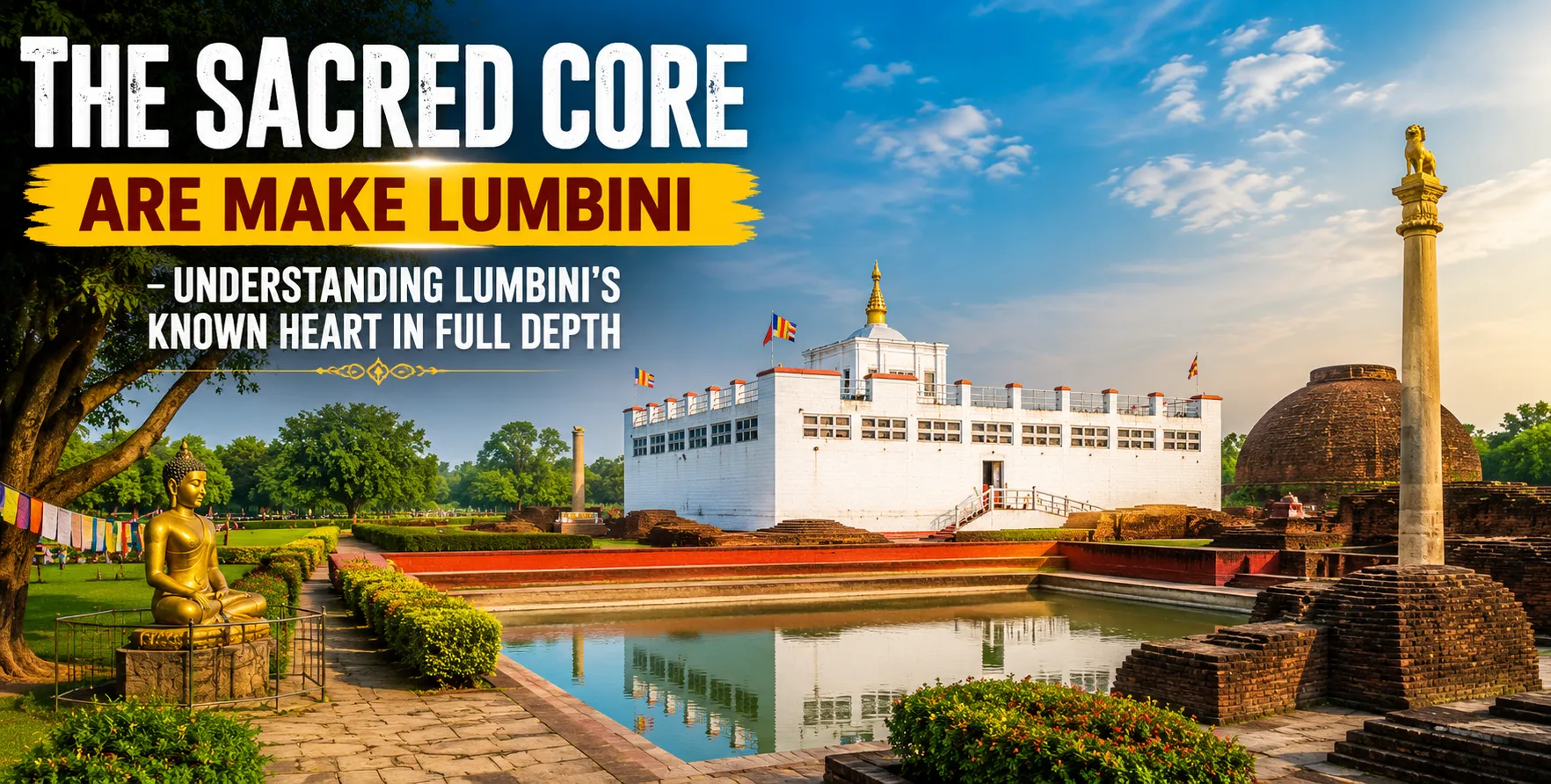
Part One: The Sacred Core — Understanding Lumbini’s Known Heart in Full Depth
Maya Devi Temple — 2,500 Years of Continuous Sacred Geography
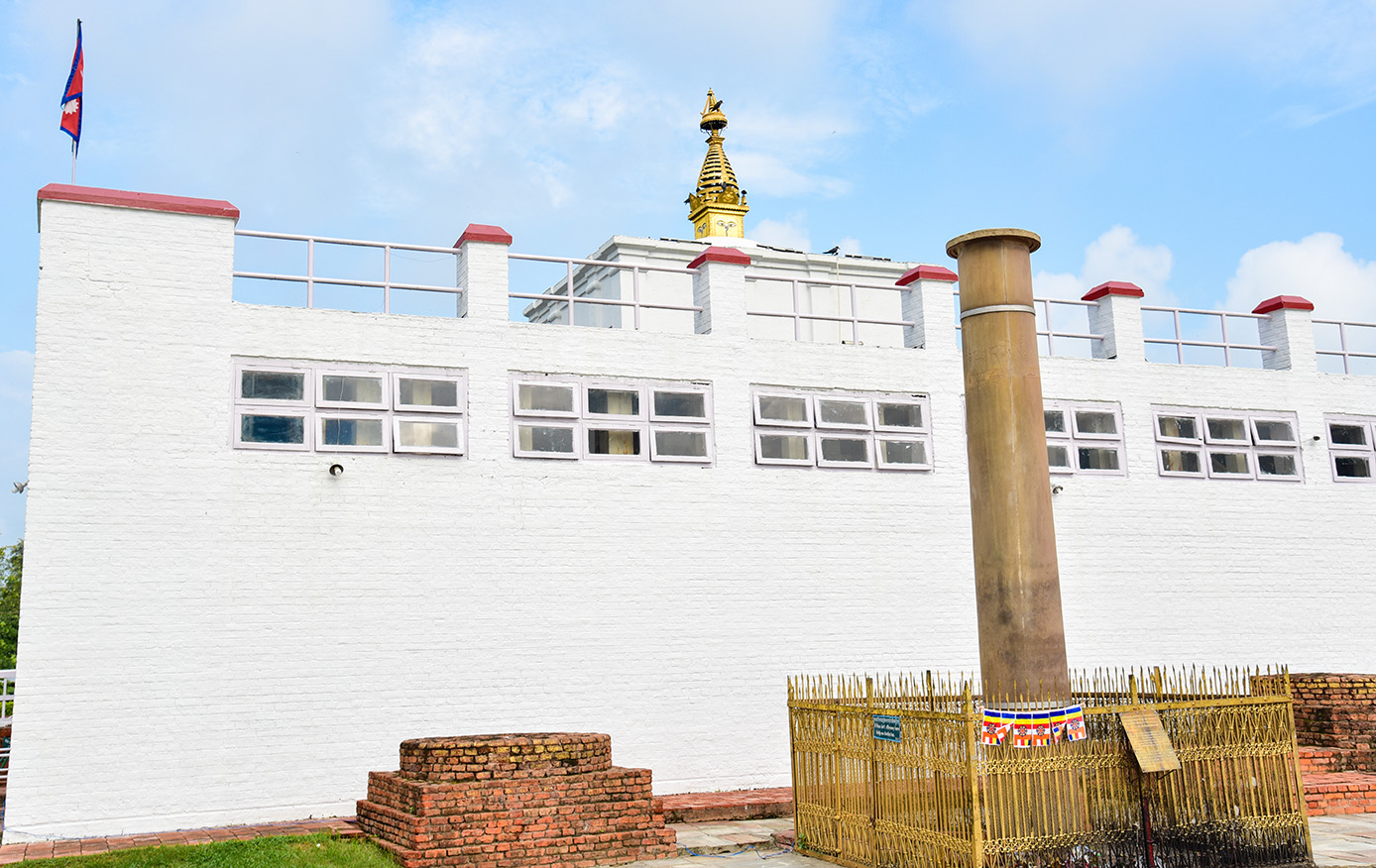
Most visitors to Maya Devi Temple see a white modern structure over an archaeological excavation. What they are less likely to understand is the extraordinary depth of what lies beneath and within. The Maya Devi Temple marks the precise point — identified by the ancient Marker Stone beneath its floor — where Queen Maya Devi, wife of the Shakya King Suddhodhan of Kapilvastu, gave birth to Prince Siddhartha Gautama in approximately 563 BCE.
The birth took place in the open air of a sala grove as Maya Devi traveled from Kapilvastu to her parents’ home in Devdaha — she grasped a sala branch. She gave birth standing up, and the newborn prince immediately took seven steps northward, touching the earth with each step and declaring his final birth into existence.
The excavations within the temple compound, conducted over decades by international archaeological teams, including UNESCO, the Government of Nepal, and joint Japanese-Nepali teams, have revealed the foundations of successive temples and shrines built on this exact spot, spanning more than two thousand years. The current structure is approximately the fourth or fifth building to occupy the site, each constructed over the previous one in an act of sacred continuity that has maintained the spot’s religious significance across every political and cultural upheaval that has affected the region over twenty-five centuries.

The oldest structural remains identified at the Maya Devi Temple site suggest continuous veneration beginning in approximately the 3rd century BCE — coinciding with the visit of Emperor Ashoka, who erected his famous pillar in 249 BCE as royal confirmation of the site’s identity and spiritual significance. Beneath the foundations of the Kushana-period shrine (1st–4th centuries CE) lie the remains of an even earlier structure, possibly dating to the Mauryan period.
The layering of these successive sacred constructions over the identical point in space for over two millennia is itself one of the most extraordinary testimonies to the continuity of Buddhist devotional tradition anywhere in the world.
The Nativity Sculpture preserved within the temple — a carved sandstone relief depicting Maya Devi grasping the branch of the sala tree with the infant Siddhartha emerging from her right side, attended by the divine figures Indra and Brahma — is the earliest surviving visual representation of the Buddha’s birth anywhere in the world. Dating from the Kushana period and discovered during archaeological excavations, it is displayed within the temple behind protective glass.
It is one of the most significant pieces of Buddhist art in existence. Its iconographic details — the specific gesture of Maya Devi, the position of the infant, the arrangement of the attending deities — established visual conventions that were followed in Buddhist birth narratives across Asia for the next two thousand years.
What the Nativity Sculpture does not show — and what the textual tradition preserves with extraordinary detail — is the sensory world of the birth. The sal trees in bloom (it was the month of Vaisakha, corresponding to April-May), their fragrance filling the grove. The silence of the natural world that the texts describe as attending the birth of a Bodhisattva.
The spring of water that emerged from the earth to bathe the infant, and the complementary warmth of warm water that descended from the sky. The seven steps — each marked by a lotus flower springing from the earth — and the proclamation: ‘I am the highest in the world. This is my last birth. There is now no existence again.’
The texts preserve all of this detail. Standing within the temple, the imagination can reconstruct it. And the Marker Stone beneath your feet confirms that you are standing within meters of where it actually happened.
The Ashokan Pillar — Decoding the World’s Most Important Buddhist Inscription
The Ashokan Pillar at Lumbini is the single most important piece of physical historical evidence for the authenticity of the site as the Buddha’s birthplace — and understanding its inscription in full depth transforms it from an ancient monument into a living document of extraordinary historical resonance. Emperor Ashoka — the Mauryan ruler who converted to Buddhism after the catastrophic battle of Kalinga (261 BCE) and dedicated his empire to the propagation of the Dharma — made a personal pilgrimage to Lumbini in 249 BCE, his twentieth year of reign, accompanied by his Buddhist teacher Upagupta.
The Brahmi inscription on the pillar, translated in full, reads: ‘King Priyadarsi, beloved of the gods, when he had been anointed twenty years, came himself and paid reverence, for here the Buddha Shakyamuni was born. He caused a stone enclosure and a stone pillar to be made. Because the Lord was born here, the village of Lumbini has been made free of tax and entitled to the eighth part of the produce only.’ Every phrase of this inscription repays close attention.
‘Came himself’ — Ashoka did not send a representative but made the journey himself, a statement of the site’s exceptional significance. ‘Caused to be made a stone enclosure’ — there was already a sacred enclosure before Ashoka, which he formalized in stone. ‘Free of tax’ — the economic privilege conferred on the village community acknowledges and rewards their two-century stewardship of the birthplace.
The pillar itself is 7.2 meters tall at present — what remains after the capital (originally a stone horse figure, since lost) fell and broke the upper shaft. The shaft bears a lightning crack that the archaeological record dates to approximately the 7th century CE, when the Chinese pilgrim Xuanzang visited Lumbini and recorded seeing a ‘stone pillar with a horse on top, but struck by lightning and broken in the middle.’
This is remarkable: Xuanzang’s early medieval account of what he saw precisely matches the pillar’s physical state today. The continuity of eyewitness testimony from the 7th century to the present adds another layer of historical authentication to a site already confirmed by a 3rd-century BCE royal inscription.
The Pushkarni Sacred Pond — First Bath of the Bodhisattva
The Pushkarni Pond, immediately adjacent to the Maya Devi Temple, is one of the most consistently underappreciated sacred sites in the entire Lumbini complex. In the Buddhist textual tradition — particularly in the Mahavastu, the Lalitavistara, and the Pali Jataka commentaries — the Pushkarni is described as the sacred bathing tank where Queen Maya Devi bathed and purified herself in the days before the birth, and where the infant Siddhartha received his first ritual bath from the naga kings Nanda and Upananda, who descended from the celestial realms to purify and anoint the newborn Bodhisattva.
The current appearance of the Pushkarni — a partially reconstructed rectangular tank surrounded by ancient brick foundations, with clean water reflecting the surrounding trees — belies its extraordinary age. Excavations by archaeological teams have confirmed that the tank existed in the Mauryan period (3rd century BCE) and was already a place of ritual significance when Emperor Ashoka visited. The brick construction visible around the tank’s edges includes elements from multiple construction phases spanning many centuries — a palimpsest of devotional maintenance stretching back over two thousand years.
The Pushkarni’s ritual significance continues today: Buddhist pilgrims regularly collect water from the pond in small containers, regarding it as possessing healing and purifying properties associated with the place’s sacred history. Hindu pilgrims similarly venerate the pond as a sacred tirtha (sacred crossing place) associated with the divine mother Maya Devi. The simultaneous Hindu and Buddhist veneration of the Pushkarni is characteristic of Lumbini’s broader religious character. In this place, the two great Indian spiritual traditions overlap and interweave in ways that resist simple categorization.
The World Peace Pagoda — Japanese Devotion to Global Harmony
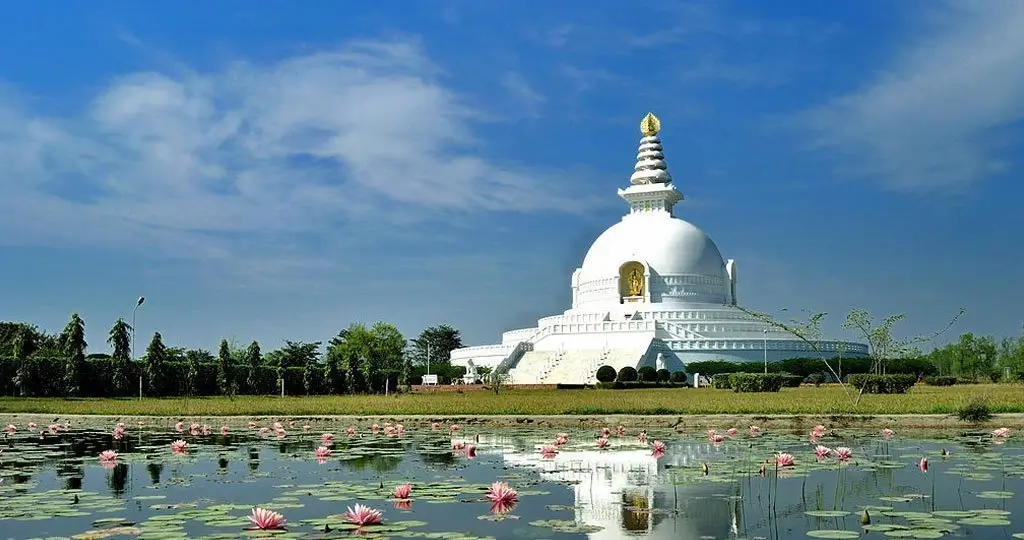
The World Peace Pagoda (Shanti Stupa) at Lumbini stands approximately 1.5 km north of the Sacred Garden at the northernmost end of the Monastic Zone. It is one of the most architecturally and symbolically significant structures in the entire complex.
Built by the Japanese Buddhist organization Nipponzan-Myohoji under the leadership of the Venerable Nichidatsu Fujii — a Buddhist monk who dedicated his life to building peace pagodas around the world as acts of devotion and commitment to global nonviolence — the Lumbini Shanti Stupa is a gleaming white dome of substantial size, topped with a golden spire, surrounded by four golden Buddha images positioned at the cardinal directions, and set within a peaceful garden that provides meditation space and a long approach walk from the canal.
The Shanti Stupa tradition that produced the Lumbini World Peace Pagoda is itself one of the most extraordinary expressions of Buddhist peace activism in the 20th century. Venerable Fujii, who was deeply influenced by both Mahatma Gandhi’s nonviolent philosophy and the Nichiren Buddhist tradition, began building peace pagodas in Japan in the aftermath of World War II and Hiroshima — physical embodiments of the vow to work for the cessation of war and violence. Over the following decades, Nipponzan-Myohoji built peace pagodas in multiple countries, from Japan and India to the United Kingdom and the United States.
The Lumbini pagoda, built in the birthplace of the historical figure whose teachings most profoundly articulate the imperative of nonviolence, is the most symbolically appropriate of all these structures and one of the finest architecturally.
The World Peace Pagoda is best visited at two specific times: early morning, when the rising sun illuminates the white dome and the surrounding prayer flags glow in the dawn light; and at sunset, when the golden spire catches the last light and the reflection of the white dome appears in the canal below. The approach to the pagoda along the canal path in the evening light, with the white structure growing progressively larger and more luminous against the darkening sky, is one of Lumbini’s finest visual experiences and one that many visitors — who leave Lumbini without having walked the full length of the Monastic Zone — unfortunately miss.
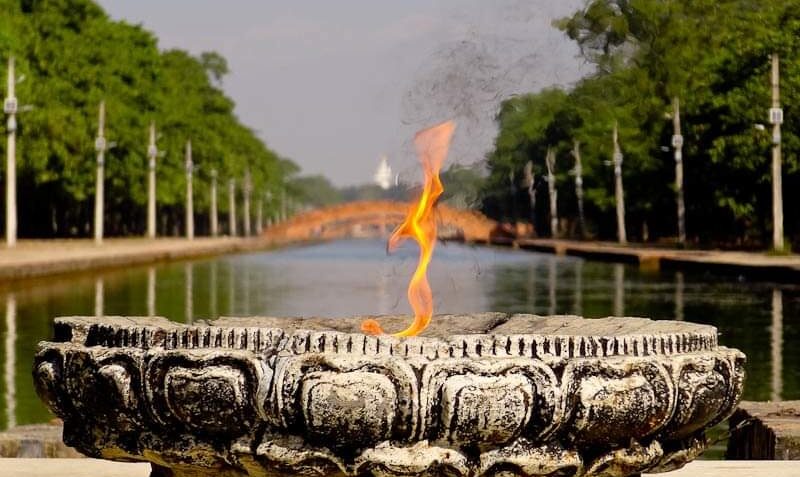
The Eternal Peace Flame — The Continuously Burning Symbol
Located within the Monastic Zone compound, the Eternal Peace Flame has burned without interruption since it was ceremonially lit on October 11, 1986 — a moment of symbolic significance in the United Nations International Year of Peace. The flame was lit from fires gathered from diverse global sources representing different traditions and nations — an act of literal synthesis of the world’s flames into a single burning symbol of the aspiration toward human peace and understanding.
It is one of the longest-burning continuous peace flames in the world and perhaps the most spiritually charged, burning as it does in the birthplace of the human being who, more than any other in world history, articulated the connection between inner peace, compassionate practice, and the cessation of violence in the world.
The Eternal Peace Flame is housed in a simple stone structure that protects it from wind and rain while allowing its light to be visible day and night. The constant tending required to keep the flame burning — refueling, maintaining the wick, protecting it from weather — is performed by the Lumbini Development Trust staff, who regard this as one of their primary ritual obligations. The flame is visited throughout the day by pilgrims of many traditions, who pause before it for prayer, meditation, or simply a moment of silent acknowledgment of the aspiration it represents.
There is something genuinely moving about a flame that has been burning continuously for nearly four decades — that was burning during the fall of the Berlin Wall, during the September 11 attacks, during the COVID-19 pandemic, during every event of the past 38 years that has tested and sometimes shattered the aspiration toward global peace. Its continuity through these events is itself a kind of testimony — not that peace has been achieved, but that the human aspiration toward it has not been extinguished.
Part Two: The International Monastic Zone — A Walking Museum of Global Buddhism
Understanding the Master Plan — Kenzo Tange’s Vision for Unity
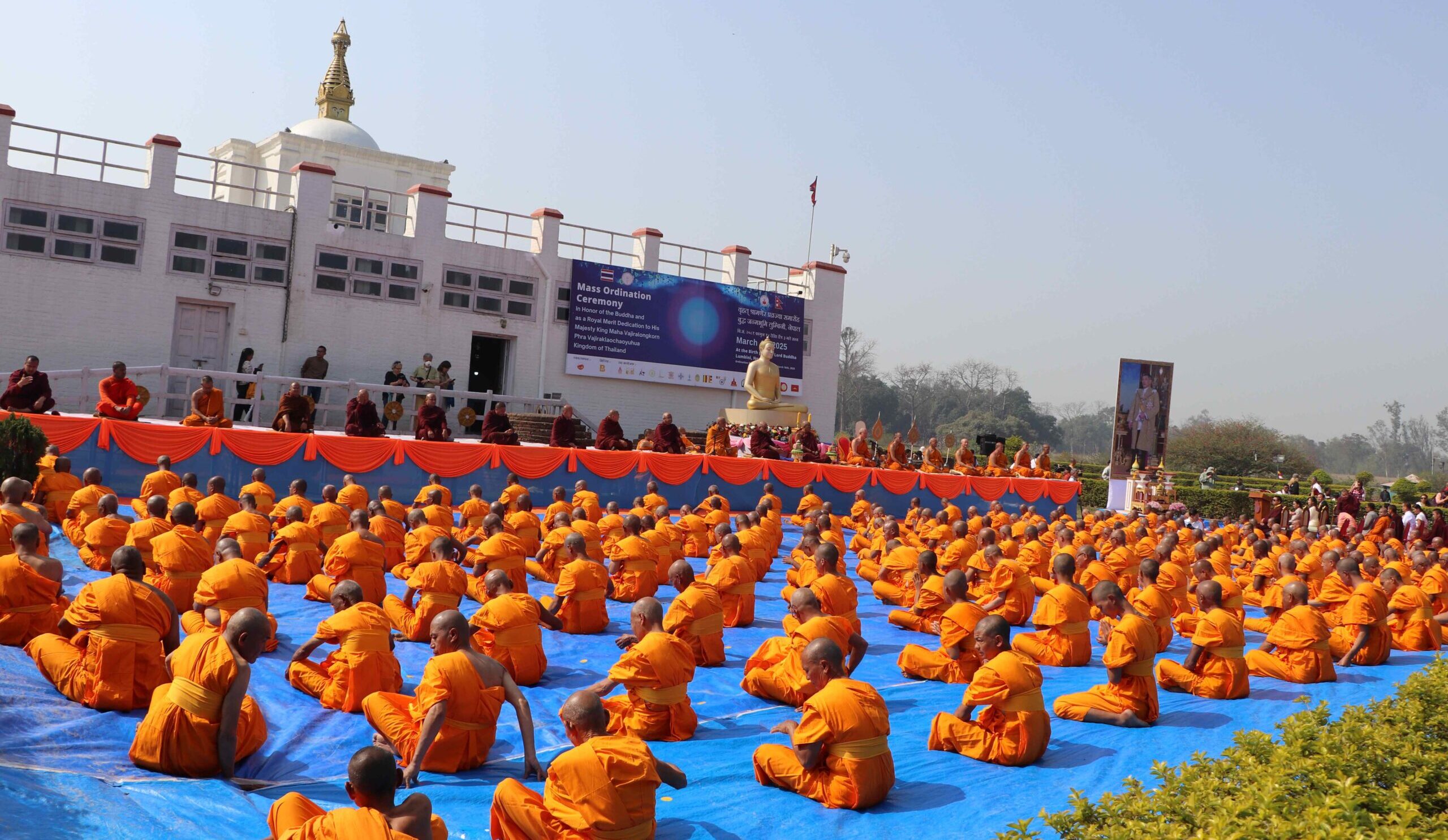
The Lumbini Monastic Zone, as it exists in 2026, is not an organic accumulation of sacred buildings — it is a planned spiritual landscape conceived by one of the 20th century’s most distinguished architects. In 1978, the United Nations commissioned the Japanese architect Kenzo Tange (1913–2005) — whose other landmark works include the Hiroshima Peace Memorial Museum and the Tokyo National Gymnasium for the 1964 Olympics — to create a Master Plan for the development of the Lumbini sacred zone.
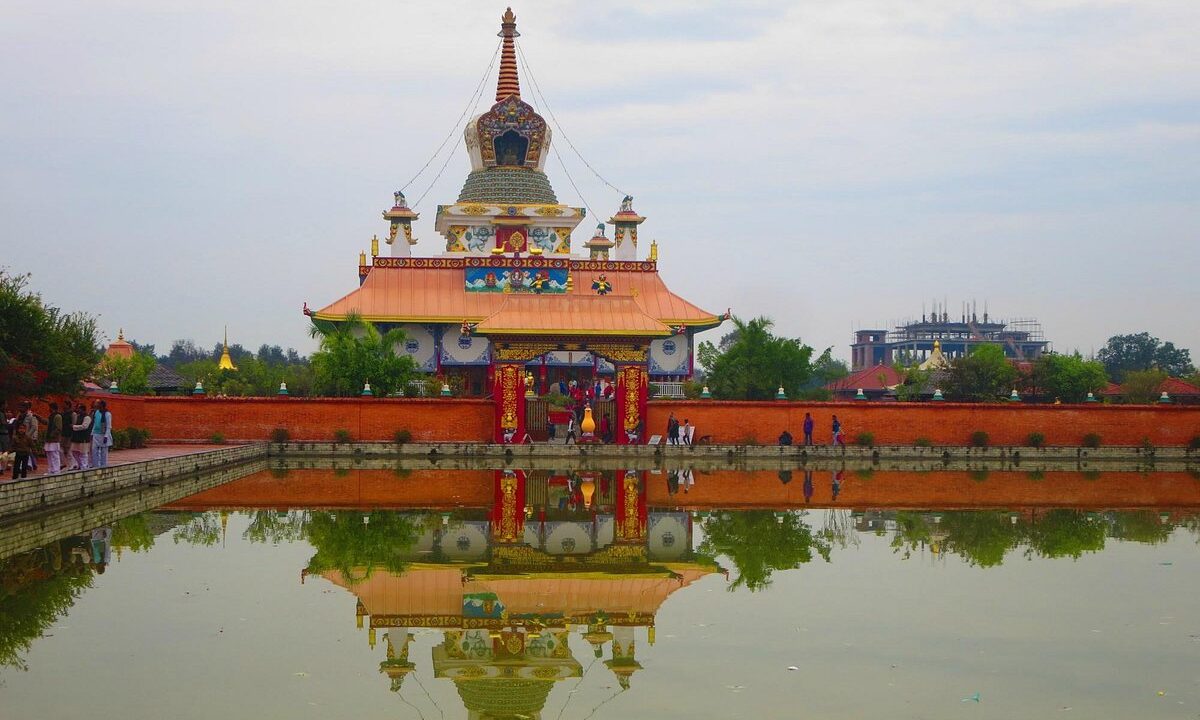
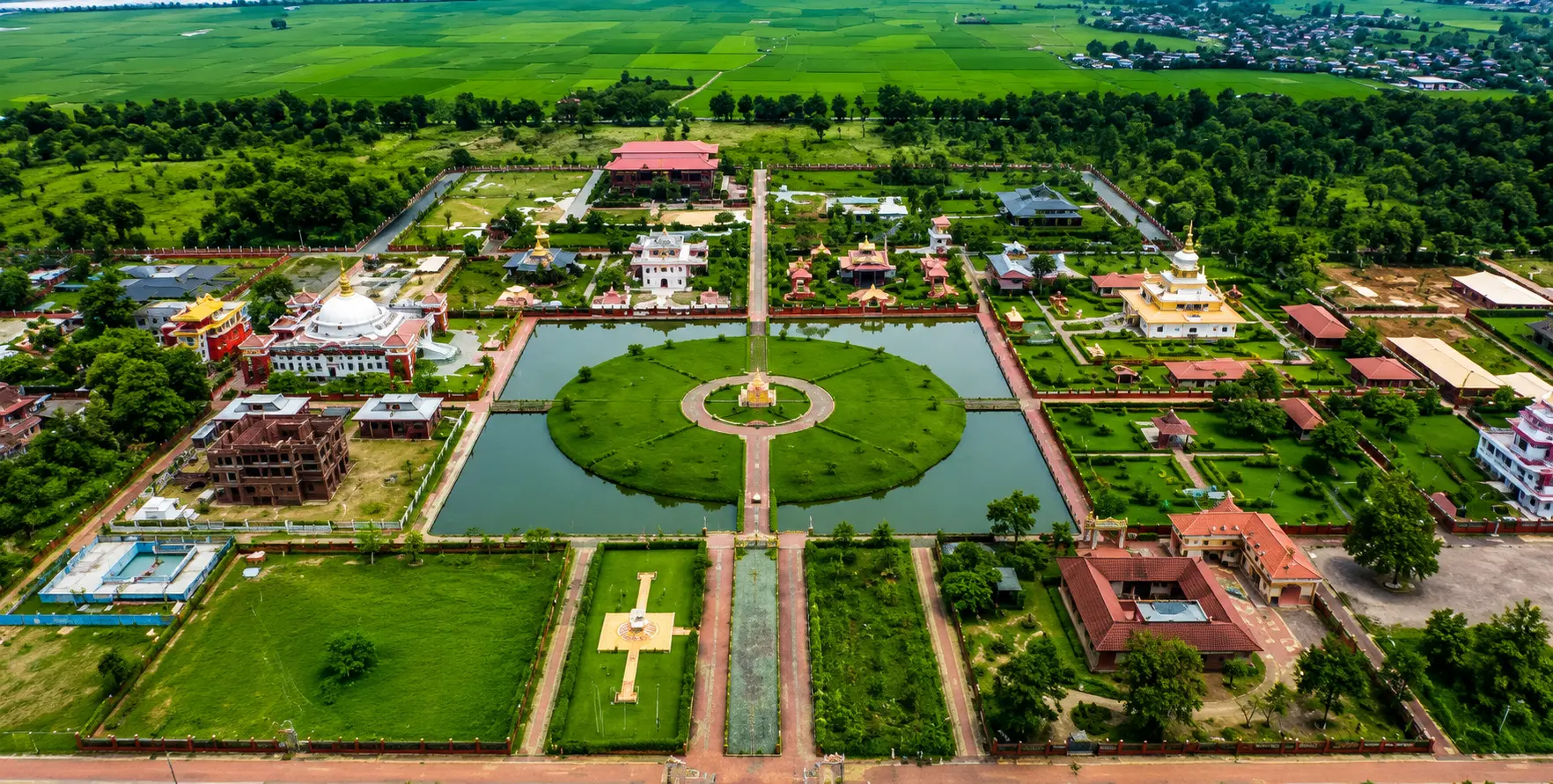
Tange’s design, which remains the framework for all development at Lumbini to this day, divided the site into three primary areas: the Sacred Garden (containing the Maya Devi Temple and all associated ancient structures), the Monastic Zone (divided into East and West sections by a central canal), and the New Lumbini Village (service infrastructure south of the main zone).
The central canal that runs the full length of the Monastic Zone — stretching from the Sacred Garden to the World Peace Pagoda — is one of Tange’s most significant design decisions. The canal serves multiple symbolic purposes: it represents the river and pond water that feature in the narrative of the Buddha’s birth, it provides a visual axis that organizes the spatial experience of the entire Monastic Zone, it creates a reflective surface that doubles the visual presence of the surrounding monasteries, and it establishes a clear dividing line between the East Zone (reserved for Theravada Buddhist nations of South and Southeast Asia) and the West Zone (dedicated to Mahayana and Vajrayana Buddhist nations of East and Central Asia).
The 42 plots allocated within the Monastic Zone (13 in the East Zone and 29 in the West Zone) were assigned to Buddhist nations and organizations through the Lumbini Development Trust, with each plot-holder responsible for financing, designing, and constructing their own Monastery or meditation center. The result — now approaching completeness with 32+ structures built or under construction — is the most extraordinary concentration of diverse Buddhist architectural traditions in a single planned space anywhere in the world. Walking the full length of the canal path from the Sacred Garden to the World Peace Pagoda (approximately 3 km), with the monasteries of thirty nations visible on both sides, is an experience that no description can fully convey.
East Monastic Zone — The Theravada Nations’ Contributions
The East Monastic Zone of Lumbini is dedicated to the Theravada Buddhist tradition, practiced in South and Southeast Asian countries including Sri Lanka, Thailand, Myanmar, Cambodia, Laos, and parts of India. The architectural character of the East Zone monasteries reflects the visual languages of these nations’ Buddhist architectural traditions — generally characterized by steep-roofed buildings with layered gables, elaborate carved finials, abundant gilding, and a preference for brilliant white and gold color combinations that are characteristic of Theravada sacred architecture throughout the region.
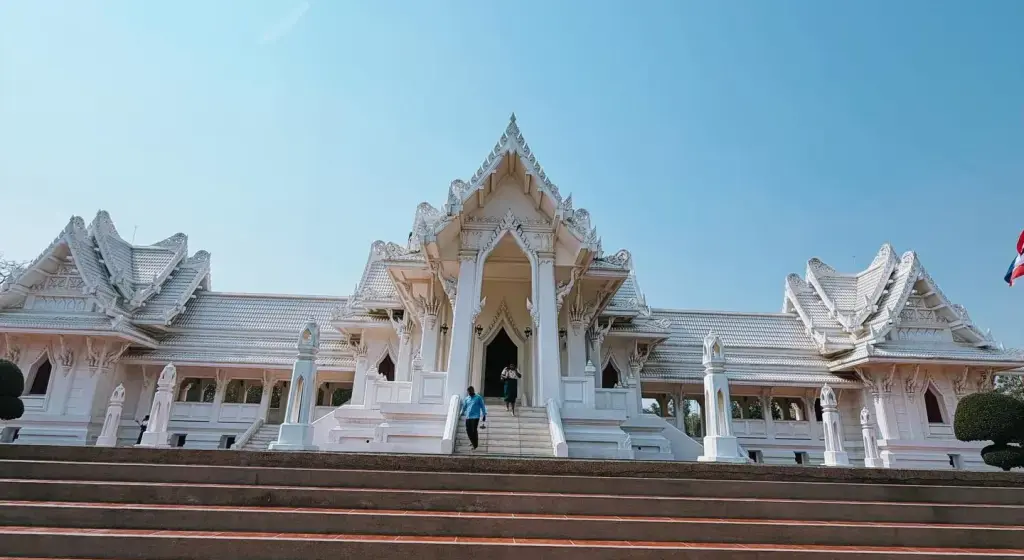
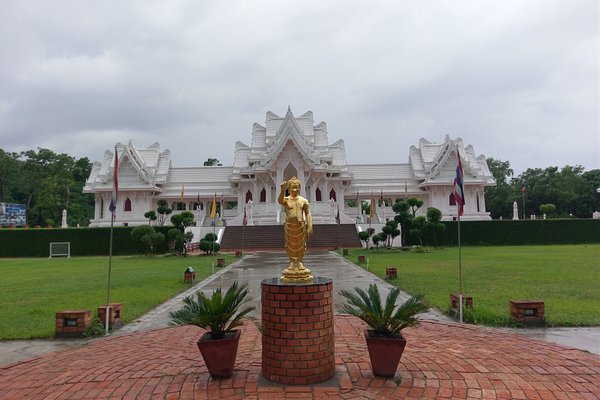
Royal Thai Monastery: The gleaming white marble structure built by the Thai royal family is without question the most visually striking building in the East Monastic Zone and one of the most beautiful in the entire Lumbini complex. The exterior is entirely clad in polished white marble with gold-leaf trim on the tiered roofline — a color combination that, in the strong Terai sunlight, creates an almost luminescent presence from a considerable distance.
Inside, the main prayer hall is centered on an exceptional golden Buddha statue in the Thai style, surrounded by gold-leafed interior surfaces, intricate ceiling paintings in brilliant colors, and the fragrance of jasmine and incense offered by the Thai monks who maintain the Monastery at the principal image. Morning prayer (approximately 6:00–7:00 AM) fills this extraordinary space with the rhythmic, melodic chanting of the Theravada Pali liturgy in the distinctive Thai style — a sound of great beauty that lends the building a distinct dimension of sacred presence beyond its already remarkable visual character.
Myanmar Golden Temple (Lokamani Cula Pagoda): The Myanmar monastery is explicitly modeled after the Shwedagon Pagoda of Yangon — one of the most revered Buddhist structures in the world — and its multi-tiered, gilded spire is visible from much of the Monastic Zone. The complex contains three interconnected prayer halls, a connecting gallery featuring paintings and sculptures of the life of the Buddha, and an exhibition space tracing the history of Buddhism within Myanmar’s distinctive religious culture. The temple’s metalwork — particularly the ornate lamp holders and railing decorations in the Burmese decorative style — is among the finest examples of traditional Burmese Buddhist craftsmanship to be found outside Myanmar itself.
Sri Lankan Monastery: Sri Lanka, as the country most intimately associated with the preservation of the Pali Canon and the Theravada tradition in its most classical form, has built a monastery at Lumbini that reflects this centrality through architectural references to the great Anuradhapura and Polonnaruwa stupas that have defined Buddhist sacred architecture in the island for over two thousand years. The Sri Lankan monastery hosts a community of monks from the Theravada tradition who maintain a rigorous practice schedule, including daily chanting, meditation, and adherence to the traditional Vinaya monastic code.
Cambodian Monastery: The Cambodian Monastery is remarkable for its carved stone entrance portal — a direct architectural reference to the doorways of the Angkor complex, rendered in sandstone-colored concrete that evokes the great Khmer temple tradition. The interior prayer hall houses a large golden Buddha statue, adorned with elaborate floral offerings and the distinctive blue-gold decorative scheme that distinguishes Cambodian Buddhist temple interiors. The evening chanting ceremonies at the Cambodian Monastery, conducted in Pali and Khmer by Cambodian monks, are among the most acoustically beautiful in the Monastic Zone.
West Monastic Zone — Mahayana and Vajrayana Nations
The West Monastic Zone is dedicated to the Mahayana and Vajrayana Buddhist traditions practiced in East and Central Asia — China, Japan, Korea, Vietnam, Tibet (represented through various Tibetan Buddhist organizations based in Germany, France, Nepal, and other countries), Nepal, and Bhutan. The architectural character of the West Zone is correspondingly more diverse and, in some cases, more dramatically original than that of the East Zone — reflecting the broader range of visual traditions represented, from Chinese imperial architecture to Tibetan mandala geometry to Japanese minimalism.
German Monastery (Tergar/Drigung Kagyu — German Tara Foundation): Of all the monasteries in both zones, the German Monastery is the one most consistently identified by knowledgeable visitors and architectural critics as the most extraordinary building in the entire Lumbini complex.
Built under the patronage of the Drigung Kagyu order of Tibetan Buddhism with support from the German-based Tara Foundation, the structure represents a genuinely original synthesis of Tibetan Buddhist sacred architecture and contemporary European design sensibilities.
The exterior tile-and-glass facade uses geometric patterns derived from Tibetan mandala geometry — specifically the mandala of the Chakrasamvara deity, central to the Drigung Kagyu tradition — in an abstracted, modernist visual language that feels neither decoratively busy, as in many Tibetan temples, nor austerely institutional, as in some Western religious architecture.
The interior fresco work is extraordinary: sweeping narrative paintings in brilliant pigments cover the walls and ceiling of the main hall, depicting the cosmological geography of the Buddhist universe, the biographical narrative of the historical Buddha, and the lineage tree of the Drigung Kagyu masters from the time of the Buddha to the present day.
The meditation hall is open to the public during the Monastery’s hours, and the quality of contemplative silence it maintains even during visitor hours is remarkable.
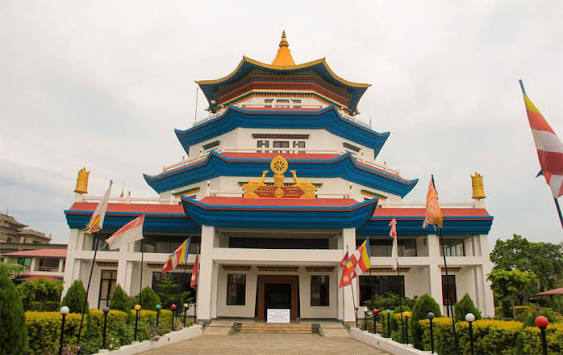
Chinese Monastery: The Chinese Monastery in the West Zone is one of the largest structures in the entire Monastic Zone — a grand pagoda-style complex of considerable scale built in the visual language of traditional Chinese Buddhist temple architecture, with characteristic curved rooflines, red and gold color palette, and the courtyard-centered spatial organization typical of Chinese sacred precincts. Guardian figures flank the main entrance gate in the Chinese Buddhist tradition, and the inner courtyard leads to a large prayer hall centered on a massive gilded Buddha in the Chinese style.
The temple has a distinctly Chinese cultural atmosphere — the incense styles, the decorative motifs, the sound of Chinese Buddhist chanting, and even the particular quality of light within the prayer hall all evoke the great monastery complexes of China’s sacred mountain sites.
Korean Buddhist Temple: The Korean temple is notable in the West Zone for the quality of its architectural restraint — a quality that directly reflects the particular aesthetic of Korean Buddhism, which developed over centuries a visual language of clarity, proportion, and refined simplicity that distinguishes it from both the elaborate decorative richness of Chinese Buddhist architecture and the dramatic iconographic intensity of Tibetan Buddhist sacred spaces.
The Korean temple is one of the few Lumbini monasteries that actively offers structured meditation retreat programs for international visitors, providing instruction in Son (Korean Zen) practice in English over typically 3–7 day stays.
Vietnamese Monastery (Phat Quoc Tu): The Vietnamese Monastery is one of the most imposing structures in the West Zone — a multi-level complex of considerable scale built in a synthesis of Vietnamese Buddhist and Chinese architectural influences. The large standing Buddha visible above the Monastery is one of the most prominent vertical elements in the entire Monastic Zone and serves as an effective orientation point for visitors navigating the complex.
The Monastery’s ceremonies, conducted in the Vietnamese Mahayana tradition in the morning and evening, are among the most musically elaborate in the zone — a blend of Sanskrit and Vietnamese chanting, with melodic sequences of considerable beauty.
Drigung Lotus Stupa and French Monastery: The French connection to Lumbini through the Tibetan Buddhist Kagyu lineage has produced a remarkable Great Lotus Stupa of considerable height and architectural elegance in the traditional Tibetan chorten form. The surrounding meditation garden is one of the most peaceful spaces in the entire Monastic Zone — a planted space of flowering trees and stone meditation seats arranged around the stupa’s circumambulation path where walkers can practice kinhin (walking meditation) in relative solitude even during busy visitor periods.
Meditation and Spiritual Practice at the Monasteries — What’s Available in 2026
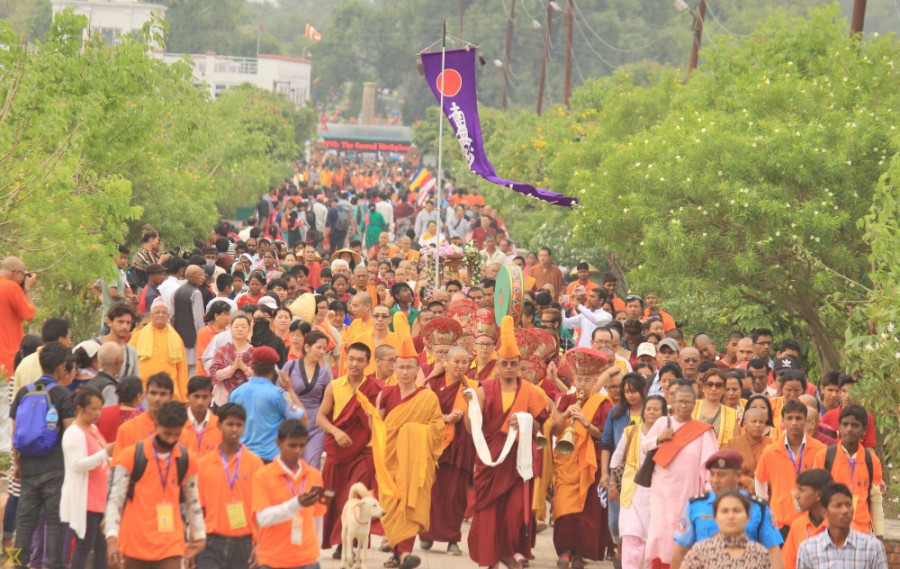
| Monastery | Practice Tradition | Programs Available in 2026 | Duration | Language |
| Korean Buddhist Temple | Son (Korean Zen) Buddhism | 3–7-day meditation retreats; daily sitting sessions open to respectful visitors | 3–7 days | English / Korean |
| German Monastery (Drigung Kagyu) | Tibetan Vajrayana — Drigung Kagyu lineage | Short retreats; meditation hall open to the public; longer retreat arrangements available | 1 day to 2 weeks | English / German / Tibetan |
| Vietnamese Monastery | Vietnamese Mahayana / Pure Land | Morning and evening chanting are open to visitors; occasional weekend retreats are available. | Day visit or stay | Vietnamese / English (basic) |
| Thai Monastery | Theravada — Thai tradition | Morning chanting (6:00–7:00 AM) is open to visitors; meditation guidance is available | Day visit | Thai / English (basic) |
| Sri Lankan Monastery | Theravada — Sri Lankan tradition | Meditation instruction available; monks accept visiting students | Flexible | Pali / Sinhala / English |
| Lumbini Meditation Center (LBCR) | Multi-tradition / secular | 10-day Vipassana retreats; day and weekend mindfulness programs | 10 days (Vipassana) or 1–2 days | English |
Part Three: The Hidden Sacred Outer Circuit — 62 Sites Beyond the Tourist Path
Why the Outer Circuit Matters — Understanding the Full Sacred Landscape
The Lumbini Development Zone’s 4.8 km × 1.6 km footprint contains what most visitors see as ‘Lumbini.’ But the archaeological map of the Buddha’s world extends vastly further. Within a radius of approximately 50 km from the Maya Devi Temple lie the material remains of the Shakya Kingdom — the political and geographic world into which Siddhartha Gautama was born, in which he spent his first 29 years as Prince Siddhartha, and through which his family story, his cultural identity, and the relationships that shaped his biography all played out.
These remains constitute the 62 archaeological sites identified by the Lumbini Development Trust and UNESCO as forming the wider Lumbini sacred landscape. This landscape represents, in archaeological terms, the most important concentration of early Buddhist history preserved in any single geographic region.
Understanding what connects these 62 sites is understanding the spatial structure of early Buddhism. The Shakya Kingdom was a small, oligarchic republic (gana-sangha) in the eastern Terai, governed by an assembly of Shakya noble families from its capital at Kapilvastu (modern Tilaurakot). Its borders were defined by the Rohini River (to the east, separating it from the Koliya Kingdom) and the Himalayan foothills (to the north). Within this compact political geography,
the entire cast of characters in the Buddha’s biographical narrative lived: his father, King Suddhodhan; his mothe,r Maya De; i, his stepmother, Prajapati Gautam;, his wife, Yashodhar;, his son, Rahul;, his cousins (including the hostile Devadatta and the devoted Ananda); and the Shakya community that King Virudhaka of Kosala would ultimately massacre. The outer sacred circuit visits the places where all of these people lived, where these events occurred, and where the physical traces of this world have been preserved in earth and brick for two and a half millennia.
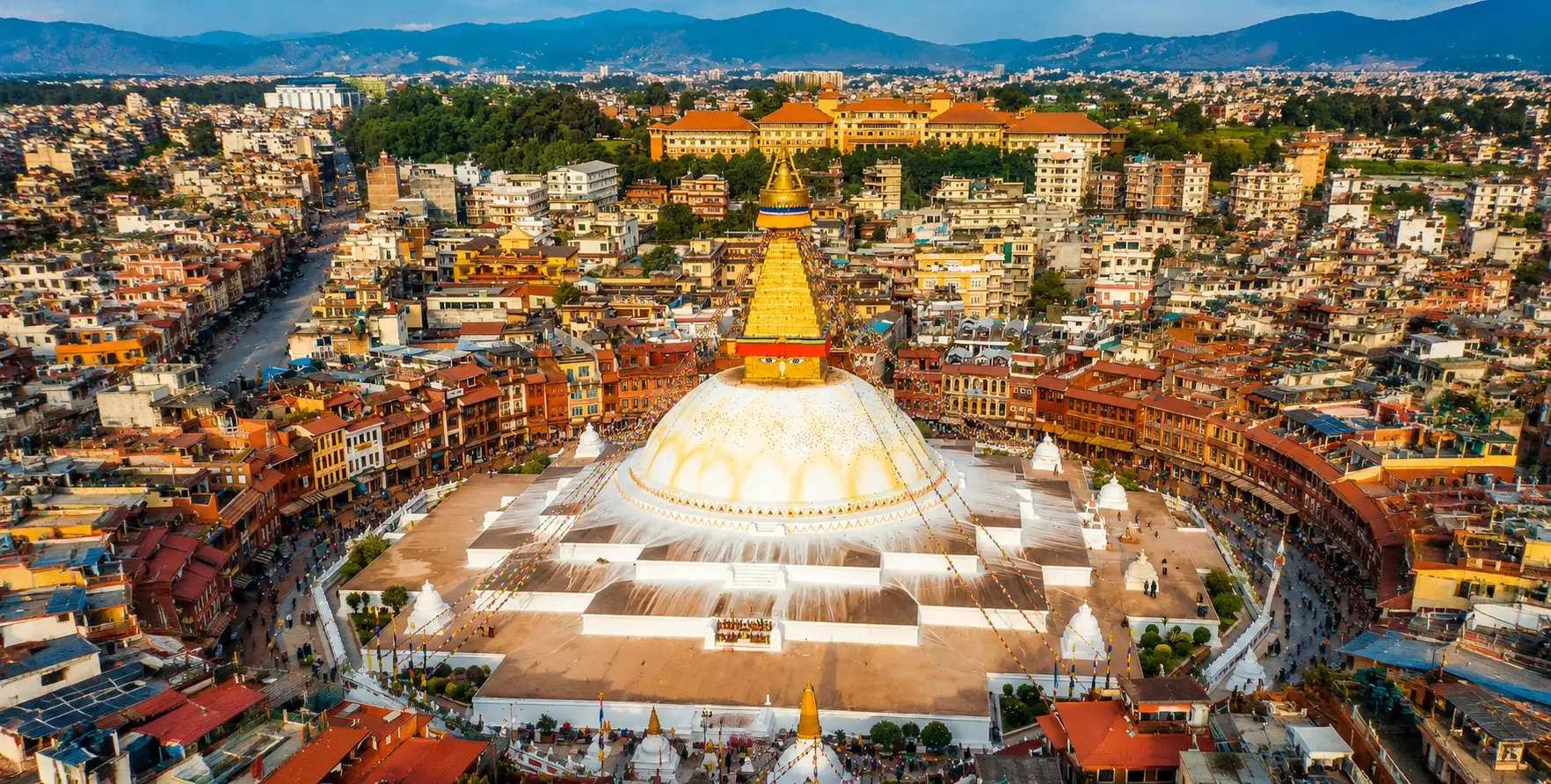
Ramagrama Stupa — The Most Sacred Hidden Site in the Buddhist World
Of all the hidden sacred sites in the Lumbini region, Ramagrama is the one that moves most visitors most profoundly — and the one that most powerfully concentrates the imagination on the extraordinary historical and spiritual reality of what Lumbini represents. Located approximately 35 km east of Lumbini in the Nawalpur District on the banks of the Jharahi River, the Ramagrama Stupa is a seven-meter-high earthen mound of ancient brick that is, according to both Buddhist textual tradition and modern archaeological evidence, the only one of the original eight stupas built to contain the Buddha’s cremated remains that human hands have never opened.
The history of Ramagrama begins with the death of the historical Buddha at Kushinagar around 483 BCE. After the cremation, eight groups arrived to claim the Buddha’s ashes — the Mallas of Kushinagar (who controlled the cremation site), the Mallas of Pava, the Licchavis of Vaishali, the Shakyas of Kapilvastu, the Bulis of Allakappa, the Koliyas of Ramagrama, the Brahmin Vethadipaka of Vethadipa, and the Moriyas of Pipphalivana. A Brahmin named Drona supervised the division, keeping the vessel in which the ashes had been collected as his own relic. Each group then returned to its capital and built a stupa to house its portion.
Two centuries later, Emperor Ashoka began a program of relic redistribution: he opened seven of the eight original relic stupas, collected the contents, and enshrined them in the 84,000 stupas he is said to have built throughout his empire to spread the Dharma physically across the subcontinent. But the Ramagrama Stupa he left untouched.
The Buddhist text tradition, preserved in Pali, Sanskrit, Chinese, and Tibetan versions, says that when Ashoka arrived at Ramagrama to open the stupa and collect the relics, the nagas (serpent-deities who are guardians of sacred places in both Hindu and Buddhist tradition) appeared before him and demonstrated through miraculous display that they were perfectly capable of venerating the relics themselves — and told Ashoka that his intervention was unnecessary. Ashoka, characteristically respectful of local sacred tradition and the evidence before him, accepted the nagas’ guardianship and departed without opening the stupa.
The result, across two and a half millennia, is the extraordinary reality of Ramagrama today: within the earthen mound visible in a rural field on the Jharahi River bank, there may lie the actual physical remains — the cremated ashes, the bodily relics — of the historical Siddhartha Gautama. One-eighth of the physical remains of one of the most consequential human beings in world history. The thought is staggering, and no amount of prior intellectual preparation makes it less so when you are standing before the mound itself in the morning light.
Archaeological investigations at Ramagrama — conducted non-invasively, using ground-penetrating radar and other non-destructive methods — have confirmed the ancient nature of the stupa’s brick core and have identified structural elements consistent with Mauryan or pre-Mauryan construction.
The Lumbini Development Trust has made the principled decision not to undertake invasive excavation at Ramagrama, citing both scholarly caution (the risk of damaging or misidentifying what the mound contains) and religious respect for the tradition that the stupa should remain undisturbed. This decision is not universally supported among archaeologists. Still, it reflects a mature and respectful approach to the intersection of scholarly inquiry and living religious tradition that characterizes the best heritage management practice.
The landscape around the Ramagrama Stupa has a particular quality that visitors consistently note and find difficult to describe precisely — a stillness and a gravity that feel qualitatively different from those at other sacred sites in the region. The rural setting (rice fields, the Jharahi River, scattered trees, the sound of birds and the distant activity of agricultural life) amplifies rather than diminishes this quality; the earthen mound sits in the actual world, not in a sanitized heritage precinct, and its unassuming presence against the ordinary rural landscape of southern Nepal makes its extraordinary content and history all the more vertiginous in implication.
Ramagrama Access: Distance: ~35 km east of Lumbini | Travel time: 50–60 min by private vehicle | Road: paved main road then rough approach | 4WD jeep recommended for final approach | Entry: Free | Hours: 5:00 AM – 8:00 PM | Nepal Vehicle Hiring Pvt. Ltd. provides dedicated Ramagrama vehicle service — contact +977 9851013196
Tilaurakot — Where Siddhartha Lived as Prince for 29 Years
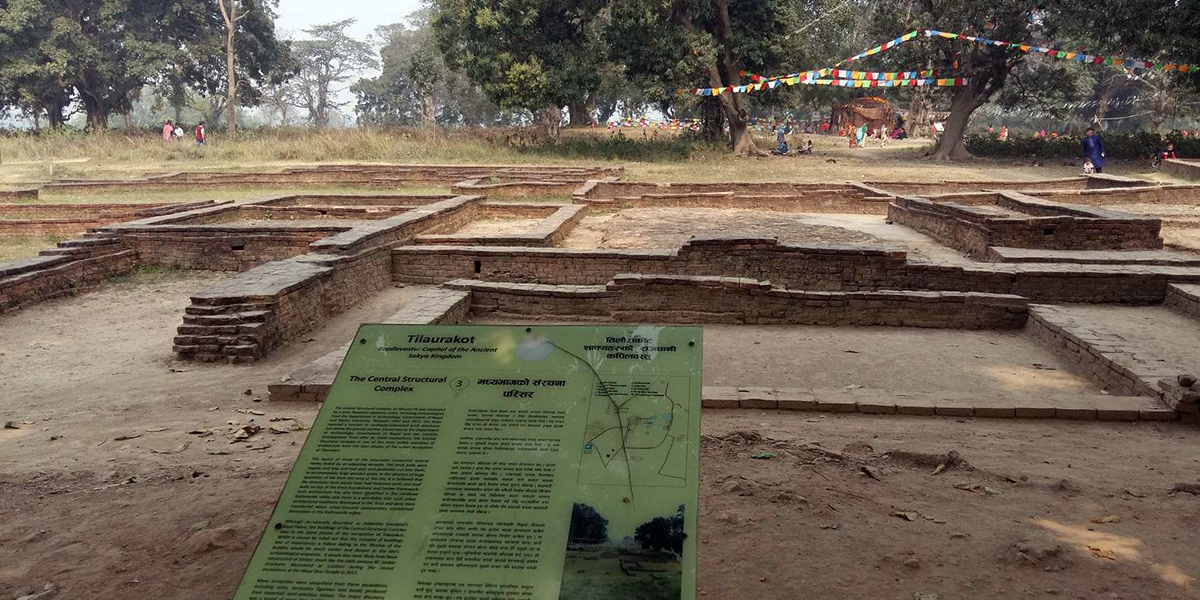
Tilaurakot is the archaeological site identified by the convergent evidence of textual references, coin finds, architectural remains, and comparative topography as the capital of the ancient Shakya Kingdom of Kapilvastu. In this city, the young Siddhartha spent the first 29 years of his life before the Four Sights transformed him, and he undertook the Great Renunciation. Located approximately 27 km west of Lumbini near the town of Taulihawa, Tilaurakot is one of the most historically significant archaeological sites in the entire Himalayan world and one of the least visited by the international pilgrims who fill the Maya Devi Temple.
The excavated remains at Tilaurakot reveal the physical character of the ancient city: massive fortification walls of rammed earth and brick (the defensive perimeter of the ancient capital), a network of internal structures identified as palace buildings, administrative spaces, and residential quarters, elaborate stupa mounds within and outside the walls erected by later Buddhist devotees to mark sacred sites within the old capital, and the particularly significant remains of the Eastern Gate — the gateway through which, in the biographical narrative, Siddhartha rode out at midnight in his final act of renunciation, leaving behind his wife, his infant son, his father’s kingdom, and the entire comfortable world of his princely existence.
The Eastern Gate of Tilaurakot is the emotional and biographical center of the entire site. Standing before the excavated foundations of this gateway — knowing what it represents in the most important renunciation narrative in Buddhist tradition — and knowing that you are standing at the approximate physical location of one of the decisive moments in human spiritual history is an experience of quiet intensity that any amount of study or meditation cannot replicate. The gate through which Siddhartha passed on the night he became the Buddha’s future was this gate, on this ground, under this sky.
Ongoing excavations at Tilaurakot in 2026 continue to reveal the site’s complexity and historical depth. Recent seasons have produced particularly significant coin finds — including pre-Mauryan punch-mark coins of the type circulating in the Shakya Kingdom’s period — along with pottery sequences, architectural phasing data, and structural evidence that progressively refine the chronology of the site’s occupation and the physical character of the ancient capital. The Tilaurakot archaeological project is one of the most active and productive in South Asia, and the site in 2026 presents an extraordinary combination of excavated past and ongoing discovery.
The Kapilvastu Museum, adjacent to the Tilaurakot site, houses artifacts recovered from excavations — coins, pottery, terracotta figurines, stone sculptures, and miscellaneous archaeological finds spanning from the 7th century BCE to the medieval period. The museum’s collection, while modest in scale by international standards, is historically irreplaceable — these are material objects from the world of Siddhartha Gautama’s birth, childhood, and early adult life, providing a tactile connection to the biographical world of the Buddha that no other collection can match.
Tilaurakot Access: Distance: 27 km west of Lumbini | Travel time: 45–60 min | Road: paved throughout | Any vehicle suitable | Entry: Free | Hours: 5:00–17:30 daily | Combine with Kudan, Gotihawa, Niglihawa, and Sagarhawa for full western circuit

Kudan (Nyigrodharama) — The Garden of Reunion
Kudan occupies a unique place in the Lumbini sacred landscape as the site of one of the most emotionally complex and spiritually significant reunions in the entire Buddhist biographical tradition — the return of the enlightened Buddha to the kingdom where he had grown up as Prince Siddhartha, and his meetings with his father the king, his stepmother Prajapati Gautami, his former wife Yashodhara, and most poignantly, his son Rahula whom he had left as an infant on the night of his renunciation and who was now approximately seven years old.
Located approximately 4.5 km south of Tilaurakot and thus easily combined in a single day’s itinerary, Kudan was the site of the Nyigrodharama monastery — a great park and Monastery built by King Suddhodhan specifically to receive the returning Buddha. The name ‘Nyigrodharama’ means ‘grove of the Nyigrodha (banyan) tree,’ and the Monastery is named for the banyan tree that stood at its center, under which the Buddha is said to have first settled upon his arrival in the Kapilvastu area.
The Buddhist texts that describe the events at Kudan are among the most psychologically nuanced in the entire Pali and Sanskrit canonical literature. The meeting between the Buddha and his father, King Suddhodhan — the aging monarch who had nurtured dreams of his son becoming a world-conquering emperor, only to encounter a wandering mendicant of supreme spiritual authority instead — is presented with remarkable sensitivity to the complexities of paternal pride, grief, and eventual transformation.
Suddhodhan is described as initially unable to prostrate before his son (the traditional greeting between a commoner and a monk). The Buddha’s response — performing a miracle of aerial walking and fire that compelled his father’s eventual prostration — is presented as the specific act required to break the king’s attachment and open his heart to the Dharma.
The encounter between the Buddha and his former wife Yashodhara, and the ordination of his son Rahula, take place within the Nyigrodharama complex at Kudan and are among the most moving scenes in the entire Buddhist hagiographical tradition. Yashodhara, who had maintained strict ascetic practice during her husband’s years of absence, bowed before the Buddha but could not speak. Rahula, sent by his mother to ask for his ‘inheritance,’ approached the Buddha and asked for what was his — and the Buddha responded by summoning the monk Sariputta and instructing him to ordain the boy, giving him the Dharma itself as his inheritance rather than any material or political legacy.
The current physical remains at Kudan — excavated stupas, the ancient pond (Nyigrodharama pond), and the brick foundations of what were once significant monastic structures — sit in a peaceful rural setting that has retained something of the garden character described in the texts. The Nyigrodharama pond at Kudan, still holding water, still reflecting the surrounding trees, still providing the quiet that makes it one of the most meditative natural spaces in the entire Lumbini region, is the site’s most immediately moving feature.
Devdaha — Queen Maya Devi’s Homeland
Devdaha was the capital of the ancient Koliya Kingdom — the neighboring state of the Shakya Kingdom separated from it by the Rohini River — and the hometown of Queen Maya Devi, the mother of Siddhartha Gautama. The significance of Devdaha in the Buddha’s biographical world is profound: this is the place from which Maya Devi set out on the journey that ended at Lumbini with the birth that changed human history; this is the place where the young Siddhartha visited his maternal grandparents; and this is the original home of several women who were central to the biographical world of early Buddhism.
Maya Devi gave birth to Siddhartha while traveling from Kapilvastu to Devdaha — the custom among women of the time was to return to their natal home for childbirth. The sal grove at Lumbini, where she gave birth, was approximately halfway between the two capitals, and her early labor forced the birth to happen there rather than in Devdaha as planned. This detail — that Lumbini was not the planned location of the birth but an emergency birthplace during travel — lends the sacred site a sense of historical contingency, making the precision of Ashoka’s subsequent identification and marking of the spot even more remarkable.
The town of modern Devdaha preserves traces of the ancient Koliya settlement in its archaeological remains, local temple complexes, and sacred ponds associated with legendary events of Queen Maya Devi’s life. Several Buddhist pagodas and stupas mark sacred sites associated with the Koliya tradition, and the Rohini River is still present, though somewhat diminished from its ancient course, and serves as a physical boundary marker that has remained continuous since it separated the Shakya and Koliya kingdoms. The Buddha himself, in his later teaching career, is recorded as having intervened to prevent a war between the Shakyas and the Koliyas over water rights on the Rohini — a story of extraordinary resonance for our own contemporary world of water conflicts.
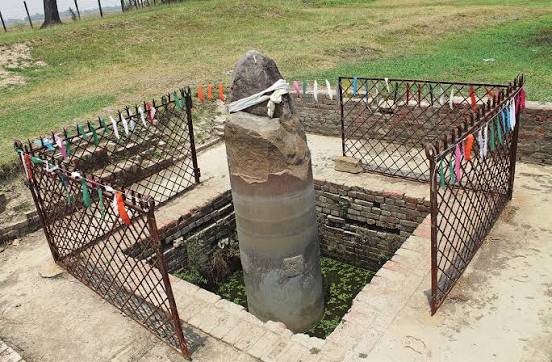
Gotihawa and Niglihawa — The Previous Buddhas’ Sacred Sites
One of the most philosophically fascinating aspects of the Lumbini outer sacred circuit is what it reveals about the Buddhist understanding of time, cosmology, and sacred geography. Buddhist cosmology holds that there have been many Buddhas across the immense spans of cosmic time — beings who achieve complete Enlightenment in succession and teach the Dharma in their respective world-ages.
The texts of the Theravada canon name seven Buddhas of the current cosmic eon, of whom Shakyamuni (the historical Buddha) is the seventh and most recent. The three immediately preceding Shakyamuni — Vipassi, Sikhi, Vessabhu, Kakusandha, Konagamana (Kanakmuni), and Kassapa — are said to have been born in specific locations, some of which lie within the sacred landscape of the modern Lumbini region.
Gotihawa, located approximately 3 km southwest of Taulihawa (approximately 28 km from Lumbini), is identified in Buddhist textual tradition and confirmed by Emperor Ashoka’s inscribed pillar as the birthplace of Kakusandha (Krakuchanda) Buddha — the first of the three past Buddhas of the present ‘world-aeon’ that includes the historical Shakyamuni. The Ashokan Pillar at Gotihawa — though broken and partially buried — still bears a readable inscription confirming Ashoka’s recognition of the site and his visit to venerate it, along with the remains of a large brick stupa erected to mark the birthplace.
That Ashoka visited and marked not only the birthplace of the historical Buddha but also the birthplaces of previous Buddhas is a remarkable demonstration of how seriously the Mauryan emperor took the Buddhist cosmological framework that extended Buddha-nature across time rather than concentrating it in a single historical figure.
Niglihawa, located approximately 35 km west of Lumbini, similarly preserves the remains of an Ashokan Pillar marking the birthplace of the sixth Buddha of the current eon— Konagamana (Kanakmuni) Buddha. The pillar at Niglihawa is particularly historically significant because it bears two separate Ashokan inscriptions: one from the 14th year of Ashoka’s reign and a second from the 20th year, indicating that Ashoka returned to the site a second time to enhance and update his royal dedication. This double inscription is unique among the surviving Ashokan pillars and reveals the exceptional importance that Ashoka placed on this particular sacred site.
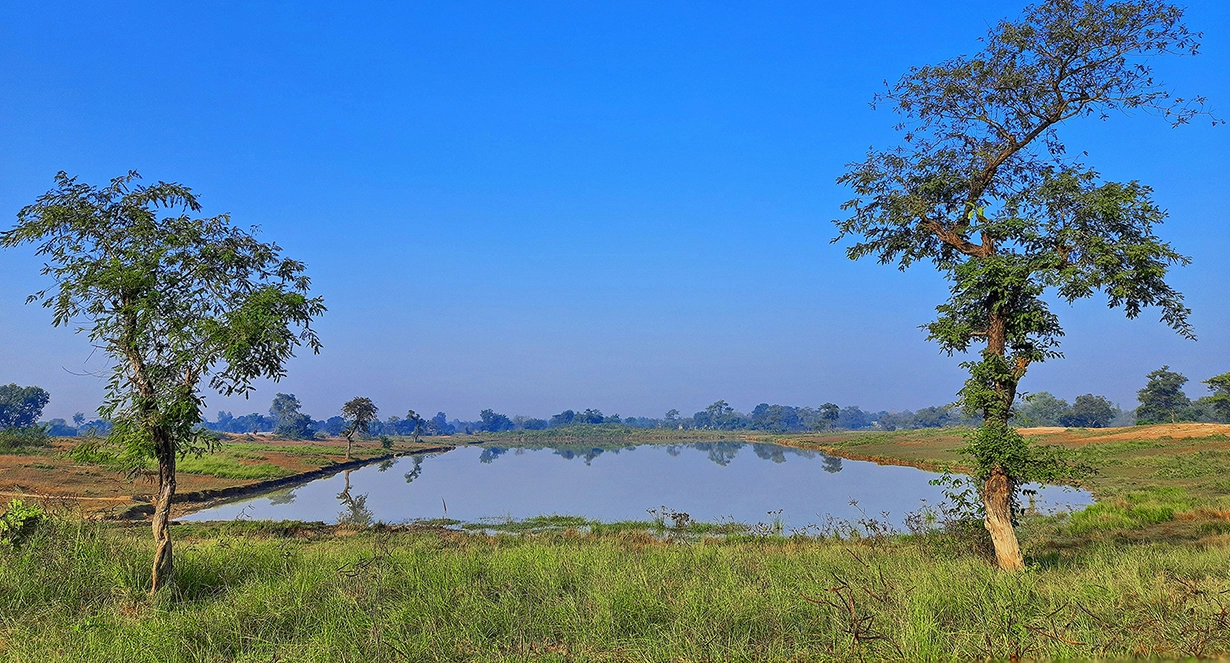
Sagarhawa — Where the Shakya World Ended
Sagarhawa is the most historically sobering site in the entire Lumbini outer circuit — the location identified by archaeologists and the Buddhist textual tradition as the site of the devastation of the Shakya community ordered by King Virudhaka of Kosala late in the historical Buddha’s life. Understanding Sagarhawa requires understanding the extraordinary tragic arc of the final years of the Buddha’s own tribe.
The origin of the massacre is traced in the texts to a specific act of deception during the marriage negotiations between King Prasenajit of Kosala and the Shakya nobles. When Prasenajit requested a Shakya woman as his principal queen, the Shakya nobles — proud of their lineage and resistant to giving a genuine noble daughter in marriage to an outsider — sent a slave woman of exceptional beauty, Vasabha-khattiya, passing her off as a Shakya noble.
The deception was successful: Vasabha became queen, and her son by Prasenajit became the prince Virudhaka. When Virudhaka, as a young man, visited the Shakya capital and discovered the truth of his mother’s origins — that the Shakyas considered him of low birth and had been contemptuous of him during his visit — he swore vengeance. He harbored his grievance through the years until he became king.
When Virudhaka finally led his army against Kapilvastu, the aging Buddha — at this point in his 70s and spending what would be his final years traveling between the major cities of the Gangetic plain — is said to have intervened three times: sitting beneath a withered tree on the road in the direct path of the advancing army. Three times, Virudhaka stopped his army out of respect for the Buddha. Three times, the Buddha explained that he sat beneath the withered tree because there was no shelter in the Shakya family. And three times the army turned back — but the fourth time, Virudhaka came again, and the Buddha did not appear, and the army swept forward to massacre the Shakya people.
The location of the massacre — at the great fortified settlement beside the pond known as Lumbu Sagar — is what archaeologists identify as Sagarhawa, approximately 35 km west of Lumbini. Several stupas in the vicinity were erected to honor the memory of those who died, and the large rectangular pond at the heart of the site has associations in local tradition with the blood of the Shakya dead that give it a quality of historical darkness uncommon in a landscape otherwise defined by the luminous narrative of Buddhist Enlightenment.
Standing at Sagarhawa, looking over the old pond toward the earthen mounds that represent the ruins of the ancient fortification, it is possible to feel the weight of the tragic history that ended here — the destruction of the world that gave birth to the Buddha, the annihilation of the community whose very existence had made his biography possible.
Part Four: Complete Practical Guide for Spiritual Seekers
Crafting Your Lumbini Itinerary — Day by Day
| Day | Focus | Sites | First Activity | Key Experience |
| Day 1 | Inner Sacred Zone | Maya Devi Temple, Pushkarni, Ashokan Pillar, Eternal Flame, World Peace Pagoda | 5:00 AM Sacred Garden at dawn | Dawn meditation at Maya Devi Temple — before the crowds arrive — is the most moving experience in Lumbini. |
| Day 2 | West Monastic Zone deep dive | German Monastery (full interior), Thai Monastery, Myanmar Temple, Vietnamese Monastery, French Stupa | 6:00 AM Thai Monastery morning chanting | Morning chanting at Thai Monastery — gold hall, Pali chanting, dawn light |
| Day 3 | East Monastic Zone + meditation | Sri Lankan Monastery, Cambodian Monastery, Korean Temple (meditation session), Lumbini Museum | 9:00 AM Korean Temple meditation | Korean Son meditation session — one of Lumbini’s most accessible retreat experiences |
| Day 4 | Western Sacred Circuit | Tilaurakot, Kudan, Gotihawa, Niglihawa, Sagarhawa, Kapilvastu Museum | 8:00 AM departure from Lumbini | Standing at Tilaurakot East Gate — biographical heart of the Buddha’s story |
| Day 5 | Eastern Sacred Circuit | Ramagrama Stupa, Devdaha | 7:00 AM departure from Lumbini | Ramagrama Stupa — the only original Buddha relic stupa, never opened in 2,500 years. |
| Day 6 | DeepReflectionsearchh | LIRI Library, Lumbini Development Trust, meditation practice, monastery guest house | Flexible | LIRI reading room — the world’s premier specialist library for Buddhist studies in this sacred setting |
Deeper Reading — Understanding What You Are Visiting
The Lumbini outer sacred circuit rewards visitors who arrive with prior reading in Buddhist history, archaeology, and biographical tradition. The following books are specifically recommended for deepening the Lumbini experience:
- ‘Old Path White Clouds’ by Thich Nhat Hanh — A beautifully written narrative retelling of the Buddha’s life story, drawn from the Pali sutras and presented as a readable, vivid historical narrative. Reading this before visiting Lumbini and Tilaurakot transforms every site from an archaeological location to a living scene from a biography.
- ‘In the Buddha’s Words,’ edited by Bhikkhu Bodhi — An anthology of Pali canon teachings in translation, organized thematically. Reading the early sutras relating to the Buddha’s time in the Kapilvastu region — his meetings with his father, the ordination of Rahula, the return to Devdaha — while visiting those locations creates an unusually direct connection between text and landscape.
- ‘Lumbini: The Birthplace of the Lord Buddha’ by UNESCO — The official archaeological and heritage documentation of the Lumbini site and its wider sacred landscape. Essential background for understanding the site’s archaeological complexity and the ongoing excavation work.
- ‘Ashoka and the Decline of the Mauryas’ by Romila Thapar — The definitive scholarly account of Ashoka and his pilgrimage program, essential for understanding the full significance of the Ashokan pillars at Lumbini, Niglihawa, Gotihawa, and throughout the sacred landscape.
- ‘Power of the Buddha’ by John Snelling — A comprehensive biography of the historical Buddha drawing on the complete range of early Buddhist textual sources, with detailed treatment of the geographical setting of the Sakya Kingdom world.
Food and Accommodation Near the Hidden Sites — Practical 2026 Information
Accommodation in the Lumbini area ranges from monastery guesthouses within the Monastic Zone to commercial hotels in the Lumbini bazaar area and the larger town of Bhairahawa (Siddharthanagar), approximately 22 km south. For visitors planning to visit the outer sacred circuit sites, basing yourself in Lumbini (within the development zone or nearby bazaar) is more convenient than Bhairahawa, as it saves 45 minutes of additional driving each way. For visitors arriving late in the evening or departing early in the morning by flight from Gautam Buddha International Airport, Bhairahawa offers better commercial hotel options.
- Monastery guesthouses (within Monastic Zone): NPR 1,500–3,000/night, vegetarian meals, peaceful location. Korean, German, and Vietnamese monasteries all accept spiritual visitors. Advance contact is essential.
- Lumbini bazaar area hotels: NPR 2,500–6,000/night for mid-range rooms. Several options within 1–2 km of the main Sacred Garden entrance. Convenient for early morning Sacred Garden access.
- Buddha Maya Garden Hotel and similar: Higher-end Lumbini-area accommodation at NPR 6,000–12,000/night. Well-maintained, good restaurants, closest to the development zone of the former hotels.
- Bhairahawa commercial hotels: NPR 4,000–10,000 for mid-range; up to NPR 18,000+ for business-class rooms. Better range but 22 km from Lumbini. Best for flight-connection travelers.
Food near the hidden outer sites: Tilaurakot, Kudan, Gotihawa, Niglihawa, and Sagarhawa are all in rural areas with few or no restaurants. Pack a lunch and sufficient water before departing Lumbini for the outer circuit. Several small teahouses and dhaba-style restaurants operate on the road between Lumbini and Taulihawa and can provide dal bhat or simple snacks in the Taulihawa town area.
Essential Etiquette for AllLumbini’s Hidden Spiritual Places
- Remove footwear before entering the Sacred Garden, Maya Devi Temple, and all monastery buildings — shoe storage is provided at entrances.
- Dress modestly at all sites — shoulders and knees covered for both men and women. Many monasteries display signs to this effect. Lightweight shawls or scarves are useful cover-ups for tanks and shorts.
- No photography inside the Maya Devi Temple inner sanctum — signs and guards enforce this rule. Photography is generally permitted in monastery grounds but not always inside prayer halls — check signs or ask.
- Maintain silence in the Sacred Garden and near the Maya Devi Temple — this is a living place of prayer, not a heritage museum. Phone calls and loud conversation are deeply disrespectful to praying pilgrims.
- Circumambulate all stupas clockwise (keeping the stupa to your right as you walk). This applies to both the Maya Devi Temple complex and the Ramagrama Stupa.
- At the outer archaeological sites, stay on marked paths and do not climb on or touch the ancient brick structures. These are fragile two-thousand-year-old remains in a tropical climate — physical contact accelerates deterioration.
- At Sagarhawa and sites with historical associations with tragedy and violence, maintain a respectful, contemplative attitude. These are places of deep historical sorrow as well as Buddhist sacred significance.
- Donations at monasteries: A small donation (NPR 100–500) at monastery donation boxes acknowledges the community’s maintenance of the sacred space and is appreciated. Donations are always discretionary.
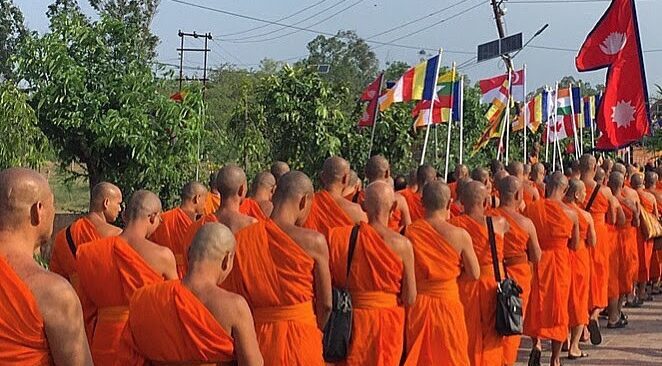
Frequently Asked Questions — Lumbini’s hidden spiritual places.
What is the single most important hidden site at Lumbini that most visitors miss?
Ramagrama Stupa, located approximately 35 km east of Lumbini, is the most historically significant and spiritually profound hidden site in the wider Lumbini sacred landscape. It is the only one of the original eight stupas built after the Buddha’s death to contain his cremated remains that has never been opened — making it the oldest continuously preserved Buddhist sacred object in the world and the only site where the historical Buddha’s physical remains may still be present.
The site requires a private vehicle to reach. It is about an hour’s drive from Lumbini, but standing before this unremarkable earthen mound, knowing what it may contain and what it certainly represents, is one of the most moving experiences available to any Buddhist pilgrim.
How many days do I need to see all the important hidden sites?
A minimum of 4 full days is needed to do justice to both the inner sacred zone of Lumbini and the most significant outer sites. Day 1: Dawn sacred garden visit + Inner Monastic Zone. Day 2: Complete Monastic Zone (all 32+ monasteries). Day 3: Western outer circuit — Tilaurakot, Kudan, Gotihawa, Niglihawa, Sagarhawa (full day by vehicle). Day 4: Eastern outer circuit — Ramagrama Stupa and Devdaha (half to full day by vehicle). An additional 1–2 days for meditation retreat activities, the LIRI Library, and more contemplative engagement with the sites already visited would complete an ideal Lumbini pilgrimage.
Is the Tilaurakot site definitely the capital of ancient Kapilvastu?
The identification of Tilaurakot as the ancient Kapilvastu — the capital of the Shakya Kingdom and the site of the Buddha’s childhood palace — is supported by convergent evidence from multiple scholarly disciplines. Archaeological evidence (coin types, pottery sequences, architectural phasing), epigraphic evidence (nearby Niglihawa’s Ashokan pillar marking locations consistent with Tilaurakot being Kapilvastu), textual evidence (distances between sites mentioned in ancient texts matching the current geography), and topographical evidence (Tilaurakot’s location relative to Lumbini and other identified sites) all point to the same identification. While alternative identifications have been proposed (most notably the site of Piprahwa in the Indian state of Uttar Pradesh), the scholarly consensus in 2026 strongly favors Tilaurakot as the ancient Kapilvastu.
Can I attend meditation retreats at Lumbini monasteries as a non-Buddhist?
Yes — several of the international monasteries in the Lumbini Monastic Zone offer meditation programs that are explicitly open to non-Buddhist participants. The Korean Buddhist Temple’s meditation retreat programs are specifically designed for international participants and are taught in English without religious preconditions. The German Monastery (Drigung Kagyu) accepts retreat visitors of any background who come with ga enuine spiritual interest. The Lumbini Buddhist Circuit Research (LBCR) center runs secular Vipassana retreats in the Theravada insight meditation tradition. All programs require advance contact and registration.
How do I get from Kathmandu to Lumbini?
The most popular option is a domestic flight from Tribhuvan International Airport (Kathmandu) to Gautam Buddha International Airport (Bhairahawa) — approximately 35 minutes flying time, with multiple daily flights by Buddha Air and Yeti Airlines (NPR 9,000–18,000 per person in 2026). From Bhairahawa Airport, Nepal Vehicle Hiring Pvt. Ltd. provides airport pickup and transfer to Lumbini (approximately 22 km, 45 minutes). The alternative is private vehicle hire from Kathmandu to Lumbini (approximately 330 km, 7–8 hours) — Nepal Vehicle Hiring provides this service in Cars, 4WD Jeeps, and Hiace Vans. Contact our team at +977 9851013196 or vehiclehiringnepal.com for transport arrangements.
Are the outer sacred circuit sites accessible during monsoon season?
Most of the outer sacred sites are accessible during the monsoon (June–September) with appropriate caution and a suitable vehicle. The main roads to Tilaurakot, Kudan, and most western circuit sites are paved and manageable in rain. Some final approach roads to Gotihawa, Sagarhawa, and sections near Ramagrama can become muddy in heavy rain and require a 4WD vehicle. The spiritual experience at the outer sites during monsoon has a particular quality — the lush green landscape, the atmospheric mist, and the absence of other visitors create a contemplative setting of unusual depth. Nepal Vehicle Hiring Pvt. Ltd. recommends a 4WD Fortuner or Hilux for outer circuit visits during monsoon and monitors road conditions to advise clients on current access.
What is the Lumbini Master Plan and how does it affect what I can see?
The Lumbini Master Plan, designed by Japanese architect Kenzo Tange in 1978 under UNESCO auspices, defines the spatial organization of the entire Lumbini Development Zone — the 4.8 km × 1.6 km protected area within which athe Lumbini Development Trust regulates all development The plan allocated plots within the Monastic Zone to Buddhist nations and organizations, established the central canal as the organizing spatial axis, defined the Sacred Garden as the primary protected archaeological zone, and created the New Lumbini Village as the service infrastructure zone south of the main complex.
The Master Plan has been only partially realized — as of 2026, approximately 32 of the 42 allocated monastery plots have been developed, and several plots remain under construction or in planning. The plan does not address the outer sacred circuit sites (Ramagrama, Tilaurakot, etc.), which are managed separately by the Lumbini Development Trust in collaboration with the Department of Archaeology.
Conclusion: The Lumbini That Changes Everything
There are two Lumbinis. The first — the one that tour operators describe, that travel guides summarize in two pages, that Instagram presents in golden-hour photographs of the gleaming World Peace Pagoda — is extraordinary: the Maya Devi Temple marking the exact birthplace of one of history’s greatest spiritual figures, the Ashokan Pillar providing one of the world’s oldest and most important archaeological inscriptions, and the Monastic Zone offering a remarkable walking survey of Buddhist traditions from thirty nations. This first Lumbini is genuinely world-class and genuinely moving.
The second Lumbini — the one that requires a private vehicle, some planning, a willingness to leave the paved tourist path for the rural roads of the Rupandehi and Kapilvastu districts, and the imaginative and intellectual effort to see what the modest earthen mounds and scattered brick foundations of the outer sites truly represent — is something of a different order entirely. This second Lumbini is where you stand before the only stupa in the world that may contain the actual remains of the Buddha and feel the weight of 2,500 years of preserved sanctity.
It is where you walk through the excavated East Gate of Tilaurakot — the gate through which Siddhartha rode out at midnight on the night of his Great Renunciation — and feel the biographical reality of the Buddha’s life story with an immediacy that no amount of scripture reading can replicate.
It is where the broken Ashokan Pillar in a Niglihawa rice field, forgotten by most tourists, speaks more eloquently about the world of the Buddha than any museum exhibit. It is where the old pond at Sagarhawa, in its melancholy rural setting, reminds you that the very human violence eventually destroyed the world that produced the Buddha, whom he spent his life addressing — and that this makes his achievement of compassion and wisdom not less but more extraordinary.
To visit both Lumbinis — to experience the sacred core in full depth and the hidden outer circuit with genuine attention — is to undergo a spiritual Education that changes your relationship to the Buddha’s story and to the possibility of human wisdom permanently. It is neither a comfortable nor an efficient journey. It requires time, planning, physical engagement with sometimes remote and unassuming sites, and the willingness to sit with the profound discomfort of historical and spiritual reality presented without comfortable heritage packaging. But it is, for those who make it, one of the most significant journeys available to any human being in the world today.
Nepal Vehicle Hiring Pvt. Ltd. is the transport partner that makes this complete Lumbini journey possible — providing professional, reliable, and comfortable vehicle service to every inner and outer sacred site in the Lumbini spiritual landscape. From a 5:00 AM dawn drive to the Sacred Garden to a full-day western circuit through the Tilaurakot archaeological landscape to the deeply moving rural path to Ramagrama Stupa, we are with you at every stage of the most profound journey available in Nepal. Contact our team today. The hidden Lumbini is waiting.
For travelers who have completed their trek and are planning to explore Kathmandu, we recommend continuing your journey with our trusted sister companies, Trek Nepal Himalayas and Alpine Luxury Treks. We specialize in organizing a wide range of travel experiences across Nepal, from classic trekking adventures to cultural and wildlife tours.
Our top offerings include iconic journeys such as the Everest Base Camp helicopter tour, immersive Kathmandu sightseeing tours, breathtaking Nagarkot sunrise experiences, exciting Chitwan jungle safaris, and luxury packages. In addition, we can arrange short hikes, heritage tours, mountain flights, and customized travel plans tailored to your schedule and interests.
Whether you are looking for a budget-friendly trip or a luxury trekking experience with premium lodges, private guides, and high-end services, we ensure every detail is professionally managed. Our goal is to provide a seamless transition from your trekking adventure to a comfortable) and a memorable travel experience in Nepal.
- Lumbini Hidden Spiritual Places: The Lumbini That Most Visitors Never Find
- Part One: The Sacred Core — Understanding Lumbini's Known Heart in Full Depth
- Part Two: The International Monastic Zone — A Walking Museum of Global Buddhism
- Part Three: The Hidden Sacred Outer Circuit — 62 Sites Beyond the Tourist Path
- Part Four: Complete Practical Guide for Spiritual Seekers
- Frequently Asked Questions — Lumbini's hidden spiritual places.
- Conclusion: The Lumbini That Changes Everything

Related Blog & Articles
Gautam Buddha Airport to Lumbini Vehicle – Complete Transfer Guide 2026
Kathmandu to Lumbini Vehicle – Complete Hiring Guide 2026

Lumbini to Kathmandu Car Rental – Complete Travel Guide (2026)