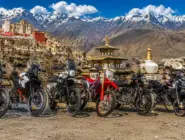
Plan a Trip


Pokhara to Lo Manthang Jeep Service
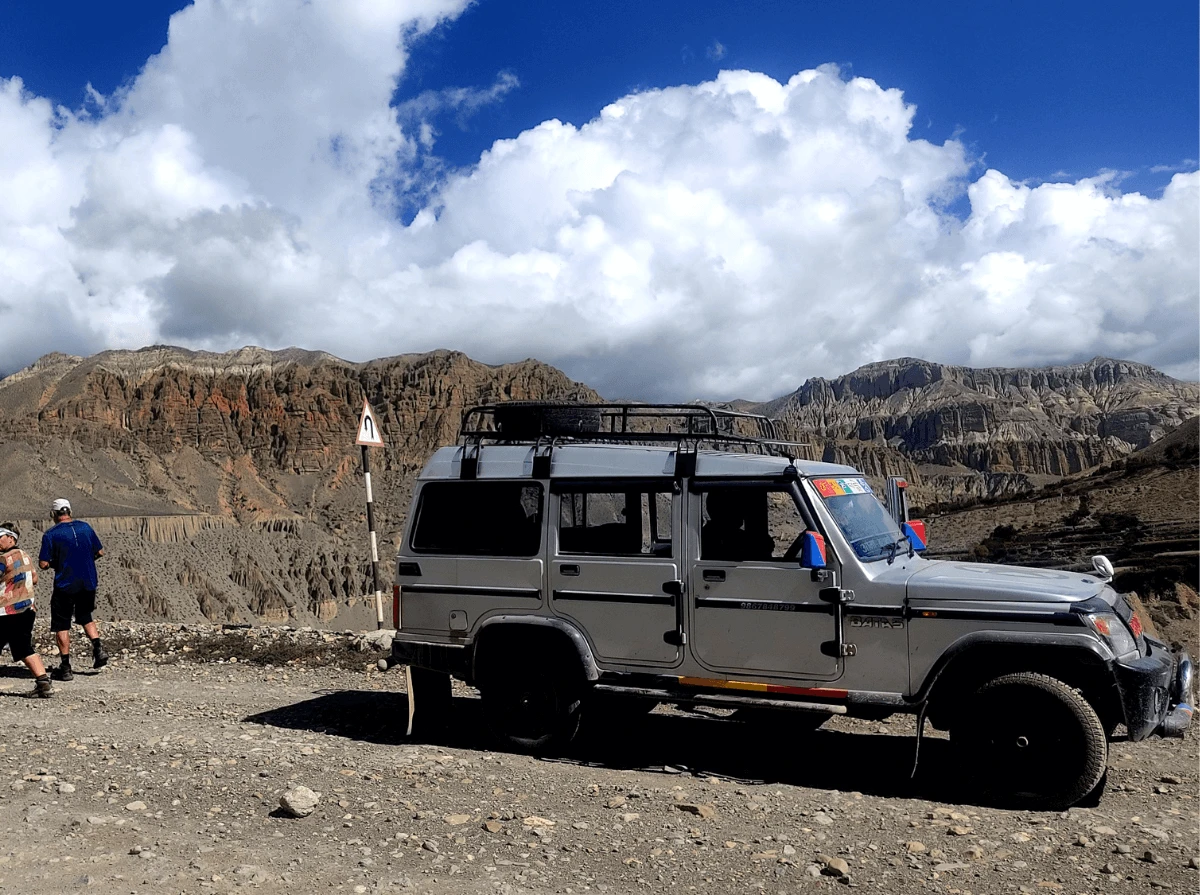
Pokhara to Lo Manthang Jeep Service – Complete Upper Mustang Guide
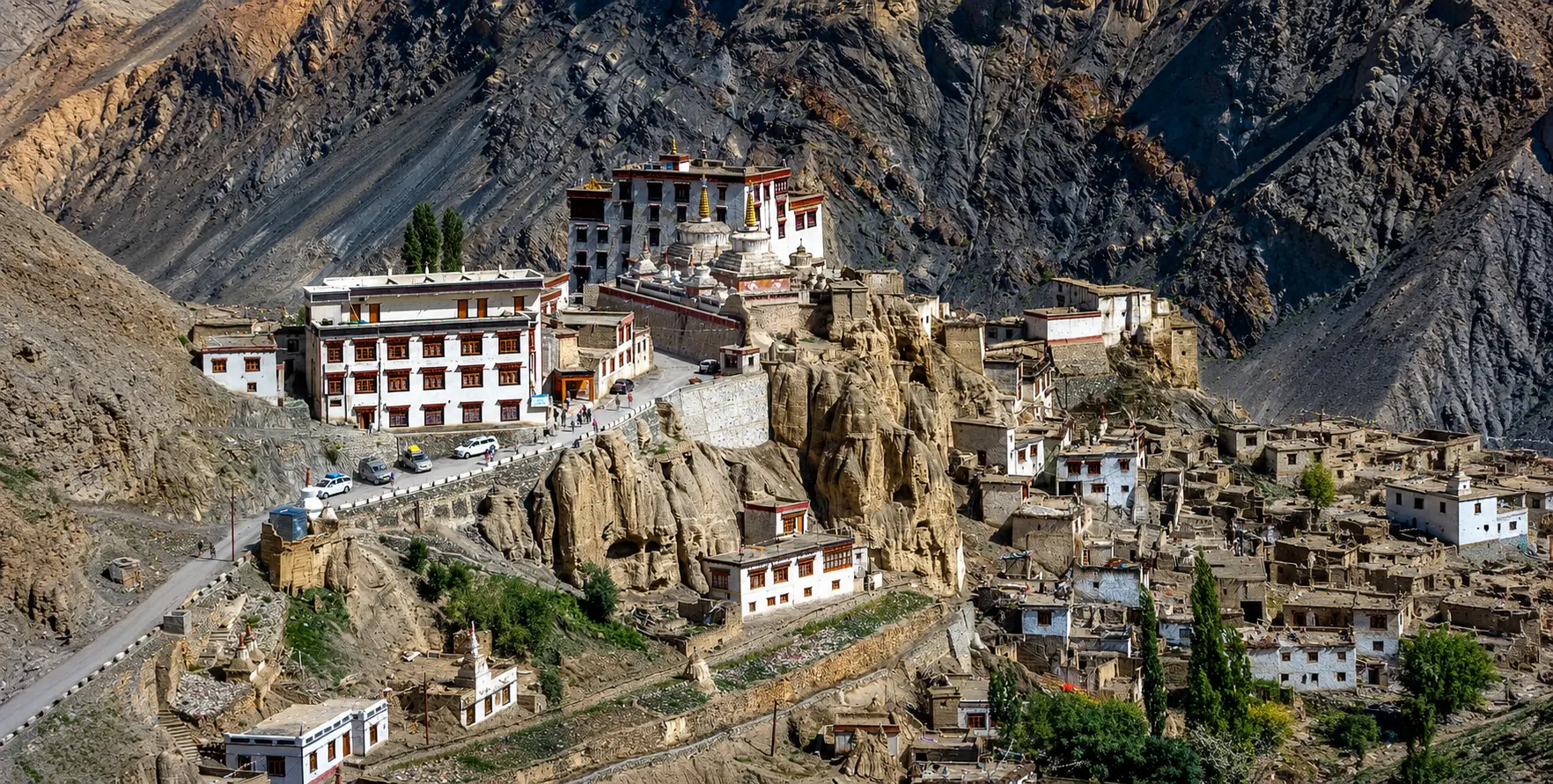
Lo Manthang is the ancient walled capital of the former Kingdom of Mustang – one of the most remote, most extraordinary, and most photogenic destinations in the entire Himalayan world. Set on a vast windswept plateau at 3,840 m in the heart of the Tibetan cultural landscape of Upper Mustang, Lo Manthang is a living medieval city of whitewashed walls, ancient palace ruins, cave monasteries, and centuries-old Buddhist art. Here, the 14th century feels closer than the 21st.
It is also one of Nepal’s most restricted destinations, requiring the Upper Mustang Restricted Area Permit (USD 500 for 10 days) and accessible only by a combination of jeep and trekking through the dramatic Kali Gandaki gorge and the high plateau beyond.
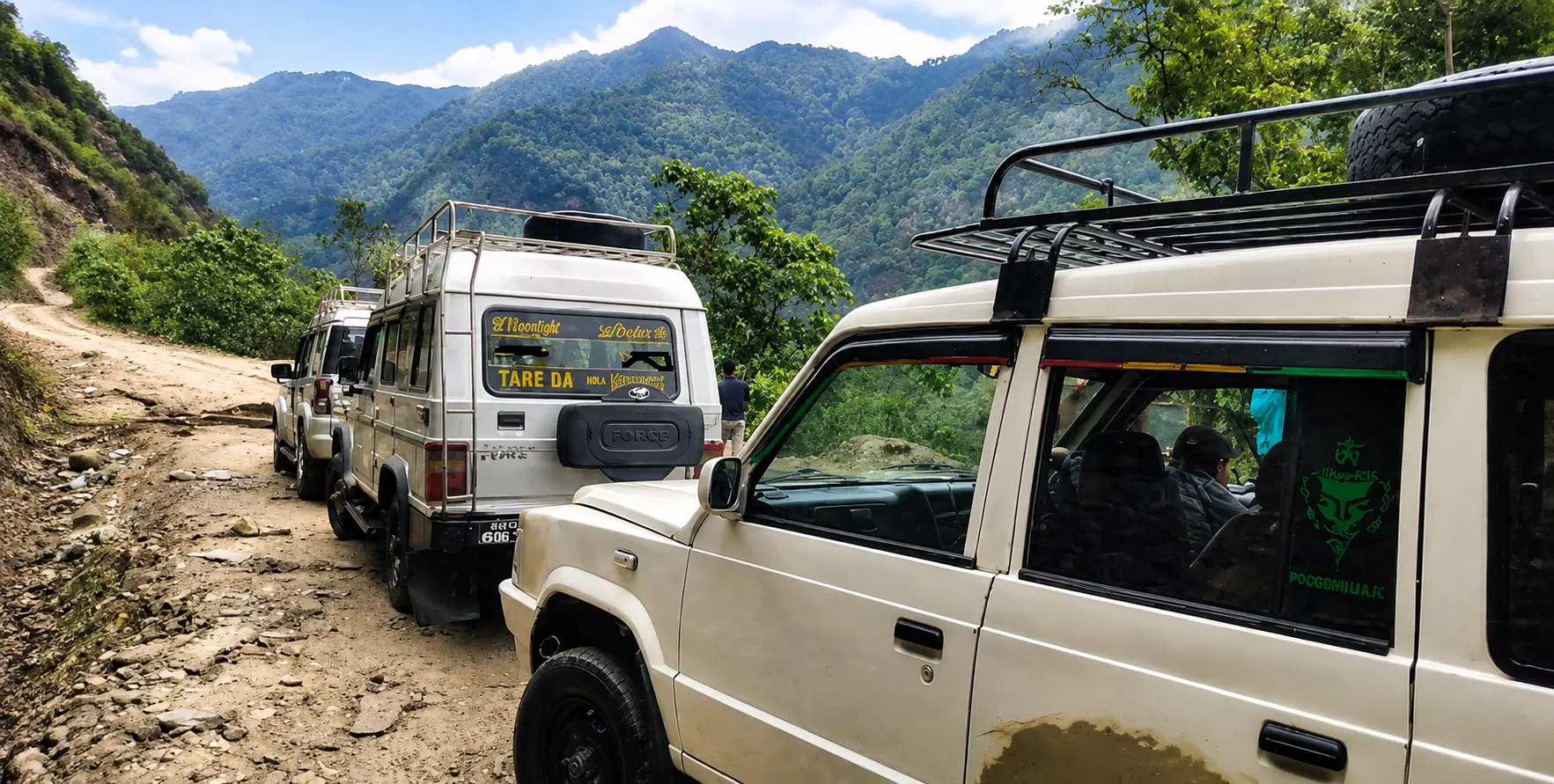
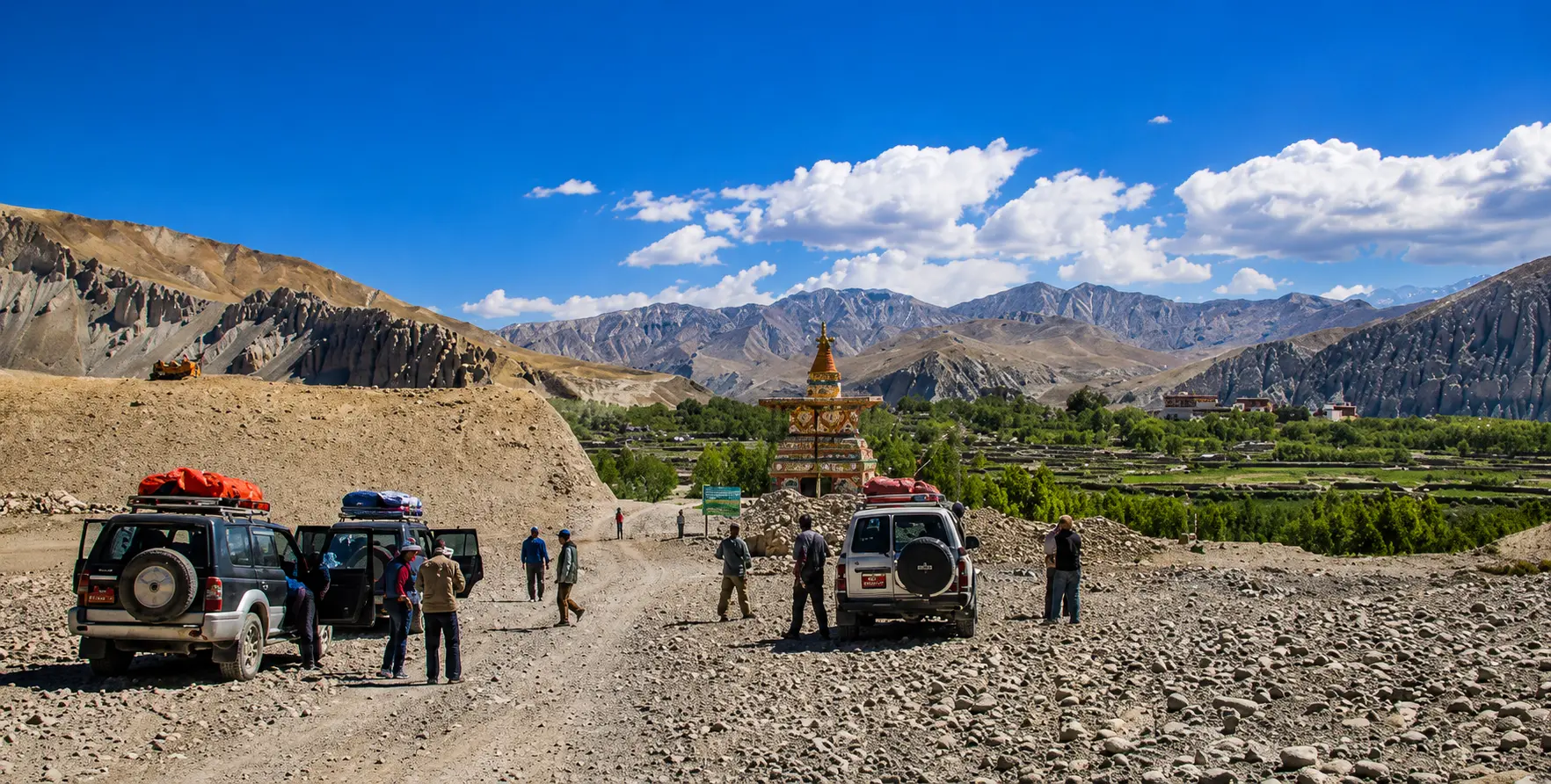
From Pokhara, the jeep journey to Lo Manthang is a 3- to 4-day road adventure through some of the most dramatic landscapes in Asia – the Kali Gandaki gorge, the Mustang plateau, medieval villages, and the surreal lunar landscape of Upper Mustang. This complete guide covers the full jeep route from Pokhara to Lo Manthang, permit requirements, prices, road conditions, the Upper Mustang experience, and how to book your jeep service with Vehicle Hiring Nepal.
Lo Manthang – The Forbidden Kingdom
- Location: Lo Manthang, Mustang District, Gandaki Province, Nepal. Altitude: 3,840 m above sea level
- Distance from Pokhara: Approximately 320–340 km by road
- Distance from Jomsom: Approximately 82 km north by jeep track
- Travel Time from Pokhara: 3 to 4 days by private jeep
- Permit Required: Upper Mustang Restricted Area Permit – USD 500 for 10 days (mandatory)
- Famous For: Medieval walled city, ancient cave monasteries, sky caves, Tiji Festival, Tibetan culture, lunar landscape
- Road Type: 4WD jeep track from Kagbeni northward – rough, remote, extraordinary
Upper Mustang was closed to foreign visitors until 1992 – one of the last forbidden kingdoms in the Himalayan world. For decades, the ancient Tibetan-culture kingdom of Lo remained isolated behind Nepal’s northern border while the rest of the country opened to tourism. When it finally opened, visitors discovered a cultural landscape of astonishing antiquity and authenticity – cave dwellings carved into cliff faces thousands of years ago, monastery complexes with 600-year-old murals, and a royal family (the Lo Rajas) still maintaining the traditions of their kingdom.
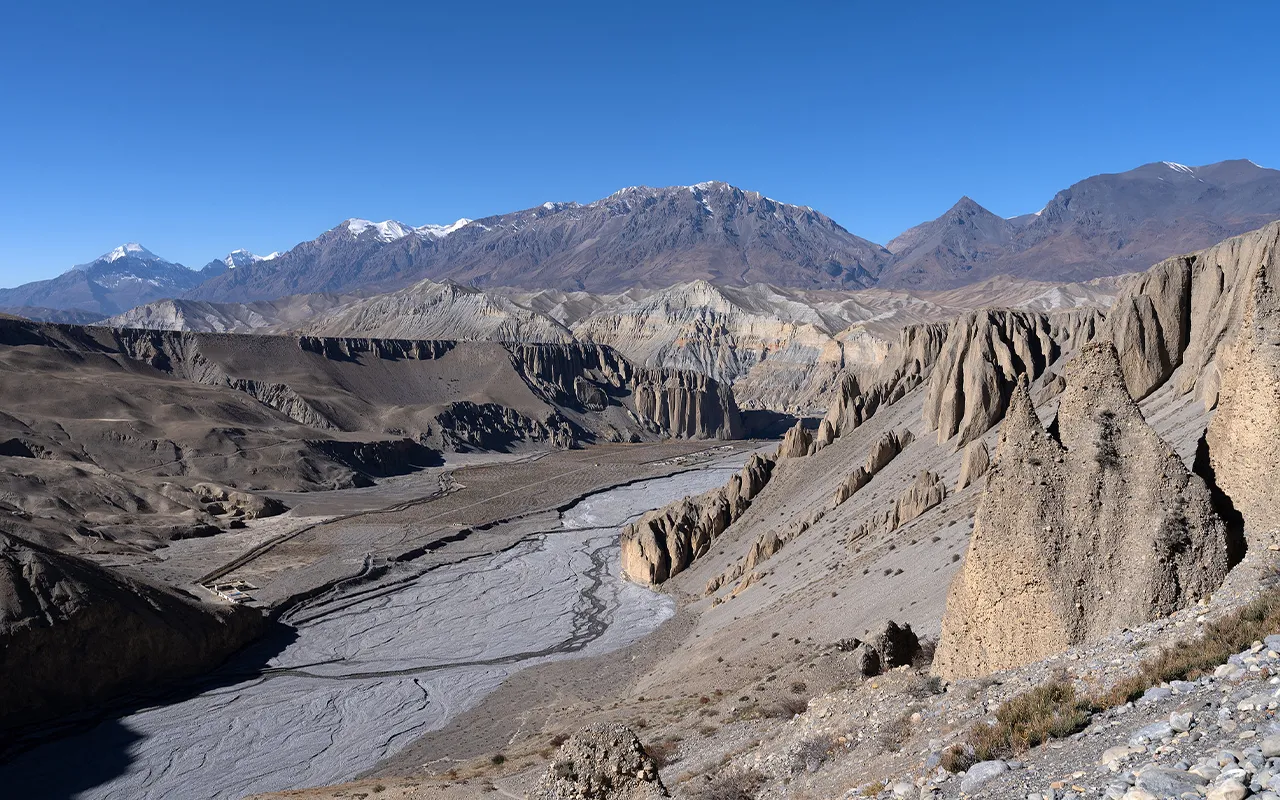
The Upper Mustang Restricted Area Permit – Essential Information
Before planning your jeep service from Pokhara to Lo Manthang, you must understand the permit requirements. Upper Mustang is a restricted area, and the permit is mandatory for all foreign visitors:
| Permit Detail | Information |
| Permit Name | Upper Mustang Restricted Area Permit (RAP) |
| Cost 2026 | USD 500 per person for the first 10 days (USD 50 per additional day) |
| Who Needs It | All foreign nationals – no exceptions. Nepali citizens do not need this permit. |
| Where to Get | Department of Immigration, Kathmandu (Maitighar) – NOT available in Pokhara or Jomsom |
| Processing Time | Same day (if applied early morning) or 1 to 2 working days |
| Minimum Group | A minimum of 2 foreign trekkers is required – solo travel is not permitted in Upper Mustang. |
| Licensed Guide | A licensed trekking guide is mandatory for Upper Mustang – arrange through a licensed agency. |
| Also Required | ACAP permit (NPR 3,000) and TIMS card (USD 10) in addition to the RAP |
| Area Covered | North of Kagbeni village are Lo Manthang, Chhoser, Lo Gekar, Nam La, and Sky Caves. |
| Checkpoint | Permits are strictly checked at the Kagbeni entry point and multiple points in Upper Mustang. |
Important: You must obtain the Upper Mustang Restricted Area Permit in Kathmandu before your journey to Pokhara—you cannot obtain it in Pokhara or anywhere along the route. Plan at least 1-2 days in Kathmandu before your departure to process permits. Vehicle Hiring Nepal can advise on the permit process but does not arrange permits – you must obtain these through the Department of Immigration directly or through a licensed trekking agency.
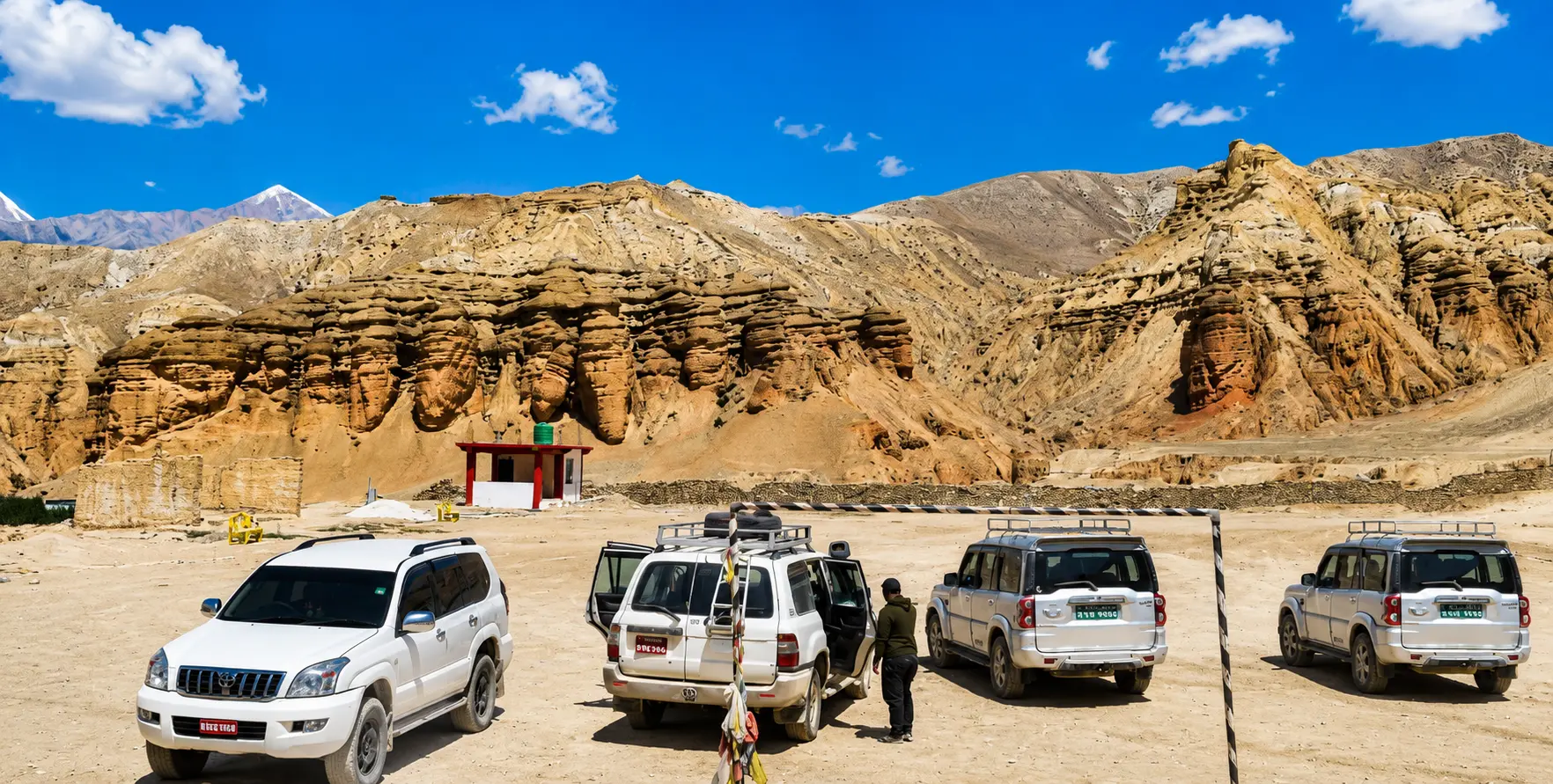
Jeep Service Prices: Pokhara to Lo Manthang
| Route | Vehicle | Capacity | Price (USD) | Notes |
| Pokhara → Lo Manthang (one-way) | Land Cruiser 4WD | 4–6 pax | USD 500–650 | 3–4-day journey, driver stays in Lo Manthang |
| Pokhara → Lo Manthang → Pokhara | Land Cruiser 4WD | 4–6 pax | USD 850–1,100 | Full round trip, driver waits during your stay |
| Pokhara → Jomsom → Lo Manthang | Land Cruiser Prado | 4–5 pax | USD 550–720 | Premium comfort version |
| Jomsom → Lo Manthang (from airport) | Land Cruiser 4WD | 4–6 pax | USD 220–280 | If flying Pokhara–Jomsom, take a jeep from there |
| Kagbeni → Lo Manthang (Upper section) | Local 4WD jeep | 4–6 pax | USD 180–240 | Upper Mustang section only – shared option |
| Lo Manthang → Pokhara (return only) | Land Cruiser 4WD | 4–6 pax | USD 450–580 | Return journey from Lo Manthang to Pokhara |
All private jeep prices include the driver, full fuel for the complete journey, and vehicle insurance. The driver’s accommodation during your stay in Lo Manthang is arranged separately and is not included in the vehicle price. Contact Vehicle Hiring Nepal for your exact 2026 quote based on your group size and travel dates.
The Full Route: Pokhara to Lo Manthang
The journey from Pokhara to Lo Manthang is best done over 3 to 4 days to enjoy the dramatic scenery and allow for the altitude gain. Here is the complete route with all options:
Total Distance: Approximately 320–340 km from Pokhara to Lo Manthang
From Jomsom: Approximately 82 km north – 3 to 4 hours by jeep track
From Kagbeni: Approximately 64 km north – 2.5 to 3 hours by Upper Mustang jeep track
Road Type: Paved Pokhara to Beni → rough Kali Gandaki gorge track;k Beni to Jomsom → remote Upper Mustang track;ck Kagbeni to Lo Manthang
Critical Requirement: A 4WD Toyota Land Cruiser is mandatory for the full route – no other vehicle is suitable
Stage-by-Stage Road Guide: Pokhara to Lo Manthang
Day 1: Pokhara to Tatopani or Ghasa (130 km | 5–6 hrs)
Depart Pokhara early – 6:00 AM is essential to beat the Kali Gandaki afternoon wind. Drive west through Baglung and Beni – the last major town before the mountain road begins. At Beni, the paved road ends and the Kali Gandaki gorge jeep track begins. This track follows the river north through one of the world’s deepest gorges, flanked by Dhaulagiri (8,167 m) to the west and Annapurna (8,091 m) to the east.
Key stops on Day 1: Beni (fuel up and withdraw cash – last reliable fuel station and ATM), Tatopani (famous natural hot springs – ideal overnight or lunch stop), Ghasa (beautiful forest village at 2,010 m – good overnight if pushing further). Recommend an overnight in Tatopani (1,190 m) or Ghasa (2,010 m), depending on departure time and pace.
Day 2: Tatopani / Ghasa to Jomsom (80–105 km | 4–5 hrs)
Depart early – 6:00 to 6:30 AM maximum. The Kali Gandaki wind starts between 11:00 and 12:00 and makes driving on the exposed gorge road extremely difficult and dangerous after midday. The road continues north through Kalopani (spectacular Dhaulagiri and Nilgiri views), Marpha (beautiful whitewashed village, apple orchards, apple brandy), and Jomsom – the district headquarters of Mustang. Complete all driving in the Kali Gandaki before noon.
Jomsom (2,720 m) is a good overnight stop with comfortable teahouses, a domestic airport, medical facilities, and shops. Stock up on cash here if needed – there is an ATM in Jomsom that is sometimes operational. Beyond Jomsom, services are very limited.
Day 3: Jomsom to Kagbeni to Lo Manthang (82 km | 4–5 hrs)
Day 3 is the crossing into Upper Mustang – the journey from the Lower Mustang world of Jomsom into the ancient, remote plateau of Upper Mustang. Depart Jomsom by 7:00 AM. Drive north to Kagbeni (2,810 m), the entry checkpoint to Upper Mustang, where all permits are strictly checked.
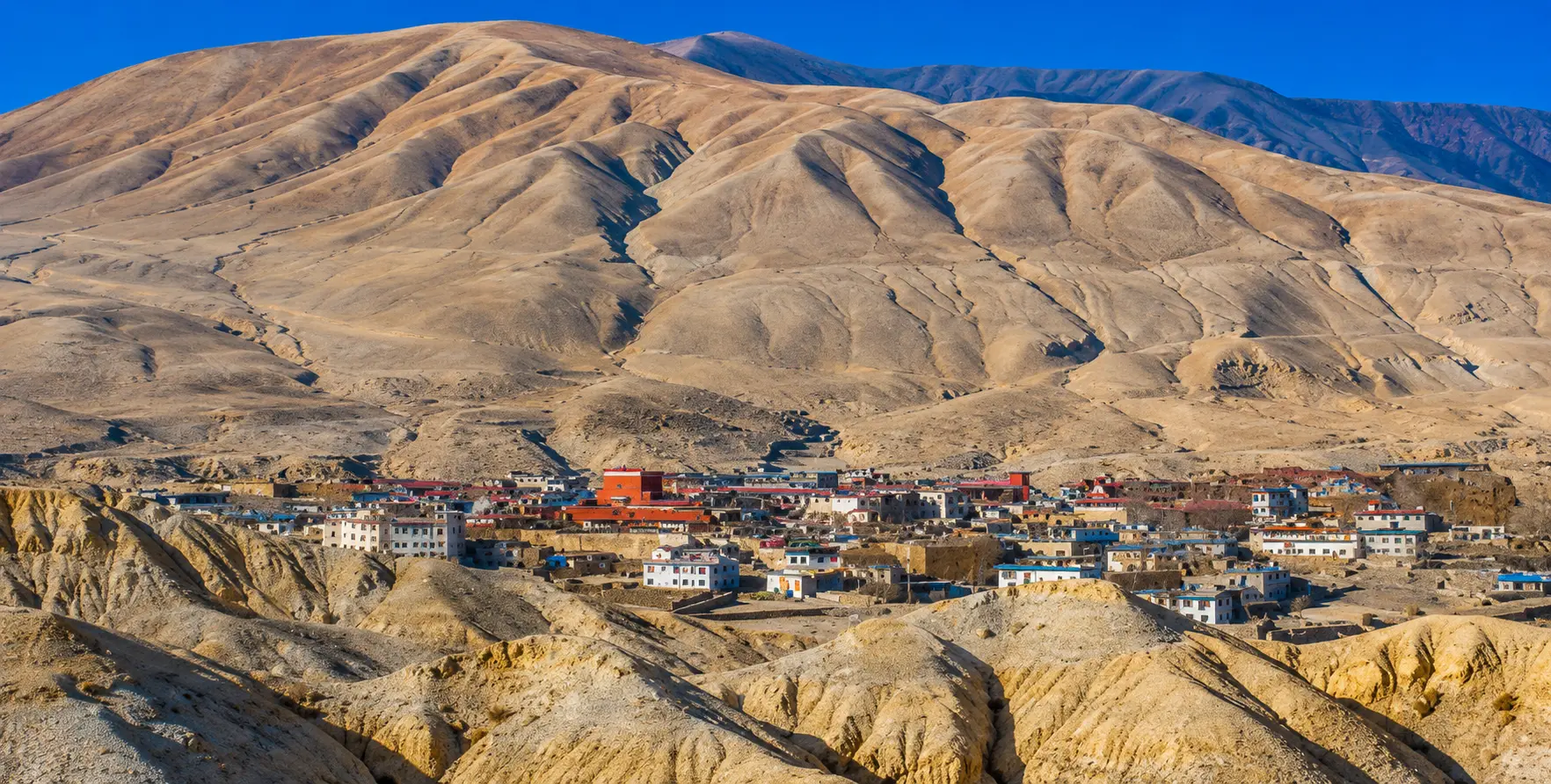
Beyond Kagbeni, the landscape transforms completely. The Kali Gandaki gorge opens into a wide, flat valley,y and the terrain becomes increasingly arid, ochre, and wind-eroded. This is the Tibetan plateau landscape of Upper Mustang – surreal, dramatic, and unlike anything else in Nepal.
Key stops and landmarks on the Upper Mustang jeep track from Kagbeni to Lo Manthang:
- Chele (3,050 m) – first Upper Mustang village. Ancient cave dwellings visible in cliff faces above the road
- Syangboche (3,800 m) – a high pass section with extraordinary views across the Upper Mustang plateau
- Ghami (3,520 m) – a beautiful village with the longest mani wall in Nepal and an ancient monastery
- Charang (3,560 m) – fortress ruins and active monastery, apple orchards at altitude
- Lo Manthang (3,840 m) – the walled capital of Upper Mustang – arrival after approximately 4 to 5 hours from Kagbeni
Optional Day 4: Day Trips from Lo Manthang
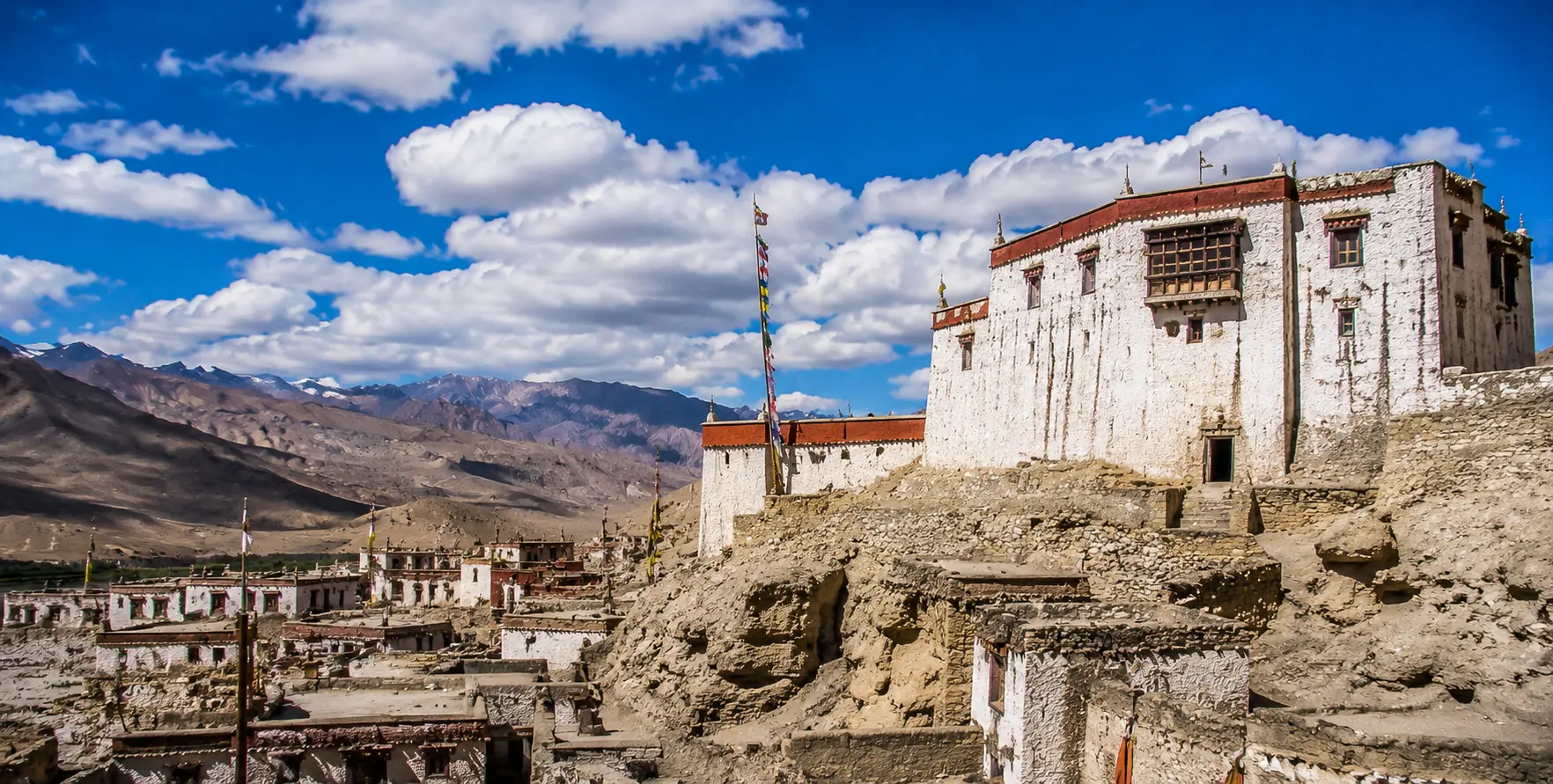
With a private jeep stationed at Lo Manthang, day trips to the most remote and spectacular Upper Mustang sites become possible:
- Sky Caves of Chhoser (Mustang Caves) – Neolithic cave complex with ancient frescoes, accessible by jeep track 10 km north of Lo Manthang
- Namgyal Gompa – ancient monastery 12 km from Lo Manthang with extraordinary wall paintings
- Lo Gekar Monastery – claimed to be the oldest Buddhist monastery in Nepal, 18 km from Lo Manthang
- Nam La Pass (4,013 m) – border viewpoint with Tibet, accessible by jeep
- Yara and Tange Villages – remote Upper Mustang villages with cave temples
Key Distances and Driving Times
| Stage | From – To | Distance | Drive Time | Altitude |
| 1 | Pokhara → Beni | 62 km | 1.5 hrs | 820m → 830m |
| 2 | Beni → Tatopani | 45 km | 1.5 hrs | 830m → 1,190m |
| 3 | Tatopani → Ghasa | 25 km | 1 hr | 1,190m → 2,010m |
| 4 | Ghasa → Marpha | 30 km | 1.5 hrs | 2,010m → 2,670m |
| 5 | Marpha → Jomsom | 8 km | 20 min | 2,670m → 2,720m |
| 6 | Jomsom → Kagbeni | 18 km | 45 min | 2,720m → 2,810m |
| 7 | Kagbeni → Chele | 10 km | 45 min | 2,810m → 3,050m |
| 8 | Chele → Ghami | 18 km | 1.5 hrs | 3,050m → 3,520m |
| 9 | Ghami → Charang | 12 km | 1 hr | 3,520m → 3,560m |
| 10 | Charang → Lo Manthang | 6 km | 30 min | 3,560m → 3,840m |
| TOTAL | Pokhara → Lo Manthang | 316 km | 10–12 hrs driving | 820m → 3,840m |
Road Conditions: Pokhara to Lo Manthang
| Section | Surface | Difficulty | 4WD Essential? | Key Risk |
| Pokhara → Beni | Paved highway | Easy | No | Standard highway – no issues |
| Beni → Tatopani | Rough gravel gorge track | Moderate–Hard | Yes | Narrow gorge, cliff-edge drops |
| Tatopani → Jomsom | Very rough gorge track | Hard | Yes | Afternoon wind, rockfall, narrow sections |
| Jomsom → Kagbeni | Gravel Valley Track | Moderate | Yes | Sandy, wind-exposed flat valley |
| Kagbeni → Chele | Remote rocky track | Hard | Yes | First Upper Mustang section – remote |
| Chele → Lo Manthang | High plateau desert track | Very Hard | Yes | Altitude, remote, no services, exposed |
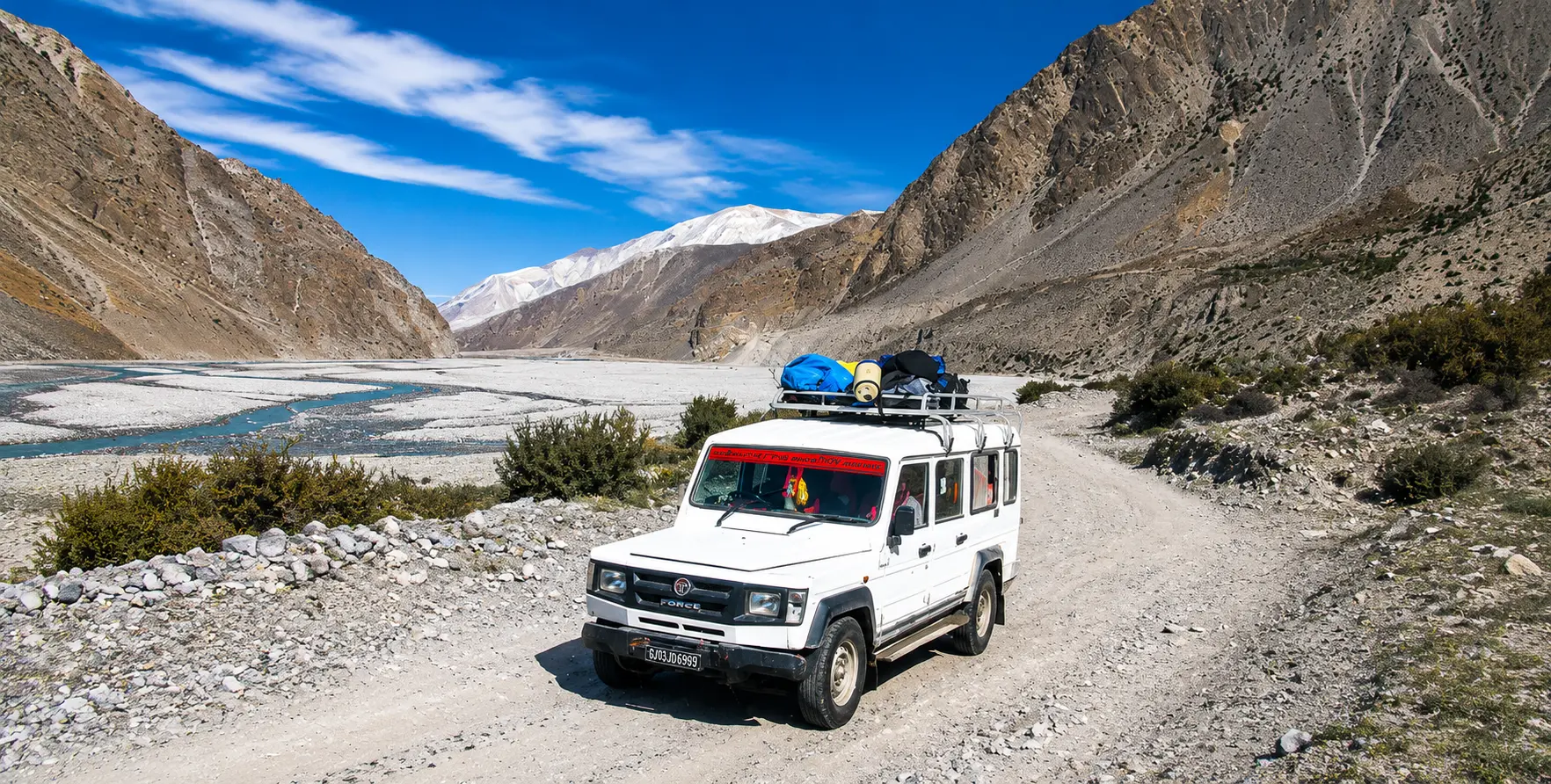
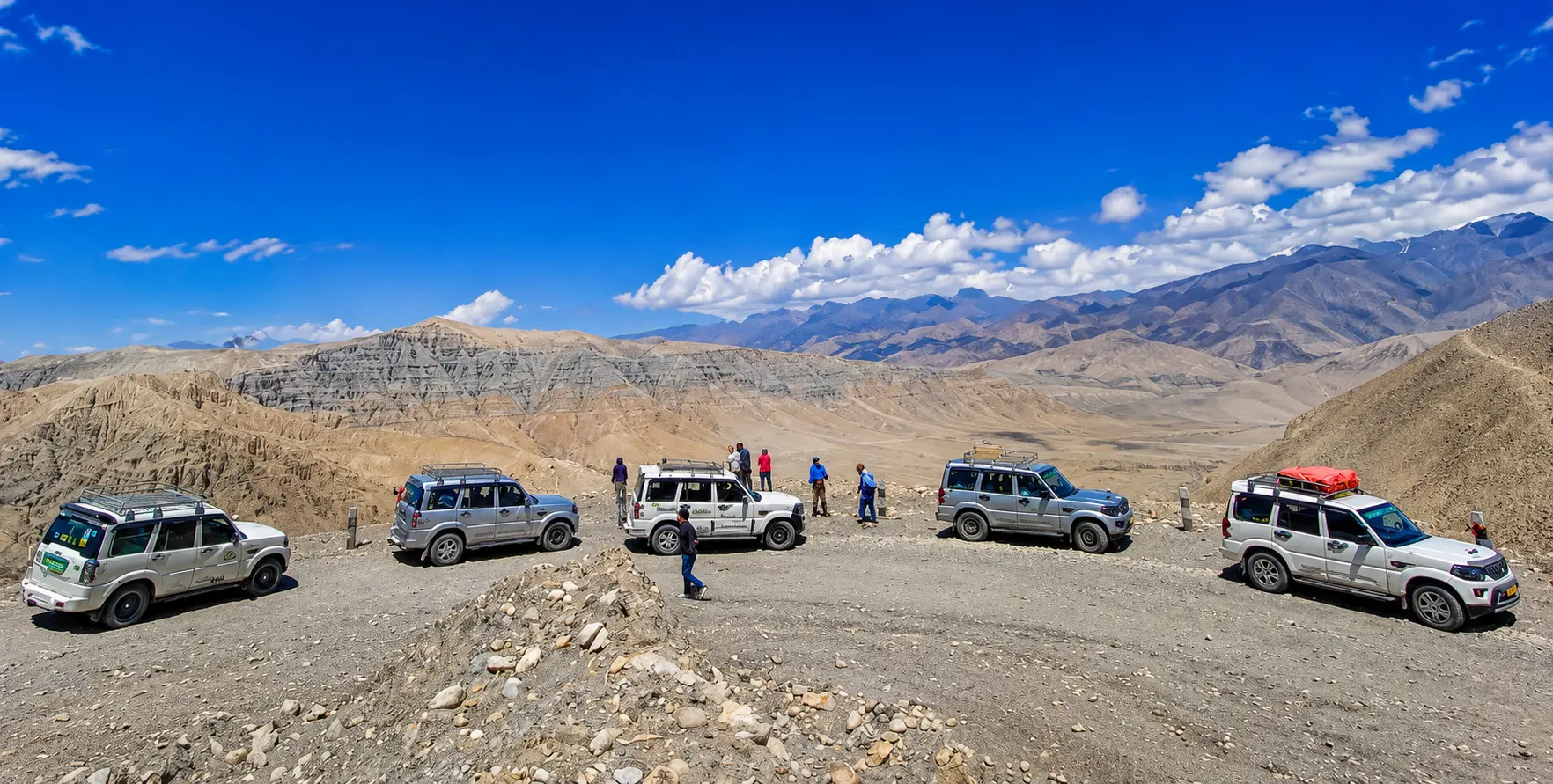
A Toyota Land Cruiser is not just recommended for the Pokhara-to-Lo Manthang jeep service – it is the only vehicle that should be used on this route. The Upper Mustang section from Kagbeni to Lo Manthang is one of Nepal’s most remote and technically demanding jeep tracks. Lesser vehicles risk breakdowns in an area where assistance may be hours away.
Lo Manthang – The Ancient Walled City
The City Walls
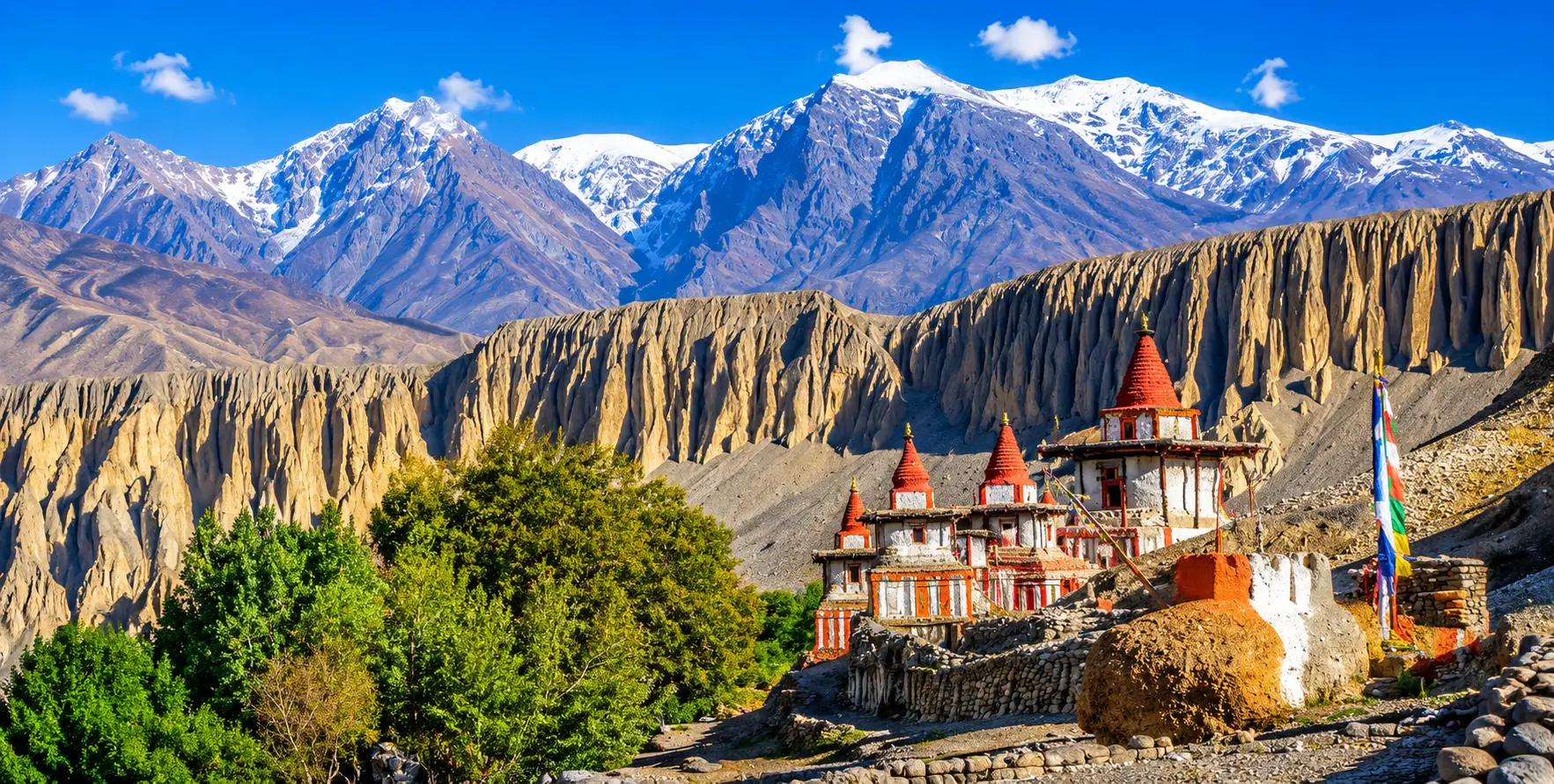
Lo Manthang is one of the last surviving fully walled cities in the Himalayan world. The clay-and-stone walls stand approximately 8 to 10 meters high and completely enclose the city on all four sides. The walls were built in the 14th century – the same era that produced the European Gothic cathedrals – as fortification against raids from neighbouring kingdoms. Walking the outer perimeter of the walls gives you the strongest sense of this medieval city’s extraordinary scale and preservation. The reddish-ochre walls glow magnificently in the late afternoon light.
The Lo Raja’s Palace
The multi-storied royal palace of the Lo Raja (King of Mustang) dominates Lo Manthang’s interior. The Bista royal family has inhabited the palace for over 600 years. It remains so today – making it one of the oldest continuously inhabited royal residences in the Himalayan world. The current Lo Raja, Jigme Dorje Palbar Bista, and his family continue to live in the palace and maintain the cultural and religious traditions of their kingdom. Visitors can view the palace from within the walled city, though access is limited.
The Monasteries of Lo Manthang
Lo Manthang contains four main monasteries – Thubchen, Jampa, Chodey, and Namgyal – all dating from the 14th to 16th centuries and containing some of the finest and best-preserved Tibetan Buddhist murals in the world. The murals in Thubchen Gompa, in particular,r, are considered among the masterpieces of Tibetan Buddhist sacred art – vast, jewel-colored paintings covering every surface of the monastery’s interior with scenes from the Buddha’s life, mandalas, protector deities, and bodhisattvas.
A major restoration project supported by the American Himalayan Foundation has been working to preserve these monastery murals. It has saved extraordinary examples of medieval Tibetan art that were deteriorating due to weather and neglect. The restoration work itself is visible and impressive.
The Sky Caves of Mustang (Chhoser)
About 10 km north of Lo Manthang, the cliffs of Chhoser contain one of the most extraordinary archaeological discoveries of the 20th century: thousands of cave dwellings and ritual sites carved into vertical cliff faces up to 50 meters high. These caves were occupied between 2,000 and 3,000 years ago and contain evidence of sophisticated ancient culture, including cave paintings, burial chambers, wooden coffins, textiles, and manuscripts. Some caves were later repurposed as meditation retreats and monastic sites. The Sky Caves of Mustang are among Asia’s greatest and most mysterious archaeological sites.
The Living Culture of Upper Mustang
Perhaps the most extraordinary aspect of Lo Manthang is not its monuments but its living culture. The Lopa people – the inhabitants of Upper Mustang – maintain a way of life that has changed relatively little over the past 500 years. Traditional dress, agricultural practices, religious ceremonies, and social customs continue much as they have for centuries. Upper Mustang’s relative isolation until 1992, and ongoing restrictions on visitor numbers, have helped preserve this culture to a remarkable degree. Witnessing daily life in Lo Manthang – monks conducting morning puja, women in traditional Lopa dress carrying water from the communal tap, yaks being loaded in the alley behind the palace – is a privilege available to relatively few travellers.
The Tiji Festival – Lo Manthang’s Most Sacred Event
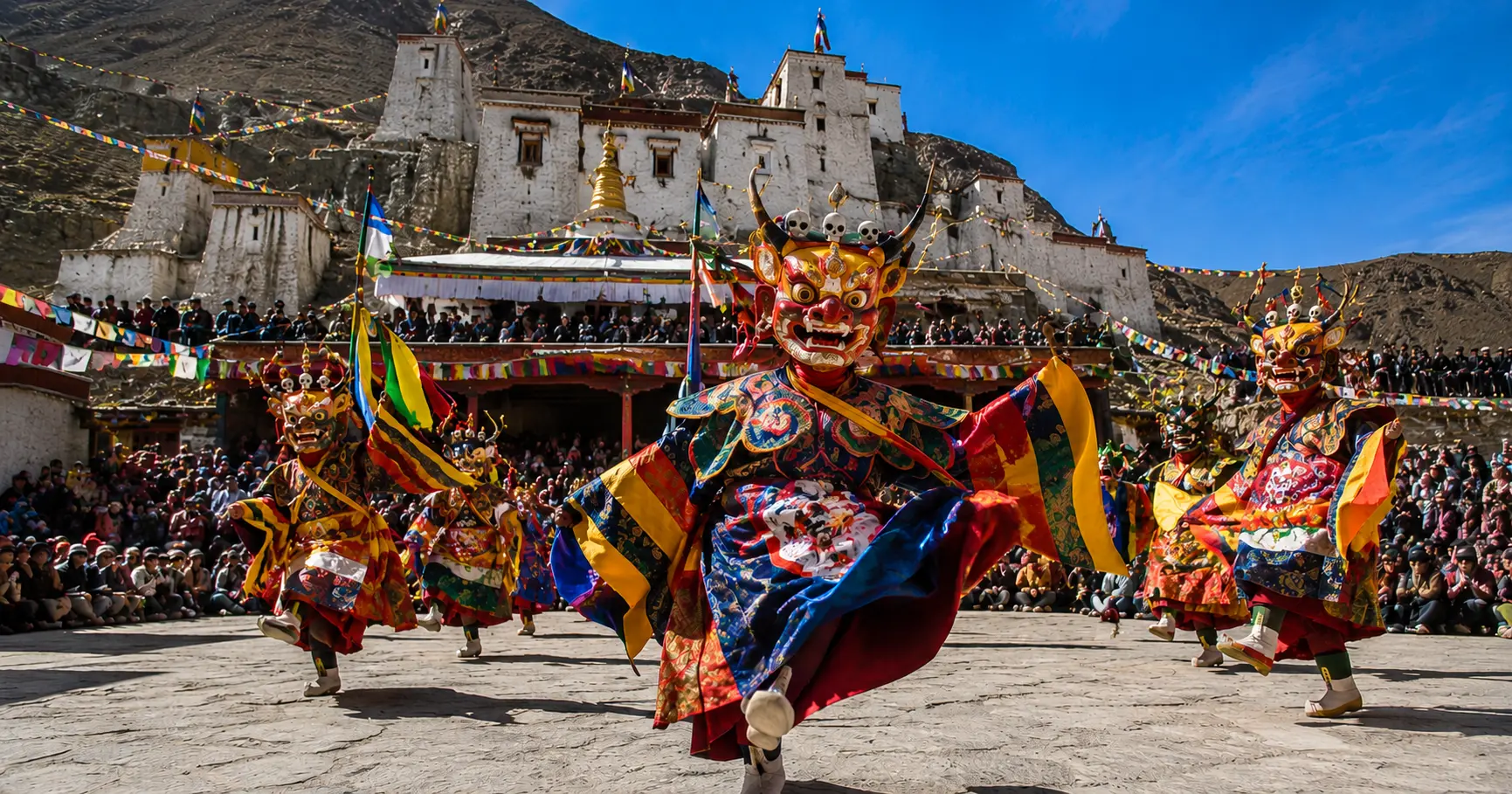
The Tiji Festival (Tee-ji, or Tenten Dhampaa in Tibetan) is Lo Manthang’s most important and most spectacular annual religious event – a three-day festival held in the walled city each year in late April or May. Tiji is one of the finest cultural events in Nepal and has become an increasingly popular reason to time an Upper Mustang visit.
What Happens at Tiji
Tiji is an ancient ritual re-enactment of the legend of Dorje Jono – a deity who fights the demon Mara to save Upper Mustang from destruction. Over three days, monks from the Thubchen and Namgyal monasteries perform elaborate masked cham dances in the main square of Lo Manthang – the walled city becomes a stage for extraordinary sacred performance. The masks, costumes, and music of the Tiji are ancient and spectacular – the visual impact of the masked dancers performing against the backdrop of the palace walls and the Himalayan plateau is unforgettable.
Tiji 2026 Dates
The Tibetan lunar calendar determines the dates of the Tiji Festival, which vary slightly each year. The festival is expected to be held from late May to mid-May – contact Vehicle Hiring Nepal for the exact 2026 festival dates. If you are planning to visit Lo Manthang for Tiji, book your jeep service, Upper Mustang permit, and accommodation at least 8 to 12 weeks in advance. Tiji is one of the most popular events in Nepal’s tourism calendar, and accommodation in Lo Manthang fills up months in advance.
Best Time for Pokhara to Lo Manthang Jeep Service
April to May (Best – Tiji Season)
Spring is the most celebrated season for Upper Mustang. The Tiji Festival draws visitors from around the world to Lo Manthang. The high plateau warms from winter; Lower Mustang below is brilliant with apple blossoms in Marpha and rhododendrons in the lower gorge. The road from Kagbeni to Lo Manthang is in reasonably dry condition. Mountain views are excellent in the morning. Book a jeep, permit, and accommodation very far in advance for the Tiji season.
June to September (Mustang’s Unique Season)
This is Mustang’s greatest secret. While the rest of Nepal drowns in the monsoon, Upper Mustang lies completely in a rain shadow behind the Annapurna and Dhaulagiri ranges. The Upper Mustang plateau receives almost no monsoon rainfall and stays remarkably sunny and dry June through September. Lo Manthang is accessible, peaceful, and very lightly visited during these months. The Lower Mustang Kali Gandaki gorge can have occasional monsoon landslides on the road south of Tatopani – check conditions before departure. The upper plateau itself is completely clear.
October to November (Excellent)
Post-monsoon autumn is ideal for the Pokhara-to-Lo Manthang journey. Skies are brilliantly clear; the Kali Gandaki gorge has dried after the monsoon; mountain views are spectacular; and the ochre and red landscape of Upper Mustang glows in the autumn light. The road is in its best post-monsoon condition. October and November are busy months – book 4 to 8 weeks ahead.
December to March (Cold – Possible with Experience)
Winter in Upper Mustang is severe, but the region remains accessible by jeep for much of the season. Lo Manthang at 3,840 m can drop to -15 to -25°C at night in January and February. The road from Kagbeni to Lo Manthang may have snow and ice in December and January,y requiring snow chains. Not recommended for first-time visitors but deeply atmospheric for experienced cold-weather travellers. Lo Manthang in snow with the ancient walls dusted white is extraordinarily beautiful.
Altitude and Health: Pokhara to Lo Manthang
The altitude gain from Pokhara (820 m) to Lo Manthang (3,840 m) is 3,020 m – a significant ascent that requires proper acclimatisation:
- Never drive directly to Lo Manthang in two days – the ascent is too rapid, and AMS risk is high
- The recommended 3- to 4-day journey with overnight stops at Tatopani (1,190 m), Jomsom (2,720 m), and Kagbeni (2,810 m) provides gradual acclimatisation, with one night acclimatising before ascending to Lo Manthang.
- AMS symptoms (headache, fatigue, dizziness) are common above 3,000 m – know the signs and descend if symptoms worsen
- Carry Diamox (acetazolamide) – consult your doctor for dosage. Start 24 hours before ascending above 3,000 m
- Drink 4 to 5 litres of water per day from Jomsom onwards
- Avoid alcohol for the first 48 hours after arriving in Lo Manthang
- Travel and health insurance covering high-altitude helicopter evacuation is strongly recommended for all Upper Mustang visitors
Recommended Itineraries: Pokhara to Lo Manthang
Itinerary A: Standard Upper Mustang Jeep Tour (8 Days from Pokhara)
- Day 1: Pokhara to Tatopani by jeep (5–6 hrs) – hot spring soak, overnight Tatopani
- Day 2: Tatopani to Jomsom (4–5 hrs) – Marpha apple village, overnight Jomsom
- Day 3: Jomsom to Kagbeni – permit check – continue to Chele or Ghami, overnight Upper Mustang
- Day 4: Continue to Lo Manthang – arrive in the afternoon, explore the walled city, overnight in Lo Manthang
- Day 5: Full Lo Manthang day – monasteries, palace, city walls, local culture
- Day 6: Day trip to the Sky Caves of Chhoser or Lo Gekar Monastery by jeep
- Day 7: Return to Lo Manthang from Jomsom or Tatopani by jeep
- Day 8: Return to Pokhara
Itinerary B: Tiji Festival Tour (10 Days from Pokhara)
- Days 1–3: Pokhara to Lo Manthang via Tatopani and Jomsom (standard 3-day approach)
- Day 4: Arrive in Manthang – settle in, explore the city, monastery visits
- Day 5: Day trip to Sky Caves or Namgyal Gompa
- Days 6–8: Tiji Festival – three full days of masked dance ceremonies in Lo Manthang main square
- Day 9: Return Lo Manthang toward Jomsom – overnight Marpha or Tatopani
- Day 10: Return to Pokhara
Itinerary C: Fly Pokhara–Jomsom, Jeep to Lo Manthang (6 Days)
- Day 1: Fly Pokhara to Jomsom (25 min) –acclimatise, explore: Acclimatise to Kagbeni, then to Chele or Ghami by jeep – Upper Mustang entry
- Day 3: Arrive in Lo Manthang – full day city exploration
- Day 4: Day trip to the Sky Caves of Chhoser
- Day 5: Return to Lo Manthang from Jomsom by jeep
- Day 6: Fly Jomsom to Pokhara (25 min)
What to See Beyond Lo Manthang
Sky Caves of Chhoser (Mustang Caves)
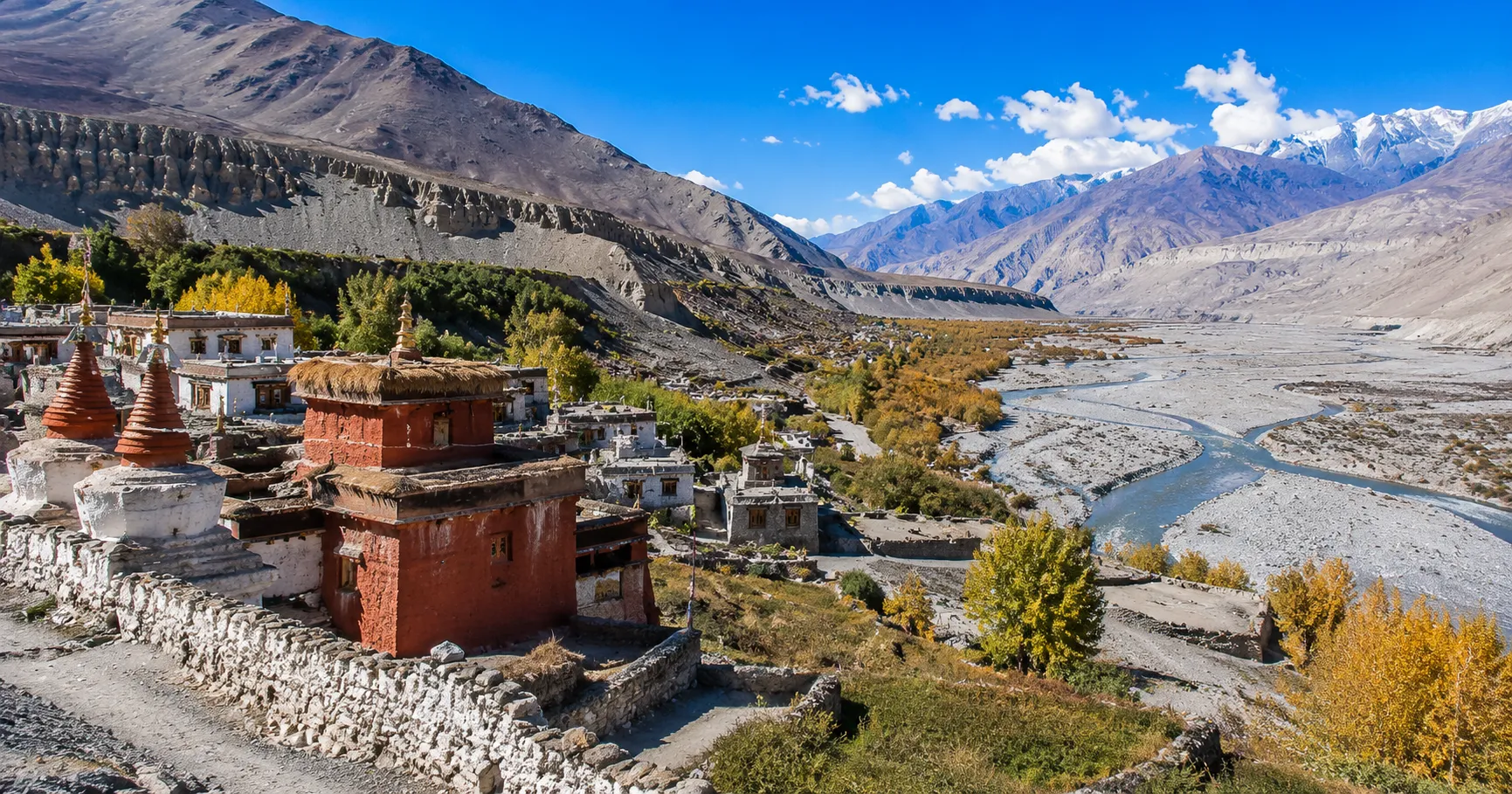
The Chhoser sky caves are located 10 km north of Lo Manthang on a jeep track that continues toward the Tibetan border. The cave complex – known in Tibetan as Ri Phug – contains thousands of individual caves carved into vertical red and grey cliffs, rising to heights of up to 50 meters. Dating from Neolithic times through the medieval period, the caves served successively as dwelling sites, burial chambers, meditation retreats, and monastic complexes. Inside some accessible chambers, fragments of ancient frescoes in Tibetan Buddhist style survive. The scale and the setting – towering ochre cliffs beneath a vast blue Himalayan sky –are extraordinary.
Lo Gekar – Nepal’s Oldest Monastery
Lo Gekar monastery lies approximately 18 km west of Lo Manthang on a rough jeep track. Many scholars claim the monastery to be the oldest Buddhist monastery in Nepal – reportedly founded by Guru Rinpoche (Padmasambhava) in the 8th century CE during his journey from India to Tibet. The monastery contains ancient wall paintings and sacred objects of great antiquity. The landscape around Lo Gekar – a remote high-altitude valley flanked by eroded cliff formations – is hauntingly beautiful and almost always quiet.
Namgyal Gompa
Namgyal Gompa is located 12 km from Lo Manthang and is the principal monastery of the Lo Raja’s own religious lineage. The monastery is well maintained and contains important ritual objects, thangkas, and sacred texts. The head lama of Namgyal has traditionally served as the Lo Raja’s spiritual advisor. The monastery’s exterior walls are painted in the distinctive deep red colour of the Sakya school of Tibetan Buddhism.
Nam La Pass Viewpoint (Tibet Border)
Fortravellersss witanhe Upper Mustang permit and their own licensed guide, a jeep drive to Nam La Pass on the Tibetan border (approximately 4,013 m) offers extraordinary views across the Tibetan plateau from Nepal. The pass marks Nepal’s northern frontier, and on clear days, you can see the Chinese town of Zhangmu in the valley below on the Tibetan side. The drive from Lo Manthang to Nam La takes approximately 2 hours by jeep on a rough track.
Practical Tips for the Pokhara to Lo Manthang Jeep Service
- Obtain your Upper Mustang Restricted Area Permit in Kathmandu before travelling to Pokhara – it cannot be obtained anywhere on the route.
- Book your jeep service 4 to 8 weeks before travel during peak seasons (April–May Tiji and October–November). Earlier for the Tiji Festival dates
- Carry sufficient Nepali Rupees cash – the last reliable ATM is in Jomsom (sometimes). Withdraw everything you need in Pokhara before departure.
- Depart all Kali Gandaki gorge sections before noon – the afternoon wind that grounds flights at Jomsom airport makes driving dangerous and miserable.e
- Layer clothing – you travel from subtropical Pokhara to near-alpine Lo Manthang. Carry everything from T-shirts to a serious down jacket.
- The jeep driver’s accommodation in Lo Manthang during your stay is your responsibility to arrange and contribute to – discuss with your driver at the time of booking. ing
- Download offline maps (Maps.me or Gaia GPS with Upper Mustang coverage) before departing Pokhara – mobile signal is absent in most of Upper Mustang.
- Carry extra fuel if your driver recommends – fuel stations are limited beyond Jomsom.
- Camera batteries drain faster at high altitude – carry spare batteries and keep them warm in an inner .pocket
- Purchase your local Mustang apple brandy (raksi) in Marpha on the way up – it is excellent and significantly cheaper than in Lo Manthang.
What is Included in Your Jeep Service
- Toyota Land Cruiser 4WD with an experienced Mustang and Upper Mustang route driver
- Full fuel cost for the complete Pokhara to Lo Manthang and return journey
- Vehicle insurance throughout
- Pickup from your Pokhara Lakeside hotel at your confirmed departure time
- Drop-off at your accommodation in Lo Manthang
- All key stops – Beni, Tatopani, Marpha, Jomsom, Kagbeni
- Day trip vehicle service in Lo Manthang for Chhoser Caves, Lo Gekar, Namgyal Gompa (included in round-trip booking)
- Return journey from Lo Manthang to Pokhara on your confirmed return dates
- 24/7 WhatsApp support throughout the journey
Not included: Upper Mustang Restricted Area Permit (USD 500 – arrange in Kathmandu), ACAP permit (NPR 3,000), TIMS card (USD 10), licensed guide fees (mandatory), driver accommodation in Lo Manthang, personal meals, your accommodation, and any additional excursions beyond the agreed route.
How to Book Your Pokhara to Lo Manthang Jeep Service
- Obtain your Upper Mustang Restricted Area Permit in Kathmandu – arrange at the Department of Immigration, Maitighar.
- Arrange your ACAP permit and TIMS card atthe Nepal Tourism Board in Kathmandu or Pokhara.
- Hire a licensed guide through a registered trekking agency – mandatory for Upper Mustang.
- Contact Vehicle Hiking Nepal via WhatsApp at +977-9814227196 or visit vehiclehiringnepal.com
- Confirm your travel dates and group size.
- Specify your Pokhara hotel pickup address and the name of your Lo Manthang accommodation.
- Choose your itinerary – 8-day standard, 10-day Tiji, or 6-day fly-in option.n
- Receive a booking confirmation with driver details, vehicle information, and day-by-day journey details. plan
Frequently Asked Questions
How long does it take to drive from Pokhara to Lo Manthang?
The total driving time from Pokhara to Lo Manthang is approximately 10 to 12 hours spread over 3 days (not driven in one stretch). Day 1: Pokhara to Tatopani or Ghasa (5 to 6 hours). Day 2: Continue to Jomsom (4 to 5 hours). Day 3: Jomsom to Lo Manthang via Kagbeni (4 to 5 hours). A gradual 3-day approach is essential for safety and acclimatisation. The Upper Mustang Restricted Area Permit requires all foreign visitors in Upper Mustang to be accompanied by a licensed Nepali trekking guide at all times. Authorities strictly enforce this at the Kagbeni checkpoint and throughout the Upper Mustang zone. Vehicle Hiring Nepal provides jeep service only – you must arrange your licensed guide through a registered trekking agency before departure.
What is the difference between Lower Mustang and Upper Mustang?
Lower Mustang covers the area south of Kagbeni – including Jomsom, Marpha, Tatopani, Muktinath, and the Kali Gandaki gorge. Lower Mustang requires only ACAP and TIMS permits. Upper Mustang covers everything north of Kagbeni – including Chele, Ghami, Charang, Lo Manthang, Chhoser, and the Tibetan border areas. Upper Mustang requires the additional USD 500 Restricted Area Permit, a licensed guide, and a minimum group of 2 foreign visitors.
Can I drive from Kathmandu directly to Lo Manthang?
Yes. Vehicle Hiring Nepal can arrange a private jeep from Kathmandu all the way to Lo Manthang. The journey takes 4 to 5 days via Pokhara – Day Kathmandu to Pokhara, then the same Pokhara-to-Lo Manthang route. Contact us for combined jeep packages from Kathmandu to Lo Manthang.
How much does the full Upper Mustang trip cost per person?
A rough budget guide for 2026 per person (based on group of 4 sharing): Jeep Pokhara–Lo Manthang–Pokhara USD 212 to USD 275 (split 4 ways), Upper Mustang Restricted Area Permit USD 500, ACAP permit USD 22, TIMS USD 10, Licensed guide USD 25 to USD 40 per day, Accommodation NPR 1,500 to NPR 4,000 per night, Food NPR 1,500 to NPR 3,000 per day. A 10-day Upper Mustang trip typically costs USD 1,200 to USD 1,800 per person, all-in, excluding flights to Nepal.
What happens if a landslide blocks the Kali Gandaki road?
Landslides can block the Kali Gandaki gorge road, especially during and after the monsoon. Our drivers monitor road conditions in real time and will advise on the safest course of action. Local road crews typically clear minor landslides within hours. For major blockages, the driver will wait or advise an alternative time. We stay in touch via WhatsApp throughout the journey.
Final Thoughts
The jeep journey from Pokhara to Lo Manthang is one of the great road adventures of Asia – a 3- to 4-day progression from the beautiful lakeside city of Pokhara through the world’s deepest gorge, past some of the world’s highest mountains, across the Mustang plateau, and finally through the gate of a medieval walled city that has barely changed in 600 years. Lo Manthang is not a destination you visit – it is a destination that enters you, changes your sense of what the world is and can be, and stays with you for the rest of your life.
Vehicle Hiring Nepal provides the most reliable and experienced jeep service for the Pokhara-Lo Manthang route in 2026. Our Land Cruiser drivers know every challenging kilometre of the Upper Mustang track, every timing consideration around the Kali Gandaki wind, and every accommodation recommendation for the journey. Book your Upper Mustang adventure with us.
WhatsApp: +977-9814227196
Email:[email protected]
- Pokhara to Lo Manthang Jeep Service – Complete Upper Mustang Guide
- Lo Manthang – The Forbidden Kingdom
- The Upper Mustang Restricted Area Permit – Essential Information
- Jeep Service Prices: Pokhara to Lo Manthang
- The Full Route: Pokhara to Lo Manthang
- Stage-by-Stage Road Guide: Pokhara to Lo Manthang
- Key Distances and Driving Times
- Road Conditions: Pokhara to Lo Manthang
- Lo Manthang – The Ancient Walled City
- The Tiji Festival – Lo Manthang's Most Sacred Event
- Best Time for Pokhara to Lo Manthang Jeep Service
- Altitude and Health: Pokhara to Lo Manthang
- Recommended Itineraries: Pokhara to Lo Manthang
- What to See Beyond Lo Manthang
- Practical Tips for the Pokhara to Lo Manthang Jeep Service
- What is Included in Your Jeep Service
- How to Book Your Pokhara to Lo Manthang Jeep Service
- Frequently Asked Questions
- Final Thoughts

Related Blog & Articles
Altitude and Health: Essential Muktinath Advice
Hidden Kingdom Adventure Nepal Upper Mustang Jeep Tour
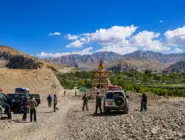
Mustang Full Guide: Upper & Lower Mustang Vehicle Hire
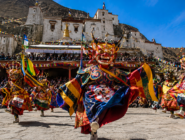
Muktinath Pilgrimage and Mustang Tour