Plan a Trip


Rasuwagadhi Road and Border Condition 2026: Latest Update
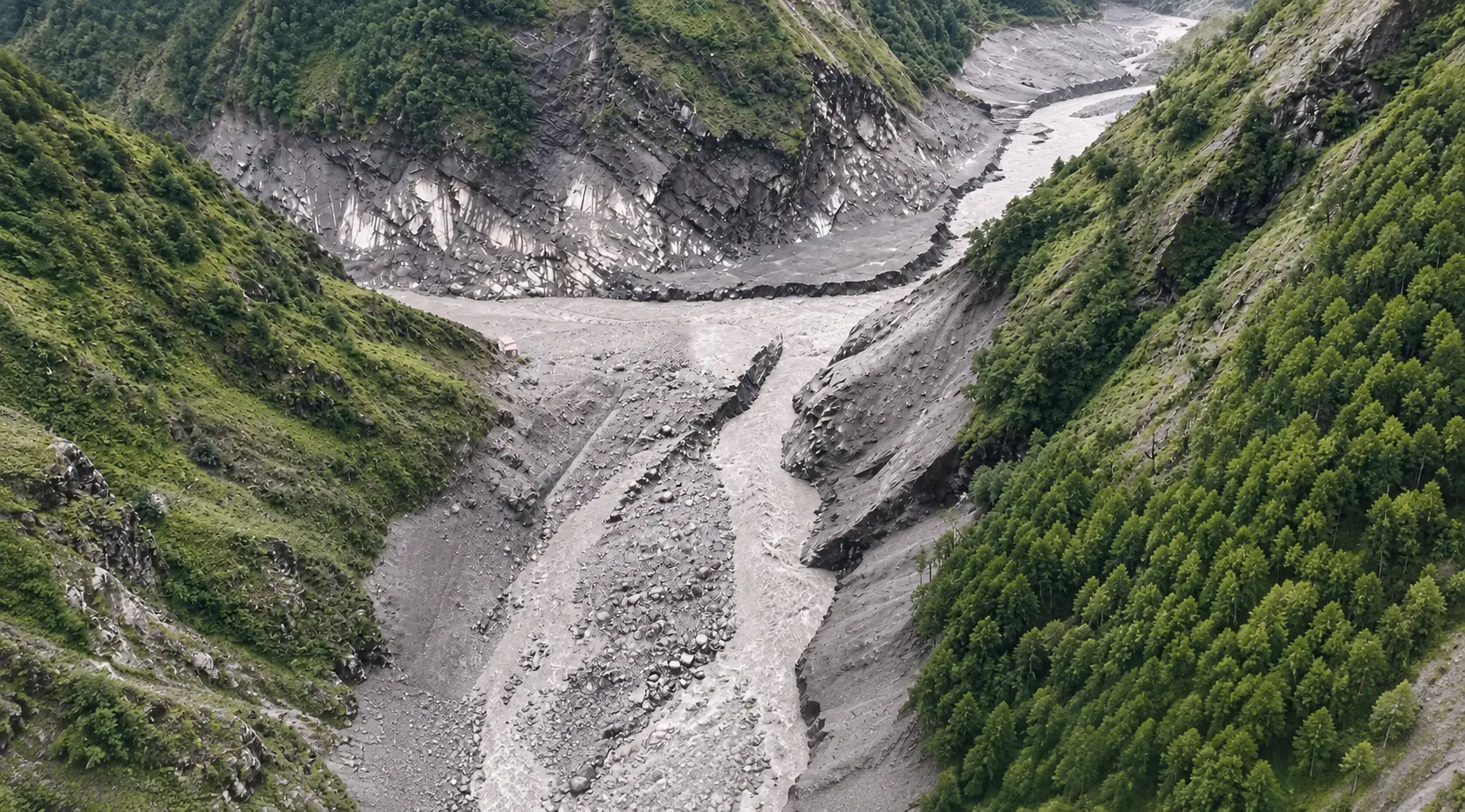
Rasuwa Gandaki Road and Border Condition 2026: Latest Update
| URGENT NOTICE — Updated August 29, 2026: A severe flash flood struck Rasuwa District on August 26, 2026, causing critical damage to the Betrawati–Rasuwagadhi road and destroying bridges on the Nepal–China crossing. The Rasuwagadhi–Kerung border is CLOSED. One-way traffic on the Syabrubesi road resumed, but road conditions remain dangerous. Contact Nepal Vehicle Hiring on WhatsApp at +977 9851013196 before traveling to the Rasuwa region. |
The Rasuwagadhi–Kerung corridor — Nepal’s primary overland road link with China, and the standard approach route for the Kailash Mansarovar Yatra from Kathmandu — has been severely damaged for the second consecutive year by a catastrophic flash flood originating on the Tibetan side of the Himalaya. On the morning of August 26, 2026, a massive flood surge descended the Bhote Koshi River from Tibet into Rasuwa District, devastating the road infrastructure between Betrawati and Rasuwagadhi, destroying multiple bridges, damaging the Rasuwagadhi customs yard and hydropower facilities, and stranding approximately 400 Kailash-bound pilgrims who were in the border area preparing to cross into Tibet.
This 2026 update covers everything travelers need to know about the current Rasuwagadhi road and border conditions — the extent of the damage, which road sections are open, the status of the border crossing itself, the alternatives available to Kailash Mansarovar Yatra pilgrims, the outlook for road and border restoration, and how Nepal Vehicle Hiring is managing transport services to the Rasuwa region in the current emergency period.
Nepal Vehicle Hiring Pvt. Ltd. operates private jeep hire and trekking transport services to the Rasuwa region — covering both the Langtang and Gosaikunda trekking approaches via Syabrubesi and the Kailash Yatra vehicle approach to the Rasuwagadhi border. Our operations team has been monitoring the August 26, 2026 flood situation in real time and is updating all affected clients daily. This guide provides the most current available information as of August 29, 2026.
What Happened: August 26, 202626 Rasuwa Flash Flood
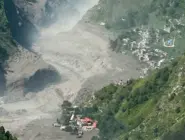
On the morning of August 26, 2026, a severe flash flood struck Rasuwa District from Tibet, traveling downstream through the Bhote Koshi–Trishuli river system. The flood surge — believed to originate from a glacial lake outburst or dam break on the Tibetan plateau — descended with extraordinary speed and force through the narrow Bhote Koshi gorge, compressing its energy through the steep canyon walls before hitting the Rasuwagadhi border area, Timure village, and the road corridor to Syabrubesi.
The damage was extensive and covers multiple categories of infrastructure:
- Road infrastructure: the 42-kilometer road between Betrawati and the Rasuwagadhi border crossing was reported damaged, with several bridges along the route swept away. The road was cut in more than ten places.
- Border crossing: The Rasuwagadhi customs yard took significant damage. 64 vehicles were destroyed at the border, including 23 cargo containers and 35 electric vehicles waiting to enter Nepal.
- Rasuwagadhi Hydropower Project: The dam at the 111 MW Rasuwagadhi Hydropower Project was severely damaged.
- Timure Dry Port: took approximately 60 percent damage.
- Pilgrims affected: approximately 400 Kailash Mansarovar pilgrims — Nepali and Indian nationals — were initially reported out of contact after the flood, having been in the Rasuwagadhi area preparing to cross into Tibet.
The timing was particularly serious, falling in the final weeks of the 2026 Kailash Yatra overland season, when hundreds of pilgrims were actively in transit through the corridor.
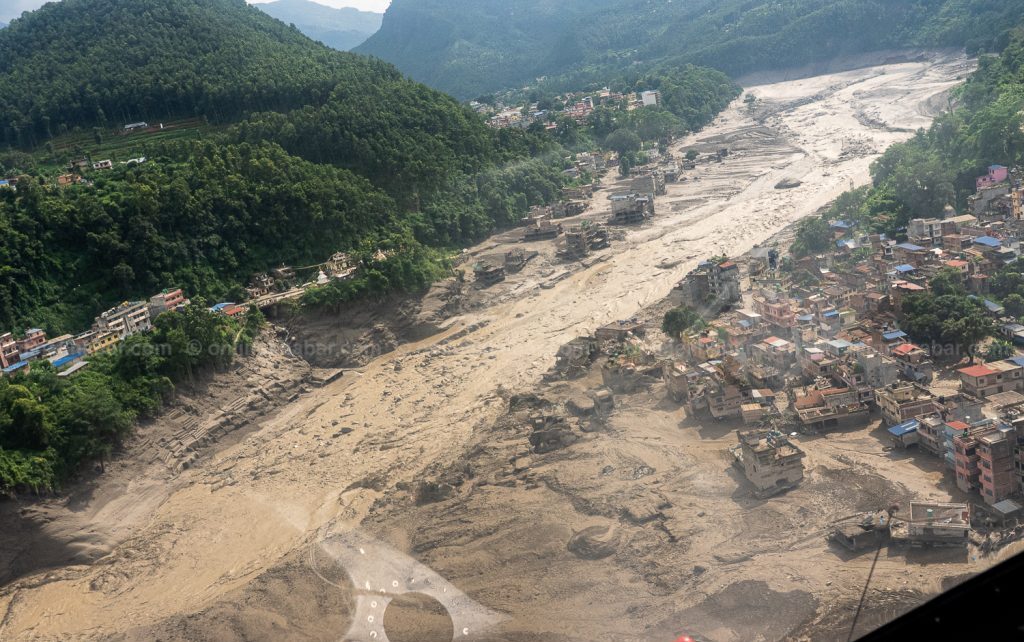
Current Road Status: Betrawati to Rasuwagadhi (As of August 29, 2026)
| ROAD STATUS: Betrawati to Syabrubesi — ONE-WAY TRAFFIC ONLY. Use with extreme caution. Multiple damaged sections. Syabrubesi to Rasuwagadhi — SEVERELY DAMAGED. Do not attempt without current intelligence from local authorities. |
Betrawati to Syabrubesi (107 km)
The Syabrubesi–Rasuwagadhi road section has reopened to one-way traffic after flood damage, according to The Annapurna Express (August 26, 2026). Authorities have urged travelers to use extreme caution on the road. One-way traffic means long waits at control points, and the road surface in damaged sections poses a real risk. to vehicles
Nepal Vehicle Hiring’s assessment: the Betrawati-to-Syabrubesi road is currently passable by experienced drivers in suitable 4WD vehicles, but is not in normal service condition. Travel time should be extended by 2 to 4 hours compared to normal estimates. We are monitoring this section daily and will advise all Langtang and Gosaikunda trekking transport clients on current road status before departure.
Syabrubesi to Rasuwagadhi (15.5 km)
This section — the 15.5 kilometers between Syabrubesi village and the Rasuwagadhi border crossing — sustained severe damage in the August 26 flood. Multiple bridge crossings on this section were swept away. This section is not currently advisable for civilian vehicle travel. Only official vehicles with specific authorization from the District Administration Office, Rasuwa, should attempt this section.
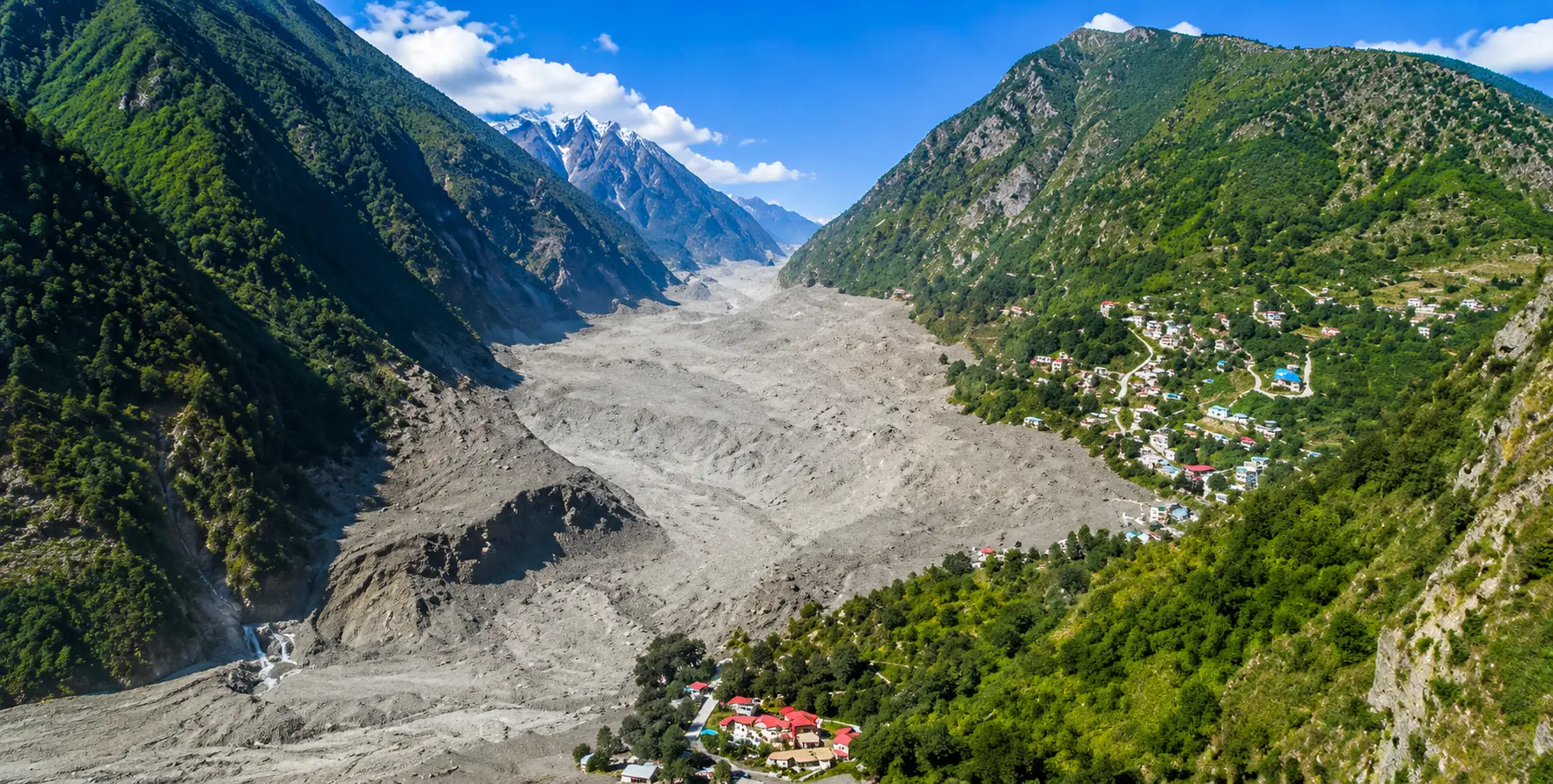
Rasuwagadhi–Kerung Border Crossing: Current Status
| BORDER STATUS: Rasuwagadhi–Kerung crossing CLOSED as of August 26, 2026. The overland Nepal–Tibet route via Rasuwagadhi is NOT currently operational. No civilian crossings are possible. Reconstruction underway — timeline uncertain. |
The Rasuwagadhi–Kerung border crossing is closed following the August 26, 2026 flash flood. The motorable bridge connecting the Nepal and China sides of the crossing has been destroyed — the same bridge that had been operational only since January 1, 2026, when the 91-meter Bailey bridge built with Chinese support (rated 55 tonnes) was finally commissioned after the July 2025 flood destroyed the original Miteri Friendship Bridge.
This is the second consecutive year in which a major flood has destroyed the Rasuwagadhi border crossing infrastructure. The 2025 flood closed the border for about six months, from July 2025 to January 2026. The 2026 flood is similar in severity or worse.
Reconstruction Efforts
Both Nepal and China have mobilized reconstruction resources immediately. The Chinese side has deployed approximately 100 technicians with heavy equipment working daily at the Rasuwagadhi crossing to install makeshift structures. A temporary crossing has been partially established at the Lende Khola area using makeshift structures. On the Nepali side, the District Administration Office, Rasuwa, has mobilized a team with two heavy machines. However, full restoration of a vehicle-capable crossing is expected to take weeks to months based on the 2025 precedent.
Historical Context: The 2025 Flood and Six-Month Closure
To understand the 2026 situation in context, it helps to know the history of the 2025 Rasuwagadhi closure:
In July 2025, a glacial lake outburst flood (GLOF) on the Tibetan side of the Himalaya sent a catastrophic surge down the Bhote Koshi River, destroying the Miteri Bridge—the Friendship Bridge physically connecting Nepal and China at Rasuwagadhi. China built the bridge about 12 years earlier, and it was the crossing’s primary vehicle link.
After the 2025 destruction, China built a replacement 91-meter Bailey bridge (load capacity 55 tonnes), which was installed on December 27, 2025. The border fully reopened for trade and transit on January 1, 2026—exactly five to six months after the 2025 flood. During this closure, customs revenue losses exceeded NPR 22 billion compared to the previous fiscal year.
The 2026 flood has now destroyed the replacement infrastructure, repeating the cycle. The revenue loss from the 2026 closure — in addition to the humanitarian and infrastructure damage — will again be measured in billions of rupees. Nepal’s Chief Customs Officer at Rasuwagadhi had already recorded over NPR 22 billion in revenue losses from the 2025-2026 closure; the 2026 closure begins a new loss cycle immediately after the crossing had barely resumed normal operation.
Kailash Mansarovar Yatra: What This Means for 2026 Pilgrims
The Kailash Mansarovar Yatra — the holiest pilgrimage in Hinduism, circumambulating Mount Kailash (6,638 m) and bathing at Lake Mansarovar in Tibet — relies on the Rasuwagadhi–Kerung overland route as the primary Nepal-side approach. The 2026 closure effectively ends the overland Kailash Yatra season from the Nepal side for the remainder of 2026.
Pilgrims Currently in the Area
Approximately 400 Kailash-bound pilgrims were in or near the Rasuwagadhi area at the time of the August 26th flood. The Nepali Army, Armed Police Force, and District Administration are conducting rescue and evacuation operations. Nepal Vehicle Hiring is in contact with all clients who had Kailash Yatra vehicle bookings in the Rasuwa corridor and is coordinating evacuation transport where requested.
Alternative Routes to Kailash Mansarovar
For pilgrims whose 2026 Kailash Yatra was planned via the Rasuwagadhi–Kerung route, two alternative approaches remain available:
- Kathmandu to Lhasa by air: Himalayan Airlines and other carriers operate Kathmandu–Lhasa flights. From Lhasa, overland travel to Kailash is possible via road through western Tibet. This is the fastest currently available alternative but subject to Tibet permit availability and airline capacity.
- Simikot–Hilsa–Purang route (western Nepal): the Simikot approach via Hilsa border crossing is a viable alternative for Kailash Yatra, though it requires domestic flights from Kathmandu to Simikot and is logistically more complex. Crucially, as one expert source notes, coming in through Simikot instead of Kerung does not circumvent the Tibet permit system — the Kailash permit is based on passport nationality and quota, not entry route.
Nepal Vehicle Hiring does not directly operate the Tibet-side or Simikot approach logistics. Still, we can coordinate the Kathmandu-side vehicle transport that connects pilgrims to the alternative departure points. Contact us through the Plan Your Trip page for current alternative routing advice for Kailash.
Advice for Future Kailash Yatra Pilgrims (2027 and Beyond)
The 2025 and 2026 consecutive closures of the Rasuwagadhi crossing establish a concerning pattern — the corridor is now known to be highly vulnerable to GLOF and flash flood events originating on the Tibetan plateau. Pilgrims planning future Kailash Yatra journeys via the Nepal-overland route should:
- Build significant schedule flexibility into the Kailash Yatra itinerary — allow at least 2 to 3 weeks of buffer around the border crossing date.
- Maintain contingency plans for the air route (Kathmandu–Lhasa) and the Simikot alternative at the time of booking.
- Book with operators who specifically address the question: ‘Which border are you crossing at, and what is your plan if Rasuwagadhi is not open?’ — in writing, before payment.
- Monitor Nepal Vehicle Hiring’s current road condition updates on WhatsApp at +977 9851013196 in the weeks leading up to your departure date.
Langtang and Gosaikunda Trekkers: Current Road Advice
The Betrawati–Syabrubesi road — the approach road for Langtang Valley trekking and the Gosaikunda Lake pilgrimage trek — has been partially damaged and is currently operating on one-way traffic. Trekkers planning Langtang or Gosaikunda approaches should note:
- The road is OPEN to one-way traffic but damaged in multiple sections. Travel time from Kathmandu to Syabrubesi will be extended by 2 to 4 hours beyond normal estimates.
- Nepal Vehicle Hiring is monitoring this road daily and will advise all clients on current section-by-section conditions before departure.
- The Langtang National Park trekking trails themselves are likely to have sustained some damage from the August 26 flood event — verify trail conditions with the national park authority before departing the trailhead.
- Nepal Vehicle Hiring’s private jeep hire to Syabrubesi is the only appropriate vehicle option in current conditions — experienced drivers with current road knowledge, 4WD capability for damaged sections, and real-time route assessment.
For current Langtang and Gosaikunda trekking transport status, contact Nepal Vehicle Hiring directly on WhatsApp +977 9851013196 before making any booking.
Nepal Vehicle Hiring: Our Response to the 2026 Rasuwa Flood
Nepal Vehicle Hiring has been actively responding to the August 26, 2026 Rasuwa flood emergency in the following ways:
- Client communication: all clients with existing bookings for Rasuwa region transport — Kailash Yatra approach vehicles, Langtang trekking drops, and Syabrubesi transfers — have been contacted directly by our operations team with current status updates.
- Road monitoring: our operations team is in daily contact with drivers on the Betrawati–Syabrubesi route and with the Rasuwa District Administration for current road condition intelligence.
- Affected pilgrim support: we are coordinating return vehicle transport for pilgrims and trekkers who were in the Rasuwa region at the time of the flood and need safe evacuation transport back to Kathmandu.
- Booking adjustments: all Kailash Yatra vehicle bookings for the Rasuwagadhi approach have been suspended pending border restoration. Clients are being offered full rebooking flexibility for 2027 or alternative routing options.
- Langtang service continuity: our trekking transport services to Syabrubesi for Langtang and Gosaikunda trekking are continuing with modified timing and enhanced road condition briefings for all drivers.
Nepal Vehicle Hiring’s fleet — private jeep hire, Hiace van hire, and car hire in Nepal — is fully operational across all unaffected Nepal regions. The Rasuwa flood has not affected our services in Kathmandu Valley, Pokhara, Chitwan, Lumbini, Mustang, or the Annapurna region.
Nepal Vehicle Hiring Services Unaffected by the 2026 Rasuwa Flood
The following Nepal Vehicle Hiring services are operating normally and are completely unaffected by the Rasuwa flood:
- Kathmandu airport transfers — normal service
- Kathmandu sightseeing service — normal service
- Bhaktapur Durbar Square day tour and Nagarkot sunrise tour — normal service
- Kathmandu to Pokhara bus and all Prithvi Highway services — normal service
- Sarangkot sunrise tour vehicle — normal service
- Muktinath Yatra itinerary and Pokhara to Mustang jeep — normal service (Kali Gandaki route unaffected)
- Kathmandu to Mustang private jeep — normal service
- Kathmandu to Manang jeep and Annapurna Circuit transport — normal service
- Besisahar private vehicle service — normal service
- Nepal Nekhor tour and religious pilgrimage circuits — normal service
- Nepal holiday tours and Nepal tour packages — normal service for all non-Rasuwa destinations
Road and Border Restoration Outlook
Based on the precedent of the 2025 Rasuwagadhi closure, a realistic restoration timeline can be estimated:
Betrawati-Syabrubesi Road
The Betrawati-to-Syabrubesi road currently has one-way traffic and is expected to progress to two-way traffic within 2 to 4 weeks as emergency road repair crews clear debris and repair the most critical damage points. Full surface restoration may take longer — this road was already in variable condition before the August 2026 flood, with ongoing improvement works. Nepal Vehicle Hiring will resume full normal service on this route as soon as two-way traffic is safely established.
Syabrubesi-to-Rasuwagadhi Road
This heavily damaged section will require more substantial reconstruction. Based on the 2025 precedent, this is likely a 1- to 3-month restoration timeline to re-establish a vehicle-passable road between Syabrubesi and the border crossing area.
Rasuwagadhi Border Crossing: Reconstructing the border crossing requires Nepal and China to cooperate on bridge construction at the Lende Khola crossing point. Based on the 2025 experience (6 months from flood to full border reopening, despite rapid Chinese technical response), a realistic timeline for the 2026 restoration is 3 to 6 months — meaning the border is unlikely to reopen before late 2026 at the earliest, and possibly not until early 2027. This effectively closes the overland Kailash Yatra season from the Nepal Rasuwagadhi side for all of 2026.
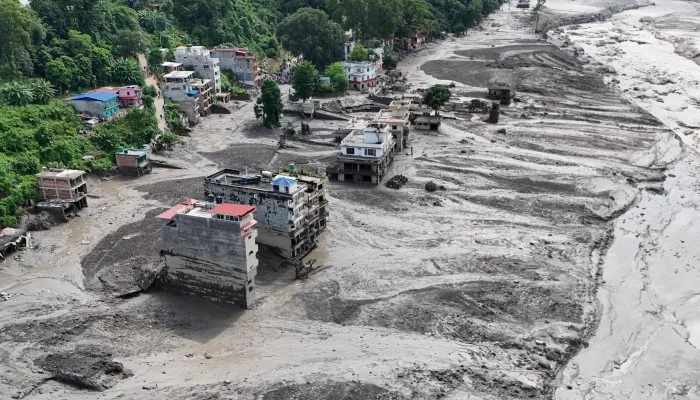
About the Kathmandu to Rasuwagadhi Road: Background Information
For travelers unfamiliar with the Kathmandu–Rasuwagadhi corridor, here is the background on this strategically important road:
The road from Kathmandu to the Rasuwagadhi border crossing covers approximately 175 kilometers via the Prithvi Highway to Galchhi junction (35 km), then north on the Pasang Lhamu Highway (also called the Trishuli-Dhunche road) through Trishuli Bazaar (870 m), Betrawati (1,000 m), Dhunche (1,960 m), and Syabrubesi (1,460 m) to Rasuwagadhi at the Nepal-China border. Under normal conditions, this drive takes 5 to 7 hours by private vehicle—a manageable single-day journey from Kathmandu.
The corridor serves multiple important functions: it is Nepal’s primary overland trade route with China (generating approximately NPR 30 million daily in customs revenue when fully operational); the approach road for the Kailash Mansarovar Yatra overland pilgrimage; and the access road for Langtang National Park trekking (Langtang Valley Trek, Gosaikunda Lake Trek, Tamang Heritage Trail) via the Syabrubesi trailhead.
Nepal Vehicle Hiring provides private jeep hire on the Kathmandu-to-Syabrubesi road as a standard trekking transport service—detailed on our trekking transport services page. Our drivers know this road in all seasons and conditions, which is precisely why Nepal Vehicle Hiring’s current road assessment (based on daily driver intelligence from the route) is more reliable than any static online source.
Frequently Asked Questions: Rasuwagadhi 2026 Flood Situation
Is the Rasuwagadhi–Kerung border crossing open?
No. The Rasuwagadhi–Kerung border crossing is CLOSED as of August 26 26, 2026ollowing a severe flash flood that destroyed the bridge and damaged the border crossing infrastructure. Reconstruction is underway, but full restoration is expected to take 3 to 6 months.
Can I still travel to Syabrubesi for the Langtang trek?
The Betrawati-to-Syabrubesi road is operating on one-way traffic with caution as of August 29, 2026. Experienced 4WD drivers can travel, but road conditions are significantly worse than normal. Contact Nepal Vehicle Hiring on WhatsApp +977 9851013196 for the current daily road status before booking.
What happened to Kailash Yatra pilgrims at the border?
Approximately 400 Kailash-bound pilgrims were in the Rasuwagadhi area at the time of the August 26 flood and were initially reported out of contact. Rescue and evacuation operations are underway. Nepal Vehicle Hiring is coordinating return transport for affected clients.
Is there an alternative way to reach Kailash Mansarovar?
Yes — Kathmandu–Lhasa by air and the Simikot–Hilsa–Purang western Nepal route remain alternatives. The air route is the most immediately practical option. The Simikot route is viable but more complex logistically. Contact us through the Plan Your Trip page for guidance on alternative routing.
Are Nepal Vehicle Hiring’s other services affected?
No — only the Rasuwa region services (Syabrubesi road, Rasuwagadhi border approach) are affected. All other Nepal Vehicle Hiring services — Kathmandu Valley, Pokhara, Mustang, Annapurna region, Chitwan, Lumbini, Janakpur — are operating normally.
When will the Rasuwagadhi border reopen?
Based on the 2025 precedent, the border is unlikely to reopen for full civilian and trade traffic before late 2026 at the earliest, and possibly not until early 2027. China is actively deploying reconstruction resources, but bridge construction at this scale in a remote Himalayan gorge is not a rapid process. Nepal Vehicle Hiring will update this page as the restoration progresses.
Contact Nepal Vehicle Hiring for Current Road Updates
For the most current Rasuwagadhi road condition intelligence — updated daily by our drivers on the route — contact Nepal Vehicle Hiring directly:
- WhatsApp / Call (available 24/7 during emergency period): +977 9851013196
- Email: [email protected]
- www.vehiclehiringnepal.com
- Plan your trip / rebook affected journey.
Nepal Vehicle Hiring’s thoughts are with all those affected by the August 26, 2026 Rasuwa flood — the communities of Rasuwa District, the pilgrims who were stranded at the border, and the families of those whose homes, vehicles, and livelihoods were damaged or destroyed. We will continue to provide updates on current road conditions as the situation develops and reconstruction progresses.
The Rasuwagadhi–Kerung Corridor: Its Strategic Importance
The Rasuwagadhi–Kerung corridor is far more than a pilgrimage road — it is Nepal’s single most important overland trade link with China, and its repeated disruption has profound economic and geopolitical consequences for the country. Understanding the corridor’s strategic importance contextualizes the urgency with which both Nepal and China are approaching the 2026 reconstruction effort.
When fully operational, the Rasuwagadhi checkpoint generates approximately NPR 30 million (USD 220,000) in daily customs revenue from trade between Nepal and China. The 2025–2026 closure generated losses exceeding NPR 22 billion in customs revenue alone — not counting the economic impact on Rasuwa District’s communities, the Timure dry port operators, the cargo transport businesses, and the tourism operators who depend on the Tibet overland route. The 2026 closure begins a new loss cycle that will likely reach a similar scale before the border reopens.
The Kerung–Rasuwagadhi crossing is also one of only a handful of formal overland crossings between Nepal and China along the entire Himalayan border, and its closure forces all Nepal-China trade and transit either to the Tatopani–Zhangmu crossing in eastern Nepal (which has its own history of flood disruption) or to air freight — dramatically increasing costs for both countries. For China, the corridor is part of the Belt and Road Initiative connectivity vision for the Nepal-China-India trade link, and China’s consistent reconstruction investment reflects this strategic interest as much as neighborly goodwill.
The pattern of Bhote Koshi GLOF (Glacial Lake Outburst Flood) events — 2025 and now 2026 in consecutive years — reflects the accelerating pace of glacial melt on the Tibetan plateau driven by climate change. The Bhote Koshi originates from high-altitude glaciers and glacial lakes on the Tibetan side, and the increased frequency of GLOF events is a documented trend across Himalayan river systems. Infrastructure planners, both Nepali and Chinese, are being forced to consider whether bridge construction at the current location — directly in the Bhote Koshi’s most active flood channel — is viable for long-term infrastructure, or whether the crossing needs to be relocated to a more protected site upstream or downstream of the current position.
The Langtang Valley: Nepal’s Trekking Circuit That Shares the Road
The Kathmandu-to-Syabrubesi road that serves the Rasuwagadhi border crossing is the same road that provides access to the Langtang Valley trekking region — one of Nepal’s finest and most accessible mountain trekking areas. This dual function means that the Rasuwa flood’s road damage affects not just Kailash Yatra pilgrims but also the tens of thousands of trekkers who visit the Langtang region annually.
The Langtang National Park encompasses the Langtang Valley Trek (to Kyanjin Gompa at 3,870 m, beneath the great wall of Langtang Lirung at 7,227 m), the Gosaikunda Lake Trek (to the sacred alpine lake at 4,380 m, a major Hindu pilgrimage destination during the Janai Purnima festival in July/August), and the Tamang Heritage Trail (a cultural circuit through the Tamang Buddhist villages of the Rasuwa hills). All three of these trek approaches share the Kathmandu-to-Syabrubesi road.
The 2026 Rasuwa flood’s impact on Langtang trekking is therefore significant. Beyond the road damage described in this update, the flood may have damaged trails, bridges, and infrastructure within Langtang National Park itself—details still being assessed as29 Augustgust 29, 2026Nepal Vehicle Hiring recommends that Langtang-bound trekkers: contact us for the current road status before departure; verify trail conditions with the Langtang National Park authority or with guides who have been on the trail in the post-flood period; and build schedule flexibility into their trekking itinerary for the October 2026 autumn season, which will be the first post-flood trekking window.
Why Flash Floods from Tibet Are Increasingly Common: The Climate Context
The recurring Bhote Koshi GLOF events — 2025 and 2026 in consecutive years at Rasuwagadhi — are not coincidental. They ddocument an accelerating trend in the Himalayan region that climate ientists scientists have tracked for decades: the increasing frequency and severity of Glacial Lake Outburst Floods (GLOFs) as Himalayan and Tibetan glaciers melt faster under rising temperatures.
The Tibetan Plateau — sometimes called the Third Pole for its enormous freshwater ice reserves — has warmed at about twice the global average rate over the past decades. As glaciers melt, they create supraglacial lakes dammed by unstable ice and moraine walls. When these dams fail—which happens more frequently as sustained melting weakens them —they release catastrophic flood pulses that travel down river valleys at extraordinary speed and volume. The Bhote Koshi (literally ‘Big River’ in Tibetan) is one of the most active GLOF-prone river systems in the Nepal Himalaya, and has produced multiple significant GLOF events in the past two decades.
For infrastructure planners and travelers alike, this climate context carries a sobering implication: the Rasuwagadhi corridor’s vulnerability to GLOF events is likely to increase, not decrease, in coming years. The 2025 and 2026 back-to-back closures may become the new normal for this crossing rather than exceptional events. Nepal Vehicle Hiring’s transport planning for Kailash Yatra pilgrims and Langtang trekkers increasingly includes contingency planning for possible Suwagadhi road closures as a standard element of any itinerary involving the Rasuwa corridor.
Rasuwa District: The Human Cost Beyond the Infrastructure
Beyond the bridge, the road, and the border crossing — the infrastructure that generates economic and transport headlines — the August 26, 2026 Rasuwa flood has devastated human communities. The villages of Timur and surrounding Rasuwa District settlements suffered loss of homes, agricultural land, livestock, and livelihoods- the real human cost of a disaster that tends to be reported primarily in terms of its infrastructure damage.
Rasuwa District is one of Nepal’s most economically marginal mountain districts. In this remote area, communities depend on a combination of agriculture, livestock herding, trade, and increasingly tourism (trekking and Kailash Yatra support services) for their livelihoods. The flood disrupted all four income sources at once: agriculture was flooded or buried in debris, livestock were swept away, the trade corridor was closed, and the damage compromised tourism access. Recovery will require sustained support from both the Nepal government and international relief organizations over months, not weeks.
Nepal Vehicle Hiring is committed to supporting the Rasuwa District community’s recovery through our ongoing transport operations in the region. As the road is restored, our services create economic activity for local drivers, fuel stations, and teahouse operators along the corridor. We are also contributing directly to the Rasuwa District flood relief effort through our partner organizations— details available on request from our operations team.
The Kailash Mansarovar Yatra: Nepal’s Most Sacred Overland Pilgrimage
For readers unfamiliar with the Kailash Mansarovar Yatra, understanding why this pilgrimage is so important — and why the Rasuwagadhi–Kerung closure affects so many people so deeply — requires some context about what this journey means to the millions of Hindus, Buddhists, Jains, and Bon practitioners for whom Kailash and Mansarovar are the most sacred destinations on Earth.
Mount Kailash (6,638 m) in western Tibet is not climbed — it is circumambulated. The 52-kilometer kora (circumambulation circuit) around the mountain’s base, crossing the 5,630-meter Drolma La Pass, is considered in Hindu tradition to wash away a lifetime’s sins with a single completion. Completing the kora 108 times is said to achieve liberation (moksha) from the cycle of rebirth. In Tibetan Buddhist tradition, Kailash is the home of Chakrasamvara and the cosmic axis connecting Earth and the heavens. For the Jain tradition, it is Mount Ashtapada, the site of the first Tirthankara’s liberation. For the Bon tradition — Tibet’s pre-Buddhist indigenous religion — Kailash is the seat of all spiritual power.
Lake Mansarovar (4,590 m), adjacent to Kailash, is one of the world’s highest freshwater lakes and, in Hindu tradition, is considered created by Brahma and to exist simultaneously in the minds of Brahma and the devotees who reach its shores. Bathing in Mansarovar is considered among the most meritorious acts available to a Hindu devotee — removing the sins of 100 lifetimes in Hindu textual tradition.
For the hundreds of thousands of pilgrims who make this journey annually from India, Nepal, and the global Hindu diaspora, the Kailash Mansarovar Yatra is often the most important spiritual journey of their lives— something saved and planned for years, sometimes decades. The closure of the Nepal overland route via Rasuwagadhi therefore represents not merely a travel inconvenience but the postponement of a sacred journey of profound personal and spiritual significance. Nepal Vehicle Hiring’s team understands this weight, and our communication with affected Kailash Yatra clients reflects it.
Timure Village: The Community at the Heart of the Disaster
Timure village — approximately 4 kilometers south of the Rasuwagadhi border crossing — was among the most severely affected communities in the August 26, 2026 flood. The village sits directly on the Bhote Koshi River bank in the narrow gorge section,n where the flood surge was most concentrated and destructive.
Timure had already been severely damaged in the 2025 flood. The community had been rebuilding — homes, the community school, the trail infrastructure that connects the village to Syabrubesi below — when the 2026 flood struck again. The psychological impact of a second catastrophic flood in consecutive years, before recovery from the first was complete, is difficult to overstate. Rasuwa District’s communities are resilient — they have been managing the risks of Himalayan life for generations — but two consecutive GLOF disasters are testing that resilience severely.
The Timure community is also economically central to the Kailash Yatra overland route. Timure serves as a staging village for pilgrims completing border formalities at Rasuwagadhi — the guesthouses, teahouses, and guide services here depend heavily on the Kailash Yatra season for their annual income. Two consecutive years of border closure mean two consecutive years of near-zero Kailash Yatra income for these families, on top of the direct physical damage to their homes and property.
Nepal–China Relations and the Rasuwagadhi Corridor
Repeated disruptions to the Asuwagadhi–Kerung corridor have broader implications for Nepal’s relationship with China and for Nepal’s position as a transit corridor between China and India. The corridor is a central element of the Trans-Himalayan Multidimensional Connectivity Network — the Belt and Road Initiative framework through which China has committed to infrastructure investment in Nepal, including the proposed Kathmandu–Kerung railway that would eventually connect Nepal’s capital directly to the Chinese rail network.
China’s rapid response to each Rasuwagadhi flood—deploying 100 technicians with heavy equipment within days of the August 26, 2026 disaster, as it did in 202 reflects the strategic importance of this corridor to Chinese connectivity interests. The speed and scale of Chinese reconstruction investment is genuinely remarkable by any infrastructure standard, and Nepal’s diplomatic relationship with China is substantively supported by this visible commitment to repairing the corridor after each disruption.
At the same time, the corridor’s repeated destruction raises legitimate questions about the long-term viability of the current crossing location. Engineering assessments following the 2025 flood recommended relocating the bridge to a more protected site. Still, budget and coordination constraints meant the 2026 bridge was built at essentially the same location as the 2025 one —and was destroyed in the same way. The 2026 reconstruction conversation includes more serious discussion of a relocated crossing, possibly tunneled or otherwise protected from the Bhote Koshi’s flood channel. Such a relocation would be a more complex and expensive project but would provide a crossing that does not need rebuilding annually.
Preparing for Future Travel to the Rasuwa Region: Nepal Vehicle Hiring’s Advice
Based on the 2025 and 2026 Rasuwagadhi flood events, Nepal Vehicle Hiring offers the following advice to travelers planning future journeys that involve the Rasuwa corridor:
For Kailash Mansarovar Yatra Pilgrims
- Book with operators that specifically address the Rasuwagadhi flood risk in their terms and conditions, including clear rebooking and refund policies if the border is closed at departure time.
- Maintain a confirmed contingency plan (Kathmandu–Lhasa air route or Simikot–Hilsa western route) at the time of booking — not as an afterthought when the overland route fails.
- Monitor Nepal Vehicle Hiring’s WhatsApp updates (+977 9851013196) in the 4 to 6 weeks before your planned crossing date for current road and border status.
- Consider timing the Kailash Yatra for October or November — the post-monsoon dry season — rather than August and September when GLOF risk is highest.
- Purchase travel insurance that specifically covers pilgrimage journey disruption due to natural disaster and border closure — not all standard travel insurance covers this scenario.
For Langtang and Gosaikunda Trekkers
- Contact Nepal Vehicle Hiking on WhatsApp at +977 9851013196 at least one week before your planned Syabrubesi departure for current road conditions — our daily driver intelligence is more reliable than any online source.
- Build 1 to 2 days of schedule flexibility into your trekking itinerary for the October 2026 season — the post-flood road may still be in impaired condition through September and early October.
- Verify Langtang National Park trail conditions with your licensed guide before the trekking season begins — the flood may have damaged trails, bridges, and teahouses within the park, affecting the trekking route.
- Our private jeep hire is the only vehicle type appropriate for the Betrawati-to-Syabrubesi road in current post-flood conditions — do not attempt the route in a standard car or with a driver unfamiliar with the road’s current damaged sections.
Nepal Vehicle Hiring: Normal Service Continues Across All Other Regions
While the Rasuwa emergency is our operations team’s current primary focus, Nepal Vehicle Hiring’s complete service network continues operating normally across all other Nepal regions. The Rasuwa flood has had no impact whatsoever on our services in Kathmandu, Pokhara, Chitwan, Lumbini, the Annapurna region, Mustang, the Everest region, or Eastern Nepal. Travelers with Nepal holiday tour plans not involving Rasuwa should proceed with full confidence that our vehicles, drivers, and operations team are fully available and ready to serve.
The complete Nepal travel landscape remains extraordinarily rewarding despite the Rasuwagadhi situation. The Annapurna Circuit, the Muktinath Yatra via the Kali Gandaki gorge, the Everest region trekking, Chitwan wildlife safaris, Lumbini pilgrimage, and Pokhara’s mountain lakeside are all fully accessible and served by Nepal Vehicle Hiring’s normal, professional, and reliable vehicle services. Nepal’s autumn trekking season beginning in October 2026 will be one of the country’s finest, with post-monsoon clarity, vibrant landscapes, and the full infrastructure of Nepal’s world-class trekking and tourism ecosystem available to every visitor.
Nepal Vehicle Hiring will continue updating this page as the Rasuwagadhi situation develops. For the most current road condition intelligence, WhatsApp +977 9851013196 is always the fastest and most reliable channel — our operations team monitors this number 24 hours a day. It will respond to any road condition query within minutes.
Understanding GLOFs: The Science Behind the Rasuwa Floods
Glacial Lake Outburst Floods (GLOFs) are among the most destructive natural hazards in the Himalayan region—sudden, powerful, and with virtually no warning time for downstream communities. Understanding how GLOFs form and why the Bhote Koshi is particularly vulnerable helps explain why the Rasuwagadhi corridor has experienced two consecutive devastating floods.
A GLOF occurs when a lake formed by a glacial or moraine dam fails catastrophically. In the Himalayas and the Tibetan Plateau, two types of dams are most common: ice-dammed lakes (where a glacier itself serves as the dam wall) and moraine-dammed lakes (where the lake is held back by the unconsolidated rock and ice debris deposited by a retreating glacier). As temperatures rise and glaciers melt, these dams become progressively less stable — the ice thins, the moraine compacts and weakens, and the pressure of the growing lake behind increases. When failure occurs, it can be sudden and total, releasing millions of cubic meters of water in minutes.
The Bhote Koshi’s headwaters in Tibet are above several known glacial lakes, and at least one GLOF monitoring study identified the upper Bhote Koshi catchment as one of the highest-risk GLOF zones in the entire Nepal Himalaya even before the 2025 and 2026 events. The International Center for Integrated Mountain Development (ICIMOD), based in Kathmandu, has mapped and monitored glacial lakes across the Hindu Kush Himalaya and documented the dramatic increase in lake numbers and sizes over the past two decades as glaciers retreat.
For Nepal’s transport and pilgrimage infrastructure, GLOF risk in the Bhote Koshi and similar Tibet-originating river systems means the Rasuwagadhi corridor is likely to remain vulnerable for the foreseeable future, regardless of reconstruction quality. The only engineering solution that fully addresses this risk is either relocating the crossing to a less exposed location—possibly involving tunneling through the canyon wall above the flood channel— or implementing a comprehensive GLOF early warning system that gives downstream communities enough time to evacuate before a flood arrives. Nepal and China are discussing both options, but neither will be implemented before the current reconstruction is complete.
The Broader Context: Other Nepal Road Disruptions in 2026
The August 26, 2026 Rasuwa flood is part of a broader pattern of monsoon-related road disruptions across Nepal in the 2026 rainy season. The same weather systems that produced the Bhote Koshi surge have affected road corridors across the country, though none with the severity and strategic importance of the Rasuwagadhi closure. Nepal Vehicle Hiring has been managing road-condition intelligence across all corridors throughout the 2026 monsoon. It is well-positioned to advise on alternative routing and schedule adjustments for any journey affected by Nepal’s 2026 monsoon road conditions.
The Prithvi Highway (Kathmandu to Pokhara) experienced its own landslide disruptions in August 2026, with several multi-hour closures near the Trishuli gorge section. In each case, these disruptions were resolved within hours, and the highway is currently operating normally. The Kathmandu Valley road network has also experienced temporary closures from urban flooding during heavy monsoon events, though these are brief and typically resolved within 24 hours.
Nepal Vehicle Hiring’s recommendation for any Nepal travel during or immediately after the monsoon season (June to mid-October): build schedule flexibility into every itinerary, maintain WhatsApp contact with our operations team (+977 9851013196) for real-time road condition updates, and select private vehicle hire over public transport precisely because of the schedule flexibility and route adaptability that private hire allows when road conditions change unexpectedly. These principles apply year-round but are especially important during and immediately after the monsoon.
Historical Flood Events at Rasuwagadhi: A Pattern of Disruption
The 2025 and 2026 floods at Rasuwagadhi are not isolated events in the Bhote Koshi valley’s flood history. A review of documented flood events at this crossing illustrates the pattern that infrastructure planners are grappling with:
In 1981, a major GLOF from a glacial lake on the Tibetan Plateau sent a catastrophic flood down the Bhote Koshi, destroying the original Friendship Bridge at Tatopani (a different crossing point further east) and causing widespread destruction in the Sindhupalchok District. This was one of the first documented major GLOF events in Nepal’s history and prompted the first systematic study of glacial lake risks in the Nepal Himalaya.
In 2016, the Gongbatongshako Glacier Lake in Tibet — located in the upper Bhote Koshi catchment above Rasuwagadhi — produced a GLOF that damaged road infrastructure in the corridor. This event was smaller than the 2025 and 2026 events but established the same flood pathway.
In 2023, the Bhote Koshi again flooded, damaging the Rasuwagadhi corridor road and temporarily disrupting trade—though not to the degree of the 2025 and 2026 events.
In July 2025, the catastrophic GLOF destroyed the Miteri Friendship Bridge — the structure that had been Nepal and China’s primary crossing point for a decade — and closed the border for six months.
In August 2026, a similar or more powerful GLOF destroyed the 2025 replacement structure, closing the border again within 8 months of its reopening.
This pattern — with flood events of increasing frequency and severity — is consistent with the documented acceleration of glacial melt in the upper Bhote Koshi catchment under climate warming. The scientific consensus is that without the GLOF risk reduction measures described earlier (lake drainage, early warning systems, infrastructure relocation), events of this type will continue to occur. Nepal Vehicle Hiring increasingly incorporates this long-term risk context into our Rasuwa region transport services.
Arriving in Nepal After the Rasuwa Flood: What New Visitors Need to Know
For international visitors to Nepal who are reading about the August 26, 2026 Rasuwa flood and wondering what it means for their planned Nepal visit, the key message is simple: Nepal as a travel and pilgrimage destination is overwhelmingly, vibrantly, and beautifully intact. The Rasuwa flood has affected one road corridor in one district of one of Nepal’s 77 districts — and even within that corridor, the Langtang trekking region may be accessible as soon as road repairs allow.
Kathmandu’s UNESCO temples, Pokhara’s lakeside mountain panorama, Chitwan’s wildlife, Lumbini’s sacred garden, Mustang’s ancient walled cities, the Annapurna Circuit, the Everest Base Camp trek, the Muktinath Yatra, and the hundreds of other experiences that make Nepal one of the world’s great travel destinations are all completely unaffected by the Rasuwa flood and are operating normally. Nepal Vehicle Hiring’s complete transport fleet — airport transfers, sightseeing vehicles, Muktinath jeep hire, Annapurna approach vehicles, Pokhara bus service, and all other services — is operating at full capacity across all unaffected regions.
Nepal welcomes approximately 1 million international visitors annually, and the vast majority of them never travel to or near the Rasuwagadhi corridor. For those who have specifically planned the Kailash Mansarovar Yatra overland route or Langtang trekking, the current situation requires schedule adjustments and possible alternative routing — but every Nepal experience outside the Rasuwa corridor is as magnificent as ever. Nepalal Vehicle Hiring is ready to help every visitor navigate both the extraordinary normal Nepal travel landscape and the current Rasuwa-specific situation.
- Rasuwa Gandaki Road and Border Condition 2026: Latest Update
- What Happened: August 26, 202626 Rasuwa Flash Flood
- Current Road Status: Betrawati to Rasuwagadhi (As of August 29, 2026)
- Rasuwagadhi–Kerung Border Crossing: Current Status
- Historical Context: The 2025 Flood and Six-Month Closure
- Kailash Mansarovar Yatra: What This Means for 2026 Pilgrims
- Langtang and Gosaikunda Trekkers: Current Road Advice
- Nepal Vehicle Hiring: Our Response to the 2026 Rasuwa Flood
- Nepal Vehicle Hiring Services Unaffected by the 2026 Rasuwa Flood
- Road and Border Restoration Outlook
- About the Kathmandu to Rasuwagadhi Road: Background Information
- Frequently Asked Questions: Rasuwagadhi 2026 Flood Situation
- Contact Nepal Vehicle Hiring for Current Road Updates
- The Rasuwagadhi–Kerung Corridor: Its Strategic Importance
- The Langtang Valley: Nepal's Trekking Circuit That Shares the Road
- Why Flash Floods from Tibet Are Increasingly Common: The Climate Context
- Rasuwa District: The Human Cost Beyond the Infrastructure
- The Kailash Mansarovar Yatra: Nepal's Most Sacred Overland Pilgrimage
- Timure Village: The Community at the Heart of the Disaster
- Nepal–China Relations and the Rasuwagadhi Corridor
- Preparing for Future Travel to the Rasuwa Region: Nepal Vehicle Hiring's Advice
- Nepal Vehicle Hiring: Normal Service Continues Across All Other Regions
- Understanding GLOFs: The Science Behind the Rasuwa Floods
- The Broader Context: Other Nepal Road Disruptions in 2026
- Historical Flood Events at Rasuwagadhi: A Pattern of Disruption
- Arriving in Nepal After the Rasuwa Flood: What New Visitors Need to Know

Related Blog & Articles
Rasuwagadhi Kerung Border Condition Now | Nepal Update

Kerung to Sunauli Border Transfer After Kailash Yatra
Nepal Flash Flood Condition News