Plan a Trip


Jomsom to Muktinath Jeep Rental
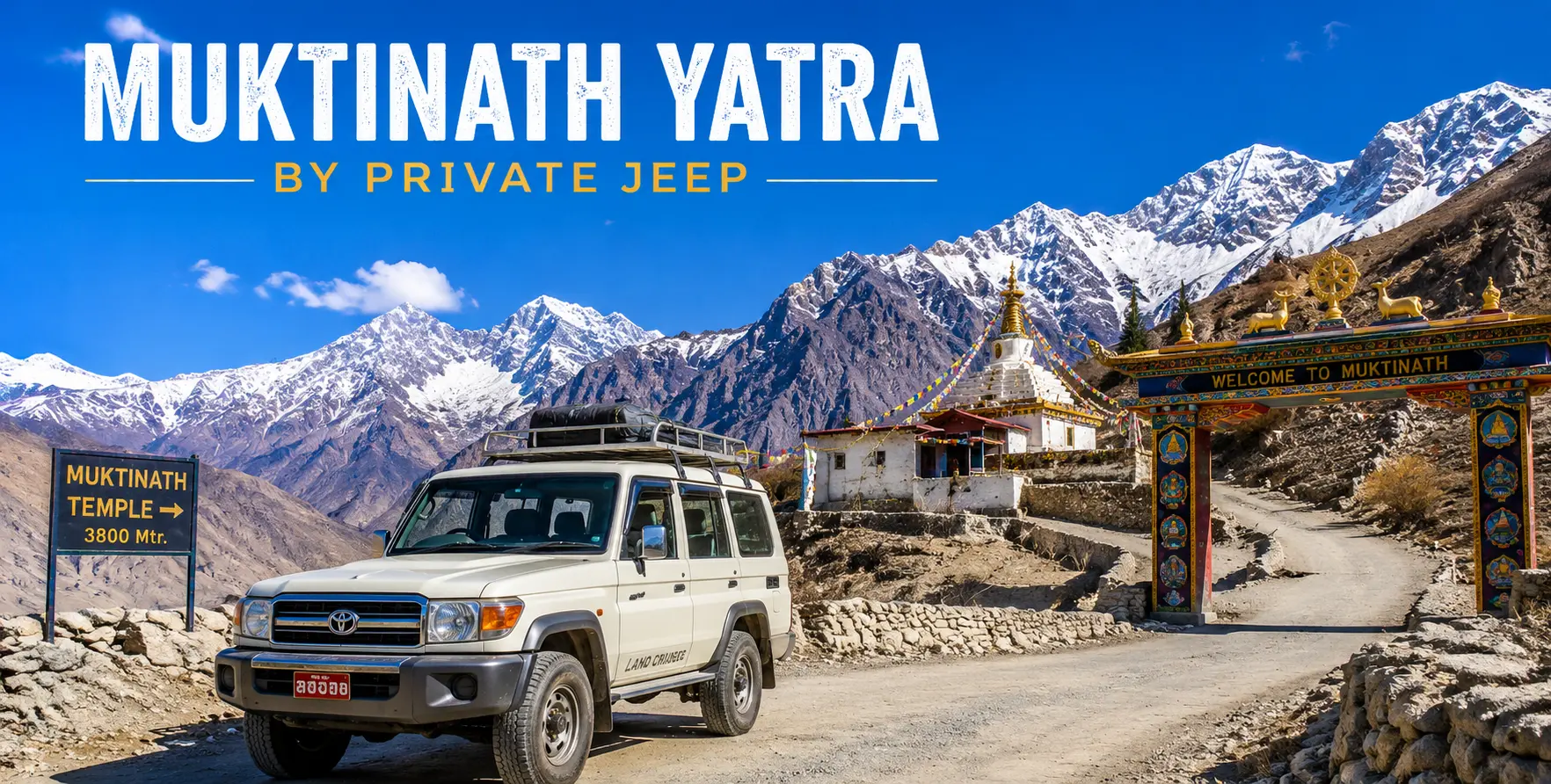
Jomsom to Muktinath Jeep Rental: Complete Route Guide
The final stretch to one of the Himalayas’ most sacred pilgrimage sites is short but unforgettable. Jomsom to Muktinath jeep rental covers barely 20 to 25 kilometers, yet it climbs through some of Nepal’s starkest, most dramatic high-desert scenery, delivering pilgrims and trekkers alike to the temple at Ranipauwa without the multi-hour walk the route once required.
This guide covers the real distance and drive time, what the road actually looks like today, altitude considerations, permits, what to expect along the way, and how to decide between a shared and private jeep for this final leg of the journey.
Why Hire a Private Jeep for This Leg
Muktinath sits at roughly 3,710 to 3,800 meters, and most visitors have already spent days trekking, flying, or driving to reach Jomsom before this final push. A private jeep removes the need to walk the remaining distance uphill at altitude, delivers you close to the temple entrance, and gives you full control over timing — useful given how much this particular stretch of road is affected by the valley’s notorious afternoon winds.
- No walking at altitude. The trekking route between Jomsom and Muktinath takes 5 to 6 hours on foot; a jeep covers it in about an hour, sparing your legs and lungs for the pilgrimage itself.
- Beat the afternoon winds. A private vehicle lets you time departure for the calmer morning hours, before the Kali Gandaki valley’s fierce afternoon gusts pick up.
- Flexible stops. Pause in Kagbeni or Jharkot for photos or a closer look at their monasteries without being tied to a shared jeep’s schedule.
- Same-day return possible. Many visitors complete their darshan at Muktinath and return to Jomsom the same day, which a private vehicle makes far more comfortable than relying on shared transport in both directions.
Distance, Route, and Road Conditions
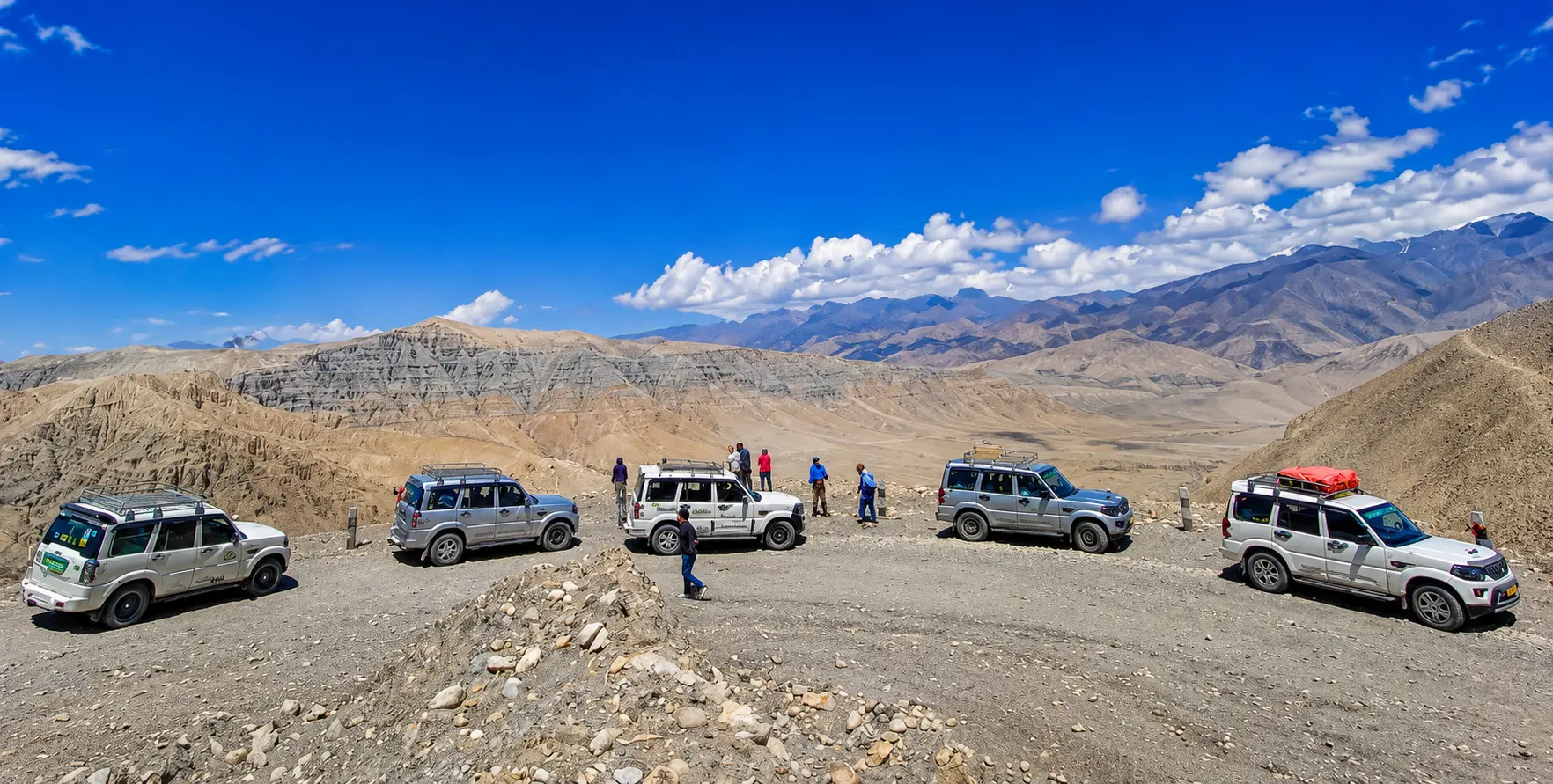
The road covers approximately 20 to 25 kilometers, climbing from Jomsom at around 2,700 meters to Ranipauwa, the base village just below Muktinath Temple, at roughly 3,710 meters — an altitude gain of over 1,000 meters in a short distance. Much of the route has been upgraded in recent years and is reasonably smooth by Himalayan standards, though sections remain unpaved, dusty, and occasionally rocky, particularly on the final approach to Ranipauwa.
The drive follows the Kali Gandaki River valley, widely cited as one of the deepest gorges in the world, passing through high-desert terrain of eroded cliffs, wind-carved rock formations, and scattered prayer flags that mark the trans-Himalayan character of the Mustang region.
How Long Does the Drive Take?
By jeep, the journey typically takes 45 minutes to just over an hour, depending on road conditions and the exact vehicle. This is a dramatic contrast to the5-5 t6-hourur walking route most trekkers would otherwise take, descending or climbing through Jharkot and Khingar villages along the way.
Villages and Sights Along the Way
Kagbeni
A medieval-style village at the gateway to Upper Mustang, with narrow alleyways, mud-brick houses, and an old monastery. Many private jeep itineraries build in a short stop here, either on the way up or during the return.
Jharkot and Khingar
Traditional Thakali and Tibetan-influenced villages sit along the route, both offering views back toward the Dhaulagiri range and a glimpse of rural life in the rain shadow of the Annapurna massif.
Muktinath Temple and Ranipauwa
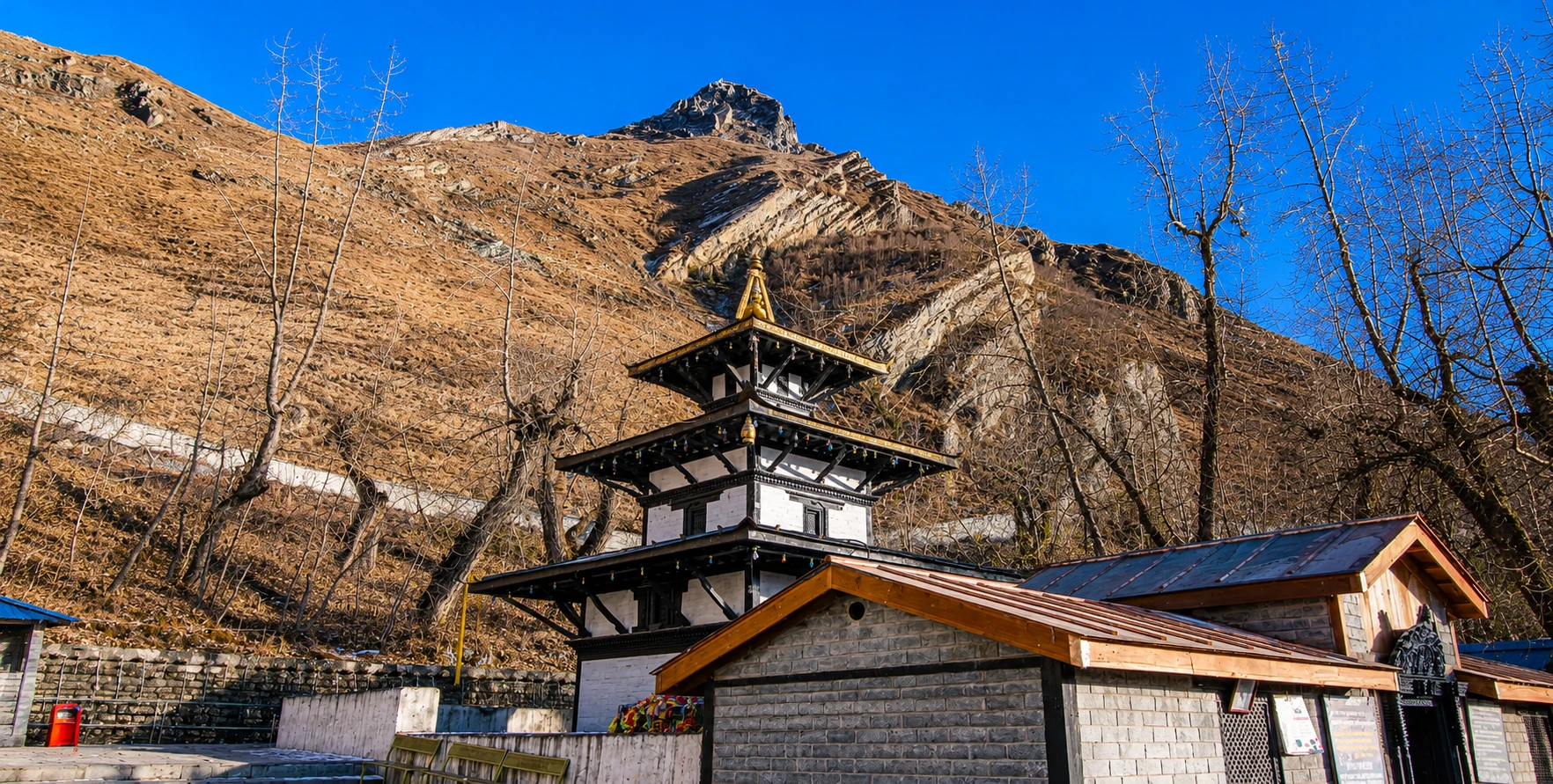
The temple complex itself is sacred to both Hindus and Buddhists, centered on 108 water spouts where pilgrims traditionally bathe, along with the Jwala Mai Temple, known for its naturally occurring eternal flame. Ranipauwa, the village just below, is where the drivable road ends and a short uphill walk to the temple begins.
Permits You’ll Need
Since this route runs entirely within the Annapurna Conservation Area, a valid ACAP permit is required for every visitor entering the region — including those arriving by private vehicle rather than on foot. Our ACAP permit guide covers exactly what’s needed and where to obtain it in Kathmandu or Pokhara before you travel, and our broader Annapurna Conservation Area guide covers the region’s history and access routes in more depth.
Choosing the Right Vehicle
The Jomsom-Muktinath road, while shorter and smoother than many Mustang-region routes, still climbs to high altitude on a mix of paved and unpaved surfaces, making a genuine 4WD the sensible choice rather than a standard car. Popular options include the Mahindra Scorpio, a reliable and widely used mountain vehicle comfortable for up to six passengers, and the Toyota Land Cruiser for those wanting extra comfort and off-road capability on the return journey toward Beni or Pokhara.
See our Scorpio jeep hire and Toyota Land Cruiser 4WD hire pages for full vehicle details, or our guide to choosing between a jeep and an SUV for Nepal’s mountain roads if you’re unsure which fits your group.
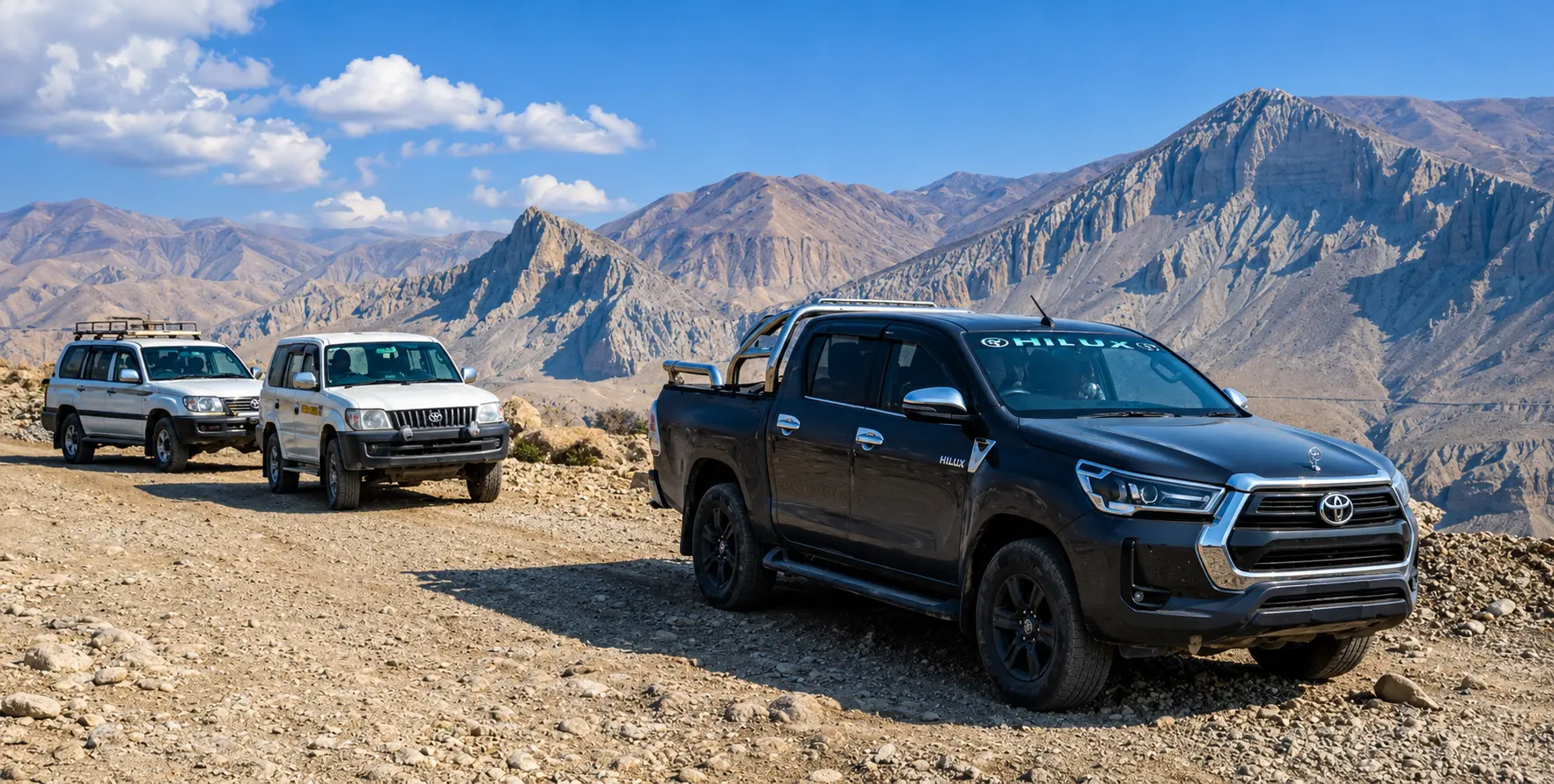
Cost of a Jomsom to Muktinath Jeep
As one of the shortest legs in the Mustang region, a private jeep charter for this stretch is considerably cheaper than longer sections of the Annapurna Circuit or the full Pokhara-Muktinath overland route. Shared jeep seats are the most economical option for solo travelers, while a private charter — ideal for families, small groups, or pilgrims wanting flexibility around darshan timing — is priced per vehicle rather than per seat. Exact fares shift with season and demand, so confirm current pricing at the time of booking, particularly during the peak pilgrimage and trekking windows of spring and autumn.
Best Time to Travel This Route
Mornings are strongly preferred for this drive. The Kali Gandaki valley is known for strong afternoon winds that pick up almost daily, creating swirling dust and making the open, high-desert road noticeably less comfortable later in the day. Spring (March to May) and autumn (September to November) offer the clearest skies and most stable road conditions, and are also the busiest pilgrimage and trekking seasons, so booking your jeep in advance during these windows is worthwhile.
Combining This Leg With a Wider Mustang or Annapurna Trip
Very few travelers treat Jomsom-Muktinath as an isolated trip. Most arrive via a longer overland journey — see our Kathmandu to Mustang private jeep guide for that full route — or connect onward from Pokhara to Beni jeep hire, which covers the approach through Beni toward Jomsom and Muktinath. After completing your pilgrimage, many travelers descend directly back toward Pokhara in one long but scenic day; our Muktinath to Pokhara jeep service covers that return leg in full. Travelers extending into the wider Annapurna Circuit can also see our Pokhara to Manang transport guide, or explore Upper Mustang further north with our Upper Mustang 4WD jeep and places to visit in Mustang pages.
Booking Tips
- Book your ACAP permit in Kathmandu or Pokhara before heading toward Jomsom, since offices aren’t available beyond the main hubs.
- Aim for a morning departure to avoid the valley’s afternoon winds
- Carry warm, windproof layers even in the dry season — the exposed high-desert road gets cold and dusty regardless of temperature
- Confirm whether your fare is a shared seat or full private charter before booking
- If you’re combining this with a same-day return to Jomsom, confirm your driver’s availability for both legs in advance
Why Book With Nepal Vehicle Hiring Pvt Ltd
Our drivers know the Jomsom-Muktinath road and the wider Mustang region well, from permit requirements to the best departure timing around the valley’s afternoon winds. Every booking includes a well-maintained 4WD vehicle, transparent pricing, and a driver experienced with this route’s unique high-altitude, high-wind conditions.
For a broader look at getting to and around this region, check our car hire in Pokhara page, or reach out through our contact page to arrange your Jomsom-Muktinath jeep as part of a wider Mustang itinerary.
Frequently Asked Questions
How far is Muktinath from Jomsom? Approximately 20 to 25 kilometers, with a drive time of 45 minutes to just over an hour by jeep.
Do I need a permit for this route? Yes, an ACAP permit is required since the entire route falls within the Annapurna Conservation Area, regardless of whether you’re walking or driving.
Is the road paved between Jomsom and Muktinath? Much of it has been upgraded and is reasonably smooth, though sections remain unpaved and can be dusty or rocky, especially near Ranipauwa.
What’s the best time of day to make this drive? Morning, before the Kali Gandaki valley’s strong afternoon winds pick up.
Can I visit Muktinath and return to Jomsom the same day? Yes, many visitors do exactly this with a private jeep, though it’s worth confirming your driver’s availability for both legs in advance.
Planning your pilgrimage or Mustang trip? Book your Jomsom to Muktinath jeep rental through our contact page and reach Ranipauwa comfortably, on your own schedule.
- Jomsom to Muktinath Jeep Rental: Complete Route Guide
- Why Hire a Private Jeep for This Leg
- Distance, Route, and Road Conditions
- How Long Does the Drive Take?
- Villages and Sights Along the Way
- Permits You'll Need
- Choosing the Right Vehicle
- Cost of a Jomsom to Muktinath Jeep
- Best Time to Travel This Route
- Combining This Leg With a Wider Mustang or Annapurna Trip
- Booking Tips
- Why Book With Nepal Vehicle Hiring Pvt Ltd
- Frequently Asked Questions

Related Blog & Articles
Altitude and Health: Essential Muktinath Advice
Pokhara Airport to Muktinath Jeep Rental | Private 4WD Hire Nepal
Kathmandu to Mustang (Muktinath)