Plan a Trip


Langtang Trek Vehicle Hire | Pickup And Drop Guide
Langtang Trek Vehicle Hire — Pickup, Drop-Off and Private Jeep Transfer Guide
The Langtang Valley trek holds a specific and irreplaceable position among Nepal’s trekking routes: it is the closest major Himalayan trek to Kathmandu, the most accessible for travelers with limited time, and one of the most culturally rich and scenically rewarding journeys available in the entire country — delivering close views of Langtang Lirung at 7,227 metres, the ancient monastery and yak cheese factory of Kyanjin Gompa at 3,870 metres, and the living Tamang Buddhist culture of Rasuwa District, all within 7 to 10 days from Kathmandu door to Kathmandu door. It does not require a domestic flight. It does not cross any pass above 5,000 meters. It begins with a single road journey from Kathmandu to the trailhead village of Syabrubesi—a journey every trekker must plan carefully, because there are no luxury coach services, no mountain flights, and no rail connections to Syabrubesi. Every Langtang trekker travels this road, and the quality of their vehicle hire directly shapes how their trek begins.
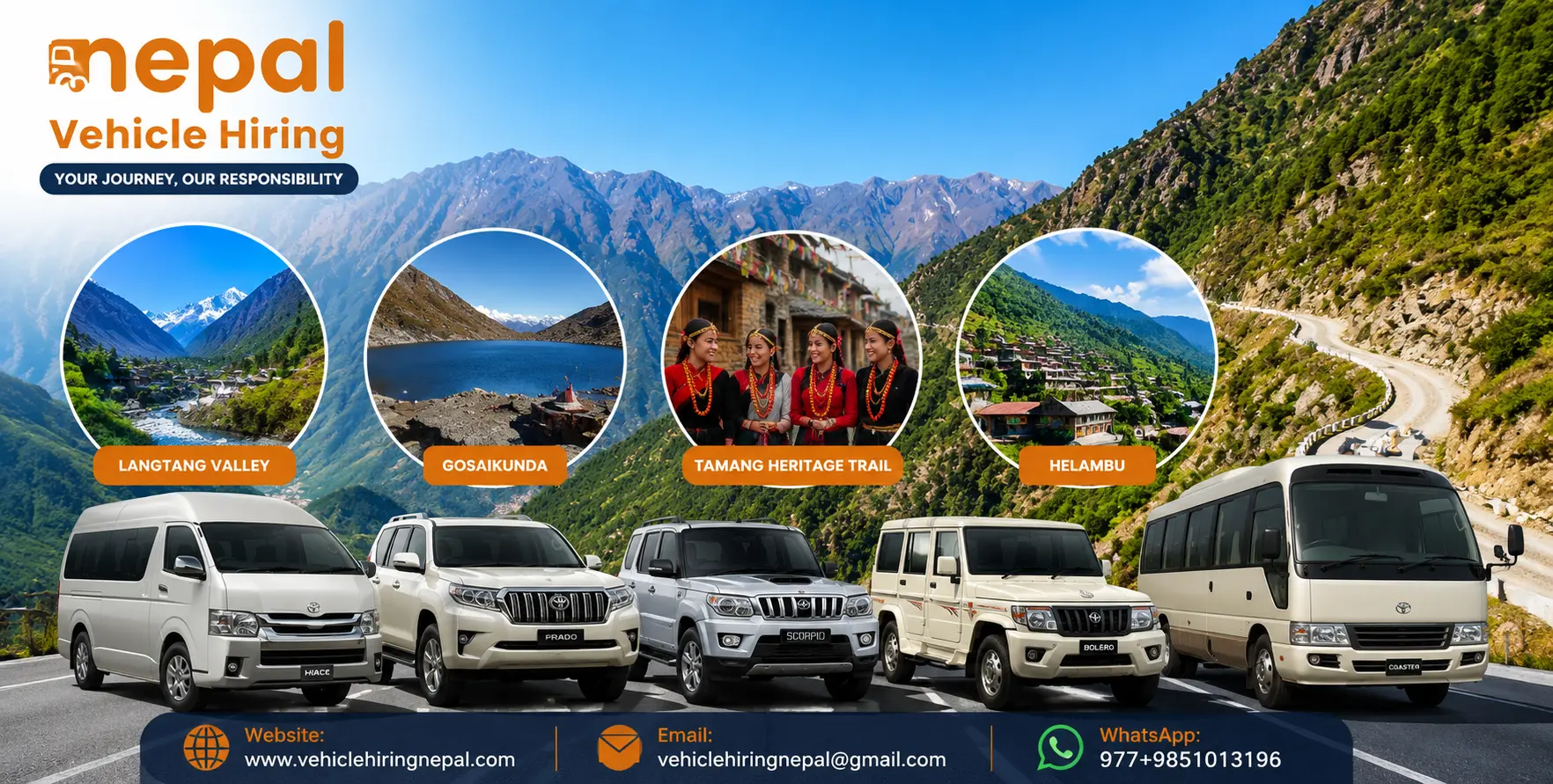
This complete guide covers every aspect of Langtang trek vehicle hire — the full route from Kathmandu to Syabrubesi, all transport options and their current costs, road conditions and seasonal factors, the return pickup service from Syabrubesi or Dhunche at the trek’s conclusion, how the vehicle hire connects with every variant of the Langtang trekking experience, and why Nepal Vehicle Hiring Pvt Ltd is the preferred private jeep provider for Langtang-bound trekkers departing from Kathmandu. Whether you need a straightforward single-day drop to Syabrubesi for a group of four, a coordinated outward-and-return booking covering both legs of your Langtang Valley trek transfer, or a flexible multi-day arrangement accommodating an extended itinerary that combines Langtang with Gosaikunda and the Helambu circuit, this guide and our team at Nepal Vehicle Hiring have you covered.
Why the Langtang Trek Is Nepal’s Most Accessible Major Himalayan Journey
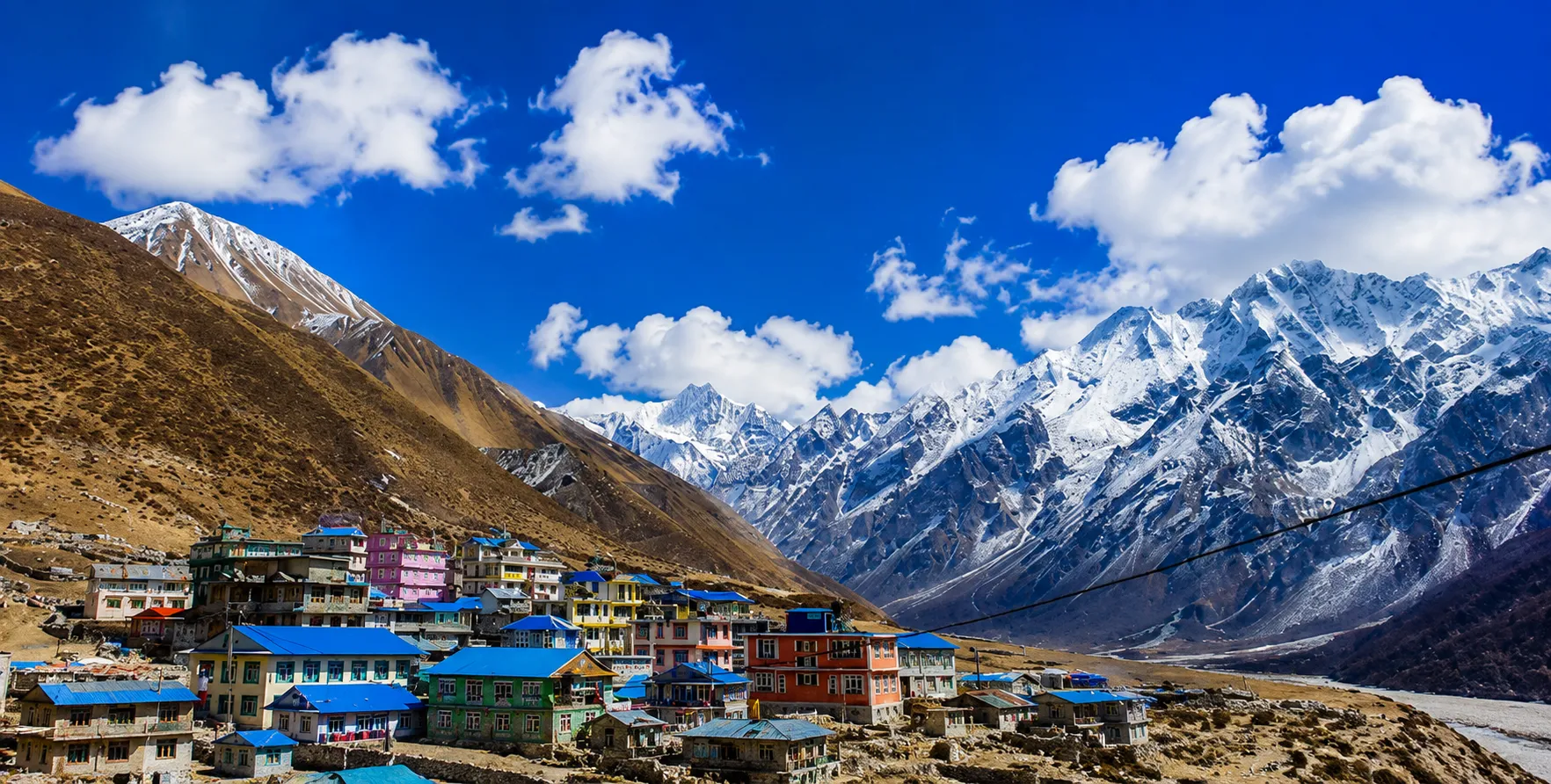
At approximately 122 to 130 kilometres from the centre of Kathmandu to the trailhead at Syabrubesi, the Langtang Valley trek is physically the closest of Nepal’s five major trekking regions to the capital, requiring no flight, no multi-day overland journey, and no complex multi-leg transport chain — just a single private jeep hire or shared vehicle transfer that, in good conditions, delivers trekkers to Syabrubesi in 6 to 8 hours. This proximity is not the only thing that makes Langtang accessible. Unlike the Everest Base Camp trek, which requires a Lukla flight now frequently departing from Ramechhap, or the Annapurna Circuit, which demands 12 to 18 days for the full loop, the Langtang Valley trek can be completed in as few as 7 days including the road journey — making it genuinely realistic for travellers with a week of holiday time who want a proper Himalayan experience, not just a viewpoint visit.
The trek’s altitude profile adds to its accessibility: the highest point on the standard route is Kyanjin Gompa at 3,870 meters, with an optional extension to the Tserko Ri viewpoint at 4,984 meters for those seeking a higher summit experience. Both altitudes are well within the range of a fit, healthy traveller with basic trekking experience and reasonable acclimatization care—no supplemental oxygen, no extreme cold-weather equipment, and no technical climbing skills required. The trail passes through dense rhododendron and oak forests in its lower sections, traditional Tamang village communities at mid-altitude, and the wide glacial valley and high alpine pasture of the upper Langtang that, since the valley’s post-2015 rebuilding, have become one of Nepal’s most emotionally resonant trekking environments. Add the Gosaikunda sacred lake extension, the Tamang Heritage Trail circuit, or the Helambu loop to the standard route, and the Langtang trek becomes a 16-day itinerary combining three of Nepal’s most culturally rich and scenically diverse trekking corridors into a single continuous journey.
For these reasons, Langtang is consistently recommended as the ideal first major Himalayan trek for travellers based in Kathmandu—and the Kathmandu-to-Syabrubesi vehicle hire is the single transport booking that makes every version of this journey possible. Nepal Vehicle Hiring Pvt Ltd provides this service daily during trekking season, and year-round on booking.
The Route — Kathmandu to Syabrubesi in Full Detail
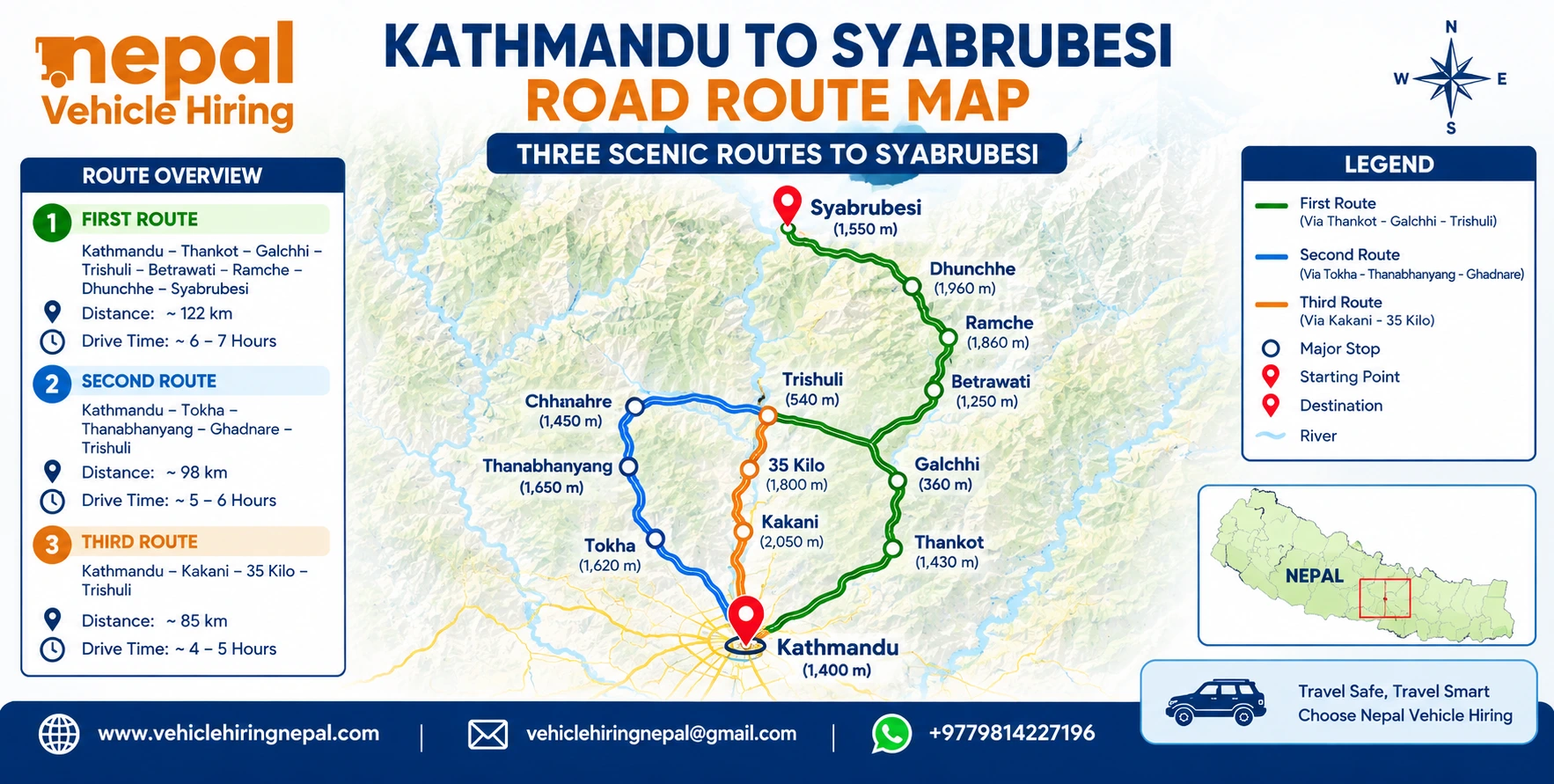
The Kathmandu to Syabrubesi road journey follows the Pasang Lhamu Highway — named after the first Nepali woman to summit Everest, who was born in the Rasuwa region this road serves — climbing steadily north from Kathmandu through the middle hills of Nuwakot and Rasuwa districts before descending to the Trishuli River valley and climbing again toward the Nepal-Tibet border region. The total road distance is 122 to 130 kilometres, depending on the specific route taken, and the journey takes 6 to 8 hours in a private 4WD jeep in good conditions.
Kathmandu to Kakani and Trishuli. The journey begins by leaving Kathmandu’s northern edge through Tokha and ascending toward Kakani at approximately 2,073 meters — a hill station known for its panoramic mountain views and popular with Kathmandu residents as a short day excursion. Nepal Vehicle Hiring Pvt Ltd drivers include Kakani as an optional brief photo stop for groups who want to capture the Langtang Range and Ganesh Himal panorama on a clear morning before the route descends into the Trishuli River valley below. Trishuli Bazaar, the Nuwakot District commercial centre at about 440 meters, is the standard mid-journey breakfast and refuelling stop on this route—a bustling town with well-stocked restaurants, fuel stations, and ATMs, the last major resupply point before Syabrubesi.
Trishuli to Betrawati and Dhunche. Beyond Trishuli, the road climbs steadily north along the Trishuli River valley, passing through Betrawati and gradually gaining altitude as it enters Rasuwa District and approaches Langtang National Park. The road surface on this section is a typical Nepal hill-road mix: paved for most of its length, but progressively narrower, steeper, and more winding, with seasonal landslide damage affecting recurring problem sections, particularly after monsoon rainfall. The notorious Ramche Landslide zone, about 3 kilometres before Dhunche, is a particularly landslide-prone stretch that Nepal Vehicle Hiring Pvt Ltd monitors through our driver network—vehicles sometimes need to clear this section quickly during unstable periods. A 4WD jeep with adequate ground clearance and an experienced driver provides meaningfully better safety margins on this section than a standard vehicle. Dhunche, at approximately 1,970 meters, is the Rasuwa District headquarters and the alternative drop-off point for trekkers beginning the Gosaikunda route rather than the Langtang Valley trail — it has a growing range of guesthouses and teahouses, the last functioning ATM before Syabrubesi, and the Langtang National Park entry permit checkpoint where all ACAP and TIMS permits are verified.
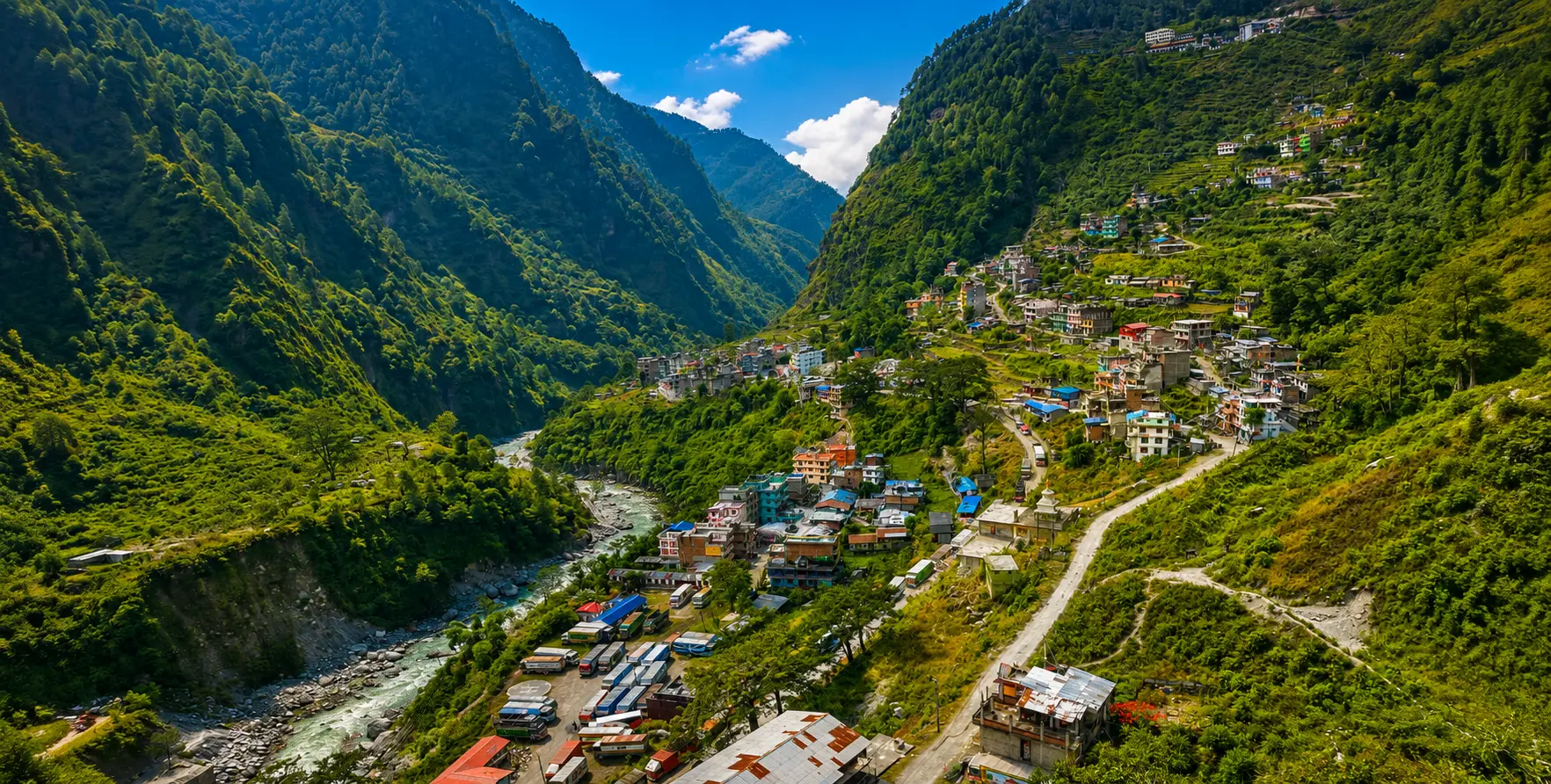
Dhunche to Syabrubesi. The final section from Dhunche to Syabrubesi descends from the district headquarters to the valley floor where the Langtang Khola River meets the Bhote Koshi, covering approximately 10 kilometres on a narrow road that drops steeply through forested hillside terrain. Syabrubesi village itself, at approximately 1,460 to 1,550 meters depending on the specific part of the settlement, is a well-established small trekking town with a compact bazaar of teahouses, guesthouses, restaurants, trekking gear shops, money exchange services, and permit checking facilities. Your Langtang trek vehicle hire drop-off from Nepal Vehicle Hiring Pvt Ltd ends here, and your Langtang Valley trek begins on foot.
Transport Options and Costs — Everything on the Table
Unlike the Everest Base Camp trek (which offers the Lukla flight option) or the Annapurna Base Camp trek (accessible from Pokhara by short Pokhara to Nayapul transfer), the Langtang trek has precisely two practical ground transport options: a private jeep hire or a public shared bus. There are no domestic flights to Syabrubesi, no luxury tourist coaches, and no alternative road routes offering meaningfully different options. Understanding what each option offers and costs in 2026 matters more for Langtang-bound trekkers than for almost any other major trekking destination in Nepal.
Private Jeep — The Recommended and Most Popular Choice. A private Scorpio or Hilux 4WD jeep from Nepal Vehicle Hiring Pvt Ltd covers the complete door-to-door journey from your Kathmandu hotel to Syabrubesi with one driver, one vehicle, and no intermediate transfers. The 2026 pricing for this service ranges from approximately NPR 15,000 to NPR 26,000 (USD 113 to 200) for a one-way, full-vehicle trip, comfortably carrying 4 to 6 passengers with trekking luggage secured on the roof rack. This all-inclusive price covers hotel pickup anywhere in Kathmandu (Thamel, Boudha, Patan, or any city hotel), the full 122 to 130 kilometre journey to Syabrubesi including the Dhunche permit checkpoint section, and driver fuel — no hidden charges. For the return journey from Syabrubesi or Dhunche to Kathmandu at the trek’s end, a coordinated return booking through Nepal Vehicle Hiring Pvt Ltd costs NPR 13,000 to NPR 26,000 (USD 98 to 200) for the full vehicle. You can arrange it as a package with the outward booking through our plan trip page.
Shared Jeep. Shared jeep services from Kathmandu to Syabrubesi operate on a fill-and-depart basis, typically seat 7 passengers, and depart from the Machhapokhari or Gongabu areas of Kathmandu. The cost is approximately NPR 1,400 to NPR 1,800 per person one way (approximately USD 10 to 14). Travel time is broadly similar to a private jeep — 7 to 8 hours — but without fixed departure time guarantees, hotel pickup, or control over who shares your vehicle. For solo budget trekkers comfortable with Nepali shared transport conventions, this is a perfectly workable option during daylight hours in good conditions.
Public Bus. Daily bus services from Kathmandu’s Gongabu Bus Park depart for Dhunche and Syabrubesi between 6:00 and 8:00 AM, and the standard route takes 8 to 10 hours. The 2026 bus fare is approximately NPR 1,200 to NPR 1,500 per person (USD 9 to 11). Buses are the cheapest option but the most physically tiring: seats are smaller, winding mountain roads are less comfortable in a heavy vehicle than in a 4WD jeep, and bus schedules don’t accommodate hotel pickup or flexible departure times. For groups carrying significant trekking equipment, luggage handling on public buses is far less convenient than in a private vehicle with a roof rack and dedicated luggage space.
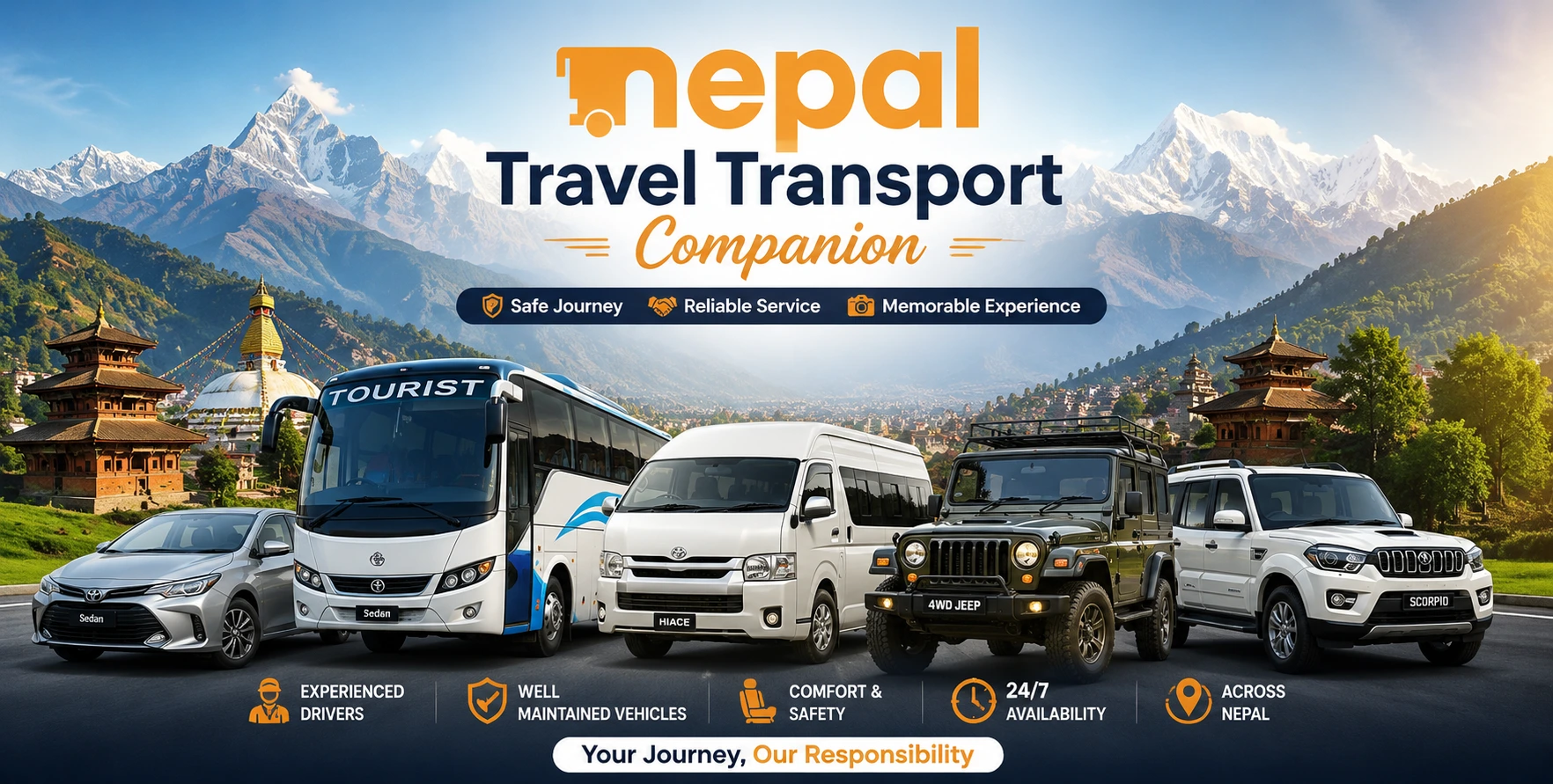
Group Size Scaling. For larger trekking groups—families, company teams, or school groups—Nepal Vehicle Hiring Pvt Ltd offers scaled options beyond the standard 4- to 6-person Scorpio or Hilux jeep. For groups of 7 to 13, our Toyota Hiace van handles paved sections comfortably and can be paired with a 4WD jeep for more demanding sections. For very large groups (14 to 25 people), our tourist coaster service can go to Dhunche, with a jeep shuttle for the final Dhunche-to-Syabrubesi section. All arrangements are confirmed through our contact team when you make your booking.
Pickup Points — Where Nepal Vehicle Hiring Picks You Up in Kathmandu
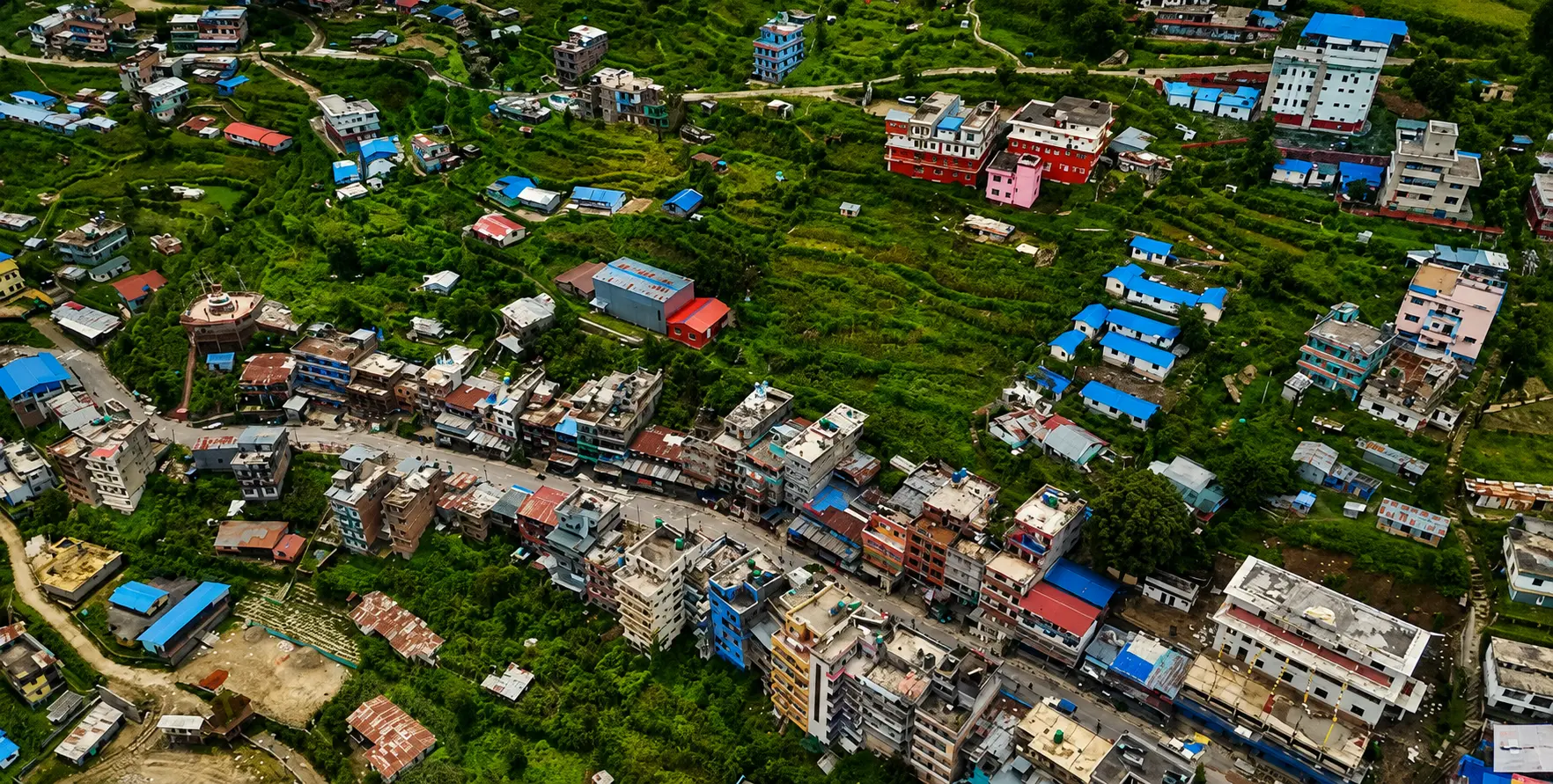
One practical advantage of booking Langtang trek vehicle hire through Nepal Vehicle Hiring Pvt Ltd, rather than arranging shared transport independently, is door-to-door pickup from any location in Kathmandu. Our drivers pick up trekking groups from hotel entrances in Thamel, Boudha, Patan, Lazimpat, Durbarmarg, Baneshwor, and other Kathmandu neighbourhoods, so you don’t have to navigate to a central bus park with full trekking luggage before the long journey begins.
For travellers arriving at Tribhuvan International Airport and heading directly to the Langtang trek the same day or the following morning, our Kathmandu airport transfer service can collect you at the arrivals hall and deliver you either to your Thamel hotel for an overnight before the trek departure, or — for early-arriving flights — directly to Syabrubesi on the same day, combining the airport transfer and the Syabrubesi drop into a single continuous journey. This airport-to-trailhead option is particularly popular with experienced trekkers who have visited Kathmandu before, don’t need city sightseeing days, and want to start walking as soon as possible after landing.
Trekkers spending several days in Kathmandu before the Langtang transfer frequently combine city sightseeing with their pre-trek schedule — our Kathmandu sightseeing packages cover all UNESCO heritage zones including the Boudhanath Stupa, Pashupatinath Temple, Swayambhunath, and the Patan Durbar Square. In contrast, our dedicated Bhaktapur day tour covers the medieval city east of Kathmandu that so many visitors wish they had spent more time in. The Nagarkot sunrise tour — available as a pre-dawn private vehicle excursion from any Kathmandu hotel — provides a spectacular Himalayan panorama including the Langtang and Ganesh Himal ranges that many trekkers specifically want to capture before they begin walking among those same peaks. Nepal Vehicle Hiring Pvt Ltd provides all of these pre-trek Kathmandu services using our car hire fleet, coordinated through a single booking team.
Drop-Off Points — Syabrubesi and Dhunche Explained
The standard drop-off point for Langtang trek vehicle hire is Syabrubesi village itself, at approximately 1,460 to 1,550 meters in Rasuwa District. Syabrubesi is the starting point for the Langtang Valley trek, which follows the Langtang Khola river valley northward through Lama Hotel, Langtang village, and Mundu to the final destination at Kyanjin Gompa. It also serves as the starting point for the Tamang Heritage Trail, which branches off the main valley trail and explores the lower-altitude Tamang villages of Rasuwa District on a circuit many operators describe as one of Nepal’s finest cultural trekking experiences for travellers interested in Tamang Buddhist community life. Our sister company, Trek Nepal Himalayas, offers the Langtang Valley trek package, which begins and ends at Syabrubesi, making it the standard drop-off for all coordinated vehicle transfer and trekking package combinations.
Dhunche, 10 kilometres and approximately 30 minutes of driving above Syabrubesi at 1,970 meters, is the alternative drop-off point for trekkers beginning the Gosaikunda route. The sacred alpine lake of Gosaikunda at 4,380 meters — a major pilgrimage site for both Hindus and Buddhists explored in detail in our dedicated sacred peaks and spiritual trails blog — is accessed via a separate trail from Dhunche or from Thulo Syabru on the Langtang Valley approach, and trekkers combining the full Langtang Valley trek with a Gosaikunda extension typically walk the high trail connecting the two rather than returning to Syabrubesi and driving back to Dhunche. For a Gosaikunda-only itinerary starting from Dhunche, Nepal Vehicle Hiring Pvt Ltd provides a Dhunche-specific drop that stops 10 kilometres short of Syabrubesi, saving 30 minutes of driving time and dropping trekkers directly at the Gosaikunda trailhead.
A third drop-off option, available for trekkers planning the Tamang Heritage Trail circuit clockwise, is Gatlang village—a beautiful traditional Tamang settlement at approximately 2,238 meters, reachable via a side road from the Dhunche area that our experienced drivers navigate by prior arrangement. The Tamang Heritage Trail route from Gatlang lets trekkers experience the region’s most traditional villages before descending to Syabrubesi or connecting to the main Langtang Valley Trail higher up. Confirm the drop-off point that best matches your itinerary when booking with Nepal Vehicle Hiring Pvt Ltd.
Return Pickup — Getting Back to Kathmandu After the Trek
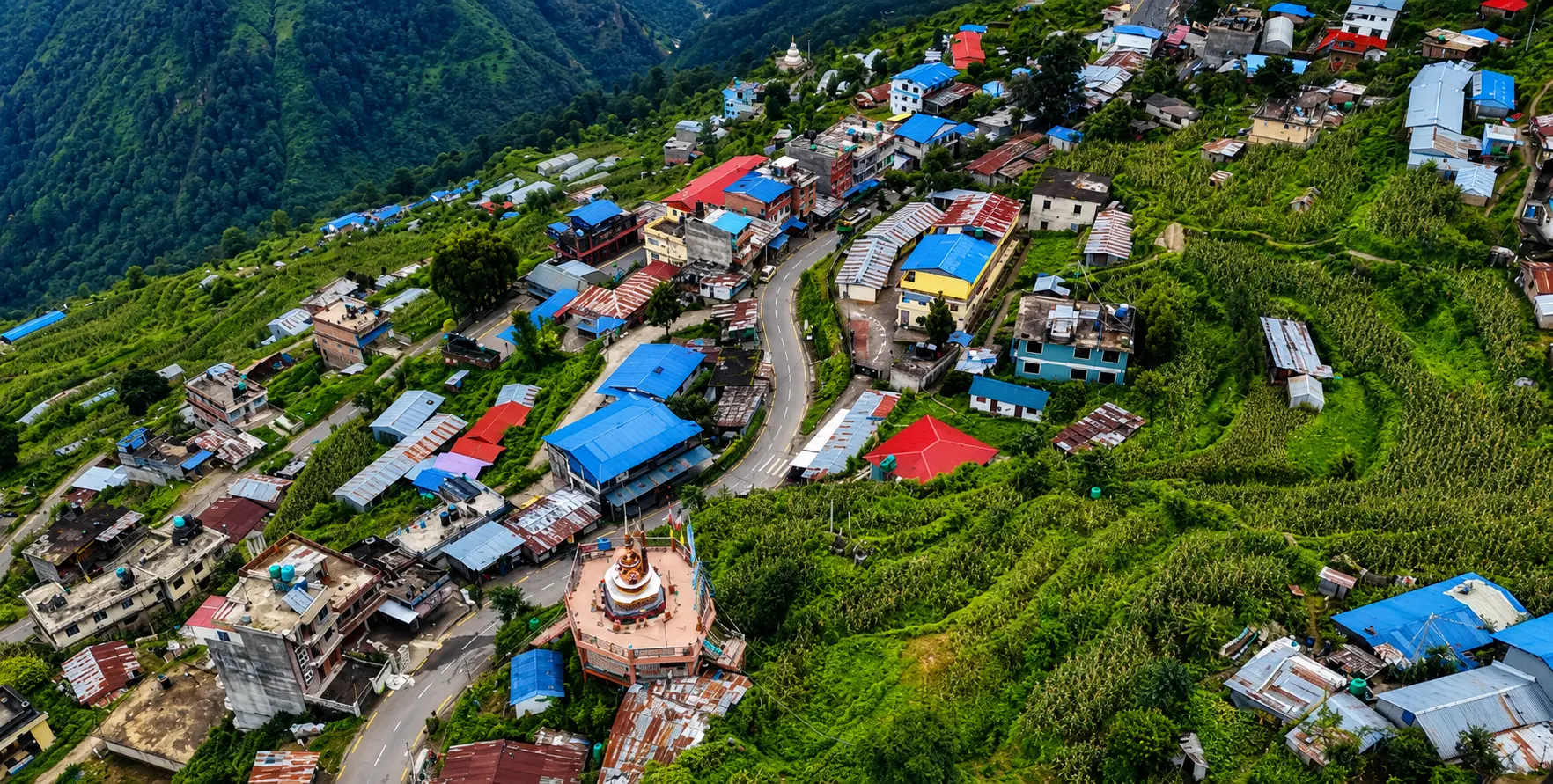
The return journey from Syabrubesi or Dhunche to Kathmandu is, in practical terms, the same road in reverse — but the logistics of arranging it matter considerably more than many trekkers anticipate. Shared jeeps and local buses do operate on this route back toward Kathmandu. Still, they depart on a fill-and-go basis, making schedule planning unreliable at the end of a multi-day trek, and the available departure times don’t always align with when a trekker actually arrives back at Syabrubesi after their final walking day.
Nepal Vehicle Hiring Pvt Ltd’s Langtang trek vehicle hire service addresses this directly by including a pre-arranged return pickup as a standard part of the booking. When you arrange your outward private jeep hire to Syabrubesi, you simultaneously confirm your return pickup date and time — our driver is dispatched from Kathmandu at a pre-agreed time and arrives at Syabrubesi or Dhunche to collect your group, regardless of local transport availability on that specific day. If your trek schedule changes and you finish a day earlier or later than planned, a single WhatsApp message to our team at +977-9851343204 adjusts the return pickup arrangement, usually within hours and without additional charges for reasonable date changes confirmed in advance.
The standard return from Syabrubesi to Kathmandu takes 6 to 7 hours by private jeep, covering the same Pasang Lhamu Highway in reverse. Many trekkers use this return journey to include a brief Dhunche or Trishuli Bazaar rest stop — a welcome break after several days of continuous trekking. For groups continuing to Pokhara after the Langtang trek rather than returning to Kathmandu, our team can coordinate an onward Kathmandu-to-Pokhara bus connection or arrange a private vehicle transfer from Trishuli junction to Pokhara, making the Langtang-to-Pokhara connection seamless within a single coordinated transport arrangement.
The Langtang Valley Trek — What Your Vehicle Hire Gets You Access To
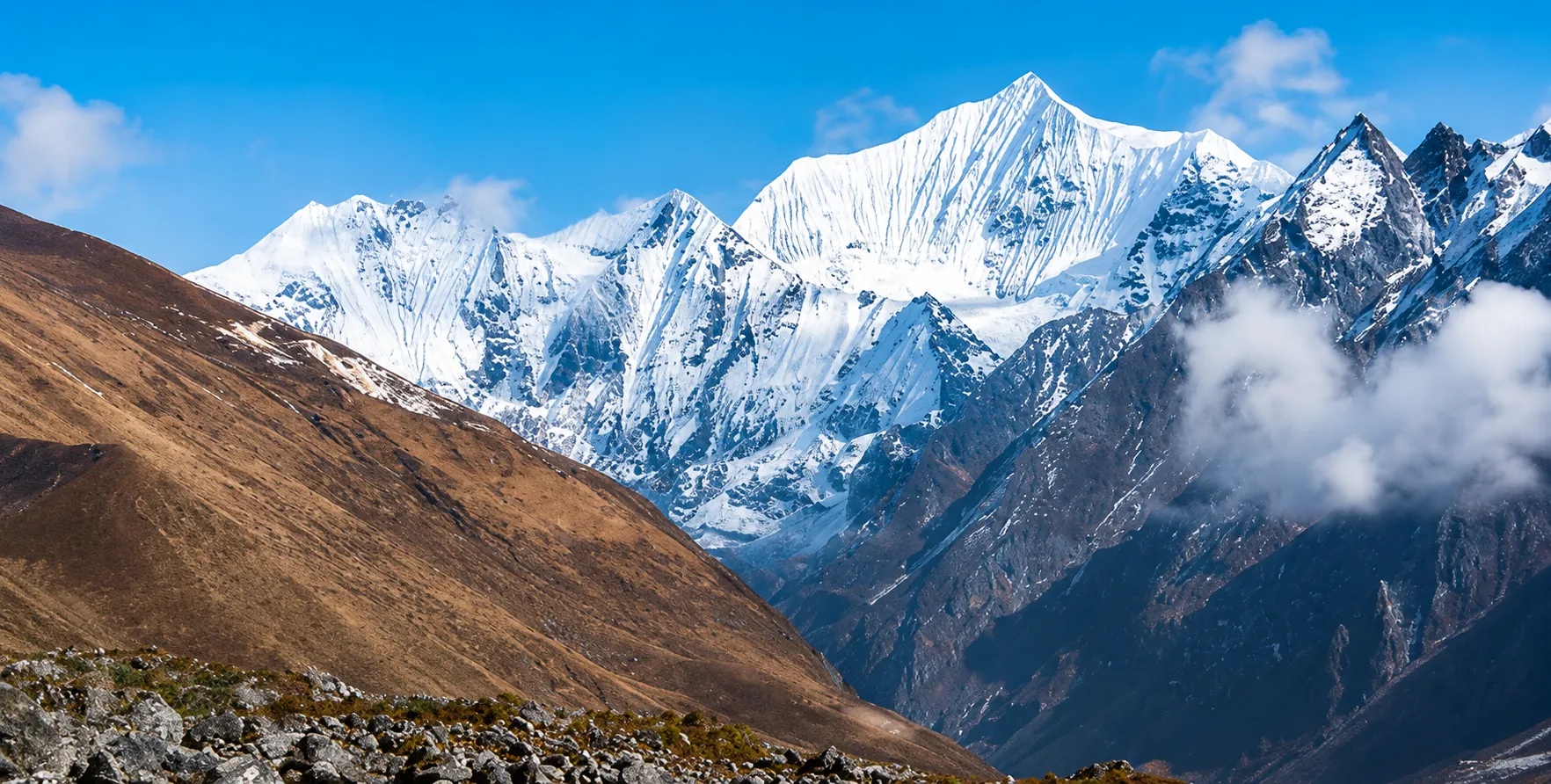
Understanding what lies beyond the Syabrubesi drop-off point helps put your vehicle hire booking in context. The Langtang Valley trek from Syabrubesi to Kyanjin Gompa and back is one of Nepal’s most consistently rewarding trekking experiences, combining dramatic mountain scenery, rich Tamang Buddhist cultural immersion, and genuine Himalayan atmosphere in a route that is simultaneously accessible to a wide range of fitness levels and sufficiently varied to engage experienced trekkers who have already completed other major Nepal routes.
Syabrubesi to Lama Hotel. The first walking day from Syabrubesi climbs through dense subtropical and temperate forest along the Langtang Khola gorge, reaching Lama Hotel at approximately 2,470 meters after 5 to 7 hours of walking. The trail follows the river through a combination of forest paths, suspension bridges, and rocky cliff-edge sections that deliver the first unambiguous impression of Himalayan scale — the valley walls rising hundreds of meters on both sides, the river thundering through the gorge below, and the air temperature dropping perceptibly with each hour of ascent. The rich forest cover on this section supports Langtang National Park’s documented red panda population, and patient, quiet walkers have reported sightings in the bamboo zones between Bamboo village and Lama Hotel.
Lama Hotel to Langtang Village. The second walking day continues the ascent through Riverside and Ghoda Tabela, crossing the 3,000-meter threshold where the dense forest begins to give way to the characteristic U-shaped glacial valley that defines the upper Langtang. The rebuilt Langtang village — devastated in the April 2015 earthquake and its associated avalanche, which claimed over 300 lives in the valley — is reached after approximately 5 to 6 hours of walking from Lama Hotel. The village’s reconstruction, substantially complete by 2026, is one of the Himalaya’s most remarkable rebuilding stories: new stone teahouses and homes built by the same Tamang community families who survived the disaster, many of whom chose to return and rebuild specifically because their ancestral connection to this valley was stronger than the trauma of what had happened. Walking through Langtang village in 2026 is a genuinely moving experience for any trekker who knows its recent history, and the small monuments to those lost add depth to an already extraordinary landscape.
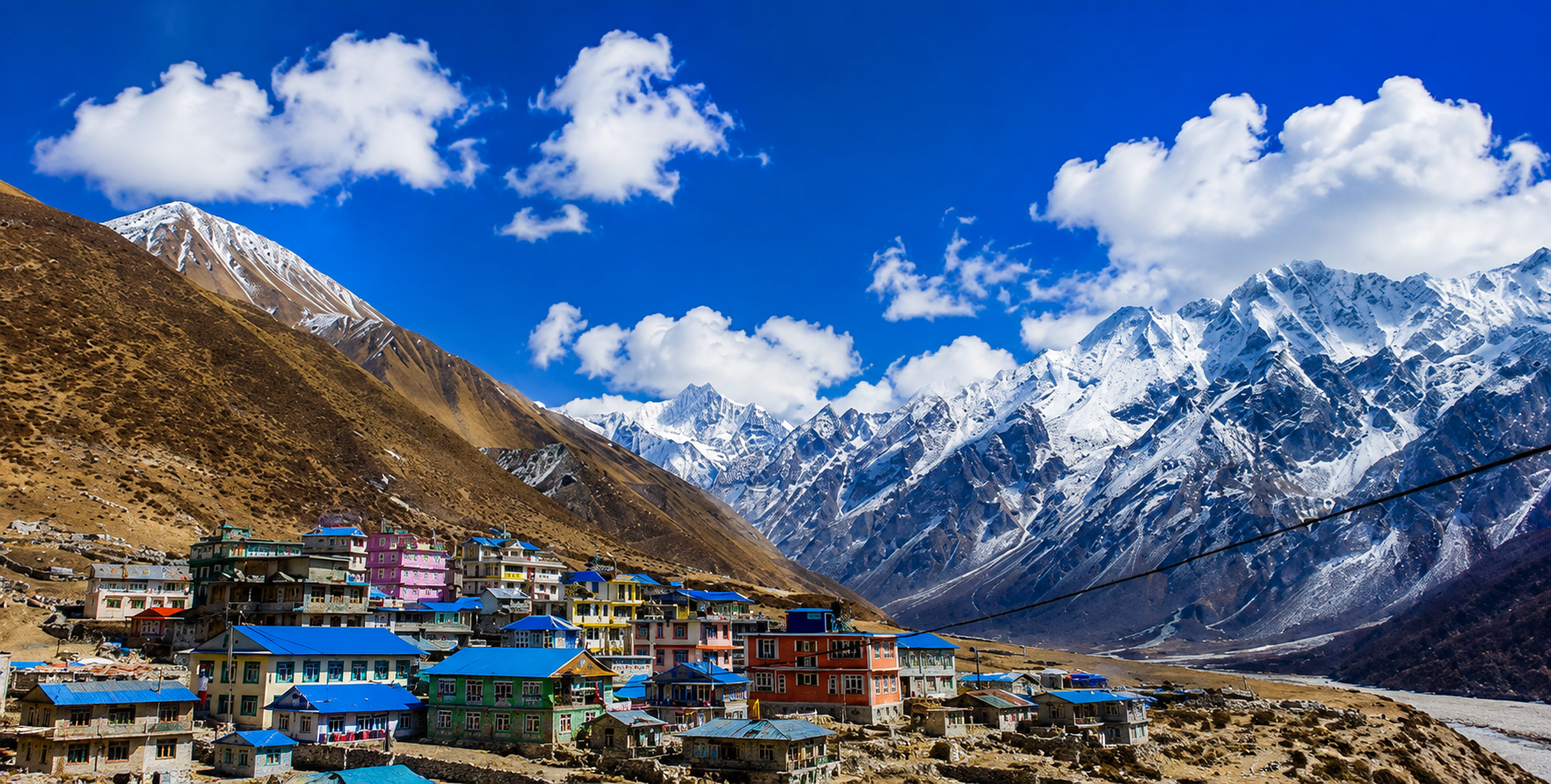
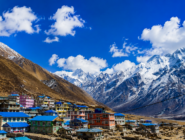
Langtang Village to Kyanjin Gompa. The final ascent from Langtang village to Kyanjin Gompa at 3,870 meters covers 6 kilometres and 400 vertical meters through the wide, open upper valley, passing massive mani walls (always circumambulated clockwise, keeping the carved stones to your right), traditional yak grazing meadows, and the first close views of Langtang Lirung’s glaciated north face directly above. Kyanjin Gompa — both a monastic settlement and a functioning village with teahouses, a yak cheese factory, and a small medical post — is the Langtang trek’s highest and most rewarding overnight destination: the monastery here was founded centuries ago and continues to function as an active place of worship for the local Sherpa and Tamang communities.
Kyanjin Ri and Tserko Ri — The High-Point Options. Most standard itineraries include an acclimatization and exploration day at Kyanjin Gompa, during which trekkers can ascend either Kyanjin Ri at 4,773 metres (2 hours from the village, offering 360-degree views of Langtang Lirung, Changbu, Gangchenpo, Dorje Himal, and the Tibetan plateau beyond) or the more demanding Tserko Ri at 4,984 metres (4 to 6 hours round trip, requiring a packed lunch, and offering what many experienced Himalayan guides describe as one of Nepal’s finest and most complete high-altitude panoramas available without technical climbing). The Tserko Ri ascent is the single most physically challenging day of the standard Langtang Valley trek. Still, the summit view — Langtang Lirung directly opposite, Ganesh Himal to the west, the Rolwaling Range to the east, and peaks extending far into Tibet beyond the border — makes it among Nepal’s most genuinely memorable single trekking days.
Trek Extensions — Gosaikunda, Tamang Heritage Trail, and Helambu
One of the least publicized but most compelling aspects of the Langtang vehicle hire and trek combination is how naturally the Langtang Valley connects with two other major trekking routes — the Gosaikunda pilgrimage lake trail and the Helambu circuit — creating a combined itinerary of 12 to 18 days that is one of Nepal’s finest long-format trekking experiences without ever requiring a flight, an expensive restricted area permit, or any altitude above 4,984 metres.
The Gosaikunda extension leaves the main Langtang Valley trail at Thulo Syabru, climbing steeply to the high-altitude lake complex at 4,380 metres through Sing Gompa, Laurebina Yak, and the lake basin itself — a sacred site for both Hindu and Buddhist pilgrims, explored in depth in our dedicated Sacred Peaks and Spiritual Trails blog. Nepal Vehicle Hiring Pvt Ltd provides Dhunche drop-off for trekkers starting the Gosaikunda route directly, or Syabrubesi drop-off for those combining Langtang Valley and Gosaikunda in a single-loop itinerary. Our sister company, Trek Nepal Himalayas, offers trekking packages that combine Langtang and Gosaikunda in a full 10- to 12-day circuit, with vehicle transfer provided by Nepal Vehicle Hiring Pvt Ltd on both legs.
The Tamang Heritage Trail, designed with community-based tourism principles and conservation objectives, takes a different approach from the main Langtang Valley route — looping through the predominantly Tamang villages of Gatlang, Tatopani (with natural hot springs), Thuman, Briddim, and Lama Hotel before joining the main Langtang trail. This circuit, typically completed in 5 to 7 days as a standalone experience or combined with the Langtang Valley extension, offers the most intimate immersion in Tamang culture available on any trekking route within a day’s drive of Kathmandu. Nepal Vehicle Hiring Pvt Ltd provides the private jeep drop-off to Gatlang village for the anti-clockwise version of this circuit, with return pickup from Syabrubesi at the circuit’s end.
The Helambu circuit — accessible by continuing south from the Gosaikunda area through the Gul Bhanjyang pass — brings the combined itinerary full circle, descending through the Sherpa and Hyolmo villages of the Helambu region toward Melamchi Bazaar, from where a private vehicle or local bus back to Kathmandu completes what is, in total, one of Nepal’s finest 14- to 18-day combined trekking circuits accessible entirely by road from Kathmandu at both ends. Our sister company Trek Nepal Himalayas offers the Helambu trek as both a standalone and a combined itinerary with Langtang and Gosaikunda.
Road Conditions and the Ramche Landslide Zone
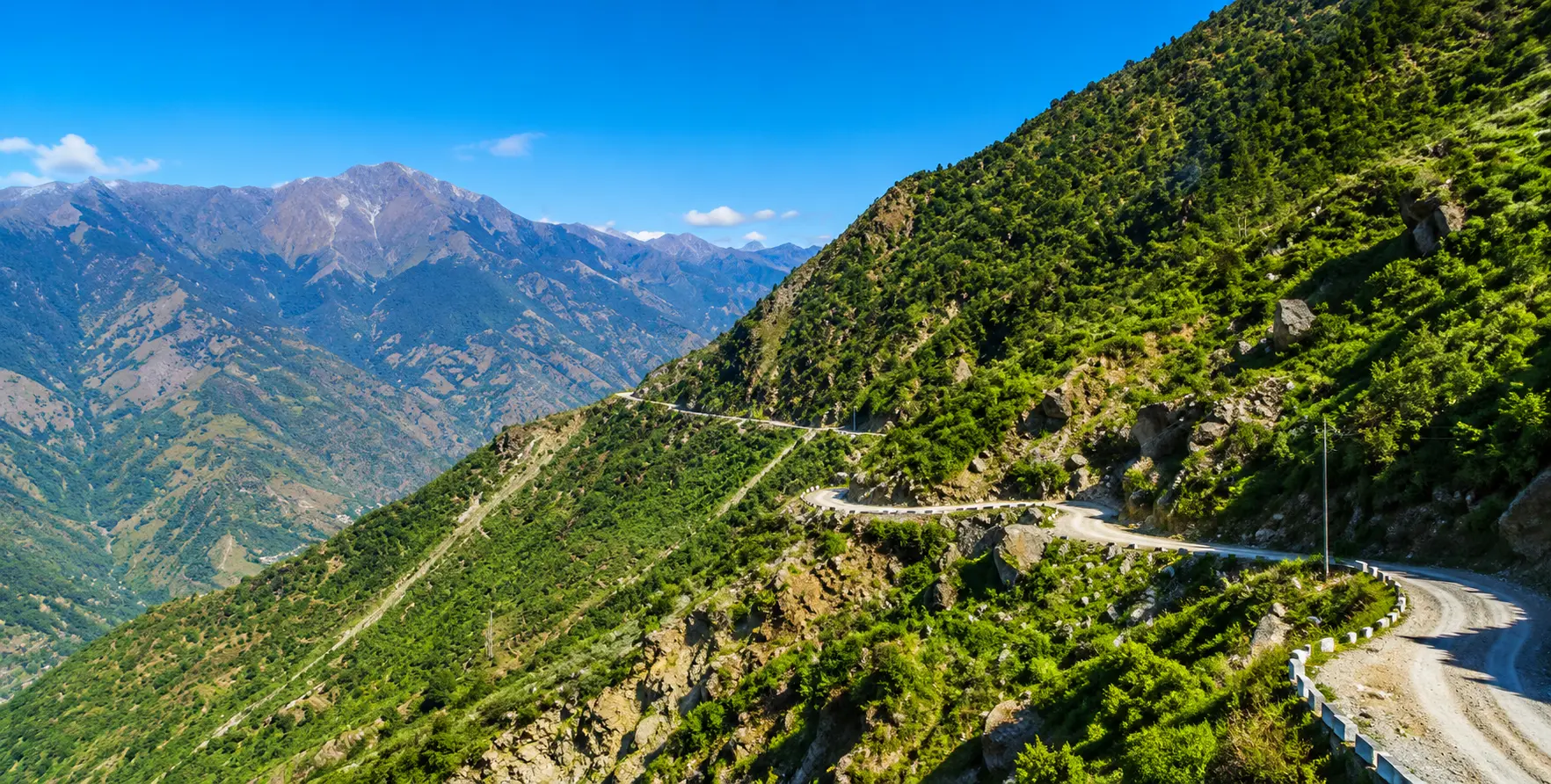
The most discussed road condition challenge on the Kathmandu to Syabrubesi route is the Ramche Landslide Zone, a 3-kilometre stretch of the Pasang Lhamu Highway about 3 kilometres south of Dhunche, recognised as one of the most persistently landslide-prone sections on any major Nepal trekking approach road. The geology of this hillside — steep, heavily fractured rock above a narrow valley floor — creates conditions where heavy rainfall, particularly during and immediately after monsoon season, can trigger significant rock and debris falls that temporarily block or damage the road surface. Nepal’s Department of Roads maintains an active monitoring program on this specific section, and Nepal Vehicle Hiring Pvt Ltd drivers receive real-time updates on Ramche conditions through our driver network before any scheduled Kathmandu-to-Syabrubesi departure.
For a trekker planning a Langtang transfer, the Ramche zone affects journey timing most significantly during and immediately after monsoon. During peak trekking season — October to November and March to May — Ramche is typically passable with normal caution and no extraordinary delays. During monsoon (June to September) and in the immediate post-monsoon period (late September to early October), a pre-departure road check with our team is advisable before any confirmed departure. Nepal Vehicle Hiring Pvt Ltd does not schedule Syabrubesi transfers on days when the Ramche section has been reported closed or restricted without prior client advisory and schedule adjustment.
The broader road surface from Kathmandu to Dhunche has seen significant investment in improvement since 2020, with several previously rough and deteriorated sections resurfaced as part of the ongoing Pasang Lhamu Highway upgrade program. The Dhunche to Syabrubesi descent road — the final 10 kilometres — has historically been narrower and more irregular than the approach section, with sections requiring careful one-way traffic management at certain chokepoints. Our 4WD jeep drivers on this route have personal, trip-specific experience on every section and manage these conditions as a standard part of the professional driver service Nepal Vehicle Hiring Pvt Ltd provides.
Permits and Documentation — What You Need Before the Drop-Off
Two permits are required for all trekkers entering the Langtang Valley and Gosaikunda regions, and both must be obtained in Kathmandu before departure — the Langtang checkpoint at Dhunche verifies both documents for every person in every vehicle, and trekkers without valid permits are turned back at this point regardless of how far they have already travelled.
The Langtang National Park Entry Permit costs NPR 3,000 (approximately USD 22 to 25) per person for foreign nationals. This permit covers entry to Langtang National Park, which encompasses the entire Langtang Valley, the Gosaikunda lake area, and the surrounding high ridge country. You can obtain it from the Nepal Tourism Board office in Kathmandu or from registered trekking agencies. The permit is a single flat fee regardless of how many days you spend in the park, making it equally appropriate for a 5-day Langtang-only itinerary and a 15-day combined Langtang-Gosaikunda-Helambu circuit.
The TIMS Card (Trekkers’ Information Management System) costs USD 10 to 20 per person and is the Nepal Tourism Board’s trekker registration system, maintained for safety and management purposes across all major trekking regions. It is also checked at the Dhunche checkpoint. You can obtain both the National Park permit and the TIMS card from the Nepal Tourism Board office in Thamel, Kathmandu, typically within 30 minutes. Our team can advise on current permit costs and where to obtain them when you book your Langtang trek vehicle hire.
Nepal’s 2023 trekking regulation requires a licensed guide for all trekking in the Langtang region. This requirement is separate from and in addition to the permit requirements above, and applies regardless of group size or individual experience level. Arrange your licensed guide through a registered trekking agency in Kathmandu — our sister company Trek Nepal Himalayas provides fully guided Langtang Valley trek packages with licensed, English-speaking guides, coordinated alongside our vehicle hire service.
Altitude and Safety — What to Know for the Langtang Trek
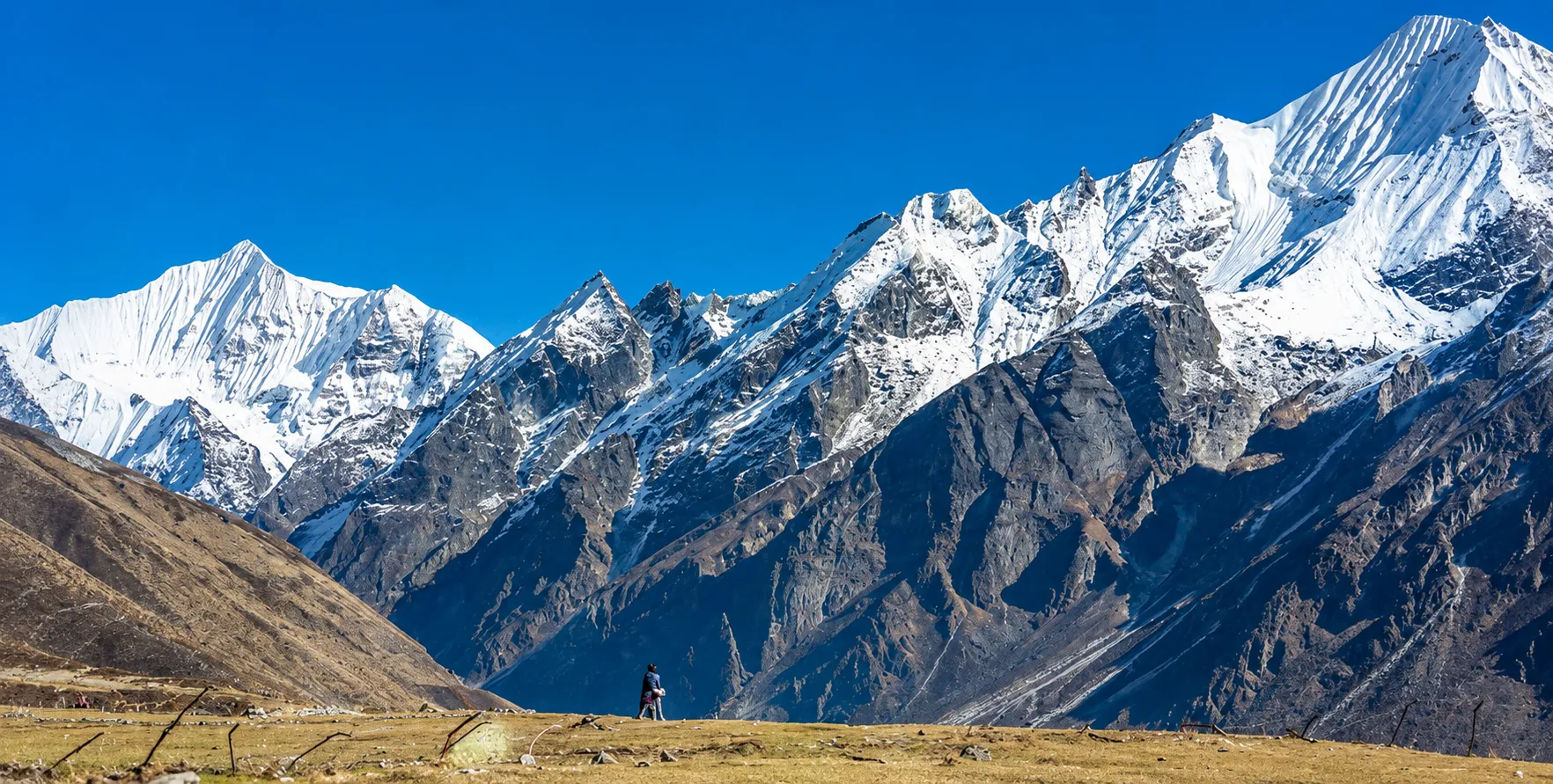
The Langtang Valley trek reaches Kyanjin Gompa at 3,870 meters on the standard route, with the optional Tserko Ri ascent extending this to 4,984 meters. At these altitudes, Acute Mountain Sickness (AMS) is a genuine consideration. However, the Langtang route’s gradual ascent profile—gaining altitude steadily over multiple days of walking from Syabrubesi’s 1,460 meters—provides considerably better natural acclimatisation than the instantaneous altitude gain of a Lukla flight to 2,860 meters before the Everest Base Camp trail begins. The standard 8-day Langtang itinerary, including the vehicle transfer day to Syabrubesi and the planned rest day at Kyanjin Gompa, follows acclimatisation guidelines that make this route genuinely suitable for healthy first-time Himalayan trekkers.
The vehicle transfer from Kathmandu to Syabrubesi itself — going from 1,400 meters to 1,460 meters — carries no meaningful altitude risk. However, the transition to the next day’s walk immediately after the drive means trekkers arriving in Syabrubesi after a long, tiring day on the road should prioritise rest rather than heading straight to Lama Hotel that same afternoon. Nepal Vehicle Hiring Pvt Ltd schedules all Kathmandu-to-Syabrubesi jeep transfers with a 6:00 to 7:00 AM departure to ensure arrival in Syabrubesi by early afternoon—leaving several hours for rest, permit verification, and dinner before the trek begins the following morning.
For trekkers ascending to Tserko Ri specifically, an additional rest day at Kyanjin Gompa before the summit attempt is strongly recommended. The standard recommended daily altitude gain above 3,000 meters is 300 to 500 meters per day with a rest day every third day — and the Tserko Ri ascent of 1,100 vertical meters from Kyanjin Gompa is best undertaken after at least one full rest and acclimatisation day at the village. Our sister company, Trek Nepal Himalayas, includes this rest day in all its standard Langtang Valley trek packages.
Season Guide — Best Time for Langtang Trek Vehicle Hire
The Langtang Valley trek and the vehicle transfer that begins it are available in all seasons, but the quality of both the road journey and the trekking experience above varies significantly across Nepal’s four seasonal periods.
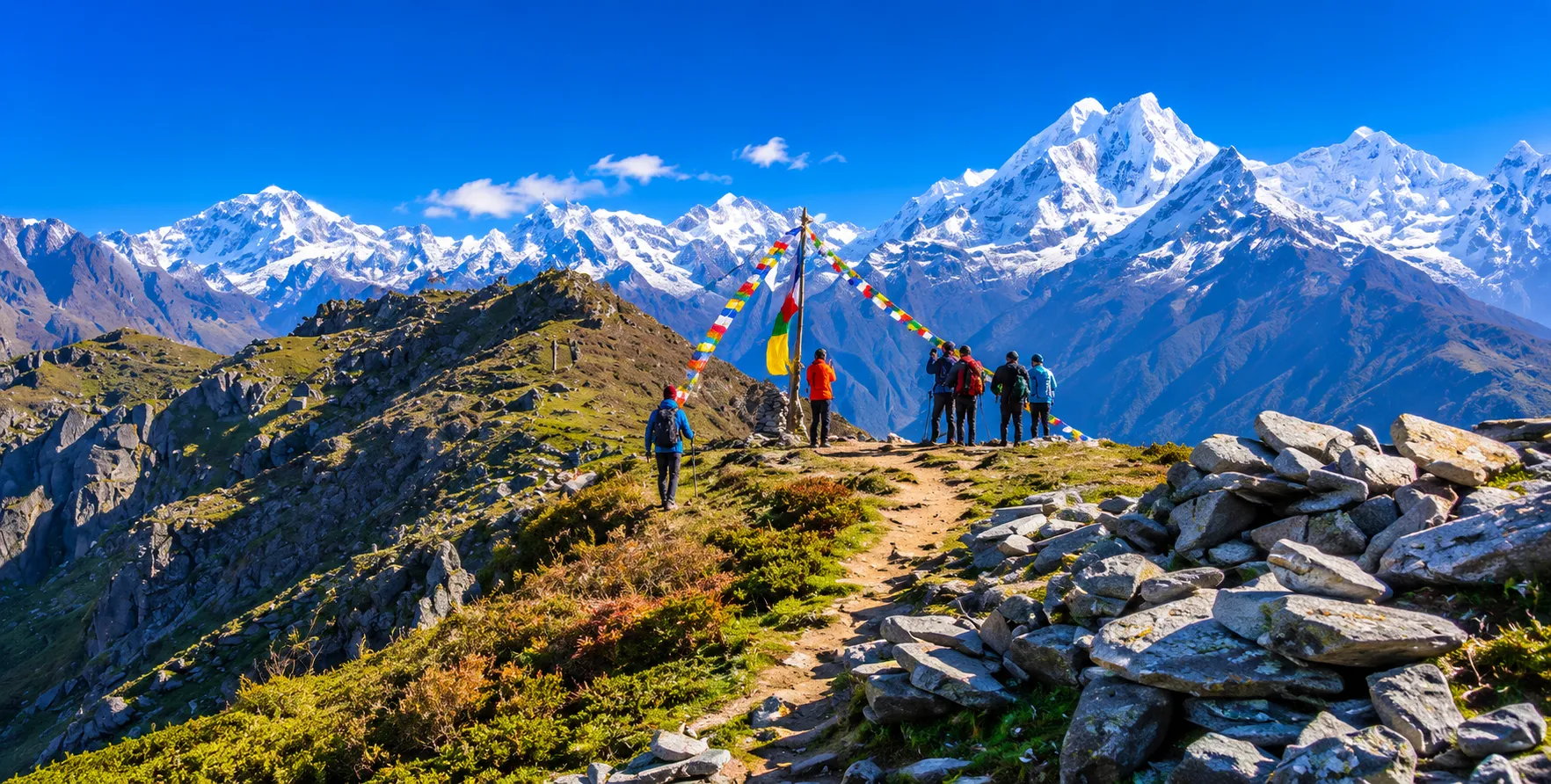
Autumn (September to November) is the best overall season for the Langtang trek and the Kathmandu to Syabrubesi vehicle hire. Post-monsoon air clarity delivers the year’s best mountain visibility —Langtang Lirung, Gangchenpo, and the Tibetan peaks beyond the border are at their sharpest, and the stabilised road surface after the monsoon makes the Pasang Lhamu Highway as drivable as it gets. October and early November specifically see peak demand for Langtang transfers — book your private jeep hire at least one to two weeks in advance during this window.
Spring (March to May) is the second peak trekking season and delivers its own visual rewards: the rhododendron forests below Lama Hotel bloom with spectacular intensity through March and April, turning what would otherwise be a pleasant forested section of trail into one of Nepal’s finest natural flower displays. The Langtang trek in spring also coincides with peak season for the higher-altitude Annapurna Circuit and Everest Base Camp, so travellers who want a quieter trail experience will find Langtang even more noticeably uncrowded by comparison.
Winter (December to February) is cold but viable for the Langtang trek: the road to Syabrubesi remains open throughout winter in normal years, trails are dry and clear, and the high-altitude views — particularly from Kyanjin Ri — are exceptional in the cold, crystal-clear winter atmosphere. Night temperatures at Kyanjin Gompa fall well below -10 to -15 Celsius in January, requiring proper cold-weather sleeping equipment. Nepal Vehicle Hiring Pvt Ltd offers year-round vehicle hire, with drivers briefed on winter road conditions, including pre-dawn frost on the higher sections of the Pasang Lhamu Highway.
Monsoon (June to August) is the most challenging season for both the road and the trail. The Ramche Landslide zone above is at hits highest-risk period,forest-section trail conditions are wet andand upper-vlleyand upper-valley views are frequently obscured by cloud. However, Langtang is notably less affected by monsoon than the open Annapurna and Everest valleys — the north-facing glacial valley drains quickly after rain, and experienced trekkers who specifically want to experience Langtang in solitude sometimes choose monsoon deliberately. Nepal Vehicle Hiring Pvt Ltd monitors roads during monsoon and proactively advises clients on any day the Ramche zone poses unusual risk before confirmed departures.
Combining Langtang with Other Nepal Adventures Before and After
The Langtang trek’s road access from Kathmandu makes it easy to combine with other Nepal destinations in an efficient, coherent itinerary before or after the trek. Travellers spending 3 to 5 days in Kathmandu before their Syabrubesi transfer can enjoy the full range of Kathmandu sightseeing experiences through Nepal Vehicle Hiring Pvt Ltd, including the Bhaktapur heritage day tour, the Nagarkot sunrise transfer, and Kathmandu Valley half-day circuits covering Pashupatinath, Boudhanath, and Swayambhunath.After Langtang, travellers most commonly head to Pokhara, Nepal’s second city and the gateway to the Annapurna region. Our Kathmandu to Pokhara bus service offers comfortable tourist coach connections, or we can arrange a private vehicle transfer from Trishuli junction on the Langtang return route for trekkers who want to go directly from Syabrubesi to Pokhara without returning fully to Kathmandu first. From Pokhara, you can reach the Ghorepani Poon Hill trek, the Annapurna Base Camp trek, and the Annapurna Circuit via our Pokhara-to-Nayapul transfer and Besisahar private vehicle services. In contrast, our Sarangkot sunrise vehicle offers the classic Pokhara sunrise experience. For wildlife lovers, add Chitwan before or after Pokhara; our Pokhara to Chitwan bus and coordinated Chitwan jungle safari packages cover this extension efficiently.
Travellers particularly interested in Nepal’s eastern mountain regions before or after Langtang can also combine the trek with our Panch Pokhari trek transport guide, the Kathmandu to Salleri Phaplu jeep transfer, or the Everest region overland approach via Soti Khola, creating a fuller exploration of Nepal’s diverse mountain geography within a single extended visit.
For luxury trekking extensions beyond the standard Langtang Valley trek, our sister company Alpine Luxury Treks provides premium-grade guiding, exclusive lodge accommodation arrangements, and a fully catered mountain experience that turns a standard Langtang itinerary into a genuinely five-star Himalayan adventure. For travellers who want to extend toward the Everest region with the same quality of service, the luxury Everest Base Camp lodge trek and the Everest Base Camp with helicopter return are available through Trek Nepal Himalayas alongside the standard vehicle transfer services from Nepal Vehicle Hiring Pvt Ltd.
Why Choose Nepal Vehicle Hiring Pvt Ltd for Your Langtang Transfer
Nepal Vehicle Hiring Pvt Ltd haoperateshe Kathmandu to Syabrubesi and Dhunche private jeep hire corridor as one of our most frequently booked routes, with daily departures during trekking season and year-round bobookingsOur drivers hold specific, repeated personal familiarity with the full 122 to 130 km of the Pasang Lhamu Highway — including the Ramche Landslide zone, the Dhunche permit checkpoint procedure, and the narrow final descent to Syabrubesi — that distinguishes an experienced local driver from one simply following a general navigation route for the first time.
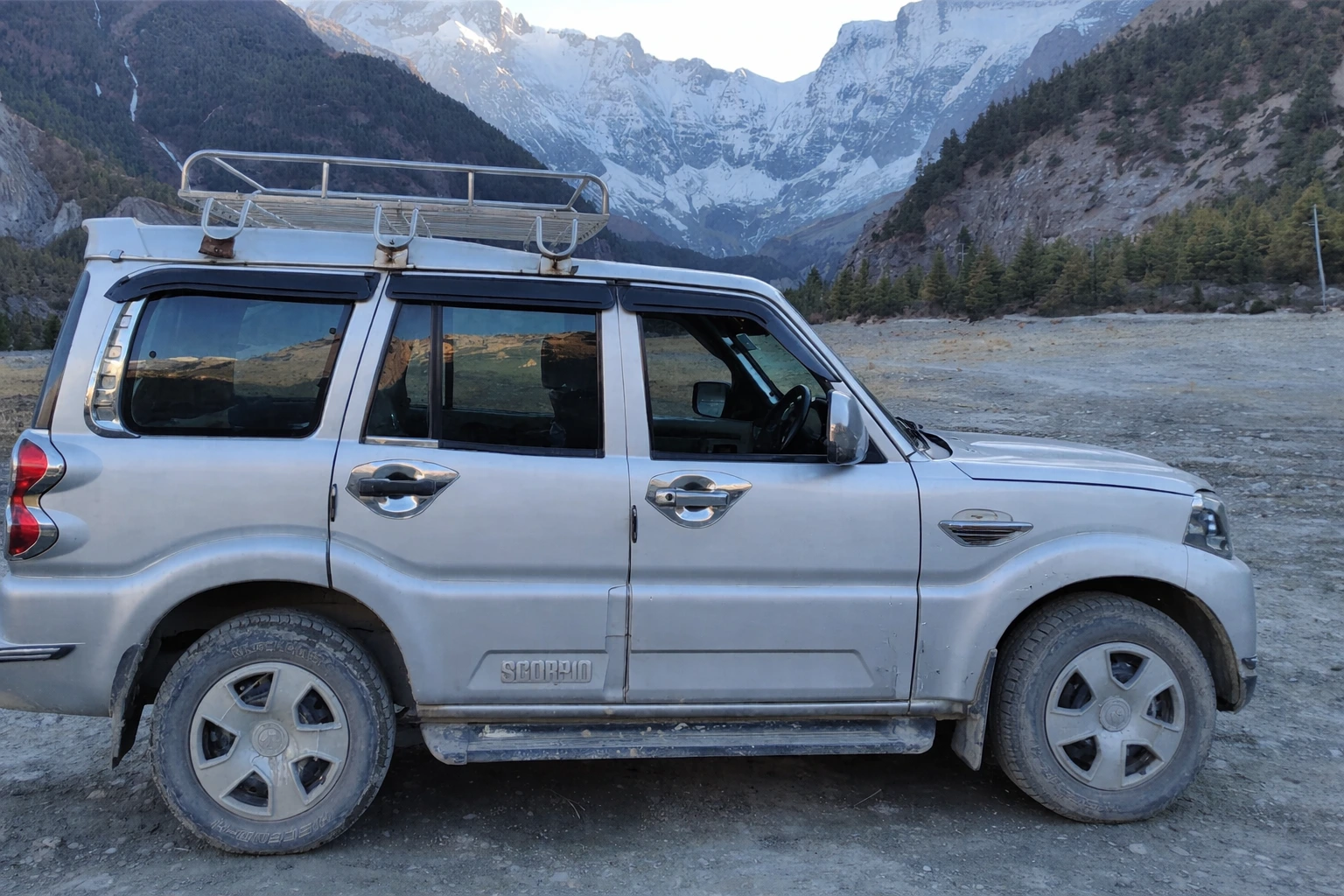
For this route, we use 4WD Scorpio and Hilux jeeps exclusively for private bookings, providing the ground clearance and driving stability needed for Nepal’s mountain roads in all seasons. For groups requiring larger vehicles, our Hiace van, tourist coaster, and bus service extend the same professional standard to groups of any size. Every booking includes hotel pickup from any Kathmandu location — no navigation to central bus parks, no luggage handling at crowded public transport hubs.
The pricing is transparent and all-inclusive from the point of booking: driver, fuel, and road tolls are included in the quoted price, and the amount agreed is the amount paid at the end of the journey: no hidden charges, no negotiation at the end of a long day, no surprises. To book your Langtang trek vehicle hire, contact our team on WhatsApp at +977 9814227196, visit our plan trip page to submit a written inquiry, or reach us through the contact page on our website. We confirm bookings quickly — usually within a few hours during business hours — and provide driver contact details 24 hours before departure.
Frequently Asked Questions — Langtang Trek Vehicle Hire
How far is Kathmandu from Syabrubesi, and how long does the drive take?
Syabrubesi is approximately 122 to 130 km from Kathmandu via the Pasang Lhamu Highway. A private 4WD jeep from Nepal Vehicle Hiring Pvt Ltd takes 6 to 8 hours in good conditions and departs from your Kathmandu hotel between 6:00 and 7:00 AM.
What does a private jeep from Kathmandu to Syabrubesi cost?
A private Scorpio or Hilux 4WD from Nepal Vehicle Hiring Pvt Ltd costs approximately NPR 15,000 to NPR 22,000 (USD 113 to 165) for a one-way, full-vehicle trip, including hotel pickup, driver, and fuel. Contact us on WhatsApp at +977 9814227196 or via our plan trip page for a specific quote.
Can I be dropped at Dhunche instead of Syabrubesi?
Yes—Nepal Vehicle Hiring Pvt Ltd provides Dhunche-specific drop-offs for trekkers starting the Gosaikunda route. Dhunche is approximately 10 km and 30 minutes before Syabrubesi on the same road. Confirm your preferred drop-off point at the time of booking.
Do you offer a return pickup from Syabrubesi after the trek?
Yes — our pre-arranged return pickup service from Syabrubesi or Dhunche is available as a standard part of the booking. Confirm your expected return date at the time of the outward booking; date adjustments can be made via WhatsApp if your trek schedule changes.
What permits do I need for the Langtang trek?
A Langtang National Park Entry Permit (NPR 3,000 / USD 22-25 per person) and a TIMS card (USD 10-20 per person) are both required and must be obtained in Kathmandu before departure. A licensed guide is also mandatory. Our contact team can advise on current permit requirements when you book.
Is a 4WD necessary for the Kathmandu to Syabrubesi transfer?
A 4WD is strongly recommended and is the standard vehicle type for this route. While most of the Pasang Lhamu Highway is paved, the Ramche Landslide zone and sections near Dhunche benefit significantly from 4WD stability and ground clearance. Nepal Vehicle Hiring Pvt Ltd uses 4WD Scorpio and Hilux jeeps for all Syabrubesi transfers.
When is the best time to book a Langtang trek vehicle hire?
October to November and March to May offer the best combined road and trail conditions. Book at least 1 to 2 weeks in advance during peak season. Our private jeep service is available year-round.
Can I combine the Langtang trek vehicle hire with other Nepal tours?
Yes — Nepal Vehicle Hiring Pvt Ltd provides a full range of Kathmandu-based transfers, sightseeing tours, trekking transport, and Nepal tour packages coordinated through a single booking.
Conclusion
The Langtang Valley trek is the finest combination of accessibility and Himalayan ambition available within driving distance of Kathmandu — and the vehicle hire that begins and ends this journey is the single most important logistical decision a Langtang-bound trekker makes. A well-booked private jeep from Nepal Vehicle Hiring Pvt Ltd delivers trekkers to Syabrubesi rested and on time, with their luggage secure and permits already checked—ready to begin one of Nepal’s most rewarding walks the morning after arrival. A poorly arranged shared bus or informal transfer does the opposite, starting the trek with an avoidable deficit of time and energy.
Whether your Langtang trek is a straightforward 7-day valley-and-back, an extended 15-day Langtang-Gosaikunda-Helambu circuit, or a first introduction to the Himalaya before a future Everest Base Camp expedition or luxury Annapurna adventure, Nepal Vehicle Hiring Pvt Ltd provides the pickup, drop-off, and return vehicle hire service that starts and finishes your mountain journey properly.
Book your Langtang trek vehicle hire with Nepal Vehicle Hiring Pvt Ltd — call or WhatsApp 9814227196, visit vehiclehiringnepal.com to plan your full itinerary, or reach our team directly through the contact page.
- Langtang Trek Vehicle Hire — Pickup, Drop-Off and Private Jeep Transfer Guide
- Why the Langtang Trek Is Nepal's Most Accessible Major Himalayan Journey
- The Route — Kathmandu to Syabrubesi in Full Detail
- Transport Options and Costs — Everything on the Table
- Pickup Points — Where Nepal Vehicle Hiring Picks You Up in Kathmandu
- Drop-Off Points — Syabrubesi and Dhunche Explained
- Return Pickup — Getting Back to Kathmandu After the Trek
- The Langtang Valley Trek — What Your Vehicle Hire Gets You Access To
- Trek Extensions — Gosaikunda, Tamang Heritage Trail, and Helambu
- Road Conditions and the Ramche Landslide Zone
- Permits and Documentation — What You Need Before the Drop-Off
- Altitude and Safety — What to Know for the Langtang Trek
- Season Guide — Best Time for Langtang Trek Vehicle Hire
- Combining Langtang with Other Nepal Adventures Before and After
- Why Choose Nepal Vehicle Hiring Pvt Ltd for Your Langtang Transfer
- Frequently Asked Questions — Langtang Trek Vehicle Hire
- Conclusion

Related Blog & Articles

Jeep vs Bus to Syabrubesi
Kathmandu to Langtang Trek Vehicle Hire: The Complete Guide

Kathmandu to Tamang Heritage Trail Transport

Langtang Trek Pickup Vehicle

Langtang Trek Vehicle Hire | Pickup And Drop Guide