Plan a Trip


Sacred Peaks and Spiritual Trails: The Mystical Side of Nepal’s Mountains
Sacred Peaks and Spiritual Trails: The Mystical Side of Nepal’s Mountains
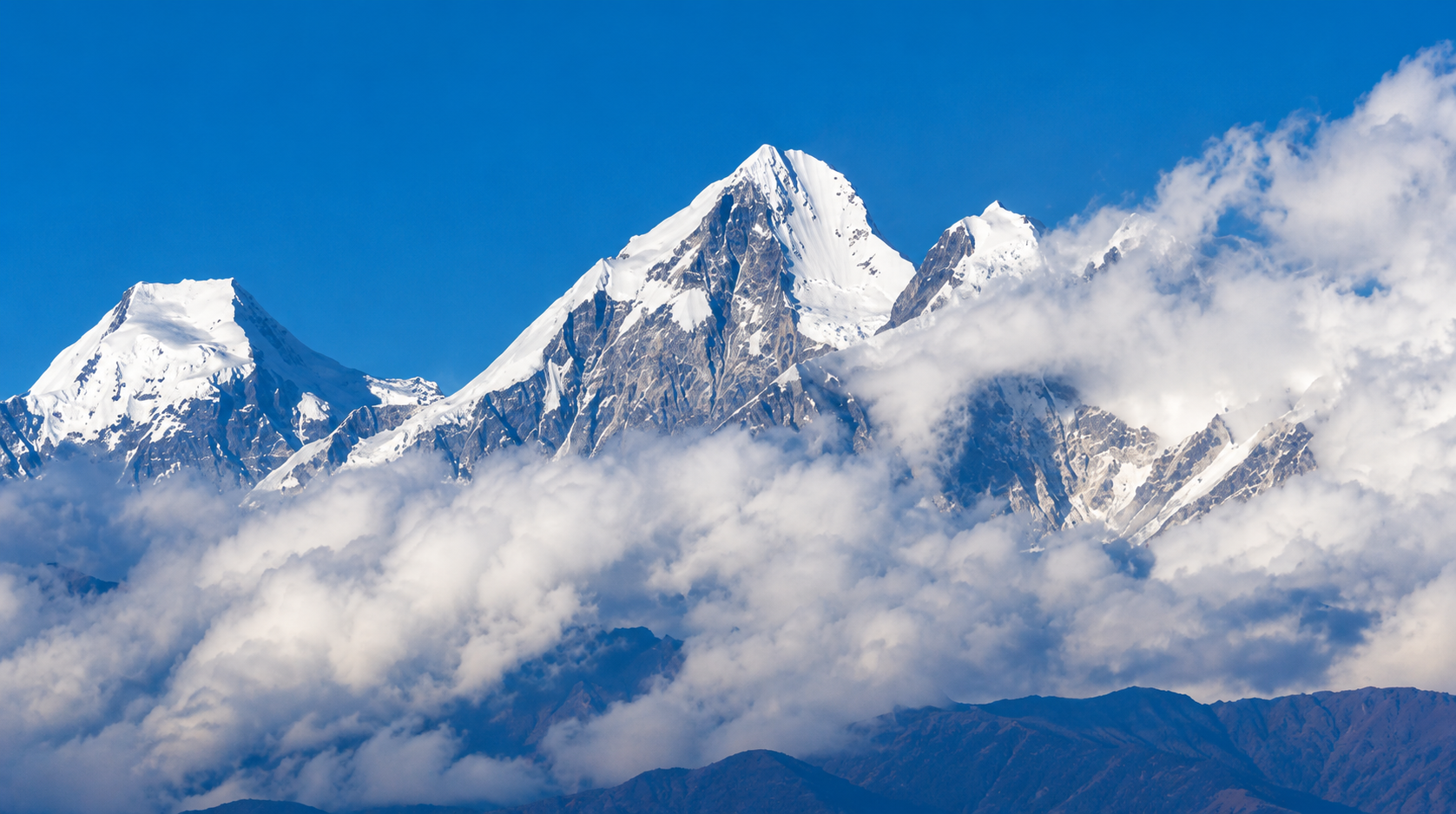
To the modern eye trained by satellite mapping and summit statistics, a mountain is a measurable object: a height in meters, a difficulty grade, a permit fee, a season window. To the communities who have lived in the shadow of the Himalaya for centuries — the Sherpa, the Gurung, the Tamang, and the Hindu hill and plains populations whose pilgrimage traditions reach deep into these same valleys — a mountain is something else entirely: a body, a residence, a relative.
It eats, sleeps, becomes angry, extends protection, and occasionally exacts punishment. These peaks are not simply believed to be sacred in some vague decorative sense; many are understood, quite literally, to be inhabited by specific named deities with personalities, preferences, and the power to determine whether a climber returns home alive.
This is the layer of Nepal’s mountains that rarely appears on a trekking company’s route map or a mountaineering expedition’s logistics spreadsheet. Yet, it shapes, in very concrete ways, which summits have never felt a human boot, which valleys are approached with ritual before any trail is walked, and why a Sherpa climbing crew will pause at Everest Base Camp each spring to burn juniper incense and offer rice to a goddess before a single fixed rope is laid on the mountain above.
Understanding this sacred geography does not require religious belief on the part of the traveller — but it does require a willingness to see Nepal’s mountains as something far more layered than scenery, and to travel through them with the same attentiveness the people who call them home have always brought to the relationship.
This guide moves across several of Nepal’s most spiritually significant peaks and trails — the forbidden fishtail of Machhapuchhre, the clan-guardian mountain of Khumbila, the goddess who is said to dwell atop the world’s highest point, the hidden sanctuaries known as beyul, and the trident-struck waters of Gosaikunda — before turning, as our blog series always does, to the practical question of how a traveller might actually reach these places, and how Nepal Vehicle Hiring Pvt Ltd can carry you there.
A Cosmology of Inhabited Mountains
Long before Buddhism or Hinduism arrived in their current forms in the high valleys of Nepal, the indigenous shamanic traditions of the Himalaya — what scholars often group loosely under the Tibetan Bon tradition and its many regional variants — held that the natural world was saturated with spirit: that specific peaks, passes, caves, springs, and forests were the residences of particular deities and local protector spirits who needed to be acknowledged, propitiated, and occasionally placated through ritual offering.
When Buddhism spread into the Himalayan world from the eighth century onward, carried in significant part by the figure of Guru Padmasambhava — known to Sherpas and Tibetans simply as Guru Rinpoche, ‘the precious teacher’ — this layer of mountain-spirit belief was not erased so much as absorbed. Local deities were, in the language of Tibetan Buddhist hagiography, ‘subdued’ and converted into protectors of the Buddhist teaching, their power redirected rather than denied.
This is the cosmological backdrop against which nearly every sacred mountain story in this guide should be read. A peak is rarely simply ‘holy’ in the abstract; it typically has a specific deity attached to it, a specific narrative explaining how that deity came to reside there (often involving subjugation by a great Buddhist master), and a specific set of behavioural expectations — about who may approach, how high one may go, and what rituals must precede any ascent — that follow directly from the deity’s particular character and history.
For the Sherpa communities of the Khumbu in particular, each major clan traditionally maintains its own special relationship with a specific peak, treating it as something close to a clan ancestor or guardian, a relationship considerably more intimate than the generalised reverence a distant tourist might bring to a beautiful mountain view.
Machhapuchhre — The Fishtail That No One Is Permitted to Touch
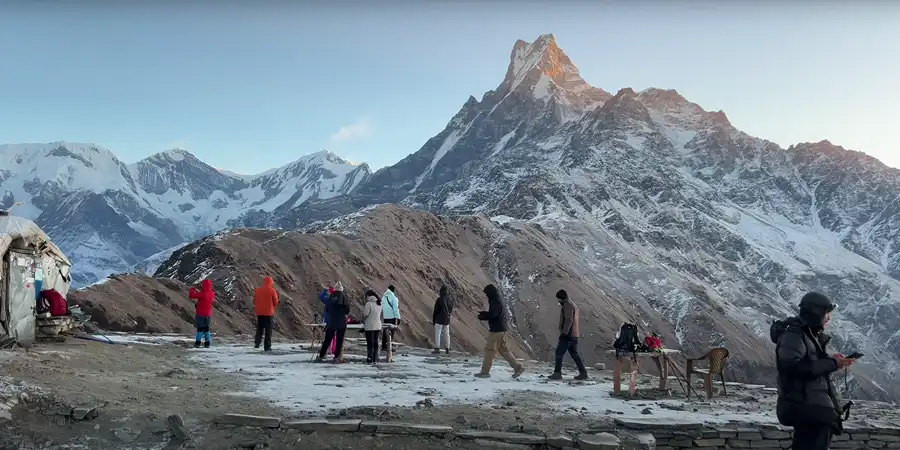
Rising in dramatic isolation above Pokhara, separated visually from the main bulk of the Annapurna massif behind it, Machhapuchhre — ‘Fish’s Tail,’ for the twin-pronged summit ridge that splits like a fish’s caudal fin against the sky — is probably the most photographed unclimbed mountain on earth. Thousands of trekkers walk its lower slopes every year on the Annapurna Base Camp and Mardi Himal routes, and its silhouette appears on practically every piece of Pokhara tourism marketing ever produced. Yet, by every available account, its 6,993-meter summit has never once been touched by a human foot.
The story most commonly told to explain this is the 1957 British expedition led by Wilfrid Noyce and James (Jimmy) Roberts — the same Roberts who would later become known as the father of commercial trekking in Nepal. Climbing under official permission, the team reached a point reported variously as 150 feet or approximately 50 meters below the true summit before making the deliberate decision to turn back without completing the final stretch, an act of restraint widely understood to have been motivated by respect for the mountain’s sacred status among the local Gurung population, who regard the peak as the dwelling place of Lord Shiva himself. The Nepali government subsequently formalised this restraint into policy, banning the issuance of any climbing permit for Machhapuchhre. This ban has now held for well over sixty years with no indication of reversal.
Persistent rumours circulate about a secret, unsanctioned summit sometime in the 1980s, but no verifiable documentation supports them, and the mountain’s official status as permanently closed remains unchanged. What makes Machhapuchhre’s story particularly instructive is the layered nature of its sanctity: it is sacred simultaneously in the specific theological sense (as Shiva’s residence in Hindu belief) and in the broader, more diffuse sense of being held as a symbol of purity and inviolability by the Gurung communities who have lived in its shadow for generations, regardless of which specific deity narrative an individual household might emphasise. For visitors today, the mountain is best appreciated exactly as it has always been encountered by the vast majority of people who have ever seen it: from below, at sunrise from Sarangkot above Pokhara, reflected in the still waters of Phewa Lake, or in increasingly intimate close-up from the Mardi Himal trekking trail that climbs directly into its eastern shadow.
Khumbila — The Guardian Whose Name the Valley Itself Carries
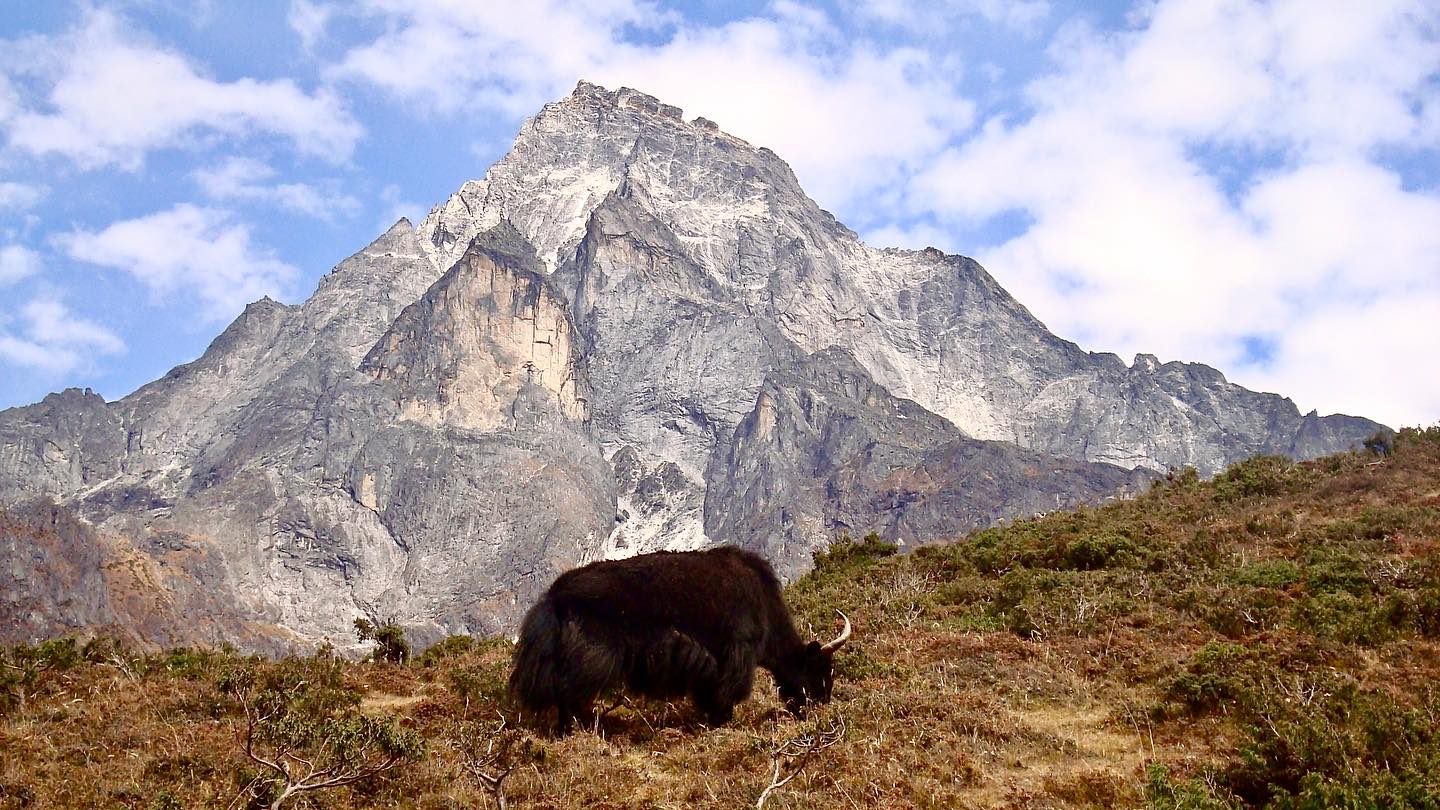
If Machhapuchhre’s fame rests on its visibility from one of Nepal’s most visited cities, Khumbila’s significance is almost the opposite: a relatively modest 55,761-meterpeak, dwarfed in height by the giants that surround it in the Khumbu, yet carrying a weight of sacred meaning among the Sherpa people that arguably exceeds that of Everest itself for many local households. The Khumbu valley — the very region through which every Everest Base Camp trekker walks — takes its name directly from this mountain, a naming convention that signals how central Khumbila is to local identity.
Sherpa oral tradition holds that Khumbila was once a powerful and unruly local spirit, subdued and converted to the Buddhist teaching by Guru Rinpoche himself during the master’s eighth-century journey through the Himalaya — a conversion narrative identical in structure to countless other mountain-deity stories across the Tibetan Buddhist world, in which the pre-Buddhist spirit is not destroyed but transformed into a sworn protector of the dharma and of the people living within its domain. Guru Rinpoche is said to have meditated in a cave on the mountain itself, adding a further layer of pilgrimage significance to a peak that, in Sherpa cosmology, now functions as a kul devta — a clan or territorial protector deity, responsible specifically for the well-being of the Sherpa communities settled within view of its slopes.
The practical consequence of this status is total and uncompromising: no climbing permit has ever been issued for Khumbila, and the one known unauthorised attempt, in the 1980s, ended in a fatal avalanche that claimed the lives of the entire small expedition party — an outcome that, for many in the local community, confirmed what the old stories had always said about the consequences of trespass above the mountain’s treeline, which Sherpa religious texts describe as the literal boundary of the god’s own residence.
Even altitude sickness experienced by trekkers and climbers elsewhere in the Khumbu has, in some traditional interpretations, been understood as a manifestation of divine displeasure rather than simple physiology — a reminder that for many of the people whose home this valley is, the line between meteorology, medicine, and theology has never been as firmly drawn as the modern visitor might assume. Each year, during the local Dumje festival, the Khumbila deity is believed to descend from the mountain to participate, in spirit, in dances performed at the village monastery — a moment when the mountain, quite literally, comes down to be among its people.
Chomolungma and the Goddess of Inexhaustible Giving
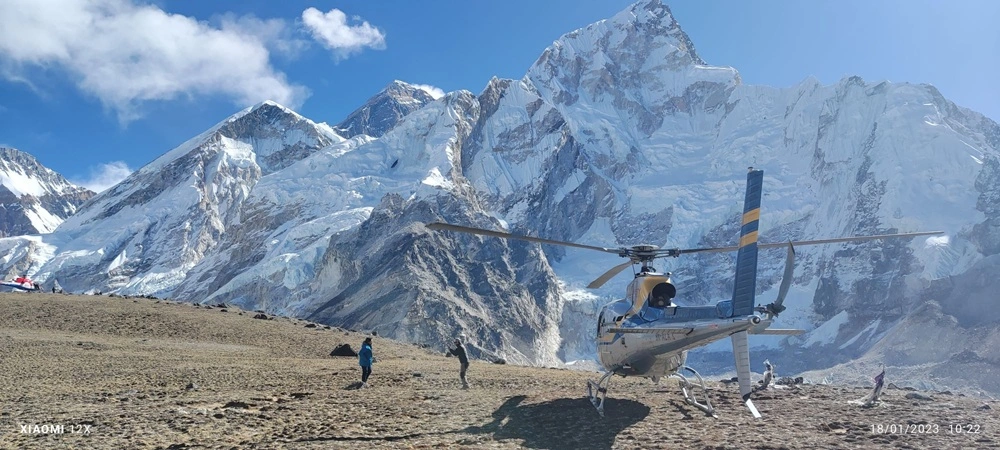
Mount Everest’s Tibetan and Sherpa name, Chomolungma — sometimes rendered Jomolangma — is popularly translated in tourist literature as ‘Goddess Mother of the World,’ a translation that, while evocative, somewhat overstates the precision of the original. More carefully parsed, ‘Jomo’ means simply ‘lady’ or ‘goddess.’ At the same time,e ‘Langma’ is understood by several scholars of Tibetan religious tradition to be an abbreviated reference to a specific deity: Miyolangsangma, the goddess believed to reside at the mountain’s summit and one of the Five Sisters of Long Life, a group of female deities belonging to the sman class of worldly protector spirits who are said to inhabit a chain of great peaks straddling the Tibet-Nepal border, each responsible for nourishing and protecting the communities settled within their domain.
Miyolangsangma’s own origin story follows the now-familiar Himalayan Buddhist pattern: in the most widely told version, she began as a malevolent demoness whose destructive power was subdued and redirected by a great Buddhist master, after which she became, in her transformed state, the goddess of inexhaustible giving — depicted in religious art riding a tiger, holding a bowl of food in one hand and a mongoose, a symbol of wealth, in the other.
Murals depicting her can still be found inside both Tengboche Monastery on the Nepal side of Everest and Rongbuk Monastery on the Tibetan side. It is to her, specifically, that the puja ceremonies conducted at Everest Base Camp each climbing season are directed — elaborate rituals, led by lamas or experienced Sherpa climbers themselves, involving the burning of juniper incense, the raising of prayer flags, and offerings of food and drink, all intended to request the goddess’s permission and protection before any team begins its ascent of her slopes.
This is not a quaint formality preserved for photographers. Sherpa climbing Sirdars and high-altitude workers, whose lives depend more directly and more frequently on the mountain’s moods than almost anyone else involved in the modern commercial expedition industry, generally regard the puja as a genuinely necessary act.
Many Western climbers who spend extended seasons working alongside Sherpa teams report a gradual, often unplanned absorption of at least some of this same respectful caution—an acknowledgement, however articulated, that approaching the literal highest point on earth seems to call for more than technical preparation alone.
At Tengboche Monastery itself, the annual Mani Rimdu festival each November includes a specific ritual dedicated to Miyolangsangma, in which monks offer prayers and dedicate a yak to her, releasing the animal to wander freely and unworked on the surrounding hillside for the remainder of its life — a small, continuing act of devotion to the goddess believed to watch over the world’s highest mountain.
Makalu, the Mountain That Is Shiva Himself
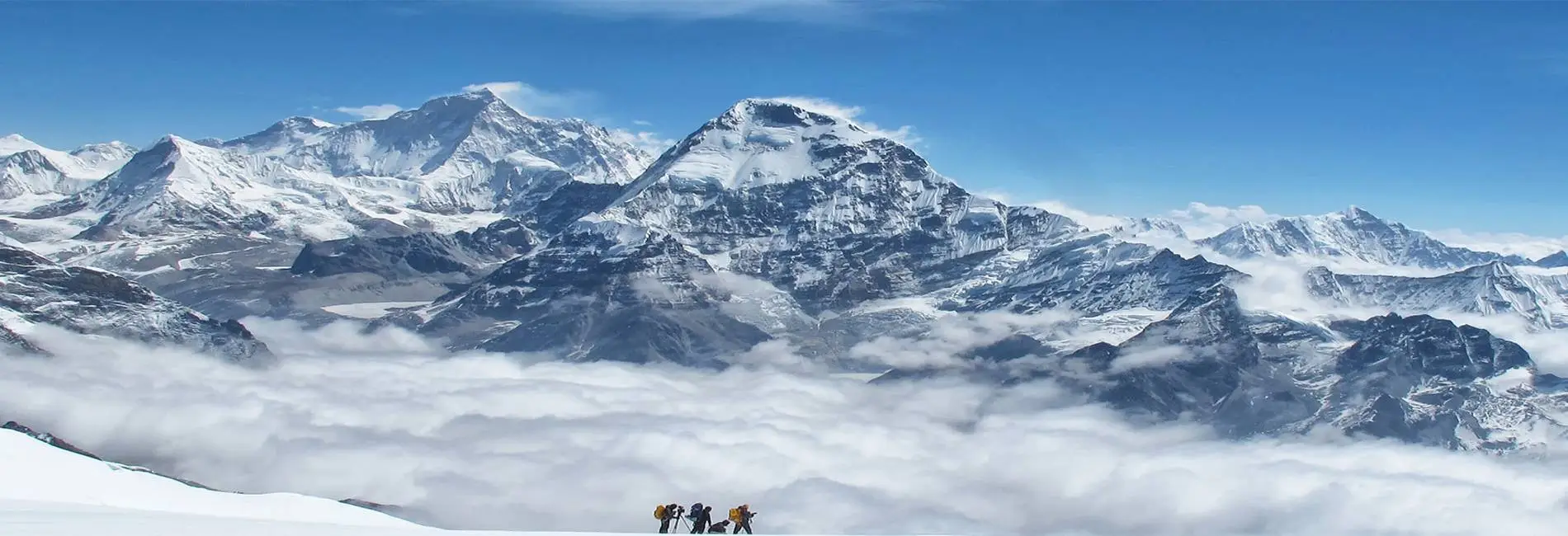
Where Everest’s sanctity rests on the specific figure of Miyolangsangma, the world’s fifth-highest peak, Makalu carries a different and, in some ways, more direct form of divine identification within Sherpa religious tradition: rather than being understood as the residence of a deity distinct from the mountain itself, Makalu is revered as Shankar — one of the principal names of Lord Shiva — meaning that, for at least some segments of Sherpa belief, the mountain is not Shiva’s home but is, in a meaningful theological sense, Shiva.
This direct identification of mountain and deity, rather than the more common pattern of deity-residing-within-mountain, places Makalu in a distinctive category among the Himalaya’s sacred peaks, and reflects the broader syncretism between Hindu and Buddhist cosmology that characterises so much of Himalayan religious life, where a Tibetan Buddhist Sherpa community can hold a thoroughly Hindu theological frame for one of their most significant local peaks without any apparent sense of contradiction.
Beyul — The Hidden Valleys of Refuge
Among the richest and least understood concepts in Himalayan Buddhist sacred geography is the beyul — a term generally translated as ‘hidden valley’ or ‘hidden land,’ referring to a category of sacred sanctuary said to have been concealed by Guru Padmasambhava during his eighth-century journeys through the Himalaya, to be revealed only in times of great need as places of refuge and spiritual practice for the faithful. According to Sherpa oral tradition, as recounted by senior lamas including the Abbot of Tengboche Monastery, the southern side of Everest — the Khumbu valley itself, the very landscape through which every Everest Base Camp trekker now walks — is understood to be exactly such a beyul.
This designation predates and helps explain the Sherpa migration into this region. When Sherpa communities fled political and religious upheaval in eastern Tibet several centuries ago, they are said to have carried religious texts describing a hidden valley of refuge that matched, in remarkable topographical detail, the Khumbu landscape they eventually settled.
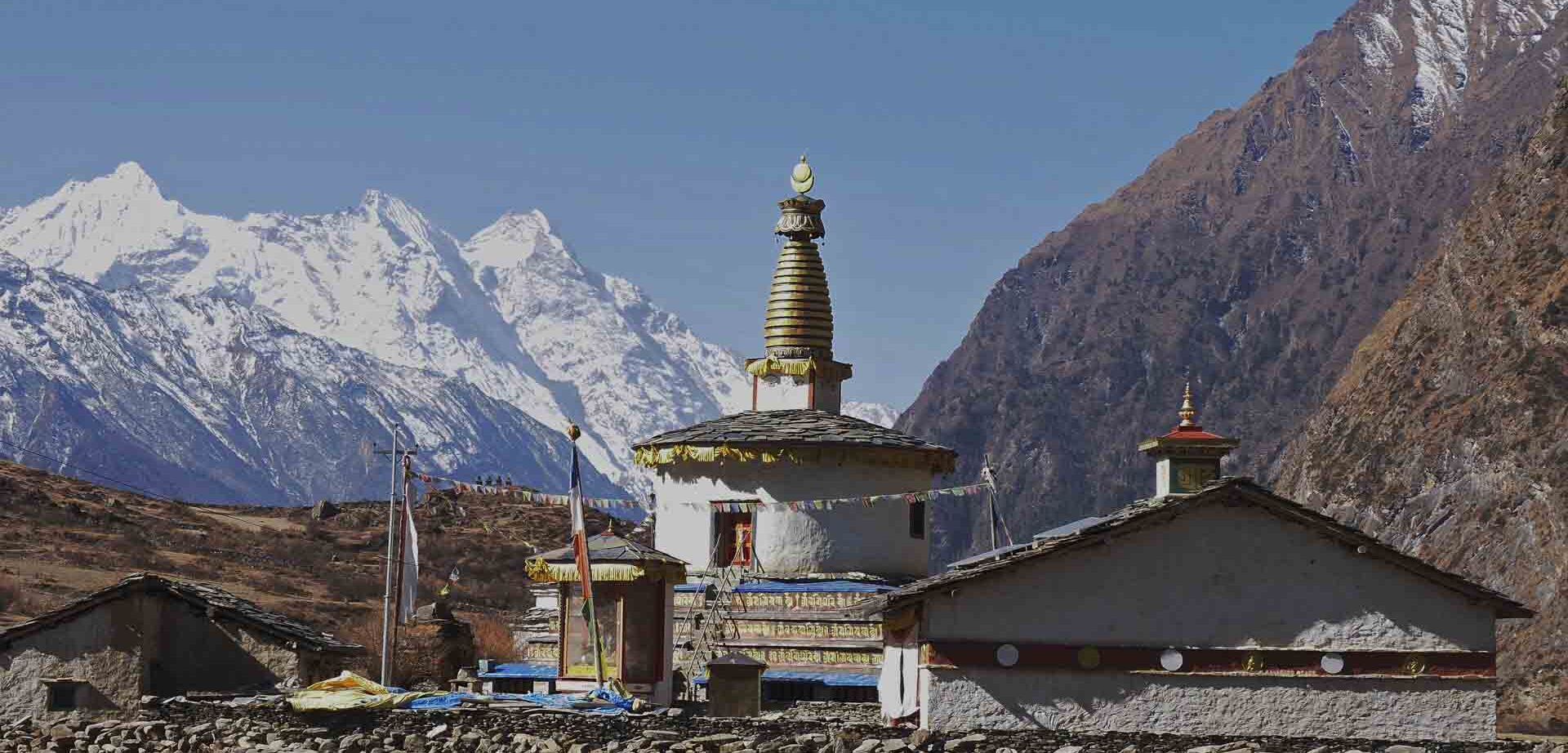
In local understanding, the beyul concept extends considerably beyond the Khumbu itself. Buddhist communities in the Langtang region similarly regard the high-alpine lake complex of Gosaikunda, discussed in detail below, as a beyul. The broader pattern of hidden, sacred refuge-valleys recurs across multiple corners of highland Nepal wherever Tibetan Buddhist migration and settlement history runs deep — a sacred geography overlaid invisibly across the same physical landscape that modern trekking maps render simply as contour lines and trail distances.
To walk into a beyul, in this understanding, is not merely to enter a beautiful or remote valley; it is to cross into a landscape that was specifically set aside, by one of Himalayan Buddhism’s most revered founding figures, as a place of spiritual protection — a frame that, whether or not a visiting trekker shares the underlying belief, offers a genuinely different way of understanding why so many of Nepal’s most visually spectacular trekking valleys are also, without exception, treated by their resident communities as places of unusual spiritual density.
Gosaikunda — Where Shiva Cooled the Poison of the World
High in Langtang National Park, at 4,380 meters in Rasuwa District, the alpine lake of Gosaikunda sits at the centre of one of Hinduism’s most vivid and frequently retold creation myths involving the Himalaya directly. The story begins with the Samudra Manthan — the churning of the cosmic ocean by gods and demons in search of amrita, the nectar of immortality — an episode that, among its many byproducts, also released Halahala, a poison so virulent that it threatened to destroy the entire universe. Lord Shiva, in his role as protector of creation, voluntarily drank the poison to save the cosmos from annihilation, an act of sacrifice that left his throat permanently burned — the origin, in this tradition, of his epithet Neelkantha, ‘the blue-throated one.’
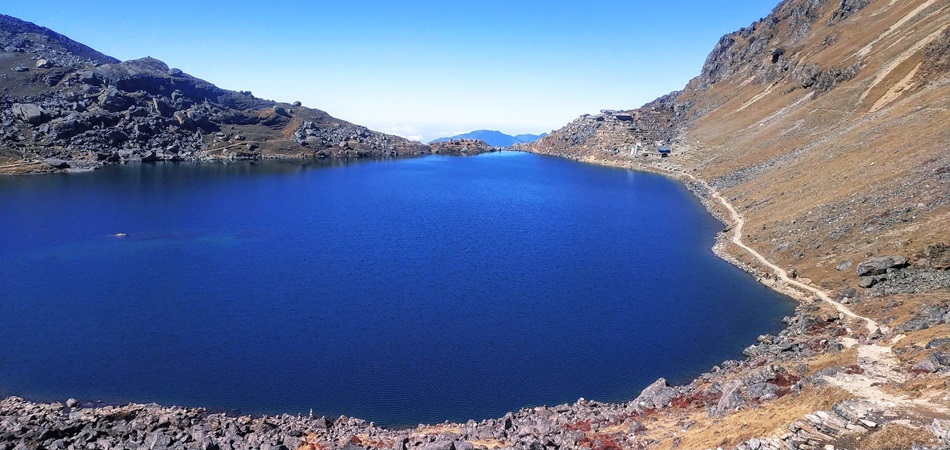
Unable to bear the burning pain, Shiva is said to have flown to the cool heights of the Himalaya in search of relief, and upon reaching the high ground now occupied by Gosaikunda, struck his trident, the trishul, into the bare rock, from which three springs of icy water immediately gushed forth, merging to form the lake. Shiva is said to have drunk from this water and rested within it to cool the burning poison in his throat — and devotees today point to a large submerged rock visible near the centre of the lake as the remains of a Shiva shrine, with some pilgrims reporting that they can perceive, beneath the water’s surface, the faint outline of the god’s own reclining form.
Gosaikunda forms the centrepiece of a much larger complex of some 108 smaller lakes scattered across the surrounding high plateau, a number itself sacred in Hindu numerology, and the entire wetland system has been recognised under the international Ramsar Convention for its ecological significance, layering a contemporary conservation designation on top of millennia of continuous religious use.
Each year during the Janai Purnima festival in August — the same lunar full-moon festival that draws comparably large pilgrim gatherings to Panch Pokhari and Kumbheshwar Temple in the Kathmandu Valley — thousands of pilgrims undertake the demanding multi-day approach to Gosaikunda from Dhunche or Syabrubesi, bathing in the lake’s frigid water and ritually changing the sacred janai thread in a practice that has continued, by all accounts, with remarkable consistency across generations regardless of the considerable physical demands the pilgrimage imposes.
Buddhist monks and local shamanic practitioners known as jhankri also gather at the lake during this same period, performing their own distinct ceremonies — a coexistence of Hindu and Buddhist (and shamanic Bon-influenced) ritual practice at a single sacred site that exemplifies, once again, the broader religious syncretism that characterises so much of Nepal’s mountain sacred geography.
Muktinath — Fire and Water in the Same Breath
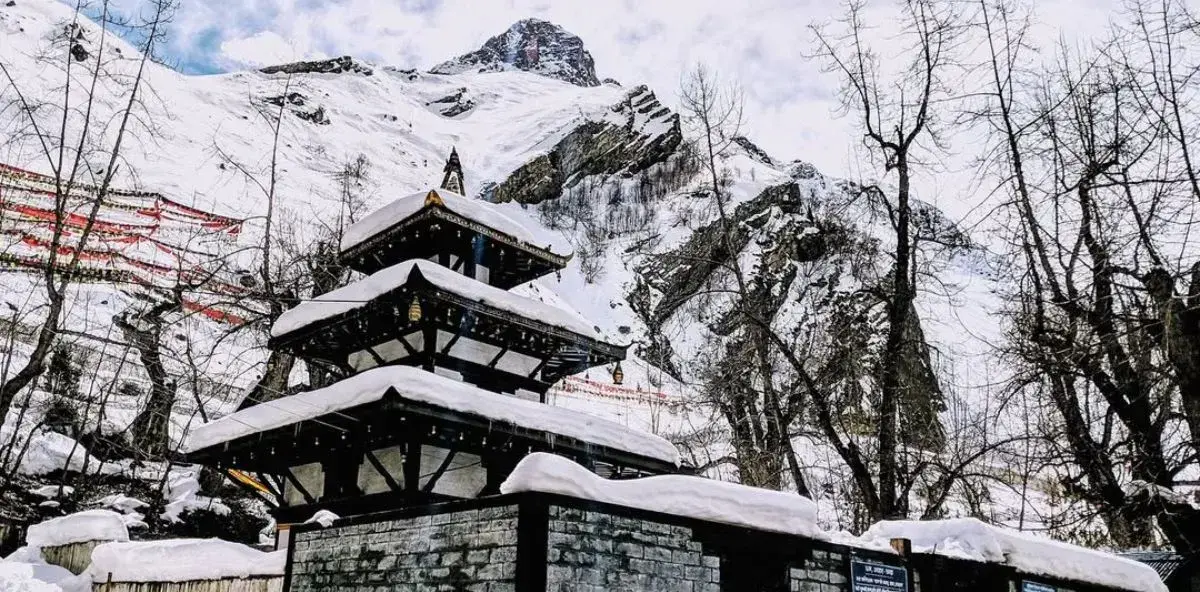
Our dedicated Muktinath blog covers this extraordinary high-altitude temple in full detail. Still, no survey of Nepal’s mystical mountain geography would be complete without acknowledging its place in this wider pattern. At 3,710 metres in the Mustang valley, Muktinath’s defining miracle — a natural gas flame burning continuously beside a flowing mountain spring — is understood across Hindu, Buddhist, and Kirant traditions alike as a physical demonstration of the coexistence of opposing or complementary natural elements within a single sacred space: fire and water together, alongside the earth, air, and sky that complete the traditional five-element cosmology shared, with variation, across most of the religious traditions present in the Himalaya. Where Gosaikunda tells the story of a god cooling a destructive fire with water, Muktinath presents fire and water as permanently and peacefully co-resident — two different theological resolutions to the same elemental tension, expressed through two of Nepal’s most visited high-altitude sacred sites.
Kailash — The Mountain Nepal Can See but Never Touch
It is one of the more striking facts of Himalayan sacred geography that Mount Kailash, widely considered the single most sacred mountain on earth across four entirely distinct religious traditions — Hinduism, Tibetan Buddhism, Jainism, and the indigenous Bon religion — lies not within Nepal at all, but across the border in Tibet, in territory now administered by China. And yet Kailash’s gravitational pull on Himalayan religious consciousness extends deep into Nepal: the mountain is visible, on clear days, from parts of Nepal’s remote far-western Humla District, particularly near the Hilsa border crossing that many Hindu and Buddhist pilgrims from Nepal and India use as their overland gateway toward the mountain itself.
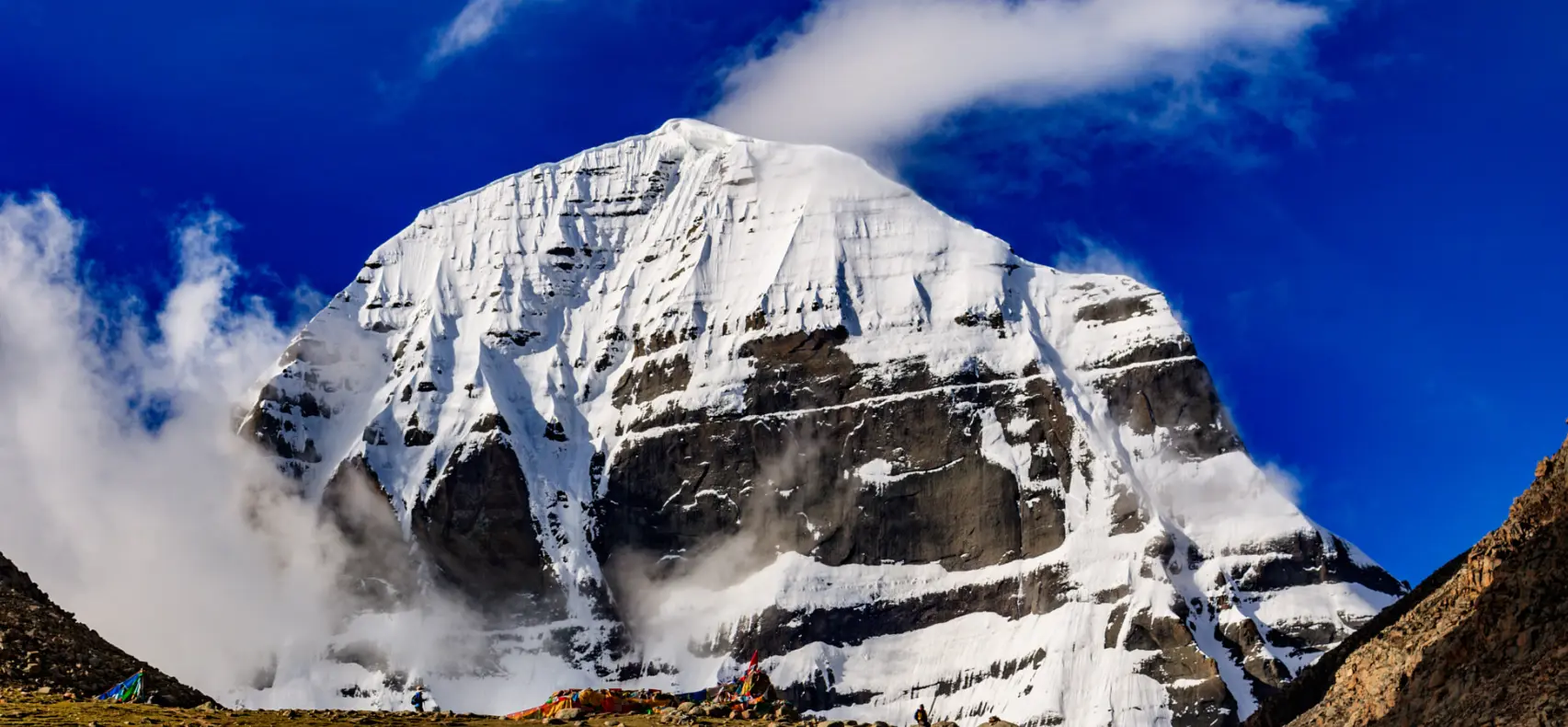
For Hindus, Kailash is the eternal abode of Lord Shiva and his consort Parvati, the literal axis around which the cosmos turns. For Tibetan Buddhists, it is identified with Mount Meru, the cosmic centre of existence, and is closely associated with the tantric deity Demchok. For followers of the Jain faith, it is Mount Ashtapada, the site where the religion’s first Tirthankara is believed to have attained liberation.
For adherents of the pre-Buddhist Bon tradition, Kailash may hold the deepest historical claim of all, having reportedly been venerated as a sacred site before either Buddhism or organised Hinduism reached the plateau. Remarkably, despite its height of only 6,638 meters — modest by Himalayan standards, well below dozens of unnamed and unclimbed peaks elsewhere in the range — no expedition has ever been permitted to summit Kailash, and none is ever likely to be; the international mountaineering community has, by broad informal consensus reinforced by Chinese policy, treated the mountain’s sanctity as effectively inviolable.
Notably, as recorded in at least one detailed account of Sherpa cosmology, Kailash — not Everest — is regarded by many Sherpas as their single most holy mountain, a striking reminder that the global fame of the world’s tallest peak does not necessarily correspond to its standing within the belief systems of the people who have always lived closest to it.
Crystal Mountain — Dolpo’s Hidden Sanctuary
Far to the west of the Everest and Annapurna regions, in the remote and only lightly visited Dolpo region, the sacred peak and pilgrimage site known as Crystal Mountain — closely associated with the ancient Shey Gompa monastery — occupies a place in the Western literary imagination disproportionate to how few outsiders have ever actually travelled there, owing substantially to its central role in Peter Matthiessen’s celebrated 1978 travel memoir ‘The Snow Leopard,’ which recounted the author’s own pilgrimage to the mountain alongside the field biologist George Schaller.
Crystal Mountain holds particular significance within the Bon religious tradition, Tibet’s pre-Buddhist spiritual system that survives today with unusual vitality in pockets of the high Dolpo plateau more than almost anywhere else in the Himalayan world, and pilgrims undertake a ritual circumambulation, or kora, around the sacred mountain rather than any attempt at ascent — the kora itself, walking a complete devotional circle around a sacred peak or site, being one of the most widespread and characteristic forms of Himalayan Buddhist and Bon pilgrimage practice, distinct from but conceptually related to the summit-avoidance that characterises peaks like Machhapuchhre and Khumbila elsewhere in Nepal.
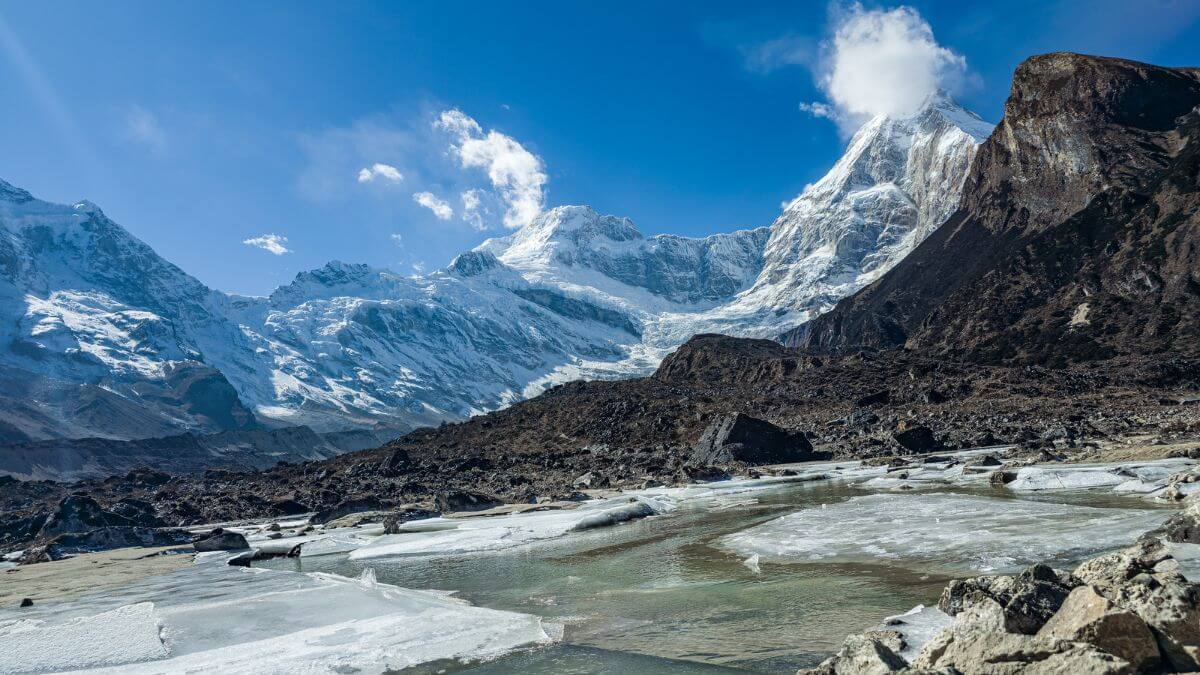
Sacred Peaks and Lakes — Quick Reference
| Peak / Site | Altitude | Tradition | Status |
| Machhapuchhre (Fishtail) | 6,993 m | Hindu — abode of Lord Shiva | Permanently unclimbed by government decree since the 1960s |
| Khumbila | 5,761 m | Sherpa Buddhist — clan protector deity | Unclimbed; one 1980s attempt ended in a fatal avalanche |
| Chomolungma (Everest) | 8,849 m | Sherpa/Tibetan Buddhist — Goddess Miyolangsangma | Climbed, but ascended only after ritual blessing (puja) |
| Makalu | 8,485 m | Sherpa — revered as the deity Shankar (Shiva) | Climbed, but treated with deep reverence by Sherpa communities |
| Mount Kailash (Tibet, visible from Humla) | 6,638 m | Hindu, Buddhist, Jain, and Bon — sacred to all four | Permanently unclimbed by international consensus and respect |
| Crystal Mountain (Shey, Dolpo) | ~5,000 m+ (sacred ridge) | Bon and Tibetan Buddhist | Pilgrimage kora circuit; not a mountaineering objective |
| Sacred Lake | Altitude | Origin Legend | Pilgrimage Festival |
| Gosaikunda | 4,380 m | Formed when Lord Shiva struck his trident into a rock to cool the poison burning his throat | Janai Purnima (August) |
| Muktinath’s 108 Spouts & Eternal Flame | 3,710 m | Site where fire, water, earth, air, and sky are believed to co-exist | Year-round pilgrimage; peak at Shivaratri |
| Panch Pokhari | ~4,100 m | Sacred lake cluster beneath Jugal Himal, abode of a resident deity | Janai Purnima (August) |
| Tilicho Lake | 4,919 m | Believed by some Hindu traditions to be the ‘Kak Bhusundi Lake’ referenced in the Ramayana | Less formalised — visited by trekkers and occasional pilgrims |
Walking the Sacred Trails Today
None of this sacred geography is locked away in inaccessible territory reserved for specialist pilgrims or religious scholars. Every site discussed in this guide — with the partial exception of Kailash itself, glimpsed only from the Nepali side of the border — sits along trekking and pilgrimage routes genuinely open to any traveller willing to make the journey. Approaching them with at least a basic understanding of their underlying sacred narrative tends, according to consistent reports from guides and repeat visitors alike, to transform what might otherwise be simply an attractive mountain view into something far more resonant. Standing at Sarangkot at dawn, watching the sun strike Machhapuchhre’s twin summits, is one experience; standing there with the knowledge of the 1957 expedition’s final, deliberate refusal to take the last fifty meters is a different and, for most people who learn the story, a richer one.
This is equally true at the more demanding end of the spectrum — trekkers approaching Everest Base Camp through the Khumbu valley who understand they are walking through a beyul, past the guardian presence of Khumbila, toward a summit watched over by the goddess of inexhaustible giving, tend by their own accounts to experience the trek’s final approach with a different quality of attention than those who treat the same walk purely as a physical and photographic challenge. None of this requires religious conversion or even firm personal belief; it requires only the same basic travel courtesy that any thoughtful visitor extends to a foreign culture’s most meaningful places — curiosity, respect, and a willingness to let the place’s own framework shape at least part of how it is encountered.
Getting There — Vehicle Access to Nepal’s Sacred Mountain Geography
| Sacred Destination | Region | Vehicle Access Point | Nepal Vehicle Hiring Service |
| Machhapuchhre viewpoints | Pokhara / Annapurna foothills | Sarangkot, Mardi Himal trailhead (Kande) | Pokhara city tours, Kande jeep transfer |
| Khumbila / Khumbu region | Solukhumbu (Everest region) | Ramechhap Manthali Airport, then Lukla flight | Ramechhap Manthali Airport transfer |
| Gosaikunda | Rasuwa, Langtang National Park | Dhunche or Syabrubesi trailhead | Kathmandu to Syabrubesi jeep service |
| Muktinath | Mustang District | Jomsom (via Pokhara) | Muktinath pilgrimage jeep packages |
| Panch Pokhari | Sindhupalchok | Chautara or Melamchi/Bhotang | Kathmandu to Panch Pokhari vehicle hire |
| Halesi Mahadev (tri-faith cave) | Khotang District | Okhaldhung Road Corridor | Kathmandu to Halesi Mahadev transport |
Nepal Vehicle Hiring Pvt Ltd provides private vehicle transport to the road-accessible gateways for every sacred mountain destination covered in this guide. For Machhapuchhre, this means comfortable private sedan or jeep transport to Pokhara’s viewpoints and to the Kande trailhead for the Mardi Himal approach into the mountain’s eastern shadow. For the Khumbu region and Khumbila, our predawn Ramechhap Manthali Airport transfer service connects with the Lukla flight that begins the trek into this sacred valley.
For Gosaikunda, our Kathmandu-to-Syabrubesi jeep service reaches the standard trailhead for the climb into Langtang National Park’s high sacred lake complex. For Muktinath, our dedicated Pokhara-Jomsom-Muktinath pilgrimage packages — fully covered in our separate Muktinath guides — provide the altitude-safe, multi-day vehicle itinerary this high-altitude pilgrimage destination requires. For Panch Pokhari and Halesi Mahadev, our dedicated route guides and private vehicle packages cover the considerable road distances to these more remote sacred sites.
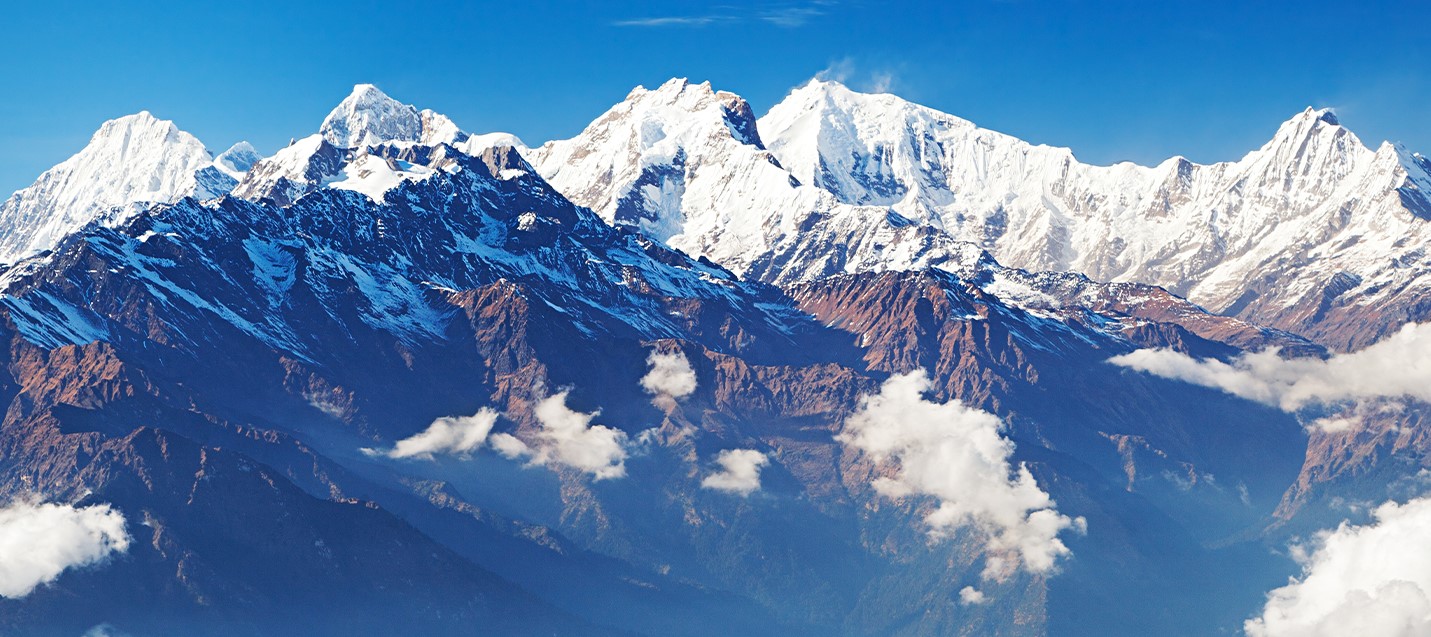
Frequently Asked Questions — Sacred Mountains of Nepal
Why has Machhapuchhre never been climbed?
The Nepali government has permanently closed Machhapuchhre to mountaineering since the 1960s, following a 1957 British expedition that deliberately stopped about 50 meters below the summit out of respect for the mountain’s status as the sacred abode of Lord Shiva in local Hindu and Gurung belief. No climbing permit has been issued since, and none is expected.
What is Khumbila and why is it sacred?
Khumbila (5,761 m) is the mountain from which the Khumbu Valley takes its name, and the Sherpa people regard it as a kul devta—a clan protector deity—said to have been a powerful spirit subdued and converted to Buddhism by Guru Rinpoche in the 8th century. No one has ever climbed the mountain; a 1980s attempt ended in a fatal avalanche, and no further attempts have followed.
Who is Miyolangsangma?
Miyolangsangma is the Tibetan Buddhist goddess believed to reside at the summit of Mount Everest (Chomolungma). One of the Five Sisters of Long Life, she is known as the goddess of inexhaustible giving. She is the deity to whom the puja ceremonies performed at Everest Base Camp before each climbing season are specifically directed.
What is a beyul?
A beyul is a ‘hidden valley’ in Tibetan Buddhist sacred geography, believed to have been concealed by Guru Padmasambhava (Guru Rinpoche) as a place of spiritual refuge. The Khumbu Valley beneath Everest and the Gosaikunda Lake region are both regarded by Sherpa and Tamang Buddhist traditions as beyul.
How was Gosaikunda Lake formed, according to legend?
Hindu tradition holds that Lord Shiva struck his trident into the rock at this site to draw out cooling water after drinking the poison Halahala during the churning of the cosmic ocean, forming the lake. Devotees believe that a submerged rock near the lake’s centre is the remains of a Shiva shrine.
Can Mount Kailash be visited from Nepal?
Mount Kailash itself lies in Tibet, but it is visible from parts of Nepal’s Humla District, and the Hilsa border crossing in Humla is a common overland gateway used by Hindu and Buddhist pilgrims from Nepal and India travelling toward the mountain. Kailash has never been climbed and is considered sacred across Hindu, Buddhist, Jain, and Bon traditions.
Conclusion
Nepal’s mountains have always been more than geological formations to the people who live among them — they are residences, guardians, and occasionally the literal bodies of the divine. From Machhapuchhre’s permanently unclimbed fishtail above Pokhara to the goddess said to watch over the very summit of Everest, from the hidden sanctuary valleys of beyul tradition to the trident-struck waters of Gosaikunda, this sacred geography runs beneath nearly every trekking route and mountain panorama that draws travellers to Nepal in the first place.
Understanding even a portion of this mystical layer transforms a journey through these mountains from simple sightseeing into something closer to what the destinations have always been for the communities who call them home — and Nepal Vehicle Hiring Pvt Ltd is glad to provide the private vehicle transport that carries travellers toward this remarkable sacred landscape, wherever your own journey into Nepal’s spiritual mountains may lead.
Plan your journey to Nepal’s sacred mountains — Call or WhatsApp: +977 981-4227196
- Sacred Peaks and Spiritual Trails: The Mystical Side of Nepal's Mountains
- A Cosmology of Inhabited Mountains
- Machhapuchhre — The Fishtail That No One Is Permitted to Touch
- Khumbila — The Guardian Whose Name the Valley Itself Carries
- Chomolungma and the Goddess of Inexhaustible Giving
- Makalu, the Mountain That Is Shiva Himself
- Beyul — The Hidden Valleys of Refuge
- Gosaikunda — Where Shiva Cooled the Poison of the World
- Muktinath — Fire and Water in the Same Breath
- Kailash — The Mountain Nepal Can See but Never Touch
- Crystal Mountain — Dolpo's Hidden Sanctuary
- Sacred Peaks and Lakes — Quick Reference
- Walking the Sacred Trails Today
- Getting There — Vehicle Access to Nepal's Sacred Mountain Geography
- Frequently Asked Questions — Sacred Mountains of Nepal
- Conclusion

Related Blog & Articles

Pokhara to ABC Trek Starting Point
Cultural Heritage Temples in Nepal
Altitude and Health: Essential Muktinath Advice