Plan a Trip


Upper Mustang vs Upper Dolpa: Which Remote Himalayan Trek Is Right for You?
Upper Mustang vs Upper Dolpa: Which of Nepal’s Forbidden Kingdoms Should You Choose?
A deeply researched 2026 guide comparing Upper Mustang and Upper Dolpa across landscape, difficulty, culture, permits, vehicle access, accommodation, cost, and the traveler profiles that suit each — with full transport and vehicle hire information for both regions.
Nepal has many trekking regions. Two of them are in a different category entirely. Upper Mustang and Upper Dolpa are not simply remote or beautiful or culturally rich, though they are all of those things. They are the last places in Nepal where the door to the outside world was kept genuinely shut for most of the twentieth century, where Tibetan culture, religious tradition, and a way of life shaped by centuries of high-altitude isolation survived intact long after those same traditions had been disrupted or destroyed across the border in Tibet itself. Upper Mustang opened to foreign trekkers in 1992, called the Forbidden Kingdom because of its long closure and its status as a semi-autonomous kingdom under the Raja of Lo. Upper Dolpa opened the same year for its most sensitive inner valleys, also after decades of restricted access tied to its border position and its Bon religious communities.
For travelers who have heard of both and are trying to decide between them, or who are wondering whether to combine both in a single extended western Nepal expedition, this guide is written specifically for you. We compare Upper Mustang and Upper Dolpa across every dimension that actually matters for planning: geography and landscape character, trekking difficulty and physical requirements, cultural highlights, the permit system and what it costs in 2026, vehicle access and the role of private jeep hire on each route, accommodation type and what to expect on the ground, seasonal timing, wildlife, and the overall traveler profile that each destination is best suited to. At Nepal Vehicle Hiring Pvt Ltd, we operate vehicle hire on both routes, including our dedicated Kathmandu to Mustang Private Jeep and Upper Mustang 4WD Jeep services for Mustang, and our Shey Phoksundo Lake Jeep Tour covering the overland Karnali Highway approach to Dolpa. The comparison below draws on that operational knowledge alongside thorough current research.
This is not a guide that declares a winner. Both Upper Mustang and Upper Dolpa are extraordinary destinations that belong in a separate category from the rest of Nepal’s trekking network. The right choice depends entirely on what kind of traveler you are, how much time you have, what your fitness and prior trekking experience looks like, and what you are genuinely seeking from this level of trip. By the end of this guide, you should have a clear enough picture of both regions to know which one is yours, or whether you have the time, budget, and determination to do both in a single extended trans-Himalayan expedition.
The Basics: What Each Region Is
Upper Mustang
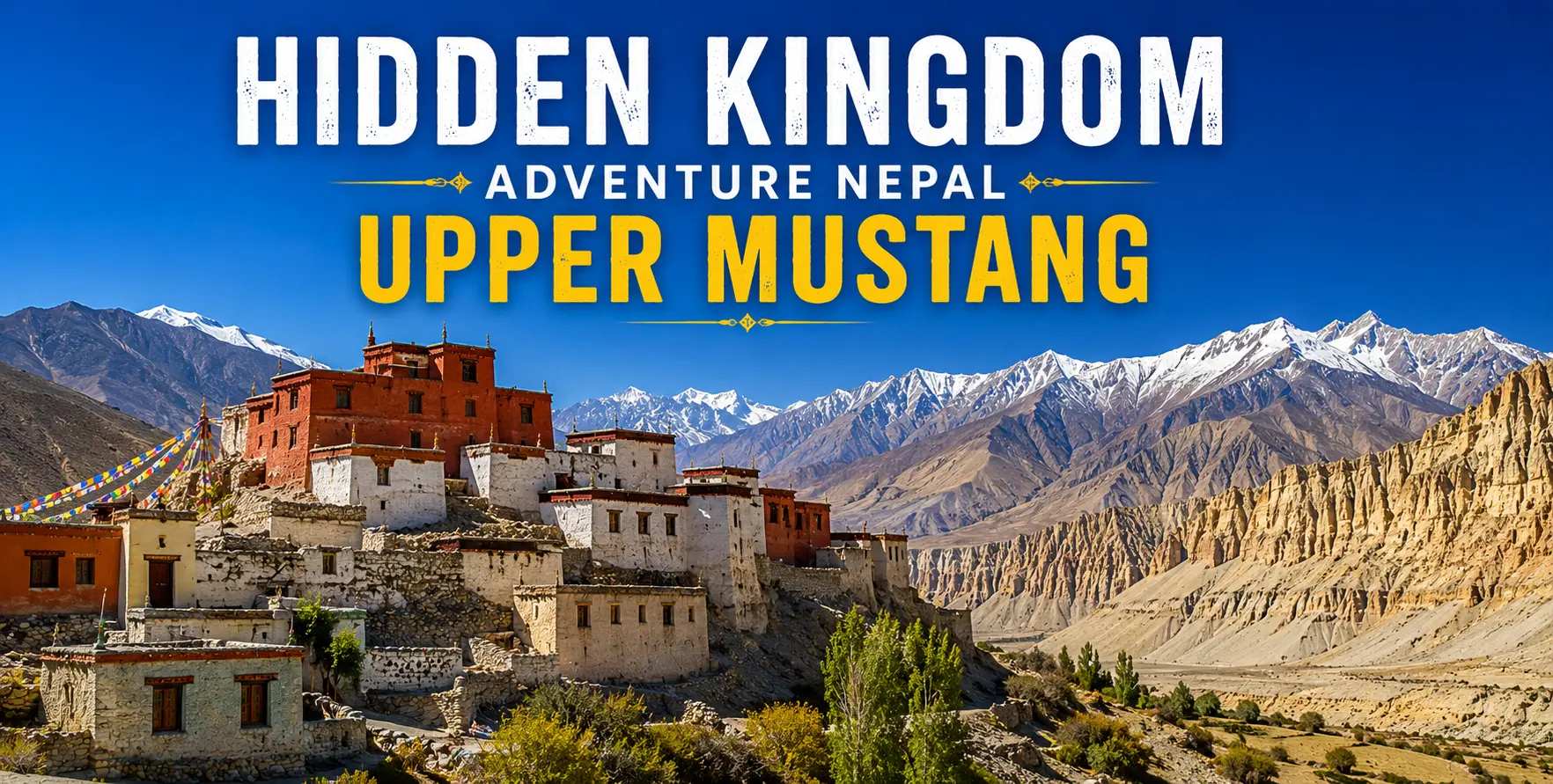
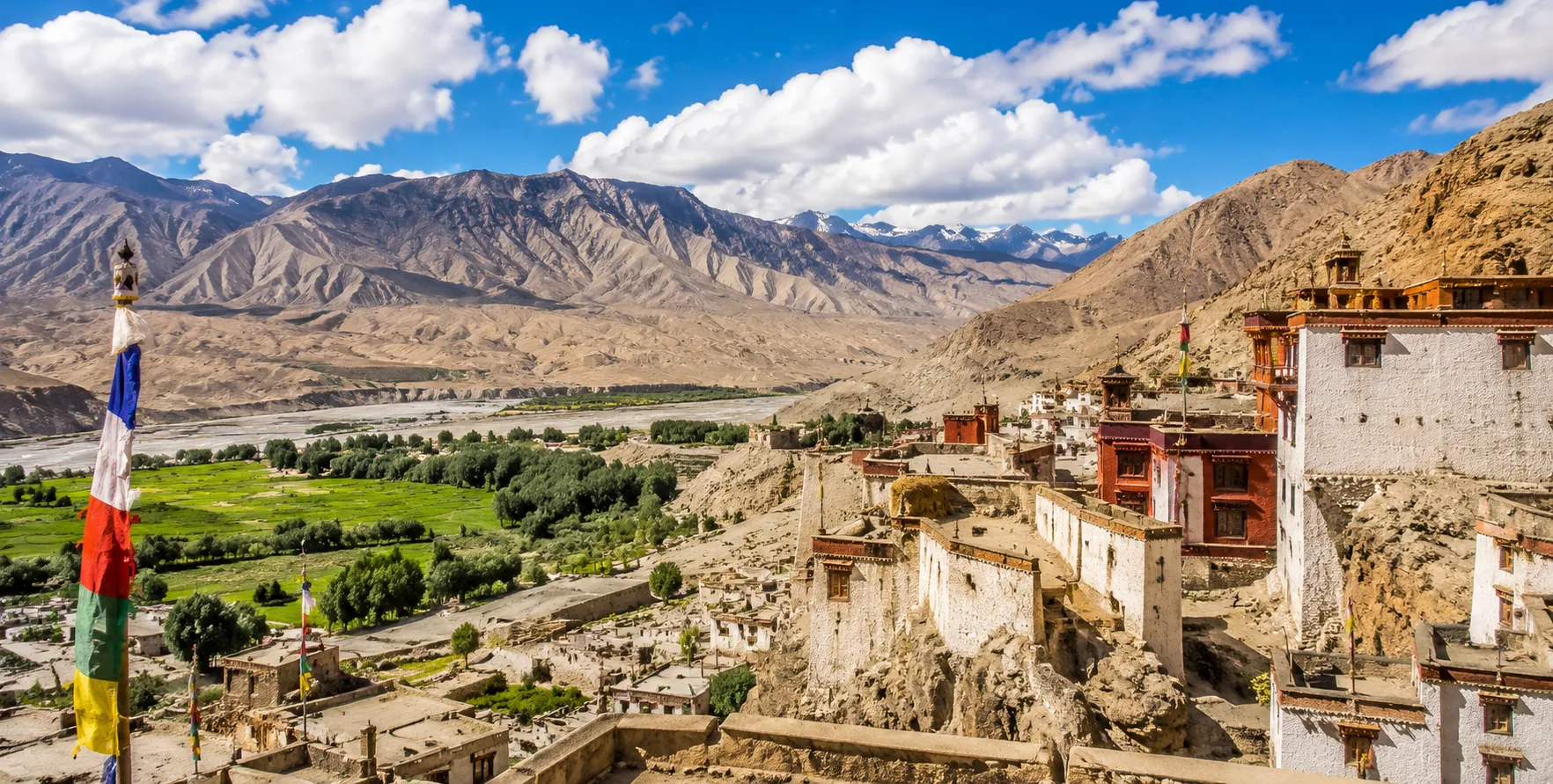
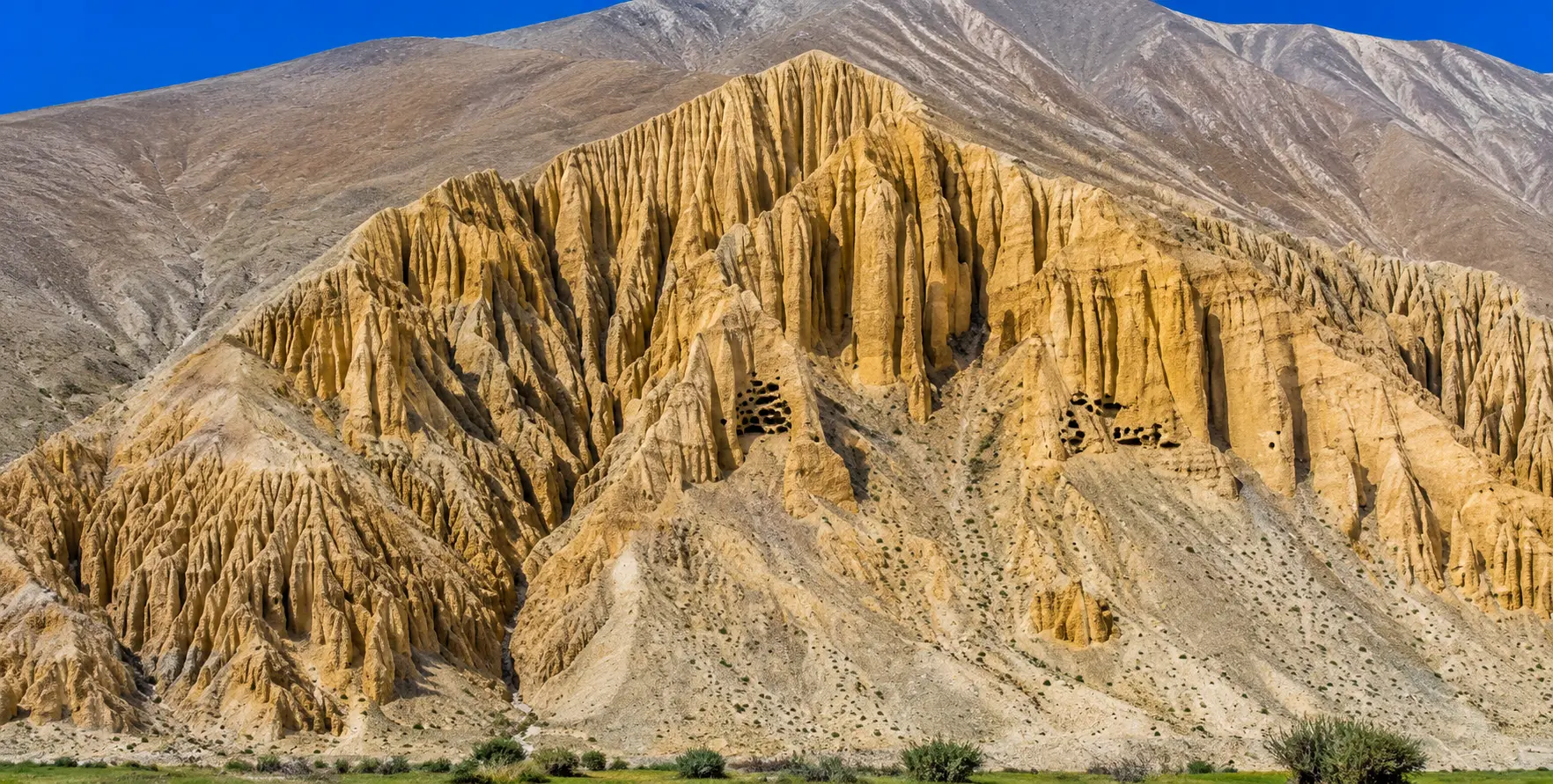
Upper Mustang occupies the upper section of the Kali Gandaki valley in Mustang district, north of the main Annapurna-Dhaulagiri watershed and in the rain shadow of both ranges. Its highest point is Lo Manthang, the walled medieval capital of the former Kingdom of Lo, sitting at approximately 3,840 meters. The region is characterized by an arid, wind-sculpted high-altitude desert landscape: ochre and terracotta cliff formations, ancient cave dwellings carved directly into the rock faces, chortens and prayer walls lining the trail between villages, and the remarkable walled city of Lo Manthang with its royal palace, ancient monasteries, and mud-brick architecture that has stood largely unchanged for centuries. A jeep road now connects Jomsom at the southern approach to Lo Manthang at the north, making Upper Mustang one of the few restricted-area destinations in Nepal reachable by vehicle as well as on foot. Our Kathmandu to Muktinath Jeep and Pokhara to Mustang Jeep services serve this corridor.
Upper Dolpa
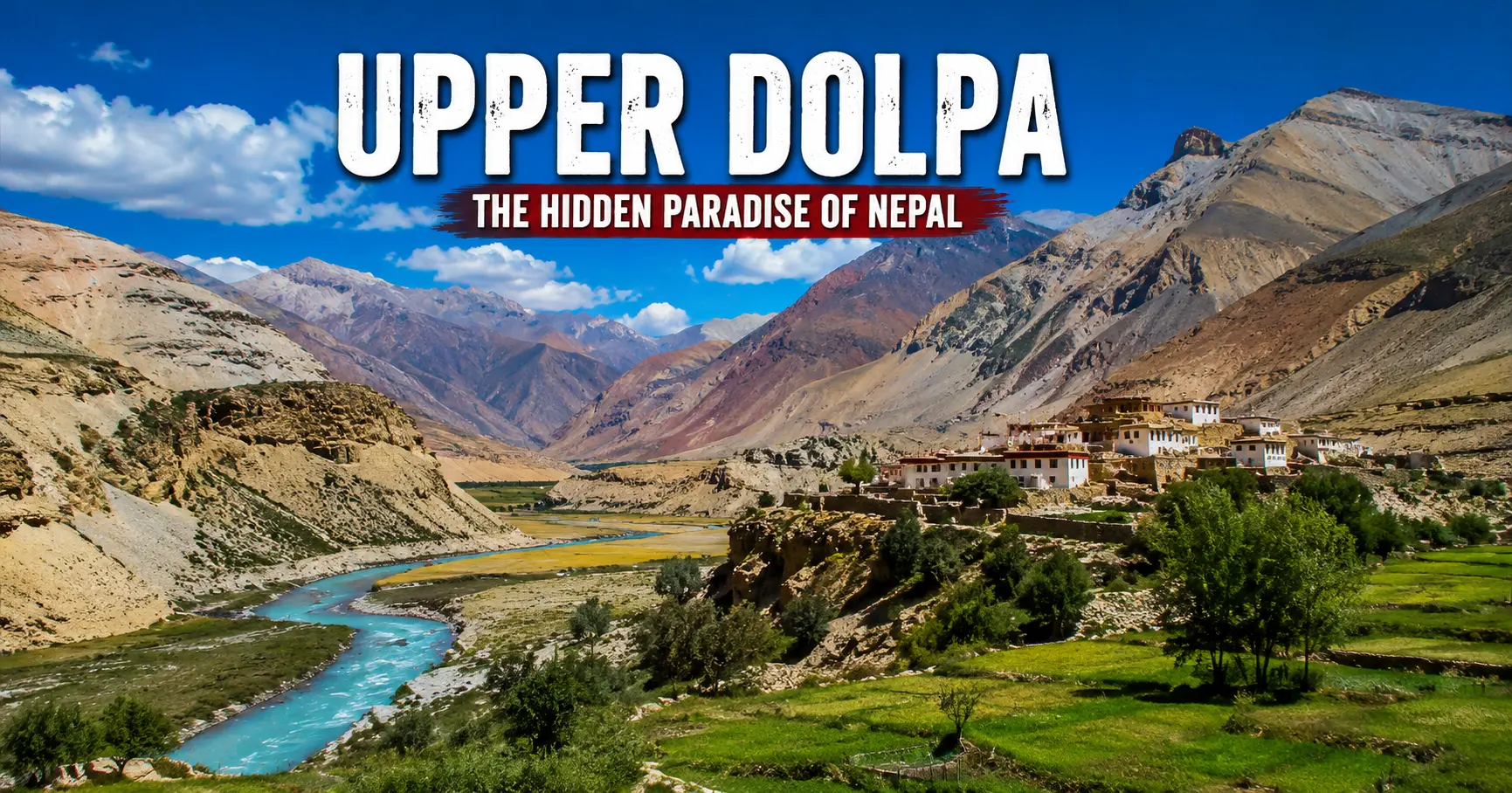
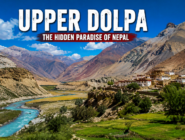
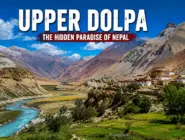
Upper Dolpa occupies the inner valleys of Dolpa district, north of Shey Phoksundo Lake in the far northwest of Nepal. Unlike Upper Mustang, no road penetrates beyond Dunai into this region; everything north of the lake basin is accessible only on foot or by yak. The landscape is more dramatically varied than Mustang: deep river gorges and dense forest on the approach give way to high-altitude desert similar in character to Mustang, but punctuated by the extraordinary turquoise of Phoksundo Lake, ancient Bon monasteries, and high passes consistently above 5,000 meters. The region centers culturally on Shey Gompa and the Crystal Mountain, the sacred pilgrimage site of the Bon tradition, and the villages of Saldang, Dho Tarap, and Tinje where Dolpo-pa communities maintain a semi-nomadic way of life shaped by both Tibetan Buddhism and the older Bon tradition. Our Shey Phoksundo Lake Jeep Tour and our dedicated Dolpo region vehicle hire guide cover the transport logistics in depth.
Landscape and Scenery: Two Deserts, Two Very Different Characters
Both Upper Mustang and Upper Dolpa sit in the Himalayan rain shadow, which means both share a broadly similar macro-climate: dry, clear, relatively low in rainfall, and in strong contrast to the green, monsoon-watered landscape of most of Nepal’s better-known trekking regions. But within this shared rain-shadow character, the two regions look and feel very different from one another.
Upper Mustang’s landscape is dominated by the Kali Gandaki valley, one of the deepest gorges in the world, and by the dramatic wind-eroded cliff formations that rise above it in shades of red, ochre, yellow, and grey. The overall impression is one of grand, austere openness: wide valleys, enormous sky, almost no vegetation on the upper slopes, and a palette of earth tones punctuated by the white of chortens and the blue of prayer flags. The terrain above Kagbeni and toward Lo Manthang is largely flat to gently rolling by Himalayan standards, with the highest passes on the main trekking route reaching around 4,200 to 4,320 meters, which is notably lower than the passes required for Upper Dolpa.
Upper Dolpa’s landscape is wilder and more varied in a single trip. The approach through Lower Dolpa follows river gorges with dense subtropical and temperate forest before the scene suddenly opens at Phoksundo Lake, whose impossibly vivid turquoise water sits below cliff faces dropping directly into the lake from hundreds of meters above. North of the lake, the landscape transitions to the high desert plateau, similar in character to Mustang but reached by crossing passes at 5,000 meters or above; the villages of Inner Dolpo sit in a more isolated, bleaker, and more austere setting than even the remotest parts of Upper Mustang. If Upper Mustang is the desert kingdom polished by centuries of trade-route traffic, Upper Dolpa is the desert wilderness at the end of a much longer and harder road.
The single most dramatic landscape feature exclusive to Dolpa that has no equivalent in Mustang is Shey Phoksundo Lake, Nepal’s deepest lake at 145 meters and one of the visually most arresting places in the Himalayan region. Our Shey Phoksundo Lake Jeep Tour is built specifically around reaching this extraordinary destination, and many travelers visit Phoksundo alone without extending into Upper Dolpa’s high valley interior.
Trekking Difficulty: A Clear and Important Difference
This is one of the most practically significant differences between the two destinations, and it is worth being direct about rather than softening it diplomatically. Upper Mustang and Upper Dolpa are not equivalent in physical difficulty. Upper Mustang is rated moderate; Upper Dolpa is rated challenging to strenuous and is widely considered one of the hardest standard treks in Nepal.
Upper Mustang Difficulty
Upper Mustang’s main trekking route follows the Kali Gandaki valley on a trail that is mostly flat to gently ascending, with the highest point on the main route around 4,320 meters at Chogo La Pass, and most of the trekking days spent between 2,800 and 3,900 meters. A trekker who walks five to seven hours per day, has basic fitness, and has previously completed a moderate Himalayan trek such as Poon Hill or the Annapurna Base Camp approach will be able to manage Upper Mustang comfortably with good preparation. The absence of technical sections, glaciers, and passes above 4,500 meters makes this significantly more accessible than it might appear given its restricted-area status. The trail is also now motorable by jeep as far as Lo Manthang, which means even travelers who are not trekkers in the conventional sense can reach the main cultural highlights of the region by vehicle.
Upper Dolpa Difficulty
Upper Dolpa is in a genuinely different category. The route from Juphal into Inner Dolpo crosses six to seven high passes, most of them above 5,000 meters, including Kang La (5,350 m), Jeng La (5,110 m), Numa La (5,190 m), Baga La (5,070 m), and Shey La (5,000 m). Most trekking days are spent above 4,000 meters, often with six to eight hours of walking on rough, unmarked trails through completely uninhabited terrain. There are no teahouses in the inner valley section, meaning every night is spent in a tent at a camp that the crew has set up, and the distance from any meaningful medical care or rescue infrastructure is substantial. An experienced trekker from Dolpo describes it plainly: Upper Dolpa is for someone with a real trekking background and the willingness to operate in a remote area where things going wrong have serious consequences. It is not technically a mountaineering expedition, but it is genuinely strenuous and should not be approached without prior high-altitude trekking experience.
In practical terms: if this is your first restricted-area trek or your first serious high-altitude trek in Nepal, choose Upper Mustang. If you have already completed several high-altitude Nepal treks, are comfortable at 5,000 meters, have good expedition fitness, and specifically want a remote camping-based challenge, Upper Dolpa is the exceptional next level.
Cultural Highlights: Ancient Kingdoms, Forbidden Cities, and Sacred Sites
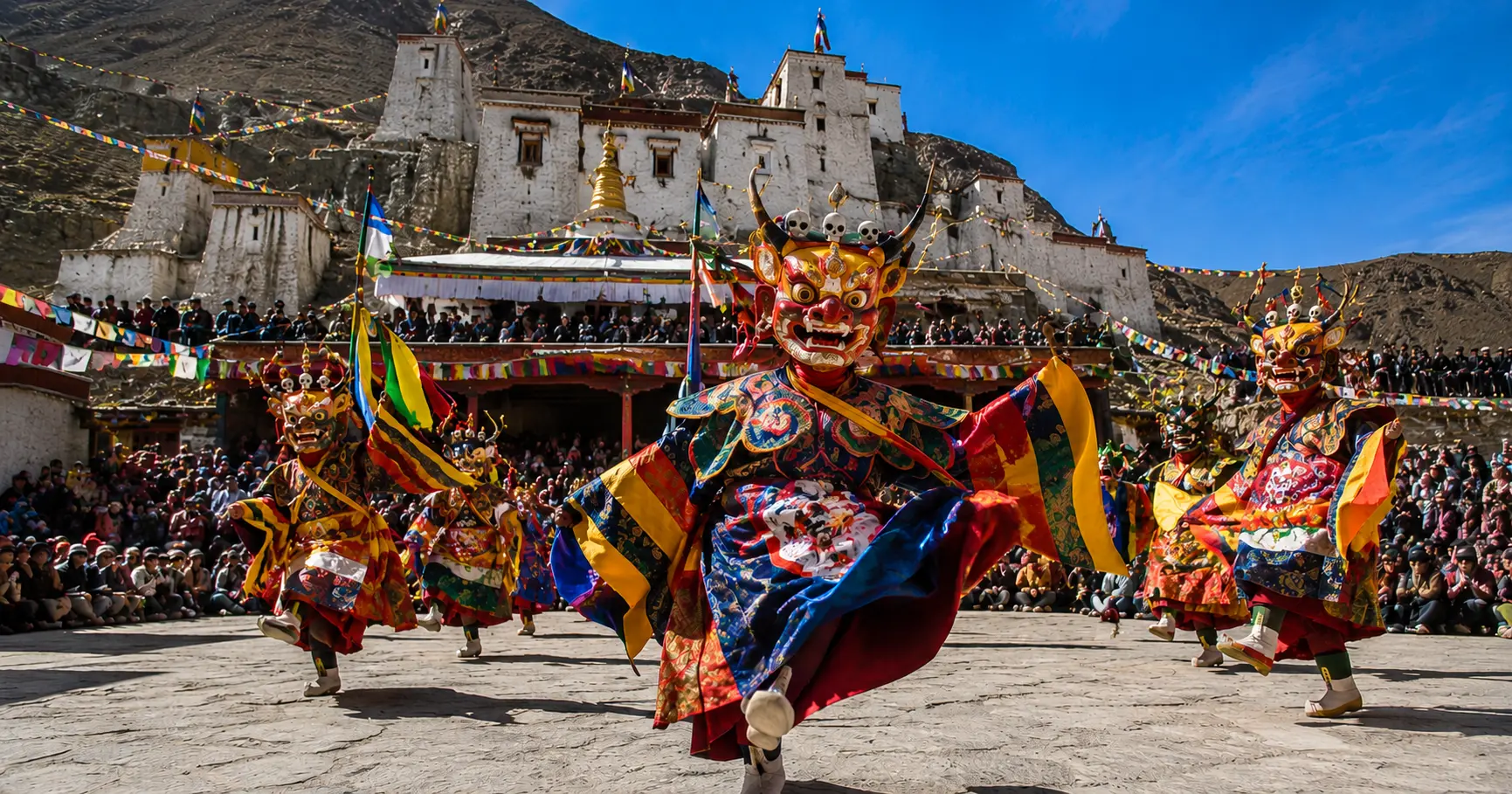
Upper Mustang’s Cultural Offer
Upper Mustang’s cultural significance centers on Lo Manthang, the walled city that served as the capital of the Kingdom of Lo from the 14th century until Nepal formally abolished the monarchy in 2008. The current Raja of Lo, whose family held the throne across approximately 25 generations, still lives in Lo Manthang, and the royal palace, the Thubchen Gompa, Jampa Gompa, and Choede Gompa monasteries within the city walls are the primary cultural destinations. The monasteries contain murals and thangka paintings of extraordinary age and quality, some dating to the 15th century and subject to ongoing international restoration efforts. The sky cave settlements visible in the cliff faces above the Kali Gandaki valley are equally remarkable: thousands of hand-carved cave rooms, some of them 3,000 years old, whose original purpose ranges from habitation to meditation retreat to funerary practice. The Lo people, known as Lobas, speak a dialect of Tibetan, practice Tibetan Buddhism, and have maintained a way of life, economy, and religious tradition largely unchanged by the outside modernization that transformed most of lowland Nepal in the twentieth century. Mustang’s cultural calendar centers on the Tiji Festival, a three-day Buddhist ceremony in Lo Manthang in May that re-enacts a legendary battle against a demon, and features spectacular costumed masked dances performed by the monks of Choede Gompa.
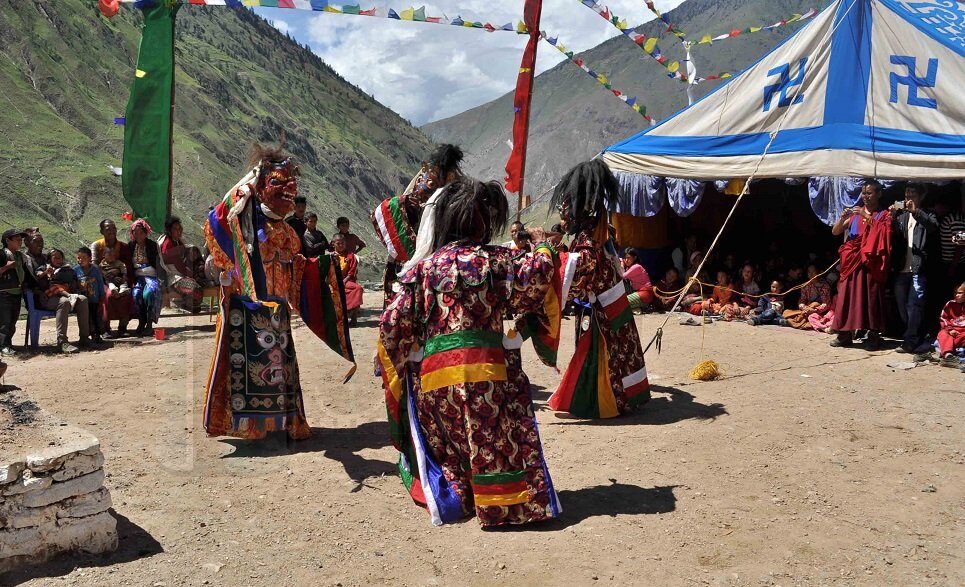
Upper Dolpa’s Cultural Offer
Upper Dolpa’s cultural significance centers on an older, and in some ways rarer, er tradition than Mustang’s Tibetan Buddhism. The Bon religion, which predates Buddhism on the Tibetan plateau, survives in Upper Dolpa in a form largely protected from outside disruption by the region’s extreme isolation. The Bon tradition’s sacred geography in Dolpa centers on the Crystal Mountain near Shey Gompa, around which pilgrims circumambulate in the counterclockwise direction specific to Bon practice, and on the pilgrimage circuit that links Shey Gompa, Saldang, and the high passes of the inner valley. Shey Gompa itself, the Crystal Monastery, is approximately 900 years old and serves as the spiritual heart of Dolpa, where monks maintain Bon ritual practice and where the Shey Festival draws pilgrims from across the region each August. The villages of Dho Tarap, Saldang, and Tinje in Inner Dolpo are among the highest permanently inhabited settlements on Earth. The Dolpo-pa communities who live there maintain the salt-trade traditions, semi-nomadic yak herding, and extended family structures that anthropologists and writers have documented since David Snellgrove’s expeditions in the 1950s and Peter Matthiessen’s famous journey in 1973.
The cultural distinction in simple terms: Upper Mustang offers a medieval Tibetan Buddhist kingdom with a surviving royal court, some of the finest ancient monastery murals in the Himalayan region, and cliff-cave archaeology spanning millennia. Upper Dolpa offers the Bon heartland, an older and rarer spiritual tradition, a rarer and less-restored form of cultural encounter in communities that see very few visitors, and the specific atmosphere that comes from being genuinely far from any commercial tourism infrastructure.
Vehicle Hire and Road Access: The Biggest Practical Difference Between the Two
This is the dimension where Upper Mustang and Upper Dolpa diverge most dramatically from a practical transport planning perspective, and it is the dimension where our direct operational experience as a vehicle hire operator is most directly relevant.
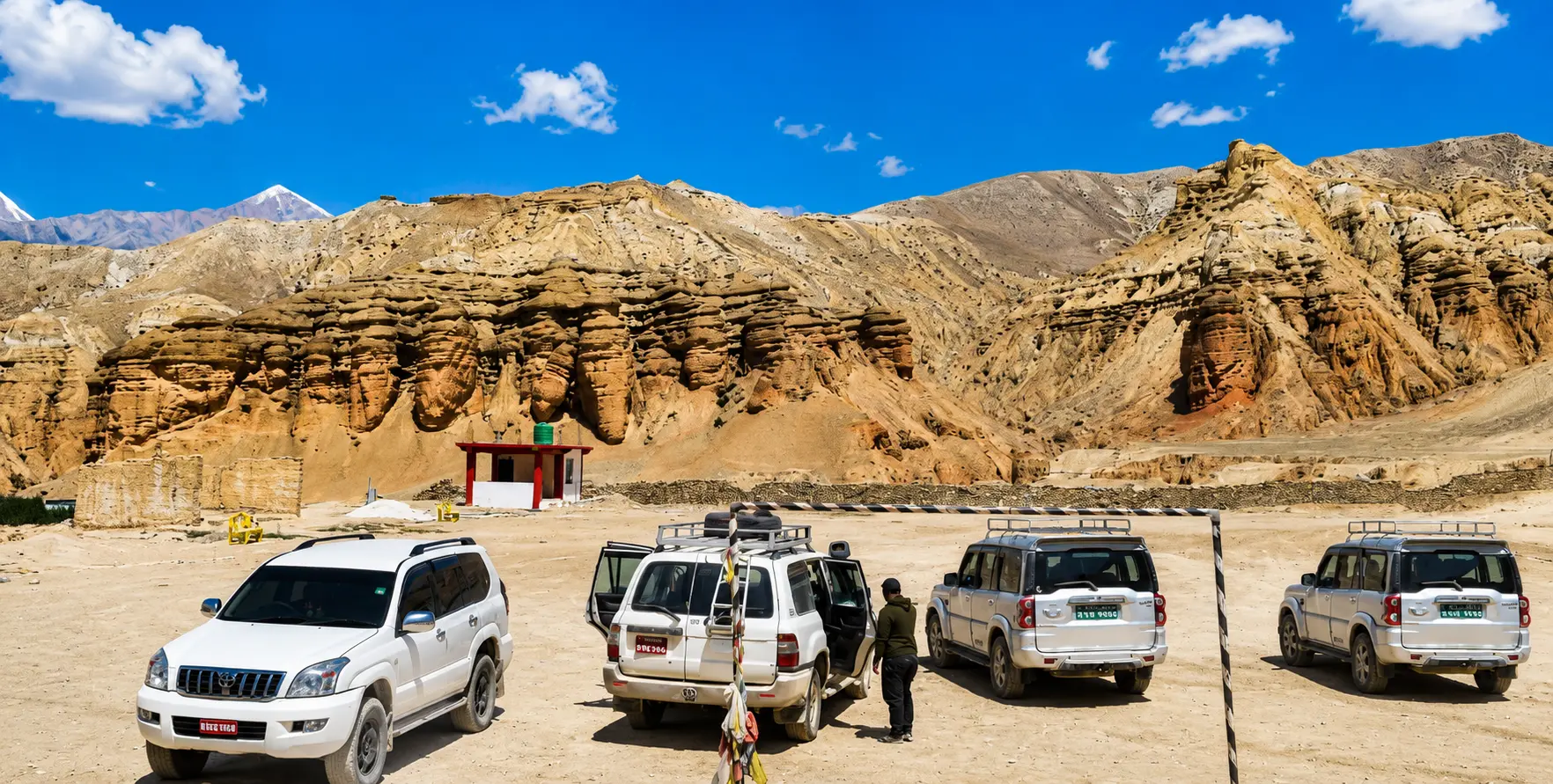
Upper Mustang: The Jeep Road to Lo Manthang
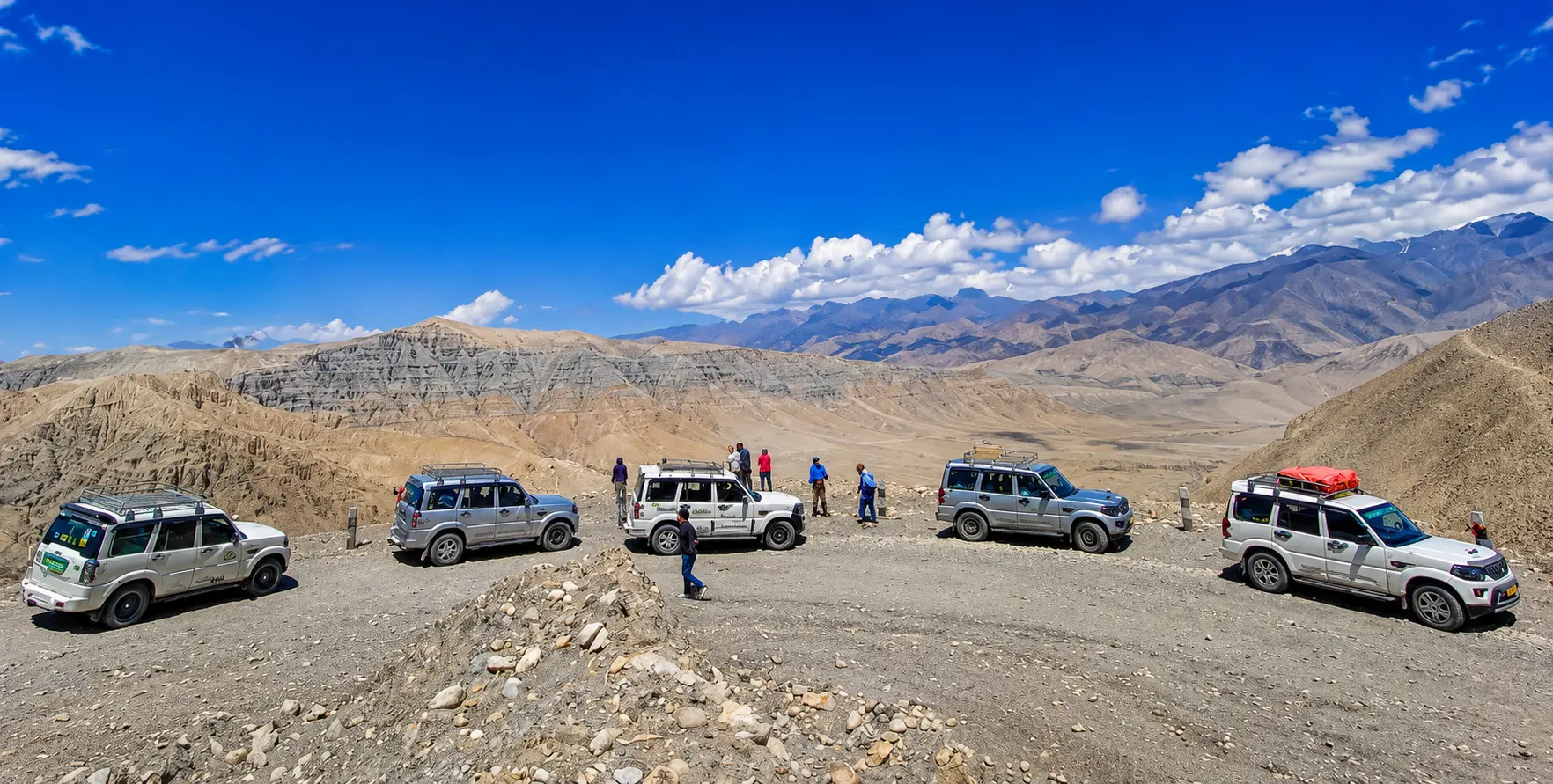
Upper Mustang has a jeep road. This is not a minor detail; it fundamentally changes the nature of the trip and the transport options available. A road was constructed from Jomsom north through Kagbeni, Chele, Syangboche, Ghami, Charang, and all the way to Lo Manthang, covering the entire distance that trekkers walk on the classic Upper Mustang trail. This road means that travelers who cannot or do not want to trek can still reach Lo Manthang and its extraordinary cultural highlights by vehicle in a fraction of the time a trekking itinerary requires. Our Kathmandu to Mustang Private Jeep and Upper Mustang 4WD Jeep services cover this full road corridor, while our Pokhara to Mustang Jeep handles the western approach from the Pokhara side.
The standard vehicle approach begins in Kathmandu or Pokhara, follows the Prithvi Highway to the Beni junction, then climbs the Kali Gandaki gorge road through Tatopani, Ghasa, Marpha, and Jomsom before entering the restricted area beyond Kagbeni. A 4WD jeep is essential from Marpha northward, where the road becomes unpaved. The Jomsom-to-Lo Manthang jeep road is one of the most dramatic in Nepal, passing through the deep ochre canyon landscape of the Kali Gandaki valley on a route that shares its corridor with the ancient salt-trade trail between Nepal and Tibet. For older travelers, families with children, pilgrim groups, or anyone with a medical or physical reason that makes multi-week trekking impractical, the Upper Mustang jeep tour provides access to a destination that would otherwise require 14 to 20 days of high-altitude walking. This is genuinely rare: very few restricted-area destinations in Nepal are reachable by vehicle. See our related guide on why Upper Mustang is one of the best destinations for a 4WD jeep tour for the full route breakdown.
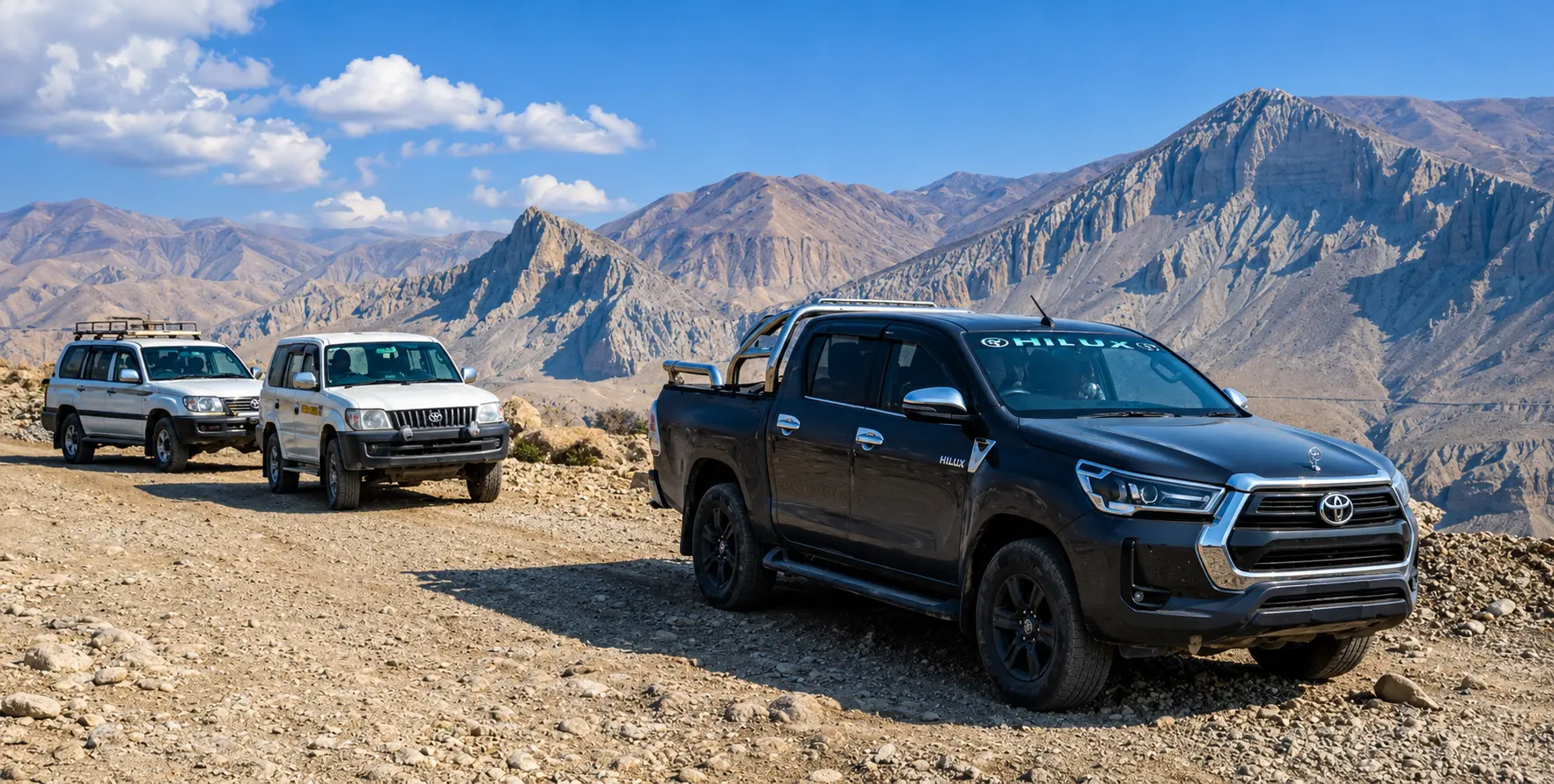
Upper Dolpa: No Road Beyond Dunai
Upper Dolpa has no jeep road beyond Dunai, the district headquarters. The road, completed in 2018, ends at Dunai, and everything north of it into the inner valley, including Phoksundo Lake, Shey Gompa, and the villages of Saldang and Dho Tarap, is accessible only on foot. This means that the vehicle hire role in a Dolpa expedition is entirely limited to the approach and departure legs: either the overland Karnali Highway drive from Kathmandu to Dunai, or the Kathmandu-to-Nepalgunj transfer and Nepalgunj-to-Juphal flight logistics. Our Shey Phoksundo Lake Jeep Tour covers the full overland Karnali Highway approach, which requires a Toyota Hilux or Land Cruiser category vehicle given the unpaved Surkhet-to-Dunai section’s road demands.
The overland Karnali Highway approach from Kathmandu to Dunai is itself a significant journey of three to four driving days through western Nepal’s Karnali province, passing through Surkhet and along the Karnali River corridor in some of the most remote and scenically dramatic valley terrain in the country. For trekkers who value the journey as much as the destination, this overland approach is a genuine feature of a Dolpa expedition. For trekkers focused specifically on maximizing time in the inner valleys, the Nepalganj-Juphal flight route is more time-efficient.
In summary: Upper Mustang can be done by jeep without trekking. Upper Dolpa cannot be done by jeep without trekking if vehicle accessibility is a priority for any reason, whether medical, age-related, or simply a preference for a jeep tour over a camping trek; Upper Mustang is the only viable choice of the two.
Permits in 2026: Similar Cost, Different Complexity
Both Upper Mustang and Upper Dolpa require Restricted Area Permits, and as of 2026 both carry the same high permit fee structure at the upper end: USD 500 per person for the first ten days, then USD 50 per additional day. For a typical Upper Mustang itinerary of around 14 days in the restricted area, the permit cost alone reaches approximately USD 700 per person. The 24-day Upper Dolpa itinerary alone exceeds USD 570 per person, plus additional costs for the Lower Dolpa Restricted Area Permit (USD 20 per week) and the Shey Phoksundo National Park permit (USD 30).
A critical 2026 regulatory update applies equally to both destinations: as of March 22, 2026, the Government of Nepal removed the previous requirement of a minimum group of two foreign trekkers for restricted area permits. Solo trekkers can now obtain permits for both Upper Mustang and Upper Dolpa, provided they are accompanied by a licensed guide and book through a registered trekking agency. The agency processing requirement and the guide mandate both remain strictly in force for both destinations. All permits must be obtained through the Department of Immigration via a registered agency and cannot be purchased directly by individual trekkers.
Beyond the permit fee itself, the practical permit processing experience differs between the two destinations. Upper Mustang permits are relatively straightforward to arrange given the route’s longer history and higher volume of organized trekking groups. Upper Dolpa permits, particularly the Upper Dolpa Restricted Area Permit, require more lead time and should be initiated by your trekking agency as soon as the booking is confirmed, well in advance of departure. Both destinations require permits to be arranged before leaving Kathmandu; there is no mechanism for collecting permits at a checkpoint en route in either case.
Accommodation: Teahouses vs Full Camping Expedition
The accommodation difference between Upper Mustang and Upper Dolpa is one of the starkest practical distinctions between the two destinations, and it significantly affects the total cost, logistical complexity, and day-to-day experience of the trip.
Upper Mustang is a teahouse trek throughout its main trekking route. Guesthouses and teahouses exist in every village from Kagbeni to Lo Manthang, providing twin-sharing rooms, simple meals, hot showers in many cases, and the basic but functional infrastructure of a well-developed Nepal trekking corridor. The teahouse standard is broadly comparable to what trekkers experience on popular Annapurna routes: adequate and comfortable by trekking standards, limited compared to hotel accommodation, but perfectly functional for multi-week stays. This teahouse infrastructure makes Upper Mustang significantly easier to organize independently or with a basic trekking agency arrangement, since you are not responsible for carrying or provisioning your own accommodation for the duration of the trek.
Upper Dolpa above Phoksundo Lake is a full camping expedition with no teahouse accommodation. Every night in the inner valley is spent in a tent erected by the crew, with a separate dining tent, a kitchen tent, and a support team of porters or yak handlers carrying all of this equipment plus the full food supply for the trek. This camping requirement adds significant logistical complexity and cost to a Dolpa expedition compared to a Mustang trek of equivalent duration. It is one of the primary reasons Upper Dolpa is recommended only for travelers booking through an experienced Dolpa expedition operator rather than attempting a more loosely organized independent approach.
Total Cost Comparison: Budget Realistically for Both
Both Upper Mustang and Upper Dolpa are expensive destinations by Nepal trekking standards, but the total cost structure differs in important ways beyond the headline permit fee.
- Permit fees — broadly similar for both at USD 500 for the first 10 days in the restricted area. Upper Dolpa has additional Lower Dolpa and national park permit costs on top of the Upper Dolpa RAP.
- Transport — Upper Mustang can be reached by a single continuous overland jeep from Kathmandu or Pokhara, which is a straightforward vehicle hire booking. Upper Dolpa requires either a multi-day overland jeep on the demanding Karnali Highway or a two-flight air route, both of which are more logistically complex and, on a per-person basis, comparably priced.
- Accommodation — Upper Mustang’s teahouse model is significantly cheaper per night than the full camping expedition required for Upper Dolpa’s inner valley. Camping costs include cook, kitchen staff, porter/yak hire, tent hire, food purchase, and fuel, all of which add up substantially across a 24 to 30-day expedition.
- Guide and crew — both require a licensed guide as a legal mandate. Upper Dolpa additionally requires a full expedition crew including a cook, kitchen staff, and porters, which Upper Mustang’s teahouse infrastructure largely eliminates.
- Duration — a complete Upper Mustang trek typically runs 14 to 20 days Kathmandu-to-Kathmandu. A complete Upper Dolpa expedition runs 24 to 30 days or more, and the longer duration multiplies all daily costs accordingly.
As a rough framework: a complete Upper Mustang trekking package including permits, guide, teahouse accommodation, and transport typically starts from USD 2,000 to 3,000 per person for a 14 to 18-day trip. A complete Upper Dolpa expedition, including permits, a licensed guide, a full camping crew, porter and yak hire, and all transport, typically starts from USD 3,500 to 5,000 or more per person for a 24 to 30-day itinerary. These are starting figures that vary significantly based on group size, package inclusions, and operator quality.
 Seasonal Timing: When to Visit Each Region
Both Upper Mustang and Upper Dolpa share the rain-shadow characteristic that makes them theoretically trekkable during the monsoon months of June through August, when most of the rest of Nepal’s trekking network is at its wettest and most difficult. This shared characteristic is one reason both destinations are sometimes specifically marketed as monsoon trekking options. For travelers whose schedule only permits a summer visit, both are genuine alternatives to the standard Everest and Annapurna routes.
In practice, the ideal windows for both regions are spring (March to May) and autumn (September to November), when high-pass crossings in Upper Dolpa carry the least risk of snow, when mountain views across both regions are at their clearest, and when conditions are most consistently favorable for the long, weather-dependent days that both itineraries involve. Spring in Upper Mustang also coincides with the Tiji Festival, held over three days in Lo Manthang in May, which draws travelers specifically to witness this extraordinary masked-dance ceremony and is worth timing a visit around if the schedule permits.
Winter, from December through February, is the most significant seasonal difference between the two. Upper Mustang is largely accessible year-round at its lower elevations, and winter visits to Lo Manthang are possible for trekkers prepared for cold temperatures and occasional snow. Upper Dolpa in winter is not a practical destination; the high passes above 5,000 meters that are mandatory in any Inner Dolpo itinerary are snowbound and impassable for most of December through February, and the Juphal airstrip can be closed by snow for extended periods during this window.
For travelers specifically visiting during monsoon, Upper Mustang’s jeep road access from Jomsom to Lo Manthang makes it more reliably accessible in wet-season conditions than Upper Dolpa’s approach, where the Karnali Highway section and the trekking trail above Phoksundo Lake can both be disrupted by monsoon-season conditions. See our broader unlimited tour and trek vehicle hire guide for how seasonal road conditions across Nepal affect vehicle hire planning.
Wildlife: What Each Region Offers
Both Upper Mustang and Upper Dolpa fall within the high-altitude rain-shadow belt and support wildlife communities adapted to this extreme environment. Still, the specific wildlife offerings differ in important ways.
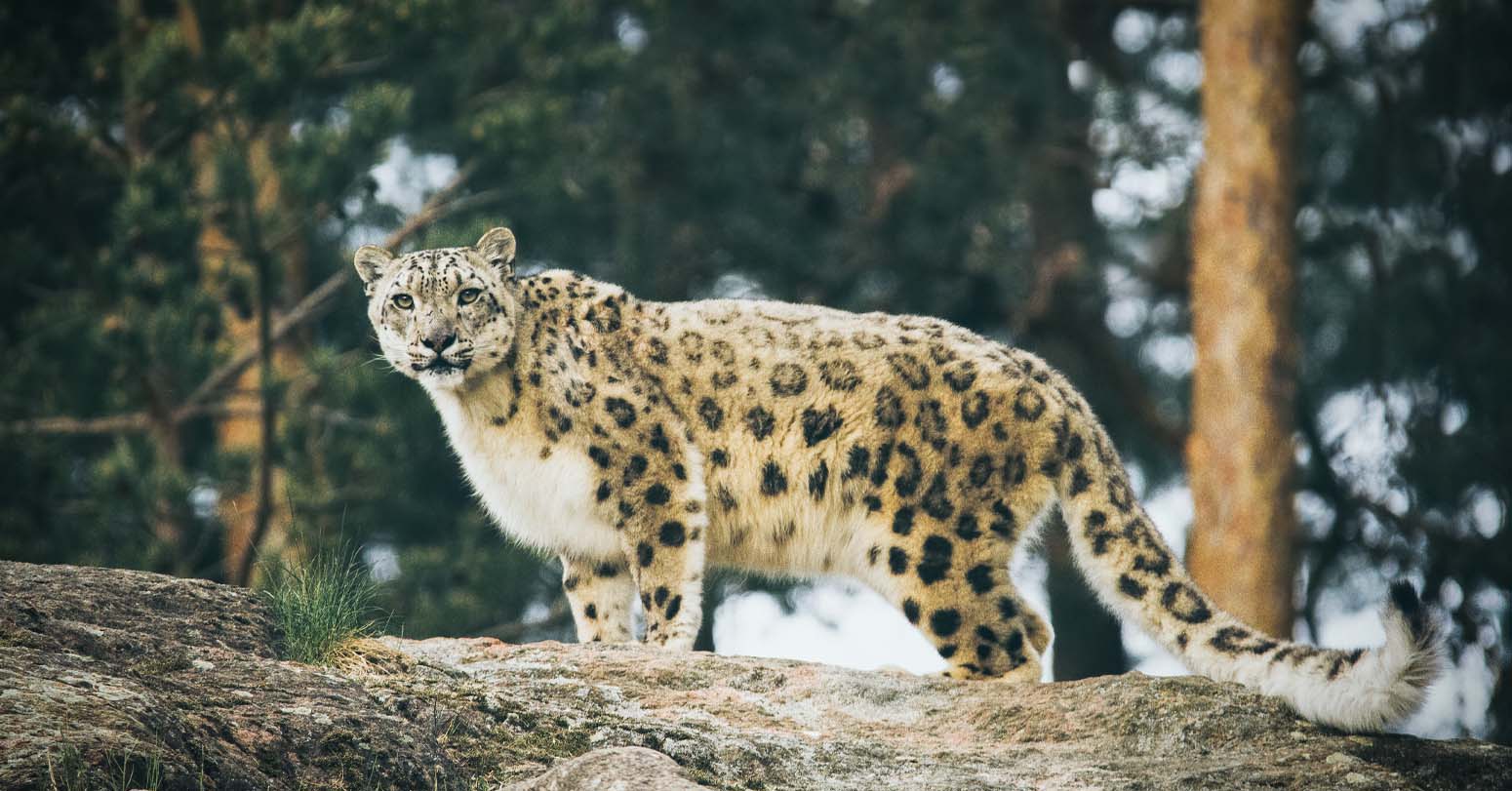
Upper Mustang sits within the Annapurna Conservation Area and supports the same general high-altitude wildlife community as the wider Annapurna region: Himalayan blue sheep (bharal) are commonly sighted on rocky slopes throughout the trekking route, Himalayan griffon vultures and golden eagles are regularly seen riding thermals above the Kali Gandaki gorge, and Tibetan gazelle are occasionally observed at higher elevations. The red fox and Tibetan wolf are present but less commonly seen. The snow leopard is present in Mustang but rarely sighted; the terrain is less favorable for snow leopard observation than the more remote and less-trafficked Dolpa region.
Upper Dolpa, within the boundaries of Shey Phoksundo National Park, offers consistently better wildlife-watching prospects, particularly for snow leopard. The park is considered one of the most important remaining snow leopard habitats in Nepal, with an estimated population and observation frequency that draw dedicated wildlife photographers and naturalists specifically to this destination. Blue sheep are abundant and serve as the snow leopard’s primary prey species. A patient trekker spending time in the Shey Gompa area has a genuinely higher than average chance of sighting a snow leopard compared to almost any other accessible location in the country. The Himalayan wolf, a genetically distinct subspecies from other wolves, is also present in Dolpa and is of significant conservation interest. If wildlife observation, and specifically snow leopard observation, is a major motivation for the trip, Upper Dolpa has a meaningful advantage over Upper Mustang on this specific dimension.
Which Region Suits Which Traveler: An Honest Assessment
After covering every comparative dimension above, the most useful thing this guide can do is offer an honest summary of who each destination is genuinely best suited for, drawn from the real experiences of travelers who have done one or both routes.
Choose Upper Mustang if you:
- Are doing your first restricted-area trek in Nepal or your first high-altitude Himalayan experience.
- Have a limited time window of 14 to 18 days Kathmandu-to-Kathmandu.
- Want the option to explore cultural highlights by jeep rather than trekking if needed.
- Are traveling with family members, older relatives, or companions with physical limitations.
- Are primarily motivated by cultural and historical sites, particularly medieval monastery architecture, thangka murals, cave dwellings, and the living Tibetan Buddhist kingdom of Lo Manthang.
- Want teahouse accommodation rather than camping throughout the trip.
- Have a tighter budget or want a more cost-predictable restricted-area experience.
- Want to visit during the monsoon months with reliable access.
Choose Upper Dolpa if you:
- Have prior experience on serious high-altitude Nepal treks and are comfortable above 5,000 meters.
- Have 24 to 30 days available for the full expedition.
- Are specifically seeking a camping-based, fully self-sufficient expedition in a genuinely remote environment.
- Are motivated by the Bon religion and the specific cultural character of the Dolpo-pa communities, which is older and rarer than the Tibetan Buddhism of Mustang.
- Want the specific visual experience of Shey Phoksundo Lake, Nepal’s deepest and most dramatically colored lake, which has no equivalent in Mustang and is alone worth the overland approach on our Shey Phoksundo Lake Jeep Tour.
- Are specifically seeking snow leopard observation, for which Dolpa offers a higher realistic probability than Mustang.
- Want the most remote and least-trafficked restricted-area trekking experience in Nepal.
- Have the budget for a full camping expedition including a professional crew.
Consider combining both if you:
- Have five or more weeks available and the fitness for a 30-plus-day high-altitude expedition.
- Want to traverse from Dolpa into Mustang via the Sangda La high pass connection, one of the great trans-Himalayan expedition routes in Nepal.
- Are experienced at Himalayan expedition-level trekking and want one of the ultimate Nepal journeys in a single trip.
What the Day-to-Day Experience Actually Feels Like in Each Region
Comparison guides tend to focus on headline statistics — altitude, distance, permit cost — but the day-to-day experiential texture of a trip is often what determines whether a traveler feels it was exactly right for them or slightly mismatched. The two regions genuinely feel different on the ground in ways that statistics do not fully capture.
A Typical Trekking Day in Upper Mustang
A typical day on the Upper Mustang trekking route begins in a stone guesthouse in one of the Loba villages, with butter tea and tsampa porridge or eggs and Tibetan bread at a teahouse dining table alongside a small number of other trekkers. The morning walk leaves early to take advantage of calm conditions before the famous afternoon wind that funnels north through the Kali Gandaki gorge picks up, which it does reliably and forcefully by midday on most days in the main trekking season. The trail follows the valley floor or climbs a ridge above it, through dry canyon scenery in ochre and terracotta, past mani walls and chortens, and occasionally through the remains of ancient cave settlements visible in the cliff faces above. Villages are spaced at walking intervals of roughly four to six hours, with basic lunch available at most of them, and by early afternoon a trekker will typically be settled into the next guesthouse. Evenings in Lo Manthang specifically involve visiting the monasteries in late afternoon light when the ancient murals glow, encountering local Loba families and perhaps the monks of Choede Gompa going about their evening prayers, and retreating to a heated common room for dinner.
The overall character is austere and culturally rich, with the teahouse infrastructure removing the burden of camping logistics and allowing mental energy to focus on the landscape and the cultural sites rather than on survival and camp management. The afternoon wind is genuinely challenging and should not be underestimated; it can make the open sections of the trail physically taxing even for fit trekkers, and starting each day early enough to complete the main walking before it peaks is standard practice on this route.
A Typical Trekking Day in Upper Dolpa
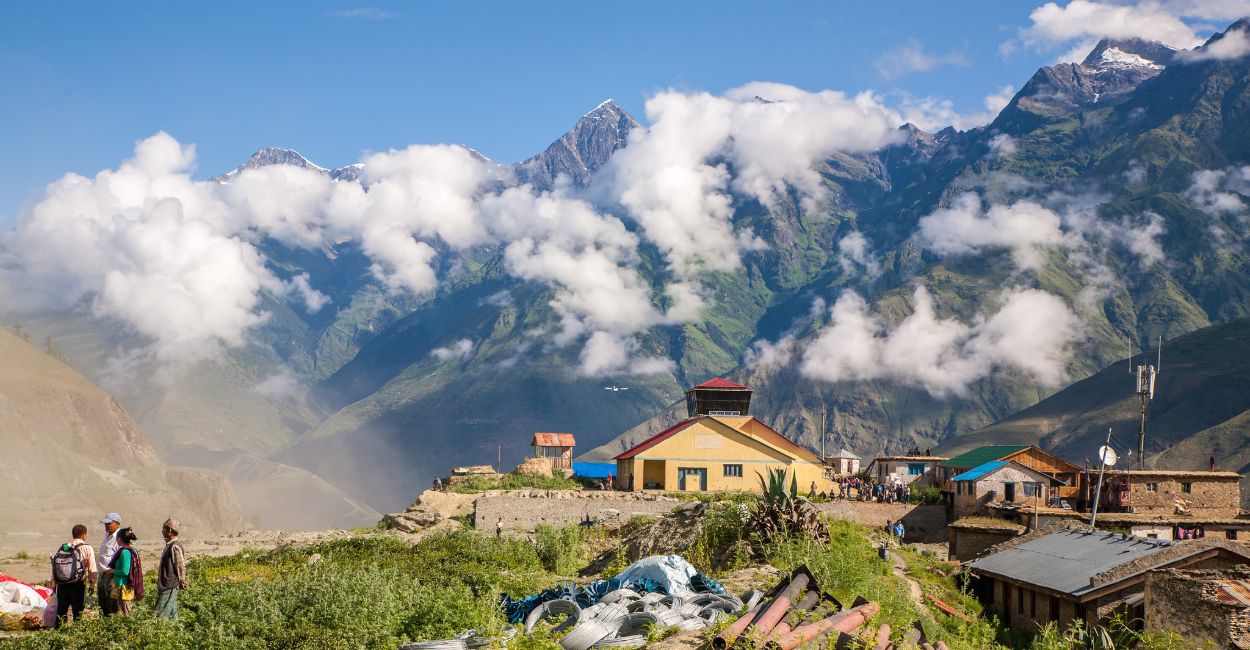
A typical day in Upper Dolpa above Phoksundo Lake begins in a tent at a high-altitude camp, often above 4,000 meters, where the cook crew has already been up for an hour preparing breakfast. Temperatures outside the tent before sunrise are genuinely cold, and the first task of the day is layering up before emerging. Breakfast in the dining tent is a warm and surprisingly substantial affair given the remote context, since a good Dolpa expedition cook manages remarkable output on a high-altitude camp stove. The day’s walking often begins on unmarked or lightly marked trail through boulder fields, dry riverbeds, or exposed ridgeline, navigated by the guide who knows this specific route rather than by any trail signage. The passes above 5,000 meters are the defining physical experience of the day on pass-crossing stages: a long, steep climb on loose rock or compacted scree, with the air noticeably thin at the top, followed by a descent on the other side into a different valley where another small camp awaits.
There are no other trekkers on most days in Upper Dolpa. The sense of genuine solitude, of being in a landscape that sees perhaps a few hundred foreign visitors per year rather than per week, is the dominant experiential quality of the inner valley section. Encounters with Dolpo-pa herders and their yak trains, with monks at Shey Gompa, or with a family in Saldang preparing for the seasonal move to summer pastures, have a different quality from encounters on a busy teahouse route: they are more spontaneous, less mediated by commercial hospitality, and more genuinely mutual. Many travelers who have done both Upper Mustang and Upper Dolpa describe Upper Dolpa as the harder, more demanding, and ultimately more transformative experience of the two.
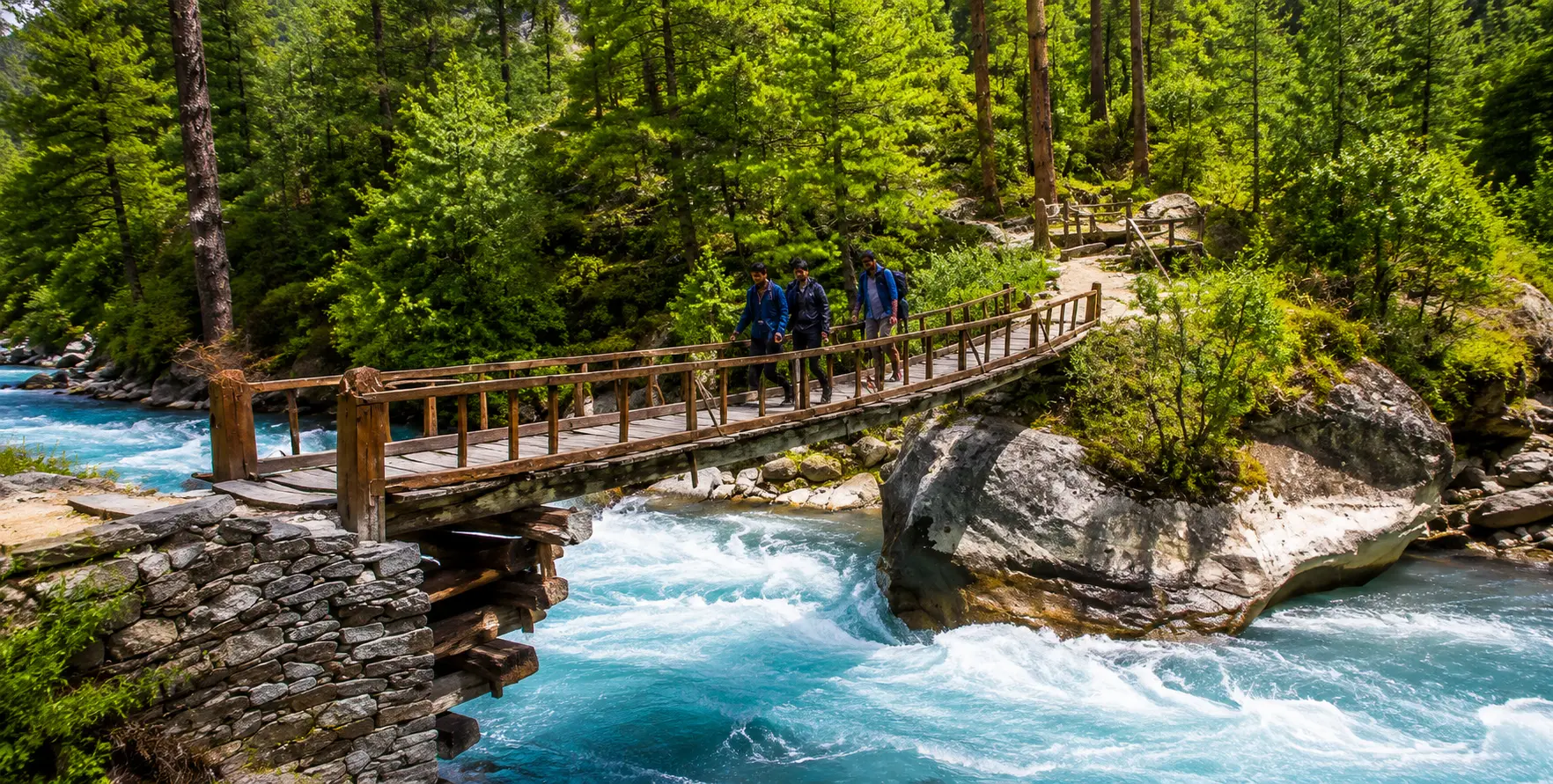
The Combined Traverse: Dolpa to Mustang in a Single Expedition
For travelers who have read this far and are wondering whether they can do both in a single Nepal trip, the answer is yes, but within a specific set of conditions. The combined Upper Dolpa to Upper Mustang traverse is a recognized expedition route in Nepal trekking, typically taking 30 to 35 days from Juphal to Jomsom, and is one of the most demanding and most rewarding itineraries available anywhere in the Himalayan region.
The traverse connects the two regions via a sequence of high passes, crossing from Dolpa’s inner valley system into the upper Mustang plateau, with the key connection passing through Sangda La and related passes above the Tarap Valley. After completing the Inner Dolpo circuit including Shey Gompa and the Crystal Mountain pilgrimage, trekkers cross into the upper Mustang watershed and descend toward Lo Manthang, joining the standard Upper Mustang itinerary for its northern sections before continuing south to Jomsom and the main Kali Gandaki corridor. The expedition exits either by flying from Jomsom to Pokhara, covered by our onward transfer network, or by driving south through the Kali Gandaki gorge on the same road used by our Pokhara to Mustang Jeep and Kathmandu to Mustang Private Jeep services.
The combined traverse requires all permits for both restricted areas simultaneously, all camping equipment and crew for the Dolpa portion, and the flexibility to transition to teahouse accommodation once the Mustang section is reached. It is strictly recommended only for experienced high-altitude trekkers with strong expedition fitness, prior pass-crossing experience above 5,000 meters, and a serious trekking agency with specific Dolpa-to-Mustang traverse experience managing the logistics. The reward, for those who complete it, is a sustained immersion in the most remote and culturally distinctive trans-Himalayan landscapes available to foreign trekkers anywhere in Nepal, approached from two different directions with a complete change of cultural context halfway through. For vehicle transport, our Upper Mustang 4WD Jeep service can manage the Jomsom exit le. At the same time,e our Shey Phoksundo Lake Jeep Tour handles the Kathmandu-to-Dunai or Nepalganj approach on the Dolpa entry side, making both transport ends of the traverse bookable through a single operator.
Frequently Asked Questions: Upper Mustang vs Upper Dolpa
Which destination has better mountain views?
Both offer spectacular Himalayan panoramas, but of different character. Upper Mustang views are dominated by the Annapurna and Dhaulagiri ranges seen from the rain-shadow side, with the arid canyon landscape in the foreground creating a dramatic contrast. Upper Dolpa views include the Jugal Himal, Kanjiroba, Dhaulagiri, and Dolpo’s own high peaks, with the added visual impact of Phoksundo Lake, which has no equivalent anywhere in Mustang. For sheer variety of landscape combined with high-mountain views, Upper Dolpa has the edge; for the specific drama of the Kali Gandaki gorge and the ochre canyon country around Lo Manthang, Upper Mustang is unique.
Can older travelers or families with children visit either region?
Upper Mustang, specifically on the jeep tour option, is accessible for older travelers and families with children, provided the group is comfortable with long jeep drives on rough mountain roads and the altitude of Lo Manthang at 3,840 meters. The jeep road to Lo Manthang makes this genuinely possible in a way that no other restricted-area destination in Nepal allows. Upper Dolpa is not suitable for older travelers or families with children, given the mandatory multi-day high-altitude camping trek above 5,000 meters with no rescue infrastructure, which forms the core of any Inner Dolpo itinerary. Our Upper Mustang 4WD Jeep page has full details on the vehicle tour option.
Which region is better for photography?
Both are exceptional photographic destinations, but they attract different styles of photography. Upper Mustang’s cave dwellings, medieval monastery murals, walled city architecture, and Loba people in traditional dress against a dramatic desert-canyon backdrop make it one of the finest cultural photography destinations in Asia. Upper Dolpa’s combination of Phoksundo Lake’s extraordinary color, the raw high-altitude landscape of the inner valleys, Bon religious ceremony and community life in Saldang and Shey Gompa, and the genuine possibility of wildlife photography, including snow leopard, makes it more appealing to nature and wildlife photographers. For landscape photographers specifically, both are extraordinary; the choice depends on whether the priority is cultural architecture or natural wilderness.
Do I need prior trekking experience for either destination?
For Upper Mustang trekking, moderate prior hiking or trekking experience at altitude is helpful but not strictly mandatory for a reasonably fit traveler. For the Upper Mustang jeep tour, no trekking experience is required at all. For Upper Dolpa, prior experience on serious high-altitude Nepal treks, including familiarity with trekking above 4,500 meters over multiple consecutive days, is strongly recommended and in practice essential for anyone planning to cross the inner valley passes above 5,000 meters safely.
How long in advance should I plan either trip?
For Upper Mustang, booking three to four months in advance during the peak spring and autumn seasons is advisable, particularly for popular May dates around the Tiji Festival. Permits can be processed in a few days to two weeks through a registered agency. For Upper Dolpa, planning six months or more is recommended, since Upper Dolpa Restricted Area Permits require more processing time, yak and porter crew need to be arranged in advance through valley community contacts, and domestic flight seats on the Nepalgunj-Juphal route are limited and sell out early in peak season.
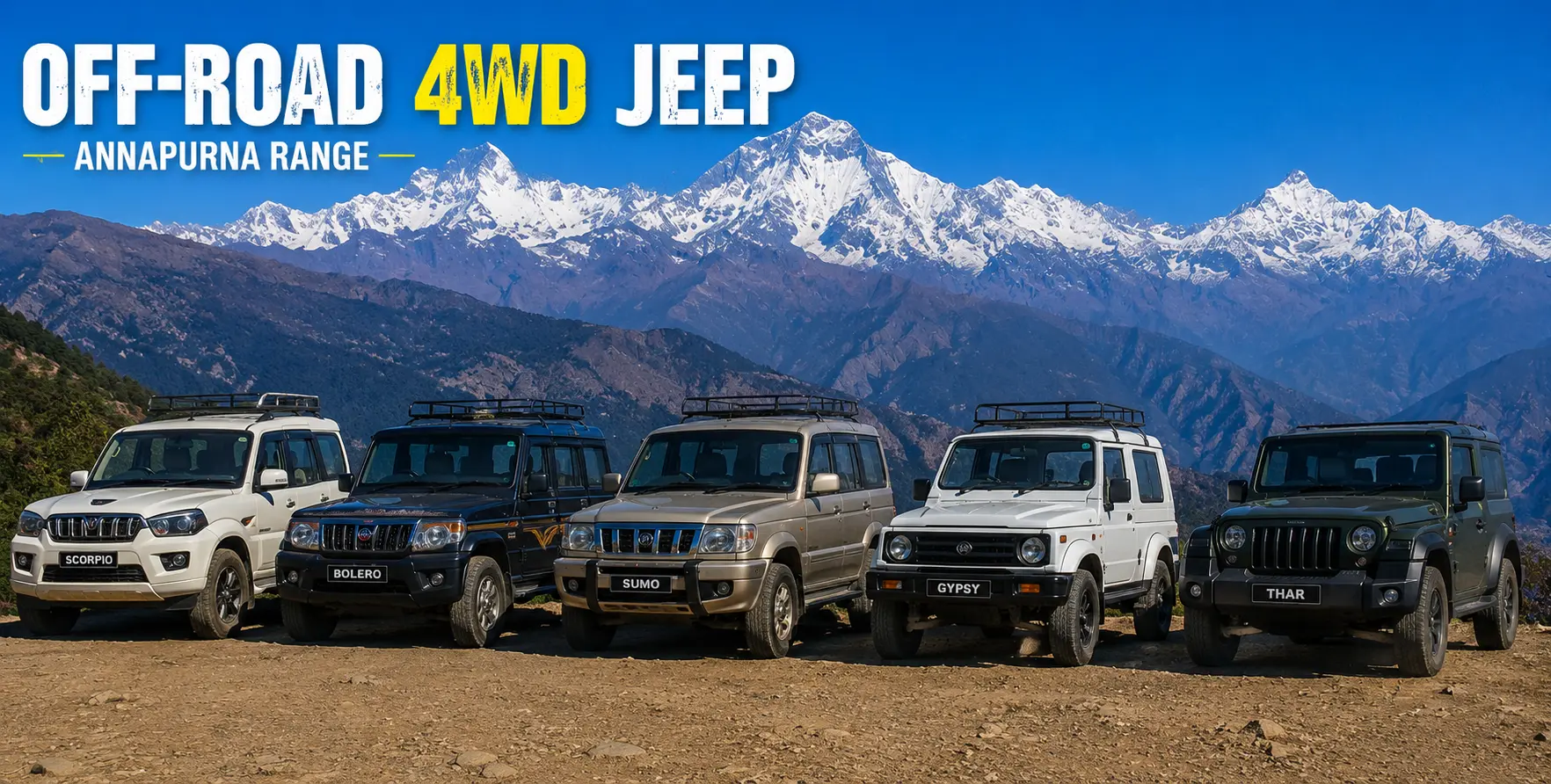
Planning Your Upper Mustang or Upper Dolpa Vehicle Transport
Whichever destination you choose, the vehicle hire component of both Upper Mustang and Upper Dolpa trips is a critical piece of the logistics that should be planned alongside your permits and your trekking agency booking, not as an afterthought. For Upper Mustang, our fleet of 4WD jeeps operates the full Kathmandu-to-Lo Manthang corridor, including the Kali Gandaki gorge road from Beni through Tatopani and Jomsom, with drivers who know this route’s seasonal risk sections and are familiar with both the trekking trail entry points and the vehicle-only access road through to Lo Manthang. Our Kathmandu to Mustang Private Jeep and Muktinath Yatra itinerary are both part of the same general western Nepal vehicle corridor.
For Upper Dolpa, our Shey Phoksundo Lake Jeep Tour handles the overland Karnali Highway approach from Kathmandu to Dunai using Toyota Hilux or Land Cruiser category vehicles specifically suited to the unpaved Surkhet-to-Dunai section of the road. We can also advise on coordinating the Kathmandu-end logistics for the flight approach via Nepalgunj and Juphal. For a broader sense of how our vehicle network and route knowledge covers both of these far-western Nepal corridors, our complete Nepal Tour Package and Plan a Trip service can coordinate everything into a single booking.
Contact Nepal Vehicle Hiring to Plan Your Expedition
Whether you are choosing Upper Mustang, Upper Dolpa, or planning the traverse that combines both into one of the great trans-Himalayan expeditions available to foreign trekkers anywhere in Nepal, Nepal Vehicle Hiring Pvt Ltd can arrange the right vehicle, the right driver, and the right logistics for every road leg of your expedition. Both of these regions demand experience, preparation, and a transport operator who knows the specific corridors rather than a generic Nepal vehicle hire booking. Reach us on WhatsApp at +977-9851013196, email us at [email protected], or visit vehiclehiringnepal.com to start planning your Upper Mustang or Upper Dolpa vehicle hire today.
- Upper Mustang vs Upper Dolpa: Which of Nepal's Forbidden Kingdoms Should You Choose?
- The Basics: What Each Region Is
- Landscape and Scenery: Two Deserts, Two Very Different Characters
- Trekking Difficulty: A Clear and Important Difference
- Cultural Highlights: Ancient Kingdoms, Forbidden Cities, and Sacred Sites
- Vehicle Hire and Road Access: The Biggest Practical Difference Between the Two
- Permits in 2026: Similar Cost, Different Complexity
- Accommodation: Teahouses vs Full Camping Expedition
- Total Cost Comparison: Budget Realistically for Both
- Wildlife: What Each Region Offers
- Which Region Suits Which Traveler: An Honest Assessment
- What the Day-to-Day Experience Actually Feels Like in Each Region
- The Combined Traverse: Dolpa to Mustang in a Single Expedition
- Frequently Asked Questions: Upper Mustang vs Upper Dolpa
- Planning Your Upper Mustang or Upper Dolpa Vehicle Transport
- Contact Nepal Vehicle Hiring to Plan Your Expedition

Related Blog & Articles
Family Jeep Hire Mustang Tour Nepal
Hidden Kingdom Adventure Nepal Upper Mustang Jeep Tour
Kathmandu to Upper Dolpa Adventure Tour Vehicle Hire
Dolpo Region Vehicle Hire Nepal
Korala – Nepal’s Gateway to Tibet: The Mustang Jeep Route to the Nepal-China Border 2026