


 Plan a Trip


Muktinath Temple Vehicle Hire
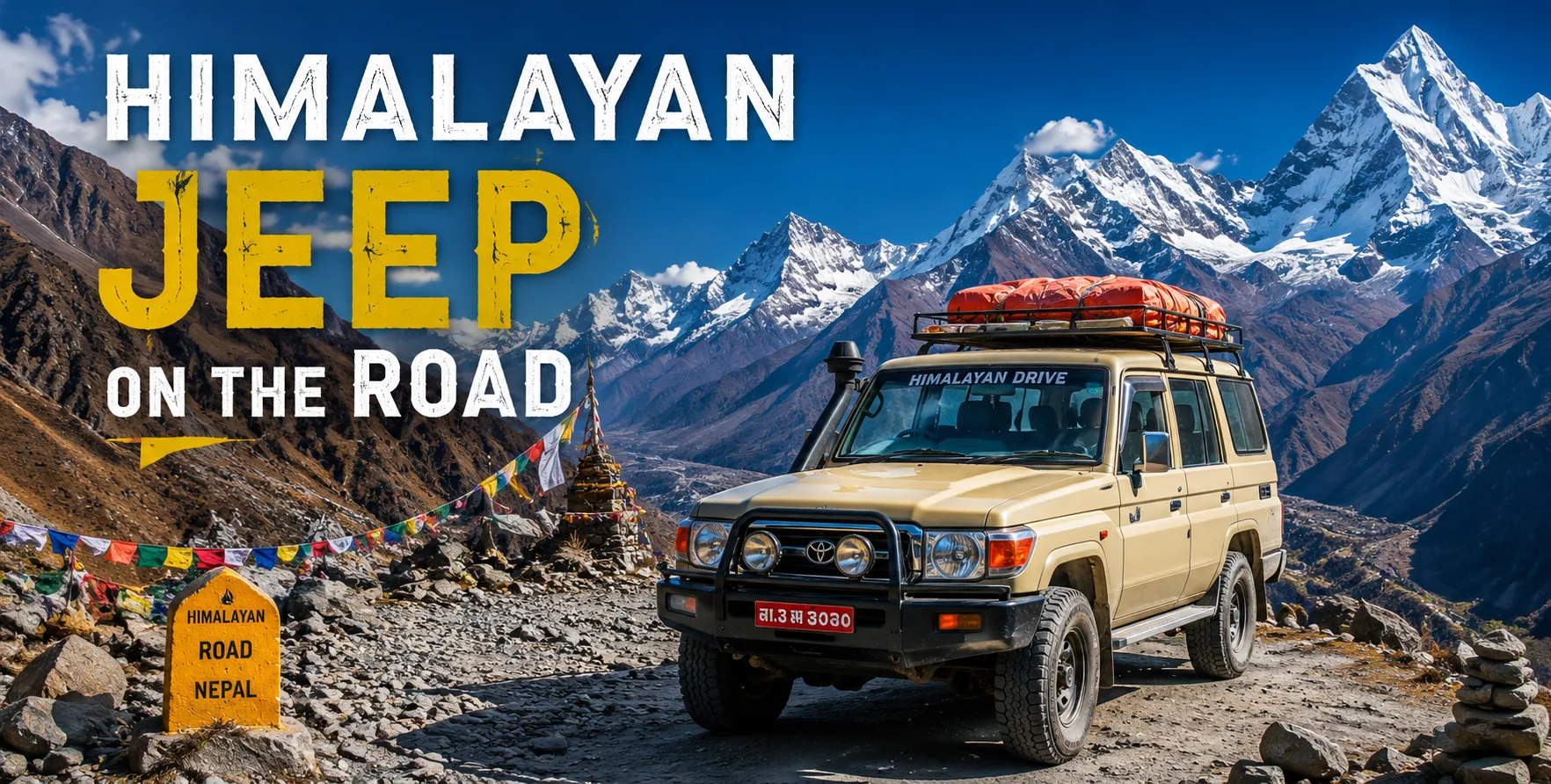
Muktinath Temple Vehicle Hire and Pilgrimage Route Guide
There are destinations in Nepal that reward effort with scenery. And then there is Muktinath, which rewards effort with something older and harder to name. Sitting at 3,710 to 3,800 meters in the Muktinath Valley of Mustang district, at the foot of the famous Thorong La pass and between the Annapurna and Dhaulagiri massifs, Muktinath Temple is simultaneously one of the holiest Hindu pilgrimage sites in the world and a deeply revered Buddhist sacred site. Its name means Lord of Liberation, from the Sanskrit mukti (salvation, liberation from the cycle of birth and death) and nath (lord, protector). Pilgrims arrive from across Nepal, India, Sri Lanka, and the wider Hindu and Buddhist world specifically to stand before the 108 sacred water spouts, bathe in the glacial water that flows from them, and offer prayers at a temple that Hindu scriptures mention as far back as the 3rd century BCE and that has drawn devotees continuously for at least two millennia.
Getting to Muktinath requires planning. The temple sits at high altitude in a remote section of the Mustang corridor. The road from Pokhara toward Jomsom and then onward to Muktinath involves a long stretch of genuinely rough, unpaved mountain road between Beni and Jomsom that demands a 4WD vehicle, an experienced driver, and a clear understanding of which sections are passable in which conditions and at which time of day. This guide is written to give pilgrims and trekkers exactly that understanding, along with a full picture of every transport option, the religious and cultural significance of everything you will encounter at the temple complex, permits, best timing, what to expect at altitude, and the complete route variations available depending on whether you are starting from Kathmandu or Pokhara, traveling as a pilgrim or a trekker, or arriving from India. At Nepal Vehicle Hiring Pvt Ltd, we operate regular private jeep hire to Muktinath from both Kathmandu and Pokhara through our dedicated Kathmandu to Muktinath Jeep and Muktinath Yatra itinerary services, and this guide draws on that route experience alongside thorough current research.
The Sacred Significance of Muktinath: Where Two Faiths Meet
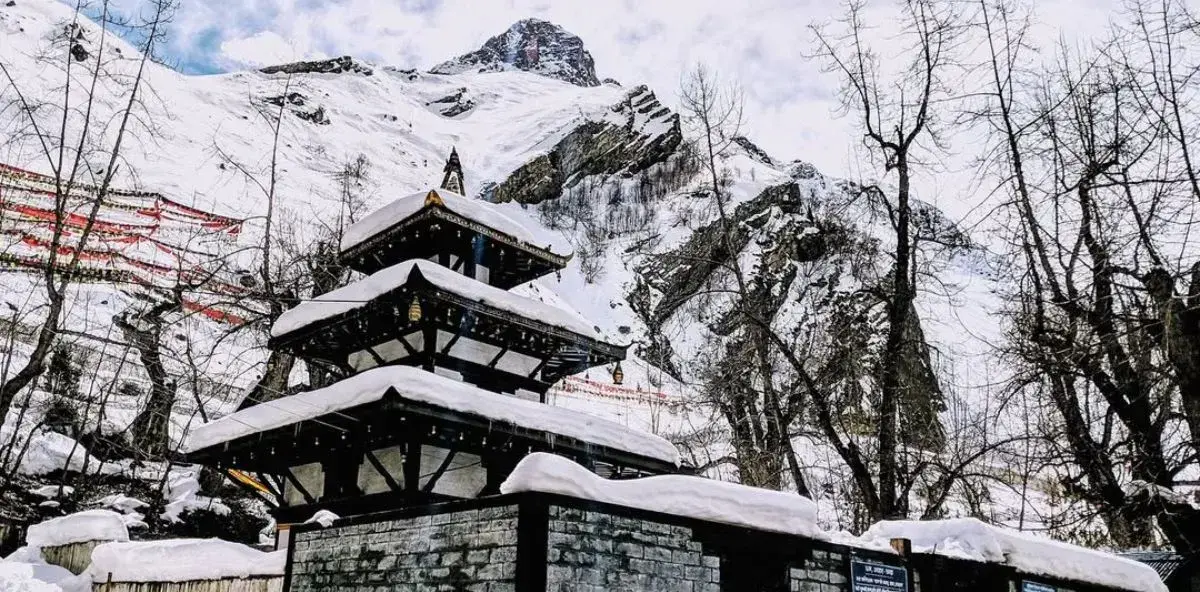
What sets Muktinath apart from virtually every other pilgrimage site in Nepal, and indeed from virtually every other holy site anywhere in the world, is not merely its altitude or its age but its dual religious character. This is a temple where Hindu priests and Buddhist nuns have shared custodial responsibility for centuries, where Hindu Brahmin priests perform the morning rituals and the daytime care of the inner shrine is entrusted to Buddhist nuns called Jhuma or Aani, who hand it back to the Hindu priests for evening prayers each day. This handover happens quietly, routinely, without ceremony or conflict, as though the two traditions have always understood that this particular place belongs equally to both. It is a living arrangement found nowhere else in the world of Hindu temples.
For devout Hindus, Muktinath carries multiple layers of significance that compound its spiritual power. It is one of the 108 Divya Desams, the holiest Vaishnava shrines dedicated to Lord Vishnu as enumerated in Tamil Vaishnava scripture, and it is the only Divya Desam located outside India, making it an especially potent pilgrimage destination for Sri Vaishnava devotees from South India who complete the full Divya Desam circuit. It is also one of eight Svayam Vyakta Kshetras, self-manifested shrines where Vishnu is believed to have appeared of his own divine will rather than through human construction. The name itself carries the central promise: a place where moksha, liberation from the cycle of birth and death, is accessible to those who arrive with devotion.
The legend behind Muktinath involves one of the most psychologically complex stories in Hindu mythology. The demon king Jalandhara, born of the union of Shiva and the Ganges, had grown so powerful that even the gods could not defeat him, because his wife Vrinda’s absolute chastity and devotion made him invincible. Vishnu, to weaken Jalandhara’s power, disguised himself as Jalandhara and tricked Vrinda, breaking her chastity and thereby breaking her husband’s invincibility. After Jalandhara was killed, Vrinda, realizing she had been deceived, cursed Vishnu to be turned to stone. Vishnu underwent this transformation, suffering and performing intense penance until he achieved liberation from the curse at the site of present-day Muktinath. The sacred Shaligram stones, ammonite fossils found in the Gandaki River that flows below the temple, are considered direct physical manifestations of Vishnu in stone, and pilgrims who collect these stones from the riverbed participate in one of the most ancient devotional practices in South Asian religion.
For Tibetan Buddhists, the site is known as Chumig Gyatsa, meaning “Hundred Waters.” It is venerated as a place of Enlightenment associated with Guru Rinpoche, also known as Padmasambhava, who is believed to have meditated here during his travels across the Himalayan plateau, spreading Buddhism to Tibet in the eighth century. The presence of Buddhist stupas, prayer flags, and the two sacred Mukti Kunda ponds alongside the Hindu temple structures reflects this shared sacred geography in visible architectural terms. Additionally, within the Bon tradition, which predates Tibetan Buddhism, Muktinath sits at the edge of the trans-Himalayan plateau, itself considered sacred terrain, giving the site a third spiritual dimension rarely discussed in mainstream pilgrimage literature.
Inside the Muktinath Temple Complex: What You Will Encounter
The Main Vishnu Temple
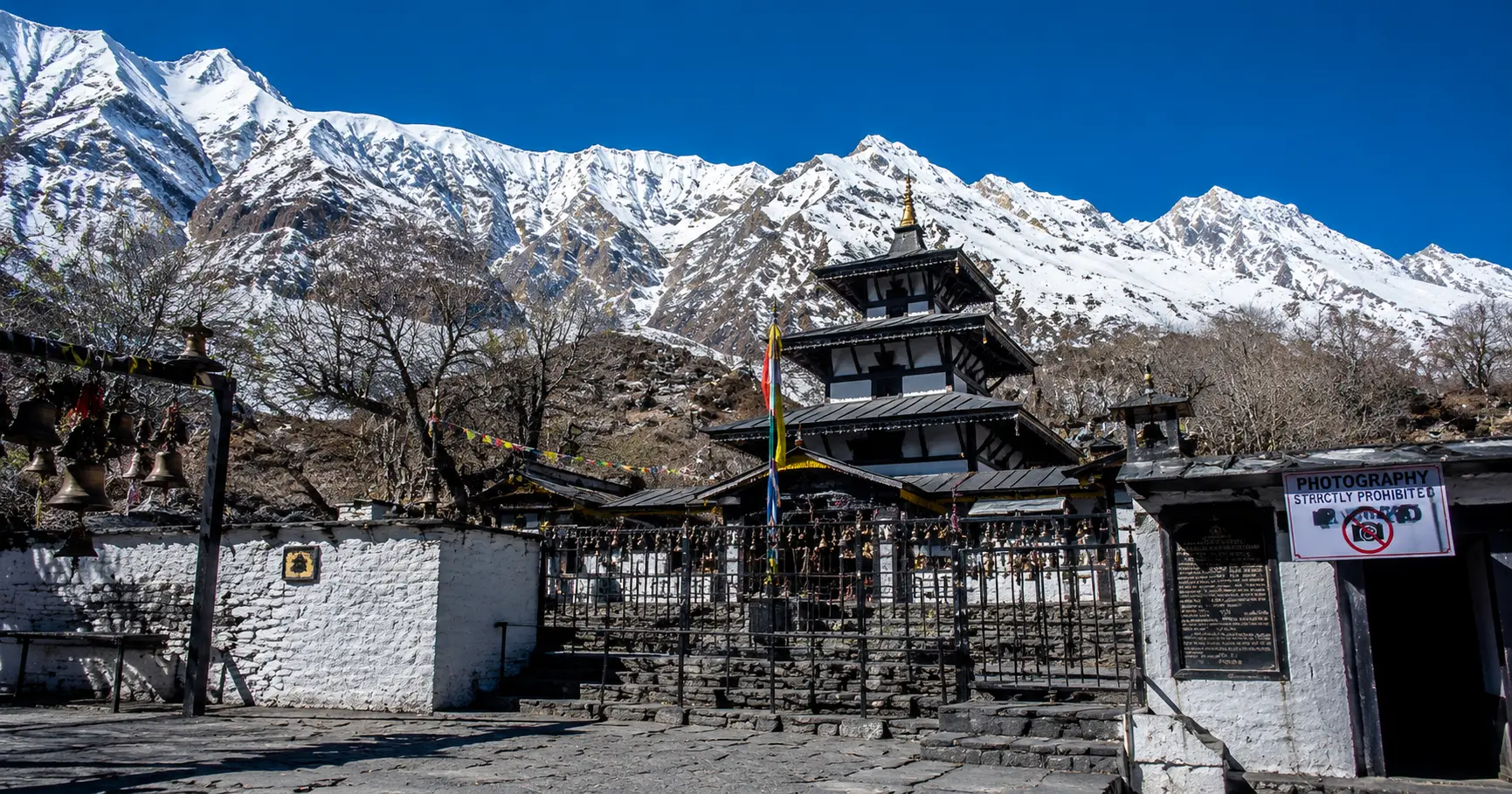
The principal temple building is a pagoda-style shrine housing a golden statue of Lord Vishnu flanked by Goddess Lakshmi and Goddess Saraswati, with additional statues of Garuda and Hanuman in attendance. The smell of incense, the sound of chanting, and the thin, cold mountain air combine on entering the temple to create a sensory atmosphere that many visitors describe as immediately striking. Hindu priests perform the morning aarti at sunrise, and the outer courtyard fills with pilgrims offering flowers, tulsi leaves, and coconuts from early morning onward throughout the main pilgrimage season.
The 108 Muktidhara Waterspouts
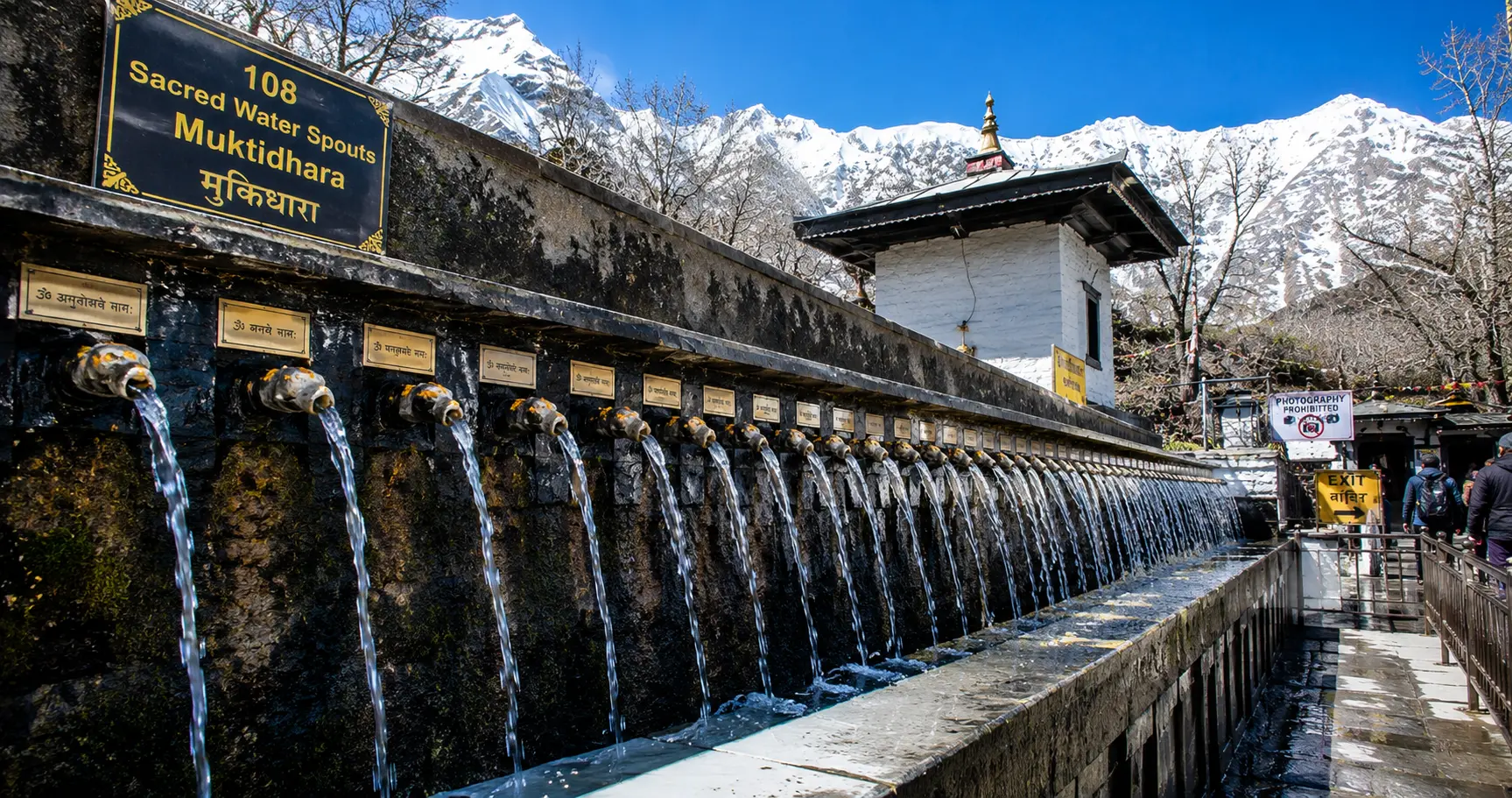
The most physically distinctive feature of the Muktinath complex is the semicircular wall of 108 brass cow-faced waterspouts, each one pouring a continuous stream of glacial water fed from the high snowfields above the temple. Bathing under all 108 spouts, called the Mukti Dhara, is the central ritual act for Hindu pilgrims, believed to wash away the sins of all previous lifetimes and open the path to moksha.
The water temperature hovers just above freezing year-round, and pilgrims, including elderly devotees who have sometimes traveled for weeks from remote parts of Nepal and India to reach this moment, stand under each spout in turn with a devotion that is genuinely humbling to witness. The number 108 carries deep significance in both Hindu and Buddhist cosmology. There are 12 zodiac signs multiplied by 9 planets in Hindu astrology, yielding 108 combinations; 27 lunar mansions, each divided into 4 quarters, yielding 108 padas; and the sacred waters here are believed to represent the Pushkarini waters from all 108 Divya Desams simultaneously.
The Jwala Mai Temple: The Eternal Flame
Just below the main Vishnu temple sits the Jwala Mai Temple, one of the most extraordinary natural phenomena associated with any religious site in the Himalayan region. Three natural gas vents emerge simultaneously from the earth here, producing flames that rise from soil, from rock, and from water simultaneously, fueled by underground gas seepage from geological formations beneath the Muktinath Valley. These flames have been burning continuously for centuries, possibly millennia, and Hindus and Buddhists alike regard them as sacred miracles representing the presence of Jwala Mai, the goddess of fire, and the simultaneous presence of the five Hindu sacred elements: earth, water, fire, air, and sky. The sight of a flame burning from the surface of water is particularly striking to first-time visitors and is unlike anything visible at any other sacred site in Nepal.
The Two Sacred Ponds
Two sacred ponds, called Mukti Kunda, sit within the temple complex and are considered sacred to both Hindu and Buddhist traditions. The ponds are fed by the same glacial water system that feeds the 108 waterspouts, and bathing in them carries its own specific ritual significance within the pilgrimage sequence. Many pilgrims complete the full ritual bath in the ponds after completing the 108-spout sequence, before proceeding to the main temple for darshan.
Jharkot, Kagbeni, and the Surrounding Sacred Sites
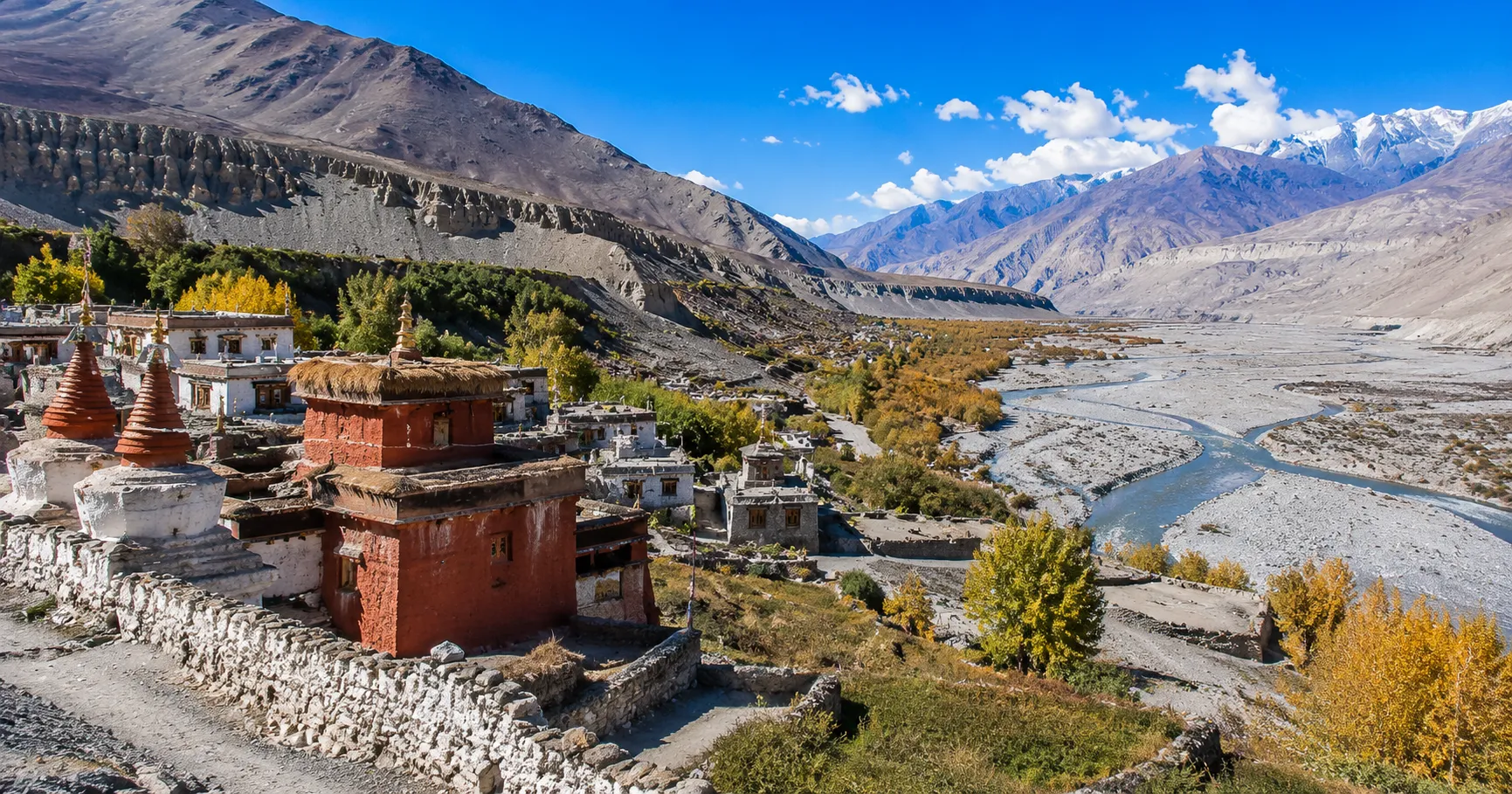
The Muktinath pilgrimage extends meaningfully beyond the temple complex itself. The village of Jharkot, a 15-minute walk below the temple, contains an important Tibetan-style monastery and a traditional Thakali village of considerable architectural beauty. Kagbeni village, at the confluence of the Kali Gandaki and Jhong Rive, rs, roughly 20 kilometers below Muktinath, is the traditional gateway to Upper Mustang and holds its own pilgrimage significance as a place where Pitri Tarpan, ritual offerings to deceased ancestors, are performed. Our broader guide to Upper Mustang 4WD Jeep covers how a Muktinath pilgrimage can be extended into a full Upper Mustang jeep tour for those who want to continue beyond the temple.
Getting to Muktinath: Every Vehicle Hire Option from Kathmandu and Pokhara
Option One: Kathmandu to Muktinath by Private Jeep (Full Overland)
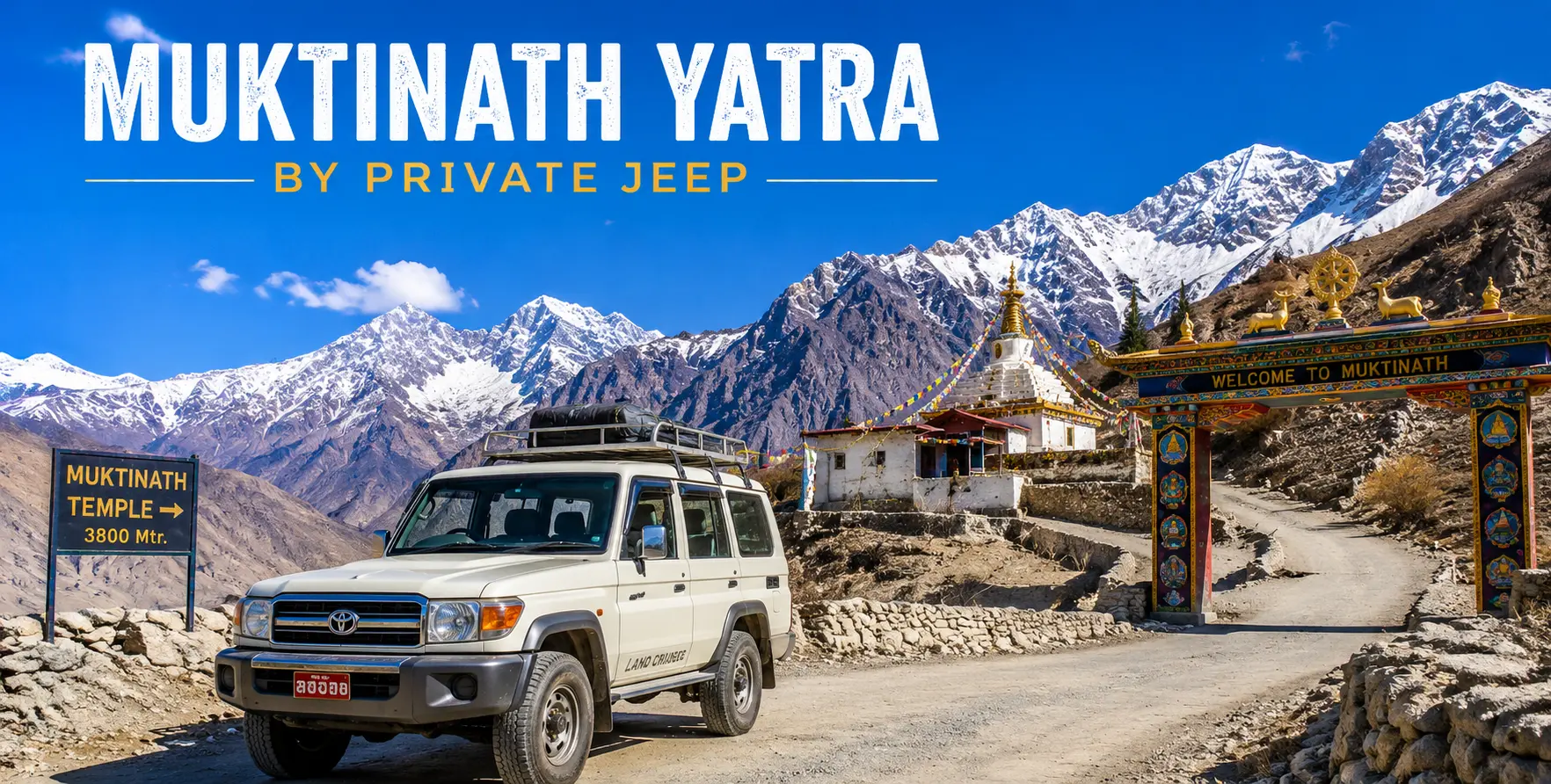
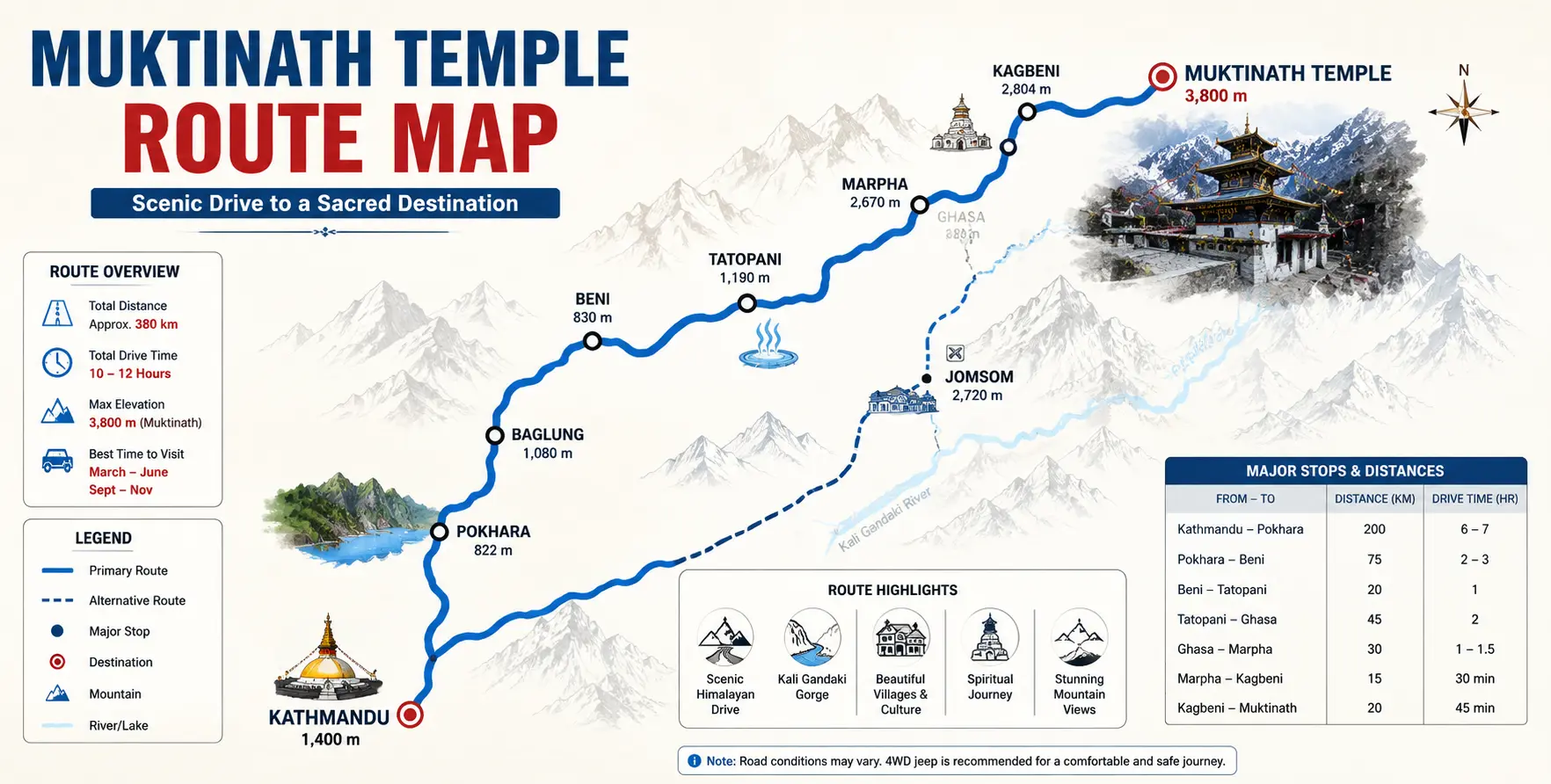
The full overland route from Kathmandu to Muktinath is a multi-day journey covering approximately 370-400 kilometers by road, typically spread over two or three driving days. The route follows the Prithvi Highway from Kathmandu to Pokhara (approximately 200 kilometers, five to six hours in a private jeep), then continues on the Kali Gandaki gorge road from Pokhara through Beni, Tatopani, Ghasa, Marpha, and Jomsom before the final ascent to Muktinath. Our dedicated Kathmandu-to-Muktinath Jeep service covers the entire overland corridor, and our structured Muktinath Yatra itinerary packages the complete pilgrimage from Kathmandu into a fixed multi-day plan, including accommodation guidance and permit logistics.
Most Kathmandu-based Muktinath itineraries structure the drive as follows: Day 1, Kathmandu to Pokhara; Day 2, Pokhara to Jomsom with an overnight stay; Day 3, Jomsom to Muktinath for darshan, then return to Jomsom or Marpha for the night; Day 4 or 5, return drive to Pokhara and then to Kathmandu. This structure builds in an overnight in Jomsom before the final ascent to the temple, which is strongly advisable for altitude acclimatization, given that pilgrims are ascending from Pokhara at roughly 800 meters to Jomsom at 2,720 meters, and then to Muktinath at 3,710 to 3,800 meters in a compressed time frame.
Option Two: Pokhara to Muktinath by Private Jeep
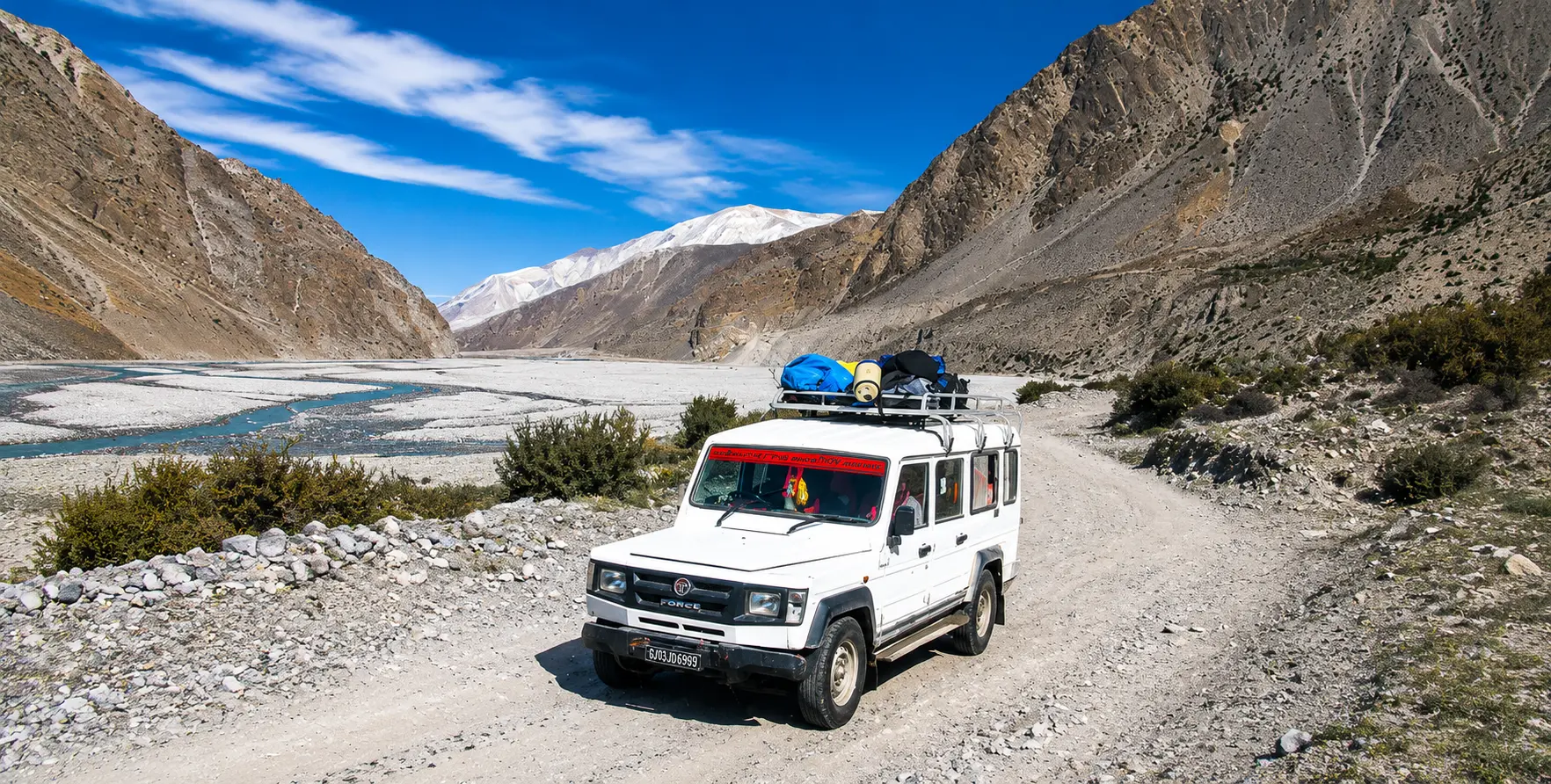
For pilgrims and travelers already based in Pokhara, the jeep route to Muktinath starts directly from the lakeside city, skipping the Kathmandu leg. The Pokhara-to-Muktinath distance is approximately 160 to 197 kilometers, depending on the specific route taken, and the driving time runs between eight and eleven hours in a 4WD jeep, again not a one-day comfortable journey and best divided into two days with an overnight at Jomsom. Our Muktinath-to-Pokhara Jeep handles the return leg.
The road from Pokhara to Beni, roughly 70 to 109 kilometers depending on the route taken through the Kali Gandaki valley, is paved and generally comfortable. Beyond Beni, the road becomes progressively rougher and more demanding, with unpaved sections, narrow lanes, landslide-prone stretches, and the famous Kali Gandaki gorge walls rising steeply on both sides. The section from Beni through Tatopani, Ghasa, Dana, Kalopani, Tukuche, and Marpha to Jomsom is approximately 69 kilometers of off-road mountain driving, taking four to five hours under normal conditions. From Jomsom to Muktinath, the final 19 to 21 kilometers climb steeply on a road that is now largely paved, taking around 45 minutes to 1.5 hours. The total Pokhara-to-Muktinath drive, done in a single day, is eight to eleven hours under good conditions and not advisable for older pilgrims or groups with children as a single unbroken journey.
Option Three: Pokhara to Jomsom by Flight, then Jeep to Muktinath
For pilgrims who want to minimize the rough driving section, the most popular time-efficient approach is to fly from Pokhara to Jomsom on an early morning domestic flight, then complete the final 21 kilometers to Muktinath by Jeep. The Pokhara-Jomsom flight takes roughly Jeepo 25 minutes and offers extraordinary aerial views of the Annapurna and Dhaulagiri ranges, making it a memorable part of the pilgrimage experience. From Jomsom, a private jeep to Muktinath takes approximately 45 minutes to 1.5 hours, depending on road conditions, and a shared local jeep is also available for around NPR 500-800 per seat.
The significant practical complication of this approach is weather reliability. The Pokhara-Jomsom route is one of the most weather-sensitive mountain flights in Nepal, prone to cancellation or delay due to strong afternoon winds in the Kali Gandaki Valley and morning cloud cover. Booking an early-morning flight and building a buffer day into the schedule is standard practice for this route, particularly in the October to December window, when high winds make cancellations more frequent. A traveler who books a tight onward schedule that depends on the Jomsom flight leaving on time is routinely disappointed.
Option Four: Jomsom by Flight, Return by Jeep (or Vice Versa)
A widely recommended strategy, particularly for pilgrim groups that want to minimize their total driving time without fully sacrificing the overland experience, is the combined approach: fly from Pokhara to Jomsom for the approach, complete the Muktinath darshan, and then drive back to Pokhara by jJeep alongthe Kali Gandaki gorge road This combination captures the dramatic aerial approach and eliminates one of the roughest road sections, while preserving the overland experience for the return leg, when pilgrims are familiar with the route and can enjoy the scenery of Tatopani, the Rupse Waterfall, and the Ghasa gorge section with more relaxed attention. Our Muktinath-to-Pokhara Jeep handles the return overland leg for exactly this kind of combined itinerary.
The Indian Pilgrim Route: Gorakhpur to Muktinath
A substantial proportion of Muktinath pilgrims arrive from India rather than from within Nepal, and many of them enter through the Sunauli border crossing near Gorakhpur in Uttar Pradesh. This approach is covered by our Nepal Tour from Gorakhpur package, which handles the border-crossing logistics and onward transport from the Nepal side of Sunauli to Pokhara and then to Muktinath. Indian citizens do not require a visa for Nepal, and the ACAP permit fee for SAARC nationals is significantly lower than for non-SAARC visitors, at approximately NPR 1,600 compared to NPR 3,000. Pilgrimage operators based in Gorakhpur, Varanasi, and other major North Indian pilgrimage hubs regularly organize group Muktinath Yatra packages that handle border crossing, Nepali transport, accommodation, and permit logistics as a single package. Our vehicle hire services integrate with these group arrangements for the Nepal-side driving legs.
Road Conditions Section by Section: What to Expect on the Drive
Kathmandu to Pokhara: Prithvi Highway (200 km, 5 to 6 hours)
The Prithvi Highway from Kathmandu to Pokhara is paved throughout and generally in reasonable condition, running alongside the Trishuli and then the Marsyangdi river valleys through the middle hills. Traffic can be slow through Mugling and on the Pokhara approach due to heavy truck and bus traffic, and construction work can add time. A standard sedan or Jeep can handle Jeep leg comfortably, though a Jeep group planning to continue to Muktinath should begin the journey in a 4WD vehicle from Kathmandu rather than switching vehicles in Pokhara.
Pokhara to Beni: The Comfortable Opening (70 to 109 km, 2.5 to 3 hours)
The road from Pokhara to Beni is paved and comfortable for most of its length, giving little indication of what lies ahead beyond Beni. This section follows the Modi Khola and then the Kali Gandaki valley through the lower hill terrain and is suitable for any vehicle type. This is the section of the drive where stops at Baglung Kalika Mai Mandir and the suspension bridge at Kushma are often built into the Muktinath Yatra itinerary for pilgrims interested in the broader religious landscape of the Pokhara region.
Beni to Jomsom: The Challenging Core (69 km, 4 to 5 hours)
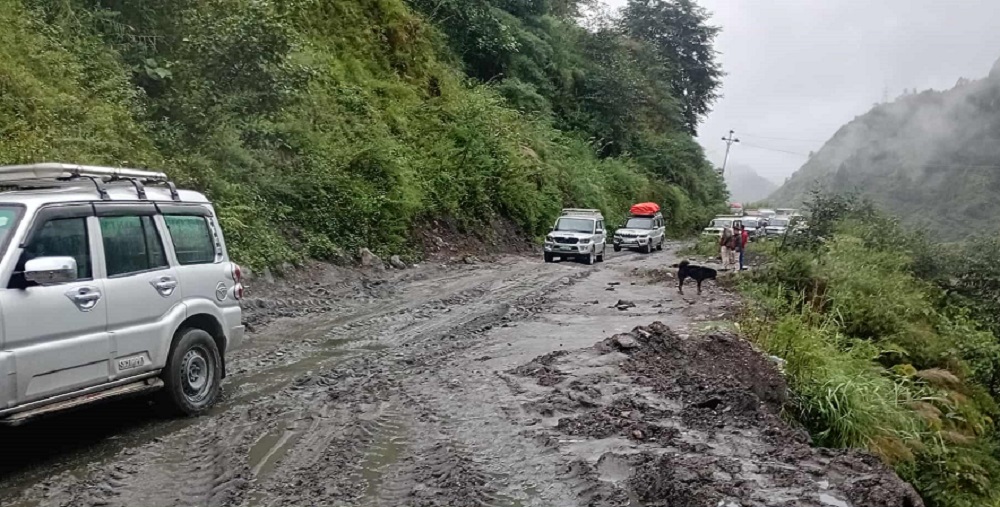
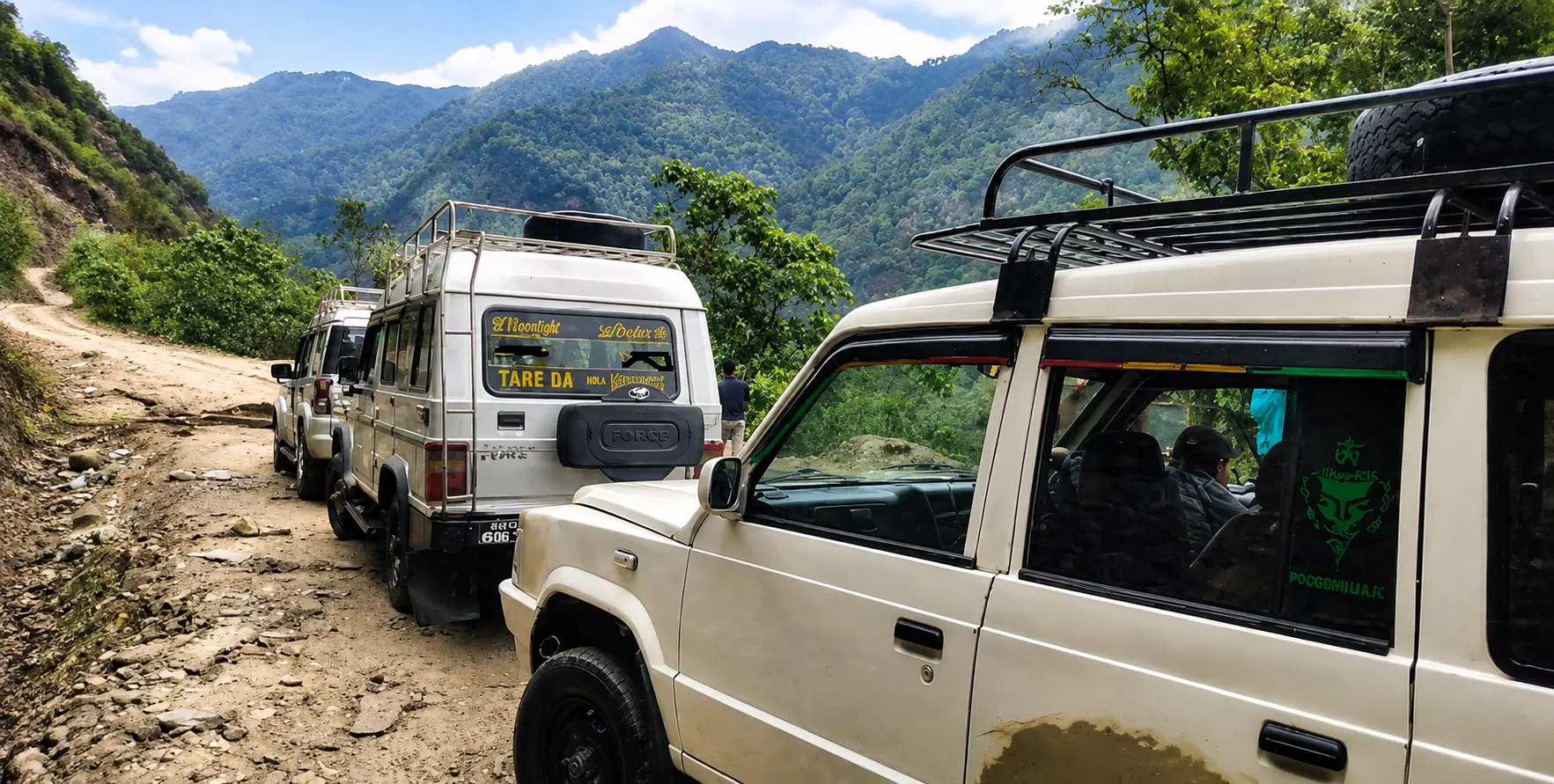
The section from Beni to Jomsom is the most demanding part of the journey, and it is where a properly maintained 4WD vehicle with an experienced driver makes the greatest difference. The road is unpaved through most of this stretch, running through the Kali Gandaki gorge between cliff walls that rise hundreds of meters on both sides, through villages including Tatopani known for its natural hot springs, Ghasa, Dana, the gorge’s narrowest point near Rupse Waterfall, Kalopani with its wide valley and mountain views, Tukuche with its famous apple brandy orchards, and Marpha, before arriving at Jomsom. The road involves muddy sections in wet weather, occasional landslide debris, narrow passing points, and the famous afternoon Kali Gandaki wind, which begins building from midday and can make driving conditions considerably more difficult. Departing from Beni as early as possible in the morning, ideally by 6 or 7 AM, is strongly recommended to complete this section before the afternoon wind peaks.
Jomsom to Muktinath: The Final Ascent (19 to 21 km, 45 to 90 minutes)
The final section from Jomsom to Muktinath, passing through Kagbeni village, is largely paved and represents a significant improvement from the rough Beni-Jomsom section. However, the road climbs steeply from Jomsom at 2,720 meters to Muktinath at 3,710 meters, gaining approximately 1,000 meters of altitude in under 20 kilometers. The paved surface makes this section more comfortable than it might otherwise be, though the altitude gain is rapid enough that pilgrims arriving directly from low elevation should plan an overnight in Jomsom before the final ascent to allow basic acclimatization.
From the vehicle stop at Ranipauwa, at the base of the final approach to the temple, visitors must walk approximately 500 meters uphill on a paved path to reach the temple entrance. This walk takes 20 to 40 minutes at altitude for most visitors, longer for older pilgrims or those feeling the altitude. Horses and palanquins (called doli or palkhi) are available for hire at Ranipauwa for pilgrims who cannot walk the final approach, at approximately NPR 1,000 to 1,500 for the horse ride and more for the palanquin service. This availability is an important practical detail for pilgrims traveling with elderly parents or family members with mobility limitations, as it makes the actual temple visit accessible even to those who cannot manage the final slope on foot.
Permits Required for the Muktinath Pilgrimage
All visitors to Muktinath, regardless of nationality, require two permits, as the temple lies within the Annapurna Conservation Area. These should be arranged before departure from Kathmandu or Pokhara rather than at a checkpoint en route.
- Annapurna Conservation Area Permit (ACAP) — mandatory for all visitors to the Annapurna Conservation Area, which includes the entire Jomsom-Muktinath corridor. As of 2026, the fee is approximately NPR 3,000 for foreign nationals (non-SAARC) and NPR 1,600 for SAARC nationals, including Indian citizens. This permit is obtainable at the Nepal Tourism Board offices in Kathmandu or Pokhara, and is verified at checkpoints in Birethanti and at Kagbeni on the approach to Muktinath.
- TIMS Card (Trekkers’ Information Management System) — required for the Muktinath trekking route and for vehicle-based visitors at certain checkpoints and interpretations. Also obtainable at Nepal Tourism Board offices in Kathmandu or Pokhara. SAARC national fees are considerably lower than non-SAARC fees.
Both permits can be obtained on the same day at the same office, and the process is straightforward. Indian pilgrims booking through a registered Nepal tour operator often have their permits arranged as part of the package, which simplifies the logistics considerably. For jeep tour visitors who are not trekking, confirm with your transport operator before departure whether the TIMS card requirement applies to your specific route, as interpretation at checkpoints can vary.
The Thakali People and the Villages of the Kali Gandaki Corridor
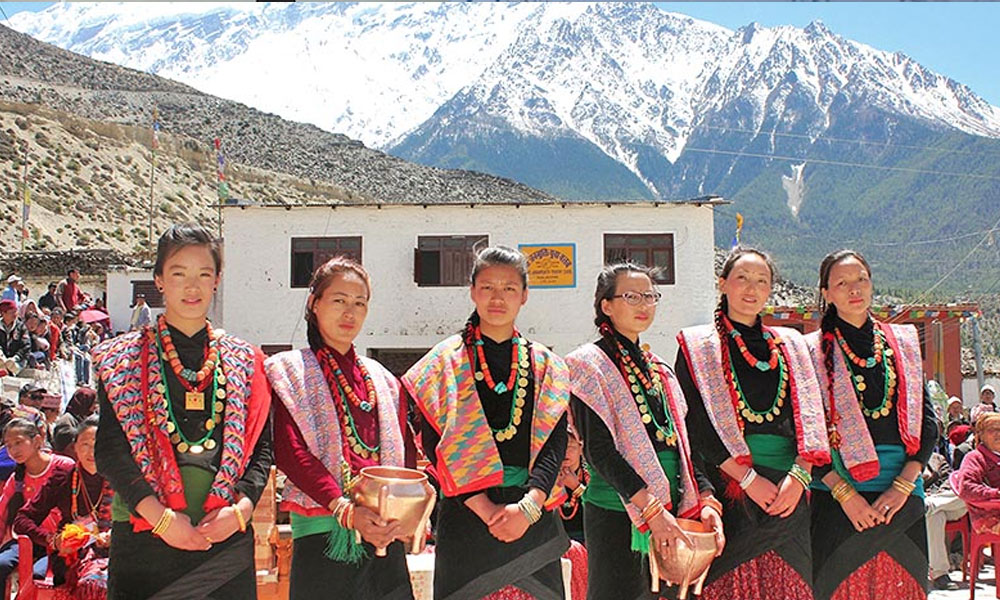
The road from Beni to Muktinath passes through territory primarily inhabited by the Thakali people, one of the most distinctive ethnic communities in Nepal and historically one of the most economically prominent, owing to their central role in the salt trade between Tibet and the lowlands of Nepal that made the Kali Gandaki corridor one of the most commercially important routes in the Himalayan region before the Chinese closure of the Tibet border disrupted traditional trading patterns.
Marpha village, often called the apple capital of Nepal, is one of the most architecturally beautiful settlements along the route, with whitewashed stone houses, a central drainage channel that keeps the lanes remarkably clean, a small local distillery producing apple brandy and cider that has become a popular stop for travelers, and a Nyingma Buddhist monastery on the ridge above the village. Spending time in Marpha during a two- or three-day Muktinath itinerary rather than rushing through it is consistently recommended by experienced Muktinath operators, since the village offers a genuine introduction to Thakali culture and the high-altitude orchard agriculture that makes this valley unusual within the broader Himalayan region.
Jomsom, the district headquarters of Mustang at 2,720 meters, is the overnight base for most Muktinath pilgrims on the overland route, with a range of teahouses and lodges, a few restaurants serving Thakali cuisine, and a small domestic airport that serves the Pokhara flight connection. The afternoon Kali Gandaki wind that affects driving on this route also makes Jomsom famous among meteorologists and kite enthusiasts: the valley is one of the windiest regularly inhabited places in Nepal, and the sustained afternoon gusts that come off the Tibetan plateau through the gorge can be forceful enough to push people physically sideways on the airstrip apron.
Kagbeni, at the confluence of the Kali Gandaki and Jhong rivers, is the traditional checkpoint village marking the boundary of the old Kingdom of Lo, beyond which the restricted area of Upper Mustang begins. The village’s medieval mud-brick architecture, its red-walled monastery sitting above the rooftops, and its position at the river confluence where the ritual Pitri Tarpan ancestor offerings are made, have made it one of the most photographed and most spiritually significant waypoints on the entire Muktinath pilgrimage route. Many pilgrims choose to stop here on both the outbound and return journey for its own devotional significance, separate from the main temple darshan at Muktinath.
Sample Itineraries: Kathmandu and Pokhara to Muktinath
Five-Day Kathmandu to Muktinath Yatra by Private Jeep
- Day 1 — Kathmandu: sightseeing and permit collection at the Nepal Tourism Board. The evening is free for rest.
- Day 2 — Kathmandu to Pokhara by private jeep via Prithvi Highway, approximately 200 km. Jeep five to km. Jeep: ours. Evening lakeside at Pokhara.
- Day 3 — Early morning departure from Pokhara to Jomsom via Beni, Tatopani hot springs, Rupse Waterfall, Ghasa gorge, Marpha. Eight to ten hours. Overnight in Jomsom.
- Day 4 — Morning drive from Jomsom to Kagbeni for Pitri Tarpan offerings, then ascent to Muktinath. Temple darshan, holy bath under 108 Muktidhara waterspouts, visit to Jwala Mai Temple, Jharkot monastery. Return to Jomsom or Marpha for the overnight.
- Day 5 — Return drive to Pokhara and overnight, or continue directly to Kathmandu as a long combined driving day.
Three-Day Pokhara to Muktinath Yatra
- Day 1 — Pokhara to Jomsom via full overland jeep route through Beni, Tatopani, Marpha. Eight to ten hours. Overnight Jomsom.
- Day 2 — Jomsom to Muktinath early morning. Kagbeni stop, Darshan at all temple sites, holy bath under 108 waterspouts, Jwala Mai flame, Narsing Gompa. Afternoon return to Jomsom or Tatopani. Overnight.
- Day 3 — Return to Pokhara via Beni, with a morning stop at Tatopani hot springs if staying overnight in Tatopani—five to seven hours.
Two-Day Pokhara by Flight to Jomsom, Jeep Return
- Day 1 — Early morning flight Pokhara to Jomsom (25 minutes). Private jeep from Omsom Jeepuktinath for full darshan. Return to Jomsom overnight.
- Day 2 — Return drive from Jomsom to Pokhara via Kali Gandaki gorge, with stops at Marpha, Tatopani hot springs, and Rupse Waterfall—arrive in Pokhara in the evening.
All of these itineraries are bookable through our Muktinath Yatra itinerary page. They can be extended in either direction to include Kathmandu Valley sightseeing via our Kathmandu Sightseeing Tour or a broader Pokhara-area excursion. Pilgrims who want to continue to Upper Mustang and Lo Manthang after completing the Muktinath darshan can do so using our Kathmandu-to-Mustang Private Jeep or Upper Mustang 4WD Jeep services.
Best Season and Altitude Considerations
The best seasons for the Muktinath pilgrimage are spring, from March through May, and autumn, from September through November. Spring offers warming temperatures, occasional rhododendron blooms on the lower Kali Gandaki slopes, and generally stable weather on the road and at altitude. Autumn, particularly October and November, combines the clearest mountain views of the year with the dry post-monsoon conditions that make the Beni-Jomsom road section most predictable. Both seasons coincide with the main Hindu pilgrimage calendar, including the period around Janai Purnima in August, when Muktinath draws its largest annual crowd of pilgrims. However, August falls within the monsoon season and brings the highest risk of road disruptions on the rough Beni-Jomsom section.
Because Muktinath sits in the Mustang rain shadow, the road and trail conditions here are less severely disrupted by monsoon than routes on the south face of the Himalaya, which is why visits during July and August are possible for pilgrims with limited scheduling flexibility. Still, road conditions, specifically on the Beni-Jomsom section, should be confirmed with an operator who has current on-the-ground information before departure during this period.
Winter,, from December through February,, brings cold temperatures and occasional snow at Muktinath and on higher road sections. The road can become icy, and the temple complex itself may have snow on the approach path. While Muktinath itself does not close in winter, the practical conditions make the pilgrimage considerably more physically demanding than a spring or autumn visit, and older pilgrims or those with altitude-related health concerns are generally advised against a winter visit. Temple management officially notes that January and February can see snow blocking the roads, and the best general advice is to target the spring or autumn windows for any non-urgent pilgrimage timing.
Altitude sickness should be taken seriously at Muktinath regardless of the season. Pilgrims ascending from Pokhara or Kathmandu gain well over 2,000 meters in a day or two of driving, and the rapid ascent can cause headache, fatigue, and nausea in unacclimatized visitors, particularly those arriving directly from low-elevation cities. The recommended mitigation is the overnight stay in Jomsom before proceeding to Muktinath, which allows the body to begin adjusting to 2,720 meters before the further climb to 3,710 meters. Staying well hydrated, avoiding alcohol on ascent days, and taking any symptoms of altitude sickness seriously rather than pushing through them are standard precautions that apply here, as at any Himalayan destination above 3,000 meters.
Combining Muktinath Temple Vehicle Hire With a Wider Annapurna and Nepal Itinerary
Muktinath’s position in the Mustang corridor makes it a natural fit to be combined with several other destinations along the same road network. Pilgrims approaching via Pokhara can easily include a Pokhara city day, visiting the lakeside, Bindabasini Temple, Devi’s Fall, and Gupteshwor Mahadev Cave, before departing for the Kali Gandaki road. On the return journey, the Tatopani hot springs, Galeshwor Mahadev Temple, and the Baglung Kalika Mai Mandir are standard devotional stops incorporated into many Muktinath Yatra itineraries specifically because they fall directly on the return route.
Trekkers who want to combine the Muktinath visit with a proper high-altitude trekking experience can build in a side trip from Muktinath to the Thorong La pass area, the highest point on the Annapurna Circuit at 5,416 meters, or extend the trip westward toward the Annapurna Circuit’s Manang-Jomsom corridor using our Kathmandu to Manang Jeep and Kathmandu to Chame Private Jeep services for the eastern approach into the Annapurna Circuit from the Besisahar side. The Annapurna Circuit remains one of Nepal’s great long-distance treks, and combining a Muktinath vehicle pilgrimage with even the first few days of the circuit walking experience offers a genuinely different dimension of the same Mustang corridor that the jeep tour alone cannot replicate.
For pilgrims wanting to continue deeper into Mustang after completing the Muktinath darshan, our Pokhara-to-Mustang Jeep continues to Lo Manthang and the walled city of the Kingdom of Lo. The road from Kagbeni to Lo Manthang, which forms the Upper Mustang jeep tour, runs directly through the same valley system as the Muktinath approach, making a combined Muktinath pilgrimage and Upper Mustang cultural tour one of the most natural and rewarding itinerary combinations in the entire western Nepal vehicle hire network.
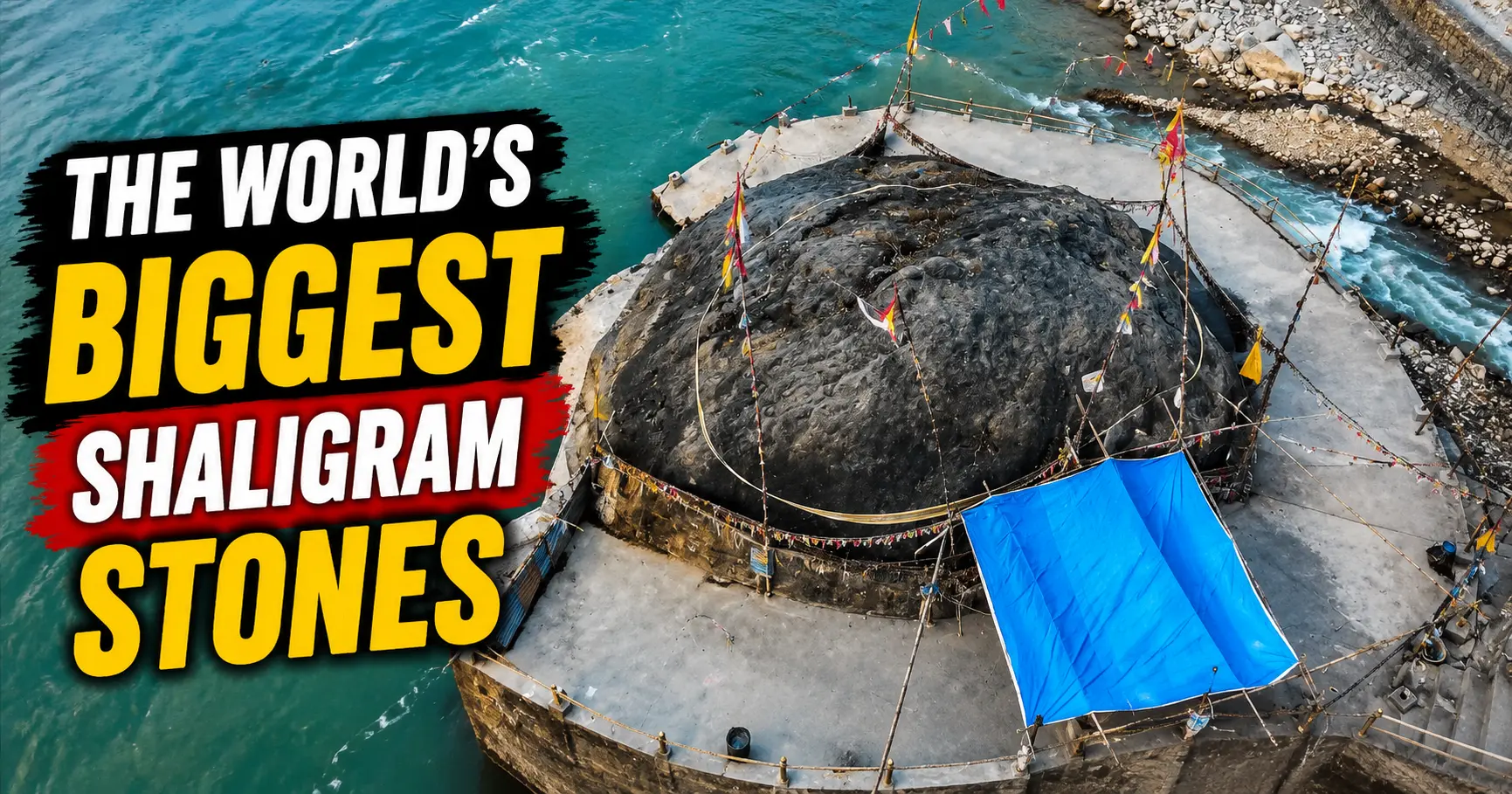
The Shaligram Stones of the Gandaki River: A Pilgrimage Within a Pilgrimage
One of the most distinctive and least discussed aspects of the Muktinath pilgrimage is the practice of collecting Shaligram stones from the Kali Gandaki River on the approach to the temple. Shaligrams are naturally occurring ammonite fossils, the mineralized shells of extinct cephalopod mollusks that lived in a shallow tropical sea that covered what is now the Himalayan region approximately 65 to 140 million years ago. As the Indian tectonic plate collided with the Eurasian plate and the Himalaya rose, these fossils were uplifted to extraordinary altitudes. The erosive power of the Kali Gandaki River, one of the deepest and most geologically active river systems in the Himalayan region, cuts through the ancient seabed and releases these fossils in extraordinary quantities into the riverbed between Mustang and the lower Kali Gandaki valley.
For devout Hindus, and particularly for Vaishnavas, Shaligrams are not merely fossils but direct physical manifestations of Lord Vishnu. The legend connecting Vishnu to this specific riverbed, through his transformation into stone after Vrinda’s curse at the site of Muktinath, has sanctified every Shaligram stone found in the Gandaki watershed as a form of the deity himself. This means that a Shaligram stone found in the Gandaki River is considered a legitimate object of Vishnu worship in its own right, capable of being installed in a home shrine and receiving daily puja offerings without requiring the presence of a Brahmin priest for its consecration, which is an unusual status in Hindu temple practice where most sacred images require elaborate priestly consecration.
The specific spiral pattern of each Shaligram, corresponding to the natural growth pattern of the ammonite shell, is interpreted in Shaivite and Vaishnava iconography as representing the Sudarshana Chakra, the spinning disc weapon of Vishnu, and the precise pattern and color of each stone determine which specific form of Vishnu or which deity it is understood to embody. Pilgrims, particularly those from the Sri Vaishnava tradition of South India, come specifically to the Gandaki riverbed with the knowledge to identify and select particular types of Shaligram stones for specific ritual purposes, and collecting one or more Shaligrams from the Gandaki River on the Muktinath yatra is itself considered a sacred act, completing a specific dimension of the pilgrimage that cannot be replicated elsewhere. The Kali Gandaki riverbed near Kagbeni and Jomsom is the primary collection point for most pilgrims.
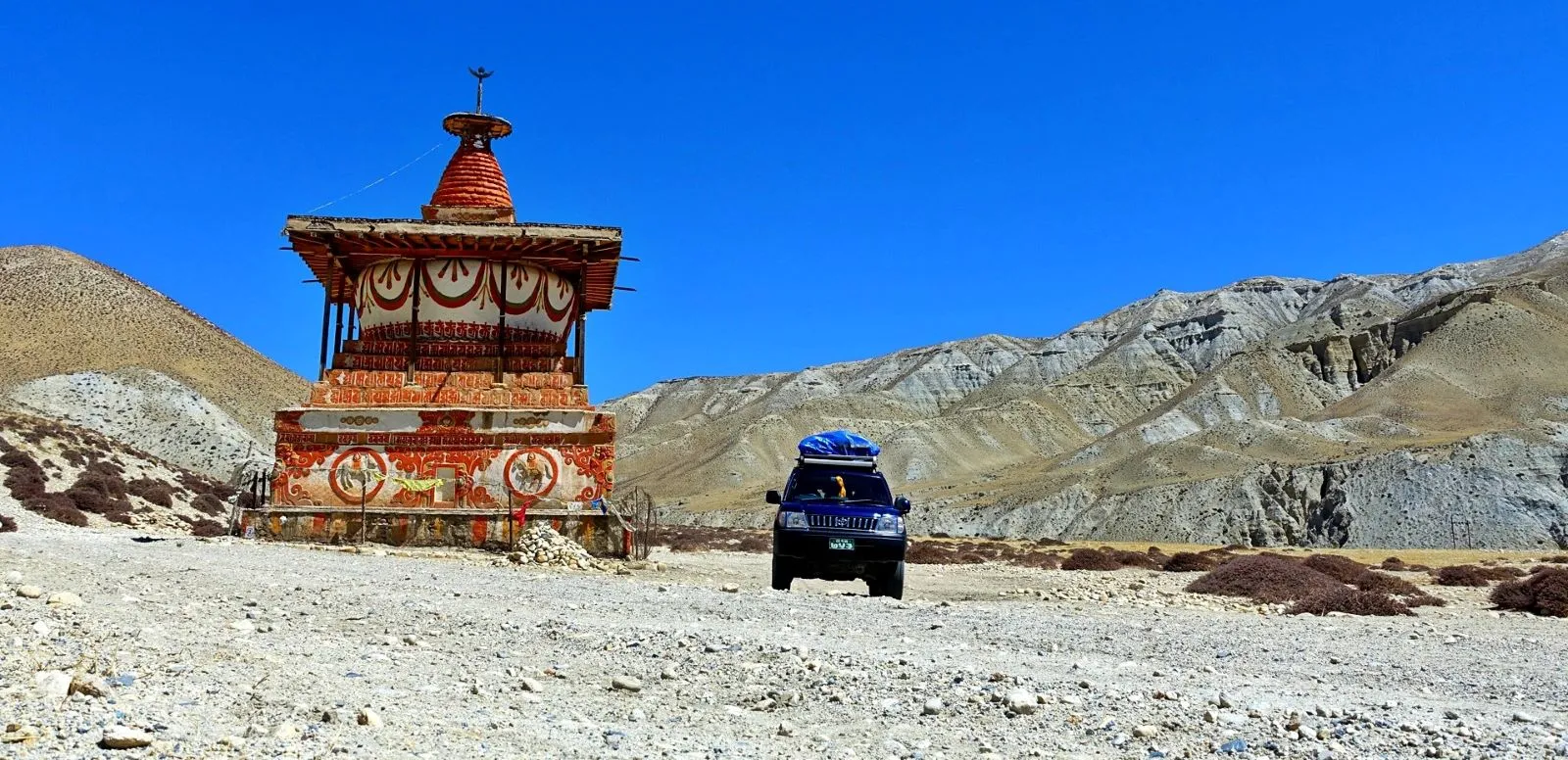
Food, Accommodation, and the Practical Experience Along the Route
The quality and character of accommodation and food change significantly along the Muktinath route, and setting expectations correctly by section helps pilgrims pack appropriately and plan their days without avoidable surprises.
In Kathmandu and Pokhara, accommodation ranges from basic guesthouses to comfortable three- and four-star hotels, and the two-night minimum stay that most itineraries build into both cities provides genuine rest before the mountain section. Pokhara’s lakeside district offers a particularly wide range of options and a relaxed atmosphere,e well suited to a day of rest and preparation before the early-morning departure toward Beni.
Along the Kali Gandaki route, accommodation is available in all major villages, with Tatopani, Marpha, and Jomsom offering the most reliable and comfortable options. Tatopani is popular as an overnight stop specifically because of its natural hot springs on the riverbank, and a soak in the thermal pools after a long, dusty day of driving on the Kali Gandaki road has become something of a tradition on the Muktinath Yatra circuit. Marpha offers simple but characterful teahouse accommodation in a Thakali village setting, and the local apple brandy is genuinely excellent for those interested in trying it. Jomsom has the widest range of accommodation in this section and the most reliable services, including basic restaurants serving Thakali cuisine, a police checkpoint for permit verification, and a small airport for travelers using the flight option.
Thakali cuisine, which evolved from the specific agricultural and trade conditions of the Kali Gandaki valley, is worth engaging with deliberately rather than defaulting to standard dal bhat throughout the route. The Thakali thali, a set meal platter, typically includes ghee-enriched rice, a buckwheat bread called dhido, bone soup, a range of pickled vegetable condiments, and fresh curd, representing a considerably more elaborate and flavorful version of the standard teahouse meal and reflecting the prosperity and culinary sophistication that the historical salt trade brought to this valley’s communities.
At Muktinath itself and in the immediate vicinity, accommodation at the Ranipauwa village level is basic but functional, with several simple teahouses and lodge rooms available for pilgrims who want to spend a night at altitude before the temple darshan rather than ascending and descending the same day. Spending a night at Muktinath allows pilgrims to attend the early-morning aarti at sunrise, when the mountain light is extraordinary and the pilgrim crowds are at their smallest, a moment most experienced Muktinath visitors describe as the most spiritually potent of the entire yatra.
Frequently Asked Questions About the Muktinath Temple Vehicle Hire
Is the road to Muktinath suitable for a standard car?
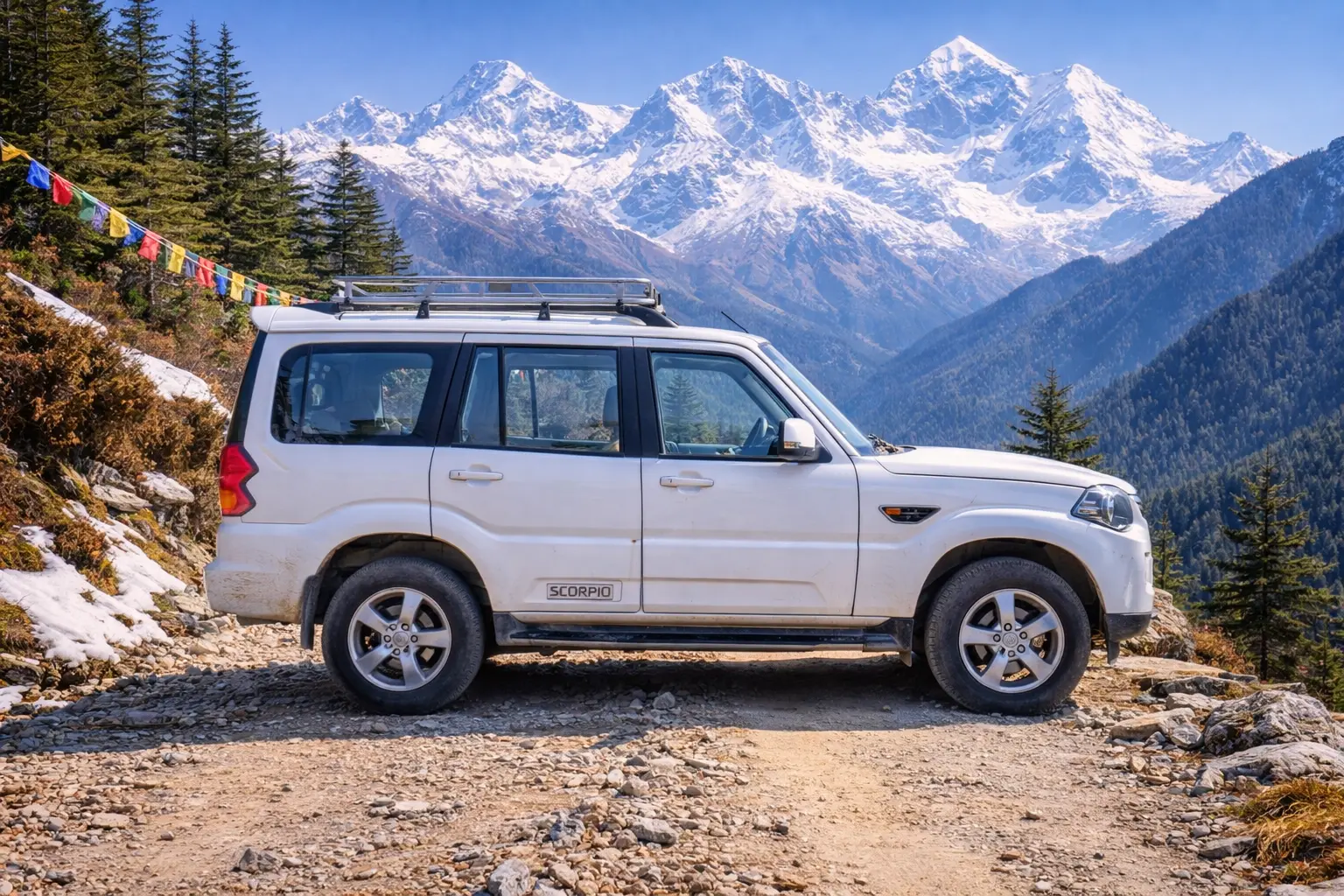
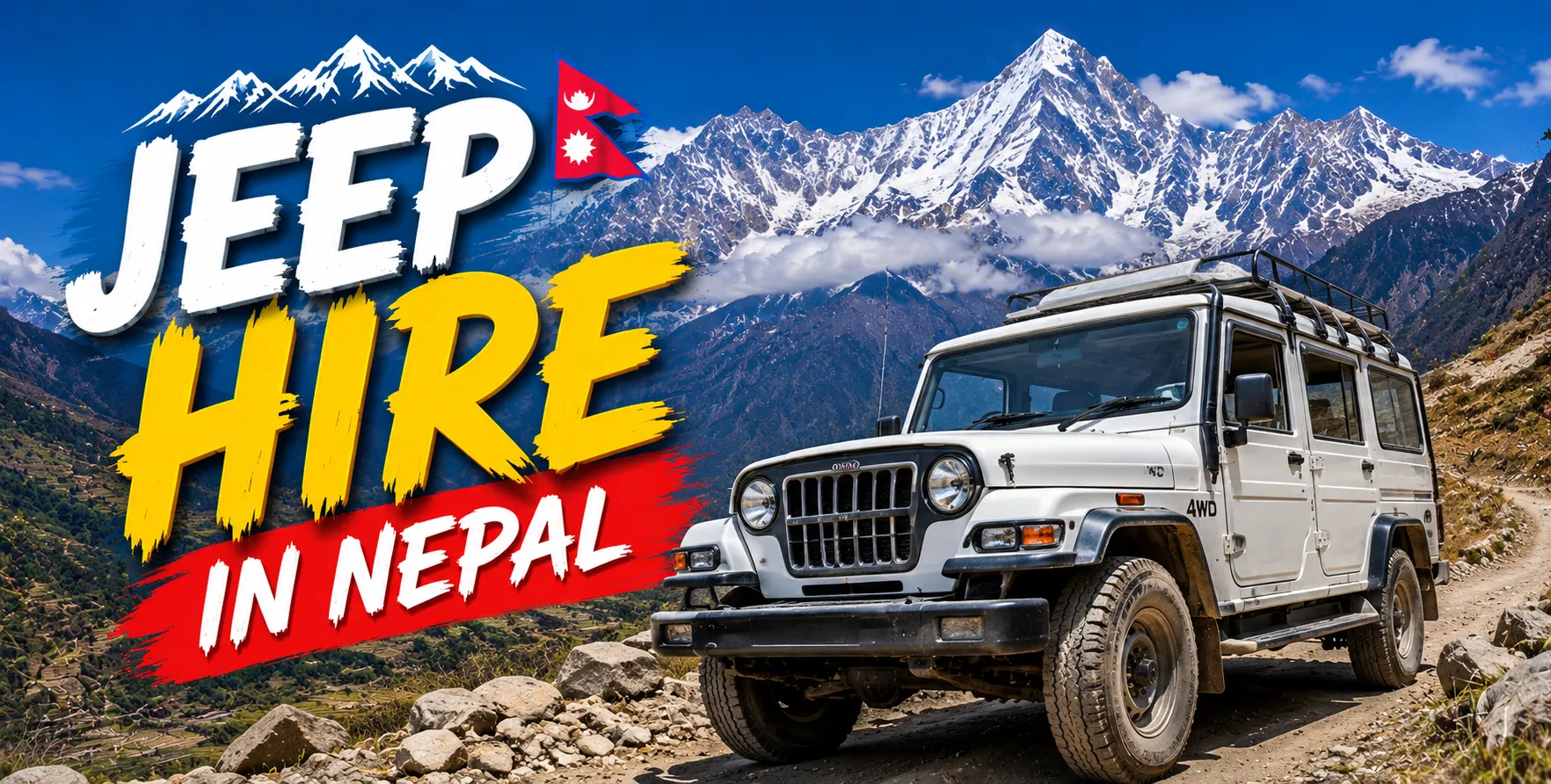
No. After Beni, the road becomes rough, unpaved, and mountainous, with sections that require a high-clearance 4WD vehicle for safe passage. A Mahindra Scorpio, Toyota Land Cruiser, or equivalent 4WD is the appropriate vehicle for the Beni-Jomsom section. A regular sedan or 2WD car is not suitable for this stretch and should not be used, particularly in wet conditions.
Can I visit Muktinath in a single day from Pokhara?
Technically possible but not recommended for most pilgrims, particularly older travelers or those arriving from low altitudes. The eight to eleven hours of rough driving from Pokhara to Muktinath and back in a single day is physically tiring, and the rapid altitude gain without an overnight acclimatization stop at Jomsom increases the risk of altitude sickness at the temple. A two-day Pokhara-based itinerary with an overnight at Jomsom provides a significantly better experience.
Are horses or palanquins available at Muktinath for elderly pilgrims?
Yes. Horses and palanquins (doli) are available for hire at Ranipauwa, the vehicle drop-off point at the base of the final approach to the temple. This is specifically available to pilgrims who cannot walk the 500-meter uphill path to the temple entrance, making darshan accessible even to elderly pilgrims or those with mobility limitations. Your driver and local contacts can assist in arranging this on arrival.
What is the best vehicle for a family group of six on the Muktinath pilgrimage?
A Mahindra Scorpio or equivalent 4WD jeep seats six to seven passengers comfortably and is the most common vehicle used for family Muktinath yatra groups. For larger groups, two jeeps or a Hiace van for the smoother early sections can be arranged. See our Jeep and Hiace fleet pages for vehicle specifications and capacity.
Is Muktinath open to non-Hindu visitors?
Yes. Muktinath is open to visitors of all religions and nationalities, and no dress code beyond modest clothing is strictly enforced. However, removing footwear before entering the temple’s inner sanctum is standard practice at all Hindu temples. Non-Hindu visitors are welcome to observe the 108 waterspout ritual and visit the Jwala Mai Temple. Many international trekkers passing through on the Annapurna Circuit visit the temple specifically for its cultural and historical significance rather than for devotional reasons.
Why Choose Nepal Vehicle Hiring for Your Muktinath Temple Vehicle Hire
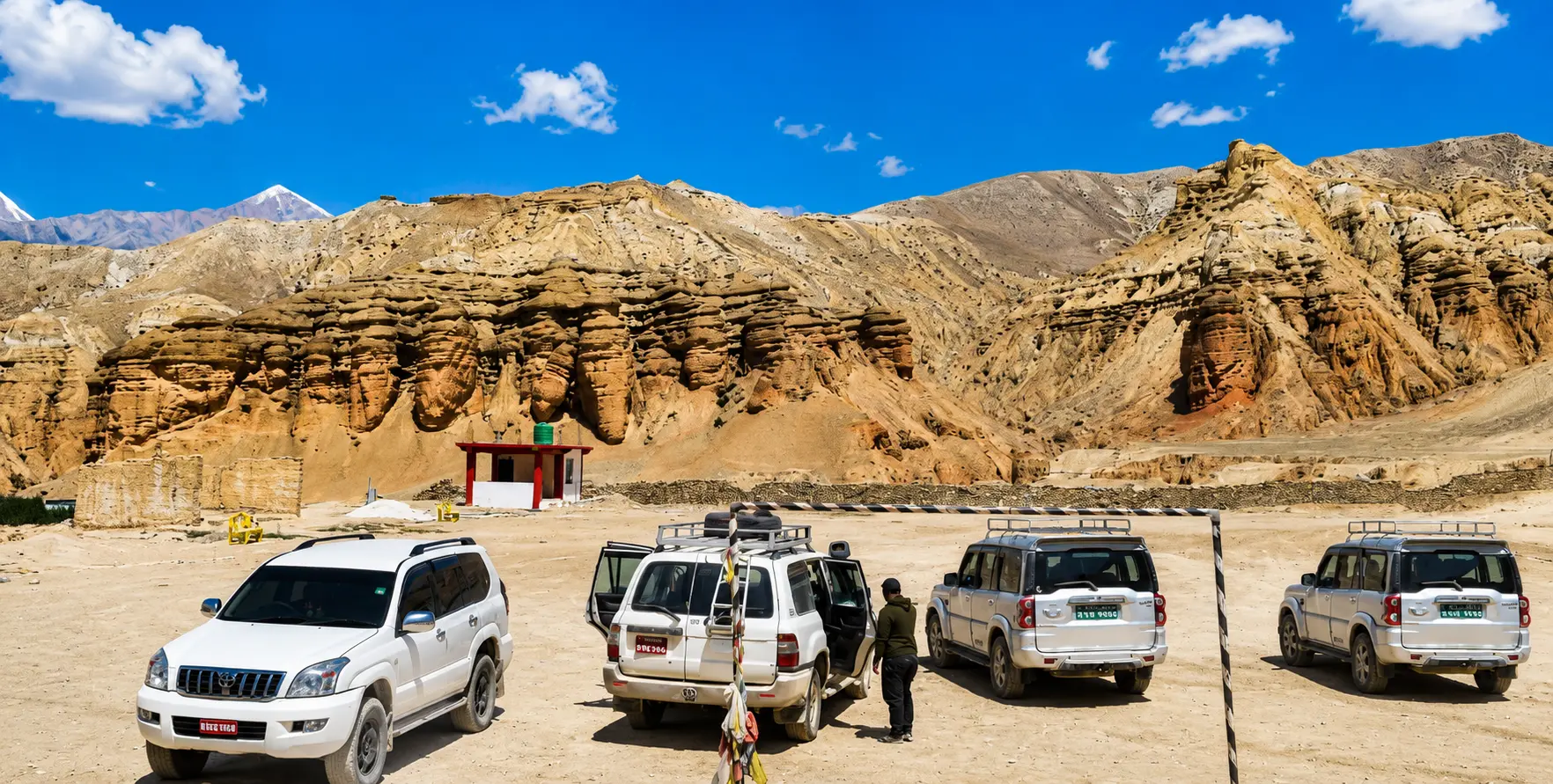
The Pokhara-to-Muktinath road is one of the routes our drivers run most regularly. That familiarity makes a practical difference on a pilgrimage, where the rough Beni-Jomsom section, the afternoon Kali Gandaki wind timing, and the altitude-gain logistics at Jomsom all require route-specific knowledge rather than generic mountain-driving experience. Our Kathmandu to Muktinath Jeep and Muktinath to Kathmandu Jeep cover the full overland corridor; our Muktinath Yatra itinerary packages the entire pilgrimage from Kathmandu; and our Muktinath to Pokhara Jeep handles theJeephara-based return leg. For Jeepers India via the Sunauli border, our Nepal Tour from Gorakhpur seamlessly integrates border-crossing logistics with the Nepal-side transport chain.
For pilgrims who want to extend their trip to include Kathmandu sightseeing before or after the yatra, a Pokhara lakeside day via our Pokhara to Sarangkot Jeep for sunrise views over the Annapurna range, or a full Upper Mustang extension, we can coordinate the complete multi-day itinerary as a single vehicle hire booking through our Plan a Trip service. The Muktinath yatra does not have to be a standalone trip; it fits naturally as one component of a broader Nepal pilgrimage circuit that could also include Pashupatinath in Kathmandu, Manakamana temple by cable car, Lumbini as the birthplace of the Buddha, and Janakpur in the eastern Terai, all of which are reachable within a single two-week Nepal itinerary using a coordinated private vehicle hire arrangement that eliminates the logistical complexity of managing each leg as a separate booking.
Book Your Muktinath Yatra Vehicle Hire Today
Whether you are a Hindu pilgrim seeking moksha at one of the holiest Vaishnava shrines outside India, a Buddhist devotee following in the footsteps of Guru Rinpoche through the Chumig Gyatsa valley, a family group carrying out a lifelong elder’s pilgrimage wish, or a cultural traveler drawn by the extraordinary convergence of two great faiths at the foot of the Thorong La, Nepal Vehicle Hiring Pvt Ltd can arrange a comfortable, well-maintained 4WD jeep with an experienced driver who knows the Kali Gandaki road intimately:
its seasonal road conditions by section, the optimal morning departure timing to beat the afternoon Kali Gandaki valley wind, the acclimatization logic behind the Jomsom overnight, and the pilgrimage logistics from Kathmandu or Pokhara all the way to Ranipauwa and Muktinath Temple. The road to Muktinath is part of the pilgrimage, and the right vehicle and the right driver make it not just safe and comfortable but genuinely memorable in its own right. Call or WhatsApp us at +977-9851013196, email us at [email protected], or visit vehiclehiringnepal.com to plan your Muktinath yatra today.
- Muktinath Temple Vehicle Hire and Pilgrimage Route Guide
- The Sacred Significance of Muktinath: Where Two Faiths Meet
- Inside the Muktinath Temple Complex: What You Will Encounter
- Getting to Muktinath: Every Vehicle Hire Option from Kathmandu and Pokhara
- Road Conditions Section by Section: What to Expect on the Drive
- Permits Required for the Muktinath Pilgrimage
- The Thakali People and the Villages of the Kali Gandaki Corridor
- Sample Itineraries: Kathmandu and Pokhara to Muktinath
- Best Season and Altitude Considerations
- Combining Muktinath Temple Vehicle Hire With a Wider Annapurna and Nepal Itinerary
- The Shaligram Stones of the Gandaki River: A Pilgrimage Within a Pilgrimage
- Food, Accommodation, and the Practical Experience Along the Route
- Frequently Asked Questions About the Muktinath Temple Vehicle Hire
- Why Choose Nepal Vehicle Hiring for Your Muktinath Temple Vehicle Hire

Related Blog & Articles
Altitude and Health: Essential Muktinath Advice

Complete Muktinath & Chitwan & Pokhara Circuit Vehicle Hire
Muktinath Tour guide 2026 – Complete Travel & Pilgrimage Guide from Nepal
Kathmandu to Mustang (Muktinath)
Muktinath Pilgrimage & Mustang Tour