Plan a Trip


Pokhara Bus Ticket Price 2026
Pokhara Bus Ticket Price: The Complete 2026 Guide to Every Route, Bus Class, and Fare
Pokhara sits at the center of Nepal’s overland travel network, and figuring out the real Pokhara bus ticket price before you travel can be surprisingly confusing. Between standard local buses, deluxe tourist coaches, and VIP Sofa buses, and between routes heading to Kathmandu, Chitwan, Lumbini, or the Annapurna trailheads, fares can range from a few hundred rupees to well over two thousand for what looks, on paper, like the same journey.
Part of the confusion comes from Pokhara’s role in Nepal’s travel geography. Sitting on the shores of Phewa Lake with the Annapurna range as a backdrop, the city functions simultaneously as a lakeside holiday destination in its own right, the main gateway for Annapurna Circuit and Annapurna Base Camp trekkers, and a mandatory stop on the classic Kathmandu-Pokhara-Chitwan ‘Golden Triangle’ route most first-time visitors follow. Each of these roles pulls travelers in a different direction, onto a different route, and often onto a different bus class entirely, which is exactly why ticket prices you’ll see quoted online can vary so widely depending on which of these journeys someone was actually describing.
This guide is built to clear that confusion up entirely. We’ll walk through every major route in and out of Pokhara, explain exactly what separates a cheap local bus fare from a premium VIP Sofa ticket, break down realistic price ranges for 2026, and help you decide when a bus makes sense and when a private vehicle is the smarter call. If you only read one section, make it the bus-class breakdown below — it explains almost every price difference you’ll encounter across every route in this guide.
Why Pokhara Bus Prices Vary So Much
Ask three different people what a Pokhara bus ticket costs and you’ll likely get three different answers, and all three could be correct. The reason is that ‘bus ticket to Pokhara’ isn’t a single product — it’s a spectrum spanning at least three distinct comfort tiers, multiple operators with different pricing strategies, seasonal demand swings, and the gap between booking through a hotel desk, a street agent, or directly online. A backpacker paying roughly NPR 800 for a cramped local bus and a honeymooning couple paying close to NPR 3,000 for a VIP Sofa seat are technically buying the same route, but almost nothing else about their journey is the same.
There’s also a currency and rounding effect worth flagging. Nepali operators quote in NPR, while many international booking platforms and blogs convert to USD using whichever exchange rate happened to be current when the page was last updated. A fare quoted as ‘USD 10’ on one site and ‘USD 13’ on another may simply reflect different snapshots of the same NPR 1,300 ticket, not a real price difference. Throughout this guide, we quote both NPR and approximate USD ranges so you can sanity-check any figure you come across elsewhere.
Understanding this spectrum is the single most useful thing you can do before booking, because it means you can stop asking ‘what’s the price’ and start asking ‘what’s the price for the comfort level I actually want, on the specific route and date I’m traveling.’ That’s exactly what the rest of this guide breaks down, route by route and class by class.
Understanding Nepal’s Bus Classes
Every route out of Pokhara is served by some combination of four broad categories. Not every category runs on every route, but understanding all four makes every price in this guide immediately easier to interpret, and it’s worth reading this section in full even if you already know which route you’re taking.
Local or Standard Buses
The cheapest way to travel by far, local buses use basic 2×2 seating with minimal padding, no reliable air conditioning, and no amenities beyond a seat and a luggage rack, often on the roof rather than in an underfloor hold. They stop frequently to pick up and drop off local passengers along the way, which stretches journey times considerably compared with a tourist-oriented service that only stops at designated rest points. Fares are typically a fraction of tourist bus prices — sometimes less than half — but the trade-off is real: crowded aisles, unpredictable departure times, luggage handled with far less structure, and a much less comfortable ride, especially over Nepal’s winding mountain highways. Local buses suit only the most budget-conscious travelers who are comfortable navigating Nepali-language signage and schedules without much tourist infrastructure support, and they are generally not recommended for a first visit to Nepal unless budget is the absolute overriding priority.
Deluxe or Standard Tourist Buses
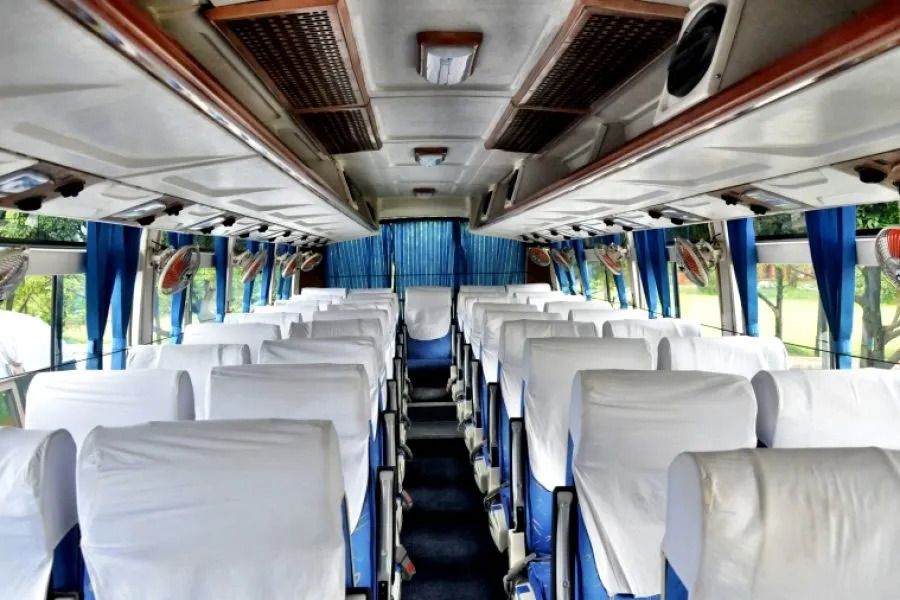
This is the default choice for most independent tourists and remains the backbone of Nepal’s tourist transport network. Deluxe buses run on fixed daily schedules aimed specifically at foreign visitors, departing from designated tourist bus parks rather than chaotic local stations. They offer air conditioning, reclining 2×2 seating, complimentary drinking water, and scheduled rest stops for meals and toilet breaks. Fares generally land in the broad USD 10 to 15 range (roughly NPR 1,200 to 1,800) depending on the specific route, season, and operator, making this tier the most reliable balance of cost and comfort for the majority of travelers moving between Pokhara, Kathmandu, Chitwan, and Lumbini. Luggage allowance is typically generous enough for a standard backpack or suitcase plus a daypack, stored in an underfloor hold with a claim tag system similar to checked airline baggage.
VIP Sofa Buses
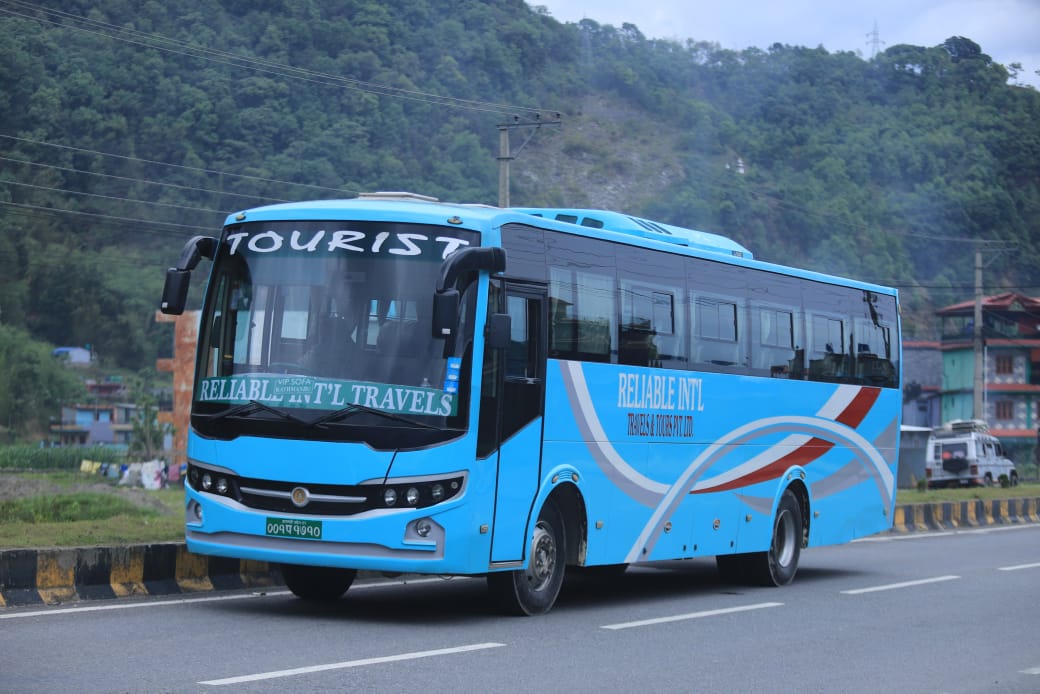
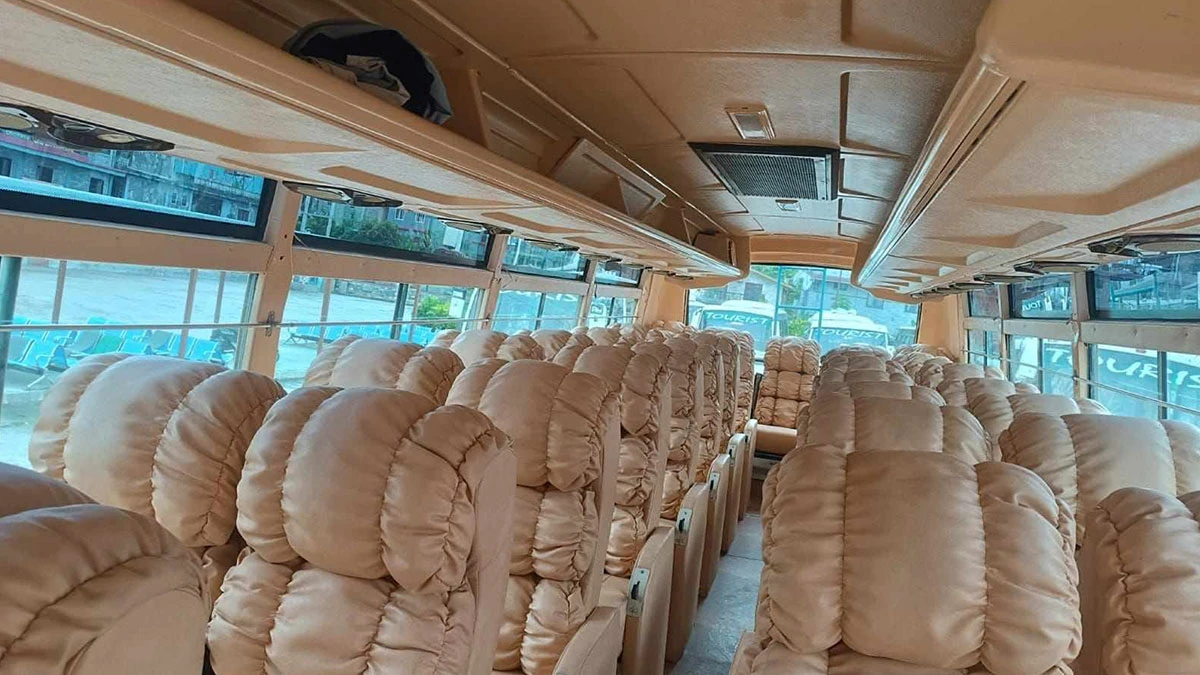
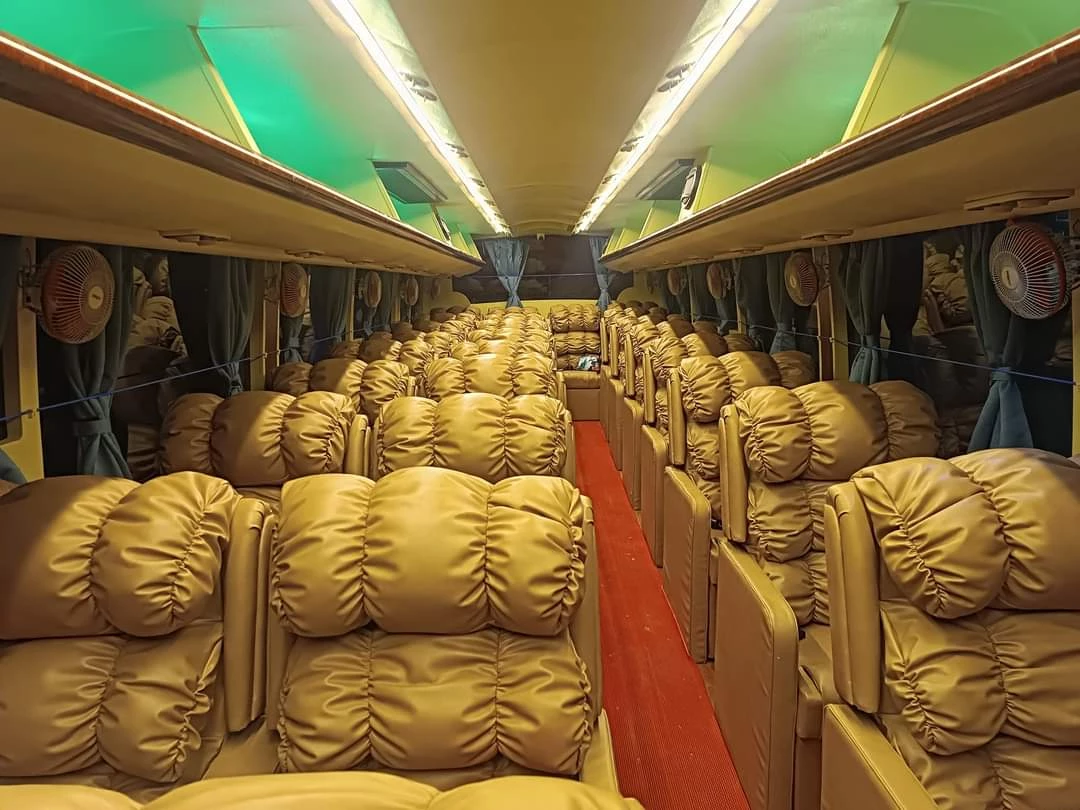
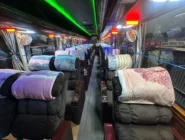
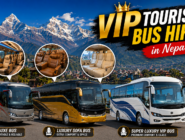
The premium tier, and the fastest-growing segment of Nepal’s tourist bus market, is the VIP Sofa Bus. Rather than the standard 2×2 seating layout, VIP Sofa Buses use a 2×1 configuration — two seats on one side of the aisle and a single seat on the other — which gives every passenger significantly more width, a wider aisle, and deep-cushioned, fully reclining sofa-style seats with padded armrests and adjustable headrests. Add to that USB charging at every seat, WiFi on some major routes, a dedicated bus attendant in addition to the driver, and included passenger insurance, and it’s easy to see why VIP Sofa fares run noticeably higher than deluxe tickets, generally in the NPR 1,600 to 3,500 range depending on the route and season. For a full breakdown of this bus category across all of Nepal’s routes, see our VIP Sofa Bus hire guide. Because each VIP Sofa Bus carries fewer total passengers than a standard deluxe bus of the same length, seat availability sells out faster during peak periods, which is worth factoring into how far ahead you book.

Night Buses
On flatter, well-lit highway routes — primarily those running through the Terai plains rather than mountain roads — some operators run overnight services, departing in the evening and arriving the following morning. Night buses on VIP Sofa vehicles are particularly popular for longer routes like Kathmandu to Lumbini, where the fully reclining seat becomes a genuinely restful overnight option, effectively combining a night’s accommodation cost with your travel day. Nepal Vehicle Hiring’s policy, in line with most reputable operators, restricts night services strictly to safe, flat Terai routes and avoids overnight driving on winding mountain highways for safety reasons — a distinction worth checking with any operator, since not every company applies the same restriction.
Private Charter as a Fifth Option
Technically outside the ‘bus ticket’ category but worth mentioning here since it changes the entire pricing conversation: any of the bus classes above can also be booked as a private charter, where your group hires the entire vehicle rather than individual seats. This flips the pricing model from per-person to per-vehicle, which becomes more cost-effective than you might expect once a group reaches four to six travelers, while also removing the fixed schedule entirely. We cover this trade-off in more depth later in this guide.
Kathmandu to Pokhara and Pokhara to Kathmandu Bus Ticket Price
This is Nepal’s single busiest tourist bus corridor, and understandably the route most people are asking about when they search for a Pokhara bus ticket price. The journey covers approximately 200 kilometers along the Prithvi Highway, and while road conditions have steadily improved over recent years as widening and resurfacing work has progressed, journey times still typically run 6 to 8 hours depending on traffic, weather, and any delays around the Mugling junction — a notorious bottleneck where the routes to Pokhara, Chitwan, and Bardiya all converge.
On the standard tourist bus tier, fares generally fall between NPR 1,200 and 1,800 (roughly USD 9 to 14), while VIP Sofa Bus tickets on the same route typically run NPR 1,600 to 3,500 (roughly USD 12 to 26), the wide range reflecting differences between operators, how far in advance you book, and seasonal demand. Both tiers usually offer a 7:00 AM morning departure from Kathmandu’s Sorhakhutte tourist bus hub, with some operators also running an evening departure around 7:00 PM, sometimes from a secondary point like Balaju. Buses arrive at Pokhara’s Tourist Bus Park, within easy reach of the Lakeside hotel district on foot or a short taxi ride.
For current departure times and fare details on this route, see our Kathmandu to Pokhara bus and Kathmandu to Pokhara bus tickets pages, our dedicated Kathmandu to Pokhara VIP Sofa Bus ticket page for the premium tier, or the return-direction Pokhara to Kathmandu bus page.
What to Expect Along the Way
The Prithvi Highway is one of Nepal’s most scenic drives, tracing the Trishuli River gorge before opening onto the Pokhara valley with Annapurna and Machhapuchchhre views on a clear day. Most tourist and VIP buses schedule two stops: a shorter tea and toilet break, typically around Malekhu or Naubise, and a longer meal stop, most commonly at Mugling, well known among travelers for its riverside grilled fish restaurants. Delays around Mugling itself are common due to its role as a major road junction; if you hit a slow patch here, the honest answer is that patience is the only real fix, since traffic reports rarely reach the bus reliably before you’re already through it.
The Bandipur Stopover Option
Roughly two-thirds of the way along the route, the hillside town of Dumre marks the turnoff for Bandipur, a beautifully preserved Newari hill town that many independent travelers choose to break their journey at rather than riding straight through to Pokhara. A scheduled tourist bus won’t detour here, but a private vehicle can, and a fair number of travelers use a private car or jeep specifically to combine the Kathmandu-Pokhara leg with a night in Bandipur — something worth considering if a fixed bus schedule feels too rigid for the trip you have in mind.
Family and First-Time Traveler Considerations
For families traveling with young children or anyone taking their first long-distance Nepal bus journey, the choice between deluxe and VIP Sofa is often less about price and more about the length of the ride itself. Six to eight hours is a long stretch for a young child in a standard reclining seat, and the extra legroom, wider seat width, and general comfort of the VIP Sofa tier can make a meaningful practical difference on this specific route, even setting aside the amenities. Motion sickness is also worth planning for on the winding gorge sections between roughly the two- and four-hour marks of the journey; keeping medication accessible in hand luggage rather than checked bags is a simple precaution worth taking regardless of bus class.
Pokhara to Chitwan Bus Ticket Price
The Pokhara-Chitwan corridor is the second most common route for travelers completing Nepal’s classic ‘Golden Triangle’ circuit of Kathmandu, Pokhara, and Chitwan. The journey covers roughly 145 to 150 kilometers and takes 4 to 6 hours, running south along the Prithvi Highway before turning toward Chitwan’s Sauraha gateway. Standard deluxe tourist bus fares on this route are among the most affordable of the major tourist corridors, typically around USD 10 (roughly NPR 1,200 to 1,300) per ticket, while VIP Sofa options follow the broader NPR 1,600 to 3,500 pattern seen on other routes. Full schedule and fare details are on our Pokhara to Chitwan bus page.
Most services depart Pokhara’s Tourist Bus Park early in the morning, arriving in Sauraha in the early afternoon — timing that works well for travelers wanting a full afternoon free for an initial jungle walk or canoe ride before their first scheduled safari activity the following day. As with the Kathmandu route, expect a couple of scheduled rest stops along the way, and be prepared for the possibility of delays around Dumre, where the Besisahar road branches off toward the Annapurna Circuit trailhead.
Travelers connecting onward toward Kathmandu after their Chitwan safari, rather than looping back to Pokhara, can check the Chitwan to Kathmandu bus or Kathmandu to Chitwan VIP Sofa Bus Ticket pages for that leg, since fares and schedules differ slightly from the Pokhara-Chitwan connection covered here.

Pokhara to Lumbini Bus Ticket Price
Direct Pokhara-to-Lumbini tourist bus services are less common than the Kathmandu and Chitwan routes, and many travelers instead route through Kathmandu or Butwal, or arrange a private vehicle for the more flexible option. Where direct or connecting tourist bus services are available, fares tend to sit in a similar or slightly higher range than the Kathmandu-Lumbini corridor, given the added distance from Pokhara — generally in the USD 15 to 25 range depending on bus class and specific routing, with the journey often taking 7 to 9 hours.
Because scheduling and routing can be less predictable on this leg, many travelers heading to Lumbini for the birthplace of Buddha find it more efficient to book a private vehicle directly for the full journey, or to route through Kathmandu using our Kathmandu to Lumbini bus and Lumbini to Kathmandu bus services, which run considerably more frequently and predictably than the direct Pokhara connection. Pilgrim groups in particular, many of whom include elderly travelers making a long journey for religious reasons, often prioritize the VIP Sofa tier or a private vehicle for this specific route given how demanding a 7 to 9 hour journey can be on a standard seat.
Pokhara to Besisahar and the Annapurna Trailheads
Travelers heading toward the Annapurna Circuit typically aren’t looking at a conventional ‘bus ticket’ in the same sense as the Kathmandu or Chitwan routes — this leg is more commonly covered by shared or private jeep, given the mountain terrain and the more specialized trailhead destinations involved. Our Pokhara to Manang transport guide covers this corridor in depth, while shorter hops toward Besisahar are covered on our Besisahar private vehicle hire page. Shared jeeps on these routes are generally priced per seat and are considerably cheaper than a private charter, but with far less flexibility around departure time and comfort — a trade-off similar to choosing a standard bus over a VIP Sofa service on the flatter routes covered above.
For trekkers heading toward Nayapul, the classic starting point for the Annapurna Base Camp and Ghorepani Poon Hill routes, our Pokhara to Nayapul transportation page covers pricing and timing for that shorter, more frequently traveled leg, while those heading toward Sikles can check our Pokhara to Sikles jeep rental guide. In general, the shorter the trailhead route, the more likely a shared jeep will be running that day without needing to be pre-booked far in advance, while longer routes deeper into the Annapurna region benefit from booking ahead, particularly at the start and end of trekking season when trailhead traffic is heaviest.

Local Pokhara Transport and Day-Trip Vehicle Pricing
Not every ‘Pokhara bus ticket’ question is about leaving the city — plenty of travelers are really asking about getting around Pokhara itself or reaching nearby viewpoints. A sunrise trip to Sarangkot, Pokhara’s famous Himalayan viewpoint, is rarely done by public bus given the early departure time required, typically well before dawn; most visitors book a private vehicle instead, covered on our Sarangkot sunrise tour vehicle page. For general car hire while based in Pokhara — whether for day trips, airport transfers, or onward travel — see our car hire in Pokhara page, which covers vehicle options separate from the fixed-schedule tourist bus network.
Within Lakeside itself, most attractions along Phewa Lake, the World Peace Pagoda viewpoint, and the Old Bazaar are close enough to walk or reach by a short taxi ride, so a bus ticket rarely enters the picture for purely local sightseeing. It’s really the onward and day-trip journeys — Sarangkot, Begnas Lake, or a half-day loop toward the Mahendra Cave area — where the choice between a shared local option and a private vehicle becomes relevant, and for anything with an early departure time or a fixed group, a private vehicle is almost always the more practical choice over waiting for a public option that may not exist at that hour.
Arriving in Pokhara: Tourist Bus Park to Lakeside
Every tourist and VIP Sofa bus arriving from Kathmandu, Chitwan, or elsewhere drops passengers at Pokhara’s Tourist Bus Park, located a short distance from the Lakeside hotel and guesthouse district rather than directly in it. On arrival, expect a scrum of taxi drivers and hotel touts near the bus park entrance; if you already have a hotel booked, most guesthouses can arrange a pick-up if given your bus and approximate arrival time in advance, which avoids any last-minute negotiation after a long journey. If not, a short taxi ride into Lakeside is inexpensive and straightforward, and most drivers here are used to dealing with arriving tourists.
This is also the point where a private vehicle transfer shows its value most clearly: rather than a bus-park drop-off followed by a separate taxi negotiation, a private car or jeep booked for the full Kathmandu-Pokhara or Chitwan-Pokhara journey takes you directly to your hotel’s door, which matters more than it might sound like after a 6-to-8-hour journey with luggage.
Seasonal Price Variations Throughout the Year
Bus ticket prices on every route in this guide fluctuate somewhat with Nepal’s tourism seasons, though the swings are generally more modest than what you’d see with flights or hotel rates. During the autumn peak season (September through November) and the spring trekking season (March through May), demand for seats on all Pokhara routes rises sharply, particularly on VIP Sofa services, and it’s common to see fares creep toward the upper end of the ranges quoted throughout this guide, alongside a real risk of full buses if you don’t book a few days ahead.
Breaking this down month by month: October and November typically see the highest demand of the year, coinciding with both the Dashain and Tihar festival travel surge and peak Annapurna and Everest trekking season, meaning both a general demand spike and a specific squeeze on any route feeding trekking trailheads. March through May sees a second, slightly smaller peak tied to spring trekking season and generally clearer mountain visibility. June through August, the monsoon months, are the quietest and often the most flexible for last-minute bookings, though this comes with a real trade-off: heavier rainfall increases the risk of landslides and road delays on mountain sections of the Prithvi Highway, which can turn a 6-hour journey into a considerably longer one and, in rare cases, can suspend a route entirely for a day. December through February sits in between — moderate demand, generally reliable roads at these lower-altitude routes, and occasional early-morning fog delays around the Kathmandu Valley rim that can push back departure times, particularly in late December and January.
Nepal’s major festival periods — particularly Dashain and Tihar in the autumn — deserve special mention, since domestic travel demand spikes dramatically as Nepalis return to their home districts, and both bus fares and seat availability can be affected even on routes primarily used by tourists. If your travel dates overlap with these festivals, booking further in advance than usual is worth the extra effort, and it’s worth asking directly whether a fare quoted to you already includes a festival-period adjustment.
Factors That Affect Your Bus Ticket Price
Beyond the bus class and season already covered, a handful of other factors shift the exact fare you’ll be quoted for any given route:
- Booking channel. Booking directly through an operator or a reputable local agency is generally cheaper than booking through a third-party international platform, though the latter can offer more assurance for first-time visitors unfamiliar with Nepal’s booking landscape. Booking window. Last-minute bookings during peak season can carry a premium, or simply be unavailable on your preferred date, pushing you toward a pricier alternative departure.
- Day vs night departure. Night VIP Sofa services on eligible routes sometimes carry a modest premium over daytime departures, reflecting the added driver rotation and overnight operational costs.
- Group size and private charter. Booking an entire bus privately is priced per vehicle rather than per seat, which changes the math considerably for larger groups compared with individual tickets.
- Fuel price fluctuations. Like most transport pricing in Nepal, bus fares can shift modestly in response to changes in fuel costs over the course of a year.
- Seat position. Some operators charge a small premium for front-row or single-side VIP Sofa seats, given the added privacy and view compared with a standard row seat.
- Nationality-based pricing. While uncommon on bus tickets compared with park entry fees, it’s worth confirming that the quoted fare is the standard tourist rate rather than a marked-up walk-up price occasionally offered to visibly foreign travelers at busy bus parks.
Coasters and Mini-Buses: A Fifth Vehicle Category Worth Knowing
Alongside the four bus classes already covered, small and mid-size groups traveling to or from Pokhara sometimes choose a coaster or minibus rather than a full-size tourist or VIP Sofa bus. This sits closer to the private charter end of the spectrum than the shared-seat bus network, typically booked by a single group — a family, a small tour party, or a corporate team — rather than sold as individual tickets. Pricing is per vehicle, similar to a full private bus charter, and the appeal is largely the same as private car or jeep hire: a fixed departure time chosen by your group, flexible stops, and a size that suits eight to twenty passengers more efficiently than either a small private car or a full-size 30-plus-seat coach.
Understanding Your Ticket: Confirmation, Cancellation, and Changes
A standard tourist or VIP Sofa bus ticket in Nepal typically shows your name, travel date, departure time and point, seat number (on VIP Sofa services; deluxe tickets sometimes use open or lightly assigned seating), and the operator’s contact details. Keep a photo of your ticket on your phone in addition to any paper copy, since bus park check-in staff are used to confirming bookings against a phone screen as well as a printed slip.
Cancellation and change policies vary meaningfully between operators, so it’s worth asking directly at the time of booking rather than assuming a standard policy applies. As a general pattern across Nepal’s tourist bus market, cancellations made a day or more in advance are more likely to receive a partial refund or free rebooking than same-day cancellations, and VIP Sofa tickets, given their smaller per-bus capacity, tend to have stricter change policies than deluxe tickets. If your plans are genuinely uncertain, ask specifically about flexibility before paying rather than after.
Currency, Payment, and Tipping on Nepal’s Bus Routes
Nearly all bus ticket payments in Nepal, whether booked online, through a hotel desk, or directly at the bus park, are ultimately settled in Nepali rupees, even when a website or agent quotes you a figure in US dollars for convenience. Card payment is increasingly available for online bookings but remains unreliable to nonexistent at physical ticket counters and virtually all highway rest stops, so carrying a reasonable amount of cash in small denominations is essential for the incidental costs of the journey itself, even if your main ticket was prepaid by card.
Tipping is not a mandatory or strictly expected part of Nepal’s bus culture in the way meals or hotel service sometimes carry a tipping norm, but on VIP Sofa services, where a dedicated attendant is actively assisting passengers throughout a long journey, a modest tip at the end of the trip is appreciated and increasingly common, particularly from international travelers used to a tipping culture in their home country. There is no fixed expectation here, and no bus operator will ask for or require it.
Driver Standards, Vehicle Safety, and Road Conditions
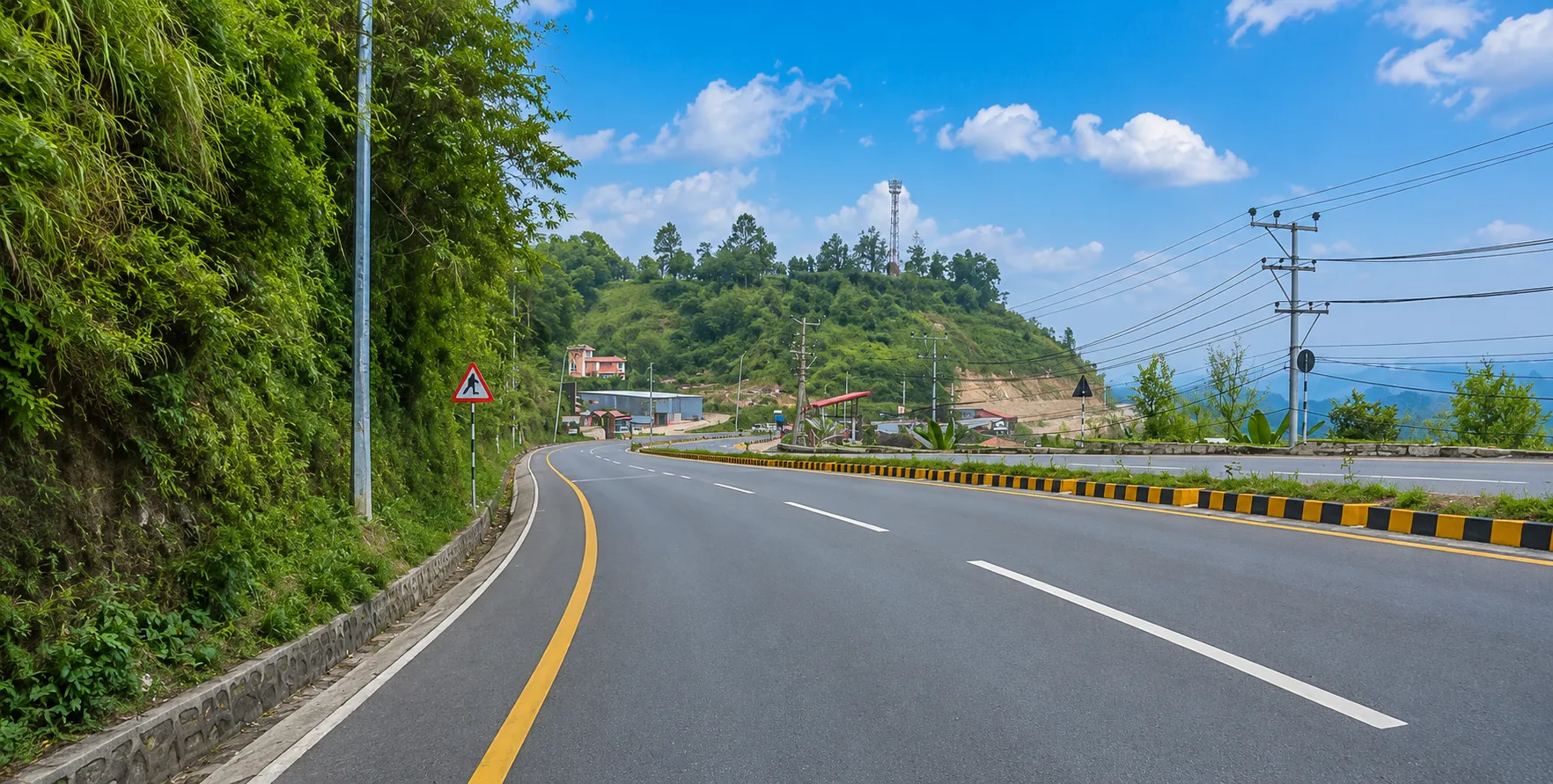
Nepal’s tourist and VIP Sofa bus operators are generally held to a higher standard than the local bus network, with licensed commercial drivers, scheduled vehicle maintenance, and, on reputable services, passenger insurance included in the ticket price. That said, Nepal’s highway network, including the Prithvi Highway that carries most Pokhara-bound traffic, includes genuinely challenging sections — river gorges, landslide-prone slopes during monsoon, and stretches still undergoing widening or resurfacing work at any given time. None of this is unique to buses specifically; the same roads carry private vehicles, and the same seasonal cautions apply regardless of which vehicle type you choose.
A reasonable general practice, and one most reputable Nepal-based operators already follow, is to avoid unnecessary night travel on winding mountain sections, prioritize operators who can speak to their vehicle maintenance and driver experience directly, and treat any operator unwilling to answer basic safety questions as a signal to book elsewhere. This applies as much to a cheap local bus fare as it does to a premium VIP Sofa ticket — price alone is not a reliable indicator of safety standards.
Sample Trip Budgets: What Different Travelers Actually Pay
Numbers in isolation can be hard to translate into a real trip, so it’s worth walking through how the ranges in this guide play out for a few common traveler profiles making the Kathmandu-Pokhara-Chitwan loop, the most popular multi-leg journey for first-time visitors to Nepal.
The solo backpacker traveling on standard deluxe tourist buses for all three legs of the loop — Kathmandu to Pokhara, Pokhara to Chitwan, and Chitwan back to Kathmandu — is looking at a combined bus fare total that rarely exceeds the cost of a single one-way domestic flight, making this by far the most budget-efficient way to complete the classic circuit, with the trade-off being roughly 15 to 18 hours of total travel time spread across the three legs.
The couple splitting VIP Sofa tickets for the same loop pays noticeably more per person than the backpacker above, but still well under what either domestic flights or a private vehicle for two would cost, while gaining the wider seating and attendant service that make longer legs, particularly Kathmandu-Pokhara, considerably more comfortable.
The family of four considering a private vehicle for the same loop, once the per-vehicle charter cost is divided by four passengers, frequently finds the per-person cost landing close to, or only modestly above, individual VIP Sofa tickets — while gaining door-to-door pickup at each leg, the flexibility to stop for children’s needs, and the ability to add short detours like Manakamana or Bandipur that a fixed bus schedule simply can’t accommodate. This is the calculation worth doing explicitly before assuming a private vehicle is automatically the pricier option for a group.
Bus vs Flight vs Private Vehicle: Full Cost Comparison
Domestic flights between Kathmandu and Pokhara take around 25 minutes in the air, a dramatic time saving over a 6 to 8 hour bus journey, but at a considerably higher price point, and flights remain vulnerable to weather-related delays and cancellations, particularly during monsoon season and periods of poor mountain visibility. For travelers on a tight schedule, the time saved often justifies the cost; for those with flexible itineraries, it rarely does, especially since the Prithvi Highway drive is itself considered one of Nepal’s more scenic overland routes rather than simply a means to an end.
Tourist and VIP Sofa buses sit at the value end of the spectrum covered throughout this guide — affordable, reliable, and scenic, with the trade-off being a full-day commitment to the journey itself and a fixed departure schedule that doesn’t adjust to your preferences.
Private vehicle hire costs more than a shared bus ticket but delivers a meaningfully different experience: your own departure time, the ability to stop for photos or side trips like Manakamana or Bandipur along the way, and door-to-door pickup and drop-off rather than a walk from the tourist bus park to your hotel. For groups of three or more, the per-person cost of a private car or jeep often closes the gap with individual VIP Sofa tickets considerably, while delivering far more flexibility. Our Kathmandu to Pokhara vehicle rental page covers this option in detail, and our broader case for this approach is laid out in why private vehicle hire is the smartest way to travel Nepal.
As a rough way to think about total trip cost rather than just the ticket price: a solo backpacker on a standard deluxe bus, factoring in a rest-stop meal or two, is looking at one of the cheapest ways to cover this distance anywhere in the world. A family of four splitting a private jeep, once divided per person, frequently lands closer to VIP Sofa pricing than people expect, while gaining a private, flexible, door-to-door journey — which is exactly why private vehicle hire has grown steadily more popular among groups and families over individual bus tickets in recent years.
The Prithvi Highway: A Brief History Behind the Journey
The Prithvi Highway, completed in the 1970s as Nepal’s first major highway link between Kathmandu and Pokhara, transformed a journey that once took several days on foot or by mule track into a single-day drive. Named after King Prithvi Narayan Shah, the highway follows the Trishuli and Marsyangdi river valleys for much of its length, a routing choice driven as much by the mountainous terrain as by engineering preference — there simply wasn’t a flatter path available between the two cities. Decades of incremental widening, resurfacing, and bridge reconstruction have gradually reduced typical journey times, though sections through the steepest gorge terrain remain inherently slower than a flat highway of the same length would be anywhere else in the world. Understanding this context helps explain why, even with continued road investment, the 200-kilometer Kathmandu-Pokhara journey is unlikely to ever match the point-to-point speed of a flatter Terai route of similar distance, and why the scenic value of the drive is, for many travelers, a genuine part of the appeal rather than simply an inconvenience to be minimized.
Planning Your Full Nepal Itinerary Around Bus Travel
For travelers building a full Nepal itinerary rather than booking each leg as it comes up, it’s worth mapping your bus and vehicle choices against your overall schedule before committing to individual tickets. A common mistake is booking a fixed-schedule deluxe or VIP Sofa bus for every leg of a trip that also includes a multi-day trek, only to find the trekking end date doesn’t align neatly with the next bus departure, resulting in an unplanned extra night or a rushed connection. Building in a buffer day around any leg that connects directly to a trek start or end point, or defaulting to a private vehicle for those specific legs while using shared buses for the more flexible portions of your trip, is a simple way to avoid this common planning trap.
It’s also worth deciding early whether your priority for this specific trip is minimizing cost, minimizing total travel time, or maximizing comfort and flexibility, since the right bus class and vehicle choice genuinely differs depending on which of those three goals matters most to you on a given leg. Few travelers optimize for all three simultaneously on every leg of a Nepal trip, and that’s a reasonable trade-off to make consciously rather than by default.
How to Book Pokhara Bus Tickets
Tickets on every route covered in this guide can generally be booked through several channels, each with its own trade-offs. Booking online in advance, directly through an operator’s website or a reputable local booking service, gives you a confirmed seat and printed or digital ticket before you arrive, which is particularly valuable during peak season. Booking through your hotel or guesthouse travel desk is the most common approach for independent travelers already in Nepal, and usually carries only a small service markup in exchange for convenience and someone to answer questions in English.
Booking directly at the tourist bus park, either the day before or on the morning of travel, remains possible outside of peak periods, though it comes with the real risk of your preferred departure or bus class being sold out, especially for VIP Sofa seats, which have far fewer seats per vehicle than deluxe buses. Whichever channel you choose, arriving at the bus park at least 20 to 30 minutes before departure is standard advice, since luggage loading and seat check-in take real time, particularly on busier morning departures.
For travelers who prefer to lock in their entire Nepal itinerary before arrival, booking your Pokhara-bound bus ticket, or a private vehicle alternative, alongside your accommodation and any trekking permits at the same time can save a genuine amount of on-the-ground coordination once you’re actually in the country and dealing with jet lag, altitude adjustment, or a tight day-by-day schedule.
What to Expect On Board, by Class
On a standard deluxe tourist bus, expect 2×2 reclining seating, working air conditioning, a bottle of drinking water, and two scheduled stops along most routes — one shorter break and one longer meal stop. Toilets on board are uncommon on this tier; rest stops handle that need instead.
On a VIP Sofa Bus, expect the wider 2×1 sofa-style seating described earlier in this guide, individual USB charging, a dedicated attendant checking on passenger comfort throughout the journey, and on select major routes, onboard WiFi (though connectivity in the deeper river gorge sections of most routes is unreliable across every network in Nepal, so downloading entertainment offline beforehand is a smart backup).
On both tiers, luggage is generally stored in an underfloor hold with a reasonable per-passenger allowance, plus space for a smaller bag inside the cabin. Valuables and travel documents are best kept with you rather than in checked luggage, as a general travel precaution rather than a specific concern with Nepal’s bus operators. Rest stop restaurants along all major routes are generally used by tourist groups and offer both Nepali and simpler Western-style options, along with reasonably clean toilet facilities, though standards vary by specific stop.
Accessibility for Travelers with Limited Mobility
Nepal’s tourist bus infrastructure, including VIP Sofa services, was not primarily designed with wheelchair accessibility in mind, and boarding typically involves a few steps up into the vehicle without a ramp or lift. Travelers with limited mobility are generally better served by a private vehicle, where boarding assistance and vehicle choice can be arranged directly with the driver and operator ahead of time, than by a fixed-schedule shared bus where accommodating individual mobility needs within a tight turnaround time is harder to guarantee. If a shared bus is still preferred, calling the operator directly in advance to discuss boarding arrangements is strongly recommended over assuming standard accommodations will be available on arrival.
Tips for Families, Solo Travelers, and Elderly Passengers
Families traveling with children benefit most from the VIP Sofa tier’s extra space on longer routes like Kathmandu-Pokhara or Kathmandu-Lumbini, and from booking a private vehicle where the budget allows, given the flexibility to stop more frequently than a fixed-schedule bus would allow. Solo travelers, particularly women traveling independently, generally report tourist and VIP Sofa buses as a safe, well-established part of Nepal’s tourism infrastructure, though the usual common-sense precautions — keeping bags close, avoiding late-arrival routes into unfamiliar bus parks after dark, and confirming your onward transport or hotel pick-up in advance — apply here as they would anywhere.
Elderly travelers, including pilgrimage groups heading toward Lumbini or Muktinath-bound trekkers passing through Pokhara, generally find the VIP Sofa tier’s deep recline and wider seat meaningfully easier on longer routes than a standard deluxe seat, and operators are generally accustomed to assisting older passengers with boarding and luggage. If mobility is a specific concern, it’s worth calling ahead to confirm boarding arrangements at your specific departure point, since bus park platforms are not always step-free.
Money-Saving Tips for Pokhara Bus Travel
- Book 3 to 7 days ahead during shoulder season, and 1 to 2 weeks ahead during autumn, spring, or festival periods, since last-minute fares and availability both worsen closer to peak dates.
- Compare deluxe and VIP Sofa fares directly for your specific date, since the price gap between them can narrow or widen noticeably depending on demand.d
- Consider a morning rather than evening departure where both are offered, since morning buses are typically the higher-demand, better-maintained service on most rout.es
- For groups of three or more, price out a private vehicle alongside individual bus tickets before assuming the bus is automaticallowerper per person
- Carry Nepali rupees in small denominations for rest-stop meals, since card payment is unreliable at highway restaurants regardless of which bus class you’re on.
- Ask directly whether a quoted online fare already includes any booking or service fee, since some platforms add this at checkout rather than displaying it upfront.
When to Choose a Private Vehicle Instead of a Bus
A shared bus, even at the VIP Sofa tier, still runs on someone else’s schedule and makes someone else’s choice of stops. If your priority is photographing the Annapurna range at a specific viewpoint along the Prithvi Highway, visiting Manakamana Temple by cable car en route, spending a night in Bandipur’s hilltop old town partway through the journey, or simply avoiding the fixed 7:00 AM departure entirely, a private car, jeep, or Hiace gives you that control in a way no shared bus schedule can. For larger groups, our coaster and full tourist bus hire and coaster and tourist bus hire services let you charter an entire vehicle privately while still keeping the bus-style comfort level, combining the flexibility of a private hire with the space of a full-size coach.
As a rough rule of thumb worth carrying through this whole guide: solo travelers and pairs on a fixed budget generally get the best value from a standard deluxe or VIP Sofa bus ticket, while families, small groups, or anyone with an itinerary that doesn’t fit neatly into a 7:00 AM fixed departure tend to find better overall value, comfort, and time efficiency in a private vehicle, even accounting for the higher upfront cost.
Environmental Considerations and Shared Travel
Choosing a shared tourist or VIP Sofa bus over a private vehicle or domestic flight is also, incidentally, the lower-impact option in terms of fuel use per passenger, since a single bus carrying 20 to 30 travelers replaces what would otherwise be several private cars or a portion of a flight’s fuel burn. For travelers weighing this factor alongside cost and comfort, it’s a reasonable additional point in favor of the shared bus network for at least some legs of a Nepal itinerary, even where a private vehicle is chosen for others based on flexibility needs.
Explore More Nepal Routes, Tours, and Vehicles
Pokhara is rarely the only stop on a Nepal itinerary. Here’s a fuller map of the routes, tours, and vehicle options we cover, in case your trip extends beyond the bus classes and fares discussed above.
Kathmandu Valley Sightseeing
Round out a Pokhara trip with time in the capital: Kathmandu sightseeing, a stop at Kathmandu’s historical heritage sites, a full day at Bhaktapur Durbar Square, sunrise views via Kathmandu to Nagarkot vehicle hire or the dedicated Nagarkot sunrise tour, and reliable Kathmandu airport transfers on arrival or departure.
Trekking Routes and Annapurna/Mustang Approaches
If your Pokhara trip connects to trekking, see our guides to Kathmandu to Soti Khola, Kathmandu to Salleri-Phaplu, Kathmandu to Besisahar bus ticket, the Everest Base Camp trek, and our general trekking services. For the Annapurna Circuit specifically, see Manang to Kathmandu private jeep hire, the reverse Kathmandu to Manang jeep, Besisahar to Chame and Upper Pisang, why Dharapani is the Annapurna Circuit’s most popular starting point, Kathmandu to Ghandruk private jeep hire, and the Annapurna Conservation Area. Heading further west, see our Upper Mustang 4WD jeep guide and places to visit in Mustang. Groups heading toward Gorkha can see our Kathmandu to Gorkha jeep service and our note on choosing a genuine 4WD jeep, while travelers wanting extra comfort throughout can look at luxury trek vehicle hire.
Vehicle Fleet and Other Transfers
For choosing between vehicle types generally, see our jeep and SUV comparison, our Scorpio jeep hire and Toyota Land Cruiser 4WD hire pages, our alternate Hiace van hire listing, general car hire in Nepal, and our bus fleet page. For travelers connecting through Chitwan onward to the border or elsewhere, see Chitwan to Birgunj border transport, our Kathmandu to Chitwan luxury car hire, and the Janakpur airport transfer service.
Plan and Learn More
Use our plan your trip tool to sketch a full itinerary, learn more about us, or browse our blog for further route guides across Nepal.
Why Book With Nepal Vehicle Hiring Pvt Ltd
We operate both shared-seat tourist and VIP Sofa bus services and full private vehicle charters across every route covered in this guide, with transparent, upfront pricing confirmed before you book — no surprise fees at the bus park, and no guesswork about which bus class you’re actually getting. Whether you’re booking a single VIP Sofa seat for a solo trip to Pokhara or chartering a full coaster for a group heading on to Chitwan and Lumbini, our team can walk you through the exact fare and schedule for your specific travel dates.
For a broader look at vehicle options across the country, see our ultimate Nepal vehicle rental guide, or browse our full Nepal tour package options if you’d like your Pokhara travel bundled into a complete multi-destination itinerary.
Frequently Asked Questions
What is the cheapest way to travel to or from Pokhara by bus? A standard local bus is the cheapest option by a wide margin, though with a significant comfort trade-off; among tourist-oriented services, a standard deluxe tourist bus is generally cheaper than a VIP Sofa ticket on the same route.
How much does a VIP Sofa Bus ticket to Pokhara cost? Generally in the NPR 1,600 to 3,500 range (roughly USD 12 to 26), depending on season, operator, and how far in advance you book.
How long does the Kathmandu-Pokhara bus journey take? Typically 6 to 8 hours, depending on traffic, weather, and any delays around the Mugling junction.
Is it cheaper to fly or take the bus to Pokhara? The bus is considerably cheaper; flights cost significantly more but save several hours of travel time.
Can I book a Pokhara bus ticket on the day of travel? Often yes outside of peak season, but availability, particularly for VIP Sofa seats, is not guaranteed, so booking is recommended during autumn, spring, and festival periods.
Do Pokhara buses include meals in the ticket price? No, rest-stop meals are paid separately by passengers, typically in the NPR 300 to 700 range per person.
Is there a direct bus from Pokhara to Lumbini? Direct services are less frequent than the Kathmandu or Chitwan routes; many travelers route through Kathmandu or arrange a private vehicle instead.
What’s the difference between a deluxe and a VIP Sofa bus? Seating configuration is the core difference — 2×2 reclining seats on deluxe buses versus wider 2×1 sofa-style seating with more amenities on VIP Sofa buses.
Can I charter a full bus privately for my group? Yes, private charter is available and priced per vehicle rather than per seat, giving your group full control over departure time and stops.
Is it safe to travel by public bus in Nepal? Tourist and VIP Sofa buses operated by reputable companies are generally safe and well-maintained, with experienced drivers on established routes; standard advice like keeping valuables with you and choosing daytime travel on mountain routes still applies.
Does the ticket price change between morning and evening departures? Sometimes; night VIP Sofa services on eligible routes can carry a modest premium over daytime departures.
Can I get a refund if I need to cancel my bus ticket? Policies vary by operator; cancellations made further in advance are more likely to receive a partial refund or free rebooking than same-day changes, so confirm the policy at booking.
How much luggage can I bring on a Pokhara tourist bus? Most tourist and VIP Sofa services allow a standard backpack or suitcase in the underfloor hold plus a smaller bag in the cabin; confirm exact limits with your operator if you’re carrying oversized trekking gear.
Is a private vehicle a better option than a bus for a family with kids? For many families, yes — the flexibility to stop when needed and the door-to-door convenience often outweigh the higher cost compared with fixed bus schedules.
Where do Pokhara-bound buses arrive, and how do I get to my hotel? Buses arrive at Pokhara’s Tourist Bus Park, a short taxi ride or walk from the Lakeside hotel district; many guesthouses can arrange pick-up if given your arrival details in advance.
Do I need to tip the bus attendant on a VIP Sofa service? It’s not mandatory, but a modest tip at the end of the journey is appreciated and increasingly common on VIP Sofa services with a dedicated attendant.
Can I pay for my bus ticket by card? Card payment is increasingly available for online bookings, but cash is still the more reliable option at physical ticket counters and highway rest stops.
Is the Prithvi Highway safe to travel during monsoon season? Generally, yes,s with a reputable operator, though landslide-related delays are more common during heavy monsoon rainfall than in dry season months.
What’s the difference between a coaster charter and a VIP Sofa bus ticket? A coaster charter is a private vehicle booked per group at a per-vehicle price, while a VIP Sofa ticket is an individual seat on a shared, fixed-schedule departure.
Should I book my Pokhara transport before arriving in Nepal? It’s not required outside peak season, but booking in advance removes one variable from your itinerary and is strongly recommended during autumn, spring, and festival periods.
Ready to lock in your travel plans? Compare the current Pokhara bus ticket price across deluxe and VIP Sofa options, or ask our team about a private vehicle alternative, through our contact page. Whichever route you’re taking out of Pokhara, we can match the right vehicle and budget to your trip.
Complete Your Nepal Journey with Trusted Travel Experiences
For travelers who have completed their trek and are planning to explore Kathmandu, we recommend continuing your journey with our trusted sister companies Trek Nepal Himalayas and Alpine Luxury Treks. We specialize in organizing a wide range of travel experiences across Nepal, from classic trekking adventures to cultural and wildlife tours.
Our top offerings include iconic journeys such as the Everest Base Camp Trek, immersive Kathmandu sightseeing tours, breathtaking Nagarkot sunrise experiences, and exciting Chitwan jungle safari and luxury packages. In addition, we can arrange short hikes, heritage tours, mountain flights, and customized travel plans tailored to your schedule and interests.
Whether you are looking for a budget-friendly trip or a luxury trekking experience with premium lodges, private guides, and high-end services, we ensure every detail is professionally managed. Our goal is to provide a seamless transition from your trekking adventure to a comfortable) and a memorable travel experience in Nepal.
- Pokhara Bus Ticket Price: The Complete 2026 Guide to Every Route, Bus Class, and Fare
- Why Pokhara Bus Prices Vary So Much
- Understanding Nepal's Bus Classes
- Kathmandu to Pokhara and Pokhara to Kathmandu Bus Ticket Price
- Pokhara to Chitwan Bus Ticket Price
- Pokhara to Lumbini Bus Ticket Price
- Pokhara to Besisahar and the Annapurna Trailheads
- Local Pokhara Transport and Day-Trip Vehicle Pricing
- Arriving in Pokhara: Tourist Bus Park to Lakeside
- Seasonal Price Variations Throughout the Year
- Factors That Affect Your Bus Ticket Price
- Coasters and Mini-Buses: A Fifth Vehicle Category Worth Knowing
- Understanding Your Ticket: Confirmation, Cancellation, and Changes
- Currency, Payment, and Tipping on Nepal's Bus Routes
- Driver Standards, Vehicle Safety, and Road Conditions
- Sample Trip Budgets: What Different Travelers Actually Pay
- Bus vs Flight vs Private Vehicle: Full Cost Comparison
- The Prithvi Highway: A Brief History Behind the Journey
- Planning Your Full Nepal Itinerary Around Bus Travel
- How to Book Pokhara Bus Tickets
- What to Expect On Board, by Class
- Accessibility for Travelers with Limited Mobility
- Tips for Families, Solo Travelers, and Elderly Passengers
- Money-Saving Tips for Pokhara Bus Travel
- When to Choose a Private Vehicle Instead of a Bus
- Environmental Considerations and Shared Travel
- Explore More Nepal Routes, Tours, and Vehicles
- Why Book With Nepal Vehicle Hiring Pvt Ltd
- Frequently Asked Questions
- Complete Your Nepal Journey with Trusted Travel Experiences

Related Blog & Articles
Chitwan VIP Sofa Bus Ticket Price
Kathmandu to Chitwan VIP Sofa Bus Ticket
Kathmandu to Pokhara VIP Sofa Tourist Bus Ticket