Plan a Trip


Pokhara to Landruk Jeep Hire
Pokhara to Landruk Jeep Hire: The Complete Guide
For trekkers heading into the Annapurna Sanctuary or the Mardi Himal region, Pokhara to Landruk jeep hire cuts hours off the approach, delivering you into genuine Gurung mountain country with Annapurna South and Machhapuchhre already filling the skyline, without the long trekking-in days that the route once demanded before jeep roads reached this far into the hills.
This guide covers the real distance and drive time from Pokhara to Landruk, how the road connects to the Annapurna Base Camp and Mardi Himal trekking routes, permits, cost, seasonal timing, and every practical detail for planning your 2026 or 2027 trip into this part of the Annapurna Conservation Area.
Why Choose a Private Jeep to Landruk
- Save a full day of walking time. The traditional trekking approach from Phedi or Kande to Landruk takes a full day on foot; a jeep covers a meaningful portion of that same ground in a couple of hours.
- Flexible departure timing. Start early to maximise daylight for onward trekking, rather than being tied to a shared jeep’s schedule.
- Comfort before a demanding trek. Arrive at your trailhead rested, not already tired from an approach walk, which matters on the Mardi Himal or Annapurna Base Camp trails.
- Flexibility for photography and stops. The drive itself offers striking early views of the Annapurna range; a private vehicle lets you pause for photos, something a shared jeep wouldn’t allow.
Our Pokhara to Ghandruk jeep service covers the closely related neighbouringroute, and this guide focuses specifically on the Landruk side of the same broader Annapurna foothills region.
Understanding Landruk
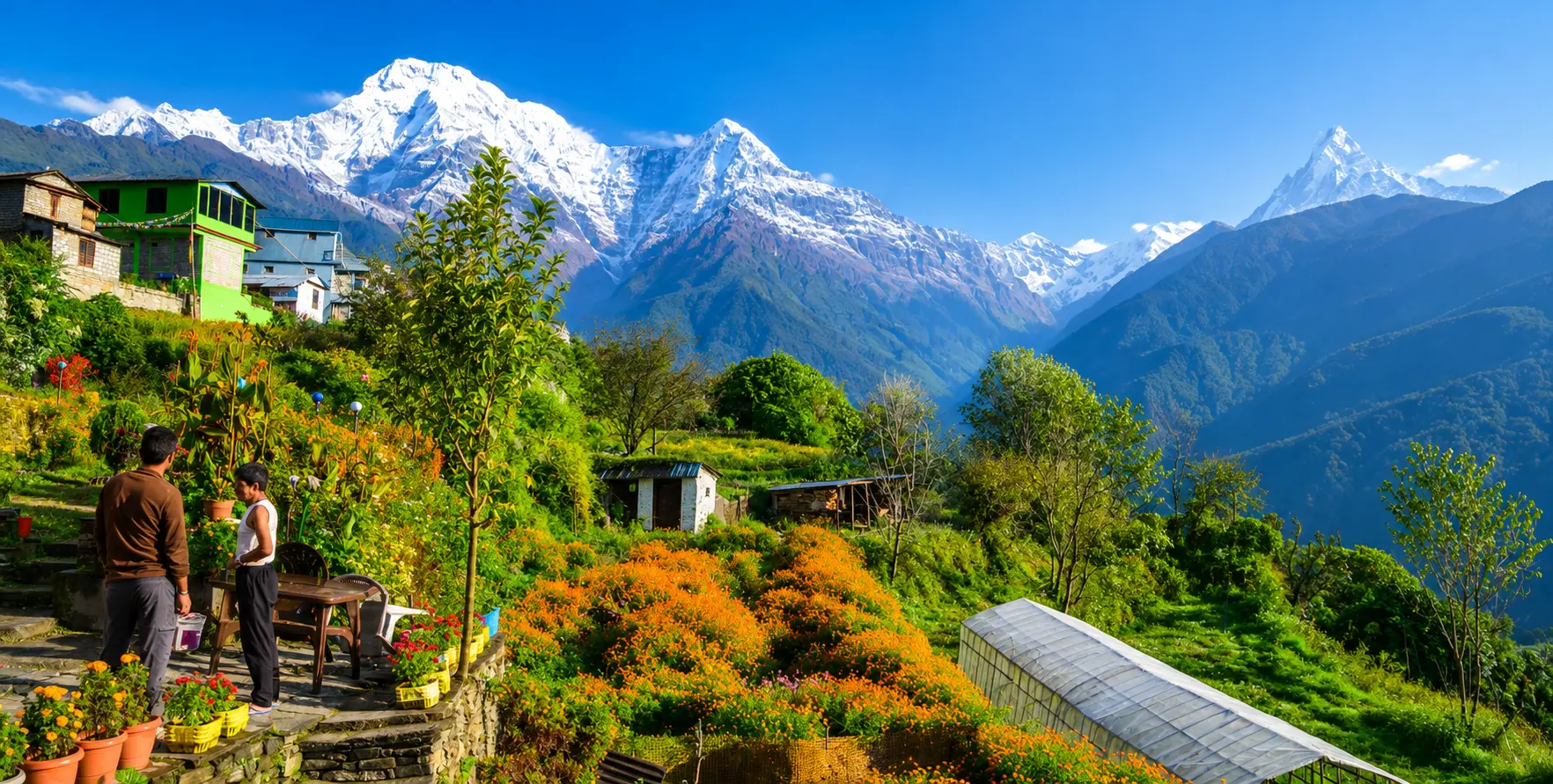
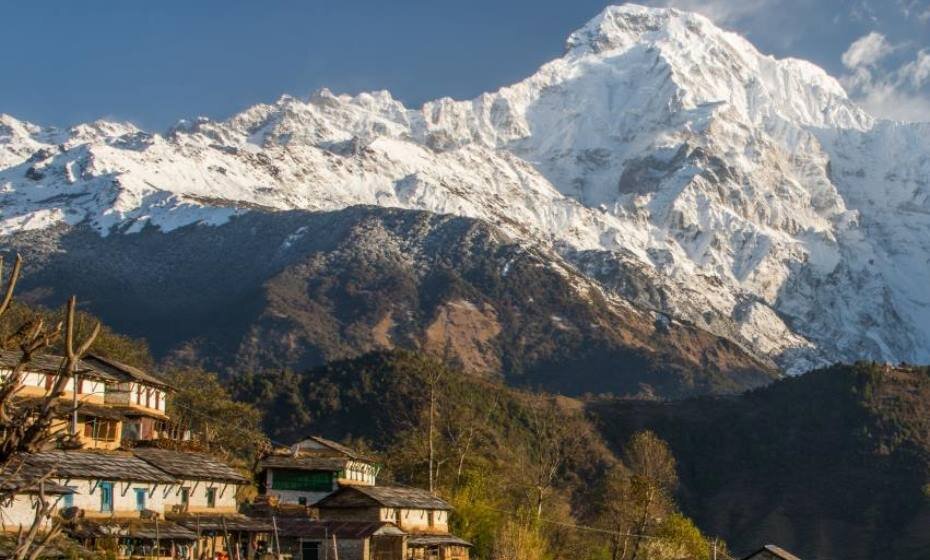
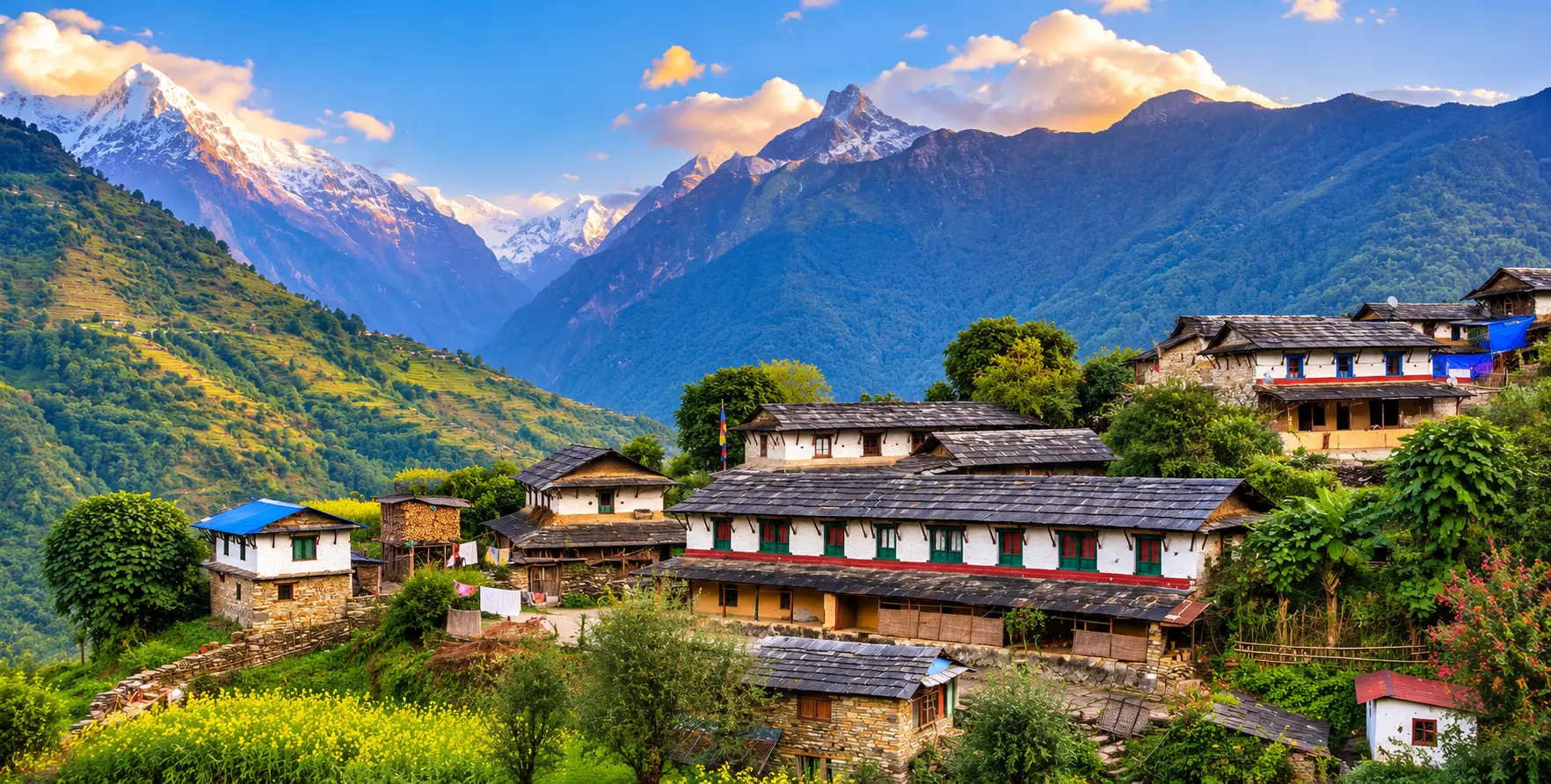
Landruk (also spelt Landrung) is a spread-out Gurung village at roughly 1,565 to 1,650 meters on the eastern side of the Modi Khola valley, within the Annapurna Conservation Area. It’s known for some of the most immediate, unobstructed views of Annapurna South and Machhapuchhre (Fishtail) on the standard approach trails, along with a strong, living Gurung cultural character reflected in the village’s traditional stone-and-wood architecture and terraced farmland.
Landruk sits at a genuine crossroads for Annapurna region trekking: it’s a standard waypoint on the classic Annapurna Base Camp trek via Chhomrong and Jhinu Danda, the natural link-up point for trekkers finishing the Mardi Himal trek and continuing toward Ghandruk or Pokhara, and a worthwhile short trip in its own right for travellers with limited time who still want genuine mountain views and Gurung village culture without committing to a multi-day trek.
The Gurung community here, as in Ghandruk and other nearby villages, has long been associated with Gurkha military service, a heritage still visible in the village’s social fabric, its remittance-funded homes, and the community halls found in many settlements throughout this part of the Annapurna foothills. This cultural depth adds real substance to what might otherwise be treated as a purely scenic stopover.
Why This Route Has Changed So Much in Recent Years
Like much of Nepal’s mid-hill trekking country, the roads reaching toward Landruk have expanded significantly over the past decade, part of a broader national trend of rural road construction reaching progressively deeper into areas once accessible only on foot. This has genuinely changed the character of a Landruk trip: what was once a multi-day trekking commitment from Phedi is now, for many itineraries, a half-day jeep journey followed by a shorter, more targeted trek toward Mardi Himal or the Annapurna Sanctuary. Some longtime trekkers view this expansion with mixed feelings, weighing easier access against the changing character of trails that once required more sustained effort to reach. Whatever your view of that trade-off, the practical reality for most travellers is that jeep access now shapes the most efficient way to plan a trip into this region.
Cultural and Historical Context of the Region
The Annapurna foothills surrounding Landruk, Ghandruk, and the wider Modi Khola valley are home to one of Nepal’s most historically significant Gurung communities. This ethnic group has lived in the central Himalayan foothills for centuries, traditionally combining subsistence agriculture and livestock herding with, since the 19th century, a strong tradition of military service in Gurkha regiments of the British and Indian armies. This history shows throughout Landruk and neighbouring villages in well-built stone homes funded by military pensions, community development projects, and a generally higher standard of rural infrastructure than in some more remote parts of Nepal.
Beyond the Gurung cultural layer, this region also carries deep religious significance tied to the Annapurna massif itself, considered sacred in both Hindu and Buddhist traditions as the abode of the goddess Annapurna, associated with nourishment and abundance. Many trekkers passing through Landruk and the surrounding villages find that this layered cultural and spiritual context adds meaningful depth to what, on the surface, is simply a scenic mountain journey.
Altitude and Health Considerations
Landruk’s relatively modest elevation of roughly 1,565 to 1,650 meters means altitude sickness is not a significant concern for the village itself, unlike higher destinations elsewhere in the Annapurna region. However, trekkers continuing onward toward Mardi Himal Base Camp (around 4,500 meters) or the Annapurna Sanctuary (around 4,130 meters) should take standard altitude precautions once climbing beyond Landruk, including a gradual ascent profile, adequate hydration, and awareness of common altitude sickness symptoms such as headache, nausea, or unusual fatigue.
Sample Itinerary: Short Landruk Visit (2 Days)
Day 1: Private jeep from Pokhara to Landruk (or the nearest accessible road head), arriving by early afternoon with time to explore the village and enjoy sunset views of Annapurna South and Machhapuchhre.
Day 2: Enjoy morning views and take a short walk to Tolka or New Bridge, then return to Pokhara by jeep in the afternoon.
Sample Itinerary: Mardi Himal Trek From Landruk (5 Days)
Day 1: Jeep from Pokhara to Landruk, then trek to Forest Camp.
Day 2: Forest Camp to High Camp, climbing through rhododendron forest into more open alpine terrain.
Day 3: High Camp to Mardi Himal Base Camp and back to High Camp or Low Camp, with close-up views of Machhapuchhre and the wider Annapurna range.
Day 4: Descend back toward Landruk or a nearby village.
Day 5: Jeep back to Pokhara.
Distance and Route Overview
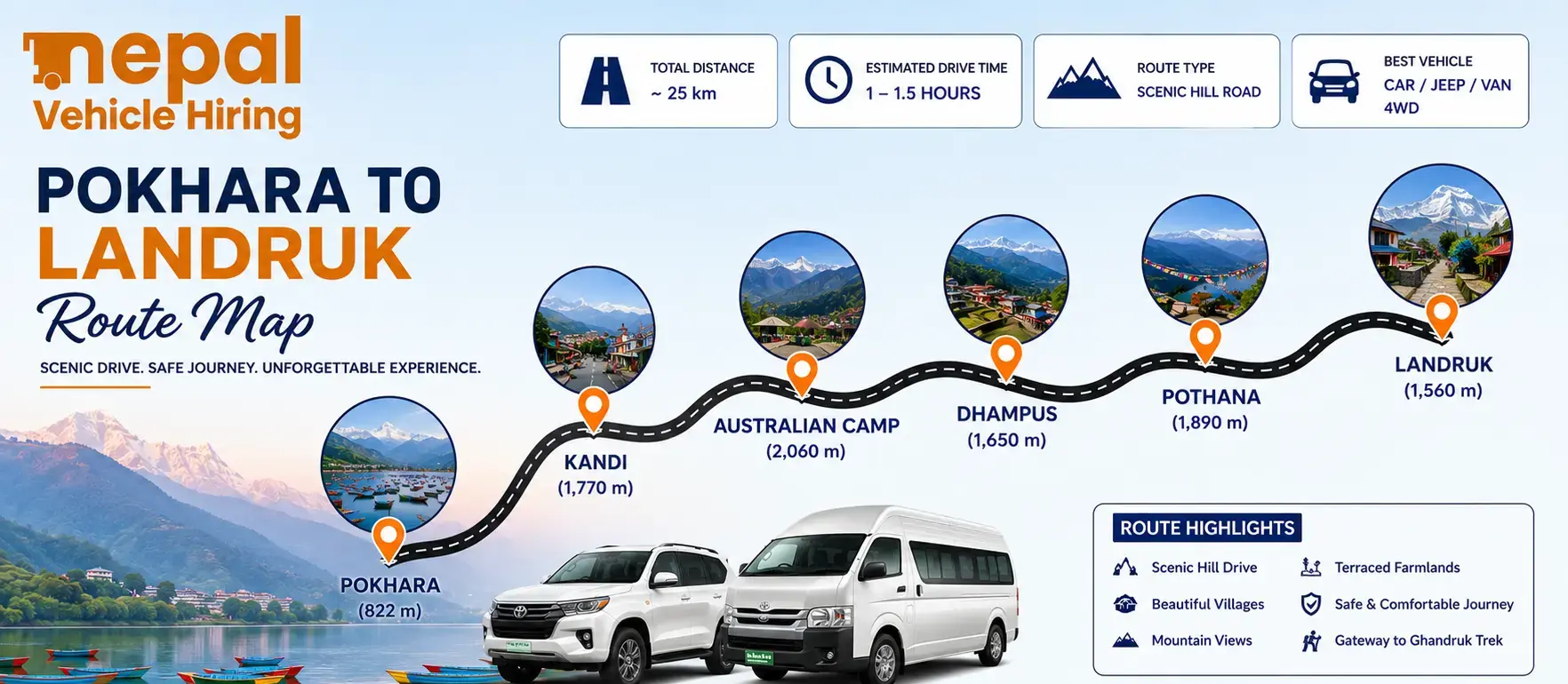
There’s no single fixed route to Landruk, since the exact jeep road and drop-off point have expanded and shifted somewhat as road construction continues in this part of the Annapurna foothills. Most jeep journeys from Pokhara follow the Pokhara-Baglung Highway west before turning off toward Phedi, Kande, or Dhampus, then continuing on rougher, unpaved village roads as far as the current road head allows — sometimes into Landruk itself, sometimes to a nearby village like Siding, Tolka, or Ghandruk, with a shorter walk covering the remaining distance.
Confirm this variability directly with your operator at the time of booking, since road conditions and the exact drivable extent change with weather, season, and ongoing construction. Our Pokhara to Sikles jeep rental and Pokhara to Nayapul transportation pages cover similar nearby foothill routes where the same principle applies.
How Long Does the Journey Take?
By private jeep, the drive from Pokhara toward Landruk typically takes 2.5 to 4 hours, depending on the exact drop-off point, road conditions, and time of year. This compares to a full day or more of trekking via the traditional Phedi-Dhampus-Pothana-Tolka approach, making the jeep option a genuine time saver for trekkers who want to maximise time at higher elevations rather than spend it on the lower approach trails.
Cost of Pokhara to Landruk Jeep Hire
Shared jeep seats on nearby sections of this route have historically run from NPR 700 to 3,000 per person, depending on the exact start and end points. In contrast, a private jeep charter is priced per vehicle rather than per seat and comfortably carries up to six passengers and their trekking gear. For a group of four to six trekkers, a private charter often works out more cost-effectively per person than individual shared jeep seats, and it offers a fixed departure time rather than waiting for a shared vehicle to fill.
Choosing the Right Vehicle
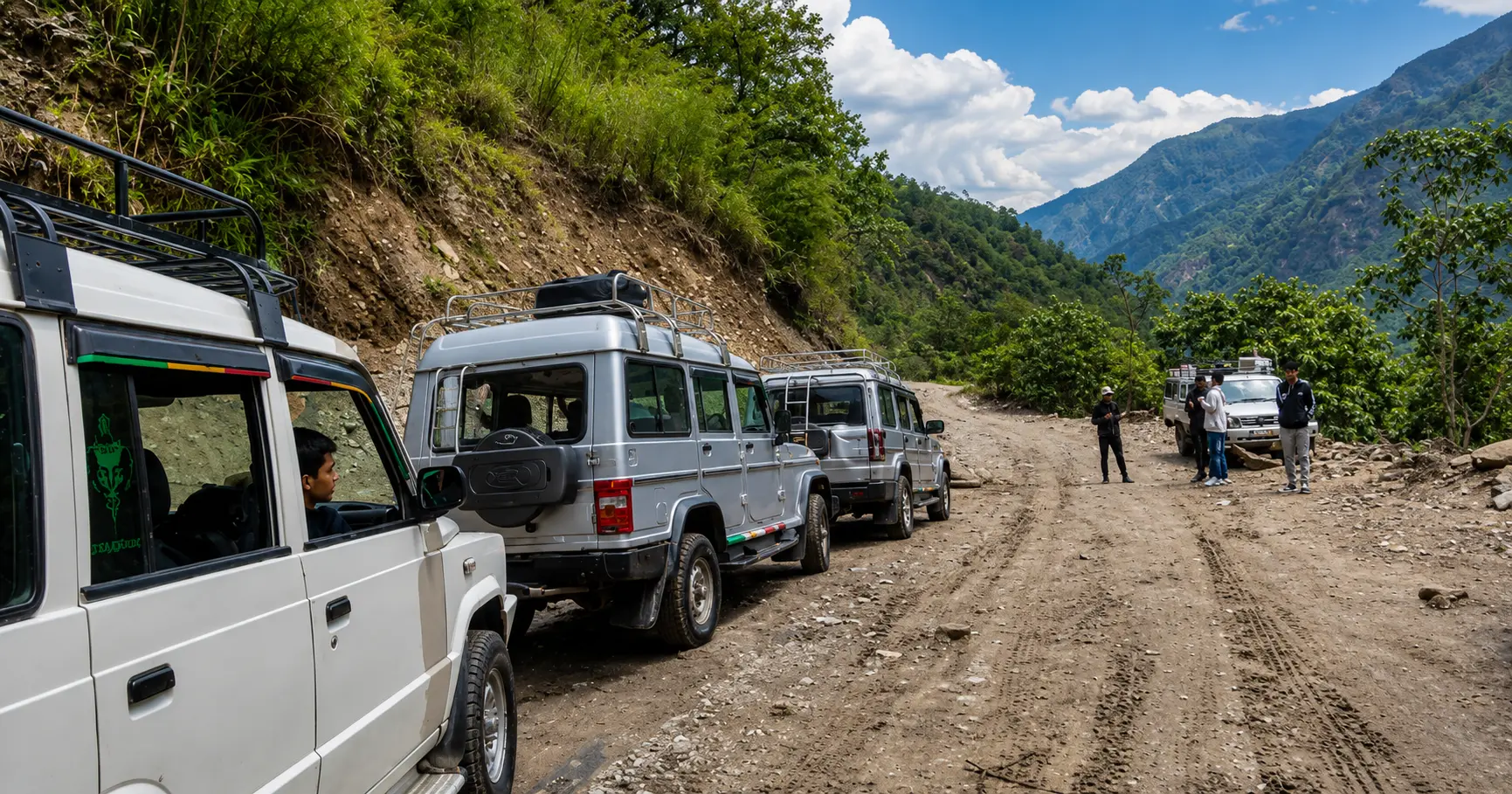
The roads toward Landruk mix paved highway sections with genuinely rough, unpaved village tracks, making a proper 4WD essential, not optional. A Scorpio jeep hire is the standard, reliable choice for this route. Our guide on why 4WD is best for Nepal, and why a genuine 4WD jeep matters, explains the terrain in more depth if you’re deciding between vehicle classes for this kind of foothill route.
Permits Required
Landruk sits within the Annapurna Conservation Area, so every visitor needs a valid ACAP (Annapurna Conservation Area Permit), along with a TIMS (Trekkers’ Information Management System) card if continuing to trek beyond Landruk itself. Our ACAP permit guide covers exactly where to obtain these in Pokhara before you travel, and our broader Annapurna Conservation Area guide covers the region’s conservation model and access rules in more depth.
Trekking Routes That Connect Through Landruk
Mardi Himal Trek
Landruk serves as both a starting and finishing point for the popular Mardi Himal trek, a shorter, increasingly popular alternative to the full Annapurna Base Camp trek, climbing toward Mardi Himal Base Camp at around 4,500 meters with some of the closest views of Machhapuchhre available on any standard trekking route in the region.
Annapurna Base Camp Trek
On the classic Annapurna Base Camp route via Chhomrong, Landruk is a standard waypoint, connecting onward to New Bridge, the hot springs at Jhinu Danda, and up through Chhomrong toward the Annapurna Sanctuary itself. Starting this trek with a jeep to Landruk (or nearby Kande/Dhampus) rather than walking the full approach from Phedi shaves a genuine day or more off the total trip length.
Ghorepani-Poon Hill Connection
Some trekkers combine a Landruk-area trek with the popular Ghorepani-Poon Hill circuit, looping through Tadapani and Ghandruk. Our Pokhara to Ghandruk jeep and Kathmandu to Ghandruk private jeep hire pages cover this neighbouring village in detail, useful for planning a longer loop itinerary through both Landruk and Ghandruk.
Nearby Villages Worth Knowing About
Tolka
A quieter village on the standard approach route between Pothana and Landruk, with fewer visitors than Landruk itself and equally strong mountain views.
New Bridge
A river-crossing point below Landruk on the Modi Khola, marking the start of the climb toward Jhinu Danda and Chhomrong for trekkers continuing on the Annapurna Base Camp route.
Jhinu Danda
Famous for its natural hot springs by the river, a popular rest stop for trekkers on the Annapurna Base Camp route roughly a half-day’s walk beyond Landruk.
Ghandruk
A larger, more developed Gurung village a moderate distance from Landruk, covered in full in our Pokhara to Ghandruk jeep guide, often combined with a Landruk visit on a longer regional itinerary.
Dhampus
A popular short-trek village on the standard approach route, often used as an overnight stop or an alternate jeep drop-off point when the road toward Landruk itself is less favourable.
Environmental and Responsible Travel Considerations
The Annapurna Conservation Area operates under a community-managed conservation model, with ACAP permit fees directly funding local infrastructure, forest protection, and community development projects throughout the region, including around Landruk. Responsible travel here means packing out any waste you generate, minimising single-use plastic given limited waste infrastructure in these mid-hill villages, and choosing locally owned teahouses and guides where possible, since tourism income remains an important part of the local economy alongside traditional agriculture and remittances from military and overseas work.
Photography Along the Route
Both the jeep journey itself and Landruk village offer genuinely rewarding photography opportunities. The drive from Pokhara passes through classic mid-hill Nepal scenery — terraced rice paddies, scattered farmhouses, and increasingly dramatic mountain views as elevation increases. Landruk itself is particularly well known among photographers for its unobstructed, close-range views of Annapurna South and Machhapuchhre, especially striking at sunrise when the peaks catch the first light. Meanwhile, the valley below remains in shadow.
Comparing Landruk to Other Annapurna Foothill Villages
Landruk offers some of the closest, most unobstructed views of Annapurna South and Machhapuchhre in the region, with a genuine crossroads position linking the Mardi Himal and Annapurna Base Camp routes.
Ghandruk is larger and more developed, with a well-known Gurung heritage museum and more extensive tourist infrastructure, as our Pokhara to Ghandruk jeep guide covers.
Dhampus sits closer to Pokhara and is often a shorter, easier alternative for travellers with very limited time.
Sikles offers a quieter, less-visited alternative further east, covered in our Pokhara to Sikles jeep rental guide.
Best Time to Visit Landruk
Autumn (September to November) and spring (March to May) offer the clearest mountain views and most stable road and trekking conditions, making them the most popular windows for a Landruk trip. Spring additionally brings rhododendron blooms along the lower trekking trails, a particular highlight for this specific region given how densely forested the approach routes are. Monsoon (June-August) brings lush greenery but a real risk of leeches on the trail and slippery, less reliable jeep roads. At the same time, winter (December-February) remains generally accessible at Landruk’s relatively modest elevation, though colder and quieter than the peak seasons.
Traditional Gurung Cuisine to Try
Guesthouses in Landruk and the surrounding villages typically serve the standard Nepali trekking menu — dal bhat (lentils, rice, and vegetable curry), noodle soups, and simple fried dishes — alongside occasional Gurung specialities reflecting the region’s distinct culinary traditions, such as dhido (a millet or buckwheat porridge) and locally brewed rakshi or tongba where available. Trying dal bhat at least once is something of a trekking rite of passage in Nepal, given its status as the staple, energy-dense meal that fuels most multi-day treks throughout the country.
Comparing Jeep Access to the Traditional Trekking-In Experience
It’s worth acknowledging that jeep access to Landruk is a genuine trade-off, not purely a positive development. The traditional multi-day walk-in from Phedi via Dhampus and Pothana offers a gradual, immersive introduction to the region’s changing landscape and villages that a jeep journey can’t replicate. Trekkers with the time and inclination for this slower approach may find it a more rewarding way to arrive at Landruk, even if less efficient. This guide’s focus on jeep access reflects the practical reality that most modern travellers, balancing limited vacation time against a broader Nepal itinerary, increasingly favour the faster option — but the traditional approach remains a valid and worthwhile alternative for those with the time to spare.
Sustainable Tourism and Long-Term Regional Development
Tourism revenue through ACAP permits, guesthouse stays, and local guide and porter employment plays a genuinely important role in sustaining Gurung communities throughout the Landruk and Ghandruk area, supplementing traditional agriculture and military-service remittances. Visitors who choose to spend within these local economies—staying in village-owned guesthouses, hiring local guides and porters where appropriate, and buying meals and supplies locally rather than carrying everything from Pokhara—contribute directly to the kind of community-level tourism benefit the Annapurna Conservation Area’s management model was designed to encourage.
A Word on Trail Etiquette
Nepal’s trekking trails, including those around Landruk, generally follow a few widely observed courtesies: yield to porters carrying heavy loads, especially on narrow or steep sections; greet fellow trekkers and villagers with a friendly ‘Namaste’; and stay on marked trails to avoid damaging surrounding farmland or forest. These small courtesies matter more in a working agricultural landscape like the Annapurna foothills than they might in a purely wilderness setting, since the trails here pass directly through people’s homes, fields, and daily lives rather than through uninhabited backcountry.
Planning Your Trip Timeline
For a short 2-day Landruk visit, you need minimal planning beyond booking your jeep and confirming basic accommodation availability, especially outside peak season. For a longer Mardi Himal or Annapurna Base Camp extension, plan at least a few weeks ahead if travelling during autumn or spring peak season, allowing time to arrange permits, confirm guide or porter services if desired, and build appropriate fitness preparation into your pre-trip routine given the sustained multi-day walking involved.
Weather Patterns in the Modi Khola Valley
The Modi Khola valley, where Landruk sits, funnels weather somewhat differently than the drier Kali Gandaki valley further north near Jomsom and Muktinath. This region receives noticeably more rainfall because of its lower elevation and more direct exposure to monsoon moisture, creating the lush, forested character that distinguishes it from the starker high-desert terrain further into the mountains. This also means monsoon-season trekking here, while less commonly recommended than autumn or spring, is somewhat more viable than in drier, higher-altitude regions, provided you’re prepared for regular rain and leech-prone trail conditions.
Family and Beginner-Friendly Considerations
Landruk’s combination of jeep accessibility and relatively modest elevation makes it one of the more approachable Annapurna region destinations for families with children or trekkers new to Nepal’s mountain trails. A short 1-2 day visit requires no significant trekking experience, while the option to continue further—toward Tolka, New Bridge, or beyond—remains available for families wanting to extend their trip incrementally based on how the group manages the terrain and pace.
Combining Landruk With a Broader Pokhara Itinerary
Most travellers visiting Landruk are already based in Pokhara, and many combine the trip with the city’s other well-known attractions — Phewa Lake, the World Peace Pagoda, and a sunrise excursion via our Sarangkot sunrise tour vehicle service. A Landruk day trip or short overnight fits naturally alongside these other Pokhara-based activities without requiring a separate, lengthy relocation.
Combining a Multi-Village Loop
An increasingly popular way to experience this region is a multi-village loop combining Landruk, Ghandruk, and sometimes Dhampus or Tolka into a single 3-5 day itinerary, using a mix of jeep transport at either end and trekking between villages. This approach offers a fuller picture of the Annapurna foothills —Landruk’s close-up mountain views, Ghandruk’s larger scale and Gurung heritage museum, and the quieter character of smaller villages along the way—without the time commitment of a full Annapurna Base Camp or Circuit trek. Our Kathmandu-to-Ghandruk private jeep hire page covers planning this kind of loop from Kathmandu instead of Pokhara, useful for travellers coming from the capital.
Insurance and Safety Preparedness
Standard travel insurance that covers trekking activities is worth having for any trip beyond a short Landruk visit, especially given the more remote, higher-altitude sections of the Mardi Himal and Annapurna Base Camp routes. Confirm your policy covers the specific elevations and activities involved, and carry a basic first-aid kit along with any personal medications, since medical facilities become progressively more limited the further you trek from Pokhara.
Comparing This Trip to Other Short Pokhara Excursions
For travellers weighing a Landruk trip against other short excursions from Pokhara, it’s worth a direct comparison: a Sarangkot sunrise tour offers similar mountain views in a much shorter half-day formatwith noy walking commitment. In contrast, a Pokhara-to-Ghandruk jeep trip offers a comparable but distinct Gurung village experience. Landruk’s particular advantage is its dual role as both a worthwhile short visit and a genuine trekking gateway, giving travellers flexibility to extend their trip on the ground rather than committing to a fixed plan in advance.
Currency and Payment Along the Route
Cash is essential for this trip, since ATMs and card payment are unavailable in Landruk and the surrounding villages. Withdraw sufficient Nepali rupees in Pokhara before departure, budgeting for accommodation, meals, and any incidental purchases along the trail. Guesthouse rates and meal prices in this region are generally clearly posted and follow clearly posteddardised structure acConservation Area, making budgeting reasonably predictable compared to the more informal pricing found in other parts of Nepal.
Wildlife and Natural Features
The forests surrounding Landruk and the wider Modi Khola valley host a range of Himalayan wildlife, including various pheasant species, langur monkeys, and, at higher elevations further along the Mardi Himal and Annapurna Base Camp routes, the possibility (though rarely realised) of spotting more elusive species like Himalayan tahr. The rhododendron forests along the approach trails are a particular highlight during the spring blooming season, transforming sections of trail into corridors of red and pink blossoms.
Seasonal Festival Considerations
Like much of Nepal, this region sees increased domestic travel during major festival periods, particularly Dashain and Tihar in autumn, when Nepali families often combine visits to relatives with short mountain trips. If your Landruk visit coincides with these dates, expect somewhat higher demand for both jeep transport and guesthouse accommodation, and book accordingly further in advance than during quieter periods.
Physical Fitness Requirements
A short Landruk visit requires minimal physical fitness beyond comfortable walking, since jeep access reaches close to or into the village. Continuing to Mardi Himal Base Camp or the Annapurna Sanctuary, however, demands genuine trekking fitness — multiple consecutive days of walking at increasing elevation, often for 5-7 hours per day. Travellers should honestly assess their fitness and trekking experience before committing to these longer extensions, and consider a guide or porter if carrying full trekking gear feels daunting.
A Note on Local Guesthouse Etiquette
Teahouses and guesthouses throughout Landruk and the surrounding Annapurna Conservation Area villages generally expect guests to eat dinner and breakfast at the same property where they’re staying, as lodging rates are often kept low on the assumption that meals will be purchased there as well. This is standard practice throughout Nepal’s trekking region, nonot specificto Landruk, but it’s woworth it’sing for first-time visitors unfamiliar with this informal but widely observed arrangement.
Internet and Phone Connectivity
Mobile network coverage in Landruk is generally reasonable given the village’s proximity to Pokhara, though it can be inconsistent depending on your specific location and provider. Many guesthouses offer WiFi, sometimes for a small additional fee, but connectivity gets progressively less reliable the farther you trek beyond the village toward Mardi Himal or the Annapurna Sanctuary. Travellers planning to stay connected for work or family reasons should set realistic expectations and download any essential materials before departure.
Extending Into Longer Annapurna Region Treks
For trekkers with more time, you can combine Landruk and the Mardi Himal or Annapurna Base Camp routes with the wider Annapurna Circuitaccessed via Pokhara and transport to Manang. However, this is a substantially longer, separate trekking commitment rather than a direct extension of a Landruk-based trip. Travellers interested in Nepal’s more remote high-desert trekking terrain might also consider Upper Mustang as a very different, complementary Annapurna-region experience on a separate trip.
What Makes This Route Worth the Trip
Landruk fills a useful niche in Annapurna region travel: close enough to Pokhara for a realistic short trip, high enough to deliver real mountain views without serious altitude concerns, and positioned at a genuine crossroads between two of the region’s most popular trekking routes. For travellers who want authentic Annapurna scenery and Gurung culture without committing to the full multi-week circuit or base camp trek, a jeep-accessed Landruk trip delivers a genuinely satisfying taste of what draws so many people to this part of Nepal in the first place.
Choosing a Reliable Operator
- Confirm the operator has genuine, current experience on the Landruk route specifically, given how much the road has changed in recent years.
- Ask directly about the current drop-off point, rather than assuming the vehicle reaches all the way into the village.e
- Request a clear, upfront quote covering the full journey, including any waiting time if you’re doing a same-day round tri.p
- Check the specific vehicle model and condition being offered for a route with genuinely rough sections. ons
Trekking Without a Guide vs With a Guide
For a short Landruk visit focused on the village and its views, an independent trip without a hired guide is entirely feasible, particularly given the well-established trails and relatively straightforward navigation in this heavily trekked part of the Annapurna region. For longer treks toward Mardi Himal Base Camp or the Annapurna Sanctuary, many trekkers still hire a guide, both for safety on less-trafficked upper sections of trail and for the cultural and practical insight a local guide brings.
What to Pack
- Layered clothing suited to a range of temperatures between the valley floor and higher trekking elevations
- Sturdy trekking shoes, even if your main plan is a short Landruk visit rather than a multi-day trek
- Rain gear, particularly outside the reliable autumn and spring windows
- Cash in Nepali rupees, since card and ATM access is unavailable beyond Pokhara
- A basic first-aid kit and any personal medications for the trip
Where to Stay in Landruk
Landruk offers a range of trekking lodges and teahouses typical of the wider Annapurna Conservation Area, with most properties offering basic but comfortable rooms, hot meals, and — thanks to the village’s clear mountain-facing position — genuinely excellent views directly from many guesthouse dining areas. Booking ahead is sensible during the autumn and spring peak seasons. However, Landruk sees noticeably fewer visitors than the more heavily trafficked Ghorepani-Poon Hill circuit, making last-minute availability more realistic here than on Nepal’s busiest trekking routes.
Things to See and Do in Landruk
- Sunrise and sunset views of Annapurna South and Machhapuchhre, often visible directly from guesthouse terraces
- Exploring the village’s traditional Gurung stone-and-wood architecture and terraced farmland
- Short day walks toward Tolka or down to New Bridge for those not continuing on a full multi-day trek.
- Cultural interaction with the local Gurung community, many of whom have a long history connected to Gurkha military service
Combining Your Trip With the Mardi Himal Trek
Landruk’s role as a Mardi Himal trailhead makes it a natural base for trekkers tackling this increasingly popular shorter alternative to the full Annapurna Sanctuary trek. A typical Mardi Himal itinerary from Landruk runs 4-5 days round trip, climbing through forest camp and high camp before reaching Mardi Himal Base Camp, with some of the most dramatic close-up Machhapuchhre views available on any Annapurna region trek.
Combining Your Trip With Annapurna Base Camp
For trekkers heading further into the Annapurna Sanctuary itself, Landruk connects onward through New Bridge, Jhinu Danda’s hot springs, and Chhomrong toward Annapurna Base Camp — a multi-day extension well beyond what this specific guide covers in route detail, but worth knowing about when planning your jeep drop-off point and overall itinerary length. Our Upper Mustang 4WD jeep and Pokhara-to-Manang transport guides cover other major Annapurna-region trekking approaches if you’re comparing routes to find the one that best fits your available time.
Road Conditions and Safety
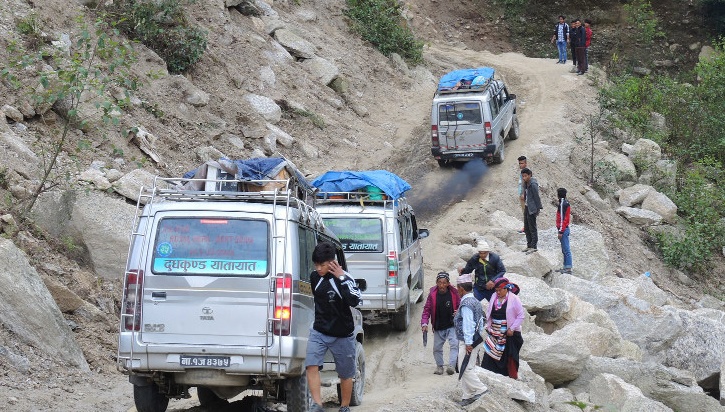
The roads leading toward Landruk are genuinely rough in sections, particularly beyond the main Pokhara-Baglung Highway turn-off, with narrow, unpaved village tracks that demand an experienced local driver rather than an unfamiliar attempt at self-navigation. Road conditions also change significantly during monsoon-season rain, which can temporarily wash out sections of the more remote village roads. A private jeep with a driver experienced on this specific route handles these conditions far more safely and reliably than self-driving or relying on an unfamiliar operator.
Group Travel Options
For trekking groups larger than a single jeep can comfortably fit, multiple Scorpio jeep hire vehicles or a larger Hiace for the paved highway portion of the journey (then switching to jeeps for the rougher final stretch) are both practical options, similar to the two-stage approach commonly used on other Annapurna foothill routes.
Booking Tips
- Confirm the exact drop-off point with your operator, since the drivable road extent toward Landruk shifts with ongoing construction and seasonal conditions
- Book your ACAP permit and TIMS card in Pokhara before departure, since they aren’t available in Landruk itself.
- Ask your driver about current road conditions if travelling during or shortly after monsoon season.n
- Confirm whether your booking is a shared seat or private charter, since pricing and flexibility differ significantly between the tw.o
- Build a buffer into your schedule if this is the start of a longer trek, rather than assuming a same-day connection to strenuous trekking will always go exactly as planned.n ed
Common Mistakes to Avoid
- Assuming the jeep road reaches all the way into Landruk without confirming current conditions with your operator
- Forgetting ACAP and TIMS permits, which are required even for a short Landruk visit within the conservation area
- Underestimating how rough the final stretch of road can be, particularly outside the dry autumn and spring seasons
- Not booking accommodation ahead during peak season, even though Landruk is generally quieter than more heavily trafficked nearby routes.
Summary: Key Facts for This Route
- Distance: roughly 2.5-4 hours by jeep from Pokhara, depending on the exact drop-off point, covering approximately 25-3kilometresrs
- Elevation: Landruk sits at roughly 1,565-1,650 meters
- Permits required: ACAP, plus TIMS for onward trekking
- Best seasons: autumn (September-November) and spring (March-May)
- Connects to: Mardi Himal trek, Annapurna Base Camp trek via Chhomrong, and the Ghorepani-Poon Hill circuit via Ghandruk
- Best suited for: short cultural visits, Mardi Himal trekkers, and Annapurna Base Camp trekkers seeking a faster approach
What Sets This Route Apart From Other Nepal Jeep Journeys
Compared to longer, more demanding jeep routes covered elsewhere in our guides — such as the Besisahar to Chame and Upper Pisang stretch or the drive toward Upper Mustang — the Pokhara to Landruk journey is comparatively short and accessible, making it a genuinely approachable introduction to Nepal’s mountain jeep travel for first-time visitors who might find the country’s more extreme high-altitude routes intimidating. This accessibility, combined with the region’s genuine scenic and cultural rewards, helps explain why Landruk continues to attract steady visitor interest even as jeep roads have expanded to reach many other previously remote destinations.
Travelling With Porters
For trekkers continuing beyond Landruk toward Mardi Himal or the Annapurna Sanctuary, hiring a local porter is a widely used, culturally established option, letting you trek with only a day pack. At the same time, they carry your main gear separately. You can typically arrange porters through your jeep operator, a trekking agency in Pokhara, or directly in Landruk, and hiring locally supports the village economy. Standard porter etiquette includes fair daily wages, appropriate load limits, and basic provisions for the porter’s food and shelter along the route, which a reputable agency will already include in its standard arrangements.
TipMany travellers Many travellers and the surrounding villages worth documenting photogphy;beyond photography and journaling, capturingultural encounters, the specific character of Gurung village life, and the changing landscape between Pokhara’s lakeside bustle and the quiet mountain terrain just a few hours away. This kind of reflection adds genuine value to a trip that might otherwise be remembered mainly for its logistics, and several trekkers report that revisiting these notes later deepens their appreciation for what was, in the moment, sometimes just another item on a travel itinerary.
Historical Trekking Routes vs Today’s Access
Older trekking guidebooks and trip reports describing this region often reference a multi-day approach from Phedi that no longer matches current road realities. If you’re researching this trip using older resources, treat any road or access descriptions with caution and confirm current conditions directly with a local operator, since the pace of road expansion in this specific area has been fast enough that information even a few years old can be meaningfully out of date. This is a genuinely common source of confusion for travellers planning based on trip reports from five or even three years ago, when the drivable road extent was noticeably shorter than it is today.
Understanding ACAP’s Broader Role in This Region
The Annapurna Conservation Area Project, which manages permits and conservation across this entire region, including Landruk, is one of Nepal’s oldest and most established protected-area management models, dating back to the 1980s. Beyond simply collecting permit fees, ACAP funds reforestation projects, sustainable energy initiatives in village communities, and conservation education throughout the Annapurna region. Our full Annapurna Conservation Area guide covers this management model and its history in considerably more depth for travellers interested in the conservation context behind the permit system.
Final Thoughts on Planning This Trip
Whether you want a relaxed two-day escape from Pokhara or the opening leg of a longer Mardi Himal or Annapurna Base Camp trek, a well-planned Pokhara to Landruk jeep journey sets the right tone from the first hours of your trip. Confirm your exact route and drop-off point with an experienced local operator, arrange your ACAP permit in advance, and build a realistic sense of the region’s dual character — easily accessible by modern road standards, yet still carrying the genuine Gurung mountain culture and Annapurna panoramas that have drawn trekkers to this valley for decades.
For a region that has changed as quickly as this one has in recent years, the practical details in this guide — road conditions, permit requirements, seasonal timing — are worth confirming directly with your operator close to your actual travel dates, since infrastructure here continues to evolve. What won’t change is the reward waiting at the end of the drive: genuine, close-up Annapurna views, a living Gurung village, and a natural gateway into some of Nepal’s most rewarding mid-altitude trekking country.
Plan thoughtfully, travel respectfully within these mountain communities, and the short drive from Pokhara to Landruk will likely become one of the more memorable transitions of your entire Nepal trip — the moment the lakeside city gives way to terraced hillsides, Gurung villages, and the Annapurna range rising directly ahead.
Closing Thoughts for First-Time Annapurna Region Visitors
If this is your first trip into the Annapurna foothills, Landruk offers a genuinely forgiving introduction — accessible by jeep, culturally rich, visually rewarding, and flexible enough to suit anything from a relaxed overnight to the opening leg of a serious multi-day trek. Compare it against our Pokhara to Ghandruk jeep and Pokhara to Sikles jeep rental guides if you’re still deciding which specific village best fits your itinerary, and don’t hesitate to ask your operator directly about current conditions — this is a region where the details genuinely do shift from season to season. A good local operator is your best source of up-to-date, accurate planning information.
A Closing Note on Timing Your Visit With the Seasons
As covered throughout this guide, autumn and spring remain the strongest windows for this trip, but the right time ultimately depends on your specific goals. Photographers chasing the clearest Annapurna views should prioritise October and November. Trekkers wanting rhododendron blooms alongside their Mardi Himal or Annapurna Base Camp extension should target April. Travellers seeking a quieter, less crowded version of the same experience might consider the shoulder weeks just before or after the main autumn and spring peaks, trading a small amount of weather reliability for meaningfully lower visitor numbers throughout Landruk and the connecting trails. Whichever window you choose, pairing it with our best time to visit Muktinath guide is worth a look if your broader Nepal itinerary extends into the Mustang region as well, since both areas follow broadly similar seasonal logic despite their different terrain.
Why Book With Nepal Vehicle Hiring Pvt Ltd
Our drivers know the roads to Landruk and the wider Annapurna foothills well, including current conditions on rougher unpaved sections that change with the season. Every booking includes a well-maintained 4WD vehicle, transparent pricing, and flexibility around your exact drop-off point given the road’s variable extent.
Reach out through our contact page to arrange your Pokhara to Landruk jeep, whether you’re heading in for a short cultural visit, the Mardi Himal trek, or the longer Annapurna Base Camp route.
Explore More Nepal Routes, Tours, and Vehicles
Whatever shape your Annapurna foothills trip takes, here’s a fuller map of the routes, tours, and vehicle options we cover, in case your journey extends further across the region.
Annapurna Foothills and Trekking Approaches
See Pokhara to Ghandruk jeep, Kathmandu to Ghandruk private jeep hire, Pokhara to Sikles jeep rental, Pokhara to Nayapul transportation, Sarangkot sunrise tour vehicle, the Everest Base Camp trek, and our general trekking services.
Annapurna Circuit and Manang Region
See Pokhara to Manang transport, Manang to Kathmandu private jeep hire, Kathmandu to Manang jeep, Besisahar to Chame and Upper Pisang, why Dharapani is the Annapurna Circuit’s most popular starting point, the ACAP permit guide, and the Annapurna Conservation Area overview.
Mustang and Muktinath Region
See Upper Mustang 4WD jeep, our jeep rental for Mustang tour guide, places to visit in Mustang, Kathmandu to Mustang private jeep, Pokhara to Beni jeep hire, Muktinath to Pokhara jeep, our Jomsom to Muktinath jeep rental guide, our best time to visit Muktinath guide, and our Muktinath temple Hiace hire guide.
Kathmandu and Pokhara Transport
See Kathmandu to Pokhara bus tickets, Kathmandu to Pokhara bus tickets, Pokhara to Kathmandu buses, Kathmandu to Pokhara road trips, Kathmandu to Pokhara vehicle rentals, Kathmandu to Pokhara private Scorpios, our Pokhara bus ticket price guide, VIP Sofa Bus hire in Nepal, and car hire in Pokhara.
Kathmandu Valley Sightseeing
Round out your trip with Kathmandu sightseeing, Kathmandu’s historical heritage sites, our Nepal UNESCO World Heritage Sites guide, Bhaktapur Durbar Square, Kathmandu to Nagarkot vehicle hire, the Nagarkot sunrise tour, Kathmandu airport transfers, our Thamel to airport private vehicle hire guide, and our why 4WD is best for Nepal guide.
Chitwan, Lumbini, and Border Routes
See Pokhara to Chitwan bus, Chitwan to Kathmandu bus, our Chitwan VIP bus ticket price guide, Kathmandu to Lumbini bus, Lumbini to Kathmandu bus, Sunauli to Pokhara car, Lumbini to Chitwan car, our Muktinath tour from Sunauli border guide, and our Bhairahawa to Kathmandu private car guide.
Vehicle Fleet and Booking Resources
Compare our full fleet: jeep, car, Hiace, bus, coaster, car hire in Nepal, our alternate Hiace van hire listing, Toyota Land Cruiser 4WD hire, our SUV rental in Nepal guide, jeep and SUV comparison, why private vehicle hire is the smartest way to travel Nepal, and our ultimate Nepal vehicle rental guide.
Plan and Learn More
Use our plan your trip tool, browse our Nepal tour package options, learn more about us, read our luxury trek vehicle hire guide, or browse our blog for further route guides across the country.
Frequently Asked Questions
How far is Landruk from Pokhara? The jeep journey typically takes 2.5 to 4 hhoursrs depending on the exact route and drop-off ppoint, and coversroughly 25-3kilometresrs of mixed paved and unpaved road.
Does the jeep road reach all the way into Landruk? This varies with ongoing road construction; confirm current conditions with your operator when booking.
Do I need a permit to visit Landruk? Yes, you need an ACAP permit, plus a TIMS card if you plan to trek beyond the village.
Is Landruk a good starting point for the Mardi Himal trek? Yes, it’s one of the standard starting and finishing points for this popular shorter trek.
Can I visit Landruk without doing a multi-day trek? Yes, many travellers visit for a short 1-2 day trip focused on the views and Gurung village culture alone.
What’s the best season to visit? Autumn (September-November) and spring (March-May) offer the clearest views and most stable road conditions.
Is a private jeep more expensive than a shared jeep? Per person, usually yes for solotravsolo travellersten comparable or cheaper for groups of four or more given per-vehicle pricing.
What vehicle is best for this route? A genuine 4WD like a Mahindra Scorpio, given the mix of paved and rough unpaved sections.
Can I combine Landruk with a visit to Ghandruk? Yes, many travellers combine both villages on a longer regional itinerary.
Are there hot springs near Landruk? Yes, Jhinu Danda, roughly a half-day’s walk beyond Landruk, is well known for its natural hot springs.
Is Landruk suitable for families with children? Yes, especially for a short visit rather than a full multi-day trek, since the jeep reduces the walking distance.
How cold does it get in Landruk? Given its relatively modest 1,565-1,650 meter elevation, temperatures are milder than higher-altitude Annapurna region destinations, though still cool, especially at night in winter.
Do I need a guide to visit Landruk? A guide isn’t strictly required for a short visit, but one is recommended for onward trekking toward Mardi Himal or Annapurna Base Camp.
Can I do a multi-village loop combining Landruk and Ghandruk? Yes, this is an increasingly popular way to experience the region’s variety within a 3-5 day itinerary.
Is there mobile phone coverage in Landruk? Generally reasonable given proximity to Pokhara, though it becomes less reliable further along the trekking routes beyond the village.
What wildlife might I see near Landruk? Pheasant species and langur monkeys are commonly seen; more elusive species like Himalayan tahr are possible at higher elevations further along connecting treks.
Is travel insurance necessary for a short visit to Landruk? Less critical for a short village visit than for onward trekking, though still generally advisable for any Nepal travel.
Can I pay by card in Landruk? No, cash is essential since card and ATM access is unavailable in the village and surrounding area.
Should I hire a porter for the Mardi Himal or Annapurna Base Camp extension? Many trekkers do, both to reduce their carrying load and to support the local economy directly.
Is Landruk more crowded than other Annapurna region destinations? Generally quieter than the Ghorepani-Poon Hill circuit, though it sees meaningful traffic during the autumn and spring peak seasons.
What’s the closest major town to Landruk? Pokhara, roughly 2.5 to 4 hours away by jeep depending on the exact route and drop-off point.
Is there a fixed jeep road all the way to Landruk village itself? Not always — the exact drivable extent shifts with ongoing construction, so confirm current conditions with your operator when booking.
Planning your trip into the Annapurna foothills? Book your Pokhara-to-Landruk jeep hire through our contact page, and start your Mardi Himal or Annapurna Base Camp trek with the approach already behind you.
- Pokhara to Landruk Jeep Hire: The Complete Guide
- Why Choose a Private Jeep to Landruk
- Understanding Landruk
- Why This Route Has Changed So Much in Recent Years
- Cultural and Historical Context of the Region
- Altitude and Health Considerations
- Sample Itinerary: Short Landruk Visit (2 Days)
- Sample Itinerary: Mardi Himal Trek From Landruk (5 Days)
- Distance and Route Overview
- How Long Does the Journey Take?
- Cost of Pokhara to Landruk Jeep Hire
- Choosing the Right Vehicle
- Permits Required
- Trekking Routes That Connect Through Landruk
- Nearby Villages Worth Knowing About
- Environmental and Responsible Travel Considerations
- Photography Along the Route
- Comparing Landruk to Other Annapurna Foothill Villages
- Best Time to Visit Landruk
- Traditional Gurung Cuisine to Try
- Comparing Jeep Access to the Traditional Trekking-In Experience
- Sustainable Tourism and Long-Term Regional Development
- A Word on Trail Etiquette
- Planning Your Trip Timeline
- Weather Patterns in the Modi Khola Valley
- Family and Beginner-Friendly Considerations
- Combining Landruk With a Broader Pokhara Itinerary
- Combining a Multi-Village Loop
- Insurance and Safety Preparedness
- Comparing This Trip to Other Short Pokhara Excursions
- Currency and Payment Along the Route
- Wildlife and Natural Features
- Seasonal Festival Considerations
- Physical Fitness Requirements
- A Note on Local Guesthouse Etiquette
- Internet and Phone Connectivity
- Extending Into Longer Annapurna Region Treks
- What Makes This Route Worth the Trip
- Choosing a Reliable Operator
- Trekking Without a Guide vs With a Guide
- What to Pack
- Where to Stay in Landruk
- Things to See and Do in Landruk
- Combining Your Trip With the Mardi Himal Trek
- Combining Your Trip With Annapurna Base Camp
- Road Conditions and Safety
- Group Travel Options
- Booking Tips
- Common Mistakes to Avoid
- Summary: Key Facts for This Route
- What Sets This Route Apart From Other Nepal Jeep Journeys
- Travelling With Porters
- TipMany travellers Many travellers and the surrounding villages worth documenting photogphy;beyond photography and journaling, capturingultural encounters, the specific character of Gurung village life, and the changing landscape between Pokhara's lakeside bustle and the quiet mountain terrain just a few hours away. This kind of reflection adds genuine value to a trip that might otherwise be remembered mainly for its logistics, and several trekkers report that revisiting these notes later deepens their appreciation for what was, in the moment, sometimes just another item on a travel itinerary.
- Historical Trekking Routes vs Today's Access
- Understanding ACAP's Broader Role in This Region
- Final Thoughts on Planning This Trip
- Closing Thoughts for First-Time Annapurna Region Visitors
- A Closing Note on Timing Your Visit With the Seasons
- Why Book With Nepal Vehicle Hiring Pvt Ltd
- Explore More Nepal Routes, Tours, and Vehicles
- Frequently Asked Questions

Related Blog & Articles
Kathmandu to Ghandruk Private Jeep: The Complete Guide
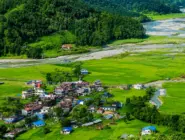
Pokhara to Pame Vehicle Hire
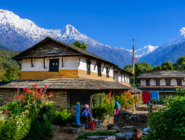
Pokhara to Kande Jeep Price – Complete Transport And Trek Guide