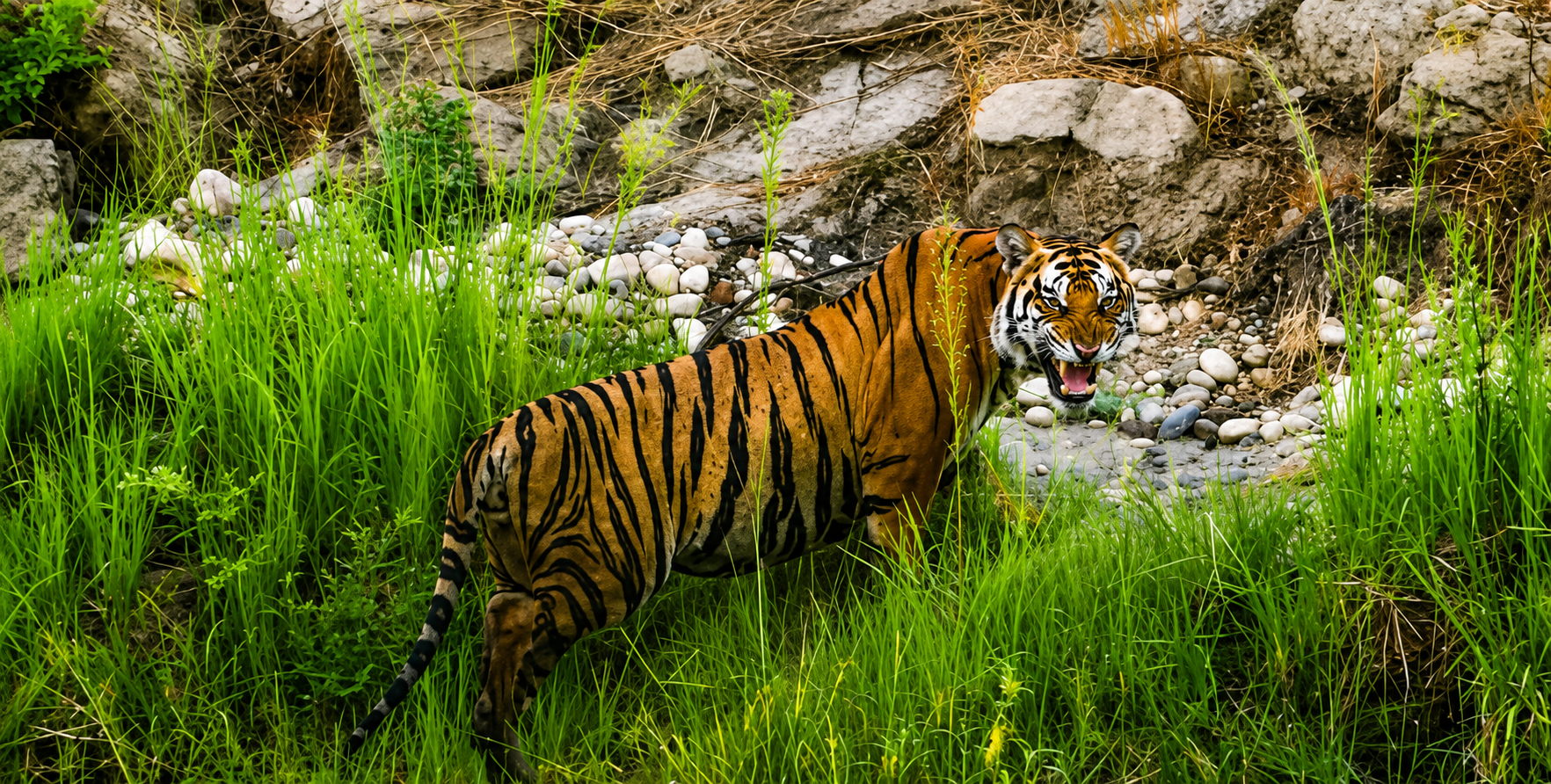
Pokhara to Lamjung Jeep Rental

Pokhara to Lamjung Jeep Rental

Pokhara to Lamjung Jeep Rental 2026-2027: Complete Guide to Besisahar, Ghalegaun & Annapurna Circuit

Lamjung District is one of Nepal’s most richly rewarding destinations for trekkers, cultural travelers, and adventure enthusiasts alike. Nestled in the Gandaki Province between Pokhara and the great peaks of the Annapurna and Manaslu ranges, Lamjung is home to Besisahar — the official starting point of the legendary Annapurna Circuit Trek — as well as the spectacular Ghalegaun and Ghanpokhara hilltop villages, the cultural Lamjung Durbar heritage site, the rushing Marsyangdi River gorge, and the lower reaches of some of Nepal’s finest trekking trails.

From Pokhara, the journey to Lamjung District is approximately 72 to 110 kilometers, depending on your destination, making it one of the most accessible and rewarding day and multi-day vehicle journeys from the lakeside city. Whether you are beginning the Annapurna Circuit Trek at Besisahar, visiting the hilltop homestay village of Ghalegaun, exploring the cultural Lamjung Durbar, or simply driving the magnificent Marsyangdi River valley for the views, a private jeep from Nepal Vehicle Hiring Pvt Ltd is the best way to make this journey.

This comprehensive 2026-2027guide covers everything you need — vehicle types, detailed costs, the full route, all major destinations in Lamjung District, trekking connections, permits, seasonal guidance, and expert tips for a perfect Pokhara-to-Lamjung jeep rental experience.


About Lamjung District – Nepal’s Annapurna Gateway

Lamjung District is located in Gandaki Province, directly north of Tanahun District and east of Kaski District (where Pokhara is situated). The district is bisected by the powerful Marsyangdi River, which flows southward from the high glaciers of the Manang valley, carving one of Nepal’s most spectacular gorges as it descends through the Lamjung hills toward the Tarai.

The district is dominated by the towering peaks of the Annapurna Himal to its northwest and the Manaslu massif to its northeast. Lamjung Himal (6,983 m) rises directly above the district and is visible from much of the lower valley. The district headquarters, Besisahar, sits at 760 meters at the confluence of the Marsyangdi River and the road from Dumre, and is the starting point for the Annapurna Circuit — one of the world’s most celebrated trekking routes.


Lamjung District Key FactsDetails
ProvinceGandaki Province, Nepal
District HeadquartersBesisahar (760 m)
Distance from PokharaApproximately 72–110 km (depending on destination)
Drive Time from Pokhara2 to 4 hours by private jeep
Main RiverMarsyangdi River
Key Peaks VisibleLamjung Himal (6,983 m), Annapurna II (7,937 m), Manaslu (8,163 m)
Main Trekking RoutesAnnapurna Circuit, Narphu Valley Trek, Lamjung Ghalegaun Homestay Trek
Cultural HeritageLamjung Durbar (historic palace), Gurung and Ghale communities
Famous AttractionsBesisahar, Ghalegaun, Ghanpokhara, Marsyangdi River, Lamjung Durbar


Major Destinations in Lamjung District from Pokhara

Lamjung District contains several distinct destinations, each requiring a jeep transfer from Pokhara. Here is a complete overview of all main destinations:


DestinationDistance from PokharaDrive TimeAltitudeBest For
Besisahar72–80 km2 to 2.5 hours760 mAnnapurna Circuit start, permit collection, Marsyangdi River
Ghalegaun90–100 km3 to 4 hours1,950 mGhale cultural village, homestay, Annapurna–Manaslu views
Ghanpokhara95–110 km3.5 to 4 hours2,100 mHilltop viewpoint, traditional Gurung village, less-trodden
Bhulbhule95–105 km2.5 to 3 hours840 mAnnapurna Circuit alternate start, Marsyangdi riverside
Khudi90–95 km2.5 to 3 hours790 mAnnapurna Circuit access, river confluence, scenic valley
Lamjung Durbar (Sundarbazar)80–90 km2.5 to 3 hours700 mHistorical Lamjung palace ruins, cultural heritage
Chame (via Besisahar)140–160 km4 to 5 hours2,670 mDeep Annapurna Circuit access, Manang District gateway


Pokhara to Lamjung Jeep Rental – Journey Quick Facts


DetailInformation
Distance to Besisahar72–80 km from Pokhara
Distance to Ghalegaun90–100 km from Pokhara
Drive Time to Besisahar2 to 2.5 hours (private jeep)
Drive Time to Ghalegaun3 to 4 hours (rough road section)
Main RoutePokhara → Prithvi Highway → Dumre → Besisahar (then onward)
Road TypePaved Pokhara to Besisahar; rough off-road to Ghalegaun and Ghanpokhara
Vehicle RequiredAny vehicle to Besisahar; 4WD jeep mandatory for Ghalegaun and beyond
Departure Point (Sharing)Prithvi Chowk / Baglung Bus Park, Pokhara
Recommended Departure6:30 AM – 7:30 AM for Ghalegaun/Ghanpokhara; 7:00–8:00 AM for Besisahar
Key PermitACAP permit + TIMS card for Annapurna Circuit trekkers


Pokhara to Lamjung Jeep Rental

Why Hire a Private Jeep from Pokhara to Lamjung?

4WD is Essential for Ghalegaun, Ghanpokhara, and Upper Routes

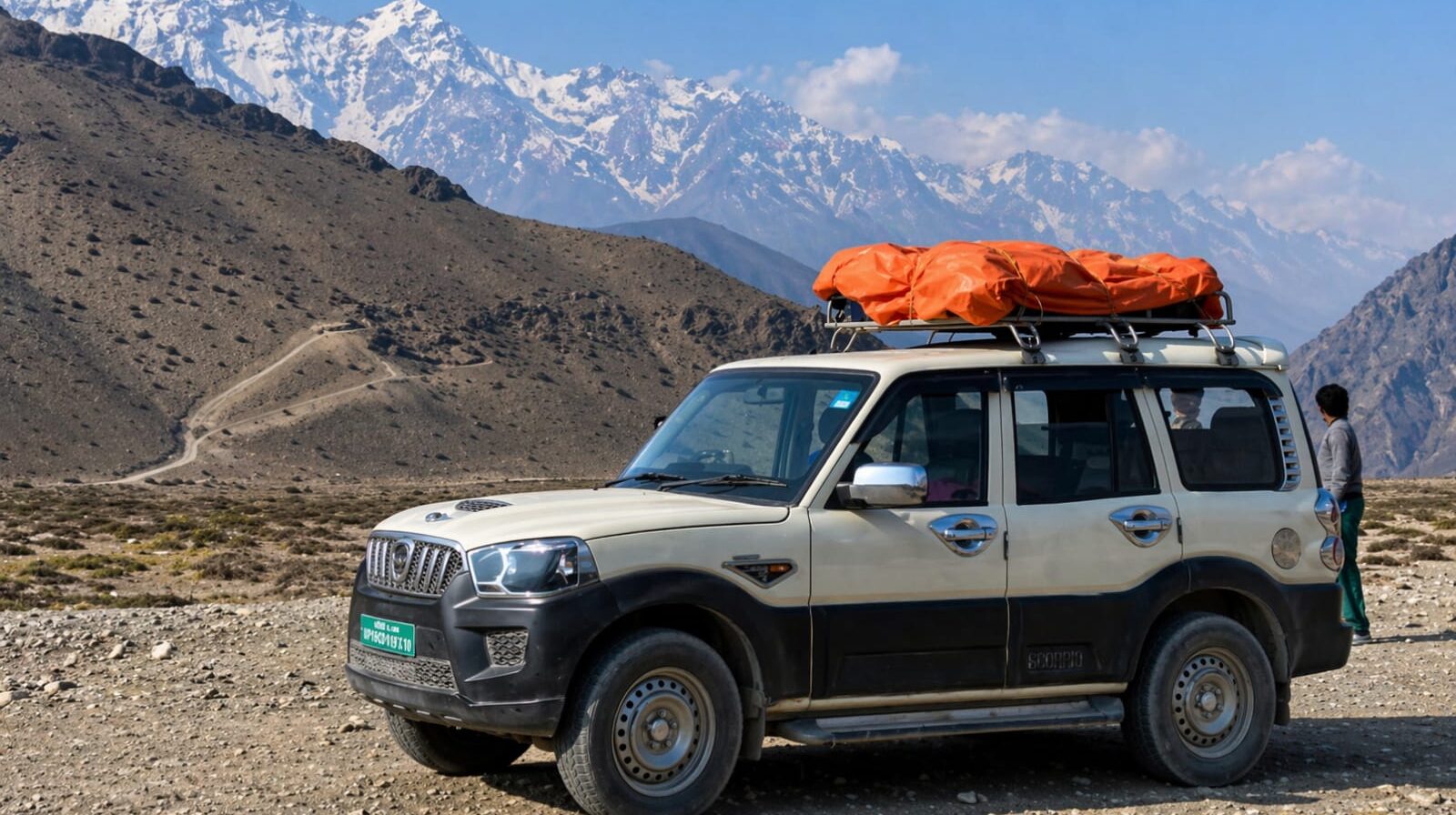
While the road from Pokhara to Besisahar via Dumre is mostly well-paved and accessible by any vehicle, the roads continuing to Ghalegaun, Ghanpokhara, and the upper Marsyangdi valley beyond Besisahar are rough, steep, narrow mountain tracks that require a 4WD vehicle with high ground clearance. Nepal Vehicle Hiring provides reliable 4WD jeeps for all destinations in Lamjung.

Door-to-Door Hotel Pickup from Pokhara

Your Nepal Vehicle Hiring driver collects you directly from your hotel in Pokhara Lakeside. There is no need to travel to a bus station with luggage and trekking gear. For groups beginning the Annapurna Circuit or traveling to Ghalegaun, this door-to-door convenience is a genuine advantage.

Flexibility for Sightseeing Along the Route

The Pokhara to Besisahar drive passes through beautiful landscapes, the Marsyangdi River valley, and the attractive hill town of Dumre. A private jeep from Nepal Vehicle Hiring allows you to stop at viewpoints, cultural sites, and riverside teahouses at your own pace — something impossible on a public bus.

Best Option for Annapurna Circuit Trekking Groups

Groups beginning the Annapurna Circuit Trek need to carry significant luggage — personal trekking bags, porter loads, guides’ equipment, and group supplies. A private jeep offers ample space for all of this in one comfortable vehicle, with the entire group departing together at a time that suits the trek itinerary.

Return Pickup After the Trek

Nepal Vehicle Hiring arranges return vehicle transfers from Besisahar, Bhulbhule, Jomsom, or anywhere your Annapurna Circuit Trek ends. Booking the outbound Pokhara-to-Besisahar jeep and the return vehicle as a combined arrangement with us simplifies the entire trekking logistics chain.


Vehicle Options: Pokhara to Lamjung Jeep Rental 2026


Vehicle TypeCapacityBesisahar Cost (NPR)Ghalegaun Cost (NPR)Best For
Sharing a Jeep (per person)7–8 pax totalNPR 700–1,000/personNPR 1,200–1,800/personSolo budget travellers
Private Car (to Besisahar only)2–4 paxNPR 6,000–9,000Not recommendedSmall groups, Besisahar only
Private Jeep – Standard4–5 paxNPR 8,000–12,000NPR 12,000–18,000Trekking groups, families
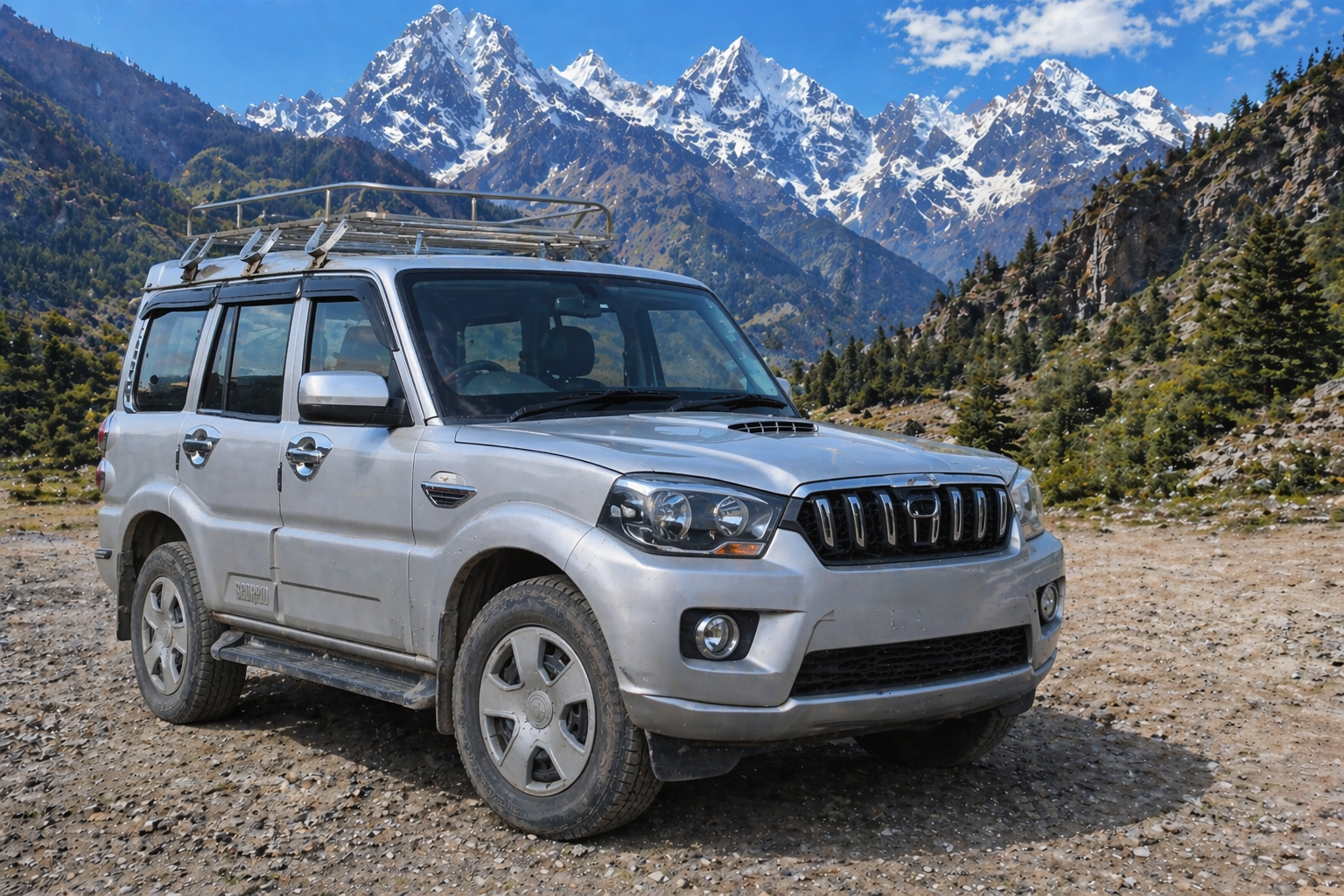
Private Jeep – 4WD Hilux/Fortuner5–6 paxNPR 10,000–15,000NPR 15,000–22,000Ghalegaun, Ghanpokhara, upper routes
Private Jeep – Land Cruiser5–6 paxNPR 14,000–20,000NPR 20,000–30,000Premium, Chame, and beyond
Toyota Hiace Van7–10 paxNPR 14,000–20,000Not suitable beyond BesisaharLarge groups to Besisahar


Note: All private vehicle prices include driver and fuel. Round-trip prices are approximately 1.7–1.9 times the one-way price. Contact Nepal Vehicle Hiring for confirmed quotes for your specific destination and date.


Pokhara to Besisahar – Annapurna Circuit Starting Point

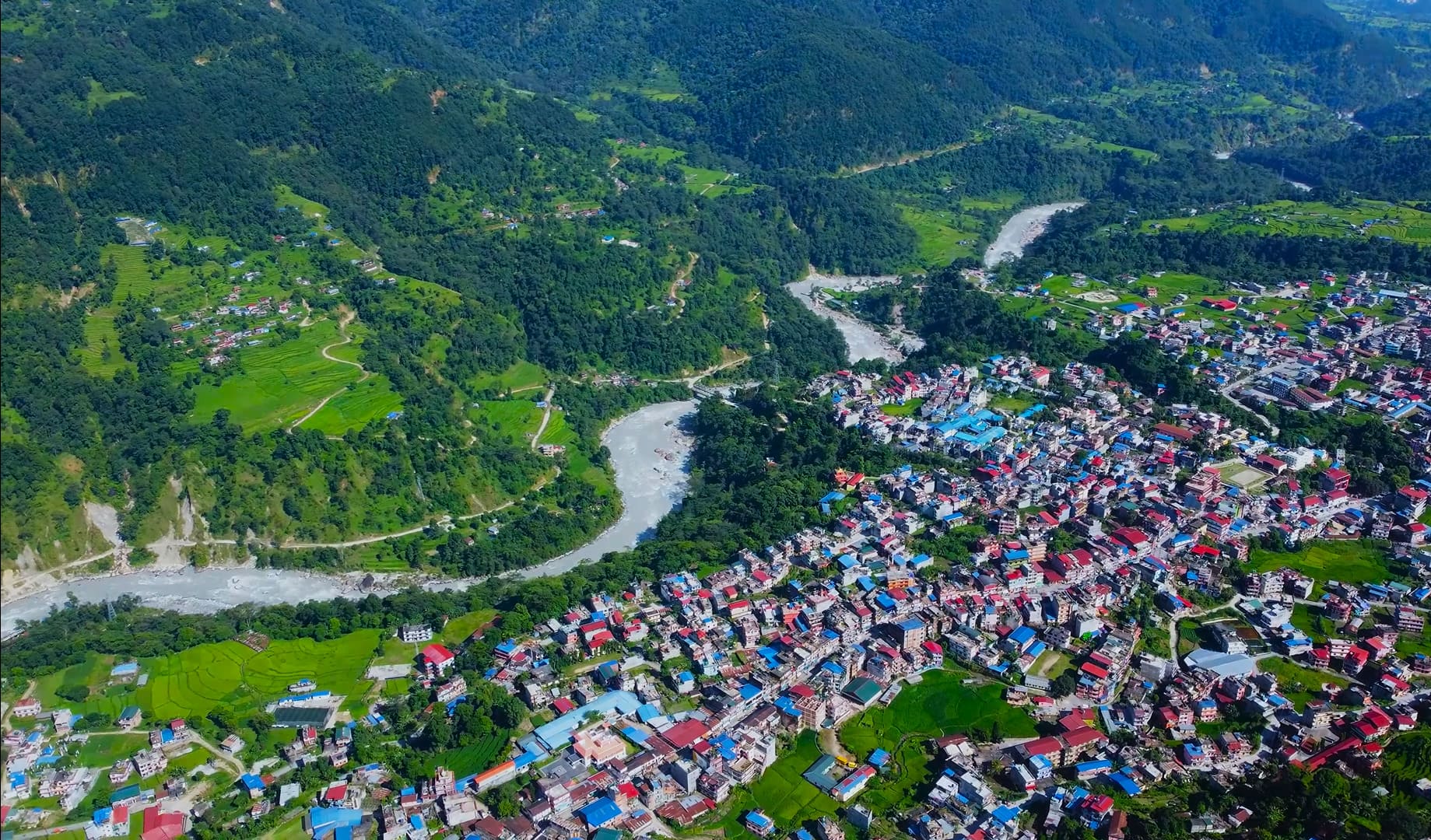
Besisahar is the district headquarters of Lamjung District and the traditional starting point of the Annapurna Circuit Trek — one of the world’s most celebrated trekking routes. Situated at 760 meters above sea level at the confluence of the Khudi and Marsyangdi rivers, Besisahar is a lively bazaar town with banks, ATMs, guesthouses, restaurants, and permit collection facilities that serve thousands of trekkers each year.

Why Trekkers Go to Besisahar

  • Official starting checkpoint for the Annapurna Circuit Trek permit registration
  • Last reliable ATM and bank before the remote upper Marsyangdi valley
  • Well-stocked market for last-minute trekking supplies, snacks, and gear
  • Starting point for jeep transport further up the valley to Chame, Dharapani, or Manang
  • Cultural mix of Gurung, Ghale, and Brahmin communities in the local market


Pokhara to Besisahar Route

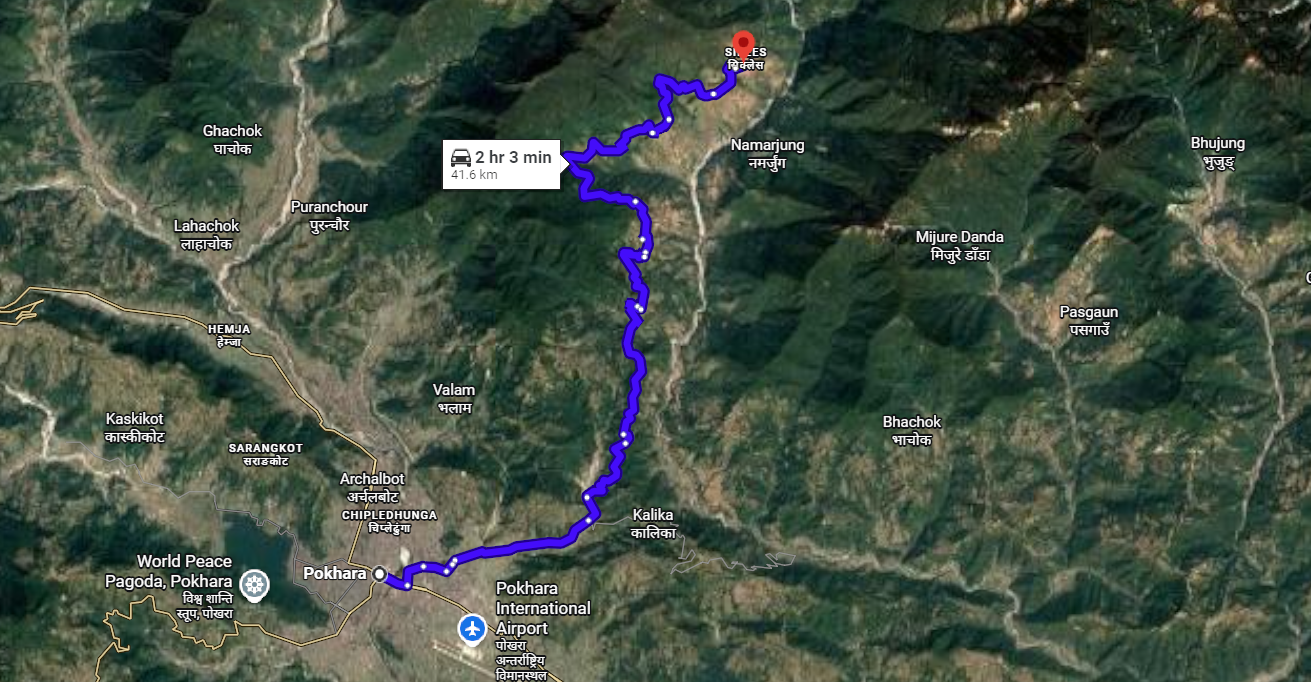
The drive from Pokhara to Besisahar follows the Prithvi Highway eastward toward Damauli, then continues along it to the Dumre junction. At Dumre, the road turns north and follows the Marsyangdi River upstream for approximately 40 km to Besisahar. The road from Pokhara to Besisahar is well-paved and comfortable throughout.


DetailInformation
Distance72–80 km from Pokhara
Drive Time2 to 2.5 hours (private jeep)
Road TypePaved throughout – comfortable for all vehicle types
Private Jeep Cost (One Way)NPR 8,000–12,000
Private Jeep Cost (Round Trip)NPR 14,000–20,000
Sharing Jeep CostNPR 700–1,000 per person
Altitude760 metres
Key FacilitiesATM, banks, guesthouses, permit office, shops, restaurants


Besisahar to Chame – Deep Annapurna Circuit Access

Many trekkers who start the Annapurna Circuit at Besisahar take a further jeep ride to Chame (2,670 m) or even Dharapani, skipping the lower-valley road sections and beginning the proper trekking in the higher, more scenic terrain. The Besisahar-to-Chame jeep journey covers approximately 68 km of increasingly rough and spectacular mountain road through Jagat and Dharapani.

SegmentDistanceDrive TimeRoad TypeCost (NPR)
Besisahar to Jagat32 km1.5–2 hoursRough off-roadNPR 1,500–2,500 per jeep
Besisahar to Dharapani50 km2.5–3 hoursVery rough mountain trackNPR 3,000–5,000 per jeep
Besisahar to Chame68 km3.5–4.5 hoursRough mountain track – 4WD mandatoryNPR 5,000–8,000 per jeep


Pokhara to Lamjung Jeep Rental

Pokhara to Ghalegaun – The Famous Ghale Cultural Village

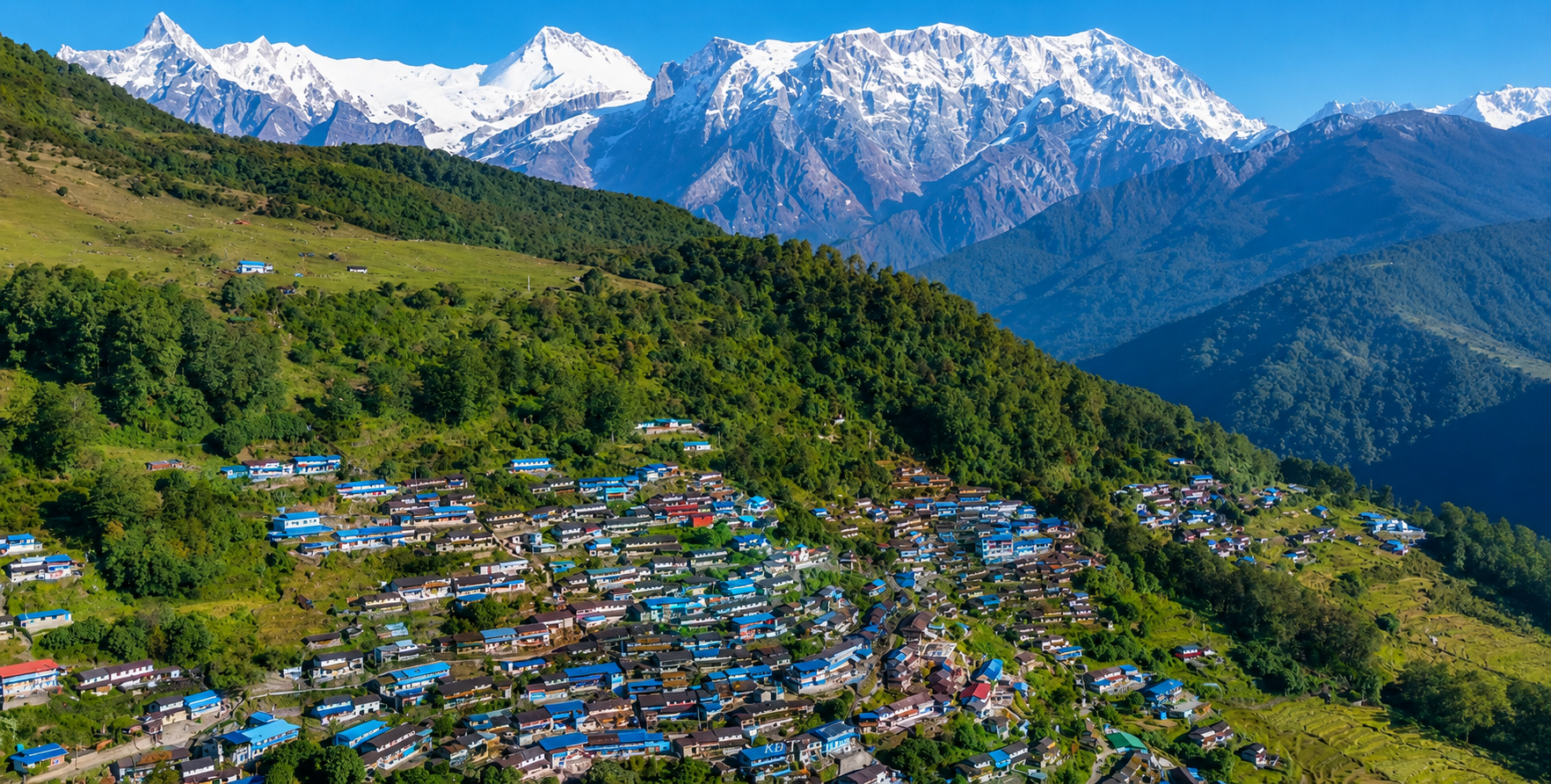
Ghalegaun is one of Nepal’s most celebrated cultural heritage villages and one of the finest homestay destinations in the entire Annapurna region. Sitting on a beautiful hilltop ridge at approximately 1,950 meters above sea level, the village is home to the indigenous Ghale community — a Tibeto-Burman people with a unique language, culture, and traditional architecture that are distinct from those of the surrounding Gurung and Brahmin communities.

The village offers spectacular panoramic views of the Annapurna range, Manaslu (8,163 m), Lamjung Himal (6,983 m), and the Marsyangdi River valley far below. The village is famous for its traditional stone-paved lanes, warm community homestays, cultural dance performances, and authentic Ghale cuisine. Ghalegaun was one of Nepal’s first officially recognized community tourism destinations.

Road Conditions: Pokhara to Ghalegaun

The road from Pokhara to Ghalegaun follows the same Prithvi Highway and Dumre–Besisahar route as far as Khudi (approximately 90 km from Pokhara), then turns off onto a steep, rough, and winding jeep track that climbs dramatically to Ghalegaun village at 1,950 meters. This off-road section from Khudi to Ghalegaun is approximately 10-15 km long and requires a 4WD jeep with an experienced driver. The road is narrow, steep, and unpaved in sections — impassable for standard cars and vans.

DetailInformation
Distance from Pokhara90–100 km
Drive Time3 to 4 hours
Road to KhudiPaved – comfortable for all vehicles
Road Khudi to GhalegaunRough, steep off-road track – 4WD mandatory
Altitude1,950 meters
Private Jeep Cost (One Way)NPR 12,000–18,000
Private Jeep Cost (Round Trip)NPR 20,000–30,000
Sharing Jeep CostNPR 1,200–1,800 per person
Best SeasonSpring (March–May), Autumn (September–November)
Famous ForGhale community homestays, Annapurna–Manaslu views, cultural dances


Why Ghalegaun is Worth the Journey

  • Panoramic views of Manaslu, Lamjung Himal, Annapurna II, and the Marsyangdi valley
  • Authentic Ghale community homestay experience — sleeping and eating with local families
  • Traditional cultural programs, including Ghale dance, music, and dress
  • Stone-paved village lanes, traditional architecture, and a genuine community atmosphere
  • Starting point for the beautiful Ghalegaun–Ghanpokhara trekking circuit
  • Much less crowded than mainstream Annapurna trekking destinations
  • One of Nepal’s finest community tourism success stories


Pokhara to Ghanpokhara – The Hidden Viewpoint Village

Ghanpokhara is a traditional Gurung village perched at approximately 2,100 meters on the ridge system above the Marsyangdi valley, just a few kilometers northeast of Ghalegaun. The village is less well-known than Ghalegaun but offers equally spectacular views and a more off-the-beaten-track cultural experience.

The name Ghanpokhara means thick/dense pond in Nepali — a reference to the many natural springs and water sources in the area. The village has a traditional Gurung community with a rich agricultural and pastoral way of life and offers homestays for visitors. The views of Manaslu, Lamjung Himal, and the Marsyangdi gorge from Ghanpokhara are outstanding.

DetailInformation
Distance from Pokhara95–110 km
Drive Time3.5 to 4.5 hours
Altitude2,100 meters
RoadRough off-road track – 4WD mandatory
Private Jeep Cost (One Way)NPR 14,000–20,000
Best Combined WithGhalegaun day trip or overnight
Famous ForGurung culture, Manaslu views, off-the-beaten-track experience


Lamjung Durbar – Sundarbazar Cultural Heritage

Lamjung Durbar is a historically significant palace complex located in Sundarbazar, approximately 80-90 km from Pokhara, in the central part of Lamjung District. The durbar (palace) was the seat of the ancient Lamjung Kingdom, which was one of the independent hill kingdoms of medieval Nepal before unification under Prithvi Narayan Shah in the 18th century.

The palace complex features traditional Nepali architectural styles with pagoda-roofed temples, stone carvings, and historic courtyards. It is an important cultural heritage site for the Gurung and Ghale communities of Lamjung, and a fascinating destination for travelers interested in Nepal’s pre-unification royal history.

DetailInformation
LocationSundarbazar, Lamjung District
Distance from Pokhara80–90 km
Drive Time2.5 to 3 hours
Historical SignificanceFormer seat of the Lamjung Kingdom (pre-18th century)
ArchitectureTraditional Nepali pagoda-style palace and temples
Entry FeeNominal local entry fee
Private Jeep Cost (One Way)NPR 8,000–14,000
Best Combined WithGhalegaun or Besisahar on a full-day or multi-day trip


Pokhara to Lamjung Route Breakdown – Stage by Stage

Here is a complete stage-by-stage guide to the road from Pokhara to the main Lamjung destinations:

Stage 1: Pokhara to Damauli – Approx. 40 km (1 hour)

The journey from Pokhara heads east along the Prithvi Highway. The road passes through the Pokhara valley, the Seti River bridge, and climbs through the attractive midhill town of Damauli — the headquarters of Tanahun District, situated at the confluence of the Seti and Madi rivers. Damauli is an excellent stop for tea or an early breakfast. The mountain views from the highway near Damauli on a clear morning, with the Annapurna range visible to the north, are already excellent.

Stage 2: Damauli to Dumre Junction – Approx. 25 km (30 minutes)

From Damauli, the Prithvi Highway continues northeast along the Marsyangdi valley. Dumre is the key junction town where the highway to Kathmandu continues east and the road north to Besisahar and Lamjung branches off. Dumre is a busy roadside town and a reliable fuel and snack stop. Your Nepal Vehicle Hiring driver will brief you at Dumre about the road conditions ahead.

Stage 3: Dumre to Besisahar – Approx. 40 km (1 hour)

From Dumre, the road heads north, following the Marsyangdi River upstream through increasingly beautiful river-valley scenery. The road is paved throughout this section. You pass through small riverside towns and farmland, with the Marsyangdi River rushing on one side and terraced hillsides rising on the other. The first views of the high Himalayan peaks begin to appear ahead as you approach Besisahar.

Stage 4: Besisahar to Ghalegaun via Khudi – Approx. 20–25 km (1.5 to 2 hours)

From Besisahar, the road continues north to Khudi before the Ghalegaun jeep track turns sharply uphill to the west. The Khudi to Ghalegaun section is the most challenging stretch of driving on the entire journey — steep switchbacks, narrow width, and rough surface. A skilled 4WD driver is essential. The reward for this challenging approach is the spectacular ridgetop arrival at Ghalegaun village with its panoramic Himalayan views.
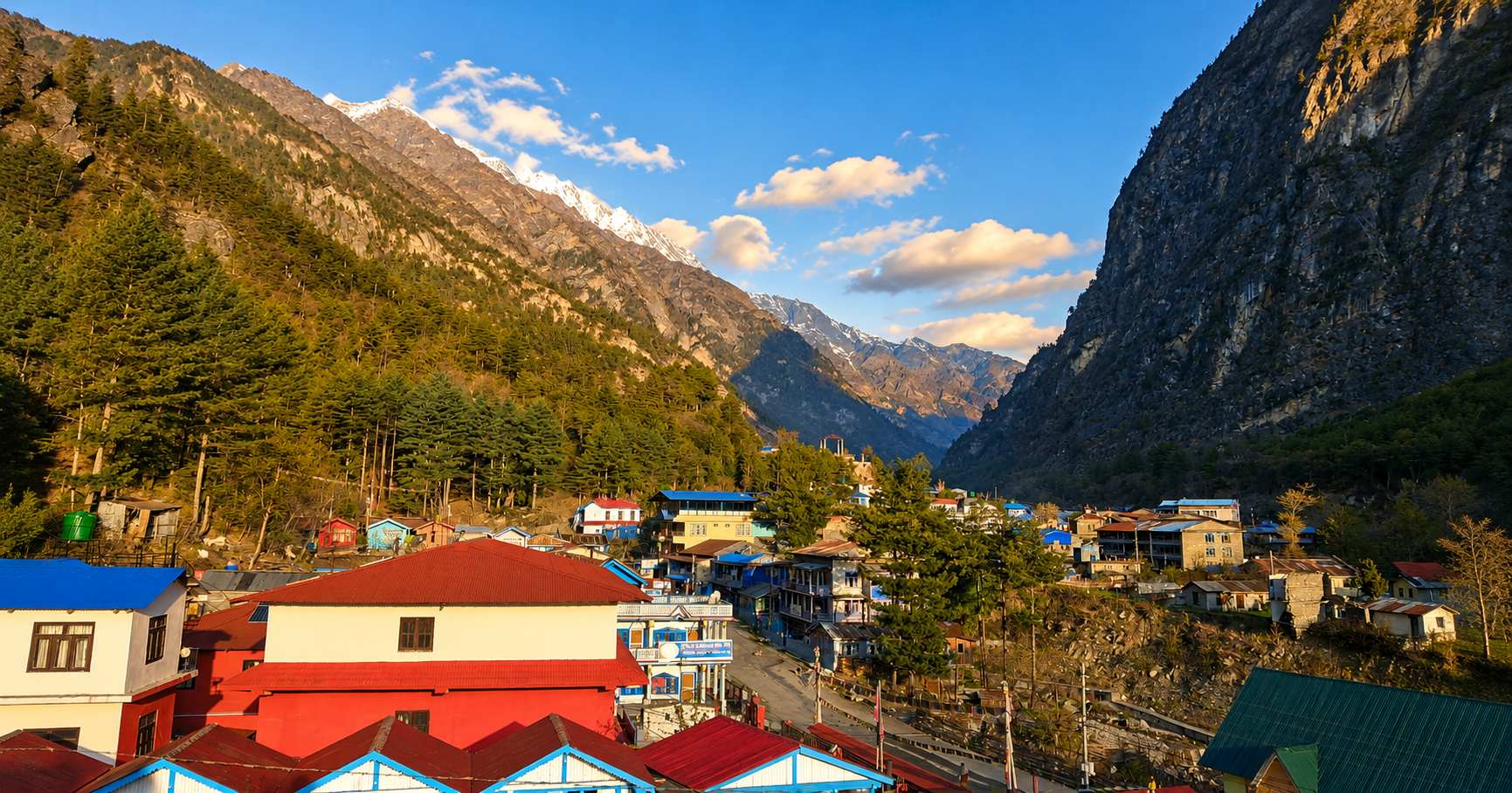
 

chame-Pokhara to Lamjung Jeep Rental

Route Overview Table: Pokhara to Lamjung


StageSectionDistanceRoad ConditionKey Highlights
1Pokhara to Damauli40 kmPrithvi Hwy – smoothSeti River bridge, midhill views, Damauli tea stop
2Damauli to Dumre25 kmPrithvi Hwy – smoothMarsyangdi valley entry, Dumre junction, and fuel stop
3Dumre to Besisahar40 kmPaved – good conditionMarsyangdi River views, first Himalayan peaks visible
4aBesisahar to Ghalegaun (via Khudi)20–25 kmRough off-road – 4WD mandatorySpectacular ridgetop arrival, panoramic mountain views
4bBesisahar to Chame68 kmVery rough – 4WD onlyDeep gorge, waterfalls, Annapurna Circuit trail villages


Top Attractions in Lamjung District

Marsyangdi River Valley

The Marsyangdi River is the heart and soul of Lamjung District. Originating high in the glaciers of the Manang valley, the river rushes through a dramatic gorge flanked by steep forested hillsides, waterfalls, and traditional riverside villages. The drive along the Marsyangdi from Dumre to Besisahar and beyond is one of the most beautiful river-valley drives in Nepal, with the river’s turquoise-green water, the distant snow peaks, and the dramatic vertical relief of the valley walls creating constantly changing scenery.

Ghalegaun Village and Homestay

Ghalegaun is widely regarded as one of Nepal’s finest community tourism destinations. The traditional Ghale stone houses with carved wooden windows, the community-run homestays offering authentic local food and cultural programs, and the panoramic views of the Annapurna–Manaslu range make this village a destination that offers a deeply authentic Himalayan community experience. An overnight homestay in Ghalegaun is one of the most memorable experiences in Nepal, and it is within easy reach of Pokhara.

Lamjung Himal Views

Lamjung Himal (6,983 m) is the peak that gives the district its name and is one of the most distinctive and beautiful mountains in the Annapurna region. From Ghalegaun and Ghanpokhara on clear mornings, Lamjung Himal rises directly above the valley in a perfect snow pyramid, with the higher summits of Annapurna II (7,937 m) and Manaslu (8,163 m) visible on either side. Few viewpoints in Nepal offer such immediate and dramatic access to high Himalayan peaks.

Khudi Waterfall and Marsyangdi Confluence

Khudi village, located at the confluence of the Khudi and Marsyangdi rivers approximately 10 km north of Besisahar, is both a key access point for the Ghalegaun road and the site of a beautiful waterfall on the Khudi Khola. The village is also the starting point for the Annapurna Circuit trekking trail, making it a popular halt for trekkers and jeep travelers alike.

Sundarbazar and Lamjung Durbar

Sundarbazar is a pleasant market town in central Lamjung that serves as the cultural and administrative center of the district’s mid-region. The nearby Lamjung Durbar palace complex is the district’s principal historical monument and an important site for understanding Nepal’s pre-unification royal history. The combination of the market-town atmosphere and the ancient palace ruins makes Sundarbazar a rewarding half-day cultural stop.

Bandipur Day Trip Extension

The beautiful heritage hill town of Bandipur is located just off the Prithvi Highway between Damauli and Dumre. Including a Bandipur stop on the Pokhara-to-Lamjung jeep journey adds approximately 1 to 1.5 hours to the total travel time, but includes one of Nepal’s finest traditional Newari towns in the day’s itinerary. Bandipur’s cobblestone main street, panoramic mountain views, and the nearby Siddha Cave make it an outstanding addition.
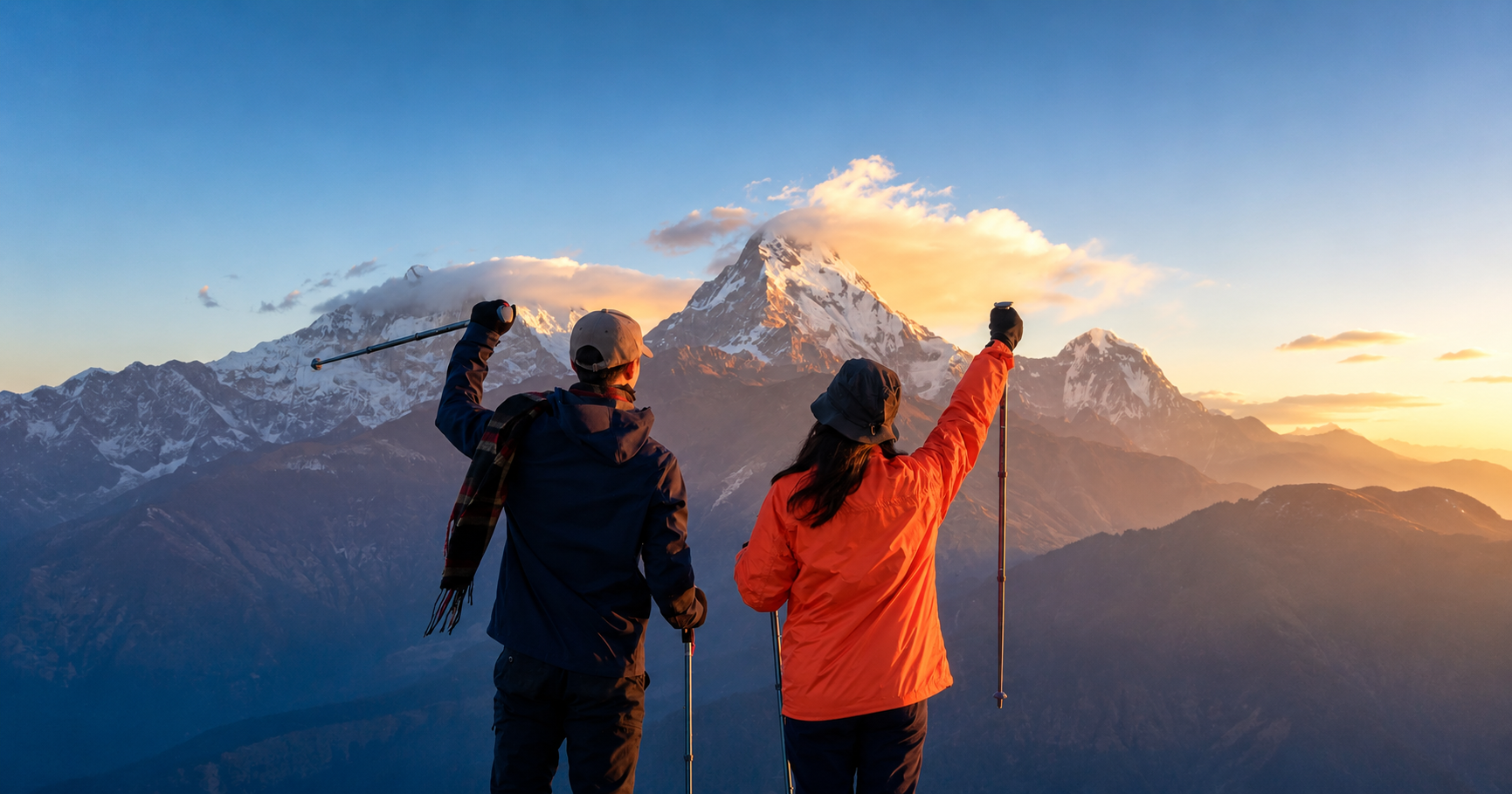
Pokhara to Lamjung Jeep Rental

Annapurna Circuit Trek – Jeep Transport from Pokhara to Besisahar and Beyond

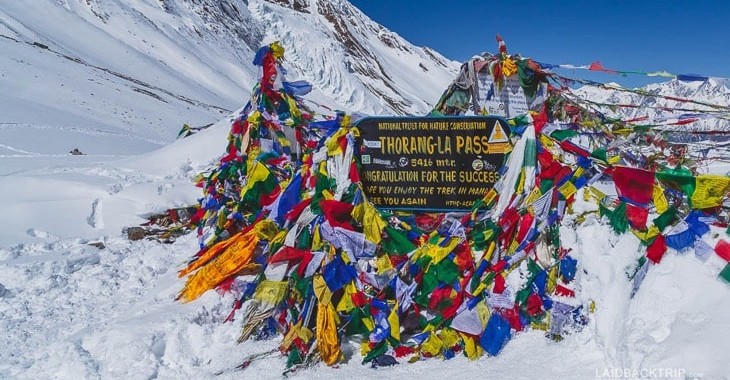
The Annapurna Circuit is one of the world’s great trekking adventures — a 160 to 230 km circuit through the Annapurna Conservation Area crossing the legendary Thorong La Pass (5,416 m). Besisahar in Lamjung District is the traditional starting point of the circuit, and the journey from Pokhara to Besisahar is the first transport leg for all trekkers beginning the circuit from Pokhara.


Annapurna Circuit TransportDetails
Pokhara to Besisahar (Jeep)72–80 km, 2–2.5 hrs – starting point of the circuit
Besisahar to Bhulbhule (Jeep)10 km, 30 min – alternate lower start point
Besisahar to Dharapani (Jeep)50 km, 2.5–3 hrs – skip lower valley section
Besisahar to Chame (Jeep)68 km, 3.5–4.5 hrs – skip 2–3 trekking days
Trek End: Jomsom to PokharaJeep back to Pokhara via Mustang/Kali Gandaki valley
Trek End: Nayapul to PokharaShort jeep/bus from Nayapul back to Pokhara
Permit RequiredACAP (NPR 3,000) + TIMS Card (NPR 2,000)
Best SeasonSpring (March–May), Autumn (September–November)

Nepal Vehicle Hiring arranges complete Annapurna Circuit transport packages — outbound: private jeep from Pokhara to Besisahar (or Chame), plus return: private jeep from Jomsom or Nayapul to Pokhara — as a single coordinated booking.

Ghalegaun Homestay Trek – Complete Vehicle Package

The Ghalegaun Homestay Trek is one of the most rewarding short cultural treks available from Pokhara. The typical itinerary involves driving to Ghalegaun by jeep, spending 1 to 2 nights in a community homestay, and either driving back to Pokhara or trekking the beautiful trail to Ghanpokhara before returning by jeep. Nepal Vehicle Hiring provides complete vehicle packages for this popular tour.

PackageDaysVehicleIncludesCost (NPR)
Ghalegaun Day Trip1 dayPrivate Jeep (return)Pokhara–Ghalegaun–Pokhara round tripNPR 20,000–30,000
Ghalegaun Overnight2 daysPrivate Jeep (one way each)Drop-off Day 1, Return Day 2NPR 22,000–32,000
Ghalegaun–Ghanpokhara2–3 daysPrivate Jeep both endsDrop to Ghalegaun, return from GhanpokharaNPR 25,000–38,000

Note: Vehicle package prices are for the vehicle only and do not include homestay fees, meals, or guide costs. Contact Nepal Vehicle Hiring to discuss full travel arrangements.


Permits Required for Lamjung District Destinations


PermitCostRequired ForWhere to Obtain
ACAP – Annapurna Conservation Area PermitNPR 3,000 (foreigners)Annapurna Circuit, Besisahar, Bhulbhule, Chame, and all the ACAP areaNepal Tourism Board, Pokhara Lakeside, or Kathmandu
TIMS CardNPR 2,000 (foreigners)All trekkers on multi-day routes in the Annapurna regionNepal Tourism Board, Pokhara Lakeside
Ghalegaun Community EntryNPR 500–1,000 (approx.)Ghalegaun and Ghanpokhara village entryPaid at the village entrance
Lamjung Durbar EntryNominal feeLamjung Durbar historical sitePaid at the site

Permits for trekking in the Annapurna Conservation Area (ACAP and TIMS) should be obtained in Pokhara Lakeside before departure. The Nepal Tourism Board office is approximately 10 minutes from Pokhara Lakeside.

Pokhara to Lamjung Jeep Rental

Best Time for Pokhara to Lamjung Jeep Rental

Autumn (September to November) – Best Season

Autumn is the finest season for the Pokhara-Lamjung jeep journey. Post-monsoon skies are crystal clear, the roads are in excellent condition after monsoon grading, and the mountain views of Lamjung Himal, Annapurna II, and Manaslu from Ghalegaun and Ghanpokhara are outstanding. October and November are peak trekking season for the Annapurna Circuit — book your vehicle transfer well in advance.

Spring (March to May) – Excellent

Spring offers warm, comfortable travel conditions with rhododendron forests in full bloom along the Marsyangdi valley hillsides. The mountain views are excellent, and the cultural villages of Ghalegaun and Ghanpokhara are at their most vibrant. March and April are particularly recommended. May can see pre-monsoon haze develop, but it remains a rewarding travel month.

Winter (December to February) – Good

Winter travel to Lamjung is peaceful and uncrowded. The roads to Besisahar are open year-round. The rough road to Ghalegaun may have frost in the mornings in December and January, but it remains passable with a good 4WD jeep. Mountain views from Ghalegaun in winter are spectacular. Bring warm clothes for the overnight stay.

The monsoon season brings heavy rainfall, making the rough off-road tracks to Ghalegaun and Ghanpokhara particularly hazardous due to slippery surfaces and occasional landslides. The paved road from Pokhara to Besisahar is generally fine. Nepal Vehicle Hiring advises against the Ghalegaun and Ghanpokhara routes during the core monsoon months of July and August.


What to Pack for the Pokhara to Lamjung Jeep Journey

  • Warm layers and a fleece – Ghalegaun (1,950 m) and Ghanpokhara (2,100 m) are significantly cooler than Pokhara, especially in the evenings.
  • Rain jacket – the Marsyangdi valley can receive afternoon rain even outside the monsoon season
  • Trekking permits (ACAP + TIMS) if trekking – obtain from Nepal Tourism Board in Pokhara before departure.
  • Camera and wide-angle lens – Ghalegaun and Ghanpokhara offer spectacular panoramic mountain photography opportunities
  • Nepali cash (small denominations) – for community entry fees, homestay payments, meals, and roadside stops
  • Water bottle and light snacks – the Dumre to Besisahar section has limited roadside food options
  • Motion sickness tablets – the Khudi to Ghalegaun road involves steep, winding switchbacks.
  • Comfortable walking shoes – even if not trekking, the village lanes of Ghalegaun are best explored on foot
  • Sunscreen and sunglasses – UV intensity at 1,950 meters is significantly higher than at Pokhara
  • Offline maps (download the area in Maps.me) – mobile data coverage is limited above Besisahar


Expert Tips for Pokhara to Lamjung Jeep Rental

  • Book your private jeep at least 2 to 3 days in advance, and 5 to 7 days in advance during the October, November, March, and April peak seasons.
  • For the Ghalegaun road specifically, always request an experienced driver who has made the Khudi to Ghalegaun route before – the steep switchbacks require specific local knowledge.
  • Collect ACAP and TIMS permits from the Nepal Tourism Board in Pokhara Lakeside before departure if you are trekking – the permit office is open daily from 9:00 AM to 5:00 PM.
  • Depart from Pokhara between 7:00 AM and 7:30 AM for Ghalegaun – arriving before noon gives you a full afternoon in the village.
  • For the Annapurna Circuit transfer to Besisahar, a 7:00 AM departure from Pokhara allows you to reach Besisahar by 9:30 AM, leaving a full day for the first trekking stage.
  • If adding a Bandipur stop on the way to Lamjung, plan for a 6:30 AM departure to maintain a good arrival time at your final destination.
  • Carry sufficient Nepali cash from Pokhara – ATMs in Besisahar are limited and unreliable, and there are none beyond Besisahar on the Annapurna Circuit.
  • Ask your Nepal Vehicle Hiring driver about current road conditions to Ghalegaun on the morning of departure – conditions can change after overnight rain.
  • For multi-day Lamjung trips that combine Ghalegaun homestay and Besisahar, Nepal Vehicle Hiring can arrange a single-booking itinerary covering both destinations.


How to Book Your Pokhara to Lamjung Jeep Rental

Booking your Lamjung jeep rental with Nepal Vehicle Hiring Pvt Ltd is straightforward:

  • Step 1: Contact us via phone, WhatsApp, or at vehiclehiringnepal.com
  • Step 2: Tell us your travel date, specific destination in Lamjung (Besisahar, Ghalegaun, Ghanpokhara, Chame, or Lamjung Durbar), group size, and hotel in Pokhara
  • Step 3: Choose your vehicle – sharing jeep, private jeep, Hilux/Fortuner, or Land Cruiser
  • Step 4: Confirm one-way, round-trip, or multi-day arrangement as required
  • Step 5: Receive your booking confirmation with driver details, vehicle information, and pickup time
  • Step 6: Your driver picks you up from your hotel and begins your Lamjung adventure

For Annapurna Circuit trek transport packages, including return vehicle from Jomsom or Nayapul, contact us to discuss a complete combined booking.


Frequently Asked Questions (FAQ)

How far is Pokhara from Besisahar in Lamjung?

The road distance from Pokhara to Besisahar is approximately 72-80 kilometers. By private jeep, the drive takes 2 to 2.5 hours along the Prithvi Highway and the Dumre–Besisahar road.

How long does it take to drive from Pokhara to Ghalegaun?

The drive from Pokhara to Ghalegaun takes approximately 3 to 4 hours by private 4WD jeep. The road is paved and smooth as far as Khudi, then becomes a steep, rough off-road track for the final 1- 15 km to Ghalegaun village.

Is a 4WD jeep necessary for the drive from Pokhara to Ghalegaun?

Yes. A 4WD jeep is required for the Khudi-to-Ghalegaun off-road section. Standard cars and vans cannot manage this route. Nepal Vehicle Hiring offers only 4WD jeeps for transfers to Ghalegaun.

What is the cost of a private jeep from Pokhara to Besisahar in 2026?

A one-way private jeep from Pokhara to Besisahar costs approximately NPR 8,000-12,000 (USD 60–90). A round trip costs NPR 14,000 to 20,000. All prices include driver and fuel.

What is the best starting point for the Annapurna Circuit from Pokhara?

Besisahar is the traditional and most commonly used starting point. Trekkers who want to skip the lower, less scenic Marsyangdi valley road section often take a further jeep from Besisahar to Chame or Dharapani, reducing the circuit trekking time by 2 to 3 days.

What permits do I need for Lamjung District?

For the Annapurna Circuit and ACAP area (Besisahar and beyond), you need an ACAP permit (NPR 3,000) and a TIMS card (NPR 2,000). For Ghalegaun and Ghanpokhara cultural visits, a community entry fee of approximately NPR 500-1,000 is paid at the village. Both ACAP and TIMS permits are available from the Nepal Tourism Board office in Pokhara Lakeside.

Can Nepal Vehicle Hiring arrange transport for the full Annapurna Circuit loop?

Yes. Nepal Vehicle Hiring arranges complete Annapurna Circuit transport — a private jeep from Pokhara to Besisahar or Chame at the start, and a return vehicle from Jomsom to Pokhara or from Nayapul to Pokhara at the circuit end. Contact us to discuss a complete trekking transport package for your group.

What is Ghalegaun famous for?

Ghalegaun is famous for its indigenous Ghale community homestays, spectacular panoramic views of Manaslu, Lamjung Himal, and the Annapurna range, traditional cultural programs, and authentic Ghale cuisine. It is one of Nepal’s most acclaimed community tourism destinations and is widely considered the finest homestay village in the Annapurna foothills.

Pokhara to Lamjung Jeep Rental

Book Your Pokhara to Lamjung Jeep Rental with Nepal Vehicle Hiring

Lamjung District is one of Nepal’s great undiscovered treasures — a region of dramatic river gorges, towering Himalayan peaks, ancient cultural villages, and some of the world’s finest trekking trails, all within easy reach of Pokhara by private jeep. Whether you are beginning the Annapurna Circuit in Besisahar, experiencing the Ghale community culture, marveling at the mountain panorama from Ghanpokhara, or historic Lamjung hhistoricLamjung Durbar, every destination in this remarkable district offers the traveler experiences that are genuinely unique to Nepal.

Nepal Vehicle Hiring Pvt Ltd provides the most reliable, professional, and competitively priced jeep rental service for the Pokhara-Lamjung route. Our 4WD fleet, experienced mountain drivers, and complete trekking transport coordination make us the preferred vehicle partner for the Annapurna region.

Contact Nepal Vehicle Hiring Pvt Ltd today at vehiclehiringnepal.com to book your Pokhara-to-Lamjung jeep rental and begin your Annapurna adventure.


Nepal Vehicle Hiring Pvt Ltd

WhatsApp: +977 9851013196
Email: [email protected]
Website: www.vehiclehiringnepal.com

Pokhara | Kathmandu | Chitwan | All Destinations Across Nepal
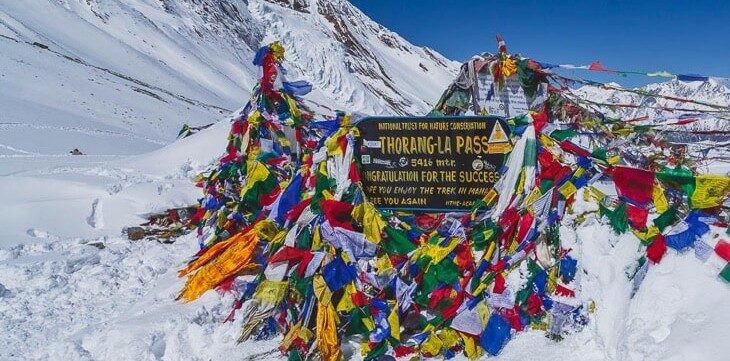
 

Pokhara to Manang – Full Transport, Route, Cost & Trek Guide 2026

Pokhara to Manang Transport

Pokhara to Manang Transport – Route, Cost & Trek Guide 2026

Manang is one of the most extraordinary villages in Nepal – a high-altitude Tibetan-influenced settlement at 3,500 m in the heart of the Annapurna Circuit, sitting beneath the towering walls of Annapurna III (7,555 m), Gangapurna (7,455 m), and the Gangapurna Glacier. Every trekker doing the Annapurna Circuit passes through Manang – it is the last major village before the circuit’s highest and most challenging section, and the obligatory acclimatization stop before attempting the Thorong La Pass at 5,416 m.

In 2026, reaching Manang from Pokhara by private jeep or vehicle is increasingly popular among trekkers who want to skip the lower sections of the Annapurna Circuit (now largely alongside a jeep road) and begin trekking from the spectacular high-altitude terrain above Chame and Manang. This complete guide covers every aspect of the Pokhara-to-Manang journey – transport options, route details, road conditions, costs, the Manang experience, Annapurna Circuit trek stages, altitude safety, permits, and expert tips for 2026.


About Manang – The High-Altitude Gateway

Location: Manang Village, Manang District, Gandaki Province, Nepal

Altitude: 3,500 m above sea level

Distance from Pokhara: Approximately 175–185 km by road via Besisahar

Distance from Besisahar: Approximately 95 km north by mountain road

Travel Time from Pokhara: 8 to 12 hours total by 4WD jeep (usually done in 2 days)

Road Type: Pokhara to Besisahar – paved | Besisahar to Chame – rough mountain track | Chame to Manang – improved track with some paved sections

Vehicle Required: 4WD Jeep mandatory from Besisahar onwards – no sedan, no Hiace beyond Besisahar

Trek Position: Manang is the Day 8–10 stop on the Annapurna Circuit Trek from Besisahar, or Day 5–6 if starting from Chame by vehicle

Population: Approximately 1,500 – Gurung and Tibetan Buddhist community


Manang sits in a wide, open valley at the foot of the Gangapurna Glacier – an extraordinary landscape of raw Himalayan grandeur. The village itself is a dense cluster of flat-roofed stone houses, prayer flags, ancient gompas, and the sounds of yak bells. Above the village, the Gangapurna Glacier descends in a dramatic cascade of blue ice and grey moraine. To the south, Annapurna III and Gangapurna rise in vertical walls of rock and ice. To the north, the high dry plateau of the Annapurna Circuit stretches towards the Thorong La. Manang is, for most Annapurna Circuit trekkers, the most beautiful and memorable overnight stop of the entire circuit.


Why Drive from Pokhara to Manang by Private Vehicle?

The traditional Annapurna Circuit trek starts in Besisahar and continues to Manang over 8 to 10 days. However, the road from Besisahar to Chame and beyond has been significantly developed in recent years, and most of the lower circuit now runs alongside or on a jeep track. Many experienced trekkers in 2026 choose to drive from Pokhara to Manang (or at least to Chame) and begin the most scenic sections of the circuit on foot. Here is why:

  • Save 6 to 8 days of walking on the lower circuit sections that now largely follow the jeep road and offer less traditional trekking atmosphere
  • Begin trekking at Manang (3,500 m) in the most dramatically beautiful section of the entire Annapurna Circuit
  • The lower sections from Besisahar to Chame are now widely considered the least rewarding part of the circuit due to road construction and vehicle traffic alongside the trail
  • A 4WD private jeep gives full luggage space, and group travel together – no splitting the group across multiple local shared jeeps
  • Flexible departure from your Pokhara hotel – choose your own schedule and rest stop locations
  • Combine the circuit with Muktinath and Mustang by entering from Pokhara and exiting via Jomsom
  • Arrive fresher and stronger for the genuinely challenging high-altitude sections above Manang

Vehicle Options & Prices: Pokhara to Manang Transport 2026

The Pokhara-Manang route requires a capable 4WD vehicle from Besisahar onwards. Here are the vehicle options and 2026 prices:

VehicleCapacityOne-Way Price (USD)Round Trip (USD)Notes
Toyota Land Cruiser4–6 pax$200 – $260$320 – $420Best vehicle for the full Pokhara–Manang road
Toyota Land Cruiser Prado4–5 pax$220 – $280$350 – $450Superior comfort on rough mountain track
Mahindra Bolero / Scorpio4–6 pax$170 – $220$280 – $360Budget 4WD, capable on this route
Hiace Van (Pokhara–Besisahar only)7–14 pax$100–$135$170–$230Cannot proceed beyond Besisahar – jeep required
Sedan Car (Pokhara–Besisahar only)1–3 pax$70–$95$120–$165Paved road to Besisahar only – not beyond


All private vehicle prices include driver, full fuel, and vehicle insurance. Round-trip pricing includes the driver staying in Manang or Chame during your trek and returning you to Pokhara or Kathmandu after the circuit. For trekkers completing the full Annapurna Circuit and exiting via Jomsom to Pokhara, a one-way Pokhara-to-Manang booking is all that is needed.

Pokhara to Manang Transport

Two Route Options: Pokhara to Manang

Route A: Pokhara – Besisahar – Chame – Manang (Most Common)

Total Distance: 175–185 km

Total Time: 8 to 12 hours by 4WD (recommended as a 2-day journey)

Via: Pokhara – Dumre – Besisahar – Khudi – Bahundanda – Chamje – Tal – Dharapani – Chame – Pisang – Manang

This is the standard and most commonly used route. The road from Pokhara to Dumre follows the Prithvi Highway and is fast and paved. From Dumre, the road climbs north to Besisahar on a secondary road. Beyond Besisahar, the rough mountain track begins through the Marsyangdi River valley to Chame and finally Manang.

Route B: Pokhara – Beshisahar via Damauli (Alternative)

Total Distance: 165–175 km (slightly shorter)

Via: Pokhara – Baglung – Beni road junction – Damauli – Dumre – Besisahar

A slightly shorter alternative that bypasses the longer Pokhara-Prithvi Highway stretch by heading east via Damauli before joining the Besisahar road. Both routes converge at Besisahar. Your driver will choose the best option based on traffic and road conditions on your travel day.


Detailed Road Guide: Pokhara to Manang Stage by Stage

Stage 1: Pokhara to Dumre (75 km | ~1.5 hrs)

Depart your Pokhara hotel early – 5:30 to 6:00 AM is ideal for a two-day journey with an overnight in Besisahar or Chame. Head east on the Prithvi Highway through the Pokhara valley, past Damauli and Dumre. Dumre is the junction town on the Prithvi Highway where the road branches north toward Besisahar and the Annapurna Circuit. Stock up on snacks here if needed – the highway shops are more convenient than the mountain road ahead.

Stage 2: Dumre to Besisahar (22 km | 45 min)

From Dumre, head north on the secondary road into the Marsyangdi River valley. The road climbs gently through terraced hills and farmland to Besisahar – the district headquarters of Lamjung District and the official starting point of the Annapurna Circuit. The road is mostly paved. Besisahar has the last reliable ATMs on the circuit, a good selection of teahouses, pharmacies, and a well-stocked market. Stop here to withdraw cash, complete ACAP permit registration at the checkpoint, refuel, and have breakfast or an early lunch before the mountain road begins.

Stage 3: Besisahar to Chame (55 km | 4–6 hrs by 4WD)

This is the most challenging section of the drive. Beyond Besishahar, the paved road ends, and the rough Annapurna Circuit mountain track begins. The route follows the Marsyangdi River north through dramatically deepening gorges. Key villages and landmarks on this section:

  • Khudi (790 m) – First village on the track, 10 km from Besisahar
  • Bahundanda (1,310 m) – Brahmin village on ridge, good views back down valley
  • Chamje (1,430 m) – Bridge crossing to the east bank, gorge narrows dramatically
  • Tal (1,700 m) – First village in Manang District, flat valley formed by an ancient landslide dam
  • Dharapani (1,860 m) – Important permit checkpoint, Manaslu Circuit junction point
  • Bagarchhap (2,160 m) – First Tibetan-style stone buildings appear
  • Chame (2,710 m) – District headquarters of Manang, hot springs, good teahouses, end of Day 2 drive

Overnight in Chame (2,710 m) is strongly recommended for acclimatization before continuing to Manang at 3,500 m. Ascending too quickly from Besisahar to Manang in a single day significantly increases the risk of altitude sickness.

Stage 4: Chame to Manang (40 km | 2–3 hrs by 4WD)

The road from Chame to Manang is more manageable than the Besisahar–Chame section, with some paved sections and generally better track surface. The scenery becomes increasingly dramatic as you enter the high-altitude Annapurna landscape. Key stops:

  • Bhratang (2,850 m) – Apple orchard settlement, dramatic Paungda Danda rock face
  • Dhukur Pokhari (3,240 m) – Small pond, open plateau, Annapurna III views begin
  • Upper Pisang (3,310 m) – Beautiful perched Tibetan village with an ancient monastery (worth a stop)
  • Ngawal (3,657 m) – Spectacular viewpoint village above the main road
  • Braga (3,475 m) – Ancient cave monastery with some of Nepal’s finest Buddhist art
  • Manang (3,500 m) – Arrival at the circuit’s most important acclimatization village


Road Conditions: Pokhara to Manang


SectionDistanceSurfaceDifficultyBest Season
Pokhara to Dumre75 kmPrithvi Hwy – pavedEasyGood year-round
Dumre to Besisahar22 kmSecondary road – mostly pavedEasy–ModerateGood year-round
Besisahar to Bahundanda15 kmRough gravel trackModerateMuddy in monsoon
Bahundanda to Chamje10 kmRocky Mountain trackHard4WD essential, rockfall risk
Chamje to Tal8 kmVery rough, river crossingsVery HardRisk in monsoon
Tal to Dharapani12 kmRough track, improvingHardBest Oct–May
Dharapani to Chame15 kmMixed – rough to partly pavedModerate–HardReliable in the dry season
Chame to Pisang20 kmMixed track – some pavedModerateGood Oct–May
Pisang to Manang20 kmBetter track – partly pavedModerateGood Oct–May, snow risk Dec–Feb


The Besisahar-to-Chame section remains the most challenging part of the drive and requires a fully capable 4WD Land Cruiser with an experienced mountain driver. Road conditions improve significantly from Chame to Manang, where the road has received more investment in development. Even so, 4WD capability remains essential throughout.

Pokhara to Manang Transport

A two-day journey with an overnight stop in Chame or Besisahar is strongly recommended for safety, comfort, and gradual acclimatization. Here is the ideal schedule:

Day 1: Pokhara to Chame (145 km | 7–8 hrs driving)

  • 5:30–6:00 AM: Depart Pokhara Lakeside by private 4WD jeep
  • 7:30–8:00 AM: Reach Dumre junction on Prithvi Highway – brief tea stop
  • 9:00 AM: Arrive Besisahar – ATM withdrawal, ACAP permit registration, breakfast stop (45–60 min)
  • 10:00 AM: Depart Besisahar on the mountain track
  • 12:00–1:00 PM: Lunch stop at Tal or Dharapani teahouse
  • 3:00–4:00 PM: Arrive Chame (2,710 m) – check into teahouse, explore village
  • Evening: Visit natural hot springs near Chame, light dinner, early to bed
  • Overnight: Chame at 2,710 m – gentle acclimatization altitude

Day 2: Chame to Manang (40 km | 2–3 hrs driving)

  • 7:00 AM: Depart Chame after breakfast
  • 8:00 AM: Stop at Upper Pisang monastery (15 min) – extraordinary views and frescoes
  • 9:00–9:30 AM: Drive through Ngawal and Braga villages – stop for photos
  • 10:00–10:30 AM: Arrive Manang (3,500 m) – check into teahouse, acclimatize
  • Afternoon: Rest, explore Manang village, visit Gangapurna Glacier viewpoint
  • Mandatory: Spend at least one full rest day in Manang before trekking upward


Transport Costs: Pokhara to Manang – Complete Breakdown


Transport OptionRouteCostNotes
Private Land Cruiser (full vehicle)Pokhara → ManangUSD 200–260Best option – door to door, all groups together
Private Land Cruiser (per person est.)Split 4–6 waysUSD 33–65/personExcellent value for groups of 4–6
Local Shared Jeep (Besisahar–Chame)Besisahar → ChameNPR 1,200–1,800/seatRun when full – unpredictable wait times
Local Shared Jeep (Chame–Manang)Chame → ManangNPR 800–1,200/seatAvailable daily in season, basic comfort
Pokhara to Besisahar (bus/local)Pokhara → BesisaharNPR 400–600/personPublic bus – time-consuming, no connections
Tourist Bus Pokhara to Kathmandu, then jeepPokhara → KTM → BesisaharUSD 10–15 bus + jeepLonger route, used by some budget trekkers


For groups of 4 or more, a private Land Cruiser from Pokhara to Manang at USD 200–260 total works out to USD 33–65 per person – often less expensive than combining local bus, local shared jeep, and waiting time costs, while providing dramatically superior comfort and significantly less total journey time.


Permits Required: Pokhara to Manang & Annapurna Circuit 2026

All visitors to Manang and the Annapurna Circuit require valid permits. Arrange all permits in Pokhara or Kathmandu before departure – not available in Besisahar or Chame with the same ease:


PermitCost 2026Where to ObtainValid For
ACAP – Annapurna Conservation Area PermitNPR 3,000 (USD 22)Nepal Tourism Board, Pokhara (Damside office) or KathmanduFull Annapurna Circuit from Besisahar to Manang, Thorong La, and Muktinath
TIMS Card – Trekkers Info ManagementUSD 10Nepal Tourism Board / TAAN office, Pokhara or KathmanduRequired for all trekkers on the circuit
Note: No Restricted Area Permit neededStandard Annapurna Circuit is open – no extra restricted permit–TheUpper Mustang permit (USD 500) is only required if continuing north of Kagbeni.


Permit checkpoints are located at Besisahar, Dharapani, Chame, Manang, and Muktinath. All permits are thoroughly inspected at each checkpoint. Obtain your ACAP permit at the Nepal Tourism Board Damside office in Pokhara (open 9:00 AM weekdays) the day before your departure.


Manang valley
Manang valley

Manang Village – Complete Visitor Guide

The Village and Its Surroundings

Manang is a Tibetan-influenced village of flat-roofed stone houses, prayer walls, ancient stupas, and the sounds of yak bells and wind through prayer flags. The village has two main sections – the lower, newer settlement near the main trail and road, and the upper traditional village of Manang proper with its narrow lanes and ancient architecture. The upper village is where the most atmospheric teahouses, the old gompa, and the best mountain viewpoints are located. Always walk up to the upper village – it is more beautiful and more authentically preserved than the lower settlement.

Gangapurna Lake

A 20-minute walk from the upper village, Gangapurna Lake sits in a glacial bowl at 3,540 m with the Gangapurna Glacier flowing directly into its ice-blue waters. The reflection of Gangapurna (7,455 m) and Annapurna III in the still morning lake is one of the finest mountain lake scenes in Nepal. Visit early in the morning before the wind disturbs the reflection. The walk to the lake is also an excellent acclimatization exercise for the day.

The Gangapurna Glacier Viewpoint

A 45-minute climb above the upper village reaches a dramatic viewpoint directly facing the Gangapurna Glacier – a massive, actively calving glacier flowing from the peak of Gangapurna. The scale of the glacier is astonishing, and the sounds of ice movement and occasional calving crashes add to the experience. This is the finest viewpoint easily accessible from Manang and is recommended for the acclimatization rest day.

Ice Lake (Kicho Tal) Acclimatization Hike

The Ice Lake hike from Manang is the most popular and rewarding acclimatization day hike on the Annapurna Circuit. The trail climbs steeply from the upper village to Ice Lake at 4,600 m – a gain of over 1,000 m – and then descends back to Manang. The round trip takes 5 to 7 hours. The panoramic view from Ice Lake of the entire Manang Valley, the Annapurna Range, and the Tilicho Massif is extraordinary. This hike is the single best acclimatization activity before crossing the Thorong La.

Milarepa Cave and Praken Gompa

Above the upper village, a stone staircase leads to the Praken Gompa – one of the oldest and most important Buddhist monasteries on the Annapurna Circuit, perched dramatically on a cliff face. The gompa has ancient thangka paintings, butter lamps, and Buddhist texts. Adjacent to the gompa is a cave associated with Milarepa, the great Tibetan Buddhist yogi and poet who is said to have meditated here. The climb to the gompa takes 30 to 40 minutes from the village and offers spectacular views of the Gangapurna massif.

Manang HRA (Himalayan Rescue Association)

The Manang HRA office is a critical resource for all Annapurna Circuit trekkers. The HRA operates a clinic with capabilities for altitude sickness diagnosis and treatment, and provides free daily altitude and Thorong La pass briefings every afternoon (usually at 3:00 PM). Attendance at the HRA briefing is strongly recommended for all trekkers planning to cross the Thorong La. The briefing covers weather forecasts, current pass conditions, AMS symptoms and treatment, and survival advice for the high crossing.


Annapurna Circuit Trek from Manang – Complete Stage Guide

Starting the Annapurna Circuit trek from Manang (reached by vehicle from Pokhara) puts you immediately in the most spectacular high-altitude section of the circuit. Here is the full stage guide from Manang onward:


DayStageDistanceAltitudeKey Highlights
Rest DayManang (acclimatization)3,500mIce Lake hike, Praken Gompa, Gangapurna Lake, HRA briefing
Day 1Manang – Yak Kharka10 km3,500m → 4,018mHigh yak pastures, open plateau, Chulu peaks views
Day 2Yak Kharka – Thorong Phedi8 km4,018m → 4,450mLast teahouses before the pass, glacier views
Day 3Thorong Phedi – Thorong La – Muktinath16 km4,450m → 5,416m → 3,710mThe highest point of the circuit, the sacred Muktinath temple
Day 4Muktinath – Jomsom22 km3,710m → 2,720mKali Gandaki valley, Kagbeni, Marpha apple orchards
Day 5Jomsom – Marpha – Tatopani35 km2,720m → 1,190mDramatic Kali Gandaki descent, Dhaulagiri views, hot springs
Day 6Tatopani – Ghorepani18 km1,190m → 2,874mSteep rhododendron forest climb, Poon Hill viewpoint prep
Day 7Ghorepani – Poon Hill sunrise – Nayapul21 km2,874m → 3,210m → 1,070mPoon Hill sunrise, descend to Nayapul trailhead
EndNayapul – Pokhara by vehicle42 km1,070m → 820mPrivate jeep pickup, return to Pokhara Lakeside


Total trek duration from Manang: 7-9 days, including the mandatory rest/acclimatization day. Vehicle Hiring Nepal can arrange a jeep pickup in Nayapul at the end of your circuit – book this at the same time as your outward transport from Pokhara to Manang.


Pokhara to Manang Transport - thorang la pass

Altitude Safety: Essential Manang and Thorong La Advice

Manang at 3,500 m and the Thorong La at 5,416 m are serious altitudes that demand careful acclimatization and awareness. This section could save your life – read it carefully:

Golden Rules of Acclimatization

  • NEVER ascend more than 500 m per day above 3,000 m – follow the ‘walk high, sleep low’ principle
  • ALWAYS spend a minimum of 2 nights in Manang before attempting the Thorong La crossing – ideally 2 to 3 nights
  • The Ice Lake acclimatization hike (climb to 4,600 m and descend to 3,500 m) is the most important preparation you can do in Manang.
  • Descend 300 to 500 m for sleep if you feel unwell at any altitude above 3,000 m – never push through worsening AMS symptoms.
  • The Thorong La crossing (5,416 m) must be started before 6:00 AM from Thorong Phedi – afternoon winds and cloud make the crossing dangerous.

Symptoms of Acute Mountain Sickness (AMS)

  • Headache (most common) – especially a throbbing headache that worsens on movement
  • Nausea and loss of appetite
  • Fatigue, weakness, and dizziness disproportionate to exertion
  • Difficulty sleeping – insomnia and disturbed breathing at altitude
  • Shortness of breath at rest – this is a serious warning sign, descend immediately

High-Altitude Emergencies – HACE and HAPE

  • HACE (High-Altitude Cerebral Edema) – confusion, inability to walk straight, loss of coordination. DESCEND IMMEDIATELY and seek evacuation
  • HAPE (High-Altitude Pulmonary Edema) – gurgling or wet sounds in breathing, severe shortness of breath at rest, blue lips. MEDICAL EMERGENCY – immediate descent and evacuation required
  • Helicopter rescue from Manang and Thorong Phedi is available but expensive (USD 1,500–3,000+) – travel insurance covering helicopter evacuation is essential.

Medications and Prevention

  • Diamox (acetazolamide) – 125 to 250 mg twice daily starting 24 hours before ascending above 3,000 m. Consult your doctor before travel
  • Ibuprofen – effective for altitude headache (not a substitute for descending if AMS is severe)
  • Dexamethasone – emergency treatment for HACE and HAPE, NOT for prevention. Carry only if trained in use.
  • Stay extremely well hydrated – drink 4-5 liters of water per day at altitudes above Manang.
  • Avoid alcohol completely for the first 48 hours after arriving in Manang.


Best Time to Travel from Pokhara to Manang

October to November (Peak Season – Best for Circuit)

The finest season for the Pokhara to Manang journey and the Annapurna Circuit. Post-monsoon skies are crystal clear, and views of Annapurna III, Gangapurna, Chulu, and Tilicho from Manang are spectacular. The Thorong La is clear of fresh snow and at its most reliable for crossing. October and November are the busiest months – teahouses can be full in Manang. Book your vehicle 3 to 6 weeks in advance. The morning mountain views, driving into the Marsyangdi gorge in October light, are breathtaking.

March to May (Excellent – Spring Circuit)

Spring is the second-best season for the circuit. Rhododendron forests from Besisahar to Chame bloom spectacularly in March and April. Mountain views are excellent in the mornings. The Thorong La is usually clear from mid-March onwards. Less crowded than October–November and equally beautiful. The road from Besisahar is in good condition after the winter freeze.

December to February (Cold – Experienced Trekkers Only)

Winter is possible but serious. The road from Besisahar can have ice and snow in December and January. Manang experiences -15 to -25°C at night. The Thorong La may be snowbound and impassable in January and February. Several trekking deaths have occurred in winter on this pass – only very experienced cold-weather trekkers with proper winter gear should attempt the crossing. The Manang valley is peaceful and beautiful in winter, with almost no visitors.

The Besisahar-Chame road is at its most dangerous during the monsoon. Frequent landslides can close sections for days. The circuit trail above Manang is relatively dry (rain-shadow protection), but the access road is not. If planning a circuit during the monsoon, consider flying to Pokhara and taking local transport to Besisahar only on confirmed good-road days. Do not attempt the Besisahar–Chame road in active monsoon conditions.

Pokhara to Manang Transport

What to Expect in Manang – Practical Information

Accommodation in Manang 2026


TypePrice Per Night (NPR)FacilitiesBest For
Basic TeahouseNPR 300–600Simple twin/dorm, shared bathroom, cold waterBudget trekkers
Standard Teahouse LodgeNPR 600–1,500Better rooms, hot shower (extra), electricity, WiFiMost trekkers
Better TeahousesNPR 1,500–3,000Attached bathroom, solar hot water, and a good restaurantComfort-seeking trekkers
Note: Dal bhat mealNPR 500–800Unlimited refills included – best value at altitudeAll trekkers


Solar panels and micro-hydro supply electricity in Manang. Power is available for charging during daylight hours. Charge all devices during the day – power is cut or rationed in the evening. WiFi is available at most teahouses in Manang at a small fee. Mobile signal: NTC works in Manang, Ncell is unreliable above Chame.

Food and Nutrition at Altitude

At 3,500 m, your body needs more calories than at sea level to maintain warmth and energy. Dal bhat (with unlimited refills) is the ideal meal for trekkers at altitude – high-carbohydrate, high-calorie, warm, and nutritious. Eat regularly even if appetite is reduced (a common AMS symptom). Avoid heavy, fatty foods on the day before the Thorong La crossing. Garlic soup is a traditional altitude remedy widely available at Manang teahouses and worth trying.

ATM and Cash in Manang

Manang has an ATM (eSewa kiosk type) that is sometimes operational but unreliable. Do not count on it. Withdraw all the cash you need in Pokhara or Besisahar before beginning the circuit. Budget NPR 3,500 to NPR 6,000 per person per day for accommodation and meals in Manang. Prices increase significantly above Besisahar and again above Manang due to the cost of supplying goods by porter or yak to high altitude.


Combine Pokhara to Manang with a Bigger Nepal Itinerary

The Pokhara to Manang journey and Annapurna Circuit trek can be seamlessly combined with other Nepal destinations for a complete Nepal travel experience:

Kathmandu – Pokhara – Manang – Muktinath – Jomsom – Pokhara

The most popular complete circuit: fly or drive from Kathmandu to Pokhara, jeep to Manang, trek the Annapurna Circuit over the Thorong La, arrive at Muktinath (a sacred pilgrimage site), descend to Jomsom, and return to Pokhara by jeep. The complete circuit,, including trave,l, takes 12 to 16 days.

Lumbini – Chitwan – Pokhara – Manang (Nepal Triangle Circuit)

Begin with a pilgrimage to Lumbini, transfer to Chitwan for a jungle safari, continue to Pokhara for sightseeing, then take a jeep to Manang for the Annapurna Circuit. This ‘Nepal Triangle’ itinerary covers Buddhist heritage, wildlife safari, mountain scenery, and Himalayan trekking in one comprehensive Nepal journey.


What to Pack for the Pokhara to Manang Journey

For the Jeep Journey

  • Water – 2 liters per person minimum – limited stops between Besisahar and Chame
  • Snacks – energy bars, nuts, and chocolate for the 7 to 8-hour drive
  • Motion sickness tablets – essential for the very rough Besi Sahar to Chame gorge road
  • Light warm layer – the gorge can be cool even in warm months
  • Camera with a charged battery and a spare – the Marsyangdi gorge is spectacular
  • Offline maps (Gaia GPS or Maps.me with Annapurna Circuit downloaded)

For Manang and the Thorong La

  • Down jacket (rated to -10°C minimum) – nights in Manang are cold even in October
  • Thermal base layers (top and bottom) – essential from Chame onwards
  • Windproof and waterproof outer shell jacket and trousers
  • Warm trekking gloves and a thicker pair for the Thorong La crossing
  • Warm hat and neck gaiter – the wind on the Thorong La is severe
  • Trekking boots with ankle support – not trail runners for the Thorong La
  • Trekking poles – strongly recommended for the steep Thorong La ascent and descent
  • Headlamp with spare batteries – you start the Thorong La crossing before dawn
  • High-altitude sunscreen (SPF 60+) and UV-protection goggles or wraparound sunglasses
  • Travel insurance documents with emergency helicopter evacuation coverage confirmed
  • Diamox prescription (consult doctor), personal first aid kit
  • Cash NPR 50,000+ for the full circuit, including emergencies


What is Included in Your Pokhara to Manang Vehicle Hire

  • Private 4WD Toyota Land Cruiser or equivalent with an experienced Annapurna Circuit route driver
  • Full fuel cost for the complete Pokhara to Manang journey
  • Vehicle insurance for the entire journey duration
  • Hotel pickup from your Pokhara Lakeside hotel or guesthouse
  • Drop off at your chosen teahouse in Manang village
  • Overnight stop arrangement in Chame (Day 1) – driver knows all Chame teahouses
  • Brief stops at Besisahar (ATM, permits, breakfast), Tal, and Upper Pisang monastery
  • Return pickup from Nayapul (end of Annapurna Circuit) or Jomsom (if exiting via Mustang)
  • 24/7 WhatsApp support during the journey and throughout your trek


Not included: ACAP permit and TIMS card (arrange in Pokhara before departure), personal meals, teahouse accommodation, guide fees, porter charges, helicopter evacuation insurance, and any additional detour stops.

Pokhara to Manang Transport


Frequently Asked Questions

How long does it take to drive from Pokhara to Manang?

The total driving time from Pokhara to Manang is approximately 8 to 12 hours, including rest stops. We strongly recommend spreading this over 2 days – Pokhara to Chame on Day 1 (7 to 8 hours), overnight in Chame, then Chame to Manang on Day 2 (2 to 3 hours). This two-day approach provides gradual acclimatization and significantly reduces the risk of altitude sickness upon arrival in Manang.

Can I go directly from Pokhara to Manang in one day?

Technically possible, but strongly not recommended. The drive alone takes 8 to 12 hours, including the rough mountain road, and arriving in Manang at 3,500 m on the same day you depart Pokhara at 820 m is a rapid gain in altitude that significantly increases the risk of AMS. A one-day Pokhara-to-Manang push also means very long driving hours on a difficult road, arriving in the village exhausted. Always split into two days with an overnight in Chame.

Is the road from Besisahar to Manang open year-round?

The road is generally open from October through May in the dry season. During monsoon (June to September), sections between Besisahar and Chame are prone to landslides and can be closed for days at a time. In winter (December to February), ice and snow can affect the upper sections near Manang, but the road usually remains passable for capable 4WD vehicles. Always confirm current road conditions with your driver before departure.

What is the difference between starting the Annapurna Circuit at Besisahar vs Manang?

Starting in Besisahar means walking the full traditional circuit – approximately 17 to 21 days in total, covering the entire Marsyangdi Valley from 820 m to 3,500 m on foot. Starting at Manang by vehicle means skipping the lower 10 to 12 days of the circuit (now largely alongside a jeep road) and beginning the trek in the most scenic high-altitude section. Most modern trekkers in 2026 start from Chame (by vehicle) or Manang (by vehicle) for this reason. Both approaches are completely valid – it depends on your available time and what you want from the experience.

Do I need a guide for the Annapurna Circuit?

The Annapurna Circuit does not legally require a guide. However, above Manang and particularly on the Thorong La crossing (5,416 m), a licensed guide is strongly recommended for safety, navigation in poor weather, and altitude emergency response. Local guides can be arranged in Besisahar, Chame, or Manang. Vehicle Hiring Nepal can recommend licensed guide agencies in Pokhara if you need assistance with arranging a guide.

What is the Thorong La pass, and how difficult is it?

The Thorong La is the highest point of the Annapurna Circuit at 5,416 m and the defining challenge of the trek. The crossing from Thorong Phedi (4,450 m) to Muktinath (3,710 m) covers approximately 16 km with a 966 m ascent and 1,706 m descent. In good conditions with proper acclimatization, most fit and healthy trekkers complete the crossing in 6 to 8 hours. The crossing must begin before 6:00 AM – afternoon winds make the high sections extremely dangerous. In poor weather, the pass can be impassable, and several deaths have occurred due to avalanches and exposure to storms.

Can I take a local bus from Pokhara to Manang?

There is no direct local bus from Pokhara to Manang. From Pokhara, local buses run to Besisahar (3-4 hours). From Besisahar, shared local jeeps run to Chame when full (3 to 5 hours, highly unpredictable wait times). From Chame, another shared jeep to Manang (2-3 hours). This three-vehicle connection is time-consuming, uncomfortable with trekking gear, and unreliable for departure times. A private Land Cruiser from Pokhara to Manang is far superior in every regard.

What happens if my trekking group gets altitude sickness in Manang?

The Himalayan Rescue Association (HRA) clinic in Manang can diagnose and treat mild-to-moderate AMS. For serious AMS, HACE, or HAPE, immediate descent (by foot or porter carry) to Chame (2,710 m) provides rapid relief. For severe emergencies, helicopter evacuation can be arranged from Manang or Thorong Phedi – this requires travel insurance covering high-altitude helicopter rescue, which typically costs USD 1,500 to USD 3,000. Never try to push through serious altitude sickness symptoms – descend immediately.


How to Book Your Pokhara to Manang Transport

  1. Contact Vehicle Hiring Nepal via WhatsApp at +977 9851013196 or visit vehiclehiringnepal.com
  2. Choose your vehicle – the Toyota Land Cruiser is strongly recommended for the full Manang route.
  3. Provide your travel dates and preferred departure time from Pokhara (5:30–6:00 AM recommended)
  4. Give your hotel name and pickup address in Pokhara Lakeside
  5. Confirm your group size and number of trekking packs/porter luggage
  6. Specify if you need an overnight stop arranged in Chame (highly recommended)
  7. Request a return vehicle pickup from Nayapul or Jomsom at the end of your circuit
  8. Receive full booking confirmation with driver details, vehicle type, and day-by-day journey plan


WhatsApp: +977 9851013196
Email: [email protected]
Website: www.vehiclehiringnepal.com


Final Thoughts

The journey from Pokhara to Manang is one of the great Himalayan road adventures of 2026 – a two-day progression from the beautiful lakeside city of Pokhara through dramatic river gorges, medieval stone villages, and ancient Buddhist culture into the raw, breathtaking high-altitude world of Manang at 3,500 m. And then, from Manang, the greatest section of the Annapurna Circuit awaits – the Thorong La, Muktinath, the Kali Gandaki gorge, and finally Poon Hill and the return to Pokhara.

Vehicle Hiring Nepal makes the Pokhara-to-Manang journey safe, comfortable, and seamlessly organized. Our experienced mountain drivers, well-maintained Land Cruisers, and deep knowledge of the Annapurna Circuit access road ensure that your trekking adventure begins the right way – with a reliable vehicle, a knowledgeable driver, and the freedom to focus on the extraordinary landscape unfolding outside the window.

Book your Pokhara-to-Manang transport today and secure your return pickup from Nayapul or Jomsom at the same time. WhatsApp: +977 9851013196 | Website: www.vehiclehiringnepal.com

Kathmandu to Chisapani Trek Transport – Complete Guide 2026

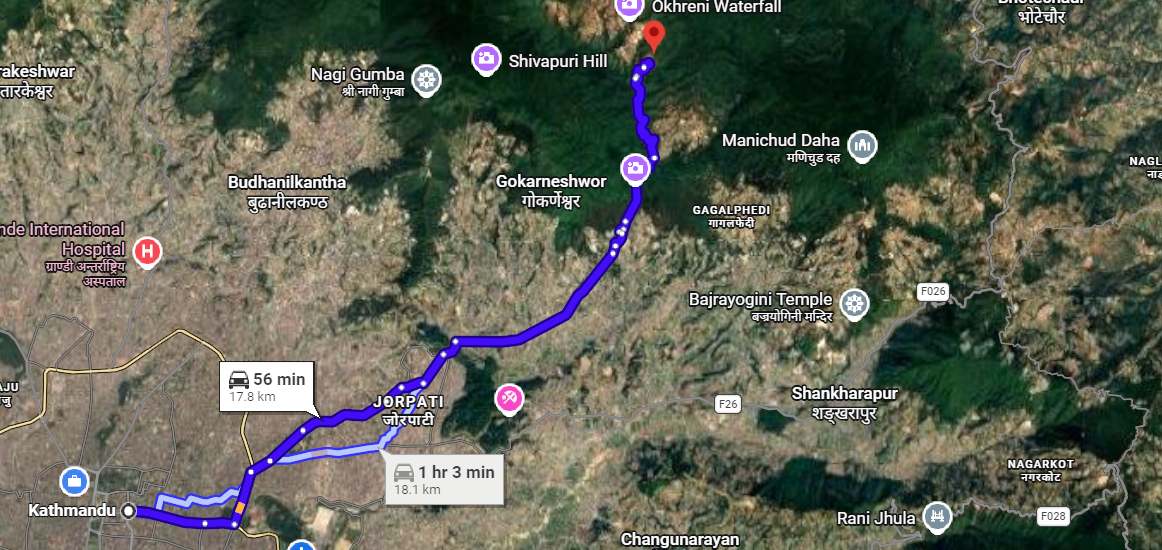
Kathmandu to Chisapani Trek Transport-Himalayan mountains with a professional travel banner displaying "vehicle Hire in Nepal" for transportation and tourism services.

Kathmandu to Chisapani Trek Transport – Complete Guide 2026

Chisapani is one of Nepal’s most accessible yet genuinely rewarding short trekking destinations – a hilltop viewpoint village at 2,215 m in the Shivapuri Nagarjun National Park, just 22 km northeast of Kathmandu city. On a clear morning, Chisapani offers one of the most spectacular panoramic Himalayan views within a short journey of the Nepali capital – the entire Langtang range, Jugal Himal, Manaslu, and even the distant Annapurna and Dhaulagiri, visible on exceptional days. It is Nepal’s finest overnight trek within easy striking distance of Kathmandu.

Getting from Kathmandu to the Chisapani trailhead is the first step of this popular trek. This comprehensive 2026 guide covers every transport option – private car, taxi, local bus, and shared transport – with prices, trailhead information, the Chisapani trekking experience, permits, practical tips, and guidance on booking your vehicle with Vehicle Hiring Nepal.


Where is Chisapani, and Why Trek There?

Location: Chisapani, Shivapuri Nagarjun National Park, Sindhupalchok District, Bagmati Province

Altitude: 2,215 m above sea level

Distance from Kathmandu: Approximately 22 km from Kathmandu city center by road

Trailhead: Sundarijal (1,460 m) – the most popular starting point, approximately 12 km from Kathmandu

Alternative Trailhead: Chisapani can also be reached from the Nagarkot side or from Panchkal (less common)

Trek Duration: 1 to 2 days for Sundarijal to Chisapani; 3 to 5 days for the full Chisapani–Nagarkot circuit

Trek Difficulty: Easy to Moderate – suitable for beginners, families, and first-time Nepal trekkers

Famous For: Panoramic Langtang and Himalayan views, Shivapuri National Park forests, and authentic Tamang villages


Chisapani translates as ‘cold water’ in Nepali – named for the cold spring that feeds the village. The settlement sits on a wide ridge with a 270-degree mountain panorama and is the first overnight stop on the popular Chisapani–Nagarkot–Dhulikhel trekking circuit. For visitors with limited time in Nepal, the Chisapani trek offers a genuine mountain experience with outstanding Himalayan views, forest trails, and traditional Tamang village culture – all within 2 hours of Kathmandu.


Starting Points: Sundarijal vs Other Trailheads

There are two main ways to reach Chisapani on foot – from Sundarijal to the south or from Nagarkot to the east. Here is a comparison:


TrailheadDistance from KTMTrek to ChisapaniDifficultyBest For
Sundarijal (1,460 m)12 km from the KTM center4–5 hrs uphillModerateMost popular – forest trail, waterfalls, Shivapuri park
Nagarkot (2,175 m)32 km from the KTM center3–4 hrs mixedEasy–ModerateReverse circuit start, sunrise views at Nagarkot first
Panchkal Road (east)70 km from KTM2–3 hrsEasyLess common, longer drive


Sundarijal is by far the most popular and most recommended trailhead for the Chisapani trek. The trail from Sundarijal follows the Bagmati River upstream through Shivapuri Nagarjun National Park, passes the Sundarijal waterfall, and climbs through beautiful oak, rhododendron, and pine forest to the ridge at Chisapani. Vehicle Hiring Nepal transports most Chisapani trekkers to Sundarijal, the trail’s start.


Transport Options: Kathmandu to Sundarijal (Chisapani Trailhead)

There are four main ways to get from Kathmandu to Sundarijal, the most popular being the Chisapani trailhead. Here is a full comparison:


Transport OptionTravel TimeCostComfortBest For
Private Car – Vehicle Hiring Nepal30–45 minUSD 12–18 (full car)ExcellentMost trekkers – direct, comfortable, flexible
Private Taxi (negotiate at the hotel)35–50 minNPR 800–1,400GoodSolo, budget, no booking needed
Metered Taxi (Kathmandu street)35–50 minNPR 700–1,200GoodSolo travelers – meter + negotiate
Local Microbus / Tempo60–90 minNPR 50–100/seatBasicUltra budget – from Chabahil / Gokarna junction
Hotel-arranged taxi35–50 minNPR 1,000–1,800GoodConvenience – the hotel desk arranges it


For groups of 2 or more, a pre-booked private car from Vehicle Hiring Nepal offers the best combination of price, convenience, and reliability. The driver picks you up from your Thamel hotel, takes you directly to the Sundarijal national park gate, helps with luggage, and can be pre-arranged to pick you up at Sundarijal (or Nagarkot if doing the circuit) when you return.

Kathmandu to Chisapani Trek Transport – Professional Car, Jeep, Hiace, Coaster Bus, Tourist Bus and Luxury Transportation Services

Private Car Prices: Kathmandu to Sundarijal 2026


VehicleCapacityOne-Way Price (USD)Return Price (USD)Notes
Sedan Car (Toyota Corolla / Suzuki)1–3 paxUSD 12–18USD 20–30Most popular for Chisapani trekkers
SUV / Toyota Fortuner4–5 paxUSD 18–25USD 30–40Groups with heavier gear
Toyota Hiace Van7–14 paxUSD 30–45USD 50–70Trekking groups, school groups


All prices are for the complete vehicle – not per person. For a group of 3 trekkers sharing a sedan, the per-person cost is USD 4-6 one-way – far more convenient than navigating local microbuses with trekking packs. Round-trip pricing covers the driver waiting in Sundarijal during your trek and returning you to Kathmandu when you finish (or picking you up from Nagarkot if completing the circuit).


Detailed Route Guide: Kathmandu to Sundarijal

Distance: Approximately 12 km from central Kathmandu (Thamel) to Sundarijal

Travel Time: 30 to 50 minutes by private car, depending on Kathmandu traffic

Road Type: Paved road throughout – no off-road or rough sections

Best Departure: 7:00 to 8:00 AM to reach Sundarijal by 8:00–9:00 AM and start trekking early


Thamel to Chabahil (5 km | ~15 min)

Depart from your Thamel hotel heading northeast through central Kathmandu. The route passes Rani Pokhari pond and the old royal palace area before crossing through Chabahil, a Buddhist neighborhood famous for its ancient Chaitya stupa. Traffic in Kathmandu can be slow in the morning, particularly through the Dilli Bazaar and Chabahil intersections. An early departure before 7:30 AM helps avoid the worst of the morning rush hour.

Chabahil to Gokarna (4 km | ~10 min)

From Chabahil, the road heads north through increasingly open, less congested urban areas. The Gokarna Forest Resort and Gokarna Mahadev Temple – one of Kathmandu’s most important Shiva temples – lie just off this road. The area around Gokarna marks the edge of Kathmandu’s urban sprawl. On the right (east) side, the Gokarna Forest – a rare patch of old-growth forest within the Kathmandu Valley – provides a green fringe to the road.

Gokarna to Sundarijal (3 km | ~10 min)

The final section from Gokarna to Sundarijal climbs gently along the Bagmati River valley into the Shivapuri Nagarjun National Park buffer zone. The landscape becomes noticeably greener and quieter. Sundarijal village is a small settlement at the base of the national park gate with a few teahouses, basic shops, and the national park entry checkpoint. The famous Sundarijal waterfall is visible from the road shortly before the village – a graceful cascade that also supplies drinking water to Kathmandu city.


Sundarijal – What to Do at the Trailhead

Sundarijal is a small but important gateway village. Here is what to do when your vehicle drops you here:

  1. Pay the Shivapuri Nagarjun National Park entry fee at the gate (see permits section below)
  2. Register your TIMS card at the checkpoint if required
  3. Stock up at the small Sundarijal teahouses – snacks, water, biscuits, and instant noodles available
  4. Fill your water bottle from the clean tap at the park entrance
  5. Confirm your vehicle pickup arrangements with your driver – either return pickup at Sundarijal or pickup at Nagarkot at the end of your circuit.
  6. Begin the trail at the park gate – the path crosses the Bagmati River on a concrete bridge and immediately enters the national park forest.


The walk from the Sundarijal park gate to Chisapani takes most trekkers 4 to 5 hours, with a total elevation gain of approximately 755 m. The trail is well-marked and passes through beautiful oak and rhododendron forest with several small streams and rest points along the way.

Kathmandu to Chisapani Trek Transport– Professional Vehicle Rental Service

Trekking Permits: Kathmandu to Chisapani 2026

The Chisapani trek passes through Shivapuri Nagarjun National Park and requires the following permits:


PermitCost 2026Where to GetNotes
Shivapuri Nagarjun National Park EntryNPR 500/person (foreigners) | NPR 100 (Nepali)Pay at the Sundarijal gate or the Budhanilkantha gateMandatory for all visitors entering the park
TIMS Card – Trekkers Info ManagementUSD 10 (or free for some nationalities – confirm)Nepal Tourism Board / TAAN, KathmanduRequired for trekkers – obtain before Sundarijal
Note: No ACAP or Restricted PermitStandard short trek near Kathmandu – no conservation area permit neededOnly national park entry + TIMS required


Obtain your TIMS card from the Nepal Tourism Board office in Kathmandu (Pradarshani Marg) or from TAAN before your trek departure. The national park entry fee is paid directly at the Sundarijal gate. Do not trek into Shivapuri without paying the national park fee – rangers check permits on the trail.


The Trek: Sundarijal to Chisapani

Distance: Approximately 9 km from Sundarijal to Chisapani

Elevation: Sundarijal 1,460 m → Chisapani 2,215 m (gain of 755 m)

Duration: 4 to 5 hours at a comfortable trekking pace

Difficulty: Moderate – steady uphill climb through forest, well-marked trail

Trail Type: Clear footpath through Shivapuri Nagarjun National Park forest


Trail Description: Sundarijal to Chisapani

Sundarijal Gate to Shivapuri Village (3 km | 1 hr)

From the park gate, the trail follows the Bagmati River upstream through lush subtropical forest. The path is wide and well-maintained. You pass the Sundarijal water treatment facility (the main drinking water source for Kathmandu city) before entering the denser forest above. The first significant climb begins shortly after the gate – steady switchbacks through oak and bamboo forest with the sound of the river below.

Shivapuri Village to Mulkharka (3 km | 1 hr)

The trail continues climbing through the forest and enters the traditional Tamang village of Shivapuri. Small teahouses here offer tea and basic snacks – a good early rest point. Beyond Shivapuri, the trail rises more steeply through rhododendron and alder forest. The village of Mulkharka (1,895 m) is the last major settlement before Chisapani and an excellent lunch stop. Several teahouses in Mulkharka serve dal bhat, noodles, and hot drinks.

Mulkharka to Chisapani Ridge (3 km | 1.5–2 hrs)

The final section from Mulkharka is the steepest of the trek – a direct climb through pine and rhododendron forest to the Chisapani ridge at 2,215 m. The trail emerges from the forest onto the open ridge, and the mountain panorama suddenly opens up dramatically. On a clear day, the view from the Chisapani ridge is one of the most striking near-Kathmandu mountain panoramas in Nepal—arrival at Chisapani village, a cluster of simple teahouses and lodges on the ridge top.

Kathmandu to Chisapani Trek Transport-everest range


Chisapani – Mountain Views and Village Life

The Himalayan Panorama from Chisapani

The mountain panorama from Chisapani’s ridge is extraordinary – arguably the finest Himalayan viewpoint within a day’s trek of Kathmandu. On a clear morning (best from October to February), the following peaks are visible:

  • Langtang Lirung (7,227 m) – the most prominent peak directly north – enormous and imposing
  • Ganesh Himal range – a dramatic line of peaks to the northwest, including Ganesh I (7,422 m)
  • Jugal Himal group – to the northeast, including Dorje Lakpa (6,966 m)
  • Manaslu (8,163 m) – visible to the west on exceptionally clear days
  • Himalchuli (7,893 m) and other Annapurna region peaks – visible far to the west in clear winter air
  • Langtang valley corridor – the deep valley leading north toward Tibet

Sunrise from Chisapani is spectacular – the peaks glow orange and gold as the sun rises from the east. Most trekkers overnight at Chisapani specifically to catch the dawn mountain view, which is substantially better than the afternoon arrival view when clouds frequently build.

Chisapani Village and Tamang Culture

Chisapani is a small ridge village with a predominantly Tamang population. The Tamang people are a Tibetan Buddhist community of the Himalayan foothills – skilled farmers, porters, and increasingly homestay hosts. The flat-roofed stone houses of Chisapani, with their prayer-flag poles, small vegetable gardens, and wood smoke rising in the cold morning air, embody the classic Himalayan foothills village atmosphere. The villagers are warm and welcoming to trekkers, and many families now offer simple yet authentic homestays.

Teahouses and Lodges at Chisapani

Chisapani has approximately 8 to 12 teahouses and simple lodges catering to overnight trekkers. The standard is basic but functional:

  • Simple twin rooms with foam mattresses, pillows, and blankets – sleeping bag recommended for extra warmth
  • Shared bathrooms with cold water – hot bucket water sometimes available on request at a small extra charge
  • Dal bhat, noodle soup, fried rice, egg dishes, Tibetan bread, and hot drinks are available at all teahouses
  • No WiFi – mobile signal available (NTC and Ncell both work at Chisapani)
  • Electricity via solar panels – charge devices in the afternoon while panels are active
  • Price: NPR 300 to NPR 700 per person per night, meals NPR 300 to NPR 600 per meal


Trekking Routes: Chisapani and Beyond

Chisapani is not only a destination but a hub connecting multiple trekking routes in the Langtang foothills. Here are the main options:

Option A: Sundarijal – Chisapani – Sundarijal (2 Days)

Duration: 2 days (1 night at Chisapani)

Route: Day 1 – Drive to Sundarijal, trek to Chisapani (4–5 hrs). Day 2 – Sunrise views, descend to Sundarijal (3–4 hrs), vehicle back to Kathmandu.

The simplest and most popular Chisapani trek – the same trail up and down with sunrise views as the overnight reward. Perfect for first-time Nepal trekkers, families, and visitors with limited time.

Option B: Sundarijal – Chisapani – Nagarkot (3 Days)

Duration: 3 days (2 nights – 1 at Chisapani, 1 at Nagarkot)

Route: Day 1 – Sundarijal to Chisapani. Day 2 – Chisapani to Nagarkot via Chandeswori ridge (5–6 hrs). Day 3 – Nagarkot sunrise, vehicle back to Kathmandu.

The classic Chisapani circuit. From Chisapani, the trail continues east along the ridgeline through a rhododendron forest, passing Thakuri Bhanjyang and Thodung before reaching Nagarkot. The Nagarkot sunrise the following morning offers a second spectacular mountain-view experience. Vehicle Hiring Nepal can arrange pickup from Nagarkot at the end of this circuit.

Option C: Sundarijal – Chisapani – Nagarkot – Dhulikhel (4–5 Days)

Duration: 4 to 5 days

Route: Continue from Nagarkot east through the Shivapuri-Nagarjun ridge forest toward Dhulikhel. Passes through Namo Buddha – a highly significant Tibetan Buddhist monastery complex – before ending at Dhulikhel with its own excellent Himalayan views.

This extended circuit is Nepal’s finest ridge trek near Kathmandu – a high-quality multi-day experience through forest, traditional villages, and spectacular mountain viewpoints without needing to travel far from the capital. Namo Buddha is a magnificent bonus – one of the most sacred Tibetan Buddhist pilgrimage sites in the Kathmandu Valley region.

Option D: Chisapani – Langtang Trek Connection (7+ Days)

Advanced trekkers can continue north from Chisapani along the Shivapuri ridge and connect to the Langtang Valley trek via Gosaikunda or via remote trails to Lauribinayak. This extended route takes 7 to 10 additional days and requires a guide, camping or teahouse-to-teahouse navigation, and the ACAP permit for Langtang National Park. Vehicle Hiring Nepal can arrange vehicle transport to the Langtang starting point at Syabrubesi instead.


Best Time for the Kathmandu to Chisapani Trek Transport

October to December (Best Season)

The post-monsoon season is the finest time for the Chisapani trek. October and November offer crystal-clear skies with the Langtang range and the entire northern Himalayan horizon razor-sharp from the Chisapani ridge. The trail through Shivapuri forest is dry and firm underfoot. December is colder but offers exceptional visibility – sometimes the clearest views of the year, with Manaslu and even distant Annapurna peaks visible. Carry a warm sleeping bag for December nights in Chisapani (temperatures drop to -5°C).

January to February (Very Cold – Clear Views)In In In In

January and February, from Chisapani, exceptionally clear days can produce the finest mountain views of the year. However, nights are very cold (-8 to -12°C) and the trail above Mulkharka may have ice and frost in the early morning. Carry a high-quality sleeping bag rated to -10°C and appropriate cold-weather trekking clothing. The trail is quiet with very few other trekkers.

March to April (Excellent – Rhododendrons)

Spring is spectacular for the Chisapani trek. The rhododendron forests between Mulkharka and Chisapani burst into brilliant red and pink blooms from mid-March through April, making them some of the most beautiful trekking forests in the Kathmandu region. Mountain views are good in the morning before afternoon clouds develop. The trail is warm and dry, perfect for comfortable trekking.

May (Possible but Hazy)

Late spring becomes increasingly hazy. Mountain views are less reliable as pre-monsoon haze builds. The forest is lush and green. Temperatures are warm at altitude, but can be cool in the lower sections of the trail. Acceptable trekking conditions, but not ideal for mountain views.

June to September (Monsoon – Avoid)

Monsoon makes the Chisapani trek challenging. The trail becomes slippery with mud, leeches are prolific from the park gate to Mulkharka, and mountain views are almost always obscured by cloud. The forest is beautiful and lush, but the trekking experience is significantly less enjoyable. If trekking in the monsoon is unavoidable, bring waterproof gear, leech socks, and good waterproof trekking boots.

Kathmandu to Chisapani Trek Transport

  • Day 1, 7:00 AM: Private car from Thamel hotel to Sundarijal (40 min)
  • Day 1, 8:00 AM: Pay park entry fee, begin trek from Sundarijal gate
  • Day 1, 12:00–1:00 PM: Lunch stop at Mulkharka teahouse
  • Day 1, 2:00–3:00 PM: Arrive Chisapani – check into teahouse, rest
  • Day 1, 5:00–6:00 PM: Afternoon viewpoint walk, sunset over Langtang
  • Day 2, 5:30 AM: Wake for sunrise – panoramic dawn view of Langtang Lirung, Ganesh Himal, Jugal Himal
  • Day 2, 8:00 AM: Breakfast at the teahouse
  • Day 2, 9:00 AM: Begin descent to Sundarijal
  • Day 2, 12:00–1:00 PM: Arrive Sundarijal – private car to Kathmandu
  • Day 2, 2:00 PM: Back in Thamel – afternoon free for Kathmandu sightseeing

Itinerary B: Chisapani – Nagarkot Circuit (3 Days)

  • Day 1: Private car Kathmandu to Sundarijal → trek to Chisapani (4–5 hrs) → overnight Chisapani
  • Day 2: Sunrise at Chisapani → trek east to Nagarkot via Chandeswori ridge (5–6 hrs) → overnight in Nagarkot
  • Day 3: Nagarkot sunrise over the Himalayan range → private vehicle Nagarkot to Kathmandu (1.5 hrs)

Itinerary C: Chisapani – Nagarkot – Namo Buddha (5 Days)

  • Day 1: Kathmandu to Sundarijal (car) → Sundarijal to Chisapani (trek)
  • Day 2: Chisapani sunrise → trek to Nagarkot via Chandeswori ridge
  • Day 3: Nagarkot → Dhulikhel via ridge trail (5–6 hrs trekking)
  • Day 4: Dhulikhel → Namo Buddha monastery (3 hrs trek) → overnight at monastery
  • Day 5: Namo Buddha morning puja → vehicle back to Kathmandu (1.5 hrs)

Itinerary D: Half-Day Sundarijal Waterfall Trip (No Overnight)

  • 8:00 AM: Private car from Kathmandu to Sundarijal (40 min)
  • 9:00 AM: Walk from the park gate to the Sundarijal waterfall (30 min)
  • 9:30–11:00 AM: Waterfall visit, forest walk, birdwatching in the lower park area
  • 11:30 AM: Return to Sundarijal gate
  • 12:00 PM: Private car back to Kathmandu – afternoon for city sightseeing

This half-day option is ideal for travelers who want a taste of Shivapuri forest without a full overnight trek.

nepal nekhor tour namobuddha

What to Pack for the Chisapani Trek

Clothing

  • Warm base layers (thermal top and bottom) – Chisapani at 2,215 m is significantly colder than Kathmandu, especially at night and early morning
  • Insulating mid-layer – fleece or light down jacket
  • Windproof outer layer – the Chisapani ridge is exposed and can be breezy
  • Trekking trousers – avoid jeans, which are heavy and uncomfortable when wet
  • Warm hat, gloves, and neck gaiter – essential for the dawn viewpoint watch
  • Sun hat and sunglasses for the open ridge sections
  • Comfortable trekking shoes with ankle support and good grip – the trail can be slippery with leaf litter and occasional mud

Gear and Essentials

  • Sleeping bag rated to at least 0°C (October–April) or -5°C (November–February) – teahouse blankets alone are insufficient in cold months
  • Daypack (20–30L) – sufficient for a 2-day trek without porters
  • Water bottle or hydration system – fill up at Sundarijal before the trail
  • Water purification tablets or filter – for trail water sources above Mulkharka
  • Headlamp with spare batteries – for the early sunrise viewpoint walk from the teahouse
  • Camera with a charged battery and extra storage – the Chisapani panorama is unmissable
  • Snacks – energy bars, nuts, dry fruit, and chocolate for the trail
  • First aid kit with blister plasters, ibuprofen, and antiseptic cream
  • Trekking poles – optional but helpful on the steep Mulkharka to Chisapani final section
  • Cash NPR – bring enough for park entry, teahouse room, meals, and return vehicle (no ATM in Chisapani)


Shivapuri Nagarjun National Park – Wildlife and Nature

The trail from Sundarijal to Chisapani passes through one of Kathmandu Valley’s most important protected forests – Shivapuri Nagarjun National Park. Established in 2002, the park covers 159 square kilometers of watershed forest that supplies drinking water to Kathmandu and protects significant biodiversity.

Wildlife in Shivapuri

  • Leopard – resident in the park, rarely seen, but tracks sometimes visible
  • Himalayan Black Bear – sightings occasionally reported in upper forest areas
  • Wild Boar – common in the lower forest sections, seen regularly on the trail
  • Barking Deer (Muntjac) – frequently heard and occasionally seen
  • Langur Monkey – Grey langurs are common in the forest canopy along the trail
  • Himalayan Tahr – mountain goat species seen on rocky sections above Mulkharka
  • Jungle Cat and Leopard Cat – nocturnal, rarely seen, but resident

Birdwatching in Shivapuri

Shivapuri Nagarjun National Park is one of the finest birdwatching sites near Kathmandu with over 300 recorded species. Highlights include:

  • Himalayan Monal (Danphe) – Nepal’s national bird, the iridescent male is frequently seen on the upper slopes
  • Kalij Pheasant – common on the forest floor below Chisapani
  • Spiny Babbler – Nepal’s only endemic bird species, found in scrub near Mulkharka
  • Various eagles, hawks, and falcons – raptors- are frequently seen soaring over the ridge
  • Thrushes, laughing thrushes, minivets, and flycatchers throughout the forest

Early morning (6:00–9:00 AM) is the prime time for birdwatching. Carry binoculars for the trail – Chisapani trekkers often report excellent birding on the Sundarijal-Mulkharka section.


Return Transport: Chisapani / Sundarijal to Kathmandu

At the end of your Chisapani trek, you need transport from Sundarijal (or Nagarkot if completing the circuit) back to Kathmandu. Here are your options:

Pre-Arranged Return Pickup (Best Option)

The most convenient option – book your return vehicle at the same time as your outward journey with Vehicle Hiring Nepal. WhatsApp your driver the morning of your descent to confirm your estimated arrival time at Sundarijal, and your vehicle will be waiting at the park gate when you walk out. No waiting, no taxi negotiation after a full day of trekking.

Taxi from Sundarijal

Taxis are usually available at the Sundarijal park gate, though less reliably than at busier trailheads. A taxi from Sundarijal to Thamel costs NPR 700-1,200. Negotiate before getting in and confirm the price for your specific hotel address.

Local Microbus from Sundarijal

Local microbuses run from Sundarijal back towards Chabahil and central Kathmandu for NPR 50 to NPR 100 per seat. Frequency is reasonable during daytime hours. Not recommended with large trekking packs as the vehicles are small and crowded.

Nagarkot to Kathmandu (for Circuit Completers)

If you have completed the Chisapani–Nagarkot circuit, Vehicle Hiring Nepal can arrange a return vehicle from Nagarkot to Kathmandu. The drive from Nagarkot to Thamel takes approximately 1.5 hours and costs USD 20-30 by private car. Book this in advance when arranging your outward transport.

nagarkot sunrise

Chisapani Trek vs Nagarkot Sunrise – Which is Better?

Many Kathmandu visitors wonder whether to choose the Chisapani overnight trek or the famous Nagarkot sunrise tour. Here is a direct comparison:


FactorChisapani TrekNagarkot Sunrise Tour
Distance from KTM12 km to the trailhead32 km to Nagarkot
AccessTrek required (4–5 hrs up)Drive directly to the viewpoint
Physical effortModerate trek – 1–2 daysMinimal – arrive by car
Night at altitudeYes – 2,215 mYes – 2,175 m
Mountain view qualityExcellent – Langtang closeExcellent – Annapurna range
Trek experienceFull forest trekMinimal walking
CostTrek + teahouse + vehicleVehicle + hotel only
Best forTrekkers, nature loversNon-trekkers, all ages
Wildlife/natureShivapuri forest, birdsLimited – resort area
AuthenticityTraditional villageTourist resort town


Our recommendation: If you want a genuine trekking experience with forests, wildlife, traditional village culture, and magnificent mountain views, choose Chisapani. If you want an easy sunrise viewpoint accessible to all ages and fitness levels, choose Nagarkot. Both are excellent and can be combined in the 3-day Chisapani–Nagarkot circuit.


What is Included in Your Transport Booking with Vehicle Hiring Nepal?

  • Private car (sedan, SUV, or Hiace) with experienced, licensed driver
  • Direct pickup from your Kathmandu hotel or guesthouse in Thamel or any area
  • Drop off at the Sundarijal national park gate or the Nagarkot viewpoint area
  • Fuel and vehicle insurance included
  • Return pickup from Sundarijal, Nagarkot, or Dhulikhel at the end of your trek (pre-arranged)
  • 24/7 WhatsApp support – contact your driver from the trail to confirm pickup timing


Not included: Shivapuri National Park entry fee (paid at gate), TIMS card, teahouse accommodation, personal meals on the trail, guide or porter fees, and any additional detour stops.


Kathmandu to Chisapani Trek Transport

Frequently Asked Questions

How far is Sundarijal (Chisapani trailhead) from Kathmandu?

Sundarijal is approximately 12 km from central Kathmandu (Thamel area). The drive takes 30 to 50 minutes by private car, depending on morning traffic. It is one of the closest trekking trailheads to Kathmandu, making it ideal for trekkers planning early-morning departures.

Can I do the Chisapani trek as a day trip (no overnight)?

Technically possible but not recommended. The round trip from Sundarijal to Chisapani and back (18 km) takes most trekkers 8 to 10 hours. While physically manageable for fit individuals, it leaves no time to enjoy the mountain views from the ridge, which are the main reason to visit Chisapani. The sunrise view the following morning is the definitive Chisapani experience – it is not possible on a day trip. An overnight stay at Chisapani is strongly recommended.

Is the Chisapani trek suitable for beginners or children?

Yes. The Sundarijal to Chisapani trail is classified as moderate – the gradient is steady but not extreme, the trail is well-marked and clearly defined, and the total distance of 9 km is very manageable. Children aged 10 and above with basic fitness can comfortably complete the trek with appropriate preparation. The main challenge is the sustained 755 m elevation gain over 9 km – take regular water and snack breaks and allow extra time.

What is the best month for the clearest mountain views from Chisapani?

October, November, and December typically offer the clearest mountain views from Chisapani. October provides lush post-monsoon greenery with excellent visibility. November and December give increasingly sharp mountain definition as the atmosphere clears completely. January and February can produce the most dramatic views of the entire year on certain days, but with very cold temperatures. March and April are also excellent with rhododendron blossoms adding color to the forest.

Do I need a guide for the Chisapani trek?

A guide is not legally required for the standard Sundarijal-to-Chisapani trail, which is well-marked and frequently used. However, for first-time trekkers in Nepal, a local guide (NPR 1,500 to NPR 2,500 per day) adds significant value – knowledge of the trail, cultural insight into the Tamang villages, and assistance in an emergency. For the extended Chisapani–Nagarkot–Dhulikhel–Namo Buddha circuit, a guide is recommended as some sections are less clearly marked.

How does Chisapani compare to other short treks near Kathmandu?

Chisapani is the finest short overnight trek near Kathmandu for mountain views. Nagarkot offers similar views without any trekking. The Champadevi trek (from Pharping to the Champadevi ridge) is shorter and lower, but offers good views of the valley. Phulchoki (2,782 m) is accessible by vehicle and has excellent birdwatching. For a first-time Nepal trekking experience that combines forest, village culture, and Himalayan panorama, Chisapani is the outstanding choice within striking distance of Kathmandu.

Can I start the Langtang trek from Chisapani?

Advanced trekkers can continue north from Chisapani on remote trails towards the Langtang Valley. However, this route requires a licensed guide, camping or knowledge of very simple teahouse options, and the Langtang National Park permit (NPR 3,000). The standard Langtang trek starts from Syabrubesi – reached by jeep or bus from Kathmandu in approximately 7 to 8 hours. Vehicle Hiring Nepal can arrange transport to Syabrubesi for the full Langtang trek.


Final Thoughts

The Chisapani trek is Nepal’s perfect introduction to Himalayan trekking – close enough to Kathmandu to fit into even the tightest travel itinerary, accessible enough for most fitness levels, and rewarding enough in mountain views and forest beauty to leave a permanent impression. The moment you emerge from the Shivapuri forest onto the Chisapani ridge and the full Langtang Himalayan panorama opens before you for the first time – that is a Nepal moment that will stay with you for life.

Vehicle Hiring Nepal makes the transport from Kathmandu to Sundarijal as smooth and convenient as possible. Our drivers know the Sundarijal road, the park gate procedures, and the best time to arrive for your trek. Whether you are heading up for a single overnight or the full Chisapani–Nagarkot–Dhulikhel–Namo Buddha five-day circuit, we provide reliable transport at both ends of your trek.

Book your Kathmandu-to-Chisapani trek transport today. WhatsApp us at +977 9851013196 or visit vehiclehiringnepal.com. We arrange both outward and return transport – book together for the best combined price.

How to Book Your Kathmandu to Chisapani Trek Transport

  • Contact Vehicle Hiring Nepal via WhatsApp at+977 9851013196 or visit vehiclehiringnepal.com
  • Tell us your preferred travel date and departure time (7:00–8:00 AM recommended)
  • Provide your hotel name and pickup address in Kathmandu (Thamel or other area)
  • Confirm your group size and the number of trekking packs
  • Choose your vehicle type – sedan for 1–3 trekkers, SUV for 4–5, Hiace for groups
  • Specify your trailhead – Sundarijal (standard) or Nagarkot (reverse circuit start)
  • Confirm if you need a return pickup – from Sundarijal, Nagarkot, or Dhulikhel
  • Receive instant booking confirmation with driver name, vehicle details, and departure plan


WhatsApp: +977 9851013196
Email: [email protected]
Website: www.vehiclehiringnepal.com

Pokhara to Sikles Jeep Rental – Complete Guide 2026

best private jeep parked in front of the Himalayan mountains with a professional travel banner displaying "4wd jeep Hire in Nepal" for transportation and tourism services.

Pokhara to Sikles Jeep Rental – Complete Guide 2026

Sikles is one of Nepal’s most beautifully preserved and authentic Gurung villages – a terraced hillside settlement at 1,980 m in the Annapurna foothills, surrounded by ancient rhododendron forests, cascading waterfalls, and jaw-dropping views of Annapurna II, Annapurna IV, Lamjung Himal, and Machhapuchhre. Located approximately 42 km north of Pokhara, Sikles is one of the oldest and largest Gurung villages in the Annapurna region and increasingly one of Nepal’s finest off-the-beaten-track destinations for cultural tourism, short trekking, and Himalayan photography.

Getting from Pokhara to Sikles requires a private jeep – the road to Sikles is a rough mountain track through the Madi Valley that no standard car, taxi, or tourist bus can navigate. This complete 2026 guide covers everything you need to know about hiring a jeep from Pokhara to Sikles – route details, road conditions, prices, the Sikles experience, trekking options, and how to book your vehicle with Vehicle Hiring Nepal.

Where is Sikles, and Why Visit?

Location: Sikles, Rupa Rural Municipality, Kaski District, Gandaki Province

Altitude: 1,980 m above sea level

Distance from Pokhara: Approximately 42 km by road via the Madi Valley

Travel Time: 2 to 3 hours by 4WD jeep, depending on road conditions

Road Type: Paved from Pokhara to Rupa Lake area + rough mountain jeep track to Sikles

Vehicle Required: 4WD Jeep mandatory for the full route – no sedan, no standard minivan

Population: Approximately 2,000 people – one of the largest traditional Gurung villages in Nepal

Famous For: Gurung culture, traditional architecture, Annapurna panorama, honey hunting heritage, trekking base


Sikles is not a tourist village in the commercial sense – it is a real, living Gurung community with traditional stone-and-slate houses, terraced fields of millet and barley, ancient temples, and a community that has maintained its ancestral culture through centuries of relative isolation. The village gained some infrastructure and road access in recent years, but retains its authentic character far more than the heavily trekked villages of the main Annapurna circuit.

The views from Sikles are extraordinary – the entire Annapurna range, from Annapurna II (7,937 m) in the north to Machhapuchhre (6,993 m) in the east, fills the horizon, while Rupa and Begnas lakes glitter in the valley below to the south. Sunrise from Sikles rivals Sarangkot and Poon Hill for Himalayan panorama quality – but with a fraction of the crowds.


Why a Jeep is the Only Option for Pokhara to Sikles

Many travelers arriving in Pokhara assume they can take a local bus or taxi to Sikles. This is not possible. Here is exactly why a private jeep is the only reliable transport option:

  • The road from the Madi Valley turnoff to Sikles is an unpaved mountain track with steep inclines, tight switchbacks, and rocky sections – impassable for standard cars and city taxis
  • No public bus service runs to Sikles – local shared jeeps are available but run infrequently and only when full, which can mean waiting hours in Pokhara or along the route
  • 4WD with high ground clearance is essential for the rocky and sometimes muddy upper section of the Sikles road
  • Trekkers and cultural visitors typically carry daypacks, camera equipment, and overnight bags. A private jeep gives full luggage space and door-to-door delivery
  • Private jeep departs from your Pokhara hotel at your preferred time – crucial for reaching Sikles by late morning before clouds obscure mountain views
  • The driver can wait in Sikles or nearby Ghachok during your visit and return you to Pokhara – most shared transport does not offer this flexibility
  • Group safety and convenience – your entire group stays together in one comfortable vehicle throughout


pokhara to sikle jeep rental-4WD SUV Rental Service

Jeep Rental Prices: Pokhara to Sikles 2026

Vehicle Hiring Nepal offers competitive 2026 jeep rental prices for the Pokhara to Sikles route:

Vehicle TypeCapacityOne-Way (USD)Round Trip (USD)Notes
Toyota Land Cruiser4–6 pax$55 – $80$90 – $130Best for Sikles road – recommended
Toyota Land Cruiser Prado4–5 pax$65 – $90$105 – $150Premium comfort on mountain track
Mahindra Bolero / Thar4–6 pax$45 – $65$75 – $110Budget 4WD option, capable
Toyota Hiace Van7–14 paxTo Ghachok only – USD 50–70Not suitable for SiklesCannot navigate the upper Sikles track


All jeep rental prices include the driver, full fuel for the journey, and vehicle insurance. Round-trip pricing includes the driver waiting in Sikles or nearby Ghachok village while you explore and trek, then returning you to Pokhara. For day trips from Pokhara, round-trip booking is recommended and most cost-effective.

Detailed Road Guide: Pokhara to Sikles

Stage 1: Pokhara Lakeside to Begnas Lake Junction (18 km | 30 min)

Depart from your Pokhara Lakeside hotel heading east. The road passes through central Pokhara towards the eastern edge of the city and the Begnas–Rupa Lake area. The road is paved and passes through an increasingly rural landscape as Pokhara’s urban sprawl gives way to farmland and foothills. Begnas Lake – the second largest lake in the Pokhara valley – appears on the right. This is a pleasant, easy section with good views of the Annapurna range on clear mornings.

Stage 2: Begnas Lake to Ghachok (10 km | 25 min)

From the Begnas Lake area, the road heads north into the Madi River valley. Ghachok is a popular Gurung village that serves as the first major stop on the route towards Sikles. The road to Ghachok is paved for most of its length and is accessible by most vehicles. Ghachok itself has a few teahouses and is also a popular short day-trip destination from Pokhara in its own right. From Ghachok, the road to Sikles begins in earnest, and the character of the journey changes completely.

Stage 3: Ghachok to Dhikurpokhari (8 km | 25 min)

Beyond Ghachok, the road climbs steeply into the Annapurna foothills. The surface transitions from paved road to compacted gravel and rock – definitely 4WD territory. Terraced fields of millet, barley, and vegetables step up the hillsides on both sides. The Madi River gorge deepens below as you gain altitude. Dhikurpokhari is a small junction village with a few teahouses – a good spot for a brief water and snack break.

Stage 4: Dhikurpokhari to Sikles (14 km | 45–60 min)

This final section is the most dramatic and challenging of the drive. The jeep track climbs through dense rhododendron and oak forest on narrow switchbacks carved into the steep hillside. In several places, the track crosses seasonal streams or skirts around erosion-damaged sections that require careful driving. The views grow progressively more spectacular as altitude increases – Rupa and Begnas lakes appear far below in the valley, and the snow-capped peaks of Lamjung Himal and Annapurna IV begin to dominate the northern horizon.

Arrival at Sikles village (1,980 m). The jeep drops you in the upper part of the village near the entrance gate. The traditional stone-paved lanes of Sikles are only accessible on foot from here – vehicles cannot enter the village interior. Your driver will wait near the gate area or in the lower village while you explore.


Road Conditions: Pokhara to Sikles


SectionDistanceSurfaceDifficultySeason Condition
Pokhara to Begnas Jct.18 kmFully pavedEasyGood year-round
Begnas Jct. to Ghachok10 kmMostly pavedEasy–ModerateGood year-round
Ghachok to Dhikurpokhari8 kmGravel / compacted trackModerateRough after the monsoon
Dhikurpokhari to Sikles14 kmRocky Mountain trackDifficult4WD essential – muddy in monsoon


The Dhikurpokhari to Sikles section is the most challenging and requires a capable 4WD jeep with experienced mountain driving. In the dry season (October to May), conditions are manageable with a Land Cruiser. During monsoon (June to September), sections of this track can become extremely muddy and slippery, and occasional landslides may temporarily block the route. Always confirm current road conditions with your driver before traveling during the monsoon season.


pokhara to sikle jeep rental – Himalayan Off-Road Transportation

Sikles Village – A Complete Visitor Guide

Gurung Culture and Architecture

Sikles is one of the finest examples of a preserved Gurung village in all of Nepal. The Gurung people – renowned as the bravest of Nepal’s hill communities and historically the backbone of the Gurkha military tradition – have maintained their ancestral way of life in Sikles for centuries. The village architecture is stunning: flat-roofed traditional stone houses with carved wooden windows and doorways, interconnected by narrow stone-paved lanes that wind between terraced courtyards.

The village is organized around a traditional Gurung social structure, with upper-caste lama families historically at the top and lower castes below. This social geography is literally written into the village topography – the upper lanes have the oldest and most ornate houses with the finest mountain views. Walking from the bottom to the top of the village reveals this fascinating social and architectural history.

Mountain Views from Sikles

The panoramic mountain view from Sikles is one of the finest in the entire Annapurna region and is dramatically underappreciated compared to the famous viewpoints of Sarangkot and Poon Hill. From the upper village and the viewpoint ridge above Sikles, the following peaks are clearly visible on a clear day:

  • Annapurna II – 7,937 m (second highest in the Annapurna range) – appears almost directly above the village
  • Annapurna IV – 7,525 m – visible to the northwest
  • Lamjung Himal – 6,983 m – rising prominently to the north
  • Machhapuchhre (Fishtail) – 6,993 m – the iconic peak visible to the southeast
  • Himalchuli – 7,893 m – on the northern horizon beyond Lamjung
  • Rupa and Begnas Lakes in the valley below to the south – glittering blue in the sunshine

The best time for mountain views is early morning (6:00–9:00 AM), before clouds build. The sunset views from Sikles are equally spectacular with alpenglow on Annapurna II and Lamjung Himal, turning the peaks deep gold and red.

The Sacred Temples of Sikles

Sikles has several important Hindu and Buddhist shrines that reflect the Gurung community’s syncretic religious tradition. The main Ganesh temple in the upper village is an important local pilgrimage site, as is the shrine to the Gurung ancestral deity. The community lama (Buddhist priest) maintains a small gompa (monastery) with traditional thangka paintings. Visitors are welcome but should observe temple etiquette – remove shoes, dress modestly, and ask permission before photographing sacred objects.

Honey Hunting Heritage

The Sikles area has a long tradition of wild honey hunting from the massive cliff hives of Himalayan giant honey bees (Apis laboriosa). The honey hunters of Sikles use traditional rope ladders and smoke to harvest wild honey from vertical cliff faces – a practice that is thousands of years old and has been documented by National Geographic photographers. While the traditional full honey hunt is rare today, smaller honey collections still occur in spring (April–May) and autumn (October–November). Locally produced honey is available for purchase in Sikles village.

Rhododendron Forest and Wildlife

The forests above Sikles are magnificent temperate mountain forests dominated by enormous ancient rhododendron trees – some estimated at over 100 years old. In spring (March–April), the forest becomes a riot of red, pink, and white rhododendron blossoms that rank among Nepal’s finest natural displays. The forest is also home to langur monkeys, Himalayan thar, barking deer, and a rich bird life, including Danphe (Himalayan Monal pheasant – Nepal’s national bird), Khalij pheasant, and various birds of prey.


pokhara to sikles jeep rentel route map

Trekking Routes from Sikles

Sikles is not only a destination – it is a trekking base and trailhead for several excellent routes through the Annapurna Conservation Area. Here are the main trekking options:

Sikles Village Loop Trek (1–2 Days)

Duration: 1 to 2 days

Difficulty: Easy to Moderate

Highlights: Village exploration, upper viewpoint ridge, rhododendron forest, Gurung cultural immersion

The most accessible trek from Sikles is a loop through the village and up to the viewpoint ridge above the settlement. From the upper village, a trail continues into the rhododendron forest, offering progressively better mountain views. Most visitors spend a full day exploring the village on foot and hiking to the viewpoint. Overnighting in a community homestay or a simple teahouse offers a deeply authentic Gurung cultural experience.

Sikles to Ghachok Trek (1 Day)

Duration: 4 to 5 hours one way

Difficulty: Moderate

Highlights: Mountain views throughout, rhododendron and oak forest, traditional villages, Madi River valley

A popular trekking route descends from Sikles through the forest and terraced hillsides to Ghachok village, where a vehicle can meet you for the return to Pokhara. This one-way downhill trek gives a beautiful full-day mountain experience with the convenience of a jeep pickup at the lower end.

Sikles to Lwang Ghalel Trek (2–3 Days)

Duration: 2 to 3 days

Difficulty: Moderate to Strenuous

Highlights: Lamjung Himal views, remote villages, deep forest, Mardi Khola valley

A more demanding and less-trekked route heads north from Sikles through increasingly remote terrain towards Lwang Ghalel – another traditional Gurung village with stunning mountain views. This route passes through pristine forest and several uninhabited high pasture areas with unobstructed views of Lamjung Himal and Annapurna IV. A guide is strongly recommended for this route.

Sikles to Mardi Himal Base Camp (4–5 Days)

Duration: 4 to 5 days from Sikles

Difficulty: Strenuous

Max Altitude: 4,500 m at High Camp near Mardi Himal Base Camp

Highlights: Close-up Machhapuchhre and Mardi Himal views, forest ridgeline walk, high alpine terrain

An experienced trekker’s route from Sikles connects to the Mardi Himal Trek – one of Nepal’s newest and most beautiful trekking routes. The Mardi Himal Trek follows the eastern ridge of the Annapurna range with close-up views of Machhapuchhre and the rarely seen Mardi Himal (5,587 m). The route through Sikles adds a cultural village dimension to this otherwise forest-and-ridge trek.


Sikles Community Homestay – Cultural Immersion

One of the most rewarding aspects of visiting Sikles is the community homestay program, which allows visitors to sleep in a traditional Gurung household, share meals with the family, and experience Gurung daily life up close. Here is what to expect:

  • Homestay rooms are simple but clean – traditional Gurung house with a sleeping mattress on the floor or basic wooden bed, blankets provided
  • Meals are prepared and eaten with the family – traditional Gurung food including gundruk (fermented vegetable soup), dhindo (buckwheat porridge), local vegetables, rice, and millet raksi (local spirit)
  • Evening cultural program – many homestay families offer traditional Gurung music and dance, storytelling about their military (Gurkha) heritage, and demonstrations of traditional crafts
  • Cost: Approximately NPR 1,500 to NPR 2,500 per person per night, including dinner and breakfast
  • Book through the Sikles Community Homestay Network – your Vehicle Hiring Nepal driver can help with an introduction to the homestay coordinators in the village.
  • A Gurung language phrasebook or basic greetings greatly endear you to the community – Ghantig (hello) and Samu (thank you) are good starting points.

Itinerary A: Sikles Day Trip from Pokhara (1 Day)

  • 6:30 AM: Depart Pokhara Lakeside by private jeep
  • 9:00–9:30 AM: Arrive Sikles – village exploration on foot, upper viewpoint, temple visits
  • 12:00 PM: Lunch at local teahouse (dal bhat strongly recommended)
  • 2:00 PM: Rhododendron forest walk or viewpoint ridge hike
  • 3:30–4:00 PM: Return by jeep to Pokhara – arrive Lakeside by 6:00–6:30 PM

Note: A day trip is possible, but leaves limited time for the village and the viewpoint. An overnight stay is strongly recommended for the sunrise mountain views and authentic Gurung cultural experience.

Itinerary B: Sikles Overnight (2 Days)

  • Day 1, 7:00 AM: Depart Pokhara by private jeep
  • Day 1, 9:30–10:00 AM: Arrive Sikles – check into community homestay
  • Day 1 afternoon: Village exploration, rhododendron forest walk, viewpoint sunset
  • Day 1 evening: Traditional Gurung dinner with the homestay family, cultural stories
  • Day 2, 5:30 AM: Wake for sunrise over Annapurna II and Lamjung Himal
  • Day 2, 6:00–9:00 AM: Sunrise photography and viewpoint hike
  • Day 2, 10:00 AM: Breakfast with family, explore the lower village
  • Day 2, 12:00 PM: Return by private jeep to Pokhara

Itinerary C: Sikles + Ghachok + Begnas Lake (2 Days)

  • Day 1: Pokhara to Sikles by jeep – overnight homestay
  • Day 2 morning: Sunrise, village walk
  • Day 2, 9:00 AM: Trek downhill from Sikles to Ghachok (4–5 hrs)
  • Day 2, 2:00–3:00 PM: Arrive Ghachok – jeep picks up and drives to Begnas Lake
  • Day 2, 4:00 PM: Sunset at Begnas Lake shore – rowboat on the lake
  • Day 2, 6:00 PM: Return to Pokhara Lakeside

Itinerary D: Pokhara – Sikles – Mardi Himal – Pokhara (6 Days)

  • Day 1: Pokhara to Sikles by jeep – overnight homestay
  • Day 2: Sikles sunrise + trek north toward Lwang Ghalel
  • Day 3: Continue to the Mardi Himal trail junction and the High Camp approach
  • Day 4: Mardi Himal High Camp (4,500 m) – Machhapuchhre close-up views
  • Day 5: Descend to Mardi Village and Forest Camp
  • Day 6: Trek to Lwang Phedi road – private jeep returns you to Pokhara

pokhara to sikles jeep rentel | Car, Jeep, Hiace & Bus Rental Services

Best Time to Hire a Jeep from Pokhara to Sikles

March to April (Best for Rhododendrons)

Spring is the finest time to visit Sikles for the extraordinary rhododendron forest display. The forest around and above Sikles erupts in brilliant red, pink, and white from mid-March through April. The contrast of rhododendron blossoms against the snow-capped peaks of Annapurna II and Lamjung Himal is one of the most beautiful natural scenes in Nepal. Mountain views are generally excellent in the morning before afternoon clouds develop. Road conditions are good after the dry winter season.

October to November (Best for Mountain Views)

The post-monsoon season is the best time for clear mountain views from Sikles. October and November offer crystal-clear skies with the Annapurna range sharply defined against blue sky from the village viewpoint. The rhododendron forest is lush and green. Roads are in their best post-monsoon condition. This is peak trekking season in the Annapurna region – book your jeep 2 to 3 weeks in advance.

December to February (Quiet and Clear)

Winter is peaceful and beautiful at Sikles. The village is very quiet with almost no other visitors. Mountain views are exceptional in the crisp, cold winter air. The rhododendron forest is bare but dramatic in its winter skeleton. The road to Sikles is accessible in dry winter conditions, but early-morning frost can make the upper rocky section slippery. Temperatures in the village drop to -5 to -10°C at night – bring warm clothing for an overnight stay.

June to September (Monsoon – Difficult)

The monsoon is the most challenging time for the Pokhara-to-Sikles jeep journey. The upper mountain track from Dhikurpokhari to Sikles can become very muddy and slippery. Occasional landslides may temporarily block the route. The rhododendron forest is lush and vibrantly green, and leeches are abundant on forest walks. Mountain views are almost always obscured by monsoon cloud. If visiting during the monsoon, confirm road conditions with your driver one day r before departing.


Trekking Permits for the Sikles Area 2026

Sikles is within the Annapurna Conservation Area, and all visitors who trek in the forest and highland areas above the village require valid permits:

PermitCost 2026Where to GetRequired For
ACAP – Annapurna Conservation Area PermitNPR 3,000 (~USD 22)Nepal Tourism Board, Pokhara (Damside) or KathmanduAll trekkers entering the Annapurna Conservation Area above Sikles village
TIMS Card – Trekkers Info ManagementUSD 10Nepal Tourism Board / TAAN, PokharaRequired for all trekkers – confirm if needed for village-only visitors
Note: Village visit (no trekking)No permit required for road access to Sikles village itselfACAP is required only when venturing into the conservation area forest

Obtain permits in Pokhara at the Nepal Tourism Board office in Damside (near the lake dam), open from 9:00 AM on weekdays. If you plan to trek above Sikles into the forest and ridgeline, obtain your ACAP permit the day before your jeep departure. For a purely cultural village visit without forest trekking, permits are generally not required.


What to Expect in Sikles – Practical Information

Food and Eating

Dal bhat is the staple and the best meal you can eat in Sikles – a community homestay or teahouse dal bhat with unlimited refills of rice, lentil soup, vegetables, and achar is both delicious and deeply energizing for walking. Gundruk soup (fermented greens) is a Gurung specialty. Local honey, homemade raksi (millet spirit), and tongba (fermented millet beer served warm) are traditional beverages worth trying.

Mobile Signal and WiFi

NTC has a reasonable signal in Sikles village. Ncell signal is intermittent. WiFi is not available in most homestays. Download offline maps and any entertainment before leaving Pokhara. The absence of internet connectivity is, for many visitors, one of Sikles’s greatest attractions.

Cash and ATM

There is no ATM in Sikles. Withdraw sufficient Nepali Rupees in Pokhara before departure. For a 2-day visit with homestay, meals, and minor purchases, NPR 5,000 to NPR 8,000 per person is a comfortable budget.

Electricity

Sikles has electricity from a community micro-hydro system. Power is generally available in the evening but can be unreliable. Carry a fully charged power bank from Pokhara for charging your camera and phone during your stay.

Water

Drinking water in Sikles comes from natural springs above the village. The water is generally clean by local standards, but international travelers should use a water filter or purification tablets for drinking water to be safe. Bottled water is not available in Sikles – carry your own or use purification.


Pokhara to Sikles Jeep Rental – Professional Car, Jeep, Hiace, Coaster Bus, Tourist Bus and Luxury Transportation Services

Pokhara Sightseeing Combined with Sikles Jeep Trip

Many travelers combine the Sikles jeep trip with Pokhara sightseeing for a full Pokhara area experience. Here are the most popular combinations:

  • Morning: Sarangkot sunrise tour (5:00 AM departure) → return to Pokhara by 8:00 AM → depart for Sikles at 9:00 AM – arrive Sikles by noon for afternoon and overnight
  • Begnas Lake add-on: Stop at Begnas Lake on the way to or from Sikles for a peaceful 30-minute lakeside walk or rowboat experience
  • Devi’s Fall and Gupteshwor Cave: Visit these two adjacent sites (15 min from Lakeside) on the return journey from Sikles in the afternoon
  • Pokhara Museum: The Regional Museum and the International Mountain Museum are excellent rainy-day alternatives if weather prevents the Sikles jeep trip


What to Bring for the Pokhara to Sikles Jeep Trip

For the Jeep Journey

  • Water – 1.5 liters per person minimum for the jeep ride
  • Light snacks – the journey has no reliable food stops between Ghachok and Sikles
  • Warm layer or fleece – Sikles at 1,980 m is significantly cooler than Pokhara, especially in the morning
  • Windproof jacket – the viewpoint ridgeline above Sikles can be very breezy
  • Motion sickness tablets, if needed – the switchback road above Ghachok has many sharp bends

For the Sikles Visit and Trek

  • Comfortable trekking shoes or sturdy walking shoes – the village lanes are stone-paved and uneven
  • Camera with charged battery – sunrise over Annapurna II is one of Nepal’s great photography moments.
  • Binoculars – excellent for mountain viewing and bird spotting (Danphe pheasant is resident in the forest)
  • Sunscreen SPF 50+ and sunglasses – UV radiation is strong at 1,980 m
  • Insect repellent in the spring and monsoon months
  • Cash in NPR – no ATM in Sikles
  • Headlamp for an early sunrise hike to the viewpoint
  • Small daypack for village walks and viewpoint hikes
  • ACAP permit if trekking above the village (obtain in Pokhara the day before)

What is Included in Your Jeep Rental with Vehicle Hiring Nepal?

  • Private 4WD jeep (Toyota Land Cruiser or equivalent) with experienced mountain road driver
  • Full fuel cost for the Pokhara to Sikles journey (one-way or round-trip)
  • Vehicle insurance for the complete journey
  • Hotel pickup from your Pokhara Lakeside hotel or guesthouse
  • Drop off at the Sikles village gate, and the jeep will be waiting during your visit
  • Return journey to Pokhara at your chosen time
  • Brief stop at Begnas Lake area if requested (add 20–30 min)
  • 24/7 WhatsApp contact and support throughout the journey


Not included: ACAP trekking permit, personal meals, community homestay fees, village entry donation, guide fees (if hiring a local Sikles guide), and any additional detour stops beyond the agreed route.


How to Book Your Pokhara to Sikles Jeep Rental

  1. Contact Vehicle Hiring Nepal via WhatsApp at +977 9851013196 or visit vehiclehiringnepal.com
  2. Tell us your preferred travel date and departure time from Pokhara (7:00 AM recommended)
  3. Provide your hotel name or pickup address in Pokhara Lakeside
  4. Confirm your group size and luggage (daypacks, overnight bags, trekking gear)
  5. Specify one-way or round-trip – and if round-trip, your preferred return time from Sikles
  6. Mention any additional stops – Begnas Lake, Ghachok, Dhikurpokhari
  7. Request a homestay introduction if you need accommodation in Sikles
  8. Receive instant booking confirmation with driver name, vehicle type, and departure time


Book your Pokhara  to Sikles jeep rental  Veh — Call or WhatsApp: +977 9851013196
Email: [email protected]
Website: www.vehiclehiringnepal.com


Pokhara to Sikles Jeep Rental – Himalayan Off-Road Transportation

Frequently Asked Questions

How far is Sikles from Pokhara?

Sikles is approximately 42 km from the Pokhara Lakeside area by road via the Madi Valley and Ghachok. The journey takes 2 to 3 hours by 4WD jeep, depending on road conditions and any brief stops along the way.

Can I visit Sikles by taxi or local bus from Pokhara?

No. Standard city taxis and local buses cannot reach Sikles, as the road above Ghachok is a rough mountain track that requires 4WD capability. Local shared jeeps do operate on this route, but run infrequently (only when full) and cannot guarantee departure times. A private 4WD jeep from Vehicle Hiring Nepal is the only reliable and comfortable transport option for travel from Pokhara to Sikles.

Is Sikles suitable for families with children?

Yes – Sikles is a wonderful family destination. The jeep journey is an adventure in itself. The village is safe, with flat central areas, and the Gurung community is very welcoming to children. The rhododendron forest walk above the village is gentle enough for older children. Younger children may find the overnight homestay experience deeply memorable. The viewpoint hike (30 to 45 minutes from the village) is manageable for most families.

What is the difference between Sikles and Ghandruk?

Both Sikles and Ghandruk are traditional Gurung villages near Pokhara with excellent mountain views. Ghandruk (1,940 m) is more developed with better tourist infrastructure, more teahouses and homestays, and lies on the main Annapurna Sanctuary and Poon Hill trekking routes. Sikles (1,980 m) is less visited, more authentically preserved, less commercialized, and has arguably better close-up views of Annapurna II and Lamjung Himal. Sikles is for travelers seeking a more authentic, less crowded Gurung cultural experience.

Can I combine Sikles with the Mardi Himal Trek?

Yes. Sikles connects to the Mardi Himal trekking route through the forest ridge system above the village. This connection is not well-marked and requires a knowledgeable local guide. The full Sikles to Mardi Himal trek takes 4 to 5 days and is a spectacular, off-the-beaten-track adventure that combines Gurung village culture with the high-alpine terrain of the Mardi Himal ridge. Vehicle Hiring Nepal can arrange the jeep to Sikles at the start and a pickup from the Lwang Phedi road at the end of the Mardi Himal trek.

Is a guide necessary in Sikles?

A guide is not legally required to visit Sikles village or to do the short community forest walk above the village. However, for any serious trekking into the Annapurna Conservation Area forest above Sikles or for routes towards Lwang Ghalel and the Mardi Himal trail junction, a local guide is strongly recommended. Local guides can be arranged in Sikles village on arrival (NPR 1,500 to NPR 2,500 per day). They also serve as cultural interpreters, greatly enriching the village experience.

How does Sikles compare to Sarangkot for mountain views?

Sarangkot (1,592 m) offers famous sunrise views of Annapurna South, Machhapuchhre, and Dhaulagiri across the Pokhara valley and is accessible by road in 30 to 40 minutes from Lakeside. Sikles (1,980 m) offers close-up views of Annapurna II, Annapurna IV, and Lamjung Himal at significantly greater magnification since it sits directly below these peaks rather than across the valley. The Sikles experience is more intimate, the mountain scale more overwhelming, and the journey more adventurous. Mountain photographers and serious Himalayan enthusiasts consistently rate Sikles views as superior to Sarangkot for the northern Annapurna peaks.


Final Thoughts

Sikles is one of Nepal’s genuinely hidden gems – a magnificent Gurung village perched in the Annapurna foothills with mountain views that rival the most famous viewpoints in Nepal, an authentic cultural experience that the mainstream trekking trails cannot offer, and a natural environment of ancient rhododendron forest and cascading mountain streams that make the journey as rewarding as the destination.

Hiring a private jeep from Pokhara to Sikles with Vehicle Hiring Nepal is the only practical way to reach this extraordinary village, and we make the journey smooth, safe, and comfortable. Our experienced drivers know every turn of the Madi Valley mountain track, and our Land Cruisers are perfectly suited to the challenging upper sections of the road that ordinary vehicles cannot handle.

Whether you are coming for a day trip to experience the sunrise over Annapurna II, an overnight homestay with a Gurung family, or a multi-day trek through the ancient forest to Mardi Himal, Sikles delivers an experience that will stay with you long after you return to Pokhara.

Book your Pokhara-to-Sikles jeep rental today. Call or WhatsApp: +977 9851013196
Email: [email protected]
Website: www.vehiclehiringnepal.com

Kathmandu to Pokhara Road Trip Guide

The Ultimate Kathmandu to Pokhara Road Trip Guide: 200km Through Nepal’s Soul

The 200-kilometer stretch between Kathmandu and Pokhara is more than a journey—it’s a sensory immersion into everything Nepal offers. From the chaotic energy of the capital to the serene lakeside tranquility of Nepal’s adventure hub, this road trip has become the country’s most iconic overland route.

In 2024, over 300,000 travelers chose to take this journey by road rather than fly, and for good reason. When you’re enclosed in a private vehicle with the freedom to stop whenever you please, the Kathmandu-Pokhara corridor transforms from a simple transfer into an unforgettable expedition through Nepal’s heart.

Why This Route Matters More Than Ever

The completion of significant stretches of the Prithvi Highway has made this journey smoother, safer, and more enjoyable than ever before. Yet most tourists—especially first-timers—view it as merely a transit point between two cities. That’s a missed opportunity.

The reality? The journey is the destination.

The Route Overview: What to Expect

Distance: 200 km
Driving Time: 6-8 hours (with stops)
Best Season: October-November, February-March
Difficulty Level: Easy to Moderate
Recommended Vehicle: Sedan, SUV, or Hiace minibus, depending on group size

The route primarily follows the Prithvi Highway, named after the Hindu Earth Goddess. Ironically, despite its spiritual name, the highway is one of Nepal’s most dramatic representations of human engineering against nature.

The Route Breakdown: Five Acts of a Mountain Drama

The Kathmandu Valley Exit (0-30km)

Your journey begins in the controlled chaos of Kathmandu’s ring road. The energy is frenetic—motorcycles weaving between buses, street vendors calling out from corners, the smell of diesel exhaust mingling with incense from roadside shrines.

Within 30 kilometers, the urban sprawl gives way to agricultural fields. This is where many tourists gasp—the sudden transition from city to countryside. You’ll pass through suburbs like Thankot, where the air begins to clear, and the mountains start to become visible.

Key Stop: Thankot (15km from Kathmandu)

If you’re traveling in the early morning, the views from Thankot are spectacular. This small settlement marks the gateway to the hills, and the Kathmandu Valley recedes behind you. It’s the perfect place for a brief stretch and a photo capturing the valley’s vastness.

Pro Tip: Skip the tourist restaurants here; they’re overpriced. If you want local food, head 2km farther into the village.

The Descent into the Trishuli Gorge (30-90km)

This is where the drive becomes genuinely exciting. The road winds down into one of Nepal’s most dramatic geographical features—the Trishuli River Gorge. The Trishuli River, sacred in Hindu mythology, carved this canyon over millennia.

The descent is controlled but dramatic. Your driver will navigate hairpin turns that offer glimpses of the river far below, terraced farms clinging to near-vertical slopes, and small settlements built into the mountainside in ways that seem to defy gravity.

Key Stops:

  • Chisapani (45km): A small cluster of restaurants overlooking the gorge. The dal bhat here is authentic and affordable (~NPR 200-300 per person). The Chisapani area is also historically significant—during the British colonial period, this was a trading post.
  • Trishuli Bazaar (65km): A small town that straddles the Trishuli River. If you’re interested in river activities like rafting, this is where companies operate. Many travelers rent rafts here for a 2-3-hour journey while their driver enjoys a leisurely lunch and a rest.
  • Malekhu (80km): Famous for one thing—fish. Specifically, freshwater fish from the Trishuli River. Malekhu has become synonymous with authentic fish restaurants, and for good reason. The local specialty is saag machi (fish with spinach) and tama ko achar (fermented bamboo shoot curry). These restaurants are legendary among Nepali travelers. We recommend Shyam Dai ko Bhanchha Ghar, a family-run establishment where the owner’s mother cooks with recipes passed down three generations.

Why Stop in Malekhu?

Beyond the food, Malekhu represents something important: the intersection of rural Nepal and modern commerce. The town has remained relatively untouched by over-tourism, making it an authentic experience. Eating here supports local families directly—your meal money goes to the woman who cooked it, not to a corporate chain.

Pro Tip: If you visit during monsoon (June-September), arrive early. The river can swell dramatically, and landslides occasionally block sections of the road. Your driver will know current conditions, but it’s worth asking.

The Mugling Junction—The Crossroads of Nepal (90-120km)

Mugling Junction is where the Kathmandu-Pokhara and Kathmandu-Chitwan routes split. For many travelers, this is an insignificant waypoint. In reality, it’s a microcosm of Nepal’s logistical geography.

Here’s what you need to know:

  • No reason to stop for long. Unlike tourist guides that romanticize every junction, Mugling is genuinely unremarkable. The town exists for logistics, not experience.
  • This is where your driver makes critical decisions. Depending on the weather, time of day, and fuel levels, your driver might adjust the route. Trust their judgment—they navigate this junction hundreds of times yearly.
  • If you need a bathroom break, there are clean public facilities. Don’t expect luxury, but hygiene standards are acceptable.

The Climb to the Pokhara Plateau (120-180km)

After Mugling, the road begins a gradual ascent toward the Pokhara Valley. This section is less dramatic than the Trishuli Gorge descent but more diverse in scenery.

You’ll pass through:

  • Damauli: A junction town known for its fruit stands. If it’s mango season (May-June), stop here. Local mangoes are world-class, and vendors have perfected the art of ripeness assessment. A kilogram of premium mangoes costs NPR 100-200.
  • Nadi and Ridi: These towns mark the transition from subtropical to temperate climate. You’ll notice the vegetation changing—pine forests begin to appear, and the air becomes noticeably cooler.
  • Bandipur (optional detour, 15km east): If you have 1-2 hours, this is worth it. Bandipur is a restored 18th-century Newari trading town that froze in time until the 1990s. The hillside bazaar, with its Newari-style buildings, temples, and local crafts, is the most authentic and well-preserved heritage site between Kathmandu and Pokhara. A private rental gives you the flexibility to make this detour without losing time—something impossible on a shared bus.

Arrival in Pokhara (180-200km)

The final stretch brings you into the Pokhara Valley. The landscape opens up. You’ll see Phewa Lake in the distance—a sparkling mirror reflecting the Annapurna Range beyond. Your first view of the Annapurnas from the road is genuinely moving. Many travelers photograph this exact moment.

Pokhara’s entry is less chaotic than Kathmandu’s but still requires navigating lakeside traffic. Your driver will take you directly to your accommodation.

Kathmandu to Pokhara Road Trip

The Practical Details Every Traveler Needs to Know

1. Fuel and Stops

The Prithvi Highway has fuel stations at regular intervals, but it’s not like highways in developed countries. Fuel availability depends on:

  • Time of day (some stations close at 6 PM)
  • Season (monsoon occasionally cuts off supply lines)
  • Political situations (occasional fuel strikes)

A reliable rental company maintains its own fuel reserves for clients, ensuring you never get stranded. This is a significant advantage of hiring a professional service.

2. Timing Your Journey

  • Early morning departure (5-6 AM): You’ll reach Pokhara by early afternoon, minimizing exposure to afternoon traffic and heat.
  • Late morning departure (9-10 AM): You’ll arrive in Pokhara by late afternoon or evening. Roads can be congested from 3-5 PM.
  • Never start after 2 PM: You’d arrive in darkness, and mountain roads are dangerous at night. Professional rental companies enforce this policy for safety.

3. Weather Considerations

  • Monsoon (June-September): Roads remain open, but landslides are possible. The journey may take 1-2 hours longer. Visibility is reduced, but the gorge is lush and beautiful.
  • Autumn (September-November): Perfect conditions. Clear visibility, comfortable temperatures, and no weather hazards.
  • Winter (December-February): Roads are clear, but mornings are foggy. Departing by 6 AM avoids the worst fog. Nights are cold but not impassable.
  • Spring (March-May): Good conditions, but heat in the lower elevations can be intense. Travel early in the morning.

4. Vehicle Selection Matters

For this specific route:

  • Sedan (Toyota Corolla, Honda Civic): Adequate for paved sections, slightly uncomfortable on rougher patches. Best for 1-3 passengers.
  • SUV (Toyota Fortuner, Mahindra Scorpio): Ideal. Better suspension for comfort on all road conditions. Excellent for families or groups requiring luggage space.
  • Hiace Minibus: Perfect for groups of 4+: more comfortable seating, greater luggage capacity, and air conditioning.

Kathmandu to Pokhara Road Trip

What You’ll Actually Experience (Beyond the Guidebook)

This is what most travel guides won’t tell you:

The sensory overload of the river gorge: If you’re not expecting it, the dramatic vertical drop beside the road can be unsettling. It’s safe—the engineering is solid—but your body doesn’t know that. Many first-time travelers grip the door handles. This is normal.

The kindness of random encounters: You’ll likely see other travelers, local families, monks, and nomadic communities. There’s a peculiar openness on this route. People smile. Conversations happen. This is Nepal’s hospitality on full display.

The light in the gorge at sunset: If you’re driving in the late afternoon, the light in the Trishuli Gorge becomes golden and almost otherworldly. It’s one of the most photogenic moments of any journey in Nepal.

The realization that you’ve seen more in 6-8 hours than on a typical week-long vacation: The Kathmandu-Pokhara route compresses Nepal’s geographical and cultural diversity into a single day. You’ve descended through three climate zones, seen three different architectural styles, encountered multiple ethnic groups, and tasted regional cuisine. This is micro-tourism at its best.

Maximizing Your Experience: Strategic Stops

Rather than a non-stop 6-hour slog, structure your journey around experiences:

Itinerary A: Culture and History (7 hours total)

  • 5:30 AM: Depart Kathmandu
  • 7:00 AM: Arrive Thankot (sunrise photos, 20 min)
  • 9:00 AM: Reach Chisapani (breakfast, 30 min)
  • 10:30 AM: Trishuli Bazaar (explore, 30 min)
  • 12:00 PM: Malekhu (lunch, 60 min)
  • 1:30 PM: Continue to Pokhara
  • 4:30 PM: Arrive Pokhara

 Itinerary B: Adventure and Nature (8 hours total)

  • 6:00 AM: Depart Kathmandu
  • 8:00 AM: Arrive Malekhu (breakfast, 30 min)
  • 10:00 AM: Trishuli Bazaar (50 min exploration)
  • 11:00 AM: River rafting (2 hours while vehicle travels with support team)
  • 1:00 PM: Lunch, continue to Pokhara
  • 5:00 PM: Arrive Pokhara

Itinerary C: Immersive Heritage (9 hours total)

  • 5:30 AM: Depart Kathmandu
  • 8:00 AM: Chisapani (breakfast, 30 min)
  • 10:30 AM: Malekhu (lunch and local exploration, 90 min)
  • 1:30 PM: Detour to Bandipur (2 hours exploring heritage town)
  • 4:00 PM: Continue to Pokhara
  • 6:00 PM: Arrive Pokhara

Why Private Vehicle Rental Changes Everything

This brings us to a critical point: how you travel matters as much as where you travel.

A shared tourist bus operates on a fixed schedule—7 AM departure, no flexibility, bathroom breaks at predetermined rest stops. You’re at the mercy of 30 other passengers’ schedules.

A private rental offers:

  • Flexibility: Stop whenever something catches your eye
  • Comfort: Climate control, individual space, personalized comfort
  • Safety: Vetted driver trained in mountain safety protocols
  • Local knowledge: Your driver knows which restaurants are authentic, which views are worth photographing, and which detours are worthwhile
  • Pace control: You choose the pace—leisurely or efficient

For a family or group, a private rental costs approximately $80-120 for the entire vehicle (not per person), compared to $15-20 per person on a shared bus. When you account for the experience improvement, it’s a trivial upgrade.

The Kathmandu-Pokhara Route in Your Nepal Journey

Most travelers use this route as a transit to Pokhara’s adventure activities (paragliding, zip-lining, rafting). But the route itself is the adventure.

Some of our most satisfied customers tell us that their favorite Nepal memory wasn’t in Pokhara, Kathmandu, or the mountains—it was this single day on the road, watching the country unfold from a comfortable vehicle, stopping whenever something captured their attention.

That’s the magic of the Kathmandu-Pokhara road trip.

Ready to Experience This Journey?

Don’t treat the Kathmandu-Pokhara drive as a transfer. Treat it as an experience.

Book a private rental vehicle and customize your itinerary. Choose your departure time, your stops, and your pace. Our professional drivers know every kilometer of this route—they’ll enhance the experience with local insights you’d never find in a guidebook.

The Kathmandu-Pokhara route is waiting. The question is: will you rush through it, or will you truly experience it?

Book your Kathmandu Pokhara route  Veh — Call or WhatsApp: +977 9851013196
Email: [email protected]
Website: www.vehiclehiringnepal.com

FAQS

1. How long does the Kathmandu to Pokhara road trip take?

The journey typically takes 6 to 8 hours, depending on traffic, road conditions, and the number of stops. During monsoon or peak travel hours, it can extend to 8–9 hours.

2. What is the distance between Kathmandu and Pokhara?

The total distance is approximately 200 kilometers via the Prithvi Highway, Nepal’s main route connecting the capital to the western region.

3. Is the road from Kathmandu to Pokhara safe?

Yes, the route is generally safe, especially with experienced drivers. However, sections along the Trishuli River Gorge can be narrow and winding, so hiring a professional driver is strongly recommended.

4. What is the best time to travel from Kathmandu to Pokhara by road?

The best seasons are autumn (September–November) and spring (February–April), when the weather is clear, and the mountain views are at their best.

5. Which is better: a private vehicle or a tourist bus?

A private vehicle offers flexibility, comfort, and the ability to make personalized stops, while a tourist bus is more budget-friendly but less flexible. For a richer experience, private travel is highly recommended.

6. Where are the best places to stop during the journey?

Top stops include:

  • Thank you for the valley views
  • Chisapani for breakfast
  • Malekhu for fresh river fish
  • Bandipur for cultural exploration

7. Can I do rafting during the Kathmandu to Pokhara trip?

Yes, you can stop at the Trishuli River for 2–3 hours of rafting. Many travelers combine road travel with a short rafting adventure.

8. What type of vehicle is best for this route?

  • Sedan: Suitable for 1–3 passengers
  • SUV (e.g., Scorpio, Fortuner): Best balance of comfort and performance
  • Hiace Van: Ideal for groups of 4 or more

SUVs are generally recommended for mixed road conditions.

9. Is it better to travel early in the morning or later in the day?

An early morning departure (5–7 AM) is ideal. It helps avoid traffic, reduces travel time, and allows you to reach Pokhara before evening.

10. What makes the Kathmandu to Pokhara road trip special?

This journey offers a compressed experience of Nepal—river valleys, terraced farms, mountain views, and local culture—all in a single day. Driving along Phewa Lake, with views of the Annapurna range, is often the highlight.

Pokhara to Ghorepani Vehicle Transfer

Pokhara to Ghorepani Vehicle Transfer

Pokhara to Ghorepani Vehicle Transfer

Ghorepani — the mist-wrapped mountain village perched at 2,870 meters on a high ridge between the Annapurna massif and Dhaulagiri — is one of the most visited and most celebrated trekking destinations in Nepal. As the overnight base for the legendary Poon Hill sunrise viewpoint (3,210 m), Ghorepani draws tens of thousands of trekkers each year who want to witness one of the world’s finest mountain panoramas: a glowing arc of Himalayan giants — Dhaulagiri (8,167 m), Annapurna I (8,091 m), Annapurna South (7,219 m), Nilgiri (7,061 m), and Machhapuchhre (Fishtail, 6,993 m) — illuminated by the rising sun.

For years, reaching Ghorepani meant a 2-day trek from Nayapul — and for many trekkers, that remains the most rewarding approach. But road development in the Annapurna foothills has transformed the transport options available from Pokhara. Today, a 4WD jeep can reach Ulleri (1,960 m) and even Banthanti (2,250 m) via a direct approach to Ghorepani — dramatically cutting the trekking distance. An alternative western route via Beni and Tatopani allows a vehicle to reach Ghorepani village (2,870 m) directly, bypassing the trekking trail entirely.

This complete 2026 vehicle transfer guide covers all available routes from Pokhara to Ghorepani — the direct off-road approach via Ulleri and Banthanti, the longer western route via Beni and Tatopani, full 2026 costs for every option, road conditions by season, the best transport strategy for different trek durations, permits, Poon Hill planning tips, and why Nepal Vehicle Hiring Pvt Ltd is the most trusted vehicle hire partner for this route.


Ghorepani and Poon Hill — An Introduction

Ghorepani (2,870 m / 9,416 ft) is a large mountain village in Myagdi District, Gandaki Province, situated on a high ridge above the Annapurna Conservation Area. The village is the key overnight stop on the Ghorepani–Poon Hill Circuit — Nepal’s most popular short trek and one of the finest short trekking experiences in the entire Himalayan region.

The village is named after a watering place for horses (Ghode Pani — horse water) and was historically used by traders and porters crossing the ridge between the Modi Khola valley and the Kali Gandaki gorge. Today, Ghorepani has evolved into a full-service mountain trekking hub with dozens of guesthouses, tea houses, bakeries, and restaurants lining its main trail.

  • Altitude: 2,870 m (9,416 ft) — Poon Hill viewpoint is at 3,210 m (45 min uphill walk)
  • District: Myagdi District (south), Kaski District (north approach) — Gandaki Province
  • Trek connections: Poon Hill Circuit, Annapurna Base Camp (via Tadapani–Chhomrong), Ghandruk Loop, Khopra Danda, Mulde viewpoint
  • Mountain views: Dhaulagiri (8,167 m), Annapurna I (8,091 m), Annapurna South (7,219 m), Nilgiri (7,061 m), Machhapuchhre (6,993 m), Hiunchuli (6,441 m)
  • Facilities: 40+ guesthouses, bakeries, restaurants, teahouses, basic medical facilities, charging points
  • Best known for: Poon Hill sunrise — the most visited Himalayan sunrise viewpoint in Nepal


Can a Vehicle Actually Reach Ghorepani?

This is the most important question for every traveler planning the Pokhara-to-Ghorepani vehicle transfer — and the answer is nuanced.

Direct Eastern Approach (via Ulleri and Banthanti)

On the direct eastern approach from Pokhara via the Beni Baglung Highway and the off-road track through Birethanti and Ulleri, a 4WD jeep can reliably reach Ulleri (1,960 m) in the dry season — saving trekkers the famous 3,300 stone steps. The track continues upward toward Banthanti (2,250 m) and, in some conditions — particularly in dry winter months — experienced drivers can push further up the rough track toward Ghorepani. However, the section above Banthanti is very steep, extremely narrow, and unreliable — road completion to Ghorepani via this eastern approach is still in progress.

Western Approach via Beni and Tatopani

A longer but more established vehicle route to Ghorepani approaches from the west via the Beni Baglung Highway to Beni, then south along the Kali Gandaki gorge to Tatopani, and finally on a rough off-road track climbing steeply to Ghorepani. This route is approximately 115 km from Pokhara and takes 5 to 7 hours in a 4WD jeep. It reaches Ghorepani village directly — bypassing the trekking trail entirely.

Poon Hill Viewpoint — Vehicle Access is NOT Possible

It is important to note that Poon Hill viewpoint itself — the famous sunrise point at 3,210 m above Ghorepani — is only accessible on foot. No vehicle can or should attempt to reach Poon Hill summit. Vehicles can reach Ghorepani village, and from there, the 45-minute to 1-hour uphill hike to Poon Hill is on foot. This short climb is a wonderful and manageable walk for virtually all fitness levels.

Poon Hill Clarification: When people say ‘jeep to Poon Hill,’ they mean reaching Ghorepani village by jeep — Poon Hill viewpoint itself is always accessed on foot (45 min–1 hr walk from Ghorepani). This is the same final walk regardless of how you arrived at Ghorepani.


Key Facts at a Glance — Pokhara to Ghorepani 2026


Route DetailInformation
Ghorepani Altitude2,870 m (9,416 ft) above sea level
Poon Hill Altitude3,210 m (10,531 ft) — 45-min hike above Ghorepani
Pokhara to Nayapul (paved highway)42 km | 1 to 1.5 hrs | Beni Baglung Highway — any vehicle
Pokhara to Ulleri (off-road)50–52 km | 2.5 to 3.5 hrs | 4WD mandatory
Pokhara to Banthanti (off-road)54–57 km | 3 to 4 hrs | 4WD mandatory
Pokhara to Ghorepani via Beni (off-road)115 km | 5 to 7 hrs | 4WD via Tatopani alternative route
Vehicle Required4WD Jeep — mandatory beyond Nayapul/Birethanti
Trek from Ulleri to Ghorepani10 km | 3 to 4 hrs uphill walk
Trek from Banthanti to Ghorepani5 km | 1.5 to 2 hrs walk
Poon Hill Viewpoint from Ghorepani1.5 km | 45 min to 1 hr uphill — foot only, no vehicles
Best SeasonOctober–February (dry season) — roads are best in this period
Permits RequiredACAP + TIMS Card — obtainable in Pokhara


Best Strategy for Most Trekkers: Hire a private jeep from Pokhara to Ulleri or Banthanti (2.5 to 4 hours), then trek to Ghorepani on foot (1.5 to 4 hours). This combination saves the stone steps AND preserves the authentic mountain-trekking experience on the final approach to Ghorepani.

Pokhara to Ghorepani Vehicle Transfer

All Route Options — Pokhara to Ghorepani 2026


Stop / TrailheadDist. from PokharaAltitudeRoad TypeTrek to Ghorepani
Nayapul42 km1,070 mPaved highway2 days (via Ulleri stone steps)
Birethanti44 km1,025 mPaved → rough2 days
Hile / Tikhedhunga46–48 km1,480 mOff-road 4WD1.5 days (skip most stone steps)
Ulleri50–52 km1,960 mOff-road 4WD1 day — 3 to 4 hrs walk
Banthanti54–57 km2,250 mVery rough 4WDHalf day — 1.5 to 2 hrs walk
Ghorepani (via Beni–Tatopani)115 km2,870 mOff-road 4WD (long western route)None — arrive directly


The most popular vehicle transfer approach in 2026. A private 4WD jeep from Pokhara reaches Ulleri (1,960 m) in 2.5 to 3.5 hours, bypassing the famous 3,300 stone steps from Tikhedhunga. From Ulleri, a 3- to 4-hour uphill trek through Banthanti and the rhododendron forest brings trekkers to Ghorepani (2,870 m). This combination gives trekkers the best of both worlds — the thrill of an off-road mountain drive and the satisfaction of genuine Himalayan trekking for the final approach.

  • Jeep: Pokhara to Ulleri — 2.5 to 3.5 hours | USD 100–150 (full vehicle)
  • Trek: Ulleri to Ghorepani — 3 to 4 hours | 10 km | 910 m altitude gain
  • Total Day 1 time: 6 to 7.5 hours (drive + trek)
  • Best for: Trekkers with 2 days, groups, families, anyone who wants to skip the stone steps but still experience mountain trekking

Route 2 — Pokhara to Banthanti by Jeep, Trek to Ghorepani (Faster)

For drivers and conditions that allow pushing above Ulleri to Banthanti (2,250 m), this option reduces the trekking section to just 1.5 to 2 hours from Banthanti to Ghorepani. This is the fastest route that still includes genuine mountain trekking. The road above Ulleri toward Banthanti is rougher and narrower than the Ulleri section — Nepal Vehicle Hiring Pvt Ltd assesses conditions on the day and pushes as far as safely possible.

  • Jeep: Pokhara to Banthanti — 3 to 4 hours | USD 120–170 (full vehicle)
  • Trek: Banthanti to Ghorepani — 1.5 to 2 hours | 5 km | 620 m altitude gain
  • Total Day 1 time: 4.5 to 6 hours (drive + trek)
  • Best for: Trekkers on express 2-day itineraries, older trekkers, anyone wanting maximum road coverage

Route 3 — Pokhara to Nayapul by Vehicle, Full Trek to Ghorepani (Traditional)

The traditional approach — vehicle only to Nayapul on the paved highway (any vehicle can reach Nayapul), then the classic 2-day trek through Tikhedhunga, up the famous 3,300 stone steps to Ulleri, and on to Ghorepani. For trekkers with 4+ days who want the complete, authentic Poon Hill experience — including the cultural villages of the lower trail — this is the recommended approach.

  • Vehicle: Pokhara to Nayapul — 1 to 1.5 hours | USD 60–90 (private jeep) or NPR 200–300 (local bus)
  • Trek: Nayapul to Ghorepani — 2 days of walking (via Tikhedhunga, Ulleri, Banthanti, Ghorepani)
  • Best for: Trekkers with 4+ days, first-time Nepal trekkers seeking the full experience, and those wanting to experience the stone steps

Route 4 — Pokhara to Ghorepani via Beni and Tatopani (Western Road Approach)

The western approach to Ghorepani via Beni and the Kali Gandaki valley is longer in distance (~115 km) but reaches Ghorepani village directly by vehicle. This route is used by travelers who want to reach Ghorepani without trekking at all, or by those who are approaching from the Mustang or Muktinath direction. The road from Tatopani to Ghorepani is rough, steep, and narrow — a demanding off-road drive that requires a capable 4WD jeep and an experienced driver.


Route SectionDistanceRoad TypeDurationNotes
Pokhara → Beni75 kmPaved Beni Baglung Highway1.5–2 hrsSmooth highway through Baglung
Beni → Tatopani40 kmMixed paved and rough1.5–2 hrsFamous hot spring village
Tatopani → Ghorepani25 kmRough, steep off-road 4WD2–3 hrsSteep mountain track; dramatic scenery
TOTAL140 kmMixed5 to 7 hoursWestern approach to Ghorepani


The Tatopani hot springs are a famous attraction on this route — natural riverside hot pools in the deep Kali Gandaki gorge, popular with trekkers and local visitors alike. If traveling via this western route, a 30-minute soak at Tatopani is highly recommended before the steep final climb to Ghorepani.

  • Total cost via Beni-Tatopani: USD 200–280 (private jeep, full vehicle, one way)
  • Best for: Travelers combining Ghorepani with a Mustang/Muktinath trip, or those who prefer not to trek at all on the approach

Pokhara to Ghorepani Vehicle Transfer

All Vehicle Hire Options — 2026 Cost Guide


Transport OptionReachesCapacity2026 CostBest For
Private Jeep — Pokhara to UlleriUlleri (1,960 m)4–7 passengersUSD 100–150 (full vehicle)Groups; skip stone steps; 3-hr trek to Ghorepani
Private Jeep — Pokhara to BanthantiBanthanti (2,250 m)4–7 passengersUSD 120–170 (full vehicle)Even closer start; 1.5–2 hr trek to Ghorepani
Private Jeep — Pokhara to NayapulNayapul (1,070 m)4–7 passengersUSD 60–90 (full vehicle)Traditional start; full trail experience
Private Jeep via Beni–TatopaniGhorepani (2,870 m) direct4–7 passengersUSD 200–280 (full vehicle)Fastest road approach; longer route via the west
Shared Jeep — Pokhara to UlleriUlleri (1,960 m)Per seatUSD 15–20 per personSolo/budget travelers
Local Bus — Pokhara to NayapulNayapul (1,070 m)Many passengersNPR 200–300 per personTightest budget — then walk
Private Car (Sedan)Nayapul only2–3 passengersUSD 60–90 (full vehicle)Light travelers to Nayapul only


Private Jeep — Best Option for All Routes

A private 4WD jeep is the recommended vehicle for all Pokhara-to-Ghorepani transfer routes. The 4WD capability is mandatory beyond Birethanti on the eastern approach and for the entire Beni-Tatopani western route. Nepal Vehicle Hiring Pvt Ltd provides Mahindra Scorpio 4WD and Toyota Hilux 4WD jeeps for this route — both ideal for the steep, narrow off-road sections of the Annapurna foothills.

  • Vehicle: Mahindra Scorpio 4WD, Toyota Hilux 4WD
  • Capacity: 4–6 passengers comfortably; up to 7 with luggage on the roof rack
  • Pickup: Door-to-door from your hotel in Lakeside, Pokhara
  • Includes: Driver, fuel, road tolls — all-inclusive, no hidden charges
  • Flexibility: Stop at Kande viewpoint, Birethanti, Tatopani hot springs, or anywhere along the route

Shared Jeep — Budget Solo Option

Shared jeeps to Ulleri and Nayapul depart from the Baglung Bus Park in Pokhara. In peak season (October–November and March–May), shared jeeps to Ulleri are readily available from early morning.

  • Cost to Ulleri: USD 15–20 per person (shared, from Baglung Bus Park)
  • Cost to Nayapul: USD 8–12 per person (shared)
  • Departure: Fill-and-go — typically 7:00–9:00 AM from Baglung Bus Park
  • Limitation: No hotel pickup, crowded, no stop flexibility

Local Bus to Nayapul — Budget Starting Point

Local buses run from Baglung Bus Park to Nayapul throughout the day at NPR 200–300 per person. From Nayapul, the full traditional 2-day trek to Ghorepani begins.

  • Cost: NPR 200–300 / USD 1.50–2.50 per person to Nayapul
  • Duration: 1.5 to 2 hours with stops
  • Best for: Solo budget backpackers with 4+ days for the full Poon Hill circuit

Private Sedan Car — Nayapul Only

A private sedan can comfortably reach Nayapul and Birethanti on the paved Beni Baglung Highway. Beyond Birethanti, a sedan cannot manage the off-road track to Ulleri. If your group is 1 to 3 people starting the full traditional trek from Nayapul, a sedan is a comfortable and economical option.

  • Cost: USD 60–90 from Pokhara to Nayapul (private sedan, full vehicle)
  • Suitable for: Paved highway trailhead only — Nayapul and Birethanti


Road Conditions — Pokhara to Ghorepani

Pokhara to Nayapul / Birethanti — Beni Baglung Highway

Fully paved two-lane tarmac road in consistently good condition throughout the year. Accessible for all vehicle types, including sedans, Hiace vans, and buses. The highway passes through Naudanda and Kande — both offering extraordinary Annapurna Range panoramas on clear mornings. This section is smooth and fast — approximately 1 to 1.5 hours to Nayapul.

Birethanti to Ulleri — Off-Road Section

Beyond Birethanti, the paved road gives way to a rough gravel-and-earth track that climbs steeply into the Annapurna foothills. This section requires a 4WD jeep. The road is manageable in the dry season (October to May) for an experienced driver in a Scorpio or Hilux. In wet conditions, the track becomes muddy and more challenging — still passable in most cases but requiring greater care and experience.

Ulleri to Banthanti — Steep Section

The section above Ulleri to Banthanti is noticeably steeper and narrower than the Ulleri section. In the dry season, experienced drivers at Nepal Vehicle Hiring Pvt Ltd push up to Banthanti when conditions allow. In the monsoon season or wet conditions, vehicles stop at Ulleri. The road above Banthanti toward Ghorepani (eastern approach) is still rough and may not be consistently passable to Ghorepani village in all conditions — our drivers assess on the day.

Beni to Tatopani to Ghorepani — Western Route

The Beni to Tatopani section follows the Kali Gandaki gorge along a road that alternates between paved and unpaved sections. The Tatopani to Ghorepani climb is the most technically demanding section — extremely steep, narrow, and rocky in places. This route requires Nepal Vehicle Hiring Pvt Ltd’s most experienced drivers and is best in the dry season from October to February.

Season Road Conditions


SeasonMonthsRoad Condition (off-road)Poon Hill ViewsRecommendation
AutumnOct – NovDry, excellentCrystal clear — best visibilityBest — book in advance
WinterDec – FebDry, dusty, coldClear skies, frost in morningsExcellent — quiet, rhododendrons bare
SpringMar – MayMostly dry, goodClear + rhododendron bloomExcellent — most colorful season
MonsoonJun – SepMuddy, landslide riskVery limited — clouds/rainNot recommended for Ghorepani by vehicle

Monsoon Warning (June–September): The off-road sections from Birethanti to Ulleri and the Tatopani to Ghorepani track are susceptible to landslides and road damage during the monsoon. Nepal Vehicle Hiring Pvt Ltd monitors road conditions daily and will advise if vehicle transfer is not possible on your planned date. Nayapul on the paved highway is always accessible year-round.

Pokhara to Ghorepani Vehicle Transfer

Treks and Activities from Ghorepani


Trek DestinationFromDurationHighlights
Poon Hill (3,210 m)Ghorepani45 min–1 hr uphillBest Himalayan sunrise panorama in Nepal
Tadapani (2,630 m)Ghorepani4–5 hrsRhododendron traverse, great mountain views
Ghandruk (1,940 m)Via Tadapani6–7 hrs from GhorepaniGurung village, Annapurna South views
Annapurna Base CampVia Tadapani + Chhomrong4–5 more daysABC Trek continuation
Mulde / DobatoVia the upper ridge from Ghorepani1–2 daysOff-beat viewpoint, Dhaulagiri
Khopra Danda RidgeVia Ghorepani2–3 daysRemote Annapurna viewpoint, high ridge


Poon Hill Sunrise — The Ultimate Goal

The pre-dawn hike from Ghorepani to Poon Hill (3,210 m) is the defining experience of the entire Ghorepani circuit. Most trekkers wake at 4:00–5:00 AM and begin the 45-minute to 1-hour uphill hike by headlamp. Poon Hill offers a 270-degree panoramic view of the western Annapurna massif, Dhaulagiri, Nilgiri, and Machhapuchhre — all bathed in the golden light of sunrise. The viewpoint has observation platforms, chai vendors, and a small collection post. On clear days, the panorama is genuinely one of the most beautiful sights on earth — a worthy reward for any effort made to reach it.

The morning light on these peaks changes color from deep purple to vivid pink, orange, and gold in the first 30 minutes after sunrise — photographers should position themselves at the viewpoint at least 20 minutes before the sun appears over the eastern ridgeline. The clearest views are in October, November, December, and the spring months of March and April.

Ghorepani to Tadapani and Ghandruk — The Classic Loop

From Ghorepani, the most celebrated onward route crosses the ridge to Tadapani (2,630 m) via a beautiful rhododendron forest traverse — one of the most scenically rewarding trails in the entire Annapurna region, particularly in spring when the forests blaze with crimson and pink rhododendron blossom. From Tadapani, the trail descends to the Gurung village of Ghandruk (1,940 m) with its cobblestone lanes and extraordinary close-up views of Annapurna South. From Ghandruk, a jeep returns to Pokhara — creating the classic Ghorepani–Tadapani–Ghandruk loop that most experienced trekkers consider the finest 3–4 day circuit in the western Annapurna foothills.


Permits Required — Pokhara to Ghorepani

Two mandatory permits are required for trekking in the Annapurna Conservation Area, checked at the ACAP checkpoint in Birethanti:

ACAP — Annapurna Conservation Area Permit

  • Cost: NPR 3,000 per person for foreign nationals (approximately USD 22 — verify current rate)
  • SAARC nationals: NPR 200 per person
  • Where to obtain: Nepal Tourism Board, Lakeside, Pokhara (preferred), or at the Birethanti checkpoint
  • Checked at: Birethanti ACAP checkpoint and multiple points on the Ghorepani trail

TIMS Card — Trekkers’ Information Management System

  • Cost: Approximately USD 10–20 per person for foreign nationals
  • Where to obtain: Nepal Tourism Board or TAAN office, Lakeside, Pokhara

Permit Tip: Obtain both permits at the Nepal Tourism Board office in Lakeside, Pokhara, before departing for Ghorepani. The office opens at 9:00 AM — get permits on Day 1 and depart for Ghorepani on Day 2 for the smoothest experience.


TimeActivityNotes
Day 1: 7:00 AMDepart Pokhara by private jeepHotel pickup in Lakeside
Day 1: 7:30 AMKande / Naudanda viewpoint stop (10 min)Annapurna Range panorama photo stop
Day 1: 8:30 AMArrive at Birethanti — ACAP permit check10 min stop — permits inspected
Day 1: 9:30–10:30 AMArrive Ulleri (1,960 m) — begin trekStone steps bypassed by the jeep
Day 1: 12:00 PMPass through Banthanti (2,250 m) — lunchTea house lunch, 30 min
Day 1: 2:00–3:00 PMArrive Ghorepani (2,870 m)Check in, rest, explore the village
Day 1: 4:30 PMOptional: afternoon Poon Hill preview walkOr sunset views from the village
Day 2: 4:30 AMWake up — hike to Poon Hill (3,210 m)45 min uphill with headlamp
Day 2: 5:30–6:30 AMPoon Hill sunrise panoramaDhaulagiri, Annapurna I, Machhapuchhre
Day 2: 7:30 AMReturn to Ghorepani for breakfastTea house breakfast
Day 2: 8:30 AMBegin descent to Ulleri3 to 4 hrs downhill walk
Day 2: 11:30 AM–12:30 PMArrive at Ulleri — board the return jeepNepal Vehicle Hiring driver waiting
Day 2: 2:30–3:30 PMArrive back in Pokhara LakesideAfternoon free

This 2-day express itinerary is the most popular way to experience Ghorepani and Poon Hill from Pokhara in 2026. By combining the private jeep to Ulleri with the 3 to 4 hour uphill trek to Ghorepani, you arrive at the village with enough time to rest before the following morning’s pre-dawn Poon Hill hike.


Extension Option: Add a 3rd day by continuing from Ghorepani to Tadapani (4–5 hrs), descending to Ghandruk (2–3 hrs), and then taking a jeep back to Pokhara. This creates the classic Ghorepani–Tadapani–Ghandruk loop — one of the finest 3-day treks in Nepal.

Pokhara to Ghorepani Vehicle Transfer

What to Pack for the Pokhara to Ghorepani Vehicle Transfer

  • ACAP permit and TIMS card: Keep in an easily accessible pocket — checked at the Birethanti ACAP checkpoint on the jeep route
  • Warm down jacket or thick fleece: Ghorepani at 2,870 m is significantly colder than Pokhara — especially pre-dawn for the Poon Hill hike.
  • Headlamp with fresh batteries: Essential for the 4:30–5:00 AM Poon Hill pre-dawn walk
  • Trekking boots or sturdy footwear: The trail from Ulleri to Ghorepani includes steep, rough sections
  • Rain jacket / waterproof layer: The Annapurna foothills can receive afternoon showers even in the dry season
  • Sunscreen and sunglasses: High altitude UV intensity is strong — especially at Poon Hill viewpoint
  • Camera with full charge and extra battery: Poon Hill sunrise is one of Nepal’s greatest photography moments — don’t run out of battery
  • Water bottle and water purification: Tea houses provide boiled water; carry your own between stops
  • Trekking poles: Very helpful on the steep descent from Ghorepani back to Ulleri on Day 2
  • NPR cash: No ATM between Pokhara and Ghorepani — carry enough for 2 nights’ accommodation and meals (approximately NPR 5,000–8,000 per person)
  • Motion sickness medication: The Beni Baglung Highway and the off-road Ulleri track involve winding switchbacks
  • Light snacks and energy bars for the jeep journey: Rest stops are limited on the off-road section


Practical Tips for Your Pokhara to Ghorepani Vehicle Transfer

  • Book your vehicle 24–48 hours in advance during peak season (October–November and March–May) — private jeeps to Ulleri are in high demand from Pokhara.
  • Depart Pokhara by 7:00–7:30 AM to arrive at Ulleri by 10:00–11:00 AM and reach Ghorepani by 2:00–3:00 PM with time to rest before the next morning’s early start.
  • Get both permits (ACAP and TIMS) in Pokhara the day before your transfer — the Nepal Tourism Board office in Lakeside opens at 9:00 AM, and issues both permits quickly.
  • Confirm with your Nepal Vehicle Hiring Pvt Ltd driver whether the jeep will reach Ulleri or push further to Banthanti based on the current road conditions.
  • Book your return vehicle from Ulleri or Ghandruk at the same time as your outward trip — this guarantees a vehicle will be waiting when you descend from Ghorepani.
  • Book your Ghorepani tea house accommodation in advance during peak season (October–November) — popular lodges fill up completely by early afternoon.
  • For the Poon Hill hike, go light — leave your main trekking pack at your Ghorepani tea house and carry only a day bag with water, warm layers, headlamp, and camera.
  • Ask your driver to pause at Kande viewpoint on the way out — on a clear morning, the Annapurna massif panorama from Kande is outstanding and takes only 5–10 minutes.
  • The descent from Ghorepani to Ulleri on Day 2 takes 2.5 to 3.5 hours — less strenuous than the ascent but requires careful footing on steep sections. Trekking poles help significantly.
  • Consider the Ghorepani–Tadapani–Ghandruk loop for a more rewarding experience than returning the same way — Nepal Vehicle Hiring Pvt Ltd can arrange jeep pickup from Ghandruk.


Return Journey — Ghorepani Back to Pokhara

The most straightforward return is to trek back down from Ghorepani to Ulleri on Day 2 after the Poon Hill sunrise hike, then board a pre-booked jeep from Nepal Vehicle Hiring Pvt Ltd at Ulleri for the drive back to Pokhara (2.5 to 3 hours). Book this return vehicle when booking the outward trip. Most trekkers leave Ghorepani around 8:00–9:00 AM after breakfast, arrive in Ulleri around 11:00 AM–12:30 PM, and return to Pokhara by 2:30–4:00 PM.

Return via Ghandruk Loop (3-Day Option)

For trekkers extending to 3 days, the return is via Tadapani and Ghandruk — crossing the ridge from Ghorepani to Tadapani (4–5 hours) on Day 2 morning after Poon Hill, then descending to Ghandruk (2–3 hours) and taking a jeep from Ghandruk back to Pokhara (3 to 4 hours). Nepal Vehicle Hiring Pvt Ltd arranges the Ghandruk-to-Pokhara return jeep at the same time as the outward booking.

Return via the Tatopani Western Route

For those who arrived via the Beni–Tatopani western route, the return follows the same road back through Tatopani (with a hot-spring soak option) and Beni to Pokhara. This makes for a circular journey — arriving via the eastern approach (through Ulleri) and returning via the western route (through Tatopani) or vice versa — giving a complete experience of both approaches to the Ghorepani ridge.


Why Choose Nepal Vehicle Hiring Pvt Ltd for Pokhara to Ghorepani?

  • 4WD Fleet: Mahindra Scorpio 4WD and Toyota Hilux 4WD — the ideal jeeps for the steep, narrow Birethanti–Ulleri and Tatopani–Ghorepani off-road tracks.
  • Experienced Off-Road Drivers: Our drivers have extensive personal experience on both the eastern (Ulleri) and western (Beni–Tatopani) approaches to Ghorepani — including the challenging track above Ulleri toward Banthanti.
  • Hotel Pickup in Pokhara: Door-to-door service from Lakeside, Dam Side, or anywhere in Pokhara — no need to find Baglung Bus Park.
  • All-Inclusive Pricing: Driver, fuel, and road tolls all included. The price quoted is the final price.
  • Daily Road Monitoring: Our team tracks the off-road road conditions on both Ghorepani approaches daily — especially the Ulleri section after rain.
  • Return and Loop Bookings: Outward transfer + return pickup from Ulleri, Ghandruk, or Nayapul in one booking.
  • Flexible Stops: Stop at Kande viewpoint, Birethanti, Tatopani hot springs, or any scenic point — your driver accommodates all reasonable requests.
  • 24/7 Booking: WhatsApp, phone, or email at any time — instant confirmation.

Pokhara to Ghorepani Vehicle Transfer

Frequently Asked Questions — Pokhara to Ghorepani Vehicle Transfer 2026

Can a vehicle reach Ghorepani directly from Pokhara?

Yes, but by two different routes. The western route via Beni and Tatopani (~115 km, 5–7 hours) can be reached directly by 4WD jeep to Ghorepani village. The eastern route via Ulleri (~50–52 km) reliably reaches Ulleri (1,960 m) and,, in some condition,s, can push to Banthanti (2,250 m) — from where Ghorepani is 1.5 to 2 hours on foot.

Can a vehicle reach Poon Hill viewpoint?

No. Poon Hill viewpoint (3,210 m) is only accessible on foot — a 45-minute to 1-hour uphill walk from Ghorepani village. No vehicle can or should attempt to drive to Poon Hill. The vehicle transfer gets you to Ghorepani; the Poon Hill hike is always on foot.

What is the 2026 cost of a private jeep from Pokhara to Ulleri?

A private 4WD jeep from Pokhara to Ulleri costs approximately USD 100-150 for the full vehicle (one-way), including driver and fuel. For a group of 6 sharing, this is approximately USD 17–25 per person — excellent value.

What is the cost from Pokhara to Ghorepani via Beni and Tatopani?

The private jeep hire from Pokhara to Ghorepani via the western Beni–Tatopani route costs approximately USD 200-280 for the full vehicle (one-way), including driver, fuel, and road tolls.

How long does it take to get from Pokhara to Ghorepani?

Via Ulleri: 2.5 to 3.5 hours by jeep to Ulleri, then 3 to 4 hours trekking to Ghorepani — total 6 to 7.5 hours. Via Beni-Tatopani: 5 to 7 hours total by jeep direct to Ghorepani. Via traditional Nayapul: 1 to 1.5 hours by vehicle plus 2 days of trekking.

Is a 4WD jeep necessary for the Pokhara-Ghorepani route?

A 4WD jeep is mandatory for all off-road sections beyond Birethanti — including the Ulleri track and the entire Tatopani to Ghorepani section. The Pokhara-Nayapul highway section can be driven in any vehicle. Nepal Vehicle Hiring Pvt Ltd exclusively provides 4WD jeeps for all off-road sections on this route.

What permits are needed for Ghorepani?

ACAP (Annapurna Conservation Area Permit — approximately NPR 3,000 / USD 22 per person) and TIMS Card (approximately USD 10–20 per person). Both are checked at the Birethanti ACAP checkpoint on the jeep route. Obtain both at the Nepal Tourism Board office in Lakeside, Pokhara, before departure.

When is the best time for the Pokhara-to-Ghorepani vehicle transfer?

October to February is the best period — dry roads, clear skies, and the most reliable Poon Hill sunrise views. Autumn (October–November) and spring (March–May) are peak trekking seasons with the most vibrant landscapes. The monsoon (June–September) is not recommended for off-road transfers — the track above Birethanti is prone to landslides.

Can I book a return vehicle from Ulleri or Ghandruk?

Yes. Nepal Vehicle Hiring Pvt Ltd arranges return jeep transfers from Ulleri, Ghandruk, or Nayapul to Pokhara. We strongly recommend booking the return at the same time as the outward trip to guarantee vehicle availability during peak season.


Conclusion

The Pokhara-to-Ghorepani vehicle transfer has revolutionized access to one of Nepal’s most iconic mountain destinations. Whether you choose the direct eastern approach via Ulleri — saving the legendary 3,300 stone steps and arriving at Ghorepani with energy to spare — or the dramatic western route via Beni and the Kali Gandaki gorge through Tatopani, a private 4WD jeep from Nepal Vehicle Hiring Pvt Ltd transforms what was once a 2-day approach into a single adventurous day of combined driving and trekking.

Ghorepani and Poon Hill deliver one of Nepal’s most transcendent experiences — a pre-dawn climb to a 3,210-meter viewpoint to witness the sunrise that ignites the Annapurna massif and Dhaulagiri in golden Himalayan light. Reaching this destination efficiently, comfortably, and reliably is what the Nepal Vehicle Hiring Pvt Ltd Pokhara-to-Ghorepani jeep service is designed to do.

With experienced off-road drivers, well-maintained 4WD jeeps, door-to-door hotel pickup in Pokhara, transparent all-inclusive pricing, real-time road monitoring, and 24/7 booking support, Nepal Vehicle Hiring Pvt Ltd is your most trusted vehicle transfer partner for the journey to Ghorepani — and the Poon Hill sunrise that awaits.

Book your Pokhara to Ghorepani jeep today — Call or WhatsApp: +977 9851013196
Email: [email protected]
Website: www.vehiclehiringnepal.com


Kathmandu to Sundarijal Trek Transfer

Kathmandu to Sundarijal Trek Transfer 2026: Complete Vehicle Guide

Kathmandu to Sundarijal Trek Transfer


Sundarijal — whose very name translates to “beautiful water” in Nepali — is one of the most accessible and beloved trekking gateways in the entire Kathmandu Valley. Located on the northeastern edge of Kathmandu, just 17 to 26 kilometers from the city center, Sundarijal is the starting point for some of Nepal’s finest short treks, including the immensely popular Chisapani–Nagarkot Trek, the Gosaikunda Lake Trek, the Helambu Circuit, and the Langtang–Gosaikunda–Sundarijal Loop.

The village sits at the boundary of Shivapuri Nagarjun National Park, one of the most biodiverse protected areas in Nepal. It serves as the principal eastern trailhead for the vast forest and mountain landscape that stretches northward from the valley rim. The famous Sundarijal waterfall, the Shivapuri ridgeline trail, and the ancient Tamang villages of Mulkharka and Chisapani are all within reach of trekkers who start their journey here.

For every trekker who chooses Sundarijal as their starting point, the very first step of the adventure is the transfer from Kathmandu to the trailhead. At Nepal Vehicle Hiring Pvt Ltd, we provide professional, reliable, and affordable trek transfer services for this route. This 2026 guide covers everything you need to know — vehicle options, costs, the route, the treks that depart from Sundarijal, and the tips that will ensure your Sundarijal trek transfer is seamless from the very first kilometer.


About Sundarijal – Nepal’s Most Accessible Trek Gateway

Sundarijal is a small village and recreational area on the northeastern outskirts of Kathmandu city, situated at an altitude of approximately 1,350 meters above sea level. It sits at the edge of Shivapuri Nagarjun National Park. This 159-square-kilometer protected area encompasses the Shivapuri ridge (2,732 m), the Nagarjun Forest Reserve, and some of the most biodiverse temperate forests in the Kathmandu Valley.

The area is famous for its natural waterfall, the Sundarijal water reservoir (one of Kathmandu’s main water supply sources), excellent birdwatching, and its position as the entry point for several multi-day treks into the hills north of Kathmandu. The National Park boundary checkpoint at Sundarijal is where all trekkers must present their permits before entering the forest.


Sundarijal Key FactsDetails
Distance from KathmanduApproximately 17–26 km (by road via Jorpati)
Drive Time (Private Vehicle)30 to 50 minutes
AltitudeApproximately 1,350 meters (4,430 feet)
DistrictKathmandu District, Bagmati Province
National ParkShivapuri Nagarjun National Park
Name MeaningBeautiful Water (Sundari = beautiful, Jal = water)
Famous ForWaterfall, reservoir, trek gateway, birdwatching, Shivapuri hiking
Main TreksChisapani–Nagarkot, Gosaikunda, Helambu, Langtang Loop, Shivapuri Day Hike
Trailhead Entry FeeNPR 500–1,000 (Shivapuri National Park entry fee)


Why Choose a Private Vehicle Transfer to Sundarijal?

Direct Hotel Pickup – No Bus Station Hassle

Public microbuses to Sundarijal depart from Ratnapark or Jorpati in Kathmandu. For trekkers with large backpacks, trekking poles, and all their gear, navigating crowded public microbuses across Kathmandu city in the early morning is stressful and inconvenient. A private vehicle from Nepal Vehicle Hiring picks you up directly from your hotel in Thamel or anywhere in Kathmandu. It takes you directly to the Sundarijal trailhead — effortlessly and on your schedule.

Ideal for Groups and Trekking Teams

Most trekkers heading to Sundarijal travel in groups — a trekking party of 4 to 10 people with a guide and porter. A private jeep or Hiace van carries the entire group together, with all luggage and equipment, in a single comfortable vehicle. This is far more practical and cost-effective than splitting the group across multiple taxis or cramming everyone onto a public microbus.

Flexible Departure Time

Trekkers often have important pre-departure tasks on the morning of the trek — collecting the last permit, a final breakfast, and a porter briefing. A private vehicle from Nepal Vehicle Hiring departs at the time that suits you, not according to a public bus schedule. Many trekkers prefer a 7:00 AM or 7:30 AM departure to reach Sundarijal by 8:00 or 8:30 AM and start the day with a full day ahead.

Return Transfer from Sundarijal or Other Endpoints

Many Sundarijal-connected treks end at a different point — Nagarkot, Dhulikhel, Melamchi, or Dhunche. Nepal Vehicle Hiring arranges return vehicle transfers from all these endpoints to coordinate with your trek itinerary. Booking both the outbound Sundarijal transfer and the return vehicle in a single arrangement with us simplifies your entire trekking logistics.

Short Distance but Big Convenience Difference

While Sundarijal is only 17 to 26 km from Kathmandu, the experience of starting a multi-day trek can be significantly enhanced by arriving at the trailhead refreshed, unhurried, and with all your gear organized— rather than flustered after a crowded and confusing public transport journey. The investment in a private vehicle is small relative to the total cost of a Himalayan trek, and the comfort and efficiency gain is substantial.


Kathmandu to Sundarijal Trek Transfer

Kathmandu to Sundarijal Trek Transfer – Journey Facts


DetailInformation
Road DistanceApproximately 17–26 km (via Jorpati–Sundarijal route)
Drive Time (Private Car/Jeep)30 to 50 minutes
Drive Time (Taxi/Microbus)40 to 60 minutes (with traffic)
RouteKathmandu → Boudhanath → Jorpati → Gokarna → Sundarijal
Road ConditionPaved throughout; some sections are rough near the Sundarijal gate
Departure Point (Public)Ratnapark or Jorpati Microbus Stand
Departure Point (Private)Hotel pickup anywhere in Kathmandu
Recommended Departure Time6:30 AM – 8:00 AM for the full first trekking day
Trailhead EntryShivapuri National Park checkpoint, Sundarijal gate
Permit RequiredShivapuri National Park entry permit (+ TIMS for multi-day treks)


Vehicle Options: Kathmandu to Sundarijal Trek Transfer 2026

Nepal Vehicle Hiring Pvt Ltd offers the following private vehicle options for the Kathmandu to Sundarijal trek transfer:


Vehicle TypeCapacityOne Way Cost (NPR)Round Trip (NPR)Best For
Taxi (Local)1–3 passengersNPR 800–1,500NPR 1,500–2,500Solo or couple, budget option
Private Car (Sedan/SUV)2–4 passengersNPR 1,500–3,000NPR 2,500–5,000Small groups, comfortable
Private JJeep(4WD)4–6 passengersNPR 3,000–5,000NPR 5,000–8,500Trekking groups with gear
Toyota Hiace Van7–12 passengersNPR 6,000–10,000NPR 10,000–16,000Large trekking groups/teams
Coaster Bus15–20 passengersNPR 14,000–20,000NPR 22,000–32,000School/corporate trekking groups
Sharing Microbus (per seat)OpenNPR 50–100/personN/ABudget solo travellers only

Note: All private vehicle prices include driver and fuel. Prices may vary slightly by season and demand. Contact Nepal Vehicle Hiring for confirmed quotes.


Kathmandu to Sundarijal Trek Transfer

Private Car Transfer: Kathmandu to Sundarijal

A private car is the ideal choice for solo trekkers, couples, and small groups of up to 4 people. Because the Kathmandu-to-Sundarijal road is fully paved and well-maintained, a standard private car handles the route with ease and comfort.

What Is Included in Your Private Car Transfer

  • Hotel pickup anywhere in Kathmandu – Thamel, Boudhanath, Lazimpat, or any guesthouse
  • Air-conditioned private sedan or SUV
  • Experienced driver familiar with the Kathmandu to Sundarijal route and the trailhead drop-off
  • Fuel and all applicable charges included
  • Drop-off directly at the Sundarijal National Park gate/trailhead
  • Waiting service or return pickup available on request


Private Car Cost Table – Kathmandu to Sundarijal 2026


Car TypeOne Way (NPR)One Way (USD)Round Trip (NPR)Capacity
Standard Sedan (Dzire/Etios)NPR 1,500–2,500USD 11–19NPR 2,500–4,0002–3 pax
SUV / CrossoverNPR 2,500–3,000USD 19–22NPR 4,000–5,0003–4 pax
Premium SUVNPR 3,000–4,000USD 22–30NPR 5,000–7,0004 pax


Private Jeep Transfer: Kathmandu to Sundarijal

A private 4WD jeep is the most popular choice for trekking groups heading to Sundarijal. It offers more interior space for passengers and gear, a higher seating position, and more boot capacity for full trekking backpacks. For groups of 4 to 6 trekkers, a private jeep offers excellent value and comfort.

Why Trekking Groups prefer a Jeep

  • Ample interior space for 4 to 6 trekkers with large backpacks, trekking poles, and day packs
  • A high roof allows trekking poles and awkward gear to be loaded comfortably.
  • More boot and roof rack space for porters’ loads and group equipment
  • Professional 4WD driver experienced with Sundarijal trek group transfers
  • When split across a group of 4 to 6 people, the per-person cost is very affordable

Kathmandu to Sundarijal Trek Transfer

Private Jeep Cost Table – Kathmandu to Sundarijal 2026


Jeep TypeOne Way (NPR)One Way (USD)Round Trip (NPR)Capacity
Standard Jeep (Scorpio/Bolero)NPR 3,000–4,500USD 22–34NPR 5,000–7,5004–5 pax
4WD Jeep (Hilux/Fortuner)NPR 4,000–5,500USD 30–41NPR 7,000–9,5005–6 pax
Premium 4WD (Land Cruiser)NPR 5,000–7,000USD 37–52NPR 9,000–12,0005–6 pax


Toyota Hiace Van Transfer: Kathmandu to Sundarijal

For larger trekking teams, guided group expeditions, school trekking programs, and corporate team-building treks to Shivapuri or the Chisapani–Nagarkot route, the Toyota Hiace van is the most practical single-vehicle solution. It seats 7 to 12 passengers comfortably, including full trekking gear, and is the preferred vehicle for Nepal’s trekking agencies organizing group treks from the Sundarijal trailhead.


DetailInformation
Seating Capacity7 to 12 passengers comfortably
Luggage SpaceLarge rear storage + roof rack for trekking bags
Air ConditioningFull front and rear AC
One Way CostNPR 6,000–10,000 (USD 45–75)
Round Trip CostNPR 10,000–16,000 (USD 75–120)
Best ForTrekking groups, guided tours, school programs, corporate treks
PickupHotel anywhere in Kathmandu – door-to-door service

Kathmandu to Sundarijal Trek Transfer

Complete Vehicle Comparison: Kathmandu to Sundarijal 2026


FeaturePrivate CarPrivate JeepHiace VanSharing Microbus
Capacity2–44–67–12Open (crowded)
One Way CostNPR 1,500–4,000NPR 3,000–7,000NPR 6,000–10,000NPR 50–100/seat
Hotel PickupYesYesYesNo – Jorpati/Ratnapark
Departure TimeFlexibleFlexibleFlexibleFixed (frequent)
Luggage SpaceGoodExcellentExcellentVery limited
ComfortHighHighVery HighLow
Travel Time30–50 min30–50 min35–55 min45–70 min
Group UseSolo/coupleSmall groupMedium/large groupIndividual only
Return PickupYesYesYesNo guarantee
Best ForSolo, couplesTrekking groupsLarge guided groupsBudget solo only


Kathmandu to Sundarijal Route Breakdown

The route from Kathmandu to Sundarijal is straightforward, fully paved, and passes through some of the most interesting parts of the northeastern Kathmandu Valley. Here is a stage-by-stage guide:


Stage 1: Kathmandu City Center to Boudhanath – Approx. 8 km (15 minutes)

The journey heads northeast from Kathmandu’s tourist district of Thamel, along the busy Ring Road, toward Boudhanath Stupa, one of the world’s great Buddhist monuments and a UNESCO World Heritage Site. Even in the early morning, passing the great white dome of Boudha on the way to the trailhead is a meaningful and visually stunning experience that sets a spiritual tone for the trek ahead.

Stage 2: Boudhanath to Jorpati – Approx. 3 km (10 minutes)

From Boudhanath, the road continues northeast to Jorpati, a busy local junction that serves as the main intersection for vehicles heading to Sundarijal, Sankhu, and Gokarna. Your Nepal Vehicle Hiring driver will navigate this junction with ease. For trekkers taking public transport, Jorpati is where you change from the Boudha microbus to the Sundarijal-bound local bus.

Stage 3: Jorpati to Gokarna – Approx. 5 km (10 minutes)

Continuing northeast from Jorpati, the road passes through the Gokarna Forest area — a beautiful patch of forested land surrounding the Gokarna Mahadev Temple, one of the most important Shiva temples in the Kathmandu Valley. The forest road section here is peaceful and lined with tall trees, giving the first hint of the forested landscape that will dominate the trek ahead.

Stage 4: Gokarna to Sundarijal Trailhead – Approx. 7 km (10 to 15 minutes)

The final section from Gokarna climbs steadily northeast through residential areas and agricultural land toward the Sundarijal village and the National Park entrance gate. The road narrows slightly as it approaches the trailhead and the gradient increases. Your driver drops you off directly at the Sundarijal checkpoint — the official start of the trek into Shivapuri Nagarjun National Park.


Route Overview: Kathmandu to Sundarijal Route Map

Kathmandu to Sundarijal Trek Transfer

Treks That Start from Sundarijal Trailhead

Sundarijal is the starting point or an integral stopping point for several of Nepal’s most rewarding short and medium treks. Here is a comprehensive overview of all trekking routes accessible from Sundarijal:


Chisapani–Nagarkot Trek (2 to 4 Days)

The Chisapani–Nagarkot Trek is the most popular multi-day trek starting from Sundarijal. Beginning at the Sundarijal National Park gate, the trail climbs steeply through dense Shivapuri forest to Mulkharka and then on to Chisapani (2,215 m), a ridge-top village with spectacular panoramic views of the Langtang and Annapurna Himalayan ranges. From Chisapani, the route continues east to Nagarkot via Chisapani, Kutumsang, and the Shivapuri–Palanchok ridgeline.


Trek DetailInformation
Duration2 to 4 days
DifficultyEasy to Moderate
Start PointSundarijal trailhead
End PointNagarkot (vehicle return to Kathmandu)
Maximum Altitude2,215 m (Chisapani)
HighlightsShivapuri forest, Chisapani views, Tamang villages, Nagarkot sunrise
Required PermitsShivapuri NP entry permit, TIMS card
Return VehicleNepal Vehicle Hiring Nagarkot to Kathmandu transfer


Sundarijal to Gosaikunda Lake Trek (5 to 7 Days)

The Gosaikunda Lake Trek via Sundarijal is one of the most beautiful and spiritually significant treks in Nepal. Starting from Sundarijal, the trail climbs through Mulkharka, Chisapani, and Kutumsang before reaching Tharepati (3,490 m), then crossing the spectacular Lauribina Pass (4,610 m) to reach the sacred Gosaikunda Lake (4,380 m). The lake is one of the holiest sites in Nepal for Hindu pilgrims and a place of extraordinary natural beauty surrounded by permanent snowfields.


Trek DetailInformation
Duration5 to 7 days (one way via Sundarijal start)
DifficultyModerate to Challenging
Start PointSundarijal
End PointDhunche or Syabrubesi (vehicle return to Kathmandu)
Maximum Altitude4,610 m (Lauribina Pass)
HighlightsGosaikunda sacred lake, Lauribina Pass, alpine meadows, Langtang views
Required PermitsShivapuri NP entry, Langtang NP entry, TIMS card
Return VehicleNepal Vehicle Hiring Dhunche/Syabrubesi to Kathmandu transfer


Helambu Circuit Trek (5 to 7 Days)

The Helambu Circuit begins at Sundarijal and traverses the culturally rich Helambu region northeast of Kathmandu, through traditional Hyolmo (Sherpa) villages including Melamchigaon, Tarke Gyang, and Sermathang. The circuit is renowned for its Buddhist culture, ancient gompas, apple orchards, and excellent mountain views of the Langtang and Jugal ranges. The trek ends at Melamchi Bazaar, from where a vehicle transfer returns you to Kathmandu.


Trek DetailInformation
Duration5 to 7 days
DifficultyModerate
Start PointSundarijal
End PointMelamchi Bazaar (vehicle return to Kathmandu)
Maximum Altitude3,600 m (Tharepati)
HighlightsHyolmo Sherpa villages, Buddhist gompas, apple orchards, mountain views
Required PermitsShivapuri NP entry, TIMS card
Return VehicleNepal Vehicle Hiring Melamchi to Kathmandu transfer


Langtang–Gosaikunda–Helambu–Sundarijal Loop Trek (10 to 14 Days)

The grand Langtang–Gosaikunda–Helambu Loop is one of Nepal’s classic long-distance treks, and Sundarijal is the finishing point of this circuit. Trekkers begin in Syabrubesi (jeep transfer from Kathmandu), trek through the Langtang Valley to Gosaikunda, cross the Lauribina Pass, descend through the Helambu region, and finish at Sundarijal. Nepal Vehicle Hiring arranges the outbound Kathmandu-to-Syabrubesi jeep transfer at the start and the return Sundarijal-to-Kathmandu vehicle transfer at the end in a single coordinated booking.


Trek DetailInformation
Duration10 to 14 days
DifficultyModerate to Challenging
Start PointSyabrubesi (outbound jeep transfer from Kathmandu)
End PointSundarijal (return car/jeep to Kathmandu)
Maximum Altitude4,610 m (Lauribina Pass)
HighlightsLangtang Valley, Gosaikunda Lake, Helambu villages, complete circuit
Required PermitsLangtang NP entry, Shivapuri NP entry, TIMS card

Kathmandu to Sundarijal Trek Transfer

Shivapuri Peak Day Hike (1 Day)

Sundarijal is also the most common starting point for the popular day hike to Shivapuri Peak. The trail climbs through the Shivapuri National Park forest to the Shivapuri peak at 2,732 meters, offering outstanding 360-degree views of the Langtang, Ganesh Himal, and Annapurna ranges as well as the entire Kathmandu Valley below. This is one of the finest day hikes available from Kathmandu, easily completed with a morning vehicle transfer to Sundarijal and a return car in the afternoon.


Hike DetailInformation
Duration1 day (6 to 8 hours hiking)
DifficultyModerate
Start / EndSundarijal (round trip or end at Budhanilkantha)
Maximum Altitude2,732 m (Shivapuri Peak)
HighlightsPanoramic Himalayan views, Shivapuri NP forest, Nagi Gompa
PermitsShivapuri NP entry permit (NPR 500–1,000)
VehicleOne-way transfer to Sundarijal + return from Budhanilkantha


All Treks from Sundarijal – Quick Reference


TrekDurationDifficultyEnd PointReturn Vehicle
Chisapani–Nagarkot Trek2–4 daysEasy–ModerateNagarkotNagarkot → Kathmandu
Gosaikunda Lake Trek5–7 daysModerate–HardDhunche or SyabrubesiDhunche → Kathmandu
Helambu Circuit Trek5–7 daysModerateMelamchi BazaarMelamchi → Kathmandu
Langtang–Gosaikunda Loop10–14 daysModerate–HardSundarijalSundarijal → Kathmandu
Shivapuri Peak Day Hike1 dayModerateSundarijal/BudhanilkanthaCar to Kathmandu
Mulkharka Village HikeHalf dayEasySundarijalSame day return
Namo Buddha–Sundarijal Circuit6–8 daysModerateSundarijalSundarijal → Kathmandu


Permits Required for Sundarijal and Shivapuri National Park

All visitors entering the Shivapuri Nagarjun National Park through the Sundarijal gate — whether for a day hike or a multi-day trek — must pay the National Park entry fee at the checkpoint. Trekkers on multi-day routes also require TIMS cards and any relevant protected-area permits for the regions they pass through.


PermitCostRequired ForWhere to Get
Shivapuri Nagarjun NP EntryNPR 500 (Nepali citizens NPR 100)All visitors entering the park at the Sundarijal gatePaid at the Sundarijal checkpoint
TIMS CardNPR 2,000 (foreigners)All trekkers on multi-day routesNepal Tourism Board, Thamel, Kathmandu
Langtang NP PermitNPR 3,000 (foreigners)Gosaikunda and Langtang Loop treksNepal Tourism Board, Kathmandu
ACAP PermitNPR 3,000 (foreigners)Not required for Sundarijal routesN/A for Sundarijal treks


Note: Permit fees are subject to change. Always carry original permit documents. Nepal Vehicle Hiring can advise on the specific permits required for your chosen trek on request.


Attractions Along the Kathmandu to Sundarijal Route

Boudhanath Stupa

One of the largest Buddhist stupas in the world and a UNESCO World Heritage Site, Boudhanath is located directly along the Kathmandu-Sundarijal route. The great white dome, encircled by monasteries and prayer flags, with the all-seeing eyes of Buddha gazing out from the tower, is one of the most iconic and moving sights in all of Nepal. Even a brief early morning stop at Boudha on the way to the trailhead is a deeply memorable experience.

Gokarna Mahadev Temple

The Gokarna Mahadev Temple is one of the most sacred Shiva temples in the Kathmandu Valley, set within the beautiful Gokarna Forest on the road to Sundarijal. The temple complex dates back to the Licchavi period and is especially important for Nepali Hindus. The forested setting alongside the Bagmati River is peaceful and beautiful. A brief stop here adds cultural depth to the trek transfer journey.

Sundarijal Waterfall

The Sundarijal waterfall is the village’s namesake attraction — a beautiful cascade fed by streams descending from the Shivapuri ridge. The waterfall is located a short walk from the road near the village center and is a popular destination for Kathmandu day trippers, picnickers, and families. For trekkers passing through, it is a lovely final glimpse of civilization before entering the national park forest.

Shivapuri National Park Boundary Gate

The National Park entrance gate at Sundarijal is where every trek into this extraordinary forest and mountain landscape officially begins. The gate is staffed by National Park wardens who check permits and register trekkers. The gate marks the transition from the urban Kathmandu Valley to the pristine forest of the Shivapuri ridge — a transition that happens within 40 kilometers of one of South Asia’s largest cities, making it genuinely remarkable.

Kathmandu to Sundarijal Trek Transfer

Best Time for Kathmandu to Sundarijal Trek Transfer

Autumn (September to November) – Best Season

Autumn is the finest season for trekking from Sundarijal. Post-monsoon skies are crystal clear, the forest is lush and green after the summer rains, and the mountain panoramas from Chisapani and the Shivapuri ridge are outstanding. October and November are peak months for all Sundarijal-connected treks. Book your vehicle transfer in advance.

Spring (March to May) – Excellent

Spring offers warm, comfortable trekking conditions. The rhododendron forests within Shivapuri National Park are in full bloom in March and April, filling the trail with color. Mountain views are generally excellent—a superb time for all Sundarijal treks.

Winter (December to February) – Good

Winter trekking from Sundarijal is peaceful and uncrowded. The road transfer is short and easy year-round. Higher points on the Chisapani and Gosaikunda routes see cold temperatures and possible snow above 3,000 meters. Warm gear is essential. Mountain views can be exceptional in winter clarity.

Monsoon (June to August) – Possible with Caution

The Sundarijal to Chisapani trail passes through a lush, green, and bird-rich forest during the monsoon. Leeches are active above Mulkharka in the monsoon months. The Gosaikunda and higher routes involve exposed ridgelines where monsoon visibility can be poor. The road transfer itself is always fine year-round — only trekking conditions above Chisapani are affected.


What to Pack for the Kathmandu to Sundarijal Trek Transfer

  • National Park entry permit (obtained in advance or at the gate for Shivapuri) and TIMS card for multi-day treks
  • Full trekking backpack packed the night before – ready to go at hotel pickup time.
  • Daypack accessible in the vehicle with water bottle, snacks, camera, and documents
  • Warm layers and a rain jacket – Shivapuri forest is cooler and wetter than Kathmandu city
  • Trekking boots (worn on the day of departure for easy transition from vehicle to trail)
  • Trekking poles: pack them so they are retrievable without unpacking the whole bag.
  • Nepali cash for National Park permit payment (if not prepaid), porter wages, and teahouse stops
  • Sunscreen and sunglasses – UV intensity increases above the valley rim
  • Insect repellent – leech repellent sock spray is useful for the monsoon and post-monsoon season
  • Emergency contact numbers, including Nepal Vehicle Hiring driver number for return pickup coordination


Expert Tips for the Kathmandu to Sundarijal Trek Transfer

  • Book your private vehicle transfer at least 24 to 48 hours in advance – same-day bookings are sometimes possible for short Sundarijal transfers, but availability cannot be guaranteed.
  • Depart from Kathmandu between 6:30 AM and 7:30 AM to reach Sundarijal by 7:30–8:30 AM, leaving a full day for the first trekking stage.
  • Ask your driver to make a brief stop at Boudhanath if you have not yet visited the stupa – it is directly on the route and takes only 10 to 15 minutes.
  • For the Gosaikunda or Helambu treks, book your return vehicle transfer from Dhunche or Melamchi with Nepal Vehicle Hiring before you leave Kathmandu – coordination is much easier before the trek begins.
  • Carry all required permits when you get into the vehicle – the Sundarijal checkpoint is strict, and returning to Kathmandu for a forgotten permit wastes half a day of trekking.
  • For the Langtang–Gosaikunda Loop, Nepal Vehicle Hiring can arrange both the Kathmandu-Syabrubesi outbound jeep and the Sundarijal-Kathmandu return vehicle in a single combined booking.
  • If your trekking group includes porters, ensure the vehicle you book has enough luggage space for both trekking bags and porter loads – a Hiace van is recommended for groups with 2 or more porters.
  • The Shivapuri National Park gate staff are very particular about permits – have both the NP permit and TIMS card ready before the vehicle arrives at the gate.


How to Book Your Kathmandu to Sundarijal Trek Transfer

Booking your trek transfer vehicle with Nepal Vehicle Hiring Pvt Ltd is simple:

  • Step 1: Contact us via phone, WhatsApp, or at vehiclehiringnepal.com
  • Step 2: Share your trek date, departure hotel in Kathmandu, group size (trekkers + porters + guide), and which trek you are starting
  • Step 3: Choose your vehicle – private car, jeep, or HiaceJeep
  • Step 4: Also, please mention your return transfer needs – we coordinate the return vehicle from Nagarkot, Dhunche, Melamchi, or anywhere your trek ends
  • Step 5: Receive your booking confirmation with driver details, vehicle information, and pickup time
  • Step 6: Your driver arrives at your hotel at the agreed time – load up and begin your Sundarijal adventure

We recommend booking 24 to 48 hours in advance for weekday departures and 3 to 5 days ahead during peak trekking season (October, November, March, April).

Kathmandu to Sundarijal Trek Transfer

Frequently Asked Questions (FAQ)

How far is Kathmandu from Sundarijal?

The road distance from central Kathmandu to the Sundarijal trailhead is approximately 1- 26 kilometers via the Jorpati–Gokarna road. The drive takes 30 to 50 minutes by private vehicle.

How much does a private car transfer from Kathmandu to Sundarijal cost in 2026?

A private car from Kathmandu to Sundarijal costs approximately NPR 1,500-4,000 (USD 11–30) one way, depending on the car type. A private jeep costs NPR 3,000-7,000 (USD 22–52). All prices include driver and fuel.

Can I take a public bus from Kathmandu to Sundarijal?

Yes. Public microbuses run from Ratnapark to Jorpati for NPR 30-50, and from Jorpati to Sundarijal for NPR 50-100. However, for trekkers with full backpacks and gear, public transport is highly inconvenient. A private vehicle transfer is strongly recommended.

Which treks start from Sundarijal?

The main treks starting from Sundarijal are: the Chisapani–Nagarkot Trek (2 to 4 days), the Gosaikunda Lake Trek (5 to 7 days), the Helambu Circuit (5 to 7 days), the Langtang–Gosaikunda–Sundarijal Loop (10 to 14 days), and the Shivapuri Peak Day Hike (1 day).

Do I need a permit to enter Shivapuri National Park at Sundarijal?

Yes. All visitors entering Shivapuri Nagarjun National Park at the Sundarijal gate must pay an entry fee of NPR 500 for foreign visitors (NPR 100 for Nepali citizens). The fee is collected at the gate checkpoint. Multi-day trekkers additionally need a TIMS card and relevant park permits for connected areas.

Can Nepal Vehicle Hiring arrange both the Sundarijal transfer and the return vehicle from Nagarkot or Dhunche?

Yes. Nepal Vehicle Hiring coordinates complete trekking transport packages — outbound transfers to Sundarijal and return transfers from any trek endpoint, including Nagarkot, Dhunche, Syabrubesi, and Melamchi. We handle the timing coordination with your trek guide to ensure your return vehicle is waiting when you arrive.

How many people can a private jeep carry for the Sundarijal trek transfer?

A standard 4WD jeep comfortably carries 4 to 6 passengers with full trekking bags. For larger groups with porters and a guide, a Toyota Hiace van (7 to 12 passengers) is the most practical choice.

Is the road to Sundarijal accessible year-round?

Yes. The Kathmandu-to-Sundarijal road is paved throughout and accessible year-round to all vehicle types. It is not affected by seasonal road closures or monsoon landslides as it lies within the Kathmandu Valley. The trek itself may be affected by weather above the valley rim, but the vehicle transfer is always straightforward.


Book Your Kathmandu to Sundarijal Trek Transfer with Nepal Vehicle Hiring

The trek from Sundarijal is one of the most rewarding ways to step out of Kathmandu’s urban energy and into the forested hills, ancient villages, and Himalayan panoramas of the Shivapuri and Helambu region. Whether you are setting out on a two-day Chisapani sunrise hike, a seven-day Gosaikunda pilgrimage trek, or the full Langtang–Gosaikunda loop, the adventure begins the moment your Nepal Vehicle Hiring vehicle leaves your hotel.

Our professional drivers, reliable private vehicles, and complete trekking transport coordination — including return pickups from all trek endpoints — make Nepal Vehicle Hiring Pvt Ltd the preferred transfer partner for trekkers throughout Nepal.

Contact Nepal Vehicle Hiring Pvt Ltd today at vehiclehiringnepal.com to book your Kathmandu-to-Sundarijal transfer and begin your Himalayan adventure.

WhatsApp: +977 9851013196
Email: [email protected]
Website: www.vehiclehiringnepal.com

Kathmandu to Dolakha Vehicle Rental 2026 – Car, Jeep, Van, Hiace & Bus Hire

Kathmandu to Dolakha Vehicle Rental 2026/2027 – Car, Jeep, Van, Hiace & Bus Hire


Kathmandu to Dolakha Vehicle Rental

Introduction

Are you planning a trip from Kathmandu to Dolakha in 2026-27 and looking for a reliable, comfortable, and affordable vehicle rental? Nepal Vehicle Hiring Pvt Ltd provides the best private vehicle hire service from Kathmandu to Dolakha, covering cars, jeeps, Hiace vans, coasters, and tourist buses.

Dolakha is one of Nepal’s most spiritually significant and scenically rewarding districts. Home to the revered Dolakha Bhimsen Temple in Charikot, the magnificent Kalinchowk Bhagwati Temple (3,842 m), and the historic Jiri bazaar — Dolakha draws pilgrims, trekkers, and adventure travellers from across Nepal and the world.

Whether you are a devotee visiting Bhimsen Baba, a trekker heading to Kalinchowk, or a family on a weekend escape from Kathmandu, hiring a private vehicle is the most comfortable and time-efficient way to travel to Dolakha.

Explore our full fleet: Nepal Vehicle Hiring – Jeep | Hiace Van Hire | Bus Hire Nepal


Kathmandu to Dolakha Vehicle Rental – Route Overview 2026-2027

RouteKathmandu → Dolakha (Charikot / Bhimeshwar)
DistanceApprox. 170–182 km by road
Travel TimeApprox. 4–5 hrs (private vehicle) | 6–7 hrs (public bus)
Road TypeAraniko Highway + hilly mountain roads
Vehicle OptionsCar, Jeep (4WD), Hiace Van, Coaster, Bus
Best ForPilgrims, trekkers, families, tourist groups
AvailabilityDaily – 24/7 booking available
Contact+977 9851013196 | vehiclehiringnepal.com


Why Hire a Private Vehicle from Kathmandu to Dolakha?

While public buses run from Gongabu New Bus Park or Koteshwor in Kathmandu to Charikot (Dolakha), a private vehicle rental offers undeniable advantages in 2026:

  • Comfort & Space: Travel in a clean, private vehicle without overcrowding or fixed stops.
  • Faster Journey: A private car or jeep covers the 170–182 km in 4–5 hours vs. 6–7+ hours by local bus.
  • Door-to-Door Pick-Up: Your driver collects you from your hotel in Kathmandu and drops you anywhere in Dolakha/Charikot.
  • Flexible Sightseeing: Stop at Dhulikhel, Dolalghat, Sunkoshi River viewpoints, or roadside dhabas at your convenience.
  • 4WD for Kalinchowk: Jeep hire is essential for the Charikot to Kuri Village off-road section (15 km) leading to Kalinchowk.
  • Group & Family Travel: From a 4-seat car to a 45-seat tourist bus — we have the right vehicle for every group size.
  • Safe & Professional Drivers: All our drivers are licensed, experienced, and familiar with the Araniko Highway and the mountain roads of Dolakha.


Available Vehicles for Kathmandu to Dolakha Hire

Nepal Vehicle Hiring offers a complete range of vehicles to match every budget and group size. Here is a full comparison of available options:

Vehicle TypeCapacityBest ForRoad Suitability
Car (Sedan/SUV)1–4 paxSolo / CouplesPaved roads
Jeep (4WD Scorpio/Sumo)1–6 paxTrekkers / KalinchowkAll terrain
Toyota Land Cruiser1–6 paxPremium GroupsAll terrain
Hiace Van8–13 paxFamilies / GroupsPaved + moderate
Coaster20–25 paxLarge groupsPaved roads
Tourist Bus30–45 paxSchools / ToursHighway only


1. Car Hire – Kathmandu to Dolakha

A comfortable sedan or SUV is ideal for solo travelers and small families (up to 4 passengers). The Kathmandu–Charikot highway is paved and manageable for standard cars. However, if you plan to go beyond Charikot to Kuri Village or Kalinchowk, a 4WD jeep is strongly recommended for the off-road section.

2. Jeep Hire (4WD) – Kathmandu to Dolakha

The Mahindra Scorpio, Sumo, Bolero, and Toyota Land Cruiser are the most popular choices for trips from Kathmandu to Dolakha — especially for trekkers heading to Kalinchowk. A 4WD jeep comfortably seats 6 passengers and handles the rugged Charikot–Kuri Village mountain road with ease. Visit our Jeep Hire page for details.

3. Hiace Van Hire – Kathmandu to Dolakha

A Toyota Hiace van (8–13 passengers) is perfect for medium-sized groups, school excursions, and pilgrimage parties. Hiace vans offer superior comfort on paved roads and are widely used for day trips to Charikot and visits to the Dolakha Bhimsen Temple. Check our Hiace Van Hire service for availability.

4. Coaster & Tourist Bus – Kathmandu to Dolakha

For groups of 20 or more, our Coaster (20–25 passengers) and Tourist Bus (30–45 passengers) offer the most economical per-head cost for the Kathmandu-Dolakha journey. Ideal for corporate tours, religious yatras, and school trips. Explore our Bus Hire Nepal and Coaster Hire Nepal pages.


Kathmandu to Dolakha Vehicle Rental

Kathmandu to Dolakha Route Details 2026-2027

The drive from Kathmandu to Dolakha (Charikot) follows the Araniko Highway (BP Highway) eastward through some of Nepal’s most stunning landscapes.

Key Points Along the Kathmandu–Dolakha Route

  • Kathmandu (Koteshwor / Kalanki) → Departure point. Start your journey east via Ring Road.
  • Dhulikhel (30 km) → Hilltop viewpoint with stunning Himalayan panoramas. Optional short stop.
  • Dolalghat (57 km) → Confluence of the Sunkoshi and Indrawati rivers. Popular picnic and rafting destination.
  • Khadichaur / Mude (79–90 km) → Midway rest stop with roadside restaurants and tea houses.
  • Jiri Junction (approx. 185 km) → Historic starting point of the original Everest Base Camp trekking route.
  • Charikot / Bhimeshwar (182 km) → District headquarters of Dolakha. Home to the famous Dolakha Bhimsen Temple and gateway to Kalinchowk.


Top Attractions in Dolakha Worth Visiting in 2026-2027

Dolakha is a treasure trove of natural beauty, religious heritage, and adventure. Here are the must-visit places your vehicle hire will take you to:

1. Dolakha Bhimsen Temple (Charikot)

One of Nepal’s most sacred Hindu temples, the Dolakha Bhimsen Temple, is located in the heart of Charikot Bazaar. Dedicated to Lord Bhimsen (one of the Pandavas from the Mahabharata), the temple houses a unique triangular stone statue believed to represent three divine incarnations. According to tradition, sweat appearing on the idol’s forehead is considered a warning of impending national disaster. The temple draws thousands of devotees throughout the year, especially during Hindu festivals.

2. Kalinchowk Bhagwati Temple (3,842 m)

Situated at 3,842 meters above sea level in the Gaurishankar Conservation Area, the Kalinchowk Bhagwati Temple is one of the most popular short-trek and pilgrimage destinations near Kathmandu. The temple is devoted to Goddess Bhagwati (Kali) and offers 360-degree panoramic views of the Gaurishankar, Langtang, Ganesh Himal, Jugal Himal, and even the Everest range on clear days. A cable car service (NPR 600 per person) connects Kuri Village to the temple. In winter, the area receives snow and offers skiing opportunities.

3. Charikot Bazaar

The administrative headquarters of Dolakha District, Charikot, is a vibrant Newari market town at an elevation of approximately 1,554 m. It serves as the base camp for Kalinchowk treks and features local restaurants, guesthouses, and cultural heritage. The town’s old Newari architecture, traditional crafts, and local markets make it worth exploring.

4. Kuri Village

Located 15 km from Charikot on an off-road mountain track (requiring a 4WD jeep), Kuri Village (2,300 m) is the base for Kalinchowk treks. A traditional mountain settlement surrounded by rhododendron forests and Himalayan views, Kuri Village offers cozy lodges and a peaceful escape from city life.

5. Jiri – Gateway to Everest Trekking

Located approximately 72 km from Charikot, Jiri was the original starting point for the Everest Base Camp trek before flights to Lukla became common. Today, it is a peaceful hill town with trekking routes, waterfalls, and scenic mountain views. Your Kathmandu–Dolakha vehicle hire can be extended to include a visit to Jiri.


Best Time to Travel from Kathmandu to Dolakha in 2026-2027

  • Spring (March – May): Ideal for trekking and Kalinchowk visits. Rhododendron forests bloom along the trails. Clear mountain views.
  • Autumn (September – November): Peak season with stable weather, crystal-clear skies, and the best Himalayan views. Festivals like Dashain and Tihar bring thousands of pilgrims to the Dolakha Bhimsen Temple.
  • Winter (December – February): Kalinchowk receives heavy snowfall, attracting visitors for snow play and skiing. Road conditions can be challenging — a 4WD jeep is essential.
  • Monsoon (June – August): Roads may be affected by landslides and heavy rain, especially on mountain sections. Travels are possible but require caution.


How to Book Your Kathmandu to Dolakha Vehicle Rental

  • Step 1: Browse our vehicle options at com.
  • Step 2: Call or WhatsApp us at +977 9851013196 with your travel date, group size, and preferred vehicle type.
  • Step 3: Receive a confirmed quote with your driver’s details and pick-up time.
  • Step 4: Your driver arrives at your Kathmandu hotel and transfers you directly to Dolakha in comfort.
  • Step 5: Enjoy a seamless, door-to-door journey with stops at your choice along the route.


Travel Tips for Kathmandu to Dolakha Journey in 2026

  • Depart Early: Leave Kathmandu by 6–7 AM to avoid valley traffic and arrive in Charikot by mid-morning for a full day of sightseeing.
  • Book in Advance: During Dashain, Tihar, and winter (Dec–Jan) peak periods, vehicles fill up quickly. Book at least 2–3 days ahead.
  • 4WD for Kalinchowk: If your trip includes Kuri Village or Kalinchowk, always hire a 4WD Jeep — standard cars cannot manage the off-road mountain section.
  • Carry Cash: ATMs are limited in Dolakha/Charikot. Carry sufficient Nepali rupees from Kathmandu.
  • Warm Clothing: Temperatures drop significantly at Kalinchowk (3,842 m), even in spring and autumn. Pack an extra jacket.
  • Permits: Entry to the Gaurishankar Conservation Area (for Kalinchowk) requires a conservation area permit fee, paid locally at the entry point.

Kathmandu to Dolakha Vehicle Rental

Other Vehicle Rental Services by Nepal Vehicle Hiring

We provide vehicle hire across all major routes in Nepal. Explore our other popular services:


Frequently Asked Questions (FAQs) – Kathmandu to Dolakha Vehicle Rental 2026

How far is Kathmandu from Dolakha (Charikot)?

The road distance from Kathmandu to Dolakha (Charikot) is approximately 170–182 km via the Araniko Highway.

How long does the journey take from Kathmandu to Dolakha by private vehicle?

A private car or jeep takes approximately 4–5 hours. A public bus takes 6–7 hours, depending on road conditions and traffic.

What type of vehicle is best for the trip from Kathmandu to Dolakha?

For Charikot and Dolakha Bhimsen Temple visits, a car, jeep, or hiace van works well. For trips to Kuri Village and Kalinchowk, a 4WD Jeep (Scorpio or Land Cruiser) is essential as the road beyond Charikot is off-road and steep.

Can I hire a vehicle for a one-day Kathmandu-to-Dolakha round trip?

Yes, a one-day round trip is possible — covering Charikot Bazaar and Dolakha Bhimsen Temple. However, for Kalinchowk, an overnight stay in Kuri Village or Charikot is strongly recommended for a fuller experience.

Is Dolakha safe to visit in 2026?

Yes, Dolakha is safe to visit. The district has fully recovered from the 2015 earthquake, and infrastructure has been improved. Roads to Charikot are in good condition, and the Kalinchowk cable car resumed full operation in 2018.

How much does a Kathmandu-to-Dolakha vehicle rental cost?

Costs vary by vehicle type, number of passengers, and trip duration. Contact Nepal Vehicle Hiring at +977 9851013196 or visit vehiclehiringnepal.com for a personalized quote.

Can I visit Jiri from Dolakha on the same trip?

Yes! Jiri is approximately 72 km from Charikot (about 4 hours). You can extend your vehicle hire to include Jiri for a 2–3 day Dolakha–Jiri tour. Our drivers are familiar with this extended route.


Book Your Kathmandu to Dolakha Vehicle Rental Today – 2026

Nepal Vehicle Hiring Pvt Ltd is your most trusted vehicle rental partner for the Kathmandu–Dolakha route in 2026. From comfortable cars for solo travelers to large tourist buses for groups, we have the perfect vehicle for every journey.

With professional drivers, well-maintained fleets, 24/7 customer support, and competitive pricing, every kilometer of your Dolakha journey is in safe hands.

WhatsApp: +977 9851013196
Email: [email protected]
Website: www.vehiclehiringnepal.com

Nepalgunj to Bardiya Vehicle Service

Nepalgunj to Bardiya Vehicle Service – Private Car, Jeep & Van Hire for Bardiya National Park


vehicle in nepal

Introduction

Planning a wildlife safari to Bardiya National Park and need a reliable, comfortable vehicle service from Nepalgunj? Nepal Vehicle Hiring Pvt Ltd offers the best private vehicle transfer service from Nepalgunj to Bardiya, covering cars, jeeps, Hiace vans, coasters, and tourist buses.

Bardiya National Park — also spelled Bardia — is Nepal’s largest and most undisturbed national park in the Terai region, covering 968 sq. km. in the far western lowlands. A true wilderness sanctuary, Bardiya is famed for exceptional sightings of the Royal Bengal Tiger, one-horned rhinoceros, Asian elephants, Gangetic dolphins, and over 400 bird species. Unlike the more visited Chitwan, Bardiya offers a raw, crowd-free jungle experience for those who seek an authentic wildlife adventure.

After flying into Nepalgunj Airport (KEP) — the nearest airport to Bardiya — hiring a private vehicle is the fastest, most comfortable, and most convenient way to reach the park’s headquarters at Thakurdwara (74–90 km, approx. 2.5–3 hours).

Book your transfer now: Nepal Vehicle Hiring – Jeep | Hiace Van Hire | Vehicle Hiring Nepal


Nepalgunj to Bardiya Vehicle Service – Route Overview

RouteNepalgunj Airport / City → Thakurdwara (Bardiya National Park)
DistanceApprox. 74–90 km by road
Travel TimeApprox. 2 – 3 hours (private vehicle)
Road TypePaved highway + rural Terai roads
Vehicle OptionsCar, Jeep (4WD), Hiace Van, Coaster, Bus
Best ForWildlife tourists, safari groups, families, and pilgrims
AvailabilityDaily – Airport & hotel pick-up available 24/7
Contact+977 9851013196 | vehiclehiringnepal.com


Why Choose a Private Vehicle Service from Nepalgunj to Bardiya?

While local buses run from Nepalgunj to Ambassa (the nearest town to Bardiya), a private vehicle service offers decisive advantages for safari travelers:

  • Direct Airport Pick-Up: Your driver meets you right at Nepalgunj Airport arrivals and transfers you directly to your Bardiya lodge or resort — no waiting for public buses.
  • Comfort in the Terai Heat: The western Terai can be extremely hot. A private, air-conditioned vehicle makes the 2.5–3 hour journey far more comfortable than a crowded local bus.
  • No Transfers or Connections: Public transport typically requires a bus to Ambassa, followed by a tuk-tuk to Thakurdwara. A private vehicle takes you door-to-door in one ride.
  • Flexible Timing: Flights to Nepalgunj are subject to delays. Our drivers wait for your arrival, regardless of flight timing, at no extra charge.
  • Luggage & Equipment Friendly: Safari photographers, birdwatchers, and trekkers often carry substantial gear. A private vehicle accommodates your luggage comfortably.
  • Safe for Families & Groups: Our professional, licensed drivers are experienced with the Nepalgunj–Thakurdwara route and ensure a safe, stress-free journey.
  • Round-Trip Available: We also offer round-trip vehicle service from Bardiya to Nepalgunj Airport for your return flight to Kathmandu or Pokhara.

Nepalgunj to Bardiya Vehicle Service

Available Vehicles for Nepalgunj to Bardiya National Park Service

Nepal Vehicle Hiring offers a complete range of vehicles for groups of all sizes and budgets. See below for our full fleet options:

VehicleCapacityBest ForRoad Suitability
Car / SUV1–4 paxSolo / CouplesPaved roads
Jeep (Scorpio/Sumo)1–6 paxSafari Groups / TrekkersAll terrain
Land Cruiser 4WD1–6 paxPremium TravelAll terrain
Hiace Van8–13 paxFamilies / Tour GroupsPaved + moderate
Coaster20–25 paxLarge GroupsPaved roads
Tourist Bus30–45 paxSchool / Corporate ToursHighway only


The Mahindra Scorpio, Bolero, Sumo, and Toyota Land Cruiser are the most popular vehicles for the Nepalgunj–Bardiya route and for jeep safaris within the national park. 4WD jeeps handle the rural Terai roads and any rough patches near the park with ease. Capacity: 1–6 passengers. See our Jeep Hire page for full details.

Hiace Van – Best for Medium Groups

A Toyota Hiace (8–13 passengers) is ideal for medium-sized safari groups, family trips, and Tharu cultural tour groups. Comfortable, spacious, and reliable on paved Terai highways. View our Hiace Van Hire service.

Coaster & Tourist Bus – Large Groups

For group tours of 20 or more, our Coaster (20–25 passengers) and Tourist Bus (30–45 passengers) provide economical per-head fares. Ideal for school groups, corporate wildlife tours, and large family reunions. Check our Bus Hire Nepal and Coaster Hire pages.

Nepalgunj to Bardiya Vehicle Service

Nepalgunj to Bardiya National Park – Route & Key Stops

The journey from Nepalgunj to Bardiya National Park (Thakurdwara) covers approximately 74–90 km through the flat western Terai plains of Lumbini Province.

  • Nepalgunj Airport (KEP) / City Center: Your departure point. Our driver meets you at the arrivals or your hotel.
  • Kohalpur Junction (~25 km): Main highway town on the Mahendra Highway (East-West Highway). A common pit stop with restaurants and fuel stations.
  • Ambassa (65–75 km): The nearest large settlement to Bardiya. Public buses terminate here; private vehicles continue directly to the park.
  • Thakurdwara Village (74–90 km): The headquarters of Bardiya National Park and home to most safari lodges, eco-resorts, and the famous Thakur Baba Temple—your final destination.


About Bardiya National Park – Nepal’s Premier Wildlife Destination

Established as a national park in 1988, Bardiya National Park spans 968 sq. km. across the Bardiya District of Lumbini Province. Approximately 70% of the park is covered in dense Sal forest, with the remaining 30% comprising grasslands, savannah, and riverine forest along the Karnali and Babai rivers.

Bardiya is widely regarded as Nepal’s best destination for tiger sightings, with over 125 Royal Bengal tigers roaming freely. Unlike Chitwan, which draws far larger numbers of tourists, Bardiya remains uncrowded, pristine, and genuinely wild — offering the most authentic jungle safari experience in all of Nepal.

Bardiya Wildlife Highlights

Wildlife CategorySpecies Found in Bardiya
Big CatsRoyal Bengal Tiger (125+ in park)
Large MammalsOne-Horned Rhinoceros, Asian Elephant, Swamp Deer, Blackbuck
Aquatic LifeGangetic Dolphin, Gharial Crocodile, Marsh Mugger
Birds230–400+ species incl. Bengal Florican, Sarus Crane, Kingfisher
FloraSal Forest (70%), Grasslands, Riverine & Riparian Forest

badiya national park tiger

Top Activities in Bardiya National Park

Once your vehicle service brings you to Thakurdwara, the following activities await:

  • Jeep Safari: Ride through the jungle in an open-top 4WD jeep. Early morning and late afternoon are the best times for spotting tigers and rhinos. Full-day safaris include stops at watchtowers and waterholes.
  • Walking Safari: Guided jungle walks take you deep into the Sal forest and along the banks of the Karnali River. The most immersive way to experience Bardiya — encounter fresh tiger paw prints, spot grazing rhinos, and hear the jungle come alive.
  • Canoeing on Karnali River: Glide silently along the Karnali River on a dugout canoe — spotting mugger crocodiles, gharials, water birds, and the rare Gangetic dolphin surfacing on calm stretches.
  • River Rafting: The Karnali River offers Class III–V rapids for white-water rafting enthusiasts. A thrilling adventure through dense jungle gorges.
  • Birdwatching: With 400+ bird species, Bardiya is a birder’s paradise. Spot the Bengal florican, sarus crane, crested serpent eagle, hornbills, and rare kingfishers during morning jungle walks.
  • Tharu Cultural Village Visit: Experience the unique culture of the indigenous Tharu people — watch traditional Lathi Nach (stick dance), taste local Tharu cuisine, and explore mud-walled village homes.
  • Elephant Safari: Ride through the tall elephant grass atop a trained elephant — an extraordinary way to approach rhinos and other large mammals.
  • Thakur Baba Temple Visit: A significant pilgrimage site in Thakurdwara dedicated to Lord Vishnu. A major annual festival draws devotees from across western Nepal on Manghesangranti day.

Nepalgunj to Bardiya Vehicle Service

Best Time to Visit Bardiya National Park in 2026

  • Autumn (September – November): Ideal weather with warm days and cool nights. Shorter grass after the monsoon makes wildlife spotting easier. Festivals bring cultural color to Tharu villages.
  • Spring (March – May): Hot but excellent for tiger sightings as animals congregate at visible waterholes. Great for birdwatching as migratory species pass through.
  • Winter (November – February): Cool and dry — excellent for comfortable jungle walks and wildlife viewing. Best for birdwatching as many migratory birds arrive.
  • Monsoon (June – August): Lush green landscapes, but roads can flood, and trails become muddy. The park may partially close. Not recommended for first-time visitors.


Reaching Nepalgunj – Gateway to Bardiya

Nepalgunj is the closest airport and major city to Bardiya National Park. Here is how to reach Nepalgunj from major Nepali cities before booking your Nepalgunj–Bardiya vehicle service:

  • From Kathmandu: Daily flights by Buddha Air, Yeti Airlines, and others. Flight time: 50 minutes. From Nepalgunj Airport, Nepal Vehicle Hiring will transfer you directly to Bardiya in 2.5–3 hours.
  • From Pokhara: Regular domestic flights to Nepalgunj are available. Alternatively, by road (~450 km, approx. 12–14 hours by bus).
  • From Lumbini: 200 km by road. Our vehicle hire can arrange a Lumbini–Nepalgunj–Bardiya combined transfer on request.
  • From India (Rupaidiha Border): Direct road access from the Rupaidiha/Nautanwa border crossing. Our jeep service can arrange cross-border onward transfers to Bardiya.


We cover all major vehicle hire routes across Nepal. Explore our other services:


Travel Tips for Your Nepalgunj to Bardiya Journey

  • Book Your Vehicle in Advance: During peak safari season (Oct–Nov, Mar–May), private jeeps are in high demand. Book at least 2–3 days ahead to guarantee availability.
  • Coordinate with Your Flight: Domestic flights to Nepalgunj can be delayed due to weather. Inform Nepal Vehicle Hiring of your flight number so your driver can monitor arrival times.
  • Carry Cash: ATM facilities are limited around Thakurdwara. Withdraw sufficient Nepali rupees in Nepalgunj city before departing.
  • Pack for the Heat: Western Terai temperatures can exceed 40°C in summer. Carry plenty of water, light cotton clothing, sunscreen, and a hat.
  • National Park Entry Fee: Park entry for foreigners is NPR 1,000 per day; SAARC nationals NPR 500; Nepalis NPR 50. This is paid separately at the park entrance in Thakurdwara.
  • Respect Wildlife: Maintain silence during safaris. Do not feed animals. Follow all instructions from your park guide.
  • Return Transfer: Book your Bardiya-to-Nepalgunj return vehicle at the same time as your arrival transfer to avoid last-minute hassles.


Frequently Asked Questions (FAQs) – Nepalgunj to Bardiya Vehicle Service

How far is Nepalgunj from Bardiya National Park?

The road distance from Nepalgunj to Bardiya National Park (Thakurdwara) is approximately 74–90 km, depending on your specific route and destination lodge.

How long does it take to drive from Nepalgunj to Bardiya?

A private vehicle takes approximately 2.5 to 3 hours to complete the journey. Local buses can take 3 to 3.5 hours and require an additional tuk-tuk connection from Ambassa to Thakurdwara.

Is a 4WD jeep required for the trip from Nepalgunj to Bardiya?

The main highway from Nepalgunj to Ambassa is a paved road, accessible by standard cars. However, for driving within Bardiya National Park on safari, a 4WD open-top jeep is required and is arranged separately through your safari lodge.

Can Nepal Vehicle Hiring pick me up directly from Nepalgunj Airport?

Yes! We offer direct airport pick-up from Nepalgunj Airport (KEP) to Thakurdwara or any Bardiya lodge/resort. Share your flight details, and we will have your driver ready at arrivals.

What is the best vehicle for a family trip to Bardiya?

For families of 4–7, a Mahindra Scorpio or Toyota Land Cruiser jeep offers the best balance of comfort and capability. For larger family groups of 8–13, a Hiace van is the most comfortable option.

Do you offer a combined Nepalgunj city tour + Bardiya transfer?

Yes. Upon request, we can include a brief Nepalgunj city tour (Tribhuvannagar market, local temples, and the Nepalgunj border area) before proceeding to Bardiya. Contact us at +977 9851013196 to customize your itinerary.

Can I book a round-trip vehicle from Nepalgunj to Bardiya?

Absolutely. We offer both one-way and round-trip vehicle service between Nepalgunj and Bardiya. Our drivers are also available for multi-day hire, remaining in Bardiya during your safari stay and returning you to Nepalgunj on your preferred date.

Book Your Nepalgunj to Bardiya Vehicle Service Today

Nepal Vehicle Hiring Pvt Ltd is your most trusted transfer partner for the Nepalgunj–Bardiya National Park route. Whether you are a solo wildlife photographer, a family on a dream safari holiday, or a large tour group, we have the perfect vehicle and the most professional drivers to get you there safely and on time.

With 24/7 availability, direct airport pick-up, well-maintained vehicles, and competitive pricing, your Bardiya adventure starts the moment you land in Nepalgunj.

📞 Call / WhatsApp: +977 9851013196  |  🌐 vehiclehiringnepal.com  |  🚙 Book Jeep Hire  |  🚌 Book Van / Bus Hire


Pokhara to Beni Jeep Hire

Pokhara to Beni Jeep Hire – Private Jeep Service for Myagdi District


Pokhara to Beni Jeep Hire

Introduction

Are you planning a trip from Pokhara to Beni and looking for a reliable, comfortable jeep hire service? Nepal Vehicle Hiring Pvt Ltd offers the best private jeep rental from Pokhara to Beni — the headquarters of Myagdi District. Whether you are a trekker heading to Poon Hill, a pilgrim on the way to Muktinath, or a traveller exploring the scenic Myagdi region, our private jeep service ensures you travel in comfort and safety.

Beni is the gateway to some of Nepal’s most spectacular destinations: Jomsom, Muktinath, Upper Mustang, Tatopani, and Dhaulagiri trekking routes. Hiring a private jeep from Pokhara to Beni is the most flexible, comfortable, and time-efficient way to start your journey.

Ready to book? Contact us at Nepal Vehicle Hiring or explore our jeep hire services for full details and pricing.


Pokhara to Beni Jeep Hire – Quick Route Overview

RoutePokhara → Beni (Myagdi District)
DistanceApprox. 85 km
Travel TimeApprox. 2.5 – 3 hours
Road TypeMostly blacktop / paved highway
Vehicle Type4WD Jeep (Scorpio, Sumo, Land Cruiser)
Best ForTrekkers, pilgrims, tourists, groups
AvailabilityDaily – 24/7 booking available


Why Choose a Private Jeep from Pokhara to Beni?

When travelling from Pokhara to Beni, you have several transport options including public buses and shared jeeps. However, a private jeep hire offers clear advantages:

  • Comfort & Privacy: Travel with your group in a clean, well-maintained 4WD jeep without overcrowding.
  • Flexible Stops: Stop at scenic viewpoints, Nau Danda (Nine Hills), or roadside tea shops at your own pace.
  • Door-to-Door Service: Pick-up from your hotel in Pokhara and drop-off anywhere in Beni.
  • Safety & Reliability: Our experienced, professional drivers know every turn of the Pokhara–Beni route.
  • Time Saving: A private jeep takes approximately 2.5–3 hours, much faster than a public bus (3.5+ hours).
  • Ideal for Groups: A single jeep can comfortably seat up to 6–7 passengers, making it cost-effective for families and trekking groups.

Pokhara to Beni Jeep Hire

Pokhara to Beni Route Details

The drive from Pokhara to Beni covers approximately 85 km on a mostly paved blacktop road, making it one of the more comfortable intercity routes in the Gandaki Province of Nepal.

Key Highlights Along the Route

  • Nau Danda (Nine Hills): A scenic viewpoint offering panoramic views of the Annapurna and Dhaulagiri mountain ranges.
  • Kali Gandaki Valley: The road follows Nepal’s famous Kali Gandaki River valley, one of the world’s deepest gorges.
  • Small Villages & Local Markets: Pass through traditional Gurung and Magar villages with vibrant local cultures.
  • Beni Bazaar: Arrive at Beni, the bustling market town at the confluence of the Myagdi and Kali Gandaki rivers.


Vehicles Available for Pokhara to Beni Jeep Hire

At Nepal Vehicle Hiring, we offer a range of 4WD jeeps suitable for the Pokhara–Beni route. Visit our vehicle rental page for the full fleet. Our available vehicles include:

  • Mahindra Scorpio – The most popular and trusted jeep on Nepal’s mountain roads. Comfortable for up to 6 passengers.
  • Mahindra Bolero / Sumo – Reliable and budget-friendly option for groups of 6–7 passengers.
  • Toyota Land Cruiser (4WD) – Premium option for maximum comfort and off-road capability, ideal for extended trips beyond Beni.
  • Mitsubishi Pajero – SUV-class comfort for those seeking a premium travel experience.

All our vehicles are well-maintained, regularly serviced, sanitised, and equipped with experienced, licensed drivers.


Who Should Hire a Jeep from Pokhara to Beni?

Our Pokhara to Beni jeep hire service is ideal for:

  • Trekkers heading to Poon Hill, Ghorepani, Annapurna Circuit, or Dhaulagiri Base Camp.
  • Pilgrims & Devotees travelling onward to Muktinath Temple or Jomsom via Tatopani and Ghasa.
  • Adventure Seekers planning a jeep tour to Upper Mustang via Beni–Jomsom road.
  • Families & Tourist Groups looking for comfortable and private transportation.
  • Corporate & Business Travellers who require reliable, on-time transfers.


Extend Your Journey Beyond Beni

Beni is not just a destination — it is a major transit hub. After reaching Beni, you can continue your journey further into the Himalayas. Nepal Vehicle Hiring also provides jeep services for the following onward routes:

  • Beni to Tatopani (Hot Springs) – 21 km, approx. 1 hour
  • Beni to Jomsom – 79 km, approx. 5 hours of off-road mountain driving
  • Beni to Muktinath – via Jomsom, full-day jeep journey
  • Beni to Upper Mustang (Lo Manthang) – multi-day jeep tour

Check our Kathmandu to Soti Khola jeep service and Kathmandu to Salleri Phaplu jeep service for more off-road jeep routes across Nepal.

Pokhara to Beni Jeep Hire

How to Book Your Pokhara to Beni Jeep Hire

Booking a private jeep hire from Pokhara to Beni with Nepal Vehicle Hiring is quick and easy:

  • Step 1: Visit com/jeep and browse our jeep fleet.
  • Step 2: Contact us via phone or WhatsApp at +977 9851013196 to confirm availability and pricing.
  • Step 3: Provide your pick-up location in Pokhara, travel date, and number of passengers.
  • Step 4: Receive confirmation with driver details and departure time.
  • Step 5: Your driver arrives at your hotel and takes you directly to Beni in comfort.


Travel Tips for Pokhara to Beni Jeep Journey

  • Best Season: October to May is ideal. Avoid heavy monsoon months (June–August) when landslides can disrupt the road.
  • Start Early: Depart by 7–8 AM from Pokhara to arrive in Beni by mid-morning, leaving ample time for onward travel.
  • Pack Light: Carry only essentials for the jeep ride; send heavy luggage ahead if continuing to trek.
  • Carry Permits: If continuing beyond Beni toward Mustang or Muktinath, ensure you have ACAP (Annapurna Conservation Area Permit) and TIMS card.
  • Snacks & Water: Stock up in Pokhara, though roadside stops are available along the route.


Nepal Vehicle Hiring offers a wide range of transport solutions across Nepal. Explore our other services:


Frequently Asked Questions (FAQs)

How far is Pokhara from Beni?

The distance from Pokhara to Beni is approximately 85 km by road, mostly on a paved blacktop highway.

How long does it take to travel from Pokhara to Beni by jeep?

A private jeep from Pokhara to Beni takes approximately 2.5 to 3 hours, depending on road conditions and stops.

What type of jeep is best for Pokhara to Beni?

The Mahindra Scorpio is the most popular choice. For extra comfort or onward travel beyond Beni on rough roads, the Toyota Land Cruiser 4WD is recommended.

Can I hire a jeep from Pokhara to Beni for a one-way trip?

Yes, Nepal Vehicle Hiring offers both one-way and round-trip jeep hire from Pokhara to Beni. Contact us for current pricing.

Is Beni the starting point for Mustang jeep tours?

Yes. Beni is the main gateway for jeep tours continuing to Tatopani, Ghasa, Jomsom, Muktinath, and Upper Mustang. From Beni, the road becomes off-road and requires a 4WD vehicle.

Do you offer jeep hire from Kathmandu to Beni?

Yes, we can arrange jeep hire from Kathmandu directly to Beni or via Pokhara. Visit our vehicle rental page or call +977 9851013196 for arrangements.

Pokhara to Beni Jeep Hire

Book Your Pokhara to Beni Jeep Hire Today

Nepal Vehicle Hiring Pvt Ltd is your trusted partner for all vehicle hire needs across Nepal. Our Pokhara to Beni jeep hire service is designed to make your journey smooth, safe, and memorable — whether you are a solo traveller, family, or trekking group.

With professional drivers, well-maintained vehicles, 24/7 support, and competitive pricing, we ensure every kilometre of your Nepal journey is a comfortable one.

Call / WhatsApp: +977 9851013196 
Website: vehiclehiringnepal.com
Book Now: Jeep Hire Nepal