Plan a Trip


The Ultimate Best Treks in Nepal — and the Vehicle Hire That Gets You There
The Ultimate Best Treks in Nepal — and the Vehicle Hire That Gets You There
Every list of Nepal’s best treks ever published focuses on the same things: altitude, scenery, duration, difficulty. All of that matters enormously, and this guide covers it in genuine depth. But there is a second dimension to choosing the right Himalayan trek that almost no list properly addresses, and it is the dimension this guide exists specifically to fill: how you actually get to the trailhead, how far a vehicle can now carry you before your boots ever touch trail, and how dramatically that has changed — and is still changing, year by year — across every major trekking region in the country.
Nepal’s trekking trails have never been a fixed, unchanging network. They are reshaped continuously by road construction, by jeep tracks pushing further into mountain valleys than anyone trekking these same routes a decade ago would have believed possible, and by a 2026 regulatory landscape that has made vehicle access more central to trip planning than at almost any point in the sixty-year history of organised Himalayan trekking in this country. This guide ranks and explains Nepal’s best treks, with that reality at the centre of the discussion, alongside the altitude profiles, permit requirements, and seasonal advice every serious trekker needs, drawing throughout on the deeper region-specific guides our wider blog series has already built, route by route.
A Short History of How Nepal’s Trekking Industry Actually Began.
Organised commercial trekking in Nepal traces its origin to a specific person and a specific year: Colonel Jimmy Roberts, a retired British Army officer who had spent years in the Gurkha regiments and developed an intimate knowledge of Nepal’s mountain trails, founded Mountain Travel Nepal in 1965 — widely credited as the country’s first commercial trekking company. Before Roberts, foreign visitors who walked Nepal’s mountain trails did so almost exclusively as members of mountaineering expeditions, scientific surveys, or diplomatic missions; the idea of organising a trek purely as a recreational, paid holiday experience for ordinary travellers, with porters, camping equipment, and a planned itinerary, did not exist as a commercial category until Roberts created it.
This single development, building on Nepal’s broader opening to international visitors in the early 1950s following the end of the Rana regime’s long isolationist policy, set in motion the trekking economy that today welcomes well over a million visitors a year and supports an enormous network of teahouses, guides, porters, and — increasingly, as this guide will explore in depth — vehicle hire operators across every major mountain region in the country. The 1953 first ascent of Everest by Tenzing Norgay Sherpa and Edmund Hillary, just over a decade before Roberts founded his company, had already placed Nepal’s mountains firmly in the global imagination; Roberts gave ordinary travelers, for the first time, a structured way to actually go and see them.
Other early figures shaped this period alongside Roberts, even if their contributions came through mountaineering rather than commercial tourism directly: the British explorer Bill Tilman and the French climber Maurice Herzog, whose 1950 first ascent of Annapurna I made it the first eight-thousand-metre peak ever climbed, both helped establish Nepal’s reputation as the premier destination for serious mountain travel in the years immediately following the country’s opening, laying cultural groundwork that Roberts’s commercial trekking model would later convert into a sustainable, broadly accessible industry rather than an activity reserved for elite mountaineering expeditions alone. As you walk any of the thirteen trails surveyed in this guide today, remember that each one carries this same layered history — exploration first, mountaineering second, and only then the organised, guided, increasingly vehicle-supported trekking industry that makes these journeys accessible to the ordinary traveller.
The Vehicle Revolution That Is Quietly Reshaping Every Major Trek
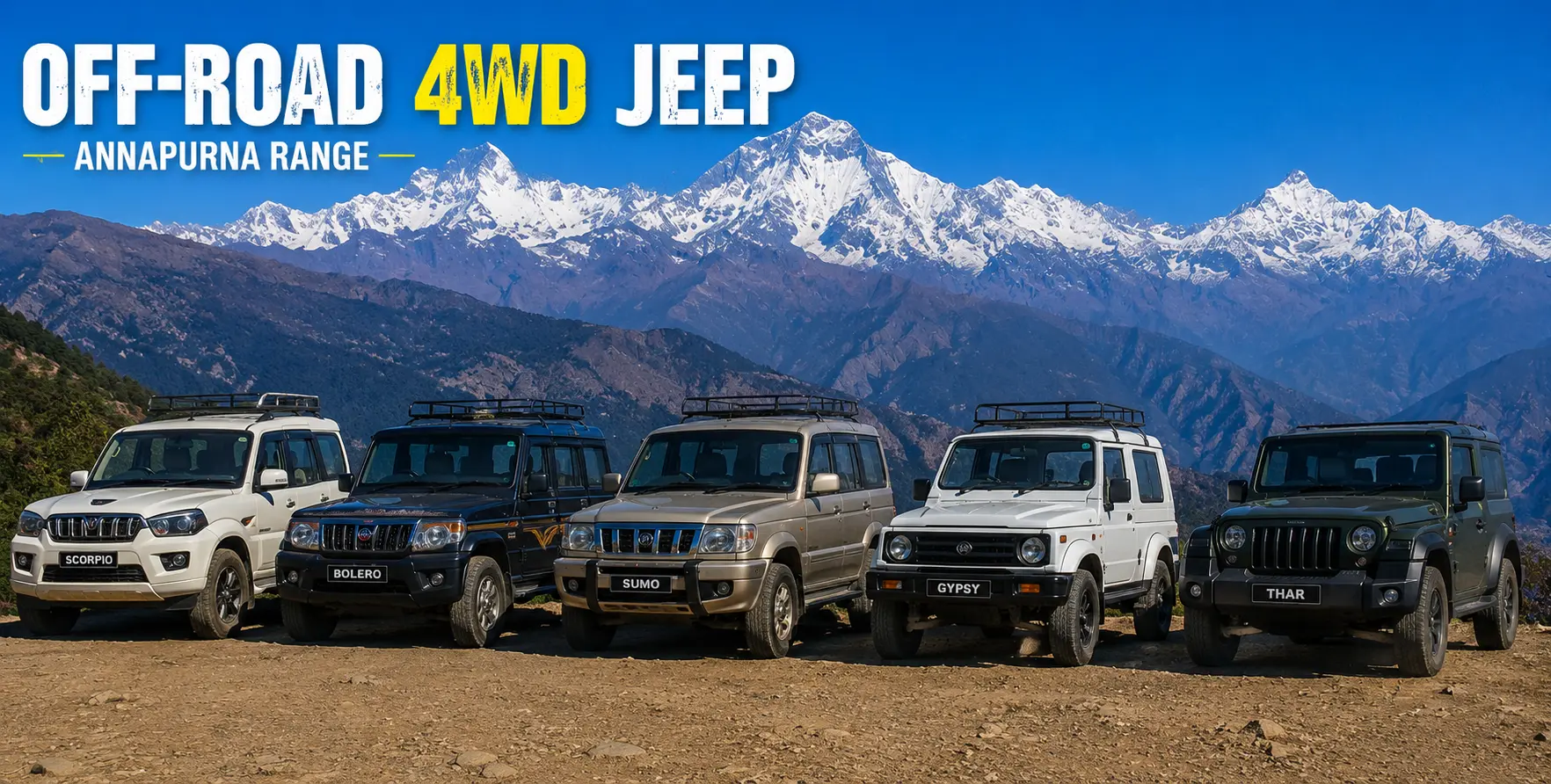
If one theme connects nearly every trek discussed in this guide, it is this: the trailhead keeps moving —and it keeps moving in the same direction, further into the mountains and closer to what used to be the trek’s halfway point. The Annapurna Circuit, historically nicknamed the ‘Apple Pie Trail’ for its once-leisurely teahouse pace through Manang‘s orchards, has been so substantially reshaped by jeep road construction along significant sections of its lower course that a dedicated alternative trail network, the Natural Annapurna Trekking Trails (NATT), has been developed specifically to give walkers a way to avoid sharing the original route with vehicle traffic.
Upper Mustang has undergone an even more dramatic transformation: road expansion has progressed far enough that, by 2026, several experienced Nepal trekking operators will explicitly recommend experiencing the route as a 4WD jeep tour or a combined ‘trek and drive’ itinerary rather than a purely on-foot expedition, a genuinely significant shift for a region once defined by its remoteness and inaccessibility.
This is not a story of trekking being diminished by roads — it is a story of trekking being given new options. The same jeep roads that have changed the character of the lower Annapurna Circuit have also made the Besisahar-to-Manang off-road drive, covered in exhaustive detail in our dedicated guide to that route, one of the country’s most thrilling vehicle-based mountain adventures.
The same road expansion reshaping Upper Mustang has made a historically multi-week trekking expedition achievable for travellers with less time or different physical capabilities, such as a private Land Cruiser journey to Lo Manthang and back. Nepal Vehicle Hiring Pvt Ltd sits at this intersection—providing private 4WD vehicles that let travellers choose, for each region discussed below, how much of the journey they want to walk and how much to drive.
It is worth being clear-eyed about what this shift does and does not mean for the character of any individual trek. A jeep road reaching Manang or Lo Manthang does not eliminate the high-altitude pass crossings, the Sherpa and Tibetan Buddhist cultural encounters, or the dramatic mountain scenery that made these destinations worth visiting in the first place — it simply changes how much of the lower, less dramatic approach a traveller needs to walk to reach them.
For some trekkers, particularly those with limited time or specific physical considerations, this is an unambiguous improvement. For others, particularly those who value the slow, cumulative physical and psychological transition that a full multi-day approach on foot provides, the choice to walk rather than drive the lower sections remains entirely available, and several of the region-specific guides referenced throughout this piece explain exactly how to make that choice deliberately rather than by default.
Everest Base Camp — The Legend, and the Overland Alternative Few Consider
Everest Base Camp remains, by every measure of global recognition, the undisputed champion of Nepal’s trekking trails — a 110-to-16-day journey through the legendary Khumbu, following in the footsteps of Tenzing Norgay and Edmund Hillary’s historic 1953 ascent, past Namche Bazaar, Tengboche Monastery, and a string of Sherpa villages whose Tibetan Buddhist culture and high-altitude hospitality have become inseparable from the trek’s own identity.
The trail’s defining 2026 vehicle-access reality, covered exhaustively in our dedicated Ramechhap Manthali Airport guide, is that the flight to Lukla now frequently departs not from Kathmandu directly but from Ramechhap, requiring a predawn 4- to 5-hour road transfer before the flight itself — making the vehicle leg of this ‘flight-based’ trek a genuinely consequential planning factor rather than an afterthought.
Far fewer trekkers consider the overland alternative: a 17- to 20-day itinerary that travels entirely by road from Kathmandu to Phaplu before beginning the trek on foot, bypassing Lukla and its flight uncertainty altogether, and ascending through the lower Solukhumbu foothills to reach the same high Khumbu trail that flight-based trekkers join much further along the route. For travellers specifically wary of Lukla’s well-documented weather cancellations, or drawn to the idea of a complete overland Everest approach in the spirit of the original 1953 expeditions, this route — and the private vehicle hire to Phaplu or Salleri that begins it — represents one of the most underused vehicle-access options on Nepal’s entire trekking map.
Annapurna Circuit — The Most Varied Trek, Now Half-Drivable
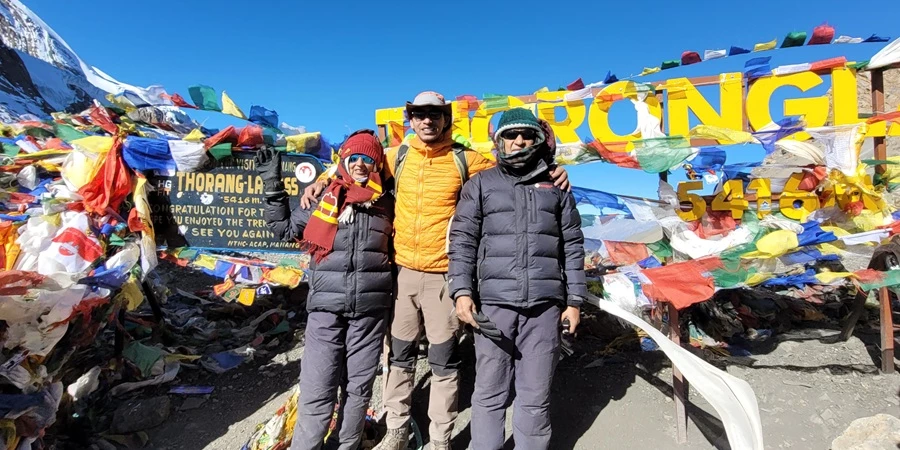
The Annapurna Circuit’s enduring appeal rests on sheer landscape diversity: a single trek that moves from lush subtropical river valleys near Besisahar through Manang’s increasingly Tibetan-influenced high desert, over the demanding Thorong La pass at 5,416 meters, and down into the sacred pilgrimage town of Muktinath and the Kali Gandaki gorge beyond. What has changed most significantly since the route’s classic teahouse-trekking heyday is the extent to which its lower sections are now jeep-accessible — the Besisahar to Manang off-road drive covered in our dedicated guide allows trekkers to cover the circuit’s eastern approach by 4WD jeep over one to two days, dramatically compressing an itinerary that once required the better part of a week’s walking to reach Manang.
This has created two genuinely distinct ways to experience the same circuit: the traditional full teahouse trek, now substantially supplemented by the NATT alternative trail network for walkers who specifically want to avoid jeep traffic on the lower route, and a hybrid jeep-and-trek approach that uses private 4WD hire for the lower approach before switching to foot travel for the high-altitude Thorong La crossing and the descent into Muktinath and the Kali Gandaki valley. Nepal Vehicle Hiring Pvt Ltd’s Scorpio and Hilux fleet serves precisely this hybrid model, and our dedicated off-road jeep Annapurna guide covers every variation of this combined approach in full detail.
Annapurna Base Camp — The Best First Big Trek, and the Easiest to Drive Toward
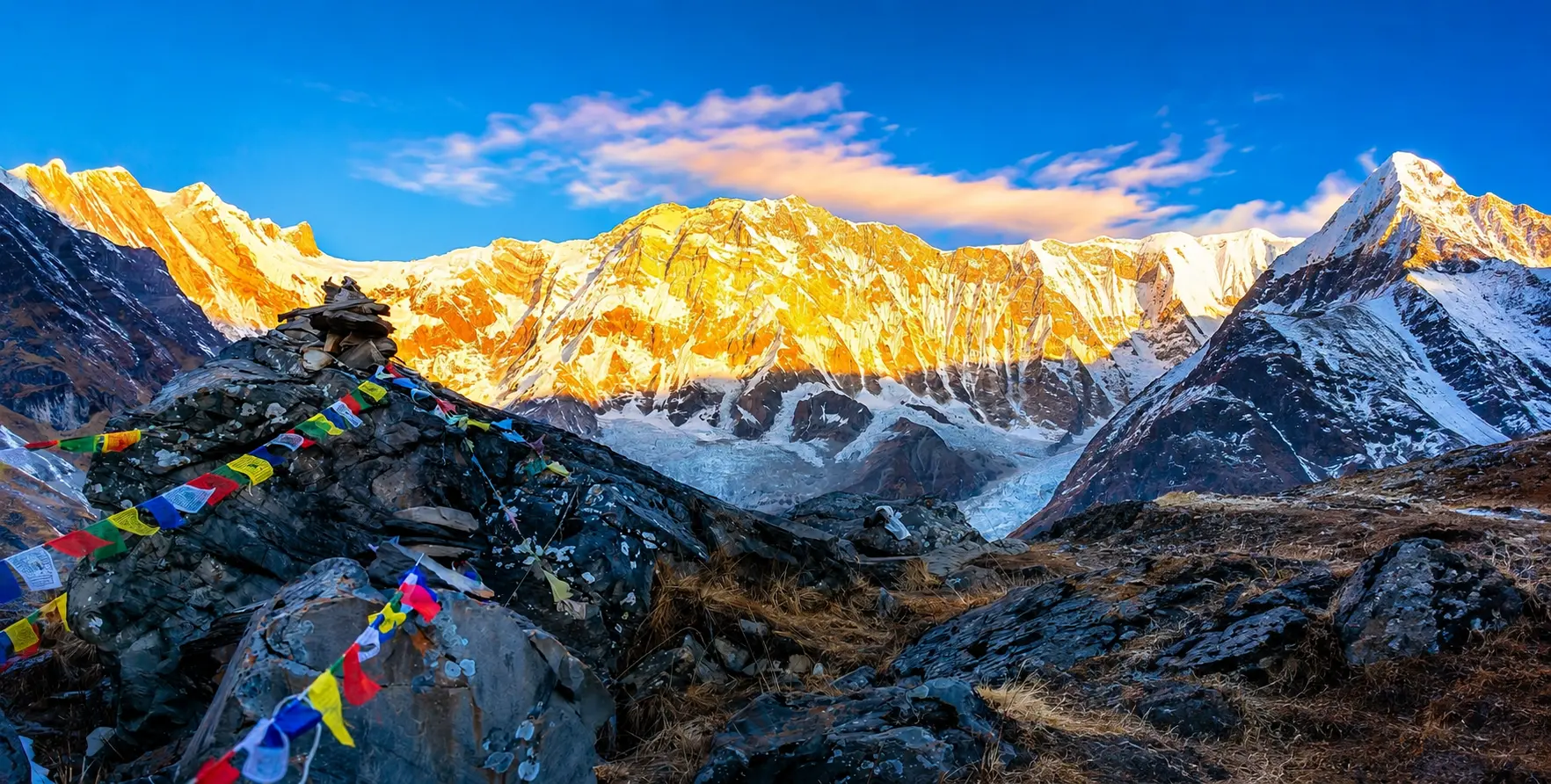
Annapurna Base Camp’s enduring status as the recommended starting point for first-time Himalayan trekkers — discussed at length in our dedicated Annapurna versus Everest Base Camp comparison guide — rests on a combination of moderate altitude (4,130 metres, well below the threshold where serious AMS risk begins), a shorter overall duration of 7 to 12 days, and a trailhead that requires no domestic flight at all, making it logistically simpler to fit around almost any traveller’s schedule. The entire approach to ABC’s trailhead at Nayapul or Jhinu Danda can be completed by private vehicle directly from Pokhara, a journey of 45 minutes to 2 hours, fully covered in our dedicated Pokhara to Annapurna Base Camp route guide.
This complete flight-free accessibility is, in itself, one of ABC’s most underrated advantages from a pure logistics standpoint: a trekker can fly into Kathmandu, reach Pokhara by road or short domestic flight, and be standing at the Annapurna Base Camp trailhead within a single day of private vehicle transfer, with zero dependency on the kind of mountain flight scheduling uncertainty that affects Everest, Manaslu’s Tumlingtar-adjacent extensions, and several other treks discussed in this guide.
Manaslu Circuit — Everest’s Teahouse Comfort, Without Everest’s Crowds
The Manaslu Circuit’s rapid rise in popularity through the mid-2020s reflects a specific and increasingly well-articulated trekker preference: the same teahouse-based comfort and dramatic high-pass crossing that define the Everest and Annapurna experience, delivered through a noticeably quieter trail and a deeper, less commercially developed cultural immersion in the Tibetan Buddhist Nubri and Tsum valleys. As covered in exhaustive detail in our dedicated MCAP permit guide, Manaslu’s defining administrative feature is its unusual three-permit system — RAP, MCAP, and ACAP — a direct consequence of the route’s proximity to the Tibet border and its layered conservation and security regulations.
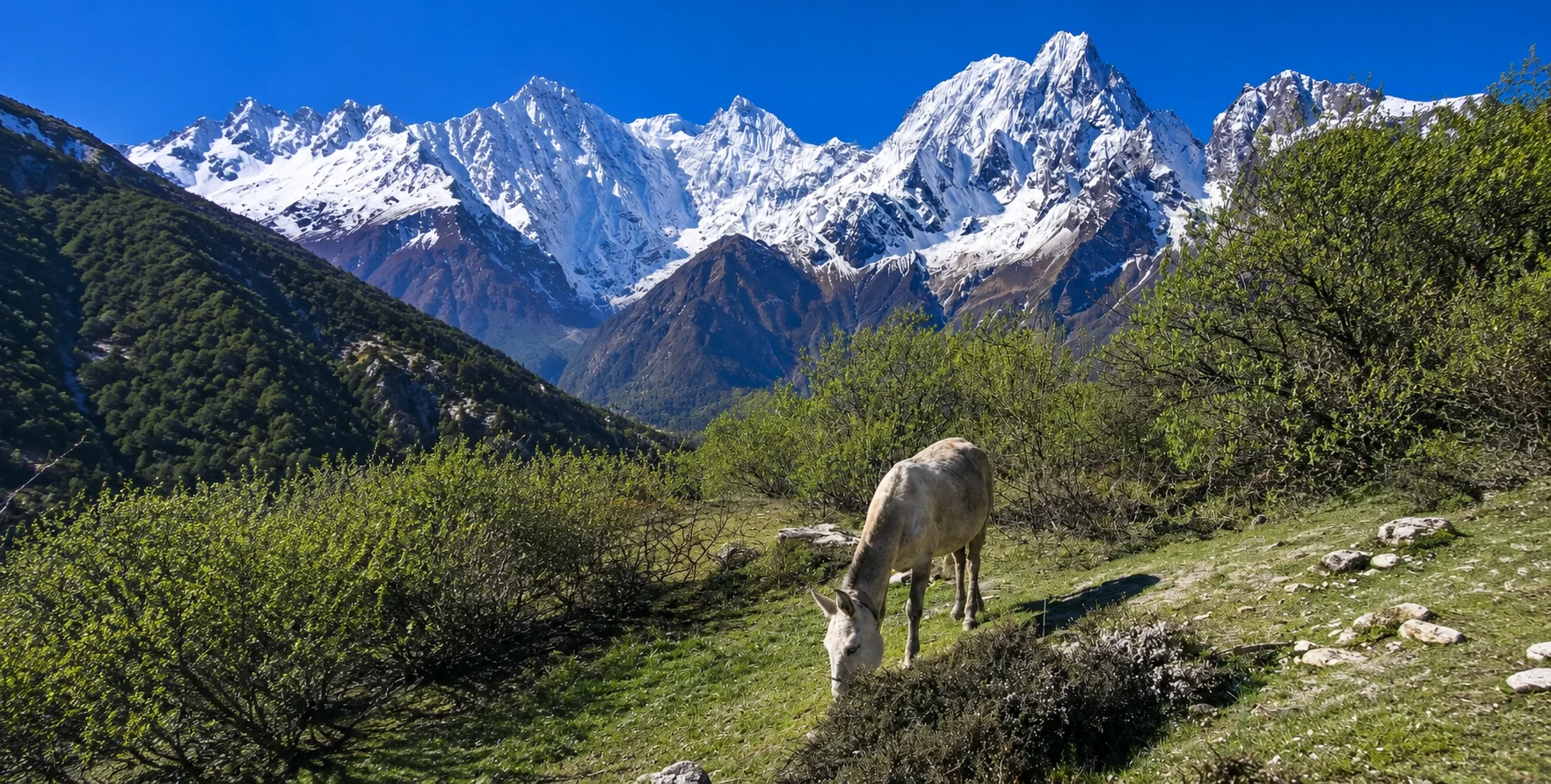
The trek’s vehicle access point, Soti Khola or Machha Khola, is reached by a 7- to 9-hour private 4WD journey from Kathmandu along the Prithvi Highway and Arughat corridor — a transfer Nepal Vehicle Hiring Pvt Ltd provides directly, with the same coordinated outward-and-return booking covering the Dharapani or Besisahar exit point at the circuit’s far end. For trekkers weighing Manaslu against Everest specifically because of crowding, the comparison is often decisive: Manaslu offers comparable high-altitude drama and teahouse infrastructure with a fraction of the foot traffic on the trail itself.
Upper Mustang — The Forbidden Kingdom That Turned Into a Road Trip
No trek in this entire guide illustrates the vehicle-access revolution discussed in Section 2 more dramatically than the Upper Mustang trek. For decades after its 1992 opening to foreign visitors, the walled medieval kingdom of Lo Manthang and the high desert valleys surrounding it were among Nepal’s most demanding, exclusively foot-based, restricted-area trekking experiences.
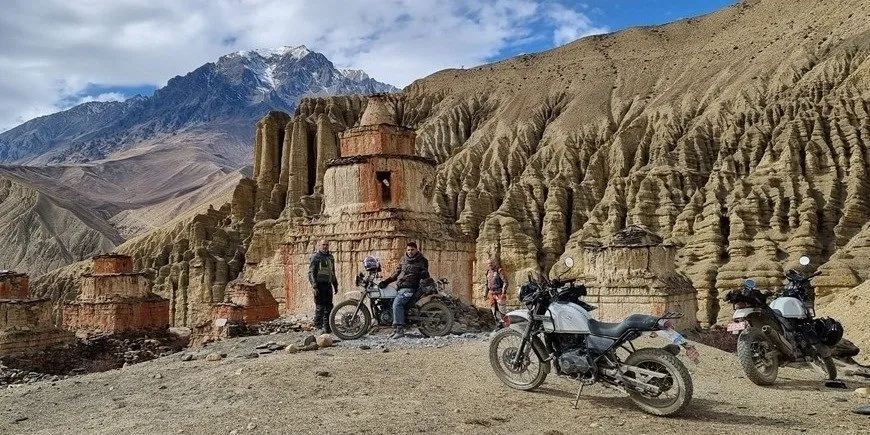
Road construction through the Kali Gandaki valley and beyond Kagbeni has now progressed to the point that, as of 2026, established trekking operators explicitly advise most visitors to experience the route as a 4WD jeep expedition or a combined trek-and-drive itinerary rather than attempting the traditional multi-week walking approach — a recommendation echoed throughout our own dedicated Muktinath Pilgrimage and Mustang Tour guide.
This shift has, if anything, made Upper Mustang more accessible to a broader range of travellers rather than less appealing — older visitors, those with limited holiday time, and anyone drawn to the region’s extraordinary culture and landscape but unable to commit to a full trekking itinerary can now reach Lo Manthang, the sky caves of Chosar, and the ancient Lo Gekar Monastery via a private Toyota Land Cruiser journey from Jomsom, the vehicle of choice given the route’s continued technical demands even with road improvement. Nepal Vehicle Hiring Pvt Ltd’s Land Cruiser fleet is perfectly suited to this expedition.
Langtang Valley — The Closest Major Trek to Kathmandu, and a Story of Genuine Resilience
Langtang Valley‘s defining practical advantage is proximity: at just 7 to 10 days round trip and reachable via a single private 4WD transfer from Kathmandu to Syabrubesi, covered in full in our dedicated Kathmandu to Syabrubesi guide, Langtang delivers a complete, dramatically scenic Himalayan trekking experience — Kyanjin Gompa, the Tserko Ri viewpoint, and close views of Langtang Lirung at 7,227 metres — without the flight dependency or extended time commitment of Everest or Manaslu. The valley’s other defining quality is less practical and more emotional: Langtang village was catastrophically destroyed by an earthquake-triggered avalanche in April 2015, an event that killed a significant proportion of the village’s population and very nearly ended the region’s trekking economy entirely.
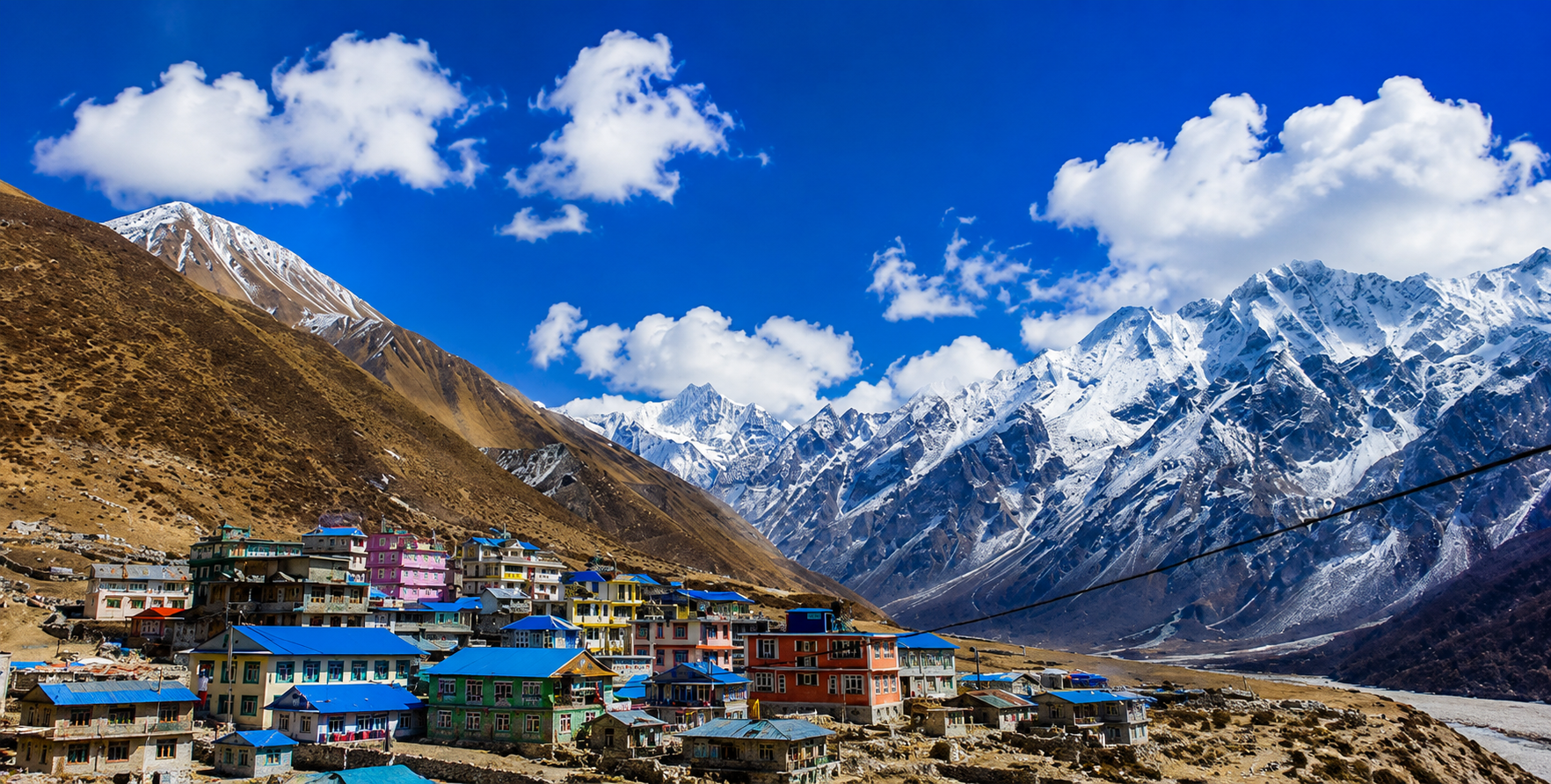
The valley’s subsequent rebuilding — new teahouses, restored trails, and a Tamang and Tibetan Buddhist community that chose to remain and rebuild rather than abandon their ancestral home — has made Langtang as much a trek about human resilience as about mountain scenery, a dimension worth understanding before setting out on what remains, on the surface, one of Nepal’s most accessible and most rewarding short treks.
Gokyo Lakes and the Three Passes — Everest’s Views Without Everest’s Single Trail
For trekkers drawn to the Khumbu’s scenery but wary of the sheer foot traffic the standard Everest Base Camp trail now carries during peak season, the Gokyo Lakes route and its more demanding Three Passes extension (crossing Kongma La, Cho La, and Renjo La) offer essentially the same Everest, Lhotse, Cho Oyu, and Makalu panorama from the Gokyo Ri viewpoint, by most informed accounts at least as spectacular as the classic Kala Patthar view, while sharing the Lukla-bound flight and Ramechhap road transfer logistics already discussed for standard EBC itineraries, but distributing trekkers across a wider network of trails rather than concentrating them on a single corridor. The Three Passes variant, considerably more demanding at 15 to 20 days and requiring genuine high-altitude experience, is generally recommended only for trekkers who have already completed at least one standard teahouse trek.
Ghorepani – Poon Hill and Mardi Himal — The Best Short Treks Near Pokhara
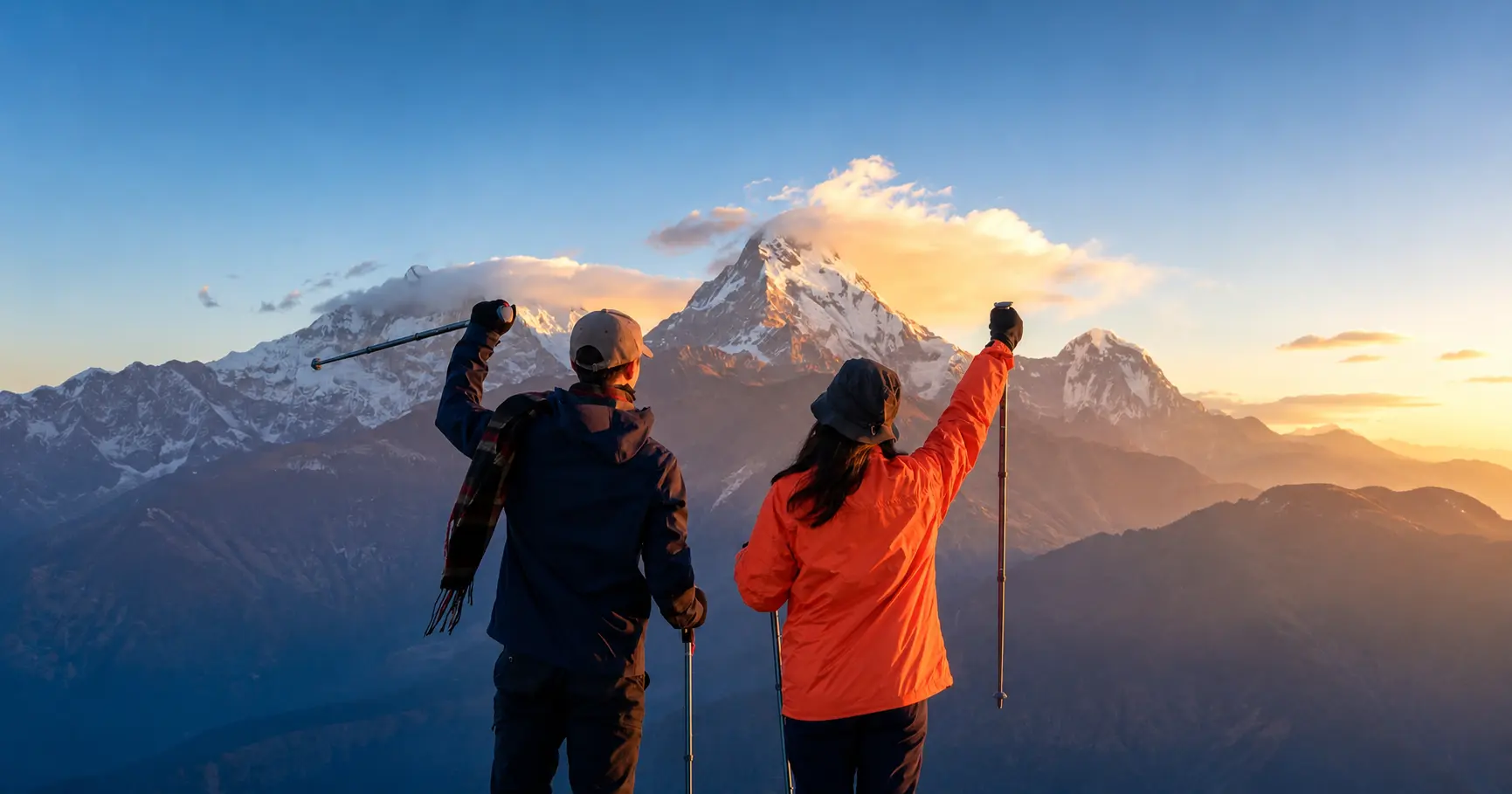
For travellers with a week or less, Nepal’s two outstanding short-trek options both begin with a private vehicle transfer from Pokhara rather than any flight. Ghorepani-Poon Hill, at 4 to 6 days and reaching only 3,210 metres, remains the country’s most popular short trek specifically because of its sunrise panorama over Dhaulagiri and the Annapurna range — a view Sir Edmund Hillary himself is widely reported to have named among his personal favourites in the entire Himalaya — though its popularity means genuine crowding during peak season, leading several operators to recommend now overnighting at the quieter neighbouring village of Tadapani rather than Ghorepani itself. Mardi Himal, reached via a private jeep transfer to the Kande trailhead covered in our dedicated guide, offers a comparably rewarding but considerably quieter alternative, climbing to a Base Camp viewpoint at approximately 4,500 meters with close, intimate views of Machhapuchhre that rival anything on the more crowded Poon Hill trail.
Kanchenjunga, Makalu, and Rolwaling — Nepal’s Genuine Wilderness Frontier
For trekkers who have completed Nepal’s classic routes and are specifically seeking the kind of remoteness those routes can no longer offer, three far-flung regions remain — by any honest measure — genuinely wild. The Kanchenjunga Base Camp trek, opened to foreign visitors only in 1988 and reaching the foot of the world’s third-highest mountain at 8,586 meters, takes 18 to 26 days through Limbu, Rai, and Sherpa villages in Nepal’s remote far east, accessed via a flight-and-jeep combination through Taplejung that this guide’s wider series on eastern Nepal transport covers in adjacent detail. The Makalu Base Camp trek, approached via Tumlingtar as covered in our dedicated guide, reaches the foot of the world’s fifth-highest peak via the sparse, largely camping-based trail network of the Makalu Barun National Park.
The Rolwaling Valley occupies a genuinely distinctive place in this list. Once a popular international trekking destination, the route fell into years of neglect during Nepal’s decade-long internal conflict from the mid-1990s to the mid-2000s, as trekking infrastructure deteriorated and visitor numbers collapsed. A recent and still-building revival, driven substantially by domestic Nepali tourism rather than international arrivals, has begun restoring the valley’s trails and its access via Charikot — reachable by private 4WD jeep from Kathmandu — making Rolwaling one of the more compelling ‘comeback’ stories in Nepali trekking, and a region likely to feature far more prominently in trekking guides written five years from now than it does in most published today.
Season-by-Season — When Each Trek Is at Its Best
Nepal’s two recognised trekking seasons — autumn, running roughly from mid-September to early December, and spring, running from March to mid-June — apply broadly across every trek in this guide. Still, the specific reasons each season suits a particular region vary enough to deserve individual treatment rather than a single blanket recommendation. Autumn is, without serious dispute, the single best season for the Everest region specifically: the post-monsoon atmosphere delivers the crystal-clear visibility that makes the Kala Patthar and Gokyo Ri viewpoints worth the journey, and this is also the season when mountaineering expeditions are visibly preparing at Everest Base Camp itself, adding a layer of genuine atmosphere that spring, while still excellent, cannot quite replicate.
Spring carries the opposite advantage for the Annapurna region specifically: the rhododendron forests lining the lower approaches to Ghorepani, Poon Hill, and the broader Annapurna Circuit’s southern flank burst into vivid bloom across March and April, transforming what is already one of Nepal’s most scenic trekking corridors into something considerably more vivid still. Manaslu and Upper Mustang both perform well in either season. However, Manaslu’s restricted-area permit pricing structure, detailed in our dedicated MCAP guide, creates genuine cost differences between peak autumn departures and the cheaper December-to-August window. This consideration can meaningfully influence timing decisions for budget-conscious trekkers willing to sacrifice some weather reliability for real savings. Kanchenjunga and Makalu, given their far-eastern location and correspondingly different monsoon exposure patterns, are most reliably trekked in the same autumn and spring windows as the rest of the country. However, their already low visitor volumes mean the practical difference between ‘busy’ and ‘quiet’ seasons barely registers compared to the dramatic crowd swings visible on the most popular sections of Everest and Annapurna.
The Real Cost Picture — Comparing What Each Trek Actually Costs to Reach
Trekking cost comparisons published elsewhere typically focus on guide fees, permit costs, and teahouse pricing—all genuinely important and covered in detail across our region-specific guides—but rarely give proper weight to the vehicle transport cost that begins and ends every itinerary in this guide. This cost varies dramatically by region, and directly affects the trekker’s total budget. Annapurna Base Camp and Ghorepani-Poon Hill have the lowest vehicle costs of any major trek in this guide, since both are reached by a short private jeep transfer from Pokhara that costs a few thousand Nepali rupees, with no flight involved at any stage. Everest Base Camp and its Gokyo and Three Passes variants, by contrast, carry the highest vehicle-related cost of the group, driven overwhelmingly by the round-trip Lukla flight — frequently exceeding the cost of an entire week of teahouse food and accommodation on the trail itself, as our dedicated Annapurna versus Everest Base Camp comparison guide explores in detail.
Manaslu and Upper Mustang occupy a middle ground; both require a longer private 4WD transfer than Annapurna’s short Pokhara hop. Still, neither depends on an expensive domestic flight alikeEverest does, making their total vehicle cost meaningfully lower than EBC’s despite the longer driving distances. Kanchenjunga and Makalu, given their genuine remoteness, typically combine a domestic flight to a regional airstrip (Taplejung or Tumlingtar, respectively) with a further local jeep transfer, placing their total transport cost closer to Everest’s than to Annapurna’s, a factor worth weighing carefully against these treks’ otherwise considerable appeal for experienced trekkers seeking genuine wilderness.
Combining Treks — Building a Complete Nepal Itinerary
Few visitors to Nepal complete a single trek in a single visit, and the vehicle-access patterns discussed throughout this guide offer several efficient ways to combine multiple regions into a single extended itinerary without excessive backtracking. The most common and most logistically sensible combination pairs Annapurna Base Camp or the Annapurna Circuit with a Pokhara-based rest period and an onward private vehicle transfer to Chitwan National Park for a wildlife safari — a combination covered in our dedicated Muktinath, Chitwan, and Pokhara circuit guide, and one that requires no flights at all if approached via the Beni-Pokhara-Chitwan road corridor.
A second efficient combination pairs the Annapurna Circuit with its Muktinath and Upper Mustang extension, using the same Jomsom-based vehicle infrastructure for both the high pass crossing and the jeep-based Mustang expedition — effectively turning two of this guide’s entries into a single extended western Nepal itinerary reachable through one continuous private vehicle relationship rather than two separate bookings. For travellers with sufficient time, a third combination pairs Everest Base Camp or its Gokyo variant with the lower-altitude Pikey Peak trek covered in our dedicated guide, using the shared Ramechhap Manthali Airport corridor to link both itineraries efficiently, or combining Everest with the historic Jiri-to-Phaplu overland approach discussed in Section 3 above as a way to see both the modern flight-based and the traditional overland faces of Everest trekking history in a single extended visit.
Altitude and Safety — How the Treks in This Guide Actually Compare
Beyond the duration and scenery comparisons already covered, the treks in this guide differ meaningfully in their actual altitude-sickness risk profiles. This factor should weigh as heavily in trek selection as personal fitness or available holiday time. Annapurna Base Camp, Ghorepani-Poon Hill, and Mardi Himal all top out below 4,600 metres, placing them in a meaningfully lower AMS risk category than Everest Base Camp, the Annapurna Circuit’s Thorong La crossing, Manaslu’s Larkya La, and Upper Mustang’s high desert plateau, all of which exceed 5,000 metres at their highest points and require the kind of disciplined acclimatisation schedule discussed at length in our dedicated Muktinath altitude health guide.
Kanchenjunga and Makalu, despite their remoteness rather than their altitude being the primary draw, also reach altitudes in this higher-risk category, while typically offering less developed medical and rescue infrastructure than the comparable high points on Everest or Annapurna, given the considerably lower visitor volume these regions receive. This combination of high altitude and thin rescue infrastructure is precisely why this guide, consistent with every other altitude-related guide in our wider series, treats a licensed guide’s altitude monitoring role as a genuine safety function rather than a bureaucratic formality — a point worth holding in mind regardless of which of this guide’s recommended treks ultimately matches your own ambitions.
Teahouse Comfort or Camping Self-Sufficiency — A Distinction That Matters More Than Difficulty Ratings
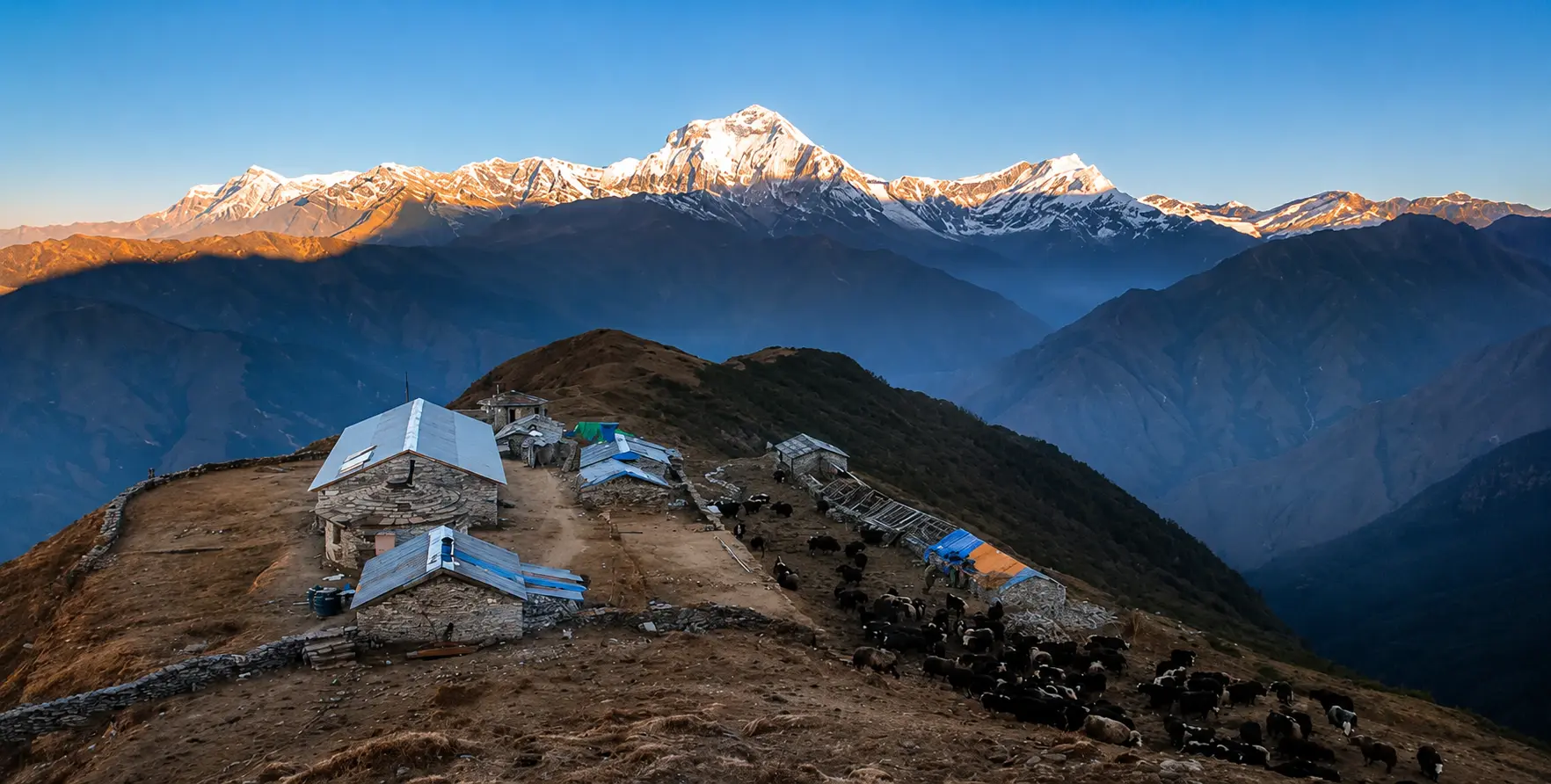
Most published trek comparisons rank difficulty by altitude and duration alone, but a more practically important distinction fortravellers islersis whether a given route can be walked lodge-to-lodge, with a hot meal and a private room guaranteed at the end of each day, or whether it requires a full camping setup with tents, a cooking crew, and porters carrying kitchen equipment. Everest Base Camp, the Annapurna Circuit, Annapurna Base Camp, Manaslu, Langtang, and the Gokyo and Three Passes routes all benefit from genuinely well-developed teahouse networks, an infrastructure built up over decades of sustained trekking traffic that makes these six routes accessible to a far broader range of travellers than their altitude statistics alone might suggest.
Kanchenjunga, Makalu, and — for much of its route — Rolwaling sit on the opposite end of this spectrum. Teahouse coverage along these three routes remains sparse, inconsistent, or,r in Rolwaling’s case,se still actively recovering from the conflict-era infrastructure collapse discussed in Section 11, meaning most properly organised itineraries to these destinations are run substantially as camping expeditions, with the corresponding increase in required equipment, crew size, and advance logistical planning that this entails. This single factor — teahouse availability rather than altitude or distance — is, in practice, the most reliable predictor of whether a given trek in this guide suits a first-time Himalayan visitor or specifically requires prior high-altitude camping experience. It deserves at least as much weight in trek selection as the headline difficulty ratings most comparison guides lead with.
The Trekking Experience — Luxury Lodges, Starlink, and What’s Actually Changed on the Trail
Beyond the permit regulations and vehicle access shifts already discussed at length, the lived experience of trekking Nepal’s major routes has changed in several smaller but genuinely noticeable ways as we head into 2026. A meaningful luxury trekking trend has taken hold specifically on the Everest Base Camp trail, where a growing number of upgraded lodges in Namche Bazaar and other larger Khumbu settlements now offer amenities — electric blankets, proper espresso machines, considerably improved private rooms — that would have been unimaginable on this trail even a decade ago, allowing trekkers to combine a genuinely demanding high-altitude challenge with a level of evening comfort previously associated only with much lower-altitude destinations.
Connectivity has changed just as much as satellite internet services are steadily expanding into high-altitude lodges across several routes in this guide, meaning trekkers can now expect at least intermittent internet access at stops where, a few years ago, complete digital disconnection was the norm. This connectivity is not free — WiFi access typically costs a few dollars per use at remote lodges, and charging a phone or camera battery can cost a comparable amount per charge, a real budget line item worth planning for on longer itineraries. None of this changes the fundamental physical and altitude challenge that any of these treks present. Still, it does mean that the popular image of Himalayan trekking as a journey of total disconnection from the modern world is, for an increasing number of routes and lodges, no longer entirely accurate — a development some experienced trekkers welcome. Others specifically seek to avoid it by choosing the quieter, less-developed alternatives discussed throughout this guide.
The Conservation Areas Behind Every Trek in This Guide
Every major trek discussed in this guide passes through a protected area whose governance history is worth understanding, as it directly shapes the permit requirements, guide mandates, and visitor experience each route offers today. The Annapurna Conservation Area, established in 1986 as Nepal’s first and largest protected area and explored in exhaustive detail in our dedicated feature, pioneered the community-based conservation model that the National Trust for Nature Conservation later extended to Manaslu, creating the layered RAP-MCAP-ACAP system covered in our MCAP permit guide. Sagarmatha National Park, established in 1976 specifically to protect the Everest region, predates Annapurna’s conservation area by a decade and operates under a more traditional national park structure rather than the community-managed model Annapurna pioneered — part of the reason, as noted in Section 13, that the Khumbu has at times applied permit and guide arrangements slightly distinct from the rest of the country.
Langtang National Park, Nepal’s fourth protected area, extends its boundaries eastward from the main Langtang valley to encompass the Panch Pokhari sacred lake region covered in our dedicated deep-dive guide, while the Kanchenjunga Conservation Area, established considerably later than Annapurna or Sagarmatha, reflects Nepal’s more recent conservation thinking applied to one of its most ecologically pristine and least-visited corners — a sanctuary, as discussed earlier in this guide, for snow leopard and red panda populations alongside the relatively undisturbed Limbu, Rai, and Sherpa communities who call the region home. Understanding this institutional backdrop — which conservation model governs which trek, and why — transforms what can otherwise feel like an arbitrary patchwork of permits and fees into a coherent picture of how Nepal has, region by region and decade by decade, worked out its own answer to the challenge of protecting extraordinary landscapes while keeping them open to the travellers, like you, who hope to walk through them.
The Decision Matrix — Matching Yourself to the Right Trek
| If You Want… | Choose This Trek |
| Maximum global prestige and Sherpa culture | Everest Base Camp |
| The single most varied landscape in one trek | Annapurna Circuit |
| A shorter, gentler first major trek | Annapurna Base Camp |
| Everest-grade scenery with far fewer people | Manaslu Circuit |
| A trek you can now substantially complete by jeep | Upper Mustang |
| The closest big mountains to Kathmandu | Langtang Valley |
| Everest’s views without Everest’s crowds | Gokyo Lakes / Three Passes |
| A perfect long weekend in the mountains | Ghorepani – Poon Hill |
| A quiet, short, close-to-Pokhara alternative | Mardi Himal |
| True wilderness and almost no other trekkers | Kanchenjunga Base Camp |
| A remote eighth-highest-peak adventure | Makalu Base Camp |
| A historic trail is being revived after years of neglect | Rolwaling Valley |
Permits and the Guide Mandate — A Region-by-Region Reality Check
| Region | Core Permits Required | 2026 Guide Rule |
| Everest / Sagarmatha | Sagarmatha NP permit + TIMS (or local Khumbu permit) | Mandatory nationally; Khumbu has at times applied its own local permit system alongside it |
| Annapurna | ACAP + TIMS | Mandatory — solo unguided trekking not permitted |
| Manaslu | RAP + MCAP + ACAP (if crossing Larkya La) | Mandatory regardless of group size, even after the 2026 solo-permit rule change |
| Upper Mustang | ACAP + Upper Mustang Restricted Area Permit | Mandatory licensed guide, plus restricted-area entry conditions |
| Langtang | Langtang NP permit + TIMS | Mandatory |
| Kanchenjunga | Kanchenjunga Conservation Area permit + restricted area permit | Mandatory |
The single most important regulatory fact for any 2026 Nepal trek, covered in detail across several of our region-specific guides, is that independent solo trekking without a licensed guide is no longer broadly permitted across Nepal’s major conservation areas and restricted zones. One nuance worth understanding: the Khumbu region has, at various points, applied its own local permit and guide arrangement alongside the national framework — a reminder that the specific mechanism of guide enforcement can vary meaningfully by region even where the underlying mandate is consistent. Whichever trek you choose from this guide, budget for a licensed guide as a non-negotiable line item, and confirm the current specific permit and guide arrangement for your chosen region with a registered trekking agency before finalising your itinerary.
Quick Reference — Every Trek in This Guide at a Glance
| Trek | Max Altitude | Duration | Best For | Vehicle Access Point |
| Everest Base Camp | 5,364 m | 10–16 days | The legendary classic | Ramechhap Manthali Airport (or overland via Jiri/Phaplu) |
| Annapurna Circuit | 5,416 m (Thorong La) | 12–18 days | Diversity of landscape and culture | Besisahar (4WD jeep beyond) and Jomsom/Muktinath |
| Annapurna Base Camp | 4,130 m | 7–12 days | Best first big trek | Pokhara to Nayapul / Jhinu Danda |
| Manaslu Circuit | 5,160 m (Larkya La) | 12–18 days | Teahouse comfort without the crowds | Soti Khola / Machha Khola (4WD jeep) |
| Upper Mustang | 3,840 m (Lo Manthang) | 8–12 days (or jeep tour) | The Forbidden Kingdom, now drivable | Jomsom to Lo Manthang — 4WD/Land Cruiser |
| Langtang Valley | 4,984 m (Tserko Ri) | 7–10 days | Closest major trek to Kathmandu | Syabrubesi (4WD jeep) |
| Gokyo Lakes / Three Passes | 5,545 m (Kala Patthar) / 5,420 m (Cho La) | 15–20 days | Everest without the single-trail crowds | Ramechhap Manthali Airport |
| Ghorepani – Poon Hill | 3,210 m | 4–6 days | Best short classic | Pokhara to Nayapul or Ulleri |
| Mardi Himal | 4,500 m (Base Camp) | 5–7 days | Quiet alternative near Pokhara | Pokhara to Kande |
| Kanchenjunga Base Camp | 5,143 m (Pang Pema) | 18–26 days | Far-eastern wilderness | Taplejung (flight + jeep) |
| Makalu Base Camp | 5,000 m+ | 16–20 days | Remote eighth-highest peak | Tumlingtar (flight or overland jeep) |
| Rolwaling Valley | 5,755 m (Tashi Lapcha) | 12–16 days | The trek is making a comeback | Charikot (4WD jeep) |
Why Vehicle Hire Is the Hidden Key to Every Great Nepal Trek
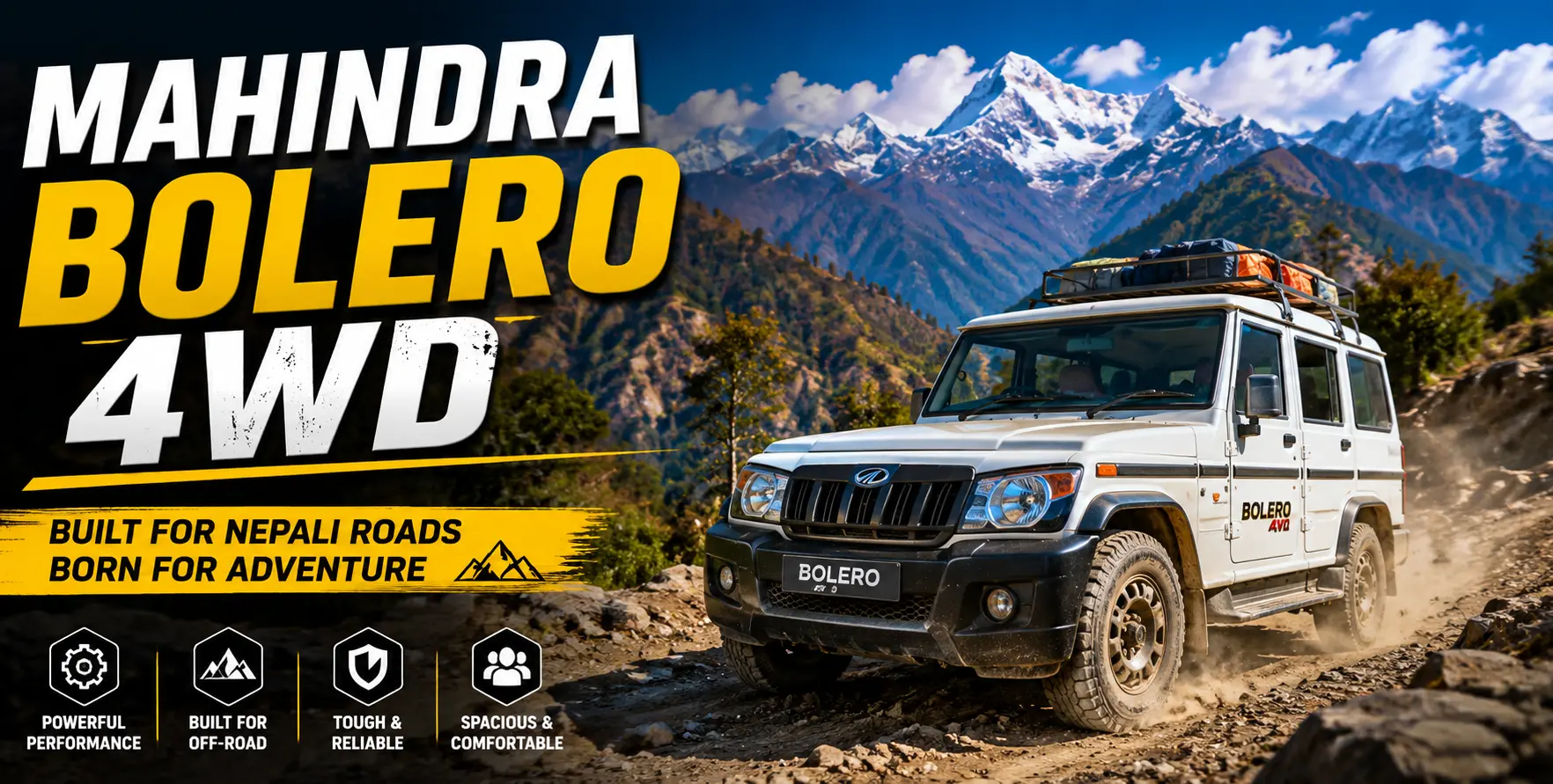
Every trek discussed in this guide begins, in practice, with a vehicle — whether that is a 45-minute private jeep ride from Pokhara to the Annapurna Base Camp trailhead, a predawn road transfer to Ramechhap before a Lukla flight, a multi-day 4WD expedition deep into the Marsyangdi gorge toward Manang, or an entire jeep-based substitute for what used to be a multi-week walk into Upper Mustang.
As our companion deep-dive into Nepal vehicle rental explores at length, the country’s vehicle hire industry has spent seventy years of road-building history, regulatory development, and — increasingly — electric vehicle adoption building toward exactly this role: the connective infrastructure that makes every one of the treks in this guide actually reachable, and that will continue reshaping, year after year, which of these journeys can be driven and which still demand to be walked.
Choosing the right trek, according to the framework this guide has set out, is therefore inseparable from choosing the right vehicle and driver to get you there. Nepal Vehicle Hiring Pvt Ltd’s fleet — sedans for Pokhara and Kathmandu trailhead transfers, Scorpios and Hilux 4WDs for off-road approaches to Besisahar, Soti Khola, and Syabrubesi, and Land Cruisers for the demanding Upper Mustang expedition route — is built specifically to match this complete spectrum of Nepal’s best treks, region by region, season by season, and trailhead by trailhead.
Why Choose Nepal Vehicle Hiring Pvt Ltd
- Complete Trailhead Coverage: From Pokhara’s Annapurna trailheads to Ramechhap’s predawn Lukla transfers, Besisahar’s off-road gorge drive, Soti Khola’s Manaslu approach, and Jomsom’s Upper Mustang expedition route — every trek in this guide, one trusted operator.
- Route-Specific 4WD Expertise: Our drivers bring the accumulated, trek-specific road knowledge that distinguishes a safe mountain transfer from a risky one.
- Coordinated Outward-and-Return Booking: Arrange both legs of any trek’s vehicle logistics—outward to the trailhead and return from wherever your itinerary concludes—in a single reservation.
- Transparent All-Inclusive Pricing: Every quote includes the driverEvery quote includes the driver, fuel, and tolls for every trek and region in this guide.
- 24/7 WhatsApp Booking: Whichever trek from this list you choose, reach us at +977-9814227196 to plan the vehicle leg alongside your permits and guide.
Frequently Asked Questions — Best Treks in Nepal
What is the best trek in Nepal for a first-time visitor?
Annapurna Base Camp is generally the best first major trek — moderate altitude (4,130 m), no flight required to reach the trailhead from Pokhara, and a 7 to 12-day duration that fits most holiday schedules. Ghorepani-Poon Hill is an even shorter alternative at 4 to 6 days.
Which trek offers Everest-quality views with fewer crowds?
The Manaslu Circuit and the Gokyo Lakes route (an alternative within the Everest region itself) both offer comparably dramatic high-altitude scenery with significantly less foot traffic than the standard Everest Base Camp trail.
Can Upper Mustang really be done by vehicle now?
Yes — road expansion through the Kali Gandaki valley has progressed far enough that most 2026 itineraries to Lo Manthang are now completed substantially or entirely by private 4WD jeep or Land Cruiser, rather than the traditional multi-week walking approach historically required.
Is a guide mandatory for all these treks?
Yes, for virtually every region covered in this guide. Independent solo trekking without a licensed guide is not broadly permitted in Nepal’s major conservation areas and restricted zones, including Everest, Annapurna, Manaslu, Upper Mustang, Langtang, and Kanchenjunga.
Which trek is best for someone who has already done Everest and Annapurna?
Kanchenjunga Base Camp, Makalu Base Camp, and the Rolwaling Valley offer genuinely remote, far less commercially developed alternatives for experienced trekkers seeking true wilderness beyond Nepal’s classic routes.
Conclusion
Sixty years after Jimmy Roberts organised Nepal’s first commercial trek, the question facing today’s traveller is no longer which mountain to walk toward — it is also how far a private vehicle can now carry you before the walking even begins, and how that changing balance between road and trail can be turned to your own advantage. Whether your choice from this guide is Everest’s legendary Khumbu, Manaslu’s quieter teahouse comfort, or Upper Mustang’s newly drivable Forbidden Kingdom, Nepal Vehicle Hiring Pvt Ltd is ready to provide the vehicle, the driver, and the route knowledge that gets you to wherever your own best trek in Nepal actually begins.
There is no single correct answer among the thirteen treks surveyed in this guide — only the answer that best matches your own time, fitness, budget, and appetite for crowds versus solitude. What this guide has tried to offer, beyond the standard altitude tables and difficulty ratings published everywhere else, is the deeper context that actually explains why each of these routes looks the way it does today: a sixty-year trekking history, a conservation and permit architecture still actively evolving region by region, and a vehicle access revolution that continues, year after year, to redraw the line between where the road ends and where the real adventure begins.
Book your trek transport — Call or WhatsApp:+977-9814227196
E-mail: [email protected]
- The Ultimate Best Treks in Nepal — and the Vehicle Hire That Gets You There
- A Short History of How Nepal's Trekking Industry Actually Began.
- The Vehicle Revolution That Is Quietly Reshaping Every Major Trek
- Everest Base Camp — The Legend, and the Overland Alternative Few Consider
- Annapurna Circuit — The Most Varied Trek, Now Half-Drivable
- Annapurna Base Camp — The Best First Big Trek, and the Easiest to Drive Toward
- Manaslu Circuit — Everest's Teahouse Comfort, Without Everest's Crowds
- Upper Mustang — The Forbidden Kingdom That Turned Into a Road Trip
- Langtang Valley — The Closest Major Trek to Kathmandu, and a Story of Genuine Resilience
- Gokyo Lakes and the Three Passes — Everest's Views Without Everest's Single Trail
- Ghorepani – Poon Hill and Mardi Himal — The Best Short Treks Near Pokhara
- Kanchenjunga, Makalu, and Rolwaling — Nepal's Genuine Wilderness Frontier
- Season-by-Season — When Each Trek Is at Its Best
- The Real Cost Picture — Comparing What Each Trek Actually Costs to Reach
- Combining Treks — Building a Complete Nepal Itinerary
- Altitude and Safety — How the Treks in This Guide Actually Compare
- Teahouse Comfort or Camping Self-Sufficiency — A Distinction That Matters More Than Difficulty Ratings
- The Trekking Experience — Luxury Lodges, Starlink, and What's Actually Changed on the Trail
- The Conservation Areas Behind Every Trek in This Guide
- The Decision Matrix — Matching Yourself to the Right Trek
- Permits and the Guide Mandate — A Region-by-Region Reality Check
- Quick Reference — Every Trek in This Guide at a Glance
- Why Vehicle Hire Is the Hidden Key to Every Great Nepal Trek
- Why Choose Nepal Vehicle Hiring Pvt Ltd
- Frequently Asked Questions — Best Treks in Nepal
- Conclusion

Related Blog & Articles
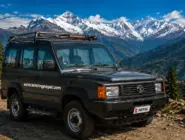
ACAP Permit – The Annapurna Conservation Area Entry Pass: Complete Guide
All Over Nepal Vehicle Hire – Private Car, Scorpio, 4WD Jeep, Hiace And Tourist Bus
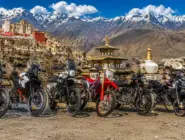
Adventure Bike Hire in Nepal: The Complete Guide to Motorcycle Rentals
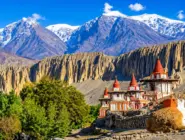
Annapurna Conservation Area