Pokhara to Jhinu Danda Jeep Rental

Jhinu Danda to Pokhara Jeep

Pokhara to Jhinu Danda Jeep Rental: Complete Guide to Cost, Route & Tips

Jhinu Danda is one of the most rewarding destinations in Nepal’s Annapurna region. Perched at approximately 1,760 meters above sea level on a hillside above the Modi Khola river valley, this charming village is celebrated throughout the trekking world for two things: its famous natural geothermal hot springs on the banks of the Modi River, and its position as a key stopping point on the Annapurna Base Camp Trek route between Chhomrong and Nayapul.

For trekkers beginning or ending the ABC Trek, for pilgrims visiting the Annapurna region, and for travellers simply seeking the relaxation of natural hot springs in a Himalayan setting, the journey from Pokhara to Jhinu Danda begins with one essential decision: what vehicle to hire and how to get there efficiently, comfortably, and affordably.

At Nepal Vehicle Hiring Pvt Ltd, we specialise in professional jeep rental services from Pokhara to Jhinu Danda. This comprehensive 2026 guide covers everything you need — the route, the costs, the vehicle options, the road conditions, the hot springs, and the expert tips that make the difference between a stressful journey and a perfect start to your Annapurna adventure.

About Jhinu Danda – The Hot Spring Village of the Annapurna Region

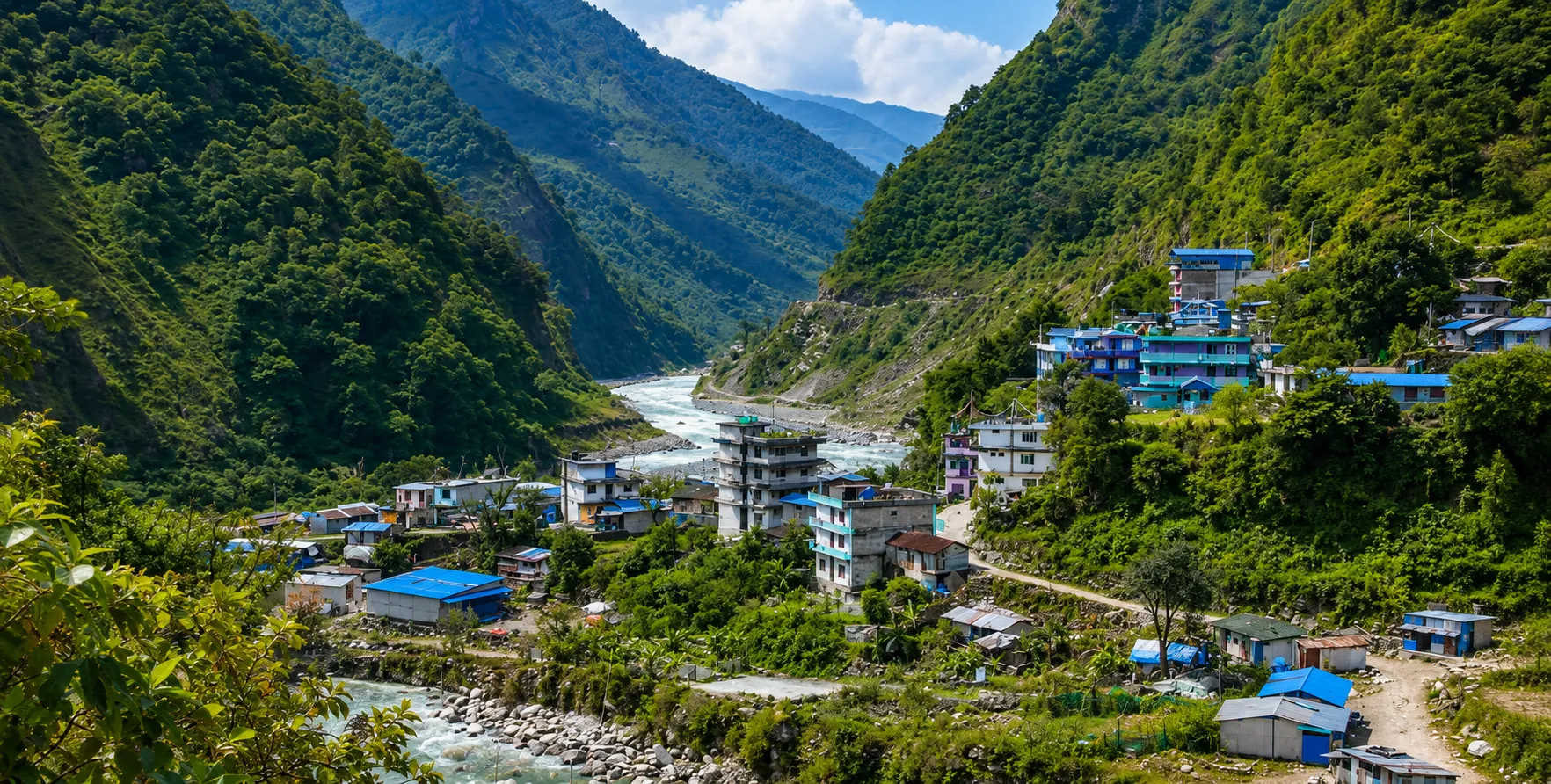
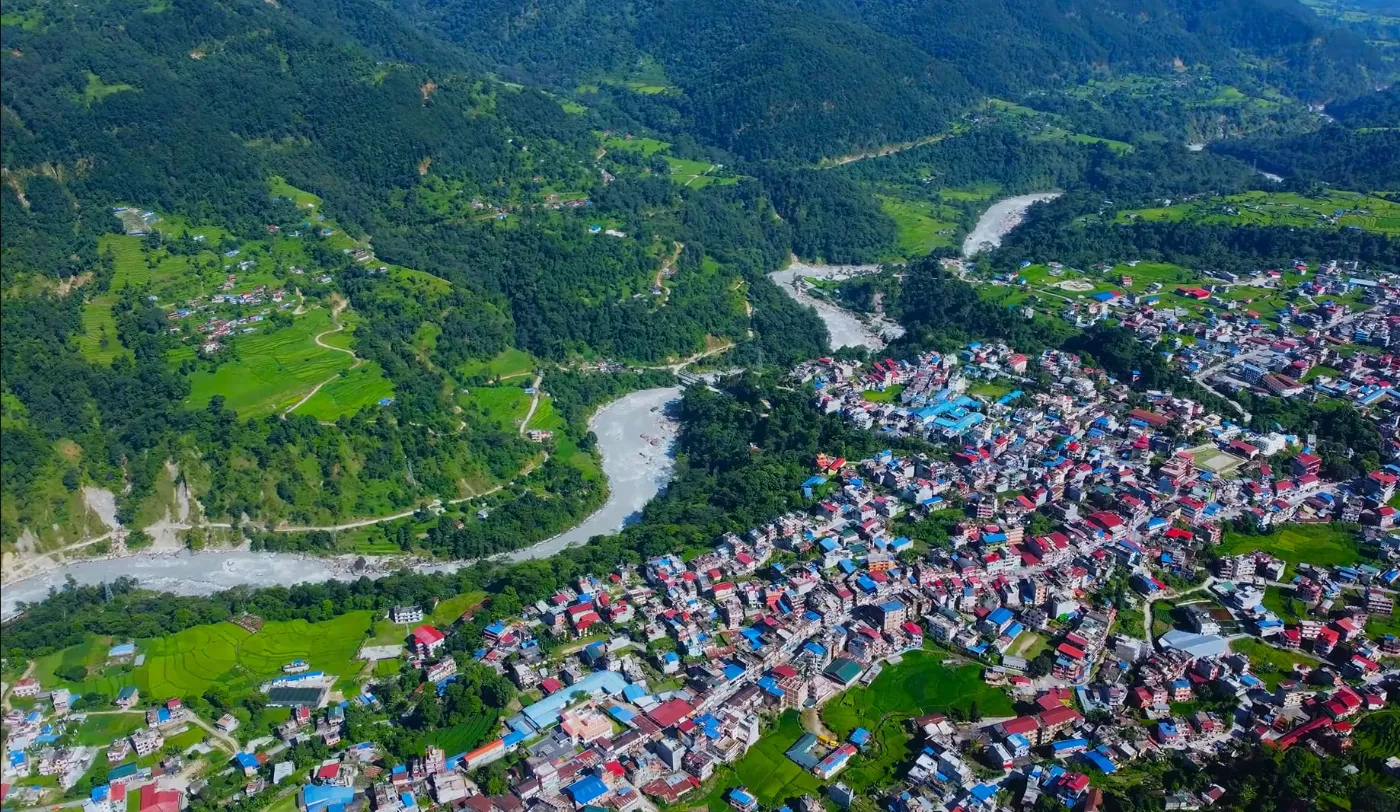
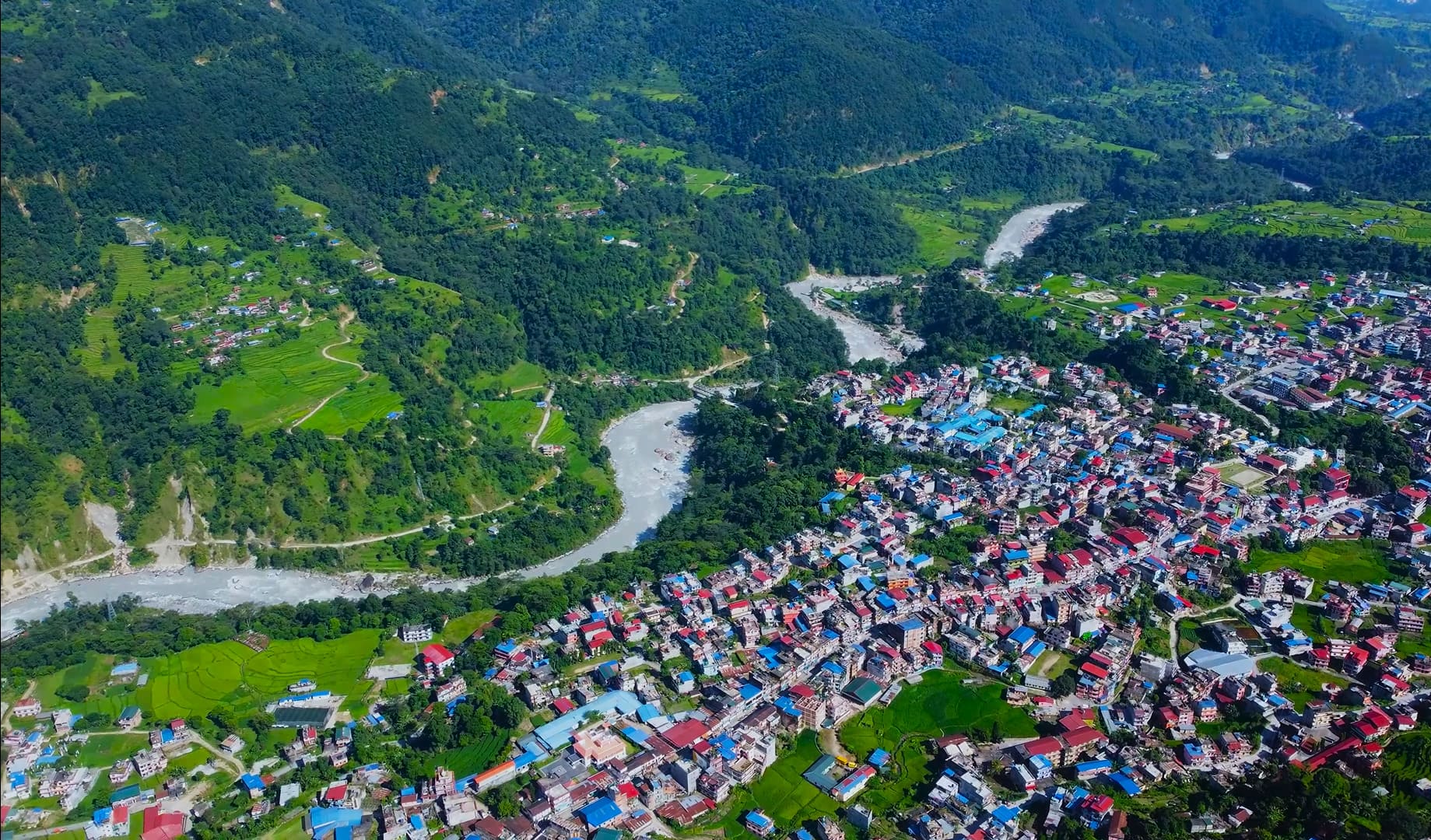
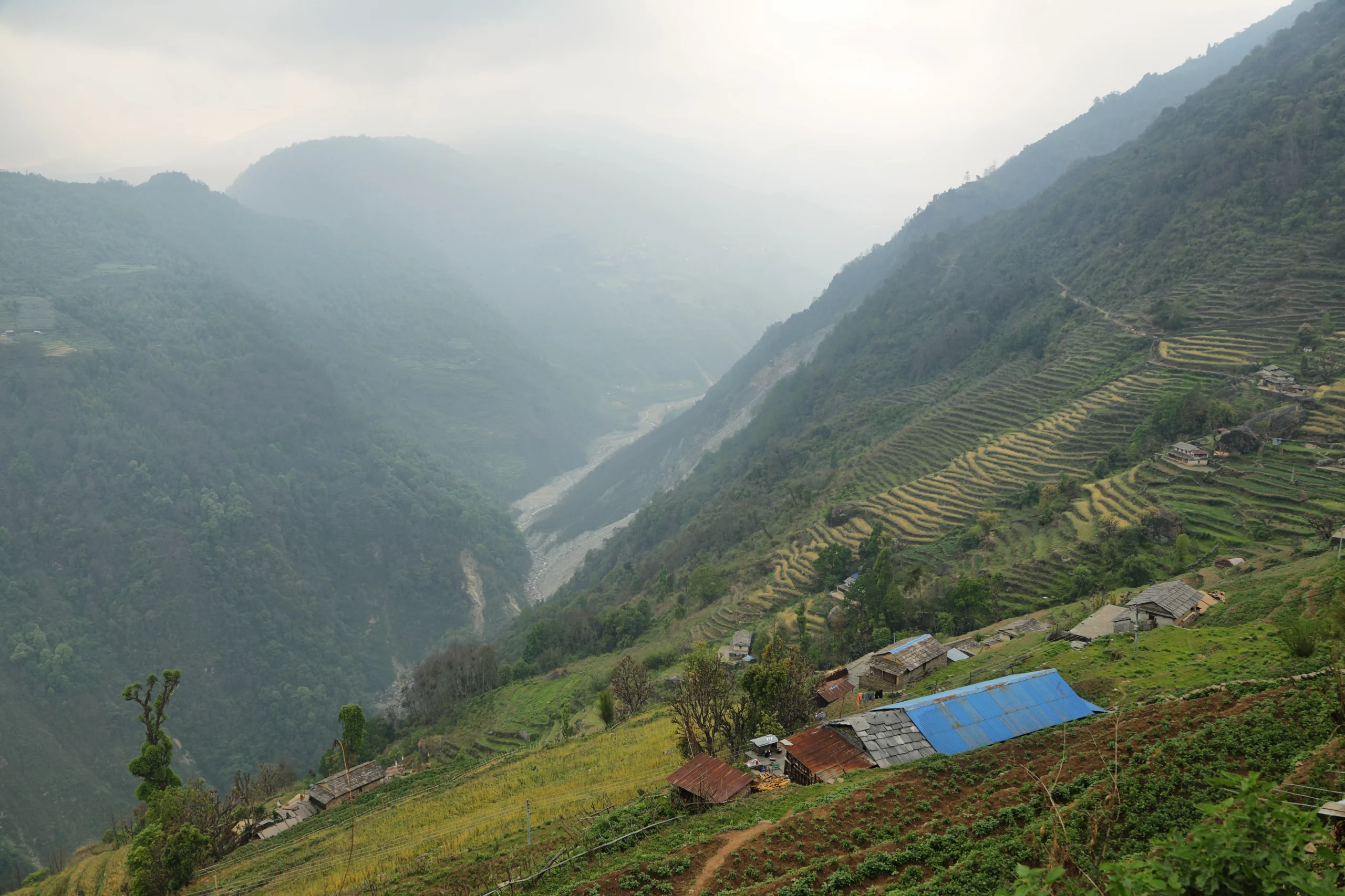
Jhinu Danda (also written as Jhinudanda or Jhino Danda) is a small but internationally famous village in the Annapurna Conservation Area, in Kaski District, Gandaki Province. The village sits above the Modi Khola river gorge at 1,760 meters and is surrounded by the dense subtropical forests and terraced hillsides characteristic of the lower Annapurna region.

The village serves a dual role in the Annapurna trekking ecosystem. It is both a key point on the Annapurna Base Camp Trek — positioned between Chhomrong (2,170 m) above and Siwai/Nayapul below — and the location of Nepal’s most accessible and most loved natural hot springs. Trekkers returning from ABC routinely describe the Jhinu hot spring soak as one of the greatest rewards of the entire trek.

Jhinu Danda Key FactsDetails
Altitude1,760 meters (5,774 feet) above sea level
DistrictKaski District, Gandaki Province
Distance from PokharaApproximately 50–60 km by road
Drive Time by Private Jeep3.5 to 5 hours
Hot Spring Location15–20 minutes’ walk downhill from Jhinu village
Hot Spring Entry FeeNPR 200–300 per person
Trek connectionABC Trek – between Chhomrong (above) and Nayapul (below)
Nearest TownNayapul (~15 km by trail/road)
Famous ForNatural geothermal hot springs, ABC Trek gateway

Why Hire a Jeep from Pokhara to Jhinu Danda?

4WD is Essential Beyond Nayapul

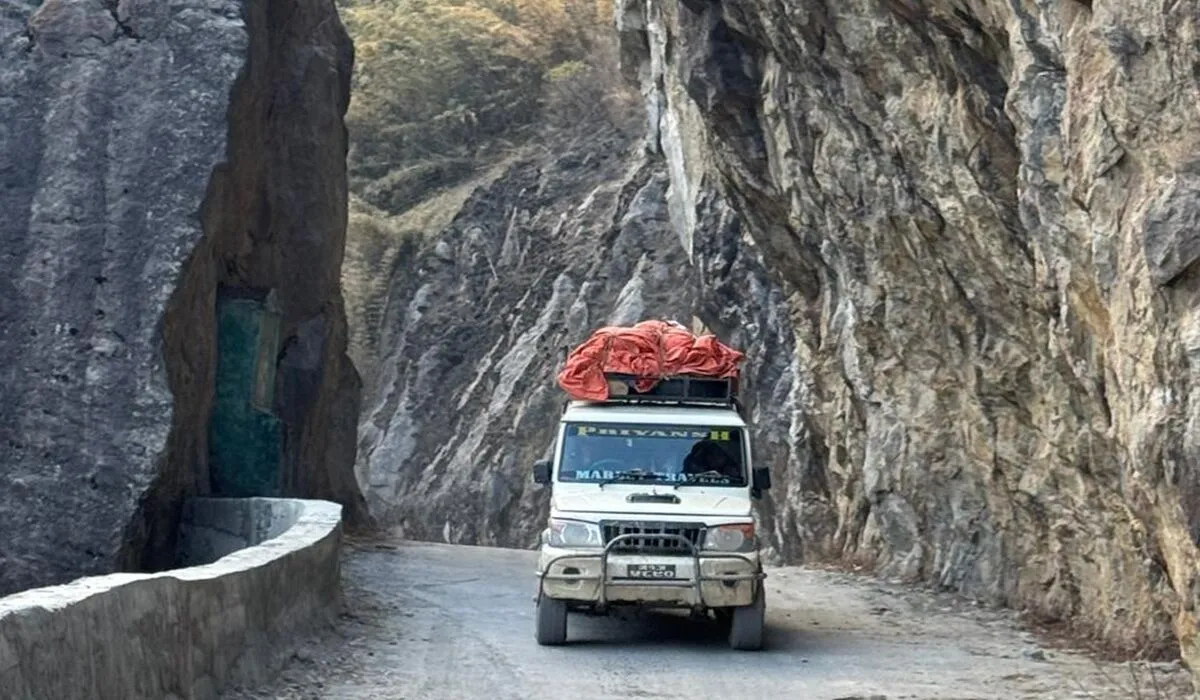
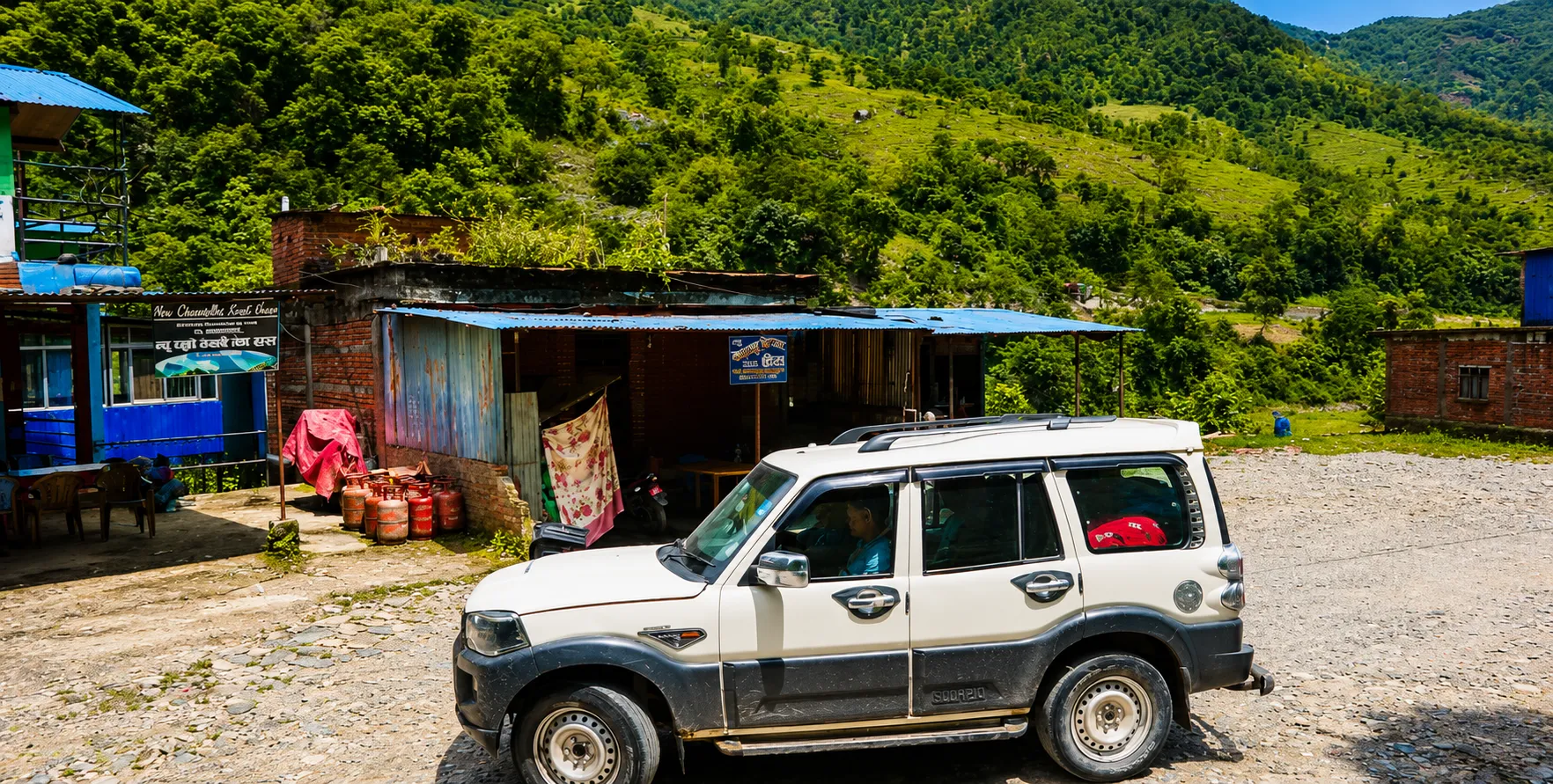
The road from Pokhara to Nayapul follows the well-paved Pokhara-Baglung Highway and is comfortable for any vehicle. However, beyond Nayapul, the road to Siwai and Jhinu Danda becomes a rough, unpaved, narrow mountain track that winds steeply through the Annapurna foothills. This section requires a 4WD jeep with high ground clearance.

Standard passenger cars and 2WD vehicles are not suitable for this route.

Hotel Pickup from Pokhara Lakeside

With a private jeep from Nepal Vehicle Hiring, you don’t need to travel to a bus station or public terminal. Your driver arrives at your hotel in Pokhara Lakeside at the agreed time and drives you directly to Jhinu Danda. This door-to-door service saves time and removes the stress of navigating Pokhara early in the morning.

Fastest Route to the ABC Trek Starting Area

A private jeep to Jhinu Danda is significantly faster than taking a bus to Nayapul and then walking or taking a shared jeep onward. For trekkers on tight itineraries, the time saved by driving all the way to Jhinu Danda versus starting on foot from Nayapul can mean an extra full day of trekking in the Annapurna Sanctuary.

Ideal for ABC Trek Return Pickup

Jhinu Danda is the most common pickup point for trekkers finishing the ABC Trek. Most 7- and 8-day ABC itineraries end at Jhinu Danda (via Chhomrong) rather than walking all the way back to Nayapul. Arranging your return jeep pickup from Jhinu Danda before beginning the trek ensures your driver is waiting at the suspension bridge when you arrive.

Hot Springs Day Trip from Pokhara

Many travellers hire a jeep from Nepal Vehicle Hiring for a full-day round trip from Pokhara to Jhinu Danda to enjoy the natural hot springs. The combination of the scenic mountain drive, the Annapurna region atmosphere, and a long, relaxing soak in the geothermal pools makes this one of the best day trips available from Pokhara.
Pokhara to Jhinu Danda Jeep Rental

Pokhara to Jhinu Danda – Journey Quick Facts

DetailInformation
Road Distance (Pokhara to Jhinu Danda)Approximately 50–60 km
Drive Time (Private Jeep)3.5 to 5 hours
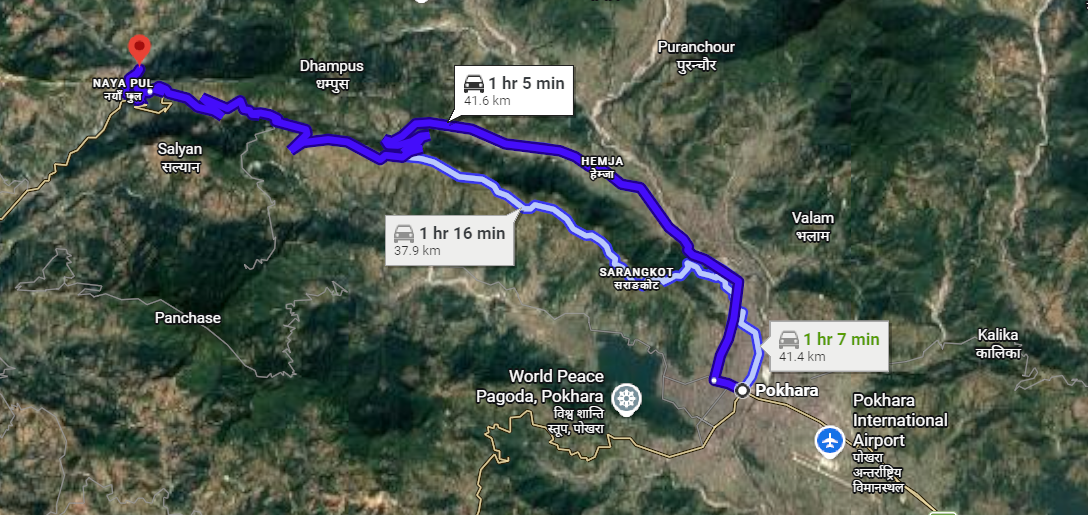
RoutePokhara → Pokhara-Baglung Highway → Nayapul → Birethanti → Siwai → Jhinu Danda
Road TypePaved to Nayapul (~42 km), rough unpaved track from Nayapul to Jhinu Danda (~15 km)
Vehicle Required4WD Jeep mandatory beyond Nayapul
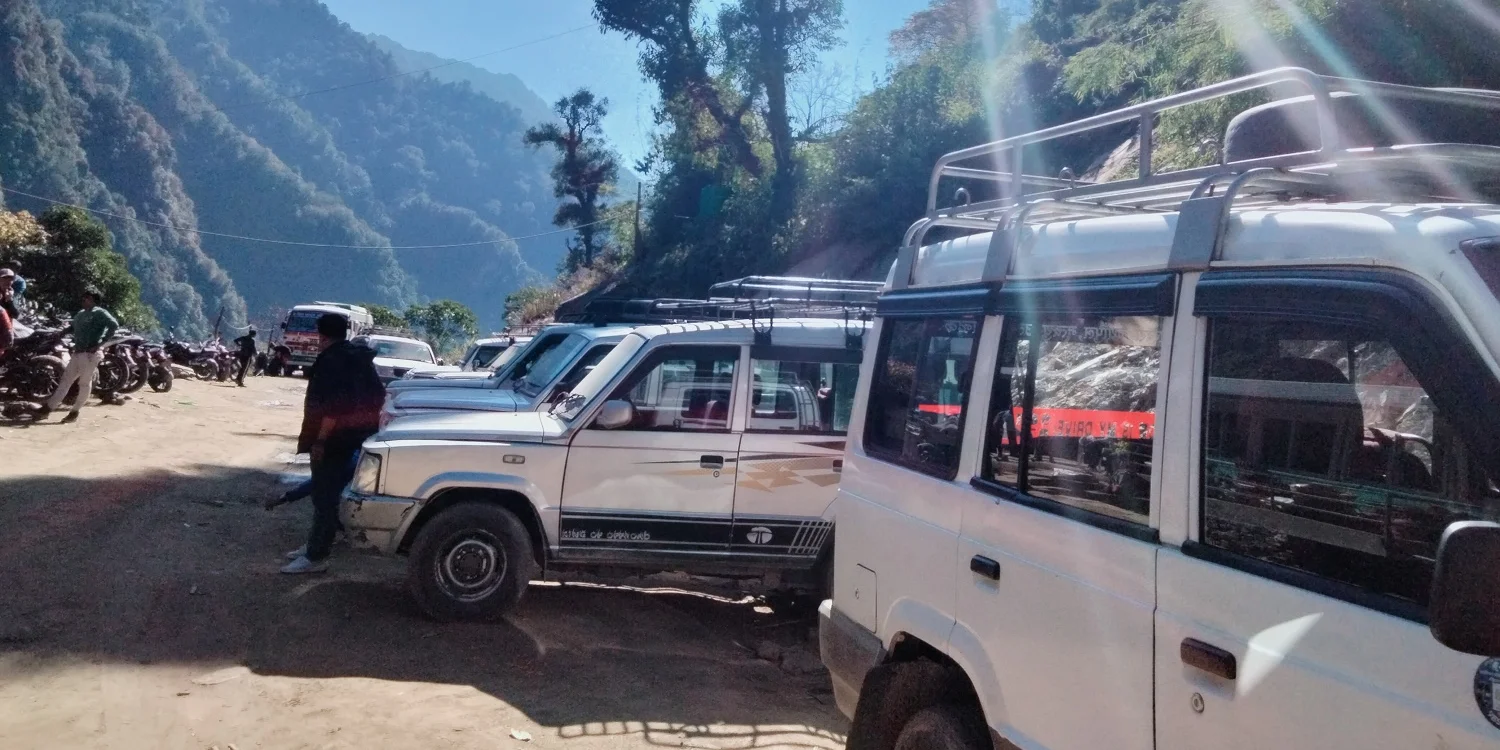
Departure Point (Sharing Jeep)Hari Chowk / Baglung Bus Park, Pokhara
Departure Point (Private Jeep)Hotel pickup anywhere in Pokhara
Recommended Departure Time6:30 AM – 8:00 AM
Jhinu Danda Hot Springs Walk15–20 minutes downhill from Jhinu village

Pokhara to Jhinu Danda Route Breakdown

The route from Pokhara to Jhinu Danda is a scenic journey through the foothills of the Annapurna Conservation Area. Here is a stage-by-stage breakdown of what to expect on the drive:

Stage 1: Pokhara to Nayapul – Approx. 42 km (1.5 to 2 hours)

The journey begins in Pokhara and heads west-northwest along the Pokhara-Baglung Highway. The road is smooth and well-paved throughout this section. You pass through the lively junction of Phedi, climb through the ridge village of Naudanda (with panoramic Annapurna views on clear mornings), and descend through Kande before reaching Nayapul.

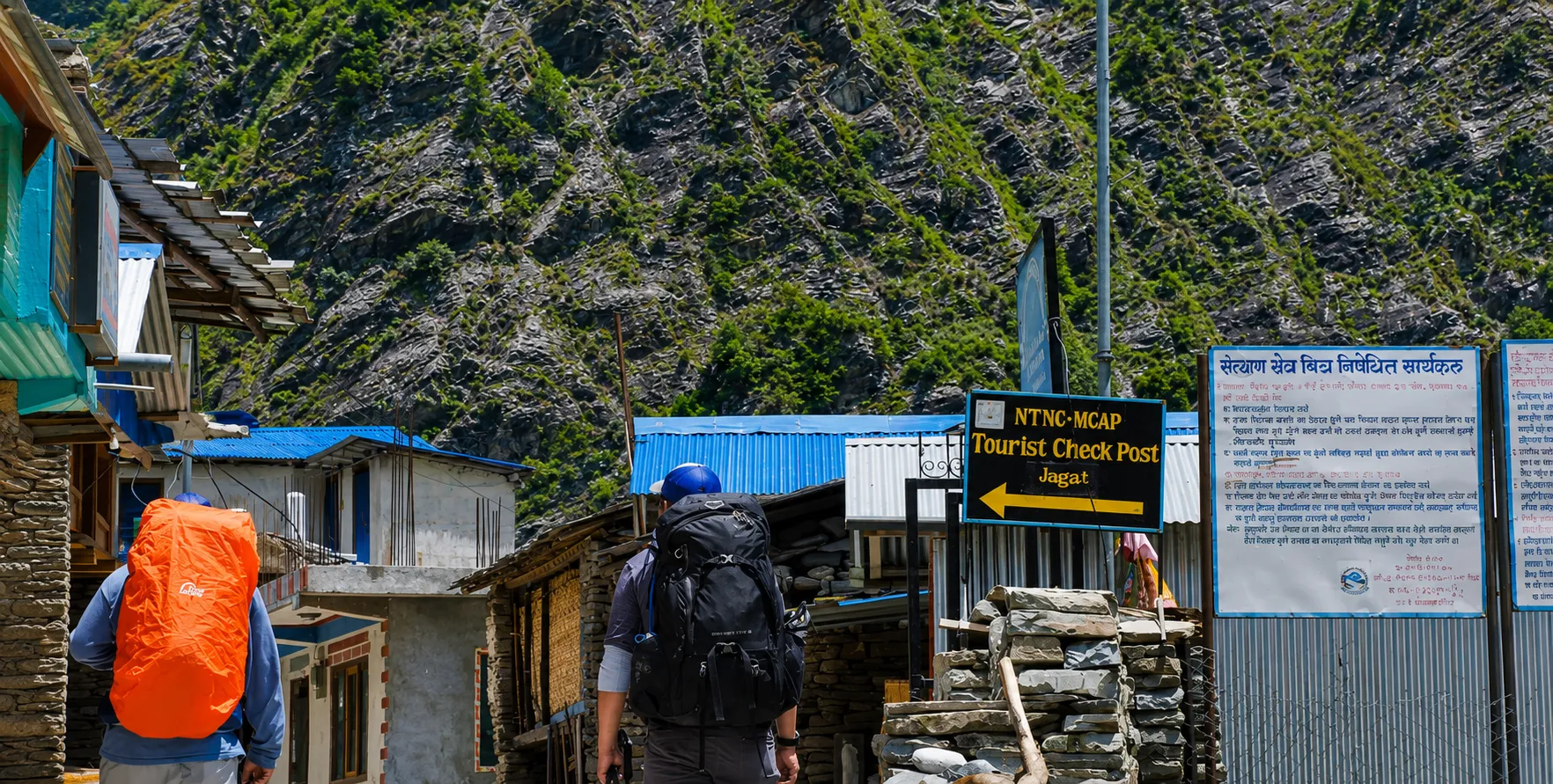
Nayapul, at 1,070 meters, is a small bazaar village at a river confluence and serves as the major trekking departure point for the Annapurna region. The ACAP permit checkpoint is located just past Nayapul in Birethanti. Your driver will stop briefly here if you need to present or obtain your ACAP permit.

Stage 2: Nayapul / Birethanti to Siwai – Approx. 8–10 km (1 to 1.5 hours)

From Nayapul, the road crosses the Modi Khola river and turns onto the Annapurna Conservation Area jeep track. The surface immediately becomes rough and unpaved. This section winds through the Modi Khola river valley, passing through the traditional village of Birethanti and then following the river upstream through subtropical forest and small farming communities toward Siwai (also called Syauli Bazaar).

The road from Nayapul to Siwai is narrow, winding, and frequently passes through active farmland and small settlements. Your 4WD jeep driver will navigate this section carefully. The scenery is beautiful — the river rushes below, terraced fields climb the hillsides above, and on clear days d the distant Annapurna peaks begin to appear.

Stage 3: Siwai to Jhinu Danda – Approx. 3–5 km (30 to 45 minutes)

From Siwai, the road continues on an even rougher track to the Jhinu Danda suspension bridge area. This final section is the most challenging drive of the entire route—steep, narrow, and deeply rutted in sections. The jeep descends into the Modi Khola gorge and reaches the vehicle drop-off point near the Jhinu Danda suspension bridge.

From the vehicle drop-off point, it is a short 5 to 10-minute walk across the famous Jhinu suspension bridge and up a short trail to reach Jhinu Danda village. The natural hot springs are a further 15 to 20 minutes downhill below the village on the riverbank.

Route Overview Table

StageSectionDistanceRoad TypeTimeKey Highlights
1Pokhara to Nayapul~42 kmPaved highway1.5–2 hrsNaudanda views, Kande junction, Annapurna foothills
2Nayapul to Siwai~8–10 kmRough unpaved jeep track1–1.5 hrsBirethanti village, Modi Khola valley, ACAP checkpoint
3Siwai to Jhinu Danda~3–5 kmVery rough, narrow track30–45 minSteep descent, Modi Khola gorge views, suspension bridge

Note: All private jeep prices include driver and fuel. Prices may vary by season, road conditions, and vehicle availability. Contact Nepal Vehicle Hiring Pvt Ltd for a confirmed quote for your travel date.
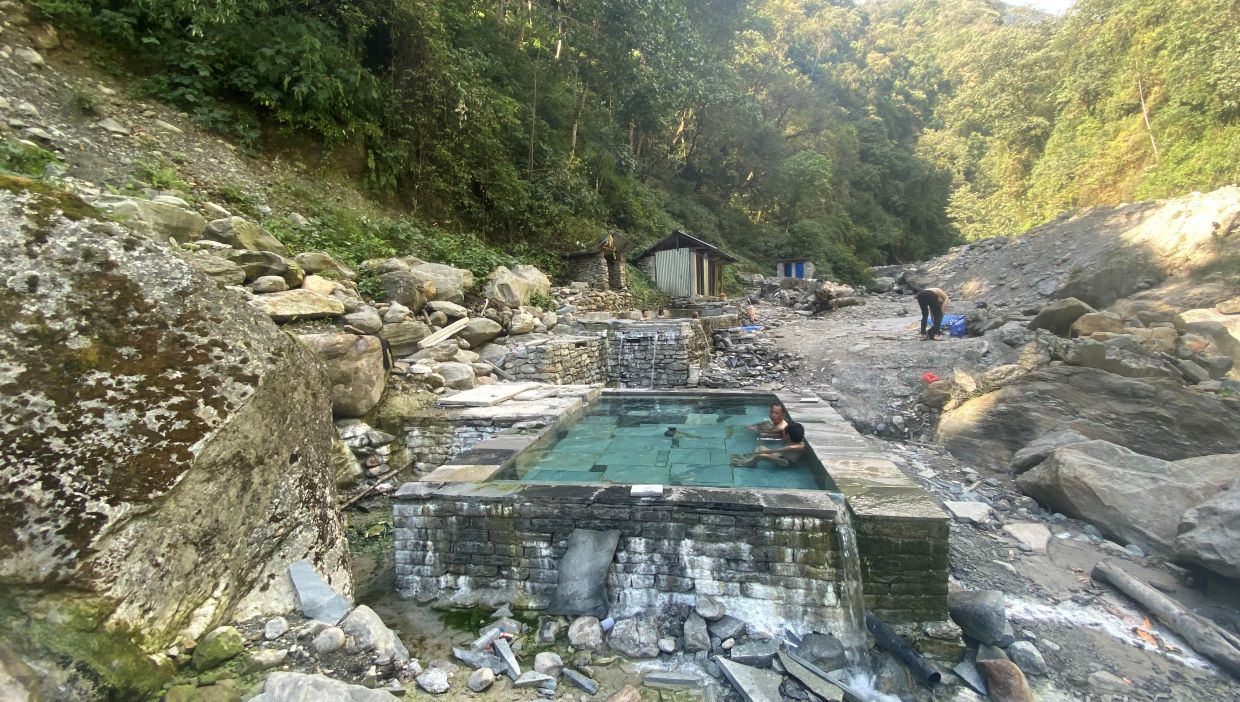
Jhinu danda

Private Jeep Rental: Pokhara to Jhinu Danda

A private 4WD jeep from Nepal Vehicle Hiring Pvt. Ltd. is the best choice for the journey from Pokhara to Jhinu Danda. Here is everything that is included with your private jeep rental:

  • Hotel pickup directly from your accommodation anywhere in Pokhara Lakeside
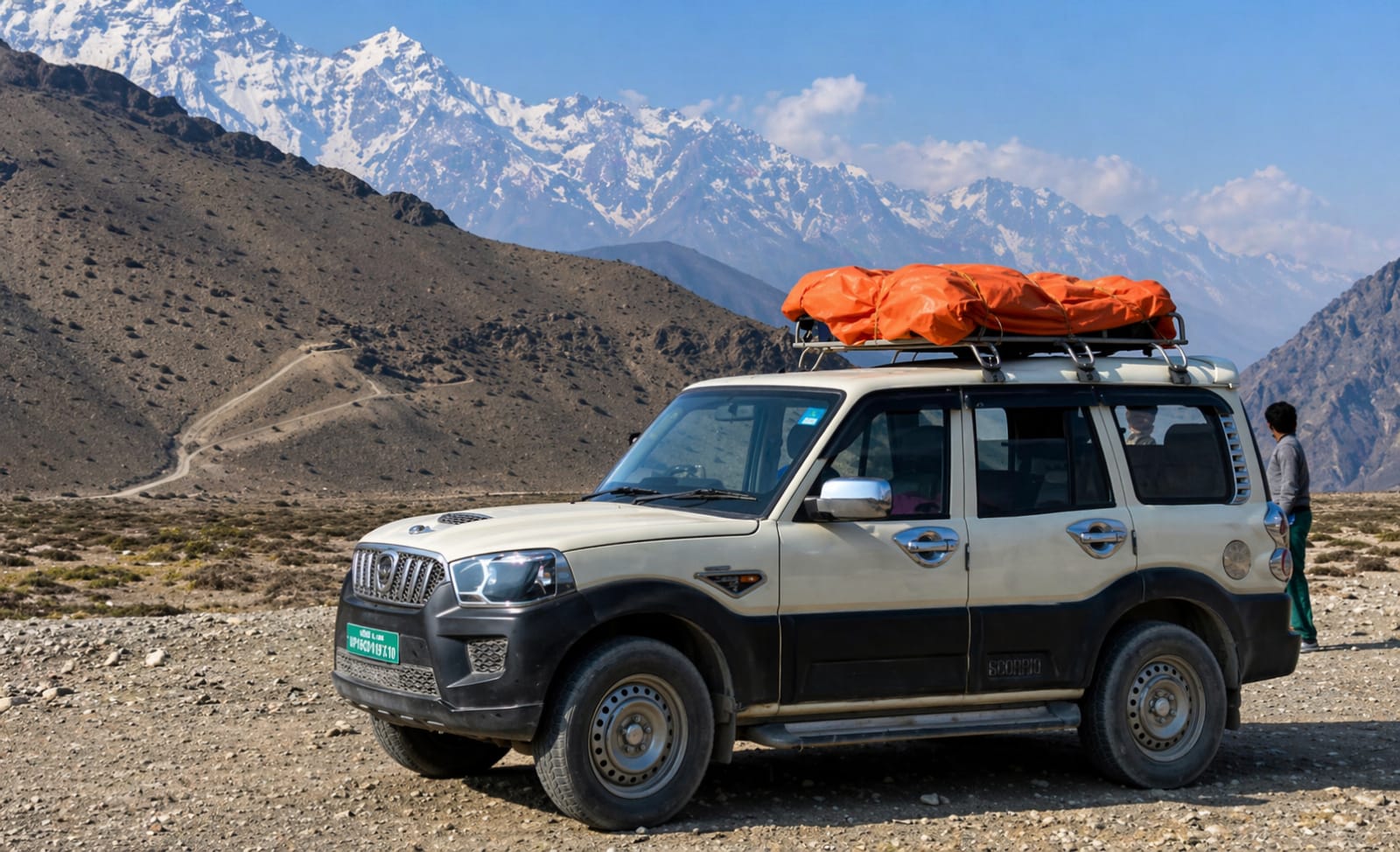
  • Well-maintained 4WD jeep – Mahindra Scorpio, Toyota Hilux, Fortuner, or Land Cruiser
  • Experienced driver fully familiar with the Pokhara to Jhinu Danda route, including all rough road sections
  • Flexible departure time – depart when you are ready
  • Freedom to stop at any viewpoint, village, or attraction along the Pokhara-Baglung Highway
  • Ample luggage space for full trekking bags, camera equipment, and personal belongings
  • The driver remains with the vehicle at the drop-off point or returns at an agreed pickup time
  • All fuel, toll charges, and driver expenses are included in the quoted price

Why a Scorpio or Hilux is Ideal for This Route

The Mahindra Scorpio and Toyota Hilux are the most popular and practical vehicles for the Pokhara-to-Jhinu Danda route. Both offer the 4WD capability and ground clearance necessary for the rough tracks beyond Nayapul, while providing comfortable seating for 4 to 6 passengers. The Hilux, in particular, with its 280mm ground clearance, handles the deeply rutted Siwai-to-Jhinu section with confidence.

Sharing a jeep from Pokhara to Jhinu Danda

For solo travelers and budget-conscious trekkers, sharing jeeps to Jhinu Danda are available from Pokhara. Here is the key information:

DetailInformation
Departure PointHari Chowk (near Bindhayabasini Temple) or Baglung Bus Park, Pokhara
Departure TimeApproximately 7:00 AM – 9:00 AM (departs when full)
Journey Time4 to 5 hours (sharing jeeps make more stops)
Cost Per SeatNPR 1,000–1,500 per person (approximately USD 7–11)
Capacity7 to 8 passengers per jeep
LuggageRoof rack available – confirm space for large trekking bags
AvailabilityDaily during trekking season; less frequent in off-season
BookingShow up at Hari Chowk early; no booking usually required

Pros of the Sharing Jeep

  • Most affordable option – NPR 1,000 to 1,500 per person
  • Departure during trekking season – no booking required
  • Good way to meet other trekkers heading to the ABC route
  • 4WD vehicle handles the rough road sections competently

Cons of the Sharing Jeep

  • Crowded – up to 7 or 8 passengers in one vehicle
  • No hotel pickup – you must travel to Hari Chowk yourself
  • Fixed departure time – departs only when all seats are filled
  • No freedom to stop along the route for views or photos
  • Less luggage space than a private vehicle
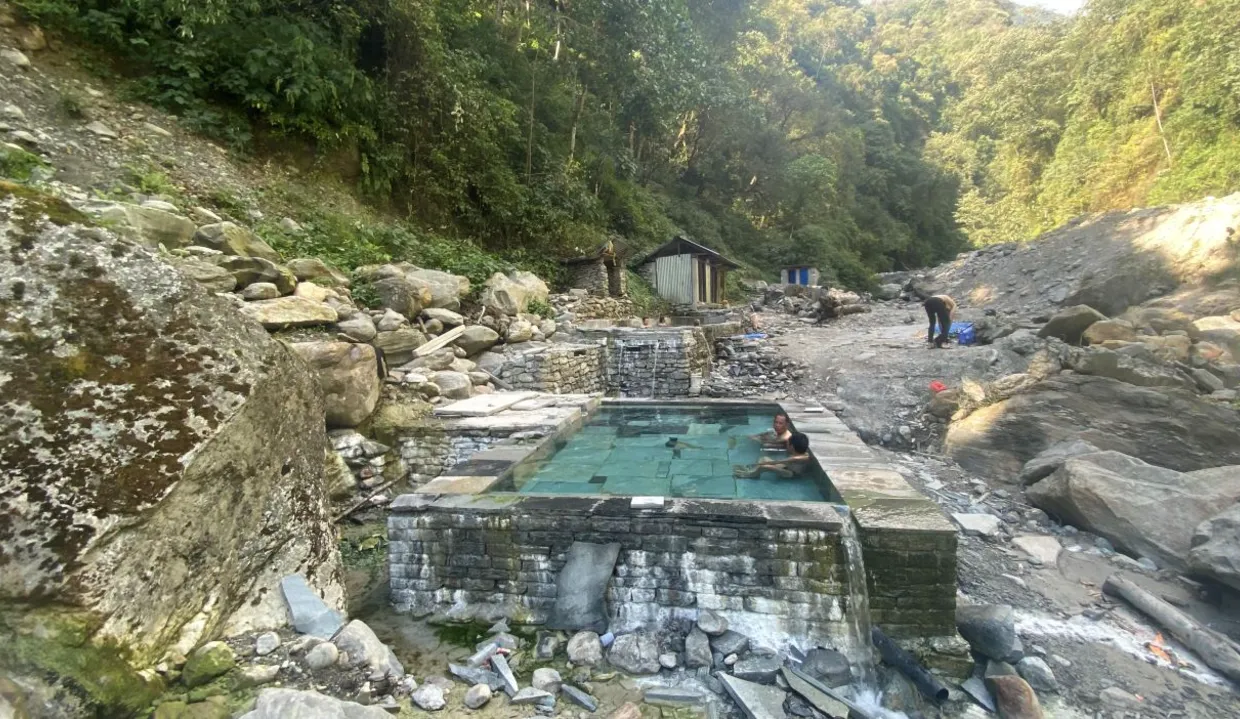
Hot spring by the river at Jhinu Danda

Private Jeep vs Sharing Jeep – Full Comparison

CategoryPrivate JeepSharing Jeep
CostNPR 10,000–18,000 (full vehicle)NPR 1,000–1,500 per person
Per person (group of 4)NPR 1,500–4,500 per personup to NPR 1,500 per person
DepartureHotel pickup anywhere in PokharaHari Chowk / Baglung Bus Park
Departure TimeFully flexible~7:00–9:00 AM (when full)
Journey Time3.5–4.5 hours4–5 hours
ComfortHigh – spacious, privateMedium – crowded (7–8 pax)
Luggage SpaceExcellentLimited (roof rack shared)
Stop FreedomFull – on demandNone
PrivacyCompleteNo (shared with strangers)
4WD CapabilityYes – all vehiclesYes – all sharing jeeps
Best ForGroups, families, trekkersSolo budget travellers

Jhinu Danda Natural Hot Springs – Everything You Need to Know

The Jhinu Danda hot springs are one of the most beloved natural attractions in the entire Annapurna region. The geothermal pools sit on the banks of the Modi River, approximately a 15-20-minute downhill walk from Jhinu Danda village. The springs are open year-round and accessible to all visitors, whether trekking or simply visiting for the day.

Location and Access

From Jhinu Danda village, a clear trail descends steeply to the Modi River gorge below. The hot springs are located right on the riverbank where geothermal water bubbles up from the ground alongside the cold glacial Modi River. The contrast between the warm spring pools and the rushing cool river beside them is remarkable.

The trail down to the springs takes approximately 15 to 20 minutes and requires careful footwork on the steep stone path.

Temperature and Facilities

The hot spring water temperature at Jhinu Danda is typically between 35°C and 45°C — warm enough to be deeply relaxing and therapeutic after days of trekking, but not uncomfortably hot. The springs have been developed with basic concrete bathing pools and changing facilities. The natural setting, with the roaring Modi River below the Annapurna peaks, is spectacular.

Entry Fee and Opening Hours

Entry to the Jhinu Danda hot springs costs approximately NPR 200-300 per person. The springs are generally open from early morning to late evening during trekking season. There is no fixed official closing time during peak season.

Why Trekkers Love the Jhinu Hot Springs

  • Perfect physical recovery after the steep Chhomrong descent and the full ABC trek circuit
  • One of the few natural geothermal hot springs in Nepal accessible without a multi-day trek
  • The view from the springs – deep gorge walls above, Modi River rushing past – is memorable.
  • Soaking in hot water at 1,760 meters with Himalayan peaks visible on clear days is a uniquely Nepalese experience.
  • Combined with a private jeep return to Pokhara, it makes for one of the best one-day excursions from the lakeside city
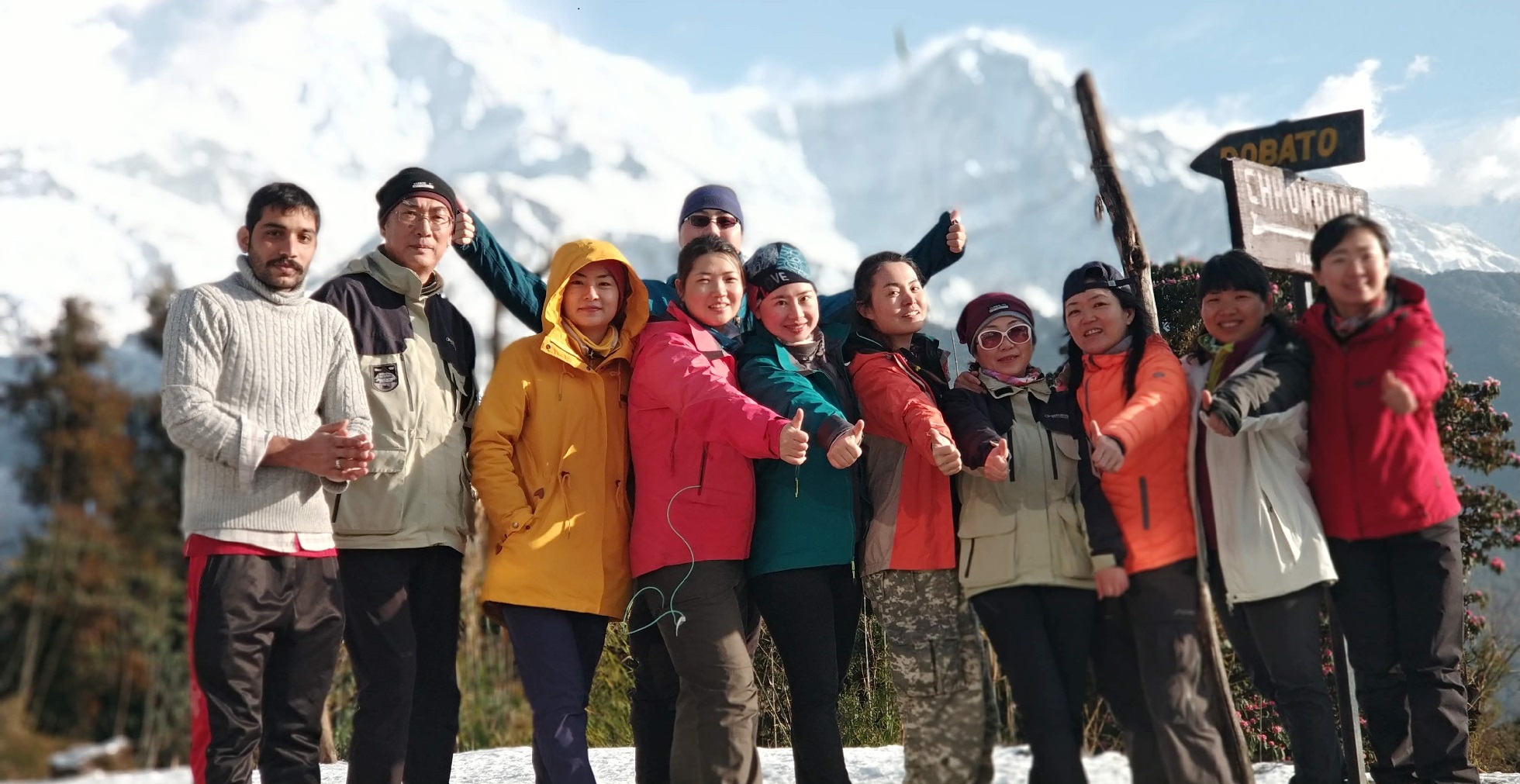
Pokhara to Jhinu Danda Jeep Rental

Jhinu Danda and the Annapurna Base Camp Trek

Jhinu Danda plays a central role in the Annapurna Base Camp Trek itinerary. Understanding how Jhinu fits into the ABC route helps you plan your jeep rental accordingly.

ABC Trek RoleDetails
Trek Starting Point OptionSome trekkers drive directly to Jhinu Danda and then walk up to Chhomrong – saving 1 full day compared to starting from Nayapul.
Trek End Point (Return)Most 7-day ABC itineraries end at Jhinu Danda – vehicle pickup arranged here for return to Pokhara.
Trek Stage LocationOn the ABC trail between Chhomrong (2,170 m) above and Siwai/Nayapul below
Walking Time Up to ChhomrongApproximately 2 to 3 hours steep uphill from Jhinu Danda
Walking Time Down to NayapulApproximately 3 to 4 hours from Jhinu Danda via Siwai and Birethanti
Hot Spring TimingBest visited on the last trekking day after descending from Chhomrong, before the jeep returns to Pokhara.

The most popular and most efficient transport arrangement for the 7-day ABC Trek is as follows:

  • Day 1 (Start): Private jeep from Pokhara hotel to Nayapul or Ghandruk – begin trekking toward ABC
  • Day 7 (End): Trek descends from Chhomrong to Jhinu Danda – soak in hot springs (1–2 hours)
  • Day 7 (Return): Pre-arranged private jeep picks you up at Jhinu Danda suspension bridge and returns to Pokhara hotel

This arrangement means you enjoy the hot springs as a reward at the end of your trek, and you arrive back at your Pokhara hotel the same evening rather than spending an extra night at Nayapul. Nepal Vehicle Hiring coordinates both the outbound drop-off and return pickup as part of a single booking.

Attractions Along the Pokhara to Jhinu Danda Route

Naudanda Ridge Viewpoint

Approximately 18 km from Pokhara on the Baglung Highway, the Naudanda ridge offers a sweeping panoramic view of Phewa Lake below and the Annapurna and Machhapuchhre peaks above. On clear mornings, this is one of the finest roadside mountain viewpoints near Pokhara. Ask your Nepal Vehicle Hiring driver to stop for 10 minutes — it is well worth it.

Kande Junction

Kande is a small roadside settlement at a junction on the highway where the trail to Pothana and the Australian Camp begins. For trekkers combining a Poon Hill circuit with the ABC Trek, Kande is where the Poon Hill trail departs from the road. The mountain views from the tea stalls at Kande are excellent.

Nayapul and Birethanti

Nayapul is the major trekking gateway for the entire Annapurna region. Just past Nayapul, the charming village of Birethanti sits at the confluence of the Bhurungdi and Modi Khola rivers. The ACAP permit checkpoint is located here.

The stone-paved village lanes, suspension bridge, and river views make Birethanti one of the most picturesque entry points to any trekking area in Nepal. Even if you are passing through by jeep, it is a beautiful spot for a brief stop.

Modi Khola Valley

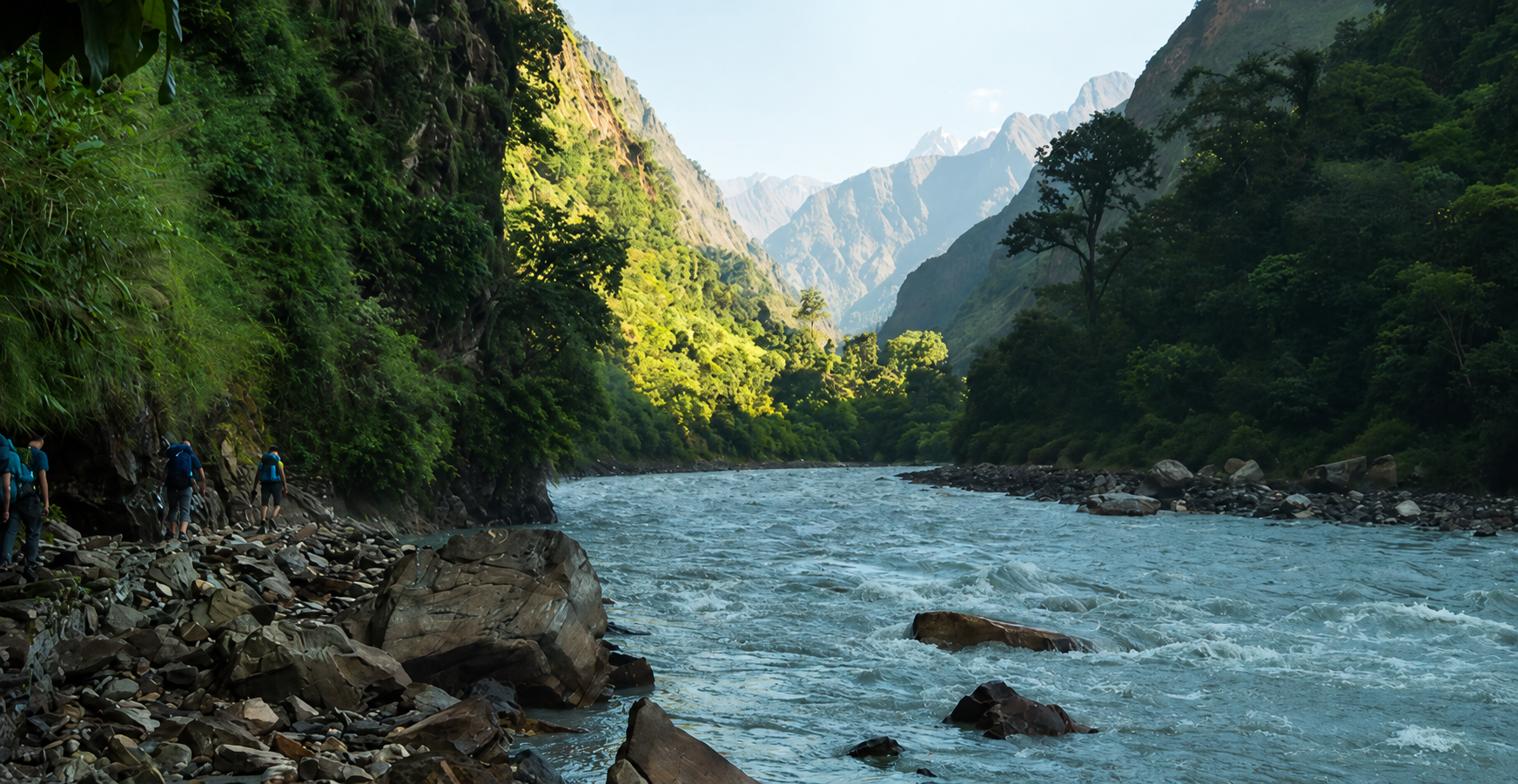
The drive from Nayapul through Siwai to Jhinu Danda follows the Modi Khola river valley upstream. The turquoise-green river, the dense subtropical forest on the valley walls, the cascading side streams, and the distant white peaks visible at the head of the valley create a continuously spectacular series of views throughout this section of the drive.

Jhinu Suspension Bridge

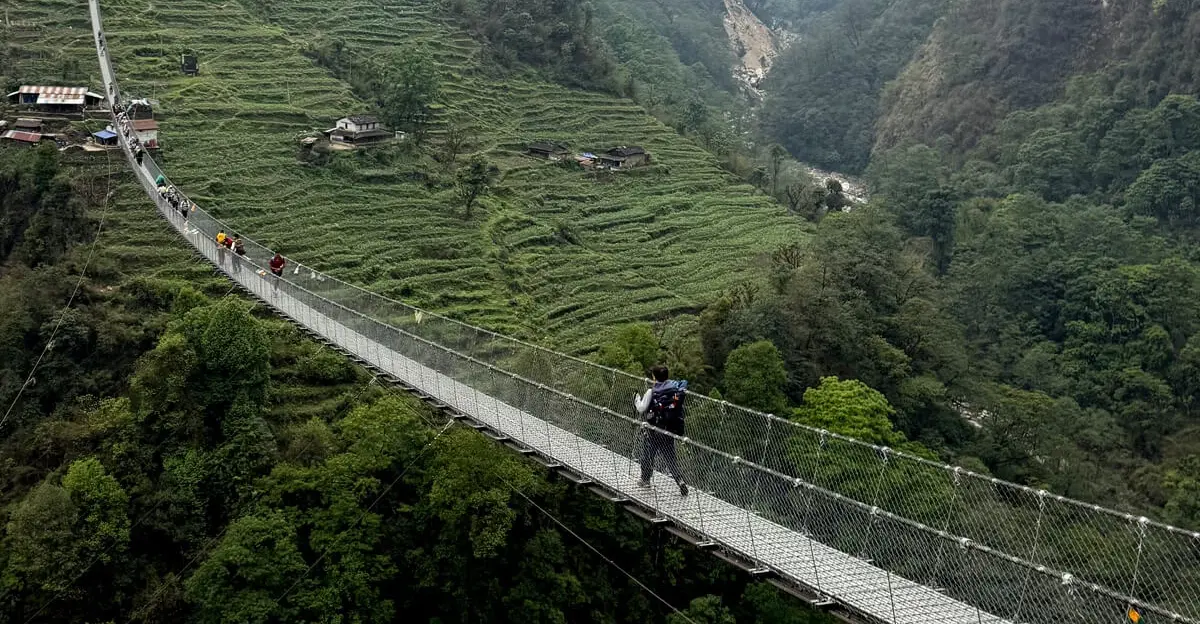
The Jhinu Danda suspension bridge spans the Modi Khola gorge and provides the village’s final access. The bridge itself is a memorable highlight — swinging gently above the rushing river, with forested gorge walls above and the Annapurna peaks on the distant horizon. Crossing this bridge at the end of a successful ABC Trek, knowing the hot springs are minutes away, is one of the great small pleasures of Annapurna travel.
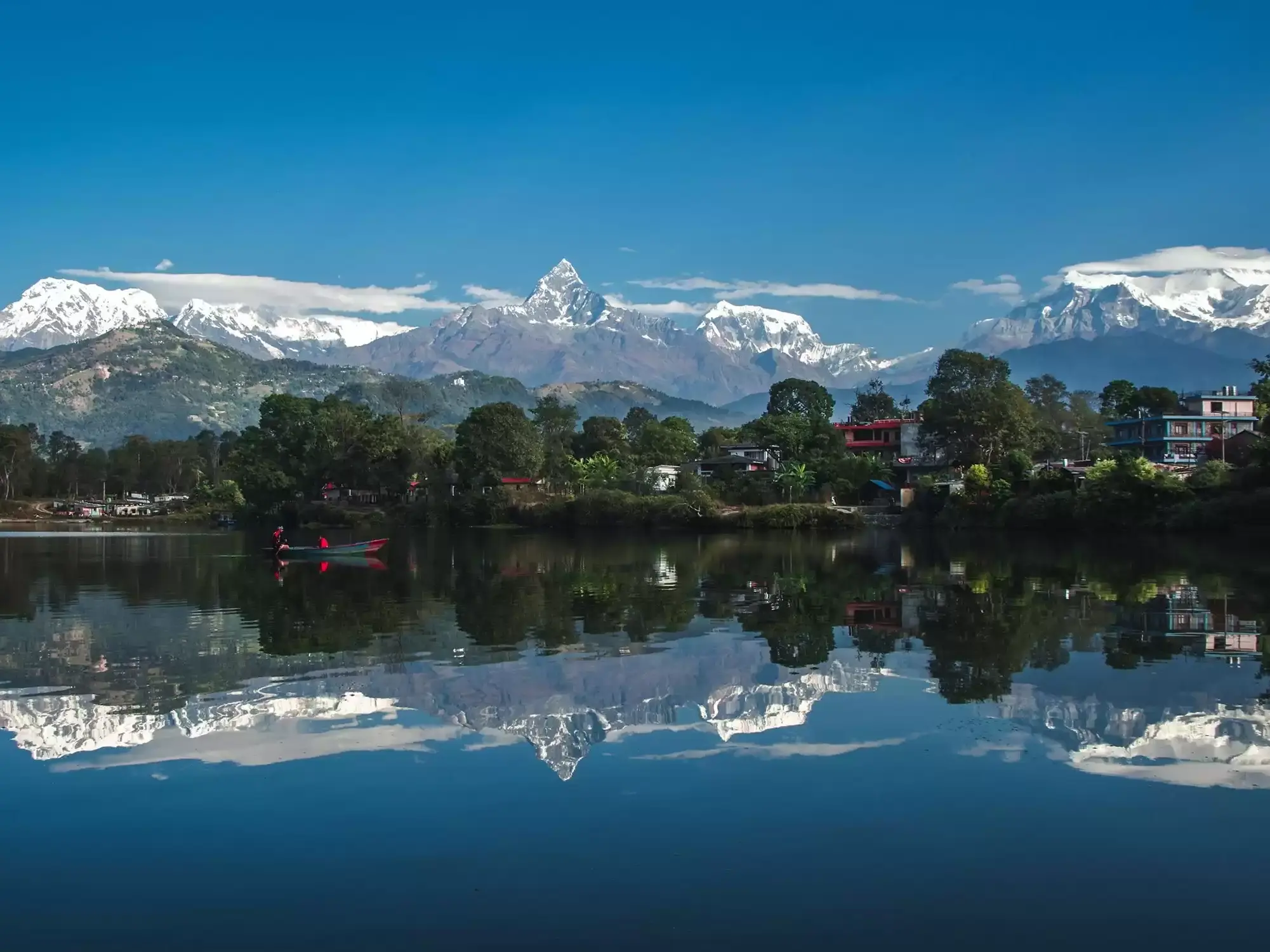
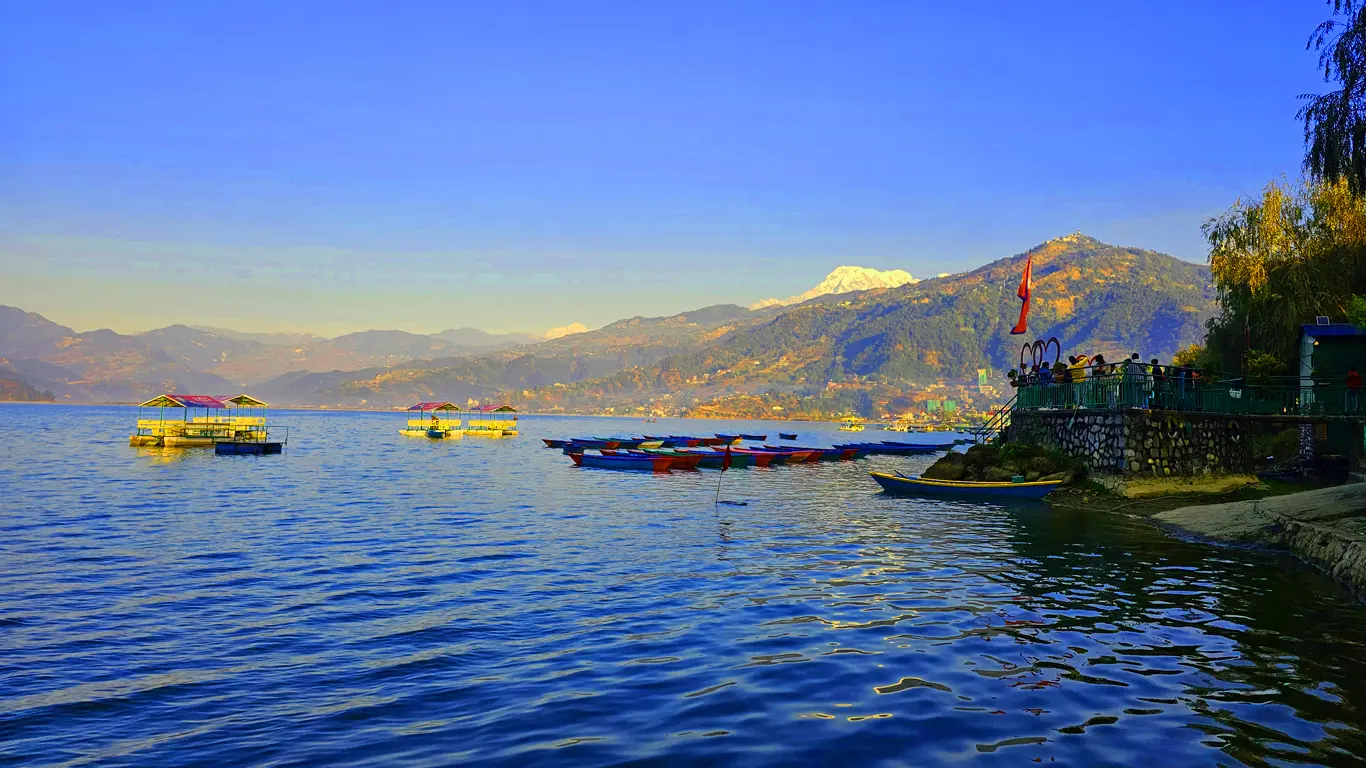
Pokhara

Permits Required for Jhinu Danda and the ACAP Area

Jhinu Danda lies within the Annapurna Conservation Area. All visitors — whether trekking or visiting only for the hot springs — are required to hold an ACAP permit. Trekkers additionally need a TIMS card.

PermitCostWho Needs ItWhere to Obtain
ACAP – Annapurna Conservation Area PermitNPR 3,000 (foreigners)All visitors to the ACAP area, including hot spring visitorsNepal Tourism Board, Pokhara Lakeside, or Kathmandu
TIMS CardNPR 2,000 (foreigners)Trekkers only (not required for hot spring day visitors)Nepal Tourism Board, Pokhara Lakeside

Note: Permits are checked at the Birethanti ACAP checkpoint, which all vehicles and trekkers pass through on the way to Jhinu Danda. Always carry your original permits with you.

Best Time to Hire a Jeep from Pokhara to Jhinu Danda

Autumn (September to November) – Best Season

Autumn is the finest season for the Pokhara-to-Jhinu Danda jeep journey. Post-monsoon skies are crystal clear, roads are in excellent condition after the summer grading, and the Annapurna views from the Baglung Highway and the Modi Khola valley are outstanding. October and November are the peak trekking months.

Book your private jeep well in advance.

Spring (March to May) – Excellent

Spring offers warm temperatures, blooming rhododendrons along the Modi Khola valley trail, and generally excellent road conditions. The Annapurna region is at its most colorful in March and April.—A superb time for the jeep journey to Jhinu Danda.

Winter (December to February) – Good

Winter offers clear skies and fewer fellow trekkers on the trail. The Pokhara to Jhinu Danda road is generally open in winter except after heavy snowfall above Nayapul. The hot springs are particularly enjoyable in winter — soaking in warm geothermal water on a cold Himalayan morning is a memorable experience.

The jeep track from Nayapul to Jhinu Danda is particularly vulnerable to monsoon damage. Heavy rainfall causes landslides, deep road rutting, and occasional complete blockages on this unpaved section. Nepal Vehicle Hiring does not recommend this route during the monsoon season.

What to Pack for the Pokhara to Jhinu Danda Journey

  • Swimwear or shorts – essential for enjoying the Jhinu hot springs
  • Quick-dry towel – pack a lightweight travel towel for the hot spring visit
  • Warm layers and a fleece – even in spring and autumn mornings t, the Modi Khola valley can be cool
  • Waterproof jacket – for the unpaved section from Nayapul onward, where rain can start suddenly
  • Sturdy trekking shoes – the path down to the hot springs from Jhinu village is steep and rocky
  • Camera – the Modi Khola valley drive and the hot springs setting are both outstanding photography subjects
  • Nepali cash – for ACAP permits (if not already obtained), hot spring entry fee, and lunch at Siwai or Jhinu teahouses
  • Water bottle – stay hydrated throughout the 3.5 to 5-hour journey
  • Motion sickness tablets – the road beyond Nayapul is winding and bumpy
  • Light snacks – energy bars and biscuits for the drive

Expert Tips for the Pokhara to Jhinu Danda Jeep Rental

  • Book your private jeep at least 2 to 3 days in advance – and 5 to 7 days ahead during October, November, March, and April peak seasons.
  • Obtain your ACAP permit from the Nepal Tourism Board office in Pokhara Lakeside on the morning of departure or the day before – do not leave it for the Birethanti checkpoint.
  • Depart from Pokhara by 7:00 AM or 7:30 AM to give yourself maximum time at Jhinu Danda, especially if planning a same-day return after the hot springs.
  • If ending your ABC Trek at Jhinu Danda, always pre-book your return jeep with Nepal Vehicle Hiring before beginning the trek – do not expect to find a vehicle available at the Jhinu suspension bridge without prior arrangement.
  • Tell your driver if you want to stop at Naudanda viewpoint – on a clear morning,s the Annapurna panorama from the ridge is spectacular and adds only 10 minutes to the journey
  • Carry small-denomination Nepali notes for the hot spring entry fee (NPR 200–300) and for any food or drinks at teahouses in Siwai or Jh.inu.
  • Wear sturdy footwear in the vehicle, even before the jeep ride – the walk from the vehicle drop-off point to the village and down to the hot springs involves uneven terrain
  • If visiting purely for the hot springs (no trekking), consider visiting on a weekday in the off-peak season for a quieter, more relaxed experience.
  • The hot spring pools can be busy with trekkers in the late afternoon during peak season – arriving in the morning for a day trip from Pokhara means you often have the pools to yourself.

How to Book Your Pokhara to Jhinu Danda Jeep Rental

Booking your private jeep from Pokhara to Jhinu Danda with Nepal Vehicle Hiring Pvt Ltd is quick and straightforward:

  • Step 1: Contact us via phone, WhatsApp, or at vehiclehiringnepal.com
  • Step 2: Share your travel date, departure time, group size, hotel name in Pokhara, and purpose of trip (trek, trek return pickup, or hot springs day trip)
  • Step 3: Choose your vehicle – standard jeep, 4WD Hilux/Fortuner, or top-end Land Cruiser
  • Step 4: Confirm one-way, round-trip, or return pickup arrangement (for ABC trekkers)
  • Step 5: Receive your booking confirmation with the driver’s name, vehicle details, and exact pickup time
  • Step 6: Your driver arrives at your Pokhara hotel at the agreed time and takes you to Jhinu Danda

For ABC Trek return pickups, we coordinate with your trek guide’s schedule to ensure your driver is at the Jhinu suspension bridge when your group arrives — even if your trek finishing time changes due to weather or pace.

WhatsApp
Email: [email protected]
Website: www.vehiclehiringnepal.com

Frequently Asked Questions (FAQ)

How far is Pokhara from Jhinu Danda?

The road distance from Pokhara to Jhinu Danda is approximately 50-60 kilometers. The exact distance varies depending on the specific road track used on the Siwai to Jhinu Danda section.

How long does the jeep ride from Pokhara to Jhinu Danda take?

A private jeep takes approximately 3.5 to 5 hours. A shared jeep typically takes 4 to 5 hours with additional stops. The time varies depending on road conditions, especially on the rough unpaved section beyond Nayapul.

How much does a private jeep from Pokhara to Jhinu Danda cost in 2026?

A one-way private jeep from Pokhara to Jhinu Danda costs approximately US$140 depending on the vehicle type. A round-trip costs NPR 10,000 to 24,000. All prices include driver and fuel.

Is a 4WD jeep necessary for this route?

Yes. The road from Nayapul to Jhinu Danda is a rough, unpaved mountain track that requires 4WD capability and high ground clearance. Standard passenger cars and 2WD vehicles are not suitable beyond Nayapul.

All jeeps provided by Nepal Vehicle Hiring are 4WD vehicles.

Can I visit the Jhinu Danda hot springs without trekking?

Yes. Many visitors hire a jeep from Pokhara specifically for a day trip to the Jhinu Danda hot springs with no trekking involved. The hot springs are accessible to all visitors with a valid ACAP permit.

Nepal Vehicle Hiring offers round-trip day tour packages for this purpose.

Where do shared jeeps to Jhinu Danda depart from in Pokhara?

Sharing jeeps to Jhinu Danda depart from Hari Chowk (near Bindhayabasini Temple) in Pokhara, approximately 15-20 minutes by taxi from Pokhara Lakeside. Departures are between 7:00 AM and 9:00 AM, depending on the jeep’s capacity.

How do I arrange a return jeep from Jhinu Danda to Pokhara after my ABC Trek?

Always pre-book your return jeep with Nepal Vehicle Hiring before beginning your trek. We coordinate with your trek guide via WhatsApp or radio to confirm your arrival time and ensure your driver is waiting at the Jhinu suspension bridge. Do not expect to find a vehicle available at the trailhead without prior arrangement.

What time do I need to leave Pokhara for a day trip to the hot springs in Jhinu Danda?

Departing from Pokhara between 7:00 AM and 7:30 AM allows you to arrive in Jhinu Danda between approximately 11:00 AM and 12:30 PM. After 1 to 2 hours at the hot springs and lunch at a local teahouse, you can depart for Pokhara by early afternoon and arrive back by evening.

Do I need a permit to visit Jhinu Danda?

Yes. Jhinu Danda is within the Annapurna Conservation Area. All visitors need an ACAP permit (NPR 3,000 for foreigners), available from the Nepal Tourism Board office in Pokhara Lakeside.

Trekkers also need a TIMS card (NPR 2,000). Hot spring day visitors need only the ACAP permit.

Book Your Pokhara to Jhinu Danda Jeep Rental with Nepal Vehicle Hiring

Whether you are beginning the adventure of a lifetime on the Annapurna Base Camp Trek, returning from the mountains to reward yourself with a long soak in the legendary Jhinu hot springs, or simply making the scenic drive from Pokhara into the Annapurna foothills for the day, the journey from Pokhara to Jhinu Danda by private jeep is one of the finest short vehicle journeys in all of Nepal.

Nepal Vehicle Hiring Pvt Ltd provides Pokhara’s most reliable, professional, and fairly priced jeep rental service for the Jhinu Danda route. Our 4WD fleet, experienced Annapurna-route drivers, flexible booking options, and door-to-door hotel service make every aspect of your journey from Pokhara to Jhinu Danda smooth, safe, and truly memorable.

Contact Nepal Vehicle Hiring Pvt Ltd today at vehiclehiringnepal.com to book your Pokhara-to-Jhinu Danda jeep rental and start your Annapurna adventure the right way.

WhatsApp
Email: [email protected]
Website: www.vehiclehiringnepal.com
Pokhara to ABC Trek Starting Point

Pokhara

Pokhara to ABC Trek Starting Point: Complete Vehicle Guide

The Annapurna Base Camp Trek — commonly known as the ABC Trek — is Nepal’s most beloved and most accessible high-altitude trekking experience. Starting in the beautiful lakeside city of Pokhara and climbing through lush rhododendron forests, traditional Gurung villages, and stunning alpine terrain to the spectacular glacial amphitheatre of Annapurna Base Camp at 4,130 meters, it is a journey that transforms everyone who completes it.

Before the trek begins, every trekker needs to answer one practical yet important question: how do I get from Pokhara to the starting point of the ABC trek? The answer depends on which trailhead you choose, your group size, your budget, and how much time you want to spend on the road versus on the trail.

This 2026 guide by Nepal Vehicle Hiring Pvt Ltd covers every aspect of the Pokhara to ABC trek starting-point vehicle journey—all trailhead options, vehicle types, costs, departure logistics, and expert tips to ensure your ABC trek adventure starts perfectly from the first kilometre.

About the Annapurna Base Camp Trek

The Annapurna Base Camp Trek is one of the world’s great Himalayan adventures. The trail leads into the heart of the Annapurna Sanctuary — a magnificent glacial basin encircled by thirteen peaks above 6,000 meters, including Annapurna I (8,091 m), the tenth highest mountain in the world, Machhapuchhre (Fishtail) (6,993 m), Annapurna South (7,219 m), Hiunchuli (6,441 m), and Gangapurna (7,455 m).

The trek combines outstanding natural beauty with rich cultural experiences in Gurung and Magar villages. It suits beginners and experienced trekkers alike, and with proper planning, you can complete it in as few as 7 days from Pokhara.

ABC Trek Key FactsDetails
Annapurna Base Camp Altitude4,130 meters (13,549 feet)
Total Trekking DistanceApproximately 76–97 km, depending on the starting point
Trek Duration7 to 14 days (most common: 10–12 days)
Difficulty LevelModerate (suitable for fit beginners)
Best Starting PointsNayapul, Ghandruk, Jhinu Danda, Kimche, Siwai
Main Peaks VisibleAnnapurna I, Machhapuchhre, Annapurna South, Hiunchuli, Gangapurna
Permits RequiredACAP + TIMS Card
Best SeasonSpring (Mar–May), Autumn (Sep–Nov)

All ABC Trek Starting Points from Pokhara

The Annapurna Base Camp Trek has five main starting points, each offering a different entry into the trail system. Nepal Vehicle Hiring provides vehicle services to all of these trailheads. The right choice depends on your itinerary, how many trekking days you have, and whether you want to include or skip certain trail sections.

Starting PointDistance from PokharaDrive TimeAltitudeBest For
Nayapul42 km1.5–2 hours1,070 mClassic route, most common trailhead
Ghandruk55 km2.5–3 hours1,940 mDirect Gurung village entry, shorter approach
Jhinu Danda50 km2–2.5 hours1,760 mReturn point or alternate start via Chhomrong
Kimche50 km2–2.5 hours1,640 mShorter approach to Ghandruk, less-trodden
Siwai / Syauli Bazaar45 km2–2.5 hours1,100 mAlternative entry to Ghandruk via Modi Khola valley

Starting Point 1: Pokhara to Nayapul

Nayapul is the most popular and most commonly used starting point for the ABC Trek. Located about 42 kilometres northwest of Pokhara at an altitude of 1,070 meters, Nayapul is a small roadside village at the confluence of the Bhurungdi and Modi rivers. Almost every standard ABC trek itinerary begins from Nayapul.

Why Trekkers Choose Nayapul

  • The most accessible trailhead — the easiest road to reach by any vehicle type
  • Starting point for both the classic ABC Trek route and the Ghorepani Poon Hill route
  • ACAP permit checkpoint at nearby Birethanti — required for all trekkers
  • Good first-day trekking options: Birethanti, Tikhedhunga, Ulleri, or Ghandruk
  • The trek from Nayapul to ABC and back is approximately 76 km total

Road and Vehicle Details

The Pokhara-Nayapul route follows the Pokhara-Baglung Highway through Phedi, Naudanda, and Kande. The road is mostly paved and in good condition for the majority of the route. A private jeep, van, or car handles this route comfortably.

DetailInformation
Distance from Pokhara42 km
Drive Time1.5 to 2 hours
Road ConditionMostly paved, some rough patches after Kande
Private Car CostNPR 2,500–6,000 one way
Private Jeep CostNPR 4,000–8,000 one way
Sharing Jeep CostNPR 500–800 per person
Local Bus CostNPR 200–350 per person
Return Vehicle from NayapulNPR 2,500–6,000, depending on vehicle

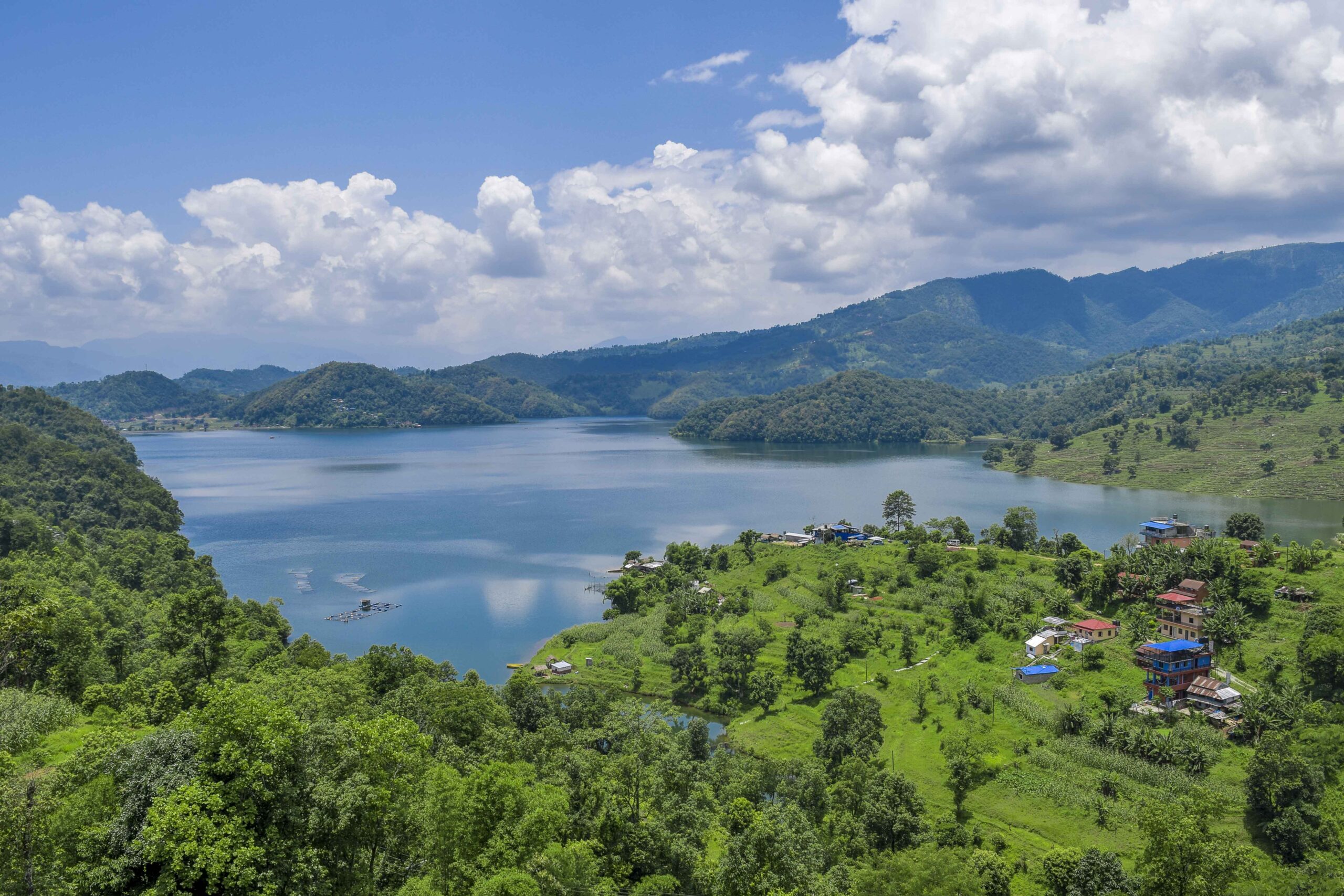
Begnas Lake Pokhara

Starting Point 2: Pokhara to Ghandruk

Ghandruk is one of Nepal’s most beautiful and famous Gurung villages, perched at 1,940 meters in the hills above the Modi Khola valley, with direct views of Annapurna South, Hiunchuli, and Machhapuchhre. Driving to Ghandruk rather than trekking from Nayapul saves a full day of walking and places you immediately in a rich cultural environment at altitude.

Why Trekkers Choose Ghandruk as Starting Point

  • Saves 1 to 1.5 days of walking compared to starting from Nayapul
  • Ideal for trekkers with limited time who want to maximise trail time at altitude
  • Ghandruk is itself one of the finest Gurung cultural villages in the Annapurna region
  • Direct mountain views from the village from the very first morning
  • From Ghandruk, the trail climbs directly to Chhomrong and then to the Annapurna Sanctuary

Road Conditions: Pokhara to Ghandruk

The road from Pokhara to Ghandruk goes via Nayapul, then leaves the main highway for a progressively rougher jeep track that climbs steeply into the hills. The road beyond Syauli Bazaar to Ghandruk is rough, unpaved in sections, and requires a 4WD jeep. A standard car is not recommended beyond Nayapul for the Ghandruk road.

DetailInformation
Distance from Pokhara55 km
Drive Time2.5 to 3 hours (can be longer in rain)
Road ConditionPaved to Nayapul, rough/unpaved jeep track to Ghandruk
Vehicle Required4WD Jeep mandatory beyond Nayapul
Private Jeep CostNPR 8,000–15,000 one way
Private Car CostNot recommended beyond Nayapul
Sharing Jeep CostNPR 1,000–1,500 per person
Return Vehicle from GhandrukNPR 6,000–10,000 (private jeep; booking essential)

Starting Point 3: Pokhara to Jhinu Danda

Jhinu Danda (sometimes called Jhinu) sits at about 1,760 meters. It is more commonly used as a return point after the ABC Trek and is particularly famous for its natural hot springs beside the Modi River. However, some trekkers also choose Jhinu Danda as a starting point, from where the trail climbs steeply to Chhomrong before heading toward the Annapurna Sanctuary.

Why Some Trekkers Start or End at Jhinu Danda

  • Famous for the natural Jhinu hot springs — the perfect reward after the ABC Trek
  • Return point for most 7-day ABC trek itineraries — vehicle pickup arranged here
  • Starting from Jhinu, the route cuts directly to Chhomrong, saving 1 day compared with starting from Nayapul.
  • The Jhinu suspension bridge crossing is a memorable highlight of the route
  • Vehicle pickup at the bridge means no extra hiking at the end of the trek
DetailInformation
Distance from Pokhara50 km
Drive Time2 to 2.5 hours
Road ConditionRough jeep track — 4WD recommended
Private Jeep Cost (One Way)USD 90- 100
Sharing Jeep CostNPR 900–1,300 per person
Popular UseReturn vehicle pickup after ABC Trek
Hot Spring Entry FeeNPR 200–300 per person

Pokhara

Starting Point 4: Pokhara to Kimche

Kimche is a small village at about 1,640 meters, located on the hillside trail between Nayapul and Ghandruk. Driving to Kimche rather than Nayapul saves approximately 1.5 to 2 hours of walking time, since the road bypasses the lower valley. From Kimche, it is a manageable 1-hour climb to Ghandruk village.

The road to Kimche is rough, and a 4WD jeep is required.

DetailInformation
Distance from Pokhara50 km
Drive Time2 to 2.5 hours
Road ConditionRough, unpaved; 4WD jeep required
Private Jeep Cost (One Way)USD 60-90
Walking Time from Kimche to Ghandruk1 hour
Best ForTrekkers shortcutting to Ghandruk

Starting Point 5: Pokhara to Siwai / Syauli Bazaar

Siwai (also spelt Samrung or Syauli Bazaar) is another alternative starting and finishing point used by some ABC trekkers. It sits at about 1,100 meters in the Modi Khola valley. Some trekking agencies use Siwai as the return vehicle pickup point rather than Nayapul, as it is accessible by jeep.

This is the full trail back to Nayapul.

DetailInformation
Distance from Pokhara45 km
Drive Time2 to 2.5 hours
Road ConditionRough, narrow jeep track
Private Jeep Cost (One Way)USD 60–90
Use CaseReturn vehicle pickup point after the ABC trek
Vehicle Required4WD Jeep

Vehicle Options: Pokhara to ABC Trek Starting Points 2026

Nepal Vehicle Hiring Pvt Ltd offers three main types of private vehicles for transfers from Pokhara to the ABC trek starting point. Here is a complete comparison:

VehicleCapacityNayapul CostGhandruk CostBest For
Private Car (Sedan/SUV)2–4 paxNPR 2,500–8,000Not recommended*Nayapul only – couples, small groups
Private Jeep (4WD)4–6 paxNPR 5,000–10,000NPR 8,000–15,000All trailheads – most popular
Toyota Hiace Van7–10 paxNPR 8,000–15,000NPR 10,000–20,000Larger trekking groups
Sharing Jeep (per person)7–8 paxNPR 500–800/paxNPR 1,000–1,500/paxBudget solo travellers
Local Bus (per person)OpenNPR 200–350/paxN/ACheapest option to Nayapul only

Private cars (2WD sedans) are not suitable beyond Nayapul because the jeep track to Ghandruk, Kimche, Jhinu Danda, and Siwai is rough and unpaved. A 4WD jeep is mandatory for all trailheads beyond Nayapul.

kathmandu to salleri jeep

Which Starting Point is Right for You?

Your SituationBest Starting PointReason
First-time trekker, 10–12 daysNayapulClassic route, full experience, easy road
Limited time (7–8 days)GhandrukSaves 1–1.5 days of walking, drives you to the altitude
Want Ghorepani Poon Hill + ABCNayapulOnly the Nayapul route accesses the Poon Hill circuit
Large group, shared vehicleNayapul (Hiace Van)Smooth road suitable for vans and larger vehicles
Solo budget trekkerNayapul (sharing jeep/bus)Cheapest and most frequent transport option
Return pickup after trekJhinu Danda or NayapulArrange in advance with Nepal Vehicle Hiring
Short on time, want direct ABCGhandruk or KimcheClosest road access to the Chhomrong trail

Why a Private Jeep is the Best Choice for ABC Trek Transport

For most trekkers heading to the ABC Trek starting points, a private 4WD jeep from Nepal Vehicle Hiring is the best choice. Here is why:

  • Hotel pickup from Pokhara Lakeside or anywhere in Pokhara — no early morning taxi to a bus station
  • 4WD capability handles the rough jeep tracks to Ghandruk, Kimche, Jhinu Danda, and Siwai with ease
  • Comfortable, spacious interior for 4 to 6 passengers with full trekking bags and gear
  • Flexible departure time — depart when you are ready, not according to a bus schedule
  • Freedom to stop for photos, mountain views, and tea breaks along the scenic Pokhara-Baglung Highway
  • Driver’s local knowledge of road conditions, checkpoints, and trailhead drop-off points
  • Return pickup service arranged in advance — your driver meets you at Nayapul, Jhinu Danda, or Siwai after your trek
  • When the cost is split among a group of 4 to 6 trekkers, a private jeep often works out very affordably per person

Toyota Hiace Van for ABC Trek Groups

For larger trekking groups of 7 to 10 people, the Toyota Hiace van is the most practical and economical private vehicle for the transfer from Pokhara to Nayapul. While the Hiace is not suitable for the rough roads beyond Nayapul, it is perfect for the well-paved Pokhara-to-Nayapul section, offering air-conditioned comfort for all group members.

DetailInformation
Capacity7 to 10 passengers comfortably
Route Suitable ForPokhara to Nayapul only (smooth paved road)
Beyond NayapulSeparate 4WD jeeps are required for the Ghandruk/Kimche routes
Cost from Pokhara to NayapulUSD 60-100
Air ConditioningFull front and rear AC
Luggage SpaceLarge rear storage for full trekking bags
Best ForGroups of 7–10 trekkers with Nayapul as start/end point

Departure Tips from Pokhara to the ABC Trek Starting Point

What Time to Depart from Pokhara

The recommended departure time from Pokhara for the ABC trek starting point transfer is between 7:00 AM and 8:30 AM. This gets you to Nayapul between 9:00 and 10:00 AM, giving you a full day of trekking to Ghandruk, or at least Ulleri, on the first day.

For Ghandruk departures, aim to leave Pokhara by 7:00 AM at the latest to arrive with enough daylight for a walk around and a comfortable first evening.

Where Vehicles Depart from in Pokhara

With a private vehicle from Nepal Vehicle Hiring, a jeep picks you up directly from your hotel or guesthouse in Pokhara Lakeside. You don’t need to travel to a bus station or public terminal. Confirm your hotel address when booking, and your driver will arrive at the agreed time.

For shared jeeps to Nayapul, the departure point is Baglung Bus Park in Pokhara, about a 15- to 20-minute taxi ride from Pokhara Lakeside.

Permit Checkpoint at Birethanti

All trekkers entering the Annapurna Conservation Area must show a valid ACAP permit and TIMS card at the Birethanti checkpoint, a short walk from Nayapul. You must obtain these permits before you depart from Pokhara or Kathmandu. The Nepal Tourism Board office in Pokhara Lakeside is the most convenient place to obtain both permits on the morning of your departure.

ACAP Permit fee: NPR 3,000 for foreign trekkers. TIMS Card fee: NPR 2,000 for foreign trekkers. Both are required without exception.

Return Transport: ABC Trek End Point Back to Pokhara

Most ABC Trek itineraries end at a different point than where they began. The most common return scenarios and vehicle arrangements are:

Return PointDistance to PokharaVehicle RequiredPre-BookingCost (NPR)
Nayapul42 kmAny private vehicle or a JeepRecommendedNPR 2,500–10,000
Jhinu Danda Bridge50 JeepWD Jeep mandatoryEssential – book before trekNPR 10,000–18,000
Siwai / Syauli Bazar45 JeepWD Jeep mandatoryEssential – book before trekNPR8,000–10,000
Ghandruk55 JeepWD Jeep mandatoryEssential – book before trekNPR 10000–15,000

Road Trip Highlights: Pokhara to Nayapul

The drive from Pokhara to Nayapul along the Pokhara-Baglung Highway is scenic and enjoyable. Here are the key highlights you will see along the way:

Phedi and the Annapurna Foothills

Shortly after leaving Pokhara, the road passes through Phedi, where the Annapurna foothills begin to rise dramatically. The Annapurna Range becomes increasingly visible behind the ridgelines as the highway climbs out of the Pokhara valley.

Naudanda Ridge Viewpoint

Naudanda offers a spectacular panoramic view of the Pokhara valley and Phewa Lake far below, with the Annapurna and Machhapuchhre peaks towering above. Many drivers stop here for a brief photo opportunity and a tea break at the ridgeline tea houses.

Kande Junction

Kande is the junction where the Poon Hill trekking trail departs from the road. If your ABC trek itinerary includes Poon Hill, your driver will point out where the trail begins. It is also a popular short hike from this road junction.

Birethanti Village

Just past Nayapul is the charming village of Birethanti at the confluence of the Bhurungdi Khola and Modi Khola rivers. The ACAP permit checkpoint is located here. The stone-paved village lanes, riverside teahouses, and beautiful river views make Birethanti one of the most welcoming entry points to Nepal’s trekking regions.

Permits Required for the ABC Trek

PermitCost (NPR)Cost (USD)Where to GetRequired For
ACAP – Annapurna Conservation Area PermitNPR 3,000USD 22Nepal Tourism Board, Pokhara or KathmanduAll visitors to the ACAP area
TIMS Card – Trekkers Information Management SystemNPR 2,000USD 15Nepal Tourism Board, Pokhara or KathmanduAll trekkers

Note: Both permits are mandatory and must be shown at the Birethanti checkpoint. Both are available at the Nepal Tourism Board office on Pokhara Lakeside, which is open daily from 9:00 AM to 5:00 PM. Obtain them on the morning of your departure or the day before.

Best Time to Travel from Pokhara to the ABC Trek Starting Point

Autumn (September to November) – Best Season

Autumn is the best season for the ABC Trek and the best time to drive from Pokhara to Nayapul/Ghandruk. Post-monsoon skies are clear, roads are in excellent condition, and the mountain views from the highway are spectacular. October and November offer the very best clarity for mountain panoramas.

This is peak trekking season — book your vehicle well in advance.

Spring (March to May) – Excellent

Spring is the second peak trekking season. Rhododendron forests along the trail are in full glorious bloom. The highway drive passes through spectacularly colourful hillsides in March and April.

Mountain views are generally excellent, and the weather is stable. May can see some pre-monsoon haze, but it remains a good trekking month.

Winter (December to February) – Good

Winter trekking on the ABC route is possible and rewarding. The Pokhara to Nayapul road is open year-round. Trail conditions above Chhomrong can involve snow, and Machhapuchhre Base Camp and ABC see heavy snowfall.

A warm sleeping bag and layered clothing are essential. Mountain views can be outstanding in the crisp winter air.

The ABC trail and the approach roads experience heavy monsoon rainfall. Landslides can affect the Pokhara-Nayapul highway and the jeep tracks to Ghandruk and Kimche. The trail itself becomes slippery and leech-infested above Chhomrong.

Travel is not recommended during the core monsoon months.

Pokhara to ABC Trek Starting Point

What to Pack for the Pokhara to ABC Starting Point Journey

  • Trekking permits (ACAP and TIMS) – obtain before departure from Pokhara
  • Small daypack – keep essentials accessible in the vehicle; main trekking bag goes in the boot
  • Water bottle – refill at teahouses in Birethanti at the start of the trek
  • Light layer or fleece – mornings can be cool on the drive to Nayapul, even in spring and autumn
  • Camera – the Naudanda ridge viewpoint and Birethanti river views are excellent photo opportunities
  • Nepali cash – for permits (if not obtained already), lunch at Birethanti, and first trail supplies
  • Motion sickness tablet if needed – the road to Ghandruk is winding and bumpy
  • Trekking poles,s if using them, are easier to have accessible from the start of the trail

Expert Tips for Pokhara to ABC Trek Starting Point Transport

  • Book your private vehicle at least 1 day before your trek departure; during October and November, book 3 to 5 days ahead.
  • Collect your ACAP permit and TIMS card at Pokhara Lakeside on the morning of departure or the previous afternoon — do not leave them at the checkpoint.
  • If driving to Ghandruk, confirm road conditions with your Nepal Vehicle Hiring driver that day, as heavy rain can make the track temporarily impassable.
  • For groups of 4 or more, a private jeep split between the group is the best value option for both comfort and cost.
  • Always pre-book your return vehicle before you start the trek — don’t expect to find one at the Jhinu Danda bridge or in Siwai without prior arrangement.
  • Ask your driver to stop at Naudanda ridge viewpoint for 10 minutes — the panorama of Phewa Lake and the Annapurna range from here is superb.
  • If your trek starts from Ghandruk, bring extra cash — there are no ATMs on the ABC trail after Pokhara.
  • Confirm your trek endpoint and return pickup location with your guide and Nepal Vehicle Hiring driver before you leave Pokhara.
  • Wear or carry your lightest trekking layer in the vehicle — you will want to start walking immediately upon arrival at the trailhead.

How to Book Pokhara to ABC Trek Starting Point Vehicle

Booking your Pokhara to ABC trek trailhead vehicle with Nepal Vehicle Hiring Pvt Ltd is simple:

  • Step 1: Contact us via phone, WhatsApp, or at vehiclehiringnepal.com
  • Step 2: Tell us your travel date, departure trailhead (Nayapul / Ghandruk / Jhinu Danda / other), group size, and hotel in Pokhara
  • Step 3: Choose your vehicle – private car (Nayapul only), Jeep, Hiace van or bus. Also confirm your return vehicle requirement – we arrange endpoint pickup at Jhinu Danda, Nayapul, or Siwai
  • Step 5: Receive booking confirmation with driver name, vehicle details, and pickup time
  • Step 6: Your driver picks you up from your hotel and takes you to the perfect start of your ABC Trek

We recommend booking at least 24 to 48 hours in advance for weekday departures and 3 to 5 days ahead during peak season (October, November, March, April).

Frequently Asked Questions (FAQ)

What is the starting point for the ABC Trek from Pokhara?

The most common starting point is Nayapul, approximately 42 km from Pokhara (1.5 to 2 hours by vehicle). Other popular starting points include Ghandruk, Jhinu Danda, and Kimche, all of which require a 4WD jeep and 2 to 3 hours of driving.

How much does a private jeep from Pokhara to Nayapul cost?

A private 4WD jeep from Pokhara to Nayapul costs approximately NPR 4,000- 10,000 (USD 30–70) one way, including driver and fuel.

How much does it cost to hire a jeep from Pokhara to Ghandruk?

A private 4WD jeep from Pokhara to Ghandruk costs approximately US$145 one way. A standard car is not suitable for this route.

Is a 4WD jeep necessary for the drive from Pokhara to Nayapul?

A standard car can reach Nayapul as the road is mostly paved. However, for any trailhead beyond Nayapul—Ghandruk, Kimche, Jhinu Danda, or Siwai —a 4WD jeep is mandatory because the tracks are rough and unpaved.

Can I get a shared jeep from Pokhara to Nayapul?

Yes. Shared jeeps depart from Baglung Bus Park in Pokhara and cost approximately NPR 500-800 per person to Nayapul. Departures start around:00 AM.

However, shared jeeps go only to Nayapul, not to Ghandruk or other trailheads.

How do I get back from the end of the ABC Trek to Pokhara?

Most ABC treks finish at Jhinu Danda or Nayapul. A pre-booked return vehicle from Nepal Vehicle Hiring is the most reliable option. We strongly recommend arranging return vehicle pickup before beginning your trek so your driver is waiting at the trailhead when you arrive.

Do I need to book a vehicle in advance for the BC trek transport?

For private vehicles, booking is strongly recommended — especially during October, November, March, and April peak seasons when vehicles are in high demand. Nepal Vehicle Hiring accepts bookings up to the day before departure for off-peak dates.

What time should I leave Pokhara for the ABC Trek starting point?

Departing from Pokhara between 7:00 AM and 8:00 AM is ideal. This allows you to arrive in Nayapul by 9:00 to 9:30 AM, leaving a full day to trek to Birethanti, Ulleri, or Ghandruk before dark on the first day.

Book Your Pokhara to ABC Trek Starting Point Vehicle with Nepal Vehicle Hiring

The Annapurna Base Camp Trek is one of Nepal’s greatest journeys — and it begins the moment your vehicle leaves Pokhara Lakeside. Whether you are heading to the classic trailhead at Nayapul for the full experience, driving directly to Ghandruk to save precious trekking days, or arranging a return pickup at Jhinu Danda after completing the circuit, Nepal Vehicle Hiring Pvt Ltd provides the most reliable, professional, and affordable vehicle service for every ABC Trek transport need.

Our private cars, 4WD jeeps, and Toyota Hiace vans are maintained to the highest standard. Our drivers know the Pokhara-to-Nayapul and Ghandruk roads as well as their own homes, and our booking process is designed to make your ABC Trek preparation completely stress-free.

Book your jeep— Call or WhatsApp
Website: www.vehiclehiringnepal.com
E-mail: [email protected]

Pokhara to Ghandruk Vehicle Hire

Ghandruk

Pokhara to Ghandruk Vehicle Hire

Ghandruk — the ancient cobblestone Gurung village draped across a terraced ridge at 1,940 meters in the Annapurna foothills — is one of Nepal’s most enchanting and rewarding destinations. Framed by the towering pyramids of Annapurna South (7,219 m), Hiunchuli (6,441 m), and the iconic fishtail peak of Machhapuchhre (6,993 m), Ghandruk offers some of the finest close-up Himalayan views available without crossing a single high pass.

A key stop on the Annapurna Base Camp Trek and a gateway to the Ghorepani–Poon Hill Circuit, Ghandruk attracts trekkers, cultural travellers, photographers, and day-trippers from Pokhara year-round. The most efficient, comfortable, and direct way to reach this remarkable Gurung village is by hiring a private vehicle from Pokhara.

This complete 2026 vehicle hire guide covers every transport option from Pokhara to Ghandruk — private jeeps, shared jeeps, local buses, and more — with full route details, 2026 costs, road conditions, key stops, permit information, and expert travel tips from Nepal Vehicle Hiring Pvt Ltd.

Ghandruk — An Introduction

Ghandruk (also spelt Ghandrung) is a large Gurung village situated at 1,940 meters in the Modi Khola valley of the Annapurna Conservation Area, Kaski District, Gandaki Province. It is one of Nepal’s largest Gurung settlements and an important cultural, historical, and trekking hub in the Annapurna region.

The Gurung people of Ghandruk have a long and proud heritage — historically known as Ghale Gurkhas, they provided many soldiers to the British and Indian Gurkha regiments. The village retains its traditional character with stone-paved paths winding between slate-roofed stone houses, ancient Buddhist and Hindu temples, prayer wheels, and the famous Ghandruk Gurung Museum, which celebrates this rich cultural legacy.

  • Altitude: 1,940 m (6,365 ft) above sea level
  • District: Kaski District, Gandaki Province, Annapurna Conservation Area
  • People: Gurung community — known for Gurkha heritage, traditional dress, and warm hospitality
  • Mountain Views: Annapurna South (7,219 m), Hiunchuli (6,441 m), Machhapuchhre / Fishtail (6,993 m), Gangapurna (7,455 m)
  • Trek Connections: Annapurna Base Camp Trek, Ghorepani–Poon Hill Circuit, Australian Camp day hike, Landruk Loop
  • Facilities: Guesthouses, tea houses, restaurants, Gurung Museum, monastery, basic medical post

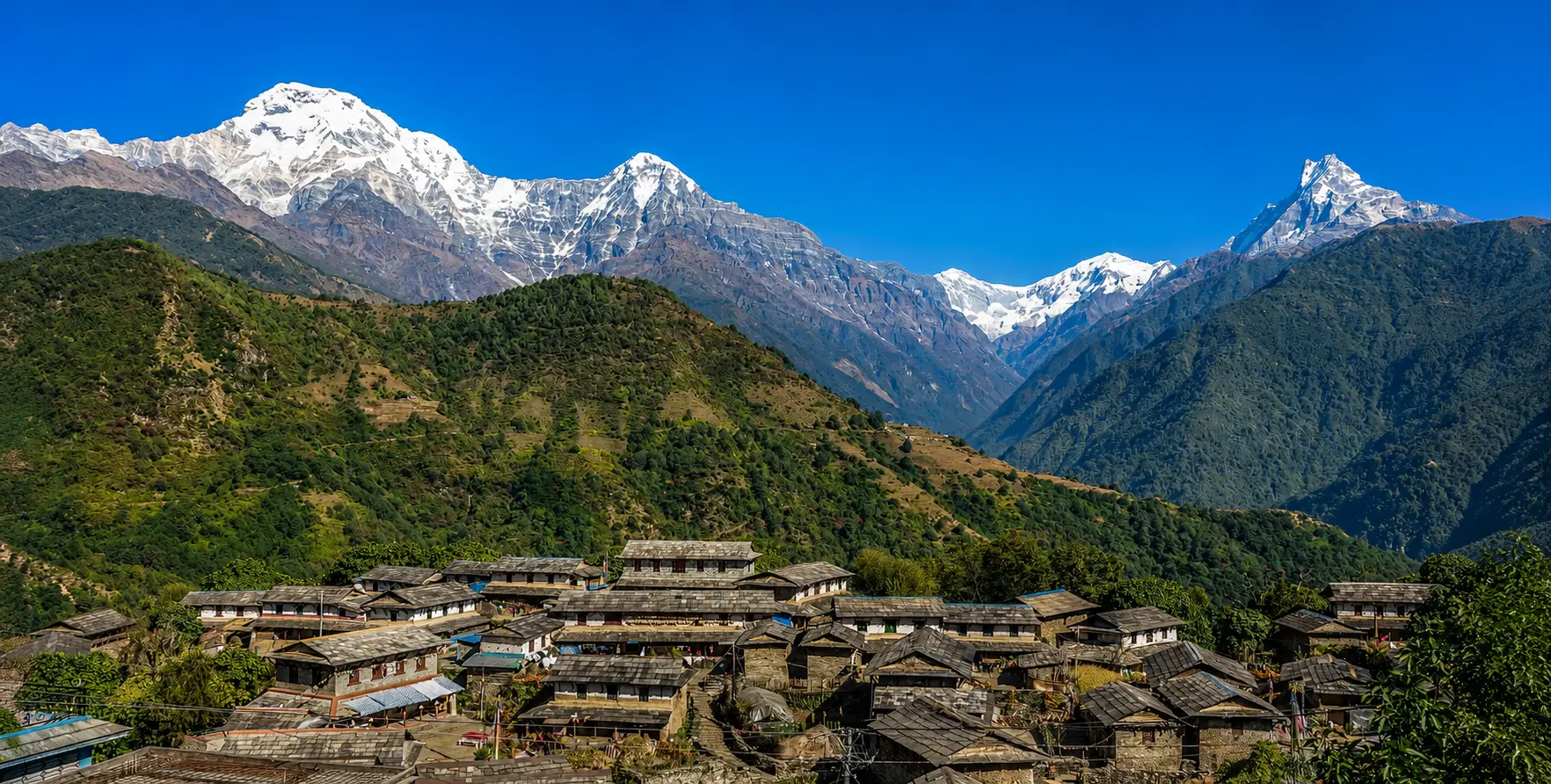
Ghandruk village

Pokhara to Ghandruk — Key Facts at a Glance

DetailInformation
Total Distance55–61 km (Pokhara to Ghandruk)
Ghandruk Altitude1,940 m (6,365 ft) above sea level
Travel Time3 to 4 hours, depending on road conditions
Road Type — Pokhara to Nayapul/BirethantiPaved tarmac — Beni Baglung Highway (~42 km)
Road Type — Birethanti to GhandrukOff-road, gravel, steep and narrow (~15–19 km)
4WD Required?Mandatory from Birethanti / Syauli Bazar onward
Departure Point in PokharaLakeside / Prithvi Chowk / your hotel
Best SeasonOctober–November (Autumn) and March–May (Spring)
Permits RequiredACAP (Annapurna Conservation Area Permit) + TIMS Card

Quick Tip: A 4WD jeep is mandatory from Birethanti onward. Do not attempt the Birethanti-to-Ghandruk road section in a sedan car or standard vehicle — the steep, narrow gravel track requires genuine 4WD capability and an experienced driver.

The Route: Pokhara to Ghandruk — Step by Step

The Pokhara to Ghandruk route follows two distinct road types — a smooth, paved highway for the first 42 km, followed by an exciting off-road mountain track for the final 15-19 km. Understanding the route helps you plan your journey effectively and choose the right vehicle.

Phase 1 — Pokhara to Nayapul / Birethanti (Beni Baglung Highway, 42–44 km, ~1 hour)

Leaving Pokhara, the vehicle heads south on the Beni Baglung Highway — a well-maintained paved road that winds through the hills south of the Pokhara Valley. The route passes through Naudanda and Kande (offering spectacular Annapurna Range panoramas) before descending to Nayapul, the classic starting point for the Annapurna Base Camp Trek.

  • Pokhara (Lakeside) → Naudanda / Kande: ~28 km, 40–45 min — broad hilltop viewpoints, Annapurna Range in full view
  • Kande → Nayapul: 14 km, 20 min — descending through the Modi River valley, terrace farms
  • Nayapul → Birethanti: ~2 km, 5 min — riverside village, ACAP entry checkpoint, last paved section

Phase 2 — Birethanti to Ghandruk (Off-Road, 13–17 km, 2–3 hours)

Beyond Birethanti, the smooth highway ends, and the off-road adventure begins. The vehicle climbs steeply on a narrow, gravel-and-earth track through terraced farmland, dense rhododendron and oak forests, and Gurung villages. This section requires a 4WD jeep and an experienced driver familiar with the route.

The effort is well rewarded — every bend in the road reveals a more dramatic Himalayan panorama than the last.

  • Birethanti → Syauli Bazar: ~8 km, 1 hour — rough gravel track, Modi Khola views, initial steep climb
  • Syauli Bazar → Kimche: ~3 km, 30 min — narrowing track, rhododendron canopy, mountain views open up
  • Kimche → Ghandruk: ~2–6 km depending on route, 30–60 min — final steep approach, stone paths, Ghandruk village entrance

Note on the Kimche approach: Some jeeps stop at Kimche (from which Ghandruk is a 30-minute uphill walk) rather than driving directly to Ghandruk village. Confirm with your driver whether the vehicle will go directly to Ghandruk or stop at Kimche.

Nepal Vehicle Hiring Pvt Ltd’s drivers always aim to reach the closest accessible point to Ghandruk village, minimising your walking distance with heavy trekking bags.

Alternative Route — Pokhara via Landruk to Ghandruk

A longer but equally scenic alternative route approaches Ghandruk via Tolka and Landruk, passing through the New Bridge (Jhinu Danda) area. This route is less commonly used for vehicle hire but offers spectacular views of the Modi Khola gorge. It adds approximately 30–45 minutes to the journey.

Ghandruk to Pokhara Jeep

Key Stops Along the Route

StopDistance from PokharaRoad TypeHighlights
Pokhara (Lakeside)StartN/ATrek starting point, mountain views, and a lake
Naudanda / Kande28 kmPaved highwayPanoramic Annapurna Range viewpoint
Nayapul42 kmPaved highwayClassic Annapurna Base Camp trek starts
Birethanti44 kmPaved → roughModi Khola riverside village, ACAP checkpoint
Syauli Bazar50 kmOff-road gravelLast vehicle access point before steep climb
Kimche53 kmOff-road gravelAlternative route — 30-min walk to Ghandruk
Ghandruk55–61 kmOff-road mountain trackGurung village, Annapurna South, Machhapuchhre views

Naudanda / Kande (28 km from Pokhara)

Kande is a hilltop settlement on the Beni Baglung Highway offering one of the most spectacular roadside Himalayan panoramas in the Pokhara region. On a clear morning, the entire Annapurna massif — from Dhaulagiri in the west to Manaslu in the east — is visible from the roadside viewpoints here.

Most private jeep drivers pause here briefly for a photo stop. It is also the trailhead for the Australian Camp day hike.

Nayapul (42 km from Pokhara)

Nayapul is a busy trailhead village at the confluence of the Bhurungdi and Modi rivers. It is the classic starting point for both the Annapurna Base Camp Trek and the Ghorepani–Poon Hill Circuit when approaching on foot. For vehicle-hire travellers, Nayapul is a brief pass-through — though some trekkers choose to walk from Nayapul to Birethanti (15 minutes) and then take a vehicle from Birethanti to Ghandruk.

Birethanti (44 km from Pokhara)

Birethanti is a charming riverside village on the banks of the Modi Khola. This is where the ACAP (Annapurna Conservation Area Project) entry checkpoint is located — all trekkers must have their ACAP permit and TIMS card inspected here. After the checkpoint, the paved road ends, and the off-road track to Ghandruk begins.

Birethanti has tea houses, guesthouses, and a pleasant riverside atmosphere along the Modi Khola.

Syauli Bazar (50 km from Pokhara)

Syauli Bazar is the last significant settlement before the final steep approach to Ghandruk. A small collection of tea houses and local shops marks this point. Most jeep drivers stop here briefly for passengers to use the facilities before the steepest section of the off-road climb.

Kimche (53 km from Pokhara)

Kimche is the point at which many jeep journeys effectively end — the track becomes very steep and narrow in the final section, and some vehicles turn back here. From Kimche, a 30-minute uphill walk on stone steps leads to Ghandruk village. If you are travelling with a heavy trekking bag, ask your driver in advance whether they will attempt the full drive to Ghandruk to stop at Kimche.

Ghandruk (1,940 m — 55–61 km from Pokhara)

You have arrived! Ghandruk village welcomes you with its cobblestone lanes, slate-roofed traditional stone houses, prayer wheels, marigold garlands, and the overwhelming presence of Annapurna South towering directly above. The village’s southern aspect and relatively low altitude mean it enjoys a warm, sunny microclimate even in autumn and early winter, making it comfortable for exploration at any time of day.
Pokhara to Ghandruk Vehicle Hire

All Vehicle Hire Options — Pokhara to Ghandruk 2026

Here is a complete comparison of every vehicle hire option available for the Pokhara to Ghandruk route:

Vehicle TypeCapacity2026 Cost (approx.)Best For
Private Jeep (Scorpio / Hilux)4–6 passengersUSD 100–160 (full vehicle)Groups of 2–6, trekkers with luggage
Shared JJeep(per seat)7–9 totalUSD 15–20 per personSolo budget travelers
Local Bus to Nayapul + Shared JeepMultiple passengersNPR 500 (bus) + USD 12–15 (jeep)Budget backpackers
Private Car (Sedan)2–3 passengersUSD 70–90 (Pokhara to Nayapul only)Light day-trip travellers (not to Ghandruk direct)
Motorbike Hire1–2 personsUSD 15–25/day (self-drive)Experienced riders only — not for luggage

Private Jeep Hire — Best Option for Trekking Groups

A private 4WD jeep (Mahindra Scorpio, Toyota Hilux, or similar) is the most popular and recommended vehicle hire option for the Pokhara-to-Ghandruk route. It provides door-to-door hotel pickup in Pokhara, direct access to Ghandruk without transfers, comfortable seating for groups of 4 to 6 with trekking gear on the roof rack, and complete flexibility to stop at viewpoints along the way.

  • Vehicle types: Mahindra Scorpio 4WD, Toyota Hilux 4WD, or similar
  • Capacity: 4–6 passengers comfortably; up to 7 with luggage on the roof rack
  • 2026 Cost: USD 145–160 for the full vehicle (one way, including driver and fuel)
  • Travel time: 3 to 4 hours, Pokhara to Ghandruk
  • Pickup: Door-to-door from your hotel in Lakeside, Pokhara
  • Flexibility: Stop at Kande viewpoint, Nayapul, Birethanti, or anywhere along the route
  • Advantage: No vehicle changes, no waiting, direct hotel pickup, ample luggage space

Nepal Vehicle Hiring Pvt Ltd provides private 4WD jeep hire from Pokhara to Ghandruk with experienced drivers fully familiar with the Beni Baglung Highway and the off-road Birethanti–Ghandruk track. All-inclusive — driver, fuel, tolls, and door-to-door service.

Shared Jeep — Budget Option for Solo Travellers

Shared jeeps depart from Pokhara’s Baglung Bus Park and operate on a fill-up-and-go basis. They are the most affordable motorised option for solo travellers or pairs willing to trade comfort and flexibility for cost savings.

  • Departure point: Baglung Bus Park, Pokhara
  • 2026 Cost: USD 15–20 per person (one way)
  • Travel time: 3.5 to 4.5 hours (departs only when full, additional stops en route)
  • Capacity: 7–9 passengers crammed into the vehicle, including the front seat
  • Luggage: Limited space — large trekking bags are difficult to manage
  • Note: No hotel pickup — you must reach Baglung Bus Park independently

Tip for solo travellers: If travelling during peak season (Oct–Nov, Mar–May), shared jeeps are readily available at Baglung Bus Park from early morning. During off-peak times, you may wait 1–2 hours for the vehicle to fill.

Private Car (Sedan) — Pokhara to Nayapul Only

A private sedan car (Toyota Corolla, Hyundai Sonata, or similar) can comfortably drive from Pokhara to Nayapul on the paved Beni Baglung Highway. However, sedans cannot safely navigate the off-road Birethanti-to-Ghandruk track. If you prefer a sedan, the standard approach is to take a sedan from Pokhara to Nayapul or Birethanti, then transfer to a shared or private jeep for the off-road section.

  • Cost: USD 60–80 for a sedan from Pokhara to Nayapul / Birethanti
  • Plus: USD 12–20 per person for shared jeep from Birethanti to Ghandruk
  • Drawback: Requires vehicle transfer at Birethanti — inconvenient with heavy trekking luggage
  • Best for: Day-trip visitors or those travelling very light without trekking gear

Ghandruk village (1)

Road Conditions — Pokhara to Ghandruk

Pokhara to Birethanti (Beni Baglung Highway)

The Beni Baglung Highway from Pokhara to Nayapul and Birethanti is a well-maintained paved road in good condition. It is a two-lane tarmac road for most of its length, widening to broader sections in areas. This stretch is manageable for all vehicle types, including sedans and Hiace vans.

Road improvements have been ongoing, and surface quality has improved significantly over the last two years.

Birethanti to Syauli Bazar (Off-Road Section)

Beyond Birethanti, the paved road ends, and a gravel-and-earth track begins climbing steeply into the Annapurna foothills. The surface is rough with loose stones, ruts, and uneven sections. A high-clearance 4WD vehicle is essential on this section.

During the dry season (October–May), the track is manageable for experienced drivers in a 4WD Scorpio or Hilux. The views of the Modi Khola gorge and terraced hillsides from this section are outstanding.

Syauli Bazar to Ghandruk (Steepest Section)

The final 5 to 8 km of the jeep track above Syauli Bazar, through Kimche to Ghandruk, is the most challenging section of the entire route. The road is very narrow, steep, and rocky in places. Some vehicles stop at Kimche (a 30-minute walk to Ghandruk) rather than attempting the final section.

Nepal Vehicle Hiring Pvt Ltd’s experienced drivers assess conditions on the day and reach the closest accessible point to Ghandruk village.

Season-by-Season Road Conditions

SeasonMonthsRoad ConditionsVisibility / Trek ConditionsRecommendation
Autumn (Peak)Oct – NovDry, excellentCrystal-clear mountain viewsBest — book in advance
Spring (Peak)Mar – MayDry, goodRhododendron bloom, clear skiesExcellent — very popular
WinterDec – FebCold, occasional frostClear views, quiet trailsGood — fewer crowds, cold
MonsoonJun – SepMuddy, landslide riskLimited views, lush green4WD essential — verify daily

Monsoon Warning (June–September): The Birethanti-Ghandruk off-road track is prone to landslides, mudslides, and surface damage during heavy monsoon rains. Always verify road conditions the day before travel during the monsoon season. Nepal Vehicle Hiring Pvt Ltd monitors road conditions in real time and will advise if travel is not recommended on a specific day.

Ghandruk village

Ghandruk — What to See and Do

Ghandruk is far more than just a trekking transit point. The village is one of the richest cultural and scenic destinations in the Annapurna region — worthy of a dedicated stay of one to three nights. Here are the key attractions and activities:

Attraction / ActivityDistance from VillageBest For
Gurung MuseumVillage centerCultural history, Gurung heritage
Ghandruk Monastery5-min walkBuddhist/Hindu cultural visit
Annapurna South ViewVillage viewpointsSunrise/sunset panoramic photography
Annapurna Base Camp TrekStarts from GhandrukFull multi-day Annapurna Base Camp trekking
Ghorepani – Poon Hill CircuitVia upper trailClassic 4–5 day Poon Hill trek loop
Australian Camp Day Hike1.5–2 hrs from GhandrukHalf-day panoramic viewpoint hike
Modi Khola River ValleyBelow GhandrukScenic walk, river swimming, relaxation
Tadapani Village2–3 hrs walkRhododendron forests, mountain views

Gurung Museum — Heart of Ghandruk Culture

The Ghandruk Gurung Museum is one of the finest ethnic museums in the Annapurna Conservation Area. Located in the village centre, the museum displays traditional Gurung costumes, weapons used by Gurkha soldiers, household implements, agricultural tools, musical instruments, and photographs chronicling the village’s proud military history. Entry is free or carries a small donation.

This is a must-visit for any cultural traveller.

Mountain Views — The Ghandruk Panorama

Ghandruk’s position on a broad south-facing terrace at 1,940 meters gives it extraordinary mountain views in multiple directions. Looking north, Annapurna South (7,219 m) and Hiunchuli (6,441 m) rise directly above the village in an almost vertical wall of ice and rock.

To the northeast, the iconic double-summit pyramid of Machhapuchhre (Fishtail, 6,993 m) dominates the skyline. Early-morning and late-afternoon light on these peaks is absolutely striking — one of the finest Himalayan village viewpoints in all of Nepal.

Annapurna Base Camp Trek — The Gateway

Ghandruk is an important junction and resting point on the Annapurna Base Camp (ABC) Trek — one of Nepal’s most popular and spectacular trekking routes. From Ghandruk, the ABC trail continues north through Chhomrong, Dovan, Himalayan Hotel, and Deurali before ascending to the glacial sanctuary of the Annapurna Base Camp at 4,130 meters.

By starting your ABC trek from Ghandruk after a jeep transfer from Pokhara, you save one full day of walking on the lower approach trail.

Ghorepani – Poon Hill Circuit

The classic Ghorepani–Poon Hill loop trek is easily accessible from Ghandruk via the trail to Tadapani and Ghorepani. This 4- to 5-day circuit, culminating in the famous Poon Hill sunrise (3,210 m) with panoramic views of Dhaulagiri, Annapurna, and Machhapuchhre, is one of Nepal’s most beloved short treks.

Many trekkers hire a jeep from Pokhara to Ghandruk and begin the Poon Hill loop from there — creating a circular route that avoids repeating the same trail.

Australian Camp Day Hike

Australian Camp (2,060 m) is a popular viewpoint and tea house plateau above Pokhara, accessible on foot from Kande or Ghandruk in a 2- to 3-hour walk. The viewpoint offers some of the most accessible panoramic Himalayan views in the Annapurna region—perfect for travellers who want dramatic mountain scenery without a multi-day trek.

Pokhara to Ghandruk Vehicle Hire

Permits Required — Pokhara to Ghandruk

The Ghandruk area falls within the Annapurna Conservation Area, and two mandatory permits are required. Both are checked at the ACAP checkpoint in Birethanti:

ACAP — Annapurna Conservation Area Permit

  • Cost: NPR 3,000 per person for foreign nationals (approximately USD 22 — verify current rate)
  • For SAARC nationals: NPR 200 per person
  • Where to obtain: Nepal Tourism Board office in Pokhara (Lakeside), Kathmandu, or at the Birethanti checkpoint
  • Inspected at: Birethanti ACAP checkpoint and multiple points along the Annapurna trails

TIMS Card — Trekkers’ Information Management System

  • Cost: Approximately USD 10–20 per person for foreign nationals
  • Where to obtain: Nepal Tourism Board or TAAN office in Pokhara (Lakeside) or Kathmandu

Permit Tip: Obtain both permits in Pokhara before departing for Ghandruk — the Nepal Tourism Board office in Lakeside, Pokhara, issues both permits easily. This saves time at the Birethanti checkpoint and avoids any risk of being turned back without documents.

What to Pack for the Pokhara to Ghandruk Vehicle Journey

  • ACAP permit and TIMS card: Carry printed copies easily accessible — checked at Birethanti
  • Water and snacks: The vehicle journey takes 3–4 hours with limited stops
  • Camera or phone with a full battery: Kande viewpoint and the off-road approach to Ghandruk offer spectacular photography opportunities
  • Light jacket or fleece: Ghandruk at 1,940 m is noticeably cooler than Pokhara — especially early morning and evening
  • Motion sickness medication: The Beni Baglung Highway and off-road section have numerous switchbacks
  • Nepali Rupees (NPR): Limited ATM access in Ghandruk — carry cash for tea house accommodation and meals
  • Trekking boots or sturdy footwear: The cobblestone paths of Ghandruk can be slippery in wet conditions
  • Sunscreen and sunglasses: High altitude sunlight is intense — even on overcast days
  • Headlamp: Essential if you plan to do early sunrise viewpoint walks

Practical Tips for Your Pokhara to Ghandruk Vehicle Hire

  • Book your vehicle at least 24–48 hours in advance during peak season (October–November and March–May) — private jeeps fill up fast.
  • Depart from Pokhara by 7:00–8:00 AM to arrive in Ghandruk by mid-morning and maximise your time in the village.
  • Confirm with your driver whether the Jeep will reach Ghandruk directly or stop at Kimche; this affects how much walking you’ll do with luggage.
  • Arrange permits in Pokhara before departure — you’ll need ACAP and TIMS permits at the Birethanti checkpoint.
  • Communicate your trekking plan to Nepal Vehicle Hiring Pvt Ltd — if you need a return vehicle from Ghandruk to Pokhara after your trek, book it at the same time.
  • Ask your driver to pause at Kande viewpoint for morning mountain photos — on clear mornings, the Annapurna Range panorama from Kande is outstanding.
  • Pack a small day bag with essentials for the vehicle ride — keep permits, camera, water, and medication accessible, not in the roof rack luggage.
  • Verify road conditions during the monsoon season — the off-road section from Birethanti can become impassable after heavy rain. Nepal Vehicle Hiring Pvt Ltd monitors this route daily.
  • For groups of 8 or more, consider booking a Hiace van from Pokhara to Nayapul and a private jeep for the Birethanti-to-Ghandruk off-road section.

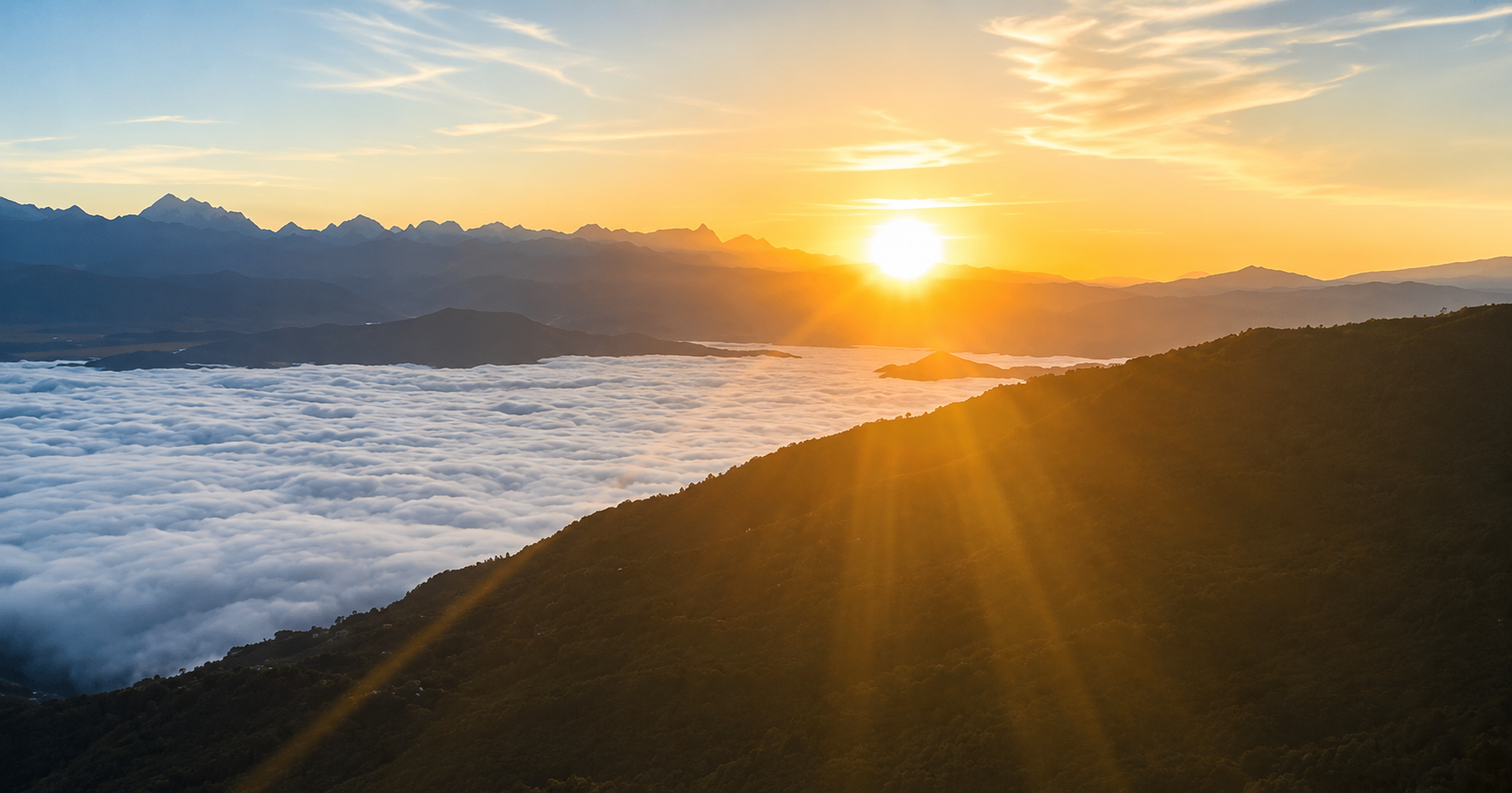
sunrise

Return Journey — Ghandruk to Pokhara

Most trekkers and visitors to Ghandruk need to plan their return journey to Pokhara. Here are the main options:

Nepal Vehicle Hiring Pvt Ltd can arrange a private jeep return from Ghandruk to Pokhara at the same price as the outward journey (US$145 for the full vehicle). This is the most comfortable and convenient return option — especially after a multi-day trek when you have heavy bags and are physically tired. Book the return at the same time as your outward journey to guarantee vehicle availability.

Shared Jeep from Ghandruk to Pokhara

Shared jeeps depart from Ghandruk toward Pokhara in the morning (typically 7:00–10:00 AM) at approximately USD 12–15 per person. These operate on a fill-and-go basis and are a reliable, affordable option during peak season, when many trekkers head back to Pokhara at the same time.

Trek Return — Walk to Nayapul and Bus or Car to Pokhara

Many trekkers prefer to walk the descent from Ghandruk to Birethanti and Nayapul (approximately 3–4 hours) and then take a local bus or car back to Pokhara. This is a pleasant and rewarding option for those whose legs feel strong after their trek — the walk through terraced farms and the Modi Khola valley is beautiful.

Combined Treks — Continue to Ghorepani or Annapurna Base Camp

Many visitors to Ghandruk do not return directly to Pokhara — instead, they continue their trek onward to Ghorepani–Poon Hill (2 days) or Annapurna Base Camp (4–5 days) and arrange a vehicle return from the endpoint of their trek (Nayapul or Pokhara). Nepal Vehicle Hiring Pvt Ltd can arrange pickup from any point on the Annapurna trekking network.

Why Choose Nepal Vehicle Hiring Pvt Ltd for Pokhara to Ghandruk?

  • Specialist 4WD Fleet: Mahindra Scorpio 4WD and Toyota Hilux 4WD — the best vehicles for the Birethanti to Ghandruk off-road section.
  • Experienced Drivers: Our drivers know every curve and condition of the Beni Baglung Highway and the Birethanti–Ghandruk jeep track — including the challenging Syauli Bazar-Kimche section.
  • Hotel Pickup in Pokhara: Door-to-door service from your hotel in Lakeside, Prithvi Chowk, or anywhere in Pokhara.
  • All-Inclusive Pricing: The quoted price includes the driver, fuel, and road tolls. No surprises.
  • Flexible Stops: Stop at Kande viewpoint, Nayapul, or Birethanti for photos or tea — your driver will accommodate any requests along the route.
  • Monsoon Monitoring: Our team tracks daily road conditions on the Ghandruk route and proactively communicates any risks or road closures.
  • Return Trip Booking: Book your outward and return Ghandruk transfers in a single booking — no logistics stress during your trek.
  • 24/7 Booking: WhatsApp, phone, or email — instant confirmation at any time.

Frequently Asked Questions — Pokhara to Ghandruk Vehicle Hire

How far is Pokhara from Ghandruk?

The road distance from Pokhara to Ghandruk is approximately 55-61 km, depending on the exact route taken. The first 42 to 44 km from Pokhara to Birethanti is a paved highway; the remaining 13 to 17 km from Birethanti to Ghandruk is an off-road mountain track.

How long does the vehicle journey from Pokhara to Ghandruk take?

A private jeep hire takes approximately 3 to 4 hours from Pokhara to Ghandruk. A shared jeep takes 3.5 to 4.5 hours. Road conditions — particularly on the off-road Birethanti to Ghandruk section — can add time in wet or monsoon conditions.

What is the 2026 cost of hiring a private jeep from Pokhara to Ghandruk?

A private 4WD jeep hire from Pokhara to Ghandruk costs approximately US$145 for the full vehicle (one-way). This includes driver, fuel, and road tolls. The cost per person for a group of 6 is therefore only USD 24-27 — excellent value compared to other transport options.

Is a 4WD jeep necessary for the Pokhara-Ghandruk route?

A 4WD jeep is necessary from Birethanti onward. The 13- 17 km off-road track from Birethanti to Ghandruk is steep, narrow, and rocky—completely unsuitable for a sedan, standard SUV, or Hiace van. The Pokhara-Birethanti section of the Beni-Baglung Highway is drivable in any vehicle.

Does the Jeep go directly to Ghandruk or stop at Kimche?

This depends on current road conditions and the driver’s assessment. Some jeeps reach Ghandruk village directly; others stop at Kimche (a 30-minute uphill walk to Ghandruk). Nepal Vehicle Hiring Pvt Ltd’s drivers always aim to reach the closest accessible point to Ghandruk village.

Confirm this with your driver before departure.

What permits do I need for Ghandruk?

You need an ACAP (Annapurna Conservation Area Permit — approximately NPR 3,000 / USD 22 per person) and a TIMS Card (approximately USD 10–20 per person). Both are inspected at the Birethanti ACAP checkpoint. Obtain both permits at the Nepal Tourism Board office in Lakeside, Pokhara, before departure.

Can I hire a vehicle directly from Kathmandu to Ghandruk?

Yes. Nepal Vehicle Hiring Pvt Ltd can arrange a private jeep hire from Kathmandu directly to Ghandruk — a journey of approximately 260 to 280 km taking 7 to 8 hours, including the off-road Birethanti to Ghandruk section. This is typically done in combination with a stopover in Pokhara.

Can I book a return vehicle from Ghandruk to Pokhara?

Yes. Nepal Vehicle Hiring Pvt Ltd arranges a private jeep hire from Ghandruk to Pokhara. We recommend booking your return vehicle at the same time as your outward journey to ensure availability—especially during peak trekking season.

What is the best time of year to hire a vehicle to Ghandruk?

October to November (autumn) offers the clearest skies and driest roads — the best season for mountain views and comfortable jeep travel. March to May (spring) is excellent with rhododendron forests in bloom. December to February is quiet with good views, but cold at altitude.

June to September (monsoon) requires extra caution on the off-road section — always verify conditions before travel.

Conclusion

Ghandruk is one of Nepal’s most genuinely rewarding village destinations — a living cultural monument set against the backdrop of some of the world’s highest and most beautiful mountains. Reaching it from Pokhara by private jeep turns what could be a difficult logistical challenge into an exciting, scenic adventure in its own right.

The 55 to 61 km route from Pokhara — starting on the smooth Beni Baglung Highway with sweeping Annapurna panoramas, then transitioning to the thrilling off-road jeep track through rhododendron forest above Birethanti — captures everything extraordinary about travel in the Nepal Himalaya.

Whether you are beginning a multi-day Annapurna Base Camp Trek, starting the Ghorepani–Poon Hill circuit, or simply seeking a memorable day or overnight visit to one of Nepal’s finest Gurung villages, Nepal Vehicle Hiring Pvt Ltd’s private Pokhara to Ghandruk jeep service is the most comfortable, convenient, and reliable way to get there.

Book your jeep today — Call or WhatsApp: +977 981-4227196
Website: www.vehiclehiringnepal.com
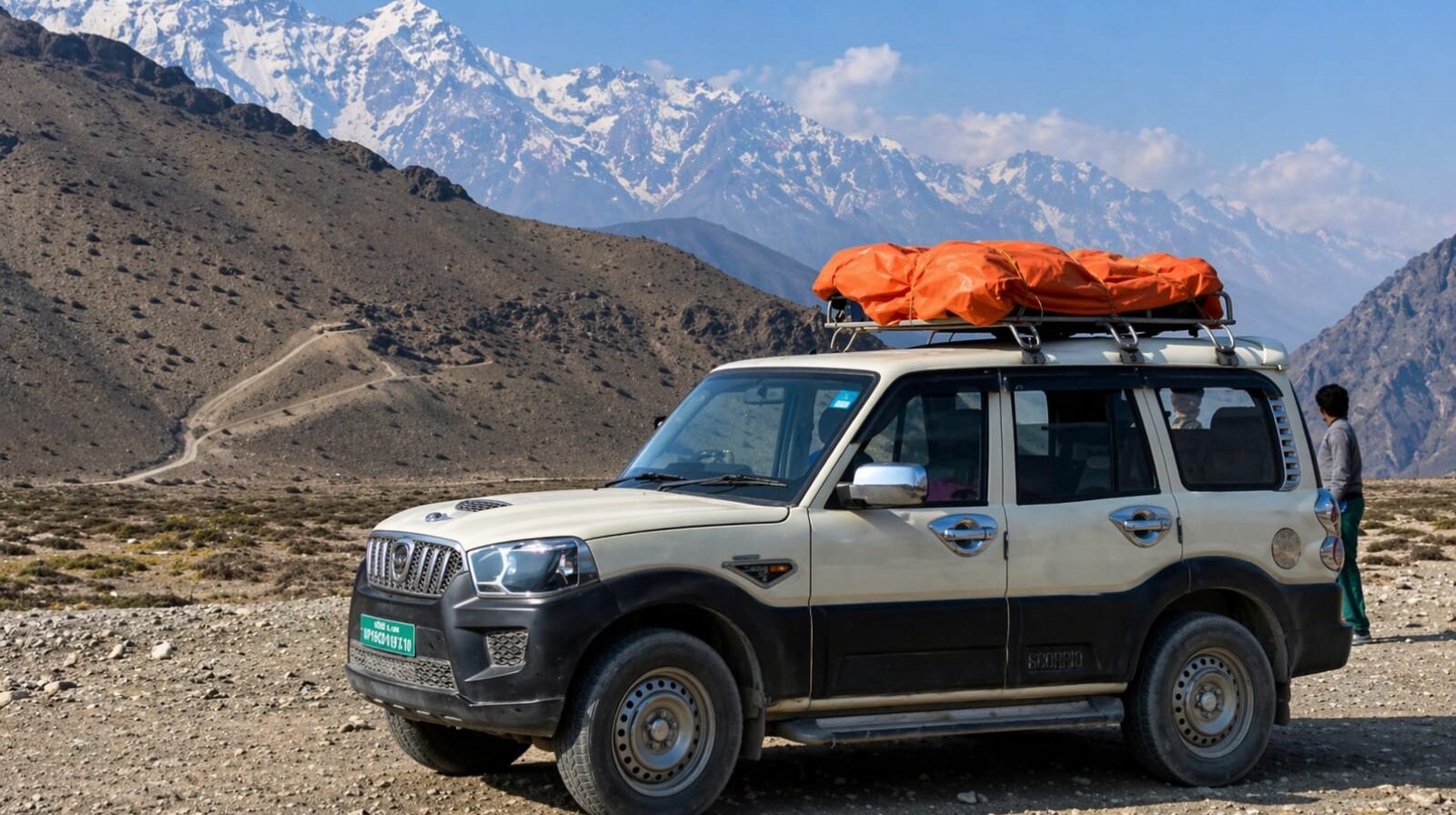
E-mail: [email protected]

Pokhara to Nayapul Trek Transport: Complete Guide for Trekkers

kathmandu to salleri jeep

Pokhara to Nayapul Transport – Complete Guide for Trekkers

Nayapul is the main trailhead for two of Nepal’s most beloved trekking routes – the Poon Hill Trek (Ghorepani-Poon Hill) and the Annapurna Sanctuary Trek (ABC Trek). Located approximately 42 km from Pokhara, Nayapul is where thousands of trekkers begin their Annapurna adventure each year. Getting from Pokhara to Nayapul quickly, comfortably, and reliably is the first step of your trekking journey.

This complete 2026 guide covers all transport options from Pokhara to Nayapul – private car, taxi, local bus, and Hiace van – with prices, departure times, road conditions, trekking permit tips, and everything you need to know to start your trek on the right foot.

Where is Nayapul, and why is it Important?

Location: Nayapul, Kaski District, Gandaki Province, Nepal

Distance from Pokhara: Approximately 42 km by road

Travel Time: 1 hour to 1.5 hours by private car or taxi

Altitude: 1,070 m above sea level

Road Type: Paved road from Pokhara to Nayapul via Birethanti

Treks Starting Here: Poon Hill Trek (Ghorepani), Annapurna Sanctuary Trek (ABC), Annapurna Circuit (partial start)

Nayapul sits at the confluence of the Modi Khola and Bhurungdi Khola rivers and serves as the official roadhead entry point for the Annapurna Conservation Area. Trekkers cross the suspension bridge at Nayapul, pass through Birethanti village (permit checkpoint), and begin climbing into the Annapurna foothills. It is one of Nepal’s busiest trekking trailheads.

Transport Options: Pokhara to Nayapul

Four main ways to get from Pokhara to Nayapul. Each has its own advantages depending on your group size, budget, schedule, and comfort preferences:

Transport TypeTravel TimeCostComfortBest For
Private Car / Taxi (full vehicle)1–1.5 hrsUSD 40- 60 (full carExcellentSolo, couples, small groups
Private Jeep / SUV1–1.5 hrsUSD 60-80full jeepExcellentGroups 4–6 with heavy gear
Hiace Van (private)1–1.5 hrsUSD 100- 120 full vanVery GoodGroups of 7–14 trekkers
Coaster Bus 14- 22 people1.5–2 hrsNPR  150-200Full busBasicGroups of 14- 22 trekkers
Tourist Bus1.5–2 hrsNPR 200-300 Full busModerateBackpackers, budget groups

For most trekkers, a private car or taxi is the best option. The cost is low (especially split between a group), the journey is fast and direct, and you can depart from your Pokhara hotel at any time – crucial for reaching Nayapul early enough to put in good trekking hours on Day 1.

NAYAPUL

Private Car from Pokhara to Nayapul – Full Details

Why a Private Car is the Best Choice

Most trekkers heading to Nayapul choose a private car or taxi. Here is why it is the best option for most:

  • Direct pickup from your Pokhara hotel or guesthouse – no walk to a bus stop with a heavy pack
  • Depart at your preferred time – early morning departures (6:00–7:00 AM) recommended to maximise Day 1 trekking
  • Fastest option – 1 to 1.5 hours vs 1.5 to 2 hours by local bus
  • Comfortable, air-conditioned vehicle for you and your full group
  • Full luggage space – essential for trekkers with large backpacks and gear
  • Driver drops you right at the Nayapul bridge – no confusion about where to start
  • The same driver can pick you up at Nayapul or Birethanti at the end of your trek
  • Cost split between group members is very affordable – USD 25–40 total for up to 4 people

Private Car Price: Pokhara to Nayapul 2026

VehicleCapacityOne-Way PriceReturn Trip PriceNotes
Sedan Car1–3 paxUSD 40- 60USD 70- 150Most popular choice
SUV / Jeep4–6 paxUSD 60- 100U100- 200200Best for groups with big packs
Hiace Van7–14 paxUSD 100-50US170- 27070Group trekking teams
Coaster Bus15–22 paxUSD 150- 200USD 260- 300Large trekking groups

All private vehicle prices are for the full vehicle – not per person. The driver, fuel, and insurance are included. For a group of 4 trekkers sharing a sedan, the cost works out to just USD 6–9 per person – far more convenient than the local bus, which costs very similarly.

Nayapul signboard at the trailhead

Local Bus from Pokhara to Nayapul – Full Details

Departure and Schedule

Local buses from Pokhara to Nayapul depart from the Baglung Bus Park located in Baglung Chowk, Pokhara – approximately 3 km from the Lakeside tourist area. A taxi from Lakeside to the bus park costs around NPR 300- 400.

First Departure: Around 7:00 – 7:30 AM (earliest recommended)

Last Departure: Around 4:00 – 5:00 PM

Frequency: Every 30 to 45 minutes during peak hours

Ticket Price: NPR 150 to NPR 200 per person (approximately USD 1.10 to USD 1.50)

Travel Time: Approximately 1.5 to 2 hours, including stops

Drop-off Point: Nayapul bus stop near the suspension bridge trailhead

What to Expect on the Local Bus

  • Basic seating with limited legroom – difficult with a large trekking backpack
  • No air conditioning – windows open for ventilation
  • Stops at multiple villages along the route – adds time to the journey
  • Luggage stored on the roof or in the aisle – watch your gear carefully
  • Can be crowded during peak trekking season (October–November and March–May)
  • Drops at the main road near Nayapul bridge – same trailhead as private vehicles

The local bus is a genuinely viable option for solo budget trekkers. However, if you are travelling in a group of 2 or more, splitting the cost of a private car is almost always a better value when you factor in the time, convenience, and comfort difference.

The Road: Pokhara to Nayapul Route Guide

The drive from Pokhara to Nayapul follows a well-paved road through the Annapurna foothills southwest of Pokhara. It is a beautiful, scenic drive that gives you the first taste of the mountain landscape you are about to trek into.

Pokhara Lakeside to Naya Pul Road Junction (15 km | 25 min)

Depart from the Lakeside area heading south through Pokhara city. The road passes through the busy Baglung Chowk area – the main junction for traffic heading southwest towards Beni, Baglung, and the Annapurna region. Traffic can be slow through central Pokhara in the early morning – departing before 6:30 AM helps.

Naya Pul Road Junction to Lumle (10 km | 15 min)

Beyond the city outskirts, the road climbs gently into the Annapurna foothills through rice paddies and mixed forest. The Annapurna South (7,219 m) and Machhapuchhre (6,993 m) peaks begin to dominate the northern skyline on clear mornings – a spectacular preview of the mountains you are heading towards. Lumle is known for its connections to British Gurkha training and its agricultural research station.

Lumle to Chandrakot (7 km | 10 min)

The road continues climbing with increasingly dramatic Annapurna views. Chandrakot is a popular alternative starting point for the Poon Hill trek and sits at 1,550 m with panoramic views of the Modi Khola valley below. Some trekkers begin from Chandrakot rather than Nayapul to add an extra day of walking.

Chandrakot to Nayapul (10 km | 15 min)

The road descends from Chandrakot down to the Modi Khola riverbed and follows the river to Nayapul. You can see Nayapul’s white suspension bridge and the first teahouses of Birethanti across the river. Your driver will drop you at the road end near the bridge where your trek officially begins.
Pokhara to Nayapul Trek Transport: Complete Guide for Trekkers

What to Do at Nayapul When You Arrive

Arriving at Nayapul can feel a little chaotic for first-time trekkers. Here is exactly what to do when your vehicle drops you off:

  1. Collect all your gear from the vehicle and thank your driver – confirm return pickup arrangements if pre-arranged
  2. Walk to the suspension bridge – it is visible from the road drop point, approximately 2 to 3 minutes on foot
  3. Cross the suspension bridge over the Modi Khola and enter Birethanti village on the other side
  4. Visit the ACAP checkpoint in Birethanti to register your permits (ACAP permit and TIMS card must be shown here)
  5. Stock up at Birethanti teahouses if needed – this is the last chance to buy snacks, water, chocolate, or forgotten supplies before the trek begins.
  6. Begin your trek from Birethanti – the trail to Tikhedhunga, Ulleri, and Ghorepani begins here.

Important: Do not start trekking until you have passed through the Birethanti ACAP permit checkpoint. They check all trekking permits here, and they must be valid and stamped before you proceed.

Trekking Permits Required for Nayapul Treks

All trekkers entering the Annapurna Conservation Area through Nayapul and Birethanti must carry valid permits. These must be arranged in Kathmandu or Pokhara BEFORE arriving at Nayapul:

PermitCost 2026Where to GetNotes
ACAP – Annapurna Conservation Area PermitNPR 3,000 (~USD 22)Nepal Tourism Board, Pokhara or KathmanduMandatory for all trekkers
TIMS Card – Trekkers Information Management SystemUSD 10 (free for some nationalities)Nepal Tourism Board / TAANRequired for all trekkers
Note: Children under 10 yearsFreeShow passport at checkpointNo permits needed for under 10s

In Pokhara, you can get ACAP permits and TIMS cards at the Nepal Tourism Board office in Damside, Pokhara (near the lake, about 15 minutes from Lakeside). Arrange permits the day before your trek so you can depart for Nayapul first thing in the morning without delay.

Nayapul serves as the gateway to some of Nepal’s most beloved trekking routes. Here is an overview of the main treks:

Poon Hill Trek (Ghorepani-Poon Hill Trek)

Duration: 4 to 5 days

Difficulty: Easy to Moderate – suitable for beginners

Max Altitude: Poon Hill viewpoint at 3,210 m

Highlights: Sunrise views of Dhaulagiri (8,167 m) and the Annapurna range from Poon Hill, rhododendron forests, and Gurung villages

Route: Nayapul – Tikhedhunga – Ulleri – Ghorepani – Poon Hill – Tadapani – Ghandruk – Kimche – Nayapul

The Poon Hill Trek is Nepal’s most popular short trek and one of the finest mountain viewpoint experiences in the world. The sunrise from Poon Hill with Machhapuchhre, Annapurna South, Hiunchuli, Nilgiri, and Dhaulagiri all glowing in the morning light is an image that stays with trekkers for a lifetime. Accessible for most fitness levels and perfect for first-time Nepal trekkers.

Pokhara to Nayapul Trek Transport: Complete Guide for Trekkers

Annapurna Sanctuary Trek (ABC Trek)

Duration: 10 to 13 days from Nayapul

Difficulty: Moderate to Strenuous

Max Altitude: Annapurna Base Camp at 4,130 m

Highlights: Annapurna Base Camp glacial amphitheatre, Machhapuchhre Base Camp, Chhomrong village, Modi Khola gorge

Route: Nayapul – Birethanti – Tikhedhunga – Ghorepani – Tadapani – Chhomrong – Sinuwa – Dovan – MBC – ABC – return

The Annapurna Sanctuary Trek is one of Nepal’s most dramatic trekking experiences. The route follows the narrow Modi Khola gorge deep into the heart of the Annapurna massif, emerging at a striking glacial amphitheatre surrounded by eight mountains above 6,000 m, including Annapurna I (8,091 m), Annapurna South (7,219 m), Gangapurna (7,454 m), and the iconic Machhapuchhre (Fishtail, 6,993 m).

Annapurna Circuit Trek (Partial Start from Nayapul)

Duration: 16 to 21 days full circuit from Besisahar

Difficulty: Strenuous

Notes: Most trekkers start the Annapurna Circuit from Besisahar (north of Pokhara) but end the circuit at Nayapul after crossing the Thorong La Pass and descending through Muktinath and Tatopani. A private vehicle from Nayapul back to Pokhara completes the circuit.
Annapurna Base Camp Trek

Ghandruk Village Trek (Short Cultural Trek)

Duration: 2 to 3 days

Difficulty: Easy to Moderate

Highlights: Ghandruk – Nepal’s largest Gurung village, Annapurna South close-up views, Gurung culture museum

A shorter and less crowded alternative to the full Poon Hill trek. Ghandruk offers stunning close-up views of Annapurna South and Hiunchuli, authentic Gurung village culture, and a relaxed pace ideal for families or travellers with limited time.

Best Time to Travel from Pokhara to Nayapul

October to November (Best Season)

The post-monsoon season is the finest time for Nayapul treks. The skies are crystal clear, rhododendron forests are vivid green after the rains, and the Annapurna views from Poon Hill and ABC are at their most spectacular. The road from Pokhara to Nayapul is in excellent condition.

Book your transport vehicle in advance as demand is very high during peak season.

March to May (Excellent for Rhododendrons)

Spring is the second-best season and is particularly famous for blooming rhododendron forests along the Ghorepani trail. The forests between Ulleri and Ghorepani turn brilliant red, pink, and white from March to April – one of the most beautiful trekking experiences in Nepal. Mountain views are generally good in the morning before afternoon haze develops.

December to February (Quiet and Cold)

Winter trekking on the Poon Hill route is possible and rewarding – the trail is quiet, the views are sharp, and the atmosphere is peaceful. However, Poon Hill itself can have snow in January, and Ghorepani experiences cold nights. The Annapurna Sanctuary Trek becomes significantly more challenging with snow on the upper sections.

The road from Pokhara to Nayapul remains clear and accessible throughout winter.

June to September (Monsoon – Difficult)

The Annapurna region receives very heavy monsoon rainfall from June to September. Trails become extremely muddy, and leeches are abundant below 2,500 m. Landslides occasionally affect sections of the Nayapul to Tikhedhunga trail.

The road from Pokhara to Nayapul remains passable. Some determined trekkers do attempt Poon Hill in monsoon – the rhododendron forests are lush and vivid green, crowds are non-existent, and teahouse prices drop significantly. However, clouds often obscure the views.

Timing your departure from Pokhara correctly is essential for a successful first day of trekking. Here is our recommended schedule:

Departure from PokharaArrival at NayapulTrekking Hours Day 1Recommended First Night Stop
5:30 – 6:00 AM6:45 – 7:30 AM6–7 hours of trekkingTikhedhunga (1,540 m) or Ulleri (1,960 m)
7:00 – 7:30 AM8:30 – 9:00 AM5–6 hours of trekkingTikhedhunga (1,540 m)
8:00 – 9:00 AM9:30 – 10:30 AM4–5 hours of trekkingBirethanti (1,025 m) or Tikhedhunga
After 10:00 AMAfter 11:30 AM2–3 hours of trekkingBirethanti only – short first day

We strongly recommend departing Pokhara no later than 7:00 AM to reach Nayapul by 8:30 AM. This gives you 5 to 6 hours of comfortable trekking before arriving at your first teahouse for the night. An earlier 5:30–6:00 AM departure lets you reach Ulleri and get a head start on the famous 3,000+ stone steps the next day.

Pokhara

Returning from Nayapul to Pokhara

At the end of your trek, most trekkers return to the roadhead at Nayapul or Birethanti and need transport back to Pokhara. Here are your options:

The most convenient and reliable return option. When booking your outward transport with Vehicle Hiring Nepal, please tell us your expected return date, and we will arrange a driver to meet you at Nayapul Bridge at a pre-agreed time. You walk down from your final teahouse, cross the bridge, and your vehicle is waiting—no waiting, no bargaining, no uncertainty.

Book Return Transport from Ghandruk or Nayapul

If your return date is uncertain (as it often is on mountain treks), you can contact Vehicle Hiring Nepal via WhatsApp from Ghandruk or Nayapul when you know your actual finish time. We can usually arrange a pickup vehicle from our Pokhara base within 2 to 4 hours of your message.

Local Bus Return from Nayapul to Pokhara

Local buses run from Nayapul to Pokhara’s Baglung Bus Park throughout the day, with the last bus typically departing between 4:00 and 5:00 PM. Tickets cost NPR 150-200. Arrive at the Nayapul bus stop early in the afternoon to ensure you catch a bus back on time. Note: After a full day of trekking descent, a comfortable private car is much more welcome than a crowded local bus.

Alternative Trailheads Near Nayapul

Depending on your trek itinerary, there are several other popular trailheads near Nayapul that Vehicle Hiring Nepal can transport you to from Pokhara:

TrailheadDistance from PokharaTrek It OpensVehicle Price (One-Way)
Nayapul42 km / 1–1.5 hrsPoon Hill, ABC, Ghandruk$ 40- 60 full car
Birethanti44 km / 1.5 hrsSame as Nayapul (500m further)$40-80 full car
Chandrakot35 km / 1 hrPoon Hill alternative start (+1 day)$40-100 full car
Phedi8 km / 20 minSarangkot, World Peace Pagoda day hike$20–25 full car
Kande12 km / 30 minAustralian Camp, Pothana hike$15–25 full car
Besisahar75 km / 2–2.5 hrsAnnapurna Circuit full trek starts$80–120 full car
Soti Khola140 km / 7–8 hrsManaslu Circuit trek starts$200–250 jeep only

What to Bring on the Drive to Nayapul

  • Trekking permits – ACAP and TIMS card (must be arranged in Pokhara the day before)
  • All trekking gear in your main backpack – pack the night before for an early departure
  • Daypack with snacks, water, and essentials for the first day of trekking
  • Cash in Nepali Rupees – take out extra from Pokhara ATMs, as there are no ATMs on the trail
  • Passport or identity document for permit checks at Birethanti checkpoint
  • Light layer or windproof jacket for the early morning drive – Pokhara mornings can be cool
  • Camera or phone fully charged and ready – mountain views begin on the drive to Nayapul
  • Trekking poles if using – keep them accessible rather than buried in your main pack
  • Emergency contact list and your travel insurance emergency number

What is Included When You Book With Vehicle Hiring Nepal?

  • Private vehicle (car, SUV, or Hiace) with an experienced, friendly driver
  • Direct pickup from your Pokhara hotel, guesthouse, or Lakeside location
  • Drop-off directly at the Nayapul suspension bridge trailhead
  • Fuel and vehicle insurance are included in the price
  • Flexible departure time – we accommodate early morning 5:30 AM departures for trekkers
  • Pre-arranged return pickup from Nayapul or Birethanti at the end of the trek (on request)
  • 24/7 support – contact us from anywhere on the trek to arrange or confirm return pickup

Not included: Trekking permits (ACAP and TIMS), personal meals, teahouse accommodation, porter or guide fees, and any additional stops or detours beyond Nayapul.

How to Book Your Transport from Pokhara to Nayapul

  1. Contact Vehicle Hiring Nepal via WhatsApp or visit vehiclehiringnepal.com
  2. Tell us your preferred travel date and departure time from Pokhara
  3. Provide your hotel or pickup address in Pokhara Lakeside
  4. Confirm your group size and luggage (backpack count)
  5. Choose your vehicle type – sedan, SUV, or Hiace for larger groups
  6. Inform us if you need a return pickup at the end of your trek and your estimated finish date
  7. Receive booking confirmation with driver name, contact number, and vehicle details
  8. Your driver will be at your hotel at the agreed departure time – no waiting, no rushing

WhatsApp: +977 981-4227196
Email: vehiclehiringnepal.com
Website: www.vehiclehiringnepal.com
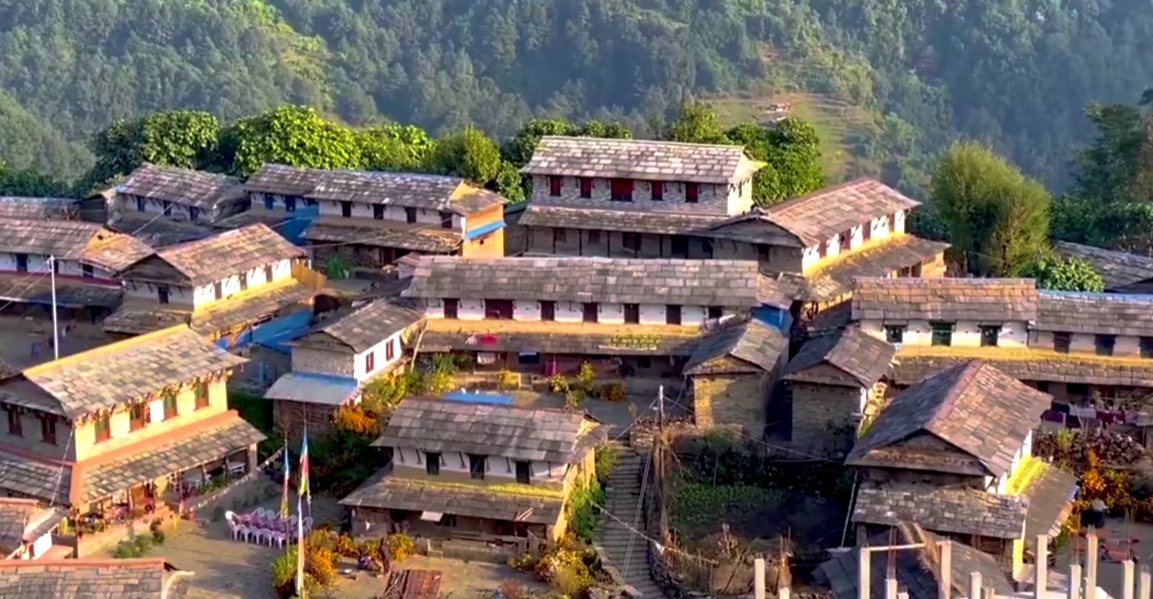
Frequently Asked Questions

How far is Nayapul from Pokhara?

Nayapul is about 42 km from Pokhara’s Lakeside area by road. The journey takes 1 hour to 1.5 hours by private car or taxi, and 1.5 to 2 hours by local bus.

What time should I leave Pokhara to start trekking at Nayapul?

We recommend departing Pokhara between 5:30 and 7:00 AM. This gets you to Nayapul by 7:00 to 8:30 AM and allows 5 to 7 hours of trekking on Day 1 before dark. An early start is especially important if you plan to reach Ulleri (above Tikhedhunga) on Day 1, as the staircase climb takes 2 to 3 hours.

Can I get a shared taxi from Pokhara to Nayapul?

Shared taxis are available from the Baglung Bus Park in Pokhara heading towards Beni and Nayapul. The cost is around NPR 300-500 per seat. However, shared taxis only run when full, can be crowded with trekking packs, and do not depart from Lakeside.

A private vehicle is far more convenient and costs about the same when split between two or more trekkers.

Do I need permits before arriving at Nayapul?

Yes. All trekking permits – ACAP (Annapurna Conservation Area Permit) and TIMS card – must be obtained in Pokhara or Kathmandu before you arrive at Nayapul. The Birethanti checkpoint, immediately after the Nayapul bridge, strictly checks all permits.

Trekkers without valid permits will be turned back or fined. Arrange permits at the Nepal Tourism Board office in Damside, Pokhara, the day before your trek.

Can the driver drop us at Birethanti instead of Nayapul?

The road from Nayapul continues a short distance to Birethanti village (approximately 500 m further along a narrow track). Most drivers can take you directly to Birethanti upon request, saving a few minutes of walking. Confirm this with your driver when booking.

What if my trek takes longer than expected and I need a later pickup?

This is completely normal on mountain treks. WhatsApp our team when you know your actual descent date and expected arrival time at Nayapul, and we will arrange a vehicle accordingly. We can usually organise a pickup within 2 to 4 hours of your message.

There is no penalty for changing your return date.

Is the road from Pokhara to Nayapul paved?

Yes. The road from Pokhara to Nayapul via Lumle and Chandrakot is fully paved and generally in good condition. All standard vehicles, including sedans, can comfortably reach Nayapul year-round.

The road may have occasional potholes or rough patches, especially after the monsoon, but it is not a mountain track requiring a 4WD vehicle.

Can I combine a Pokhara sightseeing tour with a Nayapul drop-off?

Final Thoughts

Yes. If you want to do a quick Pokhara sightseeing stop before beginning your trek, we can arrange a vehicle that includes a visit to Sarangkot for sunrise, Devi’s Fall, or Bindabasini Temple before dropping you at Nayapul. Add approximately 2 to 3 hours to your journey for sightseeing.

This is a popular choice for trekkers flying directly into Pokhara who want to see the city highlights before heading to the trails.

If you are a trekker planning to reach the high altitudes of the Annapurna region, a private four-wheel-drive jeep has its advantages over public transport. Getting to Chame by mountain roads is a notorious bump-fest and unpaved, so the better suspension, climate control, and the necessary legroom of a private jeep are worth their weight in gold compared to crowded local buses.

Plus, you have complete freedom to travel at your own pace, stopping for lunch, a leg stretch, or to take photos of the striking scenery whenever you want.

A direct transfer saves valuable time and energy for the trek ahead by eliminating the hassle of changing vehicles mid-route. The private jeep transfer from Kathmandu to Chame is a worthwhile investment in your comfort and peace of mind, turning what could be a gruelling day of travel into a striking prelude to your Himalayan adventure.

Our top offerings include iconic journeys such as the Annapurna Circuit, the in-depth Mardi Himal Trek, the striking Manaslu Circuit, the exciting Chitwan Jungle Safari, and luxury packages. We can also arrange short hikes, heritage tours, mountain flights, and customised travel plans tailored to your schedule and interests.

Whether you want a budget-friendly trip or a luxury trekking experience with top-end lodges, private guides, and high-end services, we manage every detail professionally. Our goal is to provide a smooth transition from your trekking adventure to a comfortable) and a memorable travel experience in Nepal.

Getting from Pokhara to Nayapul is the very first step of your Annapurna adventure – and it deserves to be done right. A comfortable, timely, and direct private vehicle from your Pokhara hotel to the Nayapul bridge sets the perfect tone for the days of trekking ahead. You arrive fresh, on time, and ready to walk rather than tired from navigating local transport with a heavy backpack.

Vehicle Hiring Nepal specialises in trekker transport throughout the Annapurna, Manaslu, and Everest regions. We understand the importance of an early, reliable departure on Day 1 of your trek, and our experienced drivers know exactly where to drop you off in Nayapul for the smoothest possible start.

Book your Pokhara-to-Nayapul transport today. Contact us on WhatsApp or visit vehiclehiringnepal.com. We also arrange return pickups from Nayapul at the end of your trek – one less thing to worry about on the trail.

Kathmandu to Manang Jeep Service Guide

Kathmandu to Manang jeep

Kathmandu to Manang Jeep Service Guide

Manang, a renowned high-altitude village situated at 3,519 meters in the Annapurna region, is recognised as one of Nepal’s most scenic and culturally significant destinations. For trekkers planning to explore the Annapurna Circuit, Tilicho Lake, or the Nar Phu Valley, reaching Manang marks the essential starting point of the Himalayan journey.

In 2026, more trekkers choose to hire a private jeep from Kathmandu to Manang, saving 3 to 5 trekking days on the lower Annapurna Circuit, reducing physical strain, and arriving at this acclimatisation hub rested and ready for high-altitude adventure.

This 2026 jeep service guide covers distance, segment-by-segment road conditions, costs, route stops, permits, altitude safety tips, recommended itinerary, and why Nepal Vehicle Hiring Pvt Ltd is the most trusted provider for this challenging high-altitude journey.

Manang — A Destination Overview

Manang (3,519 m / 11,545 ft) serves as the district headquarters of Manang District in Gandaki Province, Nepal. Peaks over 7,000 meters surround it, including Annapurna II, Annapurna III, Gangapurna, and Tilicho Peak, making it one of the most strikingly located villages in the Himalayas.

Manang is the main acclimatisation stop on the Annapurna Circuit, with most trekkers spending at least one rest day before crossing Thorong La Pass (5,416 m). Despite its remote setting, Manang offers guesthouses, bakeries, restaurants, a seasonal ATM, a medical post, and the Himalayan Rescue Association (HRA) altitude clinic.

  • Altitude: 3,519 m (11,545 ft)
  • People: Nyeshang (Manangba) — Tibetan-origin community with unique culture and traditions
  • Key Treks: Annapurna Circuit, Thorong La Pass (5,416 m), Tilicho Lake, Nar Phu Valley, Ice Lake
  • Notable Sites: Gangapurna Lake, Braga Gompa (500-year-old monastery), Praken Gompa, Milarepa Cave, Ice Lake (4,600 m)
  • Facilities: Guesthouses, bakeries, restaurants, HRA medical post, seasonal ATM, charging points

Kathmandu to Manang — Key Facts

DetailInformation
Total Distance250 km (Kathmandu to Manang)
Manang Altitude3,519 m (11,545 ft) above sea level
KTM to Besisahar175 km | 5–6 hrs | Paved highway (Prithvi Highway)
Besisahar to Manang75–83 km | 8–12 hrs | Rough off-road — 4WD mandatory
Total Journey Time10–14 hours — strongly recommended over 2 days
Vehicle Required4WD Jeep (Toyota Land Cruiser / Hilux / Scorpio) — mandatory beyond Besisahar
Best SeasonMarch–May (Spring) and September–November (Autumn)
Permits RequiredACAP (Annapurna Conservation Area Permit) + TIMS Card

Manang hidden valley

Why Choose a Jeep from Kathmandu to Manang?

Save 3 to 5 Trekking Days

The lower Annapurna Circuit from Besisahar to Manang covers about 75–83 km of off-road terrain. Walking takes 5 to 7 days. By jeep, the same distance takes 8 to 12 hours, giving you extra days to explore Manang, visit Tilicho Lake, or hike to Ice Lake.

Ideal for Time-Limited Trekkers

Many international visitors have 10 to 14-day itineraries. Driving to Manang lets you focus on the spectacular high-altitude sections above Manang: the Thorong La crossing, Muktinath, and the dramatic Kali Gandaki valley, where the experience is most rewarding.

Off-Road Adventure in Its Own Right

The Kathmandu-to-Manang jeep journey traverses dramatic river gorges, cliff walls, waterfalls, suspension bridges, apple orchards, and arid valleys. For many travellers, this drive is a highlight of their Nepal visit.

Comfort, Luggage Space, and Flexibility

A private jeep offers ample rooftop luggage space for large duffel bags, camera equipment, and extra gear. You can stop for photos at every viewpoint, take breaks at tea houses, and adjust your pace to suit the group, none of which is possible on a public bus.

The Complete Route: Kathmandu to Manang

Kathmandu to Besisahar (Paved, 175 km, 5–6 hours)

The route follows the Prithvi Highway west through Naubise, Malekhu, and Mugling, then turns north at Dumre toward Besisahar. This section is fully paved and generally in good condition. The Trishuli River runs alongside the highway for much of the journey, offering views of white-water rapids and terraced green hillsides.

  • Kathmandu → Naubise: 42 km, 1 hour — first mountain foothills, winding descent
  • Naubise → Mugling: 80 km, 1.5 hours — Trishuli River gorge, classic Nepal highway scenery.
  • Mugling → Dumre: 30 km, 45 minutes — junction town; turn north here for the Annapurna region
  • Dumre → Besisahar: 23 km, 45 minutes — narrower provincial road, paved

Besisahar (760 m) is the last major town before the road turns off-road. Withdraw cash, get permits if needed, fuel up, and eat before continuing.

Besisahar to Manang (Off-Road, 75–83 km, 8–12 hours)

Beyond Besisahar, the paved road ends, and the real Himalayan adventure begins. The route follows the Marsyangdi River valley north, gaining over 2,700 meters of altitude through Nepal’s most dramatic gorges, cliff roads, and alpine terrain.

  • Besisahar → Ngadi / Bulbule: 15 km / 1.5–2 hrs — rocky track begins, suspension bridges
  • Bulbule → Syange: 5 km / 1 hr — narrow gorge, waterfalls, cliff-face driving
  • Syange → Jagat: 12 km / 1.5 hrs — ACAP checkpoint, village bazaar
  • Jagat → Chamche: 3 km / 30 min — enormous cliff walls, massive waterfalls
  • Chamche → Dharapani: 8 km / 1 hr — Manaslu Circuit junction, valley opens up
  • Dharapani → Chame: 16 km / 3.5 hrs — steep ascent, pine forests, Annapurna II emerges
  • Chame → Pisang: 7 km / 1 hr — apple orchards, monastery, panoramic peaks
  • Pisang → Manang: 18 km / 1.5–2 hrs — wide arid valley, yak pastures, dramatic skyline

Kathmandu to Manang Jeep Service Guide

Key Stops Along the Route

StopAltitudeDistance  Road TypeHighlights
Besisahar760 m175 kmPaved highwayLast ATM, permits, fuel, supplies
Ngadi / Bulbule840 m190 kmPaved → roughOff-road begins, Marsyangdi River views
Syange1,100 m200 kmRough Gorge RoadNarrow cliffs, waterfalls, suspension bridges
Jagat1,300 m210 kmRough off-roadArmy checkpoint — ACAP permit inspected
Chamche1,430 m215 kmCliff-face roadTowering walls, spectacular waterfalls
Dharapani1,860 m225 kmOff-road mixedManaslu Circuit junction, valley widens
Chame2,670 m238 kmSteep off-roadDistrict HQ, hot springs, apple orchards, guesthouses
Pisang3,200 m244 kmValley roadMonastery, Annapurna II panorama
Manang3,519 m250 kmValley roadTrek hub, Gangapurna Lake, Braga Gompa, HRA clinic

Besisahar (760 m) — The Last Town Before the Off-Road

Besisahar is the headquarters of Lamjung District and the official trailhead of the Annapurna Circuit. It offers ATMs, a hospital, fuel stations, trekking gear shops, and restaurants. This is the final stop for preparation before the road becomes rough and services are limited.

Syange (1,100 m) — Into the Gorge

Syange marks entry into the deep Marsyangdi gorge. The road clings to cliff faces high above the roaring river, with waterfalls tumbling from above. This is one of the most visually thrilling sections of the entire drive.

Jagat (1,300 m) — Army Checkpoint

All vehicles and passengers must present an ACAP permit and a TIMS card at the Jagat checkpoint. The area offers basic tea houses, a small bazaar, and the last reliable mobile coverage before entering more remote areas.

Chamche (1,430 m) — Cliff Road Spectacle

At Chamche, towering cliff walls flank the road, with several large waterfalls visible from the jeep. This is one of the most photographed sections of the Annapurna Circuit drive.

Chame (2,670 m) — Overnight Stop

Chame is the administrative headquarters of Manang District and the largest settlement between Besisahar and Manang. It has natural hot springs, apple orchards, guesthouses, restaurants, and vehicle repair facilities. Most two-day jeep journeys use Chame as the overnight stop.

Views of Annapurna II (7,937 m) from Chame are magnificent.

Manang (3,519 m) — Your Destination

Manang village is the cultural and logistical centre of the upper Marsyangdi valley. Its traditional stone houses, prayer wheels, and views of Annapurna III create a distinctly Himalayan atmosphere. Key attractions include Gangapurna Lake, Braga Gompa monastery, and the Ice Lake day hike to 4,600 m.

Road Conditions — Section by Section

Kathmandu to Besisahar — Prithvi Highway

Fully paved national highway in good condition. Manageable for all vehicle types year-round. Road improvements are ongoing, with some sections widened in recent years.

Besisahar to Jagat — Gorge Road

Rocky, narrow off-road track through the Marsyangdi gorge. Technically demanding, cut into cliff faces in places with sheer drops to the river below. 4WD is essential.

Driver skill is critical. Best in the dry season; take extra caution in the monsoon.

Jagat to Chame — Steep Ascent

Alternating rocky track and steep climbs. The road surface varies from a rough boulder track to occasional smoother stretches. Large boulders and monsoon washouts can create obstacles.

The 16 km Dharapani to Chame climb gains ~800 m in altitude — the longest continuous ascent on the route.

Chame to Manang — Valley Road

Above Chame, the terrain widens and becomes more arid. The 30 km Chame to Manang road (via Pisang) is still off-road but comparatively easier — bumpy but manageable for any well-maintained 4WD.

SeasonMonthsRoad ConditionsRecommendation
Spring (Peak)March – MayDry, stableBest — warm, clear skies, rhododendron bloom
MonsoonJune – AugustRisky, landslides are possibleCaution — 4WD essential, verify daily
Autumn (Peak)Sept – NovemberExcellent, dryBest — crystal-clear mountain views
WinterDecember – FebruarySnow risk above ChameCold — possible blockage, plan with flexibility

Manang lake

Jeep Cost Guide — All Route Segments

All prices below are for full private vehicle hire (Toyota Hilux or equivalent 4WD jeep) including driver, fuel, and standard road tolls, unless noted otherwise:

Route SegmentVehicleCost (approx.)
Kathmandu → BesisaharPrivate JeepUSD 180-220 (full vehicle)
Kathmandu → ChamePrivate JeepUSD250- 4000 (full vehicle)
Kathmandu → Manang (direct)Private JeepUSD 350–600 (full vehicle)
Kathmandu → Manang (2-day)Private JeepUSD 500–600 (Full vehicle)
Besisahar → DharapaniPrivate JeepUSD 140–160 (full vehicle)
Besisahar → ChamePrivate JeepUSD 200–220 (full vehicle)
Besisahar → ManangPrivate JeepUSD 330–380 (full vehicle)
Besisahar → ManangShared Jeep seatUSD 25–35 per person

Notes: Peak season (March–May and October–November) prices may be 10–15% higher. Toyota Land Cruiser hire costs approximately 15–20% more than standard Hilux/Scorpio. Two-day packages from Nepal Vehicle Hiring Pvt Ltd include overnight accommodation at Chame within the package price.

Due to the total distance and challenging off-road sections, we strongly recommend splitting the Kathmandu to Manang jeep journey across two days:

Day 1 — Kathmandu to Chame (Overnight)

  • Depart Kathmandu: 5:30–6:00 AM — hotel pickup in Thamel
  • Drive: Prithvi Highway → Dumre → Besisahar (175 km, 5–6 hrs)
  • Stop at Besisahar: ATM withdrawal, permit check, fuel top-up, breakfast or lunch
  • Continue off-road: Besisahar → Syange → Jagat → Chamche → Dharapani → Chame
  • Arrive Chame: 5:00–7:00 PM (~65 km off-road from Besisahar, 4–5 hrs)
  • Overnight at Chame (2,670 m): Guesthouse, hot springs, Annapurna II evening views

Day 2 — Chame to Manang (Arrival Day)

  • Depart Chame: 7:30–8:00 AM after breakfast
  • Drive: Chame → Upper Pisang (optional monastery stop) → Lower Pisang → Manang
  • Off-road distance: 30 km, 2–3 hours
  • Arrive Manang: 10:00–11:00 AM
  • Afternoon: Acclimatisation walk to Gangapurna Lake or Braga Gompa
  • Evening: Rest, attend HRA altitude briefing, plan next day’s activities

Arriving by mid-morning gives you the full afternoon for an acclimatisation hike — the most important preparation before attempting Thorong La Pass (5,416 m).

Altitude Acclimatisation—Essential Safety Information

Manang sits at 3,519 meters. Arriving by jeep means your body has less time to adjust gradually than if you hiked up. Here is critical acclimatisation guidance for jeep travellers:

SAFETY: Do NOT drive to Manang and immediately attempt the Thorong La Pass (5,416 m). A minimum of 1–2 rest days at Manang is mandatory for safe acclimatisation.

  • Drink 3–4 litres of water per day — dehydration accelerates altitude sickness (AMS) symptoms.
  • Avoid alcohol for the first 48 hours at Manang altitude
  • Take a half-day acclimatisation hike on your rest day — Gangapurna Lake (3,700 m) or Ice Lake (4,600 m)
  • Know AMS symptoms: headache, nausea, dizziness, fatigue, loss of appetite. Descend immediately if symptoms worsen.
  • Visit the HRA (Himalayan Rescue Association) clinic in Manang — free altitude sickness talks for all trekkers.
  • Diamox (Acetazolamide) can assist with acclimatisation — consult your doctor before travel.

Nepal Vehicle Hiring Pvt Ltd drivers are trained to recognize altitude symptoms and will pace rest stops during the Day 2 climb from Chame (2,670 m) to Manang (3,519 m) to support gradual adjustment.

Permits Required — Kathmandu to Manang

ACAP — Annapurna Conservation Area Permit

  • Cost: USD 30 per person (foreign nationals) — verify current rate before travel.
  • Where: Nepal Tourism Board office, Bhrikuti Mandap, Kathmandu, OR at Besisahar
  • SAARC nationals: Approximately NPR 200 (discounted rate)
  • Checked at the Jagat Army checkpoint and multiple points on the Annapurna Circuit trail

TIMS Card — Trekkers’ Information Management System

  • Cost: Approximately USD 10–20 per person (foreign nationals)
  • Where: Nepal Tourism Board or TAAN office in Thamel, Kathmandu

Obtain both permits in Kathmandu before departure to save time at Besisahar and ensure smooth passage through all checkpoints.

Essential Travel Tips — Kathmandu to Manang by Jeep

  • Book 3–5 days in advance — private jeeps to Manang are in very high demand during peak season (March–May, September–November).
  • Depart by 5:30–6:00 AM from Kathmandu to reach Chame before dark on Day 1.
  • Withdraw enough NPR in Kathmandu — Manang’s seasonal ATM is unreliable. Carry cash for 10–12 days of trekking expenses.
  • Obtain ACAP and TIMS permits in Kathmandu — avoid queues at Besisahar.
  • Pack a day bag: water, snacks, motion sickness medication, a warm layer, a dust mask, sunscreen, and a camera.
  • Do not rush to Manang in a single day — the 2-day itinerary with an overnight stay in Chame is strongly recommended.
  • Wear layers: temperature drops dramatically from Besisahar (warm) to Chame (cool) to Manang (cold). Carry a fleece or down jacket.
  • Confirm whether meals and overnight stay are included in your quoted package price.
  • Carry printed copies of the permit — originals can be damaged on mountain roads.
  • Inform Nepal Vehicle Hiring Pvt Ltd of your full trekking plan — we can arrange onward transport from Manang to Muktinath or Jomsom after you cross Thorong La.

Onward Options from Manang

  • Trek to Thorong La Pass (5,416 m) and Muktinath: The classic Annapurna Circuit continuation — 2 to 3 days trekking to complete the world-famous high pass.
  • Jeep from Muktinath to Jomsom or Pokhara: After the Thorong La crossing, hire a jeep from Muktinath to Jomsom (1 hour) or Pokhara (6–7 hours).
  • Tilicho Lake Side Trip (2–3 days): One of the world’s highest lakes (4,919 m) — a spectacular detour from Manang before the Thorong La attempt.
  • Ice Lake Day Hike (4–6 hours): Kicho Tal at 4,600 m — ideal acclimatisation hike with panoramic Himalayan views.
  • Return Transfer by Jeep: Nepal Vehicle Hiring Pvt Ltd can arrange return transfers from Manang back to Besisahar and Kathmandu if your plans change.

Why Choose Nepal Vehicle Hiring Pvt Ltd?

  • Specialist High-Altitude Fleet: Toyota Land Cruiser, Toyota Hilux, Mahindra Scorpio — all regularly serviced specifically for off-road mountain travel.
  • Expert Drivers: Licensed, locally trained, extensively experienced on the Annapurna Circuit road — including the gorge sections, cliff roads, and steep Chame ascent.
  • Altitude-Aware Scheduling: Drivers briefed on altitude sickness recognition — rest stops adjusted to support your body’s gradual adjustment.
  • Door-to-Door Hotel Pickup: From Thamel, Boudha, Patan, or the Kathmandu airport area.
  • All-Inclusive Pricing: Includes driver, fuel, road tolls, and vehicle maintenance. Overnight accommodation packages at Chame are available.
  • Permit Assistance: We help arrange ACAP and TIMS permits before you depart from Kathmandu.
  • Real-Time Road Monitoring: Daily updates on Annapurna Circuit road and weather conditions — you are always informed before departure.
  • 24/7 Booking: WhatsApp, phone, email — instant confirmation at any time.
  • Full Annapurna Transport: We also arrange onward jeep transfers from Manang to Jomsom, Muktinath, and Pokhara, as well as return transfers to Kathmandu.

Frequently Asked Questions

How far is Kathmandu from Manang by road?

Approximately 250 km total. The first 175 km (Kathmandu to Besisahar) is a paved highway; the remaining 75–83 km (Besisahar to Manang) is a rough off-road mountain track.

How long does the jeep journey take?

Total driving time is 10 to 14 hours, almost always split across two days. Day 1: Kathmandu to Chame (8–9 hours). Day 2: Chame to Manang (2–3 hours).

What is the cost of a private jeep from Kathmandu to Manang?

A private jeep hire (full vehicle, one way) costs approximately USD 450 to USD 550, including driver, fuel, and road tolls. A two-day stay at Chame costs approximately USD 500 to 600.

Can I go by bus from Kathmandu to Manang?

No. Public buses only reach Besisahar. Beyond Besisahar, the road is entirely off-road and accessible only by a 4WD jeep—either shared or private hire.

What permits are needed?

An ACAP (Annapurna Conservation Area Permit — approximately USD 30) and a TIMS Card (approximately USD 10–20). You can get both at the Nepal Tourism Board office in Kathmandu or in Besisahar.

Should I drive or trek from Besisahar?

If you have 14+ days, walking from Besisahar gives the full Annapurna Circuit experience. If you have 10 days or fewer, driving to Manang saves 3–5 trekking days and lets you focus on the spectacular high-altitude sections above Manang. Many experienced trekkers drive the lower section and trek up from Manang.

Is there an ATM in Manang?

There is a seasonal ATM in Manang (Nepal Investment Bank), but it is frequently out of service. Always withdraw enough NPR in Kathmandu or Besisahar to cover your full trekking budget.

What vehicle is best for this route?

Toyota Land Cruiser is the gold standard for high-altitude Himalayan roads. Toyota Hilux and Mahindra Scorpio 4WD are also excellent options. Nepal Vehicle Hiring Pvt Ltd maintains all these vehicle types, specifically serviced for the Annapurna Circuit’s off-road conditions.
Manang monastreay kingdom

Conclusion

The Kathmandu-to-Manang jeep journey is one of Nepal’s most extraordinary off-road experiences — a 250 km odyssey from the bustling capital city to the serene, high-altitude world of the Annapurna Himalaya. Through the Trishuli River valley, the deep Marsyangdi gorge, cliff-face roads, cascading waterfalls, apple orchards, and arid Tibetan-style valleys, every kilometre brings you closer to some of the most dramatic mountain scenery on earth.

In 2026, hiring a private jeep from Kathmandu to Manang is the preferred choice for time-conscious trekkers, older adventurers, and anyone who wants to begin their Annapurna Circuit experience at altitude—fully rested, fully prepared, and ready for the extraordinary terrain ahead.

Nepal Vehicle Hiring Pvt Ltd is your most trusted partner for the Kathmandu-to-Manang jeep service. With our specialist high-altitude fleet, expert local drivers, altitude-aware scheduling, permit assistance, and 24/7 booking support, we ensure your Manang transfer is the strongest possible start to your Annapurna adventure.

Book your jeep today. Call or  WhatsApp
Website: www.vehiclehiringnepal.com Email:[email protected]
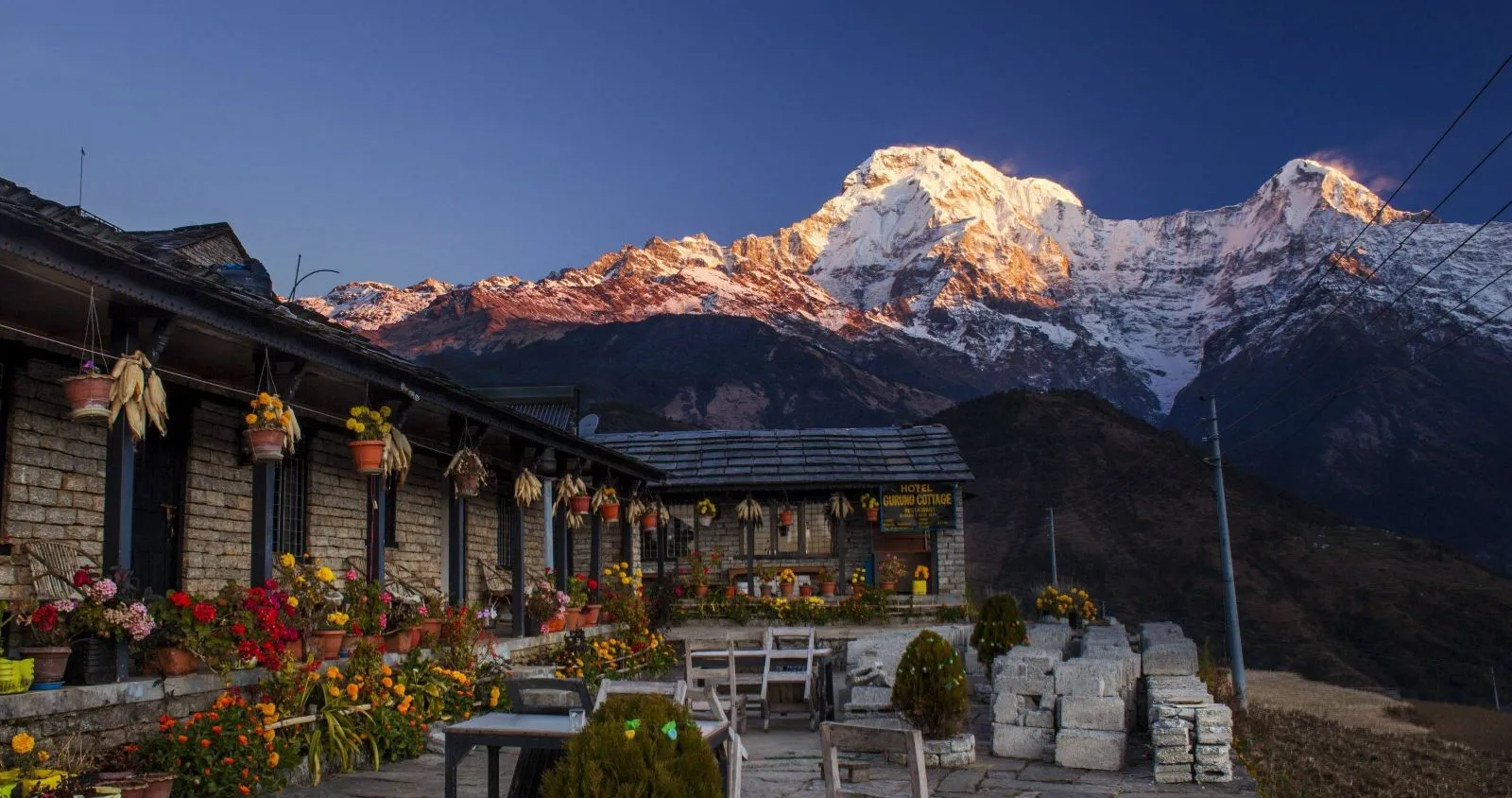
Jeep vs Bus to Syabrubesi

Syabrubesi way (1)

Jeep vs Bus to Syabrubesi: Which is Better for Your Langtang Trek?

Syabrubesi is the principal gateway to some of Nepal’s most beautiful trekking regions — the Langtang Valley Trek, the Tamang Heritage Trail, the Gosaikunda Lake Trek, and the Ganjala Pass Trek. At an altitude of 1,550 meters in the Rasuwa District, this scenic mountain village lies about 122 kilometres north of Kathmandu.

Unlike popular destinations such as Pokhara or Lukla, the Kathmandu-Syabrubesi route has no flights or luxury tourist coaches. Your main transport options are a jeep or a bus — and choosing between them can genuinely shape how your trekking adventure begins.

This 2026 guide by Nepal Vehicle Hiring Pvt Ltd gives you a thorough and honest comparison of all transport options across every factor that matters: cost, travel time, comfort, road conditions, departure points, flexibility, and which option suits each type of traveller.


About Syabrubesi – Gateway to the Langtang Region

Syabrubesi is a charming village at the confluence of the Bhote Koshi and Langtang Khola rivers, surrounded by dense forests and dramatic gorge scenery in the Rasuwa District. It is the official trailhead for the Langtang Valley Trek, Tamang Heritage Trail, and Gosaikunda Lake Trek.

Because there are no flights and no luxury coach services to Syabrubesi, every trekker must choose between a jeep and a bus. Understanding your options in detail is essential to starting your trek on the right foot.

Key FactDetail
Altitude1,550 metres above sea level
Distance from KathmanduApproximately 122 km
DistrictRasuwa District, Bagmati Province
Main TreksLangtang Valley, Tamang Heritage Trail, Gosaikunda, Ganjala Pass
Flight OptionNone – road transport only
Nearest TownDhunche (approximately 10 km before Syabrubesi)
Best SeasonsSpring (March–May) and Autumn (September–November)

The Route: Kathmandu to Syabrubesi – Stage by Stage

The main route follows the Pasang Lhamu Highway (Langtang Road) from Kathmandu through Tokha and Dhikure, Trishuli Bazaar, Betrawati, and Dhunche before descending to Syabrubesi. Private vehicles use an alternate route, Kakani and Galchhi

StageRoute SectionDistanceRoad Condition
1Kathmandu to Tokha and Dhikure 45.5 kmPaved, smooth, good condition
2Dhukure to Trishuli Bazaar 12.5 to 13.7 kmPaved, scenic river gorge, good
3Trishuli to Ramche 33 kmNarrower, winding, moderate condition
4Ramche to Dhunche (Landslide Zone) 15.5 kmRough, unpaved sections – 4WD recommended
5Dhunche to Syabrubesi 17 kmSteep, narrow, bumpy mountain road

Syabrubesi

Public Bus from Kathmandu to Syabrubesi

Then, descending is the most affordable way to reach Syabrubesi. It suits solo budget travelers and those who enjoy the authentic local experience of traveling on Nepali mountain roads.

Bus Departure Details and Fares

Bus TypeDeparture PointDeparture TimeEst. ArrivalFare (NPR)
Local BusMachhapokhari, Gongabu BP6:00–7:00 AM4:00–5:00 PM700–1,000
Express BusMachhapokhari, Gongabu BP7:00–8:00 AM3:30–4:30 PM1,500-2,000
Deluxe BusGongabu Bus Park6:00–8:30 AM3:00–4:00 PM2,000-25,00

Pros of Taking the Bus

  • Most affordable option – NPR 700 to 2,000 per person
  • Authentic local travel experience – meet Nepali locals and fellow trekkers
  • Regular daily departures – multiple buses every morning
  • No advance booking required in the off-season
  • Good for solo travelers on the tightest budget

Cons of Taking the Bus

  • Longest travel time – 8 to 10 hours or more
  • Crowded, with frequent stops for local pickups and drop-offs
  • Fixed departure point at Machhapokhari – no hotel pickup
  • Limited luggage space – large trekking bags can be difficult to manage
  • The rough Ramche section is significantly more uncomfortable on a bus
  • Back seats are especially rough – avoid them if possible

pokhara to kathmandu seorpio

Sharing Jeep from Kathmandu to Syabrubesi

The sharing jeep (known locally as a Sumo) is the favourite option of experienced trekkers. It is significantly faster than the bus and takes the shorter Tokha–Dhikure route, saving 2 to 3 hours of travel time.

Sharing Jeep Key Details

DetailInformation
Departure PointMachhapokhari / Gongabu area, Kathmandu
Departure Time6:00 AM – 11:30 AM (departs when full)
Capacity7 to 9 passengers per jeep
Travel Time6 to 7 hours
Cost per PersonNPR 2,000 – 3,000 (approx. USD 15–20)
RouteTokha – Dhikure – Trishuli – Dhunche – Syabrubesi (shorter route)
StopsTea break at Trishuli, lunch stop, Dhunche checkpoint

Pros of the Sharing Jeep

  • 2 to 3 hours faster than the public bus
  • Higher ground clearance – handles the Ramche landslide better than buses.
  • More comfortable than a local bus with fewer passengers
  • More affordable than a private jeep for solo travelers
  • Uses the shorter Tokha–Dhikure route for maximum efficiency

Cons of the Sharing Jeep

  • Middle and rear seats can be cramped, especially for tall travellers
  • Departs only when all seats are filled – possible waiting time
  • No hotel pickup – you must travel to Machhapokhari yourself
  • Less luggage space compared to a private vehicle

Private Jeep Hire from Kathmandu to Syabrubesi

A private jeep from Nepal Vehicle Hiring Pvt Ltd is the top-end travel option for the Kathmandu-Syabrubesi route. It is the best choice for groups of 4 or more, families, and all trekkers who value comfort, speed, and full flexibility.

Private Jeep Key Details

DetailInformation
Vehicle Type4WD Toyota Hilux, Land Cruiser, or Scorpio
PickupDirectly from your hotel in Kathmandu
Departure TimeFully flexible – as early as 5:30 AM
Capacity4 to 6 passengers comfortably
Travel Time5 to 6 hours
Cost (Full Vehicle)NPR 25000 – 30,000 one way (approx. USD 180-200)
StopsCompletely on demand – wherever you choose
Luggage SpaceExcellent – full boot and roof rack available

Pros of the Private Jeep

  • Fastest option available – arrive 2 to 4 hours earlier than bus travelers
  • Door-to-door pickup from your hotel anywhere in Kathmandu
  • Full control over departure time – no early bus station rush
  • Stop freely at any viewpoint, temple, or restaurant along the route
  • Spacious, air-conditioned 4WD vehicle with ample luggage space
  • Experienced driver with full knowledge of the Syabrubesi route
  • 4WD capability for confident navigation of the Ramche landslide zone
  • Complete privacy – travel only with your own group
  • Best per-person value for groups of 4 or more

Cons of the Private Jeep

  • Higher total cost – NPR 25,000 to 30,000 for the full vehicle
  • Advance booking is recommended during peak trekking seasons

Complete Head-to-Head Comparison

CategoryPrivate JeepSharing JeepPublic Bus
Travel Time5–6 hours6–7 hours8–10 hours
Cost (Per Person est.)NPR 3,000–6,250 (group of 4–6)NPR 3000NPR 700–1,000
Cost (Total)NPR 2,7000-30,000
(USD 180- 200)
Per seat onlyPer seat only
Departure PointHotel pickupMachhapokhariMachhapokhari / Gongabu
Departure TimeFlexible6:00 AM–11:30 AM6:00 AM–8:30 AM
Comfort LevelHighMediumLow to Medium
Luggage SpaceExcellentModerateLimited
FlexibilityFullModerateNone
PrivacyCompleteShared (7–9 pax)None (30+ passengers)
4WD Road HandlingExcellentGoodAdequate
Scenic Stop FreedomYes – on demandLimitedNo
Best ForGroups, familiesSolo / budget + speedSolo budget travellers

Who Should Choose Which Option?

Choose a Private Jeep If…

  • You are travelling in a group of 4 or more people
  • You are traveling as a family with children or elderly members
  • You want the fastest, most comfortable journey possible
  • You want hotel pickup and a flexible departure time
  • You have large trekking bags, camping gear, or extra luggage
  • You want to stop freely at viewpoints and cultural sites along the route

Choose a Sharing Jeep If…

  • You are a solo travellers who wants speed without the full private vehicle cost
  • You want to save 2 to 3 hours compared to the bus
  • You are comfortable sharing with 6 to 8 other passengers
  • You do not mind making your own way to Machhapokhari early in the morning

Choose the Bus If…

  • You are travelling solo on the tightest possible budget
  • You enjoy the authentic local experience of Nepali mountain bus travel
  • You are not in a hurry and can comfortably handle 8 to 10 hours on the road
  • You do not have oversized luggage that would be difficult on a bus

Road Conditions: Kathmandu to Syabrubesi 2026

Kathmandu to Trishuli Bazaar

The Tokha-Chhahare-Dhukure road is the most efficient shortcut from Kathmandu to Trishuli, covering approximately 35 km. Starting from Tokha in northern Kathmandu, the route climbs steeply to Gurje Bhanjyang ( m), offering panoramic views of the Langtang and Ganesh Himal ranges.

The route then descends via sharp hairpin bends to Chhahare in Nuwakot, continues along a flatter, faster stretch through Dhukure, and ends in Bidur/Trishuli.

Trishuli to Ramche

From Trishuli, the road climbs through spectacular river gorge scenery alongside the Trishuli River. The road narrows and becomes windier but is generally in reasonable condition. This section takes approximately 2 to 2.5 hours.

Ramche to Dhunche – The Landslide Zone

The approximately 3 km Ramche landslide zone near Dhunche remains the most technically challenging part of the route as of 2026. Road improvement work is ongoing but sections are rough and unpaved. High ground clearance and 4WD capability are strongly recommended here. Jeeps handle this section noticeably better than buses.

Ramche to Syabrubesi

The final descent involves steep switchbacks and a narrow mountain road above a dramatic gorge. The views here are spectacular. The road is rough but fully navigable with an experienced driver.

Monsoon Warning (June–August): Heavy rainfall significantly increases the risk of landslides on this route. The Ramche and Dhunche sections are especially affected. Nepal Vehicle Hiring strongly advises against travel on this route during the monsoon season.

Kathmandu to Syabrubesi Route Map

Jeep vs Bus to Syabrubesi

Cost Breakdown: All Options 2026

OptionCost (NPR)Cost (USD Approx.)Notes
Local BusNPR 700–1,500/personUSD 5–8/personCheapest, slowest, most stops
Express BusNPR 1,500–2,000/personUSD 9–13/personFewer stops, slightly faster
Deluxe BusNPR 2,000–25,00/personUSD 13–16/personBest bus option, 2×2 seating
Sharing JeepNPR 25,00 –3,000/personUSD 15–20/personBest value for speed and cost
Private Jeep per person)NPR 4,500–6,250/personUSD 33–47/personBased on the full vehicle cost, split 4 ways
Private Jeep (full vehicle)NPR 27,000-3,0000USD 180-200Includes driver and fuel, all-inclusive

Note: All prices are based on market rates. Prices may vary by season, fuel costs, and vehicle condition. Contact Nepal Vehicle Hiring for an exact quote.

Best Time to Travel from Kathmandu to Syabrubesi

Peak trekking season. Roads are dry, skies are clear, and the Langtang region is at its most beautiful. Book private jeeps well in advance as demand is very high.

Post-monsoon season with excellent visibility and stable weather. Roads are in their best condition. The second peak season – booking is again recommended.

Winter (December to February) – Possible with Preparation

Roads are quieter and less crowded, but snowfall can affect the upper sections near Dhunche and Syabrubesi. A 4WD private jeep with winter-ready tyres and an experienced driver is essential.

Active landslide season. The Ramche zone and road between Dhunche and Syabrubesi are extremely hazardous. Nepal Vehicle Hiring does not operate this route during the monsoon season.

Practical Travel Tips for Kathmandu to Syabrubesi

  • Sit on the LEFT side of the vehicle for the best river gorge and mountain views throughout
  • Book your private jeep at least 3 to 7 days ahead during spring and autumn peak seasons
  • For the bus or a shared jeep, arrive at Machhapokhari by 6:00 AM sharp to get the best seats.
  • Carry sufficient Nepali cash for the full trip – no ATMs between Trishuli and Syabrubesi
  • Take motion sickness tablets before departure – the road from Trishuli onward is very winding
  • Carry a face mask or scarf for dusty sections near Ramche
  • Obtain your Langtang National Park permit and TIMS card in Kathmandu before departure
  • Bring at least 1.5 litres of water – refill at teahouses in Trishuli and Dhunche
  • Confirm road conditions before departure if travelling in April or November
  • Book official tickets only – avoid random brokers near the Gongabu bus park to prevent overcharging

Frequently Asked Questions

How long does the Kathmandu-to-Syabrubesi journey take?

By private jeep: 6 hours. By sharing a jeep: 6-7 hours. By public bus: 8-10 hours.

How much does a jeep to Syabrubesi cost?

A shared jeep seat costs NPR 25,00 to 3,000 per person. A private jeep hire costs NPR 25,000-30,000 for the full vehicle.

Where does the bus to Syabrubesi depart from?

All buses and shared jeeps depart from Machhapokhari Bus Park (near Gongabu/New Bus Park), approximately 15 to 20 minutes by taxi from Thamel.

Is there a flight from Kathmandu to Syabrubesi?

No. There are no domestic flights to Syabrubesi. Road transport is the only option.

Which is better – jeep or bus for the Langtang trek?

For groups of 4 or more, a private jeep is best. For solo travelers wanting speed, the sharing jeep is ideal. For the tightest budgets, the public bus works.

Nepal Vehicle Hiring offers the best overall travel experience with a private jeep.

Can I book the return journey from Syabrubesi to Kathmandu?

Yes. Nepal Vehicle Hiring provides return vehicle services from Syabrubesi to Kathmandu. Arrange this in advance before you depart from Kathmandu.

What permits are required for the Langtang region?

You need a Langtang National Park Entry Permit and a TIMS (Trekkers Information Management System) card. Both travellers can get them in Kathmandu from the Nepal Tourism Board office or through your trekking agency.

Our Final Verdict: Jeep or Bus to Syabrubesi?

Traveller ProfileBest ChoiceKey Reason
Group of 4+ trekkersPrivate JeepFastest, hotel pickup, full flexibility, best group value
Solo traveller – tight budgetLocal / Deluxe BusLowest fare, authentic local experience
Solo traveller – wants speedSharing JeepSaves 2–3 hours vs bus at reasonable cost
Family with children or elderlyPrivate JeepComfort, space, safety, no crowding
Couple or 2–3 travellersSharing a Jeep or a Private JeepSharing a jeep for budget; private for comfort
Large group 10+Private Van / BusContact Nepal Vehicle Hiring for group quotes

Book Your Kathmandu to Syabrubesi Vehicle with Nepal Vehicle Hiring

The Kathmandu-to-Syabrubesi journey is the exciting first chapter of every Langtang region trekking adventure. Whether you choose the budget-friendly public bus, the speedy shared jeep, or a comfortable private jeep, Nepal Vehicle Hiring Pvt Ltd has the right vehicle and driver for your journey.

Our professional drivers know every turn on the Kathmandu-Syabrubesi route. Our well-maintained 4WD fleet handles the Ramche landslide zone with confidence. And our flexible booking service means you travel on your terms, at your pace.

Contact Nepal Vehicle Hiring Pvt Ltd today at vehiclehiringnepal.com to book your vehicle in Syabrubesi and start your Langtang adventure the right way.

Book your jeep day— Call or WhatsApp
Website: www.vehiclehiringnepal.com
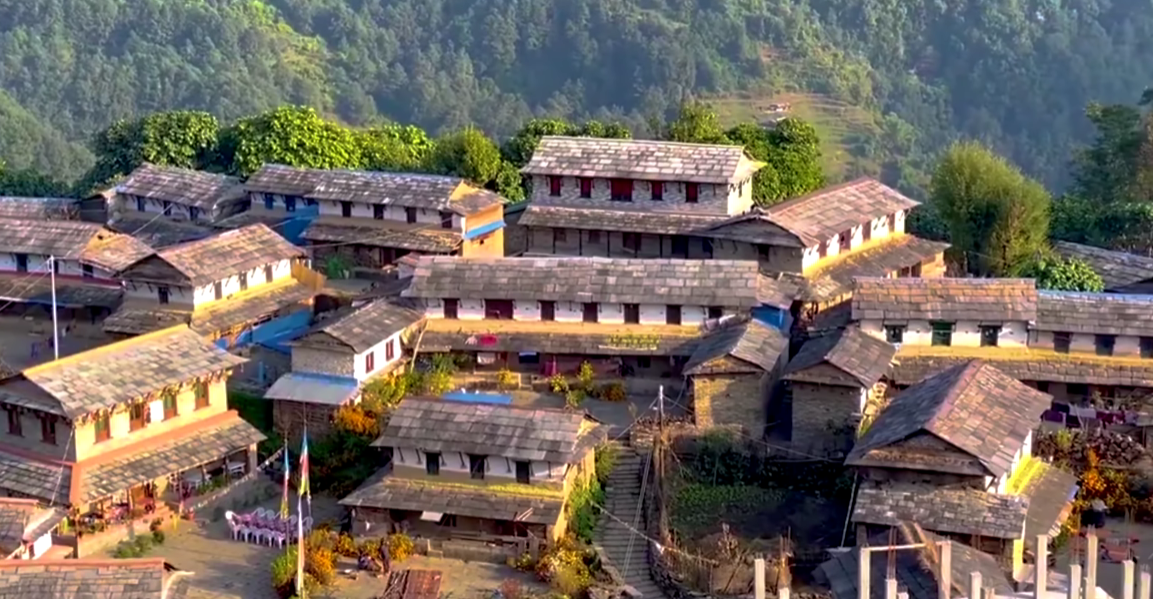
E-mail :[email protected]

Kathmandu to Soti Khola by Jeep: Complete Route Guide

kathmandu to soti khola by jeep

Kathmandu to Soti Khola by Jeep – Complete Route Guide

Soti Khola is the official starting point of the legendary Manaslu Circuit Trek – one of Nepal’s most dramatic and least-crowded Himalayan trekking routes. Reaching Soti Khola from Kathmandu requires a long off-road jeep journey through remote mountain valleys, steep river gorges, and traditional Gurung villages.

No tourist bus travels all the way to Soti Khola – a private 4WD jeep is the only comfortable, reliable, and safe option for trekkers heading to this remote trailhead.

This complete guide covers the entire route, road conditions, jeep prices, what to pack, trekking permit information, and more.

Trip Glance: Kathmandu to Soti Khola

The journey from Kathmandu to Soti Khola is one of Nepal’s longest and most adventurous overland drives. The route follows the Prithvi Highway west before turning north deep into the Budhi Gandaki River valley – a route that grows increasingly rugged and remote the further you travel.

Base Price: US$250 (Kathmandu to Soti Khola)
Add-On: USD 50 (Soti Khola to Machha Khola)
Distance: Approximately 140–145 km by road
Travel Time: 7 to 9 hours by private jeep (varies with road conditions)
Main Route: Kathmandu – Mugling – Arughat – Lapubesi – Soti Khola
Road Type: Prithvi Highway (paved) + rough mountain dirt track from Arughat onwards
Altitude: Kathmandu 1,400 m down to Soti Khola 700 m
Vehicle Required: 4WD Jeep only – sedans and regular cars cannot reach Soti Khola
Trek Starting Point: Soti Khola is the official first night stop of the Manaslu Circuit Trek

Why a Private Jeep is the Only Option for Soti Khola

Unlike popular routes to Pokhara or Chitwan, the road to Soti Khola is a remote mountain track that requires a robust 4WD vehicle with an experienced mountain driver. Here is why a private jeep is your only practical choice:

  • No tourist buses or reliable public transport run directly to Soti Khola from Kathmandu
  • The road beyond Arughat is unpaved, narrow, rocky, and only suitable for 4WD vehicles with high ground clearance
  • River crossings and seasonal road damage require a driver with specific experience on the Manaslu access route
  • Trekkers carry heavy backpacks and gear – a private jeep provides full luggage space without compromise
  • Group safety – your entire team travels together with no risk of separation on approach roads
  • Departure flexibility – set your own departure time, ideally pre-dawn for an early trailhead arrival
  • The driver can be arranged to wait at Arughat and return you at the end of your Manaslu trek

Machha khola

Detailed Road Guide: Kathmandu to Soti Khola

The journey splits into two very different sections: the paved national highway and the rough mountain track beyond Arughat. Here is a full breakdown of every stage:

Stage 1: Kathmandu to Arughat Bazaar (115 km | 4.5 hrs)

The first section follows the Prithvi Highway from Kathmandu to Mugling, then turns north on a secondary road into the Budhi Gandaki valley. This section is on a paved or compacted gravel road and is relatively comfortable.

Kathmandu to Naubise (30 km | 45 min)

Depart Kathmandu early – ideally 5:30 to 6:00 AM to make the most of daylight on the mountain road. Exit via Kalanki, cross the Chandragiri foothills, and descend to Naubise. The road is winding but paved and in good condition.

Naubise to Mugling (75 km | 1.5 hrs)

Follow the Prithvi Highway along the dramatic Trishuli River gorge – a beautifully forested valley with the fast-flowing green river below. Pass Malekhu, a good spot for an early morning tea stop with riverside views. This stretch is paved and in generally good condition.

Mugling Junction (Brief Stop – 15 to 20 min)

At Mugling, instead of turning west towards Pokhara, turn north towards Gorkha and the Budhi Gandaki valley. This is the last busy junction town on your route – stock up on snacks, water, and any remaining supplies before continuing north.

Mugling to Arughat Bazaar (50 km | 1.5 hrs)

The road from Mugling climbs gradually into increasingly remote hill terrain. The surface mixes paved sections with compacted gravel. You pass through Khairenitar and Tarkughat before reaching Arughat Bazaar – the last significant market town before the Manaslu trekking zone.

Arughat is the ideal place for a proper lunch break. Local restaurants serve dal bhat, noodles, and tea. Withdraw or exchange cash here if needed – there are no ATMs beyond Arughat.

Stage 2: Arughat to Soti Khola (25–30 km | 2.5 to 3.5 hrs)

This is where the real adventure begins. Beyond Arughat, the road transforms into a rough mountain track – rocky, unpaved, and in places cut directly into the cliffside above the Budhi Gandaki River. This section demands a skilled, experienced driver and a capable 4WD vehicle.

Arughat to Lapubesi (15 km | 1.5 hrs)

Cross the suspension bridge over the Budhi Gandaki at Arughat and begin the climb on the east bank. The track is narrow and rocky with steep drops to the thundering river below. The gorge closes in dramatically as you travel north – sheer cliff walls, dense forest, and the roar of white water.

This section requires slow, careful driving.

Lapubesi to Soti Khola (12 km | 1 hr)

The final stretch passes through Lapubesi hamlet and continues north along an increasingly rough track to reach Soti Khola. The river grows louder, the valley narrows, and the scenery grows more dramatic. In places, the track crosses small seasonal streams or skirts around landslide debris.

Your driver will navigate this section with care.

Arrival at Soti Khola – a cluster of teahouses and lodges perched above the Budhi Gandaki, with the great Manaslu massif beginning to dominate the skyline ahead. Your Manaslu Circuit trek begins here.

Kathmandu to Soti Khola By Jeep
Kathmandu to Soti Khola Route Map

Road Conditions: What to Expect

The road to Soti Khola is one of Nepal’s most challenging access routes. Here is a clear breakdown by section:

SectionRoad SurfaceDifficultyNotes
Kathmandu to MuglingPaved highwayEasyGood condition, normal highway traffic
Mugling to ArughatMixed paved / gravelModerateSome rough sections, narrower road
Arughat to LapubesiRough unpaved dirt trackDifficultRocky, narrow, steep river-edge drops
Lapubesi to Soti KholaVery rough mountain trackVery DifficultBoulders, stream crossings, cliff edges

Road conditions change significantly by season. Dry season (October to May) offers the most reliable access. During the monsoon (June to September), sections beyond Arughat can be washed out or blocked by landslides.

Always confirm road conditions with your driver before departure.

Nepal Tour Package

Best Time to Travel from Kathmandu to Soti Khola

October to November (Best Season)

The post-monsoon dry season is the most popular time for the Manaslu Circuit and the ideal time to drive to Soti Khola. Roads have dried after the monsoon, skies are crystal clear, and the mountain views along the Budhi Gandaki valley are striking. Book your jeep well in advance – demand is very high during peak trekking season.

March to May (Good Season)

Spring is the second-best season for this route. Rhododendrons bloom in the lower forests, conditions are dry, and the road is in good shape after winter. Temperatures are warm but comfortable—a reliable and increasingly popular time for the Manaslu Circuit.

December to February (Possible – Cold)

Winter travel to Soti Khola is possible in most years. The jeep road remains accessible, but morning frost and ice can make rocky sections slippery. The trek itself becomes very cold beyond 3,000 m, and the Larkya La pass may be snowbound.

An experienced driver with cold-weather mountain driving experience is essential.

The monsoon brings frequent landslides and flash floods to the Budhi Gandaki valley. The road beyond Arughat can become completely impassable for days at a time. We strongly advise against attempting this route during the active monsoon season without first checking current road conditions with our team.

Manaslu Circuit Trek

Soti Khola is the gateway to one of Nepal’s most spectacular and least-crowded trekking experiences. Here is a quick overview for those planning the circuit:

Trek Duration: 14 to 18 days for the full Manaslu Circuit
Highest Point: Larkya La Pass at 5,106 m
Trek Distance: Approximately 177 km total circuit
Difficulty: Strenuous – suitable for fit and experienced trekkers
Best Season: October to November and March to May
Permits Required: Restricted Area Permit + MCAP + TIMS card (arranged in Kathmandu)

The Manaslu Circuit passes through remote Gurung and Tibetan Buddhist communities, ancient monasteries perched on cliffsides, dramatic Himalayan gorges, glaciated high-altitude terrain, and the legendary Larkya La pass at 5,106 m. It is widely regarded as one of the finest trekking circuits in the entire Himalayan range and far less crowded than Annapurna or Everest region routes.

Permits Required for the Manaslu Circuit

Arrange all permits in Kathmandu before departure. Arrange these through your trekking agency or Nepal Tourism Board:

PermitCost (Approx.)Where to Get
Manaslu Restricted Area PermitUSD 100 per week (Oct–Nov) / USD 75 (other months)Nepal Immigration, Kathmandu
MCAP – Manaslu Conservation Area PermitNPR 3,000 (approx. USD 23)Nepal Tourism Board
TIMS Card – Trekkers Information Management SystemUSD 10Nepal Tourism Board / TAAN
Guide requirementMinimum 2 trekkers + licensed guide required by lawArrange via a trekking agency

Carry all permits and present them at checkpoints along the Manaslu route. You cannot obtain these permits in Arughat or Soti Khola. Arrange everything before your jeep departs from Kathmandu.

Accommodation at Soti Khola

Soti Khola has simple but functional teahouse lodges – exactly what trekkers need after a long drive. Do not expect hotel comforts here:

  • Basic twin or dormitory rooms with blankets provided
  • Shared bathrooms with cold water (hot water may be available at extra cost)
  • Meals available: dal bhat, noodle soup, eggs, chapati, and Nepali tea
  • Mobile charging available at most teahouses (small fee)
  • Limited mobile signal – NTC has better coverage than Ncell in this valley
  • No ATMs or money exchange beyond Arughat – carry sufficient Nepali Rupees from Kathmandu

What to Pack for the Jeep Journey

  • Full trekking pack with all gear stored inside the jeep – not on the roof rack if avoidable
  • Snacks and at least 2 litres of water per person – stops are very limited beyond Arughat.
  • Motion sickness medication – the mountain road beyond Arughat is very winding and rough.
  • Light fleece or jacket – the Budhi Gandaki gorge can be surprisingly cool even in warm months
  • Camera or phone fully charged – the gorgeous scenery on the approach road is spectacular.
  • Cash in Nepali Rupees for meals, teahouse accommodation, and any unexpected expenses
  • Headlamp in case of late afternoon or evening arrival at Soti Khola
  • All trekking permits are printed and in hand before departing Kathmandu

What is Included When You Book With Vehicle Hiring Nepal?

  • Private 4WD jeep (Land Cruiser or equivalent) with experienced mountain road driver
  • Full fuel cost for the complete Kathmandu to Soti Khola journey
  • Vehicle insurance coverage
  • Pickup from your hotel or guesthouse in Kathmandu
  • Drop-off directly at the Soti Khola teahouse area and trailhead
  • Rest and refreshment stop at Mugling and lunch stop at Arughat Bazaar
  • 24/7 WhatsApp contact and support during your journey
  • Optional: driver stays at Arughat during your trek and returns you post-circuit (pre-arranged)

Not included: Trekking permits, guide fees, porter fees, personal meals, teahouse accommodation, and any additional side trips.

How to Book Your Jeep from Kathmandu to Soti Khola

  1. Visit vehiclehiringnepal.com and select 4WD Jeep hire
  2. Choose your travel date and departure time (recommended 5:30–6:00 AM)
  3. Enter your pickup address in Kathmandu
  4. Enter your destination as Soti Khola, Gorkha District
  5. Specify if you need a return pickup after your Manaslu Circuit trek
  6. Submit your booking form or message us on WhatsApp for instant confirmation

Frequently Asked Questions

Can a regular car reach Soti Khola?

No. The road beyond Arughat is a rough mountain track with boulders, stream crossings, and narrow cliff edges that only 4WD vehicles with high ground clearance can safely navigate. Sedans and standard cars cannot reach Soti Khola.

How early should I depart from Kathmandu?

Depart between 5:30 and 6:00 AM. The journey takes 7 to 9 hours, and you need to arrive at Soti Khola before dark. The mountain track is dangerous to navigate after sunset.

An early departure also helps avoid Kathmandu traffic.

Can I do the Manaslu Circuit without a guide?

No. Nepal government regulations require a minimum group of two trekkers and a licensed trekking guide for the Manaslu restricted area. You cannot enter the zone alone or without a licensed guide. Vehicle Hiring Nepal provides transport only – your trekking agency handles guide and permit arrangements.

Can the driver wait at Soti Khola during my trek?

Yes. We offer a waiting and return service where the driver stays in Arughat (the nearest town with accommodation) during your trek and collects you at a pre-agreed location and date at the end of the circuit. This must be booked in advance.

What if a landslide blocks the road?

Our drivers monitor road conditions before and during the journey. In the event of a landslide or road blockage, your driver will assess the safest course of action – waiting for clearance or finding an alternative approach. We will keep you informed in real time via WhatsApp throughout.

How much does a jeep from Kathmandu to Soti Khola cost?

A private jeep for the full Kathmandu-to-Soti Khola route costs approximately US$250 for the entire vehicle, including driver and fuel. The exact price depends on vehicle type, season, and additional services such as driver waiting or return pickup.

Final Thoughts

The jeep journey from Kathmandu to Soti Khola is a memorable adventure in its own right – a full day of driving that takes you from the busy city streets of Kathmandu through the scenic Trishuli gorge, past the market town of Arughat, and deep into the wild, remote Budhi Gandaki valley. By the time you step out of the jeep at Soti Khola, the river’s roar fills the air, the peaks of the Manaslu massif rise ahead, and your Himalayan adventure has already begun.

Vehicle Hiring Nepal provides the safest, most experienced, and most reliable jeep service on the Kathmandu-to-Soti Khola route. Our mountain drivers know every challenging kilometre of this road and will get your trekking group to the trailhead safely and on schedule.

Ready to start your Manaslu Circuit journey? Book your private jeep today. Contact us on WhatsApp or visit vehiclehiringnepal.com.

Kathmandu to Besisahar Transport Guide

Besisahar

Kathmandu to Besisahar Transport Guide

Planning a trek to the Annapurna Circuit, Tilicho Lake, or Nar Phu Valley? Your journey begins with reaching Besisahar — the gateway town to Nepal’s most iconic trekking regions. This complete Kathmandu-to-Besisahar transport guide covers every travel option, costs, travel times, road conditions, and expert tips to help you reach Besisahar safely and comfortably.

Whether you prefer a budget bus, a private jeep, or a comfortable Hiace van, Nepal Vehicle Hiring Pvt Ltd offers professional drivers, clean vehicles, and transparent pricing.

Overview: Kathmandu to Besisahar at a Glance

Before diving into each transport option, here is a quick overview of the route:

  • Total Road Distance: Approximately 175 km (109 miles)
  • Travel Time by Road: 6 to 8 hours, depending on traffic and road conditions
  • Main Highway: Prithvi Highway (Kathmandu to Dumre), then branching road to Besisahar
  • Key Stop on Route: Muglin (lunch & rest stop), Naubise, Dumre
  • Besisahar Location: District headquarters of Lamjung District, Gandaki Province
  • Trekking Gateway: Annapurna Circuit, Tilicho Lake, Nar Phu Valley, Manaslu Circuit

Why Visit Besisahar?

Besisahar is not just a transit point — it is a vibrant trekking hub with hotels, tea houses, local restaurants, shops, and warm Nepali hospitality. It sits alongside the scenic Marsyangdi River, offering opportunities for rafting and kayaking. Trekkers rest here before starting a multi-day adventure into the Annapurna region.

From Besisahar, you can see stunning views of Annapurna II, Machhapuchhre (Fishtail), and Lamjung Himal. It is the ideal base camp before heading deeper into the Himalayas.

All Transport Options from Kathmandu to Besisahar

Here is a full comparison of every available transport method for this route:

Transport OptionDistanceTravel TimeApprox. CostBest For
Local Bus175 km6–8 hoursUSD 10- 12Budget travelers
Tourist Bus175 km6–7 hours USD 350- 400 per vehicleComfortable group travel
Private Car (Sedan)175 km5–6 hoursUSD 120-140Couples / small groups
Private Jeep (4WD)175 km6–7 hoursUSD 150-200Trekkers / off-road
Hiace Van175 km6–7 hoursUSD 220- 250Groups of 10–14
Helicopter175 km1 hourUSD 5500 (round trip)Top-end/luxury travel

Local Bus — Most Budget-Friendly Option

Local buses depart from Gongabu Bus Park (New Bus Park), located approximately 3 km from Thamel in Kathmandu. You can reach the bus park in 25–30 minutes on foot or by a short taxi ride costing NPR 250–400.

Key facts about the local bus:

  • Departure point: Gongabu Bus Park, Kathmandu
  • Departure times: Morning (early) and some evening departures
  • Travel time: 6 to 8 hours
  • Cost: USD 10 per person
  • Stops: Naubise (toilet break), Muglin (meal stop), Dumre (possible bus change)
  • Note: You may need to change buses at Dumre for the Besisahar route

While local buses are the cheapest option, they can be crowded and slower due to multiple stops. However, they offer a genuine local experience where you can interact with Nepali passengers and enjoy authentic tea house stops along the way.

Tourist Bus — Comfortable and Affordable

Tourist buses offer more comfortable seating, a cleaner environment, and fewer unnecessary stops compared to local buses. They are a popular choice among international trekkers who want a balance between cost and comfort.

  • Cost: Full vehicle USD 350-400; private and shared ride NPR 2500 per person (Nepali) / USD 15 per person (foreign nationals)
  • Travel time: 6 to 7 hours
  • Facilities: Comfortable reclining seats, luggage space, water provided
  • Booking: Available at bus park ticket counters or through your trekking agency

Tourist buses typically have three toilets and refreshment breaks — at Naubise, Muglin, and near Besisahar — making the journey manageable even for first-time visitors.

Private Car (Sedan) — Comfortable for Small Groups

Hiring a private car from Kathmandu to Besisahar is one of the most comfortable and flexible options. With a private car, you can stop wherever you wish, travel at your own pace, and enjoy door-to-door pickup and drop-off service.

  • Vehicle type: Sedan car (Toyota Corolla, Hyundai, etc.)
  • Passenger capacity: Up to 3 passengers + driver
  • Cost: Approximately USD 120- 140 (includes driver, fuel, and tolls)
  • Travel time: 5 to 6 hours
  • Best for: Couples, solo travellers, or small families

Nepal Vehicle Hiring Pvt Ltd provides private sedan hire with experienced local drivers who know the route well and can share insights about the landscape and local culture along the way.
Besisahar

Private Jeep (4WD) — Best for Trekkers

A private 4WD jeep is the most popular choice for trekkers heading to Besisahar and beyond. After Dumre, the road narrows and gets rougher in sections, and a 4WD jeep handles it with ease.

  • Vehicle type: Toyota Land Cruiser, Mahindra Scorpio, or similar 4WD
  • Passenger capacity: Up to 7 passengers + driver
  • Cost: Approximately USD 150-200 (full vehicle hire)
  • Shared Jeep: Approximately USD 25 per person
  • Travel time: 6 to 7 hours
  • Best for: Trekking groups, adventure travellers, heavy luggage carriers

If you plan to continue beyond Besisahar toward Chame or Manang, you’ll need a 4WD jeep, as public buses don’t operate on those road sections.

Hiace Van — Ideal for Groups of 10 to 14

A Toyota Hiace van is an excellent option for larger trekking groups or families travelling together. It offers spacious seating with enough room for both passengers and luggage.

  • Vehicle type: Toyota Hiace (14-seater van)
  • Passenger capacity: Up to 14 passengers + driver
  • Cost: Approximately USD 220-250 (full van hire)
  • Shared Hiace: Available for solo or small group travellers at shared rates, USD 25
  • Travel time: 6 to 7 hours
  • Best for: Group trekkers, school/college trips, large families

Nepal Vehicle Hiring Pvt Ltd offers both private and shared Hiace hire with professional, licensed drivers experienced in the Kathmandu-Besisahar route.

Helicopter — Fastest and Most Scenic Option

For travellers who want to skip the long road journey and enjoy aerial views of the Himalayas, a helicopter flight from Kathmandu to Besisahar is a top-end option.

  • Flight time: Approximately 1 hour
  • Cost: Approximately USD 2400-4500 per person (round trip)
  • Capacity: Typically 5 seats per helicopter
  • Views: Spectacular panoramic views of Everest, Annapurna, Manaslu, and the Himalayan ranges
  • Note: Weather-dependent; flights may be cancelled or delayed in poor visibility

This option suits luxury travellers, elderly trekkers, or those with limited time who still want to experience the Annapurna region without the road journey.
Besisahar

Road Conditions: What to Expect

Understanding the road conditions on the route from Kathmandu to Besisahar will help you choose the right vehicle and set realistic expectations for your journey.

  • Kathmandu to Dumre (via Prithvi Highway): Well-paved, mostly smooth tarmac road with moderate traffic. Scenic views of the Trishuli River run alongside this stretch.
  • Dumre to Besisahar: The road narrows after Dumre and can be rough in certain sections, especially during and after the monsoon season. Experienced drivers navigate this with ease.
  • Best travel season: October to December (post-monsoon) offers dry roads and clear mountain views. March to May (spring) is also excellent.
  • Monsoon season (June–September): Roads can be muddy and prone to landslides. Extra caution and a 4WD vehicle are strongly recommended during this period.

Key Stops Along the Kathmandu to Besisahar Route

The journey from Kathmandu to Besisahar passes through some charming towns and scenic viewpoints. Here are the key stops you will encounter:

Naubise

Located about 1 hour from Kathmandu, Naubise is the first major stop on the Prithvi Highway. Most buses and private vehicles stop here for a short break for a toilet and tea. It marks the point where the highway begins to descend through lush hills.

Muglin

Muglin is the most important rest stop on this route, roughly 3 to 4 hours from Kathmandu. This is where travellers enjoy a proper lunch break with dal bhat, momos, and local Nepali food. From Muglin, you can see the Trishuli River, which offers beautiful views.

Dumre

Dumre is the junction town where the Prithvi Highway splits — one direction continues toward Pokhara and the other heads toward Besisahar. If you are taking a local bus, you may need to change buses here to continue to Besisahar.

Besisahar

Besisahar is the final destination — the headquarters of Lamjung District and the official starting point of the Annapurna Circuit Trek. The town has hotels, tea houses, ATMs, medical facilities, gear shops, and restaurants catering to trekkers.

Kathmandu to Besisahar Route Map

Kathmandu to Besisahar Transport Guide

Beyond Besisahar — Continuing Your Journey

Many trekkers choose to travel beyond Besisahar by jeep to reach higher elevations faster. Here are the onward transport options from Besisahar:

  • Besisahar to Syange: 2 to 3 hours by private jeep
  • Besisahar to Dharapani: Private jeep — approximately USD 140–150
  • Besisahar to Chame: Private jeep from Kathmandu — approximately USD 370–380 (or USD 200–220 from Besisahar alone)
  • Besisahar to Manang Village: Private jeep — approximately USD 330–350 from Besisahar

Note: No public buses run beyond Besisahar on the Annapurna Circuit road. A 4WD jeep is the only viable motorised transport for the off-road sections ahead.

Practical Tips for Travelling from Kathmandu to Besisahar

  • Book your transport in advance during peak trekking season (October–November and March–April) as vehicles fill up quickly.
  • Carry cash (NPR) as ATMs may be limited beyond Besisahar.
  • Start early — morning departures are best to avoid traffic and reach Besisahar before evening.
  • Bring snacks, a water bottle, and a light jacket as temperatures cool in mountain areas.
  • Confirm with your driver whether the quoted price includes fuel, tolls, and parking.
  • If you have heavy trekking gear, hire a private jeep or Hiace to accommodate extra luggage.
  • Check weather forecasts before travelling, especially during the monsoon season (June–September).
  • Obtain your TIMS card and ACAP permit in Kathmandu before departing.

Why Choose Nepal Vehicle Hiring Pvt Ltd?

Nepal Vehicle Hiring Pvt Ltd is a trusted, registered vehicle rental company based in Kathmandu, offering reliable transportation for trekkers, tourists, and travellers across Nepal.

  • Fleet: Sedan cars, 4WD jeeps, Hiace vans, coaster buses, and tourist buses
  • Drivers: Professional, licensed, and locally experienced drivers
  • Pricing: Transparent pricing with no hidden fees — fuel, tolls, and driver included
  • Booking: 24/7 booking available via WhatsApp, phone call, or email
  • Service: Door-to-door pickup and drop-off from your hotel in Kathmandu
  • Safety: All vehicles are regularly serviced, inspected, and insured

Whether you are a solo backpacker travelling or with a large group, we have the perfect vehicle to get you to Besisahar comfortably and on time.

Frequently Asked Questions (FAQs)

How far is Kathmandu from Besisahar?

The road distance from Kathmandu to Besisahar is approximately 175 km (109 miles).

How long does it take to travel from Kathmandu to Besisahar?

By road, the journey takes approximately 6 to 8 hours, depending on your mode of transport and road conditions. Is there a direct tourist bus from Kathmandu to Besisahar?

Yes, tourist buses depart from Gongabu Bus Park in Kathmandu and travel directly to Besisahar. You can also take a local bus, though you may need to change at Dumre.

Which is the best mode of transport for trekkers?

For trekkers with luggage, a private 4WD jeep is the most recommended option,n as it offers comfort, flexibility, and the ability to continue beyond Besisahar over rough roads.

Can I hire a private vehicle from Nepal Vehicle Hiring Pvt Ltd?

Absolutely. Nepal Vehicle Hiring Pvt Ltd offers private jeep, HiAce, and van hire from Kathmandu to Besisahar with professional drivers and transparent pricing. Contact us via WhatsApp or call to book instantly.

What is the best time to travel from Kathmandu to Besisahar?

The best times are October to December (post-monsoon, clear skies) and March to May (spring). Avoid or take extra precautions during the monsoon season from June to September.

Conclusion

Travelling from Kathmandu to Besisahar is the first exciting chapter of any Annapurna region adventure. With the right transport choice — whether a budget bus, a comfortable private car, or a rugged 4WD jeep — your journey sets the tone for a memorable trekking experience in Nepal.

Nepal Vehicle Hiring Pvt Ltd is ready to make your Kathmandu-to-Besisahar transfer smooth, safe, and stress-free. With well-maintained vehicles, experienced drivers, and 24/7 customer support, we are your most trusted transport partner in Nepal.

Visit our sister company, Trek Nepal Himalayas & Alpine Luxury Treks, for luxury vacation packages and trekking journeys. There, you may choose from a variety of carefully planned itineraries.

Book your Jeep today— Call or WhatsApp
Website: www.vehiclehiringnepal.com
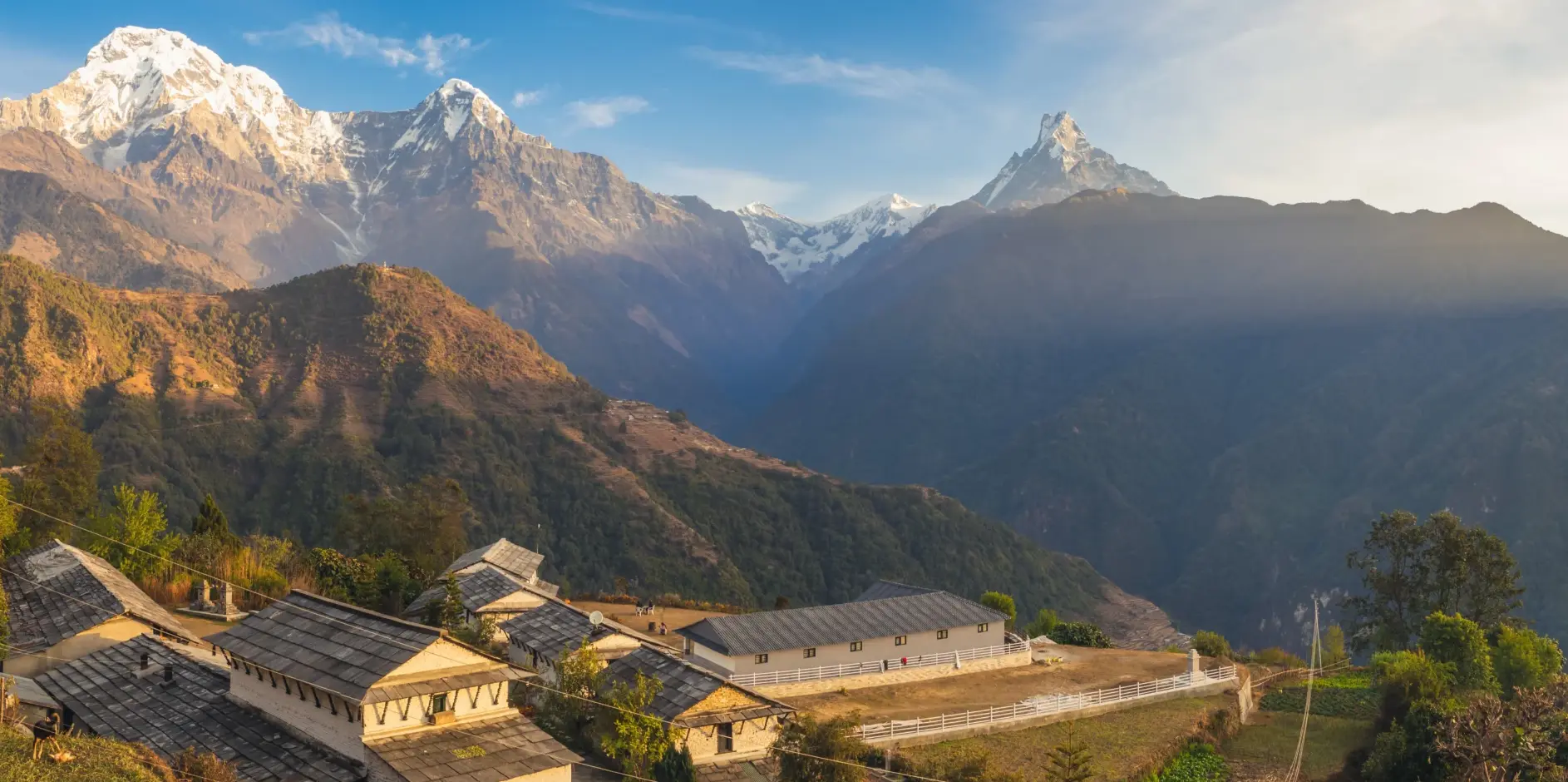
Email:[email protected]

Kathmandu to Jiri Road Trip Guide

Jiri

Kathmandu to Jiri Road Trip Guide : Route, Vehicles, Cost & Attractions

Jiri is one of Nepal’s most historically significant towns. Set in the Dolakha District at an altitude of 1,905 meters above sea level, Jiri is widely known as the Switzerland of Nepal for its stunning rolling hills, lush valleys, and panoramic views of the Himalayan range, including Mount Everest, Cho Oyu, and Makalu.

Before the Lukla airstrip was built, every mountaineer and trekker heading to Everest Base Camp began their journey right here in Jiri on foot.

Today, Jiri remains a beloved destination for trekkers, road trip enthusiasts, and travellers seeking an authentic Nepali mountain experience away from the crowds. The road trip from Kathmandu to Jiri is a classic Nepali journey — scenic, adventurous, and deeply rewarding.

At Nepal Vehicle Hiring Pvt Ltd, we offer professional, reliable vehicle hire services from Kathmandu to Jiri. This comprehensive 2026 guide gives you everything you need to plan your perfect road trip, from vehicle options and costs to route highlights and travel tips.

Why Take a Road Trip from Kathmandu to Jiri?

Experience the Switzerland of Nepal

Jiri’s landscape of terraced hills, alpine meadows, pine forests, and snow-capped mountain backdrops has earned it the nickname the Switzerland of Nepal. A road trip is the most in-depth way to appreciate this stunning scenery.

A Classic Everest Trekking Gateway

Jiri is the original starting point of the historic Jiri to Everest Base Camp Trek — the very same route used by Sir Edmund Hillary and Tenzing Norgay’s 1953 expedition team. Trekkers who start from Jiri gain extra acclimatisation days and experience a richer cultural journey through Sherpa villages.

Scenic River and Valley Drive

The road from Kathmandu to Jiri winds through river gorges, terraced farmland, and traditional Nepali villages, offering a window into authentic rural Nepali life that most tourists never see.

Flexible and Comfortable with Private Vehicle Hire

Hiring a private vehicle from Nepal Vehicle Hiring lets you stop at viewpoints, explore villages, enjoy meals at local teahouses, and travel entirely at your own pace—something a public bus can never offer.

Kathmandu to Jiri – Quick Facts

DetailInformation
Road DistanceApproximately 185–190 km
Travel Time by Jeep/Car6 to 9 hours (depending on road conditions)
Travel Time by Bus8 to 12 hours
Bus Departure PointJadibuti Bus Park (Araniko Bus Park), Kathmandu
Bus Departure Time5:00 AM – 6:00 AM
Jiri Altitude1,905 metres above sea level
DistrictDolakha District, Bagmati Province
Jiri NicknameSwitzerland of Nepal
Primary RouteAraniko Highway → Lamosanghu → Jiri Highway

Kathmandu to Jiri Route Breakdown

The road from Kathmandu to Jiri blends paved urban highways, scenic river-gorge roads, and winding mountain tracks. Here is a full stage-by-stage breakdown of what to expect on this iconic road trip.

Kathmandu to Dhulikhel – Approx. 30 km (1 hour)

Your road trip begins in Kathmandu and heads east on the well-paved Araniko Highway. Your first major stop is Dhulikhel, a charming hilltop town at an elevation of 1,550 meters with spectacular panoramic views of the Himalayan range. If you depart early in the morning, Dhulikhel is an ideal place for a short tea stop and your first Himalayan sunrise of the trip.

Dhulikhel to Lamosanghu (Dolalghat) – Approx. 40 km (1 hour)

From Dhulikhel, the road descends steeply through lush forests to Dolalghat, where the Sun Koshi and Indrawati rivers meet. This stretch is one of the most scenic, with dramatic river gorge views and traditional farming villages clinging to the hillsides. The road is well-paved and in good condition for most of this section.

Lamosanghu to Charikot – Approx. 60 km (2 hours)

From Lamosanghu, the route turns south onto the Jiri Highway. Here, the road begins to climb into the higher hills of Dolakha District. The landscape grows more dramatic—deep green valleys, cascading waterfalls, and terraced fields stretch out below the winding road.

Charikot, Dolakha’s district headquarters, is an excellent stop for lunch.

Charikot to Jiri – Approx. 55 km (2 to 3 hours)

The final stage of the journey from Charikot to Jiri is the most scenic and the most challenging. The road winds through high mountain passes, dense pine forests, and remote Sherpa and Tamang villages. The road surface is rougher in sections, particularly on the Lamosanghu-to-Jiri stretch, which is still undergoing long-term upgrades.

A 4WD vehicle with an experienced driver is recommended for a comfortable experience. You arrive in Jiri in the afternoon, greeted by the peaceful mountain-town atmosphere.

Kathmandu to Jiri Route Map

kathmandu to jiri road trip
Kathmandu to Jiri road map

Road Trip Highlights – What to See Along the Way

LocationDistance from KTMHighlight
Bhaktapur Durbar Square 14 kmUNESCO World Heritage Site – ancient Newari architecture
Dhulikhel 30 kmPanoramic Himalayan sunrise views, peaceful hilltop town
Dolalghat 70 kmConfluence of the Sun Koshi and Indrawati rivers
Lamosanghu 75 kmMajor junction town, last big fuel and food stop
Charikot (Dolakha) 130 kmDolakha District HQ, Dolakha Bhimsen Temple
Dolakha Bhimsen Temple 133 kmOne of Nepal’s most sacred Hindu temples
Suri Danda Viewpoint 170 kmStunning views of the Himalayas, including Gaurishankar
Jiri Bazaar 185 kmHistoric trekking hub, traditional market, Sherpa culture

Bhandar jiri

Vehicle Options for Kathmandu to Jiri Road Trip

Nepal Vehicle Hiring Pvt Ltd offers a complete range of vehicles for the Kathmandu-Jiri route. Whether you are a solo traveller, a couple, a family, or a large trekking group, we have the perfect vehicle for your needs.

Vehicle TypeCapacityTravel TimeApprox. Cost (NPR)Best For
Car (Sedan/SUV)3–4 passengers6–8 hoursUSD120- 1500Couples, small groups
Jeep (4WD)5–6 passengers7–9 hoursUSD 200- 250Trekkers, adventurers
Van (Toyota Hiace)7–9 passengers7–9 hoursUSD 250- 300Families, larger groups
Coaster Bus15–20 passengers8–10 hoursUSD 400- 500Medium trekking groups
Tourist Bus25–30 passengers9–12 hoursUSD 500- 700Large groups
Sharing Jeep7–8 per vehicle8–10 hours USD 25- 35Solo/budget travellers
Local BusOpen10–12 hoursUSD 10Budget travellers

Note: All private vehicle prices include driver and fuel. Prices may vary by season and availability. Contact Nepal Vehicle Hiring for an exact quote for your travel date.

Why Choose a Private Jeep for the Kathmandu to Jiri Road Trip?

A private jeep from Nepal Vehicle Hiring is by far the most popular choice for travellers planning the Kathmandu-to-Jiri road trip. Here is what makes it the ideal vehicle for this route:

  • 4WD capability handles the rough and winding road sections near Charikot and Jiri with ease
  • Hotel pickup directly from your accommodation in Kathmandu – no early morning rush to a bus station
  • Spacious interior with comfortable seating and ample storage for trekking gear and luggage
  • Air-conditioned cabin for a comfortable ride through the warm valley sections
  • Experienced driver who knows every turn of the Kathmandu to Jiri route
  • Complete freedom to stop at viewpoints, temples, villages, and teahouses at your own pace
  • No fixed schedule – depart and arrive at times that suit your itinerary

Kathmandu to Jiri by Bus – Public Transport Guide

For budget travellers who prefer public transport, here is everything you need to know about taking the bus from Kathmandu to Jiri:

Departure Point

All buses to Jiri depart from Jadibuti Bus Park (also known as Araniko Bus Park), located approximately 20 minutes by taxi from Thamel in Kathmandu. A taxi from Thamel to Jadibuti costs approximately NPR 400-600.

Departure Time

Buses depart between 5:00 AM and 6:00 AM daily. Arriving at the bus park by 5:00 AM is strongly recommended to secure a good seat.

Important Bus Travel Tips

  • Book your bus ticket at least one day in advance during peak trekking season (March–May, Sept–Nov)
  • Avoid the very back seats – road vibrations are significantly worse at the rear.
  • Carry cash in Nepali Rupees for ticket purchase and food stops along the way.
  • Bring a face mask or scarf for the dusty road sections
  • Keep essential items in a small day bag accessible during the journey

Kathmandu to Jiri Vehicle Price Guide

VehiclePrice (NPR)Price (USD Approx.)Capacity
Local BusNPR 1,000 peopleUSD 6-10per personOpen
Deluxe BusNPR 2,000 peopleUSD 13- 20 per personOpen
Sharing JeepNPR 3500 peopleUSD 25- 30 per person7–8
Private CarNPR 20,000USD 133- 1503–4
Private JeepNPR 28,000USD 190- 2505–6
Toyota HiaceNPR 33,000USD 220- 3007–9
Coaster BusNPR 45,000USD 300-40015–20
Tourist BusNPR 70000USD 465- 70025–30

Best Time to Drive from Kathmandu to Jiri

Spring (March to May) – Best Season

Spring is the most popular time to visit Jiri and the surrounding Dolakha region. The weather is warm, the roads are dry, and the hillsides are covered in blooming rhododendrons. The mountain views are clear, and the trails are busy with fellow trekkers.

This is the ideal time for a Kathmandu-to-Jiri road trip.

Autumn (September to November) – Best Season

Autumn offers crystal-clear skies, stable weather, and perfect trekking conditions. The roads dry out after the monsoon, and the mountain views are at their finest. Autumn is the second peak season and another excellent time for the road trip.

Winter (December to February) – Good with Preparation

Winter provides quieter roads and fewer crowds. The mountain views are excellent on clear days. However, the higher elevations near Jiri can see snowfall, and road conditions may require a 4WD vehicle.

Bring warm clothing and check road conditions before departure.

The monsoon season brings heavy rainfall, which causes frequent landslides on the Jiri Highway. The Lamosanghu to Jiri section is especially vulnerable during this period. Travel is strongly not recommended.

Nepal Vehicle Hiring advises against taking road trips along this route during the monsoon season.

Top Attractions to Visit in and Around Jiri

Jiri Bazaar – The Heart of Town

Jiri Bazaar is the lively commercial center of the town. The market is a colorful mix of local shops, tea stalls, and teahouses serving traditional Nepali food. The bazaar is an excellent place to observe everyday mountain life, interact with Sherpa and Tamang people, and stock up on supplies before trekking.

Cherdung Cheese Factory

The Cherdung Cheese Factory is one of Jiri’s most unique attractions, established with Swiss development aid decades ago. The factory produces excellent Nepali mountain cheese using traditional Swiss methods. A visit to the cheese factory is a fascinating cultural and culinary experience and a popular short hike from Jiri town.

Jiri Technical School and Vocational Training Center (JTS)

The Jiri Technical School, another Swiss-aided institution, is one of Nepal’s most respected vocational training centers. Visiting this institution gives travelers a deeper appreciation of Nepal’s development history and the positive impact of international cooperation in rural Nepal.

Suri Danda Viewpoint

Located a short drive or hike from Jiri, Suri Danda is a magnificent viewpoint offering panoramic views of the Himalayan range, including the sacred Gaurishankar (7,134 m), Melungtse, and other peaks of the Rolwaling Himal. The sunrise view from Suri Danda is particularly spectacular.

Dolakha Bhimsen Temple

Located approximately 3 kilometers from Charikot on the way to Jiri, the Dolakha Bhimsen Temple is one of Nepal’s most sacred Hindu temples. The temple is famous for its sweating statue of Bhimsen, which is said to perspire during times of national crisis. The site is deeply significant to Nepali Hindus and an essential cultural stop on the road trip.

Gaurishankar Conservation Area

The area around Jiri forms part of the greater Gaurishankar Conservation Area, home to diverse wildlife, rare Himalayan birds, and pristine alpine forests. Nature lovers and birdwatchers will find this area particularly rewarding during spring and autumn.

Trekking Routes Starting from Jiri

Jiri is one of Nepal’s most historically important trekking gateways. Here are the main trekking routes that begin or pass through Jiri:

Classic Jiri to Everest Base Camp Trek

The most famous route from Jiri leads all the way to Everest Base Camp (5,364 m). This classic trek takes approximately 18 to 24 days and is the original approach route used by early Everest expeditions. The journey passes through Solu Khumbu villages, rhododendron forests, and high mountain passes before reaching the iconic base camp.

Jiri to Lukla Trek

A popular option for trekkers who want the classic overland start but prefer to fly back from Lukla. This trek takes approximately 8 to 12 days to reach Lukla, passing through Bhandar, Sete, Junbesi, and Phaplu.

Jiri to Namche Bazaar Trek

For trekkers who want to connect with the main Everest trekking trail at Namche Bazaar, the Jiri to Namche route takes approximately 7 to 9 days on foot through beautiful Sherpa and Rai villages.

Gaurishankar Trek

The Gaurishankar region near Jiri offers excellent lower-altitude trekking through unspoiled forests and traditional villages, with superb views of Gaurishankar and the Rolwaling Himal.

What to Pack for the Kathmandu to Jiri Road Trip

  • Warm jacket or fleece layer – temperatures drop after Chariko,t especially in the mornings
  • Face mask or scarf – dusty roads between Lamosanghu and Jiri
  • Water bottles – stay hydrated throughout the 7 9-hour journey
  • Light snacks – biscuits, nuts, and energy bars for between stops
  • Motion sickness tablets – the winding mountain roads near Charikot and Jiri can be challenging
  • Nepali cash – for meals, snacks, and local purchases at teahouses along the route
  • Camera or smartphone – the road trip scenery is outstanding throughout
  • Small daypack – keep your essentials accessible inside the vehicle
  • Sunscreen and sunglasses – strong UV at altitude, even on cloudy days
  • Valid ID or passport photocopy – useful at checkpoints and teahouses

Expert Road Trip Tips for Kathmandu to Jiri

  • Depart as early as possible – a 5:00 AM or 6:00 AM departure avoids afternoon traffic and road congestion
  • Stop at Dhulikhel for tea and mountain views if the sky is clear – it adds only 15 minutes
  • Fuel up completely in Kathmandu or Lamosanghu – petrol stations are limited after Charikot
  • Carry small denomination Nepali notes for roadside teahouses and toilet stops
  • Check road conditions before departure during winter and early spring – landslides can cause closures
  • Book private vehicles at least 3 to 7 days in advance during peak trekking season
  • Avoid sitting in the very back seats of public buses – the road is rough,h and vibrations are severe
  • Lunch at Charikot is ideal – it is roughly the halfway point and has several good local restaurants
  • If visiting the Dolakha Bhimsen Temple, arrive before noon for the best experience

How to Book Your Kathmandu to Jiri Vehicle with Nepal Vehicle Hiring

Booking your vehicle with Nepal Vehicle Hiring Pvt Ltd is simple and fast. Follow these steps:

  • Step 1: Visit vehiclehiringnepal.com or contact us by phone or WhatsApp
  • Step 2: Share your travel date, number of passengers, and departure location in Kathmandu
  • Step 3: Select your preferred vehicle – car, jeep, van, coaster, or tourist bus
  • Step 4: Receive your booking confirmation with driver details and pickup time
  • Step 5: Enjoy your road trip from Kathmandu to Jiri with complete peace of mind

We recommend booking at least 3 days in advance and 7 days in advance during peak trekking seasons in spring (March to May) and autumn (September to November).

Frequently Asked Questions (FAQ)

How far is Kathmandu from Jiri?

The road distance from Kathmandu to Jiri is approximately 1-o 190 kilometers.

How long does the drive from Kathmandu to Jiri take?

By private jeep or car, it takes 6 to 9 hours. By public bus, it takes 8 to 12 hours, depending on traffic, road conditions, and stops.

What is the best vehicle for the Kathmandu to Jiri road trip?

A 4WD private jeep is the most comfortable and practical option, especially for groups of 4 to 6 passengers. The rough sections of the road near Charikot and Jiri are best handled by a 4WD vehicle.

Where do buses to Jiri depart from in Kathmandu?

All buses to Jiri depart from Jadibuti Bus Park (Araniko Bus Park), approximately 20 minutes by taxi from Thamel. Buses depart between 5:00 AM and 6:00 AM daily.

Is Jiri safe to visit?

Yes. Jiri and the surrounding Dolakha District are safe and welcoming destinations. As with all mountain travel in Nepal, be cautious during the monsoon season (June to August) due to landslide risks on the Jiri Highway.

Can I start the Everest Base Camp trek from Jiri?

Yes. Jiri is the original and most historically authentic starting point for the Jiri-to-Everest Base Camp Trek. The trek from Jiri to Everest Base Camp takes approximately 18 to 24 days through the Solu Khumbu region.

Is there accommodation in Jiri?

Yes. Jiri has several guesthouses, teahouses, and small hotels catering to both trekkers and general travelers. The town has basic but comfortable accommodation suitable for an overnight rest before starting a trek.

Conclusion – Book Your Kathmandu to Jiri Road Trip with Nepal Vehicle Hiring

The road trip from Kathmandu to Jiri  is one of Nepal’s most rewarding overland journeys. From the hilltop views of Dhulikhel and the sacred Dolakha Bhimsen Temple to the Swiss-inspired cheese factory and the legendary trekking trails of the Everest region, Jiri offers experiences that no other destination in Nepal can quite match.

Whether you are a trekker heading out to Everest Base Camp, a family on a cultural road trip, or an adventure traveler exploring Nepal’s mountain highways, the Kathmandu to Jiri route will exceed your expectations.

Nepal Vehicle Hiring Pvt Ltd is your trusted partner for this journey. Contact us today at vehiclehiringnepal.com to book your vehicle and start your Jiri adventure.

Book your jeep today — Call or  WhatsApp
Website: www.vehiclehiringnepal.com
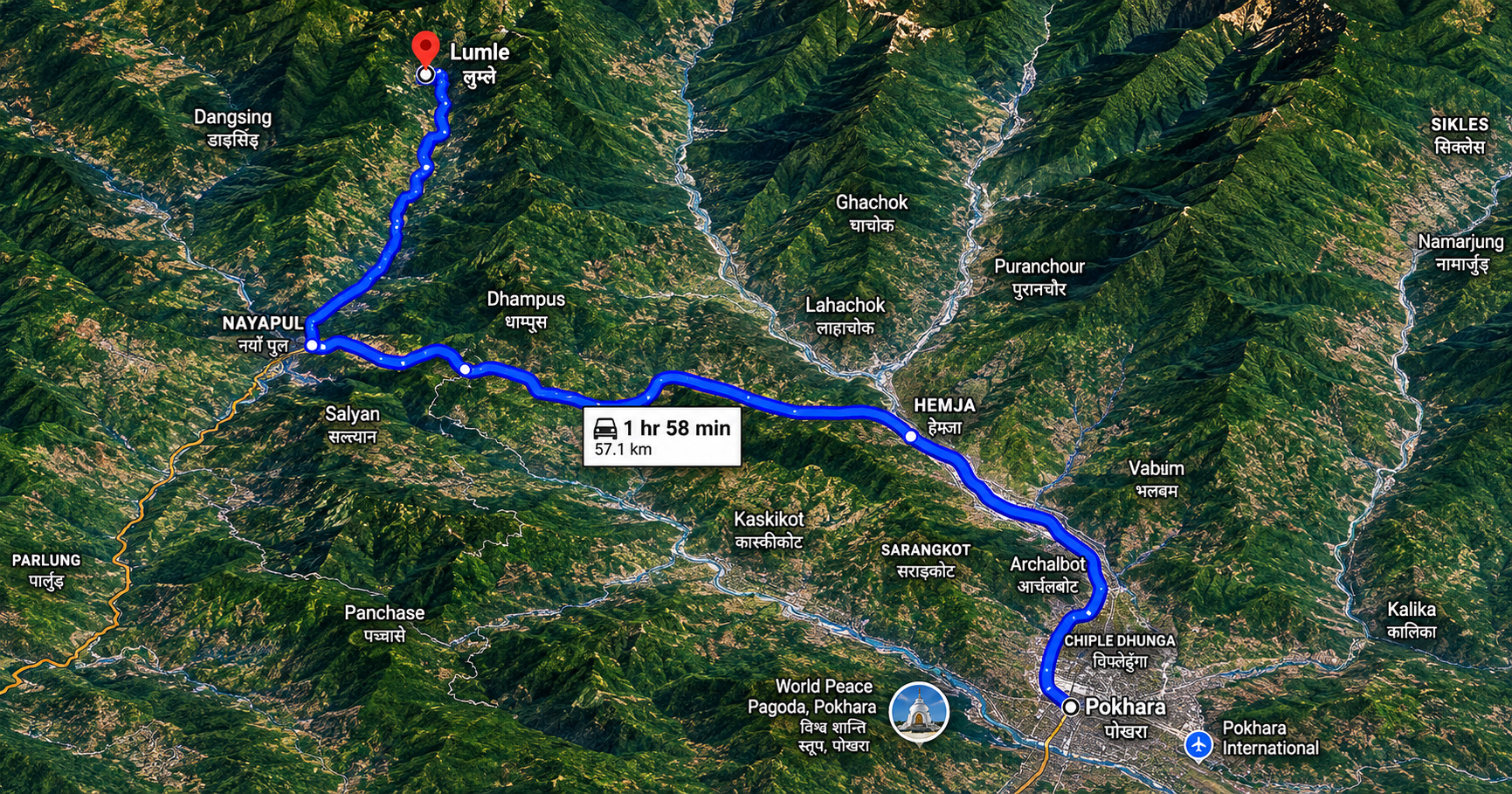
E-mail :[email protected]

Kathmandu | Pokhara | Chitwan | All Destinations Across Nepal

Kathmandu to Phaplu Vehicle Guide

Phaplu

Kathmandu to Phaplu Vehicle Guide: Jeep, Car, Van & Bus Options

Phaplu is a peaceful mountain town in the Solu Khumbu region of eastern Nepal, sitting at an altitude of approximately 2,400 meters above sea level. It serves as a key gateway to the Everest trekking region.

It is a popular alternative starting point for treks such as Everest Base Camp, Pikey Peak, the Three Passes Trek, and the Solu Cultural Trek. For travellers who want to avoid expensive and often unpredictable Lukla flights, the overland journey from Kathmandu to Phaplu by vehicle is one of the best options.

At Nepal Vehicle Hiring Pvt Ltd, we provide reliable, comfortable, and affordable vehicle hire services from Kathmandu to Phaplu. Whether you need a private jeep, a car for a small group, a van for a family, or a bus for a large trekking party, we have the right vehicle. This guide covers everything you need to know before booking a vehicle from Kathmandu to Phaplu in 2026.

Why Choose an Overland Vehicle from Kathmandu to Phaplu?

Reliable Alternative to Lukla Flights

Flights from Kathmandu or Ramechhap to Lukla are often delayed or cancelled because of unpredictable Himalayan weather. Hiring a vehicle to Phaplu eliminates this risk and gives you a dependable travel schedule for your trek.

Scenic and Memorable Journey

The road from Kathmandu to Phaplu passes through the Kathmandu Valley, river gorges, terraced rice paddies, lush forests, and traditional Nepali villages. Every kilometre of this journey offers something beautiful.

Cost-Effective for Groups

Hiring a private vehicle is significantly cheaper than purchasing multiple Lukla flights. For groups of 4 or more travellers, a private jeep or van from Nepal Vehicle Hiring is often the most economical and comfortable choice.

Flexible and Comfortable Travel

A private vehicle hire lets you depart when it suits your schedule, stop for meals and photos whenever you like, and travel with your luggage without the strict weight restrictions of mountain flights.

Kathmandu to Phaplu Distance and Travel Time

Here is a quick summary of the key journey details you need to know:

DetailInformation
Road DistanceApproximately 270 – 295 kilometres
Travel Time by Jeep9 to 11 hours (depending on road conditions)
Travel Time by Car8 to 10 hours
Travel Time by Van/Hiace9 to 10 hours
Travel Time by Bus10 to 12 hours
Jeep Departure Time4:00 AM – 6:00 AM
Departure PointChahabil Chowk or New Bus Park, Kathmandu
Phaplu AltitudeApproximately 2,400 meters above sea level

Kathmandu to Phaplu Route Breakdown

The journey from Kathmandu to Phaplu follows a well-established route through the hills and mountains of eastern Nepal. Here is a stage-by-stage guide to what you will experience along the way.

Kathmandu to Dhulikhel – Approximately 30 km (1 hour)

Your journey begins in Kathmandu and heads east along the Araniko Highway. The road is smooth and paved throughout this section. You pass through the outskirts of the Kathmandu Valley before reaching Dhulikhel, a scenic hilltop town with beautiful views of the Himalayan range, including Langtang and the Rolwaling massif.

Dhulikhel to Khurkot – Approximately 100 km (2.5 hours)

From Dhulikhel, the route joins the BP Highway heading southeast. The road follows the Roshi and Sunkoshi rivers through a picturesque gorge. This section is mostly smooth and offers excellent river-valley scenery.

Khurkot to Okhaldhunga – Approximately 100 km (3 hours)

After Khurkot, the road climbs steeply into the hills. The terrain grows more mountainous, and the road surface gets rougher. You pass through traditional villages and lush forests, getting your first real taste of rural Nepal.

Okhaldhunga to Phaplu – Approximately 60 km (2 hours)

The final stretch is the most challenging and adventurous part of the journey. The road narrows and winds through the mountains. A 4WD vehicle with an experienced driver is essential for this section.

You arrive in Phaplu in the late afternoon, ready to rest and begin your trek the following morning.

Note: Phaplu and Salleri are neighbouring towns, approximately 3-4 kilometres apart. All vehicles travelling to Phaplu will pass through Salleri first.

Kathmandu to Phaplu vehicle

Vehicle Options from Kathmandu to Phaplu

Nepal Vehicle Hiring Pvt Ltd offers a full range of vehicles to suit every group size and budget. Here is a detailed comparison of all vehicle options available for the Kathmandu to Phaplu route:

Vehicle TypeCapacityTravel TimeCost (Approx.)Best For
Car (Sedan/SUV)3–4 passengers8–10 hoursUSD 150- 200Small groups, couples
Jeep (4WD)5–6 passengers9–10 hoursUSD 250- 300Trekkers, adventurers
Van (Toyota Hiace)7–9 passengers9–10 hoursUSD 300- 350Families, larger groups
Coaster Bus15–20 passengers10–11 hoursUDS 350-400Medium trekking groups
Tourist Bus25–30 passengers10–12 hoursUSD 500- 600Large trekking groups
Sharing Jeep7–8 passengers10–12 hoursUSD 20- 35 per personSolo/budget travellers

Note: All private vehicle prices include a professional driver and fuel. Prices may vary slightly depending on the season, road conditions, and vehicle availability. Contact Nepal Vehicle Hiring for an exact quote.

Private Jeep Hire from Kathmandu to Phaplu

A private jeep is the most popular vehicle choice for the Kathmandu-to-Phaplu route. Jeeps are built to handle the rough, unpaved mountain roads you encounter in the latter part of the journey. Here is why a private jeep from Nepal Vehicle Hiring is the right choice:

  • Hotel pickup directly from your accommodation in Kathmandu
  • Spacious, air-conditioned 4WD vehicle with ample luggage space
  • Experienced and licensed driver familiar with the Kathmandu to Phaplu route
  • Flexible departure time to suit your schedule
  • Freedom to stop for sightseeing, meals, and photographs at your own pace
  • Well-maintained vehicle with full insurance coverage

Sharing a Jeep vs a Private Vehicle – Which Should You Choose?

FeatureSharing JeepPrivate Vehicle
CostNPR 3500 (USD 25 per personNPR 43,000 (USD 286- 350)
Departure TimeFixed (4:00–5:30 AM)Flexible
Pickup Shaykya pharmacy, Sorakhutte bus station, Chahabil, or New Bus ParkFrom your hotel
ComfortCrowded (7–8 passengers)Spacious, private
LuggageLimited spaceAmple space
StopsFixed tea stops onlyStop on demand
Best ForSolo budget travellersGroups, families, comfort

For groups of 3 or more travellers, a private jeep or van hire is almost always the smarter and more comfortable choice. The total cost per person is similar to a shared jeep, but you get comfort, flexibility, and door-to-door service.
Kathmandu to Phaplu Vehicle Guide

Kathmandu to Phaplu Vehicle Price

Here is a comprehensive price guide for all vehicle types for the Kathmandu to Phaplu route :

VehiclePrice (NPR)Price (USD Approx.)Seats
Sharing JeepNPR 3500 per personUSD 25- 35 per person7–8
Private CarNPR 30000USD 200- 2503–4
Private JeepNPR 43000USD 286- 3505–6
Toyota HiaceNPR 45000USD 300- 4007–9
Coaster BusNPR 65,000USD 433- 50015–20
Tourist BusNPR 80,000USD 533-100025–30

Alternative route (via Dolakha/Charikot) sharing jeep price: NPR 9,000 per person. Use this route when the BP Highway is closed due to landslides during the monsoon season.

Best Time to Travel from Kathmandu to Phaplu by Vehicle

Spring is Nepal’s peak trekking season. The weather is stable, the skies are clear, and the mountain views are spectacular. Roads are generally in good condition.

This is the best season for hiring a vehicle to Phaplu.

Autumn is the second peak trekking season. After the monsoon, the roads dry out, and visibility is excellent. Temperatures are comfortable, and the mountains are clear.

Another ideal time for the Kathmandu-to-Phaplu vehicle journey.

Winter (December to February) – Possible with Preparation

Winter travel is possible but requires extra preparation. Higher elevation sections of the road may have ice or snow. A 4WD vehicle with an experienced driver is essential.

Warm clothing is a must.

Heavy monsoon rainfall causes frequent landslides and makes the mountain roads extremely dangerous. The BP Highway is often blocked. Travel during this period is strongly discouraged.

What to Expect on the Journey from Kathmandu to Phaplu

Here is a realistic picture of what your journey from Kathmandu to Phaplu will look like:

  • Early morning departure from Kathmandu, usually between 4:00 AM and 6:00 AM
  • Smooth highway driving for the first 2 to 3 hours through the Kathmandu Valley
  • Beautiful river gorge scenery along the Roshi and Sunkoshi rivers
  • Tea and meal stops at local roadside eateries along the way
  • Gradually rougher road as you approach Okhaldhunga
  • Challenging but exciting off-road terrain in the final stretch to Phaplu
  • Glimpses of high Himalayan peaks on clear weather days
  • Arrival in Phaplu in the late afternoon or early evening
  • Total journey time of 9 to 11 hours, depending on road conditions and stops

What to Pack for the Kathmandu to Phaplu Vehicle Journey

  • Warm layers – temperatures drop significantly in the hills and at Phaplu altitude
  • Face mask or scarf – dusty roads, especially on the off-road sections near Phaplu
  • Water bottles – drink regularly throughout the long journey
  • Light snacks – biscuits, nuts, and energy bars for between stops
  • Motion sickness tablets – the winding mountain roads can be challenging
  • Nepali currency (cash) – for food and snacks at teahouses along the route
  • Camera or smartphone – the scenery throughout the journey is stunning
  • Small daypack – keep your essentials handy and accessible inside the vehicle
  • First aid kit – basic medicines and personal health items

Kathmandu to Phaplu Vehicle Guide

Phaplu – What to Do After You Arrive

Rest and Acclimatise Overnight

After the long journey, spending the night in Phaplu is highly recommended. Phaplu sits at about 2,400 meters above sea level, making it a good acclimatisation point before you trek into the higher reaches of the Everest region.

Explore Salleri Town

Salleri, located just 3 to 4 kilometres from Phaplu, is the district headquarters of Solukhumbu. It is a larger town with more accommodation options, shops, restaurants, and services. Many travellers prefer to stay in Salleri and walk to Phaplu the following morning.

Visit Phaplu Airport

Phaplu has a small mountain airport. Although flights are not always scheduled regularly, the airport serves as an emergency exit point for trekkers when weather conditions prevent normal travel.

Start Your Trek

From Phaplu, you can begin your trek toward Namche Bazaar (approximately 3 days of walking), Everest Base Camp, Gokyo Lakes, or the Three Passes. The trail is well-marked, and tea houses are available throughout the route.

Continue to Thamdanda by Vehicle

If you want to get even closer to the Everest region before starting your trek, you can take a jeep from Salleri to Thamdanda. The Salleri to Thamdanda jeep ride takes approximately 5 to 6 hours and covers around 60 to 70 kilometres.

How to Book a Vehicle from Kathmandu to Phaplu with Nepal Vehicle Hiring

Booking your vehicle from Kathmandu to Phaplu with Nepal Vehicle Hiring Pvt Ltd is quick and simple. Follow these easy steps:

  • Contact us via phone, WhatsApp, or through our website at vehiclehiringnepal.com
  • Tell us your travel date, number of passengers, and starting location in Kathmandu
  • Choose your preferred vehicle type – sharing jeep, private jeep, car, van, or bus
  • Receive your booking confirmation with pickup details and departure time
  • Relax and enjoy your journey to Phaplu with our professional driver

We recommend booking 3 to 7 days in advance, especially during peak trekking seasons in spring and autumn, when demand is high.

Frequently Asked Questions (FAQs)

How far is Kathmandu from Phaplu?

The road distance from Kathmandu to Phaplu is approximately 270-295 kilometres, depending on the route taken.

How long does it take to travel from Kathmandu to Phaplu by vehicle?

It takes approximately 9 to 11 hours by jeep or car. Buses take slightly longer, about 10 to 12 hours, depending on road conditions.

What is the cheapest way to travel from Kathmandu to Phaplu?

The cheapest option is a seat on a public shared jeep, which costs NPR 35,00 per person. You can depart from the Sorakhute tourist bus station, Chahabil Chowk, or the New Bus Park in Kathmandu.

Is a 4WD jeep necessary for the Kathmandu-Phaplu route?

Yes, a 4WD jeep is strongly recommended for this route, especially on the rough, unpaved sections near Okhaldhunga and Phaplu. Regular passenger cars may struggle on this terrain.

What is the best vehicle for a group travelling to Phaplu?

For groups of 5 to 6 people, a private jeep is ideal. For groups of 7 to 9, a Toyota Hiace van is the most comfortable option. Larger groups of 15 to 30 can opt for a coaster or tourist bus.

Is there a direct flight from Kathmandu to Phaplu?

Phaplu has a small airport, but scheduled flights are infrequent and often cancelled due to weather. Hiring a vehicle is a much more reliable option.

Can I book a vehicle from Phaplu back to Kathmandu?

Yes. Nepal Vehicle Hiring also provides return vehicle hire from Phaplu to Kathmandu. Contact us to arrange your return journey in advance.

Phaplu monastries

Conclusion – Book Your Kathmandu to Phaplu Vehicle with Nepal Vehicle Hiring

Travelling from Kathmandu to Phaplu by vehicle in 2026 is one of Nepal’s most rewarding and scenic overland journeys. Whether you choose a private jeep, a comfortable car, a spacious van, or a shared seat on a public jeep, the route to Phaplu offers striking landscapes, rich cultural experiences, and a memorable adventure through the heart of the Himalayas.

Nepal Vehicle Hiring Pvt Ltd is your most trusted partner for all vehicle hire services across Nepal. With professional drivers, a well-maintained fleet, and competitive pricing, we make your journey from Kathmandu to Phaplu safe, comfortable, and stress-free.

Contact us today at vehiclehiringnepal.com to book your vehicle and begin your Himalayan adventure.

Nepal Vehicle Hiring Pvt Ltd

vehiclehiringnepal.com

Serving Kathmandu, Pokhara, Chitwan & all major destinations across Nepal

Book your Kathmandu-to-Salleri jeep today and begin your Everest adventure with a memorable road journey.

Book your jeep today — Call or  WhatsApp
Website: www.vehiclehiringnepal.com
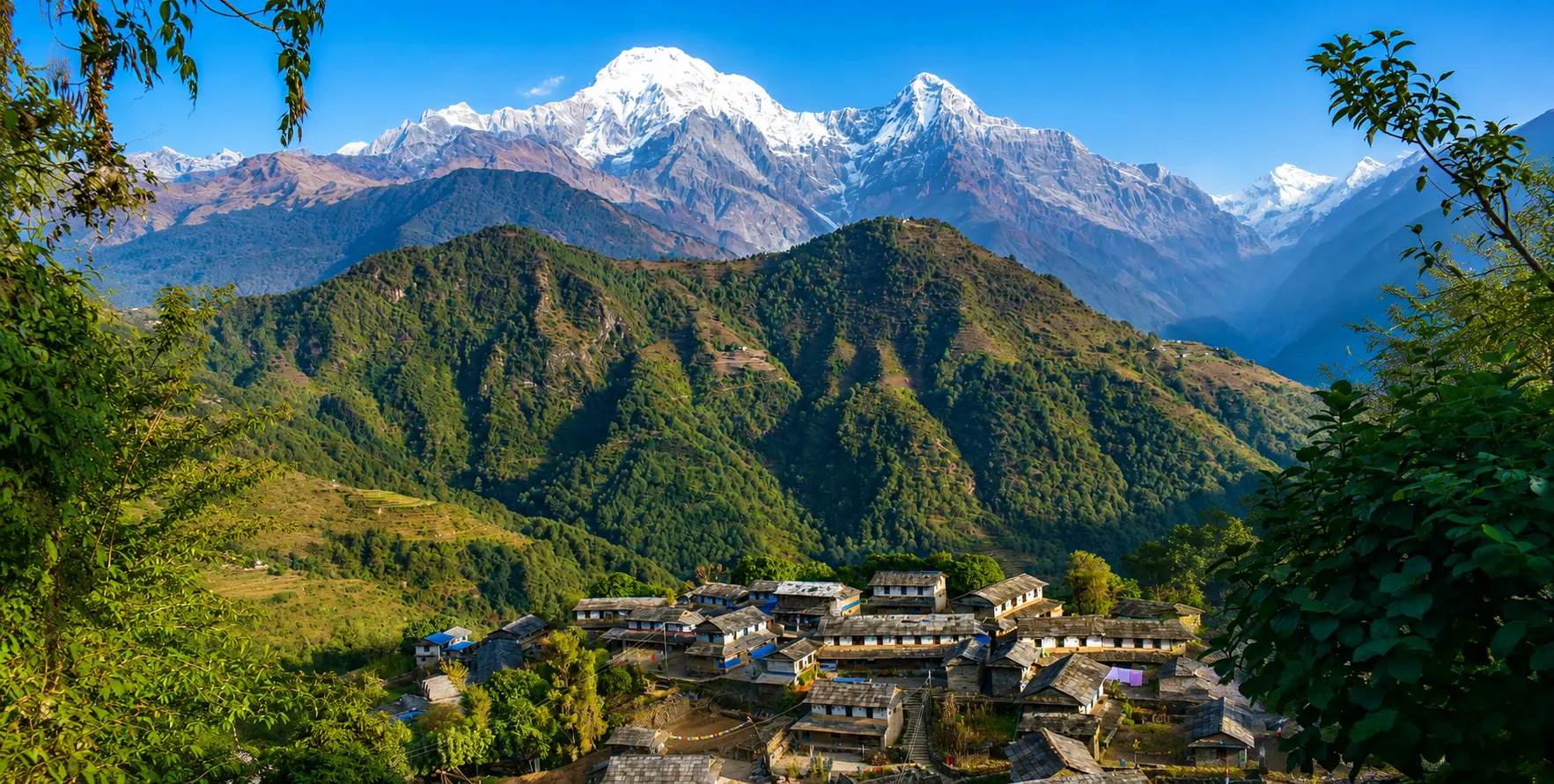
E-mail :[email protected]

Chat with us