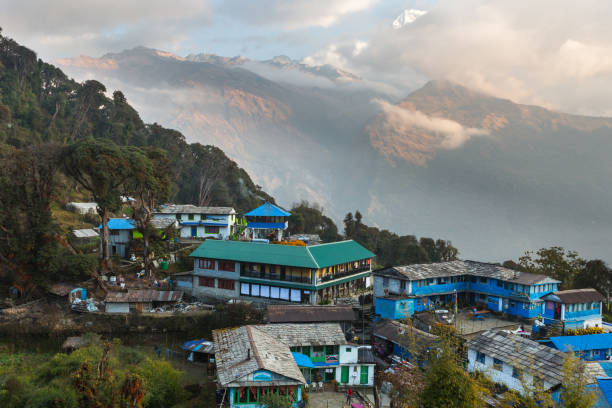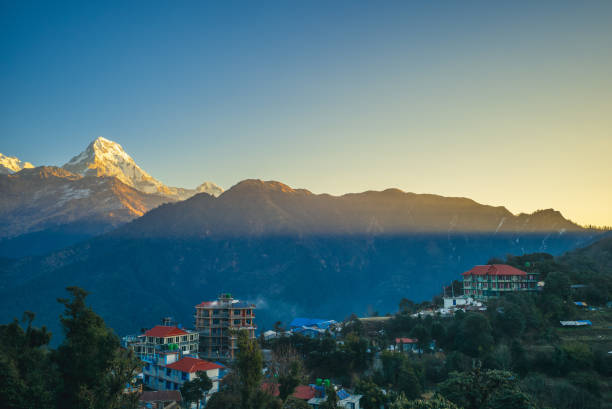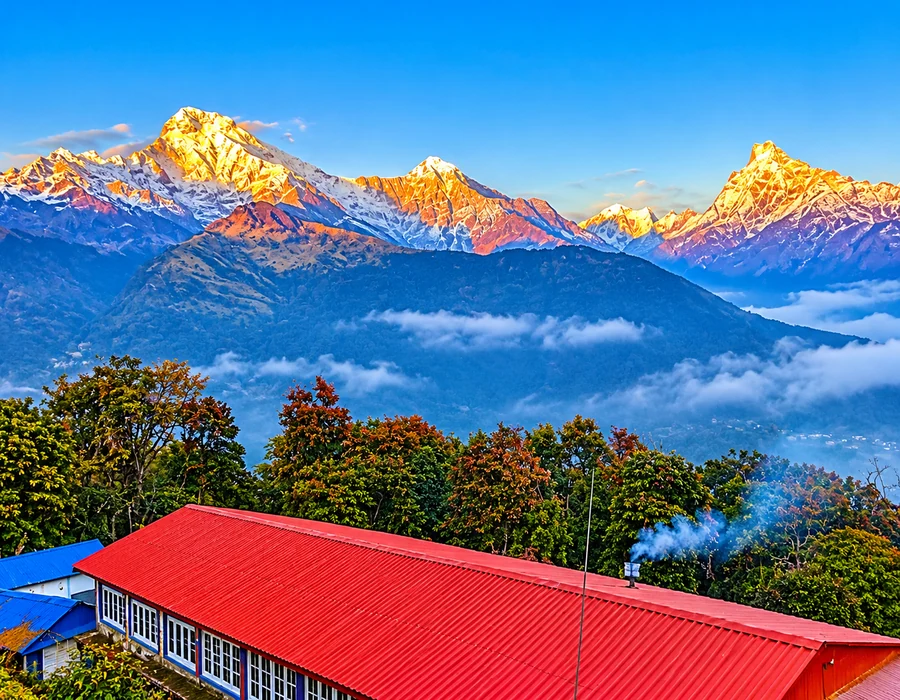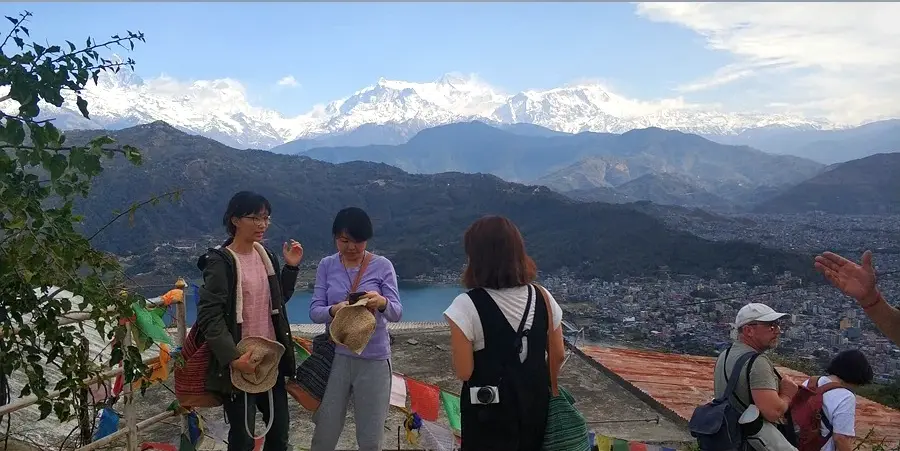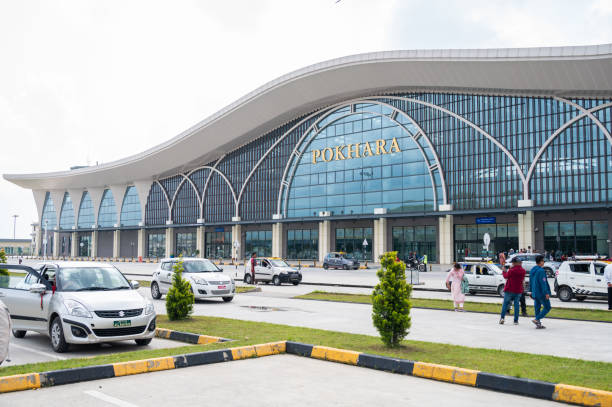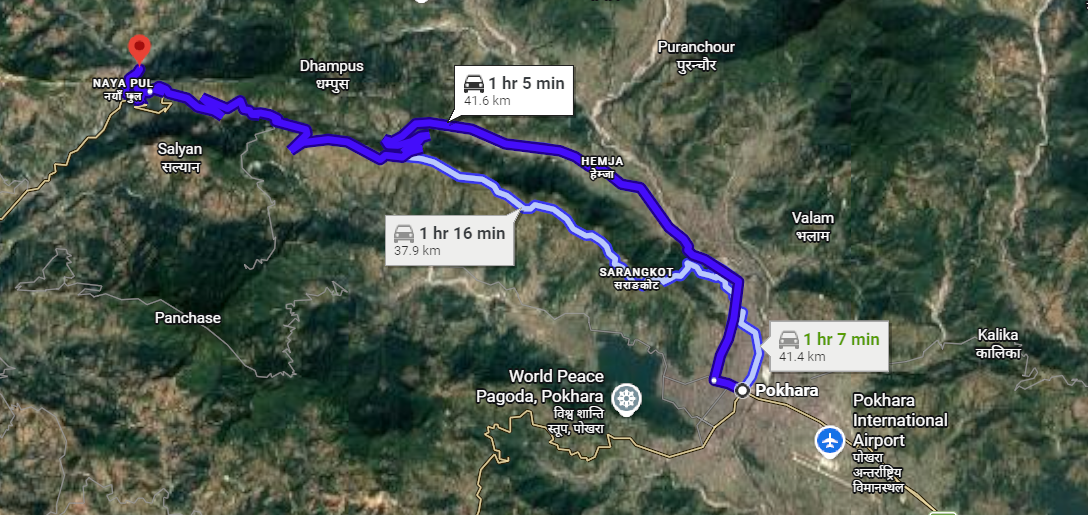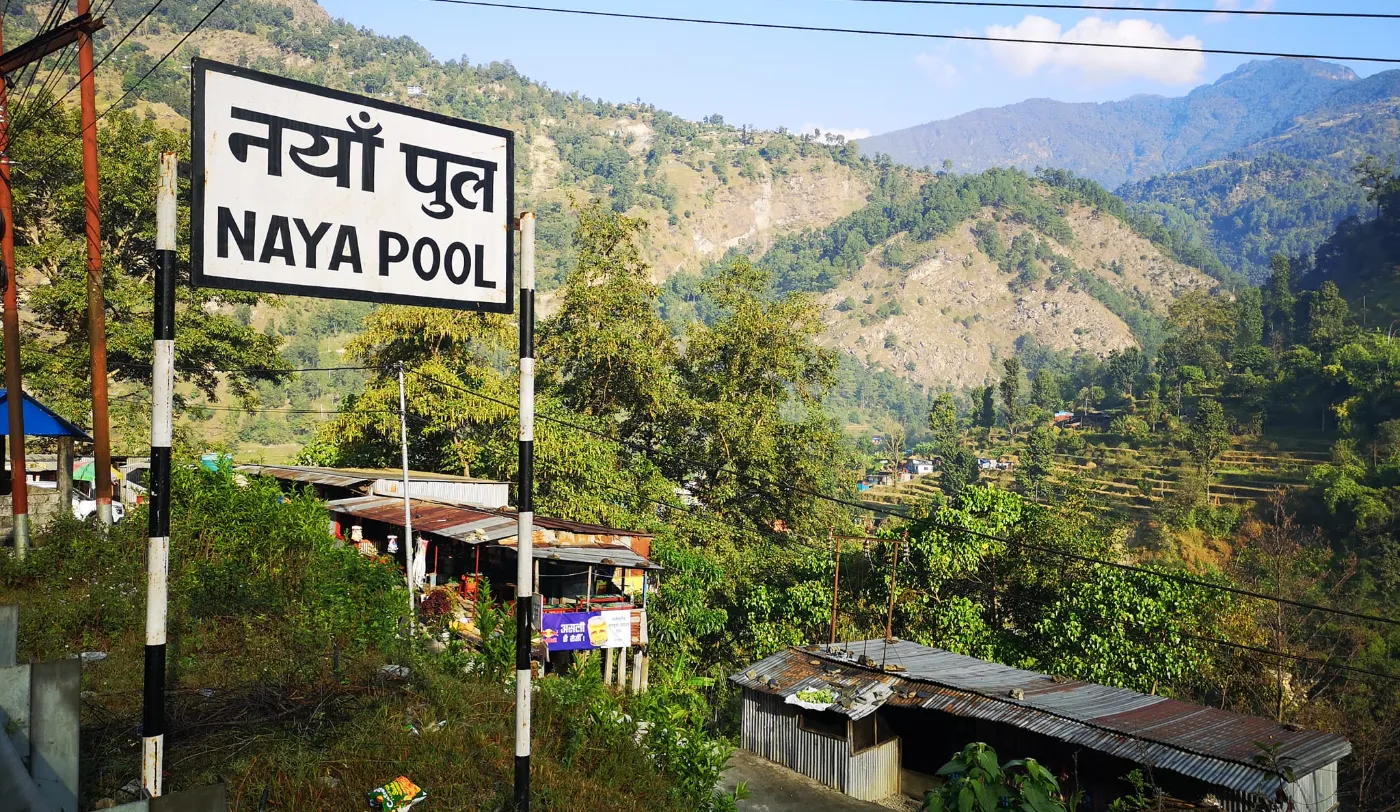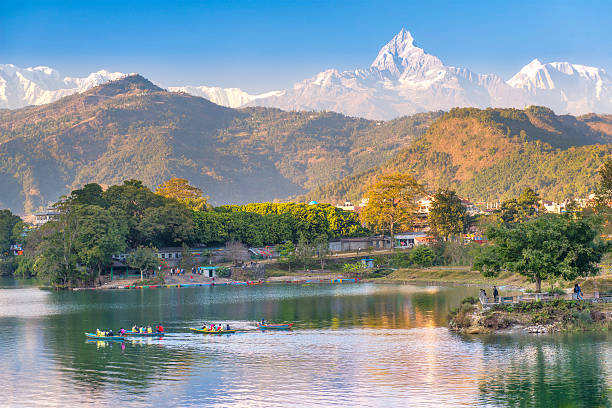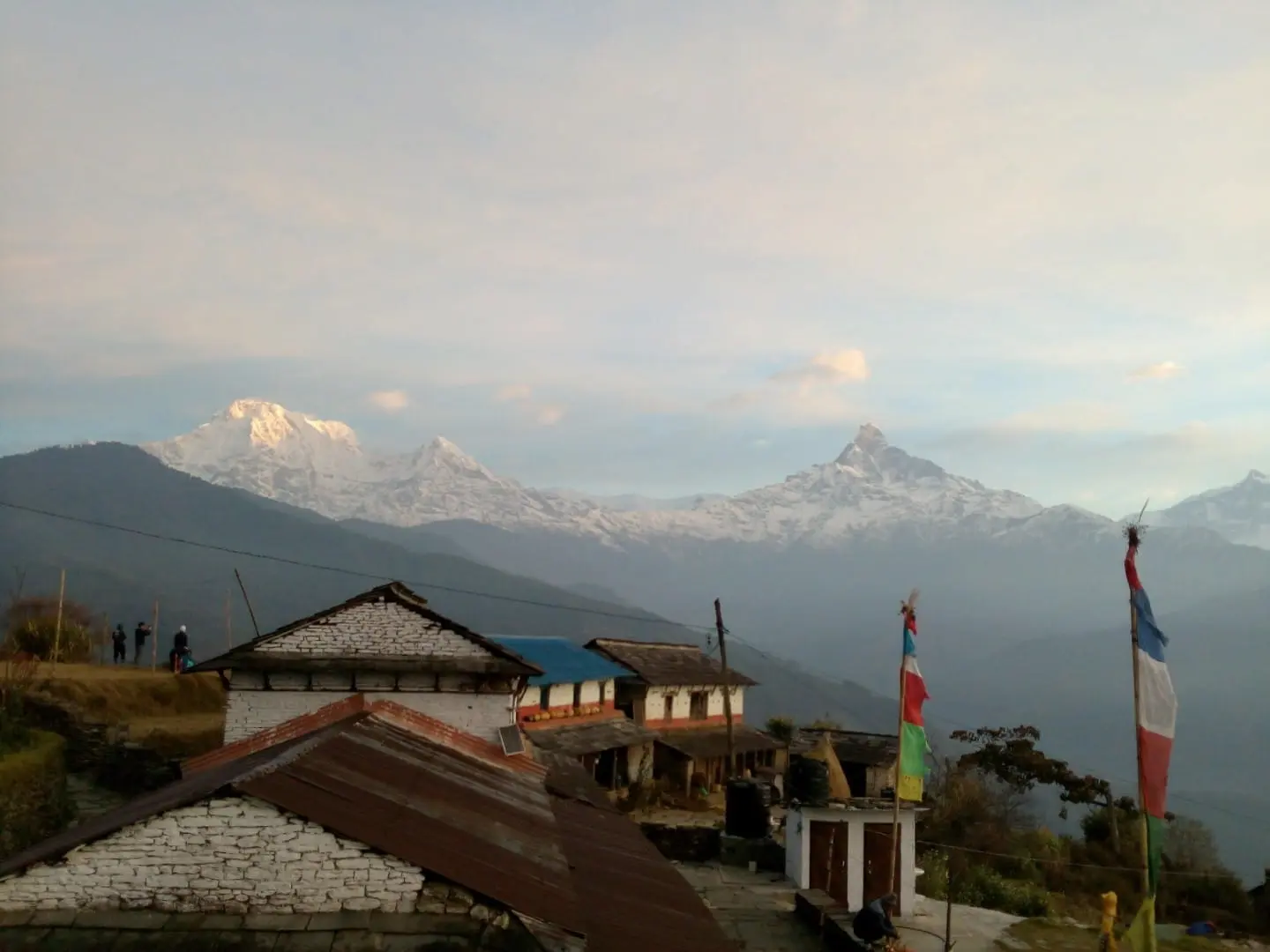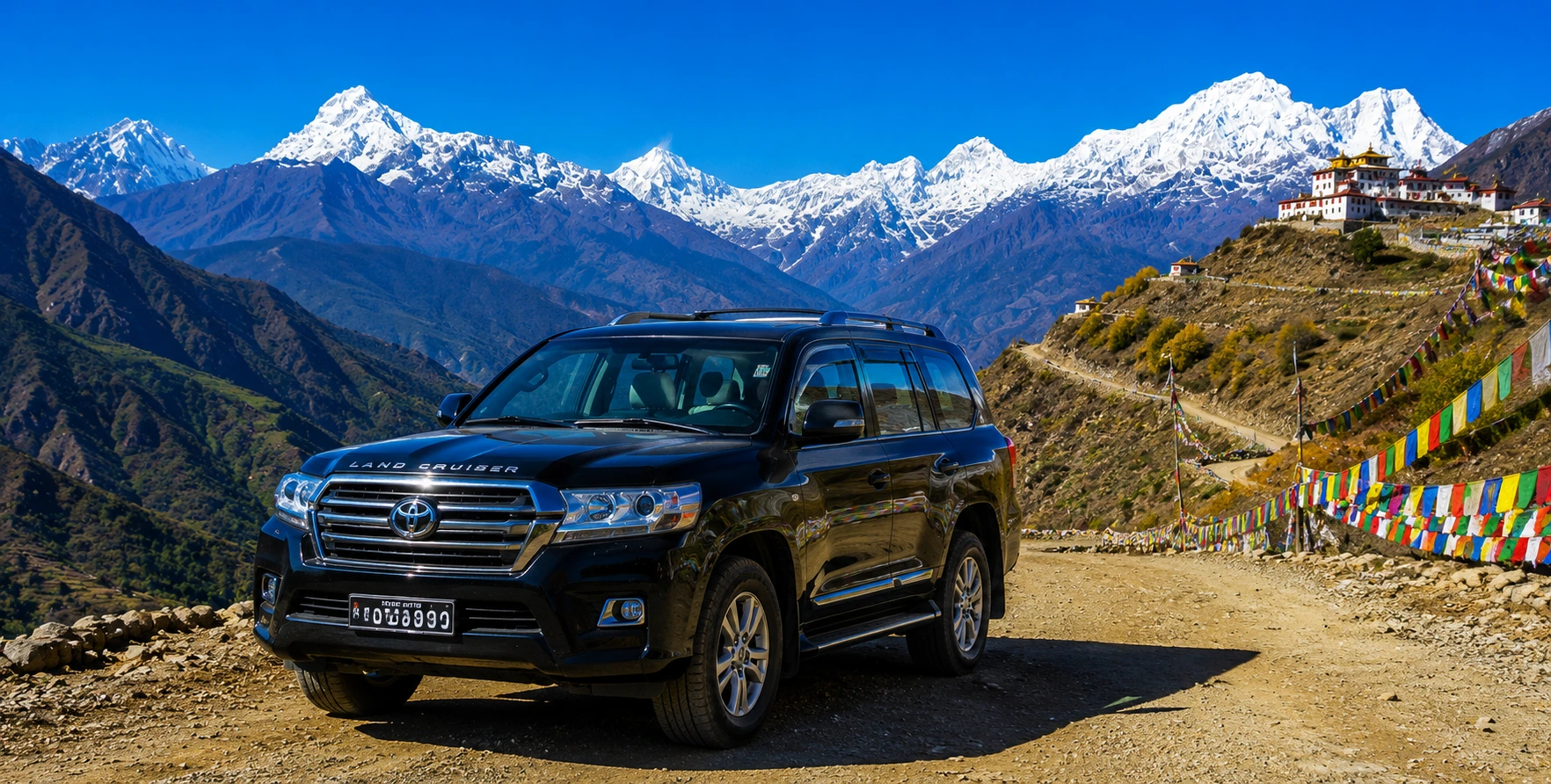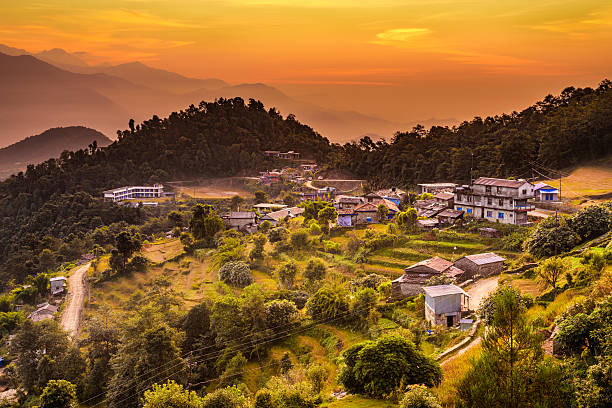
Pokhara Airport to Kande Private Vehicle: Car and Jeep

Pokhara Airport to Kande Private Vehicle: Complete Transfer Guide

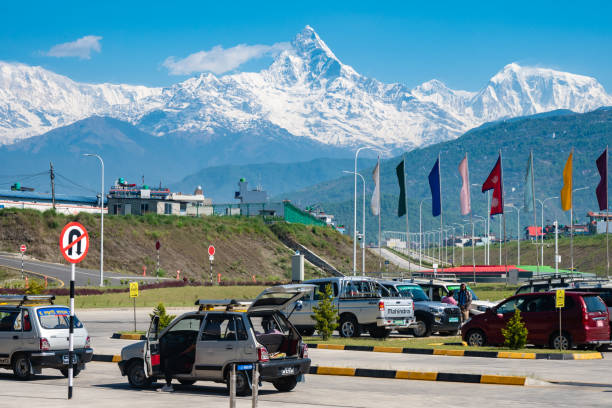
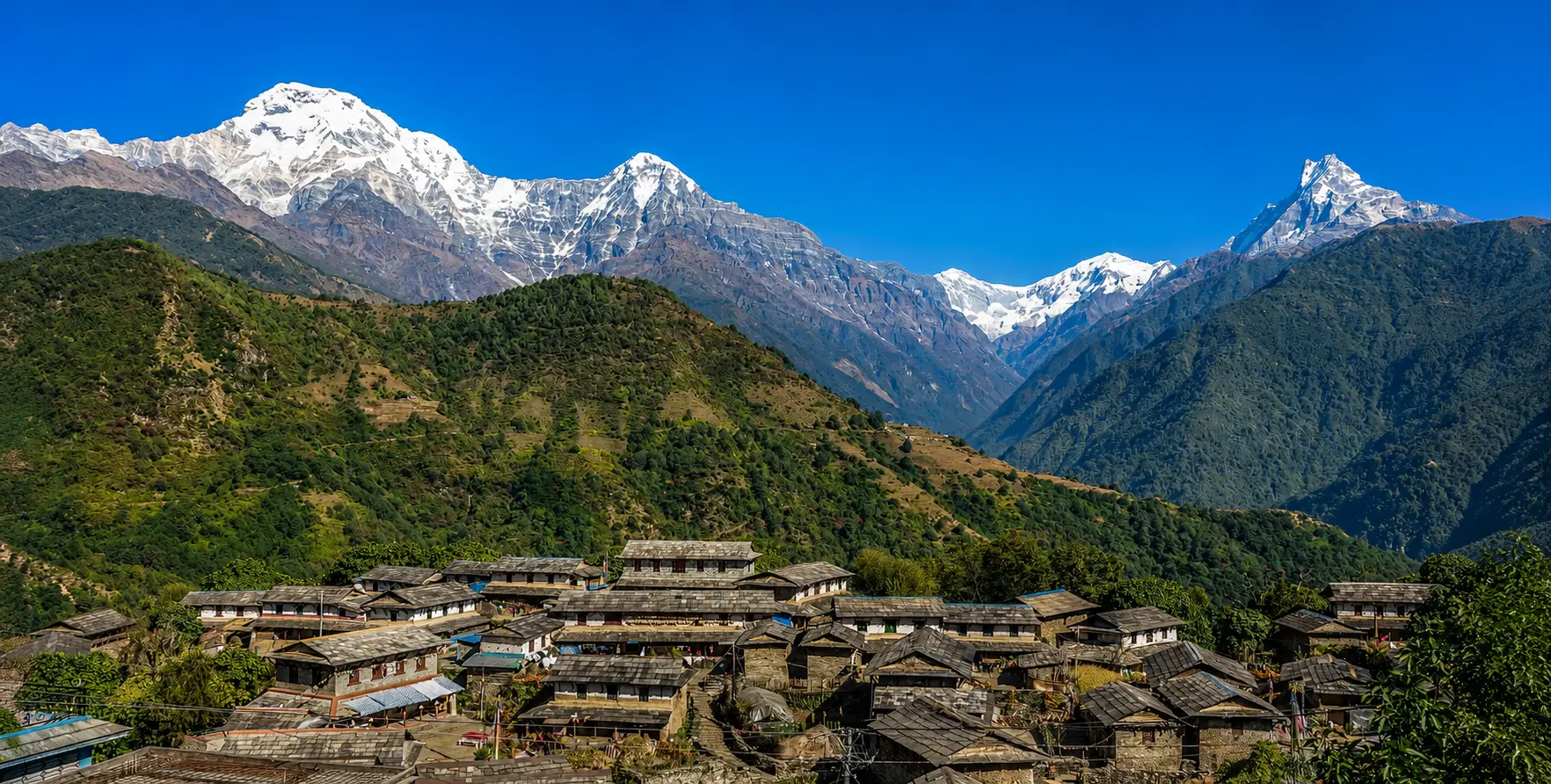
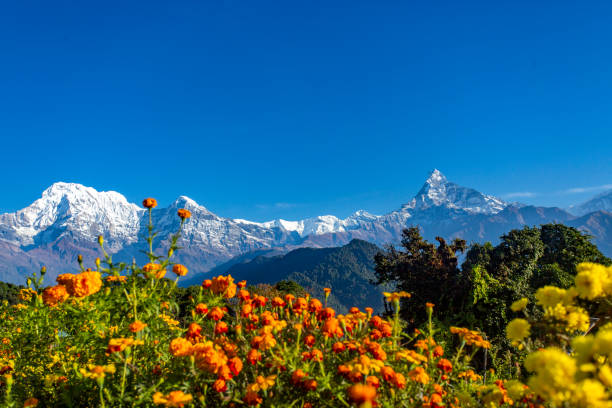
Few airport transfers in Nepal move a traveler from an aircraft to a mountain trailhead as quickly as the drive from Pokhara Airport to Kande. Within an hour of collecting luggage at the terminal, a passenger can be standing on the ridge road at Kande, with the Annapurna range ahead and the Pokhara valley falling away behind.

Kande is a small roadside settlement on the Pokhara to Baglung highway, and it serves as the main trailhead for Australian Camp, one of the region’s most popular short sunrise walks.

It is also a convenient starting point for walks to Dhampus, Pothana and Deurali, and a common access point for the forest route toward Mardi Himal. For travelers arriving by air, a private vehicle is the simplest way to get there.

Nepal Vehicle Hiring Pvt Ltd (vehiclehiringnepal.com) provides private vehicle transfers from Pokhara Airport to Kande and other destinations in the Pokhara region. Our private car hire suits couples and small groups; our 4WD jeep hire suits groups with trekking luggage and anyone continuing on rougher roads; our Hiace van hire carries larger parties; and our coaster hire and bus hire serve groups of twenty or more.

This guide explains the route, the airport pickup process, the vehicle options, the walks and treks that begin at Kande, the best seasons, and how to book.

The transfer is short, but it matters. Arriving flights in Pokhara often land in the morning, when the mountain views are at their best and the trek day is still ahead. A reliable driver waiting at arrivals, a vehicle ready for luggage, and a clear plan for the first hours in the hills can make the difference between a smooth start and a stressful one.

Private vehicle transfer removes the uncertainty of negotiating at the curb, waiting for shared transport to fill, or changing vehicles at Phedi, and it keeps the group together from the moment they land.
Pokhara Airport to Kande Private Vehicle

The Route: Pokhara Airport to Kande

Distance and Time

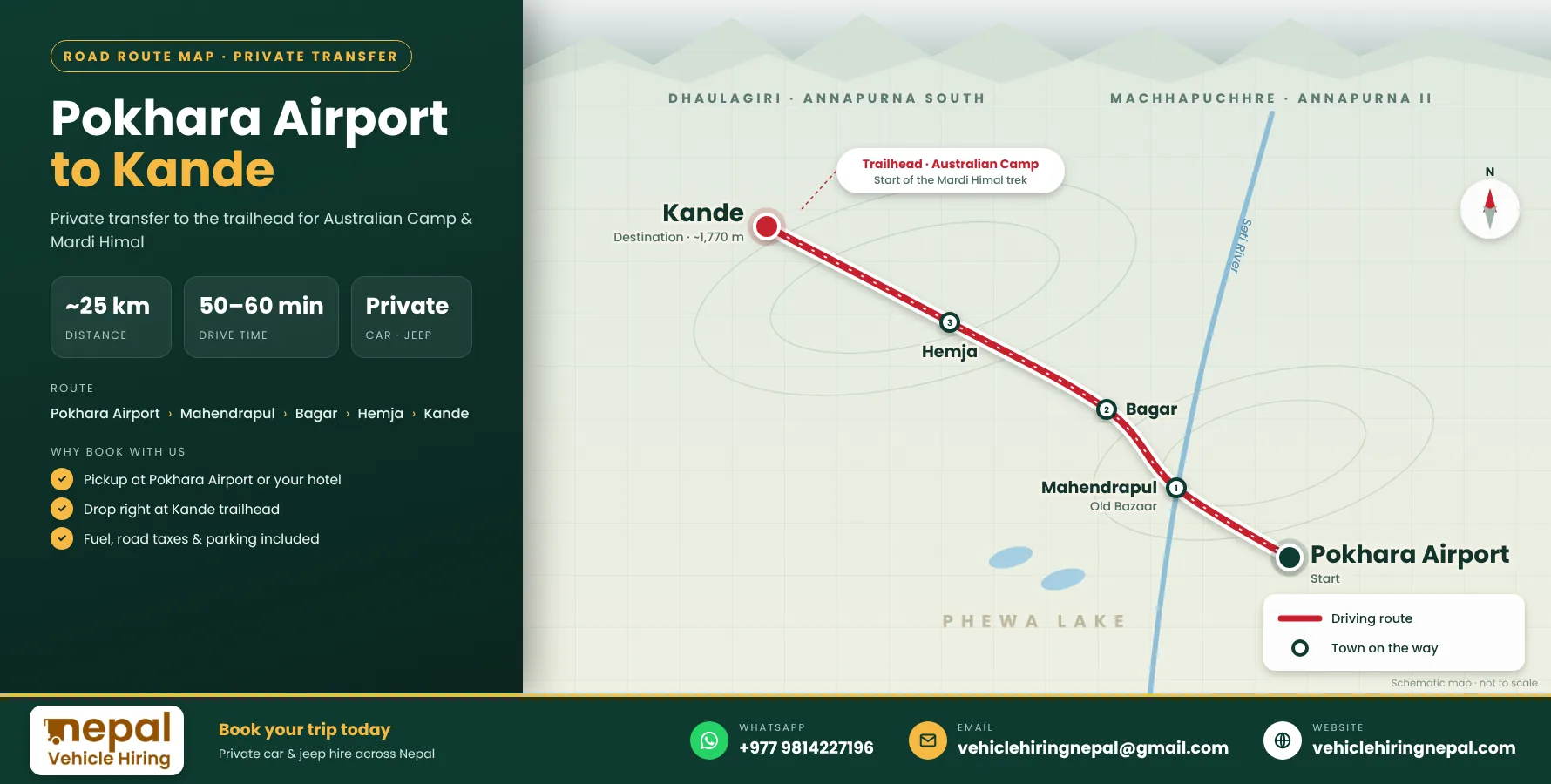
The drive from Pokhara Airport to Kande is roughly 25 to 30 kilometers and usually takes about an hour, depending on city traffic and the stops the group chooses to make. The road leaves the airport area, passes through eastern and central Pokhara, and joins the highway toward Baglung.

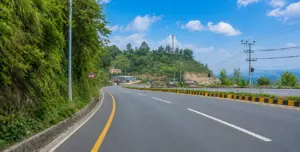
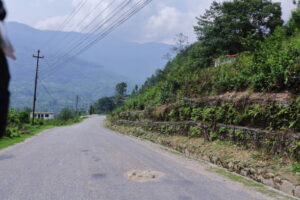
It then climbs steadily through Hemja, passes the Phedi turnoff, and continues to Kande, where the Australian Camp trail leaves the road. Because the highway is sealed throughout, any well-maintained vehicle can complete the journey, and the choice between a car and a jeep depends mainly on luggage, group size, and what comes next.

StageApprox. DistanceApprox. TimeRoad TypeSuitable Vehicles
Airport to Pokhara city3 to 6 km10 to 20 minutesSealed city roadsCar, jeep, Hiace
City to Hemja and Phedi15 to 18 km30 to 40 minutesSealed highwayCar, jeep, Hiace, coaster
Phedi to Kande8 to 10 km15 to 25 minutesSealed highway, climbingCar, jeep, Hiace
Kande to Australian Camp trailTrailhead at KandeWalk of 2 to 3 hoursFootpathOn foot

Pokhara Airport to Kande Private Vehicle

From the Airport Through Pokhara

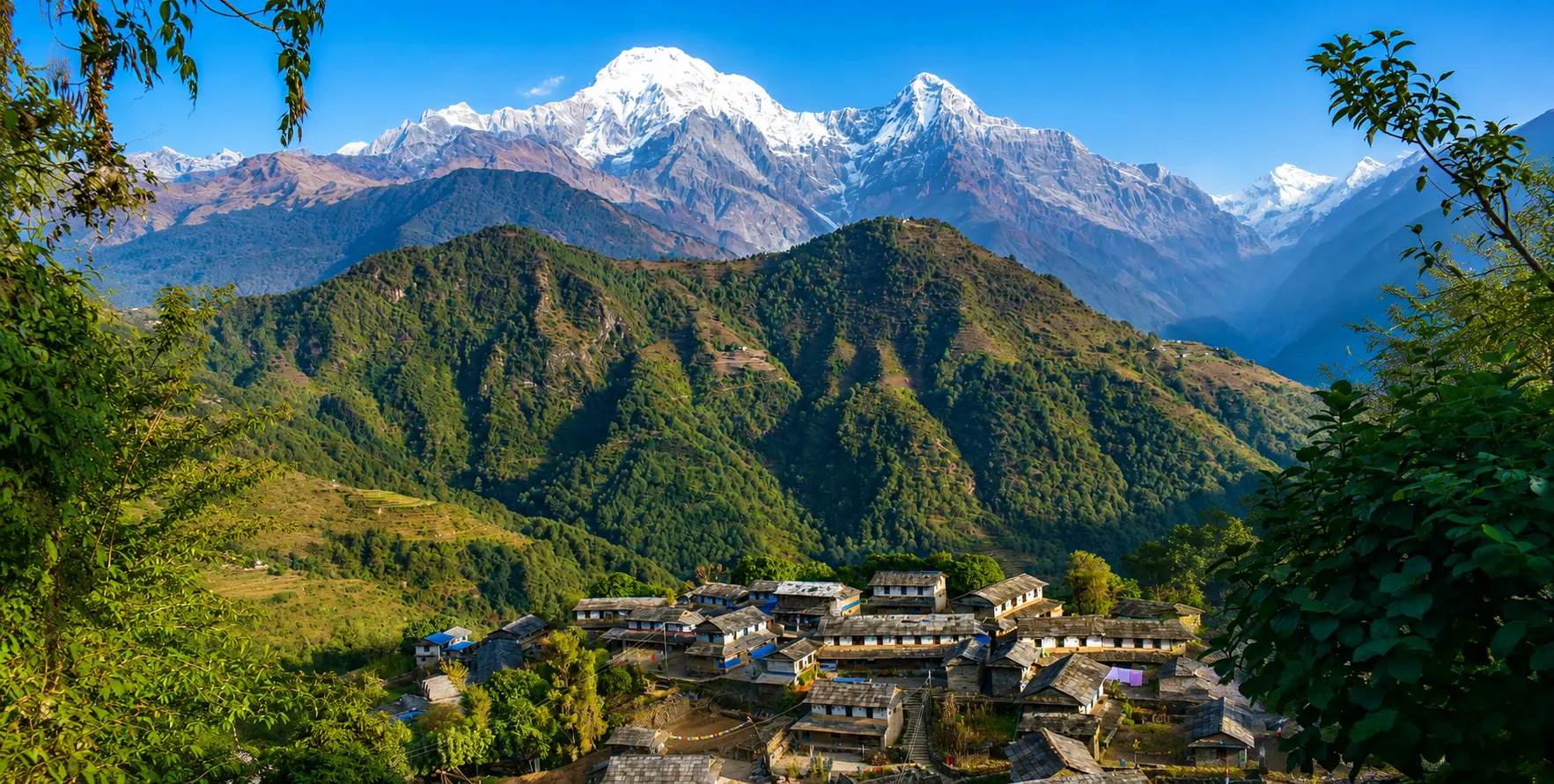
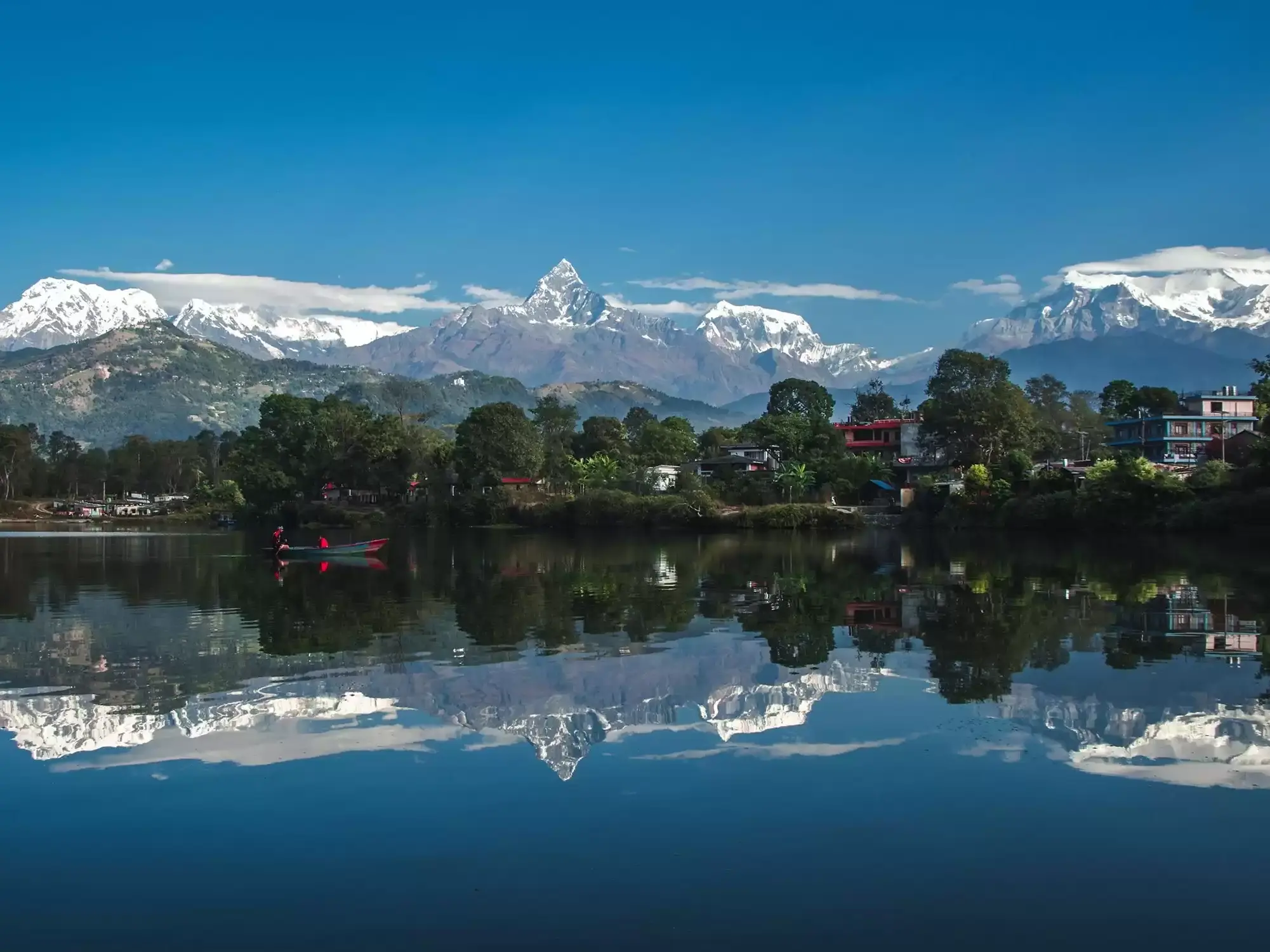
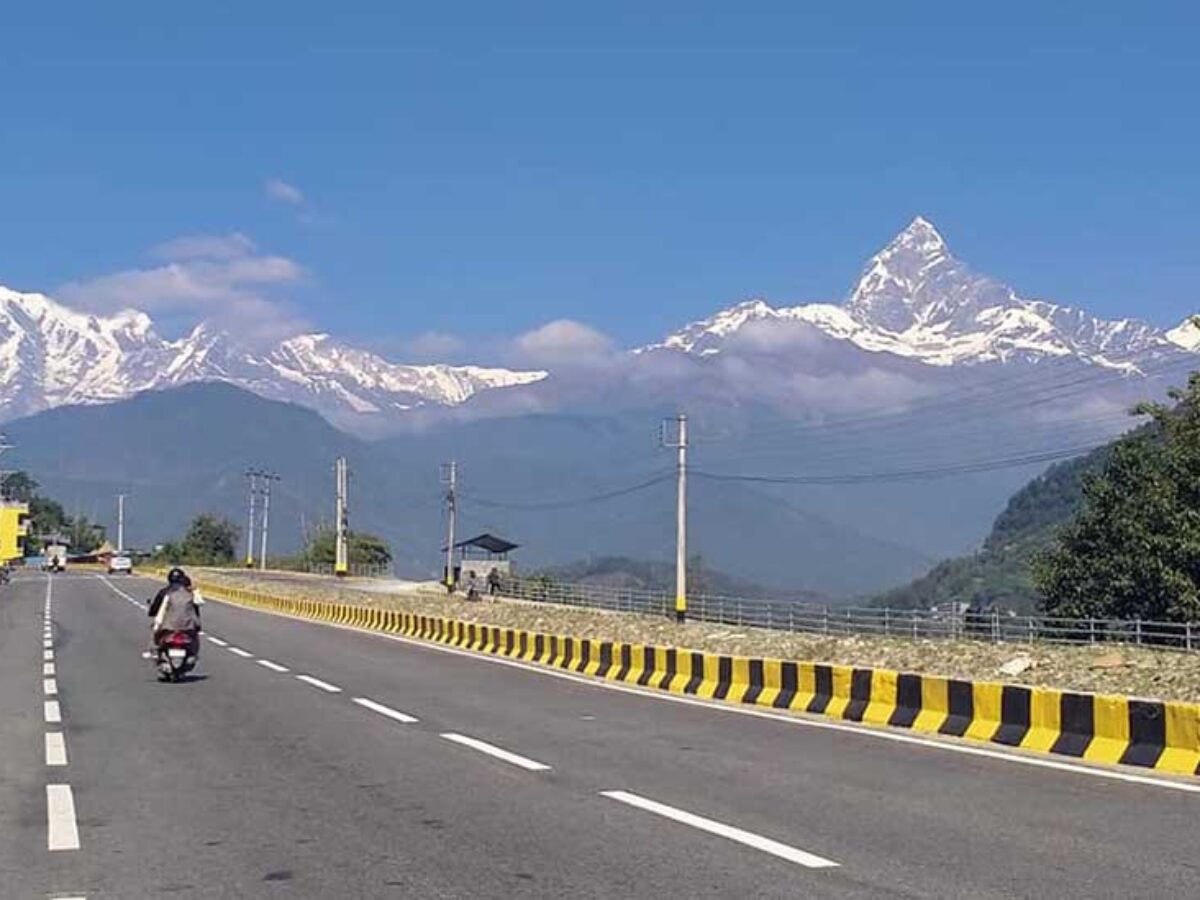
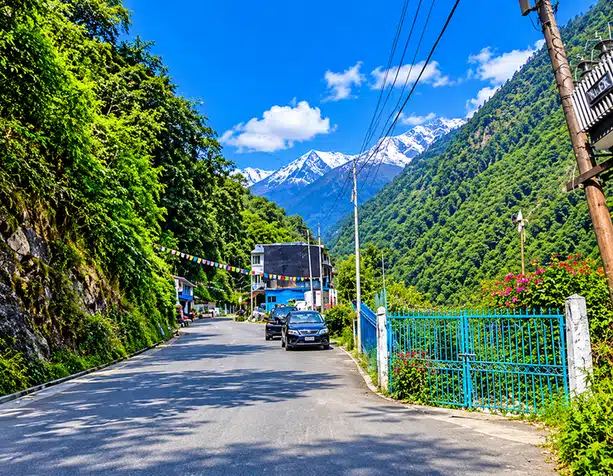
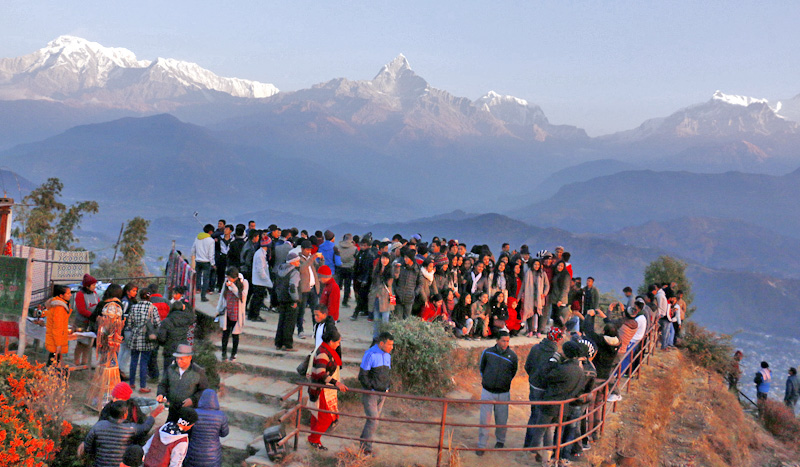
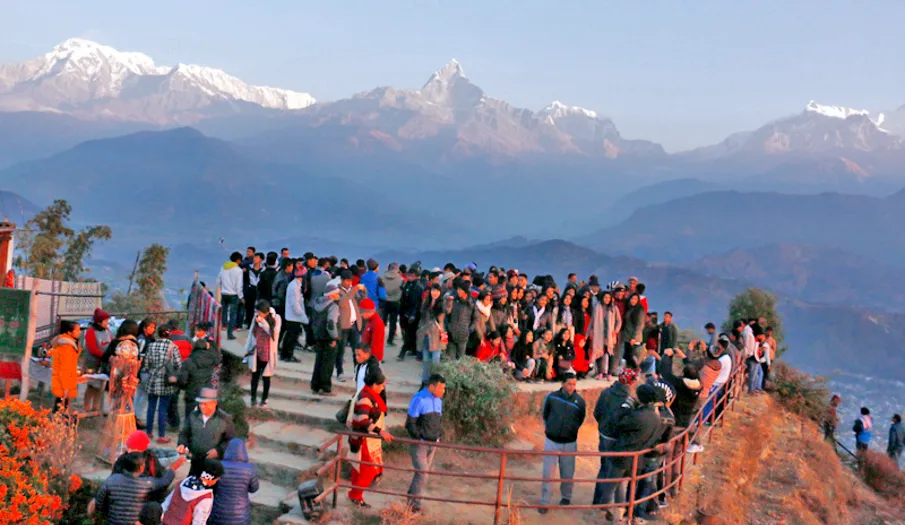
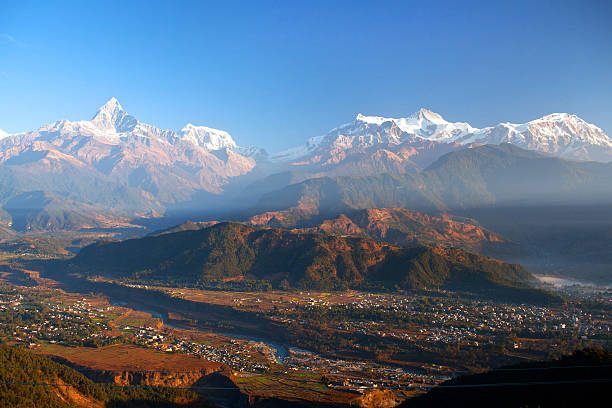
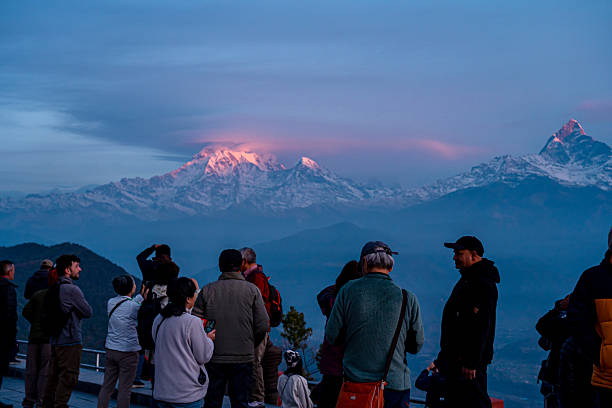
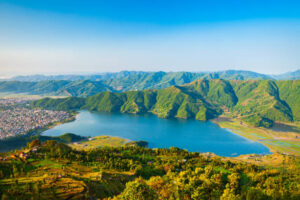
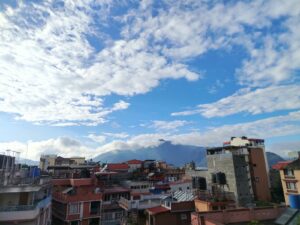
Leaving the terminal, the vehicle joins the main roads connecting the airport area to the city center. On a clear morning, the Annapurna range and Machhapuchhre appear above the rooftops, a memorable first impression of Pokhara.

Traffic is usually light outside the morning and evening peaks, and the driver knows the best way to pass through the city. Travelers who want to stop in Lakeside for breakfast, to exchange money, to buy a local SIM card or to collect trekking permits can do so on the way, and the vehicle waits.

The Baglung Highway to Phedi

West of the city, the highway to Baglung begins to climb gently through suburbs, farmland and small bazaars. Hemja, a busy market town, marks the edge of the valley floor; beyond it, the road rises toward the ridge that separates the Pokhara valley from the Seti gorge to the west.

Phedi, at the foot of the Dhampus hill, appears as a cluster of shops and tea houses, with the stone steps to Dhampus starting just above the road. The highway continues past Phedi, climbing steadily, and the valley opens up behind.

Kande and the Australian Camp Trailhead

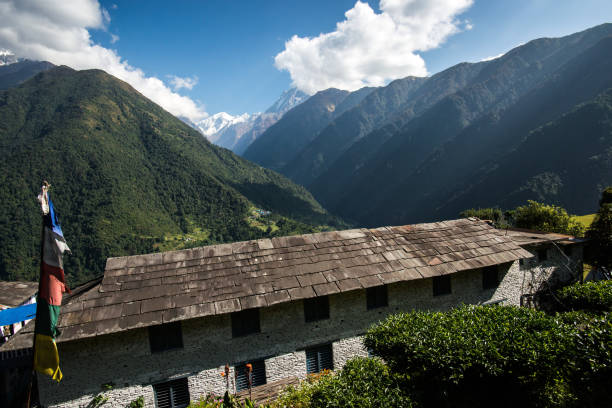
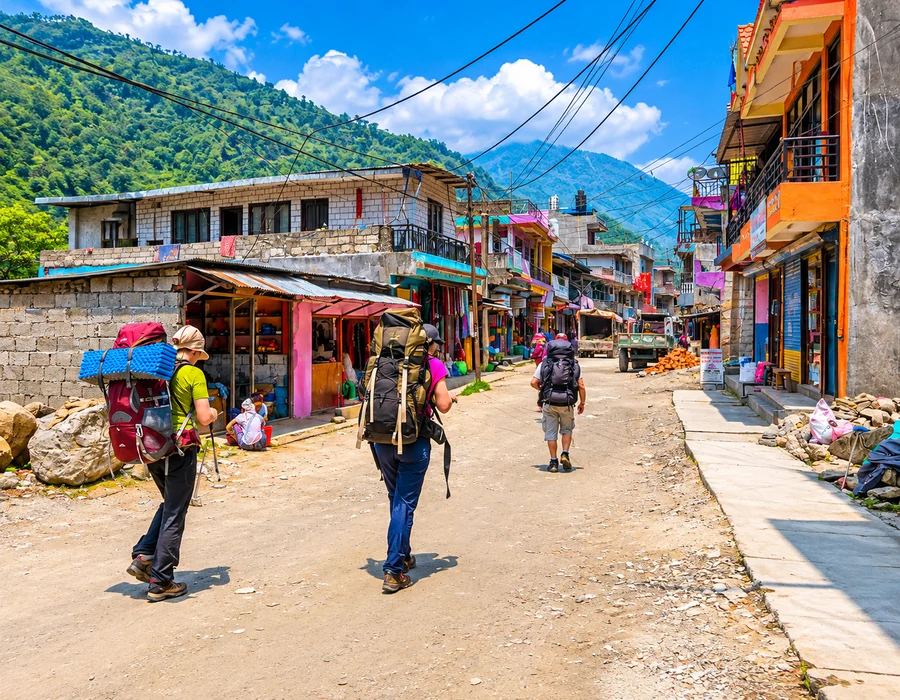
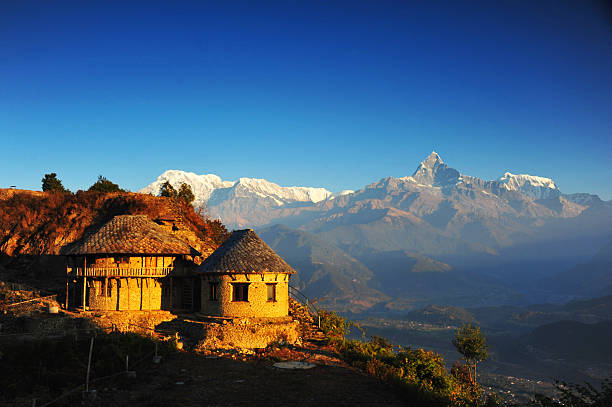
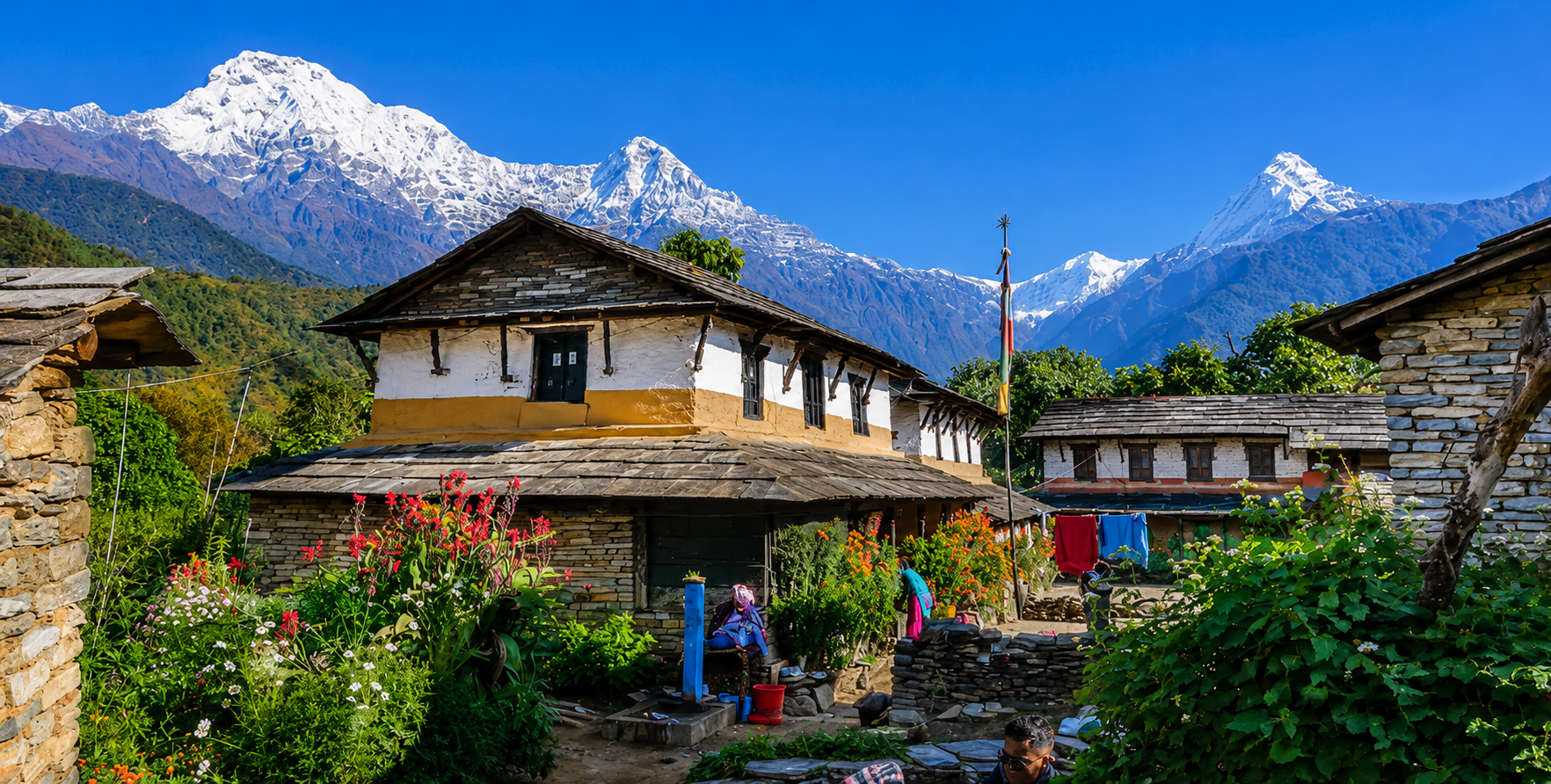
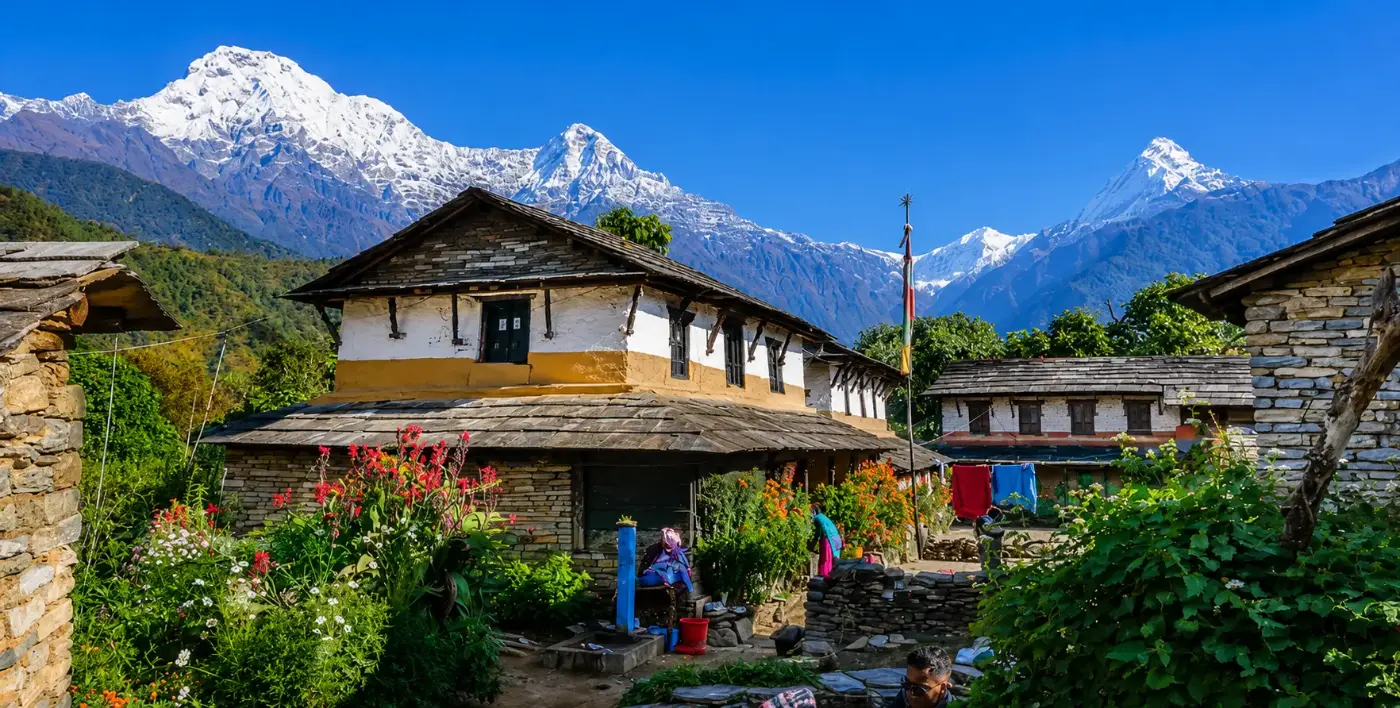
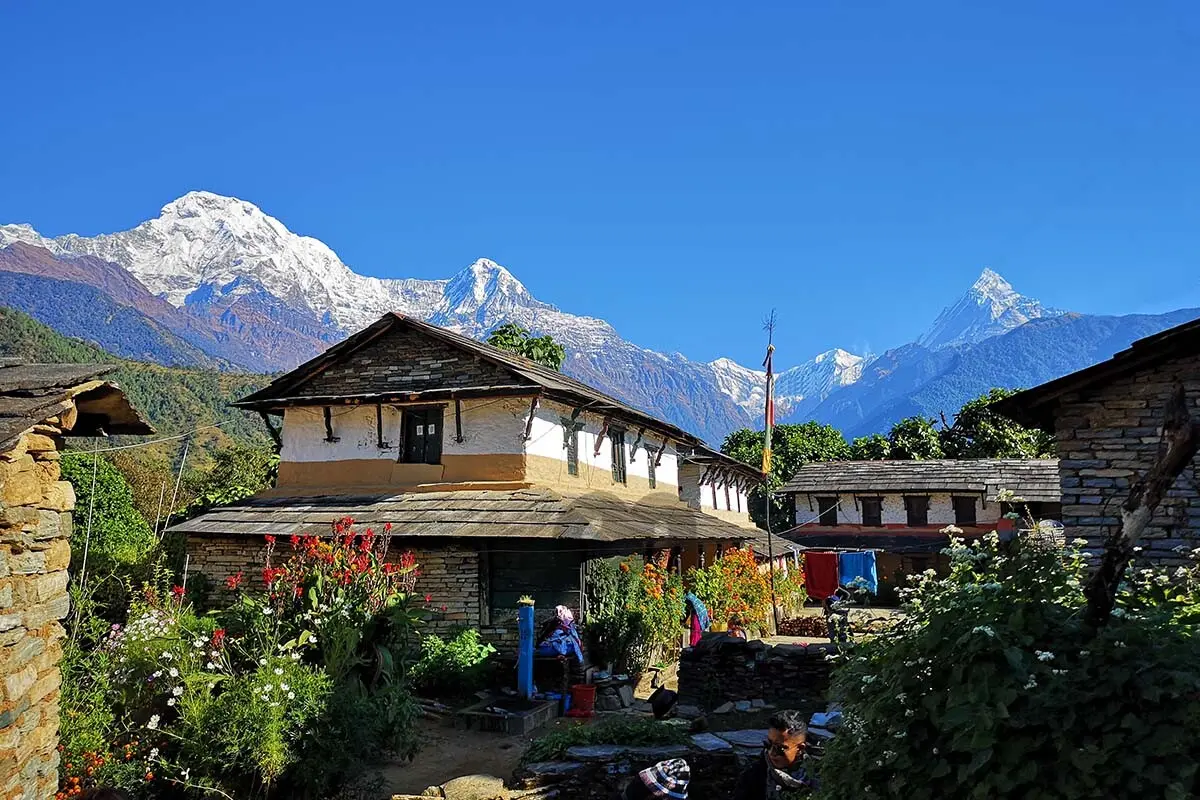
Kande is a roadside bazaar with a handful of shops, tea houses, and guesthouses, and with a clear sign marking the start of the trail to Australian Camp. The settlement sits on a saddle where the road crosses the ridge, and from the roadside there are already good views to the north.

The walk to Australian Camp, which most travelers complete in two to three hours, climbs through forest and terraced fields, and the camp itself offers a broad panorama of the Annapurna range, especially at sunrise. For travelers arriving by air with a day to spare, an afternoon walk to Australian Camp, an overnight stay, and a sunrise view the next morning make a perfect first mountain experience.
Pokhara Airport to Kande Private Vehicle

The Airport Pickup: How It Works

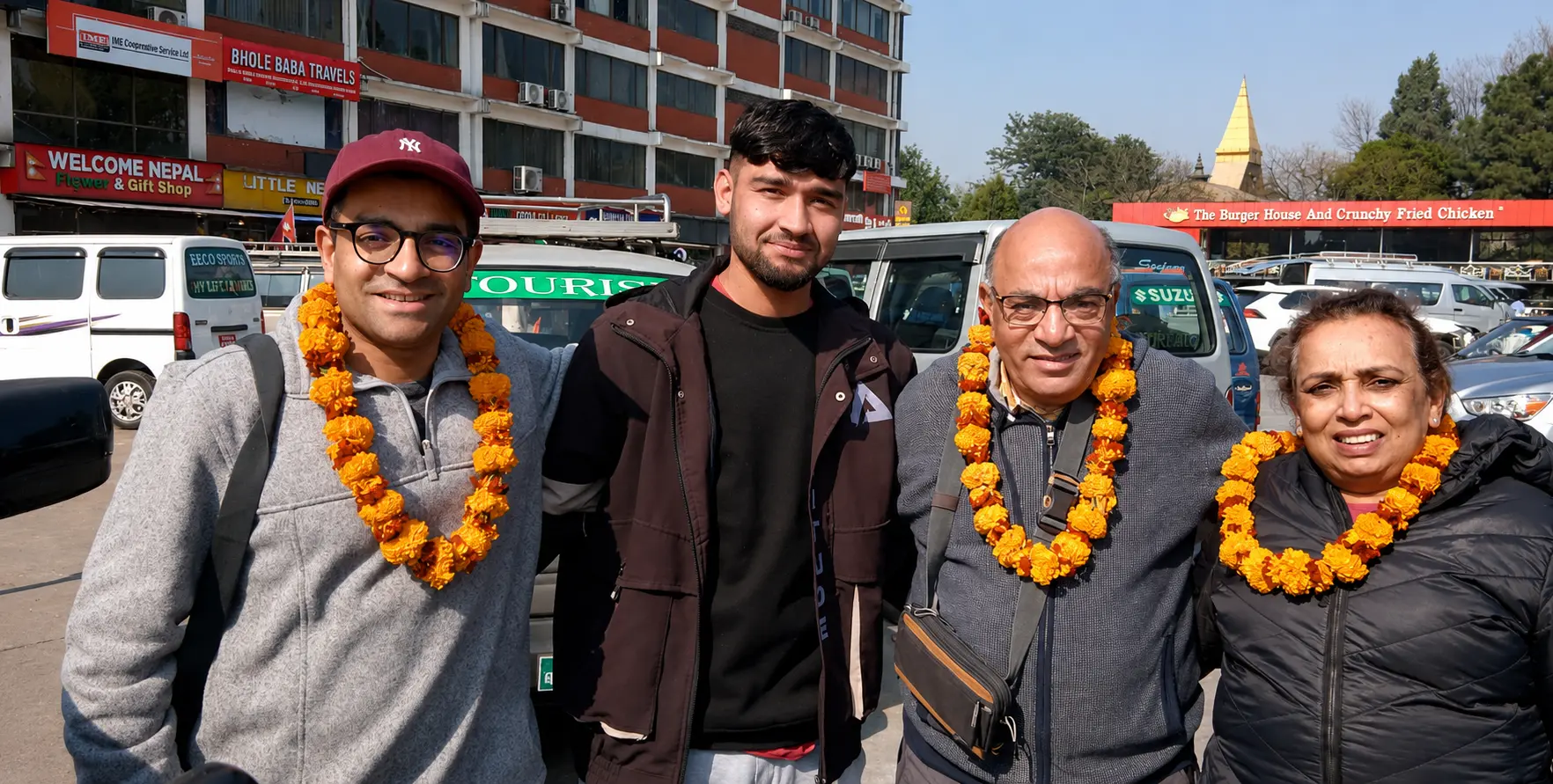
A smooth airport pickup begins with clear information. When booking, provide your flight details and arrival time, the number of passengers and bags, your destination in Kande or the surrounding area, and a mobile number that works in Nepal. The driver tracks your arrival and waits at the terminal with a sign in your name.

If the flight is delayed, which can happen in the hills because of weather, the driver adjusts without extra fuss, and the team keeps in contact with the passenger via WhatsApp. After the passengers meet the driver, luggage is loaded, and the vehicle leaves the airport area without delay.

A private vehicle pickup also solves practical problems that arriving travelers often face. No need to compare quotes at the curb, negotiate in an unfamiliar language, wait for other passengers, or wonder whether the vehicle can handle trekking bags.

The driver knows where to go, the vehicle is clean and comfortable, and the schedule is flexible. For first-time visitors to Nepal, this reassurance is especially valuable.

Travelers who arrive first in Kathmandu and then fly or drive to Pokhara can also use our Kathmandu airport transfer and Kathmandu to Pokhara private vehicle service, so one operator handles the whole journey from international arrival to the Kande trailhead.

Choosing the Right Vehicle

Private Car

A private car is the simplest and most economical choice for one to three passengers with ordinary luggage. The highway to Kande is sealed, so a car handles it comfortably. Couples heading to Australian Camp for a night, solo travelers with a backpack, and friends on a short break often choose this option.

4WD Jeep

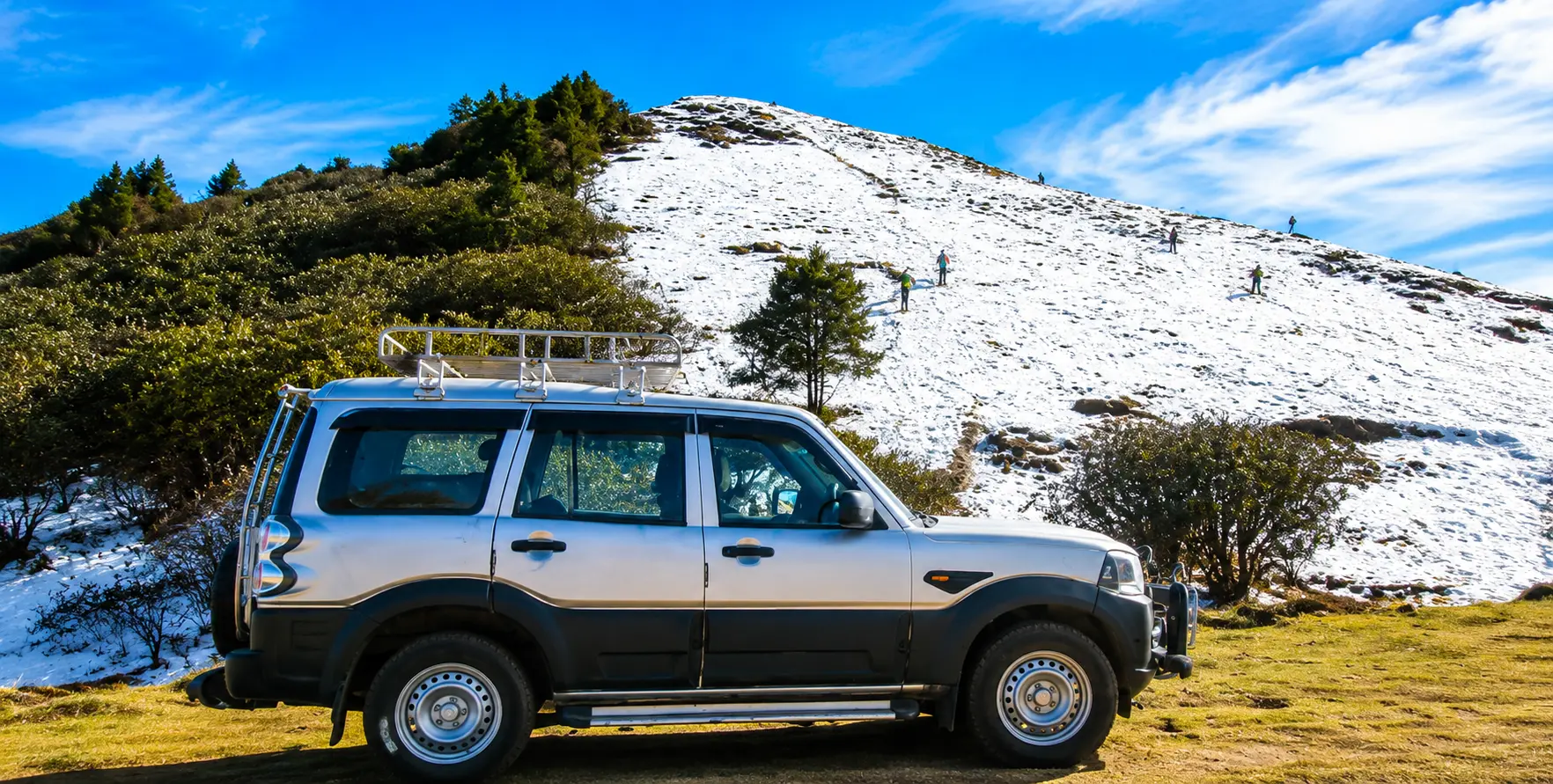
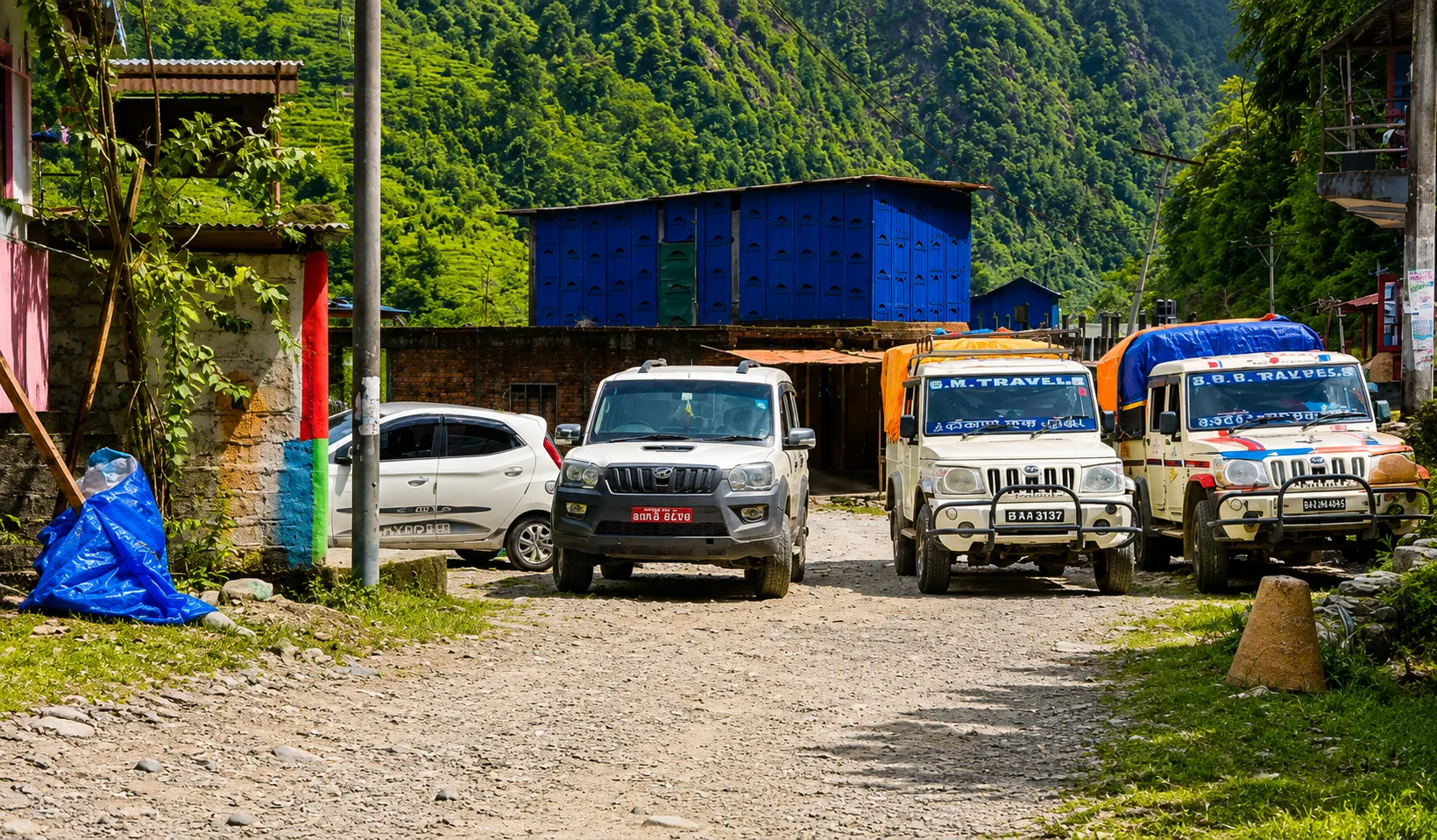
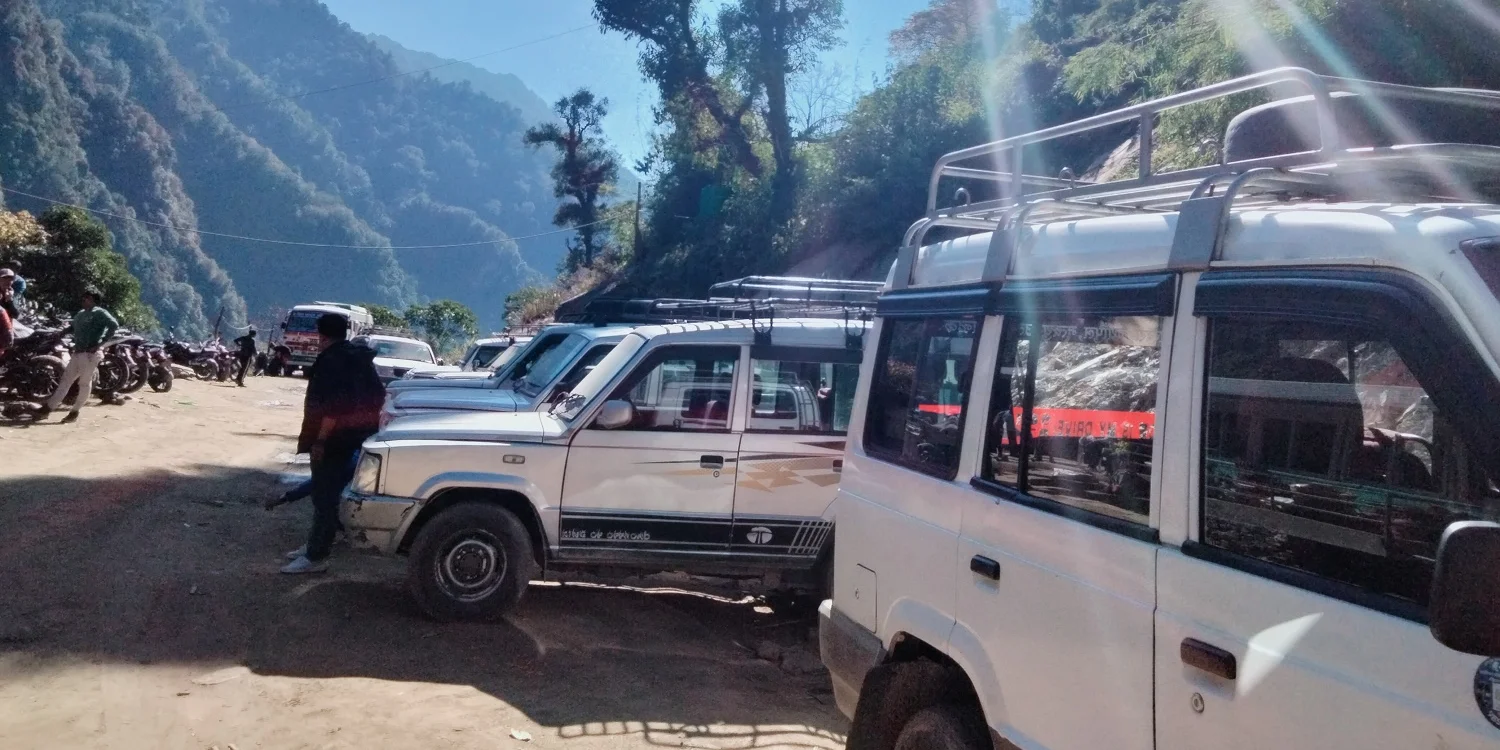
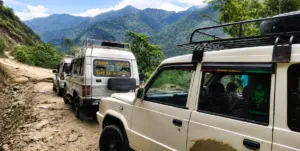
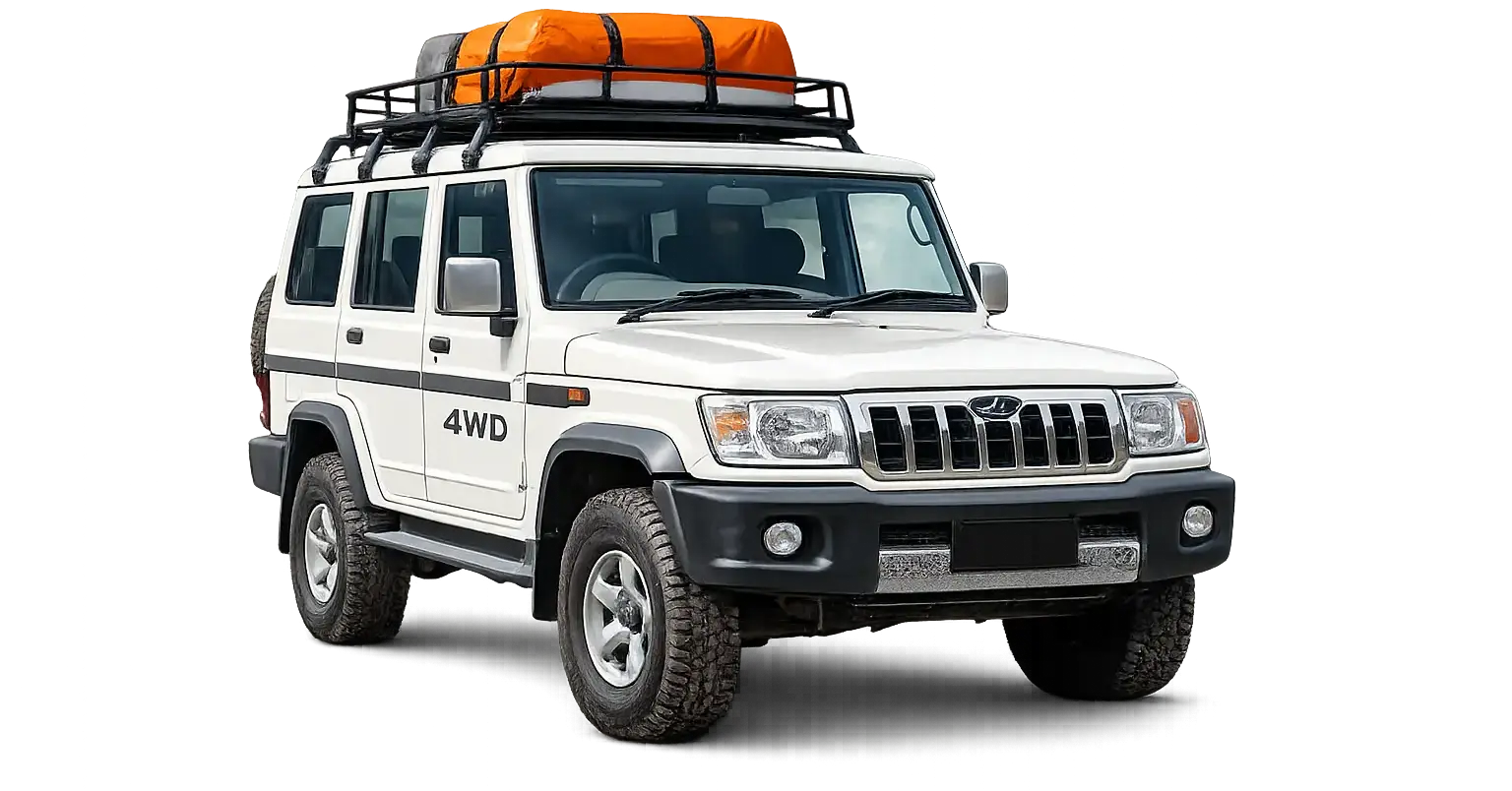
A jeep such as a Scorpio is best for four to six passengers or for any traveler with heavy trekking bags. It offers more space, higher ground clearance, and extra confidence if the group plans to continue beyond Kande on rougher roads, for example toward Dhampus, Ghandruk, or the Forest Camp trailhead of the Mardi Himal route.

Hiace Van

A Hiace van suits groups of seven to fourteen with luggage. Everyone has a comfortable seat, the luggage fits in the rear compartment, and the group travels together.

Coaster and Bus

For larger groups, a coaster or bus can run on the highway to Kande, though the final turns near the trailhead are narrow and the driver will advise on the best drop-off point. Schools, trekking clubs and corporate groups often use these larger vehicles for airport pickups.
Pokhara Airport to Kande Private Vehicle

Kande and the Walks It Opens

Australian Camp

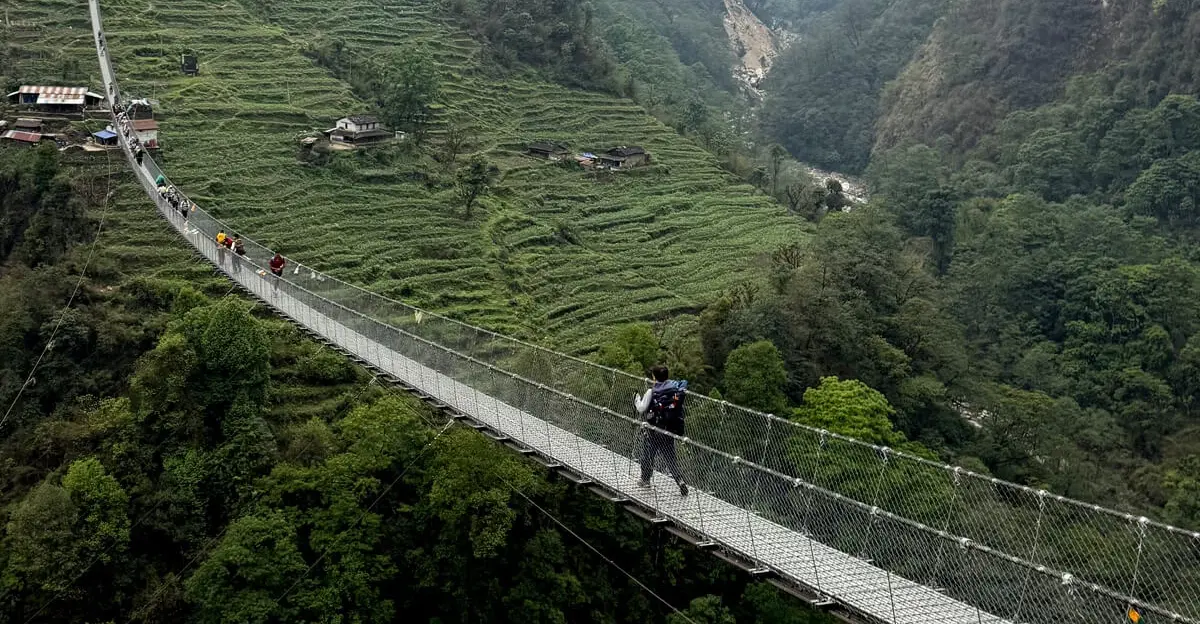
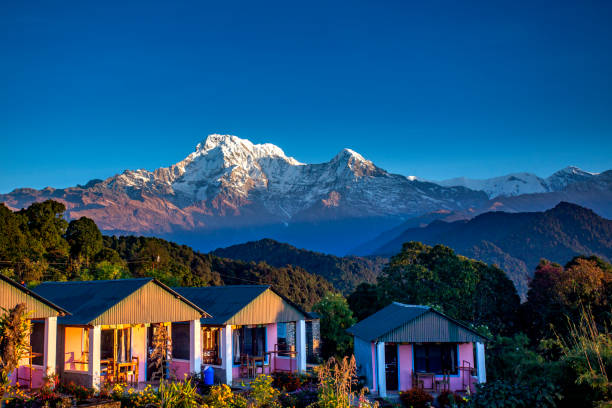
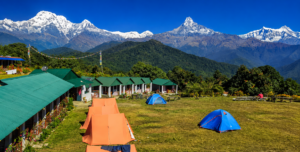
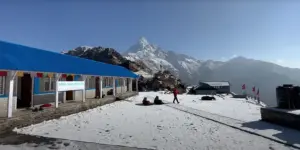
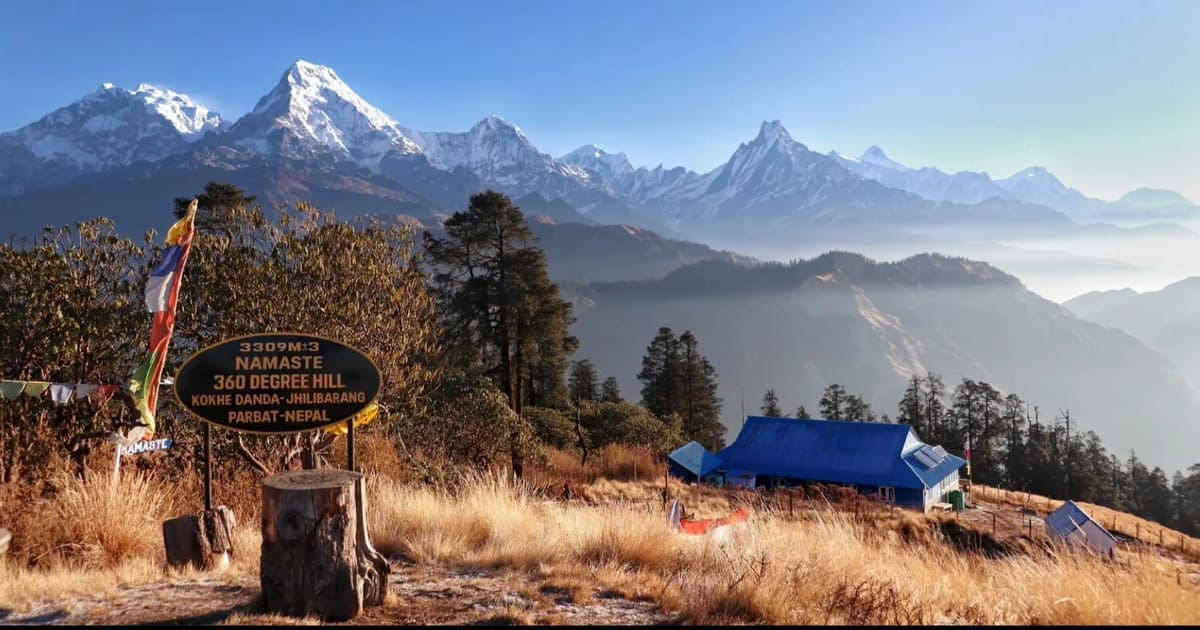
Australian Camp is the most popular destination from Kande. The trail climbs gradually through rhododendron and oak forest, passes farmland and small hamlets, and reaches the open ridge where simple guesthouses and campsites look out over the range.

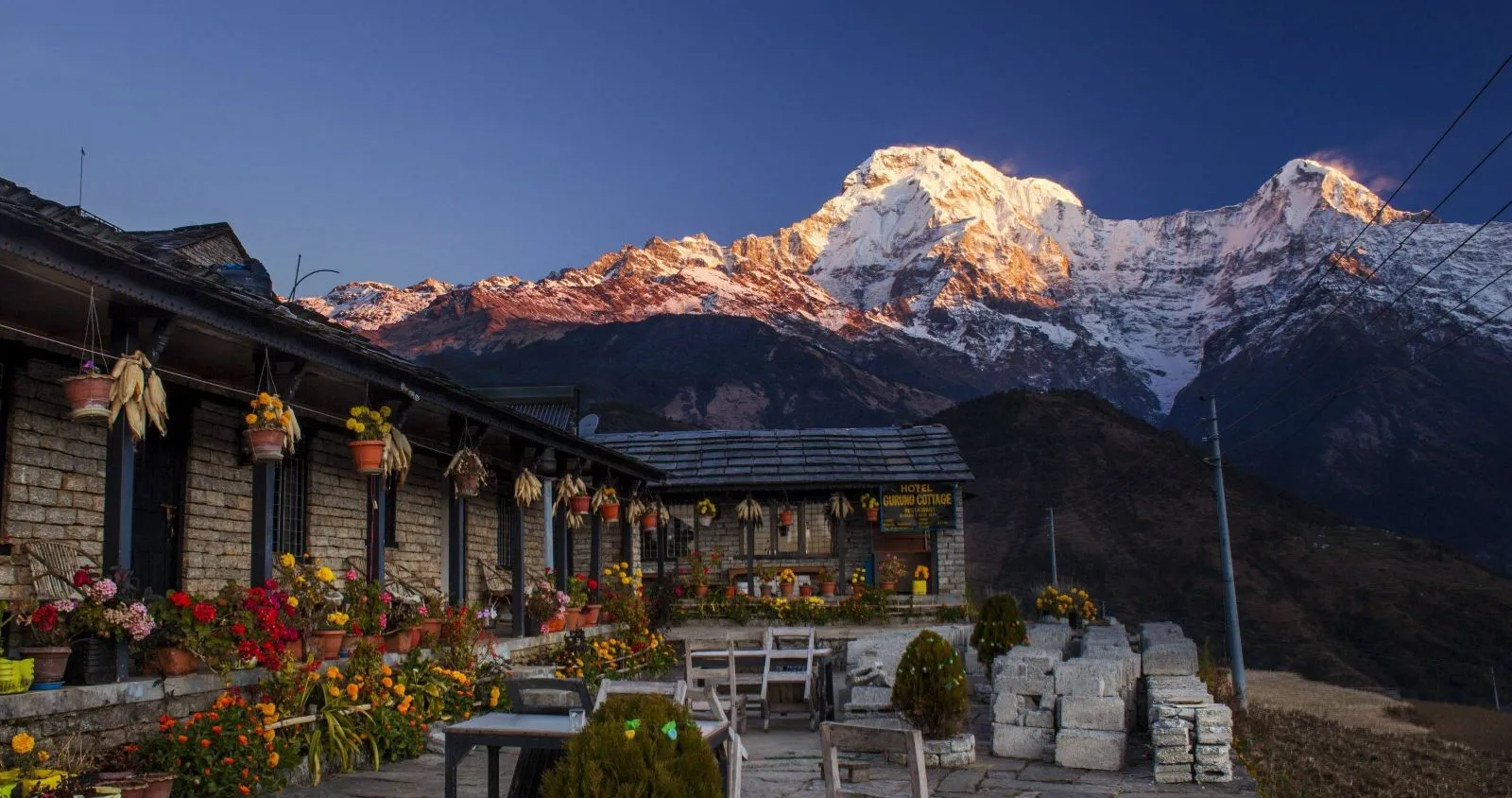
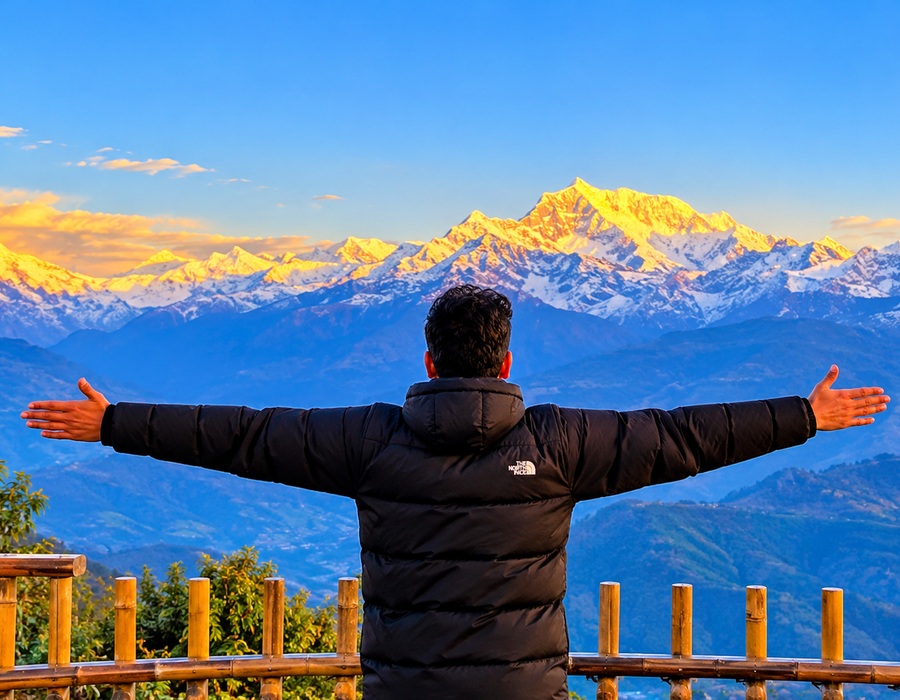
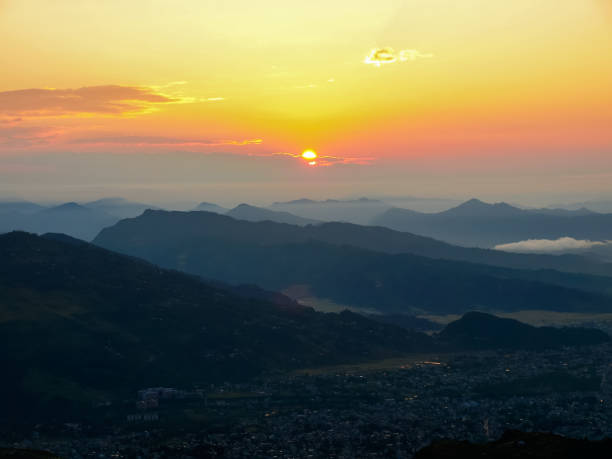
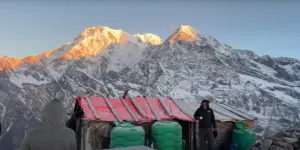
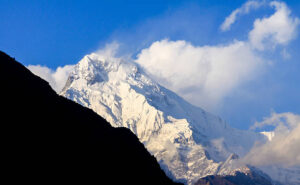
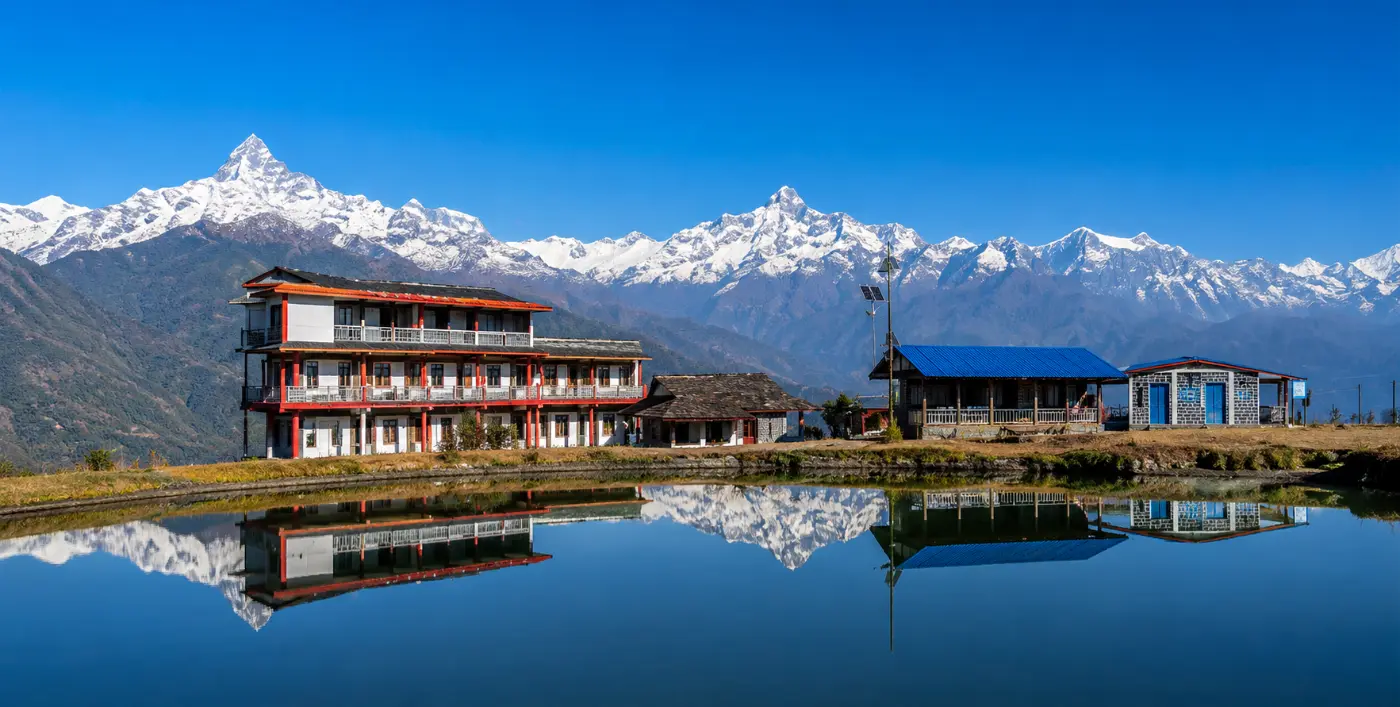
The view at sunrise, with Annapurna South, Hiunchuli, Machhapuchhre and, on clear days, Dhaulagiri glowing in the first light, is the reason most people come. The camp is quiet, friendly and relaxed, and it suits families, couples and first-time hikers.

Dhampus, Pothana and Deurali

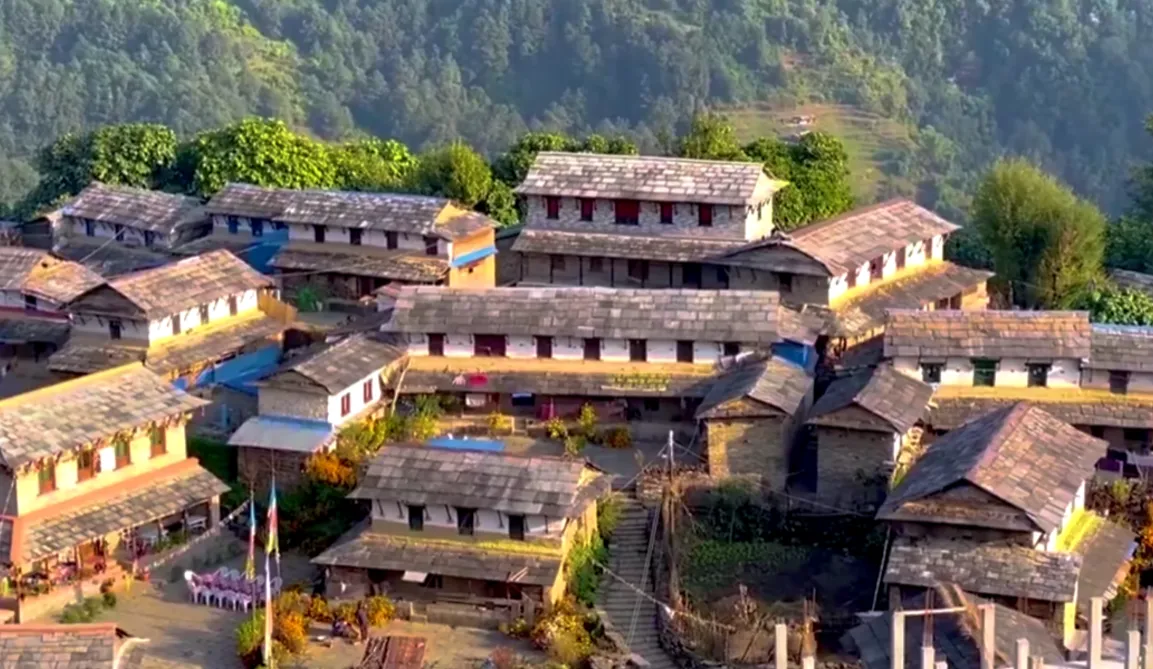
From Kande, trails and ridge paths lead west to Pothana, Deurali and Dhampus, and a route also climbs from Phedi to Dhampus on the other side of the ridge. The villages are close enough that a two- or three-day walk can link them in a loop, returning to Phedi or Kande for vehicle pickup. This is one of Nepal’s easiest and most scenic short treks.

Toward Mardi Himal

The popular Mardi Himal route begins near Kande and passes through Forest Camp and Low Camp before climbing to higher camps with views of Machhapuchhre and Annapurna South. Travelers planning this trek often arrive by air, take a private vehicle to the trailhead, and begin walking the same day. The route climbs steadily and requires good fitness, but the scenery is outstanding.

Longer Annapurna Treks

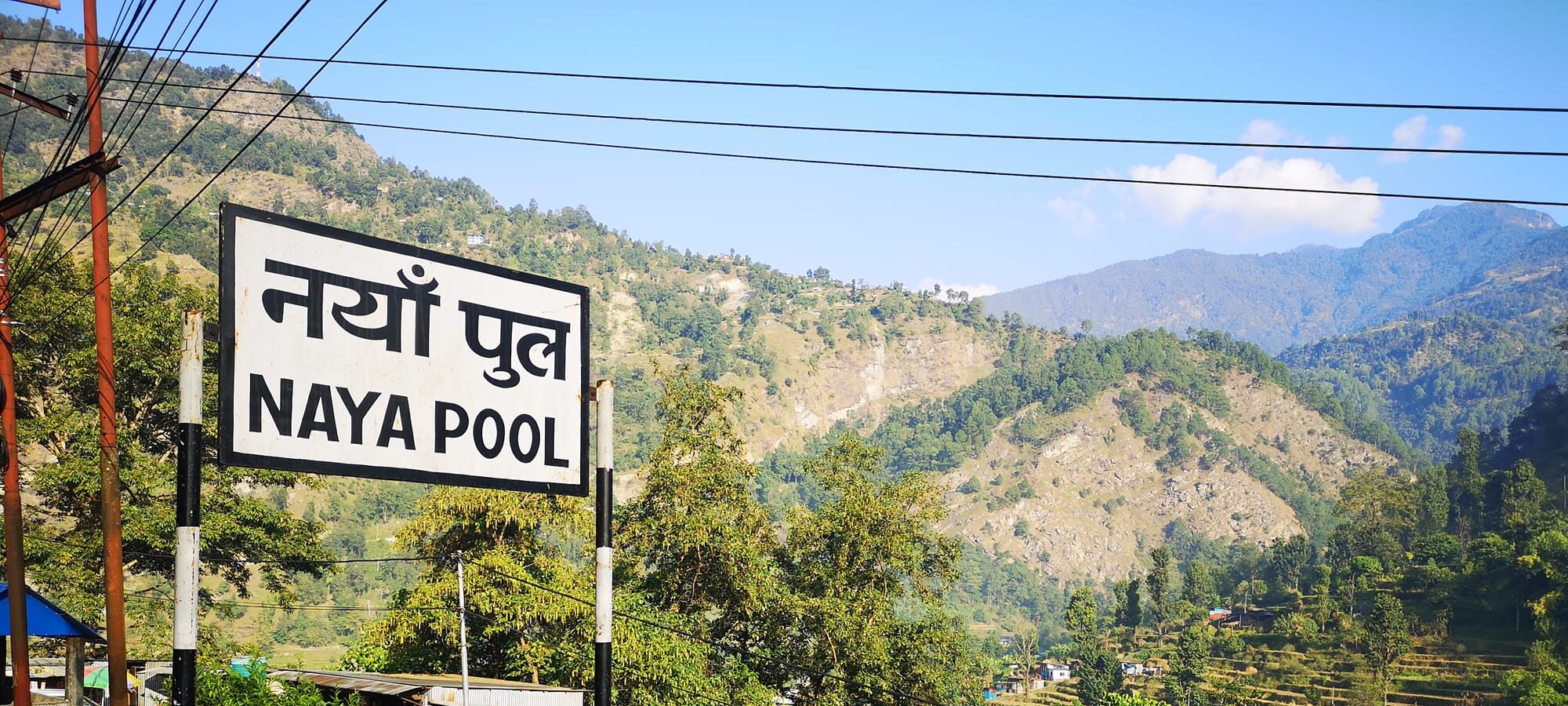
The foothills around Kande are also a gentle way to begin or end longer trips such as the Annapurna Base Camp Trek and the Ghorepani Poon Hill Trek. Our Pokhara to Ghandruk jeep, Pokhara to Nayapul transport, and Pokhara to Ghorepani Poon Hill jeep help trekkers reach those trailheads.

Seasons and Weather

Autumn, from September to November, offers clear views, dry trails, and comfortable temperatures. It is also the busiest, so book vehicles and guesthouses in advance. Spring, from March to May, brings warm weather, rhododendron blossom, and good morning views, though afternoon haze is common.

Winter, from December to February, is cold at night but often brilliantly clear, and the trails are quiet. The monsoon, from June to August, brings heavy cloud and rain, leeches on forest paths, and landslide risk on some roads, but it also offers lush scenery and few visitors.

Flights to Pokhara can be affected by cloud and rain, so a flexible pickup is important in every season.

Booking Tips

  • Send a WhatsApp message to +977 981-4227196 with your flight details, passenger and bag count, and your destination in Kande, Australian Camp, or the surrounding villages.
  • Share an active mobile number so that the driver can contact you if the flight is early or late.
  • Tell the team if you plan to start walking the same day so that the driver can choose the best drop-off point near the trailhead.
  • Choose a jeep if you carry heavy trekking bags or plan to continue to rougher roads.
  • Book return transport from Kande to the airport in advance if you have a departing flight, and allow plenty of time for the journey.
  • Carry some cash for tea, snacks and guesthouse payments; village shops may not accept cards.
  • Pack for variable mountain weather, even if the day in Pokhara is warm.
Pokhara to Kande Jeep

Nepal Vehicle Hiring Pvt Ltd: Complete Network

The Pokhara Airport to Kande transfer is part of a network that covers the whole country. In Pokhara,  we run Pokhara car hire and the Sarangkot sunrise vehicle.

For longer journeys, ys we run the Pokhara to Upper Mustang overland jeep for the Upper Mustang Trek and the Kathmandu to Muktinath jeep for the Muktinath Tour. For the Annapurna Circuit,uit we run the Kathmandu to Besisahar vehicle and Kathmandu to Manang jeep for the Annapurna Circuit Trek.

For other great treks, we run the Kathmandu to Syabrubesi jeep for the Langtang Valley Trek, the Kathmandu to Soti Khola jeep for the Manaslu Circuit Trek, ,and the Kathmandu to Salleri Phaplu service for the Everest Base Camp Trek. In Kathmandu, we offer sightseeing vehicles, the Bhaktapur day tour, the Nagarkot sunrise tour, and Nagarkot vehicle hire.

Our Nepal tour packages, trekking transport, trip planning page, and contact page help travelers build a complete itinerary.

Arrival Day in Detail: What Happens After You Land

The first hour in Pokhara sets the tone for the whole trip, so it helps to understand how a good airport pickup unfolds. After the aircraft lands and passengers collect their bags, they walk out of the terminal into the arrivals area, where the driver awaits with a name sign.

They exchange greetings, load the luggage into the vehicle, and confirm the destination and any planned stops. If the group wants to exchange money, buy a SIM card, or stop for breakfast, the driver suggests convenient places along the way. Within minutes of leaving the terminal, the vehicle heads toward the city and the hills.

Pokhara’s airport sits close to the city, so the transition from aircraft to mountain scenery is almost immediate. On a clear morning, the Annapurna range stands above the valley, with Machhapuchhre’s fishtail summit unmistakable at the center, and passengers who have just flown from Kathmandu often find it hard to stop taking photographs.

The driver is used to this and is happy to pause at a safe place. After the city, the highway climbs gently through Hemja and Phedi, giving passengers a gradual introduction to the hills before they reach Kande.

Many travelers combine the airport transfer with other services in Pokhara. Our Sarangkot sunrise vehicle takes visitors to the famous hilltop viewpoint before dawn, and our Pokhara car hire covers the lake, the World Peace Pagoda, caves, waterfalls and museums.

A common pattern is to land in the morning, drive straight to Kande for a night at Australian Camp, return to Pokhara the next day for a lake stay, and then use the Pokhara to Ghandruk jeep or Pokhara to Nayapul transport to start a longer trek.

Flight Timing, Delays and Flexible Pickups

Mountain flights are subject to weather, and Pokhara is no exception. Morning cloud, afternoon wind, monsoon rain, and seasonal haze can cause delays or cancellations, so passengers should be prepared for changes. The best protection is a flexible, private pickup arrangement.

When a driver is booked in advance and given the flight number, he can check the status, adjust his arrival time, and wait at no cost to the passenger. If the flight is canceled and the passenger rebooks on a later flight, the team updates the pickup, so the vehicle waits at the new time.

A flexible pickup is especially valuable for travelers connecting to Pokhara from international flights into Kathmandu. A late arrival in Kathmandu or a missed connection can shift the Pokhara arrival by several hours, and a pre-arranged driver who knows about the delay is far better than a vehicle that leaves after a short wait.

Passengers should keep their mobile phones on, share a WhatsApp number, and send a short message when they know the new schedule. The team at +977 981-4227196 is available around the clock for these updates.

Travelers who prefer to avoid air travel altogether can reach Pokhara by road. Our Kathmandu to Pokhara private vehicle service offers a comfortable six-to-eight-hour highway journey with a lunch stop at Mugling and the option of a detour to the hill town of Bandipur.

It is a good alternative when flights are fully booked or the weather is poor, and you can combine it with the Kande transfer in a single booking.
Pokhara Airport to Kande Private Vehicle

Luggage, Trekking Bags and Equipment

Travelers heading to Kande often carry more than ordinary suitcases. Trekking bags, duffels, camera cases, tripods, walking poles, and sleeping bags all need space, and a vehicle that is too small can turn a simple transfer into a puzzle.

A private car handles two or three standard bags comfortably, while a jeep can take four to six large bags and still seat passengers in comfort. A Hiace van has a dedicated rear compartment for a full group’s luggage, and a coaster or bus has a spacious hold.

When booking, tell the team about the number and size of bags so they can assign a suitable vehicle.

It is also worth thinking about what to pack for the first day in the hills. A light daypack with water, a rain jacket, a warm layer, sun protection, snacks, and a torch should be easy to reach, while the larger bags can stay in the vehicle or be carried by a porter.

Many guesthouses at Kande and Australian Camp can store extra luggage for a night, reducing the load on the trail. The driver can advise on local practices.

A Closer Look at Kande

Kande may be small, but it plays an important role in the Pokhara region’s trekking network. The settlement stretches along the highway on a ridge saddle, with shops, tea houses, a few guesthouses, and a cluster of homes. Vehicles stop, walkers adjust their packs, and locals go about their business.

From the roadside, a stone path leads up into the forest toward Australian Camp, and other trails connect to Pothana, Deurali, Dhampus, and the lower Mardi Himal route.

Because Kande is a roadside stop rather than a destination in itself, most travelers stay only briefly. They arrive, have tea, sort their bags, and start walking. Others spend a night in a Kande guesthouse before the climb, especially if they arrive late in the day.

The village is friendly and unpretentious, and the guesthouse owners are used to welcoming travelers from all over the world. A short chat with them offers a pleasant introduction to local life, and they are a good source of up-to-date information on trail conditions.

Kande’s position on the highway also makes it a convenient meeting point. Groups that split up, with some walking and others driving, can reunite here, and drivers can pick up walkers at the end of a trek. Our 4WD jeep hire and private car hire services can arrange pickups at Kande, Phedi, or other road points, giving trekkers great flexibility in planning their routes.
Pokhara Airport to Kande Private Vehicle

Australian Camp: A First Mountain Night

Australian Camp earned its name from a group of Australian visitors who camped there in earlier decades, and the name has stuck. Today it is a collection of simple guesthouses and camping spots along a ridge, with sweeping views of the range.

The walk from Kande takes two to three hours at a relaxed pace, climbing gently through forest and terraced fields. The path is well marked, and local guides and porters are available in Kande for those who want help.

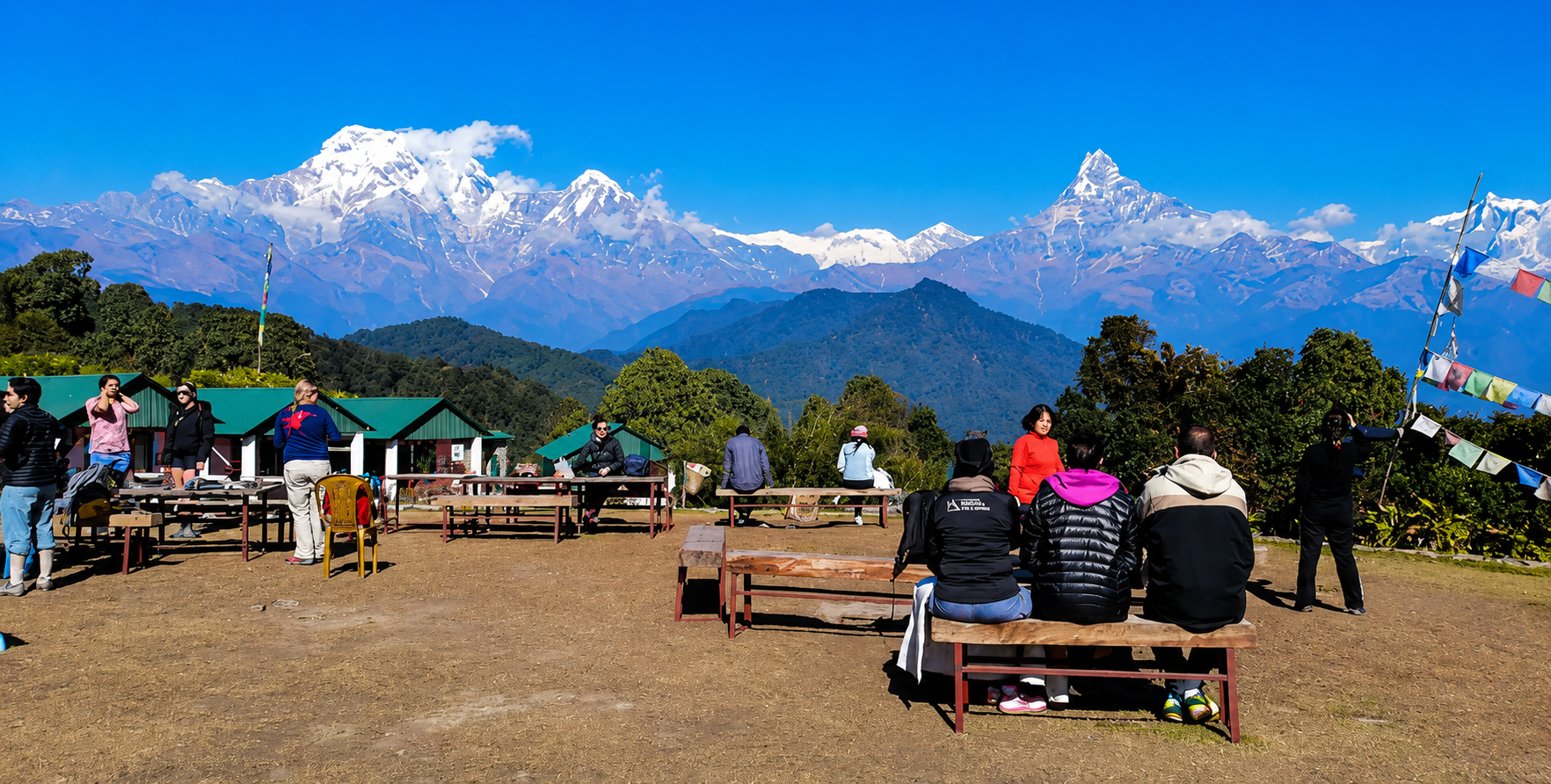
Evenings at Australian Camp are peaceful. Guesthouse owners serve dal bhat, noodles, and tea; travelers swap stories, and as the light fades, the mountains turn from white to pink and then to deep blue. In the morning, before dawn, visitors gather on the ridge to watch the sun rise over the range.

The silhouette of Machhapuchhre, the glowing summit of Annapurna South,h and the long line of Dhaulagiri in the distance make for one of the most beautiful sunrise views in the Pokhara region. After breakfast, walkers can return to Kande, continue to Pothana and Dhampus, or follow the ridge to other viewpoints.

For travelers who want a gentle introduction to trekking before a longer adventure, Australian Camp is an ideal first night. It offers a taste of mountain scenery and village hospitality without a heavy time commitment, and it fits easily around an airport pickup and a drop-off.

Those who enjoy it often go on to more ambitious routes such as the Annapurna Base Camp Trek, the Ghorepani Poon Hill Trek, or the Annapurna Circuit Trek.

The Mardi Himal Route from the Kande Area

Mardi Himal has become one of Nepal’s most talked-about short treks. It climbs a ridge between the Seti and Modi valleys, passing through forest, rhododendron groves,  and open alpine slopes, and reaches viewpoints that look directly at Machhapuchhre’s fishtail summit. The trek begins near Kande, where the trail leads to Tood Forest Camp and Low Camp, and many trekkers arrive by air and drive directly to the trailhead.

A private vehicle is a natural fit for this route. Airport pickup gets trekkers to the trailhead within an hour or two of landing, so they can start walking the same day or spend a night in a Kande guesthouse before an early start.

At the end of the trek, a vehicle can meet them at the road point and take them to Pokhara or the airport. Arranging both transfers in advance helps trekkers avoid the stress of finding transport after a tiring trek.

For travelers who want to add more mountains, our network covers the Himalaya. The Kathmandu to Syabrubesi jeep serves the Langtang Valley Trek, the Kathmandu to Soti Khola jeep serves the Manaslu Circuit Trek and Tsum Valley Trek, and the Kathmandu to Salleri Phaplu service serves the Everest Base Camp Trek, Gokyo Lake Trek and Three Passes Trek overland approaches.

The Kanchenjunga Base Camp Trek in the far east can also be arranged through our trekking transport team.

Frequently Asked Questions

Q1: How do I book a private vehicle from Pokhara Airport to Kande?

Send a WhatsApp message to +977 981-4227196 with your flight details, number of passengers and bags, and destination in Kande or the surrounding area. The team confirms the vehicle and driver in writing and tracks your flight. You can also visit vehiclehiringnepal.com or contact our team.

Q2: How long does the transfer take?

About an hour under normal conditions, covering roughly 25 to 30 kilometers. The time can vary with city traffic and with any stops you choose to make in Lakeside or at viewpoints.

Q3: Do I need a jeep, or is a car enough?

A car is enough for the sealed highway to Kande if you have light luggage and are traveling in a small group. A jeep is better for heavy bags, larger groups, or any plan to continue on rougher roads.

Q4: What if my flight is delayed or canceled

Weather can affect flights to Pokhara. Share your flight details and a working phone number, and the team will adjust the pickup. If your flight is canceled, let the team know as soon as possible so they can reschedule the vehicle.

Q5: Can I arrange the return from Kande to the airport?

Yes. Return transfers are available, and it is wise to book them with the outbound journey. Leave plenty of time before your flight, especially during the monsoon.

Travelers continuing to Kathmandu can also use our Kathmandu to Pokhara private vehicle service in either direction.

Q6: Can the vehicle wait while I start my walk?

Yes. The driver can drop you at the best point near the trailhead, and you can arrange a pickup at the end of the walk, in Thandasee, Phedo, or another road point. Share your plan when booking so the team can coordinate.

Conclusion: Book Your Pokhara Airport to Kande Transfer

The drive from Pokhara Airport to Kande is short, scenic, and full of promise: a bridge between the lakeside city and the foothill trails of the Annapurna range. With a private vehicle from Nepal Vehicle Hiring Pvt Ltd, the transfer is simple, flexible and comfortable, whether you are a couple heading to Australian Camp, a family planning a gentle hill walk or a trekker starting a longer route.

Contact our team on WhatsApp at +977 981-4227196 to book your airport pickup, or visit vehiclehiringnepal.com to explore all routes and services.
Jhinu Danda Jeep Rental from Pokhara Airport: 5 Best Tips

Jhinu Danda Jeep From Pokhara Airport: Rental Guide for the Hot Springs and ABC Trek

Jhinu Danda is a small Gurung settlement at around 1,780 meters above the Modi Khola, famous for its riverside hot springs and as the main roadhead for the Annapurna Base Camp trek. Trekkers arrive here to start the climb to Chhomrong, and they come back to soak tired legs after days in the Annapurna Sanctuary.

A Jhinu Danda jeep rented from Pokhara Airport takes you straight from the arrivals hall to the village in a private 4WD, with no bus changes and no waiting for shared jeeps to fill.

This guide covers how Jhinu Danda jeep rental works, the route, drive time, vehicle options, USD prices, the hot springs, return pick-ups, and planning tips. At Nepal Vehicle Hiring, we run Pokhara to Jhinu Danda jeeps throughout the trekking seasons with experienced mountain drivers.

To book, send your flight details on WhatsApp, or email [email protected], or use our trip planner.

Jhinu Danda Jeep Rental from Pokhara Airport: 5 Best Tips

Jhinu Danda Jeep at a Glance

Here’s a quick overview of a Jhinu Danda jeep rental from Pokhara Airport.

  • Pick-up: Pokhara International Airport arrivals or any Pokhara hotel
  • Drop-off: Jhinu Danda village (around 1,780 m)
  • Route: Pokhara – Lumle – Nayapul – Birethanti – Syauli Bazaar – Siwai – Jhinu Danda
  • Drive time: about 3.5 to 4.5 hours
  • Road: paved to Nayapul, then a rough 4WD track along the Modi Khola
  • Vehicle: 4WD jeep or Mahindra Scorpio
  • Private jeep price range: about USD 130–170 one way
  • Nearby: hot springs (20–30 minutes’ walk), Chhomrong (2–4 hours’ walk)

Why Rent a Jhinu Danda Jeep?

Fastest Start to the ABC Trek

Starting at Jhinu Danda saves more than a day of walking from Nayapul and gets you onto the Annapurna Base Camp trail on the same day you land. See the Annapurna Base Camp trek.

Direct From the Airport

Your driver meets you at arrivals, with optional stops in Lakeside for permits and cash. See our Pokhara airport transfer.

A Relaxing Hot Spring Break

Not trekking? A Jhinu Danda jeep makes the hot springs a perfect one- or two-night escape from Pokhara.

A Vehicle for the Rough Track

The road above Birethanti needs 4WD and an experienced driver. Our 4WD jeeps are built for it.

Jhinu Danda Jeep Rental from Pokhara Airport: 5 Best Tips

Jhinu Danda Jeep Rental Options

Several options are available for renting a Jhinu Danda jeep, depending on your plans.

One-Way Drop

The most popular option for trekkers starting the ABC trek. Your jeep drops you at Jhinu Danda and returns to Pokhara.

One-Way Pick-Up

For trekkers finishing the ABC trek. Your driver waits at Jhinu Danda on your return date and drives you to your Pokhara hotel or the airport.

Round Trip With Overnight

For hot spring visitors. The jeep takes you to Jhinu Danda, the driver stays overnight, and you return the next day.

Multi-Day Hire

Combine Jhinu Danda with Ghandruk, Ulleri, or other villages. The jeep and driver stay with you throughout. See our Ghandruk jeep and Ulleri jeep.

Jhinu Danda Jeep Rental from Pokhara Airport: 5 Best Tips

The Jhinu Danda Jeep Route From Pokhara Airport

Here’s what to expect on the drive.

Airport to Nayapul

The route crosses Pokhara and follows the paved Pokhara–Baglung highway past Hemja, Kande, Naudanda and Lumle to Nayapul, about 1.5 to 2 hours. See our Pokhara to Nayapul jeep.

Nayapul to Siwai

After the permit check at Birethanti, the road follows the Modi Khola upstream through Syauli Bazaar to Siwai and Kyumi. The surface becomes narrower and rougher.

Siwai to Jhinu Danda

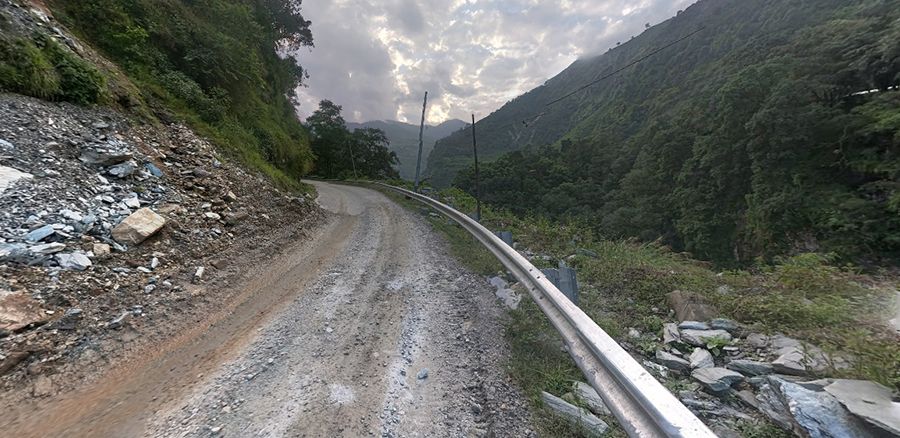
The final stretch is a rough 4WD track with stream crossings and steep pitches, climbing to the ridge at Jhinu Danda. In wet weather, the jeep may stop at Siwai.

NOTE: Road conditions in the Modi Khola valley change with the seasons. We confirm the current road head before every Jhinu Danda jeep booking.

Jhinu dada

Choosing Your Vehicle

4WD Jeep (Up to 6 Passengers)

A classic 4WD jeep is the most reliable choice for the track to Jhinu Danda, with luggage on the roof rack.

Mahindra Scorpio (Up to 5 Passengers)

A comfortable SUV, good for families and couples in dry conditions. See our Scorpio.

Car, Hiace and Bus (to Nayapul or Siwai)

A private car, Hiace, Coaster, or bus can reach Nayapul and Siwai in good conditions. For groups, we add Jhinu Danda jeep shuttles for the final track.

Jhinu Danda Jeep Price (USD)

Our Jhinu Danda jeep prices include the vehicle, an experienced driver, fuel, insurance, road taxes, parking,g and airport meet-and-greet. Our prices are slightly higher than the cheapest local offers because we use well-maintained 4WD vehicles and experienced drivers.

[IMAGE: Private jeep and Scorpio at Pokhara Airport] Alt text: Jhinu Danda jeep rental at Pokhara Airport

  • 4WD jeep, one way (1–6 passengers): USD 130–170
  • Mahindra Scorpio, one way (dry conditions): USD 130–170
  • Return pick-up from Jhinu Danda to Pokhara or the airport: USD 130–170
  • Round trip with overnight: ask for a combined price
  • Group shuttle from Siwai to Jhinu Danda: about USD 50–70 per jeep
  • Private car to Siwai: USD 70–95
  • Hiace to Siwai (6–12 passengers): USD 95–125, plus jeep shuttles

Get an exact quote on WhatsApp.

Jhinu Danda Jeep Rental from Pokhara Airport: 5 Best Tips

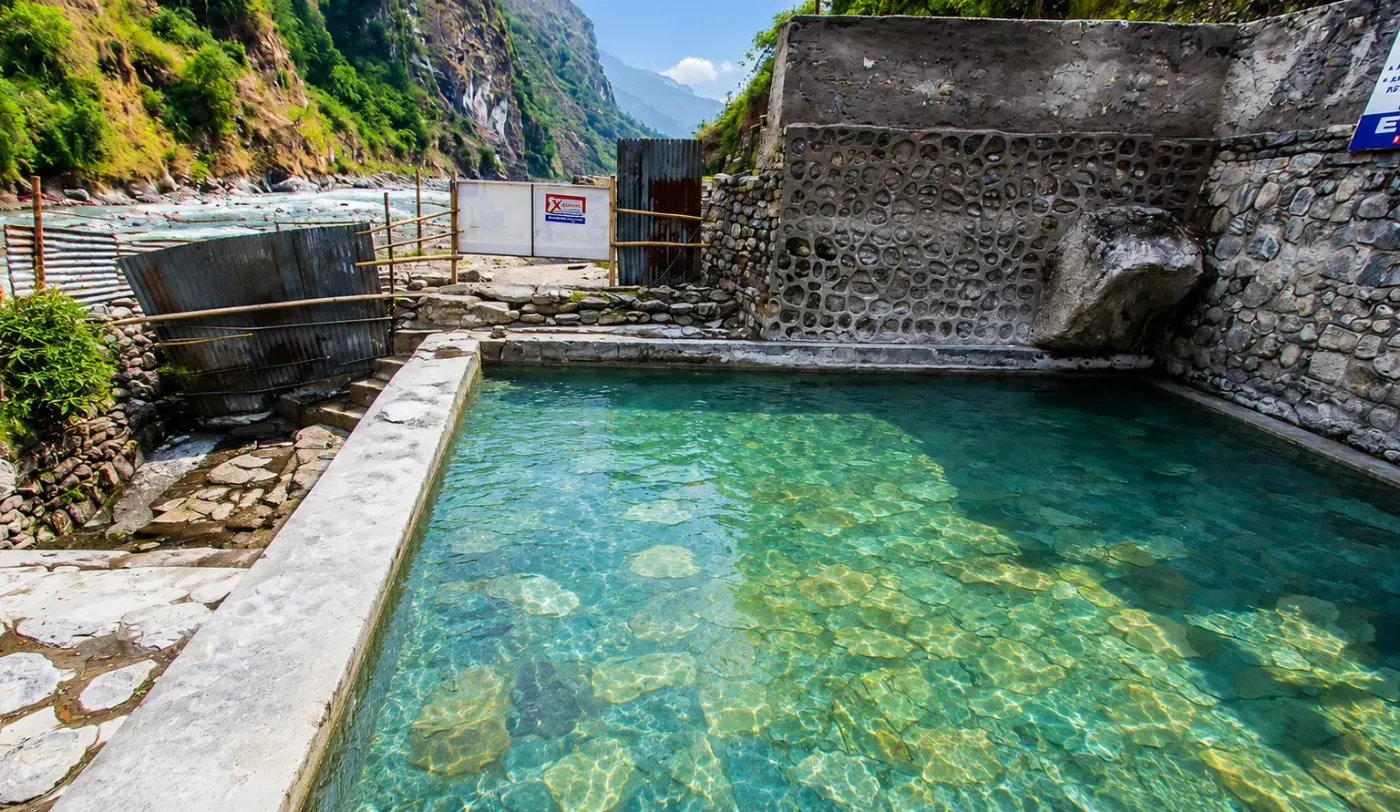
Jhinu Danda Hot Springs

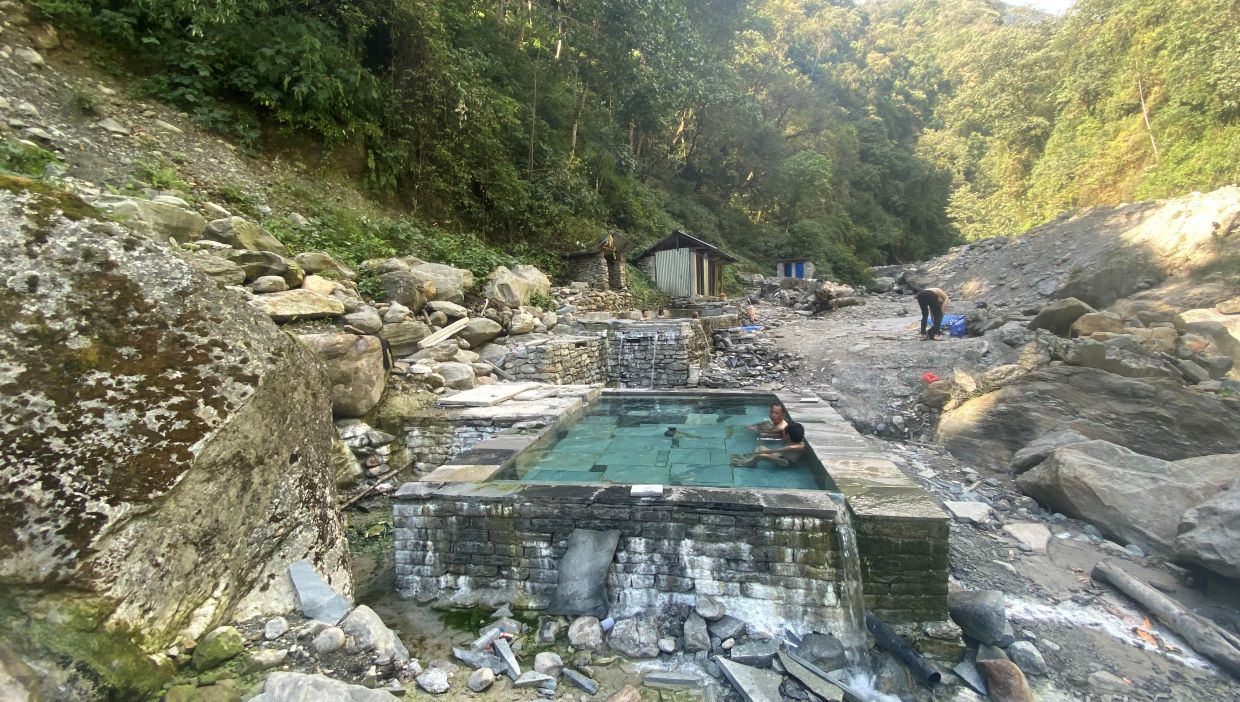
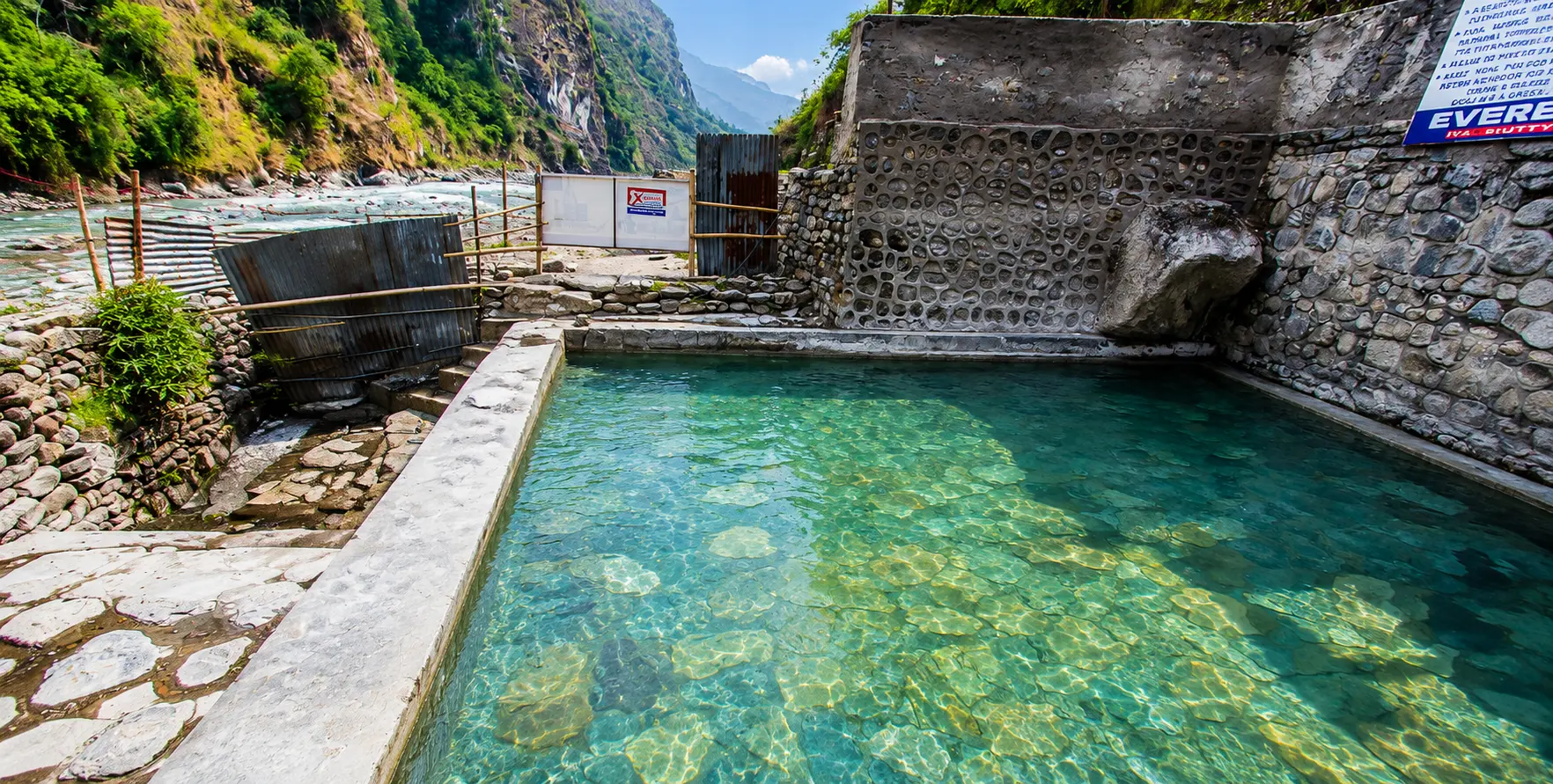
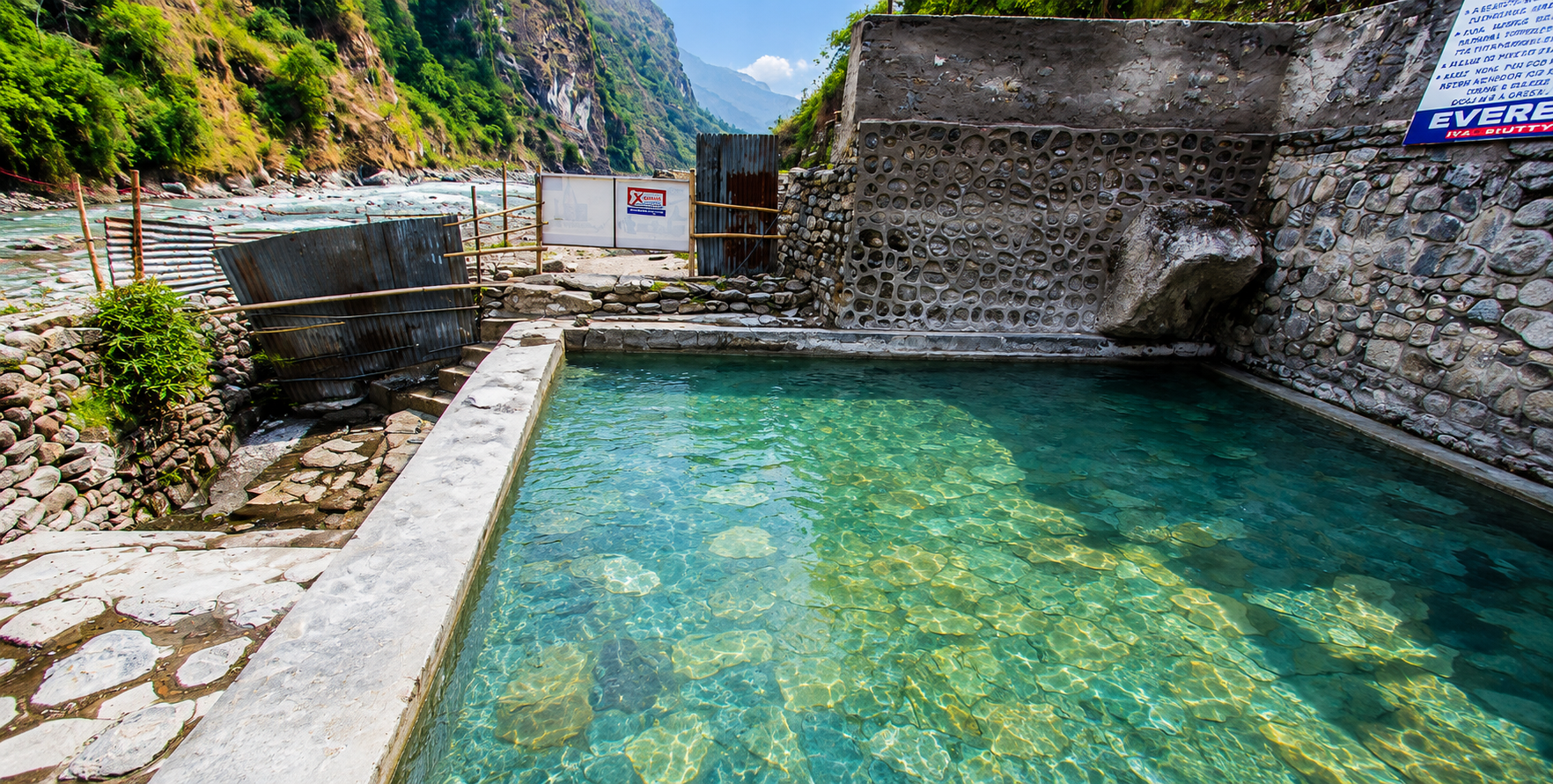
The hot springs are the highlight of Jhinu Danda. Natural hot water rises beside the Modi Khola and fills several pools at the river’s edge. From the village, a forest path descends for about 20 to 30 minutes; the walk back up takes a little longer.

  • Pools: several open-air pools beside the river
  • Water: naturally warm, perfect after trekking
  • Facilities: basic changing areas
  • Entry: a small fee, paid locally
  • Bring: swimwear, towel, sandals and some cash
  • Best time: late afternoon or early morning

Respect local customs by wearing modest swimwear and keeping soap out of the pools.

Return Pick-Ups After the ABC Trek

Many trekkers book a Jhinu Danda jeep for the end of their trek. After coming down from the Sanctuary through Chhomrong, they spend a night in Jhinu Danda, soak in the hot springs, and drive back to Pokhara the next morning.

  • Share your expected return date when you book
  • Confirm the pick-up time a day or two before
  • Your driver meets you in the village
  • Allow 3.5 to 4.5 hours to reach Pokhara or the airport

If your trek finishes early or late, message us, and we’ll adjust. See also our Nayapul to Pokhara jeep.

Jhinu Danda to Pokhara Jeep

Permits for Jhinu Danda

Jhinu Danda lies inside the Annapurna Conservation Area. Foreign visitors need an ACAP permit, checked at Birethanti on the way and again at Chhomrong. Arrange permits in advance in Kathmandu or Pokhara.

Rules on TIMS cards and guides change, so confirm current requirements before traveling. Your Jhinu Danda jeep driver can stop in Lakeside for permits.

Best Season for a Jhinu Danda Jeep

The season affects both the road and your trek.

Autumn

Clear skies, dry roads, and the best mountain views. The busiest time for Jhinu Danda jeep bookings.

Spring

Warm days and rhododendrons blooming above Chhomrong. Roads are usually dry.

Winter

Cool and clear, with fewer trekkers. The hot springs feel especially good in winter.

Monsoon

Heavy rain can damage the Modi Khola track and raise the river. Jeeps may stop at Siwai, and high water can affect the hot springs.

Jhinu Danda Jeep Safety

  • Experienced drivers who know the Modi Khola road
  • 4WD vehicles with good tires and brakes
  • Daylight driving on the rough track
  • Road checks before departure
  • Flexible plans if the road is unsafe
  • Insured, licensed vehicles

Jhinu Danda Jeep Rental from Pokhara Airport: 5 Best Tips

Jhinu Danda Village

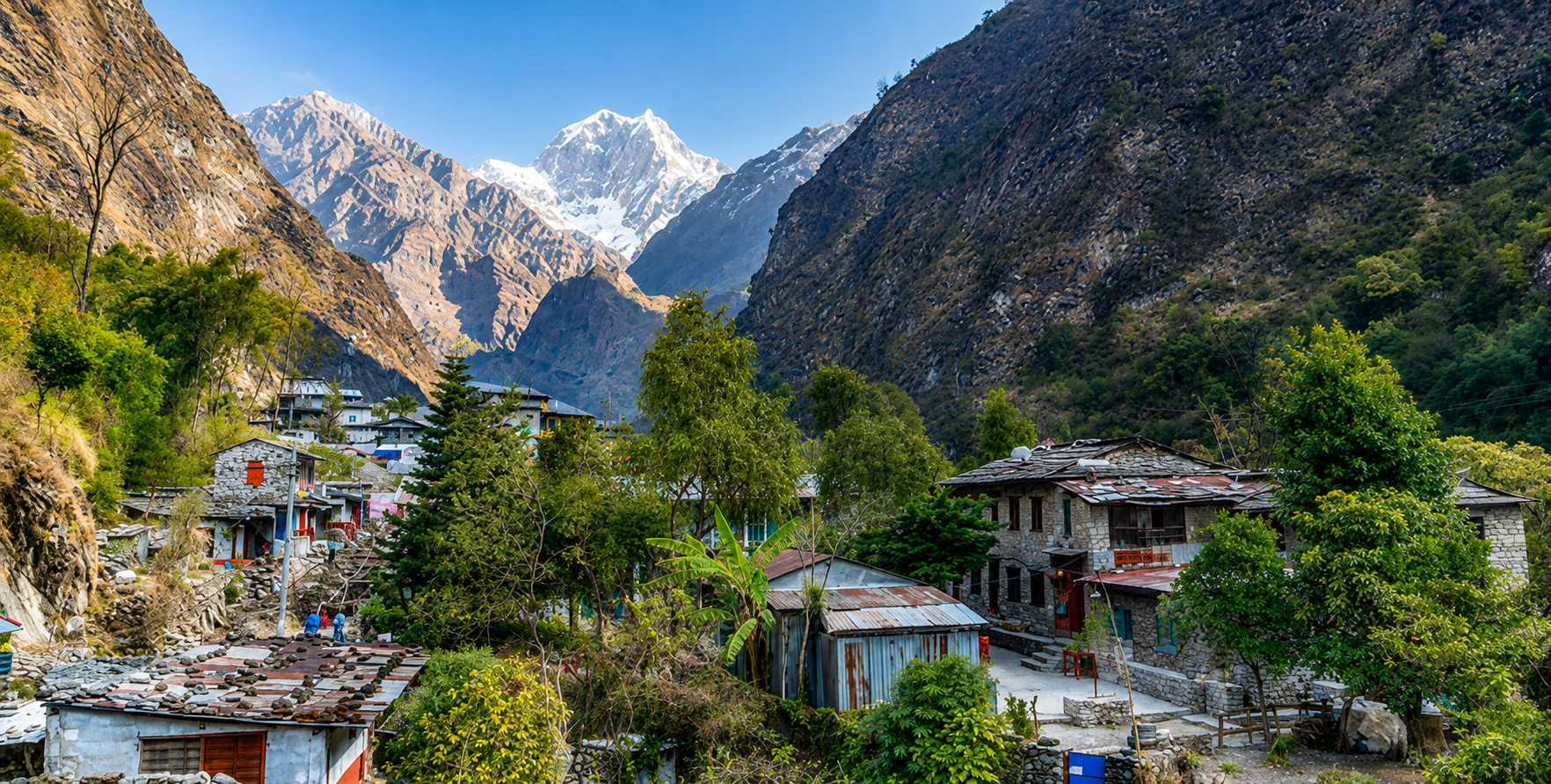
Jhinu Danda sits on a narrow ridge high above the Modi Khola, with a handful of lodges, tea houses and terraced fields. It’s quieter than busier trekking villages, and most of its life revolves around trekkers coming and going on the ABC trail.

From the village, you can see down the valley toward Siwai and up toward Chhomrong and the peaks beyond. Mornings are cool and fresh, while afternoons bring warm sunshine and, in some seasons, clouds rolling up the valley.

Staying in Jhinu Danda

Jhinu Danda, reached by 4WD jeep, has several simple lodges with clean rooms, shared or attached bathrooms, and restaurants serving dal bhat, noodles, pasta, and fresh juice. Hot showers and charging are usually available for a small fee.

In peak seasons, lodges fill quickly with trekkers returning from Annapurna Base Camp, so arrive early or ask your agency to reserve. Please tell us where you’re staying, and your Jhinu Danda jeep will drop you as close as the road allows.

The Modi Khola Valley

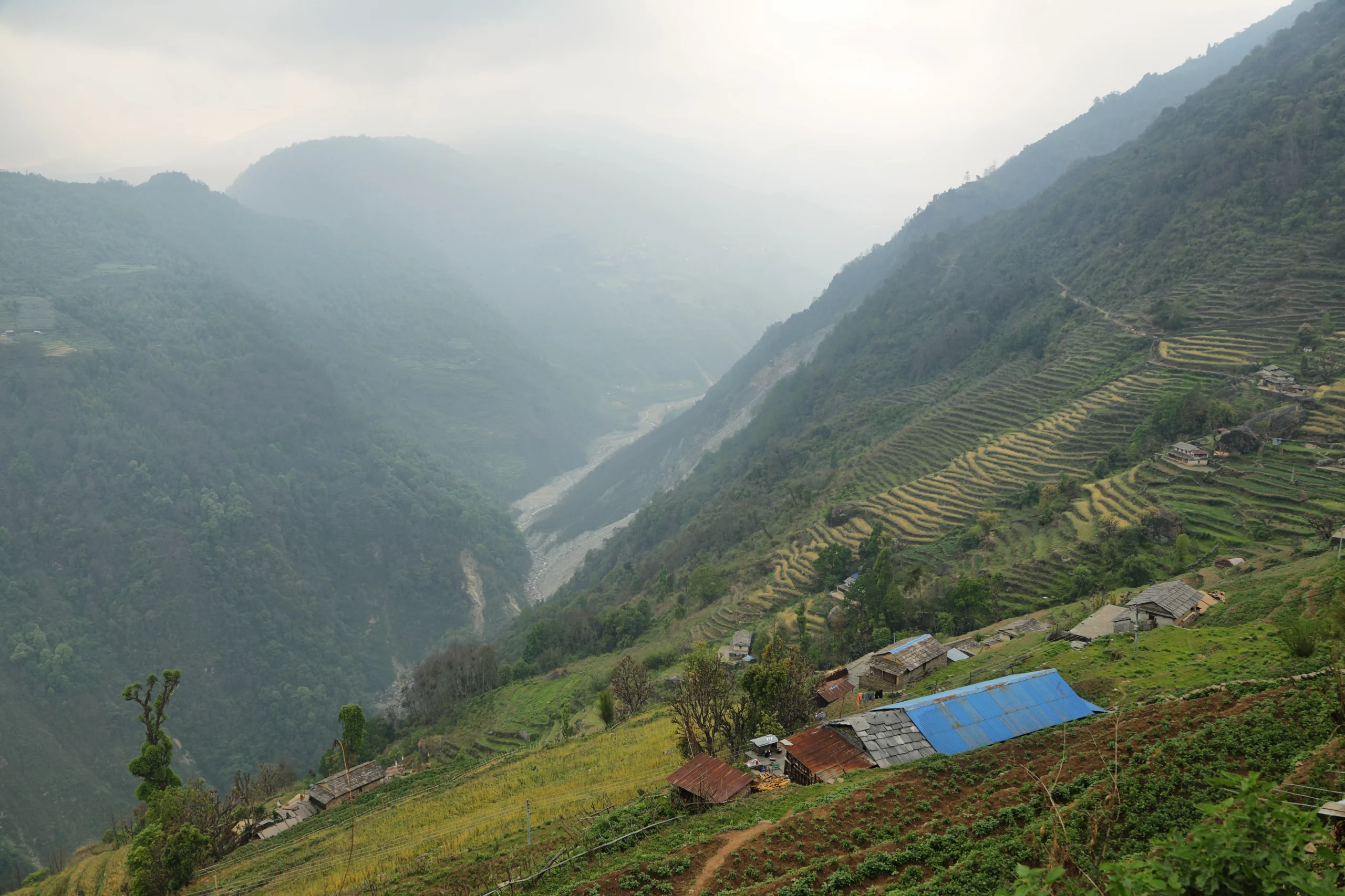
The Modi Khola rises in the Annapurna Sanctuary, fed by glaciers on Annapurna I, Annapurna South and Machhapuchhre. It rushes south through a deep valley past Chhomrong, Jhinu Danda and Siwai before joining the Kali Gandaki further downstream. The valley’s terraced hillsides, forests and Gurung villages make the drive and the trek beautiful.

The river runs high and fast in the monsoon, which is why conditions on the Jhinu Danda jeep road change so much between seasons.

Walking On to Chhomrong

From Jhinu Danda, the trail to Chhomrong climbs steeply on stone steps through farmland and forest, gaining around 400 meters. Most trekkers take about 2 to 4 hours.

Chhomrong, covered in our ABC trek starting point guide, is the last major village before the Annapurna Sanctuary, with lodges, bakeries and superb views of Annapurna South and Hiunchuli. Start early, carry water, and consider a porter for heavy bags.

Alternative Trails From Jhinu Danda

Jhinu Danda is also connected to other trails in the region. A path leads down to the New Bridge area and on to Landruk, linking with routes to Tolka, Australian Camp and Dhampus. Another route connects via Kimrong to Ghandruk.

Many trekkers take the Jhinu Danda jeep one way and walk one of these trails the other. See our Dhampus transfer and Kande jeep for road-heads at the other end.

Practical Stops in Lakeside

Most Jhinu Danda jeep trips from the airport include a short stop in Lakeside for:

  • ACAP permits at the Nepal Tourism Board office
  • Cash for the trek and lodges
  • Gear rental, snacks,s and water purification
  • Leaving spare luggage at a hotel

Want a day in Pokhara first? Add a Pokhara sightseeing tour or a Sarangkot sunrise.

Arriving From Kathmandu

You can still book a Jhinu Danda jeep if you arrive by road. We can meet you at Tribhuvan International Airport with an airport pick-up, drive you to Pokhara by private jeep or arrange a tourist bus, then continue to Jhinu Danda the next morning.

If Your Flight Is Delayed

We track your flight, ht and your driver waits at no extra cost. If a delay means you arrive at Jhinu Danda late, you can stay the nigre and start walking the next morning. Message us on WhatsApp with any changes.

Families and Older Travellers

A Jhinu Danda jeep makes the hot springs and the first part of the ABC trail accessible to families and older travelers. The village is at a comfortable altitude, and the walk to the springs is short, though steep on the way back. A Scorpio offers comfortable seats for the drive, and child seats are available on request.

What Is Included

Included

  • Private 4WD vehicle and experienced driver
  • Fuel, insurance, road taxes and parking
  • Airport meet-and-greet and free waiting for delays
  • Driver’s food and accommodation on overnight trips

Not Included

  • ACAP permits and hot spring entry
  • Lodges, meals, porters and guides
  • Tips for the driver (optional)

Your Jhinu Danda Jeep Driver

Our drivers know the Modi Khola road in every season, including the stream crossings and steep pitches near Jhinu Danda. They speak basic English, help with luggage, and plan stops for a comfortable journey.

Why Our Prices Are a Little Higher

Shared jeeps and local buses toward Jhinu Danda cost less, but they leave from city bus parks on fixed schedules and can be crowded. Our private jeep costs a little more because you get airport pick-up, a direct ride, an experienced driver,r and a well-maintained 4WD vehicle at a fixed price.

Packing for Jhinu Danda

  • Swimwear, towel and sandals for the hot springs
  • Light layers for warm days and a fleece for evenings
  • Rain jacket in spring and the monsoon
  • Trekking poles and comfortable shoes
  • Headlamp and water purification
  • Nepali cash, passport, and ACAP permit

Getting Back to Pokhara Airport

Plan your jeep from Jhinu Danda with time to spare before your flight. The drive takes around 3.5 to 4.5 hours. We recommend leaving Jhinu Danda in the morning for an afternoon or evening flight.

For international connections in Kathmandu, keep a buffer day. Our Pokhara airport transfer team can plan the timing.

Hot Spring Health and Etiquette

Natural hot springs are a wonderful way to relax sore muscles after trekking. Soak for short periods, drink plenty of water, and avoid alcohol before bathing. People with heart conditions, high blood pressure, or other health concerns should check with a doctor first.

Rinse before entering, wear modest swimwear, and keep soap out of the pools.

Monsoon Travel

In the monsoon, heavy rain can damage the track to Jhinu Danda and raise the Modi Khola. Your Jhinu Danda jeep may stop at Siwai, leaving you to take ng a riverside walk. Choose a 4WD jeep, leave early, and keep plans flexible.

Photography

Capture the terraced Modi Khola valley, the river below Jhinu Danda, steam rising from the hot springs on cool mornings,s and views toward Chhomrong and Annapurna South. Ask before photographing people.

Responsible Travel

  • Use refillable bottles
  • Keep the hot springs clean
  • Support local lodges and tea houses
  • Take your rubbish with you

Siwai and Kyumi

Siwai and Kyumi are riverside villages on the lower Modi Khola, surrounded by rice terraces. They’ve become road-heads as the track up the valley has improved, and buses and cars can usually reach them in good conditions.

When heavy rain makes the upper track unsafe, vehicles stop here, and trekkers walk along the river for a couple of hours to Jhinu Danda. Both villages have small shops and tea houses. See our Nayapul jeep for the lower valley.

Gurung Culture in the Modi Khola Valley

The villages of the Modi Khola valley, including Jhinu Danda, Chhomrong, Ghandruk and Landruk, are home mainly to Gurung people. Their traditions include terraced farming, herding, weaving and a long history of service in the Gurkha regiments. You’ll see stone houses, prayer flags, small shrines and terraced fields of millet, maize and potatoes.

Lodge owners, many of whom also run homestays near Ghandruk, are often happy to share stories of village life. Respect local customs and ask before taking photos.

Nature and Birdlife

The forests and terraces around Jhinu Danda support a wide variety of birds, butterflies and plants. On a Nepal tour, look for colorful sunbirds, bulbuls and kingfishers near the river, and eagles soaring above the valley. Langur monkeys sometimes move through the forest between Jhinu Danda and Chhomrong.

In spring, rhododendrons bloom on the hillsides above the village.

Drive Times by Section

  • Pokhara Airport to Nayapul: around 1.5 to 2 hours
  • Nayapul to Siwai: around 45 minutes to 1 hour
  • Siwai to Jhinu Danda: around 1 to 1.5 hours
  • Total: about 3.5 to 4.5 hours

Times vary with traffic, road works, a nd weather. Plan with our trip planner.

Combining Poon Hill and ABC

Many trekkers combine the Poon Hill circuit with the ABC trek: a jeep ride to Ulleri, a walk to Ghorepani for sunrise, then on via Tadapani to Chhomrong and up to Annapurna Base Camp, finishing at Jhinu Danda for the hot springs and the drive back. See our Ghorepani transfer and the Poon Hill trek.

Porters and Guides

A porter carries your main bag so you can enjoy the steep trails with just a daypack, and a licensed guide adds safety and local knowledge. Rules for foreign trekkers in conservation areas increasingly require a licensed guide, so check current requirements. Our sister companies, Trek Nepal Himalayas and Alpine Luxury Treks, can arrange both, and we can pick up your guide in Pokhara on the way.

Meeting Your Driver at Pokhara Airport

  • Share your flight number so we can track delays
  • Your driver waits outside arrivals with a name board
  • If your flight is late, the driver waits at no extra cost
  • Message us if you can’t find your driver

Solo Travellers

Solo trekkers can share a private vehicle with others starting the ABC trek on the same day to reduce costs—shared jeeps are available from Pokhara’s bus park to Jhinu Danda, but not from the airport. Ask us about shared options.

Accessibility

Tell us about any mobility needs. We’ll choose a comfortable vehicle and drop you as close to your lodge as possible. The walk to the hot springs involves steps, so allow extra time.

Peak Season Booking Tips

Autumn and spring are busy on the ABC trail. Book your transfer as soon as your flight is confirmed, share your expected return date, and reserve lodges early, especially for your last night in Jhinu Danda.

Weather and Road Changes

After heavy rain, the track above Siwai can become muddy or damaged. Our drivers check with local contacts before setting off and will choose the safest drop-off point. On your return day, we’ll update you if conditions change.

Our 4WD jeeps are prepared for rough roads.

Trekking Agencies

Agencies book transfers with us for ABC groups, including airport pick-ups, jeep shuttles,s and end-of-trek pick-ups. Repeat partners receive consolidated USD invoices and priority allocation. See our trekking transport page.

Planning Your Return Day

On the last day, most trekkers walk down from Chhomrong to Jhinu Danda, soak in the hot springs, and meet their jeep around midday. You’ll usually reach your Lakeside hotel or the airport by late afternoon. Confirm the pick-up time with us a day or two before, and message us if your plans change on the trail.

Combine with a Pokhara stay: Spend a day or two in Pokhara before or after your trek, boating on Phewa Lake, visiting the World Peace Pagoda, or watching sunrise at Sarangkot. Book every transfer with us, including Pokhara car hire and airport transfers, for one simple plan.

The Annapurna Sanctuary Beyond Chhomrong

From Chhomrong, the ABC trail descends to the Chhomrong Khola and climbs through Sinuwa into dense bamboo and rhododendron forest at Bamboo and Dovan. Above Himalaya Hotel and Deurali, the valley narrows between Hiunchuli and Machhapuchhre before opening into the Annapurna Sanctuary, a vast amphitheater ringed by Annapurna I, Annapurna South, Gangapurna and Machhapuchhre.

Machhapuchhre Base Camp sits at around 3,700 meters and Annapurna Base Camp at around 4,130 meters. Sunrise in the Sanctuary is one of the Himalayas’ great sights. Book the full Annapurna Base Camp trek with our sister company.

Your First Day: Airport to the Trail

With a morning flight, a typical first day looks like this: land at Pokhara Airport, stop briefly in Lakeside for permits and cash, drive along the ridge past Kande and Lumle, descend to Nayapul and follow the Modi Khola to Jhinu Danda by early afternoon. From there, you can either settle into a lodge and visit the hot springs, or start the climb to Chhomrong if you have the energy and daylight.

Don’t start the walk to Chhomrong late in the afternoon, as the trail is steep and you’ll want to arrive before dark.

Jhinu Danda Jeep Rental from Pokhara Airport: 5 Best Tips

New Bridge and Landruk

Below Jhinu Danda, a trail descends to New Bridge, a suspension bridge over the Modi Khola, and continues up the eastern side of the valley to Landruk. Landruk is a peaceful Gurung village with views of Annapurna South, linked by trails to Tolka, Deurali and Australian Camp. Trekkers who start at Kande or Dhampus often take this route to reach Jhinu Danda, then take a jeep back to Pokhara.

Altitude

At around 1,780 meters, Jhinu Danda is low enough that altitude sickness is not a concern. Chhomrong, at around 2,170 meters, is also comfortable for most people. If you continue to the Sanctuary, ascend gradually, drink plenty of water, and descend if you develop symptoms such as a strong headache or nausea.

Health Before You Go

The ABC trek involves long days on steep stone steps. Build fitness beforehand with regular walking and stair climbing. If you have heart, lung,g or blood-pressure conditions, consult your doctor.

Carry a basic first-aid kit and water purification (plan with our trip planner), and make sure your travel insurance covers trekking at altitude.

What Makes Jhinu Danda Special

Few trekking villages combine so much in one place: a quiet ridge-top setting, natural hot springs by a glacial river, easy road access from Pokhara, and a direct trail into one of the world’s most famous treks. For many trekkers, the evening soak at Jhinu Danda after days in the Annapurna Sanctuary is one of the most memorable moments of the whole trip. Explore more Nepal tour packages and trekking routes with us.

Sample Itineraries With a Jhinu Danda Jeep

Hot Spring Overnight

  • Day 1: Pokhara Airport to Jhinu Danda by jeep, afternoon at the hot springs
  • Day 2: morning soak and village walk, jeep back to Pokhara

Short ABC Trek

  • Day 1: jeep to Jhinu Danda, walk to Chhomrong
  • Days 2–4: via Bamboo and Deurali to Annapurna Base Camp
  • Days 5–6: descend to Jhinu Danda, hot springs, jeep back

Ghandruk and Jhinu Danda Loop

  • Day 1: jeep to Ghandruk
  • Day 2: walk via Kimrong to Chhomrong
  • Day 3: descend to Jhinu Danda, hot springs, jeep back to Pokhara

See our ABC trek starting point and ABC transport guides.

Groups and Trekking Agencies

  • Up to 6: one Jhinu Danda jeep
  • 7–12: two jeeps, or a Hiace to Siwai plus jeeps
  • 13–40: a coaster or bus to Nayapul or Siwai plus jeeps

Agencies receive consolidated USD invoices. Contact us via our contact page.

5 Common Jhinu Danda Jeep Mistakes to Avoid

These are the mistakes we see most often.

  • Booking a car for the whole route: only 4WD reaches Jhinu Danda
  • Forgetting swimwear: you’ll want it for the hot springs
  • No return pick-up booked: arrange it in advance
  • Forgetting permits: checked at Birethanti and Chhomrong
  • Ignoring monsoon conditions: the jeep may stop lower down

Explore More From Pokhara

Browse our Nepal tour packages and trekking transport, or contact Trek Nepal Himalayas and Alpine Luxury Treks.

Jhinu Danda Jeep: Key Takeaways

  • A Jhinu Danda jeep takes about 3.5 to 4.5 hours from Pokhara Airport.
  • Only 4WD vehicles can manage the final track.
  • A private jeep costs about USD 130–170 one way.
  • The hot springs are a short walk below the village.
  • Book your return pick-up in advance.

Why Book Your Jhinu Danda Jeep With Us

  • Experienced Modi Khola drivers
  • Airport meet-and-greet with free waiting for delays
  • Return pick-ups tracked against your trek dates
  • Clear USD pricing
  • 24/7 support on WhatsApp

How to Book a Jhinu Danda Jeep

  • Step 1: Send your flight number, group size, and plan via WhatsApp or email.
  • Step 2: We confirm the road ahead and send a USD quote.
  • Step 3: Confirm and receive your driver’s details.
  • Step 4: Meet your driver at arrivals.

Or use our trip planner.

Jhinu Danda Jeep FAQs

How long is the drive from Pokhara Airport to Jhinu Danda?

About 3.5 to 4.5 hours, depending on road conditions.

How much is a Jhinu Danda jeep?

About USD 130–170 one way for a private 4WD jeep.

Can a car reach Jhinu Danda?

No. A car can reach Nayapul and sometimes Siwai; beyond that, you need a 4WD jeep.

How far are the hot springs from the village?

About a 20- to 30-minute walk downhill.

Can you pick us up after the ABC trek?

Yes. Share your expected return date, and we’ll be there.

How far is Chhomrong from Jhinu Danda?

About a 2-4-hour uphill walk.

Book Your Jhinu Danda Jeep Today

Head straight from Pokhara Airport to the hot springs and the start of the ABC trail with a private 4WD jeep and an experienced driver.

WhatsApp

Email: [email protected]

Online: Plan your trip | Contact us | Nepal Vehicle Hiring

Chhomrong Jeep from Pokhara Airport: 5 Best Tips and Prices

Chhomrong Jeep From Pokhara Airport: How to Reach the Gateway to Annapurna Base Camp

Chhomrong (also spelled Chomrong) is the last big village on the way to Annapurna Base Camp. At around 2,170 meters, its Gurung houses and lodges spill down a steep hillside facing Annapurna South, Hiunchuli, and Machhapuchhre’s fishtail peak. Almost every ABC trekker passes through it.

Booking a Chhomrong jeep from Pokhara Airport is the fastest way to get there: a private 4WD from the arrivals hall to Jhinu Danda, the closest road-head, followed by a short, steep walk up to the village.

This guide explains exactly how far a Chhomrong jeep can go, the route via Nayapul and the Modi Khola, drive and walking times, vehicle choices, USD prices, permits, seasons, and how Chhomrong fits into the ABC trek. At Nepal Vehicle Hiring, we run Pokhara-to-Jhinu Danda jeeps and ABC trek transport throughout the trekking seasons.

NOTE: There is no motor road into Chhomrong village itself. A Chhomrong jeep takes you to Jhinu Danda (or nearby road-heads), and the last section is on foot. We confirm the current road-head before every booking.

To book, send your flight details on WhatsApp, email [email protected], or use our trip planner.

Chhomrong Jeep From Pokhara Airport

Chhomrong Jeep at a Glance

Here’s a quick summary of a Chhomrong jeep trip from Pokhara Airport.

  • Pick-up: Pokhara International Airport arrivals or any Pokhara hotel
  • Road-head: Jhinu Danda (around 1,780 m), the closest jeep stop to Chhomrong
  • Destination: Chhomrong village (around 2,170 m)
  • Route: Pokhara – Lumle – Nayapul – Birethanti – Syauli Bazaar – Siwai – Jhinu Danda
  • Drive time: about 3.5 to 4.5 hours from the airport to Jhinu Danda
  • Walk: about 2 to 4 hours uphill from Jhinu Danda to Chhomrong, depending on pace
  • Road: paved to Nayapul, then a rough 4WD track along the Modi Khola
  • Private jeep price range: about USD 130–170 one way to Jhinu Danda

How Far Can a Chhomrong Jeep Go?

This is the most important question, so let’s be clear about where a Chhomrong jeep actually stops.

  • Nayapul: paved highway, reachable by any vehicle; see our Pokhara to Nayapul jeep
  • Siwai and Kyumi: further up the Modi Khola; reachable by car or bus in good conditions
  • Jhinu Danda: the main road-head for Chhomrong, reached by 4WD jeep on a rough track
  • Chhomrong: no road; a steep walk up stone steps from Jhinu Danda

Road works extend rural roads every year, and conditions change with the seasons. In wet weather, jeeps may stop at Siwai or lower. We always confirm the latest situation when you book your Chhomrong jeep.

Chhomrong Jeep From Pokhara Airport

Why Book a Chhomrong Jeep?

Save a Day or More of Walking

Trekking from Nayapul to Chhomrong takes most of two days. A Chhomrong jeep to Jhinu Danda lets you reach the village on the same day you land in Pokhara.

Straight From the Airport

Your driver meets you at arrivals, with stops in Lakeside for permits and cash. See our Pokhara airport transfer.

Shorter ABC Treks

Starting higher means a shorter, more manageable Annapurna Base Camp trek, ideal if you have limited time.

The Right Vehicle for the Modi Khola Road

The track beyond Birethanti is rough, with stream crossings and steep sections. A 4WD jeep with an experienced mountain driver makes it safe and comfortable.

The Chhomrong Jeep Route From Pokhara Airport

Here’s how the drive breaks down, section by section.

Airport to Nayapul

From Pokhara International Airport, the route crosses the city and follows the paved Pokhara–Baglung highway past Hemja, Kande, Naudanda, and Lumle to Nayapul. This takes around 1.5 to 2 hours. See our Pokhara to Nayapul transport.

Nayapul to Syauli Bazaar

After the permit check at Birethanti, the road follows the Modi Khola upstream to Syauli Bazaar. The road narrows and becomes rougher here.

Syauli Bazaar to Siwai

The road continues up the valley, passing the turn-off for Ghandruk (see our Ghandruk jeep) and on to Siwai and Kyumi. Terraced fields and riverside villages line the way.

Siwai to Jhinu Danda

The final section is a rough 4WD track along the Modi Khola to Jhinu Danda, with stream crossings and steep pitches. Jhinu Danda sits on a ridge above the river and is famous for its natural hot springs. This is where your Chhomrong jeep drops you off.

Chhomrong Jeep from Pokhara Airport: 5 Best Tips and Prices

Which Vehicle Is Best for a Chhomrong Jeep Trip?

The right vehicle depends on how far you want to drive and the season.

4WD Jeep (Up to 6 Passengers)

A 4WD Jeep is the only reliable vehicle for the rough track to Jhinu Danda. It carries up to six trekkers with luggage on the roof rack.

Mahindra Scorpio (Up to 5 Passengers)

A Scorpio is more comfortable on the highway and works well to Jhinu Danda in dry conditions.

Private Car (To Nayapul or Siwai)

A private car can reach Nayapul and Siwai in good conditions, but not Jhinu Danda. It suits trekkers who plan to walk the rest of the way.

Hiace, Coaster and Bus (Groups)

For groups, a Hiace, coaster, or bus can take everyone to Nayapul or Siwai, with Chhomrong jeep shuttles for the final track to Jhinu Danda.

Chhomrong Jeep from Pokhara Airport: 5 Best Tips and Prices

Chhomrong Jeep Price From Pokhara Airport (USD)

Our Chhomrong jeep prices include the vehicle, an experienced driver, fuel, insurance, road taxes, parking, and airport meet-and-greet. They’re slightly higher than the cheapest local offers because we use well-maintained 4WD vehicles and experienced mountain drivers.

One Way From Pokhara Airport

  • 4WD jeep to Jhinu Danda (1–6 passengers): USD 130–170
  • Mahindra Scorpio to Jhinu Danda (dry conditions): USD 130–170
  • Private car to Siwai (1–3 passengers): USD 70–95
  • Toyota Hiace to Siwai (6–12 passengers): USD 95–125, plus jeep shuttles
  • Coaster or bus to Nayapul/Siwai: USD 140–230, plus jeep shuttles
  • Jeep shuttle Siwai to Jhinu Danda: about USD 50–70 per jeep

Return

Get an exact Chhomrong jeep quote on WhatsApp.

Walking From Jhinu Danda to Chhomrong

Once your Chhomrong jeep drops you at Jhinu Danda, the walk to Chhomrong begins. The trail climbs steeply on stone steps through terraced fields and forest, gaining around 400 meters. Most trekkers take about 2 to 4 hours, depending on fitness and how often they stop.

Tea houses are available along the way.

  • Start early to avoid the midday heat
  • Use trekking poles on the steps
  • Carry water and snacks
  • Hire a porter if you have a heavy bag

On your return, Jhinu Danda’s natural hot springs, a short walk down to the river, are the perfect reward before your jeep back to Pokhara.

Chhomrong Jeep from Pokhara Airport: 5 Best Tips and Prices

Chhomrong Village

Chhomrong is a large Gurung village built on a steep slope, with upper and lower sections linked by stone staircases. Lodges line the path, many with terraces facing Annapurna South and Hiunchuli. The village is known for its bakeries, where trekkers enjoy chocolate cake and apple pie.

In the evenings, the peaks glow pink at sunset, and on clear mornings, sunrise lights up the whole ridge. It’s the last major settlement before the trail enters the Annapurna Sanctuary.

Permits and Checkpoints

Chhomrong lies inside the Annapurna Conservation Area. Foreign trekkers need an ACAP permit, checked at Birethanti and again at the Chhomrong checkpoint. Permits are not issued at checkpoints, so arrange them in advance in Kathmandu or Pokhara.

Rules on TIMS cards and licensed guides change from time to time, so confirm current requirements before you go. Your Chhomrong jeep driver can stop in Lakeside if you need to collect permits.

Best Season for a Chhomrong Jeep Trip

The season affects both the road and the views.

Autumn

Clear skies, dry roads, and the best mountain views. The most popular time for a Chhomrong jeep and the ABC trek.

Spring

Warm weather and rhododendron forests in bloom above Chhomrong. Roads are usually dry.

Winter

Clear but cold, with snow possible higher in the Sanctuary. The road to Jhinu Danda is usually dry.

Monsoon

Heavy rain, leeches,s and the risk of floods and landslides in the Modi Khola valley. Jeeps may stop lower down, so plan extra walking time and stay flexible.

Chhomrong Jeep from Pokhara Airport: 5 Best Tips and Prices

Chhomrong Jeep Safety

  • Experienced drivers who know the Modi Khola road
  • 4WD vehicles with good tires and low-range gearing
  • Daylight driving on the rough track
  • Road checks before departure, especially after rain
  • Flexible plans if the road is unsafe
  • Insured, licensed vehicles under our company name

Jhinu Danda Hot Springs

Jhinu Danda, where your jeep stops, is famous for its natural hot springs beside the Modi Khola. From the village, a path descends through forest for about 20 to 30 minutes to the riverside pools.

The warm water is especially welcome at the end of an ABC trek, after days of cold mornings in the Sanctuary. Bring swimwear, a towel, and a little cash for the small entry fee. Many trekkers plan their last night in Jhinu Danda so they can soak before the drive back to Pokhara.

The Alternative: Via Ghandruk

Some trekkers prefer to drive to Ghandruk instead and walk from there to Chhomrong. The trail climbs from Ghandruk to Kimrong Danda (Komrong) and then descends and climbs again to Chhomrong, taking around 5 to 6 hours. It’s longer than the walk from Jhinu Danda but passes beautiful forest and ridge viewpoints.

Our Ghandruk jeep can take you there from the airport. Many trekkers go up via Ghandruk and return via Jhinu Danda, or the reverse.

Chhomrong Jeep From Pokhara Airport

Gurung Culture in Chhomrong

Chhomrong is a Gurung village with a long tradition of farming and Gurkha service. Stone houses, terraced fields of millet and potatoes, prayer flags,s and small shrines give it a strong local character. Many lodge owners are from families who have lived here for generations, and they welcome trekkers with warm hospitality.

During festivals, you may see traditional songs and dances. Respect local customs and ask before photographing people.

Lodges and Food in Chhomrong

Chhomrong has many lodges, from simple rooms to more comfortable ones with attached bathrooms and mountain-view terraces. Hot showers and phone charging are usually available for a small fee, and Wi-Fi can be slow.

Lodges serve dal bhat, noodles, pasta, momos,s and Tibetan bread, and Chhomrong’s bakeries are famous among trekkers for chocolate cake and cinnamon rolls. Above Chhomrong, menus simplify, and prices rise as porters carry supplies.

Into the Annapurna Sanctuary

Beyond Chhomrong, the trail enters the Modi Khola gorge, a narrow valley flanked by Hiunchuli and Machhapuchhre. Bamboo and rhododendron forests give way to alpine meadows as you climb past Sinuwa, Bamboo, Dovan and Himalaya Hotel to Deurali.

Above Deurali, the valley opens into the Annapurna Sanctuary, an amphitheater of peaks including Annapurna I, Annapurna South, Gangapurna, and Machhapuchhre. It’s one of the most spectacular places in the Himalaya.

Altitude Considerations

Chhomrong, at around 2,170 meters, is comfortable for most trekkers. The trek continues to Machhapuchhre Base Camp at around 3,700 meters and Annapurna Base Camp at around 4,130 meters, where altitude becomes a real factor. Ascend gradually, drink plenty of water, and descend if you develop symptoms such as a severe headache or nausea.

Starting with a Chhomrong jeep saves time but doesn’t speed up acclimatization higher up.

Practical Stops in Lakeside

On the way from the airport, your driver can stop in Lakeside for:

  • ACAP permits at the Nepal Tourism Board office
  • Cash for the trek, as there are no ATMs beyond Pokhara
  • Gear rental and last-minute purchases
  • Leaving spare luggage at a hotel

Want a day in Pokhara first? Add a Pokhara sightseeing tour or a Sarangkot sunrise.

Chhomrong Jeep From Pokhara Airport

Arriving From Kathmandu

Coming by road? We can meet you at Tribhuvan International Airport for an airport pick-up, drive you to Pokhara in a private jeep or arrange a tourist bus, then continue to Jhinu Danda the next morning.

If Your Flight Is Delayed

Mountain weather sometimes delays flights into Pokhara. We track your flight and the driver waits at no extra cost. If a delay means you arrive at Jhinu Danda late in the afternoon, we’ll suggest staying the night and walking up to Chhomrong the next morning.

Stay in touch on WhatsApp.

Families and Older Trekkers

A jeep to Jhinu Danda makes Chhomrong more accessible for families and older trekkers. The walk up is steep, so take it slowly, use trekking poles, and consider a porter. A Scorpio offers comfortable seats for the drive, and we can provide child seats on request.

What Is Included

Included

  • Private 4WD vehicle and experienced driver
  • Fuel, insurance, road taxes, and parking
  • Airport meet-and-greet and free waiting for delays
  • Short stops in Lakeside

Not Included

  • ACAP permits and trekking fees
  • Porters, guides, lodges,es and meals
  • Hot spring entry
  • Tips for the driver (optional)

Why Our Prices Are a Little Higher

Shared jeeps to Jhinu Danda are cheaper, but they leave from city bus parks on fixed schedules. Our private jeep costs a little more because you get airport pick-up, a direct ride, an experienced driver,r and a well-maintained 4WD vehicle at a fixed price.

Packing for Chhomrong and the ABC Trek

  • Warm layers and a down jacket for higher camps
  • Trekking poles for the stone steps
  • Rain jacket and pack cover
  • Swimwear for Jhinu Danda hot springs
  • Headlamp, water purification, and snacks
  • Nepali cash for the whole trek
  • Passport and ACAP permit

Chhomrong Jeep From Pokhara Airport

Getting Back to Pokhara Airport

At the end of your trek, allow plenty of time to get from Jhinu Danda to Pokhara Airport. The drive takes around 3.5 to 4.5 hours, plus any walking from Chhomrong. We recommend an afternoon or next-day flight.

For international connections in Kathmandu, keep a buffer day. Our Pokhara airport transfer team can plan the timing.

Responsible Trekking

  • Use refillable bottles and water purification
  • Carry out plastic and batteries
  • Respect local culture and lodge rules
  • Stay on marked trails
  • Support local lodges, porters and guides

Photography Around Chhomrong

Chhomrong offers some of the best views on the ABC trek. Capture sunrise on Annapurna South and Hiunchuli from your lodge terrace, the terraced hillsides below the village and Machhapuchhre’s fishtail summit rising above the valley. Bring spare batteries, as cold mornings drain them quickly.

Siwai, Kyumi and the Modi Khola Valley

Siwai and Kyumi, reached via Nayapul, are small villages on the banks of the Modi Khola, surrounded by terraced rice fields and forested hills. They’ve become important road-heads as the track up the valley has improved.

In wet weather, when the road to Jhinu Danda is too rough, a Chhomrong jeep may stop here, leaving a couple-hour walk along the river to Jhinu Danda. The Modi Khola itself rises in the Annapurna Sanctuary and runs fast and cold through the valley, especially after rain.

Chhomrong Jeep From Pokhara Airport

A Day in Chhomrong

Most trekkers arrive in Chhomrong in the afternoon after the climb from Jhinu Danda. After checking into a lodge, they relax on the terrace with tea and a slice of cake as clouds drift around Annapurna South.

Evenings are spent in warm dining rooms, sharing stories with trekkers heading up to or coming down from the Sanctuary. Early the next morning, the first sunlight on the peaks is a sight to remember, before the trail continues down the stone steps toward Sinuwa and Bamboo.

Combining Chhomrong With Poon Hill

Many trekkers combine the ABC trek with the Poon Hill circuit. One popular plan starts with a jeep to Ulleri, walks to Ghorepani for the Poon Hill sunrise, continues via Tadapani to Chhomrong, then up to Annapurna Base Camp, and finishes at Jhinu Danda with a Chhomrong jeep back to Pokhara. See our Ulleri jeep, Ghorepani transfer and the Ghorepani Poon Hill trek.

Meeting Your Driver at Pokhara Airport

Your Chhomrong jeep driver will be waiting when you land.

  • Share your flight number so we can track delays
  • Your driver waits outside arrivals with a name board
  • If your flight is late, the driver waits at no extra cost
  • Message us if you can’t find your driver

Chhomrong Jeep for Solo Trekkers

Solo trekkers can share a Chhomrong jeep with others starting the ABC trek on the same day to reduce costs. Shared jeeps and local buses also run from Pokhara’s bus parks to Jhinu Danda, but not from the airport. Ask us about shared options.

Accessibility

A Chhomrong jeep to Jhinu Danda shortens the approach for travelers who can’t walk long distances, but the climb to Chhomrong still involves many steps. Tell us about your mobility needs, and we’ll suggest the best road head and arrange porters if needed.

Peak Season Booking Tips

In autumn and spring, the ABC trail is busy,, and demand for jeeps in Chhomrongd is high. Book as soon as your flight is confirmed, share your expected return date for pick-up at Jhinu Danda, and consider reserving lodges in Chhomrong and the Sanctuary through your trekking agency.

Weather and Road Changes

Weather decides how far a Chhomrong jeep can go on any given day. After heavy rain, the Modi Khola track can become muddy or damaged, and jeeps may stop at Siwai or lower. Our drivers check with local contacts before setting off and will tell you the safest drop-off point.

On your return, we’ll update you if conditions change. Our 4WD jeeps are prepared for rough conditions.

Sinuwa and Bamboo: The Next Stops

From Chhomrong, the trail descends a long stone staircase to a suspension bridge over the Chhomrong Khola, then climbs to Upper and Lower Sinuwa, small lodge settlements with views back to Chhomrong. Beyond Sinuwa, the path enters bamboo and rhododendron forests and climbs to Bamboo, a cluster of lodges in a narrow, shaded valley.

Most trekkers walk from Chhomrong to Bamboo or Dovan on their second day. Book the Annapurna Base Camp trek with our sister company for a guided itinerary.

The Peaks Above Chhomrong

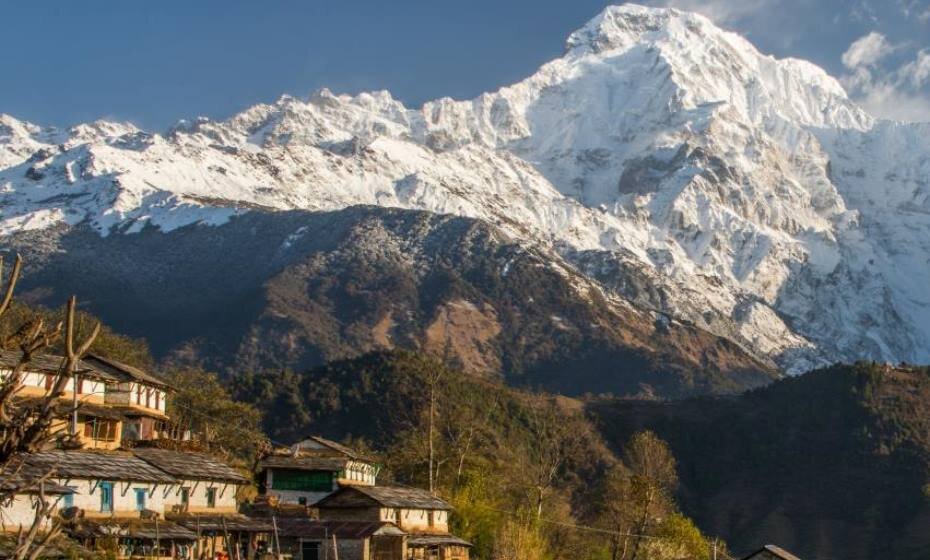
Chhomrong faces some of the most impressive mountains in the Annapurna range. Annapurna South, at around 7,219 meters, dominates the skyline, with Hiunchuli, around 6,441 meters, beside it. To the east, Machhapuchhre, around 6,993 meters, shows its famous fishtail summit.

Machhapuchhre is considered sacred and has never been officially summited. On clear mornings, these peaks glow in the first light, one of the best views on any Nepal tour.

Chhomrong Jeep From Pokhara Airport

Monsoon Safety in the Modi Khola Valley

The monsoon brings heavy rain to the Annapurna foothills, and the Modi Khola can rise quickly. If you’re traveling in the rainy season:

  • Choose a 4WD jeep and allow extra time
  • Be ready for the jeep to stop at Siwai or lower
  • Carry rain gear and leech protection
  • Keep spare days in your trek plan
  • Follow your driver’s and guide’s advice on river crossings

Hot Spring Etiquette at Jhinu Danda

  • Rinse before entering the pools
  • Wear modest swimwear
  • Keep soap and shampoo out of the water
  • Drink water after soaking
  • Keep valuables at your lodge

Drive Times by Section

  • Pokhara Airport to Nayapul: around 1.5 to 2 hours on the paved highway
  • Nayapul to Siwai: around 45 minutes to 1 hour on a narrower road
  • Siwai to Jhinu Danda: around 1 to 1.5 hours on a rough 4WD track
  • Total: about 3.5 to 4.5 hours, plus the walk to Chhomrong

Times vary with traffic and road conditions. Plan with our trip planner or contact the tour team.

Combining Chhomrong With a Pokhara Stay

Many trekkers spend a day or two in Pokhara before or after the ABC trek. Enjoy boating on Phewa Lake, visit the World Peace Pagoda, or watch sunrise at Sarangkot. Book every transfer with us, including Pokhara car hire and airport transfers, so your trip runs smoothly from start to finish.

If you’re continuing west after the trek, we also transport to Beni and beyond.

Porters and Guides

The climb from Jhinu Danda to Chhomrong and the long staircases beyond are much easier without a heavy pack. Hiring a porter lets you walk with just a daypack, while a licensed guide adds safety, local knowledge, and help with lodges and permits.

Rules for foreign trekkers in conservation areas increasingly require a licensed guide, so check current requirements. Our sister companies Trek Nepal Himalayas and Alpine Luxury Treks can arrange experienced guides and porters, and we can pick them up in Pokhara on the way to Jhinu Danda at no extra charge.

Health Before You Go

The ABC trek involves long days of walking on steep steps and climbs to more than 4,000 meters. Build fitness before your trip with regular walking and stair climbing. If you have heart, lung, or blood-pressure conditions, speak to your doctor first.

Carry a basic first-aid kit, any personal medicines, es and water purification, and plan with our trip planner. Travel insurance that covers trekking at altitude and emergency evacuation is strongly recommended.

Planning Your Return Day

On the last day of your trek, most trekkers walk down from Chhomrong or Sinuwa to Jhinu Danda in the morning, enjoy a soak in the hot springs,s and meet their jeep around midday. The drive back to Pokhara takes about 3.5 to 4.5 hours, so you’ll usually reach your Lakeside hotel or the airport by late afternoon.

Share your planned finish date when you book, and confirm the pick-up time with us a day or two before. If your plans change on the trail, message us on WhatsApp, pp and we’ll adjust the timing.=

Chhomrong on the Annapurna Base Camp Trek

Chhomrong is the gateway to the Annapurna Sanctuary. From here, the trail drops to the Chhomrong Khola and climbs to Sinuwa, then continues through Bamboo, Dovan, and Deurali to Machhapuchhre Base Camp and Annapurna Base Camp at around 4,100 meters.

Short ABC Itinerary Using a Chhomrong Jeep

  • Day 1: Pokhara Airport to Jhinu Danda by Chhomrong jeep, walk to Chhomrong
  • Day 2: Chhomrong to Bamboo or Dovan
  • Day 3: to Deurali or Machhapuchhre Base Camp
  • Day 4: Annapurna Base Camp for sunrise, then descend
  • Day 5: down to Bamboo or Sinuwa
  • Day 6: to Jhinu Danda, hot springs and jeep back to Pokhara

See the Annapurna Base Camp trek with our sister company and our ABC trek starting point guide.

Groups and Trekking Agencies

For groups, we combine highway vehicles with 4WD jeep shuttles:

  • Up to 6: one jeep or Scorpio to Jhinu Danda
  • 7–12: two jeeps, or a Hiace to Siwai plus jeep shuttles
  • 13–40: a coaster or bus to Nayapul or Siwai plus jeeps

Agencies receive consolidated USD invoices. Contact us via our contact page.

5 Common Chhomrong Jeep Mistakes to Avoid

These are the mistakes we see most often with a Chhomrong jeep trip.

  • Expecting the jeep to reach Chhomrong: it stops at Jhinu Danda
  • Booking a car for the rough track: choose a 4WD jeep
  • Starting the walk too late: begin early to reach Chhomrong in daylight
  • Forgetting permits: they’re checked at Birethanti and Chhomrong
  • Ignoring monsoon risks: allow extra time and stay flexible

Chhomrong Jeep From Pokhara Airport

Explore More From Pokhara

Browse our Nepal tour packages and trekking transport, or contact Trek Nepal Himalayas and Alpine Luxury Treks.

Chhomrong Jeep: Key Takeaways

  • A Chhomrong jeep goes from Pokhara Airport to Jhinu Danda in about 3.5 to 4.5 hours.
  • There is no road into Chhomrong; the walk up from Jhinu Danda takes about 2-4 hours.
  • A 4WD jeep to Jhinu Danda costs about USD 130–170.
  • Permits are checked at Birethanti and Chhomrong.
  • Autumn and spring are the best seasons.

Why Book Your Chhomrong Jeep With Us

  • Honest advice on where jeeps can reach
  • Experienced 4WD mountain drivers
  • Airport meet-and-greet and free waiting for delays
  • Clear USD pricing
  • 24/7 support on WhatsApp

Chhomrong Jeep From Pokhara Airport

How to Book a Chhomrong Jeep

  • Step 1: Send your flight number, group size, and trek plan to WhatsApp or email.
  • Step 2: We confirm the road ahead and send a USD quote.
  • Step 3: Confirm and receive your driver’s details.
  • Step 4: Meet your driver at arrivals.

Or use our trip planner.

Chhomrong Jeep FAQs

Can a jeep reach Chhomrong?

No. Jeeps reach Jhinu Danda, about 2 to 4 hours’ walk below Chhomrong.

How long is the drive from Pokhara Airport to Jhinu Danda?

About 3.5 to 4.5 hours, depending on road conditions.

How much is a Chhomrong jeep?

About USD 130–170 one way to Jhinu Danda by 4WD jeep.

Can a car get close to Chhomrong?

A car can reach Nayapul and Siwai in good condition. From there, take a jeep or walk.

Is Chhomrong spelled Chomrong?

Yes, both spellings refer to the same village.

Can you pick us up after the ABC trek?

Yes, from Jhinu Danda or another roadhead.

Book Your Chhomrong Jeep Today

Reach the gateway to Annapurna Base Camp the day you land with a private 4WD jeep, an experienced driver, and honest advice on the road.

WhatsApp

Email: [email protected]

Online: Plan your trip | Contact us | Nepal Vehicle Hiring

Ghorepani Jeep from Pokhara Airport: 2 Best Routes and Prices

Ghorepani Jeep From Pokhara Airport: The Complete Poon Hill 4WD Guide

Ghorepani is the mountain village at the heart of the famous Poon Hill trek. At around 2,860 meters, it sits in a forested saddle between the Kali Gandaki and Modi Khola valleys.

From the hill above, Poon Hill, at around 3,210 meters, sunrise lights up Dhaulagiri, Annapurna South, Hiunchuli, and Machhapuchhre in one of Nepal’s most famous panoramas. Traditionally, reaching Ghorepani meant two or three days of walking.

Today, rough 4WD roads climb toward the village from both sides, and a Ghorepani jeep from Pokhara Airport can take you much of the way, or all the way in good conditions, from the arrivals hall.

This guide explains the two jeep routes (via Ulleri and via Beni and Tatopani), where jeeps can realistically stop, drive times, USD prices, seasons, permits, and how to plan your Poon Hill sunrise. At Nepal Vehicle Hiring, we run Pokhara to Ghorepani transfers and Poon Hill jeep hire throughout the trekking seasons with experienced mountain drivers and well-maintained 4WD jeeps.

To book, send your flight details and group size via WhatsApp, email [email protected], or use our trip planner.

Ghorepani jeep from Pokhara Airport on the road to Poon Hill

Ghorepani Jeep at a Glance

Here is a quick summary of how a Ghorepani jeep from Pokhara Airport works, before we go into the details of each route.

  • Pick-up: Pokhara International Airport arrivals (or any Pokhara hotel)
  • Destination: Ghorepani village (around 2,860 m), the base for Poon Hill
  • Eastern route via Ulleri: about 70–75 km from the airport; around 4 to 5 hours when the road is open to Ghorepani
  • Western route via Beni and Tatopani: about 140–150 km; around 6 to 8 hours
  • Road: paved to Nayapul or Tatopani, then steep, rough 4WD tracks
  • Vehicle: 4WD jeep or Mahindra Scorpio only
  • Where jeeps stop: Ulleri or Banthanti on the eastern route in many conditions; Ghorepani itself when dry and passable
  • Price range: from about USD 120 to Ulleri, and USD 180–290 to Ghorepani depending on route
  • Poon Hill: not reachable by vehicle; a 45 to 60 minute walk up from Ghorepani

NOTE: Road access to Ghorepani changes with the season and road works. On the eastern route, jeeps often stop at Ulleri or Banthanti, leaving a few hours’ walk. We confirm the current situation before every booking.

Why Take a Ghorepani Jeep?

Poon Hill in Less Time

With a jeep, you can see the Poon Hill sunrise on a two-day trip instead of four or five days of trekking. It’s ideal for travelers with limited time.

Mountains for Everyone

Families with young children, older travelers, and anyone who can’t manage the long Ulleri staircase can still experience Ghorepani and the famous sunrise.

Straight From the Airport

Your driver meets you at Pokhara Airport and heads straight for the hills, stopping in Lakeside for permits and cash if you need them. See our Pokhara airport transfer service.

Combine Driving and Trekking

Many travelers drive one way and walk the other, for example, jeep up to Ulleri or Ghorepani, then trek out via Tadapani and Ghandruk.

Ghorepani Jeep Route 1: Via Nayapul and Ulleri

[IMAGE: Jeep climbing the rocky track above Ulleri] Alt text: Ghorepani jeep climbing the Ulleri road

Airport to Nayapul

From Pokhara International Airport, the route crosses the city and follows the paved Pokhara–Baglung highway past Hemja, Kande, Naudanda and Lumle to Nayapul (around 1,070 m). This takes about 1.5 to 2 hours. See our Pokhara to Nayapul transport.

Nayapul to Tikhedhunga

After the permit check at Birethanti, the road turns into a dirt track up the Bhurungdi Khola valley through Hile to Tikhedhunga (around 1,480 m). The track is bumpy and narrow but usually manageable for a 4WD.

Tikhedhunga to Ulleri

The road climbs steeply in hairpins to Ulleri (around 1,960–2,080 m), a Magar village famous for its stone staircase. This section is rocky and demanding, so it’s firmly 4WD territory. Ulleri is the most reliable jeep stop on this route.

See our Pokhara to Ulleri jeep.

Ulleri to Banthanti and Ghorepani

Beyond Ulleri, a rougher track continues through forest to Banthanti (around 2,250 m) and Nangethanti. In dry conditions, jeeps can reach Banthanti, and when the upper road is open, Ghorepani itself. When it isn’t, the walk from Banthanti to Ghorepani takes around 1.5 to 2 hours, or 3 to 4 hours from Ulleri, through beautiful rhododendron forest.

Ghorepani Jeep from Pokhara Airport: 2 Best Routes and Prices

Ghorepani Jeep Route 2: Via Beni and Tatopani

The western route is longer but often lets jeeps reach Ghorepani village directly. From Pokhara, the road follows the highway west to Kushma and Beni, then north along the Kali Gandaki to Tatopani, famous for its hot springs. From Tatopani, a steep, rough track climbs through Shikha and Chitre to Ghorepani.

  • Pokhara to Beni: paved highway, around 1.5 to 2 hours; see our Pokhara to Beni jeep
  • Beni to Tatopani: mixed paved and rough road along the river
  • Tatopani to Ghorepani: steep, rough mountain track, around 2 to 3 hours
  • Total: around 6 to 8 hours from the airport

This route works well when you want to reach Ghorepani by vehicle with your luggage, and it gives you a chance to soak in the Tatopani hot springs on the way.

Understanding the Two Ghorepani Jeep Routes

Picture Ghorepani as sitting on a high ridge between two great river valleys. To the east lies the Bhurungdi Khola, climbing from Nayapul through Tikhedhunga and Ulleri. To the west lies the Kali Gandaki, the deep valley followed by the road from Beni to Tatopani and on toward Jomsom.

Roads climb toward Ghorepani from both sides, and each road’s condition varies with weather, road works, and the season.

The eastern road is shorter and closer to Pokhara, but the section above Ulleri is steep and narrow, and jeeps often stop at Ulleri or Banthanti. The western road is longer, adding a drive through Kushma and Beni, but the final climb from Tatopani through Shikha and Chitre has often given jeeps a more reliable way into Ghorepani itself.

Neither route is suitable for cars, vans, or buses beyond the paved highway sections.

When you book, we consider your group, your priorities, and the latest driver reports on both roads. If reaching Ghorepani by vehicle matters most, we’ll usually suggest the western route. If you want the shortest drive and don’t mind a beautiful forest walk, the eastern route is ideal.

Either way, you’ll know before you set off where the Ghorepani jeep is likely to stop.

Luggage on Your Ghorepani Jeep

Jeeps carry luggage on a covered roof rack, with valuables inside. On the eastern route, if the Ghorepani jeep stops at Ulleri or Banthanti, you’ll need to carry your bags or hire a porter for the walk to Ghorepani.

Pack light, or leave large suitcases at your Pokhara hotel and take only what you need for a night or two. We can help arrange porters if needed.

Which Route Should You Choose?

Both routes have their place, and the right Ghorepani jeep route depends on your group, your fitness, and the season.

Choose the Ulleri Route If…

  • You’re happy to walk the last part from Ulleri or Banthanti
  • You want the shortest drive from Pokhara Airport
  • You plan to trek out via Tadapani and Ghandruk

Choose the Beni–Tatopani Route If…

  • You want the best chance of reaching Ghorepani by vehicle
  • You’re traveling with older people or young children who can’t walk far
  • You’d like a stop at the Tatopani hot springs

Please tell us your plans and fitness level, and we’ll recommend the best option based on current road conditions.

Ghorepani Jeep from Pokhara Airport: 2 Best Routes and Prices

Which Vehicle Is Best for a Ghorepani Jeep Trip?

4WD Jeep (Up to 6 Passengers)

A classic 4WD hill jeep is the toughest option for the rocky Ulleri and Tatopani tracks. It carries up to six passengers with bags on the roof rack. See our 4WD Himalayan jeeps.

Mahindra Scorpio (Up to 5 Passengers)

The Scorpio offers more comfortable seats for long drives and handles tracks well in dry conditions. It’s a good choice for families and couples.

Car, Hiace and Bus (Highway Only)

A private car, Hiace, Coaster, or tourist bus can reach Nayapul or Beni on the paved highway, but not Ghorepani. For groups, we combine a highway vehicle with 4WD jeep shuttles for the mountain section.

Ghorepani Jeep Price From Pokhara Airport (USD)

[IMAGE: Private 4WD jeep and Mahindra Scorpio ready at Pokhara Airport] Alt text: Ghorepani jeep and Scorpio at Pokhara Airport

Our prices include a private 4WD vehicle, an experienced mountain driver, fuel, insurance, road taxes, parking, and airport meet-and-greet. Our prices are slightly higher than the cheapest offers because these roads are among the roughest in the region, and we use well-maintained 4WD vehicles and experienced drivers.

One Way From Pokhara Airport (Per Jeep, Up to 6 Passengers)

  • To Ulleri: USD 150–160
  • To Banthanti (dry conditions): USD 170–180
  • To Ghorepani via Ulleri (when passable): USD 200-230
  • To Ghorepani via Beni and Tatopani: USD 280–290

Return and Extras

  • Two-day round trip with overnight in Ghorepani: ask for a combined price
  • Pick-up from Ghandruk, Ulleri or Nayapul after a trek: see our Nayapul to Pokhara jeep and Ghandruk jeep
  • Group transfers with bus or Hiace to Nayapul plus jeep shuttles: quoted per group

Get a quote for your date on WhatsApp.

Permits

Every Ghorepani jeep passenger who is a foreign national needs the right permit before setting off.

Ghorepani lies inside the Annapurna Conservation Area, so foreign visitors need an ACAP permit. On the eastern route, permits are checked at Birethanti; the western route also has checkpoints. Permits are not issued at checkpoints, so arrange them in advance in Kathmandu or Pokhara.

A small entry fee is usually charged at Poon Hill. Rules on TIMS cards and guides change from time to time, so confirm current requirements before you go. If you need to collect permits on arrival day, your driver can stop in Lakeside.

Ghorepani Jeep from Pokhara Airport: 2 Best Routes and Prices

Poon Hill Sunrise: How It Works

[IMAGE: Sunrise over Dhaulagiri and Annapurna South from Poon Hill] Alt text: Poon Hill sunrise reached by Ghorepani jeep from Pokhara

From Ghorepani, the trail to Poon Hill climbs about 350 meters on stone steps through rhododendron forest. Most visitors leave around an hour before sunrise with headlamps and reach the viewing platform as the sky brightens.

As the sun rises, the panorama unfolds: Dhaulagiri to the west, the Annapurna range and Hiunchuli in the center, and Machhapuchhre to the east. After sunrise, vendors often sell hot tea at the top. You’ll be back in Ghorepani for breakfast.

  • Check the sunrise time with your lodge the night before
  • Bring a headlamp, warm jacket, hat, and gloves
  • Allow 45 to 60 minutes for the climb
  • Carry some cash for the entry fee and tea

Gurung Hill and Other Viewpoints Near Ghorepani

Poon Hill is the famous one, but it isn’t the only viewpoint near Ghorepani. On the trail toward Tadapani, the ridge at Deurali and nearby Gurung Hill offer equally spectacular views, often with far fewer people.

Some travelers watch sunrise from Poon Hill on the first morning and visit Gurung Hill later that day, or on a second morning if they stay longer. The views stretch from Dhaulagiri and Tukuche Peak in the west, across Annapurna South and Hiunchuli, to Machhapuchhre and the Lamjung Himal in the east.

If the Poon Hill platform is crowded in peak season, these quieter spots make a peaceful alternative.

What Makes Poon Hill So Special

Poon Hill is popular for good reason. Few places offer such a wide Himalayan panorama at such a modest altitude and with such easy access. In one sweep, you see two of the world’s fourteen 88,000-metre peaks, Dhaulagiri and Annapurna I, along with a crowd of other giants.

The deep Kali Gandaki Gorge, one of the deepest on Earth, lies between Dhaulagiri and the Annapurnas. Watching the sunrise move from summit to summit while rhododendron forests and terraced valleys spread below is an experience many travelers rank as the highlight of their time in Nepal.

Ghorepani Jeep from Pokhara Airport: 2 Best Routes and Prices

Best Season for a Ghorepani Jeep Trip

The season makes a big difference to how far a Ghorepani jeep can drive and how clear the mountain views will be.

Autumn

Clear skies, dry roads, and the best sunrise views. The most popular and reliable time for jeep access.

Winter

Very clear mornings and quieter trails, but cold nights at Ghorepani and occasional snow. Roads are usually dry, but check conditions near the top.

Spring

Famous for rhododendron forests in full bloom around Ghorepani. Roads are mostly dry, though afternoon clouds can build.

Monsoon

Mud, landslides, and cloud cover can make the upper tracks risky or impassable. Vehicle access to Ghorepani is generally not recommended. Nayapul remains reachable on the paved highway.

Classic Two-Day Ghorepani Jeep Tour From the Airport

  • Day 1, morning: land at Pokhara Airport; your driver meets you with a 4WD jeep or Scorpio
  • Day 1, late morning: quick Lakeside stop for permits and cash, then the highway to Nayapul
  • Day 1, afternoon: the 4WD climb via Tikhedhunga and Ulleri toward Banthanti or Ghorepani; walk the final section if needed
  • Day 1, evening: check in to a Ghorepani lodge and enjoy sunset over Dhaulagiri
  • Day 2, before dawn: climb Poon Hill for sunrise
  • Day 2, morning: breakfast in Ghorepani, then drive back toward Pokhara
  • Day 2, afternoon: drop-off at your Pokhara hotel or the airport

This is our most popular short trip. Book it as a Poon Hill jeep hire package with the return included.

Drive One Way, Trek the Other

A Ghorepani jeep doesn’t have to mean skipping the trail entirely.

Combining a jeep with a short trek gives you the best of both: quick access and time on the trail.

Jeep Up, Trek Out via Tadapani and Ghandruk

Drive to Ghorepani, see the Poon Hill sunrise, then walk east through the rhododendron forest to Tadapani and down to Ghandruk. From Ghandruk, take a Ghandruk jeep back to Pokhara. This takes around three days in total.

Jeep to Ulleri, Trek to Ghorepani

Skip the steep Ulleri staircase by jeep, then walk the beautiful forest trail to Ghorepani. Return by jeep from Ghorepani or trek out via Ghandruk. See our Ulleri jeep service.

Jeep via Tatopani, Trek Down to Ulleri

Drive the western route to Ghorepani, then walk down the classic trail through Ulleri and Tikhedhunga to Nayapul, where we pick you up. See our Nayapul to Pokhara jeep.

Ghorepani Jeep from Pokhara Airport: 2 Best Routes and Prices

Ghorepani Village

Ghorepani, meaning ‘horse water’, was once a resting place for mule and horse caravans traveling between the Kali Gandaki and Pokhara. Today it’s a lively lodge village set in a saddle surrounded by rhododendron and oak forest.

Lodges line the stone paths, many with dining rooms warmed by stoves and windows facing Dhaulagiri and Annapurna South. In spring, the forests around the village burst into red, pink and white blooms.

Evenings in Ghorepani are cozy, with trekkers from around the world gathering around fires to share stories. Lodges serve dal bhat, noodles, pasta, and Tibetan bread. Nights are cold, so bring warm layers.

Most visitors go to bed early to be ready for the pre-dawn Poon Hill climb.

Ulleri and Its Famous Staircase

Ulleri is a Magar village perched on a steep hillside above the Bhurungdi Khola. It’s famous for its stone staircase, a long climb from Tikhedhunga that many trekkers remember as the hardest part of the Poon Hill trek. Driving up by jeep lets you skip it entirely.

Ulleri itself offers good views of Annapurna South and Hiunchuli, simple lodges, and a look into Magar village life. It’s the most reliable jeep stop on the eastern route. Our Pokhara to Ulleri private jeep page has more detail.

Tatopani Hot Springs on the Western Route

If you take the western route via Beni, Tatopani makes a perfect break. The name means ‘hot water’, and natural hot springs by the Kali Gandaki River have pools where you can soak your muscles. The village has lodges, restaurants, and orange and lemon trees.

On the return from Ghorepani, a soak in Tatopani is a wonderful way to relax before the drive back to Pokhara.

Group Ghorepani Jeep Transfers

For groups, we combine highway vehicles with 4WD jeeps:

  • Up to 6 people: one 4WD jeep or Scorpio
  • 7–12 people: two jeeps, or a Toyota Hiace to Nayapul plus jeep shuttles
  • 13–25 people: a coaster bus to Nayapul or Beni plus jeeps
  • 26–40 people: a tourist bus to Nayapul or Beni plus jeeps

A coordinator manages the changeover and luggage. Contact us early via our contact page.

Families and Older Travellers

For many families, a Ghorepani jeep is the only practical way to share the Poon Hill sunrise with grandparents and young children.

A jeep makes Ghorepani and Poon Hill accessible to families with children and older travelers who can’t manage days of trekking. The western route via Tatopani is often best if you want to reach Ghorepani by vehicle. The Poon Hill climb still involves 45 to 60 minutes of steps, so go slowly.

Child seats are available on request.

Ghorepani Jeep Safety on the 4WD Tracks

  • Experienced mountain drivers who know both routes
  • Well-maintained 4WD vehicles with low-range gearing
  • Daylight driving on the steep upper sections
  • Road checks before every trip
  • No risks in bad weather: we stop at Ulleri or Banthanti if the upper road is unsafe
  • Insured, licensed vehicles under our company name

What Is Included in Your Ghorepani Jeep

Included

  • Private 4WD vehicle and experienced driver
  • Fuel, insurance, road taxes and parking
  • Airport meet-and-greet and free waiting for delays
  • Driver’s food and accommodation on overnight trips
  • Short stops in Lakeside

Not Included

  • ACAP permits and the Poon Hill entry fee
  • Your accommodation and meals
  • Guide and porter services
  • Tips for the driver (optional)

Your Ghorepani Jeep Driver

The tracks to Ghorepani are among the most demanding in the Annapurna foothills. Our drivers have years of experience on the Ulleri and Tatopani roads, know where the track is safe after rain, and when to stop and walk.

  • Licensed and experienced on 4WD mountain tracks
  • Punctual meet-and-greet at Pokhara Airport
  • Plans Lakeside stops and permit checks
  • Helps carry luggage at drop-off points
  • Speaks basic English

Explore More From Pokhara

Our sister companies, Trek Nepal Himalayas and Alpine Luxury Tre, organize guided treks, including the classic Ghorepani Poon Hill trek. Browse our Nepal tour packages or start with our trip planner.

Ghorepani Jeep from Pokhara Airport: 2 Best Routes and Prices

Packing for Ghorepani

Pack light for your Ghorepani jeep trip, but don’t forget warm clothes.

  • Warm down jacket, hat, ha,t and gloves; Ghorepani nights are cold, especially in winter.
  • Headlamp for the pre-dawn Poon Hill climb
  • Comfortable walking shoes or boots
  • Rain jacket in spring and the monsoon
  • Sunscreen and sunglasses
  • Nepali cash for lodges, the Poon Hill fee, and tea
  • Motion sickness tablets for the rough tracks
  • Passport and ACAP permit

Altitude

Ghorepani sits at around 2,860 meters and Poon Hill at around 3,210 meters. Because a Ghorepani jeep gains height quickly, some visitors feel mild effects such as a headache or breathlessness on the steps. Drink plenty of water, walk slowly, and avoid alcohol on your first evening.

Serious altitude sickness is uncommon at this height, but descend if symptoms become severe.

Food and Lodges in Ghorepani

Ghorepani has many lodges with simple, clean rooms and warm dining halls. Menus include dal bhat, noodles, fried rice, pasta, pizza, apple pie,e and Tibetan bread. Hot showers and charging are usually available for a small fee.

In busy seasons, lodges fill up quickly, so arrive early or book ahead through your agency.

Photography at Poon Hill

Poon Hill is one of Nepal’s most photographed viewpoints. Arrive before sunrise to catch the changing colors on Dhaulagiri and the Annapurnas. A telephoto lens is useful for Machhapuchhre and Annapurna South, while a wide-angle lens captures the full panorama.

Spring adds rhododendron blooms in the foreground. Keep batteries warm in your pocket, as cold drains them quickly.

If Your Flight Is Delayed

Flight delays are common in the mountains, so your Ghorepani jeep plan includes free waiting time.

We track your flight, and your driver waits at no extra cost. If a delay means you’d reach the rough upper track late in the day, we’ll suggest a night in Pokhara or a lodge at Ulleri, and continue the next morning. Stay in touch with us on WhatsApp.

Questions to Ask Before Booking a Ghorepani Jeep

  • Where will the jeep realistically stop on my date?
  • Which route do you recommend for my group?
  • Is the price fixed and all-inclusive?
  • Will the driver wait overnight for the return?
  • Can you pick us up elsewhere after a trek?

Ask us on WhatsApp or email.

Common Mistakes to Avoid

These are the mistakes we see most often on Ghorepani jeep trips.

  • Assuming the jeep always reaches Ghorepani: on the Ulleri route,e it often stops lower down.
  • Booking in the monsoon: upper roads can be impassable
  • Forgetting warm clothes: sunrise on Poon Hill is cold
  • Not carrying cash: card payments are rare
  • Driving the upper track late: plan to arrive in daylight

Ghorepani Jeep: Key Takeaways

  • Jeeps reach Ghorepani from Pokhara via Ulleri (around 4 to 5 hours when open) or via Beni and Tatopani (6 to 8 hours).
  • On the Ulleri route, jeeps often stop at Ulleri or Banthanti, then continue on foot.
  • Prices range from about USD 120–160 to Ulleri up to USD 230–290 to Ghorepani via Tatopani.
  • Only 4WD jeeps or Scorpios can manage the upper tracks.
  • Poon Hill is a 45- to 60-minute walk from Ghorepani.
  • Avoid vehicle access in the monsoon.

Small Details That Make a Big Difference

On mountain roads, small things matter: an early start, a full fuel tank, warm clothes within reach, and a driver who knows when to slow down. We pay attention to these details on every Ghorepani trip so you can focus on the views.

Practical Stops in Lakeside

Most Ghorepani jeep trips from the airport include a short stop in Lakeside.

Pokhara’s Lakeside is on the way from the airport to both routes, so it’s the natural place for practical stops:

  • Collect your ACAP permit at the Nepal Tourism Board office
  • Withdraw cash; there are no ATMs in Ghorepani
  • Buy warm layers, snacks, and a headlamp if you need them
  • Leave large luggage at a Pokhara hotel
  • Pick up your guide or porter

Short stops are included. For a full day in Pokhara first, add a Pokhara car hire or Sarangkot sunrise. Our Pokhara airport transfer service also covers simple hotel drops.

Banthanti and Nangethanti

Between Ulleri and Ghorepani, the trail passes through Banthanti and Nangethanti, small settlements in dense forest. Banthanti, at around 2,250 meters, has a few lodges and tea houses and is often the highest point jeeps reach on the eastern route. Nangethanti sits a little higher, closer to Ghorepani.

The walk through this section is one of the most beautiful on the trek, with moss-covered oaks, rhododendrons, waterfalls, and birdsong. Even if the Ghorepani jeep stops here, many travelers enjoy the final walk to Ghorepani.

Ghorepani to Tadapani and Ghandruk

From Ghorepani, a popular trail heads east via Deurali, a ridge with excellent mountain views, then descends through forest to Tadapani, a small lodge settlement facing Machhapuchhre. From Tadapani, the trail continues down to the Gurung village of Ghandruk. Many travelers drive to Ghorepani, trek this beautiful section over two days, then take a jeep from Ghandruk back to Pokhara.

Continuing to Jomsom and Mustang

The western route via Tatopani follows the Kali Gandaki, the same valley that leads north to Jomsom, Muktinath and Mustang. Some travelers combine Ghorepani with a journey up the Kali Gandaki: drive to Ghorepani via Beni and Tatopani, see the Poon Hill sunrise, then continue north.

Others return from Mustang via Tatopani and detour up to Ghorepani. We can arrange multi-day jeep trips covering both. See the Upper Mustang trek and our Pokhara-to-Beni jeep.

Arriving From Kathmandu

You can still book a Ghorepani jeep if you arrive in Pokhara by road.

Not flying into Pokhara? We can pick you up at your Kathmandu hotel or the airport and drive to Pokhara by car or jeep, then continue to Ghorepani the next day. You can also take a tourist bus to Pokhara and meet our jeep at the bus park.

If you have time in Kathmandu, enjoy a Kathmandu sightseeing tour first.

Schools, Corporate Groups and Photography Tours

Ghorepani and Poon Hill attract school trips, corporate retreats and photography groups. We handle large groups by combining a Hiace, coaster, or tourist bus for the highway with a fleet of 4WD jeeps for the mountain tracks, coordinated by one team. Contact us early for peak seasons.

Ghorepani Jeep from Pokhara Airport: 2 Best Routes and Prices

Ghorepani Jeep Travel in the Monsoon

In the monsoon, the dirt tracks above Nayapul and Tatopani become muddy and slippery, and landslides can block the road. We generally don’t recommend vehicle trips to Ghorepani in this season. If you visit during the rains, plan to drive only as far as Nayapul or Ulleri when conditions allow, walk the rest, carry rain gear and leech protection, and keep your schedule flexible.

Solo Travellers

Solo travelers can share a Ghorepani jeep to keep costs down.

A private jeep for one is costly, but you can share with others arriving on the same flight or staying in Lakeside. Shared jeeps to Ulleri also run from Pokhara, though not from the airport. Ask us, and we’ll help you find the best option for your budget.

Accessibility

A Ghorepani jeep opens Poon Hill to travelers who can’t walk long distances.

If anyone in your group has limited mobility, let us know. The western route gives the best chance of a vehicle reaching Ghorepani itself. From the village, the Poon Hill climb involves many steps, so some travelers watch sunrise from viewpoints near their lodge instead.

Responsible Travel

  • Use refillable water bottles
  • Carry out plastic and batteries
  • Stay on marked trails
  • Respect local culture and ask before taking photos
  • Support local lodges and tea houses

One Partner for Your Whole Trip

With Nepal Vehicle Hiring, one booking covers your airport pick-ups in Kathmandu and Pokhara, your Ghorepani jeep, trek pick-ups, and onward travel. One office follows your journey. Share your itinerary through our trip planner for a single USD quote.

Ghorepani jeep from Pokhara Airport on the road to Poon Hill

Is a Private Ghorepani Jeep Worth It?

For travelers with limited time, families,s or anyone who wants to see Poon Hill without a multi-day trek, yes. A private Ghorepani jeep from the airport turns a four-to-five-day trek into a two-day trip, with the flexibility to walk sections if you wish.

What Our Guests Value Most

Guests often mention honest advice on how far the Ghorepani jeep can reach, careful driving on the rocky tracks, and arriving in time for sunset before the next morning’s sunrise on Poon Hill. Families value the option of the western route to reach the village by vehicle, and trekkers appreciate pick-ups arranged at Ghandruk or Nayapul.

Arrival-Day Checklist

  • Send us your flight number, group size, and preferred route
  • Confirm Lakeside stops for permits, cash, and luggage storage
  • Book a porter in advance if the jeep may stop below Ghorepani
  • Pack warm layers, gloves, a hat and a headlamp
  • Save our WhatsApp number and your driver’s number
  • Confirm your return plan or your trek’s finishing point
  • Keep your passport, ACAP permit and Nepali cash safe in your daypack
  • Check the weather forecast for the next morning’s Poon Hill sunrise
  • Ask us which jeep route is best for current road conditions

Magar and Gurung Culture on the Way

The villages on the road to Ghorepani are home mainly to Magar and Gurung communities. Ulleri and the villages around Ghorepani are traditionally Magar, while Ghandruk and the eastern valleys are predominantly Gurung. Both communities have long histories of farming terraced hillsides and serving in the Gurkha regiments.

Along the way, you’ll see stone houses, small shrines, prayer flags, and terraced fields of millet, maize, and potatoes. Lodge owners are often happy to share stories of village life, festivals,s and family history.
Ghorepani Jeep from Pokhara Airport: 2 Best Routes and Prices

Rhododendron Forests and Wildlife

The forests around Ghorepani are among Nepal’s finest rhododendron forests. Rhododendron arboreum, Nepal’s national flower, grows into tall trees here, and in spring the hillsides glow red, pink and white.

The forests also include oak, magnolia, and fir, and are home to birds such as the Himalayan monal, Nepal’s national bird, along with laughingthrushes, sunbirds, and woodpeckers. You may spot langur monkeys and occasionally barking deer.

Walking the section from Banthanti to Ghorepani, even if your Ghorepani jeep could go further, is a wonderful way to experience this forest.

Shikha and Chitre on the Western Route

On the western route, the track climbs from Tatopani through Shikha, a large Magar village spread across terraced slopes above the Kali Gandaki, and Chitre, a smaller settlement close to Ghorepani. Both villages have lodges and offer views across the valley toward Dhaulagiri and Nilgiri. If you trek down this way, the walk from Ghorepani to Tatopani takes a full day, descending more than 1,600 meters through forest and farmland.

Beni: Gateway to the Western Route

Beni sits at the confluence of the Kali Gandaki and Myagdi rivers and is the headquarters of Myagdi district. It’s the main road junction for routes north to Tatopani, Jomsom and Mustang, and west toward Dhaulagiri. The town has shops, restaurants, and fuel stations, making it a good stop before the rougher roads ahead.

See our Pokhara to Beni jeep.

Poon Hill With Children

Poon Hill is a fantastic family adventure by jeep. Children enjoy the forest, the lodges, and the excitement of climbing in the dark to watch the sunrise. Bring warm clothing, headlamps and snacks for the climb, and take it slowly on the steps.

A two-night trip gives younger children more time to adjust to the altitude and makes the whole experience more relaxed.

Winter at Ghorepani

A winter Ghorepani jeep trip rewards you with the clearest views of the year.

Winter brings some of the year’s clearest mornings, with crisp views of Dhaulagiri and the Annapurnas. But temperatures at Ghorepani often drop below freezing at night, and snow can fall, sometimes covering the upper sections of the road and trail. Pack a warm sleeping layer, an insulated jacket, a hat, gloves, and good boots.

Check road conditions with us before traveling, as snow or ice may stop jeeps lower down.

Getting Back to Pokhara Airport for Your Flight

Plan your return jeep from Ghorepani with plenty of time before your flight.

If you’re flying out of Pokhara after your Ghorepani trip, allow plenty of time. From Ghorepani, the drive back to the airport takes around 4 to 5 hours via Ulleri, or 6 to 8 hours via Tatopani, plus time for walking if the Ghorepani jeep is waiting lower down.

Domestic airlines usually ask passengers to check in about an hour before departure. We recommend an afternoon or next-day flight after a Poon Hill sunrise. For international connections from Kathmandu, keep a buffer day.

Our Pokhara airport transfer team can help plan the timing.

Ghorepani Jeep Booking Tips for Peak Season

In autumn and spring, Ghorepani lodges and jeeps are in high demand. Book your Ghorepani jeep as soon as your flight is confirmed, reserve your lodge in advance, and consider traveling midweek for a quieter experience.

Staying Connected

Mobile coverage is available in many parts of the route and in Ghorepani, though it can be patchy in the forest. Many lodges offer Wi-Fi for a small fee. Save our WhatsApp number and your driver’s number, and message us when your plans change.

Three-Day Ghorepani Jeep and Trek Itinerary

  • Day 1: Land at Pokhara Airport, drive by 4WD to Ulleri or Banthanti, walk through the forest to Ghorepani
  • Day 2: Poon Hill sunrise, then trek to Tadapani via Deurali
  • Day 3: Walk down to Ghandruk and take a Ghandruk jeep back to Pokhara or the airport

This plan gives you the sunrise, the best forest walking, and a Gurung village stay in just three days. Alternatively, return via Ulleri and Nayapul with our Nayapul pick-up.

Ghorepani Jeep from Pokhara Airport: 2 Best Routes and Prices

A Day in Ghorepani

Most visitors arrive in the afternoon, settle into their lodge,e and watch the evening light on Dhaulagiri and Annapurna South. Dinner is served early in warm dining halls, where trekkers swap stories about the trail.

Before dawn the next day, headlamps bob up the stone steps to Poon Hill, and the crowd falls silent as the sun rises over the Himalaya. After sunrise and hot tea at the top, it’s back down for breakfast before the drive or trek onward.

If you have an extra day, stay a second night and walk to Deurali or Gurung Hill for another viewpoint, explore the forests, or relax with the mountains in front of you.

Meeting Your Driver at Arrivals

  • Share your flight number so we can track delays
  • Your driver waits outside arrivals with a name board
  • If your flight is late, the driver waits at no extra cost
  • Call or message us if you can’t see your driver

Trekking Agencies

Agencies book a Ghorepani jeep with us for clients, guides, and porters throughout the season.

We provide airport pick-ups, jeep transfers to Ghorepani,, and end-of-trek pick-ups for trekking agencies throughout the season, from Nayapul, Ulleri, Ghandruk, Tatopani,, and other road-heads. For larger groups, we combine highway vehicles with 4WD jeeps. Repeat partners receive consolidated USD invoices and priority allocation in peak seasons.

Weather and Road Changes

Weather decides how far a Ghorepani jeep can go on any given day.

Conditions on the upper tracks can change after heavy rain or snow. Our drivers check with local contacts before setting off, and if the road above Ulleri or Shikha is unsafe, we’ll stop at the safest point and help arrange porters for the walk. On your return day, we’ll update you if conditions have changed.

Stay in touch on WhatsApp at any time.

Health Before You Go

Ghorepani is at a moderate altitude, but rapid ascent can cause mild symptoms in some visitors. If you have heart, lung, or blood-pressure conditions, speak to your doctor before traveling. Rest well before the trip, stay hydrated, and take the Poon Hill climb slowly.

A Final Word on Planning

The best Ghorepani trips combine realistic expectations about the road with a little flexibility: a morning flight, permits and cash sorted in Lakeside, the right route for current conditions, and warm clothes for sunrise. With those in place, the Ghorepani jeep ride becomes part of the adventure, and you can reach Poon Hill within a day of landing in Pokhara.

Traveling With Photographers and Film Crews

Poon Hill and the rhododendron forests around Ghorepani draw photographers and film crews from around the world. If you’re carrying tripods, drones, lenses, or other equipment, let us know when you book.

We’ll send a Ghorepani jeep with enough space, secure your gear for the rough tracks, and plan the timing so you reach Ghorepani with time to scout locations before sunset. For multi-day shoots, the same driver can stay with you, ready to move between viewpoints, villages, and valley roads as the light changes.

Drone rules in conservation areas change from time to time, so check current regulations before flying.

Combining Ghorepani With a Pokhara Stay

Many visitors spend a few days in Pokhara before or after Ghorepani. A typical plan might include a day exploring Phewa Lake and the World Peace Pagoda, a morning at Sarangkot, then two days for Ghorepani and Poon Hill by jeep.

Booking every transfer with one company keeps things simple, and your driver can suggest the best order depending on the weather forecast. Clear mornings are precious in the mountains, so we’ll help you plan Poon Hill on the most promising day.

Night Before Departure: What to Prepare

A calm evening of preparation sets up a smooth Ghorepani jeep day.

A little preparation the evening before makes your Ghorepani trip smoother. Pack a small bag with everything you need for one or two nights: warm layers, a headlamp, toiletries, chargers, and medicines. Keep your passport, ACA permit, and enough Nepali cash in your daypack.

If you’re flying in, check your flight time and let us know of any changes. If you’re starting from a Pokhara hotel, ask for an early breakfast or a packed meal. Finally, check the weather forecast, as clear skies the following morning make the Poon Hill sunrise far more rewarding.

Your driver will message you on arrival.

Ghorepani village with the Dhaulagiri range behind

Why Book With Nepal Vehicle Hire? Here’s why travelers choose us for their Ghorepani jeep.

  • Experienced 4WD mountain drivers for the Ulleri and Tatopani tracks
  • Honest advice on where jeeps can reach in current conditions
  • Airport meet-and-greet with free waiting for flight delays
  • Group logistics combining highway vehicles with jeep shuttles
  • Clear USD pricing, all-inclusive
  • 24/7 support on WhatsApp

See our trekking transport, Pokhara car hire, and Nepal tour package pages.

How to Book a Ghorepani Jeep

  • Step 1: Send your flight number, group size, luggage, and Ghorepani plans via WhatsApp or email.
  • Step 2: We recommend a route and vehicle and send a USD quote.
  • Step 3: Confirm your booking.
  • Step 4: Receive your driver’s details before arrival.
  • Step 5: Meet your driver at arrivals and head for the hills.

Or use our trip planner and contact page.

Ghorepani Jeep FAQs

Can a Ghorepani jeep reach the village from Pokhara?

Yes, in good, dry conditions, either via Ulleri or via Beni and Tatopani. On the Ulleri route, jeeps often stop at Ulleri or Banthathen, which you can reach on foot.

How long does it take?

Around 4 to 5 hours via Ulleri when the road is open, or 6 to 8 hours via Beni and Tatopani.

How much is a private Ghorepani jeep?

About USD 180–230 via Ulleri when passable, or USD 230–290 via Beni and Tatopani. Jeeps to Ulleri cost about USD 120–160.

Can a jeep reach Poon Hill?

No. Poon Hill is a 45- to 60-minute walk up from Ghorepani.

Can I do Poon Hill as a two-day trip from Pokhara?

Yes. Drive to Ghorepani or Banthanti on day one, see the sunrise on day tw,o and drive back.

Is the road open in the monsoon?

Vehicle access to Ghorepani is generally not recommended in the monsoon because of mud and landslides.

Can a tourist bus go to Ghorepani?

No. Buses can reach Nayapul or Beni; jeeps are needed beyond.

Do I need a permit?

Yes. Foreign visitors need an ACAP permit, arranged in advance.

Can the jeep wait overnight in Ghorepani?

Yes. On two-day trips, the driver stays overnight and brings you back after sunrise.

Is the western route better for older travelers?

It often gives a better chance of reaching Ghorepani by vehicle, but it’s a longer drive. Ask us about conditions.

Can you arrange a guide?

Yes, through our sister company Trek Nepal Himalayas.

Do you provide child seats?

Yes, on request.

Book Your Ghorepani Jeep Today

See the Poon Hill sunrise without days of trekking, with one private Ghorepani jeep, an experienced driver,r and honest advice on the best route.

WhatsApp

Email: [email protected]

Online: Plan your trip | Contact us | Nepal Vehicle Hiring

Send your flight details today, and we’ll reply with the best route and a clear USD quote.

Standing on Poon Hill as the first light touches Dhaulagiri and the Annapurnas is one of the great moments of any trip to Nepal. With a reliable Ghorepani jeep, an experienced driver, ver and an honest plan for the road, that moment can be just a day away from your arrival in Pokhara. We look forward to getting you there.

Pokhara Airport to Ghandruk Transfer by Scorpio, Jeep or Bus

Pokhara Airport to Ghandruk Transfer: Private Scorpio, Jeep and Tourist Bus Guide

Ghandruk is one of the most loved villages in the Annapurna region. At around 2,000 meters, its slate-roofed Gurung houses climb a sunny hillside facing Annapurna South, Hiunchuli and the fishtail peak of Machhapuchhre.

It’s a highlight of the Poon Hill and Annapurna Base Camp treks, but a road now lets travelers reach it without days of walking. A Pokhara Airport to Ghandruk transfer takes you from the arrivals hall to the village in a private Scorpio or 4WD jeep, or brings larger groups in by tourist bus with jeep shuttles for the final climb.

This guide explains the route via Nayapul, Birethanti, and Kimche; realistic drive times; which vehicle is right for the rough upper road; USD price ranges; group options with a tourist bus; permits; monsoon conditions; and what to do in Ghandruk. At Nepal Vehicle Hiring, we run Pokhara to Ghandruk jeeps and Ghandruk vehicle hire every season for trekkers, families, and groups.

To book, send your flight number and group size on WhatsApp, email [email protected], or use our trip planner.

Ghandruk to Pokhara Jeep

Pokhara Airport to Ghandruk at a Glance

  • Pick-up: Pokhara International Airport arrivals
  • Drop-off: Ghandruk’s upper parking area, a short walk from the village
  • Approximate distance: about 60–70 km from the airport (around 55–65 km from central Pokhara)
  • Route: airport – Pokhara – Hemja – Kande – Lumle – Nayapul – Birethanti – Syauli Bazaar – Kimche – Ghandruk
  • Typical drive time: about 3 to 4 hours, longer after heavy rain
  • Road: paved highway to Nayapul, then a steep, rough mountain track
  • Best vehicles: Mahindra Scorpio or 4WD jeep for the full route; tourist bus or Hiace to Nayapul for groups, then jeep shuttles
  • Private Scorpio or jeep price range: about USD 120–150 one way

Pokhara Airport to Ghandruk Transfer by Scorpio, Jeep or Bus

Why Book a Private Transfer to Ghandruk?

One Vehicle, Airport to Village

Your driver meets you at arrivals and drives all the way to Ghandruk. There’s no taxi to the bus park, no change at Nayapul, and no waiting for a shared jeep to fill.

The Right Vehicle for the Upper Road

Beyond Nayapul, the road becomes a narrow, steep track with rocks, ruts and stream crossings. Ordinary cars and vans can’t manage it. A Mahindra Scorpio or 4WD jeep with an experienced mountain driver is the safe, comfortable choice.

Mountain Views Within Hours of Landing

With a morning flight, you can watch the afternoon light on Annapurna South from your Ghandruk lodge the same day.

Easy for Families and Older Travellers

Ghandruk used to require a long uphill walk. By road, families, older travelers, and anyone short on time can enjoy one of Nepal’s most beautiful villages.

Ghandruk village

The Route, Section by Section

Airport Through Pokhara

Your driver heads west from Pokhara International Airport across the city. You can stop in Lakeside for permits, cash, or luggage storage along the way.

Pokhara to Nayapul

The paved Pokhara–Baglung highway passes Hemja and Phedi, climbs to Kande and runs along the ridge through Naudanda and Lumle, with Annapurna views on clear days. From Chandrakot, it descends to Nayapul at around 1,070 meters. This section takes around 1.5 to 2 hours from the airport.

See our Pokhara to Nayapul transport.

Nayapul to Birethanti and Syauli Bazaar

From Nayapul, the road crosses toward Birethanti, the ACAP checkpoint, and follows the Modi Khola upstream to Syauli Bazaar. The surface narrows and roughens, and drivers switch to four-wheel drive as the gradient increases.

Syauli Bazaar to Kimche

The track climbs steeply in hairpins through forest and terraces to Kimche, at around 1,640 meters. Expect boulders, ruts and, after rain, mud and water crossings.

Kimche to Ghandruk

The final few kilometers continue up to the parking area above Ghandruk. From there, a short walk on stone paths brings you into the village. In heavy monsoon conditions, vehicles sometimes stop at Kimche, leaving a couple-hour uphill walk.

NOTE: The road beyond Nayapul changes with the seasons. We check conditions before every trip and will tell you if the jeep may need to stop at Kimche.

Stone houses of Ghandruk village

Choosing the Right Vehicle

Mahindra Scorpio (1–5 Passengers)

The Scorpio is our most popular choice for Ghandruk. It combines 4WD capability with comfortable seats for the long drive from the airport. It’s ideal for couples, families, and small groups.

4WD Jeep (Up to 6 Passengers)

A classic 4WD hill jeep handles the toughest sections with ease and carries up to six passengers, with bags on the roof rack. It’s the best option in the monsoon.

Private Car (To Nayapul Only)

A private car can take you on the paved highway as far as Nayapul. From there, you’d need to walk or switch to a jeep. We only recommend this if you plan to trek up to Ghandruk.

Toyota Hiace (Groups, to Nayapul)

A Toyota Hiace is comfortable for groups of up to 12 on the highway, but it can’t climb the rough upper road. We drive the group to Nayapul, then shuttle everyone up in jeeps.

Tourist Bus and Coaster (Large Groups)

For school trips, clubs, corporate groups,s and large tours, a tourist bus or coaster travels to Nayapul. We arrange a fleet of jeeps to take the group and luggage up to Ghandruk. One coordinator manages the changeover.

Pokhara Airport to Ghandruk Transfer by Scorpio, Jeep or Bus

Pokhara Airport to Ghandruk Price (USD)

Our prices include the vehicle, an experienced driver, fuel, insurance, road taxes, parking, ng and meet-and-greet at arrivals. Our prices are slightly higher than the cheapest local offers because we use well-maintained 4WD vehicles and mountain drivers for the rough upper road, and you get a fixed price agreed in advance.

Direct to Ghandruk (One Way)

  • Mahindra Scorpio (1–5 passengers): USD 150–160
  • 4WD jeep (1–6 passengers): USD 140–150

Group Options (Tourist Bus or Hiace to Nayapul, Jeeps to Ghandruk)

  • Toyota Hiace to Nayapul (6–12 passengers): USD 100–110, plus jeep shuttles
  • Coaster bus to Nayapul (15–25 passengers): USD 130–170, plus jeep shuttles
  • Tourist bus to Nayapul (26–40 passengers): USD 170–220, plus jeep shuttles
  • Jeep shuttle Nayapul to Ghandruk: about USD 70–90 per jeep (up to 6 passengers)

Return and Extras

  • Ghandruk to Pokhara or the airport: same range as one-way
  • Round trip with overnight stay in Ghandruk: ask for a combined price
  • Stops in Lakeside for permits, cash, or luggage: included

Get an exact quote for your date and group size on WhatsApp.

Permits

Ghandruk lies inside the Annapurna Conservation Area. Foreign visitors need an ACAP permit, which is checked at Birethanti. Permits are not issued at the checkpoint, so arrange them in advance in Kathmandu or Pokhara, usually at the Nepal Tourism Board office in Lakeside or through your trekking agency.

Rules on TIMS cards and guides change from time to time, so check current requirements before traveling. If you need to collect your permit on arrival day, tell us and your driver will stop in Lakeside.

Ghandruk

Things to Do in Ghandruk

Mountain Views

Ghandruk faces some of the most dramatic peaks in the Annapurna range. Annapurna South and Hiunchuli rise directly above the Modi Khola valley, and Machhapuchhre’s fishtail summit stands to the east. Sunrise and sunset light up the peaks from almost every lodge terrace.

Gurung Museum and Culture

The village has a Gurung museum displaying traditional tools, clothing, and household items. Many families have long traditions of Gurkha service, and you can learn about Gurung culture through homestays and cultural programs.

Village Walks

Stone-paved lanes wind between houses, terraced fields and small shrines. Walking up to the higher part of the village gives sweeping views over the valley.

Short Hikes

Trails lead to nearby viewpoints, to Landruk across the valley and up toward Tadapani on the Poon Hill circuit. Ghandruk is also a stop on the way to Annapurna Base Camp.

Homestays and Lodges

Ghandruk has lodges for every budget and community homestays where you can eat dal bhat with a Gurung family. Book ahead in busy seasons.

Ghandruk

Combining Ghandruk With Treks

Ghandruk sits at a crossroads of trails, so many travelers combine their transfer with walking:

  • Poon Hill circuit: start at Nayapul or take a jeep toward Ulleri, walk to Ghorepani and Poon Hill, then return via Tadapani and Ghandruk; see the Poon Hill trek and our Ghorepani transfer
  • Annapurna Base Camp: drive to Ghandruk, then walk via Chhomrong to ABC; see our ABC transport
  • Ghandruk and Landruk: walk across the valley and finish at Dhampus or Phedi
  • Australian Camp combination: start at Kande and finish in Ghandruk

Our sister companies, Trek Nepal Himalayas and Alpine Luxury Treks, organize guided treks in the region.

kathmandu to ghandruk private jeep hire

Best Season for a Ghandruk Transfer

Autumn

Clear skies, dry roads, ds and crisp mountain views make autumn the best time. Demand is high, so book early.

Spring

Warm days and blooming rhododendrons in the forests above the village. Haze can build in the afternoon.

Winter

Cold nights but very clear mornings. The road is usually dry, and the village is quieter.

Monsoon

Rain can make the track muddy and slippery, and small landslides are possible. Vehicles sometimes stop at Kimche. A 4WD jeep and flexible plans are essential.

A Typical Airport-to-Ghandruk Day

  • Morning: your flight lands; your driver waits at arrivals with a name board and a Scorpio or jeep
  • Short stop in Lakeside: permits, cash, luggage storage, ag,e or a quick breakfast
  • Late morning: along the Pokhara–Baglung highway past Hemja, Kande, Naudanda and Lumle
  • Midday: arrive at Nayapul; permit check at Birethanti
  • Early afternoon: the 4WD climb via Syauli Bazaar and Kimche
  • Mid-afternoon: arrive at Ghandruk’s upper parking area and walk into the village
  • Evening: sunset on Annapurna South and Machhapuchhre from your lodge terrace

If your flight lands later, we’ll plan the drive so you aren’t on the upper road after dark, or suggest a night in Pokhara first. See our Pokhara to Ghandruk vehicle hire.

How Group Transfers Work

Large groups can’t drive a tourist bus up the Ghandruk track, but a well-planned changeover makes it simple:

  • Step 1: the group travels from Pokhara Airport to Nayapul by tourist bus, coaster or Hiace
  • Step 2: pre-booked 4WD jeeps wait at Nayapul, with roughly one jeep per six passengers
  • Step 3: luggage moves straight from the bus to the jeeps’ roof racks
  • Step 4: after the permit check at Birethanti, the jeep convoy climbs to Ghandruk
  • Step 5: on the return, the process runs in reverse

Our coordinator manages the timing so the jeeps are ready when the bus arrives. School groups, corporate retreats, wedding parties and pilgrimage tours use this system regularly. Contact us through our contact page to plan your group.

Families and Older Travellers

Ghandruk by road is ideal for families with children and older travelers who want Himalayan views without long walks. A Mahindra Scorpio offers comfortable seats, and we can provide child seats on request. The last part of the road is bumpy, so take motion sickness tablets if needed and ask the driver for breaks.

From the parking area, the walk into the village is short but includes stone steps, so walking poles help.

End-of-Trek Pick-Ups From Ghandruk

Many trekkers finish the Poon Hill circuit or Annapurna Base Camp trek in Ghandruk or nearby. We can collect you there and drive you to your Pokhara hotel or straight to the airport.

  • Share your expected finishing date when you book
  • Message us the day before to confirm the pick-up time
  • Our driver meets you at the upper parking area or Kimche
  • If you’re catching a flight, allow at least 3 to 4 hours for the drive to the airport, plus check-in time

Other common pick-up points include Nayapul, Ulleri, and the upper Modi Khola road-heads on the ABC route.

Ghandruk Village: History and Culture

Ghandruk is one of the oldest and largest Gurung settlements in the Annapurna foothills. For generations, its families farmed terraced fields and raised livestock on the high pastures, and many young men served in the British and Indian Gurkha regiments. Pensions and remittances helped build the stone houses, paved paths, and schools you see today.

The village was also the birthplace of community-based conservation in the region, as the Annapurna Conservation Area Project began work here, linking tourism with protecting forests and supporting local livelihoods. Today, Ghandruk combines traditional culture with welcoming lodges, a museum and community homestays.

Pokhara Airport to Ghandruk Transfer by Scorpio, Jeep or Bus

Landruk, Tadapani and Nearby Villages

Landruk

Across the Modi Khola, Landruk is a quieter Gurung village with its own views of Annapurna South. Trails continue to Tolka and Deurali, linking with the Australian Camp and Mardi Himal routes, and down toward Dhampus and Phedi.

Tadapani

A forested lodge settlement above Ghandruk on the Poon Hill circuit, with close views of Machhapuchhre and spectacular rhododendrons in spring.

Chhomrong

The gateway to the Annapurna Sanctuary, a few hours’ walk north of Ghandruk on the way to Annapurna Base Camp.

Safety on the Ghandruk Road

  • Experienced mountain drivers who know the Nayapul–Ghandruk track in every season
  • 4WD vehicles with good tires, brakes, and low-range gearing
  • Daylight driving on the upper road
  • Monsoon checks with local contacts before departure
  • No overloading of passengers or luggage
  • Insured, licensed vehicles under our company name

If conditions are unsafe, we’ll stop at Kimche or reschedule rather than take risks.

What Is Included

Included

  • Private vehicle and experienced driver
  • Fuel, insurance, road taxes, and parking
  • Meet-and-greet at the airport and free waiting for delays
  • Short stops in Lakeside
  • Help with luggage

Not Included

  • ACAP permits
  • Accommodation and meals in Ghandruk
  • Guide and porter services
  • Tips for the driver (optional)

Your Driver

The Ghandruk road calls for a confident, careful mountain driver. Ours know every bend between Nayapul and the village, how the track changes after rain,n and where to stop safely for photos.

  • Licensed and experienced on 4WD mountain roads
  • Punctual meet-and-greet at Pokhara Airport
  • Plans Lakeside stops and the permit check at Birethanti
  • Helps with luggage at the parking area
  • Speaks basic English

Explore More From Pokhara

Browse our Nepal tour packages or start with our trip planner.

Packing for Ghandruk

  • Warm jacket, as evenings and mornings are cool at around 2,000 meters
  • Comfortable walking shoes for stone paths and steps
  • Rain jacket in the monsoon and spring
  • Headlamp for evenings
  • Sunscreen, sunglasses and a hat
  • Nepali cash, as card payments are limited
  • Motion sickness tablets for the bumpy upper road
  • Passport and ACAP permit

Altitude

At around 2,000 meters, Ghandruk is comfortable for most healthy travelers, and altitude sickness is rare at this height. You may feel a little more breathless climbing steps. If you continue to Annapurna Base Camp at around 4,130 meters, follow a sensible acclimatization plan.

Food in Ghandruk

Lodges and homestays serve hearty Nepali meals such as dal bhat, along with Gurung specialties like millet bread, buckwheat dishes and gundruk (fermented greens). Many lodges also offer Western breakfasts, pasta and pizza. Try a local cup of tea on a terrace facing the mountains.

On the drive, Lakeside, Naudanda and Nayapul have places to eat.

Monsoon Advice

The monsoon brings lush green hills and fewer visitors, but the track above Nayapul can become muddy, slippery, and occasionally blocked by small landslides. If you travel in the rainy season:

  • Choose a 4WD jeep rather than a Scorpio if the road is very wet
  • Leave early to avoid afternoon rain
  • Be ready to walk from Kimche if needed
  • Carry rain gear and leech protection
  • Allow extra time for the return to the airport

Solo Travellers

A private Scorpio or jeep for one person costs more than the bus-and-shared-jeep option, but saves several hours and a lot of hassle. Many solo travelers share a jeep with others arriving on the same flight. Ask us, and we’ll help find a match.

Photography in Ghandruk

Ghandruk is a dream for photographers. At sunrise, Annapurna South and Hiunchuli turn gold above the village rooftops. Slate-roofed houses, terraced fields, and Gurung elders in traditional dress make beautiful subjects.

Always ask permission before photographing people. On the drive up, the Modi Khola valley and the forested hillsides offer great views. Your driver can stop at safe points.

Questions to Ask Before Booking

  • Is the vehicle 4WD and suitable for the Ghandruk track?
  • Is the price fixed and all-inclusive?
  • Will the driver wait if my flight is delayed?
  • How will a group change from a bus to jeeps at Nayapul?
  • Can you pick us up after our stay or trek?

Ask us on WhatsApp or email.

Common Mistakes to Avoid

  • Booking a car or van for the whole route: only 4WD vehicles can reach Ghandruk
  • Forgetting permits: they’re checked at Birethanti
  • Arriving late: avoid the upper road after dark
  • Not carrying cash: card payments are limited
  • A day trip only: stay overnight to see sunrise and sunset

Key Takeaways

  • Ghandruk is about 60–70 km from Pokhara Airport, usually 3-4 hours.
  • The road is paved to Nayapul, then a steep 4WD track.
  • A private Scorpio or jeep costs about USD 120–150 one way.
  • Groups travel by tourist bus, coaster, or Hiace to Nayapul, then take a jeep shuttle.
  • ACAP permits are checked at Birethanti.
  • Stay at least one night to enjoy sunrise and sunset on the Annapurnas.

Weather and Road Changes

Conditions on the Ghandruk road can change quickly after heavy rain. Our drivers check with local contacts before setting off and adjust plans if needed. If the upper road is closed, we’ll take you as far as is safe, usually Kimche, and help arrange porters for the walk up.

If conditions are poor on your return day, we’ll suggest a later departure or an alternative plan, and keep you informed throughout. Message us on WhatsApp anytime if your plans change on the trail or in the village.

A Final Word on Planning

The best Ghandruk trips start with a little planning: a morning flight into Pokhara, permits and cash sorted in Lakeside, the right 4WD vehicle and at least one night in the village. With those in place, the journey becomes part of the adventure rather than a hurdle.

Poon Hill Circuit Using a Ghandruk Transfer

Many trekkers use a Ghandruk jeep to shorten the Poon Hill circuit. One popular plan runs the loop in reverse:

  • Day 1: Pokhara Airport to Ghandruk by Scorpio or jeep
  • Day 2: Ghandruk to Tadapani through forest with views of Machhapuchhre
  • Day 3: Tadapani to Ghorepani via Deurali
  • Day 4: pre-dawn climb to Poon Hill, then descend to Ulleri or Tikhedhunga
  • Day 5: walk to Nayapul, or take a jeep from Ulleri, back to Pokhara

This reverse loop starts higher and avoids the steep Ulleri staircase on the way up. See the Ghorepani Poon Hill trek and our Ghorepani transfer.

Annapurna Base Camp via Ghandruk

Driving to Ghandruk saves the first day of walking on the Annapurna Base Camp trek. From Ghandruk, the trail drops to the Kimrong Khola and climbs to Chhomrong, the gateway to the Annapurna Sanctuary.

It then continues through Sinuwa, Bamboo, Dovan and Deurali to Machhapuchhre Base Camp and Annapurna Base Camp at around 4,130 meters. On the return, many trekkers soak in the hot springs at Jhinu Danda before walking out to a road-head. Our ABC transport covers pick-ups at the end of the trek.

Short Ghandruk Trips

  • One night: airport to Ghandruk, sunset and sunrise, then back to Pokhara or the airport
  • Two nights: add a day walk to Landruk or a viewpoint above the village
  • Three days, Ghandruk to Dhampus: drive to Ghandruk, walk via Landruk and Tolka to Dhampus, then drive back to Pokhara
  • Three days, Ghandruk to Australian Camp: finish at Kande with a sunrise at Australian Camp

If Your Flight Is Delayed

Mountain weather sometimes delays flights into Pokhara. We track your flight, and your driver waits at no extra cost. If a delay means arriving at Nayapul late in the afternoon, we’ll suggest staying overnight in Pokhara or Birethanti and driving up to Ghandruk the next morning, rather than tackling the rough road after dark.

If your flight is canceled, we can drive you from Kathmandu by car or Scorpio. Stay in touch on WhatsApp.

Coming From Kathmandu by Road

If you’re not flying, we can drive you directly from Kathmandu to Ghandruk in one long day by 4WD, or break the journey in Pokhara. See our Kathmandu to Ghandruk private jeep and Kathmandu to Pokhara private travelers can take a tourist bus to Pokhara; we’ll collect them at the bus park for the Ghandruk transfer.

Schools, Corporate Groups and Celebrations

Ghandruk is a popular destination for educational trips, team-building retreats and celebrations with a mountain backdrop. Moving dozens of people from the airport to the village takes planning. We arrange a tourist bus, coaster, or Hiace to Nayapul, plus a fleet of 4WD jeeps for the climb.

A dedicated coordinator manages timings, luggage and any equipment. Contact us early via our contact page, especially for autumn and spring.

Seeing Sunrise in Ghandruk

Sunrise in Ghandruk is memorable. As the sky brightens, the summits of Annapurna South and Hiunchuli catch the first light, followed by Machhapuchhre. Many lodges face the mountains directly so that you can watch from your room or terrace.

For a wider view, walk up to the higher part of the village. Clear mornings are most common in autumn and winter. Bring a warm jacket, as mornings are chilly at this altitude.

Seniors and Accessibility

Reaching Ghandruk by road makes the village accessible to many people who couldn’t make the trek. The final walk from the parking area includes stone paths and some steps, so allow time and use walking poles. Tell us about any mobility needs, and we’ll ask the driver to get as close to your lodge as possible.

Festivals and Busy Periods

During Dashain, Tihar, and the peak trekking seasons, transport and lodges fill quickly. Book your transfer and accommodation early, and allow extra time on the road.

Responsible Travel in Ghandruk

  • Stay in locally run lodges and homestays
  • Carry a refillable bottle and avoid plastic
  • Respect Gurung customs and ask before taking photos
  • Stay on paths to protect terraced fields
  • Support the community by buying local crafts

One Partner for Your Whole Trip

With Nepal Vehicle Hiring, one booking covers your Kathmandu airport pick-up, sightseeing, the flight or road to Pokhara, the Ghandruk transfer, and your return. One office follows your journey and adjusts plans if flights change. Share your itinerary through our trip planner for a single USD quote.

What Our Guests Value Most

Guests often mention seeing their name at arrivals, a smooth drive to Nayapul, a confident driver on the climb to Ghandruk,k and reaching the village in time for sunset. Group leaders value jeeps waiting at Nayapul when the bus arrives, families appreciate child seats being ready, and trekkers like knowing their end-of-trek pick-up is already arranged.

Arrival-Day Checklist

  • Send us your flight number, group size, ze and Ghandruk lodge name
  • Confirm any Lakeside stops for permits, cash, or luggage storage
  • Pack a warm layer, rain jacket and motion sickness tablets
  • Keep your passport and ACAP permit in your daypack
  • Save our WhatsApp number and your driver’s number
  • Book your return or end-of-trek pick-up and share your expected finishing point.
  • Carry enough Nepali cash for lodges, meals and tips

About Pokhara International Airport

Pokhara International Airport, on the eastern side of the city, is the main gateway to the Annapurna region, with frequent flights from Kathmandu. On clear days, the flight offers stunning views of the Annapurna and Manaslu ranges. The terminal is compact, so you’ll usually be out of arrivals quickly, where your driver will be waiting.

Useful Stops in Lakeside on the Way

Lakeside is on the route from the airport toward the Baglung highway, so it’s easy to make a few practical stops:

  • Collect your ACAP permit at the Nepal Tourism Board office
  • Withdraw cash, as Ghandruk has limited card and ATM options
  • Leave spare luggage at a Pokhara hotel
  • Buy snacks, water, and any trekking gear
  • Grab a quick breakfast or coffee

Short stops are included in your transfer. Tell us in advance what you need.

Syauli Bazaar and Kimche

Syauli Bazaar is a small riverside settlement on the Modi Khola, a short distance upstream from Birethanti. It has a few lodges and tea shops and marks the point where the road starts to climb steeply. At around 1,640 meters, Kimche sits on the hillside below Ghandruk, with terraced fields and views down the valley.

It was once the main roadhead for Ghandruk, and vehicles still stop there if the upper road is too wet or damaged. From Kimche, the walk up to Ghandruk takes around one to two hours on a stone trail.

Ghandruk village

The Gurung Museum and Cultural Heritage

Ghandruk’s Gurung museum gives a fascinating insight into the traditional life of the Gurung people. Displays include farming tools, weaving looms, kitchen utensils, musical instruments, and traditional clothing. Local guides can explain Gurung customs, festivals,s and the community’s long connection to Gurkha service.

Many visitors also enjoy evening cultural shows, with traditional songs and dances performed by local groups. Visiting the museum is a great way to start your stay and get to know the village around you.

The Homestay Experience

Staying with a Gurung family is one of the best ways to experience Ghandruk. Homestays offer simple, clean rooms and home-cooked meals, often using vegetables from the family garden. You’ll eat dal bhat in the kitchen, learn a few words of Gurung, and perhaps help with farm work or cooking.

Evenings are relaxed, with conversation around the fire and stars overhead. Homestays support local families directly and give you a much deeper connection to the village than a standard lodge.

What to Wear in Each Season

  • Autumn: warm days, cool evenings; a fleece and light jacket
  • Winter: cold mornings and nights; a down jacket, hat and gloves
  • Spring: mild days, cooler evenings; layers and a rain jacket
  • Monsoon: warm and wet; a rain jacket, quick-dry clothes and leech socks

Comfortable walking shoes are essential year-round for the stone paths and steps.

Tips for Groups Changing at Nayapul

  • Keep luggage labeled with names and jeep numbers
  • Assign a group leader to coordinate with our driver team
  • Use the stop at Nayapul for toilets and snacks
  • Keep permits handy for the Birethanti checkpoint
  • Send smaller, lighter bags up by jeep and leave large suitcases on the bus or at the hotel.

Getting Back to the Airport on Time

When leaving Ghandruk for a flight, allow plenty of time. The drive from Ghandruk to Pokhara Airport usually takes 3 to 4 hours, and domestic airlines generally ask passengers to check in about an hour before departure. We recommend leaving Ghandruk at least five hours before a domestic flight, and earlier in the monsoon.

For international connections in Kathmandu, keep a buffer day in case of weather delays.

Staying Connected

Ghandruk has mobile coverage and many lodges offer Wi-Fi, though connections can be slow. Buy a Nepali SIM card in Pokhara or Kathmandu, and save our WhatsApp number and your driver’s number. Message us the day before your return to confirm the pick-up time.Travelinggg With Gear or Equipment

If you’re carrying camera gear, drones, trekking equipment, or supplies for an event, let us know when you book. A jeep with a roof rack or an extra luggage jeep can carry everything safely up the rough road.

Is a Private Transfer Worth It?

For most visitors, yes. The alternative is a taxi to the bus park, a slow local bus to Nayapul and a wait for a shared jeep, often taking most of the day. A private transfer from the airport is faster, more comfortable and much simpler, especially when shared among a group.

Nature Around Ghandruk

The hills around Ghandruk are covered in forests of oak, rhododendron and bamboo, home to a wide variety of birds and wildlife. Early mornings are filled with birdsong, and you may spot colorful sunbirds, laughingthrushes, and raptors circling above the valley. Langur monkeys sometimes appear in the forests on the way to Tadapani.

In spring, rhododendrons bloom in shades of red, pink and white, and in autumn the terraced fields turn gold at harvest time.

The Annapurna Conservation Area

Ghandruk lies within the Annapurna Conservation Area, Nepal’s largest protected area, which spans landscapes from subtropical valleys to high Himalayan peaks. The conservation project was pioneered here in Ghandruk and is known for its community-based approach: local people help manage forests, tourism and development, and permit fees support conservation and village projects. When you pay for your ACAP permit and stay in local lodges, you’re contributing to this model.

Ghandruk With Children

Children love Ghandruk: stone paths to explore, animals in the fields, friendly village kids, and big mountains to look at. Traveling by road makes it easy for families. Choose lodges with family rooms, pack warm clothes for the evenings, and bring snacks for the drive.

The upper road is bumpy, so plan short breaks. We can provide child seats in our Scorpios on request.

Ghandruk or Other Village Stays?

Near Pokhara, several villages offer cultural stays with mountain views. Ghandruk is the best known, with the most lodges, the museum, and easy links to classic treks. Smaller villages such as Landruk, Dhampus or the Gurung settlements of Sikles and Tangting are quieter and less visited, but have fewer facilities.

If it’s your first village visit in Nepal, Ghandruk is an excellent choice: welcoming, comfortable and spectacularly located. We provide transport to all these villages.

Coping With the Bumpy Road

The final section from Nayapul to Ghandruk is rough, and some passengers feel motion sickness. If you can, sit in the front seat, look at the horizon, keep a window slightly open, and take motion sickness tablets before the climb if you’re prone to it. Our drivers take the track steadily and will stop if you need a break.

Photo Shoots and Celebrations

Ghandruk’s terraces and mountain backdrop make it a beautiful location for pre-wedding photo shoots, family portraits and special celebrations. We can arrange vehicles for photographers, equipment, and guests, with timings planned around the best light.

Walking From Nayapul Instead

Some visitors prefer to drive only as far as Nayapul and walk up to Ghandruk. The trail follows the Modi Khola upstream from Birethanti through Syauli Bazaar, then climbs steadily on stone steps through Kimche to the village.

It usually takes around four to six hours, depending on your pace and where the vehicle drops you. It’s a rewarding introduction to trekking, passing terraced fields, small villages,s and forest. Your luggage can travel up by jeep, so you walk with only a daypack.

Ask us to combine a Nayapul drop-off with a luggage jeep to Ghandruk.

Day Trip or Overnight?

A day trip from Pokhara to Ghandruk and back is possible, but it means six to eight hours in the vehicle and only a short time in the village. Most of Ghandruk’s magic happens in the early morning and evening, when the mountains are clearest and the light is softest.

We strongly recommend at least one night. If you only have a day, start very early and be prepared for a long, bumpy round trip.

A Two-Night Ghandruk Itinerary

  • Day 1: Fly into Pokhara, drive to Ghandruk by Scorpio, settle into your lodge, and watch the sunset
  • Day 2: sunrise from the village, visit the Gurung museum, walk to a viewpoint or across to Landruk, and enjoy a cultural evening
  • Day 3: final sunrise, then drive back to Pokhara or straight to the airport

This relaxed plan gives you two sunrises, increasing your chance of clear mountain views. Book it with our Ghandruk vehicle hire.

Accessibility and Special Requirements

If anyone in your group has limited mobility, a medical condition, or special needs, let us know in advance. We’ll choose the most comfortable vehicle, plan extra stops,s and make sure the driver helps with bags from the parking area to your lodge.

Ghandruk Through the Day

Life in Ghandruk follows the rhythm of the mountains. Before dawn, lodge owners light their stoves and trekkers gather on terraces to watch the first light touch Annapurna South. As the sun rises, villagers head to the fields with baskets and tools, and mule trains carry supplies along the stone paths.

By mid-morning, trekkers have set off toward Tadapani, Landruk or Chhomrong, and the village grows quiet.

Afternoons are a good time to visit the museum, wander the lanes, chat with local families, or relax with a cup of tea. As evening approaches, clouds often lift from the peaks, and the mountains glow pink and orange at sunset. After dinner, cultural programs and conversation around the fire round off the day.

Spending a full day here lets you experience this peaceful rhythm.

Meeting Your Driver at Arrivals

  • Share your flight number so we can track delays
  • Your driver waits just outside arrivals with a name board
  • If your flight is late, the driver waits at no extra cost
  • Call or message our office if you can’t see your driver
  • Your driver confirms your lodge and any Lakeside stops

Booking Tips for Peak Seasons

In autumn and spring, Ghandruk is busy with trekkers and domestic tourists. Jeeps and lodges book up quickly, especially on weekends and holidays. Book your transfer as soon as your flight is confirmed, reserve your lodge or homestay in advance, and consider visiting midweek for a quieter experience.

Trekking Agencies: Ghandruk Logistics

Trekking agencies regularly use Ghandruk as a start or finish point for Poon Hill, Annapurna Base Camp and shorter village treks. We handle airport pick-ups for clients, guides, and porters; jeep transfers to Ghandruk; and pick-ups at the end of treks from Ghandruk, Nayapul, Ulleri, or the upper Modi Khola road-heads.

For larger groups, we coordinate tourist buses or Hiace vans to Nayapul with jeep shuttles for the climb. Repeat partners receive consolidated USD invoices and priority allocation in peak seasons. Send your schedule, and we’ll plan every transfer.

Why Ghandruk Stays With Travelers

Ask visitors what they remember most about Ghandruk, and many will mention the same moment: standing on a stone terrace at dawn as the first sunlight touches Annapurna South, with smoke rising from kitchen chimneys and the valley still in shadow below. Others remember the warmth of Gurung hospitality, a shared meal in a family kitchen or children waving from doorways.

Reaching the village by road from Pokhara Airport makes these experiences possible within hours of landing, even if you only have a few days in Nepal.

Why Book With Nepal Vehicle Hiring

  • Fixed prices with no airport bargaining
  • Meet-and-greet and free waiting for flight delays
  • 4WD Scorpios and jeeps for the rough upper road
  • Group logistics with tourist bus, Coaster or Hiace plus jeep shuttles
  • Local drivers who know the Ghandruk road in every season
  • 24/7 support on WhatsApp

See our trekking transport, Pokhara car hire, and Nepal tour package pages.

How to Book

  • Step 1: Send your flight number, arrival time, group size, luggage,  and Ghandruk lodge to WhatsApp or email.
  • Step 2: We recommend the vehicle and send a USD quote.
  • Step 3: Confirm your booking.
  • Step 4: Receive your driver’s details before arrival.
  • Step 5: Meet your driver at arrivals and head for the mountains.

Or use our trip planner and contact page.

Frequently Asked Questions

How far is Ghandruk from Pokhara Airport?

About 60–70 km, usually 44 hours by 4WD vehicle.

How much is a private jeep from Pokhara Airport to Ghandruk?

About USD 120–150 one way for a Scorpio or 4WD jeep.

Can a tourist bus reach Ghandruk?

No. Tourist buses, coasters, and Hiace vans can reach Nayapul. From there, jeeps take passengers up to Ghandruk.

Can a normal car reach Ghandruk?

No. The road beyond Nayapul needs a 4WD vehicle.

Does the jeep go right into the village? Usually, it goes to the upper parking area, a short walk from the village. In heavy rain, vehicles may stop at Kimche.

Do I need a permit?

Yes. Foreign visitors need an ACAP permit, checked at Birethanti. Arrange it in advance.

Can we visit Ghandruk as a day trip?

It’s possible but long. We recommend at least one night to enjoy sunrise and sunset.

Can you pick us up from Ghandruk after a trek?

Yes. Share your expected date, and we’ll be there.

What is the difference between a Scorpio and a jeep?

A Scorpio is a more comfortable SUV, ideal in dry conditions. A classic 4WD jeep is tougher and better on very rough or muddy roads.

How many jeeps does a group of 30 need?

Usually five or six jeeps for passengers and luggage, plus a tourist bus to Nayapul.

Can you arrange a homestay in Ghandruk?

We can recommend lodges and homestays, or arrange stays through our trekking partners.

Do you provide child seats?

Yes, on request.

Book Your Pokhara Airport to Ghandruk Transfer

Land in Pokhara and reach one of Nepal’s most beautiful villages the same day, with a private Scorpio or jeep, a fixed price, and a driver waiting at arrivals.

WhatsApp

Email: [email protected]

Online: Plan your trip | Contact us | Nepal Vehicle Hiring

Send your flight details today, and we’ll reply with the right vehicle and a clear USD quote.

From the arrivals hall in Pokhara to a lodge terrace facing Annapurna South, the journey to Ghandruk takes only a few hours. Still, it leads into the heart of Gurung culture and Himalayan scenery. With the right 4WD vehicle, an experienced driver, and a well-planned route, you can relax and enjoy every bend.

We look forward to taking you there.

Pokhara Airport to Nayapul Private Transport

Pokhara Airport to Nayapul Private Transport

Pokhara Airport to Nayapul Private Transport: Car, Jeep, Scorpio, Hiace and Bus

Nayapul is one of Nepal’s busiest trekking trails. At around 1,070 meters, where the Modi Khola meets the Bhurungdi Khola, it is the starting point for the Ghorepani Poon Hill trek, the classic walk to Ghandruk, and the Annapurna Base Camp trek.

Many trekkers now fly into Pokhara and want to go straight from the airport to the trail. A Pokhara Airport to Nayapul private transport booking takes you from the arrivals hall to the trailhead in one vehicle, with no taxi bargaining, no detour to the Baglung Bus Park, and no wasted time.

This guide covers the route and drive time, which vehicle to choose (car, jeep, Scorpio, Hiace, Coaster,,r or bus), USD price ranges, permits, onward jeep options to Birethanti, Ulle, Ri, and Ghandruk, and how to plan your first trekking day.

At Nepal Vehicle Hiring, we run Pokhara airport transfers and Pokhara to Nayapul transport every day for trekkers, families and agencies.

To book, send your flight number and group size on WhatsApp, email [email protected], or use our trip planner.

Pokhara Airport to Nayapul at a Glance

  • Pick-up: Pokhara International Airport arrivals
  • Drop-off: Nayapul trailhead, or Birethanti if the vehicle can reach it
  • Approximate distance: about 45–50 km from the airport (around 42 km from central Pokhara)
  • Route: airport – Pokhara – Hemja – Phedi – Kande/Naudanda – Lumle – Chandrakot – Nayapul
  • Typical drive time: about 1.5 to 2 hours
  • Road: paved highway with some rough patches, especially after the monsoon
  • Vehicles: car, Scorpio, jeep, Hiace, Coaster, and bus
  • Private car price range: about USD 45–60 one way
  • Treks from Nayapul: Poon Hill, Ghandruk, Annapurna Base Camp, and the end of the Annapurna Circuit

Pokhara Airport to Nayapul Private Transport

Why Go Straight From the Airport to Nayapul?

Start Trekking Sooner

Flying into Pokhara in the morning and driving straight to Nayapul means you can be walking toward Tikhedhunga or Ghandruk by early afternoon. You save a night in Pokhara and the hassle of a separate city transfer.

No Bus Park, No Bargaining

Local buses and shared jeeps leave from the Baglung Bus Park on the other side of the city. With a private vehicle, your driver meets you at arrivals and takes you directly to the trailhead at a fixed price agreed in advance.

Space for Your Gear

Duffels, backpacks, poles, and porters’ loads fit easily in a jeep, Scorpio, Innova, or Hiace.

Practical Stops on the Way

Need to collect your ACAP permit, meet your guide, visit an ATM, or store spare luggage in Lakeside? Your driver can stop on the way through Pokhara.

Pokhara Airport to Nayapul Private Transport

The Route From Pokhara Airport to Nayapul

Airport to Pokhara City

Pokhara International Airport is on the eastern side of the city. Your driver meets you at arrivals and heads west across Pokhara toward the Pokhara–Baglung highway. If you need stops in Lakeside, this is the time.

Pokhara to Hemja and Phedi

Leaving the city, the highway follows the Seti and Yamuna valleys through Hemja, home to a Tibetan settlement, and on to Phedi, the trailhead for Dhampus.

Kande, Naudanda and Lumle

The road climbs to Kande, the start of the Australian Camp and Mardi Himal trails (see our Pokhara to Kande jeep), then continues along the ridge through Naudanda and Lumle. On clear days, the Annapurna range and Machhapuchhre appear to the north.

Chandrakot to Nayapul

From Chandrakot, the road descends in bends to the valley floor at Nayapul. The vehicle drop-off is at the roadside bazaar. From here, a short walk across the suspension bridge takes you to Birethanti, the ACAP permit checkpoint and the true start of the trail.

NOTE: Roads change with the season, and the highway sometimes has rough patches or road works. Our drivers check current conditions before every trip.

Nayapul signboard at the trailhead

Which Vehicle Is Best?

Private Car (1–3 Trekkers)

The highway to Nayapul is paved, so a private car works well year-round for solo trekkers and couples with backpacks. It’s the most economical private option.

Mahindra Scorpio (2–5 Trekkers)

The Scorpio offers more luggage space, higher clearance, and comfortable seats. It’s ideal for families and small groups, and it can continue on rougher roads beyond Nayapul in good conditions.

4WD Jeep (Up to 6 Trekkers)Choose a

A 4WD jeep if you want to go beyond Nayapul on dirt roads toward Hile, Tikhedhunga, Uller, i, or Ghandruk. It carries six trekkers with bags on the roof.

Toyota Hiace (6–12 Trekkers)

A Toyota Hiace keeps trekking groups, guides and porters together, with plenty of space for duffels.

Coaster and Bus (Large Groups)

School groups, clubs and large trekking parties can travel by coaster bus or tourist bus. Larger vehicles stop at Nayapul bazaar, where there’s room to unload.

Pokhara Airport to Nayapul Private Transport

Pokhara Airport to Nayapul Price (USD)

Our prices include a private vehicle, a professional driver, fuel, insurance, road taxes, parking, and meet-and-greet at arrivals. They sit a little above the cheapest taxi deals because you get a fixed price agreed in advance, a well-maintained vehicle, and a driver who knows the trekking trailheads.

One-Way, Pokhara Airport to Nayapul

  • Private car (1–3 passengers): USD 50–60
  • Mahindra Scorpio (1–5 passengers): USD 70–80
  • 4WD jeep (1–6 passengers): USD 60–80
  • Toyota Hiace (6–12 passengers): USD 90–110
  • Coaster bus (15–25 passengers): USD 170–180
  • Tourist bus (26–40 passengers): USD 200-220

Beyond Nayapul by 4WD Jeep

Return and Extras

  • Nayapul to Pokhara or the airport after your trek: same range as one-way
  • Stops in Lakeside for permits, cash or luggage storage: included
  • Early-morning flights and pick-ups: included

Groups save the most by sharing a Hiace, coaster or bus. Get an exact quote on WhatsApp.

Permits and the Birethanti Checkpoint

The trails from Nayapul enter the Annapurna Conservation Area. Foreign trekkers need an ACAP permit, and the checkpoint is at Birethanti, a short walk across the bridge from the Nayapul vehicle stop.

Permits aren’t issued at the checkpoint, so arrange them in advance in Kathmandu or Pokhara, usually through the Nepal Tourism Board office in Lakeside or your trekking agency. Rules on TIMS cards and guides for foreign trekkers have changed over time, so check the current requirements before you go.

If you need to collect permits on your airport transfer day, tell us and your driver will plan a stop in Lakeside.

Pokhara Airport to Nayapul Private Transport

Treks That Start at Nayapul

Ghorepani Poon Hill

The most popular short trek in the Annapurna region. From Nayapul and Birethanti, the trail climbs through Tikhedhunga and the famous stone staircase to Ulleri, then on through rhododendron forest to Ghorepani. A pre-dawn climb to Poon Hill (around 3,210 m) rewards you with a sunrise panorama of Dhaulagiri, Annapurna South and Machhapuchhre.

Most itineraries take four to five days. See the Poon Hill trek.

Ghandruk Village

A shorter walk to Ghandruk, a large Gurung village with stone houses, a museum and close views of Annapurna South and Machhapuchhre. It’s ideal for families and anyone short on time. Jeeps can also reach Ghandruk by road; see our Ghandruk jeep hire.

Annapurna Base Camp

The trek into the Annapurna Sanctuary passes through Ghandruk or Ghorepani, then Chhomrong, Bamboo and Deurali to Machhapuchhre Base Camp and Annapurna Base Camp (around 4,130 m). See the Annapurna Base Camp trek and our ABC transport.

Finishing the Annapurna Circuit

Some trekkers finishing the Annapurna Circuit walk down via Ghorepani and end at Nayapul. We can collect you there for the drive back to Pokhara or the airport.

Our sister companies, Trek Nepal Himalayas and Alpine Luxury Treks, organize guided treks on all these routes.

Pokhara Airport to Nayapul Private Transport

Planning Your First Trekking Day

If your flight lands in the morning, you can usually drive to Nayapul and walk to Tikhedhunga, H,ile or even Ulleri the same day. If you land in the afternoon, it’s often better to walk only to Birethanti or Hile, or to stay in Pokhara and start the next morning.

  • Morning arrival: drive to Nayapul and walk to Tikhedhunga (around 1,540 m) or Ulleri (around 2,080 m)
  • Afternoon arrival: stay in Birethanti or Hile, or overnight in Pokhara
  • Short on time: take a 4WD jeep beyond Nayapul toward Hile or Ulleri to shorten the first day

TIP: Mountain flights into Pokhara are sometimes delayed by weather. Don’t plan a long first walking day around a tight flight connection.

Meeting Your Driver at Pokhara Airport

  • Share your flight number when you book so we can track delays
  • Your driver waits outside arrivals with a name board
  • If your flight is delayed, the driver waits at no extra cost
  • Call or message our office if you can’t see your driver

Flying in from Kathmandu? We can also handle your Kathmandu airport pick-up on arrival in Nepal. Prefer the road?

See Kathmandu to Pokhara.

A Typical Airport-to-Trail Day

  • Morning: your flight lands at Pokhara International Airport. Your driver is waiting at arrivals with a name board.
  • Short stop in Lakeside: collect permits, visit an ATM, meet your guide,e or drop spare luggage at a hotel
  • Late morning: out of the city on the Pokhara–Baglung highway through Hemja and Phedi
  • Midday: along the ridge past Kande, Naudanda and Lumle, with views of the Annapurnas on clear days
  • Early afternoon: down from Chandrakot to Nayapul; unload and walk across the bridge to Birethanti
  • Afternoon: permit check at Birethanti and the walk to Hile or Tikhedhunga

If your flight lands later, we’ll adjust the plan so you don’t walk after dark. Book your airport-to-Nayapul transfer with your flight details.

Nayapul and Birethanti: What to Expect

Nayapul, meaning ‘new bridge’, is a busy roadside bazaar with tea shops, small stores and jeep stands. Trekkers, porters and local villagers come and go throughout the day. Vehicles from Pokhara usually stop here, and a suspension bridge across the Modi Khola leads to Birethanti, around a 10-minute walk away.

At around 1,025 meters, Birethanti is a pleasant riverside village with lodges, cafés, and the ACAP checkpoint. It is the last place to stock up on supplies before the trail climbs toward Tikhedhunga and Ulleri, or follows the Modi Khola toward Ghandruk. Many trekkers enjoy a cold drink by the river before setting off.

Pokhara

Going Further by 4WD Jeep

Rural roads now reach well beyond Nayapul, and a 4WD jeep can shorten your trek or make the region accessible to people who can’t walk long distances. Conditions vary with the season, especially after rain.

Hile and Tikhedhunga

A dirt road continues up the Bhurungdi Khola valley toward Hile and Tikhedhunga, the first villages on the Poon Hill route. In dry conditions, jeeps can save you a couple of hours of walking.

Ulleri

Famous for its stone staircase of thousands of steps, Ulleri sits at around 2,080 meters. A rough jeep track reaches it in dry conditions, letting trekkers skip the steepest climb. See our Pokhara to Ulleri private jeep.

Ghandruk

A road climbs from the Modi Khola valley to Ghandruk, the large Gurung village with Annapurna views. Many short treks and family trips use a jeep for one direction. See our Ghandruk jeep options.

Toward Annapurna Base Camp

Roads also reach further up the Modi Khola valley toward the ABC trail, shortening the approach. Our Pokhara to Annapurna Base Camp transport page has details.

For any route beyond Nayapul, choose a 4WD jeep rather than a car or Hiace, and let us know your destination when you book.

Pokhara Airport to Nayapul Private Transport

Stops in Pokhara on the Way

  • Permits: collect your ACAP permit at the Nepal Tourism Board office in Lakeside if you haven’t already
  • Cash: use ATMs in Lakeside; options on the trail are very limited
  • Luggage storage: leave spare bags at your Pokhara hotel
  • Gear: rent or buy trekking poles, sleeping bags and rain gear
  • Guide or porter: pick them up at an agreed meeting point
  • Snacks and water purification: stock up before heading to the trail

Short stops are included. If you’d like more time in the city first, add a Pokhara sightseeing day or a Sarangkot sunrise before your trek.

Pokhara Airport to Nayapul Private Transport

Best Seasons for Nayapul Treks

Autumn

Clear skies and stable weather make autumn the most popular trekking season. Poon Hill sunrises are at their best, and roads are dry. Book transport early.

Spring

Rhododendron forests bloom between Ulleri and Ghorepani, and days are warm. Afternoon clouds can build, so early starts are best.

Winter

Cold nights at Ghorepani and snow higher up, but often very clear skies and fewer trekkers. Roads to Nayapul are usually dry.

Monsoon

Rain, leeches, and cloud make trekking harder, and jeep roads beyond Nayapul can be muddy or blocked. The highway to Nayapul stays paved, but allow extra time.

Pokhara Airport to Nayapul Private Transport

Safety on the Road

  • Experienced drivers who know the Pokhara–Baglung highway and trailhead roads
  • Serviced vehicles with good brakes, tires,s and seat belts
  • 4WD jeeps for dirt roads beyond Nayapul
  • Daylight driving on rough roads wherever possible
  • Road checks in the monsoon
  • Insured, licensed vehicles under our company name

What Is Included

Included

  • Private vehicle and professional driver
  • Fuel, insurance, road taxes,,and parking
  • Meet-and-greet at arrivals and free waiting for delays
  • Short stops in Lakeside for permits, cash, or luggage
  • Help with luggage at both ends

Not Included

  • ACAP permits and trekking fees
  • Guide and porter services (available through our trekking partners)
  • Meals and accommodation
  • Tips for the driver (optional)

Groups, Families and Trekking Agencies

Nayapul is a favorite starting point for school trips, family treks, and agency groups. We match the vehicle to your group:

For families, child seats are available on request. Agencies can book through our contact page or WhatsApp; repeat partners are invoiced in USD.

End-of-Trek Pick-Ups

Treks from Nayapul rarely finish in the same place. We collect trekkers at the most common end points:

  • Nayapul or Birethanti: the classic finish for Poon Hill and Ghandruk loops
  • Ghandruk or Kimche: by 4WD jeep for treks finishing in the Ghandruk area
  • Ulleri or Hile: for trekkers who want to skip the final descent
  • Upper Modi Khola road-heads: for Annapurna Base Camp treks
  • Phedi or Kande: if you combine your trek with the Australian Camp route

From the pick-up point, we’ll drive you to your Pokhara hotel or straight to the airport for your flight. Book your return with your outbound transfer, and message us when you know your finish time.

Packing for the Transfer and First Trek Day

  • Daypack with water, snacks, sunscreen, a warm layer, and a rain jacket
  • Passport, ACAP permit, and copies
  • Enough Nepali cash for the trek
  • Headlamp for lodges and early mornings
  • Trekking poles for the Ulleri staircase
  • Soft duffel for the porter or roof rack, within the porter’s weight limit
  • Water purification tablets or a filter

Altitude on Nayapul Treks

Nayapul is low, at around 1,070 meters, and the Poon Hill trek tops out at around 3,210 meters, a comfortable altitude for most healthy walkers. Annapurna Base Camp, at around 4,130 meters, needs more care. Walk at a steady pace, drink plenty of water, and descend if you develop symptoms of altitude sickness such as a strong headache, nausea, or dizziness.

Airport Direct or a Night in Pokhara First?

Straight From the Airport

  • Saves a night and starts the trek sooner
  • Best with a morning flight
  • One driver, one vehicle, no extra city transfer

A Night in Pokhara First

  • More relaxed, especially after a long journey
  • Time for permits, gear and meeting your guide
  • An early start from Lakeside the next morning

Both work well. If you choose to stay in Pokhara first, we’ll drop you at your hotel and collect you the next morning for the Pokhara to Nayapul transfer.

Your Driver

Our Pokhara drivers know the airport, Lakeside, de and every trailhead on the Baglung highway. They track your flight, wait at arrivals, plan practical stops, and drive carefully on the hill sections.

  • Licensed and experienced on Annapurna trailhead routes
  • Punctual meet-and-greet
  • Knows where permits, ATMs, and gear shops are in Lakeside
  • Helps with luggage at both ends
  • Speaks basic English

Why Our Prices Are a Little Higher

You may find cheaper taxis or shared jeeps from the Baglung Bus Park. Our prices are slightly higher because you get a fixed price, meet-and-greet at the airport, free waiting for delays, practical stops in Lakeside and a well-maintained vehicle that takes you straight to the trailhead.

Explore More of Nepal

Pokhara is the hub for adventures across western Nepal. Before or after your Nayapul trek, consider:

Browse our Nepal tour packages or start with our trip planner.

Questions to Ask Before Booking

  • Is the price fixed and all-inclusive?
  • Will the driver wait if my flight is delayed?
  • Can we stop in Lakeside for permits or cash?
  • Can the vehicle continue beyond Nayapul?
  • Can you arrange our pick-up at the end of the trek?

Ask us on WhatsApp or email.

Common Mistakes to Avoid

  • Forgetting permits: they aren’t issued at Birethanti
  • Not carrying cash: ATMs are scarce on the trail
  • Booking a car for dirt roads: choose a 4WD jeep beyond Nayapul
  • Starting late: don’t walk the trail after dark
  • Tight flight connections: Pokhara flights can be delayed by weather

Key Takeaways

  • Nayapul is about 45–50 km from Pokhara Airport, usual-.5 to 2 hours by road.
  • The highway is paved, so a car works; choose a 4WD jeep to go beyond Nayapul.
  • A private car costs about USD 45–60; a jeep or Scorpio costs about USD 60–80.
  • ACAP permits are checked at Birethanti but must be arranged beforehand.
  • With a morning flight, you can start trekking on the same day.
  • Book your end-of-trek pick-up together with your outbound transfer.

Staying Connected on the Trail

Mobile coverage is available in Pokhara, along most of the highway, and in many villages on the Poon Hill and Ghandruk route. However, the signal can be patchy in forests and higher areas. Buy a Nepali SIM card in Pokhara or Kathmandu before you go, and save our WhatsApp number and your driver’s number.

Many lodges offer Wi-Fi for a small fee. Message us once you know your final destination and arrival time, and we’ll confirm your pick-up.

Our Promise

Your driver will be waiting at arrivals, at the price agreed in advance. We’ll track your flight, make your Lakeside stops, and get you to Nayapul with daylight to walk, and we’ll be ready when you finish your trek.

The Poon Hill Trek in Detail

The Ghorepani Poon Hill trek is the classic introduction to Himalayan trekking. Starting from Nayapul and Birethanti, a typical itinerary looks like this:

  • Day 1: Nayapul to Tikhedhunga or Ulleri, via Hile; the climb to Ulleri is a famous staircase of stone steps
  • Day 2: Ulleri to Ghorepani (around 2,860 m) through rhododendron forest
  • Day 3: pre-dawn climb to Poon Hill for sunrise, then on to Tadapani via Deurali
  • Day 4: Tadapani to Ghandruk, the Gurung village with Annapurna views
  • Day 5: Ghandruk to Nayapul by trail or jeep, then back to Pokhara

Using a 4WD jeep to Ulleri on the first day, or from Ghandruk on the last, can shorten the trek by a day. Trek Nepal Himalaya offers guided treks.

Ghandruk: A Gurung Village Worth the Visit

Ghandruk is one of the largest and most beautiful Gurung villages in the Annapurna region. Stone houses with slate roofs climb the hillside in tiers, with Annapurna South, Hiunchuli and Machhapuchhre towering above. The village has a Gurung museum, a monastery, and many lodges and homestays.

Ghandruk is a popular short trek from Nayapul, a stop on longer routes to Poon Hill and Annapurna Base Camp, and an easy family destination thanks to the road. Many visitors walk one way and take a jeep the other. Our Ghandruk jeep hire covers departures from both Pokhara and Kathmandu.

The Annapurna Base Camp Approach

From Nayapul, the ABC trek usually heads up the Modi Khola valley via Ghandruk or Jhinu Danda to Chhomrong, the last big village before the Annapurna Sanctuary. From there, the trail passes Sinuwa, Bamboo, Dovan and Deurali before reaching Machhapuchhre Base Camp and Annapurna Base Camp at around 4,130 meters, surrounded by a ring of giant peaks.

Most itineraries take around 10 to 12 days from Pokhara. Roads further up the valley can shorten the approach. See the Annapurna Base Camp trek and our ABC transport for details.

Viewpoints on the Way: Lumle and the Ridge

The highway between Kande and Chandrakot runs along a ridge with fine views. On clear mornings, the Annapurna range, Machhapuchhre and the Modi Khola valley open up to the north.

Lumle, a small town on this stretch, is known for its agricultural research center and for being one of the wettest places in Nepal during the monsoon. Your driver can stop briefly at safe pull-offs for photos.

Food on the Way

If you land around lunchtime, eat before you start walking. Lakeside has plenty of cafés for a quick meal. Along the highway, Naudanda and Lumle have simple restaurants serving dal bhat, noodles and tea.

Nayapul and Birethanti also have tea shops and lodges with meals. On the trail, lodges serve hot food, but prices rise as you climb, so carry enough cash.

Monsoon Trekking From Nayapul

The highway to Nayapul stays open in the monsoon, but trails become muddy, and leeches appear in the forests. Jeep roads beyond Nayapul can be slippery or blocked by small landslides. If you trek in the rainy season, leave early, carry rain gear and leech protection, and keep plans flexible.

A sturdy Scorpio or jeep is the best choice for any onward roads.

Seniors and Travelers With Limited Mobility.

You don’t need to walk for days to enjoy the Annapurna foothills. A 4WD jeep can take you to Ghandruk or, in good conditions, toward Ulleri, where you can stay in a lodge with mountain views. A Scorpio offers comfortable seats on the highway.

Tell us about any mobility needs, and we’ll suggest the best route and vehicle.

Solo Trekkers

A private car for one person costs more than a shared jeep from the Baglung Bus Park, but you get a fixed price, airport pick-up,p and a direct ride. Many solo trekkers share a car or jeep with others on the same flight. Ask us, and we’ll help you find the best option.

If Your Flight Is Delayed

Mountain weather sometimes delays flights into Pokhara. We track your flight, and your driver waits at no extra cost. If the delay pushes your arrival late into the afternoon, we’ll suggest a night in Pokhara or a short first walk to Birethanti instead of a long hike.

If your flight is canceled, we can arrange road transport from Kathmandu by car, Scorpio,pio or Hiace. Stay in touch on WhatsApp.

Coming by Road From Kathmandu Instead

Not flying? Many trekkers travel by road from Kathmandu. Take a tourist bus to Pokhara, and we’ll pick you up at the bus park for the drive to Nayapul, or book a private vehicle directly from Kathmandu to the trailhead.

We can also handle your Kathmandu airport pick-up on arrival in Nepal.

One Partner for the Whole Trip

With Nepal Vehicle Hiring, one booking covers every road journey: Kathmandu airport, sightseeing, the flight or road to Pokhara, the airport-to-Nayapul transfer, your end-of-trek pick-up,p and the return to the airport. One office follows your trip and adjusts transfers if your plans change. Share your itinerary through our trip planner for a single USD quote.

What Our Guests Value Most

Trekkers often mention seeing their name at arrivals, quick stops in Lakeside for permits and cash, a smooth drive along the ridge, and having their end-of-trek pick-up waiting at Nayapul or Ghandruk. Families appreciate child seats being ready, and agencies value quick updates when flights or plans change.

Arrival-Day Checklist

  • Send us your flight number, hotel,l and trek plan
  • Confirm whether you need stops for permits, cash, sh or luggage
  • Pack your daypack for the first walking day, including water and snacks
  • Save our WhatsApp number and your driver’s number
  • Book your end-of-trek pick-up and share your expected finishing point
  • Keep a warm layer and rain jacket in your daypack

About Pokhara International Airport

Pokhara International Airport, on the eastern edge of the city, is the main gateway to the Annapurna region. Frequent flights connect it with Kathmandu, and the short flight offers spectacular views of the Annapurna and Manaslu ranges on clear days. The terminal is compact, so getting from the aircraft to arrivals is usually quick.

Your driver waits just outside, ready to head west across the city toward the Baglung highway and Nayapul.

A Little History of Nayapul

Before the road was built, the trail through Birethanti was part of the ancient trade route linking Pokhara with Baglung, Jomsom, Mustang and Tibet. Mule trains carried salt, wool and grain along the Kali Gandaki valley, and trekkers followed the same paths.

When the Pokhara–Baglung highway reached this part of the valley, a new bridge was built near where the Modi Khola and Bhurungdi Khola meet, and the roadside settlement took its name, Nayapul, meaning ‘new bridge’.

Today, Nayapul is one of the country’s busiest trailheads, with jeep stands, tea shops, and a steady stream of trekkers heading for Poon Hill, Ghandruk, and the Annapurna Sanctuary. Birethanti, across the river, keeps more of the old village atmosphere, with lodges along the riverbank and stone paths leading into the hills.

Gurung and Magar Culture Along the Trail

The hills above Nayapul are home mainly to Gurung and Magar communities. Many families have a long tradition of service in the British and Indian Gurkha regiments, and you’ll see that history in village museums, memorials and the stories shared in lodges. Villages such as Ghandruk, Ulleri and Ghorepani have stone houses, terraced fields and small monasteries and shrines.

Trekking through these villages, you’ll experience warm hospitality in family-run lodges, traditional food such as dal bhat, gundruk and millet bread, and festivals celebrated with music and dance. Respect local customs, ask before photographing people, and support community-run lodges and homestays.

Guides and Porters

A licensed guide adds safety, local knowledge, and cultural insight to your trek, and conservation areas increasingly require one for foreign trekkers. A porter carries your main bag so you can enjoy the walk with a light daypack.

Our sister companies, Trek Nepal Himalayas and Alpine Luxury Treks, can arrange experienced guides and porters for Poon Hill, Ghandruk, and Annapurna Base Camp. We can collect your guide in Pokhara on the way to Nayapul.

Hemja, Phedi and Other Trailheads on the Way

The road from Pokhara to Nayapul passes several other trailheads. Phedi, just beyond Hemja, is the start of the steep climb to Dhampus. Kande, a little further, is the trailhead for Australian Camp and the Mardi Himal trek.

If you’re planning a combined trek, starting at Kande and finishing at Nayapul, or the other way round, we can arrange transport to and from both points. See our Kande transfer.

Photography on the Way to Nayapul

The drive offers plenty of photo opportunities: terraced hillsides around Hemja, mountain views from the ridge near Kande and Lumle, and the green Modi Khola valley below Chandrakot. At Nayapul and Birethanti, the suspension bridge, riverside lodges, and trekkers setting off create lively scenes. Ask your driver to stop at safe pull-offs, especially on clear mornings when the Annapurnas are visible.

Responsible Trekking

  • Use refillable bottles and water purification
  • Carry out plastic and batteries
  • Stay on marked trails
  • Respect local culture and ask before taking photos
  • Support local lodges, guides and porters

Is Private Transport Worth It?

For most trekkers, yes. A private transfer from the airport saves a taxi to the bus park, a crowded bus or shared jeep, and the uncertainty of fixed schedules. When you share a car, Scorpio or Hiace,ce with your trekking partners, the cost per person is modest, and you gain time, comfort, practical stops in Lakeside, de and a direct ride to the trailhead.

Short Treks From Nayapul for Limited Time

Not everyone has a week to spare. Nayapul is perfect for short treks of two or three days:

  • Two days, Ghandruk: walk from Nayapul to Ghandruk, stay overnight with mountain views, and return by jeep or trail
  • Three days, Ghandruk and Landruk: cross the Modi Khola to Landruk and walk out toward Dhampus or Phedi
  • Three days, Ulleri and Ghorepani by jeep: use a jeep to Ulleri, walk to Ghorepani for the Poon Hill sunrise, then return
  • Two to three days, Australian Camp combination: start at Kande and finish at Nayapul via Landruk and Ghandruk

We’ll plan the transport around whichever short trek you choose, including pick-ups at different road-heads.

Ghorepani and Tadapani

Ghorepani, at around 2,metres, is the overnight stop for the Poon Hill sunrise. The village sits in a forested saddle, with lodges overlooking Dhaulagiri and Annapurna South. From here, trekkers climb in the dark to Poon Hill to watch the first light strike the peaks.

After sunrise, the trail continues east through the forest to Deurali and down to Tadapani, a small lodge settlement surrounded by rhododendrons with close views of Machhapuchhre. From Tadapani, it’s a pleasant descent to Ghandruk and the road back toward Nayapul.

Trekking With Children

The Poon Hill and Ghandruk treks are popular with families. Daily distances can be adjusted, lodges are comfortable,e and the scenery keeps children interested. Using a jeep to shorten the first or last day makes the trek more manageable for younger walkers.

A Mahindra Scorpio or Hiace is comfortable for the drive from the airport, and child seats are available on request. Plan short days, carry snacks, and let children set the pace.

If You Arrive Late: Staying in Birethanti or Nayapul

If your flight lands late or the drive takes longer than expected, it’s better to stay near the trailhead than to walk in the dark. Birethanti has several riverside lodges with simple, clean rooms and meals, and Nayapul has basic guesthouses.

Spending the night here lets you start fresh the next morning and climb toward Tikhedhunga, Ulleri, and Ghandruk in daylight. Your driver can drop you off as close as possible to your lodge.

Heading Back to the Airport After the Trek

When your trek ends, allow enough time to get from the road-head back to Pokhara Airport. From Nayapul, the drive takes around 1.5 to 2 hours. From Ghandruk or Ulleri, add the time for the rough jeep road down to Nayapul.

Domestic airlines usually ask passengers to check in about an hour before departure. If you’re connecting to an international flight in Kathmandu, keep a buffer day in case of weather delays. Please tell us your flight time, and we’ll plan the pick-up.

Festivals and Busy Periods

During major festivals such as Dashain and Tihar, and at the height of the trekking seasons, roads and lodges are busier and transport books up quickly. Book your airport transfer and end-of-trek pick-up early, and allow a little extra time on the road.

What to Wear on Arrival

Pokhara and Nayapul sit at low altitude, so days are usually warm, especially in spring and the monsoon. Higher on the trail, mornings and evenings get much cooler, and Ghorepani can be cold at night. Arrive in comfortable clothes for the drive, with trekking shoes and a warm layer in your daypack.

Keep your rain jacket handy, as afternoon showers are common in the hills. Changing into trekking gear before you leave the airport or in Lakeside saves time at Nayapul.

Combining Pokhara Sightseeing With Your Transfer

If your flight lands early and you’d like a taste of Pokhara before the trek, we can add sightseeing to your transfer. A short stop at Phewa Lake, a visit to the World Peace Pagoda, or a quick look at Davis Falls and Gupteshwor Cave fits easily into a morning.

You could also stay a night in Pokhara and catch the Sarangkot sunrise before heading to Nayapul the following day. Ask us to build a combined plan with our Pokhara car hire.

Booking Tips for the Busiest Seasons: During peak autumn and spring, flights into Pokhara and transport to trailheads are in high demand. A few simple steps make things easier:

  • Book your airport transfer as soon as your flight is confirmed
  • Share your flight number so we can track changes
  • Book your end-of-trek pick-up at the same time
  • Collect permits in advance if possible
  • Keep a little flexibility in your first trekking day

Landruk, Jhinu Danda and the Modi Khola Valley

Across the Modi Khola from Ghandruk lies Landruk, a quieter Gurung village with its own views of Annapurna South and Hiunchuli. Trails link Landruk to Tolka and Deurali to the east, connecting to the Australian Camp and Mardi Himal routes, and to Jhinu Danda and Chhomrong to the north on the way to Annapurna Base Camp.

Jhinu Danda is famous for its natural hot springs beside the river, a welcome soak for tired legs at the end of an ABC trek.

Because so many trails meet in the Modi Khola valley, you can design a trek that starts at one road-head and finishes at another. For example, start at Kande, walk through Australian Camp and Landruk to Ghandruk, and finish at Nayapul, or start at Nayapul and finish at Phedi via Ghandruk and Landruk. We arrange transport for any combination, with drop-offs and pick-ups at the right points.

Traveling With Special Equipment

Photographers, filmmakers, researchers and expedition teams sometimes carry extra equipment such as camera rigs, drones, tripods or scientific gear. Let us know when you book, a nd we’ll send a vehicle with enough space, such as a Scorpio, a jeep with a roof rack, or a Hiace.

We’ll secure your equipment for the drive and unload it carefully at Nayapul. For porters to carry heavy gear on the trail, our sister trekking companies can help.

Accessibility and Special Requirements

If anyone in your group has limited mobility, a medical condition, or other special needs, please tell us when you book. We’ll choose a vehicle with easier access, plan extra stops, and make sure the driver helps with bags at the airport and at Nayapul.

For travelers who want to experience the mountains without long walks, we can suggest jeep-accessible villages with lodges and views, such as Ghandruk. Our aim is for everyone in your group to travel comfortably and safely.

A Smooth Start Makes a Better Trek

The first day of a trek sets the tone for the rest. Arriving at Nayapul rested, with your permits, cash, and gear sorted, and daylight to walk makes a big difference.

A private transfer from Pokhara Airport removes the guesswork: your driver is waiting at arrivals, practical stops are already planned,d and the vehicle suits your group and luggage. Instead of worrying about buses and taxis, you can take the ridge road to the Annapurnas and get excited about the trail ahead.

Why Book With Nepal Vehicle Hiring

  • Fixed prices with no airport bargaining
  • Meet-and-greet at arrivals and free waiting for flight delays
  • Full fleet: cars, Scorpios, jeeps, Hiace vans, coasters and buses
  • Trekking transport specialists for all Annapurna trailheads
  • End-of-trek pick-ups from Nayapul, Ghandruk, Ulleri and beyond
  • 24/7 support on WhatsApp

See our trekking transport, Pokhara car hire, and Nepal tour package pages for more.

How to Book

  • Step 1: Send your flight number, arrival time, group size,l luggage, and trek plan via WhatsApp or email.
  • Step 2: We recommend the vehicle and send a USD quote.
  • Step 3: Confirm your booking.
  • Step 4: Receive your driver’s details before arrival.
  • Step 5: Meet your driver and head for the trail.

Or use our trip planner and contact page.

Frequently Asked Questions

How far is Nayapul from Pokhara Airport?

About 45–50 km, usually 1.5 to 2 hours by private vehicle.

How much is a private car from Pokhara Airport to Nayapul?

About USD 45–60 one way for up to three passengers. A jeep or Scorpio costs about USD 60–80.

Can a normal car reach Nayapul?

Yes. The highway is paved, so a private car works year-round.

Can the vehicle go beyond Nayapul?

A 4WD jeep can continue on dirt roads toward Hile, Ulle,ri or Ghandruk, depending on conditions.

Where do I get my ACAP permit?

In Kathmandu or Pokhara before the trek. It is checked at Birethanti, not issued there.

Can I start trekking on the same day?

Yes, if you land in the morning. Most trekkers walk to Tikhedhunga or Ulleri on the first day.

Can you pick us up at the end of the trek?

Yes. We collect trekkers at Nayapul, Ghandruk, Ulleri,eri and other road-heads.

Do you provide transport for trekking groups?

Yes. We offer  Hiace vans, coasters, and buses for groups.

Can you take us to Ulleri or Ghandruk by jeep?

Yes, in suitable conditions. See our Ulleri jeep and Ghandruk jeep services.
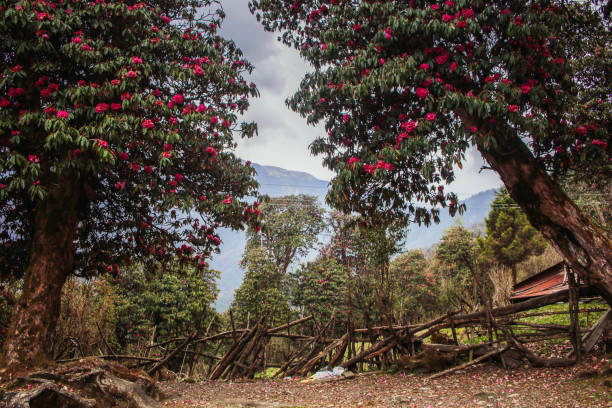
Do you provide child seats?

Yes, on request for families traveling with young children.

Can you take us from Nayapul straight to Pokhara Airport after the trek?

Yes. Please tell us your flight time, and we’ll plan the pick-up.

Is there an early-morning surcharge?

No. Early pick-ups and morning flights are included.

Book Your Pokhara Airport to Nayapul Transfer

Land in Pokhara and head straight to the Annapurna trail in a private vehicle, with a fixed price and a driver waiting at arrivals.

WhatsApp

Email: [email protected]

Online: Plan your trip | Contact us | Nepal Vehicle Hiring

Send your flight details today, and we’ll reply with the right vehicle and a clear USD quote.

From the arrivals hall at Pokhara International Airport to the suspension bridge at Nayapul, your Annapurna adventure can begin within hours of landing. With a reliable vehicle, a driver who knows the trailheads,s and a plan built around your flight and trek, you can save energy for the trail ahead. We look forward to getting you there.

Kathmandu to Zhangmu Border Private Transport: Kodari Jeep

Pokhara to Tatopani Vehicle Rental

Kathmandu to Zhangmu Border Private Transport: Jeep, Car, Hiace and Bus to Kodari

The Tatopani–Kodari crossing, opposite Zhangmu (Khasa) in Tibet, is Nepal’s historic overland gateway to China. It sits at the northern end of the Araniko Highway, where the Sino-Nepal Friendship Bridge spans the Bhote Ko River.

For travelers heading to Tibet, Kailash Mansarovar pilgrims, and groups returning from the Tibetan plateau, the road from Kathmandu to the border is the first or last leg of a memorable journey. A Kathmandu-to-Zhangmu border private transport booking gets you there in one comfortable vehicle with a driver who knows the road.

This guide explains the route and drive time, what the Araniko Highway is like, which vehicle to choose, USD price ranges, what to expect at the border, documents and permits, pickups for travelers returning from Tibet, and how to plan around landslides and border changes. At Nepal Vehicle Hiring, we run private jeeps, Mahindra Scorpios, cars, Toyota Hiace vans, Coaster buses, and tourist buses to the Kodari border for tourists, pilgrims, and travel agencies.

To book, send your crossing date and group size on WhatsApp or email [email protected].

NOTE: Border operations at Tatopani–Kodari can change at short notice because of landslides, floods, or decisions by either government. Tourist crossings and cargo movement have sometimes been treated differently. Always confirm the current status with your Tibet travel agency before traveling, and we’ll check road conditions on our side.

Kathmandu to Zhangmu Border at a Glance

  • Start: your hotel in Kathmandu, Thamel, Patan, Boudha, or Bhaktapur
  • End: Tatopani–Kodari border point, Sindhupalchok district, at the Friendship Bridge opposite Zhangmu
  • Approximate distance: about 112–120 km
  • Route: Kathmandu – Bhaktapur – Banepa – Dhulikhel – Dolalghat – Lamosangu – Barhabise – Tatopani – Kodari
  • Typical drive time: about 4 to 6 hours, longer if road works or landslides cause delays
  • Road: paved highway to Dolalghat, then a narrower mountain road with rough and landslide-prone sections
  • Best vehicles: 4WD jeep or Mahindra Scorpio; Hiace, Coaster,, or bus for groups
  • Private jeep price range: about USD 140–180 one way

Tatopani hot spring

Why Book Private Transport to the Border?

Timed for the Border Opening Hours

Border crossings work within set opening hours, and your Tibet guide will usually meet you at a fixed time on the other side. A private vehicle leaves Kathmandu when you need it to, with buffers for road delays, so you reach Kodar with plenty of time to spare.

Right Vehicle for the Araniko Highway

The upper part of the Araniko Highway, beyond Barhabise, follows the steep Bhote Koshi gorge. Landslides, road works, and rough patches are common. A 4WD jeep or Scorpio handles these sections far better than a small taxi.

Space for Luggage and Supplies

Tibet journeys need warm clothing, snacks,s and sometimes extra supplies for high-altitude travel. A private vehicle carries everything without crowding, and your bags stay with you right up to the bridge.

A Reliable Pickup on Return

If you’re coming back from Tibet or Kailash, a pre-arranged vehicle waiting at Kodari saves you from searching for transport at a busy border point after a long journey.

Kathmandu to Zhangmu Border Private Transport: Kodari Jeep

The Route, Section by Section

Kathmandu to Dhulikhel

The journey heads east through Bhaktapur and Banepa to Dhulikhel, a hill town famous for its Himalayan views. This section is paved and usually smooth. If you have time, you can combine our Bhaktapur Durbar Square tour with the start of the journey.

Dhulikhel to Dolalghat

From Dhulikhel, the highway descends through terraced hills to Dolalghat, where the Indrawati and Sunkoshi rivers meet. It’s a popular stop for tea and fried river fish.

Dolalghat to Barhabise

The road follows the Sunkoshi north through Khadichaur and Lamosangu to Barhabise, a busy bazaar town. The valley narrows, and the hills grow steeper. This section has seen repair work in recent years, so expect some rough stretches.

Barhabise to Tatopani and Kodari

The final stretch of about 27 km is the most challenging. The road climbs along the Bhote Koshi gorge past Tatopani, with its natural hot springs, to Kodari at the Friendship Bridge. Steep slopes above the road make this section prone to landslides and rockfall, especially in the monsoon.

Experienced drivers take it slowly and watch conditions carefully.

NOTE: The Araniko Highway has been closed for long periods in some monsoon seasons due to landslides. We check the latest road status before every trip and will advise you if conditions change.

Hot spring pool at Tatopani

Which Vehicle Is Best for the Border Trip?

4WD Jeep (Up to 6 Passengers)

A 4WD private jeep is our top recommendation. Its ground clearance and four-wheel drive handle rough, muddy, or broken sections above Barhabise, and the roof rack carries luggage for up to six travelers.

Mahindra Scorpio (Up to 5 Passengers)

The Scorpio combines SUV comfort with good clearance. It suits couples, families, and small groups who want a smoother ride on paved sections while still handling rough patches.

Private Car (1–3 Passengers)

A private car can manage the route in good, dry conditions, but its low clearance makes the upper gorge less comfortable. We only recommend a car when the road is in good shape, and we’ll advise honestly on the day.

Toyota Hiace (6–12 Passengers)

A Toyota Hiace is ideal for small groups, including tour groups heading into Tibet together. It handles the highway well in normal conditions.

Coaster and Tourist Bus (Large Groups)

Pilgrim groups traveling to Kailash Mansarovar often travel in larger numbers. A coaster bus or tourist bus keeps everyone together. On narrow or damaged sections, large vehicles may need to travel slowly, and we plan timings around this.

Kathmandu to Zhangmu Border Private Transport: Kodari Jeep

Kathmandu to Zhangmu Border Price (USD)

Our prices include a private vehicle, an experienced mountain driver, fuel, the driver’s costs, insurance, road taxes, and parking. They sit slightly above the cheapest local offers because the Araniko Highway requires reliable vehicles and drivers who know the gorge, and we plan around border hours.

One-Way, Kathmandu to Tatopani–Kodari

  • Private 4WD jeep (1–6 passengers): USD 160–170
  • Mahindra Scorpio (1–5 passengers): USD 170–185
  • Private car (1–3 passengers), dry conditions: USD 140–150
  • Toyota Hiace (6–12 passengers): USD 190–220
  • Coaster bus (15–25 passengers): USD 330–360
  • Tourist bus (26–40 passengers): USD 420–460

Return, Pickups and Extras

  • Kodari to Kathmandu pickup on return from Tibet: same range as one-way
  • Round trip booked together: ask for a combined discount
  • Overnight stay near the border with the same vehicle: add about USD 60–85 per night
  • Waiting time if the crossing is delayed: by arrangement

For pilgrims and tour groups, a Hiace, Coaster, or bus brings the per-person cost down considerably. Get your exact quote on WhatsApp.

At the Border: What to Expect

Your driver will take you as close to the border point as vehicles are allowed and help unload your bags. From there, the crossing process generally follows these steps:

  • Nepal exit: complete exit formalities at the Nepal immigration office at Tatopani–Kodari
  • Crossing the bridge: walk across the Friendship Bridge over the Bhote Koshi
  • China entry: pass through Chinese immigration and customs; facilities have at times operated further uphill from the bridge
  • Meet your Tibet guide: your Tibet travel agency’s guide and vehicle meet you on the Chinese side.

Nepali vehicles generally cannot continue into Tibet, so your Tibet agency arranges all onward travel. Border opening hours apply, and China’s time is 2 hours and 15 minutes ahead of Nepal, which matters when planning meeting times.

Kathmandu to Zhangmu Border Private Transport: Kodari Jeep

Documents and Permits for Tibet

Foreign travelers entering Tibet from Nepal need to make special arrangements in advance through a licensed Tibet travel agency. Requirements depend on your nationality and can change, so always check with your agency. Typically, travelers need:

  • A passport valid for at least six months
  • A Tibet Travel Permit arranged by a Tibet travel agency
  • A Chinese visa, often issued as a group visa in Kathmandu for travelers entering from Nepal, unless your passport allows visa-free entry.
  • A booked tour with a licensed guide, as independent travel in Tibet is not permitted for most foreigners

These documents take several working days to process, so plan well ahead. Nepali and Indian citizens may follow different rules. We provide the road transport, but your Tibet agency handles all permits and the onward journey.

Kailash Mansarovar Pilgrimage Transport

Every year, thousands of pilgrims travel from Kathmandu to Mount Kailash and Lake Mansarovar in western Tibet. When other crossings are disrupted, the Tatopani–Kodari route has carried many of these groups. We provide transport for pilgrim groups of all sizes, from a single jeep to several buses.

  • Early departures timed for border opening hours
  • Space for luggage, warm clothing and supplies
  • Group coordinators to manage multiple vehicles
  • Return pickups at Kodari matched to your group’s arrival

Agencies organizing Kailash yatras can book through our contact page or WhatsApp.

Kathmandu to Zhangmu Border Private Transport: Kodari Jeep

Preparing in Kathmandu Before the Border

Most Tibet trips begin with a few days in Kathmandu while your Tibet agency finalizes the permit and group visa. Use the time well:

  • Arrival: book an airport pickup from Tribhuvan International Airport to your hotel
  • Documents: submit your passport to your Tibet agency for the group visa and permit, and keep copies
  • Sightseeing: visit Boudhanath, Swayambhunath and Pashupatinath on a Kathmandu sightseeing tour
  • Heritage: explore the squares of Bhaktapur, conveniently on the way east
  • Acclimatize gently: an overnight at Nagarkot adds a little height and a Himalayan sunrise
  • Shopping: buy warm layers, snacks and medicines in Thamel for the Tibetan plateau

Staying in Bhaktapur or on the eastern side of Kathmandu shortens the drive to Kodari on crossing day.

A Typical Crossing Day

  • Early morning: your driver collects you from your Kathmandu hotel, with bags loaded on the roof rack or in the back
  • First hour: east through Bhaktapur and Banepa to Dhulikhel
  • Mid-morning: down to Dolalghat for a tea break by the river
  • Late morning: north along the Sunkoshi to Barhabise
  • Midday: the slow, scenic climb up the Bhote Koshi gorge past Tatopani
  • Early afternoon: arrival at Kodari, Nepal exit formalities and the walk across the Friendship Bridge
  • Afternoon: meet your Tibet guide on the Chinese side and continue toward Nyalam

Your Tibet agency will set the meeting time on the Chinese side. We’ll plan your departure from Kathmandu backward from that time, with a buffer for road delays.

Kathmandu to Zhangmu Border Private Transport: Kodari Jeep

Tatopani Hot Springs and the Bhote Koshi Valley

The last section of the drive passes through one of Nepal’s most dramatic river valleys. The Bhote Koshi, meaning ‘river from Tibet’, rushes through a steep, forested gorge, and the road clings to its side. Tatopani, meaning ‘hot water’, is named for the natural hot springs near the river, traditionally used by locals and travelers for bathing.

The valley is also one of Nepal’s adventure hubs. Whitewater rafting and whitewater kayaking on the Bhote Koshi are famous for their fast, continuous rapids, and the area also offers canyoning and bungee jumping. If you have extra days before or after your Tibet trip, these activities make a thrilling addition.

Our drivers can drop you at riverside resorts along the way.

Staying Overnight Near the Border

Because of border opening hours and unpredictable road conditions, many travelers prefer to spend the night before crossing near the border. This lets you reach the Friendship Bridge early, rested and with time to spare.

  • Barhabise: a busy bazaar town with simple hotels, about an hour or so from the border
  • Bhote Koshi riverside resorts: quieter stays surrounded by forest and river sounds
  • Tatopani and Kodari: basic guesthouses closest to the crossing

We can drive you to your overnight stop the afternoon before and collect you in the morning for the final stretch. Add an overnight to your private jeep or Hiace booking for about USD 60–85 per night.

Kathmandu to Zhangmu Border Private Transport: Kodari Jeep

Road Safety on the Araniko Highway

The Araniko Highway is one of Nepal’s most challenging main roads, especially beyond Barhabise. A major earthquake damaged many slopes along the Bhote Koshi, and landslides still affect the road, particularly during the monsoon. In some seasons, sections close for weeks.

We take safety seriously:

  • Experienced drivers who know every landslide-prone section of the gorge
  • 4WD vehicles for rough or muddy stretches
  • Daylight travel on the upper highway wherever possible
  • Daily road checks with local contacts before departure
  • Flexible plans: if the road is unsafe, we wait, reroute, or reschedule
  • Insured, licensed vehicles under our company name

Never let a tight schedule push you onto a dangerous road. That’s why we recommend leaving early or staying near the border the night before.

Best Seasons for Travel to the Border

Spring

Warmer weather and generally dry roads make spring a popular time for Tibet tours and the start of the Kailash pilgrimage season. Landslide risk is lower than in the monsoon.

Monsoon

The heaviest rains bring the highest landslide risk on the Araniko Highway. Closures are possible. Kailash pilgrimages continue in this season, so allow extra time and stay flexible.

Autumn

After the monsoon, roads gradually improve and skies clear. Autumn is an excellent time to travel in Tibet, with crisp air and wide views on the plateau.

Winter

Fewer travelers cross in winter, as the Tibetan plateau becomes very cold. Roads on the Nepal side are usually dry, but check whether tours and border crossings are operating.

Kathmandu to Zhangmu Border Private Transport: Kodari Jeep

Returning From Tibet: Pickups at Kodari

After days on the Tibetan plateau or a Kailash kora, the last thing you want is to search for transport at a busy border. Book your return pickup in advance, and our driver will be waiting on the Nepal side when you cross back over the Friendship Bridge.

  • Share your expected crossing date and your Tibet agency’s schedule
  • Message us when you’re near the border so the driver is ready
  • If your crossing is delayed, we’ll adjust the pickup
  • On the way back, stop for a meal at Barhabise or Dolalghat
  • We’ll drop you at your Kathmandu hotel or the airport

If you have an international flight, keep at least a day’s buffer in case the border or road is delayed.

Altitude on the Tibet Side

Kodari, on the Nepal side, is at a modest altitude, but the road into Tibet climbs steeply. Nyalam, the first main town on the Chinese side, sits at around 3,700 meters, and the Tibetan plateau beyond is even higher. Your Tibet agency will plan acclimatization.

Still, it helps to arrive rested, hydrated, and healthy. Avoid alcohol in the first days, walk slowly, and tell your guide if you feel unwell.

Group and Agency Transfers

Tibet tour operators and Kailash yatra organizers regularly book our vehicles for groups crossing Tatopani–Kodari. We provide:

  • 1–3 travelers: a private car in good condition or a jeep
  • 4–6 travelers: a 4WD jeep or Scorpio
  • 7–12 travelers: a Toyota Hiace
  • 13–25 travelers: a Coaster bus
  • 26–40 travelers: a tourist bus
  • Luggage vehicle: an extra jeep for supplies and equipment if needed
  • Return transfers: matched to each group’s crossing back into Nepal

Agencies can book through our contact page or WhatsApp, with USD invoicing for repeat partners.

What Is Included

Included

  • Private vehicle and experienced mountain driver
  • Fuel, driver’s wage, meals and accommodation on multi-day trips
  • Insurance, road taxes and parking
  • Hotel pickup in the Kathmandu Valley and drop-off at the border point
  • Help with luggage at both ends

Not Included

  • Tibet permits, Chinese visa and onward transport in Tibet
  • Your meals and accommodation
  • Activities such as rafting or canyoning
  • Tips for the driver (optional)

Your Driver

The road to Kodari calls for patience and experience. We choose our drivers for their knowledge of the Araniko Highway, careful driving in the gorge, and familiarity with Nepal’s border procedures.

  • Licensed and experienced on mountain highways
  • Knows the landslide-prone sections and safe stopping points
  • Plans meal and rest stops at Dolalghat and Barhabise
  • Helps with bags at the border
  • Speaks basic English

Why Our Prices Are a Little Higher

You may find cheaper transport to Kodari, but the Araniko Highway is no place to cut corners. Our prices are slightly higher because we use well-maintained 4WD vehicles, experienced mountain drivers, all-inclusive pricing, and departure times planned around border hours, with daily road checks. For a journey without a fixed border meeting time, reliability matters.

The Other Route: Rasuwagadhi–Kerung

Nepal has another overland crossing to Tibet at Rasuwagadhi, opposite Kerung (Gyirong), reached via the Langtang region. In recent years, it has been the main route for many Tibet tours and Kailash pilgrims. When floods or landslides disrupt one crossing, travelers often switch to the other, so both the Kodari and Rasuwagadhi routes have taken turns carrying most of the traffic.

Your Tibet agency will tell you which crossing your tour uses. We provide transport to both, and the Rasuwagadhi road also leads toward the Langtang Valley trek area, making it a good add-on for travelers with extra time.

Explore More of Nepal Before or After Tibet

Many travelers combine Tibet with Nepal. After crossing back into Kathmandu, there’s plenty more to see:

Our sister companies, Trek Nepal Himalayas, organize treks across Nepal. Browse our Nepal tour packages or start with our trip planner.

Questions to Ask Before You Book

  • Is the vehicle suitable for the upper Araniko Highway?
  • What time will we leave to meet the border hours?
  • How do you check road conditions?
  • Can you arrange an overnight stop near the border?
  • Will you pick us up when we return from Tibet?

We’re happy to answer all of these on WhatsApp or email.

Common Mistakes to Avoid

  • Not checking the border status: it can change quickly
  • Leaving too late: road delays can push you past border hours
  • Choosing a small car in poor conditions: the gorge road can be rough
  • Forgetting the time difference: China is 2 hours 15 minutes ahead
  • No buffer before international flights: keep a spare day after returning from Tibet
  • Not booking the return pickup: transport at Kodari can be hard to find

Key Takeaways

  • The Tatopani–Kodari border, opposite Zhangmu, is about 112–120 km from Kathmandu.
  • The drive usually takes 6 hours on the Araniko Highway.
  • A 4WD jeep or Scorpio is best; a jeep costs about USD 140–180 one way.
  • Border status can change, so confirm with your Tibet agency before traveling.
  • Tibet permits and a licensed Tibet travel agency arrange visas.
  • Book your return pickup at Kodari and allow extra time before your flights home.

Our Promise

Your vehicle will arrive on time with an experienced driver who knows the road to the border. We’ll plan around your border meeting time, check conditions on the day, and be waiting at Kodari when you return from Tibet.

Sindhupalchok: The District Along the Way

Most of the drive to Kodari passes through Sindhupalchok district, a rugged region of steep hills, deep river valleys, and terraced farmland. It was among the hardest-hit areas in the great earthquake, and many villages have since been rebuilt.

Along the highway, you’ll see small bazaars, suspension bridges, rice terraces, and roadside temples, with the whitewater Sunkwhitewaterhote Koshi rivers never far away. Traveling by private vehicle lets you stop at viewpoints and local tea shops, supporting the communities that live along this important route.

Stops Along the Way

Bhaktapur

The medieval Newar city of Bhaktapur sits right on the road to the east. With an early start, you can see Durbar Square and Taumadhi Square before the day’s drive. You can combine our Bhaktapur Durbar Square tour with your border transfer if you’re staying overnight near the border.

Dhulikhel

A hill town with a historic Newar core and wide Himalayan views on clear days. It’s a pleasant first break, especially for travelers coming from Thamel. Nearby Nagarkot offers similar views if you’d like an overnight before the journey.

Dolalghat

At the meeting of the Indrawati and Sunkoshi rivers, Dolalghat is known for fried river fish and riverside tea shops. It’s the classic halfway stop.

Barhabise

The last big bazaar before the border, with shops, restaurants, and simple hotels. It’s a good place to buy last-minute snacks and drinks before Tibet.

Packing for Tibet

The Tibetan plateau is much higher, colder, and drier than Kathmandu. Pack carefully before you leave:

  • Warm layers, a down jacket, hat and gloves, even in summer
  • Sunglasses, a sun hat and high-factor sunscreen
  • Lip balm and moisturizer for the dry air
  • Reusable water bottle and electrolyte sachets
  • Snacks for long driving days on the plateau
  • Personal medicines, including altitude medication if advised by your doctor
  • Copies of your passport, permit and visa
  • Some Chinese currency, arranged through your agency or at the border

Your jeep or Hiace has plenty of space for warm gear and supplies, which are often bulky.

Money, SIM Cards and Communication

Plan for money and communication before crossing:

  • Nepali rupees: carry enough for meals and tips on the Nepal side
  • Chinese yuan: ask your Tibet agency about the best way to get local currency
  • Payments in Tibet: mobile payment is common in China, but foreigners may find it easier to carry some cash
  • Mobile phones: your Nepali SIM won’t work in Tibet; your guide can advise on local options
  • Apps and internet: many international apps don’t work in China without special arrangements

Share your Tibet guide’s phone number with our office so we can coordinate your return pickup.

Before or After: Adventure on the Bhote Koshi

If your schedule allows, the Bhote Koshi valley offers some of Nepal’s best adventure activities, close to the border road. Rafting trips run on the river’s fast, technical rapids, and canyoning descends the side streams in a series of jumps and abseils. Bungee jumping over the gorge is another famous option.

Riverside resorts offer accommodation, meals, and organized activities. A night or two here makes a great break before crossing into Tibet or after returning, and our drivers can drop you at the resort and collect you later.

Families and Older Travellers

Tibet tours attract families and older travelers too, especially for pilgrimages and cultural journeys. A Mahindra Scorpio or Toyota Hiace offers comfortable seats for the winding highway, with regular stops at Dolalghat and Barhabise. Consider an overnight near the border to avoid a long, rushed day, and talk to your doctor about altitude before you go.

Solo Travellers

Solo travelers usually join a group tour into Tibet, as most foreigners can’t travel independently. Ask your Tibet agency whether group transport to the border is included. If not, a private car in good condition or a shared jeep with other group members is a comfortable option.

We can help coordinate.

If Weather or the Border Causes Delays

Landslides on the Arnikoighway or changes in border operations can delay your journey. If this happens, our driver will keep you informed, and our office will work with your Tibet agency to adjust the plan. That might mean waiting for the road to clear, staying overnight near the border,r or rescheduling the crossing.

Stay in touch with us on WhatsApp throughout the day.

Back in Kathmandu After Tibet After returning from Tibet, many travelers spend a day or two in Kathmandu to rest before flying home. Use the time to explore what you missed: a Kathmandu sightseeing tour, an afternoon in Bhaktapur,r or a sunrise at Nagarkot. When it’s time to leave, our airport drop service takes you to Tribhuvan International Airport.

Photography on the Road to Kodari

The Bhote Koshi gorge is one of Nepal’s most dramatic stretches of road. Waterfalls tumble down the cliffs, terraced villages cling to the slopes, and the river churns below. Ask your driver to stop at safe pull-offs for photos.

At the border, photography restrictions apply around immigration areas and the bridge, so follow official instructions and put your camera away when asked.

Responsible Travel

  • Carry a reusable bottle and avoid single-use plastic
  • Take rubbish with you rather than leaving it at roadside stops
  • Respect local customs in Sindhupalchok villages
  • Follow border rules and photography restrictions
  • Support local tea shops, restaurants and guesthouses

One Partner for Your Whole Journey

A Tibet trip usually involves several road journeys in Nepal: airport pickup on arrival, sightseeing while your visa is processed, the drive to the border, pickup on return, and the final airport drop. With Nepal Vehicle Hiring, one booking covers them all, and one office follows your journey from start to finish. Share your full itinerary through our trip planner for a single USD quote, or explore our Nepal tour packages.

What Our Guests Value Most: Travelers crossing to Tibet often mention punctual early pickups, drivers who knew the gorge road well, sensible stops at Dolalghat and Barhabise, and a vehicle waiting at Kodari when they returned from the plateau. Pilgrim group leaders value one coordinator per vehicle, and agencies appreciate quick updates when road or border conditions change.

Crossing-Day Checklist

  • Confirm the border status and meeting time with your Tibet agency
  • Confirm your pickup time with us the evening before
  • Pack passport, permit, visa copies, and cash in your daypack
  • Prepare warm layers, snacks, and water for the plateau
  • Save our number and your Tibet guide’s number
  • Allow extra time if it has rained heavily in the previous days
  • Book your return pickup at Kodari before you leave

The Araniko Highway and the Friendship Bridge

The Araniko Highway is named after Araniko, a celebrated Newar artist and architect from the Kathmandu Valley who traveled to Tibet and China centuries ago and is remembered as a symbol of cultural exchange between the two lands. Built with Chinese assistance, the highway became Nepal’s first modern road link to Tibet, running from Kathmandu to the Friendship Bridge at Kodari.

For decades, this was the main overland route between Nepal and China, carrying traders, tourists and pilgrims. The Friendship Bridge over the Bhote Koshi marks the border, with Kodari on the Nepal side and Zhangmu, also called Khasa, on the steep hillside above on the Chinese side.

A major earthquake severely damaged the road and border facilities, closing the crossing for an extended period. Since then, the route has been repaired and reopened in stages, though landslides remain a constant challenge.

Zhangmu and the Road to Nyalam

Zhangmu was once a lively border town built in tiers on the forested slopes above the Bhote Koshi. Above it, the road climbs dramatically through switchbacks and waterfalls, leaving the green Himalayan foothills behind as it rises onto the barren Tibetan plateau. Within a short distance, the altitude jumps by more than 2,000 meters.

Nyalam, at around 3,700 meters, is usually the first overnight stop for tours entering from Kodari. From there, routes continue to Tingri for views of Everest’s north face, to Shigatse and Lhasa, or west across the plateau toward Saga, Lake Mansarovar, and Mount Kailash. Your Tibet agency will plan the route, while we handle the Nepal side.

The Kailash Mansarovar Journey

For Hindus, Buddhists, Jains, and followers of Bön, Mount Kailash is one of the holiest places on Earth. Pilgrims travel from Kathmandu across the Tibetan plateau to Lake Mansarovar, where they bathe and pray before walking the three-day kora (circumambulation) around the sacred mountain and crossing the Dolma La pass at more than 5,600 meters.

The overland route from Kathmandu usually takes around two weeks, with acclimatization stops along the way. When the Tatopani–Kodari crossing is open, the journey starts with a drive from Kathmandu to the border, then continues through Nyalam and Saga to Mansarovar.

Pilgrim groups often travel in large numbers, and reliable transport on the Nepal side is the first step. We provide Hiace vans, Coaster buses, and tourist buses for yatra groups, coordinated with your Tibet operator.

Monsoon Travel: Extra Advice

The monsoon coincides with the busiest Kailash season, but it is also when the Araniko Highway is most at risk from landslides. If you’re traveling in the rainy season:

  • Leave Kathmandu as early as possible
  • Consider staying overnight near the border the night before crossing
  • Choose a 4WD jeep or Scorpio for small groups
  • Carry extra snacks and water in case of road blockages
  • Keep in close contact with your Tibet agency and our office
  • Build spare days into your itinerary on both sides of the trip

Trade, Cargo and Tourist Crossings

Tatopani–Kodari is an important trade route and a tourist crossing. Cargo movement and passenger crossings have not always followed the same schedule: at times, freight has been suspended while tourists could still cross, and at other times the reverse. Delays affecting cargo trucks can also cause congestion near the border.

Your Tibet agency will have the latest information for passengers, and our drivers will tell you about road conditions and traffic on the day.

Kodari or Rasuwagadhi: A Transport Perspective

From a road-transport perspective, the two crossings are quite different. Kodari is slightly closer to Kathmandu along the Araniko Highway, but its final section through the Bhote Koshi gorge is narrow and prone to landslides.

You reach Rasuwagadhi via the road north through Trishuli and the Langtang region, also a mountain road with its own challenges. Travel times to both are similar in good conditions. Which one you use depends on your Tibet agency and the current border status.

We’ll send the right vehicle for whichever route you take.

Is Private Transport Worth It?

For most travelers heading to Tibet, yes. Public buses to Barhabise and Kodari are cheap but slow, crowded, and run on fixed schedules that don’t account for border hours. With a private vehicle, you leave when you need to, travel in comfort with all your gear, and have a driver who knows the gorge.

On return, there’s a vehicle waiting at Kodari. For groups sharing a jeep, Hiace or bus, the cost per person is often modest compared with the reliability it brings.

Where to Stay in Kathmandu Before Crossing

Because the border is to the north-east, hotels on the eastern side of the valley shorten your drive on the crossing day. Bhaktapur, a short way along the Araniko Highway, is ideal for an early departure and has beautiful heritage guesthouses. Boudha, near the great stupa, is calm and well placed for the eastern exit.

Thamel remains the most popular base, with Tibet agencies, gear shops, and restaurants nearby, but it adds a little time to the drive. Wherever you stay, our driver picks you up at your door. If you have a free day while your visa is processed, our Kathmandu sightseeing service covers the main heritage sites.

How Tibet Permits and Visas Work From Kathmandu

Travelers entering Tibet from Nepal usually do so on an organized tour. The general process is:

  • Book a tour with a licensed Tibet travel agency, well in advance
  • Send passport details so the agency can apply for the Tibet Travel Permit
  • Arrive in Kathmandu a few working days before departure
  • Group visa: the agency arranges a Chinese group visa in Kathmandu, unless your passport allows visa-free entry
  • Collect documents: your agency provides the permit and visa before crossing day

Processing times and rules change and vary by nationality, so always follow your agency’s advice. We plan your road transport around these steps, from airport pickup to hotel drop-off.

Health Preparation for Tibet

The Tibetan plateau sits mostly above 4,000 meters, and the road from Kodari climbs very quickly. Good preparation helps:

  • See your doctor before travel, especially if you have heart, lung, or blood-pressure conditions
  • Ask about altitude medication
  • Arrive in Kathmandu rested and healthy
  • Drink plenty of water and avoid alcohol in the first days
  • Follow your guide’s acclimatization plan and report symptoms early
  • Carry travel insurance that covers high-altitude travel and emergency evacuation

Carrying Supplies for Kailash and Long Tours

Kailash pilgrims and travelers on long Tibet tours often carry more than standard luggage: warm sleeping bags, dry food, puja items, medicines, and extra layers. A 4WD jeep with a roof rack, or a Hiace with a large luggage area, carries everything safely to the border.

For big groups, we can add a separate luggage vehicle. Tell us about your luggage when you book so we can plan enough space. At the border, porters may be available to help carry bags across the bridge, depending on local arrangements.

Accessibility and Special Requirements

If anyone in your group has limited mobility or medical needs, let us know in advance. We’ll choose a vehicle with easier access, plan extra rest stops, and make sure the driver helps with bags at the border. Remember, the crossing itself involves some walking across the bridge and between immigration points, so plan with your Tibet agency for any assistance you may need on the Chinese side.

Food on the Road to the Border

The drive to Kodari passes several good places to eat. Dhulikhel and Dolalghat have restaurants serving dal bhat, momos, noodles, and fried river fish, the specialty of the rivers in this area. Barhabise has plenty of simple eateries and shops for snacks and drinks.

Near the border, choices become more limited, so eat a proper meal in Barhabise before you cross. Once you cross into Tibet, the food changes to Tibetan and Chinese dishes, with butter tea, tsampa, noodles, and dumplings. Carry snacks you enjoy for long days on the plateau, as stops can be far apart.

Your driver can recommend clean, reliable places to stop on the Nepal side.

Traveling With a Tour Group

If your Tibet agency is organizing a group tour, they may include transport to the border in the package. Check before booking separately. If it isn’t included, or your group would prefer private vehicles, we can transport the whole group together.

Sharing a Toyota Hiace or Coaster bus keeps everyone on the same schedule, which matters when the whole group must cross the border and meet the Tibet guide at the same time. We coordinate directly with your tour leader on pickup points and timings.

Understanding Border Hours and Time Zones

Border crossings between Nepal and Tibet operate within fixed hours, usually with a midday break on the Chinese side. Opening times are set in local time on each side, and China runs on Beijing time, which is 2 hours and 15 minutes ahead of Nepal. This difference catches many travelers out.

For example, when it’s midday in Kodari, it’s already mid-afternoon on the Chinese side, so the Chinese counters may be closer to their afternoon break than you expect.

Your Tibet agency will tell you the exact time to arrive at the border and when your guide will meet you, in Chinese local time. Share both times with us, and we’ll calculate your Kathmandu departure in Nepal time, adding a buffer for the road.

If road delays put the meeting time at risk, our driver will let you know early so you can update your agency. With proper planning, the time difference becomes a minor detail rather than a source of stress.

Why Book With Nepal Vehicle Hiring

  • Experienced mountain drivers who know the Araniko Highway
  • Full fleet: jeeps, Scorpios, cars, Hiace vans, coasters and buses
  • Timed for border hours, with buffers for road delays
  • Clear USD pricing, all-inclusive
  • Return pickups at Kodari for travelers coming back from Tibet
  • 24/7 support on WhatsApp

See our car hire in Nepal, Nepal tour package, and trekking transport pages for more.

How to Book

  • Step 1: Send your crossing date, hotel, group size, luggage, and your Tibet agency’s meeting time to WhatsApp or email.
  • Step 2: We recommend a vehicle and departure time, then send a USD quote.
  • Step 3: Confirm with a small advance payment.
  • Step 4: Receive your driver’s details the day before.
  • Step 5: Travel to the border and cross into Tibet.

Or use our trip planner and contact page.

Frequently Asked Questions

How far is the Zhangmu border from Kathmandu?

The Tatopani–Kodari border, opposite Zhangmu, is about 112–120 km from Kathmandu, usually 4 to 6 hours by road.

Is the Kodari–Zhangmu border open?

Its status can change because of landslides, floods, or government decisions, and tourist and cargo crossings have sometimes been treated differently. Confirm with your Tibet agency before you travel.

How much is a private jeep to the Kodari border?

About USD 140–180 one way for up to six passengers.

Can our vehicle drive into Tibet?

No. Nepali vehicles generally stop at the border. Your Tibet agency arranges onward transport.

What documents do I need? Usually, you’ll need a passport, a Tibet Travel Permit, and a Chinese visa arranged through a Tibet travel agency. Check your agency for current requirements.

Can you pick us up at Kodari after our Tibet trip?

Yes. Share your expected crossing date and time, and we’ll be waiting.

Is the road safe?

The upper Araniko Highway has landslide-prone sections, especially in the monsoon. We use experienced drivers, check conditions, and avoid traveling when the road is unsafe.

Do you provide buses for Kailash groups?

Yes. We provide Hiace vans, coasters, and buses for pilgrim groups.

Can we stay overnight near the border?

Yes. We can drive you to Barhabise, a Bhote Koshi riverside resort, or Kodari the afternoon before. Add an overnight to your jeep booking.

Can you drop us at the airport after returning from Tibet?

Yes. We can take you straight to the airport, but keep a buffer day in case of delays.

Do you also go to Rasuwagadhi?

Yes. We also provide transport to the Rasuwagadhi–Kerung crossing.

What is the time difference with Tibet?

China, including Tibet, is 2 hours and 15 minutes ahead of Nepal.

Nepal Tour Package

Book Your Kathmandu to Zhangmu Border Transport

Start or end your Tibet journey with a safe, comfortable ride in a private vehicle with an experienced driver and a plan built around the border.

WhatsApp

Email: [email protected]

Online: Plan your trip | Contact us | Nepal Vehicle Hiring

Send your crossing date and group size today, and we’ll reply with the right vehicle and a clear USD quote.

The road from Kathmandu to the Friendship Bridge is the gateway to one of the world’s most extraordinary regions. With a reliable vehicle, an experienced driver, and a plan built around the border, you can focus on the journey ahead to the Tibetan Plateau, Mount Kailash, and beyond. We look forward to taking you there and welcoming you back.

Pokhara Airport to Sarangkot Drop-Off by Car, Jeep, Hiace or Bus

Pokhara Airport to Sarangkot Drop-Off

Pokhara Airport to Sarangkot Drop-Off: Private Car, Jeep, Hiace and Bus Guide

Sarangkot is the hill that defines Pokhara’s skyline. At around 1,600 meters, it rises straight above Phewa Lake and offers some of the finest views of the Annapurna range anywhere in Nepal: Dhaulagiri in the west, the Annapurnas, the fishtail peak of Machhapuchhre, Lamjung Himal, and, on clear days, Manaslu in the east.

It is also Nepal’s best-known paragliding launch site, and a growing number of travelers now stay in Sarangkot’s hotels and lodges instead of in the city below.

If you’re flying into Pokhara and heading straight up the hill, a Pokhara Airport to Sarangkot drop-off takes you from the terminal to your Sarangkot hotel, homestay or viewpoint in one private vehicle. You avoid bargaining for a taxi and carrying bags up the hill, with no confusion about which road to take.

This guide covers the route and drive time, how to choose between a car, jeep, Scorpio, Hiace, Coaster, and bus, USD price ranges, what to know about the steep Sarangkot road, and how to combine your transfer with a sunrise, paragliding, or onward travel.

At Nepal Vehicle Hiring, we run Pokhara airport transfers every day with private cars, jeeps, Mahindra Scorpios, Toyota Hiace vans, coach buses, and tourist buses. To book, send your flight details on WhatsApp or email [email protected].

Pokhara Airport to Sarangkot at a Glance

  • Pick-up: Pokhara International Airport arrivals
  • Drop-off: your hotel, lodge or homestay in Sarangkot, or the viewpoint parking area
  • Approximate distance: about 12–16 km, depending on your exact drop-off point
  • Typical drive time: about 35 to 50 minutes
  • Route: airport – Pokhara city – Lakeside area – Sarangkot hill road
  • Road: paved city roads, then a steep, winding paved hill road
  • Sarangkot altitude: around 1,600 m, about 850 m above Lakeside: car, Scorpio, jeep, Hiace, Coaster, and bus
  • Private car price range: about USD 35-40 one way

Pokhara Airport to Sarangkot Drop-Off

Why Book a Private Drop-Off to Sarangkot?

No Bargaining at the Airport

Taxis at Pokhara Airport generally don’t use meters, so you negotiate the fare, and it often rises in peak season. A pre-booked private transfer has a fixed price agreed in advance, and your driver will be waiting with a name board when you leave arrivals.

The Right Vehicle for a Steep Road

The road to Sarangkot climbs about 850 meters in a short distance, with tight bends. Small, worn taxis sometimes struggle, especially with heavy bags. We send well-maintained vehicles suited to your group size and luggage.

Straight to Your Hotel Door

Many Sarangkot hotels sit on narrow lanes off the main road. Our drivers know the hill and will take you as close to your accommodation as the road allows, then help carry your bags.

Easy to Add a Sunrise or Sightseeing

Book your drop-off together with a Sarangkot sunrise tour, Pokhara sightseeing or your return to the airport, all with one company.

Pokhara Airport to Sarangkot Drop-Off by Car, Jeep, Hiace or Bus

The Route From Pokhara Airport to Sarangkot

Pokhara International Airport

Pokhara International Airport lies on the eastern side of the city, a few kilometers from Lakeside, and handles flights from Kathmandu and other domestic routes; it replaced Pokhara’s old city-center airport as the main gateway. Your driver meets you just outside the arrivals hall.

Through Pokhara City

From the airport, the route crosses Pokhara toward the Lakeside area. Traffic is usually light outside rush hours, and the drive across the city takes around 15 to 25 minutes.

Up the Sarangkot Hill Road

Near the northern end of Lakeside, the road turns uphill and climbs through a series of hairpin bends, with views opening over Phewa Lake and the city. The road is paved most of the way but steep and narrow in places. This section usually takes 20 to 30 minutes.

Hotels and lodges are spread along the ridge, and the main viewpoint parking area sits just below the Sarangkot View Tower, about a 10- to 15-minute walk up stone steps.

NOTE: Exact times depend on traffic, weather,r and where your hotel is on the hill. Our drivers check the best route on the day.

Sunrise viewpoint at Sarangkot above Pokhara

Which Vehicle Is Best?

Private Car (1–3 Passengers)

A private car is the most economical choice for solo travelers and couples with standard luggage. It handles the paved hill road well and is ideal for a simple hotel drop-off.

Mahindra Scorpio (2–5 Passengers)

The Scorpio has more power for the climb, more luggage space, and more comfortable seats. It’s a good choice for families, small groups, and travelers with trekking duffels.

4WD Jeep (Up to 6 Passengers)

A jeep is useful if your hotel is on a rougher side lane, if it has rained heavily, or if you plan to continue to trailheads such as Kande or Dhampus.

Toyota Hiace (6–12 Passengers)

A Toyota Hiace keeps families and small groups together with plenty of luggage space. It manages the main Sarangkot road comfortably in normal conditions.

Coaster Bus (15–25 Passengers)

A coaster bus suits larger tour groups, schools,ols and wedding parties. It can reach many points on the hill, though some narrow side lanes may need a short walk or a shuttle in a smaller vehicle.

Tourist Bus (26–40 Passengers)

A full-size tourist bus works well for large groups. Because of the steep, narrow hill road, big buses may stop at a suitable point lower down, with Hiace or jeep shuttles for the final section. We’ll confirm the plan before you arrive.

Pokhara Airport to Sarangkot Drop-Off

Pokhara Airport to Sarangkot Price (USD)

Our prices include a private vehicle, a professional driver, fuel, insurance, taxes, parking,  and meet-and-greet on arrival. They’re slightly higher than typical airport taxi fares because you get a fixed price agreed in advance, a well-maintained vehicle for the steep climb, and a driver waiting with your name.

One-Way, Pokhara Airport to Sarangkot

  • Private car (1–3 passengers): USD 35-40
  • Mahindra Scorpio (1–5 passengers): USD 45-60
  • 4WD jeep (1–6 passengers): USD 50-70
  • Toyota Hiace (6–12 passengers): USD 70–80
  • Coaster bus (15–25 passengers): USD 90–100
  • Tourist bus (26–40 passengers), with shuttles if needed: USD 130–140

Return and Add-Ons

  • Sarangkot to Pokhara Airport: same range as one-way
  • Airport drop-off plus next-morning sunrise viewpoint run: ask for a combined price
  • Half-day Pokhara sightseeing on the way: from USD 40-50 extra by car
  • Early-morning or late-night flights: included in the price

Groups save the most by sharing a Hiace, coaster, or bus. Send your flight number and group size on WhatsApp for an exact quote.

Pokhara Airport to Sarangkot Drop-Off

Meeting Your Driver at Pokhara Airport

  • Share your flight number when you book so we can track delays
  • Your driver waits just outside arrivals with a name board
  • If your flight is delayed, the driver waits at no extra cost
  • Call or message our office if you can’t see your driver straight away
  • Your driver helps load bags and confirms your Sarangkot hotel

Arriving from Kathmandu? Many travelers fly in after a Kathmandu airport pick-up and a night in the capital. If you’d rather travel by road, see our Kathmandu to Pokhara options.

Things to Do in Sarangkot

Sunrise Over the Annapurnas

Sarangkot is most famous for sunrise. From the View Tower, the first light turns Dhaulagiri, the Annapurnas, Machhapuchhre and Lamjung Himal pink and gold, while mist often fills the Pokhara valley below. Staying overnight on the hill means you can walk to the viewpoint without a pre-dawn drive.

Visitors staying at Lakeside can book our Sarangkot sunrise tour vehicle.

Paragliding

Sarangkot is one of the world’s best-known tandem paragliding sites. Flights launch from the hillside and glide over Phewa Lake, usually lasting around 20 to 40 minutes before landing near Lakeside.

Sunset and Lake Views

Evenings can be just as beautiful, with the Annapurna range glowing in the late light and Phewa Lake shining below. Many Sarangkot hotels have terraces facing the mountains.

Village Walks and Hiking

Footpaths lead along the ridge through small villages, terraced fields and forest. You can walk down to Lakeside in a few hours, or hike toward Naudanda and on to Kaskikot, with its old fort site.

Zip-Line and Adventure

Adventure lovers can try the zip-line, one of the steepest and longest in the region, and other activities offered around the hill.

Nepal Tour Package

Sarangkot Sunrise: Tips for the Best Experience

Watching the sun rise over the Annapurna range is the highlight of any Sarangkot stay. A little planning makes it even better.

  • Check the sky the night before: clear evenings often mean clear mornings
  • Set out early: be at the viewpoint 30 to 45 minutes before sunrise to watch the colors change
  • Try a quieter spot: viewpoints along the ridge away from the main tower can be less crowded
  • Dress warmly: the hour before sunrise is the coldest part of the day
  • Bring a hot drink: tea stalls open early, but a flask helps
  • Stay a little longer: the light on the mountains often gets better after the sun is fully up
  • Look down as well as up: mist in the valley and the first boats on Phewa Lake make great photos

If clouds hide the peaks, don’t worry. Mornings change quickly in the hills, and the views often open up later. Staying two nights gives you a second chance.

Guests staying in Lakeside can book our Sarangkot sunrise tour vehicle with an early pick-up from their hotel.

Why Travelers Choose Sarangkot

Sarangkot gives you a mix that’s hard to find elsewhere near a major city: big Himalayan views, fresh air, village life, adventure sports, and comfortable hotels, all within an hour of an airport. For many visitors, it’s the image they remember most from Nepal, the moment the first sun touches Machhapuchhre while Pokhara still sleeps below. A smooth, well-planned transfer from the airport is the first step toward that moment.

Staying in Sarangkot

Sarangkot has a wide range of places to stay, from simple teahouses and family-run lodges to mid-range hotels and comfortable resorts with mountain views. Staying on the hill offers quiet evenings, cooler air than the city,y and sunrise on your doorstep.

  • Ask for a room facing north for mountain views
  • Bring a warm layer, as mornings and evenings are cool at 1,60 meters
  • Carry some cash, as card payments aren’t accepted everywhere
  • Check how close vehicles can reach your hotel if you have heavy luggage. Please check luggage. Please tell us your hotel name when you book, and our driver will plan the best drop-off point.

Pokhara Airport to Sarangkot Drop-Off

Best Time to Visit Sarangkot

Autumn

Clear, dry air and sharp mountain views make autumn the best season for Sarangkot sunrises and paragliding.

Winter

Winter mornings are cold but often very clear, with excellent visibility. Paragliding usually runs well.

Spring

Warm days and blooming rhododendrons, but haze can soften the views. Early mornings are best.

Monsoon

Clouds often hide the mountains, and paragliding is usually suspended in heavy rain. The hill road can be slippery, so a sturdy Scorpio or jeep is a sensible choice.

Pokhara Airport to Sarangkot Drop-Off

Sarangkot or Lakeside: Where Should You Stay?

Staying in Sarangkot

  • Sunrise from your hotel or a short walk away
  • Quieter, cooler and greener than the city
  • Panoramic mountain and lake views from many rooms
  • Fewer restaurants and shops, and a drive to reach Lakeside
  • Walkable cafés, restaurants, shops and boating on Phewa Lake
  • Easy access to paragliding offices, trekking agencies, and banks
  • A pre-dawn drive needed for the Sarangkot sunrise

Many travelers split their stay: a night or two in Sarangkot for sunrise and peace, then Lakeside for activities. We can handle every transfer, from the airport to Sarangkot, then down to Lakeside and back to the airport.

Sample Pokhara Itineraries With a Sarangkot Stay

Two Days

  • Day 1: Fly into Pokhara, airport drop-off to Sarangkot, sunset from your hotel terrace
  • Day 2: Sunrise from the View Tower, tandem paragliding down to Lakeside, afternoon boating, transfer to the airport

Three Days

  • Day 1: Arrival and drop-off in Sarangkot, ridge walk at sunset
  • Day 2: Sunrise, then a half-day Pokhara sightseeing tour to the World Peace Pagoda, Davis Falls and Gupteshwor Cave
  • Day 3: Paragliding or zip-line, then a transfer to the airport or onward to Chitwan

Four Days With a Short Trek

  • Day 1: Arrive and stay in Sarangkot
  • Day 2: Sunrise, then hike along the ridge toward Naudanda
  • Day 3: Continue toward Kande and Australian Camp; see our Kande transport
  • Day 4: Walk down to Dhampus and drive back to Pokhara with our Dhampus jeep

Want something different? Share your plans through our trip planner.

Pokhara Airport to Sarangkot Drop-Off by Car, Jeep, Hiace or Bus

Families and Child Seats

Sarangkot is a favorite with families. The drive from the airport is short; children love the mountain views and paragliders overhead, and hotels have gardens and terraces. For families, a Mahindra Scorpio or Hiace gives room for luggage, prams, and grandparents.

We can provide child seats on request, fitted in the rear.

Please tell us your children’s ages when you book. For toddlers, a short evening walk to a viewpoint and an early night make the next morning’s sunrise much easier.

Groups, Weddings and Events in Sarangkot

Sarangkot’s resorts host weddings, corporate retreats, school trips and photography tours. Moving a group from Pokhara Airport up the hill takes planning, especially with a steep road and limited parking.

  • Up to 12 guests: a Toyota Hiace
  • Up to 25 guests: a Coaster bus
  • Larger groups: a tourist bus with Hiace or jeep shuttles for narrow sections
  • Luggage vehicle: an extra jeep for equipment or decorations
  • Coordinator: one point of contact for all vehicles and timings

Contact us early through our contact page so we can reserve enough vehicles.

Pokhara Airport to Sarangkot Drop-Off

Trekkers and Sarangkot

Sarangkot is the starting point for some of the easiest walks near Pokhara and a scenic end point for others. The ridge trail continues west through Kaskikot and Naudanda, linking with routes toward Kande, Australian Camp and Dhampus. Further afield, Pokhara is the gateway for the Ghorepani Poon Hill trek, Annapurna Base Camp trek and Annapurna Circuit.

If you’re spending a night in Sarangkot before a trek, we can pick you up the next morning and drive you to your trailhead, such as Nayapul, Kande, or Besisahar. Our sister companies, Trek Nepal Himalayas, organize guided treks in the Annapurna region.

Arriving by Road Instead of by Air

Not flying? Many travelers reach Pokhara by road from Kathmandu or Chitwan. We can pick you up at the Pokhara Tourist Bus Park after your tourist bus from Kathmandu and drive you up to Sarangkot, or take you there directly from Kathmandu by private car, Scorpio, or Hiace.

Coming from the south after a Chitwan jungle safari or a visit to Lumbini? We can bring you straight to Sarangkot.

Pokhara Airport to Sarangkot Drop-Off

Paragliding From Sarangkot

Sarangkot’s slopes catch reliable thermals, making it one of the world’s top tandem paragliding sites. Experienced pilots take passengers on flights over Phewa Lake with views of the Annapurna range, usually lasting around 20 to 40 minutes. Longer cross-country flights are also available.

Landings are near the lakeshore in Lakeside, through a licensed operator. Tours normally include transport to the launch site..

  • Flights depend on weather and may pause in strong wind or rain
  • Wear closed shoes and bring a light jacket
  • Keep cameras and phones secure; many operators offer photos and videos

If you’re staying in Sarangkot, the launch area is close by. After you land in Lakeside, a driver can take you up and back down the hill.

What Is Included

Included

  • Private vehicle and professional driver
  • Fuel, insurance, road taxes, and parking
  • Meet-and-greet with a name board at arrivals
  • Free waiting time for flight delays
  • Help with luggage to your hotel

Not Included

  • Hotel accommodation and meals
  • Paragliding, zip-line or viewpoint entry fees
  • Extra stops or sightseeing not in the booking
  • Tips for the driver (optional)

The Sarangkot Road: What to Expect

The road from Lakeside to Sarangkot is short but steep. It climbs around 850 meters through a long series of hairpin bends, with views of Phewa Lake, the World Peace Pagoda and the city opening up on every turn. The road is paved most of the way, but it is narrow in places, and you’ll share it with local buses, motorbikes and tourist vehicles, especially before sunrise.

  • Morning rush: before sunrise, many vehicles head up for the view, so traffic builds on the upper road
  • Narrow lanes: some hotels are on side lanes where only smaller vehicles can reach
  • Parking: the main viewpoint parking area fills early on clear mornings
  • Monsoon: rain can make the road slippery, and occasional small landslides can occur

Our drivers drive this road daily, know where larger vehicles can turn and park, and choose the right vehicle for your hotel’s location.

Pokhara

Photography in Sarangkot

Sarangkot is a photographer’s favorite. At sunrise, the Annapurna range glows above a sea of mist in the Pokhara valley. In the evening, warm light falls on the peaks and on Phewa Lake.

Paragliders drift past the hillside throughout the day, adding color to every shot.

  • Arrive at the viewpoint 30 to 45 minutes before sunrise
  • Use a telephoto lens for Machhapuchhre and the Annapurnas
  • Try the quieter viewpoints along the ridge away from the main tower
  • Shoot paragliders against the lake from the launch area
  • Visit in autumn or winter for the clearest air

With a private vehicle, you can easily move between viewpoints and lakes. Sarangkott sunrise service is popular with photographers staying in the city.

Packing for Sarangkot

  • Warm jacket for early mornings and evenings
  • Comfortable shoes for the steps to the View Tower
  • Headlamp for pre-dawn walks
  • Sunscreen, sunglasses and a hat
  • Camera with spare batteries
  • Some Nepali cash for tea shops and small purchases

Your Driver

Our Pokhara drivers know the city, the airport, and the Sarangkot hill road intimately. They track your flight, wait at arrivals, help with luggage, and drive the steep road calmly and carefully.

  • Licensed and experienced on Pokhara hill roads
  • Punctual meet-and-greet at arrivals
  • Knowledge of Sarangkot hotels, lanes, and parking areas
  • Basic English and local tips on food, viewpoints, and activities

Why Our Prices Are a Little Higher

Airport taxis can be cheaper on a good day, but fares are negotiated, change with demand, and the vehicles vary. Our prices are slightly higher because you get a fixed price agreed before you travel, a well-maintained vehicle suited to the steep roads, flight tracking, free waiting time, and a driver who helps you to your hotel door.

Explore More of Nepal From Pokhara

Pokhara is the travel hub of western Nepal. From Sarangkot, we can take you on to:

Browse our Nepal tour packages and trekking transport pages, or start with our trip planner.

Before You Fly to Pokhara

Many travelers start in Kathmandu before flying to Pokhara. We can meet you at Tribhuvan International Airport with an airport pick-up, show you the city on a Kathmandu sightseeing tour, take you to Bhaktapur or Nagarkot, then drop you at the domestic terminal for your Pokhara flight. One company for every transfer keeps your trip simple.

Responsible Travel in Sarangkot

  • Carry a reusable water bottle
  • Take your rubbish back down the hill
  • Keep noise low at the viewpoint during sunrise
  • Respect local homes and ask before photographing people
  • Support family-run lodges and tea shops

Key Takeaways

  • Sarangkot is about 12–16 km from Pokhara Airport, usually 35-50 minutes by car.
  • The hill road is paved but steep and winding, so choose a well-maintained vehicle and an experienced driver.
  • A private car costs about USD 35–40; a Scorpio or jeep costs about USD 50–60; a Hiace costs about USD 70-80
  • Large buses may need Hiace or Jeep shuttles for the final section.
  • Staying overnight gives you sunrise on your doorstep and easy access to paragliding.

Planning Around Weather and Flight Changes

Pokhara’s mountain weather can affect flights, especially in the early morning or during the monsoon. If your flight into Pokhara is delayed, our driver will wait at arrivals at no extra cost. If it’s canceled and you need to travel by road instead, we can arrange a private vehicle from Kathmandu straight to Sarangkot by car, Scorpio, or Hiace.

On departure day, keep an eye on messages from your airline. If your flight out of Pokhara is delayed, we’ll adjust your pick-up time. If it’s canceled, we can bring you back to your hotel or drive you to Kathmandu by road.

Message us on WhatsApp anytime, and our office will help you replan. This flexibility is one of the biggest advantages of booking all your transfers with one local company.

Is a Private Transfer Worth It?

For most travelers, yes. The price difference between a pre-booked private transfer and a negotiated airport taxi is small, especially when you share the cost with family or friends.

In return, you get a fixed price, a vehicle suited to the steep Sarangkot road, a driver who waits for delayed flights and helps with your bags, and a local team you can contact anytime. After a flight, that simplicity is worth a great deal, and it sets a relaxed tone for the rest of your stay in Pokhara.

A Little History of Sarangkot

The name Sarangkot comes from the word ‘kot’, meaning fort. Long before it became a viewpoint, the hilltop was a strategic lookout over the Pokhara valley, used by local rulers in the era of the small hill kingdoms that existed before Nepal’s unification. Remains of old fortifications and a hilltop shrine still mark the summit area today.

For centuries, the villages on Sarangkot’s slopes were farming communities, growing rice, millet and maize on terraced fields. As tourism in Pokhara grew, the hill’s extraordinary views drew travelers up for sunrise, and from the 1990s onward, paragliding brought international attention. Today, Sarangkot blends village life with lodges, cafés, and adventure sports, while keeping the slower pace that makes it a refreshing escape from the city below.

Pokhara Airport to Sarangkot Drop-Off

A Day in Sarangkot

A typical day on the hill starts in the dark, as guests walk up to the View Tower with headlamps and hot tea. As the sky lightens, the first sun hits the summit of Dhaulagiri, then spreads east across the Annapurnas, Machhapuchhre and Lamjung Himal. Mist often lies in the valley below, with Pokhara slowly appearing as it burns off.

After breakfast on your hotel terrace, you might take a tandem paragliding flight down to Lakeside along the ridge through villages and terraced fields. Have lunch in Lakeside, take a boat ride on Phewa Lake, then let a driver take you back up the hill.

Evenings are quiet, with the peaks glowing pink at sunset and the lights of Pokhara twinkling far below. Our Pokhara car hire makes it easy to move between the hill and the city.

Places to Visit Below Sarangkot

  • Phewa Lake: rowing boats to the Tal Barahi temple island
  • World Peace Pagoda: a white stupa on a hill across the lake
  • Davis Falls and Gupteshwor Cave: a waterfall that disappears into a gorge, with a cave temple opposite
  • International Mountain Museum: exhibits on the Himalaya and mountaineering
  • Old Bazaar and Bindhyabasini Temple: traditional streets and a popular hilltop temple
  • Begnas and Rupa Lakes: quieter lakes to the east of the city

A half-day or full-day private car from Sarangkot covers most of these. Ask us to add sightseeing to your airport transfer.

Leaving Sarangkot for Your Flight

When it’s time to fly out, allow enough time for the drive down the hill and across the city. From most Sarangkot hotels, Pokhara Airport is about 35 to 50 minutes away. Domestic airlines usually ask passengers to check in about an hour before departure, so plan to leave your hotel at least 1.5 to 2 hours before your flight.

  • Early-morning flights are popular because mountain weather is usually clearer.
  • If your flight is very early, you may still catch first light from your hotel before leaving.
  • Tell us your flight time,e and we’ll set the pick-up
  • If your flight is delayed or canceled, we can bring you back to your hotel or rebook

If you’re connecting to an international flight in Kathmandu, allow extra time in case of weather delays. Our Kathmandu airport transfer team can meet you on arrival in the capital.

Food in Sarangkot

Most Sarangkot hotels and lodges have their own restaurants, serving Nepali dal bhat, momos, noodles and Western breakfasts with mountain views. Small cafés near the View Tower offer tea, coffee and snacks for sunrise visitors. For a wide choice, lakeside restaurants are a short drive away.

Your driver can recommend places on the way up or down.

Seniors and Travelers With Limited Mobility

Sarangkot’s views are accessible to almost everyone. A Scorpio or Hiace offers easy entry and comfortable seats on the winding road. The main View Tower involves a 110-to 115-minute walk up steps, but many hotels have mountain-view terraces, and some viewpoints closer to the road require little or no climbing.

Tell us about any mobility needs, and we’ll suggest the best drop-off points and viewpoints.

Pokhara Airport to Sarangkot Drop-Off

Sunrise Timing Through the Year

Sunrise in Pokhara ranges from early morning in the warmer months to later morning in winter. Whatever the season, plan to reach the viewpoint about 30 to 45 minutes before sunrise to see the colors develop on the peaks. If you’re staying in Sarangkot, ask your hotel for the expected sunrise time the night before.

If you’re staying in Lakeside,l set your pick-up time accordingly for the Sarangkot sunrise drive.

Questions to Ask Before Booking

  • Is the price fixed and all-inclusive?
  • Will the driver wait if my flight is delayed?
  • Can the vehicle reach my hotel, or will we need to walk the last part?
  • Is there enough space for our luggage?
  • Can you arrange my return to the airport?

We’re happy to answer all of these on WhatsApp or email.

What Our Guests Value Most

Guests often mention seeing their name at arrivals, a smooth drive up the hill, drivers who carried bags to their hotel door, and the ease of booking sunrise and airport returns with the same company. Families appreciate child seats being ready, and groups value having one coordinator who manages every vehicle from the airport to the hilltop.

Arrival-Day Checklist

  • Send us your flight number and hotel name
  • Save our WhatsApp number and your driver’s number
  • Keep a warm layer handy for the hill
  • Carry some Nepali cash for tea shops and tips
  • Check your hotel’s check-in time
  • Tell us if you’d like a sunrise pick-up or sightseeing added

Gautam,Buddhai,Airport,In,Bhairahawa,,Nepal.,The,International,Terminal,Is

Quick Vehicle Guide by Group Size

  • 1–3 passengers: private car
  • 2–5 passengers with more luggage: Mahindra Scorpio
  • Up to 6 passengers or rough side lanes: 4WD jeep
  • 6–12 passengers: Toyota Hiace
  • 15–25 passengers: Coaster bus
  • 26–40 passengers: tourist bus with shuttles where needed

Not sure? Send your group size and luggage, and we’ll recommend the best option.

Along the Ridge: Kaskikot and Naudanda

West of Sarangkot, a quiet ridge road and footpath continue through farming villages to Kaskikot and Naudanda. Kaskikot was once the seat of a small hill kingdom, and remains of its old fort and a temple still stand on the hilltop. The views of Phewa Lake on one side and the Annapurna range on the other are superb, and there are far fewer visitors than at the Sarangkot View Tower.

Naudanda sits on the Pokhara–Baglung highway, close to Kande, the trailhead for Australian Camp and Mardi Himal. Walkers can spend a day hiking from Sarangkot along the ridge, then meet our vehicle for the drive back to Pokhara, or continue to Kande for a longer trek. It’s a beautiful way to explore the countryside around Pokhara without a full trek.

Monsoon Travel to Sarangkot

In the monsoon, clouds often hide the mountains, and heavy rain can make the hill road slippery. Paragliding is usually suspended on rainy days. Sarangkot is still worth visiting, though: the hills turn lush green, waterfalls appear on the slopes,s and the occasional break in the clouds can reveal dramatic mountain views.

  • Choose a sturdy Scorpio or 4WD jeep
  • Allow extra time for the hill road
  • Carry a rain jacket and umbrella
  • Plan sunrise viewing for clearer mornings and check the forecast

Cold Winter Mornings

Winter brings some of the year’s clearest views, but mornings at 1,600 meters are cold, especially at sunrise. Wear a warm jacket, hat, and gloves for the View Tower, and bring a flask of tea or buy one from the cafés at the top. Many hotels provide extra blankets, and our vehicles can be heated on the way up.

Booking for Paragliding Days

If paragliding is the main reason for your Sarangkot visit, plan transport around your flight time. Operators usually collect passengers from Lakeside offices and drive them to the launch site.

If you’re arriving at Pokhara Airport the same day, we can drop you at your paragliding office in Lakeside, pick you up after you land, and drive you to your Sarangkot hotel. Flights depend on the weather, so keep your schedule flexible and stay in touch with us on WhatsApp.

Hotel Check-In and Luggage

Many Sarangkot hotels check in in the early afternoon. If your flight lands in the morning, you can leave your bags at the hotel and head out to explore, or ask us to add a short Pokhara sightseeing tour before the drive up the hill.

If your hotel is on a narrow lane, our driver will help carry bags from the nearest drop-off point. For longer stays, consider leaving large luggage at a Lakeside hotel and taking only a small bag up to Sarangkot.

Solo Travellers

A private car for one person costs a little more than a negotiated taxi, but you get a fixed price, a reliable vehicle, and a driver who knows your hotel. Solo travelers who plan to see the sunrise and visit Lakeside find it easiest to book the airport transfer and sunrise run together.

Common Mistakes to Avoid

  • Not checking how close vehicles can reach your hotel: some lanes are narrow.
  • Booking a large bus without a shuttle plan: big buses may not reach the top
  • Leaving too little time for departure flights: the hill road and city traffic take time
  • Forgetting warm clothes: sunrise at Sarangkot can be cold
  • Assuming clear views every day: check the forecast and stay flexible

About Pokhara International Airport

Pokhara International Airport, on the eastern edge of the city, has become the main gateway to the Annapurna region. It handles frequent flights from Kathmandu, along with other domestic services. The terminal is modern and compact, so getting from the aircraft to the arrivals area is usually quick.
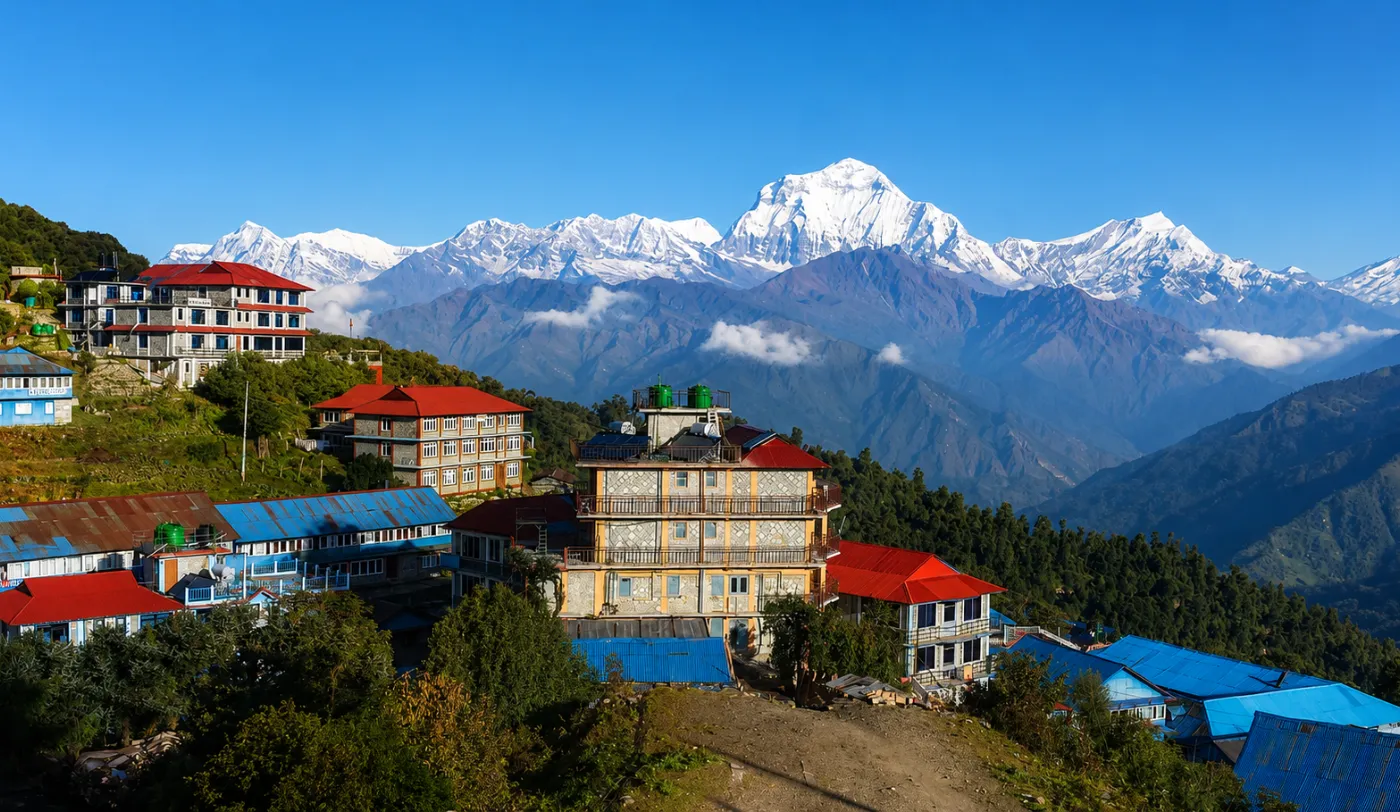
The short flight from Kathmandu offers spectacular mountain views on clear days, with the Annapurna and Manaslu ranges stretching along the northern horizon. Once you land, you’re only about 35 to 50 minutes from Sarangkot, so you could be watching the sun set over Machhapuchhre within an hour of touchdown.

Late Arrivals and Evening Transfers

Arriving on a late-afternoon or evening flight is no problem. Our driver tracks your flight, waits at arrival,s and drives you up the hill after dark. The Sarangkot road has many bends, so our drivers take it slowly at night.

If you arrive late, ask your hotel to hold your dinner, and let us know if you’d like a sunrise pick-up the next morning from a different part of the hill.

Pokhara Airport to Sarangkot Drop-Off

Zip-Line, Hiking and Other Adventures

Beyond paragliding, Sarangkot and the surrounding hills offer plenty of ways to get the adrenaline going. The zip-line runs from the hillside down toward the valley at high speed, giving a thrilling ride with lake and mountain views. Mountain biking trails wind down the hill to Lakeside, and hiking paths connect Sarangkot with Kaskikot, Naudanda and the World Peace Pagoda area across the lake.

Most adventure operators are based in Lakeside and include transport to their starting points. If you’re staying in Sarangkot, our drivers can take you to the operator’s office and bring you back afterward.

Birdwatching and Nature

The forests and fields around Sarangkot are home to a wide variety of birds, from colorful sunbirds and barbets to raptors circling on the thermals alongside the paragliders. Early mornings are the best time for birdwatching, when the air is still, and birdsong fills the hillside. Bring binoculars, and walk the quieter trails along the ridge away from the main viewpoint.

One Transport Partner for Your Whole Nepal Trip

Your Pokhara Airport to Sarangkot drop-off can be one part of a complete journey planned with Nepal Vehicle Hiring. We meet travelers at Tribhuvan International Airport, organize Kathmandu sightseeing, and drive the highway to Pokhara for those who prefer the road.

We also handle Pokhara airport transfers, trekking trailhead drops, and onward trips to Chitwan and Lumbini. One office tracks every transfer and adjusts the plan if flights or weather change. Share your full itinerary through our trip planner, and we’ll send one clear USD quote.

Combining Sarangkot With the World Peace Pagoda and Lakes

Many visitors pair a Sarangkot stay with a day exploring Pokhara’s other viewpoints. The World Peace Pagoda sits on the forested ridge across Phewa Lake, offering a different angle on the lake, the city and the Annapurna range. You can reach it by road, or by boat across the lake followed by a short uphill walk.

East of the city, Begnas and Rupa Lakes offer a quieter side of Pokhara, with fishing boats, rice fields and small lakeside restaurants. A private car from Sarangkot can combine the World Peace Pagoda, Davis Falls, Gupteshwor Cave and Begnas Lake in a single relaxed day, returning you to your hotel in time for sunset. Ask us to add a Pokhara sightseeing day to your booking.

Corporate Retreats and Photo Shoots

Sarangkot’s resorts and open hillside make it a popular location for company retreats, team-building events, pre-wedding photo shoots, and film crews. These groups often need several vehicles moving at different times: guests from the airport, equipment from Lakeside, and staff from other hotels.

We can schedule cars, Hiace vans, and jeeps together, with a coordinator managing timing so everyone and everything reaches the hill on time. Traveling with Pets or Special Equipment

If you’re bringing bulky items such as camera rigs, drones, musical instruments, or sports equipment, please tell us when you book. We’ll choose a vehicle with enough space, such as a Scorpio, jeep with a roof rack, or Hiace, and make sure your gear is secured for the steep, winding climb.

If you travel with assistance animals or have special requirements, let us know in advance so we can plan accordingly.

Why Book With Nepal Vehicle Hiring

  • Fixed prices agreed in advance, with no airport bargaining
  • Meet-and-greet with a name board at arrivals
  • Flight tracking and free waiting for delays
  • Full fleet: cars, Scorpios, jeeps, Hiace vans, coasters and buses
  • Local drivers who know every bend of the Sarangkot road
  • 24/7 support on WhatsApp

See our Pokhara car hire, car hire in Nepal, and Nepal tour package pages for more.

How to Book

  • Step 1: Send your flight number, arrival time, hotel name, number of passengers, and luggage details via WhatsApp or email.
  • Step 2: We recommend a vehicle and send a USD quote.
  • Step 3: Confirm your booking.
  • Step 4: Receive your driver’s details before arrival.
  • Step 5: Meet your driver at arrivals and enjoy the ride up the hill.

Or use our trip planner and contact page.

Frequently Asked Questions

How far is Sarangkot from Pokhara Airport?

About 12–16 km, depending on your drop-off point; usually 35-50 minutes by car.

How much is a private car from Pokhara Airport to Sarangkot?

About USD 20–30 one way for up to three passengers. A Scorpio or jeep costs about USD 40-60

Can a bus reach Sarangkot?

A coaster can reach many points. Large buses may stop lower on the hill, with shuttles for the final section.

Is the Sarangkot road safe?

Yes, it’s paved most of the way. It is steep and winding, so experienced local drivers and well-maintained vehicles make the trip comfortable.

Will the driver wait if my flight is late?

Yes. We track your flight and wait at no extra cost.

Can you take me to the sunrise viewpoint the next morning?

Yes. Add a sunrise viewpoint drive to your booking.

Can you drop me at the paragliding launch site?

Yes, though most paragliding companies include their own transport.

Can you pick me up from Sarangkot for my departure flight?

Yes. Book your return to Pokhara Airport at the same time.

Can a Hiace reach my Sarangkot hotel?

A Hiace can reach most hotels on the main road. For narrow side lanes, we may use a car or jeep instead.

Do you provide child seats?

Yes, on request. Please tell us your children’s ages when you book.

Can you take us from Sarangkot to a trekking trailhead?

Yes. We drive to Nayapul, Kande, Phedi, and other trailheads.

Is there a night or early-morning surcharge?

No. Early-morning and late-night flights are included in the price.

Book Your Pokhara Airport to Sarangkot Drop-Off

Start your Pokhara stay above the clouds. One private vehicle, one fixed price, and a driver waiting at arrivals will take you straight up to your Sarangkot hotel.

WhatsApp

Email: [email protected]

Online: Plan your trip | Contact us | Nepal Vehicle Hiring

Send your flight details today, and we’ll reply with the right vehicle and a clear USD quote.

From the moment you land in Pokhara to your first sunrise over the Annapurnas, a smooth transfer sets the tone for your stay. With a fixed price, a driver waiting at arrivals, and a vehicle chosen for the Sarangkot road, you can relax and enjoy the views from the first bend. We look forward to welcoming you to Pokhara.

Kathmandu to Kande Private Jeep Hire: Mardi Himal Transfer

Kathmandu to Kande Private Jeep Hire

Kathmandu to Kande Private Jeep Hire: Direct Transfer to the Australian Camp and Mardi Himal Trailhead

Kande is a small roadside settlement on the Pokhara–Baglung highway at around 1,700 to 1,770 meters, and it is one of the busiest trailheads in the Annapurna foothills. From here, stone steps climb through forest to Australian Camp, Pothana, and Deurali, then on to Forest Camp, High Camp, and Mardi Himal Base Camp.

A Kathmandu-to-Kande private jeep takes you from your Kathmandu hotel straight to the trail start. You don’t have to change vehicles in Pokhara, haul luggage to a bus park, or haggle for a taxi.

This guide explains how the transfer works: the route and drive time, which vehicle to choose, USD price ranges, how to time the trip so you can start walking, and what to expect at Kande. It also covers the return from Dhampus, Phedi, or Siding back to Kathmandu.

At Nepal Vehicle Hiring, we run private jeeps, Mahindra Scorpios, cars, and Toyota Hiace vans to Kande for individual trekkers, families, and trekking agencies.

To book, message us on WhatsApp or email [email protected] with your date and group size, or use our trip planner.

Kathmandu to Kande at a Glance

  • Start: any hotel in the Kathmandu Valley, or Tribhuvan International Airport.
  • End: Kande trailhead on the Pokhara–Baglung highway (around 1,700–1,770 m)
  • Approximate distance: about 220–230 km
  • Route: Kathmandu – Naubise – Malekhu – Mugling – Damauli – Pokhara – Kande
  • Typical drive time: about 7 to 9 hours with short stops
  • Road: paved highway most of the way, with occasional rough patches where widening work is underway
  • Vehicles: private car, Mahindra Scorpio, 4WD jeep, Hiace, Coaster, or bus
  • Private jeep price range: about USD 170–250 one way
  • Treks from Kande: Australian Camp, Dhampus, Pothana and the Mardi Himal trek

Kathmandu to Kande Private Jeep Hire

Why Go Direct From Kathmandu to Kande?

Save Time

Most trekkers travel to Pokhara first, spend a night, then take a Pokhara-to-Kande jeep the next morning. That works well, but if your schedule is tight, a direct Kathmandu-to-Kande transfer can save half a day. Leave Kathmandu early, arrive in Kande in the afternoon, and walk up to Australian Camp that same evening.

No Changes, No Hassle

One vehicle and one driver carry you and your luggage from your hotel door to the trailhead. No switching at the Pokhara Tourist Bus Park and no last-minute taxi search with a heavy pack.

Room for Trekking Gear

Duffels, backpacks, poles,les and sleeping bags fit easily in a jeep or Scorpio. You can drop bags you don’t need on the trek at your Pokhara hotel along the way.

Flexible Stops

Stop to buy snacks and water, pick up your guide in Pokhara, or collect permits on the way. Your driver works to your plan.

Kathmandu to Kande Private Jeep Hire: Mardi Himal Transfer

The Route From Kathmandu to Kande

Kathmandu to Naubise

You leave the Kathmandu Valley heading west through Kalanki. Where small private vehicles are permitted, drivers can now use the new Nagdhunga tunnel, which avoids the old winding pass at the valley rim. Larger vehicles may still use the older road.

The route then descends to Naubise and joins the Prithvi Highway.

Naubise to Mugling

The highway follows the Trishuli River through Gajuri, Malekhu and Kurintar. The gorge is scenic but winding, with heavy truck traffic at times. Malekhu is a popular tea stop, and Mugling, at the confluence of the Trishuli and Marsyangdi, is the usual lunch stop.

Mugling to Pokhara

East of Pokhara, the road passes Dumre and Damauli along the Marsyangdi and Seti valleys. This widened section is one of the smoothest parts of the drive. You reach Pokhara in the early afternoon if you left Kathmandu early.

Pokhara to Kande

From Pokhara, the road turns northwest onto the Pokhara–Baglung highway through Hemja, following the Seti and Yamdhi valleys before climbing to Kande. This last section usually takes 30 to 60 minutes depending on your starting point in Pokhara and traffic. The road is mostly paved, though widening works sometimes create short gravel sections.

Kande itself is a small roadside stop with tea shops and the start of the stone trail.

NOTE: Roads in Nepal change with the season. We check current conditions before every departure. Our Kathmandu to Pokhara road condition guide has more background on the highway.

Kande

Which Vehicle Is Best for Kathmandu to Kande?

Private Car (1–3 Trekkers)

Because the route to Kande is paved for almost the whole way, a private car is a comfortable, economical choice for one to three trekkers with backpacks. It is smooth on the highway and handles the Pokhara–Baglung road in normal conditions.

Mahindra Scorpio (2–5 Trekkers)

The Scorpio offers more space for duffels and poles, higher ground clearance for rough patches, and comfortable seats for the long day. It is our most popular choice for couples and small groups.

4WD Jeep (Up to 6 Trekkers)

A 4WD jeep carries up to six passengers with bags on the roof rack. It is a good choice in the monsoon, when roads can turn muddy, or if you will also need a vehicle for rougher roads after the trek.

Toyota Hiace (6–12 Trekkers)

For trekking groups, a Toyota Hiace keeps everyone together with guides, porters, and duffels. It is comfortable on the highway and well suited to the paved Kande road.

Coaster and Bus (Large Groups)

School groups, clubs and large trekking parties can travel by coaster bus or tourist bus. We confirm drop-off arrangements at Kande, where roadside space is limited.

Kathmandu to Kande Private Jeep Hire: Mardi Himal Transfer

Kathmandu to Kande Private Jeep Price (USD)

Our prices include a private vehicle, an experienced driver, fuel, driver costs, insurance, road taxes, and parking, plus hotel pick-up in Kathmandu and drop-off at Kande. They cost a little more than the cheapest local offers because we use well-maintained vehicles and experienced highway drivers, and we plan around your trek.

One-Way, Kathmandu to Kande

  • Private car (1–3 passengers): USD 120-200
  • Mahindra Scorpio (1–5 passengers): USD 175–250
  • 4WD jeep (1–6 passengers): USD 180–260
  • Toyota Hiace (6–12 passengers): USD 200–300
  • Coaster bus (15–25 passengers): USD 380–450
  • Tourist bus (26–40 passengers): USD 450–550

Return and Combined Transfers

  • Kathmandu to Kande, then pick-up from Dhampus, Phedi or Siding back to Kathmandu: about double the one-way rate, with a discount for booking both
  • Pick-up at the end of the trek to Pokhara only: see our local Pokhara to Kande and Dhampus to Pokhara rate.
  • Overnight stop with the same vehicle: add about USD 60–85 per extra day

Sharing a jeep or Scorpio with your trekking partners usually brings the per-person cost close to a tourist bus plus taxis, with far more comfort. Get an exact quote for your date on WhatsApp.

Kathmandu to Kande Private Jeep Hire: Mardi Himal Transfer

Timing Your Transfer Around the Trek

The drive from Kathmandu to Kande is long, so plan your first trekking day carefully.

Option 1: Early Start, Walk to Australian Camp

Leave Kathmandu at first light, ht and you can usually reach Kande by mid-afternoon in good conditions. From Kande, the walk to Australian Camp (around 2,060 m) takes roughly 1.5 to 2 hours up stone steps through forest. You’ll arrive in time for sunset over Machhapuchhre and Annapurna South.

This is the most popular plan for direct transfers.

Option 2: Overnight in Pokhara, Start Next Morning

If you prefer a gentler start, or your departure from Kathmandu is later, stay overnight in Pokhara and drive the final 30 to 60 minutes to Kande the following morning. Our driver can drop you in Lakeside and return for you, or book a separate Pokhara to Kande jeep.

Option 3: Arriving the Same Day From the Airport

Landing in Kathmandu and heading straight to the trail is possible, but after a long flight most trekkers benefit from a night’s rest, time to collect permits,s and a chance to meet their guide. An airport pick-up plus a night in Kathmandu, then an early departure for Kande, is a safer and more enjoyable plan.

TIP: Avoid starting the trail in the dark. If traffic delays you and you reach Kande late in the afternoon, consider staying the night in Pokhara or at a guesthouse near Kande and hiking up the next morning.

Treks That Start at Kande

Australian Camp and Dhampus

The classic short trek. Climb from Kande to Australian Camp for sunset and sunrise views of Annapurna South, Hiunchuli, Machhapuchhre and Annapurna II, III and IV, then walk down through Pothana to Dhampus and Phedi. It suits families, beginners, rs and anyone short on time.

Our Dhampus to Pokhara jeep service and direct transfers back to Kathmandu cover the return.

Kathmandu to Kande Private Jeep Hire: Mardi Himal Transfer

Mardi Himal Trek

One of the most popular short treks in the Annapurna region. From Kande, the trail climbs past Australian Camp and Pothana to Deurali, then through rhododendron and oak forest to Forest Camp, Low Camp, High Camp and the viewpoint below Mardi Himal Base Camp. Close-up views of Machhapuchhre are the highlight.

Most itineraries take four to six days of walking, finishing at Siding or Lwang, or back through Dhampus.

Longer Annapurna Routes

Kande also connects with trails toward Landruk and Ghandruk, which link to the Annapurna Base Camp trek and the Ghorepani Poon Hill trek. Our sister company Trek Nepal Himalayas runs guided treks on all these routes, while Alpine Luxury Treks offers more comfortable lodge-based trips.

Permits and Trekking Rules

The trails from Kande lie inside the Annapurna Conservation Area, so foreign trekkers need an ACAP permit, available in Kathmandu and Pokhara. The checkpoint on this route is at Pothana, above Australian Camp.

Rules on TIMS cards and licensed guides for foreign trekkers have changed in recent years, and enforcement varies, so confirm current requirements with your trekking agency or with us before departure. If you need to collect permits in Pokhara on the way, tell us and your driver will plan a stop.

Kathmandu to Kande Private Jeep Hire: Mardi Himal Transfer

What to Expect at Kande

Kande is a small roadside settlement, not a place to stay. A few tea shops and small stores sell water and snacks, and the trail begins just above the road. Your driver will drop you at the trailhead and help unload your bags.

Porters and guides often meet trekkers here.

  • Buy water, snacks, and sunscreen in Kathmandu or Pokhara before you arrive, as choice at Kande is limited.
  • Use the toilet at a tea shop before you start the climb
  • Store any non-trekking luggage at your Pokhara hotel on the way
  • Keep your permit handy for the Pothana checkpoint

The Return Trip After Your Trek

Most Kande treks don’t finish at Kande. Australian Camp treks usually end at Dhampus or Phedi, while Mardi Himal treks often finish at Siding, Lwang or Dhampus. We can pick you up at your finishing point and take you to Pokhara or all the way back to Kathmandu.

  • Finish to Pokhara: a short jeep transfer from Dhampus, Phedi, Siding,g or Lwang.
  • Finish to Kathmandu: a direct private jeep, similar in length to the outbound trip.
  • Finish to Kathmandu airport: combine a Dhampus to Pokhara jeep or a direct transfer with our airport drop, and allow a buffer day before international flights

Book both directions together, and we’ll keep the same driver where possible. Use our contact page or WhatsApp.

Kathmandu to Kande Private Jeep Hire: Mardi Himal Transfer

Private Jeep vs Bus vs Flight to Pokhara

Direct Private Jeep or Car

  • Hotel door in Kathmandu to Kande trailhead in one vehicle
  • Departure time to suit you, with stops whenever needed
  • Space for trekking gear, guides, des and porters
  • Option to start walking the same afternoon

Best value for groups of two or more sharing a jeep, Scorpio or Hiace.

Tourist Bus.Plus Taxi

Flight to Pokhara Plus Jeep

  • A short domestic flight, then a transfer to Kande
  • Fastest on paper, but weather delays are common
  • Strict baggage limits on small aircraft
  • Transfers needed at both airports

For most trekkers, a direct private vehicle is the most reliable and stress-free choice, especially with a guide, porters, or a group.

Kathmandu to Kande Private Jeep Hire: Mardi Himal Transfer

A Typical Transfer Day

  • Early morning: your driver arrives at your Kathmandu hotel. Your driver loads your bags and secures them under a cover. For the highway section, see our Kathmandu to Pokhara private car service.
  • First hour: out of the valley before traffic builds, then down to Naubise.
  • Breakfast: a riverside stop near Malekhu.
  • Late morning: along the Trishuli gorge past Kurintar.
  • Lunch: Mugling, with dal bhat or noodles.
  • Early afternoon: through Dumre and Damauli to Pokhara. Quick stops for your guide, permits, cash, or luggage storage.
  • Mid-afternoon: the last 30 to 60 minutes on the Pokhara–Baglung road to Kande.
  • Late afternoon: start walking to Australian Camp for sunset, or stay in Pokhara and begin the next morning.

Australian Camp Trek From Kande

The Australian Camp trek is one of Nepal’s easiest and most rewarding short walks. From Kande, the trail climbs about 350 meters up a stone staircase through forest, taking roughly 1.5 to 2 hours to reach Australian Camp at around 2,060 meters.

The grassy meadow faces the Annapurna range head-on, with Annapurna South, Hiunchuli, Machhapuchhre and Annapurna II, III and IV lined up across the horizon. On clear days, Lamjung Himal and even Manaslu can appear to the east.

After sunrise, many trekkers walk a short way to Pothana, then descend gently through forest and terraces to the Gurung village of Dhampus and on to Phedi on the highway. The whole loop works well over one or two days and suits families, beginners, and anyone with limited time.

Our drivers can pick you up in Dhampus or Phedi for the return to Pokhara or Kathmandu. See our Dhampus to Pokhara and Pokhara to Dhampus services.
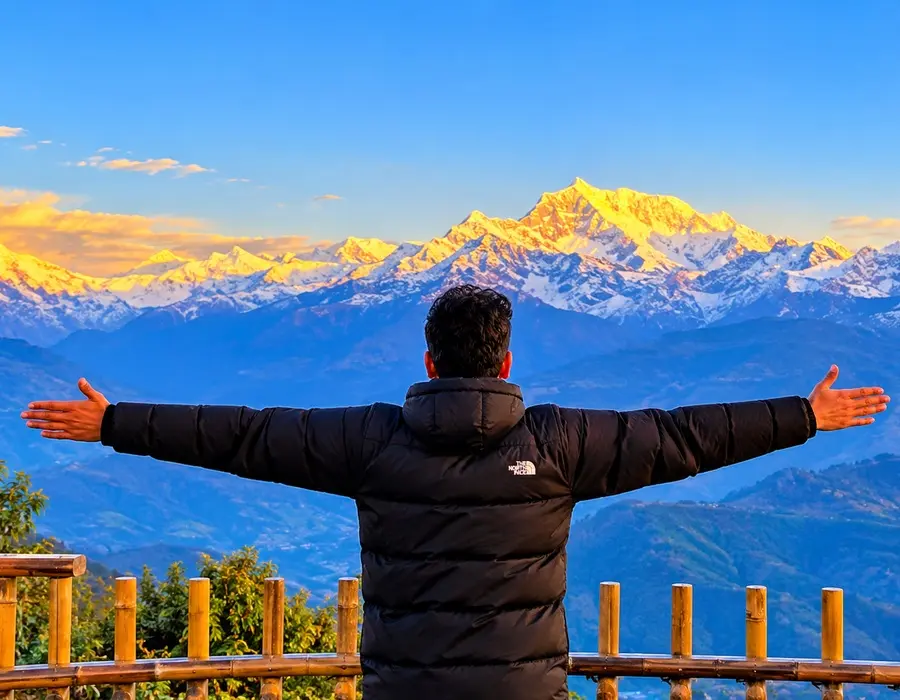
Kathmandu to Kande Private Jeep Hire: Mardi Himal Transfer

Mardi Himal Trek From Kande

The Mardi Himal trek has become one of the favorite short treks in the Annapurna region, thanks to its quiet forest trails and spectacular close views of Machhapuchhre. Kande is one of its most common starting points.

  • Kande to Australian Camp or Pothana: a short climb on the first afternoon or morning
  • To Deurali and Forest Camp (around 2,500 m): through rhododendron and oak forest
  • To Low Camp (around 2,970 m): the first big views of Machhapuchhre
  • To High Camp (around 3,500–3,600 m): above the tree line on a narrow ridge
  • Viewpoint or Base Camp (around 4,500 m): an early-morning climb for the panorama
  • Descent: usually to Siding or Lwang, or back via Low Camp and Dhampus

Most itineraries take four to six walking days. Altitudes above 3,000 meters call for a steady pace and good hydration. Our sister company, Trek Nepal Himalayas, runs guided treks in the region, and we handle all road transport at both ends.

For other routes in the area, see the Annapurna Base Camp trek and the Ghorepani Poon Hill trek.

Kathmandu to Kande Private Jeep Hire: Mardi Himal Transfer

Stops in Pokhara on the Way

Pokhara comes late on the route, just 30 to 60 minutes before Kande, so it’s the ideal place for practical stops:

  • Meet your guide or porters at an agreed point in Lakeside
  • Collect ACAP permits if you haven’t already
  • Visit an ATM for trek cash, as there are no ATMs on the trail
  • Store spare luggage at your Pokhara hotel
  • Rent or buy gear in Lakeside’s trekking shops
  • Buy snacks and water for the first day

Tell us your stops when you book so we can plan the timing. Short stops are included in the price. If you want a full day in Pokhara, add a Pokhara car hire day or a Sarangkot sunrise before the trek.

Trekking Agencies and Group Transfers

We regularly provide transport for trekking agencies taking groups from Kathmandu to Kande, including guides, porters, and duffels.

Agencies can book through our contact page or WhatsApp, with USD invoicing for repeat clients. We also cover other trailheads, including Nayapul, Besisahar and Manaslu trek starts.

Food and Drink Along the Way

The long drive from Kathmandu to Kande passes plenty of places to eat. Breakfast stops near Malekhu serve tea, eggs, toast,t and fried river fish. At Mugling, restaurants offer dal bhat, the classic Nepali meal of rice, lentil soup, vegetable curry,ry and pickles, which is filling fuel for a trek.

Noodles, momos and fried rice are also widely available. In Pokhara, Lakeside cafés serve everything from espresso to pasta if you want a final familiar meal before the trail.

At Kande, choices are limited to small tea shops, so stock up on snacks, chocolate,e and water in Kathmandu or Pokhara. On the trail, lodges at Australian Camp and higher camps serve hot meals, but prices rise with altitude, so carry enough cash. Your driver can recommend reliable, clean places to stop along the highway.

Kathmandu to Kande Private Jeep Hire: Mardi Himal Transfer

Highway Stops Between Kathmandu and Pokhara

Malekhu

About two hours from Kathmandu, Malekhu is known for fried river fish and riverside restaurants. It’s a good place to stop for breakfast and tea.

Kurintar

Riverside resorts with gardens and the Manakamana cable car station. It’s a pleasant place to stretch your legs, though the cable car adds a couple of hours if you take it.

Mugling

The halfway town at the meeting of the Trishuli and Marsyangdi rivers, with plenty of restaurants. It’s the classic lunch stop.

Dumre and Damauli

Tea and fuel stops in the last part of the highway before Pokhara. Dumre is also the turn-off for Bandipur and the road to Besisahar.

For more ideas along the highway, see our Kathmandu to Pokhara road trip guide.

Kathmandu to Kande Private Jeep Hire: Mardi Himal Transfer

Best Season for Kande Treks and Transfers

Autumn

Clear skies, dry roads and the sharpest mountain views make autumn the most popular season for Australian Camp and Mardi Himal. Book your vehicle well ahead, as trekking traffic peaks.

Spring

Rhododendron forests bloom along the trail above Kande, and the weather is warm. Afternoon haze can soften the views, so go early for photos.

Winter

Cold, clear mornings and quiet trails. High Camp can see snow, so pack warm layers and check conditions before going high. Roads are usually dry.

Monsoon

Rain, landslides and clouds make trekking harder, and landslides can delay traffic on the highway. A sturdy jeep or Scorpio and flexible plans are a good idea.

Safety on the Road

  • Experienced highway drivers who know the Prithvi Highway and the Pokhara–Baglung road
  • Serviced vehicles with tires, brakes, and working seat belts
  • Daylight driving wherever possible on winding sections
  • Rest breaks on the long drive so the driver stays alert
  • Road checks before departure, especially in the monsoon
  • Insured, licensed vehicles under our company name

We would always rather you reach Kande a little later and safely. If timing gets tight, we’ll suggest a night in Pokhara instead of starting the trail in the dark.

What Is Included

Included

  • Private vehicle and experienced driver
  • Fuel, driver’s wage and meals
  • Insurance, road taxes and parking
  • Pick-up in Kathmandu and drop-off at Kande
  • Short stops for meals, tea, permits, ATMs and luggage storage
  • Cover for luggage on the roof rack

Not Included

  • Your meals and drinks
  • ACAP permits and trekking fees
  • Guide and porter services (available through our trekking partners)
  • Accommodation on overnight options
  • Tips for the driver (optional)

Packing for the Transfer and First Trek Day

  • Daypack with water, snacks, sunscreen, a warm layer and a rain jacket
  • Passport, ACAP permit and copies
  • Nepali cash for the trek, as there are no ATMs on the trail
  • Headlamp in case you reach Australian Camp around dusk
  • Trekking poles for the stone steps above Kande
  • Motion sickness tablets for the winding highway
  • Soft duffels for the roof rack, with valuables kept inside
  • Phone, charger and power bank

Kathmandu to Kande Private Jeep Hire: Mardi Himal Transfer

Before You Leave Kathmandu

If you have a day in Kathmandu before heading to Kande, use it to prepare and to explore:

  • Collect permits and meet your trekking agency
  • Buy or rent gear in Thamel
  • Visit Boudhanath, Swayambhunath or Pashupatinath on a Kathmandu sightseeing tour
  • Explore the medieval squares of Bhaktapur
  • Watch a Himalayan sunrise from Nagarkot

Arriving in Nepal first? Book an airport pick-up, and we’ll handle the whole journey from your arrival to the trailhead.

If weather or traffic causes delays, traffic jams, road works or, in the monsoon, landslides can slow the Prithvi Highway. If your journey is delayed, your driver will keep you informed, and our office will help you adjust the plan. That could mean starting the trek the next morning, staying overnight in Pokhara or near Kande, or shortening the first day’s walk. We never push drivers to make up time on winding roads. Stay in touch on WhatsApp throughout the day.

Plan More Adventures in Nepal

After your Kande trek, there’s much more to explore. We provide transport for:

Browse our Nepal tour packages or start planning with our trip planner.

Kathmandu to Ulleri Jeep

Kande, Phedi, Dhampus or Siding: Choosing Your Trailhead

These roadheads give access to the Australian Camp and Mardi Himal area. Knowing the differences helps you plan both the trek and the transport.

Kande

The highest of the main highway trailheads, at around 1,700–1,77meterses. It offers the shortest climb to Australian Camp and is the most popular start for both Australian Camp and Mardi Himal. It is easy to reach on a paved road from Pokhara.

Phedi

Lower down the Pokhara–Baglung road, at around 1,130 meters. A steep stone staircase leads up to Dhampus in roughly two to three hours. Phedi is often used as the finishing point of the Australian Camp loop.

Dhampus

A Gurung village at around 1,650 meters, reachable by a rough jeep track from Hemja. Some trekkers drive up to Dhampus to shorten the first day, then walk to Pothana and Deurali. OurPokhara-to-Dhampuss jeep covers this option.

Siding and Lwang

Villages on the eastern side of the Mardi Khola, used mainly as finishing points for the Mardi Himal trek. Rougher rural roads reach them, so a 4WD jeep is the right vehicle for pick-ups.

Not sure which suits your plans? Please tell us your trek route, and we’ll recommend the best drop-off and pick-up points.

Kathmandu to Kande Private Jeep Hire: Mardi Himal Transfer

Altitude and Acclimatization on the Mardi Himal Trek

Kande itself is at a comfortable altitude, and Australian Camp, around 2,060 meters, is fine for most healthy walkers. The Mardi Himal trek, however, climbs well above 3,000 meters to High Camp, and the viewpoint near Base Camp is around 4,500 meters. Because the trek gains height quickly, listen to your body.

  • Walk at a steady, comfortable pace.
  • Drink plenty of water throughout the day
  • Avoid alcohol at higher camps
  • Know the signs of altitude sickness: headache, nausea, dizziness, and unusual tiredness.
  • Descend if symptoms get worse.

A direct jeep from Kathmandu to Kande doesn’t add altitude risk, as you reach only about 1,700 meters on the first day. It simply gets you to the start of the trail faster.

Leaving Kathmandu Smoothly

The first hour is often the slowest. Kalanki, on the western edge of the city, can be congested from mid-morning onward, and traffic sometimes queues on the climb out of the valley. Leaving early is the best way to avoid delays.

Where small private vehicles are permitted, the new Nagdhunga tunnel offers a smoother way out of the valley than the old winding pass. Our drivers check traffic on the morning of departure and choose the best route from your hotel, whether you’re staying in Thamel, Lazimpat, Boudha, Patan or Bhaktapur.

Australian Camp With Children

The Kande to Australian Camp walk is one of the best family hikes near Pokhara. The climb is short, the trail is well defined, and the reward is a huge mountain panorama from a grassy meadow where children can play. Several lodges at Australian Camp offer simple rooms and family-friendly meals.

For families, a Mahindra Scorpio or Hiace makes the long drive from Kathmandu more comfortable, and we can provide child seats on request. Break the journey with plenty of stops, and consider spending a night in Pokhara before the hike so children start fresh.

Guides and Porters

Hiring a licensed guide makes trekking safer and more enjoyable, and conservation-area rules now require one for foreign trekkers. A porter takes the weight of your main bag so you can enjoy the climb from Kande with just a daypack.

Our sister companies, Trek Nepal Himalayas and Alpine Luxury Treks, can arrange experienced guides and porters for Australian Camp, Mardi Himal, and other Annapurna routes. We can pick up your guide in Kathmandu or Pokhara on the way to Kande, at no extra charge.

Your Driver

On a seven-to-nine-hour drive, your driver matters. We choose our drivers for their experience on the Prithvi Highway and the Pokhara–Baglung road, their calm driving, and their knowledge of good stops along the way.

  • Licensed and experienced on long highway routes
  • Basic English for directions and help
  • Knowledge of clean, reliable food stops
  • No reckless overtaking or racing
  • Help with luggage at both ends

Why Our Prices Are a Little Higher

You may find cheaper offers for Kathmandu to Kande. Our rates are slightly higher because they include reliable, well-maintained vehicles, experienced drivers, all-inclusive pricing, and planning around your trek, so you reach Kande with daylight to walk. An office team also supports you throughout the day.

For most trekkers, that reliability is worth the small difference.

Questions to Ask Before You Book

  • Is the price all-inclusive, with fuel, driver costs, and parking?
  • What time will we leave, and will we reach Kande in daylight?
  • Can we stop in Pokhara for permits, cash,h or our guide?
  • Is the vehicle suitable for our group size and luggage?
  • Can you also arrange our pick-up at the end of the trek?
  • Who do we contact if there’s a delay?

We’re happy to answer all of these before you confirm. Ask on WhatsApp or email.

Key Takeaways

  • Kathmandu to Kande is about 220–230 km and usually takes 9 hours.
  • The route is paved almost all the way, so a car, Scorpio,  jeep, EP, or Hiace all work.
  • A private jeep costs about USD 170–215 one way; a private car costs about USD 140–175.
  • Leave early to walk up to Australian Camp the same afternoon, or stay overnight in Pokhara.
  • Pokhara is a handy stop for permits, cash, guides, des and luggage storage.
  • Book your end-of-trek pick-up from Dhampus, Phedi, Siding or Lwang at the same time.

Kande and Australian Camp for Photographers

Photographers love the Kande area for its easy access to big mountain views. From Australian Camp, the whole Annapurna range spreads across the northern horizon, with Machhapuchhre’s fishtail summit rising directly ahead.

Sunrise is the classic shot, when the first light turns the snow peaks pink and gold while the valleys below are still in shadow. Sunset can be just as dramatic, especially after an afternoon shower clears the air.

A direct transfer from Kathmandu lets you reach Australian Camp the same evening and catch both sunset and the following sunrise. Carry a tripod for low-light shots and spare batteries, as cold mornings drain them quickly. Pack your camera gear in a padded daypack rather than on the roof rack.

Further up the Mardi Himal trail, High Camp and the viewpoint near Base Camp offer close-up views of Machhapuchhre that few other short treks can match.

School, College and Club Trips

The short walk from Kande to Australian Camp is popular with school groups, colleges, hiking clubs and company outings. It’s a manageable climb with a big reward at the top, and the lodges at Australian Camp can host groups.

We provide Hiace or Coaster buses from Kathmandu to Kande for groups of all sizes, with a coordinator to manage timings. Many groups stay overnight at Australian Camp, walk down to Dhampus and Phedi the next day, and meet our vehicle there for the return to Pokhara or Kathmandu. Contact us early through our contact page so we can reserve vehicles, especially in autumn and spring.

Festivals and Busy Travel Periods

During major festivals such as Dashain and Tihar, many Nepalis travel home, and the Prithvi Highway becomes much busier. Tourist buses fill up, vehicles book out early, and journeys can take longer. If your trek falls during a festival period, book your Kande transfer well in advance and allow extra time on the road.

The upside is a chance to see villages decorated for celebrations, with twilight, lights, and family gatherings along the way.

What Our Guests Value Most

Trekkers who travel with us from Kathmandu to Kande often mention the same things: a driver who arrived early and helped load their gear, sensible stops for food and tea, quick stops in Pokhara for permits and cash, and reaching Kande with time to walk to Australian Camp before sunset. Many also appreciate knowing their end-of-trek pick-up is already arranged, so they can relax and enjoy the trail.

A Simple Checklist Before Departure

  • Confirm your pick-up time and address with our office the evening before
  • Pack the night before and keep your daypack separate
  • Check that you have your passport, permits and enough cash
  • Share your guide’s phone number with the driver if you’re meeting in Pokhara
  • Charge your phone and power bank

Our Promise

Your vehicle will arrive on time and in good condition, with a driver who knows the route. We will plan your departure so you reach Kande in daylight to walk, keep in touch throughout the day, and be ready to collect you at the end of your trek. We aim to make the road part of your adventure, not something to worry about.

Monsoon Transfers: Extra Advice

The monsoon turns the Annapurna foothills lush and green, but it also makes travel less predictable. If you’re heading to Kande in the rainy season:

  • Leave early: rain and clouds often build in the afternoon
  • Allow extra time: landslides in the Trishuli gorge can cause long delays
  • Choose a sturdy vehicle: a Scorpio or 4WD jeep copes better with muddy road sections
  • Plan a flexible first day: be ready to stay in Pokhara if you arrive late
  • Pack for leeches: salt, repellent and long socks help on forest trails
  • Keep electronics dry: use dry bags inside your pack

Our team closely monitors road reports in the monsoon and will contact you the evening before if conditions change.

Traveling Solo to Kande

For solo trekkers, a private car from Kathmandu to Kande costs more than a tourist bus and taxi, but it saves a vehicle change and lets you start walking the same day. If you’re on a tight budget, take the tourist bus to Pokhara and a short jeep to Kande the next morning.

Many solo trekkers also share a vehicle with others starting the same trek. Ask us, and we’ll help you find the best option.

The Trail Above Kande

The first steps from Kande climb through terraced fields and small farms before entering cool forest. Stone steps make the path easy to follow, and tea shops along the way offer welcome breaks. As you gain height, glimpses of the Annapurna range appear through the trees, and the trail opens onto the meadow at Australian Camp.

Beyond Australian Camp, the path continues to Pothana, where the ACAP checkpoint sits, then on to Deurali, where the Mardi Himal route branches north into the forest. From Deurali, other trails lead west toward Tolka, Landruk and Ghandruk, linking with longer Annapurna treks. This network of paths is part of what makes Kande such a useful starting point.

After the Trek: Back to Pokhara and Kathmandu

After your trek, a few days in Pokhara are a great way to recover. Relax by Phewa Lake, take a boat to the Tal Barahi Temple, visit the World Peace Pagoda, or catch a Sarangkot sunrise. Our Pokhara car hire service makes sightseeing easy.

When you’re ready to return, we offer private transfers from Pokhara to Kathmandu or direct from your trek finishing point. If you have an international flight, plan to reach Kathmandu at least a day before. Our airport transfer service then gets you to Tribhuvan International Airport with plenty of time.

Responsible Trekking From Kande

  • Carry a refillable bottle and use purified water at lodges
  • Pack out plastic and batteries
  • Stay on marked trails to protect forest and farmland
  • Respect local customs and ask before photographing people
  • Support local lodges, tea shops and guides
  • Keep noise down at viewpoints at sunrise and sunset

Small choices help keep the Annapurna foothills beautiful for the communities who live there and for future trekkers.

Planning the Return From Phedi or Dhampus to Kathmandu

Many Australian Camp treks finish at Phedi or Dhampus after just one or two days. If you need to return to Kathmandu straight away, we can collect you at the end of the walk and drive directly back to the capital. Because Phedi sits right on the Pokhara–Baglung road, you can start the return as soon as you come off the trail.

If you finish in the morning, a same-day return to Kathmandu is usually comfortable, arriving in the evening. If you finish in the afternoon, we recommend staying the night in Pokhara and starting early the next day, so you avoid driving the Trishuli gorge after dark. For pick-ups from Dhampus itself, we use a 4WD jeep or Scorpio for the rough track down to Hemja.

Booking both the outbound and return transfers together is the easiest way to plan. We’ll confirm your expected finishing time a day or two before and keep the driver on standby. If your plans change on the trail, such as finishing a day early or late, message us on WhatsApp, and we’ll adjust.

Traveling With Older Trekkers

Australian Camp is a popular choice for older travelers who want a taste of Himalayan trekking without long days or high altitude. A comfortable vehicle makes a big difference on the long drive from Kathmandu. A Mahindra Scorpio or Toyota Hiace offers easier entry and more legroom, and our drivers plan regular stops to stretch and rest.

At Kande, take the climb slowly and use trekking poles on the stone steps. A porter can carry the main bag so you walk with a light daypack. If you prefer an even shorter walk, consider driving up to Dhampus with our Pokhara to Dhampus jeep transfer, then walk the gentler trail to Australian Camp from there.

Why Book Your Kande Transfer With Us

  • Trekking transport specialists in Kathmandu and Pokhara
  • Full fleet: cars, Scorpios, jeeps, Hiace vans, coasters and buses
  • Clear USD pricing, all-inclusive
  • Trek-aware planning, so you reach the trailhead with daylight to walk
  • End-of-trek pick-ups from Dhampus, Phedi, Siding and Lwang
  • 24/7 support on WhatsApp

Explore our trekking transport, car hire in Nepal , nd Nepal tour package pages for more.

How to Book

  • Step 1: Send your date, Kathmandu pick-up address, group size, luggage, nd trek plan via WhatsApp or email.
  • Step 2: We recommend the vehicle and departure time and send a USD quote.
  • Step 3: Confirm with a small advance.
  • Step 4: Receive your driver’s details the day before.
  • Step 5: Start your trek from Kande.

Or use our trip planner and contact page.

Frequently Asked Questions

How long does Kathmandu to Kande take?

Usually about 7 to 9 hours by private vehicle, including short stops. Traffic leaving Kathmandu, road works, and monsoon weather can add time.

How much is a private jeep from Kathmandu to Kande?

About USD 1800–250 one way for a jeep with up to six passengers. A private car costs about USD 1200–200.

Can a normal car reach Kande?

Yes. The route is paved for almost the whole way, so a private car works well in normal conditions.

Can I start trekking on the same day?

Yes, if you leave Kathmandu early. Most trekkers walk the 1.5 to 2 hours up to Australian Camp the same afternoon.

Where does the Mardi Himal trek finish?

Often at Siding, Lwa, Ng, or Dhampus. We can collect you at any of these points.

Do I need a permit?

Yes. Foreign trekkers need an ACAP permit, checked at Pothana. Confirm the current guide and TIMS rules before you go.

Can you pick up our guide in Pokhara on the way?

Yes. Please tell us the pick-up point, a nd we’ll include the stop.

Can you drive us from the airport to Kande?

Yes, though we recommend a night in Kathmandu first. We offer airport pick-ups and the Kande transfer as a package.

Is Kande the same as Phedi?

No. Both are trailheads on the Pokhara–Baglung road. Kande is higher and leads to Australian Camp and Mardi Himal, while Phedi is lower and leads up to Dhampus. Many treks start at Kande and finish at Phedi.

How many bags fit in the vehicle?

A jeep or Scorpio carries bags for its passengers, with extra room on the roof rack. Groups with porters and duffels should choose a Hiace.

Can we book the return from Siding or Lwang?

Yes. Please tell us your expected finish date and point, and we’ll arrange a pick-up to Pokhara or Kathmandu.

Do you provide transport for trekking agencies?

Yes. We regularly transfer agency groups with guides and porters, and we invoice repeat clients in USD.

Book Your Kathmandu to Kande Private Jeep

Start your Australian Camp or Mardi Himal trek the easy way: one private vehicle, one experienced driver, ver and a plan that gets you to the trailhead with time to walk.

WhatsApp

Email: [email protected]

Online: Plan your trip | Contact us | Nepal Vehicle Hiring

Send your date and group size today, and we’ll reply with the right vehicle and a clear USD quote.

From the busy streets of Kathmandu to the quiet stone steps above Kande, this journey takes you from the capital to the heart of the Annapurna foothills in a single day. With a reliable vehicle, an experienced drive,r and a plan built around your trek, you can save your energy for the trail and the views waiting at Australian Camp and beyond. We look forward to starting your adventure with you.

Dhampus to Kathmandu Airport Jeep Transfer: Private Hire

Dhampus to Kathmandu Airport Transfer Jeep

Dhampus to Kathmandu Airport Transfer Jeep: The Complete Guide

Finishing a stay in Dhampus and flying out of Nepal? A Dhampus to Kathmandu airport transfer by jeep takes you straight from the ridge-top village above Pokhara to Tribhuvan International Airport (TIA) in one private journey.

You avoid changing vehicles in Pokhara and carrying bags to a bus park, and you don’t have to worry about missing your flight. It is the simplest way to end a Himalayan trip.

Dhampus sits around 1,650 meters on a sunny ridge in Kaski district, facing Machhapuchhre, Annapurna South, Hiunchuli, and the Annapurna range. It is a favorite base for the Australian Camp walk, the start or finish of the Mardi Himal trek, and short village stays near Pokhara.

Getting from Dhampus to Kathmandu’s airport means a rural hill road, the long Prithvi Highway and a cross-city drive through Kathmandu. Timing it right for an international or domestic flight takes local knowledge.

This guide covers everything: the route, realistic drive times, how early to leave for your flight, which vehicle to choose, USD price ranges, overnight options, and what to do if weather or traffic causes delays. At Nepal Vehicle Hiring, we regularly run private jeeps, Mahindra Scorpios, cars, and Toyota Hiace vans on this route.

Ready to book? Message us on WhatsApp or email [email protected] with your flight time.

Dhampus to Kathmandu Airport: Quick Facts

  • Start: Dhampus village, Kaski (around 1,650 m)
  • End: Tribhuvan International Airport (TIA), international or domestic terminal, Kathmandu
  • Approximate road distance: about 225 to 235 km in total
  • Route: Dhampus – Hemja – Pokhara – Damauli – Mugling – Malekhu – Naubise – Kathmandu – TIA
  • Typical drive time: about 8 to 10 hours, including short stops; longer in the monsoon or heavy traffic
  • Road: rough gravel hill track for the first section, then a fully paved highway
  • Best vehicle: 4WD jeep or Mahindra Scorpio
  • Private jeep price range: about USD 240–250 one way
  • Flight advice: don’t book a same-day international flight unless you leave Dhampus very early and allow a large buffer

Dhampus Jeep

Why Choose a Direct Private Jeep to the Airport?

One Vehicle, Door to Terminal

A direct private jeep collects you at your Dhampus lodge or homestay and drops you at the airport terminal. No transfer in Pokhara, no hunting for a taxi at the Tourist Bus Park, and no carrying bags across Kathmandu. Your luggage stays with you all day.

Built for the Dhampus Road

The first part of the journey, from Dhampus down to the Pokhara–Baglung road near Hemja, is a bumpy gravel-and-rock track. It is dusty when dry and slippery after rain. A 4WD jeep handles it safely, then cruises comfortably on the highway.

Timing Around Your Flight

Your driver plans the departure backward from your flight time, with buffers for highway traffic and the busy airport approach. You can’t control that with a tourist bus.

Comfort After a Trek

If you have just finished the Mardi Himal or Australian Camp trek, tired legs appreciate a private seat, stops when you want them, and space for poles and boots.

The Route, Section by Section

Dhampus to Hemja

The road descends from Dhampus through small hamlets such as Dhikur Pokhari, with terraced fields and forest along the way. It is roughly 25 km to Pokhara, and the upper part is unpaved and rough, so drivers take it slowly. Expect about one to two hours from Dhampus to Pokhara, depending on conditions.

At Hemja, the track meets the paved Pokhara–Baglung highway. This section is the same as our Dhampus-Pokhara jeep service.

Hemja Through Pokhara

From Hemja, the road runs along the Seti valley into Pokhara. Your driver will skirt the busiest parts of the city where possible and join the Prithvi Highway heading east. If you need to collect luggage stored at a Pokhara hotel, this is the time to do it, so tell us when you book.

Pokhara to Mugling

The highway passes Damauli and Dumre, following the Seti and Marsyangdi valleys. This stretch has been widened and is among the smoothest on the route. Mugling, at the confluence of the Marsyangdi and Trishuli rivers, is the classic lunch stop.

Mugling to Naubise

The road follows the Trishuli River through Kurintar, Malekhu and Gajuri. The gorge is scenic but winding, with heavy truck traffic at times and occasional rockfall in the monsoon. Malekhu is a good tea stop.

Naubise to Kathmandu

From Naubise, the road climbs to the rim of the Kathmandu Valley. Where small vehicles are permitted, drivers can now use the new Nagdhunga tunnel instead of the old winding pass, which can speed up the climb. Larger vehicles may still use the older road.

The road then descends into Kathmandu through Kalanki.

Across Kathmandu to TIA

The airport is on the eastern side of the city, at Sinamangal. Crossing Kathmandu from Kalanki can take 45 minutes to well over an hour at peak times. Our drivers know the ring road and the alternative routes, and they plan this final stretch with your check-in time in mind.

See also our Kathmandu airport transfer service.

NOTE: Road works, landslides, and traffic change frequently. We check the latest conditions on the morning of travel. Read our Kathmandu to Pokhara road condition guide for background.

How Early Should You Leave Dhampus for Your Flight?

This is the most important part of planning your transfer. Missing an international flight is expensive and stressful, and the Dhampus to Kathmandu drive is long, with several factors you can’t control.

International Flights

Airlines generally ask passengers to be at TIA about three hours before an international departure. Add that to 8- to 10-hour drives, plus a safety buffer for traffic or road works, and same-day travel becomes very tight. Our strong recommendation is:

  • Best option: drive from Dhampus to Kathmandu the day before your flight and stay overnight near the airport or in Thamel. Then take a short airport drop the next day.
  • If you must travel on the same day: only consider it for a late-night flight, leave Dhampus at first light, and keep a buffer of several hours.
  • Avoid booking a morning or midday international flight on the same day as the drive.

Domestic Flights From Kathmandu

For domestic flights, for example to Lukla, Bharatpur, or Biratnagar, check-in is shorter, but early-morning departures are common. Again, an overnight in Kathmandu is the safest plan.

Flying From Pokhara Instead

If you have a tight connection, another option is to take a jeep from Dhampus to Pokhara and fly from Pokhara to Kathmandu. The flight is short, but mountain weather can delay or cancel flights, so always leave a buffer before an international connection.

TIP: Send us your flight number and time when you book. We will suggest the safest departure time and confirm it with your driver.

Dhampus village with Machhapuchhre behind

Which Vehicle Is Best From Dhampus to Kathmandu Airport?

4WD Jeep – Best for the Dhampus Track

A 4WD private jeep is our top recommendation for one to six passengers. It handles the rough gravel descent from Dhampus safely in every season, has a roof rack for trekking bags, and is comfortable on the highway.

Mahindra Scorpio – Comfort on a Long Day

The Mahindra Scorpio is an SUV with comfortable seats and good suspension. It is ideal for families, couples, and small groups who want more comfort on long highway stretches, and it handles the Dhampus track well in dry conditions.

Private Car – From the Road-Head

A private car is economical and smooth on the highway but has low ground clearance for the Dhampus track. In dry conditions,s some cars can manage, but often the best plan is a short jeep transfer down to Hemja or Pokhara, then a car for the highway. We will advise based on current conditions.

Toyota Hiace – Groups of 6 to 12

For trekking groups, families and friends, a Toyota Hiace keeps everyone together with plenty of luggage space. On the roughest parts of the Dhampus track, we may use a jeep shuttle down to the paved road before switching to the Hiace.

Coaster and Bus – Large Groups

Large groups can travel by coaster bus or tourist bus from Pokhara or Hemja, with jeeps shuttling passengers down from Dhampus. One coordinator manages the whole plan.

Dhampus to Kathmandu Airport Transfer Jeep

Dhampus to Kathmandu Airport Jeep Price (USD)

Our prices include a private vehicle, an experienced driver, fuel, driver costs, insurance, road taxes, parking, and the airport drop. They are slightly higher than the cheapest local offers because we use well-maintained 4WD vehicles, experienced highway drivers, and plan around your flight.

One-Way, Dhampus to Kathmandu Airport (TIA)

  • 4WD jeep (1–6 passengers): USD 240–250
  • Mahindra Scorpio (1–5 passengers): USD 250–280
  • Tourist bus (26–40 passengers) plus jeep shuttles: USD 500–530

Useful Extras

  • Overnight stop with the same vehicle (for example in Bandipur or Kathmandu): add about USD 60–85
  • Hotel stop in Pokhara to collect stored luggage: no extra charge on the way
  • Kathmandu hotel drop instead of the airport: same price range
  • Next-day airport drop from your Kathmandu hotel: add the standard airport transfer rate

For short local trips, see our Pokhara to Dhampus jeep and Dhampus to Pokhara jeep services. Get an exact quote for your date on WhatsApp.
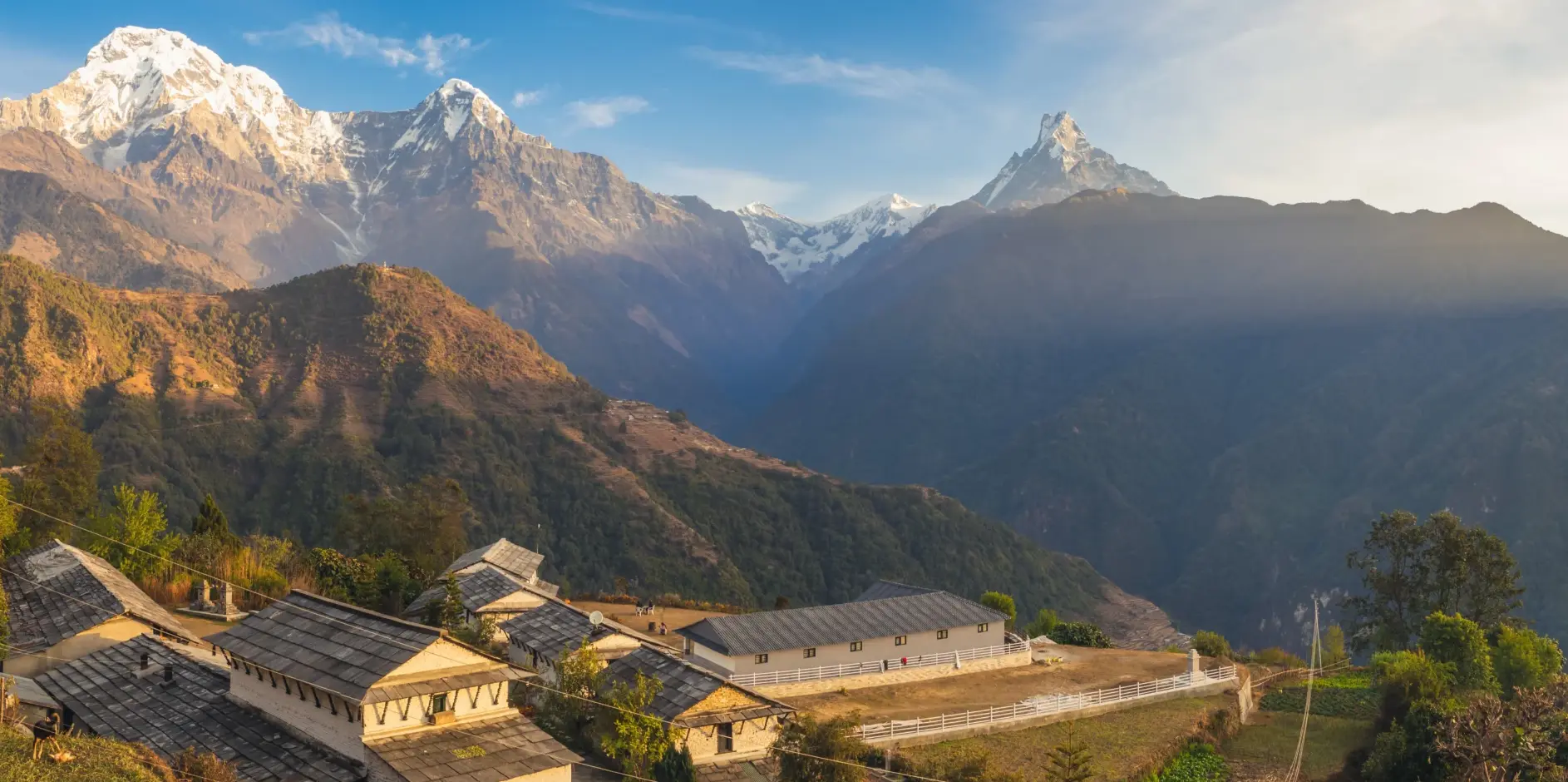
Nepal Tour Package

Overnight Options on the Way

Overnight in Pokhara

Spend your last night by Phewa Lake, then drive to Kathmandu the next morning. It gives you time to enjoy Lakeside after your trek, perhaps with a final Sarangkot sunrise.

Overnight in Bandipur

Break the highway drive in Bandipur, a car-free Newar hill town with mountain views just above Dumre. The jeep stays with you,u and the next day is shorter and more relaxed.

Overnight in Kathmandu

Our most recommended option before an international flight. Drive the full day to Kathmandu, sleep near the airport or in Thamel, and take a short airport drop the next day with time to spare. It also leaves room for last-minute Kathmandu sightseeing or a Bhaktapur visit if your flight is late.

A Typical Transfer Day

  • Early morning: your driver arrives at your Dhampus lodge. Bags go on the roof rack under a waterproof cover.
  • Morning: slow descent on the gravel track to Hemja, with a last look back at Machhapuchhre and Annapurna South.
  • Mid-morning: through Pokhara and onto the Prithvi Highway.
  • Late morning: tea stop at Damauli or Dumre.
  • Lunch: Mugling, with dal bhat or noodles.
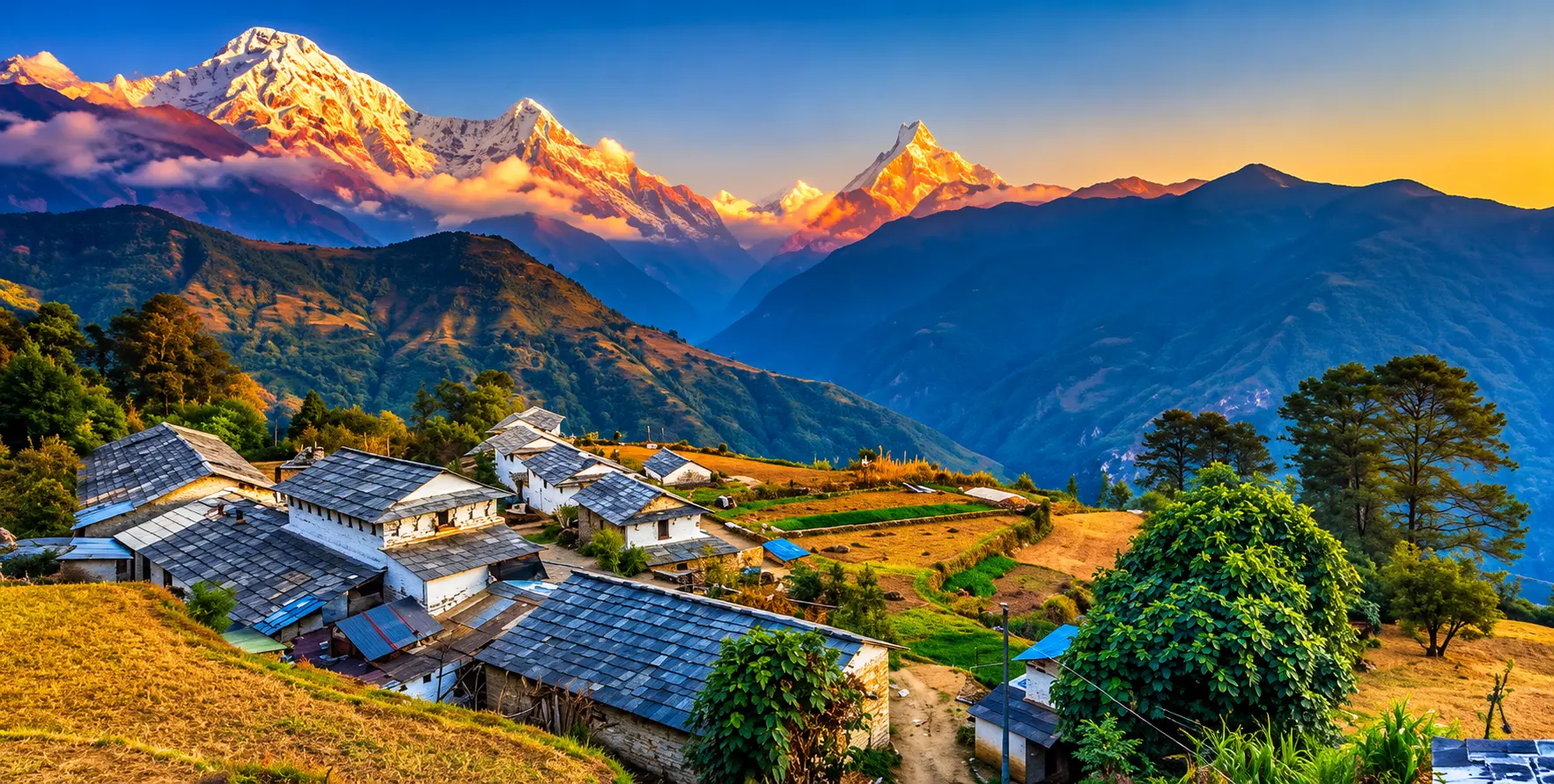
  • Afternoon: along the Trishuli gorge, with a short tea stop at Malekhu or Kurintar.
  • Late afternoon: climb to the valley rim and descend into Kathmandu.
  • Evening: drop at your Kathmandu hotel or the airport terminal.
Dhampus to Kathmandu Airport Transfer Jeep
Sunset above the village of Dhampus in Nepal

About Dhampus: Why Travelers Love It

Dhampus is a traditional Gurung village spread along a ridge in the Annapurna foothills, with stone paths, terraced fields and some of the best close views of Machhapuchhre near Pokhara. On clear mornings, Annapurna South, Hiunchuli, Annapurna II, I, II and IV, and sometimes Dhaulagiri, line the horizon. Many homes have links to Gurkha service, and the village celebrates Lhosar, Dashain and Tihar with music and dance.

Australian Camp, at around 2,060 meters, is a short walk away and famous for sunrise and sunset. Dhampus is also a classic starting or finishing point for the Mardi Himal trek and a link to longer routes such as the Annapurna Base Camp trek and Ghorepani Poon Hill trek.

Most visitors arrive from Pokhara by jeep transfer to Dhampus or walk up from Phedi, then leave by jeep at the end of their stay.

Coming From the Mardi Himal or Australian Camp Trek

Many of our Dhampus airport transfers start at the end of a trek. Trekkers often finish at Dhampus, Phedi, Kande or Lwang. Tell us where your trek ends and we will collect you there, even if it is not Dhampus itself.

Our drivers can wait while you shower and have lunch at your lodge, then head straight to Kathmandu.

If your trek ends late in the day, we recommend staying the night in Pokhara or Dhampus and starting early the next morning. We avoid driving the Trishuli Gorge after dark whenever possible.

Highway Towns at a Glance

Hemja

Where the Dhampus track meets the paved Pokhara–Baglung road, Hemja is known for its Tibetan settlement and handicraft shops, and it marks the end of the bumpy section.

Pokhara

Nepal’s lake city and gateway to the Annapurna region. It’s easy to stop here for luggage, cash, or coffee.

Damauli

A district town where the Seti and Madi rivers meet, about an hour east of Pokhara, with tea shops and a convenient break.

Dumre

The junction for Bandipur and for the road north to Besisahar and the Annapurna Circuit. It’s a useful refueling point.

Mugling

At the confluence of the Marsyangdi and Trishuli rivers, Mugling is the halfway town and main lunch stop. Roads also branch south here toward Chitwan.

Kurintar

Riverside resorts and the Manakamana cable car station. A pleasant place for a longer break when you are not in a hurry.

Malekhu

Famous for fried river fish, with restaurants overlooking the Trishuli. It’s the last main stop before Kathmandu.

Naubise and the Valley Rim

The highway junction below the climb to the Kathmandu Valley. From here, vehicles head up toward Nagdhunga and down into the city.

Dhampus to Kathmandu Airport Transfer Jeep

Dhampus Culture and Things to Do

If you have a spare day in Dhampus before your transfer, the village rewards slow exploring. Walk the stone paths between Gurung houses, watch farmers working the terraces, and visit the small shrines that dot the ridge. Many families have long histories of Gurkha service, and older residents enjoy sharing stories over tea.

A short walk up through forest brings you to Australian Camp, a grassy meadow with wide views of the Annapurna range and Machhapuchhre, especially beautiful at sunset. Birdwatchers will find plenty to see in the woods around the village, and in spring rhododendrons add splashes of red and pink to the hillsides. Homestays serve home-cooked dal bhat and seasonal vegetables, and some can arrange simple evening cultural programs.
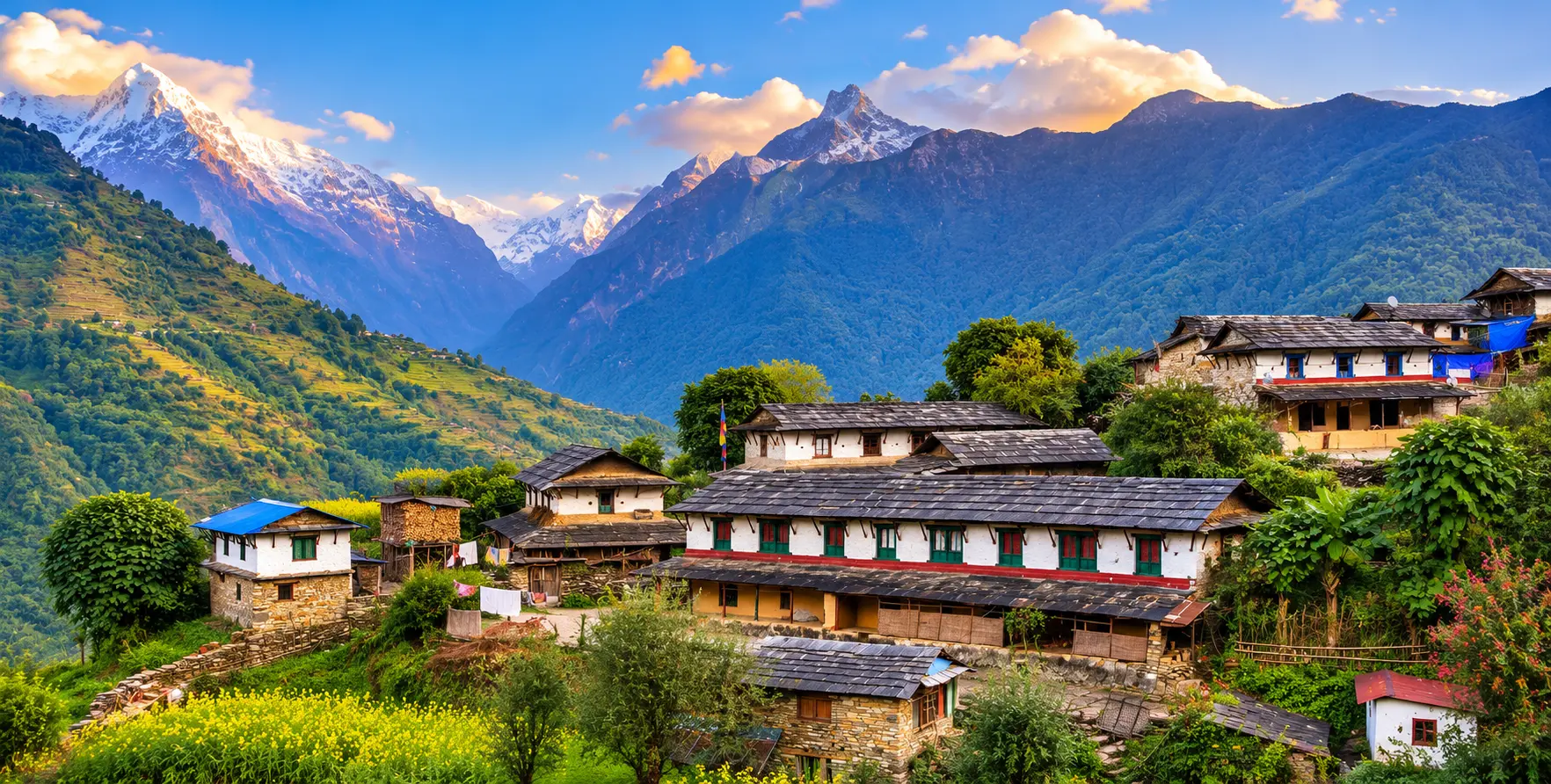
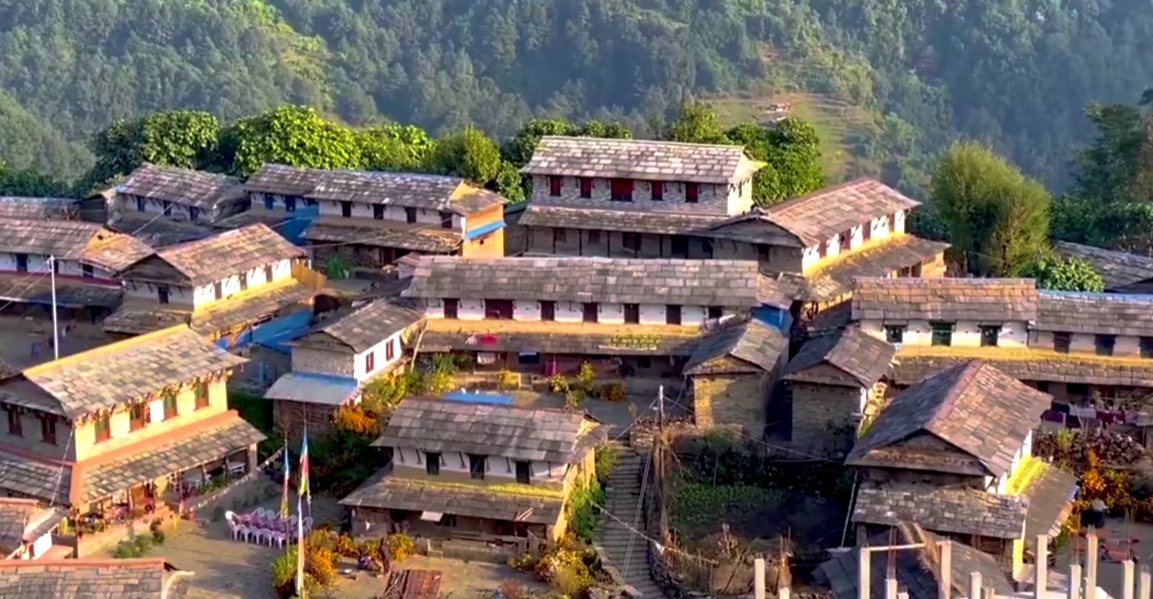
Transfer Day Packing Checklist

  • Passport, visa, flight tickets and any printed confirmations
  • Nepali cash for meals and tips, plus a card for the airport
  • Daypack with water, snacks, a warm layer and medicines
  • Phone, charger and power bank
  • Sunglasses and sunscreen for highway stops
  • Motion sickness tablets for the winding road
  • Soft bags for the roof rack, with valuables kept inside the vehicle
  • Any rented gear to return in Pokhara

Dhampus to Kathmandu Airport Jeep Transfer: Private Hire

Responsible Travel on the Road

Small choices help protect the places you’ve just enjoyed. Carry a refillable water bottle instead of buying plastic at every stop, take your rubbish with you to Kathmandu or Pokhara, and support local tea shops and restaurants along the highway. In Dhampus, settle bills fairly, respect local customs, and ask before photographing people.

Our drivers are happy to help you find places that do things well.

Dhampus Transfers for Travelers Arriving From Other Treks.

Dhampus is not only a destination in itself. It also connects with several popular routes in the Annapurna foothills, so travelers reach it from different directions. Some arrive after the Mardi Himal trek, descending from High Camp through the forest to Siding or Lwang and then across to Dhampus.

Others finish the Australian Camp loop, which links Kande, Australian Camp, Pothana and Dhampus—a few walk in from Ghandruk and Landruk on longer trails around the Modi Khola valley.

Wherever your walk ends, we can arrange the transfer from the nearest road-head. Common pick-up points include Dhampus, Phedi, Kande, Lwang and Siding, as well as Nayapul for treks finishing further west. Please tell us your finishing point and expected arrival time, and we will send a 4WD jeep to meet you there.

From the road-head, the rest of the journey follows the same route through Pokhara and along the Prithvi Highway to Kathmandu and the airport. If you finish late in the day, we’ll suggest a night in Pokhara and an early start, so you never have to drive the river gorge in the dark. For western finishes, see our Nayapul transport page.

Safety on the Dhampus to Kathmandu Route

  • Experienced drivers who know both the Dhampus hill track and the Prithvi Highway
  • Well-maintained 4WD jeeps with good tires, brakes, and working 4WD
  • Daylight driving on rough and winding sections wherever possible
  • Rest breaks on long days, so the driver stays alert
  • Weather and road checks before departure, especially in the monsoon
  • Insured, licensed vehicles under our company name

On a day with a flight at the end, it’s tempting to rush. Our drivers don’t. That’s why we build in generous buffers.

Dhampus to Kathmandu Airport Jeep Transfer: Private Hire

Best Season for the Transfer

Autumn

Clear skies and dry roads make autumn the easiest season. It is peak trekking time, so highway traffic is heavier, and vehicles book up early.

Spring

Warm and generally dry, with rhododendrons around Dhampus. Haze may hide the mountains by midday, but road conditions are usually good.

Winter

Cold, clear mornings and dry roads. Fog sometimes forms in the river valleys early in the day, so drivers start with care.

Monsoon

Rain makes the Dhampus track muddy and slippery, and landslides can delay traffic in the Trishuli gorge. A 4WD jeep is essential,l and an overnight in Kathmandu before any flight is a must.

Private Jeep vs Bus vs Flying From Pokhara

Option 1: Direct Private Jeep

  • Door to terminal in one vehicle
  • Handles the rough Dhampus track
  • Departure time planned around your flight
  • Stops whenever you want, and your luggage stays with you

Best for most travelers, especially groups of two or more who share the cost. Book a private jeep or Scorpio.

Option 2: Jeep to Pokhara, Then Tourist Bus

  • Dhampus to Pokhara jeep, then a tourist bus to Kathmandu
  • Cheaper per person for solo travelers
  • Fixed bus departure times, and you need a taxi from the Kathmandu bus park to the airport.
  • More handling of luggage and less control over timing

Option 3: Jeep to Pokhara, Then Fly

  • Short flight from Pokhara to Kathmandu
  • Weather can delay or cancel flights
  • Baggage limits on domestic flights
  • You still need transfers at both airports

For travelers with an international flight, Option 1, with an overnight in Kathmandu, is the most reliable. Option 3 can work if you leave a full day’s buffer.

Arriving at Tribhuvan International Airport

Tribhuvan International Airport has separate international and domestic terminals a short distance apart. Your driver drops you at the correct terminal entrance. Please tell us which terminal and airline you are flying with when you book.

  • International terminal: arrive about three hours before departure, or as your airline advises
  • Domestic terminal: arrive around one to one and a half hours before departure, or as advised
  • Security checks: there is usually a screening point at the terminal entrance, so allow time
  • Luggage trolleys: usually available near the drop-off area
  • Currency: change or spend leftover Nepali rupees before security, as rules on exporting rupees apply

Arriving in Nepal instead? Our airport pick-up service meets you outside arrivals and can take you straight to Dhampus or to your Kathmandu hotel.

The Reverse Trip: Kathmandu Airport to Dhampus

Many travelers arrive at TIA and want to head straight into the hills. We can collect you at international arrivals and drive directly to Dhampus. After a long international flight, though, most guests prefer one night in Kathmandu to rest, change money, buy a SIM card and arrange permits, then leave early the next morning.

On arrival day, you might enjoy a short Kathmandu sightseeing tour, then the next day drive via the Prithvi Highway and Pokhara to Dhampus. The final climb from Hemja to Dhampus is on a rough track, so we use a 4WD jeep or Scorpio. Learn more on our Pokhara to Dhampus jeep transfer page.

Luggage and Trekking Gear

Trekkers usually carry more than holiday travelers: duffel bags, backpacks, trekking poles, sleeping bags, and sometimes rented gear to return in Pokhara. A jeep roof rack carries bags under a waterproof cover, while valuables, passports and electronics should stay inside with you.

  • Stored bags in Pokhara: we’ll stop at your hotel on the way to collect them
  • Rented gear: we can stop at your rental shop in Lakeside to return it
  • Trekking agency duffels: we can drop them at your agency’s Pokhara or Kathmandu office
  • Fragile souvenirs: pack them inside the vehicle, not on the roof

Let us know your luggage when you book so we can send a vehicle with enough space. For bigger groups, a Toyota Hiace has plenty of room.

Family Stops on the Highway

Damauli and Dumre

About an hour or so from Pokhara, these towns offer tea shops and a quick break. Dumre is also the turn-off for Bandipur.

Mugling

The halfway point and busiest lunch stop, with plenty of restaurants serving dal bhat, noodles, and snacks.

Kurintar

Riverside resorts with gardens make a relaxing stop. Kurintar is also home to the Manakamana cable car, but it adds a couple of hours, so only include it if you have no flight that day.

Malekhu

Known for fried river fish and tea, Malekhu is a good final break before the climb into Kathmandu.

For more ideas, see our Kathmandu to Pokhara road trip guide.

Traveling With Family or Older Travelers

A long day on the road is easier in the right vehicle. For families, a Mahindra Scorpio offers comfortable seats and good suspension. We can provide child seats on request.

For older travelers, frequent rest stops and a driver who takes the Dhampus track slowly make a big difference.

For larger family groups or trekking groups with seniors, a Hiace gives easy access and lots of space. If the Dhampus track is too rough for a Hiace on the day, a jeep shuttles everyone to the paved road first.

Tips for a Comfortable Long Transfer

  • Eat a good breakfast before leaving Dhampus
  • Carry water, snacks and any medicines in your daypack
  • Wear comfortable layers: Dhampus mornings are cool, while the river valleys are warm
  • Keep passports, tickets and money inside the vehicle with you
  • Download music, podcasts or offline maps, as mobile signal drops in parts of the gorge
  • Take motion sickness tablets if you need them for winding roads
  • Ask your driver for stops whenever you need them

What Is Included

Included

  • Private vehicle and experienced driver
  • Fuel, driver’s wage and meals
  • Insurance, road taxes and parking
  • Pick-up in Dhampus and drop-off at the TIA terminal or your Kathmandu hotel
  • Short stops for meals, tea and luggage collection
  • Waterproof roof rack cover for luggage

Not Included

  • Your meals and drinks
  • Hotel accommodation on overnight options
  • Manakamana cable car or other entry tickets
  • Tips for the driver (optional, appreciated)

If Weather or Traffic Causes Delays

Nepal’s roads are unpredictable, especially in the monsoon. A landslide in the Trishuli gorge or a major traffic jam near Kalanki can add hours. This is why we build in buffers and recommend an overnight in Kathmandu before international flights.

If a serious delay happens, our driver will keep you informed, and our office will look for the fastest alternative. That might be a different route around a blockage, or, in extreme cases, help with a flight from Pokhara or Bharatpur. Stay in contact with us on WhatsApp throughout the day.

Your Last Day in Kathmandu Before the Flight

If you follow our advice and reach Kathmandu the day before your flight, you may have a spare morning or afternoon. Here are some easy ways to use it, all reachable by a private car with a driver:

  • Boudhanath Stupa: one of the largest stupas in the world, close to the airport and perfect for a final visit
  • Pashupatinath Temple: Nepal’s holiest Hindu temple on the Bagmati River, also near the airport
  • Swayambhunath: the hilltop ‘Monkey Temple’ with views over the valley
  • Patan Durbar Square: temples, courtyards and the excellent Patan Museum
  • Bhaktapur: a medieval Newar city; see our Bhaktapur Durbar Square tour
  • Thamel shopping: last-minute souvenirs, tea, pashmina and handicrafts

If your flight is late at night, you could even spend an evening watching the sunset over the Himalaya from Nagarkot with our Nagarkot trip, then drive down to the airport. Ask us, and we’ll fit it around your flight.

Trekking Groups and Agency Transfers

Trekking agencies often need to move groups from Dhampus to Kathmandu at the end of the Mardi Himal or Australian Camp trek, with guides, porters, nd plenty of duffels. We handle these transfers regularly.

  • Small groups (up to 6): one 4WD jeep or Scorpio
  • Medium groups (7–12): two jeeps, or a jeep shuttle to the road-head and a Hiace for the highway
  • Large groups (13–40): jeep shuttles from Dhampus, then a Coaster or bus from Hemja or Pokhara
  • Staff and porters: we can include seats for guides and porters returning to Kathmandu
  • Duffels: delivered to your Kathmandu office or hotel

Agencies can book through our contact page or WhatsApp, and we can invoice repeat bookings in USD.

Before You Leave Dhampus

If your driver arrives in the morning, try to catch sunrise first. From the upper part of Dhampus, or a short walk up toward Australian Camp, the first light paints Machhapuchhre, Annapurna South and Hiunchuli in pink and gold. It’s a perfect farewell to the Annapurna region.

  • Settle your lodge or homestay bill in Nepali cash; there are no ATMs in the village.
  • Pack the night before so the morning is relaxed
  • Keep passports, tickets and electronics in your daypack
  • Thank your hosts; a small gift or a review means a lot to village families

If you stayed longer and want one more short walk, our drivers can collect you from nearby trailheads such as Phedi or Kande instead. Our Pokhara to Dhampus page has more on the local roads.

Your Driver: Experience You Can Count On

On a long day ending at an airport, your driver is the most important part of the journey. We choose our drivers for their experience on both rural hill tracks and the busy Prithvi Highway. They plan stops, keep a safe pace, and know the fastest route from Kathmandu to the airport at different times of day.

  • Licensed, experienced hill and highway drivers
  • Basic English for directions and help
  • Knowledge of clean, reliable food stops along the highway
  • Calm driving with no reckless overtaking
  • Help with luggage loading at both ends

Why Our Prices Are a Little Higher

You may find cheaper offers from Dhampus to Kathmandu. Our rates are slightly higher because they include things that matter when a flight is waiting:

  • Reliable 4WD vehicles serviced before long trips
  • Experienced drivers who don’t rush
  • Flight-aware planning, with buffers built in
  • An office team monitoring your trip all day
  • Clear, all-inclusive USD pricing

For most travelers, peace of mind on their final day in Nepal is worth far more than the small difference.

Plan Your Next Nepal Adventure

Coming back to Nepal? We provide transport for every major region and trekking route. Popular options include:

Browse our Nepal tour packages or start with our trip planner.

Departure Planner: Matching Your Flight Time

Every trip is different, but these examples show how we usually plan the Dhampus departure around a flight from Kathmandu. Your driver and our office will confirm the exact time for your date.

Morning International Flight

Drive from Dhampus to Kathmandu on the day before and stay overnight near the airport or in Thamel. Leave the hotel early the next morning for a short, stress-free drop-off at the airport. Same-day travel is not realistic.

Afternoon International Flight

Again, travel the day before. Even a very early start from Dhampus leaves too little margin for highway delays and delays in Kathmandu.

Late-Night International Flight

Same-day travel is possible if you leave Dhampus at first light and the road is clear. Even so, an overnight the day before is safer, especially in the monsoon, during festivals or on busy weekends.

Domestic Flight Next Morning

Drive to Kathmandu the day before. Early domestic flights, for example to Lukla, often leave soon after dawn.

TIP: If you are traveling during a big festival such as Dashain or Tihar, add extra time. Highways are much busier as people travel home.

Getting Through Kathmandu Traffic

For many travelers, the slowest part of the whole journey is the last few kilometers; the western gateway to the city is notorious for queues, and traffic on the ring road around the city can be heavy from mid-morning to evening. The airport sits on the opposite side of the valley, so the cross-city drive can take anything from about 45 minutes to well over an hour.

Where small private vehicles are permitted, the new Nagdhunga tunnel now helps vehicles enter the valley more smoothly than the old winding pass. Our drivers know the alternative routes through the city and choose the best one for the time of day.

If traffic is especially bad, they may suggest a short stop for dinner and waiting for the roads to clear before heading to your hotel. The aim is always to arrive calm and on time.

Useful Stops in Pokhara on the Way

Pokhara lies early on the route, so it’s a handy place for practical stops before the long highway section:

  • Collect stored luggage from your hotel
  • Return rented trekking gear to shops in Lakeside
  • Visit an ATM or exchange counter for cash
  • Grab breakfast or coffee in Lakeside
  • Pick up souvenirs you didn’t have time to buy
  • Drop documents or duffels at a trekking agency office

Tell us in advance which stops you need so we can plan the timing. Short practical stops are included in our price. For more time in the city, add a Pokhara car hire day before your transfer.

Questions to Ask Before You Book Any Transfer

  • Is the vehicle 4WD, and is it suitable for the Dhampus track this season?
  • What time will we leave, and how have you planned around my flight?
  • Is the price all-inclusive, including fuel, driver costs, tolls, and parking?
  • Can we stop in Pokhara to collect bags or return gear?
  • Who do I contact if there is a delay on the road?
  • What happens if a landslide or road closure blocks the highway?

We are happy to answer all of these before you confirm. Just ask on WhatsApp or email.

Is a Direct Jeep Transfer Right for You?

A direct private jeep from Dhampus to Kathmandu airport suits most travelers, couples and families, trekking groups, anyone with plenty of luggage, and anyone who wants to finish their trip stress-free.e It is especially valuable when you have a flight to catch, because one team plans the whole day from your lodge door to the terminal.

If you’re traveling solo on a tight budget with plenty of spare time, a jeep to Pokhara followed by a tourist bus may make sense. If you need to get to Kathmandu quickly, a jeep to Pokhara and a domestic flight is an option, as long as you leave a buffer for weather. We’re happy to talk you through every option and give an honest recommendation.

What Our Guests Value Most

When travelers tell us what made their Dhampus to Kathmandu transfer work, the same points come up again and again: a driver who arrived early and helped with bags, a calm pace on the rough track, sensible stops for food and tea, and a clear plan for reaching the airport with time to spare. Many also appreciate being able to message our office during the day for updates.
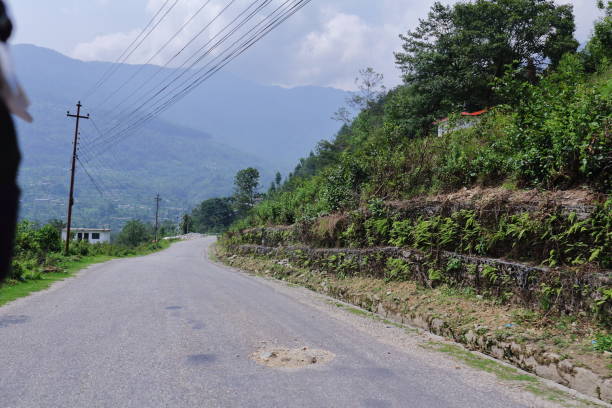
These simple things are at the heart of every transfer we run.

Our Promise

Your vehicle will arrive on time, in good condition, and with a driver who knows the road. We will plan your departure around your flight with safe buffers, keep in touch throughout the day, and help quickly if anything changes. Our goal is simple: to make your last journey in Nepal as smooth and memorable as the rest of your trip.
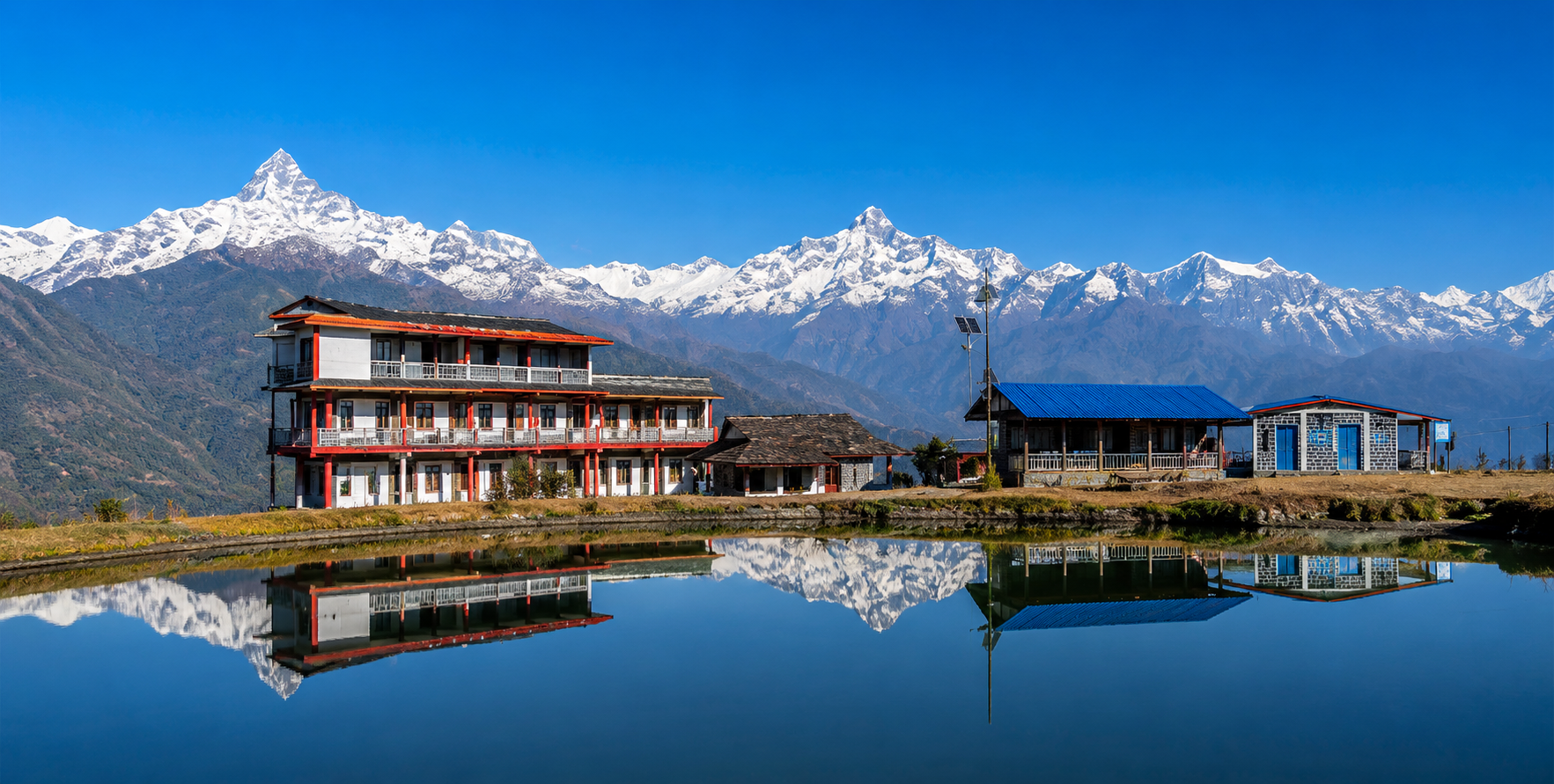
Key Takeaways

  • Dhampus to Kathmandu airport is about 225–235 km and usually takes 10 hours.
  • The first section from Dhampus to Hemja is a rough track, so a 4WD jeep or Scorpio is recommended.
  • A private jeep costs about USD 200–250 one way, shared between up to six passengers.
  • For international flights, drive the day before and stay overnight in Kathmandu.
  • Stops in Pokhara for luggage or gear are easy to include.
  • Groups can combine jeep shuttles with a Hiace, Coaster, or bus.

Monsoon Transfers: Extra Advice

The monsoon brings lush green hills and dramatic clouds to the Annapurna foothills, but it also makes road travel less predictable. If you’re traveling from Dhampus to Kathmandu during the rainy season, keep these points in mind:

  • Plan a buffer day: always arrive in Kathmandu at least one day before an international flight
  • Leave early: rain often builds in the afternoon, and landslides are more likely after heavy downpours
  • Choose 4WD: the Dhampus track becomes muddy and slippery, so a jeep or Scorpio is essential
  • Pack for delays: carry extra water, snacks, a nd a book in case of a long wait at a blockage
  • Stay reachable: keep your phone charged so our office can update you
  • Stay flexible: your driver may suggest a different timing or an overnight stop for safety

Our team closely monitors road reports during the monsoon and will contact you the evening before if conditions change. Safety always comes before speed.

Travelling Solo

Solo travelers often wonder whether a private jeep is worth it for one person. If you have an international flight to catch and lots of trekking gear, the reliability and door-to-terminal service usually make it worthwhile.

If you’re on a tighter budget, consider a jeep to Pokhara followed by a tourist bus and a taxi in Kathmandu, as long as you leave plenty of time. You could also share a jeep with other trekkers finishing at the same time. Ask us, and we’ll help you weigh up the options.

Why Book With Nepal Vehicle Hiring

See also our trekking transport, car hire in Nepal, and Nepal tour package pages.

How to Book

  • Step 1: Send your pick-up point, date, number of passengers, luggage, and flight details to WhatsApp or email.
  • Step 2: We recommend the vehicle, departure time, and any overnight stops, then send a quote in USD.
  • Step 3: Confirm with a small advance.
  • Step 4: Get your driver’s name and number the day before.
  • Step 5: Relax, and we’ll get you to the airport on time.

Or use our trip planner and contact page.

Frequently Asked Questions

How long does it take from Dhampus to Kathmandu airport?

Usually about 8 to 10 hours, including short stops. It can take longer during the monsoon season because of heavy traffic in Kathmandu.

How much is a private jeep from Dhampus to Kathmandu airport?

About USD 200–250 one way for a 4WD jeep with up to six passengers. A Scorpio costs about USD 205–255.

Can I fly internationally on the same day as the drive?

We advise against it unless your flight is very late at night. The safest plan is to drive the day before and stay in Kathmandu.

Can a car reach Dhampus?

The road from Dhampus to Hemja is rough gravel. A jeep or Scorpio is recommended. You can drive to the paved road, then take a short jeep shuttle.

Can you pick us up at the end of the Mardi Himal trek?

Yes. Please tell us your drop-off point, and we’ll pick you up there.

Can we stop in Pokhara on the way?

Yes. We can stop to collect stored bags, have lunch, or even stay overnight.

Do you also do Kathmandu airport to Dhampus?

Yes. The same route works in reverse, from an airport pick-up straight to Dhampus.

Is there a cheaper option?

You can take a jeep to Pokhara and then a tourist bus to Kathmandu, but you’ll need separate transfers and won’t control the timing.

Can you drop us at a Kathmandu hotel instead of the airport?

Yes. The price is the same, and we can arrange your airport drop for the next day.

How many bags fit in a jeep?

A jeep carries bags for up to six passengers, with most luggage on the covered roof rack. For more luggage or larger groups, choose a Hiace.

Can we stop at the Manakamana cable car?

Yes, if you are not flying that day. It adds about two hours. Tickets are paid separately.

Is the Dhampus road open all year?

Generally, yes, but it is dusty in dry periods and muddy in the monsoon. A 4WD jeep is the safest choice.

Do you provide jeeps for trekking agencies?

Yes. We regularly transfer agency groups, guides, and porters, with USD invoicing for repeat clients.

Book Your Dhampus to Kathmandu Airport Jeep

End your Nepal journey smoothly, with one private jeep, one experienced driver,r and a plan built around your flight.

WhatsApp

Email: [email protected]

Online: Plan your trip | Contact us | Nepal Vehicle Hiring

Send your pick-up point and flight details today, and we’ll reply with the right vehicle, the safest departure time, and a clear USD quote.

From the quiet stone lanes of Dhampus to the busy terminals of Tribhuvan International Airport, the journey crosses hills, river gorges, and the heart of Kathmandu. With the right vehicle, an experienced driver and a plan built around your flight, it becomes a relaxed final chapter of your time in Nepal rather than a stressful dash.

We look forward to helping you end your adventure well and welcoming you back to the Himalayas again.

Chat with us