Safe, Reliable and Affordable Travel Solutions in Nepal

Muglin

Safe Reliable Affordable Travel Solutions Nepal

Nepal’s roads are among the world’s most varied — from the smooth national highways connecting Kathmandu to Pokhara, to the narrow gorge roads threading the Marsyangdi and Kali Gandaki valleys, to the mountain approaches of the Annapurna and Everest regions that demand every skill a driver has and every capability a 4WD vehicle provides. In this landscape, the three qualities that matter most in a Nepal vehicle hire service are safety, reliability, and affordability—and they are the three qualities on which Vehicle Hiring Pvt Ltd has built its reputation across every route, vehicle type, and traveller category it serves.

Whether the need is a Kathmandu airport transfer, a private jeep hire for the Annapurna Circuit trailhead, a Kathmandu to Pokhara private vehicle hire, a Pokhara to Nayapul trekking transport, or a full Nepal tour package vehicle arrangement — safe, reliable, and affordable travel is not a marketing promise at Nepal Vehicle Hiring Pvt Ltd. It is an operational standard enforced through driver selection, vehicle maintenance, route knowledge, all-inclusive pricing, and the 24/7 WhatsApp contact that keeps every group connected to professional support throughout their Nepal journey.

Safety — How Nepal Vehicle Hiring Pvt Ltd Delivers It

Road safety in Nepal is a genuine concern — the combination of mountain terrain, variable road surfaces, seasonal weather, and mixed-quality driving that characterises Nepal’s general transport market creates a risk environment that private vehicle hire specifically addresses. Nepal Vehicle Hiring Pvt Ltd’s safety standard operates across four dimensions.

Driver selection and experience. Every Nepal Vehicle Hiring Pvt Ltd driver holds a valid Nepal government professional driving licence and has logged a minimum number of supervised route hours on the specific corridors they serve before independent assignment. We do not dispatch Kathmandu sightseeing drivers to gorge road assignments; Besisahar gorge road jeep drivers are specialists who have driven that specific road dozens of times.

Route-specific assignment is the foundation of our safety standard — the right driver for each road, not the nearest available driver for any road.

Vehicle maintenance and roadworthiness. Nepal Vehicle Hiring Pvt Ltd’s private car fleet, 4WD Scorpio and Hilux jeep fleet, Toyota Hiace van fleet, tourist coaster fleet, and tourist bus fleet undergo pre-departure checks before every assignment—tyres, brakes, lights, fuel, oil, and 4WD engagement for mountain-road vehicles. The fleet follows a scheduled maintenance programme with Kathmandu workshops, not a reactive repair-when-broken approach.

Road condition checks. Before dispatching any vehicle on mountain approach roads during monsoon season — the Soti Khola approach road, the Besisahar gorge section, the Phaplu BP Highway) — Nepal Vehicle Hiring Pvt Ltd’s operations team receives morning road condition updates from our driver network and from the Department of Roads. Vehicles are not dispatched to roads confirmed to have landslide blockages or unsafe sections.

24/7 emergency WhatsApp contact. Every Nepal Vehicle Hiring Pvt Ltd group carries the operations team’s WhatsApp for the entire duration of the hire. They communicate any road incident, vehicle problem, or route change immediately, and our team’s response protocol covers vehicle replacement, route advice, and emergency coordination.
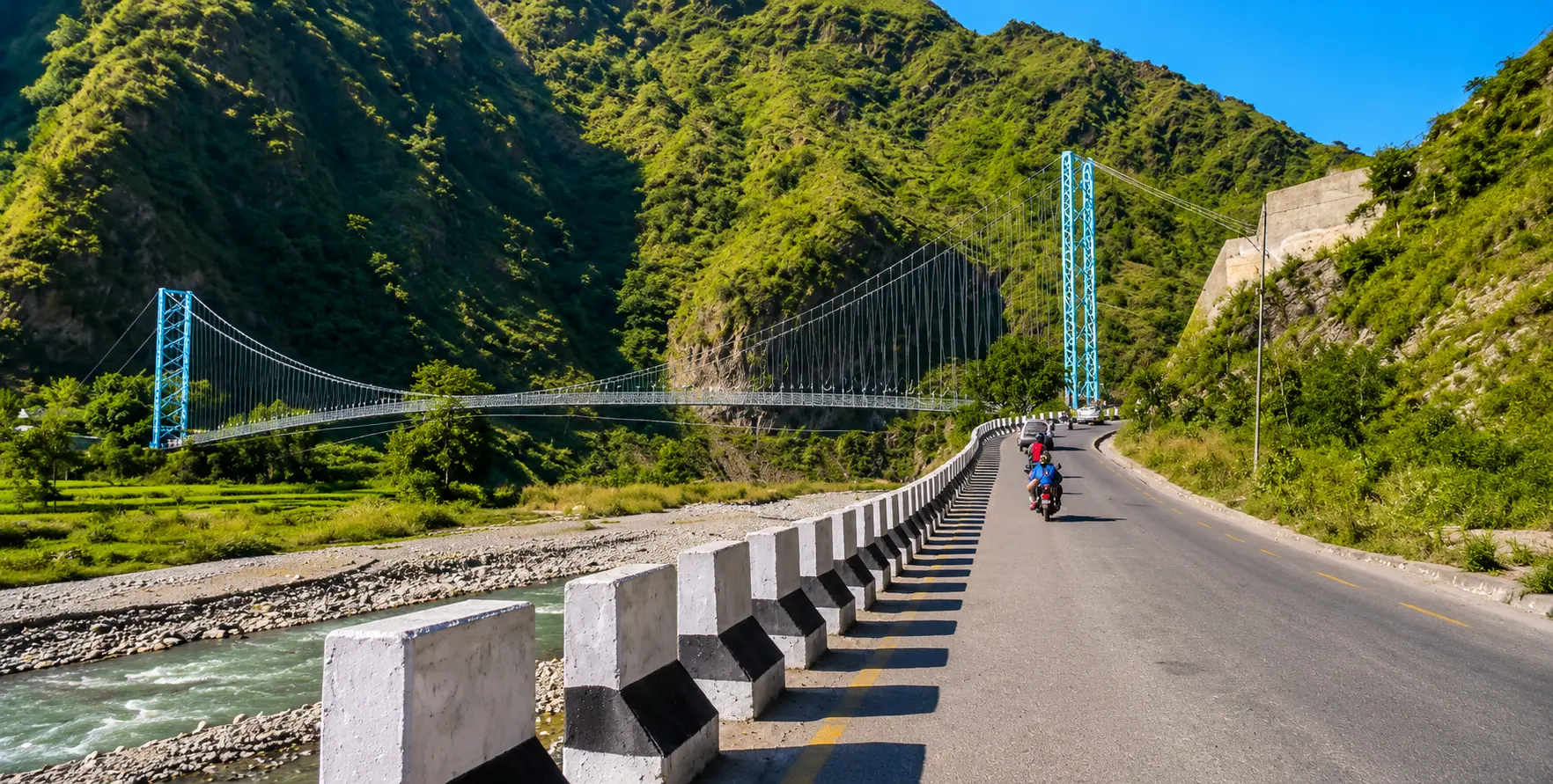
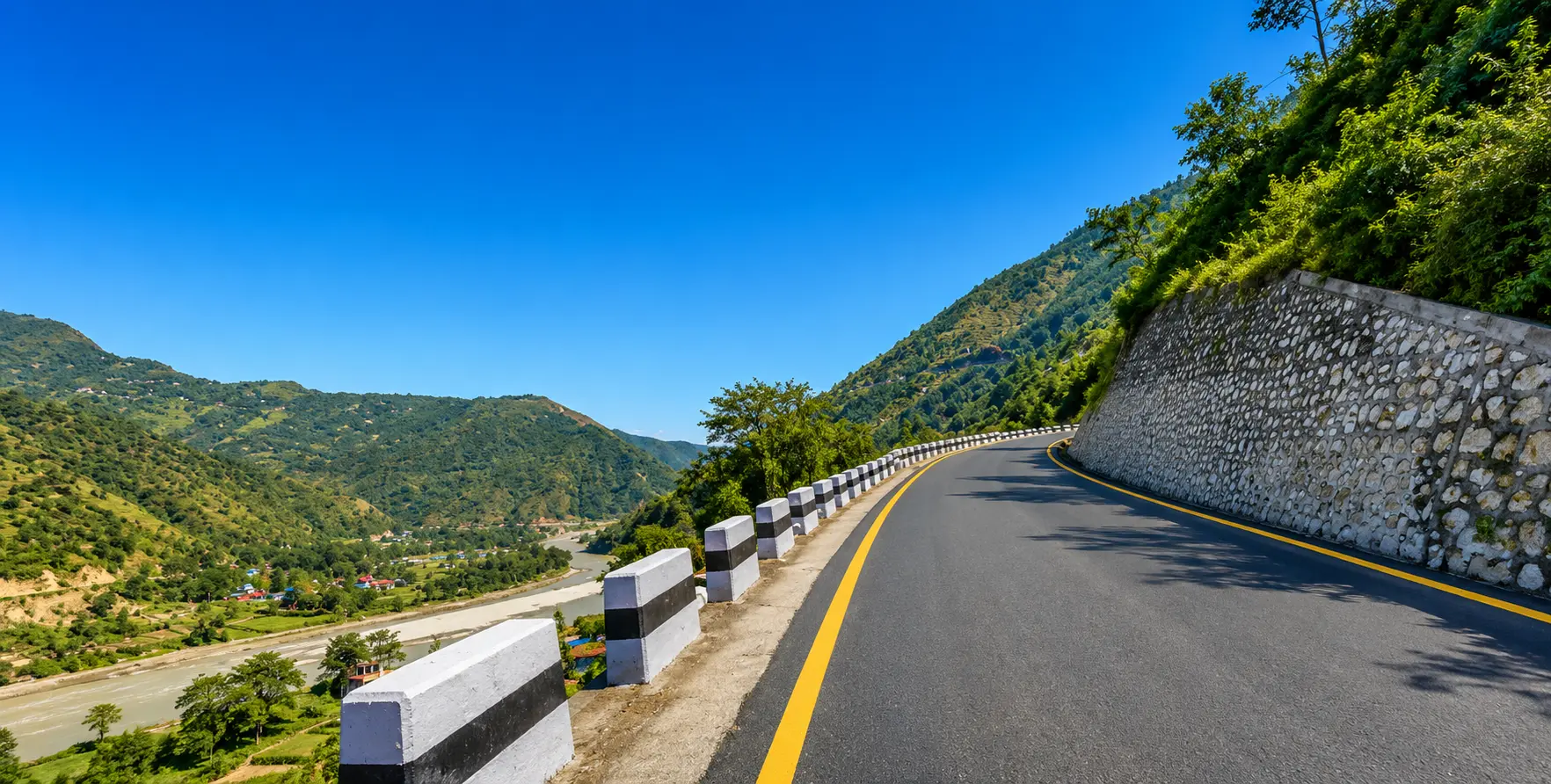
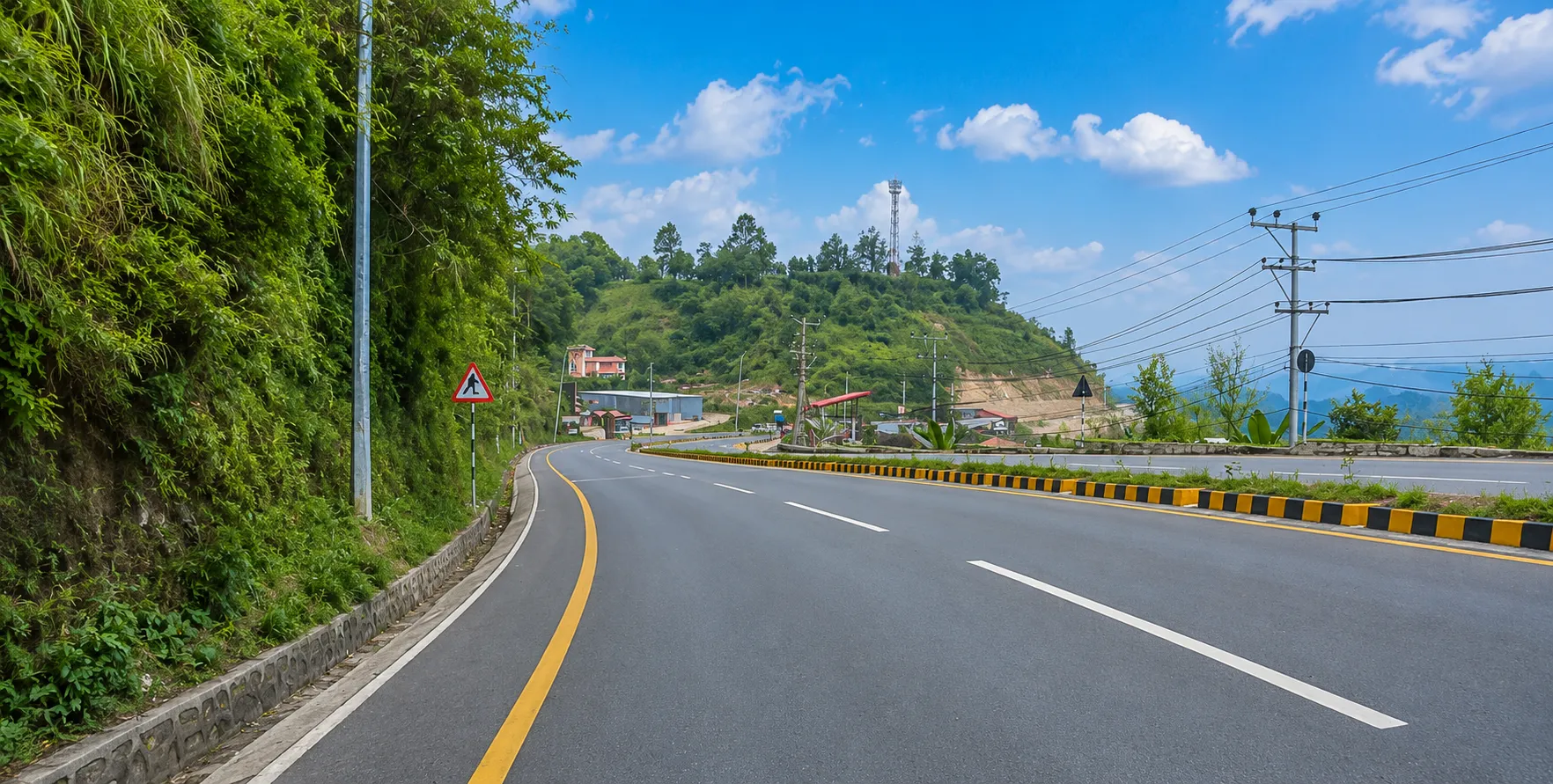
Way to manthali airport bp highway

Nepal’s Travel Landscape — Why Safe, Reliable and Affordable All Matter

Nepal receives travellers from more than 100 countries annually — international trekkers seeking the Himalaya’s finest mountain environments, Indian pilgrims visiting the country’s extraordinary sacred sites, business travellers connecting Kathmandu to Nepal’s provincial cities, wildlife enthusiasts heading to Chitwan and Bardia, and cultural tourists exploring the Kathmandu Valley’s UNESCO heritage. Each traveller category has specific transport needs—and each needs the same three qualities from its Nepal vehicle hire: safe vehicles for the roads, reliable service that delivers as promised, and affordable pricing that respects the travel budget.

Delivering all three at once is what distinguishes professional Nepal vehicle hire from the informal market. Informal arrangements can be affordable but often unreliable—the vehicle doesn’t arrive on time, the driver is unfamiliar with the mountain roads, and the price increases at the destination.

Professional arrangements can be reliable and safe but may exceed a traveller’s Nepal budget. Nepal Vehicle Hiring Pvt Ltd‘s key achievement is maintaining all three—safety through driver selection and vehicle maintenance, reliability through confirmed bookings and evening-before driver identification, and affordability through all-inclusive pricing at Nepal’s appropriate rate level rather than inflated tourist premiums.

Book through our plan trip page or WhatsApp. Private car hire, 4WD jeep hire, Hiace van hire, coaster hire, and bus hire — safe, reliable, and affordable across every Nepal journey.

Reliability — What It Means in Practice

Reliability in Nepal vehicle hire means the vehicle is where it was confirmed to be, at the time it was confirmed, and in the condition you booked. This sounds like a minimum standard — but in Nepal’s general transport market, it is consistently the dimension where informal arrangements fail.

Hotel-door pickup at confirmed time. Nepal Vehicle Hiring Pvt Ltd’s Kathmandu airport transfer meets every arriving passenger at the Tribhuvan International Airport arrivals gate — the driver holding a name board, confirmed flight details in hand. The Kathmandu sightseeing car hire picks up from the hotel lobby at the confirmed morning time.

The Besisahar private jeep hire departs the hotel entrance at 6:00 AM as booked. Punctuality is the first reliability test — and it is one that Nepal Vehicle Hiring Pvt Ltd passes consistently.

Evening-before driver confirmation. The driver’s name, mobile number, and vehicle registration are sent to the group via WhatsApp the evening before every departure — for both the outward and return legs of any booking. This confirmation means the group knows exactly which vehicle to board and can verify the driver’s identity at pickup. This security measure matters especially for airport arrival transfers and early-morning departures.

Return vehicle pre-arranged. For trekking round-trip bookings, we pre-confirm the return vehicle before the trek begins and adjust it to the actual exit date via WhatsApp during the trek. The group arriving at Soti Khola after the Manaslu Circuit or at Jomsom after the Annapurna Circuit Thorong La crossing has a confirmed private jeep hire waiting — not an uncertain informal negotiation.

Consistent fleet quality. The same Toyota Hiace van hire standard applies whether the booking is a Kathmandu group or a Pokhara group; the same 4WD Scorpio jeep hire specification serves the Annapurna Circuit approach and the Manaslu trek transport. Fleet quality does not vary by route or by customer — the same vehicle standard throughout.

Affordability — Transparent Pricing for All Budgets

Affordability in Nepal vehicle hire isn’t about the lowest possible price — it is about the right price for the confirmed service, with no hidden additions at the end of the journey. Nepal Vehicle Hiring Pvt Ltd’s all-inclusive pricing delivers this: a single confirmed price per journey that covers the driver, fuel, and road tolls, with no fuel surcharges, no driver overnight supplements added at the end of the journey, and no toll fees presented as unexpected additions.

All-inclusive pricing — what it covers. Driver for the confirmed journey; all fuel for the confirmed route; all Nepal government road tolls; hotel-door pickup (outward); trailhead or destination drop. The price confirmed at booking is the price paid at destination — no additions.

Vehicle range for every budget. Nepal Vehicle Hiring Pvt Ltd’s fleet covers the full price spectrum: private car hire from NPR 3,000 for a half-day Kathmandu sightseeing run; 4WD Scorpio jeep hire from NPR 5,000 for short routes to NPR 22,000 for full-day mountain road transfers; Toyota Hiace van hire for medium groups from NPR 8,000; tourist coaster hire for large groups from NPR 25,000; and tourist bus hire for the largest group movements. Every budget type has an appropriate vehicle option.

Group cost efficiency. The private vehicle hire’s all-inclusive per-vehicle price, divided across a group of 4 to 6 passengers, often matches or undercuts the per-seat cost of shared public transport—while delivering hotel pickup, confirmed timing, full luggage space, and the safety and reliability standards described above. For groups of 3 or more, private vehicle hire from Nepal Vehicle Hiring Pvt Ltd is the most cost-efficient option for travel in Nepal.

No price surprise at the destination. The most common Nepal vehicle hire complaint — ‘the driver asked for more than quoted at the destination’ — does not occur with Nepal Vehicle Hiring Pvt Ltd because all-inclusive pricing is written in the WhatsApp booking confirmation before departure. The confirmation includes the price. Contact Nepal Vehicle Hiring Pvt Ltd on WhatsApp for a quote on any Nepal journey.

The Complete Nepal Vehicle Hire Fleet

Nepal Vehicle Hiring Pvt Ltd’s fleet covers every Nepal travel format and every group size — from the solo airport transfer to the large group pilgrimage convoy.

Private car hire. Toyota Corolla, Suzuki Swift, or equivalent sedan for 1 to 4 passengers on paved road routes — Kathmandu airport transfers, Kathmandu city sightseeing, Bhaktapur day tours, Nagarkot sunrise tours, Pokhara car hire, Sarangkot sunrise vehicle hire.

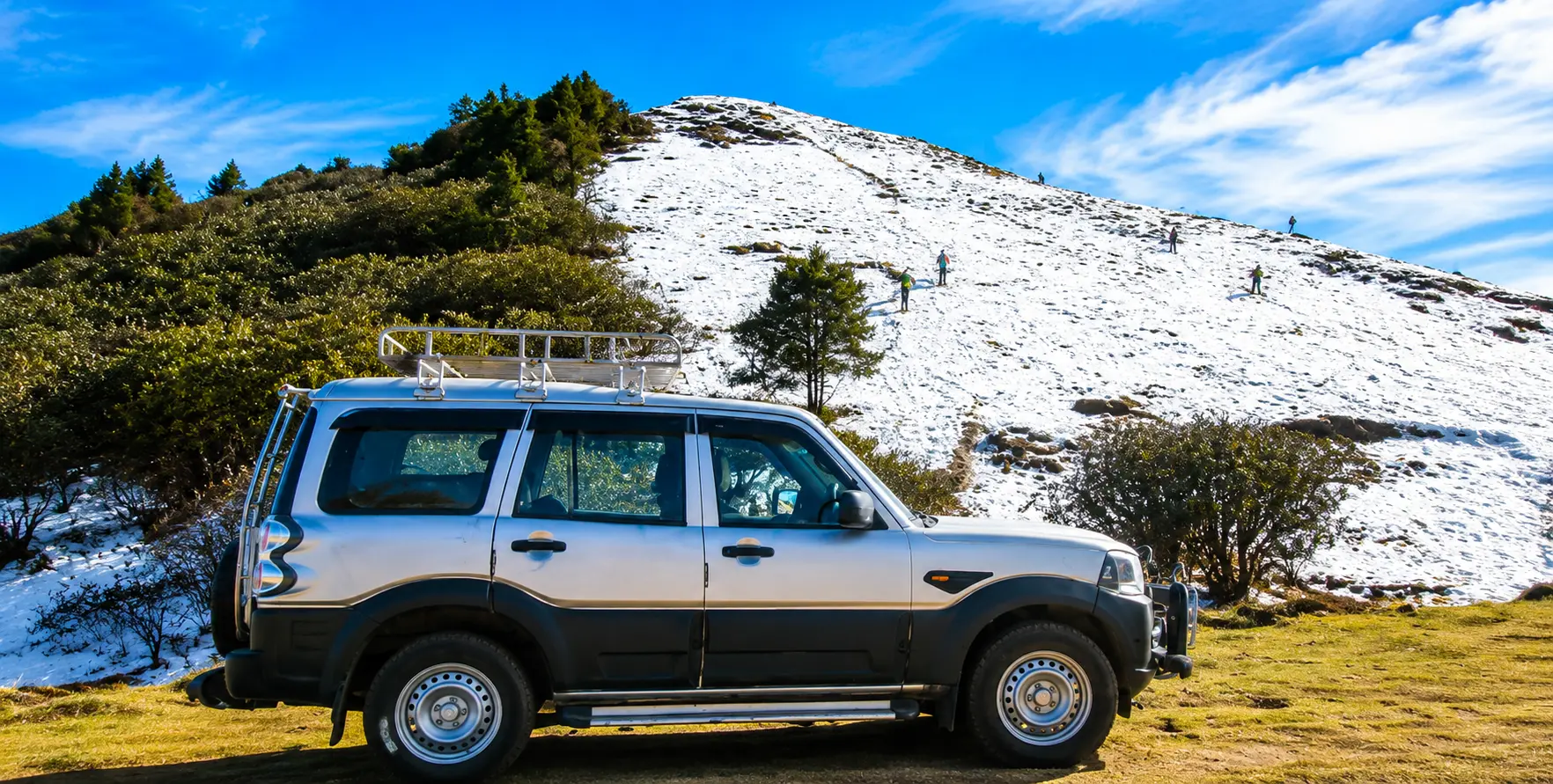
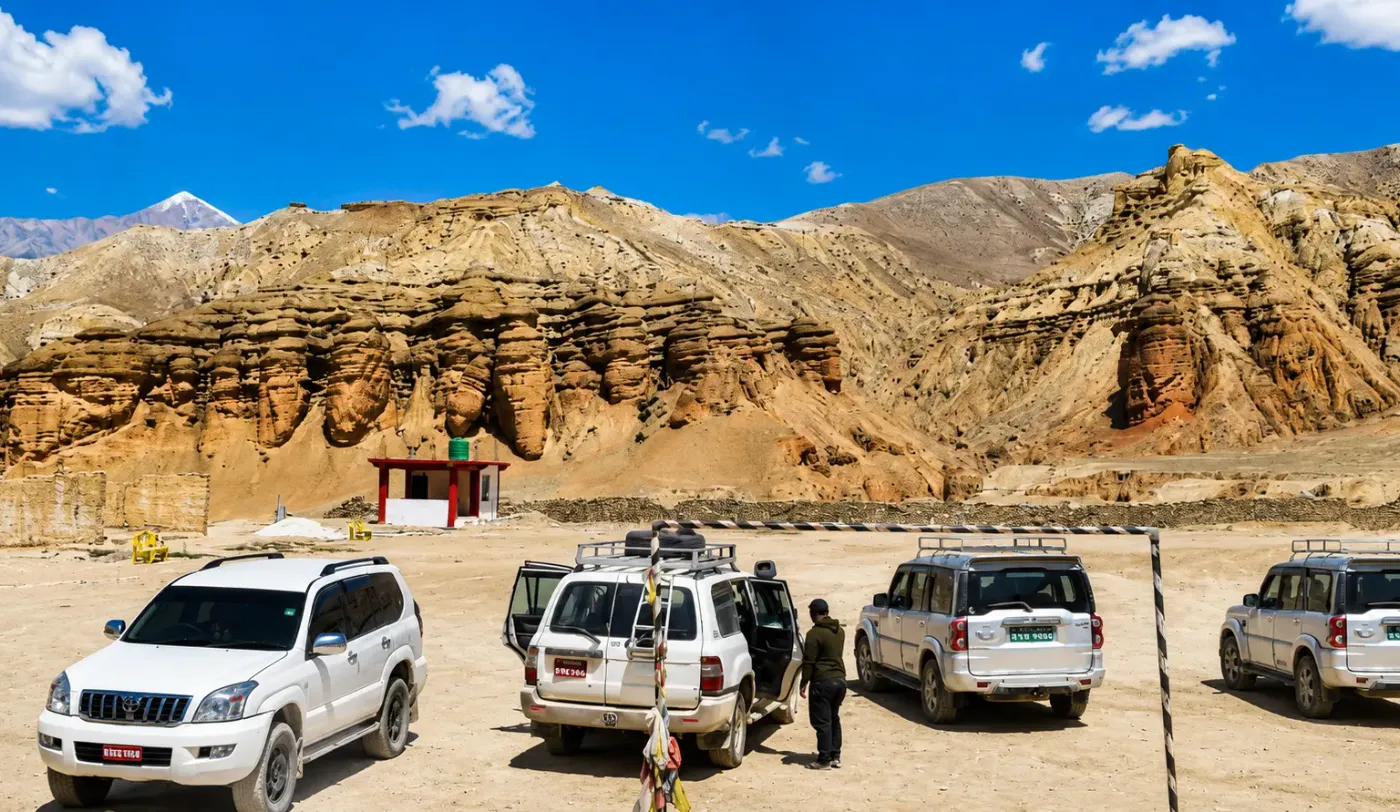
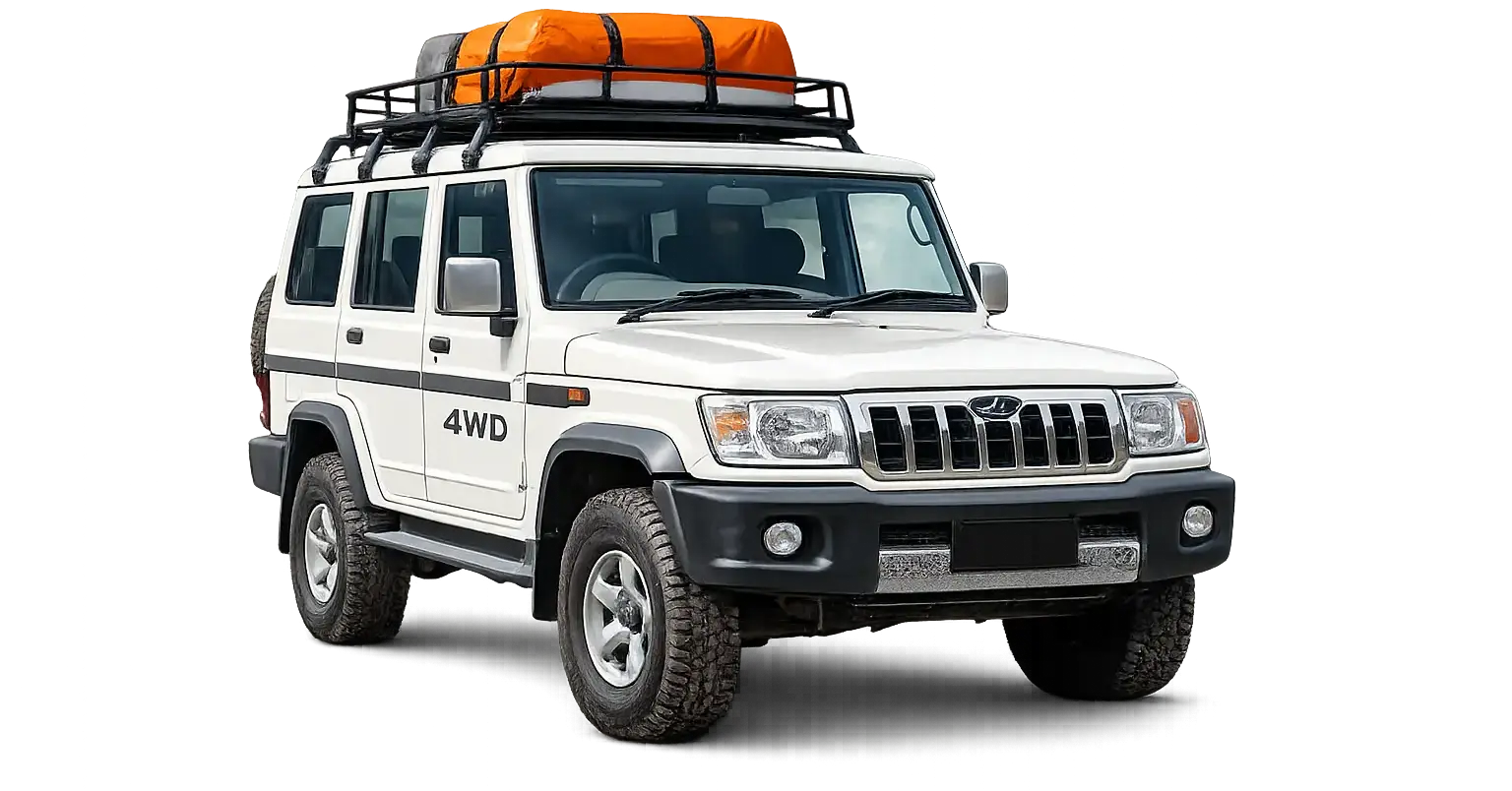
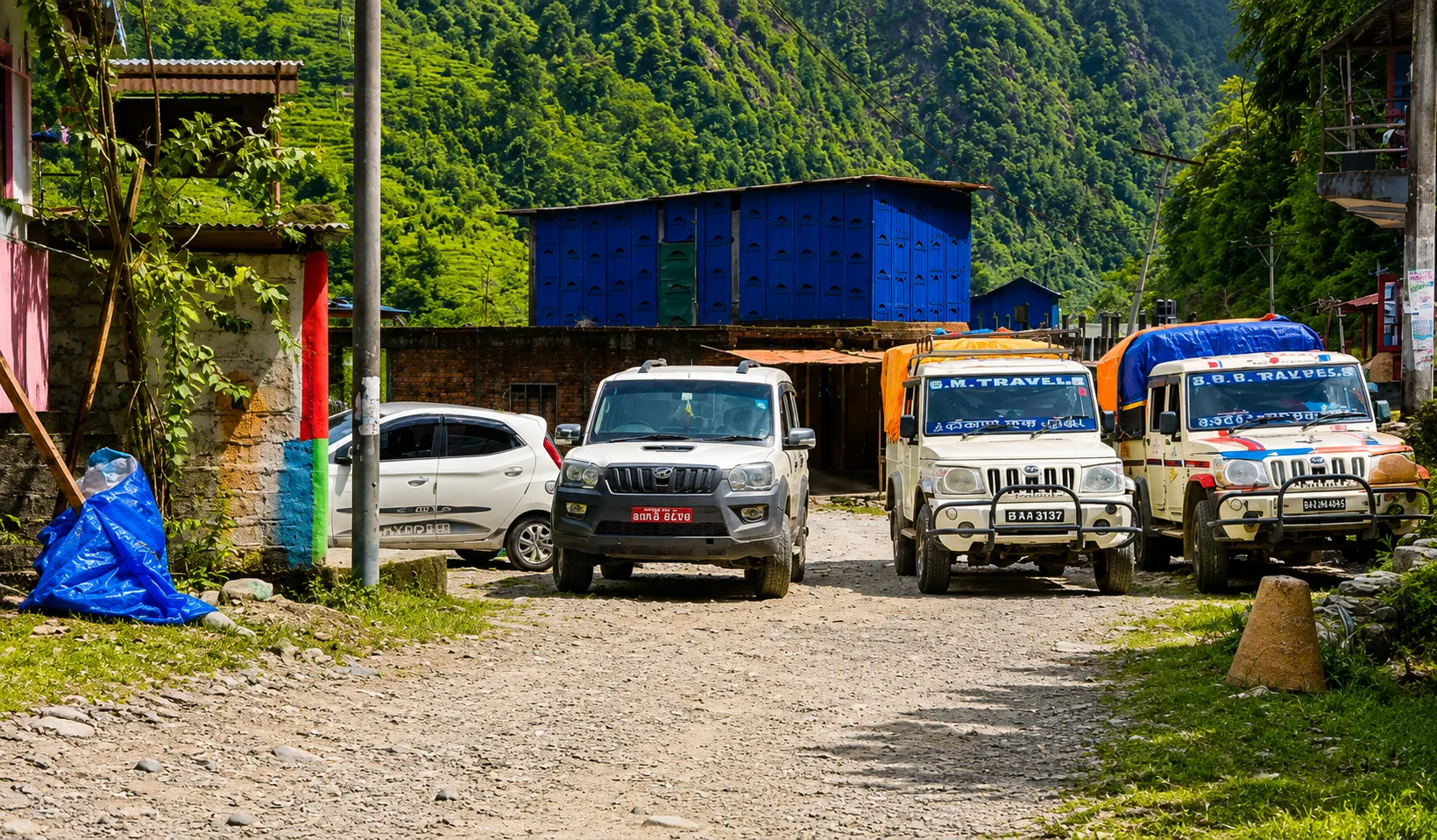
4WD Scorpio and Hilux jeep hire. Toyota Hilux and Mahindra Scorpio 4WD jeep fleet for 4 to 8 passengers on mountain road routes — Besisahar gorge road jeep hire, Soti Khola jeep hire, Phaplu jeep hire, Pokhara to Nayapul transport, and all Nepal gorge road and mountain approach assignments. 4WD traction, ground clearance, and diesel torque for the roads that require all three.

Toyota Hiace van hire. Toyota Hiace Commuter and similar 10-14 seat vans for medium groups on highway routes — Kathmandu to Pokhara highway, Pokhara to Kathmandu return, Kathmandu to Lumbini highway, Pokhara to Chitwan highway, and group trekking trailhead transfers on paved approach roads.

Tourist coaster hire. 14-22 seat tourist coaster hire for large groups on all Nepal highway routes — pilgrimage groups, corporate travel, large trekking agency group movements, and institutional transport requirements.

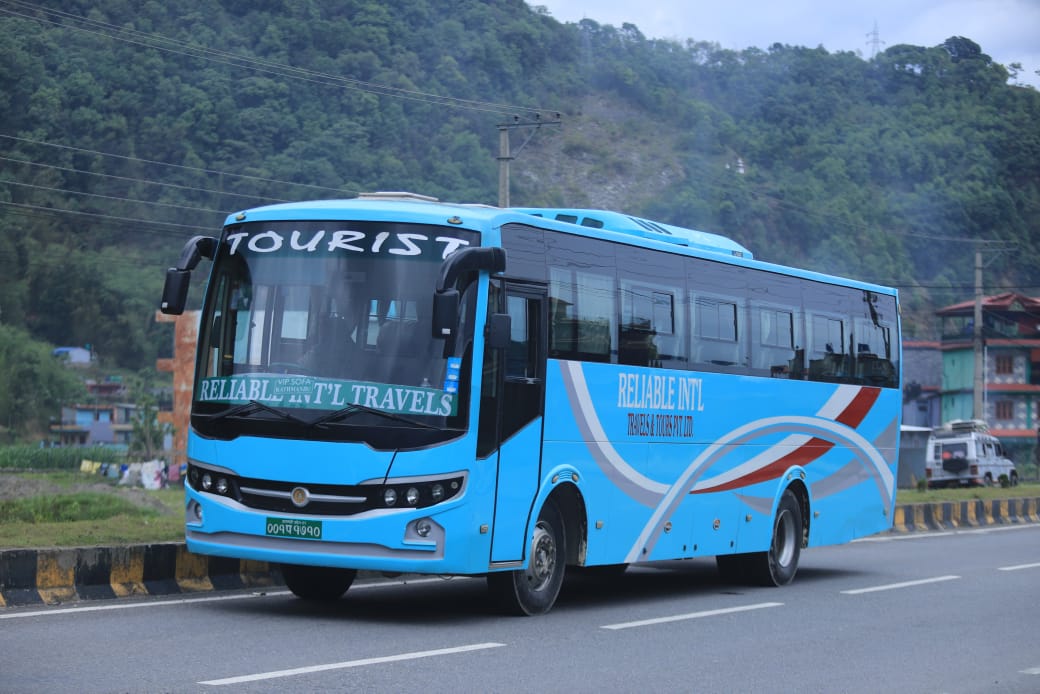
Full tourist bus hire. Full-size tourist bus hire for the largest Nepal group movements — 25 to 40+ passengers on any Nepal highway route.

Safe Travel in Nepal — Understanding the Road Environment

Nepal’s road environment is unique in ways that Nepal vehicle hire safety standards must address— it’s not the same as European highways, North American interstate systems, or even the major road networks of India’s plains. Understanding Nepal’s road environment helps travellers see why professional vehicle hire from Nepal Vehicle Hiring Pvt Ltd delivers a genuinely different safety outcome than informal or low-cost alternatives.

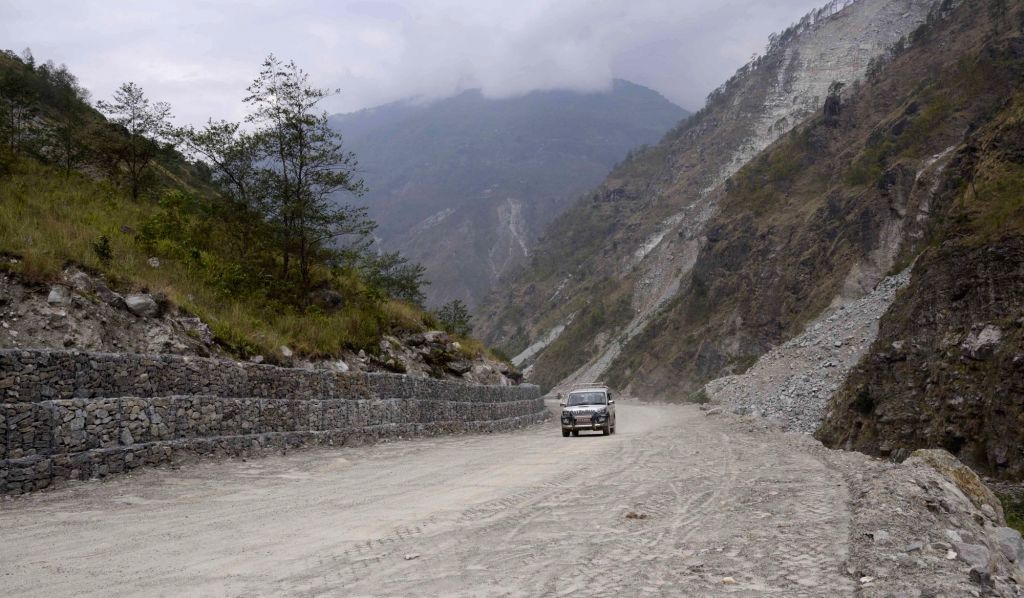
Mountain road geometry. Nepal’s mountain approach roads — the Besisahar gorge road, the Soti Khola approach, the Phaplu BP Highway, and the Kali Gandaki gorge road — have specific geometric challenges that standard 2WD sedans and inexperienced drivers cannot safely manage: narrow single-track sections where passing requires one vehicle to reverse to a wider point, river-adjacent exposure where the road’s outer edge drops directly to the river below, and steep gradient sections where engine braking and low-range 4WD transmission are the safety tools. Nepal Vehicle Hiring Pvt Ltd’s 4WD Scorpio and Hilux jeep hire are specifically suited to these roads—not as an upgrade option, but as the right vehicle for the terrain.

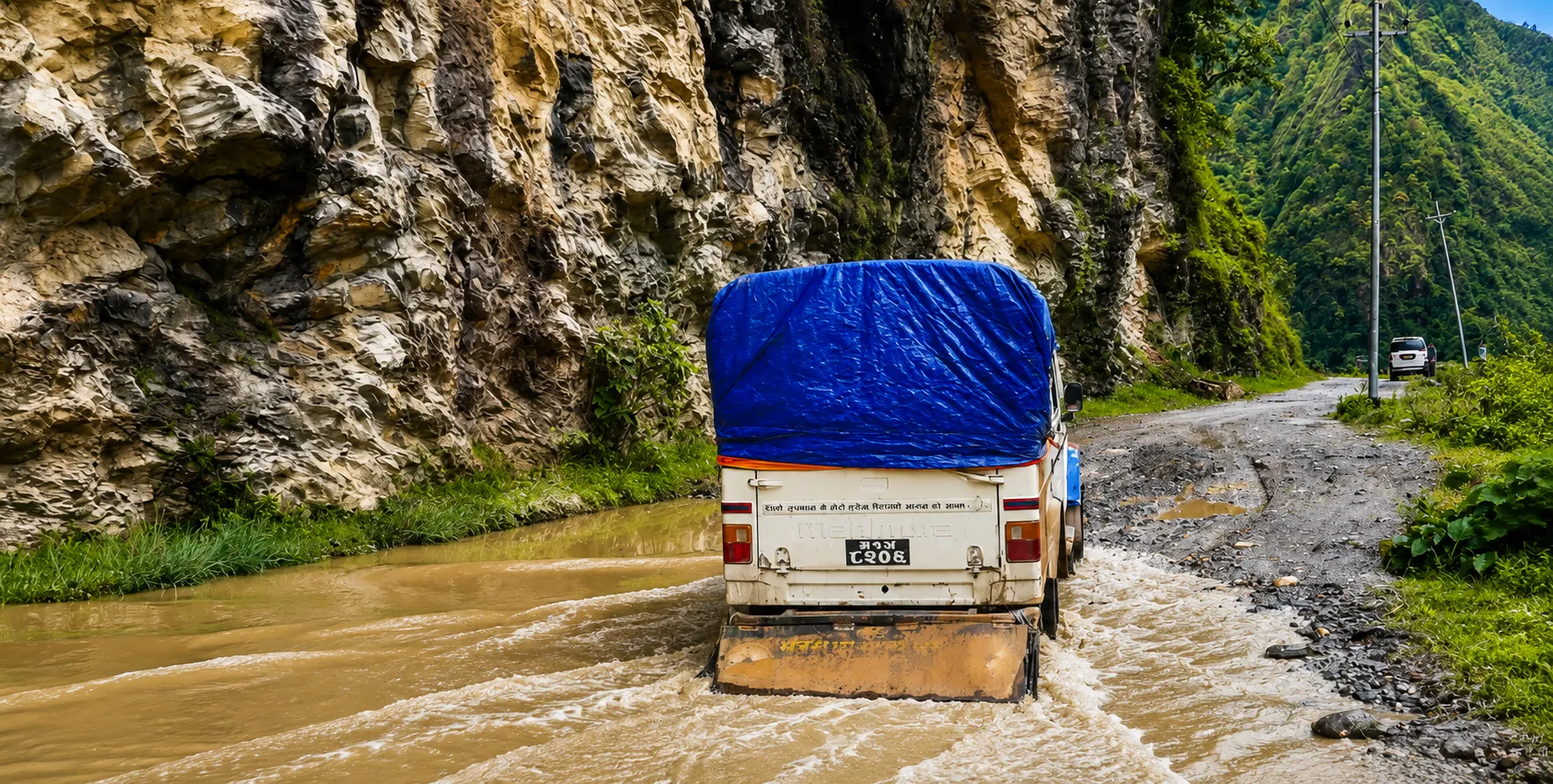
Seasonal surface variation. Nepal’s monsoon season (June to September) creates surface conditions on mountain roads — mud, water crossings, loose gravel from recent landslide clearing — that dry-season road descriptions do not capture. Nepal Vehicle Hiring Pvt Ltd’s morning road-condition-checking protocol during monsoon season ensures we don’t dispatch a vehicle to a road that conditions have made unsafe.

The dry-season surface descriptions are accurate for their season — and the monsoon-season protocols are our operational response to the specific risk that the season creates.

Traffic culture. Nepal’s highway traffic mix — trucks, buses, motorcycles, and pedestrians sharing the Prithvi Highway’s two lanes with tourist vehicles — requires the specific defensive driving approach that Nepal Vehicle Hiring Pvt Ltd’s drivers are trained and experienced in. The Prithvi Highway between Kathmandu and Mugling, the Mahendra Highway across the Terai, and the Siddhartha Highway between Butwal and Pokhara each have distinct traffic challenges. Our drivers know these roads’ specific traffic patterns and drive accordingly.

Reliable Nepal Travel — The Services That Deliver It

Nepal Vehicle Hiring Pvt Ltd’s reliable travel solutions cover every type of Nepal journey —from a single airport transfer to a complete multi-week Nepal visit transport arrangement.

Airport and city transfers. The Kathmandu airport transfer is Nepal Vehicle Hiring Pvt Ltd’s most time-critical service — a flight arrival that the vehicle must meet precisely, at a terminal where informal taxi pressure is high, and the arriving passenger’s first Nepal experience is being formed. Our airport transfer reliability standard: the driver at the arrivals gate before the flight lands, confirmed the evening before via WhatsApp with the driver’s name and vehicle registration, and a zero-tolerance policy on late airport pickups.

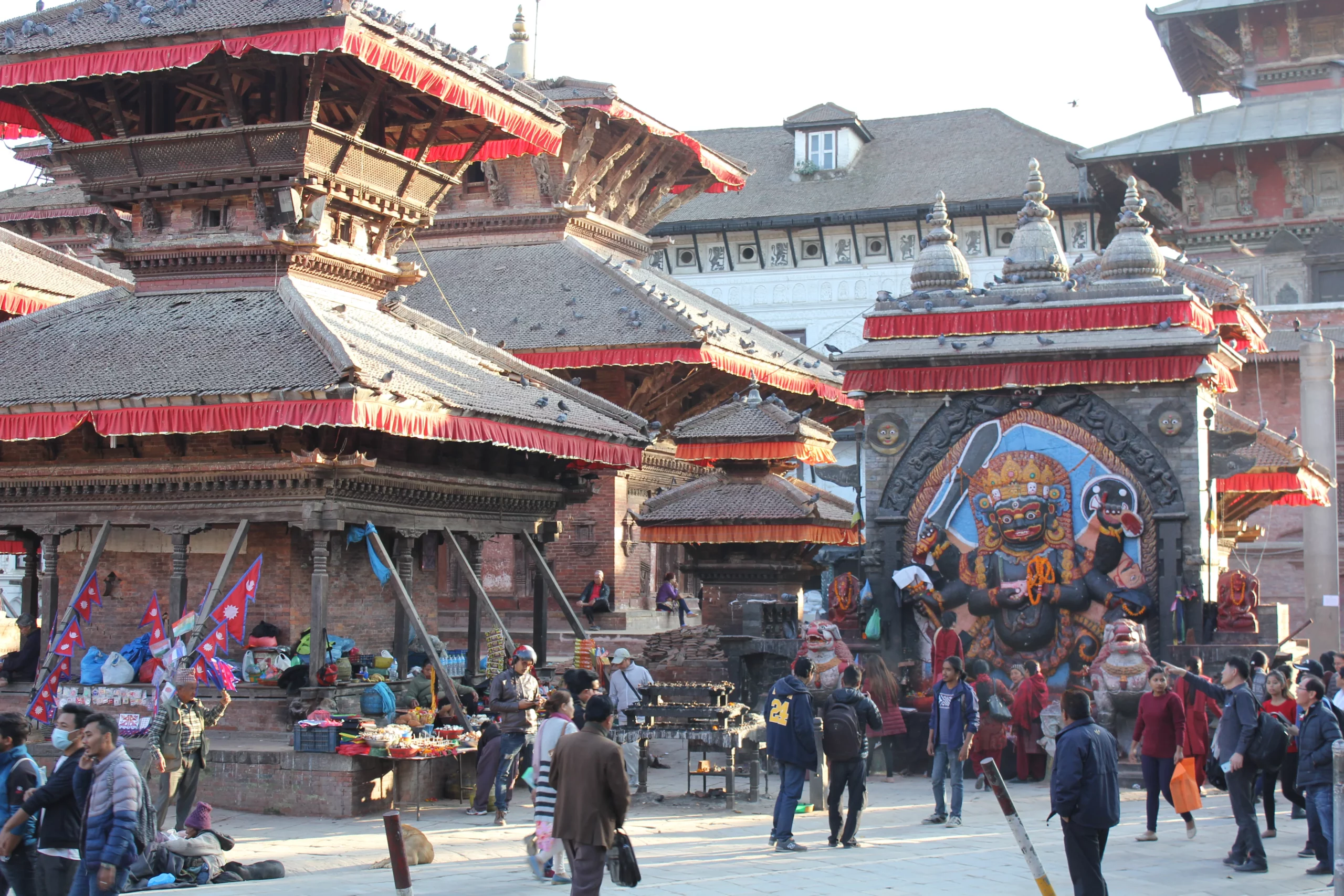
Sightseeing and heritage day tours. The Kathmandu sightseeing car hire covers Pashupatinath, Boudhanath, Swayambhunath, and Patan Durbar Square in a single reliable day—the driver manages heritage-site traffic, parking, and between-site routing so the visitor can focus on the sites. The Bhaktapur Durbar Square day tour vehicle, the Nagarkot sunrise vehicle hire, and the Sarangkot sunrise vehicle hire all follow the same pre-confirmed departure time, hotel pickup, and driver confirmation standard.

City-to-city highway transfers. The Kathmandu to Pokhara private vehicle hire, Pokhara to Kathmandu return vehicle, Kathmandu to Lumbini bus service, and Pokhara to Chitwan bus service cover Nepal’s principal tourism highway corridors with the same hotel pickup, confirmed departure, and all-inclusive pricing standard as all other Nepal Vehicle Hiring Pvt Ltd services.

Trekking trailhead transfers. Besisahar private vehicle hire, Soti Khola jeep hire, Salleri-Phaplu jeep hire, Nayapul transport, and Panch Pokhari trek transport — all trekking trailhead transfers with round-trip return vehicle pre-arranged at outward booking and WhatsApp-coordinated during the trek.

Affordable Nepal Travel — The Full Price Spectrum

Nepal offers one of the world’s best travel value ratios—extraordinary mountain landscapes, first-rate trekking, rich cultural heritage, and wildlife safari experiences at costs that significantly undercut comparable experiences in Western destinations. Nepal Vehicle Hiring Pvt Ltd’s pricing is calibrated to reflect this value ratio — professional service at Nepal’s appropriate price level, not at inflated tourist rates.

Short routes (NPR 2,000–8,000): Kathmandu airport transfer (NPR 2,000–4,000), Sarangkot sunrise vehicle hire (NPR 3,000–5,000), Nagarkot sunrise tour vehicle (NPR 5,000–8,000), Pokhara to Nayapul transport (NPR 5,000–9,000).

Medium routes (NPR 8,000–22,000): Kathmandu sightseeing car hire (NPR 8,000–14,000), Kathmandu to Pokhara vehicle hire (NPR 12,000–18,000), Besisahar private jeep hire (NPR 13,000–22,000).

Long-distance routes (NPR 22,000–70,000+): Soti Khola jeep hire (NPR 22,000–32,000), Manaslu trek transport (NPR 24,000–38,000), Phaplu 2-day jeep hire (NPR 44,000–70,000 per 2-day leg).

All prices are all-inclusive. Contact Nepal Vehicle Hiring Pvt Ltd on WhatsApp or our plan trip page for a confirmed quote on any Nepal journey.

Road Safety Specifics — Nepal’s Most Challenging Corridors

Nepal’s travel corridors range from the smooth, dual-carriageway sections of the Prithvi Highway near Kathmandu to the single-track cliff-face sections of the Marsyangdi gorge between Ngadi and Jagat. Understanding which corridors present which challenges—and how Nepal Vehicle Hiring Pvt Ltd’s safety standards address each—gives travellers the specific information they need.

The Prithvi Highway (Kathmandu to Pokhara, 200 km). Nepal’s most heavily used national highway is also its most consistently maintained — dual lanes for much of its length, paved throughout, and the most professionally managed road corridor in the country. The Prithvi Highway’s specific safety challenges are: the Mugling-Narayanghat gorge section (narrow, heavy truck traffic, river-adjacent exposure on the Trishuli gorge section); the Naubise descent from Kathmandu (steep, tight bends, the first significant descent from the valley rim); and the general heavy vehicle mix of the highway that the Nepal Vehicle Hiring Pvt Ltd driver navigates with experience.

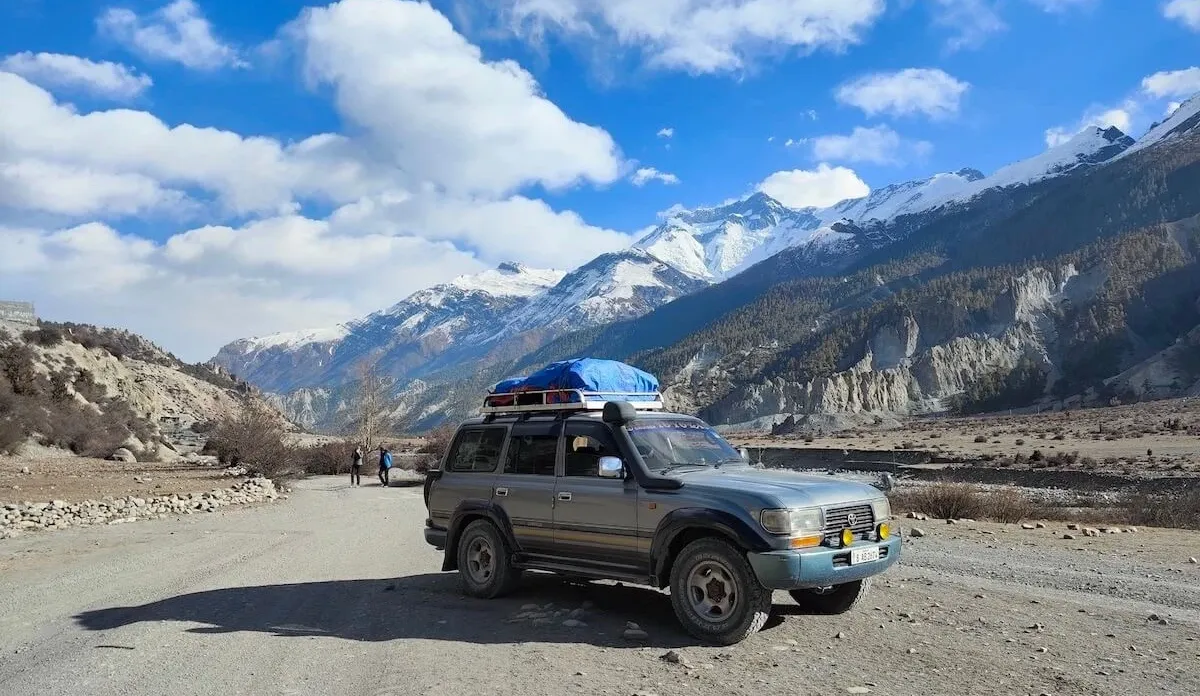
Private hire on this Kathmandu-to-Pokhara corridor uses well-maintained vehicles and drivers with hundreds of hours on the highway. Besisahar gorge road (Besisahar to Manang, 90+ km). The gorge road through the Marsyangdi valley north of Besisahar defines Nepal’s mountain approach-road standard—unpaved in most sections, river-adjacent exposure, narrow with limited passing opportunities, and the Himalayan gorge character of cliff walls and switchbacks that the gorge road’s geometry creates. Nepal Vehicle Hiring Pvt Ltd’s 4WD Scorpio and Hilux jeep hire on this road is mandatory — not optional.

The Besisahar private vehicle hire route is assigned only to drivers who have driven the gorge road for a minimum number of route hours.

The BP Koirala Highway to Phaplu (280 km from Kathmandu). The Kathmandu to Salleri-Phaplu jeep hire road through Okhaldhunga and Solukhumbu is one of Nepal’s most varied highway journeys — paved in its Kathmandu-to-Okhaldhunga sections, increasingly mountain road character beyond, with the specific Solukhumbu ridgeline approaches that create the long sustained climbs and descents that characterise the Everest overland approach road.

The Mahendra Highway (Terai, 1,000+ km). Nepal’s east-west national highway across the Terai is flat and well-maintained — the specific challenges are the Terai’s characteristically dense fog in winter mornings (reducing visibility to near zero on the long straight sections) and the heavy truck traffic that uses the highway as Nepal’s freight spine. Nepal Vehicle Hiring Pvt Ltd’s drivers on Mahendra Highway Terai routes are experienced in winter fog protocols—reduced speed, hazard lights, and defensive driving for low-visibility Terai highway conditions.

Reliability — What Happens When Things Don’t Go to Plan

Nepal’s travel environment includes genuine unpredictability—road blockages from landslides, flight delays that change airport transfer timing, trekking exit dates that shift by 2 to 3 days from the plan, and rare mechanical issues that require roadside resolution. Nepal Vehicle Hiring Pvt Ltd’s reliability standard includes specific protocols for each of these situations.

Road blockage on mountain approach roads. When a landslide or road obstruction blocks the Soti Khola approach, the Besisahar gorge road, or the Phaplu BP Highway mid-journey, Nepal Vehicle Hiring Pvt Ltd’s driver communicates with our operations team immediately — the team sources road-clearing timelines from the Department of Roads, advises the group on the best available option (wait for clearing, alternative route if available, or overnight at the nearest safe village), and maintains WhatsApp contact throughout. The group is never left without information or guidance.

Flight delay affecting airport transfer. For Kathmandu airport transfers, Nepal Vehicle Hiring Pvt Ltd monitors flight arrival status and adjusts the driver’s airport arrival time to the actual flight ETA — the driver is at the arrivals gate for the actual landing, not the scheduled landing time. No additional charge for flight delay waiting time within 2 hours of the scheduled arrival.

Trek exit date change. If the trekking exit date shifts by more than 2 days from the planned date, the operations team reallocates the vehicle to the confirmed exit date and updates the vehicle booking via WhatsApp to +977WhatsApp. Date adjustments within 1 to 3 days of the original planning date carry no rebooking fee.

Vehicle mechanical issue mid-journey. Nepal Vehicle Hiring Pvt Ltd’s maintenance standards minimise mid-journey mechanical issues—but when they do occur, our driver contacts the operations team immediately. We dispatch a replacement vehicle from the nearest available location, and the group’s journey continues with minimal delay. We have activated and executed this protocol successfully on the rare occasions it has been needed.

Affordability — The Nepal Travel Budget Reality

Nepal travel budgets span an extraordinary range — from budget backpackers whose total daily spend (accommodation, food, and transport) is USD 30 to 50, to luxury trekking clients whose guided day rate exceeds USD 400. Nepal Vehicle Hiring Pvt Ltd’s pricing covers this full spectrum not by varying quality by budget level, but by providing the right vehicle type for each budget while maintaining the same safety and reliability standard throughout.

Budget travellers. Solo or couple travellers on tight budgets who want the private vehicle hire’s hotel pickup and reliability benefit find it most cost-effective on short routes — the Kathmandu airport transfer (NPR 2,000–4,000) is the single most efficient private vehicle hire for budget travellers, costing only NPR 1,000–2,000 more than an informal taxi while delivering a confirmed driver name, vehicle registration, and the security of a professional pickup. Splitting the Sarangkot sunrise vehicle hire among 3 or 4 budget travellers from the same guesthouse brings the per-person cost to NPR 750–1,250—comparable to a shared taxi—while offering hotel pickup and confirmed return timing.

Mid-range travellers. The 3- to 6-person group on the Kathmandu to Pokhara private vehicle hire at NPR 12,000–18,00,0 divided across 4 passengers, is NPR 3,000–4,500 per person — moderately more than the tourist bus per seat but delivering hotel door-to-hotel door service with confirmed departure, no bus park taxi, and the full private vehicle hire experience. On trekking trailhead routes, the mid-range group of 4 to 6 trekkers on the Besisahar private jeep hire at NPR 13,000–22,000 total is NPR 2,200–5,500 per person — significantly less than the Kathmandu-to-Besisahar public transport equivalent when hotel pickup, confirmed timing, and full luggage space are factored in.

Top-end and luxury travellers. Alpine Luxury Treks’ top-end Nepal experiences use Nepal Vehicle Hiring Pvt Ltd’s Land Cruiser Prado and upgraded Hilux specifications for all ground transport — the same safety and reliability standard as the standard fleet, with the specific vehicle quality and presentation appropriate for the luxury tier. The Nepal tour package offers a bundled format for travellers who want a single confirmed total transport cost for the entire Nepal visit.

Sustainable and Responsible Nepal Travel

Safe, reliable, and affordable Nepal travel matters most when it is also responsible—supporting Nepal’s local tourism economy and minimising the environmental impact of vehicle journeys on the landscapes they pass through. Nepal Vehicle Hiring Pvt Ltd’s approach to responsible vehicle hire:

Supporting Nepal’s local transport economy. Every Nepal Vehicle Hiring Pvt Ltd booking supports Nepal’s professional vehicle hire industry — providing stable, fairly compensated employment for drivers and mechanics in a country where professional transport employment is a significant economic sector. The driver who makes the Besisahar jeep hire earns a professional-rate daily wage, not an informal taxi-negotiation rate.

Booking through a professional operator rather than an informal arrangement directly benefits Nepal’s transport workers.

Vehicle maintenance and emissions. Nepal Vehicle Hiring Pvt Ltd’s fleet maintenance programme keeps vehicles operating at optimal efficiency—well-tuned engines produce lower emissions and better fuel economy than poorly maintained vehicles. The Kathmandu air quality challenge makes vehicle emissions a specific local concern, and our fleet maintenance standards support responsible operations.

Respectful driving in conservation areas. Nepal Vehicle Hiring Pvt Ltd drivers follow specific instructions on speed limits, stopping points, and respectful vehicle operation in the natural environment on the Annapurna Conservation Area approach roads, the Manaslu Conservation Area approach, and all protected-area approach corridors. No unnecessary horn use in wildlife-sensitive areas, no road-edge waste disposal, and the specific conservation awareness required for protected-area approaches. Contact Nepal Vehicle Hiring Pvt Ltd on WhatsApp.

Safe Nepal Travel — Tips for Travellers

Nepal Vehicle Hiring Pvt Ltd’s drivers and operations team have gained specific road-safety knowledge from thousands of Nepal vehicle hire journeys. The most consistently useful safety tips for Nepal travellers:

  • Depart early on mountain road days: The Besisahar gorge road, the Soti Khola approach, and the Phaplu BP Highway are all best driven in the morning — light conditions best, road surface at its most compact before afternoon sun softens any wet sections.
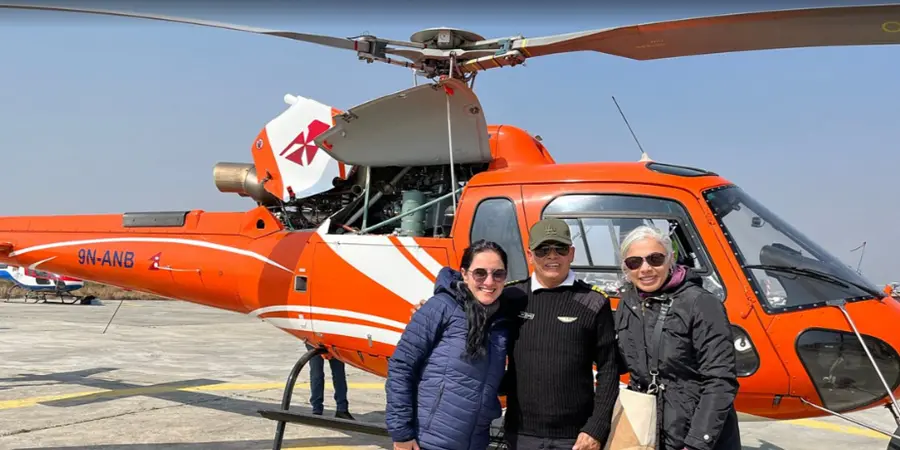
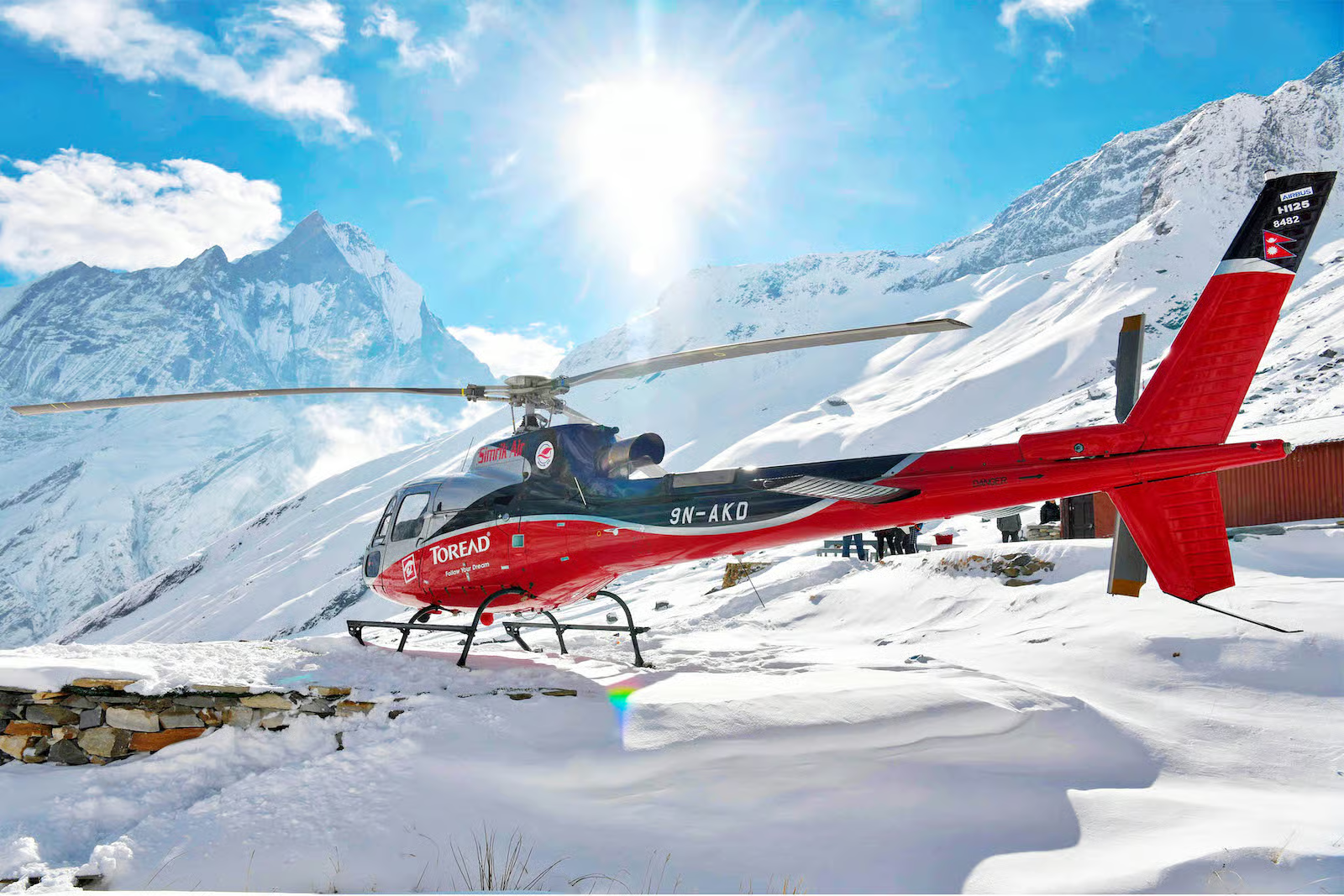
  • Carry personal travel insurance: Every Nepal traveller on mountain approach roads should carry personal travel insurance covering emergency evacuation—Nepal’s mountain environment makes helicopter evacuation a real possibility in emergencies.
  • Stay hydrated in the vehicle on mountain road sections: Altitude gain on the Annapurna and Manaslu approach roads is rapid; even passengers in a private jeep hire benefit from 2 to 3 litres of water during the driving day above 2,000 m.
  • Nepal Vehicle Hiring Pvt Ltd’s emergency WhatsApp) is staffed 24/7 for all active vehicle hire groups. Any road concern, vehicle concern, or route question — contact immediately.
  • Confirm ACAP and restricted area permits before departure: Nepal Vehicle Hiring Pvt Ltd advises on permit requirements at booking — have permits confirmed before the Besisahar jeep departs. This prevents delays at checkpoints on the approach road.

Safe Travel for Different Nepal Traveller Types

International trekkers. The primary safety concern for international trekkers on Nepal’s mountain approach roads is choosing the right 4WD vehicle and experienced drivers. Nepal Vehicle Hiring Pvt Ltd’s 4WD Scorpio and Hilux jeep hire for the Annapurna Circuit approach, the Manaslu Circuit approach, the Everest overland approach, and every other mountain road trailhead addresses both concerns—mandatory 4WD on roads that require it and specialist route experience on every assignment.

Trek Nepal Himalayas’ guided Annapurna Circuit packages, Manaslu Circuit treks, and Everest Base Camp treks use Nepal Vehicle Hiring Pvt Ltd for all ground transport precisely because of this standard.

Indian pilgrims and cultural tourists. Safety for Indian pilgrims visiting Nepal’s major sacred sites—Pashupatinath, Muktinath—combines reliability with the drivers’ knowledge of the specific pilgrimage route’s road conditions and rest-stop logistics. Vehicle Hiring Pvt Ltd serves the Indian pilgrimage market through the Kathmandu sightseeing car hire, the Lumbini bus service, and the complete Muktinath yatra vehicle chain.

Business and corporate travellers. Kathmandu airport transfers and private car hire for business meetings and inter-city corporate travel deliver the punctuality and presentation professional travel requires— a confirmed driver and vehicle the evening before, hotel pickup, and a quiet, well-maintained vehicle for the journey.

Families and senior travellers. The Kathmandu sightseeing car hire, Bhaktapur day tour vehicle, and Nepal tour package vehicle serve families and senior travellers who need a comfortable, safe, unhurried vehicle arrangement — the driver as guide-adjacent support, the vehicle departing when the group is ready, and the itinerary paced for the group rather than for a schedule.

The NVH Difference — Professional Standards in Every Hire

What separates Nepal Vehicle Hiring Pvt Ltd from the informal vehicle hire market alongside it in Nepal’s tourism transport landscape? Five specific operational standards that most informal operators do not maintain consistently.

Written confirmation for every booking. Confirm every Nepal Vehicle Hiring Pvt Ltd booking in writing—via WhatsApp message or email—with the all-inclusive price, vehicle type, driver name, pickup time, and destination before the journey begins. No verbal-only arrangements that can be misremembered or disputed at destination.

Evening-before driver identification. Sending the driver’s name and vehicle registration the evening before departure lets the group verify the vehicle at pickup—a security measure particularly important for solo female travellers, families, and airport arrival pickups in unfamiliar cities.

Route-specific driver assignment. The Besisahar Gorge Road driver isn’t the Kathmandu sightseeing driver doing a one-off gorge road assignment. The Soti Khola approach driver is not the Kathmandu to Pokhara highway driver redirected to a mountain road. Route-specific assignment means the driver knows every passing point, every road hazard, and every rest stop on the road they are driving—not driving it for the first time as a fare.

Pre-departure vehicle check. Every vehicle undergoes a pre-departure check — tyres, brakes, fuel, lights, 4WD engagement for jeep assignments — before the group boards for any journey. The check is not a formality; skipping it causes the mid-journey breakdowns informal operators experience, and Nepal Vehicle Hiring Pvt Ltd’s maintenance protocol prevents them.

Post-journey follow-up available. Nepal Vehicle Hiring Pvt Ltd’s WhatsApp is the post-journey contact for any questions, feedback, or issues that arose during the hire. The professional relationship does not end at the destination drop — it continues through any follow-up the traveller needs. Book any Nepal journey through Nepal Vehicle Hiring Pvt Ltd or our plan trip page.

Reliable Nepal Travel — The Trekking Corridor Network

Nepal Vehicle Hiring Pvt Ltd’s trekking corridor vehicle hire network covers every major trekking circuit in Nepal with reliable, pre-arranged transport—the trailhead transfer professional Nepal trekking depends on.

Nepal Vehicle Hiring Pvt Ltd — The Complete Travel Solution

Nepal Vehicle Hiring Pvt Ltd is not a single-service vehicle operator — it is Nepal’s complete private vehicle hire network, covering every journey type, every vehicle category, every budget level, and every travel corridor from a single professional operator relationship. The plan trip page accepts complete Nepal visit transport arrangements in a single submission, from the Kathmandu airport arrival transfer through Kathmandu sightseeing car hire, Kathmandu to Pokhara vehicle hire, trekking trailhead jeep hire, and the airport departure transfer, in a single professional booking.

Trek Nepal Himalayas’ guided trekking packages and Alpine Luxury Treks’ top-end Nepal experiences both rely on Nepal Vehicle Hiring Pvt Ltd for all ground transport — a professional relationship built on the same three qualities that define our service to every individual traveller: safety, reliability, and affordability. Contact Nepal Vehicle Hiring Pvt Ltd on WhatsApp or [email protected], or plan your complete Nepal visit transport through our plan trip page.

The All-Inclusive Pricing Model — Why It Matters for Nepal

Nepal’s informal vehicle hire market has a persistent problem: the quoted price and the actual price at the destination don’t always match. Fuel surcharges added mid-journey, driver overnight costs presented at arrival, toll fees not included in the outward quote, and the ‘city driving supplement’ for congested Kathmandu streets — these are the additions that informal arrangements produce and that Nepal Vehicle Hiring Pvt Ltd’s all-inclusive pricing eliminates.

The all-inclusive pricing model matters in Nepal for two key reasons. First, Nepal’s fuel price volatility—the Nepalese government adjusts fuel prices periodically in response to international crude oil prices, and informal vehicle operators use these adjustments to justify mid-trip price revisions. Nepal Vehicle Hiring Pvt Ltd’s all-inclusive price absorbs fuel price fluctuations within the booking period.

The confirmed price is the price, regardless of whether fuel prices changed between booking and travel day. Second, Nepal’s road toll system — multiple tollgates on the Prithvi Highway, the Araniko Highway, and other national routes — creates a specific informal addition point where some operators collect the toll payment from passengers separately rather than absorbing it into the quoted price.

Nepal Vehicle Hiring Pvt Ltd’s all-inclusive price specifically includes all tolls on every route.

For travellers planning their Nepal budget, the all-inclusive pricing model also provides planning certainty: the transport budget line for the Kathmandu to Pokhara vehicle hire, the Besisahar jeep hire, and the Kathmandu airport transfer is a fixed, confirmed number from the booking stage to the arrival stage — not a variable that depends on what extras the driver presents at destination. Contact Nepal Vehicle Hiring Pvt Ltd on WhatsApp or our plan trip page for an all-inclusive quote on any Nepal journey.

Booking Nepal Vehicle Hire — The Process

Nepal Vehicle Hiring Pvt Ltd’s booking process is designed for simplicity—a single WhatsApp message or plan trip page submission becomes a confirmed all-inclusive quote within hours and a confirmed booking within 24 hours.

What to include in a booking enquiry: Departure city and hotel; destination; travel date; group size and luggage description; vehicle preference (or ‘advise’ for our recommendation); any specific requirements (early departure time, stops en route, return vehicle needed).

What comes back from Nepal Vehicle Hiring Pvt Ltd: All-inclusive price for the confirmed journey; vehicle type recommendation; driver name and mobile number (sent the evening before departure); vehicle registration; operations WhatsApp number WhatsApp) for any journey-day communication.

Payment: Nepal Vehicle Hiring Pvt Ltd accepts payment in NPR cash on departure day, or, for large bookings, in advance via bank transfer. No advance payment is required for standard bookings; payment is made to the driver on departure morning.

The plan trip page at vehiclehiringnepal.com accepts complete Nepal visit transport arrangements — from the airport transfer through to the trekking trailhead jeep hire and the post-trek sightseeing car hire — in a single submission. We handle complete Nepal travel logistics in one email or WhatsApp conversation.

Safety on Nepal’s Highway Corridors — Specific Standards

Nepal Vehicle Hiring Pvt Ltd’s highway corridor safety standards address the specific challenges of each major route in the network.

Kathmandu to Pokhara (Prithvi Highway, 200 km). Nepal Vehicle Hiring Pvt Ltd’s Kathmandu to Pokhara private vehicle hire uses experienced Prithvi Highway drivers who know the Naubise descent’s specific approach requirements, the Malekhu gorge’s truck-passing protocols, and the Mugling confluence junction’s traffic management. Prithvi Highway safety standards include maximum speed limits on highway sections and specific lane discipline at junctions.

Kathmandu to Lumbini (200+ km via Mugling and Butwal). The Kathmandu to Lumbini bus and vehicle service navigates the Prithvi Highway and then the flat Terai sections to Butwal and Bhairahawa. The specific Terai safety challenge — long straight sections encouraging excessive speed — is managed by Nepal Vehicle Hiring Pvt Ltd’s maximum highway speed standard, applied on all Terai routes.

Pokhara to Chitwan (Siddhartha Highway, 148 km). The Pokhara to Chitwan bus service descends the Siddhartha Highway’s winding sections through the Annapurna foothills before reaching the Terai plain near Chitwan. The highway descent requires the specific braking discipline and gear use that Nepal Vehicle Hiring Pvt Ltd’s drivers are trained in — not the freewheeling descent approach of informal highway operators.

Kathmandu sightseeing routes (in-city and valley). Kathmandu sightseeing car hire navigates Kathmandu’s dense urban traffic and the ring road’s mixed-vehicle environment. Nepal Vehicle Hiring Pvt Ltd’s city drivers are experienced in the specific Kathmandu urban driving environment — heritage site approach roads, temple area pedestrian zones, and the ring road’s junction management — providing safe, efficient in-city navigation for heritage day tours.

Why These Three Values Matter More in Nepal Than Anywhere Else

Safety, reliability, and affordability are values claimed by vehicle hire services everywhere — but they carry a specific weight in the Nepal travel context that makes them more than marketing language.

Safety matters more in Nepal because the roads that Nepal’s finest experiences require are genuinely demanding — the gorge approach to the Annapurna Circuit‘s Besisahar, the Manaslu Circuit’s Soti Khola road, and the remote Solukhumbu BP Highway to Phaplu are roads where the difference between a maintained 4WD vehicle with a route-experienced driver and an informal arrangement genuinely affects passenger safety. The gap between safe and unsafe transport on Nepal’s mountain roads is wider than on any European highway—which is why Nepal Vehicle Hiring Pvt Ltd’s safety standard isn’t an optional upgrade but an operational necessity.

Reliability matters more in Nepal because the consequences of a failed vehicle pickup are more serious — a missed airport pickup at Tribhuvan International’s chaotic arrivals area, a no-show trekking transport on departure morning, or an absent return vehicle at a remote trailhead are all worse outcomes in Nepal than in a city where alternatives are abundant. Nepal Vehicle Hiking Pvt Ltd’s reliability standard exists because alternatives are genuinely poor in Nepal’s travel context.

Affordability matters more in Nepal because it is a developing-world destination where the traveller’s budget is carefully calibrated to cover accommodation, permits, food, and guide costs alongside transport—and transport costs that exceed the budget create real constraints on the overall visit. Nepal Vehicle Hiring Pvt Ltd’s all-inclusive pricing at Nepal’s fair rate level — not at inflated tourist rates — respects the budget reality of Nepal travel while maintaining the safety and reliability standards above.

The Nepal tour package option bundles the complete visit in a fixed-budget format for travellers who want the entire Nepal experience at a single confirmed cost.

Frequently Asked Questions — Safe, Reliable, Affordable Nepal Travel

Q: How do I know my Nepal vehicle hire will be safe?

Nepal Vehicle Hiring Pvt Ltd uses route-assigned drivers with specific experience on each road corridor, mandatory 4WD vehicles for mountain approach roads, pre-departure vehicle checks, monsoon-season morning road condition confirmation, and 24/7 WhatsApp emergency contact. Contact Nepal Vehicle Hiring Pvt Ltd on WhatsApp

Q: What if my driver doesn’t show up on departure morning?

We send the driver’s name, mobile number, and vehicle registration via WhatsApp the evening before every departure. If any issue arises, our 24/7 operations WhatsApp can coordinate an immediate replacement vehicle. This situation has not occurred in Nepal Vehicle Hiring Pvt Ltd‘s operations — but the protocol exists and has been tested.

Q: Are Nepal Vehicle Hiring Pvt Ltd prices slower than public transport?

For groups of 3 or more passengers, private car hire and 4WD jeep hire often match or undercut the per-person cost of public transport once you include taxi costs to the bus park and luggage-handling time. Private vehicle hire is cheaper for groups — contact us for a quote.

Q: How far in advance do I need to book?

3 to 5 days ahead for standard routes. 1 to 2 weeks ahead for trekking trailhead transfers in peak season (Oct-Nov, March-May). Book through our plan trip page or WhatsApp.

Nepal Vehicle Hiring Pvt Ltd partners with Trek Nepal Himalayas — whose Annapurna Circuit guided treks, Langtang Valley treks, Manaslu Circuit treks, Everest Base Camp treks, and Chitwan jungle safaris all use Nepal Vehicle Hiring Pvt Ltd for ground transport — and with Alpine Luxury Treks for top-end Nepal experiences where the highest vehicle quality standard matches the highest trekking experience standard—one call. Every Nepal journey handled professionally.

Conclusion

Safe, reliable, and affordable travel across Nepal is what Nepal Vehicle Hiring Pvt Ltd delivers — through a professional private car hire, 4WD jeep hire, Hiace van hire, tourist coaster hire, and tourist bus hire fleet serving every Nepal journey type: airport transfers, Kathmandu sightseeing, Bhaktapur and Nagarkot day tours, Kathmandu to Pokhara highway transfers, Lumbini and Chitwan connections, and all Nepal trekking trailhead transfers from Besisahar to Phaplu and beyond.

Book your Nepal vehicle hire with Nepal Vehicle Hiring Pvt Ltd — call or WhatsApp, email [email protected], visit vehiclehiringnepal.com, or plan your complete Nepal travel through our plan trip page.
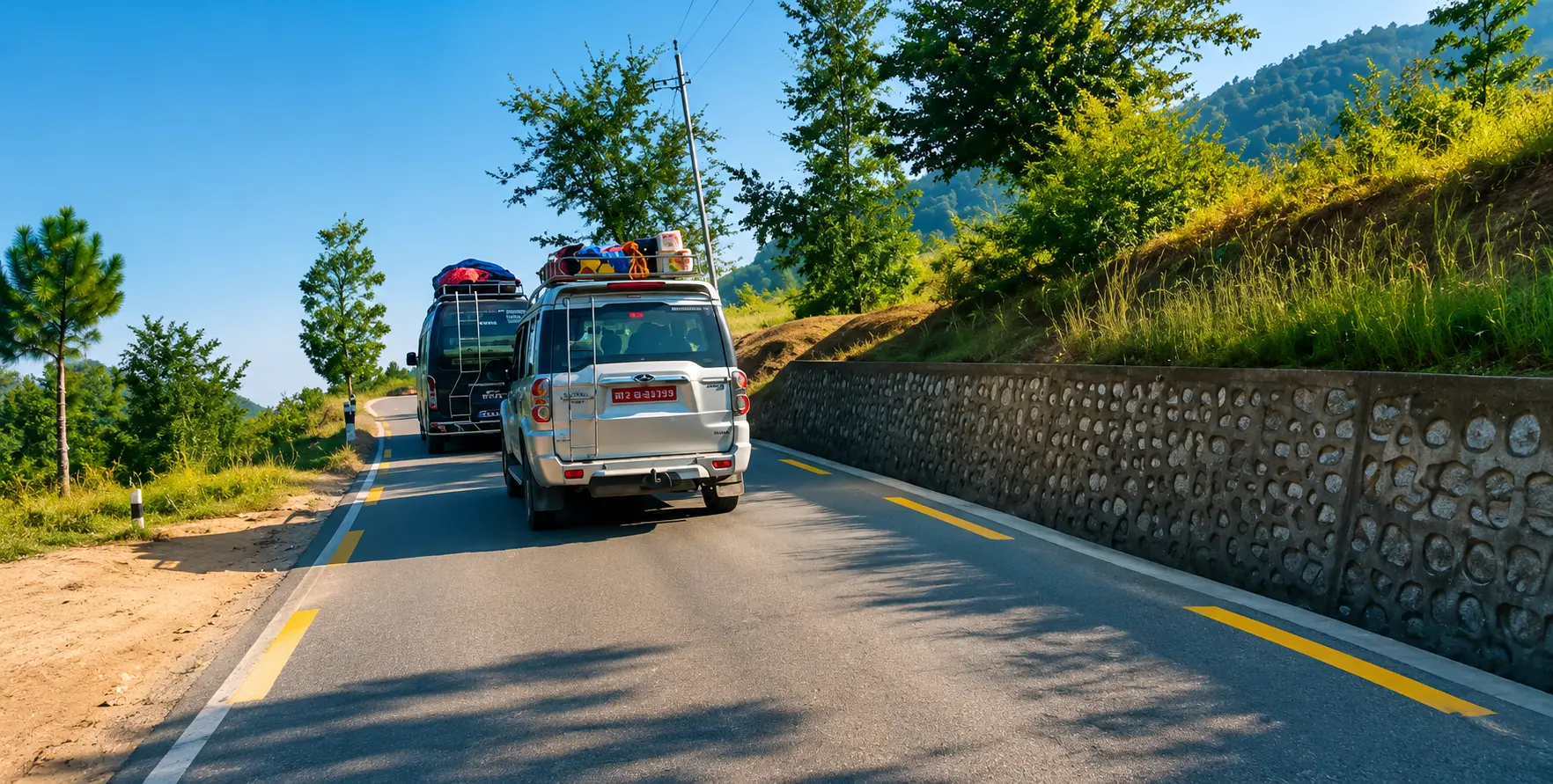
Quality Transport in Nepal: A Guide to Better Journeys

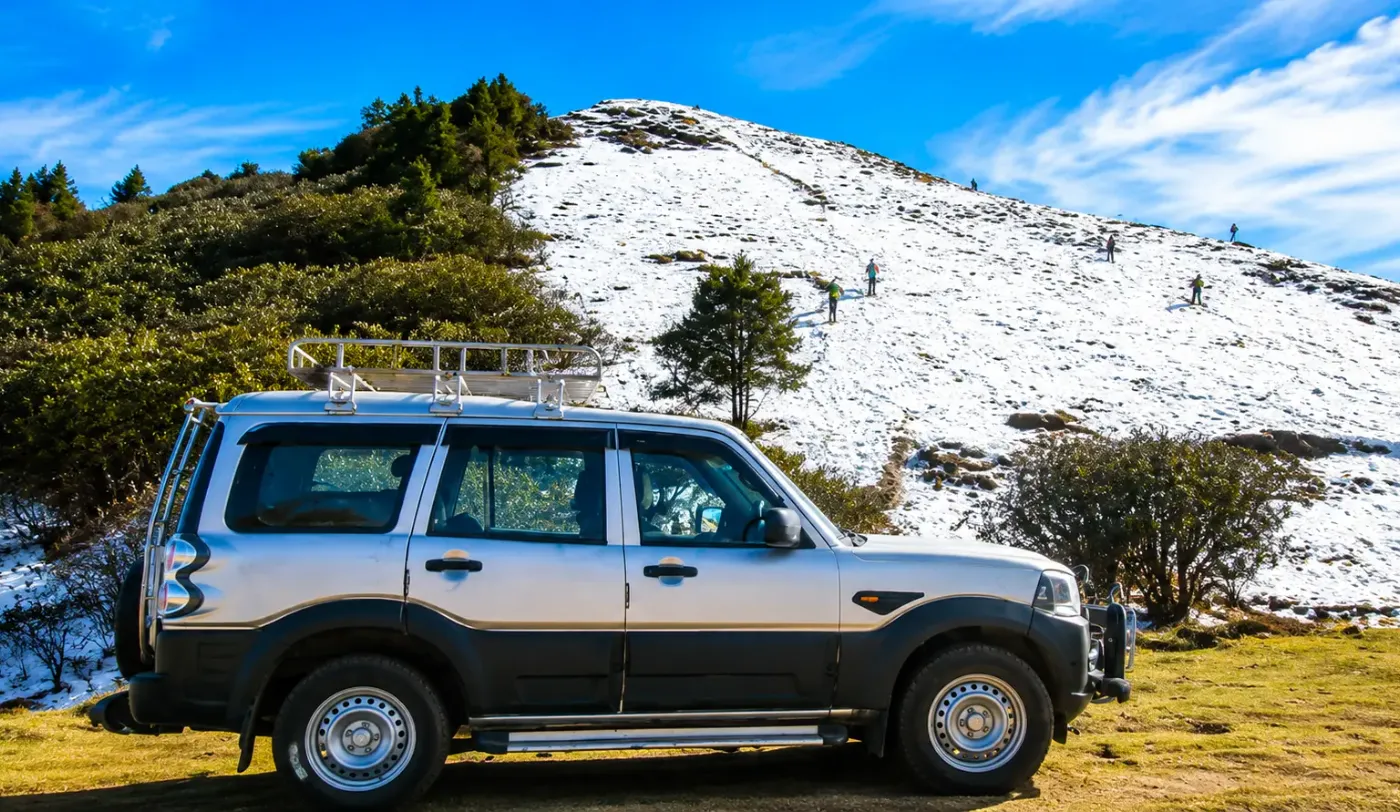
Share jeep

Making Every Nepal Journey Memorable with Quality Transport Nepal — Complete Guide

Every Nepal journey has its centrepiece — the moment at Everest Base Camp, the Annapurna sunrise from Poon Hill, the tiger sighting at Chitwan, the prayer wheel at Muktinath, the medieval bazaar at Bhaktapur. These moments are why travellers choose Nepal.

But between and around every centrepiece, the journey itself is woven from the accumulated experience of getting there and returning — the hours in the vehicle between hotel and trailhead, between city and city, between the airport arrival and the heritage site, between the completion of the sacred circuit and the hotel door at the end of an extraordinary day.

Quality transport turns these in-between hours from neutral transit into a memorable experience in their own right. The Kathmandu to Pokhara private vehicle journey through the Trishuli gorge is not transit to Pokhara — it is a 6-hour Himalayan highway experience of spectacular beauty that a bus window or a domestic flight entirely replaces with something categorically different.

The pre-dawn Nagarkot sunrise transfer in a private vehicle is not the price paid to see the Himalayan dawn — it is the beginning of the experience, the dark approach road through sleeping Kathmandu, the driver’s silent positioning at the viewpoint carpark in the first hint of light, the waiting that is itself a preparation for what comes next. Quality transport doesn’t just deliver travellers to their destinations. It makes the journey part of what you remember.

Nepal Vehicle Hiring Pvt Ltd provides quality transport across Nepal’s entire geography—from the airport transfer that begins your Nepal visit to the departure drop that closes it, and every journey in between. This guide explores what quality transport means in Nepal’s specific context, how it makes each journey type more memorable, and how to plan a Nepal visit whose transport is as much a part of the experience as the destinations it connects.

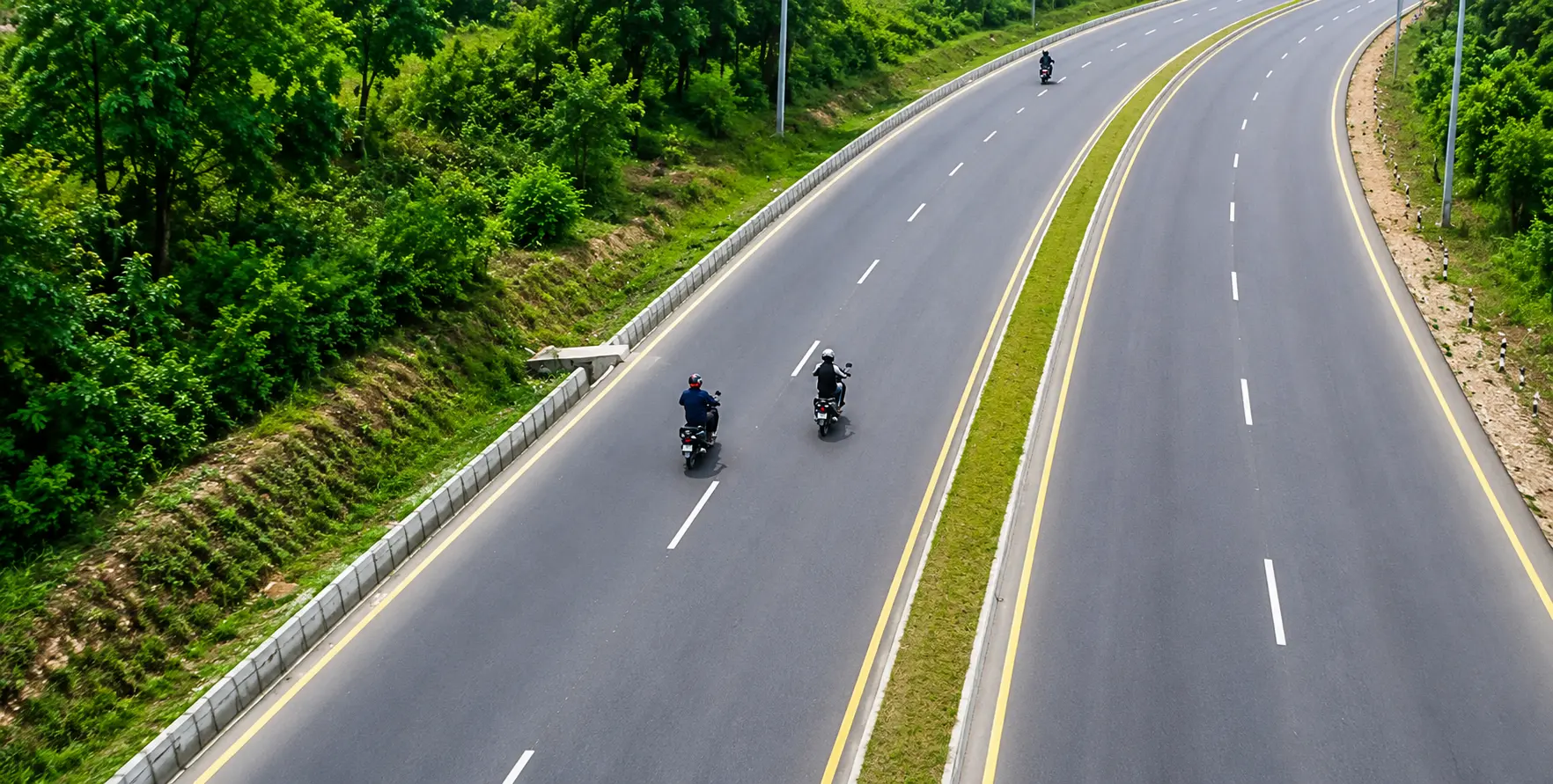
Bp highway

What Quality Transport Means in Nepal — The Five Dimensions

Quality transport in Nepal is not simply the most expensive option or the newest vehicle. It is a specific combination of five dimensions that together convert a logistics function into a travel experience.

Dimension 1: Timing Reliability. A quality transport service in Nepal arrives at the confirmed time — not approximately, not soon, but at the time the driver confirmed the previous evening by WhatsApp. For the 5:30 AM Nagarkot sunrise departure, a 15-minute late arrival is the difference between the full dawn and a partial sunrise.

For the Besisahar trailhead jeep transfer, a 2-hour delay means arriving at the trailhead in the heat of the day rather than in the cool morning that the trek’s first day rewards. Nepal Vehicle Hiking Pvt Ltd confirms all departures the evening before and positions the driver at the hotel entrance before the confirmed time — not after.

Timing reliability is the most fundamental quality dimension of transport because no other quality can compensate for a missed sunrise or a fatigued trailhead arrival.

Dimension 2: Vehicle Comfort and Condition. A quality transport vehicle in Nepal is clean, air-conditioned (for highway travel), mechanically verified before the journey, and appropriately sized for the group and their luggage. A private car hire that arrives at the hotel with a clean interior, working air conditioning, and enough boot space for the group’s bags turns the 6-hour Kathmandu-to-Pokhara journey from an endurance exercise into a comfortable experience.

A 4WD Scorpio or Hilux jeep that arrives with verified 4WD engagement, correct tyre pressure, and a full fuel tank turns the trekking approach road from a source of mechanical anxiety into a confident mountain-road transit.

Dimension 3: Driver Knowledge and Presentation. A quality transport driver in Nepal is not just mechanically competent — they are a route guide, a cultural interpreter, and a professional representative of the operator. Nepal Vehicle Hiring Pvt Ltd’s drivers on the Kathmandu sightseeing car hire know the specific vehicle drop-off points for each heritage site, the morning and afternoon light patterns that affect photography quality at each viewpoint, and the local context (the festival timing, the seasonal crowd pattern, the specific queue management at the most popular sites) that a GPS-following driver without route knowledge cannot provide.

A driver who offers an unprompted explanation of the Trishuli River’s significance as the approach road passes the confluence, or who identifies the Manaslu massif on the northern horizon as the vehicle climbs toward Besisahar, adds a dimension of knowledge that converts a transport function into a guided experience.

Dimension 4: Communication and Coordination. A quality transport service communicates with the client throughout the journey—confirming departure details the evening before, sending a WhatsApp when the driver is positioned and waiting, and staying available throughout the travel day for any schedule change or client need. Nepal Vehicle Hiring Pvt Ltd’s contact on WhatsApp is monitored continuously during all active bookings —a communication standard that converts travellers’ uncertainty about whether their transport is arranged and confirmed into the confidence to focus on the experience rather than logistics m

Dimension 5: Flexibility and Responsiveness. A quality transport service adapts to the journey rather than managing the journey to the schedule. The private vehicle hire that stops at the Mugling riverside restaurants for the right duration rather than hurrying the group back to the highway, that accommodates the spontaneous request to photograph the suspension bridge over the Trishuli, and that adjusts the pace of the Bhaktapur heritage tour when the potters’ quarter proves more absorbing than the schedule expected, is a transport service that treats the journey as a responsive partnership with the traveller rather than a fixed delivery service.

This flexibility is the quality dimension most difficult to specify in advance and most apparent in the journey itself.

Quality Transport Nepal | Memorable Journey Guide

The Memorable Airport Transfer — First Impressions and Last Memories

The airport transfer is every international visitor’s first and last Nepal transport experience —the first because it begins at Tribhuvan International Airport’s arrivals hall and ends at the Kathmandu hotel, and the last because it reverses the journey at departure. These two transfers frame the entire Nepal visit, and their quality sets the tone for everything that follows.

The quality airport transfer from Nepal Vehicle Hiring Pvt Ltd begins before the vehicle—with the WhatsApp confirmation sent to the traveller during the international flight that the driver is confirmed. The vehicle is ready, so that the disorientation of arriving in a new country with new currency and unfamiliar logistics is immediately replaced by the certainty of a name board held by a uniformed driver in the arrivals hall.

The short ride from Tribhuvan International to the Kathmandu hotel is typically 30 to 45 minutes — long enough for the driver to answer the three questions every arriving Nepal visitor asks (which currency to use, whether a SIM card is available, and what time the hotel check-in is) and to point out Boudhanath Stupa if the route passes it, introducing the city’s sacred geography in the first moments of arrival. This attention in the airport transfer—small acts of professional hospitality that turn a logistics pickup into a welcome—shapes the first transport impression of the Nepal visit and builds the traveller’s confidence in the transport arrangements for every journey that follows.

The departure airport transfer at the visit’s end has its own quality dimension. A driver who arrives at the hotel 10 minutes early rather than rushing to catch the departure time; who asks whether any final items need to be purchased before the airport; who confirms that the international flight’s check-in queue is typically shorter at the specific terminal before 9 PM; and who wishes the group a safe onward journey with the warmth of a professional who has been a part of their Nepal experience — this is the quality departure transfer that closes a Nepal visit in the same spirit of professional care that the airport arrival began it.

Nepal Vehicle Hiring Pvt Ltd‘s Kathmandu airport transfer service covers both arrival and departure with this standard.

The Memorable Heritage Sightseeing Day — Kathmandu’s UNESCO Circuit

The Kathmandu Valley’s seven UNESCO World Heritage Monument Zones — Pashupatinath Temple, Boudhanath Stupa, Swayambhunath (Monkey Temple), Patan Durbar Square, Bhaktapur Durbar Square, Changunarayan Temple, and the Kathmandu Durbar Square complex — form the foundation of any Nepal heritage experience. How you visit them determines whether they become genuinely memorable encounters with Newar civilisation at its peak or a fatiguing sequence of entry queues and souvenir shops.

The quality Kathmandu sightseeing car hire from Nepal Vehicle Hiring Pvt Ltd converts the heritage circuit into a memorable day through specific decisions that only private transport enables: departing Pashupatinath at 6:30 AM, before the tourist groups arrive, when the morning rituals at the ghats are conducted in their actual devotional context; arriving at Boudhanath when the circumambulation flow of monks, nuns, and pilgrims is at its natural morning peak; reaching the Bhaktapur Durbar Square by mid-morning when the light falls at the angle that illuminates the 55-Window Palace’s carved facade most beautifully; and departing Patan in the late afternoon rather than the midday heat, when the heritage square’s secondary lanes and courtyards are accessible without the tour group density that concentrates around the main monuments at peak times. None of these timing decisions is possible on a fixed-schedule group tour or a shared taxi arrangement—they require private vehicle hire that waits for the traveller’s pace rather than managing the traveller to the schedule.

Alpine Luxury Treks and Trek Nepal Himalayas coordinate their heritage-day extensions for trekking clients through Nepal Vehicle Hiking Pvt Ltd’s Kathmandu sightseeing service — the pre-trek heritage day that prepares trekkers for the cultural context they will encounter on the Langtang Valley or Manaslu Circuit trail.

Quality Transport Nepal | Memorable Journey Guide

The Memorable Sunrise — Nepal’s Dawn Mountain Experiences

Nepal’s Himalayan sunrise experiences — the Annapurna range from Sarangkot, the Everest group from Nagarkot, the Langtang range from Nagarkot’s eastern viewpoints — are among the world’s finest mountain dawn experiences. They also depend entirely on quality transport: a shared dawn vehicle that reaches the viewpoint in darkness before dawn is the logistical foundation for the visual experience r

The quality Nagarkot sunrise tour vehicle from Nepal Vehicle Hiring Pvt Ltd departs Kathmandu at 3:30 to 4:30 AM—in darkness, on roads clear of traffic but navigated by feel and experience rather than familiar daylight landmarks. The driver’s confidence on the Nagarkot approach road at this hour — the specific hairpin timing, the parking position that places the vehicle correctly for the viewpoint trail, and the quiet positioning that allows the group to walk to the viewpoint without the diesel noise that mars the approach for others — is a quality service component that only experience provides.

The Himalayan dawn that follows justifies every minute of the pre-dawn journey. But a well-managed journey brings the traveller to that dawn in quiet expectation rather than logistical stress.

The Sarangkot sunrise vehicle hire from Pokhara provides the same quality pre-dawn management for the Annapurna range’s finest viewpoint—the steep access track to Sarangkot requires the driver’s specific approach line in darkness to deliver the group to the top before first light. Nepal Vehicle Hiking Pvt Ltd’s Pokhara car hire service includes the Sarangkot sunrise as a managed quality experience — the driver confirmed the previous evening, the vehicle was positioned at the hotel entrance before 4:00 AM, and the mountain route was navigated with the practised confidence of a driver who has made this exact journey many times in the dark.

Quality Transport Nepal | Memorable Journey Guide

The Prithvi Highway as a Quality Experience

The Kathmandu to Pokhara private vehicle journey on the Prithvi Highway is one of Nepal’s finest sustained quality transport experiences — 200 kilometres of mountain highway that, in the right vehicle with the right driver, delivers 6 hours of extraordinary visual richness. Nepal Vehicle Hiring Pvt Ltd drivers on the Prithvi Highway route know four specific stops that convert the transit into a planned journey: the Malekhu gorge viewpoint where the Trishuli River is most dramatically visible from the roadside; the Mugling riverside restaurant strip for the freshwater fish curry that has made this section Nepal’s most famous roadside dining destination; the Manakamana cable car station at Mugling junction for the hilltop temple visit (2 to 3 hours with cable car and darshan); and the Dumre junction where the Bandipur access road branches north for the medieval hill town detour.

Private-vehicle-hire travellers can stop at each stop, but the fixed-schedule bus cannot. A group driving from Kathmandu to Pokhara with Nepal Vehicle Hiring Pvt Ltd can add a Manakamana Temple visit, extending their journey by 2 to 3 hours and adding one of Nepal’s finest cable car experiences and one of its most significant hilltop shrines to an already memorable highway day.

Our Kathmandu to Pokhara bus service covers the standard highway option at the most competitive price; our private vehicle hire covers the planned, stop-at-will version that makes the journey itself part of the Nepal story.

Quality Transport for Nepal’s Honeymooners

Nepal is one of Asia’s finest honeymoon destinations — and a quality transport experience is integral to what makes the Nepal honeymoon genuinely romantic rather than merely scenic. The pre-dawn Nagarkot sunrise vehicle that arrives at the hotel on time, the overnight at Nagarkot after sunset, the dawn panorama over the Himalayan skyline in the early-morning quiet — this is the transport experience the honeymoon memory is built around.

The Pokhara private car hire for lakeside exploration, the Sarangkot sunrise vehicle from any Lakeside hotel, and the Kathmandu-to-Pokhara private vehicle for the inter-city leg—all delivered with the private, personalised service the honeymoon occasion deserves.

For honeymooners who include a trekking experience, Nepal Vehicle Hiking Pvt Ltd’s private jeep hire to Nayapul for the Ghorepani Poon Hill trek — Nepal’s finest short romantic trek with the Annapurna sunrise from Poon Hill (3,210 m) — provides the transport that delivers the couple to the trailhead in the private, unhurried manner that the honeymoon context specifically requires. Alpine Luxury Treks coordinates the luxury Nepal honeymoon experience — top-end lodge accommodation alongside the Annapurna Base Camp trek or the Everest luxury lodge trek — with Nepal Vehicle Hiring Pvt Ltd’s quality transport for every ground leg.

Plan the complete Nepal honeymoon transport through our plan trip page.
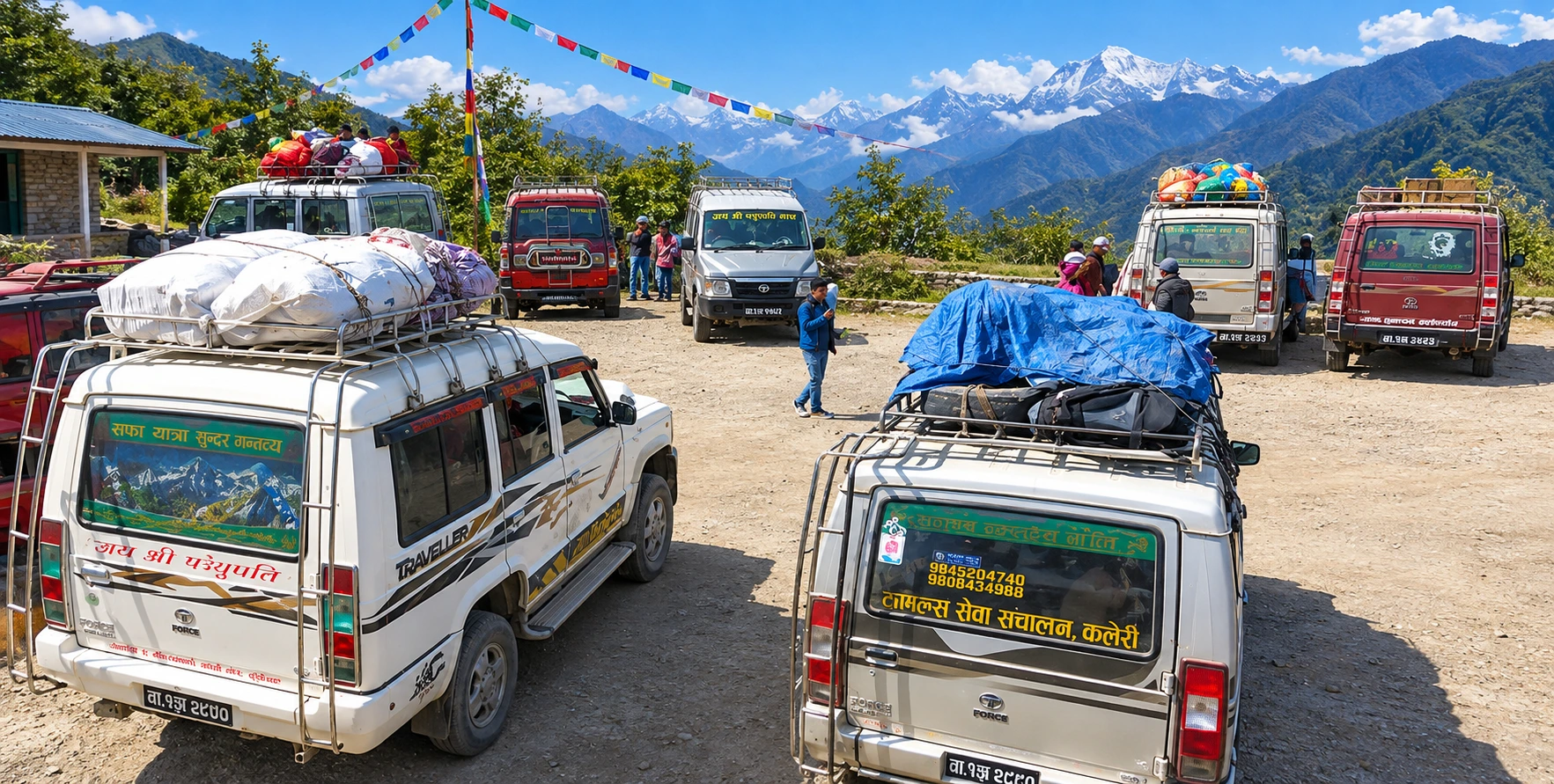
The Memorable Trekking Approach — Arriving at the Trailhead Ready

The journey to a Nepal trekking trailhead is the first chapter of the trek—and quality transport ensures it prepares you rather than depletes you. A trekker who arrives at Besisahar, Soti Khola, or Phaplu well-rested, on time, and with luggage intact begins the trek with the physical and mental resources the mountain days ahead require.

The trekker who has spent the same journey in a crowded shared vehicle, delayed by an unscheduled breakdown, with luggage compressed in an overcrowded cargo area, begins their trek from a deficit.

Nepal Vehicle Hiring Pvt Ltd’s quality trekking approach covers every major Nepal trailhead: Besisahar for the Annapurna Circuit, Soti Khola for the Manaslu Circuit and Tsum Valley, Salleri-Phaplu for the Everest overland approach, Nayapul for Annapurna Base Camp and Poon Hill, and the Manaslu trek transport corridor’s complete approach logistics. Each transfer is assigned to a driver with specific experience on that approach road — not route-adjacent experience, but route-specific knowledge that makes the driver a genuine resource for the trekking group as well as a transport provider.

Trek Nepal Himalayas’ guided trekking packages — including the Everest Base Camp luxury lodge trek, the Ghorepani Poon Hill trek, the Kanchenjunga Base Camp trek, and the Rolwaling Valley trek — all coordinate their trailhead transfers through Nepal Vehicle Hiring Pvt Ltd because the quality of the trailhead arrival is a recognised component of the guided trek’s overall standard. Quality transport to the trailhead is not the first logistics function of the trekking week — it is the first quality experience of it.

The Memorable Inter-City Journey — Nepal’s Highway Experiences

Nepal’s major inter-city journeys — Kathmandu to Pokhara on the Prithvi Highway, Pokhara to Chitwan through the Gandaki foothills, Kathmandu to Lumbini across the Terai — are significant travel experiences in their own right when you take them in a quality private vehicle with a driver who knows the route’s specific highlights.

The Kathmandu to Pokhara private vehicle hire on the Prithvi Highway is, in the right vehicle with the right driver, one of Nepal’s finest travel experiences: the Trishuli gorge’s extraordinary depth and the rapids visible at road level, the Mugling riverside restaurant stop for the famous freshwater fish curry, the Manakamana Temple cable car ascending the hillside at the highway junction, the Dumre detour option for Bandipur’s hilltop medieval town, and the arrival panorama into the Pokhara valley with the Annapurna range dominating the north. All these moments are available to the private vehicle hire traveller who can stop when the view demands it, the driver who provides context that enriches what is seen, and the vehicle comfort that makes 6 hours of highway travel a pleasure rather than an endurance.

The Pokhara to Chitwan private vehicle covers a different landscape character — the descent from the mid-hills to the Terai plains, the Narayanghat approach through the lowland bazaar towns, and the entry into the Chitwan buffer zone where the first glimpse of the sal forest announces the wildlife destination ahead. The Kathmandu-to-Lumbini bus service or private vehicle hire carries the pilgrimage intention that Lumbini represents—and the quality of the approach transport sets the devotional tone for the sacred-site visit.

Quality Transport Nepal | Memorable Journey Guide

The Memorable Wildlife Approach — Chitwan and Bardia

The approach to Nepal’s wildlife sanctuaries — Chitwan National Park and Bardia National Park — is a journey whose quality directly affects the wildlife encounter that follows. A traveller who arrives at the park gate fresh, alert, and ready for the morning safari has a different wildlife experience than someone who arrives exhausted from a cramped, delayed bus journey.

Quality transport to the wildlife destination isn’t the entire wildlife experience, but it builds the physical and psychological readiness the wildlife encounter rewards.

Nepal Vehicle Hiring Pvt Ltd’s Pokhara to Chitwan bus service and private vehicle hire for the Chitwan approach ensure that wildlife photography groups, family safari parties, and individual wildlife enthusiasts arrive at the Sauraha or Kasara gate in the best possible condition for the evening game drive and the following morning’s early safari. For Bardia — the longer, more remote approach from Kathmandu — the private jeep hire covers the comfortable journey with a reliable vehicle and a route-experienced driver th, which the remoteness of the western Terai destination specifically requires.

The post-safari return—the vehicle that picks up the group from the Chitwan gate after the evening drive, ready for the Pokhara or Kathmandu connection the following day—is a quality transport moment that is easily overlooked amid the safari’s excitement. Nepal Vehicle Hiking Pvt Ltd confirms and positions the return vehicle through its app coordination with the group during the safari day; the return timing adjusts to the actual safari exit rather than a predetermined departure that may not match the game drive’s natural endQuality Transport Nepal | Memorable Journey Guide

The Memorable Pilgrimage Journey — Sacred Routes Deserve Quality Transport

Nepal’s pilgrimage circuits — to Muktinath, Lumbini, Pashupatinath, Gosaikunda, and the Kailash Mansarovar approach — carry an added dimension of sacred purpose, making the quality of the journey itself an expression of devotion. A dignified pilgrimage journey, smoothly managed and free of transport-related stress, keeps devotional attention where it belongs — on the sacred purpose of the yatra — rather than spreading it across logistics management.

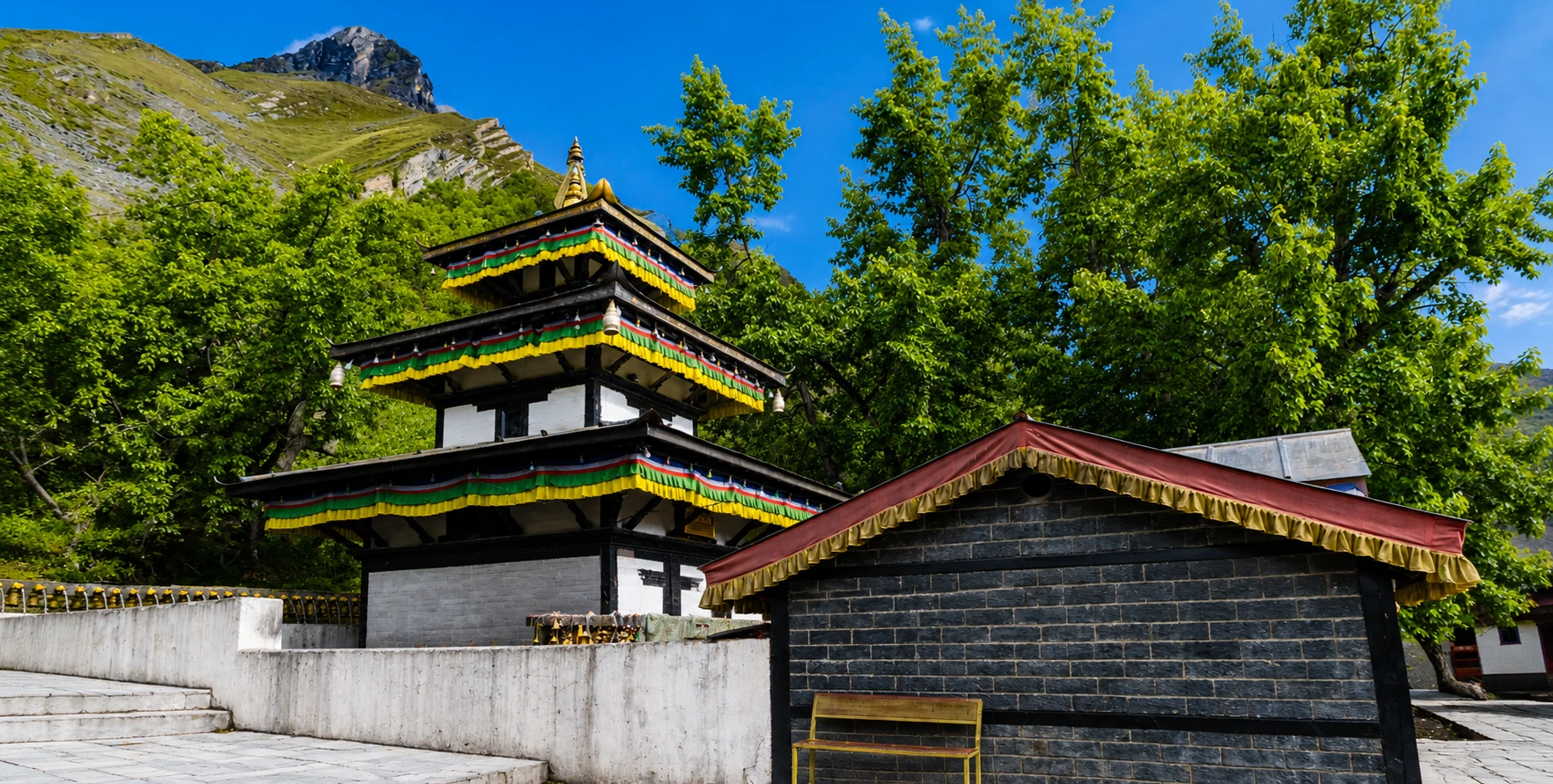
Muktinath yatra vehicle hire from Nepal Vehicle Hiking Pvt Ltd — whether from the Sunauli border through the Kali Gandaki gorge or from Pokhara by private jeep — offers the dignified approach to the 3,710-metre sacred site that the darshan itself deserves. Our drivers on the Kali Gandaki route understand the Muktinath pilgrimage’s significance and approach their role — managing the vehicle through the gorge wind sections, timing the arrival at Ranipauwa for the morning darshan before the midday heat, waiting with appropriate patience while the pilgrim group completes the 108 Mukti Dhara circuit — as a service with a dimension beyond simple logistics.

Lumbini private vehicle hire carries the same intention for Buddhist pilgrimage groups, whose journey to the Buddha’s birthplace is itself part of the sacred circuit they are completing.

Quality Transport for Return Journeys — Closing the Nepal Circle

The return journey — from trailhead to Kathmandu after a completed trek, from the Muktinath darshan back to Pokhara, from the post-safari Chitwan gate to the highway — is a quality transport moment that is often under-planned relative to the outward journey. The fatigue of a completed trek, the devotional satisfaction of a completed pilgrimage, and the wildlife-awed exhaustion of a post-safari afternoon all create a specific passenger state that quality return transport specifically serves: a confirmed vehicle waiting at the confirmed pickup point, a driver who allows quiet without obligatory conversation, and a comfortable, air-conditioned interior that gives the body what 14 days at altitude or 3 days in jungle heat have asked it to earn.

Nepal Vehicle Hiking Pvt Ltd pre-arranges return vehicles for all outward bookings—the Besisahar to Kathmandu return vehicle for the Annapurna Circuit exit, the return Soti Khola jeep for Manaslu Circuit trekkers, the Nayapul pickup for Ghorepani Poon Hill trek returnees, and the Chitwan to Pokhara return vehicle for post-safari departures. All return vehicles are confirmed via WhatsApp coordination with the group during the trek or safari—allowing for the actual exit date to shift by a day if weather or physical condition changes the plan.

The return journey closes the Nepal experience with the same quality the outward journey opened. Contact Nepal Vehicle Hiring Pvt Ltd on WhatsApp to pre-arrange your complete Nepal journey — outward and return, all legs, quality confirmed.

The Quality Vehicle Fleet — How Each Vehicle Type Contributes

Nepal Vehicle Hiring Pvt Ltd‘s quality transport fleet covers every group size and every journey type with the right vehicle for each.

Private Sedan. The private car hire — a Toyota Corolla, Hyundai Sonata, or equivalent — is Nepal’s quality highway vehicle for groups of 2 to 4. Air-conditioned, comfortable, and cost-efficient for the highway journey, the private sedan is the right vehicle for the Kathmandu to Pokhara journey, the Bhaktapur heritage day tour, and the Kathmandu airport transfer.

4WD Scorpio and Hilux Jeep. The private 4WD jeep hire is Nepal’s definitive quality mountain-road vehicle—the right choice for every trekking trailhead transfer and any journey that includes unpaved sections. Higher ground clearance, 4WD capability, and the mechanical confidence of a purpose-built mountain vehicle make the Scorpio and Hilux the standard for the Besisahar gorge road, the Soti Khola approach, and all mountain-road transfers.

Toyota Hiace Van. The Hiace van hire serves groups of 7 to 13—a quality vehicle for medium-sized trekking groups, family tours, and pilgrimage parties who want to travel together in a single vehicle with space for passengers and luggage. The Hiace’s interior height allows comfortable seating for longer highway journeys.

Tourist Coaster. The tourist coaster hire (14 to 22 passengers) offers a quality mid-sized vehicle with reclining seats, air conditioning, and the group cohesion of a single vehicle for 15 to 20 passengers. The Coaster is the quality choice for MICE groups, conference delegates, and large pilgrimage parties.

Tourist Bus. The full tourist bus hire serves groups of 25 to 45 — the quality large-group vehicle for major pilgrimage circuits, school trek programmes, and corporate delegate transport between Nepal’s major cities.

Quality Transport for Nepal’s Repeat Visitors

Nepal consistently ranks among the world’s highest repeat-visit travel destinations—a significant proportion of international visitors return for a second, third, or fourth visit because their first Nepal experience revealed more depth than a single visit could explore. The repeat visitor’s transport needs are specifically different from the first-timer’s: they have already completed the standard Kathmandu heritage circuit and the main Pokhara lakeside experience, and they are now seeking the deeper Nepal that the previous visit showed them existed beyond the main circuit.

Nepal Vehicle Hiring Pvt Ltd‘s quality transport service suits repeat visitors because our route coverage extends to every Nepal destination, not just the main tourist circuit. The repeat visitor who wants to explore the Rolwaling Valley approach by private jeep via the Tam Valley; the repeat visitor who wants to spend a full day in Panauti’s river confluence heritage instead of the Kathmandu Valley’s main sites; or the repeat visitor who specifically wants the Bardia National Park overland journey instead of Chitwan’s more accessible alternative — our complete Nepal vehicle hire network serves all of these with the same quality driver assignment and all-inclusive pricing that covers the standard circuit.

Our team especially enjoys planning repeat visitors’ itineraries — the mix of familiar Nepal through new eyes and new Nepal for the first time —connected by quality private transport that makes both fully accessible. Contact us on WhatsApp or visit our plan trip page to plan your return journey to Nepal.

Quality Transport for Nepal’s Photographers

Photography travellers in Nepal have specific transport quality requirements that standard tourist vehicle hire cannot accommodate: early morning departures for the best light, extended waiting periods at viewpoints for the right cloud movement, and the flexibility to return to a location a second time when the morning’s cloud cover dissipated in the afternoon. Nepal Vehicle Hiring Pvt Ltd’s quality transport for photography clients accommodates these requirements—our drivers on photography assignment bookings understand the schedule serves the light, not the other way around.

The Nagarkot sunrise vehicle hire for photographers includes the option to extend the Nagarkot stay through the post-dawn hour when the Himalayan light transitions from the warm pink tones of dawn to the clear white morning light that favours landscape detail — a 30 to 60-minute extension that the standard sunrise tour group typically does not need but that the landscape photographer specifically requires. The Kathmandu to Pokhara private vehicle for photography clients includes confirmed stops at the Mugling riverside for the white-water rapids composition and at the Trishuli gorge sections where the road-and-river composition is at its most dramatic.

The Besisahar jeep hire for the Annapurna Circuit approach photography journey includes specific Marsyangdi Valley viewpoints where the Manaslu massif appears in the frame, with the gorge at its finest depth. Confirm all photography-specific transport requirements at booking through our plan trip page or WhatsApp.

Quality Transport for Family Nepal Journeys

Nepal is increasingly visited by multi-generational family groups — parents and adult children, grandparents and grandchildren, extended family reunion groups — whose diverse ages and physical conditions require transport quality that accommodates the full range of family members. A grandmother who cannot climb steep bus steps but has come to Nepal specifically to see the Himalayan sunrise at Nagarkot needs a private vehicle hire that can drop her directly at the accessible viewpoint.

A 10-year-old who needs to stop more frequently than the standard schedule allows needs the private Hiace van hire whose driver accommodates rest stops without schedule pressure.

Nepal Vehicle Hiking Pvt Ltd’s quality family transport service meets these needs through the flexibility private vehicle hire provides. Family groups visiting the Chitwan jungle safari, the Kathmandu heritage circuit, Lumbini, and the Pokhara mountain experience with Sarangkot sunrise can book the complete family circuit through our plan trip page — every vehicle, every transfer, every child and grandparent accommodation requirement confirmed in a single professional booking.

Alpine Luxury Treks offers a luxury-tier family Nepal experience, coordinated with Nepal Vehicle Hiring Pvt Ltd’s transport for the full family itinerary.

Making Mountain Road Journeys Memorable — The Approach Road Experience

Nepal’s mountain approach roads — the Prithvi Highway’s Trishuli gorge sections, the Besisahar gorge road, the Kali Gandaki corridor, the Soti Khola valley approach — are genuinely dramatic driving environments whose scenic quality, when experienced in a quality private vehicle with a driver who stops for the specific viewpoints, is as memorable as the destinations they lead to.

Quality Transport Nepal | Memorable Journey Guide

The Besisahar gorge road approach for the Annapurna Circuit is a route of extraordinary geological drama — the Marsyangdi River visible hundreds of metres below the road on the exposed cliff sections, the Manaslu massif (8,163 m) appearing above the valley rim as the road climbs, and the first sight of the Annapurna range from the high approach providing the visual confirmation that the trekking world the group is about to enter is genuinely first-rate. A quality private jeep hire driver who stops at two or three specific viewpoints where the gorge and mountain panorama are at their finest — and who allows enough time at each for photography rather than rushing to the trailhead — turns the approach drive from a necessary transit into the trek’s memorable opening chapter.

The same quality is available on every Nepal mountain approach with Nepal Vehicle Hiring Pvt Ltd‘s route-assigned drivers—each briefed on the stops that best serve the scenic and photographic potential of their assigned approach road. Our Manaslu trek transport, Soti Khola jeep hire, and Phaplu jeep hire all include drivers whose personal route knowledge extends to the specific viewpoints, river overlooks, and valley panoramas that make each approach road memorable in its own right.

The Memorable Monsoon Journey — Quality Transport in Nepal’s Most Challenging Season

The monsoon season (June to September) is Nepal’s most challenging transport period—and paradoxically, when quality transport matters most. Travellers who choose Nepal in the monsoon (photographers seeking dramatic cloud-and-peak compositions, botanists drawn to the rhododendron forest in full moisture-charged colour, budget travellers taking advantage of lower accommodation prices) make a specific choice that rewards the prepared and penalises the unprepared. Quality transport in the monsoon is the preparation that makes the difference.

Nepal Vehicle Hiring Pvt Ltd’s monsoon transport quality standards include: morning-of road condition confirmation for all mountain routes before any vehicle departs; immediate re-routing when a landslide has blocked the primary approach and an alternative route is available; honest communication when no safe route is currently available, and the departure must be postponed; and all-inclusive pricing that does not add fuel surcharges or weather supplements to the quoted price when monsoon driving conditions require more driver time and vehicle effort than dry-season equivalents. Travellers who book monsoon transport with quality Nepal Vehicle Hiring Pvt Ltd know their vehicle will not depart if the road is unsafe—and that the same professional monitoring that may delay a departure also identifies the road-opening window and dispatches efficiently when conditions clear.

Monsoon travel in Nepal on quality private vehicle hire has specific visual rewards that the dry season cannot replicate: the Trishuli gorge in full monsoon flood, with the river running high and turbulent and the gorge walls streaming with waterfall threads; the Pokhara Valley in post-rain clarity, with the Annapurna range freshly dusted with snow and the humidity creating a luminosity in the mid-morning light that professional photographers specifically travel for; and the terraced hillsides of mid-Nepal in their deepest green, the rice planted and growing in the precise geometric patterns that the mountain agriculture tradition has maintained for millennia. These monsoon-specific visual experiences are available only to travellers in a quality private vehicle—from an air-conditioned cabin that keeps the rain out while keeping the view in.

Quality Transport and the Pokhara Experience

Pokhara is Nepal’s finest destination after Kathmandu- a lakeside city in an extraordinary mountain setting, with the Annapurna range visible from Phewa Lake in a panorama that has made it one of Asia’s most celebrated mountain-viewing destinations. Pokhara car hire from Nepal Vehicle Hiring Pvt Ltd offers a full range of quality transport experiences.

The Sarangkot sunrise vehicle—the most popular transport experience in the Pokhara area—takes your group to the Sarangkot viewpoint before dawn or to the Annapurna range for the first sunrise. Machhapuchhre’s symmetrical summit, Annapurna I, Annapurna South, and Dhaulagiri are illuminated progressively from right to left as the dawn light tracks westward across the Himalayan range.

This visual sequence takes 20 to 30 minutes to go from first colour to full illumination, rewarding travellers who arrive early enough to be in position and quiet when it begins.

The Pokhara to Nayapul transport for Annapurna Base Camp trekkers and Ghorepani Poon Hill trekkers covers the 42-kilometre approach drive along the Kali Gandaki bank road to the Nayapul trailhead. This quality transfer takes trekkers to the Modi Khola trailhead, ready for the climb to Tikhedhunga. The return Pokhara to Kathmandu bus or private vehicle after the Annapurna trek closes the complete Pokhara-based quality transport circuit.

The Quality Driver — Beyond Navigation

Most conventional descriptions of vehicle hire undervalue the quality transport driver in Nepal— describing them as a service provider rather than a contributor to the experience. But on Nepal’s mountain roads, heritage cities, and pilgrimage circuits, the driver’s contribution to the journey’s memorability extends well beyond navigation.

The driver who has driven the Kathmandu to Besisahar gorge road fifty times knows not just where the road goes but what the road reveals — the specific section where the Manaslu massif first appears above the valley wall, the Marsyangdi River bend where the turquoise glacial water is most photogenic, and the village where the local tea stop uses the best ginger-and-honey blend in the Marsyangdi corridor. This local knowledge, offered spontaneously or in response to curiosity, drives the quality of the experience—a layer of familiarity with the route that the traveller’s guidebook and GPS map cannot provide.

The driver who has served the Kathmandu heritage sightseeing circuit for years knows the Bhaktapur potters’ quarter schedule, which day the cooperative opens, which individual workshop produces the finest traditional black pottery and which narrow lane leads to the residential area that visitors who follow only the main route never find. The driver who has served the Lumbini pilgrimage circuit knows which international monastery the Lumbini development zone is holding prayers at when the group arrives, and positions the vehicle at the entrance that avoids the tour bus queue.

These contributions — small in description, significant in experience — are what Nepal Vehicle Hiring Pvt Ltd’s route-assigned driver quality standard delivers as a consistent component of the memorable Nepal transport experience.

Quality Transport for Nepal’s Corporate and Group Visitors

Nepal’s corporate and incentive travel sector — conference groups, corporate retreats, incentive reward groups, and business delegation tours — has specific quality transport requirements that individual tourist travel does not: coordinated fleet movements on precise schedules, professional driver presentation appropriate for senior business travellers, and the event-day logistics management that allows the corporate travel organiser to focus on the event rather than the transport.

Nepal Vehicle Hiring Pvt Ltd provides quality corporate transport through our complete fleet: private car hire for VIP executive transfers; Land Cruiser Prado or Fortuner for senior delegate convoy; Hiace van fleet for sub-group sightseeing excursions; tourist coaster fleet for full delegate group movements; and private bus hire for large conference delegations. Our dedicated logistics contact manages all corporate transport bookings, coordinates the full fleet for the event, and remains available on WhatsApp throughout.

The Kathmandu airport VIP transfer—meet-and-greet in the arrivals hall, a uniformed driver, and smooth transitions that set the tone for the corporate Nepal experience—is the first impression of quality transport Nepal Vehicle Hiking Pvt Ltd delivers consistently. Plan corporate Nepal transport through our plan trip page.
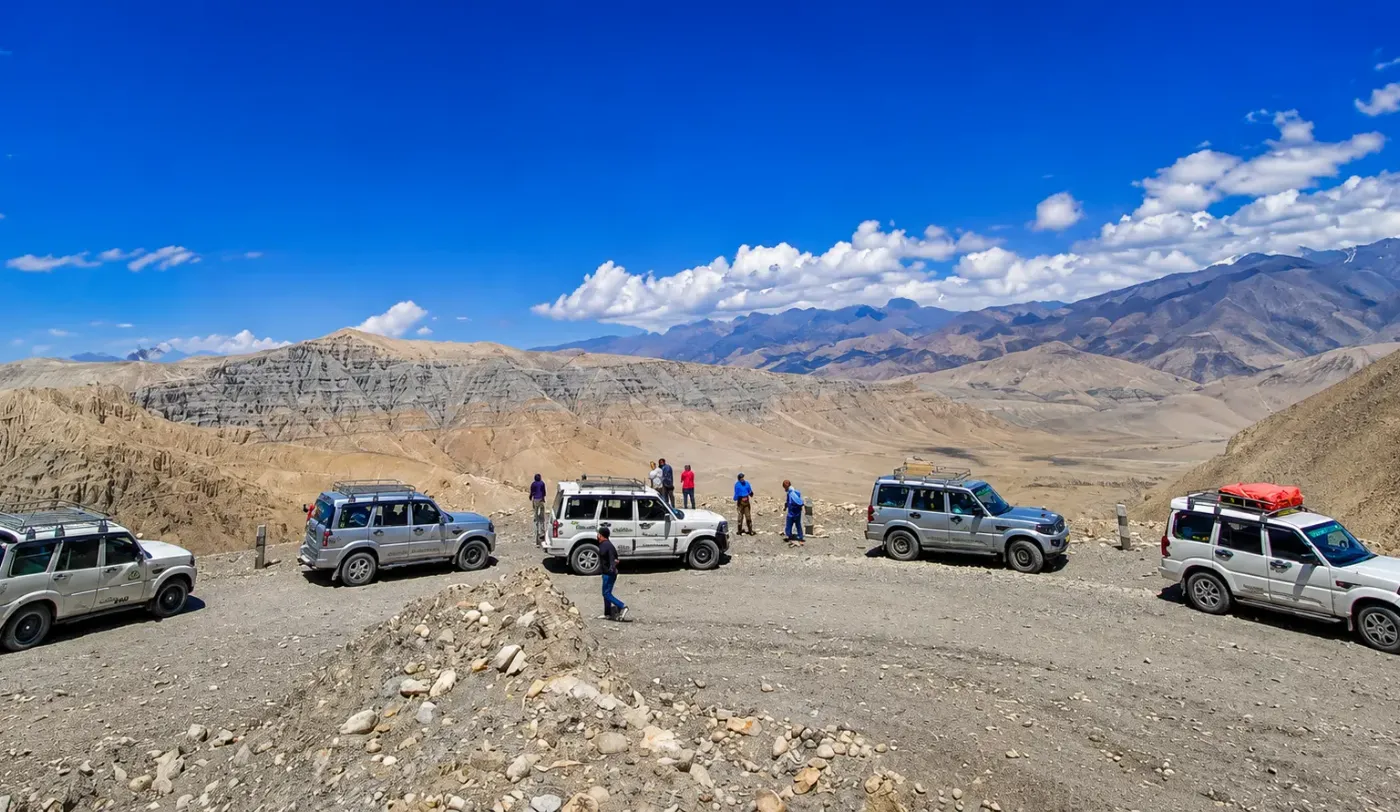
Planning Quality Transport for Your Nepal Journey

  • Plan transport alongside destinations: Quality transport is not an afterthought to the destination planning — it is integral to it. Book Nepal Vehicle Hiring Pvt Ltd simultaneously with trek and hotel bookings through our plan trip page.
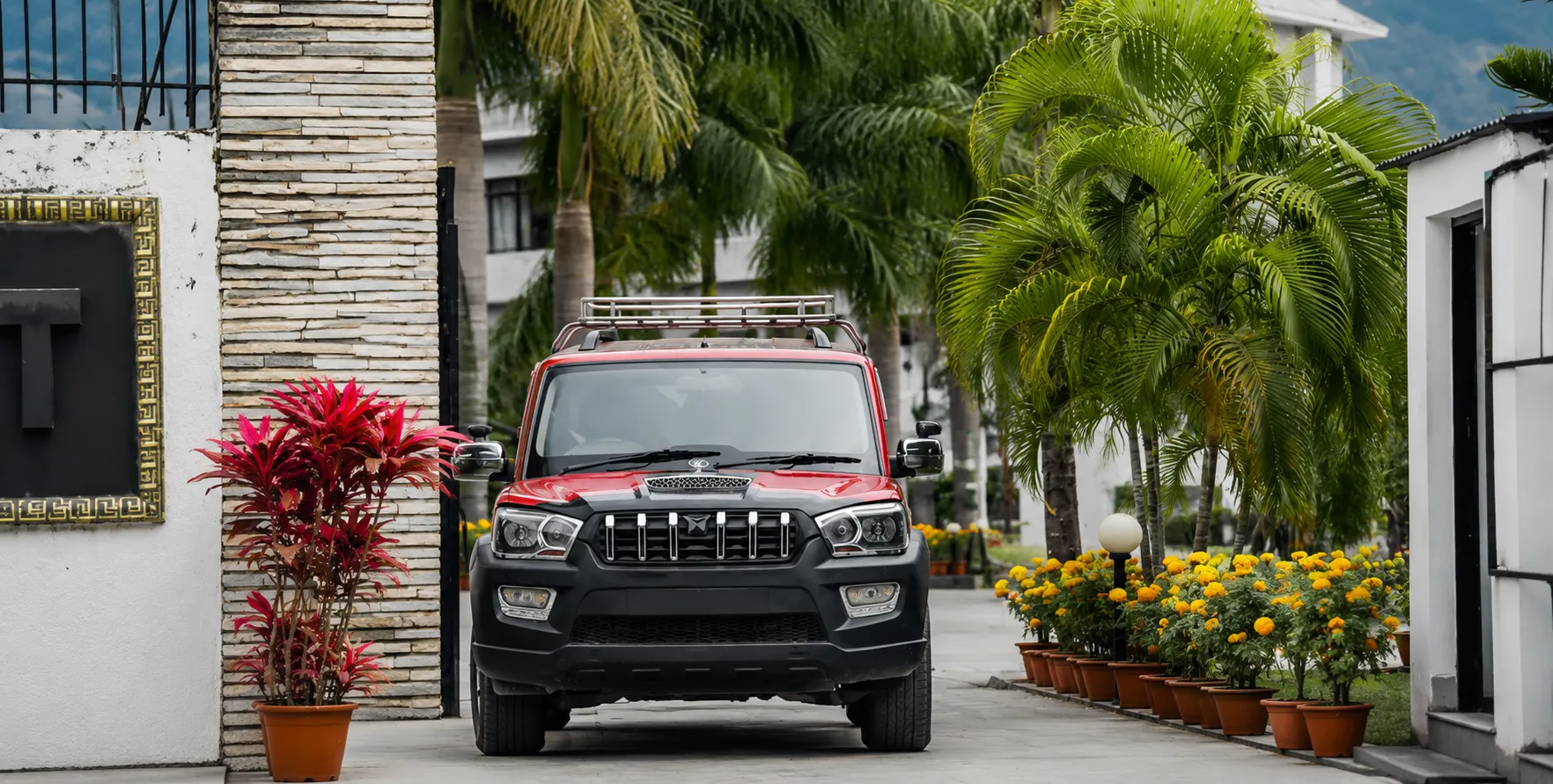
  • Confirm all-inclusive pricing: Quality transport has no surprise additions. Every Nepal vehicle hiring package includes the driver, fuel, and road tolls.
  • Specify the quality dimensions that matter most: Photography stops on the highway; early departure for sunrise viewpoints; specific trailhead arrival time; child-friendly pace. Our contact team incorporates all specific requirements into the booking.
  • Book in advance for peak season: Quality vehicle allocation in October-November and March-May requires 1 to 2 weeks’ booking. Our plan trip page accepts bookings months ahead.
  • Use WhatsApp for real-time coordination: WhatsApp — confirmations, morning updates, and any day-of changes managed through a single 24/7 contact.

Frequently Asked Questions — Quality Transport Nepal

What is the difference between quality transport and standard vehicle hire in Nepal?

Quality transport combines timely, reliable, well-maintained vehicles, experienced drivers, professional communication, and journey flexibility. Nepal Vehicle Hiking Pvt Ltd delivers all five — standard informal hire may deliver none of them.

How does quality transport make the trekking approach more memorable?

A rested, on-time arrival at the trailhead; a driver who knows the approach road’s scenic viewpoints; a verified 4WD vehicle for mountain sections; and a confirmed return vehicle pre-arranged for the trek’s end. Book the Besisahar private vehicle, Soti Khola jeep, or Phaplu approach vehicle through Nepal Vehicle Hiring Pvt Ltd.

What vehicle is best for a family Nepal tour?

The Toyota Hiace van hire is best for families of 5 to 10, keeping everyone together with space for luggage and flexibility for rest stops. Private car hire for small families of 2 to 4.

How do I book quality transport for a complete Nepal tour?

Submit your complete itinerary — destinations, dates, group size — through our plan trip page or contact us on WhatsApp. We provide a complete vehicle hire plan with all-inclusive pricing for the full Nepal circuit.

Conclusion

Quality transport in Nepal doesn’t just move travellers between destinations—it makes the journey part of what they remember. The pre-dawn vehicle to Nagarkot, the gorge road approach to Besisahar, the Prithvi Highway morning drive with the Trishuli rapids visible from the window, the airport arrival in a confirmed private car with a uniformed driver holding a personalised name board — each of these transport moments, managed with quality, becomes part of the Nepal story that travellers carry home alongside the trek achievement and the heritage site photographs.

Nepal Vehicle Hiring Pvt Ltd delivers quality across Nepal’s country network — o for every journey type, every size, every destination — through a single professional vehicle-hire relationship that covers your entire visit.

Make every Nepal journey memorable with Nepal Vehicle Hiring Pvt Ltd — call or WhatsApp, visit vehiclehiringnepal.com, or plan your complete quality Nepal transport through our plan trip page.
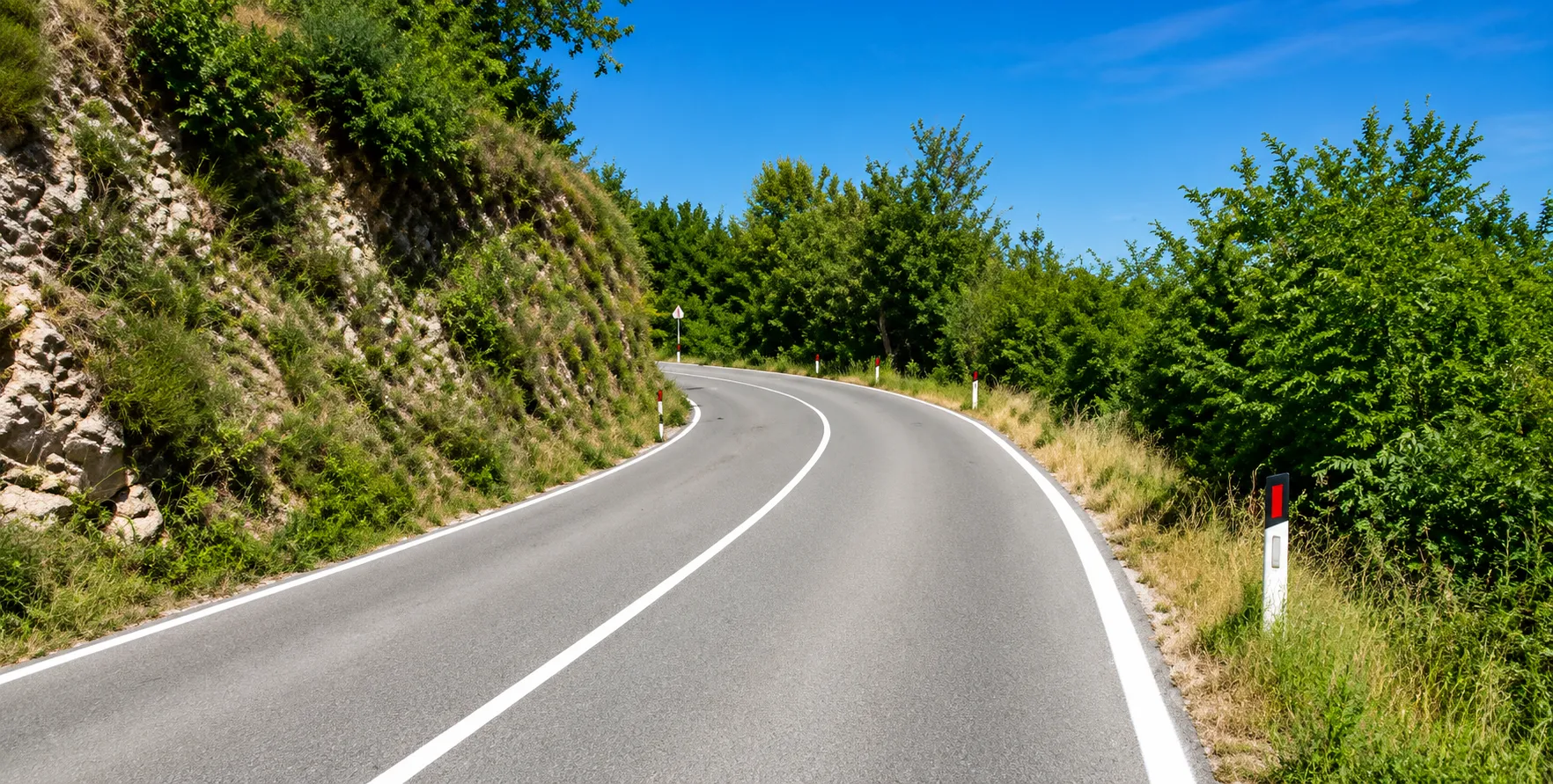
The Importance of Safe Transportation During Nepal Tours: Complete Guide

Private jeeps parked in Mustang

The Importance of Safe Transportation During Nepal Tours – Complete  Guide

When travellers plan a Nepal tour, the planning phase is dominated by conversations about destinations, itineraries, trekking routes, heritage sites, and wildlife safaris. The conversation that should receive equally serious attention — but rarely does until something goes wrong — is about how they will get between all of those places.

This is not a secondary logistical question. In Nepal’s specific geographic and infrastructure context, the choice of transport is one of the two or three most consequential decisions of the entire trip, carrying implications for safety, time, comfort, flexibility, and the overall quality of the Nepal experience that extend far beyond the simple question of how much a vehicle costs.

Nepal is, by any honest and current assessment, a country where road travel carries genuine and documented safety risk — not theoretical risk, not the kind of risk that exists in every country and is essentially academic, but real and measurable risk that multiple authoritative 2026 sources identify as the single most significant safety concern for tourists visiting the country. One of the most comprehensive and honest 2026 Nepal safety guides states without ambiguity: road accidents are the single biggest danger to travellers in Nepal. Mountain highways are narrow and winding, some buses are overcrowded and driven aggressively, and monsoon rain makes things worse.

The Australian government’s official travel advisory for Nepal, updated in 2026, is similarly direct: travel on public buses and vans is dangerous. These vehicles are overcrowded and poorly maintained. Intercity buses are involved in frequent accidents with multiple deaths.

This is not alarmism — it is accurate information that travellers deserve to receive clearly and early, so they can make transport choices informed by the real landscape of Nepal’s road safety rather than by a vague sense that all ground transport is essentially equivalent. It categorically is not equivalent.

The gap in safety outcomes between a well-maintained private vehicle with a licensed, experienced, route-familiar driver and an overcrowded, poorly maintained local bus driven aggressively on the same mountain road is not marginal — it is the gap between a journey that arrives safely and one that may not. And the cost difference between these options, when honestly calculated for a group of four or more, is frequently smaller than people assume and sometimes negligible once secondary transfers are included.

This guide from Nepal Vehicle Hiring Pvt Ltd — written with the specific intention of providing honest, actionable safety guidance rather than promotional content — covers every dimension of safe transportation during Nepal tours in 2026: the specific risks of Nepal’s road environment, the transparent comparison between transport options, the driver quality standards that matter most, the seasonal safety variables, the insurance requirements, and the operational standards that Nepal Vehicle Hiring maintains across its complete fleet and route network. For complete trekking experiences, our sister companies, Trek Nepal Himalayas and Alpine Luxury Treks, apply the same safety standards to their guided mountain programs.

Contact Nepal Vehicle Hiring: vehiclehiringnepal.com | Call/ WhatsApp

Understanding Nepal’s Road Safety Reality – The Facts Every Tourist Should Know

The foundation of safe transportation decision-making in Nepal is an accurate understanding of what the road environment actually is — not the sanitised version that treats all roads as generically manageable, and not the alarmist version that makes Nepal sound impossibly dangerous, but the honest, data-grounded picture of a country whose road network presents specific, identifiable, and largely manageable risks for those who understand them.

Nepal’s road fatality rate, measured by the World Health Organisation, stands at approximately 28.2 deaths per 100,000 population — a figure that is nearly double the Asia-Pacific regional average and substantially higher than most countries from which Nepal’s international visitors originate. This is not a figure to be dismissed as a general developing-country statistic — it reflects specific, identifiable structural factors in Nepal’s transport environment that translate directly into elevated risk for every road user, including tourists.

The factors behind this figure are well documented and consistent across 2026 sources. Nepal’s mountain roads are carved into geologically young, inherently unstable terrain — narrow, with frequent blind corners, minimal or no crash barriers on cliff-edge sections, and road surfaces that deteriorate rapidly under the combined effects of monsoon rainfall, vehicle loads, and seismic activity.

The public bus fleet includes vehicles with genuinely questionable mechanical maintenance, operated under economic pressures that incentivise overloading and schedule adherence over safe driving. The driving culture on mountain roads includes overtaking on blind bends, driving at night on unlit roads, and schedule-driven aggression that produces accident rates consistent with WHO data.

And passenger loading practices on local buses routinely exceed the vehicle’s designed capacity—passengers in the aisle, luggage on the roof, and sometimes people riding on the exterior—creating conditions where even a relatively minor accident becomes more serious than it would in a properly loaded, properly maintained vehicle.

The most important contextual point, consistently made by every credible 2026 Nepal safety guide: the risk is not evenly distributed across all transport options. As one 2026 specialist safety guide states precisely: road travel is the single biggest danger to travellers in Nepal, by a wide margin — but the risk is dramatically reduced by choosing tourist buses or private vehicles over cheap local buses on long mountain routes, avoiding overnight road journeys, and flying the longer legs when budget allows.

This is the essential message: the risk is real, documented, and specific to certain transport choices — and it is largely avoidable through transport decisions that are available to every tourist who plans

The Transport Safety Hierarchy – What the Evidence Shows

Every reliable Nepal transport safety analysis places the country’s transport options in the same order of safety preference, and understanding this hierarchy is the single most useful piece of transport safety knowledge any Nepal visitor can have.

Private Vehicle Hire – The Safest Option for Nepal Road Travel

Every credible 2026 Nepal transport safety guide reaches the same conclusion: private vehicle hire with a professional, licensed, route-experienced driver is Nepal’s safest ground transport option. As Nepal Hiking Team’s 2026 transport guide states directly: private jeeps and taxis offer the most flexibility and safety. Multiple other 2026 specialist guides are equally direct.

The reasons are structural rather than incidental — they reflect characteristics of private vehicle hire that are systematically different from every alternative in ways that directly affect safety outcomes.

A private vehicle carries only your group, so it is never overloaded beyond its designed passenger capacity—one of the primary structural factors in Nepal bus accident severity. The operator selects and maintains the vehicle specifically for tourist-standard road use, rather than using a high-mileage public vehicle whose maintenance schedule is driven by minimum economic viability.

An operator assigns the driver to your specific route based on their experience on that road—not an anonymous driver with an unknown background and incentives that may not align with passenger safety. The group sets the departure time rather than a schedule that may require driving in dangerous conditions to make up lost time.

And critically, if you ask the driver to slow down or stop because you feel unsafe, you are asking your own contracted driver whose entire professional relationship is with your group — not a public bus driver whose obligation is to a timetable and forty other passengers. The Australian government’s 2026 travel advisory specifically names this option: if you are concerned, ask your driver to slow down and drive safely — advice that only makes practical sense if you have a private driver to ask.

Tourist Buses – A Significant Improvement Over Local Buses

The tourist bus category—designated coaches operating exclusively on tourist-route corridors with fixed seating and no overloading—represents a significant safety improvement over local public buses and, according to most safety advisories, is the minimum acceptable transport standard for any inter-city journey in Nepal. Tourist buses avoid overloading, serve only tourist routes where drivers become familiar with the route, and attract operators who understand that safety reputation has commercial consequences in the tourist market.

Nepal Hiking Team’s 2026 guide recommends tourist buses or privately hired vehicles for leaving the Kathmandu Valley for safety reasons, explicitly distinguishing these from local buses. The Australian government advisory, quoted above, makes a similar distinction between dangerous public buses and tourist-standard transport.

However, tourist buses retain certain structural limitations that private vehicle hire eliminates: they operate on fixed schedules that may require driving in compromised conditions to meet departure times. They deliver to fixed bus parks rather than hotel doors, requiring secondary transfers at both ends; and the driver-to-passenger relationship is not one of personal accountability—a tourist bus driver has the same obligation to his schedule as a local bus driver, even if his vehicle is better maintained.

Tourist buses are a reasonable option for budget-constrained solo travellers who cannot afford private hire; for groups of four or more, private vehicle hire is typically competitive per head and categorically safer.

Local Public Buses – The Category Every Safety Guide Recommends Against

Every credible 2026 Nepal safety source—government travel advisories, specialist travel safety guides, and professional Nepal operators—consistently and explicitly recommends against local public buses for inter-city tourist travel. The Australian government advisory says travelling on public buses and vans is dangerous. These vehicles are overcrowded and poorly maintained. Intercity buses are involved in frequent accidents with multiple deaths.

TA2026 Nepal safety specialist notes that some buses are overcrowded and driven aggressively. Nepal Hiking Team 206 strongly recommends tourist buses and privately hired vehicles over local public buses. The consensus is complete, and the recommendation is unambiguous.

The low headline fare of a local bus does not represent a genuine cost saving when the safety trade-off is properly understood — and for any group of four or more, the per-head cost difference between a private vehicle and a local bus is frequently smaller than the value of even a single additional day of Nepal travel that a serious road accident would eliminate.

Night Travel – The Risk Multiplier

Every 2026 Nepal transport safety source makes the same specific recommendation about night travel, and Nepal Vehicle Hiring applies it as an operational policy rather than a suggestion. The  Nepal safety guide states this most clearly: road accidents are the single biggest danger to travellers in Nepal — avoid overnight road journeys where possible.

The specialist guide is even more emphatic: avoid night buses where possible because tired drivers increase road-safety risks, and overnight journeys also increase the risk of theft. Nepal Vehicle Hiring’s operational standard is equally clear.

All mountain route departures are planned for early morning to ensure arrival before dark, and night driving on any route above Category 1 highway classification is not permitted. The reasoning is straightforward: Nepal’s mountain roads have no street lighting in rural areas, no barriers on cliff-edge sections, and minimal road marking.

Every risk factor present in daytime mountain driving is compounded in darkness. Driver fatigue, already a major accident factor after long mountain drives, worsens at night. Debris from rockfalls and landslides that would be visible in daylight becomes invisible at night.

The simple rule — always travel by daylight on Nepal’s mountain roads — eliminates one of the most significant avoidable risk factors in Nepal ground transport.

The Driver Quality Dimension – Why It Matters More Than the Vehicle

In most countries, vehicle quality is the primary determinant of transport safety — a newer, better-maintained car is safer than an older one with equivalent drivers. In Nepal, the driver’s quality and experience are arguably the more important variable, because the demands Nepal’s road environment places on driving skill and local knowledge exceed what any vehicle design feature can compensate for.

Consider what Nepal’s mountain road driving actually requires from a driver. On a route like the Kathmandu to Syabrubesi road, the driver must manage narrow single-lane sections through the Ramche landslide zone, judge the appropriate speed for loose-gravel descents in varying seasonal conditions, know which sections carry active rockfall risk and time the passage accordingly, navigate the unlit road sections near Dhunche after dark if the departure was too late, and manage the communication with oncoming vehicles on single-track sections where one vehicle must reverse to the last passing point.

None of this is a skill that any licensed driver possesses by default — it is knowledge and judgment acquired through specific, repeated experience on that specific road. A driver who has made the Kathmandu–Syabrubesi run one hundred times has a fundamentally different safety profile on that route than a driver who is making it for the fifth time — and both are categorically different from an urban Kathmandu driver who has never driven it at all.

Nepal Vehicle Hiring’s driver assignment policy addresses this directly: drivers are assigned to routes where they have specific, documented prior experience, and no driver is dispatched on a mountain route without the route familiarity safe mountain driving requires. This is n’ta market differentiator Nepal Vehicle Hiring invented—it is a standard every responsible Nepal vehicle hire operator should maintain, and every tourist should verify before booking.

The verification questions are simple and should be asked: Has this driver driven this specific route before? How many times? When did they last drive it? And does the operator have a policy against night driving on mountain roads? An operator that responds defensively to these questions is giving you its own answer.

Driver licensing is the second critical quality dimension. Nepal’s commercial vehicle licensing system requires a Class A+ license for mountain routes, with a heavy-vehicle endorsement. Nepal Vehicle Hiring verifies every driver’s licence.

This step should be standard, but informal transport operators in the Thamel taxi and freelance vehicle-hire market do not universally practise it. When a visitor hires a vehicle through an informal street arrangement or an unverified booking platform, the assigned driver’s licensing status is genuinely unknown, and the consequences of that uncertainty are not theoretical in Nepal’s mountain road environment.

The Importance of Safe Transportation During Nepal Tours

Vehicle Maintenance and Safety Standards – What to Look For and What to Avoid

A vehicle’s mechanical condition is the third safety dimension in Nepal’s transport environment, and the gap between the best and worst options in the market is much wider than in more regulated transport markets. Understanding what to look for — and what warning signs indicate a vehicle you should not board — is practical safety knowledge every Nepal tourist should have.

For 4WD vehicles on mountain routes, the most important safety-relevant specification is the actual functionality of the 4WD system — not merely whether the vehicle is nominally described as 4WD, but whether the switchable 4H and 4L modes engage correctly, the differentials function as designed, and the vehicle genuinely provides the traction and stability improvement that the mountain road requires. A Mahindra Scorpio or Bolero 4WD in good condition provides genuine capability on Nepal’s mountain roads; the same vehicle with a dysfunctional 4WD system is essentially a standard car on terrain that demands 4WD.

Nepal Vehicle Hiring’s pre-departure vehicle check protocol verifies 4WD engagement before every mountain route departure.

For tyres specifically, the condition is visible and checkable before boarding: tread depth adequate for wet mountain roads, sidewalls without visible cracks or bulges, and tyre pressure consistent across all four wheels. The single most common cause of vehicle failure in Nepal mountain road accidents is tyre failure—blowouts on steep descents, loss of traction on wet gravel, and loss of control when underinflated tyres overheat on long descents.

Nepal Vehicle Hiring’s fleet maintenance protocol includes tyre inspection before every departure and replacement at the first indication of wear that approaches the safety threshold.

For braking systems, the demands of Nepal’s mountain descents exceed what most vehicle operators from flat-country contexts understand. The Prithvi Highway descent from Mugling toward Narayanghat, the Syabrubesi road descent from Dhunche, and the Kali Gandaki valley descent from Muktinath toward Beni all involve extended downhill sections where brake fade — the loss of braking effectiveness as brake systems overheat under sustained load — is a genuine operational risk if brakes are not maintained to the standard the route demands.

Nepal Vehicle Hiring’s mountain-route vehicles receive brake-system inspections before extended descents, and drivers are briefed on engine-braking techniques as the primary descent-management tool on routes where brake-fade risk is elevated.

Monsoon Transport Safety – The Season That Changes Everything

Nepal’s monsoon season (June–September) creates a fundamentally different transport safety landscape than the dry season—one that affects every road route in the country to varying degrees, with mountain routes disproportionately affected. Understanding specific monsoon transport risks and how professional operators manage them is essential for any visitor travelling during this period.

The primary monsoon road hazard is landslides and rockfall. Nepal’s mountains receive some of the world’s highest monsoon rainfall — Lumle near Pokhara, for example, receives over 5,000 mm annually — delivered in intense bursts that saturate the thin mountain soil above the road and trigger debris flows that can cover a mountain road in minutes.

A vehicle that departed a section of road thirty minutes before a landslide covers it may have a completely safe journey; a vehicle that departed thirty minutes later may face an impassable debris field with no safe reversal route in a single-lane section above a river gorge. This is not a manageable risk like icy roads or heavy rain in a flat-terrain country —it is a genuinely unpredictable hazard that can materialise faster than any vehicle can respond.

Professional Nepal transport operators manage monsoon landslide risk through pre-departure intelligence rather than in-journey reaction. Nepal Vehicle Hiring’s daily road condition monitoring service aggregates information from local government road management authorities, district police checkpoints, and our own driver network on active routes to build a current picture of road conditions on every mountain route before dispatching any vehicle.

When a section of the Ramche zone on the Syabrubesi road reports active landslide activity, Nepal Vehicle Hiring does not dispatch vehicles on that route until conditions are confirmed clear — even if a client has a confirmed booking and a planned departure. The booking is rescheduled, the client is notified with an honest explanation, and the vehicle departs when conditions are safe.

This is not a service failure — it is the service, and it represents the most meaningful difference between a professional operator and one that sends a vehicle regardless of conditions.

The secondary monsoon road hazard is deterioration of the road surface. Monsoon rainfall transforms gravel mountain roads from their dry-season passable state into mud-covered tracks where vehicle traction drops dramatically, and wheel ruts can deepen enough to trap a vehicle with insufficient ground clearance.

The 4WD vehicles that Nepal Vehicle Hiring deploys on all mountain routes are specifically chosen for their ability to manage this deteriorated surface condition — ground clearance adequate to pass over wheel ruts without grounding, 4WD traction management to maintain momentum through muddy sections, and diesel engines with low-RPM torque that can extract a vehicle from soft surface situations that would strand a standard petrol car.

Scorpio jeeps on the road in Mustang

Travel Insurance – The Safety Net That Completes Safe Transport Planning

No guide to safe transportation in Nepal is complete without addressing travel insurance — because the financial consequences of a transport-related incident in Nepal can be severe enough to be genuinely catastrophic without appropriate coverage, and the decision to travel with inadequate insurance is itself a transport safety failure that no amount of vehicle quality or driver experience can eliminate.

Nepal’s 2026 travel safety advisories are consistent and specific on this point: travel insurance with helicopter evacuation coverage is mandatory for any serious Nepal journey, not optional. As one 2026 specialist guide for trekking tours states explicitly: we refuse to continue ascent when a client shows worsening AMS symptoms, even when they argue otherwise — and we require travel insurance with helicopter evacuation coverage before any trek begins.

Multiple government travel advisories emphasise comprehensive travel insurance covering medical evacuation, helicopter rescue, and trip cancellations as a baseline requirement, not an optional add-on. The practical reason is straightforward: a helicopter evacuation from a remote Nepal mountain road accident or trekking medical emergency costs USD 5,000–15,000, a sum that becomes the individual traveller’s personal financial responsibility without insurance and that most people cannot absorb without serious financial consequence.

For transport specifically, the insurance dimension extends to vehicle insurance verification. Nepal Vehicle Hiring’s vehicles carry passenger insurance coverage for every occupied seat on every journey—not merely third-party coverage, but coverage that applies to passengers in the event of an accident caused by any party.

This isn’t universal in Nepal’s vehicle hire market, particularly in the informal sector, and it’s one of the specific insurance questions visitors should verify with any operator before booking.

The Real Cost of Unsafe Transport – Why Price Is Never the Right Primary Criterion

The most persistent driver of unsafe transport choices in Nepal is a simple economic calculation that, on close examination, is systematically miscalculated in ways that make the unsafe option seem cheaper than it is.

The direct headline cost of a local bus ticket from Kathmandu to Pokhara is approximately NPR 700–1,000 per person. A Nepal Vehicle Hiring private car for the same journey costs about SD 100–120 for the whole vehicle—which, divided among four passengers, is NPR 3,300–4,000 per person at 2026 exchange rates.

The headline cost comparison favours the bus by a factor of four. But this comparison omits the secondary taxi from the Kathmandu hotel to the bus park (NPR 300–500), the secondary taxi from the Pokhara bus park to the Lakeside hotel (NPR 300–500), the 6–8 hour journey time vs 6–6.5 hours, the absence of any stop flexibility, the luggage roof-rack exposure risk, and the complete absence of timing control.

When you include these factors in the actual cost calculation, the real cost difference for a group of four between a private vehicle and a local bus is often NPR 1,500–2,000 per person, about USD 10–15 per person. This is the right comparison, and framed this way, the private vehicle is a straightforward choice for any group that values safety, comfort, and time.

The deeper point about cost and safety is more fundamental: a Nepal tour cut short or permanently interrupted by a transport accident has a cost that dwarfs the entire transport budget of the journey, whether measured in financial terms (medical evacuation, cancelled onward flights, lost hotel deposits) or in human terms that no financial calculation can capture. As one 2026 safety specialist frames it: the risk is real and documented — choosing safe transport is simply the sensible thing to do, and the cost difference is smaller than most people assume.

Nepal Vehicle Hiring’s door-to-door private vehicle service is priced to be genuinely competitive with the true total cost of public transport alternatives for groups of three or more, precisely because we believe safe transport should be accessible rather than aspirational.

Nepal Vehicle Hiring’s Safety Standards – What We Actually Do

The safety principles discussed in this guide are not abstract recommendations that Nepal Vehicle Hiring endorses from a distance — they are the specific operational standards we apply to every vehicle, every driver, and every route in our network. Being explicit about these standards allows every prospective client to verify them directly and hold us accountable t

Driver Selection and Route Assignment

Every driver in Nepal Vehicle Hiring’s fleet holds the appropriate commercial driving license for their assigned vehicle category. Before any driver is assigned to a mountain route, their specific prior experience on that route is verified — number of previous journeys, most recent journey, and any known sections of particular challenge on the route in current conditions.

No driver is dispatched on a Category 3 or 4 mountain road without documented familiarity with that specific road. Clients who want to verify their assigned driver’s route experience are encouraged to ask — Nepal Vehicle Hiring’s operations team provides this information on request.

Pre-Departure Vehicle Checks

Every Nepal Vehicle Hiring vehicle undergoes a pre-departure safety check before each mountain route departure: tyre condition and pressure, brake system function, 4WD engagement verification (for 4WD routes), engine oil and fluid levels, lights including headlights and hazard warning system, and fuel level adequate for the complete route without relying on unconfirmed fuel availability in remote areas. The Toyota Land Cruiser fleet receives the most comprehensive pre-departure inspection because it operates on the most demanding routes—Upper Mustang, Kali Gandaki Valley, and the Darchula approach.

No Night Driving on Mountain Routes

Nepal Vehicle Hiring’s operational policy prohibits night driving on all mountain routes above Category 1 highway classification. All mountain route departures are planned with a 6:06:00–7:00 a.m. maximum start time to ensure arrival at the destination in daylight.

If a journey cannot be completed before dark within the available departure time, Nepal Vehicle Hiring recommends an overnight stop at an intermediate point rather than continuing in darkness. We communicate this to clients at booking, not during the journey.

Clients are sometimes disappointed by this policy when they want to maximise a single day’s driving distance. Still, the policy is non-negotiable and reflects a genuine operational safety commitment, not a suggestion that clients can override.

24/7 Road Condition Monitoring

Nepal Vehicle Hiring’s operations line (WhatsApp) is staffed throughout all operating hours — including the pre-dawn hours of Manthali transfers and the late-evening hours of airport arrivals — to provide real-time road condition intelligence, coordinate route alternatives when conditions change, and support any vehicle and client that encounters an unexpected situation during a journey. This operational continuity is one of the most practical safety features of Nepal Vehicle Hiring’s service — the certainty that a known, accountable, experienced team is reachable at any hour of any journey is a material safety improvement over travelling with an uncontactable informal operator.

Passenger Insurance on All Vehicles

Every Nepal Vehicle Hiring vehicle carries passenger insurance coverage for every occupied seat — not third-party coverage only, but coverage applicable to the passengers in the event of an incident involving the Nepal Vehicle Hiring vehicle. This coverage is a standard component of every booking and does not require separate arrangement by the client. The Nepal Vehicle Hiring operations team can provide the specific coverage terms upon request.

Safe Transport for Specific Nepal Tour Contexts

Kathmandu Valley Heritage Circuit

The Kathmandu Valley heritage circuit is, in terms of pure road safety, the least challenging Nepal transport context — the roads within the valley are paved, congested but slow-moving, and involve nothing like the mountain road risks of inter-city or trekking routes. The primary transport safety consideration in the Kathmandu Valley is pedestrian and motorcycle interaction—Kathmandu’s chaotic street traffic requires alert, defensive driving rather than mountain-road expertise.

Nepal Vehicle Hiring’s Kathmandu city drivers are selected for urban driving experience, and the heritage circuit private car or Hiace service provides professional navigation through the city’s complex one-way systems and heritage site access roads, with zero risk of the client attempting to navigate them independently.

Kathmandu to Pokhara – The Highway Safety Balance

The Kathmandu to Pokhara Prithvi Highway transfer is one of Nepal’s most-travelled tourist routes, and the transport-quality gap between local buses, tourist buses, and private vehicles is felt most acutely here. The road has improved significantly in 2026, with about 75–80% of the highway now smooth and well maintained. Still, the Mugling section and the final descent toward Pokhara retain sections that demand driver attention and vehicle capability.

The specific safety improvement of a Nepal Vehicle Hiring private vehicle on this route over a local bus is not merely vehicle quality but departure timing control — departing at 7:00 a.m., not 5:30 a.m. when exhausted drivers may not have rested adequately, and arriving in daylight with no schedule pressure on the driver to make up lost time on the final mountain sections.

Mountain Trekking Transfers

For trekking trailhead transfers — Besisahar (Annapurna Circuit), Syabrubesi (Langtang), Salleri (Everest Road), Nayapul/Ulleri (Poon Hill) — the transport safety stakes are the highest of any Nepal tour context. These routes combine Category 3 and 4 off-road mountain tracks requiring 4WD, landslide zones, seasonal closures, and the specific challenge of multi-hour mountain drives that test both vehicle and driver.

The difference between a Nepal Vehicle Hiring Mahindra Scorpio 4WD with an experienced mountain driver and a casual rental Sumo with a driver who has completed this route a handful of times is the difference that matters most in Nepal transport safety — and this is precisely the context where the temptation to save money by booking the cheapest available option is most dangerous.

For trekking clients of Trek Nepal Himalayas — whether doing the Annapurna Circuit, Langtang Valley Trek, or Everest Base Camp Trek — the transport safety standard applied to the trailhead transfer directly affects the physical and mental state of the trekker on arrival: a trekker who arrives at Besisahar safely, on schedule, with full luggage and uninjured, is in an infinitely better position to begin the circuit than one who arrives shaken from a transport incident, delayed, or missing equipment damaged during a rough transfer.

What to Do When Something Goes Wrong – Emergency Transport Protocols

Even with the best preparation, professional operators, and careful vehicle selection, unexpected situations arise in Nepal’s dynamic mountain transport environment. Knowing how to respond to the most likely emergency scenarios is the final element of safe transport preparation.

If a road becomes blocked by a landslide during a journey, the correct responses are: stop immediately and assess the blockage from a safe distance; do not attempt to pass a fresh landslide whose debris is still moving; contact Nepal Vehicle Hiring’s operations line for route intelligence on whether the blockage is passable or whether an alternative route or wait is required. Nepal Vehicle Hiring’s 24/7 operations number (WhatsApp) coordinates real-time alternative routing and, where necessary, overnight accommodation at the nearest safe location.

If a vehicle breaks down on a mountain road, Nepal Vehicle Hiring’s response protocol includes notifying the client immediately, coordinating a replacement vehicle from the nearest available point in our network, and supporting the client until the replacement arrives. The Bolero and Scorpio fleets on mountain routes benefit from Bolero’s nationwide spare-parts availability—a mechanical issue that would strand another vehicle for hours can often be resolved locally the same day.

If a client requires medical assistance during a journey, Nepal Vehicle Hiring drivers carry a first aid kit. They are briefed on the nearest medical facility on every route they operate. For serious medical situations requiring evacuation, the 24/7 operations line coordinates directly with helicopter evacuation services — a practical implementation of the helicopter evacuation insurance coverage that Nepal Vehicle Hiring requires all clients on remote mountain routes to hold.

Practical Safe Transport Checklist for Nepal Tour Planning

  • Book Private Vehicle Hire for All Mountain Routes: For any journey that leaves Nepal’s Category 1 paved highway network, private 4WD vehicle hire with a route-experienced driver is the minimum safety-appropriate transport choice. Public buses are not appropriate for mountain routes, and tourist buses are only marginally better on Category 3 roads.
  • Verify Driver Route Experience Before Departure: Ask specifically whether the assigned driver has driven the planned route before, how many times, and when most recently. A professional operator like Nepal Vehicle Hiring answers this immediately; a defensive operator signals its own standard.
  • Never Travel by Night on Mountain Roads: Depart by 6:00–7:00 a.m. at the latest for any mountain route. If you can’t complete the journey before dark, plan an overnight stop at an intermediate point. This single rule eliminates one of the most significant avoidable risks in Nepal mountain transport.
  • Purchase Comprehensive Travel Insurance Including Helicopter Evacuation: Coverage must include helicopter evacuation to at least 6,000 m for trekking routes, and medical evacuation coverage for all journeys. Verify this before departure from your home country, not on arrival in Nepal.
  • Confirm Passenger Insurance With Your Vehicle Hire Operator: Ask specifically whether the vehicle carries passenger insurance coverage — not just third-party coverage. Nepal Vehicle Hiring includes passenger insurance on all vehicles as standard. Informal operators may not.
  • Avoid Night Buses on All Inter-City Routes: No headline cost saving justifies the combination of road safety risk, driver fatigue, theft exposure, and sleep deprivation that Nepal’s night bus services deliver. An extra hotel night costs less than the travel insurance excess on a night bus accident claim.
  • Build Monsoon Buffer Days Into Mountain Route Itineraries: June–September travel on Category 3 mountain roads requires one to two contingency days for landslide delays. Nepal Vehicle Hiring’s daily road monitoring provides real-time guidance, but buffer days keep a temporary road closure from derailing the entire itinerary.
  • Keep Nepal Vehicle Hiring’s Operations Number Saved and Charged: WhatsApp — available 24/7 for road condition updates, emergency coordination, and operational support throughout every journey. Save this number before your Nepal tour begins, not after something goes wrong.

The Importance of Safe Transportation During Nepal Tours

Frequently Asked Questions – Safe Transportation in Nepal

Is Nepal safe for tourists?

Nepal is a welcoming, relatively safe destination with low violent crime against tourists — millions visit safely every year, and the  Global Peace Index ranks Nepal favourably by regional comparison. The main safety concern isn’t crime but road accidents on mountain routes, which you can reduce by hiring a private vehicle or taking tourist buses instead of local public buses, avoiding night travel, and securing comprehensive travel insurance with helicopter evacuation.

What is the most dangerous transport option in Nepal?

Local public buses on mountain inter-city routes are the most consistently identified dangerous transport option in Nepal, according to multiple government travel advisories and specialist safety guides. The Australian government’s advisory explicitly states that travel on public buses and vans is dangerous. These vehicles are overcrowded and poorly maintained. Intercity buses are involved in frequent accidents with multiple deaths. Night buses on any route add another significant layer of risk.

Why is private vehicle hire safer than a tourist bus in Nepal?

Private vehicle hire provides: no overloading beyond designed passenger capacity; a driver personally accountable to your group; departure timing set by the group; the ability to slow down or stop on instruction; no schedule pressure that incentivises unsafe driving; a pre-selected driver with route-specific experience; and direct 24/7 operator contact for any emergency. Tourist buses are safer than local buses but still have fixed schedules and fixed terminal delivery, creating structural safety compromises that private hire eliminates.

Does Nepal Vehicle Hiring provide passenger insurance on all vehicles?

Yes — all Nepal Vehicle Hiring vehicles carry passenger insurance coverage for every occupied seat on every journey, not merely third-party coverage. This is standard for every booking. Clients are also advised to carry comprehensive personal travel insurance with helicopter evacuation coverage for all mountain route and trekking transfers.

What happens if road conditions are unsafe on my travel day?

Nepal Vehicle Hiring’s 24/7 operations line on WhatsApp monitors road conditions daily on all mountain routes and proactively contacts clients when conditions require rescheduling, rerouting, or alternative arrangements. We never dispatch clients on routes our daily intelligence identifies as unsafe. This monitoring service is most active during monsoon season but operates year-round for any unexpected road event.

Is it safe to trek in Nepal in 2026?

Yes — trekking in Nepal with a licensed guide, appropriate permits, and comprehensive travel insurance, including helicopter evacuation, is a safe and enormously rewarding activity for healthy adults with an appropriate fitness level. The primary trekking safety concern is altitude sickness on high-altitude routes—manageable with proper acclimatisation scheduling.

Trek Nepal Himalayas and Alpine Luxury Treks apply the same safety standards to their guided trekking programs. Nepal Vehicle Hiring applies them to its transport fleet.

Travel Nepal Safely with Nepal Vehicle Hiring

Nepal is one of the most rewarding travel destinations on Earth — its mountains, heritage, wildlife, and people offer experiences that stay with visitors for the rest of their lives. Reaching and enjoying those experiences depends, more than most visitors realise before they arrive, on the quality of the transport decisions made during planning.

The risk of road travel in Nepal is real, documented, and concentrated in specific transport choices that are largely avoidable. The solution — professional private vehicle hire with licensed, route-experienced drivers, proper vehicle maintenance, no night driving, and comprehensive insurance — is accessible, available, and the right choice for every Nepal tour that treats participant safety as a first principle.

Nepal Vehicle Hiking Pvt Ltd is built around this principle. Every vehicle in our fleet, every driver we deploy, and every operational decision we make — from the 6:30 a.m. maximum departure time for mountain routes to the 24/7 operations line that never goes unanswered — reflects our commitment to safe transport as the baseline standard, not an optional upgrade.

Combined with Trek Nepal Himalayas’ guided trekking expertise and Alpine Luxury Treks’ top-end Himalayan safety standards, we offer Nepal’s most complete safe travel ecosystem—from the moment you land to the moment you summit and return.

Call / WhatsApp  |  vehiclehiringnepal.com  |  treknepalhimalayas.com  |  alpineluxurytreks.com

Why Tourists Need Private Transport in Nepal

Prithivi highway road png

Why Tourists Need Private Transport in Nepal: Nepal’s Transport Landscape and Why It Matters

Nepal is one of the world’s most logistically challenging travel destinations — a country whose tourism infrastructure is extraordinarily well-developed at the destination level (first-rate trekking teahouses, excellent Kathmandu hotels, genuinely excellent food) but whose public transport network between those destinations is genuinely inadequate for the standard of experience that international tourists reasonably expect. The public buses that serve Nepal’s mountain roads are typically crowded, slow, uncomfortable, unreliable in timing, and poorly matched to the specific needs of foreign tourists unfamiliar with Nepal’s transport geography and carrying luggage volumes incompatible with local bus norms.

This is not a criticism of Nepal’s public transport as a service to residents—for the millions of Nepalis who use the bus network daily, it provides affordable connectivity their lives depend on, and the network serves its primary purpose adequately. The problem is the mismatch between what public transport provides and what international tourists need — a mismatch that private vehicle hire from Nepal Vehicle Hiring Pvt. Ltd. resolves completely, and that becomes more important rather than less important as tourism itineraries move beyond Kathmandu into the mountain regions where the public transport limitations are most acute.

This guide covers every major reason why private transport is the right choice for Nepal tourists — from the safety arguments that are most important but least visible to the comfort arguments that are most immediately apparent, through the flexibility arguments that only become clear when plans need to change, to the cost economics that often surprise travellers who assume public transport is always cheaper. The goal is to give every Nepal-bound traveller the information they need to make the transport choices that will shape their Nepal experience—because in Nepal, more than at most destinations, how you travel between places matters as much to the quality of the journey as the places themselves.

Reason 1: Safety — The Most Important and Least Discussed

Driver Accountability in Private vs Public/Shared Transport

The safety argument for private transport in Nepal is the most important and least discussed in the marketing materials of Nepal vehicle hire operators—perhaps because it requires acknowledging realities about public transport safety that the Nepal tourism industry prefers to soft-pedal. The honest safety assessment of Nepal’s transport options puts private vehicle hire from Nepal Vehicle Hiring Pvt. Ltd. significantly ahead of public buses and informal shared vehicles on every meaningful safety metric.

Driver accountability is the foundational safety advantage. A Nepal Vehicle Hiring Pvt. Ltd. driver is a professional employee of a registered company, operating a specific vehicle assigned to a specific client on a route and schedule the company management knows and monitors.

If anything goes wrong during the journey, the driver knows his employer has complete information about where he is and what he is doing. This accountability structure powerfully shapes professional behaviour.

A public bus driver or informal shared-vehicle driver has no equivalent accountability structure—the bus company or individual taxi owner has no real-time oversight of the driver’s behaviour, speed, or route compliance.

Vehicle maintenance is the second safety advantage. Nepal Vehicle Hiring Pvt. Ltd.‘s fleet of Toyota Fortuners, Hilux 4WDs, and Land Cruisers is maintained to a standard specifically appropriate for Nepal’s mountain road demands — regular servicing, tyre condition checks, brake system verification, and 4WD system functionality testing that the vehicles require for safe operation on Nepal’s challenging terrain.

Public buses and informal shared vehicles operate on economic margins that often compromise the maintenance standards mountain-road safety requires.

Safety for Solo Female Travelers

For solo female travellers in Nepal—a significant and growing segment of the Nepal tourism market—private transport’s safety advantages are especially meaningful. A private vehicle from Nepal Vehicle Hiring Pvt. Ltd. provides a travel environment where the passenger knows who the driver is (name and photo shared at booking), the vehicle is registered, its details are shared with the company, and the 24-hour support on WhatsApp means that any concern during the journey can be immediately escalated to a professional management layer.

This accountability structure — invisible but genuinely important — is absent from shared transport arrangements where unknown co-passengers and unverified drivers create an environment of higher ambient risk.

The Nepal safe for female travellers guide consistently identifies transport choice as the most practical safety decision female travellers in Nepal make. The Kathmandu sightseeing tour, the pre-dawn Nagarkot sunrise tour, and the long-distance trekking trailhead transfers to Besisahar and Syabrubesi are all meaningfully safer by private vehicle than by public or shared transport — and the per-person cost top-end for private transport shrinks to near-zero when two or three travellers share the vehicle.

24-Hour Support — The Emergency Safety Net

Nepal Vehicle Hiring Pvt. Ltd.‘s 24-hour line on WhatsApp is not primarily a booking tool—it is the emergency support infrastructure that makes private vehicle hire meaningfully safer than independent transport in Nepal’s mountain environment. If a landslide blocks the road, the company can coordinate alternative routes.

If the vehicle has a mechanical problem, the company can dispatch assistance or an alternative vehicle. If the traveller has a medical emergency, the company can coordinate with local health services. If a traveller becomes concerned about driver behaviour, they can contact the company immediately for intervention.

None of these support mechanisms exists for public bus or shared taxi passengers — they are on their own in Nepal’s mountain environment with no professional organisational support structure.

Why Tourists Need Private Transport in Nepal for comfortable travel, flexible schedules, convenient transfers and reliable transportation.

Reason 2: Comfort — Eight Hours on a Nepal Mountain Road

The Public Bus Reality on Nepal Mountain Routes

For travellers who haven’t experienced Nepal’s mountain-road public buses, the reality is genuinely challenging: the vehicles are typically older minibuses or larger buses retired from service in India or China and repurposed for Nepal’s mountain routes. They are often crowded to capacity, with passengers sharing seats, luggage piled on the roof and in the aisles, and a combination of mountain-road vibration, diesel exhaust, crowding, and altitude that creates an uncomfortable environment and makes an 8-hour journey to Syabrubesi or a 5-hour journey to Besisahar genuinely difficult.

Fixed departure times—often early morning, with no flexibility for hotel breakfast—and fixed stops that extend the journey well beyond private-vehicle time add to the stress of public-bus travel on Nepal mountain routes.

The contrast with a Nepal Vehicle Hiring Pvt. Ltd. private vehicle is profound: a Toyota Fortuner or Land Cruiser with air conditioning (or heating at high altitude), comfortable seats, ample boot space for trekking luggage, a professional driver who knows when the road is smooth enough for conversation and when to concentrate, and the ability to stop for photographs, rest, or meals at whatever point makes sense for the specific day and group. This is not a luxury differential — it is a qualitative travel experience differential that shapes the entire Nepal journey.

Altitude, Motion Sickness and Passenger Wellbeing

Nepal’s mountain roads are not only long—they are physically demanding for passengers, especially on public transport. The hairpin turns of mountain roads that produce motion sickness in susceptible passengers are genuinely more manageable in a private vehicle — the driver can slow through curves that a bus driver on a schedule cannot afford to slow through.

Passengers can adjust their eating position, open windows, and ask for stops in ways not possible on a crowded bus. At altitudes above 2,000 meters, the physical demands of thin air add to the passenger’s physiological load, and navigating unfamiliar public transport in a language-barrier environment on top of altitude discomfort creates a compound challenge that private transport eliminates.

Reason 3: Flexibility — When Plans Change in Nepal

The Nepal Itinerary Reality

Nepal travel plans change. Weather grounds the Lukla flight for two days. Unexpected snow hits the Thorong La Pass.

A road landslide closes the primary route. A traveller develops altitude symptoms and needs to descend instead of continuing to ascend. A fellow traveller discovers an unexpected cultural event in a village the bus would pass without stopping.

The Kathmandu sightseeing tour reaches Boudhanath Stupa just as the monk procession begins; the traveller wants to stay another hour to experience it fully.

Every one of these situations — normal, expected dimensions of Nepal travel — is handled effortlessly by a private vehicle from Nepal Vehicle Hiring Pvt. Ltd. and impossibly by a public bus. The private vehicle waits, changes route, adjusts timing, extends the stop, reverses the plan, and accommodates whatever Nepal travel reality produces—because the vehicle is booked for the traveller’s use, not the transport operator’s schedule.

This flexibility is the difference between an itinerary that responds to Nepal’s extraordinary, variable character and one that fights it — and the difference in travel quality is enormous.

Door-to-Door Service — Eliminating the Transport Gap

One of the most practical benefits of private vehicle hire from Nepal Vehicle Hiring Pvt. Ltd., rarely highlighted in marketing but consistently praised in traveller reviews, is the hotel-to-hotel door service that eliminates the transport gap between the hotel and the transport node. In Nepal, bus stations aren’t always close to hotels, and navigating from a Thamel guesthouse to the right bus departure point at 5:30 a.m. with heavy trekking luggage, in the dark, in a city where street addresses are informal, and signage is in Nepali, is genuinely stressful.

A private vehicle that picks you up from the hotel lobby at the agreed time, takes the luggage, and delivers you to the specific hotel or guesthouse at your destination—eliminating every transport navigation challenge along the way—has a practical value that a price comparison with a cheaper-seeming bus ticket entirely fails to capture.

Reason 4: Time — Nepal’s Most Valuable Travel Currency

Private vs Public: The Time Comparison

The Kathmandu to Pokhara private vehicle transfer takes 5 to 7 hours by Nepal Vehicle Hiring Pvt. Ltd..  The public tourist bus takes 7 to 9 hours, plus extra time to reach the bus departure point, wait for the bus to fill, and travel from the Pokhara bus park to the Lakeside hotel. The effective time difference between private and public transport for this route is 3 to 4 hours.

For a 10- to 14-day Nepal trip, the time saved by private transport across multiple journey legs often equals an extra full sightseeing or trekking day—a day the traveller who chose public buses does not have.

The Kathmandu to Syabrubesi jeep hire takes 7 to 8 hours in a private 4WD versus 9 to 12 hours on a public bus, including connections. The Kathmandu to Besisahar jeep transfer takes 5 to 6 hours versus 7 to 9 hours.

The Chitwan to Lumbini vehicle hire takes 4 to 5 hours versus 6 to 8 hours, including the multiple public transport connections. Across a Nepal grand circuit itinerary, private transport saves a genuinely significant portion of the total trip duration—time you can spend at the destination rather than in transit.

Reason 5: Group Economics — Private Is Often Not More Expensive

The Per-Person Math for Groups

The assumption that private transport is necessarily more expensive than public transport in Nepal often holds up when you apply group economics. Consider the Kathmandu to Pokhara private vehicle transfer at NPR 12,000 to 22,000 for the full vehicle—divided by 4 passengers, the per-person cost is NPR 3,000 to 8,000. The public tourist bus for the same route costs approximately NPR 1,500 to 2,000 per person — but the private vehicle per-person rate is only 1.5 to 2 times the bus rate, while delivering a journey that is 3 to 4 hours shorter, door-to-door, with luggage convenience, air conditioning, and the full suite of safety and comfort advantages.

For the Kathmandu to Besisahar jeep hire at NPR 18,000 to 26,000 divided by 5 passengers: NPR 3,600 to 4,400 per person — comparable with or slightly above the shared jeep rate while providing a full private vehicle with all the associated advantages. For the Chitwan to Lumbini vehicle hire at NPR 10,000 to 14,000 divided by 4 passengers: NPR 2,500 to 3,500 per person — competitive with the multi-stage public bus fare when all connections are included.

Private transport in Nepal is most economical for groups of 3 to 6 people — the most common travel group size for international tourists — where the per-person top-end over public alternatives is modest enough to justify the safety, comfort, time, and flexibility advantages.

What the Price Comparison Usually Misses

Standard price comparisons between private and public Nepal transport typically compare only the ticket or charter price — and miss several high costs that public transport imposes. Time cost: Nepal travel days are expensive—accommodation, meals, guides, and activities all cost money each day in Nepal.

A journey that takes 3 hours longer by public bus than by private vehicle costs real money in per-day Nepal travel expenses, not just the notional time value. Luggage cost: Public buses on Nepal mountain routes charge for excess luggage on the roof—trekking luggage often exceeds the included allowance, and the surcharge adds meaningfully to the public transport cost.

Connection cost: The multi-stage connections many Nepal public transport journeys require—local bus to Narayanghat, then bus to Butwal, then local vehicle to Lumbini—each adds its own cost, and navigating an unfamiliar transport system adds stress that has real value.

Why Tourists Need Private Transport in Nepal for comfortable travel, flexible schedules, convenient transfers and reliable transportation.

Reason 6: The Mountain Road Factor — 4WD and Experience

Why Mountain Roads Change the Transport Equation

On Nepal’s mountain routes — the Besisahar to Chame road, the Syabrubesi approach, the Kathmandu to Manang jeep road, the Pokhara to Muktinath Kali Gandaki route — the transport comparison between private and public shifts fundamentally from a comfort preference to a practical necessity. Standard buses or 2WD shared jeeps cannot reliably navigate these rough mountain tracks in any season, and during the monsoon and post-monsoon periods they are often impassable for anything but capable 4WD vehicles with experienced mountain drivers.

The Toyota Fortuner, Toyota Hilux, and Toyota Land Cruiser that Nepal Vehicle Hiring Pvt. Ltd. uses for mountain route transfers are not a luxury upgrade—they are the minimum appropriate vehicles for the roads they travel. On Nepal’s mountain roads, 4WD capability, ground clearance, engine torque for sustained climbs, and braking systems that can handle long descents on unpaved surfaces are functional requirements, not comfort features.

This is the clearest case for private transport in Nepal: on routes where 4WD is essential, a private 4WD vehicle from Nepal Vehicle Hiring Pvt. Ltd. doesn’t compete with a public bus—it is the only viable tourist transport option.

Reason 7: Cultural Experience and Heritage Access

The Sightseeing Dimension of Private Transport

Private transport in Nepal is not only about getting between destinations efficiently — it is about how you experience the journey and the destinations you pass through. A Kathmandu sightseeing tour with Nepal Vehicle Hiring Pvt. Ltd. delivers the traveler from Boudhanath Stupa to Pashupatinath Temple to Swayambhunath to Patan Durbar Square in a single day that is impossible to replicate by public transport — the walking distances between sites, the navigation challenges of Kathmandu‘s complex street network, and the time wasted at bus stops and ticket queues would reduce a full private vehicle day to a two-site maximum by public transport.

The Bhaktapur Durbar Square day tour is the clearest example of private transport unlocking a heritage experience — Bhaktapur’s 14 km distance from Kathmandu is manageable by local bus. Still, the bus drops travellers at Bhaktapur’s edge, requiring a walk through the city to the Durbar Square.

In contrast, Nepal Vehicle Hiring Pvt.Ltd.’s. private vehicles drop travellers directly at the Durbar Square entrance, maximising time in the heritage core. Similarly, the Nagarkot sunrise tour — a 44:30 a.m.hotel pickup for the dawn Himalayan panorama — is only possible by private transport.

No public bus covers this route at that hour, and a private taxi found at 4:30 a.m. in Thamel without pre-booking is less safe and less reliable than a pre-arranged vehicle from Nepal Vehicle Hiring Pvt. Ltd. with a known, verified driver already committed to the booking.

Reason 8: Luggage — The Overlooked Transport Factor

International tourists in Nepal typically travel with trekking luggage — large rucksacks, duffel bags, trekking poles, sleeping bag pouches, and camera equipment — that is incompatible with public bus norms. Nepal’s public buses offer minimal storage for passenger luggage, and trekking-volume luggage on a mountain bus typically ends up on the roof—exposed to the weather, hard to secure, and requiring retrieval at the destination.

The private vehicle from Nepal Vehicle Hiring Pvt. Ltd. fits trekking luggage in the boot of the Fortuner or Land Cruiser—protected, dry, accessible, and with no surcharge for the volume that is an inevitable feature of Nepal trekking preparation. For trekkers heading to Besisahar, Syabrubesi, or Arughat with a full trekking kit, this luggage advantage alone justifies choosing a private vehicle.

Reason 9: Language and Navigation — The Unfamiliar Country Challenge

Why Navigation in Nepal Is Harder Than It Looks

One of the most practical arguments for private transport in Nepal is the language and navigation challenge of getting around independently, which travellers rarely consider before arrival but universally acknowledge after experiencing. Nepal’s street addressing system is informal by international standards — most locations are described by landmark proximity rather than street address, and Nepali-language signage on most transport infrastructure requires either local language knowledge or a local guide to navigate effectively.

Kathmandu‘s complex street network, which was not designed for vehicular traffic and has evolved organically from ancient pedestrian routes, is genuinely difficult for first-time visitors to navigate independently even with a smartphone map — the GPS coordinates that work perfectly in a Western city often lead to incorrect locations in Kathmandu’s dense, irregular urban fabric.

Public transport adds a layer of complexity on top of navigation — identifying the correct bus stop, knowing which bus number serves the required route, understanding the fare system, recognising when to disembark, and managing the transition between multiple transport modes in multiple locations requires a level of local transport knowledge that most international tourists do not have and cannot practically acquire in a short-stay Nepal trip. A private vehicle from Nepal Vehicle Hiring Pvt. Ltd. eliminates these navigation challenges—the driver picks you up from the hotel, knows the destination by name, handles the route, and gets you to the right place.

Instead of spending mental bandwidth on public transport navigation w, travellers can use it to enjoy Nepal’s extraordinary destinations.

The Driver as Local Knowledge Source

The driver of a Nepal Vehicle Hiring Pvt. Ltd. private vehicle is not simply a transport provider — they are a local knowledge resource whose familiarity with the specific route, the current road conditions, the best rest stops, the alternative route options when the primary road is blocked, and the local cultural context of the places passed through adds a dimension of value that no public transport or self-drive option can provide. The driver who knows that the Mugling rest stop on the Kathmandu to Pokhara drive has the best curd in Nepal, that the Bhaktapur potters’ square is at its most active in the mid-morning before the tourist groups arrive, or that there is a spectacular riverside viewpoint 5 km off the Besisahar road that most drivers miss. This knowledge makes the journey richer, not just faster.

Reason 10: Weather and Seasonal Factors

Monsoon Season — When Private Transport Becomes Critical

The argument for private transport in Nepal reaches its highest point of practical importance during the monsoon season from June to September — the period when Nepal’s mountain roads are at their most challenging and when the difference between a capable 4WD private vehicle with an experienced driver and an overloaded public bus on a muddy mountain road is most stark. During the monsoon, road surfaces deteriorate rapidly, landslides cause unexpected closures, and river levels peak—conditions that require the 4WD capability, high ground clearance, and route-specific driver knowledge that Nepal Vehicle Hiring Pvt. Ltd. private transport provides.

Even on the relatively reliable Prithvi Highway between Kathmandu and Pokhara, the monsoon season brings more frequent minor delays for landslide clearing and more variable road surface conditions than the dry season. For travellers who have fixed departure dates that fall in the monsoon window, Nepal Vehicle Hiring Pvt. Ltd.‘s 24-hour monitoring of current road conditions on WhatsApp provides real-time information that allows departure timing adjustments and alternative routing decisions that no public transport schedule can accommodate.

Pre-Dawn Departures — Weather Windows for Helicopter and Sunrise Tours

Several of Nepal’s most rewarding tourist experiences require pre-dawn departures that are only practical with private transport—the Nagarkot sunrise tour departs Kathmandu at 44:30 a.m. for the first Himalayan panorama. Helicopter tours depart Tribhuvan Airport at 6:30 to 7:00 a.m. for the Gosaikunda or Everest Base Camp flight.

The Sarangkot sunrise drive from Pokhara Lakeside departs at 4:30 to 5:00 a.m. for the Annapurna panorama. None of these experiences is practical by public transport at the required departure times — and all are delivered flawlessly by a pre-booked Nepal Vehicle Hiring Pvt. Ltd. vehicle, with a driver who has confirmed the booking and is ready in the hotel lobby at the agreed time.

Muglin

Private Transport Across Nepal’s Tourism Types

For Heritage Tourists — The Kathmandu Circuit

Travellers visiting Nepal primarily for its extraordinary heritage and culture — the UNESCO World Heritage monuments of the Kathmandu Valley) the medieval city of Bhaktapur, the sacred site of Lumbini) — benefit most from private transport through the sightseeing circuit efficiency it enables. A private Kathmandu sightseeing tour covers Boudhanath, Pashupatinath, Swayambhunath, and Patan Durbar Square in a single day, something that would be impossible on a public-transport circuit.

The Bhaktapur Durbar Square day tour drops you directly into the heritage core. The Nagarkot sunrise tour offers a Himalayan panorama that puts the valley’s heritage in its mountain context.

For Trekkers — The Trailhead Transfer

Nepal trekkers benefit most from private transport at the trailhead transfer stage—the journey from Kathmandu or Pokhara to the trek starting point. This transfer sets the tone for the entire trek experience — arriving at Besisahar in a comfortable, private, familiar vehicle after 5 hours of direct hotel-to-trailhead transport is a fundamentally better start to the Annapurna Circuit than arriving after 8 hours on a crowded bus with luggage piled on the roof.

The Syabrubesi jeep hire, the Arughat jeep transfer, the Manang jeep rental) — all of these trekking trailhead transfers from Nepal Vehicle Hiring Pvt. Ltd. deliver trekkers to the start of their mountain adventure rested, organised, and ready — not exhausted from the transport ordeal.

For Pilgrims — The Sacred Journey

For religious pilgrims visiting Nepal’s sacred sites — Lumbini) (birthplace of the Buddha), Muktinath) (sacred to Hindus and Buddhists), Gosaikunda) (sacred alpine lake), Pashupatinath) (Nepal’s most sacred Hindu temple) — private transport provides the dignity, comfort, and schedule flexibility appropriate for a sacred journey. Pilgrims arriving at Pashupatinath Temple or Lumbini by private vehicle—without the crowded bus experience of public transport—begin their devotional practice calm and focused, as the journey to the sacred site should promote, not undermine.

Nepal Vehicle Hiring Pvt. Ltd. has extensive experience serving pilgrimage groups of all sizes on the Chitwan to Lumbini route and the Kathmandu sightseeing circuit, with group vehicle options from the Hiace van to the Coaster bus for larger pilgrimage parties.

For Wildlife Tourists — The Chitwan Circuit

Visitors to Chitwan National Park—Nepal’s premier wildlife destination—can opt for private transport from Kathmandu to Chitwan to start their jungle experience. The 4 to 5 hour Kathmandu to Chitwan private vehicle transfer on the Prithvi Highway is comfortable in any vehicle and is significantly faster and more convenient than the public bus alternative.

After the Chitwan safari, the Chitwan to Lumbini vehicle hire connects the wildlife experience with the sacred experience in a single, comfortable 4 to 5 hour private-vehicle transfer —one of Nepal’s finest single-day experiential transitions. For the Sunauli to Pokhara car service used by travellers travelling Nepal from India for the Chitwan and Lumbini circuit, Nepal Vehicle Hiring Pvt. Ltd. provides the door-to-destination private vehicle service that starts your Nepal journey on the right foot

The Nepal Vehicle Hiring Pvt. Ltd. Service — Private Transport Done Right

Nepal Vehicle Hiring Pvt. Ltd. provides private transport for every major Nepal tourist journey — from the Kathmandu sightseeing circuit and Bhaktapur Durbar Square day tour to the Nagarkot sunrise tour, the Kathmandu to Pokhara private transfer, the car hire in Pokhara for Sarangkot and Lakeside sightseeing, the Besisahar jeep hire for the Annapurna Circuit, the Syabrubesi jeep transfer for the Langtang Valley Trek, the Arughat jeep service for the Manaslu Circuit, the Chitwan to Lumbini vehicle hire, and the Sunauli to Pokhara car service for India border entry travellers. We cover the complete Nepal tourism circuit with a single trusted provider and all-inclusive, transparent pricing.d

The True Cost of Getting Nepal Transport Wrong

When Cheap Transport Becomes Expensive

Saving money on Nepal transport by choosing public buses or informal shared vehicles comes with a hidden cost structure that people rarely calculate before departure, but that becomes painfully clear in retrospect. Consider the full cost accounting of a missed trek starting day due to a delayed public bus that took 12 hours instead of the advertised 8 hours — the extra night’s accommodation at the trailhead, the rushed first trekking day to catch up the schedule, the physical and mental strain of an exhausted start to a demanding trek.

Or the cost of luggage damaged by rain on a bus roof during a monsoon section. Or the taxi fare to get from the bus station to the hotel the bus dropped you 3 km away from.

Or simply the cost in experience quality of spending a significant portion of a precious Nepal holiday in an uncomfortable, crowded public vehicle when a private alternative could have delivered door-to-door in significantly less time for a modest additional cost per person.

Nepal Vehicle Hiring Pvt. Ltd.‘s transparent, all-inclusive pricing — no hidden charges, no luggage surcharges, no station transfer fees, no additional tolls — means the quoted price is the actual price. The Kathmandu-to-Pokhara private vehicle transfer at NPR 12,000 to 22,000 for the full vehicle is a known, fixed, all-inclusive cost.

The comparative public bus calculation — ticket price plus station transfer taxis plus luggage fees plus the additional night that a delayed departure might require — often approaches the private vehicle cost without delivering any of the private vehicle’s advantages. This is the transport economics most Nepal travellers discover only after making the public transport choice once — and it drives the strong repeat-booking rates reflected in Nepal Vehicle Hiring Pvt. Ltd.‘s 8,000+ satisfied customers.

The Opportunity Cost of Bad Transport

Beyond the direct financial comparison, the opportunity cost of poor Nepal transport choices deserves explicit consideration. Nepal trip time is finite and precious — a 12-day Nepal itinerary has 12 days of experience to deliver.

Every hour spent in an uncomfortable bus that a private vehicle would have covered in half the time is an hour that could have been spent at Boudhanath Stupa during the evening puja, on the Bhaktapur potters’ square in the morning light, or at the Gangapurna Lake viewpoint in Manang before the afternoon cloud rolls in. Private transport doesn’t just save money over the full accounting—it saves time, and in Nepal, time at the destination is the most valuable currency of all.

Nepal Vehicle Hiring Pvt. Ltd.‘s efficient, direct, hotel-to-hotel service maximises your time in extraordinary places rather than on the road.

How to Book Private Transport in Nepal — Step by Step

Step 1: Plan Your Transport Needs by Route

Before contacting Nepal Vehicle Hiring Pvt. Ltd., identify the specific transport legs your Nepal itinerary requires. Common legs include: Tribhuvan Airport to Thamel hotel (arrival transfer), Kathmandu sightseeing tour (half or full day), Bhaktapur day tour, Nagarkot sunrise tour, Kathmandu to Pokhara transfer, car hire in Pokhara, trek trailhead transfers (Besisahar, Syabrubesi, Arughat, etc.), Chitwan to Lumbini vehicle hire, and airport return transfer at the end of the trip.

Step 2: Contact Nepal Vehicle Hiring via WhatsApp

Send the complete itinerary — dates, origins, destinations, and group size — to Nepal Vehicle Hiring Pvt. Ltd. via WhatsApp or via vehiclehiringnepal.com. The team responds quickly with vehicle recommendations, current road-condition information for each leg, and all-inclusive pricing for the full itinerary. The quote includes driver, fuel, tolls, and hotel-to-hotel service for every leg — there are no additional charges.

Step 3: Confirm Vehicle and Driver Matching

For mountain route transfers — particularly to Besisahar, Syabrubesi, Arughat, or any route above Chame — confirm with the Nepal Vehicle Hiring Pvt. Ltd. team that the assigned vehicle is 4WD and that the assigned driver has specific experience on the route. Route-matched driver allocation is standard practice, but confirming it at booking ensures you know the driver’s qualifications for the specific road conditions ahead.

Step 4: Coordinate Timings for Early Departures

For pre-dawn departures — sunrise tours, helicopter tour transfers, and early morning trek-start departures — confirm the exact pickup time and the hotel address clearly at booking. Nepal Vehicle Hiring Pvt. Ltd. operates 24 hours and provides early morning departures as early as 4:00 a.m. for sunrise experiences and helicopter airport transfers. Confirming the departure time the evening before via WhatsApp gives both parties clarity and eliminates any morning confusion.

Step 5: Enjoy the Journey

With a Nepal Vehicle Hiring Pvt. Ltd. private vehicle arranged for every leg of the Nepal itinerary, the traveller can focus entirely on Nepal’s extraordinary destinations without worrying about transport navigation. The driver handles the road, logistics, fuel, and route—the traveller handles the photographs, cultural engagement, and experience.

This is the private transport promise that 8,000+ satisfied customers and a 5.0 TripAdvisor rating with 200+ verified reviews confirm: professional transport that gets out of the way of the Nepal experience and lets the destination do what it does best.

Comparing Private Transport Operators in Nepal

What Distinguishes Nepal Vehicle Hiring Pvt. Ltd.

The Nepal private vehicle hire market in 2026 includes many operators with varying levels of professionalism, transparency, and service quality. Nepal Vehicle Hiring Pvt. Ltd. distinguishes itself on five specific dimensions that matter most to international tourists: transparency — all-inclusive pricing with no hidden charges that surprises the traveller at the destination; accountability — a registered company (Reg.

No. 219204) with a documented public track record of 8,000+ customers and a 5.0 TripAdvisor rating; communication — 24-hour support on WhatsApp in English, responsive to pre-booking inquiries and in-journey support requests; fleet quality — maintained Toyota Fortuner), Hilux), and Land Cruiser 4WD vehicles specifically appropriate for Nepal’s mountain roads; and driver expertise — route-matched professional drivers whose local road knowledge is one of the most practically valuable service elements.

When comparing Nepal Vehicle Hiring Pvt. Ltd. with informal alternatives — hotel-arranged taxis, street taxis, WhatsApp-found local drivers without company affiliation — the most important comparison dimension is accountability. A hotel-arranged taxi or informal local driver has no organisational accountability structure — if anything goes wrong, there is no company to contact, no management layer to escalate to, and no professional obligation to address the problem.

Nepal Vehicle Hiring Pvt. Ltd.‘s registered company status, 24-hour management oversight, and professional driver employment relationship create the accountability structure that underpins the safety and reliability of every private vehicle booking. Book at vehiclehiringnepal.com or WhatsApp.

Frequently Asked Questions — Private Transport for Nepal Tourists

Is private transport worth the extra cost in Nepal?

Yes — for most Nepal tourist journeys, private vehicle hire from Nepal Vehicle Hiring Pvt. Ltd. is worth the top-end over public alternatives because it offers safety, comfort, flexibility, door-to-door service, luggage convenience, and time savings. For groups of 3 or more sharing the vehicle, the per-person cost is often only marginally higher than the public bus alternative and always delivers a dramatically superior travel experience.

Is public transport safe for tourists in Nepal?

Public buses in Nepal are generally safe but offer significantly lower safety standards than professional private vehicle hire in terms of vehicle maintenance, driver accountability, and emergency support access. On mountain routes, the safety difference is most significant — 4WD capability, experienced mountain drivers, and 24-hour support are all characteristics of Nepal Vehicle Hiring Pvt. Ltd. private hire that public buses cannot provide.

What is the cheapest private vehicle route in Nepal?

The most economical private vehicle option in Nepal is typically a half-day Kathmandu city sightseeing tour, covering the major Kathmandu Valley heritage sites in a single private vehicle and competitively priced per person for groups of 3 to 5. Chitwan-to-Lumbini vehicle hire at NPR 10,000 to 22,000 for the full vehicle (2,000 to 3,500 per person for groups of 4 to 6) is one of Nepal’s best-value private vehicle options.

Can I arrange private transport after arriving in Nepal?

Yes — Nepal Vehicle Hiring Pvt. Ltd. accepts bookings anytime via WhatsApp and can typically arrange vehicles for the following day, or even same-day for standard city routes. For peak October season mountain route bookings (Besisahar, Syabrubesi, Arughat), we recommend booking 2 to 3 weeks in advance to secure a specific vehicle and driver.

Which routes specifically require 4WD private transport?

The routes requiring 4WD private vehicle hire include: Besisahar to Chame and Chame to Manang (Annapurna Circuit upper road), Kathmandu to Syabrubesi (Langtang Trek), Kathmandu to Arughat (Manaslu Circuit), the upper Kali Gandaki gorge section of Pokhara to Muktinath, and any mountain track road in monsoon or post-monsoon conditions. Nepal Vehicle Hiring Pvt. Ltd. recommends the right vehicle for each specific route.

Why Tourists Need Private Transport in Nepal for comfortable travel, flexible schedules, convenient transfers and reliable transportation.

Conclusion: Private Transport Is Nepal’s Best Travel Investment

The case for private transport in Nepal rests not on luxury but on practicality — Nepal’s road conditions, mountain terrain, luggage needs, safety concerns, and heritage access requirements all point to private vehicle hire as the transport choice that delivers the best overall Nepal experience. From the Kathmandu sightseeing tour that covers four UNESCO heritage sites in a day by private vehicle (versus two by public transport), to the Besisahar jeep transfer that begins the Annapurna Circuit on the right vehicle for the mountain road ahead, to the Chitwan to Lumbini vehicle hire that connects Nepal’s two most distinctive southern destinations without the multi-stage bus connection nightmare — private transport is the thread that connects Nepal’s extraordinary destinations into a coherent, comfortable, and genuinely enriching journey.

Contact Nepal Vehicle Hiring Pvt. Ltd. on WhatsApp or vehiclehiringnepal.com to book private transport for every stage of your Nepal journey. With 8,000+ satisfied customers, a 5.0 TripAdvisor rating, 200+ verified five-star reviews, and the most trusted private vehicle hire network in Nepal—from Kathmandu airport pickup to the most remote trekking trailhead—the team delivers the private transport experience Nepal travel deserves.

Whether you are arriving in Kathmandu for the first time and want a known, trusted driver waiting in arrivals, organising a multi-week Nepal grand circuit that combines heritage sightseeing, trekking, wildlife, and pilgrimage, or need a reliable Pokhara car hire for a day of Lakeside exploration and Sarangkot sunrise — Nepal Vehicle Hiring Pvt. Ltd. is the single provider that covers the complete Nepal private transport spectrum with consistent quality, transparency, and the genuine care for the client experience that 8,000+ five-star reviews reflect. Nepal is extraordinary. Arriving in comfort, safety, and style makes it even more so.

Nepal Private Transport — Final Summary

The 10 reasons that private transport transforms the Nepal tourist experience can be distilled into a single observation: Nepal is a country where the journey between places is as important as the places themselves — and private transport, done well by Nepal Vehicle Hiring Pvt. Ltd., makes both the journey and the destination as good as they can be. The Kathmandu heritage circuit, the Bhaktapur medieval city, the Nagarkot Himalayan panorama, the Pokhara Annapurna views, the Annapurna Circuit trailhead at Besisahar, the Langtang Valley Trek starting at Syabrubesi, the Chitwan jungle safari, and the sacred Lumbini gardens — all of these extraordinary destinations are delivered in their fullest form when the transport between them is private, professional, and organised by Nepal’s most trusted vehicle hire operator.

Book your complete Nepal private transport package with Nepal Vehicle Hiring Pvt. Ltd. via WhatsApp or at vehiclehiringnepal.com. Tell the team your itinerary, group size, and dates—and let Nepal’s most trusted private vehicle hire operator plan the transport that makes your Nepal journey as extraordinary as the destination itself deserves.

With 8,000+ satisfied customers, a 5.0 TripAdvisor rating from 200+ verified five-star reviews, and Company Registration No. 219204, Nepal Vehicle Hiring Pvt. Ltd. is the name that experienced Nepal travellers recommend to first-timers and return to themselves — the private transport provider that understands Nepal’s roads, its mountain character, and its extraordinary potential, and that delivers every client safely, comfortably, and on time to the destinations that make Nepal one of the world’s greatest travel experiences.

Pasang Lhamu Highway 2026 Update: Full Route Guide

Pasang Lhamu Highway 2026 update covering flood damage, road repairs, alternative routes, and current vehicle access toward Dhunche and Syabrubesi.

Pasang Lhamu Highway 2026 Update: Complete Route and Travel Guide

If your Nepal trip runs anywhere near Langtang, Gosaikunda, the Tamang Heritage Trail, or the Kerung border with Tibet, you’re going to spend time on the Pasang Lhamu Highway — and this year’s monsoon has given travelers a fresh reason to check current conditions before departing. This guide covers the highway’s full route, its recent 2026 disruptions, what’s currently drivable, and every practical detail for planning a trip along this genuinely important stretch of road.

Whether you’re heading to Syabrubesi for the Langtang Valley trek, continuing to the Rasuwagadhi-Kerung border crossing into China, or researching the route before booking transport, this guide covers the highway’s history, current road conditions, vehicle recommendations, permits, and seasonal planning for 2026 and 2027.

What Is the Pasang Lhamu Highway?

The Pasang Lhamu Highway, officially National Highway 18 (NH18), is a strategically important road running north from Kathmandu through Nuwakot and Rasuwa districts, ultimately reaching the Nepal-China border. The core highway stretches roughly 65 kilometers, with an extension continuing toward Rasuwagadhi that brings the total route length to nearly 144 kilometers.

It’s named in honor of Pasang Lhamu Sherpa, the first Nepali woman to summit Mount Everest in 1993, who tragically died during her descent—a fitting namesake for a highway that climbs into some of Nepal’s most dramatic mountain terrain.

The highway begins near Machhapokhari in Balaju, Kathmandu, branching off the Kathmandu Ring Road, and proceeds north via Nagarjun before crossing into Nuwakot district. It later intersects with the Trishuli Corridor (NH42) at Pipaltar near Bidur, continues through Nuwakot and into Rasuwa district, and eventually reaches the Nepal-China border crossing at Rasuwagadhi, opposite Kerung (Gyirong) on the Tibetan side.

Naming a national highway after Pasang Lhamu Sherpa reflects more than symbolic honor — it places her legacy directly on one of Nepal’s genuinely strategic transport corridors, connecting the capital to both a major trekking region and an international border crossing. Her 1993 Everest summit was itself a landmark moment for Nepali mountaineering, making this a highway whose very name carries weight for Nepali travelers passing along it, not just a bureaucratic route designation.

Pasang Lhamu Highway 2026 Update: Current Road Conditions and Recent Disruptions

This year’s monsoon has disrupted sections of the highway. Recent reporting confirms the Pasang Lhamu Highway at Khalte, in Uttargaya Rural Municipality-5 in Rasuwa district, was completely blocked due to erosion caused by the Trishuli River — part of a broader pattern of monsoon-season highway blockages reported across Nepal in recent weeks, alongside separate landslide disruption on the Larke-Benighat road in Gorkha and river erosion affecting the Lamosangu-Ramechhap road in Dolakha.

This kind of monsoon-season disruption isn’t unusual for this specific highway — the road runs alongside the Trishuli River for much of its length, and the same river that gives the drive its scenic gorge views is also the source of recurring erosion risk during the heaviest rainfall months. Nepal Police have urged travelers to check current road conditions with relevant authorities before departing, advice that applies with particular force to this route given its history of monsoon-season blockages.

Beyond this specific 2026 disruption, the roughly 3-kilometer Ramche landslide zone near Dhunche remains the most technically challenging section of the route on an ongoing basis. Road improvement work continues in this area, but as of 2026, sections remain rough and unpaved, with high ground clearance and genuine 4WD capability strongly recommended.

For travelers planning trips in the weeks or months following any reported blockage, it’s worth understanding how these disruptions typically resolve: river-erosion damage of this kind is usually addressed with temporary diversion tracks or emergency repair work rather than a full closure lasting an entire season, but the exact timeline depends on the severity of the damage and how quickly local authorities and the Department of Roads can mobilize repair crews. Confirming current status directly with a locally based operator remains the most reliable way to get an accurate, up-to-date picture rather than relying on a single news report that may already be outdated by the time you’re ready to travel.

Full Route Breakdown

Understanding this route stage by stage helps set realistic expectations for travel time, road quality, and where to plan rest stops.

Kathmandu to Kakani/Tokha

The route leaves Kathmandu via Balaju and Nagarjun, with private vehicles often taking an alternate stretch through Kakani and Galchhi, climbing into the hills northwest of the city with early views back over the Kathmandu Valley.

Through Nuwakot to Trishuli/Bidur

The road descends via sharp hairpin bends toward Chhahare in Nuwakot district, continuing along a flatter, faster stretch through Dhikure before reaching Bidur, commonly known as Trishuli — Nuwakot’s commercial hub and a popular base for river rafting on the Trishuli River.

Trishuli to Betrawati to Dhunche

From Trishuli, the road climbs through spectacular river-gorge scenery alongside the Trishuli River, narrowing and becoming considerably windier as it gains elevation. However, it generally remains in reasonable condition for this stretch and takes roughly 2 to 2.5 hours. Dhunche, Rasuwa’s administrative center, is also the checkpoint for Langtang National Park, making it a natural stop to confirm permits before continuing.

Dhunche to Syabrubesi (The Ramche Landslide Zone)

This final stretch before Syabrubesi passes through the roughly 3-kilometer Ramche landslide zone, the most technically demanding section of the entire highway. Road improvement work is ongoing, but expect rough, unpaved sections here regardless of when you’re traveling, with jeeps handling this stretch noticeably better than buses.

Syabrubesi to Rasuwagadhi/Kerung Border

Beyond Syabrubesi, the road continues toward the Rasuwagadhi border crossing, following the roar of the Bhote Koshi River to the 91-meter Bailey bridge, which marks the border crossing into Chinese immigration territory at Kerung (Gyirong). This final stretch is the most rugged, and travelers typically allow 7 to 9 hours for the full Kathmandu-to-Kerung border journey.

The Rasuwagadhi crossing point sits in a dramatic gorge, with the Bhote Koshi River marking the international boundary below the bridge. This is one of only a handful of formal Nepal-China land border crossings, and its relatively recent rise in importance after damage to the older Kodari crossing has driven steady, ongoing infrastructure investment on the Nepali side, even as the final approach road remains genuinely rugged mountain terrain.

Gateway to Langtang National Park

Syabrubesi, roughly 122 to 130 kilometers from Kathmandu depending on the exact route, is the principal trailhead for several of Nepal’s most rewarding mid-length treks: the Langtang Valley Trek to Kyanjin Gompa, the Tamang Heritage Trail, the Gosaikunda Lake Trek, and the more demanding Ganjala Pass route. Sitting at roughly 1,550 meters at the confluence of the Bhote Koshi and Langtang Khola rivers, it’s the natural staging point for this entire region.

Our Jeep vs Bus to Syabrubesi comparison covers the full transport decision for this specific leg in detail, and our Dhunche to Kathmandu jeep guide covers the return journey from the Langtang National Park checkpoint town.

Langtang National Park itself was significantly affected by the 2015 earthquake, which triggered a devastating landslide that struck Langtang village directly. The region has rebuilt steadily since, and today offers some of the most accessible high-Himalayan scenery in Nepal relative to how close it sits to Kathmandu—a genuine advantage for travelers with limited time who still want a real high-mountain trekking experience.

Gateway to Tibet: The Rasuwagadhi-Kerung Border

Beyond its trekking significance, the Pasang Lhamu Highway serves as Nepal’s primary paved land route to the Nepal-China border, terminating at Rasuwagadhi opposite Kerung (Gyirong) on the Tibetan side. This crossing has become an increasingly important trade and travel corridor since the 2015 earthquake damaged the older Kodari-Zhangmu crossing further east.

Our Kathmandu to Kerung border transportation guide covers this full journey in detail, including the border crossing process itself and the alternate detour through Gatlang, a traditional Tamang settlement on the Tamang Heritage Trail worth visiting if your schedule allows.

Alternative Route via Gatlang and the Tamang Heritage Trail

For travelers with extra time, a detour through Gatlang offers a genuinely different experience from the direct Syabrubesi-Rasuwagadhi route — traditional stone houses, homestays, and some of the finest direct views of the Langtang Himalayan range available from any village in the region. This route runs off-road beyond Dhunche and Syabrubesi, rougher than the main highway but rewarding for travelers specifically seeking Tamang cultural immersion alongside the mountain scenery.

See our Kathmandu to Kerung border transportation guide for how this detour fits into a full border-crossing itinerary.

Alternative Route: The Trishuli Corridor

The Pasang Lhamu Highway is sometimes described as an alternative to the Trishuli Corridor (NH42) in Rasuwa district, since both roads serve overlapping parts of the same region. Most standard tourist and trekking traffic uses the Pasang Lhamu Highway route described throughout this guide. Still, travelers or operators facing a specific closure or disruption on one road may use the other as a fallback option, which is worth knowing given this year’s monsoon-related blockages.

It’s worth noting that these two roads aren’t fully interchangeable for every purpose — the Trishuli Corridor primarily serves lower-elevation Rasuwa district communities rather than functioning as a direct alternate route to Syabrubesi or the Kerung border, so treat it as a partial fallback for specific sections rather than a complete substitute for the full Pasang Lhamu Highway journey.

Nuwakot: A Worthwhile Detour

Nuwakot district, which the highway passes directly through, holds genuine historical significance beyond its role as a transit corridor — the Nuwakot Durbar complex, a UNESCO-recognized historical palace site, and the nearby Kakani viewpoint both offer worthwhile stops for travelers with flexible schedules. Our Nuwakot historical and spiritual sites guide covers this region in full, including the Belkot viewpoint, which offers some of the finest distant views of the Nuwakot palace complex, and Trishuli town, the district’s commercial and river-rafting hub.

Choosing a Reliable Operator for This Route

  • Confirm the operator has current, verified information on the Khalte blockage and any other active disruptions before booking.
  • Ask specifically about their driver’s experience with the Ramche landslide zone, not just general Rasuwa district driving.
  • Request a clear plan for how delays or detours would be handled if conditions change between booking and departure.
  • Confirm whether your quote includes Langtang National Park permit assistance or if you need to arrange it separately.
  • Check the specific vehicle model being offered, since this route’s difficulty depends heavily on genuine 4WD capability.

Choosing the Right Vehicle

A genuine 4WD jeep remains the strongly recommended choice for this route, particularly through the Ramche landslide zone, where jeeps handle the rough, unpaved sections noticeably better than buses. A well-driven SUV can sometimes manage the route in favorable dry-season conditions, but a jeep remains the safer default, especially for groups traveling with significant trekking gear.

Our jeep and SUV comparison covers specific routes and examples to help you choose the right vehicle class for Nepal’s mountain roads. Budget travelers can also consider the shared jeep or public bus options detailed in our Jeep vs Bus to Syabrubesi comparison.

Cost of Private Vehicle Hire

Private jeep charter for the Dhunche-Kathmandu leg commonly runs around USD 160 for the full vehicle, typically a 4WD Scorpio or Toyota Prado, comfortably seating 6 to 7 passengers. Shared jeeps running fixed routes between Dhunche, Trishuli, and Kathmandu offer a cheaper per-seat alternative, generally departing only once full and running primarily in the morning window between roughly 6:00 a.m. and 111:30 a.m. Full Kathmandu-to-Kerung border transport, given the longer distance and rougher final stretch, is typically priced higher, reflecting both the extra distance and the additional time required.

Altitude and Health Considerations

The Pasang Lhamu Highway stays at relatively modest elevations throughout, with Syabrubesi at roughly 1,550 meters—low enough that altitude sickness isn’t a significant concern on the road journey. Trekkers continuing beyond Syabrubesi into the Langtang Valley, Gosaikunda, or the Ganjala Pass should take standard altitude precautions once climbing beyond roughly 2,500- 3,000 meters, separate from the road journey covered throughout most of this guide.

Permits Required

Every visitor to Langtang National Park, including trekkers heading to the Langtang Valley, Tamang Heritage Trail, or Gosaikunda, needs a Langtang National Park entry permit and a TIMS (Trekkers’ Information Management System) card, both of which you should arrange in Kathmandu before departure. Dhunche also serves as a checkpoint for these permits, so it’s a good place to double-check your documentation if you haven’t already confirmed everything before leaving Kathmandu.

Travelers continuing to the Rasuwagadhi-Kerung border for onward travel into Tibet require separate Chinese entry documentation, arranged well in advance through an authorized agency given the complexity of Tibet travel permits.

Insurance and Emergency Preparedness

Given both this route’s monsoon-season disruption history and its role connecting to genuinely remote trekking and border regions, travel insurance covering trekking activities and emergency evacuation is worth having in place for any trip beyond the immediate Kathmandu-Trishuli stretch. Medical facilities become progressively more limited beyond Trishuli, and any serious issue in the Langtang region or near the Kerung border would require evacuation back toward Kathmandu or, in urgent cases, by helicopter.

Best Time to Travel This Route

Autumn (September to November) offers the most reliable conditions, with dry roads, clear skies, and the Langtang region at its most beautiful for trekkers continuing beyond Syabrubesi. Spring (March to May) is a strong second choice.

Monsoon season (June to August) brings a genuinely elevated risk of landslides and river erosion along this specific highway, as this year’s Khalte blockage demonstrates — this guide strongly advises against non-essential travel on this route during peak monsoon months, consistent with the broader travel advisory in circulation following this year’s disruptions.

Photography Along the Route

This drive offers genuinely varied photographic interest — the Trishuli River gorge between Trishuli town and Betrawati, the terraced hillsides of Nuwakot district, and the first dramatic Himalayan views as the road climbs toward Dhunche and Syabrubesi. A private jeep offers the flexibility to pause for photos at these points, something a fixed-schedule bus generally can’t accommodate.

What to Pack

  • Sufficient Nepali cash for the full trip, since ATMs are unavailable between Trishuli and Syabrubesi
  • Motion sickness tablets, given how winding the road becomes beyond Trishuli
  • A face mask or scarf for dusty sections near Ramche
  • At least 1.5 liters of water, refilled at teahouses in Trishuli and Dhunche
  • Warm layers, since temperatures drop noticeably as the road climbs toward Dhunche and Syabrubesi

Rest Stops Along the Way

Most travelers on this route stop in Trishuli town roughly midway, with reliable food and restroom facilities, and again in Dhunche if continuing beyond Syabrubesi; both are natural break points given the roughly 6-8 hour total journey time to Syabrubesi. Drivers experienced on this specific route generally know which stops offer the most reliable facilities, an advantage over guessing at unfamiliar options along the way.

Trekking Routes Reached via This Highway

  • Langtang Valley Trek. The classic route from Syabrubesi to Kyanjin Gompa, Nepal’s third most popular trek.
  • Tamang Heritage Trail. A cultural route through traditional Tamang villages including Gatlang, off the main highway.
  • Gosaikunda Lake Trek. A sacred high-altitude lake trek, accessed via Dhunche or Syabrubesi.
  • Ganjala Pass Trek. A more demanding high-altitude crossing for experienced trekkers.
  • Langtang-Gosaikunda-Helambu Loop. A classic long-distance circuit finishing at Sundarijal, covered in our Kathmandu to Sundarijal trek transfer guide.

Environmental and Responsible Travel Considerations

Langtang National Park operates under a protected-area management model, with permit fees supporting conservation work throughout the region, particularly important given the area’s ongoing recovery since the 2015 earthquake. Responsible travel along this route means packing out waste, minimizing single-use plastic given limited waste infrastructure beyond Trishuli, and supporting locally owned guesthouses and transport operators in Rasuwa district, whose communities were directly affected by the earthquake and continue rebuilding their tourism economy.

Group Travel Options

For groups with substantial trekking gear or multiple porters, a Hiace van is recommended for the paved stretches of this route, given the extra luggage capacity, while groups continuing through the Ramche landslide zone should confirm with their operator whether a switch to jeeps is needed for that specific stretch. Our Kathmandu to Sundarijal trek transfer guide explicitly recommends a Hiace for groups with two or more porters given the combined gear load.

Booking Tips

  • Check current road conditions before departure, particularly during or shortly after monsoon season, given this route’s history of weather-related disruption.
  • Confirm your Langtang National Park permit and TIMS card are arranged in Kathmandu before departure.
  • Ask your operator specifically about current Ramche landslide zone conditions, since these change with ongoing road improvement work.
  • Book a private jeep in advance during peak autumn season, when demand for this route rises sharply.
  • If continuing to the Kerung border, confirm your Chinese travel documentation timeline well in advance given the added complexity.

Common Mistakes to Avoid

  • Traveling during peak monsoon season without checking current highway conditions, given this year’s Khalte blockage and broader landslide risk
  • Assuming a standard car can handle the Ramche landslide zone the way a genuine 4WD jeep can
  • Forgetting Langtang National Park permits, mistakenly assuming this route requires no permits since it isn’t part of the more widely known Annapurna Conservation Area.
  • Underestimating the 7-9 hour total journey time to the Kerung border, particularly if combining it with a Gatlang detour
  • Not carrying sufficient cash, given the lack of ATMs beyond Trishuli

Understanding the 2015 Earthquake’s Lasting Impact

Rasuwa district, and Langtang specifically, sit close to the epicenter zone of the devastating 2015 Gorkha earthquake, which triggered a massive landslide that struck Langtang village directly, one of the disaster’s most severe single losses. This history isn’t just background context — it shaped much of the region’s current infrastructure, including road reconstruction along parts of this highway, and continues to influence how local communities in Rasuwa think about disaster preparedness, including monsoon-season landslide risk, asd covered in this guide’s 2026 update section.

Langtang village has been rebuilt since then, and today’s trekkers pass through a community that has visibly recovered while still carrying the memory of that event.

Vehicle Maintenance and What to Check Before Departure

Given how demanding the Ramche landslide zone and the final stretch toward Rasuwagadhi are on tires and suspension, ask your operator about vehicle condition before departure rather than assuming any jeep marketed for the route is equally well maintained. Confirm recent servicing, particularly ahead of the busy autumn season when vehicles on this route see heavy, repeated use across many bookings in a short window.

Traveling With Photography and Filming Equipment

Given the rough sections covered throughout this guide, trekkers and travelers carrying sensitive camera equipment should pack it with extra padding and keep it as accessible hand luggage rather than in checked bags, since the bumpier stretches near Ramche and beyond Syabrubesi can jostle poorly secured gear considerably more than the smoother Kathmandu-Trishuli section.

What Makes This Highway Different From Other Nepal Routes

Few highways in Nepal combine trekking-gateway status, international border significance, and documented monsoon vulnerability in quite the same package as the Pasang Lhamu Highway. Most comparable mountain routes serve either a trekking region or a border crossing, not both simultaneously, and fewer still have such a well-documented recent history of weather-related disruption making regular news coverage.

This combination is exactly why this guide treats the highway as deserving its own dedicated, regularly updated resource rather than folding it into a broader regional overview.

Long-Term Outlook for This Route

Given the highway’s strategic importance for both tourism and Nepal-China trade, continued government investment in improvement and monsoon-resilience work is likely over the coming years, following the same pattern of gradual mountain road upgrades seen elsewhere in Nepal. Travelers researching this route in 2027 or later should expect the Ramche landslide zone and other rough sections to be somewhat improved relative to their current 2026 condition, though the fundamental monsoon-season erosion risk along the Trishuli River corridor is unlikely to disappear entirely given the underlying geography.

Driver Experience and Local Knowledge

Experienced drivers on this route carry practical knowledge that goes well beyond simply knowing the way—which specific sections of the Ramche zone tend to worsen first after rain, the current status of any monsoon-related repairs, and the safest timing for the final stretch toward Rasuwagadhi given the border crossing’s operating hours. This is one of the strongest reasons to book through an operator with genuine, current experience on this exact route rather than a general Kathmandu-based driver unfamiliar with Rasuwa district’s particular seasonal challenges.

Documents and Cash to Carry

Beyond your Langtang National Park permit and TIMS card, carry sufficient Nepali rupees for the full journey, since ATMs become unreliable beyond Trishuli and unavailable entirely beyond Dhunche. Travelers continuing to the Kerung border need their Chinese travel documentation organized and easily accessible, separate from their Nepal permits, given the more complex, multi-stage nature of an international border crossing compared to a domestic trekking permit check.

Weather Patterns Along the Route in Detail

The Pasang Lhamu Highway climbs through several distinct climate zones as it heads north. Kathmandu and the initial stretch through Nuwakot sit in Nepal’s temperate mid-hill zone, with warm summers and mild winters.

As the road climbs toward Dhunche and Syabrubesi, temperatures drop noticeably, and the region’s proximity to the high Himalaya means genuine winter cold at these elevations, with occasional snow at the higher points along the route. Monsoon rainfall, concentrated between June and September, is heaviest along the Trishuli River corridor, specifically the stretch most prone to erosion-related disruption covered in this guide’s 2026 update section.

Comparing Vehicle Types for Different Trip Purposes

Trekkers heading to Langtang or Gosaikunda generally prioritize reaching Syabrubesi efficiently. Hence, a private jeep or the cheaper bus option in the Jeep vs Bus to Syabrubesi comparison is reasonable, depending on budget and schedule flexibility.

Travelers continuing to the Kerung border for Tibet travel should prioritize a reliable, experienced operator over cost savings alone, given the added complexity and lower margin for error on this longer, more remote final stretch.

Cultural travelers visiting Nuwakot or Gatlang specifically benefit most from a private vehicle’s flexibility to add these detours, something a fixed-schedule bus or shared jeep generally can’t accommodate.

Traveling With Trekking Groups and Porters

For organized trekking groups heading into Langtang, Gosaikunda, or the Tamang Heritage Trail, porters are commonly arranged either in Kathmandu before departure or in Syabrubesi itself upon arrival. Coordinating porter logistics with your vehicle booking is worth doing in advance during peak autumn season, when demand for both porters and jeeps rises sharply, given how many trekking groups converge on this route during the most reliable weather window.

Local Cuisine Along the Route

Food along the Pasang Lhamu Highway reflects the changing communities the road passes through — Nepali staples like dal bhat and momos throughout, with increasingly Tibetan-influenced options as you approach Rasuwa district and Syabrubesi, reflecting the strong Tamang and Tibetan Buddhist cultural presence in this part of Nepal. Trishuli town and Dhunche both offer reasonable meal stops along the way, while options narrow considerably beyond Syabrubesi toward the border itself.

A History of Road Access to This Region

Before this highway existed in its current form, travel between Kathmandu and the Rasuwa district relied on slower, more rudimentary tracks, and the journey to Langtang or the Tibet border took much longer than today’s roughly 6-9 hour drive. Road construction reaching this far into the mountains represents a genuinely significant piece of national infrastructure, both for trekking tourism and for Nepal-China trade, which helps explain why the government continues investing in improvements despite the road’s ongoing monsoon-season vulnerability.

The 2015 earthquake, which struck this region with particular severity given its proximity to the epicenter, also damaged sections of the existing road network, adding post-disaster reconstruction to the list of factors shaping the highway’s current condition. Understanding this layered history—pre-existing terrain challenges, earthquake damage, and ongoing monsoon vulnerability—helps explain why this highway appears more often in condition updates than many of Nepal’s other national highways.

Communicating With Your Driver

Most drivers operating on this route with established agencies have functional English, though given the region’s Tamang and Tibetan Buddhist cultural character, a few basic Nepali or Tamang phrases can genuinely enhance the journey, particularly around Gatlang and the villages closer to the border. Confirm before departure how to communicate any change of plans — an added stop, a delay, or a change to your return timing — so expectations stay clear throughout the trip.

What This Highway Means for Nepal-China Trade

Beyond its tourism role, the Pasang Lhamu Highway and the Rasuwagadhi-Kerung crossing it leads to have taken on growing importance for Nepal-China bilateral trade, particularly following the 2015 earthquake, which disrupted the older Kodari-Zhangmu crossing. Its dual role as a tourism corridor and trade route helps explain why the highway continues to attract government investment despite ongoing seasonal challenges, and why disruptions like this year’s Khalte blockage draw national news coverage rather than remaining a purely local concern.

Family and Beginner-Friendly Considerations

Families or first-time Nepal visitors considering this route should weigh the Kathmandu-to-Syabrubesi drive as the more accessible option, given its shorter length and less demanding final stretch than continuing all the way to the Kerung border. Our Kathmandu to Sundarijal trek transfer guide covers a related loop itinerary for families who want a taste of the Langtang region without committing to the full border-crossing logistics covered elsewhere in this guide.

Solo Traveler Considerations

Solo travelers have more flexibility to weigh cost against comfort on this route than groups needing to coordinate shared preferences. Budget-focused solo trekkers can reasonably choose the shared jeep or bus options for the Kathmandu-Syabrubesi leg. At the same time, those prioritizing time or continuing to the Kerung border often find a private jeep’s reliability easier to justify against a single traveler’s overall trip budget.

Final Checklist Before You Depart

  • Confirm current road status with your operator, especially during or shortly after monsoon season.
  • Langtang National Park permit and TIMS card arranged in Kathmandu
  • Genuine 4WD vehicle booked, particularly for any trip continuing beyond Dhunche
  • Sufficient Nepali cash for the full journey, since ATM access disappears beyond Trishuli
  • Chinese travel documentation confirmed well in advance if continuing to the Kerung border
  • Realistic time buffer built into your schedule given this route’s documented disruption history

A Note on Comparing Quotes Between Operators

When comparing quotes for this route, confirm exactly what’s included: vehicle type, whether Langtang National Park permit assistance is bundled in, and how the operator handles a scenario where road conditions change between booking and departure. A quote that seems unusually low compared with others may reflect a less capable vehicle or an operator less prepared to handle the Ramche landslide zone confidently; always confirm the specifics rather than comparing headline prices alone.

What First-Time Visitors Often Get Wrong

The most common planning mistake on this route is underestimating how much the monsoon season affects it. Travelers used to Nepal’s more resilient highway corridors sometimes assume this route behaves similarly, only to discover a genuine blockage risk that other, better-engineered roads don’t share to the same degree.

Building real flexibility into your travel dates if you must travel during June-August, or simply avoiding this route during peak monsoon altogether, remains the single most effective way to sidestep the kind of disruption this guide’s 2026 update section covers in detail.

Frequently Confused Terms for This Route

A few terms are worth clarifying: Syabrubesi (also spelled Syaphrubesi or Syafrubesi in different sources) is the trailhead town for Langtang region trekking. Rasuwagadhi is the Nepali border post, while Kerung (also spelled Gyirong) is the corresponding town on the Tibetan/Chinese side.

Dhunche is Rasuwa district’s administrative center and the Langtang National Park checkpoint, distinct from Syabrubesi further along the same road. In casual conversation, the Pasang Lhamu Highway is sometimes referred to informally as the ‘Rasuwa Highway’ or ‘Syabrubesi Highway,’ though NH18 remains its official designation.

Why This Guide Focuses So Heavily on Current Conditions

Most route guides for popular Nepal highways can be written once and remain broadly accurate for years. This particular highway is a genuine exception, given its documented history of monsoon-season disruption and its dual strategic role connecting trekking tourism with international trade.

That’s why this guide leads with a dedicated 2026 update section rather than burying current conditions deep in the article. For this route, knowing what’s actually driveable right now matters as much as understanding the highway’s broader geography and history.

How This Guide Stays Current

Because conditions on this highway can change quickly, treat the road-condition details in this guide as a snapshot from the 2026 monsoon season rather than a permanently fixed status. We monitor this route closely and update our own operational guidance as conditions shift. Still, the most reliable way to get an accurate same-week picture is to ask directly when you book, rather than relying solely on any published guide, including this one.

Comparing This Route to Nepal’s Other Border Highways

The Pasang Lhamu Highway isn’t Nepal’s only route to an international border. Travelers researching other border crossings can compare it against our Bhairahawa to Kathmandu private car guide covering the Sunauli crossing with India, or our eastern border vehicle hire guide for the Kakarvitta crossing.

What sets the Pasang Lhamu Highway apart is its role as Nepal’s primary paved route to China specifically, a genuinely different kind of border crossing from the several Indian border points covered elsewhere in our guides.

Summary: Key Facts for This Route

  • Highway length: roughly 65 kilometers core, extending to nearly 144 kilometers to Rasuwagadhi
  • 2026 status: monitor conditions closely given a recent monsoon-season blockage near Khalte, Rasuwa
  • Most difficult section: the roughly 3-kilometer Ramche landslide zone near Dhunche
  • Travel time: 6-8 hours to Syabrubesi, 7-9 hours to the Kerung border
  • Recommended vehicle: genuine 4WD jeep, especially through Ramche and beyond Syabrubesi
  • Permits required: Langtang National Park entry permit and TIMS card
  • Best season: autumn (September-November), with spring (March-May) a strong second
  • Key destinations reached: Syabrubesi, Langtang Valley, Gosaikunda, Tamang Heritage Trail, and the Rasuwagadhi-Kerung border

For the most current information on any of these points, our Jeep vs Bus to Syabrubesi comparison and Kathmandu to Kerung border transportation guide are both actively maintained resources worth checking alongside this guide before finalizing your travel dates.

Final Thoughts on This Route

The Pasang Lhamu Highway carries outsized importance relative to its modest length — connecting Kathmandu to one of Nepal’s most rewarding trekking regions, and serving as the country’s primary paved route to an international border crossing with genuine trade and travel significance. This same importance is exactly why staying current on road conditions matters so much here, given the route’s documented history of monsoon-season disruption, including this year’s Khalte blockage.

Travelers who check current conditions before departing, choose a genuine 4WD vehicle for the rougher sections, and build reasonable buffer time into their schedule consistently report a smooth, genuinely rewarding journey along this route — one that delivers dramatic river gorge scenery, access to first-rate trekking, and, for those continuing all the way to Rasuwagadhi, a rare overland crossing into Tibet.

A Final Word on This Route

The Pasang Lhamu Highway is, in many ways, two roads in one — a well-traveled trekking gateway for most of its length, and a genuinely strategic international border route for its final, most demanding stretch. Understanding which of these two roles matches your specific trip, and planning your vehicle, permits, and timing accordingly, is the core message this guide has tried to deliver throughout.

Whether you’re bound for the Langtang Valley’s mountain scenery or the Rasuwagadhi bridge into Tibet, arriving informed about current conditions can make the difference between a smooth journey and an unwelcome surprise, especially on a route with this much genuine variation between its best and worst travel days.

Given this year’s monsoon disruption near Khalte, that advice carries particular weight for 2026 travel specifically — check current status, choose a genuine 4WD vehicle, and build in reasonable flexibility. This highway delivers exactly the kind of dramatic, rewarding mountain journey that has made it one of Nepal’s most consequential roads relative to its modest length, connecting a capital city to both first-rate trekking and an international frontier in a single day’s drive.

Putting It All Together: Planning Your Trip Timeline

To bring everything together, decide whether your trip ends at Syabrubesi for Langtang region trekking or continues to the Kerung border for Tibet travel, since this determines your total time budget and documentation needs. Check current road status, especially during monsoon season; arrange your Langtang National Park permit and TIMS card in Kathmandu; book a genuine 4WD vehicle with an operator experienced on this specific route; and build in realistic buffer time given the highway’s documented disruption history.

Our Kathmandu to Sundarijal trek transfer guide and Nuwakot historical and spiritual sites guide both offer natural extensions if you want to build a fuller itinerary around this single highway rather than treating it as a simple point-to-point transfer.

Closing Thoughts for Border-Crossing Travelers

For travelers whose journey along this highway ends at the Rasuwagadhi bridge rather than a Langtang trailhead, this route represents something genuinely distinct in a Nepal travel itinerary—the moment when a domestic mountain drive becomes an international border crossing into Tibet. Taking the time to plan this leg properly, with confirmed Chinese documentation and a realistic understanding of the final stretch’s rough conditions, sets a considerably better tone for the rest of that onward journey than arriving at the border underprepared after an unplanned, uncomfortable drive.

Why Book With Nepal Vehicle Hiring Pvt Ltd

We monitor current conditions on the Pasang Lhamu Highway, including seasonal disruptions like this year’s Khalte blockage, and our drivers know the Ramche landslide zone and the wider route to Syabrubesi and Rasuwagadhi in detail. Every booking includes a well-maintained 4WD vehicle suited to this route’s real demands and transparent pricing agreed before departure, regardless of the road conditions on your specific travel dates.

Reach out through our contact page to arrange your trip along the Pasang Lhamu Highway, whether you’re trekking into Langtang, crossing into Tibet at Kerung, or simply exploring Nuwakot and Rasuwa districts along the way.

Explore More Nepal Routes, Tours, and Vehicles

The Pasang Lhamu Highway connects to several distinct regions covered across our guides. Here’s a fuller map of the routes, tours, and vehicle options we cover, in case your trip extends further.

Langtang, Rasuwa, and the Kerung Border

See our Jeep vs Bus to Syabrubesi comparison, Dhunche to Kathmandu jeep guide, Kathmandu to Kerung border transportation guide, Kathmandu to Sundarijal trek transfer, our Nuwakot historical and spiritual sites guide, and our jeep and SUV comparison for vehicle-choice guidance specific to this region.

Other Remote Trekking Gateways

See Kathmandu to Soti Khola, Kathmandu to Salleri-Phaplu, Kathmandu to Gorkha jeep service, Kathmandu to Besisahar bus ticket, Besisahar private vehicle hire, our Rolwaling Valley vehicle service guide, the Everest Base Camp trek, our general trekking services, why 4WD is best for Nepal, and why a genuine 4WD jeep matters.

Annapurna Circuit and Manang Region

See Pokhara to Manang transport, Manang to Kathmandu private jeep hire, Kathmandu to Manang jeep, Besisahar to Chame and Upper Pisang, why Dharapani is the Annapurna Circuit’s most popular starting point, Pokhara to Landruk jeep hire, Pokhara to Ghandruk jeep, and Pokhara to Sikles jeep rental.

Mustang and Muktinath Region

See our Jomsom Airport to Muktinath vehicle options guide, our Jomsom to Muktinath jeep rental guide, our best time to visit Muktinath guide, our Muktinath temple Hiace hire guide, Upper Mustang 4WD jeep, our jeep rental for Mustang tour guide, places to visit in Mustang, and the ACAP permit guide.

Annapurna Circuit and Manang Region

See Pokhara to Manang transport, Manang to Kathmandu private jeep hire, Kathmandu to Manang jeep, Besisahar to Chame and Upper Pisang, Pokhara to Landruk jeep hire, and Pokhara to Ghandruk jeep.

Kathmandu and Pokhara Transport

See Kathmandu to Pokhara bus tickets, Kathmandu to Pokhara bus ticket, Pokhara to Kathmandu bus, Kathmandu to Pokhara road trip, Kathmandu to Pokhara vehicle rental, our Pokhara bus ticket price guide, VIP Sofa Bus hire in Nepal, and car hire in Pokhara.

Kathmandu Valley Sightseeing

Round out your trip with Kathmandu sightseeing, Kathmandu’s historical heritage sites, our Nepal UNESCO World Heritage Sites guide, Bhaktapur Durbar Square, Kathmandu to Nagarkot vehicle hire, the Nagarkot sunrise tour, and reliable Kathmandu airport transfers.

Chitwan, Lumbini, and Border Routes

See Pokhara to Chitwan bus, Chitwan to Kathmandu bus, our Chitwan VIP bus ticket price guide, Kathmandu to Lumbini bus, Sunauli to Pokhara car, our Muktinath tour from Sunauli border guide, and our Bhairahawa to Kathmandu private car guide.

Vehicle Fleet and Booking Resources

Compare our full fleet: jeep, car, Hiace, bus, coaster, car hire in Nepal, Scorpio jeep hire, Toyota Land Cruiser 4WD hire, our SUV rental in Nepal guide, our alternate Hiace van hire listing, why a genuine 4WD jeep matters, why 4WD is best for Nepal, why private vehicle hire is the smartest way to travel Nepal, and our ultimate Nepal vehicle rental guide.

Plan and Learn More

Use our plan your trip tool, browse our Nepal tour package options, learn more about us, read our luxury trek vehicle hire guide, or browse our blog for further route guides across the country.

Frequently Asked Questions

What is the current status of the Pasang Lhamu Highway in 2026? Recent monsoon rainfall blocked a section near Khalte in Rasuwa due to Trishuli River erosion; check current conditions with your operator before departure, especially during monsoon season.

How long is the Pasang Lhamu Highway? The core highway is roughly 65 kilometers, extending to nearly 144 kilometers including the continuation toward Rasuwagadhi.

Who was Pasang Lhamu Sherpa? The first Nepali woman to summit Mount Everest in 1993, who died during her descent; the highway is named in her honor.

What is the most difficult section of the highway? The roughly 3-kilometer Ramche landslide zone near Dhunche, which remains rough and unpaved despite ongoing improvement work.

What vehicle is best for this route? A genuine 4WD jeep, particularly for the Ramche landslide zone and any continuation toward Rasuwagadhi.

How long does it take from Kathmandu to Syabrubesi? Roughly 6-8 hours by vehicle, depending on road conditions and stops along the way.

How long does it take to reach the Kerung border? Typically 7 to 9 hours from Kathmandu, given the additional distance and rougher final stretch beyond Syabrubesi.

Do I need a permit for this route? Yes, you need a Langtang National Park entry permit and a TIMS card for anyone trekking into the Langtang region.

Is this route safe during monsoon season? Not recommended — this route has a documented history of monsoon-season landslide and erosion disruption, including a 2026 blockage near Khalte.

Can I visit Nuwakot’s historical sites along the way? Yes, the Nuwakot Durbar complex and nearby Kakani viewpoint both make worthwhile stops for travelers with flexible schedules.

Is there an alternative route if the highway is blocked? The Trishuli Corridor (NH42) serves as an alternative for parts of the same region, though most standard tourist traffic uses the Pasang Lhamu Highway.

What treks can I reach via this highway? The Langtang Valley Trek, Tamang Heritage Trail, Gosaikunda Lake Trek, Ganjala Pass Trek, and the Langtang-Gosaikunda-Helambu Loop.

Is a shared jeep or bus cheaper than a private jeep? Yes, both are cheaper per person, though they run on fixed schedules and offer less comfort than a private charter.

Can I cross into Tibet at Rasuwagadhi as an independent traveler? Tibet travel requires specific Chinese permits arranged through an authorized agency well in advance; you can’t cross the border independently without this documentation.

Is the highway open year-round when not affected by monsoon damage? Yes, outside of specific disruption events, the highway generally remains passable year-round, though winter can bring cold conditions at higher points along the route.

How do I get the most current road condition information? Confirm directly with a locally based operator shortly before departure, since online reports can become outdated quickly on a route with this history of change.

Is Syabrubesi the same as Syaphrubesi? Yes, this is simply an alternate spelling of the same trailhead town, along with the less common variant Syafrubesi.

Does this route pass through any UNESCO sites? The nearby Nuwakot Durbar complex is a UNESCO-recognized historical site, reachable as a detour from the main highway.

Can I visit Gatlang without continuing all the way to the Kerung border? Yes, you can visit Gatlang as a standalone detour from the Syabrubesi area without continuing to Rasuwagadhi.

Is winter travel on this highway generally reliable? Yes, outside specific weather events, winter conditions are generally more predictable than monsoon-season disruptions, though cold-weather gear is essential.

How does this highway compare to the road toward Rolwaling Valley? Both are demanding mountain routes that require genuine 4WD capability, though the Pasang Lhamu Highway also serves as an international border route, a role the Rolwaling access road doesn’t share.

What’s the significance of the highway’s name beyond honoring Pasang Lhamu Sherpa? It reflects a broader Nepali tradition of naming major infrastructure after national figures, tying a strategic transport route to a landmark moment in Nepali mountaineering history.

Is there mobile phone coverage along the full route? Coverage is generally reliable through Trishuli and Dhunche, becoming increasingly patchy beyond Syabrubesi and toward the border.

Planning a trip along the Pasang Lhamu Highway? Book your vehicle and get current road condition updates through our contact page, whether you’re heading to Langtang, Gosaikunda, or the Kerung border.

Whichever direction your journey along this highway takes, the same underlying principle applies: check current conditions, choose the right vehicle for the terrain, and build in reasonable flexibility given this route’s documented history.

Nepal Luxury Helicopter Tour: Private Charter

Discover the Nepal 1-Day Helicopter Tour Cost for popular destinations such as Everest, Annapurna, Langtang, and Gosaikunda. Compare flight routes, landing options, helicopter types, group and private charter prices, and booking tips.

Nepal Luxury Helicopter Tour — The Complete Private Charter Guide

Nepal offers two fundamentally different helicopter tour experiences, both using the same aircraft, flying the same routes, and reaching the same mountains. The first is the shared-seat tour — scheduled-fill departures where up to five passengers who don’t know each other share the helicopter on a fixed timetable optimised for the operator’s revenue per flight hour.

The second is the private helicopter charter — where the entire aircraft is yours and your companions’ exclusively, departing when you choose, pausing where the light is perfect, allowing as much time at Hotel Everest View as your coffee and conversation require, and returning to Kathmandu on a schedule that fits your morning rather than a seat-fill manifest.

The mountain looks the same from either window. What differs is everything surrounding the flight — the architecture of the experience around the aerial component, the control over the day’s rhythm, the privacy of the Himalayan encounter, and the standard of service at every touchpoint from the hotel-to-helipad VIP transfer to the post-flight Kathmandu heritage sightseeing car hire.

This is the complete guide to Nepal luxury helicopter tours — the private-charter format, the top-end experience tier, the multi-destination luxury combinations, and how Nepal Vehicle Hiring Pvt Ltd and Alpine Luxury Treks together deliver the ground transport and guided experience standard that makes Nepal’s finest aerial Himalayan tours genuinely first-rate.

Private Charter vs Shared Tour — The Fundamental Distinction

The Nepal helicopter tour market presents a specific marketing challenge: shared-seat and private-charter products are often described in identical language — ‘Everest Base Camp helicopter tour with Hotel Everest View breakfast’. Still, they differ operationally and experientially in ways that matter significantly to the luxury traveller.

In a shared-seat helicopter tour, the operator fills the 5-seat aircraft with passengers who may not know each other, departing on fixed morning time slots scheduled to maximise daily departures. Each passenger pays for their seat, the route is fixed, the stops are time-managed for efficiency, and breakfast at Hotel Everest View proceeds at a pace that lets the operator return the helicopter for the next scheduled departure.

The experience is genuine — the mountains are the same — but the social context is that of a group tour, the timing is the operator’s, and the level of personalisation is necessarily limited.

In a private helicopter charter, the operator flies your group — one to five people of your choosing — exclusively in the full aircraft for the duration of the tour. You depart at a time you confirm in advance rather than on a fixed schedule.

You can request additional hovering time over Kala Patthar for photography. Your breakfast at Hotel Everest View proceeds as usual. If the morning light is better from a specific approach angle, the pilot can accommodate the request.

If a member of your group wants to sit quietly at the lakeside for an additional 15 minutes rather than rushing to the return departure, there is no shared-charter departure time to miss. This is the experience that the luxury Nepal helicopter tour market specifically delivers.

Price comparison 2026: Shared EBC seat: USD 1,240 to 1,395 per person. Private EBC charter: USD 5,450 to 6,500 for the full helicopter (1 to 5 pax).

The math of the private charter becomes compelling for groups of 4 or 5: at 5 pax, the private charter divides to USD 1,090 to 1,300 per person—equivalent to or below the shared seat price, with total exclusivity, schedule flexibility, and VIP service. For couples, the top-end is approximately USD 1,500 to 2,000 above the shared option — the cost of genuine privacy and personalisation for one of Nepal’s most significant travel experiences.

Everest expeditions

The Luxury Everest Helicopter Tour — Kala Patthar at 5,545 Meters

The luxury private charter Everest Base Camp helicopter tour is the definitive high-altitude aerial Nepal experience — landing at Kala Patthar (5,545 meters), the highest point accessible by helicopter in the standard Nepal helicopter tour industry, for ground-level views of Everest’s south face at a proximity available nowhere else without a minimum of 10 days of high-altitude trekking and acclimatisation. The private charter format delivers this experience with the specific additional qualities that distinguish luxury from standard.

The standard private luxury EBC helicopter tour itinerary: Hotel pickup by Nepal Vehicle Hiring Pvt Ltd‘s VIP transfer vehicle at the confirmed time (typically 5:00 to 6:00 a.m. for optimal light). Helipad arrival and pilot briefing. Helicopter departure northeast from Kathmandu.

Aerial transit over the Kathmandu Valley rim and the mid-hill country of Solu Khumbu. Namche Bazaar flyover (3,440 m) — the Sherpa trading hub visible in its characteristic horseshoe of ridgeline. Syangboche and Hotel Everest View (3,962 m) for a gourmet mountain breakfast with unobstructed Everest, Lhotse, and Ama Dablam panorama.

Ascent to Kala Patthar (5,545 m) for the ground landing and Everest south 6:00 a.m.ews at the closest possible helicopter approach. Return to Kathmandu, with the full morning still available for sightseeing or a heritage experience.

The enhancements available in the private charter format that the shared tour does not include: extended photography time at Kala Patthar (negotiated in advance with the pilot, subject to safety and fuel considerations); approach flight path variations for specific photographic compositions; the complete breakfast at Hotel Everest View at your own pace; the option to include a Namche Bazaar landing for a brief ground-level Sherpa town visit (additional charge); and the return flight route variation that can include a Gokyo Lakes aerial approach as an alternative to the direct Namche return (additional fuel charge). Alpine Luxury Treks confirms and prices all variations at booking.

2026 Luxury Private EBC Helicopter Charter Price: USD 5,450 (1 pax exclusive solo charter) to USD 6,500 for up to 5 pax private group. Top-end operators with the Airbus H130 (panoramic windows, wider cabin) may price private charters at USD 7,000 to 8,000. VIP ground transport supplements: Nepal Vehicle Hiring Pvt Ltd hotel-to-helipad Land Cruiser Prado transfer: NPR 8,000 to 12,000 (USD 60 to 90).

Book through Alpine Luxury Treks and Nepal Vehicle Hiring Pvt Ltd jointly for complete end-to-end luxury coordination.

Everest bace camp

The Luxury Everest Trek with Helicopter Return

The most complete Khumbu luxury experience in Nepal is the luxury Everest Base Camp trek with helicopter return — a format that combines the route’s cultural depth and physical achievement with a dramatic aerial departure from the world’s highest mountain environment. Trek Nepal Himalayas’ comprehensive EBC trek with helicopter return package uses top-end lodge accommodation throughout the trekking leg—replacing standard teahouse beds with mountain lodges that offer significantly higher comfort and privacy—and coordinates the Lukla-to-Kathmandu helicopter return through verified operators.

The full package cost reflects this top-end standard and is available through Trek Nepal Himalayas’ dedicated luxury portfolio.

The trek-and-fly format offers clear advantages over the helicopter-only day tour: 7 to 14 days of progressive altitude gain provides physical acclimatisation, making the Kala Patthar landing a comfortable, unhurried experience rather than a brief hypoxic stop at 5,545 meters for passengers who flew from sea level that morning. The trekking route’s cultural encounters—Sherpa villages, Buddhist monasteries, the extraordinary community of Namche Bazaar—add depth to the Khumbu experience that no helicopter circuit can replicate.

And the helicopter return turns the descent from a fatiguing 4- to 5-day walk on tired legs into an aerial panorama of the Khumbu glacier system that, viewed from above after walking through it on foot, offers an extraordinary sense of completeness.

Alpine Luxury Treks offers the top-end-tier version of this combination, with upgraded lodge accommodation throughout, private guide service, and full ground transport integration through Nepal Vehicle Hiring Pvt Ltd’s VIP vehicle hire. Our Kathmandu airport transfer on international arrival, Kathmandu heritage sightseeing car hire for pre-trek cultural days, and the return hotel transfer from the helipad after the helicopter return complete the full luxury Khumbu itinerary.

Everest mountain range

Luxury Annapurna Base Camp Helicopter Tour

The luxury private charter Annapurna Base Camp helicopter tour from Pokhara delivers the Annapurna Sanctuary’s extraordinary mountain panorama — Annapurna I, Machhapuchhre, Gangapurna, and the full sanctuary wall of 7,000-meter peaks — in the private charter format luxury travel experience. At Annapurna Base Camp (4,130 m), the private charter format allows extended ground time at the landing zone for photography, meditation, or simply the unhurried experience of being at 4,130 meters in the bowl of the world’s 10th highest mountain — a stillness and space that the time-managed shared tour format necessarily compromises.

The Annapurna private charter from Pokhara costs approximately USD 4,200 to 4,500 for the full helicopter — significantly less than the EBC equivalent at 4,130 versus 5,545 metres — and can be extended to include the Mardi Himal viewpoint (4,500 m), a Ghandruk village landing for a Gurung cultural encounter at 1,940 m, and a Poon Hill aerial approach that provides the Chomolungma panorama from above rather than the ground-level hillside. Alpine Luxury Treks offers these Annapurna luxury helicopter combinations as customised private charter itineraries.

For Kathmandu-based guests adding the Annapurna helicopter tour to a broader Nepal visit, Nepal Vehicle Hiring Pvt Ltd covers the Kathmandu-to-Pokhara private vehicle transfer for the inter-city leg, the Pokhara car hire for the hotel-to-helipad pre-dawn transfer, and Pokhara lakeside sightseeing on the days surrounding the helicopter tour. The Sarangkot sunrise vehicle from Pokhara offers a classic ground-level Annapurna dawn panorama to complement the aerial view.

Nepal Luxury Helicopter Honeymoon Packages

Nepal has established itself as one of Asia’s finest honeymoon destinations — combining the drama of the Himalayan landscape with the cultural warmth of Nepali hospitality and the practical accessibility of a country whose luxury accommodation sector has matured significantly in recent years. A private helicopter charter has become a central element of Nepal’s finest honeymoon packages — offering couples an experience of extraordinary intimacy and grandeur that, shared with no other passengers, creates the kind of memory wedding anniversaries are measured against.

The luxury Everest honeymoon helicopter tour — a private charter for two, departing at the couple’s preferred time, with a champagne breakfast at Hotel Everest View, extended hovering time at Kala Patthar for couple photography, and the return flight timed for a post-tour Kathmandu candlelit dinner — is one of the most consistently requested luxury Nepal packages. Alpine Luxury Treks specialises in curating these complete honeymoon helicopter experiences, coordinating the charter with Nepal’s finest Kathmandu hotel accommodation and Nepal Vehicle Hiring Pvt Ltd’s VIP Land Cruiser Prado transfer for the hotel-to-helipad leg.

The Annapurna honeymoon helicopter package from Pokhara — private charter to ABC landing with a Ghandruk Gurung village landing, Phewa Lake aerial approach on return, and the Sarangkot sunrise transfer the morning before — combines the Annapurna aerial experience with Pokhara’s lakeside setting in a honeymoon format of exceptional scenic richness. Both Kathmandu and Pokhara’s finest luxury hotels serve as the accommodation base, connected by Nepal Vehicle Hiring Pvt Ltd’s private vehicle from Kathmandu to Pokhara.

The Pokhara-to-Chitwan jungle safari bus provides the third leg of a luxury Nepal honeymoon triangle—mountains, lakes, and wildlife—that no other destination in Asia can replicate in a single itinerary.

Corporate and Incentive Helicopter Tours

Nepal’s corporate and incentive travel market has recognised the private helicopter tour as one of the finest team and client reward experiences available in South Asia — an event that combines genuine adventure, the emotional impact of the world’s highest mountain landscape, and a shared experience of unusual intensity that corporate team-building programs consistently rate among the most effective bonding activities available at any price point. A corporate group of 10 takes the EBC luxury helicopter tour in two back-to-back private charters of 5, arriving at Kala Patthar as a complete team, with the shared reference point of the Everest ground-level encounter providing the conversation and connection the best incentive programs aim to create.

Nepal Vehicle Hiring Pvt Ltd provides a full corporate helicopter transport package: Kathmandu airport VIP transfers for the arriving delegation; a Land Cruiser Prado or Fortuner convoy for group movement to the helipad; a Hiace van fleet for larger groups; and evening dinner transfer coordination through our contact team. The Kathmandu sightseeing program—pre- and post-helicopter—includes the Bhaktapur heritage tour, Nagarkot sunrise, and Patan Durbar Square, complementing the corporate Program alongside the helicopter centrepiece.

Luxury Upper Mustang Helicopter Tour — Lo Manthang from the Air

The Upper Mustang helicopter tour in private charter format from Pokhara is Nepal’s finest cultural helicopter experience — an aerial approach to the walled city of Lo Manthang, the capital of the former Kingdom of Mustang, whose medieval Tibetan-Buddhist architecture, ancient cave dwellings, and extraordinary high-altitude desert landscape have no equivalent anywhere in the accessible Himalayan world. The private charter format for the Upper Mustang tour allows extended ground time in Lo Manthang — enough for a genuine exploration of the walled city’s three main monasteries, the Maharaja’s palace, and the main bazaar — rather than the brief stop shared tours allow.

The route from Pokhara to Lo Manthang passes over the Kali Gandaki gorge, the world’s deepest, between Dhaulagiri (8,167 m) and Annapurna I (8,091 m), and the extraordinary Mustang plateau landscape: the ochre and crimson cliff formations, the ancient cave systems visible in the cliffs of the Kali Gandaki valley, and the prayer flag lines of Kagbeni and Chele far below the helicopter. This vast landscape—unique in Nepal—defines the Upper Mustang trek, and the private helicopter charter delivers it in compressed aerial form for guests whose time or physical condition doesn’t allow the 10 to 12-day trekking format.

Alpine Luxury Treks coordinates the Upper Mustang private charter alongside luxury lodge accommodation in Jomsom for guests who want an overnight Mustang experience.

Rara Lake Luxury Helicopter Tour — Nepal’s Most Remote Jewel

Rara Lake, in Mugu District of Nepal’s far-western Karnali Province, is Nepal’s largest lake and one of its most extraordinarily beautiful natural environments — a 10-kilometre-long, deep-blue glacial lake at 2,990 metres, surrounded by Himalayan fir and blue pine forests, alpine meadows, and snow peaks, within the Rara National Park that protects the entire watershed in one of Nepal’s most genuinely remote protected areas. Reaching Rara Lake by road and trail from Kathmandu takes 5 to 7 days each way.

By luxury helicopter charter, the same journey covers the 300-kilometre distance from Nepalgunj (the nearest major airport hub) in approximately 40 to 55 minutes.

The luxury Rara Lake helicopter tour from Kathmandu or Nepalgunj has become one of Nepal’s most exclusive and most sought-after aerial experiences — combining the dramatic Himalayan approach over the Karnali River valleys and the far-western Nepal landscape with the arrival at a lake that, in terms of colour, setting, and complete absence of commercial tourism infrastructure, provides an experience of genuine Himalayan wilderness beauty. The lake’s Nepalgunj-to-Rara helicopter charter costs approximately USD 2,500 to 3,500 for a private helicopter.

A full day at the lake — with a lakeside lunch, wildlife observation (Rara National Park hosts Himalayan black bear, red panda, Tibetan wolf, and diverse bird communities), and late afternoon return flight — is the standard luxury format.

Nepal Vehicle Hiring Pvt Ltdcolour-codes Kathmandu-to-Nepalgunjnj private vehicle hire for groups choosing the road approach to the Nepalgunj flight hub, and Kathmandu airport transfer for guests flying Kathmandu-to-Nepalgunj domestically before the Rara helicopter. Alpine Luxury Treks coordinates the complete Rara Lake luxury helicopter itinerary — Kathmandu hotel pickup, domestic flight to Nepalgunj, Rara helicopter charter, full day at the lake, and return — through our plan trip page.
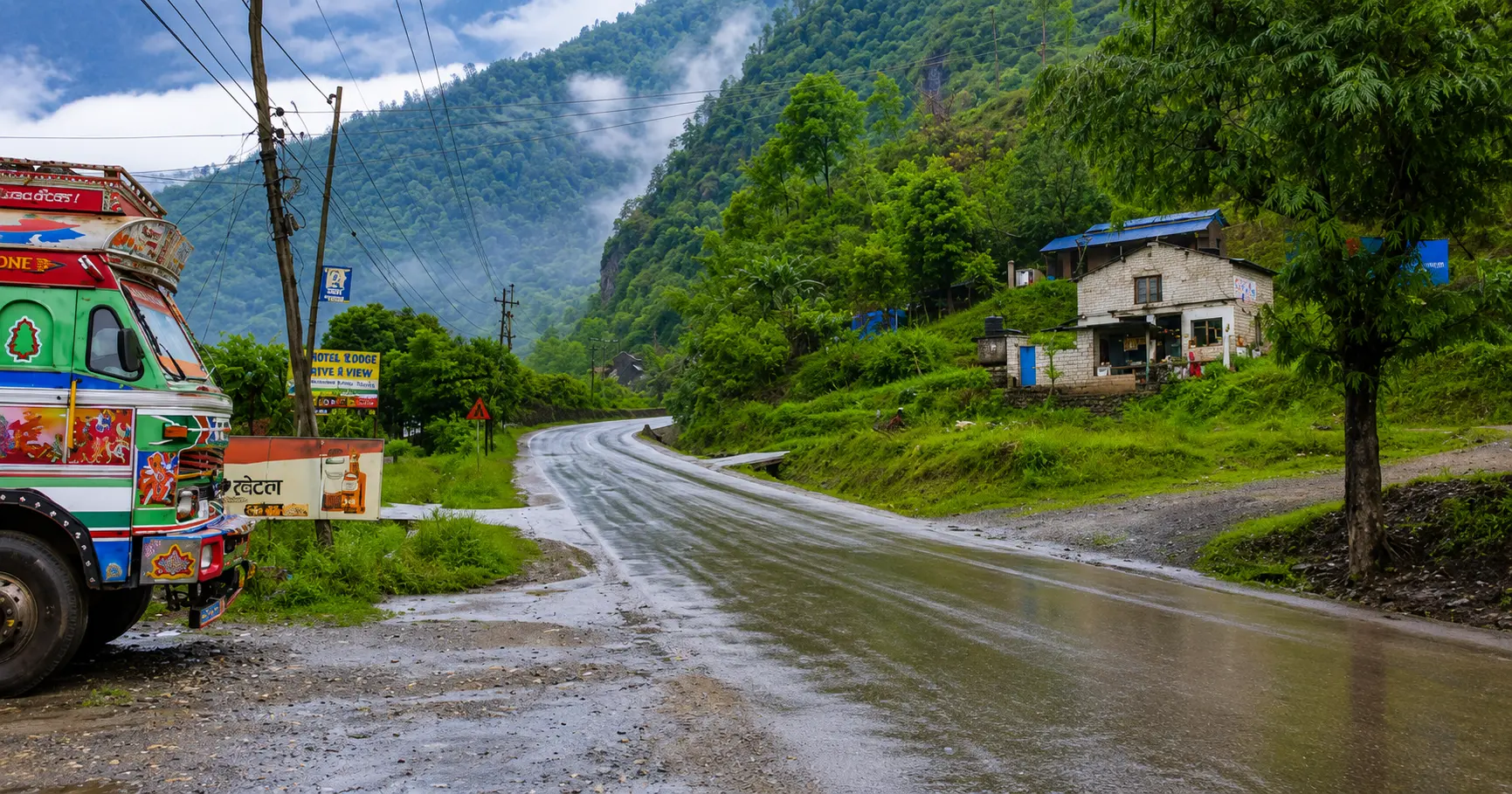
Experience a Nepal Luxury Helicopter Tour with private and premium helicopter services to Everest, Annapurna, Muktinath, Langtang, and other spectacular Himalayan destinations. Enjoy breathtaking mountain views, flexible itineraries, and optional landing experiences.

Nepal Luxury Helicopter for Milestone Celebrations

The Kathmandu-to-Nepalgunj luxury private helicopter tour has become one of the world’s most distinctive milestone celebration experiences—for significant transfers, wedding anniversaries, retirement celebrations, and bucket-list achievements. Alpine Luxury Treks coordinates these moments.

The combination of its visual drama (the world’s highest mountain seen from the air), its physical accessibility (a half-day experience and requiring fitness), and the fact that most people in the world will never see Everest at all, let alone from a helicopter at 5,545 meters) creates a milestone experience that few experiences anywhere can match.

A 60th birthday celebrated at Kala Patthar with a private helicopter, champagne, and the specific intimacy of a mountain that requires no explanation. A 30th wedding anniversary at Hotel Everest View, the same panorama as the table, the same coffee, and thirty years between then and now.

A retirement from a 40-year career marked by the single most dramatic and most beautiful view available to a human being at altitudes measured in technical climbing. These are the moments the Nepal luxury helicopter tour — in private charter format, with VIP ground transport from Nepal Vehicle Hiring Pvt Ltd and full experience coordination by Alpine Luxury Treks — delivers.

Contact our team at +977 981-4227196 to begin planning your Nepal milestone celebration.

Practical logistics for a milestone celebration helicopter charter from Nepal Vehicle Hiring Pvt Ltd’s perspective: Land Cruiser Prado VIP pickup at the hotel at the confirmed time, driver in formal attire, and a vehicle interior prepared with the discretion private celebration occasions require. Kathmandu airport transfer on international arrival for the full delegation.

Kathmandu sightseeing car hire for heritage days before the celebration. Bhaktapur heritage tour and Nagarkot sunrise transfer as context-building days before the helicopter event. Post-celebration Kathmandu to Pokhara private vehicle for the lakeside recovery and the Annapurna helicopter follow-up if the group wants to extend the aerial Himalayan experience to a second mountain range.

Plan the entire celebration through our plan trip page.
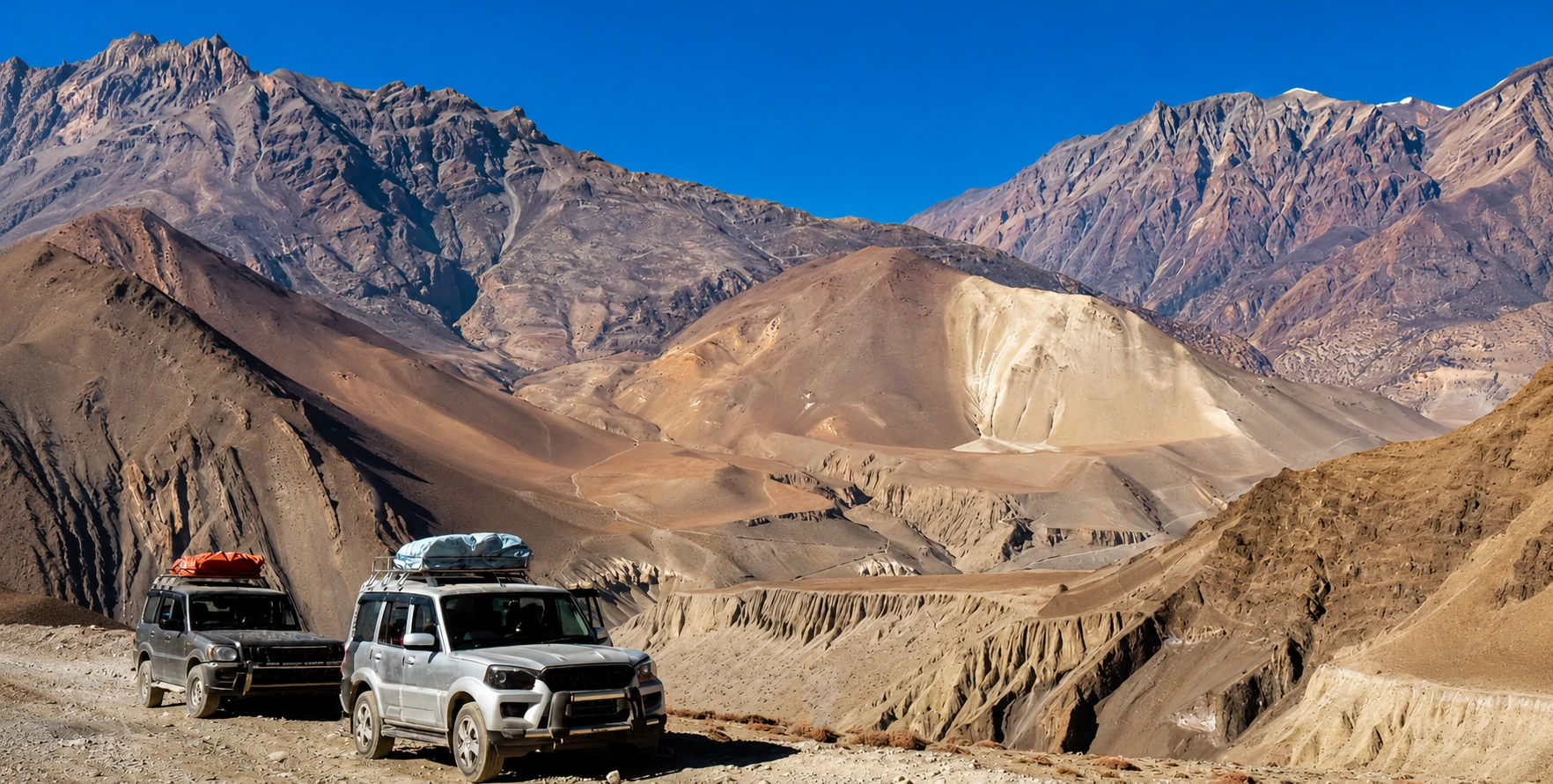
The Manaslu Circuit and Helicopter Rescue — Nepal’s Mountain Safety Network

The Manaslu Circuit trek — one of Nepal’s most spectacular and most demanding remote trekking experiences, accessible via our Soti Khola jeep hire and Manaslu trek transport service — is one of Nepal’s treks that mandates helicopter evacuation insurance for all trekking permits. This requirement exists because the Manaslu Conservation Area’s remote character and the circuit’s crossing of the Larkya La Pass at 5,106 meters create conditions where high-altitude medical emergencies cannot be reached by road ambulance, and where helicopter evacuation is the only practical emergency response.

Nepal’s military and commercial helicopter fleet provides this evacuation capability—the same helicopters and pilots that operate luxury helicopter tours also serve this critical emergency rescue function.

Understanding this dual function of Nepal’s helicopter industry — luxury tourism and emergency mountain rescue — gives the luxury helicopter tour an additional dimension of meaning. The Airbus H125 that carries the luxury charter group to Kala Patthar at 5,545 meters is the same aircraft type that extracts altitude-sick trekkers from the Khumbu in medical emergencies.

The pilot who navigates the private charter tour to Hotel Everest View has likely also performed emergency evacuations from remote mountain locations in Nepal. Nepal’s helicopter industry is not merely a tourism service. Still, aa genuine mountain safety infrastructure, and the luxury helicopter tour operates within and supports it.

Alpine Luxury Treks arranges comprehensive helicopter evacuation insurance for all Himalayan trekking package. Nepall Vehicle Hiring Pvt Ltd maintains emergency contact protocols for all clients on mountain road transfers via WhatsApp at +977 981-4227196.

Everest range

Luxury Langtang and Gosaikunda Helicopter Tours

The Langtang Valley helicopter tour, available as a private charter from Kathmandu, offers an aerial approach to the Kyanjin Gompa (3,862 m) monastery, the Langtang glacier, and the surrounding 7,000-meter peaks of the Langtang range. The luxury private charter format for Langtang includes extended time at the Kyanjin Gompa landing zone for the monastery visit, a glacial viewpoint walk from the helicopter landing, and the optional extension to a higher viewpoint for Langtang Lirung (7,234 m) approach photography.

The private Langtang charter costs approximately USD 3,500 to 4,500 from Kathmandu. After the August 2026 flood disrupted access to Syabrubesi Road, the Langtang helicopter tour has become the primary way to reach the valley for those unwilling to wait for road restoration.

The Gosaikunda luxury helicopter tour—a private charter to the sacred glacial lake at 4,380 meters in Rasuwa District—offers access to one of Nepal’s most significant Hindu pilgrimage sites in a format that is particularly meaningful for elderly or mobility-limited pilgrims for whom the 3- to 4-day trek from Dhunche is not viable. The lake’s turquoise surface, the surrounding peak panorama, and the religious atmosphere of the Gosaikunda shoreline—where pilgrims have offered prayers for centuries at the water’s edge—create a compelling luxury helicopter destination that combines natural beauty and spiritual significance in one place.

The private Gosaikunda charter costs approximately USD 3,000 to 4,000 from Kathmandu. Nepal Vehicle Hiring Pvt Ltd provides VIP hotel-to-helipad transfer for both tours.

The Airbus H130 — Nepal’s Top-end Helicopter for Luxury Tours

While the Airbus H125 is Nepal’s most widely used high-altitude helicopter, the Airbus H130 represents the top-end tier of the Nepal helicopter fleet—a specifically designed touring helicopter whose engineering prioritises passenger comfort and viewing quality alongside the high-altitude performance required for Himalayan operations. The H130’s key advantages over the H125 include: a wider cabin with space for up to 7 passengers (versus the H125’s 5-passenger maximum); panoramic windows extending into the ceiling, which let passengers look upward at mountain peaks above the helicopter’s flight altitude; a quieter cabin thanks to the shrouded Fenestron tail rotor; and a higher level of interior finish and seating comfort for charter clients.

For the private charter luxury helicopter tour market in Nepal, the H130 is the most refined available aerial touring platform—delivering the Himalayan landscape through windows designed specifically for mountain sightseeing rather than adapted from a utility aircraft specification. The H130 charter top-end over the H125 is approximately USD 500 to 1,000 per full charter, reflecting both the larger aircraft’s higher operating costs and the genuinely superior passenger experience it delivers.

For luxury clients and honeymoon packages where window views and cabin comfort directly affect the experience, the H130 top-end is routinely the right choice. Alpine Luxury Treks can confirm H130 availability with specific operators when coordinating luxury helicopter bookings.

Luxury Multi-Destination Helicopter Circuits

The private charter format enables multi-destination helicopter circuits that are impossible in the shared-seat model — combining multiple Himalayan regions in a single aerial day or across a multi-day luxury Nepal itinerary.

The Ultimate Nepal Helicopter Circuit. Kathmandu departure by private helicopter → Everest Base Camp aerial approach and Kala Patthar landing (5,545 m) → Hotel Everest View luxury breakfast (3,962 m) → aerial transit to the Langtang massif for the Kyanjin Gompa approach → return to Kathmandu. Total flight time: approximately 4 to 5 hours with ground stops.

This circuit — combining the two most significant Nepal helicopter destinations in a single charter day — is the most expensive and most comprehensive single-day aerial Nepal experience available. Available from Alpine Luxury Treks on request with advance coordination.

The Annapurna-Mustang Luxury Circuit from Pokhara. Pokhara departure → Annapurna Base Camp landing (4,130 m) → aerial transit northward through the Kali Gandaki gorge → Lo Manthang Upper Mustang landing → return to Pokhara via the Kali Gandaki valley panorama. This single-day circuit delivers both the Annapurna Sanctuary’s mountain bowl experience and the Mustang plateau’s cultural landscape in one extraordinary aerial day.

Requires a full-day private charter commitment of approximately 3 to 4 flight hours plus ground time—price: approximately USD 7,000 to 9,000 for the full circuit. Pokhara car hire and the Kathmandu-to-Pokhara private vehicle cover the ground connections.

The Himalayan Four — Everest, Annapurna, Mustang, and Chitwan. A 4-day luxury Nepal circuit combining the Everest helicopter tour (day 1 from Kathmandu), the Kathmandu to Pokhara private vehicle transfer (day 2), the Annapurna-Mustang circuit helicopter day (day 3 from Pokhara), and the Pokhara to Chitwan bus or private vehicle for the Chitwan jungle safari (day 4). This circuit—covering the world’s highest mountain, the world’s 10th highest mountain, Nepal’s finest medieval walled city, and South Asia’s finest wildlife park—offers the most comprehensive luxury Nepal experience in four days.

Experience a Nepal Luxury Helicopter Tour with private and premium helicopter services to Everest, Annapurna, Muktinath, Langtang, and other spectacular Himalayan destinations. Enjoy breathtaking mountain views, flexible itineraries, and optional landing experiences.

Luxury Photography Helicopter Tours

Nepal is one of the world’s foremost destinations for Himalayan landscape and mountain photography, and a private helicopter charter provides an aerial platform no other access method can match. The combination of the Airbus H125’s or H130’s stable hovering capability, the altitude access above 5,000 meters, the golden hour light available on morning departure slots, and the charter’s flexibility for approach angle customisation and extended hovering time creates conditions for Himalayan aerial photography that professional mountain photographers consistently describe as unreplicable by any ground-based or alternative aerial method.

Nepal’s most experienced aerial photography helicopter operators accommodate specific photographic requirements: window removal on one side of the aircraft for clear-glass metering on specific photography charter flights (available from specific operators on advance request — not standard on all tours); flight path variations to position the subject mountain in specific quadrants of the frame; approach altitudes adjusted for the specific composition requested by the photographer; and hovering time extended beyond the standard tour duration for the light conditions the shoot requires. These photography-optimised charter arrangements are top-end-priced above the standard private charter rate — typically by an additional USD 500 to 1,500 depending on the specific modifications required.

For professional photographers on assignment—magazine editorial, film production, scientific research, or commercial photography commissions—Nepal’s helicopter charter market provides both the aviation capacity for the specific mission and the operator flexibility to accommodate non-standard flight requirements that photography-optimised charters do not. Alpine Luxury Treks has experience coordinating aerial photography and helicopter charters for professional clients, working with Nepal’s CAAN-licensed operators to match specific photographic mission requirements with operators who have the right experience and flexibility.

Nepal Vehicle Hiring Pvt Ltd provides the ground transport — VIP vehicle hire, airport transfers, and Kathmandu sightseeing — for all photography mission clients.

Experience a Nepal Luxury Helicopter Tour with private and premium helicopter services to Everest, Annapurna, Muktinath, Langtang, and other spectacular Himalayan destinations. Enjoy breathtaking mountain views, flexible itineraries, and optional landing experiences.

Luxury Helicopter Tour Cancellation Policy — What to Know

One of the most important and most frequently overlooked aspects of booking a Nepal luxury helicopter tour is the cancellation policy — specifically the distinction between weather-related cancellations (which reputable operators handle as a full refund or free reschedule) and client-initiated cancellations (which typically incur a 30 to 100 per cent fee of the booking amount depending on lead time). Understanding this policy before booking, rather than after, is fundamental to luxury travel planning in a destination where weather cancellations are genuinely common.

The Nepal helicopter industry’s weather-cancellation standard, as practised by reputable CAAN-licensed operators, is: if the operator cancels due to weather, the client receives a full refund or a free reschedule to an available date. This is the correct and industry-standard approach.

Operators who retain any portion of the booking on a weather cancellation — or who cite technical ‘service fee’ retentions that are effectively weather cancellation penalties — are not operating to the standard that a luxury helicopter charter client should accept. Alpine Luxury Treks works exclusively with operators whose weather cancellation policy meets this full-refund standard, and Nepal Vehicle Hiring Pvt Ltd applies the same transparent, no-hidden-penalty pricing to all ground transport bookings associated with helicopter tour days.

For client-initiated cancellations, the standard luxury helicopter charter cancellation schedule is: cancellation more than 30 days before departure — full refund minus administrative fees. Cancellation 15 to 30 days before — 50 per cent of charter value forfeited. Cancellation less than 15 days before — 100 per cent forfeit.

This schedule applies specifically to the helicopter charter itself. Nepal Vehicle Hiking Pvt Ltd vehicle hire bookings associated with helicopter tour days follow our own cancellation policy, which is more flexible than the helicopter operators’ and allows free rescheduling with 48 hours’ notice for standard car hire and airport transfer bookings.

Luxury Helicopter Tour Safety — What Distinguishes the Best Operators

Nepal’s helicopter tour safety record is genuinely strong by comparison with high-risk aviation environments worldwide — the industry’s CAAN regulatory framework, mandatory high-altitude pilot certification, and the established operational procedures of Nepal’s major helicopter operators collectively create a safety standard that has supported hundreds of EB hours and other mountain helicopter flights with an accident rate far lower than the layperson’s perception of Himalayan aviation risk might suggest. Understanding the specific safety elements that distinguish top-end luxury operators from the broader market is worth it.

The first is pilot experience specificity: at the top-end tier, pilots assigned to EBC private charter flights have a minimum number of Khumbu-specific flight hours that may substantially exceed the CAAN minimums. A pilot with 500 logged Khumbu hours has encountered the specific turbulence, approach angle, and performance-margin conditions of the Khumbu valley in a far wider range of conditions than a pilot with 50 logged hours — and this experience differential is most apparent at the margins, in the conditions where marginal go/no-go decisions are made.

Alpine Luxury Treks works with operators who can specifically confirm assigned pilot Khumbu-hours on request.

The second is aircraft maintenance transparency: top-end operators maintain their own engineering teams. They can produce aircraft maintenance logs for inspection on request, confirming that the specific helicopter assigned to a private charter has completed all scheduled maintenance to CAAN requirements and the operator’s higher internal standard.

For private charter clients paying USD 5,000 to 8,000 for an exclusive helicopter day, this transparency is a reasonable minimum expectation that reputable operators should meet without hesitation.

The third is communication equipment quality: top-end operators fit. They can equip helicopters with upgraded GPS, altimeter, and communication equipment above the CAAN minimum specification — ensuring the pilot’s situational awareness and ground communication capabilities at 5,000 to 5,500 meters meet the highest available standard.

For Nepal Vehicle Hiring Pvt Ltd‘s ground transport component of the luxury helicopter day, our drivers maintain WhatsApp contact throughout the tour, providing real-time communication with the client group from the pre-dawn hotel pickup to the post-tour return transfer.

The Complete Luxury Nepal Itinerary — 7 Days of Top-end Experience

For international luxury travellers visiting Nepal for a comprehensive 7-day top-end experience, the following itinerary combines the finest helicopter, trekking, cultural, and wildlife experiences Nepal offers at the highest available standard, supported throughout by Nepal Vehicle Hiring Pvt Ltd‘s VIP vehicle and Alpine Luxury Treks‘ guided top-end experiences.

Day 1 — Kathmandu Arrival and Heritage. VIP airport transfer from Tribhuvan International Airport in a Land Cruiser Prado. Afternoon Kathmandu sightseeing in a private car to Boudhanath and Pashupatinath—dinner at Kathmandu’s finest restaurant.

Day 2 — Bhaktapur Heritage and Nagarkot Sunset. Morning Bhaktapur heritage day tour in a private car. Late afternoon Nagarkot sunset transfer. Overnight in Nagarkot for the Himalayan sunrise panorama.

Day 3 — EBC Private Helicopter Tour. Pre-dawn VIP hotel-to-trek transfer. Private Everest Base Camp helicopter charter with Kala Patthar landing and Hotel Everest View luxury breakfast. Return to Kathmandu by mid-morning.

Afternoon visit to Patan Durbar Square by private car.

Day 4 — Kathmandu to Pokhara. Private vehicle transfer from Kathmandu to Pokhara via Prithvi Highway, with a Manakamana Temple cable car stop—Pokhara lakeside afternoon. Sarangkot sunrise vehicle pre-booked for dawn.

Day 5 — Sarangkot Sunrise and ABC Helicopter. Pre-dawn Sarangkot sunrise vehicle. Return to the hotel for breakfast—Annapurna Base Camp private helicopter charter. Return to Pokhara by noon.

Lakeside afternoon.

Day 6 — PPokharato Chitwan. Private vehicle from Pokhara to Chitwan. Afternoon Chitwan jungle safari — rhino and elephant tracking, birdwatching.

Day 7 — From Chitwan to Kathmandu and Departure. Morning Chitwan canoe safari. Private vehicle—Pokhara to Kathmandu. VIP departure transfer from the hotel door to the airport.

Dawn on Dawn complete through our plan trip page.
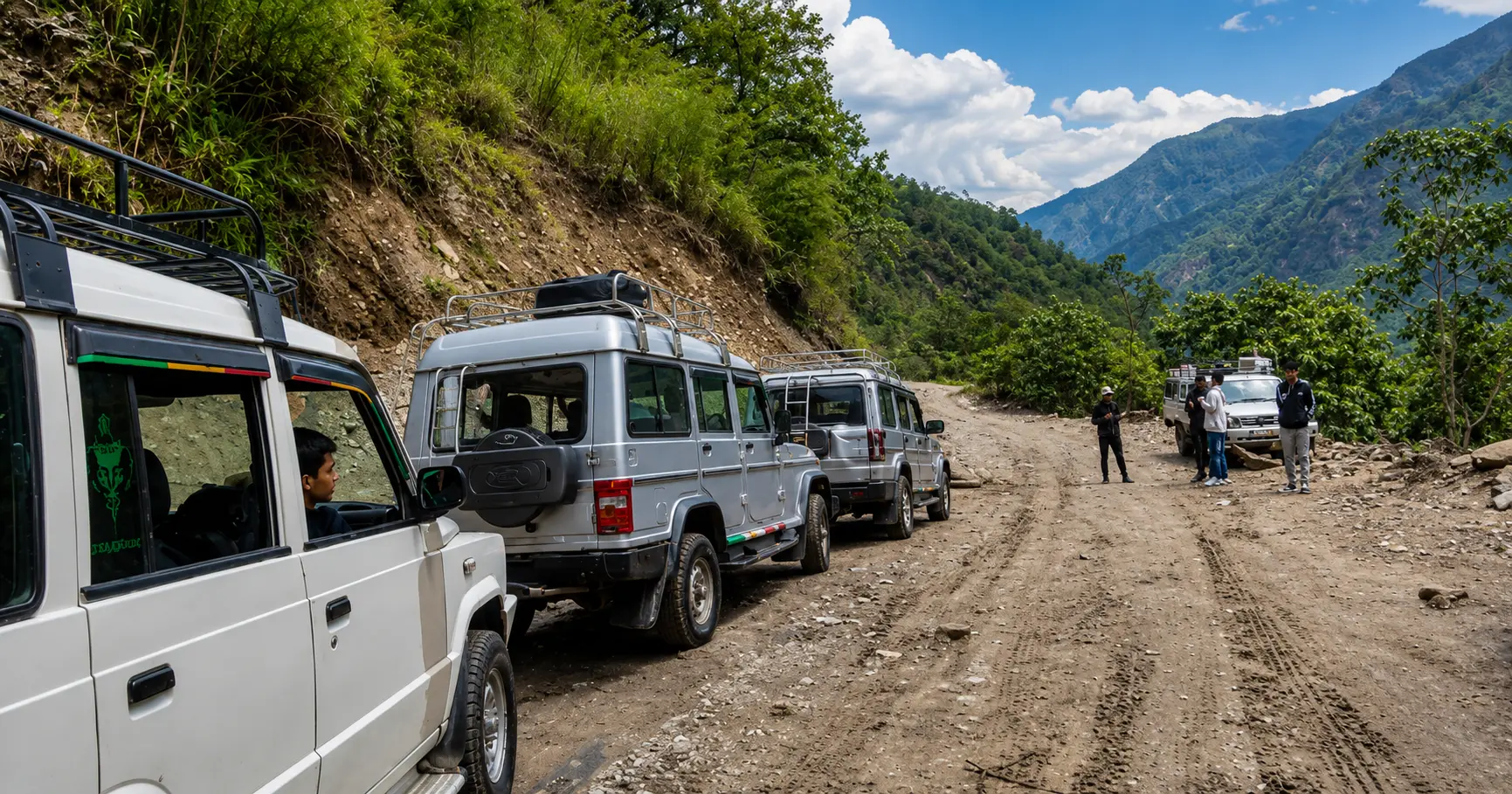
VIP Ground Transport — Nepal Vehicle Hiring Pvt Ltd’s Luxury —Annapurna luxury helicopter tour experience demands a consistent service standard from the first hotel pickup to the final airport transfer — and the ground transport legs that connect Kathmandu’s five-star hotels to the helipad are the first and last touchpoints of the luxury experience. Nepal Vehicle Hiring Pvt Ltd’s VIP vehicle hire service delivers these airport touchpoints at the standard that luxury helicopter tour clients expect.

VIP Hotel-to-Helipad Transfer. Our Land Cruiser Prado hire or Toyota Fortuner, with a uniformed, English-speaking driver positioned at the hotel entrance 10 minutes before the confirmed departure time, navigates Kathmandu’s pre-dawn traffic to the helipad with the reliability 5:00 a.m. helicopter tour departures require. We share the driver’s mobile number the evening before, and our contact team is reachable at +977 981-4227196 at any hour for pre-departure confirmation.

Kathmandu Heritage Sightseeing by VIP Vehicle. Our Kathmandu sightseeing car hire for luxury guests includes the full UNESCO heritage circuit: Patan Durbar Square, Boudhanath, Swayambhunath, and the Bhaktapur heritage day tour—in a private top-end car with hotel-door pickup at 5:00 a.m., on-demand, and a dedicated driver. We share the flexibility of luxury international transfer. Our Kathmandu airport transfer service includes uniformed meet-and-greet inside the arrivals hall for luxury guests — name-board reception, luggage trolley assistance, and escorted transit to the waiting Land Cruiser Prado or Fortuner.

For international flight arrivals, the airport pickup is the first Nepal experience for luxury helicopter tour guests—and it sets the service tone that the helicopter tour itself confirms.

Nepal’s luxury helicopter tour industry has grown substantially in the past five years, driven by three converging forces: Nepal’s growing reputation as a luxury travel destination (not only an adventure backpacker destination), the maturation of the domestic helicopter fleet to include aircraft specifically optimised for high-altitude flying, and the broader globalisation of high-net-worth traveller itineraries, which now include Nepal alongside the Maldives, Bhutan, and the Serengeti as a standard element of the top-end Asia circuit. This growth has created genuine competition among Nepal’s luxury helicopter operators — a market dynamic that has improved service standards, driven aircraft fleet upgrades, and produced the kind of tourism product sophistication that international luxury travel managers and concierge services now confidently recommend to their highest-value clients.

Alpine Luxury Treks has grown alongside this market evolution and maintains the operator relationships and service-standard knowledge that allow us to consistently match clients with the Nepal luxury helicopter experience that best fits their specific requirements. Nepal Vehicle Hiring Pvt Ltd provides smooth ground-transport integration that makes the helicopter day one element of a comprehensive Nepal visit, rather than an isolated aerial excursion disconnected from everything else the country offers.

Together, through our plan trip page, we plan and deliver Nepal luxury experiences that match the world’s finest service standards for overall service quality—and surpass most of them in the one dimension no other destination can match: the view from above the highest mountains on earth.

Experience a Nepal Luxury Helicopter Tour with private and premium helicopter services to Everest, Annapurna, Muktinath, Langtang, and other spectacular Himalayan destinations. Enjoy breathtaking mountain views, flexible itineraries, and optional landing experiences.

Ground-transport Luxury Helicopter Tour

  • Contact Alpine Luxury Treks or Trek Nepal Himalayas for the helicopter: Alpine Luxury Treks specialises in private charter coordination, including H130 availability, photography charter modifications, and multi-destination luxury circuits.
  • Book Nepal Vehicle Hiring Pvt Ltd for ground transport: Contact us at +977 981-4227196 or through our plan trip page to arrange VIP hotel-to-helipad transfer, Kathmandu sightseeing, and all inter-city vehicle hire.
  • Book at least 1 to 2 months ahead for spring and 3 to 4 weeks ahead for autumn: Private charter luxury helicopter demand from international luxury travellers peaks in spring and autumn. Specific aircraft preferences (H130, photography-modified) require advance communication with the operator.
  • Allow 2 weather buffer days: Mountain flying depends on the weather. A luxury Nepal visit should include at least 2 additional days beyond the helicopter tour day to allow for potential rescheduling.
  • Confirm the complete package inclusions: Specifically: aircraft type, Kala Patthar landing (EBC), ground stop duration, breakfast quality and setting, weather cancellation and refund policy, and all VIP ground transport arrangements.
  • Arrange comprehensive travel insurance: Must cover helicopter operations above 3,300 ft, emergency medical care in remote Nepal, and cancellation/interruption for weather-related schedule changes.

Frequently Asked Questions — Nepal Luxury Helicopter Tours

What is the price difference between a shared and private helicopter tour in Nepal?

Shared EBC seat: USD 1,240 to 1,395 per person. Private EBC charter: USD 5,450 to 6,500 for the full helicopter (1-5 pax). At 5 pax, the private charter is cost-competitive with shared pricing while providing complete exclusivity.

For 2 people, the private charter top-end is approximately USD 1,500 to 2,000 for full privacy and schedule flexibility.

What makes a Nepal luxury helicopter tour different from a standard tour?

The private charter format delivers complete schedule flexibility, no strangers in the aircraft, extended photography time at high-altitude stops, pacing control at Hotel Everest View breakfast, pilot request options for approach-angle variations, and the consistent VIP service that luxury ground transport and top-end operators provide at every touchpoint.

Which helicopter is best for a luxury helicopter tour in Nepal?

The Airbus H130 offers the best luxury touring experience—panoramic ceiling windows, a wider cabin, quieter flight, and up to 7 passengers. The H125 is equally reliable at high altitude. Alpine Luxury Treks can confirm H130 availability for specific tour dates.

Can a Nepal luxury helicopter approach-angle be used for a honeymoon?

Yes — private EBC and Annapurna helicopter charters with champagne breakfast, photography time, and VIP ground transport are among Nepal’s most popular honeymoon experiences. Contact Alpine Luxury Treks and Nepal Vehicle Hiring Pvt to coordinate the complete honeymoon package.

What ground transportation is included with the helicopter tour?

Ground transport is booked separately. Nepal Vehicle Hiring Pvt Ltd provides the VIP hotel-to-helipad transfer, Kathmandu airport transfers, and all sightseeing and inter-city vehicle hire through our plan trip page or +977 981-4227196.

Conclusion

The Nepal luxury helicopter tour — in private charter format, with top-end ground transport, coordinated through experienced luxury operators, and experienced in the full context of a comprehensive Nepal visit — is one of the world’s finest singular travel experiences: the highest mountain terrain on earth, from a platform that places you above it and within it simultaneously, with no other passengers in the aircraft and no other agenda but the quality of the encounter. Alpine Luxury Treks and Nepal Vehicle Hiring Pvt Ltd coordinate the complete luxury Nepal helicopter experience—from VIP airport transfer on international arrival to a private helicopter charter above the world’s highest mountains, and post-tour Kathmandu heritage sightseeing that completes a Nepal visit to the highest possible standard.

Plan your Nepal luxury helicopter tour with Nepal Vehicle Hiring Pvt Ltd — call or WhatsApp +977 981-4227196, visit vehiclehiringnepal.com, or begin your complete luxury Nepal itinerary through our plan trip page.
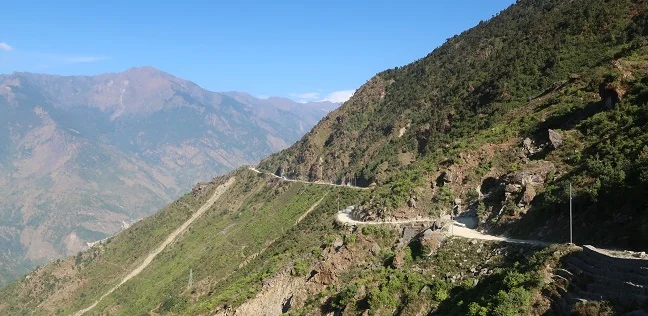
Nepal Flash Flood Conditions: Latest News

Nepal Flash Flood Conditions: Latest News

Operational and Structural Status Assessment of the Rasuwagadhi–Kerung Border Corridor Following the August 2026 Transboundary Hydrometeorological Disaster

The Rasuwagadhi border crossing (Rasuwagadhi Nakha), the primary overland trade and transit gateway between Nepal and the Tibet Autonomous Region (TAR) of China, is completely non-operational after a catastrophic flash flood and hyper-concentrated debris flow on August 26, 2026. The physical border facilities, customs yards, transport links, and supporting energy infrastructure along the Bhote Koshi and Lhende Khola river corridors suffered near-total erasure or structural failure.

This incident represents the second major destruction of the crossing within a 14-month window, following a similar supraglacial-driven flood in July 2025 that severed the border for nearly six months. The August 2026 disaster far exceeded the 2025 event in both volume and destructive force, obliterating the newly installed 91-meter Bailey bridge, destroying the Gyirong Port facilities on the Chinese side, and sweeping away the Timure customs complex on the Nepali side. Restoration of normal commercial trade or passenger transit through Rasuwagadhi is not anticipated for months, compelling a structural shift in regional trade logistics, energy grid management, and Himalayan tourism.

Geological and Hydrological Trigger Mechanisms

The disaster originated approximately 20 kilometers northeast of the Rasuwagadhi border point, high in the Langtang Lirung mountain mass. Satellite imagery and seismic monitoring confirmed that a massive rock-and-ice collapse involving a glacier about 610 meters wide was the primary trigger. Bedrock beneath the glacial mass failed, sending millions of cubic meters of ice, rock, and mountain substrate plunging over 1,200 meters into high-altitude valley catchments.

The physical impact of the initial collapse generated a seismic signal equivalent to a $M_s\ 5.2$ or $M_w\ 4.4$ event. While early reports attributed the disaster to an earthquake, geomorphological analysis confirmed that the seismic energy came entirely from the avalanche’s mass striking the valley floor. The resulting debris mixed with meltwater, entrained sediments, and supraglacial water bodies, forming a hyper-concentrated flow that impounded the Lhende Khola.

When this temporary landslide dam breached, a wall of water, mud, and boulders surged downstream at speeds estimated at $50\text{ m/s}$ ($180\text{ km/h}$). The floodwaters swept down the Lhende Khola into the Bhote Koshi River and rapidly progressed into the Trishuli River system. Downstream hydrographic stations recorded sudden stage increases, with the Galchhi monitoring point logging a river rise of about 99 meters within 30 minutes. Existing cross-border early warning systems failed to issue timely alerts because water-level monitoring stations upstream were physically swept away before signals could be transmitted, and sensors optimized for perennial monsoon swells were overwhelmed by the velocity of the rock-ice avalanche cascade.

Nepal Flash Flood Conditions: Latest News

Ground-Level Infrastructure Devastation and Border Operations

High-resolution satellite imagery captured on August 27, 2026, confirmed that the principal multi-story port complex at Gyirong (China) and the Timure customs facility (Nepal) were virtually erased. On the Nepali side, the surge swept directly through the low-lying settlements of Timure and Syabrubesi, submerging or burying customs yards, administrative buildings, security outposts, and residential structures.

The cross-border connecting infrastructure was completely severed. The 91-meter steel Bailey bridge—erected with Chinese technical assistance in late 2025 following the destruction of the historic Miteri Friendship Bridge—was torn from its abutments. More than 500 cargo trucks, container trailers, and private vehicles waiting at the border customs processing zones were carried away or buried under meters of gravel and silt.

Downstream, approximately 42 kilometers of the Pasang Lhamu Highway linking Betrawati in Nuwakot to Rasuwagadhi was washed out or severed by landslides, isolating the northern sector of Rasuwa District from overland vehicular access. Local helipads, including the facility at Timure, were carried away by the river, initially preventing aerial search-and-rescue helicopters from touching down.

Infrastructure ComponentLocationPre-Disaster FunctionPost-Disaster Status (August 2026)
Gyirong Port FacilityGyirong County, TARPrimary Chinese immigration & customs terminal

Destroyed; structural framework erased.

Timure Customs HubTimure, RasuwaPrimary Nepali freight inspection & clearing yard

Obliterated; vehicles, yards, and offices buried or swept away.

Miteri / Bailey BridgeBhote Koshi FrontierInternational overland vehicular crossing point

Destroyed; spans washed downstream.

Pasang Lhamu HighwayBetrawati–RasuwagadhiStrategic arterial road linking Kathmandu to TAR

42 km section severed or completely washed away.

Timure HelipadTimure, RasuwaEmergency air transport and rescue drop-point

Swept away, forcing aerial rescues to abort landing.

Local Telecom & GridRasuwa District-wideCellular towers, fiber lines, local power supply

Severed; initial total communications blackout.

The damage created acute logistical crises on both sides of the frontier. In Kerung, located roughly 30 kilometers north of the border in Tibet, at least 80 Nepali freight container drivers became stranded when the route south was cut. With the border road destroyed and damaged sections extending up to 5 kilometers into Tibetan territory, repatriation via Rasuwagadhi remains physically impossible. Transboundary municipal authorities have begun discussing rerouting stranded personnel via alternative mountain passes, such as Tatopani (300 km distant) or Korala (over 600 km distant).

Humanitarian Impact and Spatial Distribution of Casualties

The flood wave propagated along a 72-kilometer stretch of the Trishuli River corridor, impacting settlements across eight districts in central and southern Nepal, as well as Gyirong County in Tibet. The casualty footprint extends far beyond the immediate border zone, as victims and structural debris were carried downstream into the Narayani and Trishuli river basins, with bodies recovered as far as 240 kilometers away in the Indian states of Uttar Pradesh and Bihar.

Provisional data compiled by disaster response authorities indicates nationwide fatalities exceeding 620 individuals, with over 2,400 people listed as unaccounted for. A significant percentage of those listed as missing reflects collapsed telecommunication networks across mountain catchments rather than confirmed deaths. The disaster heavily impacted vulnerable populations, including a community of 250 households displaced by the 2015 Gorkha earthquake who had resettled along the low-lying riverbanks of the Trishuli; their settlement was swept away entirely.

District / RegionConfirmed Recovered FatalitiesFormally Reported MissingPrimary Casualty Groups / Context
Chitwan108+Unspecified

Downstream flash flood inundation along Narayani/Trishuli.

Nawalparasi East62–74Unspecified

Downstream river surge victims carried from upper valleys.

Dhading27Unspecified

Riverside market settlements destroyed by debris flow.

Gorkha20Unspecified

Tributary flooding and bank erosion along Trishuli basin.

Rasuwa17+384+

Customs staff, APF personnel, residents, trekkers.

Tibet Autonomous Region7+554+

Port workers, border security staff, residents.

Total (Cumulative)623+2,478+

Includes domestic residents, trade personnel, and foreign nationals.

The human toll includes foreign tourists, trekking crews, and international pilgrims trapped in the border transit zone. An entire overland Kailash Yatra pilgrimage group organized by a major tour operator, comprising 40 foreign nationals (from the United States, Canada, Australia, the United Kingdom, Singapore, and Russia) and 7 Nepali field staff, was caught at Rasuwagadhi during the surge, triggering international search-and-rescue interventions. Security personnel deployed at border outposts were also hit; multiple members of the Armed Police Force (APF), Nepal Police, and Nepal Army stationed at Timure were swept away.

Nepal Flash Flood Conditions: Latest News

Cascading Sectoral Impacts

Energy Grid Paralysis and Hydropower Infrastructure

The Bhote Koshi–Trishuli river corridor represents Nepal’s most concentrated hydroelectric energy generation artery. The August 26 surge caused structural damage or operational paralysis across 14 solar and hydroelectric facilities, representing approximately 748 megawatts (MW) of generation capacity.

Active generation facilities knocked offline include the 102 MW Rasuwagadhi Hydropower Project, the 221 MW Chilime Hydropower complex, the Trishuli 3A plant, the 220 kV Trishuli 3B hub substation, the Trishuli Hydropower Station, and the Devighat plant. In total, over 430 MW of active generation capacity was removed from the national grid instantly, causing rolling voltage fluctuations and power deficits across Bagmati and Gandaki provinces. Heavy siltation, submerged turbines, swept-away penstocks, and damaged transformer hubs mean that bringing these facilities back online will require extensive dredging and electromechanical repairs lasting months.

Transboundary Trade and Macroeconomic Pressures

The destruction of Rasuwagadhi paralyzes Nepal’s primary overland commercial artery with China. Since the 2015 earthquake damaged the historic Tatopani–Zhangmu (Kodari) border point on the Araniko Highway, Rasuwagadhi has absorbed most northern transboundary container traffic, carrying vital shipments of garments, electronics, industrial raw materials, and agricultural goods.

The timing of the disaster imposes severe macroeconomic costs. The closure occurred just weeks before the major autumn festival season (Dashain and Tihar), when consumer demand peaks across Nepal and import volumes through Rasuwagadhi traditionally surge. Importers face stranded cargo on the Chinese side, contractual default risks, and surging freight costs. The secondary Tatopani crossing cannot absorb the redirected container volume due to lingering structural bottlenecks on the Araniko Highway. Consequently, commercial supply chains in Kathmandu are experiencing immediate price volatility, cargo delays, and shortages of seasonal consumer goods.

Tourism Logistics and Regional Safety Disparity

The destruction of the border hub has altered regional tourism logistics, requiring a clear operational distinction between the affected corridor and the rest of the country. The overland route to Tibet and Mount Kailash via Kerung is shut for the remainder of the 2026 travel season. Travel agencies operating overland Tibet itineraries have canceled departures or transitioned clients to fly-in routes connecting Kathmandu to Lhasa’s Gonggar Airport. Similarly, vehicle access to the gateway towns of Syabrubesi and Timure for the Langtang Valley trek is severed.

Conversely, Nepal’s broader tourism infrastructure outside the affected watershed remains fully operational. Major trekking sectors—including the Everest (Khumbu) region, Annapurna Circuit and Base Camp, Manaslu Circuit, Upper Mustang, and key urban centers like Kathmandu and Pokhara—are located in separate river basins and suffered no physical impact. Flights to Lukla and Jomsom continue on standard schedules, and peak autumn trekking activities across these unaffected zones remain active.

Reconstruction Trajectory and Policy Implications

Long-Term Reconstruction Challenges

The repeated destruction of the Rasuwagadhi corridor within 14 months highlights a fundamental mismatch between traditional civil engineering standards and the reality of climate-driven mountain hazards. Reconstruction of the border crossing cannot simply replicate previous designs. Restoring vehicular transit through the Rasuwagadhi Nakha will require several key engineering adjustments:

  • Re-siting customs yards and border processing infrastructure onto higher bedrock terraces well above the 100-year flood line of the Bhote Koshi.

  • Designing multi-span, high-clearance suspension or cantilever bridges capable of withstanding hyper-concentrated debris flows laden with massive boulders.

  • Rebuilding the 42 km severed stretch of the Pasang Lhamu Highway using reinforced retaining structures and tunnel segments through chronic landslide zones.

Given the scale of terrain deformation, restoring full-capacity freight operations through Rasuwagadhi is projected to take 12 to 24 months, requiring joint diplomatic, financial, and engineering mobilization between Nepal and China.

Is Nepal Safe for Female Travelers?

Is Nepal safe for female travelers? Learn about solo travel, local customs, transportation, trekking safety, scams, nightlife, and practical tips for women visiting Nepal.

Is Nepal Safe for Female Travellers? Complete  Guide

The Honest Truth About Nepal and Female Safety

Tell someone you are planning a solo trip to Nepal, and the reactions divide predictably: awe at the Himalayas, then a wave of well-meaning concern about your safety as a woman travelling alone in South Asia. The anxiety is understandable — South Asia’s reputation in global discourse around female safety is complicated, and assumptions born from news coverage of neighbouring countries sometimes bleed unfairly into perceptions of Nepal, which has a genuinely distinct and considerably more positive safety profile for women travellers than many of those assumptions suggest.

The honest, research-backed answer to the question ‘Is Nepal safe for female travellers?’ is yes — with the contextual intelligence that applies to travel anywhere. Nepal consistently ranks among the safest countries in South Asia for tourists, and solo female travellers in particular have long considered it one of the world’s most welcoming and manageable solo travel destinations.

The Nepali cultural value of Atithi Devo Bhava — ‘The Guest Is God’ — is not simply a tourism board slogan but a genuinely embedded cultural orientation toward hospitality that shapes how local communities interact with visitors across the country’s remarkable geographic diversity.

This does not mean travelling in Nepal requires no awareness or precaution. No country does. Unwanted attention — staring, occasional verbal comments — does occur, particularly in more rural areas where foreign women are less commonly seen.

Petty theft is a reality in crowded tourist areas. The road infrastructure, while improving, can be challenging and requires thoughtful transport choices. And the mountain terrain that makes Nepal extraordinary also introduces specific safety considerations — altitude, remoteness, weather — that require preparation regardless of gender.

But serious crime against tourists, including female travellers, is genuinely rare in Nepal, and the experience of the vast majority of solo women who travel here is overwhelmingly positive.

This guide addresses female safety in Nepal with the specificity and honesty that the question deserves — covering the Kathmandu city safety landscape, Pokhara and its lakeside culture, the trekking trail safety situation under the mandatory guide regulation, transport safety and how private vehicle hire from Nepal Vehicle Hiring Pvt. Ltd. specifically addresses solo female travellers’ transport concerns, cultural navigation, accommodation advice, and the practical toolkit of safety habits that experienced solo women travellers in Nepal have refined over years of positive experience in this extraordinary country.

Nepal’s Safety Profile — The Evidence Base

Crime Statistics and Regional Context

Nepal’s crime rate against tourists — including female tourists — is genuinely low by both Asian and global standards. The country has no organised crime targeting tourists; terrorism incidents involving foreigners are essentially absent from the recent record, and the types of serious violent crime that female travellers are most concerned about — sexual assault, mugging, violent robbery — while not statistically zero, are reported at rates that are dramatically lower than in many popular Western travel destinations, including major European and North American cities.

The Nepal Police’s tourist crime data consistently show that the most frequent crimes reported by tourists are petty theft and scams rather than violent incidents, and that female tourists specifically are not a disproportionately targeted group.

Nepal’s position in the South Asian context is particularly important to understand clearly. When women hear concerns about South Asian travel safety, the frame of reference often draws on news and statistics from India — a country with a significantly higher reported rate of violent incidents against women travellers than Nepal.

Nepal, while sharing cultural elements with India, has a distinct social and legal environment, a different relationship between its communities and foreign travellers, and a considerably different practical safety experience. Conflating Nepal’s safety profile with India’s is a common and consequential pre-travel research error that makes many women more apprehensive about Nepal than the evidence warrants.

The 2026 Mandatory Guide Regulation — A Safety Upgrade for Trekking

One of the most significant developments for solo female trekkers in Nepal in recent years has been the mandatory licensed-guide regulation that took effect in 2023 and has been consistently enforced and strengthened through 2026. All trekkers — regardless of gender or experience level — are now required to trek with a licensed guide in all National Parks, Conservation Areas, and Restricted Areas, which covers virtually every popular trekking route in Nepal, including the Annapurna Circuit, the Langtang Valley Trek, the Everest Base Camp Trek, and the Manaslu Circuit. While the regulation was introduced primarily for safety and conservation reasons applicable to all trekkers, it has had a strongly positive effect on solo female trekking safety.

The mandatory guide provides solo female trekkers with a professionally responsible local companion throughout the mountain journey — someone who speaks the local language, knows the terrain, carries emergency equipment, can navigate altitude sickness situations, and provides the kind of visible male local accompaniment that effectively reduces the possibility of unwanted attention from other trail users or village community members. Many experienced solo women trekkers who initially opposed the regulation on grounds of independence have since reported that the guide companion actually enhanced, rather than diminished, their trekking experience by providing cultural context, language facilitation, and a relaxed confidence that changed the character of the experience for the better.

Safe Places for Female Travellers in Nepal — City by City

Kathmandu — The Capital’s Safety Landscape

Kathmandu is a dense, complex, and extraordinary city that rewards careful navigation with some of the finest cultural experiences in Asia — and, for female travellers who understand its geography and apply basic urban travel awareness, it is genuinely safe during daylight hours and in the main tourist areas in the evening. The Thamel neighbourhood — the primary tourist hub, clustered with hotels, restaurants, equipment shops, trekking agencies, and the full range of traveller services — is busy, well-lit, and actively populated by both tourists and local businesses throughout the evening, making it one of the safer urban environments for solo women travellers in Asia.

Is Nepal safe for female travelers? Learn about solo travel, local customs, transportation, trekking safety, scams, nightlife, and practical tips for women visiting Nepal.Within Kathmandu, the neighbourhoods most consistently rated as safe and comfortable for solo female travellers are Thamel (particularly the Paknajol sub-area in the northern part), Lazimpat, the heritage neighbourhoods of Patan and the area around Boudhanath —all of which have active local communities and strong natural surveillance that makes solitary wandering genuinely comfortable. The Kathmandu sightseeing circuit covering Boudhanath Stupa, Pashupatinath Temple, Swayambhunath, and Patan Durbar Square is best done by private vehicle hire — the convenience and security of being picked up from and returned to the hotel in a trusted Nepal Vehicle Hiring Pvt. Ltd. vehicle, rather than navigating local taxis or microbus routes independently, is particularly valuable for female travellers arriving in Kathmandu for the first time.

The practical cautions in Kathmandu that experienced solo female travelers consistently report: avoid the narrow, unlit alleys that run off the main Thamel streets after 10 PM; be alert in the crowds around major temple entrances where pickpocketing can occur; decline taxi services from touts who approach proactively at tourist sites and instead use app-based services like Pathao or InDrive, or request the hotel to call a specific driver; and be aware that the Kathmandu to Nagarkot road and similar pre-dawn sightseeing departures are most safely managed through a pre-booked private vehicle from Nepal Vehicle Hiring Pvt. Ltd. rather than attempting to arrange transport at 4:30 AM independently.

Is Nepal safe for female travelers? Learn about solo travel, local customs, transportation, trekking safety, scams, nightlife, and practical tips for women visiting Nepal.

Pokhara — Nepal’s Most Female-Friendly City

Solo female travellers consistently rate Pokhara as one of Nepal’s most comfortable and welcoming cities: a relaxed, beautiful lakeside city whose Lakeside neighbourhood along the shores of Phewa Lake creates one of Asia’s finest solo travel environments. The pedestrianised streets, the proliferation of well-reviewed cafes and restaurants with rooftop views of the Annapurna range, the concentration of international travellers creating a cosmopolitan and socially comfortable atmosphere, and the city’s generally relaxed pace combine to make Lakeside a genuinely exceptional environment for solo women travellers.

The car hire in Pokhara service from Nepal Vehicle Hiring Pvt. Ltd. is particularly valued by solo female travellers in Pokhara for early morning activities — the Sarangkot sunrise drive for the famous Annapurna panorama, which requires leaving the hotel at 4:30 to 5:00 AM, is most safely and comfortably arranged with a pre-booked private vehicle whose driver is known, whose registration is confirmed, and whose pickup is from the specific hotel. Finding transport at 5:00 AM independently is more stressful and less safe, and the Nepal Vehicle Hiring Pvt. Ltd. team’s 24-hour WhatsApp availability at +977 981-4227196 makes pre-dawn booking confirmations straightforward.

Pokhara also serves as the departure point for several of Nepal’s most popular trekking trailhead transfers—the Nayapul drop for the Poon Hill Trek, the Ghandruk approach, and the long Pokhara-to-Muktinath jeep hire for the Mustang pilgrimage. For solo female travellers, a pre-booked private vehicle from Nepal Vehicle Hiring Pvt. Ltd. for these trailhead transfers eliminates the solo-woman-in-shared-transport dynamic that can occasionally feel uncomfortable.
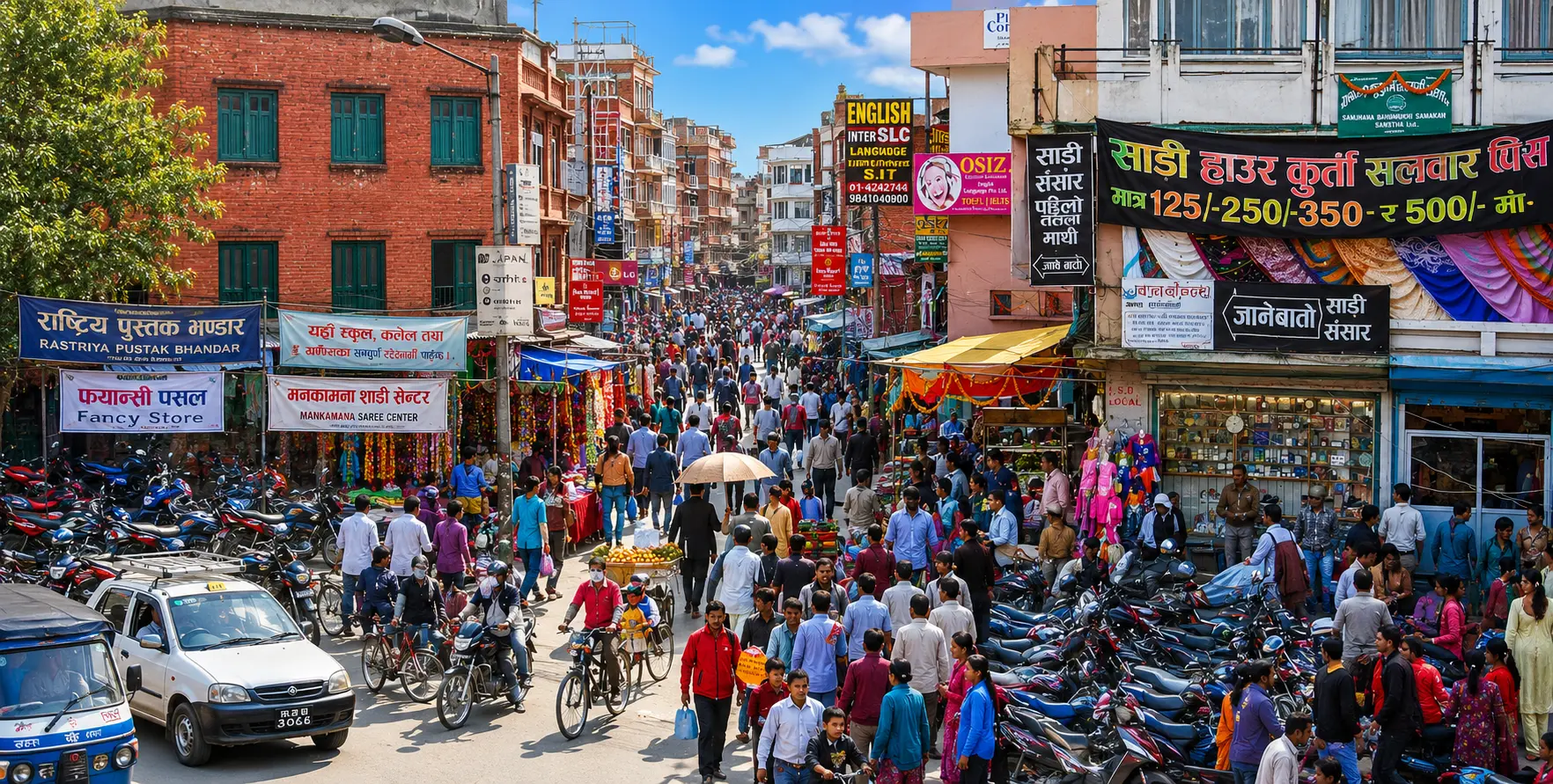
It ensures the driver, vehicle, and route are Drivermed before the journey begins.

Is Nepal safe for female travelers? Learn about solo travel, local customs, transportation, trekking safety, scams, nightlife, and practical tips for women visiting Nepal.

The Heritage Circuit — Bhaktapur, Patan and Nagarkot

The Bhaktapur Durbar Square day tour is one of the finest and safest full-day cultural experiences for female travellers in the Kathmandu Valley. Bhaktapur’s medieval city character is pedestrianised, with active local community life and a constant presence of both residents and international visitors—creating a safe and fascinating environment for solo women to explore at their own pace.

The Nepal Vehicle Hiring Pvt. Ltd. Bhaktapur day trip service provides door-to-door transport from your Kathmandu hotel, eliminating the need to navigate public transport or negotiate local taxis for the 14 km journey. The Nagarkot sunrise tour — a pre-dawn departure from Kathmandu for the famous Himalayan panorama — is best arranged as a private vehicle service, and Nepal Vehicle Hiring Pvt. Ltd. serves this specific early-morning tour regularly.

Transport Safety for Female Travellers in Nepal

Why Transport Choice Is the Most Important Safety Decision

Of all the safety considerations that affect female travellers in Nepal, experienced solo women travellers consistently identify transport choice as the one with the most direct and practical impact on the journey’s overall safety and comfort. Public buses, shared microbus services, and informal taxi arrangements — while used successfully by millions of Nepal residents and budget travellers daily — create specific vulnerability contexts for solo women: shared enclosed spaces with unknown co-passengers, routes and stop locations that may not align with thetraveller’s specific needs, drivers whose accountability is limited, and the general stress of navigating an unfamiliar transport system in a language barrier environment.

Private vehicle hire from Nepal Vehicle Hiring Pvt. Ltd. addresses each of these vulnerability factors specifically. A private vehicle means a known, pre-booked driver whose name and vehicle registration have been shared before departure, a route and timing agreed in advance, and a direct hotel-to-hotel service that eliminates the need to navigate stops and connections—the Nepal Vehicle Hiring Pvt. Ltd.’s operations team provides 24-hour oversight via WhatsApp, so any concern during the journey can be immediately escalated to a professional management layer.

For solo female travellers specifically, this accountability structure is not a luxury but a meaningful safety feature.

Thakali Women clad in their traditional Thakali attires

The Transport Safety Toolkit — Practical Advice

For urban transport in Kathmandu and Pokhara, the app-based ride services Pathao and InDrive have significantly improved transport safety for solo women in Nepal’s two main cities. Both apps show the driver’s name, photo, and vehicle details before the trip begins, track the journey in real time, and eliminate fare negotiation, which can create tension with informal taxis.

Pathao and InDrive operate in Kathmandu and Pokhara, with 4G coverage in both cities and increasingly in peri-urban areas.

For longer journeys — Kathmandu to Pokhara, the Kathmandu to Besisahar trailhead transfer, the Kathmandu to Syabrubesi Langtang transfer, the Pokhara to Muktinath journey, or any of Nepal’s mountain road journeys — the practical choice for solo female travellers is clearly between sharing a public bus or shared jeep with unknown co-passengers and booking a private vehicle from Nepal Vehicle Hiring Pvt. Ltd.. For solo women travelling in a group—even a group of two—the economics of private jeep hire are very favourable, producing per-person costs close to or comparable with shared alternatives while delivering the full safety advantages of a private vehicle.

Solo travellers who are genuinely budget-constrained can often find other travellers at their Thamel or Lakeside guesthouse with compatible routes and timing, and splitting a private Nepal Vehicle Hiring vehicle between two to four travellers is both cost-effective and a common practice.

Night Transport — The Essential Caution

Solo female travellers in Nepal should use the same approach to night transport as in any unfamiliar urban environment worldwide: avoid unmarked or informal taxis, don’t accept transport from strangers, and pre-book return transport from evening destinations rather than trying to find it after dark in unfamiliar areas. When leaving a restaurant or social venue in Thamel or Pokhara Lakeside after dark, ask the venue to call a specific taxi or app driver rather than accepting one from the street—a habit that takes thirty seconds and eliminates most of the transport risk associated with night travel.

Nepal Vehicle Hiring Pvt. Ltd.‘s 24-hour WhatsApp availability means clients can request a pickup at any time, and the driver-assignment and accountability structure of a pre-booked private vehicle makes evening returns from heritage sites, restaurants, or cultural events the safest transport option.

Cultural Navigation — Dressing, Behaving and Communicating

The Dress Code Question — Practical and Respectful

The dress code question for female travellers in Nepal generates more discussion than it deserves, given the simplicity of the practical answer. Nepal’s cultural norms, shaped by Hindu and Buddhist traditions and conservative social values that predominate in rural communities, generally expect women to cover their shoulders and knees in public settings—particularly around temples, religious sites, and traditional village communities.

Dressing modestly within these parameters is both a genuine expression of cultural respect and a pragmatic strategy to reduce the unwanted attention more revealing clothing can attract in these contexts.

The specific dress code guidance for Nepal that experienced female travellers consistently endorse: loose-fitting trousers or long skirts below the knee are universally appropriate across all Nepal settings; lightweight long-sleeved tops or a carry-always scarf or pashmina that can be used to cover shoulders provides flexible modesty for any setting; and at temples, monasteries, and other sacred sites, removing shoes before entering and covering the head if required by the specific site’s norms are practices that should be followed regardless of the traveller’s own cultural background. In Kathmandu’s Thamel and Pokhara’s Lakeside, Western dress, including shorts and sleeveless tops, is common and largely accepted in the immediate tourist area—but modesty becomes increasingly important as the traveller moves away from the tourist district.

Social Interactions — Reading the Context

Nepal’s hospitality culture creates a social environment where locals genuinely enjoy engaging with foreign visitors—conversations about your home country, your impressions of Nepal, and your travel plans are typically warm, authentic expressions of interest rather than anything more. Solo female travellers who can read the difference between genuine, friendly curiosity (the norm) and persistent or uncomfortable attention (the exception) find that most social interactions in Nepal genuinely enhance the travel experience rather than become a source of stress.

The social situations that solo female travellers in Nepal most consistently report as occasionally uncomfortable — and manageable — are: persistent vendors at major tourist sites who follow and renegotiate prices; individuals in crowded bus or market areas who position themselves too close; and the occasional unmarried young man in rural areas who may approach solo women travellers with persistent conversational interest. The consistently recommended response to all of these situations is calm, direct, and unhurried: a firm but non-aggressive ‘Hajur’ (the respectful Nepali ‘no, thank you’) combined with continuing to walk is almost universally effective and rarely escalates.

Wearing headphones (even without music playing) as a social barrier signal has also been widely endorsed by solo female travellers in Nepal as an effective way to reduce the frequency of approaches in busy public spaces.

Accommodation Safety — What to Look For

Accommodation safety for female travellers in Nepal is generally excellent across the mainstream tourist accommodation spectrum — Kathmandu‘s Thamel guesthouses, Pokhara‘s Lakeside hotels, and the teahouse networks of the major trekking circuits all have well-established international tourist hospitality standards that include door locks, reception desks, and the general structural safeguards of formal accommodation. Specific features that experienced solo female trekkers prioritise when selecting Nepal accommodation include: a well-reviewed establishment with verifiable recent guest feedback (TripAdvisor reviews from other solo women travellers are particularly useful); a secure lock on the room door, ideally with a deadbolt or chain in addition to the keyed lock; a reception desk that is manned through the evening hours; and a location within the main tourist area rather than on the immediate periphery.

In trekking regions, the teahouse accommodation network has an excellent safety record for solo female travellers, and the mandatory guide regulation means a solo female trekker always has a licensed guide companion who can stay in adjacent accommodation and be accessible if there are any concerns at night. Securing the room door from inside and informing the lodge owner of your planned departure time the following morning is standard practice in any trekking teahouse and requires no specific solo-female modification.

Is Nepal safe for female travelers? Learn about solo travel, local customs, transportation, trekking safety, scams, nightlife, and practical tips for women visiting Nepal.

Trekking Safety for Solo Female Travellers

The Mandatory Guide — How It Works in Practice

As established earlier in this guide, the mandatory guide regulation requires a licensed guide to accompany all solo female trekkers on Nepal’s official trekking routes. In practice, this means solo trekking, walking completely alone on the trail, is no longer legally permitted on routes in the National Parks and Conservation Areas—though the regulation applies equally to all genders, its practical safety benefit for solo women is particularly significant.

A licensed guide is professionally registered, insured, carries certification verifiable at checkpoints, and works under a contract with the trekking agency that employs them—creating a meaningful accountability structure that casual local guide arrangements lack.

For female travellers specifically, the guide selection process deserves attention. Many Nepal trekking agencies in Kathmandu and Pokhara now actively promote female guide options—a growing number of licensed female trekking guides are available, and solo female travellers who prefer the added comfort of a same-gender mountain companion can request a female guide, which most quality agencies accommodate. You can consult the Nepal Tourism Board’s licensed guide database online to verify any guide’s registration.

Trail Safety — Altitude, Weather and Terrain

Trekking safety concerns in Nepal apply equally to all genders but require specific preparation, including altitude sickness, weather changes, and terrain navigation. Acute Mountain Sickness (AMS) affects about 40 per cent of trekkers above 3,000 metres, regardless of fitness or experience, and solo female travellers planning high-altitude treks should thoroughly educate themselves on AMS symptoms, follow the 500-metre daily ascent rule above 3,000 metres, and communicate openly with their guide about any physical discomfort.

As of 2026, Nepal also requires specialised travel insurance covering high-altitude emergency evacuation for all trekking permit holders—a practical safety requirement that female travellers should verify before departure.

The most popular and safest trekking routes for solo female travellers, ranked by established trail infrastructure and guide availability, are the Langtang Valley Trek from Syabrubesi (most accessible from Kathmandu), the Ghorepani Poon Hill Trek from Pokhara via Nayapul, the Annapurna Circuit Trek starting from Besisahar, and the Everest Base Camp Trek from Lukla or by the road approach via Salleri. All of these routes have dense teahouse networks, well-marked trails, and strong guide communities.

The Best Destinations in Nepal for Solo Female Travellers

Kathmandu Valley Heritage Circuit

The Kathmandu Valley heritage circuit, covering Boudhanath Stupa, Swayambhunath, Pashupatinath Temple, Patan Durbar Square, and Bhaktapur Durbar Square, is widely recommended as the ideal starting point for any female traveller’s Nepal journey. The sites are extraordinarily rich, the tourist infrastructure is excellent, and the combination of active local communities and significant tourist presence creates a naturally safe environment for solo exploration during daylight hours.

The l Vehicle Hiring Pvt. Ltd.’s Kathmandu sightseeing tour and Bhaktapur day tour services offer a safe and comfortable way to cover this circuit— a known, pre-booked driver, hotel pickup, and drop-off—with the freedom to spend more at any site without worrying about transport.

Pokhara — The Ideal Base for Female Solo Travellers

Pokhara deserves specific emphasis as perhaps the single best base city in Nepal for female solo travellers — the Lakeside environment’s combination of international atmosphere, natural beauty, excellent accommodation options, good transport connections, and the laid-back social culture of a city built around outdoor adventure and wellness creates one of the finest solo female travel environments in Asia. The long lakeside promenade is safe to walk at any hour, the rooftop cafes are social without being intimidating, and the overall vibe of a city where solo travel (of all genders) is the norm rather than the exception makes Pokhara genuinely welcoming in a way that few other cities in South Asia consistently achieve.

The car hire service in Pokhara from Nepal Vehicle Hiring Pvt. Ltd. connects the city’s sightseeing circuit—World Peace Pagoda, Bindhabasini Temple, Seti Gorge, Gupteshwor Cave, and the International Mountain Museum—in a comfortable, safe, organised private vehicle.

Lumbini — Peaceful and Safe for Pilgrimage

Lumbini, the birthplace of the Buddha, is one of Nepal’s most peaceful and safest destinations for solo female travellers — the Sacred Garden and surrounding Monastic Zone have a consistently calm, contemplative atmosphere that is actively maintained by the site authorities and that creates one of the most genuinely comfortable solo travel environments in the country. The international monastic community presence — dozens of countries maintaining monastery buildings in the Monastic Zone — brings a cosmopolitan and educated visitor base that reinforces the site’s respectful atmosphere.

The most convenient way to get to Lumbini is by private vehicle transfer from Kathmandu or Pokhara (Nepal Vehicle Hiring Pvt. Ltd.), or by domestic flight to Bhairahawa followed by a local vehicle hire for the final 22 km.

Practical Safety Toolkit — 20 Tips for Female Travellers in Nepal

Before You Travel Specialised

  • Travel insurance that explicitly covers high-altitude emergency evacuation if you plan to trek — this is now legally required for trekking permit issuance in 2026.
  • Register your trip with your home country’s embassy or consulate in Kathmandu before departure — a five-minute online process that enables consular support in case of emergency.
  • Share your daily itinerary with a trusted contact at home, including accommodation names and phone numbers, and agree on a daily or every-two-day check-in protocol.
  • Download the offline Nepal map on Google Maps before arrival — GPS navigation works without data and is invaluable for orientation in Kathmandu’s complex street network.
  • Get a local NTC or Ncell SIM card at Tribhuvan Airport on arrival — both carry 4G data in Kathmandu and Pokhara and are cheap and easy to set up without local ID.

In the City

  • Book a pre-arranged pickup from Nepal Vehicle Hiring Pvt. Ltd. at +977 981-4227196 for airport arrivals — avoiding the airport taxi haggling scene entirely and starting the Nepal trip with a known, trusted driver.
  • Use Pathao or InDrive apps for city transport within Kathmandu and Pokhara — both show driver details and track the journey.
  • Walk confidently and with purpose in tourist areas — hesitant or confused body language invites more unwanted attention than confident movement.
  • Carry a small, inconspicuous daypack rather than an obvious camera bag or expensive-looking luggage when moving around markets and crowded areas.
  • Trust your instincts about specific individuals or situations — Nepal is safe overall,l but your personal comfort radar is always the most reliable guide.

On the Road

  • Pre-book all long-distance transport through Nepal Vehicle Hiring Pvt. Ltd. — a known driver, vehicle registration, and Driver-Hour WhatsApp support eliminate the main uncertainties of road travel.
  • Sit behind the driver in shared vehicles if using shared transport — the front passenger seat can create unwanted proximity with the driver in some situations.
  • Confirm driver details match the booking confirmation on WhatsApp before entering any vehicle — legitimate drivers will have no issue with this check.
  • For the Kathmandu to Pokhara route, the Nagarkot sunrise, the Besisahar trek transfer, or any other long-distance journey, use Nepal Vehicle Hiring Pvt. Ltd. for the full private vehicle safety advantages.

On the Trek

  • Hire a licensed guide from a registered agency — this is now legally required on most routes and is a genuine safety advantage for solo female trekkers.
  • Ask specifically about female guide availability if you prefer a same-gender guide — many agencies now actively promote this option.
  • Reach your planned overnight teahouse well before dark — never plan to arrive after sunset on any trekking route, regardless of the season.
  • Carry a basic first aid kit, pulse oximeter for altitude monitoring above 3,000 m, and a personal locator beacon (PLB) for the most remote routes.
  • Learn five Nepali phrases before departure: Namaste (hello), Dhanyabad (thank you), Hajur (respectful no thank you), Ramro chha (it’s good), and Sathi (friend) — locals deeply appreciate any attempt to use their language.
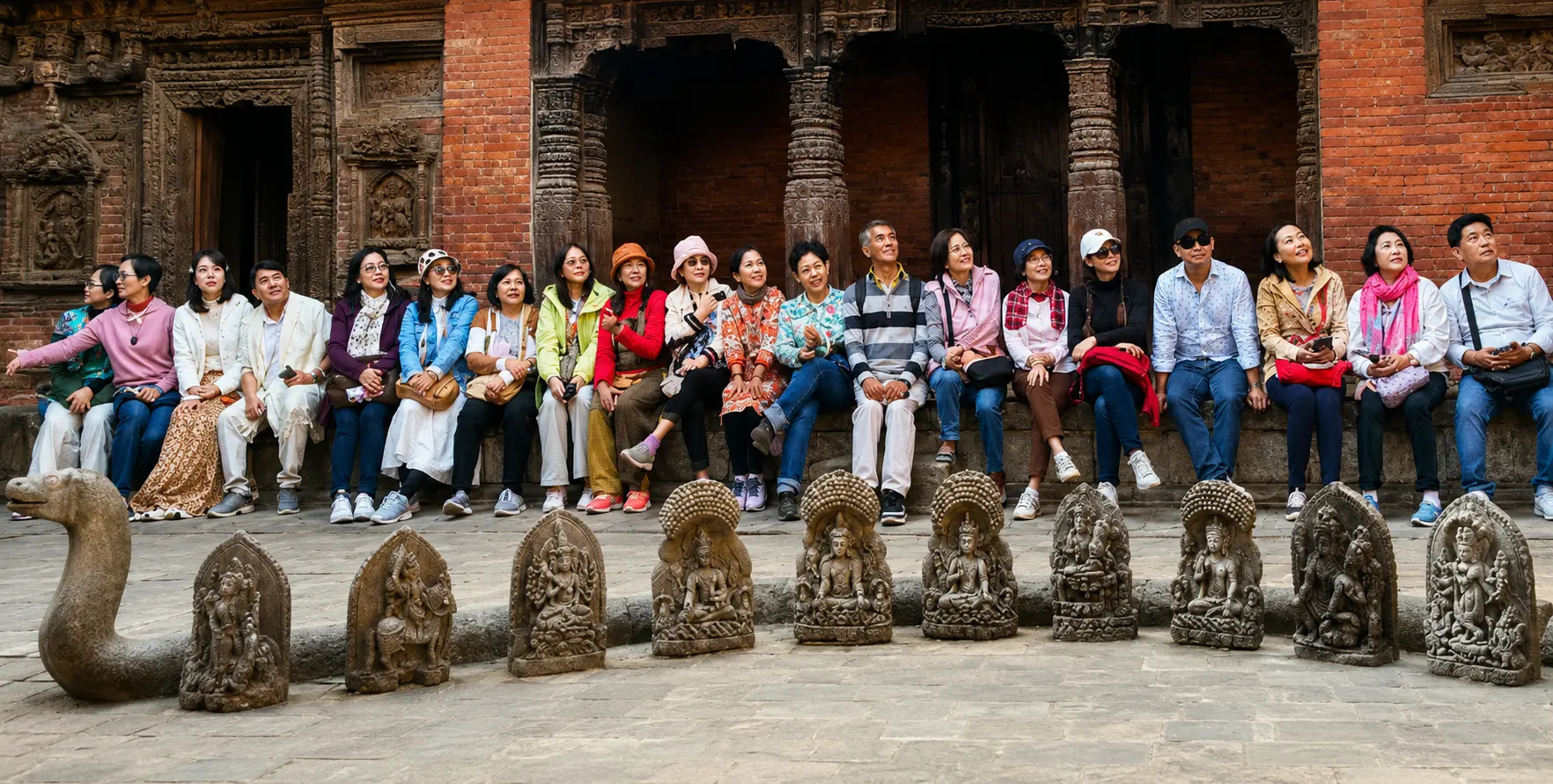
  • Trust your guide’s weather judgment — if your guide says the day’s conditions are not safe for proceeding, accept this professional assessment rather than pushing forward independently.

Nepal Vehicle Hiring Pvt. Ltd. — Safe, Trusted Transport for Female Travellers

For female travellers visiting Nepal—whether arriving for the first time as a solo traveller or returning for a second or third trek—Nepal Vehicle Hiring Pvt. Ltd. provides the transport infrastructure that makes every stage of the Nepal journey more comfortable, more efficient, and genuinely safer. The company’s core service proposition—pre-booked private vehicles with known, professional, registered drivers, all-inclusive pricing, hotel pickup and delivery, and 24-hour support—addresses the specific transport safety concerns female travellers most often cite as significant.

From the Kathmandu sightseeing tour that makes the heritage circuit safe and comfortable for a first-day solo arrival, to the Bhaktapur Durbar Square day trip, the Nagarkot sunrise tour, the Kathmandu to Pokhara private transfer, the car hire in Pokhara for Sarangkot and city sightseeing, and the trailhead transfers to Besisahar, Syabrubesi, Nayapul, and Salleri that begin the trekking adventures — Nepal Vehicle Hiring Pvt. Ltd. covers the complete transport spectrum of any Nepal journey with the consistency and quality that 8,000+ satisfied customers and a 5.0 TripAdvisor rating reflect.

Nepal for Women: First-Timer vs Experienced Traveller

First-Time Female Travellers — The Ideal Nepal Introduction

For women visiting Nepal for the first time, the ideal itinerary structure begins with two to three days in Kathmandu to acclimate to the country’s pace, culture, and geography before venturing further. The Kathmandu sightseeing tour with Nepal Vehicle Hiring Pvt. Ltd. on day one — covering Boudhanath, Pashupatinath, Swayambhunath, and Patan in a single comfortable private vehicle day — provides an immediately rich cultural introduction without the navigation challenges of independent exploration in an unfamiliar city.

Day two can then focus on Bhaktapur’s medieval heritage with the Bhaktapur Durbar Square day tour, with an optional morning Nagarkot sunrise tour on day three for the first Himalayan panorama before travelling onward to Pokhara by private vehicle.

The Kathmandu to Pokhara private transfer is particularly recommended for first-time female travellers over the bus alternative — the private vehicle provides a consistent, controlled travel environment, hotel pickup and delivery, and the flexibility to stop at the beautiful Trishuli River gorge and Mugling’s famous curd restaurants along the Prithvi Highway. From Pokhara, a three- to four-day stay lets you enjoy a Sarangkot sunrise, a Phewa Lake boat trip, a visit to the World Peace Pagoda, and prep for either a short trek or a Pokhara-to-Muktinath jeep hire to start the Mustang pilgrimage route.

Experienced Solo Female Travelers — Going Deeper

Experienced solo female travelers who have already visited Kathmandu and Pokhara on previous trips consistently report that Nepal’s deepest experiences become more accessible with each return. The Langtang Valley Trek, beginning with the Kathmandu-to-Syabrubesi private jeep transfer, the Annapurna Circuit starting from Besisahar, and the Manaslu Circuit from Machha Khola via the Kathmandu-to-Arughat jeep service are increasingly popular with experienced solo women who value the deeper wilderness and cultural authenticity of these less-crowded routes.

The mandatory guide requirement on all these routes means a licensed companion throughout, and experienced female travellers consistently report that the right guide transforms the experience from a solo adventure into a deeply collaborative cultural exploration.

For the most intrepid female travellers, the Everest region road access route via Salleri — the road-based alternative to the Lukla flight — offers an extraordinary way to reach the Khumbu, exposing travellers to the lower Solu Khumbu landscape the flight entirely misses. The Kathmandu to Salleri or Phaplu private jeep hire from Nepal Vehicle Hiring Pvt. Ltd. makes this weather-independent approach to the Everest region not only possible but comfortable: a nine to ten-hour journey on the BP Koirala Highway that delivers experienced trekkers to the Solukhumbu trailhead with a known, trusted driver.

Health and Wellness for Female Travellers in Nepal

Medical Facilities and Pharmacies

Nepal’s medical facilities in Kathmandu meet most standard travel health needs—several hospitals and international-standard clinics operate in the Kathmandu Valley, and pharmacies throughout Thamel and Lakeside stock most common medications without a prescription. For female travellers specifically, pharmacies in Kathmandu and Pokhara routinely stock menstrual products, oral contraceptives, and UTI treatment medications.

However, pharmacies cannot guarantee specific brands, and female travellers with specific medication requirements should carry an adequate supply from home. At altitudes above 3,000 metres on trekking routes, medical facilities are limited to basic health posts at major teahouse hubs — Namche Bazaar, Manang, and Jomsom each have functional health facilities, but anything beyond basic first aid should be planned for via evacuation insurance and the trekking guide’s emergency protocols.

Hygiene on the Trek — Practical Realities

Female travellers should understand the practical hygiene realities of Nepal trekking clearly before departure. Teahouse bathrooms across major trekking circuits range from clean and functional (in well-developed hubs) to basic pit latrines in more remote locations.

Menstrual products are not reliably available beyond Kathmandu and Pokhara, so trekkers should carry a full supply for the duration of the trek. Experienced trekkers often prefer menstrual cups for their low waste and minimal pack weight.

Hot showers are available at most well-developed teahouses on the main Annapurna and Everest circuits for NPR 200–500, though the hot water supply can be intermittent at altitude. Wet wipes, a pack of towels, and sanitiser are essential kit for any Nepal trek and trail.

Hygiene is entirely manageable for first-time female trekkers anxious about it: thousands of women handle it well every year, and it shouldn’t deter you from the extraordinary experience of Nepal’s mountain trails.

Connecting with Other Female Travellers in Nepal

The Nepal Female Traveller Community

One of the most practical safety resources for solo female travellers in Nepal is the vibrant, generous community of other women visiting the country at the same time or who have visited recently. The Thamel guesthouse culture in Kathmandu and the Lakeside hostel and cafe scene in Pokhara are exceptionally conducive to the organic formation of travel partnerships — meeting other solo female travellers at breakfast, on a Kathmandu sightseeing tour, at a Lakeside rooftop cafe, or at the Nepal Tourism Board permit office when collecting trekking permits is entirely normal and creates the kind of informal networks of mutual support and local knowledge sharing that make solo travel in Nepal significantly richer than the word ‘solo’ implies.

Online communities specifically for female travellers in Nepal — Facebook groups including ‘Women Trekking Nepal’ and ‘Solo Female Travel Nepal’ — are active and genuinely useful for pre-departure research and real-time advice. These communities are where the most current, specific information about route conditions, guide recommendations, accommodation safety ratings, and transport options circulates freely among women who have recently been on the ground in Nepal.

Cross-referencing this community wisdom with the professional knowledge of Nepal Vehicle Hiring Pvt. Ltd. for transport planning gives female travellers the most comprehensive and current information available for Nepal journey preparation. The Nepal Vehicle Hiring team on WhatsApp is also available to answer transport-specific questions during the planning stage, and their knowledge of current road conditions, the best departure timings for specific routes, and the options for sharing vehicles with other travellers from the same area of Kathmandu or Pokhara is a genuinely useful pre-departure resource.

Responsible Solo Female Travel — Giving Back

Solo female travellers in Nepal who embrace the practice of responsible travel — buying from local artisans rather than import-stocked tourist shops, eating at locally owned restaurants rather than international chains, hiring locally based guides and porters through established agencies, and choosing accommodation that is locally owned and operated — contribute directly to the communities and individuals whose hospitality makes Nepal travel so rewarding. Nepal’s tipping culture is important to understand: guides and porters on trekking routes rely on tips as a significant part of their income, and the standard tipping expectation is about USD 10 to 15 per day for guides and USD 7 to 10 per day for porters, from groups or individuals.

Drivers on private vehicle transfers from Nepal Vehicle Hiring Pvt. Ltd. appreciate a small tip — NPR 200 to 500 for a half-day service, NPR 500 to 1,000 for a full day or long-distance transfer — though this is never obligatory. Travelling thoughtfully and generously in Nepal creates a cycle of positive experiences for everyone.

It helps maintain Nepal’s reputation as one of the world’s most welcoming and rewarding travel destinations.

Frequently Asked Questions — Nepal Safety for Female Travellers

Is Nepal safe for solo female travellers?

Yes — Nepal is one of Asia’s safer destinations for solo female travellers. Kathmandu and Pokhara are well-established tourist cities with active traveller communities and genuinely low rates of serious crime against tourists. Violent crime against female tourists specifically is rare.

The primary practical concerns are petty theft, occasional unwanted attention (usually manageable), and transport safety — all of which are addressed with basic awareness and the transport choices described in this guide.

Do I need to dress modestly in Nepal?

Yes— dressing modestly is both culturally respectful and practically beneficial for female travellers in Nepal. Cover shoulders and knees in public settings, particularly around temples, religious sites, and traditional village communities. In Kathmandu’s Thamel and Pokhara’s Lakeside, Western dress is more accepted in the immediate tourist areas, but modest dress is appropriate everywhere else and significantly reduces unwanted attention.

Can I trek alone as a solo female traveller in Nepal?

Under the 2026 mandatory guide regulation, solo trekking without a licensed guide is no longer permitted in Nepal’s National Parks, Conservation Areas, or Restricted Areas—which cover virtually all popular trekking routes. This means solo female trekkers will always have a licensed guide companion, which is a genuine safety advantage: Female guides: most reputable Kathmandu and Pokhara trekking agencies offer them.

Is it safe to take taxis alone as a female traveller in Nepal?

Use app-based services (Pathao or InDrive) in Kathmandu and Pokhara for city transport — both show driver details and track the journey. For longer routes and trailhead transfers, pre-book a private vehicle with Nepal Vehicle Hiring Pvt. Ltd. at +977 981-4227196 for a safe, comfortable option with a known driver, vehicle registration, and 24-hour support.

What are the safest neighbourhoods for female travellers in Kathmandu?

The safest and most female-traveller-friendly areas in Kathmandu are Thamel (particularly the northern Paknajol area), Lazimpat, Patan (Lalitpur), and the Boudhanath area. These neighbourhoods combine active local community presence, good lighting, established tourist infrastructure, and enough foot traffic to create naturally safe public environments. The Nepal Vehicle Hiring Pvt. Ltd. Kathmandu sightseeing tour covers all these areas with private vehicle transport.

How do I arrange safe airport transport in Kathmandu?

Pre-book your airport pickup with Nepal Vehicle Hiring Pvt. Ltd. via WhatsApp at +977 981-4227196 before departure. Provide your flight details, arrival time, and hotel name. The driver will wait in the arrival area with a name board, and you will receive the vehicle registration in advance.

This eliminates the airport taxi negotiation — one of the most stressful and potentially unsafe experiences for solo female arrivals in Kathmandu.

Conclusion: Nepal Welcomes You

The answer to ‘Is Nepal safe for female travellers?’ is yes — grounded in evidence, confirmed by the consistent experience of the many thousands of solo women who travel here every year, and supported by the specific safety improvements that 2026 has brought, including the mandatory guide regulation that ensures solo trekkers always have a professional companion on the trail. Nepal is not a risk-free environment — no country is.

Still, it is one of the more genuinely welcoming and hospitable travel destinations available to women anywhere in the world, with a cultural orientation toward guests that is rare, an active traveller community that creates natural safety in numbers in the main destinations, and a beauty and depth of experience that has made it one of the world’s most returned-to travel destinations.

Plan carefully, use trusted transport through Nepal Vehicle Hiring Pvt. Ltd., choose accommodation with verifiable reviews, dress modestly, hire a licensed guide for trekking, and approach Nepal with the open curiosity that it rewards — and the Himalayas, the heritage cities, the sacred sites, and the warm people of this extraordinary country will deliver an experience that more than justifies every mile of the journey to reach it. Contact Nepal Vehicle Hiring Pvt. Ltd. at +977 981-4227196 or vehiclehiringnepal.com to arrange your Nepal transport — safely, reliably, and with the confidence that comes from choosing Nepal’s most trusted private vehicle hire provider.

Book Safe, Trusted Transport with Nepal Vehicle Hiring Pvt. Ltd.

Website: www.vehiclehiringnepal.com

Phone / WhatsApp: +977 981-4227196 (24/7 — Pre-Dawn Pickups Available)

Email: [email protected]

Office: Bhagawatisthan, Thamel, Kathmandu, Nepal

Known Driver + Vehicle Registration Driver Before Every Journey

Hotel Pickup and Hotel Delivery — No Navigating Unfamiliar Transport Independently

All-Inclusive Pricing — No Negotiation, No Surprises

24-Hour WhatsApp Support Throughout Your Nepal Journey

Nepal Travel Guide for Foreigners

Bg highway

Introduction: Why Nepal Captivates Every Foreign Traveller

Few countries on earth pack so much contrast into such a small space as Nepal. Within a single week, a visitor can stand among the medieval pagoda temples of Kathmandu’s Durbar Squares, drift across the glassy waters of Phewa Lake in Pokhara beneath the Annapurna range, track one-horned rhinos through the elephant grass of Chitwan National Park, and watch the sun rise over the highest mountains on the planet from a ridge in Nagarkot or Sarangkot.
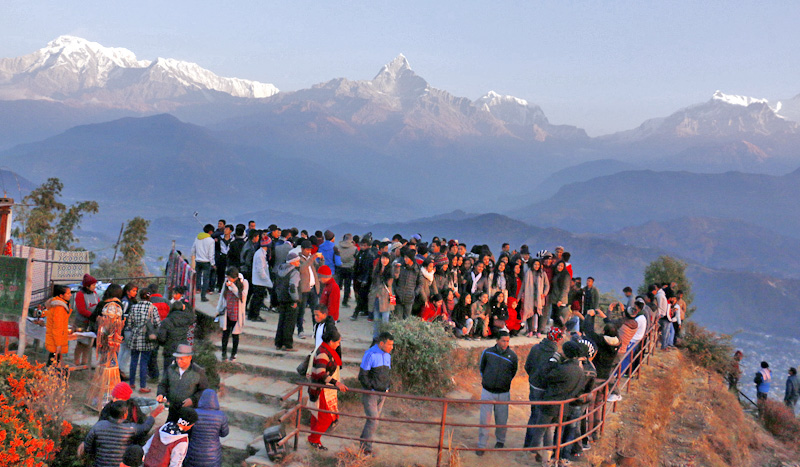
This Nepal travel guide for foreigners was built specifically for international visitors who are planning their first, or their fifth, trip to this Himalayan nation, and who want a single, reliable reference covering visas, money, transport, permits, safety, culture, and itineraries — all grounded in information rather than outdated blog posts.

Nepal welcomes well over a million foreign visitors a year, and the tourism infrastructure — airlines, hotels, trekking agencies, and ground transport—has matured considerably over the last decade. Yet in Nepal, planning still matters. Monsoon rains wash out mountain roads, weather delays internal flights, and permit rules for restricted areas change with little warning.

The single biggest factor that determines whether a Nepal trip feels effortless or exhausting is reliable, comfortable ground transport, which is precisely why thousands of travellers each year choose to arrange their

vehicle hire in Nepal in advance, rather than negotiating with random drivers at the airport gate. Throughout this guide, we will point out exactly where private transport, jeep hire, or scheduled bus tickets make the biggest difference to your trip, alongside the practical, non-transport details — visas, money, permits, health, and culture — that together determine how smoothly a Nepal journey unfolds from the moment you step off the plane to the moment you fly home.

Why Nepal Should Be on Every Traveller’s List

Nepal is roughly the size of England and Wales combined. Yet it contains eight of the world’s fourteen peaks above 8,000 meters, including Mount Everest, Kangchenjunga, Lhotse, Makalu, Dhaulagiri, Manaslu, Annapurna I, and a share of Cho Oyu. Beyond the mountains, Nepal is home to ten UNESCO World Heritage Sites in a country smaller than the US state of Arkansas—an extraordinary density of cultural and natural significance found nowhere else.

For trekkers, Nepal offers routes for every fitness level, from the gentle Poon Hill loop above Pokhara to the technical high passes of the Annapurna Circuit and the legendary trail to Everest Base Camp. For travellers who prefer culture over altitude, Kathmandu Valley alone holds seven UNESCO-listed monument zones within a 20-kilometre radius.

For wildlife enthusiasts, Chitwan and Bardia National Parks offer some of the best rhino and tiger viewing in South Asia. For pilgrims, Nepal is both the birthplace of the Buddha in Lumbini and home to the sacred Hindu temple of Pashupatinath, making it one of the few countries where two of the world’s major religions converge geographically.

This diversity is exactly why a generic guidebook chapter is not enough. Nepal rewards travellers who plan their route, itineraries, and transport thoughtfully, rather than improvising everything on the ground.

Nepal Visa Requirements for Foreigners Update)

Most nationalities, except Indian citizens (who don’t need a visa) and SAARC nationals (who receive a free 30-day visa once per calendar year), need a Tourist Visa on Arrival or a pre-arranged visa to enter Nepal.

The Tourist Visa on Arrival is available at Tribhuvan International Airport in Kathmandu and at major land border crossings, including Kakarbhitta, Birgunj/Raxaul, Bhairahawa/Sunauli, Nepalgunj, Mahendranagar, and Rasuwagadhi/Timure on the Tibet border. As of 2026, standard tourist visa fees remain:

  • 15-day multiple-entry visa — US$30
  • 30-day multiple-entry visa — US$50
  • 90-day multiple-entry visa — US$125

Children under 10 years old (with some nationality-specific exceptions) receive a visa. Visa fees must be paid in clean, undamaged foreign currency, with US dollars strongly preferred; some counters also accept euros or British pounds, but Indian and Nepali rupees are not accepted for the visa fee itself.

Many travellers now complete Nepal’s Department of Immigration online arrival form before flying, which generates a barcoded receipt and shortens the queue at the visa desk during the busy spring (March–May) and autumn (September–November) trekking seasons.

Tourist visas, however obtained, can be extended at the Department of Immigration offices in Kathmandu or Pokhara. Still, a tourist may not spend more than 150 days in Nepal in a single calendar year (January to December), regardless of how many separate visas or extensions they use.

A handful of nationalities aren’t eligible for visa on arrival and must apply through a Nepali embassy or consulate before departure, so check your country’s status well before booking flights.

Practical tip: Carry your passport, a recent passport-sized photo (digital capture is increasingly accepted), proof of onward travel, and your first night’s accommodation booking. Immigration officers occasionally ask for these, especially for longer-duration visas.

Foreign travelers exploring Nepal's Himalayan mountains, ancient temples, and cultural heritage with private transport

Best Time to Visit Nepal

Autumn (late September to November)

This is Nepal’s premier travel season. After the monsoon, skies are clear, temperatures are mild in the valleys and pleasantly cool in the mountains, and visibility for Himalayan panoramas is at its best. It is also the busiest season for trekking permits, teahouse bookings, and domestic flights to Lukla, so booking transport and accommodation in advance is strongly recommended.

Spring (March to May)

Spring brings blooming rhododendron forests across the mid-hills, comfortable daytime trekking temperatures, and excellent conditions for both cultural sightseeing and high-altitude trekking. This is the second peak season, and the window most mountaineering expeditions use for Everest and other 8,000-meter attempts.

Winter (December to February)

Winter is ideal for lower-altitude trekking, jungle safaris in Chitwan, and sightseeing in Kathmandu, Pokhara, and Lumbini. Nights are cold at altitude, and some high passes close, but daytime skies are often crystal clear, and tourist numbers — and prices — drop noticeably.

Monsoon (June to early September)

Monsoon brings heavy afternoon rain to most of the country, which can affect mountain roads and visibility on lower treks. However, this is precisely when the rain-shadow regions of Upper Mustang and Upper Dolpa shine, since they sit north of the main Himalayan range and stay largely dry even while the rest of Nepal is wet. Monsoon travel also means fewer crowds and lower prices for vehicle hire, hotels, and flights.

Foreign travelers exploring Nepal's Himalayan mountains, ancient temples, and cultural heritage with private transport

Arriving in Nepal: Airports and First Steps

Most international visitors arrive at Tribhuvan International Airport (TIA) in Kathmandu, Nepal’s only international airport. However,h Pokhara International Airport now handles a small but growing number of regional connections from India and other nearby countries. After clearing immigration and customs at TIA, travellers typically need three things immediately: local currency, a SIM card, and a ride into the city.

This is where pre-booking a Kathmandu airport transfer pays off enormously. After a long international flight, arriving in Kathmandu can feel like a lot: navigating the chaotic taxi rank, haggling over fares in an unfamiliar currency, and trying to explain your hotel’s exact location to a driver who may not speak much English can make the first 30 minutes of an otherwise wonderful trip the most stressful.

A pre-arranged private vehicle with an English-speaking driver waiting at arrivals with a name board removes that friction and is one of the simplest upgrades a first-time visitor to Nepal can make.

Getting Around Nepal: Transport Options for Foreigners

Nepal’s terrain — steep mountains, narrow valley roads, and a road network still being upgraded in many regions — makes transport choice one of the most important decisions in trip planning. Broadly, foreign visitors choose between four options:

Private Car or SUV Hire

For city sightseeing, short day trips, and travel between Kathmandu and Pokhara on paved highway, a car hire in Nepal with a driver is the most comfortable option for couples, solo travellers, and small families. Sedans and compact SUVs handle the Kathmandu–Pokhara highway, Kathmandu Valley sightseeing circuits, and Terai routes toward Lumbini and Chitwan comfortably. Travellers based in the lakeside city can also arrange

car hire in Pokhara for day trips to Sarangkot, Begnas Lake, and the surrounding Annapurna foothills.

Jeep and 4WD Hire

Nepal’s mountain districts—Mustang, Manang, Dolpa, the Tsum and Manaslu regions, and most high-altitude trekking trailheads—are reached by rough, unpaved roads that climb steep switchbacks above 2,500 meters; a standard sedan can’t handle them safely. This is where 4WD hire in Nepal becomes essential, not optional. A purpose-built

jeep hire in Nepal with high ground clearance, four-wheel drive, and an experienced mountain driver is the standard way foreigners reach trailheads such as Soti Khola for the Manaslu Circuit, or Salleri and Phaplu for the lower Everest region without flying. Routes like

Kathmandu to Soti Khola jeep service and the Kathmandu to Salleri Phaplu jeep route save trekkers a day or more compared to public transport, while being dramatically more comfortable than crowded local buses on unpaved roads.

Travellers heading to the Annapurna region and the increasingly popular Upper Mustang district should also consider private vehicle transfers from Besisahar, which connect Kathmandu to the Annapurna Circuit trailhead.

Way to manthali airport bp highway

Hiace Vans for Groups

For families, small groups, and trekking parties of seven to fourteen people, a Hiace van hire offers a comfortable middle ground between a private car and a full-size bus. Hiace vans are commonly used for Kathmandu sightseeing tours, day trips such as the Kathmandu to Nagarkot service for sunrise Himalayan views, and the popular Bhaktapur Durbar Square day tour.

Tourist Bus, Coaster, and Scheduled Bus Tickets

For budget-conscious travellers moving between major tourist hubs, Nepal’s tourist bus network is reliable and inexpensive. Daily departures run on the Kathmandu to Pokhara route and its reverse, the Pokhara to Kathmandu bus, as well as connections to the Buddha’s birthplace via the Kathmandu to Lumbini and Lumbini to Kathmandu services, and to the jungle via the Pokhara to Chitwan bus.

Trekkers heading to the Annapurna region by road commonly use the Kathmandu Besisahar bus ticket service, while larger groups touring the Kathmandu Valley and beyond often charter a coaster bus for cost-effective group movement, or book seats directly through the bus hire service for tourist-standard coaches with reclining seats and onboard comfort.

For day excursions from Pokhara, services such as Pokhara to Nayapul transportation (the trailhead for the Ghorepani–Poon Hill trek) and the Sarangkot sunrise tour vehicle are extremely popular among foreigners wanting Himalayan views without committing to a multi-day trek.

Money, Currency, and Costs in Nepal

The Nepalese Rupee (NPR) is the official currency, pegged to the Indian Rupee at a fixed rate of 1.6 NPR to 1 INR. You can exchange foreign currency, particularly US dollars, euros, and British pounds, at licensed money changers in Kathmandu’s Thamel district and Pokhara’s Lakeside area, as well as at the airport. However, airport rates are typically less favourable than those at city exchange counters.

ATMs are widely available in Kathmandu, Pokhara, and other major towns, and most accept international Visa and Mastercard. However, withdrawal limits per transaction are often capped at around NPR 10,000–35,000, depending on the bank, and usually include a service fee. Outside the main tourist hubs and in trekking regions, ATMs are scarce or nonexistent, so you must carry enough cash before heading into the mountains.

As a rough daily budget guide for foreigners in 2026:

  • Budget travellers: US$25–35 per day, covering guesthouse accommodation, local food, and public transport.
  • Mid-range travellers: US$50–90 per day, covering comfortable hotels, private vehicle transfers, and restaurant meals.
  • Comfort and luxury travellers: US$ 12020 and upward per day, covering boutique hotels, private 4WD or car hire throughout, and planned tours.

Tipping is customary but not mandatory; drivers, trekking guides, and porters typically receive a tip at the end of a multi-day service, and hotel and restaurant staff appreciate small tips in tourist areas.

SIM Cards and Staying Connected

Nepal’s two principal mobile networks for foreigners are Ncell, a private operator with strong 4G coverage in Kathmandu, Pokhara, and most lower-altitude tourist areas, and Nepal Telecom (NTC). This state-owned operator generally offers wider coverage in remote mountain districts, including parts of the Everest, Annapurna, Manaslu, and Langtang trekking regions.

Both networks operate counters at Tribhuvan International Airport just past baggage claim, where travellers can buy a SIM on arrival by presenting their passport, a passport-sized photo (often taken digitally at the counter), and completing a short registration form. A basic prepaid SIM with a starter data and call package typically costs NPR 100–500, with 30-day data plans of 5–10GB costing roughly NPR 500–1,000. Both operators now support eSIM activation for compatible phones, and third-party travel eSIM providers offer pre-purchase options for travellers who prefer to land already connected.

However, these are usually more expensive per gigabyte than a local SIM.

For trekkers heading above 3,000 meters, signal becomes intermittent regardless of network, and many teahouses above Namche Bazaar, Manang, or similar altitudes charge a small fee for WiFi or device charging. A power bank of at least 10,000mAh is a worthwhile addition to any trekking packing list.

Health, Altitude, and Safety for Foreign Visitors

Vaccinations and General Health. Most countries do not require mandatory vaccinations for entry into Nepal. However, routine vaccinations (MMR, tetanus, diphtheria) should be up to date, and travellers are often advised to consider Hepatitis A and Typhoid vaccination because food and water hygiene standards vary outside major hotels. Do not drink tap water directly; bottled or properly filtered and treated water is recommended throughout the country.

Altitude Sickness

Acute Mountain Sickness (AMS) is the biggest health risk for travellers heading into the high mountains, including popular short excursions to viewpoints like Sarangkot and longer treks to Everest Base Camp, Annapurna Base Camp, or Upper Mustang. Ascend gradually, build rest days into any itinerary above 3,000 meters, stay hydrated, and avoid alcohol at altitude.

Symptoms of AMS — headache, nausea, dizziness, and disturbed sleep — should never be ignored; the only reliable treatment for worsening symptoms is descent.

Travel Insurance

Comprehensive travel insurance that explicitly covers high-altitude trekking and helicopter evacuation is strongly recommended for anyone heading above 3,000 meters. Many standard travel policies cap altitude coverage at 3,000 or 4,000 meters, excluding treks like Everest Base Camp (5,364 meters) or Annapurna Circuit’s Thorong La pass (5,416 meters) unless you purchase a specific high-altitude rider.

General Safety

Nepal is, on balance, a safe country for foreign travellers, with violent crime against tourists being uncommon. More relevant everyday risks include road safety on mountain highways, particularly during monsoon landslides, and the general chaos of unregulated traffic in Kathmandu. This is another reason experienced local drivers, familiar with seasonal road conditions, are worth the modest cost over self-driving or unfamiliar taxi operators.

Trekking Permits and Restricted Areas

Most trekking regions in Nepal require one or more permits, separate from the tourist visa. The two most common are:

  • TIMS Card (Trekkers’ Information Management System): Required for independent trekking in most non-restricted areas, used to track trekker movement for safety purposes.
  • Area-specific conservation or national park permits: Such as the Annapurna Conservation Area Permit (ACAP), Sagarmatha National Park permit for the Everest region, and Manaslu Conservation Area Permit.

Certain regions, including Upper Mustang, Upper Dolpa, Manaslu, and parts of Humla, are classified as restricted areas and require special permits issued only through a registered Nepali trekking agency, often at a significantly higher daily fee than standard conservation permits, and typically require a minimum of two trekkers and a licensed guide. Upper Mustang permit fees, for instance, were restructured in recent years and now apply a tiered daily rate depending on length of stay.

At the same time, the opening of the new road link to the Korala border crossing with Tibet in 2025 has also changed how some travellers approach the region, using vehicles rather than purely on foot.

Travellers planning a Mustang itinerary that combines trekking with road travel often pair a guided walking section with a 4WD hire in Nepal for the more remote stretches, since the jeep road network through Upper Mustang has expanded considerably and allows flexible combinations of driving and walking depending on time and fitness.

Top Destinations for Foreign Visitors in Nepal

Kathmandu Valley

Kathmandu is the entry point for almost every foreign visitor, and the valley alone could fill a week of sightseeing. Key sites include Kathmandu Durbar Square, the Boudhanath and Swayambhunath stupas, and the Hindu temple complex of Pashupatinath. A well-organised Kathmandu sightseeing tour by private vehicle is the most time-efficient way to see these scattered sites in a single day without the fatigue of public transport or repeated taxi negotiations.

Just outside the valley, the medieval city of Bhaktapur preserves Newari architecture remarkably intact; a Bhaktapur Durbar Square day tour is one of the most rewarding half-day trips available from Kathmandu.

Nagarkot

Roughly 32 kilometres east of Kathmandu, Nagarkot is the valley’s most accessible Himalayan viewpoint, with sunrise panoramas stretching from Annapurna to Everest on clear days. A Kathmandu-to-Nagarkot vehicle trip typically includes an early hotel departure to catch sunrise, making it one of the most popular short escapes for foreigners with limited time in Nepal.

Pokhara

Nepal’s second-largest tourist hub sits beside Phewa Lake with the Annapurna range as a backdrop, and serves as the launch point for most Annapurna-region treks. Pokhara’s relaxed lakeside atmosphere, paragliding launch sites, and the dawn viewpoint at Sarangkot make it a near-mandatory stop on any Nepal itinerary, typically reached from Kathmandu by the scenic Kathmandu–Pokhara highway.

Foreign travelers exploring Nepal's Himalayan mountains, ancient temples, and cultural heritage with private transport

Chitwan National Park

In the lowland Terai region, Chitwan offers jungle safaris, canoe trips, and some of Asia’s best chances to spot the one-horned rhinoceros in the wild, along with crocodiles, deer, and — for the fortunate — Bengal tigers. Chitwan is commonly combined with Pokhara on a loop itinerary, using the Pokhara-to-Chitwan bus service or a private vehicle for those who prefer flexibility along the route.

Lumbini

The birthplace of Siddhartha Gautama, the historical Buddha, Lumbini is a UNESCO World Heritage Site and one of Buddhism’s four most sacred pilgrimage sites. The Maya Devi Temple marks the exact birth site, and the surrounding Lumbini Garden hosts monasteries built by Buddhist communities from around the world. The Kathmandu-to-Lumbini bus connects the capital directly to this sacred site.

Muktinath and the Mustang Region

Muktinath, sacred to both Hindus and Buddhists, sits at over 3,700 meters in the Mustang district and is a major pilgrimage destination and a trekking highlight along the Annapurna Circuit. Beyond Muktinath, Upper Mustang’s stark, Tibetan-influenced landscape around the walled city of Lo Manthang has become increasingly accessible by 4WD jeep, particularly since road improvements and the opening of new border infrastructure toward Tibet in 2025 expanded travel options for both pilgrims and trekkers.

Everest and Annapurna Regions

For trekkers, the two flagship regions remain Everest (Khumbu) and Annapurna. Most trekkers reach Everest by flying from Kathmandu to Lukla. However, overland alternatives via Kathmandu to Salleri Phaplu by jeep, followed by a multi-day approach trek, have grown in popularity among travellers seeking lower cost and lower weather risk than the Lukla flight.

The Everest Base Camp trek remains the single most sought-after trekking itinerary among foreign visitors to Nepal, typically taking 12–14 days round trip.

The Annapurna region, reached via Besisahar for the full Circuit or via Nayapul/Pokhara for shorter loops like Ghorepani–Poon Hill, offers similarly spectacular scenery with somewhat gentler logistics and a wider range of trek lengths suited to different fitness levels and time budgets.

Culture, Etiquette, and Respectful Travel in Nepal

Nepal is religiously diverse, predominantly Hindu and Buddhist, with deep-rooted customs that foreign visitors are generally expected to respect rather than strictly required to follow. A few practical guidelines make a noticeable difference:

  • Remove shoes before entering temples, monasteries, and most private homes.
  • Use your right hand (or both hands) to give and receive items, including money and food; the left hand is traditionally considered unclean.
  • Walk clockwise around Buddhist stupas and mani walls, keeping them to your right.
  • Dress modestly when visiting temples and rural areas — shoulders and knees covered is a safe default for both men and women.
  • Public displays of affection are uncommon and best kept to a minimum outside obviously tourist-oriented areas.
  • Photography inside some temple inner sanctums and during certain ceremonies may be restricted; always look for signage or ask permission.

Nepali hospitality is famously warm, and a simple ‘Namaste’ (a respectful greeting, often accompanied by joined palms) goes a long way in opening friendly interactions throughout the country.

Food and Dining for Foreign Visitors

Nepali cuisine centres on dal bhat — lentil soup, rice, and vegetable curry, often served with pickles and sometimes meat — which remains a staple across the country, including most teahouses on trekking routes, where it is frequently offered with unlimited refills. In Kathmandu and Pokhara, the dining scene has expanded well beyond traditional fare, with Thamel and Lakeside both offering a wide range of international cuisine, from Italian and Continental restaurants to Japanese, Korean, and Indian options catering specifically to the steady flow of foreign visitors.

Newari cuisine, native to the Kathmandu Valley, is worth seeking out specifically — dishes like choila (spiced grilled meat), yomari (sweet rice dumplings), and bara (lentil patties) offer a distinctly local culinary experience rarely found outside the valley. Street food, particularly momos (Nepali dumplings), is ubiquitous and generally safe when purchased from busy, high-turnover stalls. However, travellers with sensitive stomachs should use the usual caution with raw vegetables and tap water in less-touristed areas.

What to Pack for Nepal

Packing needs vary enormously depending on whether your trip is city- and culture-focused or includes high-altitude trekking, but a sensible base layer for most foreign visitors includes:

  • Layered clothing — Kathmandu and Pokhara can be warm by day and cool at night, especially October through February.
  • A good rain jacket, particularly outside the dry winter months.
  • Comfortable, broken-in walking shoes, even for non-trekkers, given uneven pavement in old city centres.
  • Sun protection — UV exposure is significant at altitude even on cool days.
  • A reusable water bottle with a filter or purification tablets to reduce single-use plastic.
  • A universal power adapter (Nepal uses Type C, D, and M sockets) and a portable power bank.
  • For trekkers: a four-season sleeping bag, headlamp, trekking poles, and proper insulated layers for nights above 3,000 meters.
  • Modest clothing for temple and monastery visits — a light scarf or shawl is versatile for both warmth and coverage.

Sample Itineraries for Foreign Travelers

7-Day Classic Nepal Itinerary

Day 1–2: Arrive in Kathmandu, settle in, take a private Kathmandu sightseeing tour covering Durbar Square, Boudhanath, and Swayambhunath. Day 3: Day trip to Bhaktapur Durbar Square, then drive to Nagarkot for a sunrise excursion. Day 4: Travel to Pokhara via the Kathmandu-Pokhara bus or a private car.

Day 5: Sunrise at Sarangkot on a Sarangkot sunrise tour vehicle, then boat on Phewa Lake. Day 6: Short Ghorepani–Poon Hill hike or relaxed Lakeside exploration. Day 7: Return to Kathmandu via the Pokhara-Kathmandu bus for departure.

14-Day Nepal Highlights and Trekking Itinerary

Combine the 7-day classic route above with an extension into Chitwan via the Pokhara to Chitwan bus for a two-night jungle safari, followed by either a Ghorepani–Poon Hill trek extension from Pokhara or, for more ambitious travellers, the start of the Annapurna Circuit via Besisahar private vehicle or the Kathmandu Besisahar bus ticket service. Travellers who want a fully planned, multi-region experience without managing each leg independently can also explore a complete Nepal tour package, which bundles transport, accommodation, and guiding into a single itinerary.

18–21 Day Everest Base Camp Itinerary

Serious trekkers aiming for Everest Base Camp should budget at least 12–14 trekking days, plus 2–3 days in Kathmandu before and after for acclimatisation, permit processing, and gear preparation. Those who want to combine trekking with a broader Nepal experience often pair the Everest Base Camp trek with a few days in Pokhara or Chitwan, either before flying home or as a decompression period after the high-altitude push.

Frequently Asked Questions

Do foreigners need a visa to visit Nepal?

Yes, except Indian citizens, who don’t need a visa, and SAARC nationals, who receive a free 30-day visa once per calendar year. Most other foreign nationals can obtain a Tourist Visa on Arrival at Tribhuvan International Airport or major land borders, or apply in advance through a Nepali embassy.

How much does a Nepal tourist visa cost?

As of 2026, a 15-day visa costs US$30, a 30-day visa costs US$50, and a 90-day visa costs US$125. Fees are payable in clean foreign currency, with US dollars strongly preferred.

Is it better to hire a private vehicle or take public transport in Nepal?

It depends on budget, time, and comfort priorities. Public tourist buses are inexpensive and reliable on fixed routes like Kathmandu–Pokhara, but private car or jeep hire offers far more flexibility, comfort, and time savings, especially for multi-stop itineraries, families, or trips to mountain trailheads where road conditions demand a proper 4WD.

Do I need a guide to trek in Nepal?

Independent trekking remains possible in many popular regions. However, Nepal has increasingly required licensed guides on more routes in recent years, particularly in restricted areas like Upper Mustang, Manaslu, and Upper Dolpa, where a registered trekking agency and a minimum group size of two are mandatory.

Is Nepal safe for solo female travellers?

Generally yes, with the same common-sense precautions recommended anywhere: avoid isolated areas after dark, dress modestly outside clearly tourist-oriented venues, and book reputable accommodation and transport providers, especially for overnight or multi-day journeys.

What is the best way to get from Kathmandu to Pokhara?

Most foreign visitors choose between a tourist bus (around 6–7 hours, via the Kathmandu to Pokhara bus service), a short 25-minute domestic flight, or a private vehicle, which allows photo stops along the scenic Trishuli and Marsyangdi river valleys en route.

Language and Communication

Nepali is the official language, written in the Devanagari script, but English is widely spoken in the tourism industry — hotels, trekking agencies, restaurants, and drivers serving foreign visitors in Kathmandu, Pokhara, and along the main trekking routes generally communicate comfortably in English. Outside these tourist corridors, particularly in rural villages and smaller Terai towns, English fluency drops considerably, and a handful of basic Nepali phrases go a long way. ‘Namaste’ (hello), ‘Dhanyabad’ (thank you), and ‘Kati ho?’

(how much is it?) are useful starting points for any foreign visitor.

Nepal is also linguistically diverse beyond Nepali, with more than 120 languages spoken across ethnic communities, including Newari in the Kathmandu Valley, Sherpa in the Everest region, Gurung and Magar in the central hills, and Maithili and Bhojpuri in the southern Terai. This diversity is part of what makes regional festivals, food, and architecture vary so noticeably even within a relatively small country.

Electricity, Internet, and Practical Logistics

Nepal uses a 230V supply with Type C, D, and M plug sockets, so visitors from regions using Type A, G, or other plug standards will need a universal adapter. Power outages, locally called ‘load shedding’, have become far less frequent in Kathmandu and Pokhara in recent years thanks to expanded hydropower capacity. However, rural and high-altitude areas can still experience interruptions, particularly during the dry pre-monsoon months when hydropower output drops.

WiFi is widely available in hotels, cafés, and restaurants across Kathmandu, Pokhara, and other tourist centres, generally free of charge, though speeds vary. As discussed earlier, a local SIM card with a data plan remains the most reliable way to stay connected outside fixed WiFi locations, particularly for navigation apps and ride-hailing services within the cities.

Foreign travelers exploring Nepal's Himalayan mountains, ancient temples, and cultural heritage with private transport

Best Day Trips from Kathmandu for Foreign Visitors

Travellers with limited time based in Kathmandu have an unusually rich set of day-trip options within a two-hour radius of the city, all of which work well with a private vehicle and driver rather than navigating local transport independently.

Nagarkot Sunrise Excursion

Beyond the standard sunrise viewing, Nagarkot also offers short nature walks through pine forest and views into the Indrawati and Sun Koshi river valleys. Many visitors combine the Nagarkot sunrise tour with a stop at Bhaktapur on the return journey, making efficient use of a single early-morning departure.

Dhulikhel and the Eastern Valley Rim

East of Bhaktapur, Dhulikhel offers Himalayan panoramas similar to Nagarkot with a quieter, more local atmosphere, and easy access to the historic Namobuddha monastery, an important Buddhist pilgrimage site tied to a Jataka tale about the Buddha’s previous life.

Chandragiri Hills Cable Car

A cable car from the Kathmandu Valley rim at Thankot climbs to Chandragiri, offering panoramic views over the entire valley and, on clear days, a distant Himalayan skyline — a fast and relatively effortless way to gain elevation and perspective on the city below.

Patan (Lalitpur) Durbar Square

Technically part of greater Kathmandu but historically a separate Newari kingdom, Patan’s Durbar Square is widely regarded as having Nepal’s finest concentration of traditional stone-and-wood temple architecture, along with the excellent Patan Museum housed in the former royal palace.

Discover the ultimate Nepal Travel Guide for Foreigners with expert advice on visas, trekking, transportation, cultural etiquette, safety, accommodation, and unforgettable destinations across Nepal.

Trekking Logistics: Gear, Guides, and Porters

Foreign trekkers do not need to arrive in Nepal with a full set of mountaineering-grade gear. Kathmandu’s Thamel district and Pokhara’s Lakeside area both have dense clusters of trekking gear shops selling and renting down jackets, sleeping bags, trekking poles, and boots at a fraction of equivalent costs in Europe, North America, or Australia, including a thriving second-hand and rental market for gear that does not justify a full purchase for a single trip.

Hiring a licensed guide and, for longer treks, a porter, is strongly recommended even on routes that technically allow independent trekking. Guides provide route-finding in poor weather, language assistance in remote villages, and, crucially, can spot early signs of altitude sickness in clients who may not recognise their own symptoms.

Porters, meanwhile, support the local trekking economy directly and allow trekkers to carry a lighter daypack rather than a full multi-day load, which materially reduces fatigue and injury risk on long, multi-week routes.

Whether trekking independently or with a full-service agency, transport to and from the trailhead is a separate logistical question worth planning early. As outlined earlier in this guide, routes into Manaslu, Mustang, and the lower Everest region increasingly rely on private jeep transport rather than purely on foot or by domestic flight, particularly as road networks continue to extend further into mountain districts each year.

Shopping and Souvenirs

Thamel in Kathmandu and Lakeside in Pokhara are Nepal’s two principal tourist shopping districts, offering everything from Pashmina shawls and hand-knotted Tibetan carpets to singing bowls, thangka paintings, and trekking gear. Bargaining is expected and customary in most informal shops and street stalls, though fixed-price stores, increasingly common for higher-quality handicrafts and government-certified Pashmina, do not negotiate.

Genuine Pashmina, distinguished from cheaper synthetic blends, typically costs more and feels slightly rougher and warmer than mass-produced imitations.

Buddhist and Hindu religious items — prayer flags, malas, and small statues — are widely available and culturally significant souvenirs, though travellers should be aware that exporting genuine antiques from Nepal is restricted and requires certification from the Department of Archaeology; reputable shops selling antique-style items will typically clarify whether a piece is a modern reproduction or a regulated antique.

Common Mistakes Foreign Travellers Make in Nepal

  • Underestimating Kathmandu’s traffic and travel times. A route that looks like kilometres on a map can take 45 minutes or more during peak hours; always build in buffer time for airport transfers and same-day connections.
  • Booking a Lukla flight with zero buffer days. Kathmandu–Lukla flights are notoriously weather-dependent and frequently delayed by a day or more during cloudy periods; itineraries with no slack risk missed international connections.
  • Ascending too quickly on treks. Rushing acclimatisation schedules to save a day or two is the single most common cause of altitude sickness evacuations.
  • Carrying only large denomination or worn USD notes. Visa counters and some money changers reject torn, marked, or pre-2009 series US dollar bills.
  • Assuming all regions have ATM access. Withdraw cash in Kathmandu or Pokhara before heading into trekking regions or smaller towns.
  • Skipping travel insurance with altitude and evacuation coverage. Standard policies often exclude trekking above 3,000–4,000 meters unless you add an explicit add-on.
  • Negotiating transport informally at the airport curb. Pre-arranged transfers avoid inflated ‘tourist pricing’ and the stress of negotiating immediately after a long flight.

Festivals Worth Timing Your Trip Around

Nepal’s calendar is packed with festivals, and several are spectacular enough to shape when foreign visitors choose to travel. Dashain, typically falling in September or October, is Nepal’s largest Hindu festival, a fifteen-day celebration involving family gatherings, kite flying, and animal sacrifice rituals at temples; many businesses operate on reduced hours during the peak days.

Tihar, the festival of lights, follows about two to three weeks later and includes the dog-honouring Kukur Tihar and the sister-brother day of Bhai Tika, with homes and streets decorated with oil lamps and marigold garlands.

Holi, the spring festival of colour, falls in March and is celebrated enthusiastically in Kathmandu and Pokhara, with crowds throwing coloured powder and water—joining in is welcome. However, it’s best to leave your valuables and good clothing at the hotel.

Buddha Jayanti, marking the Buddha’s birth, Enlightenment, and death, draws large crowds to Lumbini and Kathmandu’s Boudhanath and Swayambhunath stupas, typically in April or May. For travellers interested in Sherpa and Tibetan Buddhist culture, Mani Rimdu, celebrated with masked dances at monasteries in the Everest region in autumn, is a remarkable cultural experience for trekkers whose itinerary aligns with the dates, which shift annually according to the lunar calendar.

Domestic Flights vs Road Travel

Nepal’s domestic aviation network connects Kathmandu to Pokhara, Lukla (for Everest region access), Bhairahawa (near Lumbini), Nepalgunj, Bharatpur (near Chitwan), and several smaller regional airstrips. Flights save substantial time compared to road travel — Kathmandu to Pokhara takes roughly 25 minutes by air against 6–8 hours by road — but come at a materially higher cost and carry real weather-related cancellation risk, particularly on mountain routes like Lukla, where low cloud and high winds regularly ground flights for hours or, occasionally, days at a time during the shoulder seasons.

For most foreign visitors building a multi-stop itinerary across Kathmandu, Pokhara, Chitwan, and Lumbini, a mix of strategic flights for the longest legs and private vehicle or bus travel for shorter, scenic legs offers the best balance of cost, time, and experience. Road travel through the Trishuli and Marsyangdi valleys between Kathmandu and Pokhara, for instance, passes terraced hillsides, suspension bridges, and rural villages that many travellers consider a worthwhile experience in its own right, not merely a transit inconvenience to be flown over.

Working with a Local Operator vs Booking Everything Independently

Foreign visitors to Nepal generally fall into two planning styles: fully independent travellers who book each hotel, vehicle, and activity as they go, and those who prefer a structured itinerary arranged in advance, whether for an entire trip or just the transport backbone connecting major destinations. Both approaches work well in Nepal, but the independent style demands considerably more time spent comparing prices, negotiating fares, and managing logistics on the ground, time that many visitors with a fixed two- or three-week window would rather spend actually seeing the country.

A practical middle path many foreign travellers take is booking accommodation independently for flexibility, while pre-arranging the transport layer airport transfers, intercity travel, and any 4WD hire in Nepal needed for mountain trailheads through a single, reliable local operator. This removes the single biggest source of day-to-day friction (finding and pricing transport in an unfamiliar country) while still leaving room to change plans, extend a stay somewhere unexpectedly beautiful, or adjust an itinerary around weather, all without renegotiating logistics from scratch.

Nepal Vehicle Hiring Pvt Ltd structures its services around exactly this model, offering everything from single airport pickups to multi-week, multi-vehicle itineraries booked as one coordinated plan.

Accommodation Options for Foreign Visitors

Nepal’s accommodation spectrum runs from simple trekking teahouses charging a few dollars a night, with the expectation that guests eat dinner and breakfast at the lodge, through to internationally branded five-star hotels in Kathmandu and Pokhara offering spa facilities, fine dining, and mountain-view rooms. Mid-range boutique hotels have grown substantially in both cities over the past several years, often converted from traditional Newari buildings and offering a more characterful stay than larger chain properties at a comparable price point.

Booking ahead is advisable during the peak autumn and spring seasons, particularly for properties in Thamel and Lakeside with mountain or lake views, and is effectively mandatory for teahouses along the most popular trekking routes during October and November, when bed space on the Everest and Annapurna trails can be genuinely scarce on the busiest nights.

Final Thoughts: Planning Your Nepal Trip with Confidence

Nepal rewards travellers who arrive with a basic understanding of visa rules, seasonal timing, permit requirements, and realistic transport expectations, while still leaving plenty of room for the spontaneity that makes Himalayan travel so memorable. Whether your itinerary centres on temple-hopping in Kathmandu, sunrise views over the Annapurna range from Pokhara, a jungle safari in Chitwan, or a multi-week trek toward Everest Base Camp, dependable, comfortable transport between these widely scattered destinations is the single thread connecting every successful Nepal trip.

Nepal Vehicle Hiring Pvt Ltd specialises in exactly this — connecting foreign visitors with experienced drivers and the right vehicle for every leg of a Nepal journey, from a simple Kathmandu airport transfer on arrival, to rugged 4WD jeep hire for mountain trailheads, to scheduled tourist bus tickets between major cities. Explore the full range of vehicle rental options across Nepal or browse a complete Nepal tour package to start planning a trip that matches your interests, timeline, and budget.

For tailored advice on routes, permits, or vehicle selection for your specific itinerary, contact our team directly — we plan Nepal journeys for foreign travellers every day and are happy to help shape yours.

Your Travel Transport Companion in Nepal

Bp highway

Nepal Travel Transport Companion – Complete Guide to Getting Around Nepal

Nepal is not a country you consume from a fixed point. It is a country you travel through — physically, actively, and continuously — across a landscape that changes character every hour and at every altitude. The way you move through Nepal is not incidental to your experience.

It is your experience of it. The turquoise Trishuli River glimpsed between the seats of a mountain jeep, the Annapurna range filling the windscreen on the Kathmandu-to-Pokhara Prithvi Highway, the medieval rooftops of Bhaktapur sliding past a car window on the way to the Changu Narayan temple — these are not background details to your journey. They are the journey itself, rendered in motion.

Nepal is also a country whose transport landscape is genuinely unlike any other — a complex, layered ecosystem of private cars, shared jeeps, tourist coaches, local buses, domestic aircraft, helicopters, mountain jeep tracks, and some of the most dramatic and challenging roads on Earth. Understanding this ecosystem — what each option actually delivers in practice, what it costs, when it is the right choice and when it is dangerously wrong, and how to navigate it intelligently as a first-time or returning traveller — is the difference between a Nepal journey that flows with grace and one that is consumed by logistical friction and unnecessary stress.

This guide from Nepal Vehicle Hiring Pvt Ltd is your complete Nepal Travel Transport Companion — a thorough, honest, research-grounded resource covering every significant mode of transport available to visitors, from the taxis of Thamel to the Land Cruisers of Upper Mustang, from the VIP Sofa Buses of the Lumbini pilgrimage circuit to the pre-dawn drives to Manthali airport for the Lukla Everest flight. This guide includes no affiliate incentives, no exaggeration of convenience, and no concealment of the genuine challenges.

Nepal’s transport ecosystem is extraordinary, navigable, and deeply rewarding once you understand it. This guide provides that understanding.

Plan your Nepal transport: Nepal Vehicle Hiring | Call/ WhatsApp

Understanding Nepal’s Road Network – The Foundation of Everything

Before choosing any vehicle, route, or transport option in Nepal, the most important investment any traveller can make is fifteen minutes to understand what Nepal’s road network actually is and how it behaves. Most visitors arrive with assumptions shaped by road experiences in their home countries — assumptions that Nepal’s physical geography renders immediately obsolete.

Nepal is one of the most topographically extreme countries on Earth. This nation compresses almost every climate zone and altitude from 70 meters above sea level in the Terai plains to 8,849 meters at the summit of Everest within a horizontal distance of barely 200 km. Its roads were not built on a flat canvas. They were carved into the flanks of geologically young, inherently unstable mountains whose slopes continue to be shaped by seismic activity, monsoon erosion, glacial melt, and landslide events that no amount of engineering can entirely predict or prevent.

The result is a road network that ranges from the smooth, reasonably wide Prithvi and Mahendra highways of the Terai and middle-hill corridors to narrow single-track jeep paths clinging to cliff edges 1,000 meters above river gorges with no barriers, no street lighting, and no margin for error.

In 2026, around 75–80% of the Kathmandu–Pokhara Prithvi Highway is smooth and well maintained, with travel time reduced to about 6 to 6.5 hours for private vehicles, a significant improvement from earlier years. City roads in Kathmandu and Pokhara are mostly paved but often congested, narrow, and shared with motorcycles, pedestrians, cycle rickshaws, sacred cows, and construction equipment.

Mountain roads above approximately 1,500 meters often transition from paved to gravel to unpaved track within a few kilometres, and seasonal conditions — particularly monsoon landslides, winter frost, and post-flood debris fields — can close sections without notice.

The single most important practical truth about Nepal’s road network, confirmed by every transport specialist and safety advisory in 2026, is this: your vehicle and driver matter far more in Nepal than in almost any other country in the world. A poorly maintained bus on the Mugling–Narayanghat corridor, a standard sedan attempting the Besisahar–Dharapani off-road section, or an inexperienced driver on the Dhunche–Syabrubesi mountain road are not merely uncomfortable choices — they are genuinely hazardous ones.

Road safety in Nepal is a real, documented concern. The World Health Organisation’s data places Nepal’s road fatality rate at 28.2 deaths per 100,000 population — nearly double the Asia-Pacific regional average, with overloaded, poorly maintained public buses accounting for the significant majority of serious tourist-affecting accidents.

This context isn’t meant to discourage Nepal road travel — it is meant to help you make informed choices that keep you safely on the right side of that statistic.

Private Vehicle Hire – Nepal’s Most Intelligent Transport Choice

Private vehicle hire — engaging a dedicated vehicle with a professional driver for your exclusive use — is the most widely recommended transport option for visitors to Nepal who value their time, safety, comfort, and flexibility. Every major Nepal transport guide, trekking agency, and government travel advisory published points in the same direction.

As one leading Nepal transport specialist summarises: the best option to travel in Nepal right now is private tourist transport such as cars, jeeps, tourist Hiace vans, EV vehicles, tourist buses, and Coasters with drivers. If you are a tourist, hiring a vehicle from a registered tourist vehicle service is recommended.

The word ‘private’ in this context is critical: a private hired vehicle carries only your group, departs from your hotel at the time you specify, stops where you choose, adjusts its pace to your preferences, and delivers you to your specific destination rather than a fixed bus terminal. This is not luxury — it is the normal standard of transport service that most visitors from developed countries assume as a baseline and that Nepal’s public transport system structurally cannot provide.

Pokhara

The Private Car – Urban and Highway Travel for Small Groups

For groups of one to four people travelling within Kathmandu Valley, between major cities on paved highways, or for airport transfers, the private car typically a sedan or compact SUV- is Nepal Vehicle Hiring’s most economical and comfortable option. The Kathmandu airport-to-Thamel transfer by private taxi or car costs about NPR 400–1,500, with the wide range reflecting the difference between negotiated unmetered taxis and professional pre-booked services.

Nepal Vehicle Hiring’s private car service offers a fixed, transparent price with hotel-to-hotel service, eliminating arrival-day negotiation stress that can add unnecessary friction at the start of a trip.

On longer inter-city routes — Kathmandu to Pokhara (200 km, 6–6.5 hours), Kathmandu to Chitwan (150 km, 4–5 hours) — a private car is the most efficient vehicle for small groups, allowing stops at Bandipur, Daman, or any roadside viewpoint without schedule constraints. The Prithvi Highway’s ongoing improvement means the Kathmandu-Pokhara drive is now consistently faster than it was even in 2024, with the scenic stretches along the Trishuli River gorge and through the Gandaki valley offering some of Nepal’s finest highway scenery.

However, private cars are not suitable for off-road mountain routes — the ground clearance and traction of a standard sedan or city SUV are fundamentally inadequate for Nepal’s Category 3 and 4 mountain roads, where the road surface shifts from gravel to rock to muddy track in quick succession.

Nepal Travel Transport Companion featuring private cars, 4WD jeeps, Hiace vans, Coaster buses, and luxury vehicles for travel across Nepal

The 4WD Jeep – The Heart of Nepal’s Mountain Transport

The 4WD jeep — principally the Mahindra Scorpio, Mahindra Bolero, and Toyota Land Cruiser variants — is Nepal’s most important and most broadly useful private vehicle hire category, serving the full range of mountain trekking transfers, off-road pilgrimage routes, and extreme terrain destinations that make up the majority of Nepal’s most rewarding travel experiences. Jeep hire is not a specialised niche in Nepal — it is the standard solution for any journey that leaves the paved highway network, and it covers a large share of the country’s most significant destinations.

The appeal of jeep transport in Nepal stems from a set of characteristics that match the country’s demands. The 4WD capability—switchable between 2H, 4H, and 4L modes—provides the traction and climbing force needed on steep, loose-surfaced mountain tracks.

The high ground clearance of 180–225+ mm— far higher than any standard car— lets the vehicle clear rocks, ruts, drainage channels, and debris that characterise Nepal’s off-road surfaces without grounding the chassis. The diesel engine’s maximum torque at low RPM is calibrated for the slow, powerful climbing mountain tracks require.

And the 7-passenger capacity of vehicles like the Scorpio and Bolero means a full trekking group can travel as a single unit in one vehicle, sharing cost and experience equally.

Among Nepal’s 4WD fleet, the Mahindra Scorpio is the single most widely used and trusted mountain vehicle in Nepal’s private hire market. Its combination of genuine switchable 4WD, proven reliability in extreme conditions, adequate interior comfort for full-day mountain drives, and competitive pricing makes it the gold standard for Annapurna Circuit transfers, Kalinchowk winter trips, Muktinath approaches, Langtang and Tamang Heritage Trail transfers, and dozens of other off-road routes.

The Mahindra Bolero — Nepal’s most widely distributed 4WD rural vehicle, with spare parts available in virtually every district headquarters in the country — offers the same essential off-road capability at a slightly lower hire rate, making it the preferred choice for budget-conscious groups who understand that spare parts availability in remote areas is a genuine safety consideration, not an abstract technical detail.

The Toyota Land Cruiser occupies the top-end tier of Nepal’s jeep hire market — and its top-end is genuinely earned rather than merely marketed. Its 225+ mm ground clearance, multi-terrain select system, locking differentials, air suspension, crawl control, and powerful high-altitude diesel performance deliver a categorically different experience on Nepal’s most demanding routes — Upper Mustang beyond Kagbeni, the Kali Gandaki gorge approach to Muktinath, extreme remote routes in Dolpo and Karnali, and high-altitude winter crossings — where the margin of safety and capability it provides over the Scorpio is not merely comfortable but operationally significant.

For VIP pilgrims, expedition teams, senior travellers and top-end tour operators, the Land Cruiser is the clear choice, regardless of its higher hire rate.

The Toyota Hiace Van – The Group Highway Standard

For medium-sized groups of 8–13 people travelling on Nepal’s paved highway network, the Toyota Hiace van is Nepal Vehicle Hiring’s most cost-effective per-head private vehicle. Spacious, comfortable, fully air-conditioned, and offering significantly more luggage capacity than a jeep, the Hiace is the preferred vehicle of trekking agencies, pilgrimage groups, corporate tour parties, and international operators bringing medium-sized groups to Nepal.

The Hiace handles all of Nepal’s major paved highway routes — Kathmandu to Pokhara, Kathmandu to Lumbini, Kathmandu to Chitwan, Pokhara to Chitwan — smoothly, efficiently, and at a per-person cost that often matches or beats individual tourist bus tickets. Its critical limitation is equally clear: the Hiace is a highway vehicle and cannot be deployed on Category 3 or 4 off-road mountain routes.

Groups of 8–13 people who need to reach off-road destinations like Besisahar–Dharapani or Syabrubesi–Rasuwagadhi require either multiple 4WD jeeps or a Hiace to the highway endpoint followed by separate local 4WD vehicles.

VIP Sofa Bus and Tourist Bus – Top-end and Standard Group Highway Transport

For large groups of 20–45 people travelling Nepal’s highway network, the VIP Sofa Bus (2×1 seating, 21–30 passengers) and Deluxe Tourist Bus (2×2 seating, 30–45 passengers) are Nepal’s finest and most practical group highway transport options, respectively. The VIP Sofa Bus is distinguished by its single seat on the right and double seat on the left, giving each passenger exceptional personal space, along with full air conditioning, individual USB charging, WiFi on major routes, air suspension for a smoother ride, and panoramic windows.

It is the standard vehicle for international Buddhist pilgrimage delegations to Lumbini, top-end corporate tour groups, and senior travellers for whom comfort on the 8–10 hour Kathmandu-to-Lumbini or Kathmandu-to-Pokhara routes is non-negotiable. Nepal Vehicle Hiking also provides a Coascoaster minibus for groups of 18–25 people, valued for its compact size, which lets it navigate secondary roads and hill approaches inaccessible to full-size coaches.

Public Transport Options – When They Work and When They Don’t

Nepal’s public transport system is extraordinarily extensive, surprisingly affordable, and genuinely appropriate for certain types of travellers and journeys. Understanding its real capabilities and limitations — without dismissing it entirely or romanticising beyond its practical merits — is essential to any complete Nepal transport guide.

Local Buses – The Country’s Arterial Network

The local bus network connects virtually every district headquarters and major settlement in Nepal — an extraordinary logistical achievement given the country’s terrain. Buses depart primarily from Kathmandu’s Gongabu (New Bus Park) at Machhapokhari, with separate terminals for different regional routes.

Fares are genuinely low — NPR 700–2,000 for journeys of 7–9 hours that would cost three to four times as much by shared jeep and ten to fifteen times as much by private vehicle. For travellers on extremely tight budgets or for those seeking an authentically local experience of Nepal’s road culture, the local bus offers both.

Kathmandu to Pokhara Deluxe Bus-Nepal Travel Transport Companion featuring private cars, 4WD jeeps, Hiace vans, Coaster buses, and luxury vehicles for travel across Nepal

The limitations are equally genuine. Local buses are frequently overcrowded and operate without meaningful seat-reservation enforcement on the day of travel. Luggage for trekkers with large packs is almost always consigned to the roof rack, where it is exposed to dust, rain, and strangers’ handling.

Schedules are nominal — buses depart when the driver decides the vehicle is sufficiently full, not at the printed time, and intermediate stops to pick up and drop off local passengers extend already long journey times unpredictably. The route from Kathmandu to Syabrubesi, for example, takes 8–10 hours by local bus compared to 5–6 hours by private jeep on the faster Tokha shortcut route.

The mechanical reliability of some fleet vehicles is questionable by any developed-world standard, and the driving culture on mountain roads — overtaking on blind bends, operating in failing light, and the documented danger of driver fatigue on long night routes — has contributed to Nepal’s high road fatality rate in ways that disproportionately affect public bus passengers.

Nepal’s major government and independent travel advisories are consistent on this point: we recommend taking tourist buses or hiring a vehicle to leave the Kathmandu Valley because of safety concerns. The specific risk from local public buses in Nepal is not theoretical — it is documented in WHO fatality data, in the annual reports of Nepal’s Department of Transportation Management, and in the hard practical reality of the country’s mountain roads.

Nepal Travel Transport Companion featuring private cars, 4WD jeeps, Hiace vans, Coaster buses, and luxury vehicles for travel across Nepal

Tourist Buses – The Middle Ground

The tourist bus category occupies a meaningful middle ground between local public buses and private vehicle hire — offering fixed departure times, designated seating, air conditioning (on the best services), and a passenger profile exclusively of tourists rather than mixed local and tourist loads. Tourist buses operate primarily on the Kathmandu–Pokhara, Kathmandu–Chitwan (Sauraha), Kathmandu–Lumbini, and Pokhara–Chitwan highway routes.

They depart from tourist-area collection points in Thamel or from the main bus park, with Kathmandu–Pokhara tourist buses taking 6–8 hours and Kathmandu–Chitwan services 5–6 hours.

Tourist buses are a legitimate, reasonable choice for solo travellers on tight budgets travelling between highway-connected destinations. They are not suitable for off-road routes, mountain destinations, or any journey requiring 4WD capability.

They also offer no flexibility in timing, route, or stops — a tourist bus to Pokhara leaves at its scheduled time and arrives at the Pokhara bus park, where a separate taxi or tuk-tuk is required to reach Lakeside hotels. For groups of 4 or more, the per-person cost of a tourist bus is typically comparable to private vehicle hire when you account for secondary taxi costs and timing inflexibility, making private hire the more economical real-world choice even on a purely financial basis.
Nepal Travel Transport Companion featuring private cars, 4WD jeeps, Hiace vans, Coaster buses, and luxury vehicles for travel across Nepal

Night Buses – A Word of Honest Caution

Nepal’s overnight bus services — operating primarily on the Kathmandu–Pokhara and Kathmandu–Lumbini routes — are marketed as comfortable time-saving options but deserve careful consideration before booking. The honest assessment, confirmed by multiple 2026 transport guides: most passengers get very little sleep regardless of seat quality, because Nepal’s mountain roads are rough and winding throughout the journey, and overnight driving on Nepal’s unlit mountain roads is objectively more hazardous than daytime travel.

The risk of theft is higher on overnight journeys, particularly for luggage stored on the bus roof. There is also the documented danger of drivers falling asleep on night routes- a risk that Nepal’s transport operators have not yet systematically addressed through mandatory rest policies or two-driver requirements on all overnight routes.

Nepal Vehicle Hiring does not offer night bus services and strongly recommends that visitors avoid overnight buses in favour of daytime travel, adjusted departure times, or an extra hotel night if time pressure drives the overnight bus consideration.

Shared Jeeps – Budget Access to Mountain Routes

The shared jeep — known locally as a Sumo (after the dominant Tata Sumo model historically used) — fills a distinctive niche in Nepal’s transport ecosystem: faster than the local bus, more capable of mountain terrain than any bus, and significantly cheaper than a private jeep for solo or small-party travellers.s Shared jeeps operate from Gongabu Bus Park in Kathmandu and from equivalent stands at major town transit points across Nepal, typically carrying 6–7 passengers and departing when full rather than on a fixed schedule.

Nepal Travel Transport Companion featuring private cars, 4WD jeeps, Hiace vans, Coaster buses, and luxury vehicles for travel across Nepal

The shared jeep is genuinely the preferred option for experienced solo trekkers heading to mountain trailheads — Syabrubesi for Langtang, Besisahar for the Annapurna Circuit, Salleri for the Everest lower approach — where cost efficiency matters more than timing control and where travellers are comfortable with the wait-to-fill departure model and the shared cabin with strangers. A shared jeep seat to Syabrubesi costs NPR 2,500–3,000 per person, compared to NPR 700–2,000 for the bus and NPR 25,000–35,000 for the full private vehicle.

The time saving over the bus is about 2–3 hours on the Kathmandu–Syabrubesi route because the private vehicle takes the faster Tokha shortcut and makes fewer stops.

For groups of 5 or more travelling together, however, the arithmetic of shared jeep versus private jeep changes fundamentally: five people each paying NPR 3,000 for a shared jeep seat totals NPR 15,000 — more than half the cost of a private vehicle, for a service that provides none of the flexibility, timing control, or luggage security of private hire. For any group of five or more, private vehicle hire is almost always the correct economic and practical choice over multiple shared jeep seats.

Domestic Flights – When the Air Is the Only Sensible Option

Nepal’s domestic aviation network plays a role in the transport ecosystem that is in some ways even more important than its international connections. While road transport serves most destinations, some are remote, so geographically isolated, or so time-constrained that domestic flights are convenient but operationally necessary. Understanding when to fly and when to drive is one of the most important transport decisions in Nepal travel planning.

The Lukla Flight – The Most Famous Mountain Landing in the World

The Manthali (Ramechhap) to Lukla flight is in a category of its own in Nepal’s domestic aviation landscape. Since 2019, all Lukla flights have departed from Manthali (Ramechhap) domestic airport rather than Kathmandu’s Tribhuvan International Airport, requiring trekkers to complete a 4–5 hour pre-dawn drive from their Kathmandu hotel — departing at 2:00–3:00 AM — before the 20-minute mountain flight to Lukla’s Tenzing-Hillary Airport (2,860 m).

Nepal Vehicle Hiring provides the Kathmandu -Anthali pre-dawn transfer as a 24/7 service, with experienced drivers on the highway at any hour. The Lukla flight itself — a twin-otter approach between mountain walls to a 527-meter sloped runway cut into the Khumbu hillside — is one of aviation’s most famous experiences.

Lukla’s reliability concerns (frequent weather cancellations that can last days) make the Salleri road alternative increasingly popular for trekkers who cannot afford itinerary uncertainty.

Nepal Travel Transport Companion featuring private cars, 4WD jeeps, Hiace vans, Coaster buses, and luxury vehicles for travel across Nepal

Pokhara to Jomsom – The Mustang Air Gateway

The Pokhara to Jomsom flight (approximately 25 minutes) provides direct access to the Mustang region and the Muktinath pilgrimage circuit without the 8–9 hour Kali Gandaki valley jeep drive. While the jeep drive is one of Nepal’s most spectacular road journeys—threading the world’s deepest gorge between the 8,000-meter flanks of Annapurna and Dhaulagiri—time-constrained travellers, senior pilgrims, and those with altitude concerns often prefer the Jomsom flight, which offers a faster route and allows for gradual land-based acclimatisation rather than rapid air ascent.

Nepal Vehicle Hiring coordinates the Pokhara hotel-to-Pokhara Airport transfer and the Jomsom Airport-to-Muktinath jeep connection for combined flight-plus-vehicle itineraries.

Key Domestic Airlines and Booking Guidance

Nepal’s primary domestic airlines in 2026 include Buddha Air, Yeti Airlines, Shree Airlines, Summit Air, and Tara Air. Nepal’s domestic aviation market has a documented history of schedule irregularities, weather delays, and, in some cases, serious safety incidents.

The Longest Way Home’s comprehensive 2026 transport guide makes one point clear for every Nepal traveller: book domestic flights through licensed local travel agents rather than directly online where possible, as agents can manage rebooking and alternative arrangements during cancellations far more effectively than self-managed online tickets. Weather-related cancellations at Lukla, Jomsom, and other mountain airstrips are genuinely common, particularly during monsoon and transition seasons, and a good local agent becomes a critical logistics partner when these occur.

Getting Around the Cities – Taxis, Apps and Urban Navigation

In Kathmandu, Pokhara, and Nepal’s other major urban centres, the transport landscape shifts from the mountain vehicle ecosystem to a dense, often chaotic but ultimately navigable mix of taxis, ride-hailing apps, cycle rickshaws, tempos, and micro-buses.

Taxis – Ubiquitous, Useful, and Negotiation-Required

Taxis are the most convenient and most commonly used urban transport option for foreign visitors in Kathmandu and Pokhara. They are readily identifiable by their yellow-and-white livery and black number plates, and available at every major hotel, tourist site, and street corner in both cities.

Prices vary widely: Kathmandu airport to Thamel typically costs NPR 400–1,500, depending on negotiation skill, vehicle condition, and whether the driver has a functioning meter. As multiple 2026 guides confirm, drivers are supposed to use the meter. Still, most drivers are unwilling to do so, so negotiating the fare before getting in is the standard expectation rather than a special technique.

Visitors who arrive without this knowledge routinely pay two to three times the reasonable rate on their first journey. The approximate 2026 fare rates for key Kathmandu journeys: Thamel to Pashupatinath NPR 300–400; Thamel to Boudhanath NPR 400–500; Thamel to Patan Durbar Square NPR 250–350; full-day city tour NPR 3,000–5,000.

Pathao, Tootle and inDriver – Nepal’s Ride-Hailing Revolution

Nepal’s ride-hailing apps — Pathao, Tootle, and the recently launched inDriver — have transformed urban transport in Kathmandu and Pokhara since their introduction, providing the price transparency, route tracking, and driver accountability that traditional taxi culture historically lacked. Both Pathao and Tootle operate motorcycle taxi and car options, with motorcycle taxis being the fastest and cheapest option for solo travellers navigating Kathmandu’s congested lanes.

InDriver, launched more recently, uses a bidding model where drivers compete for your ride with their own price offers, typically resulting in very competitive fares. Nepal Hiking Team’s 2026 transport guide confirms that using Pathao or Tootle can save you time and money compared to negotiating with unmetered taxis, especially if you need a taxi frequently.

The apps require a Nepali or international SIM card and a smartphone with a data connection—easy to arrange at Kathmandu airport on arrival.

Cycle Rickshaws and Auto-Rickshaws

Cycle rickshaws remain a slow but charming, environmentally benign way to navigate the narrow heritage lanes of Kathmandu’s old city areas, Bhaktapur, and Patan—particularly useful for the lane networks of Thamel, Asan Chowk, and the approach lanes of Kathmandu Durbar Square that are inaccessible or impractical for taxis. Auto-rickshaws (tuk-tuks) were removed from Kathmandu’s central area as part of the city’s air pollution reduction program but remain widely available in Pokhara’s Lakeside area and in smaller Terai towns like Lumbini, where they are the primary way to navigate the wide distances between the sacred garden and the international monastic zone.

Nepal Travel Transport Companion featuring private cars, 4WD jeeps, Hiace vans, Coaster buses, and luxury vehicles for travel across Nepal

Mountain Roads, Monsoon, and the Real Safety Landscape

Nepal’s mountain road environment is genuinely different from any road experience most international visitors have encountered, and it deserves direct, honest discussion rather than alarmism or reassurance that papers over real risks.

The Four Road Categories Every Nepal Traveller Should Understand

Nepal’s roads broadly fall into four categories that determine vehicle requirements and realistic journey times. Category 1 roads are the major paved highways — the Prithvi Highway (Kathmandu–Pokhara), Mahendra Highway (Terai east-west), Tribhuvan Highway (Kathmandu–Birgunj), and Arniko Highway (Kathmandu–Tibet border).

These are the country’s arterial connections, accessible to all vehicle types including standard cars and tourist coaches. Category 2 roads are secondary paved routes—district connections and regional roads that are paved but narrower, with more wear and more frequent roadwork disruptions.

Standard cars and jeeps handle these well; large coaches are awkward on the tighter sections. Category 3 roads are the unpaved or gravel mountain tracks — the Besisahar–Dharapani Annapurna approach, the Beni–Muktinath Kali Gandaki valley road, the Trishuli–Syabrubesi–Rasuwagadhi mountain corridor, and hundreds of district and rural mountain roads.

These require 4WD with genuine off-road capability as a minimum specification. Category 4 represents extreme off-road mountain tracks such as the Kagbeni–Lo Manthang Upper Mustang track, sections of the Karnali Highway, and similar routes accessible only to Toyota Land Cruiser and equivalent vehicles driven by experienced mountain specialists.

Monsoon Travel – The Most Important Annual Variable

Nepal’s monsoon season (June–September) transforms the road transport landscape more fundamentally than any other single variable. The Nepal Himalaya receives some of the world’s most intense monsoon rainfall — Lumle near Pokhara exceeds 5,000 mm annually — and the concentrated delivery of this rainfall onto geologically young, steep mountain slopes produces frequent landslides, road closures, bridge damage, and surface deterioration that make monsoon mountain road travel significantly riskier and slower than the same journeys in dry season.

The Ramche zone on the Kathmandu–Syabrubesi road, the Mugling–Narayanghat highway, sections of the Besisahar–Dharapani track, and the Syabrubesi–Rasuwagadhi approach are among the routes most consistently disrupted by monsoon landslides. Nepal Vehicle Hiring monitors road conditions daily throughout the monsoon and keeps all clients updated on current route status.

This daily intelligence is one of the most valuable services we provide, particularly for time-sensitive itineraries during the challenging season.

Monsoon travel is not categorically impossible — millions of Nepalis and thousands of tourists travel Nepal’s roads successfully during June–September every year. The right approach is to build genuine flexibility into monsoon itineraries, have contingency accommodation plans for road-closure delays, deploy 4WD vehicles for all mountain routes regardless of departure-day conditions, and choose operators who actively monitor and communicate rather than those who operate regardless of conditions.

Night Driving – An Avoidable Risk

The expert consensus on night driving in Nepal is unambiguous: any journey is best done in daylight. Nepal’s mountain roads have no street lighting in rural areas, no barriers on cliff-edge sections, and minimal road marking.

Debris from overloaded trucks and buses that misjudged a bend is a real, visible feature of Nepal’s mountain roads, and driving in the dark compounds every risk factor these roads already carry. Nepal Vehicle Hiring’s operational policy is to plan all mountain route departures for early morning to ensure arrival before dark and to avoid night driving on any route above Category 1 classification.

Bandhs and Strikes – Nepal’s Unique Transport Disruption Factor

Any honest Nepal transport guide must address the bandh — the Nepali general strike that periodically brings road transport to a complete halt across entire regions or even the whole country. The Longest Way Home’s 2026 guide is direct about the scale of the issue: Nepal’s strikes (bandas) can really hamper a journey if you are not careful.

A bandh — declared by a political party, ethnic group, labour union, or community organisation — typically prohibits private vehicle movement on public roads for a specified period, enforced by demonstrators and, in extreme cases, through stone-throwing or vehicle damage.

The practical implications for transport planning are significant. Public buses, shared jeeps, and tourist buses typically halt operations during a bandh.

Registered tourist vehicles (identified by their green number plates) are frequently exempted from bandh restrictions, either formally or through a tacit understanding between operators and organisers, as disrupting international tourism carries political costs. This is one of the most practically significant advantages of booking through a registered, professional private vehicle hire operator like Nepal Vehicle Hiring rather than an informal local service: our green-plated registered tourist vehicles and experienced drivers navigate bandh situations with the combination of local political knowledge, route flexibility, and operator relationships that make continued safe travel possible in circumstances where unregistered vehicles and public transport have ceased entirely.

Nepal Vehicle Hiring’s 24/7 operations team monitors bandh announcements and advises clients in real time on whether to proceed, delay, or reroute to avoid affected areas. Building one day of schedule flexibility into any Nepal itinerary longer than five days is a practical risk management measure that experienced Nepal operators universally recommend.

Nepal Travel Transport Companion featuring private cars, 4WD jeeps, Hiace vans, Coaster buses, and luxury vehicles for travel across Nepal

Nepal’s Major Tourist Routes – Vehicle Hire in Practice

Having covered the transport landscape in principle, it is useful to apply it to the specific routes that carry the majority of international visitors:

Kathmandu Valley Heritage Circuit

The Kathmandu Valley heritage circuit — visiting the seven UNESCO monument zones across Kathmandu, Patan, Bhaktapur, Pashupatinath, Boudhanath, Swayambhunath, and Changu Narayan — is best served by a private car with driver for groups of 1–4, or a Hiace van for groups of 5–13. The sites are spread across 30+ km of valley terrain, connected by paved roads that are often congested.

Timing is critical — Pashupatinath at dawn, Boudhanath at dawn for the kora, Bhaktapur before 9 AM before coach groups arrive, Nagarkot for sunrise the following morning. None of these timing requirements is achievable with public transport.

Still, a Nepal Vehicle Hiring private car makes it effortless, with a driver who knows the best window for each site.

Kathmandu to Pokhara

The 200 km Kathmandu to Pokhara journey (6–6.5 hours by private vehicle in 2026) is Nepal’s most heavily travelled tourist route. The Prithvi Highway passes through the spectacular Trishuli River gorge, the Marsyangdi Valley, and the hill country above Muglint, offering some of Nepal’s finest highway scenery in daylight.

For small groups, Nepal Vehicle Hiring’s private car provides the most comfortable and flexible option. For groups of 8–13, the Hiace van is the most economical per-head solution. For groups of 20+, Nepal Vehicle Hiring’s VIP Sofa Bus provides the most comfortable large-group highway experience available on this route.

Kathmandu to Chitwan

The 150 km, 4–5 hour Kathmandu to Chitwan route via the Prithvi Highway to Mugling, then south, is straightforward and accessible by any vehicle category. Nepal Vehicle Hiking’s most popular Chitwan transfer innovation is the optional Trishuli white-water rafting combination — the Trishuli River runs alongside the highway for much of the Pokhara–Chitwan route, with operators arranging half-day Class 3–4 rafting on the Trishuli before the vehicle continues to Chitwan, making the transfer day itself an activity rather than a logistical interlude.

Kathmandu to Lumbini

The 280 km, 8–10 hour Kathmandu to Lumbini drive via the Prithvi Highway, ay and then the Terai’s BP Highway and East-West Highway is a full-day overland journey for which the VIP Sofa Bus is particularly well-suited for large pilgrimage parties — its exceptional passenger comfort making the long flat-terrain Terai hours genuinely relaxing rather than fatiguing. For small groups, a private car or Hiace covers the route efficiently.

Nepal Vehicle Hiring’s Lumbini to Kathmandu Airport transfer service — which coordinates departure times backwards from the exact flight schedule — is one of our most-used and highest-rated services among international Buddhist pilgrimage operators.

Mountain Trekking Transfers

For trekking trailhead transfers — Besisahar (Annapurna Circuit), Syabrubesi (Langtang/Tamang Heritage), Nayapul or Ulleri (Poon Hill/Ghorepani), Salleri (Everest road alternative), and the dozens of other off-road trekking gateways — 4WD private vehicle hire is the only responsible recommendation. Nepal Vehicle Hiring covers the specific vehicles, routes, road conditions, and permit requirements for each transfer in its dedicated route blogs.

The principle is universal: a proper 4WD vehicle with an experienced, route-specific driver is not an upgrade for mountain trekking transfers — it is the minimum standard.

How to Choose the Right Nepal Transport Operator – What Matters and What Doesn’t

In Nepal’s vehicle hire market, the quality gap between operators is wider than in almost any other comparable tourism market in Asia. At one end are professional, registered, properly insured operators with maintained fleets, licensed drivers, and genuine accountability; at the other are informal, unregistered fixers who produce a vehicle and a driver of unknown qualification at whatever rate the client will accept.

The differences between these two categories are not merely cosmetic. They are the difference between a vehicle that has been mechanically inspected before departure and one that has not; between a driver with specific route experience and one who has never driven that road; between a company that monitors road conditions and communicates proactively with its clients and one that sends a vehicle regardless.

When evaluating any Nepal vehicle hire operator, the key verification questions are consistent: Does the vehicle carry green tourist number plates (the legally required registration for tourist-use vehicles)? Does the driver hold a valid Class A+ commercial license in the appropriate category? Is the vehicle fully insured with passenger coverage, not merely third-party coverage? Is pricing quoted in writing before departure, with no undisclosed additions? Does the operator have a 24/7 operations contact — a number that is actually answered in emergencies? And for mountain routes specifically: has this driver driven this specific road before, and how many times? Every one of these questions has a correct answer, and an operator who responds defensively to any of them is providing its own answer.

Nepal Vehicle Hiring Pvt Ltd meets every one of these standards across our complete fleet and route network. Our vehicles carry green tourist plates, our drivers hold appropriate commercial licenses, all vehicles are fully insured, all pricing is disclosed in writing before travel, our 24/7 operations line on WhatsApp is staffed throughout all operating hours, and every driver we assign to a mountain route has specific, documented experience on that road.

These are not marketing claims — they are operational standards that our clients verify in person on every journey.

Practical Transport Planning – The Complete Nepal Traveler’s Checklist

Drawing together everything in this guide, the following principles apply consistently across all Nepal transport planning:

  • Depart early for all mountain routes. 6:00–7:00 AM is the latest appropriate departure for any route that involves mountain road driving. Morning light, cleaner air, and daylight arrival all depend on early starts.
  • Match vehicle to terrain, not budget to terrain. The most expensive error in Nepal transport planning is choosing a vehicle category based on cost rather than route requirements. A standard car that cannot navigate the Ramche zone has wasted the entire booking budget.
  • Book ahead in peak season. October–November and March–May are the peak months for both trekking transfers and Kathmandu Valley sightseeing vehicle hire. Top-end vehicles — Land Cruisers for Upper Mustang, Scorpios for Kalinchowk — book out well in advance. Minimum 7–14 days ahead for all mountain routes in peak season.
  • Last ATM awareness on mountain routes. Trishuli Bazaar (KTM–Syabrubesi route), Besisahar (Annapurna Circuit), Pokhara (Mustang and Muktinath), and Phaplu (Everest road) are all the last reliable ATM points. Nepal Vehicle Hiring drivers know these points and stop on request.
  • Build monsoon flexibility. June–September travel requires a minimum of one day of schedule contingency per mountain road segment. Nepal Vehicle Hiring provides daily road condition monitoring throughout monsoon.
  • Domestic flights need agent management. Book domestic flights through licensed local agents who can manage rebooking and alternatives when — not if — weather causes cancellations on mountain airstrips.
  • Avoid night buses. The safety, theft, and sleep deprivation issues documented in multiple 2026 guides are consistent and confirmed. An extra hotel night is a safer and more restful choice than an overnight bus on Nepal’s unlit mountain roads.
  • Nepal Vehicle Hiring is available 24/7. WhatsApp is answered throughout all operating hours for real-time road intelligence, re-routing, emergency support, and booking advice

Frequently Asked Questions – Nepal Travel Transport

What is the best way to get around Nepal as a tourist?

For most visitors, the best combination is private vehicle hire with Nepal Vehicle Hiring for inter-city and mountain routes, plus ride-hailing apps (Pathao, Tootle, inDriver) for urban travel in Kathmandu and Pokhara. Private vehicle hire offers the safety, flexibility, door-to-hotel service, and mountain-road capability that public transport cannot match. Domestic flights supplement road travel for time-critical remote destinations like Lukla (Everest approach) and Jomsom (Mustang).

Is it safe to travel by bus in Nepal?

Tourist buses operated on Nepal’s main highway routes (Kathmandu-Pokhara, Kathmandu-Chitwan) are reasonably safe for daytime travel. Local public buses carry documented safety risks due to overloading, poor maintenance, and mountain-road driving standards—multiple government travel advisories recommend against them for tourists.

Avoid night buses on any route because of the combination of road conditions, driver fatigue risk, and theft exposure. For all mountain routes, private 4WD hire is the safe choice.

Do I need a 4WD vehicle for all travel in Nepal?

No — a standard car is adequate for Kathmandu Valley sightseeing, the Prithvi Highway (Kathmandu–Pokhara), Kathmandu–Chitwan, Kathmandu–Lumbini, and all Category 1 paved highway travel. A 4WD vehicle is mandatory for any route involving mountain off-road driving: Annapurna Circuit (Besisahar onward), Muktinath via Beni, Kalinchowk, Syabrubesi upper section, and all Category 3–4 mountain tracks.

How do ride-hailing apps work in Nepal?

Pathao, Tootle, and inDriver all operate via smartphone apps and require a SIM card with data. They operate in Kathmandu and Pokhara for both motorcycle taxis and car rides. They are far more price-transparent than traditional taxis, provide driver tracking and accountability, and generally offer lower, more consistent fares than street-haled taxis.

What should I do if a bandh is declared during my Nepal trip?

Contact Nepal Vehicle Hiring immediately on WhatsApp. Our team monitors bandh announcements in real time and advises whether to proceed (registered tourist vehicles are frequently exempted), reroute, or reschedule. Building one day of schedule flexibility into any Nepal itinerary longer than five days is the standard risk management recommendation for bandh disruption.

Can Nepal Vehicle Hiring arrange all my transport throughout Nepal?

Yes — Nepal Vehicle Hiring provides complete end-to-end transport coordination for entire Nepal itineraries: airport arrivals and departures, Kathmandu Valley heritage circuits, inter-city highway transfers (Pokhara, Chitwan, Lumbini), mountain trekking transfers (Annapurna, Langtang, Everest road), the Manthali pre-dawn Everest flight transfer, Rasuwagadhi border transport and return journey coordination. All in a single booking relationship with transparent pricing, 24/7 support, and the country’s most experienced driver fleet.

Your Nepal Journey Starts with the Right Transport – Nepal Vehicle Hiring

Nepal is one of the most extraordinary travel destinations on Earth. Its mountains are the highest. Its valleys are among the most historically and spiritually dense.

Its wildlife parks protect species at the edge of extinction. Its pilgrimage routes carry the faithful of two of the world’s great religions to their most sacred geographies.

And its roads — demanding, dramatic, and sometimes genuinely challenging — are themselves part of the experience, threading through landscapes that reward every kilometre with something worth seeing.

Travelling Nepal with the right vehicle, the right driver, and the right operator is not an optional upgrade. It is the difference between a journey that unfolds with the ease and grace this extraordinary country deserves, and one that is consumed by logistical friction, safety anxiety, and the accumulated stress of wrong choices made at the beginning.

Nepal Vehicle Hiring Pvt Ltd provides Nepal’s most complete, professional, and reliably supported private vehicle hire service—for every route, every group size, every destination, and every season this guide describes.

Call / WhatsApp  |  Website: vehiclehiringnepal.com  |  Book Your Nepal Transport  |  Nepal Trekking Packages

Chat with us