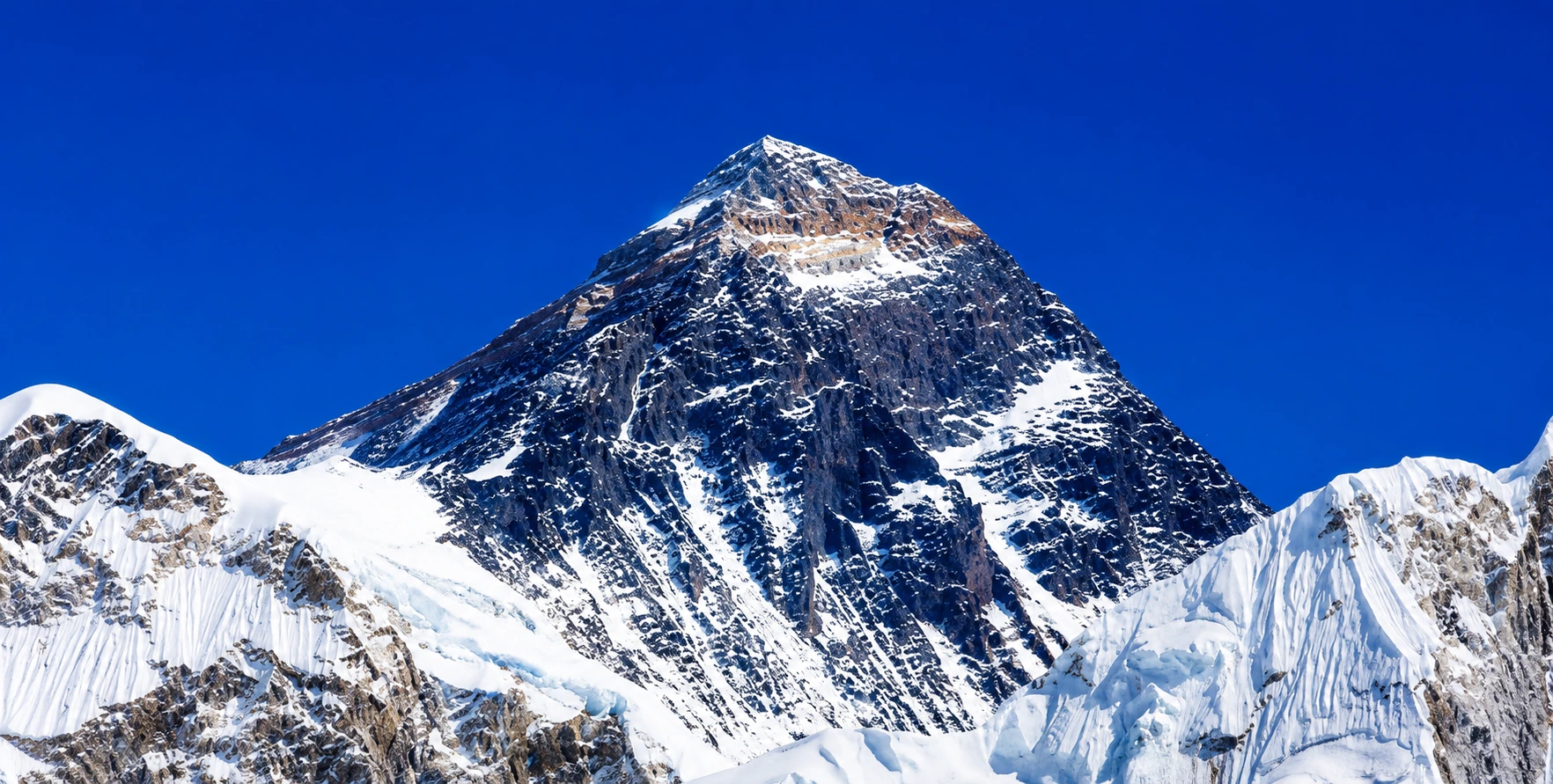
Ramechhap Private Car Transfer for Everest Trekking

Ramechhap Private Car Transfer for Everest Trekking: The Complete Guide

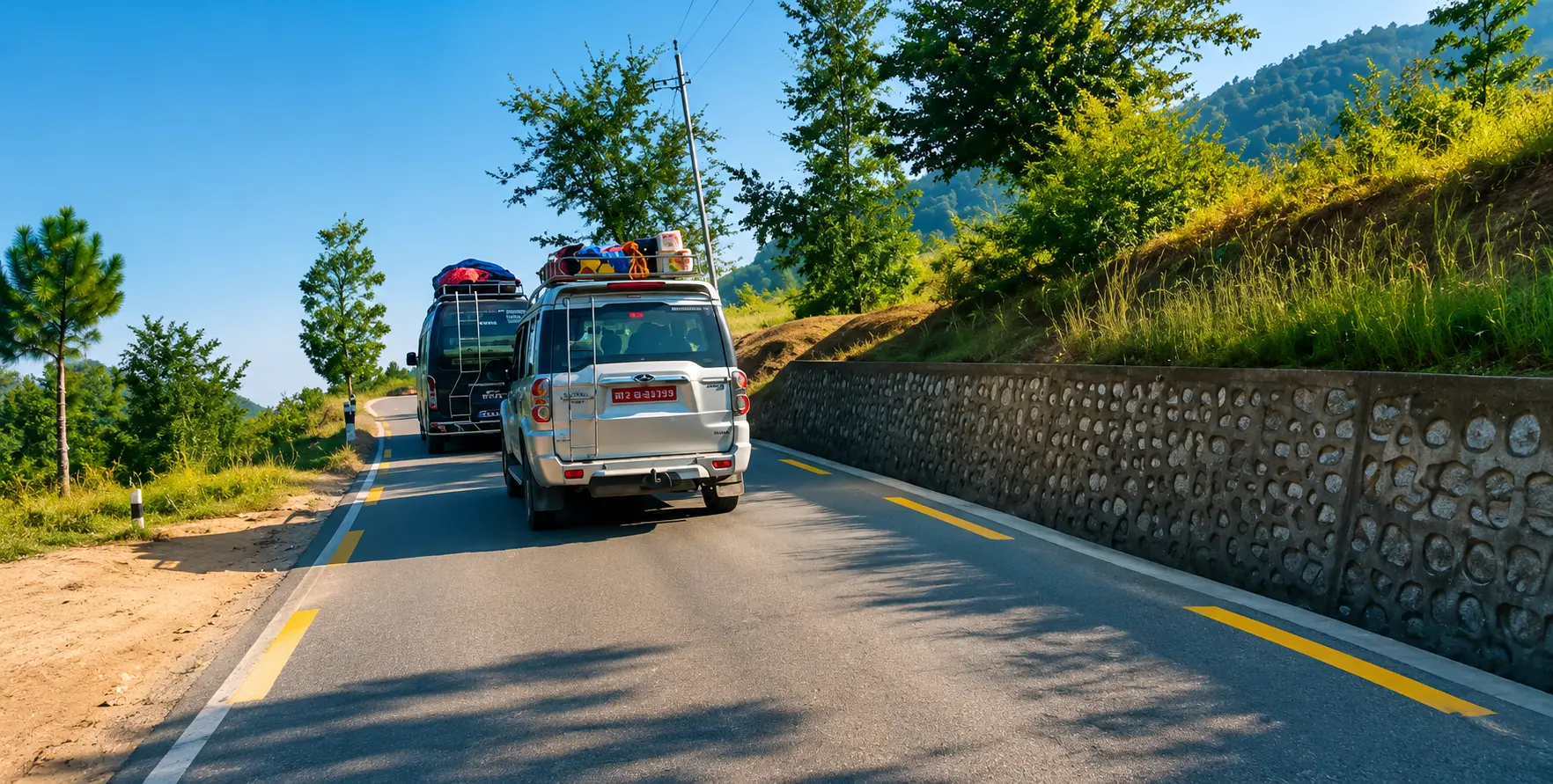
For many Everest trekkers, the adventure now starts in the middle of the night. During the busiest trekking periods, flights to Lukla, the gateway to the Khumbu, often operate from Ramechhap Airport at Manthali instead of Kathmandu.

That means a drive of about four to five hours from your Kathmandu hotel, usually leaving around 1:00 to 2:00 am so you reach the airport before the first morning flights. A Ramechhap private car transfer turns that early start into a calm, comfortable ride instead of a stressful scramble.

This guide explains how the transfer works: why Lukla flights use Ramechhap, the route and drive time, what time to leave, which vehicle to choose, USD price ranges, what to expect at Manthali Airport, and how to handle the return trip and weather delays. At Nepal Vehicle Hiring, we run private cars, Mahindra Scorpios, jeeps, and Toyota Hiace vans to Ramechhap for trekkers, families, and trekking agencies.

Have your flight details? Message us on WhatsApp or email [email protected], or use our trip planner.

Ramechhap Transfer at a Glance

  • Start: your hotel in Kathmandu, Thamel, Patan, Boudha or Bhaktapur
  • End: Ramechhap Airport (Manthali), Ramechhap district
  • Approximate distance: about 130–135 km
  • Route: Kathmandu – Bhaktapur – Banepa – Dhulikhel – BP Highway – Sunkoshi valley – Khurkot – Manthali
  • Typical drive time: about 4 to 5 hours
  • Usual departure: around 1:00 to 2:00 am for morning Lukla flights
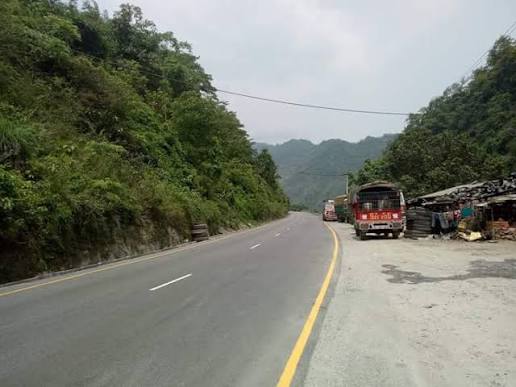
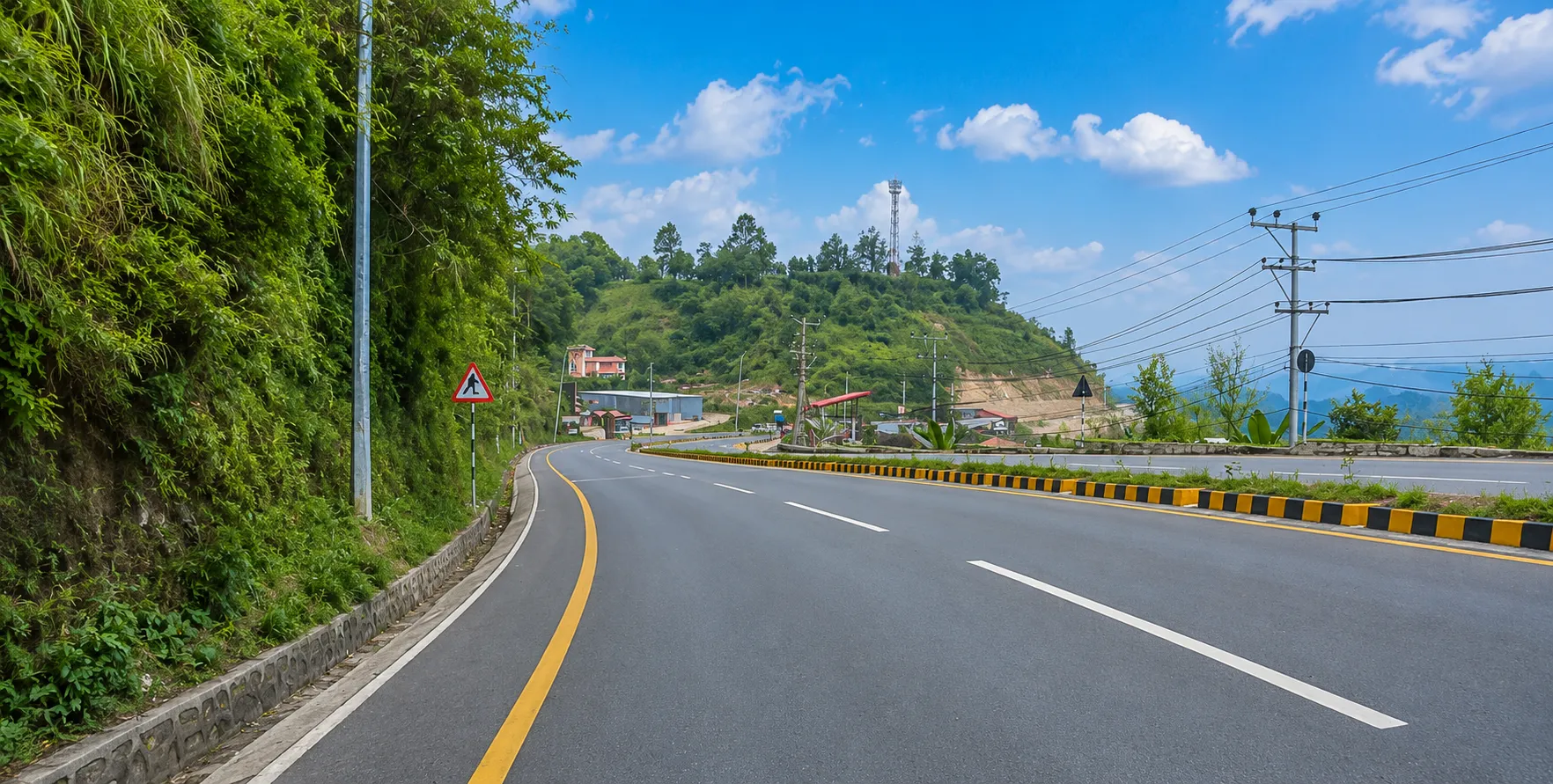
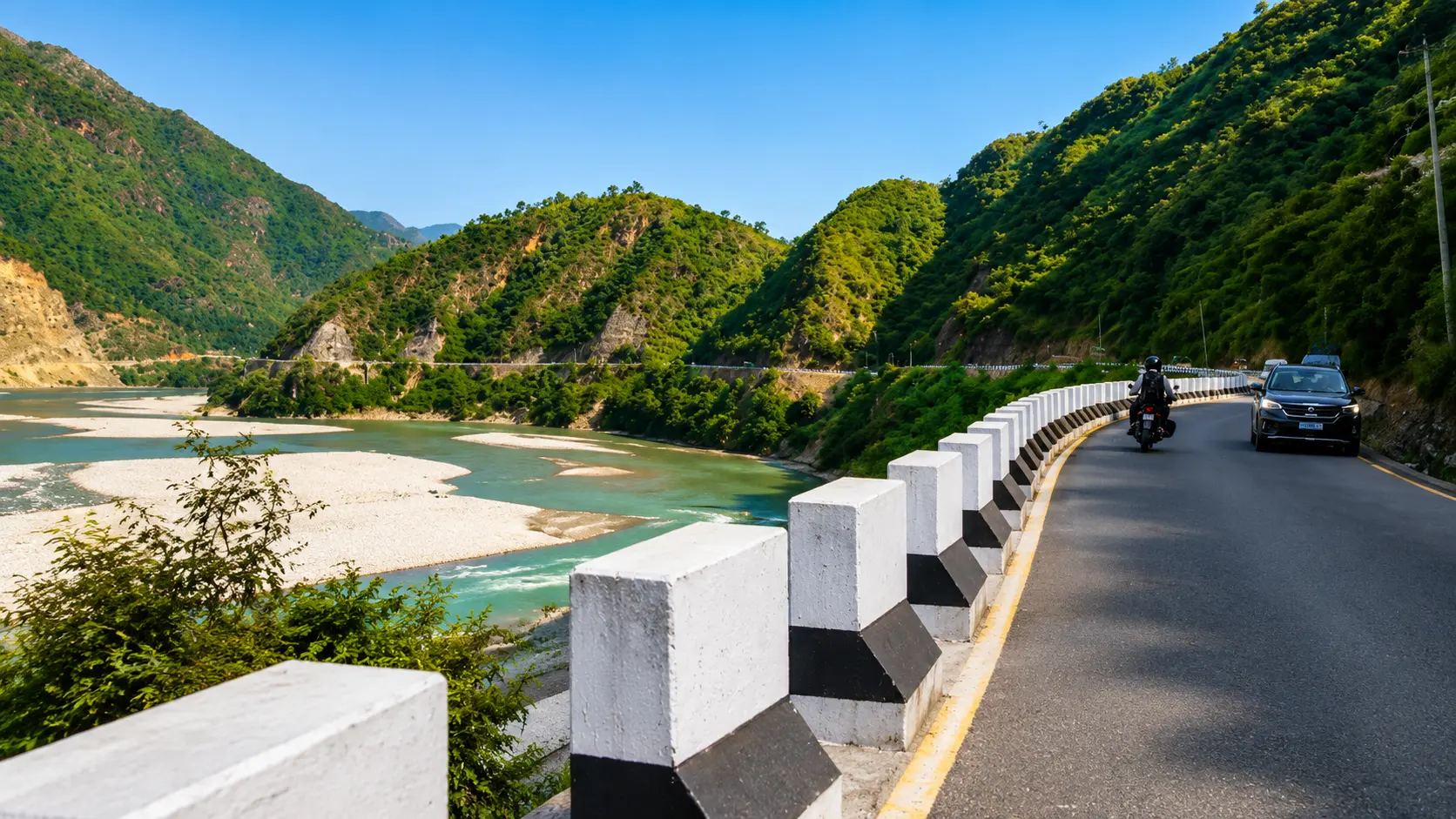
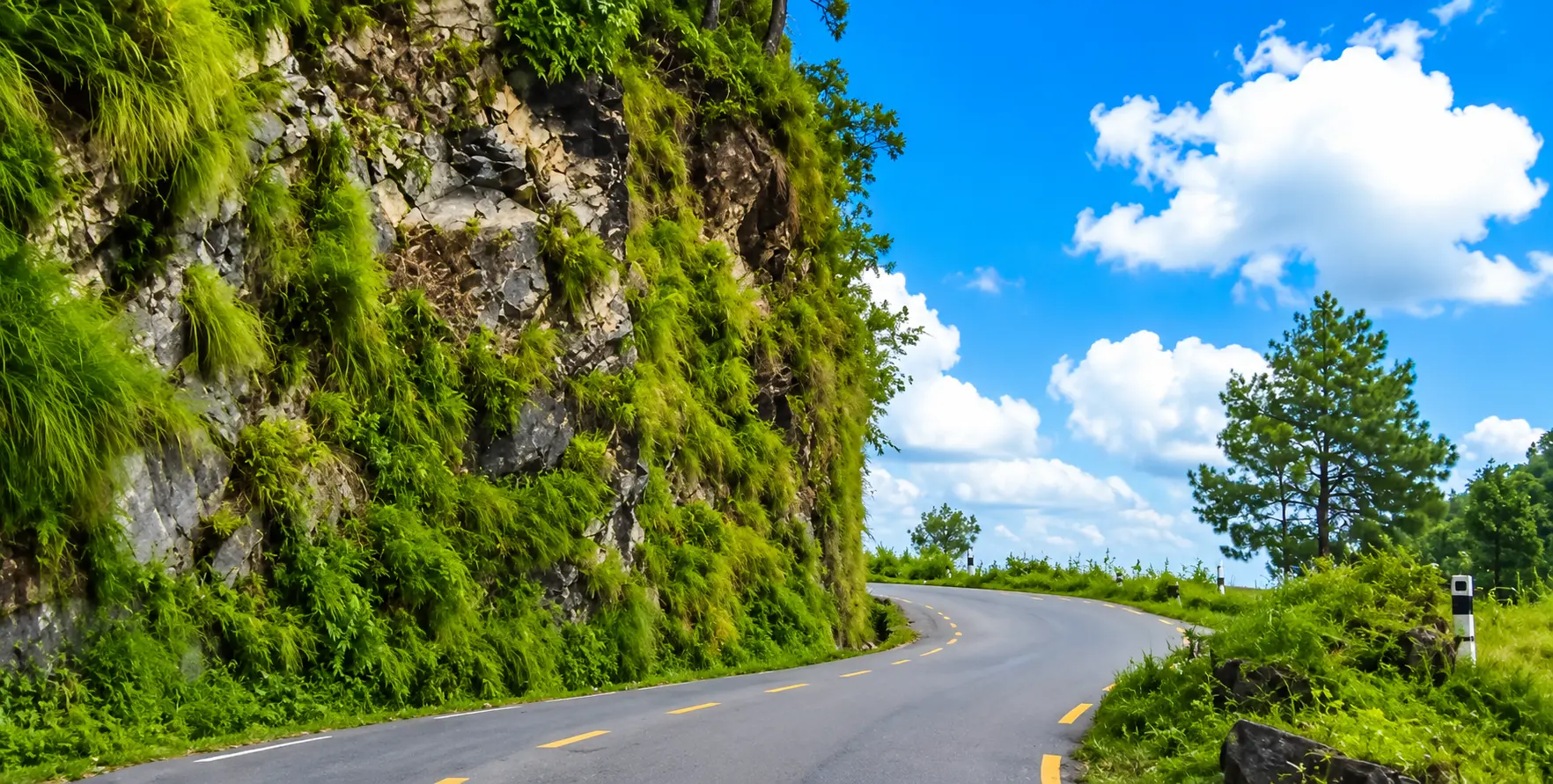
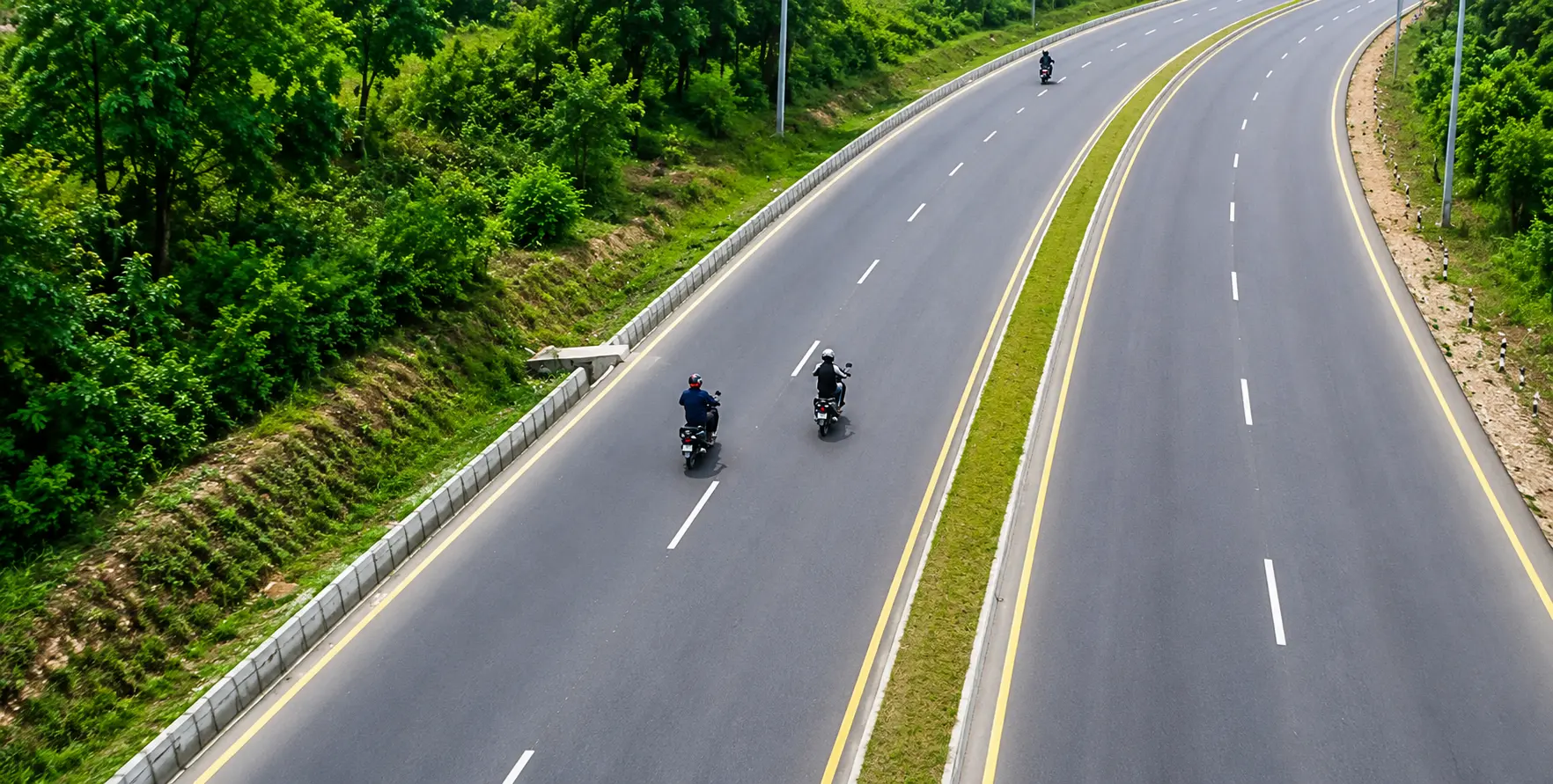
  • Road: paved but winding, especially through the hills
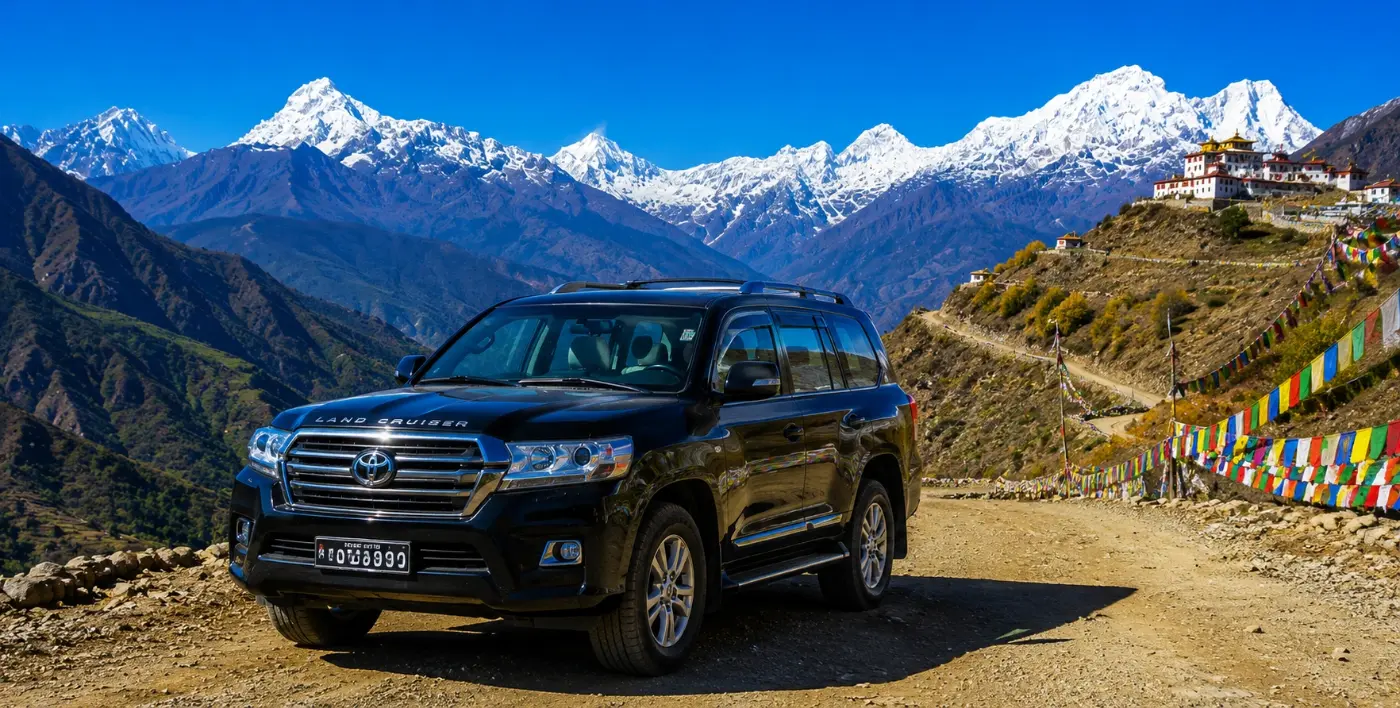
  • Best vehicles: private car for 1–3 trekkers, Scorpio or jeep for small groups, Hiace for larger groups
  • Private car price range: about USD 110–140 one way

Why Do Lukla Flights Leave From Ramechhap?

Lukla’s Tenzing-Hillary Airport is reached by small aircraft that fly by sight, so flights operate in the clearer morning hours. During peak trekking periods, Kathmandu’s single runway gets extremely busy. To ease congestion, aviation authorities have moved Lukla flights to Ramechhap’s Manthali Airport during busy seasons in recent years, typically for much of the spring and autumn trekking seasons.

From Manthali, the flight to Lukla takes only around 15 to 20 minutes, shorter than from Kathmandu. The trade-off is the long overnight drive to reach Manthali. Arrangements are decided each season, so your airline or trekking agency will confirm whether your flight departs from Kathmandu or Ramechhap.

Once you know, we’ll plan your transfer around it.

NOTE: Always confirm the departure airport and reporting time with your airline or agency a day or two before. We adjust pick-up times to match.

Why Choose a Private Car Over a Shared Van?

Your Own Schedule

Shared vans leave at a fixed time and pick up at several hotels, which adds time to an already early start. A private car picks you up at the exact time you need, from your hotel door, and drives straight to the airport.

Rest on the Way

The first part of the drive is in darkness. In a private vehicle, you can recline, use a neck pillow and sleep, without other passengers getting on and off.

Room for Trekking Bags

Lukla flights have strict baggage limits, but you’ll still carry a duffel and a daypack. A private car or Scorpio has space for your gear without squeezing.

Flexible If Plans Change

Weather can delay or cancel flights to Lukla. With a private vehicle, the driver can wait or bring you back to Kathmandu on your schedule, by arrangement.

The Route From Kathmandu to Manthali

Kathmandu to Dhulikhel

The journey starts east through Bhaktapur and Banepa on the Araniko Highway, then on to Dhulikhel. At night, the roads are quiet, and this section is quick.

BP Highway Through the Hills

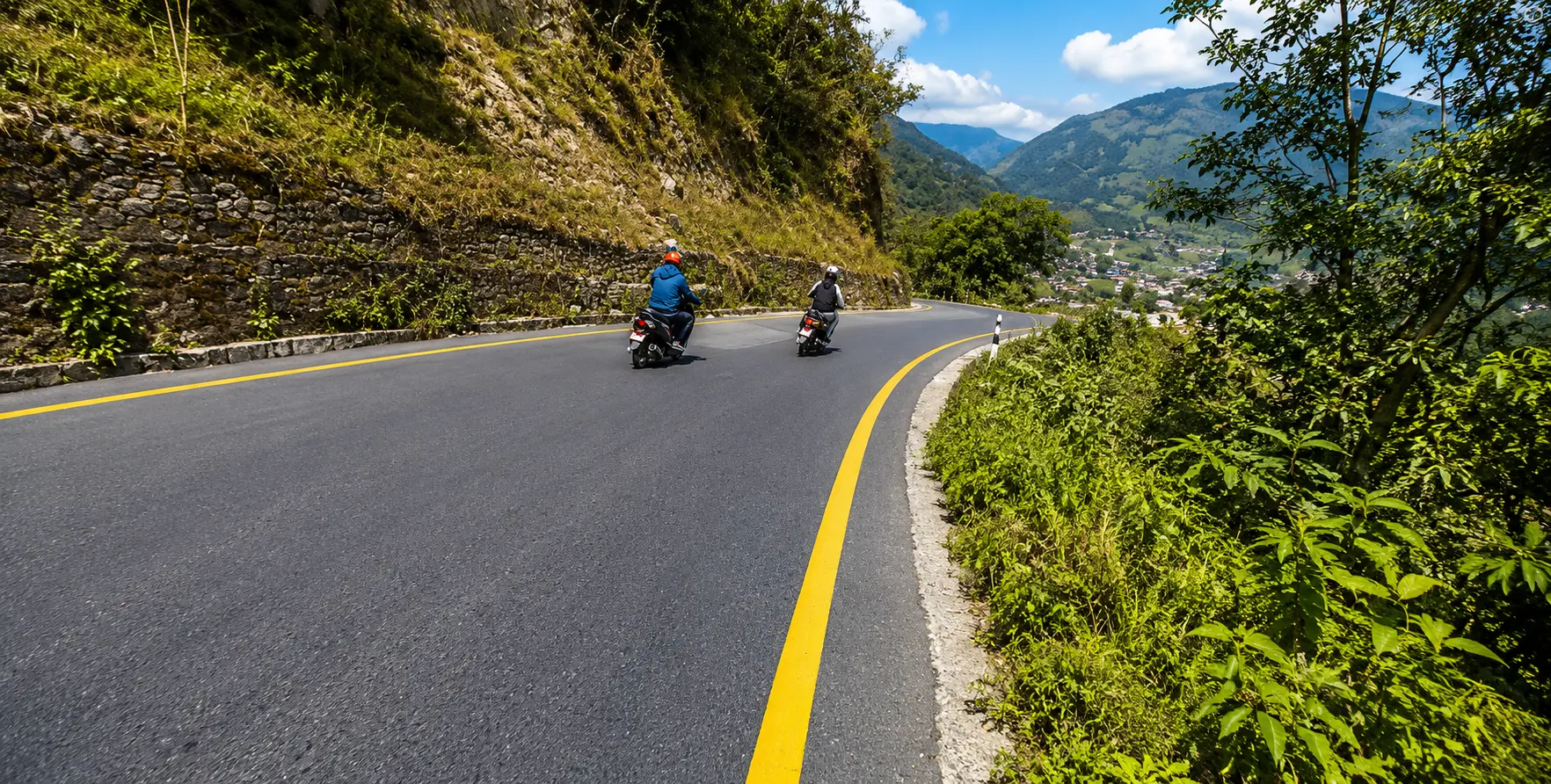
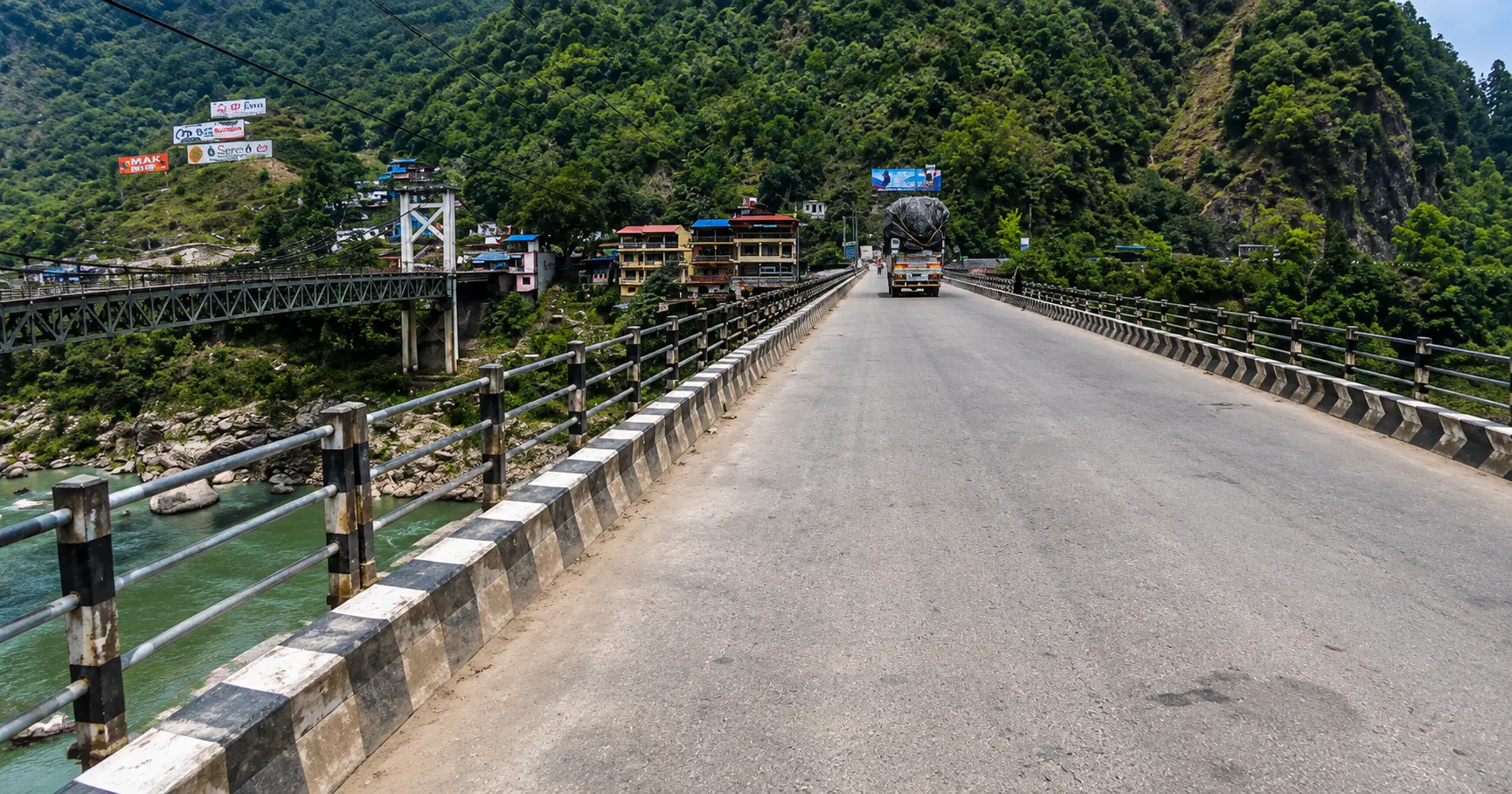
From Dhulikhel, the road joins the BP Highway and winds through hills and forest, descending toward the Sunkoshi River. The road is paved but has many bends, so take motion sickness medicine before departure if you need it.

Sunkoshi Valley to Khurkot

The highway follows the Sunkoshi Valley to the Khurkot area. This is a pleasant, flatter stretch beside the river.

Khurkot to Manthali

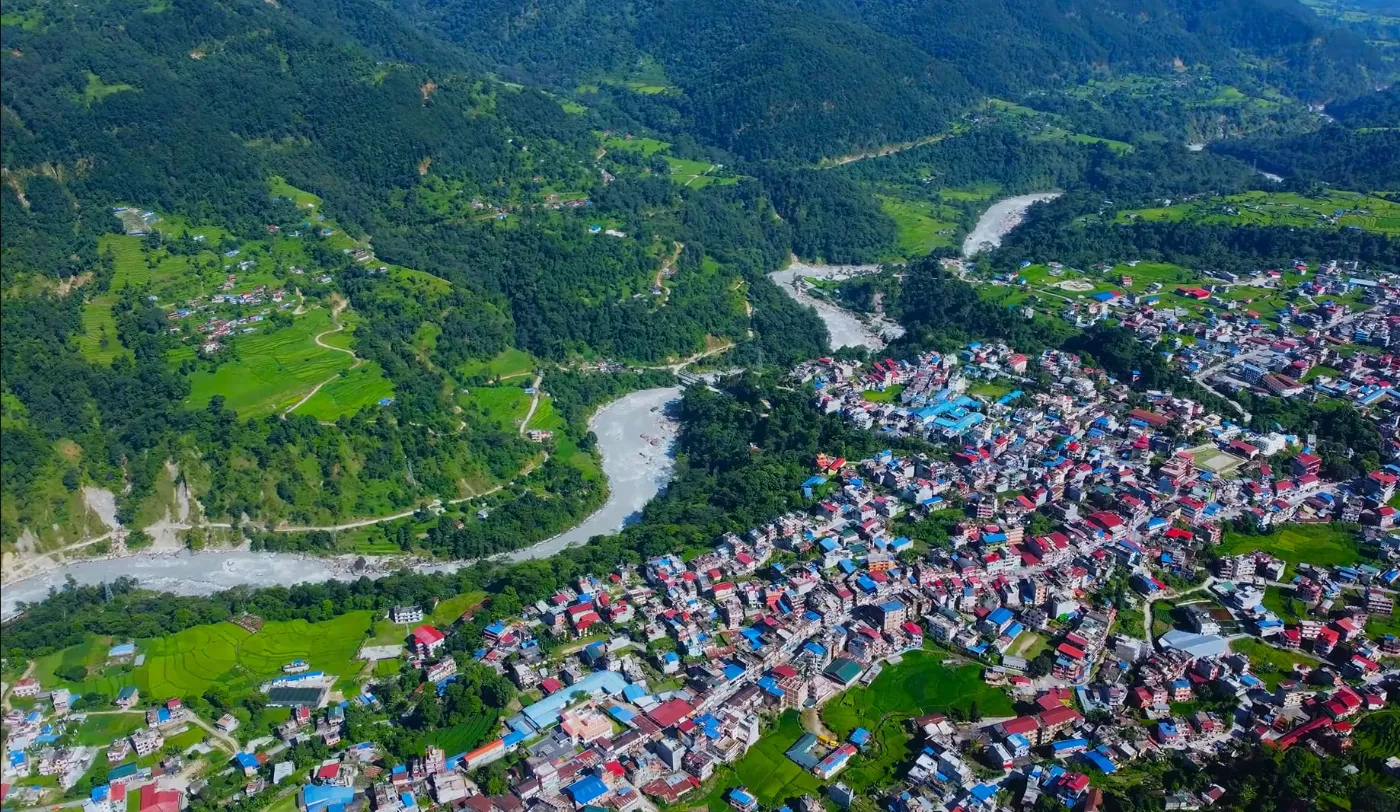
From the Khurkot area, a branch road crosses the river and heads to Manthali, the headquarters of Ramechhap district. The airport is in the Tamakoshi valley, at only around 474 meters above sea level, so it’s warmer than Kathmandu.

NOTE: Road works and conditions change. Our drivers drive this route often and check the latest conditions before your transfer.

What Time Should You Leave Kathmandu?

Most Lukla flights from Manthali leave in the early morning, when the weather is usually best. To reach the airport before check-in, most trekkers leave Kathmandu around 1:00 to 2:00 am. The exact time depends on your flight time, your airline’s reporting time, and where you’re staying.

  • First flights of the day: usually a pick-up around 1:00 am
  • Later morning flights: a pick-up around 2:00 to 3:00 am may be enough
  • Staying in Bhaktapur or Boudha: you’re on the eastern side of the valley, so that pick-up can be slightly later

Share your flight details and hotel when you book, and we’ll confirm the best pick-up time. Our price includes the night departure, with no hidden late-night surcharge.

TIP: Pack the night before, set two alarms, and have your daypack, passport,t and permits ready by the door. Your driver will message you when they arrive.

Which Vehicle Is Best for the Ramechhap Transfer?

Private Car (1–3 Trekkers)

A private car is ideal for solo trekkers, couples, es and small groups with duffels and daypacks. It is smooth and quiet on paved roads, making it easier to sleep through the night drive. It is our most popular choice for Ramechhap.

Mahindra Scorpio (2–5 Trekkers)

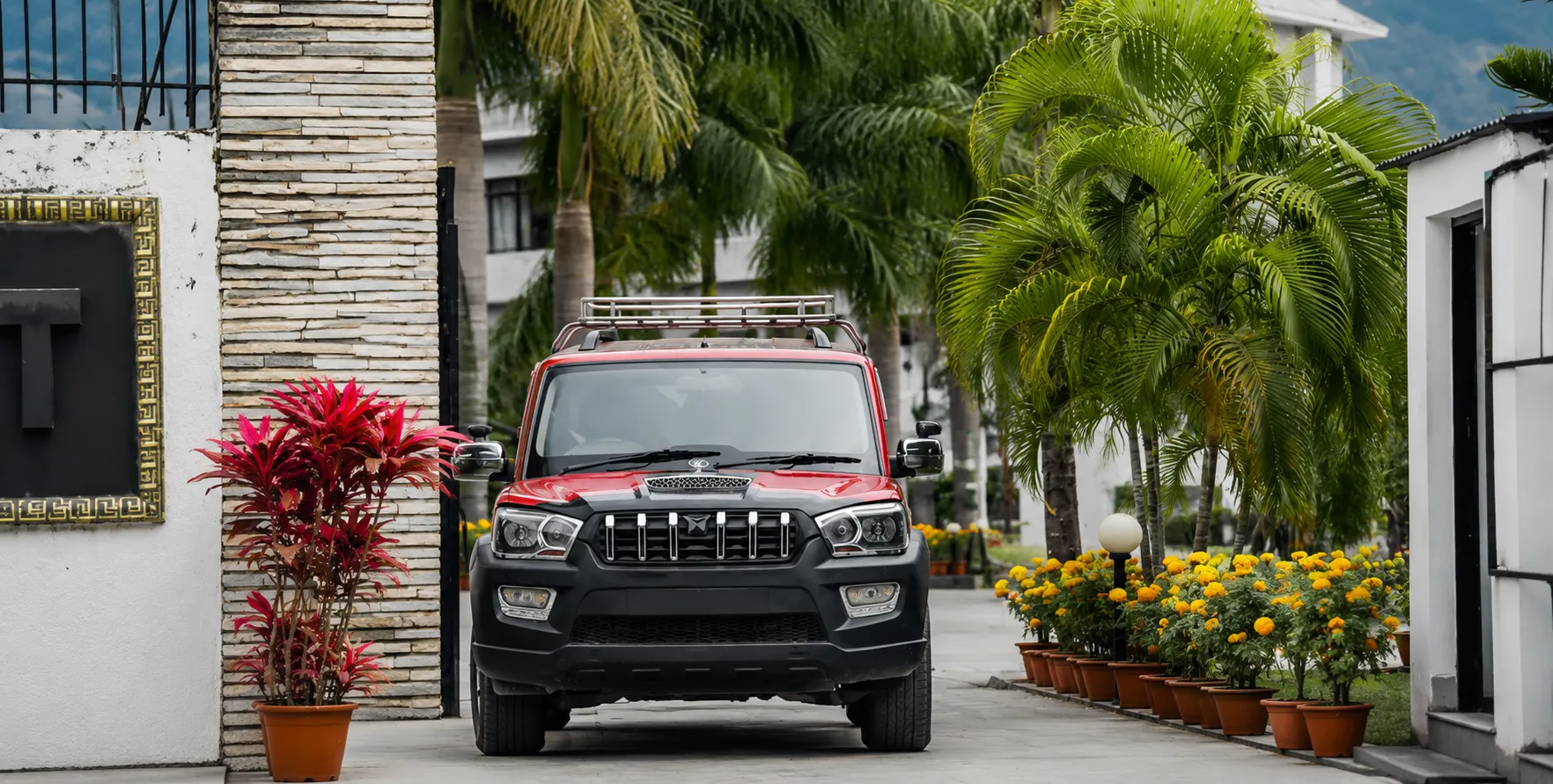
The Scorpio gives more legroom, a higher seating position, and extra luggage space. It suits groups of three to five, or couples who want more room to rest during the drive.

4WD Jeep (Up to 6 Trekkers)

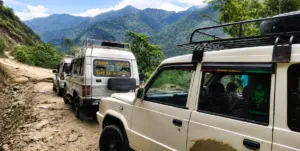
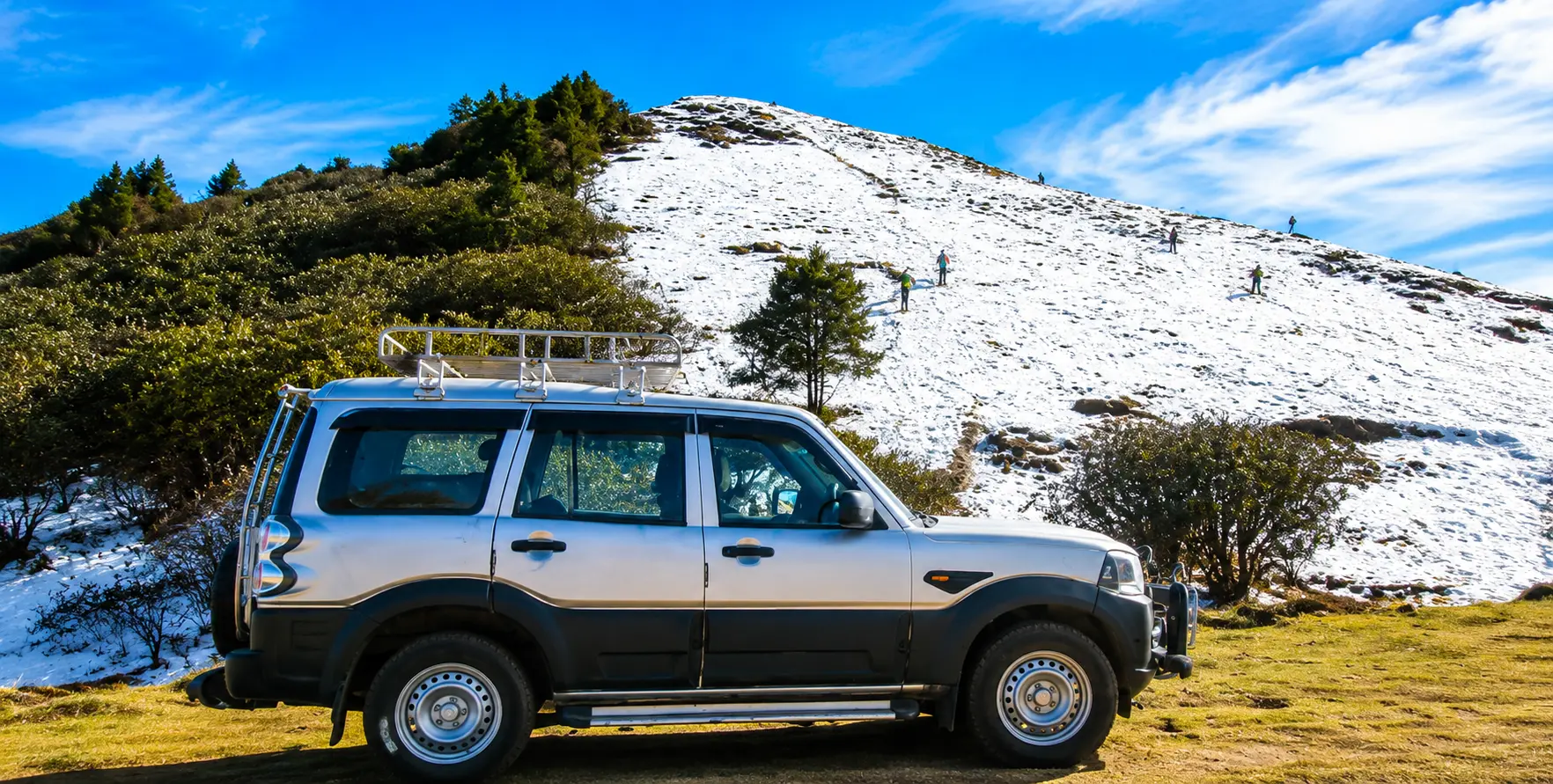
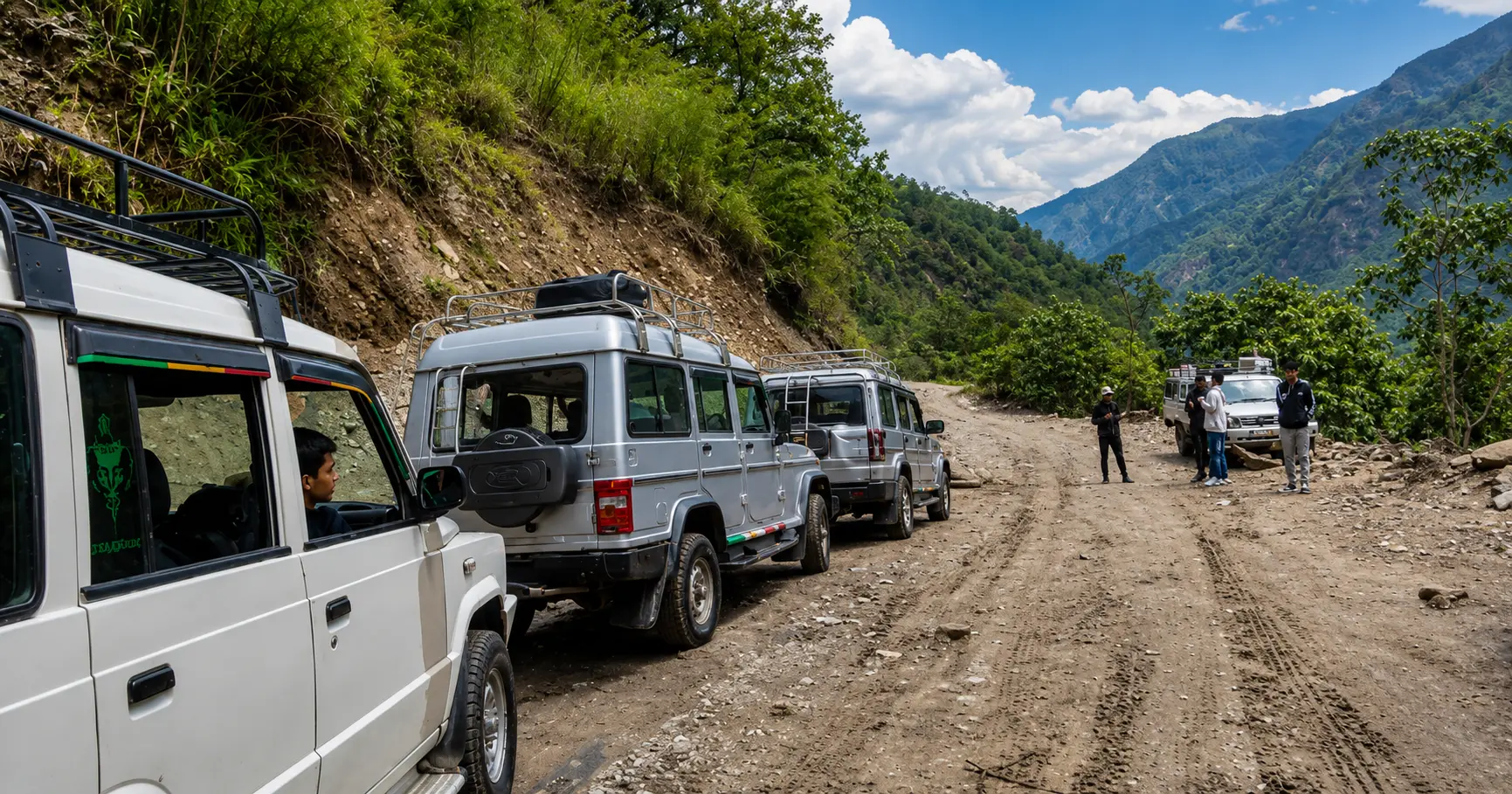
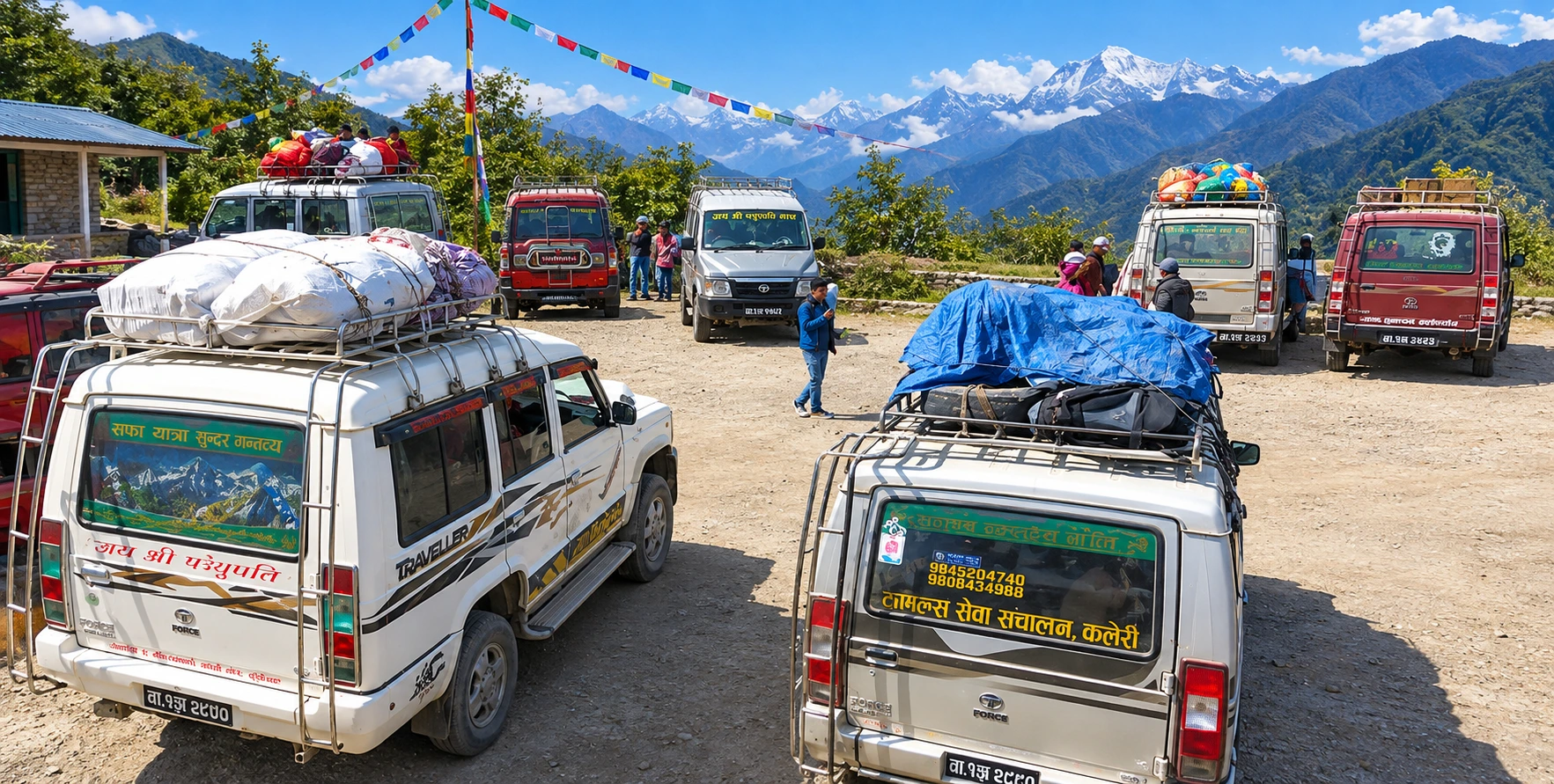
A jeep carries up to six trekkers with bags on the roof rack. It is a good choice for slightly larger groups or when road works create rough sections.

Toyota Hiace (6–12 Trekkers)

For trekking groups with guides and porters, a Toyota Hiace keeps everyone together with plenty of space for duffels. Agencies use it regularly for group departures.

Coaster and Bus (Large Groups)

Large expeditions, school groups, and multiple-agency groups can travel by coaster bus or tourist bus. We plan drop-offs carefully at Manthali, where the terminal area is small.

Ramechhap Private Car Transfer Price (USD)

Our prices include a private vehicle, an experienced driver, fuel, the driver’s costs, insurance, road taxes, parking, the night departure, re and hotel pick-up. They sit a little above the cheapest local options because we use well-maintained vehicles and drivers who know this route at night, and we plan your timing around your flight.

One-Way, Kathmandu to Ramechhap (Manthali)

  • Private car (1–3 passengers): USD 110–140
  • Mahindra Scorpio (1–5 passengers): USD 130–165
  • 4WD jeep (1–6 passengers): USD 130–165
  • Toyota Hiace (6–12 passengers): USD 150–190
  • Coaster bus (15–25 passengers): USD 250–320
  • Tourist bus (26–40 passengers): USD 320–400

Return and Extras

  • Ramechhap to Kathmandu after your trek: same price range as one-way
  • Round trip booked together: ask for a combined discount
  • Driver waiting at Manthali in case of flight cancellation, then return to Kathmandu: by arrangement, from about USD 30–50 extra
  • Kathmandu airport pick-up on arrival day: see our airport transfer rates

Sharing a car or Scorpio with your trekking partners brings the per-person cost close to a shared van, with far more comfort. Get your exact quote on WhatsApp.

At Manthali Airport

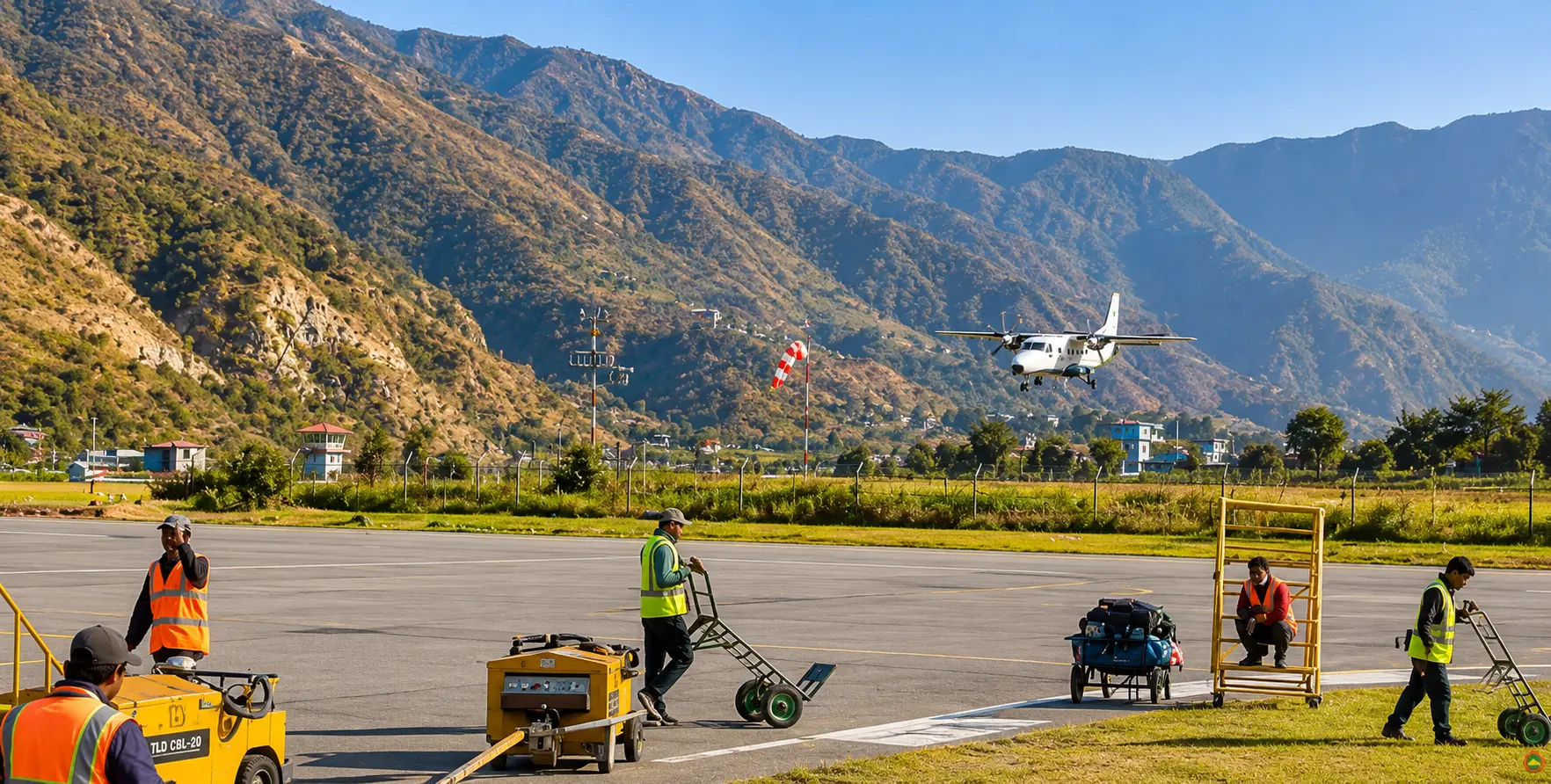
Ramechhap Airport is small and simple. In peak season it gets very busy early in the morning, as trekkers, guides and porters gather for the first flights. Here’s what to expect:

  • Check-in: follow your airline’s and guide’s instructions; arrive by the reporting time
  • Baggage limits: small aircraft have strict weight limits for checked bags and hand luggage, so check with your airline
  • Food and drink: basic tea shops and snacks are usually available nearby, but not full meals
  • Facilities: limited seating and toilets; bring patience
  • Luggage storage: usually not available, so leave extra bags at your Kathmandu hotel
  • Weather waits: delays of a few hours are common when cloud or wind affects Lukla

Your driver drops you at the terminal and helps unload. If your trekking agency has a staff member at the airport, they will usually take over from there.

The Flight to Lukla and the Everest Trek

From Manthali, the short flight to Lukla (around 2,860 m) is one of the world’s most challenging landings on a steep runway on a mountainside. From Lukla, trekkers walk to Phakding and Namche Bazaar, then continue toward Tengboche, Dingboche, Lobuche and Gorak Shep for the Everest Base Camp trek and Kala Patthar.

Our sister company, Trek Nepal Himalayas, runs guided Everest Base Camp treks and the comfortable Everest Base Camp luxury lodge trek, while Alpine Luxury Treks specializes in top-end trekking experiences. We handle all road transfers at both ends.

The Return From Ramechhap to Kathmandu

After your trek, you’ll fly from Lukla back to Manthali in the morning, then drive to Kathmandu. The return drive is in daylight and usually takes four to five hours, so you’ll typically reach Kathmandu around midday or early afternoon.

  • Book your return car in advance and share your expected flight date
  • Message us when you land at Manthali; our driver will be waiting
  • If weather delays your Lukla flight, tell us, and we’ll reschedule the pick-up
  • Keep at least one or two spare days before an international flight from Kathmandu

When you get back to Kathmandu, we can drop you at your hotel or the airport for your onward flight.

If Your Lukla Flight Is Delayed or Canceled

Weather at Lukla or Manthali can delay flights for hours, and sometimes cancel them for the day. It’s part of trekking in the Everest region. Here’s how we help:

  • Waiting option: by arrangement, your driver can wait at Manthali until your flight is confirmed
  • Return to Kathmandu: if flights are canceled, we can drive you back to your hotel the same day
  • Next-day transfer: we can rebook your transfer for the following night
  • Stay locally: some trekkers choose to stay in Manthali to be close to the airport for the next morning

If you’re delayed on the return, message us on WhatsApp, and we’ll move your pick-up to the new date. We also offer transfers to Phaplu and Salleri, another road route into the Everest region.

Ramechhap vs Kathmandu: How the Two Lukla Departures Compare

Flying From Kathmandu

  • No overnight drive; a short airport transfer from your hotel
  • Longer flight, around 30 to 35 minutes
  • Operates outside the busiest periods, when authorities allow

Flying From Ramechhap (Manthali)

  • About four to five hours by road, usually overnight
  • Shorter flight, around 15 to 20 minutes
  • Used during peak trekking seasons to ease congestion in Kathmandu
  • Basic airport facilities and an early start

You usually don’t choose your airline or agency; they tell you which airport your flight uses. Either way, we can handle the road transfer, a Kathmandu airport drop, or a private car to Ramechhap.

Staying in Manthali the Night Before

Some trekkers prefer to drive to Manthali the afternoon before their flight and sleep near the airport. This avoids the middle-of-the-night departure and gives a little more sleep. Manthali has several simple hotels and guesthouses, and the airport is a short drive or walk away.

  • Advantage: more rest and no 1:00 am alarm
  • Advantage: you’re already in place if the weather clears early
  • Disadvantage: an extra night’s accommodation and basic facilities
  • Disadvantage: less time in Kathmandu before the trek

We can drive you to Manthali in the afternoon by private car, Scorpio, or Hiace. The price range is the same as the night transfer. Please tell us your preference when you book.

Tips for a Comfortable Night Drive

  • Sleep early: go to bed by early evening the night before
  • Eat lightly: a light dinner helps on the winding road
  • Motion sickness: take medication before departure if you need it, and ask for the front seat
  • Comfort items: bring a neck pillow, eye mask and earplugs in your daypack
  • Layers: Kathmandu nights can be cool, while Manthali is warmer at low altitude
  • Snacks and water: carry breakfast snacks, as airport food is limited
  • Valuables: keep your passport, permits, flight ticket, and money with you
  • Toilet: use the hotel toilet before you leave; your driver will stop if needed

Packing and Baggage Limits

The small aircraft that fly to Lukla have strict baggage limits, typically a modest allowance for checked luggage plus a small handbag. Your airline or trekking agency will confirm the exact limit. Excess baggage may be charged or, at busy times, sent on a later flight.

  • Pack trekking gear in a soft duffel within the weight limit
  • Carry essentials such as medicines, a warm layer, documents and electronics in your daypack
  • Leave city clothes and souvenirs at your Kathmandu hotel
  • Weigh your bags in Kathmandu before departure

Our drivers can drop excess luggage back at your hotel by arrangement. A Scorpio or jeep gives extra space for groups with lots of gear.

Everest Base Camp Trek Overview

Most trekkers flying from Ramechhap are heading for the Everest Base Camp trek, one of the world’s great walks. After landing in Lukla, the classic route follows the Dudh Koshi valley to Phakding and climbs to Namche Bazaar, the Sherpa capital, where most trekkers spend an acclimatization day.

The trail continues to Tengboche Monastery, then Dingboche, Lobuche and Gorak Shep, with a side trip to Everest Base Camp and a sunrise climb of Kala Patthar for close views of Everest, Lhotse, Nuptse and Ama Dablam.

The full round trip from Lukla usually takes around 12 days of walking, depending on acclimatization and side trips. Our sister company, Trek Nepal Himalayas, runs guided treks, including the Everest Base Camp luxury lodge trek for travelers who want more comfort. Alpine Luxury Treks also offers top-end Everest itineraries.

Other routes in the region include the Rolwaling Valley trek for experienced trekkers.

Arrival in Kathmandu Before Your Everest Trek

Most trekkers spend at least one or two nights in Kathmandu before heading to Ramechhap. This gives time to recover from the international flight, meet your trekking agency, check gear, and sort permits.

Staying on the eastern side of the valley, near Boudha or Bhaktapur, can shorten your Ramechhap departure.

Group and Agency Transfers

Trekking agencies regularly book group transfers to Ramechhap, often with several groups on the same morning. We provide:

Agencies can book through our contact page or WhatsApp, with USD invoicing for repeat clients.

Safety on the Night Drive

Night driving on hill roads requires experience and care. Our Ramechhap transfers follow strict standards:

  • Experienced night drivers who know the BP Highway and the Manthali road well
  • Rested drivers: drivers sleep before a night transfer, and we never schedule back-to-back long shifts
  • Serviced vehicles with good headlights, tires, brakes, and working seat belts
  • Steady speed: no racing to the airport; we build time into the pick-up instead
  • Seat belts: fitted and recommended for every passenger
  • Insured, licensed vehicles under our company name

If you feel tired or unwell during the drive, tell the driver. They will stop safely whenever needed.

Best Seasons for Everest Trekking and Ramechhap Flights

Autumn

Autumn is the most popular Everest trekking season, with stable weather, clear mountain views,s and comfortable temperatures. It is also when Lukla flights are most likely to operate from Ramechhap, and demand for transfers is highest. Book early.

Spring

Spring is the second peak season, with warmer temperatures and blooming rhododendrons in the lower valleys. Lukla flights often use Ramechhap at this time too. Afternoon clouds can build, so morning flights are the norm.

Winter

Winter is cold at high altitude but often very clear. Fewer trekkers mean quieter trails. Flights may operate from Kathmandu or Ramechhap depending on the arrangements that season.

Monsoon

The monsoon brings frequent cloud and rain, and Lukla flights are often delayed or canceled. Fewer trekkers visit, and landslides can affect road conditions Leave plenty of spare days if you trek at this time.

What Is Included

Included

  • Private vehicle and experienced driver
  • Fuel, driver’s wage and meals
  • Insurance, road taxes and parking
  • Night or early-morning departure with no surcharge
  • Hotel pick-up in the Kathmandu Valley and drop-off at Manthali Airport
  • Help with luggage at both ends

Not Included

  • Lukla flight tickets and excess baggage charges
  • Trekking permits and fees
  • Your meals and drinks
  • Waiting time beyond the agreed arrangement
  • Tips for the driver (optional)

Your Driver

Night transfers need a special kind of driver: calm, patient, and familiar with every bend of the route. We choose our Ramechhap drivers for their experience on the BP Highway and the road into Manthali, and for their care with tired passengers in the early hours.

  • Licensed and experienced on night routes
  • Punctual pick-ups, with a message on arrival
  • Smooth, steady driving so you can rest
  • Basic English and knowledge of the airport drop-off
  • Help with bags at the hotel and the airport

Why Our Prices Are a Little Higher

You can find cheaper transfers to Ramechhap, especially shared vans. Our prices are slightly higher because they include a private vehicle on your schedule, a rested, experienced night driver, well-maintained vehicles, no late-night surcharge, and an office that tracks your transfer and your return flight. For an early start that determines whether you make your Lukla flight, reliability is worth the difference.

Plan More Adventures in Nepal

After the Everest region, there is much more to explore. We provide transport across Nepal, including:

Browse our Nepal tour packages or start planning with our trip planner.

Key Takeaways

  • Lukla flights often leave from Ramechhap’s Manthali Airport during busy trekking seasons.
  • The drive from Kathmandu is about 130–135 km and takes four to five hours.
  • Most trekkers leave Kathmandu around 1:00 to 2:00 am for morning flights.
  • A private car costs about USD 110–140 one way; a Scorpio or jeep costs about USD 130–165.
  • Manthali Airport is basic, so bring snacks and leave extra luggage in Kathmandu.
  • Book your return pick-up and keep spare days for weather delays.

A Typical Ramechhap Transfer Night

  • Evening: pack your duffel within the airline weight limit and leave extra luggage with your hotel. Our office confirms your pick-up time.
  • Around 1:00 am: your driver messages you on arrival at your Kathmandu hotel. Bags go into the car,r and you settle in with a neck pillow.
  • First hour: quiet roads east through Bhaktapur and Banepa to Dhulikhel.
  • Middle of the night: the winding BP Highway descends through the hills toward the Sunkoshi. Most passengers sleep.
  • Pre-dawn: along the river to Khurkea, then across to Manthali.
  • Around 5:00 to 6:00 am: arrival at Ramechhap Airport. Your driver helps unload, and you check in with your airline or meet your guide.
  • Morning: the short flight to Lukla, weather permitting, and the start of your Everest trek.

Times vary with your flight and hotel location, but this gives a good idea of what to expect. Book your private car, Scorpio, or jeep, and we’ll plan the details.

About Manthali and Ramechhap

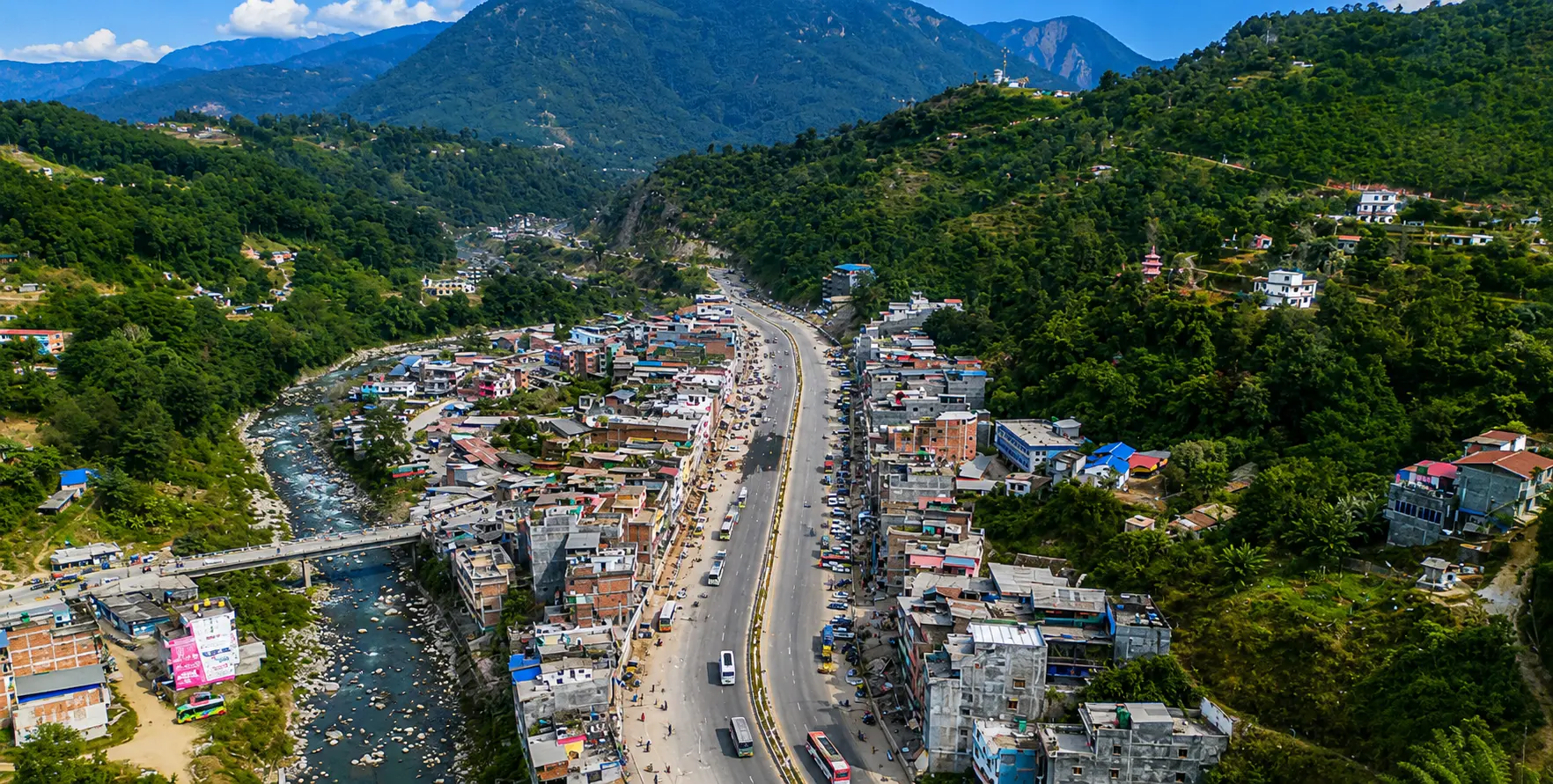
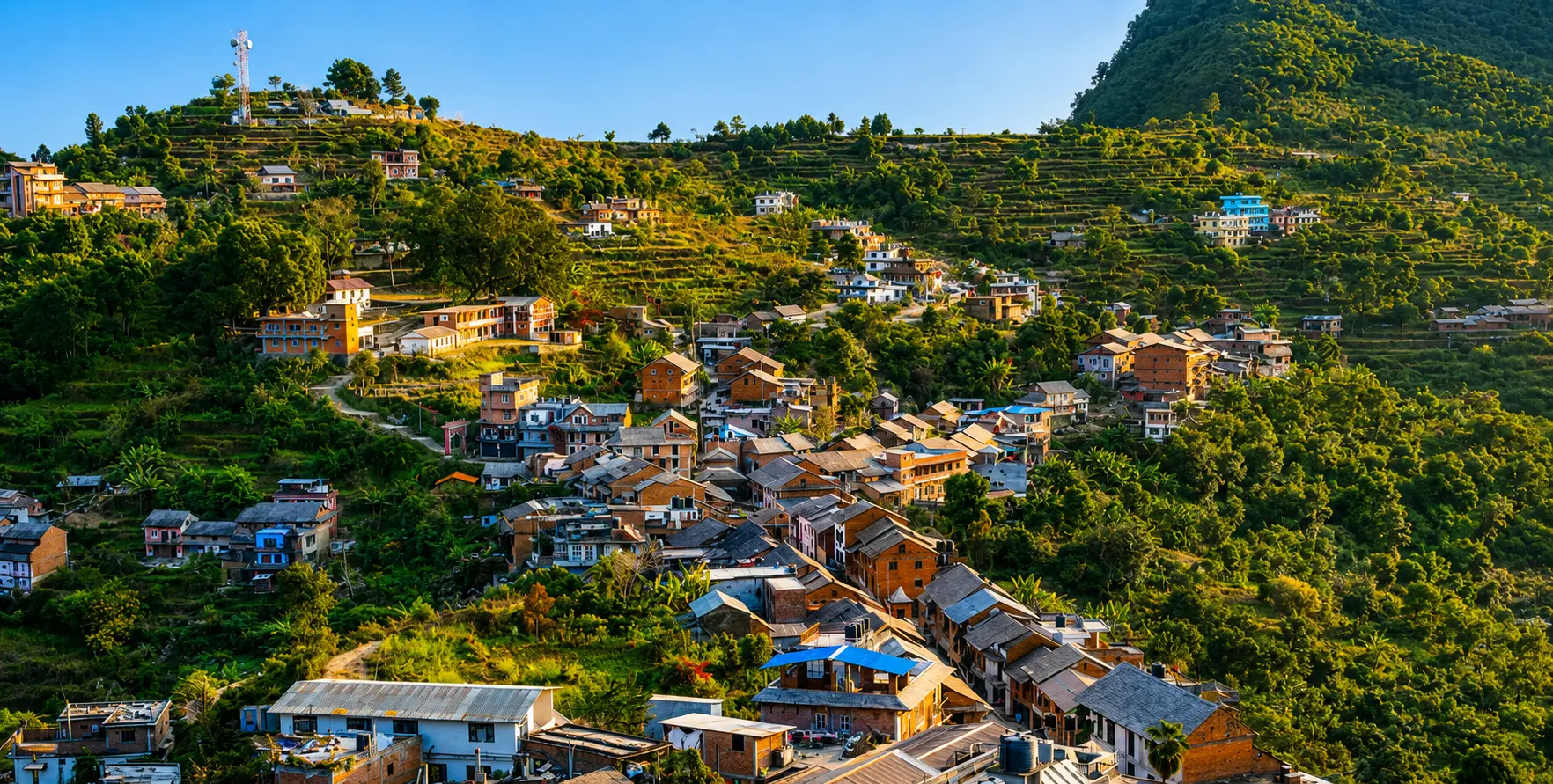
Manthali is the headquarters of Ramechhap district, set in the warm Tamakoshi river valley at low altitude. It is a small, busy town with shops, simple restaurants,s and guesthouses. Its airport was built for local flights but now plays a major role in Everest tourism during peak seasons.

Because Manthali sits at only around 47 meters, mornings are warm compared with Kathmandu and very warm compared with Lukla. Dress in layers so you can add warm clothing once you arrive in the mountains. If you have time while waiting for a delayed flight, the riverside areas and local markets offer a glimpse of everyday life in Nepal’s middle hills.

Other Ways Into the Everest Region by Road

Flights to Lukla are the fastest way into the Khumbu, but not the only one. For trekkers who prefer to avoid flights or want a longer walk-in, there are road options:

  • Phaplu and Salleri: drive to the Solukhumbu district headquarters, then walk or take onward transport toward Lukla. See our Kathmandu to Phaplu and Salleri
  • Kharikhola and Surke area: rough roads now reach closer to Lukla, followed by a walk of a day or more, by 4WD jeep
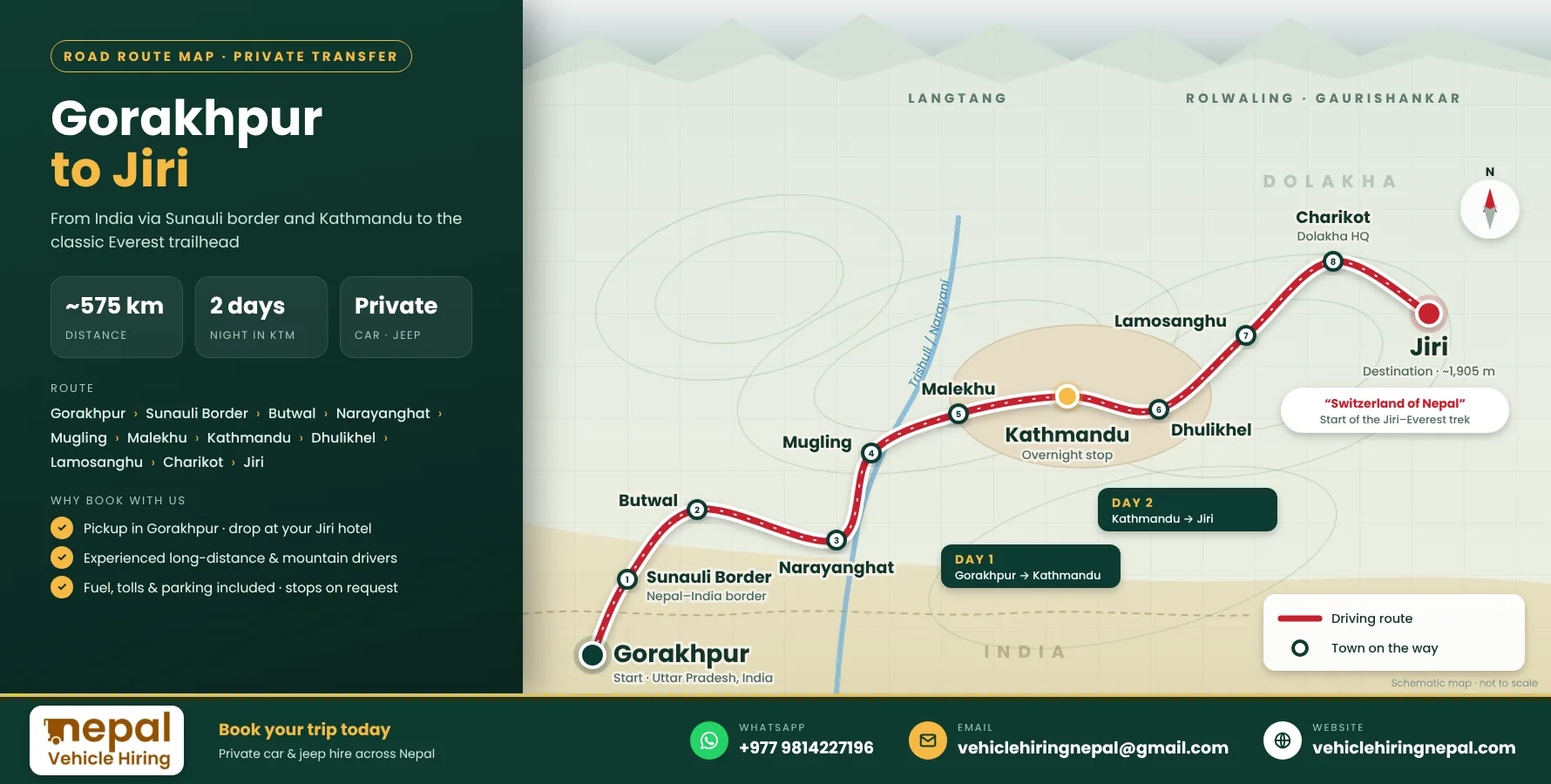
  • The classic Jiri walk-in: the historic route used by early Everest expeditions, now shortened by roads

These routes take longer but avoid flight delays and offer quieter trails through Sherpa and Rai villages. Ask us about road access and current conditions before you plan.

Helicopter Options From Manthali

When weather delays fixed-wing flights for a long time, some trekkers choose a helicopter between Manthali and Lukla. Helicopters can sometimes fly in conditions that ground small planes, but they are also weather-dependent and cost extra. Airlines and trekking agencies arrange this, not transport companies.

If you’re considering this, check your travel insurance and speak with your agency. We’ll adjust your road transfer to match whatever you decide.

Spare Days and Travel Insurance

Weather delays on Lukla flights are common in both directions. The most important planning rule for any Everest trek is to keep spare days, ideally at least one or two, before your international flight home.

  • If your return flight from Lukla is delayed, you’ll still have time to drive back to Kathmandu.
  • If you finish early, enjoy extra time with a Kathmandu sightseeing day or a trip to Nagarkot.
  • Make sure your travel insurance covers trekking at high altitude and flight disruptions.on
  • Keep our number handy so we can move your return transfer quickly.

Families and Older Trekkers

The night drive is tiring for anyone, so families and older trekkers benefit most from a private vehicle. A Mahindra Scorpio or Hiace offers more comfortable seats and space to rest. We can provide child seats on request for families traveling with children.

Consider staying in Manthali the night before to avoid the 1:00 am start.

For older trekkers heading to Everest, our sister companies offer comfortable lodge-based itineraries, including the Everest Base Camp luxury lodge trek, with gentler daily stages and better accommodation.

Solo Trekkers

A private car for one person costs more than a seat in a shared van, but it offers a pick-up time that suits your flight, a direct journey, nd space to sleep. Many solo trekkers share a car with others on the same flight, often arranged through their trekking agency or hotel. Ask us, and we’ll help you find the best option for your budget.

Responsible Trekking in the Khumbu

  • Use refillable bottles and purified water
  • Carry out batteries and non-burnable waste
  • Respect Sherpa culture, walk clockwise around stupas and mani walls, and ask before photographing people.
  • Support local lodges, guides and porters, and tip fairly
  • Ascend slowly and respect acclimatization on days

Questions to Ask Before Booking Any Transfer

  • What time will you collect me, and how did you calculate it?
  • Is the price all-inclusive, with no night surcharge?
  • Is the driver rested and experienced on the night route?
  • What happens if my flight is canceled?
  • Can you also arrange my return pick-up?

We’re happy to answer all of these. Ask on WhatsApp or email.

Common Mistakes to Avoid

  • Assuming your flight leaves from Kathmandu: always confirm the departure airport, as it changes by season.
  • Booking a shared van for a first-flight slot: multiple hotel pick-ups can make you late
  • Overpacking: excess baggage can be charged or delayed on Lukla flights
  • No spare days: weather delays are common, so never book an international flight the day after your planned return
  • Skipping breakfast supplies: food at Manthali is basic, so pack snacks
  • Leaving the return pick-up to the last minute: book it with your outbound transfer

Avoid these, and your journey to and from the Everest region will be far smoother. If you’re unsure about any part of the plan, ask us before you book.

A Word for Trekking Agencies

If you run a trekking company, reliable Ramechhap transfers are essential to keeping your clients happy and your guides on schedule. We work with agencies throughout the busy seasons, handling multiple pick-ups on the same night, matching vehicles to group sizes and coordinating return transfers as each group’s flights from Lukla are confirmed.

Share your departure list with us and our office will manage the rest. Repeat agency partners receive consolidated USD invoices, priority vehicle allocation during peak weeks, and a dedicated contact who knows your groups and your guides.

Our Promise

Your vehicle will arrive on time, with a rested driver who knows the route. We’ll plan your pick-up around your flight, keep in touch through the night, and be waiting when you return from the mountains. We aim to make the road the easiest part of your Everest journey.

Where to Stay in Kathmandu Before a Ramechhap Departure

Your hotel choice can make the night transfer a little easier. Ramechhap lies to the east, so hotels on the eastern side of the Kathmandu Valley shorten the drive.

  • Thamel: the most popular base for trekkers, with gear shops and agencies close by. Easy to reach at night, though slightly further from the eastern exit.
  • Boudha: peaceful, close to the great stupa and on the eastern side of the city, a good choice for early departures.
  • Bhaktapur: a heritage town right on the road to Dhulikhel, which can save time on the night drive.
  • Near the airport: convenient if you’re arriving the day before and leaving that night.

Wherever you stay, we’ll pick you up from your door. If you have a free day before your transfer, our Kathmandu sightseeing service can show you the city’s highlights at a relaxed pace.

Lukla Airport: What to Expect on Arrival

Tenzing-Hillary Airport at Lukla sits at around 2,860 meters on a mountainside, with a short, steep runway. Landing there is a memorable experience. Once you land, you’ll collect your bags in a small arrivals area and meet your guide and porters if you haven’t already.

Lukla is a busy little town full of lodges, cafés and trekking shops. Most trekkers have breakfast or a cup of tea here before setting off toward Phakding, a gentle first day of walking that helps with acclimatization. The air is noticeably cooler than in Manthali, so have a warm layer ready in your daypack.

Preparing for Altitude on the Everest Trek

The Everest Base Camp trek climbs from around 2,860 meters at Lukla to more than 5,000 meters at Gorak Shep and Kala Patthar. Altitude is the biggest challenge, so preparation matters.

  • Build fitness before your trip with regular walking and hill climbs
  • Follow a sensible itinerary with acclimatization days at Namche Bazaar and Dingboche
  • Drink plenty of water and eat well on the trail
  • Know the signs of altitude sickness and descend if symptoms worsen
  • Speak to your doctor about altitude medication before traveling

A well-organized, experienced guide makes a huge difference. Our sister company, Trek Nepal Himalayas, designs Everest itineraries with proper acclimatization built in.

Food on the Road and at the Airport

Most of the outbound drive happens at night, when roadside restaurants are closed. Eat a light dinner before bed and pack snacks and water for the drive and the airport. Many hotels in Kathmandu will prepare a packed breakfast for early departures if you ask the day before.

At Manthali, small tea shops near the terminal usually serve tea, coffee, biscuits, and simple snacks. On the return drive in daylight, your driver can stop at restaurants along the BP Highway and around Dhulikhel for a proper meal of dal bhat, noodles or momos.

Seeing the Route in Daylight on the Way Back

On the outbound journey,y you’ll probably sleep through the scenery. The return drive is different. In daylight, the road from Manthali follows the Sunkoshi River past terraced hillsides and small riverside towns, then climbs through forest and farmland on the BP Highway.

Near Dhulikhel, on clear days, the Himalayan range appears on the northern horizon, a final mountain view after your trek.

If you have time and energy, ask your driver to stop in Dhulikhel or Bhaktapur for lunch or a short walk before returning to your Kathmandu hotel. It’s a gentle way to ease back into city life after the Khumbu. You can add our Bhaktapur Durbar Square tour to the return trip.

Busy Seasons and Festivals

Peak trekking seasons bring large numbers of trekkers to Manthali every morning, and transfers book up quickly. Major festivals such as Dashain and Tihar also increase traffic on Nepal’s roads. If your trek falls in a busy period, book your transfer as soon as your flight is confirmed and allow extra time for the drive.

In the monsoon, landslides can affect hill roads, so build in flexibility.

What Our Guests Value Most

Everest trekkers who use our Ramechhap transfers often mention punctual night pick-ups, a quiet, comfortable car that lets them sleep, drivers who help with bags at the airport, and knowing their return pick-up is already arranged. Many also appreciate being able to message our office at any hour if their flight changes.

Before-You-Go Checklist

  • Confirm your flight airport and reporting time with your airline or agency
  • Confirm your pick-up time with us the evening before
  • Weigh your duffel within the baggage limit
  • Pack passport, permits, tickets, cash, and medicines in your daypack
  • Prepare a neck pillow, snacks and water for the drive
  • Leave extra luggage with your Kathmandu hotel

Your First Days on the Everest Trail

After the drive to Manthali and the short flight, your trek begins almost immediately. The first walking day from Lukla to Phakding is gentle, descending slightly through Sherpa villages, mani walls, and prayer wheels along the Dudh Koshi River. It’s a good way to stretch your legs after a night in the car and a morning at the airport.

On the second day, the trail crosses high suspension bridges, enters Sagarmatha National Park and climbs steeply to Namche Bazaar, the bustling Sherpa town at around 3,440 meters. Most itineraries include a rest and acclimatization day here, with a short hike to viewpoints for the first close views of Everest, Lhotse and Ama Dablam. From Namche, the classic route continues to Tengboche and on toward Everest Base Camp.

Other Treks Starting From Lukla

Ramechhap transfers aren’t only for Everest Base Camp. The Lukla flight is the gateway to several other routes in the Khumbu:

  • Gokyo Lakes: turquoise glacial lakes and the Gokyo Ri viewpoint, often combined with the Cho La pass
  • Three Passes trek: a challenging circuit over Kongma La, Cho La and Renjo La for experienced trekkers
  • Everest View trek: a short trek to Namche and Tengboche for travelers with limited time
  • Comfort lodge treks: easier daily stages and better lodges, such as the Everest Base Camp luxury lodge trek
  • Expeditions: climbing peaks such as Island Peak and Lobuche East

Whatever your route, road transfers work the same way. Our sister companies can arrange guides and itineraries, and we handle the road sections at both ends.

How We Track Your Return Flight

Coming back from the Everest region is where planning really pays off. Lukla flights depend on the morning weather, so your return date may change by a day or more. Here’s how we manage it:

  • Before you trek: we record your expected return flight date and airline
  • During the trek: message us on WhatsApp when your return flight is confirmed, or ask your guide to contact us
  • On the day: our driver waits at Manthali for your arrival and checks with you when you land
  • If you’re delayed: we move your pick-up to the new date at no extra cost when you let us know in advance
  • If you return early: tell us, and we’ll bring the pick-up forward if possible

This flexible approach means you don’t need to worry about transport while you’re in the mountains.A car will ber waiting when you land.

Cold Pre-Dawn Starts

In winter and early spring, Kathmandu can be cold in the early hours, and Lukla is much colder than either Kathmandu or Manthali. Wear a warm layer for the drive, keep a down jacket in your daypack for arrival in Lukla, and use the vehicle heater if you need it. By the time you reach Manthali, temperatures are usually milder, so dress in layers you can easily add or remove.

Planning the Whole Everest Trip With One Transport Partner

An Everest trek usually involves several road journeys: an airport pick-up when you arrive in Nepal, sightseeing in Kathmandu, the night transfer to Ramechhap, the return from Manthali after the trek, and a final airport drop. Booking each one separately means more messages, more driver,s and more chances for something to slip.

With Nepal Vehicle Hiring, you can arrange every leg in one booking. We meet you at Tribhuvan International Airport for pick-up, show you Kathmandu’s heritage sites, drive you to Manthali for your Lukla flight, and wait for you when you return from the mountains.

A single office tracks your whole journey, keeps in touch on WhatsApp, and adjusts transfers if your flights change. For trekkers, families and agencies alike, it’s the simplest way to keep the logistics of an Everest trip under control.

If you’re combining Everest with other parts of Nepal, such as a few days in Pokhara or a jungle safari in Chitwan, we can include those transfers too. Share your full itinerary through our trip planner, and we’ll send one clear USD quote for everything.

Accessibility and Special Requirements

If anyone in your group has limited mobility, a medical need, or special requirements, please tell us when you book. We can choose a vehicle with easier access, plan extra stops on the drive, and make sure your driver helps with bags and boarding at Manthali. For families, child seats are available on request.

Our aim is for everyone in your group to travel comfortably and safely, whatever their needs.

Why Book Your Ramechhap Transfer With Us

  • Night transfer specialists who drive the Manthali route regularly
  • Full fleet: cars, Scorpios, jeeps, Hiace vans, coasters and buses
  • Flight-aware planning based on your airline’s reporting time
  • Clear USD pricing, with no late-night surcharge
  • Return pick-ups after your Everest trek
  • 24/7 support on WhatsApp

See our trekking transport, car hire in Nepa,l and Nepal tour package pages for more.

How to Book

  • Step 1: Send your flight date and time, airline, hotel, number of passengers and luggage to WhatsApp or email.
  • Step 2: We confirm the vehicle and pick-up time and send a USD quote.
  • Step 3: Confirm with a small advance.
  • Step 4: We receive your driver’s name and phone number the evening before.
  • Step 5: Your driver arrives at your hotel at the agreed time.

You can also use our trip planner or contact page.

Frequently Asked Questions

How far is Ramechhap from Kathmandu?

About 130–135 km by road, usually four to five hours by private car.

What time do I need to leave Kathmandu?

Usually around 1:00-2:00 am for morning Lukla flights. We confirm the exact time based on your flight.

How much does a private car to Ramechhap cost?

About USD 110–140 one way for up to three passengers. A Scorpio or jeep costs about USD 130–165.

Is there an extra charge for the night departure?

No. Our prices include early-morning and night departures for Ramechhap transfers.

Do all Lukla flights leave from Ramechhap?

Not always. During busy seasons, Lukla flights are moved to Ramechhap. Confirm your departure airport with your airline or agency.

Can the driver wait if my flight is canceled?

Yes, by arrangement. We can wait and bring you back to Kathmandu or rebook for the next day.

Can you pick us up at Ramechhap after the trek?

Yes. Share your expected return flight date ,and we’ll be there when you land.

Is there luggage storage at Manthali Airport?

Generally no. Leave any extra luggage at your Kathmandu hotel.

Can I stay in Manthali the night before instead?

Yes. We can drive you to Manthali in the afternoon so you can sleep near the airport and avoid the night departure.

Which vehicle is best for a group of six with porters?

A Toyota Hiace is ideal for groups with guides, porters, and duffels.

Can you take us to Phaplu instead of Ramechhap?

Yes. We run road transfers to Phaplu and Salleri, another way into the Everest region.

Can you drop us at Kathmandu airport after the return drive?

Yes, but keep spare days before international flights in case of weather delays. We can also arrange an airport drop from your hotel.

Book Your Ramechhap Private Car Transfer

Start your Everest adventure rested and on time, with one private vehicle, one experienced drive,r and a pick-up time planned around your flight.

WhatsApp

Email: [email protected]

Online: Plan your trip | Contact us | Nepal Vehicle Hiring

Send your flight details tod,ay and we’ll reply with the right vehicle, pick-up ti,me and a clear USD quote.

From a quiet street in Kathmandu in the middle of the night to the runway at Lukla in the morning sun, the journey to the Everest region is unlike any other. With the right vehicle, an experienced driver and a pick-up time planned around your flight, you can arrive at Manthali relaxed and ready for the mountains.

We look forward to starting your Everest adventure with you and welcoming you back after the trek.
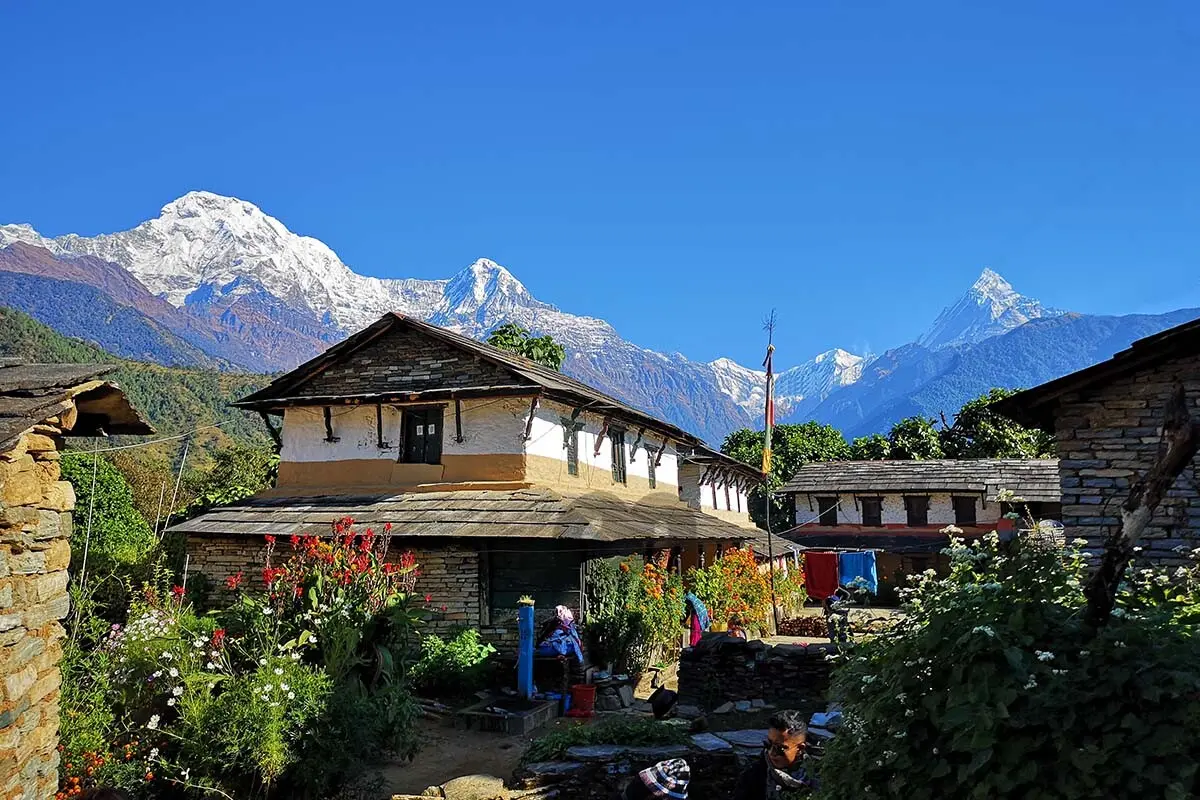
Kathmandu to Kande Private Jeep Hire: Mardi Himal Transfer

Kathmandu to Kande Private Jeep Hire

Kathmandu to Kande Private Jeep Hire: Direct Transfer to the Australian Camp and Mardi Himal Trailhead

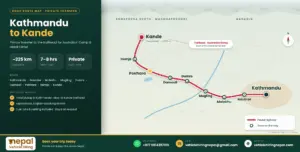
Kande is a small roadside settlement on the Pokhara–Baglung highway at around 1,700 to 1,770 meters, and it is one of the busiest trailheads in the Annapurna foothills. From here, stone steps climb through forest to Australian Camp, Pothana, and Deurali, then on to Forest Camp, High Camp, and Mardi Himal Base Camp.

A Kathmandu-to-Kande private jeep takes you from your Kathmandu hotel straight to the trail start. You don’t have to change vehicles in Pokhara, haul luggage to a bus park, or haggle for a taxi.

This guide explains how the transfer works: the route and drive time, which vehicle to choose, USD price ranges, how to time the trip so you can start walking, and what to expect at Kande. It also covers the return from Dhampus, Phedi, or Siding back to Kathmandu.

At Nepal Vehicle Hiring, we run private jeeps, Mahindra Scorpios, cars, and Toyota Hiace vans to Kande for individual trekkers, families, and trekking agencies.

To book, message us on WhatsApp or email [email protected] with your date and group size, or use our trip planner.

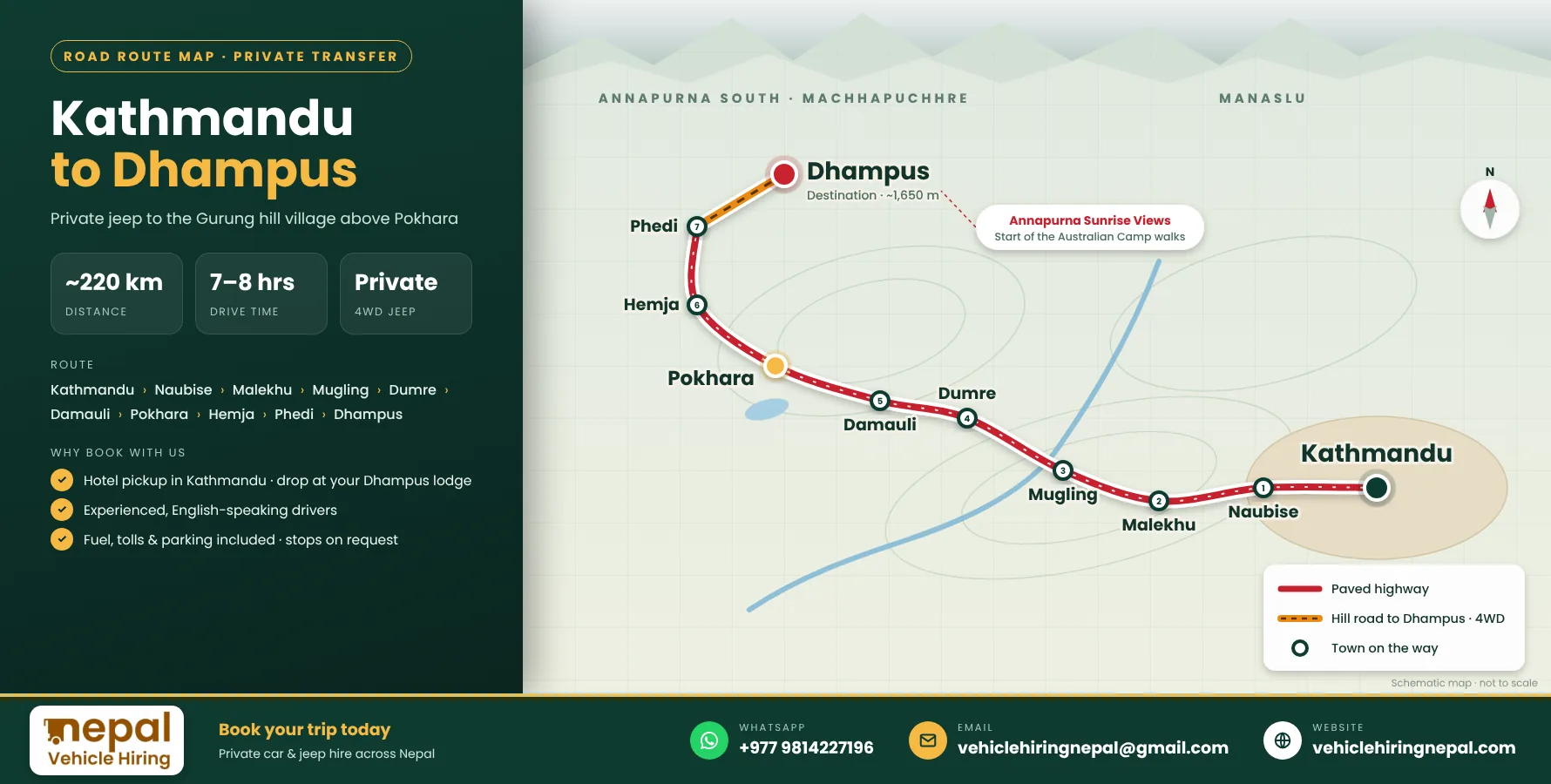
Kathmandu to Kande at a Glance

  • Start: any hotel in the Kathmandu Valley, or Tribhuvan International Airport.
  • End: Kande trailhead on the Pokhara–Baglung highway (around 1,700–1,770 m)
  • Approximate distance: about 220–230 km
  • Route: Kathmandu – Naubise – Malekhu – Mugling – Damauli – Pokhara – Kande
  • Typical drive time: about 7 to 9 hours with short stops
  • Road: paved highway most of the way, with occasional rough patches where widening work is underway
  • Vehicles: private car, Mahindra Scorpio, 4WD jeep, Hiace, Coaster, or bus
  • Private jeep price range: about USD 170–250 one way
  • Treks from Kande: Australian Camp, Dhampus, Pothana and the Mardi Himal trek

Kathmandu to Kande Private Jeep Hire

Why Go Direct From Kathmandu to Kande?

Save Time

Most trekkers travel to Pokhara first, spend a night, then take a Pokhara-to-Kande jeep the next morning. That works well, but if your schedule is tight, a direct Kathmandu-to-Kande transfer can save half a day. Leave Kathmandu early, arrive in Kande in the afternoon, and walk up to Australian Camp that same evening.

No Changes, No Hassle

One vehicle and one driver carry you and your luggage from your hotel door to the trailhead. No switching at the Pokhara Tourist Bus Park and no last-minute taxi search with a heavy pack.

Room for Trekking Gear

Duffels, backpacks, poles,les and sleeping bags fit easily in a jeep or Scorpio. You can drop bags you don’t need on the trek at your Pokhara hotel along the way.

Flexible Stops

Stop to buy snacks and water, pick up your guide in Pokhara, or collect permits on the way. Your driver works to your plan.

Kathmandu to Kande Private Jeep Hire: Mardi Himal Transfer

The Route From Kathmandu to Kande

Kathmandu to Naubise

You leave the Kathmandu Valley heading west through Kalanki. Where small private vehicles are permitted, drivers can now use the new Nagdhunga tunnel, which avoids the old winding pass at the valley rim. Larger vehicles may still use the older road.

The route then descends to Naubise and joins the Prithvi Highway.

Naubise to Mugling

The highway follows the Trishuli River through Gajuri, Malekhu and Kurintar. The gorge is scenic but winding, with heavy truck traffic at times. Malekhu is a popular tea stop, and Mugling, at the confluence of the Trishuli and Marsyangdi, is the usual lunch stop.

Mugling to Pokhara

East of Pokhara, the road passes Dumre and Damauli along the Marsyangdi and Seti valleys. This widened section is one of the smoothest parts of the drive. You reach Pokhara in the early afternoon if you left Kathmandu early.

Pokhara to Kande

From Pokhara, the road turns northwest onto the Pokhara–Baglung highway through Hemja, following the Seti and Yamdhi valleys before climbing to Kande. This last section usually takes 30 to 60 minutes depending on your starting point in Pokhara and traffic. The road is mostly paved, though widening works sometimes create short gravel sections.

Kande itself is a small roadside stop with tea shops and the start of the stone trail.

NOTE: Roads in Nepal change with the season. We check current conditions before every departure. Our Kathmandu to Pokhara road condition guide has more background on the highway.

Kande

Which Vehicle Is Best for Kathmandu to Kande?

Private Car (1–3 Trekkers)

Because the route to Kande is paved for almost the whole way, a private car is a comfortable, economical choice for one to three trekkers with backpacks. It is smooth on the highway and handles the Pokhara–Baglung road in normal conditions.

Mahindra Scorpio (2–5 Trekkers)

The Scorpio offers more space for duffels and poles, higher ground clearance for rough patches, and comfortable seats for the long day. It is our most popular choice for couples and small groups.

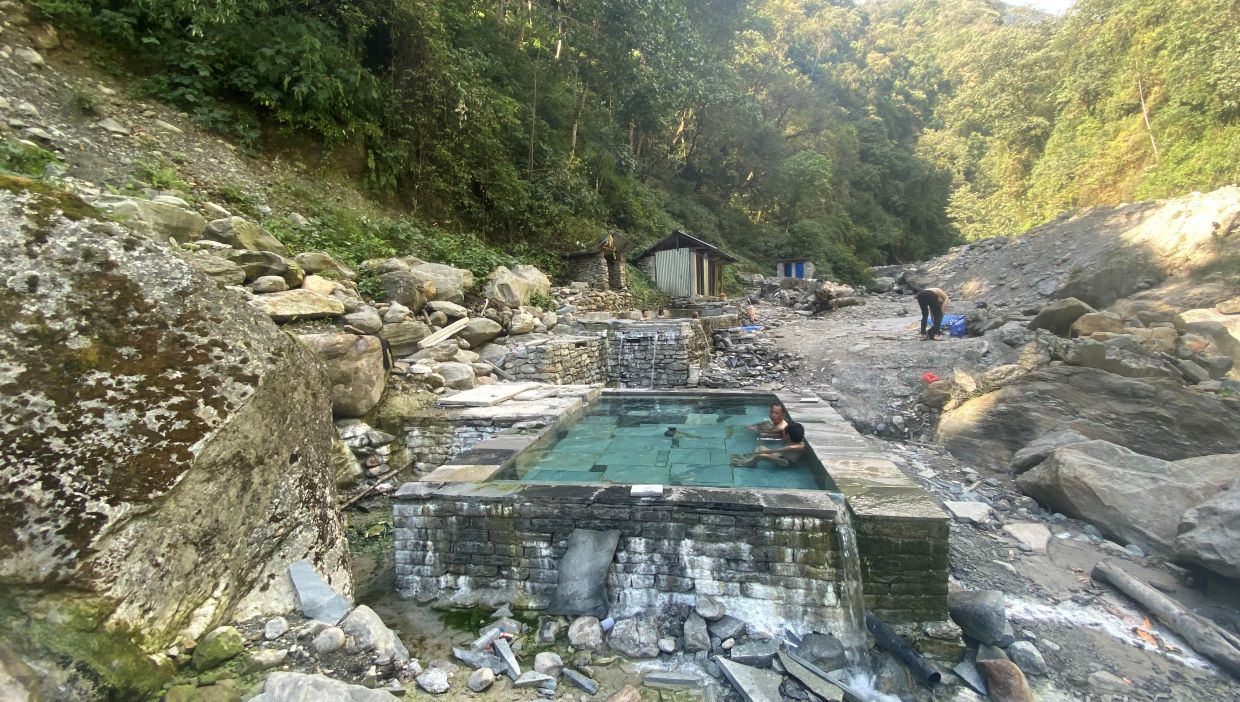
4WD Jeep (Up to 6 Trekkers)

A 4WD jeep carries up to six passengers with bags on the roof rack. It is a good choice in the monsoon, when roads can turn muddy, or if you will also need a vehicle for rougher roads after the trek.
Toyota Hiace (6–12 Trekkers)

For trekking groups, a Toyota Hiace keeps everyone together with guides, porters, and duffels. It is comfortable on the highway and well suited to the paved Kande road.

Coaster and Bus (Large Groups)

School groups, clubs and large trekking parties can travel by coaster bus or tourist bus. We confirm drop-off arrangements at Kande, where roadside space is limited.

Kathmandu to Kande Private Jeep Hire: Mardi Himal Transfer

Kathmandu to Kande Private Jeep Price (USD)

Our prices include a private vehicle, an experienced driver, fuel, driver costs, insurance, road taxes, and parking, plus hotel pick-up in Kathmandu and drop-off at Kande. They cost a little more than the cheapest local offers because we use well-maintained vehicles and experienced highway drivers, and we plan around your trek.

One-Way, Kathmandu to Kande

  • Private car (1–3 passengers): USD 120-200
  • Mahindra Scorpio (1–5 passengers): USD 175–250
  • 4WD jeep (1–6 passengers): USD 180–260
  • Toyota Hiace (6–12 passengers): USD 200–300
  • Coaster bus (15–25 passengers): USD 380–450
  • Tourist bus (26–40 passengers): USD 450–550

Return and Combined Transfers

  • Kathmandu to Kande, then pick-up from Dhampus, Phedi or Siding back to Kathmandu: about double the one-way rate, with a discount for booking both
  • Pick-up at the end of the trek to Pokhara only: see our local Pokhara to Kande and Dhampus to Pokhara rate.
  • Overnight stop with the same vehicle: add about USD 60–85 per extra day

Sharing a jeep or Scorpio with your trekking partners usually brings the per-person cost close to a tourist bus plus taxis, with far more comfort. Get an exact quote for your date on WhatsApp.

Kathmandu to Kande Private Jeep Hire: Mardi Himal Transfer

Timing Your Transfer Around the Trek

The drive from Kathmandu to Kande is long, so plan your first trekking day carefully.

Option 1: Early Start, Walk to Australian Camp

Leave Kathmandu at first light, ht and you can usually reach Kande by mid-afternoon in good conditions. From Kande, the walk to Australian Camp (around 2,060 m) takes roughly 1.5 to 2 hours up stone steps through forest. You’ll arrive in time for sunset over Machhapuchhre and Annapurna South.

This is the most popular plan for direct transfers.

Option 2: Overnight in Pokhara, Start Next Morning

If you prefer a gentler start, or your departure from Kathmandu is later, stay overnight in Pokhara and drive the final 30 to 60 minutes to Kande the following morning. Our driver can drop you in Lakeside and return for you, or book a separate Pokhara to Kande jeep.

Option 3: Arriving the Same Day From the Airport

Landing in Kathmandu and heading straight to the trail is possible, but after a long flight most trekkers benefit from a night’s rest, time to collect permits,s and a chance to meet their guide. An airport pick-up plus a night in Kathmandu, then an early departure for Kande, is a safer and more enjoyable plan.

TIP: Avoid starting the trail in the dark. If traffic delays you and you reach Kande late in the afternoon, consider staying the night in Pokhara or at a guesthouse near Kande and hiking up the next morning.

Treks That Start at Kande

Australian Camp and Dhampus

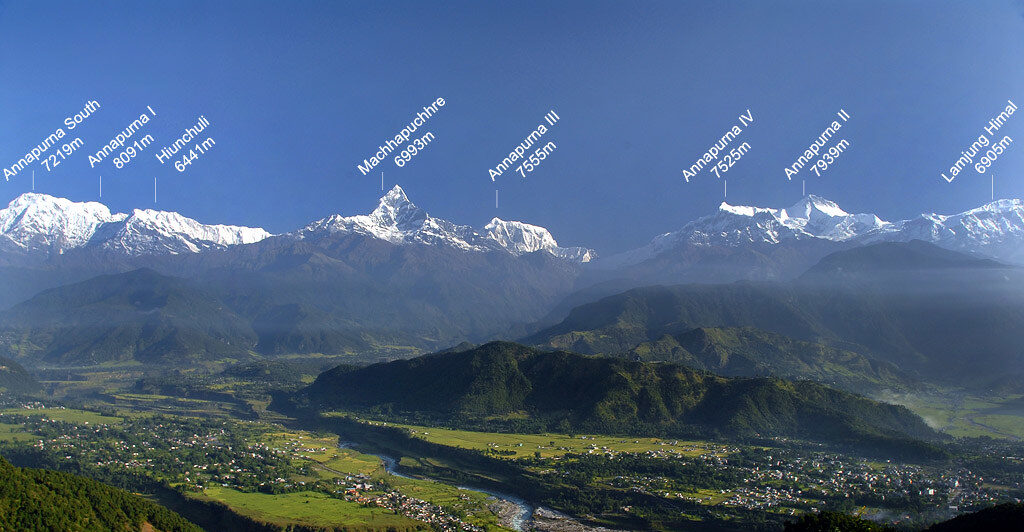
The classic short trek. Climb from Kande to Australian Camp for sunset and sunrise views of Annapurna South, Hiunchuli, Machhapuchhre and Annapurna II, III and IV, then walk down through Pothana to Dhampus and Phedi. It suits families, beginners, rs and anyone short on time.

Our Dhampus to Pokhara jeep service and direct transfers back to Kathmandu cover the return.

Kathmandu to Kande Private Jeep Hire: Mardi Himal Transfer

Mardi Himal Trek

One of the most popular short treks in the Annapurna region. From Kande, the trail climbs past Australian Camp and Pothana to Deurali, then through rhododendron and oak forest to Forest Camp, Low Camp, High Camp and the viewpoint below Mardi Himal Base Camp. Close-up views of Machhapuchhre are the highlight.

Most itineraries take four to six days of walking, finishing at Siding or Lwang, or back through Dhampus.

Longer Annapurna Routes

Kande also connects with trails toward Landruk and Ghandruk, which link to the Annapurna Base Camp trek and the Ghorepani Poon Hill trek. Our sister company Trek Nepal Himalayas runs guided treks on all these routes, while Alpine Luxury Treks offers more comfortable lodge-based trips.

Permits and Trekking Rules

The trails from Kande lie inside the Annapurna Conservation Area, so foreign trekkers need an ACAP permit, available in Kathmandu and Pokhara. The checkpoint on this route is at Pothana, above Australian Camp.

Rules on TIMS cards and licensed guides for foreign trekkers have changed in recent years, and enforcement varies, so confirm current requirements with your trekking agency or with us before departure. If you need to collect permits in Pokhara on the way, tell us and your driver will plan a stop.

Kathmandu to Kande Private Jeep Hire: Mardi Himal Transfer

What to Expect at Kande

Kande is a small roadside settlement, not a place to stay. A few tea shops and small stores sell water and snacks, and the trail begins just above the road. Your driver will drop you at the trailhead and help unload your bags.

Porters and guides often meet trekkers here.

  • Buy water, snacks, and sunscreen in Kathmandu or Pokhara before you arrive, as choice at Kande is limited.
  • Use the toilet at a tea shop before you start the climb
  • Store any non-trekking luggage at your Pokhara hotel on the way
  • Keep your permit handy for the Pothana checkpoint

The Return Trip After Your Trek

Most Kande treks don’t finish at Kande. Australian Camp treks usually end at Dhampus or Phedi, while Mardi Himal treks often finish at Siding, Lwang or Dhampus. We can pick you up at your finishing point and take you to Pokhara or all the way back to Kathmandu.

  • Finish to Pokhara: a short jeep transfer from Dhampus, Phedi, Siding,g or Lwang.
  • Finish to Kathmandu: a direct private jeep, similar in length to the outbound trip.
  • Finish to Kathmandu airport: combine a Dhampus to Pokhara jeep or a direct transfer with our airport drop, and allow a buffer day before international flights

Book both directions together, and we’ll keep the same driver where possible. Use our contact page or WhatsApp.

Kathmandu to Kande Private Jeep Hire: Mardi Himal Transfer

Private Jeep vs Bus vs Flight to Pokhara

Direct Private Jeep or Car

  • Hotel door in Kathmandu to Kande trailhead in one vehicle
  • Departure time to suit you, with stops whenever needed
  • Space for trekking gear, guides, des and porters
  • Option to start walking the same afternoon

Best value for groups of two or more sharing a jeep, Scorpio or Hiace.

Tourist Bus.Plus Taxi

Flight to Pokhara Plus Jeep

  • A short domestic flight, then a transfer to Kande
  • Fastest on paper, but weather delays are common
  • Strict baggage limits on small aircraft
  • Transfers needed at both airports

For most trekkers, a direct private vehicle is the most reliable and stress-free choice, especially with a guide, porters, or a group.

Kathmandu to Kande Private Jeep Hire: Mardi Himal Transfer

A Typical Transfer Day

  • Early morning: your driver arrives at your Kathmandu hotel. Your driver loads your bags and secures them under a cover. For the highway section, see our Kathmandu to Pokhara private car service.
  • First hour: out of the valley before traffic builds, then down to Naubise.
  • Breakfast: a riverside stop near Malekhu.
  • Late morning: along the Trishuli gorge past Kurintar.
  • Lunch: Mugling, with dal bhat or noodles.
  • Early afternoon: through Dumre and Damauli to Pokhara. Quick stops for your guide, permits, cash, or luggage storage.
  • Mid-afternoon: the last 30 to 60 minutes on the Pokhara–Baglung road to Kande.
  • Late afternoon: start walking to Australian Camp for sunset, or stay in Pokhara and begin the next morning.

Australian Camp Trek From Kande

The Australian Camp trek is one of Nepal’s easiest and most rewarding short walks. From Kande, the trail climbs about 350 meters up a stone staircase through forest, taking roughly 1.5 to 2 hours to reach Australian Camp at around 2,060 meters.

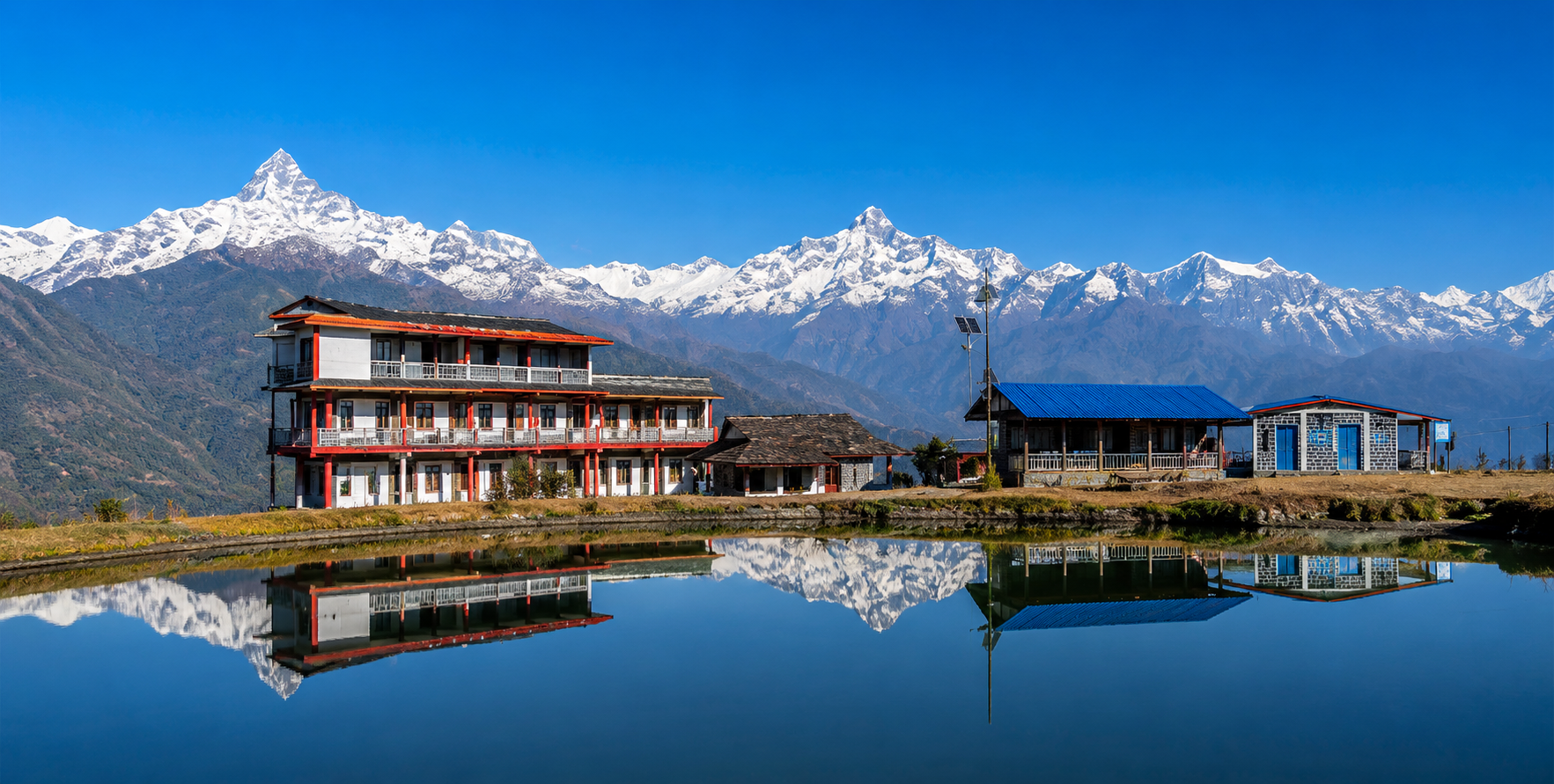
The grassy meadow faces the Annapurna range head-on, with Annapurna South, Hiunchuli, Machhapuchhre and Annapurna II, III and IV lined up across the horizon. On clear days, Lamjung Himal and even Manaslu can appear to the east.

After sunrise, many trekkers walk a short way to Pothana, then descend gently through forest and terraces to the Gurung village of Dhampus and on to Phedi on the highway. The whole loop works well over one or two days and suits families, beginners, and anyone with limited time.

Our drivers can pick you up in Dhampus or Phedi for the return to Pokhara or Kathmandu. See our Dhampus to Pokhara and Pokhara to Dhampus services.

Kathmandu to Kande Private Jeep Hire: Mardi Himal Transfer

Mardi Himal Trek From Kande

The Mardi Himal trek has become one of the favorite short treks in the Annapurna region, thanks to its quiet forest trails and spectacular close views of Machhapuchhre. Kande is one of its most common starting points.

  • Kande to Australian Camp or Pothana: a short climb on the first afternoon or morning
  • To Deurali and Forest Camp (around 2,500 m): through rhododendron and oak forest
  • To Low Camp (around 2,970 m): the first big views of Machhapuchhre
  • To High Camp (around 3,500–3,600 m): above the tree line on a narrow ridge
  • Viewpoint or Base Camp (around 4,500 m): an early-morning climb for the panorama
  • Descent: usually to Siding or Lwang, or back via Low Camp and Dhampus

Most itineraries take four to six walking days. Altitudes above 3,000 meters call for a steady pace and good hydration. Our sister company, Trek Nepal Himalayas, runs guided treks in the region, and we handle all road transport at both ends.

For other routes in the area, see the Annapurna Base Camp trek and the Ghorepani Poon Hill trek.

Kathmandu to Kande Private Jeep Hire: Mardi Himal Transfer

Stops in Pokhara on the Way

Pokhara comes late on the route, just 30 to 60 minutes before Kande, so it’s the ideal place for practical stops:

  • Meet your guide or porters at an agreed point in Lakeside
  • Collect ACAP permits if you haven’t already
  • Visit an ATM for trek cash, as there are no ATMs on the trail
  • Store spare luggage at your Pokhara hotel
  • Rent or buy gear in Lakeside’s trekking shops
  • Buy snacks and water for the first day

Tell us your stops when you book so we can plan the timing. Short stops are included in the price. If you want a full day in Pokhara, add a Pokhara car hire day or a Sarangkot sunrise before the trek.

Trekking Agencies and Group Transfers

We regularly provide transport for trekking agencies taking groups from Kathmandu to Kande, including guides, porters, and duffels.

Agencies can book through our contact page or WhatsApp, with USD invoicing for repeat clients. We also cover other trailheads, including Nayapul, Besisahar and Manaslu trek starts.

Food and Drink Along the Way

The long drive from Kathmandu to Kande passes plenty of places to eat. Breakfast stops near Malekhu serve tea, eggs, toast,t and fried river fish. At Mugling, restaurants offer dal bhat, the classic Nepali meal of rice, lentil soup, vegetable curry,ry and pickles, which is filling fuel for a trek.

Noodles, momos and fried rice are also widely available. In Pokhara, Lakeside cafés serve everything from espresso to pasta if you want a final familiar meal before the trail.

At Kande, choices are limited to small tea shops, so stock up on snacks, chocolate,e and water in Kathmandu or Pokhara. On the trail, lodges at Australian Camp and higher camps serve hot meals, but prices rise with altitude, so carry enough cash. Your driver can recommend reliable, clean places to stop along the highway.

Kathmandu to Kande Private Jeep Hire: Mardi Himal Transfer

Highway Stops Between Kathmandu and Pokhara

Malekhu

About two hours from Kathmandu, Malekhu is known for fried river fish and riverside restaurants. It’s a good place to stop for breakfast and tea.

Kurintar

Riverside resorts with gardens and the Manakamana cable car station. It’s a pleasant place to stretch your legs, though the cable car adds a couple of hours if you take it.

Mugling

The halfway town at the meeting of the Trishuli and Marsyangdi rivers, with plenty of restaurants. It’s the classic lunch stop.

Dumre and Damauli

Tea and fuel stops in the last part of the highway before Pokhara. Dumre is also the turn-off for Bandipur and the road to Besisahar.

For more ideas along the highway, see our Kathmandu to Pokhara road trip guide.

Kathmandu to Kande Private Jeep Hire: Mardi Himal Transfer

Best Season for Kande Treks and Transfers

Autumn

Clear skies, dry roads and the sharpest mountain views make autumn the most popular season for Australian Camp and Mardi Himal. Book your vehicle well ahead, as trekking traffic peaks.

Spring

Rhododendron forests bloom along the trail above Kande, and the weather is warm. Afternoon haze can soften the views, so go early for photos.

Winter

Cold, clear mornings and quiet trails. High Camp can see snow, so pack warm layers and check conditions before going high. Roads are usually dry.

Monsoon

Rain, landslides and clouds make trekking harder, and landslides can delay traffic on the highway. A sturdy jeep or Scorpio and flexible plans are a good idea.

Safety on the Road

  • Experienced highway drivers who know the Prithvi Highway and the Pokhara–Baglung road
  • Serviced vehicles with tires, brakes, and working seat belts
  • Daylight driving wherever possible on winding sections
  • Rest breaks on the long drive so the driver stays alert
  • Road checks before departure, especially in the monsoon
  • Insured, licensed vehicles under our company name

We would always rather you reach Kande a little later and safely. If timing gets tight, we’ll suggest a night in Pokhara instead of starting the trail in the dark.

What Is Included

Included

  • Private vehicle and experienced driver
  • Fuel, driver’s wage and meals
  • Insurance, road taxes and parking
  • Pick-up in Kathmandu and drop-off at Kande
  • Short stops for meals, tea, permits, ATMs and luggage storage
  • Cover for luggage on the roof rack

Not Included

  • Your meals and drinks
  • ACAP permits and trekking fees
  • Guide and porter services (available through our trekking partners)
  • Accommodation on overnight options
  • Tips for the driver (optional)

Packing for the Transfer and First Trek Day

  • Daypack with water, snacks, sunscreen, a warm layer and a rain jacket
  • Passport, ACAP permit and copies
  • Nepali cash for the trek, as there are no ATMs on the trail
  • Headlamp in case you reach Australian Camp around dusk
  • Trekking poles for the stone steps above Kande
  • Motion sickness tablets for the winding highway
  • Soft duffels for the roof rack, with valuables kept inside
  • Phone, charger and power bank

Kathmandu to Kande Private Jeep Hire: Mardi Himal Transfer

Before You Leave Kathmandu

If you have a day in Kathmandu before heading to Kande, use it to prepare and to explore:

  • Collect permits and meet your trekking agency
  • Buy or rent gear in Thamel
  • Visit Boudhanath, Swayambhunath or Pashupatinath on a Kathmandu sightseeing tour
  • Explore the medieval squares of Bhaktapur
  • Watch a Himalayan sunrise from Nagarkot

Arriving in Nepal first? Book an airport pick-up, and we’ll handle the whole journey from your arrival to the trailhead.

If weather or traffic causes delays, traffic jams, road works or, in the monsoon, landslides can slow the Prithvi Highway. If your journey is delayed, your driver will keep you informed, and our office will help you adjust the plan. That could mean starting the trek the next morning, staying overnight in Pokhara or near Kande, or shortening the first day’s walk. We never push drivers to make up time on winding roads. Stay in touch on WhatsApp throughout the day.

Plan More Adventures in Nepal

After your Kande trek, there’s much more to explore. We provide transport for:

Browse our Nepal tour packages or start planning with our trip planner.

Kathmandu to Ulleri Jeep

Kande, Phedi, Dhampus or Siding: Choosing Your Trailhead

These roadheads give access to the Australian Camp and Mardi Himal area. Knowing the differences helps you plan both the trek and the transport.

Kande

The highest of the main highway trailheads, at around 1,700–1,77meterses. It offers the shortest climb to Australian Camp and is the most popular start for both Australian Camp and Mardi Himal. It is easy to reach on a paved road from Pokhara.

Phedi

Lower down the Pokhara–Baglung road, at around 1,130 meters. A steep stone staircase leads up to Dhampus in roughly two to three hours. Phedi is often used as the finishing point of the Australian Camp loop.

Dhampus

A Gurung village at around 1,650 meters, reachable by a rough jeep track from Hemja. Some trekkers drive up to Dhampus to shorten the first day, then walk to Pothana and Deurali. OurPokhara-to-Dhampuss jeep covers this option.

Siding and Lwang

Villages on the eastern side of the Mardi Khola, used mainly as finishing points for the Mardi Himal trek. Rougher rural roads reach them, so a 4WD jeep is the right vehicle for pick-ups.

Not sure which suits your plans? Please tell us your trek route, and we’ll recommend the best drop-off and pick-up points.

Kathmandu to Kande Private Jeep Hire: Mardi Himal Transfer

Altitude and Acclimatization on the Mardi Himal Trek

Kande itself is at a comfortable altitude, and Australian Camp, around 2,060 meters, is fine for most healthy walkers. The Mardi Himal trek, however, climbs well above 3,000 meters to High Camp, and the viewpoint near Base Camp is around 4,500 meters. Because the trek gains height quickly, listen to your body.

  • Walk at a steady, comfortable pace.
  • Drink plenty of water throughout the day
  • Avoid alcohol at higher camps
  • Know the signs of altitude sickness: headache, nausea, dizziness, and unusual tiredness.
  • Descend if symptoms get worse.

A direct jeep from Kathmandu to Kande doesn’t add altitude risk, as you reach only about 1,700 meters on the first day. It simply gets you to the start of the trail faster.

Leaving Kathmandu Smoothly

The first hour is often the slowest. Kalanki, on the western edge of the city, can be congested from mid-morning onward, and traffic sometimes queues on the climb out of the valley. Leaving early is the best way to avoid delays.

Where small private vehicles are permitted, the new Nagdhunga tunnel offers a smoother way out of the valley than the old winding pass. Our drivers check traffic on the morning of departure and choose the best route from your hotel, whether you’re staying in Thamel, Lazimpat, Boudha, Patan or Bhaktapur.

Australian Camp With Children

The Kande to Australian Camp walk is one of the best family hikes near Pokhara. The climb is short, the trail is well defined, and the reward is a huge mountain panorama from a grassy meadow where children can play. Several lodges at Australian Camp offer simple rooms and family-friendly meals.

For families, a Mahindra Scorpio or Hiace makes the long drive from Kathmandu more comfortable, and we can provide child seats on request. Break the journey with plenty of stops, and consider spending a night in Pokhara before the hike so children start fresh.

Guides and Porters

Hiring a licensed guide makes trekking safer and more enjoyable, and conservation-area rules now require one for foreign trekkers. A porter takes the weight of your main bag so you can enjoy the climb from Kande with just a daypack.

Our sister companies, Trek Nepal Himalayas and Alpine Luxury Treks, can arrange experienced guides and porters for Australian Camp, Mardi Himal, and other Annapurna routes. We can pick up your guide in Kathmandu or Pokhara on the way to Kande, at no extra charge.

Your Driver

On a seven-to-nine-hour drive, your driver matters. We choose our drivers for their experience on the Prithvi Highway and the Pokhara–Baglung road, their calm driving, and their knowledge of good stops along the way.

  • Licensed and experienced on long highway routes
  • Basic English for directions and help
  • Knowledge of clean, reliable food stops
  • No reckless overtaking or racing
  • Help with luggage at both ends

Why Our Prices Are a Little Higher

You may find cheaper offers for Kathmandu to Kande. Our rates are slightly higher because they include reliable, well-maintained vehicles, experienced drivers, all-inclusive pricing, and planning around your trek, so you reach Kande with daylight to walk. An office team also supports you throughout the day.

For most trekkers, that reliability is worth the small difference.

Questions to Ask Before You Book

  • Is the price all-inclusive, with fuel, driver costs, and parking?
  • What time will we leave, and will we reach Kande in daylight?
  • Can we stop in Pokhara for permits, cash,h or our guide?
  • Is the vehicle suitable for our group size and luggage?
  • Can you also arrange our pick-up at the end of the trek?
  • Who do we contact if there’s a delay?

We’re happy to answer all of these before you confirm. Ask on WhatsApp or email.

Key Takeaways

  • Kathmandu to Kande is about 220–230 km and usually takes 9 hours.
  • The route is paved almost all the way, so a car, Scorpio,  jeep, EP, or Hiace all work.
  • A private jeep costs about USD 170–215 one way; a private car costs about USD 140–175.
  • Leave early to walk up to Australian Camp the same afternoon, or stay overnight in Pokhara.
  • Pokhara is a handy stop for permits, cash, guides, des and luggage storage.
  • Book your end-of-trek pick-up from Dhampus, Phedi, Siding or Lwang at the same time.

Kande and Australian Camp for Photographers

Photographers love the Kande area for its easy access to big mountain views. From Australian Camp, the whole Annapurna range spreads across the northern horizon, with Machhapuchhre’s fishtail summit rising directly ahead.

Sunrise is the classic shot, when the first light turns the snow peaks pink and gold while the valleys below are still in shadow. Sunset can be just as dramatic, especially after an afternoon shower clears the air.

A direct transfer from Kathmandu lets you reach Australian Camp the same evening and catch both sunset and the following sunrise. Carry a tripod for low-light shots and spare batteries, as cold mornings drain them quickly. Pack your camera gear in a padded daypack rather than on the roof rack.

Further up the Mardi Himal trail, High Camp and the viewpoint near Base Camp offer close-up views of Machhapuchhre that few other short treks can match.

School, College and Club Trips

The short walk from Kande to Australian Camp is popular with school groups, colleges, hiking clubs and company outings. It’s a manageable climb with a big reward at the top, and the lodges at Australian Camp can host groups.

We provide Hiace or Coaster buses from Kathmandu to Kande for groups of all sizes, with a coordinator to manage timings. Many groups stay overnight at Australian Camp, walk down to Dhampus and Phedi the next day, and meet our vehicle there for the return to Pokhara or Kathmandu. Contact us early through our contact page so we can reserve vehicles, especially in autumn and spring.

Festivals and Busy Travel Periods

During major festivals such as Dashain and Tihar, many Nepalis travel home, and the Prithvi Highway becomes much busier. Tourist buses fill up, vehicles book out early, and journeys can take longer. If your trek falls during a festival period, book your Kande transfer well in advance and allow extra time on the road.

The upside is a chance to see villages decorated for celebrations, with twilight, lights, and family gatherings along the way.

What Our Guests Value Most

Trekkers who travel with us from Kathmandu to Kande often mention the same things: a driver who arrived early and helped load their gear, sensible stops for food and tea, quick stops in Pokhara for permits and cash, and reaching Kande with time to walk to Australian Camp before sunset. Many also appreciate knowing their end-of-trek pick-up is already arranged, so they can relax and enjoy the trail.

A Simple Checklist Before Departure

  • Confirm your pick-up time and address with our office the evening before
  • Pack the night before and keep your daypack separate
  • Check that you have your passport, permits and enough cash
  • Share your guide’s phone number with the driver if you’re meeting in Pokhara
  • Charge your phone and power bank

Our Promise

Your vehicle will arrive on time and in good condition, with a driver who knows the route. We will plan your departure so you reach Kande in daylight to walk, keep in touch throughout the day, and be ready to collect you at the end of your trek. We aim to make the road part of your adventure, not something to worry about.

Monsoon Transfers: Extra Advice

The monsoon turns the Annapurna foothills lush and green, but it also makes travel less predictable. If you’re heading to Kande in the rainy season:

  • Leave early: rain and clouds often build in the afternoon
  • Allow extra time: landslides in the Trishuli gorge can cause long delays
  • Choose a sturdy vehicle: a Scorpio or 4WD jeep copes better with muddy road sections
  • Plan a flexible first day: be ready to stay in Pokhara if you arrive late
  • Pack for leeches: salt, repellent and long socks help on forest trails
  • Keep electronics dry: use dry bags inside your pack

Our team closely monitors road reports in the monsoon and will contact you the evening before if conditions change.

Traveling Solo to Kande

For solo trekkers, a private car from Kathmandu to Kande costs more than a tourist bus and taxi, but it saves a vehicle change and lets you start walking the same day. If you’re on a tight budget, take the tourist bus to Pokhara and a short jeep to Kande the next morning.

Many solo trekkers also share a vehicle with others starting the same trek. Ask us, and we’ll help you find the best option.

The Trail Above Kande

The first steps from Kande climb through terraced fields and small farms before entering cool forest. Stone steps make the path easy to follow, and tea shops along the way offer welcome breaks. As you gain height, glimpses of the Annapurna range appear through the trees, and the trail opens onto the meadow at Australian Camp.

Beyond Australian Camp, the path continues to Pothana, where the ACAP checkpoint sits, then on to Deurali, where the Mardi Himal route branches north into the forest. From Deurali, other trails lead west toward Tolka, Landruk and Ghandruk, linking with longer Annapurna treks. This network of paths is part of what makes Kande such a useful starting point.

After the Trek: Back to Pokhara and Kathmandu

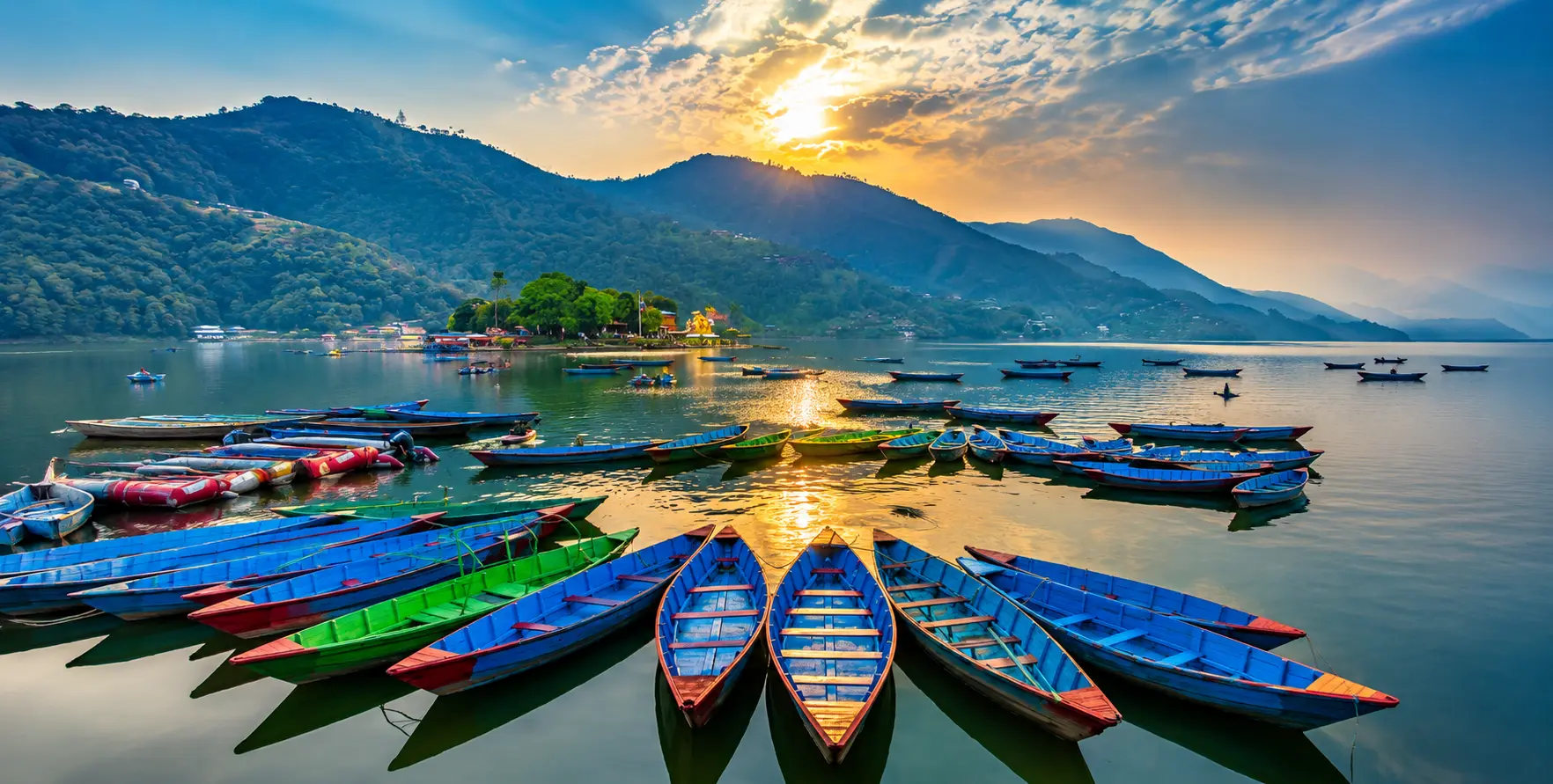
After your trek, a few days in Pokhara are a great way to recover. Relax by Phewa Lake, take a boat to the Tal Barahi Temple, visit the World Peace Pagoda, or catch a Sarangkot sunrise. Our Pokhara car hire service makes sightseeing easy.

When you’re ready to return, we offer private transfers from Pokhara to Kathmandu or direct from your trek finishing point. If you have an international flight, plan to reach Kathmandu at least a day before. Our airport transfer service then gets you to Tribhuvan International Airport with plenty of time.

Responsible Trekking From Kande

  • Carry a refillable bottle and use purified water at lodges
  • Pack out plastic and batteries
  • Stay on marked trails to protect forest and farmland
  • Respect local customs and ask before photographing people
  • Support local lodges, tea shops and guides
  • Keep noise down at viewpoints at sunrise and sunset

Small choices help keep the Annapurna foothills beautiful for the communities who live there and for future trekkers.

Planning the Return From Phedi or Dhampus to Kathmandu

Many Australian Camp treks finish at Phedi or Dhampus after just one or two days. If you need to return to Kathmandu straight away, we can collect you at the end of the walk and drive directly back to the capital. Because Phedi sits right on the Pokhara–Baglung road, you can start the return as soon as you come off the trail.

If you finish in the morning, a same-day return to Kathmandu is usually comfortable, arriving in the evening. If you finish in the afternoon, we recommend staying the night in Pokhara and starting early the next day, so you avoid driving the Trishuli gorge after dark. For pick-ups from Dhampus itself, we use a 4WD jeep or Scorpio for the rough track down to Hemja.

Booking both the outbound and return transfers together is the easiest way to plan. We’ll confirm your expected finishing time a day or two before and keep the driver on standby. If your plans change on the trail, such as finishing a day early or late, message us on WhatsApp, and we’ll adjust.

Traveling With Older Trekkers

Australian Camp is a popular choice for older travelers who want a taste of Himalayan trekking without long days or high altitude. A comfortable vehicle makes a big difference on the long drive from Kathmandu. A Mahindra Scorpio or Toyota Hiace offers easier entry and more legroom, and our drivers plan regular stops to stretch and rest.

At Kande, take the climb slowly and use trekking poles on the stone steps. A porter can carry the main bag so you walk with a light daypack. If you prefer an even shorter walk, consider driving up to Dhampus with our Pokhara to Dhampus jeep transfer, then walk the gentler trail to Australian Camp from there.

Why Book Your Kande Transfer With Us

  • Trekking transport specialists in Kathmandu and Pokhara
  • Full fleet: cars, Scorpios, jeeps, Hiace vans, coasters and buses
  • Clear USD pricing, all-inclusive
  • Trek-aware planning, so you reach the trailhead with daylight to walk
  • End-of-trek pick-ups from Dhampus, Phedi, Siding and Lwang
  • 24/7 support on WhatsApp

Explore our trekking transport, car hire in Nepal , nd Nepal tour package pages for more.

How to Book

  • Step 1: Send your date, Kathmandu pick-up address, group size, luggage, nd trek plan via WhatsApp or email.
  • Step 2: We recommend the vehicle and departure time and send a USD quote.
  • Step 3: Confirm with a small advance.
  • Step 4: Receive your driver’s details the day before.
  • Step 5: Start your trek from Kande.

Or use our trip planner and contact page.

Frequently Asked Questions

How long does Kathmandu to Kande take?

Usually about 7 to 9 hours by private vehicle, including short stops. Traffic leaving Kathmandu, road works, and monsoon weather can add time.

How much is a private jeep from Kathmandu to Kande?

About USD 1800–250 one way for a jeep with up to six passengers. A private car costs about USD 1200–200.

Can a normal car reach Kande?

Yes. The route is paved for almost the whole way, so a private car works well in normal conditions.

Can I start trekking on the same day?

Yes, if you leave Kathmandu early. Most trekkers walk the 1.5 to 2 hours up to Australian Camp the same afternoon.

Where does the Mardi Himal trek finish?

Often at Siding, Lwa, Ng, or Dhampus. We can collect you at any of these points.

Do I need a permit?

Yes. Foreign trekkers need an ACAP permit, checked at Pothana. Confirm the current guide and TIMS rules before you go.

Can you pick up our guide in Pokhara on the way?

Yes. Please tell us the pick-up point, a nd we’ll include the stop.

Can you drive us from the airport to Kande?

Yes, though we recommend a night in Kathmandu first. We offer airport pick-ups and the Kande transfer as a package.

Is Kande the same as Phedi?

No. Both are trailheads on the Pokhara–Baglung road. Kande is higher and leads to Australian Camp and Mardi Himal, while Phedi is lower and leads up to Dhampus. Many treks start at Kande and finish at Phedi.

How many bags fit in the vehicle?

A jeep or Scorpio carries bags for its passengers, with extra room on the roof rack. Groups with porters and duffels should choose a Hiace.

Can we book the return from Siding or Lwang?

Yes. Please tell us your expected finish date and point, and we’ll arrange a pick-up to Pokhara or Kathmandu.

Do you provide transport for trekking agencies?

Yes. We regularly transfer agency groups with guides and porters, and we invoice repeat clients in USD.

Book Your Kathmandu to Kande Private Jeep

Start your Australian Camp or Mardi Himal trek the easy way: one private vehicle, one experienced driver, ver and a plan that gets you to the trailhead with time to walk.

WhatsApp

Email: [email protected]

Online: Plan your trip | Contact us | Nepal Vehicle Hiring

Send your date and group size today, and we’ll reply with the right vehicle and a clear USD quote.

From the busy streets of Kathmandu to the quiet stone steps above Kande, this journey takes you from the capital to the heart of the Annapurna foothills in a single day. With a reliable vehicle, an experienced drive,r and a plan built around your trek, you can save your energy for the trail and the views waiting at Australian Camp and beyond. We look forward to starting your adventure with you.

Kathmandu to Jhinu Danda Jeep Rental: Complete Guide

Kathmandu to Jhinu Danda jeep rental

Kathmandu to Jhinu Danda Jeep Rental— Quick Reference

Total distance: about 260 km — roughly 200 km from Kathmandu to Pokhara, then about 50 to 60 km of hill road
Driving time: about 9 to 11 hours in total; most travelers split it with a night in Pokhara
Vehicle: jeep (Scorpio or Bolero 4WD) for the hill road; a car is fine for the highway section
Road end: the drivable road stops close to Jhinu Danda, with a short walk to the village
Hot springs: a downhill walk of roughly 30 to 40 minutes from the village to the river
Permits: Annapurna Conservation Area permit and TIMS card are normally required.
Indicative jeep price, Kathmandu to the Jhinu Danda road end: about USD 190 to USD 250 one way
Book: Nepal Vehicle Hiring Pvt. Ltd. | WhatsApp | [email protected]

Introduction: A Village, a River and the Best Hot Soak in the Annapurna

Jhinu Danda is a small hillside village in the Annapurna Conservation Area, famous for one simple pleasure: natural hot springs beside a mountain river. Trekkers on the Annapurna Base Camp route reach it after days of climbing and sink gratefully into the warm pools below the village.

But you do not have to trek for a week to enjoy it. With a well-planned Kathmandu to Jhinu Danda jeep rental, you can travel from the capital to the edge of the Annapurna foothills in one comfortable journey, walk a short trail to the hot springs, and return to Pokhara or Kathmandu with mountain air still in your lungs.

This guide is written for travelers who want to do it properly. It explains where Jhinu Danda is, how the route from Kathmandu really works, why a jeep is the right vehicle, what the road end looks like, how long the journey takes, how to split it sensibly, which permits you need, when to go, and what to pack.

It also shows how our team at Nepal Vehicle Hiring Pvt. Ltd. can arrange the whole journey, with a car for the highway, a Scorpio or Bolero jeep for the hill road, and a Hiace van or Coaster bus for larger groups. Prices are given in US dollars as realistic ranges.

Everything is written to stay useful for years, so confirm the final figure when you book.

A note on spelling: you will see the village written as Jhinu Danda, Jhinudanda, Jhinu Dada, nd sometimes Jhino Danda. They all mean the same place. If you would like us to build a plan around your dates, message us on WhatsApp or write to [email protected].

Kathmandu to Jhinu Danda jeep rental

Where Is Jhinu Danda and Why Do People Go?

Location, Altitude and Setting

Jhinu Danda sits in the Kaski District of the Annapurna region, perched on a ridge above the Modi Khola River at roughly 1,780 meters above sea level. The hot springs themselves lie lower, beside the river at about 1,550 meters, which is why the visit involves a walk down to the water and a climb back up.

Terraced fields, bamboo and rhododendron forest, and stone-roofed Gurung houses surround the village, and on clear days the great peaks of the Annapurna Sanctuary — Annapurna South, Hiunchuli and the unmistakable fishtail of Machhapuchhre — rise above the valley ahead.

The village is a natural gateway to the Annapurna Base Camp trail. Trekkers pass through on their way to Chhomrong and the sanctuary, and on their way back down they linger here because the springs and the lodges are so welcoming.

Yet Jhinu Danda is also perfectly suited to a gentle, short trip from Pokhara for people who don’t plan to walk to Base Camp. A drive, a short trail, and a soak make a satisfying half-day or overnight excursion.

The Hot Springs: What to Expect

The hot springs are natural, fed by warm water emerging from the hillside beside the river, and channeled into stone-lined pools. Locals and trekkers value the water for relieving tired muscles, and many people describe it as the highlight of the Annapurna Base Camp route.

However, it is best understood as a simple, restful soak rather than a medical treatment. The pools usually charge a small entry fee, and basic changing areas are available. The setting — warm water, cool mountain air, the sound of the river and forest all around — is what makes it memorable.

The walk from the village to the springs takes roughly thirty to forty minutes, mostly downhill on stone steps and forest trail, and the return is correspondingly uphill. Visit in the morning or late afternoon for fewer crowds and softer light.

During the monsoon, high river levels or temporary closures can affect the springs, which is one reason the dry seasons are preferred. Bring swimwear, a towel, and a dry set of clothes, and keep your valuables in the lodge or with a trusted companion.

Other Things to Enjoy Around Jhinu Danda

Jhinu Danda also makes a good base for short walks. The trail to Chhomrong, the largest village on the route and a superb viewpoint for the sanctuary peaks, is a rewarding morning climb for those with energy.

Landruk and Ghandruk, two large Gurung villages with stone paths, tea houses and a strong cultural identity, are within reach for travelers who want to extend their stay. Ghandruk in particular has a small museum and a long tradition of welcoming visitors, and our jeep transfers make it an easy addition.

For a gentler, less strenuous trip, relax at the lodge, enjoy a Gurung-style meal, and watch the light change on the peaks.

Kathmandu to Jhinu Danda Jeep Rental: Complete Guide

The Route: Kathmandu to Jhinu Danda in Two Legs

Leg One: Kathmandu to Pokhara on the Prithvi Highway

The first and longer leg is the drive from Kathmandu to Pokhara, about 200 kilometers on the Prithvi Highway, which usually takes five to seven hours depending on traffic and stops. The road leaves the Kathmandu Valley at Naubise, follows the Trishuli River gorge, passes the famous roadside curd restaurants at Mugling, and climbs through Dumre before the final run to Pokhara.

This is one of Nepal’s most scenic highways, with river canyons, terraced hillsides, and long views of snow peaks as you approach the lake city. A car is entirely comfortable on this leg, and a jeep is equally good if you prefer height and space.

Our Kathmandu to Pokhara private transfers cover this section in cars, jeeps, Hiace vans, and Coaster buses.

Leg Two: Pokhara to the Jhinu Danda Road End

The second leg runs from Pokhara toward the Annapurna foothills, about 50 to 60 kilometers of increasingly rural road. From Pokhara, the route follows the Baglung highway toward the Nayapul area, then continues on hill roads along the Modi Khola valley system to the villages where the Jhinu Danda trail begins.

The closest practical road points to the village are in the Simrung and Mithu Danda area, from which Jhinu Danda is a short walk, commonly described as around twenty minutes to an hour depending on the exact starting point and your pace. Road conditions on this leg vary by season and by repair work, which is exactly why a four-wheel-drive jeep is the right choice.

A realistic driving time for this leg is about three to four hours, because the hill road is narrow and winding, with sections where the surface is rough. The scenery is a reward in itself: terraced fields, bamboo groves, waterfalls after the rains, and glimpses of the high peaks ahead.

Our driver will take you to the closest practical road point and tell you the walking time to the village, so you never have to guess about the last stretch. If you want to see the rest of the Pokhara region too, our car hire in Pokhara service covers sightseeing before or after your Jhinu Danda trip.

How Far Is It, Really?

The total distance from Kathmandu to the Jhinu Danda road end is about 260 kilometers. That sounds modest, but the combination of a long highway day and a winding hill road means the real driving time is nine to eleven hours without long stops.

That’s a tiring single day, and you will arrive late in the afternoon with little daylight left for the walk and the springs. This is why we recommend splitting the journey, which the next section explains.

Jhinu dada

Why a Jeep Is the Right Vehicle for Jhinu Danda

Road Character and Seasonal Surprises

The hill road to the Jhinu Danda area is not a highway. It is a narrow, steep, and sometimes rough rural road that monsoon rain, small landslides, and repair work regularly affect. Some sections are surfaced, others are gravel or earth, and a few are rocky enough that ordinary cars struggle or cannot proceed.

Local travel guides describe the road near Jhinu Danda as seasonal in places, which means conditions can change from one month to the next. A four-wheel-drive jeep, a Scorpio, or a Bolero handles this kind of road far better, with the ground clearance, traction, and engine torque rural hill roads demand.

The jeep also gives you a higher seating position, a more comfortable ride on rough surfaces, es and enough luggage space for trekking bags. For a couple or a family of four or five, a jeep is the sweet spot between comfort and cost.

It is also the vehicle our drivers know best for the Annapurna foothill roads, because they drive them regularly. If you are curious about how a jeep compares with public transport on mountain roads, our jeep versus bus guide for Syabrubesi explains the same principle on another famous route.

When a Car Is Enough and When It Is Not

A car is perfectly good for the Kathmandu to Pokhara highway leg. It is not the right choice for the final hill road toward Jhinu Danda, particularly in the monsoon or shortly after heavy rain.

Travelers therefore take a car from Kathmandu to Pokhara and switch to a jeep for the Pokhara to Jhinu Danda leg, or use a jeep for the entire journey so there is no vehicle or luggage transfer. Both options work, and we can arrange either.

A jeep for the whole route costs somewhat more than a car for the highway, but it removes a transfer and keeps your party together.

Hiace Vans and Coaster Buses for Groups

Larger groups need a different approach. A Hiace van carrying up to fourteen passengers and a Coaster bus carrying fifteen to twenty-two are excellent on the Kathmandu to Pokhara highway. Still, they are not suited to the rough hill road toward Jhinu Danda.

For groups, the best solution is to use a Hiace or Coaster for the highway leg to Pokhara, then transfer to several jeeps for the final hill road, with each jeep carrying four or five people. We coordinate the vehicles and the timing so that the whole group moves together, and we can use the same arrangement on the way back. Our group transport service handles this kind of mixed-vehicle plan regularly.

Kathmandu to Jhinu Danda jeep rental

How to Split the Journey: Three Sensible Plans

For most travelers, the best plan is to drive from Kathmandu to Pokhara on the first day, spend the evening and night by the lake, and make the Jhinu Danda trip the following morning. The Kathmandu to Pokhara drive leaves at around 7:00 AM, stops for a relaxed lunch near Mugling or Dumre, and arrives in Pokhara by mid-afternoon, leaving time for a lakeside stroll or a visit to the World Peace Pagoda.

The next morning, the jeep leaves early, reaches the road end by late morning, and gives you the whole day for the walk, the hot springs, lunch in the village, and the return drive. This plan keeps every day comfortable, avoids rushing the hot springs, and gives you a proper night’s rest.

Plan B: One Long Day or an Overnight at Jhinu Danda

If you want to reach the village by dark, you can leave Kathmandu at dawn and drive straight through, arriving at the road end in the late afternoon and walking up to a lodge for the night. This works well for travelers with limited time and a high tolerance for long drives, but the day is demanding, and you will have little time to enjoy the journey.

Alternatively, spend the first night in Pokhara and the second night at a lodge in Jhinu Danda itself, which allows an evening and a morning at the springs and lets you enjoy the village at its quietest. Our jeep rental team can arrange a one-way transfer to the road end and a pickup two days later, so you can walk and relax without worrying about the driver.

Plan C: Fly to Pokhara and Use the Jeep for the Hill Road

Some travelers prefer to fly between Kathmandu and Pokhara, which takes about half an hour, and use a jeep only for the final hill road. This saves a day of driving and is ideal for travelers who want Thaple scenery without the long highway journey.

We arrange airport pickup in Pokhara, the jeep for Jhinu Danda, and the return to the lake or the airport, and we can add Pokhara sightseeing with our Pokhara car hire. If you choose this plan, please share your flight time so the driver can wait at the right place.

Day One: Kathmandu to Pokhara

Your driver will pick you up from your Kathmandu hotel around 7:00 AM. The vehicle leaves the valley at Naubise, follows the Trishuli River through its gorge, and reaches Mugling around mid-morning, where a short stop for the famous thick buffalo curd is a tradition.

Lunch is usually taken near Dumre or on the road to Pokhara, and the afternoon drive climbs gently through the Seti River valley to the lake city. If you would like to break the journey with a heritage stop, the historic hill town of Bandipur is a short detour from the highway, and our Kathmandu to Bandipur heritage day trip shows how rewarding it can be.

Arrive in Pokhara by about 3:00 PM and settle into your lakeside hotel.

Day Two: Pokhara to Jhinu Danda and the Hot Springs

An early start is best. The jeep leaves Pokhara around 7:00 AM, follows the Baglung highway toward Nayapul, then turns onto the hill roads of the Modi Khola valley system. After about three to four hours of winding roads, you reach the nearest practical road point.

From there, a short uphill walk leads to Jhinu Danda village, where you can check in, enjoy lunch, and then walk down to the hot springs in the afternoon. A relaxed soak of an hour or two, followed by the climb back up and an evening meal, makes a perfect day.

If you are returning the same day, plan to leave the springs by about 2:30 PM to reach Pokhara before dark.

Day Three: Return to Pokhara or Kathmandu

If you stayed overnight in the village, enjoy a quiet morning, perhaps walking up toward Chhomrong for the mountain views, before descending to the road end where the jeep is waiting. The return to Pokhara takes about three to four hours, after which you can continue to Kathmandu by road or fly.

Our drivers coordinate timings by WhatsApp so the vehicle is at the road end when you arrive, whether your walk takes a little longer or shorter than planned.

Kathmandu to Jhinu Danda jeep rental

Permits and Documents for Jhinu Danda

Annapurna Conservation Area Permit and TIMS Card

Jhinu Danda lies within the Annapurna Conservation Area, so visitors normally need an Annapurna Conservation Area permit and a TIMS card, which is the Trekkers’ Information Management System registration. The permit fees are modest and support conservation and community projects in the area.

The Nepal Tourism Board and the conservation authority publish the current rates, so confirm the latest figures when you collect them. You can get permits at the Nepal Tourism Board offices in Kathmandu and Pokhara, and some checkpoints in the area also check them.

Carry your passport, a couple of passport-sized photographs, and the permit receipts.

You don’t need to arrange permits through a trekking agency for a simple trip to Jhinu Danda, although many travelers prefer to have their hotel or guide handle the paperwork. Our team can advise where to collect the permits and how much time to allow, and our drivers know the checkpoint locations so you are prepared.

If you plan to continue from Jhinu Danda toward Annapurna Base Camp later, the same permits apply, so it’s best to arrange them properly at the start.

Other Documents and Practical Items

Bring your passport or a copy, travel insurance details, and a small amount of cash in local currency for the hot spring entry charge, tea, lodge meals, and any tips. Mobile coverage exists in the area but is patchy in the valley, so download offline maps before you leave Pokhara and let your family know your plans.

If you are traveling with children, carry any medication they need and a lightweight rain layer. A power bank is useful because charging at remote lodges can be limited.

Best Time to Visit Jhinu Danda

The Two Best Seasons

The two best seasons for Jhinu Danda are autumn (October to November) and spring (March to May). Autumn brings crystal-clear air, crisp mornings, and the finest views of the peaks, and it is the busiest time of year.

Spring brings warmer weather, blossoming rhododendrons on the slopes, and good visibility in March and April, though haze increases toward May. Both seasons offer comfortable walking conditions and pleasant hot spring soaking, because the cool mountain air makes the warm water especially enjoyable.

Winter and Monsoon Considerations

Winter, from December to February, is cold, particularly at night, but often clear, and it is quieter on the trails. The springs are especially welcome in cold weather. The monsoon, from June to September, brings heavy rain, leeches on forest trails, slippery steps, and the risk of landslides on the hill roads.

During the monsoon, high river levels can affect the hot springs, and they may be temporarily unavailable. If you must travel in this period, choose a jeep, allow extra time, carry rain gear, and check conditions with us before leaving.

Our team monitors road conditions through our driver network and will advise honestly if you should postpone a trip.

Time of Day

Morning is the best time to drive, because the road is quieter, the air is clear, and the mountains are usually visible. In the village, the early morning and late afternoon are the best times for the springs, because the crowds are thinner and the light is softer.

If you are staying overnight, a pre-dawn walk up the ridge for the sunrise over the peaks is a quiet reward. Whatever your plan, start early and build in some extra time.

Prices in US Dollars: What to Expect

Indicative Ranges by Vehicle

The final price depends on the vehicle, number of passengers, route, and waiting time, so the ranges below are indicative and confirmed in writing at booking. A jeep from Kathmandu to the Jhinu Danda road end, one way, typically costs USD 270 to USD 280.

A car from Kathmandu to Pokhara, for the highway leg only, typically costs USD 120 to USD 130, and a jeep for the same leg is US$160. A jeep from Pokhara to the road end and back on the same day, with the driver waiting while you visit the springs, typically costs USD 150 to USD 160.

A one-way jeep from Pokhara to the road end is about USD 110 to USD 120

For groups, a Hiace van from Kathmandu to Pokhara typically costs USD 220 to USD 240, and a Coaster bus is USD 400 to USD 420, with jeeps added for the hill road as needed. Longer stays at the village, extra waiting days, and onward travel are priced on request.

These figures sit slightly above the cheapest budget quotes you may find, and the value section below explains why. For a precise quote, send us your dates, group size, and pickup location on WhatsApp.

What Is Included

Our quoted prices include the vehicle, an experienced driver, fuel, tolls and parking, and a confirmed pickup and return plan. They do not include meals, lodge accommodation, permit fees, hot spring entry charges, or personal expenses.

If you want us to include accommodation in Pokhara or the village, we can suggest options and add them to the plan. A written quote before you travel avoids misunderstandings, and you pay the price you agree to.

Kathmandu to Jhinu Danda jeep rental

Who Takes This Trip?

Couples, Friends and Solo Travelers

Couples and friends are the most common travelers on this route, drawn by the mix of mountain scenery, culture, and relaxation. A jeep for two or three people is the most economical choice, and the two-day plan with a night in Pokhara gives you a proper holiday rhythm.

Solo travelers often join the trip to see the Annapurna foothills without committing to a full trek, and a private jeep offers comfort and flexibility without needing to find companions. Please tell us your pace and interests, and we will shape the plan around you.

Families With Children and Older Travelers

Families enjoy the trip because it combines a scenic drive with a gentle walk and a splash in warm water. Remember,t the walk down to the springs is about thirty to forty minutes,s and the walk back up is a proper climb on stone steps, so consider the age and fitness of everyone in your party.

Older travelers who prefer not to climb can stay in the village while the others walk down, or enjoy the views and the lodge. A jeep with a patient driver and a flexible plan helps everyone enjoy the day. Mention any mobility needs when booking, and we will plan accordingly.

Annapurna Base Camp Trekkers Finishing at Jhinu Danda

Many trekkers finish their Annapurna Base Camp walk at Jhinu Danda and want a reliable vehicle back to Pokhara or Kathmandu. A one-way jeep from the road end near the village, arranged in advance, spares tired legs the long walk down to Nayapul and gets you to Pokhara in time for a shower and a meal.

Because treks rarely finish exactly on schedule, we keep the pickup date flexible and confirm the exact time by WhatsApp from the village. This is one of the most common reasons travelers contact us, and it is easy to arrange. See our trekking vehicle services to learn more about how we handle trailhead pickups.

Kathmandu to Jhinu Danda jeep rental

The Kathmandu to Pokhara Highway: Stops Worth Making

From the Valley Rim to the Trishuli Gorge

The first hour of the drive takes you out of the Kathmandu Valley via Naubise, where the road begins its long descent toward the Trishuli River. From here, the highway hugs the river gorge for much of the way, with steep forested walls above, suspension bridges across the water and, in the dry season, rafting groups on the rapids below.

This is the heart of the journey, and a private jeep or car lets you pause at viewpoints rather than rushing past them. Ask the driver to stop where the river is most dramatic and take a few photographs before the road climbs again.

Mugling, the Cable Car and Roadside Food

Mugling, at the confluence of the Trishuli and Marsyangdi rivers, is the traditional halfway stop. Restaurants along the river serve thick buffalo-milk curd in small clay pots, a Nepali road-trip tradition that is worth the twenty-minute break.

Not far beyond is the cable car to the Manakamana temple, a famous hilltop shrine reached by a scenic ride above the valley that some travelers add to a longer day. Near Dumre, the road splits: one branch climbs to the hill town of Bandipur, and the other continues west toward Pokhara.

Our drivers know the best places to eat and how long each stop really takes, so your schedule stays realistic.

Approaching Pokhara and the First Mountain Views

As the road descends toward Pokhara, the Annapurna range begins to appear on clear afternoons, a first glimpse of the mountains you are traveling to see. The city sits beside Phewa Lake at a gentler altitude than Kathmandu, with a warm, relaxed atmosphere, lakeside cafes and an easy pace.

Settling into a hotel here before the hill road trip is one of the best decisions you can make, and our Pokhara car hire service can cover local sightseeing on your arrival evening or after you return from Jhinu Danda.

Kathmandu to Jhinu Danda Jeep Rental: Complete Guide

Beyond the Springs: Ghandruk, Landruk and Chhomrong

Ghandruk: Stone Paths and Gurung Heritage

Ghandruk is one of the largest and most picturesque Gurung villages in the Annapurna region, with stone-paved lanes, slate-roofed houses and a long tradition of hosting visitors. Its small museum introduces Gurung history, clothing and customs, and the village viewpoint looks across to Annapurna South, Hiunchuli and Machhapuchhre.

Ghandruk is reachable by jeep road, and many travelers combine it with Jhinu Danda on a three-day trip. If culture interests you more than hiking, Ghandruk may be the highlight of your journey, and our Ghandruk jeep rental covers it with the same experienced drivers.

Landruk and the Quiet Side of the Valley

Landruk sits lower in the valley and is quieter, with terraced fields, small lodges, and a more local feel. It is a popular lunch stop for trekkers on the trail between Ghandruk and Jhinu Danda, and it gives a relaxed introduction to hill life without the traffic of larger villages.

If you want to walk part of the trail rather than ride the whole way, a driver can drop you at one village and pick you up at another, making a gentle, flexible one-day hike possible.

Chhomrong: The Gateway Viewpoint

Chhomrong is the last large village before the Annapurna Sanctuary proper and is celebrated for its stepped lanes and dramatic mountain panorama. From Jhinu Danda, it’s a couple-hour climb, steep in places but rewarded with some of the region’s best views.

A morning walk up to Chhomrong and back, followed by an afternoon soak at the springs, is a classic way to use a two-night stay. Start early, carry water,d move at your own pace, and don’t feel obliged to reach the top if the weather or your legs say otherwise.

Kathmandu to Jhinu Danda Jeep Rental: Complete Guide

Culture and Landscape of the Modi Khola Valley

The Gurung People and Their Hospitality

The villages along the route are mainly home to Gurung communities, among Nepal’s best-known hill peoples. Many families farm terraced fields, keep livestock, and run small lodges, and the community is also famous for its long association with the Gurkha regiments.

Visitors often remark on the warmth of the welcome, the quality of the home-cooked food, and the pride villagers take in maintaining their traditions. Staying in a local lodge, eating dal bhat and talking with the owners is part of the experience, and it directly supports the families who care for the trail and the springs.

Forests, Rivers and the Mountain Backdrop

The Modi Khola, fed by glaciers high in the Annapurna Sanctuary, runs in a deep gorge below the villages, and its roar is a constant background sound. Slopes are covered with bamboo, oak, and rhododendron forests, home to langur monkeys and numerous birds, and in spring the rhododendrons bloom in red and pink on the higher slopes.

After rain, waterfalls spill down the valley walls, and the changing light on the high peaks makes every viewpoint worth a pause. Because the area lies within a conservation area, the landscape is relatively well protected, and travelers are encouraged to leave no trace.

Private Jeep, Shared Jeep or Public Bus: An Honest Comparison

The Shared Jeep and Bus Option

Travelers on a tight budget sometimes take a public bus or a shared jeep from Pokhara to the Jhinu Danda area. These services are inexpensive per person and a genuine option for solo trekkers who are flexible with time.

The drawbacks are fixed departure times, crowded seating, luggage on the roof or at your feet, multiple stops, and little control over when you arrive. In the monsoon or on a busy day, a shared service can be slow, and a missed connection can leave you stranded late in the afternoon in a village with few alternatives.

Why a Private Jeep Often Wins for Two or More People

For two or more travelers, a private jeep can be very competitive once you share the cost. You choose the departure time, stop where you want, keep your luggage safe inside, and travel with a driver who knows the road.

For a couple or family, the extra cost over shared transport is modest compared with the comfort and certainty you gain. The calculation is even stronger on a journey that begins in Kathmandu, where connections between buses and jeeps would otherwise add hours and uncertainty.

Compare what is included before you decide, and remember that a flexible, reliable vehicle is part of what makes a short holiday enjoyable.

Planning Tips That Save Time

A few practical habits make the journey smoother. Confirm your pickup time the night before and keep your driver’s phone number handy. Pack a small day bag with water, snacks, a rain layer, and your permit receipts, and keep your main luggage in the vehicle if you plan a day trip.

Withdraw cash in Kathmandu or Pokhara, because ATMs in the village aren’t reliable. Start early on every travel day, because mornings are clearer and the roads are quieter. If you want to extend your stay, tell us in advance so we can adjust the return pickup without stress.

You can reach our team anytime via WhatsApp, phone, or email.

Kathmandu to Jhinu Danda Jeep Rental: Complete Guide

Sample Itineraries With Jhinu Danda

Two Days: Pokhara Night and a Hot Spring Day

Day 1: Drive from Kathmandu to Pokhara with a Mugling curd stop and an evening by the lake. Day 2: Take an early jeep to the road end, walk to Jhinu Danda, soak in the springs, have lunch, and return to Pokhara.

This is the simplest way to enjoy the springs without trekking, and it works well for couples and small families who want a short, rewarding trip. A car carries you on Day 1 and a jeep on Day 2, or a jeep serves both days.

Three Days: Add Ghandruk and a Village Night

Day 1: Kathmandu to Pokhara. Day 2: Take a jeep to the road end, walk up to Jhinu Danda, stay overnight in a lodge, and enjoy a late-afternoon soak. Day 3: Sunrise walk, a morning at the springs or a climb toward Chhomrong, then jeep back to Pokhara.

If you prefer a culture-focused day, add a visit to Ghandruk and its Gurung museum using our Ghandruk jeep service before returning to Pokhara. Three days give you time to feel the pace of village life rather than rush through it.

Five Days: Kathmandu, Pokhara, Jhinu Danda and Bandipur

Day 1: Kathmandu sightseeing at Pashupatinath, Boudhanath, Swayambhunath and Patan using our Kathmandu sightseeing tour. Day 2: Drive to Bandipur for an overnight in its car-free Newari bazaar. Day 3: Continue to Pokhara and enjoy the lake and Sarangkot sunrise.

Day 4: Take a jeep to Jhinu Danda for the hot springs and stay overnight in the village. Day 5: Return to Pokhara and fly or drive back to Kathmandu. This itinerary blends heritage, mountains, and relaxation in a way that suits first-time visitors well.

Seven to Ten Days: Mountains, Wildlife and Pilgrimage

For a longer journey, start with Kathmandu heritage, travel to Pokhara and Jhinu Danda, then continue south to Chitwan National Park for a jungle safari and to Lumbini, the birthplace of the Buddha. Our Lumbini to Chitwan connection and our Sunauli to Pokhara route make it easy to link the Terai with the hills, and a single transport partner means one booking conversation and a consistent standard of vehicle and driver throughout.

Many travelers add a morning Everest mountain flight from Kathmandu at the start of their trip, so that the whole journey begins with the highest mountain in the world and ends with a quiet soak below the Annapurnas.

Packing List and Practical Tips

What to Bring for the Drive and the Springs

  • Swimwear, a quick-dry towel and a spare set of clothes for after the soak
  • Sturdy walking shoes or sandals with grip for the stone steps down to the river
  • A warm layer and a light rain jacket, because the weather in the foothills changes quickly
  • Sun hat, sunscreen and sunglasses for the road and the open sections of trail
  • A reusable water bottle, a few snacks and a small first-aid kit
  • Cash in local currency for entry fees, tea, lunch and tips, since cards are rarely accepted
  • Permit receipts, passport copies and a charged phone with offline maps
  • Leech socks or insect repellent if you travel during the monsoon months

Cash, Connectivity and Lodging

Village lodges are simple but friendly, with basic rooms, hot meals and often a dining room with mountain views. Rooms are inexpensive and are usually available without booking outside the busiest weeks, though booking ahead in October and November is wise.

Food is mainly dal bhat, noodles, momos and tea, and a hot meal after the springs is one of the pleasures of the trip. Electricity can be limited, so bring a power bank.

Mobile coverage is patchy in the valley but improves on the ridge, so inform family and friends of your plans before you leave Pokhara.

Responsible Travel at the Springs and on the Trail

Jhinu Danda is a living village and a conservation area, and a little care helps keep it special. Carry your rubbish out, avoid single-use plastic, use refillable bottles,s and follow the rules posted at the pools. Keep noise low, dress modestly away from the springs, and ask before photographing people.

Be careful near the river, where currents can be strong, and never enter the water at night or after heavy rain. Support the community by buying meals and drinks at local lodges and by hiring local porters and guides where appropriate.

Safety, Health and Peace of Mind

Road Safety on Hill Roads

Safe driving on the Annapurna foothill roads depends on local experience. Our drivers know where the road narrows, where small landslides tend to occur, and where it is wise to pause to let other vehicles pass.

They avoid night driving on the hill road, adjust their speed to conditions, and stay in contact with our team so we can report any problem quickly. If the weather turns bad, they will tell you honestly whether it is sensible to continue, and we would always rather postpone a trip than push through unsafe conditions.

Wearing seat belts, following the driver’s advice, and avoiding last-minute changes help keep the journey smooth.

Health on the Walk and in the Springs

The walk to the springs is short but involves steps, so wear suitable footwear and take your time on the climb back. The hot water can be tiring, particularly in warm weather, so soak in moderation, drink plenty of water and avoid alcohol before or after bathing.

People with heart conditions, high blood pressure, pregnancy, or other health concerns should speak to a doctor before using any hot spring. Carry basic medicines and insurance details, and tell your driver if anyone in your party has special needs. The village is remote, and the nearest large medical facilities are in Pokhara.

Why Our Prices Sit Slightly Above the Cheapest Options

An Honest Explanation

You can find cheaper jeeps in Pokhara and Kathmandu, and we want to be open about that. Our prices sit slightly above the lowest budget quotes because of what is included: vehicles that are regularly serviced and kept clean, experienced drivers who know the Annapurna foothill roads, fuel, tolls,s and parking built into the price, waiting time agreed in advance, and a team that responds to WhatsApp messages at any hour.

On a route where the road can change from one month to the next, an experienced driver and a reliable vehicle are worth considerably more than a small saving.

We quote in US dollars as ranges and confirm the exact amount in writing before you travel. The agreed price is the price you pay, with no surprise additions at the end.

When you compare quotes, compare what is included — the vehicle type, fuel, tolls, waiting time, a named driver and a direct contact number — rather than only the headline number. Many travelers find that a slightly higher, fully inclusive price is better value than a lower price with extras.

Learn more about our approach at Nepal Vehicle Hiring Pvt. Ltd..

What You Can Expect From Us

  • A confirmed vehicle and driver arranged before you travel, with the pickup time written down.
  • A jeep (Scorpio or Bolero) for the hill road and a car, Hiace van or Coaster bus for the highway
  • An honest assessment of road and weather conditions on the day
  • Clear USD price ranges, confirmed in writing, with fuel, tolls, a nd parking included
  • Flexible return pickups from the road end, confirmed by WhatsApp from the village
  • Optional Kathmandu sightseeing, Pokhara sightseeing, Bandipur, Chitwan and Lumbini added to the same booking
  • A single contact: WhatsApp and email [email protected]
Book Your Jhinu Danda Jeep — Nepal Vehicle Hiring Pvt. Ltd.
Website: www.vehiclehiringnepal.com
WhatsApp / Phone: WhatsApp (early morning pickups arranged)
Email: [email protected]
Office: Bhagawatisthan, Thamel, Kathmandu, Nepal | Registration No. 219204
Jeep Kathmandu to Jhinu Danda road end, one way: about USD 190 to USD 250
Car Kathmandu to Pokhara: about USD 120 to USD 130 | Jeep Pokhara to road end: about USD 100 to USD 110
Vehicles: Car | Jeep (Scorpio or Bolero) | Hiace Van | Coaster Bus
Add-ons: Kathmandu sightseeing, Pokhara tours, Ghandruk, Bandipur, Chitwan, Lumbini
8,000+ customers | 5.0 TripAdvisor rating | 200+ verified reviews

Frequently Asked Questions About Kathmandu to Jhinu Danda by Jeep

Q: How far is Jhinu Danda from Kathmandu?

About 260 kilometers in total: roughly 200 kilometers from Kathmandu to Pokhara on the Prithvi Highway, then about 50 to 60 kilometers on hill roads. The real driving time is nine to eleven hours, so most travelers split it with a night in Pokhara.

Q: Can a jeep go all the way to Jhinu Danda village?

The drivable road ends close to the village, in the Simrung and Mithu Danda area, and a short walk leads to Jhinu Danda. The exact road end and walking time can vary with the season and road works, so our driver will confirm the closest practical point on the day.

Q: Why not use a car instead of a jeep?

A car is fine on the Kathmandu to Pokhara highway, but the hill road toward Jhinu Danda is narrow, steep, and seasonal, and a four-wheel-drive Scorpio or Bolero handles it far better. Many travelers use a car for the highway and a jeep for the hill road, or a jeep for the whole route.

Q: How long does the walk to the hot springs take?

Roughly thirty to forty minutes downhill from the village to the springs, and a similar uphill climb on the way back. The route is on stone steps and forest trail, so wear shoes with grip.

Q: Do I need a permit?

Normally yes. Jhinu Danda is inside the Annapurna Conservation Area, so you need an Annapurna Conservation Area permit and a TIMS card, available at the Nepal Tourism Board offices in Kathmandu and Pokhara. Check the current fees when you pick them up.

Q: What is the best time to visit?

October to November and March to May are the best seasons, with clear skies and comfortable walking. The monsoon brings leeches, slippery steps, and possible road or spring disruption, and winter is cold but often very clear.

Q: Can I go as a day trip from Pokhara?

Yes. A jeep from Pokhara to the road end, a walk to the springs, a soak,k and the return can be done in about eight to ten hours, including driving. Start early and leave the springs by mid-afternoon to be back before dark.

Q: Can you pick us up from Jhinu Danda after our Annapurna Base Camp trek?

Yes. We arrange one-way jeep pickups from the road end near Jhinu Danda to Pokhara or Kathmandu, with the exact time confirmed via WhatsApp from the village so we can easily handle late or early finishes.

Q: What vehicles do you offer?

Cars for up to four passengers, jeeps (Scorpio or Bolero) for up to five, Hiace vans for up to fourteen, and Coaster buses for fifteen to twenty. For hill roads, we use jeeps, and for group transfers, we move from a van or bus to several jeeps in Pokhara.

Q: Can the trip include other places?

Absolutel y.We can add Kathmandu sightseeing, Pokhara tours, a heritage night at Bandipur,rpr or onward travel to Chitwan and Lumbini. We coordinate all legs through one booking.

Conclusion: The Gentlest Way Into the Annapurna Foothills

Jhinu Danda proves you don’t need to trek for weeks to feel the magic of the Annapurna. A well-planned jeep journey brings you to the foothills in comfort, a short walk leads to warm water beside a mountain river, and a lodge meal beneath the peaks completes the picture.

The key is to plan sensibly: split the long drive with a night in Pokhara, use a jeep for the hill road, carry the right permits, choose a good season, and allow time for the walk and the soak.

That is where Nepal Vehicle Hiring Pvt. Ltd. fits in. We provide the car, jeep, Hiace van, or Coaster bus; an experienced driver; a clear USD price range; and an always-open WhatsApp line to keep your journey smooth from the first pickup to the last view.

Message us on WhatsApp, email [email protected], or visit vehiclehiringnepal.com to start planning. The hot springs are waiting, and we will make sure you arrive rested and ready to enjoy them.

Kathmandu to Ulleri Jeep: Route, Timings and Poon Hill Plan

Poon hill trek

Kathmandu to Ulleri Jeep: Route, Timings and Poon Hill Plan

Ulleri is the village where the Ghorepani Poon Hill trek stops being a pleasant walk and starts to feel like a climb. It sits at roughly 2,000 metres on a steep hillside above the Bhurungdi Khola, at the top of one of the most talked-about stone staircases in Nepal, and for a long time trekkers reached it only the hard way: on foot from Nayapul, through Birethanti, Hile and Tikhedhunga, and then up the steps.

Today a rough but motorable road climbs the same valley, and a jeep can carry you from the Pokhara valley all the way to Ulleri, and in some conditions a little higher still.

That road has quietly changed how the trek works. It lets a group with only a few days to spare start at a higher, cooler, more scenic point. It lets older travellers and families begin without a long first-day grind.

It lets photographers reach the sunset light on Annapurna South while it is still warm. It also raises real questions that generic itineraries skip: where exactly does the jeep road end, how long does the whole journey from Kathmandu genuinely take, and is it better to drive past the famous staircase or climb it?

This guide answers those questions in the order a traveller actually meets them. It explains the three parts of the Kathmandu-to-Ulleri journey, what the road is like, how to choose between a one-day push and a night in Pokhara, which vehicle suits which group, and how Nepal Vehicle Hiring arranges it all as a single plan.

We have written it as honestly as we can. The road up the valley has been extended and repaired in stages, and the point where jeeps stop can vary by season and conditions, so we explain the pattern and what to confirm before you travel.

The Kathmandu-to-Ulleri journey at a glance

The journey is no one drive. It has three parts, each with a different character, and understanding them separately is key to planning well.

  • Kathmandu to Pokhara. Roughly two hundred kilometres on the Prithvi Highway, usually six to eight hours by road with a meal stop, or a flight of under h lf an hour. This is the long leg, and it is entirely independent of the trek.
  • Pokhara to Nayapul. About forty kilometres northwest along the Pokhara to Baglung highway, typically an hour to an hour and a half. This is a paved, easy run and the gateway to the lower Modi Khola valley.
  • Nayapul to Ulleri. The mountain section. From the Nayapul junction, a dirt-and-gravel road follows the valley through Birethanti, Hile, and Tikhedhunga up to Ulleri. Trekking operators describe the whole drive from Pokhara to Ulleri as roughly three to four hours by jeep, which means the dirt section alone takes around two hours, sometimes more.

Put together, a Kathmandu-to-Ulleri trip by road takes a full day: a long highway run, a short paved leg, and a slow mountain road at the end. By air and road, it is much shorter, and many trekkers fly to Pokhara in the morning and are in Ulleri by mid-afternoon.

We will compare the two options later. For now, the main point is that the Kathmandu-to-Ulleri jeep is really a relay across three kinds of road, and it works best when planned, not improvised.

Kathmandu to Ulleri Jeep

Understanding Ulleri as a starting point

Where Ulleri sits on the trek

Ulleri, sometimes written Uleri, is a Magar and Gurung hill village on the classic route from Nayapul to Ghorepani. Published elevations vary a little from source to source, usually between about 1,950 and 2,070 metres, so it is safest to say it sits at around two thousand metres.

Above it, the trail climbs through rhododendron and oak forest to Banthanti at roughly 2,200 metres, then to Ghorepani at about 2,860 metres, and finally to Poon Hill at 3,210 metres, where the famous sunrise panorama waits.

That altitude profile matters for vehicle planning. Starting a trek at Ulleri means you begin the walk already well above the heat and humidity of the lower valley, which most people find a relief. It also means you are gaining height steadily from the first day, so the question of acclimatisation, even on a trek as modest as Poon Hill, is worth taking seriously.

The staircase

Ulleri is famous for its stone staircase, a long flight of steps that climbs the slope from Tikhedhunga up to the village. Guides commonly quote figures somewhere around three thousand steps, with different counts from different sources, and nobody argues that it is short.

It is a feat of village engineering, built by hand over many years, and it is also the reason a jeep road feels like such a gift to some trekkers and such a loss to others.

Driving to Ulleri means skipping most of this staircase. For many people, that is exactly the point. For others, the staircase is the heart of the Poon Hill experience, and skipping it would be like visiting a cathedral and staying in the car park.

We will come back to this decision, because it affects the whole itinerary.

The village and its lodges

Ulleri is a working village of terraced fields and slate-roofed houses, with lodges strung along the trail and a few spread across the lower slope. The lodges are simple, family-run and welcoming.

From the upper terraces on a clear evening, you can watch the last light on Annapurna South, and in the morning the same peak catches the first light. For travellers who drive to Ulleri late in the day, a night here gives a quiet, memorable start to the trek.

Where does the jeep road actually go?

This is the single most useful thing to understand about the Kathmandu-to-Ulleri jeep, and the part where generic advice most often misleads.

The road, village by village

From Nayapul, the vehicle road follows the Bhurungdi Khola valley north. It passes Birethanti, a busy riverside settlement that also serves as the Annapurna Conservation Area checkpoint. It then climbs through the lower-valley villages, including Hile and Tikhedhunga, before ascending toward Ulleri.

Different sources describe the surface the same way: a dirt road, dusty in dry weather and rough after rain, suitable only for four-wheel-drive vehicles. Some describe the road continuing beyond Ulleri to Banthanti, so a jeep can, in some conditions, carry trekkers still higher, shortening the first day of walking to Ghorepani to a couple of hours.

Why the endpoint is not fixed

Itineraries from different operators describe the starting point differently. Some say the jeep goes to Ulleri, some to Banthanti, some only to Hile or Tikhedhunga, and some mention that most guides now favour starting at Hile because the lower road is smoother and saves a couple of hours of walking.

All of these are true for their operators at the time. The road is a seasonal mountain track, repaired and extended in stages, interrupted by landslides, and affected by construction.

More accurately, the road generally reaches Ulleri, sometimes farther and sometimes less far, and the exact point should be confirmed close to your travel date.

What we confirm before you travel

When you book with Nepal Vehicle Hiring, we ask for your intended trek dates, group size and bags, and the point where you would like to begin walking. In return, we confirm the current road situation with our drivers who work the valley, tell you honestly how far a vehicle can go that week, and agree on the plan.

If the road is affected, we will explain the alternatives, such as starting from Hile or Tikhedhunga and walking the stairs, or beginning at Nayapul. This is why we describe the route as a plan rather than a fixed list of stops: the best plan is the one that fits the road as it is.

If you’re planning the wider trip, our trekking transport page explains how approach and return vehicles are normally paired across Nepal, and the Pokhara to Nayapul transportation service describes the lower valley approach in detail.

Ghodepani poon hills

Leg one: Kathmandu to Pokhara

Almost every traveller heading for Ulleri passes through Pokhara, the lakeside city that serves as the gateway to the Annapurna region. How you cover the distance between the capital and Pokhara sets the rhythm of the whole trip, so it deserves a decision rather than a default.

By road

The Prithvi Highway runs roughly two hundred kilometres between the Kathmandu valley and Pokhara, following the Trishuli and Marsyangdi river corridors for much of the way. Sections have been widened over time, and others remain two lanes with the usual mix of trucks, buses and slow bridges. A comfortable allowance is six to eight hours, including a meal stop, and more on busy days or during roadworks.

A private car or Hiace van with air conditioning and reclining seats makes this a pleasant day rather than an endurance test, and it allows stops the public bus cannot: the fish restaurants at Mugling, the cable car to the Manakamana shrine, or an overnight in the hilltop heritage town of Bandipur. Travellers who prefer a scheduled service can use the regular Kathmandu to Pokhara bus, and our team can explain how its timings fit with a jeep waiting at Pokhara.

By air

A domestic flight between Kathmandu and Pokhara takes under half an hour and offers a good mountain views on a clear morning. It is weather-dependent, with the best flying generally in the morning, and delays or cancellations do occur, particularly in the monsoon and winter haze.

For a short trek, flying in the morning and driving to Ulleri in the afternoon is the fastest option. If you do fly, keep the road as a fallback and leave a little slack in the plan. We meet flights at Pokhara and also provide Kathmandu airport transfers for the Kathmandu end.

Kathmandu to Ulleri Jeep

Leg two: Pokhara to Nayapul

The second leg is short, paved and easy. From Pokhara, the Baglung highway runs northwest toward the foothills, and Nayapul sits roughly forty kilometres out, typically an hour to an hour and a half by car or jeep. The road passes the edge of the Pokhara valley, climbs a little through low forested hills and follows the Modi Khola downstream before reaching the busy junction.

Nayapul is where the trekking world begins. It is a bustling roadside town, packed with trucks, jeeps, small shops, and trekkers’ porters, and the point where the paved road ends for the Poon Hill trek. A short distance upstream is Birethanti, where the Annapurna Conservation Area checkpoint stands beside the river.

Trekkers on foot normally stop here to have permits checked. Those in vehicles will be told by the driver or guide whether a stop is needed, so keep your permit and TIMS card somewhere accessible.

For readers who want the full picture of the lower valley, the Pokhara to Nayapul transportation page covers this approach in more detail, and the same drivers who work this stretch often continue up the mountain track.

Leg three: the jeep road from Nayapul to Ulleri

This is the part of the journey that makes a four-wheel-drive jeep necessary, and the part first-time visitors most easily underestimate

What the road is like

The road is a mountain track, not a highway. Past Birethanti, it is a dirt-and-gravel surface that follows the valley wall, crosses side streams on narrow bridges or through shallow fords, and climbs in a series of bends past terraced farmland and small villages.

In dry weather it is dusty; after rain it can be rutted, slippery or temporarily blocked by small slides. Speed is set by the surface rather than the clock, and a driver who knows the road will slow to a crawl through the rough sections and make up a little time on firmer stretches.

Passing is done at wide spots. When two vehicles meet on a single-lane section, one reverses or pulls into the nearest bay, and the drivers settle it with horn taps and hand signals. It looks dramatic the first time, but it’s routine for anyone who drives here every day.

If you feel uneasy, say so; a good driver will slow down at once.

What you see on the way

The drive is more scenic than many people expect. The valley is terraced almost to its upper rim, with millet, rice and maize in season, and small villages of stone and slate houses scattered between the fields. After rain, waterfalls appear on the valley walls.

Birethanti gives way to Hile, then Tikhedhunga, each a little smaller and a little higher, and the air cools noticeably as you gain height. By the time the jeep climbs toward Ulleri, the Annapurna range is beginning to appear above the ridgeline, and a driver who knows the road will often slow at the best viewpoints without being asked.

Why a Scorpio jeep

The Mahindra Scorpio is Nepal Vehicle Hiring’s standard mountain vehicle. It has four-wheel drive, good ground clearance and a narrow body that suits tight bends, and it seats a small group with luggage on a roof rack. For this road, we use jeeps only.

A car, Hiace van, or bus is wrong for the surface and unsafe on the narrow sections, though it performs well on the highway. If your group is large, the answer is several jeeps, not one big vehicle.

Kathmandu to Ulleri Jeep

Drive to Ulleri or climb the staircase? A decision guide

Because a road now reaches the top of the staircase, trekkers face a choice that earlier generations did not. Neither answer is wrong, but they suit different people.

Reasons to drive to Ulleri

  • Limited time. If you have only a few days, driving to Ulleri saves hours and puts you near the hardest climb. For a short trek, it can be the difference between reaching Poon Hill and not.
  • Knees, age or fitness. The staircase is long and unrelenting. Older travellers, families with young children and anyone managing joint problems often find the jeep a better start.
  • Light and photography. Arriving in Ulleri in the afternoon puts you in position for warm light on Annapurna South at sunset and the first light the next morning.
  • A gentle first day. Starting at height with a short walk to Banthanti or Ghorepani can make the first day easier, leaving energy for the Poon Hill sunrise.

Reasons to climb it

  • The experience. For many trekkers, the staircase is the point. It’s what people remember and photograph, and arriving in Ulleri on your own power feels satisfying.
  • Gaining height gradually on foot helps your body adjust more gently than being carried up and starting the real climb immediately. On a trek that reaches over three thousand metres, this is no small thing.
  • Quieter trail. Walking from Nayapul or Hile means you pass through the lower villages at a human pace, with the Gurung and Magar communities along the way.
  • Less dust and traffic. Some guides prefer to avoid the jeep road, which can be dusty and busy, and use the trail instead.

A middle path

Many groups combine both. They drive from Pokhara to Hile or Tikhedhunga, walk the staircase to Ulleri in the afternoon, and finish the day’s walking with the road behind them.

Others do the opposite, driving to Ulleri on the way up and walking down the staircase on the way back, which is gentler on the knees. Please tell us your preference and your guide’s, and we will plan the vehicle section to match.

Kathmandu to Ulleri Jeep

One day or two: how long does Kathmandu to Ulleri really take?

If you do the whole journey by road in a single day, expect something like this. A six or seven in the morning departure from Kathmandu, six to eight hours on the highway, a late lunch in Pokhara, then an hour or more to Nayapul and about two hours on the dirt road to Ulleri.

That puts you in the village in the evening, tired, with the sun low and the first night’s lodge to find. It is possible, and some groups do it, but it is a long day.

Three practical plans

  • Fly and drive. Take an early flight to Pokhara, transfer straight to a jeep and reach Ulleri by mid-afternoon. This is the fastest option and works well if the flight operates on time. Keep a road backup in mind.
  • Drive to Pokhara, sleep, then take a jeep. Cover the highway on day one, enjoy an evening by the lake, and take the jeep up the valley the next morning, arriving in Ulleri by lunchtime with a full afternoon for the first leg of the trek. This is the plan we recommend for most groups; it is the most comfortable and forgiving. Start early by road and stay the night in Hile or Tikhedhunga. If you want to walk the staircase, leave Kathmandu at dawn, reach Pokhara by early afternoon, then take a jeep to Hile or Tikhedhunga, where you sleep and climb the next morning. It is a good compromise for people who want the staircase without a rushed day.

ChoosiGhorepani jeep from Pokhara Airport on the road to Poon Hillng the right vehicle for each leg

Because the journey crosses three different road types, the vehicle mix matters more than any single vehicle.

  • Couples and solo travellers. A private car is the most comfortable choice for the highway to Pokhara, followed by a jeep for the valley section. Many couples find the relay simple and pleasant.
  • Small groups of two to four. A single Scorpio jeep can handle the whole journey, from Pokhara to Ulleri, and in many cases from Kathmandu itself. It is sturdy, comfortable enough for a long day, and removes the need to change vehicles.
  • Groups of four to seven. One jeep is enough if luggage is light. If trekkers also carry larger bags, a second vehicle spreads the weight and keeps everyone comfortable on the rough road.
  • Groups of eight to fourteen. Because of the valley track, groups of this size travel in several jeeps for the Nayapul-to-Ulleri section. For the highway to Pokhara, a Hiace van is the natural choice. Nepal Vehicle Hiring coordinates the van and jeeps as one booking, so the jeeps wait while the van arrives.
  • Groups of fifteen or more. For school parties, clubs and larger tours, a Coaster bus handles the highway, and several jeeps take over for the mountain road.

All our vehicles come with an experienced driver. There is no self-drive option, and none would be sensible on this road. We assign drivers who work the Modi Khola valley regularly, who know which crossings are firm and which need care, and who communicate clearly in English or Hindi.

Planning the trek around the jeep

A vehicle that reaches Ulleri changes the shape of the whole Poon Hill itinerary, and the best plans are designed around it from the start.

The classic short itinerary

Many operators now offer a three-day version of the trek that depends entirely on the jeep. On day one,e you reach Ulleri by vehicle and walk up to Banthanti or Ghorepani. On day two, you climb to Poon Hill for sunrise, return to Ghorepani for breakfast and walk back down toward Ulleri.

On day three, you drive to Pokhara. It is a compact, rewarding trip, and it is only possible because the road reaches the top of the staircase.

The point-to-point alternative

A different and often better plan uses the jeep one way only. You drive to Ulleri on the way in, walk over Ghorepani and Poon Hill, and then continue across the ridge to Tadapani and Ghandruk, the large Gurung village at roughly 1,940 metres, before taking a jeep from Ghandruk back to Pokhara.

Operators describe the road from Ghandruk to Pokhara as about two hours. This avoids retracing your steps, adds a day or two of varied walking and puts you in a different village each night.

It also requires two separate vehicle bookings, one for the approach and one for the pickup, which we arrange together.Acclimatisation and the first night

Poon Hill is not a high trek by Himalayan standards, but Ghorepani sits at about 2,860 metres and Poon Hill at 3,210 metres, which is high enough that some people feel the altitude, especially if they have been driven quickly from a low base. Starting from Ulleri at around two thousand metres, with a night there or at Banthanti, gives the body a gentler introduction than going from Pokhara’s 820 metres to Ghorepani in a day.

If you are sensitive to altitude, plan to spend your first night at Ulleri or Banthanti rather than pushing on, drink plenty of water and tell your guide if you feel unwell. Headache, nausea or unusual breathlessness are signs to rest, not to ignore.

Practical preparation

Permits and documents

The Annapurna region requires an Annapurna Conservation Area permit and a TIMS card for foreign trekkers. You can usually arrange both in Kathmandu or Pokhara before you start, and the Birethanti checkpoint may ask to see them. Keep them in a waterproof folder in your day bag, along with your passport.

Bags and porters

Decide in advance what goes in the vehicle and what goes up the mountain. A jeep with a roof rack can carry bulky bags to Ulleri, and many trekkers leave non-essential luggage with their Pokhara hotel before the climb. A full roof on a rough road slows driving, not speeds it up, so if your group has more luggage than seats, the answer is an extra vehicle.

Keep a small daypack in the cabin with water, a warm layer, a rain shell, medication, a camera, and a charger. Temperatures drop quickly with altitude, and a jeep that arrives at Ulleri in the evening leaves little time to hunt through bags for a jacket.

Cash and connectivity

Carry small notes for tea stops, tips and lodge purchases. Card payment is not dependable on the trail, and ATMs thin out quickly after Pokhara. Withdraw what you need before leaving the city.

Mobile coverage is generally decent in the lower valley and patchy higher up, so agree a communication plan with your driver and guide before you set out.

Body care

  • Motion sickness. A winding dirt road after a long highway day can unsettle even people who normally travel well. Sit toward the front if you are prone to it and tell the driver early.
  • In dry weather, the road kicks up fine dust. A light scarf or buff and sunglasses help, and it’s sensible to keep windows closed on the dustiest sections.
  • Drink water regularly during the journey and at the start of the trek. The combination of a long drive and rapid height gain makes people drier than they realise.
  • Knees and calves. If you walk the staircase, expect your legs to notice. Trekking poles help, and so does a short stretch before bed.

Sunrise over the Annapurna range from Poon Hill

How the seasons change the journey

Spring

Spring is the most beautiful season on the Ghorepani trail. The rhododendron forests above Ulleri flower in shades of red, pink, and white; the weather is warm, and the valley road is generally dry. It is also busy, so vehicles and Pokhara rooms fill up early.

Book well ahead.

Monsoon

The rainy months bring heavy rain, leeches on the lower trail and clouds that hide the mountains. The jeep road is most vulnerable: slides, washed-out crossings, and slippery surfaces can interrupt the journey for a day or more. Build a buffer, keep your plan flexible and expect to adapt.

Some groups choose to walk rather than drive in the wettest weeks, which at least avoids the road.

Autumn

Autumn is the classic season, with clear skies, stable weather and sharp mountain views. The road is typically in its best condition after post-monsoon repair, but demand is highest. Treat any plan that leaves booking to the last few days with suspicion at this time of year.

Winter

Winter is cold and clear. Nights at Ghorepani are freezing, and snow can lie on the upper trail and around Poon Hill, but the sunrise views are often spectacular. The road to Ulleri is usually passable, though icy patches are possible higher up.

Daylight is short, so start early and avoid late arrivals.

Mistakes we see most often

  • Assuming the jeep goes all the way to Ghorepani. It does not. The road reaches Ulleri, and sometimes Banthanti, but you reach Ghorepani and Poon Hill on foot.
  • Using the wrong vehicle on the dirt road. A standard car or van cannot manage the track from Nayapul upward. Four-wheel drive is not optional.
  • Underestimating the day. Kathmandu to Ulleri by road in a single day is a long drive. Build in rest, or split it with a night in Pokhara.
  • Booking at the last minute in peak season. The best drivers and vehicles get booked early.—book before you leave home if you can.
  • Ignoring altitude. Going from Pokhara to Ghorepani too quickly catches people out. A night at Ulleri or Banthanti helps.
  • Treating the staircase as optional without thinking. If you skip it, plan for wild fitness.  If you climb it, allow time and energy.

The people of the valley

The road to Ulleri passes through the homeland of the Gurung and Magar communities, two of Nepal’s best-known hill peoples. Birethanti, Hile, Tikhedhunga and Ulleri are villages where terraced fields, stone-slab paths and family-run lodges are part of a living landscape rather than a trekking backdrop.

Higher up, Ghorepani is a Magar settlement beneath the Poon Hill viewpoint, and the villages on the far side of the ridge, such as Tadapani and Ghandruk, share the same hospitable mountain culture.

For visitors, this matters in small, practical ways. Lodges are homes, meals are often cooked on a family hearth, and the person who brings your tea may also tend the fields behind the building.

A greeting in Nepali, a patient attitude to slow service and a willingness to eat what the family eats go a long way. A driver who belongs to this valley, or who works it regularly, will often introduce you to a lodge owner or point out a family’s terraces on the way up, and those small human moments are as much a part of the journey as the mountains.

What to wear and carry on the vehicle day

The Kathmandu-to-Ulleri day crosses a wide range of temperatures, from the warm lowlands of Pokhara to the cool slopes of Ulleri, and a little preparation makes it more comfortable.

  • Layers you can reach. Keep a fleece and a waterproof shell in a daypack inside the cabin, not on the roof rack. Temperatures fall quickly in the evening as you gain height.
  • Wear your trekking shoes or boots in the vehicle, so the transition from jeep to trail is immediate and you don’t dig through bags at a muddy roadside.
  • Dust protection. A light scarf or buff and sunglasses help on the dry, dusty stretches of the valley road.
  • Water and snacks. The dirt section has few reliable stops. Carry water and something to eat.
  • Documents and money. Keep permits, passports and small notes together in a waterproof pouch near the top of your daypack.
  • Camera and phone. Charge everything the night before. Once you leave Pokhara, charging points are fewer and slower.

A sample three-day plan with vehicle legs

The plan below shows how the jeep fits into a compact Poon Hill trek. Adjust it to your timing and the road conditions.

  • Day one. Fly or drive from Kathmandu to Pokhara and continue to Nayapul. Change to a jeep and drive up the valley through Birethanti, Hile, and Tikhedhunga to Ulleri, then walk on to Banthanti or Ghorepani depending on your energy and the hour. Overnight in a lodge.
  • Day two. Rise early for the climb to Poon Hill, a roughly hour-long walk from Ghorepani, and watch the sunrise over the Annapurna and Dhaulagiri ranges. Return to Ghorepani for breakfast, then walk down through the forest toward Ulleri.
  • Day three. Meet the jeep at Ulleri or at the roadhead agreed with your guide then drive down the valley to Nayapul and on to Pokhara. Continue to Kathmandu by road or air, or stay another night by the lake.

For a longer version, replace the return to Ulleri with the ridge route to Tadapani and Ghandruk, and arrange the jeep pickup at Ghandruk instead. We plan both versions regularly.

Who the Ulleri jeep suits best

Families with children

The Poon Hill trek is one of the more family-friendly treks in Nepal, and the jeep to Ulleri makes it even more so. Younger children rarely enjoy a long first day of stairs, and a vehicle that drops you at the top of the staircase lets the family start fresh, with the sunrise on Poon Hill as the goal.

Keep the highway day short, let children walk at their own pace and make sure they have warm clothing for the higher lodges. Please tell us your children’s ages when you book so we can choose a vehicle with suitable seating and plan stops accordingly.

Older travellers

Many travellers in their sixties and seventies complete the Poon Hill trek happily, and the jeep is often the reason. Skipping the staircase saves joints and energy for the stretches that matter, and a night at Ulleri or Banthanti gives a gentle introduction to height.

We recommend a slower plan, an early night at Ulleri and a clear agreement with your guide about turn-back points. A guide who knows you are in no hurry is worth more than any piece of kit.

Photographers

The Ulleri road is a photographer’s gift. Arriving in the village in the late afternoon gives warm light on the terraces and Annapurna South, and an early start the next morning catches the first colour on the peaks.

Poon Hill itself delivers a famous sunrise panorama over the Annapurna and Dhaulagiri ranges, and a jeep to Ulleri the day before saves you from carrying camera gear up the full staircase. Pack your camera bag in the cabin, keep lenses wrapped against the dust and ask your driver to pause at viewpoints rather than rushing through them.

Groups, schools and clubs

Larger groups benefit most from planning. Brief everyone the evening before, count people and bags twice at every vehicle change, and assign each person to a numbered jeep so no one gets lost at Nayapul.

Agree on a single point of contact for the group, share the drivers’ numbers and keep a buffer in the schedule. A well-briefed group on a rough road is calm; a group that learns the plan while loading is not.

Why local driver knowledge matters on this road

On a highway, a driver is mainly a person who gets you from one place to another. On a mountain track like the one to Ulleri, the driver is closer to a pilot who reads the terrain.

  • Reading the surface. After rain, a crossing that was firm yesterday can be soft today. Experienced drivers notice small changes in colour, tracks and bank condition, and adjust before the vehicle is in trouble.
  • Knowing the passing places. On a single-lane section, knowing where the next wide spot is, and whether another vehicle is likely to be coming the other way, avoids long reversals on exposed edges.
  • Timing the day. A driver who has done this many times knows when the road is busiest, when the light fades, and how long each section really takes, rather than what a map suggests.
  • Local relationships. Drivers know the lodge owners, the checkpoint staff and other drivers. A quick message up the valley can tell them whether a slide has been cleared.
  • Passengers pick up on the driver’s confidence. A steady, unhurried driver makes the whole vehicle relax.

When we assign a driver to an Ulleri trip, we choose someone who works this valley regularly. On this route, the driver is the vehicle’s most important safety feature.

Travelling responsibly on the Ghorepani trail

The Poon Hill trail is among Nepal’s most popular short treks, and the villages along it live with that popularity every day. A few habits make you a better guest.

  • Treat lodge families as hosts. Most lodges here are family homes. Pay promptly, thank the family and avoid haggling over small things.
  • Reduce plastic. Carry a refillable bottle, use safe water points where available and take your rubbish out with you. Bottles and wrappers are a far bigger problem in mountain villages than they look.
  • Respect the forest. The rhododendron and oak forest above Ulleri is part of the Annapurna Conservation Area. Stay on the trail, leave plants where they grow and keep noise low in the early morning.
  • Support local people. Eat in lodges, hire local porters and guides and buy from village shops. The valley economy depends on trekkers who spend within it.
  • Look after porters and drivers. Make sure porters have appropriate clothing and loads, and treat drivers as part of the team. A thank-you and a hot drink at a stop matter more than people expect.
  • Never press a driver to hurry. If a vehicle is slow because the surface is poor, that is the safe choice.

Before and after: connecting Ulleri to the rest of your trip

The Kathmandu-to-Ulleri jeep is rarely the whole trip. It is usually the middle of something longer, and it works best when it is planned alongside the rest.

Before the trek

If you arrive in Kathmandu a day or two before the trek, our Kathmandu sightseeing service covers Pashupatinath, Boudhanath, Swayambhunath and the old squares in a single day, and the Bhaktapur Durbar Square day tour is the best single-site day in the valley for people who like old streets and pottery squares. The Nagarkot sunrise tour, reached by vehicle from Kathmandu to Nagarkot, offers a first Himalayan dawn before you head west.

In Pokhara

A night or two in Pokhara fits naturally before or after the trek. The Sarangkot sunrise tour is a satisfying way to see the Annapurna range from a ridge above the lake, and an unhurried evening by Phewa Lake is the best possible recovery after a long highway day.
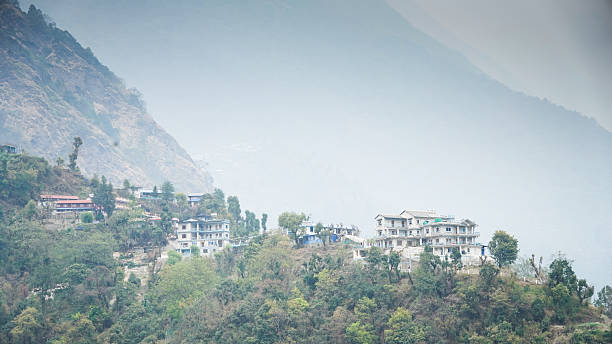
After the trek

When you come down from Poon Hill, you can return to Pokhara by jeep from Ulleri or from Ghandruk, depending on your route, then continue to Kathmandu by road or air. For a longer adventure, the Muktinath Yatra and Pokhara to Mustang jeep pages describe the Kali Gandaki approach to the dry side of the Annapurna range, and the Kathmandu to Manang jeep and Besisahar private vehicle pages explain how the Annapurna Circuit’s mountain road works from the other side.

For travellers with a broader Nepal itinerary, the Nepal tour package and Nepal holiday tour pages explain how vehicle legs are coordinated across a wider circuit.

Kathmandu to Ulleri Jeep

Frequently asked questions

Can a jeep really reach Ulleri?

Yes. A dirt road runs from Nayapul through Birethanti, Hile and Tikhedhunga up to Ulleri, and in some conditions continues to Banthanti. Because the road is seasonal and repaired in stages, we confirm the current endpoint close to your travel date.

How long does it take to drive from Kathmandu to Ulleri?

By road, it takes roughly six to eight hours to Pokhara, then about an hour to an hour and a half to Nayapul, and a further two hours or so on the dirt road, which makes a full day. If you fly to Pokhara, you can be in Ulleri by mid-afternoon. Many groups split the road journey with a night in Pokhara.

Is one vehicle enough for the whole trip?

For small groups, a single Scorpio jeep can cover the whole journey. For larger groups, we normally use a car, a Hiace van, or a Coaster to Pokhara, and jeeps from the mountain in sections. We arrange the change as part of one booking.

Should I drive to Ulleri or walk the staircase?

It depends on your time, fitness, and interests. The jeep saves time and energy and suits families, older travellers, and photographers. Walking the staircase offers gentler acclimatisation and a more traditional trek.

A middle path is to drive to Hile or Tikhedhunga, walk the stairs and arrive with the road behind you.

Can the jeep take me to Ghorepani or Po n Hill?

No. The road reaches Ulleri, and in some cases Banthanti, but you reach Ghorepani and Poon Hill on foot. From Ulleri, it is roughly three hours of walking to Ghorepani, and about another hour up to Poon Hill for sunrise.

What about my luggage? Please tell us how many large bags you have and whether porters will trav l with you. Luggage determines how many vehicles you need. We recommend keeping a small daypack in the cabin with water, documents, medication and a warm layer, and leaving non-essential bags with your Pokhara hotel.

Can you arrange the pickup after th trek?

Yes. We can pick you up at Ulleri, Hile, Nayapulapul, or Ghandruk and take you to Pokhara or to Kathmandu. We recommend booking the return at the same time as the approach so both legs are confirmed before you set off.

What if the road is closed or damaged?

We monitor conditions through the drivers who work the valley. If the road is affected, we will let you know, suggest alternatives such as starting from Hile or Nayapul, and re-organise the plan. A buffer day makes this much less stressful.

Plan your Kathmandu to Ulleri journey

If you are planning a Poon Hill trek and want the vehicle sorted before you leave, tell us your travel dates, group size, number of bags and whether you want to walk the staircase or drive to the top. We will confirm the current road situation, recommend the right vehicles, and send you a written plan with driver details. Use the plan your trip page or contact us directly.

Kathmandu to Dhampus Private Jeep Rental

Dhampus village with Machhapuchhre behind

Kathmandu to Dhampus Private Jeep Rental: Complete Guide

Dhampus is a hillside village in the Kaski District, perched at roughly sixteen hundred metres on a ridge above the Seti River valley and a short distance from the lakeside city of Pokhara. Its fame rests on a simple fact: from the village paths and guesthouse terraces, the great wall of the Annapurna range stands almost within reach.

Annapurna South, Hiunchuli, Machhapuchhre with its fishtail summit, and, on clear mornings, the long white line of Dhaulagiri all rise above the green hills, and the sunrise light on these peaks is among the country’s most memorable sights. Because the village sits so close to Pokhara, it is one of Nepal’s most accessible mountain destinations, and many travellers choose it for a first taste of the Himalaya, a gentle overnight stay, or a starting point for a short trek.

The journey from Kathmandu to Dhampus is a two-part road trip. The first part follows the Prithvi Highway for about two hundred kilometres to Pokhara, and the second part leaves the Pokhara to Baglung highway at Phedi and climbs a narrow hill road to the village.

The final climb is steep and unpaved in places, which is why a private jeep is the preferred vehicle for the last stage. Nepal Vehicle Hiring Pvt Ltd (vehiclehiringnepal.com) provides 4WD jeep hire for exactly this kind of route, along with private car hire, Hiace van hire, coaster hire and bus hire for groups of every size.

This guide explains the route, stops, vehicle choices, best seasons, and booking process so you can plan the Kathmandu to Dhampus journey with confidence.

Unlike the heavy mountain approaches of the Manaslu or Mustang corridors, the Dhampus road is short and manageable, but it still rewards careful planning. The village is small, the guesthouses are simple and often full at the best times of year, and the weather in the foothills changes quickly.

A private jeep with a driver who knows the road removes the uncertainty of the final climb, lets the group carry luggage without stress, and drops travellers at the guesthouse gate rather than leaving them to find a local ride at the bottom of the hill.

Kathmandu to Dhampus private jeep rental

The Route: Kathmandu to Dhampus Stage by Stage

Overview of the Journey

The total journey from Kathmandu to Dhampus covers roughly 220 to 230 kilometres and normally takes seven to nine hours, including stops. The route has four stages: Kathmandu to Mugling through the Trishuli Gorge, Mugling to Pokhara along the Prithvi Highway, Pokhara to Phedi on the Baglung Highway, and finally Phedi to Dhampus via the hill road.

An early departure from Kathmandu, around six in the morning, usually brings the group to Pokhara by early afternoon and to Dhampus in time for a relaxed late-afternoon arrival and, with luck, a sunset view of the range.

StageApprox. DistanceApprox. TimeRoad TypeBest Vehicle
Kathmandu to Mugling110 km2.5 to 3 hoursSealed highway, gorge sectionCar, jeep, Hiace, bus
Mugling to Pokhara90 km2.5 to 3 hoursSealed highwayCar, jeep, Hiace, bus
Pokhara to Phedi18 to 20 km40 to 60 minutesSealed highwayCar, jeep, Hiace
Phedi to DhampusAbout 6 to 8 km30 to 45 minutesSteep hill road, partly unpaved4WD jeep

Kathmandu to Mugling: Through the Trishuli Gorge

The journey begins on the Prithvi Highway, which leaves the Kathmandu Valley at Thankot and drops into the Trishuli River gorge. This section is one of Nepal’s most scenic highway drives.

The road follows the river for long stretches, clinging to the canyon wall, passing through villages and rafting camps, and offering repeated views of terraced hillsides and the turquoise river below. Traffic can be heavy with trucks and buses, so experienced drivers choose passing places carefully and keep a steady pace.

Many groups stop briefly at a viewpoint to photograph the gorge or to stretch their legs, and a private vehicle makes these stops easy.

Kathmandu to Dhampus private jeep rental

Mugling to Pokhara: The Prithvi Highway Westward

At Mugling, the Trishuli meets the Marsyangdi, and the highway splits. One branch turns south to Narayanghat and the Terai, while the other continues west toward Pokhara along the Marsyangdi valley. Mugling is the classic midpoint stop, famous for its riverside teahouses and fish curry, and most groups stop here for lunch.

West of Mugling, the road passes Dumre, where a side road climbs to the old hill town of Bandipur, and another turns north to Besisahar and the Annapurna Circuit, then continues through Damauli and the Seti River valley before arriving at Pokhara. The scenery softens as the road leaves the deep gorge and enters a wider valley of rice terraces and farming villages, and on clear days the Annapurna range begins to appear to the north.

Travellers who prefer a simple point-to-point journey to Pokhara can use our Kathmandu to Pokhara private vehicle service, and then add the Dhampus jeep stage separately. Others book the whole Kathmandu to Dhampus journey as a single arrangement with one driver and one vehicle, which is the most convenient option for most groups.

Pokhara to Phedi: Along the Baglung Highway

From Pokhara, the route to Dhampus heads west along the Pokhara to Baglung highway, passing the Hemja area and the Phedi bazaar at the foot of the hill. Phedi is the traditional starting point for the climb to Dhampus and the nearby villages, and a small cluster of shops, tea stalls and trekking offices gives it a lively, practical character.

The sealed road makes this stage quick, and most vehicles reach Phedi within an hour of leaving Pokhara’s lakeside.

Phedi to Dhampus: The Hill Road

The final stage leaves the highway at Phedi and climbs the hillside to Dhampus. Trekkers on foot take the stone staircase and forest path, which takes a couple of hours, but a jeep road now makes the village accessible by vehicle.

The road is narrow, steep and in places rough, with hairpin bends and loose surfaces, and it can become muddy during the monsoon. A 4WD jeep with good ground clearance and an experienced driver handles it comfortably, while an ordinary car may struggle after rain.

The drive takes about half an hour, and the views open up quickly as the vehicle gains height, with the Seti valley falling away on one side and the first snow peaks appearing above the ridge ahead.

Note: Road conditions on the Phedi to Dhampus hill road vary with the season and recent weather. Nepal Vehicle Hiring Pvt Ltd checks the current condition before each departure and recommends a 4WD jeep for the final stage in every season.

Nepal Tour Package

Why a Private Jeep for Dhampus?

A private jeep is the most practical choice for the Kathmandu to Dhampus journey for several reasons. First, it handles every stage of the road, from the Prithvi Highway to the final hill climb, so the group never has to change vehicles with their luggage.

Second, the jeep’s ground clearance and four-wheel drive give confidence on the steep, partly unpaved Phedi to Dhampus section, particularly in wet weather. Third, a private vehicle departs when the group is ready, stops where the group wishes, and delivers passengers to the exact guesthouse rather than a roadside drop-off.

Fourth, the jeep’s comfortable seating and luggage space suit couples, families and small groups with trekking bags and cameras.

The Scorpio and similar 4WD jeeps in our fleet suit groups of four to six passengers. For smaller groups of one to three people travelling light, a private car can cover the highway to Pokhara or Phedi, with a jeep arranged for the last climb.

For larger parties of seven to fourteen people, a Hiace van makes an excellent highway vehicle to Pokhara, followed by two jeeps for the hill road. For groups of twenty or more, a coaster or bus carries everyone to Pokhara or Phedi, and a convoy of jeeps completes the final stage.

Nepal Vehicle Hiring Pvt Ltd coordinates these combinations so that the whole journey runs smoothly under a single booking.

Dhampus Village: What Travellers Find at the Top

The Mountain Views

Dhampus’s main attraction is the panorama. From the village and the ridge paths above it, travellers see Annapurna South, Hiunchuli and the sharp spire of Machhapuchhre, often glowing pink and gold at sunrise. On very clear days, you can also see the long ridge of Dhaulagiri and the distant Manaslu massif.

The best views come in the early morning, before clouds build up, and many guesthouses have terraces and rooftop seating designed for watching the dawn. Even travellers who stay only one night usually find the sunrise worth the journey.

Village Life and Culture

Dhampus is home to Gurung, Brahmin and Chhetri families, and the village keeps a strong sense of traditional hill life. Stone and slate houses line narrow lanes, buffalo and goats wander the paths, millet and rice terraces step down the hillside, and small shops sell tea, biscuits and handicrafts.

Guesthouses serve dal bhat, local vegetables, and simple breakfasts, and many hosts are happy to share stories about village life, farming, and the area’s history. A short walk through the lanes at dusk, with smoke rising from kitchen fires and the peaks fading into darkness, is one of the gentle pleasures of a Dhampus stay.

Short Walks and Nearby Places

Dhampus is a starting point for several short,d rewarding walks. The path to Pothana and Deurali climbs through rhododendron and oak forest and offers wider views of the range.

The ridge route to Australian Camp, reached by a longer walk or by road from the Kande side, is a popular sunrise viewpoint with a cluster of guesthouses and a broad panorama. The trail down to Landruk and onward connects to the wider Annapurna foothills trail network.

Many travellers use Dhampus for a simple overnight stay and a morning walk, while others make it the first stop on a three-to-five-day trek through the foothills. Whatever the plan, the jeep from Kathmandu delivers the group to the starting point without a long approach.

Treks and Journeys That Begin at Dhampus

Dhampus is a gateway to several popular walks and treks. The classic short route links Dhampus, Pothana, Deurali, Landruk and Tolka, with an exit at Phedi or a continuation toward Ghandruk. Longer itineraries connect with the Annapurna Base Camp Trek through Landruk and Chhomrong, and with the Ghorepani Poon Hill Trek through Tadapani and Ghorepani.

Our Pokhara to Ghandruk jeep service, Pokhara to Nayapul transport, and Pokhara to Ghorepani Poon Hill jeep help trekkers reach trailheads and return from trek endpoints so that the Dhampus stay can be combined with a larger Annapurna itinerary.

Because the Dhampus area is gentle and low in altitude, it suits families, older travellers and anyone who wants a mountain experience without heavy exertion. At around sixteen hundred metres, there is no real risk of altitude sickness; the paths are well marked, and the guesthouses offer comfortable beds and hot meals.

This is one reason the village is so popular as the first or last night of a longer Nepal journey, and why the private jeep from Kathmandu is such a natural fit.

Kathmandu to Dhampus private jeep rental

Seasonal Guide for Kathmandu to Dhampus

Autumn, from September to November, offers the best views and stable weather. The air is crisp after the monsoon, the mountains are sharply visible, and the hill road is usually at its best. This is also the busiest period, so book guesthouses and vehicles early.

Spring, from March to May, offers warm days, blooming rhododendrons on the hillsides,s and good morning visibility, although haze can build in the afternoons. Winter, from December to February, is cold at night but often brilliantly clear, with excellent sunrise views and fewer visitors.

The monsoon, from June to August, brings lush green scenery but heavy cloud and rain, leeches on the forest paths, and a higher risk of muddy or damaged roads, so the hill road needs particular care and flexibility.

Booking Tips for the Dhampus Journey

  • Send a WhatsApp message to +977 981-4227196 with your travel date, group size, Kathmandu hotel and whether you plan to stay in Dhampus, Australian Camp or elsewhere in the area.
  • Depart Kathmandu by six in the morning so that the group reaches Pokhara by early afternoon and Dhampus before dusk.
  • Allow time for a Mugling lunch stop and a short photo stop in the Trishuli gorge; both are part of the pleasure of the journey.
  • Choose a 4WD jeep for the final Phedi to Dhampus stage even if the highway section is covered by a car or Hiace.
  • Book guesthouse rooms in advance during autumn and spring, and share the guesthouse name with the team so the driver can go straight to the gate.
  • Pack light layers, rain protection and a torch; evenings in the foothills can be cool, and clouds can arrive quickly.
  • If you plan to continue to a trek, tell the team early so they can arrange the return vehicle from the trail end at the same time.
  • Confirm that the booking includes the vehicle, driver, and fuel so no surprises appear at the end of the trip.

Nepal Vehicle Hiring Pvt Ltd: Complete Network

The Kathmandu to Dhampus private jeep rental is one service within a nationwide network. In Kathmandu, we provide airport transfers, sightseeing vehicles, the Bhaktapur Durbar Square day tour, the Nagarkot sunrise tour and Nagarkot vehicle hire. In Pokhara, we provide Pokhara car hire and the Sarangkot sunrise vehicle.

For trekking approaches, we run the Kathmandu to Syabrubesi jeep for the Langtang Valley Trek, the Kathmandu to Besisahar vehicle and Kathmandu to Manang jeep for the Annapurna Circuit Trek, the Kathmandu to Soti Khola jeep for the Manaslu Circuit Trek, the Kathmandu to Salleri Phaplu service for the Everest Base Camp Trek, and the Pokhara to Upper Mustang overland jeep for the Upper Mustang Trek. Pilgrims can use the Kathmandu to Muktinath jeep for the Muktinath Tour.

Our Nepal tour packages and trekking transport combine these services, and the trip planning page and contact page make it easy to start a booking.

Departure Day: Leaving Kathmandu for the Foothills

The Kathmandu to Dhampus journey starts at the hotel gate. Most travellers stay in Thamel, Lazimpat, Patan, or near Boudhanath, and the driver arrives a few minutes before the agreed time, loads the luggage, checks that everyone is comfortable, and leaves the city via the western ring road toward Kalanki and Thangakote.

In the early morning,ning the valley is quiet, the light is soft, and the mountains ringing the valley are sometimes visible from the rim. The earlier you leave, the more relaxed the day: a six o’clock start allows an unhurried gorge descent, a proper lunch at Mugu, and an arrival at Dhampus before dark.

Many guests combine the Dhampus trip with other Kathmandu services. Our airport transfer meets arriving flights; our Kathmandu sightseeing vehicles cover Pashupatinath, Boudhanath, Swayambhunath, and Patan; the Bhaktapur Durbar Square day tour visits the medieval city of potters and woodcarvers; and the Nagarkot sunrise tour and Nagarkot vehicle hire take travellers to a ridge viewpoint for the first Himalayan dawn.

Because one operator handles all of these, travellers can land in Kathmandu, enjoy a day or two of sightseeing, and set off for Dhampus with the same team, the same standards, and a single WhatsApp contact at +977 981-4227196.

Mugling and Bandipur: Two Memorable Stops on the Way

Mugling, where the Trishuli and Marsyangdi rivers meet, is a natural lunch stop on the road to Pokhara. The riverside restaurants are simple, friendly, and busy, serving rice, lentils, vegetables, and fresh river fish to a stream of truck drivers, pilgrims, trekkers, and families.

A forty-minute break here refreshes the group for the second half of the journey. Drivers know the best places, and passengers with dietary needs can ask for vegetarian meals or milder dishes.

A little farther west, the road passes Dumre, where a short side road climbs to Bandipur, a beautifully preserved hill town with a paved bazaar street, old Newar houses and a panoramic ridge that looks across to the Annapurna and Manaslu ranges. Bandipur is an ideal extra stop for travellers who have time, and it fits naturally into a Kathmandu to Dhampus itinerary.

Dumre is also the junction for the road to Besisahar, the starting point of the Annapurna Circuit Trek, which our Kathmandu to Besisahar vehicle and Kathmandu to Manang jeep services serve. Travellers planning both a Dhampus stay and a longer Annapurna trek can therefore link the two journeys with ease.

Kathmandu to Dhampus private jeep rental

Pokhara: Lakeside City and Gateway

Most Kathmandu to Dhampus journeys pass through Pokhara, and many groups choose to spend a night or two in the lakeside city before or after the village stay. Pokhara offers boating on Phewa Lake, the World Peace Pagoda, caves and waterfalls, cafes and restaurants, and the early-morning view of the Annapurna range from Sarangkot.

Our Sarangkot sunrise vehicle and Pokhara car hire cover the city excursions, and the Dhampus stay can be slotted in before or after them. From Pokhara, the same team also operates the Pokhara to Upper Mustang overland jeep and the Kathmandu to Muktinath jeep for pilgrims who want to continue to the sacred temple at Muktinath and the Muktinath Tour.

Dhampus, Australian Camp, Pothana and Deurali Compared

The hills above Phedi and Kande hold a cluster of small settlements, each with its own character, and travellers often ask which to choose. Dhampus is the largest and most established, with a range of guesthouses, a village atmosphere and easy road access.

Pothana, a little higher and reached by forest path, is quieter and more secluded, with a few lodges set among rhododendron and oak. Deurali, higher still, sits on a ridge with broad views and is a common lunch or overnight stop for walkers.

Australian Camp, on a ridge to the east, is famed for its wide sunrise panorama and relaxed campsite atmosphere, and a separate road and trail from Kande reaches it.

A private jeep from Kathmandu can serve any of these, and the driver will explain the options on the way. Travellers who want a comfortable village stay with easy access should choose Dhampus. Those who want a more adventurous walk can choose Pothana or Deurali for a second night.

Photographers and sunrise lovers often prefer Australian Camp for its open eastern aspect. The team can advise on what suits the group’s priorities, season, and fitness level, and can arrange the final transfer to whichever destination is chosen.

Guesthouses, Food and What to Expect

Dhampus and the surrounding villages offer simple but welcoming accommodation. Rooms are clean and basic, often with attached bathrooms in the better guesthouses, and hot water is usually available in the evening.

Meals are served in family dining rooms or on terraces, with dal bhat as the staple and momos, noodles, soups, fried rice, potatoes and local vegetables as alternatives. Fresh milk tea and ginger lemon honey are favourite warming drinks. Mobile coverage is usually good, and some guesthouses have wifi, though speeds are modest.

Electricity is reliable most of the time, but it is wise to bring a power bank.

Visitors should pack for a mountain village: warm layers for the evenings, a light waterproof jacket, sturdy shoes for the paths, sun protection, a torch or headlamp, and any personal medicines. In the cooler months, a warm hat and gloves help at sunrise.

A reusable water bottle reduces plastic waste, and a little cash for tea, snacks and tips is always useful. Because guesthouses are small, book in advance in autumn and spring, and the driver can help confirm the room on arrival if plans change.

Kathmandu to Dhampus private jeep rental

Who Travels from Kathmandu to Dhampus?

Families and Multi-Generation Groups

Dhampus suits families because the altitude is gentle, the paths are safe, and the guesthouses are welcoming. Grandparents, parents, and children can travel together in a single jeep or Hiace, share early-morning views, and take short walks suited to every age. The private vehicle allows frequent rest stops, flexible meal times and the freedom to change plans if a child is tired or the weather turns.

Couples, Honeymooners and Friends

Couples and small groups of friends often choose Dhampus for a romantic overnight stay or a relaxed weekend in the hills. A private jeep gives them privacy, comfort and the freedom to stop at viewpoints, and the drive itself becomes part of the holiday. Many combine a Pokhara lakeside stay with a Dhampus night, creating a gentle mountain-and-lake itinerary.

Photographers and Nature Lovers

The foothills offer excellent photo opportunities: sunrise on the Annapurna range, rhododendron forests in spring, mist in the valleys, terraced fields, and village life. A private vehicle lets photographers start before dawn, stop at viewpoints along the highway, and linger when the light is good. Birdwatchers also enjoy the forests above Dhampus, where they can see many Himalayan species.

Trekkers Beginning or Ending a Journey

Trekkers use Dhampus as a gentle start or finish to a larger itinerary. A short walk from Dhampus to Landruk and Ghandruk connects with the Annapurna Base Camp Trek, while the ridge route toward Tadapani and Ghorepani links with the Ghorepani Poon Hill Trek.

Our Pokhara to Ghandruk jeep, Pokhara to Nayapul transport and Pokhara to Ghorepani Poon Hill jeep services make it simple to join or leave these treks, and our trekking transport team can coordinate the entire journey.

Kathmandu to Dhampus private jeep rental

The Phedi to Dhampus Road in Detail

The hill road from Phedi to Dhampus deserves a closer look because it is the part of the journey that most affects vehicle choice. The road leaves the highway just beyond the Phedi bazaar and climbs the hillside in a series of switchbacks, passing small farms, cardamom and millet terraces and patches of forest.

The surface shifts from rough concrete or gravel to packed earth and stone, and in places the road is so narrow vehicles must wait for each other at passing bays. After rain, clay sections become slippery, and drivers must choose their line with care.

The climb is short, but the gradient is real, and a vehicle with low-range four-wheel drive and good tyres moves through it with confidence.

Experienced drivers read the road constantly. They know where small landslides tend to occur after heavy rain, where the bends are tightest and where it is safest to stop for photographs.

They also know how to drive in a way that protects both passengers and the village road itself, keeping speeds low through settled areas, giving way to walkers and animals, and avoiding unnecessary horn use. Passengers can help by staying seated, keeping seat belts fastened and telling the driver if they feel uncomfortable.

The result is a short, scenic drive that is part of the adventure rather than a worry.

Safety Standards for the Highway and the Hill

A long highway day followed by a hill road calls for a consistent safety approach. We check every vehicle in the Nepal Vehicle Hiring Pvt Ltd fleet before departure, paying particular attention to brakes, tyres, lights, steering, cooling, and fuel.

We select drivers for their experience on the Prithvi Highway and Pokhara hill roads, and we expect them to drive at moderate speeds to avoid risky overtaking in the gorge, keep safe distances from trucks, and rest when needed. Our 4WD jeep hire service uses the same safety principles on every mountain approach, from the Dhampus hill road to the Kali Gandaki gorge, so travellers receive a consistent standard wherever they go.

The team monitors weather and road reports, particularly during the monsoon, and will advise on departure timing, alternative stops, or a schedule change if conditions require it. Drivers carry charged phones and can contact the office at any time, and the office can reach the group if plans need to change.

Passengers should carry identification, any personal medicines and a basic first-aid kit for the trip, and they should let the driver know about any medical conditions or sensitivities to winding roads so that he can adjust his driving and stops accordingly.

Travelling in the Monsoon and Shoulder Seasons

Many travellers visit Dhampus in the monsoon because the hills are green, the crowds are thin, and the cloud forests are atmospheric. The trade-off is that views are often hidden, the roads are wetter, and leeches appear on forest paths.

The Prithvi Highway gorge is more prone to occasional landslides in heavy rain, so an early departure and a flexible plan are wise. The Phedi to Dhampus road may be muddy and requires a 4WD jeep and a confident driver.

With the right preparation, a monsoon visit can be peaceful and beautiful, with dramatic cloud clearings at dawn and dusk and a deep sense of quiet in the village.

In the shoulder seasons, from late winter to early spring and from the end of the monsoon to early autumn, conditions are often excellent, and demand is lower. Guesthouses are easier to book, roads are quieter, and the village atmosphere is relaxed.

Travellers with flexible dates can choose these windows to enjoy the area with fewer visitors, and the team can advise on the best weeks based on recent weather patterns.

Swayambhunath visit during Kathmandu Pokhara Tour

Group Travel: Hiace, Coaster and Bus to Pokhara, Jeeps to the Village

For larger parties, the best approach is to use a large vehicle for the highway and jeeps for the hill road. A Hiace van carries seven to fourteen passengers in individual seats along the Prithvi Highway to Phedi or Pokhara, where two or three jeeps take over for the final climb.

A coaster suits groups of fifteen to twenty-five, and a full-size bus carries thirty-five to forty-five. In every case, luggage is transferred at Phedi or in Pokhara, and the same team coordinates the change so the group doesn’t have to organise anything themselves.

School trips, university field courses, corporate retreats, yoga groups, photography workshops and family reunions all use this arrangement. The organiser provides the number of passengers, the amount of luggage and the preferred guesthouses, and the team designs a plan that fits.

For very large groups, a lead jeep can go ahead to check the road and the guesthouses, and a sweep vehicle can follow to ensure that no one is left behind. This kind of coordination is one advantage of working with an operator that manages vehicles across the whole country.

Itineraries That Include Dhampus

A Two-Night Mountain Escape

A simple escape begins with the early drive from Kathmandu to Pokhara, an afternoon on the lake and a night in Pokhara. The next morning, the jeep climbs to Dhampus; the group spends the day walking and taking in the mountains, then returns to Pokhara or Kathmandu the following morning. This pattern suits travellers with limited time who still want a true mountain experience.

A Four-Day Foothill Circuit

A longer circuit links Dhampus, Pothana, Deurali, Landruk and Tolka on foot, with the jeep taking luggage to the final point and then returning to Pokhara. Walkers enjoy forests, villages and mountain views, and the vehicle provides support so that they can carry only day packs. This is a favourite with families and older travellers who want a mountain walk without heavy loads.

Kathmandu to Dhampus private jeep rental

An Annapurna Extension

Travellers who want to go further can use Dhampus as the beginning of an extended Annapurna itinerary. They might walk to Landruk, Ghandruk and Chhomrong and continue toward the Annapurna Base Camp Trek, or traverse to Tadapani and Ghorepani for the Ghorepani Poon Hill Trek.

Others might return to Pokhara and continue to Besisahar for the Annapurna Circuit Trek, or to Jomsom and Muktinath through the Kali Gandaki gorge. Nepal Vehicle Hiring Pvt Ltd can arrange every vehicle for every stage through one booking.

A Wider Nepal Journey

For international visitors, the Dhampus stay often fits within a two- or three-week Nepal itinerary: arrival in Kathmandu, sightseeing, a drive to Chitwan for wildlife, a stay in Pokhara and Dhampus, and a trek or a journey to Lumbini and the border. Our Nepal tour packages and trip planning service help to design such a journey, and trekking options such as the Langtang Valley Trek, Manaslu Circuit Trek, Everest Base Camp Trek, Gokyo Lake Trek, Three Passes Trek, Tsum Valley Trek and Kanchenjunga Base Camp Trek can be added by those who want to go deeper into the mountains.

Responsible Travel in a Small Hill Village

Dhampus is a living village, and visitors are guests. Simple habits help to protect its character: dress modestly, ask before photographing people, greet villagers with a namaste, and buy local products where possible. Carry reusable bottles, take rubbish back to Pokhara where the village has no collection, and avoid plastic.

Stay on paths, close gates behind you, and keep noise low in the evening. Support family-run guesthouses and shops, and tip drivers and guides fairly. These small gestures help ensure that the village stays welcoming for everyone who comes after you.

Nepal Vehicle Hiring Pvt Ltd encourages these habits in its drivers and passengers, and our vehicles are driven with respect for the road, the village and the environment. Drivers avoid unnecessary idling, keep speeds low in settled areas and give way to pedestrians and livestock.

By travelling in a shared private vehicle rather than several separate ones, groups also reduce the number of vehicles on the narrow hill road. Responsible travel is not just a slogan; it is how we operate.

Kathmandu to Dhampus private jeep rental

Return Journeys and Onward Connections from Dhampus

The journey does not end at Dhampus. Most travellers return to Pokhara after one or two nights, then continue to Kathmandu, Chitwan, Lumbini, or the mountains.

You can arrange a return vehicle in the original booking, and the driver can wait, return the next morning, or meet the group at a different point, such as Phedi or Kande, if they have walked part of the way. These flexible arrangements are a strength of private hire.

For the return to Kathmandu, the Kathmandu to Pokhara private vehicle service runs both ways, and our Kathmandu airport transfer can handle the final transfer to the airport. For travellers heading west, the Siddhartha Highway runs from Pokhara to Butwal, Lumbini, and the Sunauli border, and the team can arrange these stages with the same vehicle or a vehicle change.

For travellers heading north, the Kali Gandaki road leads to Jomsom and Muktinath, and our Pokhara to Upper Mustang overland jeep and Kathmandu to Muktinath jeep services take them there.

Why Choose Nepal Vehicle Hiring Pvt Ltd for Dhampus

Nepal Vehicle Hiring Pvt Ltd offers a combination of qualities that matter on a journey like this. The fleet is broad, from cars and jeeps to Hiace vans, Coasters and buses, so you can choose the right vehicle for each stage. The drivers are experienced on both highways and hill roads.

The booking process is simple and clear, with written confirmation of vehicle type, driver name and registration. We explain pricing clearly at booking, with no surprises. Support is available via WhatsApp throughout the journey, so questions are answered quickly and changes can be made easily.

Beyond Dhampus, our network covers the whole country. We run the Kathmandu to Syabrubesi jeep for the Langtang Valley Trek, the Kathmandu to Soti Khola jeep for the Manaslu Circuit Trek, the Kathmandu to Salleri Phaplu service for the Everest Base Camp Trek, and the Kathmandu to Manang jeep and Kathmandu to Besisahar vehicle for the Annapurna Circuit Trek.

In Pokhara, we provide Pokhara car hire, the Sarangkot sunrise vehicle, the Pokhara to Ghandruk jeep, Pokhara to Nayapul transport and the Pokhara to Ghorepani Poon Hill jeep. In Kathmandu, we provide sightseeing vehicles, the Bhaktapur day tour, the Nagarkot sunrise tour and Nagarkot vehicle hire.

A Sample Day-by-Day Plan

To make the journey concrete, here is a sample three-day plan for a small group. On the first day, the jeep collects the group from the Kathmandu hotel at six in the morning, descends the Trishuli gorge, stops for lunch at Mugling, continues to Pokhara and reaches the lakeside by mid-afternoon.

The group strolls along the lake, enjoys dinner and rests. On the second day, an early start takes the jeep to Phed,d then up the hill road to Dhampus before the clouds build.

The group has breakfast in the village, walks to Pothana and back, rests in the afternoon and watches the sunset from the terrace. On the third day, the group enjoys the sunrise, has breakfast,, pack, and drives down to Pokhara for lunch, then continues to Kathmandu or onward to the next destination.

You can stretch or compress this plan. Travellers with more time might add a day on the lake, a Sarangkot sunrise, a hike to the World Peace Pagoda or a visit to Bandipur on the way.

Those with less time might go directly from Kathmandu to Dhampus on the first day and return the next afternoon, though the lakeside rest is very much worth including. The team can suggest the best itinerary based on each group’s interests and energy.

Booking Checklist

  • Confirm the group size, number of bags, and any special needs, such as elderly passengers, small children, or medical conditions.
  • Choose the travel date and an early departure time from the Kathmandu hotel.
  • Decide whether the group will stay in Pokhara, Dhampus, Australian Camp or elsewhere, and share the guesthouse names.
  • Choose the vehicles: car or Hiace for the highway where suitable, and a 4WD jeep for the hill road.
  • Say whether the return journey, a trek connection or onward travel should be arranged at the same time.
  • Save the WhatsApp number +977 981-4227196 and keep the written confirmation handy.
  • Pack for the weather and the village: layers, rain protection, sturdy shoes, torch and personal medicines.

When these details are settled, the rest is easy. The team confirms the vehicle and driver, the group meets the jeep at the hotel gate, and the road to Dhampus unfolds. For help with a longer itinerary, contact our team or visit vehiclehiringnepal.com.

Our Nepal tour packages, trekking transport and trip planning page are also available for travellers who want to design a complete Nepal itinerary around the Dhampus stay. For groups of every size, private car, jeep, Hiace, co-coaster, and bus services are available

Dhampus rewards travellers with some of the finest mountain views in the foothills, a gentle village atmosphere, and the satisfaction of arriving by a road as interesting as the destination. With a reliable vehicle, a skilled driver and a plan that leaves room for stops and surprises, the trip from Kathmandu is a pleasure from the first kilometre to the last, and Nepal Vehicle Hiring Pvt Ltd is proud to make it possible.

Kathmandu to Dhampus private jeep rental

Health, Comfort and Practical Notes

Dhampus sits at a modest altitude, so altitude sickness is not a concern, but the long road day still deserves some care. Travellers prone to motion sickness should sit in the front seat, avoid heavy meals before the gorge, and carry their usual remedies.

Everyone should drink water regularly, wear sun protection and keep light snacks within reach. Elderly passengers and those with mobility needs should tell the team at booking, so the driver can plan extra rest stops and help with boarding.

In the village itself, paths are uneven and often steep, so supportive shoes and a walking stick are helpful.

Cash is useful in the hills. Pokhara has banks and cash machines, but village shops and guesthouses may prefer cash for small purchases, so withdraw what you need before the climb. Mobile networks usually work well in Dhampus, and you can buy a local SIM card in Kathmandu or Pokhara.

Power banks, spare batteries and a universal plug adaptor are also worth packing. If the group is travelling in a cold month, a down jacket and warm socks make the dawn viewpoint far more comfortable.

Photography and Sunrise Tips

The Dhampus sunrise is the highlight of the stay, and a little preparation helps. Check the sunrise time the evening before, set an alarm for well before dawn and dress warmly. Walk to the nearest viewpoint or terrace in the dark so that you are ready when the first light touches the summits.

The peaks turn pink, then gold, then white within a short time, so keep the camera or phone ready and take a few wide shots as well as close-ups of Machhapuchhre and Annapurna South. Mist often fills the valleys at dawn, creating layered scenes that photograph beautifully.

After sunrise, return for breakfast and tea, then explore the village in the soft morning light, when the lanes, houses and terraces glow.

A private vehicle makes these photographic opportunities easier. The driver can stop at roadside viewpoints on the way up, wait while the group photographs the terraces and forests, and plan the schedule so that the group arrives early enough to enjoy the evening light.

Whether you use a professional camera or a phone, the combination of mountain scenery and village life in Dhampus offers plenty of material, and the road from Kathmandu adds its own memorable images of rivers, gorges and hillside towns along the way.

If you are ready to plan your own journey, message +977 981-4227196 or visit vehiclehiringnepal.com. The team at Nepal Vehicle Hiring Pvt Ltd will be glad to help you choose the right vehicle, the right stops and the right pace for your trip from Kathmandu to Dhampus.

Kathmandu to Dhampus private jeep rental

Frequently Asked Questions

Q1: How do I book a private jeep from Kathmandu to Dhampus?

Send a WhatsApp message to +977 981-4227196 with your date, group size, Kathmandu hotel and destination in the Dhampus area. Our team recommends the right vehicle, confirms the driver and vehicle details in writing and answers any questions about the route. You can also visit vehiclehiringnepal.com or contact our team to begin.

Q2: How long does the Kathmandu to Dhampus journey take?

Normally, seven to nine hours, including a lunch stop and a short photo stop. The highway to Pokhara takes six to seven hours, the Pokhara to Phedi section about an hour, and the hill road to Dhampus about half an hour. An early start gives the most comfortable day.

Q3: Is a 4WD jeep necessary for Dhampus?

A 4WD jeep is strongly recommended for the final Phedi-to-Dhampus hill road, which is steep and partly unpaved. You can cover the highway sections in a car or Hiace. Still, the last climb is much safer and more comfortable in a jeep.

Q4: Can I combine Dhampus with a trek?

Yes. Dhampus connects to short foothill walks and longer routes toward Ghandruk, Ghorepani and the Annapurna Base Camp approach. Our Pokhara to Ghandruk jeep and Pokhara to Nayapul transport services help with trailhead transfers, and the team can arrange return vehicles from trek endpoints at booking.

Q5: What is the best season to visit Dhampus?

Autumn and spring offer the best balance of clear views and comfortable weather. Winter is cold but often very clear, and the monsoon is green but cloudy and wet. The team can advise on current conditions for your travel dates.

Q6: Can Nepal Vehicle Hiring Pvt Ltd arrange the return to Kathmandu?

Yes. The return from Dhampus to Pokhara or Kathmandu can be arranged in the same booking, and the Kathmandu to Pokhara private vehicle service operates in both directions. Booking both directions together helps guarantee vehicle and driver availability.

Conclusion: Book Your Kathmandu to Dhampus Jeep

Dhampus is one of Nepal’s most rewarding short mountain stays, and the Kathmandu to Dhampus private jeep journey is the simplest and most comfortable way to reach it. With a single vehicle from the Kathmandu hotel gate to the Dhampus guesthouse, a driver who knows both the highway and the hill road, and the freedom to stop wherever the group chooses, the trip becomes part of the experience rather than a chore.

Contact Nepal Vehicle Hiring Pvt Ltd on WhatsApp at +977 981-4227196 to book your journey, or visit vehiclehiringnepal.com to explore routes and services.

Jhinu to Kathmandu Jeep Hire: Annapurna Trek Exit Guide

Jhinu danda

Jhinu to Kathmandu Jeep Rental: Annapurna Trek Exit Guide

Most Annapurna Base Camp trekkers remember Jhinu Danda for one thing: the hot springs. After days of stone staircases, freezing mornings above the tree line and the long, knee-testing descent from Chhomrong, the pools beside the Modi Khola are the part of the trek people talk about afterwards.

What they talk about far less, and what causes more last-day stress than almost anything else on the itinerary, is the question of how to get from that riverside village to a hotel bed in Kathmandu.

This guide is written for exactly that moment. It explains what a Jhinu-to-Kathmandu jeep journey really consists of, why it is rarely one uninterrupted drive, where a vehicle can and cannot meet you, how to decide between pushing on to the capital the same day and sleeping a night in Pokhara, and how Nepal Vehicle Hiring arranges the legs so that the walk out, the valley road and the highway fit together without gaps.

One note on how we have written it. Road access in the Modi Khola valley has been extended in stages and varies with season and repair work, so the exact jeep pickup points have not stayed fixed.

Rather than promise a single pickup spot that may be wrong by the time you read this, we describe the pattern, explain the local names you will hear, and tell you what to confirm with your guide and with us before the final morning.

The Jhinu-to-Kathmandu journey at a glance

It helps to stop thinking of this as one trip and see it as three connected pieces, each with its own character and its own timing.

  • Piece one: Jhinu Danda to the roadhead. This is the short stretch between your lodge and where a vehicle can actually stop. Depending on conditions,s it is anything from a brief walk to a longer descent along the Modi Khola trail. Nothing with wheels can help you here, so it is a matter of legs, porters and good timing.
  • Piece two: the valley road to Pokhara. From the roadhead,d a four-wheel-drive jeep follows the Modi Khola valley down through the villages around Siwai, past the Birethanti checkpoint and the Nayapul junction, and on to Pokhara. Trekking operators commonly describe the drive from the Jhinu area to Pokhara as three to four hours, and the lower part of that is a quick paved run once you reach Nayapul.
  • Piece three: Pokhara to Kathmandu. This is the long Prithvi Highway run of roughly two hundred kilometres, normally six to eight hours with a meal stop. You can do it by road in a single day, by a short domestic flight, or after a night in Pokhara.

Add those together, and a same-day road journey from Jhinu to Kathmandu is a very long day, often ten to twelve hours of travelling once you count the walk, the stops, and the traffic at either end. Many trekkers happily do it, particularly those with an international flight to catch.

Many others, after a week or more of walking, decide the sensible option is to break the journey in Pokhara. Neither choice is wrong. The point of this guide is to help you make it deliberately rather than on the last evening, tired, in a lodge with patchy signal.

Jhinu to Kathmandu Jeep Rental

Understanding Jhinu Danda as a departure point

Jhinu Danda, sometimes written Jhinu Dada or Jinu Danda, is a Gurung settlement strung along a ridge above the Modi Khola at roughly 1,780 metres, in Kaski District inside the Annapurna Conservation Area. It sits on the Annapurna Base Camp route between Chhomrong above and the lower valley villages below, which is why so many itineraries make it the final trekking night.

Why so many treks end here

The reasoning is partly physical and partly practical. Coming down from Annapurna Base Camp, the trail passes Bamboo, Sinuwa and Chhomrong, and then drops steeply down the long Chhomrong staircase to the Kimrong Khola before climbing again to the ridge at Jhinu.

By the time you reach Jhin,u, the big altitude is behind you, the air is thick and warm, and the lodges are comfortable. The hot springs, reached by a stone-stepped forest path of about twenty to thirty minutes down to the river, turn the evening into a small celebration.

Several trekking operators describe the springs as a set of pools with different temperatures, set directly beside the Modi Khola in a forested gorge, which is a good part of their appeal.

From a transport point of view,w Jhinu matters because it is the last place where a trek and a road meet. Above Chhomrong,g there is no road at all. Below Jhinu,u the valley opens toward the lower villages and the motorable track.

That is why vehicle planning for this exit comes down to one question: where, on the day you leave, does the track end and the trail begin?

The culture you are walking out of

Jhinu and its neighbours belong to the Gurung homeland of the Annapurna foothills. Gurung villages in this part of Kaski are known for their terraced millet and rice fields, their stone-slab paths and lodges run by families who often have sons, brothers or cousins in military and overseas service.

Build in ten unhurried minutes on your final morning to say a proper goodbye to your lodge family. In a valley where almost every lodge is a family home, a good exit is as much about courtesy as logistics, and a driver who arrives to find the group relaxed and ready, rather than frantically repacking, has an easier and safer day.

The roadhead question: where does the jeep actually meet you?

This is the single most important thing to understand about a Jhinu-to-Kathmandu jeep, and the part where generic advice most often lets people down.

Why the pickup point is not fixed

The motorable road up the Modi Khola valley has been pushed progressively higher over time, and it is a seasonal, mountain-construction track rather than a finished highway. In the monsoon, landslides and washed-out crossings can interrupt it, and after the rains it is repaired and reopened in stages.

As a result, itineraries published by different operators describe the pickup differently. You may see the vehicle waiting at Siwai, at Simrung (sometimes spelt Samrung), at Mithu Danda, or not very near Jhinu itself when the track allows. Each of these descriptions was accurate for the operator who wrote it at the time.

None of them is a permanent rule.

What does stay constant is the geography. Jhinu sits at roughly 1,780 metres on a ridge, the river runs far below, and the track follows the valley downward. Wherever the vehicle waits, you will reach it by descending, not climbing, and the descent is usually short enough to be comfortable on tired legs.

Three ways to handle the walk-out

  • Ride from the nearest roadhead. If the track currently runs close to Jhinu, the walk is brief, and the jeep carries you the rest of the way. This is the easiest option and the one most groups prefer when it is available.
  • Walk down to a lower roadhead. If the track is interrupted higher up, the walk extends. Some groups choose this on purpose because the Modi Khola trail below Jhinu is pleasant, shaded and gently graded, and because it gives a calm morning before the vehicle section begins.
  • Walk all the way to Nayapul or Birethanti. The classic way to finish is to follow the river trail down to the Birethanti checkpoint and the Nayapul road junction, where an ordinary road vehicle is waiting. It is a long, rewarding day on foot, but it removes dependence on the valley track altogether, which is why some guides still favour it in unsettled weather.

What to tell us and what to confirm

When you book with Nepal Vehicle Hiring, give us three things: the date you expect to leave Jhinu, the number of people and bags, and whether you want to end the day in Pokhara or Kathmandu. In return, we will confirm the current pickup point with our driver in the valley, tell you honestly if the track is affected, and set the departure time based on the real situation rather than an old itinerary.

It also helps to ask your trekking guide, in the days before you reach Jhinu, to confirm the roadhead with lodge owners and local drivers. They know within a day or so when the track is open.

If you are still working out the earlier legs of the trek, our trekking transport page explains how approach and return vehicles are normally paired, and the Pokhara to Nayapul transportation service covers the lower valley approach if you are starting the trek rather than ending it.

Jhinu to Kathmandu Jeep Rental

Leg one: down the Modi Khola valley by jeep

Once you are in the vehicle, the first stage of the drive is the most characterful and demanding, and it’s why a four-wheel-drive Scorpio jeep is the right tool for the valley section.

What the road is like

The valley track is a mountain construction road. It clings to the side of the gorge in places, crosses side streams on narrow bridges or through shallow fords, and alternates between compacted gravel, exposed rock and the occasional stretch of loose material where a slope has recently been cleared.

The surface sets the speed, not the clock. A driver who knows the road slows to a walking pace through the rough crossings and makes up a little time on the firmer sections, and that rhythm is the difference between a smooth ride and a jarring one.

Passing is done at wide spots. Where two vehicles meet on a single-lane stretch, one reverses or pulls into the nearest bay, and the drivers settle it with horn taps and hand signals. It looks dramatic the first time, but it’s routine for anyone who drives here daily.

Passengers who feel uneasy should say so; a good driver will happily slow down, and nobody on this road is in a hurry to prove anything.

The villages and the checkpoint

As the track drops toward the lower valley, it passes through Gurung and other hill-community villages in the Siwai area, where terraced fields climb the slopes on both sides, and the river appears and disappears below the road. Further down, you reach Birethanti, the busy riverside settlement that serves as the Annapurna Conservation Area checkpoint on the Modi Khola.

Trekking itineraries often mention stopping here to have permits checked, and it is the natural place to keep your ACAP permit and TIMS card handy. Depending on your route and the checkpoint’s practice on the day, your driver or guide will tell you whether a stop is needed.

Just beyond lies the Nayapul junction, where the valley road meets the paved highway toward Pokhara. From here,e the character of the journey changes completely: smooth tarmac, shops, traffic and, within about an hour and a half, the first glimpses of Phewa Lake and the Pokhara valley.

Trekkers who have spent a week above the tree line often find this transition more jarring than any rough road, and it is worth spending a few quiet minutes simply looking out of the window.

Jhinu to Kathmandu Jeep Rental

Why a Scorpio jeep for this section

The Mahindra Scorpio is Nepal Vehicle Hiring’s standard mountain vehicle for roads like this. It combines four-wheel drive and good ground clearance with a body narrow enough for the tight sections, and it seats a small group comfortably with luggage on the roof rack.

A group of four to seven trekkers with their packs fits well. For this stretch, we do not use vans or buses; they are unsuitable for the surface and unsafe on the narrow crossings, no matter the group size.

Leg two: Pokhara to Kathmandu on the Prithvi Highway

If you plan to reach Kathmandu in one day, or if you are completing the second day of a two-day exit, this is the long leg. For many people, it’s also the most enjoyable part of the journey once the stress of the trek exit has passed.

The highway in plain terms

The Prithvi Highway is Nepal’s busiest tourist road, a roughly two-hundred-kilometre link between Pokhara and the Kathmandu Valley that follows the Marsyangdi and Trishuli river corridors for much of its length. Sections have been widened over time, and others remain two lanes with the traffic character you would expect on a national route: slow trucks, buses overtaking on gentle bends and the occasional hold-up at a narrow bridge.

A comfortable plan allows six to eight hours, including a proper meal stop, and more on festival days or when roadworks are active.

For a group arriving from the mountains, comfort matters as much as speed. This is where a car or a Hiace van with air conditioning and reclining seats is more comfortable than a jeep, which is why some of our itineraries use a relay: the Scorpio jeep for the valley section, and a car or van waiting at Pokhara for the highway.

Stops that make the drive worth it

  • Mugling junction and the river fish restaurants. Along the way,y you reach Mugling junction, where riverside restaurants serve freshwater fish from the Trishuli. A late lunch here, with the rapids audible from the table, is one of the better meals on any Nepal road.
  • Manakamana cable car. From Mugling, ng a cable car rises to the hilltop shrine of Manakamana. It adds a couple of hours and suits groups that aren’t under time pressure and enjoy a short, pilgrimage-style detour.
  • A little off the highway at Dumre, Bandipur’s preserved Newari bazaar makes a pleasant overnight stop for trekkers who want a quiet heritage town between the mountains and the capital. It is not essential, but it is a far gentler landing than a long push into the Kathmandu traffic.
  • Early arrival, Kathmandu traffic. The final hour into the valley can be slow in the evening. A mid-afternoon arrival in Thamel is far more pleasant than a nine o’clock arrival after a day in the vehicle.

For travellers who don’t want to hire a private vehicle on this leg, the regular Kathmandu to Pokhara bus service runs in the opposite direction on the same road, and our team can explain how the schedules fit with a late-morning arrival in Pokhara.

Jhinu to Kathmandu Jeep Rental

Same day or overnight in Pokhara? A practical decision guide

This is the question groups ask us most often and the one with the least generic answer. The right choice depends on four things.

When the same-day journey makes sense

  • You have an international flight the following morning. Rest matters less than certainty, and a long day on the road is the trade-off for being sure of making the flight. Leave Jhinu early, keep stops short, and tell us the flight time so we can plan the buffer.
  • Your group is fit, young or used to long days. If everyone finished the trek feeling strong and wants to be in Kathmandu for a proper evening, a same-day plan is workable.
  • Weather is settled. Clear weather and a dry road make a long day far less risky than a monsoon afternoon.

When a Pokhara overnight is better

  • Anyone is tired, sore or carrying a minor injury. Downhill days leave knees and ankles inflamed. Another six hours in a vehicle is hard on both.
  • The valley road is rough or slow. If the first leg takes the full four hours, the arithmetic of a same-day push gets poor very quickly.
  • You want the lake. After days in the mountains, an unhurried evening beside Phewa Lake, with a proper shower, a restaurant meal and a view of Machhapuchhre in the morning light, turns the end of the trek into a holiday rather than a logistics exercise. An early start on the Sarangkot sunrise tour is a satisfying way to say goodbye to the Annapurna range.

The flight option

A domestic flight between Pokhara and Kathmandu takes well under half an hour and is a popular way to finish after a night in Pokhara. However, it is weather-dependent: flights in this corridor are generally best in the morning, and cancellations and delays happen, particularly in the monsoon and in winter haze.

If you have a fixed international connection, treat the flight as a convenience and keep the road as a backup. Nepal Vehicle Hiring can hold a vehicle in Pokhara as insurance on request, and we also provide Kathmandu airport transfers for the other end.

Jhinu to Kathmandu Jeep Rental

Choosing the right vehicle for your group

Because the journey crosses two very different road types, the vehicle mix matters more than the vehicle brand.

  • Small groups of two to four. A single Scorpio jeep can handle the whole journey, valley and highway. It is robust, comfortable enough for a long day and removes any need to change vehicles. This is the simplest option.
  • Groups of four to seven. One Scorpio jeep works if luggage is moderate. If bags are heavy, because of porter loads or expedition gear, a second vehicle spreads the weight and improves comfort.
  • Groups of eight to fourteen. Because of the valley track, a group of this size needs two or more jeeps for the Jhinu-to-Nayapul section, followed by a Hiace van from Nayapul or Pokhara for the highway. Nepal Vehicle Hiring coordinates this relay so that the van is waiting as the jeeps arrive.
  • Groups of fifteen or more. For larger parties, several jeeps cover the valley, and a Coaster bus takes over on the highway. Larger school, university and club groups often travel this way, and we arrange both vehicle types under a single booking.
  • Couples and solo travellers. A private car is the most economical choice for the highway leg, paired with a jeep for the valley if the road requires it.

All of our vehicles are driver-operated; there is no self-drive option, and none would be appropriate on this road. Your driver will have driven the valley before, will know which crossings are firm and which need care, and will know how to read the day’s conditions rather than guess.

A sample exit day, hour by hour

The details below describe a typical day for a group that wants to reach Pokhara comfortably by late afternoon. Adjust times to match your own plan and the road.

  • Early morning at Jhinu. Many groups visit the hot springs at dawn rather than the evening before, when the pools are quieter, and the valley is still cool. Allow forty to sixty minutes, including the descent and the climb back.
  • Breakfast and pack. Eat properly. The next leg is a day of sitting. Settle your lodge bill, confirm porters and make sure permits and passports are where you can reach them.
  • Mid-morning walk or short transfer. Descend to the roadhead agreed with your guide and driver. This takes from a few minutes to a couple of hours depending on where the vehicle waits.
  • Valley drive. The jeep follows the valley track through Siwai and on toward Birethanti. Expect a stop for permits or a drink; your driver will tell you when.
  • Nayapul and the highway. At the junction, the tarmac begins. If you are changing to a car or van here, bags move across in a few minutes, and your driver or guide will handle it.
  • Early afternoon in Pokhara. A late lunch, a hot shower and a chance to wander the lakeside. For many groups, this is the point where the trek truly ends.
  • Next morning to Kathmandu. A relaxed departure for the six-to-eight-hour highway run, with a fish lunch at Mugling and a mid-afternoon arrival in the valley.

Dharapani trek start point of annapurna range

For trek leaders and group organisers, whether you’re organising a club, party, or family of eight, the exit from Jhinu is where small planning gaps turn into big ones. These habits keep it running smoothly.

Brief the group before the last night.t

Tell everyone the plan at dinner on the evening before, not at breakfast. Cover the departure time, the walk to the roadhead, what to carry in the cabin, where bags will travel, and the lunch arrangement. A group that has heard the plan once, calmly, behaves very differently from a group that learns it while shouldering packs in the cold.

Count heads and bags twice.e

Count people and count bags separately, at the lodge and again at the vehicle. Duffels are easy to leave behind on a porch, and the most common trek-exit loss is a bag that went to the wrong vehicle. If you are using more than one jeep, assign each person to a numbered vehicle and keep that assignment through the day, including at the change at Nayapul or Pokhara.

Agree on a communication plan.

Mobile coverage in the lower valley is better than on the upper trail but not complete. Give the driver and your guide each other’s numbers, share a single point of contact for the group and agree what to do if a vehicle is delayed. Nepal Vehicle Hiring’s operations team is reachable by WhatsApp, which handles patchy signal better than voice calls, and we send the driver’s name and number before the day.

Keep a margin for the unexpected.

Build slack into the plan on purpose. If the group has an international flight, add an extra margin on top of the usual allowance. If a bridge is slow or a vehicle is late, you want the margin to absorb it, not the flight.

A buffer day in Pokhara is often the most sensible protection against the monsoon and the road.

Plan the end of the trek as a moment. nt

The last night at Jhinu is a small celebration, and it is worth making it one. A group dinner, a thank-you to the guides and porters, and a moment of reflection on the trek give people a sense of completion. The vehicle exit the next day then feels like a graceful continuation rather than an anticlimax.

Why local driver knowledge matters on this road

On a highway, a driver is mainly a person who gets you from one place to another. On a valley track like this one, the driver is closer to a pilot who reads the terrain. Several things separate a driver who knows the Modi Khola valley from one who does not.

  • Reading the surface. After rain, a crossing that was firm yesterday can be soft today. Experienced drivers notice small changes such as the colour of the water, the freshness of the tracks and the state of the bank, and adjust before the vehicle is in trouble.
  • Knowing the passing places. On a single-lane section, knowing where the next wide spot is, and whether another vehicle is likely to be coming the other way, avoids long reversals on exposed edges.
  • Timing the day. A driver who has done this many times knows when the road is busiest, when the light fades and how long each section really takes, as opposed to what a map suggests.
  • Local relationships. Drivers on this road know the lodge owners, the checkpoint staff and other drivers. A quick message down the valley can tell them whether a slide has been cleared or a bridge is passable.
  • Passengers pick up on the driver’s confidence. A steady, unhurried driver makes the whole vehicle relax, and a relaxed group copes better with the rest of the day.

When we assign a driver to a Jhinu pickup, we choose someone who works this valley regularly and who communicates clearly in English or Hindi. That is not a luxury. On this particular road, it is the most important safety feature in the vehicle.

Jhinu to Kathmandu Jeep Rental

Travelling responsibly in the Modi Khola valley

The Annapurna Sanctuary route is among the most visited trekking trails in Nepal, and the communities along it live with the consequences of that popularity every day. A few habits make you a better guest and make the valley more pleasant for the next group.

  • Treat lodge families as hosts. Most lodges here are homes. Pay your bill promptly, thank the family and avoid haggling over small charges. A warm goodbye is part of the experience.
  • Be careful at the hot springs. The pools are shared and natural. Follow the posted rules, keep noise low, take your rubbish with you and shower or rinse as required before entering. Respect the privacy of other bathers.
  • Reduce plastic. Refill bottles from safe water points where available, and carry out what you carry in. Bottles and wrappers are a far larger problem in mountain valleys than they look.
  • Support local services. Eat in lodges, buy from village shops and hire local porters and guides where you can. The valley’s economy depends on trekkers who spend within it.
  • Look after porters and drivers. Make sure porters have appropriate clothing and loads, and treat drivers as part of the trekking team. Small gestures, a hot drink at a stop or a proper thank-you at the end, matter more than people expect.
  • Respect the road. If a vehicle is slow because the surface is poor, that is the safe choice. Never press a driver to hurry on exposed sections.

Linking the Jhinu exit to the rest of your Annapurna trip

The Jhinu-to-Kathmandu journey is the last chapter of a longer story, and it works best when it is planned alongside the first.

A typical Annapurna Base Camp itinerary begins with the road from Kathmandu to Pokhara, followed by a short drive from Pokhara to Nayapul and the first trekking days toward Ghandruk, Chhomrong or the Poon Hill ridge. Our Pokhara to Nayapul transportation service covers the lower approach, and the same drivers who take you up often come back for the exit.

When you book both ends together, you receive written confirmation for every leg before you leave Kathmandu, plus a single point of contact throughout the trek.
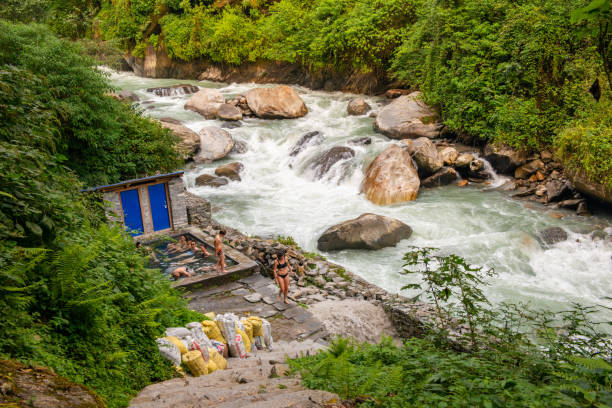
If you are combining the Sanctuary with something longer, such as a Poon Hill loop, a lake day in Pokhara or an extended Nepal circuit, we coordinate the legs as one plan. The same principle applies to groups finishing at Jhinu and continuing elsewhere: Chitwan for wildlife, Lumbini for the Buddha’s birthplace, or the Kali Gandaki valley for Mustang.

A single operator across all legs means a single standard of vehicle, driver and communication, and one conversation to adjust when the weather, the road or the group’s energy changes.

What the valley shows from the jeep window

It is easy to treat the vehicle section as dead time between the trek and the hotel, but the lower Modi Khola valley rewards anyone who keeps their eyes open. Because you are descending, the landscape changes in layers, and it changes faster than it ever did on foot.

Near Jhinu, the slopes are steep and forested, with oak and rhododendron on the cooler faces and bamboo thickets close to the river. As the track drops, the forest opens into terraces cut into the hillside, planted with millet, rice, and maize according to the season, with small stone and slate-roofed houses scattered between them.

After rain, thin waterfalls appear on the valley walls and disappear again within a day or two, which is why the same road can look entirely different on consecutive mornings.

Suspension bridges are the other recurring feature. Some carry only foot traffic and are visible far below the road, strung across the river at points where the gorge narrows. Others carry vehicles and are narrower than they look from the cabin.

Your driver will slow for each, and it is worth watching how little room the vehicle needs when it is placed with care.

Further down, the valley widens, and the settlements become larger and busier. Roadside tea shops, small shops selling trekking supplies and the first dense traffic of the day tell you that you are leaving the mountain world.

Many trekkers describe the moment the tarmac begins at Nayapul as the real end of the trek, and the sense of closure is unexpectedly strong. A few quiet minutes of looking back up the valley, before the conversation in the vehicle turns to hot showers and dinner, is a good way to mark it.

A short planning checklist

Use this list as a working summary when you finalise the exit guide with us.

  • Confirm the final exit date and a fallback day, so a delay on the trail does not collapse the plan.
  • Decide whether the journey ends in Pokhara or Kathmandu, and whether the plan includes a flight.
  • Count passengers and bags, and tell us how many porters are travelling to the roadhead.
  • Ask your guide to confirm the current pickup point with local lodge owners before you reach Jhinu.
  • Agree the departure time for the final morning, allowing for a dawn visit to the hot springs if you want one.
  • Keep permits, passports and a small daypack inside the cabin.
  • Share a single group contact and the driver’s number once you receive it.
  • Hold a buffer if you have a fixed international departure.

Jhinu to Kathmandu Jeep Rental

Practical preparation for the last day of the trek

Bags, porters and the roof rack

Trek bags are usually bulkier than people expect once everything is stuffed back in, and porter loads are often heavier than the guide’s estimate. Tell us at booking how many large packs and duffels there are, and whether porters will accompany the group to the roadhead or hand bags over earlier.

A Scorpio jeep carries a good number of packs on its roof rack, but a full roof on a rough road slows driving, not speeds it up. If your group has more luggage than passengers, the right answer is an extra vehicle, not a heavier roof.

Keep a small daypack inside the cabin with what you will want before the next hotel: water, a warm layer, a rain shell, phone and charger, passports, permits, and any medication. The same day-bag rule applies at Nayapul if you change vehicles.

Permits and documents

The Annapurna region requires an Annapurna Conservation Area permit and a TIMS card for foreign trekkers, and checkposts along the valley, including the Birethanti post near the end of the route, may ask to see them. Keep both documents in a waterproof folder near the top of your bag, not at the bottom of a duffel.

If you are leaving the mountains with a guide, they will know whether you need to stop. If you are travelling independently, ask your driver, who will know the usual practice. Carry your passport on the day, since you will need it at the hotel.

Cash for the road

Expect to spend small amounts at stops: a hot drink at a viewpoint, a snack, a tip for a porter or lodge staff, a last souvenir. Small notes are far more useful than large ones in the valley, and card payments aren’t dependable between Jhinu and Pokhara. Withdraw what you need in Pokhara, not on the road.

Looking after your body

  • Hydrate before the drive. Soaking in hot springs, followed by a long day in a vehicle, can leave you drowsy and dehydrated. Drink water at breakfast and carry a bottle in the cabin.
  • Motion sickness. A winding downhill road after days of walking can unsettle even people who normally travel well. If you are prone to it, sit toward the front, keep the window cracked open, and tell the driver early.
  • Knees and ankles. Tired joints may be tender after the long descent from Chhomrong. A walking pole in the cabin helps, and stretching your legs at stops is worth the extra minutes.
  • Leeches in wet weather. Low sections of the Modi Khola trail can have leeches in the rainy months. A quick check of socks and boots before getting into the vehicle saves a messy surprise later.

How the seasons change the exit

Spring

Late spring brings warm days, rhododendron on the upper slopes and a generally dry valley road. It is a busy time on the trail, so vehicles and lodge rooms in Pokhara fill up earlier than in the off-season. Book the exit well before you start trekking.

Monsoon

The rainy months are the most demanding period for the valley road. Slides and washed-out crossings can interrupt the track for a day or more, rivers run high, and visibility in the lower hills is often poor.

This is when a flexible plan, with a buffer day and a driver who can read conditions, matters most. It is also when walking the whole way to Nayapul, which avoids the track altogether, becomes the more attractive option for some groups.

Autumn

Autumn is the favourite season for trekking in Nepal for good reason: clear skies, stable weather and a freshly repaired road. It is also the busiest period, with the greatest demand for vehicles and rooms. Treat any plan that leaves booking to the last few days with suspicion at this time of year.

Winter

Winter mornings are cold at Jhinu, but the days are bright, and the views are sharp. The road is usually dry. Traffic is lighter, and with fewer trekkers, lodges are quieter and more flexible.

Short daylight hours mean the same-day plan to Kathmandu needs an earlier start.

Mistakes we see most often

  • Treating an old itinerary as a pickup instruction. The place a jeep waited in a published itinerary may not be where it can wait today. Always confirm the current roadhead.
  • Booking the vehicle on the last evening. Good drivers and the right vehicles are committed days ahead in the busy months. Book before you start the trek if you can, and refine the plan from the trail as the date approaches.
  • Underestimating luggage. The number of bags decides the number of vehicles, not just the number of passengers.
  • Using the wrong vehicle for the valley. A van or a standard car is not suitable for the valley track, no matter how well it handles a highway.
  • Packing the day too tightly. A hot spring soak, a rough road, a slow bridge and the Prithvi Highway traffic can all run late. Build a buffer, especially if you have a flight.
  • Skipping the Pokhara night out of habit. For many trekkers, the quiet evening beside the lake is the best way to end the trek.
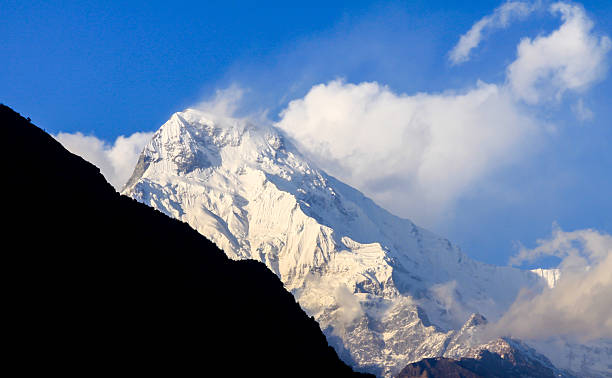
Jhinu to Kathmandu Jeep Rental

Making the Kathmandu arrival count

Reaching the capital after a trek is a small culture shock, and it is worth planning your first day. A hot shower, a laundry service and a decent meal restore people faster than any amount of rest. After that, Kathmandu makes up for a slower day or two.

Our Kathmandu sightseeing service covers the valley’s heritage sites, including Pashupatinath, Boudhanath and Swayambhunath, in a single day. The Bhaktapur Durbar Square day tour is the best single-site day in the valley for people who want old-town streets and pottery squares.

For one last mountain view, the Nagarkot sunrise tour leaves in the dark and returns for breakfast, and the Kathmandu to Nagarkot vehicle service handles the road. Before an international departure, the airport transfer service meets you at the hotel with a named driver.

Beyond the Annapurna Sanctuary

Many trekkers who finish at Jhinu begin planning the next trip before they reach the capital. If the high mountains have hooked you, the Everest Base Camp trek transport page explains how approach vehicles work for the Khumbu, and the Muktinath Yatra and Pokhara to Mustang jeep pages describe the Kali Gandaki approach to the dry side of the Annapurna range.

For travellers with less time, our Nepal tour package and Nepal holiday tour pages explain how vehicle legs are coordinated across a wider circuit.

Frequently asked questions

Can a jeep reach Jhinu Danda itself?

Sometimes it can reach very close, but the exact point varies. The motorable track in the Modi Khola valley has been extended over time and is seasonal, so the place where jeeps wait has been described as Siwai, Simrung, Mithu Danda or a point near Jhinu at different times. We confirm the current situation before your departure and plan the walk-out around it.

How long does the journey from Jhinu to Kathmandu take?

Plan on roughly three to four hours by jeep from the Jhinu area to Pokhara, followed by six to eight hours on the Prithvi Highway from Pokhara to Kathmandu. With the walk out and stops, a same-day journey usually takes ten to twelve hours or more. Many groups break it up with a night in Pokhara.

Is one vehicle enough for the whole trip?

For small groups, a single Scorpio jeep can cover both the valley and the highway. For larger groups, we normally use jeeps for the valley section and change to a car, a Hiace van or a Coaster bus at Nayapul or Pokhara for the highway. We arrange the change as part of one booking.

Should I stay in Pokhara or go straight to Kathmandu?

It depends on your flight, your fitness and the state of the road. If you have an international departure the next morning, a same-day push may be sensible. Otherwise, an evening by the lake is a gentler and often more enjoyable way to finish the trek.
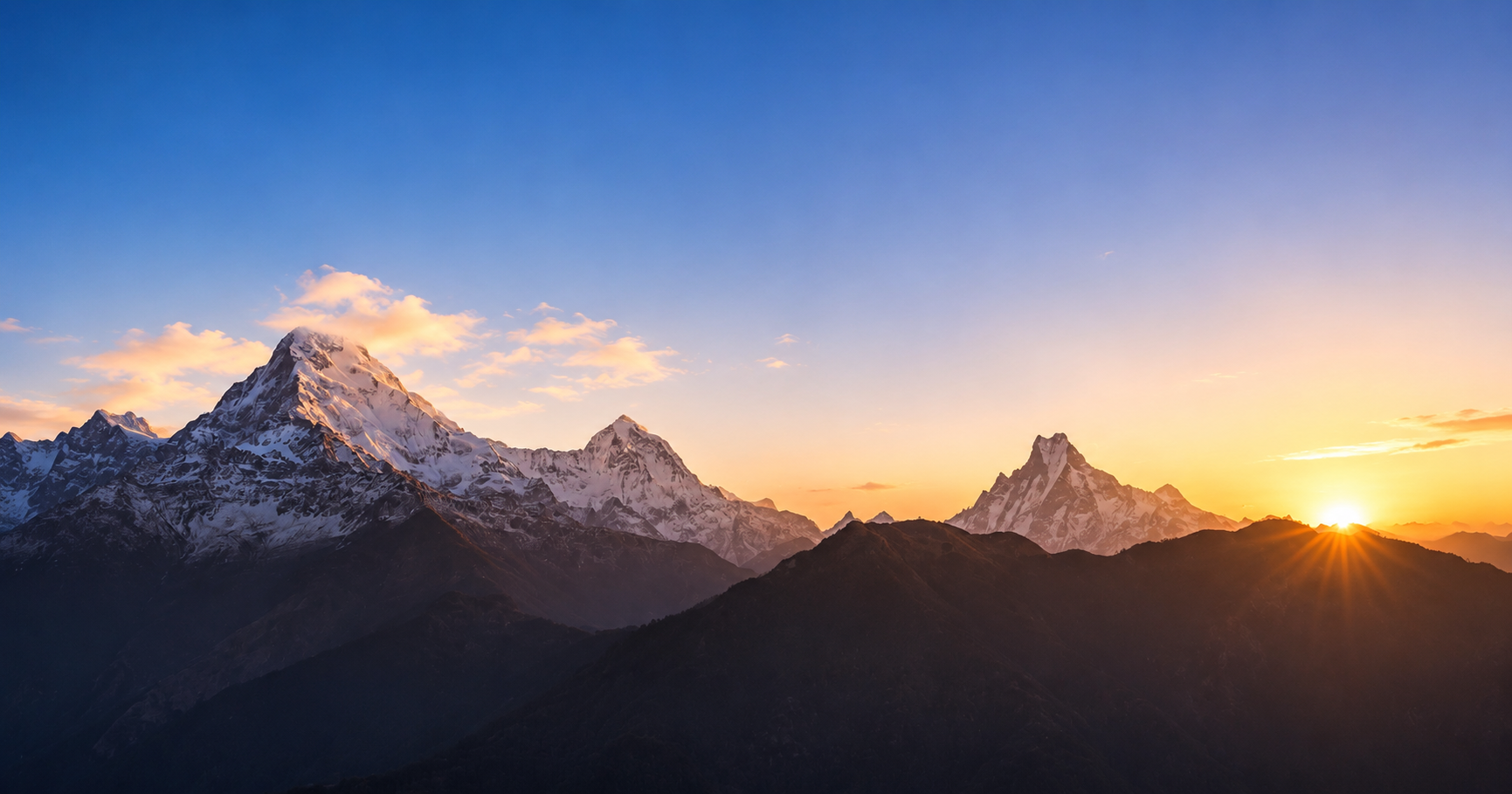
What about porters and bags?

Please tell us how many large bags you have and whether porters will accompany the group to the roadhead. Luggage decides how many vehicles you need. We recommend keeping a small daypack in the cabin with water, documents, medication and a warm layer.

Can I book the pickup before I start the trek?

Yes, and we recommend it, especially in the busy months. Book from Kathmandu or from home with a provisional exit date, then confirm or adjust by message from the trail. A short note a few days before you reach Jhinu lets us confirm the roadhead and the driver.

What if the road is closed or damaged?

We monitor conditions through the drivers who work the valley. If the track is interrupted, we will tell you, discuss alternatives such as walking farther down the trail to a lower roadhead or to Nayapul, and re-organise the plan. Building a buffer day into the plan makes it much less stressful.

Can I visit the hot springs and still leave the same day?

Yes, if you go at dawn. Many groups do exactly that, leaving the lodge soon after first light, soaking for a short while and being back for breakfast with the vehicle plan on schedule. Drink water afterwards and avoid rushing the climb back to the village.

Annapurna range

Plan your Jhinu to Kathmandu return

If you are planning an Annapurna Base Camp trek and want the return journey arranged before you leave, please tell us your expected exit date, group size and number of bags, and whether you want to finish in Pokhara or Kathmandu. We will confirm the current pickup point, recommend the right mix of vehicles and send you a written plan with driver details before you set out. Use the Plan Your Trip page or contact us directly.

Gorakhpur to Jiri Private Jeep: Cost and Transfer Guide

Gorakhpur to Jiri Private Jeep

Gorakhpur to Jiri Private Jeep Transfer — Cost, Route and Complete Guide

Jiri is one of Nepal’s most historically significant and romantically named trekking start points—a small market town in Dolakha District at 1,905 metres that served as the original gateway to the Everest region before the construction of Lukla Airport changed the trekking world’s approach to the Khumbu forever. Generations of legendary mountaineers began their Everest journeys from Jiri, walking north through the Solu Khumbu’s hill country when the only way to reach Namche Bazaar was on foot from the Terai.

For the committed trekker who wants the full overland experience and the superior acclimatisation that 7 to 10 additional walking days provide, the Jiri-start Everest Base Camp trek remains the finest approach to the Khumbu.

For Indian trekkers departing from Gorakhpur in Uttar Pradesh, the overland journey to Jiri combines the classic India-Nepal border crossing at Sunauli with a transit stop in Kathmandu and the 187-kilometre Kathmandu-to-Jiri road through the Dolakha District hills. Nepal Vehicle Hiring Pvt Ltd provides the private 4WD jeep hire for the Nepal-side legs of this journey — from the Sunauli border pickup through Kathmandu to the Jiri road-end.

This guide covers the full route, vehicle costs, road conditions, and how to book the complete overland arrangement.

Gorakhpur to Jiri Private Jeep

The Full Route — Gorakhpur to Jiri Step by Step

Leg 1: Gorakhpur to Sunauli border (90-110 km, 2-3 hours, India side). Drive from Gorakhpur city to the Sonauli/Sunauli border on NH27 through the UP plains. Arranged by India-side transport.

Leg 2: Sunauli border crossing (30-90 minutes). Nepal immigration registration at Bhairahawa/Sunauli. Indian nationals cross freely under the Open Border Treaty with valid Indian photo ID. Nepal Vehicle Hiring Pvt Ltd’s driver waits at the Nepal gate for the confirmed pickup.

Leg 3: Sunauli to Kathmandu (280-300 km, 5-7 hours). Private car or jeep hire from Sunauli border to Kathmandu via Butwal, Narayanghat, Mugling, and the Trishuli gorge. Overnight in Kathmandu for permit acquisition.

Leg 4: Kathmandu to Jiri (187 km, 5-7 hours, 1 travel day). Private 4WD jeep hire from Kathmandu to Jiri via the BP Highway to Banepa, then east through the Sunkoshi valley and Charikot to Jiri.

Total journey: 3 days from Gorakhpur to Jiri. Total Nepal-side distance: approximately 470 to 490 kilometres from the Sunauli border to Jiri.

Transfer Cost — Gorakhpur to Jiri

Sunauli border to Kathmandu (Nepal side): Private car hire: US$150. Private 4WD jeep: NPR 15,000 to 30,000 (USD 113 to 200). All-inclusive — driver, fuel, road tolls.

Kathmandu to Jiri (187 km, 1 day, private 4WD jeep): US$270 for the full vehicle, all-inclusive. The Jiri road — which includes good paved sections and some rougher mountain road character on the Charikot-to-Jiri approach — is best served by a 4WD Scorpio or Hilux jeep rather than a standard sedan, particularly for fully-loaded trekking groups.

Return jeep Jiri to Kathmandu (post-trek): Same price range — pre-arranged at outward booking through Nepal Vehicle Hiring Pvt Ltd. Our team confirms the return vehicle timing via WhatsApp during the trek.
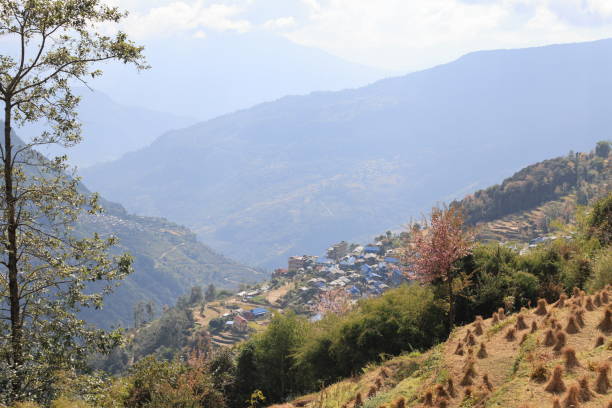
Contact Nepal Vehicle Hiring Pvt Ltd on WhatsApp  or via our plan trip page for a group-specific quote.

Gorakhpur to Jiri Private Jeep

The Kathmandu to Jiri Road — Character and Highlights

The Kathmandu to Jiri private jeep hire follows a route that divides into two distinct phases: the BP Highway eastward from Kathmandu to Banepa (25 km, well-paved and fast), and then the Jiri Highway (also called the Swiss Road or Jiri Road) branching northeast from the BP Highway junction through Dolalghat, Charikot, and ultimately to Jiri.

Kathmandu to Banepa (25 km, 30-45 minutes). The eastward exit from Kathmandu through Bhaktapur — Nepal’s finest medieval heritage city sits directly on this road, making the Bhaktapur heritage tour a natural early-morning addition to the Jiri departure day. The private jeep hire stops at the entrance to Bhaktapur’s heritage square before continuing east to Banepa and the Jiri road junction.

Banepa to Dolalghat (30 km, 45-60 minutes). The road descends from the Kathmandu Valley rim at Banepa into the Sunkoshi River valley at Dolalghat — a dramatic descent through the valley’s forested walls to the river crossing. Dolalghat, at the Sunkoshi confluence, is the last major fuel and rest stop before the road begins its sustained climb into the Dolakha hills.

Dolalghat to Charikot (55 km, 2-3 hours). The road climbs from the Sunkoshi at approximately 600 metres to Charikot at 1,980 metres — the district headquarters of Dolakha District and the commercial centre of the Jiri approach corridor. This section passes through the characteristic terraced hillsides, small bazaar towns, and mid-hill forest of Nepal’s eastern hill country, with the Rolwaling Himal beginning to appear on the northern skyline above Charikot.

Charikot to Jiri (25 km, 45-75 minutes). The final approach from Charikot to Jiri follows a narrower, less-maintained section of the road that descends from Charikot’s ridgeline into the Jiri valley. This section benefits from the 4WD jeep’s ground clearance and traction capability —the gradient, surface condition, and width on this final approach make the Scorpio or Hilux 4WD the clear choice for a loaded trekking group.

Why the Jiri Start Is the Classic Everest Approach

The Jiri-to-Everest Base Camp route is the approach that defined the Everest trekking era before Lukla Airport was built — the route that Sir Edmund Hillary, Tenzing Norgay, and the early Himalayan expeditions walked to reach the Khumbu before there was any infrastructure beyond the trail, the river crossings, and the Sherpa hospitality that sustained them. Walking from Jiri to Namche Bazaar takes 7 to 10 days—compared to the 2 to 3 days from Lukla—and each additional day delivers a cultural and landscape experience the Lukla-start trekker never encounters.

The Jiri-start Everest Base Camp trek passes through five major passes (Deorali La, Solu Kharka, Lamjura Pass, Tragdobuk, and Solu passes) and the full range of Nepal’s mid-hill communities — Sherpa, Rai, Tamang, and Chhetri villages that the Lukla approach misses entirely. The progressive altitude gain from Jiri’s 1,905 metres through the passes to Namche’s 3,440 metres offers the best natural acclimatisation schedule on the Everest approach—the body gains altitude slowly and consistently rather than jumping 1,400 metres in a 20-minute Lukla flight.

Trek Nepal Himalayas’ Everest Base Camp trek packages include the Jiri-start option for trekkers specifically seeking the classic overland approach. The luxury Everest lodge trek and the EBC trek with helicopter return are available with Jiri start and Lukla or helicopter return. Alpine Luxury Treks coordinates the top-end Jiri-start experience.

Gorakhpur to Jiri Private Jeep

Sunauli Border — The India-Nepal Gateway

The Sunauli-Bhairahawa border crossing is Nepal’s busiest land crossing for tourism traffic from India — the gateway used by Indian trekkers from Gorakhpur, Lucknow, Varanasi, and the broader UP and Bihar region who approach Nepal overland. Indian nationals cross at Sunauli without a visa requirement under the India-Nepal Open Border Treaty; a valid Indian photo ID (passport, voter card, or Aadhaar) is all that is required for Nepal entry registration.

Nepal Vehicle Hiking Pvt Ltd positions our driver at the Nepal side of the Sunauli border gate after the group completes immigration—eliminating the post-border vehicle negotiation that disorients first-time Nepal border crossers. The driver confirms by WhatsApp name and vehicle registration the evening before the border crossing, giving the group confidence in a known vehicle waiting at the Nepal gate.

From the border, the private vehicle hire to Kathmandu departs immediately after the group boards — no delay, no negotiation, no uncertainty.

Kathmandu Stop — Permits and the Jiri Departure

The Kathmandu overnight between the Sunauli border arrival and the Jiri departure is the essential permit acquisition stop. All trekkers on the Jiri-to-Everest route require the Sagarmatha National Park entry permit (obtainable from the Nepal Tourism Board in Kathmandu; the park boundary is crossed approximately 3 days after Jiri) and the TIMS card (Trekkers Information Management System, obtainable from TAAN or the Tourism Board). Obtain both in Kathmandu before the Jiri jeep departs.

The Kathmandu stop also allows currency exchange for the trek’s NPR requirements, gear supplementation from Thamel’s outdoor equipment market, and Kathmandu sightseeing car hire for groups that include a Kathmandu heritage day before the Jiri departure. The Bhaktapur heritage day tour is the single most natural addition — Bhaktapur sits directly on the Jiri departure road and can be visited on the morning of the Jiri drive without adding any backtracking.

NOTE: Obtain all permits in Kathmandu before the jeep departs for Jiri. No permit offices at Charikot or Jiri reliably issue the complete Sagarmatha NP and TIMS set.

Understanding the Nepal Vehicle Hire Legs — What NVH Covers

A common question from Indian trekkers planning the Gorakhpur-to-Jiri overland is: exactly which legs does Nepal Vehicle Hiring Pvt Ltd cover, and where does the India-side arrangement end and the Nepal-side arrangement begin?

Nepal Vehicle Hiring Pvt Ltd covers every vehicle leg from the Sunauli Nepal border gate onward. Our service begins the moment the group crosses Nepal immigration—the driver is positioned at the Nepal-side gate, with the group’s name confirmed and the vehicle registration sent by WhatsApp the evening before.

From that point, Nepal Vehicle Hiking Pvt Ltd’s service covers: the Sunauli-to-Kathmandu highway transfer, the Kathmandu airport transfer for any group members arriving by flight, the Kathmandu sightseeing car hire for permit-day heritage visits, the Bhaktapur day tour if added to the Jiri departure morning, and the Kathmandu to Jiri private 4WD jeep hire for the trek approach. The return Jiri-to-Kathmandu vehicle and any Kathmandu post-trek day vehicles are pre-arranged at the outward booking.

For the India side — Gorakhpur to Sunauli — travellers arrange their own transport or contact local Indian taxi services operating the Gorakhpur-Sunauli corridor. Our team on WhatsApp  can advise on India-side connection options from Gorakhpur based on our current knowledge of border-town transport operators.

The Kathmandu to Jiri Departure — Practical Morning

The practical management of the Kathmandu-to-Jiri departure morning significantly affects the Day 3 journey experience. Nepal Vehicle Hiking Pvt Ltd recommends the following departure sequence for the Jiri drive day.

Departure time: 5:30-6:30 AM from Kathmandu. An early departure from the Kathmandu hotel lets the Kathmandu-to-Jiri jeep clear Kathmandu’s eastern Ring Road and the Bhaktapur approach before the city’s morning traffic builds from 7:00 AM onward. Early departure also creates time for a Bhaktapur Durbar Square stop (25 km east of Kathmandu on the Jiri road) from 6:30 to 9:00 AM when the heritage square is at its quietest and most photogenic.

From Bhaktapur, the road continues east through Banepa to the Jiri highway junction — a clear road through the Kathmandu Valley’s eastern corridor before the tourist day begins.

Breakfast at Banepa or Dhulikhel. The small bazaar towns of Banepa and Dhulikhel (both within 30 km of Kathmandu on the eastern highway) have early-opening tea shops and dal bhat restaurants that serve the Jiri road’s morning traffic. Nepal Vehicle Hiking Pvt Ltd’s drivers on the Jiri route know the best Banepa roadside restaurant for an early-morning meal before the Sunkoshi gorge descent begins—a 30-minute breakfast stop that fuels the group for the sustained driving ahead.

Dolalghat river crossing — photo stop. The Sunkoshi River at Dolalghat — visible 600 metres below the road on the descent from Banepa — is the first major river crossing of the Jiri approach and one of the road’s finest photographic moments. Nepal Vehicle Hiking Pvt Ltd’s drivers stop briefly at the viewpoint above the crossing for groups who want a river-gorge photo before descending to the bridge.

This 5-minute stop adds the specific visual memory that the approach to eastern Nepal’s river country deserves.

Charikot lunch stop (12:00-13:00). The private jeep hire arrives at Charikot approximately 4 to 5 hours after the Kathmandu departure — the natural timing for lunch. Charikot’s dal bhat restaurants serve the Dolakha District’s excellent rice-and-lentil combination, made with fresh, locally grown ingredients that Kathmandu Valley’s commercial restaurants can’t match.

The 45 to 60-minute Charikot stop also allows a brief walk to the Bhimsen Temple viewpoint above the bazaar—one of the Jiri road’s finest cultural add-ons for groups curious to explore beyond the vehicle.

Jiri arrival: 14:30 to 16:00. Arriving at Jiri in the early-to-mid afternoon allows the group to check in, organise packs and permit documentation, and walk the Jiri bazaar’s main street before dinner — the first genuine encounter with the trekking start town’s character and the overland community that gathers at Jiri’s guesthouses at the start of each trekking season. Contact Nepal Vehicle Hiring Pvt Ltd on WhatsApp or our plan trip page to book the complete Gorakhpur-to-Jiri transport.

Gorakhpur to Jiri Private Jeep

The Jiri Road vs the BP Highway to Phaplu — Which Route for Everest?

Indian trekkers planning an overland Everest approach have two main vehicle-hire options from Kathmandu: Kathmandu to Jiri (187 km, 5-7 hours, one travel day) or Kathmandu to Salleri Phaplu (280-300 km, 2 travel days). The right choice depends on the trekker’s specific priorities.

Choose Jiri when: You want to minimise vehicle travel time and maximise trekking days. You can complete the Jiri approach in a single day from Kathmandu, while the Phaplu approach takes 2 days. Jiri trekkers walk the historic Hillary-era route and pass through the Lamjura Pass at 3,530 metres — a high and rewarding crossing that the Phaplu approach does not include.

Choose Phaplu when: The priority is starting the trek at a higher altitude with a shorter approach walk to Lukla and the main Khumbu trail. Phaplu (2,400 metres) is higher than Jiri (1,905 metres), and the trail from Phaplu to Namche is 3 to 4 days shorter than the Jiri route.

Phaplu trekkers join the main Lukla approach trail about 5 days into their walk, while Jiri trekkers join it about 7 to 10 days in.

Both routes offer better acclimatisation for the Lukla flight, access to the lower Solukhumbu’s traditional villages, and start with a Nepal Vehicle Hiring Pvt Ltd private 4WD jeep hire from Kathmandu. Our contact team advises on the best approach for each trekking group’s itinerary, fitness level, and available time.

The Rolwaling Valley Connection — Jiri as a Secondary Gateway

Beyond the Everest approach, the Jiri area serves as a secondary access point for the Rolwaling Valley trek—one of Nepal’s finest restricted-area trekking experiences. The Rolwaling Valley, home to the sacred Tsho Rolpa glacial lake at 4,580 metres and the extraordinary Gauri Shankar (7,134 m) peak, is typically approached from the Charikot area (also on the Jiri road) or from the Shigati valley further east.

Trekkers combining the Rolwaling Valley with the Jiri start for the Everest approach can use the same Kathmandu to Jiri private jeep hire — asking the driver to stop at Charikot for the Rolwaling branch rather than continuing to Jiri. The Rolwaling trek approach jeep hire is a specific booking available through Nepal Vehicle Hiring Pvt Ltd.

Gorakhpur to Jiri — The Complete Budget Breakdown

Nepal side Leg 1 — Sunauli to Kathmandu: Private car hire US$218. Private jeep hire: US$190. Per vehicle, all-inclusive.

Nepal side Leg 2 — Kathmandu to Jiri: Private 4WD jeep hire US$270. Per vehicle, all-inclusive, 1 travel day.

Return — Jiri to Kathmandu (post-trek): Same as outward — pre-arranged at outward booking.

Permits (Kathmandu): Sagarmatha National Park permit (NPR 3,000 for SAARC nationals), TIMS card (USD 10-20).

Kathmandu overnight accommodation: Thamel guesthouse NPR 1,500-4,000 per room per night.

For a group of 5 people, the Nepal-side vehicle hire (Sunauli to Kathmandu + Kathmandu to Jiri) divides to approximately NPR 5,400-12,000 (USD 40-80) per person — excellent value for the private vehicle quality and hotel-door service delivered. Contact Nepal Vehicle Hiring Pvt Ltd on WhatsApp for a group-specific quote.

Accommodation Along the Gorakhpur to Jiri Route

Kathmandu. Full range from Thamel budget guesthouses (NPR 1,500-3,000/room) to international hotels. Thamel’s proximity to permit offices, gear shops, and Kathmandu airport transfers makes it the natural base for overland trekking groups.

Charikot (optional overnight). For groups who prefer to break the Kathmandu-to-Jiri drive into 2 days, Charikot offers basic hotel accommodation at NPR 500-1,500 per room. Charikot also serves as the Rolwaling valley departure point, making an overnight here practical for groups visiting both the Rolwaling and Jiri corridors.

Jiri. The trek-start town has a well-established guesthouse and lodge network that serves the steady flow of Jiri-start trekkers, aid workers in the Jiri development area, and domestic Nepal travellers. Basic to mid-range accommodation at NPR 500-2,000 per room. Jiri’s guesthouses offer simple but clean dining facilities, serving as the last organised meal before the trail’s teahouse sequence begins.

Gorakhpur to Jiri Private Jeep

Jiri’s Historic Significance — The Swiss Road and the Development Legacy

The road that Nepal Vehicle Hiring Pvt Ltd’s jeep uses for the Kathmandu to Jiri transfer is known locally as the Swiss Road — the highway built by the Swiss Association for Technical Assistance (SATA, now Helvetas) as part of a major Nepal rural development programme that also established the Jiri Technical School and Vocational Training Centre. The Jiri Technical School — still operating — trains Nepali students in practical technical skills across engineering, health, and agriculture disciplines.

This Swiss development legacy makes Jiri unusual among Nepal’s trekking gateways: a town whose character has been shaped by decades of international development investment alongside its role as a trekking start point.

The Swiss Road’s construction quality reflects this development investment — the Kathmandu-to-Charikot section is among the better-maintained roads in Nepal’s eastern hill network. However, the Charikot-to-Jiri final approach section requires a 4WD jeep.

For the private-vehicle-hire client arriving in Jiri after the Gorakhpur overland journey, the town’s mix of trek-start energy and development-institution calm creates a distinctive atmosphere—a starting point of genuine historical weight for what is, by any measure, one of the world’s great trekking routes.

The Sunkoshi Valley — Nepal’s Eastern Scenic Highway

The road from Dolalghat northward to Charikot follows the Sunkoshi River corridor before branching into the Bhote Koshi and Rolwaling valleys — one of Nepal’s finest and least internationally documented mid-hill driving experiences. At Dolalghat, the Sunkoshi marks the confluence of two of Nepal’s significant eastern rivers.

The road’s arrival at the riverbank after the descent from Banepa delivers the first unmistakable sense of deep Nepal’s river geography: the turquoise glacial water visible in the gorge below the road, the suspension bridge connecting villages on opposite banks, and the specific sound of a major Himalayan river in the valley below the mountain track.

The climb from Dolalghat through the Sindhupulchok District hills toward Charikot passes through a landscape sequence that changes character with every 200 metres of altitude gain: subtropical forest and rice terraces in the lower gorge sections, temperate mixed forest and millet cultivation in the mid sections, and the increasingly open ridgeline views of the eastern Nepal Himalaya — Gauri Shankar (7,134 m) and the Rolwaling range becoming visible on the northern horizon as the road reaches the Dolakha District’s higher ground above 1,500 metres. Nepal Vehicle Hiring Pvt Ltd’s Kathmandu-to-Jiri jeep drivers know the best viewpoints on this section, where the Gauri Shankar-Rolwaling panorama is clearest—a mountain view most travellers drive past without realising what they are seeing.

Our drivers provide the contextual identification that converts a distant ridgeline into a named, understood Himalayan panorama.

The Charikot bazaar at 1,980 metres is the natural midway rest stop and the commercial heart of the Dolakha District — a small but well-stocked hill bazaar with good dal bhat restaurants, basic provisions for last-minute trek supply top-ups, and the Dolakha Bhimsen Temple (one of Nepal’s most ancient and most sacred Tantric shrines, visible on the hillside above the bazaar) that rewards a 30-minute walk for spiritually interested travellers. Nepal Vehicle Hiring Pvt Ltd’s Jiri jeep hire builds the Charikot lunch stop into the standard Kathmandu-to-Jiri day timing — 45 to 60 minutes at the bazaar for food and rest before the final Charikot-to-Jiri descent to the trek start.

The Jiri-to-Namche Walk — What Awaits After the Jeep

The trekking route from Jiri to Namche Bazaar — the first major destination on the Everest Base Camp trek after the Jiri start — covers approximately 150 kilometres over 7 to 10 days through a sequence of landscapes and communities that define the finest quality of mid-hill Nepal trekking.

Jiri to Sete (Days 1-2). The trail climbs from Jiri northward through the villages of Deurali, Kabre, and Sete, crossing the first significant pass (Deorali La at 2,705 m) and descending into the Likhu Khola valley before climbing again through the Chisapani ridge. These first two days establish the rhythm of the Jiri approach: significant altitude gain and loss as the trail crosses Nepal’s parallel ridge-and-valley structure rather than following a single valley northward.

Sete to the Lamjura Pass (Days 3-4). The Lamjura La at 3,530 metres is the highest point of the Jiri-to-Namche approach — a high, cold, and sometimes snow-affected pass that provides the route’s finest panoramic viewpoint. The rhododendron and birch forest on the Lamjura approach is among the finest in eastern Nepal—magnificent in spring when the rhododendrons are in peak bloom, and atmospheric in the mist and cold that often characterise the pass.

The descent from Lamjura to Junbesi is one of the Jiri route’s most celebrated walking sections.

Junbesi to Lukla Junction (Days 5-7). Below the Lamjura La, the route reaches Junbesi — the largest and most architecturally distinctive Sherpa village in the Solu section, with a significant monastery and the last comfortable accommodation before the route joins the main Khumbu trekking trail. The Ringmo village cheese factory, the Taksindo La crossing at 3,071 m, and the descent to the Dudh Koshi valley at Khari Khola mark the progressive transition from the Solu’s mid-hill character to the Khumbu’s high-altitude Sherpa landscape.

The route joins the main Lukla-to-Namche trail at Phakding, and the remaining day’s walk to Namche completes the overland approach begun at the Sunauli border.

Trek Nepal Himalayas’ Everest Base Camp trek packages with the Jiri start include all of this trekking detail in a comprehensive guided format, coordinated with Nepal Vehicle Hiring Pvt Ltd’s Kathmandu to Jiri jeep hire for the vehicle approach.

Jiri

Private Jeep Hire for the Gorakhpur-Jiri Route — Group Size Planning

Planning the right vehicle for the Gorakhpur-to-Jiri journey means matching vehicle size to the group’s passenger and luggage volume.

Small group (2-4 trekkers with standard packs): Private Toyota Corolla car hire for the Sunauli-to-Kathmandu leg (paved highway, no 4WD needed) and 4WD Scorpio jeep hire for the Kathmandu-to-Jiri section. The cost split — a cheaper car for the highway leg and a 4WD jeep for the mountain road — is the most efficient vehicle arrangement for small groups.

Medium group (5-8 trekkers with full expedition packs): 4WD Scorpio or Hilux jeep for both legs, or Toyota Hiace van hire for the Sunauli-to-Kathmandu highway leg and 4WD jeep for Kathmandu-to-Jiri. The Hiace’s greater cargo volume accommodates 7-8 trekkers’ full expedition luggage more comfortably than a Scorpio.

Large group (10-15 trekkers): Multi-vehicle convoy — Hiace van or tourist coaster for passengers plus a dedicated Scorpio or Hilux for equipment. Nepal Vehicle Hiking Pvt Ltd coordinates multi-vehicle convoys as single bookings — all vehicles depart together, travel at the same pace, and arrive at Jiri simultaneously. Contact our team on WhatsApp for large group convoy arrangements.

Connecting the Gorakhpur-Jiri Route with the Annapurna Region

Many Indian trekking groups who make the Gorakhpur-Jiri overland journey for the Everest approach choose to extend their Nepal visit with the Annapurna region on the return leg—creating a complete Nepal trekking circuit that covers the country’s two greatest mountain regions in a single visit.

The standard extension: after completing the Everest Base Camp trek and returning to Kathmandu, the circuit continues westward to Pokhara by private vehicle hire, the Annapurna region’s base. From Pokhara, the Annapurna Base Camp trek via Nayapul transport or the Ghorepani Poon Hill trek provides the Annapurna region chapter.

The full Gorakhpur-Jiri-EBC-Pokhara-Annapurna-Sunauli circuit covers Nepal’s two greatest trekking regions in a 4 to 6-week overland journey that Nepal Vehicle Hiring Pvt Ltd coordinates through a single plan trip page submission.

The Kathmandu to Jiri Road — Seasonal Conditions

The Kathmandu to Jiri jeep road is drivable year-round but has distinct seasonal characteristics that affect journey time, road surface quality, and the specific driving conditions our drivers manage.

Autumn (October-November) — Peak Season. The finest season for the Kathmandu-to-Jiri drive: post-monsoon road surfaces freshly settled, clear mountain visibility revealing the Gauri Shankar and Rolwaling range above Charikot, and the warm-by-day, cool-by-night temperature pattern that makes the drive pleasant and Jiri’s first trekking morning ideal. The Kathmandu-to-Jiri road is at its most reliable in October and November — no monsoon landslide risk, no winter snow on the higher approach sections.

Nepal Vehicle Hiking Pvt Ltd’s Jiri jeep hire bookings are highest during this period—book 1 to 2 weeks ahead.

Spring (March-May) — Second Peak. The spring season’s rhododendron bloom — spectacular on the Lamjura La approach — makes the Jiri trek’s timing particularly rewarding in March and April. The road is reliable in spring, though occasional late-winter frost on the higher Charikot-to-Jiri approach section can cause brief morning delays that our drivers manage with appropriate speed control.

Spring is the second busiest period for Jiri approach vehicle hire — book 1 week ahead.

Monsoon (June-September) — Possible but Demanding. The monsoon season creates the highest landslide risk on the Kathmandu-to-Jiri road — particularly on the Dolalghat-to-Charikot section where the hillside above the road is exposed to seasonal rainfall. Nepal Vehicle Hiking Pvt Ltd does not dispatch the Jiri jeep hire during monsoon without confirming road conditions on the morning of.

When the road is clear, the monsoon drive offers its own visual reward: the Sunkoshi valley in full green, terraces in active rice planting, and waterfalls threading the gorge walls above the road. Contact our team for current monsoon road status before booking.

Winter (December-February) — Reliable but Cold. The Kathmandu-to-Jiri road is generally reliable in winter — the Charikot-to-Jiri approach section may see occasional frost or light snow on the higher sections but is rarely blocked completely. Winter trekking on the Jiri route requires full cold-weather camping or teahouse equipment for the Lamjura La crossing, where overnight temperatures drop well below zero. Private jeep hire is available year-round — contact WhatsApp for current winter road status.

Gorakhpur to Jiri vs Gorakhpur to Phaplu — Choosing Your Everest Start

Indian trekkers departing from Gorakhpur face a specific route choice: Gorakhpur to Phaplu via the BP Highway (3-4 days of vehicle travel) or Gorakhpur to Jiri via the Swiss Road (3 days of vehicle travel). Both lead to the Everest region’s overland trail network — but via different terrain, different walking distances to Namche, and different trail character.

Gorakhpur to Jiri — The Case For: One fewer vehicle travel day than Phaplu. The Jiri approach passes through the Lamjura La at 3,530 m — one of Nepal’s finest high passes on the approach to the Khumbu. The Charikot connection adds access to the Rolwaling Valley trek.
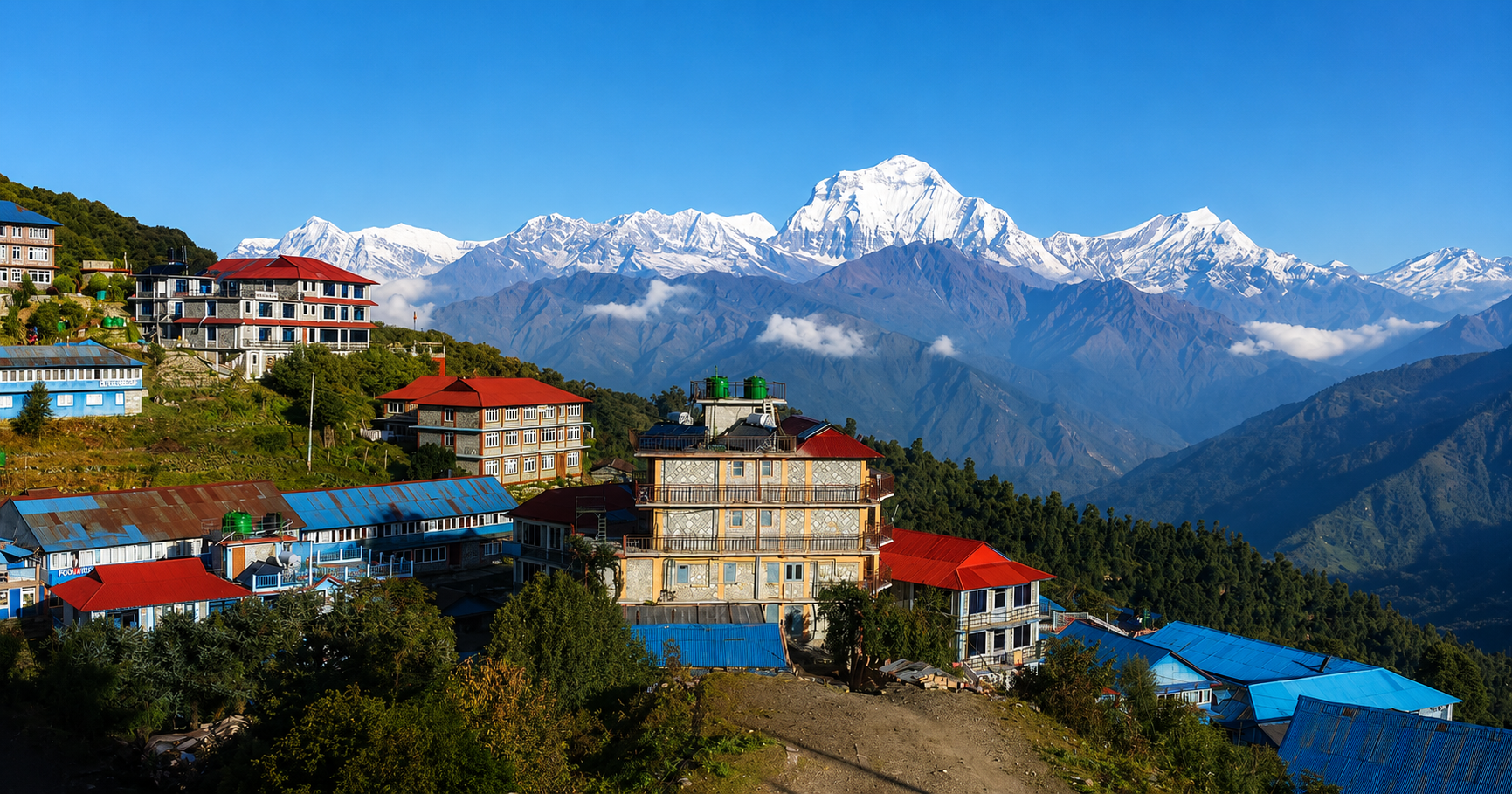
The Jiri start is the original Hillary-era route — historically the most significant Everest approach. Jiri to Namche takes 7-10 days, providing the finest lower Solu Khumbu cultural immersion.

Gorakhpur to Phaplu — The Case For: Phaplu at 2,400 m starts higher than Jiri at 1,905 m. The Phaplu approach trail to Namche is 4-5 days shorter than the Jiri approach. Phaplu has a small airport — groups can fly one direction and drive the other.

The Phaplu trail passes through Ringmo and Junbesi — the finest Solu Sherpa villages — which the Jiri trail also passes through but from a different approach angle.

Combined route option: The finest single Nepal Everest circuit starts at Jiri, walks to EBC and returns via the Phaplu trail to Phaplu for the return jeep to Kathmandu — using both approach roads and seeing the full Solu Khumbu on a single circuit. Nepal Vehicle Hiring Pvt Ltd coordinates the Jiri inward jeep hire and the Phaplu return jeep hire as a single booking through our plan trip page.

The Gorakhpur Departure — Practical Travel from India

Gorakhpur functions as the natural staging city for the Nepal overland departure because of its railway connectivity to India’s major population centres. Gorakhpur Junction railway station is one of India’s busiest and most central junction points for eastern UP, Bihar, and connecting services — making Gorakhpur accessible by overnight train from Delhi, Lucknow, Varanasi, Allahabad, Kolkata, and Mumbai.

For trekking groups travelling from major Indian cities, the practical Gorakhpur departure sequence is: overnight train from home city to Gorakhpur Junction → morning taxi or vehicle from Gorakhpur to Sunauli border (90-110 km, 2-3 hours) → Nepal immigration crossing at Sunauli → Nepal Vehicle Hiring Pvt Ltd driver meeting at the Nepal gate → private vehicle to Kathmandu → Kathmandu hotel check-in. This sequence — train overnight, border crossing in the morning, Kathmandu arrival by evening — compresses the India-to-Kathmandu transit into a single travel day after the overnight train, making the Gorakhpur approach the most time-efficient overland route to Nepal from India’s major cities.

The Gorakhpur departure also has a specific pilgrimage dimension for Hindu trekkers: the Gorakhnath Temple in Gorakhpur city — one of India’s most important Shaivite pilgrimage sites — is the natural first stop for trekking groups whose Everest journey carries sacred significance. Beginning the Jiri approach at Gorakhnath and ending it at Pashupatinath Temple on the Kathmandu return creates a Shaivite pilgrimage arc — from the great Yogi-Saint’s ashram in the plains to the Himalayan Shiva temple in the Bagmati valley — that gives the overland journey its own sacred narrative alongside the trekking achievement.

Contact Nepal Vehicle Hiking Pvt Ltd on WhatsApp to plan complete transport arrangements from Gorakhpur to Jiri.

Jiri and the Surrounding Dolakha District — Beyond the Trailhead

Jiri is not merely a trailhead — it is a district-level development centre with a character shaped by decades of Swiss and international NGO investment in health, education, and technical training. The Jiri Technical School and Vocational Training Centre (established by Helvetas, the Swiss development agency, in the 1970s) trains hundreds of Nepali students annually in practical technical skills. This institution makes Jiri unique among Nepal’s trekking start towns.

The Dolakha District surrounding Jiri has its own distinct cultural and natural attractions: the Dolakha Bhimsen Temple in Charikot (one of Nepal’s oldest and most sacred Tantric temples, famously consulted before major state decisions throughout Nepali history), the Rolwaling Valley’s glacial lake and Gauri Shankar backdrop, and the Tamakoshi River corridor that provides the approach to the Rolwaling Valley trek via the Shigati road. Trekkers with time to spend at the Jiri trailhead before beginning their walk can use the extra day for Charikot’s Bhimsen Temple visit — a 25-kilometre drive back up the road toward Kathmandu that Nepal Vehicle Hiring Pvt Ltd’s private jeep hire can include as a day trip from Jiri before the trek begins.

This adds a cultural dimension to the Gorakhpur-to-Jiri overland arrival that the Lukla flight approach to EBC cannot provide.

For trekkers who fly into Lukla and return to Kathmandu by domestic aircraft rather than walking back to Jiri or Phaplu, Nepal Vehicle Hiking Pvt Ltd’s Kathmandu airport transfer service collects the group from the domestic arrivals terminal. It delivers them to the Kathmandu hotel for the night before departure from Sunauli.

Our Kathmandu-to-Sunauli private vehicle hire covers the final leg of the overland circuit back to the Indian border. The Kathmandu sightseeing car hire for a post-trek Kathmandu day — Pashupatinath, Boudhanath, and the heritage squares — completes the Nepal circuit with the cultural dimension that the overland approach began.

Why Choose Nepal Vehicle Hiring Pvt Ltd for Gorakhpur to Jiri

  • Sunauli border pickup: Driver confirmed by name and registration at the Nepal gate immediately after immigration.
  • Sunauli to Kathmandu: Private car or jeep hire, hotel drop, all-inclusive.
  • Kathmandu to Jiri 4WD jeep: Scorpio or Hilux exclusively — the Charikot-to-Jiri section requires 4WD.
  • Bhaktapur en route: Our drivers stop at Bhaktapur Durbar Square on the Jiri departure morning if requested.
  • Permit advisory: Sagarmatha NP permit and TIMS required before Jiri departure — our team advises at booking.
  • Rolwaling connection: Jeep can stop at Charikot for the Rolwaling Valley trek approach if requested at booking.
  • Return vehicle pre-arranged: Jiri-to-Kathmandu return confirmed at outward booking, WhatsApp-adjusted during trek.
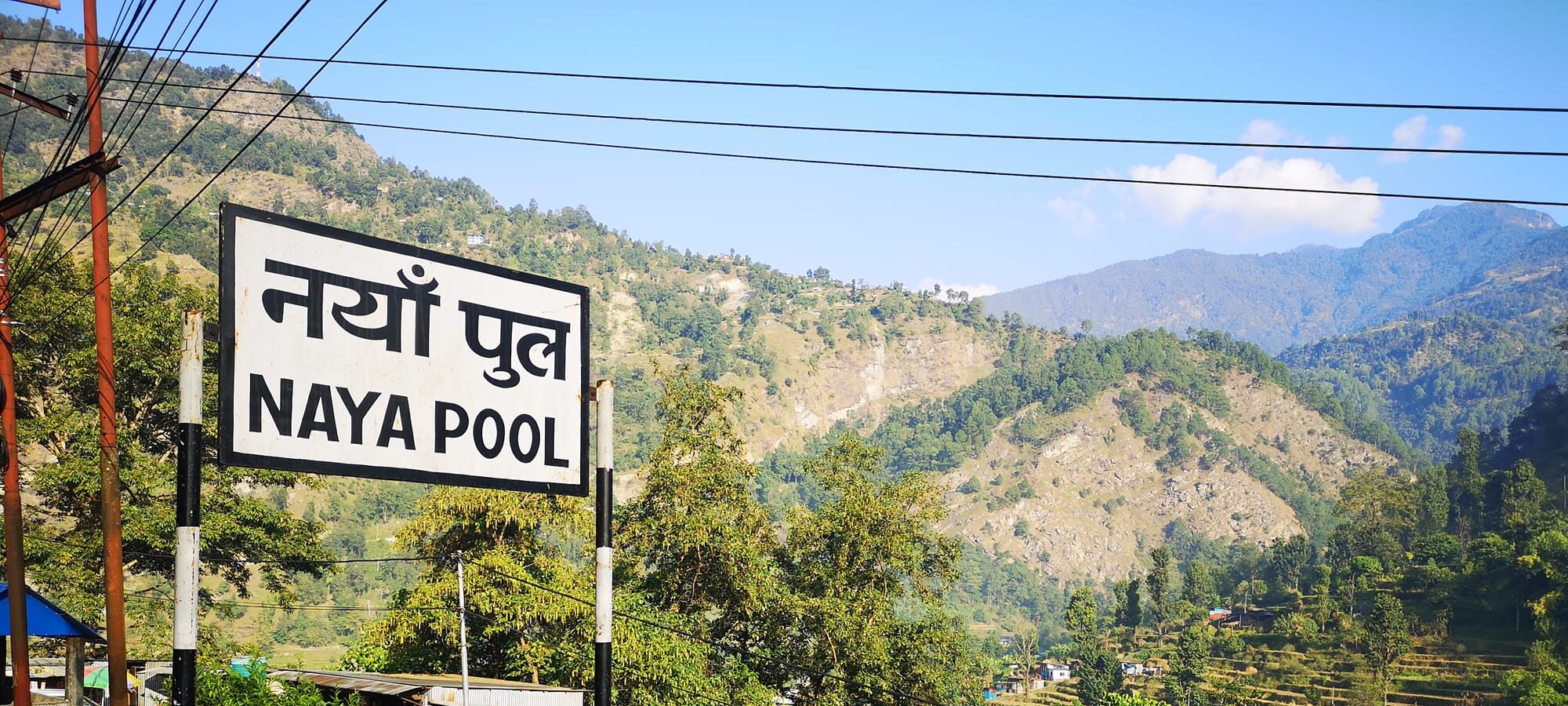
  • All-inclusive pricing: Driver, fuel, tolls — no additions at Jiri.
  • 24/7 on WhatsApp or plan trip page.

The Jiri Trek vs Lukla Flight — The Cost and Experience Comparison

For Indian trekkers from Gorakhpur evaluating the Jiri overland approach against the Kathmandu-to-Lukla domestic flight, the comparison covers both cost and experience.

Cost comparison for a group of 5: Kathmandu-to-Jiri private jeep hire: NPR 18,000 total = NPR 3,600 per person. Kathmandu-to-Lukla return domestic flight: approximately NPR 35,000 to 55,000 per person (round trip, including weather-delay buffer days at Kathmandu hotels).

The Jiri overland approach is substantially cheaper per person than the Lukla flight for groups of 4 or more — with the vehicle hire cost being a fraction of the combined flight, airport transfer, and Kathmandu hotel weather-buffer accommodation costs.

Experience comparison: The Jiri approach adds 7 to 10 days of additional walking through Nepal’s finest lower Solukhumbu communities — villages that Lukla-approach trekkers never see, passes that the Hillary-era expeditions crossed, and the specific satisfaction of walking the route that defined Nepal trekking before aviation changed it. The Lukla approach is faster and easier; the Jiri approach is richer and more historically resonant.

Extending the Gorakhpur-Jiri Journey — Nepal Circuit Options

The Gorakhpur-to-Jiri vehicle transfer fits naturally into broader Nepal circuit itineraries that Indian trekkers can combine with the Jiri-start Everest approach.

Gorakhpur → Jiri → Everest Base Camp → Kathmandu → Pokhara → Chitwan → Gorakhpur. The classic Nepal overland loop entering and exiting through Gorakhpur. After the EBC trek and return to Kathmandu, a private vehicle hire to Pokhara connects to Annapurna views and a Sarangkot sunrise, then a bus to Chitwan for the wildlife safari before returning to Gorakhpur via Sunauli.

Gorakhpur → Lumbini → Kathmandu → Jiri → Everest. Adding the Buddhist sacred site of Lumbini to the Nepal circuit before the Jiri trek. The Kathmandu-to-Lumbini bus service or private vehicle hire connects Sunauli arrival directly to Lumbini (about 22 km from Sunauli) before the Kathmandu transit.
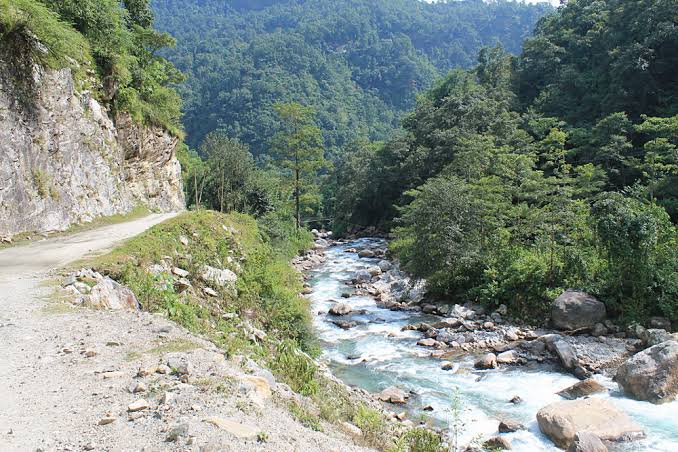
Nepal Vehicle Hiking Pvt Ltd coordinates all vehicle legs of any Nepal circuit through our plan trip page — one submission, all legs quoted and confirmed.

Frequently Asked Questions — Gorakhpur to Jiri Private Jeep

Q: How long does it take to travel from Gorakhpur to Jiri?

3 days: Day 1 — Gorakhpur to Sunauli border and crossing. Day 2 — Sunauli to Kathmandu (5-7 hours) and overnight in Kathmandu for permits. Day 3 — Kathmandu to Jiri by private 4WD jeep (5-7 hours).

Q: What is the jeep transfer cost from Kathmandu to Jiri?

NPR 14,000 to 22,000 (USD 105 to 165) for the full private 4WD jeep hire, all-inclusive. Contact Nepal Vehicle Hiring Pvt Ltd on WhatsApp.

Q: Is a 4WD jeep necessary for Kathmandu to Jiri?

Recommended — the Charikot-to-Jiri final section and the road gradient with full expedition luggage make a 4WD jeep the appropriate vehicle for the Jiri approach.

Q: Can I visit Bhaktapur on the way to Jiri?

Yes — Bhaktapur Durbar Square is directly on the Jiri departure road from Kathmandu. Ask our team to include the Bhaktapur stop at booking.

Q: Can Nepal Vehicle Hiring Pvt Ltd arrange the Nepal-side pickup at Sunauli?

Yes — our driver meets the group at the Nepal side of the Sunauli gate after immigration. Book via WhatsApp or our plan trip page.

Every element of the Gorakhpur-to-Jiri overland journey — from the Gorakhpur railway platform to the Sunauli border gate, from the Prithvi Highway’s Trishuli gorge to the Swiss Road’s Sunkoshi crossing, from Charikot’s Bhimsen Temple to Jiri’s trekking start energy — is a chapter in the overland narrative that makes the Jiri-start Everest approach the finest commitment an Indian trekker can make to the Khumbu. Nepal Vehicle Hiring Pvt Ltd provides the Nepal-side vehicle chapter of that narrative — border pickup, Kathmandu transit, Jiri approach jeep, and return vehicle — so that when the trail from Jiri begins, every transport detail is resolved and the full attention is free for what the walk ahead deserves. Contact us on WhatsApp or through our plan trip page.

The return journey from Jiri to Gorakhpur closes the overland circle — and Nepal Vehicle Hiring Pvt Ltd’s pre-arranged return vehicle ensures it closes as smoothly as it opened. Our Jiri-to-Kathmandu jeep hire collects the group at the Jiri trailhead on the confirmed date, drives the Swiss Road back through Charikot and the Sunkoshi valley to Kathmandu, and connects to the Kathmandu-to-Sunauli vehicle hire for the final Nepal-side leg to the border.

At the Sunauli gate, the Nepal Vehicle Hiring Pvt Ltd service concludes, and the India-side connection to Gorakhpur continues the homeward journey. The complete overland circuit — Gorakhpur railway, Sunauli border, Nepal highway, Jiri Swiss Road, Khumbu trail, Jiri return, Sunauli border, Gorakhpur — is one of the finest adventure travel circuits available from any Indian starting city, and Nepal Vehicle Hiring Pvt Ltd covers every Nepal-side vehicle metre of it to professional standards. Plan the full circuit on our trip page or WhatsApp.

Conclusion

The overland journey from Gorakhpur to Jiri is the classic India-to-Everest route and approach, beginning at the Sunauli border gate, crossing Nepal’s highway country, and delivering trekkers to the town that Sir Edmund Hillary’s era made the starting point of one of the world’s greatest mountain journeys. Nepal Vehicle Hiring Pvt Ltd provides private 4WD jeep hire for every Nepal-side veg — border pickup, Kathmandu transfer, and the Kathmandu-to-Jiri jeep hire that completes the overland approach — with all-inclusive, transparent pricing,pre-departure permit advice and a pre-arranged return vehicle.

Nepal vehicle Hiring — call or WhatsApp, visit vehiclehiringnepal.com, or plan your complete overland itinerary through our plan trip page.

Jiri to Kathmandu Private Vehicle Hire

Bhandar jiri

Jiri to Kathmandu Private Vehicle Hire – Complete Guide

Travelling the Jiri to Kathmandu road is uniquely satisfying— a route with one of the most storied histories in Nepal’s trekking landscape. Jiri was the original starting point for Everest expeditions before they cut the Lukla airstrip into the Khumbu hillside.

Every expedition that reached Everest Base Camp before the late 1960s — including the 1953 Hillary and Tenzing first ascent team — walked the complete route from the roadhead at Jiri (or its predecessor at even lower points before the road was extended) through the Solu Khumbu hills and valleys to the Khumbu region.

Swiss development assistance built the Jiri-to-Salleri road as part of Nepal’s first major mountain road development programme, and it remains a remarkable piece of engineering that connects Kathmandu to the Solu Khumbu district headquarters across some of Nepal’s most challenging middle-hills terrain.

Jiri road

Today, Jiri-to-Kathmandu private vehicle hire serves several distinct categories of traveller. The most significant are Everest region trekkers who have chosen the classic Jiri route to begin their trek — starting from Jiri and walking the 8–10 day route to Lukla before flying out or continuing to base camp — and who need private vehicle transfer from Kathmandu to Jiri at the start and from Jiri back to Kathmandu on the return.

The second category is a growing segment of trekkers who complete the Everest Base Camp Trek via a Lukla flight and then walk the return route from Lukla down the historic trail to Jiri, reaching Jiri after 8–12 days of walking through the Solu Khumbu valleys and needing a vehicle to return to Kathmandu.

A third category is local travellers, researchers, development workers, and those with connections to the Ramechhap and Dolakha district communities who use this Jiri-to-Kathmandu route as their primary highway connection to the capital.

Nepal Vehicle Hiring Pvt Ltd provides private vehicle hire for the complete Jiri to Kathmandu and Kathmandu to Jiri route as a professional door-to-door service — hotel pickup in Kathmandu with delivery to the Jiri bus park or your specific Jiri guesthouse, and return Jiri pickup with delivery to your Kathmandu hotel.

This guide covers the route in complete detail: the highway, the road conditions, the realistic journey time, every vehicle option with honest costs, the optional stops, the permit requirements for Everest trekkers using this route, and how the Jiri transfer connects to the full suite of Trek Nepal Himalayas Everest trekking packages and Alpine Luxury Treks top-end Himalayan journeys.

Book: vehiclehiringnepal.com | Call/ WhatsApp

Jiri to Kathmandu Private Vehicle Hire

Jiri – The Historic Gateway to the Solu Khumbu

Jiri is a small but strategically significant hill town at approximately 1,905 metres above sea level in Dolakha District, eastern Nepal. It sits at the confluence of the Jiri Khola and Khimti Khola rivers and serves as the administrative and market hub for the surrounding Solu Khumbu approach region.

The town offers basic to moderate guesthouse accommodation, restaurants serving Nepali and basic international menus, a small market, a fuel station, and Tabu’s Park, where vehicles from Kathmandu arrive and depart. For trekkers beginning or ending the Jiri-to-Lukla classic Everest approach route, Jiri offers the last reliable services before the trail enters the remote Solu Khumbu hills.

The Jiri-to-Salleri road, which continues beyond Jiri deeper into the Solu Khumbu district, was one of Nepal’s pioneering Swiss-assisted rural development road projects. The Swiss Association for Technical Assistance (SATA, later Helvetas) began work on this road in the 1970s, as part of a broader integrated rural development programme that also brought health posts, schools, and agricultural support to one of Nepal’s most remote inhabited regions.

Over subsequent decades, the road has been extended and improved, and today it connects Kathmandu through Jiri to Salleri and Phaplu—the Salleri and Phaplu access points for the Everest region road approach that Nepal Vehicle Hiring also serves as a dedicated alternative to the Manthali–Lukla flight.

Jiri to Kathmandu Private Vehicle Hire

The Road – BP Highway to Jiri in Complete Detail

Kathmandu to Banepa–Dhulikhel – The BP Highway Start

The Kathmandu to Jiri route follows the BP Highway (Banepa–Bardibas Highway) eastward from Kathmandu — the same highway used for the Kathmandu to Manthali Airport pre-dawn transfer — as far as Banepa, where the Jiri road branches south-eastward from the main BP Highway.

The first 30 km from Kathmandu to Banepa is a smooth, paved highway, passing through Bhaktapur District and offering the first views of the eastern Himalayan foothills as the road climbs toward Dhulikhel (1,550 m) — a hilltop town with one of Nepal’s finest panoramic views of the central and eastern Himalayan range. Many Kathmandu to Jiri travellers stop briefly at Dhulikhel for the mountain vista before continuing east and south on the Jiri road.

Banepa to Jiri – The Middle Hills Section

From Banepa, the Jiri road heads southeast through Panchkhal, then becomes a serious hill road, climbing through successive ridges and valleys in the Sindhupalchowk and Dolakha districts. This section of the route is one of Nepal’s most beautiful middle-hills drives — a continuous panorama of terraced rice fields, traditional Tamang and Sherpa villages, forested ridgelines, and river valleys

that captures the essential character of Nepal’s inhabited hill landscape far more authentically than the more touristic routes to Pokhara or Chitwan. The road passes through the important town of Charikot (Dolakha district headquarters at 1,890 m) — a natural rest and refreshment stop approximately two-thirds of the way between Banepa and Jiri, with the Dolakha Bhimsen Temple above the town being a significant pilgrimage site for Nepalis from across the eastern hills region.

The road surface between Banepa and Jiri is paved throughout but has the characteristic features of Nepal’s middle-hills roads: narrow sections with limited passing space, steep grades on both climbs and descents, blind corners that require careful speed management, and sections where monsoon damage has created rough patches that require reduced speed. Safe transportation in Nepal is especially important on this stretch.

Steep hill grades, narrow roads, and heavy local bus and truck traffic make an experienced, route-familiar driver essential for safe, efficient travel. Nepal Vehicle Hiring’s Jiri route drivers have specific, documented experience on the Kathmandu to Jiri BP Highway branch, one of the key driver qualification criteria the booking team verifies before assigning a driver to this route.

Jiri to Kathmandu Private Vehicle Hire

The Jiri Approach and Town Arrival

The final approach to Jiri from the east descends from the Solu ridge into the Jiri Khola valley, with the town visible below and the distinctive terraced fields and the Jiri Technical School (another Swiss development project legacy) visible on the hillsides.

Nepal Vehicle Hiring delivers to the Jiri bus park, any specific guesthouse in the town, or the trailhead departure point for the classic trekking route as specified in the booking. For trekkers starting the classic Jiri to Lukla trail, the Trek Nepal Himalayas guide team can confirm the specific trailhead pickup or drop-off point before the vehicle departs Kathmandu.

Distance and Realistic Travel Time

The Kathmandu to Jiri road distance is approximately 188 km by the main BP Highway route via Banepa and Charikot. Although it may look manageable on a map, travel time ranges from 5 to 7 hours, depending on road conditions, traffic, and the number of stops.

This time range reflects the genuine character of Nepal’s middle-hills road network — the mountain road profile of the Banepa–Jiri section means that average speeds are rarely above 40–50 km/h even on the better-maintained stretches, and 30–35 km/h is more typical on the steeper and rougher sections through Dolakha District.

Nepal Vehicle Hiring recommends departing Kathmandu by 7:00 AM at the latest for a comfortable daylight arrival in Jiri. A 7:00 AM departure with normal road conditions and one rest stop at Charikot arrives in Jiri by approximately 1:00–2:00 PM — providing adequate time for trekkers to check into their guesthouse, meet their Trek Nepal Himalayas guide and porter team, organise their loads, and rest before the first trekking day begins the following morning.

A later departure risks arriving after dark on the final approach to Jiri, which is not recommended on this road.

For the Jiri-to-Kathmandu return journey, trekkers completing the Solu Khumbu route on foot and reaching Jiri after 8–12 days of walking typically arrive in Jiri in the mid-to-late afternoon. Trekkers can drive from Jiri to Kathmandu the same day if they arrive before 11:00 AM. Still, most arriving in the afternoon prefer to stay overnight in Jiri and depart for Kathmandu the following morning at 7:00 AM.

Nepal Vehicle Hiring’s Jiri to Kathmandu transfer service accommodates both same-day and next-morning departure arrangements — the driver can be pre-positioned in Jiri the previous evening for an early morning departure, or can depart Kathmandu at 7:00 AM to collect the group for a same-day return if the group is already in Jiri and ready.

Jiri

Vehicle Options and Realistic Costs

Private Car or Standard SUV – For Small Groups of One to Three

For solo trekkers and small groups of two to three people with manageable luggage, the private car or standard compact SUV handles the Kathmandu to Jiri road adequately — the route is paved throughout. It doesn’t require true 4WD capability, though an SUV’s higher ground clearance helps on the rougher sections near Jiri.

The approximate one-way cost from Kathmandu to Jiri in a private car is US$133, covering the vehicle, driver, and fuel for the full 188 km route.

Green meadow and pine forest at Jiri

Mahindra Scorpio or Bolero 4WD – The Standard for Groups

For groups of four to seven trekkers with full expedition luggage, Nepal Vehicle Hiring recommends the Mahindra Scorpio or Bolero 4WD for the Kathmandu to Jiri transfer. The roof rack fits all main trekking duffels and porter loads outside the cabin, keeping passengers comfortable on the 5–7 hour journey, and the 4WD capability adds a safety margin on the steeper, rougher sections between Charikot and Jiri.

The approximate cost for a Mahindra Scorpio or Bolero one-way from Kathmandu to Jiri is NPR 14,000–35,000 (approximately USD 105–250), covering vehicle, driver, and fuel. For trekking groups booked with Trek Nepal Himalayas for the classic Jiri-to-Lukla Everest route, the Scorpio is the standard transfer vehicle coordinated with the trek guide team.

Toyota Hiace Van – For Larger Groups

For groups of eight to thirteen people—research teams, school groups, development sector workers, or larger trekking parties—the Toyota Hiace van handles the Kathmandu-to-Jiri highway route smoothly, with its full-length roof rack providing ample luggage space outside the passenger cabin.

The approximate cost for a Toyota Hiace one-way from Kathmandu to Jiri is NPR 18,000–40,000 (approximately USD 135–300), making it the most cost-effective per-head option for larger groups on this route. The Hiace handles the BP Highway route and the Banepa–Jiri road comfortably—the road is paved and, while steep in sections, does not require 4WD Low range.

Toyota Land Cruiser – Top-end Option

For VIP trekkers, senior participants, top-end tour groups, and researchers requiring the highest standard of comfort and reliability on the Jiri route, the Toyota Land Cruiser 4WD provides the definitive private vehicle experience — superior suspension comfort on the rough Dolakha District road sections, a top-end cabin, generous rear cargo space, and

the Land Cruiser’s proven reliability for extended mountain road journeys. The approximate cost for a Toyota Land Cruiser one-way from Kathmandu to Jiri is NPR 22,000–60,000 (approximately USD 165–600). For Alpine Luxury Treks clients using the classic Jiri route as part of a custom Himalayan journey, the Land Cruiser delivers the top-end standard expected throughout the itinerary.

Jiri to Kathmandu Private Vehicle Hire

The Classic Jiri Trekking Route – Why It Matters for Transport Planning

Understanding why trekkers use the Jiri route at all — given that the Lukla flight provides a much faster approach to the Khumbu — is essential context for anyone planning the Kathmandu to Jiri private vehicle transfer. The classic Jiri to Lukla approach to Everest Base Camp is chosen for a set of reasons that make it genuinely superior to the flight approach for certain trekkers and itineraries.

The most compelling reason is acclimatisation. The 8–12 day walk from Jiri to Lukla gains altitude gradually through multiple ridge crossings, providing an acclimatisation profile that significantly reduces the risk of altitude sickness compared to the rapid ascent from a Kathmandu-level airport to Lukla’s 2,860 metres in a 25-minute flight.

Trekkers who have previously experienced altitude issues on the flight approach often find the Jiri route entirely manageable. As Trek Nepal Himalayas guides consistently advise their clients, the extra days walking to Lukla are not days lost from the trek — they are days of preparation that make the entire Khumbu experience safer, healthier, and ultimately more enjoyable.

The second reason is historical and experiential depth. The Jiri to Lukla trail passes through the Solu Khumbu valleys—the homeland of the Sherpa and Rai communities — whose culture, monastery life, and agricultural traditions offer a completely different experiential dimension from the more heavily visited area above Lukla.

Only a fraction of trekkers reach villages like Sete, Junbesi, Ringmo, and Kenja, and the traditional Sherpa culture of the lower Solu valleys is more intact and easier to observe than on the more commercially developed Namche circuit above Lukla.

The third reason is eliminating flight dependency—the Lukla flight cancellation risk is one of the most significant logistical vulnerabilities in any Everest trekking itinerary. Trekkers who walk in from Jiri remove this vulnerability entirely on the inbound leg, arriving in Lukla on foot with full schedule independence, regardless of weather or flight conditions.

Jiri to Kathmandu Private Vehicle Hire

The Jiri to Salleri Extension – Connecting to the Everest Road

One of the most practical uses of the Jiri to Kathmandu vehicle hire route is its role as part of the longer Kathmandu to Salleri and Phaplu road access route to the Everest region. The Salleri (Solukhumbu district headquarters) and Phaplu airport are approximately 70 km beyond Jiri on the same road that the Kathmandu–Jiri route follows.

For trekkers whose itinerary takes them to Phaplu or Salleri rather than Jiri as their road endpoint — or who want to take the vehicle all the way to the Solukhumbu district before beginning the trek — Nepal Vehicle Hiring provides the Kathmandu to Salleri and Kathmandu to Phaplu private vehicle hire as an extension of the Jiri service.

This Jiri–Salleri–Phaplu extension is increasingly popular with Everest Base Camp trekkers who want to begin their trek from a higher starting point than Jiri without taking the Lukla flight, using Phaplu (2,335 m) or Salleri (2,398 m) as the road endpoint and beginning the trekking circuit from there — a strategy that provides better acclimatisation than Jiri while still avoiding the Lukla flight entirely. Nepal Vehicle Hiring’s Jiri–Salleri–Phaplu service covers the complete road to both destinations as a single booking.

Jiri to Kathmandu Private Vehicle Hire

Kathmandu to Jiri – Optimal Timing and Day Planning

The Kathmandu to Jiri transfer requires strict timing, which NepalVehicle Hiring includes in every booking confirmation. The key timing principle: always depart Kathmandu by 7:00 AM at the latest for a Jiri-destination trip.

A 7:00 AM Kathmandu departure with one rest stop at Charikot (about 2.5 hours from Kathmandu) gets you to Jiri by 1:00–2:00 PM in good conditions, giving trekkers a productive afternoon to prepare before the trek starts the next day. Later departures reduce daylight at the Jiri end and increase the risk of driving the final Charikot-to-Jiri descent in poor light.

Nepal Vehicle Hiring typically arranges Kathmandu hotel pickup for the Jiri route at 6:30–7:00 AM from any Thamel, Boudha, or Patan hotel. For trekking groups booked with Trek Nepal Himalayas, the vehicle departure aligns with the guide team’s morning briefing schedule

. The guide and porter team assemble, load distribution occurs, and final permit and equipment checks are completed before the vehicle departs, rather than in a hurried roadside scramble. This pre-departure coordination between Nepal Vehicle Hiring and Trek Nepal Himalayas is one of the most practically significant benefits of booking transport and trekking through aligned partner companies.

Jiri to Kathmandu Private Vehicle Hire

The Jiri to Kathmandu Return – After the Trek

The Jiri to Kathmandu return transfer is the final leg for trekkers completing the full Everest trekking circuit via the classic Jiri approach. After 8–12 days of walking the Jiri to Lukla route, or completing the full Base Camp circuit and walking the return from Lukla back to Jiri, the group arrives in Jiri typically late in the afternoon.

Nepal Vehicle Hiring’s standard arrangement for returning trekkers is to stay overnight in Jiri and depart for Kathmandu at 7:00 AM the following morning. This provides proper rest after the final trekking day, a hot meal and shower in Jiri, and a daylight arrival in Kathmandu by early afternoon—far better than a late-afternoon Jiri arrival followed by an immediate 5–7 hour drive that gets you to Kathmandu after dark.

For trekkers connecting directly from Jiri to an international flight at Kathmandu — or to onward domestic connections — Nepal Vehicle Hiring calculates the Kathmandu arrival time backwards from the flight schedule, exactly as done for all airport transfer bookings. If the flight requires a morning Kathmandu arrival, the Jiri departure may need to be the previous day or very early morning — arrangements that Nepal Vehicle Hiring accommodates with pre-positioned drivers in Jiri when required.

Jiri to Kathmandu Private Vehicle Hire

Charikot – The Essential Mid-Journey Stop

Charikot (Dolakha district headquarters, approximately 1,890 metres) is the most important intermediate stop on the Kathmandu to Jiri road, sitting approximately 120 km from Kathmandu and 68 km from Jiri — almost exactly the halfway point of the journey.

Nepal Vehicle Hiring recommends a 20–30 minute Charikot stop on every Kathmandu–Jiri run for fuel, toilets, and a brief stretching break. Charikot has several good local restaurants with Nepali set meals, reliable fuel stations, and basic shops for last-minute supplies that trekkers setting out for the Solu Khumbu may want to supplement.

Above Charikot town on the ridge is the Dolakha Bhimsen Temple — one of Nepal’s most historically significant Bhimsen (a form of Bhairav/Shiva) temples, whose sweating idol is believed to portend national events. For travellers interested in Nepal’s less

visited temples, this temple offers a short, steep climb above the Charikot temple;  it is one of the most unexpected and rewarding experiences on the Jiri route. Nepal Vehicle-Hiking drivers know the temple location and are happy to accommodate a brief visit at the Charikot stop.

Jiri to Kathmandu Private Vehicle Hire

Connecting Jiri with Ramechhap Manthali – The Combined Everest Transfer

One of the most strategically interesting route combinations for Everest trekkers is the Jiri-to-Manthali connection—Jiri and Manthali Airport are both on the BP Highway corridor, about 100 km apart by road.

This geographic proximity creates a genuinely useful combined Everest transfer option: trekkers who fly into Lukla from Manthali and walk out to Jiri via the classic Solu Khumbu trail can have a Nepal Vehicle Hiring vehicle waiting at Jiri for the return to Kathmandu, completing the circuit without doubling back to Manthali.

The Jiri-to-Kathmandu transfer covers the return leg efficiently, making the total flight-in, walk-out Everest circuit one of the finest complete Himalayan adventures available.

Equally, trekkers who walk in from Jiri and fly out from Lukla back to Kathmandu complete the route in the other direction — arriving in Jiri by Kathmandu to Jiri private vehicle, walking the 8–12 days to Lukla, completing the Khumbu circuit and the summit approach, and flying the return from Lukla to Kathmandu,

where a Nepal Vehicle Hiring vehicle collects for the return to Kathmandu. For complete Everest Base Camp Trek itineraries that use the Jiri approach and Manthali exit or vice versa, Nepal Vehicle Hiring coordinates both vehicle transfers as a single combined booking — ensuring vehicle availability at both endpoints regardless of the trekking completion date.

Jiri to Kathmandu Private Vehicle Hire

Seasonal Considerations for the Jiri Route

The Kathmandu to Jiri road operates year-round, but road conditions vary significantly by season, affecting journey time and vehicle requirements. The monsoon season (roughly June to September) is the most challenging; heavy rainfall on the hill sections between Charikot and Jiri accelerates road deterioration and can generate localised landslide debris on steeper sections.

Nepal Vehicle Hiring monitors road conditions daily during monsoon and advises clients of any specific sections requiring caution or detour before departure. The 4WD vehicles—Scorpio and Bolero—are particularly valuable during monsoon on the Jiri route for their ability to navigate muddy patches and degraded sections that can defeat a standard car.

The dry season months (October to May) provide the best road conditions and the fastest, most reliable journey times on the Kathmandu–Jiri route. These months also coincide with peak trekking season in the Everest region, when demand for Jiri transfers is highest—book early during peak trekking periods to secure the vehicle type and departure time you need.

Practical Tips for the Jiri to Kathmandu Transfer

  • Depart by 7:00 AM in Both Directions: Whether Kathmandu-to-Jiri or Jiri-to-Kathmandu, a 7:00 AM departure ensures daylight arrival. A 7:00 AM Kathmandu departure arrives in Jiri by early afternoon; a 7:00 AM Jiri departure arrives in Kathmandu by early afternoon — both providing productive arrival time at either end.
  • Stop at Charikot for Fuel and Rest: Charikot is the halfway point and the natural comfort stop. Nepal Vehicle-Hiring drivers always include a Charikot stop—fuel the vehicle, use the facilities, and enjoy a local tea or meal. The Dolakha Bhimsen Temple above the town is worth a brief visit for culturally curious travellers.
  • Book the Return Transfer Before the Trek Begins: Jiri return vehicle availability during peak trekking seasons is constrained. Book the outward Kathmandu–Jiri AND the return Jiri–Kathmandu transfers simultaneously before the trek starts — Nepal Vehicle Hiring holds the return booking with a flexible date window for trekkers whose exact return day is not precisely fixed.
  • Carry Trekking Permits from Kathmandu: The Sagarmatha National Park Entry Permit must be obtained at NTB offices in Kathmandu before departure — not in Jiri. Nepal Vehicle Hiring confirms permit requirements for all clients at booking and coordinates with Trek Nepal Himalayas guide teams to verify permits before the vehicle departs.
  • Jiri to Manthali Combined Booking Available: For trekkers doing the walk-in-fly-out or fly-in-walk-out Everest circuit, Nepal Vehicle Hiring provides the Jiri-to-Kathmandu and Manthali-to-Kathmandu transfers as a combined booking at a single coordinated rate — the most complete Everest transport solution available.

Frequently Asked Questions – Jiri to Kathmandu Private Vehicle Hire

How far is Jiri from Kathmandu and how long does the drive take?

Jiri is approximately 188 km from Kathmandu via the BP Highway route through Banepa and Charikot. The drive takes 5–7 hours in normal conditions, depending on road conditions, traffic, and stops. Nepal Vehicle Hiring recommends departing Kathmandu at 7:00 AM to ensure a comfortable daylight arrival in Jiri.

What vehicle does Nepal Vehicle Hiring recommend for Kathmandu to Jiri?

For groups of four to seven trekkers with full expedition luggage, the Mahindra Scorpio or Bolero 4WD with roof rack is the standard recommended vehicle — providing 4WD capability for the rougher Dolakha road sections, roof rack for all trekking luggage, and comfortable 7-passenger capacity. For groups of 8–13, the Toyota Hiace van is the most cost-effective option. For top-end transfers, the Toyota Land Cruiser offers the highest standard of comfort.

Can I book a vehicle from Jiri all the way to Salleri or Phaplu?

Yes — Nepal Vehicle Hiring provides the Kathmandu to Salleri and Kathmandu to Phaplu vehicle service as an extension of the Jiri route on the same BP Highway corridor. Salleri is approximately 70 km beyond Jiri and adds approximately 1.5–2 hours to the journey time. The combined Kathmandu-Phaplu/Salleri transfer is the road-based alternative to the Manthali–Lukla flight for Everest region trekkers.

Can Nepal Vehicle Hiring combine the Jiri and Manthali transfers for an Everest circuit?

Yes — for trekkers doing the classic walk-in from Jiri and fly-out from Lukla to Manthali (or the reverse), Nepal Vehicle Hiring provides both transfer legs as a combined booking: Kathmandu to Jiri outward and Manthali to Kathmandu return, or vice versa. Both transfers are confirmed, with driver details and a flexible return-date window that accommodates normal trekking-schedule variations.

What permits do I need for the Jiri to Everest Base Camp route?

Trekkers using the Jiri approach to Everest Base Camp need: Sagarmatha National Park Entry Permit (obtain at NTB Kathmandu before departure from Jiri) and the Khumbu Pasang Lhamu Municipality digital Trek Card (obtained at Lukla or Monjo after entering the Khumbu). A licensed guide is mandatory on the Everest trail. Trek Nepal Himalayas handles all permit arrangements for clients on organised Everest trekking packages.

How do I book the Jiri to Kathmandu or Kathmandu to Jiri transfer?

Contact Nepal Vehicle Hiring on WhatsApp by WhatsApp or phone, or visit vehiclehiringnepal.com. Provide your Kathmandu hotel address, travel date, group size, specific pickup point in Jiri (bus park, guesthouse, or trailhead), and any extension to Salleri or Phaplu required. Nepal Vehicle Hiring provides a written quotation with vehicle type, driver details, and confirmed timing before any payment.

Book Your Jiri to Kathmandu Private Vehicle with Nepal Vehicle Hiring

The Jiri to Kathmandu road is one of Nepal’s finest middle-hills drives — a continuous panorama of terraced hillsides, traditional mountain communities, and the forested ridges of the Solu Khumbu approach region that rewards the journey as much as the destination.

Whether you are heading to Jiri to begin the classic Everest approach on foot or returning from the Solu Khumbu valleys after completing one of the world’s great trekking adventures, Nepal Vehicle Hiring’s private vehicle service ensures a professional, safe, comfortable, and precisely timed journey, working with Trek Nepal Himalayas for the complete trekking circuit and Alpine Luxury Treks for top-end Himalayan experiences,

Nepal Vehicle Hiring provides the complete Jiri transport solution — from Kathmandu hotel pickup to trailhead delivery and back — as Nepal’s most professionally coordinated private vehicle service on this historic Everest approach route.

Call / WhatsApp  |  vehiclehiringnepal.com  |  Book Jiri Vehicle Hire  |  treknepalhimalayas.com  |  alpineluxurytreks.com

Kathmandu to Besisahar Private Car Price: Jeep Hire Guide

Besisahar valley

Kathmandu to Besisahar Private Car and Jeep Price — Complete Guide

Besisahar — the gateway town to the Annapurna Circuit trek and the starting point for one of the world’s most celebrated mountain trekking routes — sits approximately 175 kilometres northwest of Kathmandu at 760 metres in the Marsyangdi River valley. For every trekker starting the Annapurna Circuit from Besisahar, and for every group heading to the upper Marsyangdi, the Nar Phu Valley, or the Manang District beyond, Kathmandu-to-Besisahar private car or jeep hire is the essential first leg of a Nepal trekking adventure.

This transfer connects the capital’s airport or hotel to the mountain road end where the trail begins.

Nepal Vehicle Hiring Pvt Ltd offers Kathmandu to Besisahar private vehicle hire as one of its most-booked trekking trailhead transfers—professional 4WD jeep hire and private car hire for all group sizes, all-inclusive pricing, and route-experienced drivers who have made this journey hundreds of times. This complete guide covers: the exact Kathmandu-to-Besisahar route, all vehicle price options, what to expect on the road, the Besisahar context as a trekking gateway, and everything needed to book the right vehicle for the right price.

Kathmandu to Besisahar Private Car Price | Jeep Hire Guide 2026/27/28

Kathmandu to Besisahar — Distance, Route and Journey Time

Distance: Approximately 175 kilometres from central Kathmandu (Thamel) to Besisahar town.

Route: Kathmandu → Prithvi Highway (Highway 28) northwest → Naubise → Malekhu → Mugling (Trishuli-Marsyangdi confluence) → Dumre junction → Besisahar road (42 km from Dumre) → Besisahar.

Journey time: 5 to 7 hours by private vehicle, depending on road conditions, traffic at the Mugling stretch, and the specific road-end point within the Besisahar-Marsyangdi corridor. The Dumre-to-Besisahar section (42 km, approximately 1 to 1.5 hours) transitions from the Prithvi Highway’s national road standard to the mountain approach road character of the Marsyangdi valley lower section.

Road character: Prithvi Highway to Dumre — paved national highway, good quality. Dumre to Besisahar — paved but narrower, mountain road character, some rough sections. Beyond Besisahar northward — unpaved gorge road requiring 4WD.

For travel to Besisahar town only, a private sedan is appropriate. For travel beyond Besisahar into the gorge, you must hire a 4WD jeep.

Kathmandu to Besisahar Private Car Price | Jeep Hire Guide 2026/27/28

The Manakamana Temple Cable Car — Sacred Stop on the Route

The Manakamana Temple at 1,302 metres above the Prithvi Highway’s Kurintar junction — 10 kilometres before Mugling on the Kathmandu-to-Besisahar route — is one of Nepal’s most visited Hindu pilgrimage destinations and one of the most accessible sacred site additions to any Prithvi Highway journey.

The Manakamana Aerial Ropeway (cable car) takes you from the Kurintar valley floor to the hilltop temple in 7 minutes, turning a 3-hour uphill walk into a cable car experience that blends the sacred and the scenic in a format accessible to pilgrims of all ages and physical conditions.

Manakamana Bhagwati — a form of Parvati (Shiva’s consort) whose name means ‘Heart’s Desire Fulfiller’ — is one of Nepal’s most powerful wish-granting goddesses. The pilgrimage tradition at Manakamana centres on the belief that a sincere devotional request made in the goddess’s presence will be fulfilled — a theological promise that draws hundreds of thousands of pilgrims annually from Nepal and India.

For Annapurna Circuit trekkers making the Kathmandu to Besisahar private vehicle journey, the Manakamana cable car visit adds a powerful sacred blessing to the departure day — the pilgrimage prayer for the trek’s safety and success offered at the hilltop temple before the mountain journey begins.

Adding the Manakamana visit to the Besisahar vehicle hire day adds 2 to 3 hours (cable car queue, 7-minute ascent, temple darshan, 7-minute descent) and results in a Besisahar arrival in the late afternoon. Nepal Vehicle Hiring Pvt Ltd’s driver waits at the Kurintar cable car base station parking area throughout the temple visit — available immediately on the group’s return for the Mugling-to-Besisahar continuation. Confirm the Manakamana addition at booking.

Way to besisahar

Why Nepal Vehicle Hiring Pvt Ltd Is the Best Choice for Besisahar

Nepal Vehicle Hiring Pvt Ltd has operated Kathmandu-to-Besisahar private vehicle hire as one of its highest-volume trekking trailhead transfers, the Annapurna Circuit’s gateway approach, among the most consistently booked routes in Nepal’s private vehicle hire calendar. This volume of experience translates into specific service advantages that occasional or informal operators cannot provide.

  • Route-assigned drivers: Only drivers with specific Besisahar road experience — not highway-general drivers reassigned to the mountain approach.
  • Current road condition knowledge: Morning-of confirmation on the Dumre-to-Besisahar section’s current status before any departure.
  • All vehicle sizes for all group configurations: Private car, 4WD Scorpio jeep, Hilux, Hiace van, Coaster.
  • Optional stops managed: Mugling, Bandipur, Manakamana — all confirmed and managed within the booking.
  • Return vehicle pre-arranged: Besisahar-to-Kathmandu or Jomsom-to-Pokhara post-trek return at outward booking.
  • All-inclusive transparent pricing: Driver, fuel, tolls — confirmed in writing before departure.
  • Peak season availability: Confirmed vehicle allocation maintained through peak October-November and March-May seasons.
  • 24/7 on WhatsApp or plan trip page.

Besisahar town from above

Kathmandu to Besisahar Private Car Price — All Vehicle Types

Private sedan car (2-4 passengers, Besisahar town): NPR 10,000 to 20,000 (USD 75 to 120) all-inclusive, Kathmandu hotel to Besisahar, driver, fuel, road tolls—private car hire.

Private 4WD Scorpio jeep (4-6 passengers): NPR 13,000 to 30,000 (USD 98 to 165) all-inclusive. The Besisahar private jeep hire — most frequently booked vehicle for the Annapurna Circuit trailhead transfer. Recommended for all groups carrying trekking packs and for any onward travel beyond Besisahar into the gorge.

Private Toyota Hilux 4WD (4-8 passengers + cargo): NPR 15,000 to 40,000 (USD 113 to 300) all-inclusive. The Hilux’s larger load bed fits passengers and heavy camping or trekking equipment for private jeep hire.

Toyota Hiace van (7-13 passengers): NPR 18,000 to 35,000 (USD 135 to 250) all-inclusive. Hiace van hire for medium trekking groups. Appropriate for the Prithvi Highway and Dumre-to-Besisahar paved sections; for the gorge road beyond Besisahar, groups switch to 4WD jeeps.

Tourist coaster (14-22 passengers): NPR 25,000 to 45,000 (USD 188 to 300) all-inclusive. Hire a tourist coaster for large trekking groups to Besisahar town.

All prices include driver, fuel, and road tolls from any Kathmandu hotel to Besisahar. Contact Nepal Vehicle Hiring Pvt Ltd on WhatsApp or our plan trip page for a confirmed group-specific quote.

Kathmandu to Besisahar Private Car Price | Jeep Hire Guide 2026/27/28

The Prithvi Highway — Kathmandu to Dumre

The Kathmandu to Besisahar private vehicle journey begins on the Prithvi Highway — Nepal’s most important national road, connecting Kathmandu to Pokhara and beyond. The first 133 kilometres from Kathmandu to the Dumre junction follow this highway through some of Nepal’s most celebrated mid-hill and gorge scenery.

Kathmandu to Naubise (25 km, 30-45 minutes). The road exits Kathmandu westward via the Ring Road, climbs to Thankot, then descends steeply through the Naubise section to the valley floor, where the Prithvi Highway begins and follows the Trishuli River. The descent from Thankot to Naubise is one of the most dramatic near-Kathmandu driving sections — the valley walls closing in as the road drops to the river level.

Naubise to Malekhu (50 km, 1-1.5 hours). The road follows the Trishuli River gorge — one of Nepal’s finest highway gorge drives. The Trishuli River is visible at varying distances below the road; the gorge walls rise above on both sides, and the specific quality of Himalayan river gorge driving — contained, dramatic, and continuously visually engaging — defines this section.

Malekhu to Mugling (25 km, 30-45 minutes). The road continues through the Trishuli gorge to Mugling, where the Trishuli and Marsyangdi rivers meet. Mugling is Nepal’s most famous highway rest stop — the riverside restaurants here serve the freshwater fish curry (mahaseer and sahar fish from the Trishuli) that has made Mugling a destination in its own right.

Nepal Vehicle Hiring Pvt Ltd builds a 45-minute Mugling lunch stop into the standard Kathmandu-to-Besisahar journey timing.

Mugling to Dumre (35 km, 40-50 minutes). From Mugling, the Prithvi Highway continues northwestward toward Pokhara. The Kathmandu to Besisahar route branches at Dumre — the junction town where the Besisahar road turns northeast up the Marsyangdi valley.

Kathmandu to Besisahar Private Car Price | Jeep Hire Guide 2026/27/28

Dumre to Besisahar — The Mountain Approach Road

From Dumre junction, the Besisahar road covers 42 kilometres of increasingly mountain character — transitioning from the Prithvi Highway’s national road standard to the narrower, more demanding approach road of the lower Marsyangdi valley. This final section of the Kathmandu-to-Besisahar private-vehicle journey takes about 1 to 1.5 hours. As the road climbs toward Besisahar, it delivers the first significant views of the Annapurna range’s outer ridgelines.

The Dumre-to-Besisahar road is paved throughout its length but narrows progressively as the valley closes in — the mountain road character (tighter bends, steeper gradient, and occasional rough sections) makes the 4WD Scorpio or Hilux jeep hire preferable to a standard sedan for fully-loaded trekking groups. Buses and trucks use this road, and the passing opportunities at the narrower sections require the driver confidence that Nepal Vehicle Hiring Pvt Ltd’s route-experienced Besisahar road drivers specifically provide.

The first Himalayan views appear above the valley walls as the road approaches Besisahar—Annapurna II and Lamjung Himal visible to the northeast in clear weather—announcing the mountain environment the Annapurna Circuit trek will deliver in full over the following weeks. Besisahar town itself — a small market hub with the trekking permit offices, guesthouses, and the specific energy of a mountain gateway — is the road-end for the initial Kathmandu-to-Besisahar vehicle booking.

Why Private Car or Jeep Is Better Than Public Bus to Besisahar

Public buses from Kathmandu’s Gongabu bus park to Besisahar are cheaper per seat and look similar to private vehicle hire until you consider the key differences.

Hotel pickup vs central bus park. The private car hire from Nepal Vehicle Hiring Pvt Ltd departs from any Kathmandu hotel entrance. The public bus departs from Gongabu bus park — a 30 to 60-minute taxi journey from most Thamel hotels, with trekking luggage, before the bus itself departs.

Departure time. The private vehicle departs at the group’s confirmed time—6:00 AM — for an early Besisahar arrival that lets the first trail day start before noon. The public bus departs on a fixed schedule that may not align with the trekking programme’s ideal first-day timing.

Luggage space. The private jeep hire carries the group’s luggage in the vehicle’s cargo area—no compression between other passengers’ bags, no roof-rack competition. The public bus’s luggage arrangements are shared and crowded.

Journey duration. The private vehicle’s direct route from the hotel door to Besisahar takes 5 to 7 hours. The public bus’s multiple stops, slower pace, and Gongabu-to-hotel taxi additions make the effective door-to-Besisahar time 8 to 10 hours for most Thamel-based trekkers.

Kathmandu to Besisahar Private Car Price | Jeep Hire Guide 2026/27/28

Besisahar — The Annapurna Circuit Gateway

Besisahar (760 m) is the official starting point for the Annapurna Circuit trek — the town from which the 160 to 230-kilometre Circuit (depending on the current road-end point) begins northward into the Marsyangdi valley toward Manang and the Thorong La pass. The Circuit has grown from a simple market village into a trekking services hub with permit offices, good guesthouses, equipment shops, ATMs, and porter and pack-horse hiring offices that support the Circuit’s ongoing camping and teahouse trekking market.

The ACAP permit (Annapurna Conservation Area Permit, USD 30) and TIMS (Trekkers’ Information Management System) are available at the permit offices in Besisahar, making it the permit acquisition point for trekking groups who did not obtain them in Kathmandu. Nepal Vehicle Hiring Pvt Ltd advises all Besisahar private vehicle hire groups on permit requirements at booking—ensuring they arrive in Besisahar with the correct documentation or enough time to obtain it at the Besisahar offices before continuing north.

Beyond the standard Annapurna Circuit, Besisahar also serves as the approach gateway for the Nar Phu Valley trek (branching east from Koto village, 1 day north of Besisahar) and for trekking groups approaching Manang independently from below rather than via Jomsom. Trek Nepal Himalayas’ guided Annapurna Circuit packages and Alpine Luxury Treks’ top-end Circuit experiences both use Nepal Vehicle Hiring Pvt Ltd’s Besisahar private vehicle hire for the trailhead approach transport.

Kathmandu to Besisahar Private Car Price | Jeep Hire Guide 2026/27/28

Beyond Besisahar — The Marsyangdi Gorge Road to Manang

For trekking groups who want to extend the private vehicle hire beyond Besisahar into the Marsyangdi gorge — shortening the walking distance to Manang by replacing 2 to 5 days of lower gorge walking with an additional 3 to 6 hours of jeep driving — Nepal Vehicle Hiring Pvt Ltd’s 4WD Scorpio or Hilux jeep hire covers the gorge road northward through Ngadi, Jagat, Chamje, Tal, Dharapani, Bagarchhap, Chame, and Pisang to Manang.

The Besisahar-to-Manang gorge road section is one of Nepal’s most dramatic mountain road environments — the Marsyangdi River gorge narrowing to almost road-width at the Jagat checkpoint, the cliff sections above the river between Chamje and Tal, and the progressive altitude gain to Manang’s 3,519 metres through the changing vegetation zones of the Annapurna Conservation Area. The Besisahar to Manang private jeep hire adds NPR 14,000 to 40,000 (USD 105 to 300) to the Kathmandu-to-Besisahar transfer cost — a separate Day 2 booking from Besisahar overnight.

Nepal Vehicle Hiring Pvt Ltd coordinates the complete Kathmandu-to-Manang vehicle arrangement through a single booking.

Practical Tips — Booking the Kathmandu to Besisahar Private Vehicle

  • Book at least 3-5 days ahead in peak season (Oct-Nov, March-May): Vehicle availability tightens during peak trekking season. Nepal Vehicle Hiring Pvt Ltd recommends booking 1-2 weeks in advance during peak periods.
  • Depart Kathmandu by 6:00-7:00 AM: Early departure reaches Besisahar by 12:00-1:00 PM, allowing the first trail day to start in the afternoon.
  • Specify the exact destination within the gorge: Besisahar town, or beyond Besisahar to Bhulbhule, Ngadi, Jagat, Chame, or Manang. Each northern extension adds cost. Our team quotes the specific destination.
  • Mugling lunch stop: The Mugling fish curry stop is standard on our Besisahar private vehicle hire — 45 minutes at the riverside restaurants.
  • Confirm ACAP permit requirements: All trekkers entering the Annapurna Conservation Area need the ACAP permit — obtainable in Kathmandu or at Besisahar.
  • Pre-arrange the return vehicle: Book the post-trek return vehicle (Jomsom-to-Pokhara or Besisahar-to-Kathmandu) at outward booking.

Kathmandu to Besisahar Private Car Price | Jeep Hire Guide 2026/27/28

The Prithvi Highway’s Trishuli Gorge — One of Nepal’s Finest Drives

The Trishuli River gorge section of the Prithvi Highway between Naubise and Mugling is one of Nepal’s finest sustained highway driving experiences—75 kilometres of river-gorge road where the Trishuli’s fast-moving water is visible at varying distances below the road, and the gorge walls rise on both sides. The road traces the river’s meanders through the mountains, with the distinct character of a natural gorge highway: contained, dramatic, and continuously visually engaging.

The Trishuli is one of Nepal’s most active white-water rafting rivers, and the commercial rafting operations that use the river from Charaudi and Malekhu launch points create a visual additional layer to the gorge drive — brightly coloured rafts visible on the river below during rafting season, their paddlers navigating the rapids that the highway road passes above.

The private car hire stops at the specific Trishuli gorge viewpoint pullouts on request — the river’s turquoise colour and the gorge walls’ scale creating photographic opportunities that the moving vehicle window frames but does not fully deliver. Nepal Vehicle Hiring Pvt Ltd’s Besisahar jeep hire drivers know the 2 to 3 specific gorge pullouts where the river is most photogenic and the gorge walls most dramatic.

Kathmandu to Besisahar Private Car Price | Jeep Hire Guide 2026/27/28

The Marsyangdi River — Nepal’s Annapurna Highway

The Marsyangdi River — whose valley the Kathmandu to Besisahar private vehicle hire joins at Dumre and follows northward to Besisahar — is the hydrological spine of the Annapurna Circuit trek. The river descends from the high Manang plateau between the Annapurna and Manaslu massifs, gathering volume from the glacial meltwater of dozens of Himalayan tributaries before reaching the Trishuli confluence at Mugling.
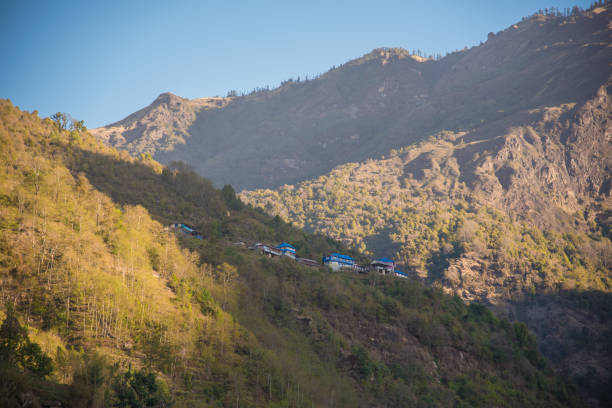
At Besisahar, the Marsyangdi is already a significant mountain river — visible from the Dumre approach road as the valley floor meets the road, its characteristic grey-blue colour (from the glacial silt that Nepal’s most significant rivers carry) announcing the mountain world upstream.

The road from Dumre to Besisahar follows the Marsyangdi’s eastern bank for most of its 42 kilometres — the river visible at varying distances to the west, with the valley walls rising on both sides to the forested ridgelines above. The specific quality of driving in a Himalayan river valley — the enclosed feeling of the valley, the sound of the river audible from the vehicle window when the road approaches

the bank, and the progressive disappearance of the broad Terai sky as the valley walls close in — is the Besisahar private vehicle hire’s specific atmospheric gift to the trekking group: a sensory introduction to the mountain environment that the road delivers before the first trail day begins. Nepal Vehicle Hiring Pvt Ltd’s Besisahar road drivers know the specific riverside viewpoints where the Marsyangdi’s character is most dramatic and the valley’s mountain walls most photogenic.

Besisahar Town — First Night on the Annapurna Approach

Besisahar town at 760 metres is a well-developed trekking services hub whose accommodation, permit offices, equipment shops, and porter-hire facilities have evolved to serve the Annapurna Circuit’s consistent trekker traffic. For groups arriving from Kathmandu by private vehicle hire in the early afternoon, Besisahar is the ideal first-night base—time to arrange permits, pack final supplies, hire porters or a guide if needed, and start the trek the following morning with a full day ahead.

Accommodation in Besisahar: Multiple teahouses and guesthouses ranging from basic rooms with shared bathrooms (NPR 300 to 600 per room) to the better-quality guesthouses with attached bathrooms (NPR 600 to 1,200). The accommodation standard at Besisahar is appropriate for the first night of a mountain trek — clean, functional, and significantly better than the first day’s destination of Bhulbhule or Ngadi further up the valley.

Permit offices in Besisahar: The ACAP permit office and TIMS card registration are both available at Besisahar’s permit counter — groups who did not obtain permits in Kathmandu can complete the permit process here before departing northward. The specific cost: ACAP permit USD 30 per foreign national (SAARC national rate lower), TIMS card USD 10 to 20. Both are required to enter the Annapurna Conservation Area at the Jagat checkpoint.

Equipment and supplies: Besisahar’s trekking equipment shops stock basic trekking supplies — trekking poles, water purification tablets, basic medical supplies, snacks, and local warm clothing. Nothing approaching Thamel’s comprehensive market, but adequate for forgotten or inadequate items. Nepal Vehicle Hiring Pvt Ltd advises all Besisahar private vehicle hire groups to purchase any critical missing equipment in Kathmandu before departure rather than relying on Besisahar’s more limited stock.
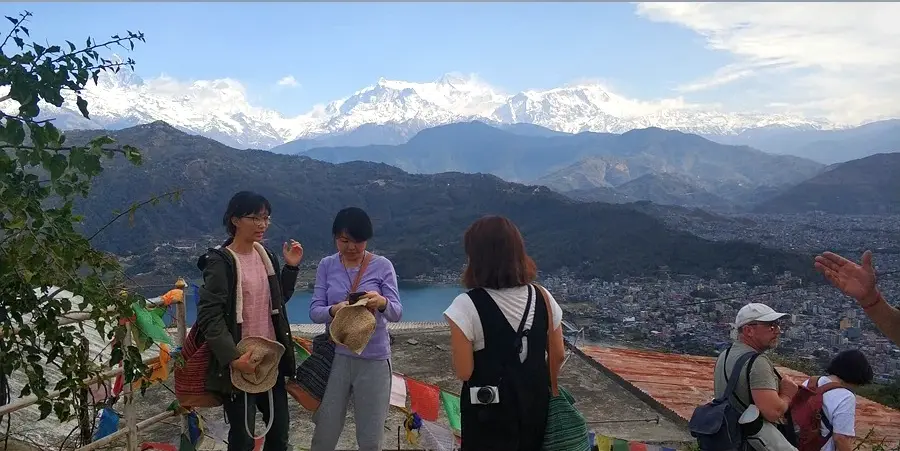
Nepal Tour Package

Kathmandu to Besisahar — Group Size and Vehicle Planning

Selecting the right vehicle for the Kathmandu-to-Besisahar transfer means matching vehicle capacity to the group’s passenger count and luggage volume—two variables that don’t always align.

Small group (2-4 trekkers, moderate packs): Private car hire (Toyota Corolla or equivalent) — economical, comfortable for the 5 to 7-hour highway and mountain road journey, appropriate boot space for 4 standard trekking packs. If the group includes very large expedition packs, upgrade to the 4WD Scorpio jeep for extra cargo space.

Medium group (4-7 trekkers, full trekking gear): 4WD Scorpio or Hilux jeep hire — the natural choice for the 4 to 7-person trekking group with full packs. The Scorpio’s rear cargo area and roof rack accommodate the luggage volume without compression, and its 4WD capability handles both the Dumre-to-Besisahar mountain section and any gorge-road continuation beyond Besisahar.

Large group (8-14 trekkers): Toyota Hiace van hire with the option of a separate Scorpio equipment jeep for the luggage if pack volume exceeds the Hiace’s cabin-and-cargo capacity. Nepal Vehicle Hiking Pvt Ltd coordinates the Hiace-plus-Scorpio convoy as a single booking — both vehicles depart together.

Very large group (15-30 trekkers): Tourist coaster hire for passengers plus Hilux 4WD equipment vehicle for gear. Contact our team onWhatsApp to arrange multi-vehicle convoys.

The Annapurna Conservation Area — Nepal’s Most Visited Protected Area

The Annapurna Conservation Area (ACAP) — the protected area through which the Annapurna Circuit, the Annapurna Base Camp trek, and the Ghorepani Poon Hill trek all pass — is Nepal’s most visited national protected area and one of the most biodiverse conservation landscapes in the Himalayan region. The ACAP covers 7,629 square kilometres from the subtropical lowlands of the Marsyangdi valley (below 1,000 m) to the alpine zone of the Thorong La (5,416 m) — encompassing nearly every vegetation zone and climate type available in the central Himalayan range within a single contiguous protected area.

The ACAP’s management model — community-based conservation that returns permit revenue directly to local communities for infrastructure, education, and environmental management — is internationally recognised as one of the most successful models for reconciling conservation goals with the development needs of the communities that inhabit the protected area. Every Annapurna Circuit trekker who pays the ACAP permit fee directly contributes to this community-based conservation model,

a contribution that the Besisahar private vehicle hire from Kathmandu makes by dropping the trekker off at the start of the trek. Nepal Vehicle Hiring Pvt Ltd advises all groups on the ACAP permit requirement and the Jagat checkpoint verification process at booking — no trekker should arrive at Besisahar without confirmed understanding of the permit requirement.

Kathmandu to Besisahar Private Car Price | Jeep Hire Guide 2026/27/28

What to Expect at the Mugling Rest Stop

The Mugling stop on the Kathmandu to Besisahar drive is one of Nepal’s most anticipated highway rest stops — a cluster of riverside restaurants at the Trishuli-Marsyangdi confluence whose freshwater fish curry has made Mugling famous throughout Nepal’s trekking and highway travel community. Understanding what the Mugling stop involves helps you plan your day.

The fish: Mugling’s restaurants specialise in mahaseer (sahar machha) and other Trishuli River freshwater fish, fried whole or in pieces and served with standard Nepali dal bhat accompaniments. The fish is ordered fresh from the riverside market stalls and prepared to order — allow 30 to 45 minutes from order to table.

The restaurants are open-sided and riverside, and they’re best in the morning, when the day’s catch is freshest.

The timing: Nepal Vehicle Hiring Pvt Ltd’s Besisahar private vehicle hire typically arrives at Mugling 2.5 to 3 hours after a Kathmandu 6:30 AM departure — arriving at approximately 9:00 to 9:30 AM for the morning fish order. This timing hits Mugling before the midday peak and gets you to Besisahar by early afternoon.

Other options: For groups who prefer a simpler stop, the Mugling area also has chai (tea) shops, snack vendors, and convenience stores. The fish stop is the recommended choice for quality and cultural authenticity, but it is not mandatory, and we can accommodate dietary restrictions with alternative stop options. Contact our team onWhatsApp to specify any dietary requirements at booking.

Kathmandu to Besisahar vs Other Annapurna Approach Options

Trekkers planning the Annapurna Circuit have several approach options for reaching Besisahar — understanding the alternatives clarifies why the Kathmandu to Besisahar private vehicle hire is the recommended format for most groups.

Option 1: Kathmandu to Besisahar private vehicle (recommended). Hotel-door pickup, 5-7 hours, all-inclusive pricing, Mugling stop, direct arrival at Besisahar with all luggage intact. Nepal Vehicle Hiring Pvt Ltd price: NPR 13,000-30,000 for a private jeep hire. Best value for groups of 3 or more.

Option 2: Kathmandu to Besisahar public bus. Departs from Gongabu bus park on a fixed schedule. NPR 400-1800 per person. 7-9 hours including stops.

No hotel pickup. Luggage on roof rack shared with other passengers. Appropriate for solo budget travellers.

Option 3: Kathmandu to Pokhara, then Pokhara to Besisahar. Kathmandu to Pokhara private vehicle (200 km, 5-7 hours) then Pokhara-to-Besisahar (approximately 80-90 km, 2-3 hours). This routing adds significant distance and cost vs the direct Kathmandu-to-Besisahar approach. Not recommended unless the group is already in Pokhara.

Option 4: Kathmandu to Dumre by bus, local jeep Dumre to Besisahar. Possible, but it involves departing from the Gongabu bus park, a bus connection in Dumre, and the uncertainty of finding a local Dumre-to-Besisahar jeep for a full group’s luggage. Not recommended for groups of 4 or more.

Kathmandu to Besisahar Private Car Price | Jeep Hire Guide 2026/27/28

Kathmandu to Besisahar — What to See on the Way

Manakamana Cable Car (Kurintar junction, 110 km from Kathmandu). The Manakamana Cable Car at the Kurintar junction — 10 kilometres west of Mugling on the Prithvi Highway — ascends to the Manakamana Temple at 1,302 metres in 7 minutes. Manakamana Bhagwati (Goddess Manakamana) is one of Nepal’s most visited Hindu pilgrimage destinations — the cable car pilgrimage has replaced the traditional 3-hour walk for most modern pilgrims.

Adding the Manakamana cable car visit to the Kathmandu-to-Besisahar journey adds 2 to 3 hours to the day. Still, it delivers one of Nepal’s finest short cable car experiences and one of its most significant pilgrimage sites directly on the route.

Bandipur Hilltop Town (Dumre junction detour, 7 km from Dumre). The medieval Newar hilltop town of Bandipur — 7 kilometres north of Dumre junction on a steep mountain road — is one of Nepal’s finest preserved heritage towns, with a car-free main bazaar of extraordinary architectural integrity and a south-facing hilltop position that provides one of Nepal’s finest Himalayan panoramas: the Annapurna range, Machhapuchhre, Manaslu, and Himalchuli all visible from the Bandipur ridge on clear days. The private vehicle hire stops at Bandipur for 1 to 2 hours before continuing north to Besisahar, an extraordinary heritage detour on the approach to Nepal’s greatest trekking circuits.

Mugling has several roadside restaurants. The fish curry stop at Mugling is the Prithvi Highway’s most celebrated culinary landmark — freshwater mahseer fish from the Trishuli, fried and served with dal and rice at the riverside restaurants that line the road at the confluence, is Nepal’s finest roadside meal and one of the most anticipated stops on any Kathmandu-to-Besisahar journey. Allow 45 to 60 minutes — the fish is prepared fresh and takes time.

Annapurna Circuit — Why Besisahar Is the Right Start

The Annapurna Circuit trek is one of the world’s most celebrated long-distance trekking routes: a 160 to 230-kilometre circuit in the Annapurna Conservation Area that crosses the Thorong La Pass (5,416 m) and returns via the Kali Gandaki gorge. The Circuit traditionally starts on the eastern (Marsyangdi) side, where the trail follows the river northward through the Circuit’s cultural and landscape progression to Manang (3,519 m) and the high approach to the pass.

Starting the Annapurna Circuit at Besisahar provides: the complete circuit experience from the Marsyangdi valley’s subtropical lower sections through the temperate mid-altitude to the alpine upper Marsyangdi; the cultural progression through the Gurung, Tamang, and Magar communities of the lower gorge to the Tibetan-influenced Manangi villages above Chame; and the physiological benefit of starting at 760 metres rather than the current road-end’s higher altitude — providing a more gradual altitude gain profile for the first week’s acclimatisation than starting at Chame or Manang by jeep.

Trek Nepal Himalayas’ complete Annapurna Circuit guided trek starts from Besisahar, with a private jeep hire from Kathmandu via Nepal Vehicle Hiring Pvt Ltd. The Annapurna Base Camp trek and Ghorepani Poon Hill trek use the Pokhara to Nayapul transport instead — a shorter, separate Pokhara-based vehicle hire.

Return Vehicle — Besisahar to Kathmandu Post-Trek

The return vehicle from Besisahar to Kathmandu after the Annapurna Circuit completes the Circuit’s transport arrangement—the same all-inclusive private jeep or private car hire that brought the group from Kathmandu to Besisahar, now available for the return at the Circuit’s end.

For trekkers exiting the Annapurna Circuit at Besisahar (the standard eastern exit), Nepal Vehicle Hiring Pvt Ltd pre-books the Besisahar to Kathmandu return vehicle at outward booking — confirming the return date via WhatsApp during the trek when the actual exit timing becomes clear. For trekkers who cross the Thorong La and exit via Jomsom, the Jomsom-to-Pokhara private jeep hire and the Pokhara-to-Kathmandu vehicle hire form the return transport chain — also pre-arranged at outward booking.

Nepal Vehicle Hiking Pvt Ltd’s plan trip page accepts complete circuit transport bookings — inward Besisahar and outward Jomsom-Pokhara or Besisahar-Kathmandu — in a single submission.

Seasonal Considerations — Best Time to Drive Kathmandu to Besisahar

Private vehicle hire from Kathmandu to Besisahar is available year-round. Still, road conditions and the journey experience vary significantly by season—affecting both journey comfort and the trekking conditions awaiting at the Annapurna Circuit trailhead.

Autumn (October-November) — Peak Season. Post-monsoon Nepal offers the best conditions for the Besisahar private car hire: dry roads, clear skies revealing the Annapurna and Manaslu ranges above the Marsyangdi valley, and the crisp, clean air autumn’s post-monsoon clarity brings. The Mugling fish stop is at its finest in October and November — the river running clear after the monsoon silt has settled.

This is Nepal’s busiest trekking season — book the Besisahar private vehicle 1 to 2 weeks ahead.

Spring (March-May) — Second Peak. Spring’s rhododendron bloom makes the forested sections of the Dumre-to-Besisahar approach road particularly beautiful in March and April; Nepal’s national flower colours the hillsides above the valley road red, pink, and white at its peak. Road conditions are generally good in spring, with occasional pre-monsoon afternoon cloud building in May. Book the Besisahar jeep hire 1 week ahead during spring peak.

Monsoon (June-September) — Manageable but Cautious. The main sections of the Prithvi Highway from Kathmandu to Mugling are reliable year-round. The Dumre-to-Besisahar section carries higher landslide risk during heavy monsoon rainfall — Nepal Vehicle Hiring Pvt Ltd checks morning road conditions before dispatching any vehicle on the Besisahar approach during monsoon season.

When the road is confirmed clear, the monsoon drive has its own visual quality: the Marsyangdi valley in deep green, waterfalls threading the valley walls above the road, and the specific dramatic light of monsoon cloud-and-clear weather.

Winter (December-February) — Reliable and Less Crowded. The Kathmandu-to-Besisahar road remains reliable in winter — the lower altitude of this section (the road stays below 760 m throughout) means no snow or ice on the approach route itself. Winter trekking on the Annapurna Circuit requires high-altitude cold-weather preparation above Manang, but the approach road is at its most reliable and least trafficked. Private vehicle hire available year-round from WhatsApp.

Kathmandu to Besisahar Private Car Price | Jeep Hire Guide 2026/27/28

The Bandipur Detour — Nepal’s Finest Heritage Town on the Route

Bandipur, a 7-kilometre detour from Dumre junction on a steep access road above the Marsyangdi valley, is one of Nepal’s most extraordinary and under-visited heritage towns—a living medieval Newari market city on a hilltop ridge, preserved by its elevation and inaccessibility to heavy vehicles. The main Bandipur bazaar, a 400-metre pedestrianised lane of three-storey Newari townhouses with carved wooden windows, ornate courtyard temples, and the specific commercial character of a Himalayan hilltop trading post, is one of Nepal’s finest intact traditional streetscapes.

From the Bandipur ridge at 1,030 metres, the views of the Annapurna range are among the finest accessible from any Nepal road: Manaslu (8,163 m), Himalchuli, Baudha Himal, Annapurna II, Lamjung Himal, and Machhapuchhre—visible on clear days in a continuous panoramic arc. The Bandipur viewpoint above the bazaar’s northern end offers the best combined foreground (Newar rooftops and the Marsyangdi valley below) and background (the Himalayan skyline) composition accessible from any mid-Nepal heritage town.

Adding the Bandipur detour to the Kathmandu-to-Besisahar private vehicle hire adds about 1.5 to 2.5 hours (7 km up, 45 minutes in town, 7 km down) to the journey. It pushes arrival in Besisahar to mid-afternoon rather than early afternoon.

For trekking groups whose first walk day is not until the following morning, the Bandipur addition is strongly recommended — it adds one of Nepal’s finest heritage experiences to what would otherwise be a pure transit day. Nepal Vehicle Hiring Pvt Ltd’s drivers park at the Bandipur base (private vehicles cannot enter the pedestrianised main bazaar) and either wait for the group or walk up with them.

All-Inclusive Pricing — What the Besisahar Vehicle Hire Covers

Nepal Vehicle Hiring Pvt Ltd’s Kathmandu to Besisahar private vehicle hire uses all-inclusive pricing. This single confirmed price covers the full journey from hotel pickup to arrival in Besisahar, with no additions at the end of the journey. Knowing what is included prevents misunderstandings that arise when informal vehicle arrangements add fuel surcharges, toll fees, and driver meal costs at the end of the journey.

Included in the all-inclusive price: Driver for the complete Kathmandu-to-Besisahar route (5-7 hours); all fuel for the complete distance; all Nepal highway and road tolls; hotel-door pickup from any Kathmandu hotel or guesthouse; Besisahar town drop-off at the group’s specified guesthouse or trailhead; the standard Mugling rest stop (45 minutes, restaurant costs paid by the group).

Not included: Group’s own food and drinks at the Mugling stop; driver meal during the Mugling stop (typically NPR 300-500, customarily paid by the group as a courtesy); any Bandipur or Manakamana detour additional driving that significantly extends the route beyond the standard Kathmandu-to-Besisahar distance (small detours within 10 km are typically included; the Bandipur detour’s 14 km round trip may add a small supplement — confirm at booking).

Nepal Vehicle Hiking Pvt Ltd’s Besisahar private vehicle hire quote is specific and in writing — send via WhatsApp to WhatsApp or confirm through our plan trip page before the booking is accepted—no price surprises at Besisahar.

Kathmandu to Besisahar — Driver Knowledge and Route Experience

Nepal Vehicle Hiring Pvt Ltd assigns the Kathmandu to Besisahar private vehicle hire exclusively to drivers with specific route experience on the Prithvi Highway and the Dumre-to-Besisahar approach — not drivers with general Kathmandu sightseeing or highway experience, but drivers who have made this specific journey repeatedly and whose knowledge of the route’s specific challenges and specific highlights is directly useful to the trekking group.

The specific route knowledge that Nepal Vehicle Hiring Pvt Ltd’s Besisahar drivers bring: the exact Mugling riverside restaurant that serves the finest fresh-catch mahaseer (the recommendation matters — some Mugling restaurants are significantly better than others); the two specific Trishuli gorge pullouts where the gorge view is most dramatic for photography; the Bandipur approach timing (the access road closes to vehicles during certain festival periods

our drivers check before the approach); the Besisahar guesthouse cluster that most conveniently serves trekkers who will continue northward the following morning; and the current road condition status of the Dumre-to-Besisahar section’s most vulnerable section (a specific cut-and-fill section that can be affected by heavy rain). This knowledge — accumulated through dozens of Besisahar trips — is the service dimension that distinguishes Nepal Vehicle Hiring Pvt Ltd’s private vehicle hire from any informal arrangement.

Comparing Besisahar with Other Annapurna Region Trailheads

Besisahar vs Nayapul (for ABC and Poon Hill): Besisahar (175 km from Kathmandu) is the Annapurna Circuit eastern start. Nayapul (42 km from Pokhara, served by the Pokhara to Nayapul transport) is the start for the Annapurna Base Camp trek and Ghorepani Poon Hill trek.: different starting towns for different Annapurna region circuits.

Besisahar vs Soti Khola (for Manaslu Circuit): The Kathmandu to Soti Khola jeep hire (162 km, 7-10 hours) serves the Manaslu Circuit trek starting point. The Besisahar-to-Manang road and the Soti Khola-to-Manaslu road serve different northern circuits that meet at Dharapani on the Annapurna-Manaslu connector.

Besisahar vs Phaplu (for Everest): The Kathmandu to Phaplu private jeep hire (280 km, 2 days) serves the Everest overland approach. Besisahar serves the Annapurna region exclusively.

Frequently Asked Questions — Kathmandu to Besisahar Private Car Price

Q: What is the private car price from Kathmandu to Besisahar?

NPR 10,000 to 20,000 (USD 75 to 120) for a private sedan; NPR 13,000 to 30,000 for a private 4WD jeep hire. All-inclusive. Contact Nepal Vehicle Hiring Pvt Ltd on WhatsApp.

Q: How long does it take to drive from Kathmandu to Besisahar?

5 to 7 hours by private vehicle — including a Mugling rest stop. Depart Kathmandu between 6:00 and 7:00 AM for arrival in Besisahar between 12:00 and 1:00 PM.

Q: Should I book a car or a jeep for Kathmandu to Besisahar?

If you’re travelling only to Besisahar town, a private car hire is appropriate and more cost-efficient; if you’re continuing beyond Besisahar into the Marsyangdi gorge, a 4WD Scorpio jeep hire is mandatory.

Q: Is a 4WD Mugling fish curry stop included?

Yes — Nepal Vehicle Hiring Pvt Ltd builds a 45-minute Mugling riverside restaurant stop into the standard Besisahar private vehicle hire.

Q: Can I visit Bandipur on the way to Besisahar?

Yes — Bandipur is 7 km from Dumre junction on the Besisahar road. The private vehicle hire stops at Bandipur for 1-2 hours at request. Add the detour at booking.

Q: Can Nepal Vehicle Hiring Pvt Ltd pre-arrange the return vehicle from Besisahar?

Yes — the Besisahar to Kathmandu return vehicle is pre-arranged at outward booking and confirmed via WhatsApp during the trek. Same price, same standard.

The Kathmandu-to-Besisahar private car and jeep hire from Nepal Vehicle Hiring Pvt Ltd is the transport foundation on which the Annapurna Circuit trek experience begins—the hotel-door-to-trailhead service that delivers trekkers to Besisahar rested, on time, and ready for one of the world’s greatest mountain journeys.

Whether the group chooses a private sedan at NPR 10,000 to 20,000, a 4WD Scorpio jeep at NPR 13,000 to 30,000, or a Hiace van for a larger group, the service standard is the same: professional, all-inclusive, and confirmed in writing before departure. The Mugling fish curry is included. The Besisahar arrival is on time.

The return vehicle is pre-arranged. The Annapurna Circuit begins with confidence that the transport is properly handled. Book through Nepal Vehicle Hiring Pvt Ltd on WhatsApp or our plan trip page.

Conclusion

The Kathmandu to Besisahar private car and jeep transfer is the essential first journey of the Annapurna Circuit trek — a 175-kilometre, 5 to 7-hour road journey from the capital’s hotel door to the mountain town where one of the world’s greatest trekking routes begins. Nepal Vehicle Hiring Pvt Ltd provides Kathmandu to Besisahar private vehicle hire at all-inclusive, transparent pricing — private car from NPR 15,000, 4WD jeep from NPR 20,000, Hiace van from NPR 25,000 — with route-experienced drivers, a Mugling fish curry stop, optional Bandipur and Manakamana detours, and a return vehicle pre-arranged for the Circuit’s end.

Book your Kathmandu to Besisahar private car or jeep hire with Nepal Vehicle Hiring Pvt Ltd — call or WhatsApp, visit vehiclehiringnepal.com, or book through our plan trip page.

Jiri Private Vehicle Hire: Switzerland of Nepal Guide

Jiri Private Vehicle Hire: Switzerland of Nepal — Complete Guide

Jiri

Jiri — Nepal’s Switzerland in Dolakha

Jiri is one of Nepal’s most captivating yet least-visited hill towns—a settlement in Dolakha District, Bagmati Province, at 1,905 metres above sea level, in a broad alpine valley surrounded by terraced hillsides, rhododendron forests, and the distant snow peaks of the eastern Himalaya. Its famous nickname — the Switzerland of Nepal — comes from its genuinely Swiss-inspired landscape and its deep historical ties to Swiss development assistance, which transformed Jiri from a remote hill settlement into one of Nepal’s most systematically developed rural communities in the decades following Nepal’s 1950 opening to the world.

For trekkers and travellers, Jiri holds a special place in Nepal’s outdoor heritage — the town is the traditional starting point of the classic Jiri to Everest Base Camp route, the multi-week walking journey that Sir Edmund Hillary and Tenzing Norgay’s generation of Himalayan adventurers used before the Lukla airstrip opened in 1964. Today, the private vehicle hire from Kathmandu to Jiri makes this extraordinary hill town accessible as a day trip, weekend retreat, or the starting point for the classic Jiri trekking route — a journey from Kathmandu through the Dhulikhel highlands, the Charikot market town, and the Solu Khumbu foothills to one of Nepal’s most rewarding alpine destinations.

This guide covers everything you need for the Jiri private vehicle hire — the route from Kathmandu, the road conditions, vehicle requirements, the best price, and Jiri’s extraordinary character as the Switzerland of Nepal — its Swiss development heritage, its alpine landscape, and its role as a classic trekking gateway that the Nepal Vehicle Hiring Pvt. Ltd. private vehicle makes accessible to every traveller.

Best Jiri Private Vehicle Hire: Switzerland of Nepal Guide

Jiri Private Vehicle Hire — Quick Reference

Location: Jiri, Dolakha District, Bagmati Province — 188 km east of Kathmandu

Nickname: The Switzerland of Nepal — alpine scenery, Swiss-built infrastructure

Altitude: 1,905 m (6,250 ft) — cool climate year-round

Journey Time: 5 to 7 hours from Kathmandu by private vehicle

Route: Kathmandu → Banepa → Dhulikhel → Charikot → Jiri (B.P. Koirala Highway)

Vehicle: 4WD strongly recommended — mountain road with rough sections

Price: NPR 14,000- 35,000 all-inclusive (Kathmandu to Jiri, 4WD Jeep)

Book: Nepal Vehicle Hiring Pvt. Ltd. | WhatsApp | vehiclehiringnepal.com

Why Jiri Is Called the Switzerland of Nepal

The Swiss Development Connection

The “Switzerland of Nepal” nickname has a specific, genuine historical basis that distinguishes Jiri from many Nepal towns that claim scenic similarity to European alpine settings. In the 1970s and 1980s, Swiss development organizations — primarily the Swiss Development Corporation (SDC)—invested significantly in Jiri’s infrastructure, agriculture, health, and education systems as part of Nepal’s rural development programme.

The Swiss-funded Jiri Technical School and Vocational Training Centre (established in 1975) became one of Nepal’s most important technical education institutions, training electricians, mechanics, carpenters, and skilled workers who served communities across eastern Nepal. The Jiri Hospital — also established with Swiss support — provided healthcare to a region that had virtually no medical services before.

The Jiri Integrated Development Project built roads, improved water systems, and supported agricultural development across Dolakha District.

The physical result of this Swiss investment was a Jiri that looked and functioned distinctly differently from other Nepal hill towns of the same era—cleaner, more systematically organized, with better infrastructure, higher educational attainment, and a prosperity the surrounding districts lacked. The combination of this Swiss-development character with Jiri’s genuinely alpine landscape setting — the broad valley, the terraced hillsides, the neat settlements, the cool climate — created the Switzerland of Nepal identity that has stuck to the town ever since.

Visitors approaching Jiri for the first time are consistently struck by how the townscape justifies the comparison — the combination of landscape and development character creates a distinctiveness that is immediately apparent.

The Alpine Landscape — Why the Comparison Works

Beyond the Swiss development heritage, Jiri’s landscape genuinely earns the alpine comparison. The town sits in a broad open valley at 1,905 m — a comparatively rare terrain type in Nepal where steep gorges and narrow valleys dominate the landscape.

The Jiri valley’s more open character—surrounded by gently terraced hillsides rather than precipitous gorge walls—creates a spacious, light-filled landscape with a distinctly European alpine quality. The rhododendron and oak forests covering the surrounding hillsides turn brilliant in March and April, echoing the European alpine meadow flowering season.

The cool temperature at 1,905 m — rarely exceeding 25°C in summer and crisp and clear in October — reinforces the alpine atmosphere. The Khimti Khola River flowing through the valley below Jiri completes the Swiss alpine composition — a clear mountain stream in a broad, cultivated valley under forested hills.

From Jiri’s higher vantage points — the hospital hill, the technical school ridge — the views extend northward to the snow peaks of the Gaurishankar massif (including Gaurishankar at 7,134 m) and the eastern Himalaya range that separates Dolakha District from the Rolwaling Valley. This Himalayan backdrop — the snow peaks above the alpine foreground — is the final element that makes the Switzerland of Nepal comparison feel genuinely apt to those who visit.

Best Jiri Private Vehicle Hire: Switzerland of Nepal Guide

The Kathmandu to Jiri Road — What to Expect

The B.P. Koirala Highway — Route Overview

The Kathmandu to Jiri private vehicle route follows the B.P. Koirala Highway — named after Nepal’s first democratically elected Prime Minister — eastward from Kathmandu via Banepa) Dhulikhel), Panchkhal), Dolalghat) (Sindhupalchok District), Lamosangu), Charikot) (Dolakha District headquarters), and finally Jiri. The total distance is approximately 188 ka, and the journey takes 5 to 7 hours) in a private vehicle depending on road conditions and stops.

The B.P. Koirala Highway is also the main road to the Tibet border at Kodari (the Arniko Highway) branches off it at Lamosangu, making it one of Nepal’s most strategically important eastern mountain highway corridors.

The road quality varies significantly across its length — a reality that makes the vehicle choice for Kathmandu to Jiri important. The initial Kathmandu to Lamosangu section) (approximately 70 km) follows the Arniko/B.P. Highway in generally good condition.

From Lamosangu to Charikot) (approximately 70 km), the road climbs into the Dolakha hills) on a road that is mostly paved but with sections of degraded surface, particularly in the post-monsoon period. The Charikot to Jiri section) (approximately 48 km) completes the climb through increasingly scenic mountain terrain on a road that requires 4WD capability in the more demanding sections, particularly in wet conditions.

Dhulikhel — The Scenic Viewpoint

Dhulikhel, a historic Newari town at approximately 1,550 m on the Kathmandu Valley rim, is the most significant cultural stop on the Kathmandu to Jiri road. Famous for its magnificent sunrise views of the eastern Himalaya (Ganesh Himal, Langtang, Gauri Shankar, Numbur, and, on clear days, the Everest massif), Dhulikhel’s hilltop viewpoints are among the finest accessible from the Kathmandu Valley rim.

A brief 20 to 30 minute Dhulikhel viewpoint stop) on the Kathmandu to Jiri journey — particularly on an early morning departure — provides the first spectacular mountain panorama of the day. Nepal Vehicle Hiring Pvt. Ltd. can incorporate a Dhulikhel viewpoint stop on the Kathmandu to Jiri private vehicle transfer) on request — contact WhatsApp.

Te Sindhu River Gorge — Dramatic Middle Section

Between Dolalghat and Lamosang, th B.P. Koirala Highway follows the Sun Koshi River) and its tributaries through a dramatic gorge section — the narrow valley, the river rapids visible below the road, and the steep forested hillsides above create some of the finest gorge scenery on any Nepal highway.

This section of the Kathmandu to Jiri road shares its corridor with the famous Sun Koshi River rafting route) — one of Nepal’s classic multi-day rafting journeys that ends near Dolalghat. The Nepal Vehicle Hiring Pvt. Ltd.) drive passes through this gorge section on the Jiri private vehicle hire route) and the road’s position above the river provides continuous visual interest through the middle section of the journey.

Charikot — The Dolakha District Hub

Charikot) — the administrative headquarters of Dolakha District) — is the final significant town before Jiri and the natural lunch stop on the Kathmandu to Jiri private vehicle transfer. The town sits at approximately 1,050 m on a ridge above the Tama Koshi River) and has a range of local restaurants, basic guesthouses, and shops.

The Charikot market) — particularly busy on the weekly market days — gives a genuine glimpse of Dolakha District’s rural trading culture before the final 48 km climb to Jiri. The Nepal Vehicle Hiring Pvt. Ltd. driver recommends a 30- to 45-minute lunch stop in Charikot on the Jiri jeep hire route, especially for early-morning Kathmandu departures that reach Charikot by lunchtime.

Charikot to Jiri — The Mountain Finale

The Charikot to Jiri section) is the most demanding and most rewarding part of the Kathmandu to Jiri private vehicle journey. The road climbs from Charikot at 1,050 m to Jiri at 1,905 m over approximately 48 km — gaining almost 900 m of altitude through a succession of forested ridges, open terraced valleys, and remote hill villages that give progressively more of the Dolakha District’s extraordinary mountain character.

The road quality on this section is the most variable of the entire route — mostly unpaved above a certain point, with rough sections that specifically require 4WD capability) and high ground clearance. The Toyota Fortuner or Hilux 4WD from Nepal Vehicle Hiring Pvt. Ltd.) handles this section reliably — the final revelation of Jiri’s broad alpine valley after the climb through the forested ridges is one of the journey’s most satisfying moments.

Best Jiri Private Vehicle Hire: Switzerland of Nepal Guide

Jiri — What to See and Do

The Jiri Technical School and Vocational Training Centre

The Jiri Technical School and Vocational Training Centre (JTVTC)) — established in 1975 with Swiss Development Corporation support — is the most significant institutional legacy of Jiri’s Swiss development era and a genuinely interesting visit for travellers interested in Nepal’s development history. The school campus, built in a functional, Swiss-influenced architectural style unlike Nepal’s traditional vernacular, offers technical training programmes in electrical work, auto mechanics, carpentry, construction, and healthcare assistance.

Over decades of operation, the school has trained thousands of Nepali technical workers and made a measurable contribution to rural development across the eastern Nepal hill districts. Walking through the campus — which is open to respectful visitors — provides a tangible sense of the Swiss development investment that created the Switzerland of Nepal) character.

Jiri Hospital — Healthcare for Eastern Nepal

The Jiri Hospital) — another Swiss-funded institution from the development era — is the primary healthcare facility for Dolakha District and the surrounding eastern hill districts. The hospital’s presence gave Jiri a medical infrastructure far beyond what most Nepal hill towns of comparable size possessed, and it continues to serve the region’s healthcare needs.

The hospital compound, with its distinctive Swiss-influenced institutional architecture, is visible from the main Jiri settlement and is one of the physical markers that grounds the Switzerland-of-Nepal comparison in genuine institutional reality rather than mere scenic imagination.

Jiri Market and Town Centre

Jiri’s main bazaar and market area) has the character of a prosperous Himalayan trading town — shops selling everything from trekking supplies to agricultural goods, teahouses where local and visiting travellers mix, and the general energy of a town that serves as a commercial hub for the surrounding Dolakha District villages. The weekly Jiri market) draws traders and buyers from villages across the district — the market day bustle is one of Jiri’s most characterful experiences and provides a glimpse of the rural trading life of the eastern Nepal hills.

For trekkers starting the classic Jiri to Solu Khumbu route, the Jiri market is where they buy any missing supplies and finish preparations for the multi-week walk to Everest Base Camp.

The Gaurishankar Panorama

From Jiri’s higher ground — the hilltop above the technical school, the ridge above the hospital — the views northward toward the Gaurishankar massif) are extraordinary on clear days. Gaurishankar at 7,13 — the twin-peaked massif on the Dolakha-Tibet border — is one of the most dramatically beautiful Himalayan peaks visible from any roadside location in Nepal, its distinctive twin summits rising above the forested Dolakha ridgelines in a composition of extraordinary elegance.

The peak is sacred in both Hinduism (Gauri = Parvati, Shankar = Shiva) and local Buddhist traditions. On the clearest October and November days, the panorama from Jiri’s viewpoints extends beyond Gaurishankar to other eastern Himalaya peaks, including Numbur, Shorong Yul Lha, and the Rolwaling Himalaya snow ranges.

Best Jiri Private Vehicle Hire: Switzerland of Nepal Guide

The Jiri to Everest Base Camp Classic Trek

Why the Jiri Route Matters

Before the construction of the Lukla airstrip in 1964, every serious Everest expedition and every trekker heading to the Khumbu region began their journey at Jiri — walking the 190 km from Jiri to Namche Bazaar) through the Solu Khumbu District’s extraordinary landscape of forest, river, ridge, and village. The Jiri route was the approach used by Sir Edmund Hillary’s 1953 expedition, by Reinhold Messner) on his first Everest climbs, and by the generation of legendary Himalayan explorers who defined Nepal’s place in the global trekking imagination.

The route crosses seven major ridges and passes through the Sherpa and Rai communities) of eastern Nepal’s most culturally rich hill districts.

Today, the Jiri to Everest Base Camp route is experiencing a revival among experienced trekkers who prefer the gradual acclimatisation and the off-the-beaten-track culture of the classic approach over the Lukla flight’s direct entry into the high Khumbu. The Jiri route’s 7 to 10-day approach to Namche Bazaar (versus the one-day Lukla flight) gives significantly better acclimatization for the high-altitude sections above Namche and gives the trekker the full breadth of the lower Solu Khumbu cultural landscape) — the Rai villages, the Sherpa monastery communities below Namche, and the extraordinary biodiversity of the lower Dudh Koshi valley.

Trekkers beginning the classic Jiri route use the Kathmandu to Jiri private vehicle transfer) from Nepal Vehicle Hiring Pvt. Ltd.) as the first leg — the 4WD jeep hire) delivers them and their full trekking kit directly to the Jiri trailhead.
The Classic Route — Jiri to Namche Bazaar

The Jiri to Namche Bazaar classic trek) typically takes 7 to 10 days of walking — longer than the Lukla approach but providing the most complete Solu Khumbu experience available. The route crosses the major ridges at Deorali La), Lamjura La (3,530 m)) — the highest point before Namche, crossed by Hillary’s expedition in knee-deep snow — Solu Khumbu La), and Lukla) (where the airstrip was built), before descending to the Dudh Koshi River) and ascending to Namche Bazaar.

The villages along this route — Sete, Ringmo)Junbesi) (the most beautiful village in Solu Khumbu by many accounts), Salleri), Phaplu) (with its airstrip), and the communities above Phaplu — provide a cultural richness and an off-trail authenticity that the main Lukla-to-EBC route increasingly lacks.

For trekkers beginning the classic Jiri route, the Nepal Vehicle Hiring Pvt. Ltd.) Kathmandu to Jiri private jeep transfer) is the standard first transport leg — the Toyota Fortuner 4WD or Hilux) carries the trekking group and their full luggage to the Jiri trailhead at the start of the walking journey. Contact Nepal Vehicle Hiring Pvt. Ltd. WhatsApp) to book the Jiri trailhead transfer as part of the complete Everest Classic trek transport plan.
Bhandar jiri

Jiri Private Vehicle Hire — Price and Vehicle Guide

All-Inclusive Pricing from Nepal Vehicle Hiring Pvt. Ltd.

The Kathmandu to Jiri private vehicle hire) from Nepal Vehicle Hiring Pvt. Ltd. is priced at NPR 14,000 to 35,000 all-inclusive) for the full vehicle — driver, fuel, tolls, and hotel-to-destination door service. The price variation reflects vehicle type and current road conditions.

4WD Jeep/ Scorpio  (up to 5 passengers):) NPR 14,000-35,000 all-inclusive. The standard recommendation for the Kathmandu to Jiri route) — 4WD capability, high ground clearance, and ample boot space for trekking luggage.—the most comfortable and most capable vehicle for this mountain road.

Toyota Hilux 4WD (up to 4 passengers):) NPR 15,000-50,000. The heavy-duty option — maximum ground clearance for the Charikot to Jiri rough sections, especially recommended in monsoon or post-monsoon conditions when the upper road is most demanding.

Toyota Land Cruiser 4WD (up to 7 passengers):) NPR 17,000-80,000. Top-end group option for larger trekking parties or families visiting Jiri — maximum interior space with full 4WD mountain road capability.

All prices are all-inclusive — no fuel surcharges, no toll additions, no hidden charges. Contact Nepal Vehicle Hiring Pvt. Ltd. on WhatsApp via WhatsApp for current rates and availability.

Why 4WD Is Essential for Jiri

The Kathmandu to Jiri road) specifically requires 4WD capability) for the upper sections — the Charikot to Jiri mountain road is too rough and too steep in critical sections for a standard sedan or 2WD SUV to navigate reliably, particularly in the post-monsoon period when the unpaved sections are at their most degraded. Nepal Vehicle Hiring Pvt. Ltd. always uses 4WD vehicles) for Jiri transfers — this is not optional on this route, and the company does not offer sedan hire for the Kathmandu to Jiri destination.

The 4WD requirement reflects the same mountain road reality that makes the Besisahar to Chame jeep transfer) and the Syabrubesi jeep hire) 4WD-essential — Nepal’s mountain roads above 1,500 m consistently require the capability and clearance that only a 4WD vehicle provides.

Best Jiri Private Vehicle Hire: Switzerland of Nepal Guide

Best Season for Jiri Private Vehicle Hire

October to November — Post-Monsoon at Its Finest

The October to November post-monsoon period) is the finest time for the Kathmandu to Jiri private vehicle transfer. The road is at its most reliable after the monsoon repair cycle; the air clarity is extraordinary — the Gaurishankar massif) panorama visible from Jiri’s viewpoints is at its most vivid in October — and the autumn light on the Dolakha terraced hillsides creates a landscape of remarkable warmth and colour.

October in Jiri coincides with the Dashain festival season) — the most important annual celebration in Nepal — and the festive atmosphere in Jiri’s market town adds a cultural dimension to the October visit. For trekkers beginning the classic Jiri to EBC route) in October, road conditions, trail conditions, and mountain views align to create an optimal start to the trek.

March to May — Spring Rhododendron Season

Spring (March to May) is Jiri’s most visually spectacular season — the rhododendron forests) that cover the Dolakha hillsides erupt in spectacular red, pink, and white bloom from late February through April, transforming the Kathmandu to Jiri road) into a corridor of extraordinary botanical richness. The rhododendron bloom at 1,500 to 2,500 m altitude in the Dolakha District is among the finest in Nepal—the density of mature rhododendron trees on the Charikot to Jiri section creates a canopy of bloom that is difficult to match anywhere in the country.

Spring is also when Jiri’s alpine meadows come into their full expression come into their full expression — the broad Jiri valley in April is a genuinely Swiss-alpine scene of green meadows, forest bloom, and snow-peak backdrop.

Monsoon and Winter

The monsoon season (June to September) makes the upper sections of the Kathmandu to Jiri road) more challenging — the Charikot to Jiri section is particularly susceptible to landslide debris and road surface degradation in heavy monsoon rainfall. Nepal Vehicle Hiring Pvt. Ltd. monitors road conditions during the monsoon and will advise on current road status before any monsoon-season Jiri booking — contact WhatsApp for the most current assessment.

Winter (December to February) is cold but clear — Jiri at 1,905 m has temperatures dropping below 5°C at night in January and February, and the high viewpoints above the town may have light snowfall in deep winter. The road remains passable in winter, but sections above Charikot require extra care.

In clear weather, winter Jiri offers extraordinary views of the eastern Himalaya peaks.

Combining Jiri with the Kathmandu Heritage Circuit

A Complete Nepal Eastern Circuit

The Kathmandu to Jiri private vehicle transfer) is most rewarding as part of a broader eastern Nepal circuit that combines the cultural heritage of Kathmandu) with the alpine character of Jiri and the scenic route through Dhulikhel, Charikot, and the Dolakha hills. The Kathmandu sightseeing tour) — covering Boudhanath Stupa, Pashupatinath Temple, and Swayambhunath, and Patan Durbar Square) — provides the heritage foundation for the Kathmandu days before the Jiri departure.

The Bhaktapur Durbar Square day tour) and the Nagarkot sunrise tour) — both accessible via the same B.P. Koirala Highway that leads to Jiri — can be combined with the Jiri transfer for a single day that begins at Nagarkot sunrise and ends at Jiri by late afternoon.

Nepal Vehicle Hiring Pvt. Ltd. organizes all these legs through a single booking via WhatsApp.

Jiri and Solu Khumbu — The Overland Everest Approach

For travellers with time and appetite for the classic Nepal overland journey to the Everest region, Nepal Vehicle Hiring Pvt. Ltd. also provides the Kathmandu to Salleri and Phaplu private vehicle transfer) — the overland approach to the middle Solu Khumbu region that allows trekkers to skip the lower Jiri-to-Salleri trekking days and begin walking from the Phaplu airstrip elevation. The combination of the Jiri private vehicle transfer) for the classic start or the Salleri jeep hire) for the quicker Phaplu approach gives Everest-bound trekkers complete flexibility in choosing their overland versus trekking balance — all organized through Nepal Vehicle Hiring Pvt. Ltd. onWhatsApp.

Best Jiri Private Vehicle Hire: Switzerland of Nepal Guide

Jiri’s Cultural Heritage — Beyond the Swiss Connection

Dolakha District — The Earthquake and Recovery

Dolakha District) was one of the most severely affected areas by the April 2015 Gorkha earthquake) — the district’s position near the epicentre of the 7.8 magnitude earthquake made it the most heavily damaged non-Kathmandu district in the disaster. The Charikot area) specifically suffered major destruction — buildings collapsed, roads were disrupted, and the community faced the immediate challenges of shelter, water, and food security in the post-earthquake days.

Jiri itself suffered damage but remained functional, and the hospital’s role in the earthquake emergency response underlined the importance of the Swiss-era healthcare infrastructure. By 2026, Dolakha District had substantially rebuilt—the Kathmandu to Jiri road was repaired and upgraded during the post-earthquake reconstruction period, and Jiri’s infrastructure was restored and, in several areas, improved.

The Tamang and Rai Communities of Dolakha

The cultural landscape of the Kathmandu to Jiri road and the Dolakha District is defined by the Tamang) and Rai communities) — two of Nepal’s most significant indigenous hill peoples — whose villages, temples, and community life line the route from Dolalghat eastward. The Tamang villages along the Sindhu River gorge section have their distinctive Buddhist gompa) monasteries and prayer flag lines.

The Rai villages of the upper Dolakha hills have their own shamanic-animist religious tradition (the Muddum) that predates Hinduism and Buddhism in these hills and continues to shape community ritual and festival life. The Jiri private vehicle hire) route through these communities provides the traveller with the cultural texture of eastern Nepal’s hill society — a dimension that a simple Kathmandu sightseeing focus cannot deliver.

Book Kathmandu to Jiri Private Vehicle — Nepal Vehicle Hiring Pvt. Ltd.
Website: www.vehiclehiringnepal.com
WhatsApp (24/7 — Early Morning Departures Available)
Email: [email protected]
Office: Bhagawatisthan, Thamel, Kathmandu, Nepal
4WD Jeep  (up to 5 pax): NPR 14,000-35,000 all-inclusive
Toyota Hilux 4WD: NPR 15,000-50,000 | Land Cruiser 4WD: NPR 17,000-80,000
Dhulikhel sunrise stop | Charikot lunch | Jiri trailhead delivery — all arranged
Kathmandu Sightseeing | Bhaktapur Tour | Nagarkot Sunrise — all available before Jiri
8,000+ Customers | 5.0 TripAdvisor | 200+ Verified Reviews | Reg. No. 219204
All-Inclusive | No Hidden Charges | 4WD Fleet | Mountain Road Specialists

Green meadow and pine forest at Jiri

Frequently Asked Questions — Jiri Private Vehicle Hire

Q: How far is Jiri from Kathmandu by road?

Jiri is approximately 188 km from Kathmandu) via the B.P. Koirala Highway through Banepa, Dhulikhel, Dolalghat, Lamosangu, and Charikot. The Kathmandu to Jiri private vehicle journey) takes 5 to 7 hours) depending on road conditions, stops, and traffic.

Q: Why is Jiri called the Switzerland of Nepal?

Jiri earned the nickname ” Switzerland of Nepal) nickname through two complementary factors: its genuinely alpine landscape) — a broad open valley at 1,905 m surrounded by forested hillsides with Himalayan peaks as backdrop — and its Swiss development heritage) — the Swiss Development Corporation (SDC) investment in the Jiri Technical School, Jiri Hospital, and infrastructure that transformed the town in the 1970s and 1980s into Nepal’s most developed rural community.

Q: Is 4WD necessary for the Kathmandu to Jiri road?

Yes — 4WD is essential) for the Kathmandu to Jiri transfer, particularly for the Charikot to Jiri upper section, which has rough unpaved stretches requiring 4WD traction and high ground clearance. Nepal Vehicle Hiring Pvt. Ltd.) exclusively uses 4WD vehicles — Fortuner, Hilux or Land Cruiser) — for all Jiri transfers.

Q: Is Jiri the starting point for the Everest trek?

Yes — Jiri is the classic starting point) for the overland trek to Everest Base Camp) via the Solu Khumbu. Before the Lukla airstrip opened in 1964, all Everest expeditions walked from Jiri.

The Jiri to Namche Bazaar walk) takes 7 to 10 days and provides the finest cultural and acclimatization approach to the Khumbu. The Nepal Vehicle Hiring Pvt. Ltd.) Kathmandu to Jiri private jeep transfer) is the standard first transport leg for classic route trekkers.
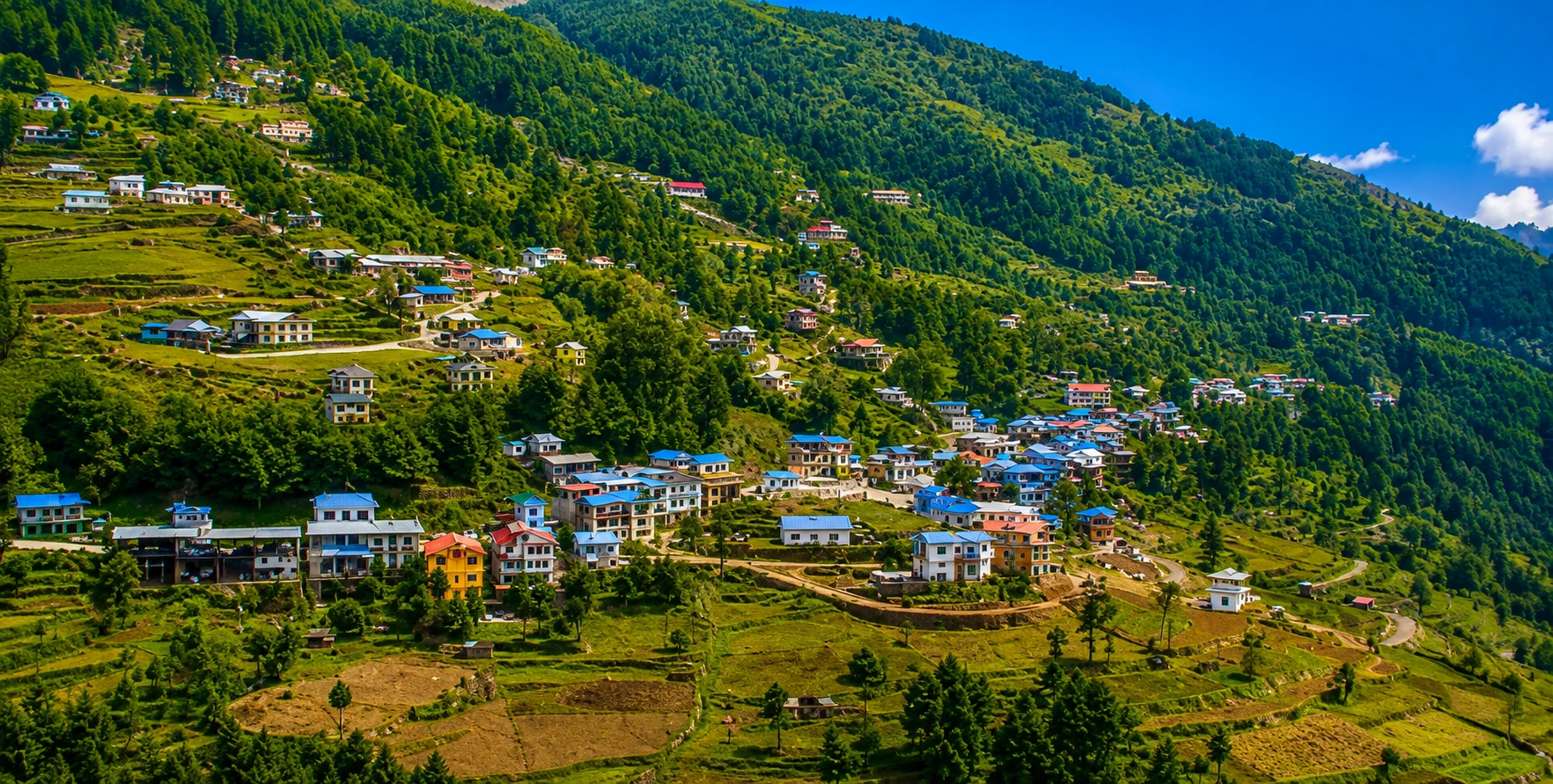
Q: What is the best time to visit Jiri?

October to November) for the finest mountain views, post-monsoon road conditions, and autumn festival atmosphere. March to April) for the spectacular rhododendron bloom and spring mountain clarity. Avoid the July to August peak monsoon for the upper road sections.
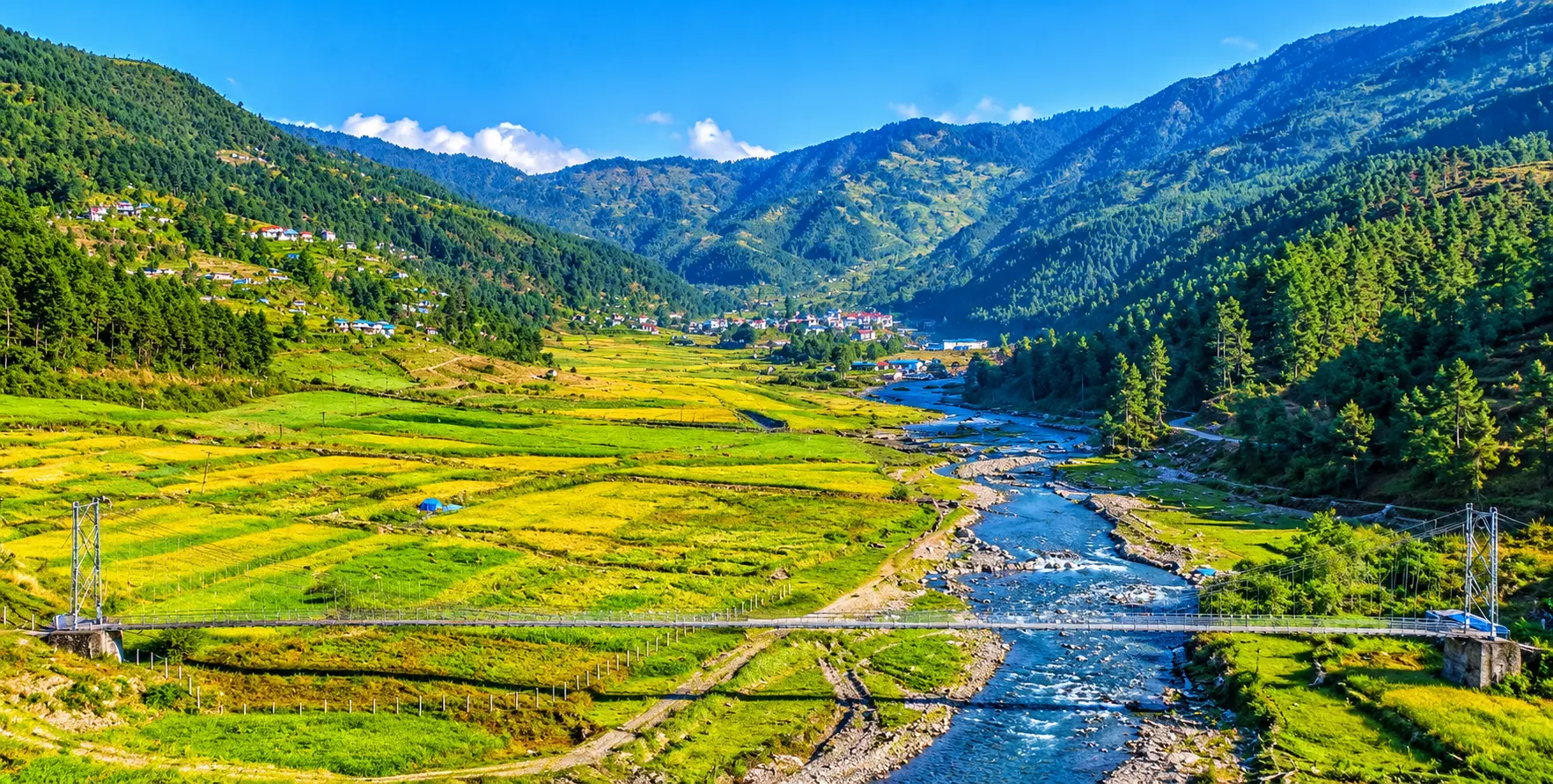
Winter (December to February) is cold but clear, with excellent mountain views. Contact Nepal Vehicle Hiring Pvt. Ltd. on WhatsApp for current road conditions before booking.

Best Jiri Private Vehicle Hire: Switzerland of Nepal Guide

Conclusion: Nepal’s Switzerland Awaits

Jiri — the Switzerland of Nepal — is one of Nepal’s most distinctive and most rewarding off-the-beaten-track destinations. Its combination of genuinely alpine landscapes, Swiss-era development, and its role as the classic gateway to the Everest trekking region gives it a richness of character few Nepali hill towns can match.

The Kathmandu to Jiri private vehicle hire) from Nepal Vehicle Hiring Pvt. Ltd.) makes this extraordinary destination accessible in a single day from the capital — the 5 to 7 hour journey through Dhulikhel, the Sindhu gorge, Charikot, and the Dolakha hills delivering the traveller to Nepal’s alpine gem with all the comfort, safety, and professional service that Nepal Vehicle Hiring Pvt. Ltd.‘s 4WD fleet and experienced mountain road drivers provide.

Book the Jiri private vehicle hire) from Nepal Vehicle Hiring Pvt. Ltd. on WhatsApp via WhatsApp or at vehiclehiringnepal.com. Whether you are visiting the Switzerland of Nepal for its alpine scenery, its Swiss development heritage, its Gaurishankar mountain panorama, or the beginning of the classic Jiri to Everest trek — Nepal Vehicle Hiring Pvt. Ltd.‘s 4WD jeep transfer to Jiri) delivers you there in safety, comfort, and style. —Nepal’s Switzerland — with Nepal’s most trusted private vehicle hire provider.

Best Jiri Private Vehicle Hire: Switzerland of Nepal Guide

Jiri Valley — Life in Nepal’s Swiss-Inspired Town

Daily Life and Community Character

Walking through Jiri on a clear morning — the Gaurishankar peaks above the forested ridgeline, the broad valley filling with first light, the teahouse owners opening shutters and market stalls setting up for the day — gives the traveller an experience of Nepal hill town life at its most genuinely characterful. Jiri is not a tourism-dependent town in the way that Pokhara Lakeside or Thamel in Kathmandu are — it is a working Nepali community where trekkers and visitors are a welcome presence but not the primary economic reality.

This authenticity is one of Jiri’s most valuable qualities for travellers who want genuine Nepal rather than a planned tourist version of it. The Jirel people — an indigenous Tibeto-Burman group specific to the Jiri Valley area — are Jiri’s original inhabitants and give the town a cultural distinctiveness beyond the Tamang and Rai communities of the surrounding Dolakha hills.

Nepal Vehicle Hiring Pvt. Ltd. (vehiclehiringnepal.com or WhatsApp) takes travellers to this living community at the end of the Kathmandu-to-Jiri road.

Jiri bazaar runs along the main road through town—a long street of shops selling local agricultural produce and trekking supplies, alongside teahouses and dal bhat restaurants where trekkers eat with local families. The weekly Jiri market draws traders and buyers from villages across the district, and the market-day bustle offers a glimpse of rural trading life in eastern Nepal’s hills.

For trekkers starting the classic Jiri to EBC route, the Jiri market is where they buy any missing supplies and make final preparations for the multi-week walk. Nepal Vehicle Hiring Pvt. Ltd.’s 4WD jeep transfer (vehiclehiringnepal.com | WhatsApp) takes trekkers and their full kit directly to this trailhead town.

The Jiri Valley Agriculture

The Jiri Valley’s broad open topography at 1,905 m supports an agricultural diversity unusual for Nepal at this altitude. The valley floor and lower terraces produce rice, maize, millet, and wheat in the seasonal rotation typical of Nepal middle-hill farming.

The higher terraces grow potatoes, vegetables, and pulses, supplying both the local population and passing trekkers. The Jiri Integrated Development Project — part of Swiss development investment from the 1970s and 1980s — introduced improved seed varieties and sustainable agricultural techniques, giving the valley’s farming community a more secure livelihood than surrounding districts.

Apple orchards established during the Swiss development era have matured into productive gardens around the town. In late September and October, the apple harvest coincides with the post-monsoon clarity season—visitors on the Kathmandu-to-Jiri vehicle transfer find the valley at its most productive and beautiful.

Jiri Private Vehicle Hire: Switzerland of Nepal Guide

The Road from Kathmandu — Historical Significance

The Arniko Highway Junction and Sun Koshi

The Lamosangu junction — where the Arniko Highway to Tibet branches off the B.P. Koirala Highway — is one of Nepal’s most historically significant road junctions.

The Arniko Highway (named after the 13th-century Nepali architect who served as Kublai Khan’s court artist in China) was built with Chinese technical assistance in the 1960s as Nepal’s road connection to Tibet — a geopolitically significant Cold War infrastructure project. The Kathmandu to Jiri private vehicle transfer passes through Lamosangu junction and continues east on the B.P.

Koirala Highway toward Dolakha, the Tibet highway branching north. The Sun Koshi River — literally ‘Golden River’ — drains the vast watershed of eastern Nepal, including the Everest, Langtang, and Rolwaling ranges. The B.P.

Koirala Highway follows the Sun Koshi’s tributaries through the dramatic gorge sections between Dolalghat and Lamosangu, with the river’s green-grey flow and white water sections visible below the road throughout this section of the Nepal Vehicle Hiring Pvt. Ltd. Jiri private vehicle transfer route.

Dolakha Bhimsen Temple — The Sacred Detour

The Dolakha Bhimsen Temple in Dolakha Bazar—about 5 km from Charikot—is one of Nepal’s most venerated temples dedicated to Bhimsen, the Pandava hero associated with strength and commerce. Known for its self-manifested image (said to have appeared spontaneously in the rock) and the tradition that the image sweats before national calamities, the temple complex, set in elaborate Newari architecture above the Tama Koshi gorge, is one of eastern Nepal’s finest heritage sites.

A Dolakha Bhimsen Temple detour adds approximately 30 to 45 minutes to the Kathmandu to Jiri private vehicle journey. Request this detour when booking with Nepal Vehicle Hiring Pvt. Ltd. at +977WhatsApp or vehiclehiringnepal.com.

Nepal Vehicle Hiring Pvt. Ltd. — Eastern Nepal Specialist

Nepal Vehicle Hiring Pvt. Ltd.’s 4WD fleet—Toyota Fortuner, Hilux, and Land Cruiser—is maintained for Nepal’s most demanding mountain roads. The Jiri private vehicle hire joins a portfolio of challenging mountain routes: the Kathmandu to Syabrubesi jeep transfer for the Langtang Valley Trek, the Kathmandu to Besisahar 4WD jeep hire for the Annapurna Circuit, the Kathmandu to Arughat jeep transfer for the Manaslu Circuit, the Pokhara to Muktinath private jeep hire through the Kali Gandaki gorge, and the Everest region jeep rental for Solu Khumbu approaches.

The mountain-road expertise from these demanding routes directly benefits every Jiri private vehicle transfer—drivers know how to handle rough sections, assess post-monsoon conditions, and navigate the Charikot to Jiri upper road safely and confidently.

Nepal Vehicle Hiring Pvt. Ltd. also offers Kathmandu to Salleri and Phaplu jeep hire, extending overland reach into Solu Khumbu, and Kathmandu to Ramechhap jeep transfer for the alternative Everest flight departure airport. The Kathmandu airport pickup, Kathmandu sightseeing tour covering Boudhanath Stupa, Pashupatinath Temple, Swayambhunath, Patan Durbar Square, the Bhaktapur Durbar Square day tour, and the Nagarkot sunrise tour all anchor the capital side of the eastern Nepal circuit.

Contact Nepal Vehicle Hiring Pvt. Ltd. on WhatsApp or vehiclehiringnepal.com for all eastern Nepal private vehicle services — from the Kathmandu heritage circuit to the Switzerland of Nepal at Jiri.

The road to Jiri and Shivalaya

Planning Your Jiri Private Vehicle Transfer

Departure Timing and Step-by-Step Booking

The recommended departure time for the Kathmandu to Jiri private vehicle transfer from Nepal Vehicle Hiring Pvt. Ltd. is 6:00 to 7:00 AM. This early departure clears the Kathmandu ring road and Banepa junction before peak morning traffic builds, reaches Dhulikhel by approximately 7:30 AM for the morning mountain viewpoint light, arrives at Charikot by 11:00 AM to 12:00 noon for a 30-minute lunch stop, and reaches Jiri by 2:00 to 3:00 PM — leaving the afternoon for settling in and exploring the town before sunset.

Trekkers starting the classic Jiri route benefit especially from the early arrival, which lets the afternoon go to organizing porters, checking gear, and preparing for the next morning’s departure. Booking is straightforward: send your Kathmandu hotel name and pickup address, preferred departure date and time, group size, luggage description, and any specific stops (Dhulikhel viewpoint, Charikot lunch, Dolakha Bhimsen Temple detour) to WhatsApp or [email protected].

The team responds with vehicle recommendation, all-inclusive price confirmation, and booking reference — typically within a few hours.

What to Pack for Jiri

  • Warm jacket — Jiri at 1,905 m is significantly cooler than Kathmandu, particularly in mornings and evenings from October to April
  • Camera for the Dhulikhel and upper road viewpoints — eastern Himalaya panoramas on this route are outstanding.
  • Snacks and water — the Charikot to Jiri section has limited shops over the 48 km upper stretch
  • Motion sickness medication if susceptible — the switchback sections on the Dolakha hills can affect some passengers
  • All trekking permits organized before Kathmandu departure — TIMS card and Sagarmatha National Park permit for EBC trekkers
  • NPR cash for Jiri market purchases, teahouse meals, and Dolakha Bhimsen Temple donations if making that detour

Jiri and the Rolwaling Valley — Hidden Himalaya

North of Jiri and Dolakha, the Rolwaling Valley — one of Nepal’s most remote and most beautiful Himalayan valleys — is accessible via a multi-day trek from the Dolakha roadhead. The Rolwaling Himal, dominated by Gaurishankar (7,134 m) and the Tso Rolpa glacier, is one of Nepal’s least-visited yet most spectacular major Himalayan ranges.

The trek from the Dolakha roadhead through Simigaon to Beding and Na in the upper Rolwaling is a serious mountain journey through an extraordinary cultural landscape of Sherpa villages and high-altitude yak pastures beneath the most dramatic peaks in eastern Nepal. For adventurous trekkers seeking an Everest-region-quality experience without the Khumbu trekker crowds, the Rolwaling approach via Dolakha—starting with a private vehicle transfer from Kathmandu to Jiri or Dolakha with Nepal Vehicle Hiring Pvt. Ltd.—is one of Nepal’s finest remaining off-the-beaten-track Himalayan journeys.

Contact Nepal Vehicle Hiring Pvt. Ltd. on WhatsApp or vehiclehiringnepal.com to arrange the Dolakha area private vehicle transfer as the first leg of the Rolwaling trek approach.

Nepal Vehicle Hiring Pvt. Ltd. is Nepal’s complete private vehicle hire solution — from the Kathmandu airport arrival and Kathmandu sightseeing circuit to the Jiri trailhead transfer, the Pokhara to Muktinath sacred mountain journey, the Lumbini pilgrimage approach, the Chitwan wildlife safari transfer, and every trekking trailhead from Besisahar to Syabrubesi and Arughat. Every vehicle hire, every Nepal destination, every mountain road — organized through a single trusted provider with 8,000+ satisfied customers, a 5.0 TripAdvisor rating from 200+ verified five-star reviews, and Company Registration No. 219204. The Switzerland of Nepal is waiting—book Jiri private vehicle hire at vehiclehiringnepal.com or WhatsApp.

Jiri as a Weekend Retreat from Kathmandu

One of Jiri’s most appealing yet recognised qualities is its suitability as a weekend retreat from Kathmandu—a complete change of climate, landscape, and pace that takes a single day’s drive each way. Kathmandu residents and long-stay expatriates who find the capital’s urban density and air quality exhausting after extended periods have discovered Jiri as one of the finest accessible hill escapes within a half-day’s drive.

The cool, clean air at 1,905 m, the alpine landscape, the quiet of a working hill town rather than a tourism hub, and the access to excellent day walks in the surrounding Dolakha hills — to the viewpoints above the town, to the Jirel community villages, to the river valleys below — make Jiri a genuinely restorative weekend destination for Kathmandu-based travellers. The Nepal Vehicle Hiring Pvt. Ltd. Kathmandu to Jiri private vehicle transfer makes this escape simple — book via WhatsApp or vehiclehiringnepal.com for the Friday evening or Saturday morning departure and the Sunday return, and let the Switzerland of Nepal provide the reset that Kathmandu life demands.

Jiri Accommodation and Infrastructure

Jiri’s accommodation options have grown substantially as interest in the classic Jiri to EBC trekking route revived and domestic and international tourism to the Switzerland of Nepal gradually increased. The town has a range of teahouses and guesthouses along the main bazaar — basic to mid-range in comfort, with the standard Nepali dal bhat and trekking menu available at all.

The Jiri hospital compound area has a few better-quality hotels that serve the medical staff and visitor community. Electricity and mobile connectivity (Ncell and NTC networks) are reliable in Jiri — the town’s Swiss-era infrastructure investment extended to reliable electrical supply.

The Nepal Vehicle Hiring Pvt. Ltd. private vehicle transfer (vehiclehiringnepal.com | WhatsApp) can recommend specific Jiri accommodation options for trekkers and overnight visitors at the time of booking — the team’s local knowledge extends to the accommodation landscape of the Nepal mountain trailhead towns they serve regularly.

The Everest Classic Trek — Why Jiri Matters to Nepal’s Trekking Heritage

The significance of Jiri in Nepal’s trekking history cannot be overstated — this is the town where every major Everest expedition of the pre-Lukla era began its journey, where the greatest generation of Himalayan explorers and their porter teams set out on the multi-week walk that preceded every summit attempt on the world’s highest mountain. The emotional and historical weight of standing at the Jiri trailhead — knowing that the same path leads to the same summit that Hillary and Norgay first stood on in 1953 — gives the Jiri to EBC classic route a character that the Lukla flight approach cannot replicate.

For trekkers who care about the history and tradition of Himalayan exploration, starting the Everest journey in Jiri and walking every step of the approach is not merely a logistical choice but a profound connection to Himalayan mountaineering. The Nepal Vehicle Hiring Pvt. Ltd. Kathmandu to Jiri private 4WD jeep transfer (vehiclehiringnepal.com | WhatsApp) — delivering the trekker and their full kit to the historic trailhead in safety and comfort — is the right beginning for this most meaningful of Nepal trekking journeys.

Chat with us