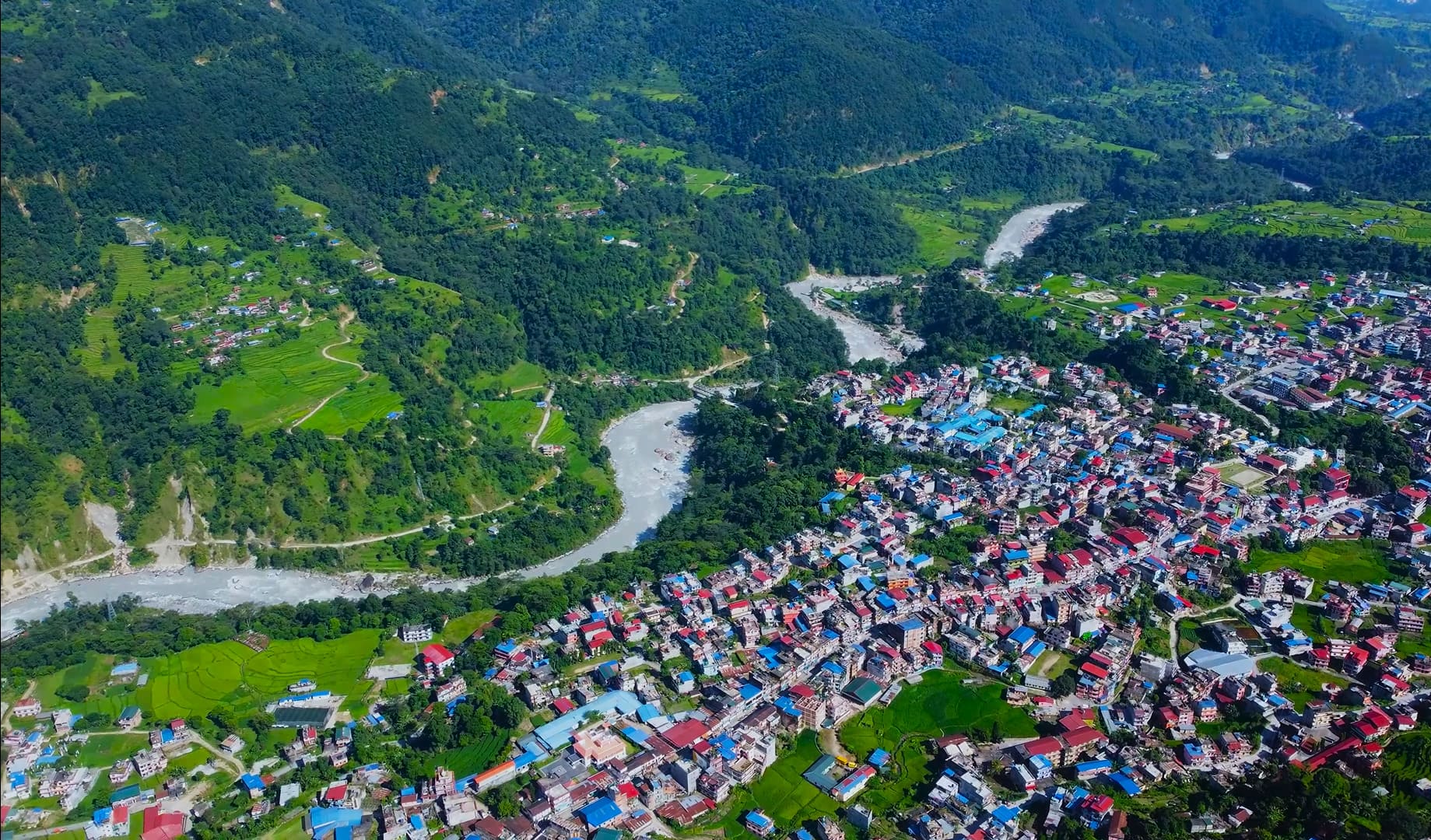
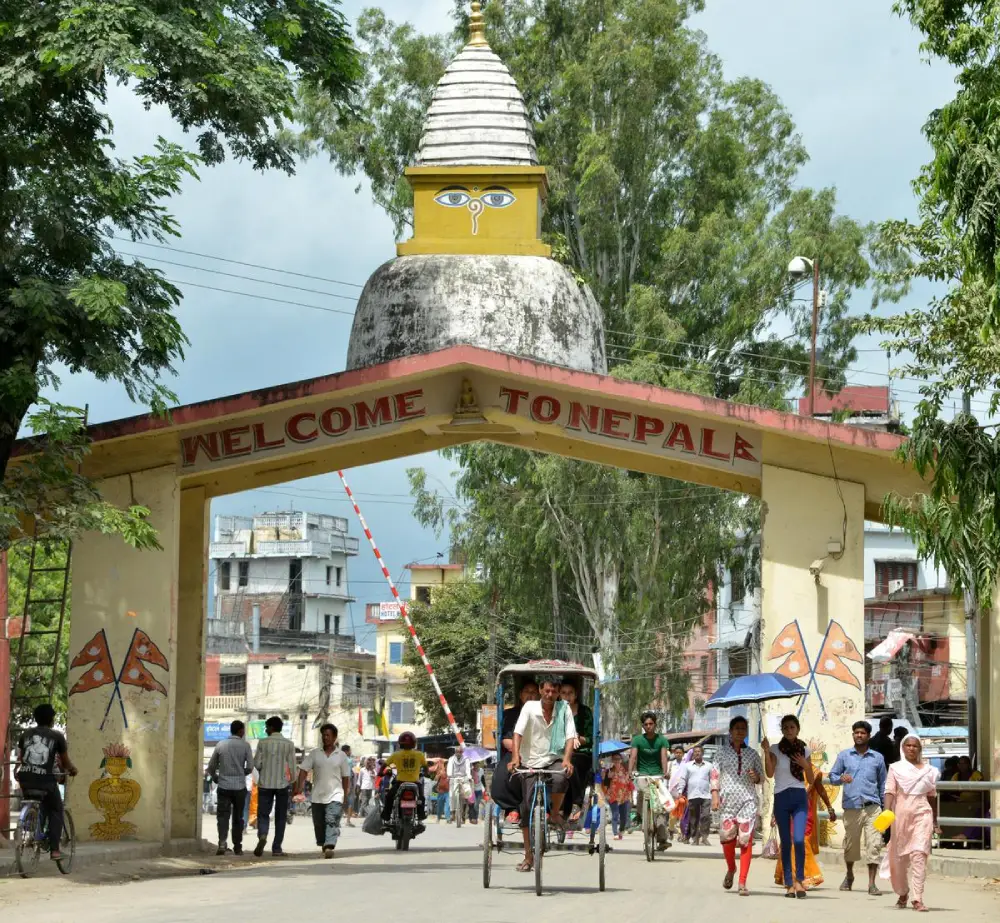
Sunauli to Besisahar Private Jeep Price

Pokhara to Sunauli Car

Sunauli to Besisahar Private Jeep Price: Complete Route and Booking Guide

For Indian trekkers and international travellers entering Nepal at the Sunauli border crossing (Bhairahawa, Rupandehi District) and heading directly to the Annapurna Circuit Trek trailhead at Besisahar (820 m, Lamjung District), the private jeep from Sunauli to Besisahar is the most direct and most efficient transport option — a single-vehicle, hotel-door service that eliminates the need to change between public buses, shared taxis, and local jeeps across multiple intermediate transit points. This complete guide covers the Sunauli to Besisahar private jeep price in NPR and USD, the complete route with distance and drive time, vehicle options for every group size, the booking process through Nepal Vehicle Hiring Pvt Ltd, and the practical tips that make this specific India-border-to-trekking-trailhead journey a smoothly managed start to the Annapurna adventure.

Nepal Vehicle Hiring Pvt Ltd (vehiclehiringnepal.com) offers private jeep hire from the Sunauli border to Besisahar for Annapurna Circuit trekkers entering Nepal from India, with transparent, all-inclusive pricing; experienced drivers on the Siddhartha Highway and Prithvi Highway corridor; and hotel pickup and trailhead drop-off service that public transport cannot provide. Our Besisahar private vehicle service, 4WD jeep hire, Hiace van hire, and private car hire cover every group size from solo trekkers to organised groups of 20 or more.

This guide answers the most important question first — the price — and then covers everything else needed to book and complete the Sunauli to Besisahar journey with confidence.

Sunauli to Besisahar Private Jeep Price

Current Price Range

A private jeep from Sunauli to Besisahar costs about NPR 30,000 to NPR 45,000 per vehicle (approximately USD 225 to USD 340) for a Mahindra Scorpio that seats 4 to 6 passengers. This all-inclusive rate covers the vehicle, professional driver, fuel for the complete 350-kilometre journey, and applicable road tolls — with no additional charges at settlement.

Nepal Vehicle Hiking Pvt Ltd’s Besisahar private vehicle service confirms current pricing at booking for the specific group size and departure date. It is competitive with the combined cost of multiple public transport connections between the same origin and destination.

Price by Vehicle Type

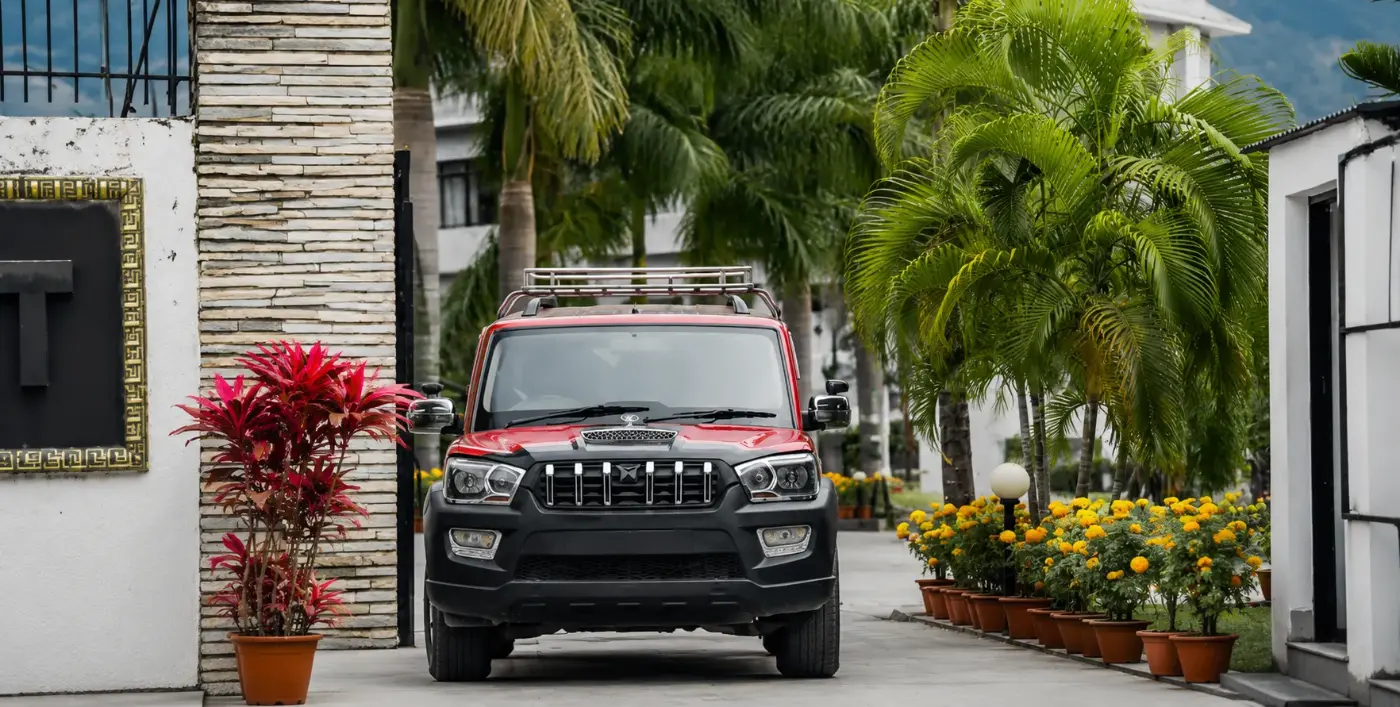
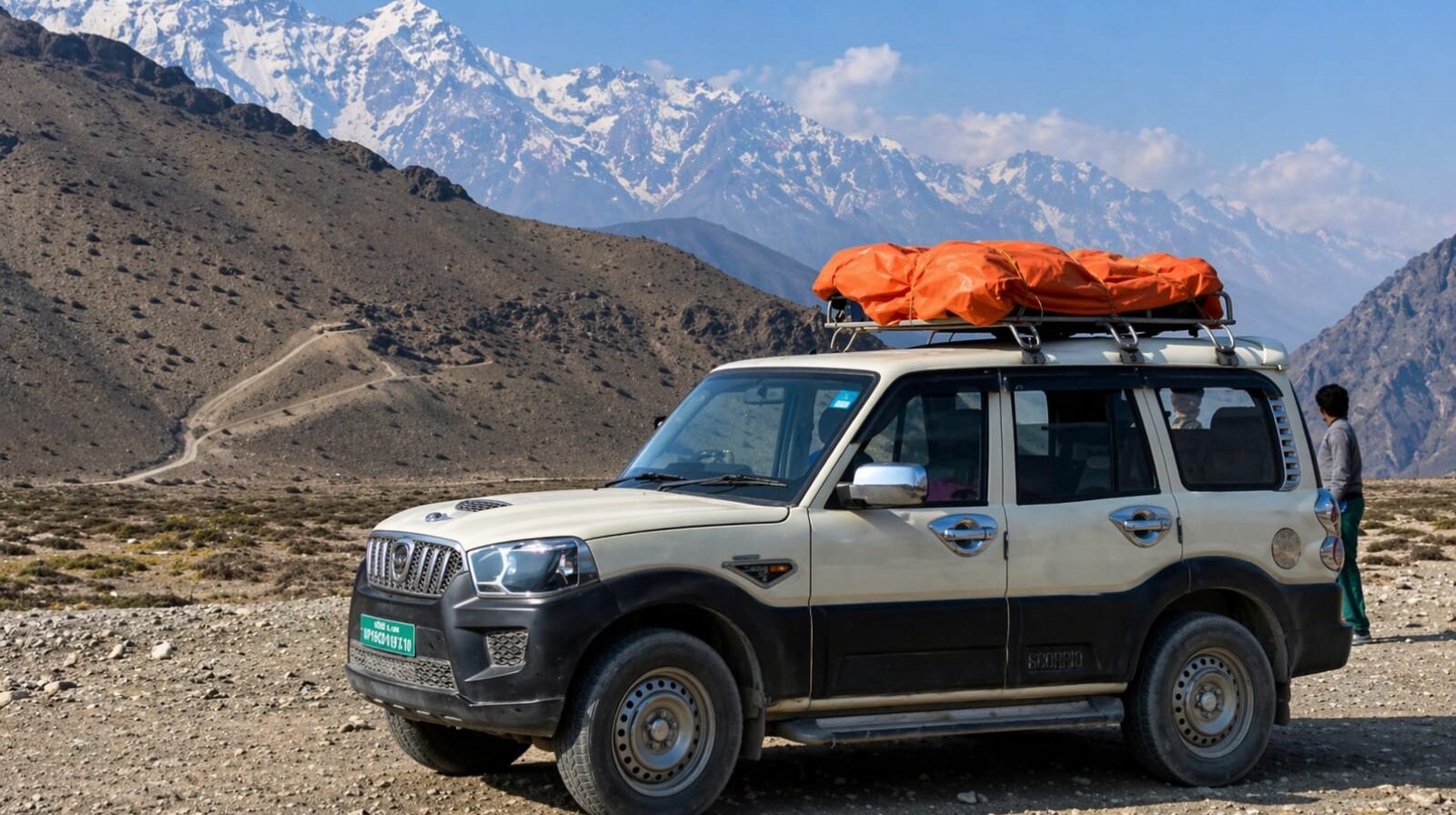
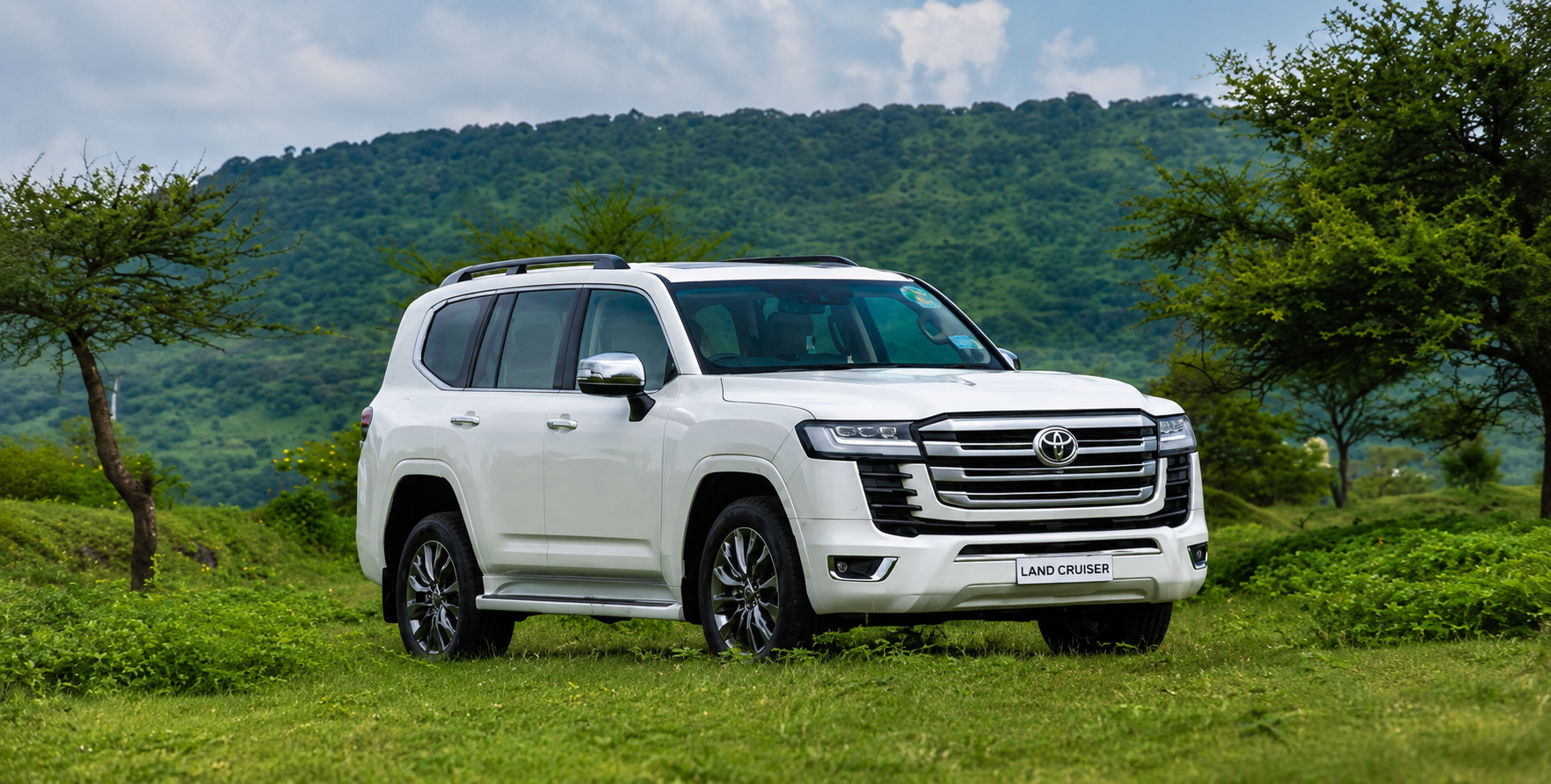
Private 4WD jeep — Mahindra Scorpio (4–6 passengers): NPR 30,000 to NPR 45,000 per vehicle. The most recommended vehicle for the full Sunauli to Besisahar journey— it handles both the flat East-West Highway sections and the Dumre to Besisahar road’s more variable quality with equal reliability. Nepal Vehicle Hiring Pvt Ltd’s 4WD jeep hire service provides Scorpio options with drivers experienced on this specific inter-city and trekking approach corridor.

Private car ( 3–4 passengers): NPR 22,000 to NPR 35,000 per vehicle. Handles the sealed highway sections (Sunauli to Butwal, Butwal to Mugling/Dumre junction) well; the Dumre to Besisahar section on the Marsyangdi River valley road is manageable in good road conditions. Nepal Vehicle Hiring Pvt Ltd’s private car hire service covers this route for smaller groups.

Hiace van (7–14 passengers): NPR 38,000 to NPR 55,000 per vehicle. Best for larger trekking groups entering Nepal at Sunauli together — the Hiace’s 12-to-14-seat capacity with a dedicated luggage area at the rear handles group trekking packs better than a 4WD jeep’s boot on this distance.

Nepal Vehicle Hiring Pvt Ltd’s Hiace van hire service covers the Sunauli to Besisahar corridor. Per-person cost for 12 passengers sharing: NPR 3,167 to NPR 4,583 — the most economical per-person private vehicle rate for the complete journey.
Sunauli to Besisahar Private Jeep Price

Sunauli to Besisahar: Route and Distance

The Complete Route

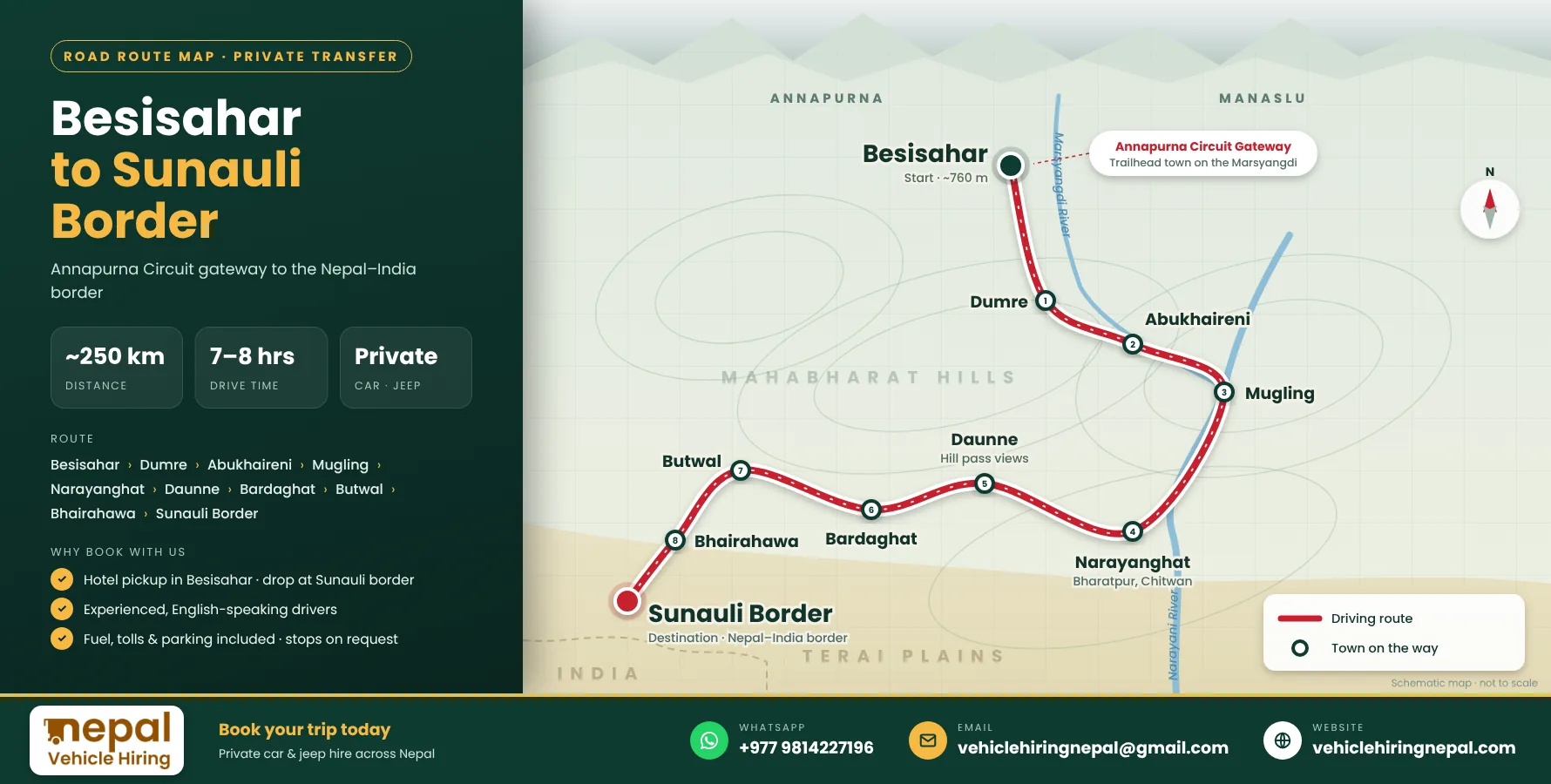
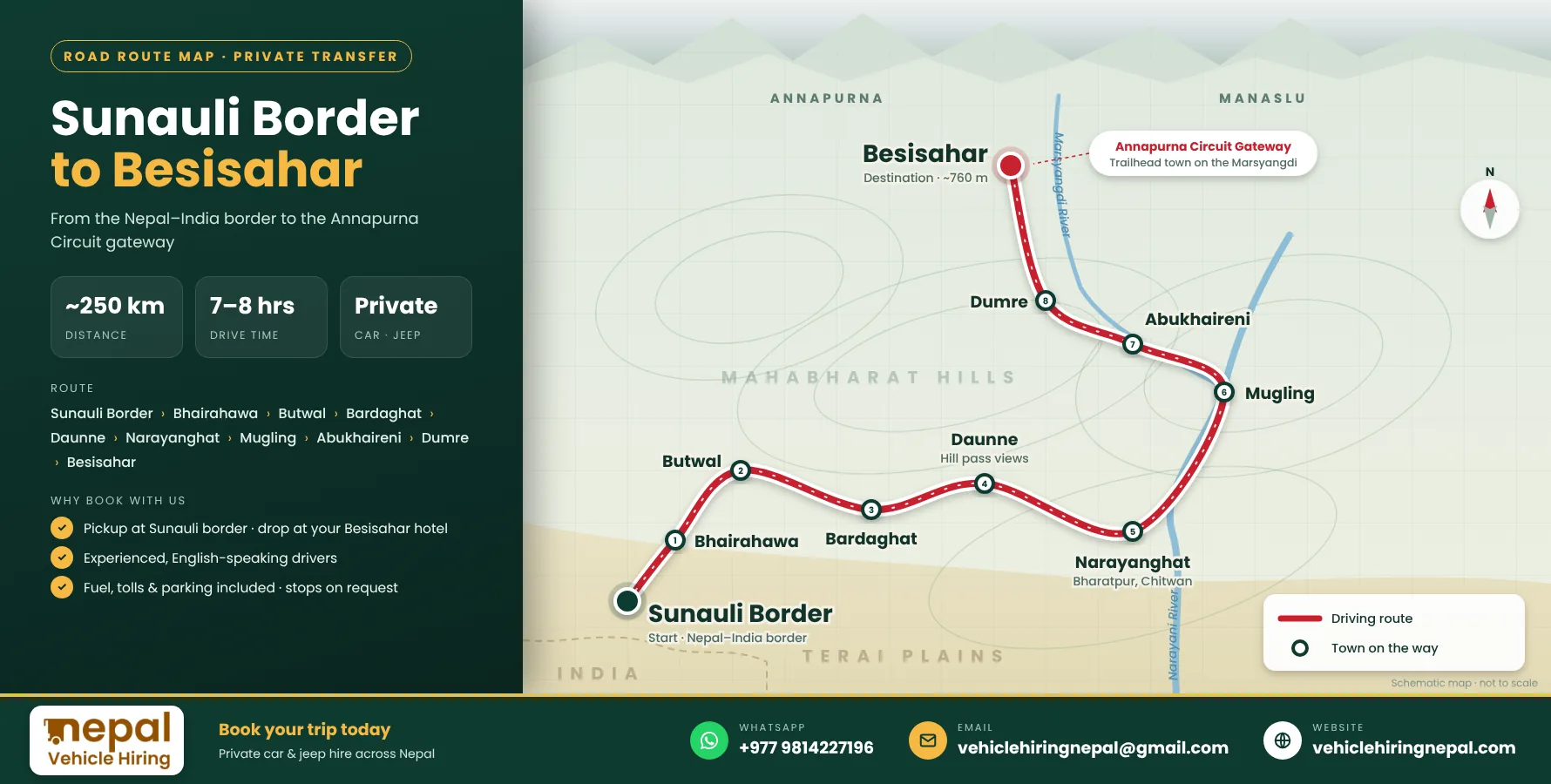
The Sunauli to Besisahar route covers approximately 330 to 360 kilometres and takes 8 to 10 hours by private vehicle. The route follows three distinct highway sections:

Section 1 — Sunauli to Butwal (approximately 25 km, 30 to 40 minutes): The short Siddhartha Highway northward from the Sunauli ICP border gate through Bhairahawa city to Butwal junction — flat, sealed Terai road in good condition.

Section 2 — Butwal to Mugling/Dumre junction (approximately 200 km, 4 to 5 hours): The main Prithvi Highway eastward from Butwal through Narayanghat (Chitwan junction), Mugling (the famous Trishuli riverside teashop town), and continuing northeastward to the Dumre junction where the Besisahar road turns north. This section follows the Prithvi Highway — Nepal’s principal east-west inter-city highway — through the Trishuli and Marsyangdi river gorge sections.

The Mugling to Dumre section of the Prithvi Highway offers some of Nepal’s finest gorge-road scenery.

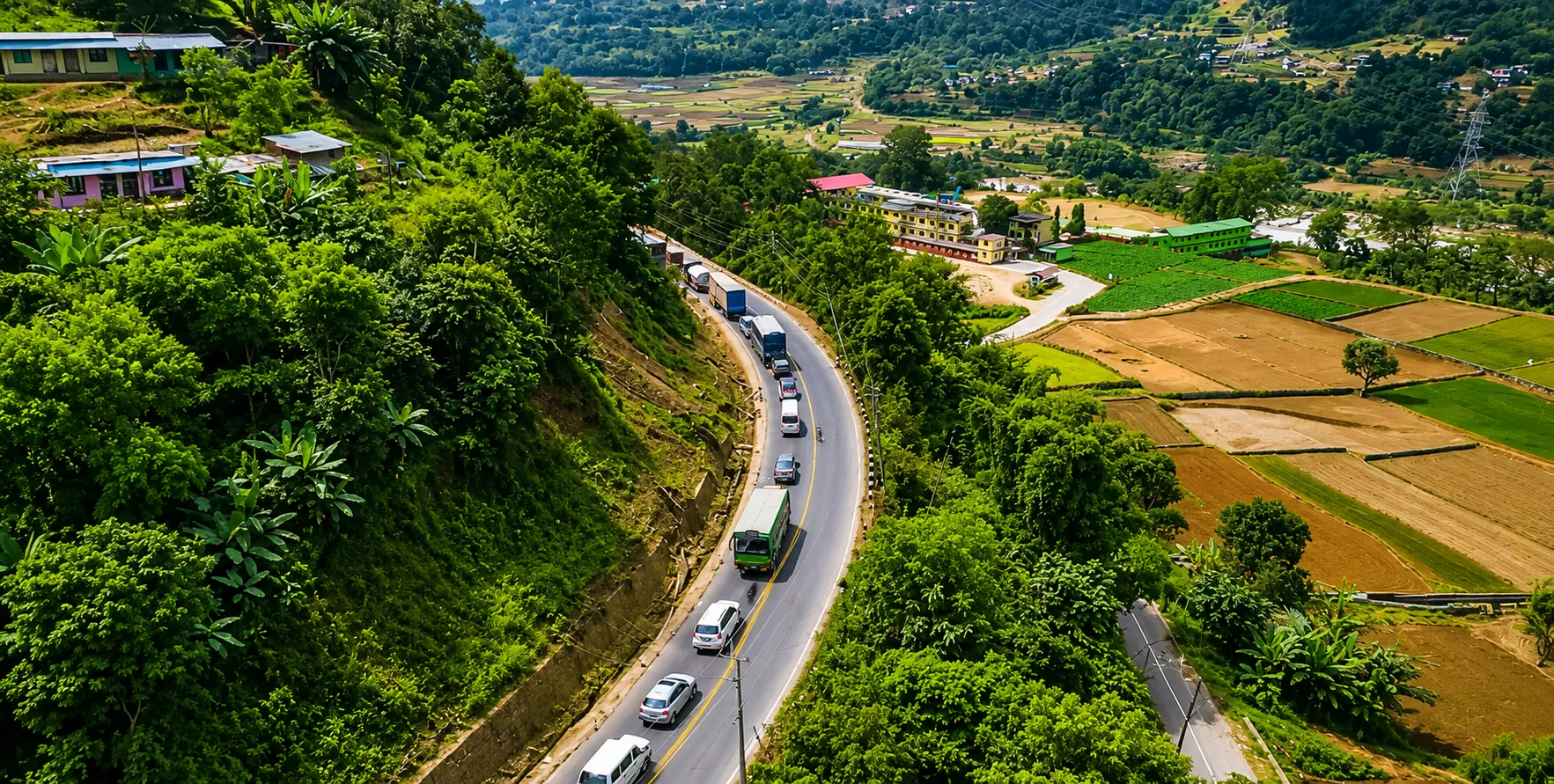
Section 3 — Dumre junction to Besisahar (approximately 42 km, 1 to 1.5 hours): From Dumre junction on the Prithvi Highway, the route turns northward onto the Marsyangdi Highway following the Marsyangdi River valley to Besisahar. Current operator data confirms the distance from Kathmandu to Besisahar is about 178 km via this route, and the Dumre to Besisahar section (about 42 km) takes 1 to 1.5 hours on a road generally well maintained in spring and autumn but affected by monsoon landslides.

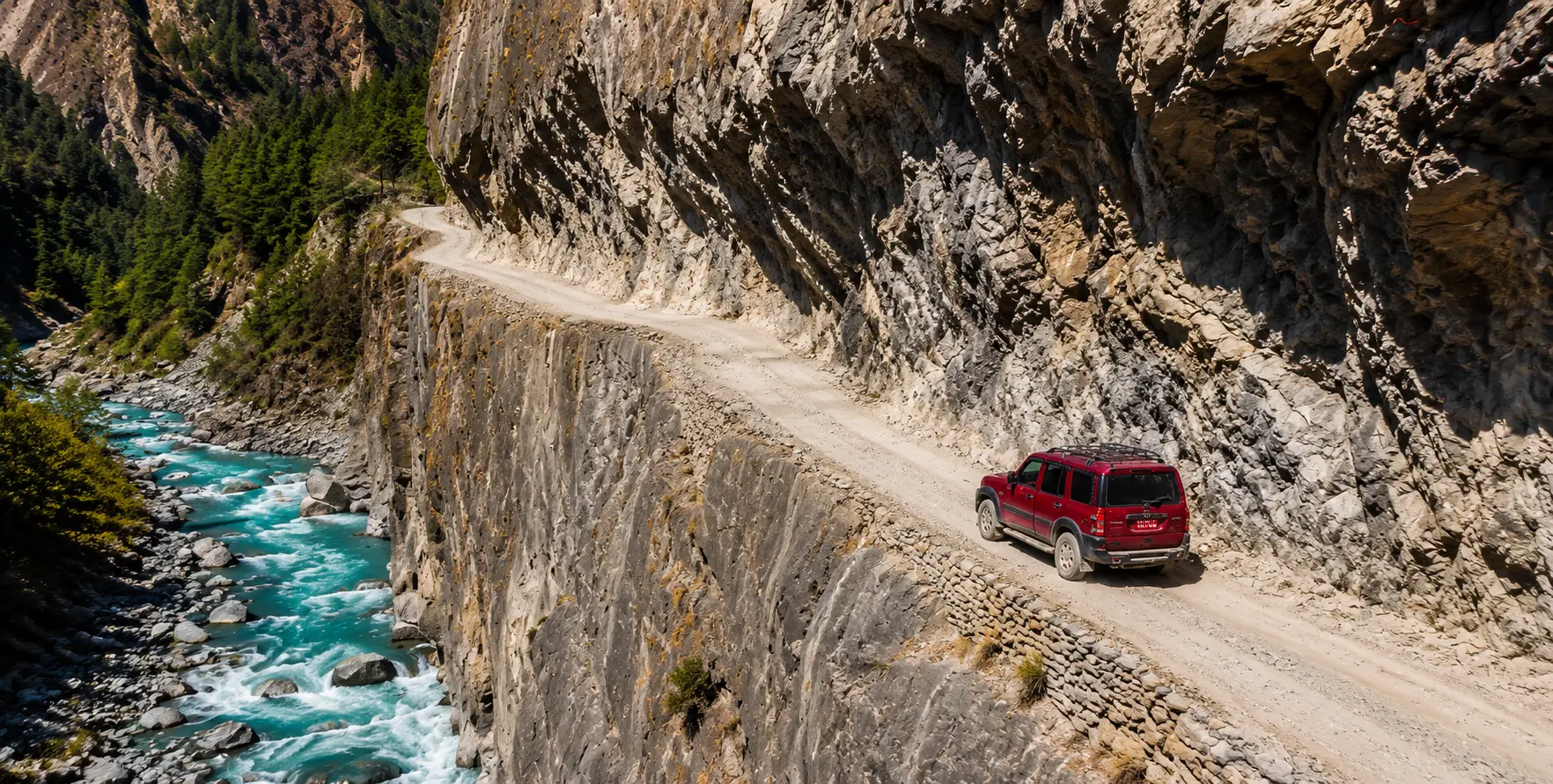
This section transitions from sealed national highway to a Category 2 provincial road of variable quality — a 4WD jeep is the most reliable vehicle choice for this final section.

Key Stops Along the Route

Butwal (25 km from Sunauli, 30 to 40 min): The major western Nepal commercial city and junction point. Money exchange facilities, ATMs, fuel stations, and restaurants. Many Sunauli-departing groups make a brief Butwal stop for fuel and money exchange before the longer highway sections.

Narayanghat/Bharatpur (approximately 135 km from Sunauli, 2.5 to 3 hours): The East-West Highway’s major central junction and gateway to Chitwan National Park. Optional fuel and snack stop. The Narayanghat bridge crossing the Narayani River marks the point where the route transitions from the East-West Highway to the Prithvi Highway heading north.

Mugling (approximately 220 km from Sunauli, 4.5 to 5 hours): The most famous roadside stop on Nepal’s highway network — the Trishuli riverside teashop cluster where fish curry and chiya are the standard traveller meal. Nepal Vehicle Hiring Pvt Ltd drivers know the best Mugling riverside teahouses and typically allow a 30-to-45-minute lunch stop here on the Sunauli to Besisahar journey. Mugling is approximately the journey’s midpoint in terms of time.

Dumre junction (approximately 262 km from Sunauli, 5.5 to 6 hours): The point at which the Prithvi Highway and the Besisahar road diverge. From here, the journey turns north into the Marsyangdi River valley. Dumre itself has basic services and is the last reliable ATM point before Besisahar.

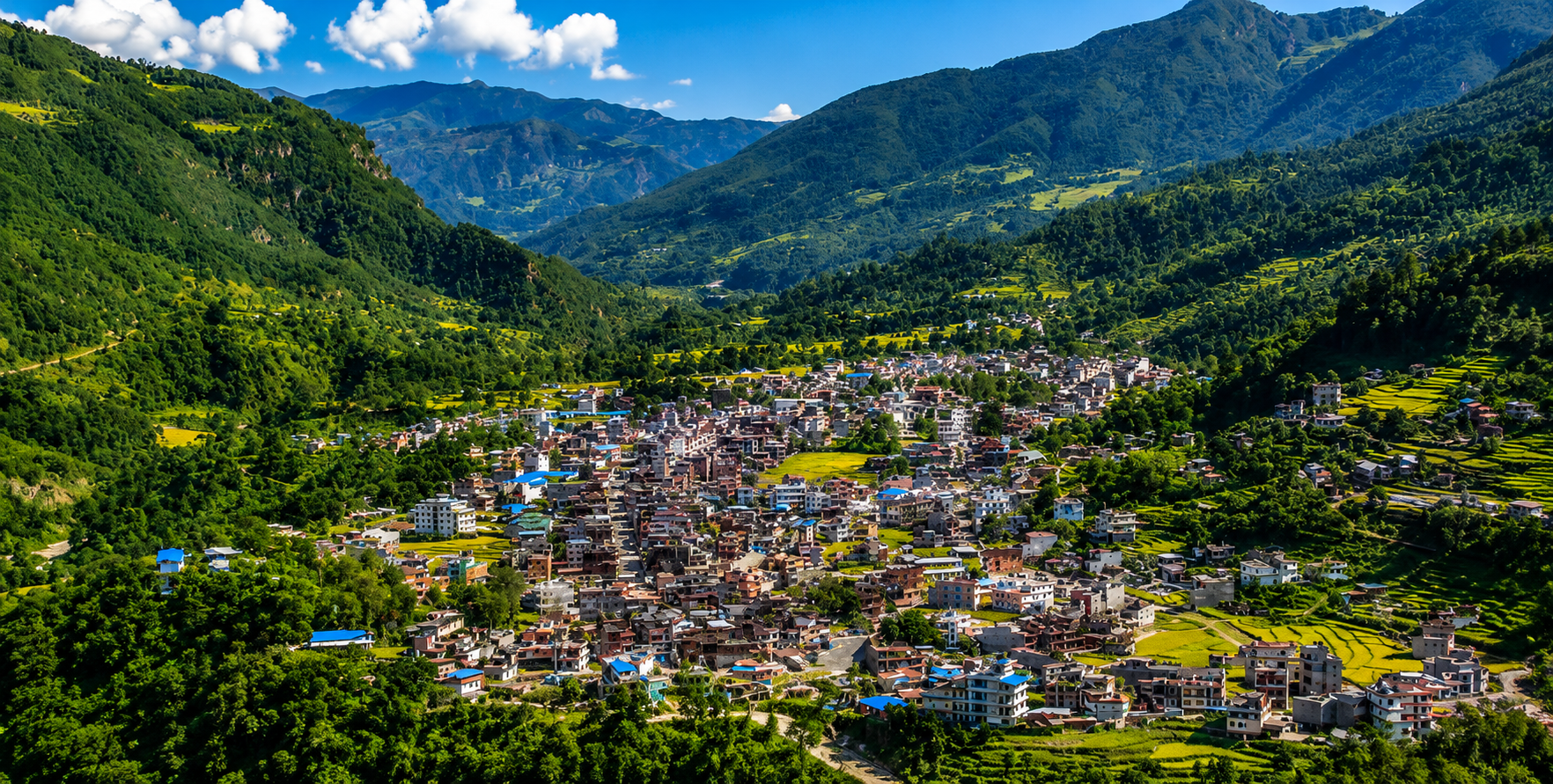
Besisahar (approximately 330 to 360 km from Sunauli, 8 to 10 hours): The Lamjung District headquarters and the standard Annapurna Circuit Trek starting point — a bustling mid-hills market town at 820 metres with guesthouses, restaurants, permit checkpoint, and all the last-minute gear and supplies a trekker might need before the trail begins.
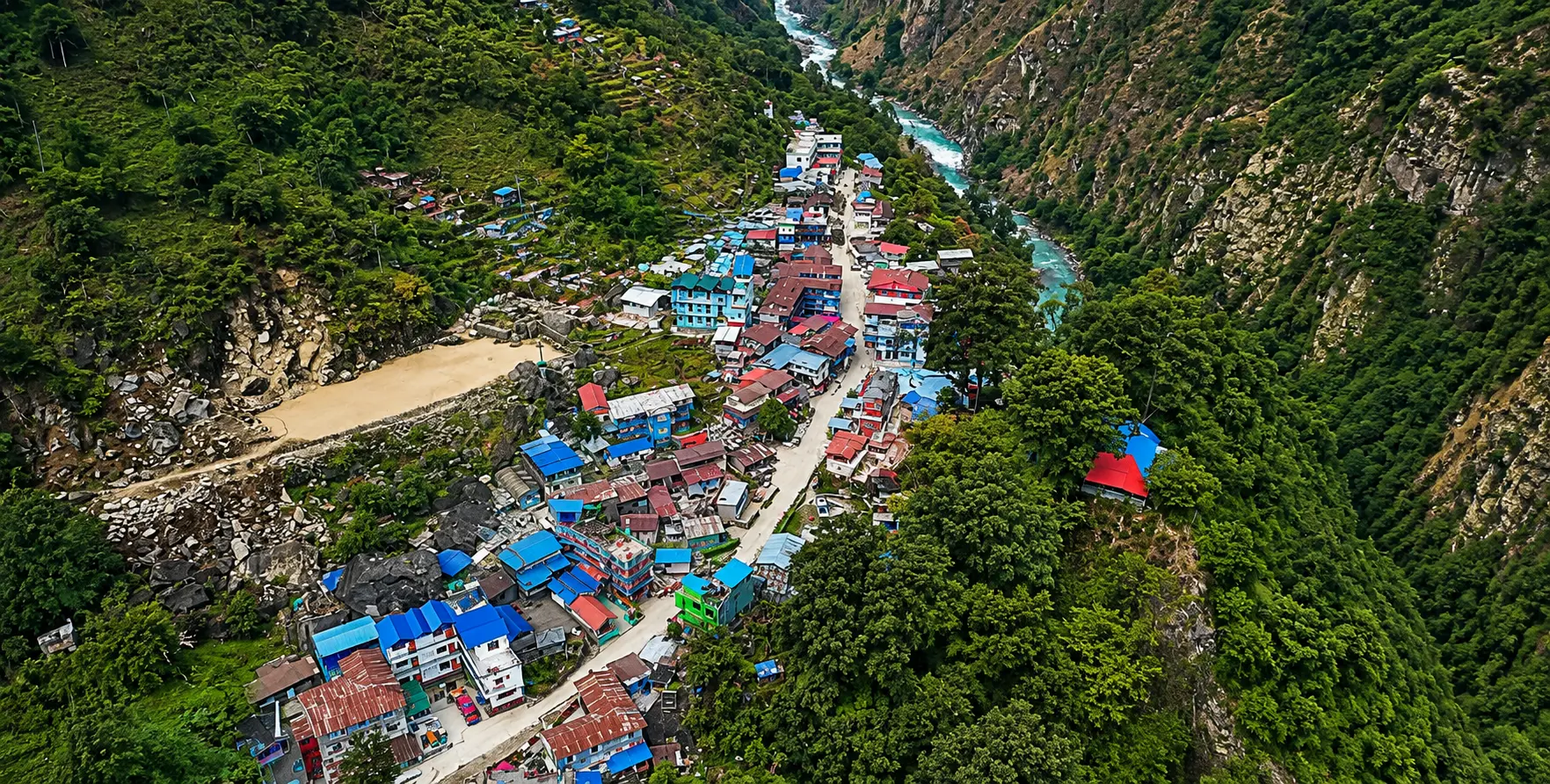
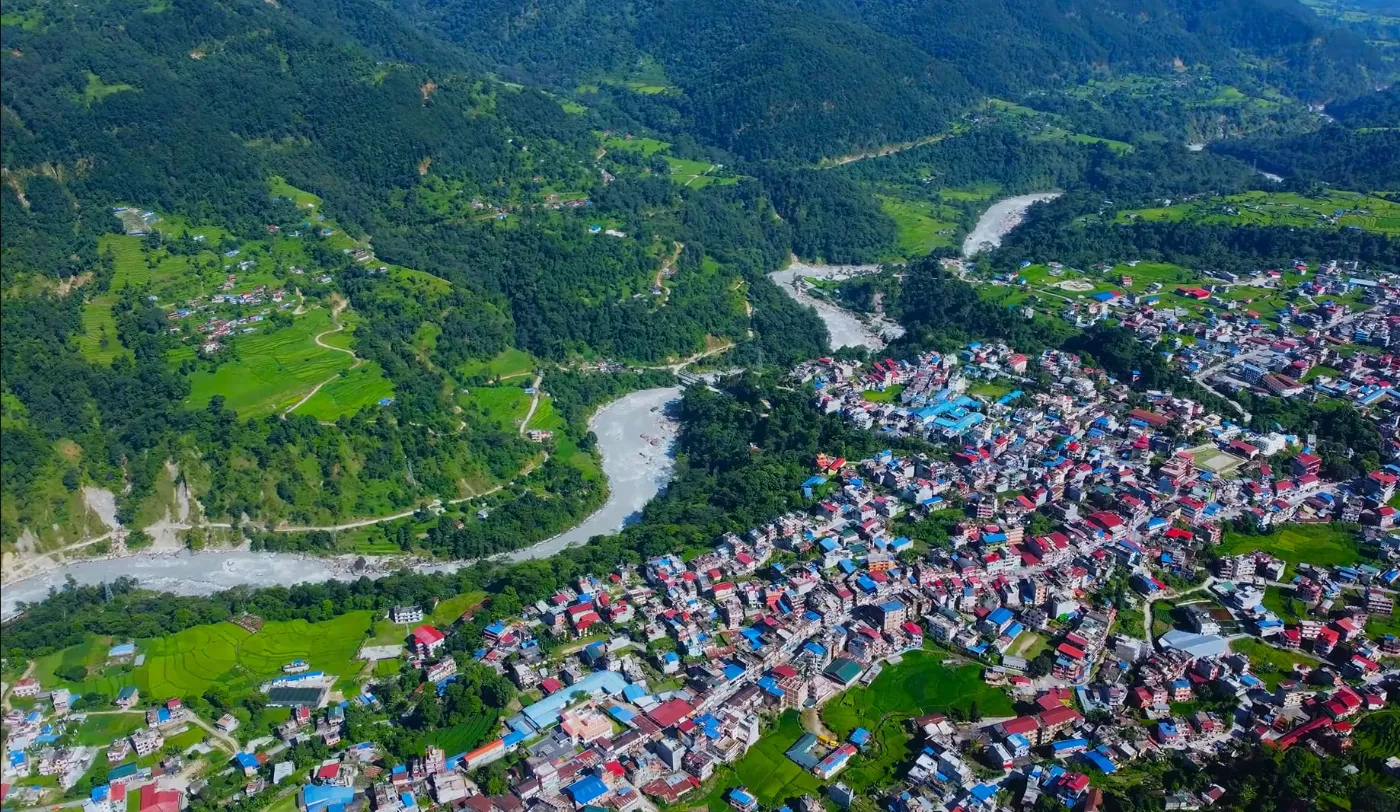
Besisahar

Why Choose a Private Jeep from Sunauli to Besisahar?

vs Public Transport

The public transport alternative from Sunauli to Besisahar involves: (1) Sunauli to Bhairahawa shared taxi or rickshaw (10 minutes). (2) Bhairahawa to Pokhara bus (4 to 5 hours, NPR 500 to NPR 800). (3) Pokhara to Besisahar local bus (2.5 to 3 hours, NPR 300 to NPR 500).

Alternatively: (1) Sunauli/Bhairahawa to Kathmandu bus (7 to 9 hours). (2) Kathmandu to Besisahar local bus or shared jeep (6 to 7 hours). Both public transport routes require 2 to 3 vehicle changes, 12 to 15+ hours of total travel time, and no luggage assistance.

The private jeep from Sunauli to Besisahar, at 8 to 10 hours in a single vehicle with hotel pickup, luggage assistance, and a single payment, is significantly more efficient for any group of 3 or more trekkers.

Per-person cost comparison for a group of 5: Public transport (combined Bhairahawa to Pokhara to Besisahar bus): approximately NPR 800 to NPR 1,300 per person. Private Mahindra Scorpio for 5 at NPR 37,500 (midpoint of range): NPR 7,500 per person.

The private jeep costs about 6 to 8 times more per person than the public bus. Still, it saves 3 to 5 hours of travel time, eliminates 2 vehicle changes, provides door-to-door service from the Sunauli border to the Besisahar guesthouse, and keeps the entire trekking group together in one vehicle.

For most trekkers whose time and comfort have value, the private jeep is the right choice. Contact Nepal Vehicle Hiking Pvt Ltd on WhatsApp to compare current rates for your specific group size.

vs Sunauli to Kathmandu, then Kathmandu to Besisahar

Many Annapurna Circuit trekkers enter at Sunauli, route through Kathmandu — taking a Sunauli to Kathmandu bus or jeep (285 km, 7 to 9 hours) and then a separate Kathmandu to Besisahar vehicle the following day. Nepal Vehicle Hiring Pvt Ltd’s Besisahar private vehicle service from Kathmandu covers this approach at NPR 16,000 to NPR 26,000 per vehicle for the 178 km Kathmandu to Besisahar section.

The Sunauli-Kathmandu-Besisahar two-day approach adds one overnight and one extra travel day compared to the direct Sunauli-Besisahar private jeep. For trekkers who want to include cultural days in Kathmandu before the Annapurna Circuit, the two-day routing makes sense.

For trekkers who want to start the Annapurna Circuit as quickly as possible after entering Nepal at Sunauli, the direct Sunauli-to-Besisahar private jeep eliminates the overnight in Kathmandu. It gets the group to Besisahar the same day they cross the border.

Besisahar and the Annapurna Circuit Trek

Besisahar as Annapurna Circuit Trailhead

Besisahar (820 m) is the traditional starting point of the Annapurna Circuit Trek — the 160-to-230-kilometre circumambulation of the Annapurna massif that crosses the Thorong La Pass (5,416 m) and is widely regarded as one of the world’s greatest trekking circuits. The classic Annapurna Circuit from Besisahar follows the Marsyangdi River valley northward through Bahundanda, Jagat, Dharapani, and Chame to Manang (3,519 m), crossing the Thorong La to Muktinath and then descending the Kali Gandaki Gorge to Jomsom and Pokhara.

As current trekking guides confirm, trekkers who want to walk the full classic circuit start in Besisahar and follow the entire trail; those who want to save 3 to 5 days of road travel often take a jeep from Besisahar north to Chame or Dharapani to begin the genuine trail at higher altitude.

Nepal Vehicle Hiring Pvt Ltd’s Kathmandu to Manang jeep service covers the extended approach from Kathmandu to Manang (3,519 m) for trekkers who want to start the Annapurna Circuit above the jeep road. From Sunauli, you can arrange this extended approach as a Sunauli-to-Besisahar. Besisahar to Manang is a two-vehicle sequence—Nepal Vehicle Hiking Pvt Ltd coordinates both stages as a single booking.

Permits Required at Besisahar

Trekkers arriving at Besisahar from Sunauli require two permits before beginning the Annapurna Circuit Trek: (1) ACAP permit (Annapurna Conservation Area Project) — NPR 3,000 for foreign nationals, obtainable at the TAAN/NTB office in Kathmandu or Pokhara, or at the Besisahar checkpoint. (2) TIMS card (Trekkers’ Information Management System) — USD 20 per person for trekkers with a licensed guide, obtainable at the TAAN office or at the Besisahar checkpoint.

Nepal Vehicle Hiring Pvt Ltd advises all Sunauli-to-Besisahar trekkers to carry enough NPR cash for permit fees at Besisahar, as the checkpoint may not accept card payments.
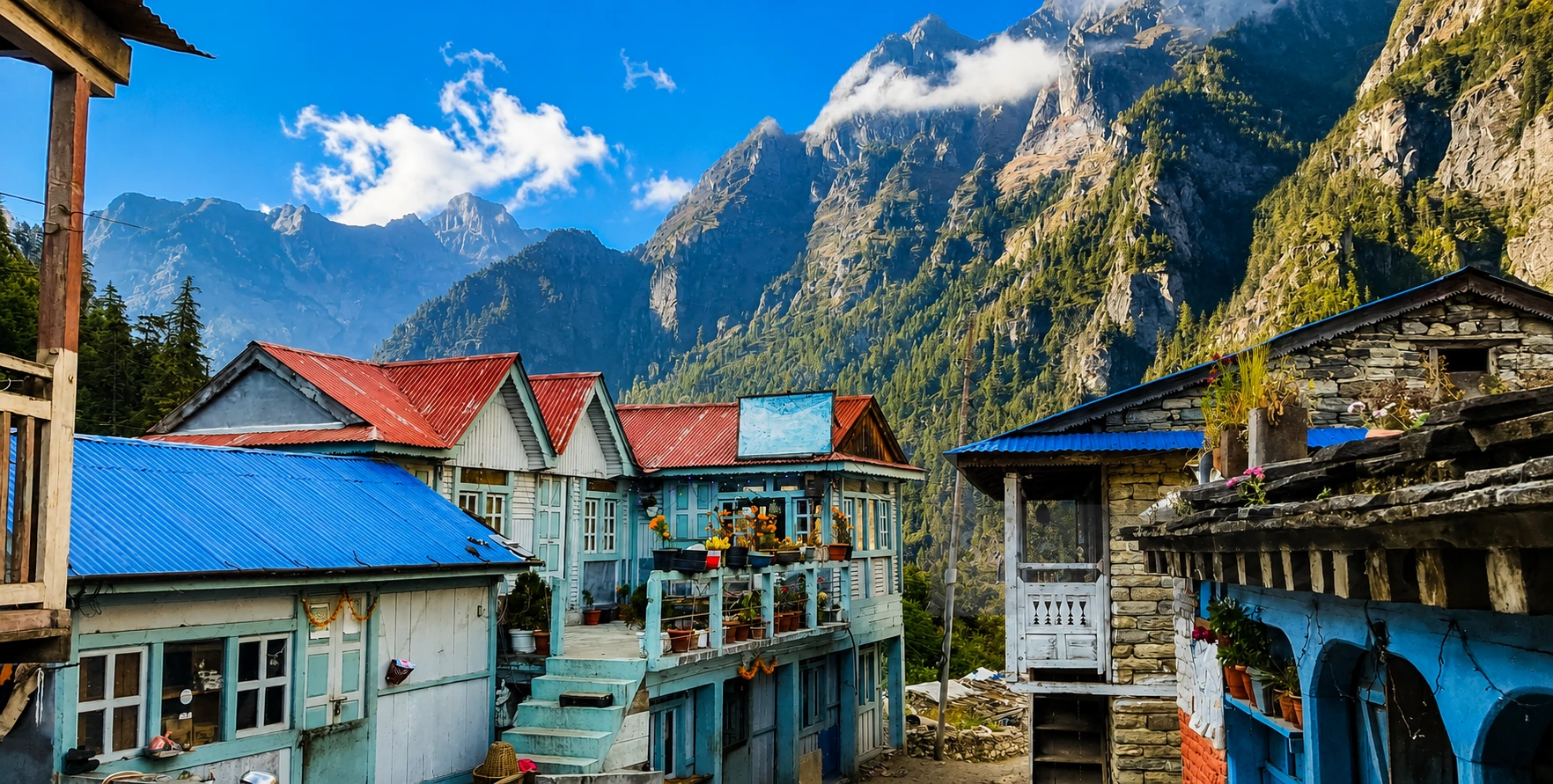
Sunauli to Besisahar Private Jeep Price

Extending Beyond Besisahar: Jeep to Chame, Manang, and Bhulbhule

Many Annapurna Circuit trekkers who arrive at Besisahar by private jeep from Sunauli continue up the Marsyangdi Valley by jeep to save additional trekking days on the road-parallel lower section. Nepal Vehicle Hiring Pvt Ltd’s Besisahar private vehicle service and Kathmandu-to-Manang jeep cover extensions north of Besisahar.

Key extension points and additional costs from Besisahar: Bhulbhule (15 km, 30 to 45 min, approximately NPR 3,000 to NPR 5,000 local jeep); Jagat (36 km from Besisahar, 1.5 to 2 hours, rough 4WD road); Dharapani (58 km from Besisahar, 2.5 to 3.5 hours, rough 4WD, NPR 10,000 to NPR 15,000); Chame (70 km from Besisahar, 3 to 4 hours, NPR 14,000 to NPR 20,000 from Kathmandu); Manang (90+ km from Besisahar, 5 to 7 hours, very rough 4WD road, NPR 22,000 to NPR 55,000 from Kathmandu).

⚠ Note: The road from Besisahar northward toward Bhulbhule, Jagat, and Chame is Category 2 to 3 — unpaved, rough, narrow, and increasingly demanding. A 4WD vehicle with experienced Marsyangdi Valley road drivers is required. Nepal Vehicle Hiring Pvt Ltd coordinates this extension from Besisahar with local jeep operators who know the specific conditions on the upper Marsyangdi road sections.

Seasonal Guide for Sunauli to Besisahar

Autumn is the best season for the Sunauli to Besisahar private jeep journey—post-monsoon roads at their annual best, the Prithvi Highway and Dumre-Besisahar road in their most reliable condition, and the Annapurna Circuit at its finest, with clear mountain views and stable high-altitude weather. The Besisahar permit checkpoint runs at full capacity during the autumn trekking peak, and private jeep bookings from Sunauli are easiest during this period.

Spring brings rhododendron blooms to the Annapurna Circuit’s forested lower sections and generally good road conditions from Sunauli to Besisahar. Late spring pre-monsoon conditions can occasionally affect the Dumre to Besisahar road’s more variable sections, but the main highway corridor remains reliable.

Monsoon brings the highest risk of road disruption on the Dumre to Besisahar provincial road—landslides and road damage during sustained heavy rainfall can cause delays or temporary route closures. Nepal Vehicle Hiring Pvt Ltd monitors conditions on this section and advises on the best departure time. The Sunauli to Dumre highway sections are less affected by monsoon conditions.

Winter can leave the Annapurna Circuit’s Thorong La Pass snowbound and close the higher sections of the trek, but the Sunauli to Besisahar vehicle journey remains fully operational through winter. Nepal Vehicle Hiring Pvt Ltd offers its winter Besisahar service year-round.

Booking Process: Sunauli to Besisahar Private Jeep

  • WhatsApp Nepal Vehicle Hiring Pvt Ltd on WhatsApp with: planned Nepal entry date at Sunauli, group size, pickup location preference (Sunauli ICP gate area / Bhairahawa hotel), and any extension requirements beyond Besisahar
  • Nepal Vehicle Hiring Pvt Ltd provides an all-inclusive quote within hours—vehicle type, driver name, vehicle registration, departure time, and a confirmed all-inclusive price covering the vehicle, driver, fuel, and tolls. Booking of 1 to 3 days recommended for most seasons; 4 to 7 days for peak autumn and spring trekking season when Besisahar-approach vehicle demand is highest
  • Confirm Nepal Tourist Visa before the border crossing — most nationalities require a Nepal Tourist Visa (USD 30 for 15 days, USD 50 for 30 days) obtainable on arrival at the Sunauli ICP; Indian nationals cross freely without visa.
  • Carry NPR cash from the Bhairahawa exchange — Nepal Vehicle Hiring Pvt Ltd’s all-inclusive rate covers the complete vehicle journey. Still, you’ll need NPR cash for Besisahar permit fees, first trekking meals, and any guesthouse deposit.s
  • Request a Mugling lunch stop at booking — a 30-to-45-minute break at Mugling’s riverside teahouses at the journey’s approximate midpoint is worth planning for; Nepal Vehicle Hiring Pvt Ltd drivers know the best Mugling teahouses and time the stop efficiently within the journey.
  • Confirm departure time for the Sunauli border: a 7:00 to 8:00 AM departure from Sunauli reaches Besisahar between 4:00 and 6:00 PM — allowing time for guesthouse check-in and permit processing before dark.
  • For groups wanting to continue to Chame or Manang, confirm the extension vehicle arrangement at the time of the Sunauli booking rather than on arrival at Besisahar — local Besisahar jeep availability can be limited during peak trekking season.

Nepal Vehicle Hiring Pvt Ltd: Complete Annapurna and Nepal Network

Nepal Vehicle Hiring Pvt Ltd’s Sunauli to Besisahar private jeep service is part of the most comprehensive Annapurna region and Nepal-wide vehicle hire network available. Our Besisahar private vehicle service covers Sunauli, Kathmandu, and Pokhara approach routes. Our Kathmandu to Manang jeep extends the Annapurna approach to 3,519 metres.

Our Kathmandu to Pokhara private vehicle connects the capital to the Annapurna gateway city. In Pokhara: Pokhara to Ghorepani Poon Hill jeep for the Ghorepani Poon Hill Trek. Pokhara to Ghandruk jeep and Pokhara to Nayapul transport for the Annapurna Base Camp Trek.

Pokhara to Upper Mustang overland jeep for the Upper Mustang Trek. Sarangkot sunrise vehicle hire.

For Nepal’s other great trekking corridors: Kathmandu to Syabrubesi jeep for the Langtang Valley Trek. Kathmandu to Soti Khola jeep for the Manaslu Circuit Trek. Kathmandu to Salleri Phaplu for the Everest Base Camp Trek overland.

Kathmandu to Muktinath jeep for the Muktinath Tour. Kathmandu airport transfer. Kathmandu sightseeing.

Bhaktapur day tour. Nagarkot sunrise tour and vehicle hire in Nagarkot. Fleet of 4WD jeeps, private cars, Hiace vans, coasters, and buses.

Nepal tour packages and trekking transport. Plan your Nepal trip or contact us on WhatsApp. Visit vehiclehiringnepal.com to book.

The Annapurna Circuit Trek: What Trekkers Are Heading Toward

Understanding what awaits at Besisahar—and beyond—helps trekkers appreciate why the private jeep from Sunauli is not merely a logistical transfer but the start of one of Nepal’s most extraordinary adventures. The Annapurna Circuit Trek is widely considered one of the world’s finest multi-day trekking circuits — a 160-to-230-kilometre journey that circumambulates the entire Annapurna massif, gaining altitude progressively through four distinct ecological zones before crossing the highest point of any established trekking route in Nepal: the Thorong La Pass at 5,416 metres.

The classic circuit from Besisahar to Pokhara (the standard direction) takes 12 to 21 days depending on pace and extension choices. It delivers mountain encounters of extraordinary diversity — from the subtropical Marsyangdi River valley’s bamboo and rhododendron forests to the arid Tibetan plateau landscape of the Mustang rain shadow above Manang, from the Buddhist monastery at Braga to the Hindu-Buddhist pilgrimage complex at Muktinath.

The Marsyangdi River valley section from Besisahar northward — the approach leg of the Annapurna Circuit that the private jeep from Sunauli delivers trekkers to — begins at 820 metres and climbs progressively through Bahundanda (1,310 m), Jagat (1,300 m), Dharapani (1,860 m), and Chame (2,710 m) to Manang (3,519 m) over 7 to 10 days of walking. The valley’s cultural character gradually shifts from the Brahmin and Chhetri Hindu communities of the lower valley to the Gurung and Manangi Buddhist communities of the upper valley.

This cultural progression parallels the altitude gain, giving the Annapurna Circuit its distinctive blend of mountain grandeur and human cultural richness.

Trekkers who begin at Besisahar by private jeep from Sunauli experience this complete cultural and altitudinal progression from the circuit’s true beginning — while trekkers who take a local jeep from Besisahar to Chame or Dharapani begin the walking at a higher point, saving 3 to 5 days but missing the lower valley’s specific landscape and cultural encounters.

The Thorong La crossing — the Annapurna Circuit’s physical and psychological summit — typically takes 5 to 7 hours from the Thorong Phedi base camp at 4,500 metres to the pass at 5,416 metres, followed by a long descent to Muktinath at 3,710 metres. The pass is generally clear from late autumn through spring (October to May) and affected by monsoon snowfall from June through September — though determined trekkers cross it year-round with appropriate preparation.

Nepal Vehicle Hiring Pvt Ltd’s Kathmandu-to-Muktinath jeep service serves trekkers who choose to descend by vehicle from Muktinath rather than continue on foot through the Kali Gandaki Gorge to Pokhara—a popular choice for trekkers short on time after the Thorong La crossing. Our Pokhara-to-Nayapul transport and Pokhara car hire serve trekkers arriving in Pokhara who complete the full circuit on foot.

Sunauli Border: Entry Procedures and First Nepal Impressions

The Sunauli Integrated Check Post (ICP) at Bhairahawa is one of South Asia’s busiest overland border crossings—processing thousands of daily crossings between India’s Uttar Pradesh and Nepal’s Rupandehi District. For Annapurna Circuit trekkers entering Nepal at Sunauli, understanding the border procedure eliminates unnecessary confusion at what should be the adventure’s clean beginning.

For Indian nationals: No visa required in either direction. Indian passport holders and Voter Identity Card holders cross through the designated Indian-national immigration lane— get an entry stamp at the Nepal Immigration Office on the Nepal side; no additional documentation is required.

The process typically takes 10 to 20 minutes during regular hours and up to 45 minutes during peak crossings. Nepal Vehicle Hiring Pvt Ltd’s drivers meet the group on the Nepal side of the immigration hall immediately after crossing—the driver is positioned in the Nepal-side vehicle parking area adjacent to the immigration office and identified by a name sign.

For other nationalities: A Nepal Tourist Visa is required and is obtainable on arrival at the Sunauli ICP — USD 30 for a 15-day visa, USD 50 for a 30-day visa, USD 125 for a 90-day visa. Passport photos are required (carry 2 copies).

Payment in USD cash is accepted; Indian Rupees and NPR are also accepted at approximately current exchange rates. The visa processing typically takes 20 to 40 minutes.

Nepal Vehicle Hiring Pvt Ltd advises international trekkers to factor visa processing time into the planned departure time from Sunauli — a 9:00 AM border arrival with visa processing completed by 9:40 AM allows the private jeep departure by 10:00 AM and Besisahar arrival by 7:00 to 8:00 PM.

Bhairahawa city — the urban centre 5 kilometres north of the Sunauli ICP — offers the best money exchange, ATM access, and SIM card purchase facilities in the border zone. Nepal Vehicle Hiring Pvt Ltd’s drivers can stop at Bhairahawa’s money exchange area before heading north on the Prithvi Highway — the Bhairahawa exchange rates are generally better than the border-zone stalls immediately at the ICP.

Buying an IM card at Bhairahawa’s NTC or Ncell outlets provides mobile connectivity for the full Sunauli to Besisahar journey and beyond. Carrying sufficient NPR from Bhairahawa eliminates the need for money exchange stops at Butwal or Narayanghat during the journey.

Nepal Vehicle Hiring Pvt Ltd recommends allowing 45 to 60 minutes in Bhairahawa for money exchange, SIM purchase, and breakfast before the main journey begins.
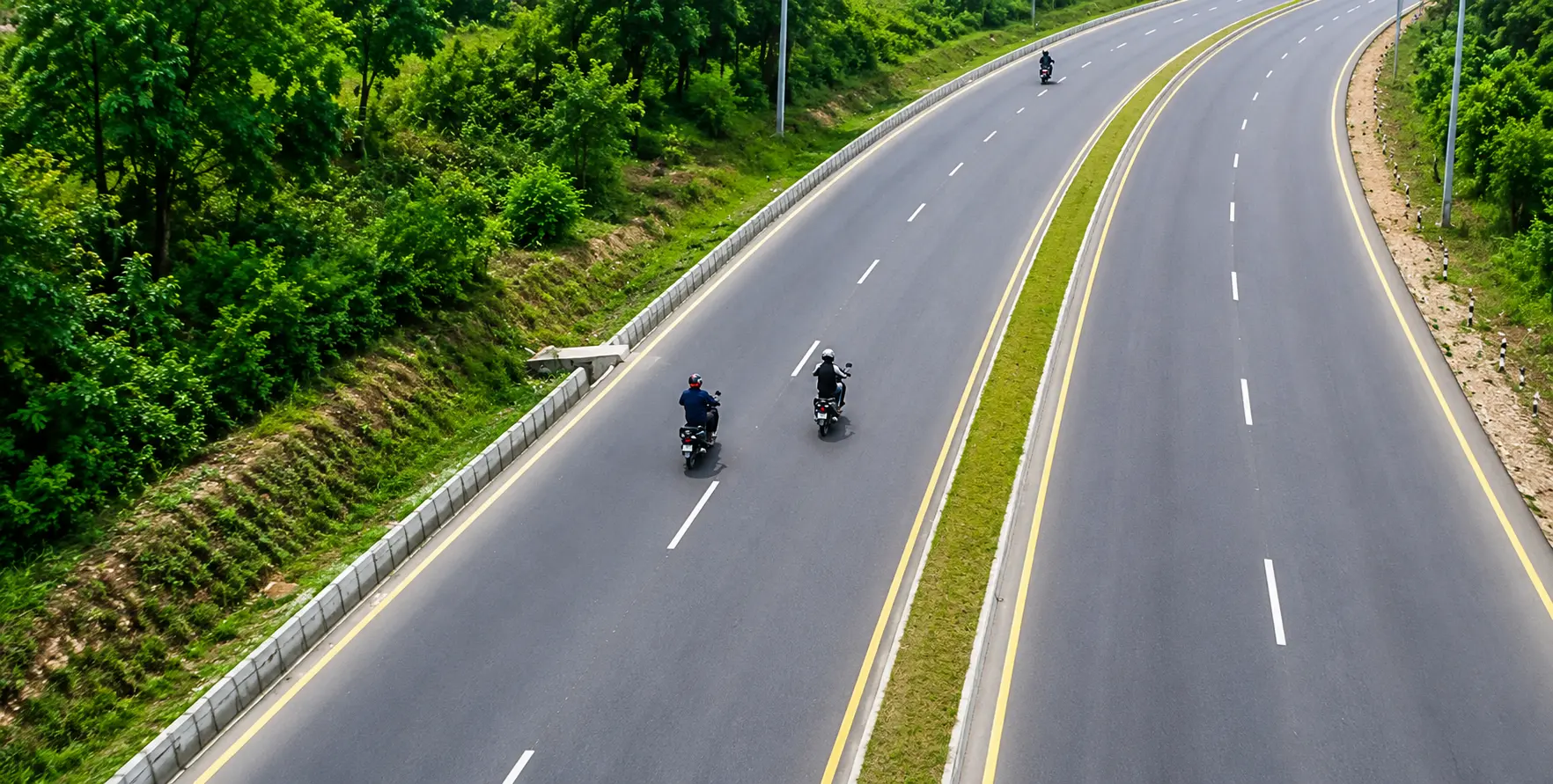
Sunauli to Besisahar Private Jeep Price

The Prithvi Highway: Journey Highlights

The Prithvi Highway — Nepal’s most important inter-regional national highway, connecting the western Terai through Butwal and the Marsyangdi-Trishuli river corridor to Kathmandu — is the spine of the Sunauli to Besisahar journey. Understanding its character helps trekkers appreciate what they will experience during the 8-to-10-hour drive.

The Butwal to Narayanghat section (approximately 85 km, 1.5 to 2 hours) crosses the flat Terai plains through productive agricultural landscape — rice paddies in the wet season, wheat fields in the dry season, and the characteristic Terai settlement pattern of dispersed villages and market towns that characterises Nepal’s southern lowlands. The Chitwan National Park’s northern boundary is visible on the northern horizon as the road approaches Narayanghat, with the Narayani River bridge crossing at Narayanghat delivering the first significant riverine scenery of the journey.

The Narayanghat to Mugling section (approximately 55 km, 1 to 1.5 hours via the Prithvi Highway gorge) is the journey’s most dramatic highway dimension — the road ascending from the flat Terai into the Himalayan foothills and then following the Trishuli River gorge through a progressively deepening canyon where the river is visible hundreds of metres below. This section delivers some of Nepal’s finest highway scenery in a compact 55-kilometre stretch—the kind of dramatic landscape transition that Nepal’s extraordinary geological diversity offers on no other highway in the world over such a short distance.

The Mugling to Dumre section (approximately 40 km, 45 to 60 minutes) follows the Marsyangdi River valley eastward before turning north at Dumre. The Annapurna range begins to appear on the northern horizon in this section on clear mornings — a first distant glimpse of the mountain world that the Annapurna Circuit Trek will explore at close quarters over the following weeks.

The Dumre to Besisahar final section (42 km, 1 to 1.5 hours) follows the Marsyangdi River northward through a progressively more dramatic mid-hills landscape — terraced hillsides, traditional villages, the Marsyangdi’s increasingly rapid flow as the gradient steepens toward the mountain approach — delivering the specific sense of arrival at the Himalayan world’s threshold that Besisahar embodies as the Annapurna Circuit’s traditional starting point. Nepal Vehicle Hiring Pvt Ltd’s Besisahar-approach drivers know this section’s specific character.

They can point out the first Annapurna range views on the northern horizon as the road turns northward from Dumre.

Comparing Sunauli Entry with Other Nepal Trekking Approach Routes

Trekkers entering Nepal at Sunauli for the Annapurna Circuit choose one route among several approach options, and understanding how Sunauli compares to alternatives helps contextualise the private jeep’s value proposition. The primary alternative is flying into Kathmandu (Tribhuvan International Airport) and taking a Kathmandu to Besisahar private vehicle — our Besisahar private vehicle service from Kathmandu covers 178 km in 5 to 7 hours at NPR 16,000 to NPR 24,000. This Kathmandu approach suits trekkers whose flights route through Kathmandu, who want cultural days in Kathmandu before the trek, or whose logistics make Kathmandu a more convenient entry point than the Sunauli overland option.

The Kathmandu airport transfer from Tribhuvan International begins every Kathmandu-routed Annapurna Circuit approach.

The third approach is from Pokhara — our Kathmandu-to-Pokhara private vehicle connects the capital to the Annapurna gateway city, and from Pokhara the Besisahar approach covers about 75 km (2.5 to 3 hours) on the Prithvi Highway and Marsyangdi Valley road. The Pokhara approach to Besisahar is the shortest driving distance of any major approach route.—Trekkers who want to begin the Annapurna Circuit and return to Pokhara for a short lakeside recovery.  Nepal Vehicle Hiring Pvt Ltd’s Pokhara car and jeep services cover the Pokhara-to-Besisahar approach.

For Indian trekkers entering at Sunauli, the direct Sunauli to Besisahar private jeep eliminates the need to route through Kathmandu or Pokhara—delivering the most time-efficient approach to the Annapurna Circuit trailhead from the India border in a single 8-to-10-hour vehicle day.

Other Nepal Treks Accessible from Sunauli

Trekkers entering Nepal at Sunauli aren’t limited to the Annapurna Circuit—Nepal Vehicle Hiring Pvt Ltd offers private jeep hire from Sunauli to the starting points of several other major Nepal trekking routes, giving Indian and Sunauli-entering trekkers a full range of Himalayan adventure options from a single entry point. Sunauli to Pokhara (165 km, 4 to 5 hours, NPR 18,000 to NPR 28,000 private jeep) — from Pokhara, our Pokhara to Ghorepani Poon Hill jeep serves the Ghorepani Poon Hill Trek, and our Pokhara to Ghandruk jeep serves the Annapurna Base Camp Trek.

Sunauli to Kathmandu (285 km, 7 to 9 hours) — from Kathmandu, our Kathmandu to Syabrubesi jeep serves the Langtang Valley Trek, our Kathmandu to Soti Khola jeep serves the Manaslu Circuit Trek, and our Kathmandu to Salleri Phaplu service serves the Everest Base Camp Trek overland. Nepal Vehicle Hiring Pvt Ltd coordinates all these approach routes from Sunauli as the starting point—plan your complete Nepal trekking journey with our team, or contact us at +977 WhatsApp to book.

Sunauli to Besisahar: The Journey Experience in Detail

The Sunauli to Besisahar private jeep journey is one of Nepal’s most geographically varied single-day drives — covering in 8 to 10 hours the complete transition from Nepal’s subtropical southern border zone through the mid-hills highway corridor to the foot of the Annapurna Himalaya. Knowing what to expect on each section helps trekkers arrive in Besisahar mentally and physically prepared for the trek that begins the following morning.

The first hour from Sunauli to Butwal crosses the flat Terai plains — the wide, humid lowland rice and sugarcane agricultural landscape that comprises Nepal’s southern fringe. The Terai’s vegetation, agricultural patterns, and settlement density are distinctly Indian, making the Sunauli to Butwal section feel like a gentle geographical introduction to Nepal before the mid-hills terrain asserts its specifically Nepali character north of Butwal.

Butwal itself is a busy commercial junction city with the Tinau River flowing through its centre — a larger and more commercially active settlement than its transit-stop role in the Sunauli to Besisahar itinerary suggests.

The Butwal to Narayanghat section follows the East-West Highway eastward through the transitional zone between the Terai plains and the lower Siwalik Hills — the first hint of Nepal’s mid-hill terrain character appearing as the road passes through the Dang Valley and the Arghakhanchi District before reaching Narayanghat (Bharatpur) at the Narayani River. Narayanghat is the gateway to Chitwan National Park and a major Terai commercial hub — many Sunauli-to-Besisahar groups make a brief ATM or fuel stop here before turning northward on the Prithvi Highway.

From Narayanghat, the route follows the Prithvi Highway northward through Mugling to the Dumre junction, with the famous gorge section between Mugling and Dumre providing the drive’s most dramatic scenery — the Trishuli River visible below the road in the deeper gorge sections, and the Marsyangdi River entering the picture as the route approaches Dumre and turns northward toward the Annapurna foothills.

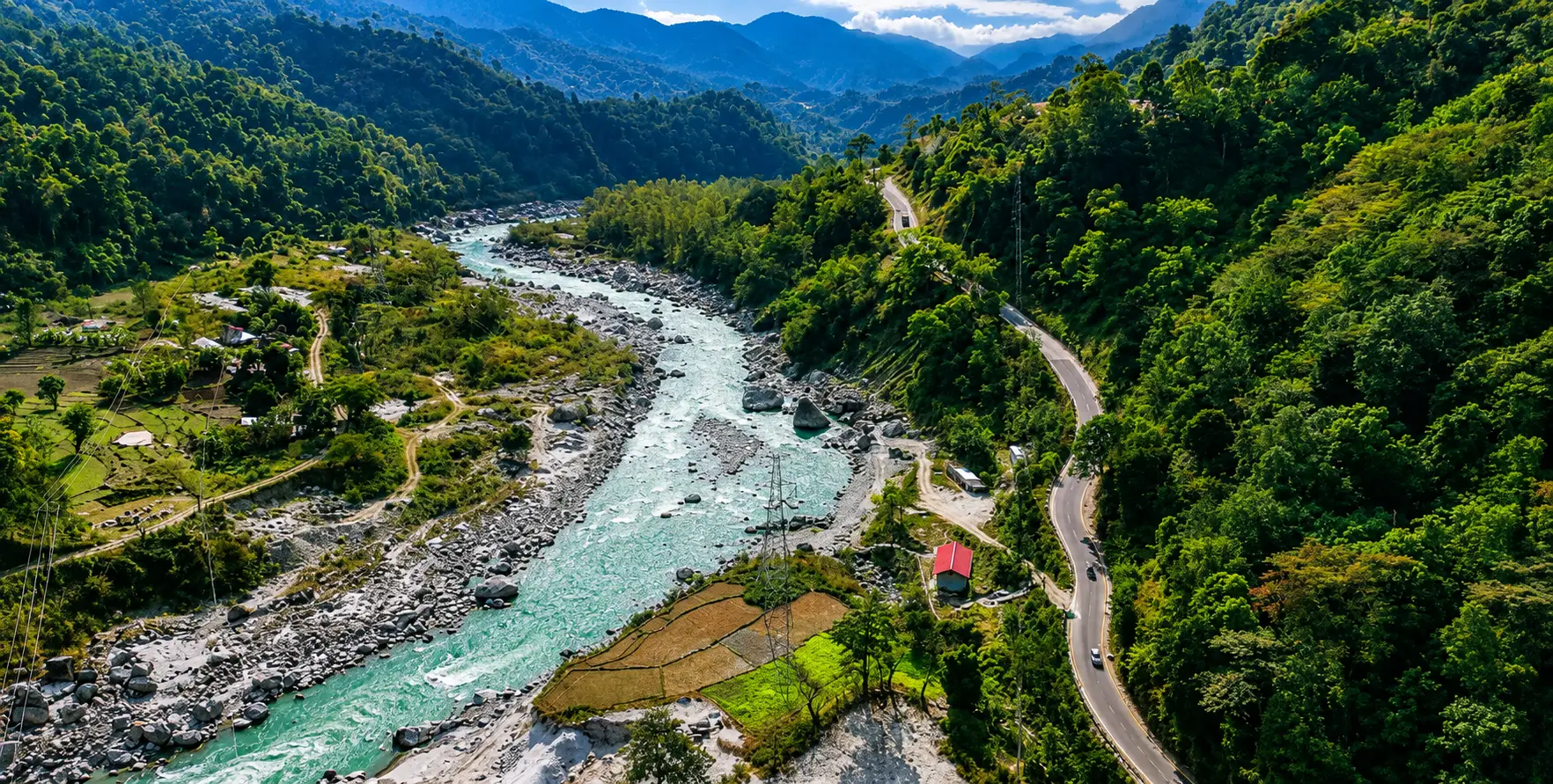
The final section from Dumre to Besisahar follows the Marsyangdi River valley northward through a progressively more dramatic mountain landscape — the first Annapurna foothills appearing above the valley walls as the vehicle gains altitude from Dumre’s Prithvi Highway level to Besisahar’s 820 metres. The Marsyangdi River’s distinctive grey-green glacial melt colour is the visual signature of this section.

The same river will accompany the Annapurna Circuit Trek for its first several days above Besisahar. Arriving at Besisahar in the late afternoon, with the first mountain views of the Annapurna range appearing above the valley’s northern ridgeline, marks the moment the Annapurna Circuit journey genuinely begins.

Sunauli to Besisahar vs Other Annapurna Circuit Approach Options

The Annapurna Circuit Trek offers several approach options for trekkers entering Nepal from different directions or starting cities—and comparing the Sunauli approach with the alternatives helps Indian and international trekkers choose the option that best fits their itinerary and starting point.

Sunauli to Besisahar direct (this guide): 330 to 360 km, 8 to 10 hours, NPR 30,000 to NPR 45,000 per vehicle. Best for Indian trekkers entering Nepal at the Sunauli border and wanting to reach the Annapurna Circuit Trek trailhead in a single day without a Kathmandu or Pokhara overnight.

Kathmandu to Besisahar (via Prithvi Highway and Dumre junction): 173 to 178 km, 5 to 7 hours, NPR 16,000 to NPR 26,000 per vehicle via Nepal Vehicle Hiring Pvt Ltd’s Besisahar private vehicle service. Best for trekkers flying into Kathmandu and heading directly to the Annapurna Circuit without a Pokhara overnight. The shortest and fastest direct approach from a Nepal arrival city.

Pokhara to Besisahar (via Prithvi Highway westward to Dumre, then north): approximately 75 km, 2.5 to 3 hours, NPR 8,000 to NPR 20,000 per vehicle. Best for trekkers based in Pokhara who want to begin the Annapurna Circuit from its classic Besisahar starting point rather than from Nayapul (the Pokhara-side approach for the Annapurna Base Camp Trek).

Nepal Vehicle Hiring Pvt Ltd’s Pokhara-based fleet serves this short but busy trekking approach corridor.

For Indian trekkers specifically: the Sunauli direct approach eliminates the need to travel to Kathmandu or Pokhara before the trek, saving 1 to 2 travel days while covering the complete Nepal transit from border to trailhead in a single, professionally managed private jeep journey. Nepal Vehicle Hiring Pvt Ltd’s team on WhatsApp can advise which option best fits your entry point, schedule, and group size.

Trekkers’ First Night: Besisahar Guesthouses and Facilities

Besisahar (820 m) is a well-developed Lamjung District market town with multiple trekking guesthouses, restaurants, money exchange facilities, a Nepal Telecom tower with reliable mobile coverage, and a thriving gear and supplies market catering to Annapurna Circuit trekkers. The permit checkpoint at Besisahar is where the ACAP and TIMS card validation happens — allow 30 to 60 minutes for permit processing if not already obtained in Kathmandu or Pokhara.

After the 8-to-10-hour drive from Sunauli to Besisahar, most trekkers prefer to stay overnight in Besisahar and start the trek the following morning rather than continue immediately by jeep to Bhulbhule or further.

The Besisahar to Bhulbhule section (15 km, 30 to 45 minutes by local jeep) marks the transition from the paved road to the unpaved Marsyangdi valley trail road — Bhulbhule (840 m) being where most trekkers begin the genuine trail walking. However, the jeep road continues northward to Jagat, Dharapani, and Chame.

Nepal Vehicle Hiring Pvt Ltd’s Kathmandu-to-Manang jeep service covers the full road section from Besisahar northward for trekkers who want to skip the lower Marsyangdi Valley road sections and start walking at Dharapani or Chame. For trekkers who want to walk the complete Annapurna Circuit Trek from Besisahar in its traditional full-distance form, Besisahar is the ideal first-night stop — rested, permit-processed, and ready for the first full walking day through Bahundanda and Ngadi.

Nepal Vehicle Hiring Pvt Ltd coordinates complete Sunauli to Besisahar private jeep bookings via  WhatsApp—an instant, responsive booking channel available before and during your Nepal journey. Our Nepal tour packages include the Sunauli to Besisahar transfer within complete Annapurna Circuit vehicle arrangements that also cover the post-trek return from Jomsom to Pokhara or Kathmandu.

Plan your complete Annapurna Circuit approach with our team, or contact us directly onWhatsApp to book your Sunauli to Besisahar private jeep today. Visit vehiclehiringnepal.com — Nepal’s most trusted trekking approach vehicle hire service from the India border to every Himalayan trailhead.

Frequently Asked Questions

The Sunauli to Besisahar private jeep journey is a straightforward booking for Nepal Vehicle Hiring Pvt Ltd’s team — a well-established trekking approach corridor served by experienced drivers who complete it regularly. The FAQs below answer the most common questions from trekkers planning this specific India-border-to-Annapurna-trailhead journey.

One frequently asked question that isn’t in the FAQ list below: should I book the jeep from India before crossing the border, or arrange it at Sunauli on arrival? Nepal Vehicle Hiring Pvt Ltd recommends booking in advance via WhatsApp—not because on-arrival arrangements are impossible, but because advance booking guarantees the vehicle type, confirms the all-inclusive rate, and ensures the driver is at the border gate at the confirmed pickup time, without the uncertainty of on-arrival negotiation.

A group of 6 trekkers arriving at Sunauli ICP after an overnight Indian train journey, tired and carrying full trekking packs, is better served by a pre-confirmed Land Cruiser with a named driver waiting at the gate than by the on-arrival vehicle negotiation that unplanned border arrivals require. WhatsApp Nepal Vehicle Hiring Pvt Ltd on WhatsApp before departure from India, and the vehicle confirmation arrives within hours.

For trekkers who also need Pokhara car hire after the Annapurna Circuit for sightseeing before their return, or a Sarangkot sunrise vehicle for the dawn Annapurna panorama, or a Kathmandu to Pokhara private vehicle for the inter-city connection after the trek — Nepal Vehicle Hiking Pvt Ltd coordinates all subsequent vehicle needs as part of the same booking relationship established with the Sunauli to Besisahar transfer. Our trekking transport services cover every stage of the complete Nepal trekking adventure.

Q1: How much does a private jeep from Sunauli to Besisahar cost?

NPR 30,000 to NPR 45,000 per vehicle for a Mahindra Scorpio (4–6 passengers). Per person for 5 passengers: approximately NPR 6,000 to NPR 9,000 (USD 45 to USD 68). Hiace van for 7–14 passengers: NPR 38,000 to NPR 55,000. All Nepal Vehicle Hiring Pvt Ltd rates are fully all-inclusive of vehicle, driver, fuel, and tolls.

Contact our team on WhatsApp for an instant specific quote.

Q2: How far is Sunauli to Besisahar and how long does it take?

Approximately 330 to 360 kilometres via the Siddhartha Highway, Prithvi Highway, and Marsyangdi Highway. Drive time: 8 to 10 hours by private vehicle, including a standard Mugling lunch stop. Depart Sunauli between 7:00 and 8:00 AM and arrive in Besisahar between 4:00 and 6:00 PM.

Q3: What is the route from Sunauli to Besisahar?

Sunauli/Bhairahawa → Butwal (25 km, Siddhartha Highway) → Narayanghat/Mugling junction (via Prithvi Highway, ~200 km) → Dumre junction (~262 km) → Besisahar (42 km northward on Marsyangdi Highway from Dumre). Total: approximately 330 to 360 km. The Prithvi Highway between Butwal and Dumre is the longest and most scenic highway section. The Dumre to Besisahar section has the most variable road quality and requires the most driver attention.

Q4: Is it better to go Sunauli–Kathmandu–Besisahar or Sunauli–Besisahar direct?

Sunauli to Besisahar direct is faster — 8 to 10 hours in one day versus 2 days via Kathmandu. Choose direct if you want to start the Annapurna Circuit Trek quickly. Choose the Kathmandu routing if you want Kathmandu cultural days before the trek — Nepal Vehicle Hiring Pvt Ltd’s Kathmandu sightseeing vehicles, Bhaktapur day tour, and Besisahar approach jeep serve the Kathmandu-via route in a coordinated multi-day booking.

Q4b: What is the best vehicle for a group of 8 trekkers from Sunauli to Besisahar?

A Toyota Hiace van hire is the best choice for a group of 8—individual comfortable seats for all 8 passengers, a generous rear luggage area for full trekking packs, and a per-person cost comparable to a Land Cruiser for larger groups. Nepal Vehicle Hiring Pvt Ltd’s Hiace covers the sealed Siddhartha and Prithvi Highway sections comfortably; the Dumre to Besisahar provincial road section is manageable in the Hiace during dry conditions.

For groups of 8 in monsoon season, a Land Cruiser may be preferable for the Dumre to Besisahar section’s variable surface. Contact our team on WhatsApp to discuss the optimal vehicle for your group size and season.

Q5: Do Indian nationals need a visa to enter Nepal at Sunauli?

No — Indian passport holders and Voter Identity Card holders can cross the Sunauli-Bhairahawa border freely without a visa. Other nationalities require a Nepal Tourist Visa (USD 30 for 15 days, USD 50 for 30 days) obtainable on arrival at the Sunauli ICP. Nepal Vehicle Hiring Pvt Ltd’s drivers coordinate border-gate vehicle pickup times to align with immigration processing.

Q5b: Are there any hidden costs on the Sunauli to Besisahar private jeep?

No — Nepal Vehicle Hiring Pvt Ltd’s all-inclusive rate covers vehicle, professional driver, fuel for the complete 330 to 360 km journey, and all applicable road tolls. The only additional costs are personal expenses: Mugling lunch (NPR 400 to NPR 800 per person at riverside teahouses), any snacks or drinks purchased en route, and the ACAP and TIMS permit fees at Besisahar (payable separately to the permit authorities, not the vehicle operator).

Nepal Vehicle Hiring Pvt Ltd provides written WhatsApp confirmation of the all-inclusive rate before departure — the quoted price is the final settlement amount with zero additions.

Q6: Can I book Sunauli to Besisahar and then continue to Chame or Manang?

Yes — Nepal Vehicle Hiring Pvt Ltd coordinates the Sunauli to Besisahar transfer and the subsequent Besisahar northward extension to Chame, Dharapani, or Manang as a single booking. Our Kathmandu-to-Manang jeep service covers the Manang extension.

Confirm the extension destination at the time of the Sunauli booking so the appropriate vehicle and driver with upper Marsyangdi Valley road experience are arranged before departure. Contact us on WhatsApp to plan the complete Annapurna Circuit approach vehicle arrangement.

Conclusion: Start Your Annapurna Circuit Right — Sunauli to Besisahar by Private Jeep

The Annapurna Circuit Trek is one of the world’s great trekking adventures — a 160-to-230-kilometre circumambulation of the Annapurna massif crossing the 5,416-metre Thorong La Pass through some of Nepal’s finest mountain and cultural landscapes. The private jeep from Sunauli to Besisahar is the most efficient and most comfortable way for Indian trekkers and international visitors entering at the India border to reach the Annapurna Circuit trailhead in a single day — 8 to 10 hours in a Land Cruiser, door to trailhead, with Mugling lunch and a professional driver who knows the Prithvi Highway and Marsyangdi road corridor.

Nepal Vehicle Hiking Pvt Ltd offers this service for NPR 30,000 to NPR 45,000 per vehicle, all-inclusive, with 24-hour booking on WhatsApp. Contact our team to book your Sunauli to Besisahar private jeep today, or plan your complete Annapurna Circuit approach. Visit vehiclehiringnepal.com to book.
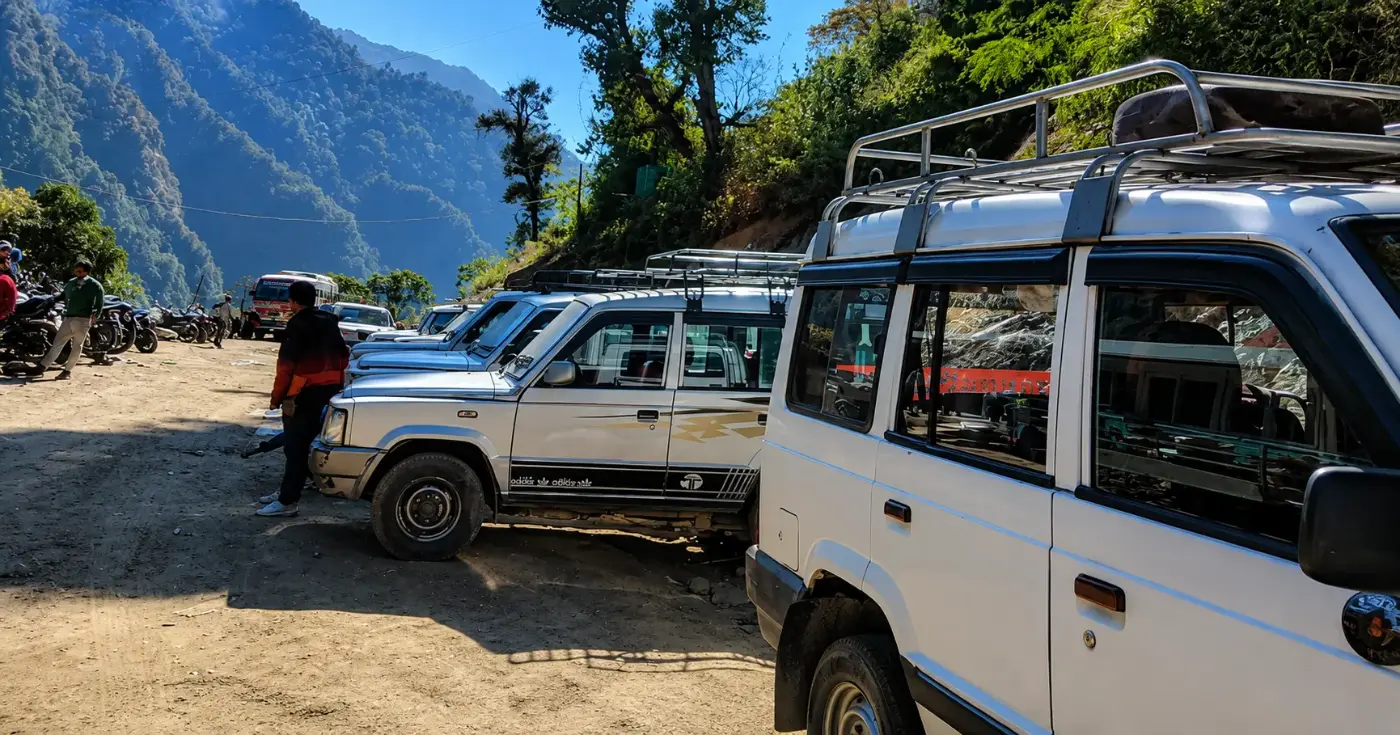
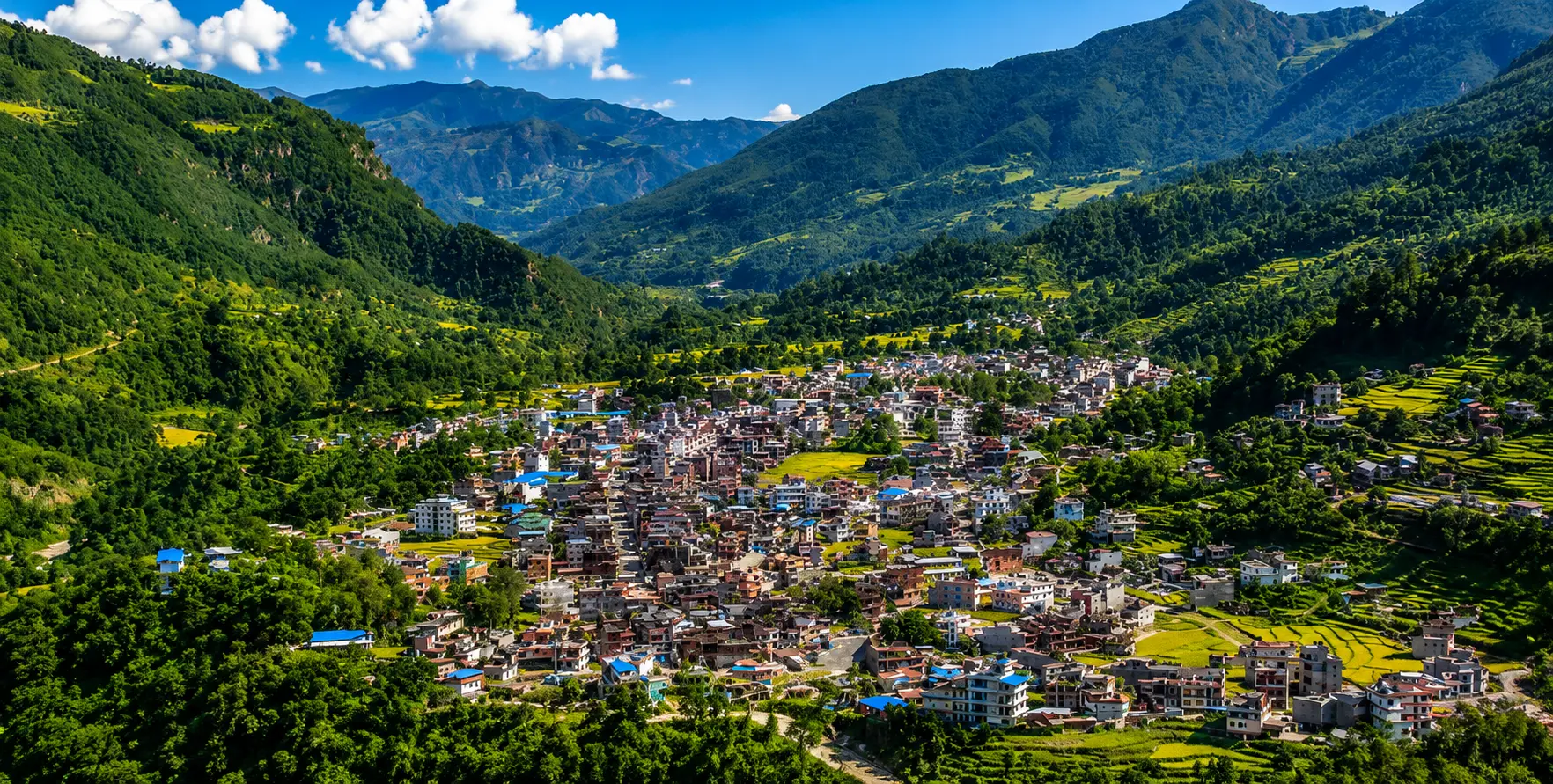
Besisahar to Sunauli Border Private Jeep

Besisahar

Besisahar to Sunauli Border Private Jeep – Cost, Route and Complete Guide

Besisahar is where the Annapurna Circuit begins—the small district headquarters of Lamjung where trekkers from Kathmandu, Pokhara, and around the world assemble their packs, meet their guides and porters, and take their first steps on one of the world’s most celebrated mountain treks. But Besisahar is also, increasingly, where the return journey begins for Indian trekkers who have completed the circuit and head back across the Nepal–India border at Sunauli rather than returning to Kathmandu.

For this group —a rapidly growing segment of the Annapurna trekking community —the question of how to get from Besisahar to the Sunauli border by private jeep, how long it takes, and what it costs is one of the most practical transport questions of their entire Nepal trip.

The Besisahar to Sunauli border private jeep transfer connects two points about 290 km apart by road, taking you from a mountain trailhead at 760 metres in Lamjung District through Nepal’s highway network to the Terai border town of Bhairahwa–Belahiya at the India–Nepal crossing.

It is a journey that can be completed in a single long day or split across two days with an optional stop, and it offers a natural opportunity to add either Pokhara or Lumbini to the itinerary en route — converting what might otherwise be a pure transit journey into one of Nepal’s finest day-trip combinations.

This guide from Nepal Vehicle Hiring Pvt Ltd covers every dimension of the Besisahar to Sunauli transfer: the complete route options via Pokhara or via Kathmandu, realistic costs for every vehicle type, the specific stops worth making along the way, the reverse Sunauli to Besisahar option for India-originating Annapurna trekkers, permit requirements, and how this transfer connects to the full range of Trek Nepal Himalayas Annapurna Circuit packages and Alpine Luxury Treks Annapurna itineraries.

Book your transfer: vehiclehiringnepal.com | Call/ WhatsApp

Besisahar to Sunauli Border Private Jeep

Understanding the Two Endpoints

Besisahar – The Annapurna Circuit Gateway

Besisahar (760 metres) is the administrative headquarters of Lamjung District and the most common starting point for the Annapurna Circuit Trek. It sits approximately 180 km northwest of Kathmandu via the Prithvi Highway to Dumre junction and then north, or approximately 80 km from Pokhara via Khudi.

The town has basic facilities—guesthouses, restaurants, fuel stations, and shops selling last-minute trekking supplies—making it a natural collection point for groups completing the circuit and arranging onward transport. For groups using Nepal Vehicle Hiring’s Annapurna Circuit jeep transfer service, Besisahar is the standard starting point for the road section that begins the return journey from the trekking circuit.

Many Annapurna Circuit trekkers now complete or exit the circuit at Dharapani or Chame rather than walk back to Besisahar—the jeep road extends all the way to Chame (2,670 metres), so the exit point depends on the specific trekking itinerary.

Nepal Vehicle Hiring provides jeep hire from Besisahar, Dharapani, or Chame as the starting point for the return journey — all three can be booked as the departure point for the Sunauli transfer. For this guide, we use Besisahar as the reference starting point, with the understanding that Dharapani or Chame pickups add about 2–3 hours to the initial journey to reach the highway network at Dumre junction.

Besisahar to Sunauli Border Private Jeep

Sunauli–Belahiya – The Nepal–India Border

Sunauli (or Belahiya on the Nepal side, Sonauli on the Indian side) is Nepal’s most popular road border crossing with India, situated between Rupandehi District, Nepal and Maharajganj District, Uttar Pradesh, India. The crossing is approximately 22 km from Bhairahwa (Siddharthanagar)

the nearest significant Nepali city — and approximately 3 hours from Gorakhpur in India, making it the natural crossing point for Indian travellers from Uttar Pradesh, Bihar, Delhi, and beyond. The border is open to Indian and Nepali nationals with a passport or voter ID card only — no visa required for Indian citizens entering Nepal.

The crossing operates around the clock, but immigration offices maintain standard working hours for formalities, and arriving in normal daytime hours ensures the smoothest processing.

Besisahar to Sunauli Border Private Jeep

The Route Options – Via Pokhara or Via Kathmandu

The Besisahar to Sunauli route has two main variations, each with distinct characteristics and advantages, and the choice depends on the group’s preferences for stops, accommodation, and overall Nepal circuit completion.

The most popular Besisahar to Sunauli route goes south from Besisahar to Dumre on the Prithvi Highway, then west toward Pokhara (approximately 80 km from Besisahar, 2–3 hours), and then south from Pokhara through Butwal to Sunauli (approximately 200 km, 4–5 hours). The total Besisahar to Sunauli via Pokhara distance is approximately 280 km, taking approximately 7–9 hours in normal conditions.

This route is the favourite for most Annapurna Circuit returnees because it passes through or near Pokhara—Nepal’s lakeside adventure capital—creating a natural opportunity for an overnight stop before continuing to the border.

The Pokhara-to-Sunauli section passes through Walling, Palpa District, and Butwal, with the optional Tansen (Palpa) detour particularly rewarding for travellers interested in traditional Newar architecture and crafts. From Butwal, the final 25 km to Sunauli on the Terai highway takes approximately 30 minutes.

Option B – Via Kathmandu (For Those With Unfinished Kathmandu Business)

The alternative route goes south from Besisahar to Dumre, then east toward Kathmandu (about 180 km from Besisahar, 5–6 hours), then west from Kathmandu through Pokhara toward Butwal and Sunauli (about 280 km, 6–7 hours).

The total Besisahar to Sunauli via Kathmandu distance is approximately 460–490 km — significantly longer than the Pokhara route — and is generally chosen only by travellers who need to return to Kathmandu first for practical reasons: collecting valuables left in hotel storage, completing permit returns, attending medical appointments, or meeting pre-arranged connections.

Nepal Vehicle Hiring provides the Besisahar to Kathmandu jeep service as the first leg, with the Kathmandu to Sunauli transfer as the second leg — typically split across two days with a Kathmandu overnight.

Distance and Travel Time – Realistic Planning Numbers

Every Nepal transport planning exercise starts with accurate distance and time estimates that account for Nepal’s road conditions, not Google Maps driving times, which consistently underestimate journey duration on Nepali mountain and hill roads. The following figures are based on Nepal Vehicle Hiring’s operational experience on these routes:

For the Besisahar to Pokhara section: approximately 80 km via Dumre junction on the Prithvi Highway, taking 2.5–3.5 hours. The first 30 km from Besisahar to Dumre follows the same road as the Annapurna Circuit approach—a mix of paved and rough sections that requires a 4WD vehicle for the Besisahar stretch—then transitions to the smooth Prithvi Highway at Dumre.

From Dumre to Pokhara, the road is entirely paved and comfortable for any vehicle.

For the Pokhara to Butwal section: approximately 170 km via the Pokhara–Butwal Highway (Siddhartha Highway), taking 3–4 hours. This road crosses the Annapurna foothills through beautiful mid-hill terrain, passing through Walling and the Palpa District. Sections of this road are winding and narrow through the hill sections, requiring confident mountain driving.

The road improves significantly in the final 40 km of descent toward Butwal and the Terai.

For the Butwal to Sunauli section: approximately 25 km on the flat East-West Highway (Mahendra Highway), taking 30–45 minutes. Entirely paved, flat Terai highway — the easiest section of the complete journey. Nepal Vehicle-Hiring drivers know to time this final section so you arrive at the border during daylight hours for smooth immigration processing.

Total Besisahar to Sunauli via Pokhara: approximately 275–290 km, 7–9 hours total driving time including normal rest and fuel stops. Nepal Vehicle Hiring recommends departing Besisahar by 7:00 AM at the latest to arrive in Sunauli the same day in daylight.

Costs – What You Will Actually Pay in Nepal

Understanding the realistic cost of the Besisahar to Sunauli private jeep transfer requires accounting for the full journey—both the off-road Besisahar section requiring 4WD and the highway sections any vehicle can handle. Nepal Vehicle Hiring prices this transfer as a complete package from the Besisahar pickup point to the Sunauli border gate, with no secondary arrangements needed by the client.

Besisahar

Mahindra Scorpio or Bolero 4WD – For Groups of Four to Seven

For the most common group size of four to seven trekkers, Nepal Vehicle Hiring recommends the Mahindra Scorpio or Bolero 4WD for the Besisahar to Sunauli transfer; it’s also the most booked vehicle.

4WD capability is essential for the Besisahar to Dumre section—which has the same road demands as the outward Annapurna Circuit approach—and the Scorpio’s roof rack fits all trekking luggage while passengers sit comfortably inside for the 7–9 hour journey.

The approximate one-way cost for a Mahindra Scorpio from Besisahar to the Sunauli border is NPR 22,000–40,000 (approximately USD 165–250) for the full vehicle, including the driver, fuel, and tolls. Split across six passengers, this delivers a per-person cost of approximately NPR 5,000–10,000 (USD 28–80) — highly competitive with any other transport option for this group size. Book the Besisahar jeep hire directly with Nepal Vehicle Hiring.

Toyota Land Cruiser – For Top-end and VIP Groups

For top-end trekking groups, senior travellers, and those prioritising maximum comfort on the 7–9 hour journey, the Toyota Land Cruiser 4WD is the definitive Besisahar to Sunauli vehicle — its superior suspension, air-conditioned leather interior, generous rear cargo area, and top-end performance on the rough Besisahar to Dumre section providing a categorically better ride quality than any other option.

The approximate one-way cost for a Toyota Land Cruiser from Besisahar to Sunauli is NPR 35,000–80,000 (approximately USD 260–450) for the full vehicle. For groups using Alpine Luxury Treks Annapurna packages, the Land Cruiser is the standard vehicle for the exit transfer — maintaining the luxury standard of the complete itinerary through to the final border crossing.

Besisahar valley

Toyota Hiace Van – For Larger Groups of Eight to Thirteen

For larger groups of eight to thirteen trekkers returning together from the Annapurna Circuit, the Toyota Hiace van is the most cost-effective single-vehicle solution for the highway sections of the Besisahar to Sunauli journey.

However, the Hiace has an important limitation on this route: it isn’t suitable for the rough off-road section from Besisahar to Dumre. For groups starting from Besisahar, Nepal Vehicle Hiking offers a two-vehicle configuration: a Scorpio to take the group from Besisahar to the Dumre junction, where the Hiace waits to take the full group for the Dumre-to-Sunauli highway journey.

For groups exiting at the paved highway endpoint in Khudi or Bimalnagar (closer to the Dumre junction), the Hiace can collect them directly.

The approximate cost for a Toyota Hiace one-way from Dumre/Besisahar area to Sunauli is NPR 28,000–45,000 (approximately USD 210–350), plus a Scorpio coordination fee if Besisahar pickup is required.

Cost Factors That Affect the Final Price

The base transfer cost can vary based on several factors that Nepal Vehicle Hiking discloses transparently at the quotation stage rather than as post-journey additions. Pickup location is the most significant variable — collecting from Besisahar town itself costs more than a Dumre junction pickup, and a Dharapani or Chame pickup (higher on the Annapurna Circuit road) costs more again due to the additional distance and road difficulty.

The choice between the Pokhara or Kathmandu route also affects the total.

The Pokhara route is approximately the same distance overall, while the Kathmandu route adds 170+ km. An overnight stop in Pokhara adds a second-day vehicle hire cost if the group wants a different vehicle waiting in Pokhara rather than the same vehicle resting overnight. Nepal Vehicle Hiring quotes all route variations transparently at booking — contact our team on WhatsApp with the group’s specific exit point and preferred route.

Besisahar to Sunauli Border Private Jeep

The Via-Pokhara Option – Making the Journey Count

Most Besisahar-to-Sunauli travellers choose the via-Pokhara route, and the reasons go beyond mere geographic efficiency. Pokhara — Nepal’s lakeside adventure capital at 822 metres — sits almost exactly at the midpoint of the western route from Besisahar to Sunauli, making it a natural overnight break that turns a gruelling single-day marathon into two comfortable legs.

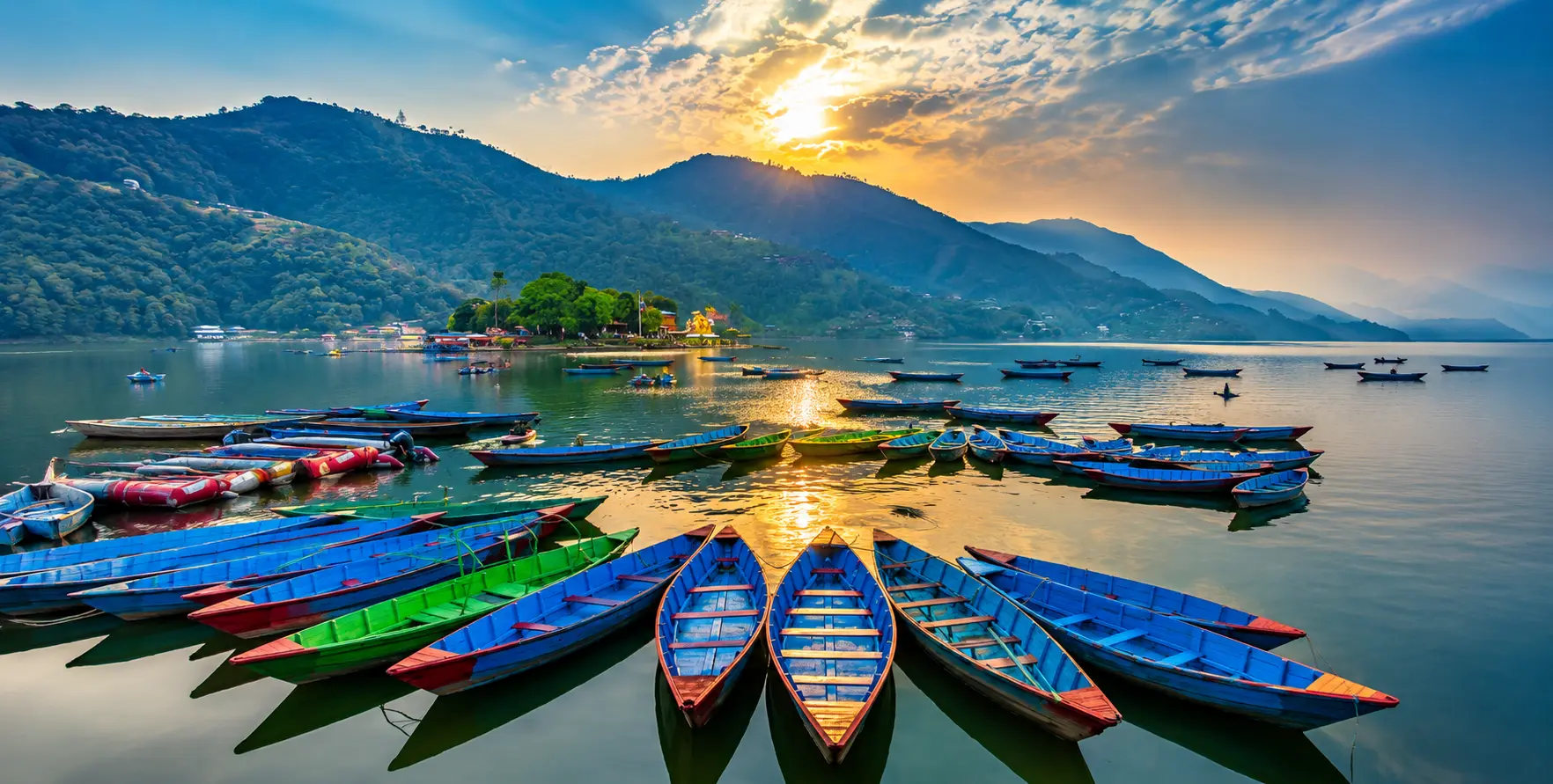
The Pokhara overnight allows Annapurna Circuit returnees to celebrate the completion of one of the world’s great treks with a Lakeside dinner, recover their bodies with a proper hot shower and comfortable bed, arrange any last-minute equipment returns, and spend a few hours at Phewa Lake or visiting the World Peace Pagoda before continuing south to Sunauli the next morning.

Nepal Vehicle Hiking offers the Besisahar to Pokhara jeep service as a standalone transfer for groups who want to stop in Pokhara for one or two nights, then arrange a separate Pokhara to Sunauli transfer to continue to the border.

This two-booking approach is Nepal Vehicle Hiring’s most requested configuration for Annapurna Circuit returnees heading to India, and Trek Nepal Himalayas also recommends it for groups completing the Annapurna Circuit Trek who have Indian departure flights from Gorakhpur or Delhi.

For trekkers with a little more time before their India departure, Pokhara’s adventure activities—paragliding over Phewa Lake, zip-lining, white water rafting on the Seti River, or simply the Sarangkot sunrise view of the Annapurna range—offer a perfect post-trek wind-down before the Terai highway run to Sunauli.

Alpine Luxury Treks often includes one or two nights in Pokhara as part of its standard Annapurna post-trek circuit, with Nepal Vehicle Hiring providing Pokhara hotel transfers and onward transport to the Sunauli border.

The Tansen (Palpa) Detour – A Lesser-Known Spot on the Route South

One of the most rewarding and overlooked stops on the Pokhara to Sunauli route is Tansen (Palpa) — a beautifully preserved Newar hill town at 1,371 metres, about 73 km east of Butwal on the Siddhartha Highway. As Nepal Vehicle Hiring’s drivers on the Pokhara–Butwal route know well, Tansen’s ridge setting, traditional Dhaka woven textiles,

Srinagar Hill panoramic viewpoint, and remarkably intact Newari bazaar architecture make it one of Nepal’s finest medieval hill towns — a place that rewards an afternoon stop with a depth of cultural authenticity that even Kathmandu’s more famous Durbar Squares sometimes struggle to match given their higher visitor numbers.

Adding a Tansen stop to the Pokhara-to-Sunauli leg adds about 1.5–2 hours to the total journey time, but it turns a pure highway run into a rewarding cultural experience. Nepal Vehicle Hiring’s drivers factor Tansen into the departure timing calculation when clients request it — a 7:00 AM Pokhara departure with a 2-hour Tansen stop arrives at Sunauli border by 5:00–6:00 PM in normal conditions, comfortably within daylight hours for a smooth border crossing.

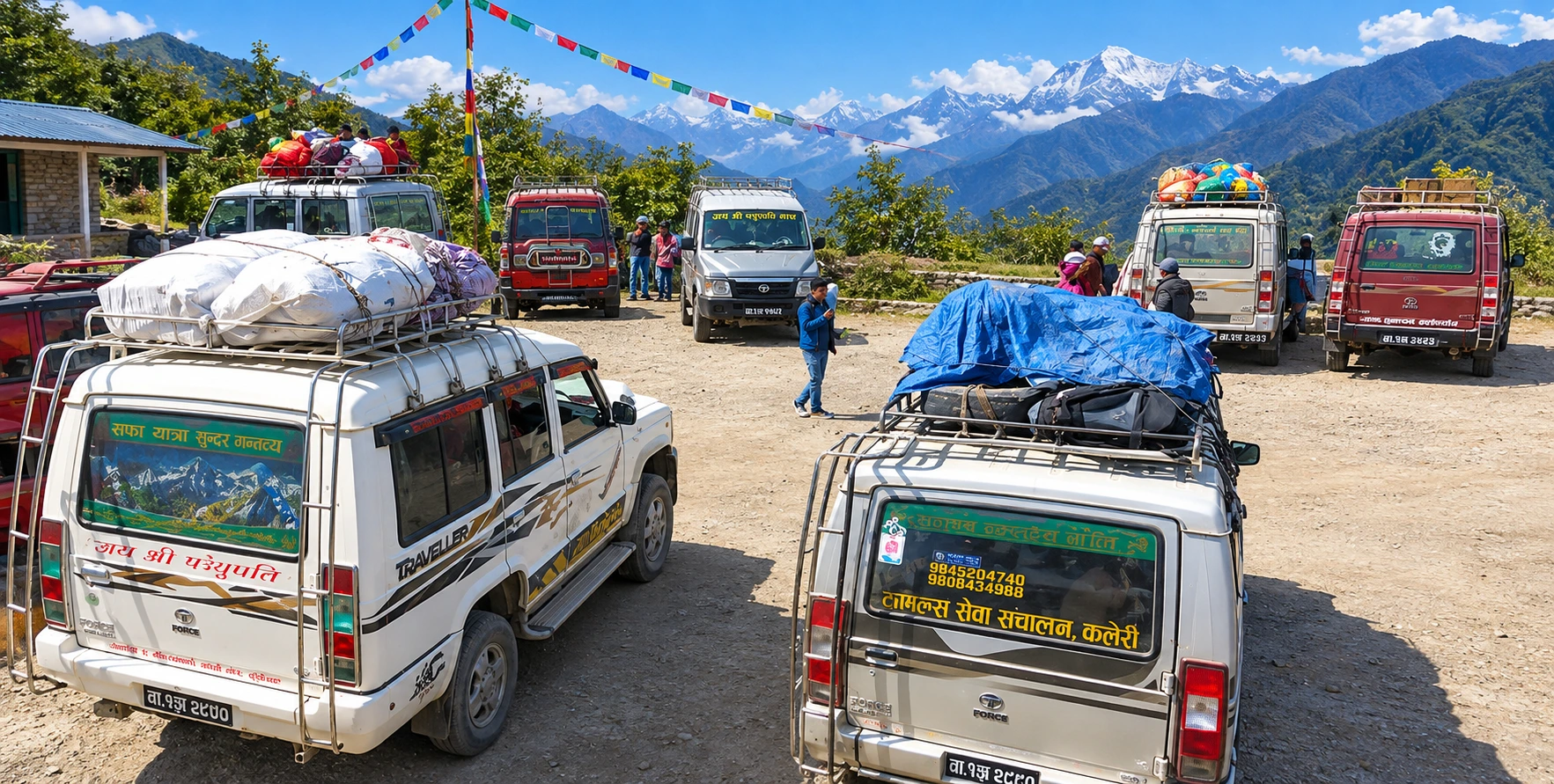
Way to besisahar

Lumbini – The Sacred Optional Stop Near Sunauli

For Annapurna Circuit returnees who haven’t yet visited Lumbini — the birthplace of the Buddha and one of the world’s great spiritual pilgrimage sites — the Besisahar-to-Sunauli transfer passes within 22 km of Lumbini as it approaches Bhairahwa.

A Lumbini detour before crossing the border adds approximately 1.5–2 hours to the journey but provides a profoundly different experience from the mountain world of the Annapurna Circuit — the serene Sacred Garden with its Maya Devi Temple, Ashoka Pillar (249 BCE), and International Monastic Zone of 25+ monastery buildings from across the Buddhist world, creating a moment of contemplative depth before the journey back to India begins.

Nepal Vehicle Hiring offers the Besisahar to Lumbini to Sunauli private transfer as a single booking—the jeep delivers to Lumbini’s Sacred Garden entrance for the visit, waits during the 2-3 hour circuit, then continues the final 22 km to the Sunauli border gate.

Trek Nepal Himalayas specifically recommends the Lumbini stop for Indian Annapurna trekkers completing the circuit, noting that combining Nepal’s greatest mountain trek with a visit to the Buddha’s birthplace creates one of the most complete Nepal itineraries available within a typical Indian trekker’s two-week schedule.

The Reverse Journey – Sunauli to Besisahar for India-Originating Trekkers

This guide applies equally in reverse for Indian trekkers entering Nepal at Sunauli and heading to Besisahar to begin the Annapurna Circuit. Nepal Vehicle Hiring provides a Sunauli-to-Besisahar private jeep service on the same route—border pickup at the Nepal immigration exit gate, a direct drive to Besisahar via Butwal.

The Siddhartha Highway, and then north from Pokhara or Dumre—arriving in Besisahar to begin the trek. For this direction, the timing considerations are the reverse of the return journey: a Sunauli crossing in the morning allows the group to reach Besisahar by late afternoon, providing time to meet the Trek Nepal Himalayas guide team, check into a guesthouse, organise the porter loads, and rest before the first trekking day the following morning.

For groups joining a Trek Nepal Himalayas Annapurna Circuit Trek with a specific guide meeting time at Besisahar, Nepal Vehicle Hiring coordinates the Sunauli border pickup time and the Besisahar arrival time with the trek guide’s briefing schedule — ensuring the group arrives at Besisahar at the correct time for the pre-trek preparation, not too early and not too late for the arrangements the guide team has made.

This operational coordination between Nepal Vehicle Hiring and Trek Nepal Himalayas is a key practical advantage of booking transport and trekking through companies that work together as established partners.

Besisahar to Sunauli Border Private Jeep

Vehicle Pickup Points – Besisahar, Dharapani, Chame and Beyond

One of the most common questions for Annapurna Circuit trekkers arranging the return jeep is where exactly the vehicle pickup occurs — because the Annapurna Circuit jeep road now extends well beyond Besisahar, all the way to Chame (2,670 metres) and in some conditions to Manang (3,540 metres). This means trekkers have flexibility in choosing their circuit exit point and matching it to their vehicle pickup location:

A Besisahar pickup serves trekkers who have walked the complete lower circuit back to Besisahar from Dharapani — a choice that allows full completion of the classic circuit route. The Besisahar to Sunauli cost from this point is the base price quoted in Section 4.

A Dharapani pickup (1,860 metres) serves trekkers who have descended from the Thorong La crossing and exited the circuit at Dharapani — the most common exit for those who completed the full high circuit including the pass but who prefer to take a jeep rather than walk back down the Marsyangdi Valley. The Dharapani pickup adds approximately 1.5–2 hours and 40 km to the total transfer cost.

A Chame pickup (2,670 metres) is for trekkers who began the circuit at Chame by jeep and are returning from the higher circuit to the last jeep road point before descending to the highway. Chame to Sunauli via Besisahar and Pokhara adds approximately 3–4 hours and 70 km beyond the Besisahar base route cost. Nepal Vehicle Hiring provides pickup from all three points — quote your specific exit point at booking.

Permits and Documentation for the Return Journey

The Besisahar to Sunauli transfer itself requires no trekking permits — permits are for the national park and conservation areas accessed on the trek itself, not for road travel. However, trekkers should carry their original ACAP and TIMS permits on the return journey, as officials may inspect them at checkpoints along the highway in the Lamjung and Tanahu district sections of the Besisahar to Dumre road.

The ACAP (Annapurna Conservation Area Permit) and TIMS card are the primary documents — do not discard these at the trailhead before completing the road section of the return journey.

For Indian nationals crossing back at Sunauli, the Nepal immigration exit formalities are straightforward — passport or voter ID card stamped for exit at the Belahiya immigration post.

The Nepal Vehicle-Hiring driver stops at the Nepal immigration post so the group can complete exit formalities before the vehicle returns to Nepal (as it cannot cross into India). From the Nepal border gate, the group walks or takes an Indian-side vehicle a few hundred metres across the border into India.

Practical Tips for the Besisahar to Sunauli Transfer

  • Book Before the Trek Ends, Not After: Besisahar return vehicle availability in peak trekking season is constrained — book your return jeep before you start the trek, not at Besisahar on the exit day. Nepal Vehicle Hiring holds confirmed bookings and provides driver details in advance.
  • Depart Besisahar by 7:00 AM for Same-Day Sunauli: A 7:00 AM departure from Besisahar with the via-Pokhara route reaches Sunauli by 4:00–6:00 PM — daylight border crossing. Later departures risk arriving after dark. Nepal Vehicle Hiring builds the timing calculation for your specific route and optional stops into the departure time recommendation.
  • Carry Nepali Rupees for the Journey: You’ll need cash for fuel stops, roadside food, and the Tansen or Lumbini stop. Withdraw sufficient rupees at Besisahar before departure — reliable ATMs after Besisahar are available in Pokhara and Butwal but not guaranteed at smaller stops.
  • Keep Your Trekking Permits Safe Until Sunauli: ACAP and TIMS documents may be checked at checkpoints on the return road — carry originals in an accessible location rather than in the bottom of a duffel bag on the roof rack.
  • Confirm India Onward Transport from Sunauli: Nepal Vehicle Hiring’s service ends at the Nepal side of the border. Onward Indian transport — buses to Gorakhpur, Varanasi, or Delhi, or private taxis on the Indian side — should be pre-arranged or confirmed available before the Nepal vehicle departs.
  • Add Lumbini If You Haven’t Been: The Besisahar to Lumbini to Sunauli route adds only 1.5–2 hours to the journey and delivers one of Nepal’s most extraordinary heritage experiences en route to the border. Nepal Vehicle Hiring pre-arranges the Lumbini stop timing to ensure both a meaningful visit and an on-time border arrival.
  • Connect Your Return With the Complete Trek Service: For groups trekking with Trek Nepal Himalayas, the trek guide team coordinates the return transfer directly with Nepal Vehicle Hiring’s operations. The trekking agency confirms the departure date and time, and Nepal Vehicle Hiring’s vehicle waits at the pickup point.

Besisahar to Sunauli Border Private Jeep

Frequently Asked Questions – Besisahar to Sunauli Border Private Jeep

How far is Besisahar from the Sunauli border?

By the most common via-Pokhara route, the road distance from Besisahar to the Sunauli border is about 275–290 km, taking 7–9 hours of driving time under normal conditions. By the less common via-Kathmandu route, the distance is approximately 460–490 km and requires two driving days. Nepal Vehicle Hiring recommends the via-Pokhara route for most returnees from the Annapurna Circuit.

What does a private jeep from Besisahar to Sunauli cost?

The approximate cost for a Mahindra Scorpio private jeep from Besisahar to Sunauli is NPR 22,000–35,000 (approximately USD 165–350) for the complete vehicle accommodating four to seven passengers. A Toyota Land Cruiser costs approximately NPR 35,000–70,000 (USD 260–450).

A Toyota Hiace for eight to thirteen passengers on the highway section costs approximately NPR 28,000–45,000. All prices include driver, fuel, and standard toll fees. Contact Nepal Vehicle Hiring on WhatsApp for a specific quote based on your group size and route preferences.

Can I stop in Pokhara on the way from Besisahar to Sunauli?

Yes — Pokhara is the natural midpoint stop on the via-Pokhara route and is Nepal Vehicle Hiring’s most recommended Besisahar-to-Sunauli configuration. A Besisahar-to-Pokhara jeep transfer, followed by a one- or two-night stay in Pokhara, then a Pokhara-to-Sunauli transfer the following day, creates the most comfortable and rewarding Annapurna return journey. Nepal Vehicle Hiring coordinates both transfers as a single booking.

Is Lumbini worth visiting on the way to Sunauli?

Strongly yes — Lumbini is just 22 km from the Sunauli border and directly on the approach route. A 2–3 hour visit to the Maya Devi Temple, Ashoka Pillar, and International Monastic Zone adds minimal extra time to the transfer while delivering one of Nepal’s most extraordinary cultural and spiritual experiences. Nepal Vehicle Hiring provides the Besisahar to Lumbini to Sunauli combined transfer as a single booking.

Can Nepal Vehicle Hiring pick me up from Dharapani instead of Besisahar?

Yes — Nepal Vehicle Hiring provides pickup from Besisahar, Dharapani, or Chame as the starting point for the Sunauli return transfer. Dharapani adds approximately 1.5–2 hours and 40 km to the base Besisahar transfer cost; Chame adds approximately 3–4 hours and 70 km. Provide your specific exit point when requesting a quotation from Nepal Vehicle Hiring on WhatsApp.

How do I book a private jeep from Besisahar to Sunauli?

Contact Nepal Vehicle Hiring on WhatsApp by WhatsApp or phone, or visit vehiclehiringnepal.com. Provide: your specific pickup point (Besisahar, Dharapani, or Chame), the group size and luggage volume, preferred route (via Pokhara or direct), any optional stops (Tansen, Lumbini), and the date of transfer. Nepal Vehicle Hiking provides a written quotation with complete pricing and driver details before you confirm any booking

Book Your Besisahar to Sunauli Private Jeep with Nepal Vehicle Hiring

The Besisahar to Sunauli private jeep is the final chapter of one of the world’s great trekking adventures — the moment when the high Himalayan world of the Annapurna Circuit gives way to the flat warmth of Nepal’s Terai and the familiar roads back toward India. Getting this transfer right

the right vehicle, the right timing, the right stops, and the right coordination between the trek end and the border crossing—turns what could be a merely functional transit into a worthy conclusion to a remarkable journey.

Nepal Vehicle Hiring Pvt Ltd provides the most complete, professionally managed Besisahar to Sunauli private jeep service in Nepal, with door-to-border transfer, optional stops in Pokhara and Lumbini, a Scorpio and Land Cruiser 4WD fleet, and 24/7 operational support. Combined with Trek Nepal Himalayas’ trekking expertise for the Annapurna Circuit Trek and Alpine Luxury Treks’ top-end itinerary design, Nepal Vehicle Hiking offers Nepal’s most complete Annapurna-to-India transfer service.

Call / WhatsApp  |  vehiclehiringnepal.com  |  Book Besisahar Jeep Hire  |  treknepalhimalayas.com  |  alpineluxurytreks.com

Kathmandu to Besisahar Private Car Price: Jeep Hire Guide

Besisahar valley

Kathmandu to Besisahar Private Car and Jeep Price — Complete Guide

Besisahar — the gateway town to the Annapurna Circuit trek and the starting point for one of the world’s most celebrated mountain trekking routes — sits approximately 175 kilometres northwest of Kathmandu at 760 metres in the Marsyangdi River valley. For every trekker starting the Annapurna Circuit from Besisahar, and for every group heading to the upper Marsyangdi, the Nar Phu Valley, or the Manang District beyond, Kathmandu-to-Besisahar private car or jeep hire is the essential first leg of a Nepal trekking adventure.

This transfer connects the capital’s airport or hotel to the mountain road end where the trail begins.

Nepal Vehicle Hiring Pvt Ltd offers Kathmandu to Besisahar private vehicle hire as one of its most-booked trekking trailhead transfers—professional 4WD jeep hire and private car hire for all group sizes, all-inclusive pricing, and route-experienced drivers who have made this journey hundreds of times. This complete guide covers: the exact Kathmandu-to-Besisahar route, all vehicle price options, what to expect on the road, the Besisahar context as a trekking gateway, and everything needed to book the right vehicle for the right price.

Kathmandu to Besisahar Private Car Price | Jeep Hire Guide 2026/27/28

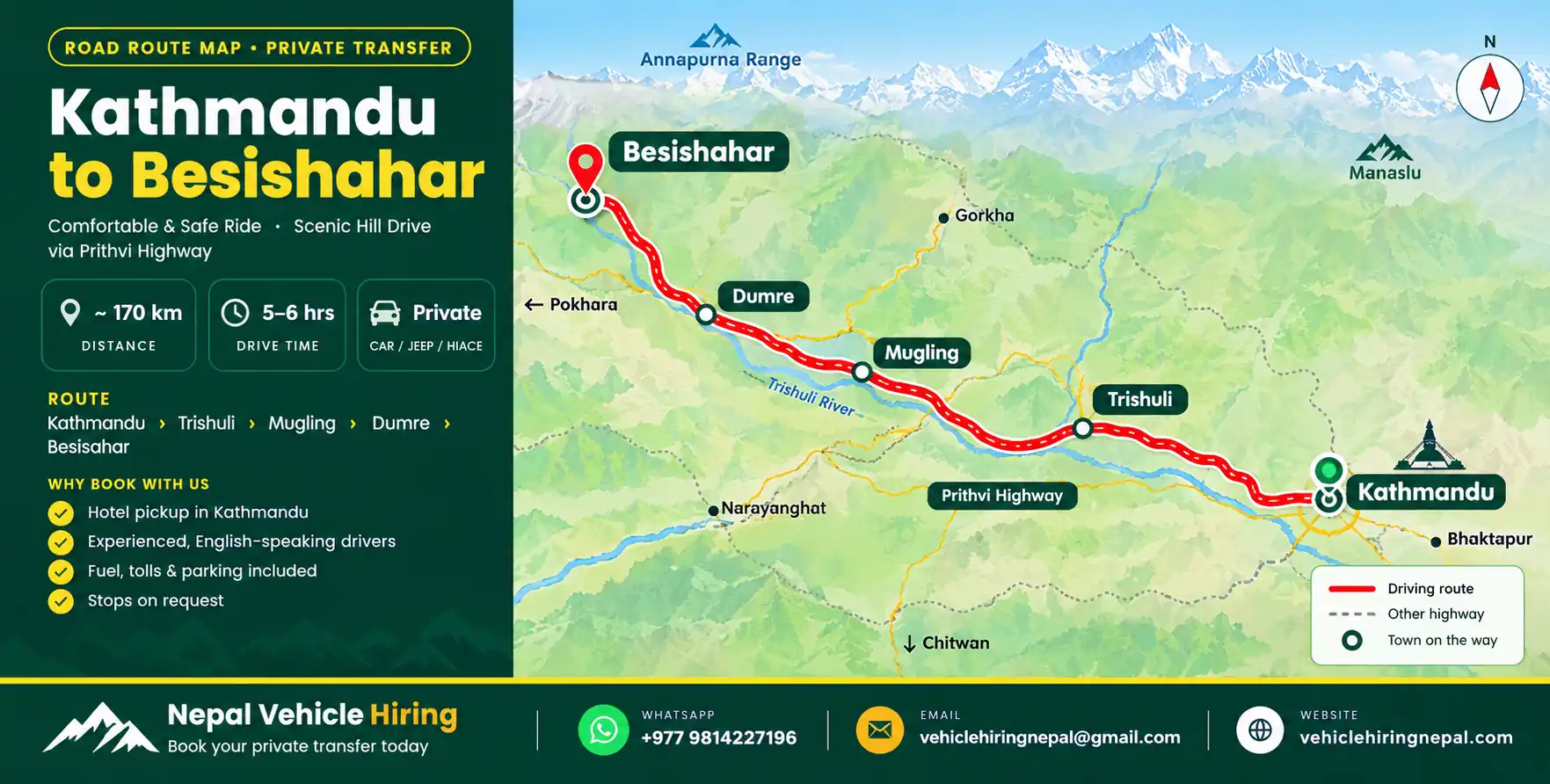
Kathmandu to Besisahar — Distance, Route and Journey Time

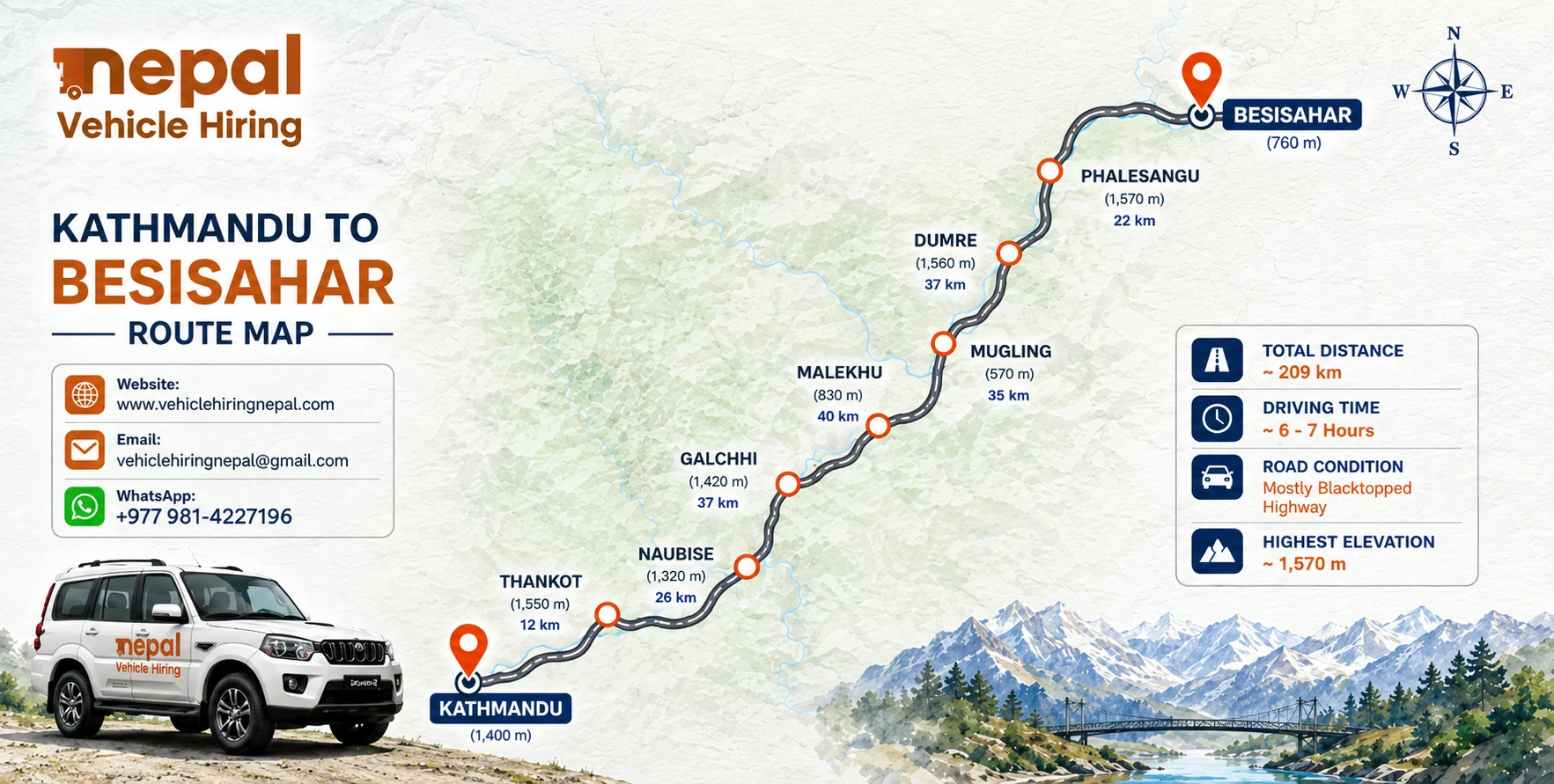
Distance: Approximately 175 kilometres from central Kathmandu (Thamel) to Besisahar town.

Route: Kathmandu → Prithvi Highway (Highway 28) northwest → Naubise → Malekhu → Mugling (Trishuli-Marsyangdi confluence) → Dumre junction → Besisahar road (42 km from Dumre) → Besisahar.

Journey time: 5 to 7 hours by private vehicle, depending on road conditions, traffic at the Mugling stretch, and the specific road-end point within the Besisahar-Marsyangdi corridor. The Dumre-to-Besisahar section (42 km, approximately 1 to 1.5 hours) transitions from the Prithvi Highway’s national road standard to the mountain approach road character of the Marsyangdi valley lower section.

Road character: Prithvi Highway to Dumre — paved national highway, good quality. Dumre to Besisahar — paved but narrower, mountain road character, some rough sections. Beyond Besisahar northward — unpaved gorge road requiring 4WD.

For travel to Besisahar town only, a private sedan is appropriate. For travel beyond Besisahar into the gorge, you must hire a 4WD jeep.

Kathmandu to Besisahar Private Car Price | Jeep Hire Guide 2026/27/28

The Manakamana Temple Cable Car — Sacred Stop on the Route

The Manakamana Temple at 1,302 metres above the Prithvi Highway’s Kurintar junction — 10 kilometres before Mugling on the Kathmandu-to-Besisahar route — is one of Nepal’s most visited Hindu pilgrimage destinations and one of the most accessible sacred site additions to any Prithvi Highway journey.

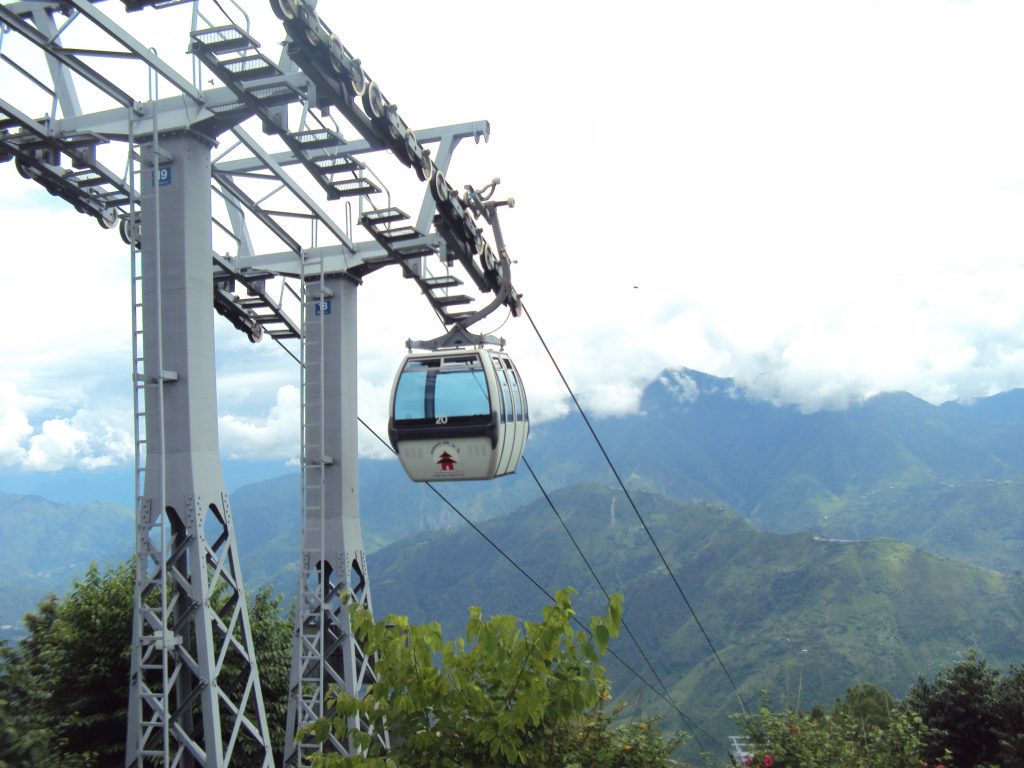
The Manakamana Aerial Ropeway (cable car) takes you from the Kurintar valley floor to the hilltop temple in 7 minutes, turning a 3-hour uphill walk into a cable car experience that blends the sacred and the scenic in a format accessible to pilgrims of all ages and physical conditions.

Manakamana Bhagwati — a form of Parvati (Shiva’s consort) whose name means ‘Heart’s Desire Fulfiller’ — is one of Nepal’s most powerful wish-granting goddesses. The pilgrimage tradition at Manakamana centres on the belief that a sincere devotional request made in the goddess’s presence will be fulfilled — a theological promise that draws hundreds of thousands of pilgrims annually from Nepal and India.

For Annapurna Circuit trekkers making the Kathmandu to Besisahar private vehicle journey, the Manakamana cable car visit adds a powerful sacred blessing to the departure day — the pilgrimage prayer for the trek’s safety and success offered at the hilltop temple before the mountain journey begins.

Adding the Manakamana visit to the Besisahar vehicle hire day adds 2 to 3 hours (cable car queue, 7-minute ascent, temple darshan, 7-minute descent) and results in a Besisahar arrival in the late afternoon. Nepal Vehicle Hiring Pvt Ltd’s driver waits at the Kurintar cable car base station parking area throughout the temple visit — available immediately on the group’s return for the Mugling-to-Besisahar continuation. Confirm the Manakamana addition at booking.

Way to besisahar

Why Nepal Vehicle Hiring Pvt Ltd Is the Best Choice for Besisahar

Nepal Vehicle Hiring Pvt Ltd has operated Kathmandu-to-Besisahar private vehicle hire as one of its highest-volume trekking trailhead transfers, the Annapurna Circuit’s gateway approach, among the most consistently booked routes in Nepal’s private vehicle hire calendar. This volume of experience translates into specific service advantages that occasional or informal operators cannot provide.

  • Route-assigned drivers: Only drivers with specific Besisahar road experience — not highway-general drivers reassigned to the mountain approach.
  • Current road condition knowledge: Morning-of confirmation on the Dumre-to-Besisahar section’s current status before any departure.
  • All vehicle sizes for all group configurations: Private car, 4WD Scorpio jeep, Hilux, Hiace van, Coaster.
  • Optional stops managed: Mugling, Bandipur, Manakamana — all confirmed and managed within the booking.
  • Return vehicle pre-arranged: Besisahar-to-Kathmandu or Jomsom-to-Pokhara post-trek return at outward booking.
  • All-inclusive transparent pricing: Driver, fuel, tolls — confirmed in writing before departure.
  • Peak season availability: Confirmed vehicle allocation maintained through peak October-November and March-May seasons.
  • 24/7 on WhatsApp or plan trip page.

Besisahar town from above

Kathmandu to Besisahar Private Car Price — All Vehicle Types

Private sedan car (2-4 passengers, Besisahar town): NPR 10,000 to 20,000 (USD 75 to 120) all-inclusive, Kathmandu hotel to Besisahar, driver, fuel, road tolls—private car hire.

Private 4WD Scorpio jeep (4-6 passengers): NPR 13,000 to 30,000 (USD 98 to 165) all-inclusive. The Besisahar private jeep hire — most frequently booked vehicle for the Annapurna Circuit trailhead transfer. Recommended for all groups carrying trekking packs and for any onward travel beyond Besisahar into the gorge.

Private Toyota Hilux 4WD (4-8 passengers + cargo): NPR 15,000 to 40,000 (USD 113 to 300) all-inclusive. The Hilux’s larger load bed fits passengers and heavy camping or trekking equipment for private jeep hire.

Toyota Hiace van (7-13 passengers): NPR 18,000 to 35,000 (USD 135 to 250) all-inclusive. Hiace van hire for medium trekking groups. Appropriate for the Prithvi Highway and Dumre-to-Besisahar paved sections; for the gorge road beyond Besisahar, groups switch to 4WD jeeps.

Tourist coaster (14-22 passengers): NPR 25,000 to 45,000 (USD 188 to 300) all-inclusive. Hire a tourist coaster for large trekking groups to Besisahar town.

All prices include driver, fuel, and road tolls from any Kathmandu hotel to Besisahar. Contact Nepal Vehicle Hiring Pvt Ltd on WhatsApp or our plan trip page for a confirmed group-specific quote.

Kathmandu to Besisahar Private Car Price | Jeep Hire Guide 2026/27/28

The Prithvi Highway — Kathmandu to Dumre

The Kathmandu to Besisahar private vehicle journey begins on the Prithvi Highway — Nepal’s most important national road, connecting Kathmandu to Pokhara and beyond. The first 133 kilometres from Kathmandu to the Dumre junction follow this highway through some of Nepal’s most celebrated mid-hill and gorge scenery.

Kathmandu to Naubise (25 km, 30-45 minutes). The road exits Kathmandu westward via the Ring Road, climbs to Thankot, then descends steeply through the Naubise section to the valley floor, where the Prithvi Highway begins and follows the Trishuli River. The descent from Thankot to Naubise is one of the most dramatic near-Kathmandu driving sections — the valley walls closing in as the road drops to the river level.

Naubise to Malekhu (50 km, 1-1.5 hours). The road follows the Trishuli River gorge — one of Nepal’s finest highway gorge drives. The Trishuli River is visible at varying distances below the road; the gorge walls rise above on both sides, and the specific quality of Himalayan river gorge driving — contained, dramatic, and continuously visually engaging — defines this section.

Malekhu to Mugling (25 km, 30-45 minutes). The road continues through the Trishuli gorge to Mugling, where the Trishuli and Marsyangdi rivers meet. Mugling is Nepal’s most famous highway rest stop — the riverside restaurants here serve the freshwater fish curry (mahaseer and sahar fish from the Trishuli) that has made Mugling a destination in its own right.

Nepal Vehicle Hiring Pvt Ltd builds a 45-minute Mugling lunch stop into the standard Kathmandu-to-Besisahar journey timing.

Mugling to Dumre (35 km, 40-50 minutes). From Mugling, the Prithvi Highway continues northwestward toward Pokhara. The Kathmandu to Besisahar route branches at Dumre — the junction town where the Besisahar road turns northeast up the Marsyangdi valley.

Kathmandu to Besisahar Private Car Price | Jeep Hire Guide 2026/27/28

Dumre to Besisahar — The Mountain Approach Road

From Dumre junction, the Besisahar road covers 42 kilometres of increasingly mountain character — transitioning from the Prithvi Highway’s national road standard to the narrower, more demanding approach road of the lower Marsyangdi valley. This final section of the Kathmandu-to-Besisahar private-vehicle journey takes about 1 to 1.5 hours. As the road climbs toward Besisahar, it delivers the first significant views of the Annapurna range’s outer ridgelines.

The Dumre-to-Besisahar road is paved throughout its length but narrows progressively as the valley closes in — the mountain road character (tighter bends, steeper gradient, and occasional rough sections) makes the 4WD Scorpio or Hilux jeep hire preferable to a standard sedan for fully-loaded trekking groups. Buses and trucks use this road, and the passing opportunities at the narrower sections require the driver confidence that Nepal Vehicle Hiring Pvt Ltd’s route-experienced Besisahar road drivers specifically provide.

The first Himalayan views appear above the valley walls as the road approaches Besisahar—Annapurna II and Lamjung Himal visible to the northeast in clear weather—announcing the mountain environment the Annapurna Circuit trek will deliver in full over the following weeks. Besisahar town itself — a small market hub with the trekking permit offices, guesthouses, and the specific energy of a mountain gateway — is the road-end for the initial Kathmandu-to-Besisahar vehicle booking.

Why Private Car or Jeep Is Better Than Public Bus to Besisahar

Public buses from Kathmandu’s Gongabu bus park to Besisahar are cheaper per seat and look similar to private vehicle hire until you consider the key differences.

Hotel pickup vs central bus park. The private car hire from Nepal Vehicle Hiring Pvt Ltd departs from any Kathmandu hotel entrance. The public bus departs from Gongabu bus park — a 30 to 60-minute taxi journey from most Thamel hotels, with trekking luggage, before the bus itself departs.

Departure time. The private vehicle departs at the group’s confirmed time—6:00 AM — for an early Besisahar arrival that lets the first trail day start before noon. The public bus departs on a fixed schedule that may not align with the trekking programme’s ideal first-day timing.

Luggage space. The private jeep hire carries the group’s luggage in the vehicle’s cargo area—no compression between other passengers’ bags, no roof-rack competition. The public bus’s luggage arrangements are shared and crowded.

Journey duration. The private vehicle’s direct route from the hotel door to Besisahar takes 5 to 7 hours. The public bus’s multiple stops, slower pace, and Gongabu-to-hotel taxi additions make the effective door-to-Besisahar time 8 to 10 hours for most Thamel-based trekkers.

Kathmandu to Besisahar Private Car Price | Jeep Hire Guide 2026/27/28

Besisahar — The Annapurna Circuit Gateway

Besisahar (760 m) is the official starting point for the Annapurna Circuit trek — the town from which the 160 to 230-kilometre Circuit (depending on the current road-end point) begins northward into the Marsyangdi valley toward Manang and the Thorong La pass. The Circuit has grown from a simple market village into a trekking services hub with permit offices, good guesthouses, equipment shops, ATMs, and porter and pack-horse hiring offices that support the Circuit’s ongoing camping and teahouse trekking market.

The ACAP permit (Annapurna Conservation Area Permit, USD 30) and TIMS (Trekkers’ Information Management System) are available at the permit offices in Besisahar, making it the permit acquisition point for trekking groups who did not obtain them in Kathmandu. Nepal Vehicle Hiring Pvt Ltd advises all Besisahar private vehicle hire groups on permit requirements at booking—ensuring they arrive in Besisahar with the correct documentation or enough time to obtain it at the Besisahar offices before continuing north.

Beyond the standard Annapurna Circuit, Besisahar also serves as the approach gateway for the Nar Phu Valley trek (branching east from Koto village, 1 day north of Besisahar) and for trekking groups approaching Manang independently from below rather than via Jomsom. Trek Nepal Himalayas’ guided Annapurna Circuit packages and Alpine Luxury Treks’ top-end Circuit experiences both use Nepal Vehicle Hiring Pvt Ltd’s Besisahar private vehicle hire for the trailhead approach transport.

Kathmandu to Besisahar Private Car Price | Jeep Hire Guide 2026/27/28

Beyond Besisahar — The Marsyangdi Gorge Road to Manang

For trekking groups who want to extend the private vehicle hire beyond Besisahar into the Marsyangdi gorge — shortening the walking distance to Manang by replacing 2 to 5 days of lower gorge walking with an additional 3 to 6 hours of jeep driving — Nepal Vehicle Hiring Pvt Ltd’s 4WD Scorpio or Hilux jeep hire covers the gorge road northward through Ngadi, Jagat, Chamje, Tal, Dharapani, Bagarchhap, Chame, and Pisang to Manang.

The Besisahar-to-Manang gorge road section is one of Nepal’s most dramatic mountain road environments — the Marsyangdi River gorge narrowing to almost road-width at the Jagat checkpoint, the cliff sections above the river between Chamje and Tal, and the progressive altitude gain to Manang’s 3,519 metres through the changing vegetation zones of the Annapurna Conservation Area. The Besisahar to Manang private jeep hire adds NPR 14,000 to 40,000 (USD 105 to 300) to the Kathmandu-to-Besisahar transfer cost — a separate Day 2 booking from Besisahar overnight.

Nepal Vehicle Hiring Pvt Ltd coordinates the complete Kathmandu-to-Manang vehicle arrangement through a single booking.

Practical Tips — Booking the Kathmandu to Besisahar Private Vehicle

  • Book at least 3-5 days ahead in peak season (Oct-Nov, March-May): Vehicle availability tightens during peak trekking season. Nepal Vehicle Hiring Pvt Ltd recommends booking 1-2 weeks in advance during peak periods.
  • Depart Kathmandu by 6:00-7:00 AM: Early departure reaches Besisahar by 12:00-1:00 PM, allowing the first trail day to start in the afternoon.
  • Specify the exact destination within the gorge: Besisahar town, or beyond Besisahar to Bhulbhule, Ngadi, Jagat, Chame, or Manang. Each northern extension adds cost. Our team quotes the specific destination.
  • Mugling lunch stop: The Mugling fish curry stop is standard on our Besisahar private vehicle hire — 45 minutes at the riverside restaurants.
  • Confirm ACAP permit requirements: All trekkers entering the Annapurna Conservation Area need the ACAP permit — obtainable in Kathmandu or at Besisahar.
  • Pre-arrange the return vehicle: Book the post-trek return vehicle (Jomsom-to-Pokhara or Besisahar-to-Kathmandu) at outward booking.

Kathmandu to Besisahar Private Car Price | Jeep Hire Guide 2026/27/28

The Prithvi Highway’s Trishuli Gorge — One of Nepal’s Finest Drives

The Trishuli River gorge section of the Prithvi Highway between Naubise and Mugling is one of Nepal’s finest sustained highway driving experiences—75 kilometres of river-gorge road where the Trishuli’s fast-moving water is visible at varying distances below the road, and the gorge walls rise on both sides. The road traces the river’s meanders through the mountains, with the distinct character of a natural gorge highway: contained, dramatic, and continuously visually engaging.

The Trishuli is one of Nepal’s most active white-water rafting rivers, and the commercial rafting operations that use the river from Charaudi and Malekhu launch points create a visual additional layer to the gorge drive — brightly coloured rafts visible on the river below during rafting season, their paddlers navigating the rapids that the highway road passes above.

The private car hire stops at the specific Trishuli gorge viewpoint pullouts on request — the river’s turquoise colour and the gorge walls’ scale creating photographic opportunities that the moving vehicle window frames but does not fully deliver. Nepal Vehicle Hiring Pvt Ltd’s Besisahar jeep hire drivers know the 2 to 3 specific gorge pullouts where the river is most photogenic and the gorge walls most dramatic.

Kathmandu to Besisahar Private Car Price | Jeep Hire Guide 2026/27/28

The Marsyangdi River — Nepal’s Annapurna Highway

The Marsyangdi River — whose valley the Kathmandu to Besisahar private vehicle hire joins at Dumre and follows northward to Besisahar — is the hydrological spine of the Annapurna Circuit trek. The river descends from the high Manang plateau between the Annapurna and Manaslu massifs, gathering volume from the glacial meltwater of dozens of Himalayan tributaries before reaching the Trishuli confluence at Mugling.

At Besisahar, the Marsyangdi is already a significant mountain river — visible from the Dumre approach road as the valley floor meets the road, its characteristic grey-blue colour (from the glacial silt that Nepal’s most significant rivers carry) announcing the mountain world upstream.

The road from Dumre to Besisahar follows the Marsyangdi’s eastern bank for most of its 42 kilometres — the river visible at varying distances to the west, with the valley walls rising on both sides to the forested ridgelines above. The specific quality of driving in a Himalayan river valley — the enclosed feeling of the valley, the sound of the river audible from the vehicle window when the road approaches

the bank, and the progressive disappearance of the broad Terai sky as the valley walls close in — is the Besisahar private vehicle hire’s specific atmospheric gift to the trekking group: a sensory introduction to the mountain environment that the road delivers before the first trail day begins. Nepal Vehicle Hiring Pvt Ltd’s Besisahar road drivers know the specific riverside viewpoints where the Marsyangdi’s character is most dramatic and the valley’s mountain walls most photogenic.

Besisahar Town — First Night on the Annapurna Approach

Besisahar town at 760 metres is a well-developed trekking services hub whose accommodation, permit offices, equipment shops, and porter-hire facilities have evolved to serve the Annapurna Circuit’s consistent trekker traffic. For groups arriving from Kathmandu by private vehicle hire in the early afternoon, Besisahar is the ideal first-night base—time to arrange permits, pack final supplies, hire porters or a guide if needed, and start the trek the following morning with a full day ahead.

Accommodation in Besisahar: Multiple teahouses and guesthouses ranging from basic rooms with shared bathrooms (NPR 300 to 600 per room) to the better-quality guesthouses with attached bathrooms (NPR 600 to 1,200). The accommodation standard at Besisahar is appropriate for the first night of a mountain trek — clean, functional, and significantly better than the first day’s destination of Bhulbhule or Ngadi further up the valley.

Permit offices in Besisahar: The ACAP permit office and TIMS card registration are both available at Besisahar’s permit counter — groups who did not obtain permits in Kathmandu can complete the permit process here before departing northward. The specific cost: ACAP permit USD 30 per foreign national (SAARC national rate lower), TIMS card USD 10 to 20. Both are required to enter the Annapurna Conservation Area at the Jagat checkpoint.

Equipment and supplies: Besisahar’s trekking equipment shops stock basic trekking supplies — trekking poles, water purification tablets, basic medical supplies, snacks, and local warm clothing. Nothing approaching Thamel’s comprehensive market, but adequate for forgotten or inadequate items. Nepal Vehicle Hiring Pvt Ltd advises all Besisahar private vehicle hire groups to purchase any critical missing equipment in Kathmandu before departure rather than relying on Besisahar’s more limited stock.

Nepal Tour Package

Kathmandu to Besisahar — Group Size and Vehicle Planning

Selecting the right vehicle for the Kathmandu-to-Besisahar transfer means matching vehicle capacity to the group’s passenger count and luggage volume—two variables that don’t always align.

Small group (2-4 trekkers, moderate packs): Private car hire (Toyota Corolla or equivalent) — economical, comfortable for the 5 to 7-hour highway and mountain road journey, appropriate boot space for 4 standard trekking packs. If the group includes very large expedition packs, upgrade to the 4WD Scorpio jeep for extra cargo space.

Medium group (4-7 trekkers, full trekking gear): 4WD Scorpio or Hilux jeep hire — the natural choice for the 4 to 7-person trekking group with full packs. The Scorpio’s rear cargo area and roof rack accommodate the luggage volume without compression, and its 4WD capability handles both the Dumre-to-Besisahar mountain section and any gorge-road continuation beyond Besisahar.

Large group (8-14 trekkers): Toyota Hiace van hire with the option of a separate Scorpio equipment jeep for the luggage if pack volume exceeds the Hiace’s cabin-and-cargo capacity. Nepal Vehicle Hiking Pvt Ltd coordinates the Hiace-plus-Scorpio convoy as a single booking — both vehicles depart together.

Very large group (15-30 trekkers): Tourist coaster hire for passengers plus Hilux 4WD equipment vehicle for gear. Contact our team onWhatsApp to arrange multi-vehicle convoys.

The Annapurna Conservation Area — Nepal’s Most Visited Protected Area

The Annapurna Conservation Area (ACAP) — the protected area through which the Annapurna Circuit, the Annapurna Base Camp trek, and the Ghorepani Poon Hill trek all pass — is Nepal’s most visited national protected area and one of the most biodiverse conservation landscapes in the Himalayan region. The ACAP covers 7,629 square kilometres from the subtropical lowlands of the Marsyangdi valley (below 1,000 m) to the alpine zone of the Thorong La (5,416 m) — encompassing nearly every vegetation zone and climate type available in the central Himalayan range within a single contiguous protected area.

The ACAP’s management model — community-based conservation that returns permit revenue directly to local communities for infrastructure, education, and environmental management — is internationally recognised as one of the most successful models for reconciling conservation goals with the development needs of the communities that inhabit the protected area. Every Annapurna Circuit trekker who pays the ACAP permit fee directly contributes to this community-based conservation model,

a contribution that the Besisahar private vehicle hire from Kathmandu makes by dropping the trekker off at the start of the trek. Nepal Vehicle Hiring Pvt Ltd advises all groups on the ACAP permit requirement and the Jagat checkpoint verification process at booking — no trekker should arrive at Besisahar without confirmed understanding of the permit requirement.

Kathmandu to Besisahar Private Car Price | Jeep Hire Guide 2026/27/28

What to Expect at the Mugling Rest Stop

The Mugling stop on the Kathmandu to Besisahar drive is one of Nepal’s most anticipated highway rest stops — a cluster of riverside restaurants at the Trishuli-Marsyangdi confluence whose freshwater fish curry has made Mugling famous throughout Nepal’s trekking and highway travel community. Understanding what the Mugling stop involves helps you plan your day.

The fish: Mugling’s restaurants specialise in mahaseer (sahar machha) and other Trishuli River freshwater fish, fried whole or in pieces and served with standard Nepali dal bhat accompaniments. The fish is ordered fresh from the riverside market stalls and prepared to order — allow 30 to 45 minutes from order to table.

The restaurants are open-sided and riverside, and they’re best in the morning, when the day’s catch is freshest.

The timing: Nepal Vehicle Hiring Pvt Ltd’s Besisahar private vehicle hire typically arrives at Mugling 2.5 to 3 hours after a Kathmandu 6:30 AM departure — arriving at approximately 9:00 to 9:30 AM for the morning fish order. This timing hits Mugling before the midday peak and gets you to Besisahar by early afternoon.

Other options: For groups who prefer a simpler stop, the Mugling area also has chai (tea) shops, snack vendors, and convenience stores. The fish stop is the recommended choice for quality and cultural authenticity, but it is not mandatory, and we can accommodate dietary restrictions with alternative stop options. Contact our team onWhatsApp to specify any dietary requirements at booking.

Kathmandu to Besisahar vs Other Annapurna Approach Options

Trekkers planning the Annapurna Circuit have several approach options for reaching Besisahar — understanding the alternatives clarifies why the Kathmandu to Besisahar private vehicle hire is the recommended format for most groups.

Option 1: Kathmandu to Besisahar private vehicle (recommended). Hotel-door pickup, 5-7 hours, all-inclusive pricing, Mugling stop, direct arrival at Besisahar with all luggage intact. Nepal Vehicle Hiring Pvt Ltd price: NPR 13,000-30,000 for a private jeep hire. Best value for groups of 3 or more.

Option 2: Kathmandu to Besisahar public bus. Departs from Gongabu bus park on a fixed schedule. NPR 400-1800 per person. 7-9 hours including stops.

No hotel pickup. Luggage on roof rack shared with other passengers. Appropriate for solo budget travellers.

Option 3: Kathmandu to Pokhara, then Pokhara to Besisahar. Kathmandu to Pokhara private vehicle (200 km, 5-7 hours) then Pokhara-to-Besisahar (approximately 80-90 km, 2-3 hours). This routing adds significant distance and cost vs the direct Kathmandu-to-Besisahar approach. Not recommended unless the group is already in Pokhara.

Option 4: Kathmandu to Dumre by bus, local jeep Dumre to Besisahar. Possible, but it involves departing from the Gongabu bus park, a bus connection in Dumre, and the uncertainty of finding a local Dumre-to-Besisahar jeep for a full group’s luggage. Not recommended for groups of 4 or more.

Kathmandu to Besisahar Private Car Price | Jeep Hire Guide 2026/27/28

Kathmandu to Besisahar — What to See on the Way

Manakamana Cable Car (Kurintar junction, 110 km from Kathmandu). The Manakamana Cable Car at the Kurintar junction — 10 kilometres west of Mugling on the Prithvi Highway — ascends to the Manakamana Temple at 1,302 metres in 7 minutes. Manakamana Bhagwati (Goddess Manakamana) is one of Nepal’s most visited Hindu pilgrimage destinations — the cable car pilgrimage has replaced the traditional 3-hour walk for most modern pilgrims.

Adding the Manakamana cable car visit to the Kathmandu-to-Besisahar journey adds 2 to 3 hours to the day. Still, it delivers one of Nepal’s finest short cable car experiences and one of its most significant pilgrimage sites directly on the route.

Bandipur Hilltop Town (Dumre junction detour, 7 km from Dumre). The medieval Newar hilltop town of Bandipur — 7 kilometres north of Dumre junction on a steep mountain road — is one of Nepal’s finest preserved heritage towns, with a car-free main bazaar of extraordinary architectural integrity and a south-facing hilltop position that provides one of Nepal’s finest Himalayan panoramas: the Annapurna range, Machhapuchhre, Manaslu, and Himalchuli all visible from the Bandipur ridge on clear days. The private vehicle hire stops at Bandipur for 1 to 2 hours before continuing north to Besisahar, an extraordinary heritage detour on the approach to Nepal’s greatest trekking circuits.

Mugling has several roadside restaurants. The fish curry stop at Mugling is the Prithvi Highway’s most celebrated culinary landmark — freshwater mahseer fish from the Trishuli, fried and served with dal and rice at the riverside restaurants that line the road at the confluence, is Nepal’s finest roadside meal and one of the most anticipated stops on any Kathmandu-to-Besisahar journey. Allow 45 to 60 minutes — the fish is prepared fresh and takes time.

Annapurna Circuit — Why Besisahar Is the Right Start

The Annapurna Circuit trek is one of the world’s most celebrated long-distance trekking routes: a 160 to 230-kilometre circuit in the Annapurna Conservation Area that crosses the Thorong La Pass (5,416 m) and returns via the Kali Gandaki gorge. The Circuit traditionally starts on the eastern (Marsyangdi) side, where the trail follows the river northward through the Circuit’s cultural and landscape progression to Manang (3,519 m) and the high approach to the pass.

Starting the Annapurna Circuit at Besisahar provides: the complete circuit experience from the Marsyangdi valley’s subtropical lower sections through the temperate mid-altitude to the alpine upper Marsyangdi; the cultural progression through the Gurung, Tamang, and Magar communities of the lower gorge to the Tibetan-influenced Manangi villages above Chame; and the physiological benefit of starting at 760 metres rather than the current road-end’s higher altitude — providing a more gradual altitude gain profile for the first week’s acclimatisation than starting at Chame or Manang by jeep.

Trek Nepal Himalayas’ complete Annapurna Circuit guided trek starts from Besisahar, with a private jeep hire from Kathmandu via Nepal Vehicle Hiring Pvt Ltd. The Annapurna Base Camp trek and Ghorepani Poon Hill trek use the Pokhara to Nayapul transport instead — a shorter, separate Pokhara-based vehicle hire.

Return Vehicle — Besisahar to Kathmandu Post-Trek

The return vehicle from Besisahar to Kathmandu after the Annapurna Circuit completes the Circuit’s transport arrangement—the same all-inclusive private jeep or private car hire that brought the group from Kathmandu to Besisahar, now available for the return at the Circuit’s end.

For trekkers exiting the Annapurna Circuit at Besisahar (the standard eastern exit), Nepal Vehicle Hiring Pvt Ltd pre-books the Besisahar to Kathmandu return vehicle at outward booking — confirming the return date via WhatsApp during the trek when the actual exit timing becomes clear. For trekkers who cross the Thorong La and exit via Jomsom, the Jomsom-to-Pokhara private jeep hire and the Pokhara-to-Kathmandu vehicle hire form the return transport chain — also pre-arranged at outward booking.

Nepal Vehicle Hiking Pvt Ltd’s plan trip page accepts complete circuit transport bookings — inward Besisahar and outward Jomsom-Pokhara or Besisahar-Kathmandu — in a single submission.

Seasonal Considerations — Best Time to Drive Kathmandu to Besisahar

Private vehicle hire from Kathmandu to Besisahar is available year-round. Still, road conditions and the journey experience vary significantly by season—affecting both journey comfort and the trekking conditions awaiting at the Annapurna Circuit trailhead.

Autumn (October-November) — Peak Season. Post-monsoon Nepal offers the best conditions for the Besisahar private car hire: dry roads, clear skies revealing the Annapurna and Manaslu ranges above the Marsyangdi valley, and the crisp, clean air autumn’s post-monsoon clarity brings. The Mugling fish stop is at its finest in October and November — the river running clear after the monsoon silt has settled.

This is Nepal’s busiest trekking season — book the Besisahar private vehicle 1 to 2 weeks ahead.

Spring (March-May) — Second Peak. Spring’s rhododendron bloom makes the forested sections of the Dumre-to-Besisahar approach road particularly beautiful in March and April; Nepal’s national flower colours the hillsides above the valley road red, pink, and white at its peak. Road conditions are generally good in spring, with occasional pre-monsoon afternoon cloud building in May. Book the Besisahar jeep hire 1 week ahead during spring peak.

Monsoon (June-September) — Manageable but Cautious. The main sections of the Prithvi Highway from Kathmandu to Mugling are reliable year-round. The Dumre-to-Besisahar section carries higher landslide risk during heavy monsoon rainfall — Nepal Vehicle Hiring Pvt Ltd checks morning road conditions before dispatching any vehicle on the Besisahar approach during monsoon season.

When the road is confirmed clear, the monsoon drive has its own visual quality: the Marsyangdi valley in deep green, waterfalls threading the valley walls above the road, and the specific dramatic light of monsoon cloud-and-clear weather.

Winter (December-February) — Reliable and Less Crowded. The Kathmandu-to-Besisahar road remains reliable in winter — the lower altitude of this section (the road stays below 760 m throughout) means no snow or ice on the approach route itself. Winter trekking on the Annapurna Circuit requires high-altitude cold-weather preparation above Manang, but the approach road is at its most reliable and least trafficked. Private vehicle hire available year-round from WhatsApp.

Kathmandu to Besisahar Private Car Price | Jeep Hire Guide 2026/27/28

The Bandipur Detour — Nepal’s Finest Heritage Town on the Route

Bandipur, a 7-kilometre detour from Dumre junction on a steep access road above the Marsyangdi valley, is one of Nepal’s most extraordinary and under-visited heritage towns—a living medieval Newari market city on a hilltop ridge, preserved by its elevation and inaccessibility to heavy vehicles. The main Bandipur bazaar, a 400-metre pedestrianised lane of three-storey Newari townhouses with carved wooden windows, ornate courtyard temples, and the specific commercial character of a Himalayan hilltop trading post, is one of Nepal’s finest intact traditional streetscapes.

From the Bandipur ridge at 1,030 metres, the views of the Annapurna range are among the finest accessible from any Nepal road: Manaslu (8,163 m), Himalchuli, Baudha Himal, Annapurna II, Lamjung Himal, and Machhapuchhre—visible on clear days in a continuous panoramic arc. The Bandipur viewpoint above the bazaar’s northern end offers the best combined foreground (Newar rooftops and the Marsyangdi valley below) and background (the Himalayan skyline) composition accessible from any mid-Nepal heritage town.

Adding the Bandipur detour to the Kathmandu-to-Besisahar private vehicle hire adds about 1.5 to 2.5 hours (7 km up, 45 minutes in town, 7 km down) to the journey. It pushes arrival in Besisahar to mid-afternoon rather than early afternoon.

For trekking groups whose first walk day is not until the following morning, the Bandipur addition is strongly recommended — it adds one of Nepal’s finest heritage experiences to what would otherwise be a pure transit day. Nepal Vehicle Hiring Pvt Ltd’s drivers park at the Bandipur base (private vehicles cannot enter the pedestrianised main bazaar) and either wait for the group or walk up with them.

All-Inclusive Pricing — What the Besisahar Vehicle Hire Covers

Nepal Vehicle Hiring Pvt Ltd’s Kathmandu to Besisahar private vehicle hire uses all-inclusive pricing. This single confirmed price covers the full journey from hotel pickup to arrival in Besisahar, with no additions at the end of the journey. Knowing what is included prevents misunderstandings that arise when informal vehicle arrangements add fuel surcharges, toll fees, and driver meal costs at the end of the journey.

Included in the all-inclusive price: Driver for the complete Kathmandu-to-Besisahar route (5-7 hours); all fuel for the complete distance; all Nepal highway and road tolls; hotel-door pickup from any Kathmandu hotel or guesthouse; Besisahar town drop-off at the group’s specified guesthouse or trailhead; the standard Mugling rest stop (45 minutes, restaurant costs paid by the group).

Not included: Group’s own food and drinks at the Mugling stop; driver meal during the Mugling stop (typically NPR 300-500, customarily paid by the group as a courtesy); any Bandipur or Manakamana detour additional driving that significantly extends the route beyond the standard Kathmandu-to-Besisahar distance (small detours within 10 km are typically included; the Bandipur detour’s 14 km round trip may add a small supplement — confirm at booking).

Nepal Vehicle Hiking Pvt Ltd’s Besisahar private vehicle hire quote is specific and in writing — send via WhatsApp to WhatsApp or confirm through our plan trip page before the booking is accepted—no price surprises at Besisahar.

Kathmandu to Besisahar — Driver Knowledge and Route Experience

Nepal Vehicle Hiring Pvt Ltd assigns the Kathmandu to Besisahar private vehicle hire exclusively to drivers with specific route experience on the Prithvi Highway and the Dumre-to-Besisahar approach — not drivers with general Kathmandu sightseeing or highway experience, but drivers who have made this specific journey repeatedly and whose knowledge of the route’s specific challenges and specific highlights is directly useful to the trekking group.

The specific route knowledge that Nepal Vehicle Hiring Pvt Ltd’s Besisahar drivers bring: the exact Mugling riverside restaurant that serves the finest fresh-catch mahaseer (the recommendation matters — some Mugling restaurants are significantly better than others); the two specific Trishuli gorge pullouts where the gorge view is most dramatic for photography; the Bandipur approach timing (the access road closes to vehicles during certain festival periods

our drivers check before the approach); the Besisahar guesthouse cluster that most conveniently serves trekkers who will continue northward the following morning; and the current road condition status of the Dumre-to-Besisahar section’s most vulnerable section (a specific cut-and-fill section that can be affected by heavy rain). This knowledge — accumulated through dozens of Besisahar trips — is the service dimension that distinguishes Nepal Vehicle Hiring Pvt Ltd’s private vehicle hire from any informal arrangement.

Comparing Besisahar with Other Annapurna Region Trailheads

Besisahar vs Nayapul (for ABC and Poon Hill): Besisahar (175 km from Kathmandu) is the Annapurna Circuit eastern start. Nayapul (42 km from Pokhara, served by the Pokhara to Nayapul transport) is the start for the Annapurna Base Camp trek and Ghorepani Poon Hill trek.: different starting towns for different Annapurna region circuits.

Besisahar vs Soti Khola (for Manaslu Circuit): The Kathmandu to Soti Khola jeep hire (162 km, 7-10 hours) serves the Manaslu Circuit trek starting point. The Besisahar-to-Manang road and the Soti Khola-to-Manaslu road serve different northern circuits that meet at Dharapani on the Annapurna-Manaslu connector.

Besisahar vs Phaplu (for Everest): The Kathmandu to Phaplu private jeep hire (280 km, 2 days) serves the Everest overland approach. Besisahar serves the Annapurna region exclusively.

Frequently Asked Questions — Kathmandu to Besisahar Private Car Price

Q: What is the private car price from Kathmandu to Besisahar?

NPR 10,000 to 20,000 (USD 75 to 120) for a private sedan; NPR 13,000 to 30,000 for a private 4WD jeep hire. All-inclusive. Contact Nepal Vehicle Hiring Pvt Ltd on WhatsApp.

Q: How long does it take to drive from Kathmandu to Besisahar?

5 to 7 hours by private vehicle — including a Mugling rest stop. Depart Kathmandu between 6:00 and 7:00 AM for arrival in Besisahar between 12:00 and 1:00 PM.

Q: Should I book a car or a jeep for Kathmandu to Besisahar?

If you’re travelling only to Besisahar town, a private car hire is appropriate and more cost-efficient; if you’re continuing beyond Besisahar into the Marsyangdi gorge, a 4WD Scorpio jeep hire is mandatory.

Q: Is a 4WD Mugling fish curry stop included?

Yes — Nepal Vehicle Hiring Pvt Ltd builds a 45-minute Mugling riverside restaurant stop into the standard Besisahar private vehicle hire.

Q: Can I visit Bandipur on the way to Besisahar?

Yes — Bandipur is 7 km from Dumre junction on the Besisahar road. The private vehicle hire stops at Bandipur for 1-2 hours at request. Add the detour at booking.

Q: Can Nepal Vehicle Hiring Pvt Ltd pre-arrange the return vehicle from Besisahar?

Yes — the Besisahar to Kathmandu return vehicle is pre-arranged at outward booking and confirmed via WhatsApp during the trek. Same price, same standard.

The Kathmandu-to-Besisahar private car and jeep hire from Nepal Vehicle Hiring Pvt Ltd is the transport foundation on which the Annapurna Circuit trek experience begins—the hotel-door-to-trailhead service that delivers trekkers to Besisahar rested, on time, and ready for one of the world’s greatest mountain journeys.

Whether the group chooses a private sedan at NPR 10,000 to 20,000, a 4WD Scorpio jeep at NPR 13,000 to 30,000, or a Hiace van for a larger group, the service standard is the same: professional, all-inclusive, and confirmed in writing before departure. The Mugling fish curry is included. The Besisahar arrival is on time.

The return vehicle is pre-arranged. The Annapurna Circuit begins with confidence that the transport is properly handled. Book through Nepal Vehicle Hiring Pvt Ltd on WhatsApp or our plan trip page.

Conclusion

The Kathmandu to Besisahar private car and jeep transfer is the essential first journey of the Annapurna Circuit trek — a 175-kilometre, 5 to 7-hour road journey from the capital’s hotel door to the mountain town where one of the world’s greatest trekking routes begins. Nepal Vehicle Hiring Pvt Ltd provides Kathmandu to Besisahar private vehicle hire at all-inclusive, transparent pricing — private car from NPR 15,000, 4WD jeep from NPR 20,000, Hiace van from NPR 25,000 — with route-experienced drivers, a Mugling fish curry stop, optional Bandipur and Manakamana detours, and a return vehicle pre-arranged for the Circuit’s end.

Book your Kathmandu to Besisahar private car or jeep hire with Nepal Vehicle Hiring Pvt Ltd — call or WhatsApp, visit vehiclehiringnepal.com, or book through our plan trip page.

Kathmandu to Besisahar Private Car Hire

Besisahar

Kathmandu to Besisahar Private Car Hire — The Complete Guide

Every trek on the Annapurna Circuit begins with the same first step: a road journey from Kathmandu to Besisahar, the district headquarters of Lamjung, at about 80 meters and the official gateway to one of Nepal’s most celebrated and scenically diverse trekking routes. Whether you are setting out for the full Annapurna Circuit trek, the Nar Phu Valley trek, the Tilicho Lake expedition, or a vehicle-assisted journey deeper into the Marsyangdi gorge toward Chame or Manang, your transport choice for this first 175 to 185 kilometre road section shapes how the adventure begins — whether you arrive rested and well-timed or exhausted from navigating an unfamiliar public transport network with full trekking luggage.

Private car hire from Kathmandu to Besisahar is the most comfortable, flexible, and, for small groups, most cost-effective way to make this journey. A private car or private jeep from Nepal Vehicle Hiring Pvt Ltd collects you from your Kathmandu hotel at the time you choose, follows the Prithvi Highway westward through some of Nepal’s finest river valley scenery, turns north at Dumre Junction onto the Marsyangdi valley road, and delivers you to Besisahar’s main bazaar in a comfortable 6 to 8 hours — with rest stops, photo opportunities, and intermediate visit options built into the journey at your preference, not at a bus schedule’s mercy.

This complete guide covers the full Kathmandu to Besisahar private car hire experience: the route and its highlights, the vehicle options from standard sedan to 4WD jeep and Hiace van, the  costs, what the road actually looks and feels like, what to do if you need to stop along the way, permits and logistics for the onward journey, and why Nepal Vehicle Hiring Pvt Ltd is the right private car hire partner for this specific and important transfer.

Besisahar — Nepal’s Premier Annapurna Gateway

Besisahar, the administrative headquarters of Lamjung District in Gandaki Province, sits at approximately 807 meters above sea level at the junction where the Prithvi-Marsyangdi valley road meets the Annapurna Conservation Area boundary. Its significance in Nepal’s trekking geography is entirely disproportionate to its modest size: as the departure point and ACAP permit checkpoint for the Annapurna Circuit trek — the most popular long-distance trekking route in Nepal and one of the most famous in the world — Besisahar processes thousands of trekking permits annually and has developed a practical, trekker-oriented infrastructure of guesthouses, equipment shops, ATMs, and restaurants that serve the sustained flow of international and domestic visitors passing through.

Beyond the Annapurna Circuit, Besisahar is also the gateway to the Nar Phu Valley trek — a restricted-area experience branching from Koto village beyond Chame that delivers one of Nepal’s most remote and multiculturally intact high-Himalayan experiences to those willing to invest the permit cost and the additional walking days.

The Tilicho Lake trek, reaching the world’s highest large lake at 4,919 meters from a side trail above Manang, also begins at Besisahar, since the jeep road beyond Besisahar toward Manang offers the fastest road access to the Tilicho Lake trailhead. For trekkers completing the Manaslu Circuit via Larkya La and descending through Dharapani on the Annapurna Circuit approach road, Besisahar is the exit point where the road connection back to Kathmandu or Pokhara begins.

The town has the honest character of a working Nepali district headquarters: government offices, a functional hospital, the Lamjung campus of a regional university, fuel stations, banks, and a main bazaar that serves both residents and the trekking community passing through.

For private car hire clients arriving from Kathmandu with Nepal Vehicle Hiring Pvt Ltd, Besisahar is the standard drop-off point unless the journey continues deeper into the gorge toward Chame or Manang — in which case the standard sedan or private car transfers to a 4WD jeep at Besisahar for the rough off-road section beyond.

The Route — Kathmandu to Besisahar in Full Detail

The Kathmandu to Besisahar private car journey covers approximately 175 to 185 kilometres by road. It takes 6 to 8 hours, including one or two rest stops, following one of Nepal’s most scenic and historically significant highway corridors through the Trishuli River valley, the midland hills of Dhading and Gorkha districts, and the narrowing Marsyangdi valley approach to Lamjung.

Kathmandu City Departure — The Hotel Pickup Advantage. Every Nepal Vehicle Hiring Pvt Ltd private car hire from Kathmandu includes hotel pickup from any address in the city — Thamel, Boudha, Lazimpat, Patan, Baneshwor, Durbarmarg, or any other Kathmandu neighbourhood. This single advantage over public transport — the ability to leave from your hotel door at the time you choose, with your luggage loaded by the driver — is worth emphasising.

Kathmandu’s Gongabu Bus Park, the departure point for the Kathmandu to Besisahar bus, is itself a 20 to 40 minute city journey from most Thamel hotels, adding a luggage-laden taxi journey to the beginning of what is already a long day’s travel. Departing from your hotel in a private car from Nepal Vehicle Hiring Pvt Ltd at a time of your choosing — typically 6:30 to 7:30 a.m. for a Besisahar arrival before midday — is simply a more pleasant way to begin a significant journey.

Kathmandu to Naubise and the Prithvi Highway. The journey begins by exiting Kathmandu westward through Kalanki, passing through Ring Road traffic and climbing toward Thankot at the valley’s western rim, then descending through Nagdhunga into the Prithvi Highway corridor.

The Prithvi Highway proper — named after King Prithvi Narayan Shah, who unified Nepal in the eighteenth century — begins at Naubise and runs westward along the Trishuli River through progressively more open and more dramatically scenic terrain. On a clear morning, the forested hillsides above the river valley and the first hints of the Himalayan range beyond provide early evidence that the Kathmandu to Besisahar private car journey is considerably more than a logistics transfer — it is a genuinely rewarding experience of Nepal’s middle hill geography in its own right.

The Trishuli River Corridor — Nepal’s Highway Treasure. From Naubise to Mugling, the Prithvi Highway follows the Trishuli River upstream through a gorge whose scale and character change continuously as the road climbs. The Trishuli is one of Nepal’s most important whitewater rivers — Grade 3 to 4 rapids through the Kurintar and Charaundi sections attract kayakers and rafters from around the world — and the highway’s proximity to the river creates one of Nepal’s finest highway driving experiences: the bright green water visible far below through forested hillside gaps, the occasional raft or kayak visible on the river surface, and the changing character of the canyon walls as the road gains altitude.

Nepal Vehicle Hiring Pvt Ltd’s private car drivers know the best viewpoints on this corridor. They can suggest brief stops at the most photogenic sections for groups wanting to capture Trishuli Valley scenery.

Mugling Junction — The Natural Midpoint Rest Stop. Mugling, at approximately 110 kilometers from Kathmandu and the junction point where the Prithvi Highway branches westward toward Pokhara and northward toward Besisahar via Dumre, is the standard mid-journey rest stop on all Nepal Vehicle Hiring Pvt Ltd Besisahar transfers.

Mugling itself is a busy highway junction town at the confluence of the Trishuli and Marsyangdi rivers — the same two rivers that define the approach corridors to Langtang and Annapurna respectively — and offers a full range of highway restaurant options for breakfast or lunch depending on departure timing. Nepal Vehicle Hiring Pvt Ltd recommends 20 to 30 minutes at Mugling for a proper meal break and driver refresh before the second half of the journey.

Mugling to Dumre — The Marsyangdi Valley Approach. From Mugling, the private car route to Besisahar continues westward on the Prithvi Highway for about 20 kilometres before the Dumre Junction turn-off—where the highway splits between the Pokhara-bound westward continuation and the Besisahar-bound northward turn onto the Marsyangdi Valley road. The Manakamana Temple cable car station, about 2 kilometers before Mugling on the westward approach, is one of Nepal’s most visited pilgrimage sites and a natural stop for Hindu pilgrims wishing to pay respects to Goddess Manakamana at the famous hilltop temple before continuing to Besisahar.

Dumre to Besisahar — The Final Marsyangdi Section. From Dumre Junction, the route turns north onto the Marsyangdi valley road — a narrower, hillier single-carriageway road that follows the Marsyangdi River upstream toward Besisahar through a sequence of small bazaar towns, terraced hillside farmland, and the first hints of the higher mountain terrain that defines the Annapurna region above.

This Dumre-to-Besisahar section, about 43 to 55 kilometres, adds 1 to 1.5 hours to the journey and marks the shift from the broad, fast Prithvi Highway to the narrower, more winding roads of Nepal’s hill districts. While the road remains paved for most of this section, surface quality varies—some sections are affected by seasonal landslide damage, and the narrowing increases oncoming traffic, making a professional, experienced driver much more comfortable than independent navigation.

Vehicle Options — Choosing the Right Car for Kathmandu to Besisahar

Private car hire options for the Kathmandu to Besisahar journey range from a standard sedan for solo travellers and small groups to a 4WD jeep for those continuing beyond Besisahar into the gorge, and a Hiace van for larger trekking parties. The right vehicle depends on group size, luggage volume, and whether Besisahar is the final destination or a transit point for a deeper gorge transfer.

Private Sedan (Suzuki Swift, Toyota Corolla, Hyundai Accent). A standard private sedan is appropriate for solo travellers or couples with moderate luggage going only to Besisahar—not beyond. The Prithvi Highway and the Dumre-to-Besisahar road are both paved and manageable for a standard sedan in dry-season conditions, and a sedan’s smaller size actually makes the Dumre-to-Besisahar narrow section easier to navigate than a larger vehicle.

A sedan comfortably carries 3 to 4 passengers, with standard trekking luggage in the boot plus a roof rack. The 2026 cost for a private sedan from Kathmandu to Besisahar is approximately US$120, making it the most affordable private car option for small groups.

Private 4WD Jeep (Scorpio). A private 4WD jeep from Nepal Vehicle Hiring Pvt Ltd is the right choice for any group continuing beyond Besisahar into the Marsyangdi gorge toward Bhulbhule, Jagat, Chame, or Manang, where the unpaved off-road section categorically requires 4WD. It is also the better choice for groups of 4 to 6 trekkers with full expedition luggage—the jeep’s higher ground clearance, roof rack capacity, and ample luggage space comfortably accommodate the duffel bags and equipment a mountain circuit trek requires.

A private jeep from Kathmandu to Besisahar costs approximately US$200 for the full vehicle. Continuing from Besisahar to Manang, the full Kathmandu-to-Manang jeep hire costs about NPR 25,000 to 50,000 (USD 188 to 500).

Toyota Hiace Van. For medium-sized trekking groups of 7 to 13 people, a Toyota Hiace van hire comfortably covers the full Kathmandu to Besisahar route on the paved highway sections, seats everyone together, and offers significantly more interior luggage space than a standard jeep. The Hiace van is the most popular choice for commercial trekking agencies moving medium-sized groups from Kathmandu to Besisahar for Annapurna Circuit treks, and Nepal Vehicle Hiring Pvt Ltd offers it for approximately NPR 18,000 to 35000 (USD 135 to 300) for the full vehicle from Kathmandu to Besisahar.

Tourist Coaster and Bus. For large groups of 14 to 25 people, tourist coaster and full tourist bus hire cover the Kathmandu to Besisahar route on paved highway sections. These larger vehicles provide the most cost-effective per-person transport for commercial expeditions and temple groups.

For groups continuing beyond Besisahar onto the gorge road, we coordinate a fleet of 4WD jeeps from Besisahar for the off-road section, with the coaster or bus waiting in Besisahar for the return.

2026 Private Car Hire Costs — Kathmandu to Besisahar

The following 2026 pricing applies to Nepal Vehicle Hiring Pvt Ltd private car and vehicle hire services for the Kathmandu to Besisahar route. All prices include the driver, fuel, and road tolls—no additional charges.

Private Sedan Car: NPR 8,000 to 18000 (USD 60 to 120) — full vehicle, 1 to 3 passengers, to Besisahar.

Private SUV / Ertiga / Scorpio (non-4WD): NPR 11,000 to 26,000 (USD 83 to 160) — full vehicle, 4 to 5 passengers, to Besisahar.

Private 4WD Jeep (Scorpio 4WD / Hilux): NPR 13,000 to 35,000 (USD 98 to 220) — full vehicle, 4 to 6 passengers, to Besisahar.

Toyota Hiace Van: NPR 18,000 to 35,000 (USD 135 to 250) — full vehicle, 7 to 13 passengers, to Besisahar.

Tourist Coaster: NPR 25,000 to 38,000 (USD 188 to 285) — full vehicle, 14 to 22 passengers, to Besisahar.

Tourist Bus: NPR 30,000 to 55,000 (USD 225 to 400) — full vehicle, up to 35 passengers, to Besisahar.

For comparison, a public bus from Kathmandu to Besisahar costs about NPR 1,000 to 1,500 per person from Gongabu Bus Park. A shared jeep from Kathmandu costs approximately NPR 1,200 to 1,800 per person.

For a group of 4 sharing a private car hire at NPR 13,000, the per-person cost of about NPR 3,250 (USD 24) compares very favourably with the shared jeep rate when you factor in comfort, hotel pickup, timing flexibility, and the absence of any multi-stage transfer.

The Prithvi Highway — Nepal’s Finest River Valley Drive

According to travellers who know Nepal’s road network, the Prithvi Highway section of the Kathmandu to Besisahar private car journey is one of the country’s finest sustained stretches of highway driving. Running from the Kathmandu Valley rim at Naubise westward along the Trishuli River to Mugling Junction — a distance of approximately 80 to 90 kilometres — the highway combines excellent paved surface quality with continuous scenic interest: the river, the hillside farmland, the gorge walls, the occasional waterfall and the mid-hill villages strung along the opposing ridge — all visible from the highway without requiring any detour from the main route.

The Trishuli River, which gives the highway its defining character, is one of Nepal’s major tributaries of the Narayani — itself one of the largest rivers in the Himalayan region, carrying glacial meltwater from both the Annapurna and Langtang ranges south toward the Ganges plain. The river’s level and character change significantly between seasons: in winter, it’s a clear turquoise-green that reveals the stony bed through crystalline water; in monsoon, it becomes a powerful brown surge that erodes the valley walls and occasionally deposits debris on the highway below.

The prime photography season for the Trishuli Valley section of the Kathmandu to Besisahar drive is spring (March to May), when the water is at its clearest post-winter level, and the hillside rhododendrons above the river valley create brilliant color contrasts against the bright green of the new season’s vegetation.

The Charaudi section of the highway, about 30 kilometers east of Mugling, passes through one of Trishuli’s most active whitewater sections — Grade 3 rapids whose white foam is visible from the highway above, with the occasional rubber raft or kayak visible through the riverside forest. Nepal Vehicle Hiring Pvt Ltd’s private car and jeep hire drivers on this route know the best pull-over points for river viewing and photography and stop on request for groups wanting to capture the Trishuli at its most dramatic.

Manakamana Temple — The Perfect Optional Stop

Approximately 2 kilometers before Mugling junction on the westward approach from Kathmandu, the Manakamana Temple cable car station is one of Nepal’s most visited and most easily accessible Himalayan pilgrimage sites — and one of the most logical optional stops on any Kathmandu to Besisahar private car journey. The temple sits atop a forested ridge at about 1,302 meters, visible from the highway below as a gleaming structure on the ridgeline, and accessible by a 10-minute cable car ride from the river-level station.

Manakamana is dedicated to Goddess Manakamana — Bhagwati in her wish-fulfilling aspect — and is one of the most important Shakta pilgrimage sites in Gandaki Province. The cable car, installed in 1998 as Nepal’s first aerial ropeway, covers a vertical gain of about 570 meters and uses 6-passenger gondolas that operate continuously during daylight hours.

The round trip by cable car takes about 30 to 40 minutes, and the temple visit adds another 30 to 60 minutes, making the total Manakamana stop about 1.5 to 2 hours on the Kathmandu to Besisahar journey.

Nepal Vehicle Hiring Pvt Ltd private car hire clients can request a Manakamana stop when booking; your driver parks at the cable car station during the group’s visit and resumes the journey to Besisahar afterwards. The cable car ticket cost (approximately NPR 800 to 1,000 return per person) is paid separately at the station and is not included in the private car hire package.

What Besisahar Offers — The Gateway Town

Arriving in Besisahar by private car from Kathmandu, trekkers find a town that has grown specifically to serve the substantial and year-round flow of Annapurna Circuit trekkers and the increasing number of visitors heading into the gorge by jeep toward Chame and Manang. The most important practical facilities for newly arrived trekkers are:

ATMs. Besisahar has functioning ATMs from Rastriya Banijya Bank, Nabil Bank, and NIC Asia Bank — and these are among the last reliably functioning ATMs before the Annapurna gorge road. Trekkers and jeep tour groups continuing beyond Besisahar should withdraw enough NPR cash here for the full onward journey, as ATMs in Hame and Manang Exist but are unreliable.

Nepal Vehicle Hiring Pvt Ltd recommends an ATM stop as part of the standard Besisahar arrival routine.

Permit Checkpoint. The Besisahar ACAP checkpoint verifies both ACAP and TIMS card permits for all trekkers and vehicle passengers entering the Annapurna Conservation Area. Obtain permits in Kathmandu or Pokhara before departure—they cannot be issued at Besisahar. Our contact team advises on current permit requirements when clients book a private car hire from Kathmandu to Besisahar.

Fuel. Besisahar has fuel stations and is the last reliable refuelling point before Chame for private jeep hire groups continuing into the gorge. Nepal Vehicle Hiring Pvt Ltd’s drivers top up at Besisahar as standard procedure before any onwards gorge section.

Restaurants and Guesthouses. Besisahar’s main bazaar offers a full range of dal bhat, noodle soup, and Western-menu options at competitive prices, with guesthouses providing clean, basic accommodation for groups breaking the Kathmandu-to-Manang journey over two days.

Beyond Besisahar — The Gorge Road Extension

For many trekkers, the private car hire from Kathmandu to Besisahar isn’t the end of the vehicle journey, but a transition point—where a standard sedan or Hiace van from Nepal Vehicle Hiring Pvt Ltd transfers passengers to our 4WD jeep fleet to continue into the Marsyangdi gorge. Our dedicated Besisahar private vehicle guide covers the gorge extension in full detail, but the key points for Kathmandu to Besisahar car hire clients to understand are:

The road from Besisahar north through Bhulbhule, Ngadi, Syange, Jagat, Chamje, Tal, Dharapani, Bagarchap, Chame, Pisang, and Manang is an unpaved, rough, narrow mountain track, so 4WD capability is not optional; it’s essential. A standard sedan or Hiace van can reach Bhulbhule (10 km from Besisahar) in dry conditions but faces a real risk of surface damage and handling difficulty beyond this point.

Nepal Vehicle Hiring Pvt Ltd manages the Besisahar vehicle transition for any Kathmandu-to-gorge booking: the outward vehicle from Kathmandu delivers passengers to Besisahar, and a pre-arranged 4WD jeep meets them there to continue into the gorge. This is confirmed as a single booking through our plan trip page.

The Dumre Junction — Where the Adventure Properly Begins

Dumre Junction, about 130 kilometres from Kathmandu, is one of Nepal’s most important and recognisable branch points. Here, the Prithvi Highway’s westward route toward Pokhara splits from the northward turn onto the Marsyangdi Valley road to Besisahar.

For Kathmandu-to-Besisahar private car hire clients, Dumre marks the point where the familiar comfort of a well-maintained national highway gives way to the first hints of the mountain character that defines the journey forward. The Marsyangdi River, which the road now follows upstream, is noticeably smaller and faster than the Trishuli below Mugling — its gradient steeper, its colour deeper green in the dry season, its banks more forested and less settled than the broader Trishuli valley below.

Tumre itself is a functional highway junction settlement with fuel stations, tyre repair shops, and basic roadside restaurants serving the continuous flow of vehicles turning north toward Besisahar and the Annapurna region. It is not a destination but a transition — a point where the driver of your private car or jeep from Nepal Vehicle Hiring Pvt Ltd navigates the turn, joins the tighter northbound road, and begins the final 43 to 55 kilometres to Besisahar.

The altitude at Dumre is about 365 meters—considerably lower than Besisahar’s 807 meters—and the visible gain in elevation over this final section is clear as the road climbs through a series of increasingly pronounced ridges and valleys toward the Lamjung hills.

The road character between Dumre and Besisahar differs from the Prithvi Highway in ways that reward attention: it’s narrower and more winding, with a surface that, while mostly paved, varies more in quality than the main highway. Small bazaar towns appear at regular intervals — Tarkughat, Khudi, and several smaller settlements — each with its own cluster of roadside shops and the human activity of working Nepali hill communities going about their day.

For much of this section, the Marsyangdi River is visible on the valley floor through forested hillside gaps on the road’s eastern side, and the first views of the higher ridgelines above Besisahar appear on the clearest days in the latter half of the approach. This is the section of the Kathmandu-to-Besisahar private car journey where experienced drivers at Nepal Vehicle Hiring Pvt Ltd know the best views, the fastest water sources, and the most reliable places to safely slow for photography without creating traffic problems behind.

The Marsyangdi River — Nepal’s White Water Powerhouse

The Marsyangdi River, which the Dumre-to-Besisahar road follows northward and which the Annapurna Circuit road then follows all the way to Manang, is one of Nepal’s most hydrologically significant rivers — a major tributary of the Narayani whose total drainage basin encompasses most of the Annapurna massif’s eastern catchment. The Marsyangdi Hydroelectric Project, located between Besisahar and Marsyangdi bazaar, is one of Nepal’s key run-of-river hydropower installations, and its infrastructure is visible from the road at several points on the Dumre-to-Besisahar approach.

The river’s character changes significantly between seasons: in the post-monsoon October and November window — the peak season for private car hire to Besisahar and Annapurna Circuit trekking — the Marsyangdi runs at its clearest and most photogenic, a bright turquoise-blue that reflects the glacial origin of much of its volume at this post-monsoon minimum sediment stage. In the monsoon months of June to August, the same river becomes a powerful brown surge carrying substantial sediment load from the active erosion of the gorge walls above Besisahar — a reminder that the dramatic canyon landscapes of the upper Annapurna Circuit gorge are geologically active systems still being shaped by the same water that our private car hire clients see beside the road today.

The Marsyangdi is also one of Nepal’s most significant commercial whitewater rivers—kayakers have run the steep gradient sections between Khudi and Besisahar, and it is occasionally accessible for commercial rafting at optimal water levels. For Nepal tour package groups combining trekking with adventure sports, the Marsyangdi River corridor offers whitewater experiences that can be coordinated with Besisahar vehicle hire through specialist rafting operators in Kathmandu, using Nepal Vehicle Hiring Pvt Ltd for transport to and from the site.

Alternative Destinations From the Same Route

The Prithvi Highway corridor used by the Kathmandu to Besisahar private car hire also serves several other significant Nepal destinations that travellers can combine with or substitute for the Besisahar leg, depending on their interests and schedule.

For trekkers interested in the Manaslu region rather than Annapurna, the Kathmandu to Soti Khola and Machha Khola jeep transfer for the Manaslu Circuit trek follows the same Prithvi Highway to Arughat junction before turning north on the Budhi Gandaki corridor. Our dedicated Kathmandu to Manaslu trek transport guide covers this route in full detail.

The Tsum Valley trek uses the same Manaslu approach corridor and can be coordinated with the Besisahar jeep hire for groups combining both western mountain-region destinations.

For groups whose broader Nepal itinerary includes the Chitwan wildlife experience, the Prithvi Highway continues westward past the Mugling junction through Narayanghat toward the Terai, and our Pokhara to Chitwan bus and private vehicle services cover the Terai approach. Langtang Valley trek groups heading north on the Pasang Lhamu Highway from Kathmandu follow a completely different route from the Prithvi Highway, covered in our dedicated Langtang trek vehicle hire guide.

Helambu and Panch Pokhari trek transport also departs from Kathmandu in different directions—all coordinated through Nepal Vehicle Hiking Pvt Ltd’s comprehensive Nepal trekking transport service.

Permits Required for the Annapurna Circuit from Besisahar

Trekkers heading onto the Annapurna Circuit from Besisahar need two permits, which they must obtain before the Besisahar checkpoint. The ACAP (Annapurna Conservation Area Permit) costs NPR 3,000 (approximately USD 22 to 25) per person for foreign nationals and is the primary entry permit for the entire Annapurna Conservation Area.

The TIMS Card (Trekkers Information Management System) costs USD 10 to 20 per person. You can obtain both from Nepal Tourism Board offices in Kathmandu (Thamel) or Pokhara (Lakeside). Nepal’s 2023 trekking regulations require a licensed guide for all trekkers in the Annapurna region.

For the Nar Phu Valley trek extension beyond Koto village, an additional Restricted Area Permit is required at USD 90 per person for the first week (peak season). Nepal Vehicle Hiring Pvt Ltd advises on current permit requirements for all Annapurna region vehicle hire bookings through our contact team.

NOTE: Permits CANNOT be obtained at the Besisahar checkpoint — only verified. Arriving without valid ACAP and TIMS means the vehicle and group will be turned back. Arrange all permits in Kathmandu or Pokhara at least the day before departure.

Season Guide — Best Time for Kathmandu to Besisahar Private Car

Autumn (October to November) is the peak season for Kathmandu to Besisahar private car hire, and the Annapurna Circuit trekking season it supports. Post-monsoon road consolidation makes the Prithvi Highway and the Dumre-to-Besisahar section at their most drivable. Mountain visibility from Mugling and Dumre peaks annually.

Book at least 2 weeks in advance — demand for private vehicles is highest in October and November.

Spring (March to May) is the second peak season with rhododendron bloom in the Trishuli valley and pleasant temperatures throughout. The Dumre-to-Besisahar road is in good condition following winter’s dry consolidation. In spring, Annapurna Circuit trekkers enjoy the full rhododendron display in the lower gorge sections above Besisahar.

Winter (December to February) is the quietest season for private car hire from Kathmandu to Besisahar. The Prithvi Highway and the Dumre-to-Besisahar section remain open throughout winter in normal years. Above Besisahar in the Annapurna Circuit gorge, conditions vary — the Thorong La is sometimes blocked by heavy snowfall.

Check current mountain conditions with Nepal Vehicle Hiring Pvt Ltd before booking a winter gorge extension.

Monsoon (June to August) adds landslide risk to the Dumre-to-Besisahar section, particularly on the narrower sections approaching Besisahar from the south. The Prithvi Highway itself remains reliable throughout the monsoon. Nepal Vehicle Hiring Pvt Ltd monitors road conditions through our driver network and advises clients via our contact page before any monsoon-season departure.

Combining Kathmandu to Besisahar with Pre-Trek Kathmandu Days

Most international trekkers arriving in Kathmandu spend 2 to 5 days in the city before their Besisahar transfer—a period Nepal Vehicle Hiring Pvt Ltd fills efficiently with Kathmandu sightseeing packages covering Pashupatinath Temple, Boudhanath Stupa, Swayambhunath, and Patan Durbar Square. The Bhaktapur heritage day tour showcases the showcases the finest medieval architecture in the Kathmandu Valley, with comfortable full-day private car hire from any Kathmandu hotel.

The Nagarkot sunrise transfer offers a stunning Himalayan panorama from the Kathmandu Valley rim—with the Annapurna range visible on the western horizon—as a pre-trek morning experience before departure for Besisahar.

For trekkers arriving at Tribhuvan International Airport, Kathmandu Airport Transfer Service from Nepal Vehicle Hiring Pvt Ltd includes hotel delivery from the arrivals hall, connecting smoothly to pre-trek Kathmandu sightseeing days and the subsequent private car hire to Besisahar. All of these services—airport transfer, Kathmandu sightseeing, Bhaktapur tour, Nagarkot sunrise, and the Besisahar transfer—are bookable through a single arrangement via our plan trip page, creating a fully coordinated pre-trek Kathmandu experience managed by one professional provider.

Post-trek, trekkers returning from the Annapurna Circuit via Jomsom and Pokhara can add Pokhara sightseeing, the Pokhara-to-Chitwan bus for a jungle safari, or a Kathmandu-to-Pokhara bus connection for an extended Nepal circuit. For trekkers planning the Ghorepani Poon Hill or Annapurna Base Camp trek before or after the Annapurna Circuit, our Pokhara to Nayapul transfer serves as a southern Annapurna trailhead connection.

Alpine Luxury Treks provides top-end guiding for any Annapurna region trek, coordinated with Nepal Vehicle Hiring Pvt Ltd’s car and jeep hire services.

Practical Tips for the Kathmandu to Besisahar Private Car Journey

  • Depart by 6:30 to 7:37:30 a.: Departing Kathmandu by 6:30 to 7:37:30 a.m. ensures arrival in Besisahar by noon or early afternoon, leaving time for ACAP permit checking, AT withdrawals, and rest before the trek begins the next morning.
  • Book at least 3 to 5 days in advance: During peak trekking season (October to November and March to May), demand for private car hire is high. Contact Nepal Vehicle Hiring Pvt Ltd at+977 981-4227196 or via our plan trip page well ahead of your departure date.
  • Obtain ACAP and TIMS permits before departure: Nepal Tourism Board offices in Kathmandu Thamel process both permits quickly. Do not assume you can arrange permits in Besisahar.
  • Withdraw NPR cash in Kathmandu or at Besisahar ATMs: ATMs beyond Besisahar on the gorge road are unreliable. Carry enough cash for the full trek.
  • Pack motion sickness medication if susceptible: The Prithvi Highway is smooth, but the Dumre-to-Besisahar section involves continuous winding that affects some passengers.
  • Request the Manakamana stop at booking time: Our private car hire service includes this optional stop — confirm when booking.
  • If continuing beyond Besisahar, book the 4WD transfer in advance: Confirm the Besisahar-to-Manang jeep extension alongside your Kathmandu car booking through Nepal Vehicle Hiring Pvt Ltd.
  • Keep passports and permits accessible: The Besisahar ACAP checkpoint verifies all documents for vehicle passengers—keep permits and passports in the vehicle cabin, not in roof-rack luggage.

Khudi and the Marsyangdi Hydro Corridor — What You See on the Approach

The stretch from Dumre to Besisahar passes through Khudi village, one of the most important landmarks on the approach, sitting at approximately 790 meters where the Midim Khola joins the Marsyangdi River from the west. Khudi is also a popular starting point for the Annapurna Circuit trek for those who prefer a slightly higher trailhead than Besisahar and want to shave an additional 6 to 7 kilometres of walking through the lower valley.

Nepal Vehicle Hiring Pvt Ltd’s private car hire service includes Khudi as an alternative drop-off point for groups who specifically want to begin walking from this slightly elevated starting position — confirm your preferred drop-off location when booking.

The Marsyangdi Hydroelectric Project infrastructure becomes visible on the road approach from approximately 10 kilometres away: concrete intake structures, headrace tunnel portals, and transmission line towers that characterise this area. Nepal has committed to ambitious hydropower expansion targets for the coming decade, and the Marsyangdi corridor—with its steep gradient and high, reliable water flow from the Annapurna glacier catchment—is one of the country’s most productive river systems for run-of-river generation.

The trekking routes above Besisahar pass through the same river system that powers this generation infrastructure, giving trekkers a rare opportunity to see the relationship between Himalayan hydrology and national energy production in immediate physical proximity.

Besisahar bazaar itself, visible as the road makes its final approach through a narrowing valley section, announces itself with the characteristic signs of a Nepali district headquarters: the density of buildings increases, the road widens briefly to accommodate two-way traffic through

the centre, and the trekker-oriented shop fronts with their gear displays, permit office signs, and guesthouse names provide the first confirmation that the private car journey from Kathmandu has reached its destination. The ACAP checkpost, clearly signposted at the northern end of the bazaar, is the formal transition point between the road network and the Annapurna Conservation Area beyond — and the moment when the Nepal Vehicle Hiring Pvt Ltd driver completes the handover that our Kathmandu to Besisahar car hire booking promised when you left your hotel door hours earlier.

Why Private Car Hire Beats Public Transport for This Journey

The Kathmandu to Besisahar private car hire debate comes down to a simple comparison between what each option actually delivers on the morning of departure.

Public bus from Gongabu Bus Park. The public bus to Besisahar departs from Gongabu Bus Park, which is a 20 to 40 minute taxi ride from Thamel or most central hotels—meaning the day starts with a separate, luggage-laden taxi booking before the main journey even begins. Bus departure times are fixed and cannot be adjusted if the group runs late due to an unexpected hotel checkout issue.

Seats are fixed and cannot be reconfigured for luggage storage. Stops are at the driver’s discretion rather than the passengers’.

The journey takes 7 to 9 hours, including multiple passenger stops. For solo budget trekkers with flexible schedules and no large equipment, the bus is a perfectly valid option.

For groups with full trekking luggage, fixed trek start dates, and the preference for a comfortable, controlled journey, the per-person cost difference between bus and private car hire for a group of 4 to 6 is rarely more than USD 20 to 30 per person — a difference that virtually every experienced trekker considers well spent.

Private car hire from Nepal Vehicle Hiring Pvt Ltd. Pick-up from your hotel door at your chosen time. No separate taxi to a bus park. Driver loads all luggage.

Stops at Manakamana Cable Car, Mugling Restaurant, and any viewpoint on request. Arrival in Besisahar at a predictable time. Direct hotel-to-ACAP-checkpoint service in a single vehicle and a single relationship.

Nepal Vehicle Hiring Pvt Ltd provides all of this as a standard service, with transparent all-inclusive pricing and driver contact details 24 hours before departure. Book through WhatsApp at +977 981-4227196 or through our plan trip page.

Why Choose Nepal Vehicle Hiring Pvt Ltd

Frequently Asked Questions — Kathmandu to Besisahar Private Car

How long does the Kathmandu to Besisahar private car journey take?

Approximately 6 to 8 hours, including a mid-journey rest stop at Mugling (approximately 110 km). A 6:30 to 7:30 a.m. departure from Kathmandu gets you to Besisahar between 1:00 and 2:00 p.m.

What is the distance from Kathmandu to Besisahar?

Approximately 175 to 185 kilometres by road via the Prithvi Highway to Mugling, then north via Dumre Junction to Besisahar on the Marsyangdi Valley Road.

What does a private car from Kathmandu to Besisahar cost?

Private sedan: NPR 8,000 to 14,000 (USD 60 to 120). Private 4WD jeep: NPR 13,000 to26,000 (USD 98 to 165). All prices include the driver, fuel, and road tolls.

Contact Nepal Vehicle Hiring Pvt Ltd at +977 981-4227196 or via our plan trip page for a specific quote.

Do I need a 4WD for Kathmandu to Besisahar?

Not for Besisahar only — the route is paved throughout and manageable for a standard sedan in good conditions. A 4WD jeep is essential if continuing beyond Besisahar onto the off-road gorge road toward Chame or Manang.

Can I visit Manakamana Temple on the way?

Yes — the cable car station is approximately 2 km before Mugling on the route. A 1.5- to 2-hour stop at Manakamana is easy to include in any private car journey from Kathmandu to Besisahar. Request it when you book.
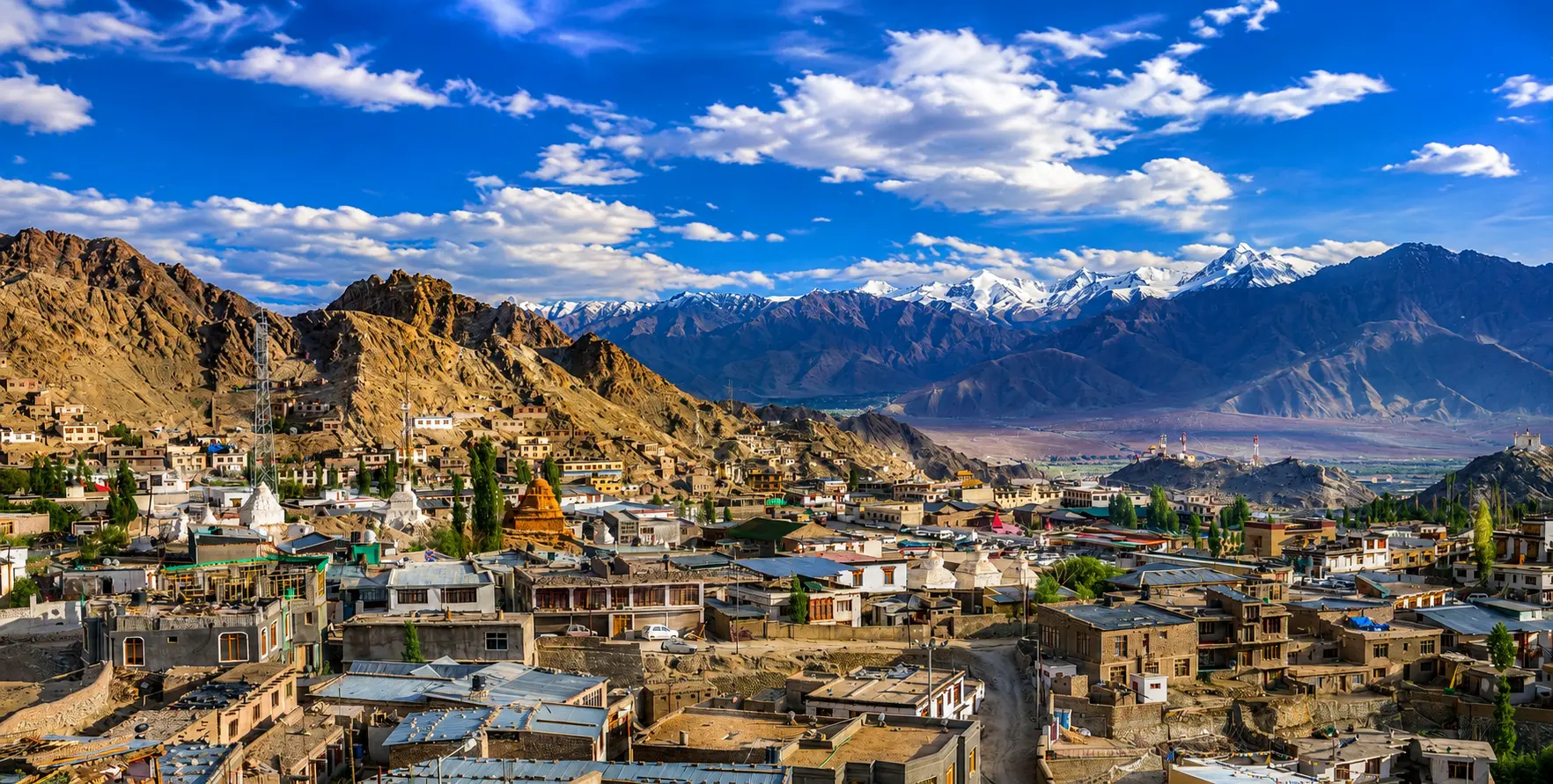
What permits do I need for the Annapurna Circuit from Besisahar?

ACAP (NPR 3,000 per foreign national) and TIMS card (USD 10 to 20 per person) — both obtained in Kathmandu or Pokhara before departure. Our team advises on current requirements when booking.

Conclusion

Kathmandu to Bahar private car hire is the best way to start your Annapurna Circuit trek or Annapurna region adventure—a comfortable, personalised pickup that gets you to the Annapurna gateway town rested, on time, and ready for the mountains ahead. Nepal Vehicle Hiring Pvt Ltd provides a full range of private car hire options, from standard sedans to 4WD jeeps, with the gorge extension to Chame or Manang smoothly coordinated as a single booking for groups continuing beyond Besisahar.

Book your Kathmandu to Besisahar private car hire with Nepal Vehicle Hiring Pvt Ltd — call or WhatsApp +977 981-4227196, visit vehiclehiringnepal.com, or plan your complete Annapurna region journey through our plan trip page.

Besisahar Vehicle Hire: Pickup and Drop Guide

Airport pickup

Besisahar Vehicle Hire — Pickup, Drop-Off and Private Jeep Transfer Guide

Every trekker starting the Annapurna Circuit trek passes through Besisahar. Every trekker completing the Manaslu Circuit trek via the Larkya La pass exits at Besisahar. Every group heading deeper into the gorge toward Chame, Pisang, and Manang by private 4WD jeep passes through Besisahar.

Every trekker coming off the mountains and needing road transport back to Kathmandu or Pokhara converges on Besisahar, Nepal’s most important junction in the western Himalayan transport network. Besisahar is not a destination in itself — it is the gateway through which every major Annapurna region adventure must pass, and the quality and reliability of the vehicle hire service that carries trekkers to and from this gateway directly determines how those adventures begin and end.
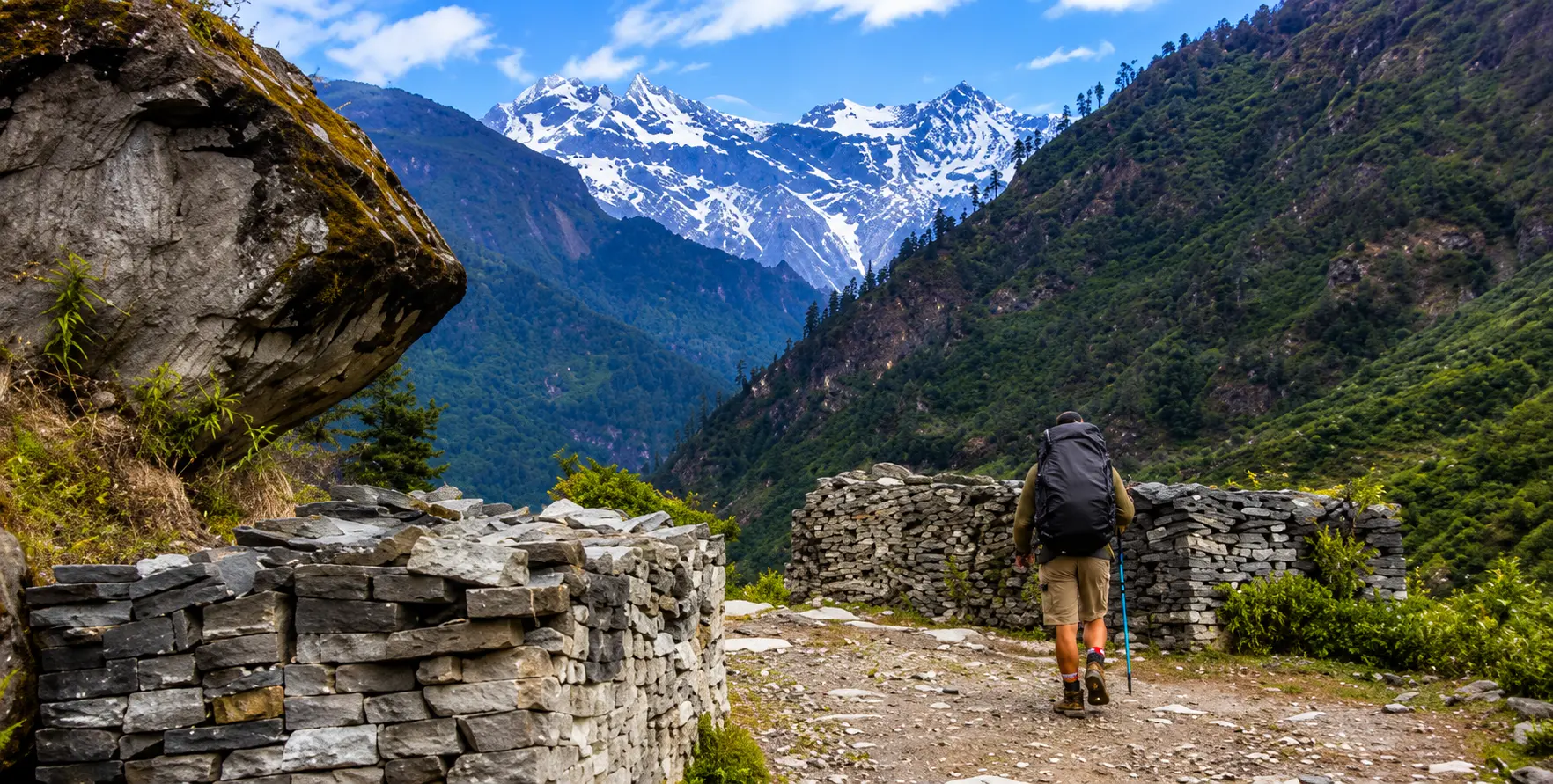
Located at approximately 760 meters above sea level in Lamjung District, Gandaki Province, Besisahar sits at the confluence of road access from both Kathmandu and Pokhara — the Prithvi Highway feeding trekkers from the east and north, and the Pokhara-Besisahar road feeding them from the west and south. From Kathmandu, the distance is about 173 to 185 kilometres, typically taking 5 to 7 hours by private jeep, depending on traffic and conditions.

From Pokhara, it is a much shorter 75 to 90 kilometres and takes 2 to 3 hours by private vehicle. This dual access from Nepal’s cities makes it one of the country’s most popular trekking gateways, even as the roads beyond quickly become some of the most demanding off-road terrain in the Himalaya.

This complete guide covers every dimension of Besisahar vehicle hire: the full routes from Kathmandu and Pokhara, all transport options and current costs, what the road beyond Besisahar actually involves, all the trekking destinations this gateway opens access to, the return pickup service from Besisahar at trek’s end, permits, seasonal conditions, and why Nepal Vehicle Hiring Pvt Ltd is the right private vehicle partner for every leg of a Besisahar-centred trekking journey.

Book the best Besisahar vehicle hire with private cars, 4WD jeeps, Scorpio SUVs, Hiace vans, and buses. Enjoy reliable pickup and drop services for the Annapurna Circuit Trek, Dharapani, Chame, and nearby destinations.

Besisahar — The Most Important Junction Town in Nepal’s Western Himalayan Trek Network

Besisahar, the headquarters of Lamjung District, is a town the trekking world has made far more important than its modest size might suggest. With a permanent population of a few thousand and the typical infrastructure of a Nepali hill district headquarters — government offices, a hospital, schools, fuel stations, ATMs, restaurants, and a growing range of trekking-oriented shops and guesthouses — Besisahar is a genuine small town rather than a village.

Still, its significance in Nepal’s trekking geography is that of a major city. Every year during trekking season, thousands of people from across Nepal and dozens of countries transit through Besisahar in both directions—outward toward the Annapurna massif and inward toward the road network—making it the busiest trekking gateway in the western Himalayan region.

The town sits at the head of the narrow road from Dumre Junction on the Prithvi Highway, which meets the Marsyangdi River valley, then follows it northward for the Annapurna Circuit trek approach. The Marsyangdi is one of Nepal’s most powerful mountain rivers; its Marsyangdi Hydroelectric Projects have contributed significantly to Nepal’s electricity generation, and the gorge it has carved through the Himalayan foothills creates both the dramatic scenery and the challenging road conditions that define the Besisahar-to-Manang driving route beyond the town.

Understanding Besisahar’s position in this geography—where the comfortable paved highway ends and serious off-road mountain driving begins—is the essential starting point for planning any vehicle hire arrangement that includes it.

Besisahar also holds particular significance as the endpoint for trekkers completing the Manaslu Circuit trek: those who cross the Larkya La and descend through the Annapurna Conservation Area via Dharapani and Tal arrive at Besisahar having completed one of Nepal’s finest and most demanding high-altitude circuits, needing a private vehicle pickup for the road journey back to Kathmandu or Pokhara. Nepal Vehicle Hiring Pvt Ltd coordinates this exact end-of-trek pickup from Besisahar as part of our Kathmandu to Manaslu trek transport service, and we offer the same pickup coordination for Annapurna Circuit trekkers descending from Jomsom or completing the circuit at Besisahar i

Besisahar Vehicle Hire: Pickup and Drop Guide

Kathmandu to Besisahar — The Full Route

The Kathmandu to Besisahar road journey covers about 173 to 185 kilometres via the Prithvi Highway. It takes 5 to 7 hours by private jeep, depending on traffic, road conditions, and how many rest stops you take.

Nepal Vehicle Hiring Pvt Ltd recommends departing Kathmandu between6:00 and 7:00 AM for a comfortable day-trip arrival in Besisahar, with enough afternoon daylight to check permits and accommodation arrangements, and time to rest before the trek begins the following morning.

Kathmandu to Mugling — The Prithvi Highway. The first section of the journey follows the Prithvi Highway westward from Kathmandu, passing through Nagdhunga and descending through the Chandragiri foothills before the highway levels out through Naubise and Malekhu toward the Trishuli River valley. The Mugling junction, about 110 kilometres from Kathmandu, is the classic mid-journey rest stop on virtually every western Nepal road itinerary—a busy roadside town at the confluence of the Trishuli and Marsyangdi rivers, with numerous restaurants serving the standard dal bhat and momo combination that fuels Nepal’s long-distance highway travellers.

Nepal Vehicle Hiring Pvt Ltd drivers typically stop at Mugling for 20 to 30 minutes on any Kathmandu-to-Besisahar run.

For travellers departing from Kathmandu who would like to include a brief stop at the famous Manakamana Temple cable car station — about 2 kilometres before Mugling — this can easily be incorporated into the route on request. The cable car to Manakamana, one of Nepal’s most visited Hindu pilgrimage sites, is not included in the standard Kathmandu to Besisahar jeep transfer but can be added as a half-hour sightseeing detour at negligible extra driving time.

Inform Nepal Vehicle Hiring Pvt Ltd when booking if you would like this included.

Mugling to Dumre — The Marsyangdi Junction. From Mugling, the Prithvi Highway continues westward toward Pokhara. Still, the route to Besisahar turns off at Dumre Junction — approximately 130 kilometres from Kathmandu — and heads northward along the Marsyangdi River valley.

This turn marks a significant change in road character: the highway-grade dual-lane paving of the Prithvi Highway gives way to a narrower, hillier single-carriageway road that climbs steadily toward Besisahar through a progressively tighter river valley. The Dumre to Besisahar stretch of approximately 43 to 55 kilometres adds 1 to 1.5 hours to the journey and involves the kind of winding hill road—paved for most of its length but increasingly affected by seasonal maintenance issues—that makes a 4WD vehicle noticeably more comfortable than a standard sedan.

Arriving in Besisahar. Fuel stations, pharmacy signs, and the first trekking gear shops along the Annapurna approach corridor announce Besisahar town. The Besisahar vehicle hire drop-off point for Nepal Vehicle Hiring Pvt Ltd is typically at the main bazaar area, within walking distance of the town’s guesthouses, permit verification office, ATMs, and restaurants.

Trekkers who have not yet obtained their ACAP permit and TIMS card in Kathmandu can sometimes arrange them here. However, trekkers strongly prefer processing in Kathmandu to avoid uncertainty at the Besisahar checkpoint.

Book the best Besisahar vehicle hire with private cars, 4WD jeeps, Scorpio SUVs, Hiace vans, and buses. Enjoy reliable pickup and drop services for the Annapurna Circuit Trek, Dharapani, Chame, and nearby destinations.

Pokhara to Besisahar — The Faster Western Approach

For trekkers already based in Pokhara — Nepal’s second city, the tourism hub of the western Himalayan region, and the preferred base city for most Annapurna region adventures — the drive to Besisahar is considerably shorter than from Kathmandu: approximately 75 to 90 kilometres, typically completed in 2 to 3 hours by private jeep or private car hire from Pokhara Lakeside. This short drive makes a Pokhara departure particularly convenient for trekkers completing a multi-destination Nepal itinerary: a few days of Pokhara sightseeing, followed by a comfortable 2 to 3-hour transfer to Besisahar, is a genuinely efficient and enjoyable way to begin the Annapurna Circuit or continue deeper toward Manang by private vehicle hire.

The Pokhara to Besisahar route follows the Prithvi Highway eastward from Pokhara toward Dumre Junction, then turns north onto the Marsyangdi Valley road — the reverse of the Kathmandu approach described above, sharing the same Dumre-to-Besisahar final section. Nepal Vehicle Hiring Pvt Ltd offers Pokhara-to-Besisahar jeep hire with door-to-door hotel pickup from any Pokhara Lakeside hotel, making it one of our most frequently booked short-distance 4WD transfers in western Nepal.

Cost for a private Scorpio or Hilux from Pokhara to Besisahar: approximately NPR 7,000 to NPR 12,000 (USD 53 to 90) for the full vehicle, carrying 4 to 6 passengers with trekking luggage.  Travellers spending several days in Pokhara before the Besisahar transfer can make full use of Pokhara car hire for city and lakeside sightseeing, the Sarangkot sunrise vehicle service for the famous Annapurna-range sunrise panorama, or the Pokhara to Nayapul transfer for Ghorepani Poon Hill trek and Annapurna Base Camp trek trailhead access — all bookable through Nepal Vehicle Hiring Pvt Ltd as part of a coordinated Pokhara-based transport arrangement.

Besisahar

Transport Options and  Costs

Private 4WD Jeep — The Preferred Option. A private Scorpio or Hilux 4WD jeep from Nepal Vehicle Hiring Pvt Ltd is the most popular and most practical choice for any trekking group heading to Besisahar, and even more so for groups continuing beyond Besisahar deeper into the Marsyangdi gorge toward Chame and Manang. The private jeep offers hotel pickup from anywhere in Kathmandu or Pokhara, a fixed departure time, luggage space for full trekking gear, the 4WD capability needed for sections beyond Besisahar, and the flexibility to stop at any viewpoint or rest point the group wants along the way.

From Kathmandu, the 2026/27 cost for a private Scorpio or Hilux to Besisahar is approximately NPR 13,000 to NPR 22,000 (USD 98 to 165) one way for the full vehicle. From Pokhara, the shorter distance costs approximately NPR 7,000 to NPR 12,000 (USD 53 to 90).

Shared Jeep. Shared jeep services from Kathmandu to Besisahar operate from the Gongabu Bus Park area, departing on a fill-and-go basis with up to 7 passengers per vehicle. The 2026/27 shared jeep fare from Kathmandu to Besisahar is approximately NPR 1,200 to NPR 1,800 per person (USD 9 to 14 per person).

Journey time is broadly similar to a private jeep — 5 to 7 hours — but without hotel pickup, fixed departure time, or any control over co-passengers or intermediate stops. For budget-conscious solo trekkers familiar with Nepal’s shared transport network, this is workable.

For families, groups with heavy luggage, or anyone with a fixed departure window, it is far less convenient.

Public Bus. The Kathmandu to Besisahar bus service runs daily from Gongabu Bus Park, with multiple morning departures. The 2026/27 fare is approximately NPR 1,000 to NPR 1,500 per person (USD 8 to 11).

Journey time is typically 7 to 9 hours—considerably longer than a private vehicle because the bus travels slowly on the winding Marsyangdi Valley road and makes multiple passenger stops along the way. The bus is the cheapest option and entirely workable for solo budget trekkers.

Still, the combination of small seats, heavy luggage handling, and a significantly longer journey time makes it the least comfortable option for any group starting a demanding multi-week trek.

Hiace Van — For Medium-Sized Groups. For groups of 7 to 12 people, a Toyota Hiace van from Nepal Vehicle Hiring Pvt Ltd offers a comfortable, cost-effective alternative to a jeep or multiple shared vehicles. The Hiace van handles the paved Prithvi Highway and the Dumre-to-Besisahar sections comfortably and can reach Besisahar without difficulty under standard road conditions.

For groups continuing beyond Besisahar on the rough off-road gorge road, the Hiace would transfer passengers to a 4WD jeep at Besisahar for the onward journey. A tourist coaster is available for very large groups (13 to 25 people) on the same arrangement — comfortable Besisahar delivery with a jeep shuttle for the beyond-Besisahar section.

Direct Transfer to Manang Bypassing Besisahar. For groups heading directly to Manang rather than starting the Annapurna Circuit trek on foot from Besisahar, Nepal Vehicle Hiring Pvt Ltd offers a complete Besisahar-to-Manang private vehicle transfer as a single booking, including Kathmandu hotel pickup—so the full Kathmandu-to-Manang journey is one smooth trip rather than two separate legs. Full details and costs are covered in our dedicated Besisahar private vehicle guide.

Private 4WD jeep, Scorpio SUV, and Hiace van providing vehicle hire service in Besisahar for Annapurna Circuit trekkers

The Road Beyond Besisahar — What Happens After the Drop-Off

For most trekkers using Besisahar vehicle hire, the drop-off at Besisahar is not the end of the vehicle journey — it is the transition point between the paved highway approach and either the trailhead (for trekkers starting the Annapurna Circuit on foot from Besisahar) or the rough off-road jeep track (for those taking a private 4WD jeep deeper into the gorge toward Chame, Pisang, and Manang). Understanding what the road beyond Besisahar involves is essential to plan both the vehicle hire and the overall trek itinerary correctly.

The road from Besisahar northward through Bhulbhule, Ngadi, Syange, Jagat, Chamche, and Dharapani follows the Marsyangdi River gorge through some of Nepal’s most dramatic mountain terrain. The road surface transitions from paved (on the initial Besisahar-to-Bhulbhule section) to rough, unpaved off-road track — with river bank crossings, cliff-edge sections, steep gradients, and the accumulated surface damage of monsoon seasons and heavy vehicle traffic.

A standard sedan or Hiace van can’t safely handle this road beyond the first few kilometres—a 4WD Scorpio or Hilux jeep is the only appropriate vehicle for the Besisahar-to-Manang gorge section, which is why our Besisahar private vehicle service uses 4WD exclusively for all bookings that go beyond town.

The key stops beyond Besisahar on the gorge road include: Bhulbhule (845 m, 10 km from Besisahar), the original standard Annapurna Circuit trek trailhead where many operators now recommend starting in place of Besisahar itself; Jagat (1,340 m), approximately 32 km from Besisahar through increasingly dramatic gorge scenery; Dharapani (1,860 m), where the Manaslu Circuit trek descends from the Larkya La and joins the Annapurna Circuit trail; Chame (2,670 m), the Manang District headquarters and a common overnight stop for two-day Besisahar-to-Manang vehicle itineraries; and Manang (3,519 m), the end of the drivable road and the acclimatization hub before the Thorong La pass crossing. At 5,416 m, Thorong La is the Annapurna Circuit trek’s defining challenge, and Manang is where every trekker spends at least one full acclimatization day.

Beyond Manang, the road ends entirely, and the Annapurna Circuit trek continues on foot over Thorong La and down to Muktinath, Jomsom, and ultimately Pokhara via the Kali Gandaki valley. The Nar Phu Valley trek—a separate restricted-area trek branching from Koto village just beyond Chame—also starts from the same gorge-road approach, making Besisahar vehicle hire the entry point for this increasingly sought-after remote Himalayan experience.

The Tilicho Lake route branches from Manang itself, with the world’s highest large lake at 4,919 m accessible via a day’s walk from the jeep-accessible Manang road end.

Besisahar

The Annapurna Circuit — The Trek That Defines Besisahar

The Annapurna Circuit trek is, by most measures, Nepal’s most scenically diverse trekking route: a 12 to 18 day loop around the Annapurna massif that moves through subtropical river valleys, temperate rhododendron forests, high-altitude Tibetan-influenced villages, the dramatic Manang valley, and the trans-Himalayan rain-shadow landscape of the Mustang approaches, before crossing the Thorong La at 5,416 metres and descending to the sacred pilgrimage site of Muktinath and the Kali Gandaki gorge — all within a single, continuous, deeply varied journey. From Besisahar outward, the standard Annapurna Circuit covers about 160 to 230 kilometres of trail, depending on which sections you walk and which you cover by the increasingly drivable gorge road.

The trek’s cultural dimension is as rich as its physical one: the lower Annapurna valley communities of Gurung and Magar ethnicity give way to the increasingly Tibetan-influenced Sherpa and Manangba communities of the upper valley, while the village of Manang itself maintains a distinctive commercial and cultural tradition rooted in its historical role as a trans-Himalayan trading centre. Manang valley’s cheese factories, apple orchards, and ancient monasteries — including the dramatically positioned Braga Gompa above the valley floor — reward extra exploration days that most competent Annapurna Circuit packages build into the standard acclimatization sOur sister company, Trek Nepal Himalayas, offers the Annapurna Circuit trek as a fully guided package with licensed English-speaking guides, sensible acclimatization arrangements and full permit management, coordinated with Nepal Vehicle Hiring Pvt Ltd’s Besisahar private vehicle service for the outward transfer from Kathmandu or Pokhara.

For travellers seeking a luxury Annapurna Circuit experience, our sister company Alpine Luxury Treks provides top-end guiding, exclusive accommodation arrangements, and a fully catered Himalayan journey that combines the physical grandeur of the Thorong La crossing with the highest available standard of mountain comfort.

Private 4WD jeep, Scorpio SUV, and Hiace van providing vehicle hire service in Besisahar for Annapurna Circuit trekkers

The Manaslu Circuit — Besisahar as an Exit Point

One of the less widely understood roles of Besisahar in Nepal’s trekking transport network is as an exit point rather than an entry point: every trekker completing the Manaslu Circuit trek via the Larkya La descent reaches Besisahar at the conclusion of their journey through the Annapurna Conservation Area descent via Dharapani, Tal, and Ngadi. For these trekkers, Nepal Vehicle Hiring Pvt Ltd‘s pre-arranged pickup from Besisahar is the essential final logistics step — eliminating the need to negotiate with local transport at the end of a 14- to 18-day high-altitude circuit, and providing a confirmed, comfortable private jeep or Hiace van for the return journey to Kathmandu or onward to Pokhara.

The Kathmandu to Manaslu trek transport service from Nepal Vehicle Hiring Pvt Ltd routinely includes Besisahar exit pickup as a standard component of the combined outward-and-return booking — meaning that when a group departs Kathmandu for Soti Khola or Machha Khola at the start of the Manaslu Circuit, their return pickup from Besisahar at the circuit’s end is simultaneously confirmed as part of the same arrangement. This two-leg coordination, across a trek that can span 16 to 20 days, is one of the most logistically satisfying aspects of booking comprehensive Nepal vehicle hire through a single professional operator rather than arranging each transport leg separately.

For Manaslu Circuit trekkers who want to go from Besisahar directly to Pokhara instead of returning to Kathmandu, the Besisahar-to-Pokhara private jeep transfer covers about 75 to 90 km in 2 to 3 hours—one of the most convenient post-trek transfers in Nepal’s western mountain circuit.

Book the best Besisahar vehicle hire with private cars, 4WD jeeps, Scorpio SUVs, Hiace vans, and buses. Enjoy reliable pickup and drop services for the Annapurna Circuit Trek, Dharapani, Chame, and nearby destinations.

Nar Phu Valley, Tilicho Lake, and Annapurna’s Hidden Corners

Beyond the Annapurna Circuit and Manaslu Circuit, the Besisahar vehicle-hire gateway opens access to several less-celebrated but equally rewarding trekking destinations branching from the main gorge road. The Nar Phu Valley trek — a restricted-area trek branching from Koto village at approximately 2,600 m, accessible via the private jeep route from Besisahar — leads to the remote, high-altitude valleys of Nar and Phu, inhabited by Tibetan-descended communities whose culture, language, and traditional way of life have remained remarkably intact given the region’s relatively recent opening to trekking tourism in 2002. The Nar Phu route requires its own Restricted Area Permit in addition to ACAP, and a licensed guide is mandatory — but for experienced trekkers specifically seeking a genuinely less-visited Himalayan destination, it is one of the most consistently recommended extensions of the standard Annapurna region approach.

Tilicho Lake, perched at 4,919 meters and recognized as one of the highest large lakes, is accessible as a side trip from Manang village—itself reached via the Besisahar-to-Manang jeep route covered in this guide. The Tilicho Base Camp trail leaves the main Annapurna Circuit route from a tea house at Shreekharka and climbs steeply for 2 days to reach the frozen lake at altitude—an experience many experienced trekkers rate as one of the most visually striking single days in Nepal’s western Himalayan region.

The Muldai View Trek and the Gurung Heritage Trail also branch from the Annapurna approach corridor near Besisahar, offering shorter, more culture-focused alternatives for travellers with limited time or physical resources for a full Annapurna Circuit.

For the broader Annapurna region trekking network below Besisahar—the Ghorepani Poon Hill trek and the Annapurna Base Camp trek—Nepal Vehicle Hiring Pvt Ltd offers a separate, shorter Pokhara-to-Nayapul transfer for these southern Annapurna approaches. At the same time, the Kathmandu-to-Besisahar bus ticket offers a public-transport option for budget-conscious trekkers seeking the cheapest available transfer.

Book the best Besisahar vehicle hire with private cars, 4WD jeeps, Scorpio SUVs, Hiace vans, and buses. Enjoy reliable pickup and drop services for the Annapurna Circuit Trek, Dharapani, Chame, and nearby destinations.

Return Pickup — How Nepal Vehicle Hiring Pvt Ltd Collects You From Besisahar

The return journey from Besisahar to Kathmandu or Pokhara is the most relief-inducing vehicle booking of any Nepal trekking itinerary — arriving at Besisahar after 12 to 16 days of high-altitude Himalayan trekking, to find a pre-confirmed private jeep waiting with a professional driver ready to take you home, is a logistical comfort that every experienced Nepal trekker remembers. Nepal Vehicle Hiring Pvt Ltd provides Besisahar pickup as a standard service through three booking formats.

The most common is the combined outward-and-return package. When you book your outward Kathmandu-to-Besisahar jeep transfer or Pokhara-to-Besisahar transfer, you simultaneously confirm the return pickup date and time. We share driver details 24 hours before the return date, and if the trek schedule changes (as it sometimes does), you can adjust the return date via WhatsApp, typically with 24 to 48 hours’ advance notice for rebooking.

The return journey from Besisahar to Kathmandu takes 5 to 7 hours; Besisahar to Pokhara takes 2 to 3 hours.

For trekkers completing the Annapurna Circuit who exit via Jomsom and Pokhara rather than descending back to Besisahar, the Pokhara exit arrangement coordinates the return from Pokhara instead — combining the Annapurna Circuit trek outward transfer from Kathmandu to Besisahar with a return from Pokhara to Kathmandu by private vehicle or tourist bus, depending on the group’s preference. This is one of the most common combined transport arrangements in Nepal’s western Himalayan trekking circuit.

For Manaslu Circuit trekkers exiting at Besisahar specifically, as covered in Section 7, the return pickup is confirmed as part of the Kathmandu to Manaslu trek transport package. Contact Nepal Vehicle Hiring Pvt Ltd on WhatsApp via WhatsApp or through our plan trip page to arrange any variation of Besisahar pickup and return transfer.

Permits Required — What You Need Before Besisahar

The ACAP (Annapurna Conservation Area Permit) and TIMS Card are the two mandatory permits for all trekkers entering the Annapurna region beyond Besisahar. The ACAP costs NPR 3,000 (approximately USD 22 to 25) per person for foreign nationals and is the primary entry permit for the entire Annapurna Conservation Area, covering the Annapurna Circuit, Annapurna Base Camp, Tilicho Lake, and the Nar Phu Valley approaches.

The TIMS Card costs USD 10- 20 per person. Obtain both permits in Kathmandu or Pokhara before departure—the Besisahar checkpoint verifies both documents for every passenger in every vehicle, and trekkers without valid permits are not permitted to proceed.

Additionally, for the Nar Phu Valley trek specifically, a Restricted Area Permit (RAP) at USD 90 per person for the first seven days (peak season) or USD 75 off-season is required alongside the ACAP. You also obtain this permit in Kathmandu before departure through a registered trekking agency; you cannot arrange it at the Besisahar or Koto checkpoints.

Nepal’s 2023 trekking guide regulation makes a licensed trekking guide mandatory for all Trekking in the Annapurna region.

WARNING: ATM advisory: The Besisahar bazaar has functioning ATMs — these are the last reliable cash machines before the gorge road toward Manang. The ATMs in Chame and Manang exist but are less reliable and sometimes out of cash during peak trekking season. Withdraw generous NPR cash at Besisahar or, preferably, in Kathmandu or Pokhara before departure.

Private 4WD jeep, Scorpio SUV, and Hiace van providing vehicle hire service in Besisahar for Annapurna Circuit trekkers

Road Conditions — Seasonal Guide to Besisahar Vehicle Hire

The Kathmandu and Pokhara to Besisahar sections of the vehicle hire route are on paved national highways — the Prithvi Highway and the Marsyangdi Valley connecting road — and are generally reliable in all seasons. However, monsoon rainfall from June to September can temporarily close specific landslide-prone sections, particularly on the Dumre-to-Besisahar hill section. By contrast, conditions beyond Besisahar vary dramatically by season.

Autumn (October to November) offers the best overall conditions for Trekking and vehicle hire: roads stabilise after the monsoon ends, mountain visibility is exceptional for the dramatic gorge-driving section, and the Annapurna trail is at peak season. Book private jeep hire at least 1 to 2 weeks in advance during October and November — this is Nepal’s single busiest trekking period and demand for Besisahar transfers peaks sharply.

Spring (March to May) is the second-best season: rhododendron forests bloom spectacularly on the lower Annapurna approach, road conditions are good, and the active mountaineering season makes the high camps above Manang more visible. Trek Nepal Himalayas and Alpine Luxury Treks’ Annapurna Circuit trek packages and luxury Annapurna trekking experiences are particularly popular in April and early May.

Winter (December to February) is manageable for Besisahar jeep transfer — the Kathmandu and Pokhara to Besisahar road sections remain open throughout winter in normal years. Beyond Besisahar, snow above Chame and Pisang can affect the gorge road, and heavy snowfall sometimes closes Thorong La. Winter Annapurna Circuit trekkers should confirm current high-altitude conditions before departure.

Monsoon (June to August) is the most challenging season for the approach road and the most demanding for the trek above. Landslide risk on the Dumre-to-Besisahar section and the gorge road beyond are elevated; trail sections are wet and slippery; leeches are active in the forest zones below 2,000 m.

Nepal Vehicle Hiring Pvt Ltd monitors road conditions through our Lamjung district driver network before any monsoon-season Besisahar transfer and proactively advises clients on any day when conditions warrant a schedule adjustment.

Private 4WD jeep, Scorpio SUV, and Hiace van providing vehicle hire service in Besisahar for Annapurna Circuit trekkers

Combining Besisahar With Kathmandu, Pokhara, Chitwan and Lumbini

The Besisahar vehicle hire sits naturally within a broader Nepal itinerary that includes Kathmandu city sightseeing, Pokhara lakeside time, and wildlife or heritage extensions before or after the Annapurna region trekking section. Nepal Vehicle Hiring Pvt Ltd provides all of the transport connections for a complete Nepal multi-destination circuit.

From Kathmandu, pre-trek days can include Kathmandu sightseeing packages covering Pashupatinath, Boudhanath, Swayambhunath, and Patan; the Bhaktapur heritage day tour; and a Nagarkot sunrise vehicle transfer for panoramic Himalayan views before departure. Airport arrivals are handled through our Kathmandu airport transfer service, ensuring smooth hotel delivery from any international or domestic arrival.

Post-trek, travellers returning to Pokhara from the Annapurna Circuit’s Jomsom exit can continue to Chitwan National Park via Pokhara by bus for a jungle safari extension before heading home. Travellers wanting to add Lumbini — Buddha’s birthplace and one of Nepal’s UNESCO heritage sites — to their itinerary can use our Kathmandu to Lumbini bus service.

Nepal Vehicle Hiring Pvt Ltd offers complete multi-destination Nepal tour packages combining Kathmandu, Pokhara, Chitwan, Lumbini, and Annapurna through its planned trip service.

For travellers adding the Everest region before or after the Annapurna Circuit, our Everest Base Camp trek page, our sister company’s EBC trekking packages, luxury EBC lodge trek, and Everest helicopter return packages offer comprehensive options for every budget and comfort preference. The Jiri to Everest overland trek and Gokyo Lakes trek offer less-travelled Everest alternatives for adventurous travellers.

In contrast, our Langtang Valley trek and Helambu trek packages cover the best of Nepal’s central Himalayan trekking from Kathmandu.

Airport pickup

Practical Tips — Getting the Most From Your Besisahar Transfer

  • Depart Kathmandu by 6:00 to 7:00 AM for a single-day Besisahar transfer — this ensures arrival before 1:00 to 2:00 PM, with sufficient afternoon time for permit checking, ATM withdrawal, and teahouse check-in before your first trekking morning.
  • Obtain ACAP and TIMS permits in Kathmandu or Pokhara before departure — the Nepal Tourism Board offices in both cities process these quickly. Besisahar permits are possible but not guaranteed.
  • Withdraw NPR cash at Besisahar’s ATM before proceeding beyond — this is the last fully reliable ATM on the Annapurna Circuit approach.
  • For groups of 4 to 6 sharing a private Scorpio or Hilux, the per-person cost of a Kathmandu-to-Besisahar private jeep compares very favourably to shared options once you factor in total comfort and time savings.
  • Book your return pickup from Besisahar at the same time as the outward booking — Nepal Vehicle Hiring Pvt Ltd confirms both legs simultaneously.
  • Carry motion sickness medication if you are susceptible — the Dumre-to-Besisahar section involves continuous winding that some passengers find challenging, particularly those sitting in rear seats.
  • Keep essential permits, passports, and permits in cabin luggage rather than roof-rack bags for quick access at the Besisahar checkpoint.
  • Contact Nepal Vehicle Hiring Pvt Ltd on WhatsApp via WhatsApp to confirm the latest road conditions on the morning of any monsoon-season departure — our driver network provides real-time updates on the Lamjung district approach roads.

Private 4WD jeep, Scorpio SUV, and Hiace van providing vehicle hire service in Besisahar for Annapurna Circuit trekkers

The Gorge Road’s Greatest Moments — What Makes This Drive Remarkable

The Besisahar to Manang gorge road is, for groups who choose to travel deeper than the Besisahar drop-off by private 4WD jeep, one of Nepal’s most dramatic and most underrated overland driving experiences — a sequence of visual and physical moments that experienced travellers consistently rate alongside the much more publicized drives and the Annapurna Circuit’s off-road sections. The first remarkable section begins almost immediately beyond Bhulbhule: the road enters the publicized Marsyangdi and begins hugging the river cliff at a height that, on exposed sections, places the vehicle meters above the churning white water below, with sheer rock walls rising hundreds of meters on both sides and waterfalls visible on the opposing canyon face.

The river’s roar, the confined space, and the physical exposure of cliff-edge driving on a road barely wide enough for two vehicles to pass create a visceral sense of entering the mountains rather than simply approaching them.

By Jagat at 1,340 meters, the gorge has narrowed to its most dramatic configuration: the Marsyangdi is forced into a series of cascades that have given several gorge sections their local names, and the road crosses and recrosses the river on a sequence of bridges whose construction itself represents a remarkable engineering achievement in terrain this challenging. Chamche’s waterfall — one of Nepal’s most photographed roadside natural features, visible directly from the vehicle as it approaches — falls in an unbroken single drop of over 100 meters from the cliff face directly beside the road, creating a permanent rainbow in the spray zone that extends across the track itself in certain light conditions.

For trekkers who chose the private jeep option over walking this section of the Annapurna Circuit, Chamche is the moment that most consistently makes them feel the gorge road was worth choosing rather than merely tolerating.

Beyond Dharapani at 1,860 meters, the Manaslu Circuit trek descends to join the Annapurna Circuit trail; at the ACAP permit checkpoint, the gorge begins to open, and the landscape’s character shifts fundamentally. Pine and juniper replace the subtropical and temperate forest of the lower gorge; stone-built villages with flat roofs and prayer flag-strung edges begin to appear in place of the thatched or corrugated-roof Gurung and Magar settlements below; and the peaks above grow progressively taller, sharper, and more immediately imposing as the valley rises toward the Annapurna summits.

By Chame at 2,670 m, the air has a perceptible highland quality — cleaner, thinner, and noticeably cooler than the gorge below — and Annapurna II’s north face, at 7,937 metres, one of the most technically demanding faces in the Himalaya, becomes the dominant visual feature of the valley, its enormous scale comprehensible only because the valley floor is itself high enough that the peak does not disappear into clouds before its summit is reached. The Besisahar private vehicle service from Nepal Vehicle Hiring Pvt Ltd can be extended to Chame or Manang for groups specifically wanting to experience this full gorge-to-alpine transition by vehicle.

Book the best Besisahar vehicle hire with private cars, 4WD jeeps, Scorpio SUVs, Hiace vans, and buses. Enjoy reliable pickup and drop services for the Annapurna Circuit Trek, Dharapani, Chame, and nearby destinations.

Besisahar as a Day Trip from Pokhara — The Overlooked Option

One of the most underutilized options is the round-trip day excursion from Pokhara. This 150 to 180 km trip can be completed in a single day, offering a genuine Himalayan gateway experience without committing to a multi-week trek.

Just 75 to 90 km from Pokhara, Besisahar is closer to the lakeside city than many travellers assume, and the drive through the Marsyit Valley offers a rich cultural landscape in its own right, without demanding any trekking ambition.

A Pokhara-to-Besisahar day trip by private jeep typically departs Pokhara Lakeside at 7:00 to 8:00 AM, reaches Besisahar by mid-morning for a two-to-three-hour exploration of the town, the ACAP permit office, the local bazaar, and the first stretches of the Marsyangdi gorge approach, and returns to Pokhara by early to mid-afternoon — comfortably within a single day’s schedule. For travellers who want to go slightly further and experience the dramatic gorge-entry section beyond Besisahar before returning, an extended day can cover the round trip to Hulbhule or even Jagat Gandaki.

Nepalle Hiring Pvt Ltd offers car hire in Pokhara for this flexible, half-day or full-day Annapurna region exploration from a Pokhara base.

This day trip option is particularly valuable for travellers in Pokhara who have already completed the Annapurna Base Camp trek or Ghorepani Poon Hill trek and want to see the northern Annapurna Circuit approach without committing to a full circuit itinerary, or for those with a rest day between trekking experiences who want to extend their Annapurna region exploration without the physical commitment of another multi-day walk. You can combine the Sarangkot sunrise vehicle service with this day trip, add a stop before heading to Besisahar, and head to the Annapurna range panorama at sunrise above Pokhara,d then drive to the range the same day.

Why Choose Nepal Vehicle Hiring Pvt Ltd for Besisahar Transfer

Nepal Vehicle Hiring Pvt Ltd offers Besisahar private vehicle hire as a core trekking transfer service. Our Urna region jeep fleet and driver team have specific, repeated personal experience on the full route — from Kathmandu’s Thamel hotels through Mugling, Dumre, and the Marsyangdi valley road to Besisahar — as well as on the demanding off-road gorge section beyond toward Chame and Manang.

Our drivers know exactly where the ATMs are, which tea houses have reliable toilets, where the Besisahar checkpoint is, and the current surface conditions on the gorge road section so that they can drive safely.

Every Besisahar vehicle hire booking through Nepal Vehicle Hiring Pvt Ltd includes: door-to-door hotel pickup from any Kathmandu or Pokhara location; a verified and regularly maintained 4WD Scorpio or Hilux jeep for the full journey; an experienced, licensed local driver; fuel and road tolls included in the quoted price; and the ability to make driver contact 24 hours before departure for any last-minute questions or adjustments. We accommodate larger groups with our Hiace van, tourist coaster, and bus hire options.

Book via WhatsApp our plan trip page, or the contact page.

Frequently Asked Questions — Besisahar Vehicle Hire

How far is Besisahar from Kathmandu, and how long does the drive take?

Besisahar is approximately 173 to 185 km from Kathmandu via the Prithvi Highway and Marsyangdi Valley road. A private 4WD jeep from Nepal Vehicle Hiring Pvt Ltd takes 5 to 7 hours depending on traffic and conditions. We recommend departing Kathmandu between 6:00 and 7:00 AM.

What does a private jeep from Kathmandu to Besisahar cost?

Approximately NPR 13,000 to NPR 26,000 (USD 98 to 190) for a full private Scorpio or Hilux, including hotel pickup, driver, and fuel. For Pokhara to Besisahar, approximately NPR 7,000 to NPR 22,000 (USD 53 to 150). Contact us via WhatsApp for a specific quote.

Can I get from Pokhara to Besisahar by private jeep?

Yes — this 75 to 90 km journey takes just 2 to 3 hours by private jeep from Pokhara and is one of Nepal Vehicle Hiring Pvt Ltd’s most frequently booked short-distance Annapurna region transfers.

Do you provide pickup from Besisahar at the end of the trek?

Yes — pre-arranged return pickup from Besisahar is standard for all our Besisahar vehicle hire bookings. Confirm your return date at the time; we can adjust it via WhatsApp with reasonable advance notice.

Is a 4WD vehicle necessary for Kathmandu to Besisahar?

For Kathmandu to Besisahar only, a standard vehicle can manage in good conditions, as most of the route is paved. However, if you continue beyond Besisahar toward Bhulbhule, Jagat, Chame, or Manang, a 4WD jeep is essential for the rough gorge-road section.

What permits are required before Besisahar?

An ACAP permit (NPR 3,000 / USD 22-25 per person) and TIMS card (USD 10-20 per person) are mandatory and can be obtained in Kathmandu or Pokhara. Nepal’s 2023 regulation also requires a licensed guide. Our contact team advises on current requirements when booking.

Can I combine Besisahar transfer with Kathmandu sightseeing?

Yes — Nepal Vehicle Hiring Pvt Ltd provides Kathmandu sightseeing, Bhaktapur tours, Nagarkot sunrise transfers, and airport transfers, all coordinated through a single booking relationship alongside your Besisahar transfer.

Conclusion

Besisahar is the gateway through which every Annapurna Circuit trek adventure begins and where every Manaslu Circuit trek ends its road journey. It is the last ATM, the last fuel station, the last permit checkpoint, and the last point of reliable mobile network coverage before the world reduces itself to the trail, the river gorge, and the mountains above.

The vehicle hire service that carries trekkers to and from this junction is not a logistical footnote—it is the first and last chapter of one of Nepal’s finest trekking experiences, and it deserves the same care and professionalism as every other part of the journey.

Nepal Vehicle Hiring Pvt Ltd provides pre-jeep transfers and bus services that connect every Kathmandu and Pokhara hotel to this gateway — and the return pickup that brings trekkers home. Book your Besisahar vehicle hire by calling or messaging us on WhatsApp, visiting vehiclehiringnepal.com, or contacting our team through the plan trip page.

Besisahar to Chame and Upper Pisang Jeep

Besisahar to Chame and Upper Pisang Jeep

Besisahar to Chame and Upper Pisang Jeep: Complete Road Guide for Annapurna Circuit Trekkers

The jeep journey from Besisahar to Chame and beyond to Upper Pisang is one of Nepal’s most dramatic and spectacular off-road drives  This route follows the Marsyangdi River gorge deep into the heart of the Annapurna Conservation Area, climbing from the subtropical lowlands of Besisahar (760 m) through the magnificent river gorge of the middle Marsyangdi, past cascading waterfalls, ancient Gurung and Tibetan villages, suspension bridges, and towering cliff faces, to the high-altitude pine forest and apple orchard landscapes of Chame (2,670 m) — and then further to the spectacular open valley and high ridge villages of Pisang and Upper Pisang (3,300 m).

For Annapurna Circuit trekkers, choosing a jeep from Besisahar to Chame or Upper Pisang rather than walking the lower circuit road is one of the most consequential transport decisions of the entire trek. Riding this section by Jeep saves 3 Jeep days of trekking on a road that, while scenic, covers relatively flat or gently rising terrain along the motorable jeep track rather than on the traditional trekking trail.

You can use those saved days for extra rest in Manang to acclimatise, more exploration in the upper circuit, or a shorter overall trip.

At Nepal Vehicle Hiring Pvt Ltd, we provide professional 4WD jeep services for the Besisahar to Chame and Besisahar to Upper Pisang routes as part of our complete Annapurna Circuit transport portfolio. This guide covers every aspect of this journey—the road, the cost, the vehicle options, the key destinations, the road conditions stage by stage, acclimatisation considerations, and expert tips to prepare you for one of Nepal’s greatest mountain drives.

Why Take a Jeep from Besisahar to Chame or Upper Pisang?

Save 3 to 5 Trekking Days

The section of the Annapurna Circuit from Besisahar to Chame covers approximately 65-70 kilometres of road and takes 3-4 full days of trekking at a standard pace. The trail from Chame to Pisang adds another 14 km (about 1 day). By taking a jeep from Besisahar directly to Chame or Upper Pisang, trekkers save these lower circuit days and reach the high, spectacular section of the Annapurna Circuit much faster.

The Lower Road Is a Motor Road, Not a Classic Trail

An important reality of the modern Annapurna Circuit is that the section from Besisahar to Chame largely follows or runs parallel to the motorable jeep road rather than the classic remote mountain trail of earlier decades. While the villages, gorge scenery, and river crossings remain beautiful, much of the lower route no longer offers the isolated trekking wilderness experience it once did.

Many experienced Annapurna Circuit trekkers now opt to take a jeep for this section, focusing their walking energy on the upper circuit from Chame to Thorong La and beyond.

Acclimatisation Advantage at Chame

Chame at 2,670 meters is an excellent acclimatisation base — significantly higher than Besisahar (760 m) but not so high as to cause acute mountain sickness in most reasonably fit travellers. Starting the trek proper from Chame allows for a natural 1,900-meter altitude gain by vehicle, followed by gradual trekking acclimatisation through the upper circuit. Many experienced guides recommend this approach for trekkers with limited time.

Upper Pisang: The Ideal Trek Starting Point

Upper Pisang (3,300 m) is arguably the best starting point for the Annapurna Circuit for trekkers who want to maximise mountain scenery from the first step. The high village sits on a dramatic ridge above the main valley with outstanding views of Annapurna II, Annapurna IV, Gangapurna, and the entire upper Marsyangdi valley.

Starting the walk from Upper Pisang immediately places you in a high-altitude, Tibetan-influenced landscape. It lets you take the classic high route via Ngawal to Manang—one of the most spectacular trekking stages of the entire circuit.

Besisahar

Besisahar to Chame and Upper Pisang – Journey Quick Facts

DetailInformation
Besisahar to Chame Distance65–70 km
Besisahar to Upper Pisang Distance90–95 km
Drive Time Besisahar to Chame4 to 6 hours (road conditions dependent)
Drive Time Besisahar to Upper Pisang6 to 8 hours (full day drive)
Road TypeOff-road 4WD track throughout – no paved sections beyond Bhulbhule)
Vehicle Required4WD mandatory – Toyota Hilux or Land Cruiser strongly recommended
Chame Altitude2,670 metres
Pisang Altitude3,200 metres
Upper Pisang Altitude3,300 metres
Recommended Departure Time6:00 AM – 7:00 AM for Chame; 6:00 AM for Upper Pisang
Key CheckpointsBesisahar/Khudi (ACAP) + Jagat (Manaslu CArea boundary)
Permits RequiredACAP permit + TIMS card (plus MCAP if crossing Jagat)

Chamen village manang

Vehicle Options: Besisahar to Chame and Upper Pisang

Vehicle TypeCapacityTo Chame (NPR)To Upper Pisang (NPR)NoJeep
Shared Jeep (per seat)–8 pax totalNPR 1,500–2,500/paxNPR 2,500–4,000/paxFrom the Besisahar jeep stand, when full
Private Jeep – Standard4–5 paxNPR 15,000–30,000NPR 20,000–40,000Adequate for the dry season only
Private Jeep – Hilux/Fortuner5–6 paxNPR 20,000–40,000NPR 28,000–50,000Recommended – high clearance, locking diff
Private Jeep – Land Cruiser5–6 paxNPR 28,000–60,000NPR 38,000–80,000Top-end – maximum capability and comfort

Note: All private vehicle prices include driver and fuel for the one-way journey. These are approximate 2026 rates. The road conditions beyond Besisahar vary significantly by season — a Toyota Hilux (280mm ground clearance, locking rear differential) is strongly recommended for the Chame and Pisang routes — a Land Cruiser for groups prioritising comfort and maximum capability.

Besisahar to Chame and Upper Pisang Jeep
Chame village, Manang

The Route: Besisahar to Chame and Upper Pisang – Stage by Stage

The road from Besisahar to Chame is one of Nepal’s most demanding and spectacular mountain jeep tracks. Unlike the Pokhara-to-Besisahar highway section (which is paved throughout), every kilometre beyond Bhulbhule is off-road — a mix of rocky gravel, river crossings, cliff-edge paths, and steep switchbacks. Here is the complete stage-by-stage breakdown:

Stage 1: Besisahar to Bhulbhule – 15 km (45 minutes)

The first section from Besisahar to Bhulbhule (840 m) follows a relatively new concrete road. This is the smoothest section of the entire Besisahar-Chame road and is manageable by most vehicles. Bhulbhule sits at the confluence of the Marshyangdi and Ngadi rivers and is the traditional starting point for many Annapurna Circuit trekkers.

Beyond Bhulbhule, the road immediately changes character — the concrete surface ends and the off-road track begins.

Stage 2: Bhulbhule to Syange – 17 km (1 hour)

From Bhulbhule, the road crosses the Marsyangdi River on a suspension bridge, and the off-road conditions begin in earnest. The track passes through Ngadi (930 m) and climbs the river gorge toward Syange (1,100 m). The road is narrow, rocky, and partially overgrown in the monsoon season.

The gorge walls begin to close in, and the Marsyangdi becomes increasingly dramatic as you travel north.

Syange is a small village with teahouses at the base of a magnificent 150-meter waterfall that falls directly beside the road — one of the most dramatic roadside natural features in Nepal.

Stage 3: Syange to Jagat – 11 km (45 to 60 minutes)

This section passes through Tal (1,700 m) — a remarkable flat river plain completely enclosed by towering gorge walls, offering a brief but memorable open valley respite from the tight gorge driving. Just before Tal, a large waterfall pours from the cliff face directly beside the road.

Jagat (1,300 m) marks the Manaslu Conservation Area boundary checkpoint and is where trekkers crossing from the Manaslu circuit join the main Annapurna route. They check ACAP and TIMS permits here.

Stage 4: Jagat to Chamche – 8 km (45 minutes)

The road from Jagat crosses the river and climbs steeply through the route’s most dramatic cliff-edge section. Chamche (1,430 m) sits above a magnificent waterfall and is named for the cascading falls that surround the village. The driving here requires full concentration — the cliff walls are close, the road is narrow, and the gorge drops sharply on one side.

Stage 5: Chamche to Dharapani – 14 km (1 to 1.5 hours)

From Chamche, the road continues through Bagarchhap (2,160 m) — one of the first villages with distinctly Tibetan-influenced architecture, prayer walls, and stupas — to Dharapani (1,860 m). The Annapurna Circuit officially enters the Manang District at Dharapani, marked by a distinctive arch at the checkpoint. The road here passes through increasingly high-altitude subtropical forest, with the first Alpine tree species appearing above Bagarchhap.

Stage 6: Dharapani to Timang – 10 km (45 minutes)

Beyond Dharapani, the road climbs through Danaque and the small ridge village of Timang (2,750 m). This section offers the first truly spectacular high-mountain views — Lamjung Himal, Annapurna II, and Manaslu appear increasingly close and dramatic. The road is steep here, with switchbacks and a loose gravel surface.

Stage 7: Timang to Chame – 8 km (30 to 45 minutes)

The final approach to Chame passes through Koto (2,600 m) — the junction point for the Nar Phu Valley restricted trek — and arrives at Chame (2,670 m), the district headquarters of Manang District. Chame is a substantial administrative and trekking service town with multiple guesthouses, restaurants, a small market, a thermal spring, and the last reliable facilities before the circuit’s high-mountain section begins.

Stage 8 (Extension): Chame to Pisang and Upper Pisang – 20 km (1.5 to 2 hours)

Beyond Chame, the road continues through Dhikurpokhari and the dramatic straight-valley section below the massive, curved rock face of the Paungda Danda cliff — one of the most awe-inspiring geological features anywhere in Nepal. The road passes through Lower Pisang (3,200 m) before climbing the final few kilometres to Upper Pisang (3,300 m), perched on the ridge above, with spectacular panoramic mountain views.

Upper Pisang is where the Annapurna Circuit splits into the classic lower-valley route to Manang and the spectacular high route via Ghyaru, Ngawal, and down to Braga—the latter is one of the finest trekking days on the entire circuit, with continuous Himalayan panoramas throughout.

Route Overview Table: Besisahar to Upper Pisang

StageSectionDistanceRoadTimeAltitudeHighlights
1Besisahar to Bhulbhule15 kmNew concrete45 min760→840 mLast paved section
2Bhulbhule to Syange17 kmRocky off-road1 hr840→1,100 mSyange Waterfall, the gorge begins
3Syange to Jagat11 kmRocky, cliff45–60 min1,100→1,300 mTal plain, MCAP checkpoint
4Jagat to Chamche8 kmCliff-edge, rough45 min1,300→1,430 mMost dramatic cliff road
5Chamche to Dharapani14 kmRough, improving1–1.5 hrs1,430→1,860 mBagarchhap, Manang District entry
6Dharapani to Timang10 kmSteep switchbacks45 min1,860→2,750 mFirst high mountain views
7Timang to Chame8 kmGravel, improving30–45 min2,750→2,670 mKoto junction, Chame town
8Chame to Upper Pisang20 kmRough high valley1.5–2 hrs2,670→3,300 mPaungda Danda cliff, Pisang views

Besisahar

Road Conditions: What to Expect on the Besisahar to Chame Road

The road from Besisahar to Chame is not a normal driving road. It is an off-road mountain track built primarily to serve the villages of the Marsyangdi Valley and support the Annapurna Circuit trekking economy. Understanding exactly what this means for vehicle selection and travel planning is essential:

The Toyota Hilux has 280mm of ground clearance — the highest of any production 4WD available in Nepal. This exceptional clearance is critical for the rocky, deeply rutted sections between Jagat and Chame, where large boulders and eroded gullies cross the road surface.

The Hilux’s locking rear differential provides the traction needed for the steep, muddy climbs between Dharapani and Timang. The load bed also lets you transport trekking gear, porter loads, and group equipment separately from the passenger cabin, keeping the interior comfortable throughout the long drive.

The Three Most Challenging Road Sections

  • Jagat to Chamche cliff road – the narrowest and most exposed section of the route; cliff drops on the river side require careful, slow driving
  • Dharapani to Timang steep switchbacks – muddy in the monsoon and early post-monsoon season; deep ruts and loose gravel require 4WD in low range
  • River crossings – several sections between Syange and Jagat have minor river crossings that are manageable in the dry season, but can be problematic after heavy rain

Seasonal Road Conditions

SeasonBesisahar to BhulbhuleBhulbhule to JagatJagat to ChameChame to Upper Pisang
Autumn (Sep–Nov)ExcellentGoodGood – best seasonGood – some dust
Spring (Mar–May)GoodGoodGood to ModerateGood
Winter (Dec–Feb)GoodModerate – frost possibleDifficult above 2,000 mSnow risk above 3,000 m
Monsoon (Jun–Aug)GoodDifficult – landslide riskVery difficult – often impassableNot recommended

Monsoon Warning: Monsoon rainfall and landslides significantly affect the road from Bhulbhule to Chame. Nepal Vehicle Hiring does not recommend the Besisahar-to-Chame jeep journey during the core monsoon months of July and August. Conditions improve rapidly in September as the monsoon retreats.

Besisahar to Chame and Upper Pisang Jeep)

Key Destinations: Chame, Pisang & Upper Pisang

Chame – District Headquarters of Manang

Chame (2,670 m) is the administrative headquarters of Manang District and the largest settlement on the Annapurna Circuit between Besisahar and Manang. The town straddles both banks of the Marsyangdi River and lies in a broad valley, surrounded by spectacular mountains on all sides.

Chame is the ideal rest and acclimatisation point for trekkers taking the jeep from Besisahar. At 2,670 meters, it provides a gentle introduction to high-altitude conditions before continuing up the circuit. The town has well-equipped guesthouses, good restaurants, a small hot spring (Gaurishankar Kund), a monastery, shops with basic trekking supplies, and impressive views of Lamjung Himal and Annapurna II rising directly above the valley.

Chame Key FactsDetails
Altitude2,670 meters (8,760 feet)
DistrictManang District, Gandaki Province (HQ)
Distance from Besisahar65–70 km by road
Drive Time from Besisahar4 to 6 hours
Key FeaturesGuesthouses, restaurants, hot springs, shops, and a monastery
Mountain ViewsLamjung Himal (6,983 m), Annapurna II (7,937 m), Manaslu (8,163 m)
Best Trek StartTrekkers beginning the circuit at Chame save 2–3 days vs Besisahar start
AcclimatisationExcellent base – 1,900 m above Besisahar, comfortable altitude
ATMNo reliable ATM – carry sufficient cash from Besisahar or Pokhara/Kathmandu

Lower Pisang and Upper Pisang

Pisang sits approximately 14 km by trail (or 20 km by road) beyond Chame, at elevations of approximately 3,200 meters (Lower Pisang) and 3,300 meters (Upper Pisang). The two Pisang settlements offer starkly different experiences of the same mountain location.

Lower Pisang sits on the valley floor beside the main Annapurna Circuit trail and has a collection of well-developed teahouse lodges along the motor road. Upper Pisang perches dramatically on the ridge above Lower Pisang and offers what many consider the finest mountain view of any teahouse stop on the entire Annapurna Circuit — a sweeping panorama of Annapurna II (7,937 m), Annapurna IV (7,525 m), Gangapurna (7,455 m), and the full arc of the Marsyangdi valley below.

Pisang Key FactsDetails
Lower Pisang Altitude3,200 meters
Upper Pisang Altitude3,300 meters
Distance from Chame14 km by trail (1 trekking day), ~20 km by road
Drive Time from Chame1.5 to 2 hours
Mountain ViewsAnnapurna II, Annapurna IV, Gangapurna, Pisang Peak (6,091 m)
Trek Options from Upper PisangHigh route to Manang via Ghyaru and Ngawal (spectacular)
High Route AdvantageOne of the finest trekking stages on the entire circuit
Pisang Peak6,091 m – popular peak climbing objective accessible from Pisang
AccommodationBoth Upper and Lower Pisang have good teahouse lodges

The Paungda Danda Rock Face

Between Chame and Pisang, the road and trail pass below the extraordinary Paungda Danda rock face — a near-vertical curved cliff approximately 1,500 meters high that rises directly above the Marsyangdi valley. This massive natural wall is one of the most dramatic geological features on the Annapurna Circuit and gives context to the enormous scale of the Himalayan landscape.

On a clear day, the reflection of the snow peaks in the Marsyangdi River below the cliff creates an exceptional photographic composition.

Annapurna Circuit Trek Strategy: Where to Start Walking

Deciding where to begin trekking after the jeep section is one of the most important planning choices for the Annapurna Circuit. Here is a complete guide to the options and the trekking implications of each choice:

Trek Start PointAltitudeJeep Days SavedTrek to EBC DaysTrek Circuit DaysAcclimatisationBest For
Besisahar760 m03–4 days to Chame18–21 totalVery gradualMaximum circuit experience
Bhulbhule840 m0.52.5–3 days to Chame17–20 totalVery gradualSaves lower road sections only
Syange1,100 m12–2.5 days to Chame16–19 totalGradualAvoids the lowest valley section
Jagat1,300 m1.52 days to Chame15–18 totalGoodSaves ~30 km of road walking
Dharapani1,860 m21.5 days to Chame14–17 totalGoodEnters the upper circuit quickly
Chame2,670 m3–40 – start here12–15 totalRecommended baseBest balance – popular choice
Lower Pisang3,200 m4–50.5 days to Manang10–12 totalGood – 1 night neededTime-efficient, good views
Upper Pisang3,300 m5Takes the high route to Manang9–11 totalBest views from day 1Best scenery start, high route
Manang3,519 m5–60 – acclimatise only7–9 totalCaution neededVery time-limited trekkers

Nepal Vehicle Hiring recommendation: For most trekkers, starting in Chame or Upper Pisang offers the best combination of time efficiency, mountain scenery from day one, and adequate acclimatisation. For many experienced trekkers, starting from Upper Pisang and taking the high route to Manang via Ghyaru and Ngawal is the single most spectacular day of trekking on the entire Annapurna Circuit.

Top Attractions Along the Besisahar to Upper Pisang Route

Syange Waterfall

The Syange Waterfall is one of the most dramatic roadside natural features on the entire Annapurna Circuit route. A massive cascade tumbles 150 meters directly from the cliff face immediately beside the road just before the village of Syange. The waterfall’s spray refreshes the village and fills a natural pool at the base.

Your jeep driver will pass within meters of the waterfall — request a brief stop for photographs.

Tal – The Flat Valley Miracle

Tal (1,700 m) is one of the Annapurna Circuit’s most visually arresting surprises. In the midst of the narrow Marsyangdi gorge, the valley suddenly widens into a perfectly flat, kilometre-long river plain — an ancient lake bed completely enclosed by towering cliff walls.

The contrast between the tight gorge driving either side of Tal and the brief, open flat valley is genuinely remarkable. The village of Tal has excellent teahouses and a beautiful waterfall emerging from the cliff face at the valley entrance.

Bagarchhap – First Tibetan Village

Bagarchhap (2,160 m) is the first village on the Annapurna Circuit with distinctly Tibetan cultural architecture — stone houses with flat roofs, elaborate prayer walls (mani walls), prayer flags, and a Buddhist gompa. The village sits on an elevated terrace above the Marsyangdi with excellent mountain views and a quiet, traditional atmosphere that contrasts sharply with the more tourism-oriented villages of the lower circuit.

Koto – Gateway to Nar Phu

Koto (2,600 m), just before Chame, is the junction for the restricted Nar Phu Valley Trek—one of Nepal’s most exclusive trekking experiences, requiring a special restricted-area permit. The stone village checkpoint at Koto marks the entry into the Nar Phu restricted zone for those with the necessary permits. For regular Annapurna Circuit trekkers, Koto is a scenic stop with views up both the Koto Khola valley (toward Nar Phu) and the main Marsyangdi valley.

Chame Hot Spring

The Gaurishankar Kund hot spring in Chame (accessible from the main village) offers a welcome opportunity to relax for jeep drivers arriving after the long, bumpy road journey. The thermal pool is simple but effective — particularly enjoyable on cold mornings in autumn and winter.

Paungda Danda Rock Face

The Paungda Danda cliff between Chame and Pisang is the Annapurna Circuit’s most dramatic geological feature. The near-vertical, curved rock wall rising directly above the road and trail creates a genuinely extraordinary sense of vertical scale. Tectonic uplift and glacial erosion over millions of years formed the cliff, a defining image of the upper Marsyangdi valley landscape.

Upper Pisang Viewpoint

For many trekkers, the view from Upper Pisang village is the first truly overwhelming high-mountain panorama of the Annapurna Circuit. Standing at 3,300 meters with the full arc of the Annapurna range from Annapurna IV through Annapurna II to Gangapurna visible at close range, and the Marsyangdi valley stretching below toward the distant plains, this viewpoint justifies the entire jeep journey and more.

Permits Required for Besisahar to Chame and Upper Pisang

PermitCostRequired ForWhere to Obtain
ACAP – Annapurna Conservation Area PermitNPR 3,000 (foreigners)All visitors to the ACAP area – Besisahar and beyondNepal Tourism Board, Pokhara or Kathmandu
TIMS CardNPR 2,000 (foreigners)All trekkers on multi-day routesNepal Tourism Board, Pokhara or Kathmandu
MCAP – Manaslu Conservation Area PermitNPR 3,000 (foreigners)Trekkers crossing the Jagat checkpoint (Manaslu Circuit crossover)Nepal Tourism Board
Nar Phu Restricted Area PermitUSD 90/week (low season), USD 75 (high season)Only for trekkers going to Nar Phu Valley at the Koto junctionDepartment of Immigration, Kathmandu

IMPORTANT: Obtain ACAP and TIMS permits in Pokhara or Kathmandu before departure. The checkpoint at Besisahar/Khudi checks these permits for all travellers. The Jagat checkpoint additionally checks the MCAP permit. Carry original permit documents and photocopies.

Besisahar to Chame and Upper Pisang Jeep

Best Season for the Besisahar to Chame and Upper Pisang Jeep

Autumn (September to November) – Best Overall Season

Autumn is the finest season for the Besisahar-to-Chame-and-Upper-Pisang jeep journey. Post-monsoon road conditions are at their best — freshly graded and cleared after the summer rains. Skies are crystal clear, and the mountain views from Chame and Upper Pisang are outstanding.

October and November are peak months for the Annapurna Circuit. Book your private Jeep at least 7 days in advance.

Spring (March to May) – Excellent

Spring offers good road conditions and excellent mountain views. The rhododendron forests on the lower sections of the route are in full bloom in March and April. The high passes are generally open, and the weather is stable.

Pre-monsoon haze can reduce visibility slightly in May, a superb time for the journey.

Winter (December to February) – Challenging

Winter driving to Chame and Upper Pisang is possible but challenging. Snow can affect road sections above 2,500 meters, particularly the Timang-to-Chame and Chame-to-Pisang stretches. A fully winter-capable 4WD jeep with chains is required for winter driving on this route.

Nepal Vehicle Hiring advises on current winter conditions before confirming bookings.

The Besisahar-Chame road is significantly affected by monsoon landslides, particularly between Jagat and Dharapani. Nepal Vehicle Hiring does not operate the Besisahar-to-Chame jeep service during the core monsoon months. September conditions improve rapidly — by mid-September, the road is generally passable again.

Acclimatisation Guide: Driving to High Altitude

Taking a jeep from Besisahar (760 m) to Upper Pisang (3,300 m) in a single day is a significant altitude gain of 2,540 meters in one vehicle journey. While most healthy adults can do this without serious problems, understanding the acclimatisation implications is important:

The Golden Rule: Climb High, Sleep Low

If arriving at Upper Pisang by jeep from Besisahar, Nepal Vehicle Hiring strongly recommends spending at least 1 full rest day at Upper Pisang (3,300 m) before continuing to Manang (3,519 m). Don’t be tempted to continue to Manang the same day the jeep arrives; your body needs time to adjust.

Who Should NOT Drive Directly to Upper Pisang

  • First-time high-altitude trekkers with no previous experience above 3,000 meters
  • Trekkers with any history of severe acute mountain sickness
  • Older trekkers or those with respiratory conditions
  • Trekkers who have not been physically active in the weeks before the trek

For these trekkers, starting the walk from Chame (2,670 m) or even Dharapani (1,860 m) and ascending gradually over 2 to 3 days to Pisang is the safer and recommended approach.

Signs of Altitude Sickness to Watch For

  • Persistent headache not relieved by paracetamol
  • Nausea or vomiting
  • Dizziness or loss of balance
  • Unusual fatigue or difficulty sleeping

If any of these symptoms appear at Pisang or above, descend immediately and consult your guide. Do not ascend further until all symptoms have fully resolved.

What to Pack for the Besi to Chame and Upper Pisang Jeep

  • ACAP permit and TIMS card (and MCAP if crossing Jagat) – obtained before departure
  • Warm down jacket and thermal layers – mandatory even in October; Chame nights can be below 5°C
  • Rain jacket and waterproof trousers – dust and occasional rain on the road above Jagat
  • Face mask or buff scarf – the road generates substantial dust from Bhulbhule onward.
  • Water bottles (minimum 1.5 litres) – refill at Syange, Jagat, Bagarchhap, or Chame
  • High-energy snacks – biscuits, nuts, energy bars, dried fruit for the 4 to 8-hour journey
  • Camera with extra battery – Syange waterfall, Tal plain, Bagarchhap, Paungda Danda, Pisang views
  • Motion sickness tablets – the switchbacks above Dharapani and the cliff road near Jagat can cause nausea
  • Small first aid kit – altitude medication (Diamox), paracetamol, blister care
  • Altitude medicine (Diamox) – particularly important for any trekker going directly to Upper Pisang
  • Sufficient Nepali cash – there are no ATMs from Besisahar to Manang; carry enough for the entire circuit.
  • Offline maps downloaded (Maps.me – Manang area) – mobile data is absent from Besisahar onward.

Expert Tips for the Besisahar to Chamé and Upper Pisang Jeep

  • Book your Jeep from Nepal Vehicle Hiring at least 5 to 7 days in advance during the October and November peak season – Chame-bound jeeps are in very high demand.
  • Always request a Toyota Hilux or Land Cruiser for the Besisahar -Hame route – standard Scorpio jeeps often struggle on the worst sections above Jaga, and the experience is noticeably inferior.
  • Depart from Besisahar at 6:00 AM to reach Chame by noon and Upper Pisang by early afternoon, allowing a full afternoon to rest and acclimatise before the next day’s trekking.
  • For the shared jeep from Besisahar, go to the jeep stand at the northern end of Besisahar town in the early morning – shared jeeps depart when full, so arriving early increases chances of a quick departure
  • Do not sit in the back of the shared jeep – the rear experiences the most extreme vibration on the rocky road sections and is significantly less comfortable than the middle or front seats.
  • Request a stop at Tal for photographs and a brief walk – the flat valley plain, completely enclosed by gorge walls, is one of the most extraordinary natural formations on the circuit.
  • Carry enough cash from Pokhara or Kathmandu for the complete Annapurna Circuit – there are NO functioning ATMs between Besisahar and Jomsom.
  • Nepal Vehicle Hiring can arrange the complete Annapurna Circuit transport package: a jeep from Pokhara to Chame at the start, and a return jeep from Jomsom to Pokhara at the end – book both before you depart.
  • If going to Upper Pisang, confirm that your guesthouse is open and has rooms available – particularly in early October and late November, when trekker numbers are at their extremes.

Besisahar to Chame and Upper Pisang Jeep-upper pisang

How to Book Your Besi Sahar to Chame / Upper Pisang Jeep

Booking your jeep with Nepal Vehicle Hiring Pvt Ltd is straightforward:

  • Step 1: Contact us via phone, WhatsApp, or at vehiclehiringnepal.com
  • Step 2: Share your departure point (Besisahar, Pokhara, or Kathmandu), travel date, group size, and final destination (Chame, Pisang, Upper Pisang, or Manang)
  • Step 3: Choose your vehicle: standard jeep, Hilux or Fortuner (recommended), or Land Cruiser
  • Step 4: Confirm return transport requirement at trek end – Nepal Vehicle Hiring arranges Jomsom/Nayapul to Pokhara return jeep
  • Step 5: Receive booking confirmation with driver details, vehicle information, and pickup time
  • Step 6: Your driver meets you at your hotel or at the Besisahar jeep stand at the confirmed time

Book at least 5- 75 days in advance during peak trekking season (October–November and March–April). For off-peak travel, a 2- to 3-day booking is usually sufficient.

Frequently Asked Questions (FAQ)

How long does the jeep journey from Besisahar to Chame take?

The drive from Besisahar to Chame covers approximately 65 to 70 kilometres and takes 4 to 6 hours, depending on road conditions, season, and the number of stops along the route.

How much does a private jeep from Besisahar to Chame cost?

A private Toyota Hilux or Fortuner from Besisahar to Chame costs approximately NPR 20,000 to 50,000 (USD 150 to 3000). A Land Cruiser costs NPR 28,000 to 70,000. A shared jeep seat costs NPR 1,500 to 2,500 per person.

Can I take the shared jeep from Besisahar to Chame?

Yes. Shared jeeps depart from the jeep stand at the north end of Besisahar town. They depart when full (7 to 8 passengers) and cost approximately NPR 1,500 to 2,500 per person to Chame.

There is no fixed schedule — arrive early (6:00 to 7:00 AM) and wait for the jeep to fill.  Is a 4WD jeep necessary for this route?

Yes, absolutely. The road from Bhulbhule to Chame is a demanding off-road track that requires 4WD capability, high ground clearance, and an experienced mountain driver. Standard 2WD vehicles and tuk-tuks cannot manage this road.

Nepal Vehicle Hiring uses only 4WD vehicles on the Besisahar-Chame route.

Should I start trekking from Chame or Upper Pisang?

For most trekkers, starting from Chame (2,670 m) is the safer and more acclimatisation-friendly choice. Chame offers a natural rest point at a moderate altitude before you ascend through the dramatic upper circuit. Starting from Upper Pisang (3,300 m) is ideal for fit, experienced high-altitude trekkers who want to take the spectacular high route to Manang from day one.

What is the road like between Jagat and Chame?

The Jagat-to-Chame section (via Chamche, Tal, Dharapani, Bagarchhap, and Timang) is the most demanding part of the route — narrow cliff-edge driving, deep ruts, steep gravel switchbacks, and occasional river crossings. A fully capable 4WD jeep with an experienced driver is essential. This section is also the most visually spectacular, with the Tal flat plain, the Bagarchhap Tibetan village, and the first close-up views of the high Himalayan peaks.

Are there ATMs in Chame or Upper Pisang?

No. No functioning ATMs exist in Chame, Pisang, or anywhere on the Annapurna Circuit between Besisahar and Jomsom. Carry all the cash you need for the entire circuit from Kathmandu, Pokhara, or Besisahar before departure.

Can I return from Chame or Pisang by jeep if needed?

Yes. Nepal Vehicle Hiring can arrange a return jeep from Chame or Pisang to Besisahar, Pokhara, or Kathmandu if a trekker needs to leave the circuit due to injury, illness, or other circumstances. Contact us in advance to register this as a contingency option for your group.

Book Your Besisahar to Chame and Upper Pisang Jeep with Nepal Vehicle Hiring

The jeep journey from Besisahar through the Marsyangdi gorge to Chame and Upper Pisang is one of Nepal’s most extraordinary off-road drives in Nepal —a high-altitude adventure through roaring waterfalls, ancient villages, impossibly narrow cliff roads, and opening panoramas of the Annapurna range that grow more spectacular with every meter gained in altitude. For Annapurna Circuit trekkers, this drive is not just transport—it is the dramatic first chapter of one of the world’s greatest trekking adventures.

Nepal Vehicle Hiring Pvt Ltd provides the most reliable, best-equipped 4WD jeep service for the Besisahar-Chame-Upper Pisang route. Our Hilux and Land Cruiser fleet, experienced Marsyangdi Valley drivers, and complete Annapurna Circuit transport coordination make us the preferred vehicle partner for Annapurna Circuit trekkers throughout Nepal.

Contact Nepal Vehicle Hiring Pvt Ltd today at vehiclehiringnepal.com to book your Besisahar-to-Chame-and-Upper-Pisang Jeep and start your Annapurna Circuit adventure most spectacularly.

Book your Besisahar-to-Chame-and-Upper-Pisang Jeep today. WhatsApp: +977 981-4227196 | Email: [email protected]

Kathmandu to Besisahar Hiace Transfer: Complete Guide

Besisahar

Kathmandu to Besisahar Hiace Transfer – Complete Guide

Besisahar is the official starting point of the world-famous Annapurna Circuit Trek – one of the finest and most celebrated long-distance treks in the Himalayan world. Located approximately 142 km northwest of Kathmandu at 820 m in the Marsyangdi River valley, Besisahar is where thousands of trekkers begin their journey each year, heading north through the Annapurna Conservation Area toward Manang, the Thorong La Pass, and Muktinath.

A Toyota Hiace van transfer from Kathmandu to Besisahar is the most popular and practical transport option for trekking groups of 7 to 14 people beginning the Annapurna Circuit. This complete 2026 guide covers the full route, road conditions, Hiace transfer prices, what to do in Besisahar before your trek, permits, and everything else your group needs to know before hitting the trail.

Why Choose a Hiace Van for the Journey from Kathmandu to Besisahar?

For trekking groups, the Toyota Hiace van is the best choice for the Kathmandu-to-Besisahar transfer. Here is why:

  • Perfect group-size vehicle – seats 7 to 14 trekkers comfortably, with all trekking packs stored in the rear and on the roof rack
  • Keeps the entire trekking group together from Kathmandu to the trailhead – no splitting across multiple taxis or buses
  • Depart from your Kathmandu hotel at any time – no fixed 7:00 AM tourist bus schedule to rush for
  • Direct hotel-to-trailhead service – your driver picks up from your Thamel or Kathmandu hotel and drops you at the Besisahar ACAP permit checkpoint
  • Full luggage space for 7 to 14 trekkers’ large backpacks, sleeping bags, and trekking gear
  • Air-conditioned throughout the 3.5 to 4.5-hour journey
  • Cost per person for a group of 10 to 12 trekkers (USD 11 to USD 17 each) is highly competitive with local bus ticket prices
  • Same driver available for return pickup from Besisahar, Dharapani, or Nayapul at the end of the circuit

Route Overview: Kathmandu to Besisahar

Distance: Approximately 142 km by road

Travel Time: 3.5 to 4.5 hours by Hiace van

Main Route: Kathmandu – Prithvi Highway – Mugling Junction – Dumre – Besisahar

Road Type: Prithvi Highway (paved, excellent) + Dumre–Besisahar road (mostly paved, some rough patches)

Best Departure: 6:00 to 7:00 AM from Kathmandu to arrive in Besisahar by 10:00 to 11:30 AM

Altitude: Kathmandu 1,400 m → Besisahar 820 m (descent through the Prithvi Highway valleys)

Vehicle Suitability: Toyota Hiace is fully suitable – no 4WD required for the Kathmandu to Besisahar road

Hiace Transfer Prices: Kathmandu to Besisahar

VehicleCapacityOne-Way Price (USD)Round Trip (USD)Notes
Toyota Hiace (standard)7–12 paxUSD 120–160USD 200–250Most popular for trekking groups
Toyota Hiace (high-roof)7–14 paxUSD 130–200USD 220–400More headroom – better for taller trekkers
Toyota Coaster Bus15–22 paxUSD 160–250USD 270–440Larger trekking groups or school trips
Sedan Car1–3 paxUSD 100-120USD 130–200Solo trekker or couple – Hiace not needed
SUV / Scorpio4–5 paxUSD 100- 160USD 160–250Small group of 4–5 trekkers

All prices include the driver, full fuel for the Kathmandu-to-Besisahar journey, and vehicle insurance. Round-trip pricing covers the driver waiting in Besisahar or nearby during the start of your trek and returning you (or your group) from Besisahar, Dharapani, or Nayapul at the end of the circuit. Contact Vehicle Hiring Nepal for exact 2026 pricing based on your travel date.

Detailed Road Guide: Kathmandu to Besisahar

Stage 1: Kathmandu to Mugling Junction (115 km | 2.5 hrs)

Depart your Kathmandu hotel early – 6:00 to 6:30 AM is ideal. Head west on the Prithvi Highway through Naubise and along the spectacular Trishuli River gorge through Malekhu to Mugling Junction. The Trishuli gorge section is one of the most scenic stretches of the journey, with the green river running alongside the road through forested cliffs.

Malekhu is a popular early morning tea stop with riverside tea houses and restaurants. Mugling Junction – approximately 2.5 hours from Kathmandu – is the critical turning point. At Mugling, instead of continuing west toward Pokhara, turn north onto the Dumre road heading toward Besisahar and the Annapurna region.

Mugling is an excellent breakfast or snack stop. Take 20 to 30 minutes here – it is the last busy junction town before the quieter Lamjung hill roads begin.

Stage 2: Mugling to Dumre (25 km | 40 min)

From Mugling, the road heads north along the Marsyangdi River valley. The highway is mostly paved, with some rough patches, and it climbs gradually through terraced farmland on the hillside. Dumre is a small but important junction town on the Prithvi Highway where the dedicated Besisahar road branches north.

This is a good final fuel stop and the last chance to purchase any forgotten supplies before Besisahar.

Stage 3: Dumre to Besisahar (22 km | 40 min)

From Dumre, the road heads north into the Marsyangdi River valley. The surface is mostly paved with some rougher compacted gravel sections. The valley is beautiful – green terraced rice paddies and small farming villages.

On clear days, the Annapurna peaks begin to appear in the distance to the north as you approach Besisahar. Arrival at Besisahar – the district headquarters of Lamjung District and the official gateway town to the Annapurna Circuit.

Distance and Time Summary

StageFrom – ToDistanceTimeNotes
1Kathmandu to Mugling115 km2.5 hrsPrithvi Hwy – paved, scenic gorge
2Mugling to Dumre25 km40 minSecondary road – mostly paved
3Dumre to Besisahar22 km40 minHill road – paved with rough patches
TOTALKTM to Besisahar162 km3.5–4.5 hrsIncluding Mugling break
Kathmandu to Besisahar Hiace Transfer-Hiace Hire in Nepal – Comfortable Group Transportation Service
Besisahar-Nepal

About Besisahar – The Annapurna Circuit Gateway

Official Name: Besisahar, Lamjung District, Gandaki Province

Altitude: 820 m above sea level

Population: Approximately 8,000 – district headquarters and market town

Trek Start: Official starting point of the Annapurna Circuit Trek

Permit Check: ACAP (Annapurna Conservation Area Permit) and TIMS card checked here

Facilities: ATMs (last reliable ones before Manang), pharmacies, gear shops, teahouses, restaurants, medical clinic

Besisahar is a genuine Nepali market town – busy, colourful, and full of the daily life of the Lamjung district. For trekkers arriving by Hiace from Kathmandu, it is the transition point between the city world and the mountain world. The Marsyangdi River flows fast and green just below the town.

The hills rise dramatically to the north, and the first Annapurna Circuit trail markers are visible from the main bazaar.

What to Do in Besisahar Before Your Trek

  • Register your ACAP permit at the official ACAP checkpoint in Besisahar – your permit must be stamped here before trekking north.
  • Withdraw cash from the ATM – this is the last reliable ATM until Jomsom (via Manang). Budget NPR 40,000 to NPR 60,000 per person for the full circuit, which includes food, accommodation, and permits
  • Final gear check and purchases – Besisahar has small trekking shops selling forgotten items such as trekking poles, gaiters, gloves, headlamps, and batteries at reasonable prices
  • Eat a proper meal at a Besisahar restaurant before hitting the trail – dal bhat is the recommended pre-trek meal for maximum energy.
  • Confirm your porter and guide arrangements if hiring locally – Besisahar has a small but active porter and guide community.
  • Download offline maps to your phone if not already done – signal becomes unreliable beyond. Chame

Trekking Permits for the Annapurna Circuit

All trekkers on the Annapurna Circuit require two permits. These must be obtained in Kathmandu or Pokhara before departure – they can also be purchased in Besisahar, but it is more convenient to arrange in advance:

PermitCost 2026Where to GetChecked At
ACAP – Annapurna Conservation Area PermitNPR 3,000 (USD 22)Nepal Tourism Board – Kathmandu or Pokhara (or Besisahar checkpoint)Besisahar, Chame, Manang, Muktinath, Tatopani
TIMS Card – Trekkers Information Management SystemUSD 10Nepal Tourism Board / TAAN – Kathmandu or PokharaBesisahar checkpoint and multiple points along the route

Obtain your ACAP permit and TIMS card from the Nepal Tourism Board office in Kathmandu (Pradarshani Marg) or in Pokhara (Damside) before your Hiace transfer departs. The Besisahar checkpoint strictly inspects permits – trekkers without valid permits will be sent back or fined. Allow 30 to 60 minutes at the Nepal Tourism Board office.

Annapurna Circuit Trek – Overview from Besisahar

Starting the full Annapurna Circuit from Besisahar means walking the traditional route. Here is what lies ahead:

DayStageDistanceAltitudeHighlights
Day 1Besisahar – Khudi11 km820m → 790mMarsyangdi valley, waterfalls, subtropical forests
Day 2Khudi – Bahundanda11 km790m → 1,310mRice terraces, first Himalayan foothills views
Day 3Bahundanda – Chamje16 km1,310m→1,430mThe gorge narrows dramatically, with suspension bridges
Day 4Chamje – Tal10 km1,430m→1,700mEnter Manang District, a dramatic gorge
Day 5Tal – Dharapani12 km1,700m→1,860mWide valley, Tibetan culture begins, waterfalls
Day 6Dharapani – Chame15 km1,860m→2,710mApple orchards, forest, and Annapurna II appear
Day 7Chame – Pisang17 km2,710m→3,200mPaungda Danda rock face, Upper Pisang monastery
Day 8Pisang – Manang22 km3,200m→3,500mAnnapurna III, Gangapurna glacier, Braga gompa
Day 9Manang (rest day)–3,500mIce Lake hike, Praken Gompa, HRA altitude briefing
Day 10Manang – Yak Kharka10 km3,500m→4,018mHigh pastures, Chulu peaks
Day 11Yak Kharka – Thorong Phedi8 km4,018m→4,450mLast teahouses before the pass
Day 12Thorong La Pass – Muktinath16 km4,450m→5,416m→3,710mThe highest point of the circuit, the sacred Muktinath temple
Day 13Muktinath – Marpha28 km3,710m→2,670mKali Gandaki gorge, Jomsom, apple orchards
Day 14Marpha – Tatopani30 km2,670m→1,190mDhaulagiri views, hot springs
Day 15Tatopani – Ghorepani18 km1,190m→2,874mSteep climb, rhododendron forests
Day 16Ghorepani – Poon Hill – Nayapul21 km2,874m→3,210m→1,070mPoon Hill sunrise, final descent to Nayapul

Total Trek Duration: 16 to 21 days for the full circuit from Besisahar to Nayapul
Total Distance: Approximately 200 to 230 km on the full circuit
Highest Point: Thorong La Pass at 5,416 m
End Point: Nayapul (near Pokhara) – vehicle back to Pokhara from the trailhead

Way to besisahar

Hiace vs Other Transport Options – Kathmandu to Besisahar

TransportCostTravel TimeGroup SizeComfortBest For
Private Hiace VanUSD 120–200 full van3.5–4.5 hrs7–14 paxExcellentTrekking groups – recommended
Private SUVUSD 100–160 full car3.5–4.5 hrs4–5 paxExcellentSmall groups of 4–5
Private SedanUSD 100–120 full car3.5–4.5 hrs1–3 paxGoodSolo trekker or couple
Local Bus (Kathmandu–Besisahar)NPR 400–600/seat5–7 hrsPer seatBasicVery budget – connections required
Tourist Bus to Pokhara + jeepUSD 10–15 + jeep5–7 hrs totalPer seatVariableBudget solo trekkers

For trekking groups of 7 or more, the private Hiace van is almost always the best choice. It keeps the group together, provides full trekking-pack storage, departs from the hotel at the group’s chosen time, and, at USD 11 to USD 17 per person for a group of 10, is cost-competitive with local buses, without the inconvenience of connections and shared seats.

Drive or Trek from Besisahar? Understanding Modern Options

In 2026, the question for Annapurna Circuit trekkers is not just how to get to Besisahar, but how much of the lower circuit to do by vehicle vs on foot. The road from Besisahar has been extended north through much of the lower circuit, and this changes the trekking decisions for many groups:

Option A: Drive to Besisahar, Trek the Full Circuit (16–20 days)

Take the Hiace from Kathmandu to Besisahar and walk the complete traditional circuit from Besisahar to Nayapul. This is the original Annapurna Circuit experience. The lower sections from Besisahar to Chame now run partly alongside the jeep road, but the trail itself remains separate in most places.

For traditionalists and those who want the full circuit distance, this is still a valid and rewarding option.

Option B: Drive to Chame, Trek Upper Circuit (12–14 days)

Take the Hiace from Kathmandu to Besisahar, then continue by local jeep from Besisahar to Chame (2,710 m), and begin trekking from Chame. This skips the lower Marsyangdi gorge section that is now most heavily affected by road construction. Trekking begins at Chame in the circuit’s most scenic high-altitude section—a popular choice for time-limited trekkers.

Vehicle Hiring Nepal can arrange the Besisahar-to-Chame jeep connection.

Option C: Drive to Manang, Trek from Manang (7–10 days)

The most common choice for time-limited trekkers in 2026. Take the Hiace from Kathmandu to Besisahar, then continue by 4WD jeep from Besisahar to Manang (3,500 m), and begin the circuit in Manang. This puts you immediately in the most dramatic, high-altitude section of the circuit – Thorong La, Muktinath, and the Kali Gandaki gorge. Vehicle Hiring Nepal offers the full Kathmandu-to-Manang multi-vehicle package.

Kathmandu to Besisahar Hiace Transfer-Hiace Hire in Nepal – Comfortable Group Transportation Service

Best Time for Kathmandu to Besisahar Hiace Transfer

October to November (Best)

The post-monsoon season is the finest time for the Annapurna Circuit and the Kathmandu-to-Besisahar transfer. Roads are dry, skies are clear, and the Annapurna range is brilliantly visible. October and November are the busiest months – book your Hiace transfer at least 1 to 2 weeks in advance, as trekking groups are numerous.

The morning drive to Besisahar in October light through the Trishuli gorge is beautiful.

March to May (Excellent – Spring)

Spring is the second-best season. Rhododendron forests along the Prithvi Highway hillsides bloom in March and April. The circuit trail above 2,000 m is lined with flowering rhododendrons.

Mountain views are good in the morning. Roads are dry and in good condition—less crowded than in October–November.

December to February (Good – Cold at High Altitude)

The Kathmandu-Besisahar road is fully accessible in winter. The lower circuit trail from Besisahar to Chame is walkable in winter. However, the Thorong La Pass can be snowbound in January and February – check current conditions before committing to the full circuit crossing in the winter months.

June to September (Monsoon – Caution)

The Prithvi Highway and the Dumre–Besisahar road remain accessible during the monsoon. However, the lower circuit trail from Besisahar through the Marsyangdi gorge has significant landslide and leech issues in the monsoon. Most trekking agencies do not recommend the full Annapurna Circuit during the peak monsoon season.

If trekking in the monsoon, drive to Chame or Manang to start above the worst of the gorge road issues.

Accommodation in Besisahar

Besisahar has good accommodation for trekkers arriving by Hiace from Kathmandu. Here is what is available:

  • Budget teahouses: NPR 300 to NPR 600 per night – simple rooms, shared bathrooms, cold water
  • Mid-range guesthouses: NPR 600 to NPR 1,500 – cleaner rooms, some with attached bathrooms, hot bucket water available
  • Better hotels: NPR 1,500 to NPR 3,000 – more comfortable rooms, hot shower, good restaurant
  • Meals available everywhere: Dal bhat, noodles, Tibetan bread, eggs, tea – the pre-trek dal bhat at a Besisahar restaurant is a deeply satisfying way to fuel up
  • Electricity is reliable in Besisahar – charge all devices fully here before the circuit.
  • Mobile signal: NTC and Ncell both work in Besisahar
  • Note: Prices increase significantly once you are on the circuit above Besisahar – enjoy Besisahar prices while you can

What to Pack for the Kathmandu to Besisahar Hiace Journey

  • All trekking permits – ACAP and TIMS card – can be obtained in Kathmandu the day before departure.
  • Sufficient Nepali Rupees – withdraw extra in Kathmandu and top up at Besisahar ATM
  • Snacks and water for the 3.5 to 4.5-hour van journey – stops are limited between Mugling and Besisahar
  • Motion sickness medication, if needed – the Dumre to Besisahar road has some winding sections
  • Camera with a charged battery – Trishuli gorge scenery from the Hiace is excellent
  • All trekking gear packed and organised in your main backpack – ready to trek on arrival
  • Warm base layers accessible in your daypack – mornings in Besisahar can be cool

Group Trekking Tips for the Hiace Transfer

  • Agree on your departure time as a group the evening before – the 6:00 AM departure window requires everyone to be ready by then.
  • Coordinate pickup points if group members are staying at different hotels in Kathmandu – inform Vehicle Hiring Nepal of all pickup addresses at the time of booking.
  • Assign one group member to serve as the logistics contact with the Vehicle Hiring Nepal driver to ensure smooth communication.
  • Load the heaviest packs into the rear luggage area first, smaller bags on top – your Hiace driver will assist with loading
  • If any group member is prone to motion sickness, reserve the front passenger seat for them.
  • Designate someone to handle the Mugling stop timing – the group should agree in advance on 20 or 30 minutes.
  • Have your ACAP and TIMS permits accessible (not buried in the main pack) for the Besisahar checkpoint.

What is Included in Your Hiace Transfer

  • Toyota Hiace van (standard or high-roof) with an experienced, licensed driver
  • Full fuel cost for the complete Kathmandu to Besisahar journey
  • Vehicle insurance
  • Pickup from your hotel or guesthouse in Kathmandu (Thamel or any area)
  • Drop-off at the Besisahar ACAP checkpoint or the Besisahar main bazaar area
  • Tea stop at Malekhu and a full break at Mugling junction
  • Driver available for return pickup from Besisahar, Nayapul, or Dharapani at the end of the circuit (pre-arrange)
  • 24/7 WhatsApp support before and during the journey

Not included: ACAP permit and TIMS card fees, personal meals, teahouse accommodation, guide and porter fees, and any additional stops beyond the agreed route.

Besisahar town from above

How to Book Your Kathmandu to Besisahar Hiace Transfer

  1. Contact Vehicle Hiring Nepal via WhatsApp at +977 981-4227196 or visit vehiclehiringnepal.com
  2. Confirm your travel date and departure time from Kathmandu (6:00 AM recommended)
  3. Provide all pickup addresses in Kathmandu – hotel names and areas for all group members
  4. Confirm the total group size and the number of trekking packs
  5. Specify destination – Besisahar only, or continuing to Chame or Manang
  6. Request a return pickup arrangement from Nayapul or Dharapani if needed
  7. Receive booking confirmation with driver name, van details, and pickup time

WhatsApp: +977 981-4227196
Email: [email protected]

Frequently Asked Questions

How long does the Hiace transfer from Kathmandu to Besisahar take?

The Hiace van transfer takes approximately 3.5 to 4.5 hours, including a tea break at Malekhu and a 20 to 30-minute break at Mugling junction. Departing Kathmandu at 6:00 AM, most groups arrive in Besisahar between 9:30 and 10:30 AM.

Is a Hiace van the right choice for a group of 6 trekkers?

Yes. A Toyota Hiace comfortably seats 6 to 12 trekkers, with ample space for all luggage. For a group of exactly 6, the Hiace provides spacious seating for everyone, and the per-person cost is USD 20-28 – very reasonable for the convenience and comfort of a private group transfer.

A standard sedan or SUV would be too small for 6 trekkers with full packs.

Can I get permits at Besisahar or must I obtain them in Kathmandu?

You can technically obtain ACAP permits and TIMS cards at the Besisahar permit checkpoint on arrival. However, we strongly recommend getting both permits in Kathmandu at the Nepal Tourism Board office (Pradarshani Marg) before your Hiace departure. This avoids queuing in Besisahar with a fully loaded van, ensures your permits are processed properly, and lets you start trekking immediately upon arrival.

Can the same Hiace driver take us from Besisahar to Chame?

A standard Toyota Hiace van can travel from Besisahar to approximately Khudi or Bahundanda on the very early sections of the mountain track beyond Besisahar. Still, the road beyond becomes too rough and narrow for a Hiace beyond those points.

For travel from Besisahar to Chame or Manang, you’ll need a 4WD Toyota Land Cruiser jeep. Vehicle Hiring Nepal can arrange a Hiace from Kathmandu to Besisahar and a Land Cruiser jeep from Besisahar to Chame as a smooth combined booking.

What is the last ATM before the high sections of the Annapurna Circuit?

The last reliable ATMs are in Besisahar. Manang has a limited e-banking kiosk that is sometimes operational but unreliable. Withdraw all the Nepali Rupees you need for the full circuit in Besisahar – or better yet, in Kathmandu before departure.

Budget NPR 4,000 to NPR 6,000 per person per day for teahouse food and accommodation on the circuit.

What happens at the end of the Annapurna Circuit – how do I get back to Kathmandu?

Most trekkers completing the full Annapurna Circuit end at Nayapul (near Pokhara) after descending from Poon Hill. From Nayapul, Vehicle Hiring Nepal can arrange a private vehicle back to Pokhara Lakeside (45 to 60 minutes), where you can rest, and then a separate vehicle from Pokhara to Kathmandu the following day (6 to 7 hours).

Alternatively, fly from Pokhara to Kathmandu in 25 minutes. Book your return transport when arranging your outward Hiace transfer.

Final Thoughts

The Hiace van transfer from Kathmandu to Besisahar is the essential first step of one of the world’s great trekking adventures. Getting your group from Kathmandu to the Annapurna Circuit trailhead comfortably, on time, and with all gear intact sets the perfect tone for the days and weeks of trekking ahead.

A pre-booked Toyota Hiace with Vehicle Hiring Nepal means no bus park stress, no early morning taxi scramble, no split groups, and no wasted time – just a smooth, direct journey from your Kathmandu hotel to the start of the Marsyangdi valley.

Thousands of trekking groups have trusted Vehicle Hiring Nepal along the Kathmandu-to-Besisahar route. Our Hiace vans are well-maintained, our drivers are experienced on the Prithvi Highway and Dumre road, and our 24/7 WhatsApp support means you are never without help from booking to drop-off.

Book your Kathmandu-to-Besisahar Hiace transfer today. WhatsApp: +977 981-4227196 | Email: [email protected]

Pokhara to Besisahar Jeep

Besisahar

Pokhara to Besisahar Jeep 2026: Complete Guide to Cost, Route & Annapurna Circuit Start

Besisahar is one of Nepal’s most important trekking gateway towns. As the district headquarters of Lamjung District and the traditional starting point of the Annapurna Circuit Trek — one of the most celebrated long-distance trekking routes in the world — Besisahar sits at the confluence of the Khudi and Marsyangdi rivers at 76 meters above sea level, surrounded by the forested foothills of the Annapurna Conservation Area.

For trekkers, adventurers, and travellers heading to the Annapurna Circuit from Pokhara, the jeep journey to Besisahar is the natural and most convenient starting point. The route covers approximately 72 to 87 kilometres from Pokhara, depending on the road taken, passing through the Prithvi Highway corridor, the Damauli junction, and then north along the beautiful Marsyangdi River valley to Besisahar.

The drive takes 2 to 3 hours by private jeep- a scenic, comfortable, and efficient start to one of Nepal’s greatest trekking adventures.

At Nepal Vehicle Hiring Pvt Ltd, we provide professional private jeep services from Pokhara to Besisahar and onward to Bhulbhule, Syange, Jagat, Chame, and Manang for trekkers beginning the Annapurna Circuit. This comprehensive 2026 guide covers everything you need—the full route, all vehicle options and costs, road conditions, what to see along the way, Annapurna Circuit trek connections, permits, seasonal guidance, and expert booking tips.

About Besisahar – Gateway to the Annapurna Circuit

Besisahar (also spelt as Sahar or Besishahar) is a lively small city and the headquarters of Lamjung District. Situated at 760 meters above sea level on the east bank of the Marsyangdi River, Besisahar sits at the southern end of the spectacular Marsyangdi gorge, which runs northward to the Manang Valley below the Annapurna and Manaslu massifs.

The town serves a vital practical function for Annapurna Circuit trekkers — it has several banks and ATMs (the last reliable banking before Manang), an ACAP and TIMS permit checkpoint, guesthouses, restaurants, a well-stocked market with trekking supplies, a bus station, and a jeep stand. Most trekking groups that hire a jeep from Pokhara or Kathmandu begin their Annapurna Circuit walk in Besisahar or in the first few villages north of the town.

Besisahar Key FactsDetails
Altitude760 metres above sea level
DistrictLamjung District, Gandaki Province
Distance from Pokhara72–87 km by road
Drive Time from Pokhara2 to 3 hours (private jeep)
Main riverMarsyangdi River (jeep)
ConnectionAnnapurna Circuit Trek starting point
Key FacilitiesATM, banks, permit checkpoint, guesthouses, restaurants, shops
Nearby PeaksLamjung Himal (6,983 m), Annapurna II (7,937 m), visible to the north
ACAP Permit CheckpointYes – all trekkers checked in at Besisahar/Khudi.
Next Trekking Stages BeyondBhulbhule (16 km), Syange (32 km), Jagat (43 km), Chame (90 km)

Why Choose a Private Jeep from Pokhara to Besisahar?

Direct Hotel Pickup – No Morning Bus Station Rush

A private jeep from Nepal Vehicle Hiring picks you up directly from your hotel in Pokhara Lakeside—no need to organise transport to a public bus station with heavy trekking bags before dawn. Your driver arrives at the agreed time and takes your group directly to Besisahar—door to door—with all your gear loaded efficiently and with no stress.

Most Efficient Start to the Annapurna Circuit

Starting the Annapurna Circuit from Pokhara by private jeep to Besisahar is the best option. A 7:00 AM departure from Pokhara gets you to Besisahar by 9:30 to 10:00 AM, leaving the rest of the day to start the first trekking stage to Bhulbhule and beyond.

Flexibility to Continue Beyond Besisahar

Many trekkers choose to skip the lower Marsyangdi Valley road sections and ride a jeep farther north to Bhulbhule, Syange, Jagat, Dharapani, or even Chame. A private jeep from Nepal Vehicle Hiring can take you as far along the Annapurna Circuit road as you want, saving 1 to 3 days of walking the lower trail. We arrange this extension before departure.

Best Value for Trekking Groups

For trekking groups of 4 to 6 people, a private jeep to Besisahar typically costs NPR 1,500 to 2,500 per person when shared — comparable to or only slightly more than a shared jeep, but with hotel pickup, more luggage space, and greater comfort and speed.

Luggage and Porter Equipment Space

Trekking groups often carry substantial luggage — personal bags for each trekker plus porter loads, a guide’s equipment, group supplies, and camera gear. A private jeep from Nepal Vehicle Hiring provides ample boot and roof rack space for all of this, whereas public shared jeeps offer very limited luggage capacity.

Besisahar

Pokhara to Besisahar Jeep – Journey Quick Facts

DetailInformation
Road Distance72–87 km (Pokhara to Besisahar)
Drive Time (Private Jeep)2 to 3 hours
Drive Time (Shared Jeep/Bus)2.5 to 4 hours
RoutePokhara → Prithvi Highway (east) → Damauli → Dumre Junction → Marsyangdi valley road → Besisahar
Road TypePaved Prithvi Highway to Dumre; paved but narrower from Dumre to Besisahar
Vehicle RequiredAny vehicle suitable for Besisahar; 4WD essential beyond Besisahar
Sharing Jeep DeparturePrithvi Chowk / Baglung area, Pokhara
Recommended Departure7:00 AM – 8:00 AM for the full first trekking day
ACAP Permit CheckpointAt Besisahar / Khudi (permit purchased in Pokhara recommended)
Beyond Besisahar4WD jeep mandatory Hulbhule onward to Chame and Manang

Besisahar valley

Vehicle Options: Pokhara to Besisahar Jeep 2026

Vehicle TypeCapacityOne-way Cost (NPR)Round Trip (NPR)Best For
Shared JeeptotalNPR 500–900/personNPR 900–1,600/personSolo budget travellers
Local Bus (per seat)OpenNPR 250–400/personN/ACheapest – slow, stops
Private Car (to Besisahar)2–4 paxUSD 80- 1500USD 140-200Small groups, car only to Besisahar
Private Jeep – Standard4–5 paxUSD 90-150USD 140-250Most popular option
Private Jeep – Hilux/Fortuner5–6 paxUSD150- 2500USD 250-500Best comfort + onward to Chame
Private Jeep – Land Cruiser5–6 paxUSD 200- 350USD 250- 6000Top-end, best for Manang extension
Toyota Hiace Van (to Besisahar only)7–10 paxUSD 150- 200USD 200-350Large group to Besisahar

Note: All private vehicle prices include driver and fuel. Prices may vary by season and vehicle availability. Toyota Hiace and standard cars are not suitable beyond Besisahar due to the rough off-road conditions. 4WD jeep is mandatory from Bhulbhule onward.

Private Jeep Cost Guide: Pokhara to Besisahar and Beyond

Here is the full cost guide for private jeep hire from Pokhara, including extensions beyond Besisahar along the Annapurna Circuit road:

DestinationDistance from PokharaOne Way (NPR)One Way (USD)Notes
Besisahar72–87 kmNPR 7,000–20,000USD 52–150The road is smooth to Dumre, narrow to Besisahar
Bhulbhule87–102 kmNPR 8,500–25,000USD 63–16015 km beyond Besisahar – new concrete road
Syange105–115 kmNPR 10,000–27,000USD 75–17030 km beyond Besisahar, a rough, narrow road starts
Jagat115–125 kmNPR 12,000–30,000USD 90–20043 km beyond Besisahar – 4WD essential
Dharapani130–140 kmNPR 14,000–35,000USD 150–25060 km beyond – cliff road, very rough
Chame155–165 kmNPR 18,000–38,000USD 135–30088 km beyond – high-clearance 4WD mandatory
Manang175–185 kmNPR 25,000–50,000USD 185–400110 km beyond – extreme 4WD, all day

All prices are one-way private vehicle rates from Pokhara. Destination prices are cumulative — the Manang price covers the full journey from Pokhara to Manang. Contact Nepal Vehicle Hiring for confirmed quotes for your specific departure date and group size.

Besisahar town from above

Pokhara to Besisahar Route – Stage by Stage

The drive from Pokhara to Besisahar is a scenic journey through the Gandaki Province foothills, transitioning from the Pokhara valley onto the Prithvi Highway and then turning north into the Marsyangdi River valley. Here is the detailed stage-by-stage breakdown:

Stage 1: Pokhara to Damauli – Approx. 40 km (1 hour)

The journey begins in Pokhara and heads east along the Prithvi Highway. The road is smooth and well-maintained.

You pass through the outskirts of Pokhara, cross the Seti River, and climb through the midhill agricultural landscape before descending to Damauli — the headquarters of Tanahun District, located at the confluence of the Seti and Madi rivers. Damauli is an excellent first stop for tea or an early breakfast if needed.

From the higher sections of the road approaching Damauli, you can first see the Annapurna and Manaslu ranges on the northern horizon.

Stage 2: Damauli to Dumre Junction – Approx. 25 km (35 minutes)

From Damauli, the Prithvi Highway continues east. At Dumre, the road forks — the highway continues east toward Mugling and Kathmandu, while a separate road branches north toward Besisahar and the Marsyangdi valley. Dumre is a busy junction town with fuel stations, teahouses, and shops.

Your Nepal Vehicle Hiring driver will turn north at Dumre toward Besisahar.

Stage 3: Dumre to Besisahar Along the Marsyangdi Valley – Approx. 40 km (1 to 1.5 hours)

From Dumre, the road heads north following the Marsyangdi River upstream through increasingly beautiful terrain. The road passes through several villages, terraced hillsides, and forested stretches. The Marsyangdi River is visible on the left as the road climbs gradually toward Besisahar.

The road is paved throughout but narrows and has occasional rough patches in the final approach to Besisahar. The distant snow peaks of Lamjung Himal and the Annapurna range come progressively into view as you approach the town.

Route Overview Table: Pokhara to Besisahar

StageSectionDistanceRoad ConditionTimeHighlights
1Pokhara to Damauli40 kmPrithvi Hwy – smooth1 hourSeti River, Tanahun hills, first Himalayan views
2Damauli to Dumre25 kmPrithvi Hwy – smooth35 minJunction town, fuel stop, last major highway
3Dumre to Besisahar40 kmPaved, narrower Marsyangdi valley road1–1.5 hrsMarsyangdi River, terraced hills, Lamjung views
TotalPokhara to Besisahar72–87 kmMostly paved2–3 hoursScenic midhill journey to the Annapurna Circuit gateway

Pokhara to Besisahar Jeep

Beyond Besisahar: The Annapurna Circuit Road to Chame and Manang

One of the most significant advantages of hiring a private jeep from Nepal Vehicle Hiring is the ability to continue beyond Besisahar as far north along the Annapurna Circuit road as you wish. Here is a detailed guide to the road conditions and options beyond Besisahar:

Besisahar to Bhulbhule – 15 km (45 minutes)

Bhulbhule (840 m) is the first significant village north of Besisahar and the most common point for trekkers who want to save 1 day on the lower-valley walk. The road from Besisahar to Bhulbhule is a new concrete pavement ais nd in good condition. This is an excellent option for trekkers who want to start the proper trek in Bhulbhule while skipping the walk from Besisahar.

Bhulbhule to Jagat – Approx. 27 km (1.5 to 2 hours)

Beyond Bhulbhule, the road follows the Marsyangdi gorge through Ngadi, Syange, and Tal to Jagat (1,300 m). The road surface becomes progressively rougher — a mix of rocky gravel, steep climbs, and narrow cliff-edge sections. 4WD is essential from this point.

The scenery is spectacular — the gorge narrows dramatically, and the Marsyangdi rushes far below. Jagat marks the Manaslu Conservation Area boundary checkpoint.

Jagat to Chame – Approx. 47 km (2.5 to 3 hours)

From Jagat, the road continues through Chamche, Tal, Dharapani, Bagarchhap, Danaque, and Timang to reach Chame (2,670 m) — the district headquarters of Manang District and the most commonly used ‘skip point’ for Annapurna Circuit trekkers who drive this section. The road is very rough from Jagat onward, with deep ruts, river crossings, and steep gravel climbs that require a fully capable 4WD jeep and an experienced driver.

Chame to Manang – Approx. 25 km (2 to 3 hours)

The road continues from Chame through Pisang to Manang (3,519 m) — the highest point reachable by vehicle on the Annapurna Circuit. The road from Chame to Manang is extremely rough and demanding, passing through the spectacular Paungda Danda cliff and the high-altitude Humde plateau. Reaching Manang directly by jeep from Pokhara saves 4 to 5 days of lower-circuit trekking.

Stage-by-Stage Guide: Beyond Besisahar to Manang

StageFrom BesisaharDistanceRoadDrive TimeAltitude
Besisahar to Bhulbhule0 km start15 kmNew concrete – good45 min840 m
Bhulbhule to Syange15 km17 kmRough, narrow – 4WD recommended1 hr1,100 m
Syange to Jagat32 km11 kmRough, cliff road – 4WD essential45 min1,300 m
Jagat to Dharapani43 km17 kmVery rough, cliff sections1.5 hrs1,860 m
Dharapani to Chame60 km28 kmRough gravel, steep ascent2.5 hrs2,670 m
Chame to Manang88 km25 kmRough high-altitude road2–3 hrs3,519 m

Note: All distances in the ‘From Besisahar’ column are approximate road distances from Besisahar. Distances from Pokhara add approximately 72–87 km to each figure.

Pokhara to Besisahar Jeep

Sharing a jeep from Pokhara to Besisahar

For solo travellers and budget-conscious trekkers, shared jeeps run daily from Pokhara to Besisahar during trekking season. Here are the key details:

DetailInformation
Departure PointPrithvi Chowk or local jeep near Baglung Bus Park, Pokhara
Departure Time7:00 AM – 10:00 AM (departs when full – 7 to 8 passengers)
Journey Time2.5 to 3.5 hours
Cost Per PersonNPR 500–900 per person
LuggageRoof rack available – limited space for large trekking bags
FrequencyDaily during spring and autumn trekking seasons; less frequent in the off-season
Drop-offBesisahar town centre or bus park
Sharing jeeps beyond BesisaharAvailable at Besisahar jeep stand – NPR 800–2,500 per person to Chame/Manang

Pros of Sharing a Jeep

  • Very affordable – NPR 500 to 900 per person
  • Daily departures during trekking season
  • Good opportunity to meet other Annapurna Circuit trekkers
  • No booking required in the off-peak season

Cons of Sharing a Jeep

  • Crowded – 7 to 8 passengers in one vehicle
  • No hotel pickup – must travel independently to the departure point
  • Departs only when full – uncertain waiting time
  • Very limited luggage space – large trekking bags are difficult to manage
  • No freedom to stop along the route for sightseeing or photos

Annapurna Circuit Trek – Jeep Transport Strategy from Pokhara

The Annapurna Circuit is one of the world’s great trekking routes — a 160 to 230 km circuit through the Annapurna Conservation Area crossing the Thorong La Pass (5,416 m). The jeep transport strategy you choose from Pokhara significantly affects your total circuit duration and cost. Here are the main options:

Transport StrategyPokhara Jeep DestinationTrek Start PointTotal Circuit DaysBest For
Classic full circuitBesisaharBesisahar18–21 daysExperienced trekkers with maximum time
Save 1 dayBhulbhuleBhulbhule17–20 daysGood balance of road and trail
Save 2–3 daysJagat or SyangeSyange/Jagat15–18 daysTime-limited trekkers, Manang focus
Save 4–5 daysChameChame12–15 daysCompact circuit, popular choice
Maximum time savingManangManang (acclimatise here)8–10 daysVery time-limited, Thorong La’s focus

Note: Driving to Chame or Manang and starting the trek there saves significant walking days but reduces the cultural and scenic experience of the lower Marsyangdi valley circuit. Nepal Vehicle Hiring recommends Bhulbhule or Jagat as the starting point for the best balance of time efficiency and trekking experience.

Permits Required for the Annapurna Circuit from Besisahar

PermitCostRequired ForWhere to Obtain
ACAP – Annapurna Conservation Area PermitNPR 3,000 (foreigners)All visitors to the ACAP area – Besisahar and beyondNepal Tourism Board, Pokhara Lakeside (recommended), or Besisahar/Khudi checkpoint
TIMS CardNPR 2,000 (foreigners)All trekkers on multi-day routesNepal Tourism Board, Pokhara Lakeside, or Kathmandu
Manaslu Conservation Area PermitNPR 3,000 (foreigners)Trekkers entering the Manaslu area at Jagat checkpointNepal Tourism Board, Pokhara or Kathmandu

IMPORTANT: Nepal Tourism Board recommends obtaining ACAP and TIMS permits in Pokhara before departure, rather than at the Besisahar/Khudi checkpoint. The Pokhara NTB office in Lakeside processes permits efficiently and helps you avoid potential queues at the trail checkpoint. The office is open daily from 9:00 AM to 5:00 PM.

Attractions Along the Pokhara to Besisahar Route

Damauli and the Seti–Madi River Confluence

Damauli, the headquarters of Tanahun District, sits at the confluence of the Seti and Madi rivers — a scenic riverside setting with a pleasant local market and excellent views of the surrounding hills. As the natural midpoint of the Pokhara-to-Besisahar drive, Damauli is the ideal refreshment stop. The riverside teahouses serve excellent fresh Nepali tea, and the first mountain views of the journey appear on the northern horizon from Damauli’s elevated road sections.

Marsyangdi River Valley

The 40 km drive from Dumre to Besisahar along the Marsyangdi River Valley is one of Nepal’s finest river-valley drives. The Marsyangdi — one of Nepal’s most powerful rivers, originating in the high glaciers of Manang and draining the entire Annapurna region — rushes southward through a progressively deeper and more dramatic gorge as the road climbs toward Besisahar.

The river’s turquoise-green colour, the terraced hillsides above, and the first snow-capped peaks appearing on the northern horizon create a journey of ever-improving scenery.

Lamjung Himal Views

As you approach Besisahar from the south, the distinctive snow pyramid of Lamjung Himal (6,983 m) rises directly ahead. This peak, which gives Lamjung District its name, is one of the most elegant mountains in the Annapurna region and a dramatic visual focal point for the final approach to Besisahar. Annapurna II (7,937 m) and Annapurna IV (7,525 m) are also visible from the upper sections of the Marsyangdi valley road.

Besisahar Bazaar

Besisahar’s main bazaar is a lively mix of trekking supply shops, local restaurants, teahouses, and community market stalls. The town has an authentic midhill Nepali market character with a clear adventurous energy — the presence of trekking groups, local guides, and porters preparing for the Annapurna Circuit gives it an exciting departure-point atmosphere.

Most trekking groups stop in Besisahar to confirm permits, withdraw cash (the last reliable ATM before Manang), and have a final meal before starting the trek.

Best Time for Pokhara to Besisahar Jeep

Autumn (September to November) – Best Season

Autumn is the finest season for the drive from Pokhara to Besisahar and for the Annapurna Circuit. Post-monsoon skies are crystal clear, the Marsyangdi valley is at its most verdant and vivid, and the mountain views of Lamjung Himal and the Annapurna range, both from the road and from Besisahar, are outstanding. October and November are peak season; book your private jeep at least 7 days in advance.

Spring (March to May) – Excellent

Spring is the second peak season for the Annapurna Circuit. The road is dry and in good condition. Rhododendron forests bloom magnificently on the Marsyangdi valley hillsides in March and April.

Mountain views are excellent—a superb time for the Pokhara-to-Besisahar jeep journey.

Winter (December to February) – Good

Winter travel to Besisahar is perfectly comfortable — the Pokhara-Besisahar road is open year-round. The road beyond Besisahar to Chame and Manang may be covered in frost and snow above 3,000 m in winter. For trekkers going to the Thorong La or Manang, winter conditions require extra preparation.

The lower sections of the circuit from Besisahar to Chame are generally fine in winter.

Monsoon (June to August) – Possible with Caution

The Pokhara-Besisahar road is generally passable during the monsoon. However, the Marsyangdi valley road beyond Besisahar is significantly more hazardous in the monsoon due to landslides and flooding. Nepal Vehicle Hiring monitors road conditions and advises trekkers on the road’s current state beyond Besisahar before departure.

What to Pack for the Pokhara to Besisahar Jeep Journey

  • ACAP permit and TIMS card – obtain from Nepal Tourism Board in Pokhara before departure
  • Full trekking backpack packed and ready – boot or roof rack space in the jeep; day bag accessible in the vehicle – water, snacks, documents, camera
  • Warm layers for the morning departure – Besisahar mornings are cool
  • Water bottles – refill at teahouses in Damauli or Besisahar
  • Camera – the Marsyangdi valley and Lamjung Himal views are excellent photography subjects
  • Nepali cash – for ATM withdrawal in Besisahar (last reliable ATM before Manang) and first-day trekking expenses
  • Motion sickness tablets, if needed – the road from Dumre to Besisahar has occasional curves
  • Light snack – for the 2 to 3-hour drive

Expert Tips for the Pokhara to Besisahar Jeep

  • Book your private jeep at least 3 to 5 days in advance during October, November, March, and April peak seasons – Besisahar-bound vehicles are in high demand when the Annapurna Circuit is busy.
  • Collect your ACAP and TIMS permits from the Nepal Tourism Board office in Pokhara Lakeside before departure – processing at the Besisahar/Khudi checkpoint can create queues during peak season.
  • Withdraw enough NPR cash in Pokhara before departure – ATMs in Besisahar are the last reliable option before Manang and shouldn’t be your only cash source.
  • Depart from Pokhara by 7:00 AM or 7:30 AM to arrive in Besisahar by 10:00 AM, leaving a full day for the first stage of the trek.
  • If extending beyond Besisahar to Chame or Manang, confirm this with Nepal Vehicle Hiring before departure, so the correct vehicle is arranged – a Hilux or Land Cruiser is required for the rough road beyond Bhulbhule.
  • For trekking groups with porters, a private jeep arranged to carry the porters with the main group from Pokhara saves time compared to meeting them at Besisahar.
  • Tell your driver if you want to stop at Damauli for breakfast or a tea break – it is a pleasant midway stop.
  • Nepal Vehicle Hiring can also arrange the return transfer from Jomsom, Nayapul, Besisahar, or any Annapurna Circuit endpoint at the end of your trek – book this before you start.

How to Book Your Pokhara to Besisahar Jeep with Nepal Vehicle Hiring

Booking your Pokhara to Besisahar jeep with Nepal Vehicle Hiring Pvt Ltd is simple:

  • Step 1: Contact us via phone, WhatsApp, or at vehiclehiringnepal.com
  • Step 2: Share your travel date, group size (trekkers + guide + porters), hotel name in Pokhara, and desired final destination (Besisahar, Bhulbhule, Syange, Jagat, Chame, or Manang)
  • Step 3: Choose your vehicle – standard jeep or Hilux/Fortuner (recommended for Chame+), or Land Cruiser
  • Step 4: Confirm return transfer requirement at trek end – we arrange return from Jomsom, Nayapul, Besisahar, or other endpoint
  • Step 5: Receive booking confirmation with driver details, vehicle information, and pickup time
  • Step 6: Your driver arrives at your Pokhara hotel at the agreed time – your Annapurna adventure begins

We recommend booking at least 3 days in advance for off-peak trips and 5- 7 days in advance during the October–November and March–April peak seasons.

Frequently Asked Questions (FAQ)

How far is Pokhara from Besisahar?

The road distance from Pokhara to Besisahar is approximately 72- 87 kilometres via the Prithvi Highway and the Marsyangdi Valley Road from Dumre.

How long does the drive from Pokhara to Besisahar take?

By private jeep, the journey takes 2 to 3 hours. A shared jeep or local bus takes 2.5 to 4 hours, depending on stops and waiting time.

How much does a private jeep from Pokhara to Besisahar cost?

A private standard jeep costs NPR 7,000- 15,000 (USD 52–100) one way. A private Hilux/Fortuner costs NPR 9,000- 20,000 (USD 67–150). All prices include driver and fuel.

Can the private jeep continue beyond Besisahar to Chame or Manang?

Yes. Nepal Vehicle Hiring private jeeps can continue beyond Besisahar to Bhulbhule, Syange, Jagat, Dharapani, Chame, or Manang. A Toyota Hilux or Land Cruiser is mandatory for the rough road beyond Bhulbhule.

The additional cost from Besisahar to Chame is approximately NPR 10,000 to 18,000, and to Manang, approximately NPR 18,000 to 30,000 additional.

Is a 4WD jeep necessary for the Pokhara-Besisahar route?

The road from Pokhara to Besisahar is paved throughout, and a standard car or jeep is adequate. However, to continue beyond Bhulbhule toward Syange, Jagat, Chame, and Manang, you’ll need a 4WD vehicle with high ground clearance. Nepal Vehicle Hiring recommends booking a Hilux or Fortuner if any extension beyond Besisahar is planned.

Where do I get ACAP and TIMS permits for the Annapurna Circuit?

Permits can be obtained at the Nepal Tourism Board office in Pokhara Lakeside (recommended – efficient and quick) or at the checkpoint in Besisahar/Khudi at the start of the trek. ACAP costs NPR 3,000 for foreign trekkers, and TIMS costs NPR 2,000. Both are required for the Annapurna Circuit.

What is the last ATM before Manang on the Annapurna Circuit?

Besisahar has the last reliably functioning ATM before Manang. There are ATMs in Chame (occasionally working), but they cannot be relied upon. Nepal Vehicle Hiring strongly advises withdrawing sufficient NPR cash from Pokhara or Besisahar before beginning the circuit.

Book Your Pokhara to Besisahar Jeep with Nepal Vehicle Hiring

The drive from Pokhara to Besisahar along the Marsyangdi River valley is the perfect beginning to one of the world’s great trekking adventures. As the Lamjung Himal rises ahead and the Marsyangdi rushes southward beside the road, you feel the Annapurna Circuit already unfolding — the landscapes, the scale, and the anticipation building with every kilometre north.

Nepal Vehicle Hiring Pvt Ltd provides Pokhara’s most reliable, best-maintained, and most professionally driven jeep service for the Annapurna Circuit approach. Whether you are going only as far as Besisahar for the traditional start, or extending all the way to Chame or Manang to maximize your trekking efficiency, we have the right vehicle, the right driver, and the right price for your group.

Contact Nepal Vehicle Hiring Pvt Ltd today at vehiclehiringnepal.com to book your Pokhara-to-Besisahar jeep and start your Annapurna Circuit adventure the right way.

Call / WhatsApp:+977 981-4227196 | E-mail: [email protected]    | Website: vehiclehiringnepal.com  |  Book Scorpio or Land Cruiser  |  Nepal Trekking Packages

Besisahar to Manang Jeep

Kathmandu to Manang jeep

Besisahar to Manang Jeep — Complete  Guide

The 75 to 83 kilometres of off-road mountain track between Besisahar and Manang is one of Nepal’s most thrilling, beautiful, and demanding jeep drives. From the moment the paved road ends at Besisahar (760 m) and the 4WD jeep begins its climb into the Marsyangdi River gorge, every kilometre brings a new and more dramatic Himalayan landscape — roaring waterfalls, towering cliff walls, ancient Gurung and Tamang villages, dense rhododendron forests, and finally the wide, arid, Tibetan-flavoured valley of Manang (3,519 m) with its extraordinary mountain panorama.

For Annapurna Circuit trekkers, the Besisahar to Manang jeep journey serves a critical purpose: it saves 5 to 7 days of walking on the lower sections of the circuit while delivering trekkers directly to the acclimatisation hub at Manang — fully rested and ready for the high-altitude challenges of Thorong La Pass (5,416 m) and the upper circuit ahead. For adventurous travellers and road trip enthusiasts, it’s the world’s best off-road driving experience.

This complete guide covers every aspect of the Besisahar to Manang jeep journey: the route in full detail, segment-by-segment road conditions, 2026 costs for both shared and private jeep hire, vehicle recommendations, altitude acclimatisation advice, permits, and why Nepal Vehicle Hiring Pvt Ltd is the most trusted jeep hire provider for this demanding off-road route.

Route Overview — Key Facts

Route DetailInformation
Total Off-Road Distance75–83 km (Besisahar to Manang — entirely off-road)
Manang Altitude3,519 m (11,545 ft) above sea level
Besisahar Altitude760 m (2,493 ft) above sea level
Total Altitude Gain2,759 m — from 760 m to 3,519 m
Travel Time (Dry Season)8 to 12 hours — often done over 2 days
Travel Time (Monsoon)10–14+ hours — road conditions variable
Road Type100% off-road throughout — paved road ends at Besisahar
4WD Required?MANDATORY — no sedan, car, or Hiace can safely complete this route
Best VehiclesToyota Land Cruiser, Toyota Hilux 4WD, Mahindra Scorpio 4WD, Bolero 4WD
Shared Jeep CostNPR 4,500–5,500 / USD 35–45 per person (Besisahar to Manang)
Private Jeep CostNPR 25,000–40,000 / USD 200–330 (full vehicle, Besisahar to Manang)
Best SeasonOctober–December and March–May (dry season)
Permits RequiredACAP + TIMS card — inspected at Jagat Army checkpoint

4WD IS NOT OPTIONAL: The Besisahar to Manang road is 100% off-road. No paved sections exist beyond Besisahar. Sedans, standard SUVs, and Hiace vans CANNOT safely complete this route. A high-clearance 4WD vehicle with an experienced driver is mandatory for the entire journey from Besisahar to Manang.

Why Take a Jeep from Besisahar to Manang?

Save 5 to 7 Trekking Days

The Annapurna Circuit from Besisahar to Manang on foot takes 5 to 7 days of walking through the Marsyangdi River valley. While this is a beautiful, culturally rich trekking section, many time-limited trekkers prefer to cover it by jeep—saving nearly a week that can be spent on the more spectacular high-altitude sections of the circuit above Manang, or on side trips to Tilicho Lake and Ice Lake.

Ideal for Trekkers with 10 Days or Fewer

International visitors with tight vacation schedules of 10 to 14 days cannot afford to spend 5 to 7 of those days walking the lower Annapurna Circuit. A jeep from Besisahar to Manang compresses this section to 1 to 2 days, preserving most of the available trekking time for the genuinely spectacular terrain above Manang — the high alpine pastures, glacial valleys, and, finally, the extraordinary crossing of Thorong La Pass.

An Off-Road Adventure in Its Own Right

For many travellers, the Besisahar-to-Manang jeep drive is not a shortcut—it is the main event. The route passes through some of Nepal’s most dramatic gorge country: cliff-face roads carved into mountainsides hundreds of meters above the Marsyangdi River, enormous waterfalls cascading across the road, suspension bridges, ancient villages unchanged for centuries, and progressively more dramatic Himalayan scenery as altitude increases. Every hour of the drive brings a remarkable change in the landscape.

Gradual Acclimatisation Over Two Days

Split over two days with an overnight stop at Chame (2,670 m), the Besisahar-to-Manang jeep journey offers better acclimatisation than the direct single-day trek from Besisahar. Sleeping at Chame before ascending to Manang (3,519 m) on Day 2 is the standard acclimatisation protocol recommended for jeep travellers — and Nepal Vehicle Hiring Pvt Ltd builds this into all Manang jeep itineraries.

The Route — Segment by Segment

SegmentDistanceDurationAltitudeRoad CharacterDifficulty
Besisahar → Syange20 km2.5–3 hrs760 m → 1,100 mBumpy, narrow, rocky trackChallenging
Syange → Jagat12 km1.5 hrs1,100 m → 1,300 mNarrow gorge, cliff edgesVery Challenging
Jagat → Chamche3 km30–45 min1,300 m → 1,430 mHuge cliff walls, waterfallsChallenging
Chamche → Dharapani8 km1 hr1,430 m → 1,860 mValley opening, off-road mixModerate
Dharapani → Chame16 km3–3.5 hrs1,860 m → 2,670 mSteep ascent, pine forestsVery Challenging
Chame → Pisang7 km1 hr2,670 m → 3,200 mApple orchards, valley roadModerate
Pisang → Manang18 km1.5–2 hrs3,200 m → 3,519 mWide Manang valley, arid roadEasy-Moderate

Besisahar

Segment 1 — Besisahar to Syange (20 km, 2.5–3 hours)

The off-road adventure begins immediately at Besisahar. As the Jeep leaves the last paved street and climbs the rocky track above the Marsyangdi River, the character of the journey changes. The road is narrow, rough, and bumpy — the driver engages 4WD, and the vehicle begins the slow, deliberate progress that characterises the entire Besisahar-Manang journey.

This first section passes through Ngadi and Bulbule — two small villages where the first suspension bridges cross the Marsyangdi. The river gorge begins to deepen and narrow, and the first glimpses of the high peaks above become visible.

By Syange (1,100 m), the gorge has become truly dramatic — waterfalls tumble from cliff faces on both sides and the river far below roars through its rocky channel. The road here is often barely wider than a Jeep itself, with sheer drops to the river on one side and cliff walls on the other.

Segment 2 — Syange to Jagat (12 km, 1.5 hours)

Between Syange and Jagat, the gorge deepens further, and the road becomes progressively more challenging. This section involves some of the narrowest and most technically demanding driving on the entire route — cliff-face roads with loose rock surfaces, multiple stream crossings, and occasional landslide debris that requires careful navigation. The views are extraordinary: massive rock walls hundreds of meters high, multiple waterfalls, and the constant, turbulent presence of the Marsyangdi River below.

Jagat (1,300 m) is the location of the ACAP army checkpoint — all passengers must present their Annapurna Conservation Area Permit (ACAP) and TIMS card here. The checkpoint officers are thorough; always have your permits accessible. Jagat has basic tea houses and a small bazaar — a common rest stop after the demanding Syange-Jagat section.

Segment 3 — Jagat to Chamche (3 km, 30–45 minutes)

The short but visually extraordinary stretch from Jagat to Chamche is arguably the most spectacular 3 kilometres of the entire route. The road passes beneath enormous cliff walls — in some places, 200 to 300 meters of sheer rock tower directly above the vehicle. Multiple large waterfalls cascade across or near the road.

The Chamche area is named for the waterfalls (‘chamche’ means ‘waterfall’ in Nepali), and the concentration of falling water here — particularly impressive during and after the monsoon — makes this one of the most photographed sections of the Annapurna Circuit road.

Segment 4 — Chamche to Dharapani (8 km, 1 hour)

Above Chamche, the gorge gradually widens, and the road quality improves slightly. The valley opens as the route passes through Tal (1,675 m) — a large flat settlement in an ancient glacial lake bed — and continues to Dharapani (1,860 m).

Dharapani is an important junction village where the Annapurna Circuit trail meets the road from Tsum Valley and the Manaslu Circuit. The widening valley and warming landscape around Dharapani feel like a relief after the dramatic gorge sections below.

chame village

Segment 5 — Dharapani to Chame 16 km, 3–3.5 hours) — Hardest Section

The climb from Dharapani to Chame is the most physically demanding section of the route for both vehicle and driver. The road gains approximately 800 meters of altitude in 16 km — a steep, sustained ascent through dense rhododendron and pine forest on a narrow, rocky track that requires constant low-range 4WD engagement. In wet conditions, this section becomes extremely challenging — steep, slippery, and prone to minor landslides.

The reward for the long climb is Chame (2,670 m) — the headquarters of Manang District and the largest settlement between Besisahar and Manang. Chame has natural hot springs, apple orchards beginning to appear, several well-equipped guesthouses, restaurants, a telecommunications office, vehicle repair facilities, and the first genuine mountain views of the journey — Annapurna (7,937 m) appearing above the forest ridgeline to the northeast. Most two-day jeep itineraries overnight in Chame.

Overnight in Chame: Nepal Vehicle Hiring Pvt Ltd strongly recommends an overnight stop in Chame. Sleeping at 2,670 m before continuing to Manang (3,519 m) provides critical acclimatisation and avoids the significant AMS risk of driving directly from Besisahar to Manang in a single day.

Segment 6 — Chame to Pisang (7 km, 1 hour)

Above Chame, the terrain transforms dramatically. The forest gives way to open alpine terrain, and the Manang valley begins to reveal itself. Apple orchards line the road — Chame and the surrounding area are famous for high-altitude apple production, and the apple brandy and cider produced here are among the finest in Nepal.

Pisang (3,200 m) offers a spectacular viewpoint with Annapurna II (7,937 m) dramatically visible, and the Upper Pisang Monastery perched on a ridge above the lower village.

Segment 7 — Pisang to Manang (18 km, 1.5–2 hours)

The final section from Pisang to Manang passes through the wide, increasingly arid Manang valley — a landscape that feels more Tibetan than Nepali. The valley floor is broad and flat between towering 7,000-meter walls on all sides.

The road quality on this section is relatively better than the gorge sections below — still off-road but less technically demanding. Braga village, just before Manang, has the famous Braga Gompa — one of the oldest Buddhist monasteries in the Annapurna region with extraordinary frescoes and a massive collection of clay statues.

Manang (3,519 m) appears around the final bend — a cluster of traditional white-washed stone houses beneath the immense south faces of Annapurna III and Gangapurna.

Key Stops Along the Route

StopAltitudeDistance from BesisaharKey Features & Notes
Besisahar760 mStartLast ATM, fuel, permits, paved road ends here
Ngadi / Bulbule840 m15 kmFirst suspension bridges, Marsyangdi views, off-road starts
Syange1,100 m20 kmDeep gorge entry, towering cliffs, waterfalls begin
Jagat1,300 m32 kmArmy checkpoint — ACAP + TIMS inspected here
Chamche1,430 m35 kmMost dramatic cliff section — huge walls, multiple waterfalls
Dharapani1,860 m43 kmManaslu Circuit junction, wider valley, guesthouses
Bagarchap2,160 m47 kmTraditional stone village, first Tibetan-influenced culture
Chame2,670 m59 kmManang District HQ, hot springs, apple orchards — OVERNIGHT
Pisang3,200 m66 kmUpper + Lower Pisang, monastery, Annapurna II views
Braga3,360 m78 kmAncient cave monastery — 500-year-old Braga Gompa
Manang3,519 m83 kmAcclimatisation hub, Gangapurna Lake, HRA clinic

Besisahar

Shared Jeep — Budget Option

Shared jeeps operate from Besisahar throughout the morning (typically 6:00–9:00 AM) and are the most affordable motorised option. They operate on a fill-and-depart basis —a jeep departs when all seats are taken, typically with 7 to 9 passengers sharing the vehicle.

  • Cost: NPR 4,500–5,500 / USD 35–45 per person (Besisahar to Manang, one way)
  • Departure: From Besisahar jeep stand — morning departures (6:00–9:00 AM typically)
  • Capacity: 7–9 passengers; jeep — cramped with full trekking gear
  • Limitation: No hotel pickup, no flexibility in stops, departs only when full
  • Best for: Solo trekkers or pairs on a budget willing to share with other passengers

A private jeep gives your group complete control over departure time, rest stops, and pace. With Nepal Vehicle Hiring Pvt Ltd’s private jeep hire, you get hotel or guesthouse pickup in Besisahar, freedom to stop at every waterfall, viewpoint, and village, and a driver who prioritises your comfort and safety throughout the journey.

  • Cost: NJourney00–40,000 / USD 190–300 (Besisahar to Manang, full vehicle, one way)
  • Booking: Through Nepal Vehicle Hiring Pvt Ltd — book in Kathmandu or online in advance
  • Departure: Flexible — depart from Besisahar at your preferred time
  • Capacity: 4–6 passengers comfortably with luggage on roof rack
  • Includes: Driver, fuel, all tolls — all-inclusive pricing

Group Value: For 6 trekkers sharing a private jeep at NPR 35,000 (USD 265), the per-person cost is approximately USD 44 — comparable to the shared jeep but with the comfort of a private vehicle, hotel pickup, flexible stops, and a professional driver from Nepal Vehicle Hiring Pvt Ltd.

pokhara to kathmandu seorpio

Vehicle Comparison — Which Jeep for Besisahar to Manang?

Vehicle4WD SystemGround ClearanceCapacityBest For Cost (Besisahar–Manang)
Mahindra ScorpioPart-time 4WD180 mm6–7 passengersBudget groups — standard routeNPR 25,000–40,000 / USD 185–230
Mahindra BoleroPart-time 4WD185 mm7–9 passengersLarger groups, popular Jeep jeepNPR 22,000–35,000 / USD 165–210
Toyota Hilux 4WDPart-time + diff lock220 mm5–6 passengersBest off-road performance, safestNPR 30,000–50,000 / USD 230–350
Toyota Land CruiserFull-time 4WD + crawl225 mm6–7 passengersTop-end comfort + max capabilityNPR 40,000–70,000 / USD 300–410

Nepal Vehicle Hiring Pvt Ltd recommends the Toyota Hilux 4WD or the Toyota Land Cruiser for the Besisahar-Manang route. The Hilux provides the best combination of ground clearance (220 mm), off-road capability, reliability, and passenger comfort for this demanding mountain road. The Land Cruiser is the top-end option — maximum clearance, the most advanced 4WD system, and superior interior comfort for the long journey.

Besisahar to Manang Jeep

Road Journeys — Season Guide

SeasonMonthsRoad ConditionDifficulty LevelRecommendation
Autumn (Best)Oct – NovDry, stableHigh but manageableBest season — dry roads, clear views
WinterDec – FebDry but coldHigh — frost risk above ChameGood — cold nights; possible snow near Manang
Spring (Good)Mar – MayMostly dryHigh but manageableExcellent — warming up, rhododendrons
MonsoonJun – SepMuddy, riskyVery High — landslidesCaution — verify daily; 4WD critical

Autumn — October to November (Best Season)

The best season for the Besisahar-to-Manang jeep. Post-monsoon roads are dry and at their most stable. The air is crystal-clear — mountain views from the upper sections (Chame to Manang) are spectacular.

The waterfalls in the gorge sections are still active but not dangerous. October and November are peak trekking months — shared jeeps are readily available, and the Besisahar to Manang route is busy with Annapurna Circuit trekkers.

Winter — December to February

Dry conditions and clear skies make winter a surprisingly good season for the Besisahar-to-Manang jeep. Jeep sections are dry and manageable. Above Chame and toward Manang, frost and occasional light snowfall are possible — the Toyota Hilux and Land Cruiser handle this without difficulty.

Chame and Manang are cold but well served by guesthouses during the trekking season. Fewer trekkers mean more availability and potentially lower prices.

Spring — March to May

Spring is excellent — warming temperatures, rhododendron forests in bloom on the Dharapani to Chame section, and generally dry road conditions. March and April see heavy Annapurna Circuit trekking traffic — book private jeeps well in advance. The Chamche waterfall sections are particularly beautiful in spring when snowmelt swells the falls.

Monsoon — June to September

Monsoon Warning: The Besisahar to Manang off-road track is prone to landslides, mudslides, and surface damage during heavy monsoon rainfall — particularly the gorge sections between Syange and Dharapani. Road closures after major rainfall events can delay journeys by hours or days. A Toyota Land Cruiser or Hilux is mandatory during the monsoon. Nepal Vehicle Hiring Pvt Ltd monitors road conditions daily and will advise on the current status before departure. Always have a contingency plan during the monsoon.

Permits Required

ACAP — Annapurna Conservation Area Permit

  • Cost: NPR 3,000 per person for foreign nationals (approximately USD 22)
  • SAARC nationals: NPR 200 per person
  • Where to obtain: Nepal Tourism Board office in Kathmandu or Besisahar
  • Inspected at: Jagat Army checkpoint — mandatory; cannot proceed without a valid ACAP

TIMS Card — Trekkers’ Information Management System

  • Cost: Approximately USD 10–20 per person for foreign nationals
  • Where to obtain: Nepal Tourism Board or TAAN office, Thamel, Kathmandu

Get both permits in Kathmandu before departure — saves time at Besisahar and avoids any risk at the Jagat checkpoint. Nepal Vehicle Hiring Pvt Ltd can assist with permit information and directions to the Nepal Tourism Board office.

DayRouteDrive TimeOvernightNotes
Day 1Kathmandu → Besisahar5–6 hrs (paved)Besisahar (760 m)Early 5:30 AM departure from KTM; last ATM here
Day 2Besisahar → Chame7–8 hrs (off-road)Chame (2,670 m)8 hrs through gorge, cliff sections, pine forests
Day 3Chame → Manang3–4 hrs (off-road)Manang (3,519 m)Apple orchards, the  Pisang monastery, and a wide valley
Day 4Manang — rest day—Manang (3,519 m)Acclimatisation — Gangapurna Lake, Braga Gompa
Day 5Begin Annapurna CircuitTrek startsYak Kharka / LedarToward Thorong La Pass (5,416 m)

The 3-day approach (Day 1: Kathmandu to Besisahar; Day 2: Besisahar to Chame; Day 3: Chame to Manang) is the safest and most comfortable itinerary for the Kathmandu-to-Manang jeep journey. Overnight in Chame provides critical altitude acclimatisation before the final ascent to Manang at 3,519 m.

Do NOT drive from Besisahar to Manang in a single day — the combination of 8 to 12 hours of rough driving and a 2,759-meter altitude gain is both physically exhausting and a significant AMS risk. Always split the journey with a journey to Chame (2,670 m).

Manang valley-Besisahar to Manang jeep
Manang valley

Altitude Acclimatisation— Essential Advice

Manang at 3,519 m is well into the high-altitude zone where Acute Mountain Sickness (AMS) is a genuine risk. Arriving by jeep rather than trekking up means your body has had less time to adjust to the altitude. Here is essential acclimatisation advice for jeep travellers to Manang:

  • MANDATORY: Sleep at Chame (2,670 m) on Day 2 before ascending to Manang (3,519 m) on Day 3
  • Drink 3–4 litres of water per day throughout the jeep journey — dehydration worsens AMS
  • Take a rest day in Manang on Day 4 before any further ascent — Gangapurna Lake (3,700 m) or Braga Gompa is an ideal acclimatisation walk.
  • AMS symptoms to watch for: Headache, nausea, fatigue, dizziness, loss of appetite
  • Golden rule: If AMS symptoms worsen — DESCEND IMMEDIATELY
  • Discuss Diamox (Acetazolamide) with your doctor before travel — particularly recommended for those arriving from sea-level cities
  • Visit the HRA (Himalayan Rescue Association) clinic in Manang for free altitude briefings — open daily during trekking season

What to Bring for the Besisahar to Manang Jeep Journey

  • ACAP permit and TIMS card: Easily accessible — inspected at Jagat checkpoint
  • Cash (NPR): Besisahar is the last ATM. Carry enough for Chame and Manang accommodation, meals, and contingencies — minimum NPR 15,000–20,000 per person.
  • Travel pillow or cushion: 8 to 12 hours of rough off-road driving — a neck pillow dramatically improves comfort
  • Warm layers: Temperature drops dramatically from Besisahar (warm) to Chame (cool, 2,670 m) to Manang (cold, 3,519 m). Carry a fleece and a down jacket in the cabin — not in the roof rack luggage
  • Dust buff or mask: The dry sections above Dharapani generate considerable dust — essential for comfort
  • Water bottle (2 litres): Carry water for the journey — rest stops are spaced 2 to 3 hours apart
  • Motion sickness medication: The winding gorge road below Dharapani involves hundreds of turns — essential for sensitive travellers
  • Camera accessible: Keep camera in day bag, not roof luggage — the Chamche waterfall section and Chame-Pisang mountain views are among Nepal’s finest photography subjects
  • Snacks and energy food: Carry provisions for the full day; while tea houses exist in villages, stops are not guaranteed
  • First aid kit: Basic medical supplies including blister treatment, painkillers, and altitude medication

Practical Tips for Besisahar to Manang Jeep

  • Book your private jeep with Nepal Vehicle Hiring Pvt Ltd in Kathmandu before reaching Besisahar — private jeeps in Besisahar during peak season (October–November) are in very high demand and may not be available on the same day.
  • Depart Besisahar by 6:30–7:00 AM on Day 2 — the long Dharapani to Chame ascent must be completed before late afternoon light fades.
  • Take fuel in Besisahar — it is the last reliable fuel point before Manang. Nepal Vehicle Hiring Pvt Ltd ensures all vehicles are fully fueled before departure.
  • At the Jagat checkpoint: Have all permits (ACAP and TIMS) immediately accessible — the army checkpoint can take 20 to 30 minutes at busy times. Passengers without permits will not be allowed through.
  • Chamche waterfall section: Ask your driver to pause for 5 to 10 minutes — this is the most photographed section of the entire route and the experience is worth the brief stop.
  • Chame hot springs: If overnighting at Chame, the natural hot spring baths (a short walk from the main guesthouse area) provide extraordinary relief after a day of rough-road travel.
  • Keep luggage on the roof rack secure and locked — while security on this remote road is generally excellent, valuables should always be kept in your day bag inside the vehicle.
  • Inform your trekking agency or hotel of your planned arrival date in Manang — guesthouses fill quickly during peak season, and booking is strongly recommended.
  • For the return journey: Nepal Vehicle Hiring Pvt Ltd arranges return jeep hire from Manang to Besisahar and Kathmandu — book at the same time as the outward journey.
Manang valley-Besisahar to Manang jeep
Manang Journey

Why Choose Nepal Vehicle Hiring Pvt Ltd

  • Off-Road Route Expertise: Our drivers have extensive personal experience on the Besisahar to Manang route — including the most challenging gorge sections, the steep ascent from Dharapani to Chame, and the high-valley road from Chame to Manang. Every challenging section is familiar territory.
  • Best Vehicles for the Route: Toyota Hilux 4WD and Toyota Land Cruiser — the two most capable and reliable vehicles for the Besisahar to Manang off-road. We never send an underpowered vehicle on this demanding mountain track.
  • Altitude-Safe Itinerary: We always recommend and arrange an overnight stop in Chame — the essential acclimatisation measure for jeep travellers to Manang. We never propose a single-day Besisahar-to-Manang itinerary.
  • All-Inclusive Pricing: Driver, fuel, and road tolls are included in the quoted price — no hidden charges at mountain checkpoints or fuel stops.
  • Kathmandu to Manang Full Package: We coordinate the complete Kathmandu-to-Besisahar highway leg AND the Besisahar-to-Manang off-road section as a single booking — one driver, one price, full route coverage.
  • Real-Time Road Monitoring: Our team tracks road conditions on the Marsyangdi valley route daily — monsoon landslide updates, road closures, and construction delays are communicated proactively before departure.
  • Return Journey Arranged. A Manang-to-Besisahar return jeep at the same time as the outward journey — the vehicle is arranged in Manang when your trek or acclimatisation period is complete.
  • 24/7 Booking: WhatsApp, phone, or email — instant confirmation at any time.

Frequently Asked Questions — Besisahar to Manang Jeep

How far is Besisahar from Manang by road?

The off-road distance from Besisahar to Manang is approximately 75- 83 km. This entire section is an unpaved off-road track — the paved highway ends at Besisahar.

How long does the Besisahar-to-Manang jeep journey take?

In dry-season conditions, the journey takes 8 hours by car. Due to the altitude gain and road conditions, the journey is strongly recommended to be split across two days with an overnight stop at Chame (2,670 m) — Day 1: Besisahar to Chame (7–8 hrs), Day 2: Chame to Manang (2.5–3 hrs).

Is a 4WD jeep really necessary for the drive from Besisahar to Manang?

Yes — absolutely mandatory. The entire Besisahar-to-Manang route is off-road, with rocky, narrow tracks, steep ascents, cliff-edge sections, stream crossings, and high-altitude terrain. Sedans, standard cars, and Hiace vans cannot safely complete this route.

A 4WD vehicle with high ground clearance and an experienced off-road driver is essential.

Which is the best vehicle for the trip from Besisahar to Manang?

The Toyota Hilux 4WD is the best overall choice — with 220 mm of ground clearance, proven off-road reliability, and excellent performance on the steep Dharapani-to-Chame section. The Toyota Land Cruiser is the top-end option for groups wanting maximum capability and interior comfort. The Mahindra Scorpio and Bolero are the budget options — capable but less refined than the Japanese 4WDs.

Do I need to stay overnight at Chame?

Yes — strongly recommended. Besisahar to Manang in a single day (an 8–12-hour drive + 2,759 m of altitude gain) is both exhausting and poses a significant AMS risk. Sleeping at Chame (2,670 m) before ascending to Manang (3,519 m) is the standard safe approach followed by Nepal Vehicle Hiring Pvt Ltd and all responsible operators.

What permits do I need for a Besisahar-to-Manang jeep?

ACAP (Annapurna Conservation Area Permit — NPR 3,000 / ~USD 22 per person) and TIMS Card (USD 10–20 per person). Both are inspected at the Jagat Army checkpoint (approximately 32 km from Besisahar). Obtain both in Kathmandu before departure for the smoothest passage through the checkpoint.

Can I take the Besisahar-Manang jeep during the monsoon season?

Yes, but with significant caution. The gorge sections (Syange to Dharapani) are particularly susceptible to landslides and road damage during the heavy monsoon season. Always verify road conditions with Nepal Vehicle Hiring Pvt Ltd on the morning of travel.

A Land Cruiser or Hilux is essential during the monsoon. Journey times can be significantly longer than in the dry season.

Conclusion

The Besisahar to Manang jeep journey is one of the most extraordinary off-road driving experiences in all of Nepal — 75 to 83 kilometres of raw Himalayan adventure through roaring river gorges, enormous waterfall-draped cliff walls, ancient Gurung villages, dense rhododendron forests, and the wide, arid, mountain-ringed valley of Manang. It challenges both vehicle and driver and rewards them with scenery few roads on earth can match.

For Annapurna Circuit trekkers, it is a practical masterpiece — compressing 5 to 7 days of lower-circuit walking into 2 days of jeep travel, delivering trekkers to Manang rested and acclimatised for the extraordinary high-altitude terrain ahead. For adventure travellers, it is a destination in its own right — an off-road trip of the highest order.

Nepal Vehicle Hiring Pvt Ltd is your most trusted partner for jeep rentals from Besisahar to Manang. With specialist 4WD vehicles, experienced off-road drivers, altitude-safe itinerary design including the essential Chame overnight stop, real-time road monitoring, and the ability to book the complete Kathmandu to Manang journey as a single, smooth package, we ensure your arrival at Manang is exactly as it should be: safe, successful, and ready for the mountains ahead.

Book your Besisahar to Manang jeep — Call or WhatsApp: +977 981-4227196

Gmail: [email protected]

Besisahar to Dharapani Jeep Hire: Complete 4WD Transfer Guide for Annapurna Circuit Trekkers

Dharapani trek start point of annapurna range

The Gateway Drive to Nepal’s Greatest Trek

The Besisahar to Dharapani jeep hire is one of Nepal’s most important and dramatic 4WD transfers — the ride that launches trekkers into the heart of the Annapurna Conservation Area (ACAP) and the iconic Annapurna Circuit, widely regarded as one of the greatest trekking routes on earth. Nepal Vehicle Hiring Pvt Ltd provides the most reliable, professional, and experienced private 4WD jeep hire service for this spectacular off-road mountain route.

Covering approximately 40 km along the roaring Marsyangdi River gorge, the Besisahar–Dharapani jeep track ascends from the green subtropical valleys of Lamjung District (760 m) through a landscape of increasing dramatic grandeur — past traditional Gurung and Magar villages, through narrow gorge sections where waterfalls cascade directly onto the road, along cliff-hugging tracks carved into sheer rock faces, through the ancient salt-trade village of Jagat, and finally to the gateway village of Dharapani (1,860 m) — where the classic Annapurna Circuit trek officially begins for most modern trekkers.

The Besisahar–Dharapani section of the Annapurna Circuit was originally a 2-day stage. However, as road construction extended the jeep track deeper into the Marsyangdi valley over the past decade, this section is now motorable by 4WD — and most trekkers choose to ride by jeep from Besisahar to Dharapani, skipping the dusty, vehicle-trafficked lower trail and beginning their genuine wilderness trekking from Dharapani, where the road ends.
The pristine high-mountain trail to Manang and Thorong La begins. This guide explains everything you need to know to make the most of your jeep transfer from Besisahar to Dharapani.

Book now: Nepal Vehicle Hiring – Jeep | All Vehicles | Call/WhatsApp:+977 981-4227196

Besisahar to Dharapani Jeep Hire – Complete Route Overview

RouteBesisahar (760 m) to Dharapani (1,860 m)
Road DistanceApprox. 40 km off-road mountain track
Travel Time3–4 hours (private jeep) | 4–5 hours (shared jeep)
Road ConditionRough, narrow, unpaved off-road – 4WD MANDATORY
Altitude Gain760 m (Besisahar) to 1,860 m (Dharapani)
Key VillagesBhulbhule, Ngadi, Khudi, Syange, Jagat, Chamje, Tal, Dharapani
Best VehicleToyota Land Cruiser (top-end) | Mahindra Scorpio (most popular)
Permits RequiredACAP (Annapurna Conservation Area Permit) + TIMS Card
Best ForAnnapurna Circuit trekkers starting/skipping lower trail sections
AvailabilityDaily – depart Besisahar early morning for the best conditions
Contact+977 981-4227196| vehiclehiringnepal.com

The Annapurna Circuit – Context for Your Jeep Transfer

Before diving into the details of the Besisahar–Dharapani jeep route, it is essential to understand the context of the Annapurna Circuit itself — Nepal’s most complete trekking experience and arguably the finest long-distance mountain trek in the world.

What Is the Annapurna Circuit?

The Annapurna Circuit is a circular trekking route that circumnavigates the entire Annapurna massif — one of the world’s most spectacular mountain ranges, located in the Gandaki Province of north-central Nepal. The full circuit covers approximately 160–175 km of trekking, ascending from the subtropical Marsyangdi River valley (760 m) in the east, climbing through lush rhododendron and oak forests, crossing the Thorong La Pass (5,416 m) — the world’s highest trekking pass — before descending dramatically into the arid trans-Himalayan Mustang region and the Kali Gandaki valley, Nepal’s deepest gorge.

The circuit takes most trekkers 10–21 days to complete, depending on the starting point and pace.

Why Trekkers Start at Dharapani Instead of Besisahar

The classic starting point for the Annapurna Circuit is Besisahar (760 m) in Lamjung District. However, over the past decade, road construction has progressively extended a jeep track from Besisahar up the Marsyangdi valley, passing through villages that were once pure trekking territory. Today, the road reaches Dharapani (1,860 m) and beyond to Chame and Manang.

As a result, the trail between Besisahar and Dharapani has become increasingly dusty, trafficked by jeeps and motorcycles, and less wilderness-like than it once was. Most experienced trekking guides and agencies now recommend starting the trek from Dharapani, where the road effectively ends as a practical jeep route, and the pristine high-mountain trail to Chame, Manang, and Thorong La Pass begins.

The Annapurna Circuit in Brief – Key Stages After Dharapani

From Dharapani (1,860 m), the Annapurna Circuit progresses through these key stages:

  • Dharapani to Chame (2,670 m): 15 km trekking through rhododendron and pine forests, past Bagarchhap, Danakyu, and Timang villages. Spectacular views of Manaslu and Annapurna II emerge. 5–6hours’s walk.
  • Chame to Upper Pisang (3,300 m): 17 km through narrow gorge, dense forest, and first views of the soaring Annapurna III. 5–hour walk.
  • Upper Pisang to Manang (3,540 m): 20 km across a wide-open glacial valley; Tilicho Peak and Gangapurna dominate the skyline—mandatory acclimatisation at Manang.
  • Manang to Thorong Phedi / High Camp (4,450 m): 12 km across alpine meadows. Views of Annapurna II and Gangapurna Glacier.
  • Thorong La Pass (5,416 m) to Muktinath (3,760 m): The great crossing — 15 km, 8–9 hours. World’s highest trekking pass. Descent to the sacred Muktinath Temple.
  • Muktinath to Jomsom to Pokhara: Most trekkers take a jeep or bus from Jomsom to Pokhara via Marpha, Tatopani, and Beni.

Besisahar

Why Hire a Private 4WD Jeep from Besisahar to Dharapani?

Shared jeeps run from Besisahar to Dharapani—departing when full (typically 6–7 passengers per jeep), with no fixed schedule, no luggage guarantees, and stops at every village along the 40 km route. A private 4WD jeep hire from Nepal Vehicle Hiring transforms the experience entirely:

Departure on Your Schedule – Critical for Trekking Timing

The 40 km off-road Besisahar–Dharapani jeep track takes 3–4 hours under ideal conditions. Combined with a 6–7 hour drive from Kathmandu to Besisahar, a total Kathmandu-to-Dharapani day requires departing Kathmandu by 5:30–6:00 AM. With a private jeep, you control every departure time along the chain.

Shared jeeps from Besisahar often wait until full, which can mean standing at the bus park for 1–2 hours — a significant waste of precious trekking-day time.

No Passenger Overcrowding – Luggage and Comfort Protected

Shared jeeps on the Besisahar–Dharapani route are notoriously overcrowded. Seven passengers in a vehicle designed for six, trekking poles strapped to the roof, backpacks wedged between passengers — the shared jeep experience on this off-road mountain track can be genuinely uncomfortable.

With a private jeep, your group has the vehicle to itself—secure trekking backpacks in the boot or on the roof rack under a tarpaulin. Everyone has a proper seat with adequate legroom.

After a long day of travel from Kathmandu, arriving in Dharapani refreshed and comfortable makes a meaningful difference to your first days of trekking.

Expert Local Driver with Off-Road Mountain Experience

The Besisahar–Dharapani jeep track is not a road for inexperienced drivers. It is narrow, steep, and rutted, with cliff drops on one side and rock faces on the other, and features multiple blind corners, river crossings, and sections that become treacherous after rain.

Nepal Vehicle Hiring’s drivers for this route are experienced mountain specialists who have driven the Marsyangdi valley track many times, know every difficult section, and understand the conditions required for safe passage in different seasons.

Flexible Stops at Key Villages and Viewpoints

The Besisahar–Dharapani route passes through villages that, while now accessible by road, still retain significant cultural, scenic, and experiential value. A private jeep lets you stop at Bhulbhule for ACAP permit registration, photograph the Syange waterfall, briefly explore Jagat’s historic lanes, and pause at Tal’s stunning flat valley and waterfall backdrop—all impossible at your own pace on a shared jeep following a shared schedule.

Vehicle Reliability in Remote Terrain

Breaking down on the Besisahar–Dharapani track deep in a remote mountain gorge, with no phone signal and no passing traffic, is a real possibility with poorly maintained vehicles. Nepal Vehicle Hirings regularly inspects and services its fleet before every mountain-route departure.

All vehicles are fully insured and equipped with basic tools, a spare tyre, and a first-aid kit. Our drivers carry emergency contact numbers and are experienced in handling minor mechanical issues in remote locations.

Combined Kathmandu–Besisahar–Dharapani Service

Many trekkers want the convenience of a single vehicle and driver from Kathmandu all the way to Dharapani — rather than switching from a bus to a shared jeep at Besisahar Bus Park. Nepal Vehicle Hiring offers a combined Kathmandu-to-Besisahar-to-Dharapani private jeep service: one booking, one driver, one vehicle for the entire 220+ km journey. This is the most stress-free, comfortable, and time-efficient way for trekking groups to reach the Annapurna Circuit starting point.

Besisahar

Best 4WD Vehicles for the Besisahar to Dharapani Route

The Besisahar–Dharapani jeep track is one of the most technically demanding roads regularly driven in Nepal. All vehicles MUST be genuine 4WD with high ground clearance — standard AWD crossovers, sedans, and vans are entirely unsuitable for this route. Nepal Vehicle Hiring uses only the following proven mountain vehicles:

VehicleCapacityOff-Road RatingGround ClearanceBest For
Toyota Land Cruiser 4WD1–6 paxExcellent220 mmTop-end trekkers / VIP groups
Mahindra Scorpio 4WD1–6 paxExcellent180–200 mmGroups / Standard trekkers
Mahindra Bolero 4WD1–6 paxExcellent180 mmBudget groups
Tata Sumo 4WD1–7 paxGood165 mmLarge budget groups

Toyota Land Cruiser 4WD – The Ultimate Marsyangdi Valley Vehicle

For the Besisahar–Dharapani route, the Toyota Land Cruiser 4WD is without question the finest available vehicle. Its purpose-built off-road architecture — locking differentials, superior suspension travel, 220 mm of ground clearance, a low-range transfer case, and a proven high-torque diesel engine — handles the roughest sections of the Marsyangdi valley track with capabilities other vehicles cannot match.

Passengers experience significantly less jarring on the rocky sections, and the Land Cruiser’s spacious interior accommodates 6 trekkers with full backpacks in genuine comfort. For groups who have invested in a 15–20-day Annapurna Circuit trek, starting the journey in a Toyota Land Cruiser is an investment in both safety and physical well-being that pays dividends on the first days of trekking.

The Mahindra Scorpio 4WD is the most widely used private jeep on Nepal’s mountain trekking transfer routes, and for good reason. Its powerful diesel engine, 180–200 mm ground clearance, genuine 4WD with switchable low-range, and 6-passenger capacity make it the most cost-effective and reliable vehicle for the Besisahar–Dharapani off-road section.

The Scorpio handles the cliff-edge sections, stream crossings, and steep rock-strewn climbs of the Marsyangdi valley track with proven confidence, and its reputation on Nepal’s mountain roads is unimpeachable. For most trekking groups, the Scorpio represents the optimal balance of off-road capability, passenger comfort, luggage capacity, and value for money.

Mahindra Bolero and Tata Sumo – Budget 4WD Alternatives

For group travelling on tighter budgets, the Mahindra Bolero and Tata Sumo 4WD are reliable budget options for the Besisahar–Dharapani route. Both are genuine 4WD vehicles with adequate ground clearance for the route in dry conditions.

The Bolero and Sumo offer slightly less refined interiors than the Scorpio but equivalent off-road capability under standard Marsyangdi valley conditions. Suitable for trekking groups prioritising comfort. Not recommended during or after heavy rainfall, when the more powerful Scorpio or Land Cruiser provides meaningfully superior traction on wet rock and mud sections.

Besisahar to Dharapani Jeep Hire: Complete 4WD Transfer Guide for Annapurna Circuit Trekkers

Besisahar to Dharapani – Detailed Village-by-Village Route Guide

The 40 km Besisahar–Dharapani off-road route is not merely a transfer — it is a journey through one of Nepal’s most dramatically beautiful and culturally rich river valleys. Here is a complete village-by-village guide to what you will see and experience:

Village / CheckpointDistance from BesisaharAltitudeDrive Time from StartHighlights
Bhulbhule7 km840 m30 minAnnapurna Conservation Area entry; ACAP permit check; first Gurung villages
Ngadi / Khudi10 km790 m45 minMarsyangdi River crossing; local villages; wide valley views
Syange15 km1,100 m1–1.5 hrsDramatic gorge entry; seasonal waterfall over road; Mad Honey hunters’ village
Jagat22 km1,330 m1.5–2 hrsFormer Tibet salt-route checkpoint; suspension bridge; cliff-hugging road
Chamje27 km1,410 m2–2.5 hrsMarsyangdi gorge narrows; dense forest; dramatic canyon views
Tal32 km1,700 m2.5–3 hrsFirst village of Manang District; wide flat valley; impressive waterfall backdrop; palm trees
Dharapani40 km1,860 m3–4 hrsACAP checkpoint; Annapurna Circuit proper begins; Manaslu Circuit junction; stone-paved lanes

Besisahar (760 m) – The Annapurna Circuit Gateway Town

Besisahar is the headquarters of Lamjung District and the traditional starting point of the Annapurna Circuit. A bustling small mountain town straddling the Marsyangdi River (“Turbulent River” in Nepal, named for its powerful, churning currents), Besisahar is the last major town with reliable ATMs, well-stocked shops, pharmacies, and vehicle fuel before entering the Annapurna Conservation Area.

The town’s tea houses, trekking supply shops, and guesthouse lodges are always busy with Annapurna Circuit trekkers preparing for their mountain journey.

Besisahar is also where most Annapurna Circuit trekkers obtain their ACAP (Annapurna Conservation Area Permit) and TIMS Card if they have not already secured them in Kathmandu or Pokhara. Nepal vehicle-hiring drivers wait in Besisahar for the permit process and any last-minute supplies before continuing on the off-road section to Dharapani.

Bhulbhule (840 m) – The ACAP Entry Checkpoint

Just 7 km from Besisahar, Bhulbhule is the official entry checkpoint for the Annapurna Conservation Area (ACAP). All trekkers must have their ACAP permit and TIMS card checked and stamped here — whether arriving by foot or by jeep.

The National Trust for Nature Conservation (NTNC) manages the ACAP checkpoint, and the fees collected directly fund conservation in the Annapurna region, including protecting snow leopards, Himalayan tahr, red pandas, and over 400 bird species. The village itself has several guesthouses and a scenic suspension bridge over the Marsyangdi River, which trekkers cross to begin the trail proper from the east bank.

Khudi and Ngadi – River Valley Villages

Beyond Bhulbhule, the jeep track continues through Khudi (790 m) and Ngadi — traditional Gurung and Magar villages set among rice paddies, banana groves, and millet fields. The Marsyangdi River here is wide and powerful, its glacier-fed waters a magnificent turquoise-grey, flanked by forested hills that hint at the increasingly dramatic landscape ahead.

These lower-valley villages are home to the indigenous Gurung people — a community famous throughout Nepal and around the world for producing the legendary Gurkha soldiers who have served in the British and Indian armies for two centuries. The stone-built homes, water mills (called dhiki or kol), and terraced farmland of these villages are among the most photogenic scenes of the lower circuit.

Syange (1,100 m) – Waterfalls, Gorge Entry, and Mad Honey

At Syange, approximately 15 km from Besisahar, the Annapurna Circuit jeep track enters the first true gorge section of the Marsyangdi valley. The road narrows dramatically as it is carved directly into sheer cliffs above the river, with the gorge walls rising hundreds of meters on either side.

The approach to Syange is marked by a spectacular seasonal waterfall that cascades directly across the road during monsoon and early autumn — passengers in the jeep are drenched as the vehicle passes through, an experience that generates both shock and delight in equal measure. In the dry season, the waterfall is reduced to a trickle, but the rocky overhang above the road remains impressively dramatic.

Syange is also associated with Nepal’s legendary “Mad Honey” (Phryngo Mahuri) — a rare hallucinogenic honey produced by the giant Himalayan Cliff Bee (Apis laboriosa) from the nectar of rhododendron flowers. The Gurung honey hunters of Syange and the surrounding cliffs practice the ancient, vertigo-inducing art of cliff-face honey harvesting using traditional rope ladders and smoke pots — a practice documented in the famous Eric Valli National Geographic photographs that brought global attention to this extraordinary Lamjung tradition.

The Gurung people have known the unique psychoactive properties of Mad Honey for millennia, and they use it in very small quantities for medicinal and ritual purposes.

Jagat (1,330 m) – The Ancient Salt Road Checkpoint

Roughly halfway between Besisahar and Dharapani, Jagat is one of the most historically significant villages on the lower Annapurna Circuit. Its name in Nepali means “the world” — reflecting its former importance as a toll and customs post on the ancient Tibet–India salt trade route, where traders from Tibet bringing salt, wool, and dried meat southward paid taxes to the local administration.

The historic trail passed directly through Jagat before descending to the Terai plains.

Today, Jagat retains its stone-built character and its position on a rocky ridge above the Marsyangdi, with the jeep track requiring a suspension bridge crossing and a short, steep climb to reach the village. The approach to Jagat involves some of the most dramatic cliff-edge driving on the entire route — sections where the road is barely wide enough for a single jeep and the drop to the river below is vertigo-inducing.

Chamje (1,410 m) – Into the Deep Gorge

Beyond Jagat, the jeep track descends to Chamje — a small village where the Marsyangdi River gorge narrows to its most extreme point. The gorge walls here are vertical or overhanging in places, with the river far below and the road carved into a thin rock ledge.

Rhododendron, oak, and pine forests cling to every available slope. In spring, the blaze of red and pink rhododendron flowers against the grey cliff walls creates an extraordinary scene of natural beauty.

The sound of the river is constant and powerful at Chamje — the Marsyangdi roaring through the narrows in a permanent white-water thunder that fills the canyon. This is one of the finest sections of the entire Besisahar–Dharapani drive for photography and sheer natural drama.

Tal (1,700 m) – The Flat Valley and the Great Waterfall

At Tal, the dramatic gorge suddenly and unexpectedly opens into a wide, flat valley floor — a geological anomaly formed by an ancient glacial lake that once filled this entire section of the Marsyangdi valley. The name “Tal” literally means “lake” in Nepali, reflecting this origin.

The village sits at the centre of this wide valley on a raised plateau of flat alluvial land, with the Marsyangdi flowing peacefully between engineered embankments (gabions) rather than in its usual fury.

The backdrop to Tal is one of the most iconic natural scenes on the Annapurna Circuit — a magnificent waterfall cascading several hundred meters from the cliff face at the head of the valley, flanked by dense forest. In the foreground, palm trees sway beside traditional stone-built teahouses — an incongruous tropical touch at 1,700 m.

Tal is the first village of Manang District — the cultural transition point from the largely Hindu Lamjung communities of the lower valley to the increasingly Buddhist Gurung and Tibetan-influenced communities of the upper Marsyangdi and Manang.

Dharapani (1,860 m) – Where the Trek Truly Begins

The destination: Dharapani — a small but critically important village at 1,860 meters, marking both the practical end of the Besisahar–Dharapani jeep transfer and the beginning of the pure wilderness trekking section of the Annapurna Circuit. Dharapani is also the junction village for the Manaslu Circuit — the trail to the north leading toward the Nubri Valley and the Manaslu Base Camp region.

The ACAP checkpoint here records all trekkers’ permits and collects conservation-fee data.

Dharapani’s teahouse lodges are simple yet welcoming — and their warm dal bhat, sweet Nepali tea, and campfire evenings mark the beginning of authentic mountain-trekking hospitality. The dramatic view of the Manaslu range (8,163 m) visible to the north from Dharapani is often many trekkers’ first direct sighting of an 8,000-meter peak — a moment of genuine awe that signals the scale and magnificence of what lies ahead on the Annapurna Circuit.Besisahar to Dharapani Jeep Hire

Permits Required for the Besisahar to Dharapani Jeep Route

All visitors to the Annapurna Conservation Area must carry valid permits. These must be obtained BEFORE the jeep departs from Besisahar — the ACAP checkpoint at Bhulbhule will require their presentation. Permits are significantly more expensive and time-consuming to obtain at mountain checkpoints.

Obtain in advance at the NTB (Nepal Tourism Board) offices in Kathmandu, Pokhara, or Besisahar:

PermitRequired ForCost (Foreign)Where to Get
ACAPAll Annapurna Conservation Area visitorsNPR 3,000NTB offices KTM / Pokhara / Besisahar
TIMS CardAll foreign trekkersUSD 20 (~NPR 2,700)NTB / TAAN offices
Manaslu MCAPManaslu Circuit extension onlyNPR 3,000NTB office Besisahar / Kathmandu

ACAP Permit – The Annapurna Conservation Area Entry Pass

The Annapurna Conservation Area Permit (ACAP) is the primary permit required for all visitors entering the Annapurna region — whether on foot or by vehicle. The permit funds the National Trust for Nature Conservation (NTNC), which manages the 7,629 sq. km Annapurna Conservation Area — the largest protected area in Nepal.

The ACAP fees directly support wildlife conservation, trail maintenance, community development, and environmental protection across the entire circuit. Foreign nationals pay NPR 3,000; SAARC nationals pay NPR 1,000; Nepali citizens pay NPR 100.

TIMS Card – Trekker Registration

The TIMS (Trekkers Information Management System) Card is a safety registration system managed by the Nepal Tourism Board. It records trekkers’ personal details, contact information, and trek routes, creating a database that supports search-and-rescue operations in an emergency on the trail.

The TIMS card costs USD 20 for independent trekkers and USD 10 for trekkers using a registered trekking agency. Staff check the card at multiple points along the Annapurna Circuit.

Choosing Your Annapurna Circuit Starting Point – Complete Guide

One of the most important decisions for any Annapurna Circuit trekker in 2026 is where to start the actual trek. The jeep road extension to Dharapani (and beyond to Chame and Manang) has created multiple viable starting points, each with its own advantages and disadvantages. Nepal Vehicle Hiring’s jeep service covers all of these, and our drivers can advise on the best option for your group’s fitness, timeline, and priorities:

Trek Start PointAltitudeProsConsBest For
Besisahar760 mFull circuit; local cultureDusty road walking 40 kmPurist trekkers
Bhulbhule840 mPartial road skip; ACAP startStill near the roadBudget trekkers
Syange1,100 mSkip the dusty lower roadMiss the lower villagesTrekkers with time limits
Jagat1,330 mGood middle-start optionSkip Bhulbhule gorgeModerate trekkers
Dharapani1,860 mPure trekking begins here; the most popular in 2026Miss lower trail entirelyMost trekkers in 2026
Chame2,670 mSkip all road sections; 3 extra daysAltitude gain is fast and expensiveFit/experienced trekkers

Most Annapurna Circuit trekkers in 2026 choose to ride by jeep from Besisahar (or directly from Kathmandu/Pokhara) to Dharapani and begin trekking from there. The reason is straightforward: the 40 km trail from Besisahar to Dharapani now runs alongside a paved road, making it dusty, noisy, and less wild than the original remote trekking trail.

Beyond Dharapani, the road becomes increasingly impractical for most vehicles, and the trail enters genuine wilderness terrain — dense rhododendron forests, dramatic river gorges, traditional alpine villages, and the soaring Himalayan peaks of Annapurna and Manaslu appearing above the treeline. Starting from Dharapani delivers the authentic Annapurna Circuit experience without the compromised lower section.

Chame

Best Time for the Besishahar to Dharapani Jeep Transfer

SeasonMonthsRoad ConditionTrek ConditionsRecommendation
AutumnOct–NovDry & stableBest season: clear viewsHighest recommended
SpringMar–MayGoodRhododendrons; warmHighly recommended
WinterDec–FebCold; possible iceQuiet; snow above 3,500 mModerate; experienced only
MonsoonJun–SepLandslide risk; muddyLeeches; road closuresNot recommended

Autumn Season – October to November

Without question, October and November are the finest months for the Besisahar–Dharapani jeep transfer and the Annapurna Circuit. The monsoon has ended, the roads have dried, the rivers run clear, and the skies are crystal blue with the full panorama of the Annapurna massif, Manaslu, and Lamjung Himal visible in sharp relief.

The rhododendron forest along the route has its deepest autumn foliage, and the waterfalls — including the spectacular one above Syange — are still running strongly from late monsoon discharge but not overflowing onto the road. October and November are peak trekking season — Nepal Vehicle Hiring strongly recommends booking your Besisahar–Dharapani jeep transfer at least 1 week in advance during this period.

Spring Season – March to May

Spring is the second great trekking season for the Annapurna Circuit. March and April bring the extraordinary spectacle of rhododendron forests in full bloom along the Besisahar–Dharapani route — the hillsides between Syange and Tal ablaze with red, pink, and white flowers against the snow-covered mountain backdrop.

Temperatures are warm and pleasant at lower elevations (excellent for the jeep ride), and trail conditions above Dharapani improve progressively as the month advances. May is warm and slightly hazy, but still good — and the Haribodhini Ekadashi festival at Muktinath (usually April–May) draws enormous numbers of pilgrims to the upper Mustang end of the circuit, adding a vibrant cultural dimension to the trek.

Winter – December to February

Winter travel on the Besisahar–Dharapani route is possible but requires extra caution and preparation. The lower sections (Besisahar to Tal) remain drivable in most years because the altitude is too low for significant snowfall. However, the track can be icy in shaded sections and slippery after overnight frost.

Above Dharapani on the trek itself, snow accumulates heavily at altitude, and the Thorong La Pass is frequently closed from December through February. Winter trekkers on the circuit typically need more time, experience, and appropriate equipment.

The road section from Besisahar to Dharapani is quieter in winter — a significant benefit for those who prefer solitude, lower costs, and an uncrowded trail.

Monsoon – June to September

The monsoon season is not recommended for hiring a jeep between Besisahar and Dharapani. Heavy rainfall causes frequent landslides on the cliff-face sections between Syange and Jagat, which can block the road for hours or days. The track becomes extremely muddy and slippery, significantly increasing the risk of vehicle incidents.

The waterfalls — spectacular in the dry season — become dangerous flood cascades that can overwhelm the road. Leeches are rampant on the lower trails from Bhulbhule to Dharapani during the monsoon months.

For determined monsoon trekkers, the Annapurna region’s rain shadow effect (Manang and Mustang districts receive relatively little monsoon rain) makes the upper circuit passable — but reaching Dharapani safely from Besisahar by jeep in July or August requires experienced drivers and close monitoring of road conditions.

Packing and Preparation Guide – Besisahar to Dharapani Jeep Transfer

The Besisahar–Dharapani jeep transfer is the gateway to a major Himalayan trek. Being well-prepared before the jeep departs sets the tone for your entire Annapurna Circuit experience:

Trekking Permits and Documents

  • ACAP Permit: NPR 3,000 (foreign). Obtain in Kathmandu, Pokhara, or Besisahar. Carry the original certificate.
  • TIMS Card: USD 20. Obtain from the NTB offices in Kathmandu or Pokhara. Required from Bhulbhule checkpoint onwards.
  • Passport: Original passport required at all ACAP checkpoints along the circuit.
  • Travel Insurance: Must cover trekking above 5,000 m and helicopter evacuation. Verify your policy before departure from Kathmandu.

Cash and Banking

  • Besisahar ATMs: The last reliable ATM on the Annapurna Circuit is in Besisahar. Draw sufficient Nepali rupees for your entire trek — including accommodation, meals, hot showers, charging fees, and tips. Budget approximately NPR 2,500–4,000 per day for teahouse costs in the lower circuit, rising to NPR 4,000–6,000+ in upper Manang.
  • Small Denominations: Carry notes in small denominations (NPR 100, 200, 500) — teahouses on the trail have limited change.

Essential Gear for the Jeep Ride and First Trek Days

  • Layered Clothing: The Besisahar–Dharapani jeep ride passes through subtropical (760 m) to lower temperate (1,860 m) zones —pack light clothes for the jeep ride, with layers for Dharapani evenings.
  • Trekking Poles: Secure them in the jeep boot or tie them to the roof rack; don’t put them between passengers.
  • Hydration: Carry 1–2 litres of water for the 3–4 hour jeep ride. Water refills are available at all villages along the route.
  • Snacks: Energy bars, biscuits, or fruit for the jeep ride. Restaurants are available at Bhulbhule, Jagat, and Tal.
  • Camera / Drone: The Syange waterfall, Jagat gorge, and Tal valley backdrop make for extraordinary photo opportunities. Have your camera accessible during the jeep ride.

How to Book Your Besisahar to Dharapani Jeep Hire

  • Step 1 – Browse Fleet: Visit com/jeep and review our 4WD fleet.
  • Step 2 – Contact Us: Call or WhatsApp +977 981-4227196 with: your trek start date, number of passengers, volume of luggage and trekking packs, preferred vehicle (Scorpio / Land Cruiser), and whether you need the combined Kathmandu–Besisahar–Dharapani service or only the Besisahar–Dharapani section.
  • Step 3 – Confirm Permits: Confirm that all passengers have valid ACAP and TIMS permits, or advise Nepal Vehicle Hiring to factor in permit acquisition time in Besisahar.
  • Step 4 – Receive Booking Confirmation: We provide your driver’s name, vehicle registration, pick-up location, and departure time.
  • Step 5 – Depart Early: Meet your driver at the agreed point — in Besisahar, ata  Kathmandu hotel, or at Pokhara — and depart as early as possible (6–7 AM maximum) to complete the off-road Besisahar–Dharapani section before the afternoon.

Essential Travel Tips –Besisahar to Dharapani Jeep Transfer

  • Depart Besisahar by 8 AM: The off-road section to Dharapani takes 3–4 hours in good conditions. Departing by 8 AM gets you to Dharapani by noon–1 PM, leaving a full afternoon to rest, settle into your guesthouse, and prepare for the next day’s trek.
  • Obtain Permits Before Besisahar: Getting ACAP and TIMS permits in Kathmandu or Pokhara saves significant time in Besisahar. The NTB office in Kathmandu’s Pradarshani Marg and Pokhara’s Damside area both process permits within 30 minutes on weekday mornings.
  • Sit on the Right Side: For the best views of the Marsyangdi gorge and the waterfalls on the approach to Syange, sit on the right side of the jeep (facing forward) — this is the mountain/river side on the northbound journey from Besisahar to Dharapani.
  • Avoid Sharing Your Jeep with Freight: Local shared jeeps on this route often carry local produce, building materials, and supplies alongside passengers. A private Nepal Vehicle Hiring jeep carries only your group — no freight, no unexpected co-passengers, no impromptu collections along the road.
  • Notify Your Trek Agency or Guesthouse: If your trekking agency or Dharapani guesthouse is expecting you, send your estimated arrival time from Besisahar. Phone signal is available in most villages, but may be unavailable in deep, narrow gorges.
  • Check Weather Forecasts: In monsoon and shoulder seasons, check weather forecasts before departure. Heavy overnight rain can cause landslides that block the Syange–Jagat section for several hours. Nepal Vehicle Hiring’s drivers monitor road conditions and advise on safe departure timing.
  • Budget Extra Time in Besisahar: Plan to spend 1–2 hours in Besisahar for permit checks, last-minute supply purchases, a proper breakfast, and vehicle loading. Rushing this preparation phase adds stress to the entire trek.

Nepal Vehicle Hiring covers the full range of transport options for Annapurna Circuit trekkers and all other Nepal routes:

Frequently Asked Questions – Besisahar to Dharapani Jeep Hire

How far is Besisahar from Dharapani?

The road distance from Besisahar to Dharapani is approximately 40 km along an off-road mountain track that follows the Marsyangdi River valley through Bhulbhule, Syange, Jagat, Chamje, and Tal. Despite the relatively short distance, the rough terrain means the drive takes 3–4 hours by private jeep.

Is a 4WD jeep truly necessary for the Besisahar- Dharapani route?

Yes — absolutely. The Besisahar–Dharapani track is entirely off-road, narrow, rocky, and steep in multiple sections. Standard cars, sedans, SUVs without 4WD, and vans cannot safely navigate this route.

Use only genuine 4WD vehicles with high ground clearance — Toyota Land Cruiser, Mahindra Scorpio, Bolero, or Tata Sumo. Nepal Vehicle Hiring operates exclusively genuine 4WD jeeps for this route.

Can I go from Kathmandu directly to Dharapani by private jeep in one day?

Yes — the combined Kathmandu-Dharapani journey (approx. 220 km) can be completed in a single long day with a very early departure from Kathmandu (5:30–6:00 AM). Expect to arrive at Dharapani in 9–12 hours, including the off-road section from Besisahar. Nepal Vehicle Hiring provides this combined single-day service on request.

Departing earlier is strongly recommended, as it lets you complete the off-road Besisahar–Dharapani section before the afternoon, when road traffic and weather conditions can be less favourable.

Can I continue by jeep from Dharapani to Chame or Manang?

Yes — the jeep road continues beyond Dharapani to Chame (2,670 m, 17 km) and to Manang (3,540 m, 50+ km) in good conditions. However, Nepal Vehicle Hiring and the most experienced trekking guides strongly recommend starting the trek in Dharapani rather than in Chame or Manang.

The trail from Dharapani to Chame passes through some of the most beautiful forest terrain on the entire circuit — driving past it means missing superb biodiversity, wildlife, and classic mountain village culture. Additionally, driving to Manang without proper acclimatisation increases the risk of altitude sickness.

What happens if the road is blocked by a landslide between Besisahar and Dharapani?

Landslide blockages are a real possibility on the Syange–Jagat section, particularly during and after heavy monsoon rainfall. If a blockage occurs, options include: (a) waiting for the road clearance team (typically 2–6 hours for minor blockages), (b) trekking around the blockage on foot, loading equipment after the cleared section, or (c) in extreme cases, returning to Besisahar to overnight and retry the following morning.

Nepal Vehicle Hiring’s drivers are experienced in managing these situations and carry emergency contact numbers. We monitor road conditions before departure and advise clients on the safest timing.

Where can I get ACAP permits and TIMS cards near Besisahar? You can get

ACAP permits and TIMS cards at the NTB office in Besisahar Bazaar (open during standard office hours, Monday–Friday). You can also get them in Kathmandu (Pradarshani Marg area) and Pokhara (Damside), which Nepal Vehicle Hiring recommends as the fastest option. Some private trekking agencies also process permits for clients in advance.

The ACAP checkpoint at Bhulbhule requires both the ACAP certificate and TIMS card — have both ready before passing this checkpoint.

How many people can fit in a private jeep from Besisahar to Dharapani?

A Mahindra Scorpio or Bolero comfortably seats 6 passengers with full trekking backpacks in the boot or on the roof rack. A Toyota Land Cruiser also seats 6 in comfort. If your group is larger than 6, we arrange a second jeep — both departing together to maintain the group dynamic throughout the drive.

Nepal Vehicle Hiring does not overload vehicles — passenger safety and comfort on off-road sections require proper seating for all passengers.

What is included in the Nepal Vehicle Hiring jeep hire price?

Our Besisahar to Dharapani jeep hire rate includes a 4WD vehicle, a professional mountain driver, fuel, and vehicle insurance. Not included: passenger food and refreshments en route, ACAP and TIMS permit fees, and driver gratuity.— We provide a fully transparent quote before booking confirmation to avoid surprise charges on the day.

Can I book the jeep from Pokhara to Besisahar and then to Dharapani?

Yes — Nepal Vehicle Hiring provides a complete private jeep service from Pokhara to Besisahar to Dharapani. The journey from Pokhara to Besisahar takes approximately 3–4 hours via Dumre (paved road), followed by a 3–4-hour off-road section to Dharapani. Total Pokhara–Dharapani journey: approximately 6–8 hours.

Contact us on WhatsApp to arrange this combined service.

Is the Besisahar-to-Dharapani route safe for families and less-experienced travellers?

The jeep ride itself is safe with an experienced driver. However, it is genuinely rough and adventurous, not the kind that suits travellers prone to severe motion sickness or those who are highly anxious about heights and cliff-edge tracks. The gorge section between Syange and Jagat has several dramatic cliff-edge moments that some passengers find startling.

Children and older travellers generally manage well with a calm, experienced driver. If motion sickness is a concern, take medication before departure from Besisahar and sit in the front passenger seat for the most stable ride.

Book Your Besisahar to Dharapani Jeep Hire Today

The Besisahar to Dharapani jeep transfer is the first great adventure of the Annapurna Circuit — 40 km of off-road mountain driving through waterfalls, cliff-face gorges, ancient salt-route villages, and the roaring Marsyangdi River that is, in itself, a memorable experience. Nepal Vehicle Hiring Pvt Ltd provides Nepal’s most trusted, experienced, and professionally equipped 4WD jeep service for this spectacular route.

Whether you are a solo trekker, a group of friends, a family on an adventure journey, or a professional trekking agency arranging transport for your clients, our Toyota Land Cruisers and Mahindra Scorpios, our expert mountain drivers, and our 24/7 booking and support service ensure that your Annapurna Circuit begins exactly as it deserves — in safety, comfort, and genuine mountain adventure.

The trek of a lifetime begins with the right vehicle. Book your Besisahar-to-Dharapani jeep hire today.

Call / WhatsApp:+977 981-4227196  |  Website: vehiclehiringnepal.com  |  Book Your 4WD Jeep Now  |  Nepal Trekking Packages

Chat with us