Jhinu to Kathmandu Jeep Hire: Annapurna Trek Exit Guide

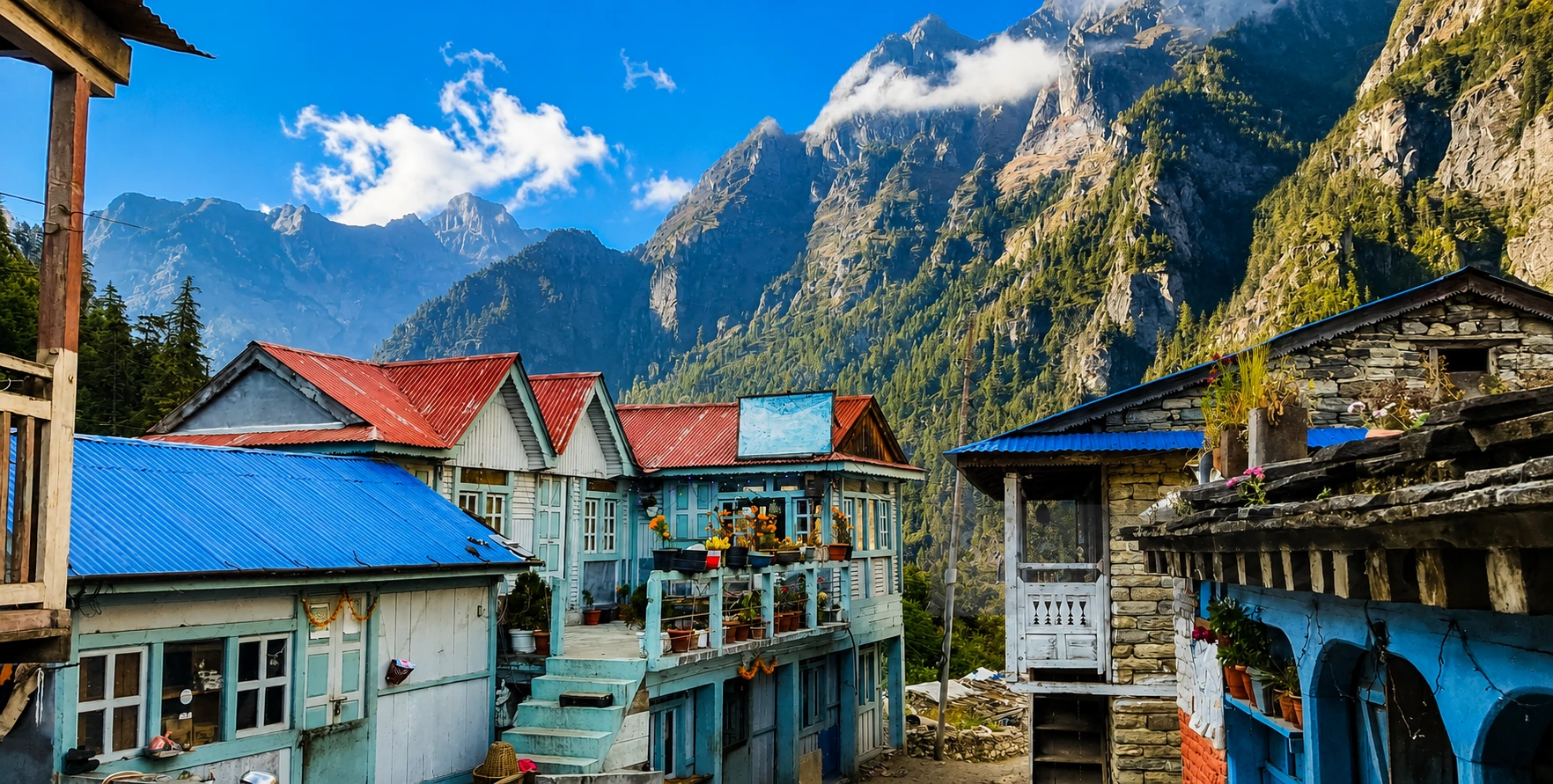
Jhinu danda

Jhinu to Kathmandu Jeep Rental: Annapurna Trek Exit Guide

Most Annapurna Base Camp trekkers remember Jhinu Danda for one thing: the hot springs. After days of stone staircases, freezing mornings above the tree line and the long, knee-testing descent from Chhomrong, the pools beside the Modi Khola are the part of the trek people talk about afterwards.

What they talk about far less, and what causes more last-day stress than almost anything else on the itinerary, is the question of how to get from that riverside village to a hotel bed in Kathmandu.

This guide is written for exactly that moment. It explains what a Jhinu-to-Kathmandu jeep journey really consists of, why it is rarely one uninterrupted drive, where a vehicle can and cannot meet you, how to decide between pushing on to the capital the same day and sleeping a night in Pokhara, and how Nepal Vehicle Hiring arranges the legs so that the walk out, the valley road and the highway fit together without gaps.

One note on how we have written it. Road access in the Modi Khola valley has been extended in stages and varies with season and repair work, so the exact jeep pickup points have not stayed fixed.

Rather than promise a single pickup spot that may be wrong by the time you read this, we describe the pattern, explain the local names you will hear, and tell you what to confirm with your guide and with us before the final morning.

The Jhinu-to-Kathmandu journey at a glance

It helps to stop thinking of this as one trip and see it as three connected pieces, each with its own character and its own timing.

  • Piece one: Jhinu Danda to the roadhead. This is the short stretch between your lodge and where a vehicle can actually stop. Depending on conditions,s it is anything from a brief walk to a longer descent along the Modi Khola trail. Nothing with wheels can help you here, so it is a matter of legs, porters and good timing.
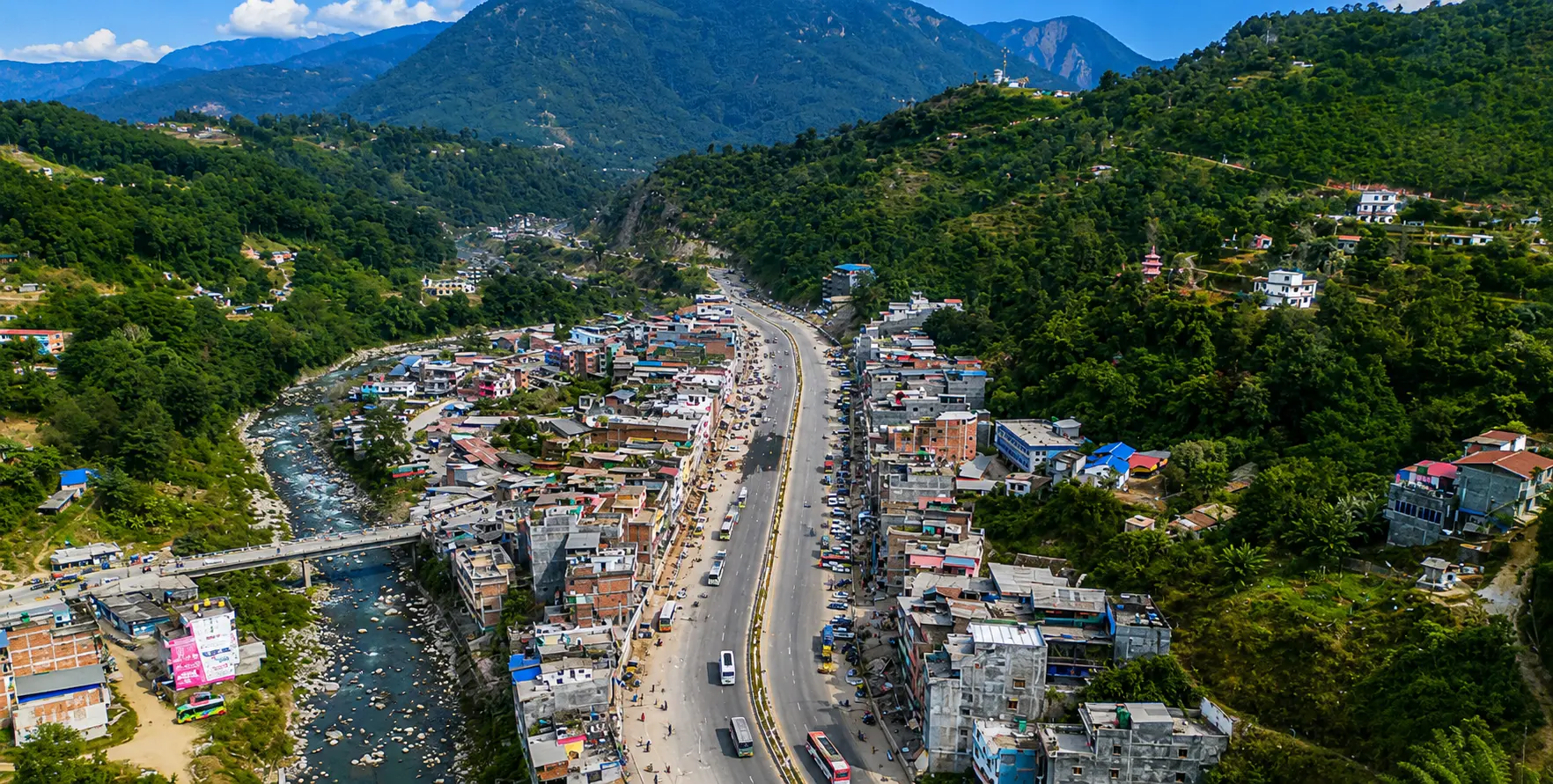
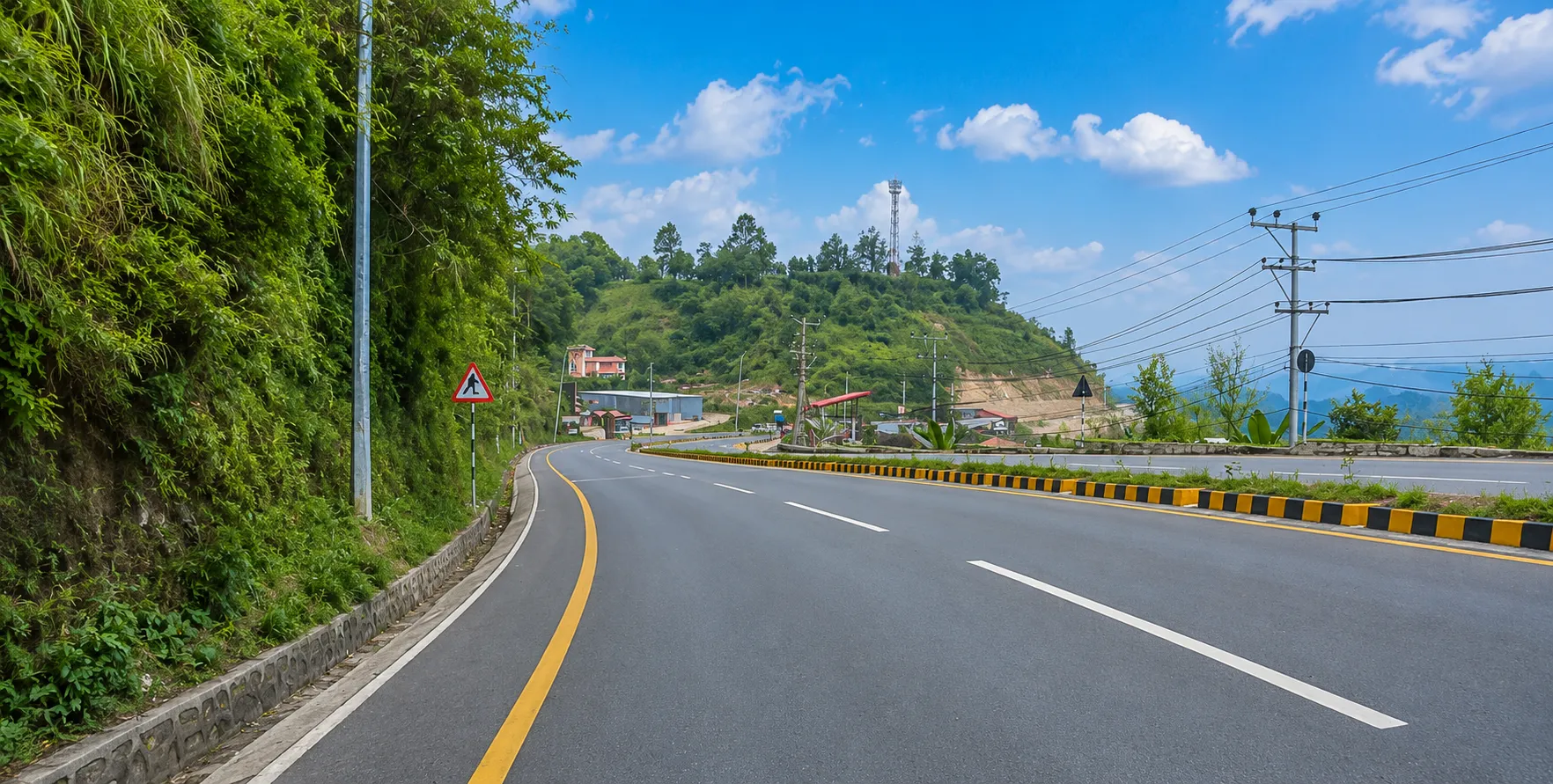
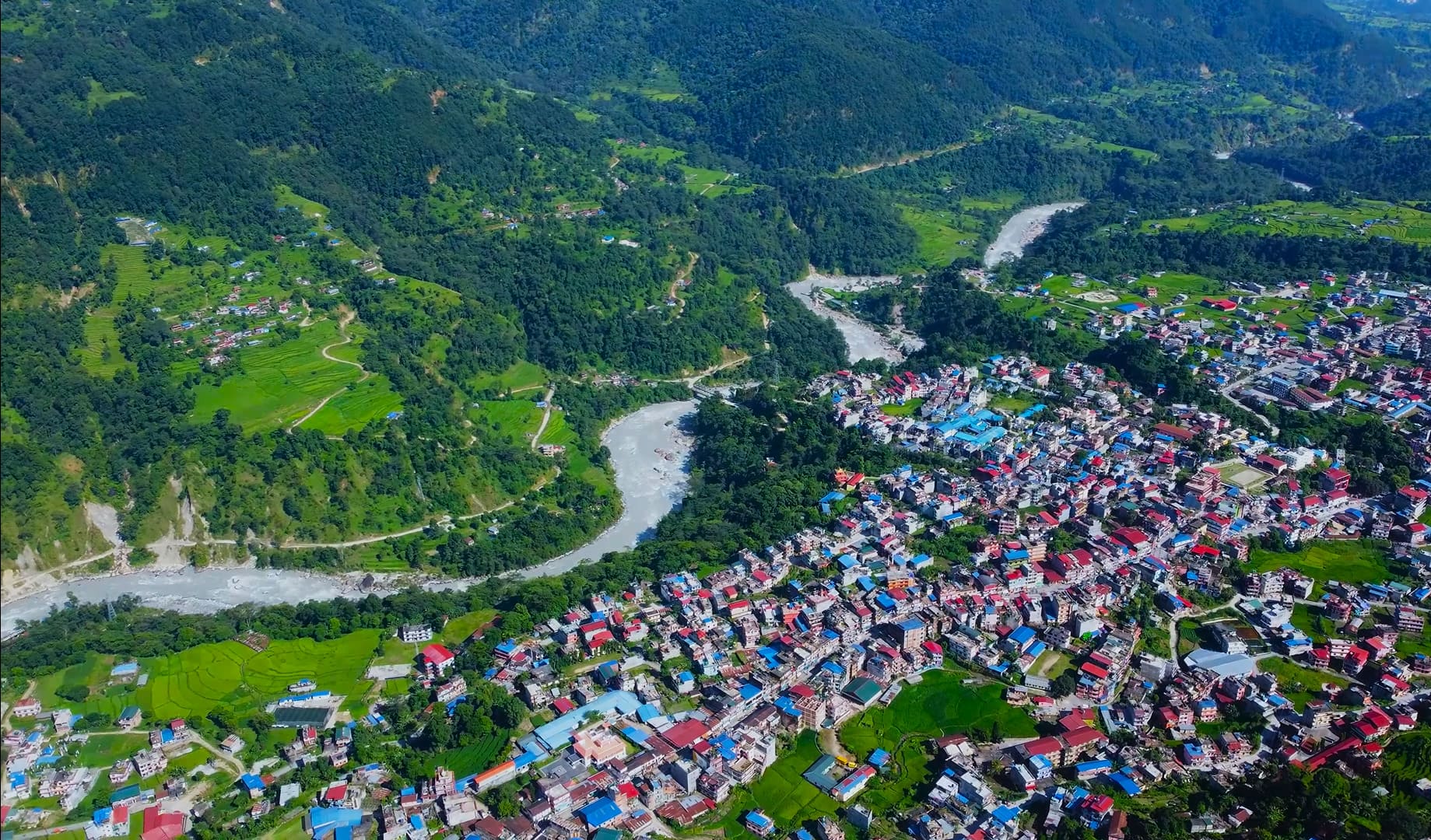
  • Piece two: the valley road to Pokhara. From the roadhead,d a four-wheel-drive jeep follows the Modi Khola valley down through the villages around Siwai, past the Birethanti checkpoint and the Nayapul junction, and on to Pokhara. Trekking operators commonly describe the drive from the Jhinu area to Pokhara as three to four hours, and the lower part of that is a quick paved run once you reach Nayapul.
  • Piece three: Pokhara to Kathmandu. This is the long Prithvi Highway run of roughly two hundred kilometres, normally six to eight hours with a meal stop. You can do it by road in a single day, by a short domestic flight, or after a night in Pokhara.

Add those together, and a same-day road journey from Jhinu to Kathmandu is a very long day, often ten to twelve hours of travelling once you count the walk, the stops, and the traffic at either end. Many trekkers happily do it, particularly those with an international flight to catch.

Many others, after a week or more of walking, decide the sensible option is to break the journey in Pokhara. Neither choice is wrong. The point of this guide is to help you make it deliberately rather than on the last evening, tired, in a lodge with patchy signal.
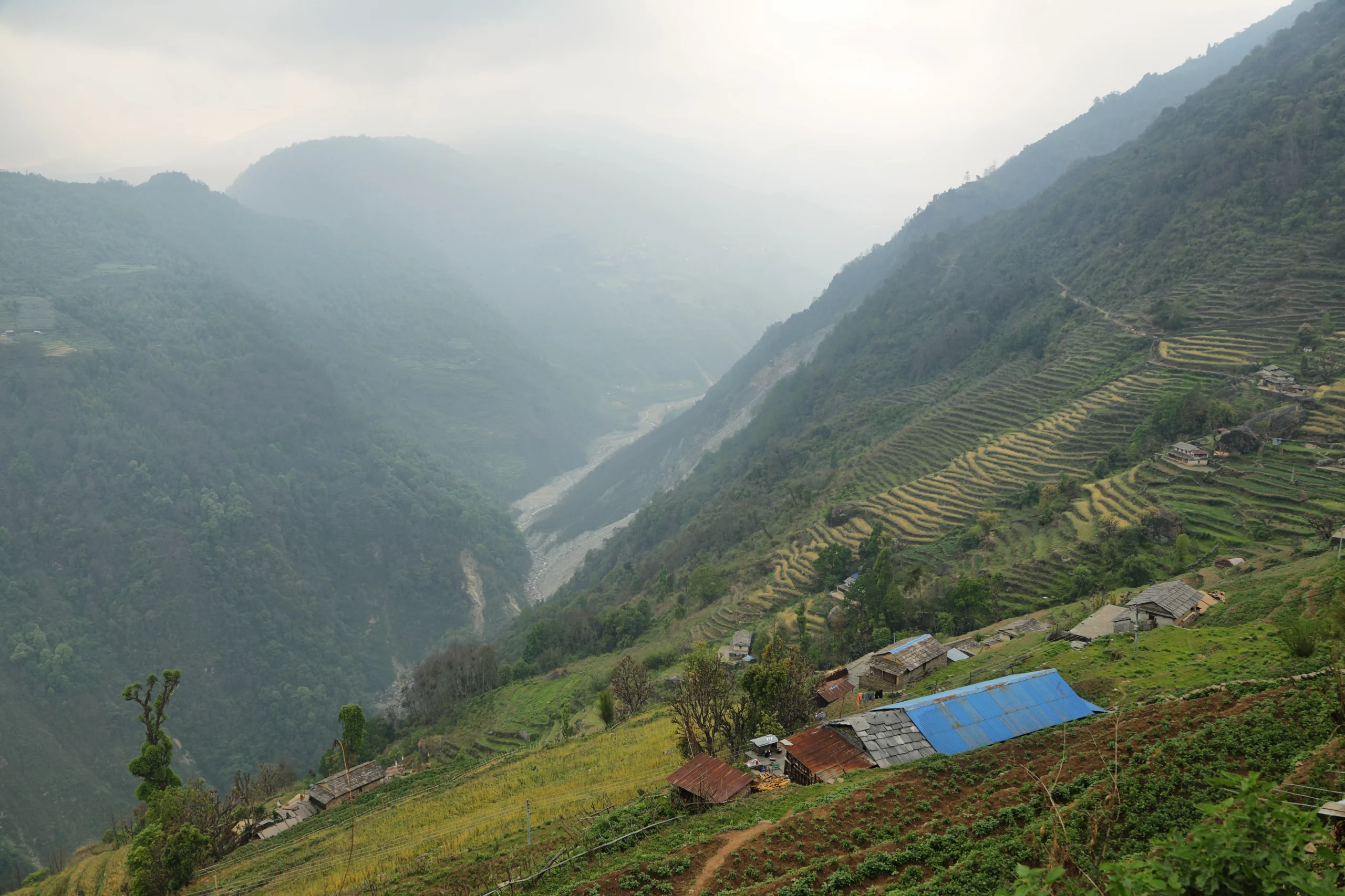
Jhinu to Kathmandu Jeep Rental

Understanding Jhinu Danda as a departure point

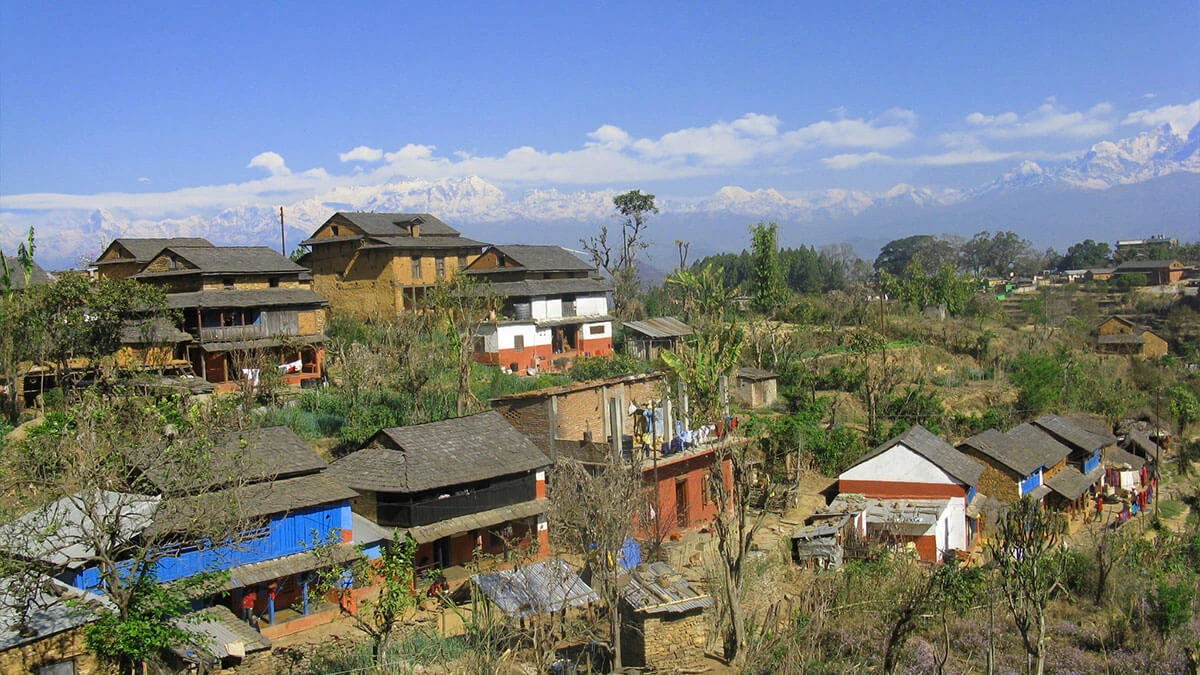
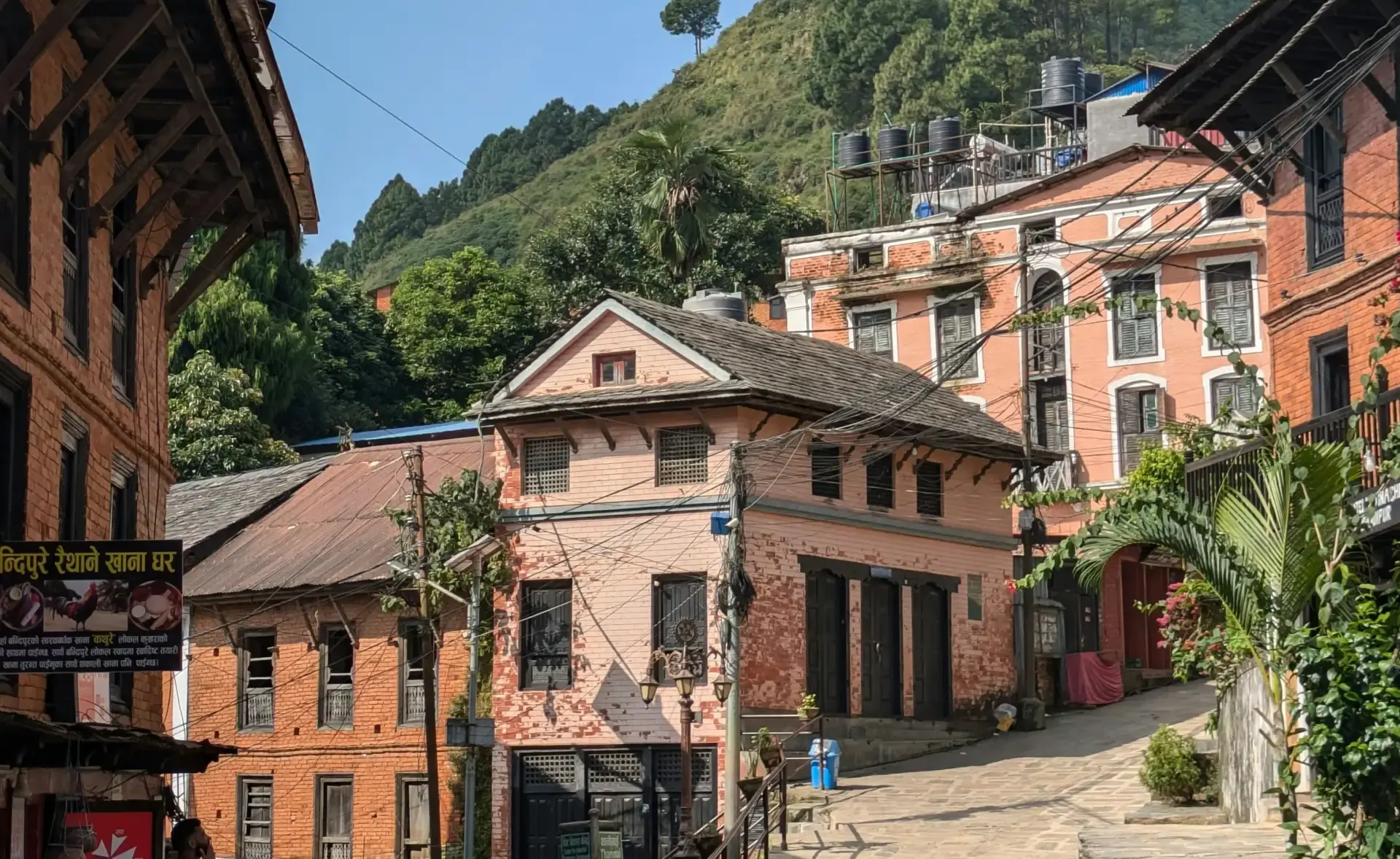
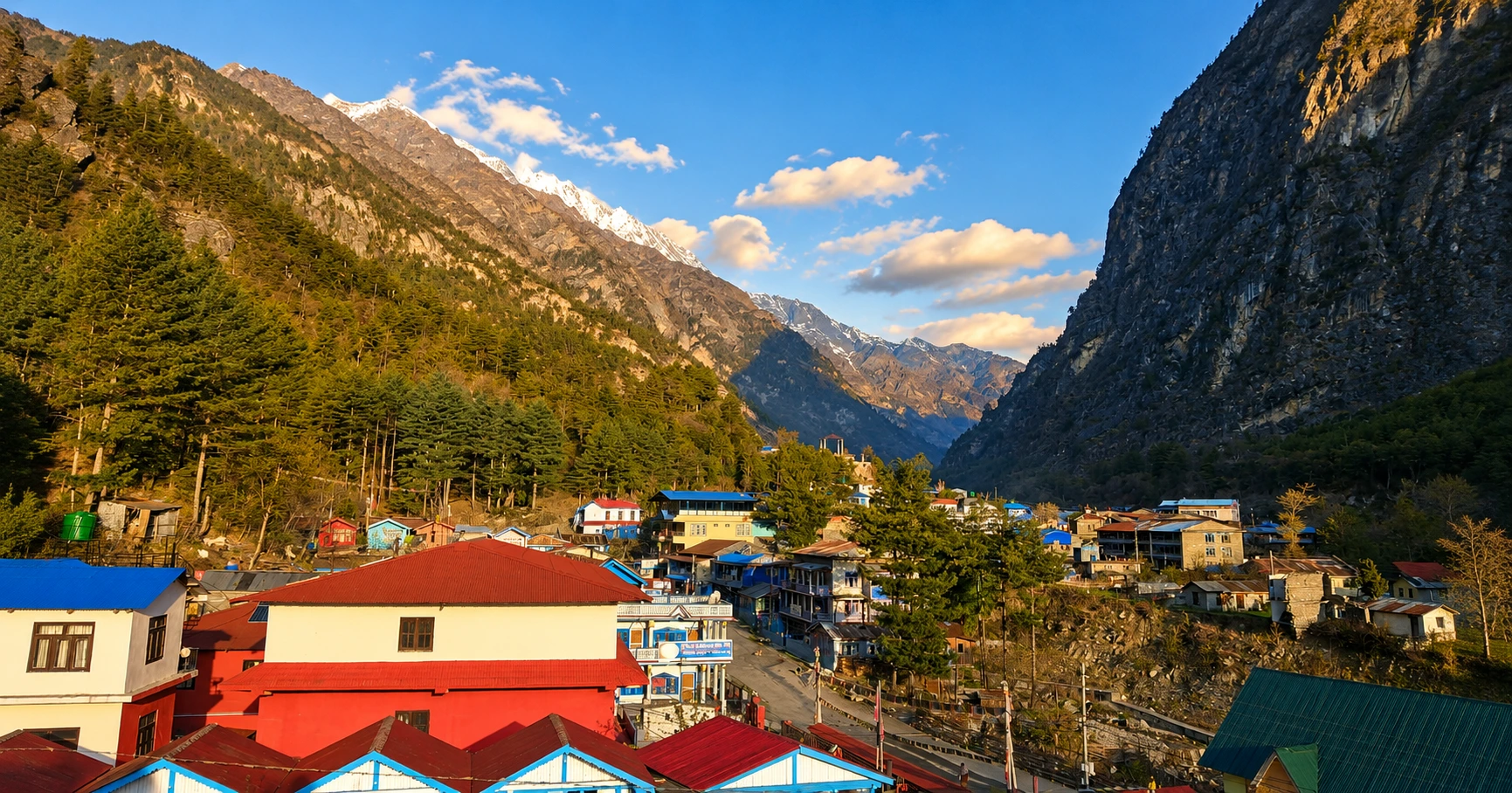
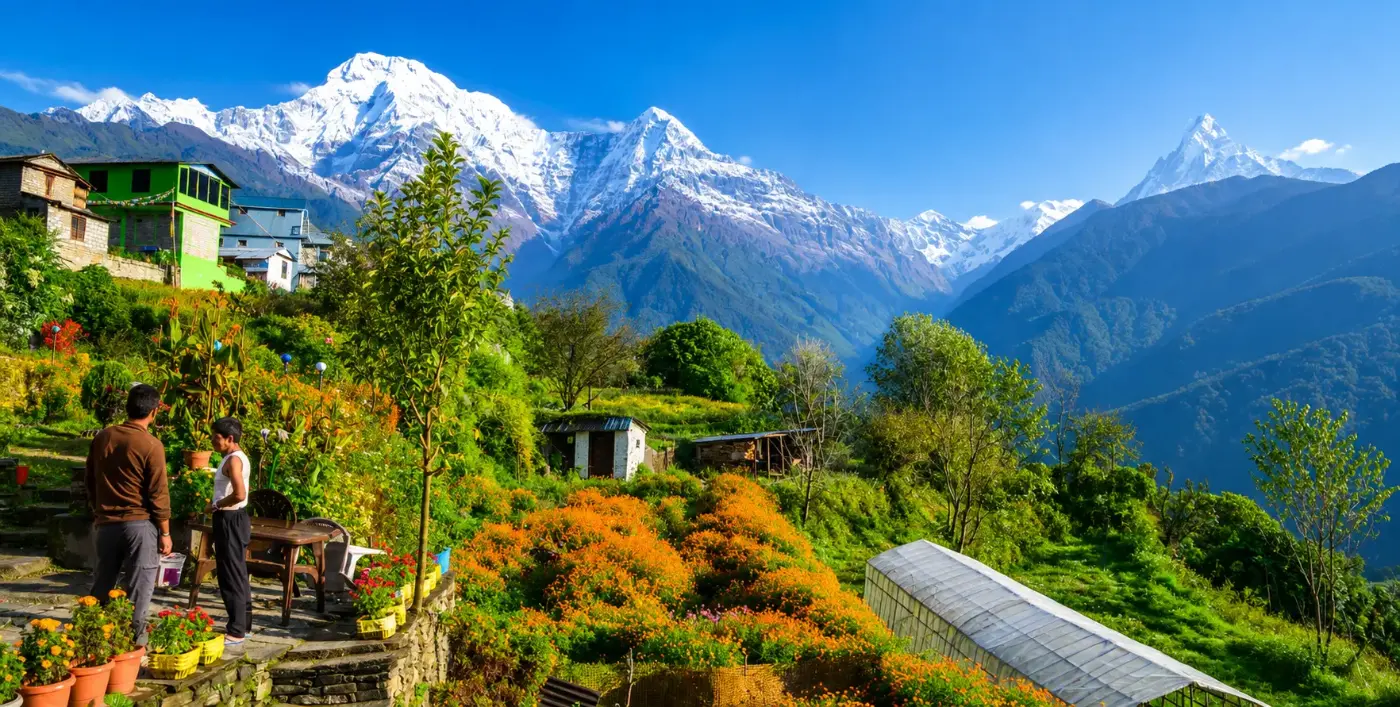
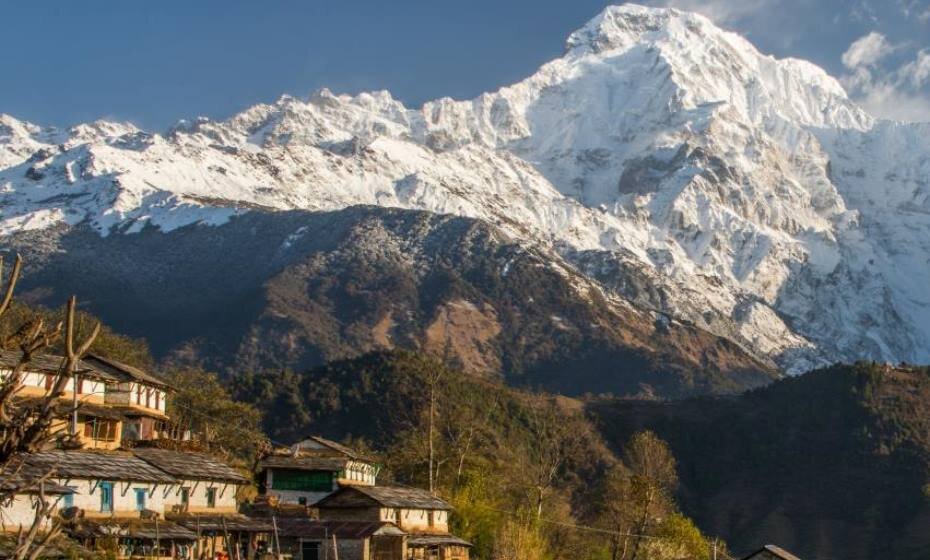
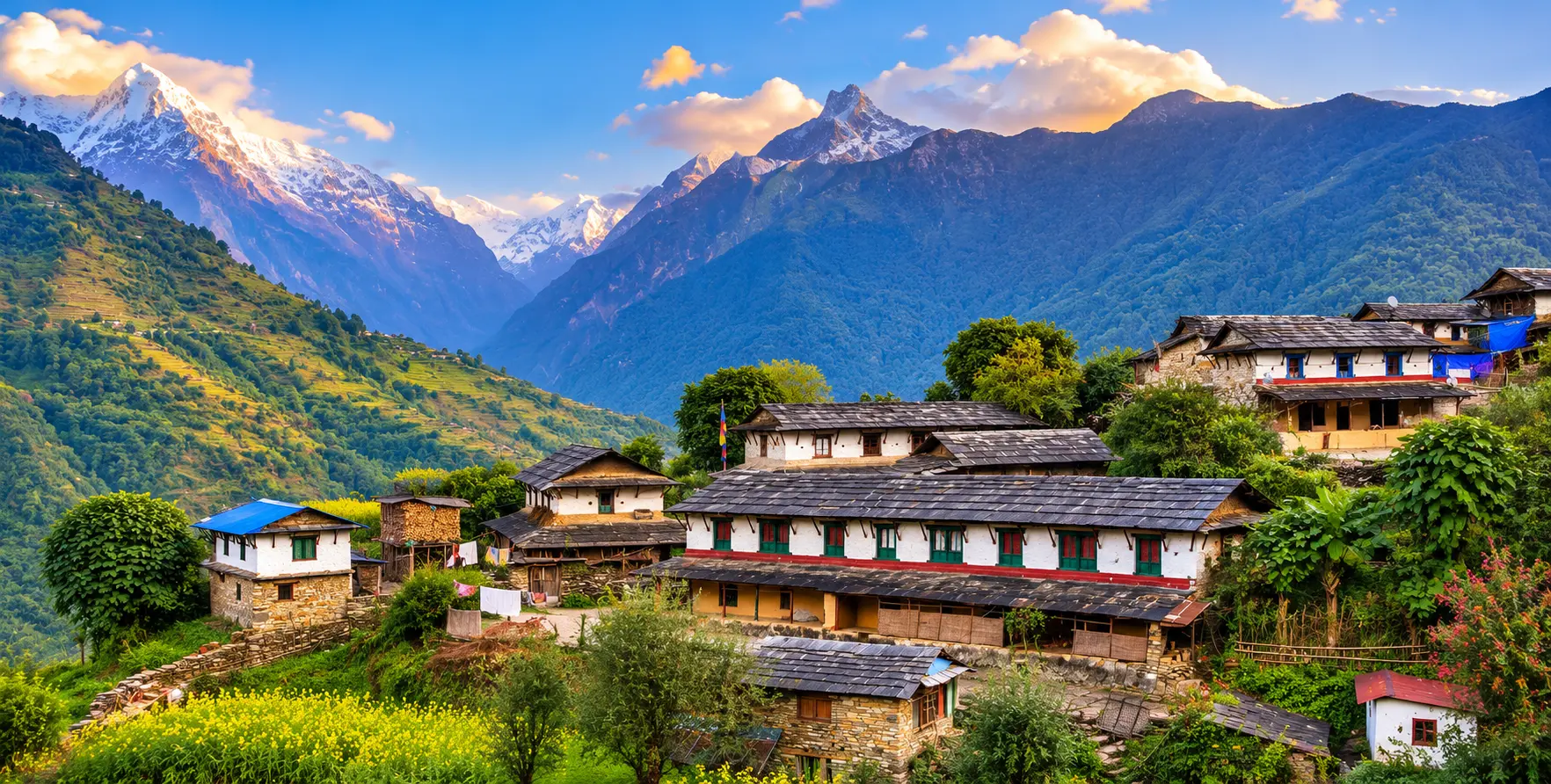
Jhinu Danda, sometimes written Jhinu Dada or Jinu Danda, is a Gurung settlement strung along a ridge above the Modi Khola at roughly 1,780 metres, in Kaski District inside the Annapurna Conservation Area. It sits on the Annapurna Base Camp route between Chhomrong above and the lower valley villages below, which is why so many itineraries make it the final trekking night.

Why so many treks end here

The reasoning is partly physical and partly practical. Coming down from Annapurna Base Camp, the trail passes Bamboo, Sinuwa and Chhomrong, and then drops steeply down the long Chhomrong staircase to the Kimrong Khola before climbing again to the ridge at Jhinu.

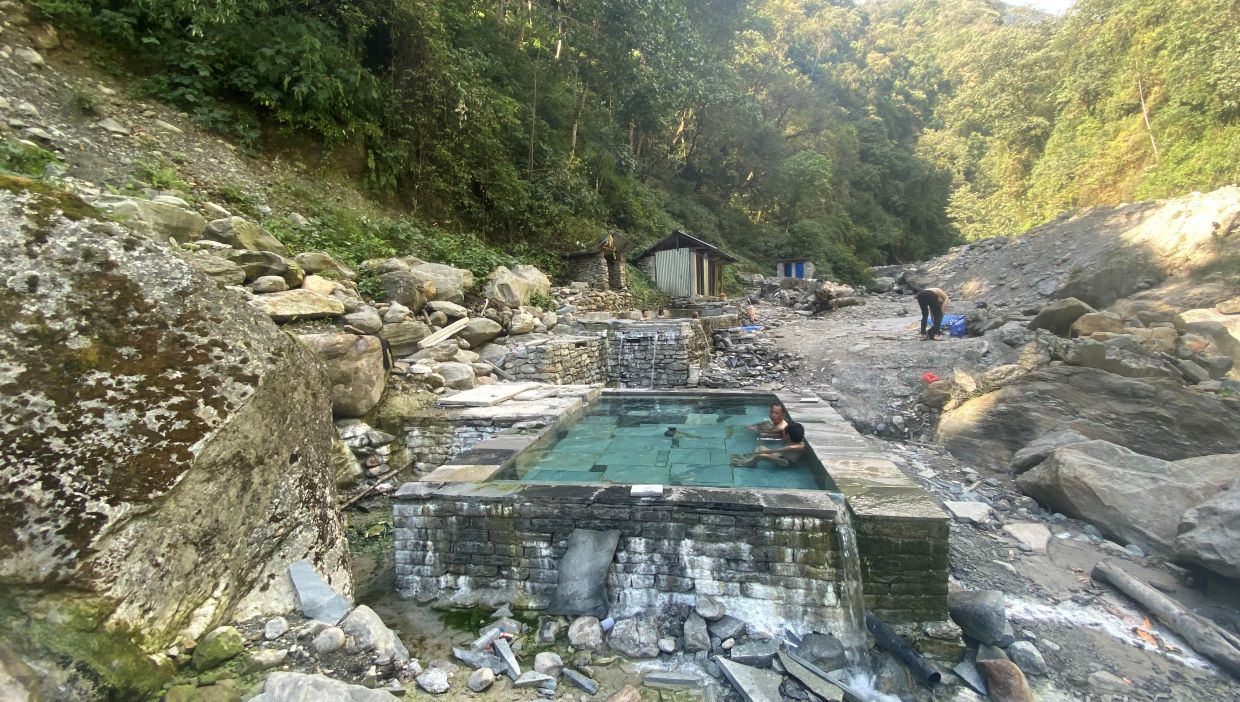
By the time you reach Jhin,u, the big altitude is behind you, the air is thick and warm, and the lodges are comfortable. The hot springs, reached by a stone-stepped forest path of about twenty to thirty minutes down to the river, turn the evening into a small celebration.

Several trekking operators describe the springs as a set of pools with different temperatures, set directly beside the Modi Khola in a forested gorge, which is a good part of their appeal.

From a transport point of view,w Jhinu matters because it is the last place where a trek and a road meet. Above Chhomrong,g there is no road at all. Below Jhinu,u the valley opens toward the lower villages and the motorable track.

That is why vehicle planning for this exit comes down to one question: where, on the day you leave, does the track end and the trail begin?

The culture you are walking out of

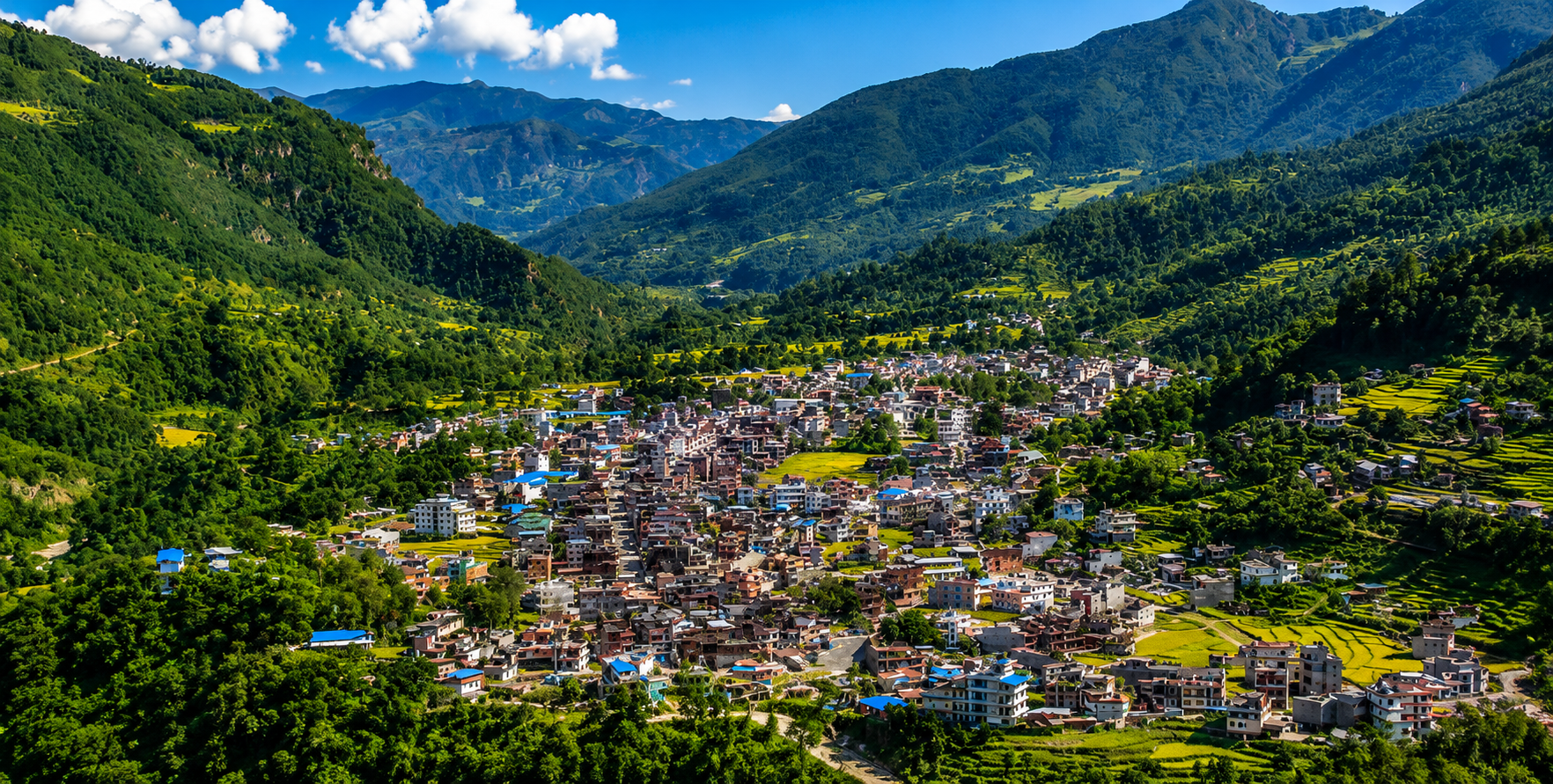
Jhinu and its neighbours belong to the Gurung homeland of the Annapurna foothills. Gurung villages in this part of Kaski are known for their terraced millet and rice fields, their stone-slab paths and lodges run by families who often have sons, brothers or cousins in military and overseas service.

Build in ten unhurried minutes on your final morning to say a proper goodbye to your lodge family. In a valley where almost every lodge is a family home, a good exit is as much about courtesy as logistics, and a driver who arrives to find the group relaxed and ready, rather than frantically repacking, has an easier and safer day.

The roadhead question: where does the jeep actually meet you?

This is the single most important thing to understand about a Jhinu-to-Kathmandu jeep, and the part where generic advice most often lets people down.

Why the pickup point is not fixed

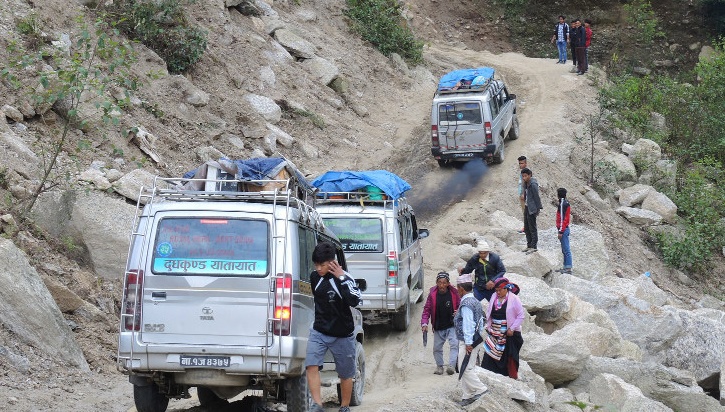
The motorable road up the Modi Khola valley has been pushed progressively higher over time, and it is a seasonal, mountain-construction track rather than a finished highway. In the monsoon, landslides and washed-out crossings can interrupt it, and after the rains it is repaired and reopened in stages.

As a result, itineraries published by different operators describe the pickup differently. You may see the vehicle waiting at Siwai, at Simrung (sometimes spelt Samrung), at Mithu Danda, or not very near Jhinu itself when the track allows. Each of these descriptions was accurate for the operator who wrote it at the time.

None of them is a permanent rule.

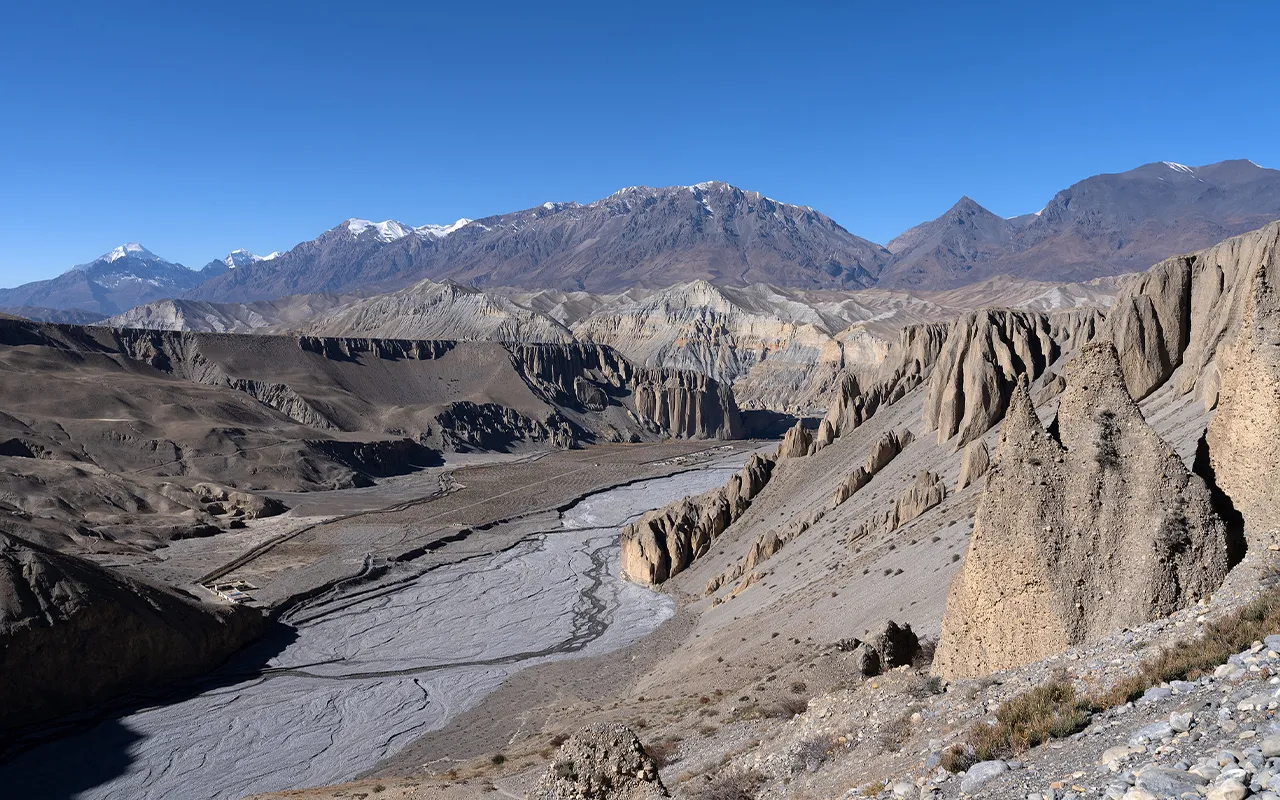
What does stay constant is the geography. Jhinu sits at roughly 1,780 metres on a ridge, the river runs far below, and the track follows the valley downward. Wherever the vehicle waits, you will reach it by descending, not climbing, and the descent is usually short enough to be comfortable on tired legs.

Three ways to handle the walk-out

  • Ride from the nearest roadhead. If the track currently runs close to Jhinu, the walk is brief, and the jeep carries you the rest of the way. This is the easiest option and the one most groups prefer when it is available.
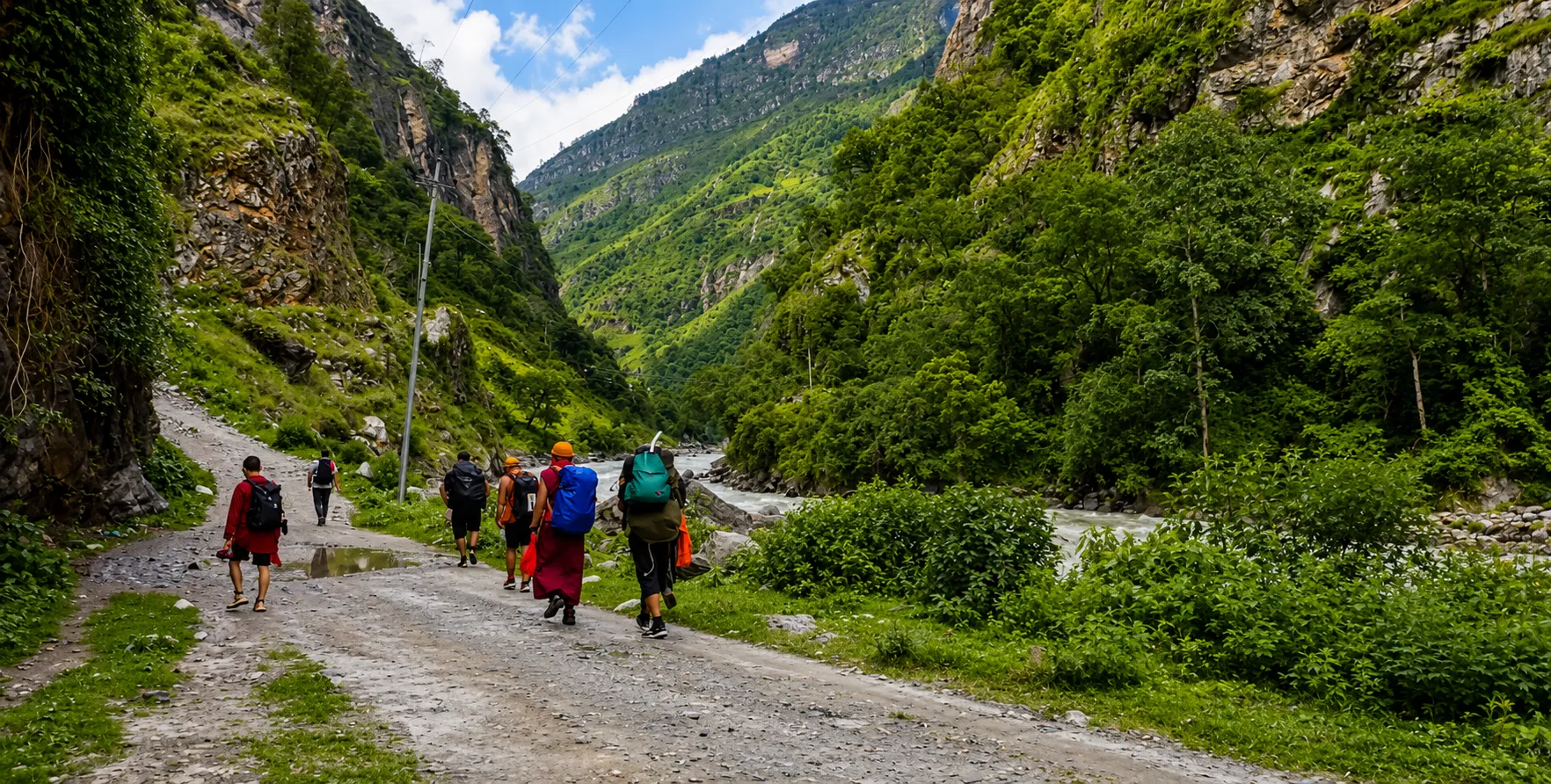
  • Walk down to a lower roadhead. If the track is interrupted higher up, the walk extends. Some groups choose this on purpose because the Modi Khola trail below Jhinu is pleasant, shaded and gently graded, and because it gives a calm morning before the vehicle section begins.
  • Walk all the way to Nayapul or Birethanti. The classic way to finish is to follow the river trail down to the Birethanti checkpoint and the Nayapul road junction, where an ordinary road vehicle is waiting. It is a long, rewarding day on foot, but it removes dependence on the valley track altogether, which is why some guides still favour it in unsettled weather.

What to tell us and what to confirm

When you book with Nepal Vehicle Hiring, give us three things: the date you expect to leave Jhinu, the number of people and bags, and whether you want to end the day in Pokhara or Kathmandu. In return, we will confirm the current pickup point with our driver in the valley, tell you honestly if the track is affected, and set the departure time based on the real situation rather than an old itinerary.

It also helps to ask your trekking guide, in the days before you reach Jhinu, to confirm the roadhead with lodge owners and local drivers. They know within a day or so when the track is open.

If you are still working out the earlier legs of the trek, our trekking transport page explains how approach and return vehicles are normally paired, and the Pokhara to Nayapul transportation service covers the lower valley approach if you are starting the trek rather than ending it.
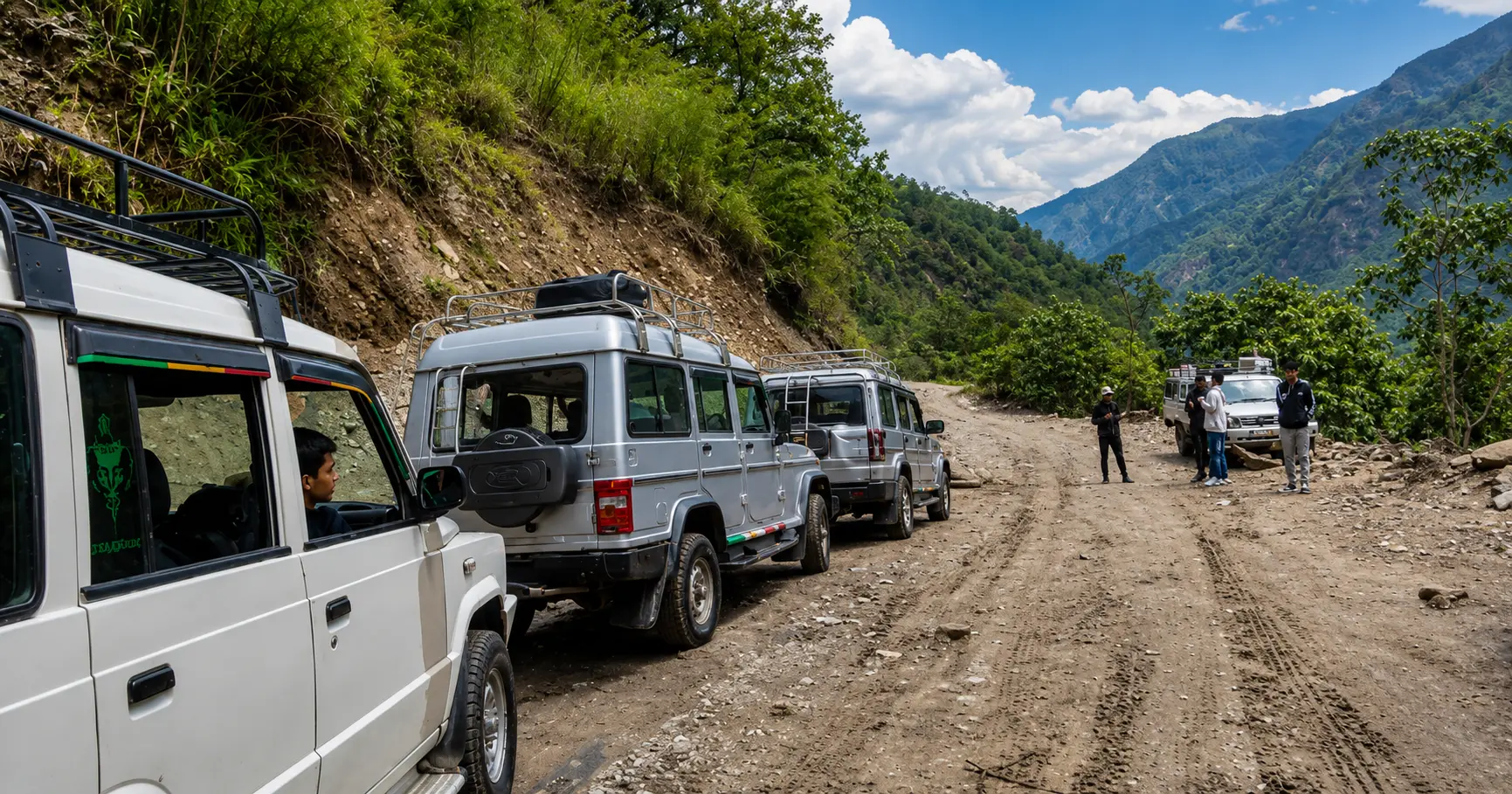
Jhinu to Kathmandu Jeep Rental

Leg one: down the Modi Khola valley by jeep

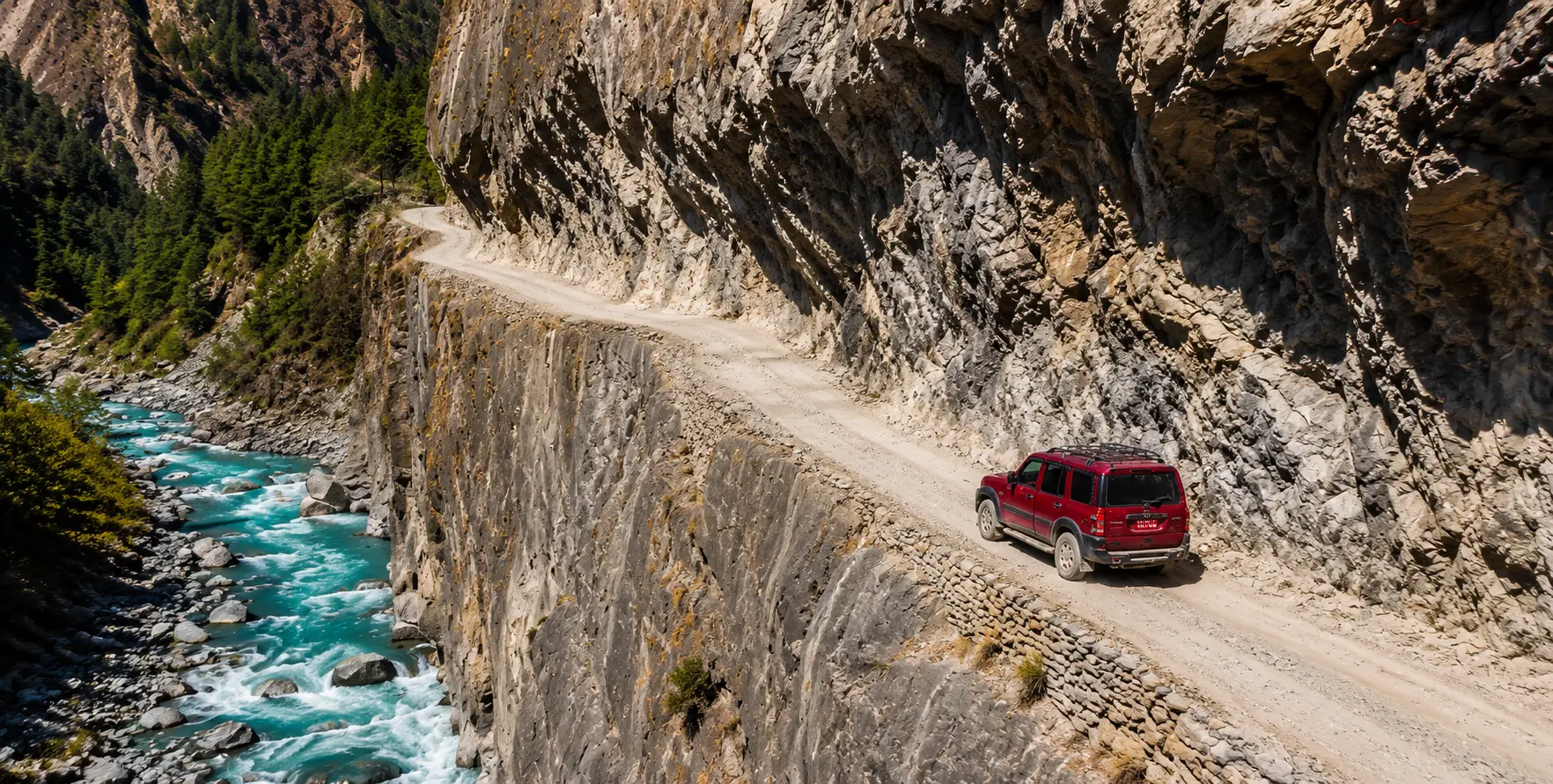
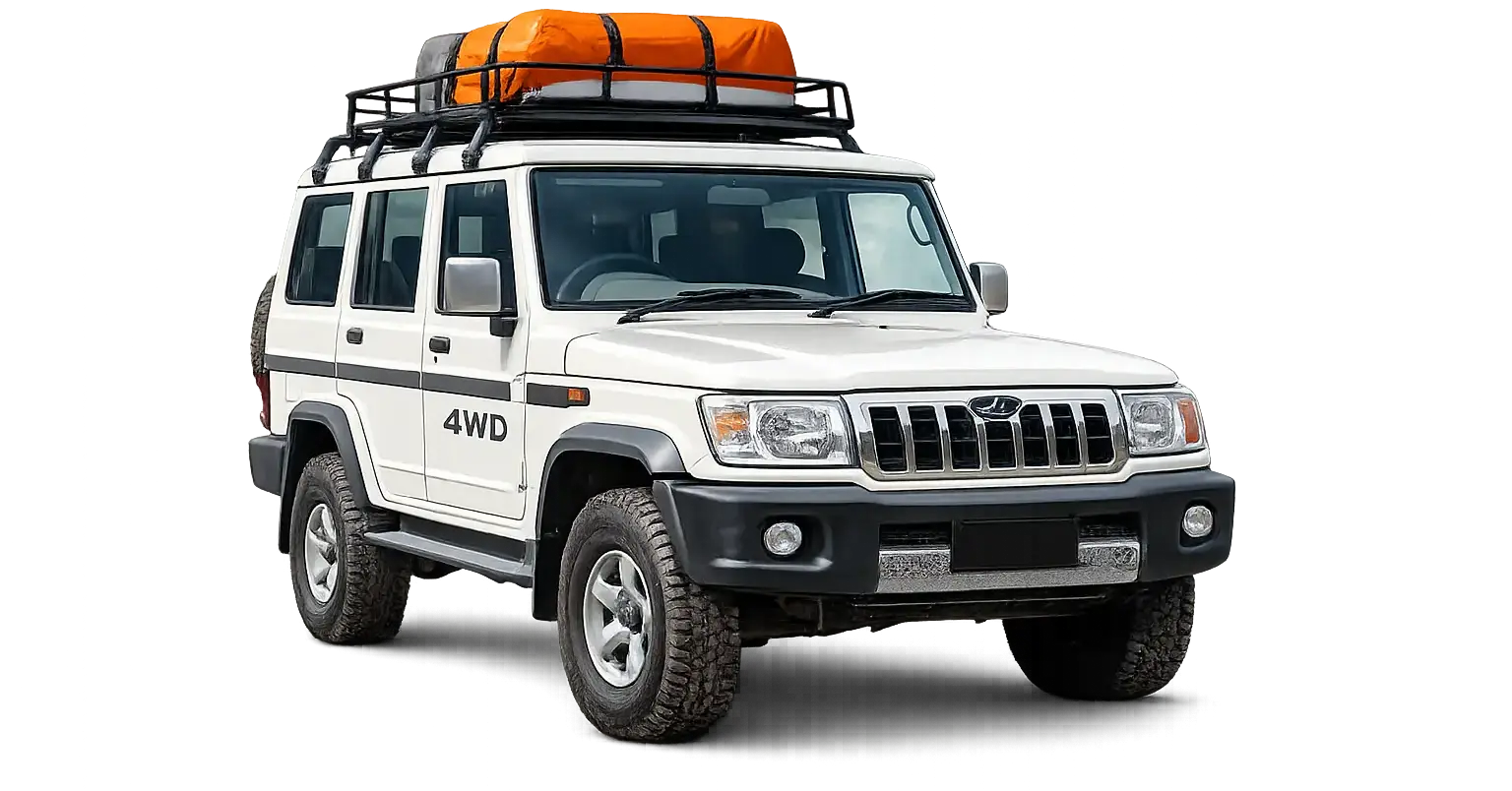
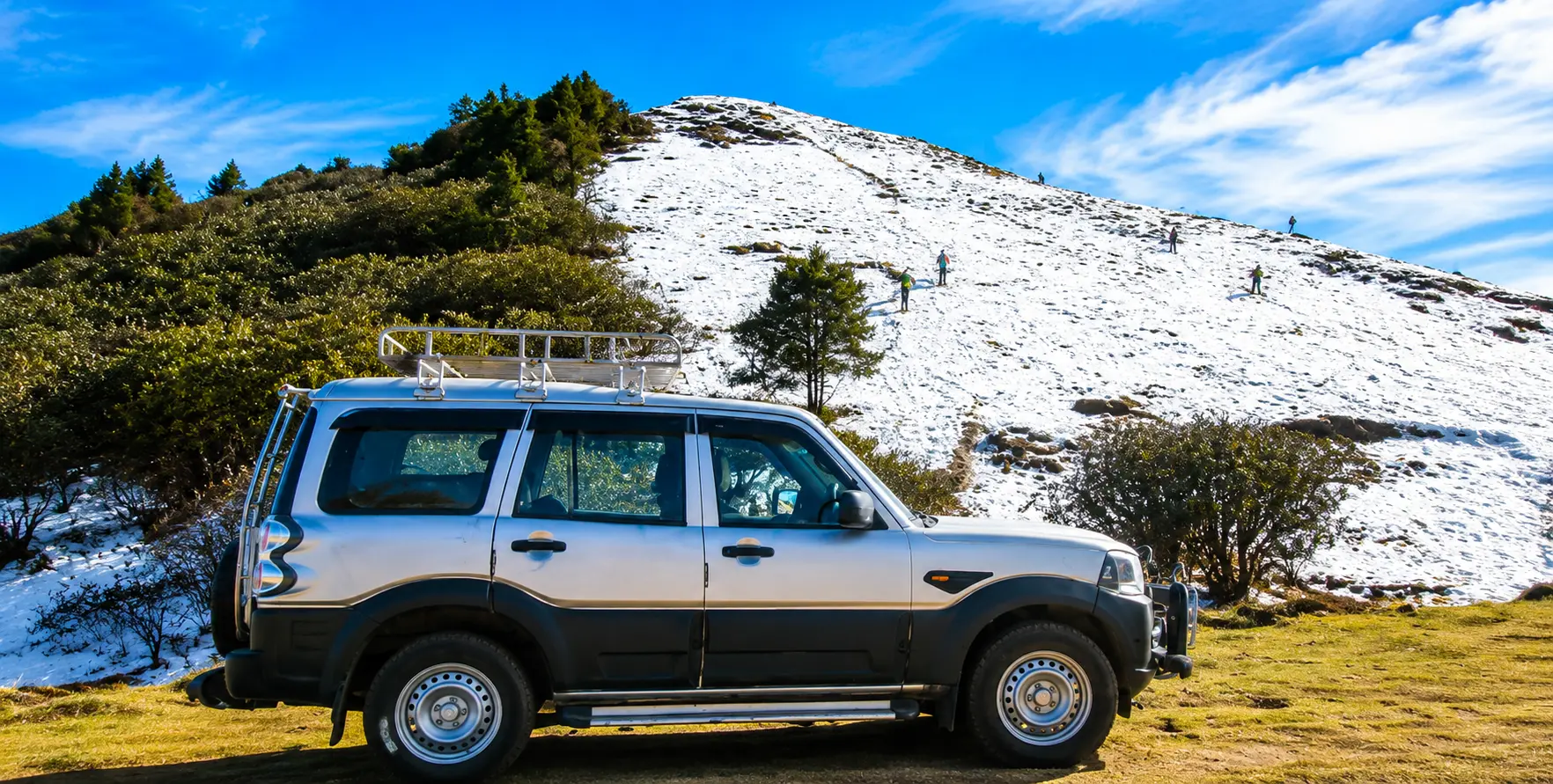
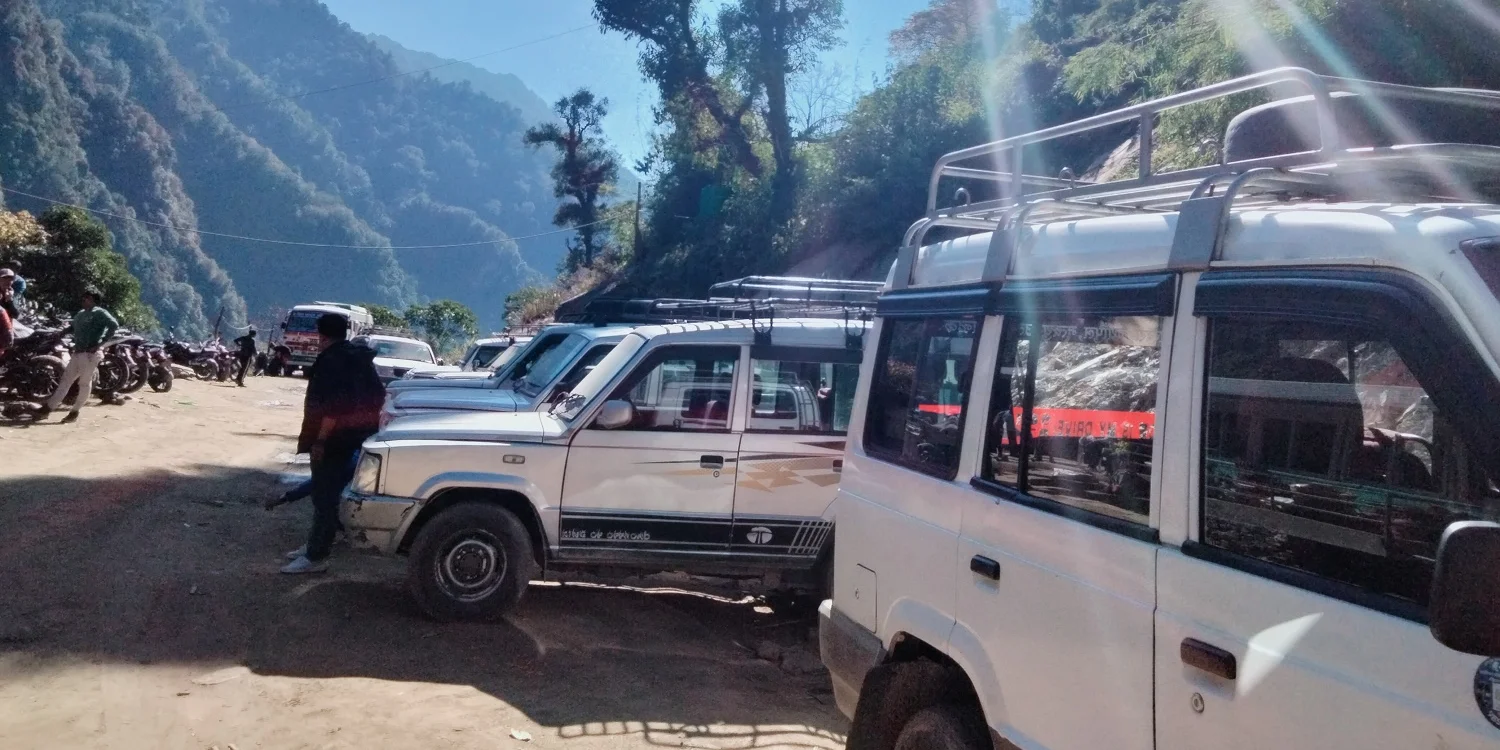
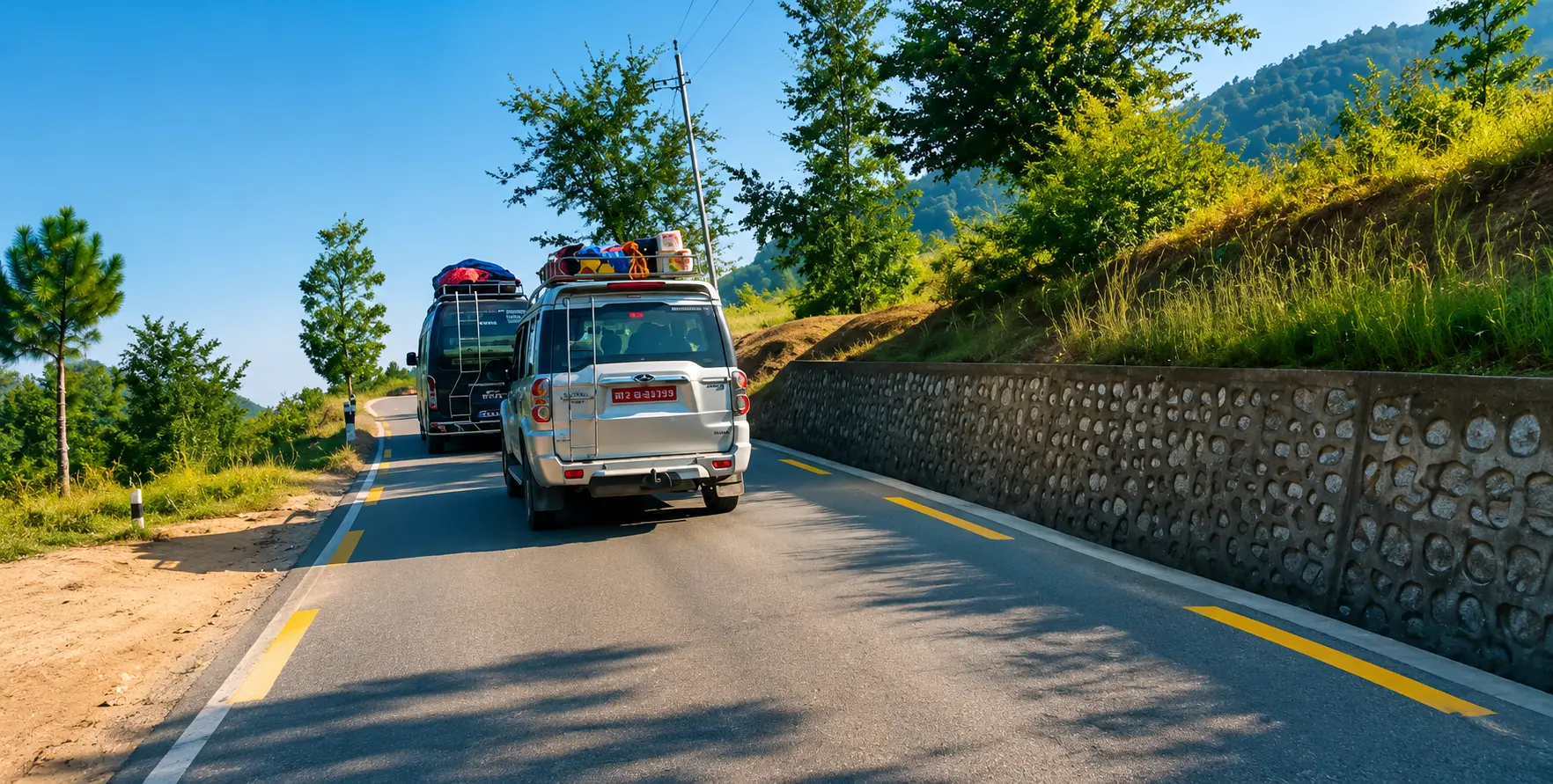
Once you are in the vehicle, the first stage of the drive is the most characterful and demanding, and it’s why a four-wheel-drive Scorpio jeep is the right tool for the valley section.

What the road is like

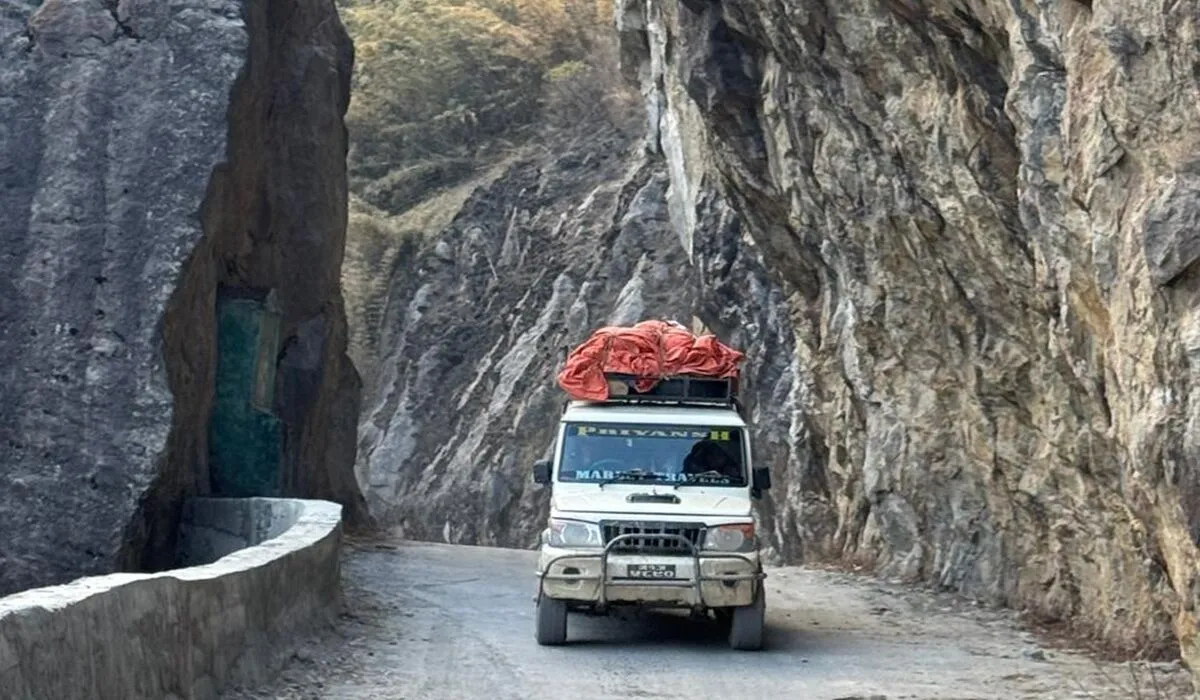
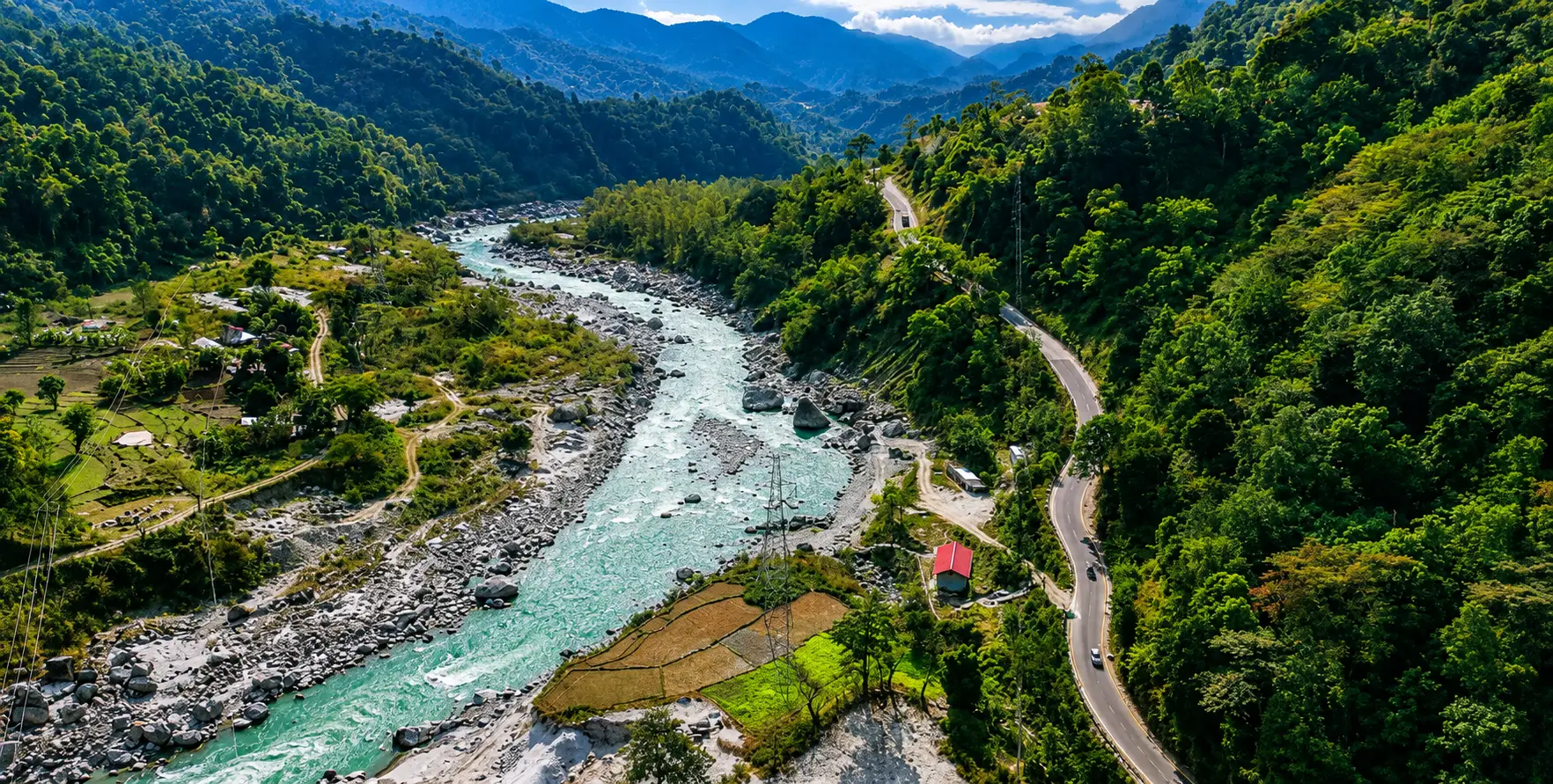
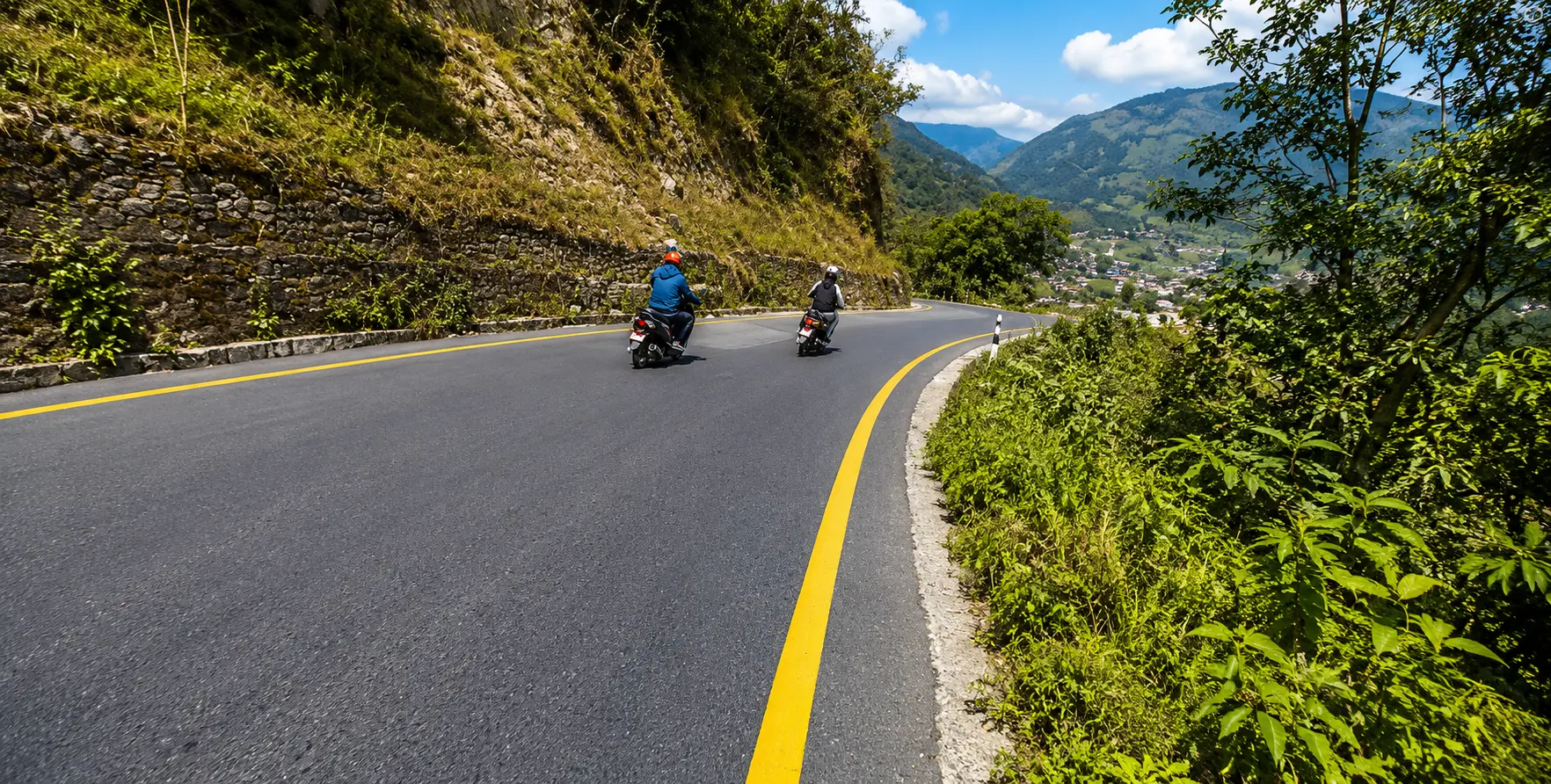
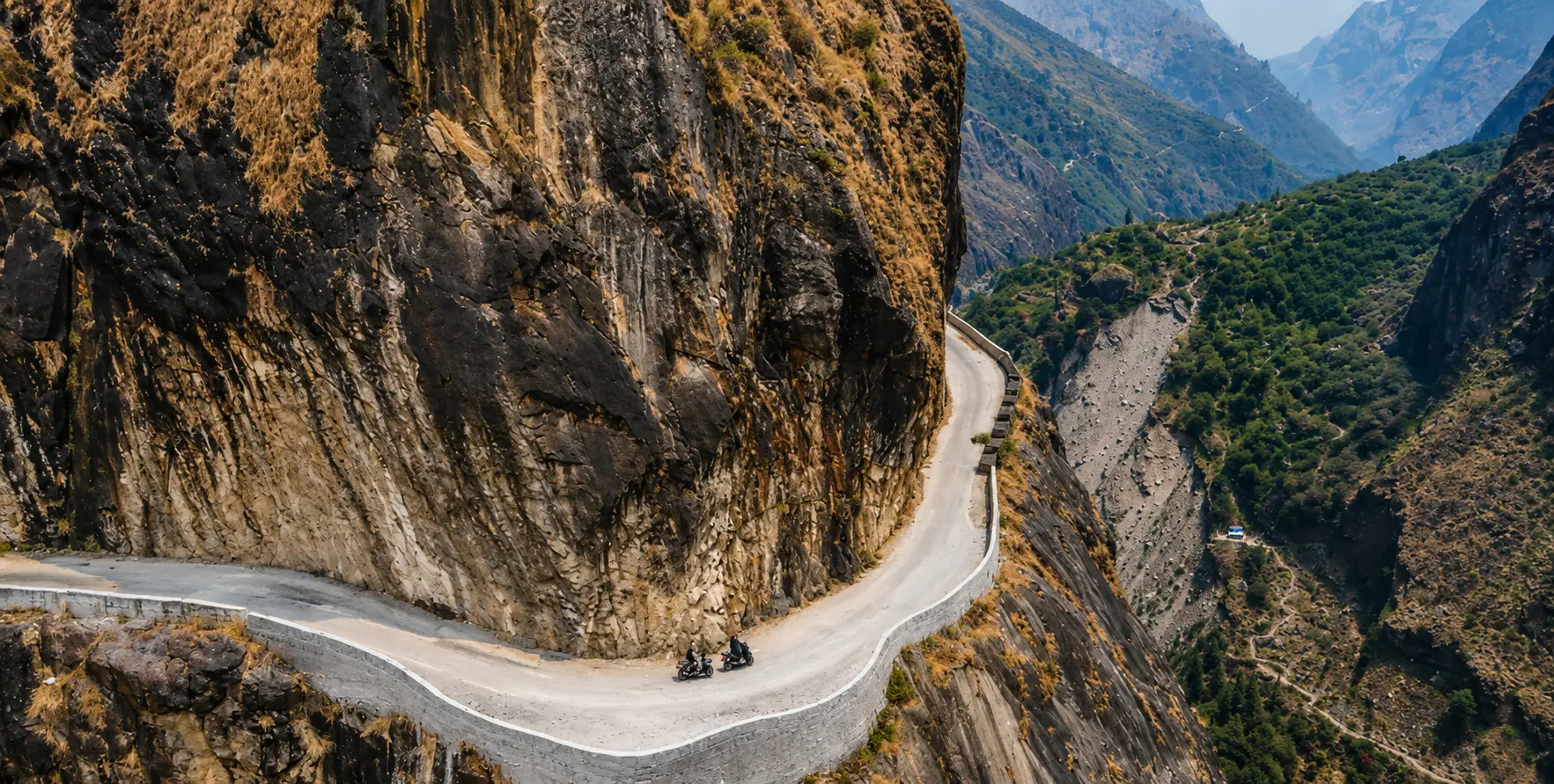
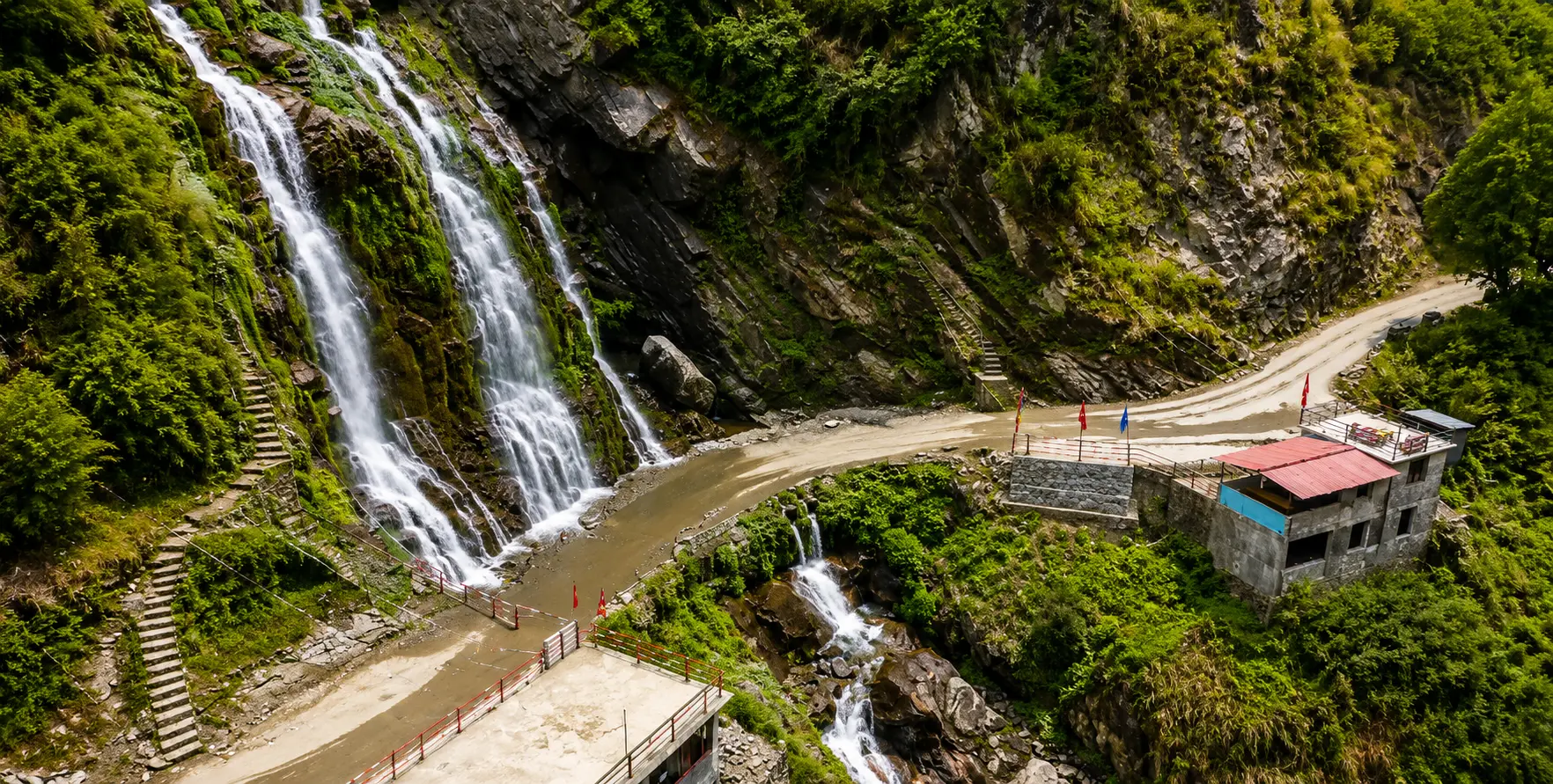
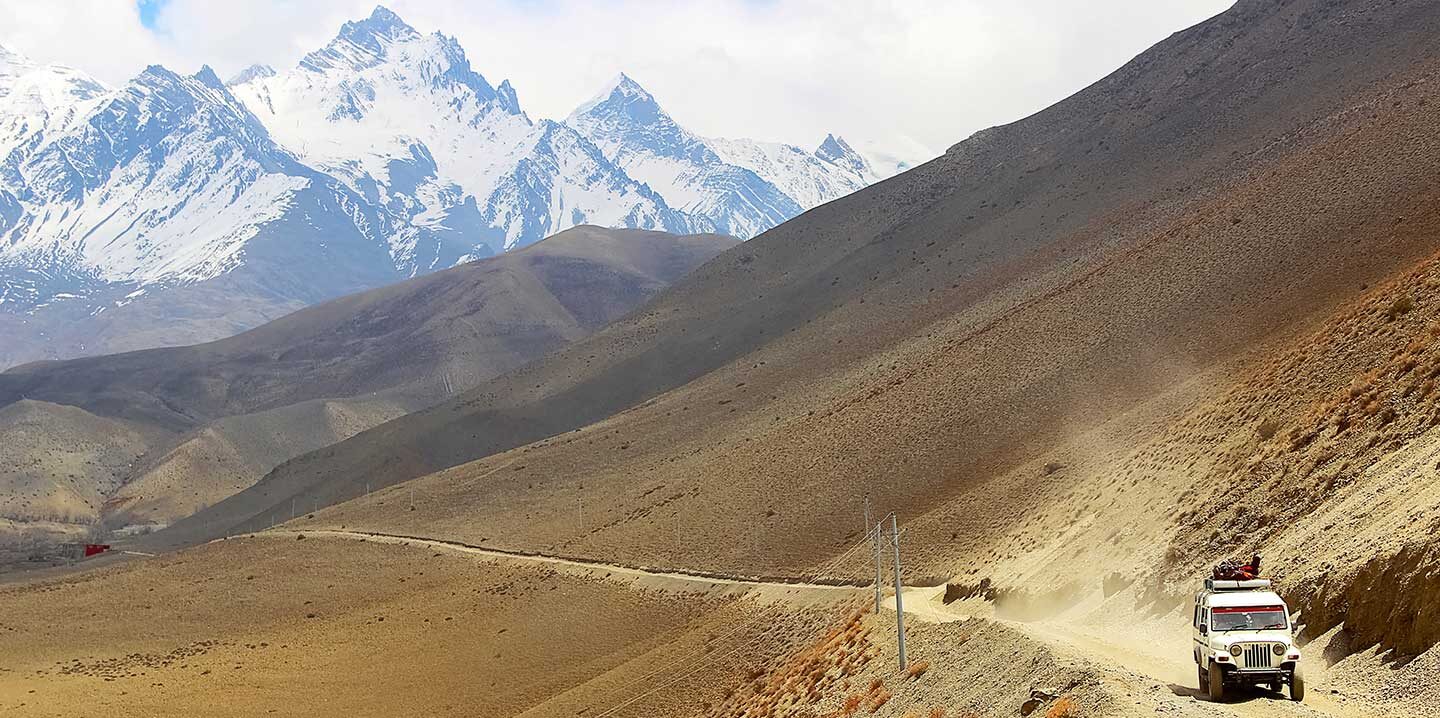
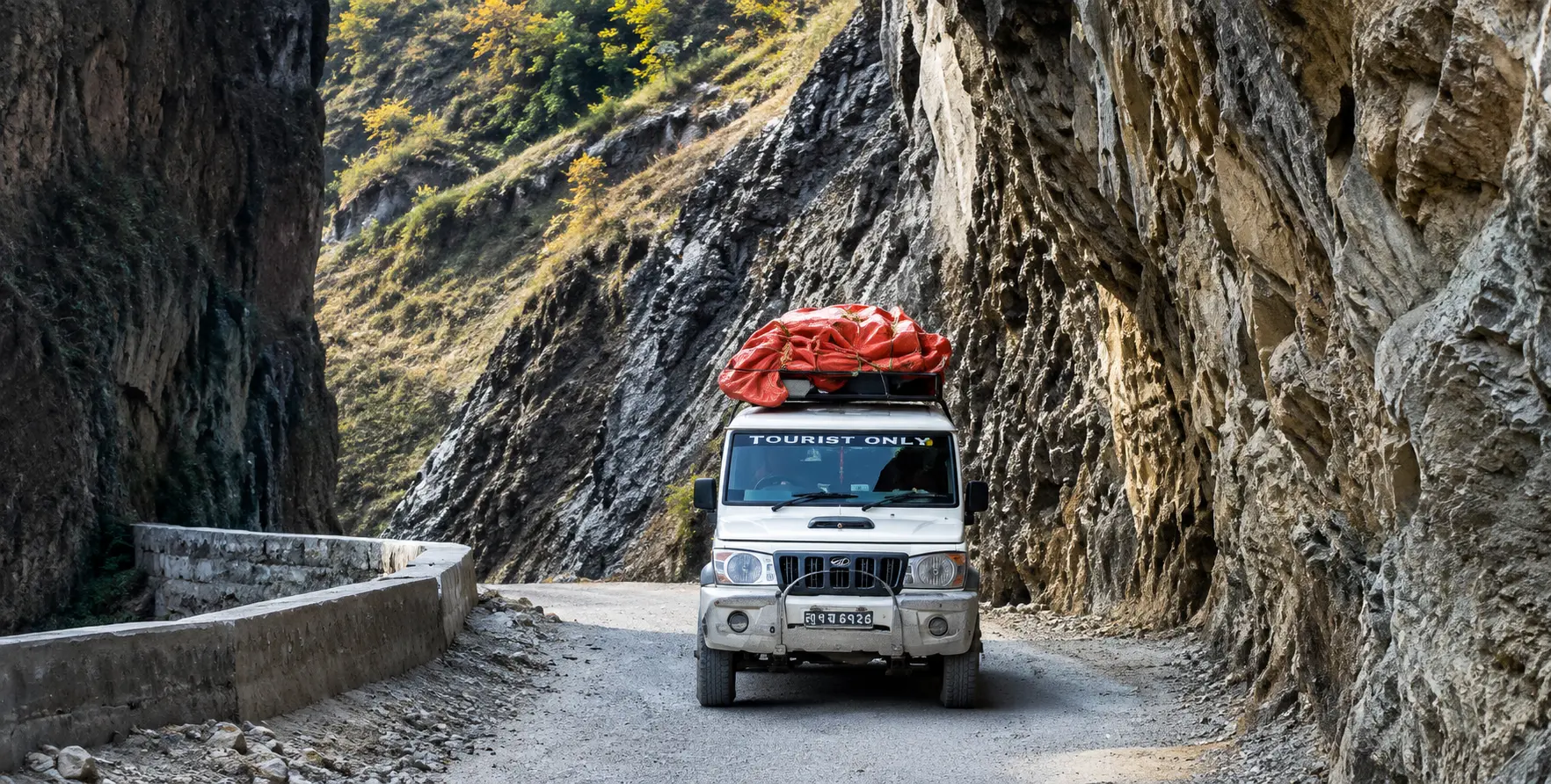
The valley track is a mountain construction road. It clings to the side of the gorge in places, crosses side streams on narrow bridges or through shallow fords, and alternates between compacted gravel, exposed rock and the occasional stretch of loose material where a slope has recently been cleared.

The surface sets the speed, not the clock. A driver who knows the road slows to a walking pace through the rough crossings and makes up a little time on the firmer sections, and that rhythm is the difference between a smooth ride and a jarring one.

Passing is done at wide spots. Where two vehicles meet on a single-lane stretch, one reverses or pulls into the nearest bay, and the drivers settle it with horn taps and hand signals. It looks dramatic the first time, but it’s routine for anyone who drives here daily.

Passengers who feel uneasy should say so; a good driver will happily slow down, and nobody on this road is in a hurry to prove anything.

The villages and the checkpoint

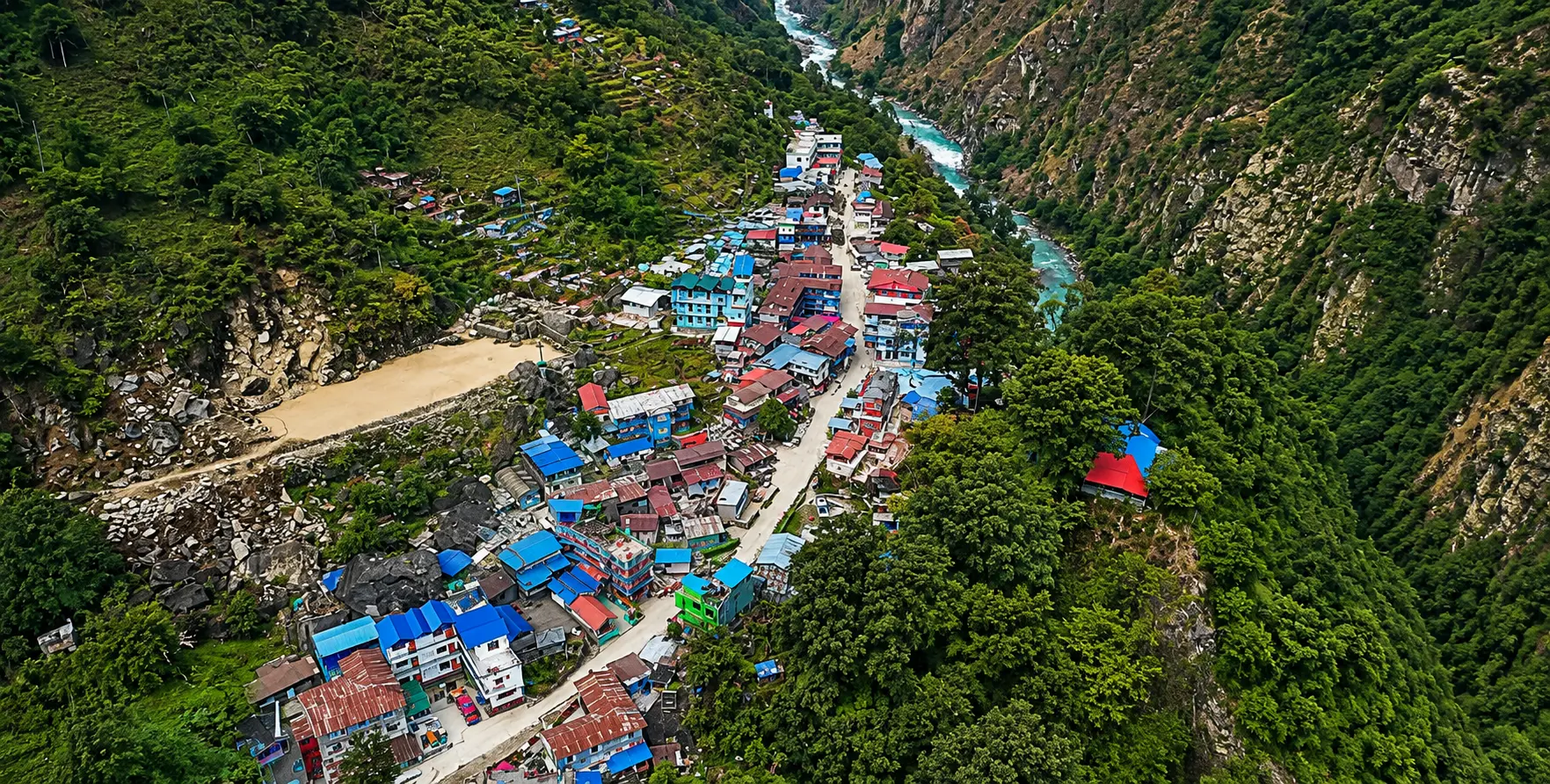
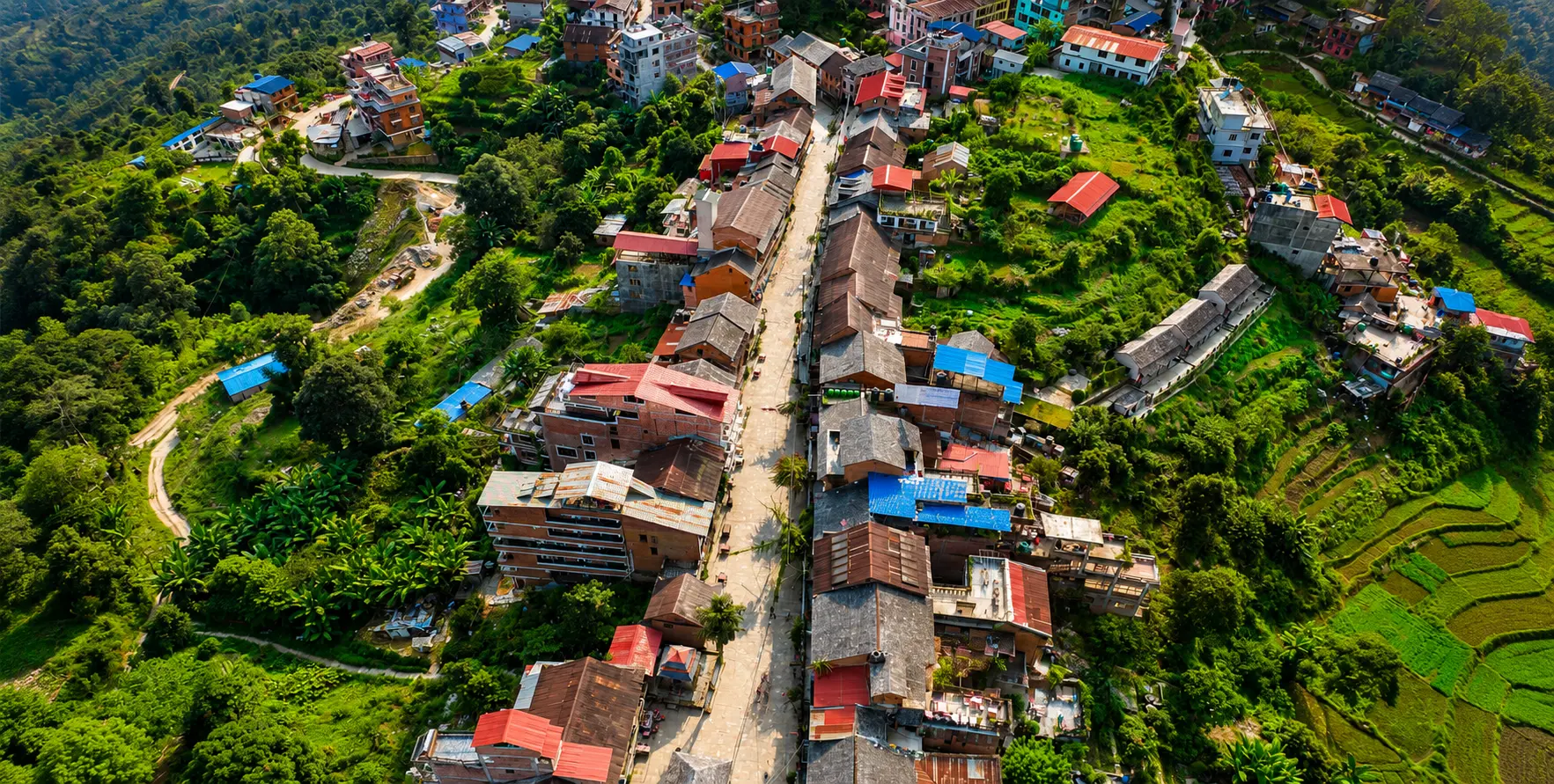
As the track drops toward the lower valley, it passes through Gurung and other hill-community villages in the Siwai area, where terraced fields climb the slopes on both sides, and the river appears and disappears below the road. Further down, you reach Birethanti, the busy riverside settlement that serves as the Annapurna Conservation Area checkpoint on the Modi Khola.

Trekking itineraries often mention stopping here to have permits checked, and it is the natural place to keep your ACAP permit and TIMS card handy. Depending on your route and the checkpoint’s practice on the day, your driver or guide will tell you whether a stop is needed.

Just beyond lies the Nayapul junction, where the valley road meets the paved highway toward Pokhara. From here,e the character of the journey changes completely: smooth tarmac, shops, traffic and, within about an hour and a half, the first glimpses of Phewa Lake and the Pokhara valley.

Trekkers who have spent a week above the tree line often find this transition more jarring than any rough road, and it is worth spending a few quiet minutes simply looking out of the window.
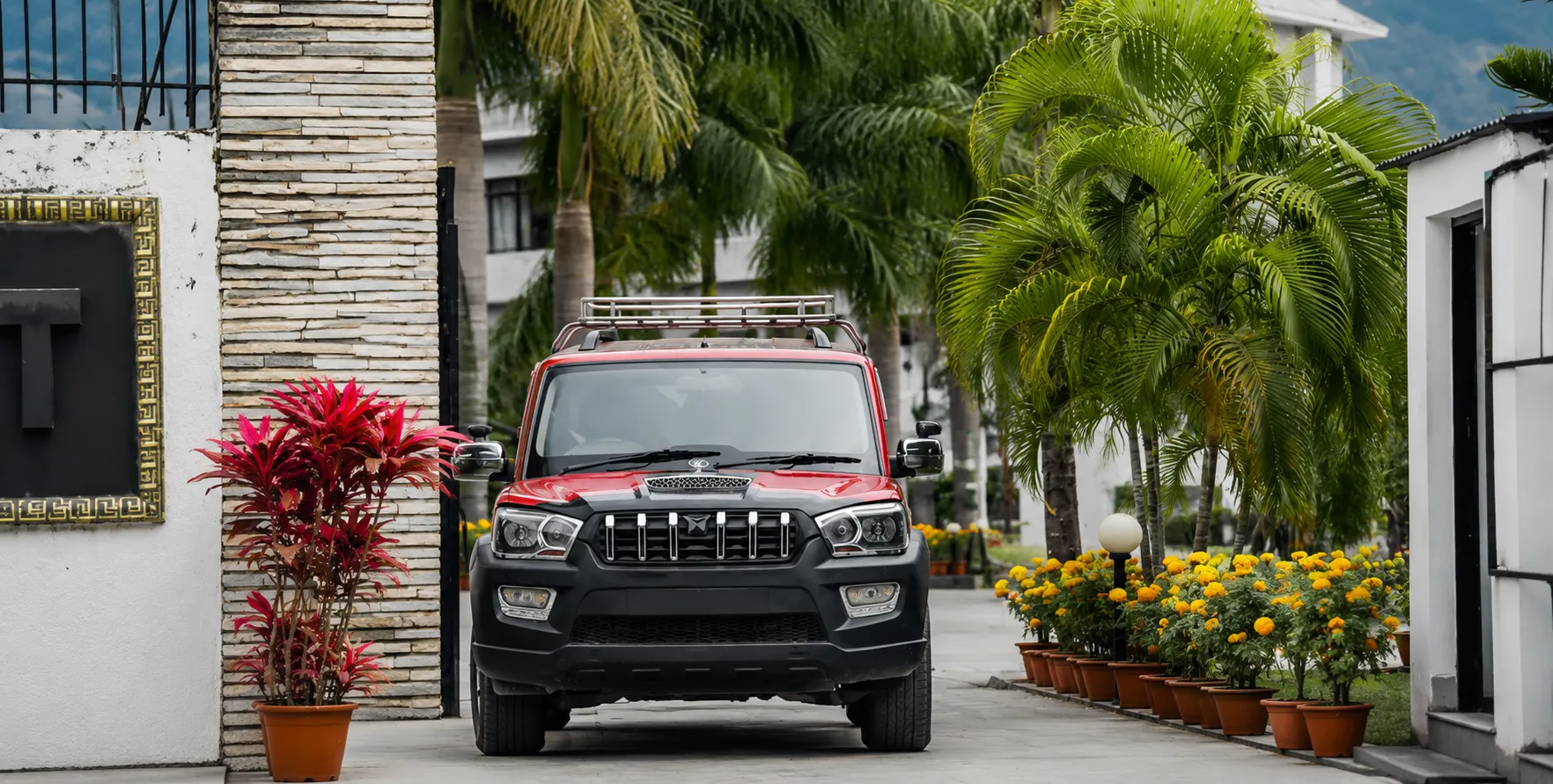
Jhinu to Kathmandu Jeep Rental

Why a Scorpio jeep for this section

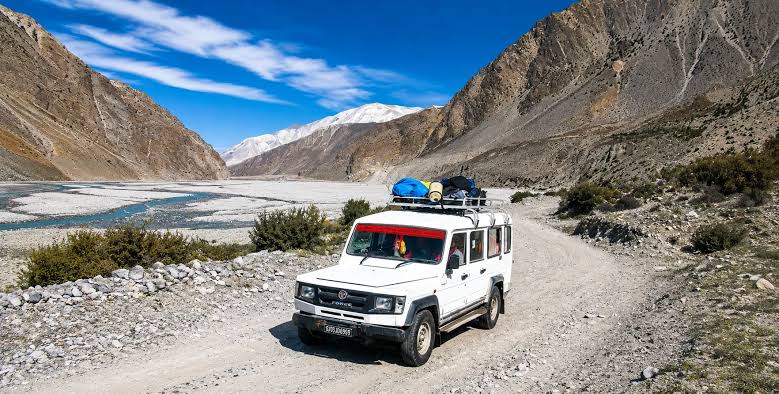
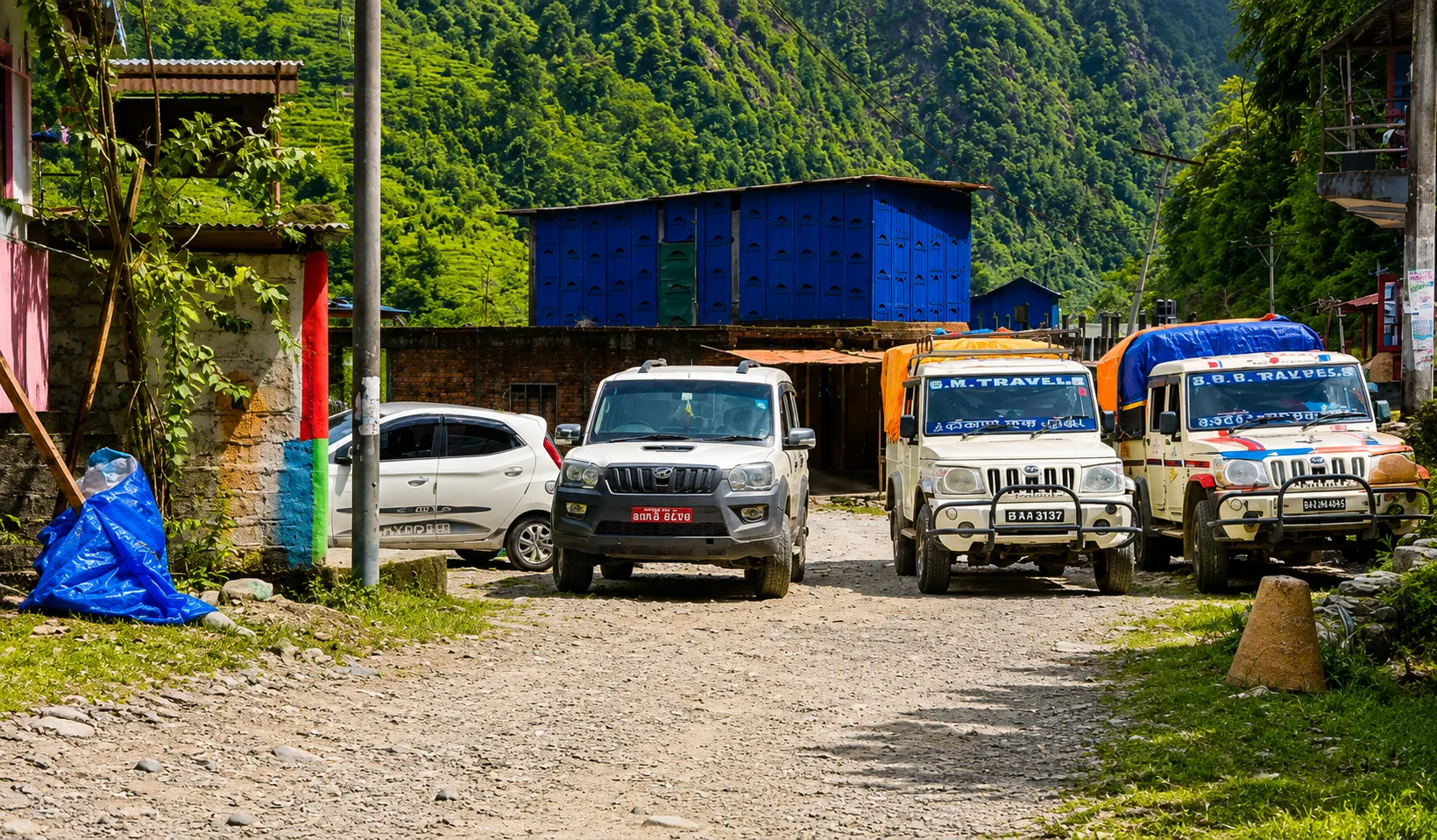
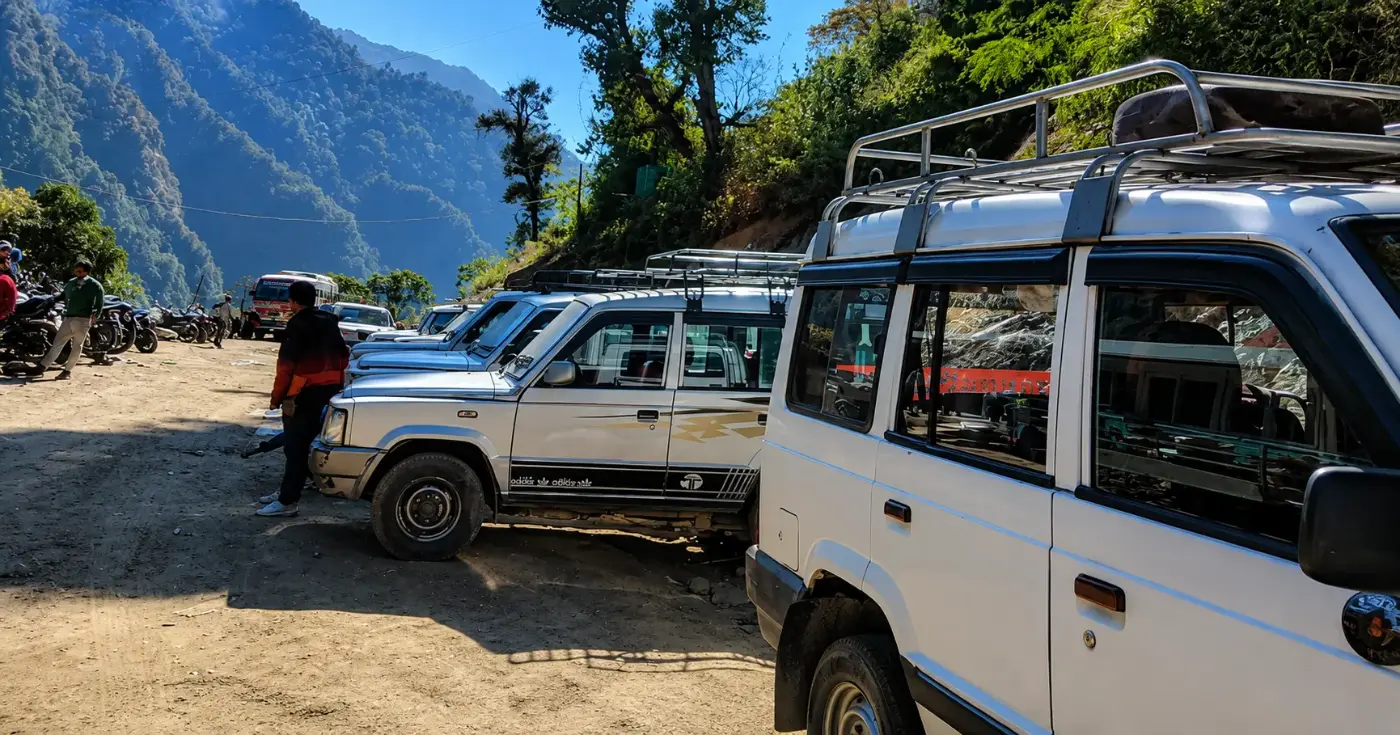
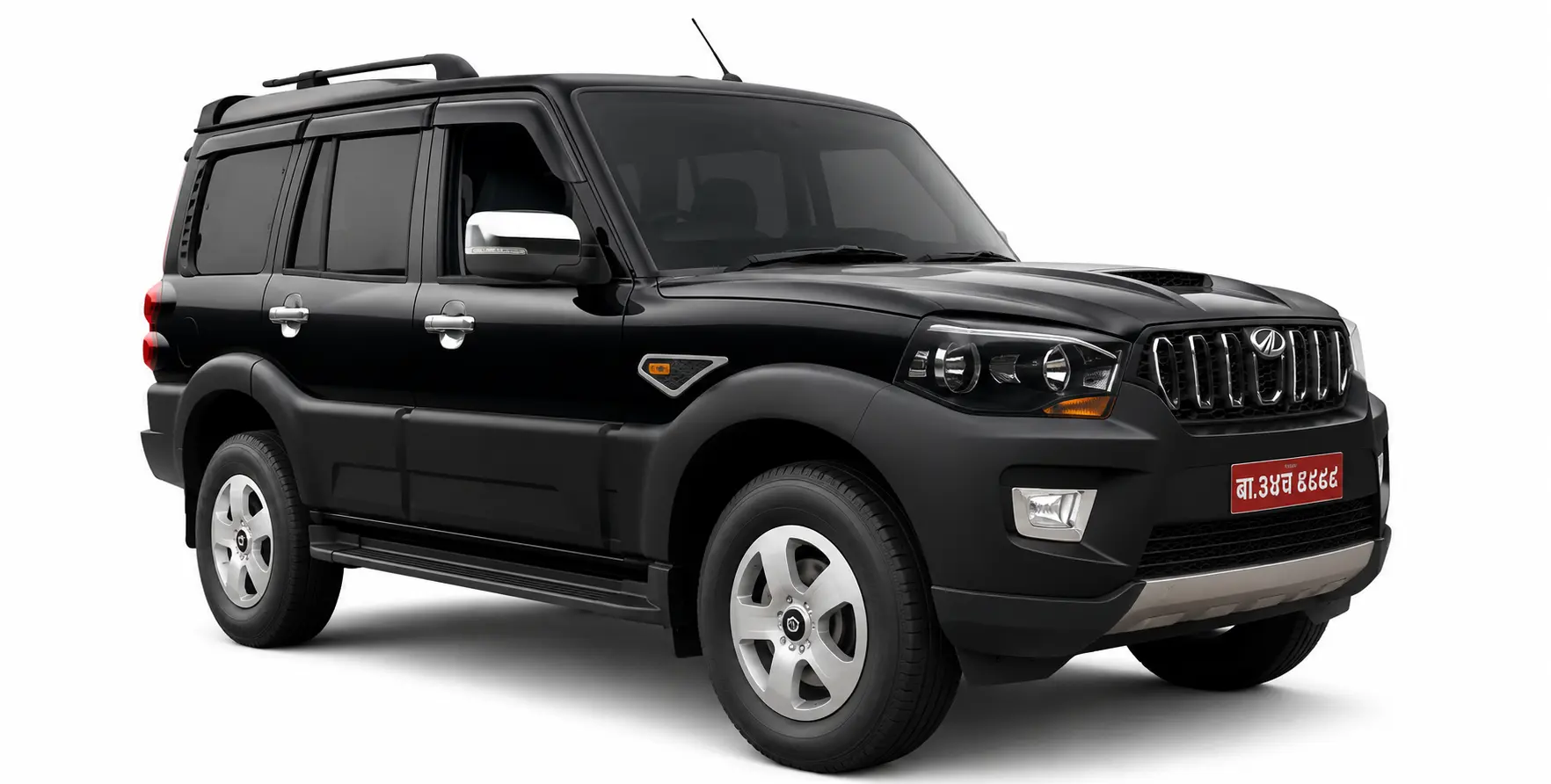
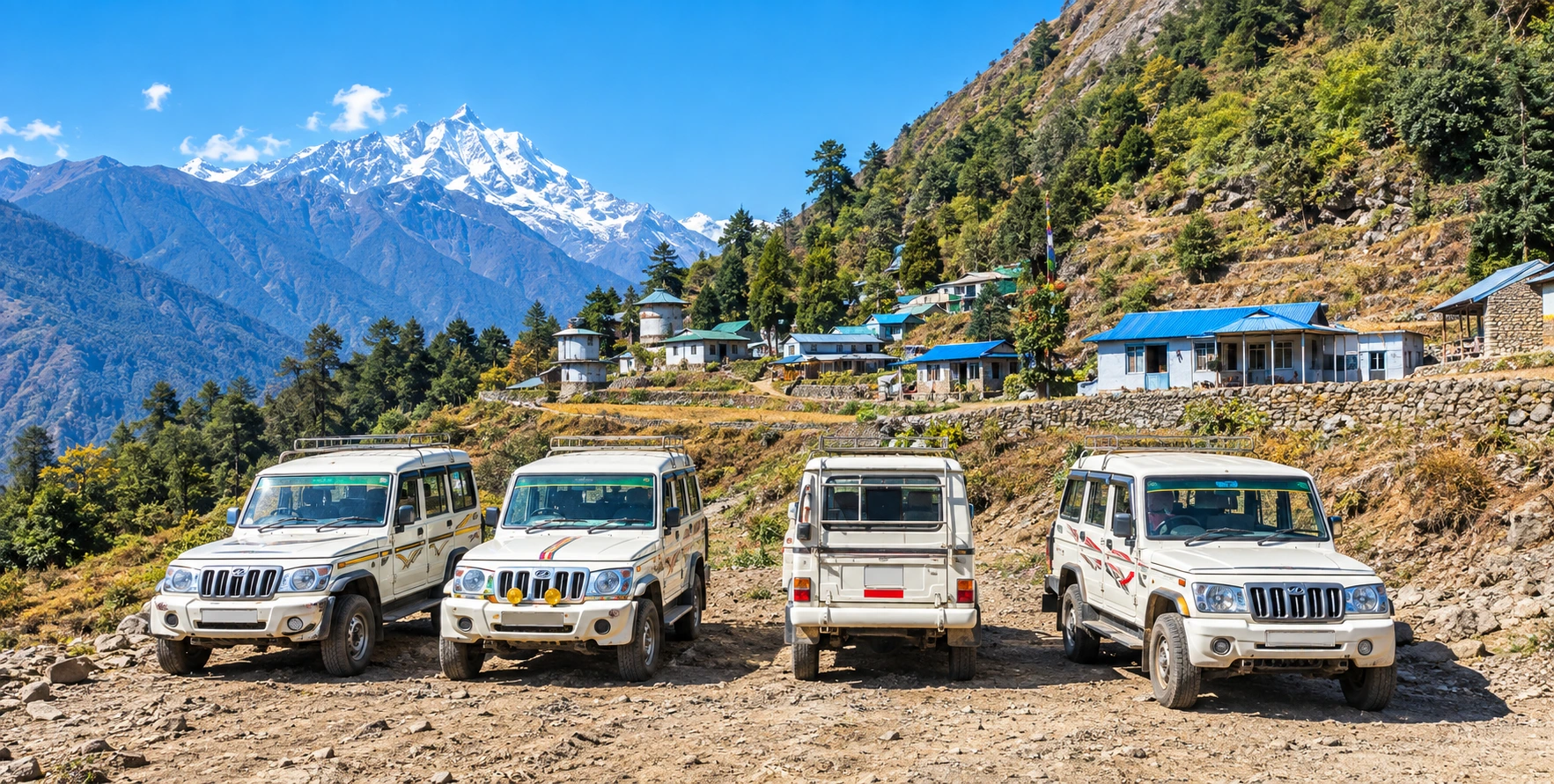
The Mahindra Scorpio is Nepal Vehicle Hiring’s standard mountain vehicle for roads like this. It combines four-wheel drive and good ground clearance with a body narrow enough for the tight sections, and it seats a small group comfortably with luggage on the roof rack.

A group of four to seven trekkers with their packs fits well. For this stretch, we do not use vans or buses; they are unsuitable for the surface and unsafe on the narrow crossings, no matter the group size.

Leg two: Pokhara to Kathmandu on the Prithvi Highway

If you plan to reach Kathmandu in one day, or if you are completing the second day of a two-day exit, this is the long leg. For many people, it’s also the most enjoyable part of the journey once the stress of the trek exit has passed.

The highway in plain terms

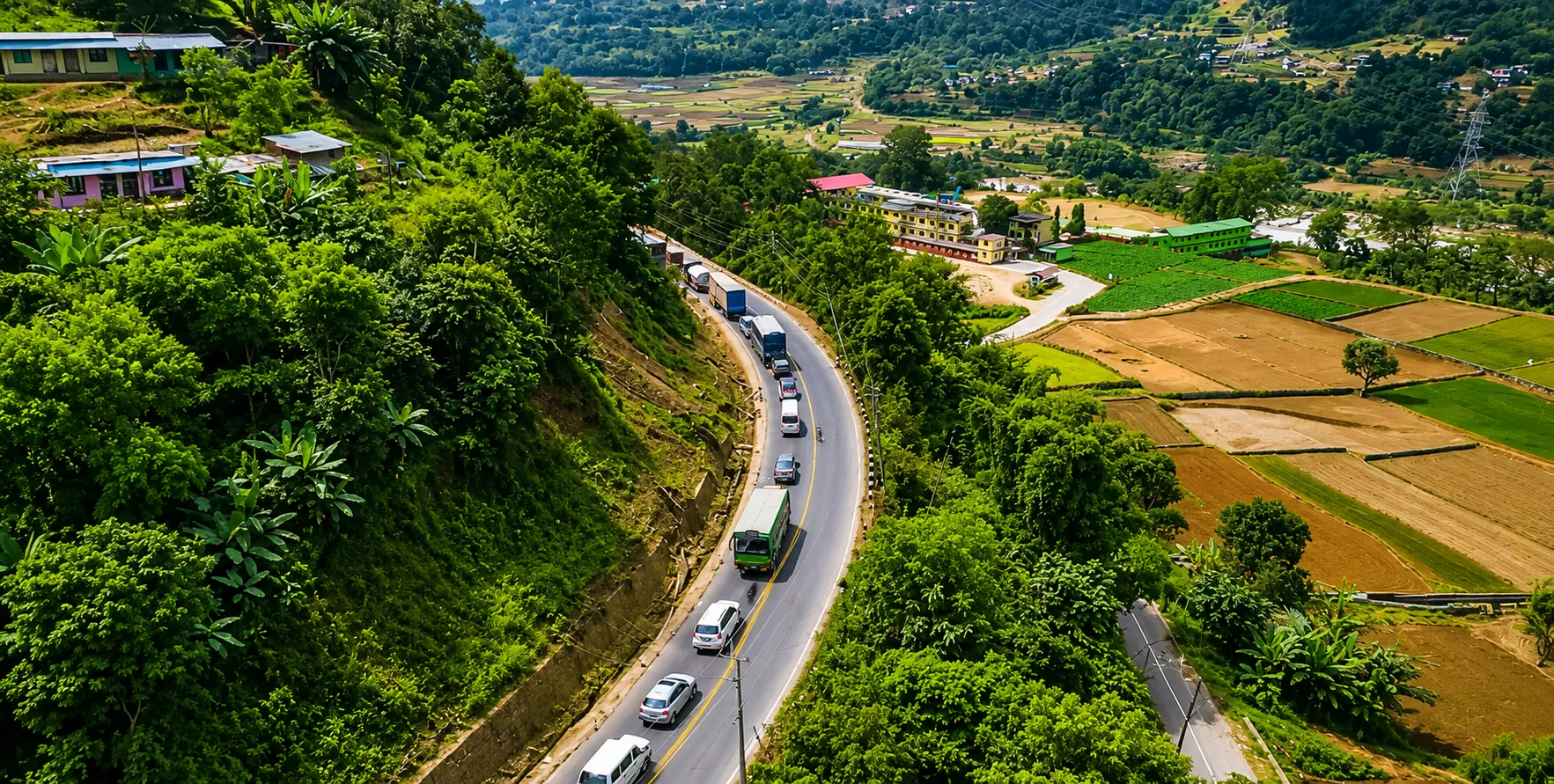
The Prithvi Highway is Nepal’s busiest tourist road, a roughly two-hundred-kilometre link between Pokhara and the Kathmandu Valley that follows the Marsyangdi and Trishuli river corridors for much of its length. Sections have been widened over time, and others remain two lanes with the traffic character you would expect on a national route: slow trucks, buses overtaking on gentle bends and the occasional hold-up at a narrow bridge.

A comfortable plan allows six to eight hours, including a proper meal stop, and more on festival days or when roadworks are active.

For a group arriving from the mountains, comfort matters as much as speed. This is where a car or a Hiace van with air conditioning and reclining seats is more comfortable than a jeep, which is why some of our itineraries use a relay: the Scorpio jeep for the valley section, and a car or van waiting at Pokhara for the highway.

Stops that make the drive worth it

  • Mugling junction and the river fish restaurants. Along the way,y you reach Mugling junction, where riverside restaurants serve freshwater fish from the Trishuli. A late lunch here, with the rapids audible from the table, is one of the better meals on any Nepal road.
  • Manakamana cable car. From Mugling, ng a cable car rises to the hilltop shrine of Manakamana. It adds a couple of hours and suits groups that aren’t under time pressure and enjoy a short, pilgrimage-style detour.
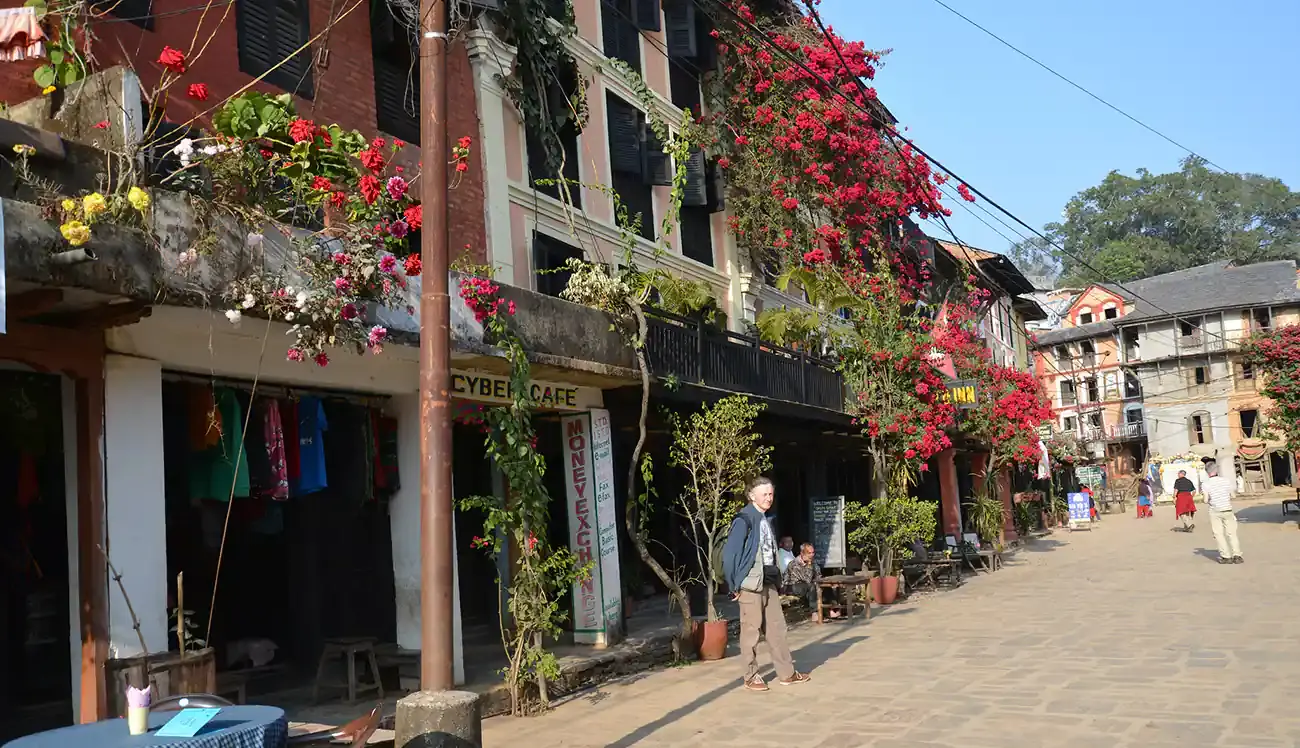
  • A little off the highway at Dumre, Bandipur’s preserved Newari bazaar makes a pleasant overnight stop for trekkers who want a quiet heritage town between the mountains and the capital. It is not essential, but it is a far gentler landing than a long push into the Kathmandu traffic.
  • Early arrival, Kathmandu traffic. The final hour into the valley can be slow in the evening. A mid-afternoon arrival in Thamel is far more pleasant than a nine o’clock arrival after a day in the vehicle.

For travellers who don’t want to hire a private vehicle on this leg, the regular Kathmandu to Pokhara bus service runs in the opposite direction on the same road, and our team can explain how the schedules fit with a late-morning arrival in Pokhara.
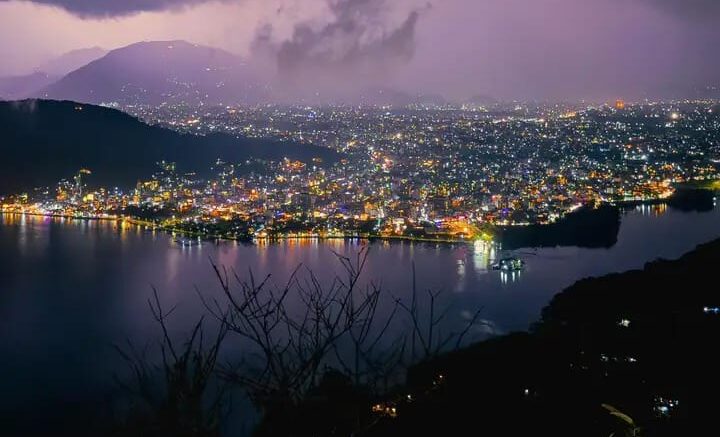
Jhinu to Kathmandu Jeep Rental

Same day or overnight in Pokhara? A practical decision guide

This is the question groups ask us most often and the one with the least generic answer. The right choice depends on four things.

When the same-day journey makes sense

  • You have an international flight the following morning. Rest matters less than certainty, and a long day on the road is the trade-off for being sure of making the flight. Leave Jhinu early, keep stops short, and tell us the flight time so we can plan the buffer.
  • Your group is fit, young or used to long days. If everyone finished the trek feeling strong and wants to be in Kathmandu for a proper evening, a same-day plan is workable.
  • Weather is settled. Clear weather and a dry road make a long day far less risky than a monsoon afternoon.

When a Pokhara overnight is better

  • Anyone is tired, sore or carrying a minor injury. Downhill days leave knees and ankles inflamed. Another six hours in a vehicle is hard on both.
  • The valley road is rough or slow. If the first leg takes the full four hours, the arithmetic of a same-day push gets poor very quickly.
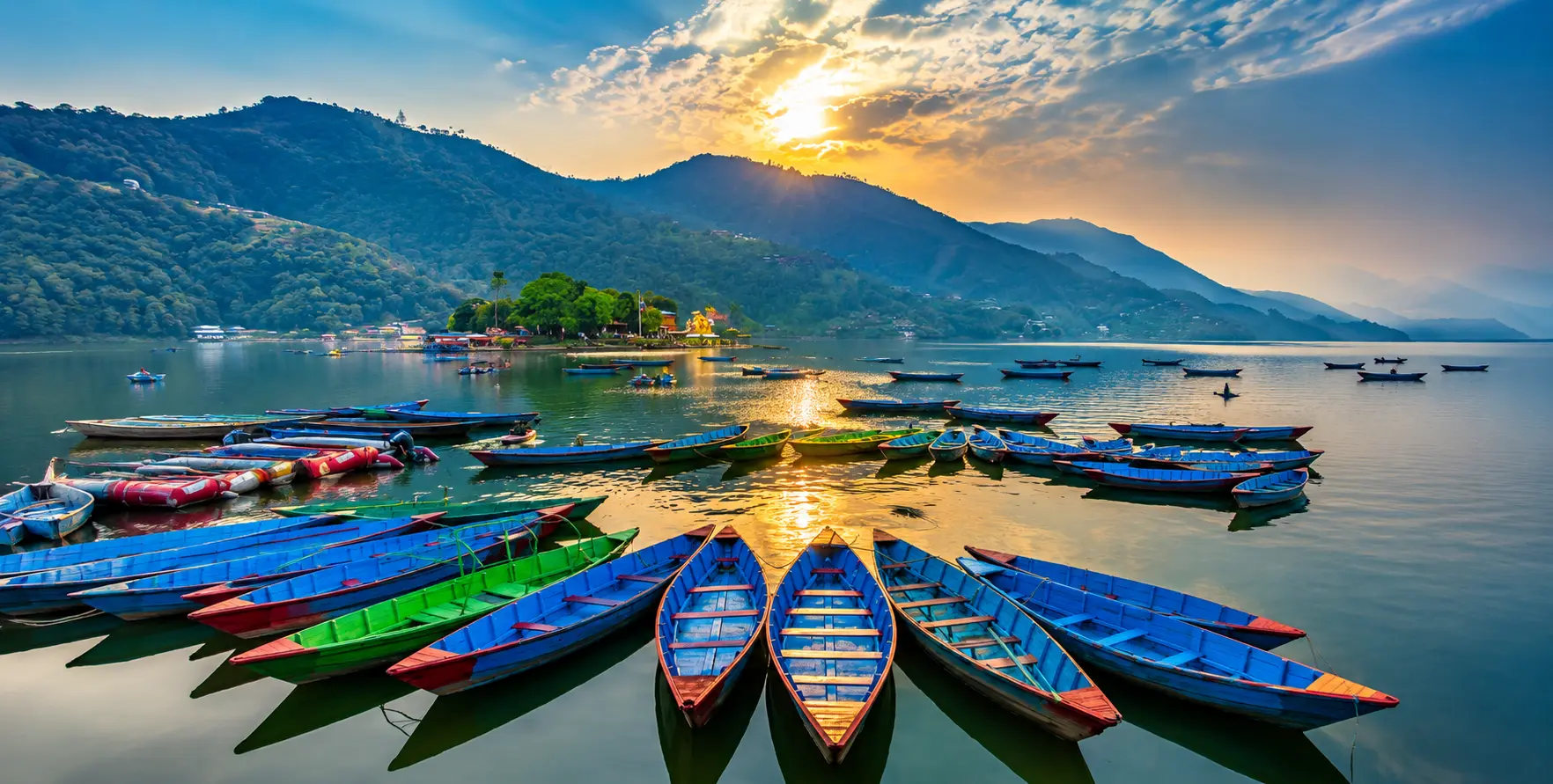
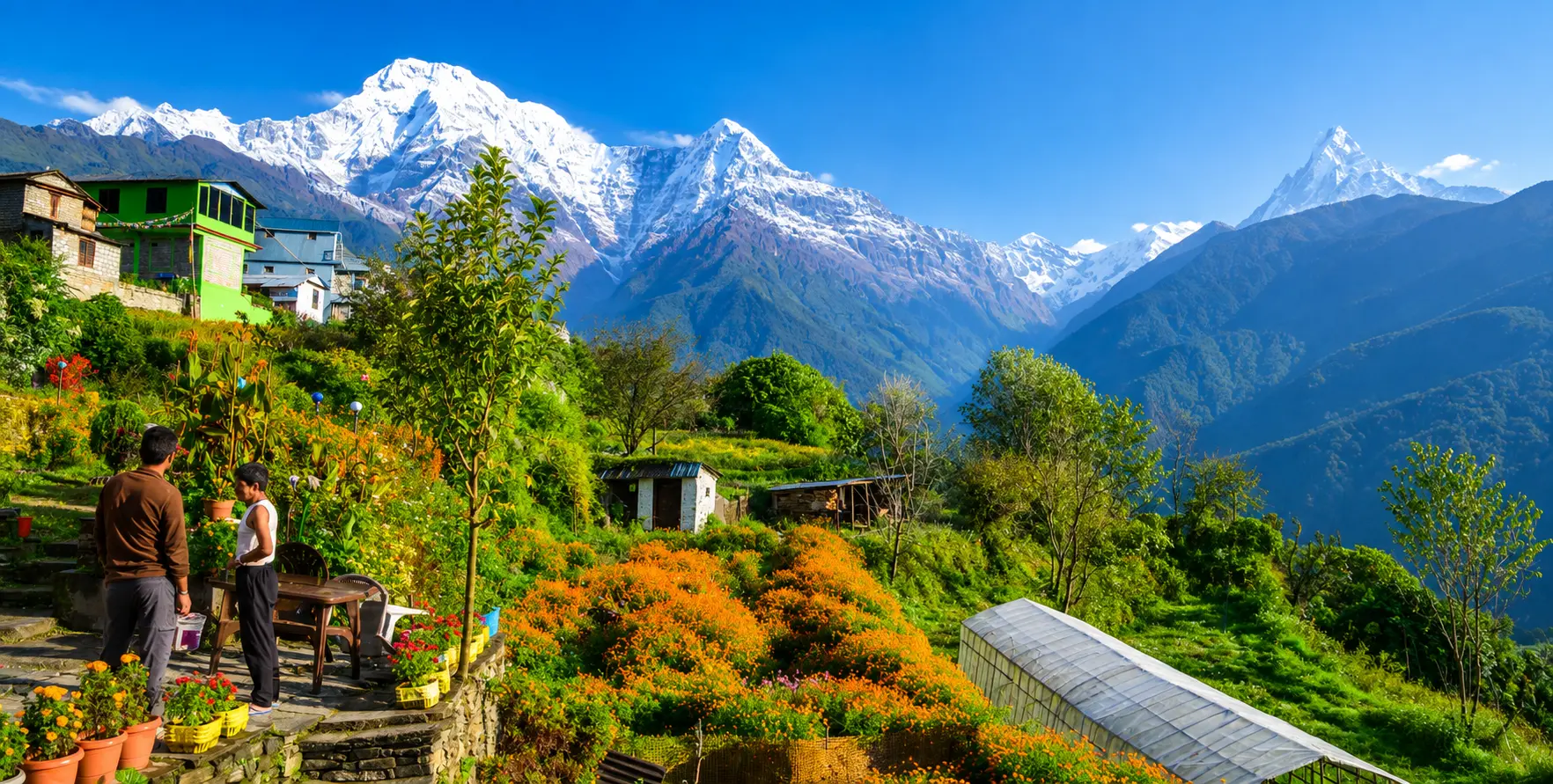
  • You want the lake. After days in the mountains, an unhurried evening beside Phewa Lake, with a proper shower, a restaurant meal and a view of Machhapuchhre in the morning light, turns the end of the trek into a holiday rather than a logistics exercise. An early start on the Sarangkot sunrise tour is a satisfying way to say goodbye to the Annapurna range.

The flight option

A domestic flight between Pokhara and Kathmandu takes well under half an hour and is a popular way to finish after a night in Pokhara. However, it is weather-dependent: flights in this corridor are generally best in the morning, and cancellations and delays happen, particularly in the monsoon and in winter haze.

If you have a fixed international connection, treat the flight as a convenience and keep the road as a backup. Nepal Vehicle Hiring can hold a vehicle in Pokhara as insurance on request, and we also provide Kathmandu airport transfers for the other end.
Jhinu to Kathmandu Jeep Rental

Choosing the right vehicle for your group

Because the journey crosses two very different road types, the vehicle mix matters more than the vehicle brand.

  • Small groups of two to four. A single Scorpio jeep can handle the whole journey, valley and highway. It is robust, comfortable enough for a long day and removes any need to change vehicles. This is the simplest option.
  • Groups of four to seven. One Scorpio jeep works if luggage is moderate. If bags are heavy, because of porter loads or expedition gear, a second vehicle spreads the weight and improves comfort.
  • Groups of eight to fourteen. Because of the valley track, a group of this size needs two or more jeeps for the Jhinu-to-Nayapul section, followed by a Hiace van from Nayapul or Pokhara for the highway. Nepal Vehicle Hiring coordinates this relay so that the van is waiting as the jeeps arrive.
  • Groups of fifteen or more. For larger parties, several jeeps cover the valley, and a Coaster bus takes over on the highway. Larger school, university and club groups often travel this way, and we arrange both vehicle types under a single booking.
  • Couples and solo travellers. A private car is the most economical choice for the highway leg, paired with a jeep for the valley if the road requires it.

All of our vehicles are driver-operated; there is no self-drive option, and none would be appropriate on this road. Your driver will have driven the valley before, will know which crossings are firm and which need care, and will know how to read the day’s conditions rather than guess.

A sample exit day, hour by hour

The details below describe a typical day for a group that wants to reach Pokhara comfortably by late afternoon. Adjust times to match your own plan and the road.

  • Early morning at Jhinu. Many groups visit the hot springs at dawn rather than the evening before, when the pools are quieter, and the valley is still cool. Allow forty to sixty minutes, including the descent and the climb back.
  • Breakfast and pack. Eat properly. The next leg is a day of sitting. Settle your lodge bill, confirm porters and make sure permits and passports are where you can reach them.
  • Mid-morning walk or short transfer. Descend to the roadhead agreed with your guide and driver. This takes from a few minutes to a couple of hours depending on where the vehicle waits.
  • Valley drive. The jeep follows the valley track through Siwai and on toward Birethanti. Expect a stop for permits or a drink; your driver will tell you when.
  • Nayapul and the highway. At the junction, the tarmac begins. If you are changing to a car or van here, bags move across in a few minutes, and your driver or guide will handle it.
  • Early afternoon in Pokhara. A late lunch, a hot shower and a chance to wander the lakeside. For many groups, this is the point where the trek truly ends.
  • Next morning to Kathmandu. A relaxed departure for the six-to-eight-hour highway run, with a fish lunch at Mugling and a mid-afternoon arrival in the valley.
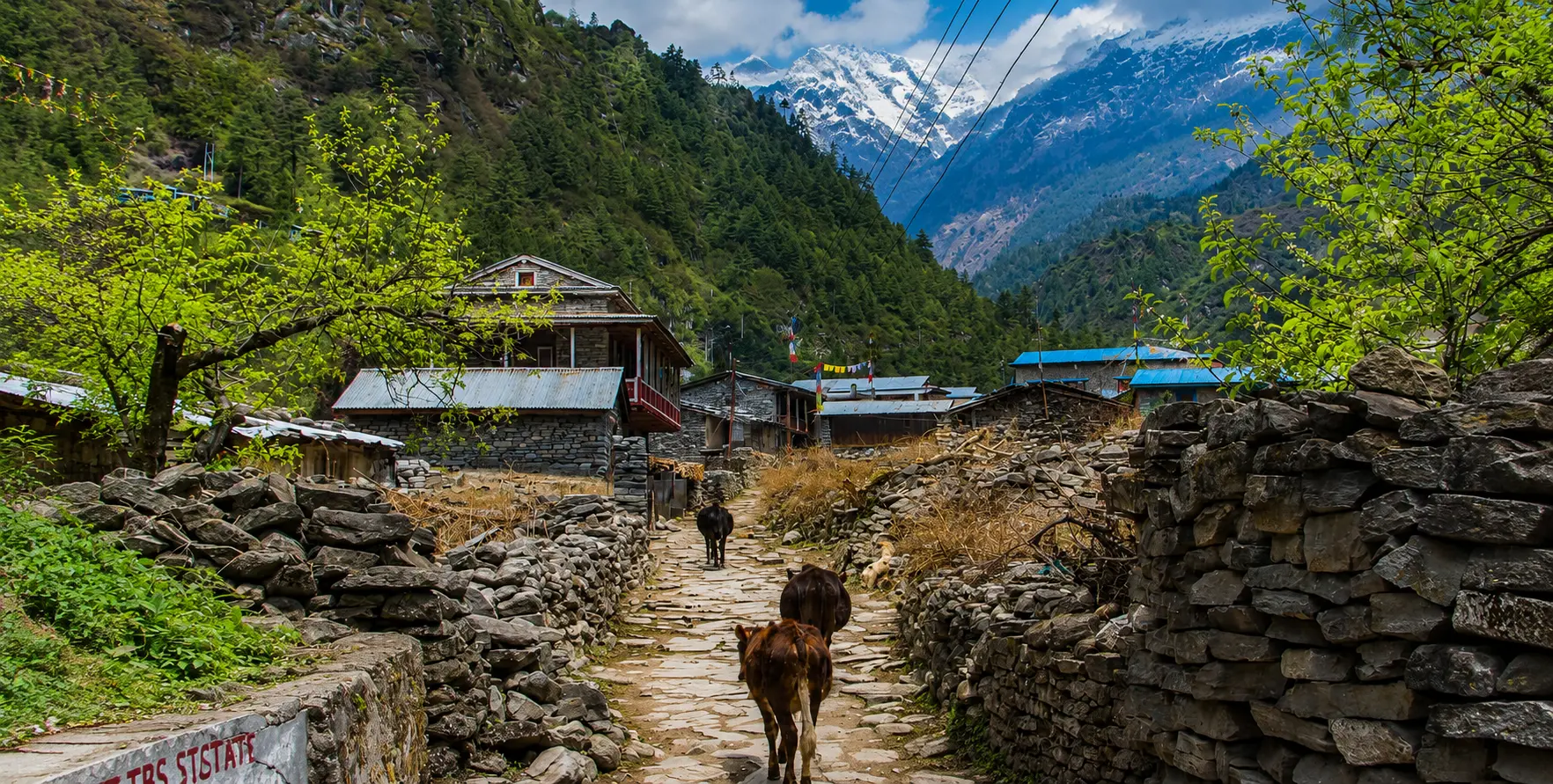
Dharapani trek start point of annapurna range

For trek leaders and group organisers, whether you’re organising a club, party, or family of eight, the exit from Jhinu is where small planning gaps turn into big ones. These habits keep it running smoothly.

Brief the group before the last night.t

Tell everyone the plan at dinner on the evening before, not at breakfast. Cover the departure time, the walk to the roadhead, what to carry in the cabin, where bags will travel, and the lunch arrangement. A group that has heard the plan once, calmly, behaves very differently from a group that learns it while shouldering packs in the cold.

Count heads and bags twice.e

Count people and count bags separately, at the lodge and again at the vehicle. Duffels are easy to leave behind on a porch, and the most common trek-exit loss is a bag that went to the wrong vehicle. If you are using more than one jeep, assign each person to a numbered vehicle and keep that assignment through the day, including at the change at Nayapul or Pokhara.

Agree on a communication plan.

Mobile coverage in the lower valley is better than on the upper trail but not complete. Give the driver and your guide each other’s numbers, share a single point of contact for the group and agree what to do if a vehicle is delayed. Nepal Vehicle Hiring’s operations team is reachable by WhatsApp, which handles patchy signal better than voice calls, and we send the driver’s name and number before the day.

Keep a margin for the unexpected.

Build slack into the plan on purpose. If the group has an international flight, add an extra margin on top of the usual allowance. If a bridge is slow or a vehicle is late, you want the margin to absorb it, not the flight.

A buffer day in Pokhara is often the most sensible protection against the monsoon and the road.

Plan the end of the trek as a moment. nt

The last night at Jhinu is a small celebration, and it is worth making it one. A group dinner, a thank-you to the guides and porters, and a moment of reflection on the trek give people a sense of completion. The vehicle exit the next day then feels like a graceful continuation rather than an anticlimax.

Why local driver knowledge matters on this road

On a highway, a driver is mainly a person who gets you from one place to another. On a valley track like this one, the driver is closer to a pilot who reads the terrain. Several things separate a driver who knows the Modi Khola valley from one who does not.

  • Reading the surface. After rain, a crossing that was firm yesterday can be soft today. Experienced drivers notice small changes such as the colour of the water, the freshness of the tracks and the state of the bank, and adjust before the vehicle is in trouble.
  • Knowing the passing places. On a single-lane section, knowing where the next wide spot is, and whether another vehicle is likely to be coming the other way, avoids long reversals on exposed edges.
  • Timing the day. A driver who has done this many times knows when the road is busiest, when the light fades and how long each section really takes, as opposed to what a map suggests.
  • Local relationships. Drivers on this road know the lodge owners, the checkpoint staff and other drivers. A quick message down the valley can tell them whether a slide has been cleared or a bridge is passable.
  • Passengers pick up on the driver’s confidence. A steady, unhurried driver makes the whole vehicle relax, and a relaxed group copes better with the rest of the day.

When we assign a driver to a Jhinu pickup, we choose someone who works this valley regularly and who communicates clearly in English or Hindi. That is not a luxury. On this particular road, it is the most important safety feature in the vehicle.
Jhinu to Kathmandu Jeep Rental

Travelling responsibly in the Modi Khola valley

The Annapurna Sanctuary route is among the most visited trekking trails in Nepal, and the communities along it live with the consequences of that popularity every day. A few habits make you a better guest and make the valley more pleasant for the next group.

  • Treat lodge families as hosts. Most lodges here are homes. Pay your bill promptly, thank the family and avoid haggling over small charges. A warm goodbye is part of the experience.
  • Be careful at the hot springs. The pools are shared and natural. Follow the posted rules, keep noise low, take your rubbish with you and shower or rinse as required before entering. Respect the privacy of other bathers.
  • Reduce plastic. Refill bottles from safe water points where available, and carry out what you carry in. Bottles and wrappers are a far larger problem in mountain valleys than they look.
  • Support local services. Eat in lodges, buy from village shops and hire local porters and guides where you can. The valley’s economy depends on trekkers who spend within it.
  • Look after porters and drivers. Make sure porters have appropriate clothing and loads, and treat drivers as part of the trekking team. Small gestures, a hot drink at a stop or a proper thank-you at the end, matter more than people expect.
  • Respect the road. If a vehicle is slow because the surface is poor, that is the safe choice. Never press a driver to hurry on exposed sections.

Linking the Jhinu exit to the rest of your Annapurna trip

The Jhinu-to-Kathmandu journey is the last chapter of a longer story, and it works best when it is planned alongside the first.

A typical Annapurna Base Camp itinerary begins with the road from Kathmandu to Pokhara, followed by a short drive from Pokhara to Nayapul and the first trekking days toward Ghandruk, Chhomrong or the Poon Hill ridge. Our Pokhara to Nayapul transportation service covers the lower approach, and the same drivers who take you up often come back for the exit.

When you book both ends together, you receive written confirmation for every leg before you leave Kathmandu, plus a single point of contact throughout the trek.

If you are combining the Sanctuary with something longer, such as a Poon Hill loop, a lake day in Pokhara or an extended Nepal circuit, we coordinate the legs as one plan. The same principle applies to groups finishing at Jhinu and continuing elsewhere: Chitwan for wildlife, Lumbini for the Buddha’s birthplace, or the Kali Gandaki valley for Mustang.

A single operator across all legs means a single standard of vehicle, driver and communication, and one conversation to adjust when the weather, the road or the group’s energy changes.

What the valley shows from the jeep window

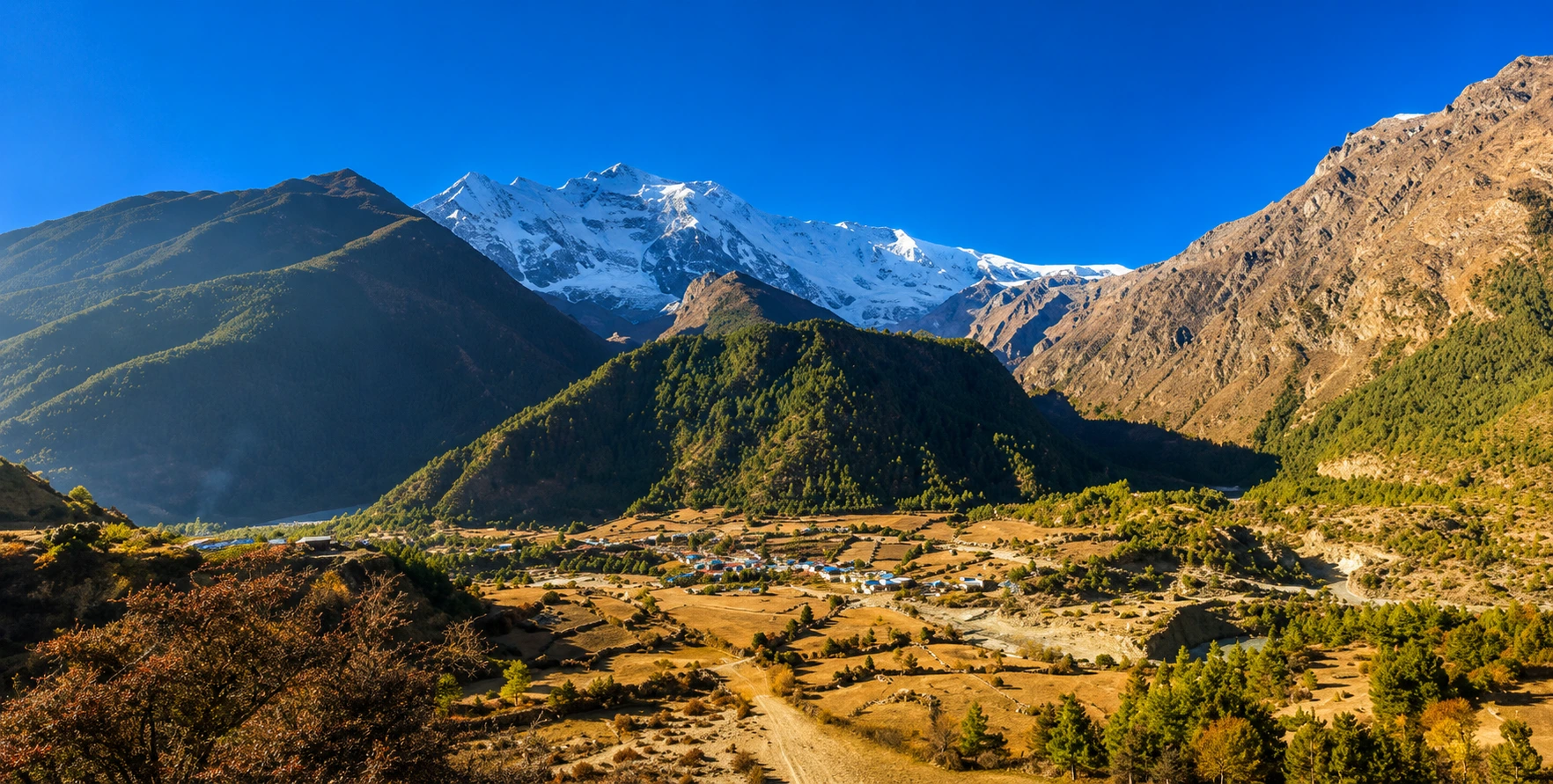
It is easy to treat the vehicle section as dead time between the trek and the hotel, but the lower Modi Khola valley rewards anyone who keeps their eyes open. Because you are descending, the landscape changes in layers, and it changes faster than it ever did on foot.

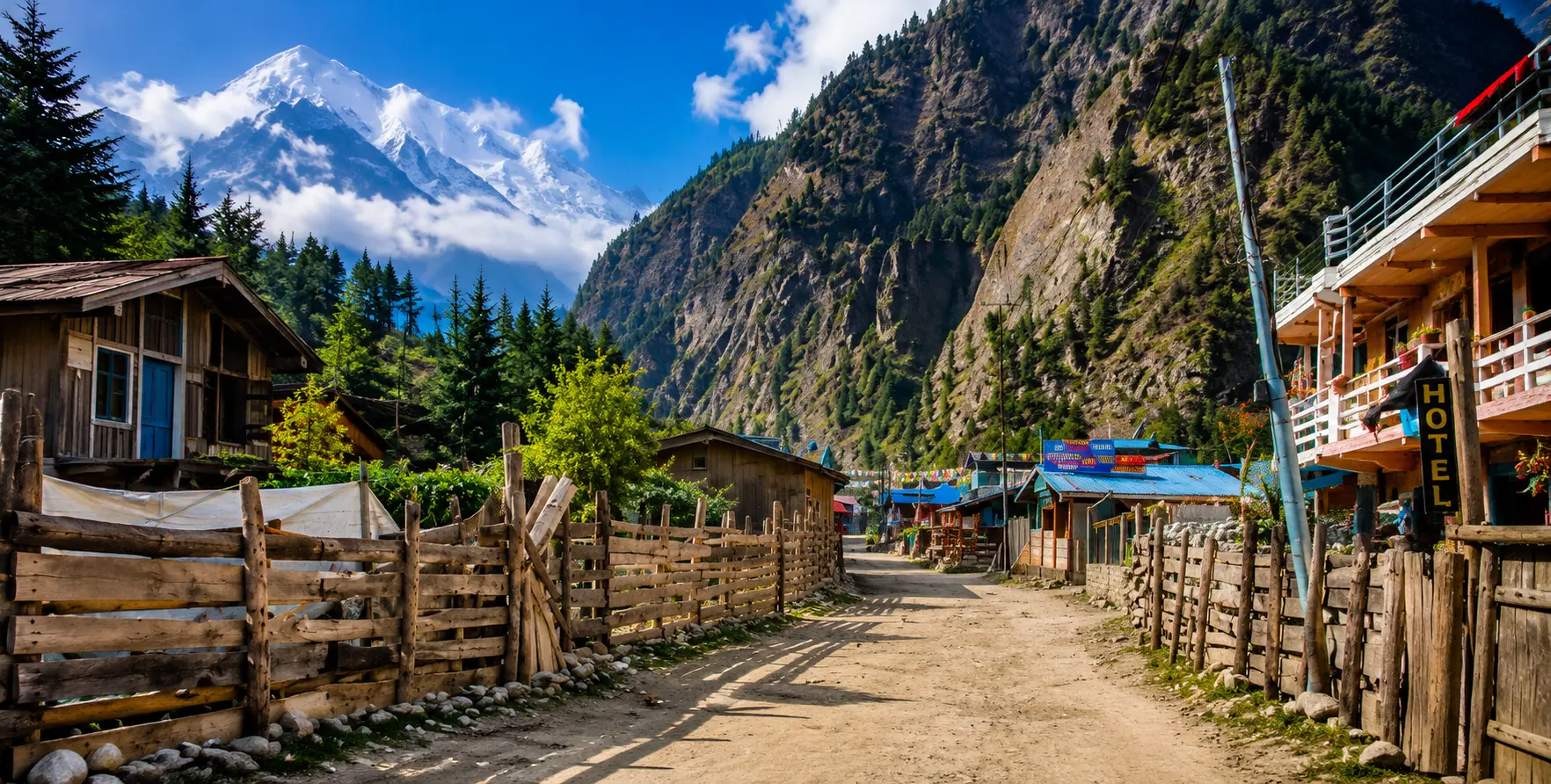
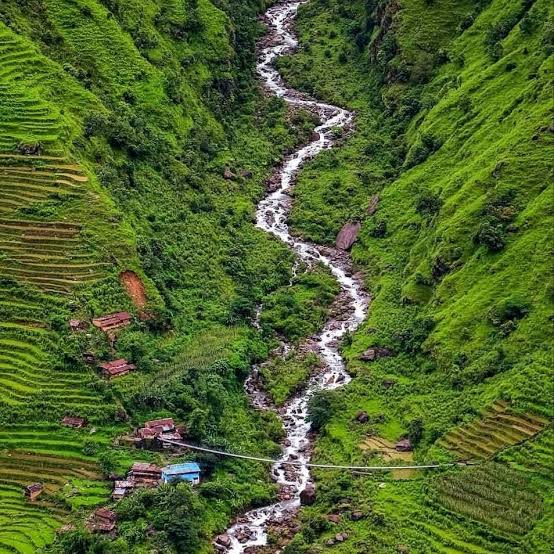
Near Jhinu, the slopes are steep and forested, with oak and rhododendron on the cooler faces and bamboo thickets close to the river. As the track drops, the forest opens into terraces cut into the hillside, planted with millet, rice, and maize according to the season, with small stone and slate-roofed houses scattered between them.

After rain, thin waterfalls appear on the valley walls and disappear again within a day or two, which is why the same road can look entirely different on consecutive mornings.

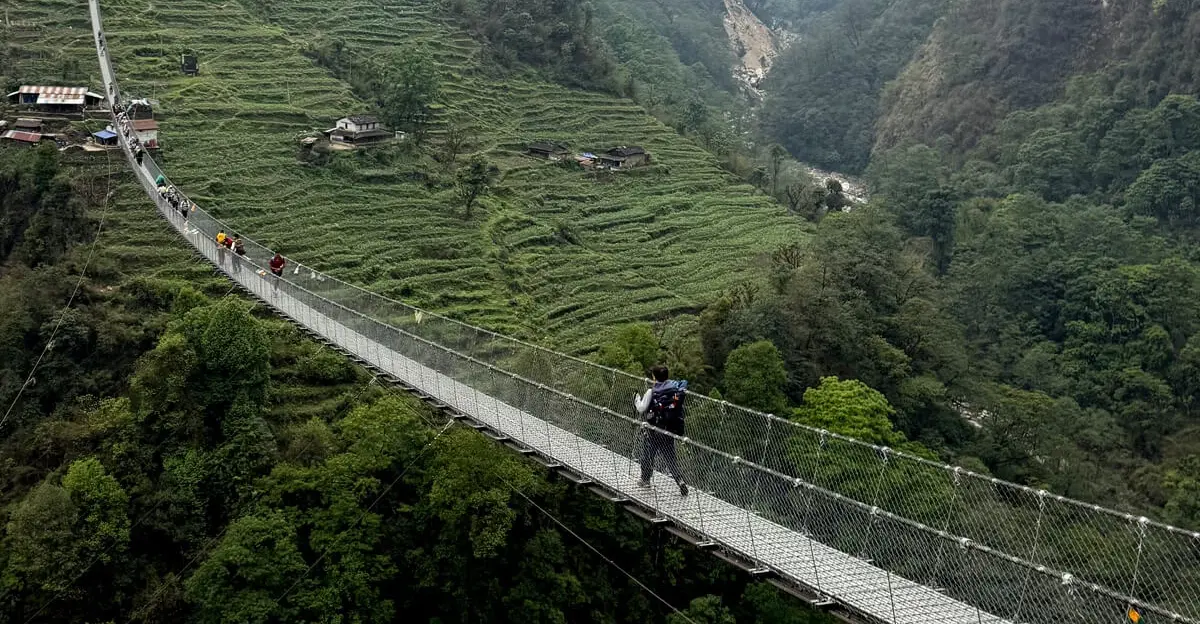
Suspension bridges are the other recurring feature. Some carry only foot traffic and are visible far below the road, strung across the river at points where the gorge narrows. Others carry vehicles and are narrower than they look from the cabin.

Your driver will slow for each, and it is worth watching how little room the vehicle needs when it is placed with care.

Further down, the valley widens, and the settlements become larger and busier. Roadside tea shops, small shops selling trekking supplies and the first dense traffic of the day tell you that you are leaving the mountain world.

Many trekkers describe the moment the tarmac begins at Nayapul as the real end of the trek, and the sense of closure is unexpectedly strong. A few quiet minutes of looking back up the valley, before the conversation in the vehicle turns to hot showers and dinner, is a good way to mark it.

A short planning checklist

Use this list as a working summary when you finalise the exit guide with us.

  • Confirm the final exit date and a fallback day, so a delay on the trail does not collapse the plan.
  • Decide whether the journey ends in Pokhara or Kathmandu, and whether the plan includes a flight.
  • Count passengers and bags, and tell us how many porters are travelling to the roadhead.
  • Ask your guide to confirm the current pickup point with local lodge owners before you reach Jhinu.
  • Agree the departure time for the final morning, allowing for a dawn visit to the hot springs if you want one.
  • Keep permits, passports and a small daypack inside the cabin.
  • Share a single group contact and the driver’s number once you receive it.
  • Hold a buffer if you have a fixed international departure.
Jhinu to Kathmandu Jeep Rental

Practical preparation for the last day of the trek

Bags, porters and the roof rack

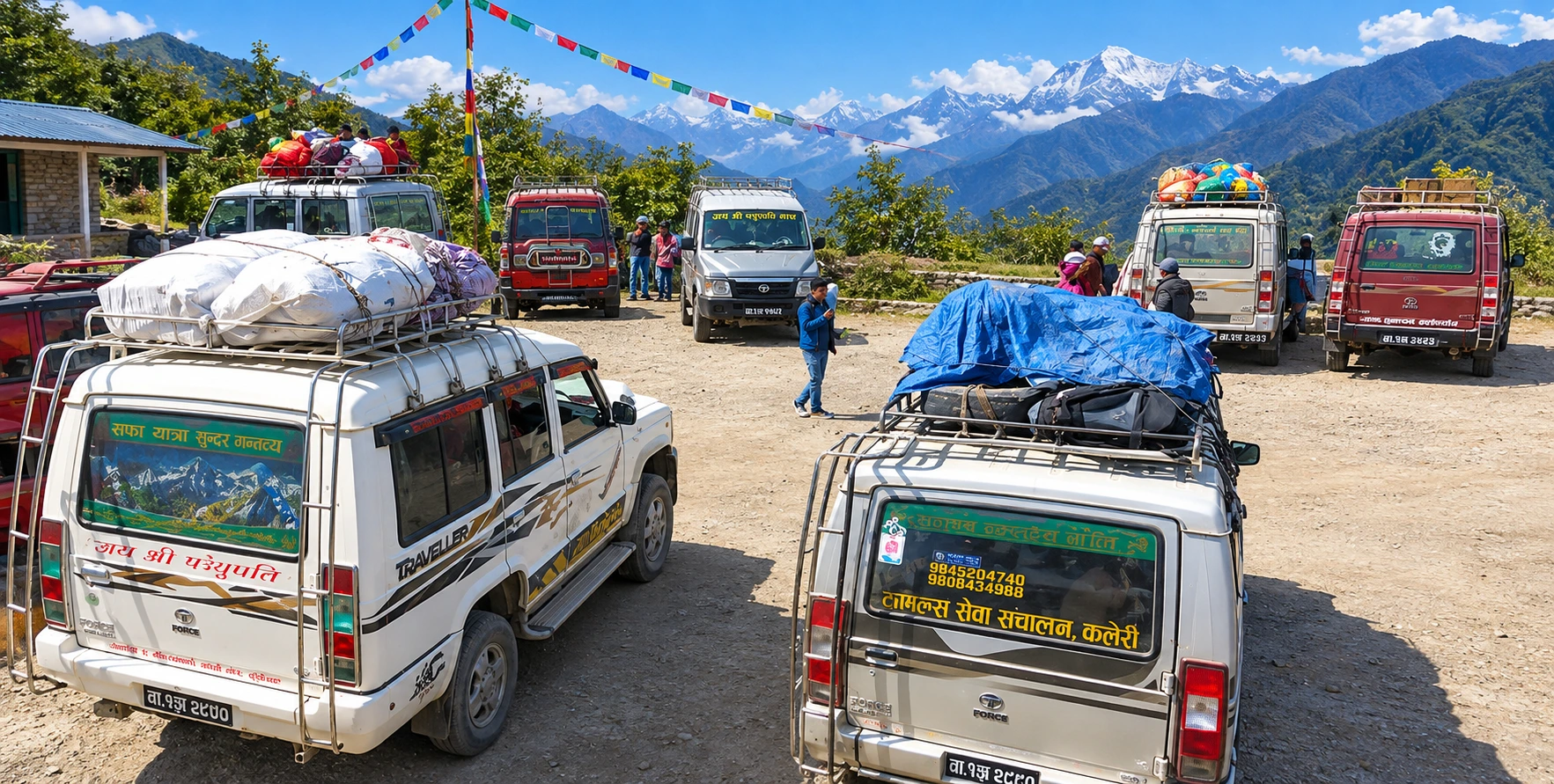
Trek bags are usually bulkier than people expect once everything is stuffed back in, and porter loads are often heavier than the guide’s estimate. Tell us at booking how many large packs and duffels there are, and whether porters will accompany the group to the roadhead or hand bags over earlier.

A Scorpio jeep carries a good number of packs on its roof rack, but a full roof on a rough road slows driving, not speeds it up. If your group has more luggage than passengers, the right answer is an extra vehicle, not a heavier roof.

Keep a small daypack inside the cabin with what you will want before the next hotel: water, a warm layer, a rain shell, phone and charger, passports, permits, and any medication. The same day-bag rule applies at Nayapul if you change vehicles.

Permits and documents

The Annapurna region requires an Annapurna Conservation Area permit and a TIMS card for foreign trekkers, and checkposts along the valley, including the Birethanti post near the end of the route, may ask to see them. Keep both documents in a waterproof folder near the top of your bag, not at the bottom of a duffel.

If you are leaving the mountains with a guide, they will know whether you need to stop. If you are travelling independently, ask your driver, who will know the usual practice. Carry your passport on the day, since you will need it at the hotel.

Cash for the road

Expect to spend small amounts at stops: a hot drink at a viewpoint, a snack, a tip for a porter or lodge staff, a last souvenir. Small notes are far more useful than large ones in the valley, and card payments aren’t dependable between Jhinu and Pokhara. Withdraw what you need in Pokhara, not on the road.

Looking after your body

  • Hydrate before the drive. Soaking in hot springs, followed by a long day in a vehicle, can leave you drowsy and dehydrated. Drink water at breakfast and carry a bottle in the cabin.
  • Motion sickness. A winding downhill road after days of walking can unsettle even people who normally travel well. If you are prone to it, sit toward the front, keep the window cracked open, and tell the driver early.
  • Knees and ankles. Tired joints may be tender after the long descent from Chhomrong. A walking pole in the cabin helps, and stretching your legs at stops is worth the extra minutes.
  • Leeches in wet weather. Low sections of the Modi Khola trail can have leeches in the rainy months. A quick check of socks and boots before getting into the vehicle saves a messy surprise later.

How the seasons change the exit

Spring

Late spring brings warm days, rhododendron on the upper slopes and a generally dry valley road. It is a busy time on the trail, so vehicles and lodge rooms in Pokhara fill up earlier than in the off-season. Book the exit well before you start trekking.

Monsoon

The rainy months are the most demanding period for the valley road. Slides and washed-out crossings can interrupt the track for a day or more, rivers run high, and visibility in the lower hills is often poor.

This is when a flexible plan, with a buffer day and a driver who can read conditions, matters most. It is also when walking the whole way to Nayapul, which avoids the track altogether, becomes the more attractive option for some groups.

Autumn

Autumn is the favourite season for trekking in Nepal for good reason: clear skies, stable weather and a freshly repaired road. It is also the busiest period, with the greatest demand for vehicles and rooms. Treat any plan that leaves booking to the last few days with suspicion at this time of year.

Winter

Winter mornings are cold at Jhinu, but the days are bright, and the views are sharp. The road is usually dry. Traffic is lighter, and with fewer trekkers, lodges are quieter and more flexible.

Short daylight hours mean the same-day plan to Kathmandu needs an earlier start.

Mistakes we see most often

  • Treating an old itinerary as a pickup instruction. The place a jeep waited in a published itinerary may not be where it can wait today. Always confirm the current roadhead.
  • Booking the vehicle on the last evening. Good drivers and the right vehicles are committed days ahead in the busy months. Book before you start the trek if you can, and refine the plan from the trail as the date approaches.
  • Underestimating luggage. The number of bags decides the number of vehicles, not just the number of passengers.
  • Using the wrong vehicle for the valley. A van or a standard car is not suitable for the valley track, no matter how well it handles a highway.
  • Packing the day too tightly. A hot spring soak, a rough road, a slow bridge and the Prithvi Highway traffic can all run late. Build a buffer, especially if you have a flight.
  • Skipping the Pokhara night out of habit. For many trekkers, the quiet evening beside the lake is the best way to end the trek.
Jhinu to Kathmandu Jeep Rental

Making the Kathmandu arrival count

Reaching the capital after a trek is a small culture shock, and it is worth planning your first day. A hot shower, a laundry service and a decent meal restore people faster than any amount of rest. After that, Kathmandu makes up for a slower day or two.

Our Kathmandu sightseeing service covers the valley’s heritage sites, including Pashupatinath, Boudhanath and Swayambhunath, in a single day. The Bhaktapur Durbar Square day tour is the best single-site day in the valley for people who want old-town streets and pottery squares.

For one last mountain view, the Nagarkot sunrise tour leaves in the dark and returns for breakfast, and the Kathmandu to Nagarkot vehicle service handles the road. Before an international departure, the airport transfer service meets you at the hotel with a named driver.

Beyond the Annapurna Sanctuary

Many trekkers who finish at Jhinu begin planning the next trip before they reach the capital. If the high mountains have hooked you, the Everest Base Camp trek transport page explains how approach vehicles work for the Khumbu, and the Muktinath Yatra and Pokhara to Mustang jeep pages describe the Kali Gandaki approach to the dry side of the Annapurna range.

For travellers with less time, our Nepal tour package and Nepal holiday tour pages explain how vehicle legs are coordinated across a wider circuit.

Frequently asked questions

Can a jeep reach Jhinu Danda itself?

Sometimes it can reach very close, but the exact point varies. The motorable track in the Modi Khola valley has been extended over time and is seasonal, so the place where jeeps wait has been described as Siwai, Simrung, Mithu Danda or a point near Jhinu at different times. We confirm the current situation before your departure and plan the walk-out around it.

How long does the journey from Jhinu to Kathmandu take?

Plan on roughly three to four hours by jeep from the Jhinu area to Pokhara, followed by six to eight hours on the Prithvi Highway from Pokhara to Kathmandu. With the walk out and stops, a same-day journey usually takes ten to twelve hours or more. Many groups break it up with a night in Pokhara.

Is one vehicle enough for the whole trip?

For small groups, a single Scorpio jeep can cover both the valley and the highway. For larger groups, we normally use jeeps for the valley section and change to a car, a Hiace van or a Coaster bus at Nayapul or Pokhara for the highway. We arrange the change as part of one booking.

Should I stay in Pokhara or go straight to Kathmandu?

It depends on your flight, your fitness and the state of the road. If you have an international departure the next morning, a same-day push may be sensible. Otherwise, an evening by the lake is a gentler and often more enjoyable way to finish the trek.

What about porters and bags?

Please tell us how many large bags you have and whether porters will accompany the group to the roadhead. Luggage decides how many vehicles you need. We recommend keeping a small daypack in the cabin with water, documents, medication and a warm layer.

Can I book the pickup before I start the trek?

Yes, and we recommend it, especially in the busy months. Book from Kathmandu or from home with a provisional exit date, then confirm or adjust by message from the trail. A short note a few days before you reach Jhinu lets us confirm the roadhead and the driver.

What if the road is closed or damaged?

We monitor conditions through the drivers who work the valley. If the track is interrupted, we will tell you, discuss alternatives such as walking farther down the trail to a lower roadhead or to Nayapul, and re-organise the plan. Building a buffer day into the plan makes it much less stressful.

Can I visit the hot springs and still leave the same day?

Yes, if you go at dawn. Many groups do exactly that, leaving the lodge soon after first light, soaking for a short while and being back for breakfast with the vehicle plan on schedule. Drink water afterwards and avoid rushing the climb back to the village.
Annapurna range

Plan your Jhinu to Kathmandu return

If you are planning an Annapurna Base Camp trek and want the return journey arranged before you leave, please tell us your expected exit date, group size and number of bags, and whether you want to finish in Pokhara or Kathmandu. We will confirm the current pickup point, recommend the right mix of vehicles and send you a written plan with driver details before you set out. Use the Plan Your Trip page or contact us directly.

Sunauli to Manang Private Jeep Hire: Annapurna Tour Guide

Sunauli to Manang Private Jeep Hire

Sunauli to Manang Private Jeep Hire — Annapurna Circuit Tour Complete Guide

Manang village at 3,519 metres in the Annapurna Conservation Area is one of Nepal’s most spectacular high-altitude destinations — the celebrated acclimatisation stop on the Annapurna Circuit trek where trekkers rest before crossing the Thorong La Pass (5,416 m), and a destination of extraordinary mountain grandeur with the Annapurna III north face, Gangapurna, and the Chulu peaks surrounding the village’s stone houses and ancient monastery. For Indian travellers and trekkers departing from the Sunauli border crossing, a private jeep hire from Sunauli to Manang is one of Nepal’s most dramatic overland road experiences.

This 2-day journey climbs from the Nepal Terai at the border to the high Annapurna plateau at 3,519 metres.

Nepal Vehicle Hiring Pvt Ltd offers private 4WD jeep hire for the full Sunauli-to-Manang journey from the Nepal border gate through the Prithvi Highway, the Besisahar gorge road, and the dramatic Marsyangdi River corridor, all the way to Manang’s stone-paved lanes at the foot of the Annapurna massif. This complete guide covers the route leg by leg, transfer costs, road conditions, required permits, and how to book the full overland journey.

Sunauli to Manang Private Jeep Hire

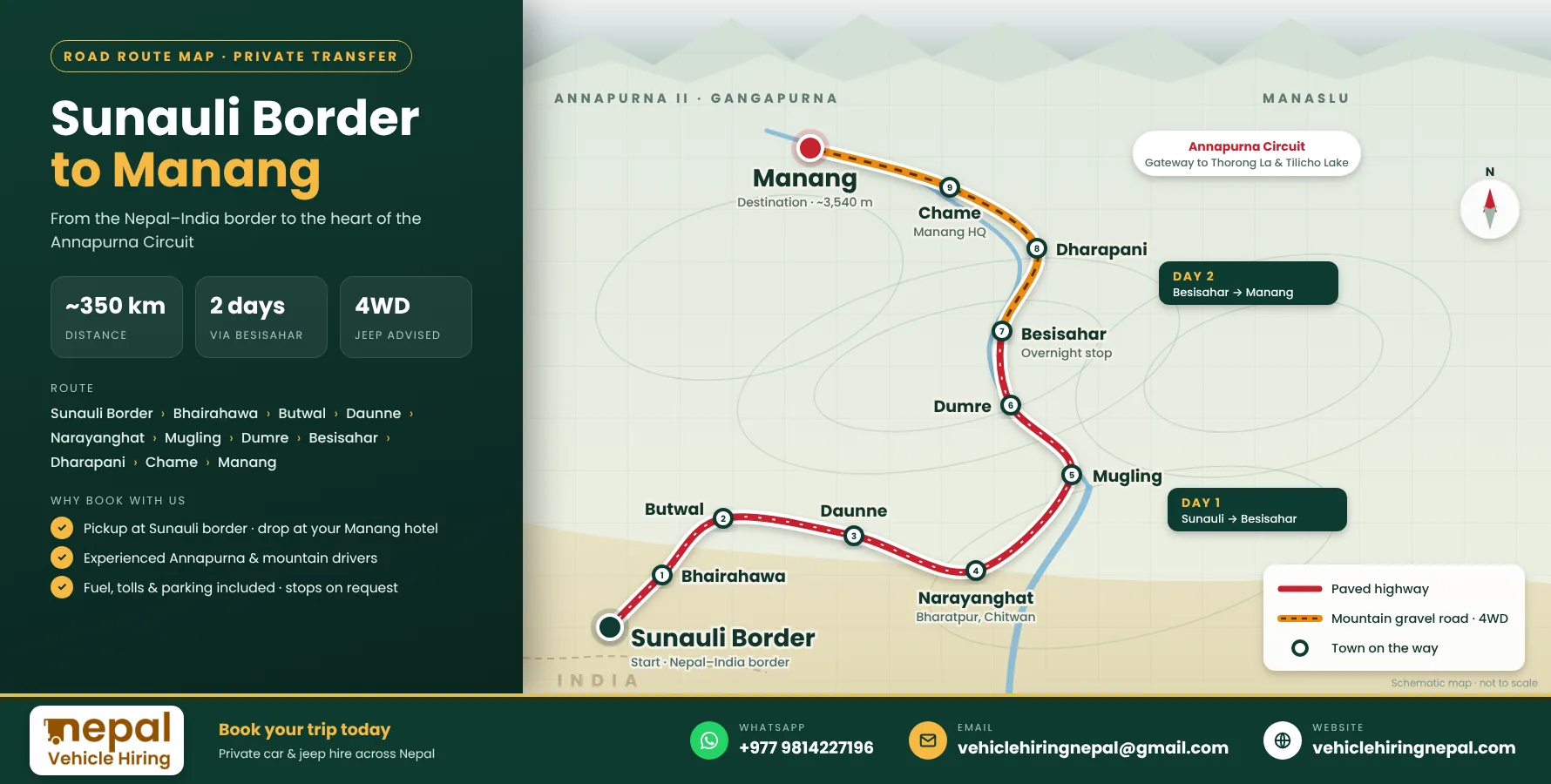
The Complete Route — Sunauli to Manang

Leg 1: Sunauli border crossing (30-90 minutes). Indian nationals cross at Sunauli/Bhairahawa without a visa under the India-Nepal Open Border Treaty. A valid Indian photo ID is required. Nepal Vehicle Hiring Pvt Ltd’s driver meets the group at the Nepal gate immediately after immigration.

Leg 2: Sunauli to Besisahar (approximately 230 km, 5-7 hours, Day 1). From the Sunauli border, the road follows the Mahendra Highway eastward briefly before joining the Prithvi Highway at Butwal and heading north through Narayanghat, Mugling, and the Trishuli gorge section to the Dumre junction. From Dumre, the road branches northeast toward Besisahar — the start of the Annapurna Circuit gorge road.

Nepal Vehicle Hiring Pvt Ltd provides private car or 4WD jeep hire for this leg.

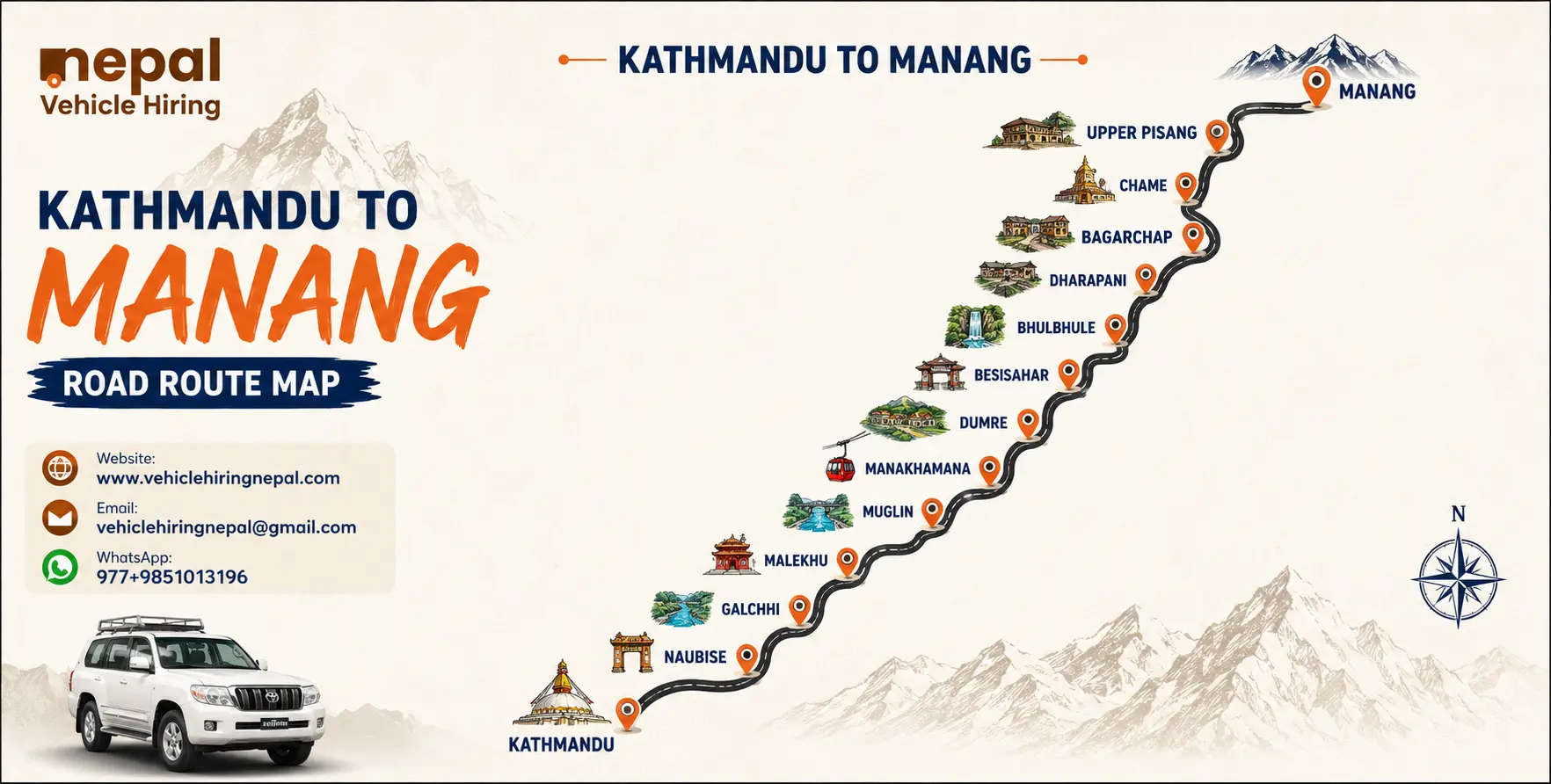
Leg 3: Besisahar to Manang (approximately 130-150 km, 5-8 hours, Day 2). The Besisahar to Manang 4WD jeep hire follows the Marsyangdi River gorge road northward through Ngadi, Jagat, Chamje, Tal, Dharapani, Chame, and Pisang to Manang at 3,519 metres. This is one of Nepal’s most dramatic mountain road sections — a 4WD Scorpio or Hilux jeep-only route with rough unpaved sections, river gorge exposure, and sustained altitude gain from Besisahar’s 760 metres to Manang’s 3,519 metres.

Total: 2 travel days. Total Nepal-side distance from Sunauli: approximately 370-400 km.

The Sunauli to Manang Journey — Why Private Jeep is the Right Choice

A combination can theoretically make the Sunauli-to-Manang overland journey of public buses, shared jeeps, and local transport — but the specific combination of distance, road character, altitude gain, and schedule requirements makes the private 4WD jeep hire from Nepal Vehicle Hiring Pvt Ltd not merely more comfortable but functionally superior for trekking groups with expedition luggage.

Public transport from Sunauli to Besisahar requires: a local bus or shared jeep from the border to Butwal, another connection to Narayanghat or Mugling, a third vehicle to Dumre, and finally the Besisahar shared jeep from the Dumre junction. Each connection involves waiting, handling luggage at a crowded junction, and the uncertainty of timing that turns a 6- to 8-hour private-vehicle journey into a 10- to 14-hour ordeal with luggage.

The Besisahar-to-Manang gorge road section has limited shared jeep frequency, and vehicles are typically overcrowded with local passengers and their goods; the expedition luggage of a trekking group creates friction from bags in aisles, competition for roof-rack space, and the stress of ensuring all equipment arrives at the destination.

The private 4WD jeep hire eliminates all of this: hotel-door pickup from Sunauli guesthouse or the order gate, a continuous journey to Besisahar with only planned rest stops, and the vehicle’s interior available for the group’s exclusive use throughout the Day 1 journey. On Day 2, the Besisahar to Manang 4WD jeep departs at the group’s chosen time, stops at Jagat for the ACAP permit check without the shared vehicle’s schedule pressure, allows photography stops at the gorge’s finest viewpoints, and arrives at Manang when the journey is complete rather than when the last seat on the shared transport was filled.

For a trekking group beginning a major Annapurna Circuit expedition, arriving at Manang rested rather than exhausted by transport logistics is not a luxury — it is the appropriate foundation for the demanding days ahead. Book through our plan trip page or WhatsApp.

Transfer Cost — Sunauli to Manang

Sunauli to Besisahar (Day 1, approximately 230 km): Private 4WD jeep hire: NPR 16,000-35000 (USD 120-235) all-inclusive. Private car hire (for groups of 2-4 on the Sunauli-to-Dumre highway section): NPR 12,000-18,000. The highway from Sunauli to Dumre is paved and manageable by sedan; the Dumre-to-Besisahar section has mountain road character and benefits from 4WD.

Besisahar to Manang (Day 2, approximately 130-150 km): Private 4WD Scorpio or Hilux jeep exclusively: NPR 18,000-35,000 (USD 135-250) all-inclusive. The rough Marsyangdi gorge road makes this leg the highest per-km cost of the journey.

Combined Sunauli to Manang (2 days, full vehicle): NPR 34,000-75,000 (USD 255-450) for the complete 2-day private jeep hire. All-inclusive — driver, fuel, road tolls, overnight driver accommodation.

Return jeep: Manang to Sunauli or Manang to Pokhara (post-trek): Pre-arranged at outward booking. Manang-to-Jomsom (for Mustang circuit) or Manang-to-Besisahar-to-Pokhara return both available. Contact Nepal Vehicle Hiring Pvt Ltd on WhatsApp.

Sunauli to Manang Private Jeep Hire

The Prithvi Highway — Sunauli to Dumre

The first major Nepal highway section of the Sunauli-to-Manang journey follows the Prithvi Highway — Nepal’s finest national road — from the Terai plains through the mid-hills to the Dumre junction where the Besisahar branch road begins. This section covers approximately 185 to 200 kilometres and passes through Nepal’s most famous highway landmarks.

Butwal (20 km from Sunauli). The first significant Nepal town after the border — a Terai highway junction city where the Mahendra Highway meets the Prithvi Highway heading north. Butwal’s bazaar is the last major urban stop before the road enters the mid-hills. Fuel stations and basic provisions are available.

Narayanghat (100 km from Sunauli). The Chitwan District commercial hub at the Prithvi Highway’s northward turn — the junction point for the Chitwan National Park side-trip that Indian wildlife enthusiasts sometimes add to the Sunauli-to-Manang journey. Narayanghat is a well-equipped city with good restaurants and fuel.

Mugling (150 km from Sunauli). The famous riverside restaurant stop at the Trishuli-Marsyangdi confluence is Nepal’s most celebrated roadside dining spot for freshwater fish curry, which has made Mugling a destination in its own right. Nepal Vehicle Hiring Pvt Ltd’s drivers build a 4-5 to 60-minute Mugling lunch stop into the Day 1 journey timing on the Sunauli-to-Besisahar route.

Dumre junction (185-200 km from Sunauli). The point where the Prithvi Highway continues west toward Pokhara and the Besisahar branch road turns northeast — the Annapurna Circuit’s highway approach. From Dumre, the road to Besisahar (42 km) climbs through increasingly mountainous terrain and offers the first views of the Annapurna range’s outer ridgelines.

Sunauli to Manang Private Jeep Hire
Stay updated on Annapurna Circuit road conditions with the latest route information, road status, travel time, and private 4WD jeep hire options for Besisahar, Chame, Manang, and Muktinath.

The Marsyangdi Gorge Road — Besisahar to Manang

The Besisahar to Manang 4WD jeep road along the Marsyangdi River gorge is one of Nepal’s most dramatic mountain road experiences — a sustained 5 to 8-hour drive through one of the Himalaya’s most extraordinary gorge environments, ascending from 760 metres at Besisahar to 3,519 metres at Manang through a sequence of landscapes that changes character completely every 30 kilometres of altitude gain.

Besisahar to Jagat (48 km, 2-3 hours). The lower gorge section from Besisahar north through Ngadi, Bahundanda, and Syange to Jagat follows the Marsyangdi River closely — the river visible in the gorge below the road, with the first significant waterfalls appearing on the opposite gorge wall above Syange. The road surface alternates between rough paved sections and unpaved river-adjacent track.

The 4WD jeep navigates the narrow cliff sections with a specific driving technique and confidence that sedans can’t match.

Jagat to Tal (20 km, 1-1.5 hours). The Jagat checkpoint (where ACAP permits and TIMS cards are verified for all trekkers) sits at the entrance to the most dramatic gorge section — the narrow canyon between Jagat and Chamje where the road cuts into the cliff face above the river. The village of Tal, at 1,700 metres in a flat glacial valley floor surrounded by massive cliff walls, is one of the Annapurna Circuit’s most visually extraordinary rest stops.

Tal to Dharapani (25 km, 1.5-2 hours). The road climbs from Tal’s flat valley through the Timang area to Dharapani at 1,860 metres — the junction point where the Manaslu Circuit trail meets the Annapurna Circuit route. Dharapani marks the transition from the lower gorge’s subtropical character to the drier, more open upper Marsyangdi valley.

Dharapani to Chame (18 km, 1-1.5 hours). Chame (2,710 m) is the district headquarters of Manang District — a small town with accommodation, a bank, and the last significant population centre before Manang. The road from Dharapani to Chame passes through the Marsyangdi valley’s most dramatic mountain view — Annapurna II (7,937 m) and Lamjung Himal visible above the north wall.

Chame to Manang via Pisang (42 km, 1.5-2.5 hours). The final section from Chame to Manang passes through the Annapurna Conservation Area’s finest upper valley landscape — the extraordinary Paungda Danda rock face above Chame, the Pisang village at 3,300 m with its high and low route options, the broadening of the Marsyangdi valley into the upper plateau, and the first full sight of the Annapurna III-Gangapurna-Tilicho wall that surrounds Manang. Arriving in Manang after this sustained mountain road journey is one of the most rewarding vehicle arrivals in Nepal.

Sunauli to Manang Private Jeep Hire

Why 4WD Is Mandatory for the Besisahar-Manang Section

The road from Besisahar to Manang is among Nepal’s most technically demanding vehicle routes: a mix of unpaved track, narrow cliff sections, river-side gravel road and sustained steep gradients that makes a 4WD Scorpio or Hilux jeep hire not merely preferable, but the only appropriate vehicle choice for a loaded passenger group.

Specifically: the road sections between Syange and Jagat where the gorge narrows to almost road-width and the track surface is loose gravel above a significant drop; the Bagarchhap-to-Dharapani section where the road crosses several side streams whose wet crossing surfaces require 4WD traction; the altitude gain from Besisahar’s 760 m to Manang’s 3,519 m — a 2,759-metre altitude gain in 130 km that creates the sustained uphill gradient requiring low-range power for a fully-loaded vehicle; and the river crossings on the approach to Chame where the road surface is water-affected and 4WD engagement prevents wheel spin on the wet gravel. Nepal Vehicle Hiring Pvt Ltd uses 4WD jeeps exclusively on the Besisahar-to-Manang route and does not permit sedan vehicles on this section.

Permits Required — Sunauli to Manang

ACAP Permit (Annapurna Conservation Area Permit). Required for all travelers entering the Annapurna Conservation Area. Fee: USD 30 per person for foreign nationals, NPR 200 for SAARC nationals. Obtainable at the Nepal Tourism Board in Kathmandu, the ACAP office in Besisahar, or the ACAP counter in Pokhara.

The permit is checked at the Jagat checkpoint — the vehicle cannot proceed beyond Jagat without ACAP permits for all passengers.

TIMS Card (Trekkers Information Management System). Required for all trekkers. Fee: USD 10-20. Obtainable at the Tourism Board or TAAN in Kathmandu.

For Indian nationals: Indian nationals receive SAARC-rate ACAP permits. All permits can be obtained at the ACAP office in Besisahar on Day 2 morning before the gorge road continues — making the Besisahar overnight a natural permit acquisition stop if permits were not obtained in Kathmandu.

NOTE: ACAP permits must be obtained before the jeep passes the Jagat checkpoint. The checkpoint verifies permits for every vehicle passenger. Groups without valid permits are turned back at Jagat.

Sunauli to Manang Private Jeep Hire

Manang — The High Altitude Destination

Manang village at 3,519 metres is one of the highest permanently inhabited villages on the Annapurna Circuit trek — a stone-built Tibetan-influenced community of the Nyeshang people (a distinct Manang ethnic group with a unique history of long-distance trading that once extended across Asia) set in the upper Marsyangdi plateau surrounded by some of the most spectacular peaks in the Annapurna range. The village’s traditional architecture — flat-roofed stone houses, prayer walls, and the Barge Gompa monastery on the hill above — is one of Nepal’s finest examples of high-altitude Buddhist settlement design.

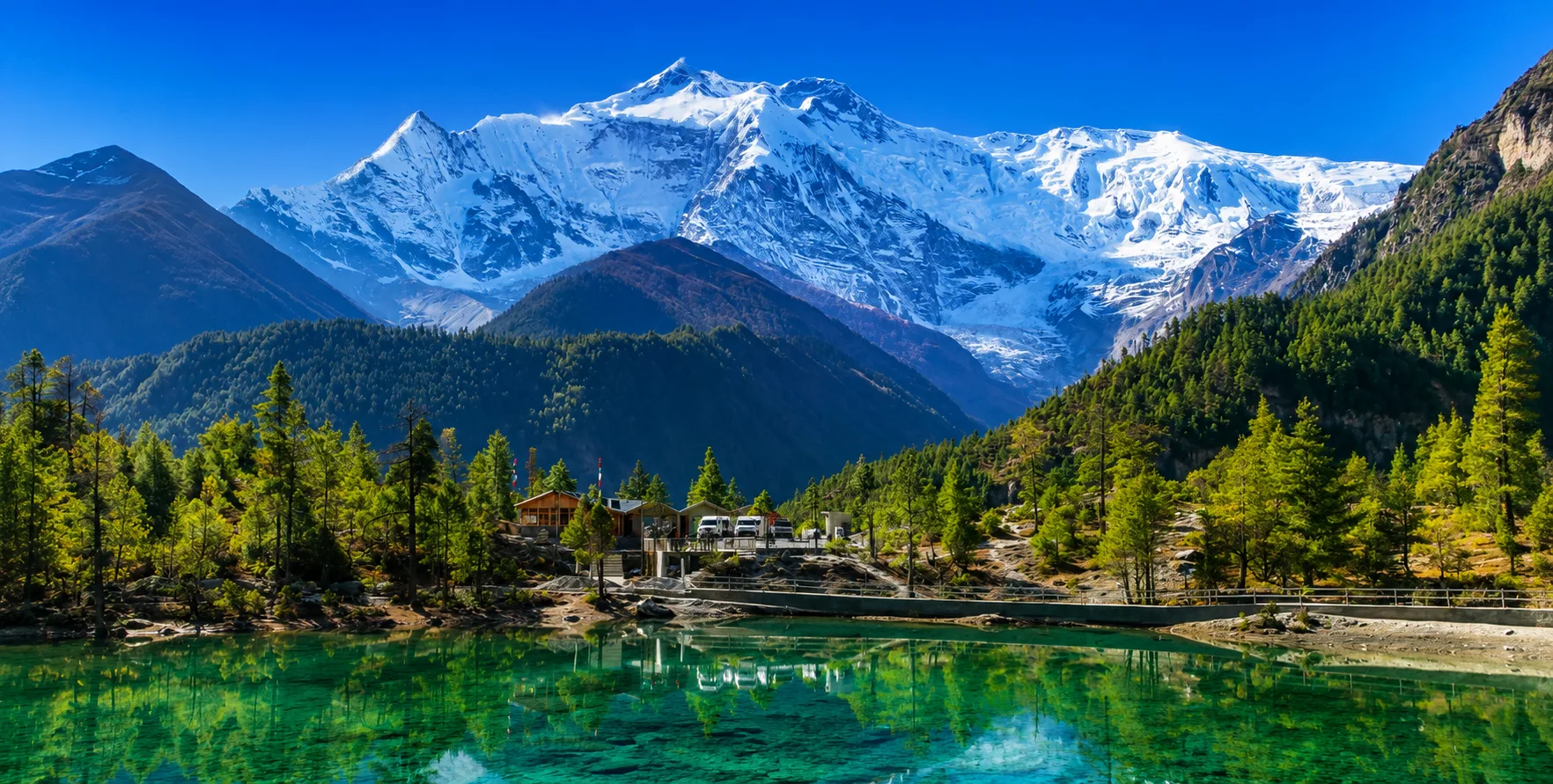
The surrounding landscape from Manang offers: direct views of Gangapurna (7,455 m) and its hanging glacier above the village; the Annapurna III north face (7,555 m) rising above the valley’s southern wall; the Tilicho Lake approach to the northwest (Nepal’s highest lake at 4,949 m, accessible as a 2-day side trip from Manang); and the Thorong La Pass (5,416 m) visible on the northeastern skyline — the goal that all Annapurna Circuit trekkers are resting to prepare for. Most trekkers use the Annapurna Circuit trek’s Manang acclimatisation day for the Gangapurna Glacier Lake walk, the Ice Dome viewpoint, and the Himalayan Rescue Association lecture on altitude sickness prevention.

Why Indian Trekkers Choose Sunauli as the Nepal Entry Point

Sunauli/Bhairahawa in Rupandehi District is not only the most convenient India-Nepal border crossing for Gorakhpur-based travellers — it is the natural entry point for the entire northern Indian trekking community whose Annapurna Circuit ambitions draw them to Nepal. The border crossing’s specific geographic position — directly south of Pokhara and the Annapurna region on the Prithvi Highway axis — makes Sunauli the most logically routed entry point for any traveller whose Nepal destination is anywhere in the Annapurna Conservation Area, from Nayapul for the Poon Hill trek to Besisahar for the Circuit to Manang for the high-altitude acclimatisation destination.

Beyond Gorakhpur, the Indian cities whose travelers most naturally route through Sunauli for the Annapurna approach include: Lucknow (overnight train to Gorakhpur, then taxi to Sunauli — total 5 to 6 hours from Lucknow), Varanasi (overnight train or car, 3 to 4 hours), Allahabad/Prayagraj (overnight train, 5 hours), Kanpur (train connection, 6 hours), and the broader eastern UP and Bihar cities whose connectivity to Gorakhpur Railway Junction makes Sunauli the standard Nepal overland gateway for the region’s trekking community. Nepal Vehicle Hiring Pvt Ltd’s Nepal-side border pickup at Sunauli connects all of these origin cities to the private jeep hire to Manang through a single, smooth arrangement that begins at the Nepal immigration gate and ends at Manang’s 3,519-metre altitude.

The Sunauli border also serves as the gateway for the Lumbini pilgrimage — Lumbini, the birthplace of Lord Buddha, is just 22 kilometres from the Sunauli border — making it natural for Indian Buddhist pilgrims combining a Lumbini visit with the Annapurna Circuit trek to cross at Sunauli, visit Lumbini as the first Nepal stop, and then continue northward toward Besisahar and Manang. Nepal Vehicle Hiring Pvt Ltd coordinates the Sunauli-to-Lumbini-to-Besisahar route as a single booking on our plan trip page.

Sunauli to Manang Tour Packages — Combining Vehicle and Trek

For Indian trekking groups planning the full Annapurna Circuit trek as a Nepal tour package, the Sunauli-to-Manang private jeep hire is the ground-transport foundation of a complete tour that combines vehicle hire, trekking, and the full Annapurna region circuit.

A complete Sunauli-based Annapurna Circuit tour: Sunauli border → private jeep to Besisahar (Day 1) → Besisahar to Manang (Day 2) → Manang acclimatisation days (2 nights minimum) → Thorong La crossing to Muktinath → Kali Gandaki descent to Jomsom → Jomsom to Pokhara private jeep hire → Pokhara Lakeside days with Sarangkot sunrise vehicle → Pokhara to Chitwan bus for optional Chitwan jungle safari → Sunauli return. This 18- to 24-day complete Nepal circuit enters and exits through Sunauli and covers the Annapurna Circuit, Pokhara, and Chitwan in a single overland tour.

Trek Nepal Himalayas provides the guided trekking component for Annapurna Circuit tour packages,s and Alpine Luxury Treks provides the top-end Circuit experience. Nepal Vehicle Hiring Pvt Ltd coordinates all Nepal-side vehicle legs through our plan trip page.

The Trishuli Gorge — Nepal’s Most Famous Highway Drive

The Trishuli River gorge section of the Prithvi Highway — between Mugling and Naubise on the approach to Kathmandu, or between Narayanghat and Mugling on the Sunauli-to-Dumre route — is Nepal’s most famous sustained highway driving experience. For Sunauli-to-Manantravalli, taking the Prithvi Highway north toward the Dumre junction, the Trishuli River offers the journey’s most dramatic mid-section.

At Mugling, the Trishuli River is at its most powerful; the confluence of the Trishuli and Marsyangdi rivers create the turbulence that white-water rafting operations use for multi-day Trishuli Rivertrips.s The road follows the Trishuli’s bank closely between Mugling and Narayanghat, with the river visible at varying distances below the road — sometimes 5 metres away at road level, sometimes 50 metres below on exposed cliff sections. This proximity to a fast-flowing Himalayan river for 60 to 70 kilometres of continuous highway driving is one of Nepal’s most memorable standard-route driving experiences, and Nepal Vehicle Hiring Pvt Ltd’s private jeep drivers on the Sunauli-to-Besisahar route know the specific river sections where the road-and-water relationship is most dramatic and most photogenic.

Sunauli to Manang — Day by Day Itinerary

Day 1: Sunauli border to Besisahar. Cross the Nepal-India border at Sunauli, complete immigration, and board the Nepal Vehicle Hiring Pvt Ltd jeep at the Nepal gate. Drive north via Butwal, Narayanghat (fuel and breakfast stop), Mugling (fish curry lunch stop), Dumre junction, and the Besisahar approach. Arrive in Besisahar in the late afternoon.

Overnight at Besisahar — basic to mid-range accommodation. Total: approximately 230 km, 6-8 hours driving.

Day 2: Besisahar to Manang. Depart Besisahar at 7:00-8:00 AM. The 4WD Scorpio or Hilux jeep follows the Marsyangdi gorge road through Ngadi, Syange, Jagat (ACAP permit check), Chamje, Tal, Dharapani, Bagarchhap, Chame, Lower Pisang, and Upper Pisang to Manang. Arrive in Manang mid to late afternoon at 3,519 metres.

Total Day 2: approximately 130-150 km, 5-8 hours. Overnight in Manang for acclimatisation.

TIP: Spend at least 2 nights in Manang to acclimatise before attempting Thorong La. The Himalayan Rescue Association in Manang offers free altitude sickness prevention lectures — attend before the Thorong La crossing day.

The Mugling to Dumre Section — Gateway to the Annapurna

The Mugling-to-Dumre section of the Prithvi Highway is the stretch that shifts the Sunauli-to-Manang journey from standard Nepal highway driving to the Annapurna approach—a 35-kilometre highway section between two of Nepal’s most important road junctions that carries the full weight of the Marsyangdi valley’s northward pull.

Mugling, at the confluence of the Trishuli and Marsyangdi rivers, marks the point where the Annapurna Circuit’s hydrological story begins: the Marsyangdi River flows southward from the Manang plateau to join the Trishuli, the same river whose gorge the Besisahar jeep road follows northward to Manang. Standing at Mugling’s famous riverside restaurants — the roadside fish curry stops that have made this junction Nepal’s most celebrated highway dining location — and looking northward up the Marsyangdi valley, the Annapurna range’s outer ridgelines are occasionally visible on clear mornings before the day’s cloud builds.

From Mugling, the Prithvi Highway continues 35 kilometres eastward to Dumre — the road passing through the flatter Tanahu District floor before the Dumre junction marks the branch northward toward Besisahar. At Dumre, the journey changes decisively: the broad Prithvi Highway gives way to the narrower Besisahar approach road, the landscape begins to close in as the valley walls rise, and the first foothills of the Annapurna range appear directly ahead.

Nepal Vehicle Hiring Pvt Ltd’s private jeep drivers on the Sunauli-to-Manang route note this Dumre transition as the moment when the trekking energy in the vehicle changes — the group collectively leaning forward as the mountain road ahead begins to deliver what the journey promised.

Altitude Awareness — From Sunauli to Manang’s 3,519 Metres

The Sunauli-to-Manang jeep journey covers one of the most significant rapid altitude gains in Nepal’s vehicle hire network: from the Sunauli border’s Terai elevation (approximately 95 metres above sea level) to Manang’s 3,519 metres in 2 travel days. This altitude gain—3,424 metres in 48 hours—is faster than the recommended acclimatisation schedule for altitude-sensitive individuals, and the specific vehicle route means trekkers arrive at Manang’s high altitude after spending only one night at Besisahar’s 760 metres.

Nepal Vehicle Hiring Pvt Ltd specifically advises all Sunauli-to-Manang groups on this altitude profile at booking. The recommended approach for altitude-sensitive groups: overnight at Besisahar (760 m, Day 1), optional overnight at Chame (2,710 m, Day 2 morning stop) before the final drive to Manang (3,519 m, Day 2 or Day 3 arrival).

Our Besisahar-to-Manang jeep drivers can stop at Chame for an overnight if the group prefers the slower altitude gain — no additional vehicle booking required, just confirmation at the Besisahar departure morning.

The Himalayan Rescue Association clinic in Manang provides free altitude sickness consultations and pre-Thorong La briefings for all trekkers stopping at Manang. Nepal Vehicle Hiring Pvt Ltd recommends at minimum 2 nights at Manang before the Thorong La crossing attempt — the altitude gain on crossing day (from Manang at 3,519 m to the pass at 5,416 m) is extreme, and the success rate is substantially higher for trekkers who have fully acclimatised at Manang rather than arriving and crossing immediately.

Our drivers communicate this to all groups during the Day 2 jeep journey.

The Annapurna Circuit Jeep Option — All the Way to Thorong Phedi

For trekkers who want to maximise vehicle access and minimise walking distance on the lower Annapurna Circuit, a private jeep hire from Besisahar can continue beyond Manang to Thorong Phedi at 4,450 metres—the final tea house before the Thorong La High Camp —accessible by jeep on the road that now extends above Manang. Nepal Vehicle Hiring Pvt Ltd’s 4WD jeep hire covers this extended approach when road conditions allow — the Manang-to-Thorong Phedi section is the highest motorable road in the Annapurna Conservation Area and requires both favourable road conditions and an appropriately capable vehicle.

The Thorong Phedi extension adds approximately 1 to 2 hours to the Day 2 drive beyond Manang and delivers trekkers to 4,450 metres by vehicle — replacing one walking day on the pre-pass approach. Groups using this extended jeep hire arrive at Thorong Phedi with the full day available for High Camp acclimatisation before the crossing.

Nepal Vehicle Hiking Pvt Ltd confirms Thorong Phedi road conditions at booking and on the morning of the Day 2 departure — the extension proceeds only when current conditions are confirmed safe. Contact our team on WhatsApp to confirm Thorong Phedi road status.

Sunauli to Manang for Muktinath Yatra Pilgrims

The Sunauli-to-Manang jeep route serves not only trekkers on the Annapurna Circuit but also Hindu and Buddhist pilgrims whose yatra destination is Muktinath Temple at 3,710 metres — one of Nepal’s most sacred pilgrimage sites combining Hindu Vaishnava and Buddhist traditions. The Muktinath yatra private jeep hire from Sunauli can take two approach routes: the Sunauli-to-Besisahar-to-Manang route (continuing over the Thorong La road toward Muktinath on the Mustang side) or the Sunauli-to-Pokhara-to-Jomsom route (approaching Muktinath from the Kali Gandaki gorge south).

For Indian pilgrimage groups from Gorakhpur, Varanasi, and the broader northern Indian Hindu pilgrimage belt, the Sunauli-to-Manang approach to Muktinath via the Marsyangdi gorge and Thorong La is the northern approach — a route of considerable physical commitment that the most devoted yatra pilgrims specifically prefer as the more arduous and therefore more meritorious approach to the sacred site. Nepal Vehicle Hiring Pvt Ltd serves these pilgrimage groups with the same professional 4WD jeep-hire standard as our trekking group  understanding that the sacred purpose of the Muktinath yatra adds a dimension to the transport service that our drivers approach with appropriate respect.

What to Carry for the Sunauli to Manang Vehicle Journey

The 2-day Sunauli-to-Manang vehicle journey passes through four climate zones — from the Terai’s subtropical heat at the border to the alpine cold of Manang’s 3,519 metres — and the transition between these zones happens faster by vehicle than the body’s thermal adaptation can follow. Practical packing for the vehicle journey itself (separate from the trek equipment) ensures comfort throughout.

Accessible in the vehicle cabin: A fleece or light down jacket for the rapid temperature drop at altitude (Manang can be below 10°C even on a clear afternoon); sunscreen (the UV intensity at 3,500 m is significantly higher than at Terai elevation — several hours in the vehicle at altitude without protection causes visible sunburn through the window); water (2 litres per person for Day 2 above Besisahar — the gorge road’s river water is not safely drinkable without purification); light snacks for the gorge road section between Jagat and Chame where no restaurants are reliably open; and altitude sickness medication (Diamox) if prescribed by a physician, carried in hand luggage rather than checked luggage for immediate accessibility.

Keep on your person at the Jagat checkpoint: ACAP permit and TIMS card — the Jagat checkpoint officer checks every passenger’s permits, and any group member without valid documentation is turned back. Nepal Vehicle Hiring Pvt Ltd reminds all Sunauli-to-Manang groups of the permit requirement at booking and sends a WhatsApp reminder on the morning of departure from Besisahar.

The Pisang to Manang Section — The Upper Valley’s Finest Drive

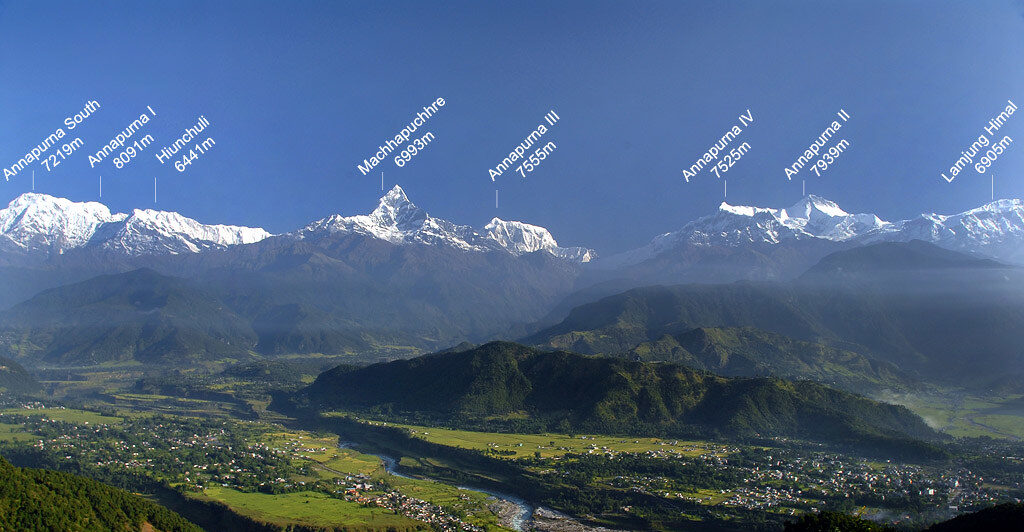
The final section of the Besisahar-to-Manang jeep journey, from Pisang at 3,300 metres to Manang at 3,519 metres, is the most visually extraordinary stretch of the entire Sunauli-to-Manang overland journey. As the 4WD jeep hire crests the last significant rise above Upper Pisang and the Manang valley opens ahead, the full scale of the upper Annapurna plateau reveals itself in a single panoramic moment: the Annapurna III north face (7,555 m) directly across the valley, Gangapurna (7,455 m) with its hanging glacier above Manang village, the Annapurna IV (7,525 m) and Annapurna II (7,937 m) ridge line above the valley’s eastern wall, and the unmistakable notch of the Thorong La Pass on the northeastern skyline.

For first-time trekkers, the Pisang-to-Manang final drive section is the highest mountain stretch, with a period of silence as the scale and proximity of the world’s highest peaks replace conversation. Nepal Vehicle Hiring Pvt Ltd’s Besisahar-to-Manang drivers know this section intimately — the specific pullout above Upper Pisang where the first Manang valley panorama appears most fully, the track fork where Lower and Upper Pisang diverge and the high route provides the finest mountain view angle, and the descent into Manang village where the oldest monastery section appears on the hilltop above.

These are the moments when Nepal Vehicle Hiring Pvt Ltd’s route-experienced drivers turn it into a guided experience.

Sunauli to Manang Private Jeep Hire

The Annapurna Circuit — What Awaits After the Jeep

The Annapurna Circuit trek from Manang onward is one of the world’s finest high-altitude trekking experiences — the route that has defined Nepal trekking for the post-1977 generation of international mountain walkers. From Manang, the circuit continues north to Thorong Phedi (4,450 m) and High Camp (4,850 m) before the summit crossing of the Thorong La Pass (5,416 m) — Nepal’s highest road-accessible trekking pass — and the long descent to Muktinath’s sacred site at 3,710 m.

From Muktinath, the route continues down the Kali Gandaki gorge — the world’s deepest river gorge by vertical measurement — through Kagbeni, Jomsom, Marpha, Tukuche, Ghasa, and Tatopani to the lower Annapurna approach roads. The Annapurna Circuit’s Jomsom exit by private jeep to Pokhara, or the Beni-Pokhara route, offers an alternative finish to walking the full circuit.

Trek Nepal Himalayas’ guided Annapurna Circuit packages and Alpine Luxury Treks‘ top-end Circuit experience both use Nepal Vehicle Hiring Pvt Ltd transport for the Sunauli-to-Besisahar and Besisahar-to-Manang approach legs.

Sunauli to Manang — The Direct Circuit vs Via Kathmandu

Indian trekkers planning the Sunauli-to-Manang journey have a route choice: the direct route via Dumre and Besisahar (avoiding Kathmandu entirely) or the Kathmandu transit route (Sunauli to Kathmandu, overnight, then Kathmandu to Besisahar to Manang).

Direct route (Sunauli → Dumre → Besisahar → Manang, 2 days): The fastest option — reaches Manang in 2 travel days from the border. Best for trekkers whose primary goal is the Annapurna Circuit and who do not need Kathmandu for permit acquisition (ACAP permits can be obtained at Besisahar). Sunauli to Besisahar by private 4WD jeep hire, overnight in Besisahar, then Besisahar to Manang Day 2.

Via Kathmandu (Sunauli → Kathmandu, overnight → Kathmandu to Besisahar → Manang, 3 days): Allows permit acquisition at the Nepal Tourism Board in Kathmandu, gear purchase at Thamel, and the Kathmandu heritage sightseeing car hire for a Bhaktapur heritage day or Kathmandu temple visits. Adds one day but provides the Kathmandu cultural and logistics stop that most first-time Nepal visitors find valuable.

Nepal Vehicle Hiring Pvt Ltd offers both route options on our plan trip page—we advise which format best fits the group’s itinerary and availability.

Side Trips from Manang — The Upper Annapurna Plateau

Manang’s 2-night acclimatisation stop enables several extraordinary side trips in the upper Marsyangdi Valley that Annapurna Circuit trekkers who pass through without stopping miss entirely.

Gangapurna Glacier Lake (1 hour from Manang, 3,540 m). The lake at the terminus of the Gangapurna Glacier — a 45-minute walk from Manang’s upper lanes — provides direct glacier front views and the extraordinary turquoise colour of glacial meltwater in a high-altitude lake setting, one of Nepal’s finest half-hour walks, accessible without additional trekking preparation.

Ice Dome Viewpoint (2-3 hours from Manang, 4,000 m). The acclimatisation walk to the Ice Dome viewpoint above Manang is the standard altitude-gain walk recommended by the Himalayan Rescue Association—500 metres of altitude gain on a clear trail to a viewpoint that surveys the complete Manang plateau and the surrounding Annapurna III, Gangapurna, and Chulu peak panorama.

Tilicho Lake (2 days from Manang, 4,949 m). Nepal’s highest lake, at 4,949 metres on the northwestern shoulder of the Annapurna massif, is accessible as a 2-day side trip from Manang — the finest high-altitude lake experience in the Annapurna Conservation Area. The trail from Manang to Tilicho Base Camp and the lake is physically demanding and requires proper acclimatisation before attempting.

Nar Phu Valley (from Koto, 1 day south of Manang). The Nar Phu hidden valley trek branches from Koto village (about 1 day south of Manang on the Annapurna Circuit) into one of Nepal’s most remote restricted-area valleys—a Restricted Area Permit is required.

Accommodation Along the Sunauli to Manang Route

Sunauli border town. Basic guesthouses on the Nepal side for groups arriving late at the border and needing an overnight before the drive to Besisahar. Adequate but functional only.

Besisahar (Day 1 overnight). Besisahar’s guesthouse network serves the Annapurna Circuit’s approach traffic — mid-range accommodation with clean rooms and good dal bhat at NPR 500-1,500 per room. ACAP permit office also in Besisahar for groups who did not obtain permits in Kathmandu.

Chame (Day 2 optional overnight). If the Besisahar-to-Manang Day 2 drive seems too long, Chame at 2,710 m provides an excellent mid-route overnight — splitting the gorge road into two comfortable days and allowing a slower altitude gain to Manang’s 3,519 m.

Manang (2+ nights for acclimatisation). Manang’s teahouse and guesthouse network is well developed for the Annapurna Circuit’s acclimatisation stop—the best-equipped accommodation and dining on the entire Circuit above Besisahar. Multiple options from basic rooms to the relative comfort of Manang’s newer guesthouses. Alpine Luxury Treks provides top-end Manang accommodation for luxury Circuit clients.

The Return Journey — Manang Exit Options

Trekkers who arrived at Manang by private jeep from Sunauli have several return vehicle options depending on whether they completed the Thorong La crossing or chose to return the way they came.

Manang return to Besisahar (same route return). For groups who did not cross the Thorong La, Nepal Vehicle Hiring Pvt Ltd pre-arranges the Manang-to-Besisahar return jeep and the Besisahar-to-Sunauli or Besisahar-to-Kathmandu connection.

Jomsom to Pokhara exit (post-Thorong La). Trekkers who cross the Thorong La and descend to Muktinath and Jomsom can take the Jomsom-to-Pokhara private jeep down the Kali Gandaki gorge — one of Nepal’s finest mountain road experiences — and then the Pokhara-to-Sunauli vehicle hire for the India border return. This Manang-entry / Jomsom-exit format creates a one-way circuit that covers the full Annapurna Circuit without backtracking.

Jomsom to Kathmandu exit. Post-Thorong La, trekkers returning to Kathmandu can take a Jomsom-to-Pokhara jeep hire, followed by a Pokhara-to-Kathmandu bus or vehicle hire.

All return options are pre-arranged at outward booking through our plan trip page — one booking, complete circuit, all legs confirmed.

The Marsyangdi River — Nepal’s Most Dramatic Gorge Road

The Marsyangdi River gorge between Besisahar and Dharapani is one of Nepal’s most geologically dramatic river environments — a canyon of extraordinary depth where the river has carved through returning uplift over millions of years, giving the Jomsom-to-Pokhara route a specific character that makes the Besisahar to Manang jeep road simultaneously one of Nepal’s most beautiful and most demanding vehicle routes. The word Marsyangdi roughly translates to ‘ turbulent river’ in Gurung.

This name captures the river’s character through the gorge: fast-moving, turquoise-white from glacial silt, and audible from the vehicle window even above the engine noise on the rougher road sections.

The gorge’s physical character creates the road’s challenges: the narrow canyon walls leave minimal road width in several sections between Ngadi and Jagat, requiring our 4WD jeep drivers to manage passing encounters with oncoming vehicles at the few wide points that experienced gorge-road drivers know by feel rather than by marker. The road’s exposure to the gorge — sections where the cliff drops vertically to the river below the road’s outer edge — is the visual element that most affects first-time travelers on this route: the combination of the river’s scale, the gorge walls’ height, and the road’s narrow margin between the cliff and the sky creates a sustained mountain driving experience that Nepal’s highway routes cannot replicate.

This is why the Marsyangdi gorge jeep hire is not just transport to Manang — it is one of Nepal’s defining vehicle journey experiences.

Nepal Vehicle Hiking Pvt Ltd’s Besisahar to Manang drivers have specific gorge-road experience measured in dozens of round trips — the accumulated knowledge of which sections require reduced speed, which cliff-edge moments are genuinely hazardous versus simply dramatic, and which river crossings require careful wheel placement. This experience is the safety margin the gorge road demands, and Nepal Vehicle Hiring Pvt Ltd delivers it through our driver assignment policy. Contact us on WhatsApp or our plan trip page.

The Nar Phu Valley — A Restricted Area Extension from the Manang Approach

For trekking groups specifically seeking Nepal’s most remote and least-visited restricted areas, the Nar Phu Valley — a hidden side valley branching east from the Annapurna Circuit at Koto village (one day south of Manang) — is accessible from the same Sunauli-to-Manang jeep hire approach road. The Nar Phu Valley trek enters a restricted area of extraordinary cultural and natural richness — ancient Tibetan-influenced villages at 4,000 metres, the Phu Valley’s glacial landscapes, and a trekking corridor that sees a fraction of the Annapurna Circuit’s visitor volume.

Groups who want to combine the Nar Phu Valley exploration with the Annapurna Circuit trek use the Besisahar to Manang jeep hire to reach the Koto junction, branch into the Nar Phu Valley for the restricted area trek, and return to the main Annapurna Circuit trail at Koto to continue northward toward Manang and the Thorong La. The Nar Phu Restricted Area Permit (USD 75 per week) and a licensed guide are mandatory.

Nepal Vehicle Hiring Pvt Ltd’s jeep hire service to the Koto junction covers this Nar Phu approach as a natural extension of the Besisahar-to-Manang route. Contact our team to arrange the circuit.

Why Choose Nepal Vehicle Hiring Pvt Ltd for Sunauli to Manang

  • Nepal border pickup: Driver confirmed by name and registration at the Sunauli Nepal gate.
  • Sunauli to Besisahar: Private 4WD jeep hire, all-inclusive, with a Mugling fish curry stop.
  • Besisahar–Manang 4WD jeep: Scorpio or Hilux exclusively — gorge road requires 4WD.
  • Permit advisory: ACAP permit requirement confirmed at booking. Besisahar ACAP office details provided.
  • Altitude awareness: Drivers briefed on acclimatisation stop timing in Besisahar and Chame to ensure healthy arrival at Manang.
  • Circuit exit coordination: Return vehicle pre-arranged for Manang, Jomsom, or any Circuit exit point.
  • Kathmandu detour option: Kathmandu sightseeing car hire and Bhaktapur heritage tour for groups transiting via the capital.
  • All-inclusive transparent pricing: Driver, fuel, road tolls — no additions.
  • 24/7 on WhatsApp or plan trip page.

15. Frequently Asked Questions — Sunauli to Manang Jeep Hire

Q: How many days does it take to travel from Sunauli to Manang by private jeep?

2 travel days: Day 1 — Sunauli border to Besisahar (approximately 230 km, 6-8 hours) with overnight at Besisahar. Day 2 — Besisahar to Manang (130-150 km, 5-8 hours) by 4WD jeep hire.

Q: What is the total jeep hire cost from Sunauli to Manang?

NPR 34,000 to 52,000 (USD 255-450) for the full 2-day private 4WD jeep hire, all-inclusive. Contact Nepal Vehicle Hiring Pvt Ltd on WhatsApp for a group-specific quote.

Q: Is 4WD mandatory for Besisahar to Manang?

Yes — the Marsyangdi gorge road’s unpaved sections, river crossings, and altitude gain make 4WD Scorpio or Hilux jeep hire mandatory for a passenger group. Sedans are not appropriate for this route.

Q: Can Indian nationals get the ACAP permit at the border?

No — ACAP permits are available at the Nepal Tourism Board in Kathmandu, the ACAP office in Besisahar, or the ACAP counter in Pokhara. Indian nationals pay SAARC rates.

Q: Can the return vehicle be arranged from Jomsom after crossing Thorong La?

Yes — Nepal Vehicle Hiring Pvt Ltd pre-arranges the Jomsom-to-Pokhara private jeep hire at the time of outward booking. Contact us on WhatsApp.

Conclusion

The private jeep hire from Sunauli to Manang is one of Nepal’s most extraordinary overland journeys—a 2-day ascent from the India border through Nepal’s highway country and into the high Himalayan plateau of the Annapurna Conservation Area, arriving at 3,519 metres surrounded by some of the world’s finest mountain scenery. Nepal Vehicle Hiring Pvt Ltd provides a complete Sunauli-to-Manang jeep hire—border pickup, highway transfer, and the 4WD Besisahar-to-Manang gorge road journey—with all-inclusive pricing, ACAP permit advice, and a return vehicle pre-arranged for any Annapurna Circuit exit point.

Book your Sunauli to Manang private jeep hire with Nepal Vehicle Hiring Pvt Ltd — call or WhatsApp, visit vehiclehiringnepal.com, or plan your complete Annapurna Circuit transport through our plan trip page.

Pokhara to Jagat Private Jeep: Annapurna Circuit Hire

Dharapani trek start point of annapurna range

Pokhara to Jagat Private Jeep Hire — Annapurna Circuit Complete Guide

Jagat — a small village at approximately 1,300 metres in the narrow Marsyangdi River gorge, approximately 28 kilometres north of Besisahar — is the first significant settlement on the Annapurna Circuit trek after the ACAP (Annapurna Conservation Area) permit checkpoint at Bhulbhule. For trekkers who want to reduce the lower gorge walking distance and gain altitude more quickly on the Circuit’s opening days, the private 4WD jeep hire from Pokhara to Jagat — covering the route from Pokhara Lakeside through Dumre, Besisahar, and the lower Marsyangdi gorge road to Jagat — places the trekking group at 1,300 metres on arrival and saves approximately one to two walking days on the lower gorge section.

Nepal Vehicle Hiring Pvt Ltd offers a Pokhara-to-Jagat private 4WD jeep hire as a dedicated trekking trailhead transfer—covering the full Pokhara Lakeside hotel-to-Jagat village route in a single, professional, all-inclusive booking. This guide covers the full route from Pokhara to Jagat, private jeep costs, road conditions on the gorge section, why Jagat is the right starting point for different trekking plans, and how to book.

Pokhara to Jagat — Distance, Route and Time

Total distance: Approximately 130-140 km from Pokhara Lakeside to Jagat village.

Route: Pokhara → Prithvi Highway east → Dumre junction (65 km, 1.5-2 hours) → Besisahar road (42 km, 1-1.5 hours) → Besisahar town (760 m) → Marsyangdi gorge road northward → Bhulbhule (840 m) → Ngadi (930 m) → Jagat (1,300 m).

Journey time: 5 to 7 hours total by private 4WD jeep hire, depending on road conditions on the Besisahar-to-Jagat gorge section and any planned stops.

Road character: Pokhara to Dumre — paved Prithvi Highway, smooth and fast. Dumre to Besisahar — paved but narrower mountain road. Besisahar to Jagat — unpaved gorge road with rough sections, a narrow, river-adjacent track, and the 4WD requirement created by the gorge road’s surface and gradient.

Only a 4WD Scorpio or Hilux jeep is available for the Besisahar-to-Jagat section.

Annapurna range

Pokhara to Jagat Private Jeep Hire Cost

Private 4WD Scorpio jeep (4-6 passengers): NPR 16,000 to 40,000 (USD 120 to 250) all-inclusive from Pokhara Lakeside hotel to Jagat village, driver, fuel, road tolls.

Private Toyota Hilux 4WD (up to 8 with cargo): NPR 18,000 to 60,000 (USD 135 to 300) all-inclusive. Higher capacity for groups with camping equipment alongside passengers. Jeep hire.

Breakdown by section: Pokhara to Besisahar (107 km): approximately NPR 10,000-26,000. Besisahar to Jagat (28 km gorge road): approximately NPR 8,000-12,000. Combined Pokhara-to-Jagat: NPR 16,000-40,000 full vehicle all-inclusive.

Return jeep from Jagat: For groups who want a vehicle waiting at Jagat for an emergency return or post-trek collection, Nepal Vehicle Hiking Pvt Ltd pre-arranges the return vehicle when you book outward. Contact Nepal Vehicle Hiring Pvt Ltd on WhatsApp or our plan trip page.

Pokhara to Jagat Private Jeep | Annapurna Circuit Hire 2026/27/28

Pokhara to Dumre — The Prithvi Highway East

The first 65 kilometres of the Pokhara-to-Jagat journey follow the Prithvi Highway eastward from Pokhara Lakeside — a well-paved, fast national highway section through the Gandaki Province’s mid-hill foothills that connects Pokhara to the Marsyangdi valley junction at Dumre. Nepal Vehicle Hiring Pvt Ltd’s Pokhara car hire service covers Sarangkot sunrise vehicle hire for groups spending their final Pokhara morning at the Annapurna viewpoint before the Jagat departure—a pre-dawn Sarangkot visit followed by the 7:30 AM Jagat departure is one of the best ways to start an Annapurna Circuit trekking day.

The Prithvi Highway east of Pokhara passes through Walling, Damauli, and the Tanahu District’s agricultural landscape before the Dumre junction at approximately 65 km. The road is flat and fast — Nepal’s finest maintained highway section between Pokhara and the mountains to the east. Nepal Vehicle Hiring Pvt Ltd’s private jeep hire covers this section in 1.5 to 2 hours from Pokhara Lakeside.

Dumre to Besisahar — The Marsyangdi Valley Approach

At Dumre junction, the Prithvi Highway’s character as a broad national road gives way to the Besisahar approach road’s narrower, more mountain character. This 42-kilometre section follows the eastern bank of the Marsyangdi River northward to Besisahar at 760 metres. This section takes about 1 to 1.5 hours by private 4WD jeep and offers the first sustained Himalayan river-valley driving experience on the Pokhara-to-Jagat journey.

Pokhara to Jagat Private Jeep | Annapurna Circuit Hire 2026/27/28

The Dumre-to-Besisahar road is paved throughout but narrows as the valley closes in — the Marsyangdi visible to the west, the valley walls rising on both sides, and the first Himalayan sightlines (Annapurna II, Lamjung Himal) appearing above the ridgeline as the road approaches Besisahar. The Besisahar private vehicle hire context covers this section in detail — for groups departing from Kathmandu rather than Pokhara, the Kathmandu to Besisahar jeep hire is a separate, longer journey of 175 km.

Besisahar town (760 m) is a natural mid-journey rest stop — ACAP permits and TIMS cards are available at the Besisahar permit office for groups who did not obtain them in Pokhara or Kathmandu. Plan a 20 to 30-minute stop in Besisahar for permits, tea, and a last-supplies check before the gorge road begins.

Besisahar to Jagat — The Gorge Road

The 28-kilometre section from Besisahar north to Jagat through the lower Marsyangdi gorge is the journey’s most dramatic and technically demanding road section—a route where the 4WD jeep hire‘s specific capability is not simply preferred but required. The gorge road differs completely from the Besisahar approach road: unpaved in most sections, narrow with river-adjacent exposure, and demanding the ground clearance, traction, and low-range power of a purpose-built 4WD vehicle to navigate safely with a full trekking group load.

Besisahar to Bhulbhule (8 km, 30-45 minutes). The road exits Besisahar northward through the immediately adjacent villages. It reaches the suspension bridge crossing at Bhulbhule — the first Annapurna Circuit checkpoint village (840 m) where the trek trail and the jeep road run parallel or share sections. The Bhulbhule checkpoint issues the ACAP permit.

Bhulbhule to Ngadi (7 km, 25-40 minutes). Above Bhulbhule, the gorge narrows, and the road becomes progressively more demanding — the Marsyangdi visible directly below the road’s outer edge on the exposed cliff sections, the surface switching between rough gravel and the smoother sections where the road has been recently maintained. Ngadi village (930 m) sits at the junction where a significant side valley joins the Marsyangdi.

Ngadi to Jagat (13 km, 45-75 minutes). The most dramatic gorge section—the road between Ngadi and Jagat passes through the narrow canyon that defines the lower Marsyangdi’s geological character. The cliff walls converge above the road and the river on the most dramatic sections, the Marsyangdi’s white-water audible and visible below, and the 4WD jeep hire‘s specific mechanical confidence — ground clearance on the rocky sections, 4WD traction on the loose gravel descents, and the driver’s specific experience on this road — is the service that Nepal Vehicle Hiring Pvt Ltd specifically provides.

Jagat village (1,300 m) appears at the first widening of the gorge above the narrowest section, its teahouses and suspension bridge announcing the first major trekking stop of the Annapurna Circuit.

Pokhara to Jagat Private Jeep | Annapurna Circuit Hire 2026/27/28

Why Drive to Jagat Instead of Walking from Besisahar?

The Annapurna Circuit traditionally begins at Besisahar — and the walk from Besisahar to Jagat (approximately 2 to 3 hours, 18 km) is the circuit’s opening walking day, covering the lower gorge’s first villages and the ACAP permit checkpoint. The decision to take a private jeep from Pokhara directly to Jagat, bypassing the Besisahar-to-Jagat walk, depends on the group’s specific trekking priorities.

Drive to Jagat when: The group’s primary trekking interest is in the upper Annapurna Circuit (above Chame, the Manang plateau, and the Thorong La) and the lower gorge walking is considered a necessary transit rather than a valued experience. When trekking days are limited and every saved day in the lower gorge means more time at altitude.

When group members have physical limitations that make the lower gorge walking (which involves significant uphill in the first section) the harder part of the circuit.

Walk from Besisahar when: The group values the complete Circuit experience — every village, every cultural encounter, and every walking day of the lower gorge. The Besisahar-to-Jagat walk passes through Khudi, Bhulbhule, Bahundanda, and Ngadi—each with its own cultural character and valley views. For first-time Annapurna Circuit trekkers, walking the full route is the recommended option.

Nepal Vehicle Hiring Pvt Ltd’s Besisahar private vehicle hire covers the Besisahar drop option for groups who want to walk from Besisahar. In contrast, the Pokhara to Jagat private jeep hire covers the direct-to-Jagat option for groups who want to start walking at the gorge’s first significant village.

Group Booking Tips — Getting the Best Pokhara to Jagat Jeep

Booking a Pokhara to Jagat private jeep hire efficiently ensures your group gets the right vehicle at the right price, with all journey logistics confirmed in advance. Nepal Vehicle Hiring Pvt Ltd’s booking process is straightforward—WhatsApp or visit our plan trip page—and booking in advance with all details confirmed ensures the best outcome on departure day.

Specify the total passenger count and luggage volume accurately. The difference between 4 trekkers with day packs and 4 trekkers with full expedition packs changes the vehicle recommendation: the former may fit in a private car hire for the highway sections, the latter requires the Scorpio jeep’s cargo area. Accurate luggage information at booking ensures the right vehicle is allocated.

Confirm the exact drop point within the Besisahar-Jagat corridor. Jagat village centre (the main guesthouse cluster), the south approach to Jagat (where the gorge narrows), or the north side of Jagat (where some trekkers prefer to start walking immediately northward) — the specific drop point matters. Our team confirms the exact drop location at booking.

Confirm the departure time in relation to ACAP permit acquisition. If obtaining permits at the Pokhara ACAP office on the morning of departure, allow 45 to 60 minutes for the permit process before the vehicle departs. Nepal Vehicle Hiking Pvt Ltd advises the optimal departure time based on the permit strategy confirmed at booking.

Pokhara to Jagat Private Jeep | Annapurna Circuit Hire 2026/27/28

Jagat Village — The Annapurna Circuit’s First Gorge Stop

Jagat (1,300 m) is the first village on the Annapurna Circuit trek that feels genuinely inside the mountain world — the gorge’s specific narrowness and height at Jagat creating an enclosed valley character that is categorically different from the broad Marsyangdi valley below Besisahar. The village sits on a narrow terrace above the river, its teahouses and guesthouses arranged along a single lane between the gorge wall and the river edge.

Jagat is also the site of the first major ACAP checkpoint, which verifies permits for all vehicles and trekkers entering the conservation area’s northern gorge section. The checkpoint is positioned at the approach to Jagat’s narrow section — all vehicles must stop for permit verification before continuing. Nepal Vehicle Hiring Pvt Ltd’s drivers carry copies of the group’s ACAP permits (confirmed at booking) and manage the checkpoint process efficiently.

The Jagat teahouse accommodation standard is appropriate for the first overnight of the Annapurna Circuit — basic rooms, attached or shared bathroom depending on the guesthouse, dal bhat and a standard trekking menu available. Alpine Luxury Treks offers top-end Annapurna Circuit experiences with upgraded accommodation at every stage, including the lower gorge.

Trek Nepal Himalayas’ guided Annapurna Circuit packages cover the complete circuit with Nepal Vehicle Hiring Pvt Ltd’s jeep hire for the Pokhara or Kathmandu approach.

ACAP Permits — Essential Before Jagat

Annapurna Conservation Area Permit (ACAP): USD 30 per person for foreign nationals (lower rate for SAARC nationals). Required for all trekkers and vehicle passengers on the Annapurna Circuit. The permit is verified at the Bhulbhule and Jagat checkpoints.

Obtainable at the Nepal Tourism Board in Kathmandu, the ACAP office in Pokhara, or the Besisahar permit counter.

TIMS Card (Trekkers Information Management System): Required for all trekkers. USD 10 to 20. Obtainable from TAAN or the Tourism Board in Kathmandu or Pokhara.

NOTE: No vehicle proceeds past the Bhulbhule checkpoint without verified ACAP permits for all passengers. Nepal Vehicle Hiring Pvt Ltd confirms permit status with all groups at booking and requires confirmation of valid permits before departure from Pokhara for Jagat.

Beyond Jagat — The Upper Gorge Continues

For groups who want to extend the private jeep hire beyond Jagat into the upper Marsyangdi gorge, Nepal Vehicle Hiring Pvt Ltd’s 4WD jeep hire covers the northward road through Chamje, Tal, Dharapani, Chame, and ultimately to Manang (3,519 m). Each village further north adds driving time and cost on the gorge road, but also more altitude gain and fewer walking days between the vehicle drop and the Thorong La approach.

Jagat to Chamje (5 km, 20-30 minutes): The gorge road continues through the most dramatic narrow section above Jagat — the Marsyangdi canyon at its narrowest point between Jagat and Chamje, where the cliff walls, the river and the road share a space of remarkable geological compression.

Chamje to Tal (9 km, 30-45 minutes): The road crosses to the western bank above Chamje before ascending through the canyon walls to Tal — a flat glacial valley floor at 1,700 m that provides one of the Annapurna Circuit’s most dramatic visual surprises: the sudden opening of the gorge into an open valley surrounded by cliff walls.

Tal to Manang (80+ km, 3-5 additional hours): For groups aiming to drive all the way to Manang by jeep, the complete Pokhara-to-Manang journey becomes a 2-day operation — overnight at Besisahar or Chame, then the remaining gorge road to Manang on Day 2. Nepal Vehicle Hiring Pvt Ltd coordinates the complete Pokhara-to-Manang transport through our planned trip page.

Pokhara to Jagat Private Jeep | Annapurna Circuit Hire 2026/27/28

Pokhara to Jagat — Comparison with Kathmandu Departure

Trekkers approaching the Annapurna Circuit have two main vehicle departure options: from Pokhara (shorter, 130-140 km to Jagat) or from Kathmandu (longer, approximately 215 km to Jagat via Besisahar). The best departure city depends on where the trek group is based.

Pokhara departure (recommended for groups already in Pokhara): 130-140 km, 5-7 hours by private 4WD jeep hire. NPR 16,000-25,000 all-inclusive. The shorter distance means an earlier arrival in Jagat and more time on the first afternoon to rest and check permits before the trek morning.

Kathmandu departure (recommended for groups flying into TIA): 215 km, 6-8 hours by private vehicle from Kathmandu to Besisahar, plus the Besisahar-to-Jagat gorge section. The Kathmandu-to-Besisahar jeep hire drops you at Besisahar, and a local jeep continues to Jagat, or the group spends night 1 in Besisahar and takes the gorge road on Day 2.

Nepal Vehicle Hiring Pvt Ltd covers both departure options — Pokhara-based jeep hire and Kathmandu-based jeep hire — through a single plan trip page booking.

Connecting the Pokhara to Jagat Jeep with Pokhara Activities

Most Annapurna Circuit trekkers spend 1 to 3 days in Pokhara before the trek—enjoying Lakeside restaurants and cafes, preparing trekking equipment, and using Pokhara car hire for pre-trek activities.

Sarangkot Sunrise (pre-trek morning): The Sarangkot sunrise vehicle hire offers a stunning pre-dawn panorama of the Annapurna range on your final morning in Pokhara before departure to Jagat. Depart Lakeside at 4:00 AM, arrive at the Sarangkot viewpoint at sunrise, return to the hotel by 7:30 AM, pack, and depart for Jagat at 8:00 AM.

Pokhara Lakeside: Phewa Lake boat hire, the Peace Pagoda walk, and the World Peace Pagoda viewpoint are the standard pre-trek Pokhara activities. The Pokhara car hire covers all Lakeside and out-of-town Pokhara activities.

Pre-trek permit acquisition in Pokhara: The ACAP office and TIMS registration are available in Pokhara — obtain permits on the day before the Jagat departure to allow an efficient morning departure. Nepal Vehicle Hiring Pvt Ltd confirms permit requirement status at booking.

Pokhara to Jagat Private Jeep | Annapurna Circuit Hire 2026/27/28

The Gorge Road Character — What to Expect Between Besisahar and Jagat

The 28-kilometre gorge road between Besisahar and Jagat is one of Nepal’s most character-rich approach roads—a driving environment that switches between rough gravel track, a narrow river-adjacent section, and the occasional rough concrete reinforcement that the Nepal Department of Roads has progressively improved on the most hazardous sections. Understanding what this road actually looks and feels like helps trekking groups set accurate expectations for the final section of the Pokhara to Jagat private jeep hire.

The river is always close. The Marsyangdi River accompanies the gorge road continuously between Besisahar and Jagat — sometimes visible directly below the road’s outer edge, sometimes audible through the gorge walls above a section where the road is 20 to 30 metres above the water. The river’s sound — white water, rapids, and the specific deep rumble of a major Himalayan river pushing through a narrow gorge — is the gorge road’s constant acoustic backdrop and one of its defining atmospheric qualities.

The road narrows in the critical sections. Between Ngadi and Jagat, the gorge narrows to sections where the road barely fits a single vehicle—passing encounters with oncoming vehicles require reversing to the nearest wide point. Nepal Vehicle Hiring Pvt Ltd’s gorge road drivers know every passing point on this section and manage the approach to narrow sections with the specific experience of dozens of previous transits.

First-time visitors to the gorge road consistently say the narrowness and river exposure are more dramatic in person than any description prepares them for—an assessment Nepal Vehicle Hiring Pvt Ltd takes as confirmation that a private 4WD jeep hire with an experienced driver is the right vehicle arrangement.

The surface changes frequently. The gorge road’s surface quality varies by section and season— the dry season produces the best conditions (compact gravel, no mud). In contrast, monsoon season adds water crossings, soft sections, and occasional landslide debris that the Department of Roads clears progressively through the season. Nepal Vehicle Hiring Pvt Ltd does not dispatch gorge road vehicles during monsoon season without morning-of road-condition confirmation.

Pokhara to Jagat Private Jeep | Annapurna Circuit Hire 2026/27/28

Jagat to Chame — Continuing the Jeep Beyond Jagat

For trekking groups who want to gain even more altitude by vehicle before starting their Annapurna Circuit walk, Nepal Vehicle Hiring Pvt Ltd’s 4WD jeep hire continues north from Jagat to Chame (2,710 m) — the district headquarters of Manang District and the furthest practical one-day vehicle destination from Pokhara.

The Jagat-to-Chame extension adds approximately 2 to 3 hours of additional gorge road driving — through Chamje (where the road crosses to the western bank on a significant suspension bridge), Tal (the dramatic flat-floored glacial valley at 1,700 m), Dharapani (the Manaslu Circuit junction at 1,860 m), and Bagarchhap before the valley opens into the upper Marsyangdi and the road improves slightly on the approach to Chame. This Jagat-to-Chame section is the gorge road’s finest sequence of villages—each with its own teahouse culture and the progressive altitude gain the trekker’s body benefits from experiencing by vehicle before beginning the walk.

The Pokhara-to-Chame full-day private 4WD jeep hire (approximately 5 to 8 hours total, 170 km) is the most altitude-gaining single-day vehicle option from Pokhara for Annapurna Circuit trekkers — placing the group at 2,710 m for the first overnight, with only the Chame-to-Manang section (approximately 40 km, 2-3 hours additional driving or 2 days’ walking) remaining before the acclimatisation stop—Nepal Vehicle acclimatisation: the Pokhara-to-Chame extension at booking alongside the standard Pokhara-to-Jagat booking.

Pokhara as the Annapurna Circuit Base — The Departure City

Pokhara is Nepal’s premier mountain tourism city and the natural base for all Annapurna region trekking — the city where Annapurna Circuit trekkers prepare before the trek and recover after it, where the Annapurna Base Camp trek and Ghorepani Poon Hill trek begin via the Nayapul transport, and where the Annapurna Circuit exits at Jomsom and connects back to the city by road.

For Annapurna Circuit trekkers departing from Pokhara for Jagat, the city’s Lakeside area provides all pre-trek logistics: the ACAP permit office is in Pokhara’s tourism area; Lakeside’s outdoor equipment shops provide the final gear top-ups; the currency exchange facilities handle the last cash requirement before the gorge road ATMs become unavailable; and Lakeside’s restaurant and cafe culture provides the final comfortable meal before the trek’s teahouse format begins. Nepal Vehicle Hiring Pvt Ltd’s Pokhara car hire service covers any pre-trek Pokhara vehicle requirements — hotel transfers, permit office runs, gear shop trips — alongside the principal Jagat departure booking.

Groups arriving in Pokhara from Kathmandu by the Kathmandu to Pokhara private vehicle hire before the Annapurna Circuit trek can coordinate the Kathmandu arrival, Pokhara Lakeside overnight, and Jagat departure as a single connected transport chain through Nepal Vehicle Hiring Pvt Ltd — one operator, all legs, smooth continuity from Kathmandu airport or hotel to the Marsyangdi gorge.

Pokhara to Jagat Private Jeep | Annapurna Circuit Hire 2026/27/28

The Marsyangdi Gorge — Natural and Cultural Context

The Marsyangdi River gorge that the Pokhara to Jagat jeep hire traverses in its final section is not merely a dramatic landscape — it is a corridor of extraordinary cultural and ecological diversity that the progressive altitude gain from Besisahar’s 760 m to Jagat’s 1,300 m traverses through the subtropical and lower temperate vegetation zones of the Annapurna Conservation Area.

The communities of the lower Marsyangdi gorge between Besisahar and Jagat reflect the valley’s diverse ethnic mix: Gurung villages in the upper sections, Brahmin-Chhetri settlements in the lower middle sections, and Magar communities on the river-adjacent terraces. Each community’s terraced fields — maize and millet in the lower, where maize irrigation allows — create the specific agricultural landscape that frames the gorge road driving experience in a distinctively Nepali mid-hill character.

The private jeep hire takes the trekking group through this agricultural and cultural landscape at the pace the road allows—slower than the trekking trail’s walking pace for cultural immersion, but faster in altitude gain and distance covered. Nepal Vehicle Hiring Pvt Ltd’s drivers provide cultural context for the villages you pass — the community names, the agricultural cycles visible from the road, and the specific cultural landmarks the gorge road passes.

All-Inclusive Price — What the Pokhara to Jagat Jeep Covers

Nepal Vehicle Hiring Pvt Ltd’s Pokhara to Jagat private jeep hire uses genuine all-inclusive pricing. This single confirmed price covers the full Pokhara Lakeside hotel-to-Jagat village route with no additions at the end of the journey. The price quoted at booking is the price paid at Jagat.

Included: Driver for the complete Pokhara-to-Jagat journey; all fuel from Pokhara Lakeside to Jagat; all Nepal highway tolls (Prithvi Highway toll and Besisahar road toll); hotel-door pickup from any Pokhara Lakeside, Newroad, or Dam Side accommodation; Besisahar town stop for permits and rest (20-30 minutes); Jagat village drop at the group’s chosen guesthouse.

Not included: ACAP permit fees (USD 30 per person — paid by each trekker at the Pokhara ACAP office or Besisahar permit counter); TIMS card fee; driver meal during Besisahar stop (NPR 300-400, customarily paid by group); any significant detour beyond the standard Pokhara-to-Jagat route.

Nepal Vehicle Hiring Pvt Ltd quotes the all-inclusive price in writing via WhatsApp or through our plan trip page before the booking is confirmed.—no surprises on the gorge road.

Pokhara to Jagat Private Jeep | Annapurna Circuit Hire 2026/27/28

Seasonal Road Conditions — Pokhara to Jagat

The Pokhara to Jagat private 4WD jeep is available year-round, but road conditions on the gorge section vary significantly by season — a critical consideration for trekking groups planning the Annapurna Circuit approach.

Autumn (October-November): Peak trekking season. Finest gorge road conditions — dry, compact surface after the monsoon’s erosive effect has been cleared by maintenance. The Marsyangdi Valley is at its most visually stunning: post-monsoon green, clear skies, and the season’s first Himalayan snowfall visible on the peaks above.

Book 1-2 weeks ahead.

Spring (March-May): Second peak. The gorge road is reliable, with occasional pre-monsoon afternoon showers in May that temporarily soften the surface but rarely cause disruption. Rhododendron bloom on the higher slopes above the gorge road in March-April.

Book 1 week ahead.

Monsoon (June-September): Nepal Vehicle Hiring Pvt Ltd does not dispatch gorge road vehicles without morning-of confirmation from our driver network on current Besisahar-to-Jagat status. Landslides on the gorge road’s upper cut sections are the primary monsoon risk. When the road is confirmed clear, the monsoon gorge drive has unique visual quality — waterfalls threading the cliff walls above, the river in full monsoon flood.

Winter (December-February): Reliable gorge road conditions below 1,300 m — no snow or ice on the Besisahar-to-Jagat section. The gorge road is least trafficked and easiest to drive in winter. Nepal Vehicle Hiring Pvt Ltd provides Pokhara to Jagat jeep hire year-round — contact WhatsApp for current road status.

Pokhara to Jagat Private Jeep | Annapurna Circuit Hire 2026/27/28

The Besisahar Stop — Permits and Rest Before the Gorge

The Besisahar stop on the Pokhara to Jagat private jeep journey is not simply a rest break — it is an essential logistics checkpoint that determines whether the vehicle can proceed past the Bhulbhule ACAP checkpoint into the gorge.

ACAP permit acquisition: Groups who did not obtain the ACAP permit in Pokhara must obtain it at the Besisahar permit counter before the jeep continues northward. The Besisahar ACAP counter is the last place to obtain permits before Jagat reliably. No permit offices exist between Besisahar and Jagat on the gorge road.

Final supply check: Besisahar’s trekking supply shops provide the last reliable equipment and supply top-up before the gorge. Water, snacks, basic medical supplies, and any forgotten small trekking items can be sourced here — the Jagat guesthouses stock minimal supplies beyond food.

Fuel for gorge road: Nepal Vehicle Hiring Pvt Ltd’s drivers fill the tank at Besisahar’s fuel station before the gorge section — no fuel available between Besisahar and the villages further north on the gorge road. The full tank is standard pre-departure procedure for our Besisahar-to-Jagat jeep hire section.

Besisahar guesthouse option: Groups who arrive at Besisahar late in the day and want to begin the gorge road fresh the following morning can overnight at Besisahar and continue to Jagat on Day 2. Nepal Vehicle Hiring Pvt Ltd’s driver and vehicle overnight at Besisahar at the standard driver overnight rate (NPR 500-800) — the next morning’s gorge drive departs at 7:00 AM for the freshest road and coolest gorge temperature. Contact our team on WhatsApp to arrange an overnight in Besisahar.

Return Journey — Post-Trek Vehicle from Jagat or Beyond

The return vehicle for trekkers who began the Annapurna Circuit at Jagat depends on whether the group exits the Circuit at the Jagat side (returning south to Besisahar and Pokhara) or completes the Thorong La crossing and exits at Jomsom (returning to Pokhara via the Kali Gandaki gorge road).

Circuit exit at Besisahar (eastern exit, same side as Jagat): Nepal Vehicle Hiring Pvt Ltd pre-arranges the Besisahar to Pokhara return jeep hire at outward booking — confirmed via WhatsApp during the trek when the exit date is known. The return vehicle covers the Besisahar-to-Dumre-to-Pokhara route in 3 to 4 hours.

Circuit exit at Jomsom (western exit, post-Thorong La): The Jomsom to Pokhara private jeep hire through the Kali Gandaki gorge (145 km, 7-9 hours) is pre-arranged at outward booking for groups who plan to complete the full Circuit. One booking at Nepal Vehicle Hiring Pvt Ltd covers both the Pokhara-to-Jagat inward and the Jomsom-to-Pokhara outward vehicle legs.

For groups who begin at Jagat and walk the complete Circuit to Thorong La and beyond, the complete transport chain is: Pokhara to Jagat 4WD jeep hire → trek the Annapurna Circuit → cross Thorong La → Muktinath → Jomsom → Jomsom to Pokhara return jeep hire. Nepal Vehicle Hiking Pvt Ltd coordinates both legs through a single plan trip page submission.

Pokhara to Jagat for Different Trekker Types

The Pokhara to Jagat private jeep hire serves several distinct trekker profiles whose specific motivations for driving to Jagat rather than walking from Besisahar vary significantly.

Time-constrained trekkers — the most common profile. International visitors with fixed return flights who have 12 to 14 days for the Annapurna Circuit and whose programme requires saving the lower gorge walking days to have sufficient time at altitude. For this group, hiring a Pokhara-to-Jagat jeep is a practical time-management decision rather than a concession to physical limitation.

Physically recovering trekkers returning to the Annapurna Circuit after injury or illness, starting from a higher point than their previous attempt. The Jagat start gives a fresh beginning at an altitude the trekker already knows and respects.

Experienced Annapurna Circuit repeat visitors who have walked the lower gorge section on previous visits and specifically want to begin walking where the gorge’s most dramatic section begins. For repeat Circuit trekkers, the Besisahar-to-Jagat section holds no unvisited experience — the private jeep hire to Jagat allows them to begin walking at the point where the Circuit starts to feel genuinely new.

Luxury trekking clients on guided programmes with Alpine Luxury Treks, whose itinerary begins at Jagat to meet the programme’s pacing requirements. The Pokhara-to-Jagat 4WD jeep hire from Nepal Vehicle Hiring Pvt Ltd serves this top-end market to the same professional standard as our standard trekking transport.

Pokhara to Jagat Private Jeep | Annapurna Circuit Hire 2026/27/28

Annapurna Circuit from Jagat — The Trek Ahead

Starting the Annapurna Circuit trek from Jagat rather than Besisahar saves approximately 1 to 2 walking days on the lower gorge section, placing trekkers directly in the most dramatic part of the gorge and at an altitude (1,300 m) where acclimatisation begins without the time spent on the lower valley. From Jagat, the Annapurna Circuit continues northward through Chamje, Tal, Dharapani, Bagarchhap, Danaque, Chame (2,710 m — district headquarters, last significant facilities before the high Annapurna plateau), Lower Pisang, Upper Pisang, and ultimately Manang (3,519 m) — the Circuit’s acclimatisation centre and the starting point for the Thorong La crossing.

The Nar Phu Valley restricted-area trek, which starts from Koto village (one day north of Dharapani) for groups adding this extraordinary hidden valley to the Circuit itinerary.

Nepal Himalayas’ guided Annapurna Circuit packages include Nepal Vehicle Hiring Pvt Ltd’s Pokhara-to-Jagat jeep hire as the standard approach for groups whose programme begins walking from the gorge rather than Besisahar.

Why Jagat Is the Right Road-End for Many Annapurna Circuit Plans

Among the several vehicle drop points available on the Annapurna Circuit approach road — Besisahar (760 m), Bhulbhule (840 m), Ngadi (930 m), Jagat (1,300 m), Chamje (1,430 m), Tal (1,700 m), Dharapani (1,860 m), Chame (2,710 m), and Manang (3,519 m) — Jagat occupies a specific position that makes it the most practically balanced starting point for the majority of trekking groups who want to reduce lower gorge walking without sacrificing the gorge’s most dramatic character.

Why Jagat rather than Besisahar: Jagat at 1,300 m is 540 metres higher than Besisahar — a meaningful altitude gain that begins the acclimatisation process earlier. The acclimatisation to Jagat walking section (1 to 2 days) covers the lower acclimatisation dramatic scenery — the wide valley sections below the gorge narrowing. Starting at Jagat puts you at the point where the gorge’s drama begins to intensify.

Why Jagat rather than Chame or Manang: Chame and Manang are higher and would save more walking days, but the altitude gain by vehicle to 2,710 m (Chame) or 3,519 m (Manang) in a single day from Pokhara is rapid — potentially too rapid for altitude-sensitive trekkers arriving directly from sea-level cities. Jagat at 1,300 m is the right altitude ceiling for a single-day vehicle trip from Pokhara (820 m), giving the body time to adjust gently before the gorge road’s altitude gain continues on foot.

Nepal Vehicle Hiring Pvt Ltd’s Pokhara to Jagat private jeep hire is designed for groups who have identified Jagat as their circuit starting point—confirming road conditions, the ACAP permit requirement, and the gorge road character at booking so the group arrives in Jagat with full information and preparation. Contact our team on WhatsApp or plan through our plan trip page.

Jagat’s Position in the Annapurna Circuit Ecology

At 1,300 m, Jagat sits in the transition zone between the subtropical lower Marsyangdi valley and the warm temperate mid-gorge. This botanical and ecological transition point is perceptible to the attentive walker and visible to the attentive vehicle passenger on the approach.

Below Jagat, the valley floor and lower slopes support subtropical vegetation: banana plants, fig trees, and the dense mixed-species forest of Nepal’s sub-Himalayan zone. At and above Jagat, vegetation shifts toward temperate species—rhododendron, oak, and a progressively mixed conifer presence that intensifies on the approach to Chame.

This ecological transition makes Jagat a botanically interesting starting point for the Annapurna Circuit trek—the first walking day north from Jagat passes through the transition zone’s finest mix of subtropical and temperate species, with the specific diversity created by the two zones’ overlap in the immediate Jagat area. Birdwatchers who begin the Annapurna Circuit at Jagat have access to both the subtropical species of the lower gorge (still present at 1,300 m) and the first temperate zone species that appear above Jagat — a diversity concentration that pure highland starts from Chame miss.

Private jeep hire from Pokhara to Jagat takes birdwatchers and naturalists to this ecological crossover point. Book through Nepal Vehicle Hiring Pvt Ltd on WhatsApp or our plan trip page.

Why Choose Nepal Vehicle Hiring Pvt Ltd for Pokhara to Jagat

  • Pokhara Lakeside hotel pickup: Door-to-door from any Pokhara hotel — Lakeside, New Road, or out-of-town accommodation.
  • 4WD Scorpio or Hilux exclusively for gorge road: Besisahar-to-Jagat gorge section requires 4WD — no standard sedan options.
  • Route-experienced gorge road drivers: Drivers with specific Marsyangdi gorge experience — not highway-general drivers.
  • Sarangkot sunrise connection: Sarangkot vehicle hire on the final Pokhara morning connected to same-day Jagat departure.
  • ACAP permit advisory: Permit status confirmed at booking, Besisahar permit office stop included.
  • Beyond Jagat options: Jeep can continue to Chamje, Tal, Chame, or Manang — confirmed at booking.
  • Return vehicle: Post-trek vehicle pre-arranged — Besisahar return or Jomsom exit.
  • All-inclusive pricing: Driver, fuel, tolls — confirmed at booking.
  • 24/7 on WhatsApp6 or plan trip page.

The Prithvi Highway East of Pokhara — What to See

The 65-kilometre Prithvi Highway section from Pokhara to Dumre offers several natural and cultural points of interest that the private jeep hire makes accessible with spontaneous stops impossible on a shared bus.

The Seti River Gorge (10 km east of Pokhara). The Seti River — Pokhara’s own sacred river, which runs underground through much of the city — emerges in a spectacular gorge just east of the Lakeside area. The deep slot canyon where the turquoise Seti cuts through the white limestone is one of Nepal’s most extraordinary urban-fringe geological features, visible from the Prithvi Highway bridge and from the dedicated gorge viewpoint 1 kilometre off the highway.

Damauli (45 km from Pokhara). The Tanahu District capital of Damauli sits at the Seti-Madi river confluence—a significant confluence point in Nepal’s Gandaki river geography and a pleasant 15-minute highway stop for tea and the morning market’s local produce.

Dumre junction (65 km from Pokhara). The Dumre junction is the decision point where the Prithvi Highway continues toward Kathmandu and the Besisahar road branches northeast. A brief fuel station and snack stop at Dumre before the mountain road begins.

Nepal Vehicle Hiring Pvt Ltd’s drivers on the Pokhara to Jagat jeep hire route know the specific pullouts on the Prithvi Highway east of Pokhara where the Annapurna range panorama is most visible from the road — the Annapurna Massif’s south face appearing above the highway’s northern horizon as the road rounds specific bends. Our drivers point out these views without being asked, turning the highway drive into a gradual introduction to the mountain world the trekking group is approaching.

Connecting the Annapurna Circuit Approach with Kathmandu

Many international trekkers who fly into Kathmandu’s Tribhuvan International Airport and head to Pokhara for the Annapurna Circuit use Nepal Vehicle Hiring Pvt Ltd’s connected transport network for the complete Kathmandu-to-Pokhara-to-Jagat chain.

Kathmandu airport transfer on arrival → Kathmandu sightseeing car hire for Pashupatinath, Boudhanath, and Bhaktapur heritage tour → Kathmandu to Pokhara private vehicle hire → Pokhara Lakeside car hire with Sarangkot sunrise vehicle on the pre-trek morning → Pokhara to Jagat private 4WD jeep hire → complete Annapurna Circuit trek → Jomsom to Pokhara return jeep → Pokhara to Kathmandu return vehicle → Kathmandu airport departure transfer. One operator, all legs, professional standard throughout — coordinated through Nepal Vehicle Hiring Pvt Ltd’s plan trip page in a single submission.

Alpine Luxury Treks offers the top-end tier of the complete Kathmandu-Pokhara-Annapurna Circuit experience, using Nepal Vehicle Hiring Pvt Ltd’s private vehicle hire for every ground-transport leg. Trek Nepal Himalayas’ guided Annapurna Circuit packages similarly use Nepal Vehicle Hiring Pvt Ltd throughout. Contact our team on WhatsApp.

Frequently Asked Questions — Pokhara to Jagat Private Jeep

How long does the Pokhara to Jagat jeep journey take?

5 to 7 hours: Pokhara to Dumre (1.5-2 hours) + Dumre to Besisahar (1-1.5 hours) + Besisahar to Jagat Gorge road (1.5-2.5 hours).

What is the private jeep cost from Pokhara to Jagat?

NPR 16,000 to 40,000 (USD 120 to 250), all-inclusive, for a private 4WD Scorpio jeep. Contact Nepal Vehicle Hiring Pvt Ltd on WhatsApp  for a group-specific quote.

Is a 4WD jeep mandatory for Pokhara to Jagat?

Yes — the Besisahar-to-Jagat gorge road section requires a 4WD Scorpio or Hilux jeep. Standard sedans cannot navigate this section safely with a full passenger and luggage load.

Do I need an ACAP permit before the Pokhara-to-Jagat jeep journey?

Yes — ACAP permits are required at the Bhulbhule checkpoint before Jagat. Get them at the ACAP office in Pokhara before departure or at the Besisahar permit counter during the journey.

Can the jeep continue beyond Jagat to Chame or Manang?

Yes — Nepal Vehicle Hiring Pvt Ltd covers the gorge road beyond Jagat to Chamje, Tal, Dharapani, Chame, and Manang. Additional cost per section — confirm at booking.

The Pokhara to Jagat private jeep hire from Nepal Vehicle Hiring Pvt Ltd is more than a trailhead transfer — it is the vehicle journey that begins one of the world’s great trekking adventures at exactly the right point, at exactly the right altitude, with exactly the right vehicle on the gorge road that requires it.

Whether the group departs from the Pokhara Lakeside after the Sarangkot sunrise, midmorning from the Lakeside after ACAP permit acquisition, or at first light for the earliest possible Jagat arrival — Nepal Vehicle Hiring Pvt Ltd provides the 4WD Scorpio or Hilux jeep hire, the route-experienced gorge road driver, and the all-inclusive pricing that puts the group at 1,300 metres in the Marsyangdi gorge ready to walk north into the Annapurna Circuit’s finest mountain world. Contact Nepal Vehicle Hiring Pvt Ltd on WhatsApp or the plan trip page.

Conclusion

The Pokhara to Jagat private jeep hire puts trekkers directly at 1,300 metres in the Marsyangdi gorge’s most dramatic section — saving 1 to 2 walking days on the lower Circuit and beginning the Annapurna Circuit trek at the gorge’s first significant village. Nepal Vehicle Hiring Pvt Ltd offers private 4WD jeep transfers from Pokhara to Jagat with hotel-door pickup, all-inclusive pricing, experienced gorge-road drivers, and ACAP permit advice in one professional booking.

Book your Pokhara to Jagat private jeep with Nepal Vehicle Hiring Pvt Ltd — call or WhatsApp, visit vehiclehiringnepal.com, or plan through our trip page.

Bandipur to Landruk Private Jeep Hire: Complete Transfer Guide

Kathmandu to Bandipur Car

Bandipur to Langdruk Private Jeep Hire – Complete Transfer Guide

Bandipur and Langdruk represent two very different yet equally compelling expressions of Nepal’s mountain world. Bandipur is a celebrated Newari ridge town—car-free, heritage-preserved, and perched above the Prithvi Highway, with cobblestone lanes and Himalayan viewpoints that draw travellers seeking the authentic character of Nepal’s traditional hill communities.

Langdruk is something altogether wilder — a high-altitude traditional village at approximately 1,650 metres in the Annapurna foothills of Kaski District, sitting directly on the Annapurna Base Camp Trek and Ghorepani Poon Hill Trek approach routes, from which the full panorama of the Annapurna Sanctuary — Machapuchhre, Hiunchuli, Annapurna South — fills the northern sky with an immediacy that even Pokhara’s famous lakeside viewpoints cannot match. Between these two places runs one of Nepal’s finest private jeep journeys—combining the cultural richness of Tanahun District’s hill landscape with a dramatic approach into the Annapurna foothills that puts trekkers at one of the most rewarding starting points on the entire circuit.

The Bandipur to Langdruk private jeep hire serves a specific and growing category of trekking traveller: those who have spent one or two nights at Bandipur appreciating the heritage town and the Himalayan views from the ridge, and who are now ready to begin their Annapurna trekking circuit from a trailhead that is more direct, more atmospherically positioned, and more rewarding than the standard Pokhara-based departure points. Langdruk’s position on the Annapurna Base Camp approach route means that trekkers arriving here by private jeep from Bandipur begin their walk at altitude, in a traditional mountain village, with the Annapurna range already visible and already dominating the landscape — a completely different starting experience from the flat Pokhara lakeside departure that the standard ABC approach involves.

This guide covers every dimension of the Bandipur to Langdruk private jeep transfer: the route in full detail, realistic road conditions and journey times, the specific 4WD requirement, why this transfer makes exceptional sense as part of a Bandipur-to-Annapurna trekking itinerary, how the transfer connects to the full range of Trek Nepal Himalayas Annapurna packages, and the practical tips that ensure a smooth trailhead arrival.

Book: vehiclehiringnepal.com | Call/ WhatsApp

bandipur to landruk private jeep
Bandipur to landruk jeep hire

Langdruk – The Annapurna Trailhead Most Trekkers Never Discover

Langdruk village is one of those genuinely rewarding Nepal destinations that most international trekkers pass through without fully appreciating what they find. Situated in Kaski District’s Annapurna foothills at about 1,650 metres, Langdruk sits at the junction of several of the most important trekking routes in the Annapurna Conservation Area—the route from Tolka and Dhampus to the north, the descent from Pothana, and the connection southward toward Nayapul and the Birethanti corridor.

Its position on the ridge above the Modi Khola valley offers an extraordinary elevated view over the approach valleys toward the Annapurna Sanctuary, with Machapuchhre (6,993 m) visible to the north as an almost supernatural presence. From this angle, this sacred fish-tail peak dominates every aspect of the Annapurna approach landscape.

As a trekking trailhead rather than merely a transit village, Langdruk offers a specific value proposition that makes the Bandipur-to-Langdruk private jeep particularly interesting for certain trekking itineraries. Arriving at Langdruk by vehicle means beginning the Annapurna Base Camp Trek or the Ghorepani Poon Hill Trek at a point that is already well into the Annapurna Conservation Area environment — past the lower subtropical farmland approaches and already in the territory of rhododendron forest, traditional stone-paved trails, and the dramatic mountain views that define these circuits at their best.

For trekkers arriving from Bandipur, this means their first day of walking is already scenically and atmospherically rewarding rather than a gradual build through the lower approach stages.

The village has teahouses, basic accommodation, and the kind of traditional Gurung community character that the lower-approach villages below Pokhara increasingly lack as they commercialise around the standard tourist trekking circuit. Trek Nepal Himalayas guide teams leading the Annapurna Base Camp Trek regularly recommend Langdruk as the Bandipur departure trailhead because it removes the least interesting stages of the standard approach and puts the trekking group in the best section of the circuit from the first day of walking.

Bandipur to Langdruk Private Jeep Hire

The Route – Bandipur to Langdruk in Complete Detail

Bandipur Ridge to Dumre Junction – The Initial Descent

The Bandipur to Langdruk journey begins with the 8 km descent from Bandipur’s ridge to the Prithvi Highway at Dumre junction — the same steep hill road used for every vehicle departure from Bandipur. This winding descent through sal forest and small Magar and Brahmin community villages is beautiful in the morning light, with the Marsyangdi River valley visible below through the trees as the road loses altitude.

Nepal Vehicle Hiring’s drivers navigate this descent carefully — the road is narrow in sections, and the gradients are steep enough to require good braking technique and full attention. At Dumre junction, the vehicle connects to the Prithvi Highway and turns west toward Pokhara rather than east toward Kathmandu.

Dumre to Khudi or Nayapul Corridor – The Highway Approach

From Dumre, the route follows the Prithvi Highway westward — the same highway used for the Kathmandu to Pokhara transfer — through the spectacular Marsyangdi gorge section where the turquoise river runs alongside the road through forested gorge walls. This section is scenic and fast-moving—a well-maintained paved road that the private jeep covers comfortably.

Depending on the approach route to Langdruk, the vehicle either heads north from the highway at a junction toward Phedi, Pothana, or the Dhampus approach, or continues west toward the Nayapul area before turning north. Nepal Vehicle Hiring coordinates route planning for the Langdruk trailhead delivery with the Trek Nepal Himalayas guide team to ensure the vehicle reaches the correct approach road for the specific trekking itinerary.

Off-Road Approach to Langdruk – Where the Jeep Proves Its Worth

The final approach to Langdruk village is where the private jeep’s 4WD capability becomes genuinely and unmistakably necessary. The tracks approaching Langdruk from the highway ascend steeply through forested terrain, with loose-surfaced sections, sharp switchbacks, erosion channels, and, in wet conditions, muddy track surfaces that demand 4WD low-range traction management. This is not a route for a standard car or highway vehicle.

The Mahindra Scorpio or Bolero’s ground clearance, 4WD engagement, and mechanical confidence are required for the final push to the trailhead. Nepal Vehicle Hiring’s drivers on this approach have specific experience with the Langdruk track and its seasonal condition variations — knowing which sections require 4L (low range), which require patient throttle control, and which sections after recent rainfall are best approached from a running start rather than a slow crawl.

This route-specific driver knowledge is the most important practical factor in the success of the Bandipur to Langdruk jeep transfer, and it is the primary reason Nepal Vehicle Hiring’s Annapurna approach jeep service consistently delivers groups to the Langdruk trailhead without the delays and difficulties that characterise poorly planned trailhead transfers on this terrain type.

Bandipur to Langdruk Private Jeep Hire

Why Private Jeep Is the Only Realistic Option for This Transfer

The question of why a private jeep is the only viable transport for the Bandipur to Langdruk transfer is worth addressing directly, because it helps every trekker understand both the character of the route and the specific value of Nepal Vehicle Hiring’s service.

No public transport serves the Langdruk approach road. The local bus network connecting Dumre to Pokhara does not branch onto the Langdruk track, and even if it did, the approach road’s steep, rough character is incompatible with any standard bus.

Shared jeep services from Pokhara to the Annapurna approach roads exist for the more commonly used trailheads like Nayapul and Phedi. Still, these run on fixed routes without a Bandipur departure option and don’t provide the door-to-door hotel pickup from Bandipur’s ridge that makes Nepal Vehicle Hiring’s service the right single-booking solution for the full Bandipur-to-trailhead journey.

A private jeep from Nepal Vehicle Hiring solves every transport challenge of this specific journey in a single booking: hotel pickup at the Bandipur ridge accommodation, 8 km descent to the highway, Prithvi Highway transit to the Annapurna approach, off-road 4WD climb to Langdruk village, and vehicle waiting while the trekking group organises their packs and meets the guide team — before departing. For trekking groups booked with Trek Nepal Himalayas on the Annapurna Base Camp Trek, the Nepal Vehicle Hiring jeep is coordinated directly with the guide team’s Langdruk arrival timing — guide, porter team, and vehicle all arriving at the trailhead simultaneously for the most efficient start to the circuit.

Pokhara to Bandipur Car
 

Vehicle Options for the Bandipur to Langdruk Transfer

Mahindra Scorpio 4WD – The Standard Recommendation

The Mahindra Scorpio 4WD is Nepal Vehicle Hiring’s recommended and most booked vehicle for the Bandipur to Langdruk transfer. Its switchable 4WD system, with 2H, 4H, and 4L modes, provides full capability across all three sections of the journey: the highway sections (2H), the lower approach road (4H), and the steepest off-road climb to the trailhead (4L, where required).

The Scorpio’s roof rack carries all expedition trekking luggage — main duffels, porter loads, group equipment — outside the passenger cabin, keeping the interior comfortable for the group during the journey. With 7-passenger capacity, the Scorpio fits a standard Trek Nepal Himalayas trekking group of four to six people plus their gear in a single vehicle.

Nepal Vehicle Hiring’s Scorpio drivers assigned to Annapurna approach routes have specific, documented experience on the Langdruk approach track — a critical driver qualification for this specific route.

Mahindra Bolero 4WD – Budget Group Option

The Mahindra Bolero 4WD offers the same genuine 4WD capability as the Scorpio on the Langdruk approach track, and its outstanding spare-parts availability throughout the Kaski and Tanahun district area makes it particularly reliable for remote trailhead transfers. The Bolero’s ground clearance and diesel torque handle the Langdruk approach switchbacks as competently as the Scorpio, making it an entirely appropriate vehicle for budget-conscious trekking groups of five to seven who prioritise reliability and cost efficiency.

Bandipur to Langdruk Private Jeep Hire

The Bandipur to Langdruk Trekking Connection – Why This Starting Point Changes the Circuit

Understanding why starting a trek from Langdruk, rather than the standard Pokhara departure points, matters is the strongest argument for the Bandipur to Langdruk private jeep transfer, and it is worth exploring in genuine depth.

The standard Annapurna Base Camp Trek departure from Pokhara typically begins with a jeep transfer to Nayapul or Kimche, followed by a first trekking day through the relatively commercialised lower Bhurungdi corridor and the forested approach to Ghandruk or Chhomrong. This lower section is perfectly pleasant but is not where the Annapurna Circuit is at its finest — the best scenery, the most dramatic mountain views, and the most rewarding daily walking all occur higher up the circuit.

Starting at Langdruk — which sits above the lower approach valleys at 1,650 metres — puts the trekking group immediately in the zone where the circuit’s finest qualities are most apparent.

From Langdruk, the first day of walking heads toward Pothana (1,890 m) through rhododendron and oak forest, with the Annapurna range visible from multiple viewpoints along the trail. The sunrise view from the Pothana ridge — Machapuchhre catching the first light while the valley below is still in shadow — is one of the Annapurna trekking circuit’s most celebrated dawn experiences.

This is what the Bandipur to Langdruk jeep transfer delivers — arrival at the starting point of the circuit’s finest section, rather than a gradual work through the lower approaches.

For trekkers who have added a Bandipur cultural stop to their Nepal itinerary specifically because they want to connect the heritage mid-hill experience with the high-mountain adventure experience, the Bandipur to Langdruk jeep transfer is the geographic and experiential bridge between these two dimensions of Nepal — the preserved medieval culture of the hill town and the raw, spectacular wilderness of the Annapurna Conservation Area connected by a single jeep journey that itself passes through the transitional landscape between them.

Bandipur to Langdruk Private Jeep Hire

Road Conditions and Seasonal Considerations

Dry Season – Optimal Conditions

The dry season months — broadly October to May — deliver the most reliable conditions on the Langdruk approach track. Post-monsoon road stability in autumn and the dry spring conditions from March through May both provide firm, grippy off-road surfaces that the Scorpio and Bolero handle without difficulty.

Nepal Vehicle Hiring’s dry-season Langdruk jeep service operates with high reliability in these months—the track surface that challenged the monsoon has dried and compacted, the drainage channels have cleared, and the switchbacks that require careful 4WD management are at their most tractable. This dry-season window also coincides with peak trekking season for the Annapurna Base Camp Trek and Ghorepani Poon Hill Treks —meaning vehicle demand for the Langdruk trailhead is highest, and booking is essential.

Monsoon Season – Assessment Required

The monsoon season (roughly June to September) poses the biggest operational challenge for the Langdruk approach track. The steep, forested hillside terrain the track traverses receives heavy monsoon rainfall, which can turn sections of the track from manageable 4WD conditions into genuinely impassable mud during and immediately after heavy rainfall events.

Nepal Vehicle Hiring’s daily road condition monitoring service covers the Langdruk approach during monsoon — and the honest assessment is that monsoon-season Langdruk transfers require a same-day road condition confirmation before vehicle dispatch. Groups with monsoon-season Annapurna trek departures should build one to two extra flexibility days into the Langdruk trailhead arrival plan, allowing for rescheduling if monsoon rainfall has made the approach track temporarily impassable.

Nepal Vehicle Hiring proactively communicates monsoon conditions to all pre-booked clients. If the track is impassable, the group is advised before the vehicle departs rather than discovering the condition mid-journey.

Winter Conditions

The winter months (December to February) bring cold temperatures at Langdruk’s elevation and occasionally frost or ice on the upper sections of the approach track in the coldest weeks. Nepal Vehicle Hiring’s winter Annapurna jeep service equips vehicles with appropriate tyres and, in extreme cold-weather periods, adds the traction aids needed for any icy sections on the final approach.

Winter trekking on the Annapurna Base Camp approach is genuinely beautiful — clear skies, uncrowded trails, and snow on the higher Himalayan peaks — and the Langdruk trailhead in winter is particularly dramatic with the snow-dusted Annapurna range fully visible in the cold-season clarity.

Bandipur

Permits for the Bandipur to Langdruk Transfer and Annapurna Trek

The Langdruk approach enters the Annapurna Conservation Area — and the ACAP (Annapurna Conservation Area Permit) is checked at the Birethanti ACAP checkpoint that the route passes through. As Nepal Vehicle Hiring’s Annapurna trek transport guides document: always carry your original ACAP permit when travelling on the Annapurna approach roads—the checkpoint checks vehicles as well as trekkers on the approach tracks.

The ACAP permit must be obtained in Kathmandu or Pokhara at NTB offices before departure — not at the checkpoint. Nepal Vehicle Hiring’s booking team confirms permit status as part of the Annapurna approach transfer booking process and advises on current permit requirements.

For the trekking circuit itself, Trek Nepal Himalayas handles all permit arrangements for clients on their Annapurna trekking packages, including the ACAP, TIMS card, and any updated permit requirements that the Nepal Tourism Board has introduced for the Annapurna Conservation Area. Alpine Luxury Treks manages permits as a standard component of their luxury Annapurna trekking itineraries for clients using the Langdruk trailhead approach.

How the Bandipur Stop Enhances the Annapurna Circuit

The Bandipur overnight or two-night cultural stop before the Annapurna trek is not merely a logistical convenience—it is a genuinely enriching addition to the overall Nepal journey, and most trekkers who include it describe it as one of their most memorable Nepal experiences. The combination of Bandipur’s medieval Newari culture with the subsequent immersion in the Annapurna’s Gurung and Magar community landscape provides a remarkable cultural transect of Nepal’s hill communities that the standard Pokhara-centric Annapurna approach cannot replicate.

Bandipur’s specific cultural offer: the Bindabasini Temple and Thani Mai Temple on the ridge, the traditional Newari bazaar with its preserved architecture, the Siddha Gufa limestone cave system 7 km from the town, and the Bandipur viewpoint looking north across the Prithvi Highway valley to the Annapurna range — the same peaks the trekker will be standing beneath within two days of departing for Langdruk. For Alpine Luxury Treks clients on custom Nepal cultural and trekking itineraries, the Bandipur to Langdruk private jeep naturally links the cultural heritage chapter with the Himalayan adventure chapter of a complete Nepal journey.

Bandipur to Langdruk Private Jeep Hire

The Return Transfer – Langdruk to Bandipur or Pokhara

The Langdruk to Bandipur return jeep suits trekkers who complete a circuit that returns them to the Langdruk trailhead—either a short loop or an out-and-back on a specific section of the Annapurna trail. Nepal Vehicle Hiring pre-books the return vehicle simultaneously with the outward transfer, holding a confirmed vehicle with a flexible date window for trekkers whose exact circuit completion date may shift slightly.

The return can go back to Bandipur for onward connections or go directly to Pokhara if the trekker’s next itinerary is Pokhara-based.

The Langdruk to Pokhara jeep transfer is Nepal Vehicle Hiring’s most commonly booked return direction from Langdruk — the Pokhara Lakeside area is approximately 2.5–3 hours from Langdruk by private jeep via the same Prithvi Highway corridor in reverse. For trekkers connecting from a Bandipur start to a Pokhara finish, the Langdruk-to-Pokhara jeep is the natural transport completion of a circuit that moves from the Prithvi Highway hill country into the Annapurna foothills and returns to Nepal’s adventure capital for the flight home.

Trek Nepal Himalayas coordinates this complete circuit — Bandipur to Langdruk by Nepal Vehicle Hiring jeep and then Langdruk to Pokhara by Nepal Vehicle Hiring jeep — as a fully integrated trekking transfer service.

Bandipur to Langdruk Private Jeep Hire

Bandipur to Langdruk as Part of the Nepal Annapurna Circuit

For international visitors planning a Nepal visit that combines cultural heritage, mountain trekking, and natural diversity, the Bandipur to Langdruk private jeep fits within a broader Nepal itinerary that Nepal Vehicle Hiring and its partner companies coordinate. A typical complete Annapurna circuit using Bandipur as the departure point follows this logical sequence:

The journey begins in Kathmandu with the Kathmandu Valley heritage circuit — Pashupatinath, Boudhanath, Swayambhunath, Bhaktapur — using a Nepal Vehicle Hiring private car for the day. The Kathmandu to Pokhara transfer the following day uses the Prithvi Highway.

From Pokhara, the Pokhara-to-Bandipur jeep hire takes the group to the ridge town for 1 or 2 nights of cultural immersion. The Bandipur-to-Langdruk private jeep then takes the trekking group to the Annapurna trailhead for the Annapurna Base Camp Trek or Ghorepani Poon Hill Trek circuit.

Afterwards, the Langdruk to Pokhara jeep completes the transport loop. Throughout, Trek Nepal Himalayas provides a licensed guide and porter team, while Alpine Luxury Treks manages luxury accommodation and expedition standards at each stage for top-end experiences.

Bandipur to Langdruk Private Jeep Hire

Practical Tips for the Bandipur to Langdruk Private Jeep

  • Book in Advance During Peak Trekking Season: The Bandipur to Langdruk transfer is most in demand during the spring and autumn trekking seasons when Annapurna Base Camp Trek and Ghorepani Poon Hill Trek groups are at peak volume. Book the Bandipur to Langdruk jeep hire at least one week in advance during these peak periods to ensure vehicle and driver availability.
  • Depart Bandipur by 8:00 AM: An early departure ensures the group reaches Langdruk by mid-morning — leaving a full afternoon for the first stage of walking toward Pothana or settling into the Langdruk guesthouse before the next day’s early start. Nepal Vehicle Hiring’s Bandipur hotel pickup is typically at 7:30–8:00 AM for Langdruk-bound groups.
  • Confirm ACAP Permit Before Departure: The ACAP permit is checked at the Birethanti checkpoint on the Annapurna approach. Obtain in Kathmandu or Pokhara before the Bandipur to Langdruk departure — Trek Nepal Himalayas handles this for all organised trekking packages.
  • Pack Day Bags for Immediate Access at the Trailhead: All main trekking duffels travel on the Scorpio roof rack. Day pack with cameras, snacks, water, medications, and anything else needed within the first two hours of walking should travel inside the vehicle cabin for immediate access at the Langdruk trailhead without unloading the roof rack.
  • Monsoon Travellers: Build Flexibility Into Arrival Plans: The Langdruk approach track in monsoon requires same-day condition confirmation. Nepal Vehicle Hiring contacts all pre-booked monsoon-season clients the morning of the transfer with a live road condition update before vehicle dispatch. Build one extra day of schedule flexibility into the trailhead arrival plan for monsoon-season trekking departures.
  • Pre-Book the Return Transfer: Book the Langdruk to Pokhara or Langdruk to Bandipur return jeep at the same time as the outward transfer. Nepal Vehicle Hiring holds the return booking with a flexible window of plus or minus two days to accommodate the natural variability of trekking completion times.
  • Coordinate With Trek Nepal Himalayas for Guide Timing: Trek Nepal Himalayas guide teams for the Annapurna Base Camp Trek and Ghorepani Poon Hill Trek coordinate their Langdruk arrival timing directly with Nepal Vehicle Hiring’s operations team — ensuring guide, porter team, and vehicle all arrive at Langdruk simultaneously for the most efficient and most enjoyable trekking departure.

Bandipur to Langdruk Private Jeep Hire

Frequently Asked Questions – Bandipur to Langdruk Private Jeep Hire

How far is Bandipur from Langdruk and how long does the jeep journey take?

The distance from Bandipur to Langdruk is about 50–60 km by road, and the journey takes about 2.5–3.5 hours, depending on the approach track used and current road conditions. The Bandipur ridge descent to Dumre takes about 25 minutes, the Prithvi Highway section takes 45–60 minutes, and the off-road Langdruk approach track adds another 1–1.5 hours, depending on conditions.

Is 4WD essential for the Bandipur to Langdruk jeep transfer?

Yes — 4WD is genuinely required for the Langdruk approach track, not merely recommended. The final off-road approach to Langdruk involves steep gradients, loose surfaces, and, in wet conditions, deep mud that is impassable without 4WD traction management. Nepal Vehicle Hiring deploys only the Mahindra Scorpio 4WD or Bolero 4WD for this transfer — no standard car or highway vehicle is appropriate.

Which is better for Bandipur to Langdruk — Scorpio or Bolero?

Both vehicles handle the Langdruk approach track equally well. The Mahindra Scorpio offers slightly superior interior comfort and is Nepal Vehicle Hiring’s standard recommendation for most groups. The Mahindra Bolero is the preferred alternative for budget-conscious groups.

It offers excellent spare-parts availability throughout the Kaski and Tanahun district area—practically important for a remote trailhead transfer.

Can I start the Annapurna Base Camp Trek from Langdruk?

Yes — Langdruk is a well-established and increasingly preferred starting point for the Annapurna Base Camp Trek. Beginning from Langdruk (1,650 m) places the trekking group above the lower approach valleys and directly in the finest section of the circuit.

The first walking day from Langdruk heads toward Pothana (1,890 m) through rhododendron forest with immediate Machapuchhre and Annapurna views. Trek Nepal Himalayas specifically recommends the Langdruk start for Bandipur-departing groups on the ABC Trek.

What permits are needed for the Langdruk approach?

You need an ACAP (Annapurna Conservation Area Permit), which is checked at the Birethanti checkpoint on the approach route. Obtain at NTB offices in Kathmandu or Pokhara before departure. Trek Nepal Himalayas handles all permit arrangements for clients on organised Annapurna trekking packages.

How do I book a private jeep from Bandipur to Langdruk?

Contact Nepal Vehicle Hiring via WhatsApp, or visit vehiclehiringnepal.com. Provide your Bandipur hotel name and address, travel date and preferred departure time, group size, and whether a return transfer from Langdruk is also required. Nepal Vehicle Hiring provides a written booking confirmation with driver details before the transfer date.

Book Your Bandipur to Langdruk Private Jeep with Nepal Vehicle Hiring

The Bandipur to Langdruk private jeep hire is one of Nepal’s finest trailhead transfer experiences — a journey that begins on a medieval Newari ridge, descends through sal forest to the Prithvi Highway gorge, and then climbs off-road through forested Annapurna foothills to deposit the trekking group at one of the circuit’s most rewarding starting points. Nepal Vehicle Hiring’s 4WD Scorpio and Bolero fleet, experienced Annapurna approach drivers, and coordinated partnership with Trek Nepal Himalayas deliver this transfer as a professional, smooth, and genuinely adventure-starting service.

For the complete Annapurna trekking circuit, connect with Trek Nepal Himalayas for licensed guide and porter services, and Alpine Luxury Treks for top-end expedition management.

Call / WhatsApp  |  vehiclehiringnepal.com  |  Book Bandipur to Langdruk Jeep  |  treknepalhimalayas.com  |  alpineluxurytreks.com

Nepal Helicopter Tours: Everest, Annapurna and Muktinath

Experience a Nepal Helicopter Tour to Everest, Annapurna, and Muktinath. Enjoy breathtaking Himalayan views, convenient one-day travel, scenic helicopter flights, and optional landing experiences for trekking, sightseeing, and pilgrimage.

Nepal Helicopter Tour — Complete Guide: Everest, Annapurna, Muktinath and Beyond

A Nepal helicopter tour is one of the most dramatic and most time-efficient ways to experience the Himalayan landscape — compressing into a single morning what the most celebrated trekking routes take 10 to 14 days to reach on foot, and delivering aerial views of the highest mountain terrain on earth from a perspective available in no other way. The Everest Base Camp helicopter tour, the Annapurna Base Camp helicopter charter, the Muktinath aerial approach, the Langtang Valley flight, and a growing range of regional aerial experiences make Nepal the world’s finest destination for high-altitude helicopter tourism — and 2026 represents the most mature, most diverse, and most professionally operated iteration of this industry in Nepal’s history.

This complete guide covers every major Nepal helicopter tour destination and format: the full details of the most popular routes, the 2026 prices for both shared and private charter formats, the aircraft used, the safety standards under Nepal’s Civil Aviation Authority regulation, the best seasons for guaranteed mountain visibility, and how to combine a helicopter tour with the ground transport services that Nepal Vehicle Hiring Pvt Ltd provides — from the Kathmandu airport transfer to the helicopter departure terminal, to the pre-tour Kathmandu sightseeing car hire and the post-tour heritage day tour that complete a comprehensive Nepal visit.

Why a Nepal Helicopter Tour — The Case for Aerial Himalaya

The Himalayan landscape from the air is fundamentally different from the same landscape on foot —not a lesser experience, but a different one that offers its own revelations. At trekking altitude and pace, the mountain world reveals itself progressively: a day’s walk brings the next ridge into view, the valley opens as the trail gains height, and the summit panorama is earned over days of approach rather than arriving suddenly from above.

From a helicopter at 4,000 to 5,500 meters, the same landscape presents its full spatial extent simultaneously — the Khumbu Icefall and the upper Western Cwm visible directly ahead as the helicopter approaches, the Lhotse-Nuptse wall filling the frame to the right, and the full Himalayan skyline stretching east and west in a panorama that no single mountain viewpoint at ground level can equal.

For a growing category of Nepal visitors, the helicopter tour isn’t an alternative to trekking, but the right choice for their situation. Elderly travellers who have always wanted to see Everest but cannot manage the 14-day EBC trek; travellers with limited holiday time who want the Himalayan experience within a single day; people with physical conditions that prevent high-altitude trekking; corporate incentive groups whose itinerary requires Himalayan access without trekking logistics; and photographers whose specific requirements for aerial mountain composition cannot be met from any ground-level viewpoint — all of these visitor profiles find in the Nepal helicopter tour the ideal format for their Himalayan encounter.

The Everest Base Camp helicopter tour consistently ranks as one of Asia’s most-reviewed and highest-rated single-day experiences—not despite its brevity, but because of the intensity and concentration of the aerial Himalayan experience it delivers. Alpine Luxury Treks provides the luxury tier of this experience, coordinated with Nepal Vehicle Hiring Pvt Ltd’s hotel-to-helipad transfer service for all Kathmandu-based helicopter tour departures.

Kathmandu to Muktinath Bus

Everest Base Camp Helicopter Tour — Nepal’s Most Celebrated Aerial Experience

The Everest Base Camp helicopter tour is, by significant margin, Nepal’s most popular and most requested helicopter experience — a single-day aerial journey from Kathmandu to the world’s highest mountain that provides aerial views of Everest, Lhotse, Nuptse, Pumori, and the complete Khumbu ice system, culminating in a landing at Kala Patthar (5,545 metres) for ground-level Everest views and breakfast at the famous Hotel Everest View in Syangboche (3,962 metres). The standard flight route from Kathmandu covers about 145 kilometres each way and takes 55 to 70 minutes per leg—a 4 to 5 hour total round trip, including ground time at multiple stops.

The Standard EBC Helicopter Tour Itinerary (Day Trip from Kathmandu): Kathmandu departure by helicopter (approximately 6:00 to 7:00 a.m. to beat cloud build-up) → flight northeast over the Lamjura and Dudh Koshi river valleys → Lukla Airport (visible from the air, with its famous short mountain runway) → Phakding village → Namche Bazaar (the main Sherpa trading hub at 3,440 m) → Syangboche and Hotel Everest View (breakfast at 3,962 m) → Everest Base Camp aerial approach and circuit → Kala Patthar landing (5,545 m) for ground-level Everest views → return flight to Kathmandu. Total duration: approximately 4 to 5 hours from hotel departure to hotel return.

Everest Base Camp Helicopter Tour Prices: Shared charter (up to 5 passengers): USD 1,240 to 1,395 per person, depending on operator and season. This is the standard and most popular format—the helicopter carries up to 5 passengers who typically don’t know each other but share the same route, stops, and overall experience.

Private charter (up to 5 passengers, full helicopter exclusive use): USD 5,450 to 6,500 for the full helicopter, regardless of passenger count. This works out to USD 1,090 to 1,300 per person for a group of 5, making the private charter competitive with shared pricing for groups of 4 to 5 while offering full schedule flexibility and privacy. Solo private charter: approximately USD 5,450 to 6,500 for exclusive use.

What Is Included in the Standard EBC Helicopter Tour: Helicopter flight both ways; breakfast at Hotel Everest View (Syangboche); all landing fees and government aviation permits; experienced CAAN-certified mountain pilot; emergency oxygen aboard; CAAN safety insurance. What is typically NOT included: hotel-to-helipad ground transport (book separately through Nepal Vehicle Hiring Pvt Ltd at +977 981-4227196); travel insurance covering high-altitude helicopter evacuation; personal spending at the hotel.

Nepal Vehicle Hiring Pvt Ltd provides the hotel-to-helicopter departure transfer from any Kathmandu hotel to the helipad for all EBC helicopter tour clients. Our private car hire ensures pre-dawn departure — most EBC helicopter tours require 5:00 to 6:00 a.m. hotel pickup — with a verified vehicle and a driver confirmed the evening before. Book alongside your helicopter tour booking through our plan trip page or +977 981-4227196.

Experience a Nepal Helicopter Tour to Everest, Annapurna, and Muktinath. Enjoy breathtaking Himalayan views, convenient one-day travel, scenic helicopter flights, and optional landing experiences for trekking, sightseeing, and pilgrimage.

Trek and Fly — The EBC Helicopter Return Option

The most financially efficient and experientially complete way to combine Nepal’s most famous trek with its most celebrated aerial experience is the Trek and Fly format — walking the Everest Base Camp trek to EBC over 7 to 14 days and returning to Kathmandu by helicopter from Lukla, Namche, or EBC itself. This format offers the best of both experiences: the trek’s progressive altitude acclimatisation, the cultural depth of the Sherpa villages, the physical achievement of reaching Base Camp on foot — and then the helicopter’s dramatic aerial departure from the Khumbu, saving 4 to 5 days of descent walking on legs that have already been pushed hard.

A return helicopter from Lukla costs about USD 300 to 400 per person for a shared Lukla-to-Kathmandu flight, and USD 1,200 to 1,500 per person from Namche Bazaar or EBC. Trek Nepal Himalayas offers the EBC trek with helicopter return as a dedicated package, and Alpine Luxury Treks provides the luxury version with top-end lodge accommodation throughout the trekking leg.

Nepal Vehicle Hiring Pvt Ltd covers the Kathmandu ground-transport legs: airport transfer on international arrival, Kathmandu sightseeing car hire for pre-trek heritage days, and return hotel car hire from the helipad at the end of the journey.
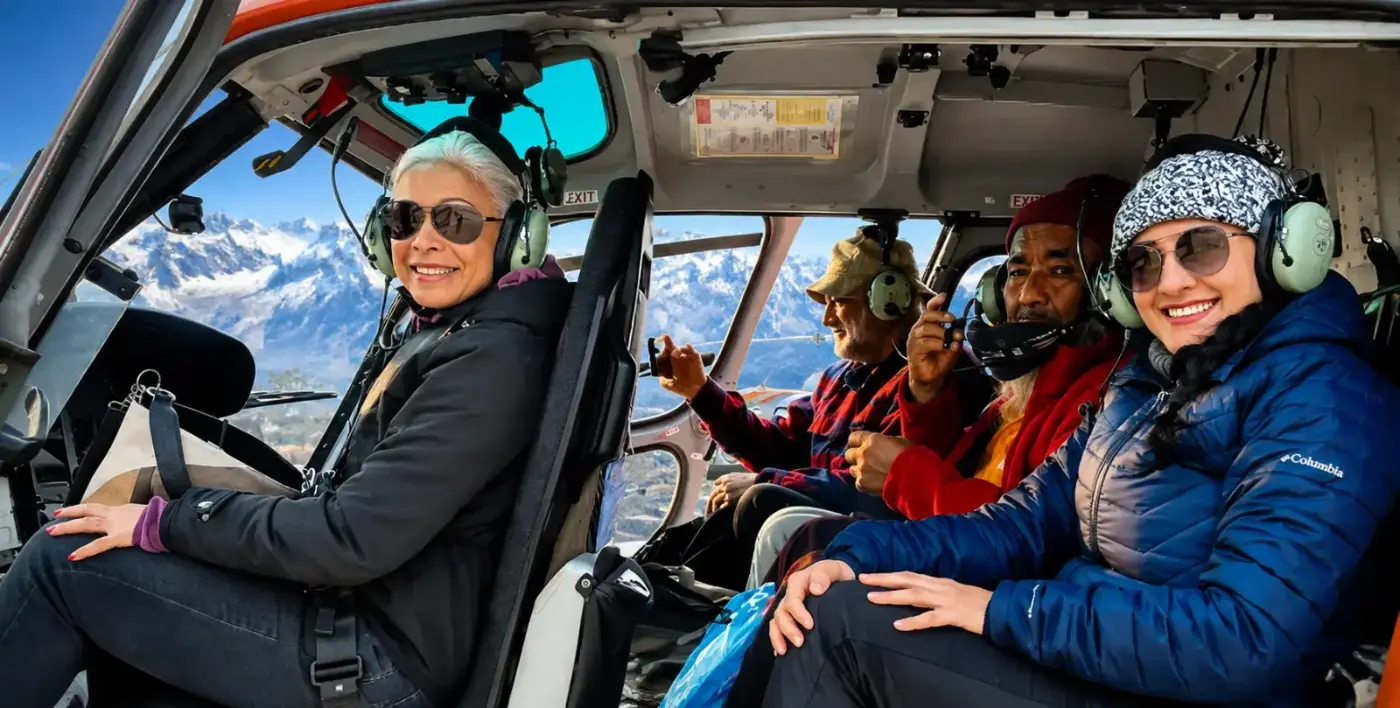
Annapurna Base Camp Helicopter Tour — The Southern Himalayan Spectacle

The Annapurna Base Camp helicopter tour from Pokhara is the second most popular Nepal helicopter experience—and, in terms of cost-to-spectacular-views ratio, many experienced helicopter tour operators consider it the best-value aerial Himalayan experience in Nepal. The Annapurna Base Camp helicopter tour from Pokhara covers about 45 kilometres to the Annapurna Sanctuary landing zone at 4,130 metres and takes 5 to 35 minutes each way.

The visible mountain panorama from the helicopter en route and at the base camp landing includes Annapurna I (8,091 m — the world’s 10th highest mountain), Annapurna South (7,219 m), Machhapuchhre (6,993 m — the sacred fishtail peak visible from Pokhara’s lakeside), Gangapurna (7,455 m), and Hiunchuli (6,441 m) — eight of the world’s fourteen 8,000-metre peaks visible in the wider aerial panorama.

Muktinath

Annapurna Base Camp Helicopter Tour Prices from Pokhara: Shared tour: USD 265 to 350 per person (approximately NPR 35,000 to 45,000 for Nepali nationals). Private charter from Pokhara: USD 4,200 to 4,500 for the full helicopter, up to 5 passengers.

From Kathmandu (including Pokhara flight or transfer): approximately USD 500 to 650 per person for a shared package including Kathmandu-Pokhara transfer. The ABC helicopter tour can be done as a half-day experience from Pokhara—departing at 6:00 a.m. and returning by 10:10:00 a.m., leaving the afternoon free for lakeside recreation, Sarangkot visits, or onward travel.

Nepal Vehicle Hiring Pvt Ltd covers the full Kathmandu-to-Pokhara ground connection for ABC helicopter tour clients: our Kathmandu to Pokhara private vehicle or Kathmandu to Pokhara bus for the intercity transfer, our Pokhara car hire for the hotel-to-helipad pre-dawn transfer, and our Sarangkot sunrise vehicle for the sunrise viewpoint addition the morning before the helicopter tour.

Muktinath Helicopter Tour — The Sacred Yatra by Air

The Muktinath helicopter tour — a helicopter flight from Pokhara to the sacred Muktinath temple complex at 3,710 meters in the Mustang District — serves a specific and rapidly growing segment of the Nepal helicopter tour market: Hindu and Buddhist pilgrims for whom the Muktinath darshan is a spiritual priority but for whom the road journey via the Kali Gandaki gorge (7 to 9 hours one way) is too demanding. The helicopter turns this multi-day pilgrimage road circuit into a 4- to 5-hour round-trip experience that delivers the darshan without the physical toll of the road journey.

The helicopter flight from Pokhara to Ranipauwa (the Muktinath helipad, about 1 kilometre below the temple) takes about 30 to 40 minutes. It offers an aerial view of the Kali Gandaki Valley, including the Dhaulagiri north face, the Nilgiri massif, and the characteristic flat-topped butte formations of the Mustang landscape.

The Muktinath helicopter package typically includes: Pokhara-to-Ranipauwa return flight, 2 to 3 hours at Ranipauwa for temple darshan (the 108 Mukti Dhara water spout circuit, Jwala Mai eternal flame, and Vishnu Mandir), and the return flight to Pokhara. For Indian pilgrim groups, the complete Muktinath helicopter circuit is available as an add-on to or replacement for the overland road tour.

2026 Muktinath Helicopter Tour Price from Pokhara: Approximately USD 250 to 400 per person for shared format (3 to 5 pax). Private charter from Pokhara: USD 2,500 to 3,500 for a full helicopter. For the complete Muktinath yatra circuit including Kathmandu-to-Pokhara transfer, contact Nepal Vehicle Hiring Pvt Ltd for coordinated transport and operator recommendations.

Muktinath temple

Langtang Valley Helicopter Tour

The Langtang Valley helicopter tour from Kathmandu offers an aerial view of one of Nepal’s finest and most accessible trekking valleys—the Langtang range, with Ganesh Himal, Langtang Lirung (7,234 m), and the Tibetan border peaks visible in the background. The helicopter departs from Kathmandu’s helipad and covers the Pasang Lhamu Highway corridor in minutes, arriving at the Kyanjin Gompa helipad (3,862 m) in about 30 to 40 minutes.

The standard Langtang helicopter tour includes aerial views of the rebuilt Langtang Village (almost destroyed in the 2015 earthquake), Kyanjin Gompa monastery, and the surrounding Langtang glacier terrain.

The Langtang helicopter tour is particularly valuable for travellers whose Langtang trekking plans were disrupted by the August flood, which severely damaged Syabrubesi and the Pasang Lhamu Highway road access. For those who planned a Langtang trek in autumn and found road access suspended, the helicopter approach provides continued access to the Langtang highland environment without relying on the damaged road corridor.

Nepal Vehicle Hiring Pvt Ltd provides the Kathmandu hotel-to-helipad transfer for all Langtang helicopter tour departures.

2026 Langtang Helicopter Tour Price: Approximately USD 900 to 1,200 per person (shared, 5 pax). Private charter from Kathmandu to Kyanjin Gompa: USD 3,500 to 4,500.

Upper Mustang Helicopter Tour

The Upper Mustang helicopter tour from Pokhara provides an aerial perspective on one of Nepal’s most restricted and most visually dramatic regions — the ancient Tibetan-influenced walled city of Lo Manthang, the ochre and red sandstone cliffs of the Mustang plateau, and the high-altitude desert landscape that gives the Upper Mustang its extraordinary and completely Nepal-atypical visual character. The helicopter covers the Upper Mustang approach in approximately 50 to 60 minutes from Pokhara, flying over the Jomsom-Kagbeni corridor and continuing north to Lo Manthang, the capital of the former Kingdom of Mustang.

The Upper Mustang helicopter tour typically includes a landing in Lo Manthang, exploration of the walled city’s ancient monasteries and the Maharaja’s palace, and a return flight over the Kali Gandaki Valley panorama. For travellers who cannot commit to the Upper Mustang trek’s multi-day format (typically 10 to 12 days from Pokhara) but who want to experience the walled city and plateau landscape, the helicopter provides a viable one-day alternative.

Alpine Luxury Treks specialises in the top-end Upper Mustang experience, combining helicopter access with luxury lodge accommodation in Lo Manthang.

Upper Mustang Helicopter Tour Price: Approximately USD 600 to 900 per person (shared). Private charter from Pokhara: USD 4,500 to 6,000.

Dharapani trek start point of annapurna range

Gosaikunda Helicopter Tour

Gosaikunda Lake, at 4,380 meters in the Rasuwa District, is one of Nepal’s most important Hindu pilgrimage lakes. This sacred glacial tarn attracts hundreds of thousands of pilgrims for the annual Janai Purnima festival (typically in August) and offers a magnificent high-altitude trekking destination year-round.

After the August 2026 flood damaged road access to Syabrubesi and the Pasang Lhamu Highway, the helicopter approach to Gosaikunda from Kathmandu has become a more viable alternative to the disrupted road-and-trek route.

The Gosaikunda helicopter tour from Kathmandu takes approximately 30 to 40 minutes each way, covering the Rasuwa District’s Himalayan landscape and providing aerial views of the Langtang range, Jugal Himal, and the sacred lake itself — a striking turquoise body of water surrounded by bare rocky peaks and permanent snowfields that, in aerial perspective,e reveals its glacial origin with immediate clarity. The standard tour includes a lakeside landing and 30 to 60 minutes at the lake for photography and religious observance, before the return flight to Kathmandu.

Gosaikunda Helicopter Tour Price: Approximately USD 800 to 1,100 per person (shared, 5 pax). Private charter from Kathmandu: USD 3,000 to 4,000. Nepal Vehicle Hiring Pvt Ltd provides Kathmandu hotel-to-helipad transfers and return transfers for all Gosaikunda helicopter tour clients.

The Helicopter Aircraft — What You Fly In

Nepal’s helicopter tour industry uses specifically selected aircraft models that are engineered for high-altitude mountain performance — not the same helicopters that serve urban transport or oil-platform roles in other countries, but purpose-optimised mountain aviation platforms whose operational ceiling and power-to-weight ratio allow safe operation in the thin air above 5,000 meters where the world’s highest mountain terrain is found.

Airbus H125 (formerly Eurocopter AS350B3e/Ecureuil). The Airbus H125 is Nepal’s most widely used helicopter tour aircraft and arguably the world’s finest high-altitude helicopter. Its single Turbomeca Arriel 2D engine delivers 847 shaft horsepower, tuned specifically for high-altitude performance.

Its maximum operating altitude of 23,000 feet (approximately 7,010 meters) exceeds even the Kala Patthar landing altitude of 5,545 meters by a comfortable margin. Its four- to five-passenger capacity (excluding pilot) is standard for Nepal helicopter tour formats.

The H125’s performance envelope was validated in 2005 when a modified version landed on the summit of Mount Everest, the world’s highest helicopter landing, at 8,850 meters.

Airbus H130 (formerly Eurocopter EC130). The Airbus H130 is a slightly larger mountain helicopter also used in Nepal’s helicopter tour sector, with an 8-passenger capacity and panoramic windows that provide superior photographic and viewing access compared to the H125. Its quieter main rotor system and wider cabin make it popular for top-end helicopter tour experiences where passenger comfort and photographic quality are priorities. Several helicopter tour operators focus on the H130 in the private charter market.

Both aircraft are CAAN (Civil Aviation Authority of Nepal) certified and maintained under Nepal’s aviation safety regulatory framework. All pilots operating high-altitude helicopter tours in Nepal hold specific high-altitude mountain flying certifications in addition to standard commercial helicopter pilot licenses. All flights operating above 4,000 meters must carry emergency oxygen equipment as a mandatory safety requirement.

Experience a Nepal Helicopter Tour to Everest, Annapurna, and Muktinath. Enjoy breathtaking Himalayan views, convenient one-day travel, scenic helicopter flights, and optional landing experiences for trekking, sightseeing, and pilgrimage.

Safety on Nepal Helicopter Tours — What CAAN Regulation Means

Nepal’s helicopter tour industry operates under the Civil Aviation Authority of Nepal (CAAN) regulatory framework, which sets minimum standards for aircraft maintenance, pilot certification, operational procedures, and passenger safety. Understanding what CAAN regulations mean in practice—and what to look for in a reputable helicopter tour operator—helps travellers choose their Nepal helicopter tour with confidence.

Pilot Certification. Nepal’s CAAN requires mountain helicopter pilots to hold specific high-altitude flying endorsements in addition to the standard commercial helicopter pilot license. This endorsement certifies that the pilot has completed specific training in high-altitude flight characteristics—reduced air density at altitude that significantly changes helicopter performance, downdraft and turbulence patterns in mountain valleys, and the visual flight rules that govern mountain approach and landing in Nepal’s limited-instrument airport environment.

Aircraft Maintenance Standards. CAAN requires licensed aircraft maintenance engineers to perform and certify all scheduled maintenance on commercially operated helicopters. Nepal’s major helicopter tour operators — Simrik Air, Dynasty Aviation, Kailash Helicopter, Fishtail Air, and others — maintain their own engineering teams and maintenance facilities to CAAN’s required standards. Before booking any Nepal helicopter tour, confirm that the operator’s aircraft carry current CAAN airworthiness certificates.

Passenger Weight Requirements. All Nepal helicopter tours weigh passengers before boarding — this is not a formality but a genuine flight safety requirement. At high altitude, where reduced air density limits the helicopter’s lifting capacity, the total payload weight directly affects the aircraft’s performance margin.

CAAN regulations set maximum payload limits for specific aircraft-altitude combinations, and operators must enforce these limits regardless of the passenger situation. Travellers significantly above average weight may be required to purchase an additional seat or book a private charter.

Weather-Dependent Operations. All Nepal helicopter tours are subject to weather cancellation without advance notice. Mountain weather changes rapidly, and pilot-in-command judgment governs go/no-go decisions. A reputable operator will not fly when conditions are marginal — and will either reschedule or refund according to their booking policy when weather causes cancellation.

Confirm the operator’s weather cancellation and refund policy before booking.

Experience a Nepal Helicopter Tour to Everest, Annapurna, and Muktinath. Enjoy breathtaking Himalayan views, convenient one-day travel, scenic helicopter flights, and optional landing experiences for trekking, sightseeing, and pilgrimage.

Best Season for Nepal Helicopter Tours

Spring (March to May) — Peak Season. Post-winter clarity and the longest daylight hours make March to May Nepal’s finest helicopter tour season. The Himalayan peaks are free of monsoon cloud, air clarity is exceptional (particularly in March and early April, before pre-monsoon haze builds in late April and May), and rhododendron forests below the Himalayan snowline are in spectacular bloom through April.

This is the most popular and most heavily booked season — book helicopter tours at least 1 to 2 months ahead for spring.

Autumn (October to November) — The Clearest Sky Season. Post-monsoon air clarity in October and November is, by many experienced Nepal operators’ judgment, the finest of the year; the monsoon has washed the atmosphere clean of dust and haze. The specific combination of reduced post-monsoon humidity and winter-approaching air stability creates visibility conditions that let the full 40400-kilometre Himalayan skyline be seen from Kathmandu on the clearest days.

Helicopter tours in October typically offer the sharpest, most distant mountain views. This is also peak trekking season, when the Everest Base Camp trek, Annapurna Circuit, and Langtang Valley trek are at peak demand — book well ahead.

Winter (December to February) — Cold but Clear. Winter provides good mountain visibility (less haze than spring). Still, cold temperatures at altitude make ground stops—particularly the Kala Patthar landing on the EBC tour—genuinely cold and require proper winter gear. Helicopter tour prices in winter may be slightly lower than peak season, and availability is better.

The risk of flight cancellation due to high-altitude wind increases in January and February.

Monsoon (June to August) — Not Recommended. The monsoon season (mid-June to mid-September) brings persistent cloud cover to Nepal’s middle and upper elevations, making visual mountain flying both unsafe and visually unrewarding. Helicopter tours are technically available but have very high weather-related cancellation rates. Only the Muktinath and Upper Mustang tours, which operate in rain-shadow territory, have reasonable monsoon-season success rates.

Experience a Nepal Helicopter Tour to Everest, Annapurna, and Muktinath. Enjoy breathtaking Himalayan views, convenient one-day travel, scenic helicopter flights, and optional landing experiences for trekking, sightseeing, and pilgrimage.

Booking a Nepal Helicopter Tour — The Practical Guide

Book Through a Registered Nepal Operator. Nepal’s CAAN licensing system requires helicopter tour operators to be registered with specific government approvals. Book through a CAAN-licensed Nepal helicopter tour company or through a registered trekking agency that coordinates with licensed operators. Avoid informal intermediaries who may not be officially registered.

Book the Ground Transport Separately. Helicopter tour packages typically do not include hotel-to-helipad ground transport. Book the early-morning private car hire from Nepal Vehicle Hiring Pvt Ltd to ensure the pre-dawn hotel pickup is professionally managed—a 5:30 a.m. helicopter departure requires a confirmed Driver in position, not a taxi hailed from the street in the dark.

Allow a Weather Buffer Day. The most common helicopter tour disappointment is a weather cancellation on the day of the booked tour followed by a departure from Nepal before the reschedule date. Build a minimum of one buffer day into any Nepal itinerary that includes a helicopter tour — and for the EBC tour specifically, which requires clear conditions between Kathmandu and the Khumbu, a two-day buffer is advisable.

Confirm the Package Inclusions. Helicopter tour quotes vary widely in what is included. Confirm specifically: whether breakfast at Hotel Everest View is included; whether the Kala Patthar landing is included or an additional charge; the specific aircraft type; the sharing arrangement; and the full weather cancellation and refund policy.

For All-in Coordination. Nepal Vehicle Hiring Pvt Ltd coordinates the ground transport legs of Nepal helicopter tour itineraries — hotel-to-helipad transfers, pre-tour Kathmandu sightseeing, Bhaktapur heritage tours, and post-tour airport transfers. Contact our team at +977 981-4227196 or through our plan trip page.

Combining Helicopter Tours with Nepal Trekking

The most compelling Nepal adventure formats combine helicopter tours with ground-level trekking—using the helicopter for dramatic aerial access and the trek for an in-depth cultural and physical experience on the ground. Several proven combinations deliver the best of both formats.

EBC Trek and Helicopter Return. The Everest Base Camp trek on the way up (7 to 14 days, Lukla to EBC) and helicopter return from Lukla or Namche — saving 4 to 5 days of descent on fatigued legs. Our Nepal Himalayas EBC trek with helicopter return package is the most professionally structured version of this combination.

Annapurna Circuit Trek with ABC Helicopter Day. The Annapurna Circuit trek via our Private vehicle to Besisahar for the approach, combined with an ABC helicopter tour from Pokhara at the end as an aerial closeout to the trekking experience.

Ghorepani Trek and ABC Helicopter. The shorter Ghorepani Poon Hill trek from Nayapul via our Pokhara to Nayapul transport (5 to 7 days) combined with an ABC helicopter day from Pokhara provides the Annapurna region experience across two different modes — walking through the rhododendron forests to Poon Hill and flying to the base camp — in a format accessible to a wider range of fitness levels.

Manaslu Circuit with Helicopter Rescue Option. The Manaslu Circuit trek via our Manaslu trek transport includes a helicopter evacuation insurance requirement—as a safety provision, Nepal’s Manaslu Conservation Area mandates that all trekkers carry insurance covering helicopter evacuation, making the helicopter not just a tourism option but a standard safety backstop for this trek.

Kali Gandaki Gorge — The World’s Deepest Gorge from the Air

One of the most dramatic visual experiences of any Nepal helicopter tour involving the Mustang or Muktinath corridor is the aerial perspective on the Kali Gandaki River gorge — the deepest river gorge in the world by the metric of the vertical distance between the river and the highest adjacent peaks. The Kali Gandaki flows between Dhaulagiri (8,167 m) to the west and Annapurna I (8,091 m) to the east, with the river at about 1,000 meters elevation and the adjacent summits rising more than 7,000 meters above it—a vertical differential that th other river-to-peak combination in the world matches.

From a helicopter passing above the gorge, this scale is perceivable in a way that the road journey through the gorge — which shows only the immediate valley walls rather than the summit panorama above — does not reveal.

The helicopter approach to Muktinath or Upper Mustang passes over the Kali Gandaki corridor’s most spectacular sections — the gorge narrows that the road squeezes through at Ghasa and Dana, the Tukuche plain where the valley briefly opens before narrowing again toward Kagbeni, and the dramatic cliff-face villages of the middle Kali Gandaki visible as tiny clusters of flat-roofed stone houses on the valley walls far below the helicopter. For photographers with wide-angle lenses, the helicopter passage over this section in good morning light delivers compositions of extraordinary scale — the river thread far below, the gorge walls rising to the frame edges, and the Dhaulagiri and Annapurna summits in the background providing context for the geological event that carved this remarkable valley.

Experience a Nepal Helicopter Tour to Everest, Annapurna, and Muktinath. Enjoy breathtaking Himalayan views, convenient one-day travel, scenic helicopter flights, and optional landing experiences for trekking, sightseeing, and pilgrimage.

The Syangboche Hotel Everest View — The World’s Highest Hotel Breakfast

One of the most specific and most consistently appreciated inclusions in the standard Everest Base Camp helicopter tour package is the breakfast at Hotel Everest View in Syangboche (3,962 m) — often described as the world’s highest permanently staffed hotel and certainly one of the world’s finest breakfast settings. A Japanese development company built the hotel in the early 1970s, and it has operated continuously since, maintaining a remarkable standard of service despite its location 13 kilometres above sea level and access only by helicopter or on foot.

The hotel’s panoramic glass dining room faces Everest, Lhotse, and Ama Dablam—the three peaks that define the classic Khumbu mountain skyline—from a viewing distance and perspective no other fixed building in the world can match.

The helicopter tour breakfast at Hotel Everest View is not merely a meal but a 30- to 45-minute experience in one of Nepal’s most extraordinary physical settings: sitting at a table with a hot meal and coffee, looking at Mount Everest at eye level from 3,962 meters, in a building that has been doing exactly this for 50 years. For travellers who have flown specifically to Nepal for the Himalayan experience but cannot commit to the 14-day EBC trek, this breakfast is—paradoxically—one of the closest any visitor can get to being in the Khumbu.

Alpine Luxury Treks offers a top-end version of this experience, and Trek Nepal Himalayas’ luxury EBC trek with helicopter return includes an aerial flight and an overnight for the trekking team before the return flight.

Experience a Nepal Helicopter Tour to Everest, Annapurna, and Muktinath. Enjoy breathtaking Himalayan views, convenient one-day travel, scenic helicopter flights, and optional landing experiences for trekking, sightseeing, and pilgrimage.

Aerial Nepal — What You See on the Kathmandu to Khumbu Helicopter Route

The Kathmandu-to-Khumbu helicopter route for the Everest Base Camp tour covers terrain that is simultaneously one of Nepal’s most studied landscapes and one of its least directly observed at the specific scale the helicopter provides. The 1145-kilometre flight northeast from Kathmandu passes over the following landmarks in sequence, each visible from the helicopter window on a clear morning.

Departing the Kathmandu Valley, the helicopter immediately climbs above the ring of hills that contains the capital — the Shivapuri range to the north and the Chandragiri and Nagarjun hills to the west visible in the departure panorama. The Sunkoshi River valley appears to the southeast below the Arniko Highway corridor, and the main Himalayan range first appears ahead as the helicopter gains altitude above the hill country.

The Rolwaling range — home to the Rolwaling Valley trek — is visible to the northeast, with Gauri Shankar’s twin summits (7,134 m) particularly prominent. The Lamjura Pass area — the overland approach to the Khumbu used by the historic Jiri-to-Everest trekking route — is visible in the hills below as the helicopter crosses the Dudh Koshi River watershed.

As the Khumbu approaches, the scale shift is rapid and dramatic: the lower-elevation ridge and valley topography of the mid-hills gives way to the vertical relief of the high Himalaya — the Kongde Ri ridge rising directly from the valley floor to above 6,000 metres, the Namche Bazaar amphitheatre visible in the hillside horseshoe of its characteristic topography, and then the first direct sightline to Everest’s summit pyramid appearing above the Nuptse-Lhotse wall as the helicopter gains the altitude of the Syangboche bench. This visual sequence — the progressive revelation of the world’s highest mountain from a moving aircraft over 55 to 70 minutes — is one of Nepal’s finest sustained viewing experiences, and it justifies the EBC helicopter tour as a primary Nepal experience rather than a tourist shortcut.

Helicopter Tours for Photography — Nepal’s Aerial Composition

Nepal’s helicopter tours offer photographic opportunities unavailable from ground level anywhere in the world—aerial compositions of the Himalayan range from altitudes and angles only aircraft can provide—and the helicopter’s slow, manoeuvrable flight makes it more photographically productive than any fixed-wing aircraft pass.

The Airbus H125’s panoramic windows — taller and wider than typical aviation windows — provide good photographic access from the passenger seats. However, the helicopter’s Plexiglas windows introduce a small degree of optical distortion that the most demanding photographers should account for in lens selection and focus settings.

The private helicopter charter format lets passengers request specific flight paths, hover positions, and approach angles that deliver the most productive photographic results — a service available from top-end operators that cater specifically to aerial photography clients and that Alpine Luxury Treks can coordinate as part of their helicopter tour arrangements.

The golden hour light of early morning — the standard helicopter departure window for both weather and photography reasons — provides the finest directional light for Himalayan aerial photography: warm, low-angle illumination that casts shadows on the glacier seracs and summit ice, reveals the three-dimensional texture of the mountain faces, and produces the warm colour temperature that makes Himalayan photography at its most visually powerful. The pre-dawn hotel-to-helipad transfer from Nepal Vehicle Hiring Pvt Ltd is timed to position the helicopter for this golden-hour departure window, requiring a 5:00 to 5:30 a.m. hotel pickup, and our car hire service delivers the confirmed, waiting vehicle that early-morning logistics require.

Experience a Nepal Helicopter Tour to Everest, Annapurna, and Muktinath. Enjoy breathtaking Himalayan views, convenient one-day travel, scenic helicopter flights, and optional landing experiences for trekking, sightseeing, and pilgrimage.

Nepal Helicopter Tours for Special Needs Visitors

One of the most significant, yet often overlooked, advantages of Nepal helicopter tours is their accessibility for visitors who cannot participate in Nepal’s trekking experiences due to physical limitations. Elderly travellers using mobility aids, visitors recovering from surgery or managing chronic health conditions, and those with altitude sensitivity that prevents overnight stays at high elevation can all access the Himalayan panorama through a helicopter tour that would otherwise be unreachable by any other means.

The Everest Base Camp helicopter tour, for a visitor in a wheelchair, a 70-year-old on their 50th wedding anniversary trip, or a traveller whose knee surgery means the EBC trek is no longer possible, delivers the same aerial view of the world’s highest mountain that the trekker earns on foot — not a lesser experience in terms of the mountain itself, but a different access format that opens the Himalayan encounter to a vastly wider range of visitors. Nepal’s helicopter tour operators accommodate mobility-limited passengers with specific boarding assistance at the helipad.

Nepal Vehicle Hiring Pvt Ltd’s airport transfer service and private car hire are configured to accommodate mobility aids and special assistance requirements when confirmed at booking — contact our team in advance to arrange the appropriate vehicle and assistance.

For families with young children who want to provide a Himalayan experience appropriate for a child’s attention span and physical capability, the helicopter tour — a 4 to 5 hour total experience with the most dramatic visual impact concentrated into the flight segments — is frequently more suitable than a multi-day trek that asks more of children’s physical endurance than the mountain rewards. The Nepal tour package available through Nepal Vehicle Hiring Pvt Ltd’s plan trip page can combine helicopter tours with heritage city sightseeing, Chitwan wildlife safari, and Lumbini pilgrimage into a comprehensive family Nepal itinerary that works for children and adults alike.

Experience a Nepal Helicopter Tour to Everest, Annapurna, and Muktinath. Enjoy breathtaking Himalayan views, convenient one-day travel, scenic helicopter flights, and optional landing experiences for trekking, sightseeing, and pilgrimage.

Helicopter Tour vs Mountain Flight — Understanding the Difference

Two different aerial Himalayan experiences from Kathmandu are often confused by first-time Nepal visitors: the helicopter tour and the fixed-wing mountain flight. Understanding the difference is essential for booking the right experience.

Mountain Flight (Fixed-Wing Aircraft). Buddha Air, Yeti Airlines, and other domestic carriers operate the Kathmandu mountain flight on fixed-wing turboprop aircraft—typically the Beechcraft 1900D or similar 18-passenger commuter aircraft. The flight departs Tribhuvan International Airport and follows a specific aerial corridor east, offering views of Everest and the Khumbu massif from an approximate cruising altitude of 8,500 meters.

Each passenger gets a window seat with a mountain view for about 1 to 2 minutes before the next passenger rotates. The mountain flight costs approximately USD 170 to 220 per person, takes about 1 hour total, and does not land in the mountain region.

It is the most affordable aerial Himalayan experience and suits visitors who want mountain views without the higher cost of a helicopter tour.

Helicopter Tour. The helicopter tour involves a dedicated charter or shared helicopter flight that operates at a lower altitude than the mountain flight, follows a different and more customizable route, lands at specific high-altitude points (Kala Patthar, Syangboche, Kyanjin Gompa, Ranipauwa), and provides ground-level access to the mountain environment rather than an aerial-only view. The helicopter tour costs 5 to 8 times as much as the mountain flight.

Still, it offers a fundamentally different, more in-depth experience—not just a window view of Everest from cruising altitude, but a landing below the peak itself. For visitors who want to physically stand in the Himalayan environment without trekking, the helicopter tour is the appropriate choice.

Ground Transport Integration — Nepal Vehicle Hiring Pvt Ltd’s Role

Every Nepal helicopter tour begins and ends with a ground transport leg that is as important to the day’s success as the flight itself. A 5:30 a.m. hotel pickup in a vehicle that does not arrive, a rush to the helipad that causes the group to miss the departure window, or a long wait for transport at the helipad on return — any of these ground transport failures creates exactly the kind of logistical stress that the helicopter tour is designed to eliminate.

Nepal Vehicle Hiring Pvt Ltd’s hotel-to-helipad transfer service is specifically structured to eliminate these failure points.

Our standard helicopter tour ground transport service includes: driver confirmation the evening before the departure day, with driver name and vehicle registration communicated by WhatsApp; vehicle positioned at the hotel entrance 5 to 10 minutes before the confirmed pickup time; direct route to the helipad with the driver’s familiarity with Kathmandu’s specific early morning traffic patterns; and return pickup confirmed from the helipad or a return hotel drop as a pre-arranged part of the booking. Our car hire in Nepal and airport transfer services cover all of this—professional, on-time, and confirmed at every step.

Beyond the helicopter day itself, Nepal Vehicle Hiring Pvt Ltd covers the full Kathmandu ground experience: heritage sightseeing, a Bhaktapur day tour, Nagarkot sunrise, and Kathmandu airport transfers on arrival and departure. For helicopter tour clients who extend their Nepal visit to Pokhara or Chitwan, our Kathmandu to Pokhara bus, Pokhara car hire, and Pokhara to Chitwan bus complete the full circuit. Plan through our trip page or call +977 981-4227196.

Complete Nepal Ground Transport for Helicopter Tour Visitors

Helicopter tour visitors to Nepal typically combine their aerial Himalayan experience with Kathmandu’s heritage circuit and sometimes a Pokhara or Chitwan extension. Nepal Vehicle Hiring Pvt Ltd covers every ground transport leg: Kathmandu airport transfer on international arrival, car hire in Nepal for city days, Kathmandu sightseeing, Bhaktapur heritage tour, Nagarkot sunrise, hotel-to-helipad transfer, Kathmandu to Pokhara bus or private vehicle for Pokhara extension, Pokhara car hire for lakeside days, Sarangkot sunrise vehicle for the Annapurna range dawn view, Pokhara to Chitwan bus for wildlife extension, and final Kathmandu airport transfer at departure.
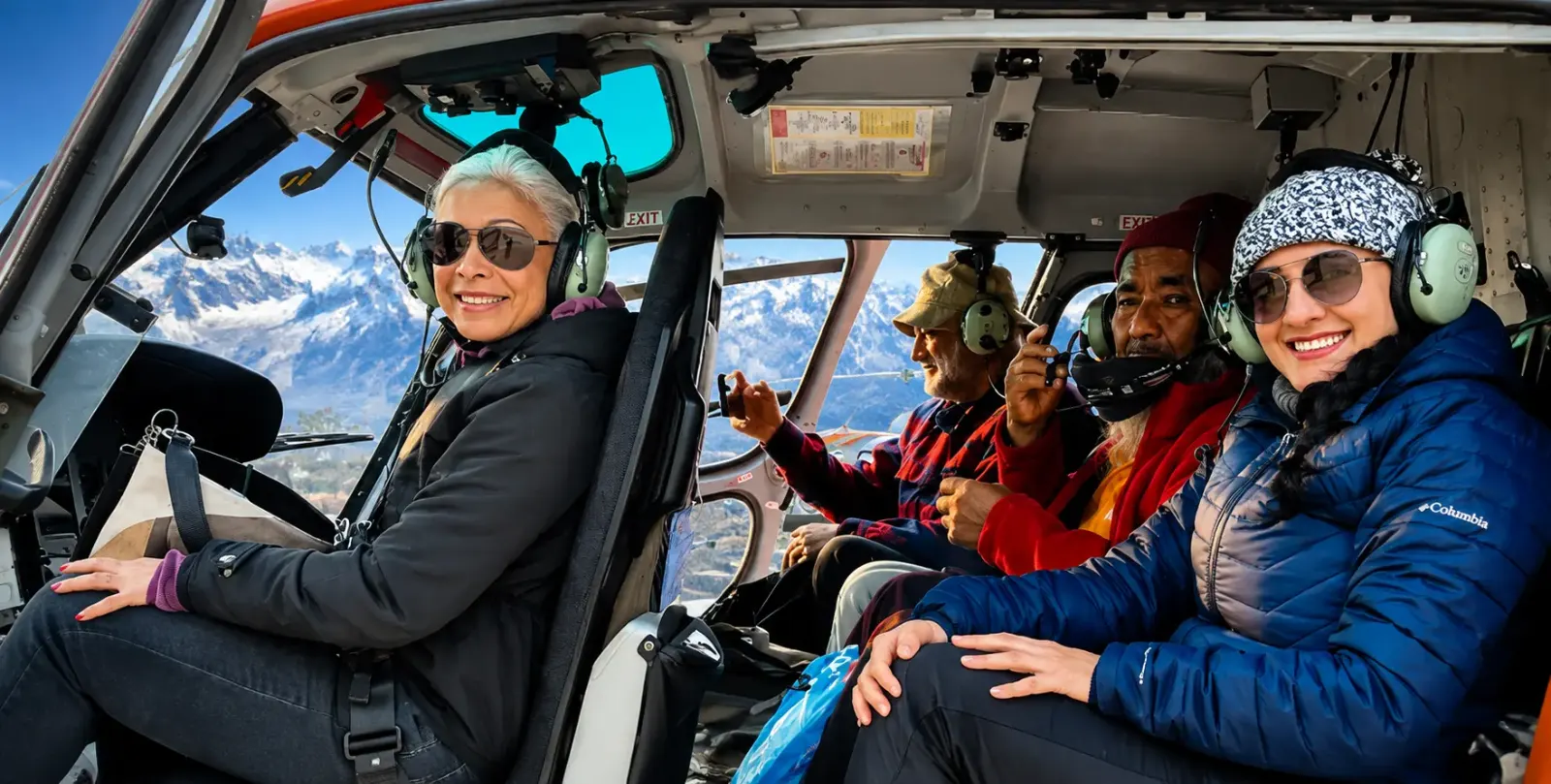
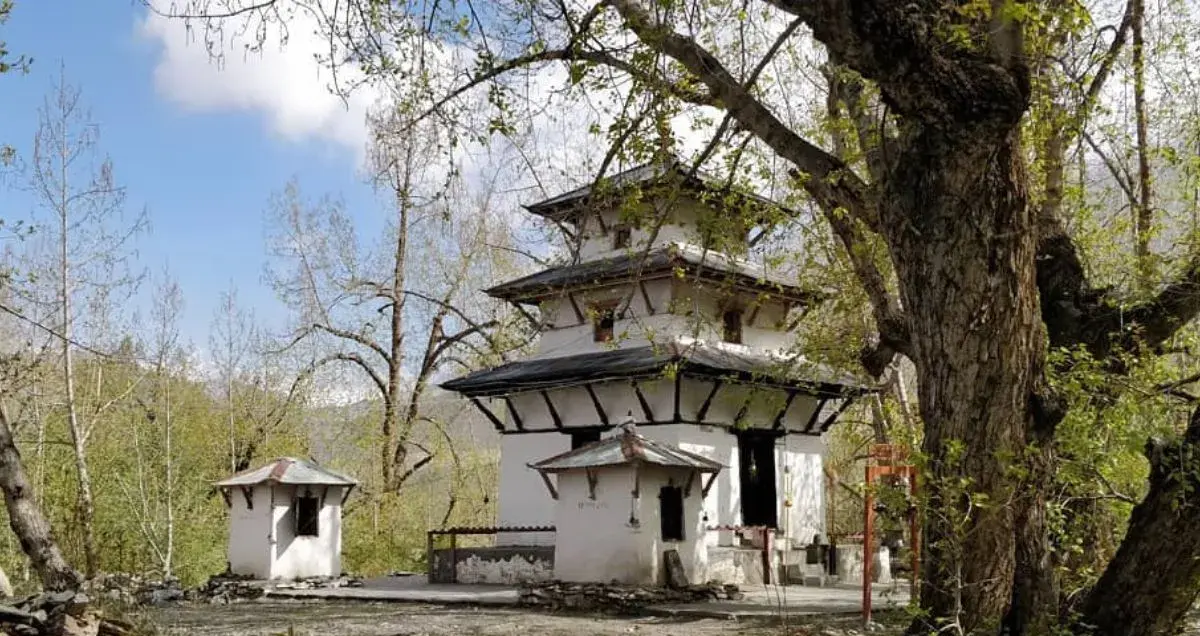
Hiace van hire for groups, tourist coaster for medium groups, and bus hire for large parties. Plan everything through our plan trip page or WhatsApp +977 981-4227196.

Frequently Asked Questions — Nepal Helicopter Tours

How much does a Nepal helicopter tour cost?

Shared EBC helicopter tour: USD 1,240 to 1,395 per person. Private EBC charter: USD 5,450 to 6,500. Shared Annapurna Base Camp helicopter from Pokhara: USD 265 to 350 per person. Muktinath helicopter from Pokhara: USD 250 to 400 per person.

What is the best helicopter tour in Nepal?

The EBC helicopter tour is Nepal’s most celebrated for the Kala Patthar landing at 5,545 m and Everest views. The ABC helicopter tour offers the best value for spectacular mountain views from Pokhara. Upper Mustang is best for cultural landscapes.

The best tour depends on your priorities — altitude, culture, or value.

Are Nepal helicopter tours safe?

Yes — reputable operators use CAAN-certified aircraft (primarily Airbus H125) with high-altitude certified pilots, emergency oxygen aboard, and strict weather minimums. Choose a CAAN-registered operator with verifiable safety records. All flights are weather-dependent and will be cancelled or rescheduled when conditions are unsafe.

When is the best time for a Nepal helicopter tour?

Spring (March to May) and autumn (October to November) offer the clearest mountain views and most reliable flight conditions. October typically delivers the finest post-monsoon clarity.

How do I arrange ground transport for a Nepal helicopter tour?

Contact Nepal Vehicle Hiring Pvt Ltd at +977 981-4227196 or through our plan trip page to arrange hotel-to-helipad private car hire for early morning helicopter tour departures from Kathmandu or Pokhara.
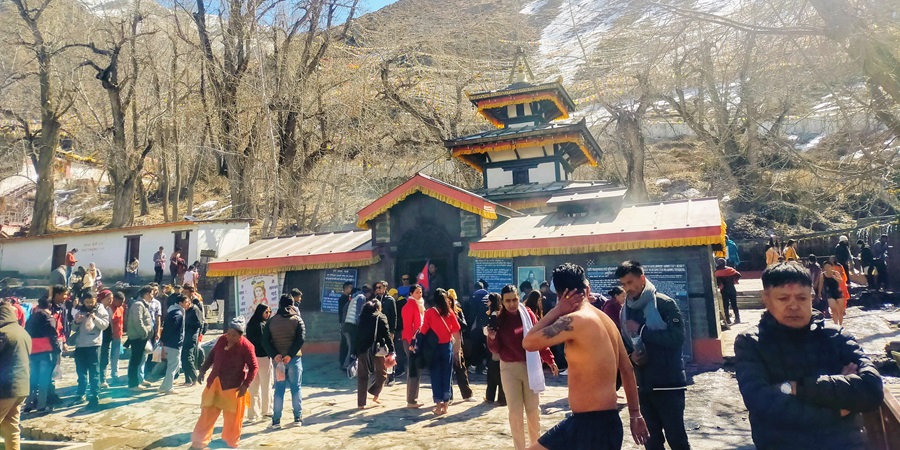
Can children and older adults do a Nepal helicopter tour?

Yes — helicopter tours are specifically suitable for visitors who cannot trek. Children and elderly passengers are welcome. Weight limits apply (all passengers are weighed before boarding).

Confirm special assistance requirements when booking.

Conclusion

A Nepal helicopter tour delivers what no other travel experience can replicate: the world’s highest mountain landscape from the air, a Himalayan summit panorama from a standing point above 5,000 meters, and the perspective on planet Earth that altitude and aviation provide. Whether it’s the EBC helicopter tour’s Kala Patthar landing, the Annapurna Base Camp helicopter’s southern Himalayan spectacle, the Muktinath aerial darshan, or the Langtang Valley helicopter approach, each Nepal helicopter tour format offers its own irreplaceable experience.

Every helicopter tour includes a ground transport leg that Nepal Vehicle Hiring Pvt Ltd delivers professionally, on time, and at an all-inclusive rate. Get a transparent price for your Nepal helicopter tour ground transport with Nepal Vehicle Hiring Pvt Ltd — call or WhatsApp +977 981-4227196, visit vehiclehiringnepal.com, or plan your complete Nepal helicopter and ground tour experience through our plan trip page.

Nepal 1-Day Helicopter Tour Cost

Discover the Nepal 1-Day Helicopter Tour Cost for popular destinations such as Everest, Annapurna, Langtang, and Gosaikunda. Compare flight routes, landing options, helicopter types, group and private charter prices, and booking tips.

Nepal 1-Day Helicopter Tour Cost

Nepal’s helicopter tour industry has evolved dramatically over the past decade from a niche luxury offering for a handful of high-budget travellers into a mainstream Nepal tourism product serving tens of thousands of visitors annually — from Everest Base Camp helicopter tours that allow travellers to reach 5,364 metres in under an hour to sacred lake tours over Gosaikunda and cultural flyovers of the ancient Mustang Kingdom that would require weeks of trekking to access on foot. In Nepal, helicopter tours are one of the best-value offerings in adventure tourism globally—delivering Himalayan experiences of extraordinary visual power and physical authenticity at price points that, while not budget travel, are accessible to a much broader traveller profile than the expedition-style trekking they compress.

This comprehensive guide covers every major Nepal one-day helicopter tour route and its verified cost structure — the Everest Base Camp helicopter tour, the Annapurna Base Camp helicopter tour, the Langtang and Gosaikunda helicopter tour, the Mustang helicopter tour, and several specialist routes including the Everest sunrise helicopter and the Manaslu helicopter circuit. For each route, we provide per-person costs for different group sizes.

These factors drive price variation between operators, what standard packages include (and don’t), the best season for each route, and how Nepal Vehicle Hiring Pvt. Ltd. provides the ground transport infrastructure—Kathmandu sightseeing tours, trekking trailhead transfers, and airport connections—that completes every Nepal helicopter tour experience.
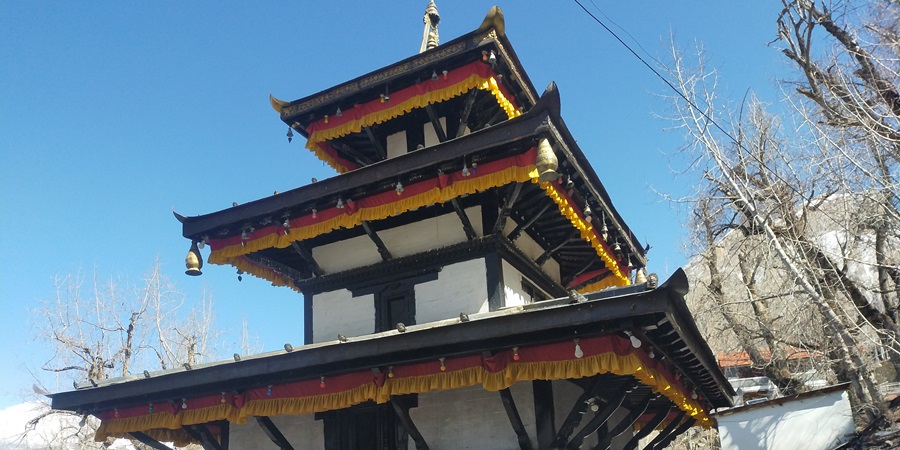
Nepal Helicopter Tour Cost — Quick Reference

Everest Base Camp Helicopter Tour: USD 1,150-1,500 per person (group of 4-5)

Everest Sunrise Helicopter Tour: USD 1,300-1,700 per person (group of 4-5)

Annapurna Base Camp Helicopter Tour: USD 900-1,200 per person (group of 4-5)

Gosaikunda + Langtang Valley Helicopter Tour: USD 900-1,100 per person (group of 4)

Mustang (Muktinath) Helicopter Tour: USD 800-1,100 per person (group of 4-5)

Everest Solo Charter (1 person): USD 4,000-5,500 | Couple: USD 2,500- 3,500.

All tours depart from Tribhuvan Airport, Kathmandu | Duration: 4-6 hours total
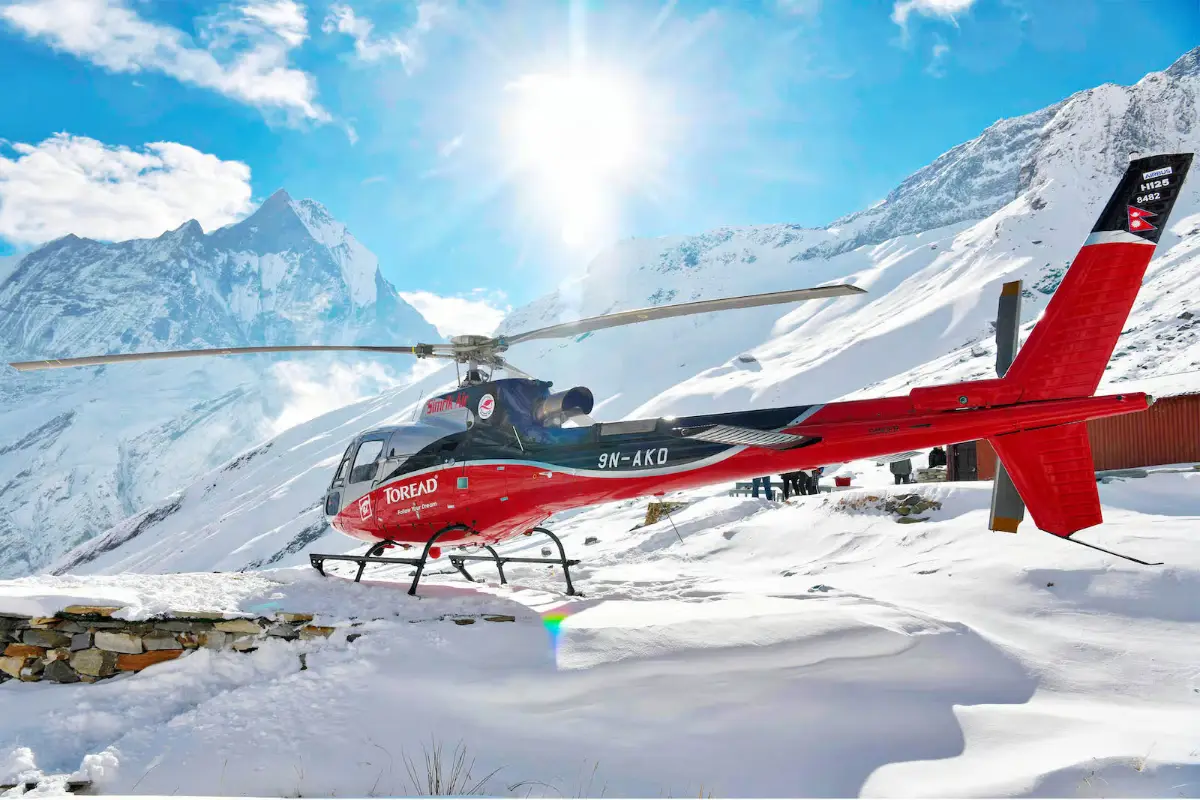
Ground Transport: Nepal Vehicle Hiring Pvt. Ltd. | +977 981-4227196 | vehiclehiringnepal.com

How Nepal Helicopter Tour Pricing Works

The Group Sharing Model — The Key to Affordable Prices

The charter model drives the fundamental economics of Nepal helicopter tour pricing — most operators price their tours by the helicopter rather than by the passenger. A standard Bell 407 or Airbus AS350 B3 helicopter — the two most commonly used aircraft on Nepal tourist routes — seats four to five passengers plus the pilot.

The total charter cost is fixed regardless of how many passengers share it. The per-person cost, therefore, falls dramatically as group size increases: a USD 5,000 total helicopter charter divided by five passengers costs USD 1,000 each, while divided by two passengers it costs USD 2,500 each.

For travellers who cannot fill a helicopter with their own group, most operators offer group joining—a system where individual travellers or small groups are matched with others on the same route to share the helicopter and split the cost. Group-joining departures for popular routes like the Everest Base Camp helicopter tour and Annapurna Base Camp helicopter tour are scheduled almost daily during the peak October and April seasons, and solo travellers who book in advance can typically join a group departure at the standard per-person shared rate.

The group-joining system also applies to Langtang and Gosaikunda helicopter tours and the Mustang helicopter tour from Pokhara.

What Drives Price Variation Between Operators

Nepal helicopter tour prices vary significantly between operators for reasons that travellers should understand before booking. The primary cost drivers are: the aircraft type and age — newer aircraft with more modern avionics and better high-altitude performance capability command higher charter rates; the pilot experience — pilots with more hours on Himalayan routes, particularly the high-altitude approaches to Everest Base Camp and similar landing sites, are both more expensive and significantly more valuable for safety; the CAAN certification and maintenance standard of the operator; and the inclusions in the package — landing fees, park permits, breakfast at the landing site, and guide accompaniment all add to the base charter cost and are bundled differently by different operators.

The cheapest available Nepal helicopter tour rates reflect genuine compromises in one or more of these factors — older aircraft, less experienced pilots, minimal inclusions, or operators with less robust CAAN compliance. The most expensive rates reflect top-end everything — new aircraft, senior pilots, maximum inclusions, and the market positioning of Nepal’s top-end helicopter tour operators.

Most travellers find the sweet spot in mid-range pricing from established operators with strong safety records, current CAAN certification, and competitive group joining rates. Saving USD 100 to 200 per person by choosing an unverified, cheap operator for a Himalayan helicopter flight is a safety compromise that Nepal Vehicle Hiring Pvt. Ltd. consistently advises against when referring clients to helicopter tour operators when booking ground transport services.

Mustang

Everest Base Camp Helicopter Tour

Route Overview: Kathmandu to EBC
The Everest Base Camp helicopter tour is Nepal’s most popular and most iconic helicopter tour — a half-day flight from Kathmandu that delivers passengers to Everest Base Camp at 5,364 meters and the Kalapathar viewpoint area at 5,545 meters — the highest accessible point on any standard Nepal helicopter tour, with the closest aerial views of Mount Everest at 8,849 meters available from any commercial aviation route. The standard EBC helicopter tour departs Kathmandu early in the morning, flies to Lukla for a fuel stop, then continues to the Gorak Shep landing area near Everest Base Camp for a 20- to 40-minute exploration stop before returning to Kathmandu.
Alternatively, some operators fly direct from Kathmandu to EBC on high-altitude-capable aircraft, without the Lukla fuel stop. Total flight time is about 4 to 6 hours, with the helicopter tour complete by mid-morning.
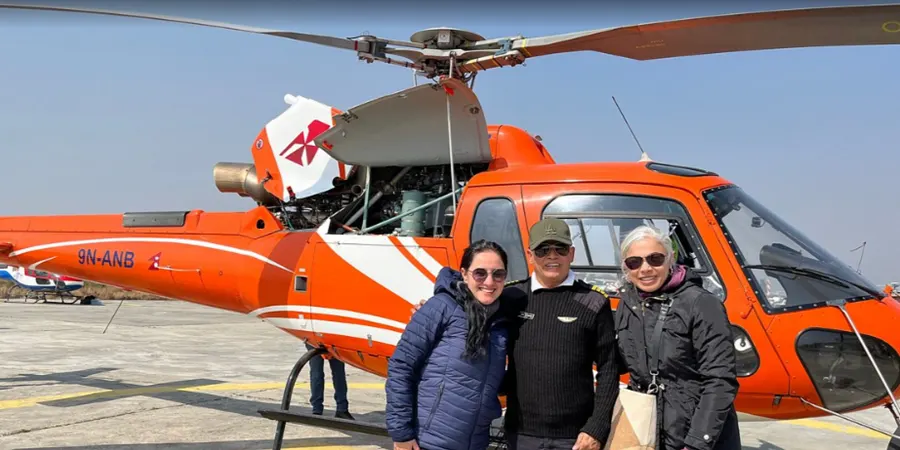
The mountains visible on the Everest Base Camp helicopter tour include Mount Everest (8,849 m), Lhotse (8,516 m), Nuptse (7,861 m), Ama Dablam (6,812 m), Pumori (7,161 m), Cho Oyu (8,188 m), and the full panorama of the Khumbu Himalaya stretching eastward to the Tibetan border — arguably the finest single concentration of high Himalayan scenery accessible by any form of transport. The ground-level Everest Base Camp landscape — the Khumbu Glacier terminal moraine, the Base Camp tents of current expeditions visible in season, the extraordinary wind-sculpted topography of the high Khumbu — is visible from the landing area in a way that the standard Everest Base Camp Trek approach on foot also delivers, but in a fraction of the time.
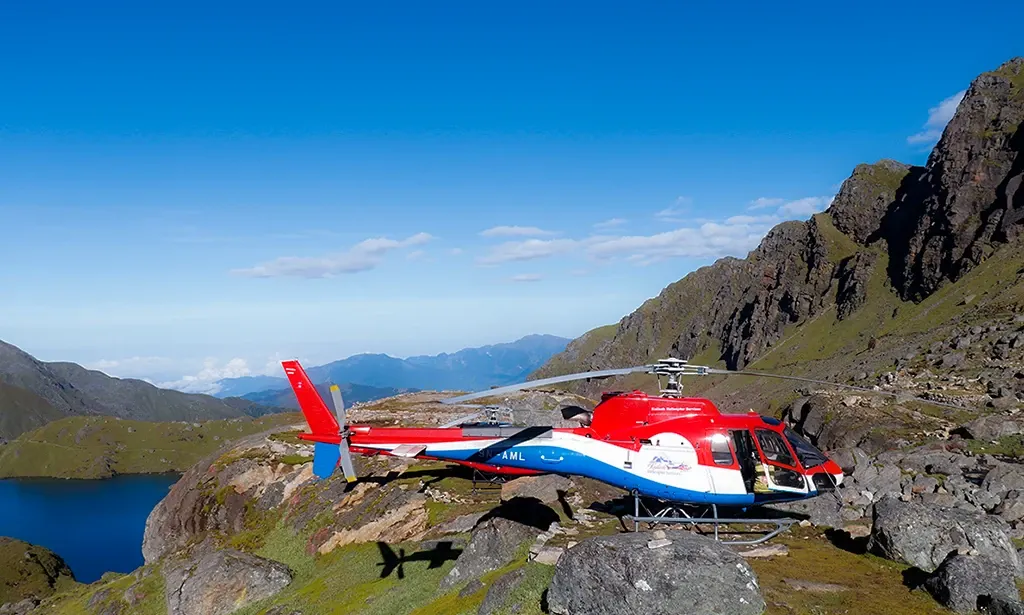
Everest Base Camp Helicopter Tour Cost

Per person, group of 5 (sharing): USD 1,150-1,300. The most economical rate for the EBC helicopter tour — five passengers sharing the Bell 407 or AS350 produces the lowest per-person cost. Most group-joining departures are priced in this range for a shared seat.

Per person, group of 4 (sharing): USD 1,300-1,500. Most EBC helicopter tours have a standard group size of four passengers plus the pilot in a five-seat helicopter. This is the most commonly quoted group tour rate.

Per person, group of 3: USD 1,600-1,900. Smaller groups cost more per person. Some operators will match a group of three with an additional solo traveller to reach the standard four-person group rate.

Per person, couple (2 people): USD 2,200-2,800. Couples chartering the helicopter privately produce a significantly higher per-person cost. Some operators offer a ‘couple sharing’ arrangement where two couples share the helicopter.

Solo private charter: USD 4,000-5,500. The full helicopter charter for one person only. Quoted less commonly as most solo travellers use group joining, but available for clients who require maximum flexibility on timing and route.

Everest Sunrise Helicopter Tour — Top-end Option

The Everest sunrise helicopter tour is a top-end variation of the standard EBC tour, timed to land at Kalapathar or Gorak Shep at dawn for light on the Everest face. This extraordinary phenomenon makes Everest dawn photography among the finest in the Himalayan world. The sunrise tour requires an earlier departure from Kathmandu (typically 5:00 to 5:30 a.m.) and careful timing to arrive at the landing site during the brief alpenglow window before full daylight.

This top-end product commands a 10 to 20 per cent higher rate than the standard EBC tour—approximately USD 1,300 to 1,700 per person for a group of four to five—reflecting the added operational complexity and the top-end visual experience it delivers.

photo

Annapurna Base Camp Helicopter Tour

Route Overview: Kathmandu or Pokhara to ABC

The Annapurna Base Camp helicopter tour departs from either Kathmandu (about a 45-minute flight to ABC) or Pokhara (about a 20- to 25-minute flight to ABC), with the Pokhara departure costing significantly less because of the shorter total flight time and lower fuel use. Annapurna Base Camp at 4,130 metres sits in one of the world’s most dramatic natural amphitheatres — a circular basin of Himalayan peaks including Annapurna I (8,091 m), Annapurna South (7,219 m), Hiunchuli (6,441 m), Gangapurna (7,455 m), and Machhapuchhre (6,993 m) — the fishtail peak that is Pokhara’s iconic skyline profile and one of Nepal’s most recognisable mountain silhouettes.

The helicopter landing at ABC allows 20 to 40 minutes of exploration in the extraordinary amphitheatre — the same high-altitude mountain cirque that the Annapurna Base Camp Trek reaches after 6 to 8 days of walking.

Annapurna Base Camp Helicopter Tour Cost

From Pokhara, per person, group of 4-5: USD 600-850. The shortest and most economical approach to ABC by helicopter — Pokhara’s proximity to the Annapurna range means a 20- to 25-minute flight to ABC rather than the 45 minutes from Kathmandu. The Pokhara-to-ABC helicopter tour is the most affordable major helicopter tour in Nepal per person.

From Kathmandu, per person, group of 4-5: USD 900-1,200. The longer flight from Kathmandu to ABC costs more but allows you to combine the tour with the Kathmandu sightseeing circuit for travellers not visiting Pokhara separately.

From Pokhara, solo charter: USD 2,500-3,200. The private charter option for maximum flexibility. Car hire: Car Pokhara from Nepal Vehicle Hiring Pvt. Ltd. provides hotel-to-helipad transfers for all Pokhara helicopter tour departures.

The ABC helicopter tour from Pokhara also commonly includes a flyover of Ghorepani Poon Hill. This famous 3,210 m rhododendron-forested ridge provides the finest accessible views of the Dhaulagiri, Annapurna, and Machhapuchhre ranges. Adding this viewpoint extends the flight time by about 15 to 20 minutes and adds about USD 50 to 100 per person to the standard ABC rate.

Upper Mustang Trek

Gosaikunda and Langtang Valley Helicopter Tour — Costs

As detailed in the Langtang Gosaikunda helicopter tour guide, the standard Gosaikunda and Langtang Valley helicopter tour from Kathmandu costs about USD 900 to 1,100 per person for a group of four, USD 1,300 per person for a group of two, and USD 2,500 for a solo private charter. Our tour covers two landing sites — Gosaikunda Lake at 4,380 m (the sacred alpine lake of Hindu and Buddhist significance) and Kyanjin Gompa at 3,830 m in the Langtang Valley — in a half-day tour departing Kathmandu at approximately 6:30 to 7:00 a.m. and returning by mid-morning.

The Kathmandu-to-Syabrubesi jeep hire from Nepal Vehicle Hiring Pvt. Ltd., at NPR 14,000 to 18,000, offers a ground-transport alternative for travellers choosing the full Langtang Valley Trek instead of, or after, the helicopter tour.

Mustang Helicopter Tour — Costs

Route Overview: Pokhara to Muktinath and Mustang

The Mustang helicopter tour operates primarily from Pokhara — the nearest major city to the Mustang District — and covers the extraordinary landscape of the upper Kali Gandaki gorge and the ancient Mustang Kingdom (Lo Manthang region). The most popular Mustang helicopter tour route combines a landing at Muktinath (3,800 m) — one of the most sacred pilgrimage sites in both Hindu and Buddhist traditions, associated with the eternal fire that burns at the temple complex — with a scenic flight over the extraordinary desert landscape of the Kali Gandaki gorge, the world’s deepest gorge by some measurements, and the ancient walled city of Lo Manthang in Upper Mustang.

The Mustang helicopter tour delivers an extraordinary landscape and cultural experience—the arid, Tibetan-plateau character of Upper Mustang, the ancient cave monasteries and traditional architecture of the Mustang Kingdom, and the sacred fire of Muktinath.

The Pokhara to Muktinath jeep hire from Nepal Vehicle Hiring Pvt. Ltd. is the ground-transport alternative for travellers who prefer the road approach to Muktinath. The increasingly well-maintained road via Beni, Ghasa, and the Kali Gandaki gorge takes travellers to Jomsom, where a local vehicle covers the final section to Muktinath. Nepal Vehicle Hiring Pvt. Ltd. provides car hire in Pokhara, including all Pokhara-area transport and hotel-to-helipad transfers for the Mustang helicopter tour.

Mustang Helicopter Tour Cost

Muktinath day tour from Pokhara, per person, group of 4-5: USD 800-1,100. The most economical Mustang helicopter option — the Muktinath landing and Kali Gandaki Gorge flyover without the Upper Mustang Lo Manthang extension. Approximately 3 to 4 hours total.

Upper Mustang (Lo Manthang) tour from Pokhara, per person, group of 4-5: USD 1,100-1,500. The extended Mustang tour, including the Lo Manthang flyover requires the Upper Mustang restricted area permit (USD 500 per person per 10 days),,which adds significantly to the total tour cost.

Solo charter, Muktinath from Pokhara: USD 2,800-3,500. Full private charter for one person. The car hire in Pokhara from Nepal Vehicle Hiring Pvt. Ltd. provides hotel-to-helipad service at NPR 600 to 1,200 for this departure.

Discover the Nepal 1-Day Helicopter Tour Cost for popular destinations such as Everest, Annapurna, Langtang, and Gosaikunda. Compare flight routes, landing options, helicopter types, group and private charter prices, and booking tips.

Manaslu Circuit and Tsum Valley Helicopter Tour — Costs

The Manaslu helicopter tour is a specialist route covering the Manaslu Conservation Area — the remote, spectacular mountain landscape surrounding Manaslu at 8,163 m, Nepal’s eighth-highest peak. The route typically includes a landing at Sama Gaon (3,520 m) — the highest permanently inhabited village on the Manaslu Circuit and the cultural centre of the area’s Tibetan-heritage community — and a scenic flight over the Manaslu Glacier and the extraordinary Tsum Valley restricted area.

This route is less commonly operated than the Everest, Annapurna, or Gosaikunda tours and is typically available on a private charter basis from Kathmandu. Cost: approximately USD 2,500 to 3,500 per person for a group of four, reflecting the longer flight distance from Kathmandu and the route’s specialist nature.

The Kathmandu-to-Arughat jeep hire from Nepal Vehicle Hiring Pvt. Ltd. is the ground-transport starting point for the full Manaslu Circuit Trek alternative.

What Is Typically Included — And What Is Not

Standard Inclusions

  • Helicopter charter (the aircraft and pilot for the full round-trip route)
  • National Park entry permit (Sagarmatha/Langtang/Annapurna depending on route)
  • Landing fees at all designated stopping points
  • One crew member or guide accompanying the flight
  • Basic flight insurance coverage (operator liability — NOT personal travel insurance)
  • Hotel pickup from the hotel to the helipad (check with operator — not always included)
  • Breakfast at the primary landing site (Lukla for EBC, Kyanjin for Langtang — included by many operators but verify)

Standard Exclusions

  • Personal travel insurance with emergency helicopter evacuation coverage — MUST be arranged independently; legally required for trekking permits in Nepal.
  • Personal guide or photographer accompanying the flight (available at additional cost from most operators)
  • Meals and drinks beyond the included breakfast at landing sites
  • Ground transport to and from the helipad airport — book with Nepal Vehicle Hiring Pvt. Ltd. at +977 981-4227196
  • Upper Mustang restricted area permit (USD 500 per person per 10 days) for tours extending to Lo Manthang
  • Rescue or evacuation costs above the operator’s basic insurance limit

Discover the Nepal 1-Day Helicopter Tour Cost for popular destinations such as Everest, Annapurna, Langtang, and Gosaikunda. Compare flight routes, landing options, helicopter types, group and private charter prices, and booking tips.

Best Season for Nepal Helicopter Tours

October and November — Peak Season for All Routes

October and November are the best months for every Nepal helicopter tour route — the post-monsoon atmospheric clarity of this period delivers maximum mountain visibility and photographic quality at every landing site. October is considered the best month for Himalayan aerial photography, when the air is clear after the monsoon’s cleansing and autumn light gives landscapes a golden glow.

Helicopter availability peaks in October (operators schedule extra aircraft and crews to meet demand), but you must book at least two to three weeks in advance, especially for Everest Base Camp helicopter tour departures, where five-seat helicopters fill quickly with group-joining bookings. All Nepal Vehicle Hiring Pvt. Ltd. ground transport services — Kathmandu sightseeing tours, Bhaktapur day tours, Nagarkot sunrise tours, trekking trailhead transfers — see their highest demand in October. Book early.

Spring — March, April, May

Spring is the second-best period for Nepal helicopter tours — the weather is broadly stable through April, visibility is excellent in the mornings (afternoon cloud builds from May onward), and the rhododendron forests visible from the helicopter approach corridors are in spectacular bloom in March and April, adding a spectacular floral dimension to the approach views that the autumn season cannot provide. April is widely considered the best spring month—the summit conditions for Himalayan mountaineering are at their optimum (making the EBC helicopter tour particularly rewarding, as Base Camp is typically populated with expedition teams preparing for summit bids), and Nepal’s overall travel infrastructure is fully operational after the winter quiet season.

Monsoon and Winter

The monsoon season (June to September) generally produces the least reliable helicopter tour weather; clouds and precipitation can ground helicopters for days at a time, so booking with a flexible cancellation/rescheduling policy is essential for monsoon-season helicopter tours. However, early morning windows are often clear before the day’s moisture builds, and operators experienced in the Himalayan flying environment can often complete helicopter tours early in the morning even during the nominal monsoon season.

Winter (December to February) brings cold and occasional snowfall to high landing sites. Still, clear, exceptionally transparent air between weather events keeps winter EBC helicopter tours running regularly, and the extra-cold, extra-clear atmosphere creates extraordinary photographic conditions for those willing to brave the cold at high landing sites.

Dharapani trek start point of annapurna range

Ground Transport Before and After the Helicopter Tour

Every Nepal helicopter tour begins and ends at a ground-level location—the helipad, the hotel, the Kathmandu sightseeing circuit, or the trekking trailhead—that offers an alternative ground-level experience to the aerial one. Nepal Vehicle Hiring Pvt. Ltd. provides these ground-transport connections with the same professional quality that defines its trekking trailhead transfer service.

Book the Kathmandu hotel-to-Tribhuvan Airport transfer for early-morning helicopter departures, the airport return pickup after the tour, and the Kathmandu sightseeing tour in the afternoon after the helicopter’s mid-morning return—all via WhatsApp at +977 981-4227196 for smooth same-day coordination.

For travellers who want to combine the helicopter tour with overland trekking — seeing the Everest region first by air and then walking from Lukla (accessed by domestic flight from Kathmandu), or seeing Annapurna Base Camp from the air and then trekking from Pokhara via Nayapul, or seeing the Langtang Valley by helicopter and then trekking from Syabrubesi — Nepal Vehicle Hiring Pvt. Ltd. provides the trailhead jeep transfers that begin all of these overland journeys. The Kathmandu to Besisahar jeep hire for the Annapurna Circuit, the Kathmandu to Syabrubesi jeep transfer for the Langtang trek, and the Pokhara car hire for the Annapurna approach are all available from the same trusted provider at all-inclusive transparent rates.

Book Nepal Vehicle Hiring Pvt. Ltd. for All Ground Transport

Website: www.vehiclehiringnepal.com Phone / WhatsApp: +977 981-4227196 (24/7 — Airport Transfers from 55 a.m.

Email: [email protected]

Office: Bhagawatisthan, Thamel, Kathmandu, Nepal

Hotel to Tribhuvan Airport (Helicopter Departure): NPR 600-1,200

Kathmandu Sightseeing Tour (Post-Helicopter Afternoon): Full Heritage Circuit

Kathmandu to Syabrubesi: NPR 14,000-26,000 | Besisahar: NPR 18,000- 27,000

Pokhara Car Hire: Full day from NPR 10,000| Annapurna/Mustang approach routes

Bhaktapur Day Tour | Nagarkot Sunrise Tour | All Trekking Trailhead Transfers

Discover the Nepal 1-Day Helicopter Tour Cost for popular destinations such as Everest, Annapurna, Langtang, and Gosaikunda. Compare flight routes, landing options, helicopter types, group and private charter prices, and booking tips.

How to Book a Nepal Helicopter Tour — Step by Step

Step 1: Choose Your Route and Season

Begin with the route that best matches your Nepal itinerary, available time, and budget. For travellers visiting Kathmandu only, the Everest Base Camp helicopter tour or the Gosaikunda and Langtang Valley helicopter tour are the most accessible departure options; for travellers visiting Pokhara, the Annapurna Base Camp helicopter tour from Pokhara is the most economical and logistically straightforward option.

Confirm that your Nepal visit falls within the recommended season for your chosen route — October through November and March through May are the most reliable months for all Nepal helicopter tours.

Step 2: Select a CAAN-Certified Operator

Verify that your chosen helicopter tour operator holds current Civil Aviation Authority of Nepal (CAAN) certification for tourism charter operations. Major certified operators active in 2026 include Simrik Air, Kailash Helicopter Services, Fishtail Air, Manang Air, and Heli Everest, among others.

Check the CAAN website (caan.gov.np) to verify operator status before booking. Fishtail’s CAAN certification number should be readily available from any legitimate operator on request—if an operator can’t or won’t provide it, treat that as a red flag.

Step 3: Confirm Group Joining or Private Charter

Determine whether you want to join an existing group (the most economical option for solo travellers and small groups) or book a private charter. For group joining, provide your preferred travel date, and the operator will confirm availability in a group departure.

For private charters, provide your date and group size for a specific charter quotation. Most operators can confirm group-joining availability within 24 to 48 hours of inquiry, and booking two to three weeks in advance is recommended for October, November, and April peak-season departures.

Step 4: Arrange Travel Insurance

Before confirming any Nepal helicopter tour booking, arrange personal travel insurance that explicitly covers emergency helicopter evacuation from altitude. Nepal’s mountain rescue services—including voluntary rescue organisations that coordinate with CAAN-certified operators—require documented insurance coverage before initiating rescue operations.

Insurance for a Nepal trekking and helicopter tour typically costs USD 50 to 150, depending on coverage level and trip duration—a modest cost relative to the helicopter tour itself and an essential part of responsible Nepal mountain travel.

Step 5: Book Ground Transport with Nepal Vehicle Hiring

When booking the helicopter tour, arrange the hotel-to-airport transfer for the morning of departure with Nepal Vehicle Hiring Pvt. Ltd. at +977 981-4227196. Helicopter tours typically require a 5:30 to 6:00 a.m. pickup for 6:30 to 7:00 a.m. departures. Nepal Vehicle Hiring Pvt. Ltd. offers 24-hour WhatsApp booking and provides early-morning airport pickups at the same all-inclusive, transparent rates that apply to all ground transport services.

After the helicopter tour returns (typically by 10:00 to 11:00 a.m.), the same team can arrange the Kathmandu afternoon sightseeing tour, the Bhaktapur Durbar Square day tour, or the onward Kathmandu to Pokhara private transfer — creating a smoothly organised Nepal day from the pre-dawn airport transfer to the evening hotel return.

Discover the Nepal 1-Day Helicopter Tour Cost for popular destinations such as Everest, Annapurna, Langtang, and Gosaikunda. Compare flight routes, landing options, helicopter types, group and private charter prices, and booking tips.

Helicopter Tour Safety in Nepal — What Every Traveller Must Know

Nepal’s Helicopter Safety Record and CAAN Oversight

Nepal’s helicopter aviation sector operates under the Civil Aviation Authority of Nepal (CAAN), the government body that certifies operators, approves aircraft airworthiness, licenses pilots, and sets operational standards for commercial helicopter flights. CAAN certification is the primary safety assurance mechanism available to helicopter operators, ensuring they meet national and pilot requirements within Nepal’s commercial aviation Framework (caan.gov.np).

The Himalayan operating environment places specific demands on helicopter aviation that distinguish Nepal flying from standard commercial helicopter operations elsewhere. High altitude significantly reduces helicopter performance — air at 5,000 meters is about half the density of sea-level air, reducing lift, engine power output, and the helicopter’s maximum payload capacity.

Weather changes rapidly in the mountains — what begins as a clear morning flight can quickly turn into cloud or turbulence in approach corridors, and experienced Himalayan pilots’ ability to read these weather patterns and make appropriate go/no-go decisions is the most practically important pilot quality in Nepal helicopter tour operations. Operators with the best safety records on Nepal’s helicopter tour routes are those whose pilots have the most accumulated Himalayan hours and the most conservative weather assessment protocols—qualities that correlate with, but are not guaranteed by, CAAN certification alone.

Emergency Evacuation Insurance — Non-Negotiable

Emergency helicopter evacuation insurance is not optional for any Nepal mountain activity—it is a legally required condition for trekking permit issuance and a practical necessity for anyone taking helicopter tours that land at high altitude. The insurance covers a medical emergency at a high-altitude landing site that requires helicopter evacuation—a situation where the evacuation helicopter cost alone can exceed USD 5,000 to 10,000, and uninsured travellers face potentially catastrophic personal financial liability on top of the medical emergency itself.

Major travel insurance providers with Nepal mountain coverage include World Nomads, Battleface, IMG Global, Allianz, and numerous others — verify that your specific policy explicitly covers helicopter evacuation from altitudes above 4,000 m (or above 5,000 m for Everest Base Camp helicopter tours) before purchasing.

Weather Cancellation Policies — What to Expect

Nepal helicopter tour operators apply weather cancellation protocols that prioritise safety over schedule. If the flight conditions at any point on the route do not meet the operator’s safety threshold on the morning of the scheduled departure, the flight will be cancelled or postponed. This is the correct outcome from a safety perspective.

Still, travellers should build date flexibility into their Nepal itinerary—leaving a one- to two-day buffer after the scheduled helicopter tour departure before other fixed commitments (international flights, hotel checkout) is the most practical protection against weather delays. Most reputable operators offer a full refund or free rescheduling for weather cancellations — confirm this policy explicitly at booking.

Weather-related cancellations are not the operator’s fault and are non-negotiable — the mountain weather that grounds one helicopter also affects every other operator’s helicopter that day.

Combining Nepal Helicopter Tours with Heritage Tourism

Kathmandu Heritage Sites — The Perfect Complement

The Kathmandu Valley‘s extraordinary concentration of UNESCO World Heritage Sites — seven monuments spanning 1,400 years of Newar civilisation in an area of 570 square kilometres — provides the most culturally rich complement to any Nepal helicopter tour. The Kathmandu sightseeing tour from Nepal Vehicle Hiring Pvt. Ltd., covering Boudhanath Stupa — the world’s largest stupa and the spiritual centre of Nepal’s Tibetan Buddhist community — Pashupatinath Temple on the sacred Bagmati River, Swayambhunath on its forested hill above the valley, and Patan Durbar Square with its extraordinary concentration of Newari temple architecture, can all be visited in a single day by private vehicle.

The afternoon following the helicopter tour’s mid-morning return is a perfect time for this cultural immersion.

The Bhaktapur Durbar Square day tour — visiting Nepal’s finest medieval city, whose 55 Chowks and dense network of temples, courtyards, and traditional Newari houses are virtually unchanged since the sixteenth century — is an extraordinary companion experience to the aerial Himalayan tour. The contrast between Bhaktapur’s concentrated human achievement in heritage architecture and the Himalayas’ vast natural scale, seen from the helicopter, creates a Nepal experience of remarkable breadth.

The Nagarkot sunrise tour—a pre-dawn departure from Kathmandu for a Himalayan panorama from the valley’s eastern rim—offers a ground-level Himalayan view that complements the helicopter tour’s aerial perspective and is bookable through Nepal Vehicle Hiring Pvt. Ltd. for the evening before or after the helicopter departure.

Pokhara Sightseeing Before the Annapurna Helicopter

For travellers combining the Annapurna Base Camp helicopter tour from Pokhara with time in Nepal’s second city, Pokhara car hire from Nepal Vehicle Hiring Pvt. Ltd. covers the full Pokhara sightseeing circuit — the World Peace Pagoda above Phewa Lake, Bindhabasini Temple, Seti Gorge, Gupteshwor Cave, and the International Mountain Museum — in a single comfortable day by private vehicle. The famous Sarangkot sunrise — a 4:30 a.m. departure from Lakeside for the dawn of the Annapurna range, Lakeside side, 1,592 m ridge above Lakeside city — is a ground-level Lakeside Annapurna mountain experience that complements the aerial ABC helicopter view and is arranged by the Nepal Vehicle Hiring Pvt. Ltd. Pokhara team at the same all-inclusive transparent rate that governs all car hire in Pokhara services.

Discover the Nepal 1-Day Helicopter Tour Cost for popular destinations such as Everest, Annapurna, Langtang, and Gosaikunda. Compare flight routes, landing options, helicopter types, group and private charter prices, and booking tips.

The Everest Base Camp Helicopter Tour — A Deeper Look

What You Actually See at Gorak Shep and EBC

The Gorak Shep landing area at approximately 5,140 meters — the highest helicopter landing point on the standard EBC tour — sits on a flat glacial sand plain between the Khumbu Glacier and the rocky moraine that separates the glacier from the approach trail. From this extraordinary vantage point, the South Col of Everest is directly visible above the Western Cwm, with the Lhotse face rising to the right and Nuptse’s great ridge dominating the skyline to the left.

The Khumbu Icefall — the famously dangerous section of glacier that expedition climbers must navigate to reach Camp I on the South Col route — is visible below the Western Cwm, its chaotic towers of ice and crossing ladders visible from the Gorak Shep area as a dramatic white cascade descending from the upper glacier. For many visitors, this first direct view of the Everest climbing route — seeing the actual line of the world’s most attempted mountain summit — is the most affecting visual experience of the entire helicopter tour.

Everest Base Camp itself — the flat moraine area at approximately 5,364 meters where expedition teams establish seasonal camps — is a 20- to 30-minute walk from the Gorak Shep landing area, accessible on foot during the helicopter landing stop. In the pre-monsoon climbing season (March to May), Base Camp fills with expedition tents, team mess tents, communication equipment, and the full infrastructure of multiple international expeditions preparing for summit bids—a genuinely extraordinary human scene in one of the world’s most extreme environments.

Post-monsoon (September to November), Base Camp is typically cleared, but the landscape itself—the moraine, the glacier, the icefall, and the mountain walls—remains fully present and accessible. The Kathmandu-to-Lukla flight plus the full Everest Base Camp Trek takes 12 to 14 days to reach the same point the helicopter reaches in under an hour— a comparison that underscores the extraordinary logistical compression the helicopter tour represents.

Kalapathar — The Finest Everest Viewpoint

While the EBC helicopter tour primarily lands at Gorak Shep, some operators offer a Kalapathar flyover or landing option—the 5,545 m rocky peak above Gorak Shep, widely regarded as the finest accessible viewpoint of Mount Everest’s complete south face. From Kalapathar, Everest’s famous South Summit, the Hillary Step (now the Hillary Headwall after its 2015 restructuring), and the Summit Pyramid are all visible in a single dramatic aerial composition that shows the complete climbing route from Base Camp to the summit.

The Kalapathar viewpoint is also the most commonly used location for the iconic photograph of Everest and its neighbouring peaks against the deep blue, high-altitude sky that defines the classic Everest photography aesthetic. If your operator offers the Kalapathar extension, it is worth the additional time and cost for the superior Everest viewing perspective it provides.

The Lukla Fuel Stop — A Mountain Airstrip Experience

Most Everest Base Camp helicopter tours from Kathmandu include a refuelling stop at Lukla — the famous mountain airstrip at 2,860 meters that serves as the main gateway for the Khumbu trekking region and is consistently rated among the world’s most dramatic commercial airport approaches. The Tenzing-Hillary Airport at Lukla, named after the first Everest summiteers, has a runway of only 527 metres that ends in a steep drop-off at its lower end and a cliff face at its upper end, with a 12 per cent gradient that makes each landing and takeoff a dramatic visual spectacle.

The helicopter fuel stop at Lukla typically allows 10 to 15 minutes on the ground—enough time to watch the airstrip operation, photograph the extraordinary mountain setting, and stretch before continuing to EBC. This brief Lukla stop is one of the EBC helicopter tour’s distinctive experiences, offering insight into the Khumbu trekking gateway that most helicopter tour operators treat as a logistics stop but that passengers recognise as one of the tour’s genuine supplementary highlights.

The Annapurna Base Camp Experience From the Air

The Annapurna Sanctuary — Nature’s Amphitheatre

Annapurna Base Camp at 4,130 meters sits within what mountaineers have famously called the Annapurna Sanctuary — a natural high-mountain amphitheatre of extraordinary visual drama, created by the circular arrangement of Himalayan peaks that surrounds the upper Modi Khola glacier basin on virtually every compass point. The encircling peaks — Annapurna I at 8,091 m to the north, Annapurna South at 7,219 m and Hiunchuli at 6,441 m to the south, Gangapurna at 7,455 m and Annapurna III at 7,555 m to the northeast, and the incomparable Machhapuchhre (Fishtail Mountain) at 6,993 m guarding the southern entrance to the sanctuary — create a complete circle of Himalayan summits that the helicopter tour sees from directly within, rotating in a 360-degree sweep that the standard ABC Trek approach on foot delivers with the same completeness after 6 to 8 days of walking.

The Machhapuchhre (Fishtail Mountain) visible from the helicopter approach to ABC deserves particular attention—its distinctive twin-peaked summit profile appears as a perfectly symmetrical fishtail from the Lakeside. Still, from the helicopter, it reveals a complex three-dimensional structure. Lakesides around the peak, Fishtail of Nepal’s most distinctive and most photographed mountain forms.

The mountain is a sacred peak closed to climbing by the Nepal government since the 1960s — its unsummited fishtail in a landscape where virtually every other major peak has been climbed multiple times gives Machhapuchhre a particular mystique that the helicopter tour approach to ABC — flying directly beneath and around the peak — conveys with extraordinary intimacy.

Ghorepani Poon Hill From the Air

The Ghorepani Poon Hill flyover option available on some Annapurna Base Camp helicopter tours from Pokhara adds a significant cultural and natural dimension to the ABC aerial experience — the famous Poon Hill at 3,210 m, the most popular sunrise viewpoint in the Annapurna Conservation Area, is visible from the helicopter approach corridor between Pokhara and ABC. The rhododendron forests that blanket the Ghorepani ridge in spectacular bloom from March through May are among Nepal’s finest botanical landscapes.

The ground-level Ghorepani Poon Hill Trek from Pokhara via Nayapul takes 4 to 5 days—the helicopter flyover compresses the entire trek’s approach into a few minutes of aerial perspective that many travellers find inspires them to return to Nepal specifically to walk the route they saw from above.

Ground Transport Packages Around Nepal Helicopter Tours

The Complete Nepal Tour Package with Nepal Vehicle Hiring

Nepal Vehicle Hiring Pvt. Ltd. provides ground transport for the complete Nepal journey that surrounds the helicopter tour experience — from the first day’s airport pickup through the Kathmandu sightseeing circuit covering Boudhanath, Pashupatinath, Swayambhunath and Patan, the early morning Nagarkot sunrise tour, the Bhaktapur Durbar Square day tour, and then the helicopter departure day’s hotel-to-airport transfer. After the helicopter tour returns, the same Nepal Vehicle Hiring Pvt. Ltd. team provides the Kathmandu to Pokhara private transfer (if the itinerary continues to Pokhara), the Pokhara car hire for the Sarangkot sunrise and Lakeside sightseeing, and any trekking trailhead transfers — to Besisahar for the Annapurna Circuit, to Syabrubesi for the Langtang Valley Trek, or to Arughat for the Manaslu Circuit.

All services through a single trusted provider, coordinated via WhatsApp at +977 981-4227196, 24 hours a day.

The Nepal Vehicle Hiring Pvt. Ltd. team at vehiclehiringnepal.com can also connect helicopter tour clients with trusted, CAAN-certified helicopter tour operators in Kathmandu and Pokhara when booking ground transport services—providing valuable local knowledge for visitors planning their helicopter tour alongside their Nepal ground itinerary. With 8,000+ satisfied customers, a 5.0 TripAdvisor rating from 200+ verified reviews, and Company Registration No. 219204, Nepal Vehicle Hiring Pvt. Ltd. delivers the most professional, reliable, and transparently priced private vehicle hire service across every Nepal tourism route — from Kathmandu heritage sightseeing to the most remote trekking trailheads in the Himalayan north.

Nepal Helicopter Tour Cost Summary — Quick Reference

Everest Base Camp Helicopter Tour (from Kathmandu): USD 1,150-1,300 per person (group of 5) | USD 1,300-1,500 (group of 4) | USD 4,000-5,500 (solo)

Everest Sunrise Helicopter Tour (from Kathmandu): USD 1,300-1,700 per person (group of 4-5) | 10-20% top-end over standard EBC rate

Annapurna Base Camp Helicopter Tour (from Pokhara): USD 600-850 per person (group of 4-5) | USD 2,500-3,200 (solo)

Annapurna Base Camp Helicopter Tour (from Kathmandu): USD 900-1,200 per person (group of 4-5)

Gosaikunda and Langtang Valley Helicopter Tour (from Kathmandu): USD 900-1,100 per person (group of 4) | USD 1,300 (group of 2) | USD 2,500 (solo)

Muktinath/Mustang Helicopter Tour (from Pokhara): USD 800-1,100 per person (group of 4-5) | USD 2,800-3,500 (solo)

Upper Mustang (Lo Manthang) Helicopter Tour (from Pokhara): USD 1,100-1,500 per person (group of 4-5) + USD 500 Upper Mustang restricted area permit

Manaslu/Tsum Valley Helicopter Tour (from Kathmandu): USD 2,500-3,500 per person (group of 4) | Specialist/private charter route

All ground transport surrounding Nepal helicopter tours — hotel to helipad transfers, Kathmandu sightseeing tours, Bhaktapur day trips, Nagarkot sunrise, trekking trailhead transfers — contact Nepal Vehicle Hiring Pvt. Ltd. at +977 981-4227196 or vehiclehiringnepal.com.

Frequently Asked Questions — Nepal Helicopter Tour Costs

What is the cheapest Nepal helicopter tour?

The Annapurna Base Camp helicopter tour from Pokhara is the most affordable major Nepal helicopter tour — approximately USD 600 to 850 per person for a group of four to five. The Gosaikunda and Langtang Valley helicopter tour from Kathmandu is similarly priced at USD 900 to 1,100 per person for a group of four.

The most expensive option is the solo private charter Everest Base Camp tour, priced at USD 4,000 to 5,500.

What is included in the Nepal helicopter tour price?

Standard inclusions typically cover the helicopter charter, national park permit, landing fees, one crew member or guide, and basic flight insurance. What is typically NOT included: personal travel insurance (arrange separately — essential), meals beyond the included breakfast at landing sites, personal photography guides, and hotel-to-helipad ground transport. Nepal Vehicle Hiring Pvt. Ltd. (+977 981-4227196) handles the ground transport component for all Nepal helicopter tour routes.

How early should I book a Nepal helicopter tour?

For October and April peak season departures — especially Everest Base Camp and Annapurna Base Camp helicopter tours — book at least two to three weeks in advance to secure your preferred date in a group joining departure. For the quieter months (November, March, May, and September), one week’s notice is typically sufficient. For the Janai Purnima festival period (Gosaikunda tour in July/August), book four to six weeks in advance.

Can I do a helicopter tour in the monsoon season?

Nepal helicopter tours are possible in the monsoon season (June to September) but require flexible date planning and a confirmed cancellation/rescheduling policy with the operator. Most successful monsoon helicopter tours depart very early (5:30 to 6:30 a.m.) to take advantage of the clear morning windows before the day’s moisture builds into cloud.

The operator will assess conditions on the morning of the scheduled departure and make the go/no-go decision — a reputable operator will not fly in unsafe conditions regardless of booking pressure.

How long does an Everest Base Camp helicopter tour take?

The Everest Base Camp helicopter tour is a half-day experience — the helicopter departs Kathmandu at approximately 6:30 to 7:00 a.m., lands at Gorak Shep near EBC for 20 to 40 minutes of exploration, and returns to Kathmandu by 10:00 to 11:00 a.m. Total flight time is approximately 2.5 to 3.5 hours,s including the Lukla fuel stop. The afternoon is free for Kathmandu sightseeing tours or other activities.

Conclusion: Nepal Helicopter Tours — Extraordinary Value

Nepal’s one-day helicopter tours offer one of the finest value propositions in adventure tourism globally—delivering Himalayan experiences of extraordinary visual power and physical authenticity at price points that, while not budget travel, are genuinely accessible. From the USD 600 per person Annapurna Base Camp tour from Pokhara to the USD 1,500 per person Everest Base Camp sunrise experience, the Nepal helicopter tour market offers a range of price points and route options that can accommodate most travellers’ budgets and itinerary structures.

To maximise value, focus on group size—sharing a helicopter with four to five people reduces per-person costs to the lowest possible level—and operator quality—verify CAAN certification and pilot experience before booking the mountain flight that defines the Nepal helicopter tour’s safety.

For all ground transport surrounding the Nepal helicopter tour experience — the early morning Kathmandu hotel to airport transfer, the Kathmandu sightseeing tour and Bhaktapur Durbar Square day trip in the days surrounding the flight, the Nagarkot sunrise tour for the first Himalayan panorama, the Kathmandu to Syabrubesi jeep hire for the Langtang trek alternative, the car hire in Pokhara for the Annapurna circuit, and every other Nepal private vehicle hire service — contact Nepal Vehicle Hiring Pvt. Ltd. at +977 981-4227196 or vehiclehiringnepal.com.

Annapurna Base Camp Helicopter Tour

Annapurna range

Annapurna Base Camp Helicopter Tour: One-Day Full Guide

Tucked deep within a natural amphitheatre of 7,000- and 8,000-meter peaks, Annapurna Base Camp is one of Nepal’s most visually dramatic trekking destinations, and one of the very few places on earth where trekkers walk directly into the heart of a Himalayan giant rather than simply viewing it from a distance. For travellers who cannot spare the seven to twelve days a full trek to Annapurna Base Camp requires,  the

The Annapurna Base Camp helicopter tour offers a remarkably efficient alternative: a single morning flight from Pokhara that drops travellers directly into the Annapurna Sanctuary, surrounded by Annapurna I, Annapurna South, Hiunchuli, and the sacred, unclimbed peak of Machapuchare, then returns to Pokhara in time for lunch.

This guide covers everything travellers need to know about the one-day Annapurna Base Camp helicopter tour: the route and typical timeline, what is included, private versus shared group options, cost factors, seasonal considerations, safety and altitude notes, and how ground transport fits around the flight itself, whether departing from Pokhara directly or connecting from Kathmandu.

Nepal Vehicle Hiring coordinates the ground transport side of this experience for travellers throughout the Pokhara and Kathmandu region, and this guide draws on that combined view of how the tour works in practice.

What Is the Annapurna Base Camp Helicopter Tour

The Annapurna Base Camp helicopter tour is a top-end scenic flight experience that typically departs directly from Pokhara and takes travellers into the Annapurna Sanctuary, a high glacial basin at 4,130 meters surrounded by the Annapurna massif. Unlike the Everest helicopter tour, which requires a much longer flight from Kathmandu given the greater distance to the Khumbu, the Annapurna Base Camp tour benefits from Pokhara’s proximity to the Annapurna range, with flight times to Base Camp itself often under thirty minutes each way, making the entire round-trip experience considerably shorter than its Everest counterpart.

Most tours include a landing directly at or near Annapurna Base Camp for photographs and, on many itineraries, a tea or breakfast stop at the lodge facilities there, offering an unusually intimate view of the Sanctuary’s towering walls of rock and ice at close range, a perspective unavailable from any of the surrounding lower viewpoints such as Poon Hill or Sarangkot.

The Annapurna Sanctuary: What Makes This Landscape Unique

Annapurna Base Camp sits within what trekkers and mountaineers commonly call the Annapurna Sanctuary, a natural amphitheatre formed by a ring of peaks including Annapurna I at 8,091 meters, Annapurna South, Hiunchuli, Gangapurna, and the striking, twin-peaked Machapuchare, whose name translates to Fishtail and whose summit remains formally unclimbed out of respect for its sacred status to local Gurung communities. This enclosed, glacier-fed basin creates a sense of scale and immersion that few other places in the Himalaya can match, since Base Camp itself sits not at a distant viewpoint but directly within the ring of surrounding summits, an experience that both trekkers and helicopter tour passengers describe as genuinely overwhelming on first arrival.

The Route: Pokhara to the Annapurna Sanctuary and Back

A typical Annapurna Base Camp helicopter tour departs from Pokhara’s airport or a private helipad, quickly climbing over Phewa Lake and the lower Annapurna foothills before entering the steep, forested Modi Khola valley that also forms the main trekking route to Base Camp on foot. The flight passes near or over popular trekking villages, including Ghandruk, Chhomrong, and the Machapuchare Base Camp lodge area, before reaching the Annapurna Sanctuary and landing at or near Annapurna Base Camp.

After a landing typically lasting between fifteen and thirty minutes, depending on the tour package and weather conditions, the helicopter returns directly to Pokhara, completing the full round trip in a single morning.

A Typical One-Day Timeline

Because the flight distance is much shorter than the Everest tour, the Annapurna Base Camp helicopter tour is often the more time-efficient of Nepal’s two major helicopter sightseeing products. A standard tour typically departs Pokhara early, between 6:00 and 7:30 a.m., to take advantage of the clearest visibility before daytime cloud builds over the Annapurna massif.

The flight to Base Camp takes about 25 to 35 minutes, followed by a landing and photo stop, sometimes extended into a tea or breakfast break at the Base Camp lodge, before the return flight to Pokhara. Mantravellers complete the entire experience door to door from their Pokhara hotel in two to three hours, making it feasible to combine with other Pokhara activities later the same morning or early afternoon.

What Is Typically Included

  • Round-trip helicopter transport from Pokhara to Annapurna Base Camp and back.
  • A landing directly at or near Annapurna Base Camp for photographs, subject to weather conditions on the day.
  • Many packages include a tea or breakfast stop at the Base Camp lodge facilities, giving time to take in the Sanctuary’s surrounding peaks.
  • A pilot experienced in high-altitude flying in the Annapurna region is required, given the steep, narrow valley approach required to reach the Sanctuary safely.

As with the Everest region tour, travellers should always confirm exactly what the quoted price includes, since Pokhara hotel pickup, breakfast costs, and any combined Kathmandu-Pokhara flight connection are sometimes quoted separately, depending on the operator.

Annapurna Base Camp Helicopter Tour Nepal with Himalayan Mountain Views

Private Charter Versus Shared Group Tours

Similar to the Everest helicopter tour, the Annapurna Base Camp experience is generally available as either a shared group tour, splitting the charter cost across several passengers and offering better value per person but fixed departure timing, or a private charter booked exclusively for a single party, offering full flexibility over timing at a higher total cost. Given the shorter overall flight time and lower operating cost compared to the Everest route, private charters for the Annapurna Base Camp tour are often more accessible in price than their Everest equivalent, making this a popular choice for honeymooners and small families wanting a fully private experience without the top-end typically associated with private Everest charters.

Cost Factors for the Annapurna Base Camp Helicopter Tour

Pricing depends heavily on group size, whether you book a shared or private charter, and broader seasonal demand throughout the year. Because the flight from Pokhara to the Annapurna Sanctuary is much shorter than the Kathmandu-to-Everest route, this tour is generally more affordable than the Everest helicopter tour, appealing to a broader range of travellers, including those on a more moderate touring budget who still want a genuine high-altitude helicopter experience.

As with any helicopter tourism product in Nepal, confirm exact current pricing directly with operators or through a trusted local coordinator at the time of booking, since rates shift with fuel costs, demand, and season.

Best Time of Year and Time of Day

Autumn (September to November) and spring (March to May) offer the clearest, most stable weather for this tour, mirroring the seasonal pattern seen across Nepal’s other major mountain flights. Morning departures remain essential year-round, since clouds typically build over the Annapurna massif by late morning, reducing visibility for later flights.

Spring adds the appeal of blooming rhododendron forests visible in the lower Modi Khola valley during the flight, a distinctive seasonal feature of the Annapurna region that is less relevant to the higher, more barren terrain surrounding Everest.

Weather Delays and Flexibility

As with any high-altitude Himalayan helicopter operation of this kind, weather-related delays and occasional cancellations remain a genuine and entirely normal possibility for the Annapurna Base Camp tour, and travellers should avoid scheduling it for their very last morning in Nepal wherever possible. Reputable operators monitor conditions in the Annapurna Sanctuary closely, given its narrow, steep-sided valley approach, and will postpone rather than risk a flight in marginal visibility.

Working with a trusted local coordinator who communicates weather-related changes promptly helps avoid the frustration of an unexpected cancellation discovered only on arrival at the helipad.

Altitude Considerations

At 4,130 meters above sea level, Annapurna Base Camp sits at a lower overall altitude than the Everest Base Camp or Kala Patthar landing points used on the Everest helicopter tour. As a result, altitude effects are generally less pronounced for most travellers during the brief ground stop.

That said, some travellers may still notice mild shortness of breath or lightheadedness at this elevation, particularly if arriving directly from Pokhara’s much lower altitude without any prior acclimatisation. Travellers with underlying heart or lung conditions should consult a doctor before booking, and the brief ground stop limits sustained exposure for most passengers.

Ground Transport and Pokhara Logistics

Because this tour departs from Pokhara rather than Kathmandu, reliable ground transport to the city and the helicopter departure point is key to a smooth experience. Travellers arriving in Pokhara by road from Kathmandu often use our

Kathmandu to Pokhara bus and private vehicle service, while those already based in Pokhara rely on our

car hire in Pokhara service for an early-morning pickup and transfer to the helipad in time for check-in and weight verification before departure.

Combining the Tour With a Broader Pokhara or Annapurna Itinerary

Since most Annapurna Base Camp helicopter tours return to Pokhara by mid-morning, many travellers spend the rest of the day on other Pokhara-based activities. A relaxed afternoon at Phewa Lake, a visit to the World Peace Pagoda, or a sunrise excursion the following morning through our

Sarangkot sunrise tour vehicle service all pair naturally with this helicopter tour, rounding out a well-balanced short stay in Pokhara without requiring the full multi-day commitment of a ground trek into the Annapurna Sanctuary.

Annapurna Base Camp Helicopter Tour Nepal with Himalayan Mountain Views

Combining With the Annapurna Base Camp Trek

For trekkers who have walked the full

Annapurna Base Camp Trek offered by our sister company, Alpine Luxury Treks, a helicopter return flight from Base Camp itself has become an increasingly popular way to save several days on the return journey while still completing the full trekking approach in one direction. This combination mirrors the pattern seen on Everest region treks, where a one-way helicopter flight replaces a multi-day walk to the trailhead, appealing especially to trekkers with limited time or those who want to avoid retracing the same trail twice.

Travellers who prefer the shorter, culturally rich

Ghorepani Poon Hill Trek sometimes add the Annapurna Base Camp helicopter tour to experience the deeper Sanctuary landscape without adding the extra days a full Base Camp trek would require.

Comparing the Helicopter Tour to the Full Trek

As with the Everest equivalent, it’s important to be clear that the helicopter tour and the full Annapurna Base Camp Trek offer genuinely different experiences, not just faster or slower versions of the same thing. The trek delivers a gradual, in-depth journey through changing forest and rhododendron landscapes, overnight stays in Gurung villages such as Ghandruk and Chhomrong, and the particular sense of arrival that comes from walking into the Sanctuary on foot after days of anticipation.

The helicopter tour delivers an intensely concentrated version of the same visual reward, the ring of surrounding peaks and the Sanctuary’s dramatic scale, in a single morning, without the cultural and physical immersion of the trek. Both are legitimate ways to experience this landscape, suited to different travellers and different amounts of available time.

Safety Standards and Choosing a Reputable Operator

The narrow, steep-sided approach into the Annapurna Sanctuary demands genuine skill from pilots operating this route. Travellers should apply the same diligence in choosing an operator as recommended for the Everest tour: ask specifically about pilot experience on this route, the aircraft’s maintenance history, and the operator’s weather-related cancellation policy, rather than choosing purely on price.

Many operators running Annapurna Base Camp tours also operate Everest region flights, and their overall safety reputation across both routes is a reasonable indicator of general operating standards.

What to Wear and Bring

  • Warm layers, since temperatures at Annapurna Base Camp can be well below freezing even during the tour’s short ground stop, particularly in the early morning.
  • Sunglasses and sun protection, given the intensity of high-altitude sunlight reflecting off the surrounding snow and ice.
  • A camera or fully charged phone, since close-range views of Annapurna I, Machapuchare, and Hiunchuli are the main draw of this tour.
  • Comfortable footwear for the brief walk around the landing area and any lodge stop included in your package.
  • Personal medication for travellers with any relevant health conditions, discussed with a doctor in advance given the altitude involved.

Booking Requirements and Practical Considerations

Most operators require full passport details and accurate passenger weight information well in advance for load planning, standard practice for high-altitude helicopter operations throughout Nepal. Book several days ahead, and earlier still during the peak autumn and spring seasons when demand is highest.

Given the possibility of weather-related rescheduling, particularly within the narrow valley approach into the Sanctuary,  build at least one buffer day into your Pokhara itinerary around this tour as a sensible precaution.

Experience a breathtaking Annapurna Base Camp Helicopter Tour with spectacular views of the Annapurna Himalayan range and surrounding mountains.

Outlook for Annapurna Helicopter Tourism

Pokhara’s expanding international airport, discussed in depth in our guide on luxury airport transfer in Nepal, is expected to continue increasing direct international arrivals into the city, likely driving further growth in Annapurna region helicopter tourism as more travellers begin their Nepal trip in Pokhara rather than routing exclusively through Kathmandu. This mirrors the broader shift toward top-end, time-efficient Himalayan experiences discussed throughout our guides on Nepal’s evolving tourism sector, and travellers should expect continued investment in aircraft availability and operator capacity for this route as demand grows alongside Pokhara’s expanding role as an international gateway in its own right.

Frequently Asked Questions

How long does the Annapurna Base Camp helicopter tour take?

The full experience, from your initial departure from your Pokhara hotel to your return, typically takes two to three hours in total, much shorter than the Everest equivalent because the Annapurna Sanctuary is much closer to Pokhara.

Is this tour safe?

Reputable operators with experienced pilots and well-maintained aircraft maintain strong safety records on this specific route. However, the narrow valley approach into the Sanctuary demands genuine skill and local route familiarity, making careful operator research an important part of your overall booking decision.

What happens if the weather is poor on my scheduled day?

Reputable operators will postpone or reschedule rather than risk passenger safety. We strongly recommend building flexibility into your Pokhara itinerary, rather than scheduling this tour on your final morning before departure.

Can I combine this tour with an Everest helicopter tour on the same trip?

Yes. Many travellers visiting both Pokhara and Kathmandu combine both helicopter tours into a single Nepal itinerary, experiencing both major mountain ranges by air within the same trip.

Is the Annapurna Base Camp helicopter tour cheaper than the Everest version?

Generally yes, reflecting the shorter flight distance and lower operating cost from Pokhara to the Annapurna Sanctuary compared to the considerably longer Kathmandu-to-Everest route.

Do I land directly at Annapurna Base Camp?

Most tours land at or very near Annapurna Base Camp, depending on weather and the operator’s routing that day.

Can this tour be combined with the Annapurna Base Camp Trek?

Yes. Many trekkers take a helicopter flight back after walking to Base Camp, saving several days compared to walking both ways.

Do I need previous high-altitude experience for this tour?

No. The tour requires no trekking fitness or prior altitude experience beyond the ability to walk a short distance at the landing point.

How far in advance should I book?

Book at least several days ahead, and book earlier during peak autumn and spring seasons, when demand is high and daily flight slots are limited, making early booking especially important.

Can I depart from Kathmandu instead of Pokhara for this tour?

Some operators offer combined itineraries connecting from Kathmandu, though the standard and most efficient version of this tour departs directly from Pokhara given its proximity to the Annapurna Sanctuary.

What is the typical group size on a shared Annapurna helicopter tour?

Shared tours typically accommodate up to five passengers per aircraft, subject to combined weight limits, similar to the Everest helicopter tour, with the exact number depending on the specific helicopter model used and the combined weight of passengers booked for that particular flight.

Experience a breathtaking Annapurna Base Camp Helicopter Tour with spectacular views of the Annapurna Himalayan range and surrounding mountains.

Final Thoughts: A Morning Inside the Sanctuary

The Annapurna Base Camp helicopter tour offers one of Nepal’s most efficient ways to experience a truly extraordinary high-altitude landscape, flying directly into a natural amphitheatre at the foot of Annapurna I within a single Pokhara morning. Getting the logistics right, from a reliable early-morning Pokhara transfer through to choosing a reputable, experienced operator and building seasonal weather flexibility into your schedule, ensures this compressed experience genuinely delivers the full impact of the Annapurna Sanctuary without the multi-day commitment of the trek itself.

Whether this is your first glimpse of the Annapurna Sanctuary or a return visit after trekking the ground route on a previous trip, the view from Base Camp, surrounded by Annapurna I, Machapuchare, and Hiunchuli, remains one of the most striking single moments available anywhere in Nepal’s vast mountain landscape.

Get in touch with Nepal Vehicle Hiring today at +977 981-4227196 or visit

vehiclehiringnepal.com to arrange your Pokhara ground transport and coordinate your Annapurna Base Camp helicopter tour alongside the rest of your broader Nepal itinerary, whatever shape it takes.

The History of Annapurna Base Camp Tourism

Annapurna Base Camp has drawn trekkers since the 1950s, when French mountaineer Maurice Herzog’s expedition made the first successful ascent of an 8,000-meter peak anywhere in the world by summiting Annapurna I in 1950, a landmark moment in mountaineering history that predates even the first ascent of Everest by three years. This pioneering climb, chronicled in Herzog’s famous book Annapurna, helped establish the region’s mountaineering reputation and laid the groundwork for the trekking tourism that developed in subsequent decades as Nepal gradually opened to foreign visitors.

Unlike the Everest region, whose modern trekking infrastructure grew up specifically to serve mountaineering expeditions and later Base Camp trekkers, the Annapurna Sanctuary route developed alongside a broader network of Gurung and Magar villages already established in the surrounding foothills, giving the trekking route into Base Camp a distinctly different cultural texture from the more purely Sherpa-centred Everest approach.

The helicopter tour version of this experience is a much newer development, growing over the past decade and a half alongside Pokhara’s expansion as an aviation hub and the broader rise in demand for time-efficient Himalayan flight experiences discussed throughout Nepal’s tourism sector.

Machapuchare: The Sacred Fishtail Peak

No discussion of the Annapurna Sanctuary is complete without dwelling on Machapuchare, the striking, twin-summited peak whose distinctive silhouette dominates views from Pokhara and much of the lower Annapurna trekking region. Sacred to local Gurung communities and associated with Lord Shiva, Machapuchare has never been officially summited, following an agreement after a British expedition in 1957 reached within a short distance of the true summit before turning back;d Nepal’s government has since declined to issue climbing permits for the peak out of respect for its religious significance.

This unclimbed status gives Machapuchare a distinctive mystique among Himalayan peaks, and the helicopter tour’s close-range views of its dramatic fishtail-shaped summit rank among the experience’s most photographed moments.s

Passengers on the Annapurna Base Camp helicopter tour typically fly close enough to Machapuchare during the approach and landing sequence to appreciate both its scale and its unusual double-pointed summit shape, a perspective that even trekkers walking the ground route to Base Camp do not always fully appreciate given the peak’s changing profile from different trail angles.

Comparing the Annapurna and Everest Helicopter Tours

Travellers deciding between Nepal’s two major one-day helicopter tours, Everest and Annapurna Base Camp, should weigh a few key differences beyond which mountain range appeals more. The Annapurna tour departs from Pokhara, a generally more relaxed, lower-altitude city, with a shorter flight to its landing point, resulting in a shorter overall tour duration and typically a lower price.

The Everest tour, departing from Kathmandu, involves a considerably longer flight and higher-altitude landing points, generally commanding a higher price but delivering the singular draw of the world’s highest peak. Some travellers with enough time in their Nepal itinerary choose both tours, combining a Kathmandu-based Everest flight with a Pokhara-based Annapurna flight for a comprehensive aerial tour of Nepal’s two most famous mountain ranges in a single trip.

The Annapurna Sanctuary’s enclosed, amphitheatre-like geography also offers a meaningfully different visual experience from the more open, ridge-line views typical of the Everest Base Camp and Kala Patthar landing points. Where the Everest tour emphasises distant, sweeping views across a series of connected peaks, the Annapurna tour delivers a more intimate, enclosed sense of being surrounded by towering rock and ice walls.

This distinction shapes which experience appeals more to a given traveller’s personal taste.

YouTube video

The Aircraft and Pilots Flying This Route

Like the Everest tour, Annapurna Base Camp helicopter flights typically use single-engine, high-altitude capable aircraft such as the Airbus H125, prized throughout the Himalaya for its strong performance in thin mountain air. Pilots flying this route need real experience navigating the narrow, steep-walled Modi Khola valley approach into the Sanctuary.

This technically demanding corridor narrows considerably as it climbs toward Base Camp itself, requiring precise handling in a way that differs meaningfully from the broader, more open approach typical of many Everest region routes.

Many operators flying the Annapurna route also conduct helicopter rescue operations throughout the Annapurna Conservation Area during the main trekking seasons, meaning the same aircraft and crews responsible for scenic tours often handle emergency evacuations on the ground trekking route, a reassuring indicator of the genuine mountain flying experience involved.

Gurung Culture and the Villages Below the Sanctuary

The lower slopes beneath the Annapurna Sanctuary are home to a rich Gurung cultural landscape, visible in villages such as Ghandruk and Chhomrong, both passed over or near on the helicopter route and central stops on the ground trekking route to Base Camp. Gurung communities have a long history of Gurkha military service, and many village houses feature distinctive stone architecture and terraced agriculture adapted to the steep hillsides of the Annapurna foothills.

While the helicopter tour typically does not include a ground stop in these villages, given its focus on reaching the Sanctuary, the aerial views of Ghandruk’s terraced hillsides and traditional rooftops during the flight offer a brief but genuine glimpse of this distinct cultural landscape.

Trekkers completing the full ground route to Base Camp spend considerably more time immersed in this Gurung cultural landscape than helicopter tour passengers, another key distinction between the two ways of experiencing this region, alongside the physical and scenic differences already discussed.

Photography Highlights of the Annapurna Base Camp Tour

Given photography’s central role in most travellers’ motivation for booking this tour, a few specific highlights are worth anticipating. The approach into the Sanctuary offers dramatic views of the narrowing Modi Khola gorge, with forested slopes giving way to bare rock and glacial terrain as the helicopter climbs toward Base Camp.

Machapuchare’s distinctive fishtail summit, visible at close range during the approach and landing sequence, ranks among the most photographed single subjects on the entire tour. Once landed, the full 360-degree amphitheatre of surrounding peaks, including Annapurna I, Annapurna South, Hiunchuli, and Gangapurna, offers a genuinely rare photographic opportunity that’s hard to replicate from any single trekking-accessible viewpoint, given Base Camp’s uniquely enclosed position within the ring of summits.

Morning light during the typical early departure window often creates particularly striking photographic conditions, with low-angle sunlight illuminating the eastern faces of the surrounding peaks shortly after the helicopter arrives at Base Camp.

Annapurna range mountain

Alternative Variations of the Annapurna Helicopter Experience

Combined Annapurna and Mardi Himal Tours

Some operators offer a variation of the standard tour that includes a pass near or over the Mardi Himal region, a smaller but increasingly popular trekking area between the main Annapurna Sanctuary and the Machapuchare massif, adding a different angle on the surrounding peaks than the standard direct route to Base Camp. This variation typically adds only a modest amount of flight time compared to the standard tour.

Annapurna and Muktinath Combined Tours

For travellers who want to combine scenery with pilgrimage significance, some operators offer extended itineraries that connect an Annapurna Base Camp flyover with a landing near Muktinath in the Mustang region. However, this is considerably longer and more expensive than the standard direct Base Camp tour because of the greater distance and distinct flight corridor involved.

Annapurna Circuit Aerial Tours

A small number of operators also offer broader aerial tours of the wider Annapurna Circuit region, taking in views of the Thorong La pass area and the Kali Gandaki gorge in addition to the Sanctuary itself, appealing to travellers wanting the broadest possible aerial overview of the Annapurna region’s major landmarks within a single, longer flight.

Weight Restrictions and Booking Requirements

As with any high-altitude helicopter operation, strict weight limits apply to passengers and luggage on the Annapurna Base Camp tour, and operators typically request passenger weight information in advance for load planning purposes. Given the tour’s short duration and lack of overnight stay, luggage requirements are minimal, generally limited to a small daypack for camera equipment and personal items rather than full trekking gear.

Accurately reporting weight during booking helps operators plan flights safely and avoids complications at the helipad on departure morning.

Insurance Considerations: Travellers should confirm that their personal travel insurance policy covers helicopter tourism activities, since some standard policies exclude aviation activities beyond scheduled commercial flights or require an additional adventure activity rider. Confirming this detail before booking removes ambiguity about coverage, and reputable operators can usually confirm their liability and passenger insurance arrangements upon request.

Experience a breathtaking Annapurna Base Camp Helicopter Tour with spectacular views of the Annapurna Himalayan range and surrounding mountains.

A Day-Before Checklist for a Smooth Experience

  • Confirm your exact pickup time and location with your Pokhara ground transport provider the evening before, given the early morning departure.
  • Double-check that your operator has accurate passenger weight information on file to avoid last-minute complications at the helipad.
  • Pack warm layers and sun protection the night before, along with a fully charged camera or phone.
  • Confirm your operator’s weather rescheduling policy and keep the following day free where possible in case of postponement.
  • Bring your passport, since most operators require identification for manifest and load planning purposes.

Why This Tour Appeals Particularly to Pokhara-Based Travellers

For travellers whose Nepal itinerary is centred more heavily around Pokhara than Kathmandu, whether due to a specific interest in the Annapurna region, a preference for Pokhara’s more relaxed lakeside atmosphere, or simply a shorter overall trip that does not extend to a full Everest region visit, the Annapurna Base Camp helicopter tour offers a way to experience genuine high-altitude Himalayan scenery without needing to travel to Kathmandu and undertake the considerably longer Everest tour. This makes it a particularly efficient option for travellers arriving directly in Pokhara via its expanding international airport, offering a complete high-altitude mountain experience without needing to visit Kathmandu if their itinerary does not otherwise require it.

Combining With Other Pokhara Aerial and Ground Experiences

Pokhara’s growing tourism infrastructure offers several other ways to experience the surrounding Annapurna range beyond the Base Camp helicopter tour, including paragliding over Phewa Lake with Annapurna views as a backdrop, ultralight flying for a lower-altitude aerial perspective, and ground-based viewpoints such as Sarangkot and Poon Hill. Travellers with a full day or two in Pokhara often combine several of these experiences, using the helicopter tour for a dramatic,d in-depth high-altitude perspective, complemented by a ground-based sunrise viewpoint or a more relaxed activity like paragliding for a different vantage point on the same mountain range.

Corporate and Special Occasion Bookings

Like the Everest tour, the Annapurna Base Camp helicopter experience has become an increasingly popular choice for honeymoon couples, milestone celebrations, and corporate incentive groups visiting Pokhara, especially given its comparatively accessible price point relative to the Everest equivalent. Private charter bookings for these occasions sometimes include additional customisation arranged directly with the operator, and the tour’s relatively short overall duration makes it easy to fit into a broader day of Pokhara-based celebration or team activities without dominating an entire day.

As with any helicopter tourism activity in a sensitive high-altitude environment, the growing popularity of the Annapurna Base Camp tour raises similar environmental considerations to those discussed regarding Everest region helicopter tourism, balancing the aviation emissions footprint of these flights against their comparatively low ground-level impact compared to the infrastructure required to support a full multi-day trekking route. The Annapurna Conservation Area Project, which manages much of the region, including the Sanctuary itself, continues to monitor tourism impacts from both trekking and aviation as visitor numbers grow.

Choosing Between Operators: What Actually Varies

While the core route and structure of the Annapurna Base Camp helicopter tour is broadly similar across operators serving Pokhara, meaningful differences exist in fleet age, pilot experience on this narrow-valley approach (not just general Himalayan flying hours), and the clarity of communication around weather-related rescheduling. Travellers researching operators should ask specific questions about aircraft type and maintenance history, pilot familiarity with the Modi Khola approach, and the operator’s rebooking policy in the event of a weather cancellation, rather than choosing an operator based purely on advertised price.

What Previous Travellers Commonly Say About the Experience

Feedback and reviews from travellers who have completed the Annapurna Base Camp helicopter tour frequently and consistently highlight the sense of enclosure and scale upon landing, a feeling distinct from more open Himalayan viewpoints, given the Sanctuary’s amphitheatre-like geography surrounding the landing point on nearly all sides. Many describe the proximity to Machapuchare’s distinctive summit as a particular highlight, along with the surprisingly short overall time commitment compared to what they had expected before booking.

Travellerss who also completed the Everest helicopter tour on the same trip often note the Annapurna experience’s more intimate, enclosed character as a genuine contrast to the broader, more expansive views typical of the Everest region flight.

Realistic Expectations and Weather Variability

As with any high-altitude Himalayan helicopter tour, travellers should approach the Annapurna Base Camp experience with realistic expectations regarding weather variability. Cloud cover, particularly common during the shoulder seasons between peak spring and autumn windows, can reduce visibility or, in some cases, require a shortened ground stop or a modified route that day.

Reputable operators prioritise keeping passengers on a fixed itinerary, and travellers who understand this dynamic in advance, rather than expecting guaranteed conditions regardless of weather, tend to report much higher satisfaction with the overall experience.

How This Tour Fits Nepal’s Broader Aviation Tourism Landscape

The Annapurna Base Camp helicopter tour sits alongside the Everest tour as one of the two pillars of Nepal’s growing high-altitude helicopter tourism sector, each serving a distinct region and traveller profile while sharing the same underlying appeal: compressed, time-efficient access to genuinely spectacular Himalayan scenery that would otherwise require a significant trekking commitment to reach. As Nepal’s broader tourism sector shifts toward top-end, time-conscious travel experiences, a trend explored throughout our guides on luxury vehicle hire and airport transfer, both helicopter tours reflect the same shift in traveller expectations and available options.

Annapurna Base Camp Helicopter Tour Nepal with Himalayan Mountain Views

Combining Kathmandu and Pokhara Helicopter Experiences in One Trip

Travellers with a broader Nepal itinerary spanning both Kathmandu and Pokhara sometimes choose to take both the Everest and Annapurna Base Camp helicopter tours in the same trip, offering a genuinely comprehensive aerial overview of Nepal’s two most iconic mountain regions without the multi-week time commitment of walking both trekking routes. This combination works particularly well for travellers already planning to visit both cities as part of a standard Nepal itinerary, since each tour departs from a city already on their route, Kathmandu for Everest and Pokhara for Annapurna, without requiring extra travel solely for the helicopter experience.

Family Considerations for This Tour: With its shorter overall duration and generally lower landing altitude than the Everest equivalent, the Annapurna Base Camp helicopter tour is often more accessible for families travelling with children or older relatives who might find the longer Everest tour, and its higher-altitude landing points, more physically demanding. Families should still confirm age and weight policies with their chosen operator in advance, and the same general health precautions apply; the shorter time at elevation reduces the practical impact for most travellers compared to the Everest tour’s longer ground stops at higher elevations.

Pricing Transparency and What to Ask Before Booking

Because operators vary widely in what they include in their quoted price, from Pokhara hotel pickup to breakfast or tea service at Base Camp, travellers should ask specific questions before booking rather than assuming a like-for-like comparison between quotes from different operators. Confirming whether ground transport to the helipad is included, whether the operator provides food or beverages during the Base Camp landing, and what its specific weather rescheduling policy is helps ensure an accurate comparison between competing options and avoids unexpected additions. It avoids the day of the tour.

Seasonal Booking Patterns and Availability

Demand for the Annapurna Base Camp helicopter tour closely follows Pokhara’s broader tourism seasonality, with the highest booking volumes and clearest weather in October, November, March, and April. During these peak weeks, popular early-morning departure slots can book out several days in advance, especially for shared group tours that require coordinating multiple passengers into a single flight.

Travellers with fixed, non-negotiable dates during peak season should book as early as possible, while those with greater flexibility can sometimes find better availability, and occasionally more competitive pricing, during quieter shoulder-season weeks.

A Note on Realistic Trip Planning Around This Tour

Given the relatively short overall time commitment, many travellers assume they can book the Annapurna Base Camp helicopter tour with minimal planning, unlike a full trek. While this is broadly true regarding trekking logistics and permits, the same seasonal demand and weather-dependent scheduling considerations that apply to any Himalayan aviation product still apply here.Travellerss are well served by treating this tour with the same planning discipline recommended for any weather-sensitive Nepal activity, confirming operator reputation, booking reasonably in advance during peak season, and building schedule flexibility around the tour rather than treating it as a same-day, walk-up activity.

A Closer Look at the Modi Khola Approach

The Modi Khola valley, which the helicopter follows for much of its approach into the Sanctuary, is the same river corridor trekkers follow on the ground route to Base Camp, narrowing steadily as it climbs from the forested lower villages toward the bare rock and ice terrain surrounding the Sanctuary itself. This narrowing geography demands the specialised piloting skill discussed earlier, since the valley walls close in considerably on the final approach, requiring precise control in a way that differs from the broader, more open terrain typical of many other Himalayan flight corridors.

Passengers often find this final approach segment, with steep forested walls giving way abruptly to the open expanse of the Sanctuary itself, among the most dramatic single moments of the entire flight.

Bringing It All Together

From Maurice Herzog’s pioneering 1950 ascent to modern helicopter tours that carry travellers into the same dramatic landscape in a single morning, Annapurna Base Camp remains one of the Himalaya’s most storied and visually extraordinary destinations. Whether experienced through the gradual, in-depth rhythm of a multi-day trek through Gurung villages, or compressed into a single efficient helicopter flight from Pokhara, the Sanctuary’s ring of towering peaks, anchored by Annapurna I and the sacred, unclimbed Machapuchare, delivers a genuinely rare sense of scale and enclosure difficult to replicate anywhere else in Nepal.

Cultural Sensitivity During Ground Stops

Even during the brief landing at Annapurna Base Camp, travellers should remember that this site remains significant for local Gurung communities, especially given Machapuchare’s sacred, unclimbed status nearby. Being respectful around any lodge staff or trekkers present at Base Camp during the tour’s landing window, and generally treating the brief visit with the same consideration afforded to the region by trekkers who arrive on foot after days of walking, helps preserve the character and goodwill that makes this kind of tourism sustainable for the communities whose homeland forms its backdrop.

Final Practical Advice Before Booking

  • Choose an operator based on safety reputation and pilot experience on the Modi Khola approach, not price alone.
  • Book during the clearest possible season, spring or autumn, for the highest chance of an uninterrupted experience.
  • Build at least one buffer day into your Pokhara itinerary in case of weather-related rescheduling.
  • Confirm exactly what is included in your quoted price, including ground transport, any food service, and hotel pickup.
  • Coordinate your early-morning Pokhara transfer well in advance to avoid a stressful start to the day.

A Final Word on Value and Perspective

The Annapurna Base Camp helicopter tour offers something genuinely hard to replicate through any other means available to time-limited travellers: direct, close-range access to one of the Himalaya’s most visually dramatic landscapes, achieved in a single Pokhara morning rather than the week or more a ground trek requires. For travellers who have already trekked the region on a previous visit and want to revisit its scale and beauty without another multi-day commitment, or those for whom the physical demands of trekking are not feasible, this tour is a complete and legitimate way to experience the Annapurna Sanctuary on its own terms, rather than a diminished substitute for the trek itself.

Combining This Guide With Your Broader Nepal Planning

Whether the Annapurna Base Camp helicopter tour forms the centrepiece of a short Pokhara complement to a longer Everest region visit, or a time-saving return flight after walking the full trek on foot, getting the surrounding logistics right- reliable ground transport, a reputable operator, and sensible seasonal timing- ensures this compressed experience delivers the full impact of the Annapurna Sanctuary. As Pokhara continues to grow as an international gateway, this tour is likely to become an increasingly common and accessible way for travellers to experience Nepal’s mountains by air.

Chame to Manang Road Guide

Kathmandu to Manang jeep

Chame to Manang Road Guide: The Ultimate Drive Through the Annapurna Circuit

The road from Chame to Manang is one of Nepal’s most dramatic high-altitude drives. Carved through the Marsyangdi River valley deep inside the Manang District of Gandaki Province, this 30-kilometre corridor takes you from a pine-forested alpine village at 2,670 metres to one of the world’s highest permanently inhabited valleys at 3,540 metres — and every kilometre of the way assaults the senses. Sheer rock walls, thousands of metres high, crowd the valley.

The Marsyangdi River roars through gorges below the road. Ancient villages cling to ridgelines that seem impossibly steep. And the Annapurna massif — Annapurna II, III, and IV, plus Gangapurna and Lamjung Himal — announces itself in steadily more commanding fashion as you ascend.

This route is the beating heart of the Annapurna Circuit, one of the most celebrated trekking journeys on Earth. For decades, the only way to travel this corridor was on foot, which is why the circuit became legendary — every meter of altitude was earned by walking.

Today, a motorable road reaches Manang and beyond, so you can drive the route in a 4WD jeep and see the same landscapes in a fraction of the time.

Whether you are a trekker using a jeep to shorten the lower circuit and start your walk from Chame or Pisang, a traveller on a private vehicle tour of the Annapurna region, or a driver building your knowledge of this extraordinary mountain road, this guide is your comprehensive companion for the Chame to Manang route.

Nepal Vehicle Hiring Pvt. Ltd., based in Thamel, Kathmandu, offers dedicated 4WD jeep hire in Nepal for this route, driven by experienced mountain-road drivers who know every bend between Besisahar and Manang. This guide covers the full road, key villages and landmarks, trekking trail options, permits, altitude advice, seasonal conditions, and how to book your transport. Let’s begin.

Chame to Manang Road Guide

Understanding the Chame to Manang Road: Geography and Context

Before diving into the kilometre-by-kilometre detail, it helps to understand the broader geography that shapes this road. The route follows the Marsyangdi River valley, a major river system that originates in the glaciers of the Annapurna range and drains southward to eventually join the Trishuli River.

The valley runs roughly south-to-north in its upper reaches, which means the road also runs predominantly north — climbing steadily as it goes deeper into the Annapurna massif.

Chame (2,670 m) is the administrative headquarters of Manang District and the point where the road transitions from the more accessible lower valley into true high-altitude mountain terrain. South of Chame, you are still in the buffer zone between subtropical hills and alpine environment.

North of Chame, the road enters the rain shadow of the Annapurna and Dhaulagiri ranges—one of the most geographically distinctive zones in the Himalayas—where rainfall drops dramatically, the landscape becomes increasingly arid and Tibetan in character, and the surrounding peaks begin to feel genuinely enormous rather than merely impressive.

The total driving distance from Chame to Manang is approximately 30 kilometres, taking 2 to 3 hours in good conditions. However, conditions on this road are rarely described as ‘good’ in the conventional sense — the track is unpaved, subject to washouts, narrow in places, crossed by streams, and shared with trekkers, yaks, and local supply jeeps.

The drive demands a 4WD vehicle with high ground clearance and a driver experienced in mountain road conditions. Regular cars and two-wheel-drive vehicles are completely unsuitable beyond Besisahar, and from Chame onward the road becomes even more demanding.

For context on the full overland approach: most travellers reach Chame after a drive from Kathmandu of approximately 238 kilometres total, with the first 173 kilometres on the paved Prithvi Highway to Besisahar taking 5 to 7 hours, and the remaining 65 kilometres of rough mountain road from Besisahar to Chame adding another 4 to 5 hours.

If you are coming from Pokhara, the distance to Chame is approximately 106 kilometres and takes around 3.5 hours. Our dedicated Kathmandu to Manang jeep service covers the entire route from the capital, and our Besisahar private vehicle service handles the gateway leg for those joining from different start points.

Chame to Manang Road Guide

Chame (2,670 m): Where the High Himalayas Begin

Chame is the first major village on the Annapurna Circuit that feels genuinely Himalayan. Below it, the valleys are lush, the villages predominantly Hindu and Gurung, and the road is lined with rice terraces and tea gardens. Chame belongs to a different world.

The village sits on the northern bank of the Marsyangdi River, surrounded by pine forests, with Annapurna II rising to the northeast like a white wall and Lamjung Himal visible on clear mornings to the south. The air is cooler, drier, and thinner than anything below — and this is where acclimatisation becomes a serious consideration for anyone heading higher.

As the district headquarters of Manang District, Chame has more facilities than most villages at this altitude. Chame has proper lodges with attached bathrooms, a government bank (one of the last banking facilities before Manang), an ACAP permit checkpoint, basic medical facilities, and enough teahouses and restaurants to satisfy every trekker’s appetite.

Most lodges offer Wi-Fi, though reliability decreases with altitude. Mobile signal is present but can be patchy depending on your network provider.

Key Attractions in and Around Chame

One of Chame’s most talked-about but least-mapped attractions is its natural hot spring, located about 20 minutes downhill from the village centre. It is not signposted on most trail maps — ask at your teahouse for directions.

Soaking tired legs in the thermal waters while looking up at the surrounding peaks makes the descent feel well worth it. A small donation or entry fee may be charged.

Chame’s monastery is small but active, with spinning prayer wheels and faded murals that speak to the Tibetan Buddhist culture that becomes increasingly dominant as you climb higher into the Annapurna watershed. The Manangi people — the local ethnic group of the Manang District — are culturally Tibetan but ethnically distinct, with their own language and customs.

Historically, they were traders who crossed the Himalayas to barter wool and goods, and even today they retain government-granted trading privileges that allow them to do business across international borders.

Behind the village, apple orchards on terraced slopes produce fruit used for local apple brandy and dried apple products sold in teahouses along the circuit. The views of Annapurna II from the ridge above Chame are already extraordinary. This 77,937-metre peak dominates the northeastern skyline and will be your companion for much of the journey to Manang.

Leaving Chame: The Road Divides

As you leave Chame heading north, both the road and the trekking trail begin an approach to one of the most dramatic natural features on the entire circuit. The valley narrows, the walls close in, and the forest thickens.

After about 5 km (1.5 to 2 hours of walking, or about 30 minutes of driving), you reach the Bhratang area and first encounter Paungda Danda. This curved rock wall rises 1,500 meters directly above the river in an almost perfectly vertical sweep. It is one of the most jaw-dropping geological features in the Himalayas, and approaching it by road or on foot produces the same effect: a sudden, silent awareness of how enormous these mountains truly are.

The road through this section is particularly narrow and exposed, carved into the cliff base. High-clearance 4WD is not just recommended here — it is essential. Our jeep hire service uses well-maintained Mahindra Scorpio and Toyota Land Cruiser vehicles, driven by experienced drivers who navigate this stretch daily during the trekking seasons.

Chame to Manang Road Guide

Chame to Pisang (14 km): Pine Forests, Rock Faces, and the First Mountain Panorama

The 14-kilometre journey from Chame to Pisang takes about 5 to 6 hours of walking or 45 minutes to 1 hour by car. This section contains some of the finest scenery on the entire Chame-to-Manang road, and the transition in landscape is nothing short of extraordinary — you begin in dense pine and rhododendron forest and emerge into a wide alpine valley with the full sweep of the Annapurna range filling the northern skyline.

From Chame, the road and trail follow the Marsyangdi River northward through the forest. The first major crossing point is the Swargadwari suspension bridge over the Marsyangdi, a wide cable bridge that sways gently but holds firm.

From the bridge, looking south toward Chame, the lower valley already looks distant and small beneath the surrounding peaks. Looking north, the valley opens, and the white mass of Annapurna II fills the horizon in a way that is hard to describe without superlatives.

Beyond the bridge, the road climbs steadily through a landscape that becomes increasingly dramatic. Ancient mani walls — long rows of stones carved with Buddhist prayers — line the trail, each stone placed over centuries by pilgrims and locals offering devotion to the mountains and seeking protection on high-altitude journeys.

Chortens (Buddhist stupas) mark the ridgelines. Prayer flags snap in the mountain wind. The cultural shift from the Hindu valley culture below to the Tibetan Buddhist highland culture above is complete by the time you reach Pisang.

Bhratang and the Apple Orchards

About 4 km north of Chame, the small settlement of Bhratang sits in a wide section of the valley surrounded by apple orchards that produce some of the finest fruit in the Annapurna region. The apple brandy and dried apples sold at teahouses along the circuit often come from Bhratang’s orchards, and stopping here during the autumn harvest (September to October) lets you buy fresh apples directly from farmers.

Bhratang itself is a quiet, atmospheric settlement — a handful of stone houses, prayer wheels at the village entrance, and the constant sound of the river below.

Chame to Manang Road Guide

Lower Pisang (3,200 m) and Upper Pisang (3,310 m)

Pisang marks the end of the first section of the Chame-Manang road and the beginning of a critical choice that shapes the next stage of the journey. The village has two parts: Lower Pisang at 3,200 meters sits on the valley floor close to the road, with the most teahouses and the easiest access for jeep passengers.

Upper Pisang at 3,310 meters sits dramatically on a ridge 100 meters above — a Tibetan-style village of stone and whitewash with one of the oldest monasteries in the Manang region and some of the finest views on the entire Annapurna Circuit.

If you are driving from Chame to Manang and have time to stop, Upper Pisang is worth the short climb. The monastery here is a quiet stone witness to more than thirteen centuries of prayer, and the views from the ridge at sunset — with Annapurna II and Annapurna IV directly across the valley and the Marsyangdi far below — are widely regarded as among the finest on the entire Annapurna Circuit.

Many experienced trekkers say the Upper Pisang sunset is the most photogenic moment of the circuit, and the road doesn’t offer this view; you have to climb for it.

The Two Routes from Pisang to Manang: Upper vs Lower Trail

This is where the Chame-to-Manang corridor becomes most interesting from a route-planning perspective, because from Pisang onward the road and the best trekking trail diverge significantly. The jeep road follows the lower valley through Humde (where the small airstrip for Manang is located) and Braga before reaching Manang.

The upper trekking trail climbs the ridge through Ghyaru and Ngawal, then descends to Braga. This route is universally regarded as the finest stretch of walking on the entire Annapurna Circuit.

The Upper Route: Ghyaru (3,730 m) and Ngawal (3,657 m)

The upper trail from Upper Pisang to Manang via Ghyaru and Ngawal covers about 20 kilometres and takes 6 to 7 hours to walk. It is not accessible by vehicle — this is a foot route only, climbing high above the valley on a ridge that places you level with the faces of Annapurna II, III, and IV across the gorge.

By almost universal agreement among experienced circuit trekkers, walking this ridge is the best single day of the entire trek.

From Upper Pisang, the trail rises steeply for about 4 to 5 kilometres to Ghyaru at 3,730 metres, taking about 3 hours. The climb is the hardest part of the day — rocky, steep, and demanding in the thinning air. But the moment you reach the Ghyaru ridge, the effort is instantly justified.

You stand at eye level with Annapurna II and Lamjung Himal across the valley, with the entire Marsyangdi watershed below and the high desert plateau of Manang stretching to the north. It is one of the great landscape moments of Himalayan trekking.

From Ghyaru, the trail continues along the ridge to Ngawal at 3,657 meters, a further 5 to 6 kilometres taking about 3 hours. Ngawal is a classic high-altitude Manangi village — stone houses, ancient gompas, yaks grazing on the plateau above the village, and prayer flags strung between houses that snap and flutter in the constant mountain wind.

From Ngawal, the trail descends through a forested section to Braga, and then follows the valley floor into Manang.

For trekkers arriving by jeep from Kathmandu or Pokhara, one popular strategy is to drive all the way to Pisang and then walk the upper route to Manang. This saves 2 to 3 days of trekking in the lower valley (which is now largely road-walking anyway) while preserving the best trekking section.

Nepal Vehicle Hiring can drop you at Lower Pisang or Chame and meet you again at Jomsom, Pokhara, or wherever your onward journey requires — ask when booking your Kathmandu to Manang jeep.

The Lower Route: Humde and Braga

The lower road from Pisang to Manang runs through the valley floor, passing the Humde airstrip. This small landing strip serves as Manang’s emergency access point and occasionally receives flights from Pokhara, though service is extremely weather-dependent and unreliable. Most trekkers pass Humde without stopping, but if you are travelling with Nepal Vehicle Hiring and want to explore the area, the airstrip viewpoint offers a wide, unobstructed view across the Manang Valley, ideal for early-morning photography.

From Humde, the road continues to Braga (3,475 m), a settlement just a 45-minute walk (or 10-minute drive) south of Manang. Braga is famous for its monastery — Braga Gompa (Braka Gompa) — built dramatically into the cliff face above the village and estimated to be about 500 to 600 years old.

It is the most important gompa in the Manang Valley, housing precious clay statues, ancient thangka paintings, and religious manuscripts that date back centuries. The gompa is open to visitors from 8 a.m. to 11 a.m. and 2 p.m. to 5 p.m., with a small entry donation expected—most trekkers who arrive via the lower route stop here before walking the final 30 minutes into Manang.

Braga Monastery is also the starting point for one of the most popular acclimatisation day hikes from Manang—the climb to Ice Lake (4,620 m). This frozen glacial lake offers extraordinary views of Chulu East (6,584 m) and Annapurna III (7,555 m). If you are planning to spend a rest day in Manang, the Ice Lake hike is one of the best options for productive altitude acclimatisation.

Chame to Manang Road Guide

Manang (3,540 m): The High Desert Capital of the Circuit

Arriving in Manang for the first time stays with most circuit travellers for a long time. The village sits in a broad glacial valley at 3,540 meters, surrounded by staggering Himalayan peaks. The massive ice wall of Gangapurna (7,455 m) rises directly above town to the northwest.

Annapurna III (7,555 m) anchors the eastern skyline. Tilicho Peak (7,134 m) stands to the west. On a clear morning, the entire skyline glows orange before the valley floor warms up — a sunrise panorama that requires no effort beyond stepping outside your teahouse door.

The landscape here is emphatically not what most people imagine when they think of Nepal: no lush forests, no terraced rice fields, no tropical birds. Manang is a high-altitude desert—a rain-shadow plateau where annual precipitation is low, the soil is thin, and vegetation is sparse grasses, scrub juniper, and tough wildflowers.

The architecture is Tibetan: flat-roofed stone houses, whitewashed chortens, painted prayer stones, and monastery walls that look as if they have been here forever, because in many cases they have.

Facilities and Amenities in Manang

Manang is the best-equipped village on the Annapurna Circuit between Besisahar and Jomsom, and it needs to be — it serves as the critical acclimatisation stop before Thorong La Pass (5,416 m), and it receives thousands of trekkers each year. The village has 20 to 25 lodges, from basic shared-room teahouses to surprisingly comfortable guesthouses with attached bathrooms and hot showers.

Most lodges have dining rooms that double as social hubs where trekkers from different countries trade route information over bowls of dal bhat or cups of lemon tea.

Volunteer doctors staff a Himalayan Rescue Association (HRA) medical clinic in Manang during the main trekking seasons (April to May and September to November). The clinic offers free altitude talks every afternoon — a one-hour presentation on recognising and responding to altitude sickness that is highly recommended for anyone planning to cross Thorong La.

Medical consultations cost approximately USD 30 to 50. The HRA clinic’s presence is one of the main reasons Manang is a designated acclimatisation stop: the medical support here is better than anywhere else between Besisahar and Muktinath.

There are no ATMs in Manang. The nearest reliable ATM is in Chame, but even that machine is frequently out of service or out of cash. Besisahar has the last genuinely reliable banking facilities on the entire circuit.

Carry enough Nepali rupees from Kathmandu or Pokhara to cover your entire time in the mountains — food, accommodation, park permits, any emergency expenses, and tips for guides and porters. Credit and debit cards are not accepted anywhere on the circuit above Besisahar.

Bakeries in Manang are a genuine surprise and a genuine pleasure. Several village bakeries offer apple pie, cinnamon rolls, espresso coffee, and chocolate cake —a remarkable range of options at 3,540 meters for trekkers who have been eating dal bhat for days.

Local specialities include yak cheese (strong and excellent), chang (fermented barley beer) (consumed moderately at altitude), and butter tea made with yak butter, drunk throughout the day for warmth and calories.

Chame to Manang Road Guide

Altitude and Acclimatisation on the Chame to Manang: The climb from Chame (2,670 m) to Manang (3,540 m) is about 870 metres; however, this sounds manageable—and it is, if you take it at the right pace. The problem is that most travellers arriving in Manang by jeep from Kathmandu ascend from 1,400 meters (Kathmandu) to 3,540 meters in a single long driving day. That ascent can trigger Acute Mountain Sickness (AMS) even in physically fit individuals.

AMS is not a weakness, and it is not predictable. Fitness level has little correlation with susceptibility — marathon runners have been evacuated from Manang while sedentary tourists have crossed Thorong La without difficulty. The key variables are ascent speed and an individual’s acclimatisation response, neither of which you can know in advance.

The standard advice — ‘climb high, sleep low’ — is worth taking seriously if you drift to Manang in one push, plan to spend at least two nights there and take a proper acclimatisation day before proceeding to Thorong Phedi.

Symptoms of Altitude Sickness to Watch For

The most common early symptoms of AMS are headache (particularly behind the eyes or at the back of the skull), nausea, loss of appetite, dizziness, and disturbed sleep. These symptoms typically appear within 6 to 12 hours of arriving at a new high altitude and often improve with rest, hydration, and time.

Do not push higher if you have these symptoms — wait until they resolve completely. More serious symptoms of High Altitude Cerebral Oedema (HACE) or High Altitude Pulmonary Oedema (HAPE) include persistent vomiting, inability to walk in a straight line, confusion, and a productive cough with pink or frothy mucus. These require immediate descent and medical attention.

The HRA clinic in Manang offers free altitude lectures every afternoon during trekking season. Attending this talk is one of the best decisions you can make before heading to Thorong La. The HRA doctor covers symptoms, prevention, treatment, and emergency response in detail, and field questions from the audience.

Acclimatisation Hikes from Manang

Rather than resting completely on an acclimatisation day, light upward activity at altitude has been shown to improve acclimatisation more effectively than passive rest. The best options from Manang are the hike to Ice Lake (4,620 m) (4 to 5 hours return, starting from Braga), the climb to Praken Gompa viewpoint (3,900 m) above Manang village (2 to 3 hours return), and the short walk to Gangapurna Lake at the foot of the glacier (30 to 45 minutes return from the village).

All of these hikes take you to higher elevations than Manang itself before returning for the night—exactly the acclimatisation profile altitude medicine recommends.

The Milarepa Cave (4,200 m), located above Braga, is another popular destination. According to Tibetan Buddhist tradition, the legendary yogi and saint Milarepa meditated in this cave, and it remains a pilgrimage site for Buddhist devotees and an interesting cultural stop for secular trekkers. The path is steep but well-defined, with excellent views across the Manang Valley.

Chame to Manang Road Guide

Road Conditions on the Chame to Manang Route: What to Expect

The road between Chame and Manang is entirely unpaved and classified as an off-road mountain track. The surface varies considerably over its 330-kilometre length, shifting between compacted gravel, loose rock, river-crossing sections, and raw Earth that turns muddy after rain. Any vehicle attempting this road needs at least 1200 mm of clearance and 4WD capability—preferably with good suspension and an experienced mountain driver who can read road conditions in real time.

Section by Section: Road Quality from Chame to Manang

The Chame to Bhratang section (approximately 5 km) follows the valley floor along the river and is moderately difficult; it is narrow, passes through dense pine forest, and the Paungda Danda cliff section reduces the road to a single lane carved into the rock face. Passing is impossible in most sections; oncoming traffic requires one vehicle to reverse to a widening point.

During the trekking seasons, this section sees regular traffic — supply jeeps, trekking group vehicles, and the occasional motorcycle — so patience is essential.

The Bhratang to Pisang section (approximately 9 km) opens into wider valley terrain and is generally better quality — still unpaved but with fewer extreme narrows. The road here runs through apple orchards and small settlements with regular widening areas for passing.

This is also where the first big mountain views open up, and drivers should be alert for people wanting to stop for photos. The Humde to Humde section (approximately 8 km) follows the valley floor and is generally the smoothest section of the Chame-Manang road — wide, relatively flat, and with good sight lines.

The Humde airstrip sits in a broad flat section of the valley and is visible from the road.

The Humde to Braga and Manang section (approximately 8 km) remains a good-quality valley road until the final approach into Braga and Manang, where stream crossings and rocky sections add difficulty. During the main trekking seasons, the final approach into Manang is muddy and loose.

Chame to Manang Road Guide

Seasonal Road Conditions

The best time to drive the Chame-Manang road is during the spring trekking season (March to May) and the autumn trekking season (September to November). In spring, the road is typically dry and compacted from the winter freeze-thaw cycle, and the clear skies offer optimal mountain views. In autumn, post-monsoon clarity produces the finest photographic light of the year, and the road is usually assessed and repaired after monsoon damage.

The monsoon season (June to August) is the most challenging period on this road. Rainfall in Chame and Pisang — though less than in the lower valleys due to the partial rain shadow — can trigger landslides, wash out stream crossings, and turn exposed sections of road to mud.

Driving is still possible during monsoon but takes significantly more time and requires flexibility and confidence in your driver’s judgment. Nepal Vehicle Hiring advises calling ahead during monsoon to confirm road status before committing to the drive.

Winter (December to February) brings a different set of challenges: snow and ice from Chame upwards can make the road dangerously slippery, and heavy snowfall can sometimes block the road to Manang entirely. The valley can drop to minus 25 degrees Celsius in midwinter, and most teahouses close.

Permits Required for the Chame to Manang Route

Unlike Upper Mustang, the Chame to Manang corridor does not require a restricted area permit. The Manang District is accessible to all travellers; you only need standard Annapurna Conservation Area permits, which are far simpler and less expensive to obtain.

Annapurna Conservation Area Permit (ACAP)

The ACAP is mandatory for all foreign nationals entering the Annapurna Conservation Area, which encompasses the entire Chame to Manang route. As of 2025, the fee is NPR 3,000 (approximately USD 22–25) per person for foreign nationals; ARC nationals pay NPR 1,000, and citizens are exempt.

The ACAP is a one-time fee valid for the duration of your visit — you pay it once regardless of how many days you spend in the conservation area. You can obtain it at the Nepal Tourism Board office in Kathmandu (Bhrikutimandap), at the Besisahar ACAP office, or through a registered Nepal travel agency.

Permit authorities check it at checkpoints along the route, including Besisahar, Dharapani, Chame, and Manang, so carry it at all times.

TIMS Card

The TIMS (Trekkers’ Information Management System) card requirement for the Annapurna Circuit was revised in April 2023 and is no longer mandatory for trekkers who have a TIMS card. However, rules can change, and it is always worth confirming the current requirement with your agency before departure. If you are combining the Annapurna Circuit with other trekking regions, a TIMS card may be required for those sections.

Licensed Guide Requirement

Under recent Nepal government regulations, a licensed guide is required on most high-altitude trekking routes in Nepal, including the Annapurna Circuit above Manang. For the driving section from Chame to Manang, no guide is strictly required — your vehicle driver is sufficient for road travel.

However, if you plan to trek any section of the route, particularly beyond Manang toward Thorong La, a licensed guide is legally required. Nepal Vehicle Hiring works with partner licensed guide services to arrange complete guided packages for trekking clients who need this support.

When you book transport through Nepal Vehicle Hiring Pvt. Ltd., our team can advise on current permit requirements and, if needed, arrange permit processing in Kathmandu before you depart. This helps prevent checkpoint delays and keeps your journey running smoothly.

Chame to Manang Road Guide

The Full Route from Kathmandu to Manang: Planning Your Journey

Most international travellers on the Annapurna Circuit start in Kathmandu. The full overland route to Manang involves several distinct legs, each with its own road character and travel experience.

Leg 1: Kathmandu to Besisahar (178 km, 6–7 hours)

The journey begins on the Prithvi Highway, Nepal’s main artery connecting Kathmandu to Pokhara. From Kathmandu, you drive west toward Mugling (approximately 110 km), then turn north at Dumre toward Besisahar.

The road is well-maintained blacktop all the way to Besisahar, and the drive is generally comfortable if occasionally slow due to traffic in and around Kathmandu and the Mugling junction. The landscape shifts from the Kathmandu valley’s urban sprawl to river gorges, terraced hillsides, and Himalayan foothills as you push north from Dumre.

Besisahar (760 m) is the gateway town for the Annapurna Circuit — the last reliable place for ATMs, banking, fuel, vehicle servicing, and substantial food shopping before the mountain road begins. You can also get the ACAP permit here if you haven’t already arranged it in Kathmandu. Nepal Vehicle Hiring’s Besisahar private vehicle service and Kathmandu-to-Besisahar bus service cover this leg for different budgets and group sizes.

Leg 2: Besisahar to Chame (65 km, 4–5 hours)

Beyond Besisahar, the road transforms completely. The blacktop ends, the valley narrows, and the off-road adventure begins in earnest. This 65-kilometre section passes through Syange, Jagat, Dharapani, Timang, Koto, and Karte before arriving in Chame — a sequence of increasingly Himalayan villages, each more dramatic than the last.

The road climbs steadily alongside the Marsyangdi River, with waterfalls cascading across the track in places, narrow cliff sections requiring careful navigation, and river crossings that test any vehicle’s ground clearance.

This section requires a 4WD vehicle with an experienced driver. Our 4WD hire in Nepal fleet is specifically maintained for these conditions. Notable stops along this leg include the dramatic gorge at Jagat and the Manang District entry checkpoint at Dharapani, where the cultural shift from lower valley to Tibetan highland begins.

Leg 3: Chame to Manang (30 km, 2–3 hours driving)

This is the heart of the guide—the 30 kilometres described in detail above. With an early departure from Chame, you can reach Manang by mid-afternoon, including stops at Bhratang, Pisang, and Braga, leaving time to explore Manang village before evening.

Approaching from Pokhara

Many travellers prefer starting from Pokhara rather than Kathmandu, especially if they have already visited the capital. Pokhara to Besisahar is approximately 105 kilometres and takes 3 to 4 hours on the Prithvi Highway. From Pokhara, the drive to Chame is about 106 kilometres and takes around 3.5 hours.

Our Hiace van and car hire services in Nepal cover the Pokhara-Besisahar leg efficiently, with the jeep taking over for the mountain section.

For groups arriving in Pokhara who want to enjoy the city before heading into the mountains, we can also arrange a Sarangkot sunrise tour to start the Annapurna experience with a sunrise panorama over the entire Annapurna range, followed by departure toward Besisahar later that morning.

Chame to Manang Road Guide

Trekking vs Driving from Chame to Manang: The Smart Compromise

One of the most debated questions among Annapurna Circuit trekkers today is how much of the route to walk versus drive. The road now reaches all the way to Manang, so walking every step of the circuit is no longer the only option. This has provoked strong opinions on both sides — and both approaches have genuine merit, so the best choice depends entirely on your priorities.

The lower sections of the Annapurna Circuit — from Besisahar through Bhulbhule, Jagat, Dharapani, and Chame — have been substantially impacted by road construction. Today, walking these sections means sharing roads with trucks and motorcycles for long stretches. Long treks still exist through these sections.

Still, they cross the road repeatedly, and the atmosphere differs greatly from what circuit veterans describe from the pre-road era. Many experienced trekking guides now recommend taking a jeep from Besisahar or Dharapani to Chame (or even Pisang) and starting the walk there—preserving the finest trekking sections while avoiding the least rewarding ones.

The upper route from Pisang to Manang via Ghyaru and Ngawal remains entirely road-free and represents the absolute best walking on the entire circuit. Anyone who drives from Chame to Manang directly without walking this ridge is missing something genuinely exceptional.

Our recommendation, shared by most experienced circuit guides, is to drive to Pisang with Nepal Vehicle Hiring, walk the upper route to Manang over two days (stopping in Ngawal), and then resume driving or trekking as your schedule permits for the section beyond Manang toward Thorong La.

For trekking transport services that match this approach — jeep to Pisang, vehicle meet at Manang or Jomsom — Nepal Vehicle Hiring offers flexible arrangements designed around your itinerary. Discuss your specific plans on our Plan Your Trip page, and we will propose the transport arrangement that best fits your schedule and goals.

Chame to Manang Road Guide

Beyond Manang: What Comes Next on the Annapurna Circuit

Manang is not the end of the road or the trail — it is the gateway to the most demanding and most spectacular section of the Annapurna Circuit. From Manang, the standard trekking route continues north through Yak Kharka (4,018 m) and Thorong Phedi (4,450 m) before the crossing of Thorong La Pass (5,416 m) — the highest point of the entire circuit and one of the most celebrated high-altitude pass crossings in the world.

The pass crossing day is typically 15 kilometres of walking,g taking 7 to 8 hours, with the ascent from Thorong Phedi to the pass summit covering approximately 1,000 meters of elevation gain on steep, exposed terrain. The descent from the pass to Muktinath (3,710 m) is significant, around 1,600 meters downhill, and can be hard on the knees after the punishing ascent.

The reward is access to Muktinath, a sacred pilgrimage site for Hindus and Buddhist alike. The circuit then continues through the Kali Gandaki Valley, via Jomsom, Marpha, and Tatopani, ultimately reaching Pokhara.

For travellers who want the circuit’s highlights without the full multi-week trek, our Kathmandu to Mustang private jeep offers a single overland journey that connects the Annapurna approach with Mustang, taking you through Manang, over the high passes and into Upper Mustang’s extraordinary landscape. Our Muktinathatra itinerary also includes the Muktinath Temple, one of the world’s most sacred sites.

For those continuing south from Jomsom toward Pokhara, our Pokhara to Nayapul transportation service handles the final leg back to the city, and our Kathmandu to Pokhara bus or private vehicle options connect Pokhara onward to the capital when your circuit is complete.

Chame to Manang Road Guide

Combining the Chame to Manang Drive with a Broader Nepal Journey

The Annapurna Circuit road through Chame and Manang is best experienced as part of a broader Nepal journey that takes in the country’s extraordinary diversity. Before or after your mountain road adventure, the Kathmandu Valley offers a concentration of history, culture, and architecture that rewards at least two to three days of exploration.

Our Kathmandu sightseeing service covers Pashupatinath, Boudhanath, Swayambhunath, and the Kathmandu Durbar Square in a single well-paced day. For first-time arrivals at Tribhuvan International Airport, our Kathmandu airport transfer service ensures a smooth start. The Bhaktapur Durbar Square day tour and Nagarkot sunrise tour (accessible via our Kathmandu to Nagarkot vehicle service) round out the valley experience with a dawn panorama of the central Himalayan range.

For a fully planned Nepal holiday that combines the Annapurna Circuit drive with the Kathmandu Valley, Pokhara, and other highlights, explore our Nepal holiday tour packages and Nepal tour package options. If you are considering a larger group journey — family, corporate, pilgrimage — our Coaster bus hire and full bus service can handle the low-altitude legs, with jeeps taking over above Besisahar.

Practical Tips for the Chame to Manang Road Journey

Start Early

Whatever your vehicle and whatever the season, leave Chame as early as possible — ideally by 7 a.m. Mountain roads in Nepal can get windy in the afternoon, and on the higher sections of the Chame-Manang route, afternoon clouds can reduce visibility and worsen road conditions. An early start also gets you there by early afternoon, with time to settle in, explore, and start acclimatising.

Carry Cash

There are no ATMs between Chame and Manang. Carry enough Nepali rupees for accommodation (if not already arranged),  any emergency expenses, and tips. NPR 10,000 to 15,000 per person is a reasonable amount for a 2- to 3-day stay in the Manang area, though your spending will vary based on accommodation choices and dining preferences.

Pack for Cold

At Manang’s elevation of 33,540 meters, temperatures drop sharply after sunset even in the warmest months. In April and May, overnight temperatures in Manang typically range from 0 to 8 degrees Celsius. In September and October, expect night temperatures of minus 2 to minus 10 degrees Celsius.

In winter, the cold is extreme. Wear or carry thermal base layers, a mid-layer fleece, a down jacket, a warm hat and gloves, and wool socks. Your accommodation will have blankets, but adding a sleeping bag liner adds significant warmth at minimal weight.

Stay Hydrated

Altitude dehydration is a real and underappreciated risk. The dry air of the Manang rain-shadow plateau accelerates moisture loss through breathing, and the cold masks thirst signals. Drink at least 3 to 4 litres of water per day while at altitude — more if you are active.

All teahouses offer boiled water for a small charge, and it’s far more sustainable than buying single-use plastic bottles. Water purification tablets are a lightweight backup option.

Respect the Road

The road through the Annapurna Circuit corridor is shared with trekkers, residents, livestock (including yaks, sheep, and goats), and supply vehicles. Yield to trekkers at all times, slow down through villages, and give yak herds as wide a berth as possible — yaks can be unpredictable, and their horns can easily damage vehicles. Never sound the horn aggressively around animals or people on mountain roads; a polite tap is sufficient.

Frequently Asked Questions

Can I drive from Chame to Manang in a regular car?

No. The road from Chame to Manang is an unpaved mountain track with stream crossings, loose rock sections, and narrow cliff passages. A 4WD vehicle with high ground clearance is the minimum requirement. Sedans, hatchbacks, and standard cars should not attempt this road beyond Besisahar.

How long does the drive from Chame to Manang take?

In good conditions during the main trekking seasons, the drive takes 2 to 3 hours. During monsoon or after heavy rain, when streams run high and road surfaces are soft, the journey can take 4 to 5 hours or longer. Always allow extra time on mountain roads.

Is there mobile signal on the route from Chame to Manang?

Mobile signal is present in Chame and Manang, and sporadically along the route. Nepal Telecom generally has better coverage than private operators in these areas. Above Manang, signal becomes unreliable.

Download offline maps (Maps.me or Gaia GPS) before leaving Chame.

What permits do I need to drive to Manang?

Foreign nationals need the Annapurna Conservation Area Permit (ACAP), which costs NPR 3,000 per person. No restricted area permit is required for Manang — that applies only to areas above Kagbeni in Upper Mustang. Your vehicle driver’s license is sufficient; no additional driving permit is required beyond standard Nepali vehicle registration.

Can I take a public bus or shared jeep from Besisahar to Manang?

Yes, shared jeeps operate from Besisahar to various points including Chame, Pisang, and occasionally Manang. These vehicles depart when full (usually 7 to 9 passengers) and have no fixed schedule. They are cheaper than private hire but offer no flexibility in stops, departure times, or route.

During peak season, shared jeeps can be crowded, and luggage space is limited. A private vehicle from Nepal Vehicle Hiring offers significantly more comfort, flexibility, and reliability.

Can I combine the Annapurna Circuit with the Everest region?

Nepal’s geography makes combining Everest and the Annapurna Circuit in a single trip quite demanding, as they are on opposite sides of the country. However, with good logistics, it is achievable in three weeks. Our Everest Base Camp trek transport handles the eastern approach, and our Annapurna and Manang services handle the western circuit.

Contact us through the Plan Your Trip page to design a combined itinerary.

How to Book Your Chame to Manang Transport with Nepal Vehicle Hiring

Nepal Vehicle Hiring Pvt. Ltd. specialises in vehicle hire across Nepal’s mountain road corridors, including the full Annapurna Circuit approach from Kathmandu or Pokhara to Besisahar, Chame, and Manang. Here is how to get started:

  • Visit vehiclehiringnepal.com to browse the fleet and service options most relevant to your journey.
  • Submit your trip details — dates, group size, starting point, and desired route — through our website or Plan Your Trip. Our  Trip team will respond within 24 hours with vehicle options, pricing, and itinerary advice specific to your requirements.
  • Confirm your booking, and we will arrange your driver, vehicle, and any required coordination before your departure date.

Contact us directly:

  • WhatsApp / Call: +977 981-4227196
  • Email: [email protected]
  • Website: www.vehiclehiringnepal.com

Our team is based in Thamel, Kathmandu, available seven days a week, and experienced in organising transport for trekkers, families, pilgrims, and independent travellers. The road from Chame to Manang awaits—let us take you there safely and in comfort.

Kathmandu to Besisahar Private Car Hire

Besisahar

Kathmandu to Besisahar Private Car Hire — The Complete Guide

Every trek on the Annapurna Circuit begins with the same first step: a road journey from Kathmandu to Besisahar, the district headquarters of Lamjung, at about 80 meters and the official gateway to one of Nepal’s most celebrated and scenically diverse trekking routes. Whether you are setting out for the full Annapurna Circuit trek, the Nar Phu Valley trek, the Tilicho Lake expedition, or a vehicle-assisted journey deeper into the Marsyangdi gorge toward Chame or Manang, your transport choice for this first 175 to 185 kilometre road section shapes how the adventure begins — whether you arrive rested and well-timed or exhausted from navigating an unfamiliar public transport network with full trekking luggage.

Private car hire from Kathmandu to Besisahar is the most comfortable, flexible, and, for small groups, most cost-effective way to make this journey. A private car or private jeep from Nepal Vehicle Hiring Pvt Ltd collects you from your Kathmandu hotel at the time you choose, follows the Prithvi Highway westward through some of Nepal’s finest river valley scenery, turns north at Dumre Junction onto the Marsyangdi valley road, and delivers you to Besisahar’s main bazaar in a comfortable 6 to 8 hours — with rest stops, photo opportunities, and intermediate visit options built into the journey at your preference, not at a bus schedule’s mercy.

This complete guide covers the full Kathmandu to Besisahar private car hire experience: the route and its highlights, the vehicle options from standard sedan to 4WD jeep and Hiace van, the  costs, what the road actually looks and feels like, what to do if you need to stop along the way, permits and logistics for the onward journey, and why Nepal Vehicle Hiring Pvt Ltd is the right private car hire partner for this specific and important transfer.

Besisahar — Nepal’s Premier Annapurna Gateway

Besisahar, the administrative headquarters of Lamjung District in Gandaki Province, sits at approximately 807 meters above sea level at the junction where the Prithvi-Marsyangdi valley road meets the Annapurna Conservation Area boundary. Its significance in Nepal’s trekking geography is entirely disproportionate to its modest size: as the departure point and ACAP permit checkpoint for the Annapurna Circuit trek — the most popular long-distance trekking route in Nepal and one of the most famous in the world — Besisahar processes thousands of trekking permits annually and has developed a practical, trekker-oriented infrastructure of guesthouses, equipment shops, ATMs, and restaurants that serve the sustained flow of international and domestic visitors passing through.

Beyond the Annapurna Circuit, Besisahar is also the gateway to the Nar Phu Valley trek — a restricted-area experience branching from Koto village beyond Chame that delivers one of Nepal’s most remote and multiculturally intact high-Himalayan experiences to those willing to invest the permit cost and the additional walking days.

The Tilicho Lake trek, reaching the world’s highest large lake at 4,919 meters from a side trail above Manang, also begins at Besisahar, since the jeep road beyond Besisahar toward Manang offers the fastest road access to the Tilicho Lake trailhead. For trekkers completing the Manaslu Circuit via Larkya La and descending through Dharapani on the Annapurna Circuit approach road, Besisahar is the exit point where the road connection back to Kathmandu or Pokhara begins.

The town has the honest character of a working Nepali district headquarters: government offices, a functional hospital, the Lamjung campus of a regional university, fuel stations, banks, and a main bazaar that serves both residents and the trekking community passing through.

For private car hire clients arriving from Kathmandu with Nepal Vehicle Hiring Pvt Ltd, Besisahar is the standard drop-off point unless the journey continues deeper into the gorge toward Chame or Manang — in which case the standard sedan or private car transfers to a 4WD jeep at Besisahar for the rough off-road section beyond.

The Route — Kathmandu to Besisahar in Full Detail

The Kathmandu to Besisahar private car journey covers approximately 175 to 185 kilometres by road. It takes 6 to 8 hours, including one or two rest stops, following one of Nepal’s most scenic and historically significant highway corridors through the Trishuli River valley, the midland hills of Dhading and Gorkha districts, and the narrowing Marsyangdi valley approach to Lamjung.

Kathmandu City Departure — The Hotel Pickup Advantage. Every Nepal Vehicle Hiring Pvt Ltd private car hire from Kathmandu includes hotel pickup from any address in the city — Thamel, Boudha, Lazimpat, Patan, Baneshwor, Durbarmarg, or any other Kathmandu neighbourhood. This single advantage over public transport — the ability to leave from your hotel door at the time you choose, with your luggage loaded by the driver — is worth emphasising.

Kathmandu’s Gongabu Bus Park, the departure point for the Kathmandu to Besisahar bus, is itself a 20 to 40 minute city journey from most Thamel hotels, adding a luggage-laden taxi journey to the beginning of what is already a long day’s travel. Departing from your hotel in a private car from Nepal Vehicle Hiring Pvt Ltd at a time of your choosing — typically 6:30 to 7:30 a.m. for a Besisahar arrival before midday — is simply a more pleasant way to begin a significant journey.

Kathmandu to Naubise and the Prithvi Highway. The journey begins by exiting Kathmandu westward through Kalanki, passing through Ring Road traffic and climbing toward Thankot at the valley’s western rim, then descending through Nagdhunga into the Prithvi Highway corridor.

The Prithvi Highway proper — named after King Prithvi Narayan Shah, who unified Nepal in the eighteenth century — begins at Naubise and runs westward along the Trishuli River through progressively more open and more dramatically scenic terrain. On a clear morning, the forested hillsides above the river valley and the first hints of the Himalayan range beyond provide early evidence that the Kathmandu to Besisahar private car journey is considerably more than a logistics transfer — it is a genuinely rewarding experience of Nepal’s middle hill geography in its own right.

The Trishuli River Corridor — Nepal’s Highway Treasure. From Naubise to Mugling, the Prithvi Highway follows the Trishuli River upstream through a gorge whose scale and character change continuously as the road climbs. The Trishuli is one of Nepal’s most important whitewater rivers — Grade 3 to 4 rapids through the Kurintar and Charaundi sections attract kayakers and rafters from around the world — and the highway’s proximity to the river creates one of Nepal’s finest highway driving experiences: the bright green water visible far below through forested hillside gaps, the occasional raft or kayak visible on the river surface, and the changing character of the canyon walls as the road gains altitude.

Nepal Vehicle Hiring Pvt Ltd’s private car drivers know the best viewpoints on this corridor. They can suggest brief stops at the most photogenic sections for groups wanting to capture Trishuli Valley scenery.

Mugling Junction — The Natural Midpoint Rest Stop. Mugling, at approximately 110 kilometers from Kathmandu and the junction point where the Prithvi Highway branches westward toward Pokhara and northward toward Besisahar via Dumre, is the standard mid-journey rest stop on all Nepal Vehicle Hiring Pvt Ltd Besisahar transfers.

Mugling itself is a busy highway junction town at the confluence of the Trishuli and Marsyangdi rivers — the same two rivers that define the approach corridors to Langtang and Annapurna respectively — and offers a full range of highway restaurant options for breakfast or lunch depending on departure timing. Nepal Vehicle Hiring Pvt Ltd recommends 20 to 30 minutes at Mugling for a proper meal break and driver refresh before the second half of the journey.

Mugling to Dumre — The Marsyangdi Valley Approach. From Mugling, the private car route to Besisahar continues westward on the Prithvi Highway for about 20 kilometres before the Dumre Junction turn-off—where the highway splits between the Pokhara-bound westward continuation and the Besisahar-bound northward turn onto the Marsyangdi Valley road. The Manakamana Temple cable car station, about 2 kilometers before Mugling on the westward approach, is one of Nepal’s most visited pilgrimage sites and a natural stop for Hindu pilgrims wishing to pay respects to Goddess Manakamana at the famous hilltop temple before continuing to Besisahar.

Dumre to Besisahar — The Final Marsyangdi Section. From Dumre Junction, the route turns north onto the Marsyangdi valley road — a narrower, hillier single-carriageway road that follows the Marsyangdi River upstream toward Besisahar through a sequence of small bazaar towns, terraced hillside farmland, and the first hints of the higher mountain terrain that defines the Annapurna region above.

This Dumre-to-Besisahar section, about 43 to 55 kilometres, adds 1 to 1.5 hours to the journey and marks the shift from the broad, fast Prithvi Highway to the narrower, more winding roads of Nepal’s hill districts. While the road remains paved for most of this section, surface quality varies—some sections are affected by seasonal landslide damage, and the narrowing increases oncoming traffic, making a professional, experienced driver much more comfortable than independent navigation.

Vehicle Options — Choosing the Right Car for Kathmandu to Besisahar

Private car hire options for the Kathmandu to Besisahar journey range from a standard sedan for solo travellers and small groups to a 4WD jeep for those continuing beyond Besisahar into the gorge, and a Hiace van for larger trekking parties. The right vehicle depends on group size, luggage volume, and whether Besisahar is the final destination or a transit point for a deeper gorge transfer.

Private Sedan (Suzuki Swift, Toyota Corolla, Hyundai Accent). A standard private sedan is appropriate for solo travellers or couples with moderate luggage going only to Besisahar—not beyond. The Prithvi Highway and the Dumre-to-Besisahar road are both paved and manageable for a standard sedan in dry-season conditions, and a sedan’s smaller size actually makes the Dumre-to-Besisahar narrow section easier to navigate than a larger vehicle.

A sedan comfortably carries 3 to 4 passengers, with standard trekking luggage in the boot plus a roof rack. The 2026 cost for a private sedan from Kathmandu to Besisahar is approximately US$120, making it the most affordable private car option for small groups.

Private 4WD Jeep (Scorpio). A private 4WD jeep from Nepal Vehicle Hiring Pvt Ltd is the right choice for any group continuing beyond Besisahar into the Marsyangdi gorge toward Bhulbhule, Jagat, Chame, or Manang, where the unpaved off-road section categorically requires 4WD. It is also the better choice for groups of 4 to 6 trekkers with full expedition luggage—the jeep’s higher ground clearance, roof rack capacity, and ample luggage space comfortably accommodate the duffel bags and equipment a mountain circuit trek requires.

A private jeep from Kathmandu to Besisahar costs approximately US$200 for the full vehicle. Continuing from Besisahar to Manang, the full Kathmandu-to-Manang jeep hire costs about NPR 25,000 to 50,000 (USD 188 to 500).

Toyota Hiace Van. For medium-sized trekking groups of 7 to 13 people, a Toyota Hiace van hire comfortably covers the full Kathmandu to Besisahar route on the paved highway sections, seats everyone together, and offers significantly more interior luggage space than a standard jeep. The Hiace van is the most popular choice for commercial trekking agencies moving medium-sized groups from Kathmandu to Besisahar for Annapurna Circuit treks, and Nepal Vehicle Hiring Pvt Ltd offers it for approximately NPR 18,000 to 35000 (USD 135 to 300) for the full vehicle from Kathmandu to Besisahar.

Tourist Coaster and Bus. For large groups of 14 to 25 people, tourist coaster and full tourist bus hire cover the Kathmandu to Besisahar route on paved highway sections. These larger vehicles provide the most cost-effective per-person transport for commercial expeditions and temple groups.

For groups continuing beyond Besisahar onto the gorge road, we coordinate a fleet of 4WD jeeps from Besisahar for the off-road section, with the coaster or bus waiting in Besisahar for the return.

2026 Private Car Hire Costs — Kathmandu to Besisahar

The following 2026 pricing applies to Nepal Vehicle Hiring Pvt Ltd private car and vehicle hire services for the Kathmandu to Besisahar route. All prices include the driver, fuel, and road tolls—no additional charges.

Private Sedan Car: NPR 8,000 to 18000 (USD 60 to 120) — full vehicle, 1 to 3 passengers, to Besisahar.

Private SUV / Ertiga / Scorpio (non-4WD): NPR 11,000 to 26,000 (USD 83 to 160) — full vehicle, 4 to 5 passengers, to Besisahar.

Private 4WD Jeep (Scorpio 4WD / Hilux): NPR 13,000 to 35,000 (USD 98 to 220) — full vehicle, 4 to 6 passengers, to Besisahar.

Toyota Hiace Van: NPR 18,000 to 35,000 (USD 135 to 250) — full vehicle, 7 to 13 passengers, to Besisahar.

Tourist Coaster: NPR 25,000 to 38,000 (USD 188 to 285) — full vehicle, 14 to 22 passengers, to Besisahar.

Tourist Bus: NPR 30,000 to 55,000 (USD 225 to 400) — full vehicle, up to 35 passengers, to Besisahar.

For comparison, a public bus from Kathmandu to Besisahar costs about NPR 1,000 to 1,500 per person from Gongabu Bus Park. A shared jeep from Kathmandu costs approximately NPR 1,200 to 1,800 per person.

For a group of 4 sharing a private car hire at NPR 13,000, the per-person cost of about NPR 3,250 (USD 24) compares very favourably with the shared jeep rate when you factor in comfort, hotel pickup, timing flexibility, and the absence of any multi-stage transfer.

The Prithvi Highway — Nepal’s Finest River Valley Drive

According to travellers who know Nepal’s road network, the Prithvi Highway section of the Kathmandu to Besisahar private car journey is one of the country’s finest sustained stretches of highway driving. Running from the Kathmandu Valley rim at Naubise westward along the Trishuli River to Mugling Junction — a distance of approximately 80 to 90 kilometres — the highway combines excellent paved surface quality with continuous scenic interest: the river, the hillside farmland, the gorge walls, the occasional waterfall and the mid-hill villages strung along the opposing ridge — all visible from the highway without requiring any detour from the main route.

The Trishuli River, which gives the highway its defining character, is one of Nepal’s major tributaries of the Narayani — itself one of the largest rivers in the Himalayan region, carrying glacial meltwater from both the Annapurna and Langtang ranges south toward the Ganges plain. The river’s level and character change significantly between seasons: in winter, it’s a clear turquoise-green that reveals the stony bed through crystalline water; in monsoon, it becomes a powerful brown surge that erodes the valley walls and occasionally deposits debris on the highway below.

The prime photography season for the Trishuli Valley section of the Kathmandu to Besisahar drive is spring (March to May), when the water is at its clearest post-winter level, and the hillside rhododendrons above the river valley create brilliant color contrasts against the bright green of the new season’s vegetation.

The Charaudi section of the highway, about 30 kilometers east of Mugling, passes through one of Trishuli’s most active whitewater sections — Grade 3 rapids whose white foam is visible from the highway above, with the occasional rubber raft or kayak visible through the riverside forest. Nepal Vehicle Hiring Pvt Ltd’s private car and jeep hire drivers on this route know the best pull-over points for river viewing and photography and stop on request for groups wanting to capture the Trishuli at its most dramatic.

Manakamana Temple — The Perfect Optional Stop

Approximately 2 kilometers before Mugling junction on the westward approach from Kathmandu, the Manakamana Temple cable car station is one of Nepal’s most visited and most easily accessible Himalayan pilgrimage sites — and one of the most logical optional stops on any Kathmandu to Besisahar private car journey. The temple sits atop a forested ridge at about 1,302 meters, visible from the highway below as a gleaming structure on the ridgeline, and accessible by a 10-minute cable car ride from the river-level station.

Manakamana is dedicated to Goddess Manakamana — Bhagwati in her wish-fulfilling aspect — and is one of the most important Shakta pilgrimage sites in Gandaki Province. The cable car, installed in 1998 as Nepal’s first aerial ropeway, covers a vertical gain of about 570 meters and uses 6-passenger gondolas that operate continuously during daylight hours.

The round trip by cable car takes about 30 to 40 minutes, and the temple visit adds another 30 to 60 minutes, making the total Manakamana stop about 1.5 to 2 hours on the Kathmandu to Besisahar journey.

Nepal Vehicle Hiring Pvt Ltd private car hire clients can request a Manakamana stop when booking; your driver parks at the cable car station during the group’s visit and resumes the journey to Besisahar afterwards. The cable car ticket cost (approximately NPR 800 to 1,000 return per person) is paid separately at the station and is not included in the private car hire package.

What Besisahar Offers — The Gateway Town

Arriving in Besisahar by private car from Kathmandu, trekkers find a town that has grown specifically to serve the substantial and year-round flow of Annapurna Circuit trekkers and the increasing number of visitors heading into the gorge by jeep toward Chame and Manang. The most important practical facilities for newly arrived trekkers are:

ATMs. Besisahar has functioning ATMs from Rastriya Banijya Bank, Nabil Bank, and NIC Asia Bank — and these are among the last reliably functioning ATMs before the Annapurna gorge road. Trekkers and jeep tour groups continuing beyond Besisahar should withdraw enough NPR cash here for the full onward journey, as ATMs in Hame and Manang Exist but are unreliable.

Nepal Vehicle Hiring Pvt Ltd recommends an ATM stop as part of the standard Besisahar arrival routine.

Permit Checkpoint. The Besisahar ACAP checkpoint verifies both ACAP and TIMS card permits for all trekkers and vehicle passengers entering the Annapurna Conservation Area. Obtain permits in Kathmandu or Pokhara before departure—they cannot be issued at Besisahar. Our contact team advises on current permit requirements when clients book a private car hire from Kathmandu to Besisahar.

Fuel. Besisahar has fuel stations and is the last reliable refuelling point before Chame for private jeep hire groups continuing into the gorge. Nepal Vehicle Hiring Pvt Ltd’s drivers top up at Besisahar as standard procedure before any onwards gorge section.

Restaurants and Guesthouses. Besisahar’s main bazaar offers a full range of dal bhat, noodle soup, and Western-menu options at competitive prices, with guesthouses providing clean, basic accommodation for groups breaking the Kathmandu-to-Manang journey over two days.

Beyond Besisahar — The Gorge Road Extension

For many trekkers, the private car hire from Kathmandu to Besisahar isn’t the end of the vehicle journey, but a transition point—where a standard sedan or Hiace van from Nepal Vehicle Hiring Pvt Ltd transfers passengers to our 4WD jeep fleet to continue into the Marsyangdi gorge. Our dedicated Besisahar private vehicle guide covers the gorge extension in full detail, but the key points for Kathmandu to Besisahar car hire clients to understand are:

The road from Besisahar north through Bhulbhule, Ngadi, Syange, Jagat, Chamje, Tal, Dharapani, Bagarchap, Chame, Pisang, and Manang is an unpaved, rough, narrow mountain track, so 4WD capability is not optional; it’s essential. A standard sedan or Hiace van can reach Bhulbhule (10 km from Besisahar) in dry conditions but faces a real risk of surface damage and handling difficulty beyond this point.

Nepal Vehicle Hiring Pvt Ltd manages the Besisahar vehicle transition for any Kathmandu-to-gorge booking: the outward vehicle from Kathmandu delivers passengers to Besisahar, and a pre-arranged 4WD jeep meets them there to continue into the gorge. This is confirmed as a single booking through our plan trip page.

The Dumre Junction — Where the Adventure Properly Begins

Dumre Junction, about 130 kilometres from Kathmandu, is one of Nepal’s most important and recognisable branch points. Here, the Prithvi Highway’s westward route toward Pokhara splits from the northward turn onto the Marsyangdi Valley road to Besisahar.

For Kathmandu-to-Besisahar private car hire clients, Dumre marks the point where the familiar comfort of a well-maintained national highway gives way to the first hints of the mountain character that defines the journey forward. The Marsyangdi River, which the road now follows upstream, is noticeably smaller and faster than the Trishuli below Mugling — its gradient steeper, its colour deeper green in the dry season, its banks more forested and less settled than the broader Trishuli valley below.

Tumre itself is a functional highway junction settlement with fuel stations, tyre repair shops, and basic roadside restaurants serving the continuous flow of vehicles turning north toward Besisahar and the Annapurna region. It is not a destination but a transition — a point where the driver of your private car or jeep from Nepal Vehicle Hiring Pvt Ltd navigates the turn, joins the tighter northbound road, and begins the final 43 to 55 kilometres to Besisahar.

The altitude at Dumre is about 365 meters—considerably lower than Besisahar’s 807 meters—and the visible gain in elevation over this final section is clear as the road climbs through a series of increasingly pronounced ridges and valleys toward the Lamjung hills.

The road character between Dumre and Besisahar differs from the Prithvi Highway in ways that reward attention: it’s narrower and more winding, with a surface that, while mostly paved, varies more in quality than the main highway. Small bazaar towns appear at regular intervals — Tarkughat, Khudi, and several smaller settlements — each with its own cluster of roadside shops and the human activity of working Nepali hill communities going about their day.

For much of this section, the Marsyangdi River is visible on the valley floor through forested hillside gaps on the road’s eastern side, and the first views of the higher ridgelines above Besisahar appear on the clearest days in the latter half of the approach. This is the section of the Kathmandu-to-Besisahar private car journey where experienced drivers at Nepal Vehicle Hiring Pvt Ltd know the best views, the fastest water sources, and the most reliable places to safely slow for photography without creating traffic problems behind.

The Marsyangdi River — Nepal’s White Water Powerhouse

The Marsyangdi River, which the Dumre-to-Besisahar road follows northward and which the Annapurna Circuit road then follows all the way to Manang, is one of Nepal’s most hydrologically significant rivers — a major tributary of the Narayani whose total drainage basin encompasses most of the Annapurna massif’s eastern catchment. The Marsyangdi Hydroelectric Project, located between Besisahar and Marsyangdi bazaar, is one of Nepal’s key run-of-river hydropower installations, and its infrastructure is visible from the road at several points on the Dumre-to-Besisahar approach.

The river’s character changes significantly between seasons: in the post-monsoon October and November window — the peak season for private car hire to Besisahar and Annapurna Circuit trekking — the Marsyangdi runs at its clearest and most photogenic, a bright turquoise-blue that reflects the glacial origin of much of its volume at this post-monsoon minimum sediment stage. In the monsoon months of June to August, the same river becomes a powerful brown surge carrying substantial sediment load from the active erosion of the gorge walls above Besisahar — a reminder that the dramatic canyon landscapes of the upper Annapurna Circuit gorge are geologically active systems still being shaped by the same water that our private car hire clients see beside the road today.

The Marsyangdi is also one of Nepal’s most significant commercial whitewater rivers—kayakers have run the steep gradient sections between Khudi and Besisahar, and it is occasionally accessible for commercial rafting at optimal water levels. For Nepal tour package groups combining trekking with adventure sports, the Marsyangdi River corridor offers whitewater experiences that can be coordinated with Besisahar vehicle hire through specialist rafting operators in Kathmandu, using Nepal Vehicle Hiring Pvt Ltd for transport to and from the site.

Alternative Destinations From the Same Route

The Prithvi Highway corridor used by the Kathmandu to Besisahar private car hire also serves several other significant Nepal destinations that travellers can combine with or substitute for the Besisahar leg, depending on their interests and schedule.

For trekkers interested in the Manaslu region rather than Annapurna, the Kathmandu to Soti Khola and Machha Khola jeep transfer for the Manaslu Circuit trek follows the same Prithvi Highway to Arughat junction before turning north on the Budhi Gandaki corridor. Our dedicated Kathmandu to Manaslu trek transport guide covers this route in full detail.

The Tsum Valley trek uses the same Manaslu approach corridor and can be coordinated with the Besisahar jeep hire for groups combining both western mountain-region destinations.

For groups whose broader Nepal itinerary includes the Chitwan wildlife experience, the Prithvi Highway continues westward past the Mugling junction through Narayanghat toward the Terai, and our Pokhara to Chitwan bus and private vehicle services cover the Terai approach. Langtang Valley trek groups heading north on the Pasang Lhamu Highway from Kathmandu follow a completely different route from the Prithvi Highway, covered in our dedicated Langtang trek vehicle hire guide.

Helambu and Panch Pokhari trek transport also departs from Kathmandu in different directions—all coordinated through Nepal Vehicle Hiking Pvt Ltd’s comprehensive Nepal trekking transport service.

Permits Required for the Annapurna Circuit from Besisahar

Trekkers heading onto the Annapurna Circuit from Besisahar need two permits, which they must obtain before the Besisahar checkpoint. The ACAP (Annapurna Conservation Area Permit) costs NPR 3,000 (approximately USD 22 to 25) per person for foreign nationals and is the primary entry permit for the entire Annapurna Conservation Area.

The TIMS Card (Trekkers Information Management System) costs USD 10 to 20 per person. You can obtain both from Nepal Tourism Board offices in Kathmandu (Thamel) or Pokhara (Lakeside). Nepal’s 2023 trekking regulations require a licensed guide for all trekkers in the Annapurna region.

For the Nar Phu Valley trek extension beyond Koto village, an additional Restricted Area Permit is required at USD 90 per person for the first week (peak season). Nepal Vehicle Hiring Pvt Ltd advises on current permit requirements for all Annapurna region vehicle hire bookings through our contact team.

NOTE: Permits CANNOT be obtained at the Besisahar checkpoint — only verified. Arriving without valid ACAP and TIMS means the vehicle and group will be turned back. Arrange all permits in Kathmandu or Pokhara at least the day before departure.

Season Guide — Best Time for Kathmandu to Besisahar Private Car

Autumn (October to November) is the peak season for Kathmandu to Besisahar private car hire, and the Annapurna Circuit trekking season it supports. Post-monsoon road consolidation makes the Prithvi Highway and the Dumre-to-Besisahar section at their most drivable. Mountain visibility from Mugling and Dumre peaks annually.

Book at least 2 weeks in advance — demand for private vehicles is highest in October and November.

Spring (March to May) is the second peak season with rhododendron bloom in the Trishuli valley and pleasant temperatures throughout. The Dumre-to-Besisahar road is in good condition following winter’s dry consolidation. In spring, Annapurna Circuit trekkers enjoy the full rhododendron display in the lower gorge sections above Besisahar.

Winter (December to February) is the quietest season for private car hire from Kathmandu to Besisahar. The Prithvi Highway and the Dumre-to-Besisahar section remain open throughout winter in normal years. Above Besisahar in the Annapurna Circuit gorge, conditions vary — the Thorong La is sometimes blocked by heavy snowfall.

Check current mountain conditions with Nepal Vehicle Hiring Pvt Ltd before booking a winter gorge extension.

Monsoon (June to August) adds landslide risk to the Dumre-to-Besisahar section, particularly on the narrower sections approaching Besisahar from the south. The Prithvi Highway itself remains reliable throughout the monsoon. Nepal Vehicle Hiring Pvt Ltd monitors road conditions through our driver network and advises clients via our contact page before any monsoon-season departure.

Combining Kathmandu to Besisahar with Pre-Trek Kathmandu Days

Most international trekkers arriving in Kathmandu spend 2 to 5 days in the city before their Besisahar transfer—a period Nepal Vehicle Hiring Pvt Ltd fills efficiently with Kathmandu sightseeing packages covering Pashupatinath Temple, Boudhanath Stupa, Swayambhunath, and Patan Durbar Square. The Bhaktapur heritage day tour showcases the showcases the finest medieval architecture in the Kathmandu Valley, with comfortable full-day private car hire from any Kathmandu hotel.

The Nagarkot sunrise transfer offers a stunning Himalayan panorama from the Kathmandu Valley rim—with the Annapurna range visible on the western horizon—as a pre-trek morning experience before departure for Besisahar.

For trekkers arriving at Tribhuvan International Airport, Kathmandu Airport Transfer Service from Nepal Vehicle Hiring Pvt Ltd includes hotel delivery from the arrivals hall, connecting smoothly to pre-trek Kathmandu sightseeing days and the subsequent private car hire to Besisahar. All of these services—airport transfer, Kathmandu sightseeing, Bhaktapur tour, Nagarkot sunrise, and the Besisahar transfer—are bookable through a single arrangement via our plan trip page, creating a fully coordinated pre-trek Kathmandu experience managed by one professional provider.

Post-trek, trekkers returning from the Annapurna Circuit via Jomsom and Pokhara can add Pokhara sightseeing, the Pokhara-to-Chitwan bus for a jungle safari, or a Kathmandu-to-Pokhara bus connection for an extended Nepal circuit. For trekkers planning the Ghorepani Poon Hill or Annapurna Base Camp trek before or after the Annapurna Circuit, our Pokhara to Nayapul transfer serves as a southern Annapurna trailhead connection.

Alpine Luxury Treks provides top-end guiding for any Annapurna region trek, coordinated with Nepal Vehicle Hiring Pvt Ltd’s car and jeep hire services.

Practical Tips for the Kathmandu to Besisahar Private Car Journey

  • Depart by 6:30 to 7:37:30 a.: Departing Kathmandu by 6:30 to 7:37:30 a.m. ensures arrival in Besisahar by noon or early afternoon, leaving time for ACAP permit checking, AT withdrawals, and rest before the trek begins the next morning.
  • Book at least 3 to 5 days in advance: During peak trekking season (October to November and March to May), demand for private car hire is high. Contact Nepal Vehicle Hiring Pvt Ltd at+977 981-4227196 or via our plan trip page well ahead of your departure date.
  • Obtain ACAP and TIMS permits before departure: Nepal Tourism Board offices in Kathmandu Thamel process both permits quickly. Do not assume you can arrange permits in Besisahar.
  • Withdraw NPR cash in Kathmandu or at Besisahar ATMs: ATMs beyond Besisahar on the gorge road are unreliable. Carry enough cash for the full trek.
  • Pack motion sickness medication if susceptible: The Prithvi Highway is smooth, but the Dumre-to-Besisahar section involves continuous winding that affects some passengers.
  • Request the Manakamana stop at booking time: Our private car hire service includes this optional stop — confirm when booking.
  • If continuing beyond Besisahar, book the 4WD transfer in advance: Confirm the Besisahar-to-Manang jeep extension alongside your Kathmandu car booking through Nepal Vehicle Hiring Pvt Ltd.
  • Keep passports and permits accessible: The Besisahar ACAP checkpoint verifies all documents for vehicle passengers—keep permits and passports in the vehicle cabin, not in roof-rack luggage.

Khudi and the Marsyangdi Hydro Corridor — What You See on the Approach

The stretch from Dumre to Besisahar passes through Khudi village, one of the most important landmarks on the approach, sitting at approximately 790 meters where the Midim Khola joins the Marsyangdi River from the west. Khudi is also a popular starting point for the Annapurna Circuit trek for those who prefer a slightly higher trailhead than Besisahar and want to shave an additional 6 to 7 kilometres of walking through the lower valley.

Nepal Vehicle Hiring Pvt Ltd’s private car hire service includes Khudi as an alternative drop-off point for groups who specifically want to begin walking from this slightly elevated starting position — confirm your preferred drop-off location when booking.

The Marsyangdi Hydroelectric Project infrastructure becomes visible on the road approach from approximately 10 kilometres away: concrete intake structures, headrace tunnel portals, and transmission line towers that characterise this area. Nepal has committed to ambitious hydropower expansion targets for the coming decade, and the Marsyangdi corridor—with its steep gradient and high, reliable water flow from the Annapurna glacier catchment—is one of the country’s most productive river systems for run-of-river generation.

The trekking routes above Besisahar pass through the same river system that powers this generation infrastructure, giving trekkers a rare opportunity to see the relationship between Himalayan hydrology and national energy production in immediate physical proximity.

Besisahar bazaar itself, visible as the road makes its final approach through a narrowing valley section, announces itself with the characteristic signs of a Nepali district headquarters: the density of buildings increases, the road widens briefly to accommodate two-way traffic through

the centre, and the trekker-oriented shop fronts with their gear displays, permit office signs, and guesthouse names provide the first confirmation that the private car journey from Kathmandu has reached its destination. The ACAP checkpost, clearly signposted at the northern end of the bazaar, is the formal transition point between the road network and the Annapurna Conservation Area beyond — and the moment when the Nepal Vehicle Hiring Pvt Ltd driver completes the handover that our Kathmandu to Besisahar car hire booking promised when you left your hotel door hours earlier.

Why Private Car Hire Beats Public Transport for This Journey

The Kathmandu to Besisahar private car hire debate comes down to a simple comparison between what each option actually delivers on the morning of departure.

Public bus from Gongabu Bus Park. The public bus to Besisahar departs from Gongabu Bus Park, which is a 20 to 40 minute taxi ride from Thamel or most central hotels—meaning the day starts with a separate, luggage-laden taxi booking before the main journey even begins. Bus departure times are fixed and cannot be adjusted if the group runs late due to an unexpected hotel checkout issue.

Seats are fixed and cannot be reconfigured for luggage storage. Stops are at the driver’s discretion rather than the passengers’.

The journey takes 7 to 9 hours, including multiple passenger stops. For solo budget trekkers with flexible schedules and no large equipment, the bus is a perfectly valid option.

For groups with full trekking luggage, fixed trek start dates, and the preference for a comfortable, controlled journey, the per-person cost difference between bus and private car hire for a group of 4 to 6 is rarely more than USD 20 to 30 per person — a difference that virtually every experienced trekker considers well spent.

Private car hire from Nepal Vehicle Hiring Pvt Ltd. Pick-up from your hotel door at your chosen time. No separate taxi to a bus park. Driver loads all luggage.

Stops at Manakamana Cable Car, Mugling Restaurant, and any viewpoint on request. Arrival in Besisahar at a predictable time. Direct hotel-to-ACAP-checkpoint service in a single vehicle and a single relationship.

Nepal Vehicle Hiring Pvt Ltd provides all of this as a standard service, with transparent all-inclusive pricing and driver contact details 24 hours before departure. Book through WhatsApp at +977 981-4227196 or through our plan trip page.

Why Choose Nepal Vehicle Hiring Pvt Ltd

Frequently Asked Questions — Kathmandu to Besisahar Private Car

How long does the Kathmandu to Besisahar private car journey take?

Approximately 6 to 8 hours, including a mid-journey rest stop at Mugling (approximately 110 km). A 6:30 to 7:30 a.m. departure from Kathmandu gets you to Besisahar between 1:00 and 2:00 p.m.

What is the distance from Kathmandu to Besisahar?

Approximately 175 to 185 kilometres by road via the Prithvi Highway to Mugling, then north via Dumre Junction to Besisahar on the Marsyangdi Valley Road.

What does a private car from Kathmandu to Besisahar cost?

Private sedan: NPR 8,000 to 14,000 (USD 60 to 120). Private 4WD jeep: NPR 13,000 to26,000 (USD 98 to 165). All prices include the driver, fuel, and road tolls.

Contact Nepal Vehicle Hiring Pvt Ltd at +977 981-4227196 or via our plan trip page for a specific quote.

Do I need a 4WD for Kathmandu to Besisahar?

Not for Besisahar only — the route is paved throughout and manageable for a standard sedan in good conditions. A 4WD jeep is essential if continuing beyond Besisahar onto the off-road gorge road toward Chame or Manang.

Can I visit Manakamana Temple on the way?

Yes — the cable car station is approximately 2 km before Mugling on the route. A 1.5- to 2-hour stop at Manakamana is easy to include in any private car journey from Kathmandu to Besisahar. Request it when you book.

What permits do I need for the Annapurna Circuit from Besisahar?

ACAP (NPR 3,000 per foreign national) and TIMS card (USD 10 to 20 per person) — both obtained in Kathmandu or Pokhara before departure. Our team advises on current requirements when booking.

Conclusion

Kathmandu to Bahar private car hire is the best way to start your Annapurna Circuit trek or Annapurna region adventure—a comfortable, personalised pickup that gets you to the Annapurna gateway town rested, on time, and ready for the mountains ahead. Nepal Vehicle Hiring Pvt Ltd provides a full range of private car hire options, from standard sedans to 4WD jeeps, with the gorge extension to Chame or Manang smoothly coordinated as a single booking for groups continuing beyond Besisahar.

Book your Kathmandu to Besisahar private car hire with Nepal Vehicle Hiring Pvt Ltd — call or WhatsApp +977 981-4227196, visit vehiclehiringnepal.com, or plan your complete Annapurna region journey through our plan trip page.

Pokhara to Landruk Jeep Hire

Book Pokhara to Landruk Jeep Hire with a private 4WD jeep or Scorpio SUV for a comfortable journey to the Annapurna trekking region. A private jeep provides convenient hotel pickup in Pokhara, luggage space, and flexible travel arrangements.

Pokhara to Landruk Jeep Hire: The Complete  Guide

For trekkers heading into the Annapurna Sanctuary or the Mardi Himal region, Pokhara to Landruk jeep hire cuts hours off the approach, delivering you into genuine Gurung mountain country with Annapurna South and Machhapuchhre already filling the skyline, without the long trekking-in days that the route once demanded before jeep roads reached this far into the hills.

This guide covers the real distance and drive time from Pokhara to Landruk, how the road connects to the Annapurna Base Camp and Mardi Himal trekking routes, permits, cost, seasonal timing, and every practical detail for planning your 2026 or 2027 trip into this part of the Annapurna Conservation Area.

Why Choose a Private Jeep to Landruk

  • Save a full day of walking time. The traditional trekking approach from Phedi or Kande to Landruk takes a full day on foot; a jeep covers a meaningful portion of that same ground in a couple of hours.
  • Flexible departure timing. Start early to maximise daylight for onward trekking, rather than being tied to a shared jeep’s schedule.
  • Comfort before a demanding trek. Arrive at your trailhead rested, not already tired from an approach walk, which matters on the Mardi Himal or Annapurna Base Camp trails.
  • Flexibility for photography and stops. The drive itself offers striking early views of the Annapurna range; a private vehicle lets you pause for photos, something a shared jeep wouldn’t allow.

Our Pokhara to Ghandruk jeep service covers the closely related neighbouring route, and this guide focuses specifically on the Landruk side of the same broader Annapurna foothills region.

Book Pokhara to Landruk Jeep Hire with a private 4WD jeep or Scorpio SUV for a comfortable journey to the Annapurna trekking region. A private jeep provides convenient hotel pickup in Pokhara, luggage space, and flexible travel arrangements.

Understanding Landruk

Landruk (also spelt Landrung) is a spread-out Gurung village at roughly 1,565 to 1,650 meters on the eastern side of the Modi Khola valley, within the Annapurna Conservation Area. It’s known for some of the most immediate, unobstructed views of Annapurna South and Machhapuchhre (Fishtail) on the standard approach trails, along with a strong, living Gurung cultural character reflected in the village’s traditional stone-and-wood architecture and terraced farmland.

Landruk sits at a genuine crossroads for Annapurna region trekking: it’s a standard waypoint on the classic Annapurna Base Camp trek via Chhomrong and Jhinu Danda, the natural link-up point for trekkers finishing the Mardi Himal trek and continuing toward Ghandruk or Pokhara, and a worthwhile short trip in its own right for travellers with limited time who still want genuine mountain views and Gurung village culture without committing to a multi-day trek.

The Gurung community here, as in Ghandruk and other nearby villages, has long been associated with Gurkha military service, a heritage still visible in the village’s social fabric, its remittance-funded homes, and the community halls found in many settlements throughout this part of the Annapurna foothills. This cultural depth adds real substance to what might otherwise be treated as a purely scenic stopover.

Why This Route Has Changed So Much in Recent Years

Like much of Nepal’s mid-hill trekking country, the roads reaching toward Landruk have expanded significantly over the past decade, part of a broader national trend of rural road construction reaching progressively deeper into areas once accessible only on foot. This has genuinely changed the character of a Landruk trip: what was once a multi-day trekking commitment from Phedi is now, for many itineraries, a half-day jeep journey followed by a shorter, more targeted trek toward Mardi Himal or the Annapurna Sanctuary.

Some longtime trekkers view this expansion with mixed feelings, weighing easier access against the changing character of trails that once required more sustained effort to reach. Whatever your view of that trade-off, the practical reality for most travellers is that jeep access now shapes the most efficient way to plan a trip into this region.

Cultural and Historical Context of the Region

The Annapurna foothills surrounding Landruk, Ghandruk, and the wider Modi Khola valley are home to one of Nepal’s most historically significant Gurung communities. This ethnic group has lived in the central Himalayan foothills for centuries, traditionally combining subsistence agriculture and livestock herding with, since the 19th century, a strong tradition of military service in Gurkha regiments of the British and Indian armies.

This history shows throughout Landruk and neighbouring villages in well-built stone homes funded by military pensions, community development projects, and a generally higher standard of rural infrastructure than in some more remote parts of Nepal.

Beyond the Gurung cultural layer, this region also carries deep religious significance tied to the Annapurna massif itself, considered sacred in both Hindu and Buddhist traditions as the abode of the goddess Annapurna, associated with nourishment and abundance. Many trekkers passing through Landruk and the surrounding villages find that this layered cultural and spiritual context adds meaningful depth to what, on the surface, is simply a scenic mountain journey.

Altitude and Health Considerations

Landruk’s relatively modest elevation of roughly 1,565 to 1,650 meters means altitude sickness is not a significant concern for the village itself, unlike higher destinations elsewhere in the Annapurna region. However, trekkers continuing onward toward Mardi Himal Base Camp (around 4,500 meters) or the Annapurna Sanctuary (around 4,130 meters) should take standard altitude precautions once climbing beyond Landruk, including a gradual ascent profile, adequate hydration, and awareness of common altitude sickness symptoms such as headache, nausea, or unusual fatigue.

Sample Itinerary: Short Landruk Visit (2 Days)

Day 1: Private jeep from Pokhara to Landruk (or the nearest accessible road head), arriving by early afternoon with time to explore the village and enjoy sunset views of Annapurna South and Machhapuchhre.

Day 2: Enjoy morning views and take a short walk to Tolka or New Bridge, then return to Pokhara by jeep in the afternoon.

Sample Itinerary: Mardi Himal Trek From Landruk (5 Days)

Day 1: Jeep from Pokhara to Landruk, then trek to Forest Camp.

Day 2: Forest Camp to High Camp, climbing through rhododendron forest into more open alpine terrain.

Day 3: High Camp to Mardi Himal Base Camp and back to High Camp or Low Camp, with close-up views of Machhapuchhre and the wider Annapurna range.

Day 4: Descend back toward Landruk or a nearby village.

Day 5: Jeep back to Pokhara.

Book Pokhara to Landruk Jeep Hire with a private 4WD jeep or Scorpio SUV for a comfortable journey to the Annapurna trekking region. A private jeep provides convenient hotel pickup in Pokhara, luggage space, and flexible travel arrangements.

Distance and Route Overview

There’s no single fixed route to Landruk, since the exact jeep road and drop-off point have expanded and shifted somewhat as road construction continues in this part of the Annapurna foothills. Most jeep journeys from Pokhara follow the Pokhara-Baglung Highway west before turning off toward Phedi, Kande, or Dhampus, then continuing on rougher, unpaved village roads as far as the current road head allows — sometimes into Landruk itself, sometimes to a nearby village like Siding, Tolka, or Ghandruk, with a shorter walk covering the remaining distance.

Confirm this variability directly with your operator at the time of booking, since road conditions and the exact drivable extent change with weather, season, and ongoing construction. Our Pokhara to Sikles jeep rental and Pokhara to Nayapul transportation pages cover similar nearby foothill routes where the same principle applies.

How Long Does the Journey Take?

By private jeep, the drive from Pokhara toward Landruk typically takes 2.5 to 4 hours, depending on the exact drop-off point, road conditions, and time of year. This compares to a full day or more of trekking via the traditional Phedi-Dhampus-Pothana-Tolka approach, making the jeep option a genuine time saver for trekkers who want to maximise time at higher elevations rather than spend it on the lower approach trails.

Cost of Pokhara to Landruk Jeep Hire

Shared jeep seats on nearby sections of this route have historically run from NPR 700 to 3,000 per person, depending on the exact start and end points. In contrast, a private jeep charter is priced per vehicle rather than per seat and comfortably carries up to six passengers and their trekking gear.

For a group of four to six trekkers, a private charter often works out more cost-effectively per person than individual shared jeep seats, and it offers a fixed departure time rather than waiting for a shared vehicle to fill.

Choosing the Right Vehicle

The roads toward Landruk mix paved highway sections with genuinely rough, unpaved village tracks, making a proper 4WD essential, not optional. A Scorpio jeep hire is the standard, reliable choice for this route. Our guide on why 4WD is best for Nepal, and why a genuine 4WD jeep matters, explains the terrain in more depth if you’re deciding between vehicle classes for this kind of foothill route.

Permits Required

Landruk sits within the Annapurna Conservation Area, so every visitor needs a valid ACAP (Annapurna Conservation Area Permit), along with a TIMS (Trekkers’ Information Management System) card if continuing to trek beyond Landruk itself. Our ACAP permit guide covers exactly where to obtain these in Pokhara before you travel, and our broader Annapurna Conservation Area guide covers the region’s conservation model and access rules in more depth.

Book Pokhara to Landruk Jeep Hire with a private 4WD jeep or Scorpio SUV for a comfortable journey to the Annapurna trekking region. A private jeep provides convenient hotel pickup in Pokhara, luggage space, and flexible travel arrangements.

Trekking Routes That Connect Through Landruk

Mardi Himal Trek

Landruk serves as both a starting and finishing point for the popular Mardi Himal trek, a shorter, increasingly popular alternative to the full Annapurna Base Camp trek, climbing toward Mardi Himal Base Camp at around 4,500 meters with some of the closest views of Machhapuchhre available on any standard trekking route in the region.

Annapurna Base Camp Trek

On the classic Annapurna Base Camp route via Chhomrong, Landruk is a standard waypoint, connecting onward to New Bridge, the hot springs at Jhinu Danda, and up through Chhomrong toward the Annapurna Sanctuary itself. Starting this trek with a jeep to Landruk (or nearby Kande/Dhampus) rather than walking the full approach from Phedi shaves a genuine day or more off the total trip length.

Ghorepani-Poon Hill Connection

Some trekkers combine a Landruk-area trek with the popular Ghorepani-Poon Hill circuit, looping through Tadapani and Ghandruk. Our Pokhara to Ghandruk jeep and Kathmandu to Ghandruk private jeep hire pages cover this neighbouring village in detail, useful for planning a longer loop itinerary through both Landruk and Ghandruk.

Nearby Villages Worth Knowing About

Tolka

A quieter village on the standard approach route between Pothana and Landruk, with fewer visitors than Landruk itself and equally strong mountain views.

New Bridge

A river-crossing point below Landruk on the Modi Khola, marking the start of the climb toward Jhinu Danda and Chhomrong for trekkers continuing on the Annapurna Base Camp route.

Jhinu Danda

Famous for its natural hot springs by the river, a popular rest stop for trekkers on the Annapurna Base Camp route roughly a half-day’s walk beyond Landruk.

Ghandruk

A larger, more developed Gurung village a moderate distance from Landruk, covered in full in our Pokhara to Ghandruk jeep guide, often combined with a Landruk visit on a longer regional itinerary.

Dhampus

A popular short-trek village on the standard approach route, often used as an overnight stop or an alternate jeep drop-off point when the road toward Landruk itself is less favourable.

Environmental and Responsible Travel Considerations

The Annapurna Conservation Area operates under a community-managed conservation model, with ACAP permit fees directly funding local infrastructure, forest protection, and community development projects throughout the region, including around Landruk. Responsible travel here means packing out any waste you generate, minimising single-use plastic given limited waste infrastructure in these mid-hill villages, and choosing locally owned teahouses and guides where possible, since tourism income remains an important part of the local economy alongside traditional agriculture and remittances from military and overseas work.

Photography Along the Route

Both the jeep journey itself and Landruk village offer genuinely rewarding photography opportunities. The drive from Pokhara passes through classic mid-hill Nepal scenery — terraced rice paddies, scattered farmhouses, and increasingly dramatic mountain views as elevation increases.

Landruk itself is particularly well known among photographers for its unobstructed, close-range views of Annapurna South and Machhapuchhre, especially striking at sunrise when the peaks catch the first light. Meanwhile, the valley below remains in shadow.

Comparing Landruk to Other Annapurna Foothill Villages

Landruk offers some of the closest, most unobstructed views of Annapurna South and Machhapuchhre in the region, with a genuine crossroads position linking the Mardi Himal and Annapurna Base Camp routes.

Ghandruk is larger and more developed, with a well-known Gurung heritage museum and more extensive tourist infrastructure, as our Pokhara to Ghandruk jeep guide covers.

Dhampus sits closer to Pokhara and is often a shorter, easier alternative for travellers with very limited time.

Sikles offers a quieter, less-visited alternative further east, covered in our Pokhara to Sikles jeep rental guide.

Book Pokhara to Landruk Jeep Hire with a private 4WD jeep or Scorpio SUV for a comfortable journey to the Annapurna trekking region. A private jeep provides convenient hotel pickup in Pokhara, luggage space, and flexible travel arrangements.

Best Time to Visit Landruk

Autumn (September to November) and spring (March to May) offer the clearest mountain views and most stable road and trekking conditions, making them the most popular windows for a Landruk trip. Spring additionally brings rhododendron blooms along the lower trekking trails, a particular highlight for this specific region given how densely forested the approach routes are.

Monsoon (June-August) brings lush greenery but a real risk of leeches on the trail and slippery, less reliable jeep roads. At the same time, winter (December-February) remains generally accessible at Landruk’s relatively modest elevation, though colder and quieter than the peak seasons.

Traditional Gurung Cuisine to Try

Guesthouses in Landruk and the surrounding villages typically serve the standard Nepali trekking menu — dal bhat (lentils, rice, and vegetable curry), noodle soups, and simple fried dishes — alongside occasional Gurung specialities reflecting the region’s distinct culinary traditions, such as dhido (a millet or buckwheat porridge) and locally brewed rakshi or tongba where available. Trying dal bhat at least once is something of a trekking rite of passage in Nepal, given its status as the staple, energy-dense meal that fuels most multi-day treks throughout the country.

Comparing Jeep Access to the Traditional Trekking-In Experience

It’s worth acknowledging that jeep access to Landruk is a genuine trade-off, not purely a positive development. The traditional multi-day walk-in from Phedi via Dhampus and Pothana offers a gradual, in-depth introduction to the region’s changing landscape and villages that a jeep journey can’t replicate.

Trekkers with the time and inclination for this slower approach may find it a more rewarding way to arrive at Landruk, even if less efficient. This guide’s focus on jeep access reflects the practical reality that most modern travellers, balancing limited vacation time against a broader Nepal itinerary, increasingly favour the faster option — but the traditional approach remains a valid and worthwhile alternative for those with the time to spare.

Sustainable Tourism and Long-Term Regional Development

Tourism revenue through ACAP permits, guesthouse stays, and local guide and porter employment plays a genuinely important role in sustaining Gurung communities throughout the Landruk and Ghandruk area, supplementing traditional agriculture and military-service remittances. Visitors who choose to spend within these local economies—staying in village-owned guesthouses, hiring local guides and porters where appropriate, and buying meals and supplies locally rather than carrying everything from Pokhara—contribute directly to the kind of community-level tourism benefit the Annapurna Conservation Area’s management model was designed to encourage.

A Word on Trail Etiquette

Nepal’s trekking trails, including those around Landruk, generally follow a few widely observed courtesies: yield to porters carrying heavy loads, especially on narrow or steep sections; greet fellow trekkers and villagers with a friendly ‘Namaste’; and stay on marked trails to avoid damaging surrounding farmland or forest. These small courtesies matter more in a working agricultural landscape like the Annapurna foothills than they might in a purely wilderness setting, since the trails here pass directly through people’s homes, fields, and daily lives rather than through uninhabited backcountry.

Planning Your Trip Timeline

For a short 2-day Landruk visit, you need minimal planning beyond booking your jeep and confirming basic accommodation availability, especially outside peak season. For a longer Mardi Himal or Annapurna Base Camp extension, plan at least a few weeks ahead if travelling during autumn or spring peak season, allowing time to arrange permits, confirm guide or porter services if desired, and build appropriate fitness preparation into your pre-trip routine given the sustained multi-day walking involved.

Weather Patterns in the Modi Khola Valley

The Modi Khola valley, where Landruk sits, funnels weather somewhat differently than the drier Kali Gandaki valley further north near Jomsom and Muktinath. This region receives noticeably more rainfall because of its lower elevation and more direct exposure to monsoon moisture, creating the lush, forested character that distinguishes it from the starker high-desert terrain further into the mountains.

This also means monsoon-season trekking here, while less commonly recommended than autumn or spring, is somewhat more viable than in drier, higher-altitude regions, provided you’re prepared for regular rain and leech-prone trail conditions.

Family and Beginner-Friendly Considerations

Landruk’s combination of jeep accessibility and relatively modest elevation makes it one of the more approachable Annapurna region destinations for families with children or trekkers new to Nepal’s mountain trails. A short 1-2 day visit requires no significant trekking experience, while the option to continue further—toward Tolka, New Bridge, or beyond—remains available for families wanting to extend their trip incrementally based on how the group manages the terrain and pace.

Combining Landruk With a Broader Pokhara Itinerary

Most travellers visiting Landruk are already based in Pokhara, and many combine the trip with the city’s other well-known attractions — Phewa Lake, the World Peace Pagoda, and a sunrise excursion via our Sarangkot sunrise tour vehicle service. A Landruk day trip or short overnight fits naturally alongside these other Pokhara-based activities without requiring a separate, lengthy relocation.

Combining a Multi-Village Loop

An increasingly popular way to experience this region is a multi-village loop combining Landruk, Ghandruk, and sometimes Dhampus or Tolka into a single 3-5 day itinerary, using a mix of jeep transport at either end and trekking between villages. This approach offers a fuller picture of the Annapurna foothills —Landruk’s close-up mountain views, Ghandruk’s larger scale and Gurung heritage museum, and the quieter character of smaller villages along the way—without the time commitment of a full Annapurna Base Camp or Circuit trek.

Our Kathmandu-to-Ghandruk private jeep hire page covers planning this kind of loop from Kathmandu instead of Pokhara, useful for travellers coming from the capital.

Insurance and Safety Preparedness

Standard travel insurance that covers trekking activities is worth having for any trip beyond a short Landruk visit, especially given the more remote, higher-altitude sections of the Mardi Himal and Annapurna Base Camp routes. Confirm your policy covers the specific elevations and activities involved, and carry a basic first-aid kit along with any personal medications, since medical facilities become progressively more limited the further you trek from Pokhara.

Comparing This Trip to Other Short Pokhara Excursions

For travellers weighing a Landruk trip against other short excursions from Pokhara, it’s worth a direct comparison: a Sarangkot sunrise tour offers similar mountain views in a much shorter half-day format with noy walking commitment. In contrast, a Pokhara-to-Ghandruk jeep trip offers a comparable but distinct Gurung village experience.

Landruk’s particular advantage is its dual role as both a worthwhile short visit and a genuine trekking gateway, giving travellers flexibility to extend their trip on the ground rather than committing to a fixed plan in advance.

Currency and Payment Along the Route

Cash is essential for this trip, since ATMs and card payment are unavailable in Landruk and the surrounding villages. Withdraw sufficient Nepali rupees in Pokhara before departure, budgeting for accommodation, meals, and any incidental purchases along the trail.

Guesthouse rates and meal prices in this region are generally clearly posted and follow a standardised structure across the Conservation Area, making budgeting reasonably predictable compared to the more informal pricing found in other parts of Nepal.

Wildlife and Natural Features

The forests surrounding Landruk and the wider Modi Khola valley host a range of Himalayan wildlife, including various pheasant species, langur monkeys, and, at higher elevations further along the Mardi Himal and Annapurna Base Camp routes, the possibility (though rarely realised) of spotting more elusive species like Himalayan tahr. The rhododendron forests along the approach trails are a particular highlight during the spring blooming season, transforming sections of trail into corridors of red and pink blossoms.

Seasonal Festival Considerations

Like much of Nepal, this region sees increased domestic travel during major festival periods, particularly Dashain and Tihar in autumn, when Nepali families often combine visits to relatives with short mountain trips. If your Landruk visit coincides with these dates, expect somewhat higher demand for both jeep transport and guesthouse accommodation, and book accordingly further in advance than during quieter periods.

Physical Fitness Requirements

A short Landruk visit requires minimal physical fitness beyond comfortable walking, since jeep access reaches close to or into the village. Continuing to Mardi Himal Base Camp or the Annapurna Sanctuary, however, demands genuine trekking fitness — multiple consecutive days of walking at increasing elevation, often for 5-7 hours per day.

Travellers should honestly assess their fitness and trekking experience before committing to these longer extensions, and consider a guide or porter if carrying full trekking gear feels daunting.

A Note on Local Guesthouse Etiquette

Teahouses and guesthouses throughout Landruk and the surrounding Annapurna Conservation Area villages generally expect guests to eat dinner and breakfast at the same property where they’re staying, as lodging rates are often kept low on the assumption that meals will be purchased there as well. This is standard practice throughout Nepal’s trekking regions, not specific to Landruk, but it’s worth knowing for first-time visitors unfamiliar with this informal but widely observed arrangement.

Internet and Phone Connectivity

Mobile network coverage in Landruk is generally reasonable given the village’s proximity to Pokhara, though it can be inconsistent depending on your specific location and provider. Many guesthouses offer WiFi, sometimes for a small additional fee, but connectivity gets progressively less reliable the farther you trek beyond the village toward Mardi Himal or the Annapurna Sanctuary.

Travellers planning to stay connected for work or family reasons should set realistic expectations and download any essential materials before departure.

Extending Into Longer Annapurna Region Treks

For trekkers with more time, you can combine Landruk and the Mardi Himal or Annapurna Base Camp routes with the wider Annapurna Circuit, accessed via Pokhara and transport to Manang. However, this is a substantially longer, separate trekking commitment rather than a direct extension of a Landruk-based trip. Travellers interested in Nepal’s more remote high-desert trekking terrain might also consider Upper Mustang as a very different, complementary Annapurna-region experience on a separate trip.

What Makes This Route Worth the Trip

Landruk fills a useful niche in Annapurna region travel: close enough to Pokhara for a realistic short trip, high enough to deliver real mountain views without serious altitude concerns, and positioned at a genuine crossroads between two of the region’s most popular trekking routes. For travellers who want authentic Annapurna scenery and Gurung culture without committing to the full multi-week circuit or base camp trek, a jeep-accessed Landruk trip delivers a genuinely satisfying taste of what draws so many people to this part of Nepal in the first place.

Choosing a Reliable Operator

  • Confirm the operator has genuine, current experience on the Landruk route specifically, given how much the road has changed in recent years.
  • Ask directly about the current drop-off point, rather than assuming the vehicle reaches all the way into the village.
  • Request a clear, upfront quote covering the full journey, including any waiting time if you’re doing a same-day round trip.
  • Check the specific vehicle model and condition being offered for a route with genuinely rough sections.

Trekking Without a Guide vs With a Guide

For a short Landruk visit focused on the village and its views, an independent trip without a hired guide is entirely feasible, particularly given the well-established trails and relatively straightforward navigation in this heavily trekked part of the Annapurna region. For longer treks toward Mardi Himal Base Camp or the Annapurna Sanctuary, many trekkers still hire a guide, both for safety on less-trafficked upper sections of trail and for the cultural and practical insight a local guide brings.

What to Pack

  • Layered clothing suited to a range of temperatures between the valley floor and higher trekking elevations
  • Sturdy trekking shoes, even if your main plan is a short Landruk visit rather than a multi-day trek
  • Rain gear, particularly outside the reliable autumn and spring windows
  • Cash in Nepali rupees, since card and ATM access is unavailable beyond Pokhara
  • A basic first-aid kit and any personal medications for the trip

Where to Stay in Landruk

Landruk offers a range of trekking lodges and teahouses typical of the wider Annapurna Conservation Area, with most properties offering basic but comfortable rooms, hot meals, and — thanks to the village’s clear mountain-facing position — genuinely excellent views directly from many guesthouse dining areas. Booking ahead is sensible during the autumn and spring peak seasons.

However, Landruk sees noticeably fewer visitors than the more heavily trafficked Ghorepani-Poon Hill circuit, making last-minute availability more realistic here than on Nepal’s busiest trekking routes.

Things to See and Do in Landruk

  • Sunrise and sunset views of Annapurna South and Machhapuchhre, often visible directly from guesthouse terraces
  • Exploring the village’s traditional Gurung stone-and-wood architecture and terraced farmland
  • Short day walks toward Tolka or down to New Bridge for those not continuing on a full multi-day trek.
  • Cultural interaction with the local Gurung community, many of whom have a long history connected to Gurkha military service

Combining Your Trip With the Mardi Himal Trek

Landruk’s role as a Mardi Himal trailhead makes it a natural base for trekkers tackling this increasingly popular shorter alternative to the full Annapurna Sanctuary trek. A typical Mardi Himal itinerary from Landruk runs 4-5 days round trip, climbing through forest camp and high camp before reaching Mardi Himal Base Camp, with some of the most dramatic close-up Machhapuchhre views available on any Annapurna region trek.

Combining Your Trip With Annapurna Base Camp

For trekkers heading further into the Annapurna Sanctuary itself, Landruk connects onward through New Bridge, Jhinu Danda’s hot springs, and Chhomrong toward Annapurna Base Camp — a multi-day extension well beyond what this specific guide covers in route detail, but worth knowing about when planning your jeep drop-off point and overall itinerary length. Our Upper Mustang 4WD jeep and Pokhara-to-Manang transport guides cover other major Annapurna-region trekking approaches if you’re comparing routes to find the one that best fits your available time.
Book Pokhara to Landruk Jeep Hire with a private 4WD jeep or Scorpio SUV for a comfortable journey to the Annapurna trekking region. A private jeep provides convenient hotel pickup in Pokhara, luggage space, and flexible travel arrangements.

Road Conditions and Safety

The roads leading toward Landruk are genuinely rough in sections, particularly beyond the main Pokhara-Baglung Highway turn-off, with narrow, unpaved village tracks that demand an experienced local driver rather than an unfamiliar attempt at self-navigation. Road conditions also change significantly during monsoon-season rain, which can temporarily wash out sections of the more remote village roads.

A private jeep with a driver experienced on this specific route handles these conditions far more safely and reliably than self-driving or relying on an unfamiliar operator.

Group Travel Options

For trekking groups larger than a single jeep can comfortably fit, multiple Scorpio jeep hire vehicles or a larger Hiace for the paved highway portion of the journey (then switching to jeeps for the rougher final stretch) are both practical options, similar to the two-stage approach commonly used on other Annapurna foothill routes.

Booking Tips

  • Confirm the exact drop-off point with your operator, since the drivable road extent toward Landruk shifts with ongoing construction and seasonal conditions
  • Book your ACAP permit and TIMS card in Pokhara before departure, since they aren’t available in Landruk itself.
  • Ask your driver about current road conditions if travelling during or shortly after monsoon season.
  • Confirm whether your booking is a shared seat or private charter, since pricing and flexibility differ significantly between the two.
  • Build a buffer into your schedule if this is the start of a longer trek, rather than assuming a same-day connection to strenuous trekking will always go exactly as planned.n ed

Common Mistakes to Avoid

  • Assuming the jeep road reaches all the way into Landruk without confirming current conditions with your operator
  • Forgetting ACAP and TIMS permits, which are required even for a short Landruk visit within the conservation area
  • Underestimating how rough the final stretch of road can be, particularly outside the dry autumn and spring seasons
  • Not booking accommodation ahead during peak season, even though Landruk is generally quieter than more heavily trafficked nearby routes.

Summary: Key Facts for This Route

  • Distance: roughly 2.5-4 hours by jeep from Pokhara, depending on the exact drop-off point, covering approximately 25-3kilometresrs
  • Elevation: Landruk sits at roughly 1,565-1,650 meters
  • Permits required: ACAP, plus TIMS for onward trekking
  • Best seasons: autumn (September-November) and spring (March-May)
  • Connects to: Mardi Himal trek, Annapurna Base Camp trek via Chhomrong, and the Ghorepani-Poon Hill circuit via Ghandruk
  • Best suited for: short cultural visits, Mardi Himal trekkers, and Annapurna Base Camp trekkers seeking a faster approach

What Sets This Route Apart From Other Nepal Jeep Journeys

Compared to longer, more demanding jeep routes covered elsewhere in our guides — such as the Besisahar to Chame and Upper Pisang stretch or the drive toward Upper Mustang — the Pokhara to Landruk journey is comparatively short and accessible, making it a genuinely approachable introduction to Nepal’s mountain jeep travel for first-time visitors who might find the country’s more extreme high-altitude routes intimidating. This accessibility, combined with the region’s genuine scenic and cultural rewards, helps explain why Landruk continues to attract steady visitor interest even as jeep roads have expanded to reach many other previously remote destinations.

Travelling With Porters

For trekkers continuing beyond Landruk toward Mardi Himal or the Annapurna Sanctuary, hiring a local porter is a widely used, culturally established option, letting you trek with only a day pack. At the same time, they carry your main gear separately.

You can typically arrange porters through your jeep operator, a trekking agency in Pokhara, or directly in Landruk, and hiring locally supports the village economy. Standard porter etiquette includes fair daily wages, appropriate load limits, and basic provisions for the porter’s food and shelter along the route, which a reputable agency will already include in its standard arrangements.

Tip: many travellers find the trail and the surrounding villages worth documenting beyond photography, through journaling and notes on cultural encounters, the specific character of Gurung village life, and the changing landscape between Pokhara’s lakeside bustle and the quiet mountain terrain just a few hours away. This kind of reflection adds genuine value to a trip that might otherwise be remembered mainly for its logistics, and several trekkers report that revisiting these notes later deepens their appreciation for what was, in the moment, sometimes just another item on a travel itinerary.

Historical Trekking Routes vs Today’s Access

Older trekking guidebooks and trip reports describing this region often reference a multi-day approach from Phedi that no longer matches current road realities. If you’re researching this trip using older resources, treat any road or access descriptions with caution and confirm current conditions directly with a local operator, since the pace of road expansion in this specific area has been fast enough that information even a few years old can be meaningfully out of date.

This is a genuinely common source of confusion for travellers planning based on trip reports from five or even three years ago, when the drivable road extent was noticeably shorter than it is today.

Understanding ACAP’s Broader Role in This Region

The Annapurna Conservation Area Project, which manages permits and conservation across this entire region, including Landruk, is one of Nepal’s oldest and most established protected-area management models, dating back to the 1980s. Beyond simply collecting permit fees, ACAP funds reforestation projects, sustainable energy initiatives in village communities, and conservation education throughout the Annapurna region.

Our full Annapurna Conservation Area guide covers this management model and its history in considerably more depth for travellers interested in the conservation context behind the permit system.

Final Thoughts on Planning This Trip

Whether you want a relaxed two-day escape from Pokhara or the opening leg of a longer Mardi Himal or Annapurna Base Camp trek, a well-planned Pokhara to Landruk jeep journey sets the right tone from the first hours of your trip. Confirm your exact route and drop-off point with an experienced local operator, arrange your ACAP permit in advance, and build a realistic sense of the region’s dual character — easily accessible by modern road standards, yet still carrying the genuine Gurung mountain culture and Annapurna panoramas that have drawn trekkers to this valley for decades.

For a region that has changed as quickly as this one has in recent years, the practical details in this guide — road conditions, permit requirements, seasonal timing — are worth confirming directly with your operator close to your actual travel dates, since infrastructure here continues to evolve. What won’t change is the reward waiting at the end of the drive: genuine, close-up Annapurna views, a living Gurung village, and a natural gateway into some of Nepal’s most rewarding mid-altitude trekking country.

Plan thoughtfully, travel respectfully within these mountain communities, and the short drive from Pokhara to Landruk will likely become one of the more memorable transitions of your entire Nepal trip — the moment the lakeside city gives way to terraced hillsides, Gurung villages, and the Annapurna range rising directly ahead.

Closing Thoughts for First-Time Annapurna Region Visitors

If this is your first trip into the Annapurna foothills, Landruk offers a genuinely forgiving introduction — accessible by jeep, culturally rich, visually rewarding, and flexible enough to suit anything from a relaxed overnight to the opening leg of a serious multi-day trek. Compare it against our Pokhara to Ghandruk jeep and Pokhara to Sikles jeep rental guides if you’re still deciding which specific village best fits your itinerary, and don’t hesitate to ask your operator directly about current conditions — this is a region where the details genuinely do shift from season to season.

A good local operator is your best source of up-to-date, accurate planning information.

A Closing Note on Timing Your Visit With the Seasons

As covered throughout this guide, autumn and spring remain the strongest windows for this trip, but the right time ultimately depends on your specific goals. Photographers chasing the clearest Annapurna views should prioritise October and November. Trekkers wanting rhododendron blooms alongside their Mardi Himal or Annapurna Base Camp extension should target April.

Travellers seeking a quieter, less crowded version of the same experience might consider the shoulder weeks just before or after the main autumn and spring peaks, trading a small amount of weather reliability for meaningfully lower visitor numbers throughout Landruk and the connecting trails. Whichever window you choose, pairing it with our best time to visit Muktinath guide is worth a look if your broader Nepal itinerary extends into the Mustang region as well, since both areas follow broadly similar seasonal logic despite their different terrain.

Why Book With Nepal Vehicle Hiring Pvt Ltd

Our drivers know the roads to Landruk and the wider Annapurna foothills well, including current conditions on rougher unpaved sections that change with the season. Every booking includes a well-maintained 4WD vehicle, transparent pricing, and flexibility around your exact drop-off point given the road’s variable extent.

Reach out through our contact page to arrange your Pokhara to Landruk jeep, whether you’re heading in for a short cultural visit, the Mardi Himal trek, or the longer Annapurna Base Camp route.

Explore More Nepal Routes, Tours, and Vehicles

Whatever shape your Annapurna foothills trip takes, here’s a fuller map of the routes, tours, and vehicle options we cover, in case your journey extends further across the region.

Annapurna Foothills and Trekking Approaches

See Pokhara to Ghandruk jeep, Kathmandu to Ghandruk private jeep hire, Pokhara to Sikles jeep rental, Pokhara to Nayapul transportation, Sarangkot sunrise tour vehicle, the Everest Base Camp trek, and our general trekking services.

Annapurna Circuit and Manang Region

See Pokhara to Manang transport, Manang to Kathmandu private jeep hire, Kathmandu to Manang jeep, Besisahar to Chame and Upper Pisang, why Dharapani is the Annapurna Circuit’s most popular starting point, the ACAP permit guide, and the Annapurna Conservation Area overview.

Mustang and Muktinath Region

See Upper Mustang 4WD jeep, our jeep rental for Mustang tour guide, places to visit in Mustang, Kathmandu to Mustang private jeep, Pokhara to Beni jeep hire, Muktinath to Pokhara jeep, our Jomsom to Muktinath jeep rental guide, our best time to visit Muktinath guide, and our Muktinath temple Hiace hire guide.

Kathmandu and Pokhara Transport

See Kathmandu to Pokhara bus tickets, Kathmandu to Pokhara bus tickets, Pokhara to Kathmandu buses, Kathmandu to Pokhara road trips, Kathmandu to Pokhara vehicle rentals, Kathmandu to Pokhara private Scorpios, our Pokhara bus ticket price guide, VIP Sofa Bus hire in Nepal, and car hire in Pokhara.

Kathmandu Valley Sightseeing

Round out your trip with Kathmandu sightseeing, Kathmandu’s historical heritage sites, our Nepal UNESCO World Heritage Sites guide, Bhaktapur Durbar Square, Kathmandu to Nagarkot vehicle hire, the Nagarkot sunrise tour, Kathmandu airport transfers, our Thamel to airport private vehicle hire guide, and our why 4WD is best for Nepal guide.

Chitwan, Lumbini, and Border Routes

See Pokhara to Chitwan bus, Chitwan to Kathmandu bus, our Chitwan VIP bus ticket price guide, Kathmandu to Lumbini bus, Lumbini to Kathmandu bus, Sunauli to Pokhara car, Lumbini to Chitwan car, our Muktinath tour from Sunauli border guide, and our Bhairahawa to Kathmandu private car guide.

Vehicle Fleet and Booking Resources

Compare our full fleet: jeep, car, Hiace, bus, coaster, car hire in Nepal, our alternate Hiace van hire listing, Toyota Land Cruiser 4WD hire, our SUV rental in Nepal guide, jeep and SUV comparison, why private vehicle hire is the smartest way to travel Nepal, and our ultimate Nepal vehicle rental guide.

Plan and Learn More

Use our plan your trip tool, browse our Nepal tour package options, learn more about us, read our luxury trek vehicle hire guide, or browse our blog for further route guides across the country.

Frequently Asked Questions

How far is Landruk from Pokhara? The jeep journey typically takes 2.5 to 4 hours depending on the exact route and drop-off point, and covers roughly 25 to 30 kilometres of mixed paved and unpaved road.

Does the jeep road reach all the way into Landruk? This varies with ongoing road construction; confirm current conditions with your operator when booking.

Do I need a permit to visit Landruk? Yes, you need an ACAP permit, plus a TIMS card if you plan to trek beyond the village.

Is Landruk a good starting point for the Mardi Himal trek? Yes, it’s one of the standard starting and finishing points for this popular shorter trek.

Can I visit Landruk without doing a multi-day trek? Yes, many travellers visit for a short 1-2 day trip focused on the views and Gurung village culture alone.

What’s the best season to visit? Autumn (September-November) and spring (March-May) offer the clearest views and most stable road conditions.

Is a private jeep more expensive than a shared jeep? Per person, usually yes for solo travellers; often comparable or cheaper for groups of four or more given per-vehicle pricing.

What vehicle is best for this route? A genuine 4WD like a Mahindra Scorpio, given the mix of paved and rough unpaved sections.

Can I combine Landruk with a visit to Ghandruk? Yes, many travellers combine both villages on a longer regional itinerary.

Are there hot springs near Landruk? Yes, Jhinu Danda, roughly a half-day’s walk beyond Landruk, is well known for its natural hot springs.

Is Landruk suitable for families with children? Yes, especially for a short visit rather than a full multi-day trek, since the jeep reduces the walking distance.

How cold does it get in Landruk? Given its relatively modest 1,565-1,650 meter elevation, temperatures are milder than higher-altitude Annapurna region destinations, though still cool, especially at night in winter.

Do I need a guide to visit Landruk? A guide isn’t strictly required for a short visit, but one is recommended for onward trekking toward Mardi Himal or Annapurna Base Camp.

Can I do a multi-village loop combining Landruk and Ghandruk? Yes, this is an increasingly popular way to experience the region’s variety within a 3-5 day itinerary.

Is there mobile phone coverage in Landruk? Generally reasonable given proximity to Pokhara, though it becomes less reliable further along the trekking routes beyond the village.

What wildlife might I see near Landruk? Pheasant species and langur monkeys are commonly seen; more elusive species like Himalayan tahr are possible at higher elevations further along connecting treks.

Is travel insurance necessary for a short visit to Landruk? Less critical for a short village visit than for onward trekking, though still generally advisable for any Nepal travel.

Can I pay by card in Landruk? No, cash is essential since card and ATM access is unavailable in the village and surrounding area.

Should I hire a porter for the Mardi Himal or Annapurna Base Camp extension? Many trekkers do, both to reduce their carrying load and to support the local economy directly.

Is Landruk more crowded than other Annapurna region destinations? Generally quieter than the Ghorepani-Poon Hill circuit, though it sees meaningful traffic during the autumn and spring peak seasons.

What’s the closest major town to Landruk? Pokhara, roughly 2.5 to 4 hours away by jeep depending on the exact route and drop-off point.

Is there a fixed jeep road all the way to Landruk village itself? Not always — the exact drivable extent shifts with ongoing construction, so confirm current conditions with your operator when booking.

Planning your trip into the Annapurna foothills? Book your Pokhara-to-Landruk jeep hire through our contact page, and start your Mardi Himal or Annapurna Base Camp trek with the approach already behind you.

Chat with us