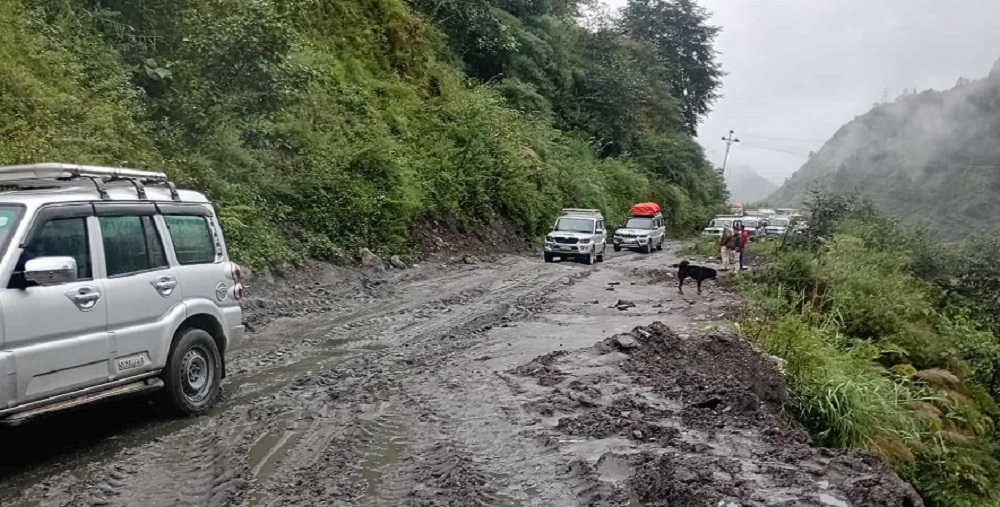
Jomsom Transport from Pokhara Airport

Jomsom Transport From Pokhara Airport: Car, Jeep, Scorpio, Hiace and Bus Guide

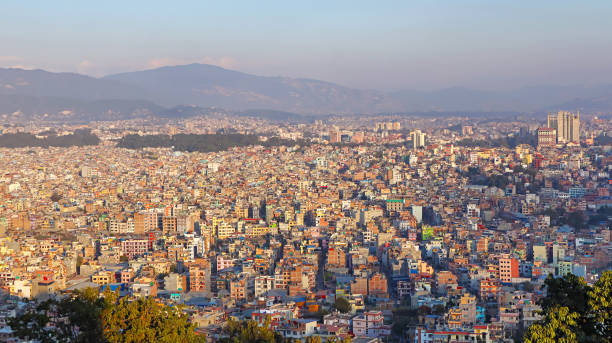
Jomsom, at around 2,720 meters in the Kali Gandaki valley, is the headquarters of Mustang district and the gateway to Muktinath, Kagbeni and Upper Mustang. Flights from Pokhara are short but often canceled by wind and cloud, so more and more travelers choose the road.

Reliable Jomsom transport from Pokhara Airport means a private vehicle from the arrivals hall to your hotel in Jomsom, along one of Nepal’s most dramatic drives: through the world’s deepest gorge, between Dhaulagiri and the Annapurnas.

This guide covers the route, realistic drive times, which vehicle suits the road (car, jeep, Scorpio, Hiace, Coaster, or bus), USD price ranges, permits, seasons, and safety. At Nepal Vehicle Hiring, we run Jomsom transport from Pokhara every season with experienced mountain drivers and well-maintained 4WD jeeps.

To book, send your flight details and group size via WhatsApp, or email [email protected], or use our trip planner.
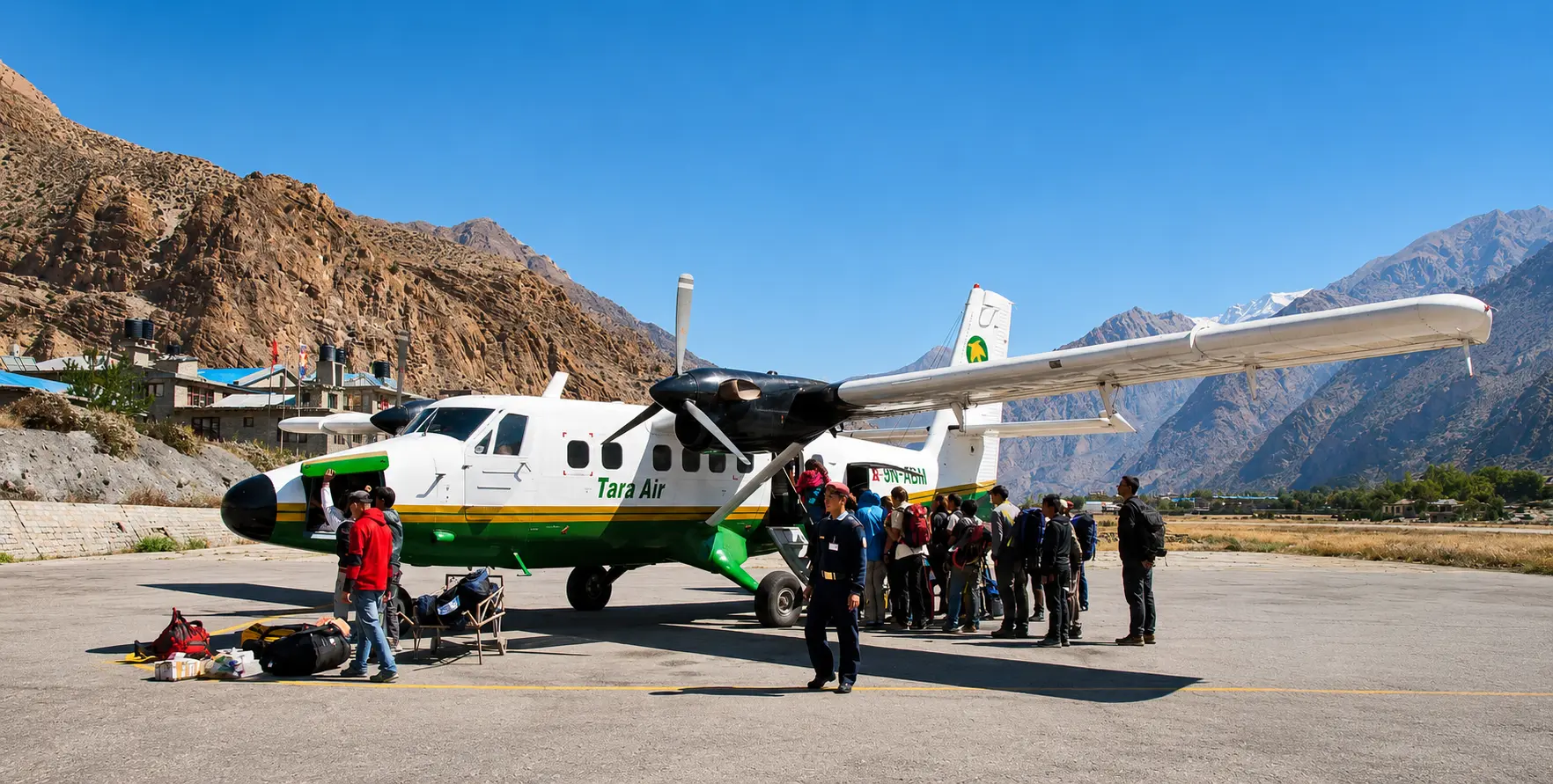
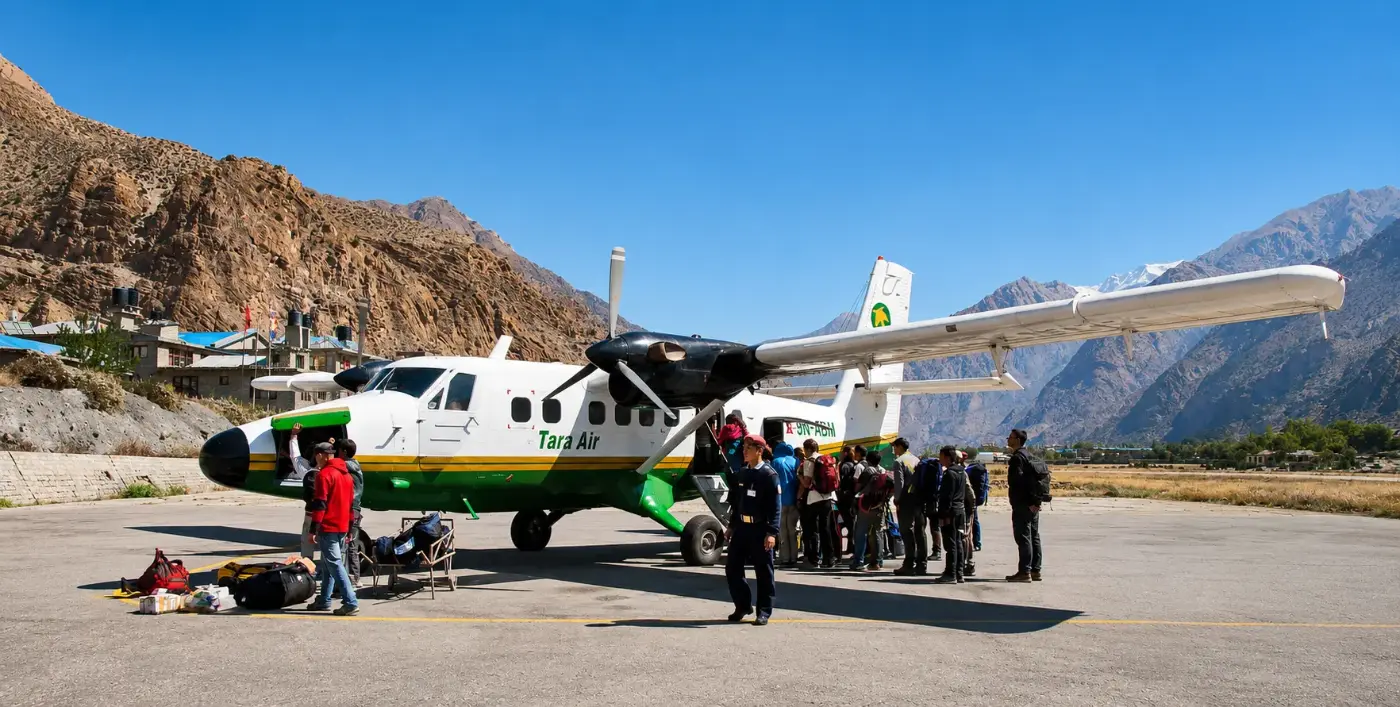
Jomsom aiport

Jomsom Transport at a Glance

Here’s a quick summary of Jomsom transport from Pokhara Airport before we look at each part in detail.

  • Pick-up: Pokhara International Airport arrivals or any Pokhara hotel
  • Drop-off: your hotel in Jomsom (around 2,720 m)
  • Distance: about 160–180 km depending on the start point
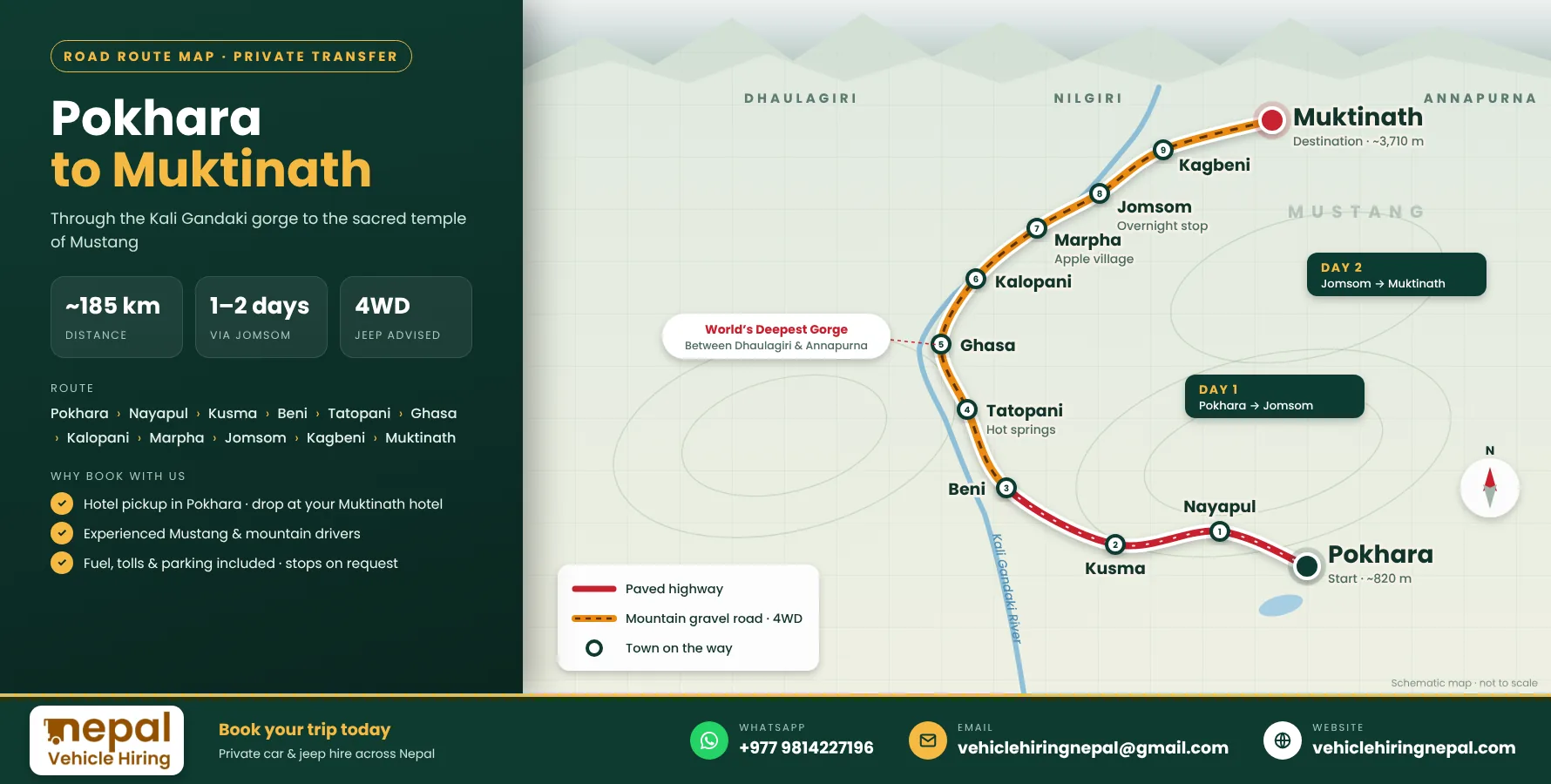
  • Route: Pokhara – Naudanda – Kushma – Beni – Tatopani – Ghasa – Lete – Kalopani – Tukuche – Marpha – Jomsom
  • Drive time: about 7 to 9 hours with stops
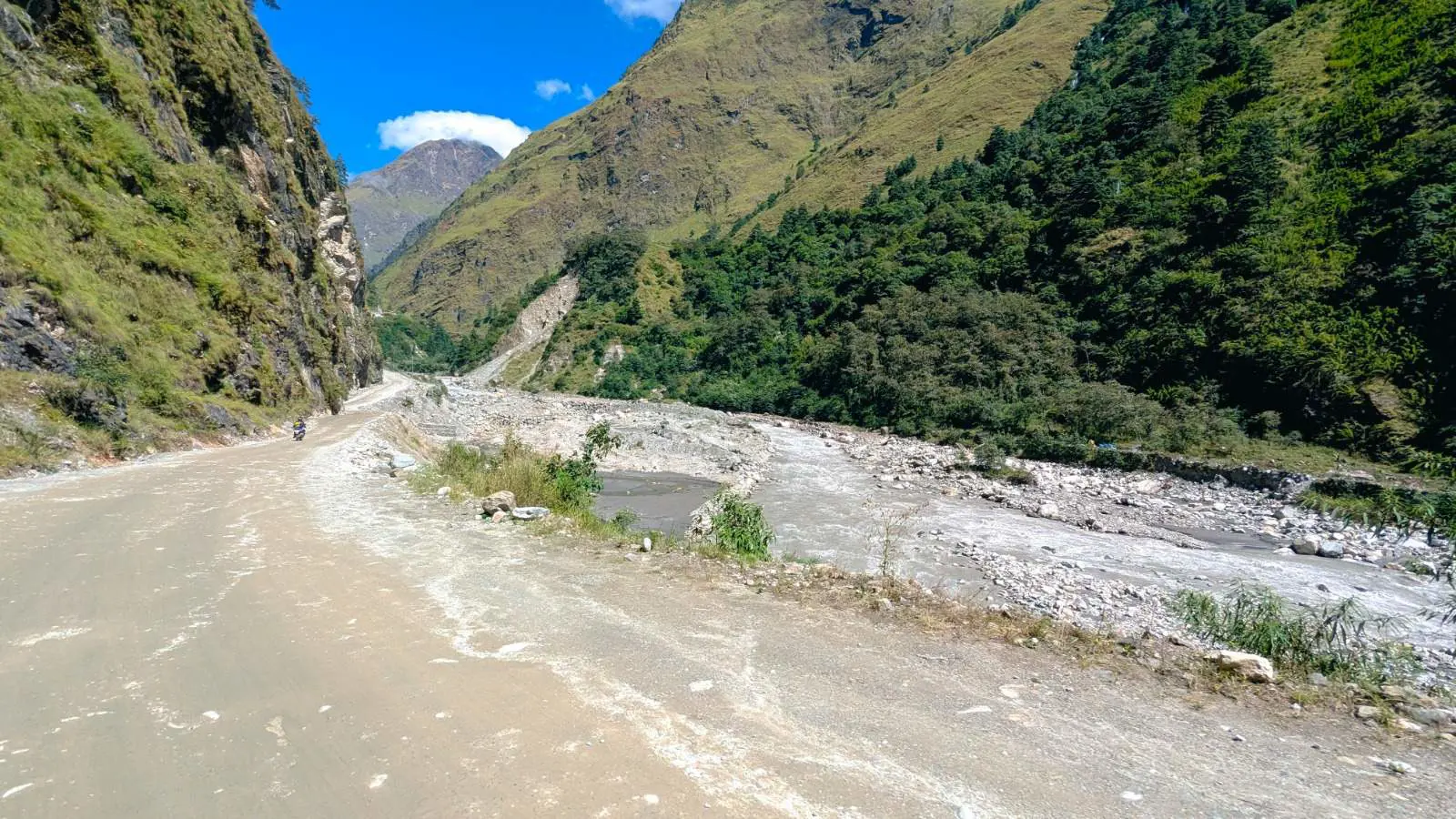
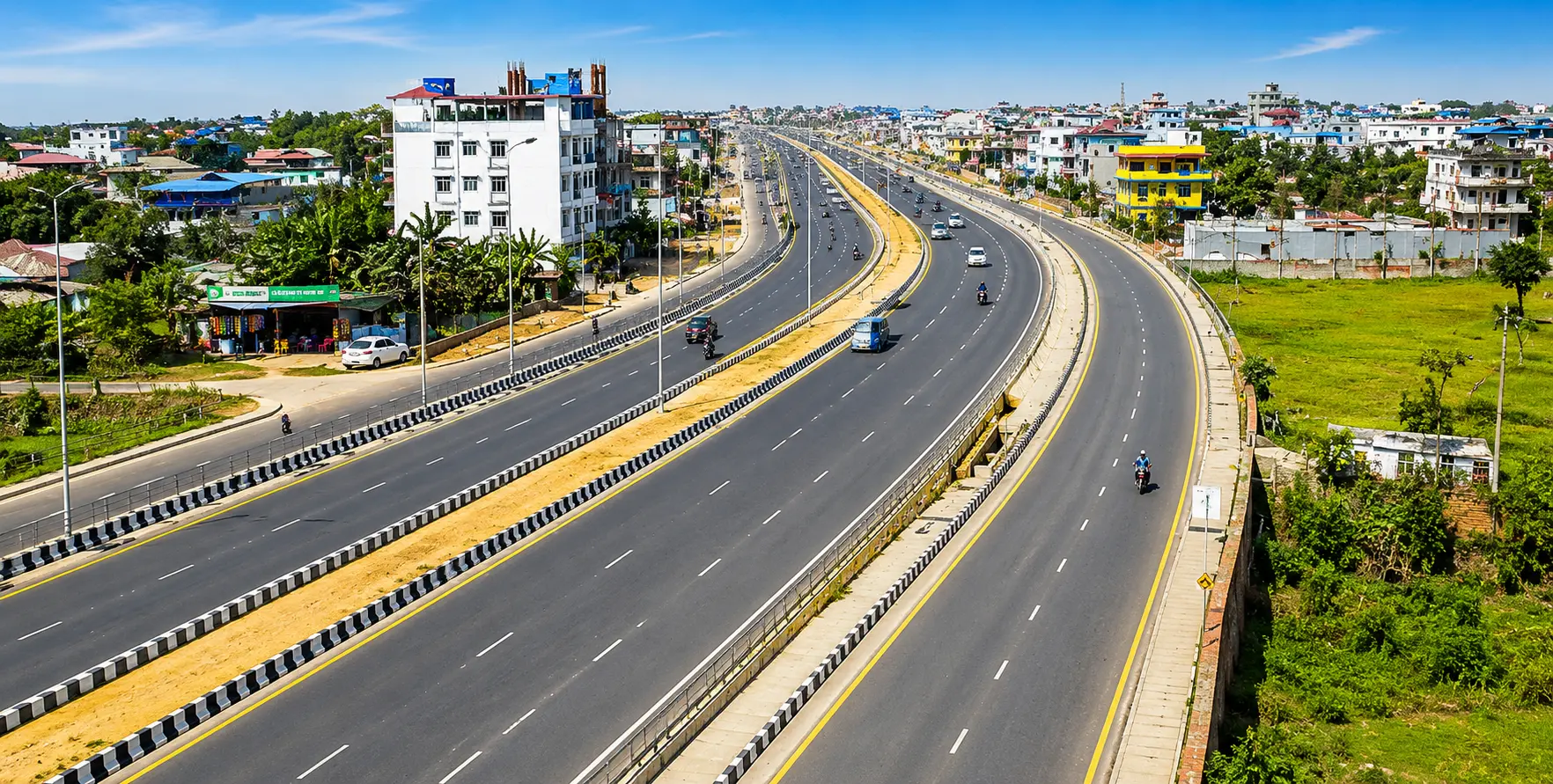
  • Road: paved to Beni, then a rough, partly upgraded mountain road beside the Kali Gandaki
  • Best vehicles: 4WD jeep or Mahindra Scorpio; Hiace, Coaster, or bus for groups in good conditions
  • Private jeep price range: about USD 220–270 one way

Why Choose Road Jomsom Transport?

Flights Are Weather-Dependent

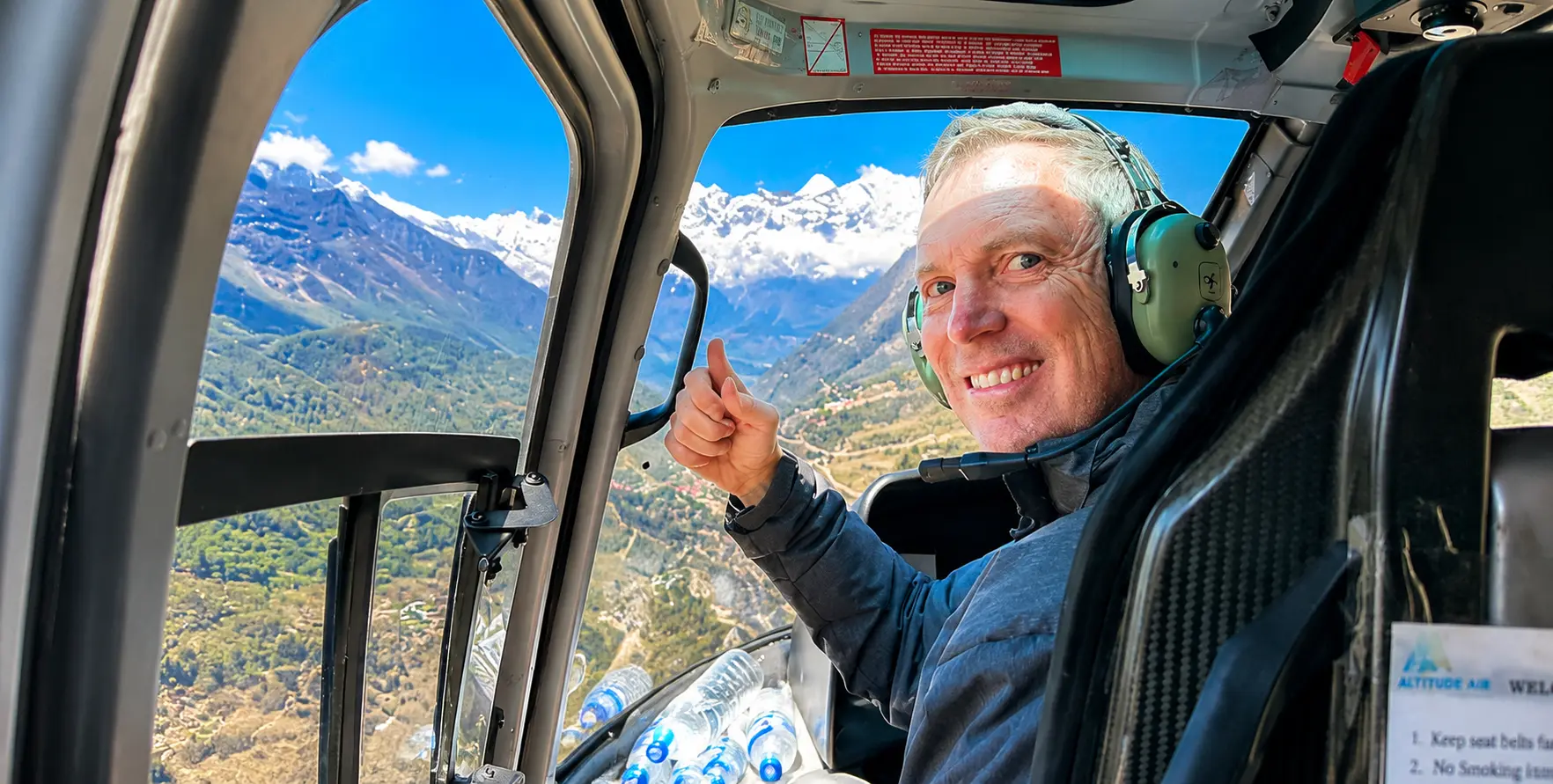
Pokhara–Jomsom flights take only around 20 minutes, but strong winds in the Kali Gandaki mean they operate in the early morning and are often delayed or canceled. Road Jomsom transport runs whatever the cloud is doing.

See the Kali Gandaki Gorge

By road, you pass waterfalls, villages, and the gorge between Dhaulagiri and Annapurna I, both above 8,000 meters. It’s one of the great road journeys of the Himalaya.

No Baggage Limits

Small aircraft have tight baggage allowances. A private jeep carries all your luggage on the roof rack.

Straight From the Airport

Your driver meets you at Pokhara Airport and heads west. Stops in Lakeside for permits or cash are easy. See our Pokhara airport transfer.
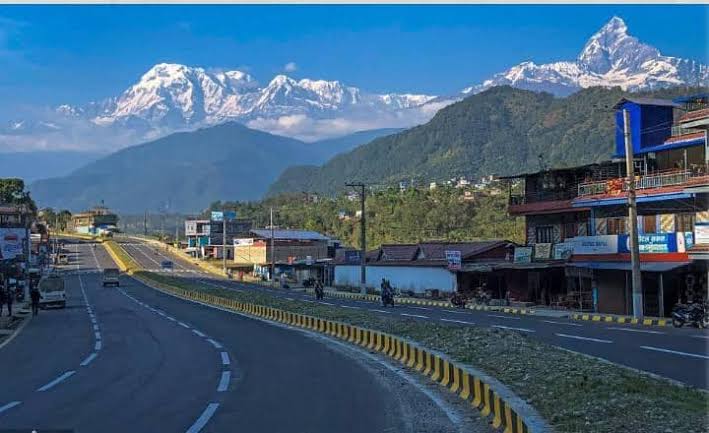
Jomsom Transport From Pokhara Airport

The Pokhara to Jomsom Route, Section by Section

Understanding the road helps you choose the right transport to Jomsom.

Pokhara to Beni

The paved highway climbs past Hemja, Naudanda, and Lumle, then descends through Kushma, known for its suspension bridges, to Beni, where the Kali Gandaki and Myagdi rivers meet. This takes around 2.5 to 3 hours from the airport. Beni is a good stop for tea and fuel.

See our Pokhara to Beni jeep.

Beni to Tatopani

North of Beni, the road follows the Kali Gandaki through Galeshwor to Tatopani, famous for its riverside hot springs. The surface is mixed, with paved and rough sections. Tatopani is a popular lunch stop and the turn-off for the steep track up to Ghorepani; see our Ghorepani transfer.

Tatopani to Ghasa

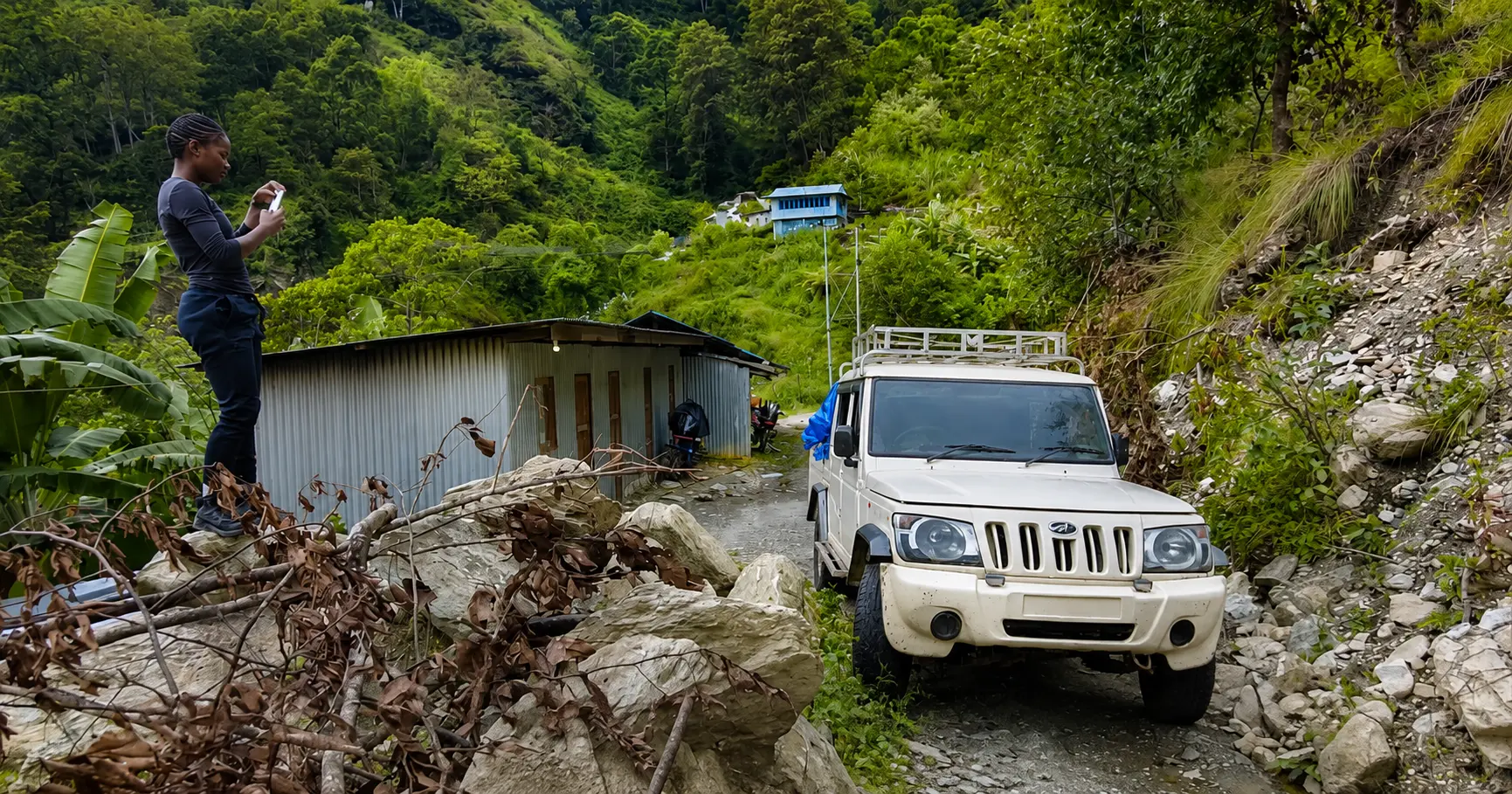
The valley narrows into the deepest part of the gorge. This is the most dramatic and challenging section, with cliffs, waterfalls such as Rupse Falls, and landslide zones. The road is rough and narrow in places.

Ghasa to Marpha

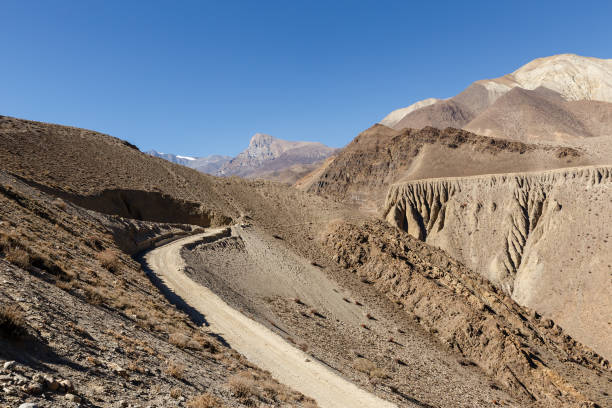
Beyond Ghasa, the landscape shifts from subtropical forest to pine, then to the dry, windswept terrain of Mustang. The road passes Lete and Kalopani, with close views of Dhaulagiri and Nilgiri, Larjung, and Tukuche. Marpha, a whitewashed Thakali village famous for apples and apple brandy, is the last stop before Jomsom.

Marpha to Jomsom

A short final stretch brings you into Jomsom. Afternoon winds blow strongly up the valley, so arriving by mid-afternoon is ideal.

NOTE: The road beyond Beni changes with every season and with ongoing road works. We check conditions before every Jomsom transport booking.
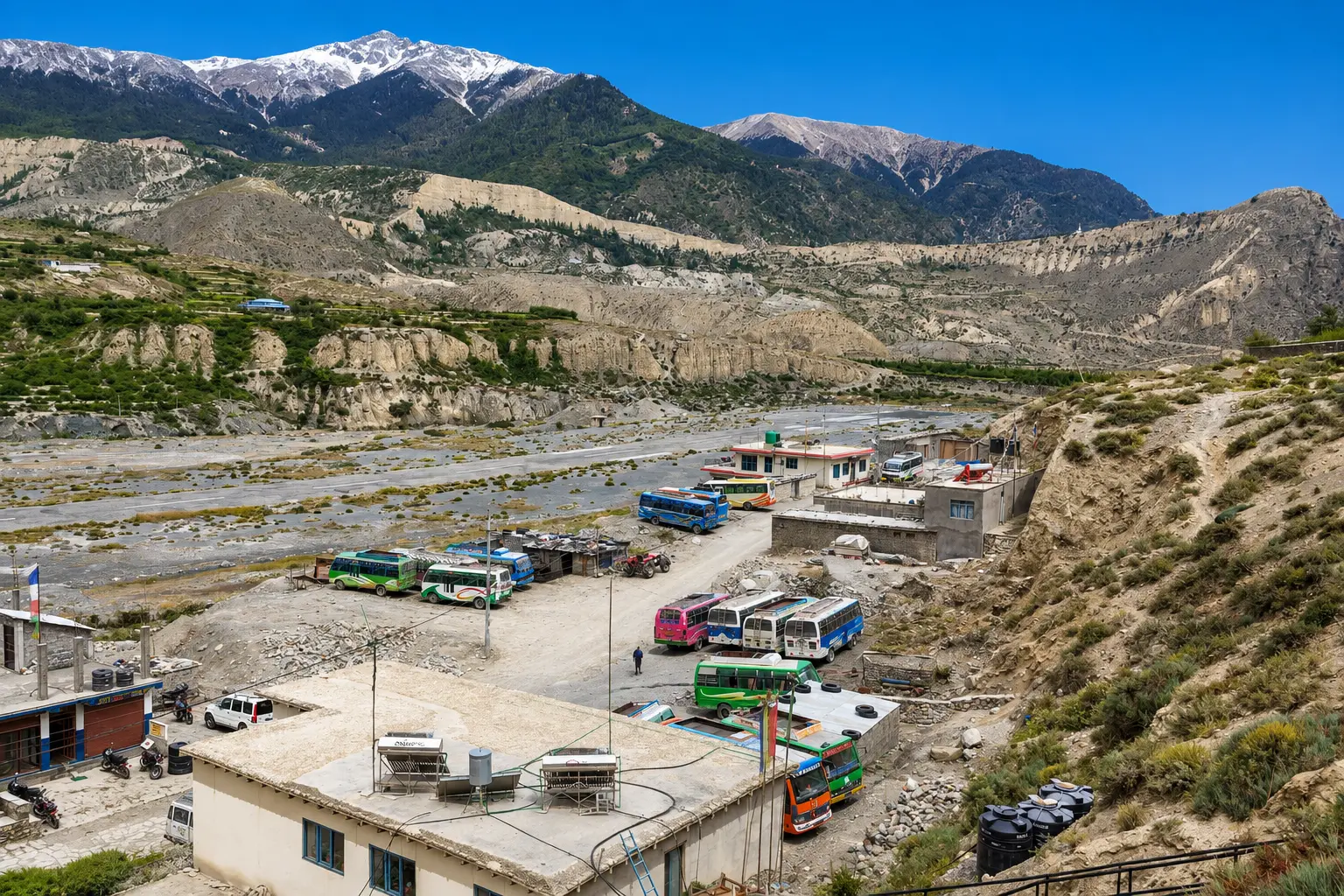
Jomsom valley

Which Vehicle Is Best for Jomsom Transport?

Choosing the right vehicle is the most important decision for Jomsom transport. The road beyond Beni is long, rough, and narrow, so ground clearance and an experienced driver matter.

4WD Jeep (Up to 6 Passengers)

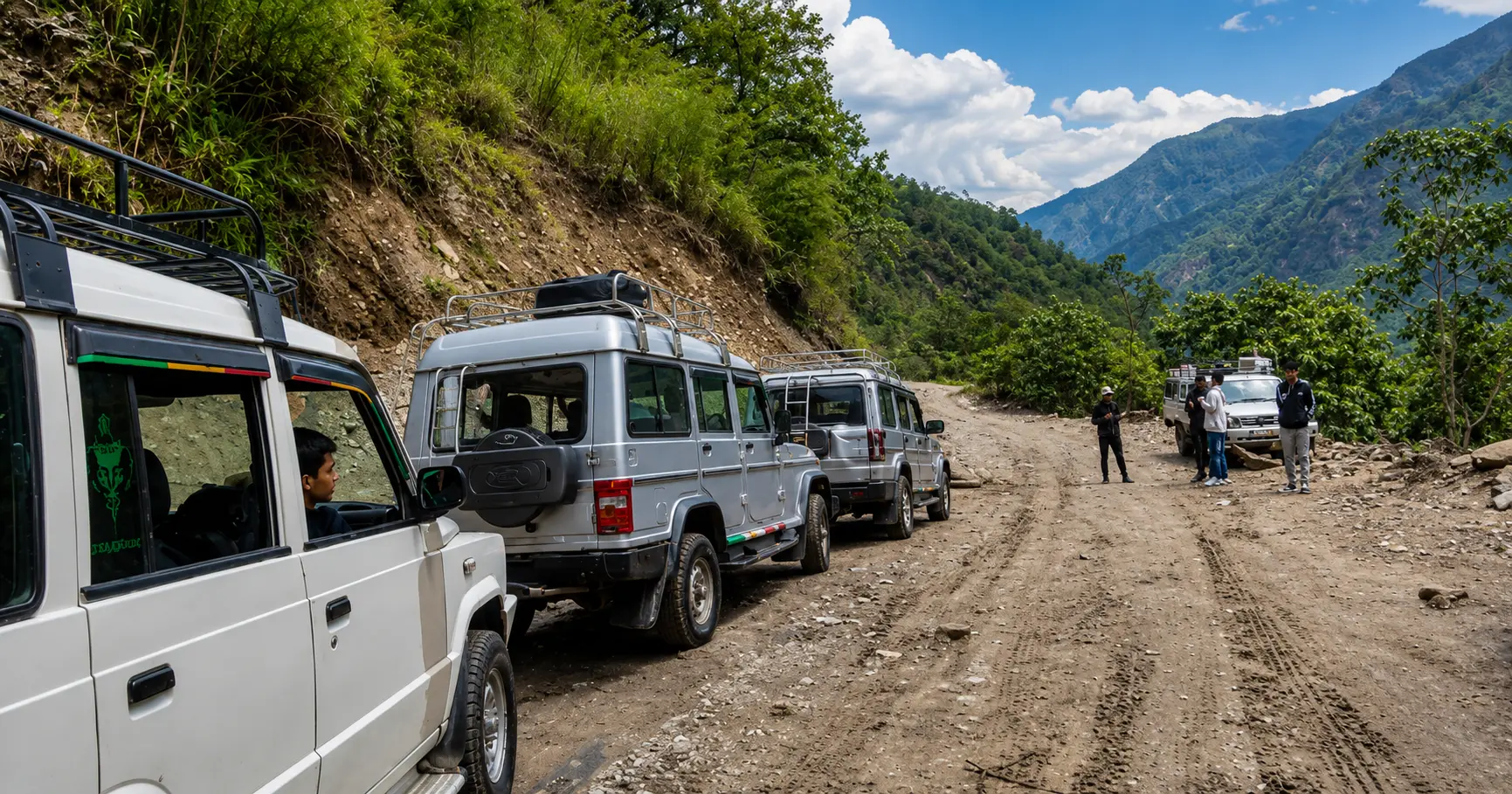
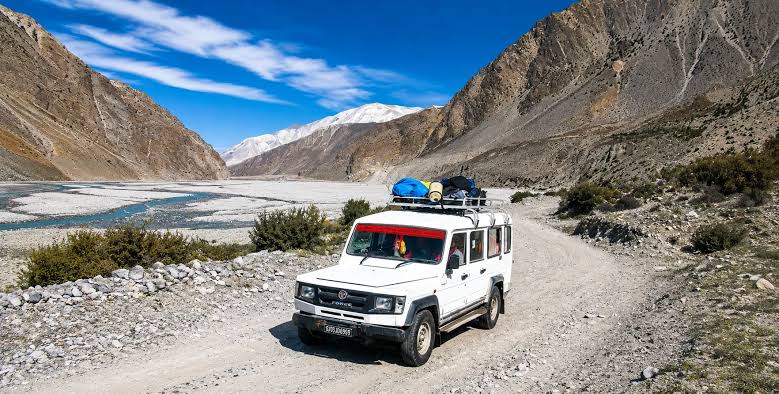
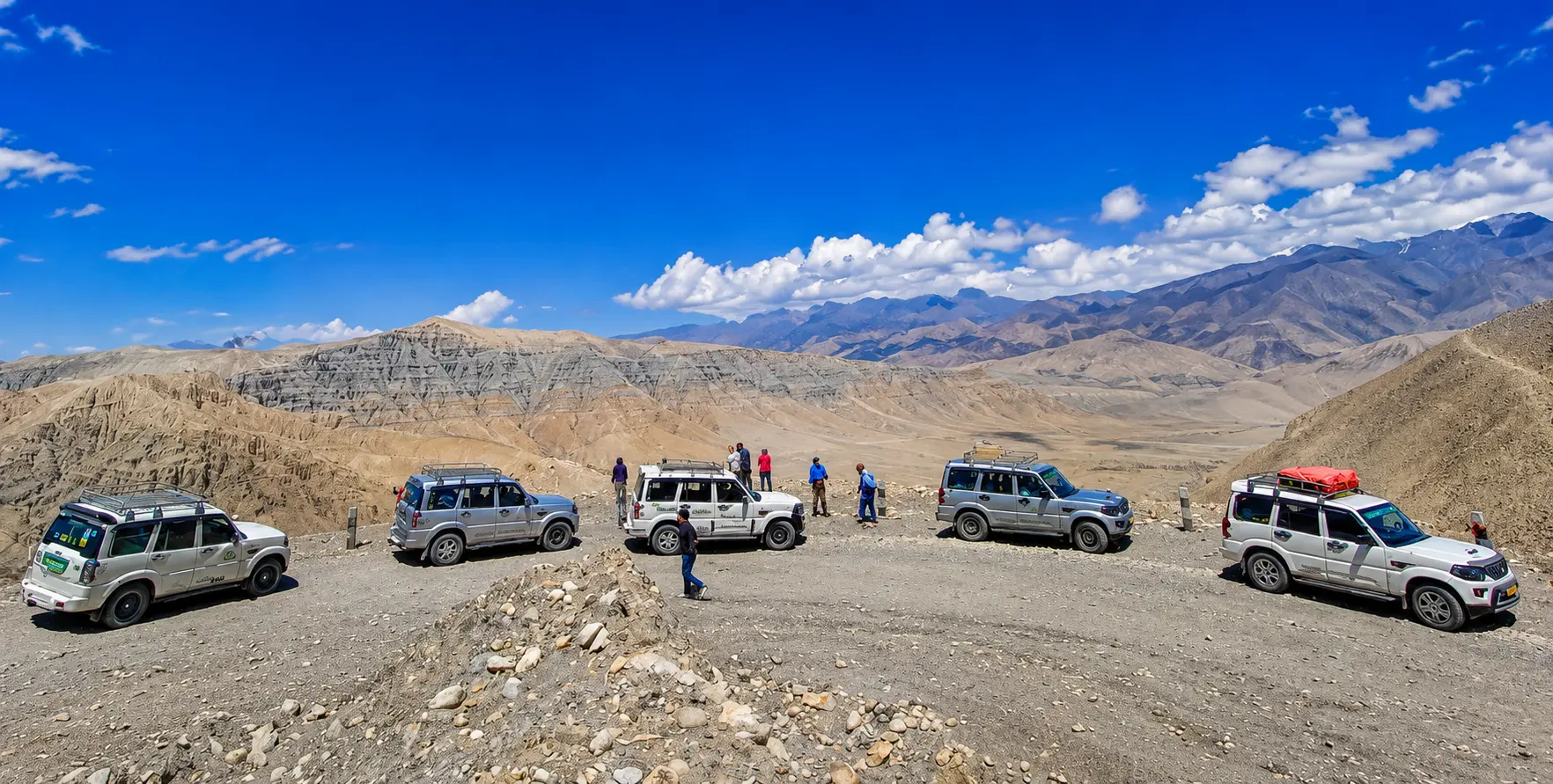
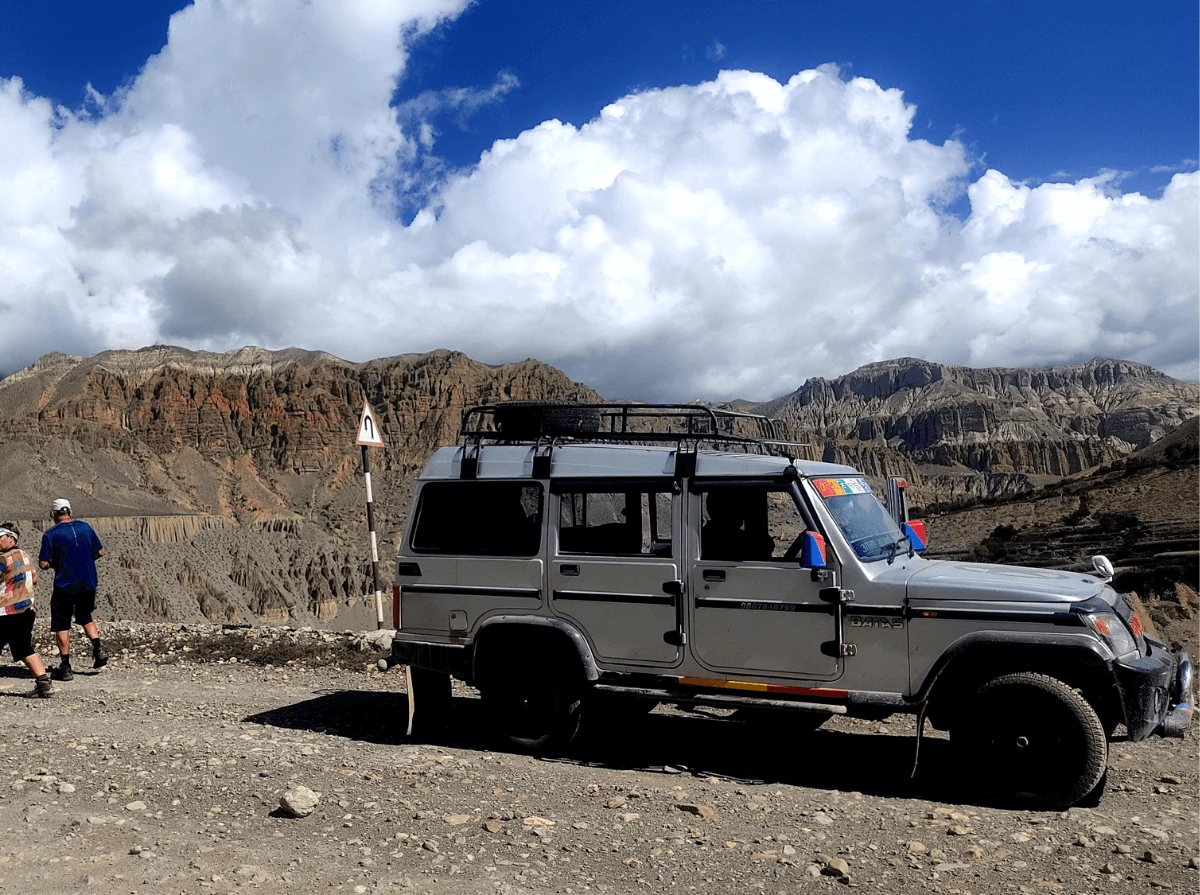
A 4WD jeep is the best all-round choice for Jomsom transport. It handles rocky sections, mud, and stream crossings, and can carry luggage on the roof rack. It’s the most reliable option in every season.

Mahindra Scorpio (Up to 5 Passengers)

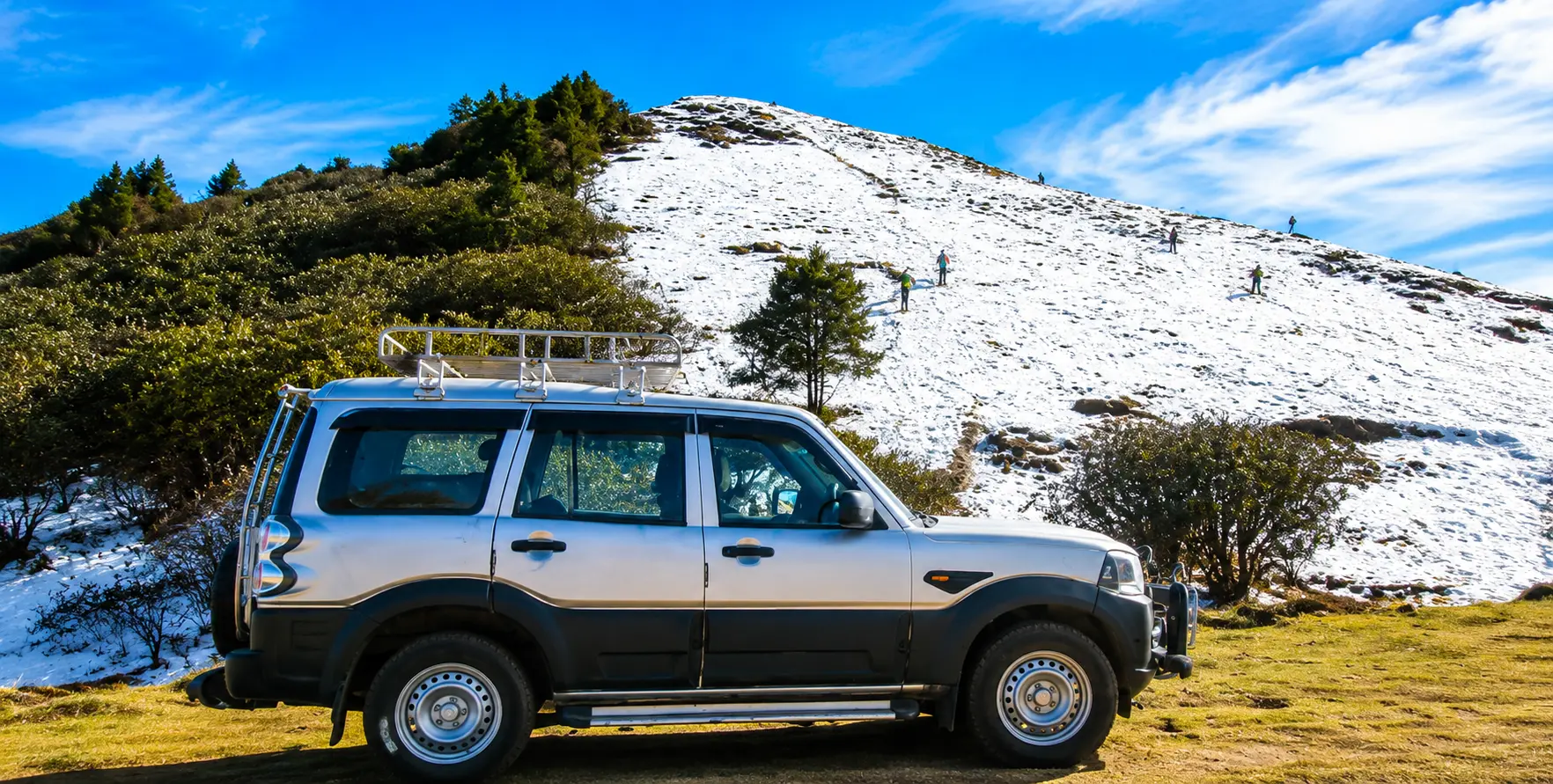
The Scorpio is a comfortable SUV with good clearance and suspension, ideal for families and couples on the long drive. It works well in dry conditions.

Private Car (1–3 Passengers)

A private car can handle the road in good, dry conditions with an experienced driver, but its low clearance makes rough sections slow and uncomfortable. We only recommend a car when the road is in good shape.

Toyota Hiace (6–12 Passengers)

A Toyota Hiace can carry groups to Jomsom in the dry season. Vans do run on this road, but the ride is bumpier than a jeep. For groups who want comfort on the roughest sections, two jeeps may be better.

Coaster and Bus (Large Groups)

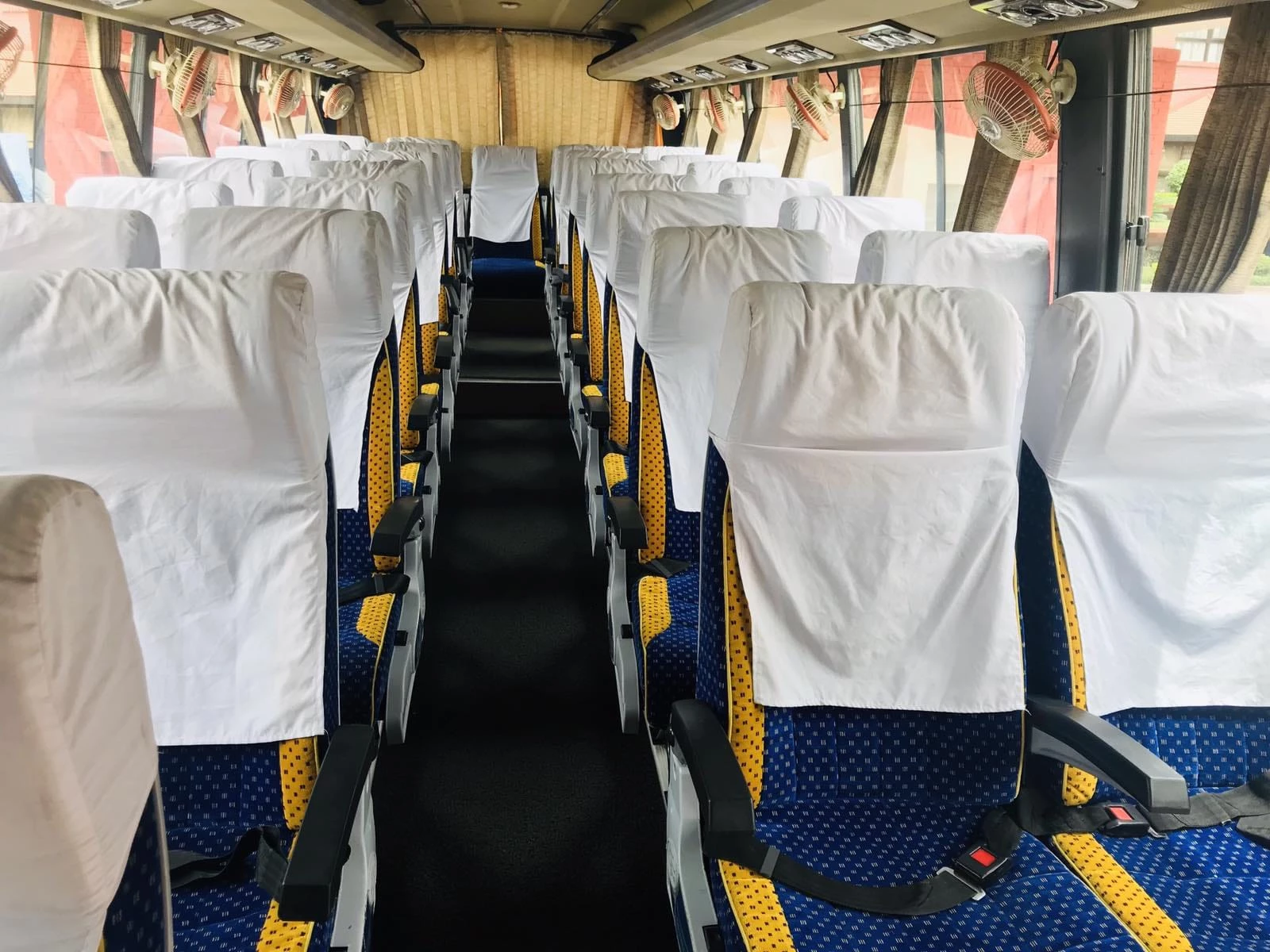
Local buses run between Pokhara and Jomsom, so a private coaster or bus is possible for large groups in good conditions. Travel is slower, and we plan departures carefully. Pilgrim groups heading to Muktinath often choose this option.
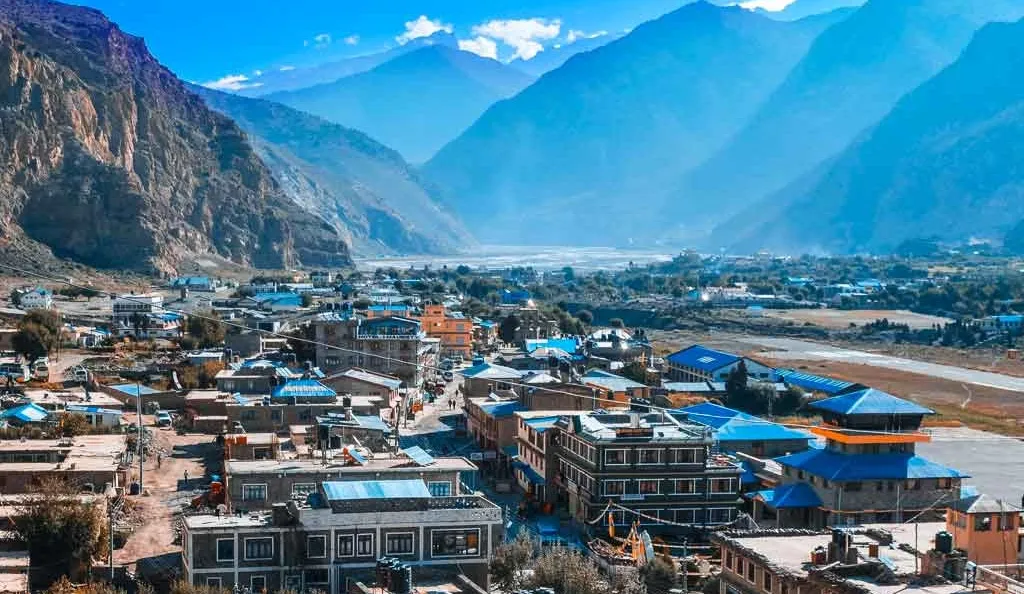
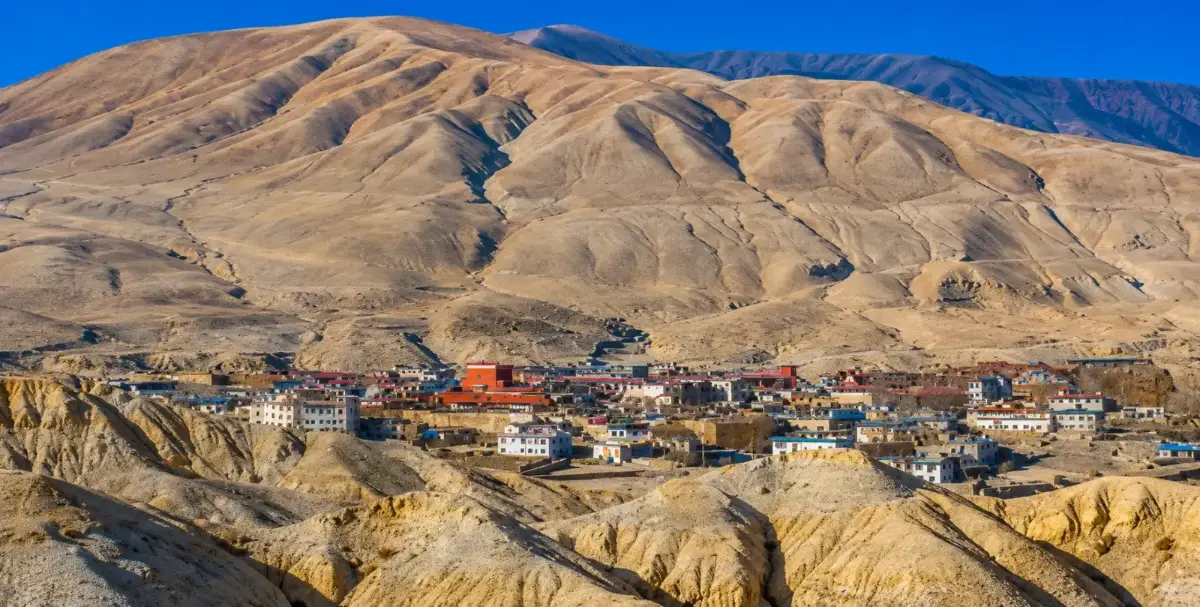
Jomsom town in the Kali Gandaki valley

Jomsom Transport Price From Pokhara Airport (USD)

Our Jomsom transport prices include the vehicle, an experienced mountain driver, fuel, the driver’s food and accommodation, insurance, road taxes, parking, and airport meet-and-greet. They sit slightly above the cheapest local offers because the Kali Gandaki road requires reliable vehicles and experienced drivers.

One-way, Pokhara Airport to Jomsom

  • 4WD jeep (1–6 passengers): USD 220–270
  • Mahindra Scorpio (1–5 passengers): USD 225–275
  • Private car (1–3 passengers), dry conditions: USD 190–230
  • Toyota Hiace (6–12 passengers): USD 260–330
  • Coaster (15–25 passengers): USD 400–500
  • Tourist bus (26–40 passengers): USD 500–650

Extras

  • Continue to Muktinath: add about USD 50–80 by jeep
  • Return to Pokhara or the airport: same range as one way
  • Extra day with the vehicle: about USD 70–95 per day for a jeep or Scorpio

Get an exact Jomsom transport quote on WhatsApp.

Jomsom Transport by Road vs Flight

Flight

  • Around 20 minutes, with mountain views
  • Only early-morning departures because of wind
  • Frequent delays and cancellations
  • Strict baggage limits

Road

  • 7 to 9 hours through the Kali Gandaki gorge
  • Runs in most weather, with flexible timing
  • All your luggage travels with you
  • Stops at Tatopani, Kalopani and Marpha on the way

Many travelers fly one way and take road transport the other, so they get the views from the air and the gorge from the road.

Permits for Jomsom

Jomsom lies in the Annapurna Conservation Area. Foreign visitors need an ACAP permit, which is checked at points along the road, such as Ghasa and Jomsom. Arrange it in advance in Kathmandu or Pokhara, not at the checkpoints.

Jomsom, Muktinath, and Kagbeni don’t require the restricted area permit needed for Upper Mustang beyond Kagbeni. Rules change from time to time, so confirm current requirements before you travel. Your driver can stop in Lakeside if you need to collect your permit.
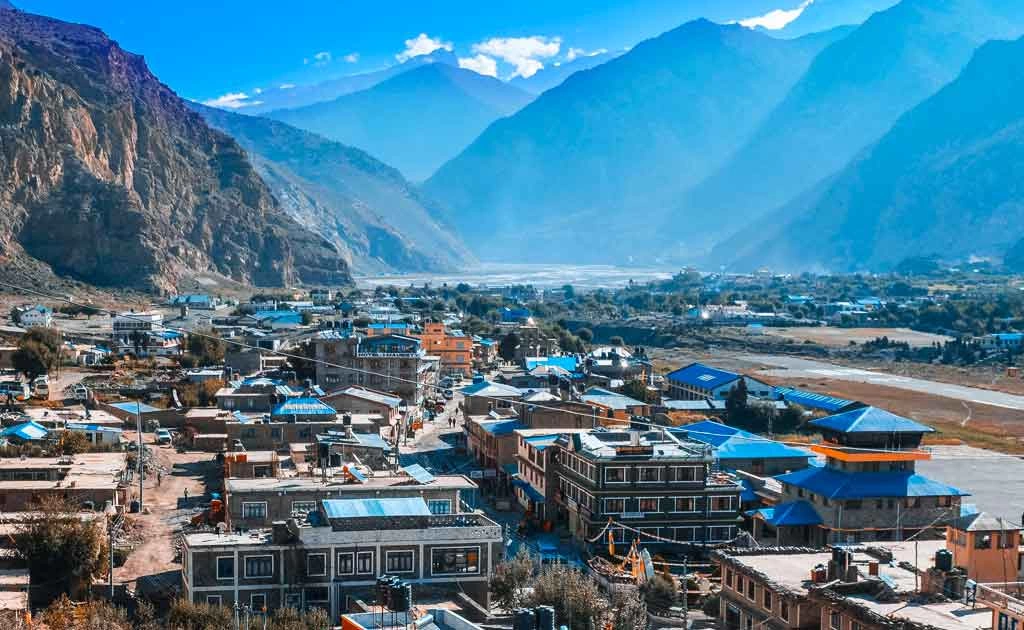
Jomsom Transport From Pokhara Airport

Best Season for Jomsom Transport

The season shapes your Jomsom transport experience.

Spring

Generally dry roads and good conditions, with apple blossoms in Marpha—one of the best times for the drive.

Autumn

Clear skies and wide mountain views after the monsoon. Roads usually improve as they dry out, though early autumn can still bring rain.

Winter

Cold, clear days and few landslides, but snow and ice are possible in upper Mustang. Jomsom itself is cold and windy.

Monsoon

Rain is lighter in Jomsom, which lies in the rain shadow, but the road through the gorge south of Ghasa has many landslide zones. Delays are common, so a 4WD jeep and spare days are essential.

Jomsom Transport Safety

  • Experienced mountain drivers who know the Kali Gandaki road
  • 4WD vehicles with good tires, brakes, and low-range gearing
  • Daylight driving through the gorge
  • Road checks with local contacts before departure
  • Flexible plans if landslides block the road
  • Insured, licensed vehicles under our company name

We’d always rather wait or reroute than risk this road.

The Kali Gandaki Gorge: Why This Drive Is Special

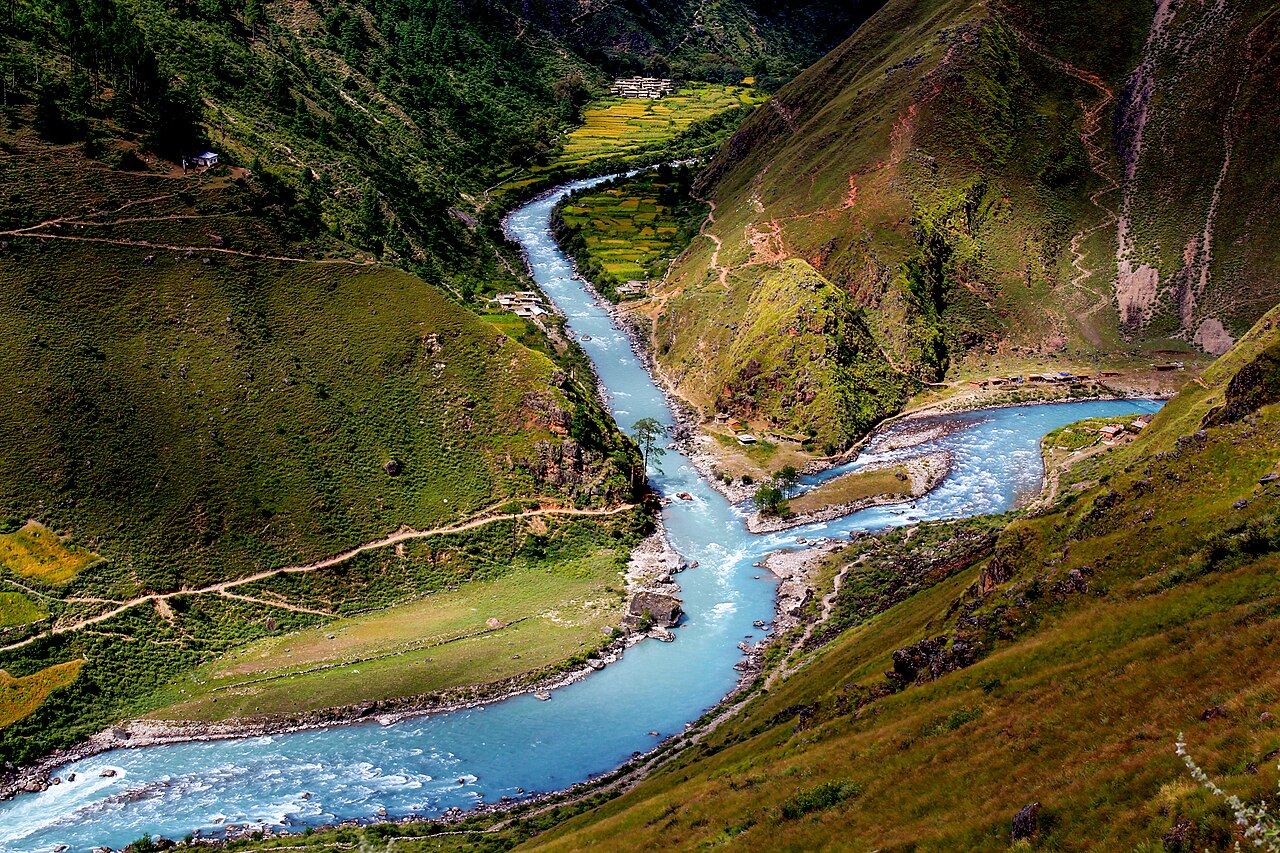
The Kali Gandaki flows from the Tibetan plateau south through Mustang, cutting between Dhaulagiri (8,167 m) and Annapurna I (8,091 m). Measured from the summits to the river, it’s often described as the world’s deepest gorge. Driving through it, you move from banana trees and rice terraces near Beni to pine forests around Ghasa, then into the dry, wind-carved landscapes of lower Mustang near Jomsom, all in one day.

For centuries, this valley served as a salt-trading route between Tibet and Nepal’s lowlands. Thakali traders built prosperous villages along the way, many of which still line the road today. Choosing road transport to Jomsom lets you experience this history and scenery at ground level.
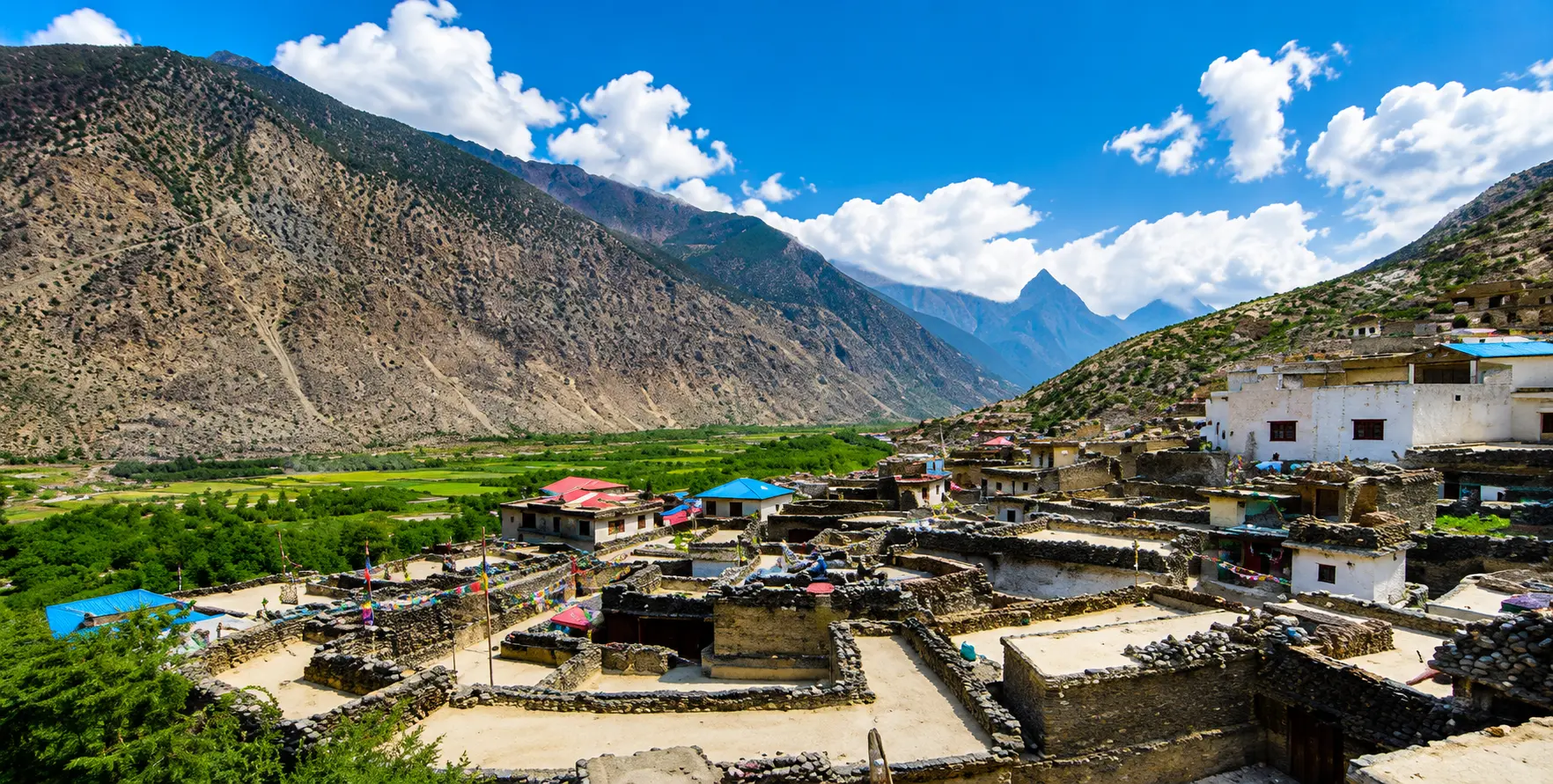
Jomsom Transport from Pokhara Airport

Villages Along the Way

Tatopani

At around 1,190 meters, Tatopani (‘hot water’) has natural hot springs beside the river, plus orange and lemon trees. It’s a classic lunch stop and a lovely place to soak on the return journey.

Ghasa

The first village of Mustang district, where the landscape begins to change. Ghasa marks the start of the drier upper valley and is a known birdwatching spot during migration seasons.

Lete and Kalopani

Twin villages with some of the best mountain views on the road: Dhaulagiri, Annapurna I, Nilgiri and Fang tower above. Many travelers stop here for photos.

Tukuche

Once a major salt-trading center, Tukuche has old Thakali houses, monasteries and a distillery producing local apple and apricot brandy.

Marpha

Narrow stone lanes, whitewashed houses and apple orchards make Marpha one of the prettiest villages in Mustang. Try apple pie, juice or cider before the final stretch to Jomsom.

Muktinath: Continuing Beyond Jomsom

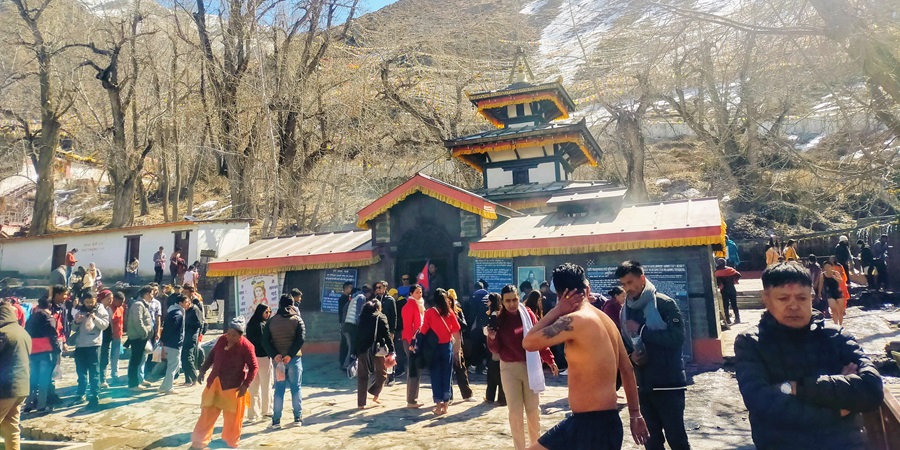
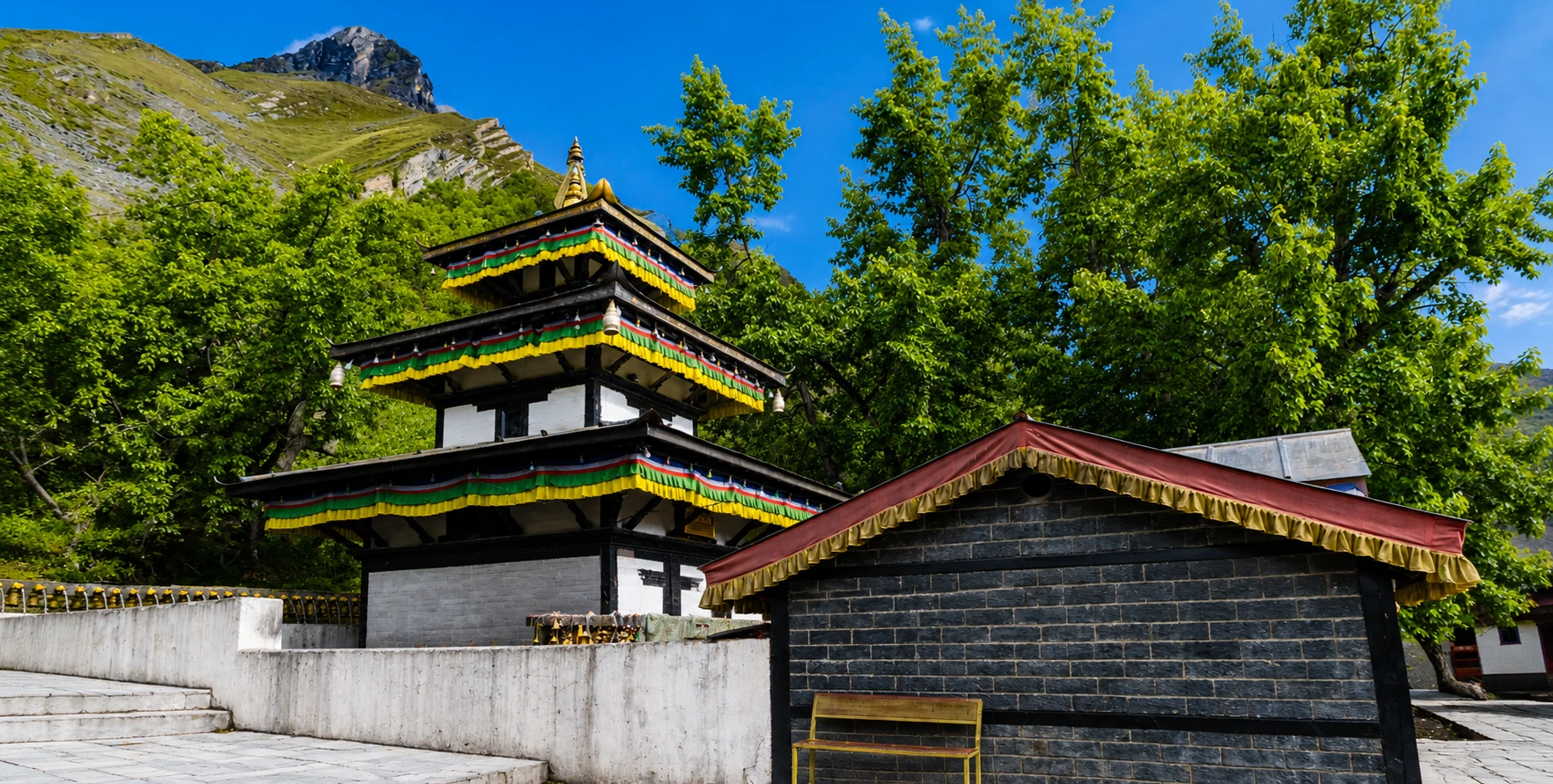
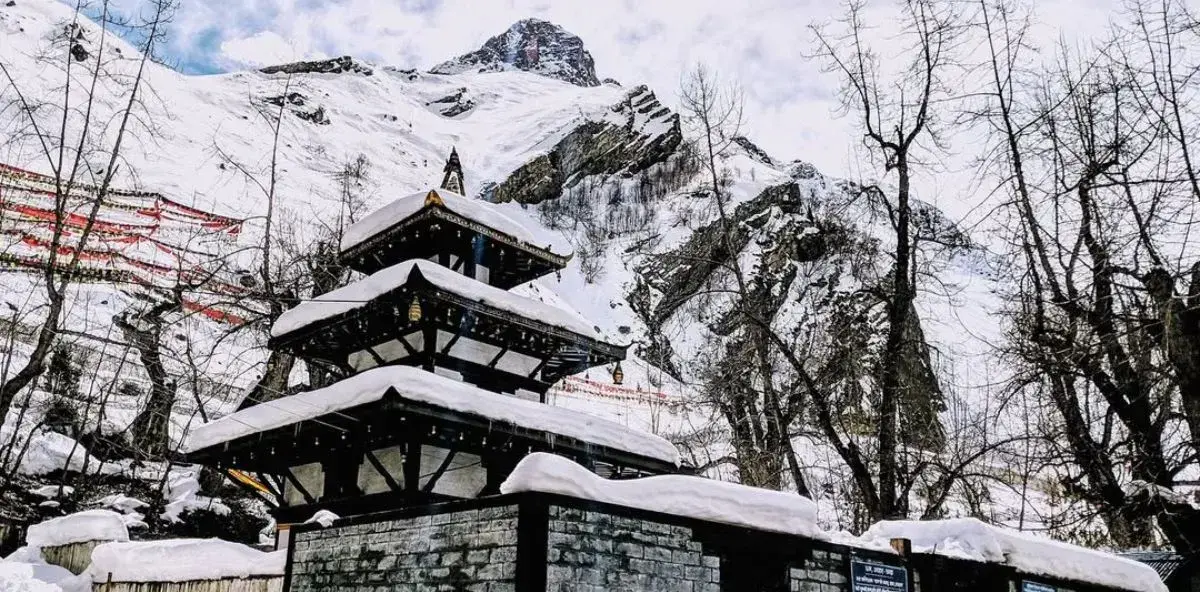
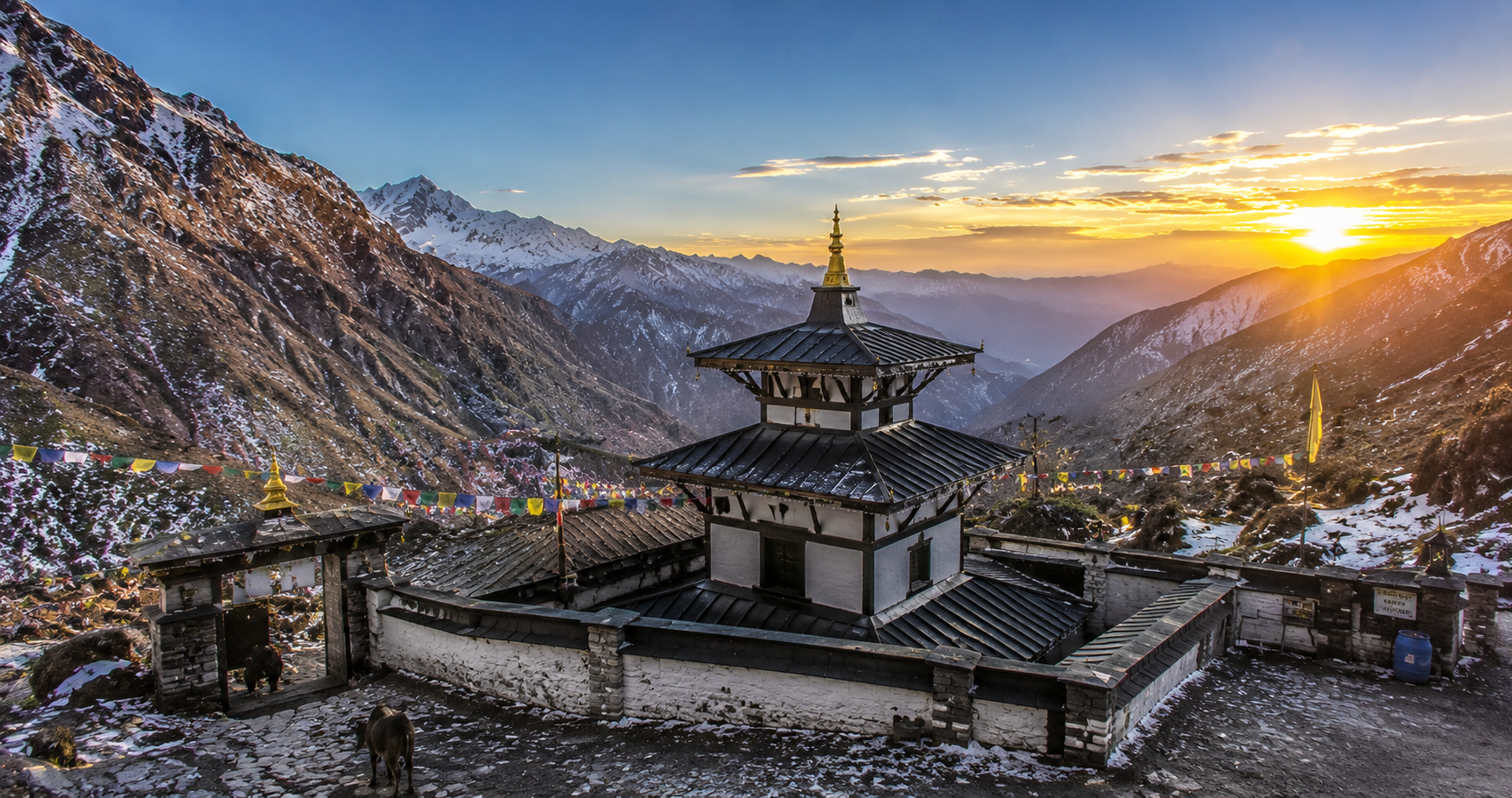
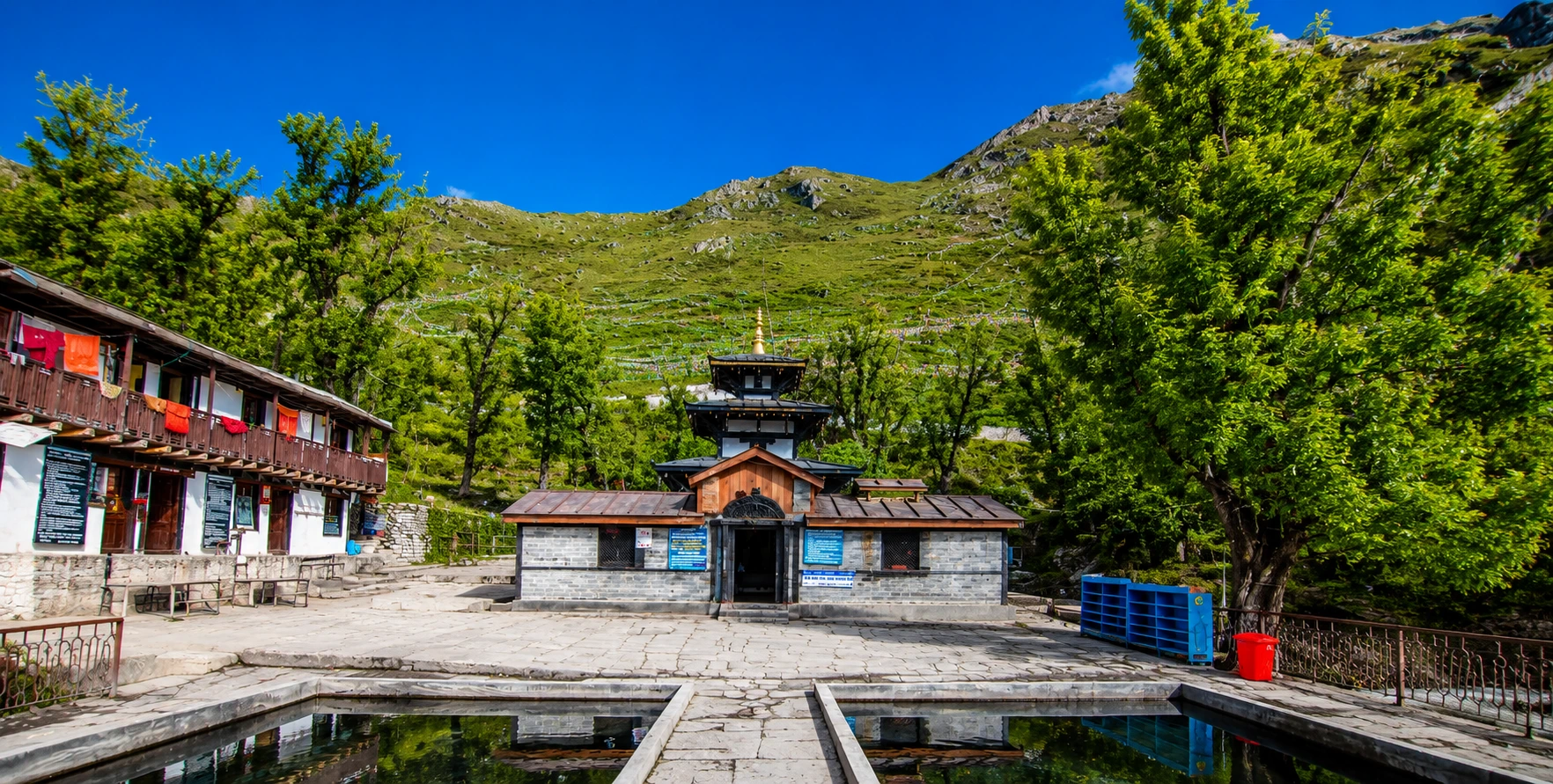
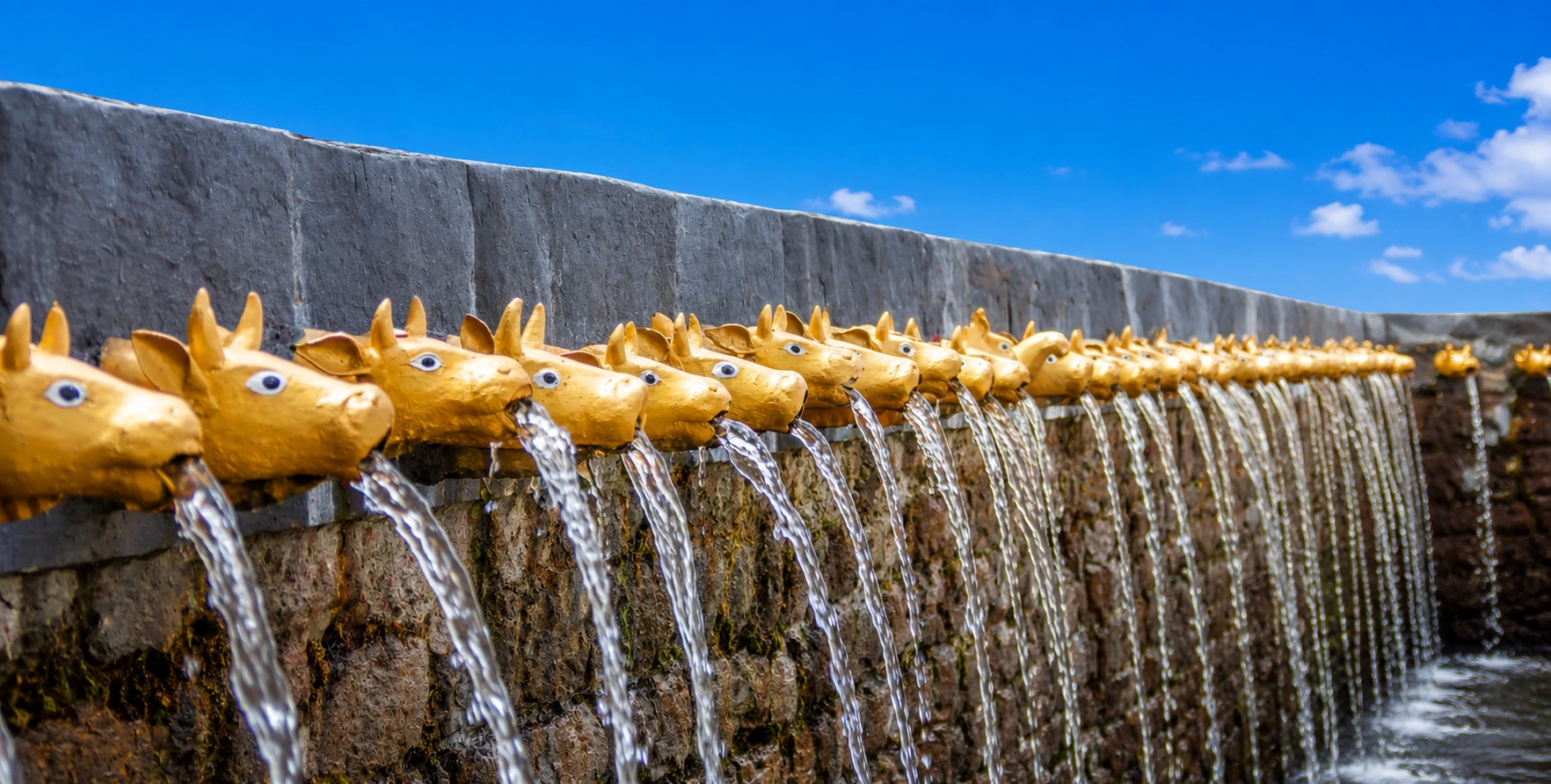
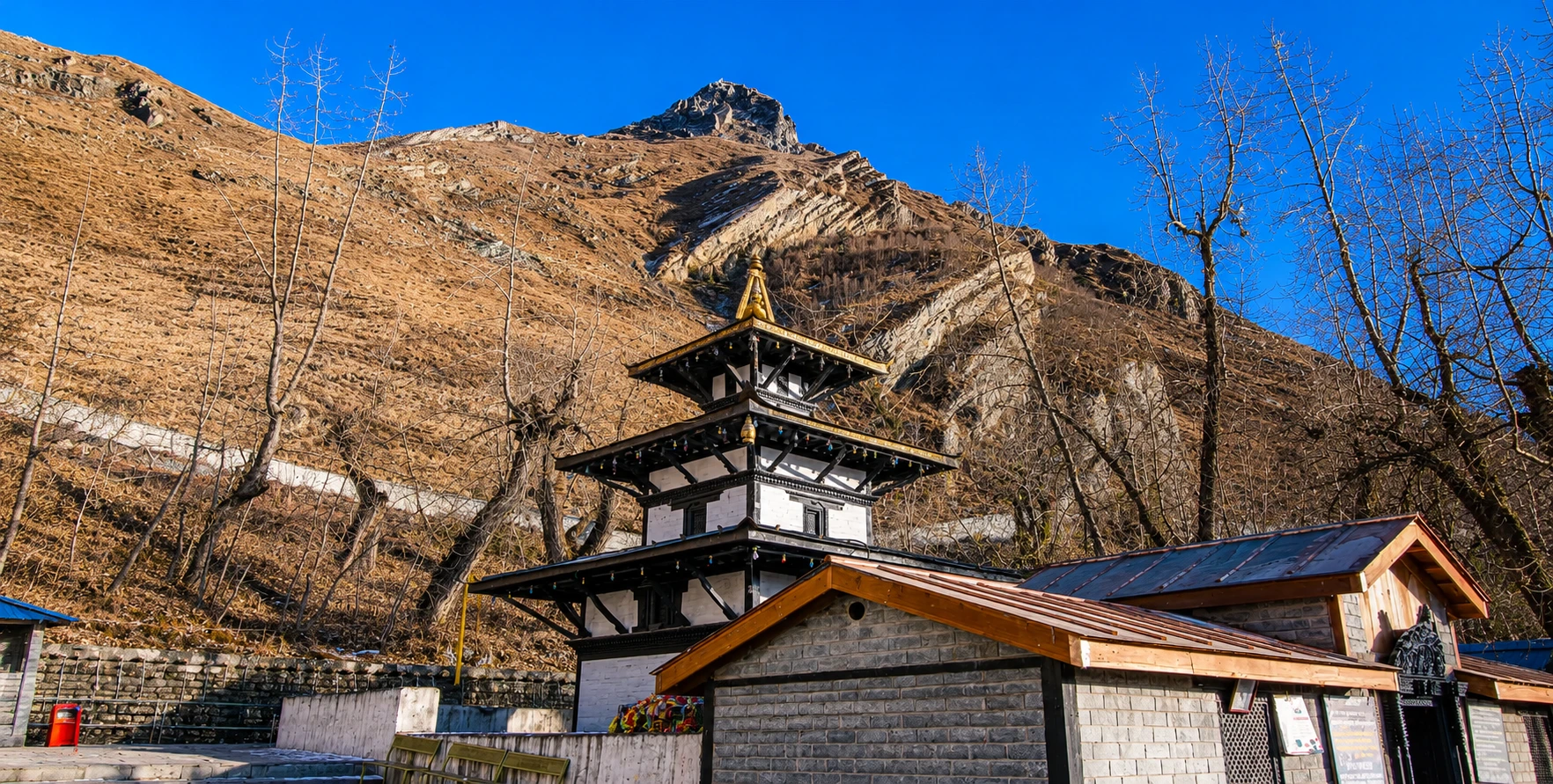
Most travelers who book Jomsom transport also visit Muktinath, at around 3,710 meters. The temple complex is sacred to both Hindus and Buddhists, with 108 water spouts, an eternal flame, and views of the Dhaulagiri range. From Jomsom, the road continues via Eklebhatti and up to Muktinath in around an hour and a half.

Many pilgrims visit early in the morning, when the air is clear and calm. Add Muktinath to your booking and your driver will take you there and back.
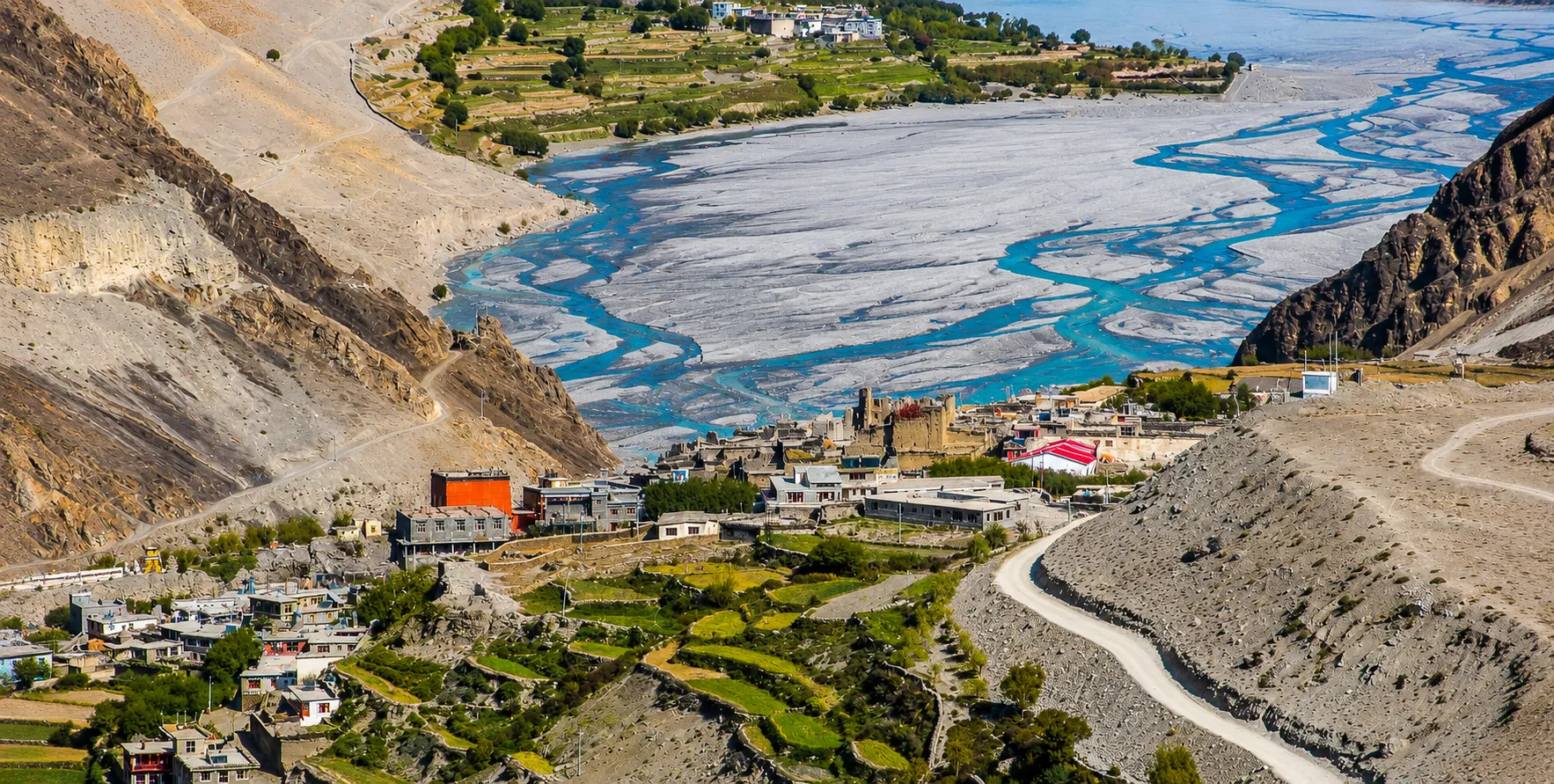
Jomsom Transport from Pokhara Airport

Kagbeni and Upper Mustang

Kagbeni, between Jomsom and Muktinath, is a medieval village of mud-brick houses, a red monastery and narrow alleys. It marks the boundary of restricted Upper Mustang. Travel north of Kagbeni requires a special restricted area permit and a licensed guide, arranged through a registered agency.

If you’re planning the Upper Mustang trek or a jeep tour to Lo Manthang, we can provide the road transport to Jomsom or Kagbeni, where your journey into Upper Mustang begins.

Altitude and Health

Jomsom sits at around 2,720 meters and Muktinath at around 3,710 meters. Because the drive gains height quickly, some travelers feel mild symptoms such as headache or breathlessness. Drink plenty of water, avoid alcohol on the first evening, and take it slow when walking around Muktinath.

If symptoms become severe, descend. Spending a night in Jomsom before visiting Muktinath helps your body adjust.

Food on the Road and in Jomsom

The Kali Gandaki valley is the home of Thakali cuisine, famous across Nepal. Thakali dal bhat, served with rice or buckwheat dhido, lentils, vegetables, pickles, and often local meat, is a highlight. Marpha and Tukuche are known for apples, apple pie, juice,e and local brandy.

Along the way, Beni and Tatopani have plenty of restaurants. Jomsom has hotels and cafés serving Nepali, Tibetan and Western food.

Annapurna Circuit Trekkers

Many trekkers finishing the Annapurna Circuit cross the Thorong La pass and descend to Muktinath, then travel down to Jomsom. Instead of a weather-dependent flight or a crowded local bus, a private jeep from Muktinath or Jomsom back to Pokhara is the most comfortable option. Share your expected finishing date, and we’ll arrange a pick-up.

Some trekkers also start from Jomsom to walk down the valley via Marpha and Tatopani.

If Your Jomsom Flight Is Canceled

Flights between Pokhara and Jomsom are often canceled because of wind or clouds, sometimes for several days. If your flight is canceled, road transport to Jomsom is the best backup. Message us on WhatsApp, and we’ll arrange a jeep or Scorpio, usually for the same morning or the following day.

Many travelers save their trip this way.
Jomsom Transport from Pokhara Airport

Arriving From Kathmandu

Traveling from Kathmandu? We can meet you at Tribhuvan International Airport for airport pick-up, drive you to Pokhara in a private jeep, or put you on a tourist bus, then continue to Jomsom the next morning. A night in Pokhara breaks the long journey and lets you start the Kali Gandaki drive early.

Families and Older Travellers

Jomsom and Muktinath are popular with families and older pilgrims. A Mahindra Scorpio provides comfortable seating, and frequent stops make the long day easier. We can provide child seats on request.

Because of the altitude at Muktinath, older travelers should take it slowly and consider a night in Jomsom first.

What Is Included

Included

  • Private vehicle and experienced mountain driver
  • Fuel, insurance, road taxes and parking
  • Driver’s food and accommodation on multi-day trips
  • Airport meet-and-greet and free waiting for delays
  • Short stops in Lakeside, Beni, Tatopani and Marpha

Not Included

  • ACAP permits and Upper Mustang permits
  • Your accommodation and meals
  • Guide services
  • Tips for the driver (optional)

Your Driver

The Kali Gandaki road demands skill and patience. Our drivers know where landslides tend to occur, which sections are safest at which times, and where to stop for the best views. They speak basic English, help with luggage,e and plan breaks so the long day feels comfortable.

Why Our Prices Are a Little Higher

Local buses and shared jeeps are cheaper, but they run on fixed schedules from the city bus park and can be crowded. Our private Jomsom transport costs a little more because you get a private vehicle from the airport, an experienced mountain driver, well-maintained 4WD vehicles, flexible stops, ps and a fixed price agreed in advance.

Wind, Dust and Weather in Jomsom

Jomsom is famous for its wind. Mornings are usually calm, but from late morning a strong wind blows up the Kali Gandaki valley, bringing dust and cold air. Arriving by mid-afternoon helps you avoid the worst of it.

Carry a windproof jacket, sunglasses, and a buff for dust. In winter, temperatures drop well below freezing at night, while summer days are mild and dry thanks to the rain shadow of the Annapurnas.

Photography on the Jomsom Road

Bring a camera with plenty of storage. Highlights include Rupse Falls, the narrow gorge below Ghasa, the views of Dhaulagiri and Nilgiri from Kalopani, the whitewashed lanes of Marpha and the stark landscapes around Jomsom and Kagbeni. Your driver can stop at safe points.

Ask permission before photographing people and monasteries.

Getting Back to Pokhara Airport for Your Flight

If you’re flying out of Pokhara after your Jomsom trip, plan carefully. The drive from Jomsom to Pokhara Airport takes 7 to 9 hours, and road delays are possible. We recommend leaving Jomsom early in the morning and booking an evening or next-day flight.

For international connections in Kathmandu, keep at least one spare day. Our Pokhara airport transfer team can plan the timing.

Accessibility and Special Requirements

If anyone in your group has limited mobility or medical needs, please tell us when you book. We’ll choose a comfortable vehicle, plan extra rest stops, and arrange drop-offs as close as possible to hotels and temples. At Muktinath, the walk from the parking area to the temple involves a climb, and horses or motorbike rides are sometimes available locally.

Responsible Travel

  • Carry a reusable water bottle and avoid plastic
  • Respect temples and monasteries; remove shoes where required
  • Support local Thakali lodges and restaurants
  • Take your rubbish with you
  • Ask before photographing people

Jomsom Town: What to Expect on Arrival

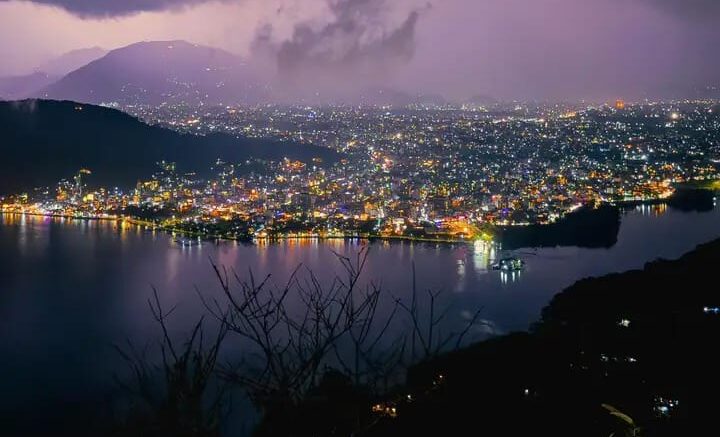
When your Jomsom transport drops you in town, you’ll find a long main street running along the Kali Gandaki, divided into Old Jomsom and New Jomsom on either side of the river. The town has an airport, government offices, hotels, restaurants, shops, a hospital,l, and ATMs, though ATMs aren’t always reliable, so bring cash from Pokhara.

Hotels range from simple lodges to comfortable mid-range stays with heating. Nilgiri’s snowy peak rises directly above the town, especially beautiful in the morning light.

Thakali Culture in the Kali Gandaki Valley

The Thakali people of the Kali Gandaki Valley are known for their hospitality, business skills, and cuisine. For generations, they ran inns along the salt route between Tibet and the lowlands, and their tradition of welcoming travelers lives on in today’s lodges.

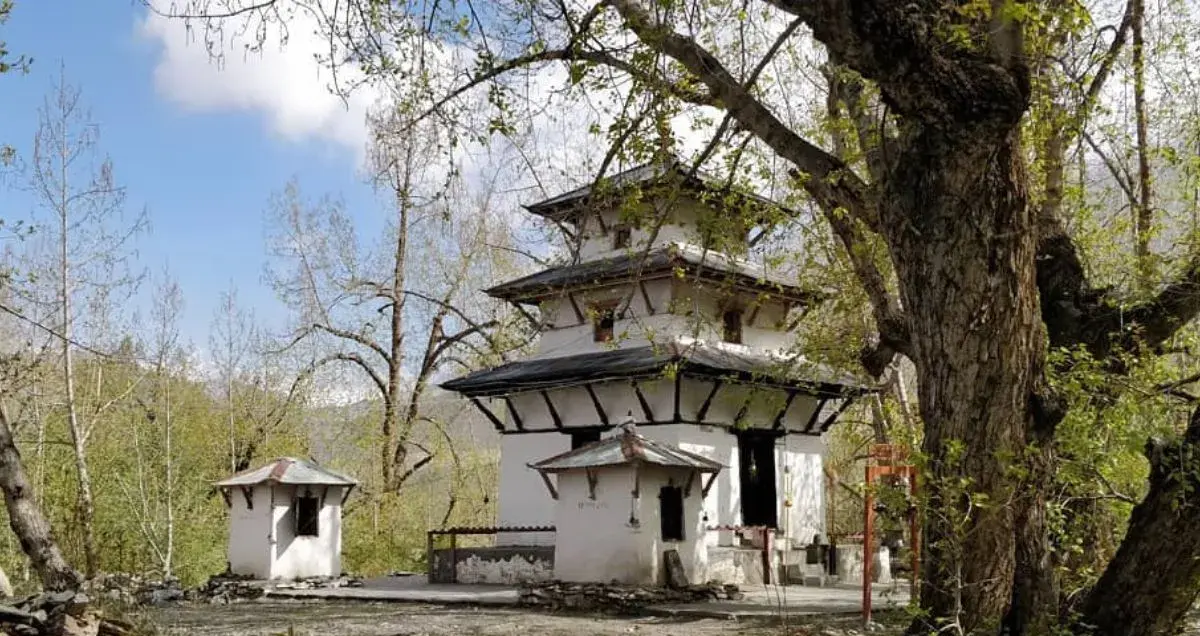
Their villages, with flat-roofed stone houses, prayer flags, and small monasteries, blend Buddhist and Hindu traditions. Along your Jomsom transport route, you’ll pass Thakali settlements such as Tukuche, Kobang and Marpha, each with its own character. Many families also have Gurung and Tibetan heritage, reflecting the valley’s long history as a crossroads.
Jomsom Transport from Pokhara Airport

Short Walks Around Jomsom

  • Thini village: an old village across the river from Jomsom, with a monastery and views of Nilgiri, about an hour’s walk
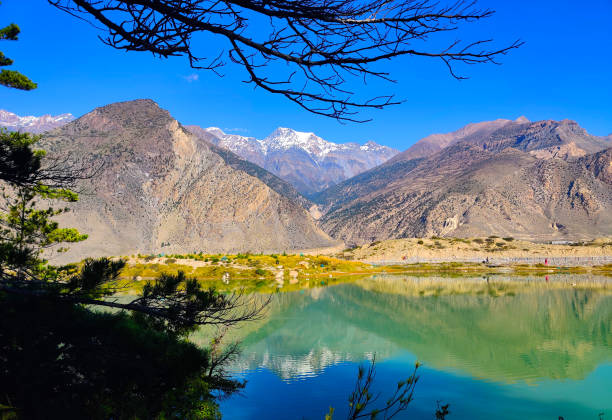
  • Dhumba Lake: a small, sacred lake reflecting Nilgiri, reached on a short walk from Thini.
  • Marpha walk: follow the trail down the valley to Marpha for apple orchards and lunch, then get picked up by your Jomsom transport.
  • Kagbeni walk: a longer walk up the windy valley to Kagbeni, best done in the morning before the wind.

Beni: The Turning Point

Beni marks the point where the paved highway ends and the Kali Gandaki road begins. It’s the headquarters of Myagdi district, with shops, restaurants, banks,s and fuel stations. Your Jomsom transport usually stops here for tea or a quick snack before the rougher roads ahead.

Beni is also the gateway west toward Dhaulagiri trekking routes and north toward Tatopani. See our Pokhara to Beni jeep.

Road Upgrades on the Kali Gandaki Corridor

The road between Beni and Jomsom is part of a long-term project to improve the north–south corridor through Mustang. Some sections have been widened and paved, while others remain rough. Road works can cause short delays, and conditions change with the seasons.

Our drivers travel the route regularly and keep up to date, so your Jomsom transport plan reflects the latest situation.

Monsoon Safety on the Jomsom Road

Jomsom transport in the monsoon needs extra care. While Jomsom itself receives little rain, the gorge between Tatopani and Ghasa gets heavy rainfall, and landslides can block the road for hours or days.

  • Choose a 4WD jeep for the best grip
  • Leave Pokhara very early
  • Allow spare days before any onward flight
  • Carry snacks and water in case of delays
  • Follow your driver’s advice on waiting or rerouting
Jomsom Transport from Pokhara Airport

Pilgrim Groups to Muktinath

Muktinath attracts large numbers of Hindu and Buddhist pilgrims every year, especially from Nepal and India. Group transport for pilgrims to Jomsom can include a Hiac coaster or bus for larger groups, with jeeps for the final climb to Muktinath when needed.

We plan rest stops, meal breaks, and overnight stays in Jomsom to help with acclimatization. Contact us via our contact page to plan your yatra.

Solo Travellers

A private jeep for one person costs more than a shared seat on a local bus or minivan. Shared options leave from Pokhara’s city bus parks, not the airport, and can be crowded. If you’d like private Jomsom transport on a budget, ask us about sharing a jeep with other travelers on the same date.

Trekking Agencies and Tour Operators

We provide Jomsom transport for trekking agencies and tour operators year-round, including airport pick-ups, drives to Jomsom, Muktinath, and Kagbeni, and pick-ups for Annapurna Circuit and Upper Mustang groups. Repeat partners receive consolidated USD invoices and priority allocation in peak seasons. Explore our trekking transport services or contact our office.

Combining Jomsom With Poon Hill

The Kali Gandaki road passes Tatopani, the turn-off for the climb to Ghorepani and Poon Hill. Some travelers combine both in one trip: Jomsom and Muktinath first, then Ghorepani on the way back, or the reverse. Your Jomsom transport driver can take the steep track from Tatopani to Ghorepani in dry conditions.

See our Ghorepani transfer and the Poon Hill trek.

Practical Stops in Lakeside Before You Go

Pokhara’s Lakeside lies on the way from the airport toward the highway, so it’s easy to add a few practical stops to your Jomsom transport:

  • Collect your ACAP permit at the Nepal Tourism Board office
  • Withdraw cash, as ATMs in Mustang can be unreliable
  • Buy warm and windproof layers if you need them
  • Leave spare luggage at a Pokhara hotel

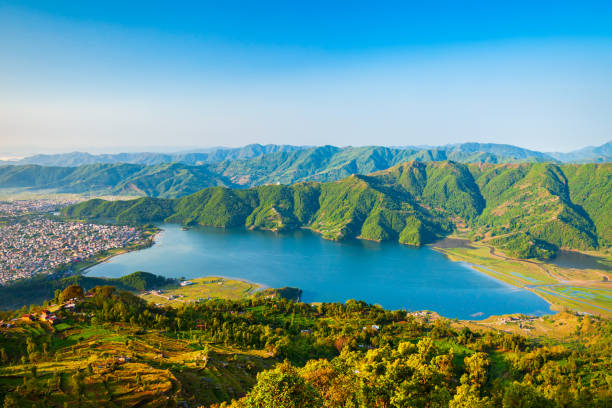
If you’d like a day in Pokhara first, add a Pokhara sightseeing tour or a Sarangkot sunrise drive.
Jomsom Transport from Pokhara Airport

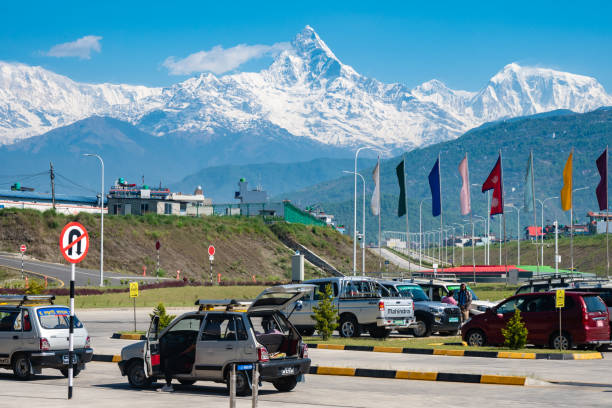
Meeting Your Driver at Pokhara Airport

  • Share your flight number so we can track delays
  • Your driver waits outside arrivals with a name board
  • If your flight is late, the driver waits at no extra cost
  • Call or message us if you can’t see your driver

Direct Jomsom Transport From Kathmandu

Short on time and not flying to Pokhara? We can also run direct Jomsom transport from Kathmandu in a 4WD jeep or Scorpio. It’s a long day (2 hours or more), so most travelers prefer to break the journey with an overnight in Pokhara or Beni.

On the way back, the same vehicle can take you to your Kathmandu hotel or the airport for your onward flight. Ask us about combined Kathmandu–Pokhara–Jomsom packages through our trip planner.
Jomsom Transport from Pokhara Airport

Upper Mustang Jeep Tours From Jomsom

Jomsom is the starting point for jeep tours into Upper Mustang, the former Kingdom of Lo, with its walled capital Lo Manthang, cave dwellings and red-and-white monasteries. These tours require a restricted-area permit and a licensed guide, arranged through a registered trekking agency. Our Jomsom transport covers the road from Pokhara to Jomsom or Kagbeni, and our sister company, Trek Nepal Himalayas, can organize the full Upper Mustang trek or jeep tour, including permits.

Hot Springs on the Return Journey

On the way back from Jomsom to Pokhara, a stop at Tatopani’s hot springs is the perfect way to relax after days of dry, windy air in Mustang. The pools sit beside the Kali Gandaki, and a soak takes about an hour. Your driver can plan the stop around lunch, so you continue to Pokhara refreshed.

Peak Season Booking Tips

Spring, autumn, and major festival periods bring heavy demand for Jomsom transport, especially from pilgrims heading to Muktinath during festivals. Book as soon as your plans are fixed, share your flight details so we can track changes, and consider midweek travel for quieter roads and hotels.

Sample Jomsom Itineraries

Two Days: Jomsom and Muktinath

  • Day 1: Pokhara Airport to Jomsom by jeep, with lunch at Tatopani
  • Day 2:2: Earlyrive to Muktinath, visit the temple, return to Jomsom, or drive back toward Pokhara

Three Days: Jomsom, Kagbeni and Marpha

  • Day 1: Pokhara Airport to Jomsom
  • Day 2: Muktinath temple and Kagbeni village
  • Day 3: Marpha apple orchards, then drive back to Pokhara

Fly In, Drive Out

  • Day1: Fly Pokhara to Jomsom in the early morning
  • Day 2: Muktinath and Kagbeni
  • Day 3: Drive back via Marpha and Tatopani with our Jomsom transport

Want a longer trip? Continue to the Upper Mustang trek area or combine with the Annapurna Circuit.
Jomsom Transport from Pokhara Airport

Things to Do in Jomsom

  • Muktinath Temple: a sacred site for Hindus and Buddhists, about an hour and a half beyond Jomsom by road
  • Kagbeni: a medieval village at the gateway to Upper Mustang
  • Marpha: whitewashed Thakali village, apple orchards and local brandy
  • Thini and Dhumba Lake: short walks near Jomsom
  • Mustang Eco Museum: an introduction to local culture and history
  • Views of Nilgiri: the snow peak towering over Jomsom

Groups and Pilgrimage Transport

Jomsom and Muktinath are popular with pilgrim groups, schools, and tour groups. For groups,s we provide:

One coordinator manages every vehicle. Contact us through our contact page for group Jomsom transport.

Packing for Jomsom

  • Warm layers and a windproof jacket for Jomsom’s strong afternoon winds
  • Sunglasses, sunscreen and lip balm for the dry, bright air
  • Scarf or buff for dust on the road
  • Motion sickness tablets for the rough sections
  • Nepali cash, as card payments are limited
  • Passport and ACAP permit

5 Common Jomsom Transport Mistakes to Avoid

These are the mistakes we see most often with Jomsom transport.

  • Choosing a low car in wet conditions: pick a jeep or Scorpio
  • Leaving Pokhara late: start early to clear the gorge in daylight
  • No buffer before flights: keep a spare day before onward travel
  • Forgetting permits: they’re checked on the road
  • Underestimating the wind: Jomsom afternoons are cold and windy
Jomsom Transport from Pokhara Airport

Explore More From Pokhara

Browse our Nepal tour packages and trekking transport, or contact Trek Nepal Himalayas and Alpine Luxury Treks for guided trips.

Jomsom Transport: Key Takeaways

  • Jomsom is about 160–180 km from Pokhara Airport, usually a 7- 9-hour drive.
  • The road is paved to Beni, then rough beside the Kali Gandaki.
  • A 4WD jeep or Scorpio is the best Jway to get to Jomsom a jeep costs about USD 220–270.
  • Flights are quick but often canceled; the road is more reliable.
  • Foreign visitors need an ACAP permit.

Why Book Your Jomsom Transport With Us

Jomsom Transport from Pokhara Airport

How to Book Jomsom Transport

  • Step 1: Send your flight number, group size, and PVIANS to WhatsApp or email.
  • Step 2: We recommend a vehicle and send a quote in USD.
  • Step 3: Confirm your booking.
  • Step 4: Meet your driver at arrivals.

Or use our trip planner and contact page.

Jomsom Transport FAQs

How long is the drive from Pokhara Airport to Jomsom?

Usually 7 to 9 hours with stops, depending on road conditions.

How much does private Jomsom transport cost?

About USD 220–270 one way by jeep, USD 190–230 by car in dry conditions, and USD 260–330 by Hiace.

Can a normal car reach Jomsom?

In good, dry conditions with an experienced driver, yes, but a jeep or Scorpio is much more comfortable.

Is there a bus from Pokhara to Jomsom?

Yes, local buses run from Pokhara. We provide private buses and coasters for groups.

Do I need a permit?

Yes, you need an ACAP permit. Traveling beyond Kagbeni into Upper Mustang requires an additional restricted area permit.

Can you continue to Muktinath?

Yes. Add Muktinath to your Jomsom transport booking.

Book Your Jomsom Transport Today

Travel from Pokhara Airport to Jomsom through the world’s deepest gorge with a reliable vehicle and an experienced driver.

WhatsApp

Email: [email protected]

Online: Plan your trip | Contact us | Nepal Vehicle Hiring
Pokhara to Muktinath Private Jeep Hire

Muktinath

Pokhara to Muktinath Private Jeep — Quick Reference

Distance: Pokhara to Muktinath — approximately 140-150 km via Kali Gandaki Gorge
Journey Time: 5 to 7 hours by private 4WD jeep (road conditions vary by season)
Route: Pokhara → Beni → Tatopani → Ghasa → Marpha → Jomsom → Kagbeni → Muktinath
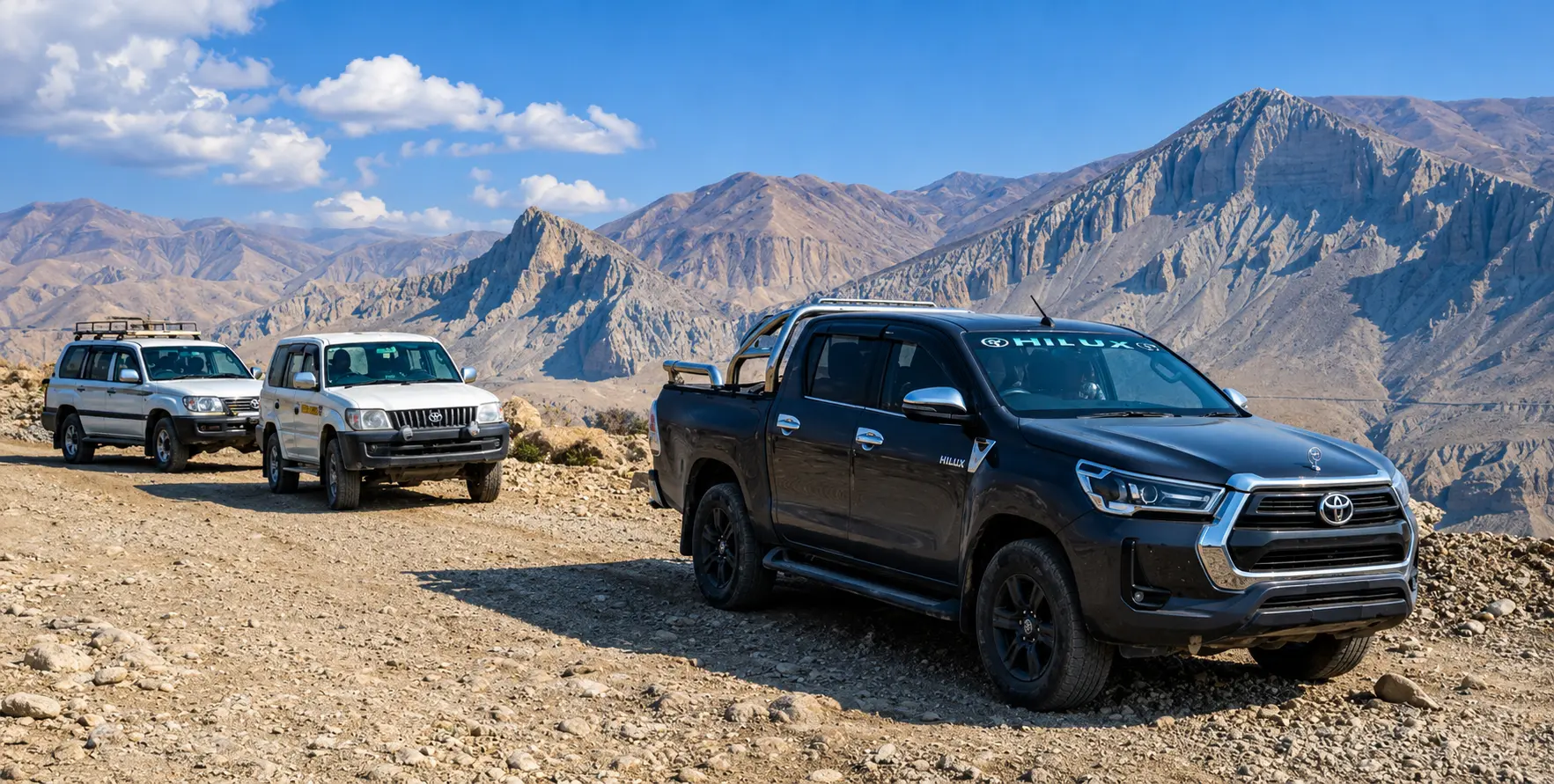
Vehicle: 4WD Jeep essential — Toyota Fortuner, Hilux or Land Cruiser
Price: NPR 18,000- 25,000 all-inclusive (Pokhara to Muktinath, 4WD jeep)
Muktinath Altitude: 3,800 m (12,467 ft) — warm layers essential year-round
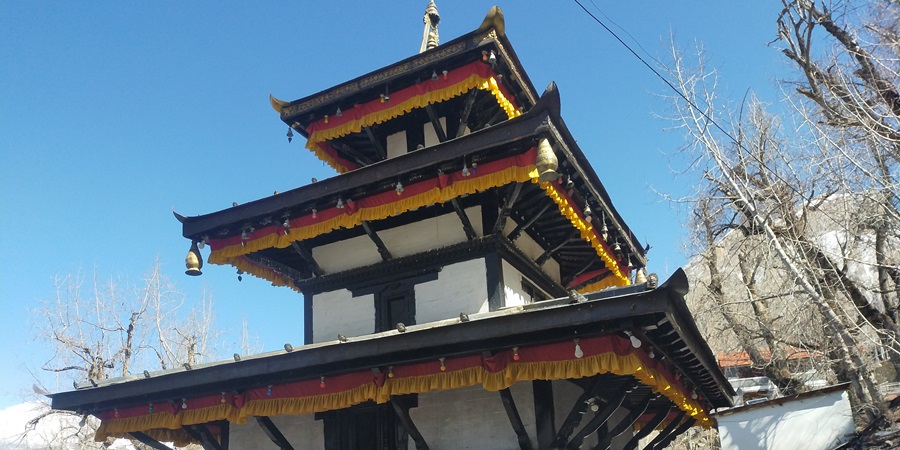
Sacred Site: 108 stone water spouts, eternal flame temple — Hindu and Buddhist pilgrimage
Book: Nepal Vehicle Hiring Pvt. Ltd. | WhatsApp| vehiclehiringnepal.com
Introduction: The Pokhara to Muktinath Journey

The Pokhara to Muktinath private jeep hire is one of Nepal’s most dramatic and spiritually significant road journeys — a 5 to 7 hour drive from Nepal’s lake city, through the world’s deepest gorge, to one of Hinduism’s and Buddhism’s most sacred pilgrimage sites at 3,800 metres above sea level. The route follows the Kali Gandaki River north through the extraordinary gorge between Dhaulagiri (8,167 m) and Annapurna I (8,091 m)—the two highest mountains in the Annapurna-Dhaulagiri massif—through Beni, Tatopani, Ghasa, Marpha, Jomsom, and Kagbeni to Muktinath at the top of the valley.

This journey is both one of Nepal’s finest road experiences and one of its most demanding—the Jomsom to Muktinath section requires genuine 4WD capability, and the afternoon Kali Gandaki wind that howls through the gorge is a famous driving challenge that Nepal Vehicle Hiring Pvt. Ltd. drivers tackle regularly.
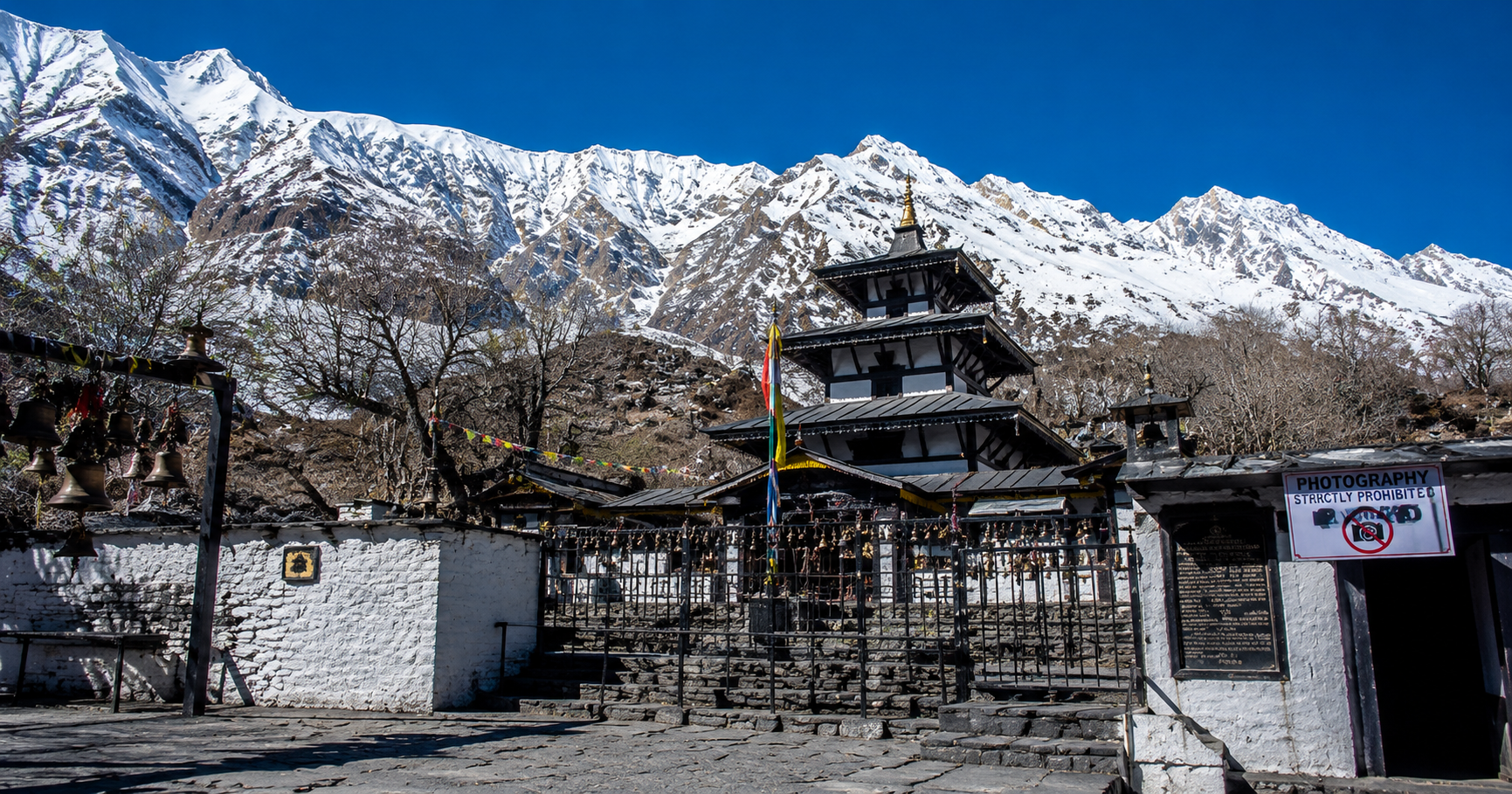
This guide covers everything you need for the Pokhara to Muktinath private jeep — the route in detail, the vehicle requirements, the 4WD jeep prices, the best season, the sacred significance of Muktinath itself, and how to combine the Muktinath pilgrimage with the broader Pokhara sightseeing circuit and the Annapurna Circuit trek that shares the same Kali Gandaki corridor.

Why 4WD Is Essential for Pokhara to Muktinath

The Road Character — Three Distinct Sections

The Pokhara to Muktinath road isn’t a single road type—it transitions through three distinct sections with different vehicle requirements. The Pokhara to Beni section (approximately 40 km) is paved and in good condition, suitable for any vehicle.

The Beni to Jomsom section (approximately 80 km through the Kali Gandaki gorge) is a mix of paved and unpaved, with road quality degrading as it climbs the gorge—the sections through Ghasa, Larjung, and Kobang include rough unpaved stretches that require adequate ground clearance. The Jomsom to Muktinath section (approximately 21 km) is a rough mountain track — mostly unpaved, with rocky sections, loose gravel, and the notorious Kali Gandaki River crossing near Kagbeni that requires 4WD in all but the driest conditions.

Nepal Vehicle Hiring Pvt. Ltd. uses only 4WD vehicles for the Pokhara to Muktinath transfer—the Toyota Fortuner, Toyota Hilux, or Toyota Land Cruiser, depending on group size and luggage requirements. A standard sedan or 2WD SUV is not appropriate for the Jomsom to Muktinath section and would struggle on the rough Kali Gandaki gorge sections above Ghasa.
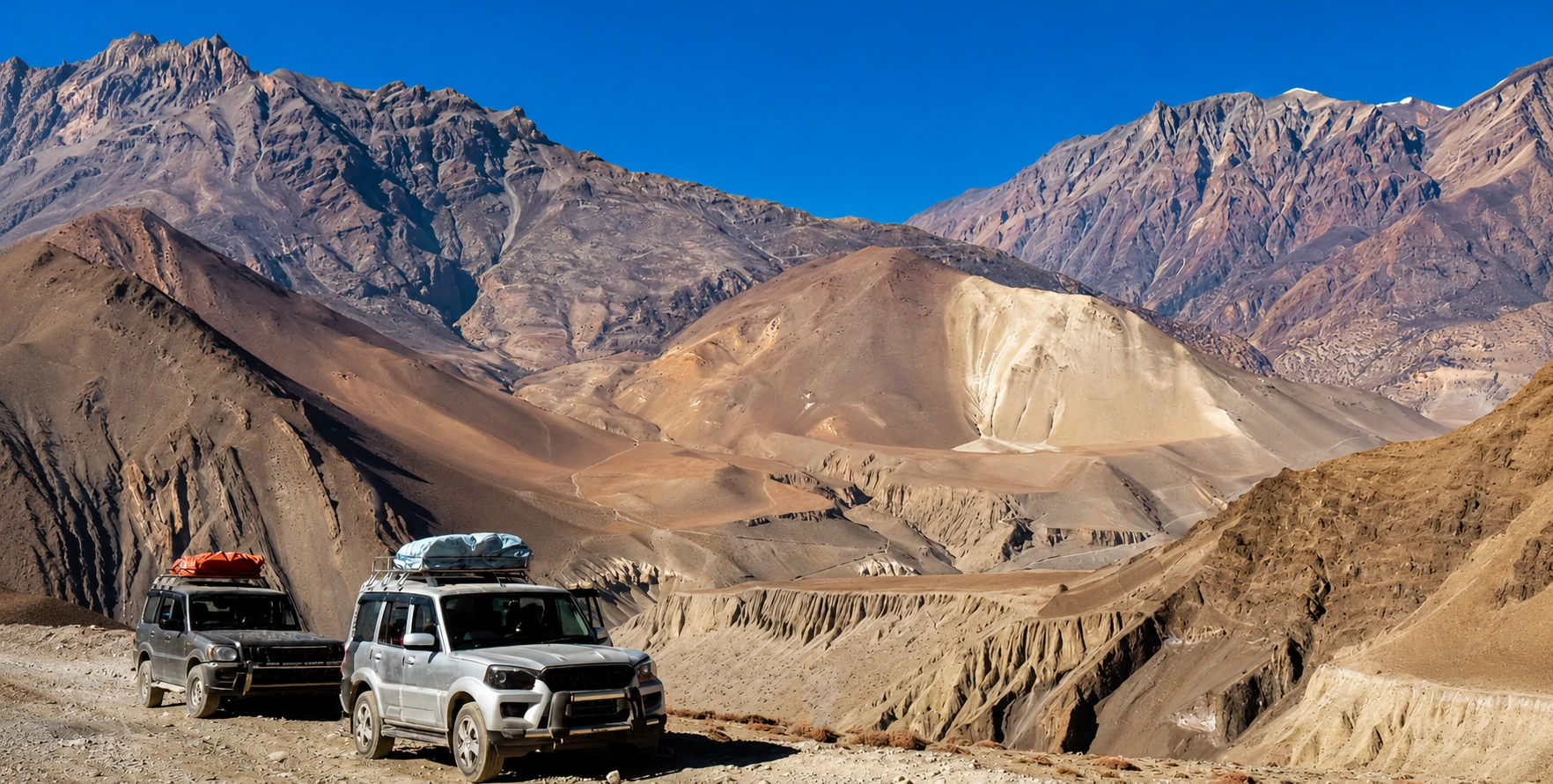
The 4WD requirement is not a marketing upsell — it is a genuine operational necessity on this route.

The Kali Gandaki Wind — The Afternoon Challenge

The Kali Gandaki afternoon wind is one of Nepal’s most famous meteorological phenomena — a powerful daily wind that funnels up the gorge from the Terai lowlands toward the Tibetan plateau, intensifying through the narrow gorge between Dhaulagiri and Annapurna. The wind typically begins building around 11:00 AM and peaks between 1:00 PM and 4:00 PM, when it can be strong enough to make driving genuinely challenging—dust, sand, and occasional debris blown by the wind significantly reduce visibility and driving comfort on the upper gorge road.

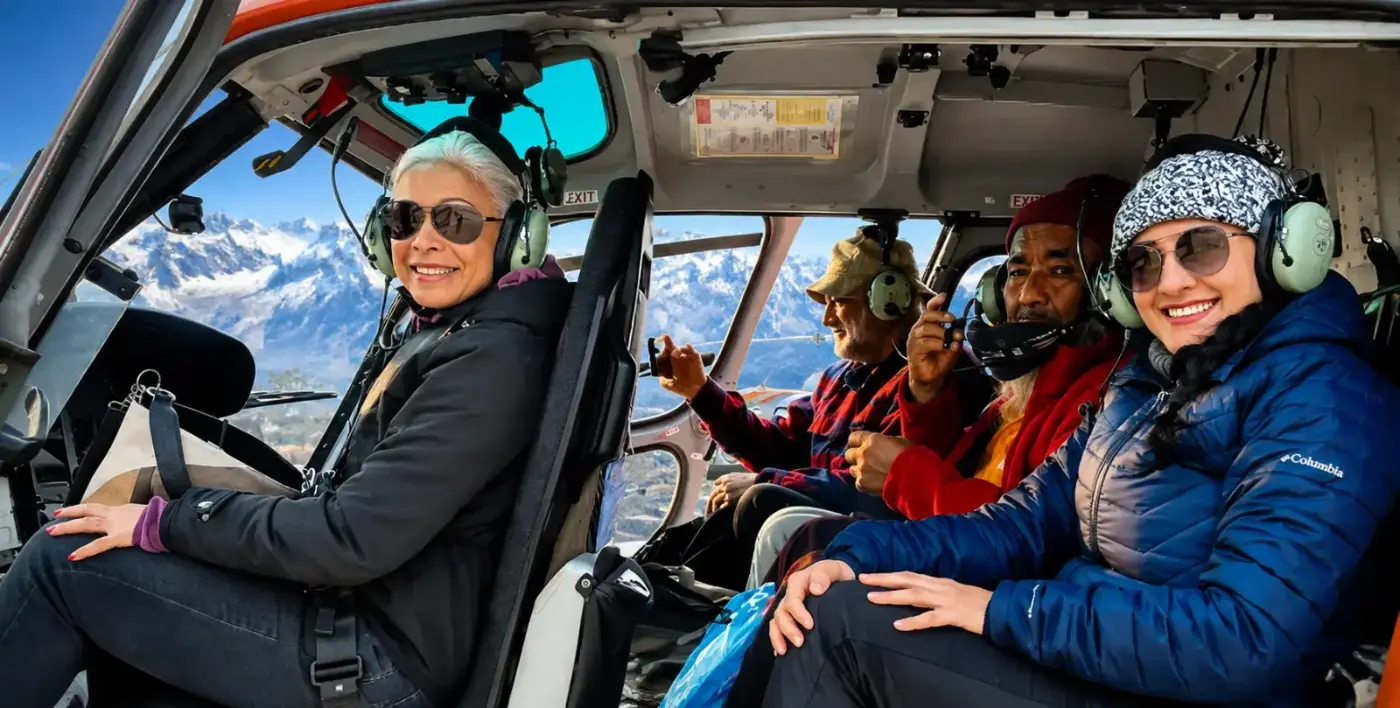
The standard Nepal Vehicle Hiring Pvt. Ltd. recommendation for the Pokhara to Muktinath transfer is an early morning departure from Pokhara — 5:30 to 6:30 AM — that reaches the most wind-exposed sections of the upper gorge (Jomsom and above) in the morning calm before the wind builds—travellers who depart Pokhara after 8:00 AM face the afternoon wind at the worst point of the journey.
Pokhara to Muktinath Private Jeep Hire

The Route: Pokhara to Muktinath Section by Section

Pokhara to Beni — The Lowland Approach

The Pokhara to Muktinath jeep journey begins in Pokhara — the Nepal Vehicle Hiring Pvt. Ltd. driver picks you up from your Pokhara Lakeside hotel at the agreed early-morning departure time and heads west on the Siddhartha Highway to Beni (approximately 40 km, 1 hour). Beni is the administrative centre of Myagdi District and the first significant town on the Muktinath approach — the last place with reliable banking, ATMs, and fuel before the gorge road begins.
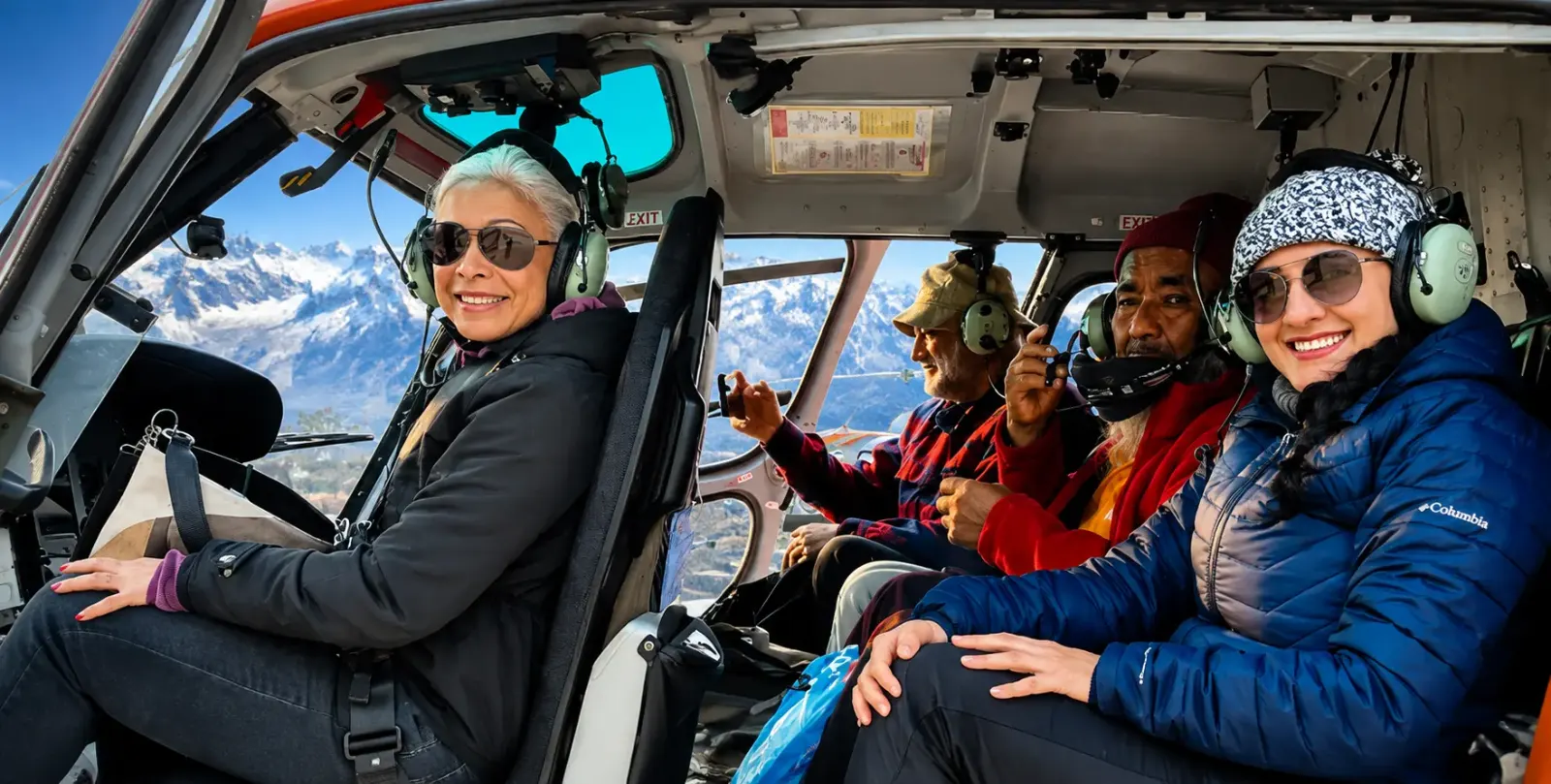
The Nepal Vehicle Hiring Pvt. Ltd. driver will stop briefly in Beni for fuel, if needed, and any final supplies before the gorge approach.
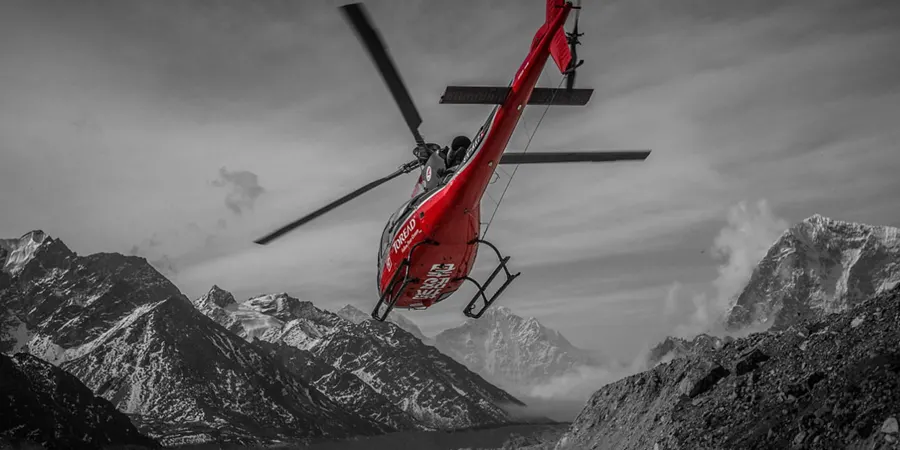
Beni to Tatopani — The Gorge Entry

From Beni, the road enters the Kali Gandaki gorge—the river valley narrows dramatically as the surrounding peaks rise, and the journey shifts from pleasant lowland driving to the dramatic gorge experience that makes the Kali Gandaki famous. The Tatopani section (about 30 km beyond Beni) offers the Tatopani hot springs—natural thermal pools on the riverbank that trekkers and pilgrims on the Annapurna Circuit or Muktinath pilgrimage traditionally use as a stopping point.

Nepal Vehicle Hiring Pvt. Ltd. drivers regularly stop at Tatopani for 20 to 30 minutes on request— soaking in the hot springs in the cool mountain air is one of the Kali Gandaki route’s most characterful experiences.
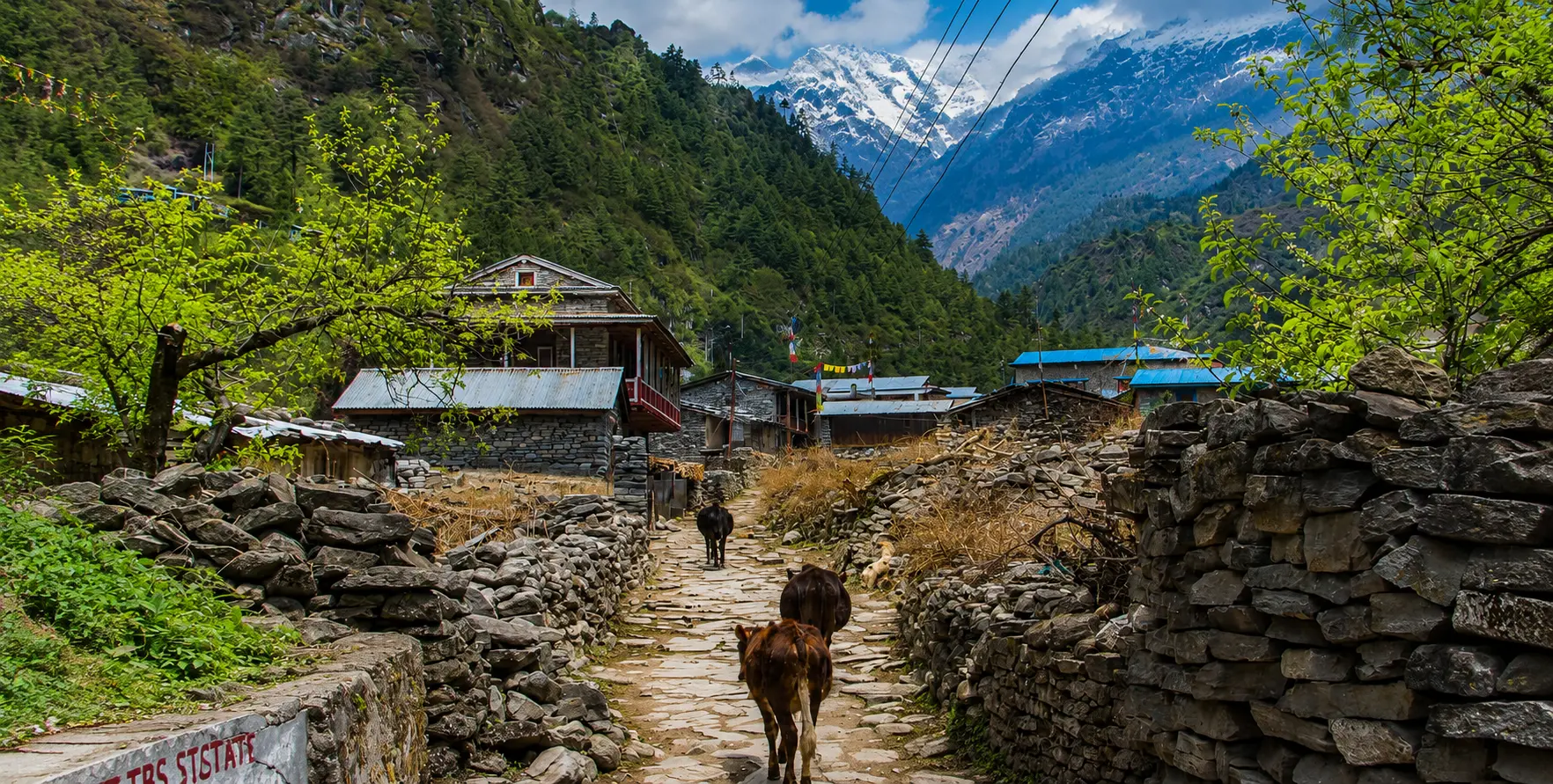
Tatopani to Ghasa — The Apple Country

The section from Tatopani to Ghasa passes through the Mustang District’s lower apple country — the remarkable apple orchards that produce some of Nepal’s finest apples in the high-altitude, dry climate of the upper Kali Gandaki. The villages of Kalopani, Kobang, and Lete are surrounded by apple orchards that are spectacular in spring blossom (March and April) and harvest season (September and October).

The private jeep transfer allows stops at these villages on request—the Nepal Vehicle Hiring Pvt. Ltd. driver will stop for apple purchases, photos, or to take in the extraordinary landscape from the gorge road.
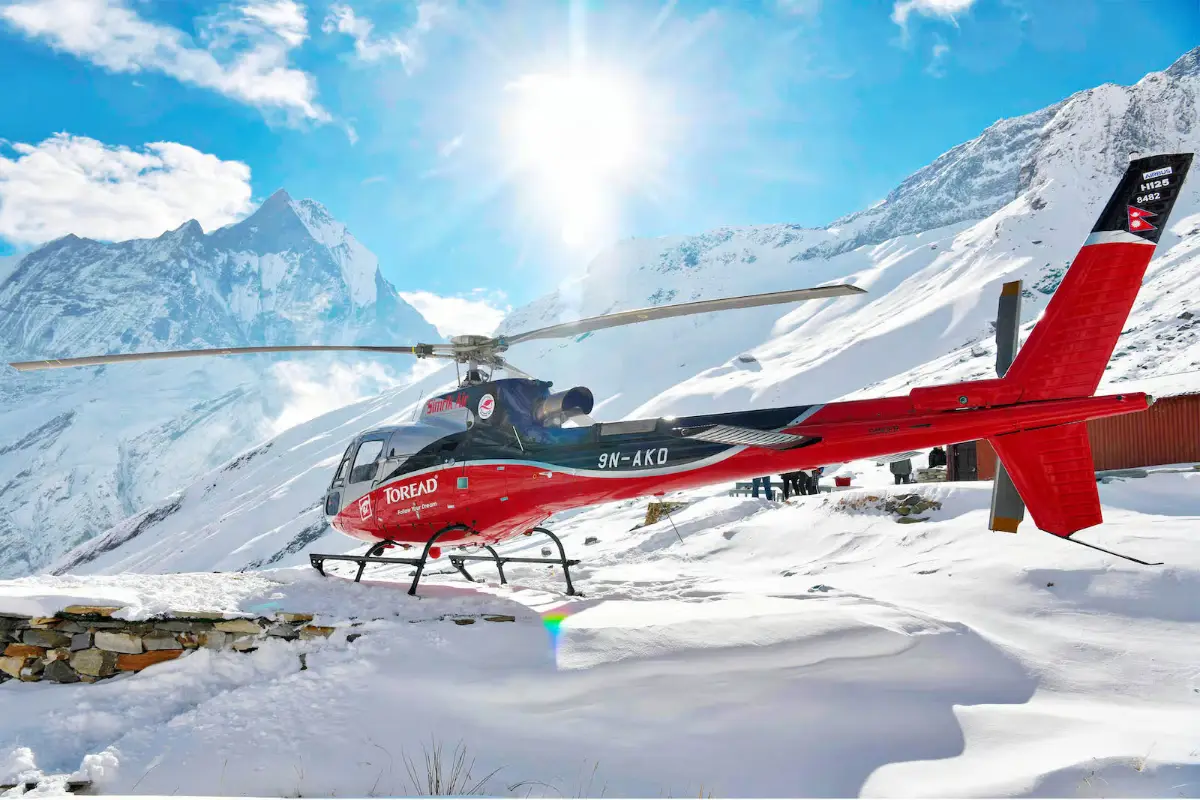
Ghasa to Jomsom — The High Gorge

Above Ghasa, the Kali Gandaki gorge narrows further, and the road climbs into the dramatic high-gorge terrain between Marpha and Jomsom. Marpha — at approximately 2,670 m — is famous for its distillery, which produces Nepal’s most celebrated apple brandy, and for its compact, stone-paved lanes that make it one of the most characterful villages on the entire Annapurna Circuit.

At 2,720 m, Jomsom is the administrative centre of the Mustang District. It has the only airport in Upper Mustang—a small airstrip serving domestic flights from Pokhara that offers an alternative to the jeep approach.

Jomsom is also the last fuel point on the route — the Nepal Vehicle Hiring Pvt. Ltd. driver ensures a full tank at Jomsom before the final push to Muktinath.
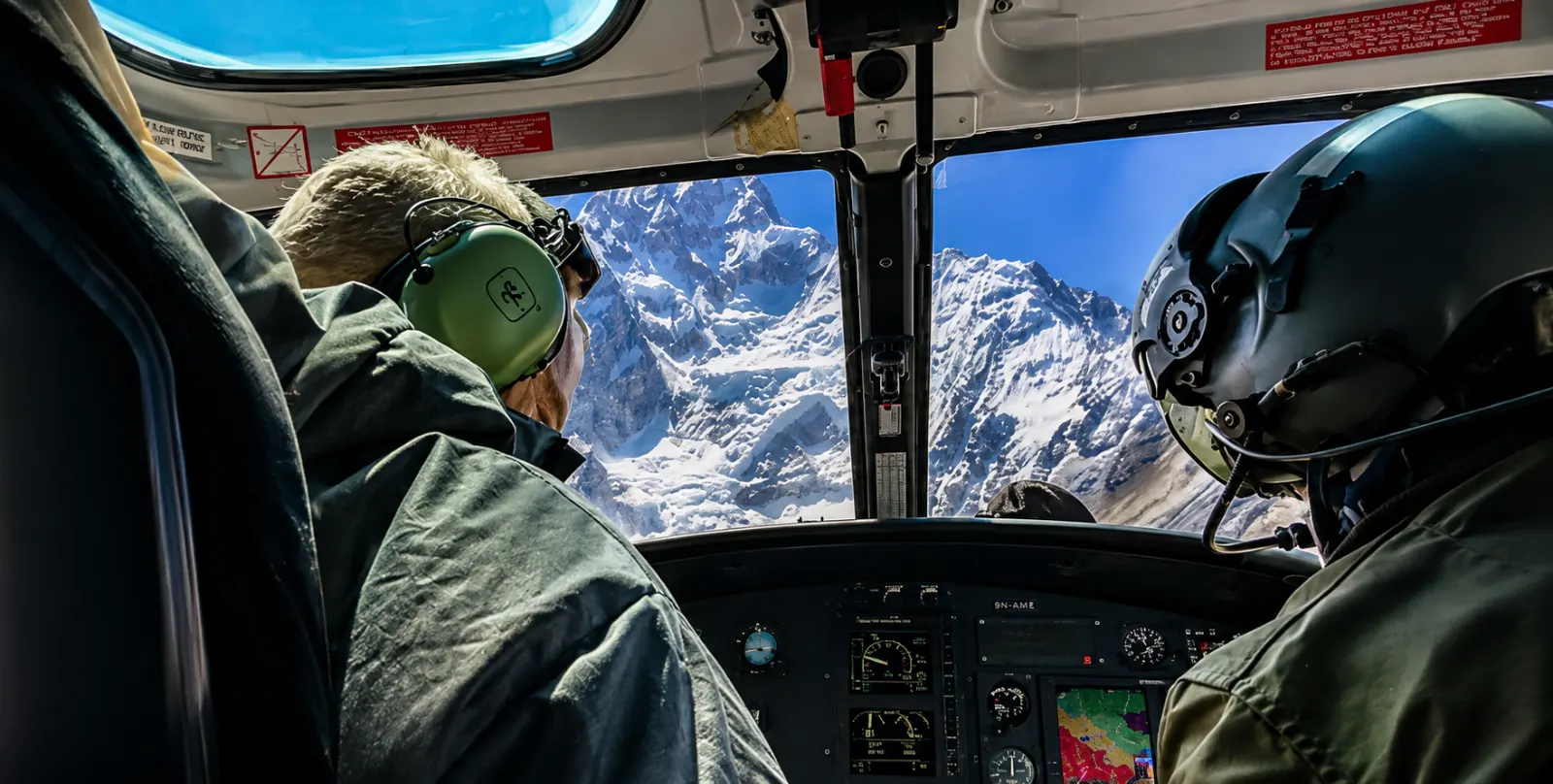
Jomsom to Kagbeni — The Desert Landscape

The road from Jomsom north to Kagbeni — the entry point to the Upper Mustang restricted area and the iconic medieval village perched above the Kali Gandaki confluence — traverses what is arguably the most dramatic landscape section of the entire journey. The valley opens from the narrow gorge to a wider floodplain where the Kali Gandaki River spreads across a wide braided channel of sand and gravel, and the Tibetan plateau character of the landscape — the arid, wind-sculpted terrain, the flat-roofed stone buildings, the prayer flag lines above the ridgelines — becomes dominant.

The Toyota Fortuner 4WD or Land Cruiser is specifically appropriate for this section — the river crossing near Kagbeni and the sandy flats of the Kali Gandaki braided channel require genuine 4WD traction.

Kagbeni to Muktinath — The Sacred Ascent

The final section from Kagbeni climbs steeply through a dramatic landscape of eroded red and ochre cliffs — the famous Muktinath Valley approach — to the sacred temple complex at 3,800 metres. The road is rough and steep in sections, and the altitude gain creates the cold, thin air that characterizes the Muktinath plateau.

The 4WD Fortuner or Hilux from Nepal Vehicle Hiring Pvt. Ltd. handles the ascent comfortably—the engine power at altitude and 4WD traction on the steep, rocky sections make this final climb far more reliable than a 2WD vehicle could manage.
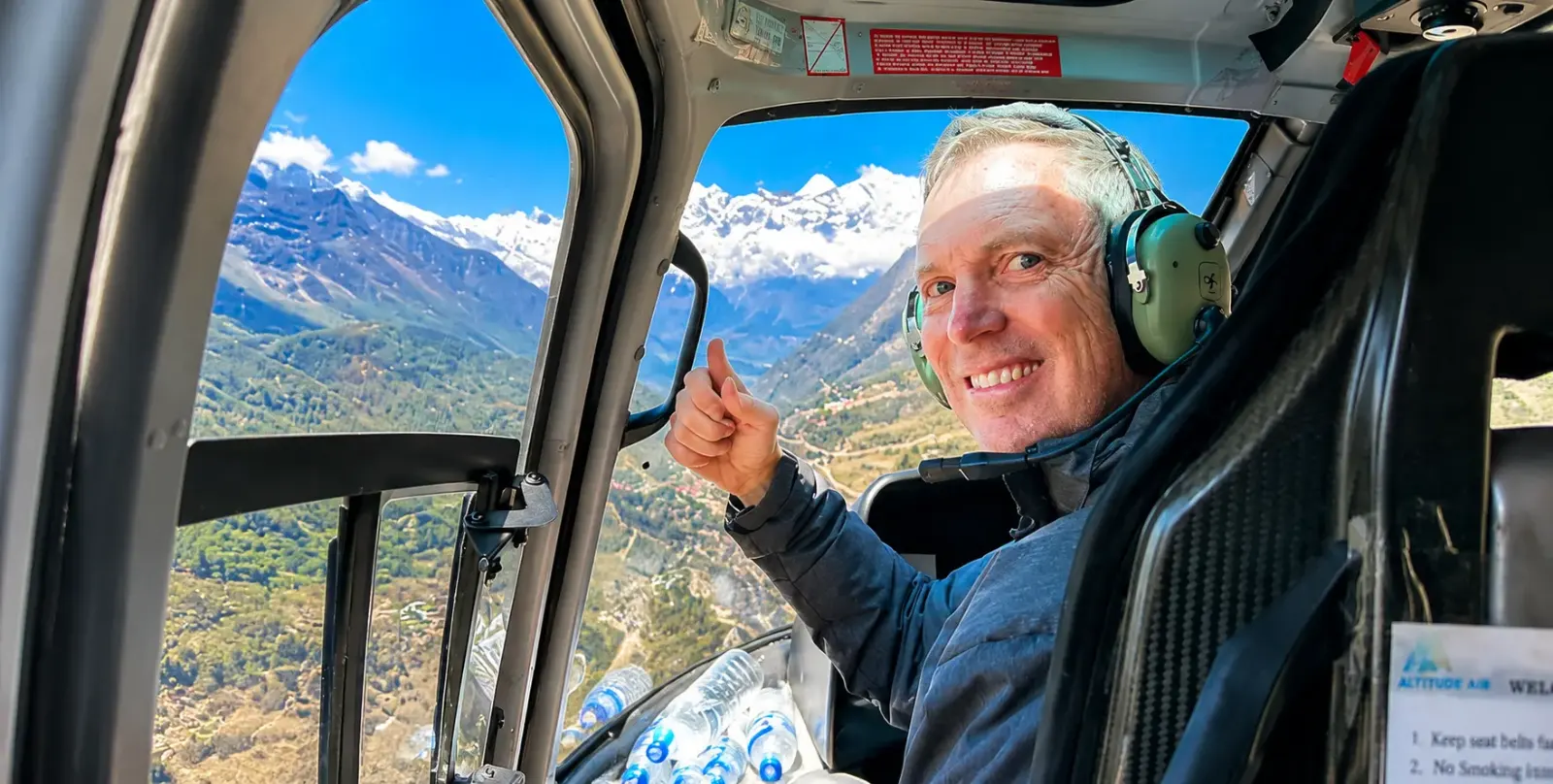
Pokhara to Muktinath Private Jeep Hire

Muktinath — The Sacred Site

Hindu and Buddhist Significance

Muktinath is one of the most sacred sites in both Hinduism and Buddhism — venerated by Hindus as Mukti Kshetra (the place of liberation), where Lord Vishnu is said to reside in the form of the Shalagrama stones found in the Kali Gandaki River, and by Tibetan Buddhists as Chumig Gyatsa (the hundred waters), one of the 24 Tantric places sacred to the goddess Dakini. The Muktinath Temple complex contains the 108 water spouts shaped like bull heads from which sacred water flows — pilgrims who complete the circuit of all 108 spouts are believed to achieve liberation (mukti) from the cycle of rebirth.

The eternal flame that burns from a crack in the earth within the temple premises—a natural gas seepage ignited by the Kali Gandaki’s geothermal activity—burns with water and earth simultaneously, representing the rare and sacred coexistence of fire, water, and earth that gives Muktinath its extraordinary spiritual character.

For Hindu pilgrims, particularly from Nepal and India, the Muktinath pilgrimage is one of the most important. As one of the most sought-after sacred journeys, the ability to reach this site by private jeep from Pokhara, rather than the week-long trek from Nayapul, has made the pilgrimage accessible to elderly devotees, families with young children, and those for whom spiritual intent, not physical challenge, is the primary purpose.

Nepal Vehicle Hiring Pvt. Ltd. serves a significant pilgrimage clientele on the Pokhara-to-Muktinath jeep transfer route and understands pilgrimage groups’ specific needs—including the timing of temple puja ceremonies and the best approach to the temple complex for devotional purposes.
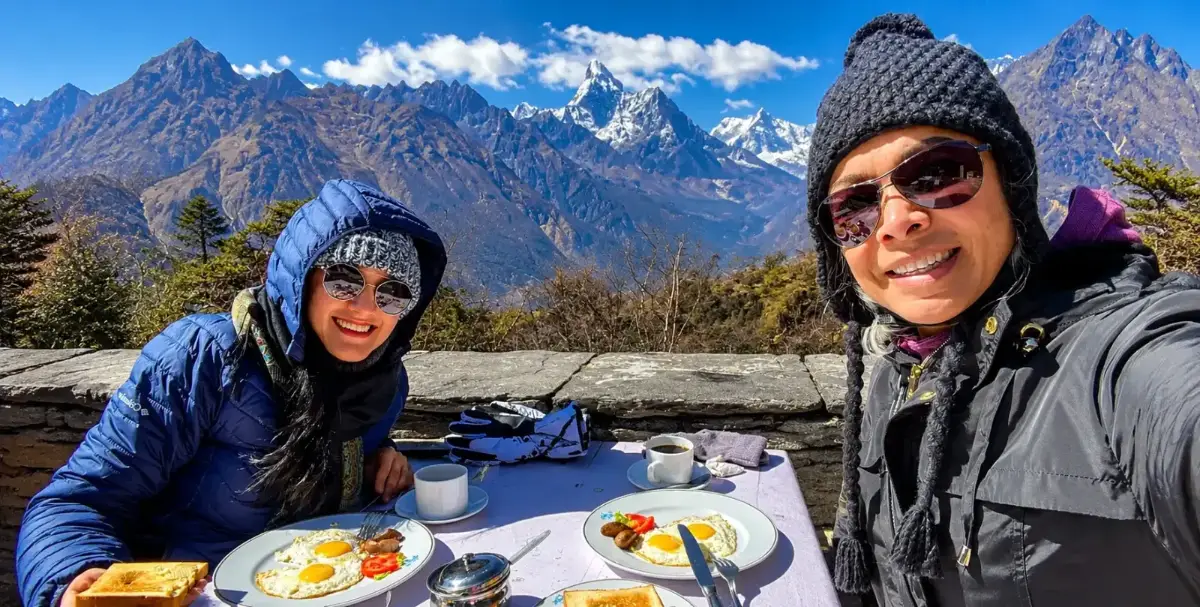
The Shalagrama Stones — Muktinath’s Sacred Ammonites

The Kali Gandaki River, which flows through the gorge below Muktinath, is the world’s primary source of Shalagrama stones—fossilized ammonite shells embedded in the riverbed limestone, regarded in Hindu tradition as sacred manifestations of Lord Vishnu. The Shalagrama stones—black, rounded, and bearing the characteristic spiral fossil impression of the ancient cephalopod—are found throughout the Kali Gandaki between Jomsom and Kagbeni, and pilgrims traditionally collect them as sacred objects to take home.

The geological explanation—ammonite fossils from the ancient Tethys Sea that once covered the Himalayan region—coexists with the spiritual significance in the uniquely syncretic way that characterises Nepal’s approach to the sacred natural world. The Pokhara to Muktinath private jeep transfer passes through the Shalagrama-rich section of the Kali Gandaki, and the Nepal Vehicle Hiring Pvt. Ltd. driver can stop at riverbed areas on request to collect these stones.
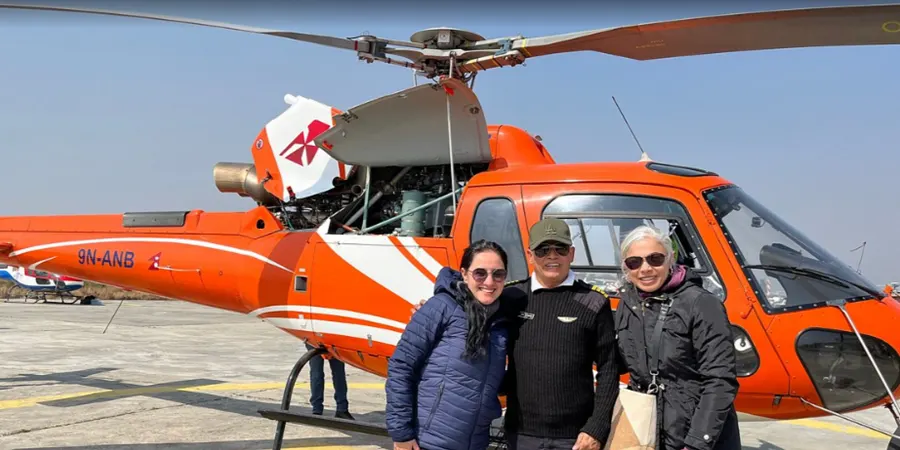
Pokhara to Muktinath Private Jeep Price

Standard Pricing — All-Inclusive

The Pokhara to Muktinath private jeep hire from Nepal Vehicle Hiring Pvt. Ltd. is priced at US$313 all-inclusive for the full vehicle—driver, fuel, tolls, and hotel-to-hotel door service. The price variation within this range reflects the vehicle type (Fortuner at the lower end, Land Cruiser at the higher end), the number of passengers and luggage volume, and any extended waiting time at Muktinath for pilgrims who spend several hours completing temple rituals.
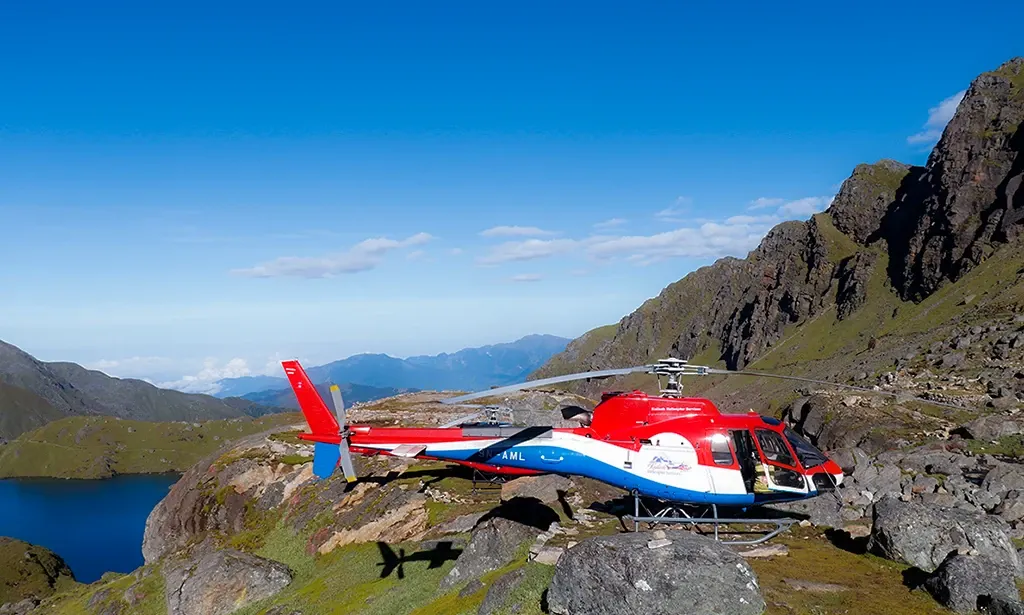
Toyota Fortuner 4WD (up to 5 passengers): NPR 18,000-50,000 all-inclusive. The standard Muktinath transfer vehicle — 4WD capability, high ground clearance, comfortable seating, ample boot space.

Toyota Hilux 4WD (up to 4 passengers): NPR 20,000-60,000. The heavy-duty option for the most demanding road sections — maximum ground clearance and engine torque for the Jomsom to Muktinath steep ascent.

Toyota Land Cruiser 4WD (up to 7 passengers): NPR 22,000-90,000. The top-end group option—maximum capacity, a V8 engine for altitude performance, and the most comfortable interior for a 5- to 7-hour mountain road journey.

All prices from Nepal Vehicle Hiring Pvt. Ltd. are truly all-inclusive — no fuel surcharges, no toll additions, no driver accommodation charges (for same-day returns), and no unexpected fees at Muktinath. The quoted price is the paid price. Contact WhatsApp  via WhatsApp for current rates and availability.
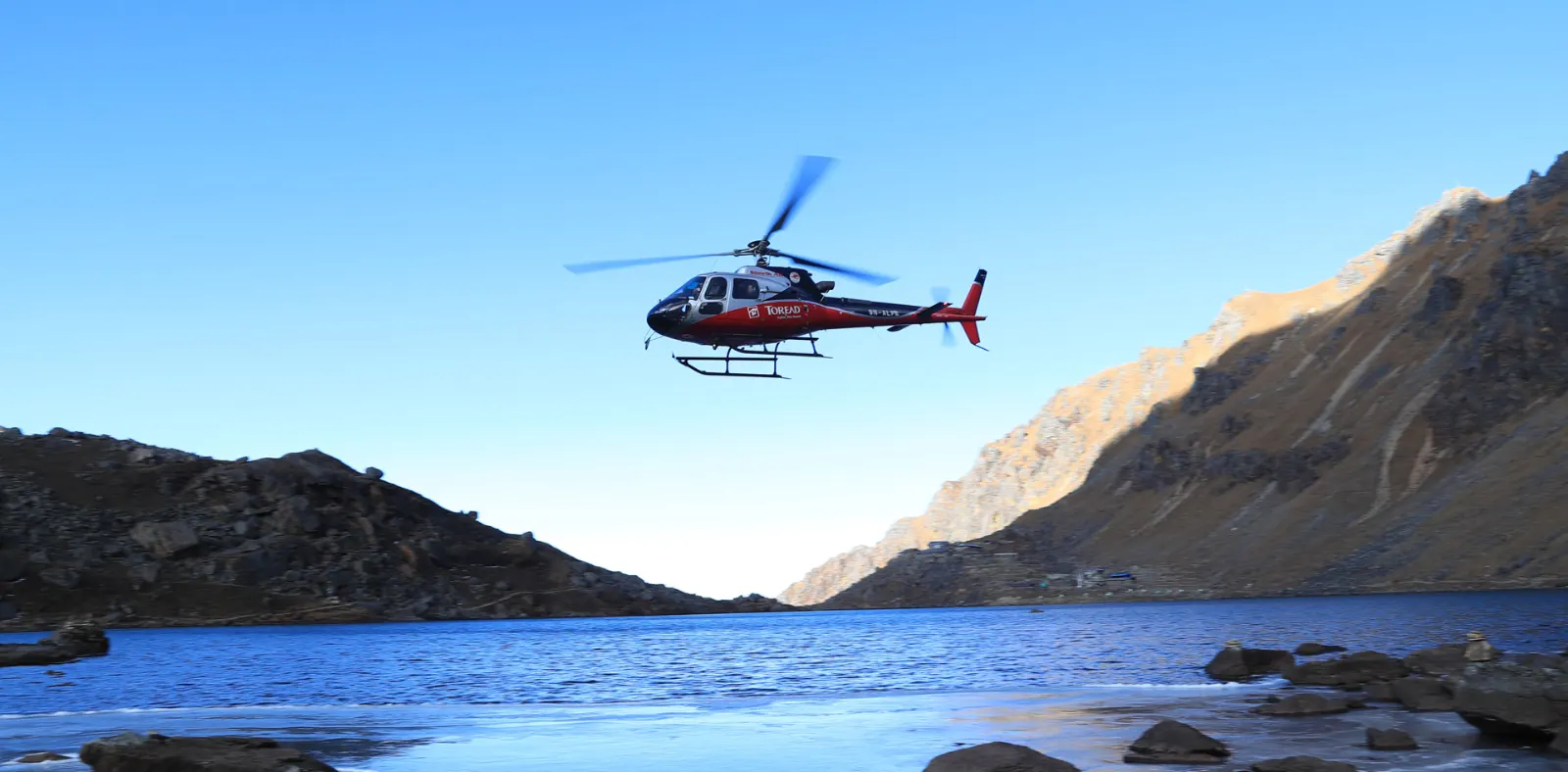
One-Way vs Return Transfer Pricing

The Pokhara to Muktinath private jeep price is typically quoted for a one-way transfer — travellers who wish to continue beyond Muktinath (to Manang via the Thorong La crossing, or back through Tatopani and Pokhara via a different return route) book the one-way service and arrange separate return transport. For travellers making a same-day return pilgrimage — Pokhara to Muktinath and back in a single long day,

the Nepal Vehicle Hiring Pvt. Ltd. return transfer rate is approximately NPR 28,000 to 60,000 for the complete round trip, reflecting the additional fuel, driver time, and vehicle wear of the full day’s mountain driving. Most pilgrims spend at least one night at Muktinath (or Jomsom) and return the following morning, avoiding the gruelling same-day return schedule.
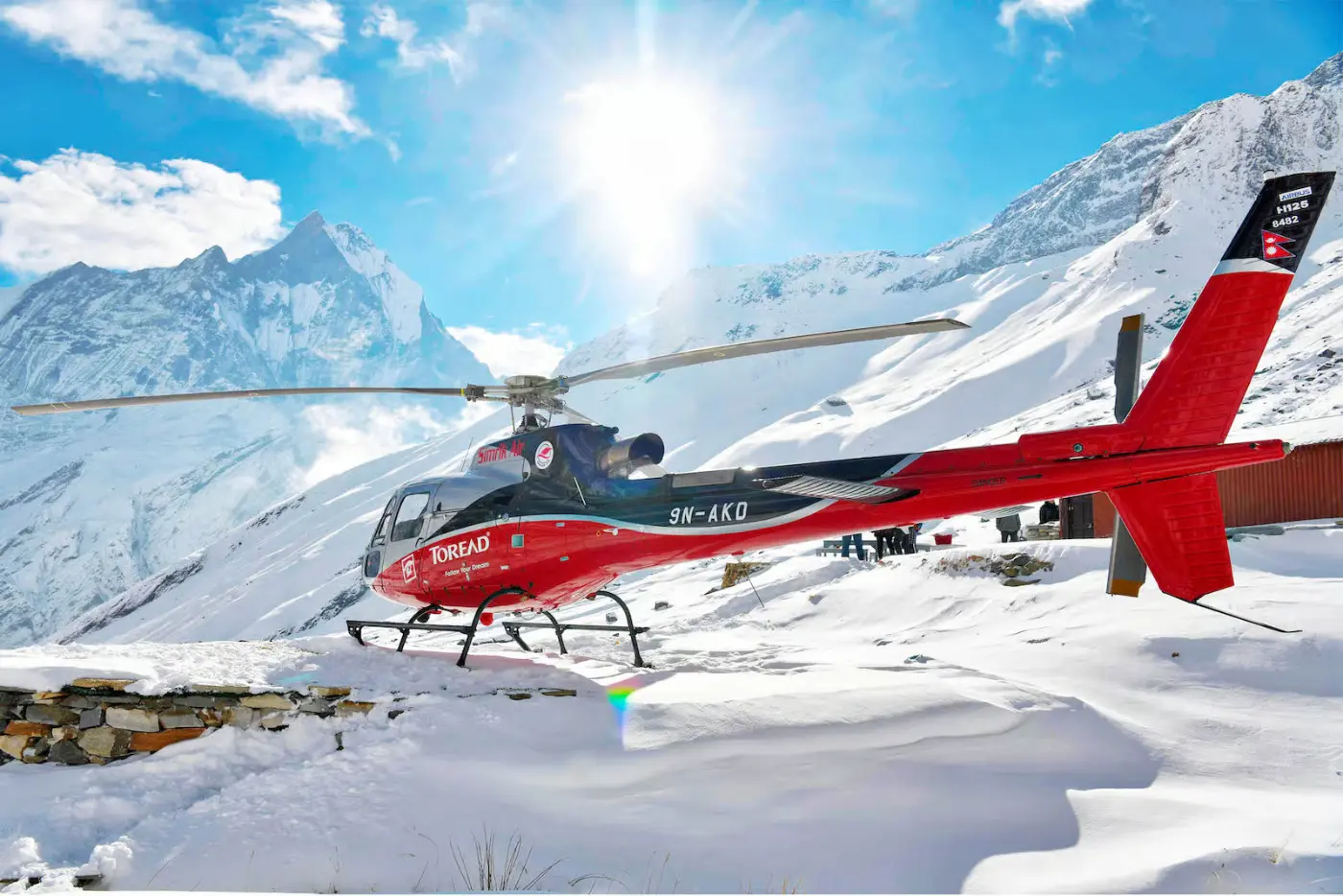
Pokhara to Muktinath Private Jeep Hire

Best Season for Pokhara to Muktinath by Jeep

October to November — Peak Pilgrimage Season

The October to November post-monsoon period is the finest season for the Pokhara to Muktinath private jeep transfer — the road conditions are at their best after the annual monsoon repair cycle, the mountain visibility is extraordinary in the clear post-monsoon air, and the Mustang District harvest creates a landscape of golden crops against the stark desert terrain that is uniquely beautiful in autumn. The Dhaulagiri and Annapurna peaks are fully visible above the gorge in October

. The gorge-level views of these 8,000 m giants are most dramatic when the air is clearest. For pilgrims, the post-monsoon period holds spiritual significance—the Tibetan Buddhist calendar’s major autumn ceremonies at the monasteries along the route add a cultural dimension to the pilgrimage.

March to May — Spring Flowering

Spring from March to May is the second-best season—the rhododendron forests of the lower Kali Gandaki approach are in spectacular bloom, the apple blossoms of the Marpha and Jomsom orchards fill the air with fragrance in April, and road conditions are excellent in the dry pre-monsoon period. May brings progressively more unstable afternoon weather

. The early-morning departure recommendation matters most in May, when afternoon wind arrives earlier and more intensely than in October and November. The Annapurna Base Camp trek season coincides with the spring Muktinath pilgrimage peak — car hire in Pokhara is in highest demand during April, so book the Muktinath jeep transfer 1 to 2 weeks in advance.

Monsoon and Winter — Possible but Challenging

The monsoon season (June to September) makes the Pokhara to Muktinath road significantly more challenging—the Beni to Tatopani section is particularly prone to landslides during heavy monsoon rainfall, and several-hour road closures are common. However, Upper Mustang beyond Ghasa lies in a rain shadow. It receives significantly less monsoon precipitation than the lower gorge — the Jomsom and Muktinath areas are often sunny when the lower gorge is raining.

For trekkers and pilgrims visiting Upper Mustang in monsoon season (a popular strategy to see the desert landscape at its most distinctive), a private 4WD jeep from Nepal Vehicle Hiring Pvt. Ltd., with its increased ground clearance and experienced driver, is especially valuable for navigating post-rainfall road conditions in the lower gorge. Winter (December to February) brings cold and occasional snowfall on the high sections near Muktinath — the temple may be partially snow-covered in January and February, creating an extraordinary winter pilgrimage atmosphere for those prepared for the cold.
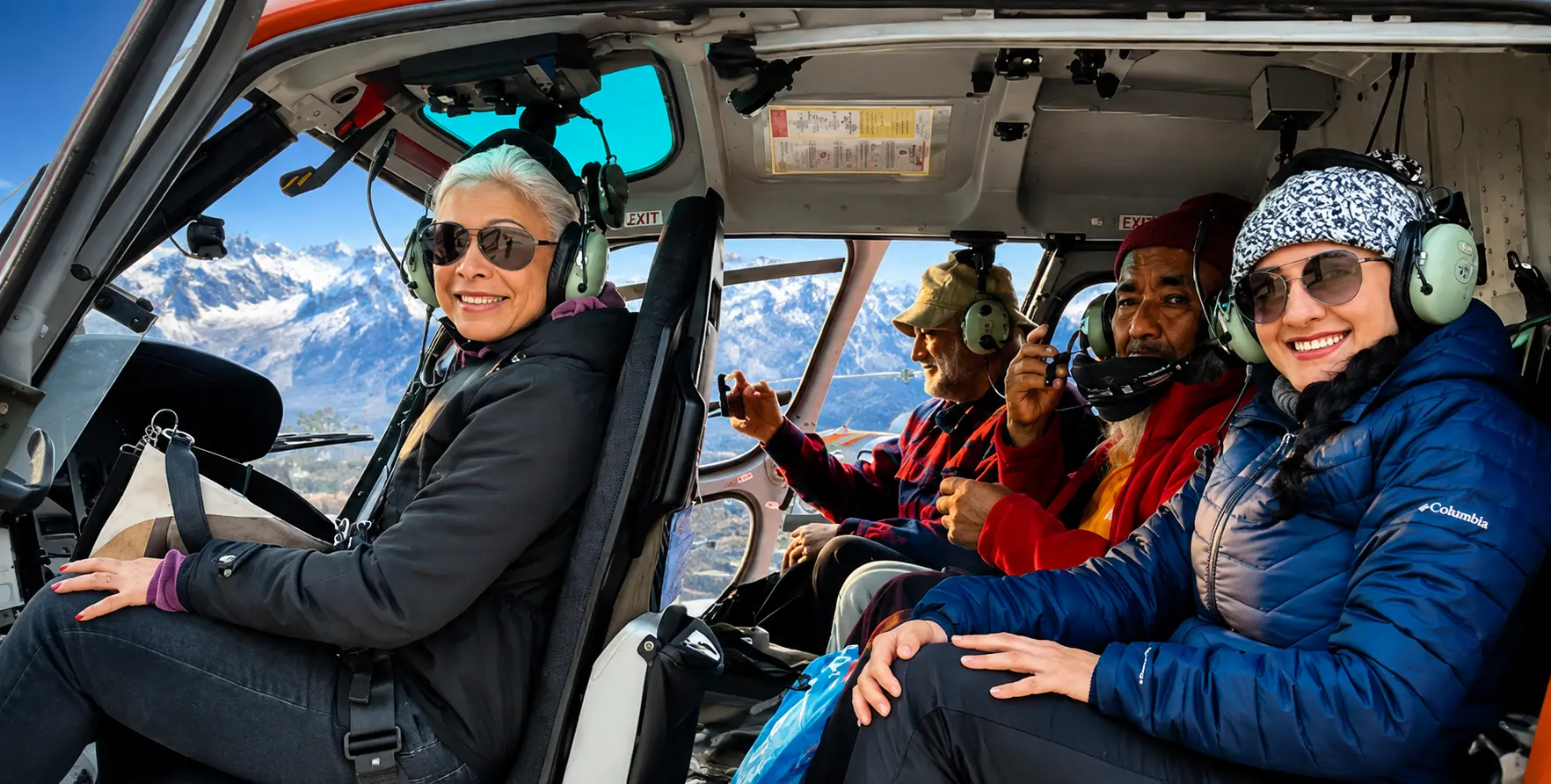
Combining Muktinath with Pokhara Sightseeing

The Pokhara Heritage and Adventure Circuit

The Pokhara to Muktinath private jeep transfer is most rewarding when combined with the full Pokhara sightseeing circuit — the car hire in Pokhara from Nepal Vehicle Hiring Pvt. Ltd. covering the Sarangkot sunrise, Phewa Lake, World Peace Pagoda, Bindhabasini Temple, International Mountain Museum, and Gupteshwor Cave
before or after the Muktinath pilgrimage. Typical itinerary: Day 1 arrives in Pokhara via a private transfer from Kathmandu. Day 2: Pokhara sightseeing by hired car.
Day 3 departs early for a private jeep to Muktinath, returning to Pokhara or staying overnight in Jomsom. This combination is one of Nepal’s finest 3-day circuits — the lake and mountain landscape of Pokhara, the gorge drama and sacred destination of Muktinath — all organized through Nepal Vehicle Hiring Pvt. Ltd. on WhatsApp.
Muktinath and the Annapurna Circuit Connection

Muktinath is the highest point on the Annapurna Circuit Trek accessible by vehicle—the sacred site trekkers reach on foot from Manang via the Thorong La Pass (5,416 m) and jeep passengers reach from Pokhara via the Kali Gandaki. For travellers who complete the Annapurna Circuit Trek and descend through Muktinath to Jomsom, the Jomsom-to-Pokhara private jeep transfer from Nepal Vehicle Hiring Pvt. Ltd. offers a comfortable, direct return to Pokhara.

The driver meets trekkers at the Jomsom junction, and the Kali Gandaki descent replaces what would otherwise be additional trekking days. For trekkers beginning the Annapurna Circuit from Besisahar) via the Kathmandu-to-Besisahar 4WD jeep transfer, the Jomsom return transfer to Pokhara completes the circuit transport in a single day that would otherwise require another 3 to 4 days of walking through the wind-affected lower gorge.

Pokhara to Muktinath Private Jeep Hire

Practical Planning for the Pokhara to Muktinath Jeep Transfer

What to Bring for the Journey

  • Warm layers — Muktinath at 3,800 m is cold even in summer; a down jacket is essential from October to May
  • Sunscreen SPF 50+ — high altitude UV intensity at Muktinath is significant regardless of temperature.
  • Altitude sickness awareness — 3,800 m is high enough to produce mild symptoms in unacclimatized visitors; move slowly at Muktinath
  • Water and snacks — carry adequate water as the Kali Gandaki gorge sections above Ghasa have limited shops
  • Camera with fully charged battery — the Kali Gandaki gorge is one of Nepal’s finest photography corridors.
  • Windproof outer layer — the Kali Gandaki afternoon wind makes a windproof jacket essential even in warm weather
  • Motion sickness medication if susceptible — the gorge road curves may affect some passengers

Altitude Considerations at Muktinath

Muktinath at 3,800 m is high enough to cause altitude sickness symptoms in visitors who have not acclimatized —headache, slight breathlessness, and reduced appetite are the most common. For visitors arriving directly from Pokhara (827 m) in a single day by private jeep, the nearly 3,000 m altitude gain is rapid enough to warrant caution.

Nepal Vehicle Hiring Pvt. Ltd. recommends moving slowly at the Muktinath temple complex, hydrating well before and during the journey, and descending to Jomsom (2,720 m) for the overnight stay if you experience any altitude discomfort at the temple. Pilgrims who plan to spend the night at Muktinath itself (there are several teahouses and guesthouses at the temple) should allow a full day at altitude before attempting the 108 water spout circuit if they feel any altitude symptoms on arrival.

Permits Required for Muktinath

Access to Muktinath requires the Annapurna Conservation Area Permit (ACAP) — NPR 3,000 for foreign nationals, NPR 1,000 for SAARC nationals, NPR 100 for Nepali citizens. You can obtain the ACAP permit at the Nepal Tourism Board office in Pokhara (near Damside) and at the ACAP checkpoint at the start of the gorge road.

For Pokhara to Muktinath private jeep travellers who are first-time Annapurna area visitors, the Nepal Vehicle Hiring Pvt. Ltd. team will advise on permit requirements at the time of booking—the driver knows the current permit checkpoints and can guide travellers to the most convenient purchase location. No Upper Mustang restricted area permit is required for Muktinath itself — the USD 500 per 10 days Upper Mustang permit applies only to travel north of Kagbeni into the Lo Manthang area.

Book Pokhara to Muktinath Private Jeep — Nepal Vehicle Hiring Pvt. Ltd.
Website: www.vehiclehiringnepal.com
WhatsApp (24/7 — Early Departures from 5:30 AM)
Email: [email protected]
Office: Bhagawatisthan, Thamel, Kathmandu, Nepal
Toyota Fortuner 4WD (up to 5 pax): NPR 18,000-60,000 all-inclusive
Toyota Land Cruiser (up to 7 pax): NPR 22,000-90,000 all-inclusive
Same-day Return (Pokhara-Muktinath-Pokhara): NPR 28,000-60,000 all-inclusive
Pokhara Car Hire | Kathmandu to Pokhara | Annapurna Circuit Jeep — all available
8,000+ Customers | 5.0 TripAdvisor | 200+ Verified Reviews | Reg. No. 219204
Best Price Guaranteed | All-Inclusive | No Hidden Charges

Pokhara to Muktinath Private Jeep Hire

The Kali Gandaki Gorge — World’s Deepest Canyon

Why the Gorge Is Geologically Extraordinary

The Kali Gandaki Gorge between Dhaulagiri and Annapurna is the world’s deepest canyon by the most commonly used measurement— elevation difference between the river surface and the summits of the flanking peaks. With Dhaulagiri rising 8,167 m to the west and Annapurna I rising 8,091 m to the east, while the Kali Gandaki River flows at about 2,500 m in the gorge section, the effective gorge depth exceeds 5,500 m—far greater than the Grand Canyon’s 1,857 m or the Yarlung Tsangpo gorge in Tibet.

This geological reality—the gorge the Kali Gandaki carved before the Himalayas rose, maintaining its course as the mountains rose around it in one of geology’s most dramatic demonstrations of antecedent drainage—is what makes the Kali Gandaki jeep route from Pokhara to Muktinath one of the world’s genuinely extraordinary road journeys. The two 8,000 m giants that rise above the road are not merely background scenery — they are the walls of the gorge itself.

The private jeep journey from Pokhara allows this geological grandeur to be experienced at driving speed — the scale reveals itself gradually as the gorge narrows and the peaks rise higher above the road, until the traveller is effectively at the bottom of the world’s deepest canyon looking up at two of the world’s ten highest peaks simultaneously. The Toyota Fortuner 4WD or Land Cruiser from Nepal Vehicle Hiring Pvt. Ltd. provides the stable, comfortable platform for experiencing this extraordinary landscape — windows that open for photography, sufficient height for clear views over the gorge walls, and the driver’s occasional commentary on the geological and cultural features of the route that add context to the visual experience.

The Mustang Desert — Tibet Begins Here

Above Ghasa and increasingly through Marpha, Jomsom, and Kagbeni, the landscape shifts from the lush subtropical and temperate vegetation of the lower gorge to the arid, Tibetan plateau-like terrain of Upper Mustang. The rain shadow effect of the Annapurna and Dhaulagiri massifs blocks monsoon moisture from reaching the upper Kali Gandaki, producing a landscape of dramatically eroded red and ochre cliffs, flat-topped mesas, and ancient cave monasteries carved into the cliff faces that characterize the Mustang District’s most distinctive visual identity.

The villages of this upper zone — Kagbeni, Muktinath, and the Upper Mustang villages beyond — are built in the Tibetan architectural tradition) of flat-roofed stone buildings arranged around central courtyards, whitewashed with red and ochre ceremonial stripes that identify the Tibetan Buddhist community’s aesthetic.

The Pokhara to Muktinath private jeep journey is therefore simultaneously a journey through Nepal’s topographic extremes — from the warm subtropical Pokhara valley at 827 m to the cold Tibetan-plateau character of Muktinath at 3,800 m — and a cultural transition from the Hindu Brahmin and Gurung communities of the lower hills to the Tibetan Buddhist Bhotiya communities of the upper Mustang.

This cultural and topographic breadth — experienced in a single day’s drive through the world’s deepest canyon — is what makes the Kali Gandaki private jeep route one of Nepal’s most complete travel experiences. Nepal Vehicle Hiring Pvt. Ltd. drivers on this route have extensive cultural knowledge of the communities passed through — contact WhatsApp to discuss the specific stops and cultural encounters that interest you most.

Pokhara to Muktinath Private Jeep Hire

Marpha — The Apple Capital of Nepal

A Village Worth an Extra Stop

Marpha — at approximately 2,670 m in the upper Kali Gandaki — deserves more than a passing glimpse from the jeep window. This compact, beautifully preserved Thakali village is famous for three things: its extraordinary setting against the backdrop of the Dhaulagiri massif, its traditional stone-paved lanes that create a uniquely enclosed village atmosphere unlike anywhere else in the Kali Gandaki gorge, and its apple orchards and apple distillery that produce the brandy that has made Marpha famous throughout Nepal.

A 30 to 45 minute stop in Marpha — walking the village lanes, visiting the monastery, trying the famous apple brandy at one of the traditional shops — adds enormous depth to the Pokhara to Muktinath private jeep journey and is one of the specific stops that the Nepal Vehicle Hiring Pvt. Ltd. driver will recommend and accommodate.

The Thakali people of Marpha and the surrounding villages are one of Nepal’s most distinctive ethnic communities — known historically as the masters of the Himalayan salt trade that used this gorge as the primary corridor for Tibetan salt moving south into the Indian subcontinent, and as Nepal’s finest hoteliers whose entrepreneurial reputation has spread from the Kali Gandaki to Kathmandu) and Pokhara) and beyond. Thakali cuisine—hearty, warming, and distinctive in its use of buckwheat, millet, and local vegetables—is one of Nepal’s finest regional food traditions and a culinary reason to stop in Marpha or Jomsom for a meal.

Combining Pokhara to Muktinath with Kathmandu

The Complete Nepal Circuit by Private Vehicle

For travellers visiting Nepal from Kathmandu and wanting to include both the Kathmandu heritage circuit and the Muktinath pilgrimage, Nepal Vehicle Hiring Pvt. Ltd. coordinates the complete private vehicle journey. Day 1 to 2: Kathmandu arrival and sightseeing (Boudhanath, Pashupatinath, Bhaktapur, Nagarkot sunrise). Day 3: Kathmandu to Pokhara private transfer.

Day 4: Pokhara sightseeing and car hire — Sarangkot sunrise, Phewa Lake, World Peace Pagoda. Day 5: Early morning Pokhara to Muktinath private 4WD jeep, overnight in Jomsom. Day 6: Jomsom to Pokhara return jeep transfer.

Day 7: Pokhara to Kathmandu return transfer) and international departure. All legs organized through Nepal Vehicle Hiring Pvt. Ltd. on WhatsApp.

Muktinath and Lumbini — A Sacred Nepal Circuit

For pilgrimage-focused travellers who wish to combine both the Hindu-Buddhist sacred geography of Muktinath and the Buddhist birthplace of Lumbini in a single Nepal journey, Nepal Vehicle Hiring Pvt. Ltd. coordinates both the Pokhara to Muktinath private jeep transfer and the Pokhara to Lumbini vehicle hire — or the reverse sequence of Lumbini to Pokhara private vehicle followed by the Muktinath jeep.

Combining Lumbini (the birthplace of the Buddha, sacred to all Buddhist traditions) with Muktinath (sacred to both Buddhist and Hindu pilgrims at 3,800 m) creates one of Nepal’s most spiritually comprehensive pilgrimage circuits — the lowland sacred garden and the high-mountain sacred temple connected by Nepal Vehicle Hiring Pvt. Ltd.‘s professional private vehicle services on every leg.

Nepal Vehicle Hiring Pvt. Ltd. — Your Muktinath Transport Partner

Nepal Vehicle Hiring Pvt. Ltd. has extensive experience on the Pokhara-to-Muktinath jeep route—the Kali Gandaki gorge road is one of the company’s most frequently driven mountain routes. The company’s knowledge of the gorge road’s seasonal conditions, wind timing, optimal stopping points, and current road repair status comes from daily driver network information rather than occasional observation.

For pilgrims, for trekkers, for adventure photographers, and for travellers simply wanting to experience one of the world’s most extraordinary road journeys — Nepal Vehicle Hiring Pvt. Ltd.‘s 4WD fleet, experienced Kali Gandaki route drivers, and 24-hour support on WhatsApp deliver the private vehicle service that the Muktinath journey deserves. Book via vehiclehiringnepal.com or WhatsApp—Nepal’s most sacred road journey, with Nepal’s most trusted private vehicle provider.

Frequently Asked Questions — Pokhara to Muktinath Jeep

Q: How long does the Pokhara to Muktinath jeep journey take?

The Pokhara to Muktinath private jeep journey takes 5 to 7 hours depending on road conditions and stops. Depart Pokhara by 5:30 to 6:30 AM to reach Muktinath by late morning before the Kali Gandaki afternoon wind builds. The route covers approximately 140 to 150 km via Beni, Tatopani, Ghasa, Marpha, Jomsom, and Kagbeni.

Q: Is 4WD essential for Pokhara to Muktinath?

Yes — 4WD is essential for the Pokhara to Muktinath route, particularly for the Jomsom to Muktinath section, which involves a rough mountain track with rocky sections and potential river crossings. Nepal Vehicle Hiring Pvt. Ltd. exclusively uses 4WD vehicles — Fortuner, Hilux, or Land Cruiser — for all Muktinath transfers.

Q: What is the best time to travel from Pokhara to Muktinath?

The best seasons are October to November (post-monsoon clarity, ideal road conditions) and March to May (spring blossoms, dry roads). Depart early in the morning in all seasons to avoid the Kali Gandaki afternoon wind. The Pokhara car hire team at Nepal Vehicle Hiring Pvt. Ltd. can advise you on current road and weather conditions before you depart.

Q: Do I need a permit to visit Muktinath?

Yes — the Annapurna Conservation Area Permit (ACAP) is required at NPR 3,000 for foreign nationals. You don’t need an Upper Mustang restricted area permit for Muktinath. The Nepal Vehicle Hiring Pvt. Ltd. team will advise you on where to buy the permit when you book the Pokhara-to-Muktinath jeep transfer.

Q: Can I combine Muktinath with the Annapurna Circuit?

Yes — Muktinath is the highest vehicle-accessible point on the Annapurna Circuit, and Nepal Vehicle Hiring Pvt. Ltd. provides both the Kathmandu to Besisahar jeep hire to begin the circuit and the Jomsom to Pokhara return transfer for trekkers who exit at Jomsom after crossing Thorong La.

Conclusion: Nepal’s Most Sacred Road Journey

The Pokhara to Muktinath private jeep hire delivers one of Nepal’s most extraordinary combinations of natural grandeur and spiritual significance — the world’s deepest gorge between the planet’s tenth and fourteenth highest mountains, culminating in a temple where fire, water, and earth combine at 3,800 metres to create the sacred geography that draws pilgrims from across the Hindu and Buddhist world. For every traveller who makes this journey, pilgrim or adventurer, photographer or trekker, first-time Nepal visitor or seasoned Himalaya explorer, the Kal Gandaki Road offers scale and beauty that reward every minute of the 5-7-hour drive.

Book the Pokhara to Muktinath private jeep transfer from Nepal Vehicle Hiring Pvt. Ltd. via WhatsApp or at vehiclehiringnepal.com. With 8,000+ satisfied customers, a 5.0 TripAdvisor rating, and the most experienced 4WD jeep drivers on the Kali Gandaki route, Nepal Vehicle Hiring Pvt. Ltd. delivers Nepal’s sacred mountain journey in safety, comfort, and professional style.

The Tatopani Hot Springs — A Natural Spa in the Gorge

The Tatopani hot springs — ‘tatopani’ literally means ‘hot water’ in Nepali — are one of the Kali Gandaki route’s most distinctive natural features. On the west bank of the Kali Gandaki River, these natural thermal pools, heated by the geothermal activity of the young Himalayan mountain belt, maintain a comfortable bathing temperature year-round and have been used by trekkers and pilgrims on the Annapurna Circuit for decades.

The springs sit beside the road in the village of Tatopani, about 90 km north of Pokhara and 30 km above Beni. A 30- to 45-minute stop at the Tatopani springs to soak in the thermal pools—particularly rewarding on a cool morning in the gorge—is one of the route’s finest optional diversions and fits easily into the Nepal Vehicle Hiring Pvt. Ltd. private jeep schedule.

The springs can be warm and crowded during peak trekking season, when many Annapurna Circuit trekkers use them—early morning arrivals (before 9:00 AM) typically find the springs quieter and more enjoyable for private-vehicle travellers who depart Pokhara at first light.

Pokhara to Muktinath Private Jeep Hire

Jomsom — The Mustang Airstrip Town

Jomsom at 2,720 m is the administrative and commercial centre of the Mustang District — the town with the district government offices, the main hospital, the bank, the only fuel station north of Beni, and the famous Jomsom Airport whose short runway and mountain approach make it one of Nepal’s most challenging domestic airstrips. Jomsom Airport serves daily flights from Pokhara (approximately 20 minutes) on Twin Otter aircraft.

It provides an alternative to the jeep road for travellers with limited time or who prefer not to make the full Kali Gandaki road journey.

However, the airport is frequently closed by weather and wind — the afternoon Kali Gandaki wind that makes road driving challenging also makes the short runway approach extremely dangerous for small aircraft, and afternoon flight cancellations at Jomsom are one of Nepal’s most common domestic aviation disruptions.

The Nepal Vehicle Hiring Pvt. Ltd. private jeep from Pokhara, by contrast, is not subject to weather cancellation in the same way — an experienced mountain driver can assess road conditions and make the go/no-go decision with much finer granularity than the blanket airport closure that the aviation authority applies to Jomsom flights in wind conditions.

Jomsom is also where the vehicle-hiring Pvt. Ltd. driver refuels; the fuel push to Muktinath—the 21 km Jomsom-to-Muktinath section—is fuel-intensive on the steep ascent. A full tank at Jomsom ensures the vehicle has adequate range for the round trip to Muktinath and back to Jomsom or Pokhara without concern.

For travellers spending the night in Jomsom before the Muktinath visit, the town offers teahouses and guesthouses ranging from basic to comfortable — the Nepal Vehicle Hiring Pvt. Ltd. driver knows the current accommodation options and can recommend options based on your budget and preferences.

Kagbeni — The Gateway to Upper Mustang

Kagbeni village — perched on a dramatic bluff above the Kali Gandaki-Jhong Khola confluence — is the last settlement before the Upper Mustang restricted area begins.

The village’s medieval character — narrow dark lanes between high stone walls, the ancient Kagbeni Monastery with its collection of thangka paintings and Buddhist manuscripts, and the spectacular eroded red cliff backdrop that makes Kagbeni one of Nepal’s most photographed villages — rewards a 30 to 45-minute exploration stop on the Pokhara to Muktinath jeep journey.

The village is the point where the Kali Gandaki road crosses the river and begins its steep climb to Muktinath — the crossing and the subsequent switchback ascent through the dramatic ochre landscape are among the most visually striking sections of the entire Pokhara to Muktinath route—Nepal Vehicle Hiring Pvt. Ltd.

Toyota Fortuner 4WD or Land Cruiser handles the Kagbeni River crossing and the Muktinath ascent with the 4WD capability and ground clearance this section requires — contact Nepal Vehicle Hiring Pvt. Ltd. on WhatsApp to book the private 4WD jeep transfer that makes this extraordinary journey possible.

The Annapurna Conservation Area — Protecting the Kali Gandaki

ACAP and the Mustang Corridor

The Annapurna Conservation Area (ACAP) — covering 7,629 square kilometres of the Annapurna, Dhaulagiri, and Mustang highlands — is Nepal’s largest protected area and one of Asia’s most successful examples of conservation management. The Kali Gandaki gorge that the Pokhara-to-Muktinath jeep route follows runs through the heart of this protected area, and the ACAP permit requirement for all visitors reflects the area’s conservation status and the management resources the permit fee helps fund.

The ACAP model is distinctive in Nepal conservation — rather than the conventional exclusionary model of national parks, ACAP integrates local communities into conservation management, directing a significant proportion of permit revenue to community development projects in the villages along the route.

The teahouses of Tatopani, the orchards of Marpha, the monastery restorations at Kagbeni and Muktinath — all are supported in part by the ACAP management system that the permit fee helps sustain. Travellers on the Nepal Vehicle Hiring Pvt. Ltd. Pokhara to Muktinath jeep transfer contribute to this conservation and community development system through the standard NPR 3,000 ACAP permit—a genuinely positive contribution to the extraordinary natural and cultural landscape they travel through.

Red-Billed Choughs and Himalayan Griffons — Wildlife of the Gorge

The Kali Gandaki gorge is not only a geological and cultural spectacle — it is one of Nepal’s finest birdwatching corridors, particularly for high-altitude specialists that few other Nepal roads provide access to. Red-billed choughs — the glossy black corvids with vivid red beaks and feet — are common at Jomsom, Kagbeni, and Muktinath, performing acrobatic aerial displays in the gorge’s wind currents.

Himalayan griffon vultures soar on thermal updrafts above the gorge walls, their 2.5 m wingspans making them among the most impressive raptors visible from the jeep road.

Snow pigeons, Tibetan snowcocks, and the Himalayan snowcock are all regularly seen on the high rocky slopes above Muktinath. For birdwatching travellers, a private jeep from Nepal Vehicle Hiring Pvt. Ltd. can slow and stop at the best birdwatching locations—the river beaches near Jomsom, where Ibisbill and river tern are reliably present, and the rocky slopes above Kagbeni, where Himalayan snowcock feed in the early morning.

Contact Nepal Vehicle Hiring Pvt. Ltd. on WhatsApp to discuss birdwatching stops on the private jeep route from Pokhara to Muktinath.

Photography on the Pokhara to Muktinath Route

The Pokhara to Muktinath private jeep route is one of Nepal’s finest photography corridors — a succession of extraordinary compositions that reward both landscape and documentary photographers. The Kali Gandaki gorge walls, with Dhaulagiri and Annapurna rising above, offer the grandest mountain-river landscape compositions available from any road in Nepal.

The Tatopani thermal pools with the gorge backdrop, the Marpha village lanes in early morning light, the Jomsom airport with the Nilgiri peaks above, the Kagbeni village red cliff setting, the Muktinath temple complex at 3,800 m — each location presents a distinctive photographic character that is unique within Nepal’s extraordinarily rich visual landscape.

The Nepal Vehicle Hiring Pvt. Ltd. private jeep offers complete photography flexibility—the driver stops where the light is right, waits while you set up compositions, and moves when you’re ready. Shared jeeps and public transport don’t offer this flexibility.

For photographers planning the route for its visual character, the best time is an early morning departure from Pokhara to catch warm dawn light on the gorge walls and reach Muktinath before afternoon clouds build from the south. Book the Pokhara to Muktinath private jeep photography tour via WhatsApp or at vehiclehiringnepal.com.

Nepal Vehicle Hiring Pvt. Ltd. provides the complete vehicle service for every stage of the Nepal journey surrounding the Muktinath pilgrimage — from the Kathmandu airport pickup and Kathmandu sightseeing tour through Boudhanath, Pashupatinath, Bhaktapur Durbar Square, and the Nagarkot sunrise experience, to the Kathmandu to Pokhara private transfer on the Prithvi Highway, the Pokhara car hire for Sarangkot sunrise and Lakeside sightseeing, the Pokhara to Muktinath 4WD jeep transfer through the Kali Gandaki gorge, the Jomsom to Pokhara return jeep, and the final Pokhara to Kathmandu transfer and departure airport drop.

Every transport leg is organized through a single trusted provider at transparent all-inclusive pricing — no hidden charges, no booking surprises, just the professional private vehicle service that 8,000+ satisfied customers and a 5.0 TripAdvisor rating from 200+ verified reviews confirm. Contact Nepal Vehicle Hiring Pvt. Ltd. at +WhatsApp via WhatsApp or at vehiclehiringnepal.com to plan your complete Muktinath pilgrimage and Nepal journey — the sacred road through the world’s deepest gorge, in Nepal’s finest private 4WD jeep service.

Muktinath Tour from Banbasa: Private Jeep Hire

Best Muktinath Tour from Banbasa Private Jeep Hire 2026/27/28

Muktinath Tour from Banbasa Private Jeep Hire — Complete Yatra Guide

Muktinath Temple, at 3,710 metres in Nepal’s Mustang District, is one of the Himalayan world’s most sacred pilgrimage destinations—a site of extraordinary devotional significance for both Hindu and Buddhist traditions. For Vaishnava Hindus, Muktinath is one of the 108 Divya Desams (sacred abodes of Lord Vishnu) and one of Nepal’s most spiritually powerful dharmic yatra destinations.

For Buddhist pilgrims, the site — known as Chumig Gyatsa (Hundred Waters) — holds the sacred flame emerging from water and earth that Tibetan Buddhism venerates as a manifestation of five sacred elements. The combination of these two traditions’ sacred claim on Muktinath makes it Nepal’s most universally revered pilgrimage destination.

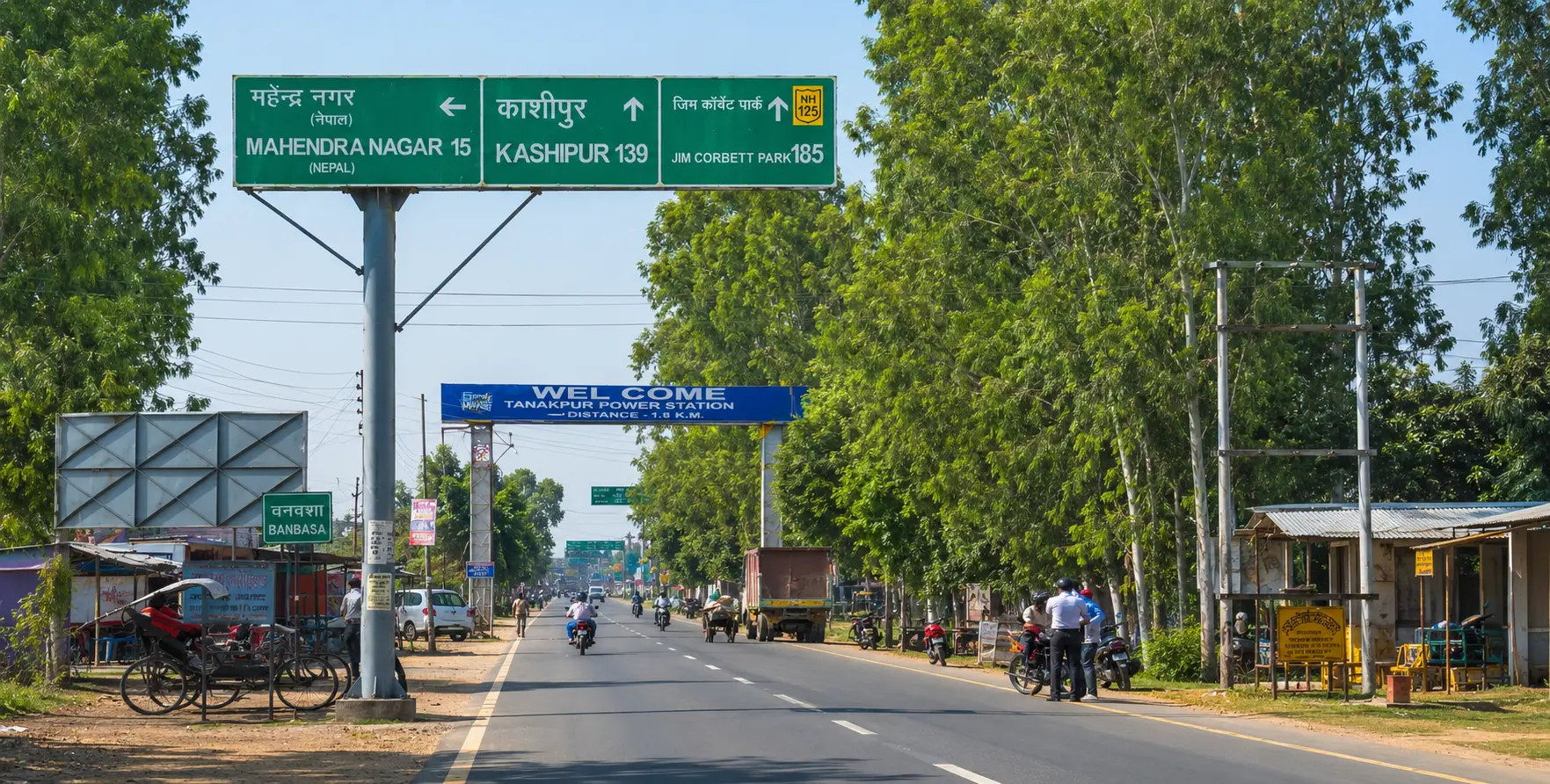
For pilgrims departing from Banbasa — the India-Nepal border crossing in Uttarakhand that connects Champawat and Udham Singh Nagar districts of India to Mahendranagar in Nepal’s Far-Western Province — the private jeep hire for the Muktinath yatra covers one of Nepal’s longest and most varied overland pilgrimage routes: the Mahendra Highway’s

Terai traverse eastward across Nepal’s southern plains, then head north from the Butwal junction to Pokhara, and take the Kali Gandaki gorge road to Jomsom and Muktinath. Nepal Vehicle Hiring Pvt Ltd coordinates complete Nepal-side vehicle hire for the Banbasa-to-Muktinath journey, from pickup at the Mahendranagar border to arrival at the Muktinath sacred site.

The Complete Route — Banbasa to Muktinath

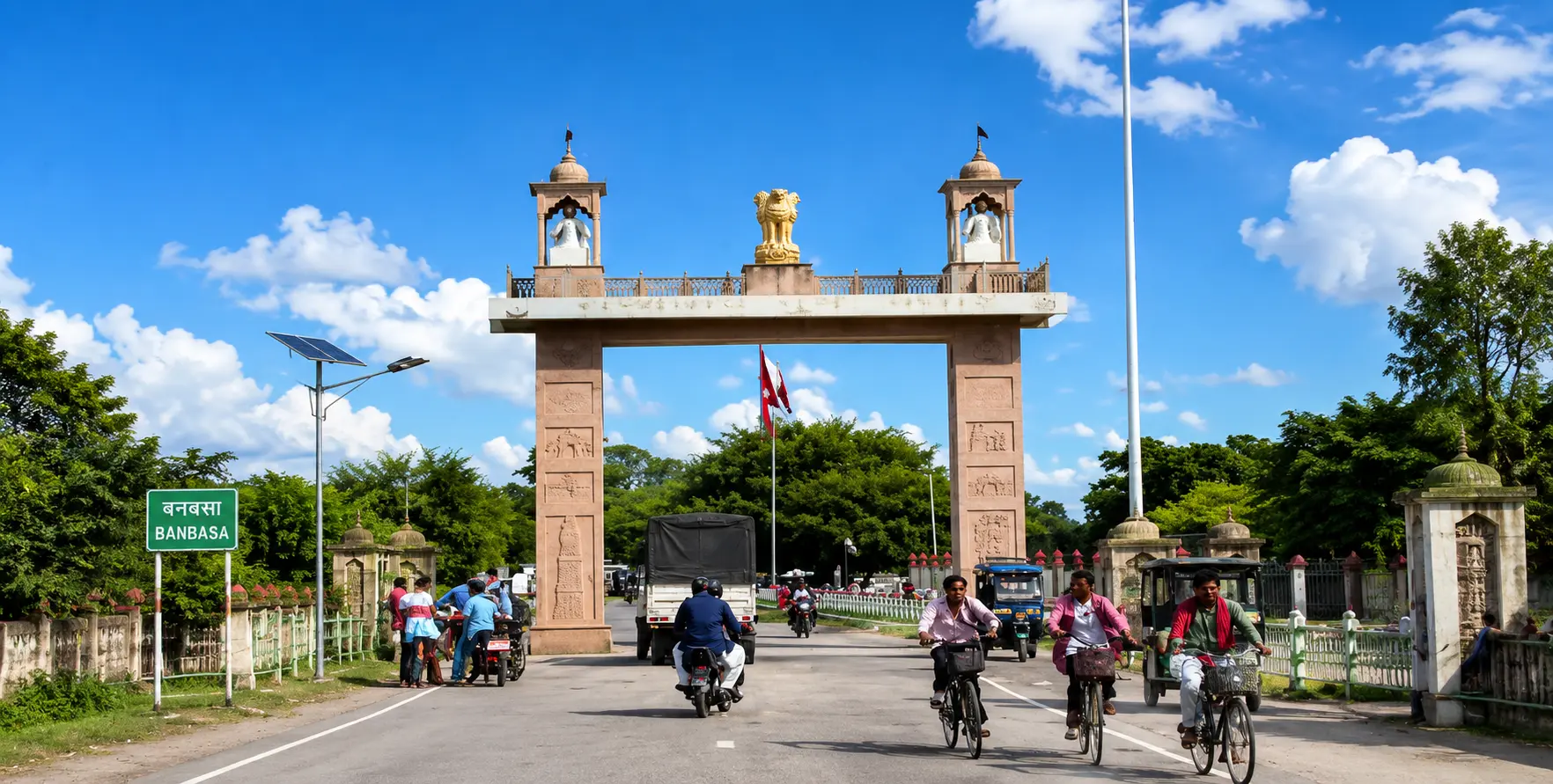
Leg 1: Banbasa border crossing to Mahendranagar, Nepal (0-5 km, 1-2 hours formalities). The Banbasa-Mahendranagar border crossing connects Uttarakhand to Nepal’s Far-Western Province (Kanchanpur District). Indian nationals cross freely with valid photo ID. Nepal Vehicle Hiring Pvt Ltd’s driver meets the group after immigration at the Nepal-side Mahendranagar border gate.

Leg 2: Mahendranagar to Butwal via Mahendra Highway (approximately 500-520 km, 8-10 hours, Day 1-2). The Mahendra East-West Highway runs eastward from Mahendranagar through Dhangadhi, Atariya, Kohalpur, Nepalgunj (optional stop), Tulsipur, and Butwal. This is Nepal’s longest single-axis highway drive — typically divided into 2 days with an overnight at Nepalgunj or Kohalpur.

Leg 3: Butwal to Pokhara (approximately 175 km, 3.5-5 hours, Day 3 morning). From the Terai junction at Butwal, the road turns north on the Siddhartha and Prithvi Highways to Pokhara — Nepal’s mountain lake city and the operational base for the Muktinath approach.

Leg 4: Pokhara to Jomsom and Muktinath via Kali Gandaki (approximately 145-160 km, 7-9 hours, Day 3 or 4). The Pokhara-to-Jomsom-Muktinath private jeep hire follows the Kali Gandaki Gorge—the world’s deepest river gorge between Dhaulagiri and Annapurna. Jomsom at 2,720 m is the road junction for the final Muktinath approach. Muktinath is at 3,710 m.

Total journey: 3-4 travel days from the Banbasa border to Muktinath. Total Nepal-side distance: approximately 670-700 km.

Best Muktinath Tour from Banbasa Private Jeep Hire 2026/27/28

Why the Banbasa Border Is the Right Crossing for Muktinath Yatra

India has several active Nepal land border crossings — Sunauli (Gorakhpur), Raxaul (Bihar), Banbasa (Uttarakhand), Rupaidiha (Bahraich), and others. For Muktinath yatra pilgrims from Uttarakhand and western UP, Banbasa is often the most logical crossing, helping yatra planners choose the most efficient route from their departure city.

The Banbasa crossing’s key advantage for Muktinath yatra groups: it enters Nepal at Mahendranagar in the far west, where it runs eastward through the entire Nepal Terai to Butwal, and then up the Kali Gandaki. Pilgrims from Funauli (Gorakhpur) approach Muktinath from the south-east, requiring the Pokhara-to-Kali Gandaki approach.

Pilgrims from Banbasa approach from the far west, traversing the complete Nepal Terai before turning north — adding 2 to 3 days of Mahendra Highway driving but experiencing Nepal’s Terai landscape at its widest and most diverse.

For devotional pilgrims who regard the journey itself as part of the yatra’s merit accumulation, the longer Banbasa route — crossing Nepal’s far-western sacred landscape, passing through Bardia National Park’s pristine sal forest, crossing the Karnali River (one of Nepal’s most sacred rivers in its own right),

approaching Muktinath through the complete Kali Gandaki gorge — is specifically preferred over the shorter Sunauli route. Nepal Vehicle Hiring Pvt Ltd serves both entry points — Sunauli border pickup and Mahendranagar border pickup — through the same professional private jeep hire service and the same all-inclusive pricing standard.

Best Muktinath Tour from Banbasa Private Jeep Hire 2026/27/28

The Karnali River — The Great Western Nepal Sacred Crossing

The Karnali River at Chisapani — crossed by the Mahendra Highway on a major bridge approximately 170 km east of Mahendranagar — is one of Nepal’s most significant rivers: the longest river originating within Nepal, rising from the sacred Mapchachungo glacier area near the Tibetan border and flowing south through the Himalayan ranges before joining the Ghaghra River in the Indian Terai plains.

The Karnali is a tributary of the Ganges and shares in the Ganga’s sacred status — making the Chisapani bridge crossing a devotional moment within the Muktinath yatra for pilgrims who observe the river crossing’s sacred significance.

The Karnali at Chisapani is a braided river of extraordinary scale in high water season — pale grey-blue in colour from glacial silt, spreading across its gravel-island channel in a width of several hundred metres th, making one of the most visually dramatic river crossings on the Mahendra Highway.

The Chisapani bridge’s length and the river’s volume below create one of the yatra’s memorable driving moments — a river crossing whose scale announces that the pilgrims are traversing Nepal’s widest and most powerful river system on the approach to the Himalayan source of the continent’s most sacred waters.

Nepal Vehicle Hiring Pvt Ltd’s Mahendra Highway jeep drivers note the Karnali crossing as a specific yatra landmark—a brief stop on the bridge walkway for the river view and a devotional moment of acknowledgement is standard practice for pilgrimage groups using our private jeep hire service on the Banbasa-to-Muktinath route. Contact our team to plan the complete yatra.

Best Muktinath Tour from Banbasa Private Jeep Hire 2026/27/28

Muktinath — The Confluence of Hindu and Buddhist Sacred Traditions

Muktinath’s singular position as a site of supreme importance in both the Hindu Vaishnava tradition and Tibetan Vajrayana Buddhism makes it unique among South Asia’s sacred destinations. No other Himalayan site holds the status of one of Vishnu’s 108 Divya Desams and a major Tibetan Buddhist sacred site

and the resulting devotional community that gathers at Muktinath is one of the most diverse of any Himalayan pilgrimage, with Hindi-speaking Indian Vaishnava pilgrims, Tibetan Buddhist practitioners, Nepali Hindu pilgrims from across the country, and international Buddhist visitors sharing the temple complex and the Mukti Dhara circuit.

The name Muktinath itself — ‘Lord of Liberation’ or ‘Lord of Moksha’ in Sanskrit — communicates the site’s Vaishnava theological significance: the place where liberation from the cycle of birth and death (moksha) is most accessible through Lord Vishnu’s grace.

For the Vaishnava pilgrim who has made the Banbasa-to-Muktinath journey with full awareness of its sacred purpose, arriving at the 108 Mukti Dhara waterspouts marks the pilgrimage’s fulfilment—the water from the sacred mountains pouring over the devotee as the living grace of the Lord of Liberation himself.

The Buddhist name Chumig Gyatsa (Hundred Waters in Tibetan) names the same sacred character from a different doctrinal perspective — the hundred sacred waters flowing from the earth at a site where the five elements (earth, water, fire, air, and space) manifest simultaneously in the sacred flame-and-spring of the Jwala Mai shrine.

For Muktinath yatra pilgrims from Banbasa arriving by private 4WD jeep hire after 3 to 4 days of Nepal road travel, this dual sacred character—the site where Vishnu and the Buddha’s tradition both claim the sacred—makes Muktinath Nepal’s single most universally significant pilgrimage destination. Book complete yatra vehicle arrangements through Nepal Vehicle Hiring Pvt Ltd on WhatsApp or on our plan trip page.

Kathmandu to Muktinath Bus

Transfer Cost — Banbasa to Muktinath Private Jeep

Mahendranagar border to Nepalgunj (Day 1 overnight, approximately 260 km): Private 4WD jeep hire: NPR 18,000-26,000 (USD 135-195) all-inclusive. Hiace van hire for larger groups: NPR 24,000-34,000.

Nepalgunj to Butwal to Pokhara (Day 2, approximately 350 km): Private 4WD jeep hire: NPR 22,000-32,000 (USD 165-240) all-inclusive.

Pokhara to Jomsom and Muktinath via Kali Gandaki (Day 3 or 4, approximately 145-160 km): Private 4WD Scorpio or Hilux jeep hire: NPR 22,000-32,000 (USD 165-240) all-inclusive. 4WD is mandatory for the Kali Gandaki Gorge road.

Complete Banbasa to Muktinath (3-4 days, private 4WD jeep): NPR 62,000-90,000 (USD 465-675) for the full vehicle, all days, all-inclusive.

Return Muktinath to Banbasa or Pokhara exit: Pre-arranged at outward booking. Muktinath-to-Pokhara return, then Pokhara-to-Sunauli or Pokhara-to-Banbasa (via Mahendra Highway) coordinated through Nepal Vehicle Hiring Pvt Ltd on WhatsApp.

Best Muktinath Tour from Banbasa Private Jeep Hire 2026/27/28

The Banbasa-Mahendranagar Border Crossing

The Banbasa-Mahendranagar crossing connects Banbasa town in Uttarakhand’s Champawat District to Mahendranagar (Bhimdatta Municipality) in Nepal’s Kanchanpur District, Sudurpashchim Pradesh (Far-Western Province). Pilgrims from Uttarakhand (Nainital, Haldwani, Rudrapur, Almora), western UP (Bareilly, Moradabad, Rampur), and Delhi/NCR use this crossing to access Nepal’s western highway for the Muktinath yatra, Pashupatinath pilgrimage circuit, or a Lumbini visit.

Documents for Indian nationals: Valid Indian photo ID — passport, voter ID, or Aadhaar accepted—no visa required under the India-Nepal Open Border Treaty. Nepal immigration registration at Mahendranagar typically takes 20-45 minutes.

Nepal Vehicle Hiring Pvt Ltd Mahendranagar pickup: Our driver is confirmed by name and vehicle registration via WhatsApp the evening before. The vehicle waits at the Nepal-side Mahendranagar gate after immigration completion — direct boarding for the Muktinath yatra journey. Contact Nepal Vehicle Hiring Pvt Ltd on WhatsApp to arrange pickup at the Mahendranagar border.

Mahendranagar town: Mahendranagar is the Far-Western Province’s principal commercial city—a well-equipped Terai town with fuel stations, ATMs, hotels for overnight stays if needed, and restaurants. Groups arriving late at the border may overnight in Mahendranagar before starting the Mahendra Highway drive eastward on Day 2.

Best Muktinath Tour from Banbasa Private Jeep Hire 2026/27/28

Bardia National Park — The Wildlife Detour on the Mahendra Highway

The Mahendra Highway between Kohalpur and Nepalgunj passes through the buffer zone of Bardia National Park — Nepal’s finest and least visited major wildlife sanctuary, home to tigers, one-horned rhinoceros, wild elephants, and gharial crocodiles in a sal forest wilderness of 968 square kilometres.

For Muktinath yatra pilgrims with an extra day on the outward journey, a Bardia National Park visit is one of Nepal’s finest wildlife encounters — qualitatively comparable to Chitwan but with a fraction of the visitor volume.

The private jeep hire from Nepal Vehicle Hiring Pvt Ltd covers the Bardia detour as an addition to the Nepalgunj overnight — arriving at the park gate by afternoon on Day 1, an evening game drive, and a morning safari before continuing the Muktinath journey on Day 2.

The jeep hire cost remains all-inclusive on the standard per-day rate for the additional Bardia day. Contact our team on WhatsApp to add the Bardia chapter to the Banbasa Muktinath yatra.

Trek Nepal Himalayas’ Chitwan jungle safari packages are available for pilgrims extending their Nepal circuit to the Chitwan National Park area further east on the return journey from Muktinath.

The complete yatra circuit — Banbasa border, Muktinath darshan, Pokhara lakes and Annapurna, Chitwan wildlife, Sunauli return — creates Nepal’s finest combined pilgrimage-and-wildlife overland journey from the Uttarakhand border.

Best Muktinath Tour from Banbasa Private Jeep Hire 2026/27/28

Nepalgunj — The Mid-Yatra Rest City

Nepalgunj (Banke District) is one of Nepal’s most strategically positioned Terai cities, near the Mahendra Highway and serving as the operational hub for Nepal’s far-western and mid-western regions. For the Banbasa-to-Muktinath yatra group, an overnight in Nepalgunj provides the mid-journey rest the long Mahendra Highway traverse demands.

Nepalgunj offers: international-standard hotel accommodation (several business and pilgrimage hotels have established themselves in Nepalgunj’s growing hospitality market), reliable ATMs and currency exchange, a domestic airport with daily Kathmandu connections (useful for pilgrims who need to exit or enter Nepal mid-yatra), and a specific Nepalgunj culinary tradition — the city’s diverse ethnic mix of Tharu, Bahun-Chhetri, and Muslim communities creating a restaurant culture with unusual variety by Nepal’s Terai-city standards.

The private jeep hire from Nepal Vehicle Hiking Pvt Ltd drops the yatra group at the Nepalgunj hotel of choice — our team confirms the hotel details at booking and coordinates the Day 2 vehicle from Nepalgunj. The evening in Nepalgunj allows time for the yatra group’s preparatory rituals, personal prayers and devotional preparation; pilgrims undertake these the night before the sacred journey continues toward Muktinath. Contact Nepal Vehicle Hiring Pvt Ltd on WhatsApp.

Best Muktinath Tour from Banbasa Private Jeep Hire 2026/27/28

The Kali Gandaki Gorge — Sacred Geography

The Kali Gandaki River gorge — the specific geographic channel through which the Pokhara-to-Muktinath private jeep hire passes — is one of the world’s most sacred rivers in the Hindu tradition. The Kali Gandaki is a tributary of the Ganges and shares the Ganga’s sacred status,

but carries its own sacred character through the shaligram, the sacred ammonite fossils found in the riverbed that Hindu tradition venerates as natural forms of Lord Vishnu. The shaligram stones of the Kali Gandaki are among the most sacred Vishnu worship objects—discovered in the river’s grey schist banks by pilgrims who have collected them for millennia for temple worship across the Indian subcontinent.

For Muktinath yatra pilgrims driving the Kali Gandaki gorge road, the river is not merely a scenic backdrop but a sacred presence that deepens the pilgrimage context progressively as the road ascends. The river’s character changes with altitude: turbulent white water in the lower gorge sections below Tatopani,

calmer but still fast-flowing in the Marpha section, and the characteristic pale-grey braided river of the high Mustang plateau above Jomsom. Nepal Vehicle Hiring Pvt Ltd’s Kali Gandaki gorge jeep drivers know the specific riverbank locations where shaligram stones are most commonly found — a stop that allows yatra pilgrims to collect a shaligram from the sacred river as a pilgrimage gift for home temple worship.

Best Muktinath Tour from Banbasa Private Jeep Hire 2026/27/28

The Marpha and Jomsom Stop — Before Muktinath

The road from Beni northward to Muktinath passes through several villages that merit brief stops on the Muktinath yatra drive — extending the Kali Gandaki day beyond simple transit to include the specific cultural and sacred encounters that make the gorge road one of Nepal’s finest overland experiences.

Tatopani (Hot Water Village). The famous natural hot springs at Tatopani — where geothermal hot water rises directly adjacent to the cold Kali Gandaki — are a traditional yatra rest stop where pilgrims bathe before continuing north to Muktinath. The hot springs’ location at the gorge’s narrowest point makes Tatopani both the physical high point of the lower gorge drive and the devotional preparation point for the upper gorge’s sacred approach.

Marpha. The meticulously maintained Thakali village of Marpha — white-washed stone houses, stone-paved alleyways, and the fragrance of the apple orchards that have made Marpha famous throughout Nepal — is one of the Annapurna Circuit’s most visited villages and one of the Kali Gandaki gorge’s finest traditional settlements. A 20-minute walk through Marpha’s main lane provides the finest introduction to Thakali village culture on the entire yatra route.

Jomsom. Jomsom at 2,720 m is the largest town in the Mustang District — the administrative and commercial centre of the high Mustang plateau. Jomsom’s airstrip connects to Pokhara by domestic flight (20 minutes), offering an alternative arrival option for yatra pilgrims who fly one way. A private jeep hire from Pokhara to Jomsom, then to Muktinath, covers the entire approach without the flight’s weather and schedule uncertainty.

Kagbeni. The ancient fortified village of Kagbeni at the Kali Gandaki-Jhong Khola confluence is the gateway to the Upper Mustang restricted area and one of the most atmospheric medieval villages in the Nepal Himalaya. The red-and-white painted gompa, the medieval fortification walls, and the view northward up the valley toward Lo Manthang create one of the gorge road’s most visually striking moments.

Best Muktinath Tour from Banbasa Private Jeep Hire 2026/27/28

Banbasa Muktinath Yatra — Who Makes This Journey

The Banbasa-to-Muktinath yatra by private jeep serves a specific pilgrimage community from India’s Uttarakhand and western UP regions—one of Nepal’s most traditional and committed pilgrim groups, whose cultural connection to the Muktinath sacred site predates the modern road network.

Uttarakhand pilgrims (Nainital, Haldwani, Almora, Pithoragarh, Rudrapur, Haridwar). The closest major pilgrimage community to the Banbasa border is Nainital, about 20 km from Banbasa, and the Uttarakhand devotional community’s connection to Vishnu sacred sites (Badrinath, Kedarnath, and the Char Dham circuit) extends to Muktinath,

the Himalayan Vishnu abode. Nepal Vehicle Hiring Pvt Ltd‘s Mahendranagar border pickup is specifically designed for Uttarakhand yatra groups who drive from Haldwani or Nainital to Banbasa and then hand over to our Nepal-side vehicle.

Western UP pilgrims (Bareilly, Rampur, Moradabad, Shahjahanpur). The western UP cities have strong Vaishnava devotional traditions and regularly organise group Muktinath yatras through the Banbasa-Mahendranagar border. Private jeep hire for groups of 4 to 9, or Hiace van hire for larger groups of 10 to 13 — both coordinated through Nepal Vehicle Hiring Pvt Ltd from the Mahendranagar border.

Delhi and NCR pilgrims via Banbasa. Delhi-based pilgrims who prefer the Banbasa border (to avoid the longer Sunauli route) drive to Banbasa via the Moradabad-Bareilly-Rampur corridor (about 320 km from Delhi) and connect to a private jeep hire on the Nepal side at Mahendranagar for the Muktinath approach.

Best Muktinath Tour from Banbasa Private Jeep Hire 2026/27/28

The Mahendranagar Town — First Nepal Stop

Mahendranagar (formerly Bhimdatta Municipality) is the Far-Western Province’s main city—a well-developed Terai town of about 60,000 residents whose commercial character reflects its role as Nepal’s far-western gateway city. Shukla Phanta National Park, Nepal’s second-largest protected area and one of its finest tiger habitats, borders Mahendranagar—a wildlife detour yatra pilgrims can add to the border overnight.

Mahendranagar provides: reliable fuel stations for the jeep’s initial Nepal tank fill before the Mahendra Highway traverse; Nepal-standard hotel accommodation for groups arriving late at the border or departing early the next morning; good dal bhat and local restaurant options; currency exchange at the border and in the town’s main bazaar; and the specific border-town character of Nepal’s far-western gateway — a more genuinely local and less tourist-oriented environment than the busier southern border crossings at Sunauli or Raxaul.

Nepal Vehicle Hiring Pvt Ltd’s private jeep hire from Mahendranagar departs toward the Muktinath yatra after the border formalities are complete — fuelled, driver confirmed, and the route plan briefed.

For groups arriving at Banbasa late in the day, the Mahendranagar overnight is included in the day 1 plan at no additional vehicle charge — the jeep is parked at the hotel and ready for the 7:00 AM Mahendra Highway departure. Our contact team on WhatsApp confirms all overnight stop arrangements as part of the complete Banbasa-to-Muktinath booking.

Muktinath Tour from Banbasa: Private Jeep Hire

The Mahendra Highway — Nepal’s Terai Spine

The Mahendra Highway (East-West Highway or B.P. Koirala Highway) is Nepal’s longest national road — a 1,027-kilometre Terai-level highway connecting Mahendranagar in the far west to Kakarbhitta in the far east. The Banbasa-to-Muktinath yatra route follows the Mahendra Highway eastward from Mahendranagar for about 500 kilometres to the Butwal junction—Nepal’s longest single-axis road section traversed by any Muktinath yatra group.

Mahendranagar to Dhangadhi (90 km, 1.5-2 hours). The first Mahendra Highway section east of the border—a flat, well-maintained Terai highway through Kanchanpur District’s agricultural landscape to Dhangadhi, the Far-Western Province’s largest city and commercial centre. Dhangadhi is a natural first stop, with good fuel stations, ATMs, and Dhangadhi Airport for groups who prefer to fly one way.

Dhangadhi to Atariya-Chisapani (80 km, 1.5 hours). The highway continues eastward through the Kailali District plains — the Karnali River’s important crossing at Chisapani (one of Nepal’s largest river crossings by volume, a significant geographical landmark on the highway). The Karnali River bridge view is one of the Mahendra Highway’s most dramatic moments — the vast pale-blue river spreading across its braided channel in the Terai’s flattest section.

Chisapani to Kohalpur-Nepalgunj (150 km, 2.5-3 hours). The highway passes through the Bardiya District — home to Bardia National Park, Nepal’s finest tiger habitat — and reaches Kohalpur and Nepalgunj in the Banke District. Nepalgunj is the Mahendra Highway’s most significant mid-point city: well-equipped with international-standard hotels, a domestic airport with Kathmandu connections, and a hub for Nepal’s far-western region, making it the standard overnight stop for Banbasa-to-Muktinath yatra groups.

Nepalgunj to Butwal (280 km, 4.5-5 hours). The longest single-day highway section — eastward from Nepalgunj through Tulsipur, the Kapilvastu District (passing through the Tilaurakot area associated with the young Siddhartha Gautama’s royal birthplace), and Butwal. Lumbini lies 22 km south of the Butwal junction, a natural addition to the yatra circuit for groups who want to visit the Buddha’s birthplace en route.

Overnight Stops — The Two-Day Mahendra Highway Division

The 500-kilometre Mahendranagar-to-Butwal Mahendra Highway section is too long for comfortable single-day driving — the standard format divides it into two travel days with an overnight at Nepalgunj.

Day 1: Mahendranagar to Nepalgunj (approximately 260 km, 5-6 hours). Depart Mahendranagar border at 7:00-8:00 AM after immigration completion. Drive east through Dhangadhi (first rest stop, 90 km), Atariya, the Karnali River crossing at Chisapani, and the Bardiya District to Nepalgunj. Arrive Nepalgunj early to mid-afternoon.

Overnight at a comfortable hotel in Nepalgunj.

Day 2: Nepalgunj to Butwal to Pokhara (approximately 450 km, 8-9 hours). Depart Nepalgunj at 6:00-7:00 AM. Drive east through Tulsipur, Kapilvastu, and Butwal (with optional Lumbini visit detour). From Butwal, turn north on the Siddhartha Highway to Pokhara.

Arrive in Pokhara by evening for an overnight before the Kali Gandaki Gorge drive.

Alternative Division (Dhangadhi overnight): Groups departing Banbasa in the afternoon can overnight at Dhangadhi (90 km from the border) and then do the full Dhangadhi-to-Butwal-to-Pokhara drive on Day 2 (approximately 540 km, a very long Day 2). Most people prefer the Nepalgunj overnight because it splits the Mahendra Highway more evenly.

TIP: Add a Lumbini visit at Butwal junction on Day 2. Lumbini is 22 km south of Butwal and adds 1.5 to 2 hours to the day — the Buddha’s birthplace is a natural yatra addition to the Muktinath pilgrimage circuit.

Best Muktinath Tour from Banbasa Private Jeep Hire 2026/27/28

Pokhara — The Muktinath Yatra Base

Pokhara at 820 metres — Nepal’s mountain lake city — serves as the essential base for the Muktinath yatra’s final approach via the Kali Gandaki gorge. An overnight in Pokhara before the gorge drive provides rest after the long Mahendra Highway traverse, acclimatisation preparation for the rapid altitude gain from Pokhara’s 820 m to Muktinath’s 3,710 m, and a logistical base for planning the return journey.

Nepal Vehicle Hiring Pvt Ltd’s Pokhara car hire service includes Pokhara Lakeside hotel arrangements and a pre-dawn departure for the Kali Gandaki drive. The Sarangkot sunrise vehicle is a popular addition to the Pokhara overnight.

The Annapurna range’s pre-dawn panorama from Sarangkot, with Dhaulagiri and Annapurna I visible, provides the first visual introduction to the mountain environment that the Muktinath yatra is approaching. Groups who add the Sarangkot sunrise depart for the Kali Gandaki gorge at 8:00 AM after returning from Sarangkot — the sunrise experience adding no significant delay to the gorge drive day.

Best Muktinath Tour from Banbasa Private Jeep Hire 2026/27/28

Pokhara to Muktinath via Kali Gandaki — The Sacred Gorge Road

The road from Pokhara to Muktinath via the Kali Gandaki gorge is one of Nepal’s most extraordinary driving experiences and one of the world’s most dramatic sacred pilgrimage roads. This route ascends from Nepal’s mid-hill lake city through the world’s deepest river gorge between two of the Himalaya’s highest massifs to a sacred site at 3,710 metres surrounded by the finest mountain panorama in the Annapurna-Dhaulagiri region.

Pokhara to Beni (66 km, 1.5-2 hours). The road south from Pokhara Lakeside follows the Seti River valley before joining the Kali Gandaki at Beni — the last significant town before the gorge narrows. Private 4WD jeep hire for this leg is paved and straightforward.

Beni to Ghasa (55 km, 2-3 hours). The Kali Gandaki gorge narrows dramatically south of Tatopani—the section between Tatopani and Ghasa is the gorge’s most geologically dramatic stretch, where the cliff walls converge above the river, and the road hugs the gorge face. The famous Tatopani hot springs (literally ‘hot water’) are a traditional yatra rest stop where pilgrims bathe in the natural thermal springs.

Ghasa to Jomsom (45 km, 2-2.5 hours). Above Ghasa, the gorge opens into the broader Kali Gandaki valley and the landscape transitions dramatically — subtropical forest giving way to the dry trans-Himalayan rain-shadow landscape of the Mustang District. Marpha village (Nepal’s apple capital, famous for its apple brandy and the finest preserved traditional Thakali village architecture) and Tukuche (the old Thakali trading centre) are passed before the airport town of Jomsom at 2,720 m.

Jomsom to Muktinath (28 km, 1-1.5 hours). From Jomsom, the 4WD jeep hire continues northward through Kagbeni (the gateway village to the Upper Mustang restricted area) and up the increasingly dry, high-altitude landscape to Ranipauwa village at the foot of the Muktinath sacred complex. The final ascent to the temple complex is on foot from Ranipauwa (a 30 to 45-minute walk), or by horse/mule for pilgrims who need it.

Best Muktinath Tour from Banbasa Private Jeep Hire 2026/27/28

Muktinath — The Sacred Destination

Muktinath Temple at 3,710 metres is one of Nepal’s most sacred pilgrimage destinations for both Hindu and Buddhist traditions. The temple complex includes: the main Muktinath Vishnu shrine (one of the 108 Divya Desams), the 108 waterspouts of the Mukti Dhara (the sacred water circuit where pilgrims bathe under 108 cold-water spouts flowing from the stone bull-head sculptures),

the Jwala Mai shrine where the natural flame burns from the earth alongside the sacred spring (the manifestation of fire and water together that gives Muktinath its extraordinary dual-element sacred character), and the surrounding Buddhist monastery and chorten complex of Chumig Gyatsa.

The Mukti Dhara circuit is the pilgrimage’s central devotional act: circling the temple’s 108 waterspouts and bathing under each—a cold, bracing ritual at 3,710 metres that pilgrims undertake with a devotion whose intensity matches the commitment of the journey that brought them here from the Banbasa border.

Pilgrims arrive by private jeep hire from Banbasa through the Mahendra Highway and the Kali Gandaki gorge, having committed to 4 days of travel to reach this moment—and Mukti Dhara’s 108 cold-water baptisms are the ritual culmination of that commitment.

The Jwala Mai shrine — where a natural gas seep creates a flame that burns perpetually from the earth adjacent to the sacred spring — is one of Nepal’s most theologically distinctive natural phenomena: fire emerging from water, both from earth. The Tibetan Buddhist tradition venerates this as the simultaneous manifestation of all five sacred elements. For Hindu pilgrims, it is one of Vishnu’s most miraculous manifestations.

Best Muktinath Tour from Banbasa Private Jeep Hire 2026/27/28

The Banbasa to Muktinath Yatra — Day-by-Day Itinerary

Day 1: Banbasa border to Nepalgunj (260 km, 5-6 hours driving). Cross the Banbasa-Mahendranagar border after immigration. Board a private jeep hired from Nepal Vehicle Hiring Pvt Ltd at the Nepal gate. Drive east through Dhangadhi, cross the Chisapani Karnali, and Head to Kohalpur and Nepalgunj.

Overnight in Nepalgunj.

Day 2: Nepalgunj to Pokhara (450 km, 8-9 hours). Early departure at 6:00 AM. Drive east through Tulsipur, Kapilvastu, Butwal (optional Lumbini detour 22 km south), then north via Siddhartha Highway to Pokhara. Arrive in Pokhara in the evening.

Overnight in Pokhara Lakeside.

Day 3: Pokhara to Muktinath via Kali Gandaki (145-160 km, 7-9 hours). Depart Pokhara 6:00-7:00 AM by private 4WD jeep hire. Drive via Beni, Tatopani hot springs, Ghasa, Marpha, Jomsom, Kagbeni, and Ranipauwa to Muktinath. Arrive in Muktinath in the early afternoon.

Mukti Dhara circuit and darshan. Overnight in Ranipauwa or Muktinath.

Day 4: Muktinath sacred circuit and darshan (full day). Complete the 108 Mukti Dhara waterspout circuit, visit Jwala Mai (flame and spring)), and take darshan at the and take darshan at the Muktinath Vishnu shrine. Optional: walk to the ancient Thubchen Gompa monastery above Ranipauwa. Begin return journey.

Muktinath temple

Why 4WD Is Essential for the Banbasa to Muktinath Route

The Banbasa-to-Muktinath journey includes two road sections that specifically require 4WD Scorpio or Hilux jeep hire rather than a standard 2WD sedan or van: the Kali Gandaki gorge road between Beni and Jomsom, and the Jomsom-to-Ranipauwa Muktinath approach.

The Kali Gandaki gorge road between Tatopani and Ghasa—where the road hugs the cliff face above the river with narrow width and the specific surface challenges of the gorge’s side-stream crossings—requires 4WD traction and ground clearance to protect the vehicle and passengers on the exposed sections.

The Jomsom-to-Muktinath approach road above Kagbeni adds altitude, gradient, and the trans-Himalayan landscape’s specific surface character, which the diesel 4WD Scorpio or Hilux can handle.

Nepal Vehicle Hiring Pvt Ltd uses 4WD Scorpio or Hilux jeeps exclusively for the Pokhara-to-Muktinath section of the Banbasa yatra route. The Mahendra Highway sections (Mahendranagar to Butwal) can be served by Hiace van hire for larger pilgrimage groups — the highway is paved and flat.

For the Kali Gandaki section, groups transfer to a 4WD jeep in Pokhara if they used a Hiace for the highway portion. Our team advises on the most cost-efficient vehicle combination for each group size at booking.

Altitude Awareness — Pokhara to Muktinath’s 2,890-Metre Gain

The Pokhara-to-Muktinath section of the Banbasa yatra covers a 2,890-metre altitude gain in a single driving day — from Pokhara’s 820 m to Muktinath’s 3,710 m. This rapid altitude gain is the most significant physiological consideration for pilgrims taking the Banbasa-to-Muktinath journey by vehicle, especially those arriving from the Terai plains and spending the first 2 to 3 days at near sea level.

The standard altitude awareness recommendations for the Banbasa yatra: spend the full Pokhara overnight at Pokhara’s 820 m before ascending to Muktinath; arrive at Muktinath in the afternoon rather than the morning (allowing descent back to Jomsom’s 2,720 m for overnight if altitude symptoms develop); drink 3 to 4 litres of water throughout

the Kali Gandaki drive day; carry altitude medication (Diamox if prescribed) and personal first aid; and plan the Mukti Dhara circuit for the second Muktinath morning rather than the arrival evening — rest first, sacred circuit when the body has partially adjusted.

Nepal Vehicle Hiring Pvt Ltd’s drivers on the Kali Gandaki route know the altitude profile and the specific section (above Jomsom) where altitude symptoms most commonly appear. Our drivers share altitude awareness information during the drive and support appropriate pace management—not rushing pilgrims at altitude.

Muktinath

Banbasa Muktinath Yatra — The Return Journey Options

The return journey from Muktinath to Banbasa can follow the same route (Muktinath-Jomsom-Kali Gandaki-Pokhara-Mahendra Highway-Mahendranagar border) or one of several alternative return formats that create a circuit rather than an out-and-back.

Same route return (Muktinath to Banbasa, 3-4 days). The straightforward reversal — Muktinath to Pokhara, Pokhara to Butwal, Butwal to Nepalgunj overnight, Nepalgunj to Mahendranagar border. Nepal Vehicle Hiring Pvt Ltd pre-arranges all return vehicles at the time of outward booking.

Muktinath to Pokhara, then fly to Kathmandu exit. Pilgrims who enter through Banbasa but prefer to exit through Kathmandu can fly from Pokhara to Kathmandu on the post-Muktinath return, then connect to a Kathmandu airport transfer for departure from Tribhuvan International.

Muktinath to Sunauli exit. Post-yatra pilgrims returning to Gorakhpur or eastern UP can exit through Sunauli — Pokhara to Sunauli private vehicle hire via Butwal (with optional Lumbini sacred garden visit) to the India border. The Sunauli exit is more convenient for the UP-Bihar rail network (Gorakhpur junction) than the Banbasa return for pilgrims from eastern UP.

Annapurna Circuit extension. Pilgrims with additional time can extend the Muktinath yatra with the Annapurna Circuit trek’s Thorong La crossing — descending from Muktinath over the pass to the Besisahar side and returning to Kathmandu by Besisahar private vehicle hire.

Best Muktinath Tour from Banbasa Private Jeep Hire 2026/27/28

The Upper Mustang Extension —

For pilgrims and travellers with additional days at Muktinath, the Upper Mustang Extension offers restricted-area access beyond Kagbeni, 28 km south of Muktinath; it lies along the Muktinath drive.

The ancient walled kingdom of Lo, with its capital, Lo Manthang, and the extraordinary cave complexes of Chhoser, is one of Nepal’s finest and least-visited cultural and archaeological destinations.

The Upper Mustang Restricted Area Permit (USD 500 for 10 days) and a licensed guide are required. Nepal Vehicle Hiring Pvt Ltd offers private 4WD jeep hire from Muktinath North Road to Lo Manthang, an additional 65 km of high-altitude plateau road to the ancient capital.

Muktinath Darshan — Practical Guide for the Yatra

Muktinath Temple complex is managed jointly by the Muktinath Development Committee and the Mustang District administration—a sacred site that receives pilgrims from Nepal, India, and the global Hindu and Buddhist diaspora year-round. Understanding the practical arrangements for darshan ensures you experience the yatra’s climactic moment with full devotional attention.

Temple access and timing. The Muktinath Vishnu shrine is open from sunrise to sunset. Early morning darshan (before 9:00 AM) is the finest time — the queue management is lightest before the helicopter pilgrims from Pokhara arrive from 10:00 AM onward, and the morning light on the Thorong La above the temple complex is the finest of the day.

Nepal Vehicle Hiring Pvt Ltd’s Pokhara-to-Muktinath jeep drivers depart Pokhara at 6:00-6:30 AM specifically to reach Muktinath before the helicopter-arrival surge.

The Mukti Dhara circuit (108 waterspouts). The complete 108-waterspout circuit — circumambulating the temple under each spout — takes approximately 1 to 1.5 hours depending on pace and queue. The water is cold at 3,710 m year-round; change of clothing and a towel are essential.

The circuit is the central devotional act of the Muktinath yatra and should not be rushed — plan the Muktinath day so that the Mukti Dhara circuit is the primary scheduled activity, not a secondary addition after other stops.

The Jwala Mai shrine. The natural gas flame burning alongside the sacred spring is a 5-minute walk from the main Vishnu shrine — a distinct sub-site whose specific sacred character (fire from earth, water from earth, both simultaneously) deserves its own devotional visit rather than a passing glance on the way between other sites.

Accommodation at Muktinath. Ranipauwa village below the temple complex has 8 to 10 guesthouses and teahouses serving the pilgrimage traffic — adequate accommodation at NPR 500 to 1,500 per room. Staying overnight in Muktinath offers the rare chance to visit the sacred site early in the morning, before other pilgrims arrive.

Nepal Vehicle Hiking Pvt Ltd’s Muktinath jeep hire drivers park the vehicle at Ranipauwa and wait during the full darshan, then drive down to Jomsom when the pilgrimage group is ready.

Kathmandu Pokhara Muktinath Lumbini Chitwan Tour Package

Banbasa Muktinath Yatra — Combining Pashupatinath in Kathmandu

Many pilgrims from Uttarakhand and western UP who take the Muktinath yatra through Banbasa choose to extend their Nepal sacred circuit to include Pashupatinath Temple in Kathmandu—Nepal’s most important Shiva temple and one of South Asia’s most sacred Shaivite sites. The combined Muktinath (Vishnu) and Pashupatinath (Shiva) yatra circuit covers Nepal’s two most important Hindu sacred sites in a single Nepal visit.

The Pashupatinath addition works most smoothly as a Kathmandu extension after the Muktinath darshan: completing the Kali Gandaki descent to Pokhara after Muktinath, then taking the Pokhara to Kathmandu private vehicle hire or Kathmandu to Pokhara bus service (reversed direction) to the capital,

where the Kathmandu sightseeing car hire covers Pashupatinath, Boudhanath Stupa, and Swayambhunath. The Kathmandu extension then connects to Tribhuvan International Airport for the return flight to India, or to the Kathmandu-to-Sunauli vehicle hire for the Sunauli border return to Gorakhpur.

Nepal Vehicle Hiking Pvt Ltd coordinates the complete Banbasa-Muktinath-Kathmandu-Pashupatinath-Sunauli or airport yatra circuit through a single plan trip page, with smooth operations, all Nepal legs, and professional private vehicle hire throughout.

The Pokhara to Jomsom Alternative — Domestic Flight Option

For yatra pilgrims who want to minimise the driving day to Muktinath, the Pokhara-to-Jomsom domestic flight (20 minutes by Twin Otter or similar mountain aircraft) provides an alternative to the Kali Gandaki gorge 7-9-hour jeep drive.

The domestic flight arrives at Jomsom Airport (2,720 m) and connects to a private jeep hire from Jomsom to Muktinath, the final 28-kilometre approach to Ranipauwa and the temple. The flight is subject to Jomsom’s famous afternoon wind cancellation — the airport closes after 11:00 AM due to wind, and morning flights are the only reliable departures.

Nepal Vehicle Hiring Pvt Ltd provides the Jomsom-to-Muktinath jeep hire for pilgrims who fly from Pokhara to Jomsom — coordinating the vehicle to meet the domestic flight arrival at Jomsom Airport. For the return journey from Muktinath, the same options apply: fly Jomsom to Pokhara or drive the Kali Gandaki gorge road.

Many yatra groups fly one direction and drive the other — experiencing both the aerial approach (Annapurna range from the air at flight altitude) and the gorge road approach (the river gorge, Marpha, the villages) in the same yatra. Contact Nepal Vehicle Hiring Pvt Ltd on WhatsApp for the Jomsom connection vehicle.

Why Choose Nepal Vehicle Hiring Pvt Ltd for the Banbasa Muktinath Yatra

  • Mahendranagar Nepal border pickup: Driver at the Nepal gate immediately after Banbasa-Mahendranagar immigration.
  • Complete Mahendra Highway expertise: Drivers with specific Far-Western Nepal highway knowledge — Dhangadhi, Karnali crossing, Bardia, Nepalgunj.
  • 4WD Scorpio/Hilux for Kali Gandaki: Mandatory 4WD jeep hire for gorge road and Muktinath approach.
  • Hiace van option for Mahendra Highway: Hiace van hire for large pilgrimage groups on the flat Terai section — jeep for the Kali Gandaki section.
  • Lumbini detour at Butwal: 22-km Lumbini addition coordinated at Butwal junction for the dual Hindu-Buddhist yatra circuit.
  • Return vehicle pre-arranged: All return vehicle legs confirmed at outward booking — same contact, all legs.
  • Altitude awareness support: Kali Gandaki drivers briefed on altitude profile and support appropriate pace at high sections.
  • All-inclusive pricing: Driver, fuel, tolls — no additions.
  • 24/7 on WhatsApp or plan trip page.

Frequently Asked Questions — Banbasa to Muktinath Private Jeep

Q: How many days does the Banbasa to Muktinath yatra take by private jeep?

3 to 4 travel days: Day 1 — Banbasa border to Nepalgunj. Day 2 — Nepalgunj to Pokhara. Day 3 — Pokhara to Muktinath via Kali Gandaki gorge.

Day 4 — Muktinath darshan and Mukti Dhara circuit.

Q: What is the private jeep cost from Banbasa to Muktinath?

NPR 62,000 to 90,000 (USD 465-675) for the complete 3-4 day private 4WD jeep hire, all-inclusive. Contact Nepal Vehicle Hiring Pvt Ltd on WhatsApp for a group-specific quote.

Q: Is 4WD mandatory for the Banbasa to Muktinath route?

4WD is mandatory for the Kali Gandaki gorge road and the Jomsom-to-Muktinath approach. You can hire a Hiace van for larger groups on the Mahendra Highway (Mahendranagar to Butwal).

Q: Can I visit Lumbini on the way from Banbasa to Muktinath?

Yes — Lumbini is 22 km south of the Butwal junction on Day 2. Nepal Vehicle Hiring Pvt Ltd includes the Lumbini detour as a standard yatra addition upon request at booking.

Q: Can I return from Muktinath through Sunauli instead of Banbasa?

Yes — the Pokhara to Sunauli private vehicle hire provides the Sunauli border return. Nepal Vehicle Hiring Pvt Ltd coordinates both exit options when you book outward.

The complete Banbasa-to-Muktinath private jeep yatra is Nepal’s finest far-western pilgrimage vehicle journey — a 3 to 4-day overland circuit that crosses the Karnali River, traverses Nepal’s Terai from far-west to centre, ascends through the Kali Gandaki gorge between Dhaulagiri and Annapurna, and arrives at the Lord of Liberation’s sacred abode at 3,710 metres.

Nepal Vehicle Hiring Pvt Ltd covers every Nepal-side vehicle leg: Mahendranagar border pickup; Mahendra Highway 4WD jeep hire or Hiace van hire for the Terai section; overnight vehicle at Pokhara Lakeside; Kali Gandaki gorge 4WD jeep hire; Muktinath darshan driver wait; and return vehicle pre-arranged for the post-yatra circuit.

Optional additions: Lumbini sacred garden visit at Butwal junction, Kathmandu Pashupatinath circuit, Bhaktapur heritage day, and the Upper Mustang tour from Jomsom. Contact our team on WhatsApp or our plan trip page to plan the complete yatra.

Nepal Vehicle Hiking Pvt Ltd’s private jeep hire network extends beyond the Muktinath yatra to cover all of Nepal’s major trekking and pilgrimage destinations — the Annapurna Circuit jeep approach via Besisahar, the Everest overland via Phaplu, the Annapurna Base Camp and Poon Hill via Nayapul, and the complete Nepal tour package covering all destinations from a single operator. The Banbasa-to-Muktinath yatra group can extend their Nepal visit to include Lumbini, Pokhara Sarangkot sunrise, or the Chitwan wildlife safari through the same plan trip page submission.

Conclusion

The Muktinath yatra from Banbasa by private jeep is one of Nepal’s longest and most popular pilgrimage journeys, a 3- to 4-day road circuit from the Uttarakhand border through Nepal’s Terai, mountain lake city, and the world’s deepest river gorge to the Vishnu sacred abode at 3,710 metres.

Nepal Vehicle Hiring Ltd completed a private jeep package, including an Indranagar pickup, Mahendra Highway expertise, a Hiace van option, a Scorpio jeep for the Kali Gandaki Gorge, and an Indranagar pickup—all in a single professional booking with all-inclusive pricing and a pre-arranged return vehicle.

Book your Banbasa to Muktinath private jeep yatra with Nepal Vehicle Hiring Pvt Ltd — call or WhatsApp, visit vehiclehiringnepal.com, or plan your complete yatra through our plan trip page.

Nepal Helicopter Tours: Everest, Annapurna and Muktinath

Experience a Nepal Helicopter Tour to Everest, Annapurna, and Muktinath. Enjoy breathtaking Himalayan views, convenient one-day travel, scenic helicopter flights, and optional landing experiences for trekking, sightseeing, and pilgrimage.

Nepal Helicopter Tour — Complete Guide: Everest, Annapurna, Muktinath and Beyond

A Nepal helicopter tour is one of the most dramatic and most time-efficient ways to experience the Himalayan landscape — compressing into a single morning what the most celebrated trekking routes take 10 to 14 days to reach on foot, and delivering aerial views of the highest mountain terrain on earth from a perspective available in no other way. The Everest Base Camp helicopter tour, the Annapurna Base Camp helicopter charter, the Muktinath aerial approach, the Langtang Valley flight, and a growing range of regional aerial experiences make Nepal the world’s finest destination for high-altitude helicopter tourism — and 2026 represents the most mature, most diverse, and most professionally operated iteration of this industry in Nepal’s history.

This complete guide covers every major Nepal helicopter tour destination and format: the full details of the most popular routes, the 2026 prices for both shared and private charter formats, the aircraft used, the safety standards under Nepal’s Civil Aviation Authority regulation, the best seasons for guaranteed mountain visibility, and how to combine a helicopter tour with the ground transport services that Nepal Vehicle Hiring Pvt Ltd provides — from the Kathmandu airport transfer to the helicopter departure terminal, to the pre-tour Kathmandu sightseeing car hire and the post-tour heritage day tour that complete a comprehensive Nepal visit.

Why a Nepal Helicopter Tour — The Case for Aerial Himalaya

The Himalayan landscape from the air is fundamentally different from the same landscape on foot —not a lesser experience, but a different one that offers its own revelations. At trekking altitude and pace, the mountain world reveals itself progressively: a day’s walk brings the next ridge into view, the valley opens as the trail gains height, and the summit panorama is earned over days of approach rather than arriving suddenly from above.

From a helicopter at 4,000 to 5,500 meters, the same landscape presents its full spatial extent simultaneously — the Khumbu Icefall and the upper Western Cwm visible directly ahead as the helicopter approaches, the Lhotse-Nuptse wall filling the frame to the right, and the full Himalayan skyline stretching east and west in a panorama that no single mountain viewpoint at ground level can equal.

For a growing category of Nepal visitors, the helicopter tour isn’t an alternative to trekking, but the right choice for their situation. Elderly travellers who have always wanted to see Everest but cannot manage the 14-day EBC trek; travellers with limited holiday time who want the Himalayan experience within a single day; people with physical conditions that prevent high-altitude trekking; corporate incentive groups whose itinerary requires Himalayan access without trekking logistics; and photographers whose specific requirements for aerial mountain composition cannot be met from any ground-level viewpoint — all of these visitor profiles find in the Nepal helicopter tour the ideal format for their Himalayan encounter.

The Everest Base Camp helicopter tour consistently ranks as one of Asia’s most-reviewed and highest-rated single-day experiences—not despite its brevity, but because of the intensity and concentration of the aerial Himalayan experience it delivers. Alpine Luxury Treks provides the luxury tier of this experience, coordinated with Nepal Vehicle Hiring Pvt Ltd’s hotel-to-helipad transfer service for all Kathmandu-based helicopter tour departures.

Kathmandu to Muktinath Bus

Everest Base Camp Helicopter Tour — Nepal’s Most Celebrated Aerial Experience

The Everest Base Camp helicopter tour is, by significant margin, Nepal’s most popular and most requested helicopter experience — a single-day aerial journey from Kathmandu to the world’s highest mountain that provides aerial views of Everest, Lhotse, Nuptse, Pumori, and the complete Khumbu ice system, culminating in a landing at Kala Patthar (5,545 metres) for ground-level Everest views and breakfast at the famous Hotel Everest View in Syangboche (3,962 metres). The standard flight route from Kathmandu covers about 145 kilometres each way and takes 55 to 70 minutes per leg—a 4 to 5 hour total round trip, including ground time at multiple stops.

The Standard EBC Helicopter Tour Itinerary (Day Trip from Kathmandu): Kathmandu departure by helicopter (approximately 6:00 to 7:00 a.m. to beat cloud build-up) → flight northeast over the Lamjura and Dudh Koshi river valleys → Lukla Airport (visible from the air, with its famous short mountain runway) → Phakding village → Namche Bazaar (the main Sherpa trading hub at 3,440 m) → Syangboche and Hotel Everest View (breakfast at 3,962 m) → Everest Base Camp aerial approach and circuit → Kala Patthar landing (5,545 m) for ground-level Everest views → return flight to Kathmandu. Total duration: approximately 4 to 5 hours from hotel departure to hotel return.

Everest Base Camp Helicopter Tour Prices: Shared charter (up to 5 passengers): USD 1,240 to 1,395 per person, depending on operator and season. This is the standard and most popular format—the helicopter carries up to 5 passengers who typically don’t know each other but share the same route, stops, and overall experience.

Private charter (up to 5 passengers, full helicopter exclusive use): USD 5,450 to 6,500 for the full helicopter, regardless of passenger count. This works out to USD 1,090 to 1,300 per person for a group of 5, making the private charter competitive with shared pricing for groups of 4 to 5 while offering full schedule flexibility and privacy. Solo private charter: approximately USD 5,450 to 6,500 for exclusive use.

What Is Included in the Standard EBC Helicopter Tour: Helicopter flight both ways; breakfast at Hotel Everest View (Syangboche); all landing fees and government aviation permits; experienced CAAN-certified mountain pilot; emergency oxygen aboard; CAAN safety insurance. What is typically NOT included: hotel-to-helipad ground transport (book separately through Nepal Vehicle Hiring Pvt Ltd at +977 981-4227196); travel insurance covering high-altitude helicopter evacuation; personal spending at the hotel.

Nepal Vehicle Hiring Pvt Ltd provides the hotel-to-helicopter departure transfer from any Kathmandu hotel to the helipad for all EBC helicopter tour clients. Our private car hire ensures pre-dawn departure — most EBC helicopter tours require 5:00 to 6:00 a.m. hotel pickup — with a verified vehicle and a driver confirmed the evening before. Book alongside your helicopter tour booking through our plan trip page or +977 981-4227196.

Experience a Nepal Helicopter Tour to Everest, Annapurna, and Muktinath. Enjoy breathtaking Himalayan views, convenient one-day travel, scenic helicopter flights, and optional landing experiences for trekking, sightseeing, and pilgrimage.

Trek and Fly — The EBC Helicopter Return Option

The most financially efficient and experientially complete way to combine Nepal’s most famous trek with its most celebrated aerial experience is the Trek and Fly format — walking the Everest Base Camp trek to EBC over 7 to 14 days and returning to Kathmandu by helicopter from Lukla, Namche, or EBC itself. This format offers the best of both experiences: the trek’s progressive altitude acclimatisation, the cultural depth of the Sherpa villages, the physical achievement of reaching Base Camp on foot — and then the helicopter’s dramatic aerial departure from the Khumbu, saving 4 to 5 days of descent walking on legs that have already been pushed hard.

A return helicopter from Lukla costs about USD 300 to 400 per person for a shared Lukla-to-Kathmandu flight, and USD 1,200 to 1,500 per person from Namche Bazaar or EBC. Trek Nepal Himalayas offers the EBC trek with helicopter return as a dedicated package, and Alpine Luxury Treks provides the luxury version with top-end lodge accommodation throughout the trekking leg.

Nepal Vehicle Hiring Pvt Ltd covers the Kathmandu ground-transport legs: airport transfer on international arrival, Kathmandu sightseeing car hire for pre-trek heritage days, and return hotel car hire from the helipad at the end of the journey.

Annapurna Base Camp Helicopter Tour — The Southern Himalayan Spectacle

The Annapurna Base Camp helicopter tour from Pokhara is the second most popular Nepal helicopter experience—and, in terms of cost-to-spectacular-views ratio, many experienced helicopter tour operators consider it the best-value aerial Himalayan experience in Nepal. The Annapurna Base Camp helicopter tour from Pokhara covers about 45 kilometres to the Annapurna Sanctuary landing zone at 4,130 metres and takes 5 to 35 minutes each way.

The visible mountain panorama from the helicopter en route and at the base camp landing includes Annapurna I (8,091 m — the world’s 10th highest mountain), Annapurna South (7,219 m), Machhapuchhre (6,993 m — the sacred fishtail peak visible from Pokhara’s lakeside), Gangapurna (7,455 m), and Hiunchuli (6,441 m) — eight of the world’s fourteen 8,000-metre peaks visible in the wider aerial panorama.

Muktinath

Annapurna Base Camp Helicopter Tour Prices from Pokhara: Shared tour: USD 265 to 350 per person (approximately NPR 35,000 to 45,000 for Nepali nationals). Private charter from Pokhara: USD 4,200 to 4,500 for the full helicopter, up to 5 passengers.

From Kathmandu (including Pokhara flight or transfer): approximately USD 500 to 650 per person for a shared package including Kathmandu-Pokhara transfer. The ABC helicopter tour can be done as a half-day experience from Pokhara—departing at 6:00 a.m. and returning by 10:10:00 a.m., leaving the afternoon free for lakeside recreation, Sarangkot visits, or onward travel.

Nepal Vehicle Hiring Pvt Ltd covers the full Kathmandu-to-Pokhara ground connection for ABC helicopter tour clients: our Kathmandu to Pokhara private vehicle or Kathmandu to Pokhara bus for the intercity transfer, our Pokhara car hire for the hotel-to-helipad pre-dawn transfer, and our Sarangkot sunrise vehicle for the sunrise viewpoint addition the morning before the helicopter tour.

Muktinath Helicopter Tour — The Sacred Yatra by Air

The Muktinath helicopter tour — a helicopter flight from Pokhara to the sacred Muktinath temple complex at 3,710 meters in the Mustang District — serves a specific and rapidly growing segment of the Nepal helicopter tour market: Hindu and Buddhist pilgrims for whom the Muktinath darshan is a spiritual priority but for whom the road journey via the Kali Gandaki gorge (7 to 9 hours one way) is too demanding. The helicopter turns this multi-day pilgrimage road circuit into a 4- to 5-hour round-trip experience that delivers the darshan without the physical toll of the road journey.

The helicopter flight from Pokhara to Ranipauwa (the Muktinath helipad, about 1 kilometre below the temple) takes about 30 to 40 minutes. It offers an aerial view of the Kali Gandaki Valley, including the Dhaulagiri north face, the Nilgiri massif, and the characteristic flat-topped butte formations of the Mustang landscape.

The Muktinath helicopter package typically includes: Pokhara-to-Ranipauwa return flight, 2 to 3 hours at Ranipauwa for temple darshan (the 108 Mukti Dhara water spout circuit, Jwala Mai eternal flame, and Vishnu Mandir), and the return flight to Pokhara. For Indian pilgrim groups, the complete Muktinath helicopter circuit is available as an add-on to or replacement for the overland road tour.

2026 Muktinath Helicopter Tour Price from Pokhara: Approximately USD 250 to 400 per person for shared format (3 to 5 pax). Private charter from Pokhara: USD 2,500 to 3,500 for a full helicopter. For the complete Muktinath yatra circuit including Kathmandu-to-Pokhara transfer, contact Nepal Vehicle Hiring Pvt Ltd for coordinated transport and operator recommendations.

Muktinath temple

Langtang Valley Helicopter Tour

The Langtang Valley helicopter tour from Kathmandu offers an aerial view of one of Nepal’s finest and most accessible trekking valleys—the Langtang range, with Ganesh Himal, Langtang Lirung (7,234 m), and the Tibetan border peaks visible in the background. The helicopter departs from Kathmandu’s helipad and covers the Pasang Lhamu Highway corridor in minutes, arriving at the Kyanjin Gompa helipad (3,862 m) in about 30 to 40 minutes.

The standard Langtang helicopter tour includes aerial views of the rebuilt Langtang Village (almost destroyed in the 2015 earthquake), Kyanjin Gompa monastery, and the surrounding Langtang glacier terrain.

The Langtang helicopter tour is particularly valuable for travellers whose Langtang trekking plans were disrupted by the August flood, which severely damaged Syabrubesi and the Pasang Lhamu Highway road access. For those who planned a Langtang trek in autumn and found road access suspended, the helicopter approach provides continued access to the Langtang highland environment without relying on the damaged road corridor.

Nepal Vehicle Hiring Pvt Ltd provides the Kathmandu hotel-to-helipad transfer for all Langtang helicopter tour departures.

2026 Langtang Helicopter Tour Price: Approximately USD 900 to 1,200 per person (shared, 5 pax). Private charter from Kathmandu to Kyanjin Gompa: USD 3,500 to 4,500.

Upper Mustang Helicopter Tour

The Upper Mustang helicopter tour from Pokhara provides an aerial perspective on one of Nepal’s most restricted and most visually dramatic regions — the ancient Tibetan-influenced walled city of Lo Manthang, the ochre and red sandstone cliffs of the Mustang plateau, and the high-altitude desert landscape that gives the Upper Mustang its extraordinary and completely Nepal-atypical visual character. The helicopter covers the Upper Mustang approach in approximately 50 to 60 minutes from Pokhara, flying over the Jomsom-Kagbeni corridor and continuing north to Lo Manthang, the capital of the former Kingdom of Mustang.

The Upper Mustang helicopter tour typically includes a landing in Lo Manthang, exploration of the walled city’s ancient monasteries and the Maharaja’s palace, and a return flight over the Kali Gandaki Valley panorama. For travellers who cannot commit to the Upper Mustang trek’s multi-day format (typically 10 to 12 days from Pokhara) but who want to experience the walled city and plateau landscape, the helicopter provides a viable one-day alternative.

Alpine Luxury Treks specialises in the top-end Upper Mustang experience, combining helicopter access with luxury lodge accommodation in Lo Manthang.

Upper Mustang Helicopter Tour Price: Approximately USD 600 to 900 per person (shared). Private charter from Pokhara: USD 4,500 to 6,000.

Dharapani trek start point of annapurna range

Gosaikunda Helicopter Tour

Gosaikunda Lake, at 4,380 meters in the Rasuwa District, is one of Nepal’s most important Hindu pilgrimage lakes. This sacred glacial tarn attracts hundreds of thousands of pilgrims for the annual Janai Purnima festival (typically in August) and offers a magnificent high-altitude trekking destination year-round.

After the August 2026 flood damaged road access to Syabrubesi and the Pasang Lhamu Highway, the helicopter approach to Gosaikunda from Kathmandu has become a more viable alternative to the disrupted road-and-trek route.

The Gosaikunda helicopter tour from Kathmandu takes approximately 30 to 40 minutes each way, covering the Rasuwa District’s Himalayan landscape and providing aerial views of the Langtang range, Jugal Himal, and the sacred lake itself — a striking turquoise body of water surrounded by bare rocky peaks and permanent snowfields that, in aerial perspective,e reveals its glacial origin with immediate clarity. The standard tour includes a lakeside landing and 30 to 60 minutes at the lake for photography and religious observance, before the return flight to Kathmandu.

Gosaikunda Helicopter Tour Price: Approximately USD 800 to 1,100 per person (shared, 5 pax). Private charter from Kathmandu: USD 3,000 to 4,000. Nepal Vehicle Hiring Pvt Ltd provides Kathmandu hotel-to-helipad transfers and return transfers for all Gosaikunda helicopter tour clients.

The Helicopter Aircraft — What You Fly In

Nepal’s helicopter tour industry uses specifically selected aircraft models that are engineered for high-altitude mountain performance — not the same helicopters that serve urban transport or oil-platform roles in other countries, but purpose-optimised mountain aviation platforms whose operational ceiling and power-to-weight ratio allow safe operation in the thin air above 5,000 meters where the world’s highest mountain terrain is found.

Airbus H125 (formerly Eurocopter AS350B3e/Ecureuil). The Airbus H125 is Nepal’s most widely used helicopter tour aircraft and arguably the world’s finest high-altitude helicopter. Its single Turbomeca Arriel 2D engine delivers 847 shaft horsepower, tuned specifically for high-altitude performance.

Its maximum operating altitude of 23,000 feet (approximately 7,010 meters) exceeds even the Kala Patthar landing altitude of 5,545 meters by a comfortable margin. Its four- to five-passenger capacity (excluding pilot) is standard for Nepal helicopter tour formats.

The H125’s performance envelope was validated in 2005 when a modified version landed on the summit of Mount Everest, the world’s highest helicopter landing, at 8,850 meters.

Airbus H130 (formerly Eurocopter EC130). The Airbus H130 is a slightly larger mountain helicopter also used in Nepal’s helicopter tour sector, with an 8-passenger capacity and panoramic windows that provide superior photographic and viewing access compared to the H125. Its quieter main rotor system and wider cabin make it popular for top-end helicopter tour experiences where passenger comfort and photographic quality are priorities. Several helicopter tour operators focus on the H130 in the private charter market.

Both aircraft are CAAN (Civil Aviation Authority of Nepal) certified and maintained under Nepal’s aviation safety regulatory framework. All pilots operating high-altitude helicopter tours in Nepal hold specific high-altitude mountain flying certifications in addition to standard commercial helicopter pilot licenses. All flights operating above 4,000 meters must carry emergency oxygen equipment as a mandatory safety requirement.

Experience a Nepal Helicopter Tour to Everest, Annapurna, and Muktinath. Enjoy breathtaking Himalayan views, convenient one-day travel, scenic helicopter flights, and optional landing experiences for trekking, sightseeing, and pilgrimage.

Safety on Nepal Helicopter Tours — What CAAN Regulation Means

Nepal’s helicopter tour industry operates under the Civil Aviation Authority of Nepal (CAAN) regulatory framework, which sets minimum standards for aircraft maintenance, pilot certification, operational procedures, and passenger safety. Understanding what CAAN regulations mean in practice—and what to look for in a reputable helicopter tour operator—helps travellers choose their Nepal helicopter tour with confidence.

Pilot Certification. Nepal’s CAAN requires mountain helicopter pilots to hold specific high-altitude flying endorsements in addition to the standard commercial helicopter pilot license. This endorsement certifies that the pilot has completed specific training in high-altitude flight characteristics—reduced air density at altitude that significantly changes helicopter performance, downdraft and turbulence patterns in mountain valleys, and the visual flight rules that govern mountain approach and landing in Nepal’s limited-instrument airport environment.

Aircraft Maintenance Standards. CAAN requires licensed aircraft maintenance engineers to perform and certify all scheduled maintenance on commercially operated helicopters. Nepal’s major helicopter tour operators — Simrik Air, Dynasty Aviation, Kailash Helicopter, Fishtail Air, and others — maintain their own engineering teams and maintenance facilities to CAAN’s required standards. Before booking any Nepal helicopter tour, confirm that the operator’s aircraft carry current CAAN airworthiness certificates.

Passenger Weight Requirements. All Nepal helicopter tours weigh passengers before boarding — this is not a formality but a genuine flight safety requirement. At high altitude, where reduced air density limits the helicopter’s lifting capacity, the total payload weight directly affects the aircraft’s performance margin.

CAAN regulations set maximum payload limits for specific aircraft-altitude combinations, and operators must enforce these limits regardless of the passenger situation. Travellers significantly above average weight may be required to purchase an additional seat or book a private charter.

Weather-Dependent Operations. All Nepal helicopter tours are subject to weather cancellation without advance notice. Mountain weather changes rapidly, and pilot-in-command judgment governs go/no-go decisions. A reputable operator will not fly when conditions are marginal — and will either reschedule or refund according to their booking policy when weather causes cancellation.

Confirm the operator’s weather cancellation and refund policy before booking.

Experience a Nepal Helicopter Tour to Everest, Annapurna, and Muktinath. Enjoy breathtaking Himalayan views, convenient one-day travel, scenic helicopter flights, and optional landing experiences for trekking, sightseeing, and pilgrimage.

Best Season for Nepal Helicopter Tours

Spring (March to May) — Peak Season. Post-winter clarity and the longest daylight hours make March to May Nepal’s finest helicopter tour season. The Himalayan peaks are free of monsoon cloud, air clarity is exceptional (particularly in March and early April, before pre-monsoon haze builds in late April and May), and rhododendron forests below the Himalayan snowline are in spectacular bloom through April.

This is the most popular and most heavily booked season — book helicopter tours at least 1 to 2 months ahead for spring.

Autumn (October to November) — The Clearest Sky Season. Post-monsoon air clarity in October and November is, by many experienced Nepal operators’ judgment, the finest of the year; the monsoon has washed the atmosphere clean of dust and haze. The specific combination of reduced post-monsoon humidity and winter-approaching air stability creates visibility conditions that let the full 40400-kilometre Himalayan skyline be seen from Kathmandu on the clearest days.

Helicopter tours in October typically offer the sharpest, most distant mountain views. This is also peak trekking season, when the Everest Base Camp trek, Annapurna Circuit, and Langtang Valley trek are at peak demand — book well ahead.

Winter (December to February) — Cold but Clear. Winter provides good mountain visibility (less haze than spring). Still, cold temperatures at altitude make ground stops—particularly the Kala Patthar landing on the EBC tour—genuinely cold and require proper winter gear. Helicopter tour prices in winter may be slightly lower than peak season, and availability is better.

The risk of flight cancellation due to high-altitude wind increases in January and February.

Monsoon (June to August) — Not Recommended. The monsoon season (mid-June to mid-September) brings persistent cloud cover to Nepal’s middle and upper elevations, making visual mountain flying both unsafe and visually unrewarding. Helicopter tours are technically available but have very high weather-related cancellation rates. Only the Muktinath and Upper Mustang tours, which operate in rain-shadow territory, have reasonable monsoon-season success rates.

Experience a Nepal Helicopter Tour to Everest, Annapurna, and Muktinath. Enjoy breathtaking Himalayan views, convenient one-day travel, scenic helicopter flights, and optional landing experiences for trekking, sightseeing, and pilgrimage.

Booking a Nepal Helicopter Tour — The Practical Guide

Book Through a Registered Nepal Operator. Nepal’s CAAN licensing system requires helicopter tour operators to be registered with specific government approvals. Book through a CAAN-licensed Nepal helicopter tour company or through a registered trekking agency that coordinates with licensed operators. Avoid informal intermediaries who may not be officially registered.

Book the Ground Transport Separately. Helicopter tour packages typically do not include hotel-to-helipad ground transport. Book the early-morning private car hire from Nepal Vehicle Hiring Pvt Ltd to ensure the pre-dawn hotel pickup is professionally managed—a 5:30 a.m. helicopter departure requires a confirmed Driver in position, not a taxi hailed from the street in the dark.

Allow a Weather Buffer Day. The most common helicopter tour disappointment is a weather cancellation on the day of the booked tour followed by a departure from Nepal before the reschedule date. Build a minimum of one buffer day into any Nepal itinerary that includes a helicopter tour — and for the EBC tour specifically, which requires clear conditions between Kathmandu and the Khumbu, a two-day buffer is advisable.

Confirm the Package Inclusions. Helicopter tour quotes vary widely in what is included. Confirm specifically: whether breakfast at Hotel Everest View is included; whether the Kala Patthar landing is included or an additional charge; the specific aircraft type; the sharing arrangement; and the full weather cancellation and refund policy.

For All-in Coordination. Nepal Vehicle Hiring Pvt Ltd coordinates the ground transport legs of Nepal helicopter tour itineraries — hotel-to-helipad transfers, pre-tour Kathmandu sightseeing, Bhaktapur heritage tours, and post-tour airport transfers. Contact our team at +977 981-4227196 or through our plan trip page.

Combining Helicopter Tours with Nepal Trekking

The most compelling Nepal adventure formats combine helicopter tours with ground-level trekking—using the helicopter for dramatic aerial access and the trek for an in-depth cultural and physical experience on the ground. Several proven combinations deliver the best of both formats.

EBC Trek and Helicopter Return. The Everest Base Camp trek on the way up (7 to 14 days, Lukla to EBC) and helicopter return from Lukla or Namche — saving 4 to 5 days of descent on fatigued legs. Our Nepal Himalayas EBC trek with helicopter return package is the most professionally structured version of this combination.

Annapurna Circuit Trek with ABC Helicopter Day. The Annapurna Circuit trek via our Private vehicle to Besisahar for the approach, combined with an ABC helicopter tour from Pokhara at the end as an aerial closeout to the trekking experience.

Ghorepani Trek and ABC Helicopter. The shorter Ghorepani Poon Hill trek from Nayapul via our Pokhara to Nayapul transport (5 to 7 days) combined with an ABC helicopter day from Pokhara provides the Annapurna region experience across two different modes — walking through the rhododendron forests to Poon Hill and flying to the base camp — in a format accessible to a wider range of fitness levels.

Manaslu Circuit with Helicopter Rescue Option. The Manaslu Circuit trek via our Manaslu trek transport includes a helicopter evacuation insurance requirement—as a safety provision, Nepal’s Manaslu Conservation Area mandates that all trekkers carry insurance covering helicopter evacuation, making the helicopter not just a tourism option but a standard safety backstop for this trek.

Kali Gandaki Gorge — The World’s Deepest Gorge from the Air

One of the most dramatic visual experiences of any Nepal helicopter tour involving the Mustang or Muktinath corridor is the aerial perspective on the Kali Gandaki River gorge — the deepest river gorge in the world by the metric of the vertical distance between the river and the highest adjacent peaks. The Kali Gandaki flows between Dhaulagiri (8,167 m) to the west and Annapurna I (8,091 m) to the east, with the river at about 1,000 meters elevation and the adjacent summits rising more than 7,000 meters above it—a vertical differential that th other river-to-peak combination in the world matches.

From a helicopter passing above the gorge, this scale is perceivable in a way that the road journey through the gorge — which shows only the immediate valley walls rather than the summit panorama above — does not reveal.

The helicopter approach to Muktinath or Upper Mustang passes over the Kali Gandaki corridor’s most spectacular sections — the gorge narrows that the road squeezes through at Ghasa and Dana, the Tukuche plain where the valley briefly opens before narrowing again toward Kagbeni, and the dramatic cliff-face villages of the middle Kali Gandaki visible as tiny clusters of flat-roofed stone houses on the valley walls far below the helicopter. For photographers with wide-angle lenses, the helicopter passage over this section in good morning light delivers compositions of extraordinary scale — the river thread far below, the gorge walls rising to the frame edges, and the Dhaulagiri and Annapurna summits in the background providing context for the geological event that carved this remarkable valley.

Experience a Nepal Helicopter Tour to Everest, Annapurna, and Muktinath. Enjoy breathtaking Himalayan views, convenient one-day travel, scenic helicopter flights, and optional landing experiences for trekking, sightseeing, and pilgrimage.

The Syangboche Hotel Everest View — The World’s Highest Hotel Breakfast

One of the most specific and most consistently appreciated inclusions in the standard Everest Base Camp helicopter tour package is the breakfast at Hotel Everest View in Syangboche (3,962 m) — often described as the world’s highest permanently staffed hotel and certainly one of the world’s finest breakfast settings. A Japanese development company built the hotel in the early 1970s, and it has operated continuously since, maintaining a remarkable standard of service despite its location 13 kilometres above sea level and access only by helicopter or on foot.

The hotel’s panoramic glass dining room faces Everest, Lhotse, and Ama Dablam—the three peaks that define the classic Khumbu mountain skyline—from a viewing distance and perspective no other fixed building in the world can match.

The helicopter tour breakfast at Hotel Everest View is not merely a meal but a 30- to 45-minute experience in one of Nepal’s most extraordinary physical settings: sitting at a table with a hot meal and coffee, looking at Mount Everest at eye level from 3,962 meters, in a building that has been doing exactly this for 50 years. For travellers who have flown specifically to Nepal for the Himalayan experience but cannot commit to the 14-day EBC trek, this breakfast is—paradoxically—one of the closest any visitor can get to being in the Khumbu.

Alpine Luxury Treks offers a top-end version of this experience, and Trek Nepal Himalayas’ luxury EBC trek with helicopter return includes an aerial flight and an overnight for the trekking team before the return flight.

Experience a Nepal Helicopter Tour to Everest, Annapurna, and Muktinath. Enjoy breathtaking Himalayan views, convenient one-day travel, scenic helicopter flights, and optional landing experiences for trekking, sightseeing, and pilgrimage.

Aerial Nepal — What You See on the Kathmandu to Khumbu Helicopter Route

The Kathmandu-to-Khumbu helicopter route for the Everest Base Camp tour covers terrain that is simultaneously one of Nepal’s most studied landscapes and one of its least directly observed at the specific scale the helicopter provides. The 1145-kilometre flight northeast from Kathmandu passes over the following landmarks in sequence, each visible from the helicopter window on a clear morning.

Departing the Kathmandu Valley, the helicopter immediately climbs above the ring of hills that contains the capital — the Shivapuri range to the north and the Chandragiri and Nagarjun hills to the west visible in the departure panorama. The Sunkoshi River valley appears to the southeast below the Arniko Highway corridor, and the main Himalayan range first appears ahead as the helicopter gains altitude above the hill country.

The Rolwaling range — home to the Rolwaling Valley trek — is visible to the northeast, with Gauri Shankar’s twin summits (7,134 m) particularly prominent. The Lamjura Pass area — the overland approach to the Khumbu used by the historic Jiri-to-Everest trekking route — is visible in the hills below as the helicopter crosses the Dudh Koshi River watershed.

As the Khumbu approaches, the scale shift is rapid and dramatic: the lower-elevation ridge and valley topography of the mid-hills gives way to the vertical relief of the high Himalaya — the Kongde Ri ridge rising directly from the valley floor to above 6,000 metres, the Namche Bazaar amphitheatre visible in the hillside horseshoe of its characteristic topography, and then the first direct sightline to Everest’s summit pyramid appearing above the Nuptse-Lhotse wall as the helicopter gains the altitude of the Syangboche bench. This visual sequence — the progressive revelation of the world’s highest mountain from a moving aircraft over 55 to 70 minutes — is one of Nepal’s finest sustained viewing experiences, and it justifies the EBC helicopter tour as a primary Nepal experience rather than a tourist shortcut.

Helicopter Tours for Photography — Nepal’s Aerial Composition

Nepal’s helicopter tours offer photographic opportunities unavailable from ground level anywhere in the world—aerial compositions of the Himalayan range from altitudes and angles only aircraft can provide—and the helicopter’s slow, manoeuvrable flight makes it more photographically productive than any fixed-wing aircraft pass.

The Airbus H125’s panoramic windows — taller and wider than typical aviation windows — provide good photographic access from the passenger seats. However, the helicopter’s Plexiglas windows introduce a small degree of optical distortion that the most demanding photographers should account for in lens selection and focus settings.

The private helicopter charter format lets passengers request specific flight paths, hover positions, and approach angles that deliver the most productive photographic results — a service available from top-end operators that cater specifically to aerial photography clients and that Alpine Luxury Treks can coordinate as part of their helicopter tour arrangements.

The golden hour light of early morning — the standard helicopter departure window for both weather and photography reasons — provides the finest directional light for Himalayan aerial photography: warm, low-angle illumination that casts shadows on the glacier seracs and summit ice, reveals the three-dimensional texture of the mountain faces, and produces the warm colour temperature that makes Himalayan photography at its most visually powerful. The pre-dawn hotel-to-helipad transfer from Nepal Vehicle Hiring Pvt Ltd is timed to position the helicopter for this golden-hour departure window, requiring a 5:00 to 5:30 a.m. hotel pickup, and our car hire service delivers the confirmed, waiting vehicle that early-morning logistics require.

Experience a Nepal Helicopter Tour to Everest, Annapurna, and Muktinath. Enjoy breathtaking Himalayan views, convenient one-day travel, scenic helicopter flights, and optional landing experiences for trekking, sightseeing, and pilgrimage.

Nepal Helicopter Tours for Special Needs Visitors

One of the most significant, yet often overlooked, advantages of Nepal helicopter tours is their accessibility for visitors who cannot participate in Nepal’s trekking experiences due to physical limitations. Elderly travellers using mobility aids, visitors recovering from surgery or managing chronic health conditions, and those with altitude sensitivity that prevents overnight stays at high elevation can all access the Himalayan panorama through a helicopter tour that would otherwise be unreachable by any other means.

The Everest Base Camp helicopter tour, for a visitor in a wheelchair, a 70-year-old on their 50th wedding anniversary trip, or a traveller whose knee surgery means the EBC trek is no longer possible, delivers the same aerial view of the world’s highest mountain that the trekker earns on foot — not a lesser experience in terms of the mountain itself, but a different access format that opens the Himalayan encounter to a vastly wider range of visitors. Nepal’s helicopter tour operators accommodate mobility-limited passengers with specific boarding assistance at the helipad.

Nepal Vehicle Hiring Pvt Ltd’s airport transfer service and private car hire are configured to accommodate mobility aids and special assistance requirements when confirmed at booking — contact our team in advance to arrange the appropriate vehicle and assistance.

For families with young children who want to provide a Himalayan experience appropriate for a child’s attention span and physical capability, the helicopter tour — a 4 to 5 hour total experience with the most dramatic visual impact concentrated into the flight segments — is frequently more suitable than a multi-day trek that asks more of children’s physical endurance than the mountain rewards. The Nepal tour package available through Nepal Vehicle Hiring Pvt Ltd’s plan trip page can combine helicopter tours with heritage city sightseeing, Chitwan wildlife safari, and Lumbini pilgrimage into a comprehensive family Nepal itinerary that works for children and adults alike.

Experience a Nepal Helicopter Tour to Everest, Annapurna, and Muktinath. Enjoy breathtaking Himalayan views, convenient one-day travel, scenic helicopter flights, and optional landing experiences for trekking, sightseeing, and pilgrimage.

Helicopter Tour vs Mountain Flight — Understanding the Difference

Two different aerial Himalayan experiences from Kathmandu are often confused by first-time Nepal visitors: the helicopter tour and the fixed-wing mountain flight. Understanding the difference is essential for booking the right experience.

Mountain Flight (Fixed-Wing Aircraft). Buddha Air, Yeti Airlines, and other domestic carriers operate the Kathmandu mountain flight on fixed-wing turboprop aircraft—typically the Beechcraft 1900D or similar 18-passenger commuter aircraft. The flight departs Tribhuvan International Airport and follows a specific aerial corridor east, offering views of Everest and the Khumbu massif from an approximate cruising altitude of 8,500 meters.

Each passenger gets a window seat with a mountain view for about 1 to 2 minutes before the next passenger rotates. The mountain flight costs approximately USD 170 to 220 per person, takes about 1 hour total, and does not land in the mountain region.

It is the most affordable aerial Himalayan experience and suits visitors who want mountain views without the higher cost of a helicopter tour.

Helicopter Tour. The helicopter tour involves a dedicated charter or shared helicopter flight that operates at a lower altitude than the mountain flight, follows a different and more customizable route, lands at specific high-altitude points (Kala Patthar, Syangboche, Kyanjin Gompa, Ranipauwa), and provides ground-level access to the mountain environment rather than an aerial-only view. The helicopter tour costs 5 to 8 times as much as the mountain flight.

Still, it offers a fundamentally different, more in-depth experience—not just a window view of Everest from cruising altitude, but a landing below the peak itself. For visitors who want to physically stand in the Himalayan environment without trekking, the helicopter tour is the appropriate choice.

Ground Transport Integration — Nepal Vehicle Hiring Pvt Ltd’s Role

Every Nepal helicopter tour begins and ends with a ground transport leg that is as important to the day’s success as the flight itself. A 5:30 a.m. hotel pickup in a vehicle that does not arrive, a rush to the helipad that causes the group to miss the departure window, or a long wait for transport at the helipad on return — any of these ground transport failures creates exactly the kind of logistical stress that the helicopter tour is designed to eliminate.

Nepal Vehicle Hiring Pvt Ltd’s hotel-to-helipad transfer service is specifically structured to eliminate these failure points.

Our standard helicopter tour ground transport service includes: driver confirmation the evening before the departure day, with driver name and vehicle registration communicated by WhatsApp; vehicle positioned at the hotel entrance 5 to 10 minutes before the confirmed pickup time; direct route to the helipad with the driver’s familiarity with Kathmandu’s specific early morning traffic patterns; and return pickup confirmed from the helipad or a return hotel drop as a pre-arranged part of the booking. Our car hire in Nepal and airport transfer services cover all of this—professional, on-time, and confirmed at every step.

Beyond the helicopter day itself, Nepal Vehicle Hiring Pvt Ltd covers the full Kathmandu ground experience: heritage sightseeing, a Bhaktapur day tour, Nagarkot sunrise, and Kathmandu airport transfers on arrival and departure. For helicopter tour clients who extend their Nepal visit to Pokhara or Chitwan, our Kathmandu to Pokhara bus, Pokhara car hire, and Pokhara to Chitwan bus complete the full circuit. Plan through our trip page or call +977 981-4227196.

Complete Nepal Ground Transport for Helicopter Tour Visitors

Helicopter tour visitors to Nepal typically combine their aerial Himalayan experience with Kathmandu’s heritage circuit and sometimes a Pokhara or Chitwan extension. Nepal Vehicle Hiring Pvt Ltd covers every ground transport leg: Kathmandu airport transfer on international arrival, car hire in Nepal for city days, Kathmandu sightseeing, Bhaktapur heritage tour, Nagarkot sunrise, hotel-to-helipad transfer, Kathmandu to Pokhara bus or private vehicle for Pokhara extension, Pokhara car hire for lakeside days, Sarangkot sunrise vehicle for the Annapurna range dawn view, Pokhara to Chitwan bus for wildlife extension, and final Kathmandu airport transfer at departure.

Hiace van hire for groups, tourist coaster for medium groups, and bus hire for large parties. Plan everything through our plan trip page or WhatsApp +977 981-4227196.

Frequently Asked Questions — Nepal Helicopter Tours

How much does a Nepal helicopter tour cost?

Shared EBC helicopter tour: USD 1,240 to 1,395 per person. Private EBC charter: USD 5,450 to 6,500. Shared Annapurna Base Camp helicopter from Pokhara: USD 265 to 350 per person. Muktinath helicopter from Pokhara: USD 250 to 400 per person.

What is the best helicopter tour in Nepal?

The EBC helicopter tour is Nepal’s most celebrated for the Kala Patthar landing at 5,545 m and Everest views. The ABC helicopter tour offers the best value for spectacular mountain views from Pokhara. Upper Mustang is best for cultural landscapes.

The best tour depends on your priorities — altitude, culture, or value.

Are Nepal helicopter tours safe?

Yes — reputable operators use CAAN-certified aircraft (primarily Airbus H125) with high-altitude certified pilots, emergency oxygen aboard, and strict weather minimums. Choose a CAAN-registered operator with verifiable safety records. All flights are weather-dependent and will be cancelled or rescheduled when conditions are unsafe.

When is the best time for a Nepal helicopter tour?

Spring (March to May) and autumn (October to November) offer the clearest mountain views and most reliable flight conditions. October typically delivers the finest post-monsoon clarity.

How do I arrange ground transport for a Nepal helicopter tour?

Contact Nepal Vehicle Hiring Pvt Ltd at +977 981-4227196 or through our plan trip page to arrange hotel-to-helipad private car hire for early morning helicopter tour departures from Kathmandu or Pokhara.

Can children and older adults do a Nepal helicopter tour?

Yes — helicopter tours are specifically suitable for visitors who cannot trek. Children and elderly passengers are welcome. Weight limits apply (all passengers are weighed before boarding).

Confirm special assistance requirements when booking.

Conclusion

A Nepal helicopter tour delivers what no other travel experience can replicate: the world’s highest mountain landscape from the air, a Himalayan summit panorama from a standing point above 5,000 meters, and the perspective on planet Earth that altitude and aviation provide. Whether it’s the EBC helicopter tour’s Kala Patthar landing, the Annapurna Base Camp helicopter’s southern Himalayan spectacle, the Muktinath aerial darshan, or the Langtang Valley helicopter approach, each Nepal helicopter tour format offers its own irreplaceable experience.

Every helicopter tour includes a ground transport leg that Nepal Vehicle Hiring Pvt Ltd delivers professionally, on time, and at an all-inclusive rate. Get a transparent price for your Nepal helicopter tour ground transport with Nepal Vehicle Hiring Pvt Ltd — call or WhatsApp +977 981-4227196, visit vehiclehiringnepal.com, or plan your complete Nepal helicopter and ground tour experience through our plan trip page.

Nepal 1-Day Helicopter Tour Cost

Discover the Nepal 1-Day Helicopter Tour Cost for popular destinations such as Everest, Annapurna, Langtang, and Gosaikunda. Compare flight routes, landing options, helicopter types, group and private charter prices, and booking tips.

Nepal 1-Day Helicopter Tour Cost

Nepal’s helicopter tour industry has evolved dramatically over the past decade from a niche luxury offering for a handful of high-budget travellers into a mainstream Nepal tourism product serving tens of thousands of visitors annually — from Everest Base Camp helicopter tours that allow travellers to reach 5,364 metres in under an hour to sacred lake tours over Gosaikunda and cultural flyovers of the ancient Mustang Kingdom that would require weeks of trekking to access on foot. In Nepal, helicopter tours are one of the best-value offerings in adventure tourism globally—delivering Himalayan experiences of extraordinary visual power and physical authenticity at price points that, while not budget travel, are accessible to a much broader traveller profile than the expedition-style trekking they compress.

This comprehensive guide covers every major Nepal one-day helicopter tour route and its verified cost structure — the Everest Base Camp helicopter tour, the Annapurna Base Camp helicopter tour, the Langtang and Gosaikunda helicopter tour, the Mustang helicopter tour, and several specialist routes including the Everest sunrise helicopter and the Manaslu helicopter circuit. For each route, we provide per-person costs for different group sizes.

These factors drive price variation between operators, what standard packages include (and don’t), the best season for each route, and how Nepal Vehicle Hiring Pvt. Ltd. provides the ground transport infrastructure—Kathmandu sightseeing tours, trekking trailhead transfers, and airport connections—that completes every Nepal helicopter tour experience.

Nepal Helicopter Tour Cost — Quick Reference

Everest Base Camp Helicopter Tour: USD 1,150-1,500 per person (group of 4-5)

Everest Sunrise Helicopter Tour: USD 1,300-1,700 per person (group of 4-5)

Annapurna Base Camp Helicopter Tour: USD 900-1,200 per person (group of 4-5)

Gosaikunda + Langtang Valley Helicopter Tour: USD 900-1,100 per person (group of 4)

Mustang (Muktinath) Helicopter Tour: USD 800-1,100 per person (group of 4-5)

Everest Solo Charter (1 person): USD 4,000-5,500 | Couple: USD 2,500- 3,500.

All tours depart from Tribhuvan Airport, Kathmandu | Duration: 4-6 hours total

Ground Transport: Nepal Vehicle Hiring Pvt. Ltd. | +977 981-4227196 | vehiclehiringnepal.com

How Nepal Helicopter Tour Pricing Works

The Group Sharing Model — The Key to Affordable Prices

The charter model drives the fundamental economics of Nepal helicopter tour pricing — most operators price their tours by the helicopter rather than by the passenger. A standard Bell 407 or Airbus AS350 B3 helicopter — the two most commonly used aircraft on Nepal tourist routes — seats four to five passengers plus the pilot.

The total charter cost is fixed regardless of how many passengers share it. The per-person cost, therefore, falls dramatically as group size increases: a USD 5,000 total helicopter charter divided by five passengers costs USD 1,000 each, while divided by two passengers it costs USD 2,500 each.

For travellers who cannot fill a helicopter with their own group, most operators offer group joining—a system where individual travellers or small groups are matched with others on the same route to share the helicopter and split the cost. Group-joining departures for popular routes like the Everest Base Camp helicopter tour and Annapurna Base Camp helicopter tour are scheduled almost daily during the peak October and April seasons, and solo travellers who book in advance can typically join a group departure at the standard per-person shared rate.

The group-joining system also applies to Langtang and Gosaikunda helicopter tours and the Mustang helicopter tour from Pokhara.

What Drives Price Variation Between Operators

Nepal helicopter tour prices vary significantly between operators for reasons that travellers should understand before booking. The primary cost drivers are: the aircraft type and age — newer aircraft with more modern avionics and better high-altitude performance capability command higher charter rates; the pilot experience — pilots with more hours on Himalayan routes, particularly the high-altitude approaches to Everest Base Camp and similar landing sites, are both more expensive and significantly more valuable for safety; the CAAN certification and maintenance standard of the operator; and the inclusions in the package — landing fees, park permits, breakfast at the landing site, and guide accompaniment all add to the base charter cost and are bundled differently by different operators.

The cheapest available Nepal helicopter tour rates reflect genuine compromises in one or more of these factors — older aircraft, less experienced pilots, minimal inclusions, or operators with less robust CAAN compliance. The most expensive rates reflect top-end everything — new aircraft, senior pilots, maximum inclusions, and the market positioning of Nepal’s top-end helicopter tour operators.

Most travellers find the sweet spot in mid-range pricing from established operators with strong safety records, current CAAN certification, and competitive group joining rates. Saving USD 100 to 200 per person by choosing an unverified, cheap operator for a Himalayan helicopter flight is a safety compromise that Nepal Vehicle Hiring Pvt. Ltd. consistently advises against when referring clients to helicopter tour operators when booking ground transport services.

Mustang

Everest Base Camp Helicopter Tour

Route Overview: Kathmandu to EBC

The Everest Base Camp helicopter tour is Nepal’s most popular and most iconic helicopter tour — a half-day flight from Kathmandu that delivers passengers to Everest Base Camp at 5,364 meters and the Kalapathar viewpoint area at 5,545 meters — the highest accessible point on any standard Nepal helicopter tour, with the closest aerial views of Mount Everest at 8,849 meters available from any commercial aviation route. The standard EBC helicopter tour departs Kathmandu early in the morning, flies to Lukla for a fuel stop, then continues to the Gorak Shep landing area near Everest Base Camp for a 20- to 40-minute exploration stop before returning to Kathmandu.

Alternatively, some operators fly direct from Kathmandu to EBC on high-altitude-capable aircraft, without the Lukla fuel stop. Total flight time is about 4 to 6 hours, with the helicopter tour complete by mid-morning.

The mountains visible on the Everest Base Camp helicopter tour include Mount Everest (8,849 m), Lhotse (8,516 m), Nuptse (7,861 m), Ama Dablam (6,812 m), Pumori (7,161 m), Cho Oyu (8,188 m), and the full panorama of the Khumbu Himalaya stretching eastward to the Tibetan border — arguably the finest single concentration of high Himalayan scenery accessible by any form of transport. The ground-level Everest Base Camp landscape — the Khumbu Glacier terminal moraine, the Base Camp tents of current expeditions visible in season, the extraordinary wind-sculpted topography of the high Khumbu — is visible from the landing area in a way that the standard Everest Base Camp Trek approach on foot also delivers, but in a fraction of the time.

Everest Base Camp Helicopter Tour Cost

Per person, group of 5 (sharing): USD 1,150-1,300. The most economical rate for the EBC helicopter tour — five passengers sharing the Bell 407 or AS350 produces the lowest per-person cost. Most group-joining departures are priced in this range for a shared seat.

Per person, group of 4 (sharing): USD 1,300-1,500. Most EBC helicopter tours have a standard group size of four passengers plus the pilot in a five-seat helicopter. This is the most commonly quoted group tour rate.

Per person, group of 3: USD 1,600-1,900. Smaller groups cost more per person. Some operators will match a group of three with an additional solo traveller to reach the standard four-person group rate.

Per person, couple (2 people): USD 2,200-2,800. Couples chartering the helicopter privately produce a significantly higher per-person cost. Some operators offer a ‘couple sharing’ arrangement where two couples share the helicopter.

Solo private charter: USD 4,000-5,500. The full helicopter charter for one person only. Quoted less commonly as most solo travellers use group joining, but available for clients who require maximum flexibility on timing and route.

Everest Sunrise Helicopter Tour — Top-end Option

The Everest sunrise helicopter tour is a top-end variation of the standard EBC tour, timed to land at Kalapathar or Gorak Shep at dawn for light on the Everest face. This extraordinary phenomenon makes Everest dawn photography among the finest in the Himalayan world. The sunrise tour requires an earlier departure from Kathmandu (typically 5:00 to 5:30 a.m.) and careful timing to arrive at the landing site during the brief alpenglow window before full daylight.

This top-end product commands a 10 to 20 per cent higher rate than the standard EBC tour—approximately USD 1,300 to 1,700 per person for a group of four to five—reflecting the added operational complexity and the top-end visual experience it delivers.

photo

Annapurna Base Camp Helicopter Tour

Route Overview: Kathmandu or Pokhara to ABC

The Annapurna Base Camp helicopter tour departs from either Kathmandu (about a 45-minute flight to ABC) or Pokhara (about a 20- to 25-minute flight to ABC), with the Pokhara departure costing significantly less because of the shorter total flight time and lower fuel use. Annapurna Base Camp at 4,130 metres sits in one of the world’s most dramatic natural amphitheatres — a circular basin of Himalayan peaks including Annapurna I (8,091 m), Annapurna South (7,219 m), Hiunchuli (6,441 m), Gangapurna (7,455 m), and Machhapuchhre (6,993 m) — the fishtail peak that is Pokhara’s iconic skyline profile and one of Nepal’s most recognisable mountain silhouettes.

The helicopter landing at ABC allows 20 to 40 minutes of exploration in the extraordinary amphitheatre — the same high-altitude mountain cirque that the Annapurna Base Camp Trek reaches after 6 to 8 days of walking.

Annapurna Base Camp Helicopter Tour Cost

From Pokhara, per person, group of 4-5: USD 600-850. The shortest and most economical approach to ABC by helicopter — Pokhara’s proximity to the Annapurna range means a 20- to 25-minute flight to ABC rather than the 45 minutes from Kathmandu. The Pokhara-to-ABC helicopter tour is the most affordable major helicopter tour in Nepal per person.

From Kathmandu, per person, group of 4-5: USD 900-1,200. The longer flight from Kathmandu to ABC costs more but allows you to combine the tour with the Kathmandu sightseeing circuit for travellers not visiting Pokhara separately.

From Pokhara, solo charter: USD 2,500-3,200. The private charter option for maximum flexibility. Car hire: Car Pokhara from Nepal Vehicle Hiring Pvt. Ltd. provides hotel-to-helipad transfers for all Pokhara helicopter tour departures.

The ABC helicopter tour from Pokhara also commonly includes a flyover of Ghorepani Poon Hill. This famous 3,210 m rhododendron-forested ridge provides the finest accessible views of the Dhaulagiri, Annapurna, and Machhapuchhre ranges. Adding this viewpoint extends the flight time by about 15 to 20 minutes and adds about USD 50 to 100 per person to the standard ABC rate.

Upper Mustang Trek

Gosaikunda and Langtang Valley Helicopter Tour — Costs

As detailed in the Langtang Gosaikunda helicopter tour guide, the standard Gosaikunda and Langtang Valley helicopter tour from Kathmandu costs about USD 900 to 1,100 per person for a group of four, USD 1,300 per person for a group of two, and USD 2,500 for a solo private charter. Our tour covers two landing sites — Gosaikunda Lake at 4,380 m (the sacred alpine lake of Hindu and Buddhist significance) and Kyanjin Gompa at 3,830 m in the Langtang Valley — in a half-day tour departing Kathmandu at approximately 6:30 to 7:00 a.m. and returning by mid-morning.

The Kathmandu-to-Syabrubesi jeep hire from Nepal Vehicle Hiring Pvt. Ltd., at NPR 14,000 to 18,000, offers a ground-transport alternative for travellers choosing the full Langtang Valley Trek instead of, or after, the helicopter tour.

Mustang Helicopter Tour — Costs

Route Overview: Pokhara to Muktinath and Mustang

The Mustang helicopter tour operates primarily from Pokhara — the nearest major city to the Mustang District — and covers the extraordinary landscape of the upper Kali Gandaki gorge and the ancient Mustang Kingdom (Lo Manthang region). The most popular Mustang helicopter tour route combines a landing at Muktinath (3,800 m) — one of the most sacred pilgrimage sites in both Hindu and Buddhist traditions, associated with the eternal fire that burns at the temple complex — with a scenic flight over the extraordinary desert landscape of the Kali Gandaki gorge, the world’s deepest gorge by some measurements, and the ancient walled city of Lo Manthang in Upper Mustang.

The Mustang helicopter tour delivers an extraordinary landscape and cultural experience—the arid, Tibetan-plateau character of Upper Mustang, the ancient cave monasteries and traditional architecture of the Mustang Kingdom, and the sacred fire of Muktinath.

The Pokhara to Muktinath jeep hire from Nepal Vehicle Hiring Pvt. Ltd. is the ground-transport alternative for travellers who prefer the road approach to Muktinath. The increasingly well-maintained road via Beni, Ghasa, and the Kali Gandaki gorge takes travellers to Jomsom, where a local vehicle covers the final section to Muktinath. Nepal Vehicle Hiring Pvt. Ltd. provides car hire in Pokhara, including all Pokhara-area transport and hotel-to-helipad transfers for the Mustang helicopter tour.

Mustang Helicopter Tour Cost

Muktinath day tour from Pokhara, per person, group of 4-5: USD 800-1,100. The most economical Mustang helicopter option — the Muktinath landing and Kali Gandaki Gorge flyover without the Upper Mustang Lo Manthang extension. Approximately 3 to 4 hours total.

Upper Mustang (Lo Manthang) tour from Pokhara, per person, group of 4-5: USD 1,100-1,500. The extended Mustang tour, including the Lo Manthang flyover requires the Upper Mustang restricted area permit (USD 500 per person per 10 days),,which adds significantly to the total tour cost.

Solo charter, Muktinath from Pokhara: USD 2,800-3,500. Full private charter for one person. The car hire in Pokhara from Nepal Vehicle Hiring Pvt. Ltd. provides hotel-to-helipad service at NPR 600 to 1,200 for this departure.

Discover the Nepal 1-Day Helicopter Tour Cost for popular destinations such as Everest, Annapurna, Langtang, and Gosaikunda. Compare flight routes, landing options, helicopter types, group and private charter prices, and booking tips.

Manaslu Circuit and Tsum Valley Helicopter Tour — Costs

The Manaslu helicopter tour is a specialist route covering the Manaslu Conservation Area — the remote, spectacular mountain landscape surrounding Manaslu at 8,163 m, Nepal’s eighth-highest peak. The route typically includes a landing at Sama Gaon (3,520 m) — the highest permanently inhabited village on the Manaslu Circuit and the cultural centre of the area’s Tibetan-heritage community — and a scenic flight over the Manaslu Glacier and the extraordinary Tsum Valley restricted area.

This route is less commonly operated than the Everest, Annapurna, or Gosaikunda tours and is typically available on a private charter basis from Kathmandu. Cost: approximately USD 2,500 to 3,500 per person for a group of four, reflecting the longer flight distance from Kathmandu and the route’s specialist nature.

The Kathmandu-to-Arughat jeep hire from Nepal Vehicle Hiring Pvt. Ltd. is the ground-transport starting point for the full Manaslu Circuit Trek alternative.

What Is Typically Included — And What Is Not

Standard Inclusions

  • Helicopter charter (the aircraft and pilot for the full round-trip route)
  • National Park entry permit (Sagarmatha/Langtang/Annapurna depending on route)
  • Landing fees at all designated stopping points
  • One crew member or guide accompanying the flight
  • Basic flight insurance coverage (operator liability — NOT personal travel insurance)
  • Hotel pickup from the hotel to the helipad (check with operator — not always included)
  • Breakfast at the primary landing site (Lukla for EBC, Kyanjin for Langtang — included by many operators but verify)

Standard Exclusions

  • Personal travel insurance with emergency helicopter evacuation coverage — MUST be arranged independently; legally required for trekking permits in Nepal.
  • Personal guide or photographer accompanying the flight (available at additional cost from most operators)
  • Meals and drinks beyond the included breakfast at landing sites
  • Ground transport to and from the helipad airport — book with Nepal Vehicle Hiring Pvt. Ltd. at +977 981-4227196
  • Upper Mustang restricted area permit (USD 500 per person per 10 days) for tours extending to Lo Manthang
  • Rescue or evacuation costs above the operator’s basic insurance limit

Discover the Nepal 1-Day Helicopter Tour Cost for popular destinations such as Everest, Annapurna, Langtang, and Gosaikunda. Compare flight routes, landing options, helicopter types, group and private charter prices, and booking tips.

Best Season for Nepal Helicopter Tours

October and November — Peak Season for All Routes

October and November are the best months for every Nepal helicopter tour route — the post-monsoon atmospheric clarity of this period delivers maximum mountain visibility and photographic quality at every landing site. October is considered the best month for Himalayan aerial photography, when the air is clear after the monsoon’s cleansing and autumn light gives landscapes a golden glow.

Helicopter availability peaks in October (operators schedule extra aircraft and crews to meet demand), but you must book at least two to three weeks in advance, especially for Everest Base Camp helicopter tour departures, where five-seat helicopters fill quickly with group-joining bookings. All Nepal Vehicle Hiring Pvt. Ltd. ground transport services — Kathmandu sightseeing tours, Bhaktapur day tours, Nagarkot sunrise tours, trekking trailhead transfers — see their highest demand in October. Book early.

Spring — March, April, May

Spring is the second-best period for Nepal helicopter tours — the weather is broadly stable through April, visibility is excellent in the mornings (afternoon cloud builds from May onward), and the rhododendron forests visible from the helicopter approach corridors are in spectacular bloom in March and April, adding a spectacular floral dimension to the approach views that the autumn season cannot provide. April is widely considered the best spring month—the summit conditions for Himalayan mountaineering are at their optimum (making the EBC helicopter tour particularly rewarding, as Base Camp is typically populated with expedition teams preparing for summit bids), and Nepal’s overall travel infrastructure is fully operational after the winter quiet season.

Monsoon and Winter

The monsoon season (June to September) generally produces the least reliable helicopter tour weather; clouds and precipitation can ground helicopters for days at a time, so booking with a flexible cancellation/rescheduling policy is essential for monsoon-season helicopter tours. However, early morning windows are often clear before the day’s moisture builds, and operators experienced in the Himalayan flying environment can often complete helicopter tours early in the morning even during the nominal monsoon season.

Winter (December to February) brings cold and occasional snowfall to high landing sites. Still, clear, exceptionally transparent air between weather events keeps winter EBC helicopter tours running regularly, and the extra-cold, extra-clear atmosphere creates extraordinary photographic conditions for those willing to brave the cold at high landing sites.

Dharapani trek start point of annapurna range

Ground Transport Before and After the Helicopter Tour

Every Nepal helicopter tour begins and ends at a ground-level location—the helipad, the hotel, the Kathmandu sightseeing circuit, or the trekking trailhead—that offers an alternative ground-level experience to the aerial one. Nepal Vehicle Hiring Pvt. Ltd. provides these ground-transport connections with the same professional quality that defines its trekking trailhead transfer service.

Book the Kathmandu hotel-to-Tribhuvan Airport transfer for early-morning helicopter departures, the airport return pickup after the tour, and the Kathmandu sightseeing tour in the afternoon after the helicopter’s mid-morning return—all via WhatsApp at +977 981-4227196 for smooth same-day coordination.

For travellers who want to combine the helicopter tour with overland trekking — seeing the Everest region first by air and then walking from Lukla (accessed by domestic flight from Kathmandu), or seeing Annapurna Base Camp from the air and then trekking from Pokhara via Nayapul, or seeing the Langtang Valley by helicopter and then trekking from Syabrubesi — Nepal Vehicle Hiring Pvt. Ltd. provides the trailhead jeep transfers that begin all of these overland journeys. The Kathmandu to Besisahar jeep hire for the Annapurna Circuit, the Kathmandu to Syabrubesi jeep transfer for the Langtang trek, and the Pokhara car hire for the Annapurna approach are all available from the same trusted provider at all-inclusive transparent rates.

Book Nepal Vehicle Hiring Pvt. Ltd. for All Ground Transport

Website: www.vehiclehiringnepal.com Phone / WhatsApp: +977 981-4227196 (24/7 — Airport Transfers from 55 a.m.

Email: [email protected]

Office: Bhagawatisthan, Thamel, Kathmandu, Nepal

Hotel to Tribhuvan Airport (Helicopter Departure): NPR 600-1,200

Kathmandu Sightseeing Tour (Post-Helicopter Afternoon): Full Heritage Circuit

Kathmandu to Syabrubesi: NPR 14,000-26,000 | Besisahar: NPR 18,000- 27,000

Pokhara Car Hire: Full day from NPR 10,000| Annapurna/Mustang approach routes

Bhaktapur Day Tour | Nagarkot Sunrise Tour | All Trekking Trailhead Transfers

Discover the Nepal 1-Day Helicopter Tour Cost for popular destinations such as Everest, Annapurna, Langtang, and Gosaikunda. Compare flight routes, landing options, helicopter types, group and private charter prices, and booking tips.

How to Book a Nepal Helicopter Tour — Step by Step

Step 1: Choose Your Route and Season

Begin with the route that best matches your Nepal itinerary, available time, and budget. For travellers visiting Kathmandu only, the Everest Base Camp helicopter tour or the Gosaikunda and Langtang Valley helicopter tour are the most accessible departure options; for travellers visiting Pokhara, the Annapurna Base Camp helicopter tour from Pokhara is the most economical and logistically straightforward option.

Confirm that your Nepal visit falls within the recommended season for your chosen route — October through November and March through May are the most reliable months for all Nepal helicopter tours.

Step 2: Select a CAAN-Certified Operator

Verify that your chosen helicopter tour operator holds current Civil Aviation Authority of Nepal (CAAN) certification for tourism charter operations. Major certified operators active in 2026 include Simrik Air, Kailash Helicopter Services, Fishtail Air, Manang Air, and Heli Everest, among others.

Check the CAAN website (caan.gov.np) to verify operator status before booking. Fishtail’s CAAN certification number should be readily available from any legitimate operator on request—if an operator can’t or won’t provide it, treat that as a red flag.

Step 3: Confirm Group Joining or Private Charter

Determine whether you want to join an existing group (the most economical option for solo travellers and small groups) or book a private charter. For group joining, provide your preferred travel date, and the operator will confirm availability in a group departure.

For private charters, provide your date and group size for a specific charter quotation. Most operators can confirm group-joining availability within 24 to 48 hours of inquiry, and booking two to three weeks in advance is recommended for October, November, and April peak-season departures.

Step 4: Arrange Travel Insurance

Before confirming any Nepal helicopter tour booking, arrange personal travel insurance that explicitly covers emergency helicopter evacuation from altitude. Nepal’s mountain rescue services—including voluntary rescue organisations that coordinate with CAAN-certified operators—require documented insurance coverage before initiating rescue operations.

Insurance for a Nepal trekking and helicopter tour typically costs USD 50 to 150, depending on coverage level and trip duration—a modest cost relative to the helicopter tour itself and an essential part of responsible Nepal mountain travel.

Step 5: Book Ground Transport with Nepal Vehicle Hiring

When booking the helicopter tour, arrange the hotel-to-airport transfer for the morning of departure with Nepal Vehicle Hiring Pvt. Ltd. at +977 981-4227196. Helicopter tours typically require a 5:30 to 6:00 a.m. pickup for 6:30 to 7:00 a.m. departures. Nepal Vehicle Hiring Pvt. Ltd. offers 24-hour WhatsApp booking and provides early-morning airport pickups at the same all-inclusive, transparent rates that apply to all ground transport services.

After the helicopter tour returns (typically by 10:00 to 11:00 a.m.), the same team can arrange the Kathmandu afternoon sightseeing tour, the Bhaktapur Durbar Square day tour, or the onward Kathmandu to Pokhara private transfer — creating a smoothly organised Nepal day from the pre-dawn airport transfer to the evening hotel return.

Discover the Nepal 1-Day Helicopter Tour Cost for popular destinations such as Everest, Annapurna, Langtang, and Gosaikunda. Compare flight routes, landing options, helicopter types, group and private charter prices, and booking tips.

Helicopter Tour Safety in Nepal — What Every Traveller Must Know

Nepal’s Helicopter Safety Record and CAAN Oversight

Nepal’s helicopter aviation sector operates under the Civil Aviation Authority of Nepal (CAAN), the government body that certifies operators, approves aircraft airworthiness, licenses pilots, and sets operational standards for commercial helicopter flights. CAAN certification is the primary safety assurance mechanism available to helicopter operators, ensuring they meet national and pilot requirements within Nepal’s commercial aviation Framework (caan.gov.np).

The Himalayan operating environment places specific demands on helicopter aviation that distinguish Nepal flying from standard commercial helicopter operations elsewhere. High altitude significantly reduces helicopter performance — air at 5,000 meters is about half the density of sea-level air, reducing lift, engine power output, and the helicopter’s maximum payload capacity.

Weather changes rapidly in the mountains — what begins as a clear morning flight can quickly turn into cloud or turbulence in approach corridors, and experienced Himalayan pilots’ ability to read these weather patterns and make appropriate go/no-go decisions is the most practically important pilot quality in Nepal helicopter tour operations. Operators with the best safety records on Nepal’s helicopter tour routes are those whose pilots have the most accumulated Himalayan hours and the most conservative weather assessment protocols—qualities that correlate with, but are not guaranteed by, CAAN certification alone.

Emergency Evacuation Insurance — Non-Negotiable

Emergency helicopter evacuation insurance is not optional for any Nepal mountain activity—it is a legally required condition for trekking permit issuance and a practical necessity for anyone taking helicopter tours that land at high altitude. The insurance covers a medical emergency at a high-altitude landing site that requires helicopter evacuation—a situation where the evacuation helicopter cost alone can exceed USD 5,000 to 10,000, and uninsured travellers face potentially catastrophic personal financial liability on top of the medical emergency itself.

Major travel insurance providers with Nepal mountain coverage include World Nomads, Battleface, IMG Global, Allianz, and numerous others — verify that your specific policy explicitly covers helicopter evacuation from altitudes above 4,000 m (or above 5,000 m for Everest Base Camp helicopter tours) before purchasing.

Weather Cancellation Policies — What to Expect

Nepal helicopter tour operators apply weather cancellation protocols that prioritise safety over schedule. If the flight conditions at any point on the route do not meet the operator’s safety threshold on the morning of the scheduled departure, the flight will be cancelled or postponed. This is the correct outcome from a safety perspective.

Still, travellers should build date flexibility into their Nepal itinerary—leaving a one- to two-day buffer after the scheduled helicopter tour departure before other fixed commitments (international flights, hotel checkout) is the most practical protection against weather delays. Most reputable operators offer a full refund or free rescheduling for weather cancellations — confirm this policy explicitly at booking.

Weather-related cancellations are not the operator’s fault and are non-negotiable — the mountain weather that grounds one helicopter also affects every other operator’s helicopter that day.

Combining Nepal Helicopter Tours with Heritage Tourism

Kathmandu Heritage Sites — The Perfect Complement

The Kathmandu Valley‘s extraordinary concentration of UNESCO World Heritage Sites — seven monuments spanning 1,400 years of Newar civilisation in an area of 570 square kilometres — provides the most culturally rich complement to any Nepal helicopter tour. The Kathmandu sightseeing tour from Nepal Vehicle Hiring Pvt. Ltd., covering Boudhanath Stupa — the world’s largest stupa and the spiritual centre of Nepal’s Tibetan Buddhist community — Pashupatinath Temple on the sacred Bagmati River, Swayambhunath on its forested hill above the valley, and Patan Durbar Square with its extraordinary concentration of Newari temple architecture, can all be visited in a single day by private vehicle.

The afternoon following the helicopter tour’s mid-morning return is a perfect time for this cultural immersion.

The Bhaktapur Durbar Square day tour — visiting Nepal’s finest medieval city, whose 55 Chowks and dense network of temples, courtyards, and traditional Newari houses are virtually unchanged since the sixteenth century — is an extraordinary companion experience to the aerial Himalayan tour. The contrast between Bhaktapur’s concentrated human achievement in heritage architecture and the Himalayas’ vast natural scale, seen from the helicopter, creates a Nepal experience of remarkable breadth.

The Nagarkot sunrise tour—a pre-dawn departure from Kathmandu for a Himalayan panorama from the valley’s eastern rim—offers a ground-level Himalayan view that complements the helicopter tour’s aerial perspective and is bookable through Nepal Vehicle Hiring Pvt. Ltd. for the evening before or after the helicopter departure.

Pokhara Sightseeing Before the Annapurna Helicopter

For travellers combining the Annapurna Base Camp helicopter tour from Pokhara with time in Nepal’s second city, Pokhara car hire from Nepal Vehicle Hiring Pvt. Ltd. covers the full Pokhara sightseeing circuit — the World Peace Pagoda above Phewa Lake, Bindhabasini Temple, Seti Gorge, Gupteshwor Cave, and the International Mountain Museum — in a single comfortable day by private vehicle. The famous Sarangkot sunrise — a 4:30 a.m. departure from Lakeside for the dawn of the Annapurna range, Lakeside side, 1,592 m ridge above Lakeside city — is a ground-level Lakeside Annapurna mountain experience that complements the aerial ABC helicopter view and is arranged by the Nepal Vehicle Hiring Pvt. Ltd. Pokhara team at the same all-inclusive transparent rate that governs all car hire in Pokhara services.

Discover the Nepal 1-Day Helicopter Tour Cost for popular destinations such as Everest, Annapurna, Langtang, and Gosaikunda. Compare flight routes, landing options, helicopter types, group and private charter prices, and booking tips.

The Everest Base Camp Helicopter Tour — A Deeper Look

What You Actually See at Gorak Shep and EBC

The Gorak Shep landing area at approximately 5,140 meters — the highest helicopter landing point on the standard EBC tour — sits on a flat glacial sand plain between the Khumbu Glacier and the rocky moraine that separates the glacier from the approach trail. From this extraordinary vantage point, the South Col of Everest is directly visible above the Western Cwm, with the Lhotse face rising to the right and Nuptse’s great ridge dominating the skyline to the left.

The Khumbu Icefall — the famously dangerous section of glacier that expedition climbers must navigate to reach Camp I on the South Col route — is visible below the Western Cwm, its chaotic towers of ice and crossing ladders visible from the Gorak Shep area as a dramatic white cascade descending from the upper glacier. For many visitors, this first direct view of the Everest climbing route — seeing the actual line of the world’s most attempted mountain summit — is the most affecting visual experience of the entire helicopter tour.

Everest Base Camp itself — the flat moraine area at approximately 5,364 meters where expedition teams establish seasonal camps — is a 20- to 30-minute walk from the Gorak Shep landing area, accessible on foot during the helicopter landing stop. In the pre-monsoon climbing season (March to May), Base Camp fills with expedition tents, team mess tents, communication equipment, and the full infrastructure of multiple international expeditions preparing for summit bids—a genuinely extraordinary human scene in one of the world’s most extreme environments.

Post-monsoon (September to November), Base Camp is typically cleared, but the landscape itself—the moraine, the glacier, the icefall, and the mountain walls—remains fully present and accessible. The Kathmandu-to-Lukla flight plus the full Everest Base Camp Trek takes 12 to 14 days to reach the same point the helicopter reaches in under an hour— a comparison that underscores the extraordinary logistical compression the helicopter tour represents.

Kalapathar — The Finest Everest Viewpoint

While the EBC helicopter tour primarily lands at Gorak Shep, some operators offer a Kalapathar flyover or landing option—the 5,545 m rocky peak above Gorak Shep, widely regarded as the finest accessible viewpoint of Mount Everest’s complete south face. From Kalapathar, Everest’s famous South Summit, the Hillary Step (now the Hillary Headwall after its 2015 restructuring), and the Summit Pyramid are all visible in a single dramatic aerial composition that shows the complete climbing route from Base Camp to the summit.

The Kalapathar viewpoint is also the most commonly used location for the iconic photograph of Everest and its neighbouring peaks against the deep blue, high-altitude sky that defines the classic Everest photography aesthetic. If your operator offers the Kalapathar extension, it is worth the additional time and cost for the superior Everest viewing perspective it provides.

The Lukla Fuel Stop — A Mountain Airstrip Experience

Most Everest Base Camp helicopter tours from Kathmandu include a refuelling stop at Lukla — the famous mountain airstrip at 2,860 meters that serves as the main gateway for the Khumbu trekking region and is consistently rated among the world’s most dramatic commercial airport approaches. The Tenzing-Hillary Airport at Lukla, named after the first Everest summiteers, has a runway of only 527 metres that ends in a steep drop-off at its lower end and a cliff face at its upper end, with a 12 per cent gradient that makes each landing and takeoff a dramatic visual spectacle.

The helicopter fuel stop at Lukla typically allows 10 to 15 minutes on the ground—enough time to watch the airstrip operation, photograph the extraordinary mountain setting, and stretch before continuing to EBC. This brief Lukla stop is one of the EBC helicopter tour’s distinctive experiences, offering insight into the Khumbu trekking gateway that most helicopter tour operators treat as a logistics stop but that passengers recognise as one of the tour’s genuine supplementary highlights.

The Annapurna Base Camp Experience From the Air

The Annapurna Sanctuary — Nature’s Amphitheatre

Annapurna Base Camp at 4,130 meters sits within what mountaineers have famously called the Annapurna Sanctuary — a natural high-mountain amphitheatre of extraordinary visual drama, created by the circular arrangement of Himalayan peaks that surrounds the upper Modi Khola glacier basin on virtually every compass point. The encircling peaks — Annapurna I at 8,091 m to the north, Annapurna South at 7,219 m and Hiunchuli at 6,441 m to the south, Gangapurna at 7,455 m and Annapurna III at 7,555 m to the northeast, and the incomparable Machhapuchhre (Fishtail Mountain) at 6,993 m guarding the southern entrance to the sanctuary — create a complete circle of Himalayan summits that the helicopter tour sees from directly within, rotating in a 360-degree sweep that the standard ABC Trek approach on foot delivers with the same completeness after 6 to 8 days of walking.

The Machhapuchhre (Fishtail Mountain) visible from the helicopter approach to ABC deserves particular attention—its distinctive twin-peaked summit profile appears as a perfectly symmetrical fishtail from the Lakeside. Still, from the helicopter, it reveals a complex three-dimensional structure. Lakesides around the peak, Fishtail of Nepal’s most distinctive and most photographed mountain forms.

The mountain is a sacred peak closed to climbing by the Nepal government since the 1960s — its unsummited fishtail in a landscape where virtually every other major peak has been climbed multiple times gives Machhapuchhre a particular mystique that the helicopter tour approach to ABC — flying directly beneath and around the peak — conveys with extraordinary intimacy.

Ghorepani Poon Hill From the Air

The Ghorepani Poon Hill flyover option available on some Annapurna Base Camp helicopter tours from Pokhara adds a significant cultural and natural dimension to the ABC aerial experience — the famous Poon Hill at 3,210 m, the most popular sunrise viewpoint in the Annapurna Conservation Area, is visible from the helicopter approach corridor between Pokhara and ABC. The rhododendron forests that blanket the Ghorepani ridge in spectacular bloom from March through May are among Nepal’s finest botanical landscapes.

The ground-level Ghorepani Poon Hill Trek from Pokhara via Nayapul takes 4 to 5 days—the helicopter flyover compresses the entire trek’s approach into a few minutes of aerial perspective that many travellers find inspires them to return to Nepal specifically to walk the route they saw from above.

Ground Transport Packages Around Nepal Helicopter Tours

The Complete Nepal Tour Package with Nepal Vehicle Hiring

Nepal Vehicle Hiring Pvt. Ltd. provides ground transport for the complete Nepal journey that surrounds the helicopter tour experience — from the first day’s airport pickup through the Kathmandu sightseeing circuit covering Boudhanath, Pashupatinath, Swayambhunath and Patan, the early morning Nagarkot sunrise tour, the Bhaktapur Durbar Square day tour, and then the helicopter departure day’s hotel-to-airport transfer. After the helicopter tour returns, the same Nepal Vehicle Hiring Pvt. Ltd. team provides the Kathmandu to Pokhara private transfer (if the itinerary continues to Pokhara), the Pokhara car hire for the Sarangkot sunrise and Lakeside sightseeing, and any trekking trailhead transfers — to Besisahar for the Annapurna Circuit, to Syabrubesi for the Langtang Valley Trek, or to Arughat for the Manaslu Circuit.

All services through a single trusted provider, coordinated via WhatsApp at +977 981-4227196, 24 hours a day.

The Nepal Vehicle Hiring Pvt. Ltd. team at vehiclehiringnepal.com can also connect helicopter tour clients with trusted, CAAN-certified helicopter tour operators in Kathmandu and Pokhara when booking ground transport services—providing valuable local knowledge for visitors planning their helicopter tour alongside their Nepal ground itinerary. With 8,000+ satisfied customers, a 5.0 TripAdvisor rating from 200+ verified reviews, and Company Registration No. 219204, Nepal Vehicle Hiring Pvt. Ltd. delivers the most professional, reliable, and transparently priced private vehicle hire service across every Nepal tourism route — from Kathmandu heritage sightseeing to the most remote trekking trailheads in the Himalayan north.

Nepal Helicopter Tour Cost Summary — Quick Reference

Everest Base Camp Helicopter Tour (from Kathmandu): USD 1,150-1,300 per person (group of 5) | USD 1,300-1,500 (group of 4) | USD 4,000-5,500 (solo)

Everest Sunrise Helicopter Tour (from Kathmandu): USD 1,300-1,700 per person (group of 4-5) | 10-20% top-end over standard EBC rate

Annapurna Base Camp Helicopter Tour (from Pokhara): USD 600-850 per person (group of 4-5) | USD 2,500-3,200 (solo)

Annapurna Base Camp Helicopter Tour (from Kathmandu): USD 900-1,200 per person (group of 4-5)

Gosaikunda and Langtang Valley Helicopter Tour (from Kathmandu): USD 900-1,100 per person (group of 4) | USD 1,300 (group of 2) | USD 2,500 (solo)

Muktinath/Mustang Helicopter Tour (from Pokhara): USD 800-1,100 per person (group of 4-5) | USD 2,800-3,500 (solo)

Upper Mustang (Lo Manthang) Helicopter Tour (from Pokhara): USD 1,100-1,500 per person (group of 4-5) + USD 500 Upper Mustang restricted area permit

Manaslu/Tsum Valley Helicopter Tour (from Kathmandu): USD 2,500-3,500 per person (group of 4) | Specialist/private charter route

All ground transport surrounding Nepal helicopter tours — hotel to helipad transfers, Kathmandu sightseeing tours, Bhaktapur day trips, Nagarkot sunrise, trekking trailhead transfers — contact Nepal Vehicle Hiring Pvt. Ltd. at +977 981-4227196 or vehiclehiringnepal.com.

Frequently Asked Questions — Nepal Helicopter Tour Costs

What is the cheapest Nepal helicopter tour?

The Annapurna Base Camp helicopter tour from Pokhara is the most affordable major Nepal helicopter tour — approximately USD 600 to 850 per person for a group of four to five. The Gosaikunda and Langtang Valley helicopter tour from Kathmandu is similarly priced at USD 900 to 1,100 per person for a group of four.

The most expensive option is the solo private charter Everest Base Camp tour, priced at USD 4,000 to 5,500.

What is included in the Nepal helicopter tour price?

Standard inclusions typically cover the helicopter charter, national park permit, landing fees, one crew member or guide, and basic flight insurance. What is typically NOT included: personal travel insurance (arrange separately — essential), meals beyond the included breakfast at landing sites, personal photography guides, and hotel-to-helipad ground transport. Nepal Vehicle Hiring Pvt. Ltd. (+977 981-4227196) handles the ground transport component for all Nepal helicopter tour routes.

How early should I book a Nepal helicopter tour?

For October and April peak season departures — especially Everest Base Camp and Annapurna Base Camp helicopter tours — book at least two to three weeks in advance to secure your preferred date in a group joining departure. For the quieter months (November, March, May, and September), one week’s notice is typically sufficient. For the Janai Purnima festival period (Gosaikunda tour in July/August), book four to six weeks in advance.

Can I do a helicopter tour in the monsoon season?

Nepal helicopter tours are possible in the monsoon season (June to September) but require flexible date planning and a confirmed cancellation/rescheduling policy with the operator. Most successful monsoon helicopter tours depart very early (5:30 to 6:30 a.m.) to take advantage of the clear morning windows before the day’s moisture builds into cloud.

The operator will assess conditions on the morning of the scheduled departure and make the go/no-go decision — a reputable operator will not fly in unsafe conditions regardless of booking pressure.

How long does an Everest Base Camp helicopter tour take?

The Everest Base Camp helicopter tour is a half-day experience — the helicopter departs Kathmandu at approximately 6:30 to 7:00 a.m., lands at Gorak Shep near EBC for 20 to 40 minutes of exploration, and returns to Kathmandu by 10:00 to 11:00 a.m. Total flight time is approximately 2.5 to 3.5 hours,s including the Lukla fuel stop. The afternoon is free for Kathmandu sightseeing tours or other activities.

Conclusion: Nepal Helicopter Tours — Extraordinary Value

Nepal’s one-day helicopter tours offer one of the finest value propositions in adventure tourism globally—delivering Himalayan experiences of extraordinary visual power and physical authenticity at price points that, while not budget travel, are genuinely accessible. From the USD 600 per person Annapurna Base Camp tour from Pokhara to the USD 1,500 per person Everest Base Camp sunrise experience, the Nepal helicopter tour market offers a range of price points and route options that can accommodate most travellers’ budgets and itinerary structures.

To maximise value, focus on group size—sharing a helicopter with four to five people reduces per-person costs to the lowest possible level—and operator quality—verify CAAN certification and pilot experience before booking the mountain flight that defines the Nepal helicopter tour’s safety.

For all ground transport surrounding the Nepal helicopter tour experience — the early morning Kathmandu hotel to airport transfer, the Kathmandu sightseeing tour and Bhaktapur Durbar Square day trip in the days surrounding the flight, the Nagarkot sunrise tour for the first Himalayan panorama, the Kathmandu to Syabrubesi jeep hire for the Langtang trek alternative, the car hire in Pokhara for the Annapurna circuit, and every other Nepal private vehicle hire service — contact Nepal Vehicle Hiring Pvt. Ltd. at +977 981-4227196 or vehiclehiringnepal.com.

Tiji Festival

Experience the Tiji Festival Upper Mustang in the ancient walled city of Lo Manthang, featuring traditional masked dances, Buddhist rituals, vibrant costumes, and centuries-old cultural traditions.

Tiji Festival Upper Mustang: The Grand Celebration of Upper Mustang

Somewhere in the high-altitude rain-shadow desert of northern Nepal, beyond the wind-scoured gorges of the Kali Gandaki and past the last checkpoint at Kagbeni, lies a walled city that time seems to have forgotten. Lo Manthang, the ancient capital of Upper Mustang, sits at 3,840 meters, surrounded by ochre cliffs and empty plateaus that stretch toward Tibet.

For most of the year, the city goes about its unhurried rhythms — monks chanting in centuries-old monasteries, farmers tending their barley fields in the short agricultural window, horses grazing on sparse highland grass. But every May, when the third month of the Tibetan lunar calendar arrives, Lo Manthang becomes one of the planet’s most extraordinary festival grounds.

This is the time of the Tiji Festival — three days of masked dances, sacred rituals, thundering ceremonial horns, and deep communal prayer that draw visitors from every corner of the world. Formerly known as Tempa Chirim, which translates to “Prayer for World Peace” in the local Lo-pa dialect, the Tiji Festival is one of the most visually spectacular and spiritually profound events in the Himalayan Buddhist world.

It is also one of the most inaccessible — and that inaccessibility is precisely what makes it so memorable.

If you have ever wanted to witness a living tradition that has remained essentially unchanged for over three centuries, performed in a setting that looks like something from the pages of an ancient manuscript, the Tiji Festival in Upper Mustang is your answer. This guide covers everything you need — the history, the mythology, the day-by-day festival rituals, the permits, the best travel routes, and how Nepal Vehicle Hiring Pvt. Ltd. can handle your complete transport from Kathmandu or Pokhara so that you arrive comfortably and on time for every moment of the celebration.

What Is the Tiji Festival? Origins and Meaning

The word Tiji is a contraction — an abbreviated form of Tenchi or Tempa Chirim, meaning Prayer for World Peace. The festival has roots in the Vajrakila ritual tradition, a tantric Buddhist practice that originated in 8th-century India and was introduced to Tibet and the Himalayan kingdoms by Padmasambhava—the revered tantric master also known as Guru Rinpoche.

Padmasambhava is credited with bringing Buddhism to Tibet, Bhutan, and Nepal’s mountain kingdoms, and the Vajrakila ceremony he transmitted became the spiritual backbone of what we now know as the Tiji Festival.

The festival’s formal codification in its current form dates to the 17th century. Historical documents suggest that around 1650 AD, King Samadup Rabten of Mustang invited a senior Sakya lama — Trijin Ngawang Kunga, also written as Sakya Trizin Ngawang Kunga Sonam — to Lo Manthang to perform the Vajrakila ritual.

The ceremony took place at Chode Gompa, Lo Manthang’s main monastery, over three days. It aimed to purify the land, drive away evil forces, and restore peace and prosperity to the kingdom.

The monks of Chode Gompa have maintained the tradition every year since then, a continuous thread of devotion stretching across more than three and a half centuries.

The Myth at the Heart of the Festival

The Tiji Festival enacts the dramatic legend of Dorje Jono, a deity and incarnation of Vajrakumara (Vajrakila), said to be the son of a demon king named Ma Tam Ru Ta. The demon was a vicious creature who caused terrible suffering in the kingdom of Mustang — unleashing storms, droughts, and disease that left the people desperate and the land barren.

Guided by Guru Padmasambhava, Dorje Jono decided to confront his own father and engage him in a cosmic battle between good and evil. Despite the horror of fighting a parent, Dorje Jono ultimately defeated the demon, banished him to the realm of enlightenment, and restored peace, rainfall, and prosperity to Upper Mustang.

This myth — the sacrifice of a son to save his people, the triumph of compassion over destruction — is not merely told during the Tiji Festival. It is performed.

Over three days of elaborate masked dances, chants, and ritual ceremonies, the monks of Chode Monastery bring Dorje Jono’s story to life in the courtyard of the Tashi Gephel Palace, Lo Manthang’s royal palace. Every step, every costume, and every drumbeat carries meaning accumulated over generations.

Witnessing it is not like watching a performance; it is like standing inside a living scripture.

Tiji Festival Dates: When Does It Take Place?

The Tiji Festival follows the Tibetan lunar calendar, so the exact Gregorian dates shift each year. The celebration always falls in the third month of the Tibetan calendar, which corresponds to May in most years — though in some years it can extend into late April or early June.

The three-day event was held from May 24 to May 26 in 2025, and is scheduled for May 13 to May 15 in 2026, for travellers planning ahead, it’s wise to confirm the exact dates with a licensed Nepal travel agency, since official announcements are made according to the lunar calendar months before the event.

May is also one of the finest months to travel in Upper Mustang. The region sits in the rain shadow of the Annapurna and Dhaulagiri ranges, which means it receives very little monsoon rainfall even when the rest of Nepal is drenched.

Spring brings clear skies, manageable daytime temperatures, and some of the year’s best photographic light, making the Tiji Festival not just a cultural experience but a landscape photographer’s dream.

Planning your visit around the Tiji Festival means committing to one of Nepal’s most logistically detailed journeys. Upper Mustang requires restricted-area permits, a licensed guide, and either a multi-day drive or a combination of flights. None of this should discourage you — it is entirely manageable with the right team behind you.

Our Kathmandu-to-Mustang private jeep service handles every detail of this journey from the moment you arrive in Kathmandu.

The Three Days of the Tiji Festival: A Day-by-Day Guide

Day One: The Tsa Chham — Invoking the Cosmic Battle

The first day of the Tiji Festival begins at noon in the courtyard of Tashi Gephel Palace. The atmosphere is electric—the courtyard fills with monks, locals, and visitors, and the scent of burning incense drifts through the high-altitude air. The day’s central performance is the Tsa Chham dance, worth the Dance of the Thunderbolt.

The lead dancer, known as the Tsowo, wears an elaborate costume and a fearsome mask representing Dorje Jono. Accompanying monks wear masks depicting various incarnations of Lord Buddha, animal deities, and protective spirits.

The performance illustrates the initial confrontation between Dorje Jono and the demon Ma Tam Ru Ta—the moment the son decides to act, despite the weight of that decision.

The Tsowo is not simply a dancer; he is a ritual practitioner who must undergo a three-month meditation retreat before the festival. He must also master the 52 distinct steps of the Tsacham dance, passed down through the lineage of Chode Monastery for centuries.

The musical accompaniment includes large ceremonial horns, drums, cymbals, and oboe-like instruments that produce a sound unlike anything heard outside the monastery. The first day ends at sundown, the battle still ongoing, and the monks retire to the monastery for night prayers.

Day Two: The Nga Chham — The Birth and Struggle

The second day carries a more contemplative mood. The locals of Lo Manthang spend the morning preparing offerings — ritual food, butter lamps, and tormas (sculpted flour offerings) — which are carried to the monks of Chode Monastery.

The central performance is the Nga Chham dance, which represents Dorje Jono’s birth as the demon’s son and the intensifying struggle between the forces of destruction and compassion. This day’s dances are longer and more complex, and for photography enthusiasts, the afternoon light falling on the elaborately masked dancers against the whitewashed palace walls is perhaps the finest moment of the entire festival.

The second day also features moments of deep community participation. Older residents of Lo Manthang, many of whom have attended the Tiji Festival every year of their lives, sit in the courtyard’s outer areas, murmuring prayers. Children watch wide-eyed from elevated perches on surrounding rooftops.

Butter tea and local barley wine circulate among the gathered community. For a foreign visitor, this is not merely a spectacle—it is an invitation to observe something genuinely sacred: a ritual the locals believe directly ensures the well-being of their land and families for the coming year.

Day Three: Victory, Tsampa, and the Procession

The third day is the culmination, beginning before dawn. Morning prayers in Chode Monastery fill the air with deep, resonant chanting. In the afternoon, the lead ritual dancer performs a final nectar offering—a ceremonial invocation symbolising Dorje Jono’s ultimate victory over his demon father.

Additional monks in animal masks dance around the offering, and they bring out a tsampa effigy —a figure made of roasted barley flour representing the demon Ma Tam Ru Ta. —The effigy is ritually destroyed, signifying the defeat of evil and the restoration of peace to Mustang.

The festival concludes with a grand procession led by masked dancers, followed by the King of Mustang and members of the royal family—even though Nepal’s monarchy was officially dissolved in 2008, the Lo Manthang royal family remains deeply respected in Upper Mustang and leads the Tiji Festival procession every year. The procession winds through Lo Manthang’s narrow alleys before ascending to the palace rooftop, where they throw tsampa into the air as an offering to the gods.

The King and the head monk (Khempo) exchange formal greetings. Another year of Tiji is complete. Through the kingdom’s people’s faith and its monks’ devotion, the kingdom has been secured for one more cycle.

Tiji Festival

Lo Manthang: The Walled City at the Heart of the Festival

You cannot understand the Tiji Festival apart from the place where it is held. Lo Manthang is one of the most remarkable settlements in all of Nepal — arguably in all of Asia.

Founded in 1380 by the warrior king Ame Pal, the city is encircled by high mud-brick walls that have stood for over six centuries. Inside those walls, whitewashed houses crowd together along narrow lanes, monasteries house priceless murals and scriptures, and the five-story royal palace of the King of Lo rises above everything else.

The city’s isolation has been its greatest preservative force. At 3,840 meters in a high-altitude desert bordering the Tibetan Plateau, Lo Manthang was cut off from the outside world for much of its history.

When Nepal opened Upper Mustang to foreign tourists in 1992, visitors discovered a place where Tibetan culture, language, architecture, and religious practice had survived essentially intact — something that could not be said of Tibet itself after decades of cultural disruption. The Dalai Lama has famously observed that authentic Tibetan culture survives only in exile, in places like Mustang.

The main monasteries of Lo Manthang — Thubchen Gompa, Chode Gompa, and Jampa Lhakhang — contain some of the finest Buddhist art in the Himalayan world. Thubchen houses enormous clay sculptures and ancient thangka paintings. Chode is the monastery for the Tiji Festival, home to the monks who perform the Vajrakila ceremonies.

Jampa Lhakhang, dedicated to Maitreya Buddha, is one of the city’s oldest structures. Walking between these three buildings on the quiet days before the festival begins, as the city prepares and the air smells of incense and roasting barley, is a deeply moving experience.

Beyond Lo Manthang: Sights Worth Adding to Your Journey

Upper Mustang offers far more than the festival itself. Travellers who arrive a few days early or linger after the ceremony can explore one of the world’s most singular landscapes.

Near the Tibetan border, the Chosar Caves are a series of ancient sky caves carved into red cliffs that once served as meditation retreats, granaries, and possibly burial sites. Some caves date back more than 2,000 years and are accessible only by ladder—a scramble that rewards the effort with extraordinary views across the plateau.

The village of Tsarang (Charang) lies about 45 minutes by jeep south of Lo Manthang. It features one of Mustang’s most dramatically sited monasteries — Thupten Shedrup Monastery, built in 1385 AD on the edge of the Kali Gandaki gorge.

The ruins of the Raja of Tsarang’s old palace stand on a nearby hilltop, offering sweeping views across the valley. Further south, Ghar Gompa (Lo Gekar Monastery) — dating back about 1,200 years — is considered one of Nepal’s oldest monasteries and houses remarkable early Buddhist imagery.

If you have extra days, the 4WD journey to these sites is worth every kilometre of rough road.

Muktinath, the sacred pilgrimage site revered by both Hindus and Buddhists, lies on the return route between Upper Mustang and Pokhara. The temple complex features 108 water spouts and an eternal flame fuelled by natural gas seeping through water—a combination pilgrims consider miraculous. If you are travelling with Nepal Vehicle Hiring, you can combine our Muktinath Yatra itinerary with the Tiji Festival trip into one smooth journey.

Permits for Upper Mustang: Everything You Need to Know

Upper Mustang is one of Nepal’s classified restricted areas, and you can’t obtain the required permits independently—they must be arranged through a licensed trekking or tour agency registered with the Nepal Tourism Board. Understanding the permit system is essential before you begin planning.

The Restricted Area Permit (RAP)

The Restricted Area Permit (RAP) is the primary document you need to enter Upper Mustang — specifically, the zone north of Kagbeni village. The Government of Nepal made a landmark change to the permit fee structure.

The old system required a flat fee of USD 500 per person for 10 days regardless of how long you actually stayed. The new system, confirmed by cabinet decree, charges USD 50 per person per day for the exact number of days spent inside the restricted zone.

This means a 5-day visit now costs USD 250 per person, and a 3-day visit to attend the Tiji Festival costs USD 150 per person — a far more flexible and fair arrangement that has significantly boosted the appeal of shorter visits to Upper Mustang.

The Annapurna Conservation Area Permit (ACAP)

The ACAP is required for the entire Annapurna Conservation Area, which encompasses Upper Mustang. It costs NPR 3,000 (approximately USD 22–25) per person and has no daily limit — you pay it once for the duration of your visit. The ACAP is separate from the RAP and must be obtained in addition to it.

You must carry both permits at all times, as officials check them at multiple checkpoints along the route to Lo Manthang.

Mandatory Guide and Agency Requirements

All foreign visitors to Upper Mustang must travel with a licensed, government-registered guide and through a registered Nepal trekking or tour agency. No exceptions apply. The RAP cannot be processed without agency involvement, and checkpoints will not allow entry without the permit documents.

The minimum group size requirement has been reduced—solo foreign travellers can now visit Upper Mustang with a licensed guide, making the destination more accessible than ever for individual adventurers.

When you book transport through Nepal Vehicle Hiring Pvt. Ltd., we coordinate with our partner licensed agencies to process your RAP and ACAP permits in Kathmandu in advance, so there are no surprises at checkpoints and your festival schedule isn’t disrupted.

How to Get to the Tiji Festival: Transport Routes from Kathmandu and Pokhara

Getting to Lo Manthang for the Tiji Festival is one of Asia’s great overland adventures. Several approaches work, depending on your schedule, budget, and appetite for road travel, and Nepal Vehicle Hiring offers transport solutions for every option.

Route 1: Kathmandu to Lo Manthang by Private Jeep (Full Overland)

The total road distance from Kathmandu to Lo Manthang is approximately 411 kilometres. In ideal conditions, the full drive takes around 18 hours — which is why it is always broken across multiple days.

The standard overland itinerary runs Kathmandu to Pokhara on day one (about 200 km, 6–8 hours on the Prithvi Highway), Pokhara to Jomsom or Kagbeni on day two (passing through Beni and up the Kali Gandaki gorge, about 155 km, 7–8 hours on a progressively rougher road), and Kagbeni to Lo Manthang on day three (61 km, but 4–5 hours due to rough off-road conditions). The total experience, including overnight stops and acclimatisation time, typically takes 3 to 4 days of driving each way.

This route requires a 4WD vehicle—the roads beyond Kagbeni are narrow, steep, and unpaved, with river crossings and sharp switchbacks that are unsuitable for regular cars or buses. Our 4WD hire fleet in Nepal includes well-maintained Mahindra Scorpio and Land Cruiser options, driven by experienced mountain-road drivers who know every stretch of this route.

If you are travelling as a group of 8 or more, our Hiace van hire can handle the Kathmandu to Pokhara and Pokhara to Jomsom sections comfortably, with the jeep taking over beyond Kagbeni.

For travellers joining from Kathmandu, check our dedicated Kathmandu to Mustang private jeep service for pricing, availability, and itinerary options.

Route 2: Fly Kathmandu to Pokhara, Then Drive to Lo Manthang

Many festival-bound travellers choose to fly from Kathmandu to Pokhara—a 25–30 minute domestic flight—and then begin the overland journey from Pokhara. This saves a full day of driving and gets you to Pokhara rested and ready for the mountain roads ahead. The jeep ride from Pokhara to Lo Manthang takes about 2 to 3 days and covers roughly 400–450 km via Beni, Tatopani, Jomsom, and Kagbeni.

Our Pokhara-to-Mustang jeep service is the perfect companion for this approach. We pick you up at your Pokhara hotel and handle the full drive to Lo Manthang, with experienced drivers and support throughout the journey.

Route 3: Fly Pokhara to Jomsom, Then Jeep to Lo Manthang

The fastest way to reach Upper Mustang is to fly from Pokhara to Jomsom — a 20-minute mountain flight through the Kali Gandaki gorge that offers incredible aerial views of the Dhaulagiri and Annapurna ranges. From Jomsom, a 4–hour jeep ride covers the 61 km to Lo Manthang via Kagbeni, Chele, Syangboche, Ghami, and Tsarang.

This option is ideal for travellers with limited time who want to arrive in Lo Manthang with minimum travel fatigue, ready for the first day of the Tiji Festival.

The Jomsom to Lo Manthang jeep section is the most demanding stretch of road on the entire journey — a rough, high-altitude track that climbs through arid desert plateaus and deep gorges. Acclimatisation matters here; travellers who fly directly from Pokhara to Jomsom and then drive straight to Lo Manthang should spend at least a day in Jomsom or Kagbeni to adjust to the elevation before continuing higher.

Getting From Kathmandu to Pokhara for Your Onward Journey

No matter which onward route you choose to Upper Mustang, your journey begins in Kathmandu. If you prefer the scenic overland option, our Kathmandu to Pokhara bus service is comfortable and reliable.

For groups or families wanting more privacy and flexibility, our fleet of cars and sedans handles the Kathmandu–Pokhara leg smoothly on the well-maintained Prithvi Highway. If your group is large enough to need a mid-size van, our Hiace van service provides excellent comfort for this 6–8 hour drive.

For international travellers arriving at Tribhuvan International Airport for the first time, we offer a smooth Kathmandu airport transfer service that gets you from the arrivals hall to your Thamel hotel in comfort, giving you maximum rest before the adventure begins. If you have a day in Kathmandu before departing for Mustang, consider adding a Kathmandu sightseeing tour — our vehicles and guides can show you Pashupatinath, Boudhanath, Swayambhunath, and the Kathmandu Durbar Square in a single day.

Best Time to Visit Upper Mustang and the Tiji Festival

May, when the Tiji Festival takes place, is one of the best times to visit Upper Mustang. Because the region lies in the rain shadow of the Annapurna and Dhaulagiri ranges, the monsoon — which paralyses much of Nepal from June to September — barely touches Mustang.

The plateau stays dry and accessible even during the wet season. Still, May offers something extra: clear skies before the monsoon haze builds, wildflowers on the lower valley slopes, fresh green in the fields around Lo Manthang, and cool, pleasant daytime temperatures at altitude.

Spring—roughly March through May—is generally considered the best overall time to visit Upper Mustang, combining manageable weather with the extraordinary cultural bonus of the Tiji Festival in May. Autumn, from September to November, is the second-best window: clear skies return after the monsoon, the harvest is complete, and the plateau landscape takes on warm golden tones.

Winter visits (December to February) are possible but challenging — the high passes can be blocked, temperatures at Lo Manthang drop to as low as minus 25 degrees Celsius, and many facilities operate at reduced capacity.

For most international travellers, the Tiji Festival window in May is the single most compelling reason to visit Upper Mustang, and building your Nepal trip around those specific three days in Lo Manthang is entirely worthwhile. Nepal Vehicle Hiring recommends departing Kathmandu or Pokhara at least 3–4 days before the festival begins, to allow for the overland drive, permit registration, and a day of rest and exploration in Lo Manthang before the ceremonies start.

What to Expect During Your Stay in Lo Manthang

Accommodation in Lo Manthang

Lo Manthang has a growing number of guesthouses and small hotels for festival visitors. Standards range from basic rooms with shared facilities to more comfortable lodges with attached bathrooms, hot showers, and Western-style toilets.

Expect to pay around USD 10–15 per person per night at the simpler places, with better-equipped lodges charging USD 20–35. Demand is extremely high during the Tiji Festival window—rooms book out months in advance, and travelling without a reservation is a serious risk. Any reputable tour agency or vehicle hire company arranging your trip should include accommodation booking.

Food and Drink in Lo Manthang

Food in Lo Manthang is hearty, warming, and surprisingly varied for such a remote location. Dal bhat—the Nepali staple of lentil soup with rice and vegetable curry—is available everywhere and a reliable, nutritious choice at altitude. Tibetan staples like thukpa (noodle soup), thenthuk (hand-pulled noodle soup), and momos (steamed dumplings) are widely served and reflect the area’s cultural ties to Tibet.

Look for local dishes made with buckwheat and barley. Butter tea, made with yak butter, salt, and strong tea, is the region’s traditional drink —an acquired taste for many visitors, but excellent for staying warm and hydrated at altitude. Bottled water is available in Lo Manthang but comes with a high environmental cost given its distance from supply chains; a water purification system or purification tablets are recommended.

Altitude and Health Considerations

Lo Manthang sits at 3,840 meters — well above the altitude at which some people begin to feel the effects of Acute Mountain Sickness (AMS). Symptoms can include headache, nausea, dizziness, fatigue, and disturbed sleep. The most important thing you can do is ascend gradually.

Whether you are driving from Jomsom or trekking from Kagbeni, take the journey in stages and allow at least a full day of acclimatisation before the festival begins. Stay well hydrated, avoid alcohol during the first 48 hours at high altitude, and listen to your body.

If symptoms are severe, descending is the only reliable remedy. You can use Diamox (acetazolamide) preventively, but discuss it with a doctor before travel.

Travellers with pre-existing heart or respiratory conditions should seek medical advice before planning any trip above 3,000 meters, especially before considering a journey to Lo Manthang.

Photography During the Tiji Festival

The Tiji Festival is a photographer’s paradise. Vivid masked dancers in colourful costumes, the ochre-and-white architecture of Lo Manthang’s palace courtyard, and the dramatic Himalayan light that characterises the high desert plateau combine to create images of extraordinary power.

Bring more memory cards than you think you will need, a long lens for close-ups of the dancers, and a wide-angle lens for the courtyard scene. During the first and third days of the festival, the afternoon light is particularly good.

Respect for the ritual space is essential — stay outside the main performance area, be unobtrusive, and follow your local guide’s guidance on where photography is and isn’t appropriate. The monks and locals are generally welcoming of respectful photography, but the ceremony itself is sacred and should be treated as such.

Trekking to the Tiji Festival vs Jeep Tour: Which Is Right for You?

One of the most common questions for first-time Mustang visitors is whether to trek to Lo Manthang or travel by jeep. Both approaches have real merits, and the right choice depends on your time, fitness level, and the kind of experience you want.

The Case for Trekking

Trekking to Lo Manthang via the classic route — Jomsom to Kagbeni to Chele to Syangboche to Ghami to Tsarang and finally to Lo Manthang — takes approximately 5 to 7 days one way, covering 125 to 160 kilometres depending on your exact route and pace.

The trek is rated as moderate, with no passes exceeding 4,000 meters, and is accessible to reasonably fit walkers without technical mountaineering experience. The rewards are extraordinary: you pass through some of the most dramatically eroded landscapes on Earth, with red-and-ochre cliffs, ancient walled villages, sky caves carved into cliffsides, and the deep silence of the rain-shadow plateau.

Villages like Ghami, Tsarang, and Kagbeni each have their own character and history, and the slow pace of trekking lets you engage deeply with the landscape and the people who live in it.

If you have three weeks available for your Nepal visit and are in good physical condition, trekking to the Tiji Festival is the definitive in-depth experience. Nepal Vehicle Hiring can arrange a vehicle to pick you up in Pokhara or Kathmandu at the start of your journey, drive you to Beni or Nayapul as your trekking start point, and wait for you in Jomsom or Pokhara when you come back down.

The Case for the Jeep Tour

For travellers with 10 to 14 days available, the jeep tour to Lo Manthang is not a compromise; it’s a distinct adventure in its own right. Driving through the Kali Gandaki gorge, the world’s deepest gorge, and then ascending the dirt roads into the high Mustang plateau is a visceral, exhilarating experience.

You still pass through all the major villages, but at a pace that lets you stop more often and take day excursions instead of daily forced marches. The jeep also offers flexibility—if weather closes a road section, a good driver can find alternatives; if you want to spend longer in Tsarang, you can.)

Jeep tours have become increasingly popular since the new per-day permit fee structure took effect, making shorter visits significantly more affordable. For families, older travellers, those with limited time, or anyone who wants to prioritise the Tiji Festival itself over the journey, the jeep tour is the ideal choice.

Our Kathmandu-to-Mustang private jeep and Pokhara-to-Mustang jeep services include experienced mountain drivers, comfortable 4WD vehicles with good ground clearance, and full logistical support throughout the journey.

Cultural Sensitivity and Responsible Tourism at the Tiji Festival

The Tiji Festival is a sacred religious ceremony, not a tourist show. The people of Lo Manthang celebrate it because they sincerely believe the Vajrakila ritual, performed by the monks of Chode Monastery, ensures their community’s well-being for the coming year. Foreign visitors are welcomed at the festival, but that welcome comes with responsibilities.

Dress modestly: the high altitude means you’ll need warm layers anyway, but avoid shorts or exposed shoulders in monastery precincts. Remove footwear before entering monastery buildings. Do not walk in front of praying monks or ritual performers.

Do not touch the sacred objects, costumes, or masks.

Ask your guide before photographing individuals, particularly monks or older residents. Keep noise to a minimum during the ritual chanting. Do not bring alcohol into the performance area.

If you are offered butter tea or food during the festival, accept it gracefully—refusing an offering can be seen as disrespectful. However, residents accustomed to foreign visitors will understand a polite decline.

Upper Mustang’s ecosystem is fragile, and its cultural sites are irreplaceable. Carry out all your rubbish, stay on established paths when exploring the landscape, and support local guesthouses and tea houses rather than bringing all your own food and supplies from the city.

The permit fees you pay — the RAP and ACAP — support local conservation and community development. Still, your day-to-day spending in Lo Manthang matters just as much to the livelihoods of the families who maintain this extraordinary place.

Combining the Tiji Festival with Other Nepal Destinations

Nepal is a country of extraordinary density — you can experience five completely different environments and cultures within a two-week trip, often with just a few hours of driving between them. The Tiji Festival journey naturally pairs well with several of Nepal’s most beloved destinations.

Pokhara: Gateway to the Himalayas

Almost every overland route to Upper Mustang passes through Pokhara, Nepal’s second city and the gateway to the Annapurna region. Whether you arrive by road or by domestic flight, spending a day or two in Pokhara before or after the Mustang journey is highly recommended.

The lakeside city offers incredible views of the Annapurna range, the famous Sarangkot sunrise tour — one of the finest sunrise viewpoints in all of Nepal — and a relaxed pace that is perfect for acclimatisation before heading to altitude. Our Pokhara-to-Nayapul transportation service is also useful if you plan to add day hikes around the Annapurna foothills before continuing north to Mustang.

Annapurna Circuit and Manang

For trekkers with extra time, the Annapurna Circuit passes through Manang—another high-altitude destination with deep Buddhist cultural roots. Combining Manang with Upper Mustang creates one of Nepal’s most epic itineraries, and our Kathmandu-to-Manang jeep service and Besisahar private vehicle options provide the logistical backbone for getting in and out of the circuit efficiently.

Kathmandu Valley

Most international travellers will have at least a day in Kathmandu at the start or end of their Nepal journey. The Kathmandu Valley packs an astonishing concentration of UNESCO World Heritage Sites into a small area — Pashupatinath, Boudhanath, Swayambhunath, and the three Durbar Squares of Kathmandu, Patan, and Bhaktapur.

Our Bhaktapur Durbar Square day tour is an excellent way to start your Nepal experience, offering a window into the Newari culture and medieval architecture that predates modern Nepal by centuries. For a dawn experience that rivals anything in the world, the Nagarkot sunrise tour—accessible via our Kathmandu to Nagarkot vehicle service—offers a panorama of the central Himalayan range from Dhaulagiri to Kanchenjunga that puts every other mountain view in perspective.

For a fully planned multi-destination Nepal experience that includes the Tiji Festival alongside other highlights, explore our Nepal holiday tour packages, designed to combine the best of the country in a single smooth journey.

Why Choose Nepal Vehicle Hiring for Your Tiji Festival Journey?

Reaching Lo Manthang for the Tiji Festival is not like booking a taxi to the airport. It is a multi-day overland journey on roads that demand experienced drivers, reliable vehicles, and meticulous planning. Nepal Vehicle Hiring Pvt. Ltd., based in Thamel, Kathmandu, has spent years perfecting logistics for travellers to Nepal’s most remote destinations.

Our fleet covers every scenario. Solo travellers and couples can hire a dedicated 4WD jeep for the full journey from Kathmandu to Lo Manthang and back. Groups of 8 to 12 can combine a Hiace van hire for the Kathmandu-Pokhara section with a fleet of jeeps for the mountain road.

Larger groups—festival tour parties, corporate groups, or extended family pilgrimages—can use our Coaster bus hire and full-size bus services for the low-altitude sections.

Our drivers know the Mustang road. They have navigated it in spring mud, summer dust, post-monsoon washouts, and autumn clarity. They know where to stop for photographs, which guesthouses are reliable, and when to push through versus when to wait out a weather window.

You can’t replicate this experience by renting a vehicle on your own.

We also work with licensed partner agencies to coordinate your Upper Mustang permits. As a result, we process permits in Kathmandu before you leave, so you arrive at the Kagbeni checkpoint fully documented and ready to proceed.

Ready to start planning? Visit our Plan Your Trip page to submit your requirements, or contact us directly using the details below. Our team is available seven days a week to help you design the perfect Tiji Festival journey.

Sample Tiji Festival Jeep Tour Itinerary from Kathmandu (12 Days)

The following is a general sample itinerary for a Tiji Festival jeep tour from Kathmandu. Exact days can be adjusted based on your arrival date and the official festival dates for your travel year.

  • Day 1: Arrive in Kathmandu. Airport transfer to Thamel hotel. Permit processing and trip briefing.
  • Day 2: Kathmandu sightseeing — Pashupatinath, Boudhanath, Swayambhunath. Early evening departure briefing.
  • Day 3: Drive Kathmandu to Pokhara (200 km, 6–8 hours). Evening at leisure on Phewa Lake.
  • Day 4: Drive Pokhara to Jomsom (155 km, 7–8 hours via Beni and Tatopani). Overnight in Jomsom for acclimatisation.
  • Day 5: Drive Jomsom to Kagbeni, permit registration, then continue to Chele or Syangboche. Begin the Upper Mustang road.
  • Day 6: Drive to Lo Manthang via Ghami and Tsarang. Arrive and settle into a guesthouse. Explore Lo Manthang’s monasteries and palace.
  • Day 7: Rest and acclimatisation day. Explore Thubchen Gompa, Chode Monastery, and Jampa Lhakhang. Visit sky caves and viewpoints.
  • Day 8: Tiji Festival Day 1 — Tsa Chham dance, opening ceremonies at Tashi Gephel Palace courtyard.
  • Day 9: Tiji Festival Day 2 — Nga Chham dance, community offerings, full day of ritual performances.
  • Day 10: Tiji Festival Day 3 — Final ceremonies, tsampa effigy, royal procession. Optional excursion to Chosar Caves.
  • Day 11: Drive Lo Manthang to Muktinath via Kagbeni. Visit Muktinath temple (Muktinath Yatra), overnight in Muktinath or Jomsom.
  • Day 12: Drive Jomsom to Pokhara. Option to fly Jomsom to Pokhara (20 min) or continue overland. Overnight in Pokhara.
  • Optional Day 13: Sarangkot sunrise tour from Pokhara, then drive or fly Pokhara to Kathmandu.

This itinerary can be customised — extended with trekking sections, shortened by using the Pokhara to Jomsom flight, or combined with other Nepal destinations. Contact us through the Plan Your Trip page to discuss your specific requirements.

Frequently Asked Questions About the Tiji Festival

Can anyone attend the Tiji Festival?

Yes. The Tiji Festival is open to foreign visitors. You will need to obtain a Restricted Area Permit and an ACAP permit (arranged through a licensed Nepal agency), and you must travel with a licensed guide.

Beyond those requirements, the festival welcomes all respectful visitors.

Is it safe to visit Upper Mustang?

Upper Mustang is considered one of Nepal’s safest trekking and touring destinations. Crime is virtually nonexistent in the region; the people are deeply hospitable, and the main risks are altitude-related rather than security-related. Standard travel precautions and altitude awareness are sufficient.

How far in advance should I book my Tiji Festival trip?

For the Tiji Festival specifically, we recommend booking at least 3 to 4 months in advance. Permits have limited quotas, guesthouses in Lo Manthang fill up quickly for the festival window, and our vehicles and drivers are in high demand during May. Early booking also allows time for permit processing and any domestic flight reservations you may need.

Can I visit Upper Mustang without attending the Tiji Festival?

Absolutely. Upper Mustang is a remarkable destination year-round. The best non-festival windows are April, September, and October.

The landscape, monasteries, and villages are compelling in any season. Nepal Vehicle Hiring offers Mustang jeep tours year-round.

What is the difference between Lower Mustang and Upper Mustang?

Lower Mustang — the area around Jomsom, Marpha, Tukuche, and Kagbeni — does not require a Restricted Area Permit. You can access it with just an ACAP permit, and it’s a popular destination in its own right. Upper Mustang begins north of Kagbeni and requires the full RAP permit.

Lo Manthang, the Tiji Festival venue, is firmly in Upper Mustang.

Can I combine the Everest region with a Mustang visit?

Nepal’s geography makes combining Everest and Mustang in a single trip quite demanding, as they are on opposite sides of the country. However, you can absolutely do both in a well-planned three-week trip. Our Everest Base Camp trek transport covers the eastern approach, and our Mustang services cover the western approach.

We can help you design an itinerary that covers both.

Final Thoughts: Why the Tiji Festival Belongs on Your Nepal Bucket List

Nepal has no shortage of extraordinary experiences — from the summit of Everest to the jungles of Chitwan, from the temples of Kathmandu to the glacial lakes of the Annapurna Sanctuary. But the Tiji Festival in Upper Mustang holds a unique place even within this extraordinary catalogue.

It is a ceremony that has continued uninterrupted for over three centuries, performed by monks who spend months preparing to get it right, in a city inhabited continuously for over six hundred years, in a landscape that feels like the edge of the known world.

To witness the Tsa Chham dance on the first day, to hear the deep rumble of the ceremonial horns echoing off the palace walls, to watch the tsampa fly into the high-altitude sky at the end of the third day while the King of Lo and the head monk exchange their formal greetings — these are moments that do not fade. They stay with you the way only the truly exceptional does.

The journey to get there is part of it. The long drive up the Kali Gandaki gorge, the first sight of the barren Mustang plateau opening up north of Kagbeni, the smell of juniper smoke drifting from a village gompa — all of it builds toward Lo Manthang in a way that arrives feel earned. And it is—the Tiji Festival rewards travellers who commit to getting there.

Nepal Vehicle Hiring is ready to partner with you on that journey. From your first step out of Tribhuvan International Airport to your final drive back to Kathmandu, we handle the transport so that you can focus entirely on the experience. Explore our full range of Nepal tour packages, browse our trekking transport services, and when you are ready, visit our plan your trip page to begin.

How to Book Your Tiji Festival Transport with Nepal Vehicle Hiring

Booking your transport for the Tiji Festival journey is straightforward with Nepal Vehicle Hiring Pvt. Ltd. Here is how to get started:

  • Visit vehiclehiringnepal.com to browse our fleet and service pages.
  • Complete the inquiry form on our Plan Your Trip page with your travel dates, group size, starting point, and preferred route.
  • Our team will respond within 24 hours with a customised quote and itinerary options.
  • Confirm your booking, and we will begin coordinating permits, drivers, and vehicles for your festival journey.

Contact us directly:

  • WhatsApp / Call: +977 981-4227196
  • Email: [email protected]
  • Website: www.vehiclehiringnepal.com

Our team is based in Thamel, Kathmandu, and is available seven days a week. We speak English, Nepali, and Hindi, and we have experience helping travellers from around the world navigate Nepal’s most extraordinary destinations. The Tiji Festival is waiting — let us get you there.

Jomsom Airport to Muktinath by Jeep, Car, Hiace or Bus

Kathmandu to Muktinath Bus

Jomsom Airport to Muktinath Jeep, Car,r Hiace Bus hire

Jomsom Airport, the small domestic airstrip serving the Mustang District at 2,720 metres, is one of the most dramatic and most frequently discussed domestic airports in Nepal — famous for its morning-only flight window before the famous Jomsom valley wind builds to speeds that ground the Twin Otter aircraft that provide the only air connection to Pokhara, and for the extraordinary mountain panorama that passengers experience as the tiny aircraft threads between the Dhaulagiri and Annapurna ranges during the 20-minute flight. For the tens of thousands of pilgrims, trekkers, and tourists who arrive at Jomsom Airport each year, the immediate question on landing is always the same: how to get from this small airstrip to Muktinath — the 106th Divya Desam of Vaishnavite tradition at 3,710 meters — as quickly, comfortably, and reliably as possible.

The Jomsom Airport to Muktinath vehicle hire covers about 19 to 22 kilometres of road—a short distance by Nepal standards. Still, it climbs over 1,000 vertical meters from the airport at 2,720 m to the Ranipauwa village vehicle stand at approximately 3,690 m, and its road conditions make vehicle choice genuinely significant, not merely a matter of comfort preference.

This complete guide covers all four main vehicle options for this route: the private Scorpio jeep, the private car, the Toyota Hiace van, and the local bus — with  price ranges, specific road suitability assessments, timing guidance (the Jomsom wind makes vehicle departure time critical), and the practical arrangement through Nepal Vehicle Hiring Pvt Ltd that ensures the right vehicle for your group is waiting when the flight lands.

Book Jomsom Airport to Muktinath Jeep Car Hiace Bus transportation for families, couples, and groups. Choose a private 4WD jeep, car, Hiace van, or bus for convenient airport pickup and comfortable travel to Muktinath Temple.

Jomsom Airport — The Gateway That Sets the Pace

Jomsom Airport, officially known as Jomsom Airport (IATA: JMO), is among the world’s most operationally constrained domestic airports: its runway sits in the Kali Gandaki valley at 2,720 meters, with the valley walls rising sharply on both sides and the famous upstream thermal wind that builds progressively from approximately 10:00 a.m. to afternoon speeds exceeding 60 km/h. Domestic operators — Buddha Air, Tara Air, and others — schedule all Jomsom flights in the early-morning window to take advantage of the calm pre-wind air: most Pokhara-to-Jomsom flights depart Pokhara between 6:00 and 9:00 a.m. and land at Jomsom between 6:20 and 9:20 a.m. Return flights from Jomsom to Pokhara similarly depart in the early morning window before the wind makes landing and takeoff too dangerous to attempt.

The practical consequence of this flight window for Jomsom Airport to Muktinath vehicle hire is that most arriving pilgrims and trekkers land at Jomsom between 7:00 and9:30 a.m.M — and all of them then want to reach Muktinath as quickly as possible, ideally arriving before the midday heat and the increasingly strong valley wind make the ascent to Ranipauwa uncomfortable. Private vehicle hire from Nepal Vehicle Hiring Pvt Ltd, which meets arriving passengers directly at the airport after landing and departs for Muktinath between 7:30 and 9:00 a.m., offers the smoothest, most comfortable approach.

In contrast, negotiating a shared jeep at the airport stand—competing with other arriving passengers for the limited local vehicle supply—creates the kind of post-flight stress a well-organised pilgrimage journey specifically avoids.

The Route — Jomsom Airport to Muktinath Via Kagbeni

The Jomsom to Muktinath road follows a clearly defined corridor northward from Jomsom along the Kali Gandaki valley floor to Kagbeni, then climbs steeply east and north out of the valley toward the high-plateau approaches to Muktinath. Total distance: approximately 19-22 kilometres.

Total driving time in a private vehicle: 45 minutes to 1.5 hours, depending on vehicle type, road condition, and How Long You stop in Kagbeni. The road is significantly better than its reputation suggests — recent years have seen substantial improvement in the paving and surface quality of the Jomsom-Kagbeni section and of the final approach to Ranipauwa.

However, sections of the climb from Kagbeni to Ranipauwa remain rough enough to warrant a vehicle with higher ground clearance.

Jomsom to Kagbeni — 18 km Flat Valley Floor. From the Jomsom airstrip and main bazaar, the road heads northward along the Kali Gandaki River bank — a flat, wide, and mostly paved section that covers the 18 kilometres to Kagbeni in approximately 30 to 40 minutes. This section is the easiest and most comfortable driving of the full Jomsom-to-Muktinath route, and the one where the famous Jomsom wind has the most impact: the open valley floor gives the upstream wind no obstacle and maximum speed, and vehicles travelling northward in the late morning are driving directly into this wind at its most powerful.

Leaving Jomsom between 7:30 and 8:30 a.m. ensures you cover this section before the wind peaks.

Kagbeni — The Sacred Village and ACAP Checkpoint. At about 2,810 meters, Kagbeni is one of the most visually striking and historically significant villages in the Mustang region—a compact, flat-roofed stone settlement at the confluence of the Kali Gandaki and Jhong Khola rivers, with a dramatic medieval fort ruin above the village and a magnificent monastery at its centre. Kagbeni is also the checkpoint where vehicles and passengers heading to Muktinath have their ACAP permits verified, and the official gateway to the Upper Mustang restricted area to the north.

Vehicles continuing to Muktinath turn east from Kagbeni onto the road that climbs out of the main Kali Gandaki valley and up toward the Muktinath plateau.

Kagbeni to Ranipauwa — The Climb to Muktinath. From Kagbeni, the road to Ranipauwa (the vehicle stand below the Muktinath temple) climbs about 880 vertical meters over about 8 to 10 kilometres. This gradient is sustained and often steep, mixing improved paved sections with rougher unpaved stretches whose quality varies with recent maintenance and seasonal conditions.

This is the section of the Jomsom to Muktinath drive where vehicle choice matters most: the gradient and surface quality are manageable for a 4WD Scorpio or Hilux jeep without difficulty but create genuine strain for a standard 2WD sedan in slippery or steep conditions. At Ranipauwa (approximately 3,690 m), the vehicle stand is the end of the road — the Muktinath temple complex itself, 100 vertical meters above and 2 kilometres distant, is reached on foot or by horse.

manang

The Vehicle Options — Scorpio Jeep, Car, Hiace and Bus Compared

The vehicle options mentioned in this guide’s title—Scorpio jeep, car, Hiace van, and bus—each has specific strengths and limitations on the Jomsom-to-Muktinath route, depending on the gradient, surface, and altitude profile of the Kagbeni-to-Ranipauwa climb. Understanding these differences helps you choose the right vehicle for your group’s size, budget, and comfort needs.

Option 1 — Private Scorpio or Hilux 4WD Jeep (Best Choice). The private 4WD Scorpio or Hilux jeep is the definitive recommendation for the Jomsom-to-Muktinath route, and the choice of every experienced operator and returning pilgrim group coordinator.

Its 4WD capability handles the steeper Kagbeni-to-Ranipauwa gradient sections without strain, even in early-morning cold conditions when road surfaces may be frost-affected. Its 200 to 220 mm ground clearance navigates the rougher unpaved sections of the Ranipauwa approach. Its diesel engine provides the low-range torque needed for sustained gradient driving at altitude, something petrol alternatives lack.

Its passenger capacity of 4 to 6 people, plus luggage and full temple-visit luggage, suits the group sizes most pilgrimage and trekking parties travel in. The price for a private Scorpio or Hilux from Jomsom Airport to Muktinath is approximately NPR 4,000 to 10,000 (USD 30 to 80) for the full vehicle one way.

Nepal Vehicle Hiring Pvt Ltd pre-arranges a jeep pickup at the airport to meet your specific incoming flight.

Option 2 — Private Car (Sedan or Non-4WD SUV). A standard private car is occasionally used for the Jomsom-to-Muktinath transfer in good dry-season road conditions — the Jomsom-to-Kagbeni flat section is entirely manageable for a standard sedan, and the Kagbeni-to-Ranipauwa climb is paved for significant portions that a standard 2WD car can manage in dry conditions without excessive difficulty.

The limitations are real, however: in wet conditions, early morning frost, or on the rougher unpaved approach sections, a standard car offers considerably less safety margin and road confidence than the 4WD jeep.

Nepal Vehicle Hiring Pvt Ltd recommends the private car option only for solo travellers or couples without large luggage travelling in the peak dry season (October-November or March-May), and always recommends upgrading to the 4WD jeep hire, where the cost top-end is modest, and the reliability improvement is meaningful. The private car rate from Jomsom to Muktinath is approximately NPR 3,000 to 8000 (USD 22 to 60).

Option 3 — Toyota Hiace Van. The Toyota Hiace van is a frequently misunderstood option for the Jomsom-to-Muktinath route. As our dedicated Muktinath Hiace hire guide explains in detail, the Hiace is an excellent vehicle for the long highway sections of the Kathmandu or Pokhara approach to the Kali Gandaki region — but its 2WD drivetrain and lower ground clearance make it specifically unsuitable for the Kagbeni-to-Ranipauwa climb, where the combination of sustained gradient, rough unpaved sections, and altitude creates conditions beyond the Hiace’s design parameters.

The practical solution for groups of 7 to 14 people arriving by flight is to use the Hiace van for the Pokhara-to-Jomsom road transport (where its comfort and passenger capacity are genuine advantages) and transfer passengers to 4WD jeeps in Jomsom for the Muktinath ascent.

If a group specifically insists on a Hiace for the Jomsom-to-Muktinath section, Nepal Vehicle Hiring Pvt Ltd advises on the road’s current surface condition and recommends accordingly—in the best dry-season conditions, a Hiace can complete the route. Still, the margin for difficulty is smaller than on the 4WD jeep.

Option 4 — Local Bus. Local buses operating on the Jomsom-to-Muktinath route are primarily the small public buses that serve the Mustang District’s inter-village public transport network. These buses depart from Jomsom Bazaar around 9:00 a.m. and 2:00 p.m. daily and cost about NPR 200 to 300 per person (USD 1.50 to 2.25) for the Jomsom-to-Ranipauwa run.

The journey takes about 1.5 to 2.5 hours because of multiple stops at intermediate villages.

For budget-conscious solo travellers with no fixed timing requirements and light luggage, the local bus is a perfectly functional option. For pilgrimage groups, families, or anyone who paid for a flight specifically to arrive at Muktinath efficiently, the local bus’s fixed departure times, unpredictable journey duration, crowded seating, and limited luggage space make private vehicle hire from Nepal Vehicle Hiring Pvt Ltd the clearly better choice.

Muktinath

Price Guide — All Jomsom to Muktinath Vehicle Options

The following prices apply to Nepal Vehicle Hiring Pvt Ltd vehicle hire services for the Jomsom Airport to Muktinath transfer. All private vehicle prices include the driver and fuel for the full Jomsom-to-Ranipauwa journey and return (round-trip pricing noted separately).

Private Scorpio  4WD Jeep — One Way, Airport to Ranipauwa: NPR 4,000 to 10,000 (USD 30 to 80) for the full vehicle, 4 to 6 passengers.

Private Scorpio  4WD Jeep — Round Trip, Airport to Ranipauwa and Return: NPR 7,500 to 26,000 (USD 56 to 150) for the full vehicle. This round-trip arrangement includes waiting at Ranipauwa during the darshan (2 to 4 hours) and returning the group to Jomsom Airport or Bazaar Hotel.

Private Car (Sedan) — One Way, Jomsom to Ranipauwa: NPR 3,000 to 8,000 (USD 22 to 60) for the full vehicle, 1 to 3 passengers, dry-season only.

Toyota Hiace Van — One Way, Jomsom to Ranipauwa: NPR 7,000 to 15,000 (USD 53 to 100) for the full vehicle, 7 to 14 passengers, only in best dry-season conditions.

For the complete Muktinath yatra vehicle package covering Pokhara to Jomsom (road) or Jomsom Airport pickup (for those flying), through Jomsom-to-Muktinath darshan,n and return to Pokhara or Sunauli, Nepal Vehicle Hiring Pvt Ltd provides coordinated,d all-inclusive pricing through our plan trip page or by contacting our team at +977 981-4227196.

Book Jomsom Airport to Muktinath Jeep Car Hiace Bus transportation for families, couples, and groups. Choose a private 4WD jeep, car, Hiace van, or bus for convenient airport pickup and comfortable travel to Muktinath Temple.

The Jomsom Wind — The Most Critical Timing Factor

The Jomsom wind is perhaps the most famous natural phenomenon in all of Nepal’s mountain transport geography. This powerful upstream thermal wind builds through the Kali Gandaki valley from about 10:00 a.m. each day, reaching sustained speeds of 60 to 80 km/h by early afternoon on the most intense days and creating the distinctive, sand-blown haze that gives Jomsom’s midday atmosphere its characteristic stark quality.

The wind is created by the same atmospheric dynamics that make the Kali Gandaki valley one of the world’s deepest and most efficiently channelled natural wind corridors: the thermal heating of the Tibetan plateau above drives a powerful upvalley airflow through the gorge between Dhaulagiri and Annapurna, and the valley’s geometric efficiency in channelling this flow concentrates it into the remarkable phenomenon that makes Jomsom-area driving in the afternoon a genuinely challenging and sometimes hazardous experience.

The wind’s practical impact on Jomsom-to-Muktinath vehicle transfers is straightforward and widely acknowledged: depart as early as possible after the incoming flight lands, ideally between 7:30 and 9:30 a.m., and complete the ascent to Ranipauwa before the wind peaks around noon. A private jeep from Nepal Vehicle Hiring Pvt Ltd can meet the incoming flight at the airport and depart immediately after luggage collection, completing the Jomsom-to-Ranipauwa journey before 10:00 a.m. on most mornings and avoiding the peak wind window.

The shared jeep alternative, which may fill and depart 30 to 60 minutes after the flight lands, puts the Kagbeni-to-Ranipauwa climb in the early wind-building period — still manageable, but noticeably less comfortable than the dawn calm.

The return from Muktinath to Jomsom involves a different wind consideration. On the Kagbeni-to-Jomsom section, the descent from Ranipauwa runs northward-to-southward, so the vehicle travels with the upvalley wind rather than against it. This makes the afternoon return descent considerably more comfortable than the afternoon ascent would be.

Nepal Vehicle Hiking Pvt Ltd’s standard Muktinath round-trip vehicle arrangement confirms the return departure from Ranipauwa based on the group’s darshan completion time—typically a 2 to 4 hour window at the temple—with the driver waiting at the Ranipauwa vehicle stand throughout.

Book Jomsom Airport to Muktinath Jeep Car Hiace Bus transportation for families, couples, and groups. Choose a private 4WD jeep, car, Hiace van, or bus for convenient airport pickup and comfortable travel to Muktinath Temple.

Kagbeni — The Sacred Stopover Worth More Than a Checkpoint

Most vehicles passing through Kagbeni on the Jomsom to Muktinath route stop only as long as the ACAP checkpoint verification requires — typically 5 to 10 minutes — before continuing to Ranipauwa. This is understandable given the wind-timing urgency described above.

Still, it consistently means one of the Muktinath corridor’s finest historical and cultural environments is seen only from the checkpoint queue rather than explored with proper attention. Kagbeni is worth more than this — and for groups with early flights whose Jomsom-to-Muktinath transfer begins before 8:00 a.m., a 20 to 30 minute Kagbeni stop adds perspective and cultural depth to the journey without meaningfully affecting the wind timing.

The Kagbeni checkpoint marks the official entry into the restricted Upper Mustang area for travellers continuing northward — tourists going above Kagbeni to Lo Manthang require the USD 50 per day Restricted Area Permit. At the same time,e Muktinath-bound vehicles turn east at Kagbeni and re-enter the standard ACAP area.

The Kag Chode Thupten Samphel Ling Monastery in Kagbeni, one of the valley’s oldest active monasteries, sits above the village and is a short climb from the main village lane. The sacred Kali Gandaki riverbed at Kagbeni is the primary Shaligram Shila collecting site—the black ammonite fossils that Vaishnavite tradition regards as physical manifestations of Vishnu are found in the river gravel, and pilgrims on the ascending journey to Muktinath darshan sometimes stop to collect Shaligrams for blessing at the temple above.

Book Jomsom Airport to Muktinath Jeep Car Hiace Bus transportation for families, couples, and groups. Choose a private 4WD jeep, car, Hiace van, or bus for convenient airport pickup and comfortable travel to Muktinath Temple.

Muktinath Darshan — What Happens at Ranipauwa and the Temple

Ranipauwa village, at approximately 3,690 meters, is where every Jomsom-to-Muktinath vehicle transfer ends and where the 2-kilometre walk — or horse ride — to the Muktinath temple complex begins. The vehicle stand at Ranipauwa has a small cluster of guesthouses, tea shops, and horse hire operators, ensuring the vehicle-to-temple transition is managed rather than improvised.

Nepal Vehicle Hiring Pvt Ltd’s private jeep drivers wait in Ranipauwa throughout the group’s darshan, confirming by WhatsApp when the group descends from the temple and is ready to return to Jomsom.

The horse ride from Ranipauwa to the temple takes approximately 15 to 20 minutes one way and costs approximately NPR 300 to 500 return. This option is strongly recommended for elderly pilgrims and for anyone who wants to conserve energy for the 108 Mukti Dhara ritual itself at 3,710 meters, where the cold-water spout circuit requires sustained standing in cold, open air at an altitude where any physical exertion is noticeably harder than at sea level.

The walk is about 2 kilometres of gradual uphill — not technically difficult, but tiring enough at altitude that many experienced pilgrims prefer the horse for at least the ascent.

The Muktinath temple complex itself — the 108 Mukti Dhara sacred water spouts, the Jwala Mai eternal flame shrine, the principal Vishnu Mandir, the Buddhist Gompa, and the Mukteshwor Mahadev Temple — typically takes 2 to 4 hours for a complete, unhurried visit. Nepal Vehicle Hiking Pvt Ltd’s jeep and vehicle hire arrangements for the Jomsom-to-Muktinath round trip include a standard 3-hour minimum wait at Ranipauwa, with flexible extensions available for groups who want more time at the temple before the return descent.

Pre-Arranged vs On-Arrival Vehicle Hire — The Critical Distinction

One of the most consistently reported stress points for pilgrims arriving at Jomsom Airport is the transition from flight to ground transport at the vehicle stand outside the small terminal building — a process that, in the unmanaged form that airport-stand haggling takes in peak season, involves competing with all other arriving passengers for the limited supply of local jeeps at rates inflated by immediate demand. During the peak October-November and March-May windows, when multiple Pokhara-to-Jomsom flights operate consecutively, and 40 to 80 pilgrims may arrive at the airport within 30 minutes of each other, the local jeep supply at Jomsom airport is frequently insufficient for immediate demand, creating waits of 30 to 60 minutes for groups unable to secure a vehicle immediately.

A pre-arranged private jeep from Nepal Vehicle Hiring Pvt Ltd eliminates this stress. Our driver is at the airport with the vehicle confirmed and positioned before the incoming flight lands — the group walks from the arrivals area directly to their waiting Scorpio or Hilux, loads luggage.

It departs for Muktinath within 10 to 15 minutes of the plane door opening. We confirm the booking 24 hours before the flight via WhatsApp and share the driver’s name, vehicle description, and mobile number. No airport-stand negotiation, no waiting during peak wind periods, and no uncertainty about vehicle condition or price.

Nepal Vehicle Hiring Pvt Ltd pre-arranges Jomsom Airport pickup vehicles for all Muktinath transfer groups booking through our plan trip page or via WhatsApp at +977 981-4227196. Please provide your incoming flight details (flight number, airline, departure time from Pokhara) at booking so we can confirm your arrival time at Jomsom Airport.

The ACAP Permit — What to Have Ready at Kagbeni Checkpoint

The Kagbeni ACAP checkpoint requires valid Annapurna Conservation Area Permits for all passengers in any vehicle heading toward Muktinath. The 2026 ACAP fee is NPR 3,000 (approximately USD 22 to 25) per person for foreign nationals and NPR 1,000 per person for SAARC nationals, including Indian citizens. You must obtain the permit in Kathmandu or Pokhara before the Jomsom flight; you cannot purchase it in Kagbeni or Jomsom.

For pilgrims arriving at Jomsom by domestic flight from Pokhara and who have not yet obtained their ACAP permits, Jomsom Bazaar has a permit office where ACAP permits can be purchased before the Muktinath vehicle transfer departs — our Nepal Vehicle Hiring Pvt Ltd drivers allow 20 to 30 minutes at Jomsom Bazaar for permit purchase if required, factoring this into the overall morning departure timing. For pilgrims arriving by road from Pokhara through the Kali Gandaki gorge, the ACAP permit is typically verified at the Beni checkpoint before the Gorge section — meaning Kagbeni is a second verification rather than the first.

NOTE: Foreign nationals arriving at the Kagbeni checkpoint without a valid ACAP permit must return to Jomsom to buy one before proceeding to Muktinath. This adds 1-2 hours to the journey. Arrange ACAP permits in Pokhara or Kathmandu before departure.

Horse Hire at Ranipauwa — The Muktinath Ascent Alternative

The horse hire facility at Ranipauwa village deserves a dedicated section in any Jomsom to Muktinath vehicle guide because, for many pilgrims, it’s the most practical and sensible way to cover the 2-kilometre, 100-vertical-meter ascent from the vehicle stand to the temple complex. The horses available at Ranipauwa are acclimatised and well-fed, and their operators are experienced on the specific trail to the temple; pilgrim groups consistently rate their services highly.

The current rate is approximately NPR 300 to 500 for the return ride (from the vehicle stand to the temple and back).

For elderly pilgrims, for those with knee or joint concerns, for children, and for any pilgrim who has already been physically active (a trekker who has just crossed the Thorong La and descended to Ranipauwa over the previous 8 to 10 hours, for example), the horse ride is not a compromise but a sensibly managed conservation of energy for the temple circuit itself — the standing walk through the 108 Mukti Dhara water spouts, the circumambulation of the courtyard, and the extended time at the Jwala Mai shrine that the proper Muktinath darshan requires. Nepal Vehicle Hiring Pvt Ltd’s private jeep drivers can help clients identify the most appropriate horse operators at Ranipauwa, and our booking team advises on horse-hire arrangements when confirming Jomsom Airport pickup bookings.

Jharkot and Khingar — Sacred Villages on the Muktinath Ascent

The road from Kagbeni to Ranipauwa passes through two Tibetan-influenced villages — Jharkot and Khingar — whose cultural and architectural character adds significant depth to the Jomsom to Muktinath vehicle journey for pilgrims and travellers willing to slow the ascent by 15 to 20 minutes for a village stop. Jharkot, at approximately 3,550 meters, is a compact hilltop settlement whose dramatic medieval castle ruin rises above the flat-roofed village houses in a composition photographed by virtually every professional photographer who has passed through the Mustang region.

The Jharkot castle, though no longer inhabited or structurally safe to enter, is visible from the road immediately above the village and provides one of the most photographically compelling roadside scenes on the entire Muktinath corridor.

Khingar, continuing above Jharkot at approximately 3,620 meters, is a smaller but similarly atmospheric village whose residents maintain the mix of farming, herding, and guesthouse operation that characterises Mustang’s high-altitude communities. The village monastery, accessible via a short trail from the main road, is active and holds a modest but genuine collection of religious paintings and sculptures that reward a brief respectful visit.

For groups travelling in a private jeep from Nepal Vehicle Hiring Pvt Ltd with a flexible schedule, a 10 to 15-minute stop at each of Jharkot and Khingar adds cultural texture to what is otherwise treated purely as a transit section of the Jomsom to Muktinath road transfer. Our drivers on this route know both villages well and are glad to stop for photography and brief exploration on request — confirm the stop preference when booking the vehicle transfer through our plan trip page.

The Muktinath Plateau Landscape — High Desert Beauty

The landscape above Kagbeni on the ascent to Muktinath is one of the most visually distinctive in Nepal — a high-altitude plateau environment that, in its dry, ochre-colored, wind-sculpted character, feels more like the Tibetan plateau than the forested mountain terrain below the Himalayan rain shadow. At approximately 3,500 to 3,800 meters on the Muktinath ascent, the vegetation is sparse scrub and dry grassland, the rock formations are deeply eroded sandstone and conglomerate in the characteristic Mustang palette of red, ochre, and cream, and the sky above is an intense deep blue that the low humidity and high altitude of this specific environment produce in a quality rarely available at lower elevations.

The visual backdrop for the Jomsom to Muktinath vehicle transfer changes continuously as the private jeep climbs from the valley floor: the Nilgiri massif (7,061 m) dominates the southern view throughout the climb, its enormous snow-covered face visible in extraordinary proximity as the road gains altitude. The Thorong Peak (6,144 m) appears to the north above the plateau rim.

And as the final approach to Ranipauwa rounds the last hairpin above Khingar, the full extent of the Muktinath plateau comes into view — the cluster of whitewashed guesthouses at Ranipauwa, the prayer flag lines of the temple complex on the hill above, and behind everything,g the massive dark bulk of the Thorong massif from which the sacred Kali Gandaki springs originate. This view — sudden, vast, and spiritually charged — first-time Muktinath visitors consistently describe as the most powerful landscape revelation of their Nepal visit.

Nepal Vehicle Hiring Pvt Ltd’s private jeep hire brings this moment to passengers who haven’t walked the approach trail — and it is, from a moving vehicle window at 3,600 meters, genuinely magnificent.

Book Jomsom Airport to Muktinath Jeep Car Hiace Bus transportation for families, couples, and groups. Choose a private 4WD jeep, car, Hiace van, or bus for convenient airport pickup and comfortable travel to Muktinath Temple.

Pokhara to Jomsom Road vs Flight — Choosing Your Approach

Before the Jomsom Airport to Muktinath private vehicle transfer begins, every Muktinath-bound traveler must get to Jomsom — and the choice between the 20-minute domestic flight from Pokhara and the 7 to 9 hour private jeep drive through the Kali Gandaki gorge shapes not just the day’s logistics but the character of the entire arrival experience. The flight is faster, eliminates the road journey, and — on a clear morning — offers an aerial view of the Annapurna and Dhaulagiri ranges from the Twin Otter window on one of Asia’s finest domestic mountain-flight experiences.

The road is slower but infinitely richer: the Kali Gandaki gorge drive through Beni, Tatopani, Dana, Ghasa, Tukuche, and Marpha delivers 7 to 9 hours of the most dramatically beautiful mountain road scenery in Nepal alongside the cultural texture of the Thakali villages, the famous apple orchards, and the deep geological wonder of the world’s deepest gorge.

Nepal Vehicle Hiring Pvt Ltd provides Pokhara-to-Jomsom private jeep hire for travellers choosing the road approach, and the same Jomsom-to-Muktinath jeep continues to Muktinath for the complete Pokhara-to-Muktinath ground transfer. For travellers choosing the flight to Jomsom and then a private vehicle for the Jomsom-to-Muktinath section only, the airport pickup arrangement described in this guide covers the connection.

For groups combining the approaches — flying to Jomsom for the ascent to Muktinath and driving the Kali Gandaki gorge on the return descent to Pokhara — Nepal Vehicle Hiring Pvt Ltd coordinates the full multi-modal arrangement through our plan trip page. Our Kathmandu airport transfer service connects international arrivals to the Pokhara-bound vehicles, and our Pokhara car hire covers Pokhara sightseeing days before the Jomsom flight departure.

For the full Muktinath yatra circuit, including Indian pilgrim groups from the Sunauli border, our Muktinath tour packages cover every leg.

The Annapurna Circuit Connection — Jomsom as a Trek Exit Point

For a specific and significant category of travellers arriving at Jomsom for the Muktinath transfer, the context is different from the pilgrim who has just flown in from Pokhara: the Annapurna Circuit trekker who has just descended from the Thorong La pass at 5,416 metres to Muktinath and then taken the road down to Jomsom is physically exhausted, emotionally fulfilled, and in need of onward transport that connects the circuit’s highest point to the return journey south. For this group, the Jomsom to Pokhara private jeep transfer is the primary booking priority rather than the Jomsom-to-Muktinath upward transfer — the Thorong La descent has already delivered them to the Muktinath side of the journey.

Nepal Vehicle Hiring Pvt Ltd’s Jomsom to Pokhara jeep hire serves Annapurna Circuit trekkers exiting through Jomsom at the same professional standard as our upward Muktinath vehicle transfers — pre-arranged departure from Jomsom hotel at 6:00 7:00 a.m.AM before the wind builds, comfortable descent through Marpha’s apple orchards and Tatopani’s hot springs, and hotel delivery in Pokhara by afternoon. Our Annapurna Circuit vehicle hire guide covers this complete exit arrangement in detail, along with the Besisahar private vehicle entry service.

For trekkers whose Annapurna Circuit guided package from Trek Nepal Himalayas or luxury Annapurna Circuit experience from Alpine Luxury Treks includes the Jomsom return, we coordinate our vehicles directly with those operators. For Everest Base Camp trekkers starting a Nepal circuit after Muktinath, our Kathmandu add-on includes sightseeing, Bhaktapur tours, and Nagarkot sunrise transfers, available via our contact page.

Combining Jomsom Airport Arrival with Jomsom Town

For many pilgrims arriving at Jomsom Airport, the Jomsom-to-Muktinath transfer is the primary objective — but Jomsom itself, though primarily a transit town for Muktinath visitors, offers several attractions and experiences worth adding to a flexible Mustang itinerary. The Jomsom bazaar area has a good range of guesthouses and restaurants by Mustang standards — notably the apple products (brandy, juice, dried fruit, cider) for which Marh —kilometres south of Jomsom — is famous, sold in Jomsom bazaar shops.

The Kali Gandaki riverbed at Jomsom is one of the more accessible sections of the river for Shaligram Shila exploration — the black ammonite fossils that Vaishnavite pilgrims collect as sacred stones are found in the gravel banks visible from the Jomsom main bridge.

The ACIMIT Museum (Annapurna Conservation Area Muktinath and Integrated Mustang-Tourism Museum) in Jomsom offers an informative cultural orientation to the Mustang region’s history, ecology, and religious traditions before the Muktinath ascent— a 3-minute visit that contextualises pilgrimage for first-time visitors and enriches the temple experience. And for guests whose Jomsom Airport arrival places them in the town the evening before an early morning Muktinath departure, the option of a Jomsom evening walk along the Kali Gandaki bank — with Nilgiri mountain’s north face catching the last light of the day above the valley — provides one of the finest high-altitude evening scenes available on any Nepal pilgrimage circuit.

Nepal Vehicle Hiring Pvt Ltd coordinates all Jomsom-to-Muktinath vehicle transfers, including overnight arrangements, through our plan trip page.

Muktinath temple

The Return — Muktinath to Jomsom and Onward

The return from Muktinath to Jomsom after the darshan is a straightforward descent in the same private vehicle that provided the upward transfer — 19 kilometres, taking minutes to 1 hour in the southward direction, aided by the downhill gradient and by the afternoon tailwind that pushes south along the valley floor after the midday thermal peak. Nepal Vehicle Hiring Pvt Ltd’s standard Muktinath round-trip arrangement confirms both the upward and return legs at booking—the driver communicates with the group via WhatsApp during the darshan to confirm the return pickup time based on when the group finishes its temple visit.

From Jomsom, most pilgrimage groups face a choice between the return domestic flight to Pokhara (the Pokhara-to-Jomsom return flight, also morning-only) or the private jeep road descent through the Kali Gandaki gorge to Pokhara — a 7 to 9 hour drive through Marpha, Tatopani, and Beni that is one of Nepal’s most spectacular overland routes. Nepal Vehicle Hiring Pvt Ltd coordinates the Jomsom to Pokhara return jeep transfer as part of the Muktinath yatra package for groups who prefer the road experience over flying.

Our Pokhara car hire and Pokhara to Chitwan bus complete the onward journey for groups adding Chitwan or other destinations after Pokhara. For Indian pilgrim groups returning to the Sunauli border, our comprehensive Muktinath Yatra return guides cover the full Jomsom-to-Sunauli routing in detail.

Season Guide — Best Time for the Jomsom Airport to Muktinath Transfer

Autumn (October to November) is peak season for Jomsom-to-Muktinath vehicle transfers and when demand for private jeep hire is highest. Post-monsoon clarity delivers exceptional mountain views. Road conditions are at their best.

But flight availability is most constrained — book Pokhara-to-Jomsom domestic flights at least 2 to 3 weeks ahead in October. Similarly, book Nepal Vehicle Hiring Pvt Ltd airport pickup vehicles in advance for this peak period.

Spring (March to May) is the second peak, with the Jomsom-to-Muktinath vehicle transfer service fully available and Annapurna Circuit trekkers descending through the Kali Gandaki, adding to general Jomsom traffic. The Tatopani hot springs road below Jomsom is most beautiful in April, with the lower gorge rhododendrons in bloom.

Winter (December to February) is the quietest period at Jomsom Airport — flights operate but with more weather-related cancellations than in spring and autumn. Muktinath Temple is open, and private jeep transfers from Jomsom are available year-round. Still, morning temperatures at Ranipauwa can drop to -10 to -15 Celsius in January, and the 108 Mukti Dhara cold-water ritual is a genuine physical challenge in these conditions.

Monsoon (June to August) brings limited flight services to Jomsom — clouds and reduced visibility restrict the Twin Otter mountain flight window. The road alternative via the Kali Gandaki Gorge is more reliable than flying in this season. For vehicle transfers, the Jomsom-to-Muktinath road itself is less affected by monsoon than other Nepal mountain road sections, as Mustang’s rain shadow limits precipitation.

Practical Tips — Jomsom Airport to Muktinath

  • Pre-arrange your airport pickup: Do not rely on airport-stand jeeps in peak season. Book your Jomsom Airport pickup vehicle through Nepal Vehicle Hiring Pvt Ltd at least 48 hours before the flight.
  • Depart the airport by 8:00 a.m.The Jomsom wind builds from 10 a.m. An 8:00 a.m. Jomsom departure reaches Ranipauwa by 9:00 to 9:30 a.m. in calm conditions.
  • Book morning flights: The only Pokhara-to-Jomsom flights operate in the early morning window (6:00 to 9:00 a.m. departure from Pokhara). Secure your flight booking 2 to 3 weeks ahead in peak season.
  • ACAP permit: Obtain in Pokhara before the flight. The Jomsom Bazaar permit office also issues ACAP permits if needed before the Muktinath vehicle departs.
  • Scorpio or Hilux for the Kagbeni-Ranipauwa climb: This section specifically benefits from 4WD. Nepal Vehicle Hiring Pvt Ltd recommends the 4WD jeep hire for all groups.
  • Horse hire at Ranipauwa: NPR 300-500 return. Strongly recommended for elderly pilgrims and those with joint concerns.
  • Allow 3 to 4 hours at the temple: The full 108 Mukti Dhara circuit, the Jwala Mai shrine, the Vishnu Mandir darshan, and the Buddhist Gompa require unhurried time. A rushed temple visit is the most common regret of Muktinath yatras.
  • Confirm return pickup by WhatsApp: Message the Nepal Vehicle Hiring Pvt Ltd driver from the temple when ready to descend — the return vehicle is confirmed and waiting at Ranipauwa vehicle stand.

Why Choose Nepal Vehicle Hiring Pvt Ltd for Jomsom to Muktinath

  • Airport waiting vehicle: A private jeep or car is confirmed and positioned at Jomsom Airport before the incoming flight lands.
  • 4WD fleet: Scorpio and Hilux 4WD for the Kagbeni-to-Ranipauwa climb — the right vehicles for this specific gradient and surface.
  • Wind timing knowledge: Our drivers know the Jomsom wind pattern and prioritise early departure as standard service.
  • Round trip coordination: Outward airport pickup and return from Ranipauwa confirmed as a single booking — no uncertainty at either end.
  • Transparent pricing: Driver and fuel inclusive, all-in. No additions at journey end.
  • 24/7 booking: WhatsApp +977 981-4227196 or plan trip page.

Frequently Asked Questions — Jomsom Airport to Muktinath

How far is Jomsom Airport from Muktinath?

Approximately 19 to 22 kilometres by road via Kagbeni and Jharkot to Ranipauwa. The drive takes 45 minutes to 1.5 hours by private jeep.

What is the 2026 private jeep price from Jomsom to Muktinath?

NPR 4,000 to 10,000 (USD 30 to 80) one way for a private Scorpio. Round trip (airport pickup plus Ranipauwa return): NPR 7,500 to 20,000 (USD 56 to 130). Contact Nepal Vehicle Hiring Pvt Ltd at +977 981-4227196.

Can a Hiace van go from Jomsom to Muktinath?

In the best dry-season conditions, yes — but the Kagbeni-to-Ranipauwa climb has steep, rough sections that exceed the Hiace’s optimal road type. Nepal Vehicle Hiring Pvt Ltd recommends a 4WD jeep transfer for the Jomsom-to-Muktinath section and uses the Hiace only for highway sections.

What time should I depart Jomsom for Muktinath?

As early as possible after the flight lands — ideally by 7:30 to 8:30 a.m. The famous Jomsom valley wind builds from 10 a.m. and makes the ascent progressively more uncomfortable after this time.

Is the ACAP permit required from Jomsom to Muktinath?

Yes — the Kagbeni checkpoint verifies ACAP permits for all passengers. NPR 3,000 per person for foreign nationals. Obtain in Pokhara or Kathmandu before the flight.

Can I pre-arrange my airport vehicle pickup?

Yes — Nepal Vehicle Hiring Pvt Ltd pre-arranges the airport vehicle for all confirmed bookings. Provide your flight details when booking via WhatsApp +977 981-4227196 or our plan trip page.

Conclusion

The Jomsom Airport to Muktinath private vehicle transfer is the final transport leg of a pilgrimage that may have begun hundreds of kilometres away in India or Kathmandu — a short but critical 19 to 22-kilometre drive that, when arranged well, delivers pilgrims to the sacred complex of Muktinath rested, on schedule, and ready for the darshan. The private Scorpio or Hilux 4WD jeep is the right vehicle for this section; the car, Hiace, and local bus each have their own application, audience, and limitations.

Nepal Vehicle Hiring Pvt Ltd provides a pre-confirmed airport waiting vehicle that eliminates post-flight transport stress and delivers the pilgrimage’s final approach as professionally as every section before it deserves.

Book your Jomsom Airport to Muktinath private vehicle with Nepal Vehicle Hiring Pvt Ltd — call or WhatsApp +977 981-4227196, visit vehiclehiringnepal.com, or plan your complete Muktinath yatra through our plan trip page.

Jomsom Airport to Muktinath

Private 4WD jeep traveling from Jomsom Airport to Muktinath Temple through the scenic Mustang mountain landscape

Jomsom Airport to Muktinath: Private Vehicle Options Compared

You’ve landed at Jomsom, the wind is already picking up over the valley, and the temple is still 20-odd kilometres and a 1,000-meter climb away. Choosing the right Jomsom Airport to Muktinath private vehicle isn’t just a comfort question—on this stretch, it genuinely shapes how the rest of your pilgrimage day unfolds.

This guide compares every real option available at Jomsom Airport: Scorpio jeep, car, Hiace van, and local bus, with honest guidance on which actually suits this route and which don’t.

This guide covers real distances, drive times, costs, schedules, and vehicle-by-vehicle honesty about what works on this short but demanding mountain stretch so that you can plan your Muktinath trip with confidence rather than guesswork at the airport.

Why Vehicle Choice Matters on This Specific Stretch

The Jomsom-Muktinath road covers only about 20 to 25 kilometres, but climbs from Jomsom’s roughly 2,700 meters to Ranipauwa’s approximately 3,710 meters in that short distance, on a road that mixes improved sections with genuinely rough, unpaved stretches. Unlike longer routes where a comfortable highway vehicle can handle most of the distance before switching to a jeep for a final rough section, this entire stretch is the rough section. There’s no easy paved lead-in to soften the vehicle-choice decision.

Our broader guide on why 4WD is best for Nepal explains this terrain logic in general terms, and our dedicated Jomsom to Muktinath jeep rental guide covers the jeep option specifically in depth. This article widens the lens to compare every vehicle type travellers actually consider for this leg.

It’s worth being upfront about why this comparison matters more here than on almost any other short route in Nepal: most travellers reaching Jomsom Airport have already invested considerable time and money getting there — a flight from Pokhara, permits, possibly days of prior travel — and the last thing anyone wants is for the final, shortest leg of the journey to become the least comfortable or most stressful part of the entire trip—getting this one decision right is disproportionately important, given how short the distance is.

Understanding Jomsom Airport Itself

Jomsom Airport is a small, single-runway facility known for its dramatic mountain setting and its equally dramatic wind-dependent flight schedule. Flights operate almost exclusively in the early morning, before winds strengthen enough to make the short runway genuinely risky for landing and takeoff.

This means your vehicle transfer to Muktinath will almost always begin in the morning, regardless of which option you choose, which works in your favour given the same wind pattern that governs the road itself.

It’s worth building a small buffer into your plans around the airport experience — luggage collection can take time, and if you haven’t pre-arranged ground transport, locating and confirming a vehicle on arrival adds further delay before you’re actually on the road. Many travellers underestimate this small but real buffer, arriving with plans that assume an immediate, frictionless transition from plane to vehicle.

Ranipauwa vs Muktinath: Where the Road Actually Ends

A small but genuinely useful detail: your vehicle, whichever type you choose, will drop you at Ranipauwa, the village just below the temple, not at Muktinath Temple itself. From Ranipauwa, a short uphill walk of roughly 15 to 20 minutes covers the remaining distance to the temple complex.

This isn’t a significant extra burden for most travellers, but it’s worth knowing in advance so you don’t expect your vehicle to take you directly to the temple gates.

Understanding the Route: Distance, Altitude, and Road Character

The drive from Jomsom Airport to Muktinath (technically to Ranipauwa, the village just below the temple, where the road ends) covers roughly 20 to 25 kilometres, climbing over 1,000 meters in the process. The road passes through Kagbeni, Jharkot, and Khingar, mixing recently improved sections with older, rougher gravel stretches, particularly closer to Ranipauwa.

Afternoon winds in the Kali Gandaki valley are a near-daily feature, so vehicle choice and departure timing matter more here than on most short Nepal drives.

This valley helps make the Kali Gandaki Gorge one of the deepest gorges on earth, and the road sits exposed along the valley floor and lower slopes, with little natural wind shelter for most of the drive. This geography is precisely why the afternoon wind pattern is so consistent and predictable — cool air funnels up from the lowlands as the day warms, intensifying through the afternoon before easing again toward evening.

Traveller Type Deep Dive: Pilgrims

Hindu and Buddhist pilgrims visiting Muktinath specifically for darshan or religious observance often prioritise timely arrival over cost savings, particularly older pilgrims or those travelling with family for a significant religious occasion. A private jeep, booked in advance so it’s waiting at the airport, removes uncertainty at the point in the trip where it feels most unwelcome—after a flight, before a meaningful temple visit.

Traveller Type Deep Dive: Trekkers

Trekkers using Jomsom as an entry or exit point for the wider Annapurna Circuit or Upper Mustang region often have more schedule flexibility and a higher tolerance for basic transport, making the local bus or shared jeep a genuinely reasonable choice, especially if budget matters more over a longer overall trip. That said, trekkers on a tight itinerary—say, needing to catch a specific Jomsom-Pokhara flight the same day—often find the private jeep’s schedule certainty worth the extra cost.

Traveller Type Deep Dive: Photographers and Casual Tourists

Travellers primarily visiting for the scenery, photography, or to see Muktinath as part of a broader Nepal trip often value the private jeep’s flexibility to stop along the way more than any other traveller type covered in this guide, since the ability to pause at Kagbeni or a particularly striking viewpoint genuinely enhances the experience in a way a fixed-schedule bus cannot accommodate.

Private 4WD jeep traveling from Jomsom Airport to Muktinath Temple through the scenic Mustang mountain landscape

A Scorpio jeep hire is the standard, most widely used vehicle for this route, and for good reason: genuine 4WD, high ground clearance, and a rugged build that handles the rough gravel sections without drama. Private charters typically accommodate up to six passengers plus luggage, and the drive takes roughly 45 minutes to just over an hour, depending on conditions.

  • Best for: most travellers, families, and small groups wanting reliability and comfort together
  • Pros: genuine off-road capability, comfortable for the group, flexible timing
  • Cons: costs more than a shared bus or shared jeep seat

For travellers who’ve already flown a small mountain aircraft into a runway carved into the valley floor, a Scorpio jeep’s steady, predictable handling on the ground feels like a natural continuation of that same sense of capability — this is a vehicle genuinely built for exactly this kind of terrain, not adapted to it as an afterthought.

Option 2: Car or Local Taxi

Small cars and local taxis do operate on this route, particularly for shorter hops or when jeeps aren’t immediately available. They sometimes cost less than a full jeep charter.

That said, a standard car is a meaningfully less capable choice on this specific stretch than a genuine 4WD — lower ground clearance and less robust suspension make the rougher sections a rougher ride. In wet or icy conditions, traction becomes a real concern.

Where available, a car or taxi can work for a quick, opportunistic trip in good weather, but it isn’t the recommended default for this route the way it might be for a paved highway transfer elsewhere in Nepal.

  • Best for: solo travellers or pairs in good weather, prioritising immediate availability over comfort
  • Pros: sometimes cheaper, sometimes more readily available on short notice
  • Cons: less capable on rough or wet sections; less comfortable for the climb

Many of the vehicles marketed as ‘taxis’ on this route are higher-clearance local vehicles rather than standard sedans, since a genuine city car would struggle on the rougher stretches. Confirm exactly what vehicle you’re being offered before assuming ‘taxi’ means the same thing here as it would in Kathmandu or Pokhara.

Kathmandu to Muktinath Bus

Option 3: Hiace Van

A Hiace is Nepal’s standard group vehicle for highway travel, but it is not commonly used on the Jomsom-Muktinath stretch itself, and this guide doesn’t recommend it for this specific leg. Unlike routes where a Hiace comfortably covers a paved approach before switching to jeeps for a rough final stretch — the pattern covered in our Muktinath temple Hiace hire guide — the entire Jomsom-Muktinath road is the rough stretch, with no easier paved lead-in for a Hiace to handle.

Large groups arriving at Jomsom Airport should plan to split directly into multiple jeeps for this leg rather than expecting a single larger vehicle to manage it.

  • Best for: not recommended for this specific stretch
  • Pros: none specific to this route — better suited to paved approach legs elsewhere in a Mustang itinerary
  • Cons: lower ground clearance and less suited to rough gravel sections than a jeep

Option 4: Local Bus

A local bus runs between Jomsom and Muktinath, typically departing around 9 a.m. and 2 p.m., taking roughly 2 to 3 hours and costing only a few dollars per seat—by far the cheapest option on this route. The trade-off is what you’d expect: a fixed, limited schedule, shared seating with other passengers, and a much less comfortable ride on rough sections than in a private jeep.

For budget-conscious solo travellers with flexible timing, this remains a genuinely viable option; for anyone time-constrained or travelling with family, the fixed departure windows are a real limitation.

  • Best for: solo, budget-conscious travellers with flexible schedules
  • Pros: by far the cheapest option
  • Cons: fixed departure times (typically 9 a.m. and 2 p.m.), shared seating, least comfortable ride.

One practical consideration with the bus option: if you miss the morning departure, you’re often waiting until early afternoon for the next one, which can eat significantly into a tightly planned day, particularly if you also want time to properly visit the temple and explore Ranipauwa or Kagbeni before returning to Jomsom for a flight.

Private 4WD jeep traveling from Jomsom Airport to Muktinath Temple through the scenic Mustang mountain landscape

Option 5: Shared Jeep

A middle-ground option between the local bus and a private jeep charter, a shared jeep departs only when full, offering more flexibility than the bus at a lower cost than a private charter. The trade-off is genuine 4WD comfort shared with strangers, with no control over when the vehicle actually departs.

  • Best for: solo or paired travellers wanting jeep comfort without private charter cost
  • Pros: cheaper than private charter, more flexible than the fixed-schedule bus
  • Cons: departs only once full, shared with other passengers

Choosing a Reliable Operator

  • Confirm the operator has genuine, current experience specifically on the Jomsom-Muktinath stretch, not just general Mustang region driving.
  • Ask directly whether your vehicle is a genuine 4WD jeep or a lower-clearance car marketed loosely as a ‘taxi’
  • Request confirmation of pickup timing at Jomsom Airport, including how flight delays are handled
  • Check whether your quoted price is per vehicle (private charter) or per seat (shared), since these are priced very differently.
  • Ask about the driver’s experience with the valley’s afternoon wind pattern and how that affects their recommended departure timing.

Altitude and Health Considerations

Ranipauwa’s roughly 3,710-meter elevation is high enough to warrant basic altitude awareness, particularly for travellers who’ve flown directly into Jomsom without gradual acclimatisation. Whatevervehicle you choose, avoid rushing into strenuous activity on arrival at Ranipauwa, stay hydrated throughout the drive, and watch for mild headache, nausea, or unusual fatigue, adjusting your pace rather than pushing through.

Side-by-Side: Which Vehicle Actually Fits Your Trip

Travelling solo on a tight budget: take the local bus or a shared jeep seat, accepting the fixed schedule or waiting for a full vehicle.Travelling as a couple or small family: take a private Scorpio jeep charter, split the cost across the group, and keep full control of the schedule.Travelling as a larger group or pilgrimage party: multiple private jeeps rather than a single larger vehicle, since neither a car nor a Hiace suits this specific stretch — see our Muktinath temple Hiace hire guide for how to structure a larger group’s full itinerary around this reality.

Travelling with limited time:  book a private jeep in advance so you’re not waiting for a shared vehicle to fill or working around the bus’s fixed departure windows.

A History of Transport on This Route

For decades, the only way between Jomsom and Muktinath was on foot or by mule, a journey that took pilgrims and traders alike most of a day. Road construction reaching this far into the Mustang region is relatively recent, part of a broader wave of rural road expansion that has reshaped access across Nepal’s mid-hill and high-mountain districts over the past decade or so.

Understanding this history adds context to why the road still feels rough in places — it’s a genuinely young piece of infrastructure by any standard, still being incrementally improved rather than a mature, long-settled route. Older maps and trekking accounts of the region still occasionally reference the multi-day foot journey this drive has now largely replaced, a useful reminder of how quickly access to this part of Nepal has changed.

This also explains why online information about this route can quickly go stale. Trip reports and travel guides written even a few years ago may describe road conditions, vehicle options, or pricing that no longer reflect the current situation, making it worth confirming details directly with a current, locally experienced operator rather than relying solely on older sources.

Cultural Significance of the Journey Itself

For Hindu and Buddhist pilgrims specifically, the journey from Jomsom to Muktinath carries meaning beyond simple transportation — passing through Kagbeni, itself a place of some religious significance, and approaching the temple through increasingly stark, sacred high-desert terrain that has drawn pilgrims for centuries, long before any road existed at all. Whichever vehicle you choose, take a moment during the drive to appreciate that you’re covering, in under an hour or two, a journey pilgrims once spent days completing on foot.

Weather and Seasonal Considerations for This Route

Autumn and spring bring the most stable overall conditions, both for the Pokhara-Jomsom flight and for the road itself. Winter can bring snow and ice at these elevations, making a genuine 4WD considerably more valuable than in the drier months.

In contrast, monsoon season brings its own risk of localised flooding or washout on the rougher sections, even though this valley sits in a rain-shadow zone less affected by monsoon than most of Nepal. No matter what season you’re travelling, check current road conditions with your operator shortly before departure, since conditions here can shift meaningfully within a few days.

Communicating With Your Driver

Most drivers working with established operators on this route have functional English, though a few basic Nepali phrases go a long way in building rapport over a short but shared journey. Confirm before departure how to communicate any change of plans — a longer stop at Kagbeni, an earlier or later return — so expectations are clear on both sides throughout the trip.

What Makes This Route Unique Compared to Other Nepal Transfers

Few routes in Nepal compress this much altitude gain, terrain change, and genuine vehicle-choice consequence into such a short distance. Most comparable mountain approaches — Besisahar to Chame, for instance, or the road toward Rolwaling’s Chhetchhet trailhead — cover considerably more distance to achieve a similar effect.

Jomsom to Muktinath does it in barely 20 kilometres, which is exactly why this guide treats vehicle choice as a genuinely significant decision rather than a minor afterthought.

Comparing This Route to Other Nepal Airport-to-Trailhead Transfers

Jomsom isn’t the only Nepal airport where the final ground transport leg matters enormously. Similar considerations apply for travellers connecting through Kathmandu airport transfers onward to trekking regions. However, most other airport-to-trailhead transfers in Nepal at least offer some paved highway distance before conditions roughen.

Jomsom’s near-total lack of an easy lead-in is genuinely unusual, and part of why this specific comparison guide exists as a standalone resource rather than folding into a broader Mustang region overview.

Checklist Before You Fly Into Jomsom

  • ACAP permit arranged in Kathmandu or Pokhara before departure
  • Ground transport booked in advance, ideally a private jeep, with pickup confirmed for your specific flight
  • Sufficient Nepali rupees for the leg itself and any stops along the way
  • Warm, windproof layers packed accessibly rather than in checked luggage
  • A realistic same-day or overnight plan for the return leg, confirmed with your driver or operator

Working through this short checklist before your flight removes almost all the uncertainty this guide has focused on throughout — the goal isn’t to overcomplicate a genuinely short journey, but to make sure the one variable that actually matters here, vehicle choice, is settled well before you land.

Combining This Leg With a Wider Mustang Itinerary

Few travellers treat the Jomsom-Muktinath drive as an isolated trip. Most connect it to a wider Mustang or Muktinath pilgrimage itinerary — see our best time to visit Muktinath guide for full seasonal planning, our jeep rental for Mustang tour guide if you’re continuing north into the restricted Upper Mustang zone beyond Kagbeni, or our Muktinath temple Hiace hire guide if you’re organising a group’s full trip from Pokhara or Kathmandu rather than just the Jomsom Airport leg covered here.

Cost Comparison

Local bus fares run only a few dollars per seat, the cheapest option by a wide margin. Shared jeep seats cost more than the bus but less than a private charter, varying with demand and season.

A private jeep charter is priced per vehicle rather than per seat — commonly cited in the range of roughly USD 40 to 45 for the Jomsom-Muktinath leg specifically when booked locally. However, rates vary by operator, season, and whether you book in advance from Pokhara or Kathmandu versus on the ground in Jomsom.

For a group of four to six, per-vehicle pricing often works out to be comparable to, or cheaper than, the same group booking individual shared-jeep or taxi fares.

Planning Your Overall Trip Timeline

Most travellers flying into Jomsom plan their Muktinath visit as part of a broader multi-day Mustang or Annapurna region itinerary rather than an isolated day trip. Building in at least one buffer day around your Jomsom flight—whether flying in or out—accounts for the real possibility of weather-related delays and prevents a single missed connection from cascading through the rest of a tightly scheduled trip.

Comparing This Leg’s Cost to the Rest of a Mustang Trip

In the context of a full Mustang or Muktinath pilgrimage budget — flights, permits, accommodation, guide fees if applicable — the cost difference between a private jeep and a local bus for this specific short leg is relatively modest. Many travellers who might otherwise default to the cheapest option on principle find that, once they see the full trip budget in context, the private jeep’s comfort and schedule certainty are a small price relative to the overall investment already made in reaching Jomsom.

What Happens if Your Jomsom Flight Is Delayed

Flight delays into Jomsom are common, particularly outside the reliable morning window, given the valley’s wind patterns. If you’ve pre-booked a private jeep, a reputable operator will track your actual arrival rather than the originally scheduled time, and adjust the driver’s wait accordingly.

This is one of the clearest practical advantages of booking a private vehicle in advance over relying on whatever transport happens to be available when you eventually land—your ground transport won’t have to guess your arrival time.

Family Travel Considerations

Families travelling with children or elderly members should weigh comfort more heavily than budget for this leg, given how physically jarring the rougher sections can feel in a less capable vehicle. A private Scorpio jeep, with its more stable ride and the flexibility to pause if anyone needs a break, is generally the more sensible choice for family groups than the fixed-schedule bus or a cramped shared jeep.

Solo Traveller Considerations

Solo travellers have the most flexibility ty weigh cost against comfort, without coordinating a group’s preferences. Budget-focused solo travellers can reasonably choose the bus or a shared jeep, accepting the trade-offs covered throughout this guide. At the same time, prioritising comfort can justify a private jeep’s cost more easily when compared against a single traveller’s overall trip budget rather than split unevenly across a group with different priorities.

Round-Trip Planning: Same-Day Return to Jomsom

Many travellers complete their Muktinath visit and return to Jomsom the same day, particularly those with an onward flight or continuing overland the same day. A private jeep makes this much easier to coordinate than relying on the bus’s fixed schedule or a shared jeep that fills up in both directions.

If your itinerary depends on a same-day return, confirm this explicitly with your driver or operator when booking, rather than assuming a one-way transport arrangement includes it automatically.

Private 4WD jeep traveling from Jomsom Airport to Muktinath Temple through the scenic Mustang mountain landscape

Travel Time by Vehicle Type

A private jeep covers the route in roughly 45 minutes to just over an hour under normal conditions. A shared jeep takes a similar driving time but adds unpredictable waiting time before departure. The local bus, given its fixed stops and shared nature, generally takes closer to 2 to 3 hours door to door.

In good conditions, a car or taxi’s actual driving time is comparable to a jeep’s, though it may need to slow further on the roughest sections because of its lower clearance.

What Drivers on This Route Know That Guidebooks Don’t

Experienced local drivers on the Jomsom-Muktinath stretch carry a kind of practical knowledge that rarely makes it into written guides — which specific sections tend to wash out first after rain, where the wind hits hardest and earliest in the afternoon, and which of the two main villages along the way (Kagbeni or Jharkot) is worth a stop on a given day based on light and weather. This is one of the strongest arguments for booking through an operator with genuine, current experience on this exact route rather than a general Mustang-region driver unfamiliar with this specific stretch’s particular quirks.

Documents and Cash to Carry

Beyond your ACAP permit, carry sufficient Nepali rupees for this leg, since card payment isn’t available for local transport on this route, whichever vehicle you choose. If you’re arranging a private jeep in advance through an agency, confirm whether you pay before arrival or directly to the driver on the ground, and keep a copy of any booking confirmation accessible in case you need it to identify your pre-arranged vehicle at the airport.

It’s a small piece of paperwork, but it can save time and prevent confusion in a busy arrivals area, especially during peak pilgrimage season when several jeeps and drivers may be waiting for different pre-booked groups at once.

Permits Required

Regardless of which vehicle you choose, every visitor needs a valid ACAP (Annapurna Conservation Area Permit) for this route, since it runs entirely within the Annapurna Conservation Area. Our ACAP permit guide covers exactly where to get it in Kathmandu or Pokhara before you fly into Jomsom — it isn’t available at the airport, so arrange it before you travel.

How This Guide Fits Into Your Wider Trip Planning

This guide deliberately focuses narrowly on one short but consequential leg of a much larger journey. If you’re still working out the broader shape of your trip — how you’re reaching Jomsom in the first place, whether you’re continuing into Upper Mustang afterwards, or how this fits alongside other Nepal destinations — our wider Mustang and Muktinath region guides, linked throughout this article and gathered in the resource section below, are the natural next stop.

Treat this page as the detailed answer to one specific, important question within a much bigger trip you’re piecing together.

One Last Practical Note: Confirming Your Booking

Whichever vehicle you ultimately choose, get your booking confirmation in writing — even a simple message thread with your operator confirming vehicle type, price, and pickup arrangements — before you fly. This small step protects you from any confusion or last-minute renegotiation at the airport, particularly during peak season when demand for jeeps at Jomsom can genuinely outstrip supply on the busiest mornings.

Atravellerr who lands with a confirmed booking in hand is in a categorically stronger position than one hoping to arrange transport fresh on arrival.

Frequently Confused Terms for This Route

A few terms are worth clarifying: a private jeep charter means your group has exclusive use of the vehicle, priced per vehicle rather than per passenger. A shared jeep departs once full with unrelated passengers and is priced per seat.

On this route, ‘taxi’ usually refers to a small local vehicle rather than a standard highway car, given the terrain. Ranipauwa and Muktinath are often used interchangeably, though technically Ranipauwa is the village where the road ends, with a short walk up to the temple.

It’s also worth distinguishing this Jomsom-Muktinath leg from the broader Kathmandu or Pokhara approach into the Mustang region. Some travellers fly directly into Jomsom, as this guide assumes throughout, while others drive the full overland route from Pokhara via Beni and reach Jomsom by road rather than air. Both approaches converge at Jomsom, after which everything covered in this guide applies equally regardless of how you got there.

Group Size Guidance by Vehicle

  • Solo or pair: local bus, shared jeep, or a private jeep if budget allows and schedule flexibility is limited
  • Small family (3-4): a private Scorpio jeep that comfortably fits the group and luggage.
  • Larger group (5-6): a single private jeep, at or near its comfortable passenger limit
  • Group of 7 or more: multiple private jeeps rather than a single larger vehicle, given the lack of a suitable Hiace-class option for this specific stretch

This scaling logic holds regardless of whether your group is a family marking a personal milestone, a temple committee, an organised agee, or a mixed tour group assembled for the trip — the underlying vehicle math on this particular stretch doesn’t change based on why the group is travelling together, only how many people and how much luggage need to fit.

Booking Private vs Waiting for Shared Transport

Booking a private jeep in advance — ideally before you even fly into Jomsom — removes the single biggest source of frustration on this route: standing at the airport uncertain how long you’ll wait for a shared vehicle to fill, especially as afternoon winds approach and flying conditions elsewhere in your itinerary depend on tight timing. A pre-arranged private vehicle means your transport is waiting when you land, regardless of how busy or quiet Jomsom is that day.

Insurance and Emergency Preparedness

Given the altitude and remoteness of this route, basic travel insurance covering the relevant elevations is worth having in place regardless of which vehicle you choose. Medical facilities are minimal beyond Jomsom, and any serious issue during the drive or at Ranipauwa would require evacuation back toward Jomsom or, in urgent cases, onward to Pokhara. Carry a basic first-aid kit and any personal medications for the trip.

A Note on Comparing Quotes

When comparing quotes for this leg, confirm exactly what’s included: vehicle type, whether it’s private or shared, and whether the fare covers a round trip or one-way only. A quote that sounds unusually cheap may reflect a shared seat rather than a private vehicle, or a car rather than a genuine jeep; always confirm the specifics rather than comparing headline numbers alone.

Road Conditions and Safety

The road mixes recently improved sections with older gravel stretches, particularly closer to Ranipauwa, and dust is a near-constant feature in the dry season. Whichever vehicle you choose, an experienced local driver familiar with current conditions matters more here than on most short Nepal drives, given how quickly weather and wind can change conditions on this exposed valley road.

Best Time to Travel This Route

Morning departures are strongly preferred, before the Kali Gandaki valley’s characteristic afternoon winds pick up, typically by late morning to early afternoon. Autumn (September-November) and spring (March-May) offer the most stable overall conditions for both flights into Jomsom and the road itself, consistent with the broader seasonal pattern across the Mustang and Muktinath region covered in our best time to visit Muktinath guide.

Photography Along the Drive

Whichever vehicle you choose, the drive itself offers genuinely striking photography opportunities — the Kali Gandaki gorge’s stark, wind-carved terrain, Kagbeni’s medieval alleyways, and the first glimpses of Muktinath’s temple complex as you approach Ranipauwa. A private jeep lets you pause briefly for photos, something the fixed-schedule bus or a shared jeep waiting on other passengers generally can’t accommodate.

What to Pack

  • Warm, windproof layers, regardless of season, given the valley’s near-constant wind
  • Dust protection (a light scarf or mask) for the drier months
  • Cash in Nepali rupees, since card payment isn’t available for local transport on this route
  • Your ACAP permit, easily accessible rather than packed away, in case it’s checked along the way
  • Sun protection, given the high altitude and often intense midday sun

Kagbeni: A Natural Stop Along the Way

Regardless of which vehicle you choose, Kagbeni sits roughly midway along the route and is worth a short stop if your schedule allows — a medieval-style village with narrow alleyways, mud-brick houses, and an old monastery, marking the traditional gateway to Upper Mustang. A private jeep makes this kind of flexible stop far easier to arrange than a fixed-schedule bus or a shared jeep on a tight timeline.

Group Travel Logistics

For groups arriving together at Jomsom Airport, plan directly for multiple jeeps rather than assuming a single vehicle will suffice — a group of twelve, for example, typically splits across two to three Scorpio-class jeeps. Our Muktinath temple Hiace hire guide covers this kind of group logistics in full, including how the jeep stage fits into a larger itinerary that may also involve a Hiace for other, more highway-suited legs of the same trip.

Vehicle Condition and What to Check Before Departure

Because this short route is demanding on tyres and suspension, ask about vehicle condition before departure, regardless of which option you choose. A well-maintained Jeep handles the rough sections predictably; a poorly maintained one — Jeep or otherwise — can turn a short drive into a genuinely uncomfortable and less safe experience.

This matters more here than on longer, gentler highway routes precisely because the terrain offers no easy stretches to compensate for a tired vehicle.

Common Mistakes to Avoid

  • Assuming a Hiace or standard car can comfortably handle this entire stretch the way it might handle a highway approach elsewhere
  • Not booking a private jeep in advance and then facing a long wait for a shared vehicle to fill, especially in peak season.
  • Planning a departure time that ignores the valley’s typical afternoon wind pattern
  • Forgetting to arrange your ACAP permit before flying into Jomsom, since it isn’t available at the airport
  • Underestimating how much rougher the road feels in a low-clearance car compared to a genuine 4WD

Booking Tips

  • Book your private jeep in advance from Pokhara or Kathmandu rather than arranging transport only after landing.
  • Confirm exactly which vehicle type you’re being offered, not just a general ‘transport included’ promise.
  • Ask about morning departure options specifically, to beat the afternoon winds.
  • For groups, confirm how many vehicles you’ll need based on your actual group size before arrival.
  • If budget is the top priority, ask locally about the current bus schedule, since departure times can shift slightly by season.

Comparing Quotes Across Operators

Before committing, compare a couple of quotes rather than booking the first option offered. Our ultimate Nepal vehicle rental guide covers general comparison-shopping advice that applies here, including confirming vehicle type, inclusions, and cancellation terms before finalising, regardless of which operator you choose.

A Word on Sustainable, Responsible Travel Here

The Annapurna Conservation Area, which encompasses this entire route, operates under a community-managed model funded partly by ACAP fees. Whichever vehicle you choose, supporting locally owned transport operators and drivers channels tourism income directly into the communities whose villages you’re passing through—Kagbeni, Jharkot, Khingar, and Ranipauwa all benefit far more from this kind of direct, local economic support than from spending concentrated only with larger, non-local operators.

Final Thoughts on Choosing Your Vehicle

This short stretch punches well above its weight in terms of how much vehicle choice actually matters. A private Scorpio jeep hire remains the sensible default for most travellers, the local bus a genuinely fine choice for the most budget-conscious and flexible, and cars or a shared jeep reasonable middle options depending on your specific priorities.

What matters most is going in with realistic expectations rather than assuming any vehicle marketed as available at Jomsom Airport is equally suited to the climb ahead.

Why This Guide Compares Every Option Honestly

Many transport guides for popular routes quietly steer readers toward whichever option is most profitable to recommend, without genuinely weighing the alternatives. This guide has taken a different approach throughout: recommending the Scorpio jeep as the default for most travellers isn’t a sales pitch dressed up as advice; it’s a straightforward reflection of what actually handles this specific terrain best, while still giving the bus, shared jeep, and car options their fair, honest due for the travellers they genuinely suit.

The same applies to being direct about the Hiace’s poor fit for this stretch, even though we’re equally happy to arrange it for the many other Nepal routes where it excels.

That honesty is worth more to you as a traveller than a one-size-fits-all recommendation, and it’s the same standard this guide applies across every route comparison we publish — matching the vehicle to the terrain and the traveller, not the other way around.

Summary: Key Facts for This Route

  • Distance: roughly 20-2kilometresrs from Jomsom Airport to Ranipauwa/Muktinath
  • Altitude gain: over 1,000 meters in a short distance
  • Recommended vehicle: private Scorpio jeep for most travellers
  • Private jeep cost: commonly around USD 40-45 for the full vehicle charter
  • Local bus: departs roughly 9 a.m. and 2 p.m., taking 2-3 hours, cheapest option
  • Drive time by jeep: 45 minutes to just over an hour
  • Best time of day: morning, before afternoon winds pick up
  • Permit required: ACAP, arranged before flying into Jomsom

A Final Word on This Route

It’s easy to underestimate a 20-kilometre drive, especially right after landing at one of Nepal’s most dramatically situated airports. This guide’s central point is simple: don’t.

The Jomsom-Muktinath stretch rewards a little upfront thought about vehicle choice with a smoother, more comfortable start to what is, for many travellers, a genuinely meaningful pilgrimage or trekking milestone. Whether you choose the comfort and flexibility of a private jeep, the budget-friendly reliability of the local bus, or something in between, going in informed rather than improvising at the airport makes all the difference.

This guide covers every vehicle option that can get you to Muktinath. The real question this guide tries to answer honestly is which option gets you there in the way that best fits your trip—your budget, timeline, group size, and how much comfort matters after whatever journey it took to reach Jomsom in the first place.

Why Book With Nepal Vehicle Hiring Pvt Ltd

We arrange private Scorpio jeep transport for the Jomsom-Muktinath leg with drivers experienced on this specific stretch, along with the wider vehicle logistics for your full Mustang or Muktinath itinerary. Every booking includes transparent pricing agreed before you fly into Jomsom, so your transport is simply waiting when you land.

Reach out through our contact page to arrange your Jomsom Airport to Muktinath private vehicle, whether you’re travelling solo, as a couple, or coordinating a larger pilgrimage group.

Explore More Nepal Routes, Tours, and Vehicles

Whatever vehicle you choose for this leg, here’s a fuller map of the routes, tours, and vehicle options we cover, in case your trip extends further across the Mustang and Muktinath region and beyond.

Annapurna Circuit and Manang Region

See Pokhara to Manang transport, Manang to Kathmandu private jeep hire, Kathmandu to Manang jeep, Besisahar to Chame and Upper Pisang, why Dharapani is the Annapurna Circuit’s most popular starting point, Pokhara to Landruk jeep hire, Pokhara to Ghandruk jeep, Kathmandu to Ghandruk private jeep hire, and Pokhara to Sikles jeep rental.

Mustang and Muktinath Region

See our Jomsom to Muktinath jeep rental guide, our best time to visit Muktinath guide, our Muktinath temple Hiace hire guide, Upper Mustang 4WD jeep, our jeep rental for Mustang tour guide, places to visit in Mustang, Kathmandu to Mustang private jeep, Pokhara to Beni jeep hire, Muktinath to Pokhara jeep, the ACAP permit guide, and the Annapurna Conservation Area overview.

Annapurna Circuit and Manang Region

See Pokhara to Manang transport, Manang to Kathmandu private jeep hire, Kathmandu to Manang jeep, Besisahar to Chame and Upper Pisang, why Dharapani is the Annapurna Circuit’s most popular starting point, Pokhara to Landruk jeep hire, Pokhara to Ghandruk jeep, Kathmandu to Ghandruk private jeep hire, and Pokhara to Sikles jeep rental.

Kathmandu and Pokhara Transport: Explore Kathmandu to Pokhara bus tickets, Kathmandu to Pokhara bus tickets, Pokhara to Kathmandu buses, Kathmandu to Pokhara road trips, Kathmandu to Pokhara vehicle rentals, Kathmandu to Pokhara private SUVs, our Pokhara bus ticket price guide, VIP Sofa Bus hire in Nepal, and car hire in Pokhara.

Kathmandu Valley Sightseeing

Round out your trip with Kathmandu sightseeing, Kathmandu’s historical heritage sites, our Nepal UNESCO World Heritage Sites guide, Bhaktapur Durbar Square, Kathmandu to Nagarkot vehicle hire, the Nagarkot sunrise tour, Kathmandu airport transfers, our Thamel to airport private vehicle hire guide, and our airport pickup to Thamel and hotel drop guide.

Chitwan, Lumbini, and Border Routes

See Pokhara to Chitwan bus, Chitwan to Kathmandu bus, our Chitwan VIP bus ticket price guide, Kathmandu to Lumbini bus, Lumbini to Kathmandu bus, Sunauli to Pokhara car, our Muktinath tour from Sunauli border guide, and our Bhairahawa to Kathmandu private car guide.

Other Remote Trekking Gateways

See Kathmandu to Soti Khola, Kathmandu to Salleri-Phaplu, Kathmandu to Gorkha jeep service, Kathmandu to Besisahar bus ticket, Besisahar private vehicle hire, our Rolwaling Valley vehicle service guide, the Everest Base Camp trek, and our general trekking services.

Vehicle Fleet and Booking Resources

Compare our full fleet: jeep, car, Hiace, bus, coaster, car hire in Nepal, our alternate Hiace van hire listing, Toyota Land Cruiser 4WD hire, our SUV rental in Nepal guide, jeep and SUV comparison, why a genuine 4WD jeep matters, why private vehicle hire is the smartest way to travel Nepal, and our ultimate Nepal vehicle rental guide.

Plan and Learn More

Use our plan your trip tool, browse our Nepal tour package options, learn more about us, read our luxury trek vehicle hire guide, or browse our blog for further route guides across the country.

Frequently Asked Questions

What’s the best vehicle from Jomsom Airport to Muktinath? We recommend a private Scorpio jeep, which offers genuine 4WD capability and comfort for the climb.

Can a Hiace van handle this route? Not recommended — the entire stretch is rough mountain road with no easier paved lead-in, unlike routes where a Hiace covers a highway approach before switching to jeeps.

How much does a private jeep cost for this leg? Commonly cited around USD 40-45 for the full vehicle charter, though rates vary by operator and season.

Is there a local bus from Jomsom to Muktinath? Yes, typically departing around 9 a.m. and 2 p.m., taking 2-3 hours and costing only a few dollars per seat.

How long does the jeep ride take? Roughly 45 minutes to just over an hour under normal conditions.

Can I take a car or taxi instead of a jeep? Cars and taxis do operate on this route, though a genuine 4WD jeep handles the rough sections more capably and comfortably.

Do I need a permit for this route? Yes, you need an ACAP permit, which you can arrange in Kathmandu or Pokhara before flying into Jomsom.

What’s the best time of day to travel? In the morning, before the Kali Gandaki Valley’s characteristic afternoon winds pick up.

Is a shared jeep cheaper than a private charter? Yes, per person, but it departs only when it’s full rather than on your schedule.

Can I book my vehicle before landing at Jomsom? Yes, and we strongly recommend it so your transport is waiting when you land rather than arranged on the spot.

How many people fit in a private jeep? Typically, up to six passengers comfortably, plus luggage.

What should a large group do for this leg? Split across multiple private jeeps rather than expecting a single larger vehicle to handle the route.

Is the road between Jomsom and Muktinath paved? Partially — sections have been improved in recent years, but rougher gravel stretches remain, particularly near Ranipauwa.

Does weather affect vehicle choice on this route? Yes, wet or icy conditions make a genuine 4WD considerably more important than in dry, stable weather.

Do all group members need to travel in the same jeep? No, larger groups typically split across multiple jeeps, and family members or friends can usually request to travel together within the same vehicle.

Can I negotiate the price on the ground at Jomsom? Some flexibility may exist, but pre-booking secures both your vehicle and a confirmed, transparent price without needing to negotiate after a flight.

Is there a difference between weekday and weekend availability? Demand can be higher around major festival dates or peak-season weekends, but this route doesn’t see the dramatic weekday-weekend swings common on more urban routes.

Landing at Jomsom soon? Book your private vehicle from Jomsom Airport to Muktinath in advance through our contact page, so your transport is ready the moment you land.

Jomsom to Muktinath Jeep Rental

Kathmandu to Muktinath Bus

Jomsom to Muktinath Jeep Rental: Complete Route Guide

The final stretch to one of the Himalayas’ most sacred pilgrimage sites is short but memorable. Jomsom to Muktinath jeep rental covers barely 20 to 25 kilometers, yet it climbs through some of Nepal’s starkest, most dramatic high-desert scenery, delivering pilgrims and trekkers alike to the temple at Ranipauwa without the multi-hour walk the route once required.

This guide covers the real distance and drive time, what the road actually looks like today, altitude considerations, permits, what to expect along the way, and how to decide between a shared and private jeep for this final leg of the journey.

Why Hire a Private Jeep for This Leg

Muktinath sits at roughly 3,710 to 3,800 meters, and most visitors have already spent days trekking, flying, or driving to reach Jomsom before this final push. A private jeep removes the need to walk the remaining distance uphill at altitude, delivers you close to the temple entrance, and gives you full control over timing — useful given how much this particular stretch of road is affected by the valley’s notorious afternoon winds.

  • No walking at altitude. The trekking route between Jomsom and Muktinath takes 5 to 6 hours on foot; a jeep covers it in about an hour, sparing your legs and lungs for the pilgrimage itself.
  • Beat the afternoon winds. A private vehicle lets you time departure for the calmer morning hours, before the Kali Gandaki valley’s fierce afternoon gusts pick up.
  • Flexible stops. Pause in Kagbeni or Jharkot for photos or a closer look at their monasteries without being tied to a shared jeep’s schedule.
  • Same-day return possible. Many visitors complete their darshan at Muktinath and return to Jomsom the same day, which a private vehicle makes far more comfortable than relying on shared transport in both directions.

Book Jomsom to Muktinath Jeep Rental with a private 4WD jeep or Scorpio SUV for a comfortable pilgrimage journey. Enjoy convenient pickup in Jomsom, experienced drivers, luggage space, and reliable transportation to Muktinath Temple.

Distance, Route, and Road Conditions

The road covers approximately 20 to 25 kilometers, climbing from Jomsom at around 2,700 meters to Ranipauwa, the base village just below Muktinath Temple, at roughly 3,710 meters — an altitude gain of over 1,000 meters in a short distance. Much of the route has been upgraded in recent years and is reasonably smooth by Himalayan standards, though sections remain unpaved, dusty, and occasionally rocky, particularly on the final approach to Ranipauwa.

The drive follows the Kali Gandaki River valley, widely cited as one of the deepest gorges in the world, passing through high-desert terrain of eroded cliffs, wind-carved rock formations, and scattered prayer flags that mark the trans-Himalayan character of the Mustang region.

How Long Does the Drive Take?

By jeep, the journey typically takes 45 minutes to just over an hour, depending on road conditions and the exact vehicle. This is a dramatic contrast to the 5 to 6-hour walking route most trekkers would otherwise take, descending or climbing through Jharkot and Khingar villages along the way.

Villages and Sights Along the Way

Kagbeni

A medieval-style village at the gateway to Upper Mustang, with narrow alleyways, mud-brick houses, and an old monastery. Many private jeep itineraries build in a short stop here, either on the way up or during the return.

Jharkot and Khingar

Traditional Thakali and Tibetan-influenced villages sit along the route, both offering views back toward the Dhaulagiri range and a glimpse of rural life in the rain shadow of the Annapurna massif.

Book Jomsom to Muktinath Jeep Rental with a private 4WD jeep or Scorpio SUV for a comfortable pilgrimage journey. Enjoy convenient pickup in Jomsom, experienced drivers, luggage space, and reliable transportation to Muktinath Temple.

Muktinath Temple and Ranipauwa

The temple complex itself is sacred to both Hindus and Buddhists, centered on 108 water spouts where pilgrims traditionally bathe, along with the Jwala Mai Temple, known for its naturally occurring eternal flame. Ranipauwa, the village just below, is where the drivable road ends and a short uphill walk to the temple begins.

Permits You’ll Need

Since this route runs entirely within the Annapurna Conservation Area, a valid ACAP permit is required for every visitor entering the region — including those arriving by private vehicle rather than on foot. Our ACAP permit guide covers exactly what’s needed and where to obtain it in Kathmandu or Pokhara before you travel, and our broader Annapurna Conservation Area guide covers the region’s history and access routes in more depth.

Choosing the Right Vehicle

The Jomsom-Muktinath road, while shorter and smoother than many Mustang-region routes, still climbs to high altitude on a mix of paved and unpaved surfaces, making a genuine 4WD the sensible choice rather than a standard car. Popular options include the Mahindra Scorpio, a reliable and widely used mountain vehicle comfortable for up to six passengers, and the Toyota Land Cruiser for those wanting extra comfort and off-road capability on the return journey toward Beni or Pokhara.

See our Scorpio jeep hire and Toyota Land Cruiser 4WD hire pages for full vehicle details, or our guide to choosing between a jeep and an SUV for Nepal’s mountain roads if you’re unsure which fits your group.

Book Jomsom to Muktinath Jeep Rental with a private 4WD jeep or Scorpio SUV for a comfortable pilgrimage journey. Enjoy convenient pickup in Jomsom, experienced drivers, luggage space, and reliable transportation to Muktinath Temple.

Cost of a Jomsom to Muktinath Jeep

As one of the shortest legs in the Mustang region, a private jeep charter for this stretch is considerably cheaper than longer sections of the Annapurna Circuit or the full Pokhara-Muktinath overland route. Shared jeep seats are the most economical option for solo travelers, while a private charter — ideal for families, small groups, or pilgrims wanting flexibility around darshan timing — is priced per vehicle rather than per seat.

Exact fares shift with season and demand, so confirm current pricing at the time of booking, particularly during the peak pilgrimage and trekking windows of spring and autumn.

Best Time to Travel This Route

Mornings are strongly preferred for this drive. The Kali Gandaki valley is known for strong afternoon winds that pick up almost daily, creating swirling dust and making the open, high-desert road noticeably less comfortable later in the day.

Spring (March to May) and autumn (September to November) offer the clearest skies and most stable road conditions, and are also the busiest pilgrimage and trekking seasons, so booking your jeep in advance during these windows is worthwhile.

Combining This Leg With a Wider Mustang or Annapurna Trip

Very few travelers treat Jomsom-Muktinath as an isolated trip. Most arrive via a longer overland journey — see our Kathmandu to Mustang private jeep guide for that full route — or connect onward from Pokhara to Beni jeep hire, which covers the approach through Beni toward Jomsom and Muktinath.

After completing your pilgrimage, many travelers descend directly back toward Pokhara in one long but scenic day; our Muktinath to Pokhara jeep service covers that return leg in full. Travelers extending into the wider Annapurna Circuit can also see our Pokhara to Manang transport guide, or explore Upper Mustang further north with our Upper Mustang 4WD jeep and places to visit in Mustang pages.

Booking Tips

  • Book your ACAP permit in Kathmandu or Pokhara before heading toward Jomsom, since offices aren’t available beyond the main hubs.
  • Aim for a morning departure to avoid the valley’s afternoon winds
  • Carry warm, windproof layers even in the dry season — the exposed high-desert road gets cold and dusty regardless of temperature
  • Confirm whether your fare is a shared seat or full private charter before booking
  • If you’re combining this with a same-day return to Jomsom, confirm your driver’s availability for both legs in advance

Why Book With Nepal Vehicle Hiring Pvt Ltd

Our drivers know the Jomsom-Muktinath road and the wider Mustang region well, from permit requirements to the best departure timing around the valley’s afternoon winds. Every booking includes a well-maintained 4WD vehicle, transparent pricing, and a driver experienced with this route’s unique high-altitude, high-wind conditions.

For a broader look at getting to and around this region, check our car hire in Pokhara page, or reach out through our contact page to arrange your Jomsom-Muktinath jeep as part of a wider Mustang itinerary.

Frequently Asked Questions

How far is Muktinath from Jomsom? Approximately 20 to 25 kilometers, with a drive time of 45 minutes to just over an hour by jeep.

Do I need a permit for this route? Yes, an ACAP permit is required since the entire route falls within the Annapurna Conservation Area, regardless of whether you’re walking or driving.

Is the road paved between Jomsom and Muktinath? Much of it has been upgraded and is reasonably smooth, though sections remain unpaved and can be dusty or rocky, especially near Ranipauwa.

What’s the best time of day to make this drive? Morning, before the Kali Gandaki valley’s strong afternoon winds pick up.

Can I visit Muktinath and return to Jomsom the same day? Yes, many visitors do exactly this with a private jeep, though it’s worth confirming your driver’s availability for both legs in advance.

Planning your pilgrimage or Mustang trip? Book your Jomsom to Muktinath jeep rental through our contact page and reach Ranipauwa comfortably, on your own schedule.

Jeep Rental for Mustang Tour

photo

Jeep Rental for Mustang Tour: The Complete  Guide

Mustang used to demand two weeks on foot to reach the walled city of Lo Manthang. Today, thanks to expanded roads and a genuinely game-changing 2026 permit reform, jeep rental for a Mustang tour can cover the same ground in as little as four to six days—and cost a fraction of what it did just a year ago.

This guide walks through what’s changed, what isn’t, and exactly how to plan a jeep-based journey into one of the Himalayas’ last truly remote kingdoms.

Whether you’re weighing a short Lower Mustang loop through Kagbeni and Muktinath or a full Upper Mustang expedition to Lo Manthang and Chhoser, this guide covers permits, costs, routes, seasonal timing, vehicle choice, and every practical detail you need for 2026 and 2027.

Why Jeep Tours Have Overtaken Trekking in Mustang

For decades, visiting Upper Mustang meant a demanding 12- to 16-day trek across high-desert terrain. Rapid road development over the past several years has changed that calculation almost entirely — new paved and improved gravel roads now reach deep into the region, close to Lo Manthang itself, meaning the same distance a trekker once covered in two weeks can now be driven in a matter of days.

This shift has made jeep touring the dominant way most visitors now experience Mustang, particularly since Nepal’s 2026 permit reform (covered in full below) removed the biggest financial penalty short trips used to face.

A jeep tour also solves the altitude and stamina problem that put many travellers off Mustang entirely. Lo Manthang sits at roughly 3,730 to 3,840 meters, with some side excursions and passes reaching over 4,200 meters — a jeep gets you there without days of cumulative physical exertion at altitude beforehand.

However,h sensible acclimatisation still matters, covered later in this guide. Our existing Upper Mustang 4WD jeep guide covers the vehicle side in more depth, alongside this article’s fuller route and permit breakdown.

It’s worth acknowledging the trade-off honestly: a jeep tour moves faster and covers more ground with less physical demand, but a multi-week trek still offers a different, slower relationship with the landscape and its communities — more time in each village, more chance encounters along the trail, and the particular satisfaction of arriving at Lo Manthang on foot after weeks of walking. Neither approach is objectively better; they serve different travellers, timelines, and physical capabilities.

For anyone with two weeks or more, able to walk at altitude for sustained periods, and drawn to a slower pace, the traditional trek remains a genuinely rewarding option. For everyone else — the majority of modern visitors, particularly international travellers balancing Mustang against a broader Nepal itinerary — the jeep tour has become the practical default.

Book Jeep Rental for Mustang Tour with a private 4WD jeep or Scorpio SUV and experienced driver. Travel comfortably through Jomsom, Kagbeni, Muktinath, and the spectacular Upper Mustang region. 4WD vehicles are particularly suitable for the rough and narrow mountain roads of Upper Mustang.

Lower Mustang vs Upper Mustang: Know the Difference

Lower Mustang covers the area from roughly Jomsom down through Kagbeni, Muktinath, Marpha, and the surrounding villages — accessible with only a standard Annapurna Conservation Area Permit (ACAP), no restricted-area permit required, and open to independent travel without a mandatory guide. Most visitors on a Muktinath pilgrimage stay in Lower Mustang the entire trip, covered by our Jomsom to Muktinath jeep rental and best time to visit Muktinath guides.

Upper Mustang begins at the checkpoint just past Kagbeni or Chele and extends north to Lo Manthang, Chhoser, and the Tibetan border area. This is Nepal’s most iconic restricted region — a former independent kingdom, closed to outside visitors until 1992, and still governed by a specific permit system covered in detail in the next section.

This is where the real jeep-touring adventure begins, through the ochre cliffs, wind-carved canyons, and centuries-old walled settlements that make Mustang so distinct from the rest of Nepal.

A Brief History of the Kingdom of Lo

Understanding Mustang’s history adds real depth to a jeep tour through the region. Upper Mustang was once the independent Kingdom of Lo, founded in the 14th century by Ame Pal, strategically positioned along a key salt-trade route between Tibet and the Indian subcontinent.

For centuries, the kingdom maintained a distinct identity and close cultural ties to Tibet, developing its own royal lineage, monastic traditions, and distinctive Tibetan Buddhist art and architecture that still define the region today.

The unified Kingdom of Nepal annexed Mustang in the 18th century, but it retained considerable local autonomy and its own titular king well into the modern era; the last Raja of Mustang, Jigme Dorje Palbar Bista, was recognised locally even after the formal monarchy’s political authority ended. The region remained entirely closed to outside visitors until 1992, when Nepal first opened it to a strictly limited number of permitted tourists.

This restriction shaped both the permit system covered in this guide and the remarkably well-preserved character of Lo Manthang and the surrounding villages, largely untouched by mass tourism until very recently.

The New  Upper Mustang Permit Rules (What Changed)

This is the single most important update for anyone planning a Mustang jeep tour, and it fundamentally changes the economics of a short trip. For years, the Upper Mustang Restricted Area Permit (RAP) was a flat USD 500 per person, charged for a mandatory minimum of 10 days regardless of how long you actually stayed.

A Cabinet decision amending Schedule 12 of Nepal’s Immigration Regulations replaced that flat fee with a pay-as-you-go structure: USD 50 per person, per day, charged only for the days you’re physically inside the restricted zone.

The practical effect is dramatic. A 5-day jeep tour to Lo Manthang that used to cost a flat USD 500 in permit fees now costs USD 250. A tight 3-day dash to catch the Tiji Festival now costs USD 150 instead of the old flat 500. This reform specifically targets the jeep-touring, motorbiking, and short-festival-visit segment of Mustang travel — exactly the kind of trip this guide is built around.

  • How the clock works: Your permit days only count from the moment you cross into the restricted zone (generally at Kagbeni or Chele) until you exit. Time spent in Kathmandu, Pokhara, or even Jomsom beforehand doesn’t count toward your permit days.
  • Group size: Since 22 March 2026, the old two-person minimum for restricted-area permits has been scrapped, meaning solo travellers can now obtain a permit, though you must still travel with a licensed guide through a registered agency, which remains mandatory regardless of group size.
  • Independent travel: Still not permitted. The RAP can only be issued to travellers through a Nepal-registered trekking or travel agency, applied for at the Department of Immigration in Kathmandu or Pokhara — you cannot apply as a walk-in individual.
  • Additional permits: You also need an ACAP (Annapurna Conservation Area Permit) on top of the RAP, since Upper Mustang sits within the wider conservation area, along with a TIMS card.

Our ACAP permit guide and broader Annapurna Conservation Area guide cover this base-level permit in more detail, useful groundwork before tackling the restricted-area application specifically.

One more detail worth flagging: the permit reform applies specifically to the core Upper Mustang restricted zone administered under the current rules. A small number of areas near the Nepal-China border, including the Korala border crossing itself, remain under additional restriction beyond the standard RAP, and your agency and guide will be familiar with exactly where those boundaries sit along your specific route.

Total Permit Cost Breakdown

For a typical 4 to 6 day jeep tour into the restricted zone, expect RAP fees of roughly USD 200 to 300 per person, plus ACAP and TIMS fees generally totaling around USD 30 to 40. A short 3-day Tiji Festival visit runs closer to USD 150 in RAP fees alone. These figures cover permits only — they do not include your jeep rental, guide fees, agency service charges, accommodation, or meals, which are covered separately below.

Full package costs for a complete Upper Mustang jeep expedition, permits included, commonly range from roughly USD 1,500 to 4,000 or more depending on trip length, group size, and vehicle class.

Book Jeep Rental for Mustang Tour with a private 4WD jeep or Scorpio SUV and experienced driver. Travel comfortably through Jomsom, Kagbeni, Muktinath, and the spectacular Upper Mustang region. 4WD vehicles are particularly suitable for the rough and narrow mountain roads of Upper Mustang.

Route Overview: Getting to Lo Manthang by Jeep

Most Mustang jeep tours start in Pokhara or Kathmandu, head through Jomsom, and continue north through Kagbeni into the restricted zone. Here’s how the approach breaks down.

Starting From Pokhara

The most common starting point. Fly from Pokhara to Jomsom in about 20 minutes, or drive the full overland route via our Pokhara-to-Beni jeep hire service, then continue to Jomsom. From Jomsom, our Jomsom to Muktinath jeep rental page covers the short detour to Muktinath, which many travellers add before or after heading north into the restricted zone.

Starting From Kathmandu

Travellers beginning in the capital can arrange the full overland journey via our Kathmandu to Mustang private jeep service, or connect through Pokhara first using our Kathmandu to Pokhara bus, Kathmandu to Pokhara VIP Sofa Bus, or Kathmandu to Pokhara private Scorpio services, before continuing north.

Into the Restricted Zone: Kagbeni to Lo Manthang

From Kagbeni, the jeep route continues through Chele, where the restricted-area checkpoint sits, then climbs through Syangboche (around 3,475 meters) and on to Ghami (around 3,520 meters). From Ghami, the route continues to Charang (also spelt Tsarang, around 3,490 meters), home to an impressive five-story former royal palace and monastery, before the final approach to Lo Manthang itself at roughly 3,730 to 3,840 meters.

Weather and Road Conditions by Season

Mustang’s rain-shadow position means the region behaves quite differently from the rest of Nepal across the calendar. Autumn (September to November) delivers the year’s most reliable combination of clear skies, dry roads, and comfortable daytime temperatures, making it the busiest and most popular season for jeep tours, with correspondingly higher demand for both vehicles and teahouse accommodation along the route.

Spring (March to May) comes in a close second, with the Tiji Festival in May drawing many travellers to time their trip around it.

Summer monsoon (June to August) affects Mustang far less than most of Nepal, given the rain-shadow effect, though the approach roads through Beni and the lower Kali Gandaki valley — outside the rain-shadow zone — can still see landslide disruption during this period, even if Mustang itself stays comparatively dry. Winter (December to February) brings serious cold, occasional snow at higher points along the route, and the shortest daylight hours of the year.

However, jeep access to Lo Manthang generally remains possible on clear days, just with a smaller and hardier group of visitors willing to brave the conditions.

Group Size and Solo Travel Considerations

Since the March 2026 reform scrapped the old two-person minimum, solo travellers can now genuinely plan a Mustang jeep tour without first needing to find a travel partner. However, the mandatory guide requirement means you’re never truly travelling alone in the restricted zone.

For solo travelers, jeep charter costs work out considerably higher per person than for a group, since the vehicle itself is priced per charter rather than per seat — grouping with other travelers through your agency, where possible, meaningfully reduces the per-person cost without changing the itinerary itself.

Larger groups of four to six benefit most from the jeep’s per-vehicle pricing structure, and for groups beyond that size, arranging two vehicles travelling together is generally more practical than trying to fit additional passengers into a single jeep across multi-day mountain roads.

Choosing a Jeep Tour Operator

  • Confirm the operator is a registered agency authorised to process RAP applications — this isn’t optional given Upper Mustang’s restricted status.
  • Ask exactly what’s included in your quoted price: permits, guide fees, vehicle, fuel, driver accommodation, and your own accommodation and meals are sometimes bundled and sometimes billed separately.
  • Check the specific vehicle model being offered, not just the general category, since condition and capability vary between operators.
  • Ask about your guide’s specific experience on the Mustang route, not just general trekking guide credentials.
  • Clarify cancellation and rescheduling policies given how weather-dependent flights into Jomsom can be at the start of your trip.

Return Journey Options

Most jeep tours return the same way they came, retracing the route back through Charang, Ghami, Chele, and Kagbeni to Jomsom. From there, travellers typically fly back to Pokhara for speed, or continue by road via our Muktinath-to-Pokhara jeep service, which broadly follows the same overland approach used further south on the return leg.

A small number of adventurous groups extend their trip further north or combine it with an Annapurna Circuit crossing rather than returning the way they came. However, this requires additional planning around permits and timing that your agency and guide can advise on directly.

Book Jeep Rental for Mustang Tour with a private 4WD jeep or Scorpio SUV and experienced driver. Travel comfortably through Jomsom, Kagbeni, Muktinath, and the spectacular Upper Mustang region. 4WD vehicles are particularly suitable for the rough and narrow mountain roads of Upper Mustang.

Sample Jeep Tour Itinerary (5 Days From Jomsom)

Day 1: Jomsom to Kagbeni to Chele, crossing into the restricted zone and continuing to Syangboche, with an overnight stop.

Day 2: Syangboche to Ghami, passing through striking canyon scenery and the region’s characteristic red-ochre cliffs, with time to explore Ghami’s old monastery.

Day 3: Ghami to Charang, visiting the old royal palace and monastery complex, then on to Lo Manthang for the night.

Day 4: Full day exploring Lo Manthang’s walled old city, the royal palace, and the Jampa, Thupchen, and Chode monasteries, with an optional side trip to the Chhoser caves.

Day 5: Return journey back through Charang and Ghami toward Chele and Kagbeni, exiting the restricted zone and continuing to Jomsom.

This can be compressed to 4 days for travellers on a tighter permit budget, or extended to 6-7 days to add rest days, side excursions to Dhakmar’s red cliffs, Ghar Gompa, or a Tiji Festival visit if timed correctly.

Extended 7-Day Itinerary Option

Travellers with a little more time and permit budget often extend the standard 5-day plan with two additional days: one built in as a genuine rest and acclimatisation day in Lo Manthang itself, allowing for a slower exploration of the old city’s monasteries and markets without rushing, and a second added to properly visit Dhakmar’s striated cliffs and the remote Ghar Gompa monastery, one of the oldest Buddhist monasteries in the entire Mustang region, often overlooked on tighter itineraries. This extra time also creates a natural buffer against any weather-related delays on the return journey, without which a tight 5-day schedule can become stressful if a single day is lost to poor road conditions.

Cultural Etiquette in Mustang’s Villages and Monasteries

Mustang’s villages and monasteries remain living religious and cultural spaces, not simply photogenic backdrops, and a respectful approach matters throughout your jeep tour. Dress modestly, especially when entering monastery buildings, and always ask permission before photographing monks, nuns, or active religious ceremonies—a request rarely refused when asked politely, but appreciated nonetheless.

Many of Lo Manthang’s monasteries charge a small entry fee that goes directly toward preserving centuries-old murals and structures; this is money well spent, given how remarkably intact these buildings remain compared to more heavily visited Buddhist sites elsewhere in the Himalayas.

Circumambulation around chortens, mani walls, and monastery structures traditionally follows a clockwise direction — walk with the structure on your right, following the lead of local pilgrims and residents. Given how recently Mustang opened to outside visitors (only since 1992), many communities still maintain a strong, largely undiluted connection to traditional Tibetan Buddhist practice, and a visitor’s genuine curiosity and respect tend to be warmly received in return.

Book Jeep Rental for Mustang Tour with a private 4WD jeep or Scorpio SUV and experienced driver. Travel comfortably through Jomsom, Kagbeni, Muktinath, and the spectacular Upper Mustang region. 4WD vehicles are particularly suitable for the rough and narrow mountain roads of Upper Mustang.

Photography in Mustang

Few places in Nepal reward photographers as consistently as Upper Mustang. The stark, wind-carved canyon landscape between Chele and Ghami offers dramatic light throughout the day. At the same time, Lo Manthang’s whitewashed walls and prayer flags photograph beautifully against the region’s deep blue skies, especially in the clear autumn and spring.

Dhakmar’s red-and-white cliffs are a particular highlight for landscape photographers willing to spend an extra day to reach them. As with monasteries generally, always ask before photographing people directly, and be aware that some inner monastery chambers restrict photography entirely to protect fragile centuries-old murals from flash damage.

Common Mistakes to Avoid When Planning a Mustang Jeep Tour

  • Assuming you can apply for the RAP permit independently — it must go through a registered agency.
  • Underestimating how quickly permit days add up if your itinerary includes extra rest or side-trip days inside the restricted zone
  • Booking a rigid, no-buffer itinerary during shoulder season, when road conditions are less predictable than peak autumn
  • Forgetting that Kathmandu, Pokhara, and Jomsom time doesn’t count toward your restricted-area permit days, but still needs to be budgeted into your overall trip length.
  • Choosing a standard car or lightly-built vehicle instead of a genuine 4WD for a route that still includes real off-road sections beyond the improved main road
  • Not confirming Tiji Festival dates for the specific year in advance, since the exact dates shift annually with the Tibetan lunar calendar.

Key Stops and Attractions Along the Way

Kagbeni

A medieval village at the gateway to the restricted zone, with narrow alleyways, mud-brick houses, and an old monastery — the last stop most independent travellers can reach without a restricted-area permit, and the traditional starting point for the jeep route north.

Chele and Syangboche

Chele marks the restricted-zone checkpoint itself, while Syangboche offers some of the route’s first proper high-desert scenery, with wind-carved rock formations beginning to dominate the landscape.

Ghami

Home to one of Nepal’s longest mani walls and a monastery worth a stop, Ghami also sits near some of the most photogenic red-cliff scenery along the route.

Charang (Tsarang)

Once the second-largest settlement in the Kingdom of Lo, Charang’s five-story former royal palace and adjoining monastery remain among the region’s most impressive historical structures, predating Lo Manthang’s rise as the capital.

Lo Manthang

The walled former capital of the Kingdom of Lo, with whitewashed mud-brick houses, a royal palace, and centuries-old monasteries — Jampa, Thupchen, and Chode among them — housing some of the best-preserved Buddhist murals in the Himalayas. This is the natural centrepiece of any Mustang jeep tour and typically warrants a full day of exploration.

Chhoser Caves (Jhong Cave)

A short side trip from Lo Manthang, the Chhoser caves are a massive, multi-level complex carved into a cliffside roughly a thousand years ago, with stunning views over the surrounding canyon—one of the most popular optional add-ons to a standard Lo Manthang jeep itinerary.

Dhakmar

Known for its striking red-and-white striated cliffs, Dhakmar is a common stop for trekkers, and an extra day or two offers some of the most photographed scenery in Upper Mustang.

Book Jeep Rental for Mustang Tour with a private 4WD jeep or Scorpio SUV and experienced driver. Travel comfortably through Jomsom, Kagbeni, Muktinath, and the spectacular Upper Mustang region. 4WD vehicles are particularly suitable for the rough and narrow mountain roads of Upper Mustang.

Best Time for a Mustang Jeep Tour

Mustang sits in the rain shadow of the Annapurna and Dhaulagiri ranges, so it receives far less monsoon rainfall than Nepal, a genuine advantage for travellers whose schedules allow only a summer trip. That said, autumn (September to November) and spring (March to May) remain the most popular and comfortable windows, offering the clearest skies and most stable road conditions.

The Tiji Festival, a three-day masked-dance festival held annually in Lo Manthang, typically falls in May and draws a noticeable spike in visitors, who specifically time their jeep tour around it. Winter (December to February) brings serious cold and occasional road closures from snow, while for a full breakdown of seasonal weather patterns in the wider Mustang and Muktinath area, our best time to visit Muktinath guide covers the climate logic in much greater depth, since Lower and Upper Mustang share broadly the same rain-shadow weather pattern.

Choosing the Right Jeep for a Mustang Tour

Upper Mustang’s roads, while considerably improved in recent years, still mix paved sections with rough gravel, river crossings, and high-altitude passes—a genuine 4WD remains essential, not optional. A Scorpio jeep hire is the standard, reliable choice for most groups, while travellers wanting extra comfort on the longer multi-day drive can consider a Toyota Land Cruiser 4WD hire.

Our broader guide on why 4WD is best for Nepal explains the terrain reasoning in more depth if you’re deciding between vehicle classes, and our jeep and SUV comparison and SUV rental in Nepal guide covers the comfort-oriented alternative if that fits your group better. A small number of independent-minded travellers also tackle Mustang by motorbike; if that interests you, see our adventure bike rental in Nepal page, though a jeep remains the more common and practical choice for most groups and families.

Jeep Rental Cost for a Mustang Tour

Jeep charter costs for a Mustang tour are priced per vehicle, not per passenger, and typically accommodate up to six passengers, making group travel much more cost-effective per person than a solo trip. Rates depend on trip length, vehicle class, and season, with autumn and spring peak-season bookings generally priced a little higher than shoulder-season trips.

This vehicle cost sits alongside — not instead of — the permit fees covered above, along with your guide’s daily fee (mandatory for the restricted zone), accommodation in teahouses or guesthouses along the route, and meals.

Guide and Agency Requirements

Because Upper Mustang remains a restricted area bordering Tibet, independent travel is not permitted under any circumstances, regardless of the 2026 permit reform. Every visitor must travel with a licensed guide arranged through a registered Nepali agency, which also handles your RAP application at the Department of Immigration in Kathmandu or Pokhara — this isn’t a formality you can skip by applying yourself.

Your guide manages route logistics, teahouse arrangements, and serves as the primary point of contact for safety and, if needed, emergency evacuation coordination.

Altitude and Health Considerations

Lo Manthang’s elevation of roughly 3,730 to 3,840 meters, with some side excursions and passes reaching over 4,200 meters, is high enough to warrant basic altitude awareness, even though a jeep tour avoids the cumulative physical exertion of a multi-day trek. Altitude sickness is possible but considered less frequent on jeep tours than on strenuous treks to similar elevations, given the more moderate pacing.

Even so, stay hydrated, avoid rushing straight into strenuous sightseeing on arrival, and pay attention to headaches, nausea, or unusual fatigue, particularly if you’ve flown directly into Jomsom rather than acclimatising more gradually by road.

What to Pack for a Mustang Jeep Tour

  • Warm, windproof layers — Mustang’s high-desert climate swings sharply between sun and shade, and wind is a near-constant feature of the landscape.
  • Dust protection — a scarf or light mask, and eye protection, given the region’s dry, wind-blown terrain
  • Sturdy, comfortable shoes for walking around Lo Manthang’s old city and any side excursions to Chhoser or Dhakmar
  • Cash in Nepali rupees — card and ATM access is unreliable or nonexistent beyond Jomsom.
  • A basic first-aid kit and any personal medications, given the region’s remoteness from major medical facilities
  • A camera or phone with adequate storage — Mustang’s landscapes and Lo Manthang’s architecture are genuinely photogenic throughout the trip.

Combining Your Mustang Tour With Other Nepal Destinations

Very few travellers treat Mustang as an entirely standalone trip. Many combine it with a Muktinath pilgrimage on the way through, covered in our Jomsom to Muktinath jeep rental guide, or extend south toward places to visit in Mustang more broadly for a fuller regional picture.

Others connect their Mustang trip to the wider Annapurna Circuit via Pokhara to Manang transport, Besisahar to Chame and Upper Pisang, or a stop in Ghandruk. After returning to Pokhara, many travellers add a day at Sarangkot for sunrise views or stop in Sikles before continuing their Nepal itinerary.

Explore More Nepal Routes, Tours, and Vehicles

Whatever shape your Mustang jeep tour takes, here’s a fuller map of the routes, tours, and vehicle options we cover, in case your trip extends further across Nepal. Very few visitors treat Mustang as a fully isolated destination — most weave it into a longer itinerary covering the wider Annapurna region, the Kathmandu Valley, or beyond, and the resources below cover most of the natural extensions.

Mustang, Muktinath, and Annapurna Region

Explore Upper Mustang 4WD jeep, places to visit in Mustang, Kathmandu to Mustang private jeep, Pokhara to Beni jeep hire, Muktinath to Pokhara jeep, our Jomsom to Muktinath jeep rental guide, our best time to visit Muktinath guide, the ACAP permit guide, and the Annapurna Conservation Area overview.

Annapurna Circuit and Trekking Approaches

See Pokhara to Manang transport, Manang to Kathmandu private jeep hire, Kathmandu to Manang jeep, Besisahar to Chame and Upper Pisang, why Dharapani is the Annapurna Circuit’s most popular starting point, Kathmandu to Ghandruk private jeep hire, Pokhara to Ghandruk jeep, Pokhara to Sikles jeep rental, Pokhara to Nayapul transportation, the Everest Base Camp trek, and our general trekking services.

Kathmandu and Pokhara Transport

See Kathmandu to Pokhara bus tickets, Kathmandu to Pokhara bus ticket, Pokhara to Kathmandu bus, Kathmandu to Pokhara road trip, Kathmandu to Pokhara vehicle rental, Kathmandu to Pokhara private Scorpio, our Pokhara bus ticket price guide, VIP Sofa Bus hire in Nepal, Kathmandu to Pokhara VIP Sofa Bus, tourist bus hire in Nepal, and coaster and tourist bus hire.

Kathmandu Valley Sightseeing

Round out your trip with Kathmandu sightseeing, Kathmandu’s historical heritage sites, our Nepal UNESCO World Heritage Sites guide, Bhaktapur Durbar Square, Kathmandu to Nagarkot vehicle hire, the Nagarkot sunrise tour, and reliable Kathmandu airport transfers. If you’re staying in Thamel, see our Thamel to airport private vehicle hire guide or our airport pickup to Thamel and hotel drop guide; if you’re staying in Patan instead, see our airport to Patan private vehicle drop guide.

Chitwan, Lumbini, and the Terai

Extend your trip with Pokhara to Chitwan bus, Chitwan to Kathmandu bus, our Chitwan VIP bus ticket price guide, Kathmandu to Chitwan VIP Sofa Bus Ticket, Kathmandu to Chitwan luxury car hire, Kathmandu to Lumbini bus, Lumbini to Kathmandu bus, eastern border vehicle hire, Chitwan to Birgunj border transport, and Janakpur airport transfer service.

Vehicle Fleet and Booking Resources

Compare our full fleet: jeep, car, Hiace, bus, coaster, car hire in Nepal, car hire in Pokhara, our alternate Hiace van hire listing, our why 4WD is best for Nepal guide, why private vehicle hire is the smartest way to travel Nepal, why a genuine 4WD jeep matters, and our ultimate Nepal vehicle rental guide.

Plan and Learn More

Use our plan your trip tool, browse our Nepal tour package options, learn more about us, read our luxury trek vehicle hire guide, or browse our blog for further route guides across the country.

Mustang’s Unique Geography and Climate

Upper Mustang sits within the Trans-Himalayan zone, in the rain-shadow carved by the Annapurna and Dhaulagiri massifs on either side of the Kali Gandaki Gorge — among the deepest gorges on earth. This geography gives Mustang a climate and landscape unlike almost anywhere else in Nepal: a high-altitude desert of wind-eroded cliffs, sparse vegetation, and a stark, almost lunar palette of ochre, red, and grey rock, closer in character to the Tibetan plateau just across the border than to Nepal’s greener mid-hills further south.

Annual rainfall is minimal, but wind is a near-constant presence, particularly in the afternoons, shaping both the landscape itself and the timing of daily travel along the jeep route.

Local Cuisine Along the Route

Food along the Mustang jeep route reflects the region’s Tibetan-influenced culture as much as its geography. Expect hearty, simple teahouse meals — thukpa (noodle soup), dal bhat (Nepal’s staple lentil and rice meal), momos (Tibetan-style dumplings), and, particularly around Marpha and Jomsom, apples and apple-based products including local brandy, given the area’s well-known orchards.

Tsampa (roasted barley flour) and butter tea appear more frequently the further north you travel, reflecting Upper Mustang’s closer cultural ties to Tibetan tradition. Meals are generally included in package pricing or paid per item at teahouses along the route, and portions are typically generous given the physical demands of high-altitude travel, even by jeep.

Environmental and Responsible Tourism in Mustang

The Annapurna Conservation Area, which encompasses the entire Mustang region, operates under a community-managed conservation model, with ACAP fees directly supporting local infrastructure and preservation projects. Given how recently Upper Mustang opened to tourism, and how well-preserved its villages and monasteries remain, responsible travel matters more here than anywhere else in Nepal.

Pack out any waste you generate, minimise single-use plastic given the region’s limited waste infrastructure, and support local teahouses and guides rather than bringing all your own supplies from Kathmandu or Pokhara, since tourism revenue is a genuinely important part of these remote communities’ economies.

Health and Safety Beyond Altitude

Beyond altitude awareness, a few other health and safety points are worth planning for. Medical facilities in Upper Mustang are extremely limited—Lo Manthang has only basic services, and any serious medical issue typically requires evacuation back toward Jomsom or, in urgent cases, a helicopter evacuation to Pokhara or Kathmandu, which is why travel insurance with evacuation coverage is so strongly recommended for this region.

Road conditions, while much improved, still include exposed sections with real consequences for reckless driving, which is another strong argument for booking through an established operator with experienced local drivers rather than the cheapest available option.

Itemised Cost Breakdown for a Typical Jeep Tour

Pulling together everything covered above, a realistic 5-day Mustang jeep tour budget breaks down roughly as follows: RAP permit fees around USD 250 per person (5 days at USD 50/day), ACAP and TIMS fees around USD 30-40 per person, guide fees typically charged as a daily rate on top of the permit costs, jeep charter costs split across the group (considerably cheaper per person in a group of 4-6 than solo), and accommodation and meals at teahouses along the route, generally modest compared to mainstream trekking regions given the area’s remoteness and limited infrastructure. Altogether, most travellers should budget between USD 400 and 800 per person for a group tour of this length, with solo travellers or shorter, more compressed itineraries pushing toward the higher end as fixed costs spread across fewer days.

It’s worth budgeting a modest contingency on top of these core figures as well — unexpected teahouse rate increases during festival periods, an extra night if road conditions or weather force a delay, or optional add-ons like the Chhoser cave side trip or a Dhakmar detour, none of which are strictly mandatory but are commonly added once travellers are already on the ground and see what else is within easy reach. A contingency of roughly 10 to 15 per cent above your core budget is a sensible buffer for most Mustang jeep tour itineraries.

Why Book With Nepal Vehicle Hiring Pvt Ltd

We arrange complete Mustang jeep tours from Pokhara or Kathmandu to Lo Manthang and back, with drivers experienced on the region’s mixed paved and gravel roads, and we handle the RAP and ACAP permit process through registered channels. Every booking includes a well-maintained 4WD vehicle, transparent pricing agreed before you travel, and flexibility to adjust your itinerary around the 2026 pay-as-you-go permit structure.

Reach out through our contact page to start planning your Mustang jeep tour, whether you’re chasing the Tiji Festival, a quiet shoulder-season trip, or simply the shortest, most efficient route to Lo Manthang’s walled city.

Comparing Mustang to Other Nepal Trekking and Touring Regions

Travellers weighing Mustang against Nepal’s other major regions should know it offers a genuinely different experience from Everest or the wider Annapurna Circuit. Where Everest region trekking centres on dramatic high-mountain scenery and the Everest Base Camp trek itself, and the Annapurna Circuit combines diverse ecosystems from subtropical forest to high alpine terrain over Thorong La, Mustang’s appeal is almost entirely different: a stark, Tibetan-feeling high desert, a rich and unusually well-preserved cultural and historical dimension, and — thanks to the jeep-touring shift covered throughout this guide — a far more time-efficient way to reach a genuinely remote-feeling destination.

Travellers with limited time who still want an authentic, culturally rich Himalayan experience increasingly choose Mustang specifically because a jeep tour delivers so much in so few days compared to the multi-week commitment other regions typically demand.

Mustang also pairs unusually well with a second Nepal region rather than replacing one, precisely because a jeep tour compresses it into so few days. A traveller with weeks total could realistically combine a 5-6 day Mustang jeep tour with an Everest Base Camp trek or a full Annapurna Circuit crossing, something that would have been far more difficult to fit alongside the traditional 12-16 day Mustang trek.

This flexibility is arguably the single biggest practical benefit of the shift toward jeep touring, beyond the direct cost savings from the 2026 permit reform.

Understanding Mustang’s Place Names

A few names are worth keeping straight when planning: Mustang refers to the wider district, split into Lower Mustang (unrestricted, ACAP-only) and Upper Mustang (the restricted zone this guide focuses on). Jomsom is the district headquarters and airport hub, sitting in Lower Mustang. Kagbeni marks the traditional boundary between the two zones.

Lo Manthang is the historic walled capital of Upper Mustang. The Kingdom of Lo is the historical name for the former independent kingdom that once governed the region — you’ll see all of these terms used somewhat interchangeably in casual conversation, but keeping the distinctions clear helps when reading permit rules, itineraries, and route descriptions, since each refers to a genuinely different point or zone along the journey.

A Final Word on Planning Your Mustang Jeep Tour

Mustang has changed more in the past few years than in the previous few decades combined — roads have crept deeper into what was once a multi-week trekking-only destination, and the 2026 permit reform has removed the single biggest financial barrier that used to make short trips disproportionately expensive. The result is a region that’s more accessible than ever, without having lost the remote, culturally distinct character that made it worth visiting in the first place.

A well-planned jeep tour, booked through a registered agency with an experienced guide and driver, can now deliver the walled city of Lo Manthang, the ochre canyons of the high desert, and centuries-old monasteries in a matter of days rather than weeks — making Mustang a genuinely realistic addition to almost any Nepal itinerary, not just a trip reserved for dedicated long-haul trekkers.

Book Jeep Rental for Mustang Tour with a private 4WD jeep or Scorpio SUV and experienced driver. Travel comfortably through Jomsom, Kagbeni, Muktinath, and the spectacular Upper Mustang region. 4WD vehicles are particularly suitable for the rough and narrow mountain roads of Upper Mustang.

Who Should Take a Mustang Jeep Tour

History and culture enthusiasts will find Mustang unusually rewarding given how recently the region opened to outsiders — Lo Manthang’s monasteries and the Charang palace remain far better preserved than more heavily visited Himalayan Buddhist sites, and a jeep tour makes this cultural depth accessible without a multi-week time commitment.

Photographers can access some of the Himalayas’ most distinctive, least-photographed landscapes—the red cliffs of Dhakmar, the canyon approach through Ghami, and Lo Manthang’s whitewashed walls against deep blue skies —all reachable in days rather than weeks.

Time-constrained travellers balancing Mustang with a broader Nepal itinerary—Kathmandu Valley sightseeing, a Chitwan safari, or Everest or Annapurna trekking—benefit most from the jeep tour’s compressed timeline compared to the traditional 12-16 day trek.

Families and older travellers who want to experience Upper Mustang without the sustained physical demands of trekking at altitude find the jeep tour format considerably more accessible, provided normal altitude precautions are respected.

Festival-focused travellers timing a trip around the Tiji Festival in Lo Manthang benefit enormously from the 2026 permit reform, since a short, focused 3-day festival visit now costs a fraction of what it did under the old flat-rate system.

Dedicated long-distance trekkers with two weeks or more and a preference for the slower, on-foot experience may still prefer the traditional trek over a jeep tour — both remain valid ways to experience the same remarkable region.

Whichever category best describes your travel style, the practical reality of the 2026 permit reform is that a Mustang jeep tour is no longer a niche, expensive add-on reserved for travellers with unlimited time and budget — it’s become one of the more efficient, accessible ways to add a genuinely distinctive cultural and landscape experience to a Nepal trip of almost any length.

Planning Checklist Before You Book

  • Decide on trip length based on your permit budget — 4-6 days covers the core Lo Manthang highlights, 7 days adds meaningful buffer and side excursions.
  • Book through a registered agency capable of processing your RAP and ACAP applications directly
  • Confirm your guide’s specific experience on the Mustang jeep route, not just general trekking credentials.
  • Check current Tiji Festival dates if timing your trip around it, since the date shifts annually with the Tibetan lunar calendar.
  • Arrange travel insurance covering high-altitude emergency evacuation before departure.
  • Confirm your specific vehicle model and whether it’s a genuine 4WD given the route’s mixed road conditions.
  • Build in at least one buffer day if flying into Jomsom at the start of your trip, given the airport’s weather-dependent morning-only flight window.

Working through this checklist before finalising your booking helps avoid the most common planning mistakes covered earlier in this guide, whether you’re organising a short 2026 festival visit or a longer 2027 expedition combining Mustang with the wider Annapurna region.

Frequently Confused Terms and Permit Names

Newcomers to Mustang planning often get tangled in the permit terminology, so it’s worth spelling out clearly: the RAP (Restricted Area Permit) is the Upper Mustang-specific permit covered throughout this guide, priced at USD 50 per person per day since the 2026 reform. ACAP (Annapurna Conservation Area Permit) is a separate, much cheaper base-level permit required for the entire Annapurna Conservation Area, including both Lower and Upper Mustang.

TIMS (Trekkers’ Information Management System) is a basic tracking permit historically required for trekkers. While jeep tourists follow a slightly different administrative path through their agency, the underlying purpose remains the same: keeping a record of who is travelling through the region for safety. Your booking agency handles all three as part of a properly organised Mustang jeep tour, so you shouldn’t need to navigate these applications individually yourself.

Documents You’ll Need

  • A valid passport with at least six months’ remaining validity
  • Passport-sized photographs (typically 2-4 copies; check current requirements with your agency)
  • Your Nepal tourist visa, arranged separately from the trekking/restricted-area permits
  • Proof of travel insurance, particularly one covering high-altitude evacuation, even where not strictly mandatory
  • Any pre-arranged agency booking confirmation, since this is required for your RAP application

Keep both physical and digital copies of each document where possible — mobile signal is unreliable for much of the route, so having printed copies of your permits and passport photo page readily accessible saves time at checkpoints along the way, particularly at Chele where the restricted-zone entry is verified.

What Makes Mustang Worth the Extra Planning

Given the permit process, mandatory guide requirement, and remote logistics covered throughout this guide, it’s fair to ask whether Mustang is worth the additional planning compared to Nepal’s more straightforward, unrestricted destinations. For most visitors who make the trip, the answer is a clear yes — precisely because those restrictions have preserved something increasingly rare in the Himalayas: a genuinely intact traditional culture, largely untouched by the trekking-lodge commercialisation visible in parts of the Everest and Annapurna regions after decades of mass tourism.

Lo Manthang’s monasteries house original centuries-old murals rather than restorations built for visitors, the region’s Tibetan Buddhist traditions continue largely as they have for generations, and the landscape itself — a genuine high-altitude desert unlike anywhere else in Nepal — offers something visually and culturally distinct from every other major trekking or touring region in the country. The 2026 permit reform hasn’t changed any of that; it’s made it dramatically more accessible to experience within a realistic travel timeframe.

For travellers weighing whether to commit the extra planning time, think of Mustang less as an add-on to a standard Nepal trip and more as its own distinct destination that happens to share a border region with the Annapurna Circuit. Visitors who go in expecting Everest-style mountain grandeur are sometimes surprised by Mustang’s very different character — this is a trip for travellers drawn to history, living Tibetan Buddhist culture, and stark desert landscapes rather than towering snow peaks at every turn, and setting that expectation correctly before booking tends to make for a far more satisfying trip once you’re actually on the road to Lo Manthang.

Booking Timeline: When to Start Planning

For an autumn or spring trip, start arranging your agency, guide, and RAP application at least 4 to 6 weeks in advance, particularly if you’re targeting a specific window like the Tiji Festival, when both permits and teahouse accommodation along the route see a genuine surge in demand. Shoulder-season and winter trips generally allow more last-minute flexibility because demand is lower overall.

However, the mandatory agency-guide-permit process still requires lead time regardless of season; you can’t realistically book this trip the week before departure, unlike a simple Kathmandu Valley day tour.

If your travel dates are fixed well in advance, it’s worth confirming with your chosen agency exactly how far ahead they recommend booking for your specific season, since demand patterns shift from year to year based on factors like festival dates, overall Nepal tourism trends, and any road or infrastructure changes along the route. A good agency will be transparent about current wait times for permit processing and vehicle availability rather than simply promising availability regardless of how late you book.

A Note on Road Development and What to Expect

Because Mustang’s road network has changed so quickly in recent years, set realistic expectations. While significant stretches of the route are now paved or well-graded gravel, this remains an evolving mountain road system, not a finished highway. Seasonal maintenance, occasional landslides beyond the immediate rain-shadow zone, or ongoing construction as the network continues to expand further into the region can still affect sections.

A good operator stays current on which sections are in good condition versus which require extra care, and builds realistic timing into your itinerary accordingly rather than assuming the entire route matches its best-maintained stretches.

Frequently Asked Questions

How much does the Upper Mustang permit cost in 2026? USD 50 per person per day for the Restricted Area Permit, charged only for days spent inside the restricted zone, plus separate ACAP and TIMS fees.

Can I travel to Upper Mustang alone? The two-person minimum was scrapped, so solo travellers can now get a permit, but a licensed guide through a registered agency is still mandatory.

How many days do I need for a Mustang jeep tour? A focused trip to Lo Manthang and back typically takes 4 to 6 days from Jomsom, though 3-day trips are possible for a tighter Tiji Festival visit.

Do I need a guide even on a jeep tour? Yes, a licensed guide is required for the entire restricted area, whether you’re trekking or driving.

Is jeep touring better than trekking for Mustang? For travellers with limited time, yes — a jeep tour covers the same core sights in days rather than the 12-16 days a full trek requires.

What’s the best time of year for a Mustang jeep tour? Autumn (September-November) and spring (March-May) offer the most stable conditions; May is also when the Tiji Festival typically takes place.

Is Upper Mustang accessible in winter? It’s considerably colder and can be affected by snow-related road closures, so autumn or spring is the more reliable choice for most travellers.

What vehicle is best for a Mustang jeep tour? A genuine 4WD, like a Mahindra Scorpio or Toyota Land Cruiser, is best, given the mix of paved and rough gravel roads throughout the route.

Can I combine a Mustang jeep tour with a Muktinath visit? Yes, most itineraries naturally pass through or near Muktinath on the way to or from the restricted zone.

Do I need travel insurance for a Mustang jeep tour? Given the region’s remoteness and altitude, travel insurance covering emergency evacuation is strongly recommended.

How much does a full Mustang jeep tour package cost? Including permits, vehicle, guide, and accommodation, packages commonly range from roughly USD 1,500 to 4,000 or more depending on trip length and style.

Can I apply for the Upper Mustang permit myself? No — the RAP can only be issued through a registered Nepali agency at the Department of Immigration; independent walk-in applications are not accepted.

What’s the difference between Lo Manthang and Jomsom? Jomsom is the district headquarters and airport hub in Lower Mustang; Lo Manthang is the historic walled capital deep in Upper Mustang, roughly 2-3 days further north by jeep.

Is travel insurance mandatory for a Mustang jeep tour? Not legally mandatory, but strongly recommended given the region’s remoteness and the potential need for emergency evacuation.

Can I visit Mustang and Muktinath in the same trip? Yes, most itineraries naturally combine both, since the route to Upper Mustang passes directly through the Jomsom-Muktinath area.

What language is spoken in Upper Mustang? Locally, a dialect closely related to Tibetan is widely spoken alongside Nepali; most guides and teahouse staff also speak functional English.

Is there mobile phone or internet coverage in Upper Mustang? Coverage is limited and inconsistent, improving somewhat in Lo Manthang itself but largely unavailable in the more remote stretches between villages.

Do children need a separate permit for Upper Mustang? Yes, the RAP and ACAP fees generally apply per person regardless of age, though your agency can confirm any specific exceptions.

Ready to plan your trip into the old Kingdom of Lo? Book your jeep rental for a Mustang tour through our contact page, and let an experienced driver and guide handle the permits and mountain roads while you take in one of the Himalayas’ most remarkable landscapes.

Chat with us