Plan a Trip


Jomsom Airport to Muktinath
Jomsom Airport to Muktinath: Private Vehicle Options Compared
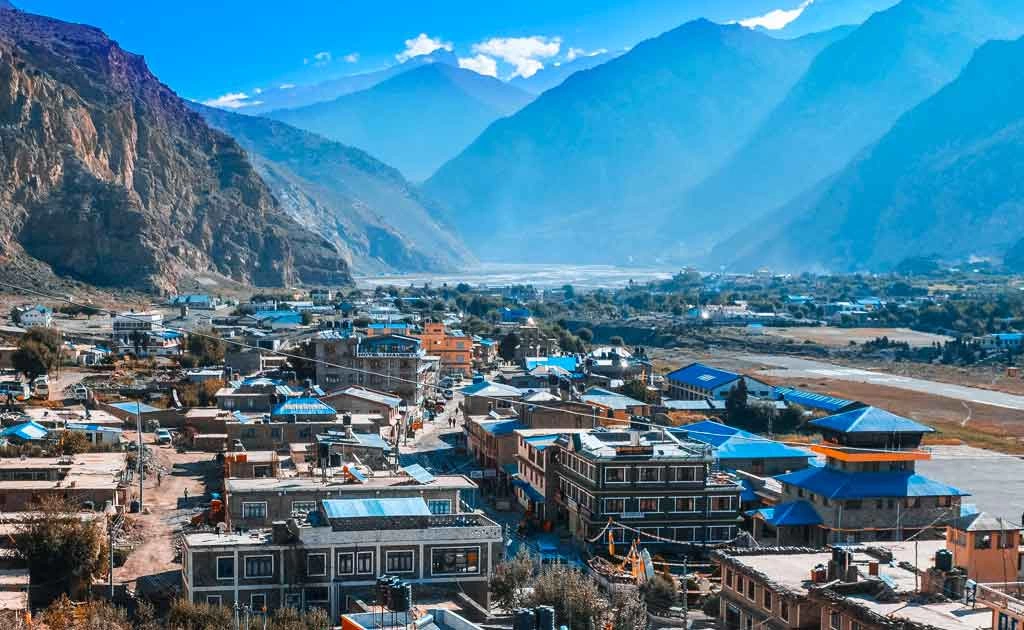
You’ve landed at Jomsom, the wind is already picking up over the valley, and the temple is still 20-odd kilometres and a 1,000-meter climb away. Choosing the right Jomsom Airport to Muktinath private vehicle isn’t just a comfort question—on this stretch, it genuinely shapes how the rest of your pilgrimage day unfolds. This guide compares every real option available at Jomsom Airport: Scorpio jeep, car, Hiace van, and local bus, with honest guidance on which actually suits this route and which don’t.
This guide covers real distances, drive times, costs, schedules, and vehicle-by-vehicle honesty about what works on this short but demanding mountain stretch so that you can plan your Muktinath trip with confidence rather than guesswork at the airport.
Why Vehicle Choice Matters on This Specific Stretch
The Jomsom-Muktinath road covers only about 20 to 25 kilometres, but climbs from Jomsom’s roughly 2,700 meters to Ranipauwa’s approximately 3,710 meters in that short distance, on a road that mixes improved sections with genuinely rough, unpaved stretches. Unlike longer routes where a comfortable highway vehicle can handle most of the distance before switching to a jeep for a final rough section, this entire stretch is the rough section. There’s no easy paved lead-in to soften the vehicle-choice decision.
Our broader guide on why 4WD is best for Nepal explains this terrain logic in general terms, and our dedicated Jomsom to Muktinath jeep rental guide covers the jeep option specifically in depth. This article widens the lens to compare every vehicle type travellers actually consider for this leg.
It’s worth being upfront about why this comparison matters more here than on almost any other short route in Nepal: most travellers reaching Jomsom Airport have already invested considerable time and money getting there — a flight from Pokhara, permits, possibly days of prior travel — and the last thing anyone wants is for the final, shortest leg of the journey to become the least comfortable or most stressful part of the entire trip—getting this one decision right is disproportionately important, given how short the distance is.
Understanding Jomsom Airport Itself
Jomsom Airport is a small, single-runway facility known for its dramatic mountain setting and its equally dramatic wind-dependent flight schedule. Flights operate almost exclusively in the early morning, before winds strengthen enough to make the short runway genuinely risky for landing and takeoff. This means your vehicle transfer to Muktinath will almost always begin in the morning, regardless of which option you choose, which works in your favour given the same wind pattern that governs the road itself.
It’s worth building a small buffer into your plans around the airport experience — luggage collection can take time, and if you haven’t pre-arranged ground transport, locating and confirming a vehicle on arrival adds further delay before you’re actually on the road. Many travellers underestimate this small but real buffer, arriving with plans that assume an immediate, frictionless transition from plane to vehicle.
Ranipauwa vs Muktinath: Where the Road Actually Ends
A small but genuinely useful detail: your vehicle, whichever type you choose, will drop you at Ranipauwa, the village just below the temple, not at Muktinath Temple itself. From Ranipauwa, a short uphill walk of roughly 15 to 20 minutes covers the remaining distance to the temple complex. This isn’t a significant extra burden for most travellers, but it’s worth knowing in advance so you don’t expect your vehicle to take you directly to the temple gates.
Understanding the Route: Distance, Altitude, and Road Character
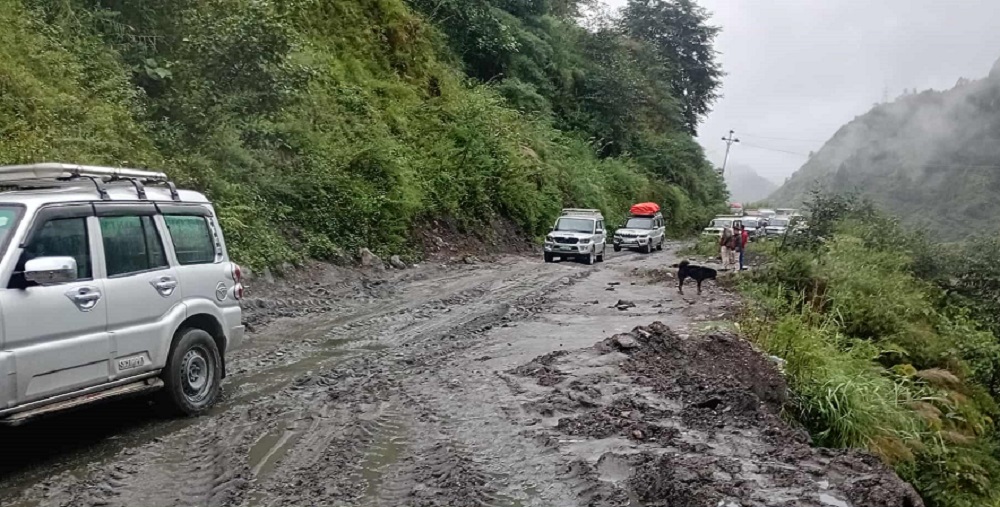
The drive from Jomsom Airport to Muktinath (technically to Ranipauwa, the village just below the temple, where the road ends) covers roughly 20 to 25 kilometres, climbing over 1,000 meters in the process. The road passes through Kagbeni, Jharkot, and Khingar, mixing recently improved sections with older, rougher gravel stretches, particularly closer to Ranipauwa. Afternoon winds in the Kali Gandaki valley are a near-daily feature, so vehicle choice and departure timing matter more here than on most short Nepal drives.
This valley helps make the Kali Gandaki Gorge one of the deepest gorges on earth, and the road sits exposed along the valley floor and lower slopes, with little natural wind shelter for most of the drive. This geography is precisely why the afternoon wind pattern is so consistent and predictable — cool air funnels up from the lowlands as the day warms, intensifying through the afternoon before easing again toward evening.
Traveller Type Deep Dive: Pilgrims
Hindu and Buddhist pilgrims visiting Muktinath specifically for darshan or religious observance often prioritise timely arrival over cost savings, particularly older pilgrims or those travelling with family for a significant religious occasion. A private jeep, booked in advance so it’s waiting at the airport, removes uncertainty at the point in the trip where it feels most unwelcome—after a flight, before a meaningful temple visit.
Traveller Type Deep Dive: Trekkers
Trekkers using Jomsom as an entry or exit point for the wider Annapurna Circuit or Upper Mustang region often have more schedule flexibility and a higher tolerance for basic transport, making the local bus or shared jeep a genuinely reasonable choice, especially if budget matters more over a longer overall trip. That said, trekkers on a tight itinerary—say, needing to catch a specific Jomsom-Pokhara flight the same day—often find the private jeep’s schedule certainty worth the extra cost.
Traveller Type Deep Dive: Photographers and Casual Tourists
Travellers primarily visiting for the scenery, photography, or to see Muktinath as part of a broader Nepal trip often value the private jeep’s flexibility to stop along the way more than any other traveller type covered in this guide, since the ability to pause at Kagbeni or a particularly striking viewpoint genuinely enhances the experience in a way a fixed-schedule bus cannot accommodate.
Option 1: Scorpio Jeep (The Recommended Standard)
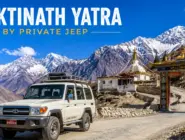
A Scorpio jeep hire is the standard, most widely used vehicle for this route, and for good reason: genuine 4WD, high ground clearance, and a rugged build that handles the rough gravel sections without drama. Private charters typically accommodate up to six passengers plus luggage, and the drive takes roughly 45 minutes to just over an hour, depending on conditions.
- Best for: most travellers, families, and small groups wanting reliability and comfort together
- Pros: genuine off-road capability, comfortable for the group, flexible timing
- Cons: costs more than a shared bus or shared jeep seat
For travellers who’ve already flown a small mountain aircraft into a runway carved into the valley floor, a Scorpio jeep’s steady, predictable handling on the ground feels like a natural continuation of that same sense of capability — this is a vehicle genuinely built for exactly this kind of terrain, not adapted to it as an afterthought.
Option 2: Car or Local Taxi
Small cars and local taxis do operate on this route, particularly for shorter hops or when jeeps aren’t immediately available. They sometimes cost less than a full jeep charter. That said, a standard car is a meaningfully less capable choice on this specific stretch than a genuine 4WD — lower ground clearance and less robust suspension make the rougher sections a rougher ride. In wet or icy conditions, traction becomes a real concern. Where available, a car or taxi can work for a quick, opportunistic trip in good weather, but it isn’t the recommended default for this route the way it might be for a paved highway transfer elsewhere in Nepal.
- Best for: solo travellers or pairs in good weather, prioritising immediate availability over comfort
- Pros: sometimes cheaper, sometimes more readily available on short notice
- Cons: less capable on rough or wet sections; less comfortable for the climb
Many of the vehicles marketed as ‘taxis’ on this route are higher-clearance local vehicles rather than standard sedans, since a genuine city car would struggle on the rougher stretches. Confirm exactly what vehicle you’re being offered before assuming ‘taxi’ means the same thing here as it would in Kathmandu or Pokhara.
Option 3: Hiace Van
A Hiace is Nepal’s standard group vehicle for highway travel, but it is not commonly used on the Jomsom-Muktinath stretch itself, and this guide doesn’t recommend it for this specific leg. Unlike routes where a Hiace comfortably covers a paved approach before switching to jeeps for a rough final stretch — the pattern covered in our Muktinath temple Hiace hire guide — the entire Jomsom-Muktinath road is the rough stretch, with no easier paved lead-in for a Hiace to handle. Large groups arriving at Jomsom Airport should plan to split directly into multiple jeeps for this leg rather than expecting a single larger vehicle to manage it.
- Best for: not recommended for this specific stretch
- Pros: none specific to this route — better suited to paved approach legs elsewhere in a Mustang itinerary
- Cons: lower ground clearance and less suited to rough gravel sections than a jeep
Option 4: Local Bus
A local bus runs between Jomsom and Muktinath, typically departing around 9 a.m. and 2 p.m., taking roughly 2 to 3 hours and costing only a few dollars per seat—by far the cheapest option on this route. The trade-off is what you’d expect: a fixed, limited schedule, shared seating with other passengers, and a much less comfortable ride on rough sections than in a private jeep. For budget-conscious solo travellers with flexible timing, this remains a genuinely viable option; for anyone time-constrained or travelling with family, the fixed departure windows are a real limitation.
- Best for: solo, budget-conscious travellers with flexible schedules
- Pros: by far the cheapest option
- Cons: fixed departure times (typically 9 a.m. and 2 p.m.), shared seating, least comfortable ride.
One practical consideration with the bus option: if you miss the morning departure, you’re often waiting until early afternoon for the next one, which can eat significantly into a tightly planned day, particularly if you also want time to properly visit the temple and explore Ranipauwa or Kagbeni before returning to Jomsom for a flight.
Option 5: Shared Jeep
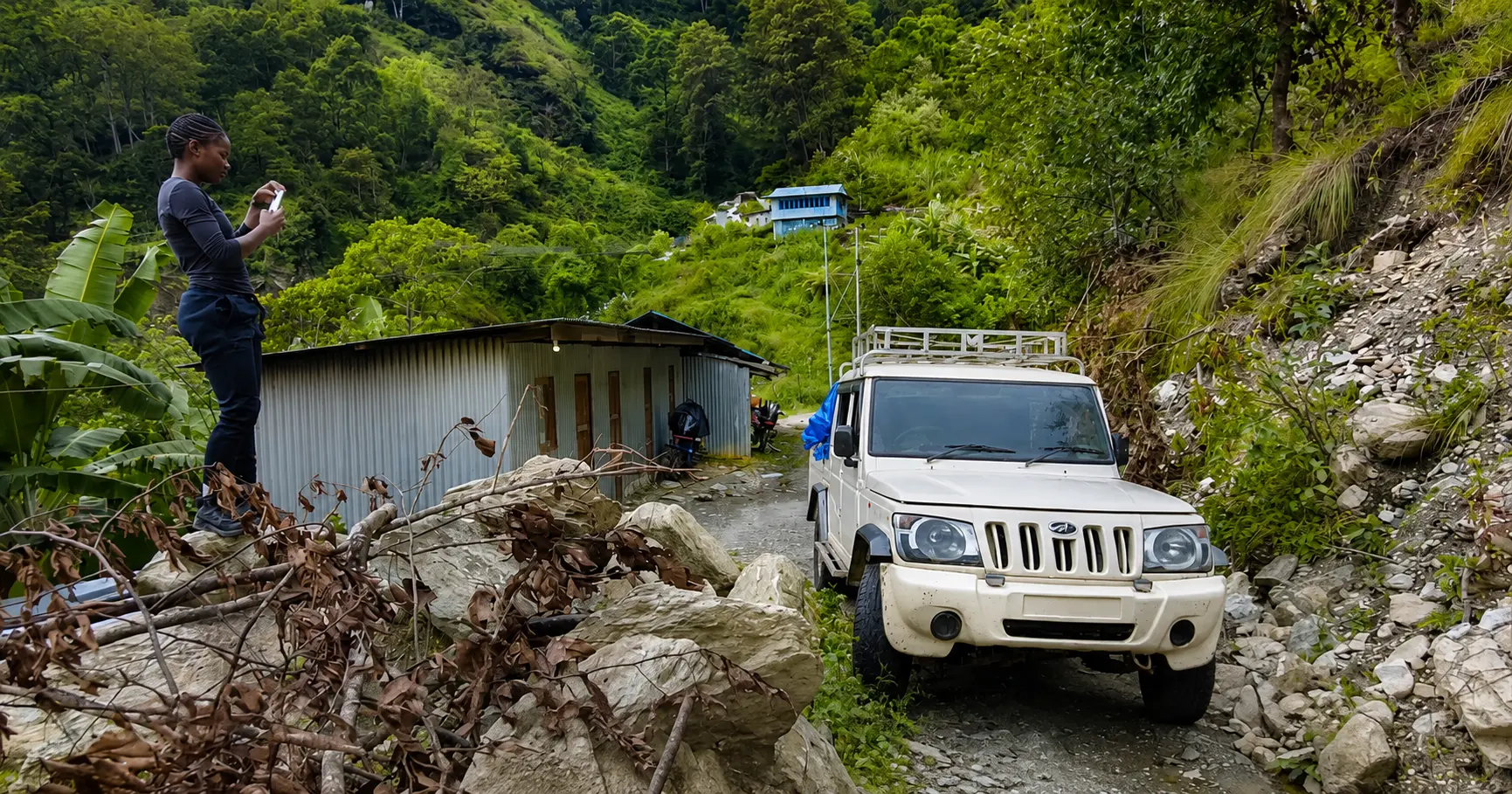
A middle-ground option between the local bus and a private jeep charter, a shared jeep departs only when full, offering more flexibility than the bus at a lower cost than a private charter. The trade-off is genuine 4WD comfort shared with strangers, with no control over when the vehicle actually departs.
- Best for: solo or paired travellers wanting jeep comfort without private charter cost
- Pros: cheaper than private charter, more flexible than the fixed-schedule bus
- Cons: departs only once full, shared with other passengers
Choosing a Reliable Operator
- Confirm the operator has genuine, current experience specifically on the Jomsom-Muktinath stretch, not just general Mustang region driving.g
- Ask directly whether your vehicle is a genuine 4WD jeep or a lower-clearance car marketed loosely as a ‘taxi’
- Request confirmation of pickup timing at Jomsom Airport, including how flight delays are handled
- Check whether your quoted price is per vehicle (private charter) or per seat (shared), since these are priced very differently.
- Ask about the driver’s experience with the valley’s afternoon wind pattern and how that affects their recommended departure timing.
Altitude and Health Considerations
Ranipauwa’s roughly 3,710-meter elevation is high enough to warrant basic altitude awareness, particularly for travellers who’ve flown directly into Jomsom without gradual acclimatisation. Whatevervehicle you choose, avoid rushing into strenuous activity on arrival at Ranipauwa, stay hydrated throughout the drive, and watch for mild headache, nausea, or unusual fatigue, adjusting your pace rather than pushing through.
Side-by-Side: Which Vehicle Actually Fits Your Trip
Travelling solo on a tight budget: take the local bus or a shared jeep seat, accepting the fixed schedule or waiting for a full vehicle.Travelling as a couple or small family: take a private Scorpio jeep charter, split the cost across the group, and keep full control of the schedule.Travelling as a larger group or pilgrimage party: multiple private jeeps rather than a single larger vehicle, since neither a car nor a Hiace suits this specific stretch — see our Muktinath temple Hiace hire guide for how to structure a larger group’s full itinerary around this reality.
Travelling with limited time: book a private jeep in advance so you’re not waiting for a shared vehicle to fill or working around the bus’s fixed departure windows.
A History of Transport on This Route
For decades, the only way between Jomsom and Muktinath was on foot or by mule, a journey that took pilgrims and traders alike most of a day. Road construction reaching this far into the Mustang region is relatively recent, part of a broader wave of rural road expansion that has reshaped access across Nepal’s mid-hill and high-mountain districts over the past decade or so.
Understanding this history adds context to why the road still feels rough in places — it’s a genuinely young piece of infrastructure by any standard, still being incrementally improved rather than a mature, long-settled route. Older maps and trekking accounts of the region still occasionally reference the multi-day foot journey this drive has now largely replaced, a useful reminder of how quickly access to this part of Nepal has changed.
This also explains why online information about this route can quickly go stale. Trip reports and travel guides written even a few years ago may describe road conditions, vehicle options, or pricing that no longer reflect the current situation, making it worth confirming details directly with a current, locally experienced operator rather than relying solely on older sources.
Cultural Significance of the Journey Itself
For Hindu and Buddhist pilgrims specifically, the journey from Jomsom to Muktinath carries meaning beyond simple transportation — passing through Kagbeni, itself a place of some religious significance, and approaching the temple through increasingly stark, sacred high-desert terrain that has drawn pilgrims for centuries, long before any road existed at all. Whichever vehicle you choose, take a moment during the drive to appreciate that you’re covering, in under an hour or two, a journey pilgrims once spent days completing on foot.
Weather and Seasonal Considerations for This Route
Autumn and spring bring the most stable overall conditions, both for the Pokhara-Jomsom flight and for the road itself. Winter can bring snow and ice at these elevations, making a genuine 4WD considerably more valuable than in the drier months. In contrast, monsoon season brings its own risk of localised flooding or washout on the rougher sections, even though this valley sits in a rain-shadow zone less affected by monsoon than most of Nepal. No matter what season you’re travelling, check current road conditions with your operator shortly before departure, since conditions here can shift meaningfully within a few days.
Communicating With Your Driver
Most drivers working with established operators on this route have functional English, though a few basic Nepali phrases go a long way in building rapport over a short but shared journey. Confirm before departure how to communicate any change of plans — a longer stop at Kagbeni, an earlier or later return — so expectations are clear on both sides throughout the trip.
What Makes This Route Unique Compared to Other Nepal Transfers
Few routes in Nepal compress this much altitude gain, terrain change, and genuine vehicle-choice consequence into such a short distance. Most comparable mountain approaches — Besisahar to Chame, for instance, or the road toward Rolwaling’s Chhetchhet trailhead — cover considerably more distance to achieve a similar effect. Jomsom to Muktinath does it in barely 20 kilometres, which is exactly why this guide treats vehicle choice as a genuinely significant decision rather than a minor afterthought.
Comparing This Route to Other Nepal Airport-to-Trailhead Transfers
Jomsom isn’t the only Nepal airport where the final ground transport leg matters enormously. Similar considerations apply for travellers connecting through Kathmandu airport transfers onward to trekking regions. However, most other airport-to-trailhead transfers in Nepal at least offer some paved highway distance before conditions roughen. Jomsom’s near-total lack of an easy lead-in is genuinely unusual, and part of why this specific comparison guide exists as a standalone resource rather than folding into a broader Mustang region overview.
Checklist Before You Fly Into Jomsom
- ACAP permit arranged in Kathmandu or Pokhara before departure
- Ground transport booked in advance, ideally a private jeep, with pickup confirmed for your specific flight
- Sufficient Nepali rupees for the leg itself and any stops along the way
- Warm, windproof layers packed accessibly rather than in checked luggage
- A realistic same-day or overnight plan for the return leg, confirmed with your driver or operator
Working through this short checklist before your flight removes almost all the uncertainty this guide has focused on throughout — the goal isn’t to overcomplicate a genuinely short journey, but to make sure the one variable that actually matters here, vehicle choice, is settled well before you land.
Combining This Leg With a Wider Mustang Itinerary
Few travellers treat the Jomsom-Muktinath drive as an isolated trip. Most connect it to a wider Mustang or Muktinath pilgrimage itinerary — see our best time to visit Muktinath guide for full seasonal planning, our jeep rental for Mustang tour guide if you’re continuing north into the restricted Upper Mustang zone beyond Kagbeni, or our Muktinath temple Hiace hire guide if you’re organising a group’s full trip from Pokhara or Kathmandu rather than just the Jomsom Airport leg covered here.
Cost Comparison
Local bus fares run only a few dollars per seat, the cheapest option by a wide margin. Shared jeep seats cost more than the bus but less than a private charter, varying with demand and season. A private jeep charter is priced per vehicle rather than per seat — commonly cited in the range of roughly USD 40 to 45 for the Jomsom-Muktinath leg specifically when booked locally. However, rates vary by operator, season, and whether you book in advance from Pokhara or Kathmandu versus on the ground in Jomsom. For a group of four to six, per-vehicle pricing often works out to be comparable to, or cheaper than, the same group booking individual shared-jeep or taxi fares.
Planning Your Overall Trip Timeline
Most travellers flying into Jomsom plan their Muktinath visit as part of a broader multi-day Mustang or Annapurna region itinerary rather than an isolated day trip. Building in at least one buffer day around your Jomsom flight—whether flying in or out—accounts for the real possibility of weather-related delays and prevents a single missed connection from cascading through the rest of a tightly scheduled trip.
Comparing This Leg’s Cost to the Rest of a Mustang Trip
In the context of a full Mustang or Muktinath pilgrimage budget — flights, permits, accommodation, guide fees if applicable — the cost difference between a private jeep and a local bus for this specific short leg is relatively modest. Many travellers who might otherwise default to the cheapest option on principle find that, once they see the full trip budget in context, the private jeep’s comfort and schedule certainty are a small price relative to the overall investment already made in reaching Jomsom.
What Happens if Your Jomsom Flight Is Delayed
Flight delays into Jomsom are common, particularly outside the reliable morning window, given the valley’s wind patterns. If you’ve pre-booked a private jeep, a reputable operator will track your actual arrival rather than the originally scheduled time, and adjust the driver’s wait accordingly. This is one of the clearest practical advantages of booking a private vehicle in advance over relying on whatever transport happens to be available when you eventually land—your ground transport won’t have to guess your arrival time.
Family Travel Considerations
Families travelling with children or elderly members should weigh comfort more heavily than budget for this leg, given how physically jarring the rougher sections can feel in a less capable vehicle. A private Scorpio jeep, with its more stable ride and the flexibility to pause if anyone needs a break, is generally the more sensible choice for family groups than the fixed-schedule bus or a cramped shared jeep.
Solo Traveller Considerations
Solo travellers have the most flexibility ty weigh cost against comfort, without coordinating a group’s preferences. Budget-focused solo travellers can reasonably choose the bus or a shared jeep, accepting the trade-offs covered throughout this guide. At the same time, prioritising comfort can justify a private jeep’s cost more easily when compared against a single traveller’s overall trip budget rather than split unevenly across a group with different priorities.
Round-Trip Planning: Same-Day Return to Jomsom
Many travellers complete their Muktinath visit and return to Jomsom the same day, particularly those with an onward flight or continuing overland the same day. A private jeep makes this much easier to coordinate than relying on the bus’s fixed schedule or a shared jeep that fills up in both directions. If your itinerary depends on a same-day return, confirm this explicitly with your driver or operator when booking, rather than assuming a one-way transport arrangement includes it automatically.
Travel Time by Vehicle Type
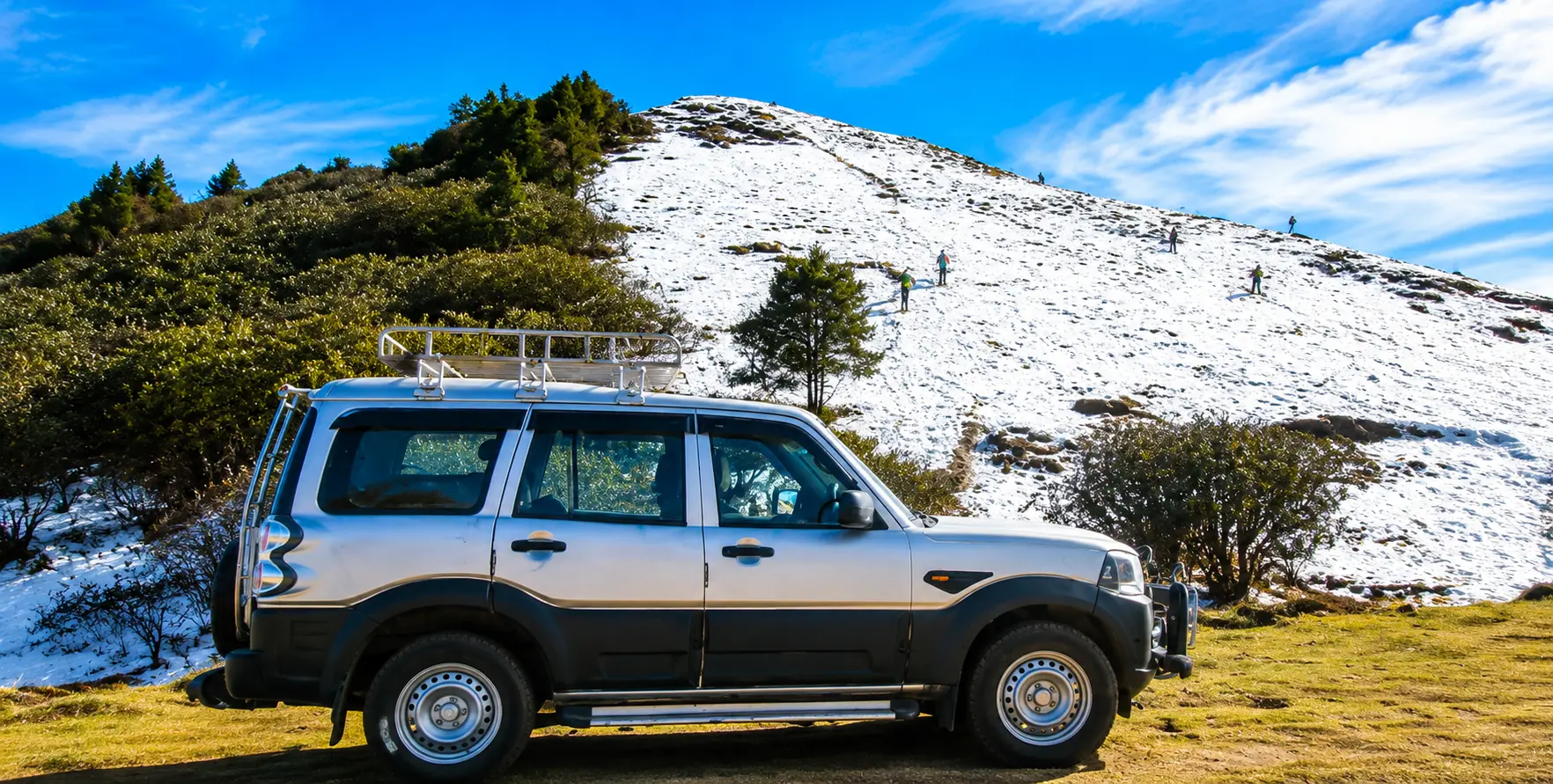
A private jeep covers the route in roughly 45 minutes to just over an hour under normal conditions. A shared jeep takes a similar driving time but adds unpredictable waiting time before departure. The local bus, given its fixed stops and shared nature, generally takes closer to 2 to 3 hours door to door. In good conditions, a car or taxi’s actual driving time is comparable to a jeep’s, though it may need to slow further on the roughest sections because of its lower clearance.
What Drivers on This Route Know That Guidebooks Don’t
Experienced local drivers on the Jomsom-Muktinath stretch carry a kind of practical knowledge that rarely makes it into written guides — which specific sections tend to wash out first after rain, where the wind hits hardest and earliest in the afternoon, and which of the two main villages along the way (Kagbeni or Jharkot) is worth a stop on a given day based on light and weather. This is one of the strongest arguments for booking through an operator with genuine, current experience on this exact route rather than a general Mustang-region driver unfamiliar with this specific stretch’s particular quirks.
Documents and Cash to Carry
Beyond your ACAP permit, carry sufficient Nepali rupees for this leg, since card payment isn’t available for local transport on this route, whichever vehicle you choose. If you’re arranging a private jeep in advance through an agency, confirm whether you pay before arrival or directly to the driver on the ground, and keep a copy of any booking confirmation accessible in case you need it to identify your pre-arranged vehicle at the airport. It’s a small piece of paperwork, but it can save time and prevent confusion in a busy arrivals area, especially during peak pilgrimage season when several jeeps and drivers may be waiting for different pre-booked groups at once.
Permits Required
Regardless of which vehicle you choose, every visitor needs a valid ACAP (Annapurna Conservation Area Permit) for this route, since it runs entirely within the Annapurna Conservation Area. Our ACAP permit guide covers exactly where to get it in Kathmandu or Pokhara before you fly into Jomsom — it isn’t available at the airport, so arrange it before you travel.
How This Guide Fits Into Your Wider Trip Planning
This guide deliberately focuses narrowly on one short but consequential leg of a much larger journey. If you’re still working out the broader shape of your trip — how you’re reaching Jomsom in the first place, whether you’re continuing into Upper Mustang afterwards, or how this fits alongside other Nepal destinations — our wider Mustang and Muktinath region guides, linked throughout this article and gathered in the resource section below, are the natural next stop. Treat this page as the detailed answer to one specific, important question within a much bigger trip you’re piecing together.
One Last Practical Note: Confirming Your Booking
Whichever vehicle you ultimately choose, get your booking confirmation in writing — even a simple message thread with your operator confirming vehicle type, price, and pickup arrangements — before you fly. This small step protects you from any confusion or last-minute renegotiation at the airport, particularly during peak season when demand for jeeps at Jomsom can genuinely outstrip supply on the busiest mornings. Atravellerr who lands with a confirmed booking in hand is in a categorically stronger position than one hoping to arrange transport fresh on arrival.
Frequently Confused Terms for This Route
A few terms are worth clarifying: a private jeep charter means your group has exclusive use of the vehicle, priced per vehicle rather than per passenger. A shared jeep departs once full with unrelated passengers and is priced per seat. On this route, ‘taxi’ usually refers to a small local vehicle rather than a standard highway car, given the terrain. Ranipauwa and Muktinath are often used interchangeably, though technically Ranipauwa is the village where the road ends, with a short walk up to the temple.
It’s also worth distinguishing this Jomsom-Muktinath leg from the broader Kathmandu or Pokhara approach into the Mustang region. Some travellers fly directly into Jomsom, as this guide assumes throughout, while others drive the full overland route from Pokhara via Beni and reach Jomsom by road rather than air. Both approaches converge at Jomsom, after which everything covered in this guide applies equally regardless of how you got there.
Group Size Guidance by Vehicle
- Solo or pair: local bus, shared jeep, or a private jeep if budget allows and schedule flexibility is limited
- Small family (3-4): a private Scorpio jeep that comfortably fits the group and luggage.
- Larger group (5-6): a single private jeep, at or near its comfortable passenger limit
- Group of 7 or more: multiple private jeeps rather than a single larger vehicle, given the lack of a suitable Hiace-class option for this specific stretch
This scaling logic holds regardless of whether your group is a family marking a personal milestone, a temple committee, an organised agee, or a mixed tour group assembled for the trip — the underlying vehicle math on this particular stretch doesn’t change based on why the group is travelling together, only how many people and how much luggage need to fit.
Booking Private vs Waiting for Shared Transport
Booking a private jeep in advance — ideally before you even fly into Jomsom — removes the single biggest source of frustration on this route: standing at the airport uncertain how long you’ll wait for a shared vehicle to fill, especially as afternoon winds approach and flying conditions elsewhere in your itinerary depend on tight timing. A pre-arranged private vehicle means your transport is waiting when you land, regardless of how busy or quiet Jomsom is that day.
Insurance and Emergency Preparedness
Given the altitude and remoteness of this route, basic travel insurance covering the relevant elevations is worth having in place regardless of which vehicle you choose. Medical facilities are minimal beyond Jomsom, and any serious issue during the drive or at Ranipauwa would require evacuation back toward Jomsom or, in urgent cases, onward to Pokhara. Carry a basic first-aid kit and any personal medications for the trip.
A Note on Comparing Quotes
When comparing quotes for this leg, confirm exactly what’s included: vehicle type, whether it’s private or shared, and whether the fare covers a round trip or one-way only. A quote that sounds unusually cheap may reflect a shared seat rather than a private vehicle, or a car rather than a genuine jeep; always confirm the specifics rather than comparing headline numbers alone.
Road Conditions and Safety
The road mixes recently improved sections with older gravel stretches, particularly closer to Ranipauwa, and dust is a near-constant feature in the dry season. Whichever vehicle you choose, an experienced local driver familiar with current conditions matters more here than on most short Nepal drives, given how quickly weather and wind can change conditions on this exposed valley road.
Best Time to Travel This Route
Morning departures are strongly preferred, before the Kali Gandaki valley’s characteristic afternoon winds pick up, typically by late morning to early afternoon. Autumn (September-November) and spring (March-May) offer the most stable overall conditions for both flights into Jomsom and the road itself, consistent with the broader seasonal pattern across the Mustang and Muktinath region covered in our best time to visit Muktinath guide.
Photography Along the Drive
Whichever vehicle you choose, the drive itself offers genuinely striking photography opportunities — the Kali Gandaki gorge’s stark, wind-carved terrain, Kagbeni’s medieval alleyways, and the first glimpses of Muktinath’s temple complex as you approach Ranipauwa. A private jeep lets you pause briefly for photos, something the fixed-schedule bus or a shared jeep waiting on other passengers generally can’t accommodate.
What to Pack
- Warm, windproof layers, regardless of season, given the valley’s near-constant wind
- Dust protection (a light scarf or mask) for the drier months
- Cash in Nepali rupees, since card payment isn’t available for local transport on this route
- Your ACAP permit, easily accessible rather than packed away, in case it’s checked along the way
- Sun protection, given the high altitude and often intense midday sun
Kagbeni: A Natural Stop Along the Way
Regardless of which vehicle you choose, Kagbeni sits roughly midway along the route and is worth a short stop if your schedule allows — a medieval-style village with narrow alleyways, mud-brick houses, and an old monastery, marking the traditional gateway to Upper Mustang. A private jeep makes this kind of flexible stop far easier to arrange than a fixed-schedule bus or a shared jeep on a tight timeline.
Group Travel Logistics
For groups arriving together at Jomsom Airport, plan directly for multiple jeeps rather than assuming a single vehicle will suffice — a group of twelve, for example, typically splits across two to three Scorpio-class jeeps. Our Muktinath temple Hiace hire guide covers this kind of group logistics in full, including how the jeep stage fits into a larger itinerary that may also involve a Hiace for other, more highway-suited legs of the same trip.
Vehicle Condition and What to Check Before Departure
Because this short route is demanding on tyres and suspension, ask about vehicle condition before departure, regardless of which option you choose. A well-maintained Jeep handles the rough sections predictably; a poorly maintained one — Jeep or otherwise — can turn a short drive into a genuinely uncomfortable and less safe experience. This matters more here than on longer, gentler highway routes precisely because the terrain offers no easy stretches to compensate for a tired vehicle.
Common Mistakes to Avoid
- Assuming a Hiace or standard car can comfortably handle this entire stretch the way it might handle a highway approach elsewhere
- Not booking a private jeep in advance and then facing a long wait for a shared vehicle to fill, especially in peak season.
- Planning a departure time that ignores the valley’s typical afternoon wind pattern
- Forgetting to arrange your ACAP permit before flying into Jomsom, since it isn’t available at the airport
- Underestimating how much rougher the road feels in a low-clearance car compared to a genuine 4WD
Booking Tips
- Book your private jeep in advance from Pokhara or Kathmandu rather than arranging transport only after landing.g
- Confirm exactly which vehicle type you’re being offered, not just a general ‘transport included’ promise.
- Ask about morning departure options specifically, to beat the afternoon winds.
- For groups, confirm how many vehicles you’ll need based on your actual group size before arrival. ival
- If budget is the top priority, ask locally about the current bus schedule, since departure times can shift slightly by season.
Comparing Quotes Across Operators
Before committing, compare a couple of quotes rather than booking the first option offered. Our ultimate Nepal vehicle rental guide covers general comparison-shopping advice that applies here, including confirming vehicle type, inclusions, and cancellation terms before finalising, regardless of which operator you choose.
A Word on Sustainable, Responsible Travel Here
The Annapurna Conservation Area, which encompasses this entire route, operates under a community-managed model funded partly by ACAP fees. Whichever vehicle you choose, supporting locally owned transport operators and drivers channels tourism income directly into the communities whose villages you’re passing through—Kagbeni, Jharkot, Khingar, and Ranipauwa all benefit far more from this kind of direct, local economic support than from spending concentrated only with larger, non-local operators.
Final Thoughts on Choosing Your Vehicle
This short stretch punches well above its weight in terms of how much vehicle choice actually matters. A private Scorpio jeep hire remains the sensible default for most travellers, the local bus a genuinely fine choice for the most budget-conscious and flexible, and cars or a shared jeep reasonable middle options depending on your specific priorities. What matters most is going in with realistic expectations rather than assuming any vehicle marketed as available at Jomsom Airport is equally suited to the climb ahead.
Why This Guide Compares Every Option Honestly
Many transport guides for popular routes quietly steer readers toward whichever option is most profitable to recommend, without genuinely weighing the alternatives. This guide has taken a different approach throughout: recommending the Scorpio jeep as the default for most travellers isn’t a sales pitch dressed up as advice; it’s a straightforward reflection of what actually handles this specific terrain best, while still giving the bus, shared jeep, and car options their fair, honest due for the travellers they genuinely suit. The same applies to being direct about the Hiace’s poor fit for this stretch, even though we’re equally happy to arrange it for the many other Nepal routes where it excels.
That honesty is worth more to you as a traveller than a one-size-fits-all recommendation, and it’s the same standard this guide applies across every route comparison we publish — matching the vehicle to the terrain and the traveller, not the other way around.
Summary: Key Facts for This Route
- Distance: roughly 20-2kilometresrs from Jomsom Airport to Ranipauwa/Muktinath
- Altitude gain: over 1,000 meters in a short distance
- Recommended vehicle: private Scorpio jeep for most travellers
- Private jeep cost: commonly around USD 40-45 for the full vehicle charter
- Local bus: departs roughly 9 a.m. and 2 p.m., taking 2-3 hours, cheapest option
- Drive time by jeep: 45 minutes to just over an hour
- Best time of day: morning, before afternoon winds pick up
- Permit required: ACAP, arranged before flying into Jomsom
A Final Word on This Route
It’s easy to underestimate a 20-kilometre drive, especially right after landing at one of Nepal’s most dramatically situated airports. This guide’s central point is simple: don’t. The Jomsom-Muktinath stretch rewards a little upfront thought about vehicle choice with a smoother, more comfortable start to what is, for many travellers, a genuinely meaningful pilgrimage or trekking milestone. Whether you choose the comfort and flexibility of a private jeep, the budget-friendly reliability of the local bus, or something in between, going in informed rather than improvising at the airport makes all the difference.
This guide covers every vehicle option that can get you to Muktinath. The real question this guide tries to answer honestly is which option gets you there in the way that best fits your trip—your budget, timeline, group size, and how much comfort matters after whatever journey it took to reach Jomsom in the first place.
Why Book With Nepal Vehicle Hiring Pvt Ltd
We arrange private Scorpio jeep transport for the Jomsom-Muktinath leg with drivers experienced on this specific stretch, along with the wider vehicle logistics for your full Mustang or Muktinath itinerary. Every booking includes transparent pricing agreed before you fly into Jomsom, so your transport is simply waiting when you land.
Reach out through our contact page to arrange your Jomsom Airport to Muktinath private vehicle, whether you’re travelling solo, as a couple, or coordinating a larger pilgrimage group.
Explore More Nepal Routes, Tours, and Vehicles
Whatever vehicle you choose for this leg, here’s a fuller map of the routes, tours, and vehicle options we cover, in case your trip extends further across the Mustang and Muktinath region and beyond.
Annapurna Circuit and Manang Region
See Pokhara to Manang transport, Manang to Kathmandu private jeep hire, Kathmandu to Manang jeep, Besisahar to Chame and Upper Pisang, why Dharapani is the Annapurna Circuit’s most popular starting point, Pokhara to Landruk jeep hire, Pokhara to Ghandruk jeep, Kathmandu to Ghandruk private jeep hire, and Pokhara to Sikles jeep rental.
Mustang and Muktinath Region
See our Jomsom to Muktinath jeep rental guide, our best time to visit Muktinath guide, our Muktinath temple Hiace hire guide, Upper Mustang 4WD jeep, our jeep rental for Mustang tour guide, places to visit in Mustang, Kathmandu to Mustang private jeep, Pokhara to Beni jeep hire, Muktinath to Pokhara jeep, the ACAP permit guide, and the Annapurna Conservation Area overview.
Annapurna Circuit and Manang Region
See Pokhara to Manang transport, Manang to Kathmandu private jeep hire, Kathmandu to Manang jeep, Besisahar to Chame and Upper Pisang, why Dharapani is the Annapurna Circuit’s most popular starting point, Pokhara to Landruk jeep hire, Pokhara to Ghandruk jeep, Kathmandu to Ghandruk private jeep hire, and Pokhara to Sikles jeep rental.
Kathmandu and Pokhara Transport: Explore Kathmandu to Pokhara bus tickets, Kathmandu to Pokhara bus tickets, Pokhara to Kathmandu buses, Kathmandu to Pokhara road trips, Kathmandu to Pokhara vehicle rentals, Kathmandu to Pokhara private SUVs, our Pokhara bus ticket price guide, VIP Sofa Bus hire in Nepal, and car hire in Pokhara.
Kathmandu Valley Sightseeing
Round out your trip with Kathmandu sightseeing, Kathmandu’s historical heritage sites, our Nepal UNESCO World Heritage Sites guide, Bhaktapur Durbar Square, Kathmandu to Nagarkot vehicle hire, the Nagarkot sunrise tour, Kathmandu airport transfers, our Thamel to airport private vehicle hire guide, and our airport pickup to Thamel and hotel drop guide.
Chitwan, Lumbini, and Border Routes
See Pokhara to Chitwan bus, Chitwan to Kathmandu bus, our Chitwan VIP bus ticket price guide, Kathmandu to Lumbini bus, Lumbini to Kathmandu bus, Sunauli to Pokhara car, our Muktinath tour from Sunauli border guide, and our Bhairahawa to Kathmandu private car guide.
Other Remote Trekking Gateways
See Kathmandu to Soti Khola, Kathmandu to Salleri-Phaplu, Kathmandu to Gorkha jeep service, Kathmandu to Besisahar bus ticket, Besisahar private vehicle hire, our Rolwaling Valley vehicle service guide, the Everest Base Camp trek, and our general trekking services.
Vehicle Fleet and Booking Resources
Compare our full fleet: jeep, car, Hiace, bus, coaster, car hire in Nepal, our alternate Hiace van hire listing, Toyota Land Cruiser 4WD hire, our SUV rental in Nepal guide, jeep and SUV comparison, why a genuine 4WD jeep matters, why private vehicle hire is the smartest way to travel Nepal, and our ultimate Nepal vehicle rental guide.
Plan and Learn More
Use our plan your trip tool, browse our Nepal tour package options, learn more about us, read our luxury trek vehicle hire guide, or browse our blog for further route guides across the country.
Frequently Asked Questions
What’s the best vehicle from Jomsom Airport to Muktinath? We recommend a private Scorpio jeep, which offers genuine 4WD capability and comfort for the climb.
Can a Hiace van handle this route? Not recommended — the entire stretch is rough mountain road with no easier paved lead-in, unlike routes where a Hiace covers a highway approach before switching to jeeps.
How much does a private jeep cost for this leg? Commonly cited around USD 40-45 for the full vehicle charter, though rates vary by operator and season.
Is there a local bus from Jomsom to Muktinath? Yes, typically departing around 9 a.m. and 2 p.m., taking 2-3 hours and costing only a few dollars per seat.
How long does the jeep ride take? Roughly 45 minutes to just over an hour under normal conditions.
Can I take a car or taxi instead of a jeep? Cars and taxis do operate on this route, though a genuine 4WD jeep handles the rough sections more capably and comfortably.
Do I need a permit for this route? Yes, you need an ACAP permit, which you can arrange in Kathmandu or Pokhara before flying into Jomsom.
What’s the best time of day to travel? In the morning, before the Kali Gandaki Valley’s characteristic afternoon winds pick up.
Is a shared jeep cheaper than a private charter? Yes, per person, but it departs only when it’s full rather than on your schedule.
Can I book my vehicle before landing at Jomsom? Yes, and we strongly recommend it so your transport is waiting when you land rather than arranged on the spot.
How many people fit in a private jeep? Typically, up to six passengers comfortably, plus luggage.
What should a large group do for this leg? Split across multiple private jeeps rather than expecting a single larger vehicle to handle the route.
Is the road between Jomsom and Muktinath paved? Partially — sections have been improved in recent years, but rougher gravel stretches remain, particularly near Ranipauwa.
Does weather affect vehicle choice on this route? Yes, wet or icy conditions make a genuine 4WD considerably more important than in dry, stable weather.
Do all group members need to travel in the same jeep? No, larger groups typically split across multiple jeeps, and family members or friends can usually request to travel together within the same vehicle.
Can I negotiate the price on the ground at Jomsom? Some flexibility may exist, but pre-booking secures both your vehicle and a confirmed, transparent price without needing to negotiate after a flight.
Is there a difference between weekday and weekend availability? Demand can be higher around major festival dates or peak-season weekends, but this route doesn’t see the dramatic weekday-weekend swings common on more urban routes.
Landing at Jomsom soon? Book your private vehicle from Jomsom Airport to Muktinath in advance through our contact page, so your transport is ready the moment you land.
- Jomsom Airport to Muktinath: Private Vehicle Options Compared
- Why Vehicle Choice Matters on This Specific Stretch
- Understanding Jomsom Airport Itself
- Ranipauwa vs Muktinath: Where the Road Actually Ends
- Understanding the Route: Distance, Altitude, and Road Character
- Traveller Type Deep Dive: Pilgrims
- Traveller Type Deep Dive: Trekkers
- Traveller Type Deep Dive: Photographers and Casual Tourists
- Option 1: Scorpio Jeep (The Recommended Standard)
- Option 2: Car or Local Taxi
- Option 3: Hiace Van
- Option 4: Local Bus
- Option 5: Shared Jeep
- Choosing a Reliable Operator
- Altitude and Health Considerations
- Side-by-Side: Which Vehicle Actually Fits Your Trip
- A History of Transport on This Route
- Cultural Significance of the Journey Itself
- Weather and Seasonal Considerations for This Route
- Communicating With Your Driver
- What Makes This Route Unique Compared to Other Nepal Transfers
- Comparing This Route to Other Nepal Airport-to-Trailhead Transfers
- Checklist Before You Fly Into Jomsom
- Combining This Leg With a Wider Mustang Itinerary
- Cost Comparison
- Planning Your Overall Trip Timeline
- Comparing This Leg's Cost to the Rest of a Mustang Trip
- What Happens if Your Jomsom Flight Is Delayed
- Family Travel Considerations
- Solo Traveller Considerations
- Round-Trip Planning: Same-Day Return to Jomsom
- Travel Time by Vehicle Type
- What Drivers on This Route Know That Guidebooks Don't
- Documents and Cash to Carry
- Permits Required
- How This Guide Fits Into Your Wider Trip Planning
- One Last Practical Note: Confirming Your Booking
- Frequently Confused Terms for This Route
- Group Size Guidance by Vehicle
- Booking Private vs Waiting for Shared Transport
- Insurance and Emergency Preparedness
- A Note on Comparing Quotes
- Road Conditions and Safety
- Best Time to Travel This Route
- Photography Along the Drive
- What to Pack
- Kagbeni: A Natural Stop Along the Way
- Group Travel Logistics
- Vehicle Condition and What to Check Before Departure
- Common Mistakes to Avoid
- Booking Tips
- Comparing Quotes Across Operators
- A Word on Sustainable, Responsible Travel Here
- Final Thoughts on Choosing Your Vehicle
- Why This Guide Compares Every Option Honestly
- Summary: Key Facts for This Route
- A Final Word on This Route
- Why Book With Nepal Vehicle Hiring Pvt Ltd
- Explore More Nepal Routes, Tours, and Vehicles
- Frequently Asked Questions

Related Blog & Articles
Best time to visit Mustang Nepal
Altitude and Health: Essential Muktinath Advice
Best Time to Visit Muktinath