Jomsom Transport from Pokhara Airport

Jomsom Transport From Pokhara Airport: Car, Jeep, Scorpio, Hiace and Bus Guide

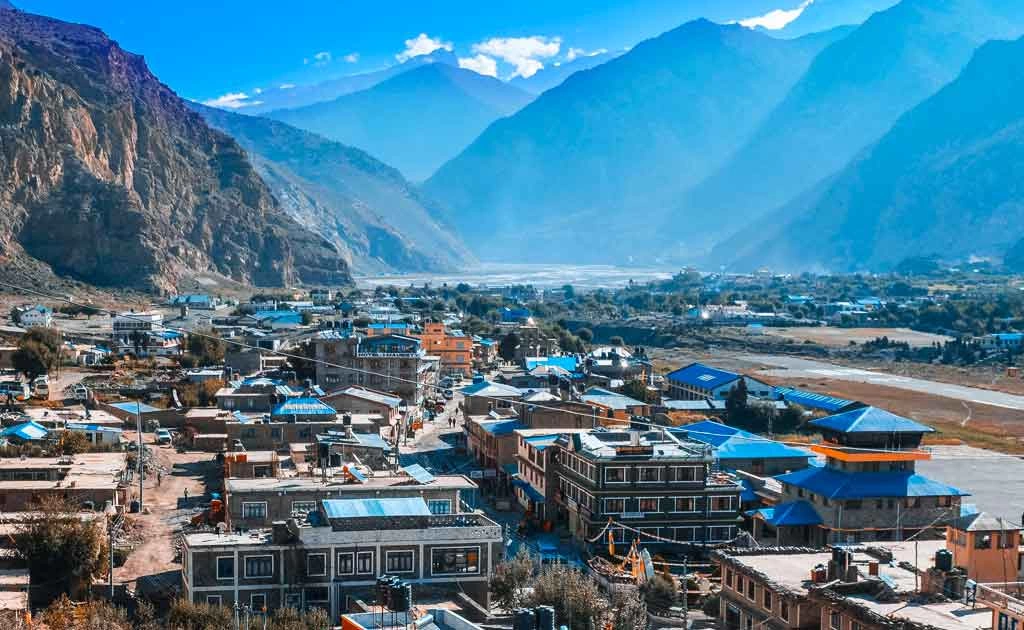
Jomsom, at around 2,720 meters in the Kali Gandaki valley, is the headquarters of Mustang district and the gateway to Muktinath, Kagbeni and Upper Mustang. Flights from Pokhara are short but often canceled by wind and cloud, so more and more travelers choose the road.

Reliable Jomsom transport from Pokhara Airport means a private vehicle from the arrivals hall to your hotel in Jomsom, along one of Nepal’s most dramatic drives: through the world’s deepest gorge, between Dhaulagiri and the Annapurnas.

This guide covers the route, realistic drive times, which vehicle suits the road (car, jeep, Scorpio, Hiace, Coaster, or bus), USD price ranges, permits, seasons, and safety. At Nepal Vehicle Hiring, we run Jomsom transport from Pokhara every season with experienced mountain drivers and well-maintained 4WD jeeps.

To book, send your flight details and group size via WhatsApp, or email [email protected], or use our trip planner.
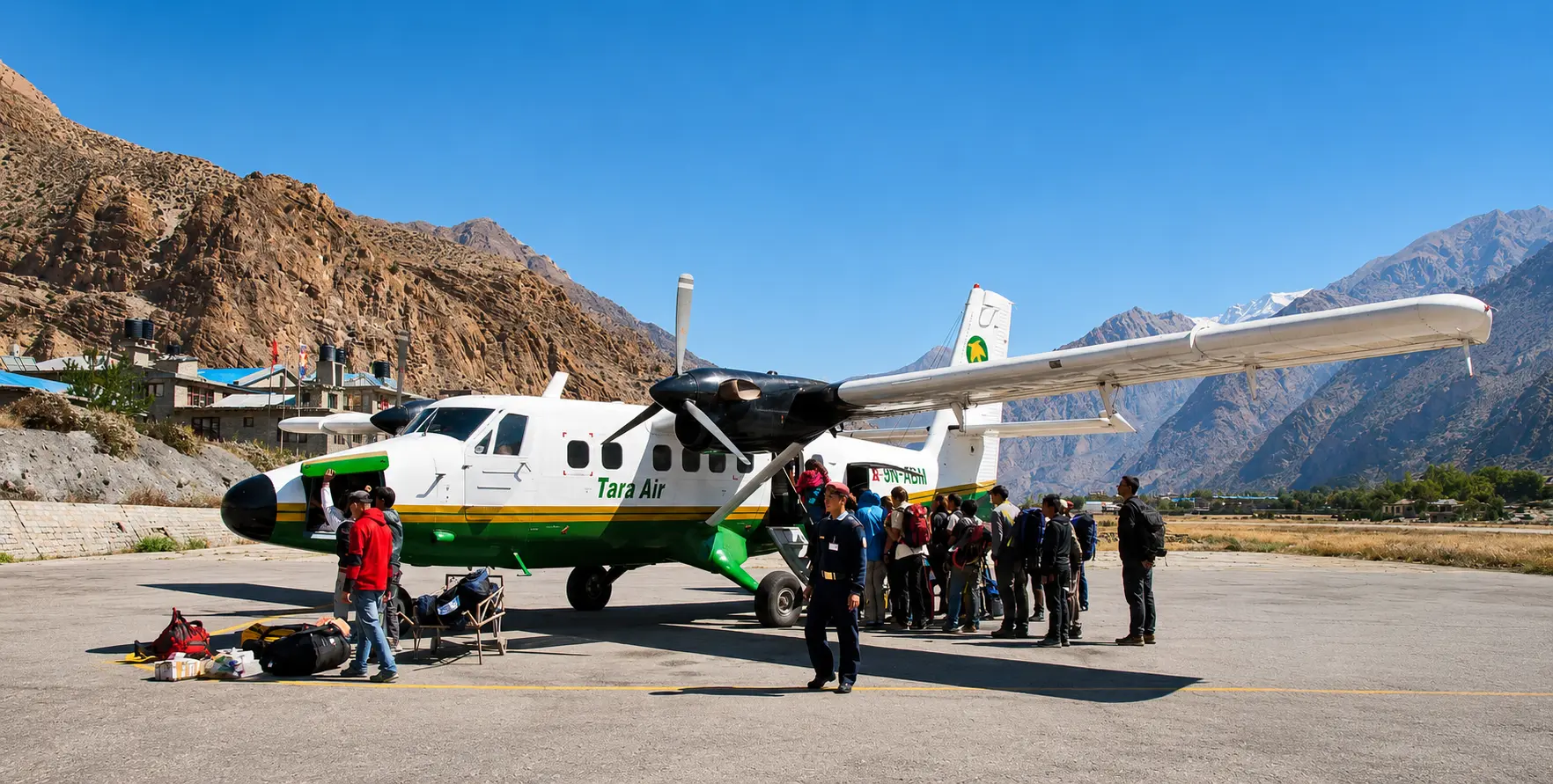
Jomsom aiport

Jomsom Transport at a Glance

Here’s a quick summary of Jomsom transport from Pokhara Airport before we look at each part in detail.

  • Pick-up: Pokhara International Airport arrivals or any Pokhara hotel
  • Drop-off: your hotel in Jomsom (around 2,720 m)
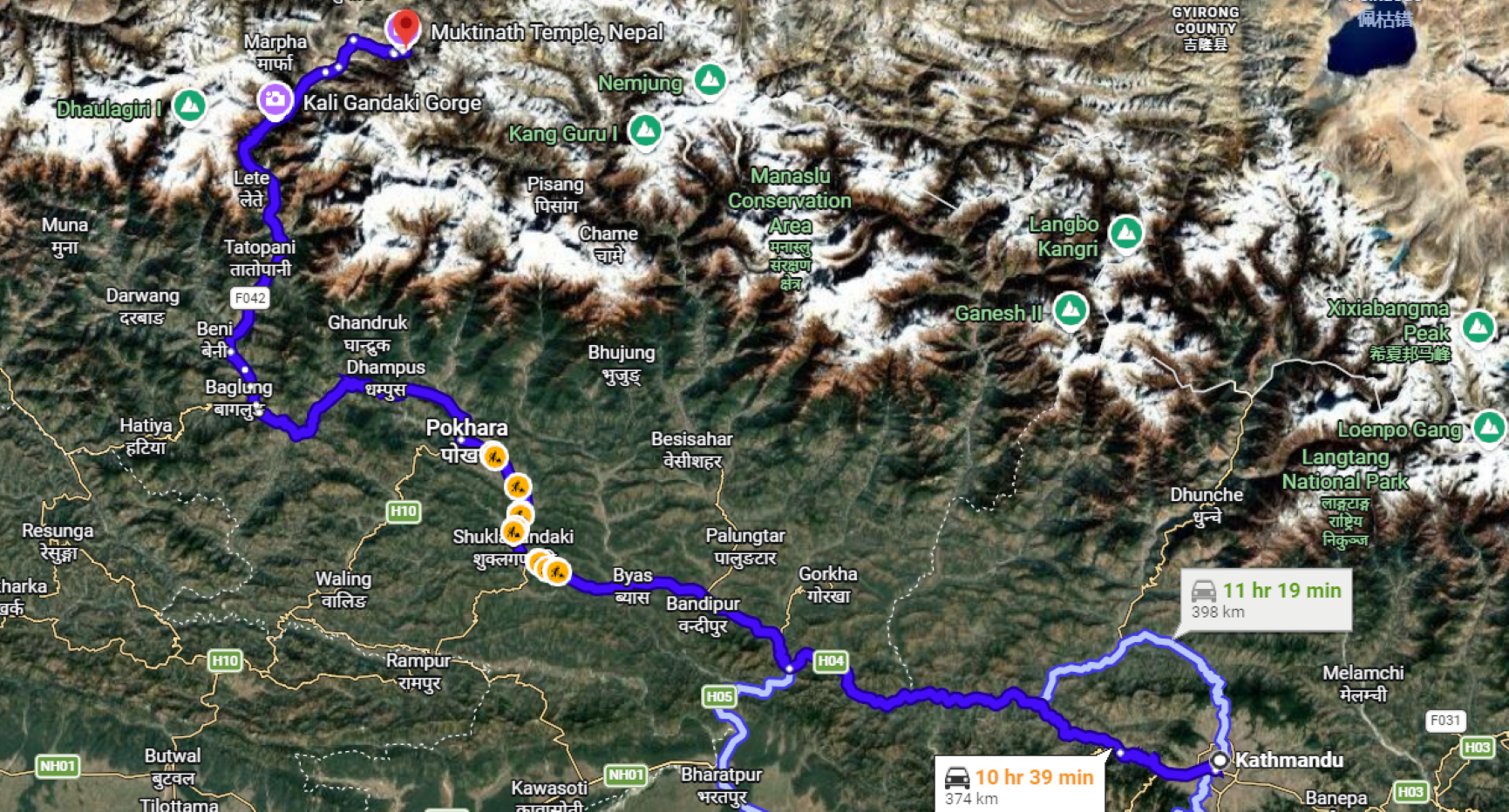
  • Distance: about 160–180 km depending on the start point
  • Route: Pokhara – Naudanda – Kushma – Beni – Tatopani – Ghasa – Lete – Kalopani – Tukuche – Marpha – Jomsom
  • Drive time: about 7 to 9 hours with stops
  • Road: paved to Beni, then a rough, partly upgraded mountain road beside the Kali Gandaki
  • Best vehicles: 4WD jeep or Mahindra Scorpio; Hiace, Coaster, or bus for groups in good conditions
  • Private jeep price range: about USD 220–270 one way

Why Choose Road Jomsom Transport?

Flights Are Weather-Dependent

Pokhara–Jomsom flights take only around 20 minutes, but strong winds in the Kali Gandaki mean they operate in the early morning and are often delayed or canceled. Road Jomsom transport runs whatever the cloud is doing.

See the Kali Gandaki Gorge

By road, you pass waterfalls, villages, and the gorge between Dhaulagiri and Annapurna I, both above 8,000 meters. It’s one of the great road journeys of the Himalaya.

No Baggage Limits

Small aircraft have tight baggage allowances. A private jeep carries all your luggage on the roof rack.

Straight From the Airport

Your driver meets you at Pokhara Airport and heads west. Stops in Lakeside for permits or cash are easy. See our Pokhara airport transfer.
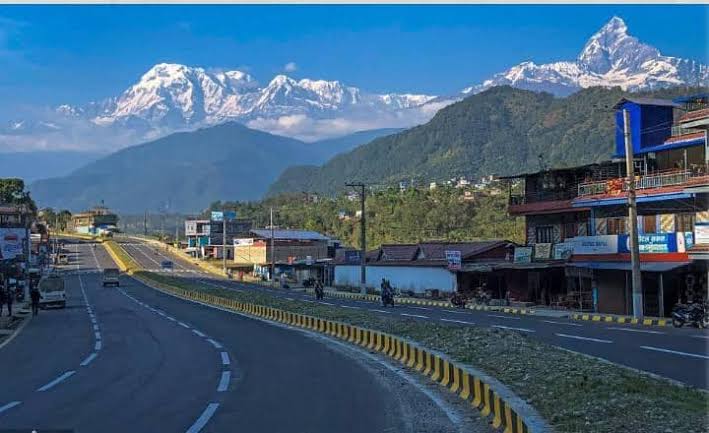
Jomsom Transport From Pokhara Airport

The Pokhara to Jomsom Route, Section by Section

Understanding the road helps you choose the right transport to Jomsom.

Pokhara to Beni

The paved highway climbs past Hemja, Naudanda, and Lumle, then descends through Kushma, known for its suspension bridges, to Beni, where the Kali Gandaki and Myagdi rivers meet. This takes around 2.5 to 3 hours from the airport. Beni is a good stop for tea and fuel.

See our Pokhara to Beni jeep.

Beni to Tatopani

North of Beni, the road follows the Kali Gandaki through Galeshwor to Tatopani, famous for its riverside hot springs. The surface is mixed, with paved and rough sections. Tatopani is a popular lunch stop and the turn-off for the steep track up to Ghorepani; see our Ghorepani transfer.

Tatopani to Ghasa

The valley narrows into the deepest part of the gorge. This is the most dramatic and challenging section, with cliffs, waterfalls such as Rupse Falls, and landslide zones. The road is rough and narrow in places.

Ghasa to Marpha

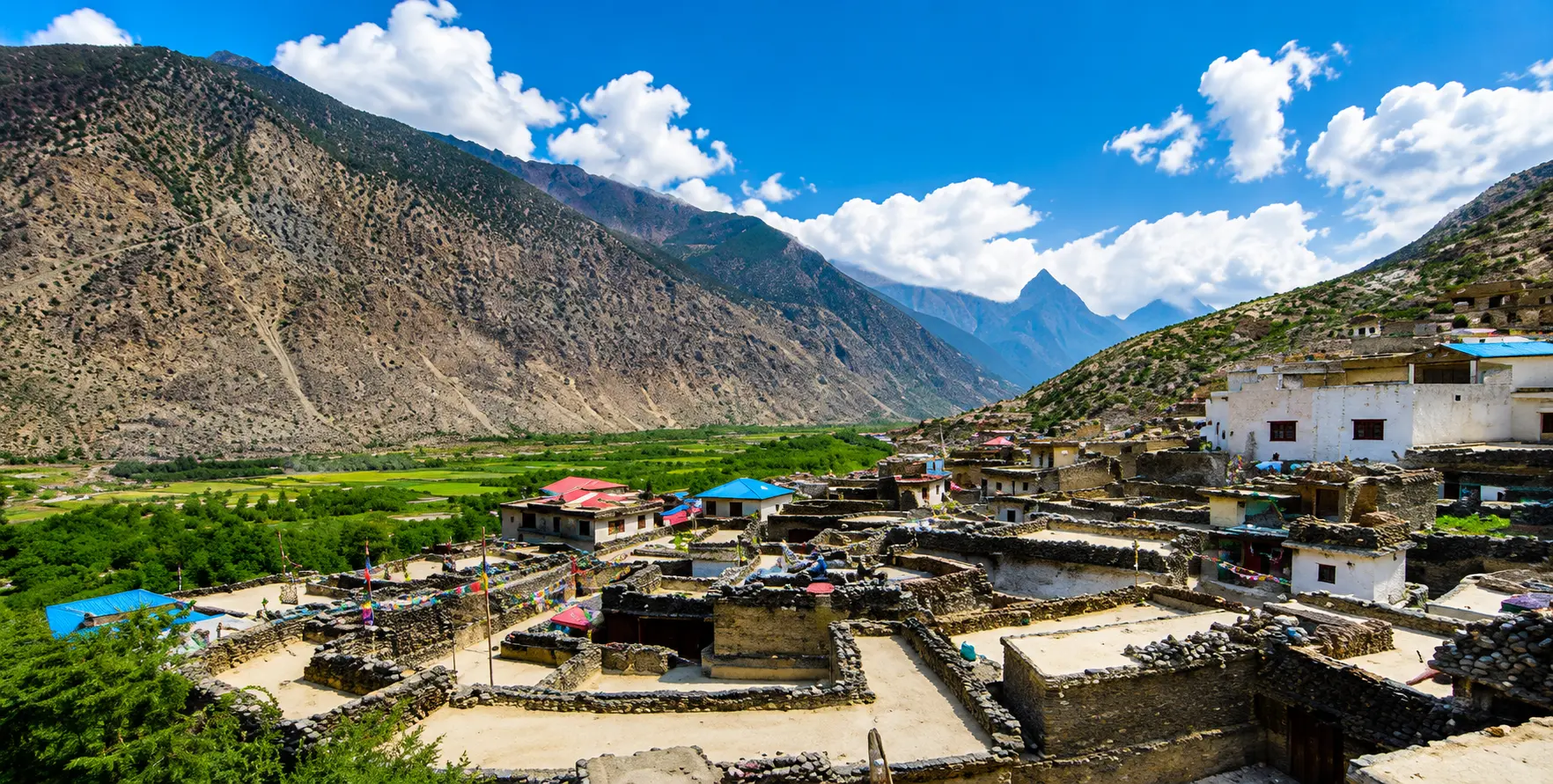
Beyond Ghasa, the landscape shifts from subtropical forest to pine, then to the dry, windswept terrain of Mustang. The road passes Lete and Kalopani, with close views of Dhaulagiri and Nilgiri, Larjung, and Tukuche. Marpha, a whitewashed Thakali village famous for apples and apple brandy, is the last stop before Jomsom.

Marpha to Jomsom

A short final stretch brings you into Jomsom. Afternoon winds blow strongly up the valley, so arriving by mid-afternoon is ideal.

NOTE: The road beyond Beni changes with every season and with ongoing road works. We check conditions before every Jomsom transport booking.
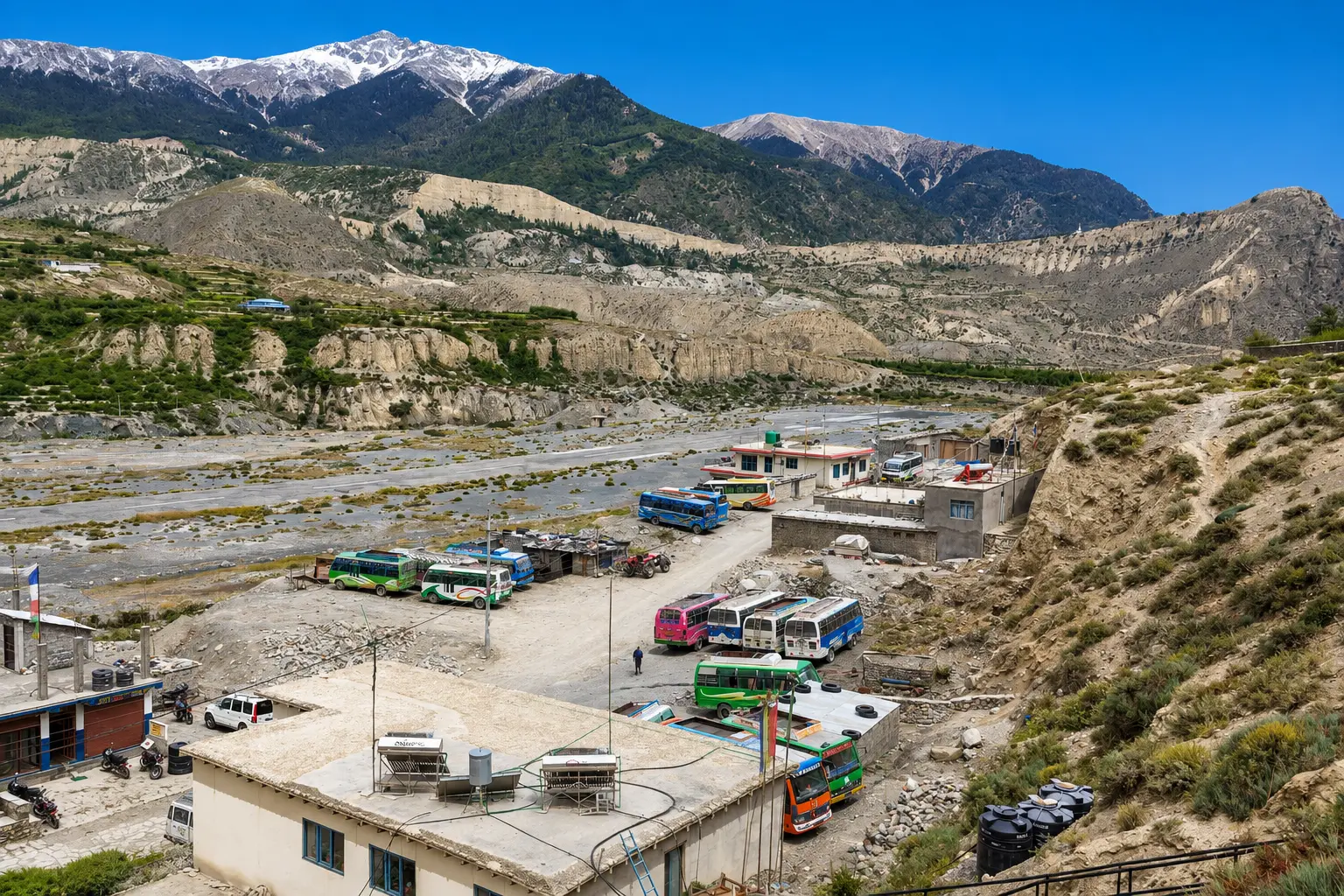
Jomsom valley

Which Vehicle Is Best for Jomsom Transport?

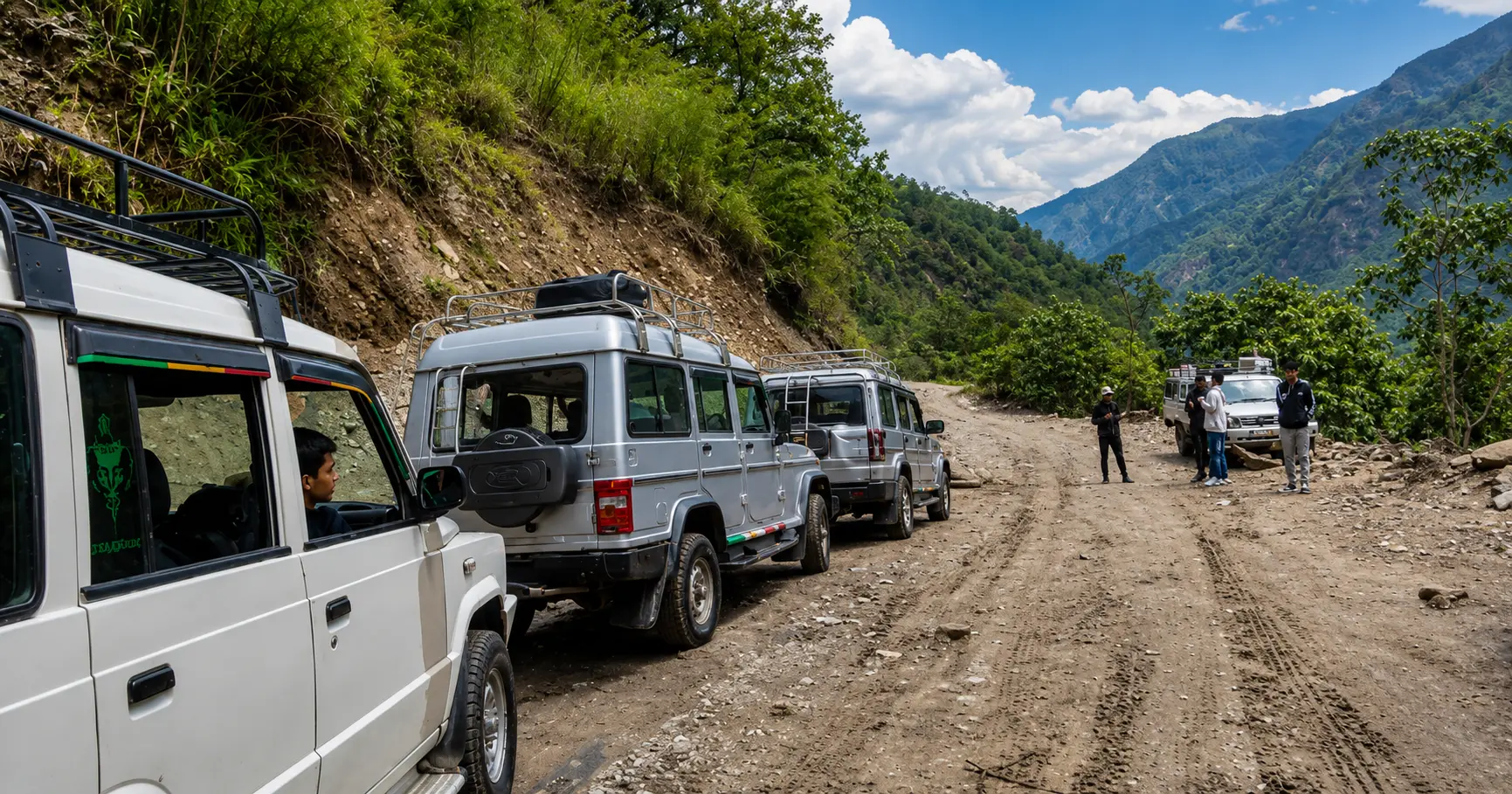
Choosing the right vehicle is the most important decision for Jomsom transport. The road beyond Beni is long, rough, and narrow, so ground clearance and an experienced driver matter.

4WD Jeep (Up to 6 Passengers)

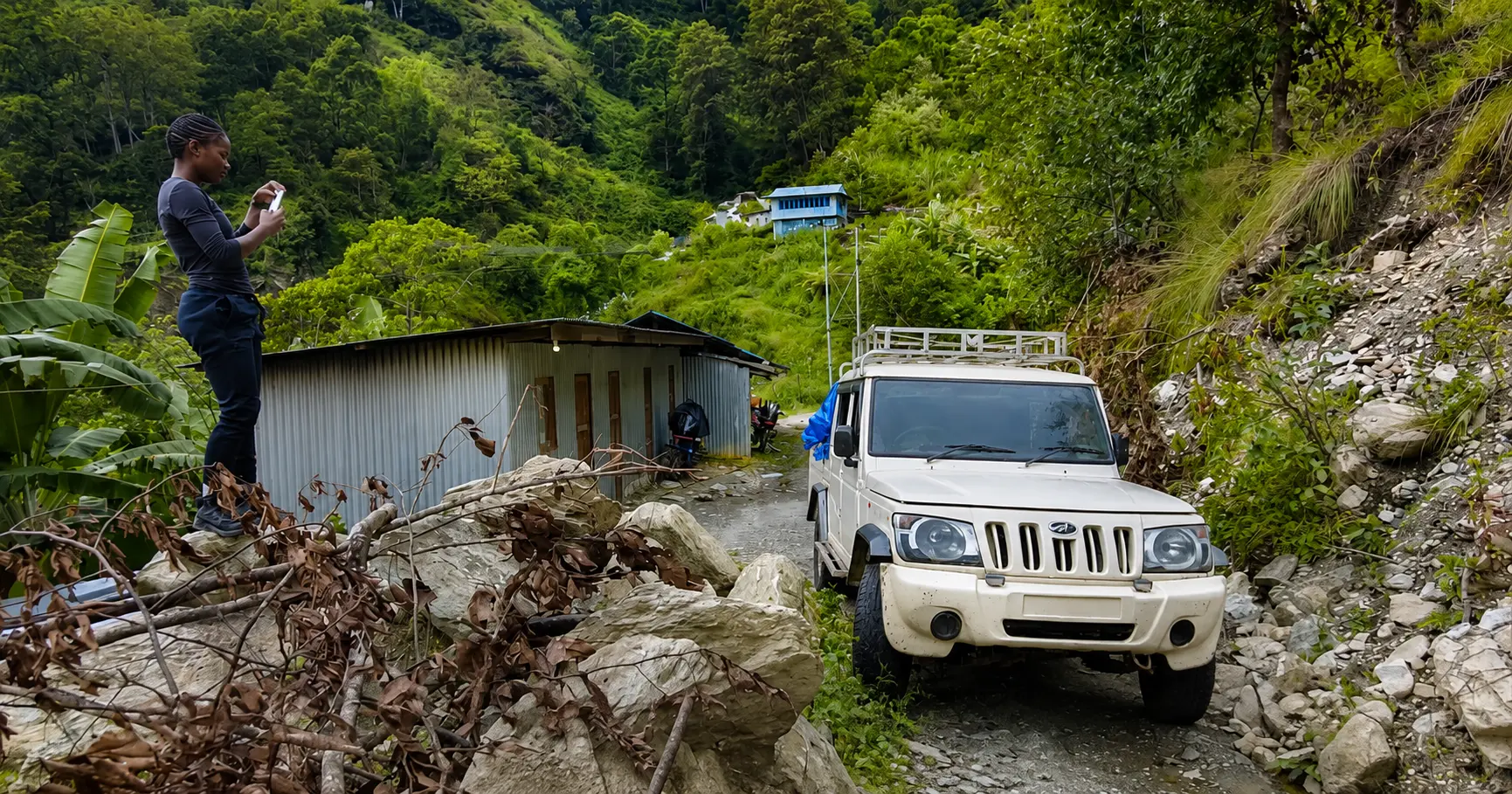
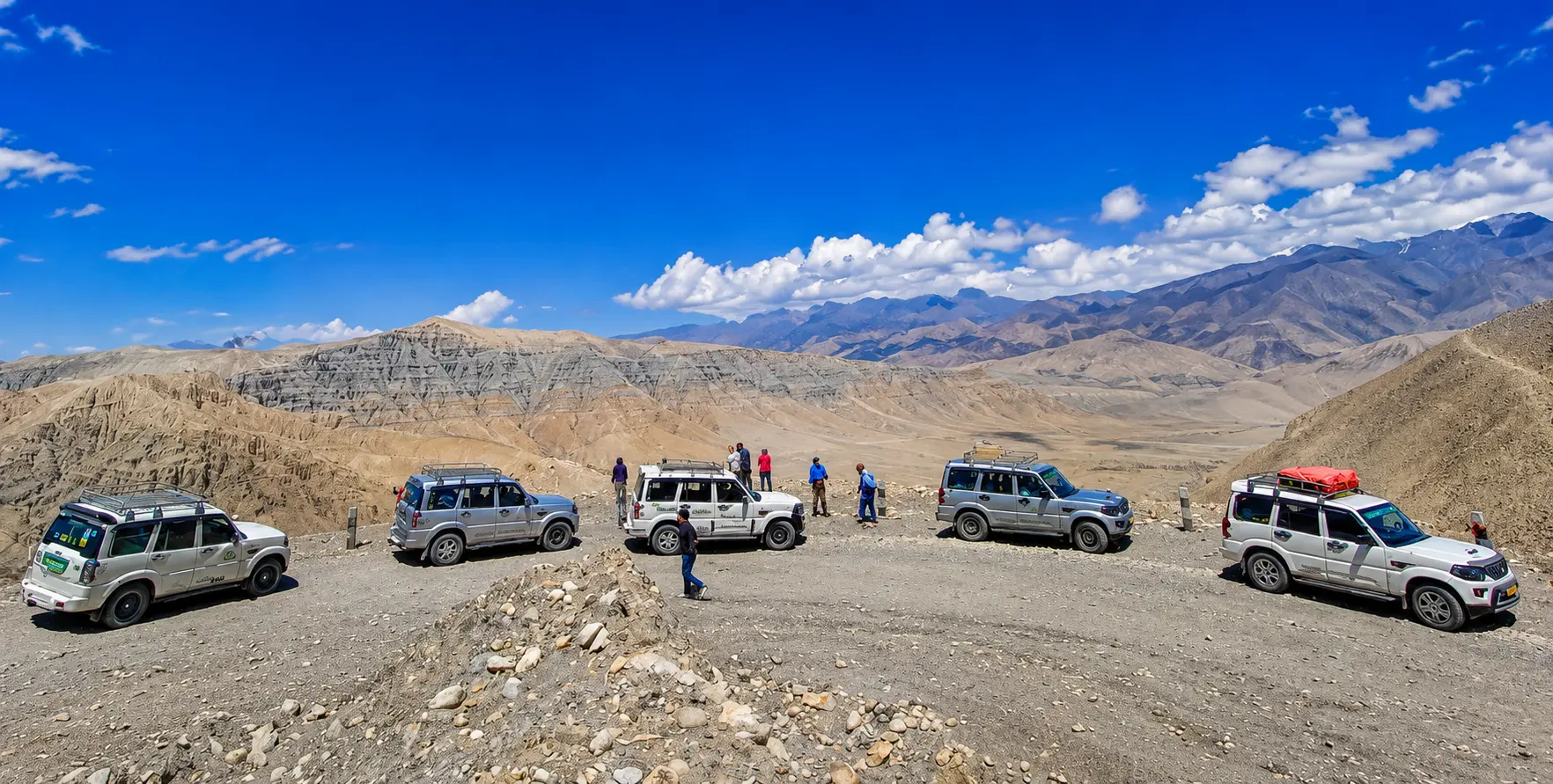
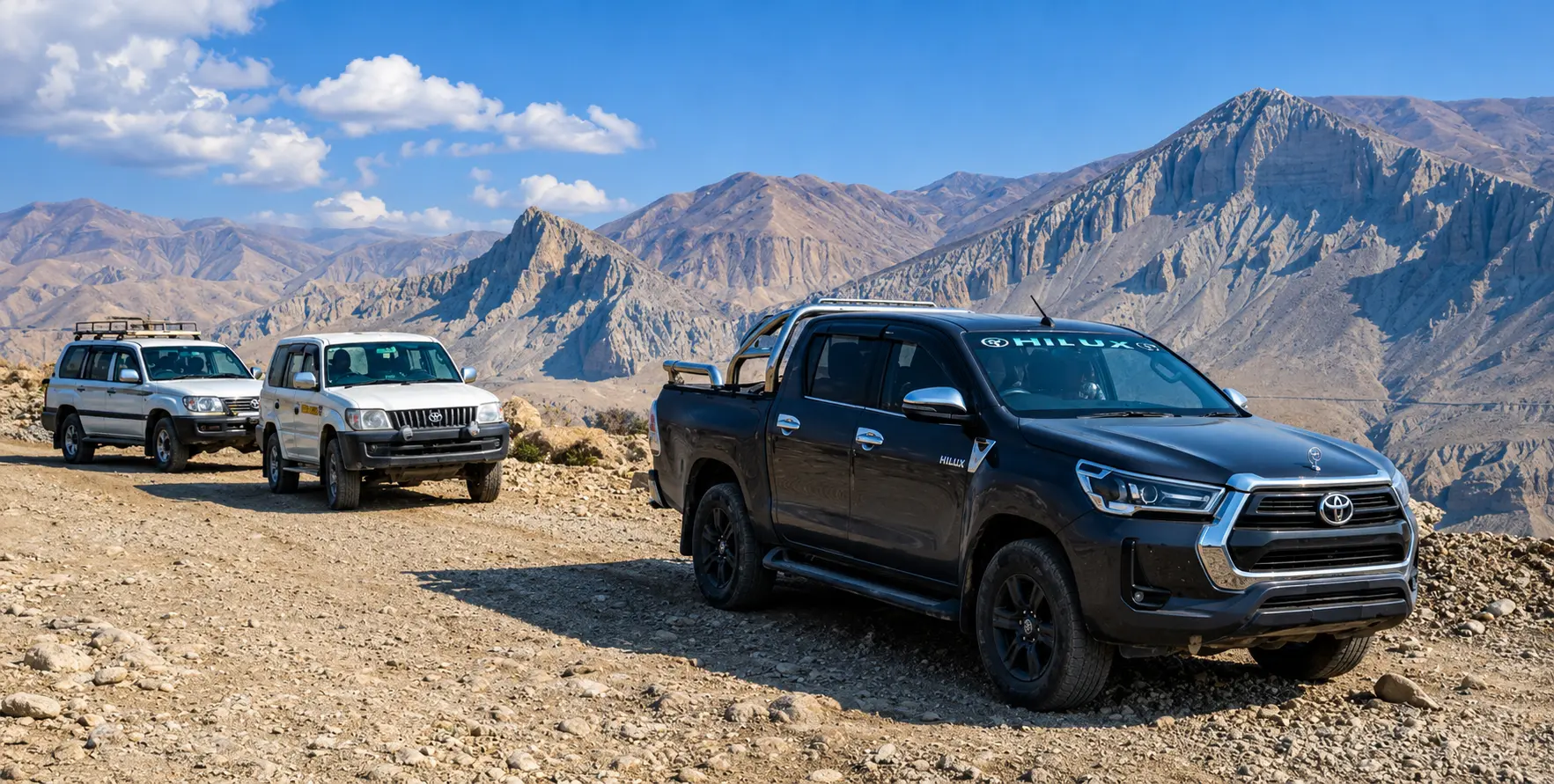
A 4WD jeep is the best all-round choice for Jomsom transport. It handles rocky sections, mud, and stream crossings, and can carry luggage on the roof rack. It’s the most reliable option in every season.

Mahindra Scorpio (Up to 5 Passengers)

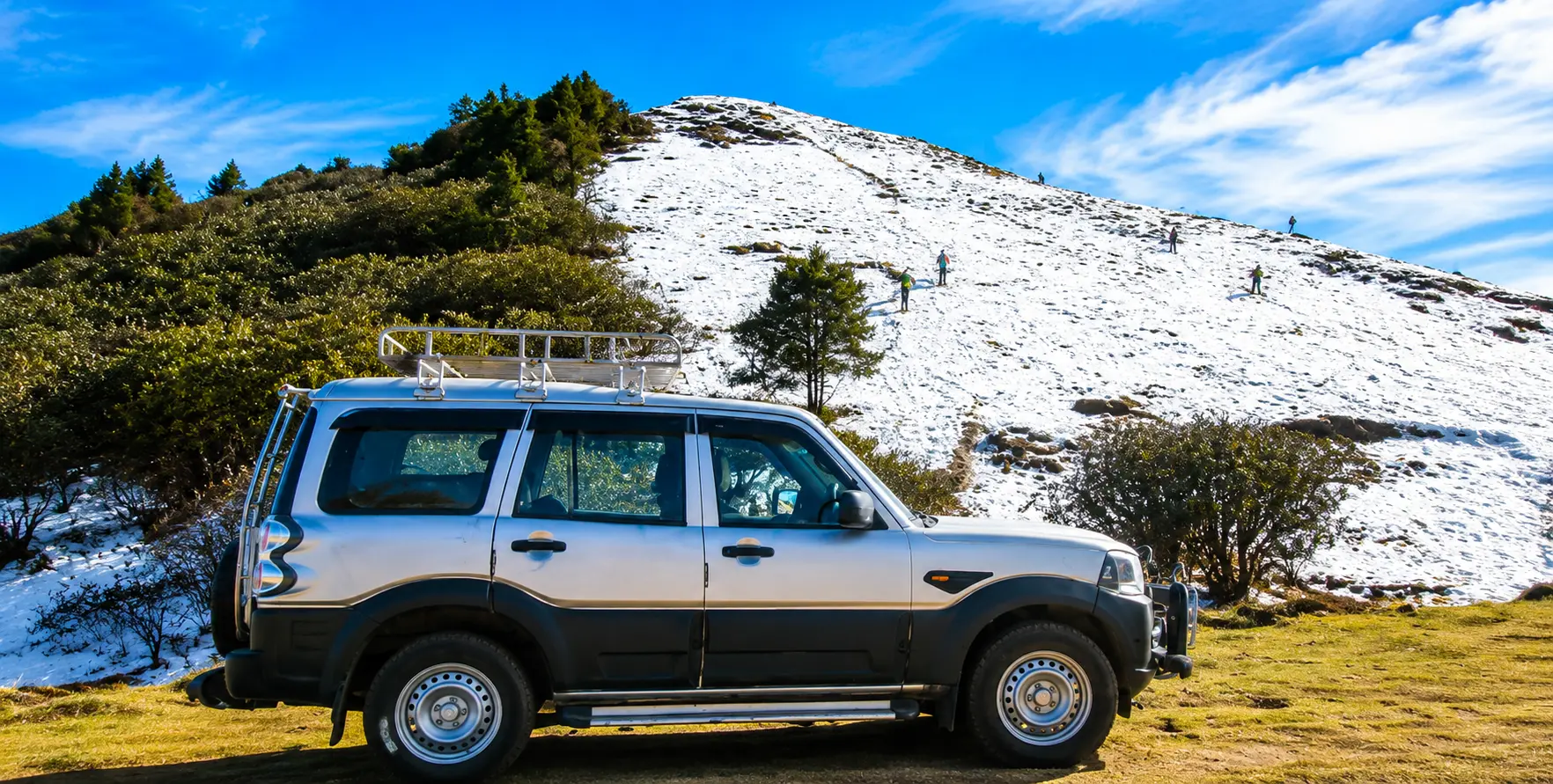
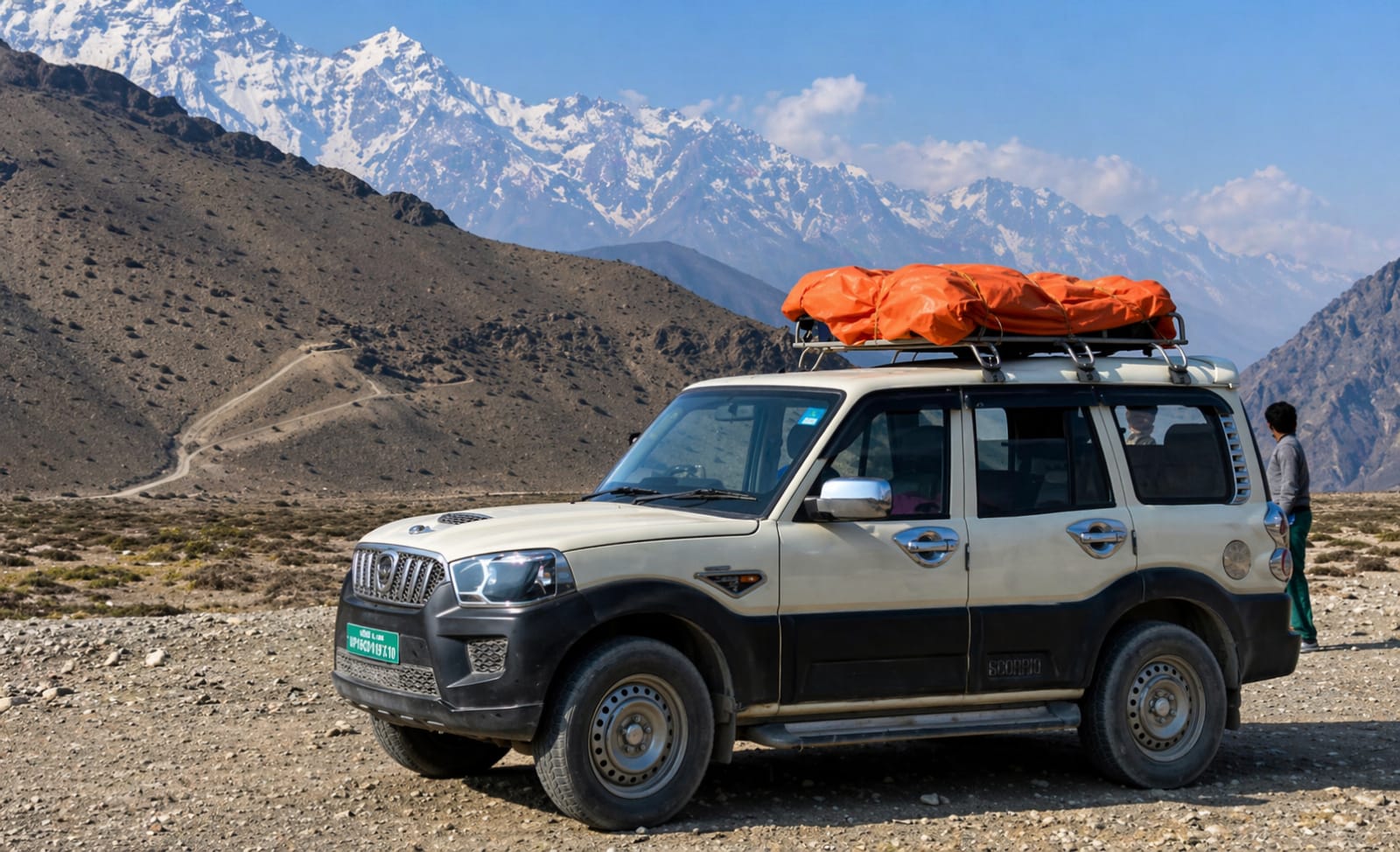
The Scorpio is a comfortable SUV with good clearance and suspension, ideal for families and couples on the long drive. It works well in dry conditions.

Private Car (1–3 Passengers)

A private car can handle the road in good, dry conditions with an experienced driver, but its low clearance makes rough sections slow and uncomfortable. We only recommend a car when the road is in good shape.

Toyota Hiace (6–12 Passengers)

A Toyota Hiace can carry groups to Jomsom in the dry season. Vans do run on this road, but the ride is bumpier than a jeep. For groups who want comfort on the roughest sections, two jeeps may be better.

Coaster and Bus (Large Groups)

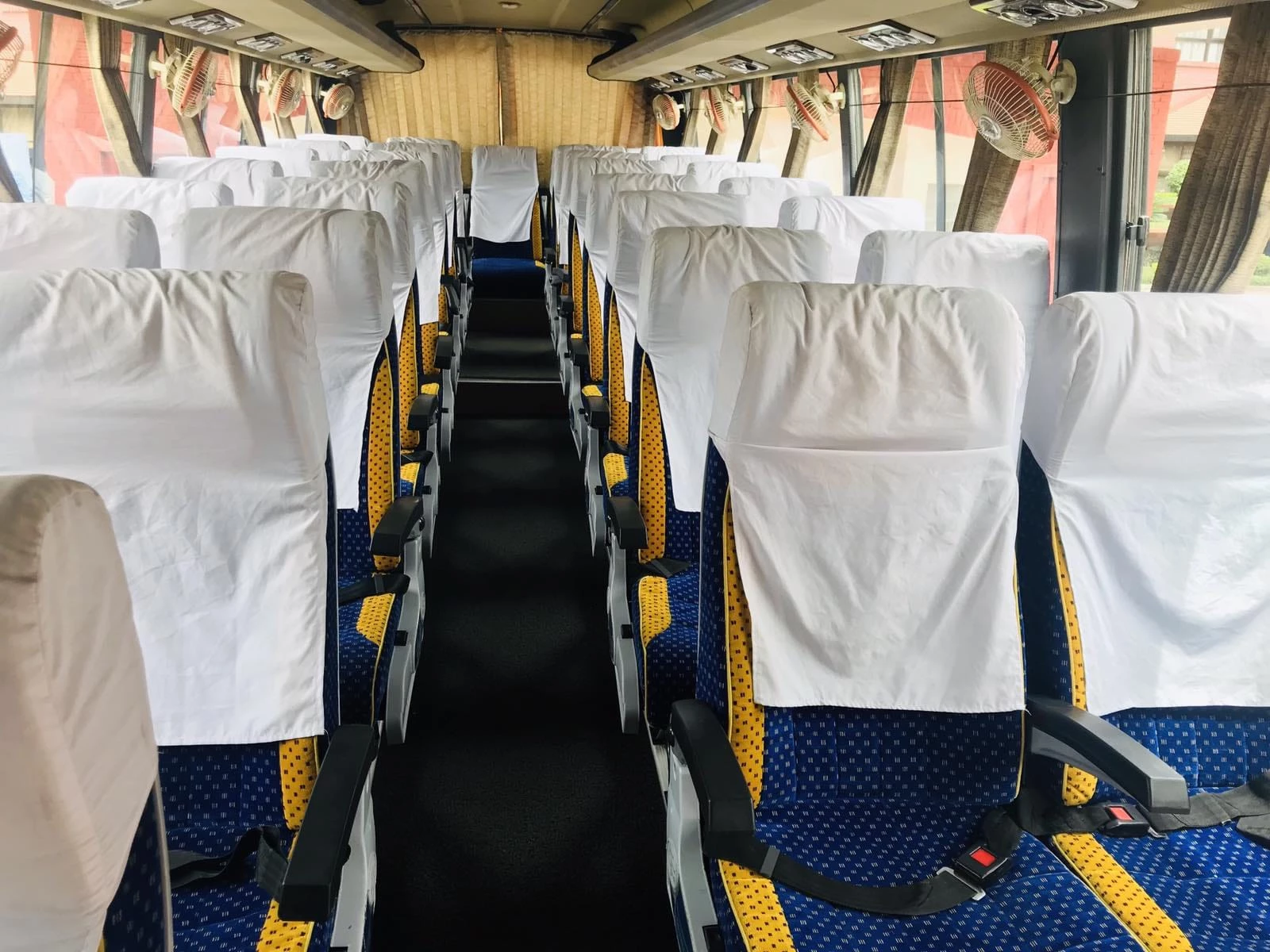
Local buses run between Pokhara and Jomsom, so a private coaster or bus is possible for large groups in good conditions. Travel is slower, and we plan departures carefully. Pilgrim groups heading to Muktinath often choose this option.
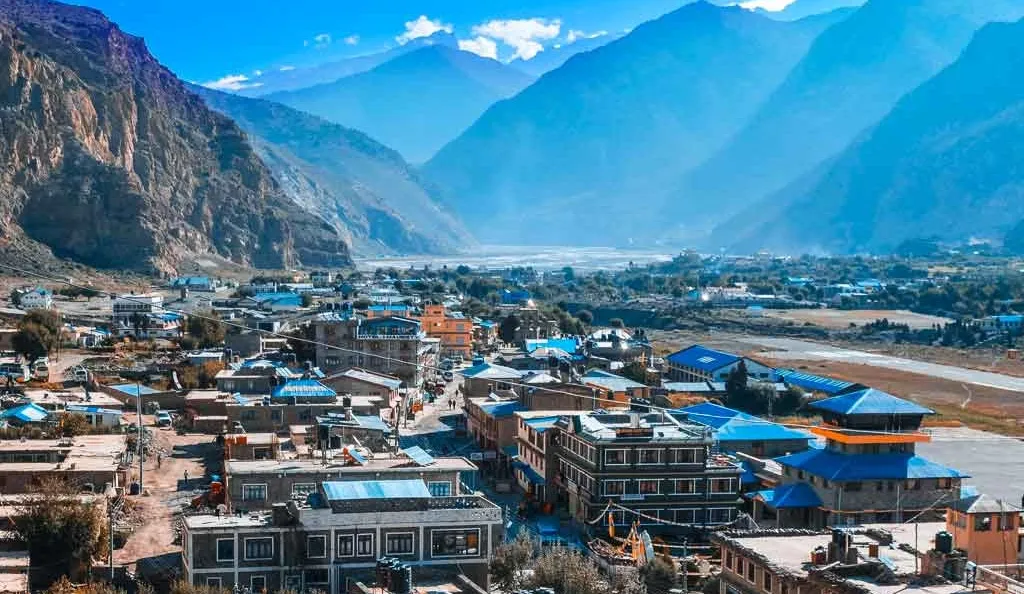
Jomsom town in the Kali Gandaki valley

Jomsom Transport Price From Pokhara Airport (USD)

Our Jomsom transport prices include the vehicle, an experienced mountain driver, fuel, the driver’s food and accommodation, insurance, road taxes, parking, and airport meet-and-greet. They sit slightly above the cheapest local offers because the Kali Gandaki road requires reliable vehicles and experienced drivers.

One-way, Pokhara Airport to Jomsom

  • 4WD jeep (1–6 passengers): USD 220–270
  • Mahindra Scorpio (1–5 passengers): USD 225–275
  • Private car (1–3 passengers), dry conditions: USD 190–230
  • Toyota Hiace (6–12 passengers): USD 260–330
  • Coaster (15–25 passengers): USD 400–500
  • Tourist bus (26–40 passengers): USD 500–650

Extras

  • Continue to Muktinath: add about USD 50–80 by jeep
  • Return to Pokhara or the airport: same range as one way
  • Extra day with the vehicle: about USD 70–95 per day for a jeep or Scorpio

Get an exact Jomsom transport quote on WhatsApp.

Jomsom Transport by Road vs Flight

Flight

  • Around 20 minutes, with mountain views
  • Only early-morning departures because of wind
  • Frequent delays and cancellations
  • Strict baggage limits

Road

  • 7 to 9 hours through the Kali Gandaki gorge
  • Runs in most weather, with flexible timing
  • All your luggage travels with you
  • Stops at Tatopani, Kalopani and Marpha on the way

Many travelers fly one way and take road transport the other, so they get the views from the air and the gorge from the road.

Permits for Jomsom

Jomsom lies in the Annapurna Conservation Area. Foreign visitors need an ACAP permit, which is checked at points along the road, such as Ghasa and Jomsom. Arrange it in advance in Kathmandu or Pokhara, not at the checkpoints.

Jomsom, Muktinath, and Kagbeni don’t require the restricted area permit needed for Upper Mustang beyond Kagbeni. Rules change from time to time, so confirm current requirements before you travel. Your driver can stop in Lakeside if you need to collect your permit.
Jomsom Transport From Pokhara Airport

Best Season for Jomsom Transport

The season shapes your Jomsom transport experience.

Spring

Generally dry roads and good conditions, with apple blossoms in Marpha—one of the best times for the drive.

Autumn

Clear skies and wide mountain views after the monsoon. Roads usually improve as they dry out, though early autumn can still bring rain.

Winter

Cold, clear days and few landslides, but snow and ice are possible in upper Mustang. Jomsom itself is cold and windy.

Monsoon

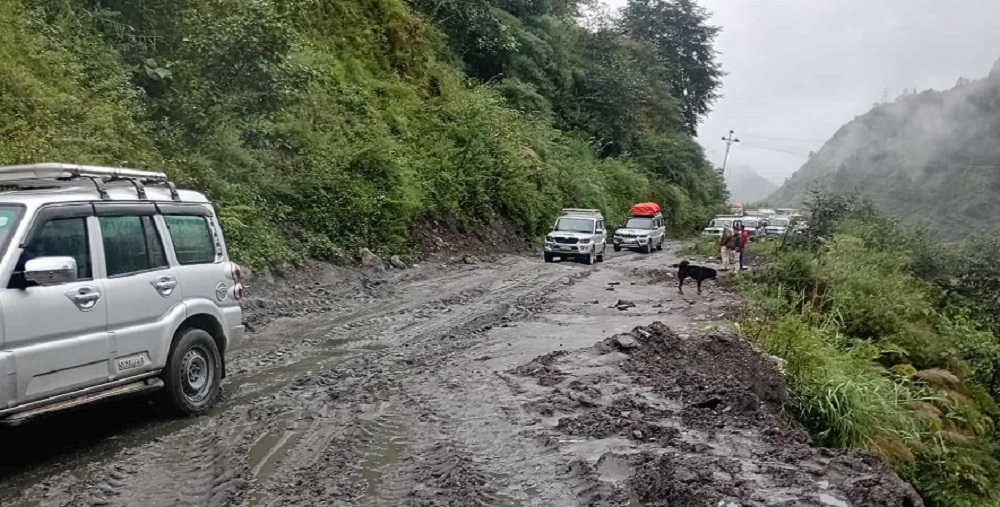
Rain is lighter in Jomsom, which lies in the rain shadow, but the road through the gorge south of Ghasa has many landslide zones. Delays are common, so a 4WD jeep and spare days are essential.

Jomsom Transport Safety

  • Experienced mountain drivers who know the Kali Gandaki road
  • 4WD vehicles with good tires, brakes, and low-range gearing
  • Daylight driving through the gorge
  • Road checks with local contacts before departure
  • Flexible plans if landslides block the road
  • Insured, licensed vehicles under our company name

We’d always rather wait or reroute than risk this road.

The Kali Gandaki Gorge: Why This Drive Is Special

The Kali Gandaki flows from the Tibetan plateau south through Mustang, cutting between Dhaulagiri (8,167 m) and Annapurna I (8,091 m). Measured from the summits to the river, it’s often described as the world’s deepest gorge. Driving through it, you move from banana trees and rice terraces near Beni to pine forests around Ghasa, then into the dry, wind-carved landscapes of lower Mustang near Jomsom, all in one day.

For centuries, this valley served as a salt-trading route between Tibet and Nepal’s lowlands. Thakali traders built prosperous villages along the way, many of which still line the road today. Choosing road transport to Jomsom lets you experience this history and scenery at ground level.
Jomsom Transport from Pokhara Airport

Villages Along the Way

Tatopani

At around 1,190 meters, Tatopani (‘hot water’) has natural hot springs beside the river, plus orange and lemon trees. It’s a classic lunch stop and a lovely place to soak on the return journey.

Ghasa

The first village of Mustang district, where the landscape begins to change. Ghasa marks the start of the drier upper valley and is a known birdwatching spot during migration seasons.

Lete and Kalopani

Twin villages with some of the best mountain views on the road: Dhaulagiri, Annapurna I, Nilgiri and Fang tower above. Many travelers stop here for photos.

Tukuche

Once a major salt-trading center, Tukuche has old Thakali houses, monasteries and a distillery producing local apple and apricot brandy.

Marpha

Narrow stone lanes, whitewashed houses and apple orchards make Marpha one of the prettiest villages in Mustang. Try apple pie, juice or cider before the final stretch to Jomsom.

Muktinath: Continuing Beyond Jomsom

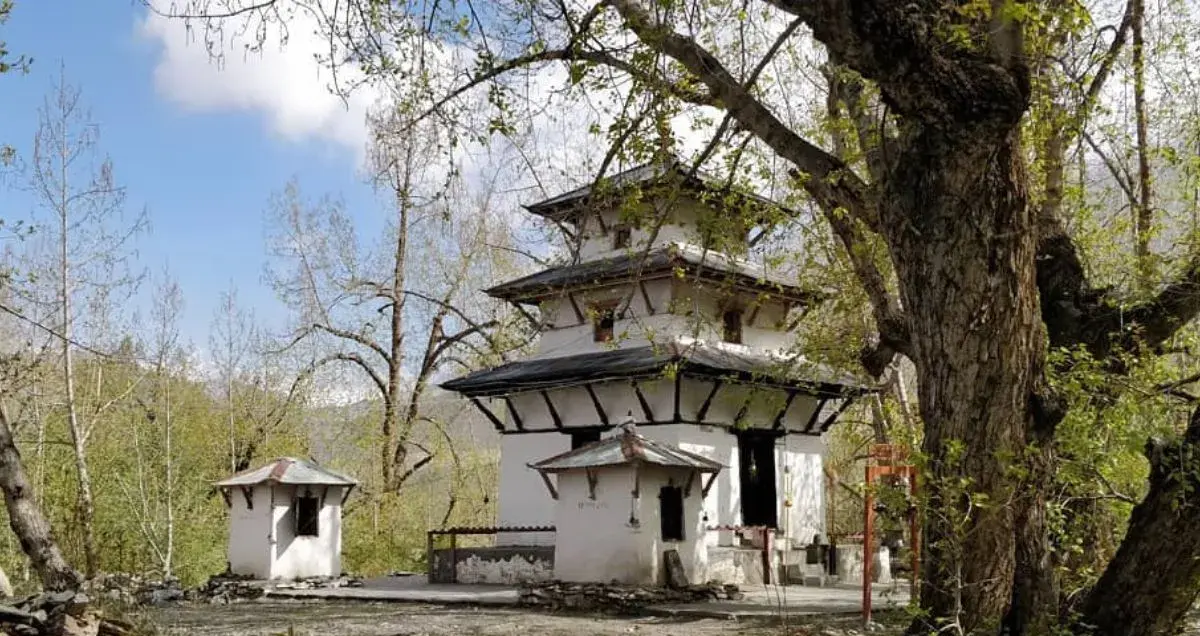
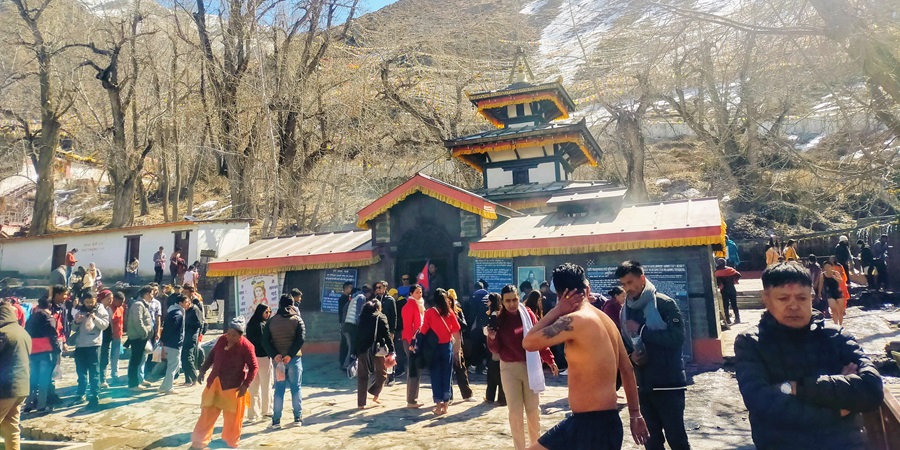
Most travelers who book Jomsom transport also visit Muktinath, at around 3,710 meters. The temple complex is sacred to both Hindus and Buddhists, with 108 water spouts, an eternal flame, and views of the Dhaulagiri range. From Jomsom, the road continues via Eklebhatti and up to Muktinath in around an hour and a half.

Many pilgrims visit early in the morning, when the air is clear and calm. Add Muktinath to your booking and your driver will take you there and back.
Jomsom Transport from Pokhara Airport

Kagbeni and Upper Mustang

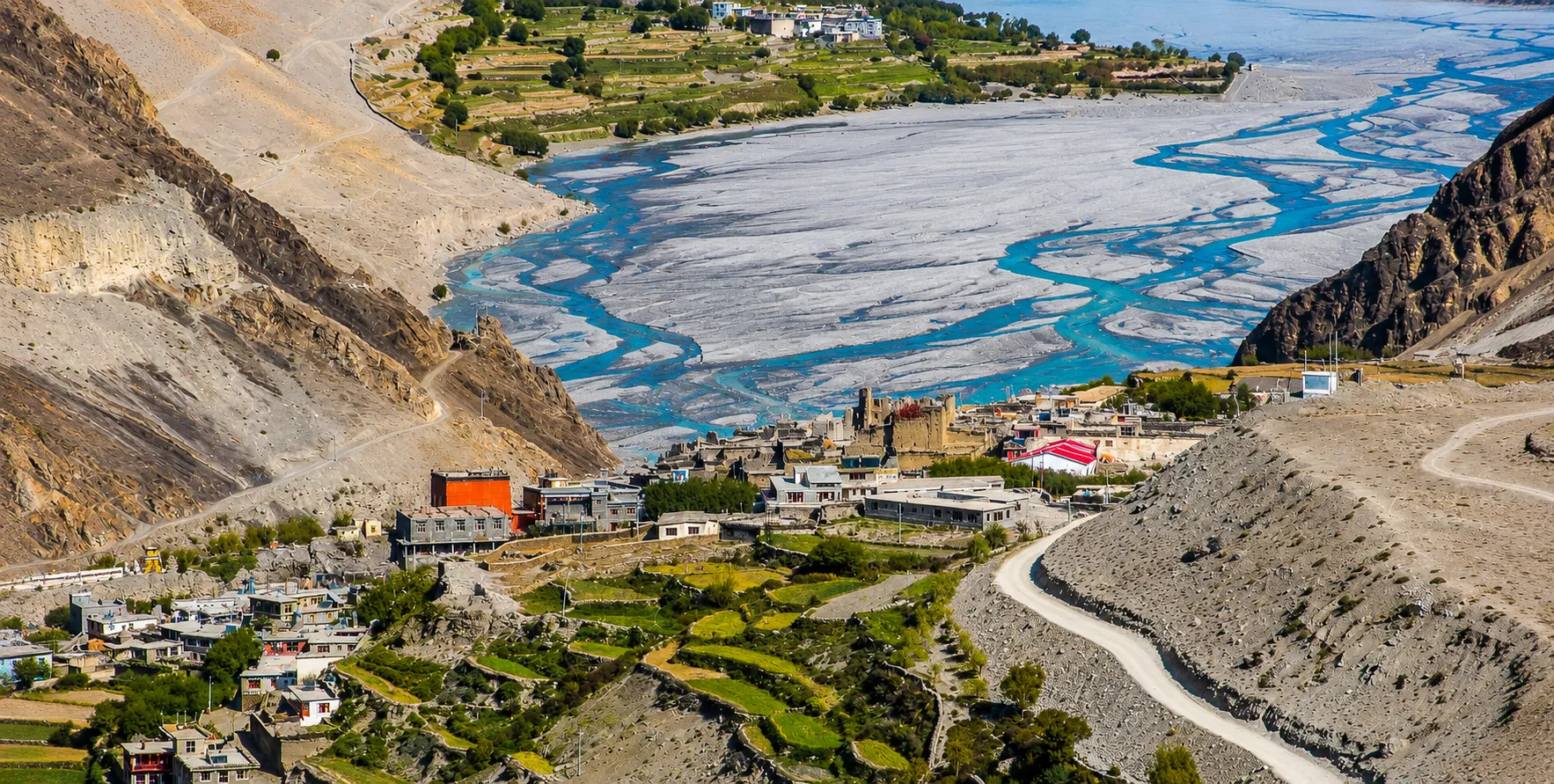
Kagbeni, between Jomsom and Muktinath, is a medieval village of mud-brick houses, a red monastery and narrow alleys. It marks the boundary of restricted Upper Mustang. Travel north of Kagbeni requires a special restricted area permit and a licensed guide, arranged through a registered agency.

If you’re planning the Upper Mustang trek or a jeep tour to Lo Manthang, we can provide the road transport to Jomsom or Kagbeni, where your journey into Upper Mustang begins.

Altitude and Health

Jomsom sits at around 2,720 meters and Muktinath at around 3,710 meters. Because the drive gains height quickly, some travelers feel mild symptoms such as headache or breathlessness. Drink plenty of water, avoid alcohol on the first evening, and take it slow when walking around Muktinath.

If symptoms become severe, descend. Spending a night in Jomsom before visiting Muktinath helps your body adjust.

Food on the Road and in Jomsom

The Kali Gandaki valley is the home of Thakali cuisine, famous across Nepal. Thakali dal bhat, served with rice or buckwheat dhido, lentils, vegetables, pickles, and often local meat, is a highlight. Marpha and Tukuche are known for apples, apple pie, juice,e and local brandy.

Along the way, Beni and Tatopani have plenty of restaurants. Jomsom has hotels and cafés serving Nepali, Tibetan and Western food.

Annapurna Circuit Trekkers

Many trekkers finishing the Annapurna Circuit cross the Thorong La pass and descend to Muktinath, then travel down to Jomsom. Instead of a weather-dependent flight or a crowded local bus, a private jeep from Muktinath or Jomsom back to Pokhara is the most comfortable option. Share your expected finishing date, and we’ll arrange a pick-up.

Some trekkers also start from Jomsom to walk down the valley via Marpha and Tatopani.

If Your Jomsom Flight Is Canceled

Flights between Pokhara and Jomsom are often canceled because of wind or clouds, sometimes for several days. If your flight is canceled, road transport to Jomsom is the best backup. Message us on WhatsApp, and we’ll arrange a jeep or Scorpio, usually for the same morning or the following day.

Many travelers save their trip this way.
Jomsom Transport from Pokhara Airport

Arriving From Kathmandu

Traveling from Kathmandu? We can meet you at Tribhuvan International Airport for airport pick-up, drive you to Pokhara in a private jeep, or put you on a tourist bus, then continue to Jomsom the next morning. A night in Pokhara breaks the long journey and lets you start the Kali Gandaki drive early.

Families and Older Travellers

Jomsom and Muktinath are popular with families and older pilgrims. A Mahindra Scorpio provides comfortable seating, and frequent stops make the long day easier. We can provide child seats on request.

Because of the altitude at Muktinath, older travelers should take it slowly and consider a night in Jomsom first.

What Is Included

Included

  • Private vehicle and experienced mountain driver
  • Fuel, insurance, road taxes and parking
  • Driver’s food and accommodation on multi-day trips
  • Airport meet-and-greet and free waiting for delays
  • Short stops in Lakeside, Beni, Tatopani and Marpha

Not Included

  • ACAP permits and Upper Mustang permits
  • Your accommodation and meals
  • Guide services
  • Tips for the driver (optional)

Your Driver

The Kali Gandaki road demands skill and patience. Our drivers know where landslides tend to occur, which sections are safest at which times, and where to stop for the best views. They speak basic English, help with luggage,e and plan breaks so the long day feels comfortable.

Why Our Prices Are a Little Higher

Local buses and shared jeeps are cheaper, but they run on fixed schedules from the city bus park and can be crowded. Our private Jomsom transport costs a little more because you get a private vehicle from the airport, an experienced mountain driver, well-maintained 4WD vehicles, flexible stops, ps and a fixed price agreed in advance.

Wind, Dust and Weather in Jomsom

Jomsom is famous for its wind. Mornings are usually calm, but from late morning a strong wind blows up the Kali Gandaki valley, bringing dust and cold air. Arriving by mid-afternoon helps you avoid the worst of it.

Carry a windproof jacket, sunglasses, and a buff for dust. In winter, temperatures drop well below freezing at night, while summer days are mild and dry thanks to the rain shadow of the Annapurnas.

Photography on the Jomsom Road

Bring a camera with plenty of storage. Highlights include Rupse Falls, the narrow gorge below Ghasa, the views of Dhaulagiri and Nilgiri from Kalopani, the whitewashed lanes of Marpha and the stark landscapes around Jomsom and Kagbeni. Your driver can stop at safe points.

Ask permission before photographing people and monasteries.

Getting Back to Pokhara Airport for Your Flight

If you’re flying out of Pokhara after your Jomsom trip, plan carefully. The drive from Jomsom to Pokhara Airport takes 7 to 9 hours, and road delays are possible. We recommend leaving Jomsom early in the morning and booking an evening or next-day flight.

For international connections in Kathmandu, keep at least one spare day. Our Pokhara airport transfer team can plan the timing.

Accessibility and Special Requirements

If anyone in your group has limited mobility or medical needs, please tell us when you book. We’ll choose a comfortable vehicle, plan extra rest stops, and arrange drop-offs as close as possible to hotels and temples. At Muktinath, the walk from the parking area to the temple involves a climb, and horses or motorbike rides are sometimes available locally.

Responsible Travel

  • Carry a reusable water bottle and avoid plastic
  • Respect temples and monasteries; remove shoes where required
  • Support local Thakali lodges and restaurants
  • Take your rubbish with you
  • Ask before photographing people

Jomsom Town: What to Expect on Arrival

When your Jomsom transport drops you in town, you’ll find a long main street running along the Kali Gandaki, divided into Old Jomsom and New Jomsom on either side of the river. The town has an airport, government offices, hotels, restaurants, shops, a hospital,l, and ATMs, though ATMs aren’t always reliable, so bring cash from Pokhara.

Hotels range from simple lodges to comfortable mid-range stays with heating. Nilgiri’s snowy peak rises directly above the town, especially beautiful in the morning light.

Thakali Culture in the Kali Gandaki Valley

The Thakali people of the Kali Gandaki Valley are known for their hospitality, business skills, and cuisine. For generations, they ran inns along the salt route between Tibet and the lowlands, and their tradition of welcoming travelers lives on in today’s lodges.

Their villages, with flat-roofed stone houses, prayer flags, and small monasteries, blend Buddhist and Hindu traditions. Along your Jomsom transport route, you’ll pass Thakali settlements such as Tukuche, Kobang and Marpha, each with its own character. Many families also have Gurung and Tibetan heritage, reflecting the valley’s long history as a crossroads.
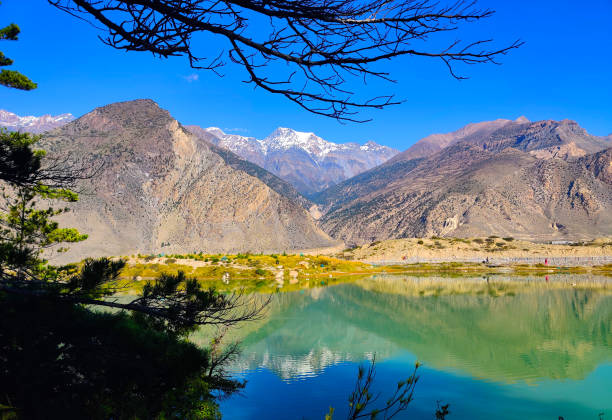
Jomsom Transport from Pokhara Airport

Short Walks Around Jomsom

  • Thini village: an old village across the river from Jomsom, with a monastery and views of Nilgiri, about an hour’s walk
  • Dhumba Lake: a small, sacred lake reflecting Nilgiri, reached on a short walk from Thini.
  • Marpha walk: follow the trail down the valley to Marpha for apple orchards and lunch, then get picked up by your Jomsom transport.
  • Kagbeni walk: a longer walk up the windy valley to Kagbeni, best done in the morning before the wind.

Beni: The Turning Point

Beni marks the point where the paved highway ends and the Kali Gandaki road begins. It’s the headquarters of Myagdi district, with shops, restaurants, banks,s and fuel stations. Your Jomsom transport usually stops here for tea or a quick snack before the rougher roads ahead.

Beni is also the gateway west toward Dhaulagiri trekking routes and north toward Tatopani. See our Pokhara to Beni jeep.

Road Upgrades on the Kali Gandaki Corridor

The road between Beni and Jomsom is part of a long-term project to improve the north–south corridor through Mustang. Some sections have been widened and paved, while others remain rough. Road works can cause short delays, and conditions change with the seasons.

Our drivers travel the route regularly and keep up to date, so your Jomsom transport plan reflects the latest situation.

Monsoon Safety on the Jomsom Road

Jomsom transport in the monsoon needs extra care. While Jomsom itself receives little rain, the gorge between Tatopani and Ghasa gets heavy rainfall, and landslides can block the road for hours or days.

  • Choose a 4WD jeep for the best grip
  • Leave Pokhara very early
  • Allow spare days before any onward flight
  • Carry snacks and water in case of delays
  • Follow your driver’s advice on waiting or rerouting
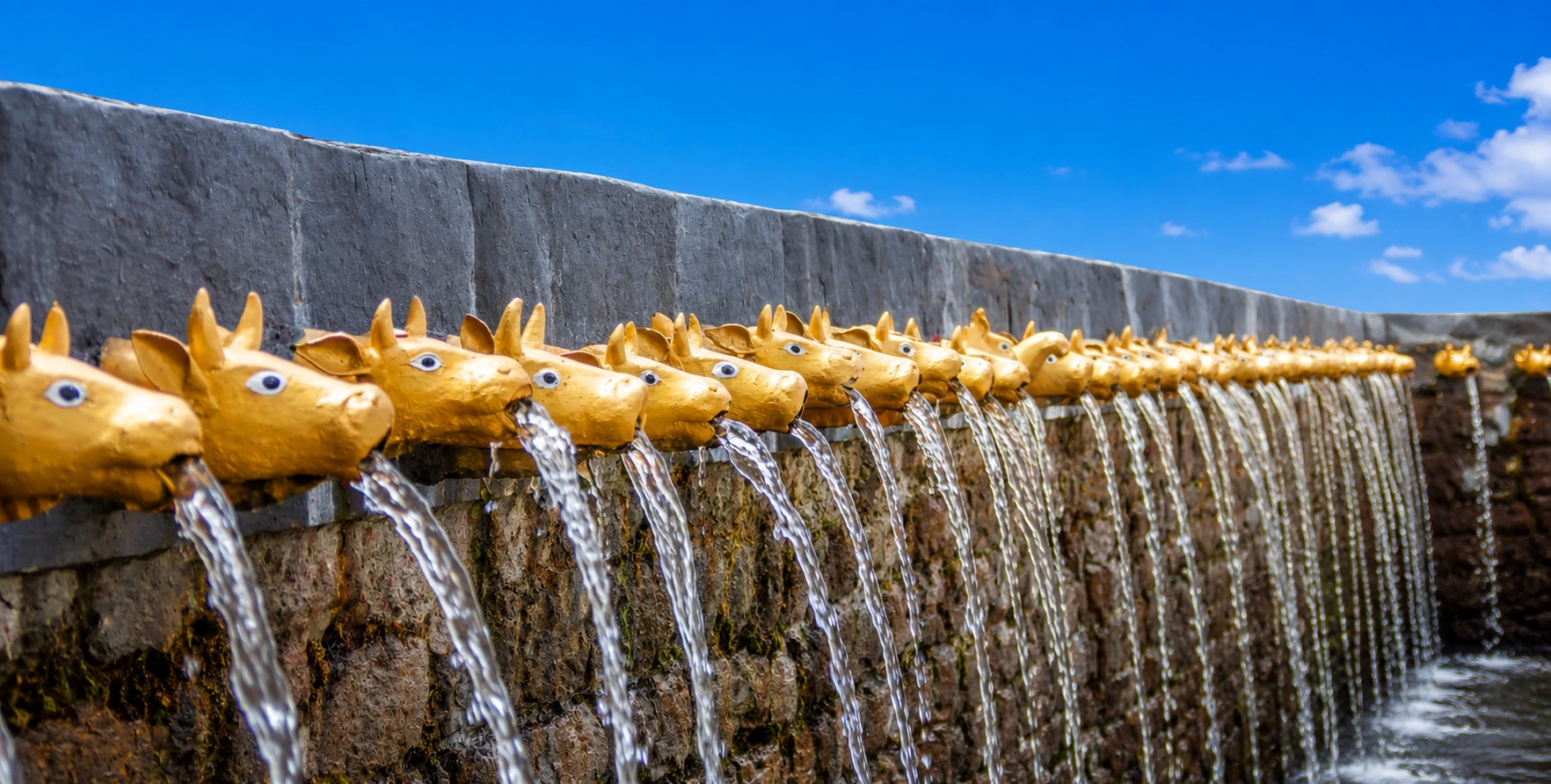
Jomsom Transport from Pokhara Airport

Pilgrim Groups to Muktinath

Muktinath attracts large numbers of Hindu and Buddhist pilgrims every year, especially from Nepal and India. Group transport for pilgrims to Jomsom can include a Hiac coaster or bus for larger groups, with jeeps for the final climb to Muktinath when needed.

We plan rest stops, meal breaks, and overnight stays in Jomsom to help with acclimatization. Contact us via our contact page to plan your yatra.

Solo Travellers

A private jeep for one person costs more than a shared seat on a local bus or minivan. Shared options leave from Pokhara’s city bus parks, not the airport, and can be crowded. If you’d like private Jomsom transport on a budget, ask us about sharing a jeep with other travelers on the same date.

Trekking Agencies and Tour Operators

We provide Jomsom transport for trekking agencies and tour operators year-round, including airport pick-ups, drives to Jomsom, Muktinath, and Kagbeni, and pick-ups for Annapurna Circuit and Upper Mustang groups. Repeat partners receive consolidated USD invoices and priority allocation in peak seasons. Explore our trekking transport services or contact our office.

Combining Jomsom With Poon Hill

The Kali Gandaki road passes Tatopani, the turn-off for the climb to Ghorepani and Poon Hill. Some travelers combine both in one trip: Jomsom and Muktinath first, then Ghorepani on the way back, or the reverse. Your Jomsom transport driver can take the steep track from Tatopani to Ghorepani in dry conditions.

See our Ghorepani transfer and the Poon Hill trek.

Practical Stops in Lakeside Before You Go

Pokhara’s Lakeside lies on the way from the airport toward the highway, so it’s easy to add a few practical stops to your Jomsom transport:

  • Collect your ACAP permit at the Nepal Tourism Board office
  • Withdraw cash, as ATMs in Mustang can be unreliable
  • Buy warm and windproof layers if you need them
  • Leave spare luggage at a Pokhara hotel

If you’d like a day in Pokhara first, add a Pokhara sightseeing tour or a Sarangkot sunrise drive.
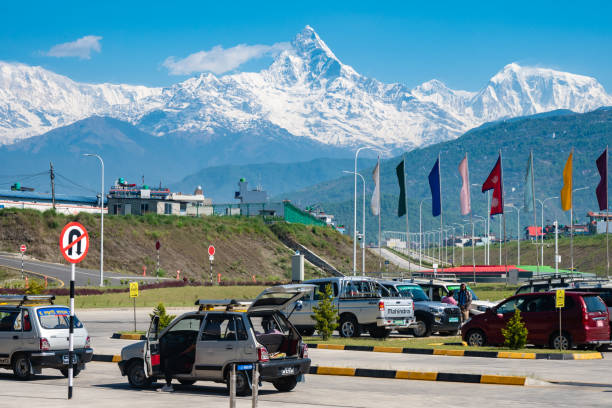
Jomsom Transport from Pokhara Airport

Meeting Your Driver at Pokhara Airport

  • Share your flight number so we can track delays
  • Your driver waits outside arrivals with a name board
  • If your flight is late, the driver waits at no extra cost
  • Call or message us if you can’t see your driver

Direct Jomsom Transport From Kathmandu

Short on time and not flying to Pokhara? We can also run direct Jomsom transport from Kathmandu in a 4WD jeep or Scorpio. It’s a long day (2 hours or more), so most travelers prefer to break the journey with an overnight in Pokhara or Beni.

On the way back, the same vehicle can take you to your Kathmandu hotel or the airport for your onward flight. Ask us about combined Kathmandu–Pokhara–Jomsom packages through our trip planner.
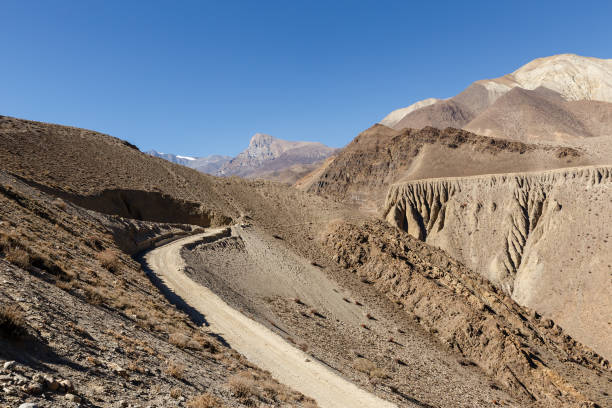
Jomsom Transport from Pokhara Airport

Upper Mustang Jeep Tours From Jomsom

Jomsom is the starting point for jeep tours into Upper Mustang, the former Kingdom of Lo, with its walled capital Lo Manthang, cave dwellings and red-and-white monasteries. These tours require a restricted-area permit and a licensed guide, arranged through a registered trekking agency. Our Jomsom transport covers the road from Pokhara to Jomsom or Kagbeni, and our sister company, Trek Nepal Himalayas, can organize the full Upper Mustang trek or jeep tour, including permits.

Hot Springs on the Return Journey

On the way back from Jomsom to Pokhara, a stop at Tatopani’s hot springs is the perfect way to relax after days of dry, windy air in Mustang. The pools sit beside the Kali Gandaki, and a soak takes about an hour. Your driver can plan the stop around lunch, so you continue to Pokhara refreshed.

Peak Season Booking Tips

Spring, autumn, and major festival periods bring heavy demand for Jomsom transport, especially from pilgrims heading to Muktinath during festivals. Book as soon as your plans are fixed, share your flight details so we can track changes, and consider midweek travel for quieter roads and hotels.

Sample Jomsom Itineraries

Two Days: Jomsom and Muktinath

  • Day 1: Pokhara Airport to Jomsom by jeep, with lunch at Tatopani
  • Day 2:2: Earlyrive to Muktinath, visit the temple, return to Jomsom, or drive back toward Pokhara

Three Days: Jomsom, Kagbeni and Marpha

  • Day 1: Pokhara Airport to Jomsom
  • Day 2: Muktinath temple and Kagbeni village
  • Day 3: Marpha apple orchards, then drive back to Pokhara

Fly In, Drive Out

  • Day1: Fly Pokhara to Jomsom in the early morning
  • Day 2: Muktinath and Kagbeni
  • Day 3: Drive back via Marpha and Tatopani with our Jomsom transport

Want a longer trip? Continue to the Upper Mustang trek area or combine with the Annapurna Circuit.
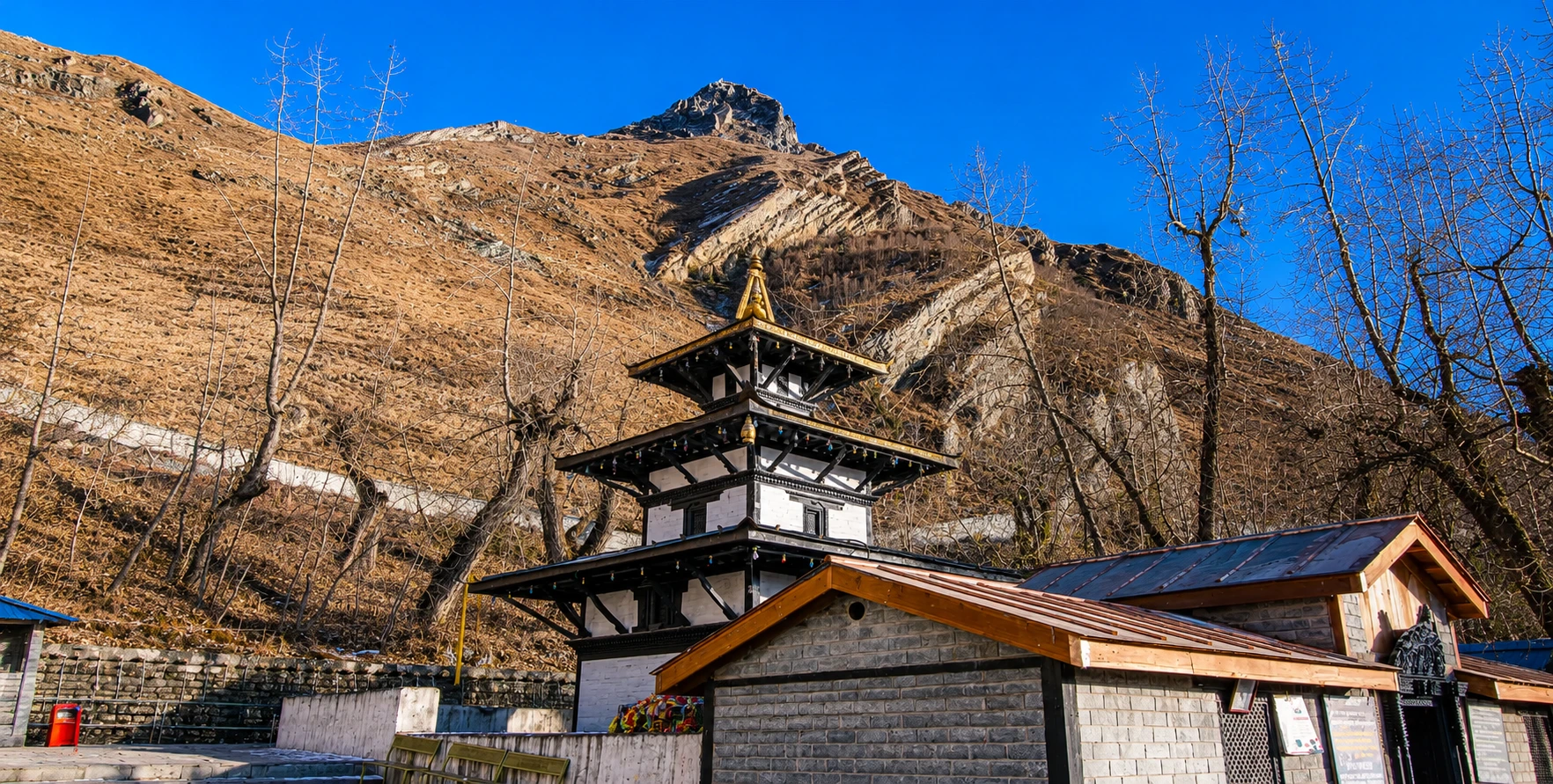
Jomsom Transport from Pokhara Airport

Things to Do in Jomsom

  • Muktinath Temple: a sacred site for Hindus and Buddhists, about an hour and a half beyond Jomsom by road
  • Kagbeni: a medieval village at the gateway to Upper Mustang
  • Marpha: whitewashed Thakali village, apple orchards and local brandy
  • Thini and Dhumba Lake: short walks near Jomsom
  • Mustang Eco Museum: an introduction to local culture and history
  • Views of Nilgiri: the snow peak towering over Jomsom

Groups and Pilgrimage Transport

Jomsom and Muktinath are popular with pilgrim groups, schools, and tour groups. For groups,s we provide:

One coordinator manages every vehicle. Contact us through our contact page for group Jomsom transport.

Packing for Jomsom

  • Warm layers and a windproof jacket for Jomsom’s strong afternoon winds
  • Sunglasses, sunscreen and lip balm for the dry, bright air
  • Scarf or buff for dust on the road
  • Motion sickness tablets for the rough sections
  • Nepali cash, as card payments are limited
  • Passport and ACAP permit

5 Common Jomsom Transport Mistakes to Avoid

These are the mistakes we see most often with Jomsom transport.

  • Choosing a low car in wet conditions: pick a jeep or Scorpio
  • Leaving Pokhara late: start early to clear the gorge in daylight
  • No buffer before flights: keep a spare day before onward travel
  • Forgetting permits: they’re checked on the road
  • Underestimating the wind: Jomsom afternoons are cold and windy
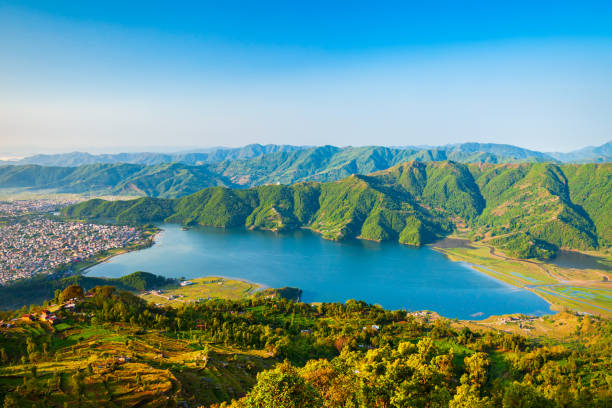
Jomsom Transport from Pokhara Airport

Explore More From Pokhara

Browse our Nepal tour packages and trekking transport, or contact Trek Nepal Himalayas and Alpine Luxury Treks for guided trips.

Jomsom Transport: Key Takeaways

  • Jomsom is about 160–180 km from Pokhara Airport, usually a 7- 9-hour drive.
  • The road is paved to Beni, then rough beside the Kali Gandaki.
  • A 4WD jeep or Scorpio is the best Jway to get to Jomsom a jeep costs about USD 220–270.
  • Flights are quick but often canceled; the road is more reliable.
  • Foreign visitors need an ACAP permit.

Why Book Your Jomsom Transport With Us

Jomsom Transport from Pokhara Airport

How to Book Jomsom Transport

  • Step 1: Send your flight number, group size, and PVIANS to WhatsApp or email.
  • Step 2: We recommend a vehicle and send a quote in USD.
  • Step 3: Confirm your booking.
  • Step 4: Meet your driver at arrivals.

Or use our trip planner and contact page.

Jomsom Transport FAQs

How long is the drive from Pokhara Airport to Jomsom?

Usually 7 to 9 hours with stops, depending on road conditions.

How much does private Jomsom transport cost?

About USD 220–270 one way by jeep, USD 190–230 by car in dry conditions, and USD 260–330 by Hiace.

Can a normal car reach Jomsom?

In good, dry conditions with an experienced driver, yes, but a jeep or Scorpio is much more comfortable.

Is there a bus from Pokhara to Jomsom?

Yes, local buses run from Pokhara. We provide private buses and coasters for groups.

Do I need a permit?

Yes, you need an ACAP permit. Traveling beyond Kagbeni into Upper Mustang requires an additional restricted area permit.

Can you continue to Muktinath?

Yes. Add Muktinath to your Jomsom transport booking.

Book Your Jomsom Transport Today

Travel from Pokhara Airport to Jomsom through the world’s deepest gorge with a reliable vehicle and an experienced driver.

WhatsApp

Email: [email protected]

Online: Plan your trip | Contact us | Nepal Vehicle Hiring
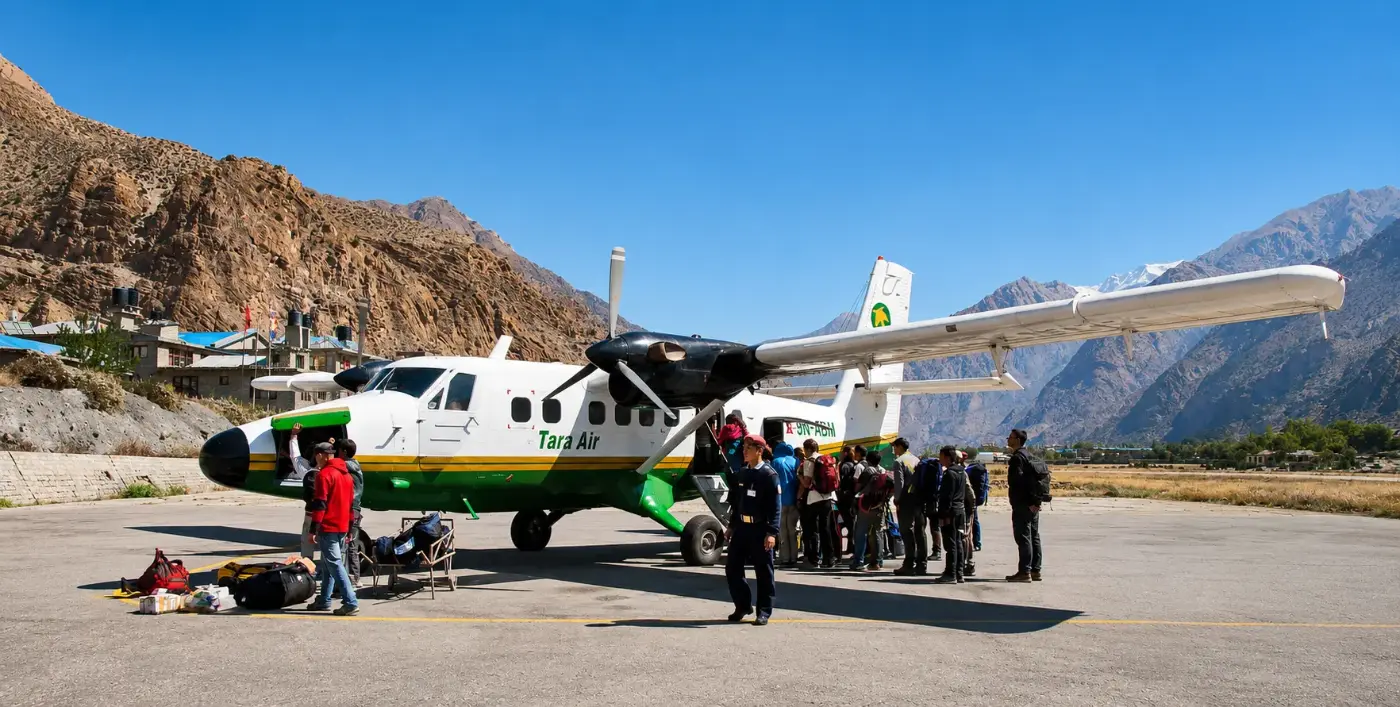
Jomsom Airport to Muktinath by Jeep, Car, Hiace or Bus

Kathmandu to Muktinath Bus

Jomsom Airport to Muktinath Jeep, Car,r Hiace Bus hire

Jomsom Airport, the small domestic airstrip serving the Mustang District at 2,720 metres, is one of the most dramatic and most frequently discussed domestic airports in Nepal — famous for its morning-only flight window before the famous Jomsom valley wind builds to speeds that ground the Twin Otter aircraft that provide the only air connection to Pokhara, and for the extraordinary mountain panorama that passengers experience as the tiny aircraft threads between the Dhaulagiri and Annapurna ranges during the 20-minute flight. For the tens of thousands of pilgrims, trekkers, and tourists who arrive at Jomsom Airport each year, the immediate question on landing is always the same: how to get from this small airstrip to Muktinath — the 106th Divya Desam of Vaishnavite tradition at 3,710 meters — as quickly, comfortably, and reliably as possible.

The Jomsom Airport to Muktinath vehicle hire covers about 19 to 22 kilometres of road—a short distance by Nepal standards. Still, it climbs over 1,000 vertical meters from the airport at 2,720 m to the Ranipauwa village vehicle stand at approximately 3,690 m, and its road conditions make vehicle choice genuinely significant, not merely a matter of comfort preference.

This complete guide covers all four main vehicle options for this route: the private Scorpio jeep, the private car, the Toyota Hiace van, and the local bus — with  price ranges, specific road suitability assessments, timing guidance (the Jomsom wind makes vehicle departure time critical), and the practical arrangement through Nepal Vehicle Hiring Pvt Ltd that ensures the right vehicle for your group is waiting when the flight lands.

Book Jomsom Airport to Muktinath Jeep Car Hiace Bus transportation for families, couples, and groups. Choose a private 4WD jeep, car, Hiace van, or bus for convenient airport pickup and comfortable travel to Muktinath Temple.

Jomsom Airport — The Gateway That Sets the Pace

Jomsom Airport, officially known as Jomsom Airport (IATA: JMO), is among the world’s most operationally constrained domestic airports: its runway sits in the Kali Gandaki valley at 2,720 meters, with the valley walls rising sharply on both sides and the famous upstream thermal wind that builds progressively from approximately 10:00 a.m. to afternoon speeds exceeding 60 km/h. Domestic operators — Buddha Air, Tara Air, and others — schedule all Jomsom flights in the early-morning window to take advantage of the calm pre-wind air: most Pokhara-to-Jomsom flights depart Pokhara between 6:00 and 9:00 a.m. and land at Jomsom between 6:20 and 9:20 a.m. Return flights from Jomsom to Pokhara similarly depart in the early morning window before the wind makes landing and takeoff too dangerous to attempt.

The practical consequence of this flight window for Jomsom Airport to Muktinath vehicle hire is that most arriving pilgrims and trekkers land at Jomsom between 7:00 and9:30 a.m.M — and all of them then want to reach Muktinath as quickly as possible, ideally arriving before the midday heat and the increasingly strong valley wind make the ascent to Ranipauwa uncomfortable. Private vehicle hire from Nepal Vehicle Hiring Pvt Ltd, which meets arriving passengers directly at the airport after landing and departs for Muktinath between 7:30 and 9:00 a.m., offers the smoothest, most comfortable approach.

In contrast, negotiating a shared jeep at the airport stand—competing with other arriving passengers for the limited local vehicle supply—creates the kind of post-flight stress a well-organised pilgrimage journey specifically avoids.

The Route — Jomsom Airport to Muktinath Via Kagbeni

The Jomsom to Muktinath road follows a clearly defined corridor northward from Jomsom along the Kali Gandaki valley floor to Kagbeni, then climbs steeply east and north out of the valley toward the high-plateau approaches to Muktinath. Total distance: approximately 19-22 kilometres.

Total driving time in a private vehicle: 45 minutes to 1.5 hours, depending on vehicle type, road condition, and How Long You stop in Kagbeni. The road is significantly better than its reputation suggests — recent years have seen substantial improvement in the paving and surface quality of the Jomsom-Kagbeni section and of the final approach to Ranipauwa.

However, sections of the climb from Kagbeni to Ranipauwa remain rough enough to warrant a vehicle with higher ground clearance.

Jomsom to Kagbeni — 18 km Flat Valley Floor. From the Jomsom airstrip and main bazaar, the road heads northward along the Kali Gandaki River bank — a flat, wide, and mostly paved section that covers the 18 kilometres to Kagbeni in approximately 30 to 40 minutes. This section is the easiest and most comfortable driving of the full Jomsom-to-Muktinath route, and the one where the famous Jomsom wind has the most impact: the open valley floor gives the upstream wind no obstacle and maximum speed, and vehicles travelling northward in the late morning are driving directly into this wind at its most powerful.

Leaving Jomsom between 7:30 and 8:30 a.m. ensures you cover this section before the wind peaks.

Kagbeni — The Sacred Village and ACAP Checkpoint. At about 2,810 meters, Kagbeni is one of the most visually striking and historically significant villages in the Mustang region—a compact, flat-roofed stone settlement at the confluence of the Kali Gandaki and Jhong Khola rivers, with a dramatic medieval fort ruin above the village and a magnificent monastery at its centre. Kagbeni is also the checkpoint where vehicles and passengers heading to Muktinath have their ACAP permits verified, and the official gateway to the Upper Mustang restricted area to the north.

Vehicles continuing to Muktinath turn east from Kagbeni onto the road that climbs out of the main Kali Gandaki valley and up toward the Muktinath plateau.

Kagbeni to Ranipauwa — The Climb to Muktinath. From Kagbeni, the road to Ranipauwa (the vehicle stand below the Muktinath temple) climbs about 880 vertical meters over about 8 to 10 kilometres. This gradient is sustained and often steep, mixing improved paved sections with rougher unpaved stretches whose quality varies with recent maintenance and seasonal conditions.

This is the section of the Jomsom to Muktinath drive where vehicle choice matters most: the gradient and surface quality are manageable for a 4WD Scorpio or Hilux jeep without difficulty but create genuine strain for a standard 2WD sedan in slippery or steep conditions. At Ranipauwa (approximately 3,690 m), the vehicle stand is the end of the road — the Muktinath temple complex itself, 100 vertical meters above and 2 kilometres distant, is reached on foot or by horse.

manang

The Vehicle Options — Scorpio Jeep, Car, Hiace and Bus Compared

The vehicle options mentioned in this guide’s title—Scorpio jeep, car, Hiace van, and bus—each has specific strengths and limitations on the Jomsom-to-Muktinath route, depending on the gradient, surface, and altitude profile of the Kagbeni-to-Ranipauwa climb. Understanding these differences helps you choose the right vehicle for your group’s size, budget, and comfort needs.

Option 1 — Private Scorpio or Hilux 4WD Jeep (Best Choice). The private 4WD Scorpio or Hilux jeep is the definitive recommendation for the Jomsom-to-Muktinath route, and the choice of every experienced operator and returning pilgrim group coordinator.

Its 4WD capability handles the steeper Kagbeni-to-Ranipauwa gradient sections without strain, even in early-morning cold conditions when road surfaces may be frost-affected. Its 200 to 220 mm ground clearance navigates the rougher unpaved sections of the Ranipauwa approach. Its diesel engine provides the low-range torque needed for sustained gradient driving at altitude, something petrol alternatives lack.

Its passenger capacity of 4 to 6 people, plus luggage and full temple-visit luggage, suits the group sizes most pilgrimage and trekking parties travel in. The price for a private Scorpio or Hilux from Jomsom Airport to Muktinath is approximately NPR 4,000 to 10,000 (USD 30 to 80) for the full vehicle one way.

Nepal Vehicle Hiring Pvt Ltd pre-arranges a jeep pickup at the airport to meet your specific incoming flight.

Option 2 — Private Car (Sedan or Non-4WD SUV). A standard private car is occasionally used for the Jomsom-to-Muktinath transfer in good dry-season road conditions — the Jomsom-to-Kagbeni flat section is entirely manageable for a standard sedan, and the Kagbeni-to-Ranipauwa climb is paved for significant portions that a standard 2WD car can manage in dry conditions without excessive difficulty.

The limitations are real, however: in wet conditions, early morning frost, or on the rougher unpaved approach sections, a standard car offers considerably less safety margin and road confidence than the 4WD jeep.

Nepal Vehicle Hiring Pvt Ltd recommends the private car option only for solo travellers or couples without large luggage travelling in the peak dry season (October-November or March-May), and always recommends upgrading to the 4WD jeep hire, where the cost top-end is modest, and the reliability improvement is meaningful. The private car rate from Jomsom to Muktinath is approximately NPR 3,000 to 8000 (USD 22 to 60).

Option 3 — Toyota Hiace Van. The Toyota Hiace van is a frequently misunderstood option for the Jomsom-to-Muktinath route. As our dedicated Muktinath Hiace hire guide explains in detail, the Hiace is an excellent vehicle for the long highway sections of the Kathmandu or Pokhara approach to the Kali Gandaki region — but its 2WD drivetrain and lower ground clearance make it specifically unsuitable for the Kagbeni-to-Ranipauwa climb, where the combination of sustained gradient, rough unpaved sections, and altitude creates conditions beyond the Hiace’s design parameters.

The practical solution for groups of 7 to 14 people arriving by flight is to use the Hiace van for the Pokhara-to-Jomsom road transport (where its comfort and passenger capacity are genuine advantages) and transfer passengers to 4WD jeeps in Jomsom for the Muktinath ascent.

If a group specifically insists on a Hiace for the Jomsom-to-Muktinath section, Nepal Vehicle Hiring Pvt Ltd advises on the road’s current surface condition and recommends accordingly—in the best dry-season conditions, a Hiace can complete the route. Still, the margin for difficulty is smaller than on the 4WD jeep.

Option 4 — Local Bus. Local buses operating on the Jomsom-to-Muktinath route are primarily the small public buses that serve the Mustang District’s inter-village public transport network. These buses depart from Jomsom Bazaar around 9:00 a.m. and 2:00 p.m. daily and cost about NPR 200 to 300 per person (USD 1.50 to 2.25) for the Jomsom-to-Ranipauwa run.

The journey takes about 1.5 to 2.5 hours because of multiple stops at intermediate villages.

For budget-conscious solo travellers with no fixed timing requirements and light luggage, the local bus is a perfectly functional option. For pilgrimage groups, families, or anyone who paid for a flight specifically to arrive at Muktinath efficiently, the local bus’s fixed departure times, unpredictable journey duration, crowded seating, and limited luggage space make private vehicle hire from Nepal Vehicle Hiring Pvt Ltd the clearly better choice.

Muktinath

Price Guide — All Jomsom to Muktinath Vehicle Options

The following prices apply to Nepal Vehicle Hiring Pvt Ltd vehicle hire services for the Jomsom Airport to Muktinath transfer. All private vehicle prices include the driver and fuel for the full Jomsom-to-Ranipauwa journey and return (round-trip pricing noted separately).

Private Scorpio  4WD Jeep — One Way, Airport to Ranipauwa: NPR 4,000 to 10,000 (USD 30 to 80) for the full vehicle, 4 to 6 passengers.

Private Scorpio  4WD Jeep — Round Trip, Airport to Ranipauwa and Return: NPR 7,500 to 26,000 (USD 56 to 150) for the full vehicle. This round-trip arrangement includes waiting at Ranipauwa during the darshan (2 to 4 hours) and returning the group to Jomsom Airport or Bazaar Hotel.

Private Car (Sedan) — One Way, Jomsom to Ranipauwa: NPR 3,000 to 8,000 (USD 22 to 60) for the full vehicle, 1 to 3 passengers, dry-season only.

Toyota Hiace Van — One Way, Jomsom to Ranipauwa: NPR 7,000 to 15,000 (USD 53 to 100) for the full vehicle, 7 to 14 passengers, only in best dry-season conditions.

For the complete Muktinath yatra vehicle package covering Pokhara to Jomsom (road) or Jomsom Airport pickup (for those flying), through Jomsom-to-Muktinath darshan,n and return to Pokhara or Sunauli, Nepal Vehicle Hiring Pvt Ltd provides coordinated,d all-inclusive pricing through our plan trip page or by contacting our team at +977 981-4227196.

Book Jomsom Airport to Muktinath Jeep Car Hiace Bus transportation for families, couples, and groups. Choose a private 4WD jeep, car, Hiace van, or bus for convenient airport pickup and comfortable travel to Muktinath Temple.

The Jomsom Wind — The Most Critical Timing Factor

The Jomsom wind is perhaps the most famous natural phenomenon in all of Nepal’s mountain transport geography. This powerful upstream thermal wind builds through the Kali Gandaki valley from about 10:00 a.m. each day, reaching sustained speeds of 60 to 80 km/h by early afternoon on the most intense days and creating the distinctive, sand-blown haze that gives Jomsom’s midday atmosphere its characteristic stark quality.

The wind is created by the same atmospheric dynamics that make the Kali Gandaki valley one of the world’s deepest and most efficiently channelled natural wind corridors: the thermal heating of the Tibetan plateau above drives a powerful upvalley airflow through the gorge between Dhaulagiri and Annapurna, and the valley’s geometric efficiency in channelling this flow concentrates it into the remarkable phenomenon that makes Jomsom-area driving in the afternoon a genuinely challenging and sometimes hazardous experience.

The wind’s practical impact on Jomsom-to-Muktinath vehicle transfers is straightforward and widely acknowledged: depart as early as possible after the incoming flight lands, ideally between 7:30 and 9:30 a.m., and complete the ascent to Ranipauwa before the wind peaks around noon. A private jeep from Nepal Vehicle Hiring Pvt Ltd can meet the incoming flight at the airport and depart immediately after luggage collection, completing the Jomsom-to-Ranipauwa journey before 10:00 a.m. on most mornings and avoiding the peak wind window.

The shared jeep alternative, which may fill and depart 30 to 60 minutes after the flight lands, puts the Kagbeni-to-Ranipauwa climb in the early wind-building period — still manageable, but noticeably less comfortable than the dawn calm.

The return from Muktinath to Jomsom involves a different wind consideration. On the Kagbeni-to-Jomsom section, the descent from Ranipauwa runs northward-to-southward, so the vehicle travels with the upvalley wind rather than against it. This makes the afternoon return descent considerably more comfortable than the afternoon ascent would be.

Nepal Vehicle Hiking Pvt Ltd’s standard Muktinath round-trip vehicle arrangement confirms the return departure from Ranipauwa based on the group’s darshan completion time—typically a 2 to 4 hour window at the temple—with the driver waiting at the Ranipauwa vehicle stand throughout.

Book Jomsom Airport to Muktinath Jeep Car Hiace Bus transportation for families, couples, and groups. Choose a private 4WD jeep, car, Hiace van, or bus for convenient airport pickup and comfortable travel to Muktinath Temple.

Kagbeni — The Sacred Stopover Worth More Than a Checkpoint

Most vehicles passing through Kagbeni on the Jomsom to Muktinath route stop only as long as the ACAP checkpoint verification requires — typically 5 to 10 minutes — before continuing to Ranipauwa. This is understandable given the wind-timing urgency described above.

Still, it consistently means one of the Muktinath corridor’s finest historical and cultural environments is seen only from the checkpoint queue rather than explored with proper attention. Kagbeni is worth more than this — and for groups with early flights whose Jomsom-to-Muktinath transfer begins before 8:00 a.m., a 20 to 30 minute Kagbeni stop adds perspective and cultural depth to the journey without meaningfully affecting the wind timing.

The Kagbeni checkpoint marks the official entry into the restricted Upper Mustang area for travellers continuing northward — tourists going above Kagbeni to Lo Manthang require the USD 50 per day Restricted Area Permit. At the same time,e Muktinath-bound vehicles turn east at Kagbeni and re-enter the standard ACAP area.

The Kag Chode Thupten Samphel Ling Monastery in Kagbeni, one of the valley’s oldest active monasteries, sits above the village and is a short climb from the main village lane. The sacred Kali Gandaki riverbed at Kagbeni is the primary Shaligram Shila collecting site—the black ammonite fossils that Vaishnavite tradition regards as physical manifestations of Vishnu are found in the river gravel, and pilgrims on the ascending journey to Muktinath darshan sometimes stop to collect Shaligrams for blessing at the temple above.

Book Jomsom Airport to Muktinath Jeep Car Hiace Bus transportation for families, couples, and groups. Choose a private 4WD jeep, car, Hiace van, or bus for convenient airport pickup and comfortable travel to Muktinath Temple.

Muktinath Darshan — What Happens at Ranipauwa and the Temple

Ranipauwa village, at approximately 3,690 meters, is where every Jomsom-to-Muktinath vehicle transfer ends and where the 2-kilometre walk — or horse ride — to the Muktinath temple complex begins. The vehicle stand at Ranipauwa has a small cluster of guesthouses, tea shops, and horse hire operators, ensuring the vehicle-to-temple transition is managed rather than improvised.

Nepal Vehicle Hiring Pvt Ltd’s private jeep drivers wait in Ranipauwa throughout the group’s darshan, confirming by WhatsApp when the group descends from the temple and is ready to return to Jomsom.

The horse ride from Ranipauwa to the temple takes approximately 15 to 20 minutes one way and costs approximately NPR 300 to 500 return. This option is strongly recommended for elderly pilgrims and for anyone who wants to conserve energy for the 108 Mukti Dhara ritual itself at 3,710 meters, where the cold-water spout circuit requires sustained standing in cold, open air at an altitude where any physical exertion is noticeably harder than at sea level.

The walk is about 2 kilometres of gradual uphill — not technically difficult, but tiring enough at altitude that many experienced pilgrims prefer the horse for at least the ascent.

The Muktinath temple complex itself — the 108 Mukti Dhara sacred water spouts, the Jwala Mai eternal flame shrine, the principal Vishnu Mandir, the Buddhist Gompa, and the Mukteshwor Mahadev Temple — typically takes 2 to 4 hours for a complete, unhurried visit. Nepal Vehicle Hiking Pvt Ltd’s jeep and vehicle hire arrangements for the Jomsom-to-Muktinath round trip include a standard 3-hour minimum wait at Ranipauwa, with flexible extensions available for groups who want more time at the temple before the return descent.

Pre-Arranged vs On-Arrival Vehicle Hire — The Critical Distinction

One of the most consistently reported stress points for pilgrims arriving at Jomsom Airport is the transition from flight to ground transport at the vehicle stand outside the small terminal building — a process that, in the unmanaged form that airport-stand haggling takes in peak season, involves competing with all other arriving passengers for the limited supply of local jeeps at rates inflated by immediate demand. During the peak October-November and March-May windows, when multiple Pokhara-to-Jomsom flights operate consecutively, and 40 to 80 pilgrims may arrive at the airport within 30 minutes of each other, the local jeep supply at Jomsom airport is frequently insufficient for immediate demand, creating waits of 30 to 60 minutes for groups unable to secure a vehicle immediately.

A pre-arranged private jeep from Nepal Vehicle Hiring Pvt Ltd eliminates this stress. Our driver is at the airport with the vehicle confirmed and positioned before the incoming flight lands — the group walks from the arrivals area directly to their waiting Scorpio or Hilux, loads luggage.

It departs for Muktinath within 10 to 15 minutes of the plane door opening. We confirm the booking 24 hours before the flight via WhatsApp and share the driver’s name, vehicle description, and mobile number. No airport-stand negotiation, no waiting during peak wind periods, and no uncertainty about vehicle condition or price.

Nepal Vehicle Hiring Pvt Ltd pre-arranges Jomsom Airport pickup vehicles for all Muktinath transfer groups booking through our plan trip page or via WhatsApp at +977 981-4227196. Please provide your incoming flight details (flight number, airline, departure time from Pokhara) at booking so we can confirm your arrival time at Jomsom Airport.

The ACAP Permit — What to Have Ready at Kagbeni Checkpoint

The Kagbeni ACAP checkpoint requires valid Annapurna Conservation Area Permits for all passengers in any vehicle heading toward Muktinath. The 2026 ACAP fee is NPR 3,000 (approximately USD 22 to 25) per person for foreign nationals and NPR 1,000 per person for SAARC nationals, including Indian citizens. You must obtain the permit in Kathmandu or Pokhara before the Jomsom flight; you cannot purchase it in Kagbeni or Jomsom.

For pilgrims arriving at Jomsom by domestic flight from Pokhara and who have not yet obtained their ACAP permits, Jomsom Bazaar has a permit office where ACAP permits can be purchased before the Muktinath vehicle transfer departs — our Nepal Vehicle Hiring Pvt Ltd drivers allow 20 to 30 minutes at Jomsom Bazaar for permit purchase if required, factoring this into the overall morning departure timing. For pilgrims arriving by road from Pokhara through the Kali Gandaki gorge, the ACAP permit is typically verified at the Beni checkpoint before the Gorge section — meaning Kagbeni is a second verification rather than the first.

NOTE: Foreign nationals arriving at the Kagbeni checkpoint without a valid ACAP permit must return to Jomsom to buy one before proceeding to Muktinath. This adds 1-2 hours to the journey. Arrange ACAP permits in Pokhara or Kathmandu before departure.

Horse Hire at Ranipauwa — The Muktinath Ascent Alternative

The horse hire facility at Ranipauwa village deserves a dedicated section in any Jomsom to Muktinath vehicle guide because, for many pilgrims, it’s the most practical and sensible way to cover the 2-kilometre, 100-vertical-meter ascent from the vehicle stand to the temple complex. The horses available at Ranipauwa are acclimatised and well-fed, and their operators are experienced on the specific trail to the temple; pilgrim groups consistently rate their services highly.

The current rate is approximately NPR 300 to 500 for the return ride (from the vehicle stand to the temple and back).

For elderly pilgrims, for those with knee or joint concerns, for children, and for any pilgrim who has already been physically active (a trekker who has just crossed the Thorong La and descended to Ranipauwa over the previous 8 to 10 hours, for example), the horse ride is not a compromise but a sensibly managed conservation of energy for the temple circuit itself — the standing walk through the 108 Mukti Dhara water spouts, the circumambulation of the courtyard, and the extended time at the Jwala Mai shrine that the proper Muktinath darshan requires. Nepal Vehicle Hiring Pvt Ltd’s private jeep drivers can help clients identify the most appropriate horse operators at Ranipauwa, and our booking team advises on horse-hire arrangements when confirming Jomsom Airport pickup bookings.

Jharkot and Khingar — Sacred Villages on the Muktinath Ascent

The road from Kagbeni to Ranipauwa passes through two Tibetan-influenced villages — Jharkot and Khingar — whose cultural and architectural character adds significant depth to the Jomsom to Muktinath vehicle journey for pilgrims and travellers willing to slow the ascent by 15 to 20 minutes for a village stop. Jharkot, at approximately 3,550 meters, is a compact hilltop settlement whose dramatic medieval castle ruin rises above the flat-roofed village houses in a composition photographed by virtually every professional photographer who has passed through the Mustang region.

The Jharkot castle, though no longer inhabited or structurally safe to enter, is visible from the road immediately above the village and provides one of the most photographically compelling roadside scenes on the entire Muktinath corridor.

Khingar, continuing above Jharkot at approximately 3,620 meters, is a smaller but similarly atmospheric village whose residents maintain the mix of farming, herding, and guesthouse operation that characterises Mustang’s high-altitude communities. The village monastery, accessible via a short trail from the main road, is active and holds a modest but genuine collection of religious paintings and sculptures that reward a brief respectful visit.

For groups travelling in a private jeep from Nepal Vehicle Hiring Pvt Ltd with a flexible schedule, a 10 to 15-minute stop at each of Jharkot and Khingar adds cultural texture to what is otherwise treated purely as a transit section of the Jomsom to Muktinath road transfer. Our drivers on this route know both villages well and are glad to stop for photography and brief exploration on request — confirm the stop preference when booking the vehicle transfer through our plan trip page.

The Muktinath Plateau Landscape — High Desert Beauty

The landscape above Kagbeni on the ascent to Muktinath is one of the most visually distinctive in Nepal — a high-altitude plateau environment that, in its dry, ochre-colored, wind-sculpted character, feels more like the Tibetan plateau than the forested mountain terrain below the Himalayan rain shadow. At approximately 3,500 to 3,800 meters on the Muktinath ascent, the vegetation is sparse scrub and dry grassland, the rock formations are deeply eroded sandstone and conglomerate in the characteristic Mustang palette of red, ochre, and cream, and the sky above is an intense deep blue that the low humidity and high altitude of this specific environment produce in a quality rarely available at lower elevations.

The visual backdrop for the Jomsom to Muktinath vehicle transfer changes continuously as the private jeep climbs from the valley floor: the Nilgiri massif (7,061 m) dominates the southern view throughout the climb, its enormous snow-covered face visible in extraordinary proximity as the road gains altitude. The Thorong Peak (6,144 m) appears to the north above the plateau rim.

And as the final approach to Ranipauwa rounds the last hairpin above Khingar, the full extent of the Muktinath plateau comes into view — the cluster of whitewashed guesthouses at Ranipauwa, the prayer flag lines of the temple complex on the hill above, and behind everything,g the massive dark bulk of the Thorong massif from which the sacred Kali Gandaki springs originate. This view — sudden, vast, and spiritually charged — first-time Muktinath visitors consistently describe as the most powerful landscape revelation of their Nepal visit.

Nepal Vehicle Hiring Pvt Ltd’s private jeep hire brings this moment to passengers who haven’t walked the approach trail — and it is, from a moving vehicle window at 3,600 meters, genuinely magnificent.

Book Jomsom Airport to Muktinath Jeep Car Hiace Bus transportation for families, couples, and groups. Choose a private 4WD jeep, car, Hiace van, or bus for convenient airport pickup and comfortable travel to Muktinath Temple.

Pokhara to Jomsom Road vs Flight — Choosing Your Approach

Before the Jomsom Airport to Muktinath private vehicle transfer begins, every Muktinath-bound traveler must get to Jomsom — and the choice between the 20-minute domestic flight from Pokhara and the 7 to 9 hour private jeep drive through the Kali Gandaki gorge shapes not just the day’s logistics but the character of the entire arrival experience. The flight is faster, eliminates the road journey, and — on a clear morning — offers an aerial view of the Annapurna and Dhaulagiri ranges from the Twin Otter window on one of Asia’s finest domestic mountain-flight experiences.

The road is slower but infinitely richer: the Kali Gandaki gorge drive through Beni, Tatopani, Dana, Ghasa, Tukuche, and Marpha delivers 7 to 9 hours of the most dramatically beautiful mountain road scenery in Nepal alongside the cultural texture of the Thakali villages, the famous apple orchards, and the deep geological wonder of the world’s deepest gorge.

Nepal Vehicle Hiring Pvt Ltd provides Pokhara-to-Jomsom private jeep hire for travellers choosing the road approach, and the same Jomsom-to-Muktinath jeep continues to Muktinath for the complete Pokhara-to-Muktinath ground transfer. For travellers choosing the flight to Jomsom and then a private vehicle for the Jomsom-to-Muktinath section only, the airport pickup arrangement described in this guide covers the connection.

For groups combining the approaches — flying to Jomsom for the ascent to Muktinath and driving the Kali Gandaki gorge on the return descent to Pokhara — Nepal Vehicle Hiring Pvt Ltd coordinates the full multi-modal arrangement through our plan trip page. Our Kathmandu airport transfer service connects international arrivals to the Pokhara-bound vehicles, and our Pokhara car hire covers Pokhara sightseeing days before the Jomsom flight departure.

For the full Muktinath yatra circuit, including Indian pilgrim groups from the Sunauli border, our Muktinath tour packages cover every leg.

The Annapurna Circuit Connection — Jomsom as a Trek Exit Point

For a specific and significant category of travellers arriving at Jomsom for the Muktinath transfer, the context is different from the pilgrim who has just flown in from Pokhara: the Annapurna Circuit trekker who has just descended from the Thorong La pass at 5,416 metres to Muktinath and then taken the road down to Jomsom is physically exhausted, emotionally fulfilled, and in need of onward transport that connects the circuit’s highest point to the return journey south. For this group, the Jomsom to Pokhara private jeep transfer is the primary booking priority rather than the Jomsom-to-Muktinath upward transfer — the Thorong La descent has already delivered them to the Muktinath side of the journey.

Nepal Vehicle Hiring Pvt Ltd’s Jomsom to Pokhara jeep hire serves Annapurna Circuit trekkers exiting through Jomsom at the same professional standard as our upward Muktinath vehicle transfers — pre-arranged departure from Jomsom hotel at 6:00 7:00 a.m.AM before the wind builds, comfortable descent through Marpha’s apple orchards and Tatopani’s hot springs, and hotel delivery in Pokhara by afternoon. Our Annapurna Circuit vehicle hire guide covers this complete exit arrangement in detail, along with the Besisahar private vehicle entry service.

For trekkers whose Annapurna Circuit guided package from Trek Nepal Himalayas or luxury Annapurna Circuit experience from Alpine Luxury Treks includes the Jomsom return, we coordinate our vehicles directly with those operators. For Everest Base Camp trekkers starting a Nepal circuit after Muktinath, our Kathmandu add-on includes sightseeing, Bhaktapur tours, and Nagarkot sunrise transfers, available via our contact page.

Combining Jomsom Airport Arrival with Jomsom Town

For many pilgrims arriving at Jomsom Airport, the Jomsom-to-Muktinath transfer is the primary objective — but Jomsom itself, though primarily a transit town for Muktinath visitors, offers several attractions and experiences worth adding to a flexible Mustang itinerary. The Jomsom bazaar area has a good range of guesthouses and restaurants by Mustang standards — notably the apple products (brandy, juice, dried fruit, cider) for which Marh —kilometres south of Jomsom — is famous, sold in Jomsom bazaar shops.

The Kali Gandaki riverbed at Jomsom is one of the more accessible sections of the river for Shaligram Shila exploration — the black ammonite fossils that Vaishnavite pilgrims collect as sacred stones are found in the gravel banks visible from the Jomsom main bridge.

The ACIMIT Museum (Annapurna Conservation Area Muktinath and Integrated Mustang-Tourism Museum) in Jomsom offers an informative cultural orientation to the Mustang region’s history, ecology, and religious traditions before the Muktinath ascent— a 3-minute visit that contextualises pilgrimage for first-time visitors and enriches the temple experience. And for guests whose Jomsom Airport arrival places them in the town the evening before an early morning Muktinath departure, the option of a Jomsom evening walk along the Kali Gandaki bank — with Nilgiri mountain’s north face catching the last light of the day above the valley — provides one of the finest high-altitude evening scenes available on any Nepal pilgrimage circuit.

Nepal Vehicle Hiring Pvt Ltd coordinates all Jomsom-to-Muktinath vehicle transfers, including overnight arrangements, through our plan trip page.

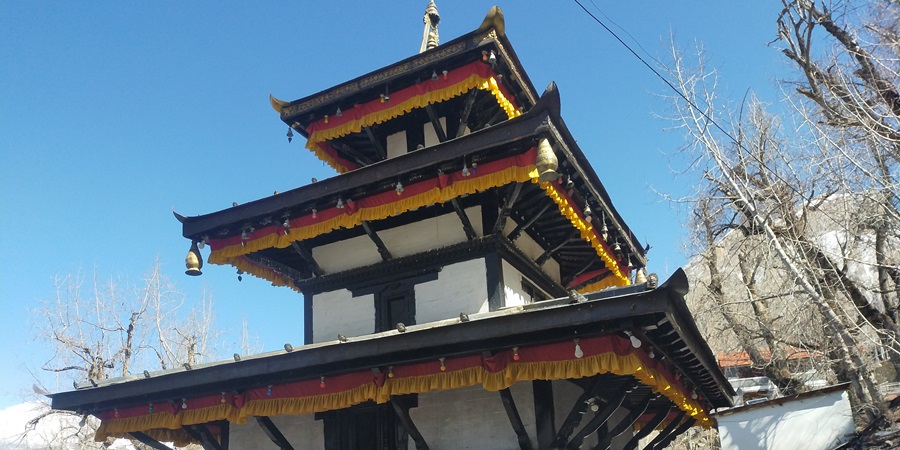
Muktinath temple

The Return — Muktinath to Jomsom and Onward

The return from Muktinath to Jomsom after the darshan is a straightforward descent in the same private vehicle that provided the upward transfer — 19 kilometres, taking minutes to 1 hour in the southward direction, aided by the downhill gradient and by the afternoon tailwind that pushes south along the valley floor after the midday thermal peak. Nepal Vehicle Hiring Pvt Ltd’s standard Muktinath round-trip arrangement confirms both the upward and return legs at booking—the driver communicates with the group via WhatsApp during the darshan to confirm the return pickup time based on when the group finishes its temple visit.

From Jomsom, most pilgrimage groups face a choice between the return domestic flight to Pokhara (the Pokhara-to-Jomsom return flight, also morning-only) or the private jeep road descent through the Kali Gandaki gorge to Pokhara — a 7 to 9 hour drive through Marpha, Tatopani, and Beni that is one of Nepal’s most spectacular overland routes. Nepal Vehicle Hiring Pvt Ltd coordinates the Jomsom to Pokhara return jeep transfer as part of the Muktinath yatra package for groups who prefer the road experience over flying.

Our Pokhara car hire and Pokhara to Chitwan bus complete the onward journey for groups adding Chitwan or other destinations after Pokhara. For Indian pilgrim groups returning to the Sunauli border, our comprehensive Muktinath Yatra return guides cover the full Jomsom-to-Sunauli routing in detail.

Season Guide — Best Time for the Jomsom Airport to Muktinath Transfer

Autumn (October to November) is peak season for Jomsom-to-Muktinath vehicle transfers and when demand for private jeep hire is highest. Post-monsoon clarity delivers exceptional mountain views. Road conditions are at their best.

But flight availability is most constrained — book Pokhara-to-Jomsom domestic flights at least 2 to 3 weeks ahead in October. Similarly, book Nepal Vehicle Hiring Pvt Ltd airport pickup vehicles in advance for this peak period.

Spring (March to May) is the second peak, with the Jomsom-to-Muktinath vehicle transfer service fully available and Annapurna Circuit trekkers descending through the Kali Gandaki, adding to general Jomsom traffic. The Tatopani hot springs road below Jomsom is most beautiful in April, with the lower gorge rhododendrons in bloom.

Winter (December to February) is the quietest period at Jomsom Airport — flights operate but with more weather-related cancellations than in spring and autumn. Muktinath Temple is open, and private jeep transfers from Jomsom are available year-round. Still, morning temperatures at Ranipauwa can drop to -10 to -15 Celsius in January, and the 108 Mukti Dhara cold-water ritual is a genuine physical challenge in these conditions.

Monsoon (June to August) brings limited flight services to Jomsom — clouds and reduced visibility restrict the Twin Otter mountain flight window. The road alternative via the Kali Gandaki Gorge is more reliable than flying in this season. For vehicle transfers, the Jomsom-to-Muktinath road itself is less affected by monsoon than other Nepal mountain road sections, as Mustang’s rain shadow limits precipitation.

Practical Tips — Jomsom Airport to Muktinath

  • Pre-arrange your airport pickup: Do not rely on airport-stand jeeps in peak season. Book your Jomsom Airport pickup vehicle through Nepal Vehicle Hiring Pvt Ltd at least 48 hours before the flight.
  • Depart the airport by 8:00 a.m.The Jomsom wind builds from 10 a.m. An 8:00 a.m. Jomsom departure reaches Ranipauwa by 9:00 to 9:30 a.m. in calm conditions.
  • Book morning flights: The only Pokhara-to-Jomsom flights operate in the early morning window (6:00 to 9:00 a.m. departure from Pokhara). Secure your flight booking 2 to 3 weeks ahead in peak season.
  • ACAP permit: Obtain in Pokhara before the flight. The Jomsom Bazaar permit office also issues ACAP permits if needed before the Muktinath vehicle departs.
  • Scorpio or Hilux for the Kagbeni-Ranipauwa climb: This section specifically benefits from 4WD. Nepal Vehicle Hiring Pvt Ltd recommends the 4WD jeep hire for all groups.
  • Horse hire at Ranipauwa: NPR 300-500 return. Strongly recommended for elderly pilgrims and those with joint concerns.
  • Allow 3 to 4 hours at the temple: The full 108 Mukti Dhara circuit, the Jwala Mai shrine, the Vishnu Mandir darshan, and the Buddhist Gompa require unhurried time. A rushed temple visit is the most common regret of Muktinath yatras.
  • Confirm return pickup by WhatsApp: Message the Nepal Vehicle Hiring Pvt Ltd driver from the temple when ready to descend — the return vehicle is confirmed and waiting at Ranipauwa vehicle stand.

Why Choose Nepal Vehicle Hiring Pvt Ltd for Jomsom to Muktinath

  • Airport waiting vehicle: A private jeep or car is confirmed and positioned at Jomsom Airport before the incoming flight lands.
  • 4WD fleet: Scorpio and Hilux 4WD for the Kagbeni-to-Ranipauwa climb — the right vehicles for this specific gradient and surface.
  • Wind timing knowledge: Our drivers know the Jomsom wind pattern and prioritise early departure as standard service.
  • Round trip coordination: Outward airport pickup and return from Ranipauwa confirmed as a single booking — no uncertainty at either end.
  • Transparent pricing: Driver and fuel inclusive, all-in. No additions at journey end.
  • 24/7 booking: WhatsApp +977 981-4227196 or plan trip page.

Frequently Asked Questions — Jomsom Airport to Muktinath

How far is Jomsom Airport from Muktinath?

Approximately 19 to 22 kilometres by road via Kagbeni and Jharkot to Ranipauwa. The drive takes 45 minutes to 1.5 hours by private jeep.

What is the 2026 private jeep price from Jomsom to Muktinath?

NPR 4,000 to 10,000 (USD 30 to 80) one way for a private Scorpio. Round trip (airport pickup plus Ranipauwa return): NPR 7,500 to 20,000 (USD 56 to 130). Contact Nepal Vehicle Hiring Pvt Ltd at +977 981-4227196.

Can a Hiace van go from Jomsom to Muktinath?

In the best dry-season conditions, yes — but the Kagbeni-to-Ranipauwa climb has steep, rough sections that exceed the Hiace’s optimal road type. Nepal Vehicle Hiring Pvt Ltd recommends a 4WD jeep transfer for the Jomsom-to-Muktinath section and uses the Hiace only for highway sections.

What time should I depart Jomsom for Muktinath?

As early as possible after the flight lands — ideally by 7:30 to 8:30 a.m. The famous Jomsom valley wind builds from 10 a.m. and makes the ascent progressively more uncomfortable after this time.

Is the ACAP permit required from Jomsom to Muktinath?

Yes — the Kagbeni checkpoint verifies ACAP permits for all passengers. NPR 3,000 per person for foreign nationals. Obtain in Pokhara or Kathmandu before the flight.

Can I pre-arrange my airport vehicle pickup?

Yes — Nepal Vehicle Hiring Pvt Ltd pre-arranges the airport vehicle for all confirmed bookings. Provide your flight details when booking via WhatsApp +977 981-4227196 or our plan trip page.

Conclusion

The Jomsom Airport to Muktinath private vehicle transfer is the final transport leg of a pilgrimage that may have begun hundreds of kilometres away in India or Kathmandu — a short but critical 19 to 22-kilometre drive that, when arranged well, delivers pilgrims to the sacred complex of Muktinath rested, on schedule, and ready for the darshan. The private Scorpio or Hilux 4WD jeep is the right vehicle for this section; the car, Hiace, and local bus each have their own application, audience, and limitations.

Nepal Vehicle Hiring Pvt Ltd provides a pre-confirmed airport waiting vehicle that eliminates post-flight transport stress and delivers the pilgrimage’s final approach as professionally as every section before it deserves.

Book your Jomsom Airport to Muktinath private vehicle with Nepal Vehicle Hiring Pvt Ltd — call or WhatsApp +977 981-4227196, visit vehiclehiringnepal.com, or plan your complete Muktinath yatra through our plan trip page.

Jomsom Airport to Muktinath

Private 4WD jeep traveling from Jomsom Airport to Muktinath Temple through the scenic Mustang mountain landscape

Jomsom Airport to Muktinath: Private Vehicle Options Compared

You’ve landed at Jomsom, the wind is already picking up over the valley, and the temple is still 20-odd kilometres and a 1,000-meter climb away. Choosing the right Jomsom Airport to Muktinath private vehicle isn’t just a comfort question—on this stretch, it genuinely shapes how the rest of your pilgrimage day unfolds.

This guide compares every real option available at Jomsom Airport: Scorpio jeep, car, Hiace van, and local bus, with honest guidance on which actually suits this route and which don’t.

This guide covers real distances, drive times, costs, schedules, and vehicle-by-vehicle honesty about what works on this short but demanding mountain stretch so that you can plan your Muktinath trip with confidence rather than guesswork at the airport.

Why Vehicle Choice Matters on This Specific Stretch

The Jomsom-Muktinath road covers only about 20 to 25 kilometres, but climbs from Jomsom’s roughly 2,700 meters to Ranipauwa’s approximately 3,710 meters in that short distance, on a road that mixes improved sections with genuinely rough, unpaved stretches. Unlike longer routes where a comfortable highway vehicle can handle most of the distance before switching to a jeep for a final rough section, this entire stretch is the rough section. There’s no easy paved lead-in to soften the vehicle-choice decision.

Our broader guide on why 4WD is best for Nepal explains this terrain logic in general terms, and our dedicated Jomsom to Muktinath jeep rental guide covers the jeep option specifically in depth. This article widens the lens to compare every vehicle type travellers actually consider for this leg.

It’s worth being upfront about why this comparison matters more here than on almost any other short route in Nepal: most travellers reaching Jomsom Airport have already invested considerable time and money getting there — a flight from Pokhara, permits, possibly days of prior travel — and the last thing anyone wants is for the final, shortest leg of the journey to become the least comfortable or most stressful part of the entire trip—getting this one decision right is disproportionately important, given how short the distance is.

Understanding Jomsom Airport Itself

Jomsom Airport is a small, single-runway facility known for its dramatic mountain setting and its equally dramatic wind-dependent flight schedule. Flights operate almost exclusively in the early morning, before winds strengthen enough to make the short runway genuinely risky for landing and takeoff.

This means your vehicle transfer to Muktinath will almost always begin in the morning, regardless of which option you choose, which works in your favour given the same wind pattern that governs the road itself.

It’s worth building a small buffer into your plans around the airport experience — luggage collection can take time, and if you haven’t pre-arranged ground transport, locating and confirming a vehicle on arrival adds further delay before you’re actually on the road. Many travellers underestimate this small but real buffer, arriving with plans that assume an immediate, frictionless transition from plane to vehicle.

Ranipauwa vs Muktinath: Where the Road Actually Ends

A small but genuinely useful detail: your vehicle, whichever type you choose, will drop you at Ranipauwa, the village just below the temple, not at Muktinath Temple itself. From Ranipauwa, a short uphill walk of roughly 15 to 20 minutes covers the remaining distance to the temple complex.

This isn’t a significant extra burden for most travellers, but it’s worth knowing in advance so you don’t expect your vehicle to take you directly to the temple gates.

Understanding the Route: Distance, Altitude, and Road Character

The drive from Jomsom Airport to Muktinath (technically to Ranipauwa, the village just below the temple, where the road ends) covers roughly 20 to 25 kilometres, climbing over 1,000 meters in the process. The road passes through Kagbeni, Jharkot, and Khingar, mixing recently improved sections with older, rougher gravel stretches, particularly closer to Ranipauwa.

Afternoon winds in the Kali Gandaki valley are a near-daily feature, so vehicle choice and departure timing matter more here than on most short Nepal drives.

This valley helps make the Kali Gandaki Gorge one of the deepest gorges on earth, and the road sits exposed along the valley floor and lower slopes, with little natural wind shelter for most of the drive. This geography is precisely why the afternoon wind pattern is so consistent and predictable — cool air funnels up from the lowlands as the day warms, intensifying through the afternoon before easing again toward evening.

Traveller Type Deep Dive: Pilgrims

Hindu and Buddhist pilgrims visiting Muktinath specifically for darshan or religious observance often prioritise timely arrival over cost savings, particularly older pilgrims or those travelling with family for a significant religious occasion. A private jeep, booked in advance so it’s waiting at the airport, removes uncertainty at the point in the trip where it feels most unwelcome—after a flight, before a meaningful temple visit.

Traveller Type Deep Dive: Trekkers

Trekkers using Jomsom as an entry or exit point for the wider Annapurna Circuit or Upper Mustang region often have more schedule flexibility and a higher tolerance for basic transport, making the local bus or shared jeep a genuinely reasonable choice, especially if budget matters more over a longer overall trip. That said, trekkers on a tight itinerary—say, needing to catch a specific Jomsom-Pokhara flight the same day—often find the private jeep’s schedule certainty worth the extra cost.

Traveller Type Deep Dive: Photographers and Casual Tourists

Travellers primarily visiting for the scenery, photography, or to see Muktinath as part of a broader Nepal trip often value the private jeep’s flexibility to stop along the way more than any other traveller type covered in this guide, since the ability to pause at Kagbeni or a particularly striking viewpoint genuinely enhances the experience in a way a fixed-schedule bus cannot accommodate.

Private 4WD jeep traveling from Jomsom Airport to Muktinath Temple through the scenic Mustang mountain landscape

A Scorpio jeep hire is the standard, most widely used vehicle for this route, and for good reason: genuine 4WD, high ground clearance, and a rugged build that handles the rough gravel sections without drama. Private charters typically accommodate up to six passengers plus luggage, and the drive takes roughly 45 minutes to just over an hour, depending on conditions.

  • Best for: most travellers, families, and small groups wanting reliability and comfort together
  • Pros: genuine off-road capability, comfortable for the group, flexible timing
  • Cons: costs more than a shared bus or shared jeep seat

For travellers who’ve already flown a small mountain aircraft into a runway carved into the valley floor, a Scorpio jeep’s steady, predictable handling on the ground feels like a natural continuation of that same sense of capability — this is a vehicle genuinely built for exactly this kind of terrain, not adapted to it as an afterthought.

Option 2: Car or Local Taxi

Small cars and local taxis do operate on this route, particularly for shorter hops or when jeeps aren’t immediately available. They sometimes cost less than a full jeep charter.

That said, a standard car is a meaningfully less capable choice on this specific stretch than a genuine 4WD — lower ground clearance and less robust suspension make the rougher sections a rougher ride. In wet or icy conditions, traction becomes a real concern.

Where available, a car or taxi can work for a quick, opportunistic trip in good weather, but it isn’t the recommended default for this route the way it might be for a paved highway transfer elsewhere in Nepal.

  • Best for: solo travellers or pairs in good weather, prioritising immediate availability over comfort
  • Pros: sometimes cheaper, sometimes more readily available on short notice
  • Cons: less capable on rough or wet sections; less comfortable for the climb

Many of the vehicles marketed as ‘taxis’ on this route are higher-clearance local vehicles rather than standard sedans, since a genuine city car would struggle on the rougher stretches. Confirm exactly what vehicle you’re being offered before assuming ‘taxi’ means the same thing here as it would in Kathmandu or Pokhara.

Kathmandu to Muktinath Bus

Option 3: Hiace Van

A Hiace is Nepal’s standard group vehicle for highway travel, but it is not commonly used on the Jomsom-Muktinath stretch itself, and this guide doesn’t recommend it for this specific leg. Unlike routes where a Hiace comfortably covers a paved approach before switching to jeeps for a rough final stretch — the pattern covered in our Muktinath temple Hiace hire guide — the entire Jomsom-Muktinath road is the rough stretch, with no easier paved lead-in for a Hiace to handle.

Large groups arriving at Jomsom Airport should plan to split directly into multiple jeeps for this leg rather than expecting a single larger vehicle to manage it.

  • Best for: not recommended for this specific stretch
  • Pros: none specific to this route — better suited to paved approach legs elsewhere in a Mustang itinerary
  • Cons: lower ground clearance and less suited to rough gravel sections than a jeep

Option 4: Local Bus

A local bus runs between Jomsom and Muktinath, typically departing around 9 a.m. and 2 p.m., taking roughly 2 to 3 hours and costing only a few dollars per seat—by far the cheapest option on this route. The trade-off is what you’d expect: a fixed, limited schedule, shared seating with other passengers, and a much less comfortable ride on rough sections than in a private jeep.

For budget-conscious solo travellers with flexible timing, this remains a genuinely viable option; for anyone time-constrained or travelling with family, the fixed departure windows are a real limitation.

  • Best for: solo, budget-conscious travellers with flexible schedules
  • Pros: by far the cheapest option
  • Cons: fixed departure times (typically 9 a.m. and 2 p.m.), shared seating, least comfortable ride.

One practical consideration with the bus option: if you miss the morning departure, you’re often waiting until early afternoon for the next one, which can eat significantly into a tightly planned day, particularly if you also want time to properly visit the temple and explore Ranipauwa or Kagbeni before returning to Jomsom for a flight.

Private 4WD jeep traveling from Jomsom Airport to Muktinath Temple through the scenic Mustang mountain landscape

Option 5: Shared Jeep

A middle-ground option between the local bus and a private jeep charter, a shared jeep departs only when full, offering more flexibility than the bus at a lower cost than a private charter. The trade-off is genuine 4WD comfort shared with strangers, with no control over when the vehicle actually departs.

  • Best for: solo or paired travellers wanting jeep comfort without private charter cost
  • Pros: cheaper than private charter, more flexible than the fixed-schedule bus
  • Cons: departs only once full, shared with other passengers

Choosing a Reliable Operator

  • Confirm the operator has genuine, current experience specifically on the Jomsom-Muktinath stretch, not just general Mustang region driving.
  • Ask directly whether your vehicle is a genuine 4WD jeep or a lower-clearance car marketed loosely as a ‘taxi’
  • Request confirmation of pickup timing at Jomsom Airport, including how flight delays are handled
  • Check whether your quoted price is per vehicle (private charter) or per seat (shared), since these are priced very differently.
  • Ask about the driver’s experience with the valley’s afternoon wind pattern and how that affects their recommended departure timing.

Altitude and Health Considerations

Ranipauwa’s roughly 3,710-meter elevation is high enough to warrant basic altitude awareness, particularly for travellers who’ve flown directly into Jomsom without gradual acclimatisation. Whatevervehicle you choose, avoid rushing into strenuous activity on arrival at Ranipauwa, stay hydrated throughout the drive, and watch for mild headache, nausea, or unusual fatigue, adjusting your pace rather than pushing through.

Side-by-Side: Which Vehicle Actually Fits Your Trip

Travelling solo on a tight budget: take the local bus or a shared jeep seat, accepting the fixed schedule or waiting for a full vehicle.Travelling as a couple or small family: take a private Scorpio jeep charter, split the cost across the group, and keep full control of the schedule.Travelling as a larger group or pilgrimage party: multiple private jeeps rather than a single larger vehicle, since neither a car nor a Hiace suits this specific stretch — see our Muktinath temple Hiace hire guide for how to structure a larger group’s full itinerary around this reality.

Travelling with limited time:  book a private jeep in advance so you’re not waiting for a shared vehicle to fill or working around the bus’s fixed departure windows.

A History of Transport on This Route

For decades, the only way between Jomsom and Muktinath was on foot or by mule, a journey that took pilgrims and traders alike most of a day. Road construction reaching this far into the Mustang region is relatively recent, part of a broader wave of rural road expansion that has reshaped access across Nepal’s mid-hill and high-mountain districts over the past decade or so.

Understanding this history adds context to why the road still feels rough in places — it’s a genuinely young piece of infrastructure by any standard, still being incrementally improved rather than a mature, long-settled route. Older maps and trekking accounts of the region still occasionally reference the multi-day foot journey this drive has now largely replaced, a useful reminder of how quickly access to this part of Nepal has changed.

This also explains why online information about this route can quickly go stale. Trip reports and travel guides written even a few years ago may describe road conditions, vehicle options, or pricing that no longer reflect the current situation, making it worth confirming details directly with a current, locally experienced operator rather than relying solely on older sources.

Cultural Significance of the Journey Itself

For Hindu and Buddhist pilgrims specifically, the journey from Jomsom to Muktinath carries meaning beyond simple transportation — passing through Kagbeni, itself a place of some religious significance, and approaching the temple through increasingly stark, sacred high-desert terrain that has drawn pilgrims for centuries, long before any road existed at all. Whichever vehicle you choose, take a moment during the drive to appreciate that you’re covering, in under an hour or two, a journey pilgrims once spent days completing on foot.

Weather and Seasonal Considerations for This Route

Autumn and spring bring the most stable overall conditions, both for the Pokhara-Jomsom flight and for the road itself. Winter can bring snow and ice at these elevations, making a genuine 4WD considerably more valuable than in the drier months.

In contrast, monsoon season brings its own risk of localised flooding or washout on the rougher sections, even though this valley sits in a rain-shadow zone less affected by monsoon than most of Nepal. No matter what season you’re travelling, check current road conditions with your operator shortly before departure, since conditions here can shift meaningfully within a few days.

Communicating With Your Driver

Most drivers working with established operators on this route have functional English, though a few basic Nepali phrases go a long way in building rapport over a short but shared journey. Confirm before departure how to communicate any change of plans — a longer stop at Kagbeni, an earlier or later return — so expectations are clear on both sides throughout the trip.

What Makes This Route Unique Compared to Other Nepal Transfers

Few routes in Nepal compress this much altitude gain, terrain change, and genuine vehicle-choice consequence into such a short distance. Most comparable mountain approaches — Besisahar to Chame, for instance, or the road toward Rolwaling’s Chhetchhet trailhead — cover considerably more distance to achieve a similar effect.

Jomsom to Muktinath does it in barely 20 kilometres, which is exactly why this guide treats vehicle choice as a genuinely significant decision rather than a minor afterthought.

Comparing This Route to Other Nepal Airport-to-Trailhead Transfers

Jomsom isn’t the only Nepal airport where the final ground transport leg matters enormously. Similar considerations apply for travellers connecting through Kathmandu airport transfers onward to trekking regions. However, most other airport-to-trailhead transfers in Nepal at least offer some paved highway distance before conditions roughen.

Jomsom’s near-total lack of an easy lead-in is genuinely unusual, and part of why this specific comparison guide exists as a standalone resource rather than folding into a broader Mustang region overview.

Checklist Before You Fly Into Jomsom

  • ACAP permit arranged in Kathmandu or Pokhara before departure
  • Ground transport booked in advance, ideally a private jeep, with pickup confirmed for your specific flight
  • Sufficient Nepali rupees for the leg itself and any stops along the way
  • Warm, windproof layers packed accessibly rather than in checked luggage
  • A realistic same-day or overnight plan for the return leg, confirmed with your driver or operator

Working through this short checklist before your flight removes almost all the uncertainty this guide has focused on throughout — the goal isn’t to overcomplicate a genuinely short journey, but to make sure the one variable that actually matters here, vehicle choice, is settled well before you land.

Combining This Leg With a Wider Mustang Itinerary

Few travellers treat the Jomsom-Muktinath drive as an isolated trip. Most connect it to a wider Mustang or Muktinath pilgrimage itinerary — see our best time to visit Muktinath guide for full seasonal planning, our jeep rental for Mustang tour guide if you’re continuing north into the restricted Upper Mustang zone beyond Kagbeni, or our Muktinath temple Hiace hire guide if you’re organising a group’s full trip from Pokhara or Kathmandu rather than just the Jomsom Airport leg covered here.

Cost Comparison

Local bus fares run only a few dollars per seat, the cheapest option by a wide margin. Shared jeep seats cost more than the bus but less than a private charter, varying with demand and season.

A private jeep charter is priced per vehicle rather than per seat — commonly cited in the range of roughly USD 40 to 45 for the Jomsom-Muktinath leg specifically when booked locally. However, rates vary by operator, season, and whether you book in advance from Pokhara or Kathmandu versus on the ground in Jomsom.

For a group of four to six, per-vehicle pricing often works out to be comparable to, or cheaper than, the same group booking individual shared-jeep or taxi fares.

Planning Your Overall Trip Timeline

Most travellers flying into Jomsom plan their Muktinath visit as part of a broader multi-day Mustang or Annapurna region itinerary rather than an isolated day trip. Building in at least one buffer day around your Jomsom flight—whether flying in or out—accounts for the real possibility of weather-related delays and prevents a single missed connection from cascading through the rest of a tightly scheduled trip.

Comparing This Leg’s Cost to the Rest of a Mustang Trip

In the context of a full Mustang or Muktinath pilgrimage budget — flights, permits, accommodation, guide fees if applicable — the cost difference between a private jeep and a local bus for this specific short leg is relatively modest. Many travellers who might otherwise default to the cheapest option on principle find that, once they see the full trip budget in context, the private jeep’s comfort and schedule certainty are a small price relative to the overall investment already made in reaching Jomsom.

What Happens if Your Jomsom Flight Is Delayed

Flight delays into Jomsom are common, particularly outside the reliable morning window, given the valley’s wind patterns. If you’ve pre-booked a private jeep, a reputable operator will track your actual arrival rather than the originally scheduled time, and adjust the driver’s wait accordingly.

This is one of the clearest practical advantages of booking a private vehicle in advance over relying on whatever transport happens to be available when you eventually land—your ground transport won’t have to guess your arrival time.

Family Travel Considerations

Families travelling with children or elderly members should weigh comfort more heavily than budget for this leg, given how physically jarring the rougher sections can feel in a less capable vehicle. A private Scorpio jeep, with its more stable ride and the flexibility to pause if anyone needs a break, is generally the more sensible choice for family groups than the fixed-schedule bus or a cramped shared jeep.

Solo Traveller Considerations

Solo travellers have the most flexibility ty weigh cost against comfort, without coordinating a group’s preferences. Budget-focused solo travellers can reasonably choose the bus or a shared jeep, accepting the trade-offs covered throughout this guide. At the same time, prioritising comfort can justify a private jeep’s cost more easily when compared against a single traveller’s overall trip budget rather than split unevenly across a group with different priorities.

Round-Trip Planning: Same-Day Return to Jomsom

Many travellers complete their Muktinath visit and return to Jomsom the same day, particularly those with an onward flight or continuing overland the same day. A private jeep makes this much easier to coordinate than relying on the bus’s fixed schedule or a shared jeep that fills up in both directions.

If your itinerary depends on a same-day return, confirm this explicitly with your driver or operator when booking, rather than assuming a one-way transport arrangement includes it automatically.

Private 4WD jeep traveling from Jomsom Airport to Muktinath Temple through the scenic Mustang mountain landscape

Travel Time by Vehicle Type

A private jeep covers the route in roughly 45 minutes to just over an hour under normal conditions. A shared jeep takes a similar driving time but adds unpredictable waiting time before departure. The local bus, given its fixed stops and shared nature, generally takes closer to 2 to 3 hours door to door.

In good conditions, a car or taxi’s actual driving time is comparable to a jeep’s, though it may need to slow further on the roughest sections because of its lower clearance.

What Drivers on This Route Know That Guidebooks Don’t

Experienced local drivers on the Jomsom-Muktinath stretch carry a kind of practical knowledge that rarely makes it into written guides — which specific sections tend to wash out first after rain, where the wind hits hardest and earliest in the afternoon, and which of the two main villages along the way (Kagbeni or Jharkot) is worth a stop on a given day based on light and weather. This is one of the strongest arguments for booking through an operator with genuine, current experience on this exact route rather than a general Mustang-region driver unfamiliar with this specific stretch’s particular quirks.

Documents and Cash to Carry

Beyond your ACAP permit, carry sufficient Nepali rupees for this leg, since card payment isn’t available for local transport on this route, whichever vehicle you choose. If you’re arranging a private jeep in advance through an agency, confirm whether you pay before arrival or directly to the driver on the ground, and keep a copy of any booking confirmation accessible in case you need it to identify your pre-arranged vehicle at the airport.

It’s a small piece of paperwork, but it can save time and prevent confusion in a busy arrivals area, especially during peak pilgrimage season when several jeeps and drivers may be waiting for different pre-booked groups at once.

Permits Required

Regardless of which vehicle you choose, every visitor needs a valid ACAP (Annapurna Conservation Area Permit) for this route, since it runs entirely within the Annapurna Conservation Area. Our ACAP permit guide covers exactly where to get it in Kathmandu or Pokhara before you fly into Jomsom — it isn’t available at the airport, so arrange it before you travel.

How This Guide Fits Into Your Wider Trip Planning

This guide deliberately focuses narrowly on one short but consequential leg of a much larger journey. If you’re still working out the broader shape of your trip — how you’re reaching Jomsom in the first place, whether you’re continuing into Upper Mustang afterwards, or how this fits alongside other Nepal destinations — our wider Mustang and Muktinath region guides, linked throughout this article and gathered in the resource section below, are the natural next stop.

Treat this page as the detailed answer to one specific, important question within a much bigger trip you’re piecing together.

One Last Practical Note: Confirming Your Booking

Whichever vehicle you ultimately choose, get your booking confirmation in writing — even a simple message thread with your operator confirming vehicle type, price, and pickup arrangements — before you fly. This small step protects you from any confusion or last-minute renegotiation at the airport, particularly during peak season when demand for jeeps at Jomsom can genuinely outstrip supply on the busiest mornings.

Atravellerr who lands with a confirmed booking in hand is in a categorically stronger position than one hoping to arrange transport fresh on arrival.

Frequently Confused Terms for This Route

A few terms are worth clarifying: a private jeep charter means your group has exclusive use of the vehicle, priced per vehicle rather than per passenger. A shared jeep departs once full with unrelated passengers and is priced per seat.

On this route, ‘taxi’ usually refers to a small local vehicle rather than a standard highway car, given the terrain. Ranipauwa and Muktinath are often used interchangeably, though technically Ranipauwa is the village where the road ends, with a short walk up to the temple.

It’s also worth distinguishing this Jomsom-Muktinath leg from the broader Kathmandu or Pokhara approach into the Mustang region. Some travellers fly directly into Jomsom, as this guide assumes throughout, while others drive the full overland route from Pokhara via Beni and reach Jomsom by road rather than air. Both approaches converge at Jomsom, after which everything covered in this guide applies equally regardless of how you got there.

Group Size Guidance by Vehicle

  • Solo or pair: local bus, shared jeep, or a private jeep if budget allows and schedule flexibility is limited
  • Small family (3-4): a private Scorpio jeep that comfortably fits the group and luggage.
  • Larger group (5-6): a single private jeep, at or near its comfortable passenger limit
  • Group of 7 or more: multiple private jeeps rather than a single larger vehicle, given the lack of a suitable Hiace-class option for this specific stretch

This scaling logic holds regardless of whether your group is a family marking a personal milestone, a temple committee, an organised agee, or a mixed tour group assembled for the trip — the underlying vehicle math on this particular stretch doesn’t change based on why the group is travelling together, only how many people and how much luggage need to fit.

Booking Private vs Waiting for Shared Transport

Booking a private jeep in advance — ideally before you even fly into Jomsom — removes the single biggest source of frustration on this route: standing at the airport uncertain how long you’ll wait for a shared vehicle to fill, especially as afternoon winds approach and flying conditions elsewhere in your itinerary depend on tight timing. A pre-arranged private vehicle means your transport is waiting when you land, regardless of how busy or quiet Jomsom is that day.

Insurance and Emergency Preparedness

Given the altitude and remoteness of this route, basic travel insurance covering the relevant elevations is worth having in place regardless of which vehicle you choose. Medical facilities are minimal beyond Jomsom, and any serious issue during the drive or at Ranipauwa would require evacuation back toward Jomsom or, in urgent cases, onward to Pokhara. Carry a basic first-aid kit and any personal medications for the trip.

A Note on Comparing Quotes

When comparing quotes for this leg, confirm exactly what’s included: vehicle type, whether it’s private or shared, and whether the fare covers a round trip or one-way only. A quote that sounds unusually cheap may reflect a shared seat rather than a private vehicle, or a car rather than a genuine jeep; always confirm the specifics rather than comparing headline numbers alone.

Road Conditions and Safety

The road mixes recently improved sections with older gravel stretches, particularly closer to Ranipauwa, and dust is a near-constant feature in the dry season. Whichever vehicle you choose, an experienced local driver familiar with current conditions matters more here than on most short Nepal drives, given how quickly weather and wind can change conditions on this exposed valley road.

Best Time to Travel This Route

Morning departures are strongly preferred, before the Kali Gandaki valley’s characteristic afternoon winds pick up, typically by late morning to early afternoon. Autumn (September-November) and spring (March-May) offer the most stable overall conditions for both flights into Jomsom and the road itself, consistent with the broader seasonal pattern across the Mustang and Muktinath region covered in our best time to visit Muktinath guide.

Photography Along the Drive

Whichever vehicle you choose, the drive itself offers genuinely striking photography opportunities — the Kali Gandaki gorge’s stark, wind-carved terrain, Kagbeni’s medieval alleyways, and the first glimpses of Muktinath’s temple complex as you approach Ranipauwa. A private jeep lets you pause briefly for photos, something the fixed-schedule bus or a shared jeep waiting on other passengers generally can’t accommodate.

What to Pack

  • Warm, windproof layers, regardless of season, given the valley’s near-constant wind
  • Dust protection (a light scarf or mask) for the drier months
  • Cash in Nepali rupees, since card payment isn’t available for local transport on this route
  • Your ACAP permit, easily accessible rather than packed away, in case it’s checked along the way
  • Sun protection, given the high altitude and often intense midday sun

Kagbeni: A Natural Stop Along the Way

Regardless of which vehicle you choose, Kagbeni sits roughly midway along the route and is worth a short stop if your schedule allows — a medieval-style village with narrow alleyways, mud-brick houses, and an old monastery, marking the traditional gateway to Upper Mustang. A private jeep makes this kind of flexible stop far easier to arrange than a fixed-schedule bus or a shared jeep on a tight timeline.

Group Travel Logistics

For groups arriving together at Jomsom Airport, plan directly for multiple jeeps rather than assuming a single vehicle will suffice — a group of twelve, for example, typically splits across two to three Scorpio-class jeeps. Our Muktinath temple Hiace hire guide covers this kind of group logistics in full, including how the jeep stage fits into a larger itinerary that may also involve a Hiace for other, more highway-suited legs of the same trip.

Vehicle Condition and What to Check Before Departure

Because this short route is demanding on tyres and suspension, ask about vehicle condition before departure, regardless of which option you choose. A well-maintained Jeep handles the rough sections predictably; a poorly maintained one — Jeep or otherwise — can turn a short drive into a genuinely uncomfortable and less safe experience.

This matters more here than on longer, gentler highway routes precisely because the terrain offers no easy stretches to compensate for a tired vehicle.

Common Mistakes to Avoid

  • Assuming a Hiace or standard car can comfortably handle this entire stretch the way it might handle a highway approach elsewhere
  • Not booking a private jeep in advance and then facing a long wait for a shared vehicle to fill, especially in peak season.
  • Planning a departure time that ignores the valley’s typical afternoon wind pattern
  • Forgetting to arrange your ACAP permit before flying into Jomsom, since it isn’t available at the airport
  • Underestimating how much rougher the road feels in a low-clearance car compared to a genuine 4WD

Booking Tips

  • Book your private jeep in advance from Pokhara or Kathmandu rather than arranging transport only after landing.
  • Confirm exactly which vehicle type you’re being offered, not just a general ‘transport included’ promise.
  • Ask about morning departure options specifically, to beat the afternoon winds.
  • For groups, confirm how many vehicles you’ll need based on your actual group size before arrival.
  • If budget is the top priority, ask locally about the current bus schedule, since departure times can shift slightly by season.

Comparing Quotes Across Operators

Before committing, compare a couple of quotes rather than booking the first option offered. Our ultimate Nepal vehicle rental guide covers general comparison-shopping advice that applies here, including confirming vehicle type, inclusions, and cancellation terms before finalising, regardless of which operator you choose.

A Word on Sustainable, Responsible Travel Here

The Annapurna Conservation Area, which encompasses this entire route, operates under a community-managed model funded partly by ACAP fees. Whichever vehicle you choose, supporting locally owned transport operators and drivers channels tourism income directly into the communities whose villages you’re passing through—Kagbeni, Jharkot, Khingar, and Ranipauwa all benefit far more from this kind of direct, local economic support than from spending concentrated only with larger, non-local operators.

Final Thoughts on Choosing Your Vehicle

This short stretch punches well above its weight in terms of how much vehicle choice actually matters. A private Scorpio jeep hire remains the sensible default for most travellers, the local bus a genuinely fine choice for the most budget-conscious and flexible, and cars or a shared jeep reasonable middle options depending on your specific priorities.

What matters most is going in with realistic expectations rather than assuming any vehicle marketed as available at Jomsom Airport is equally suited to the climb ahead.

Why This Guide Compares Every Option Honestly

Many transport guides for popular routes quietly steer readers toward whichever option is most profitable to recommend, without genuinely weighing the alternatives. This guide has taken a different approach throughout: recommending the Scorpio jeep as the default for most travellers isn’t a sales pitch dressed up as advice; it’s a straightforward reflection of what actually handles this specific terrain best, while still giving the bus, shared jeep, and car options their fair, honest due for the travellers they genuinely suit.

The same applies to being direct about the Hiace’s poor fit for this stretch, even though we’re equally happy to arrange it for the many other Nepal routes where it excels.

That honesty is worth more to you as a traveller than a one-size-fits-all recommendation, and it’s the same standard this guide applies across every route comparison we publish — matching the vehicle to the terrain and the traveller, not the other way around.

Summary: Key Facts for This Route

  • Distance: roughly 20-2kilometresrs from Jomsom Airport to Ranipauwa/Muktinath
  • Altitude gain: over 1,000 meters in a short distance
  • Recommended vehicle: private Scorpio jeep for most travellers
  • Private jeep cost: commonly around USD 40-45 for the full vehicle charter
  • Local bus: departs roughly 9 a.m. and 2 p.m., taking 2-3 hours, cheapest option
  • Drive time by jeep: 45 minutes to just over an hour
  • Best time of day: morning, before afternoon winds pick up
  • Permit required: ACAP, arranged before flying into Jomsom

A Final Word on This Route

It’s easy to underestimate a 20-kilometre drive, especially right after landing at one of Nepal’s most dramatically situated airports. This guide’s central point is simple: don’t.

The Jomsom-Muktinath stretch rewards a little upfront thought about vehicle choice with a smoother, more comfortable start to what is, for many travellers, a genuinely meaningful pilgrimage or trekking milestone. Whether you choose the comfort and flexibility of a private jeep, the budget-friendly reliability of the local bus, or something in between, going in informed rather than improvising at the airport makes all the difference.

This guide covers every vehicle option that can get you to Muktinath. The real question this guide tries to answer honestly is which option gets you there in the way that best fits your trip—your budget, timeline, group size, and how much comfort matters after whatever journey it took to reach Jomsom in the first place.

Why Book With Nepal Vehicle Hiring Pvt Ltd

We arrange private Scorpio jeep transport for the Jomsom-Muktinath leg with drivers experienced on this specific stretch, along with the wider vehicle logistics for your full Mustang or Muktinath itinerary. Every booking includes transparent pricing agreed before you fly into Jomsom, so your transport is simply waiting when you land.

Reach out through our contact page to arrange your Jomsom Airport to Muktinath private vehicle, whether you’re travelling solo, as a couple, or coordinating a larger pilgrimage group.

Explore More Nepal Routes, Tours, and Vehicles

Whatever vehicle you choose for this leg, here’s a fuller map of the routes, tours, and vehicle options we cover, in case your trip extends further across the Mustang and Muktinath region and beyond.

Annapurna Circuit and Manang Region

See Pokhara to Manang transport, Manang to Kathmandu private jeep hire, Kathmandu to Manang jeep, Besisahar to Chame and Upper Pisang, why Dharapani is the Annapurna Circuit’s most popular starting point, Pokhara to Landruk jeep hire, Pokhara to Ghandruk jeep, Kathmandu to Ghandruk private jeep hire, and Pokhara to Sikles jeep rental.

Mustang and Muktinath Region

See our Jomsom to Muktinath jeep rental guide, our best time to visit Muktinath guide, our Muktinath temple Hiace hire guide, Upper Mustang 4WD jeep, our jeep rental for Mustang tour guide, places to visit in Mustang, Kathmandu to Mustang private jeep, Pokhara to Beni jeep hire, Muktinath to Pokhara jeep, the ACAP permit guide, and the Annapurna Conservation Area overview.

Annapurna Circuit and Manang Region

See Pokhara to Manang transport, Manang to Kathmandu private jeep hire, Kathmandu to Manang jeep, Besisahar to Chame and Upper Pisang, why Dharapani is the Annapurna Circuit’s most popular starting point, Pokhara to Landruk jeep hire, Pokhara to Ghandruk jeep, Kathmandu to Ghandruk private jeep hire, and Pokhara to Sikles jeep rental.

Kathmandu and Pokhara Transport: Explore Kathmandu to Pokhara bus tickets, Kathmandu to Pokhara bus tickets, Pokhara to Kathmandu buses, Kathmandu to Pokhara road trips, Kathmandu to Pokhara vehicle rentals, Kathmandu to Pokhara private SUVs, our Pokhara bus ticket price guide, VIP Sofa Bus hire in Nepal, and car hire in Pokhara.

Kathmandu Valley Sightseeing

Round out your trip with Kathmandu sightseeing, Kathmandu’s historical heritage sites, our Nepal UNESCO World Heritage Sites guide, Bhaktapur Durbar Square, Kathmandu to Nagarkot vehicle hire, the Nagarkot sunrise tour, Kathmandu airport transfers, our Thamel to airport private vehicle hire guide, and our airport pickup to Thamel and hotel drop guide.

Chitwan, Lumbini, and Border Routes

See Pokhara to Chitwan bus, Chitwan to Kathmandu bus, our Chitwan VIP bus ticket price guide, Kathmandu to Lumbini bus, Lumbini to Kathmandu bus, Sunauli to Pokhara car, our Muktinath tour from Sunauli border guide, and our Bhairahawa to Kathmandu private car guide.

Other Remote Trekking Gateways

See Kathmandu to Soti Khola, Kathmandu to Salleri-Phaplu, Kathmandu to Gorkha jeep service, Kathmandu to Besisahar bus ticket, Besisahar private vehicle hire, our Rolwaling Valley vehicle service guide, the Everest Base Camp trek, and our general trekking services.

Vehicle Fleet and Booking Resources

Compare our full fleet: jeep, car, Hiace, bus, coaster, car hire in Nepal, our alternate Hiace van hire listing, Toyota Land Cruiser 4WD hire, our SUV rental in Nepal guide, jeep and SUV comparison, why a genuine 4WD jeep matters, why private vehicle hire is the smartest way to travel Nepal, and our ultimate Nepal vehicle rental guide.

Plan and Learn More

Use our plan your trip tool, browse our Nepal tour package options, learn more about us, read our luxury trek vehicle hire guide, or browse our blog for further route guides across the country.

Frequently Asked Questions

What’s the best vehicle from Jomsom Airport to Muktinath? We recommend a private Scorpio jeep, which offers genuine 4WD capability and comfort for the climb.

Can a Hiace van handle this route? Not recommended — the entire stretch is rough mountain road with no easier paved lead-in, unlike routes where a Hiace covers a highway approach before switching to jeeps.

How much does a private jeep cost for this leg? Commonly cited around USD 40-45 for the full vehicle charter, though rates vary by operator and season.

Is there a local bus from Jomsom to Muktinath? Yes, typically departing around 9 a.m. and 2 p.m., taking 2-3 hours and costing only a few dollars per seat.

How long does the jeep ride take? Roughly 45 minutes to just over an hour under normal conditions.

Can I take a car or taxi instead of a jeep? Cars and taxis do operate on this route, though a genuine 4WD jeep handles the rough sections more capably and comfortably.

Do I need a permit for this route? Yes, you need an ACAP permit, which you can arrange in Kathmandu or Pokhara before flying into Jomsom.

What’s the best time of day to travel? In the morning, before the Kali Gandaki Valley’s characteristic afternoon winds pick up.

Is a shared jeep cheaper than a private charter? Yes, per person, but it departs only when it’s full rather than on your schedule.

Can I book my vehicle before landing at Jomsom? Yes, and we strongly recommend it so your transport is waiting when you land rather than arranged on the spot.

How many people fit in a private jeep? Typically, up to six passengers comfortably, plus luggage.

What should a large group do for this leg? Split across multiple private jeeps rather than expecting a single larger vehicle to handle the route.

Is the road between Jomsom and Muktinath paved? Partially — sections have been improved in recent years, but rougher gravel stretches remain, particularly near Ranipauwa.

Does weather affect vehicle choice on this route? Yes, wet or icy conditions make a genuine 4WD considerably more important than in dry, stable weather.

Do all group members need to travel in the same jeep? No, larger groups typically split across multiple jeeps, and family members or friends can usually request to travel together within the same vehicle.

Can I negotiate the price on the ground at Jomsom? Some flexibility may exist, but pre-booking secures both your vehicle and a confirmed, transparent price without needing to negotiate after a flight.

Is there a difference between weekday and weekend availability? Demand can be higher around major festival dates or peak-season weekends, but this route doesn’t see the dramatic weekday-weekend swings common on more urban routes.

Landing at Jomsom soon? Book your private vehicle from Jomsom Airport to Muktinath in advance through our contact page, so your transport is ready the moment you land.

Jomsom to Muktinath Jeep Rental

Kathmandu to Muktinath Bus

Jomsom to Muktinath Jeep Rental: Complete Route Guide

The final stretch to one of the Himalayas’ most sacred pilgrimage sites is short but memorable. Jomsom to Muktinath jeep rental covers barely 20 to 25 kilometers, yet it climbs through some of Nepal’s starkest, most dramatic high-desert scenery, delivering pilgrims and trekkers alike to the temple at Ranipauwa without the multi-hour walk the route once required.

This guide covers the real distance and drive time, what the road actually looks like today, altitude considerations, permits, what to expect along the way, and how to decide between a shared and private jeep for this final leg of the journey.

Why Hire a Private Jeep for This Leg

Muktinath sits at roughly 3,710 to 3,800 meters, and most visitors have already spent days trekking, flying, or driving to reach Jomsom before this final push. A private jeep removes the need to walk the remaining distance uphill at altitude, delivers you close to the temple entrance, and gives you full control over timing — useful given how much this particular stretch of road is affected by the valley’s notorious afternoon winds.

  • No walking at altitude. The trekking route between Jomsom and Muktinath takes 5 to 6 hours on foot; a jeep covers it in about an hour, sparing your legs and lungs for the pilgrimage itself.
  • Beat the afternoon winds. A private vehicle lets you time departure for the calmer morning hours, before the Kali Gandaki valley’s fierce afternoon gusts pick up.
  • Flexible stops. Pause in Kagbeni or Jharkot for photos or a closer look at their monasteries without being tied to a shared jeep’s schedule.
  • Same-day return possible. Many visitors complete their darshan at Muktinath and return to Jomsom the same day, which a private vehicle makes far more comfortable than relying on shared transport in both directions.

Book Jomsom to Muktinath Jeep Rental with a private 4WD jeep or Scorpio SUV for a comfortable pilgrimage journey. Enjoy convenient pickup in Jomsom, experienced drivers, luggage space, and reliable transportation to Muktinath Temple.

Distance, Route, and Road Conditions

The road covers approximately 20 to 25 kilometers, climbing from Jomsom at around 2,700 meters to Ranipauwa, the base village just below Muktinath Temple, at roughly 3,710 meters — an altitude gain of over 1,000 meters in a short distance. Much of the route has been upgraded in recent years and is reasonably smooth by Himalayan standards, though sections remain unpaved, dusty, and occasionally rocky, particularly on the final approach to Ranipauwa.

The drive follows the Kali Gandaki River valley, widely cited as one of the deepest gorges in the world, passing through high-desert terrain of eroded cliffs, wind-carved rock formations, and scattered prayer flags that mark the trans-Himalayan character of the Mustang region.

How Long Does the Drive Take?

By jeep, the journey typically takes 45 minutes to just over an hour, depending on road conditions and the exact vehicle. This is a dramatic contrast to the 5 to 6-hour walking route most trekkers would otherwise take, descending or climbing through Jharkot and Khingar villages along the way.

Villages and Sights Along the Way

Kagbeni

A medieval-style village at the gateway to Upper Mustang, with narrow alleyways, mud-brick houses, and an old monastery. Many private jeep itineraries build in a short stop here, either on the way up or during the return.

Jharkot and Khingar

Traditional Thakali and Tibetan-influenced villages sit along the route, both offering views back toward the Dhaulagiri range and a glimpse of rural life in the rain shadow of the Annapurna massif.

Book Jomsom to Muktinath Jeep Rental with a private 4WD jeep or Scorpio SUV for a comfortable pilgrimage journey. Enjoy convenient pickup in Jomsom, experienced drivers, luggage space, and reliable transportation to Muktinath Temple.

Muktinath Temple and Ranipauwa

The temple complex itself is sacred to both Hindus and Buddhists, centered on 108 water spouts where pilgrims traditionally bathe, along with the Jwala Mai Temple, known for its naturally occurring eternal flame. Ranipauwa, the village just below, is where the drivable road ends and a short uphill walk to the temple begins.

Permits You’ll Need

Since this route runs entirely within the Annapurna Conservation Area, a valid ACAP permit is required for every visitor entering the region — including those arriving by private vehicle rather than on foot. Our ACAP permit guide covers exactly what’s needed and where to obtain it in Kathmandu or Pokhara before you travel, and our broader Annapurna Conservation Area guide covers the region’s history and access routes in more depth.

Choosing the Right Vehicle

The Jomsom-Muktinath road, while shorter and smoother than many Mustang-region routes, still climbs to high altitude on a mix of paved and unpaved surfaces, making a genuine 4WD the sensible choice rather than a standard car. Popular options include the Mahindra Scorpio, a reliable and widely used mountain vehicle comfortable for up to six passengers, and the Toyota Land Cruiser for those wanting extra comfort and off-road capability on the return journey toward Beni or Pokhara.

See our Scorpio jeep hire and Toyota Land Cruiser 4WD hire pages for full vehicle details, or our guide to choosing between a jeep and an SUV for Nepal’s mountain roads if you’re unsure which fits your group.

Book Jomsom to Muktinath Jeep Rental with a private 4WD jeep or Scorpio SUV for a comfortable pilgrimage journey. Enjoy convenient pickup in Jomsom, experienced drivers, luggage space, and reliable transportation to Muktinath Temple.

Cost of a Jomsom to Muktinath Jeep

As one of the shortest legs in the Mustang region, a private jeep charter for this stretch is considerably cheaper than longer sections of the Annapurna Circuit or the full Pokhara-Muktinath overland route. Shared jeep seats are the most economical option for solo travelers, while a private charter — ideal for families, small groups, or pilgrims wanting flexibility around darshan timing — is priced per vehicle rather than per seat.

Exact fares shift with season and demand, so confirm current pricing at the time of booking, particularly during the peak pilgrimage and trekking windows of spring and autumn.

Best Time to Travel This Route

Mornings are strongly preferred for this drive. The Kali Gandaki valley is known for strong afternoon winds that pick up almost daily, creating swirling dust and making the open, high-desert road noticeably less comfortable later in the day.

Spring (March to May) and autumn (September to November) offer the clearest skies and most stable road conditions, and are also the busiest pilgrimage and trekking seasons, so booking your jeep in advance during these windows is worthwhile.

Combining This Leg With a Wider Mustang or Annapurna Trip

Very few travelers treat Jomsom-Muktinath as an isolated trip. Most arrive via a longer overland journey — see our Kathmandu to Mustang private jeep guide for that full route — or connect onward from Pokhara to Beni jeep hire, which covers the approach through Beni toward Jomsom and Muktinath.

After completing your pilgrimage, many travelers descend directly back toward Pokhara in one long but scenic day; our Muktinath to Pokhara jeep service covers that return leg in full. Travelers extending into the wider Annapurna Circuit can also see our Pokhara to Manang transport guide, or explore Upper Mustang further north with our Upper Mustang 4WD jeep and places to visit in Mustang pages.

Booking Tips

  • Book your ACAP permit in Kathmandu or Pokhara before heading toward Jomsom, since offices aren’t available beyond the main hubs.
  • Aim for a morning departure to avoid the valley’s afternoon winds
  • Carry warm, windproof layers even in the dry season — the exposed high-desert road gets cold and dusty regardless of temperature
  • Confirm whether your fare is a shared seat or full private charter before booking
  • If you’re combining this with a same-day return to Jomsom, confirm your driver’s availability for both legs in advance

Why Book With Nepal Vehicle Hiring Pvt Ltd

Our drivers know the Jomsom-Muktinath road and the wider Mustang region well, from permit requirements to the best departure timing around the valley’s afternoon winds. Every booking includes a well-maintained 4WD vehicle, transparent pricing, and a driver experienced with this route’s unique high-altitude, high-wind conditions.

For a broader look at getting to and around this region, check our car hire in Pokhara page, or reach out through our contact page to arrange your Jomsom-Muktinath jeep as part of a wider Mustang itinerary.

Frequently Asked Questions

How far is Muktinath from Jomsom? Approximately 20 to 25 kilometers, with a drive time of 45 minutes to just over an hour by jeep.

Do I need a permit for this route? Yes, an ACAP permit is required since the entire route falls within the Annapurna Conservation Area, regardless of whether you’re walking or driving.

Is the road paved between Jomsom and Muktinath? Much of it has been upgraded and is reasonably smooth, though sections remain unpaved and can be dusty or rocky, especially near Ranipauwa.

What’s the best time of day to make this drive? Morning, before the Kali Gandaki valley’s strong afternoon winds pick up.

Can I visit Muktinath and return to Jomsom the same day? Yes, many visitors do exactly this with a private jeep, though it’s worth confirming your driver’s availability for both legs in advance.

Planning your pilgrimage or Mustang trip? Book your Jomsom to Muktinath jeep rental through our contact page and reach Ranipauwa comfortably, on your own schedule.

Pokhara to Jomsom Jeep Rental Guide

Jomsom Transport From Pokhara Airport

Pokhara to Jomsom Jeep Rental: Complete Guide to Cost, Route & Tips

Jomsom is one of Nepal’s most iconic destinations. Set in the lower Mustang valley at an altitude of 2,720 meters above sea level, it is the headquarters of the Mustang District and the gateway to the legendary Annapurna Circuit Trek, Upper Mustang, Muktinath Temple, and the Kali Gandaki Gorge — the deepest river gorge in the world.

A small airport serves Jomsom with flights from Pokhara, but these mountain flights are notoriously unreliable and often face weather-related cancellations. Hiring a jeep from Pokhara to Jomsom is therefore the preferred choice for thousands of pilgrims, trekkers, and adventurous travellers every year.

The road journey takes you through some of Nepal’s most spectacular scenery — river gorges, waterfalls, terraced hills, and the dramatic high-desert landscape of the Mustang valley.

At Nepal Vehicle Hiring Pvt Ltd, we offer professional private jeep rental services from Pokhara to Jomsom with experienced mountain drivers, well-maintained 4WD vehicles, and full flexibility for stops and sightseeing. This 2026 guide covers everything you need to know before booking your jeep.

For travellers who have completed their trek and plan to explore Kathmandu, we recommend continuing your journey with our trusted sister companies, Trek Nepal Himalayas and Alpine Luxury Treks. We specialise in organising a wide range of travel experiences across Nepal, from classic trekking adventures to cultural and wildlife tours.

Our top offerings include iconic journeys such as the Everest Base Camp Trek, in-depth Kathmandu sightseeing tours, striking Nagarkot sunrise experiences, exciting Chitwan jungle safari, and luxury packages. We can also arrange short hikes, heritage tours, mountain flights, and customised travel plans tailored to your schedule and interests.

Whether you want a budget-friendly trip or a luxury trekking experience with top-end lodges, private guides, and high-end services, we manage every detail professionally. Our goal is to make the transition from your trekking adventure to a comfortable, memorable travel experience in Nepal smooth.

Why Hire a Jeep from Pokhara to Jomsom?

Reliable Alternative to Unreliable Flights

Flights from Pokhara to Jomsom are among the most weather-dependent in Nepal. Strong afternoon winds in the Kali Gandaki valley frequently cause cancellations and lengthy delays. A jeep rental eliminates this uncertainty and gives you full control over your travel schedule.

Experience the Kali Gandaki Gorge

The road from Beni to Jomsom follows the Kali Gandaki River through the world’s deepest gorge, flanked by the Annapurna and Dhaulagiri massifs on either side. This is one of the most dramatic and awe-inspiring road journeys in all of Asia — something a flight completely misses.

Access Mustang Villages Along the Way

A private jeep hire lets you stop freely at iconic villages along the route, such as Tatopani, Ghasa, Kalopani, Larjung, Tukuche, and Marpha. These are rich cultural and natural treasures that air travellers completely bypass.

Ideal for Pilgrims and Families

The Pokhara-Jomsom-Muktinath route is one of Nepal’s most important pilgrimage routes, attracting hundreds of thousands of Hindu and Buddhist pilgrims each year. A private jeep is the most practical and comfortable vehicle for pilgrims of all ages.

Best Value for Groups

When the cost of a private jeep is shared among 4 to 6 passengers, it often works out more economical than multiple individual flight tickets, while offering a far richer and more memorable experience.

Jomsom

Pokhara to Jomsom – Quick Facts

Detail Information
Road Distance Approximately 155–160 km
Travel Time (Private Jeep) 6 to 8 hours
Travel Time (Shared Jeep / Bus) 8 to 10 hours
Departure Point (Pokhara) Zero KM / Prithvi Chowk, Pokhara
Departure Time 6:00 AM – 8:00 AM (recommended early start)
Jomsom Altitude 2,720 metres above sea level
District Mustang District, Gandaki Province
Route Pokhara → Beni → Tatopani → Ghasa → Kalopani → Marpha → Jomsom
Road Type Paved to Beni (104 km), off-road/rough from Beni to Jomsom
Important Note Strong afternoon winds – always depart early morning

Pokhara to Jomsom Jeep Route

The Pokhara to Jomsom route is one of Nepal’s most scenic overland journeys. Here is a detailed stage-by-stage breakdown of the road so you know exactly what to expect:

Pokhara to Beni – Approx. 104 km (3 hours)

The journey begins in Pokhara and heads west along a well-paved highway. You pass through Baglung Bazaar before arriving at Beni, the district headquarters of Myagdi. The road through this first section is smooth and comfortable, offering lovely views of terraced hills and river valleys.

Beni is an excellent stop for breakfast or an early tea break.

Key stop: The Kushma Suspension Bridge — Nepal’s highest and longest suspension bridge — is a short detour from the main road between Pokhara and Baglung. It is well worth the brief stop for a spectacular view.

Beni to Tatopani – Approx. 42 km (2 hours)

After Beni, the road narrows, and the landscape transforms dramatically. You enter the Kali Gandaki River valley, and the road winds through steep, gorge-like terrain. The surface becomes rougher — a mix of gravel, packed earth, and some paved sections.

You pass through the scenic villages of Baglung, Dana, and Ghasa.

At Tatopani, you will find the famous natural hot springs (tatopani means hot water in Nepali). This is an ideal stop for lunch and a refreshing soak in the natural thermal pools. The Rupse Waterfall near Dana is another spectacular attraction along this stretch.

Tatopani to Kalopani – Approx. 30 km (1.5 hours)

From Tatopani, the road continues northward through the spectacular Kali Gandaki Gorge with the massive peaks of Dhaulagiri (8,167 m) and Annapurna I (8,091 m) flanking the route on either side. The valley gradually narrows, and the landscape shifts from lush subtropical greenery to the dry, high-altitude terrain characteristic of the rain-shadowed Mustang region.

Ghasa and Kalopani are picturesque villages in this section,n offering some of the finest mountain views of the entire journey.

Kalopani to Marpha – Approx. 20 km (1 hour)

The road continues through the increasingly arid Mustang landscape past the villages of Lete, Kobang, Larjung, and Tukuche. The Annapurna and Dhaulagiri peaks remain dramatically visible throughout. You arrive at Marpha, one of the most charming and well-known villages in the Mustang valley, famous for its apple orchards, apple brandy, and traditional white-walled Thakali architecture.

Marpha deserves at least 30-30 to 60 minutes of exploration. The lanes between the stone houses, the monasteries, and the apple orchards are all beautiful.

Marpha to Jomsom – Approx. 7 km (30 minutes)

The final short stretch from Marpha to Jomsom runs across the wide, sandy riverbed of the Kali Gandaki. By the time you reach Jomsom, the landscape has fully transformed into a high-altitude semi-desert. Strong winds sweep down the valley from Tibet, and the dry mountains of Upper Mustang rise dramatically to the north.

Jomsom town has a lively bazaar, good accommodation options, a small airport, and serves as the base for visits to nearby Kagbeni, Muktinath, and Upper Mustang.

Route Overview Table

Stage Route Segment Distance Road Type Highlights
1 Pokhara to Beni ~104 km Paved, smooth Kushma bridge, Baglung bazaar
2 Beni to Tatopani ~42 km Rough, gorge road Rupse Waterfall, Tatopani hot springs
3 Tatopani to Kalopani ~30 km Mixed, narrow Kali Gandaki Gorge, Annapurna & Dhaulagiri views
4 Kalopani to Marpha ~20 km Rough, high-altitude Larjung, Tukuche, Marpha apple village
5 Marpha to Jomsom ~7 km Sandy/rough Kali Gandaki riverbed, Jomsom bazaar
kathmandu to mustang
Muktinath route map

Pokhara to Jomsom Jeep Rental Cost

Here is a comprehensive price guide for all vehicle and transport options on the Pokhara to Jomsom route in 2026:

Vehicle / Option Cost (NPR) Cost (USD Approx.) Capacity Notes
Shared Jeep (per seat) NPR 1,500–2,000/person USD 11–15/person 7–8 Departs: Zero KM/Prithvi Chowk
Local Bus (per seat) NPR 800–1,200/person USD 6–9/person Open Slower, more stops
Private Jeep (one way) NPR 18,000–35,000 USD 130–250 4–6 Hotel pickup, flexible stops
Private Jeep (round trip) NPR 28,000–60,000 USD 210–400 4–6 Includes return to Pokhara
Private Jeep to Muktinath (one way) NPR 28,000–60,000 USD 210–300 4–6 Jomsom + Kagbeni + Muktinath
Private Jeep to Muktinath (round trip) NPR 45,000–70,000 USD 335–700 4–6 Full package including return

Note: Prices include driver and fuel. Prices may vary by season, vehicle type, and road conditions. Contact Nepal Vehicle Hiring Pvt Ltd for a confirmed quote for your travel date.

Private Jeep Rental from Pokhara to Jomsom

A private 4WD jeep from Nepal Vehicle Hiring Pvt Ltd is the most comfortable, flexible, and popular way to travel from Pokhara to Jomsom. Here is everything included in your private jeep hire:

  • Direct hotel pickup from your accommodation anywhere in Pokhara
  • Well-maintained 4WD vehicle – Scorpio, Bolero, or Toyota Land Cruiser
  • Experienced mountain driver fully familiar with the Pokhara to Jomsom route
  • Flexible departure time to suit your itinerary
  • Stop on demand at any attraction – Kushma bridge, Tatopani hot springs, Marpha village, Kagbeni
  • Ample luggage space for trekking gear, pilgrim bags, and personal belongings
  • Full driver fuel and expenses are included in the price

Open beni jomsom sadak

Why a 4WD Jeep is Essential for This Route

The road from Beni to Jomsom is an off-road mountain track. From Beni onward, the surface is a mix of rocky terrain, river crossings, gravel, and deeply rutted earth tracks. The Kali Gandaki valley also experiences powerful afternoon winds that raise clouds of dust and sand.

A 4WD vehicle with high ground clearance and an experienced driver is not just recommended—it is essential for a safe, smooth journey.

Sharing Jeep from Pokhara to Jomsom

Sharing jeeps (also called local jeeps or Sumos) depart daily from Zero KM and Prithvi Chowk in Pokhara. They are the most affordable vehicle option and are popular among budget solo travellers and backpackers heading to Jomsom.

Sharing Jeep Key Details

Detail Information
Departure Point Zero KM / Prithvi Chowk, Pokhara
Departure Time 7:00 AM – 9:00 AM
Capacity 7 to 8 passengers per jeep
Travel Time 8 to 10 hours
Cost per Person NPR 1,500–2,000 (approx. USD 11–15)
Luggage Roof rack available for large bags
Stops Fixed tea and meal stops at Tatopani and along the route

Pros of Sharing Jeep

  • Most affordable jeep option – good for solo travellers on a budget
  • Daily departures from central Pokhara
  • Good opportunity to meet other trekkers and travellers
  • 4WD capability handles the rough road from Beni onward

Cons of Sharing Jeep

  • Crowded – up to 7 or 8 passengers in a vehicle designed for comfort with fewer people
  • Fixed departure point – no hotel pickup
  • No freedom to stop at attractions along the route
  • Journey takes 8 to 10 hours due to multiple stops

Jomsom valley

Private Jeep vs Sharing Jeep vs Bus – Full Comparison

Category Private Jeep Sharing Jeep Local Bus
Travel Time 6–8 hours 8–10 hours 9–10+ hours
Cost (per person, group of 4) NPR 4,500–10,000 NPR 1,500–2,000 NPR 800–1,200
Cost (total) NPR 18,000–35,000 Per seat Per seat
Departure Hotel pickup Zero KM / Prithvi Chowk Zero KM / Prithvi Chowk
Departure Time Flexible 7:00–9:00 AM 6:00–8:00 AM
Comfort High Medium Low
Luggage Space Excellent Moderate (roof rack) Limited
Stop Freedom Full – on demand None None
4WD Capability Yes – essential Yes Not always
Privacy Complete Shared (7–8 pax) No
Best For Groups, pilgrims, families Solo budget travellers Cheapest fare only

Top Attractions to Visit Along the Pokhara to Jomsom Route

Kushma Suspension Bridge

The Kushma Suspension Bridge is Nepal’s highest and longest suspension bridge, spanning the Kali Gandaki River gorge near Kushma between Pokhara and Beni. A short detour from the main road, it is a must-stop for views and photography. Adventure seekers can also try bungee jumping and the canyon swing at the bridge.

Rupse Waterfall

Rupse Waterfall: The waterfall cascades directly beside the road and is a natural roadside highlight on the journey to Jomsom.

Tatopani Natural Hot Springs

Tatopani is famous throughout Nepal for its natural geothermal hot springs on the banks of the Kali Gandaki River. This is an ideal lunch stop and the perfect place to soak away the aches of the journey. The hot springs are especially popular with trekkers returning from the Annapurna Circuit.

Ghasa Village

Ghasa is a traditional Thakali village in the Kali Gandaki valley. The stone-paved lanes, ancient water mills, and Mani walls give it a timeless Himalayan atmosphere. The surrounding area offers excellent views of the Annapurna and Dhaulagiri ranges.

Kalopani Viewpoint

Kalopani offers what many consider the finest Himalayan panorama on the entire route, with near-perfect views of Dhaulagiri (8,167 m) and the Annapurna range rising directly above the narrow valley. On a clear morning, the views from Kalopani are simply striking.

Marpha Village – The Apple Village of Nepal

Marpha is arguably the most beautiful village along the entire Pokhara-Jomsom route. Famous for its apple orchards, excellent apple brandy and cider, whitewashed stone houses, and covered lanes, Marpha is a genuinely magical place. Allow 30 to 60 minutes to walk through the village.

Jomsom Bazaar

Jomsom town is Mustang’s commercial and administrative hub. The main bazaar blends Thakali culture with Tibetan influence. The town also has a small museum, a gompa (monastery), and direct views of the dramatic arid mountains of Upper Mustang.

Kagbeni Village

Kagbeni is located approximately 18 km north of Jomsom and serves as the entry point to the restricted Upper Mustang. This medieval walled village, with its ancient monastery and dramatic location at the confluence of the Kali Gandaki and Kak rivers, is one of the most photogenic places in Nepal. Many jeep trips include Kagbeni as a day trip from Jomsom.

Muktinath

Extending Your Jeep Trip to Muktinath

Many travellers hire a jeep from Pokhara to Jomsom and also extend their journey to Muktinath, one of the holiest pilgrimage sites of both Hindus and Buddhists.

Route Extension Distance from Jomsom Time Additional Cost
Jomsom to Kagbeni ~18 km ~45 min Included in most packages
Kagbeni to Muktinath ~18 km ~1 hour NPR 3,000–5,000 additional
Jomsom to Muktinath (direct) ~22 km ~1.5 hours NPR 4,000–6,000 additional

Nepal Vehicle Hiring offers combined Pokhara-to-Jomsom-to-Muktinath jeep packages at a single inclusive price. Contact us for a customised quote for your group.

What to Do When You Arrive in Jomsom

Explore Jomsom Bazaar

Jomsom’s main bazaar is a fascinating blend of Thakali culture, Tibetan influence, and mountain trekker activity. Explore the shops, try local Thakali cuisine, and soak in the high-altitude atmosphere.

Visit Jomsom Museum

The Eco Museum in Jomsom offers an excellent overview of the Mustang region’s natural history, culture, and geology. The display of Shaligram fossils — ancient ammonite fossils found in the Kali Gandaki riverbed and sacred to Hindus — is particularly remarkable.

Day Trip to Kagbeni

Kagbeni, 18 km north of Jomsom by jeep, is an essential half-day excursion. The medieval walled town, the Red Gompa monastery, and the dramatic mountain scenery make it one of the most compelling stops in the entire Mustang region.

Continue to Muktinath Temple

From Jomsom or Kagbeni, continue by jeep to Muktinath Temple (3,710 meters). One of the 108 Divya Desams of Vishnu in Hinduism and a sacred site in Vajrayana Buddhism, Muktinath attracts hundreds of thousands of pilgrims every year. The 108 sacred water spouts, the eternal flame, and the Jwala Devi shrine make it a memorable spiritual experience.

Begin an Annapurna Region Trek

Jomsom is a major trailhead for several important trekking routes, including the Annapurna Circuit Trek, the Dhaulagiri Circuit Trek, and the Upper Mustang Trek. Many trekkers take a jeep to reach Jomsom quickly, then begin their trek from there.

Permits Required for Jomsom and the Mustang Region

All visitors to the Jomsom and Mustang region require specific permits. Here is what you need to arrange in advance:

Permit Cost Where to Obtain Required For
ACAP (Annapurna Conservation Area Permit) NPR 3,000 (foreigners) Nepal Tourism Board, Kathmandu or Pokhara All visitors to Mustang
TIMS Card (Trekkers Information Management System) NPR 2,000 (foreigners) Nepal Tourism Board Trekkers only
Upper Mustang Restricted Area Permit USD 500 (10 days) Nepal Tourism Board Lo Manthang / Upper Mustang only

Note: Permits for Jomsom and Lower Mustang (ACAP + TIMS) are straightforward. You only need the Upper Mustang Restricted Area Permit if you travel north of Kagbeni into Lo Manthang, and it requires a minimum group of 2 people with a licensed guide.

pokhara to kathmandu seorpio

Best Time to Hire a Jeep from Pokhara to Jomsom

Spring (March to May) – Excellent

Spring is the peak trekking season. Roads are dry, the weather is stable, and the Kali Gandaki valley is at its most vibrant. The Annapurna rhododendron forests are in full bloom.

This is one of the best times for the Pokhara-to-Jomsom jeep journey.

Monsoon (June to August) – Possible with Caution

Unlike most mountain regions in Nepal, the Mustang and Jomsom area lies in a rain shadow north of the Himalayan range. It receives significantly less rainfall than the southern Annapurna slopes. The Pokhara to Beni section can be affected by monsoon rains and occasional landslides, but the road to Jomsom generally remains passable.

Always check road conditions before departure.

Autumn (September to November) – Excellent

Autumn offers crystal-clear skies, stable weather, and superb mountain visibility. Roads are in the best post-monsoon condition. The Annapurna and Dhaulagiri peaks are especially spectacular in autumn.

This is the second peak season and an ideal time for a Pokhara-to-Jomsom jeep rental.

Winter (December to February) – Possible with Preparation

Winter is the quietest season. The road to Jomsom is generally open year-round, but higher passes and side routes can be affected by snowfall. The Jomsom valley is cold and windy in winter, but the clear skies offer spectacular mountain views.

A private 4WD jeep with an experienced driver is essential in winter.

The Jomsom Wind Warning – Why You Must Depart Early

The Kali Gandaki valley is famous throughout Nepal for its powerful afternoon winds. Every day, from around noon onward, strong winds funnel through the valley from the Tibetan plateau, creating dusty, difficult, and potentially dangerous driving conditions between Tatopani and Jomsom.

For this reason, all jeeps and vehicles travelling from Pokhara to Jomsom must depart early in the morning, ideally between 6:00 AM and 7:00 AM. This allows you to cover the critical off-road section between Tatopani and Jomsom before the winds intensify.

Nepal Vehicle Hiring advises all passengers to depart from Pokhara by 6:30 AM at the latest for the Pokhara-Jomsom route.

What to Pack for the Pokhara to Jomsom Jeep Journey

  • Warm jacket and layers – Jomsom is at 2,720 m, and the valley is significantly colder than Pokhara.
  • Windproof jacket or layer – the Kali Gandaki valley winds are powerful and dust-laden
  • Face mask, buff scarf, or bandana – essential for the dusty off-road sections from Beni onward
  • Sunglasses – glare from the sandy riverbed and high-altitude sun is intense.
  • Sunscreen (SPF 50+) – UV levels are high at Jomsom altitude
  • Water bottles – carry at least 2 litres; refill at teahouses along the route
  • Light snacks – biscuits, nuts, energy bars for the journey
  • Camera or smartphone – the scenery throughout is first-rate
  • Nepali cash – ATMs are limited in Jomsom and nonexistent on the route
  • Trekking permits – ACAP and TIMS cards (obtain in Pokhara before departure)
  • Motion sickness tablets – the road from Beni to Tatopani is winding and bumpy

Expert Tips for the Pokhara to Jomsom Jeep Journey

  • Depart by 6:00 AM or 6:30 AM from Pokhara – this is not optional but essential to beat the valley winds.
  • Fill up on fuel completely in Pokhara – petrol stations are limited after Beni.
  • Book your private jeep at least 3 to 5 days in advance during spring and autumn peak season.s
  • Carry all required permits from Pokhara – there are checkpoints at Beni and Tatopani.
  • Sit on the right side of the vehicle heading northward for the best river and mountain views.
  • Stop at Marpha for at least 30 minutes – it is the most beautiful village on the entire route.
  • If visiting Muktinath, plan to stay overnight in Jomsom or Kagbeni before the early morning drive.
  • Carry warm layers even in summer – temperatures in Jomsom can be 10 to 15 degrees cooler than Pokhara.
  • Take motion sickness medicine before departure if you are prone to nausea on bumpy roads.
  • Inform your driver if you want to stop at specific locations – a private jeep from Nepal Vehicle Hiring makes all stops on request.

How to Book a Jeep from Pokhara to Jomsom with Nepal Vehicle Hiring

Booking your private jeep from Pokhara to Jomsom with Nepal Vehicle Hiring Pvt Ltd is easy:

  • Step 1: Contact us via phone, WhatsApp, or visit vehiclehiringnepal.com
  • Step 2: Share your travel date, group size, and hotel location in Pokhara
  • Step 3: Choose your jeep package – one-way to Jomsom, combined with Muktinath, or round trip
  • Step 4: Receive your booking confirmation with pickup time and driver details
  • Step 5: Enjoy a safe, comfortable, and scenic jeep journey to Jomsom

We recommend booking at least 3 to 7 days in advance during the spring (March–May) and autumn (September–November) peak seasons.

WhatsApp: +977 981-4227196
Email: [email protected]
Website: www.vehiclehiringnepal.com

Frequently Asked Questions (FAQ)

How far is Pokhara from Jomsom by road?

The road distance from Pokhara to Jomsom is approximately 155-160 kilometres.

How long does the jeep ride from Pokhara to Jomsom take?

A private jeep takes 6 to 8 hours. A shared jeep or public bus takes 8 to 10 hours, depending on road conditions, stops, and weather.

What is the cost of a private jeep from Pokhara to Jomsom in 2026?

A one-way private jeep rental from Pokhara to Jomsom costs approximately NPR 18,000 to 28,000 (USD 130 to 210), including driver and fuel. A round trip costs NPR 28,000 to 45,000.

Is a 4WD jeep essential for the Pokhara to Jomsom route?

Yes. The road from Beni to Jomsom is an off-road mountain track. A 4WD vehicle with high ground clearance is essential for this section.

Nepal Vehicle Hiring uses only 4WD vehicles for this journey.

Can I go directly from Jomsom to Muktinath by jeep?

Yes. Muktinath is approximately 22 km from Jomsom by jeep via Kagbeni. The drive takes about 1 to 1.5 hours.

Nepal Vehicle Hiring offers combined packages from Pokhara to Jomsom and Muktinath.

Do I need a permit to visit Jomsom?

Yes. All visitors need an ACAP (Annapurna Conservation Area Permit), and trekkers additionally need a TIMS card. You can get both at the Nepal Tourism Board office in Pokhara.

What is the best time to hire a jeep from Pokhara to Jomsom?

Spring (March to May) and Autumn (September to November) are the best seasons. The Jomsom area also sees relatively little monsoon rainfall compared to other parts of Nepal, making summer travel possible with appropriate precautions.

Why do jeeps depart so early from Pokhara?

The Kali Gandaki valley experiences powerful afternoon winds from midday onward. An early morning departure (6:00–7:00 AM) ensures you complete the off-road section between Tatopani and Jomsom before the dangerous winds intensify.

Can I book a return jeep from Jomsom to Pokhara?

Yes. Nepal Vehicle Hiring provides return vehicle hire from Jomsom to Pokhara. Arrange your return in advance to ensure availability.

Book Your Pokhara to Jomsom Jeep Rental with Nepal Vehicle Hiring

The jeep journey from Pokhara to Jomsom is one of Nepal’s most memorable road adventures. Passing through the deepest gorge in the world, past thundering waterfalls, thermal hot springs, ancient Thakali villages, and with the mighty Dhaulagiri and Annapurna peaks towering overhead — it is a journey that far surpasses anything a 25-minute flight could offer.

Whether you are a pilgrim heading to the sacred Muktinath Temple, a trekker starting the Annapurna Circuit, a family on a Mustang adventure, or a traveller simply seeking one of Nepal’s greatest road experiences, Nepal Vehicle Hiring Pvt Ltd has the right jeep and the right driver for your journey.

Chat with us